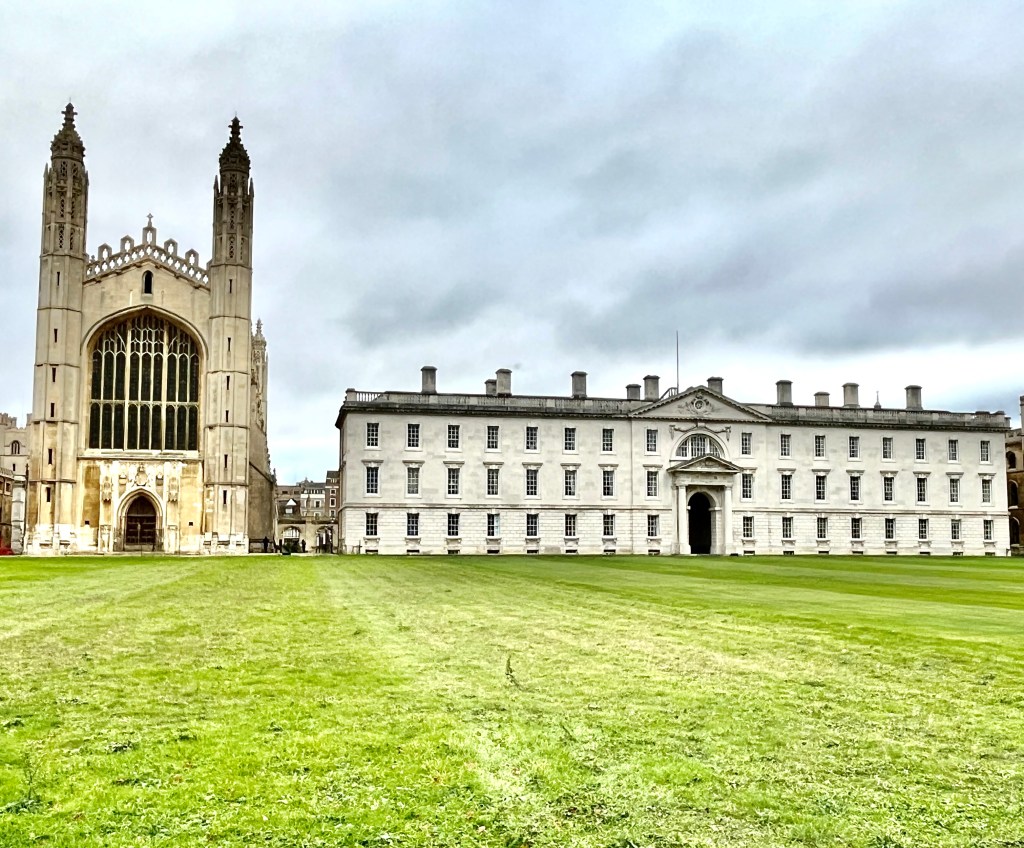
KING’S COLLEGE . CAMBRIDGE – Vertical Dial

CHAPEL DIAL

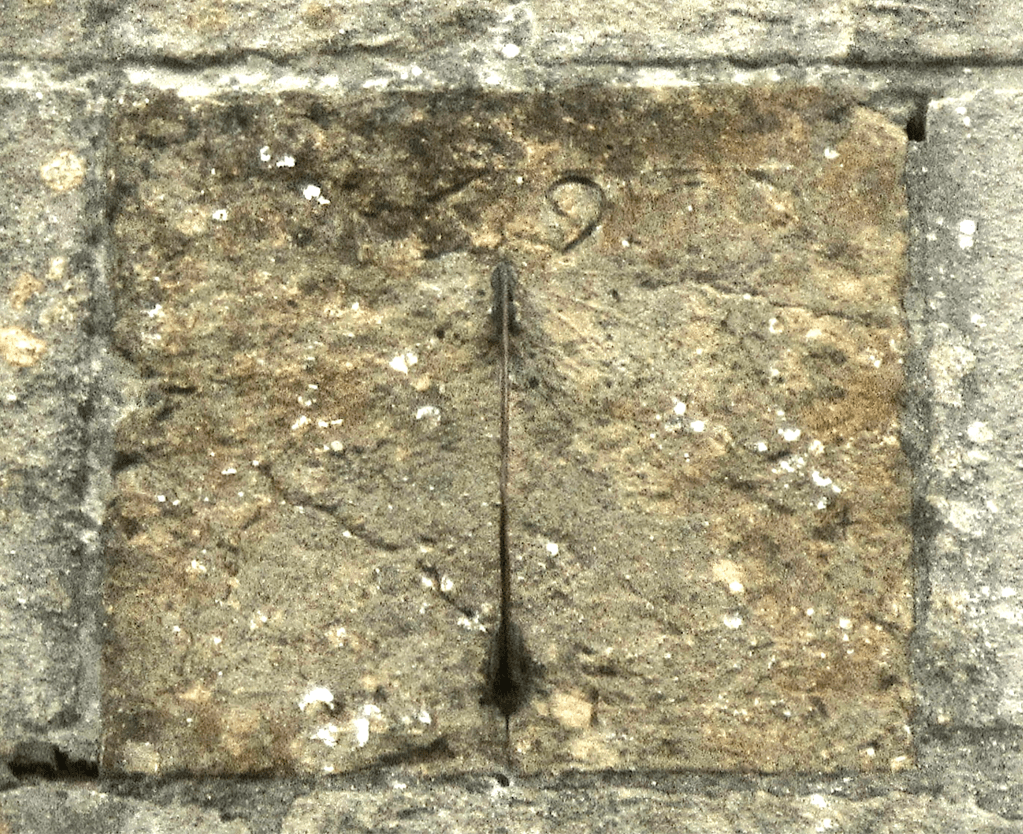
King’s College is one of the best-known Cambridge colleges, not least because of its pre-eminent choral music tradition. This fine dial is on the right side of the Chapel porch. The hour lines and numerals are painted in black directly onto the stone. The gnomon emerges through a golden sunburst, matched by two gold heraldic lions in the lower corners. The dial itself dates to 1733 (BSS) and the inscription J.C. 1578 on the face is a mystery: no specific association has been matched to it.

RESTORATION

As I researched this dial it soon became clear that it had undergone considerable recent restoration. The Brookes / Stanier booklet (L) was published c2000, with this illustration. The BSS entry (R) was made in 2007, and the dial’s condition seems to have worsened. At some stage I hope to find out more.

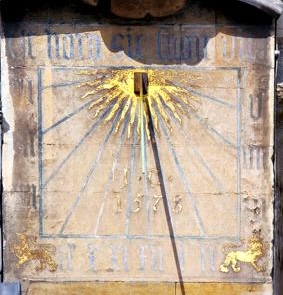
UT HORA SIC FUGIT VITA

The black-letter motto translates as ‘Life flies away like an hour‘ or an equivalent sentiment. There are a number of Latin variations of this rather gloomy prognostication.

GSS Category: Vertical Dial; University Dial; Sundial Motto

All photos: Keith Salvesen; BSS; Brooks / Stanier ‘Cambridge Sundials’

TOTNES . DEVON . ST MARY – Vertical Dial

wigulf . wiki . cc / os

TOTNES . DEVON . ST MARY

GRADE 1 ✣ A fine Perpendicular church on the site of Benedictine Priory, standing proudly near the centre of the town and visible from some distance away. Mainly built mid-C15 using much red sandstone. The Grade denotes the importance of the building, and the interior offers much for the visitor. Also, see the splendid Norman motte and bailey castle nearby. 50.4319 / -3.6878 / SX802604

VERTICAL DIAL

St Mary online

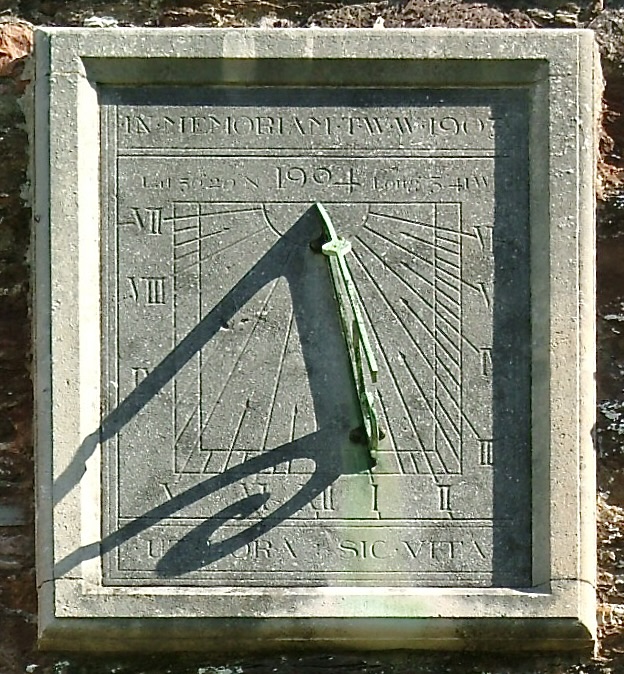
On the south wall of the church near the porch is a slate dial set in a stone frame. It declines west and shows the hours VII – VI divided into halves and quarters. Across the top is an inscription which reads In memoriam TWW 1903. Below it are the coordinates Lat 5020 ; Long 0340 W. Across the bottom of the dial is the quite common motto Ut Hora Sic Vita (Life is as an Hour).

The gnomon has a pierced nodus which causes a spot of light to appear on the dial plate. In my amateur experience, this is a relatively uncommon addition to a sundial’s capabilities.

GSS Category: Vertical Dial; Sundial with Nodus; Vertical Sundial Motto; Memorial Vertical Sundial

Photos: header, wigulf . wiki . cc / os; dial location, St Mary’s online; dial close-ups, BSS Bridol

Thanks to Erika Clarkson for giving me the details from a visit to St Mary’s, where she had found a scratch dial. I have written it up separately, being completely different in type and time.

DALI DIAL [anag.] . PARIS . CADRAN SOLAIRE

‘Derrick’ . Sticky Mango Rice . A fine artist captures the essence of Paris mingled with a surreal addition – link below
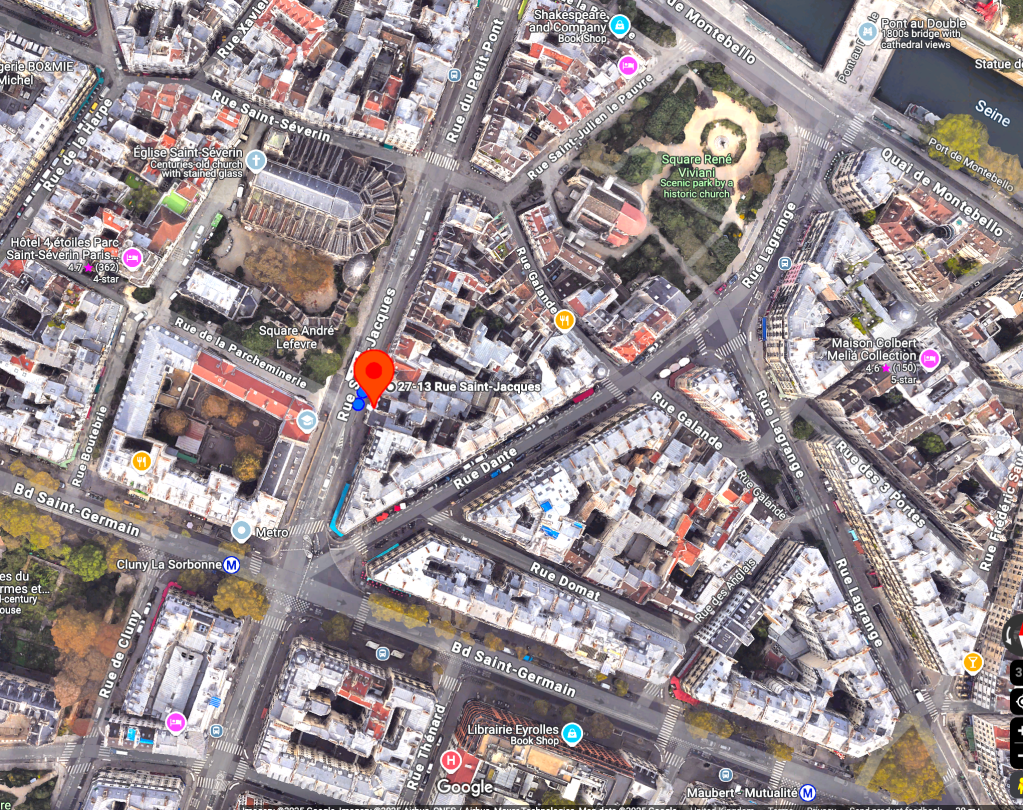
SALVADOR DALI’S SUNDIAL (1966) . PARIS . 27 Rue St Jacques

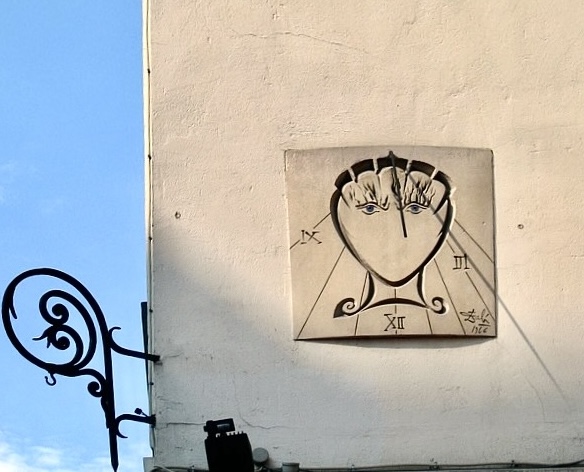
Unassumingly sited and not easily visible to passers-by unless walking north on the eastern trottoir, is a splendid sundial designed by Salvador Dali (1904-1989). Those who do notice it might well be entertained by the Daliesque appearance, but because of the dial’s position they may not see the artist’s signature and the date 1966**

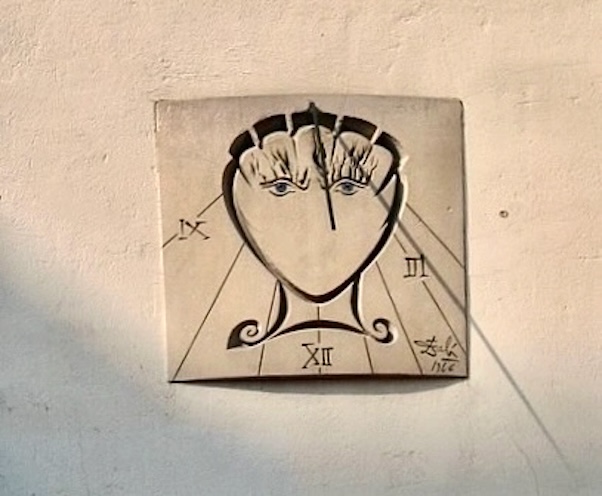
‘Derrick’: a rather beautiful close-up depiction of the Dial

IRL

Ken Eckert Wiki

DIAL DETAILS

Pierre Guernier at French Moments

Pierre Guernier of French Moments notes that the Dali dial, cast in concrete, was a gift to friends who had a nearby boutique. The clue to the shell motif lies in the name of the street which forms part of the Pilgrimage route across Paris. The fiery eyebrows represent the sun; and the lower part of the dial obviously references the famous moustache.

DALI SHADOWS

GAUME – WikiMedia 2010

ATLAS OBSCURA

This excellent resource includes unusual and off-beat finds. It describes Dali’s dial, and notes the accompanying excitement when it was inaugurated on 15 November 1966 at a ceremony with pomp and large media coverage. Dali was no shrinking violet.

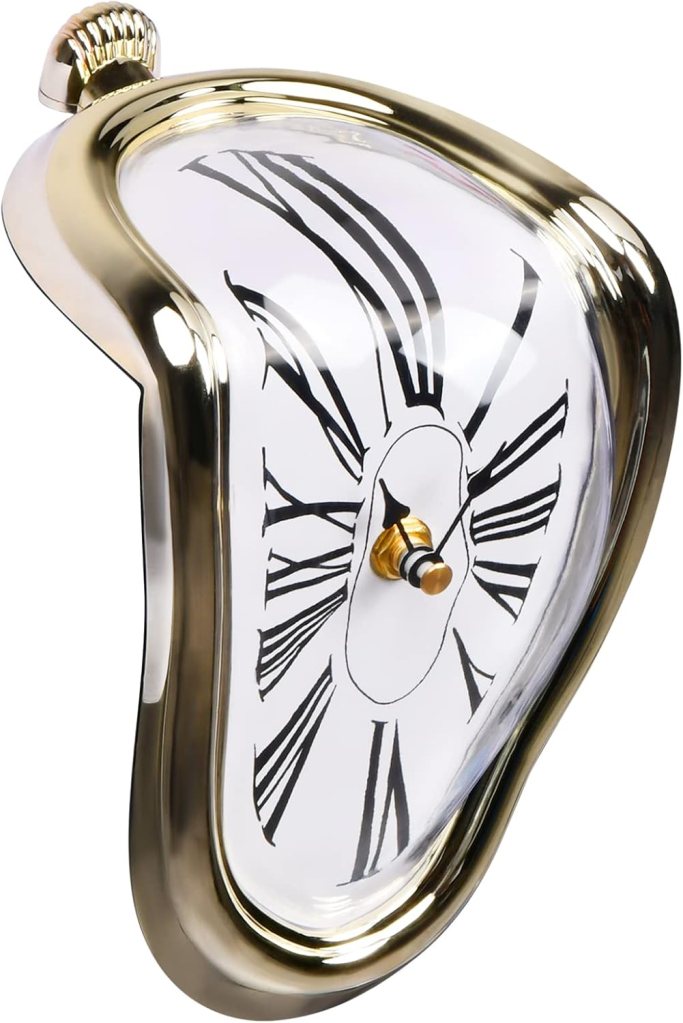
We can probably conclude that Dali’s forays into horology were relatively successful with his Parisian sundial. But for its poor positioning, it might function well or adequately. Less accurate were his more ambitious blueprints for timepieces, all being woefully deficient in design and immensely challenging in construction.

** It’s fair to say that for the English, the important ’66 dates are confined to the Battle of Hastings; the Great Fire of London; and the World Cup.

CREDITS

Derrick – Sticky Mango Rice (check out his other work)

https://www.instagram.com/derrick_sketches/?hl=en

© French Moments and pierre@frenchmoments.com with thanks

Atlas Obscura

HORIZONTAL DIAL 1597 – Mystery Provenance, Uncertain Date?

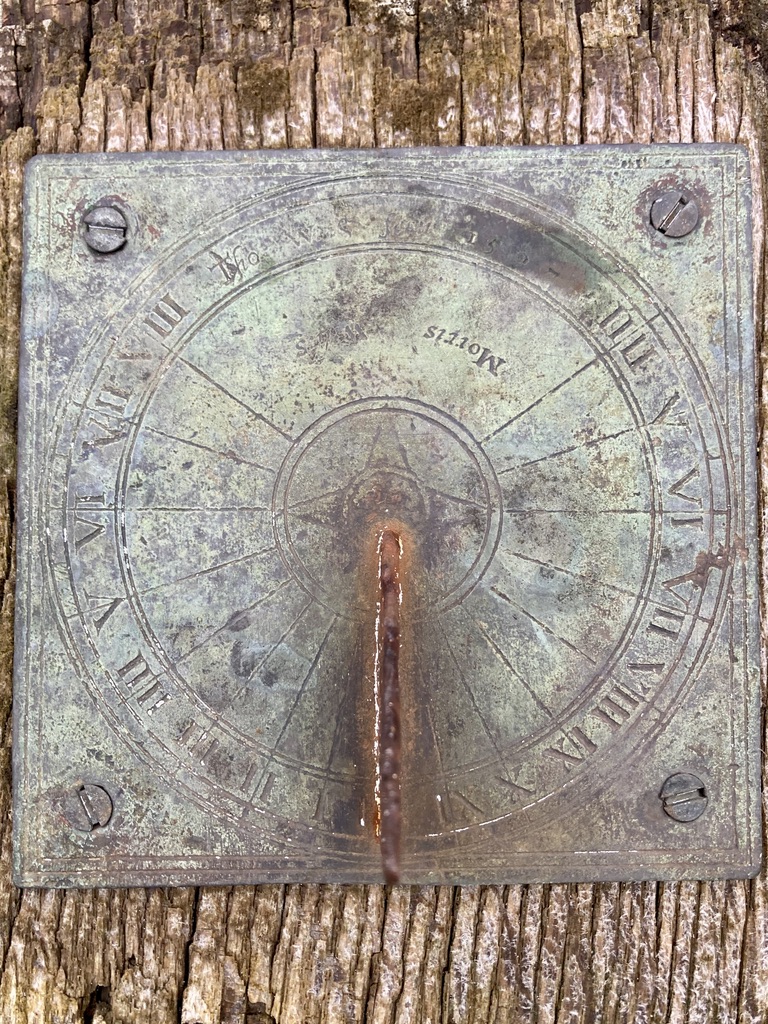
I recently met someone at a gathering of mutual friends, and we discussed sundials. He mentioned that he had an old dial in his garden, dated 1597 (the year of the first performance of The Merry Wives of Windsor). This was definitely a lead to take up.

PROVENANCE: The dial was bought in the 1950s in (probably) an antique shop in (possibly) Amersham. It was put on the pillar of an old birdbath, and remains in the same garden.

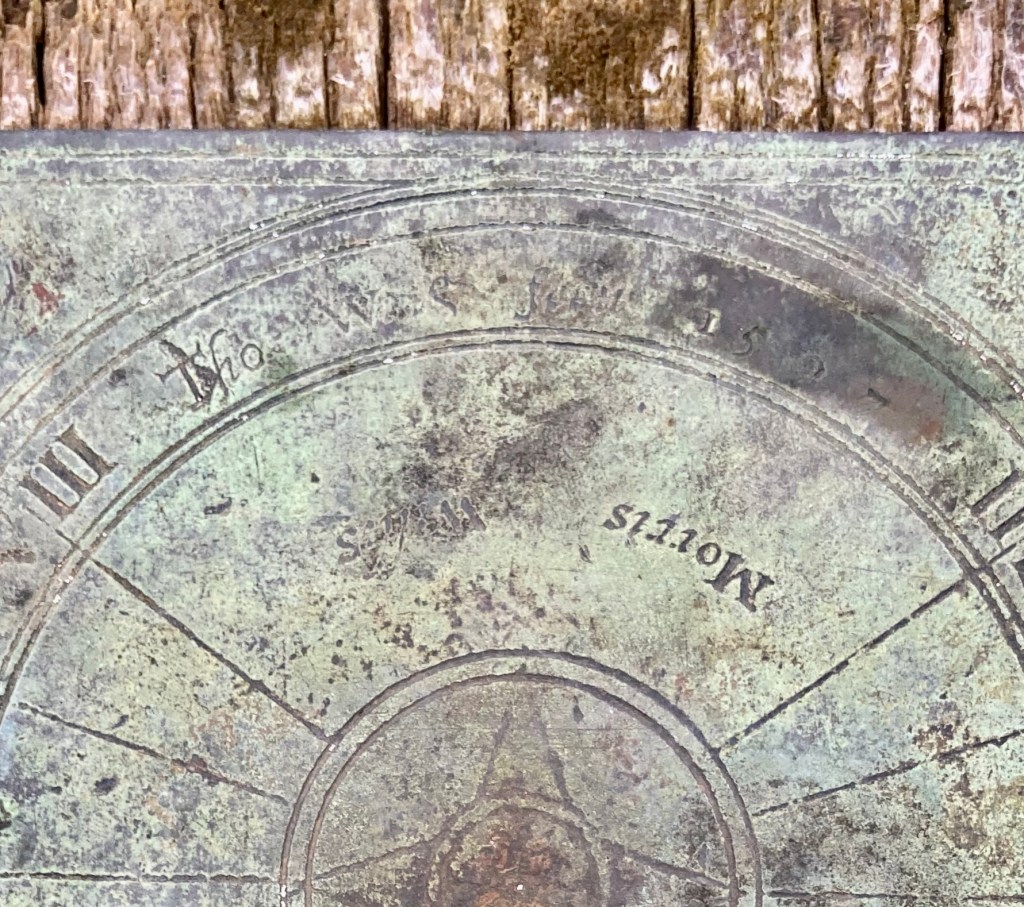
The dial is small, 4.25″ square. The photograph of the whole dial is just about clear enough to zero in on some of the details. I am hoping that the available clues will lead to ID of Tho. the maker and / or of Morris; and to the conclusion that the date is accurate [I do have in mind the generic chunky ‘genuine c17’ dials on eBay that in fact date from a rather more recent era].

I’d be pleased to have any information, advice, reaction, interpretation, wonderment or perplexity in relation to this dial. My email is sundials@gaudiumsubsole.org; or add a comment.

On the perimeter: Tho W S fecit (?) 1597

Nearer the centre: Morris and a word or name that starts or ends with W and S depending how one looks at it.

GSS Category: Horizontal Dial; Dial Date; C16 Horizontal Sundial

MILBORNE PORT . SOMERSET . Vertical Dial on chimney . 1691

MILBORNE PORT . SOMERSET

VERTICAL DIAL

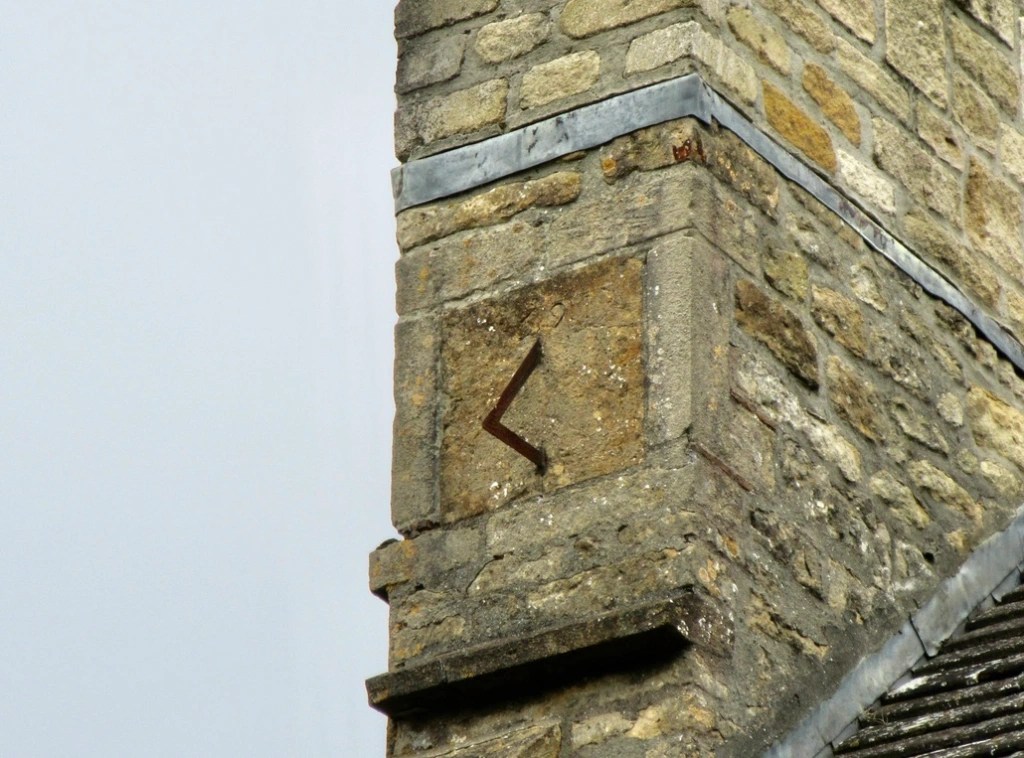
The 1691 vertical dial on the Old Post Office in the centre of the village is in an unusual position, on the south-facing side of a tall chimney. It is repositioned, and predates the later prosperity and significance of Milborne Port in C18. At one time there were several local industries. There was even a large ‘ball court’ (for a form of Fives) that still exists as a ruin; and a polo ground. The small size and the height of the dial renders it unsatisfactory for marking the passage of the day. The theory that it was moved during the expansion of the main part of the village and retained as part of the community’s history may be the most plausible explanation for its present position.

BSS record: Eroded. Markings extremely hard to make out. Hourly markings. Arabic numerals. Presumed to show 6am to 6pm. Open triangular gnomon.

As noted above, Milborne Port was once an important and prosperous village, benefiting from the London road. I have added a link below for anyone who wants to get an idea of its former significance. The village of today, while retaining much evidence of its past, seems no longer the thriving community of former times.

MILBORNE PORT BHO

GSS Category: Vertical Dial; Early Vertical Sundial; Dated Dial

All photos: Keith Salvesen

OSLO . FROGNER PARK . ARMILLARY SPHERES by Vigeland (1930); Wegner (1837)

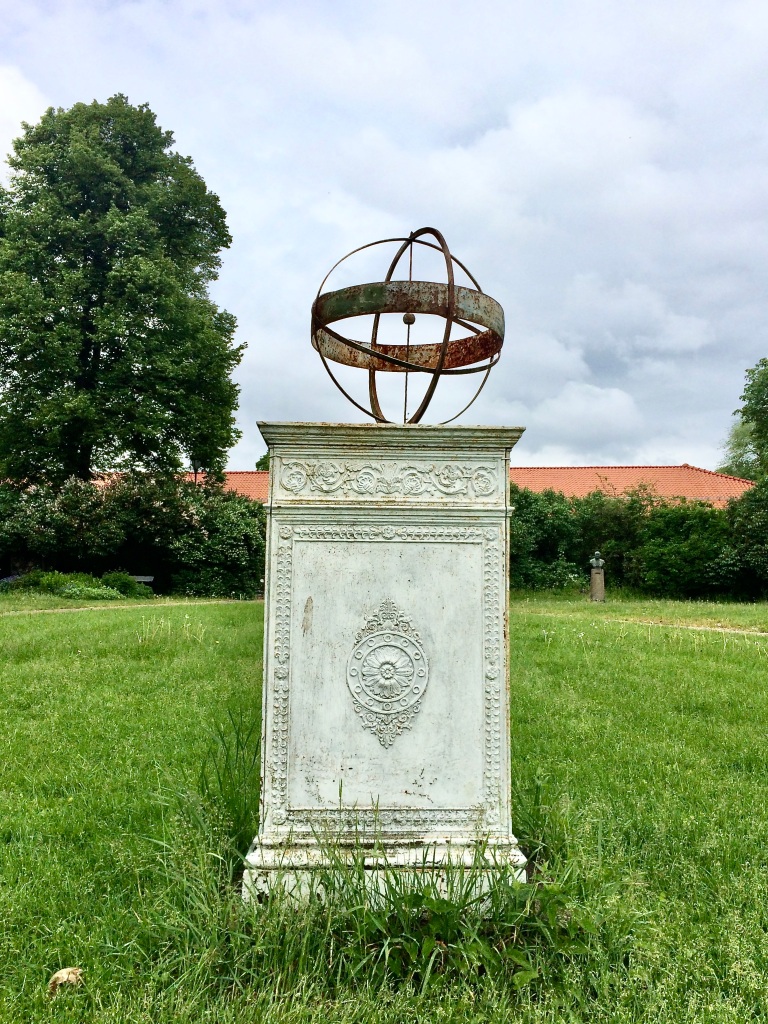
ARMILLARY SPHERES

GUSTAV VIGELAND

VIGELAND-PARKEN OPEN AIR ART INSTALLATION

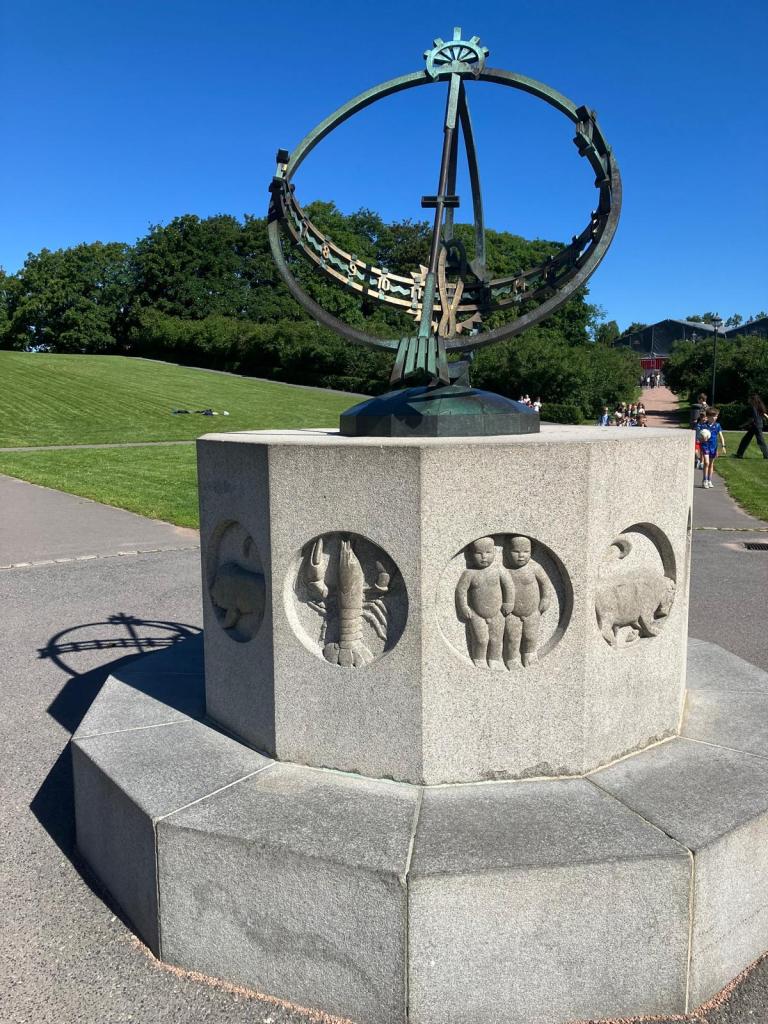
Gustav Vigeland (Thorsen) (1869 – 1943) was a Norwegian sculptor much admired for his creative imagination and productivity. His most notable work is the monumental ‘Vigeland Installation’ in the Frogner Park Oslo, compared to which his sundial is a footnote. Although generally acclaimed, Vigeland’s work is viewed by some as having uncomfortable connotations in several respects. The static interaction of the dozens of babies, children, women, and men might – nearly 100 years later – raise eyebrows. Having skimmed the topic I rather agree (despite being of Norwegian descent. Or because of it maybe).

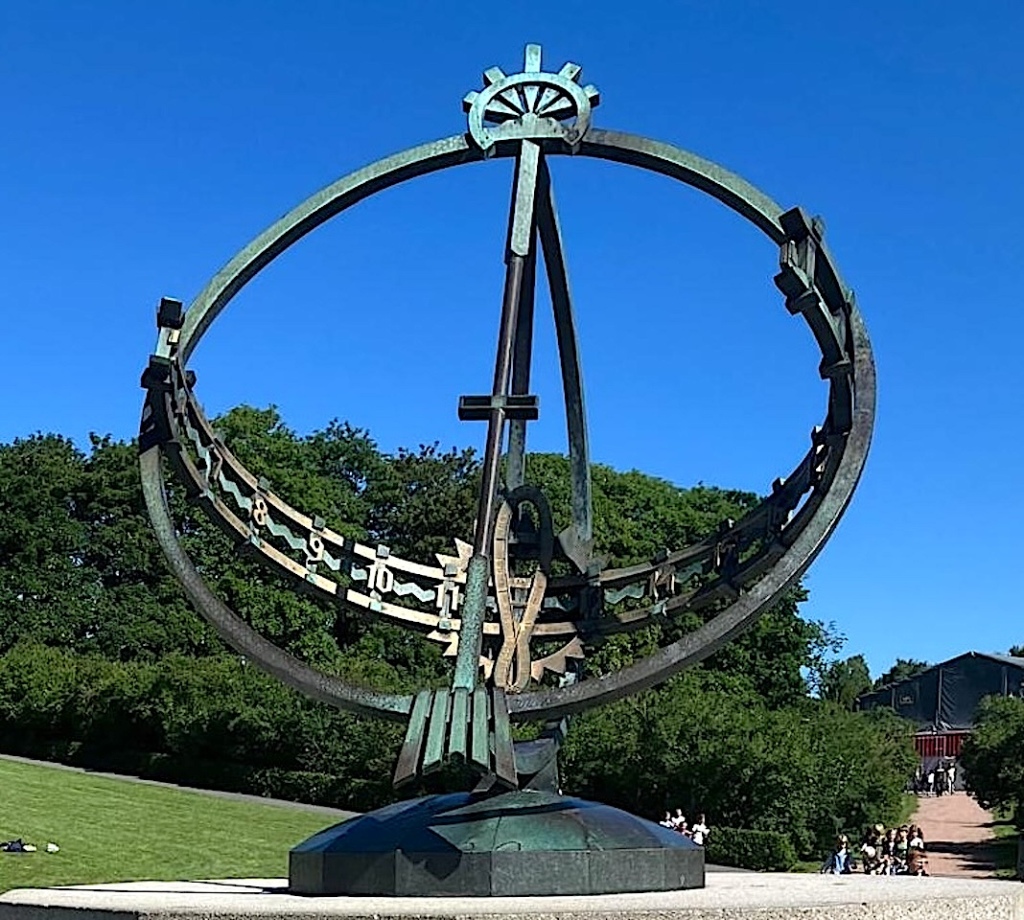
The armillary sphere was installed in 1930, a distinctively Scandinavian variation from designs further south in Europe, in a good way. The heavily sculpted dais is a duodecagon showing the Signs of the Zodiac in bold (lumpen?) relief.

BENJAMIN WEGNER

The armillary sphere is located outside the Frogner manor house (now the City Museum) in the south of the park. Wegner aquired the parkland in 1836, and the sphere was probably installed the following year.

Photographer: Vanasan, Wiki

GSS Category: Armillary Sphere; City Sundial; Norway Sundial

All Vigeland photos Camilla Pennant; Wegner Dial, ‘Vanasan’

All photo

DURLSTON CASTLE . SWANAGE . DORSET – Vertical Dial (1887)

DURLSTON CASTLE . SWANAGE . DORSET

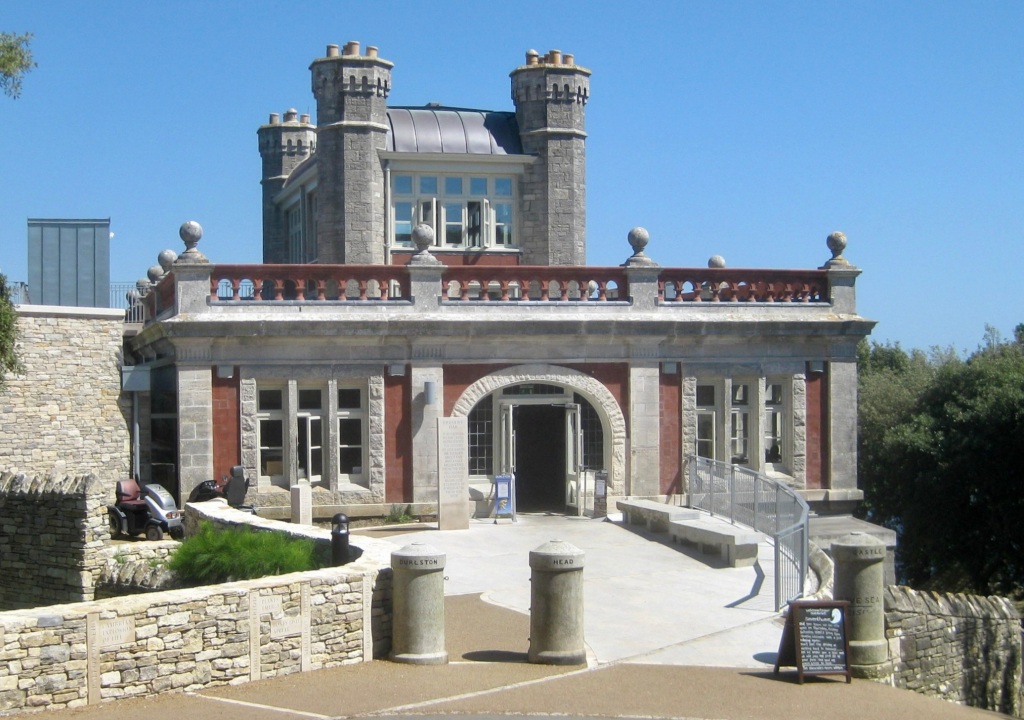
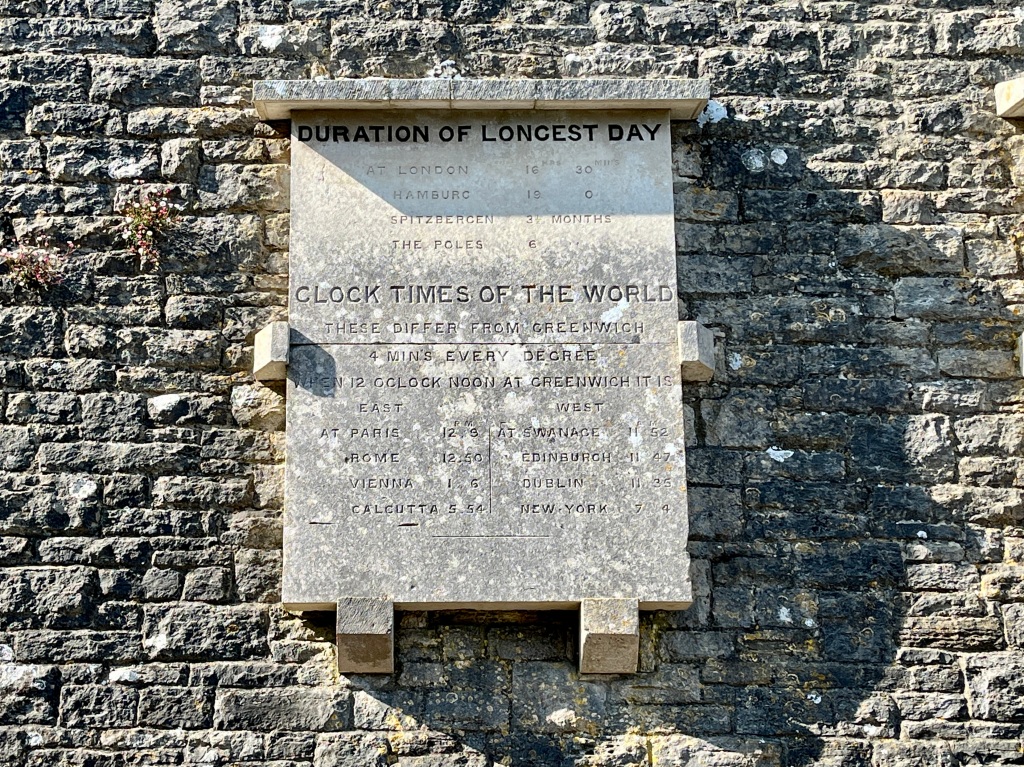
Durlston Country Park is close to Swanage and has much to offer. The ‘modern’ Castle was completed in 1891. There are extensive grounds, 5 walking / nature trails, sculptures, epochal details chiseled into stone tablets, Art Gallery, tea room, views across to IoW, a huge C19 stone globe, significant jurassic finds.

More germane here, high on S face is a fine vertical sundial (1887). Below it are two stone tablets inscribed with times and tides worldwide.

DIAL

The dial is inset in the South wall about 5 m above the ground. It shows 6am to 6pm in half and quarter hours. Uses XII & IIII. White lines and chapter ring on a beige rectangular dial-plate all within a four piece chamfered stone frame. The Roman numerals arranged vertically. BSS

An angled view reveals that the gnomon incorporates the initial B, standing for (George) Burt, the Victorian entrepreneur owner who conceived the idea of what we can still see today. It was (oddly?) described at the time as the most magnificently conceived restaurant.

Two large incised tablets: essentially they deal with Time & Tides respectively

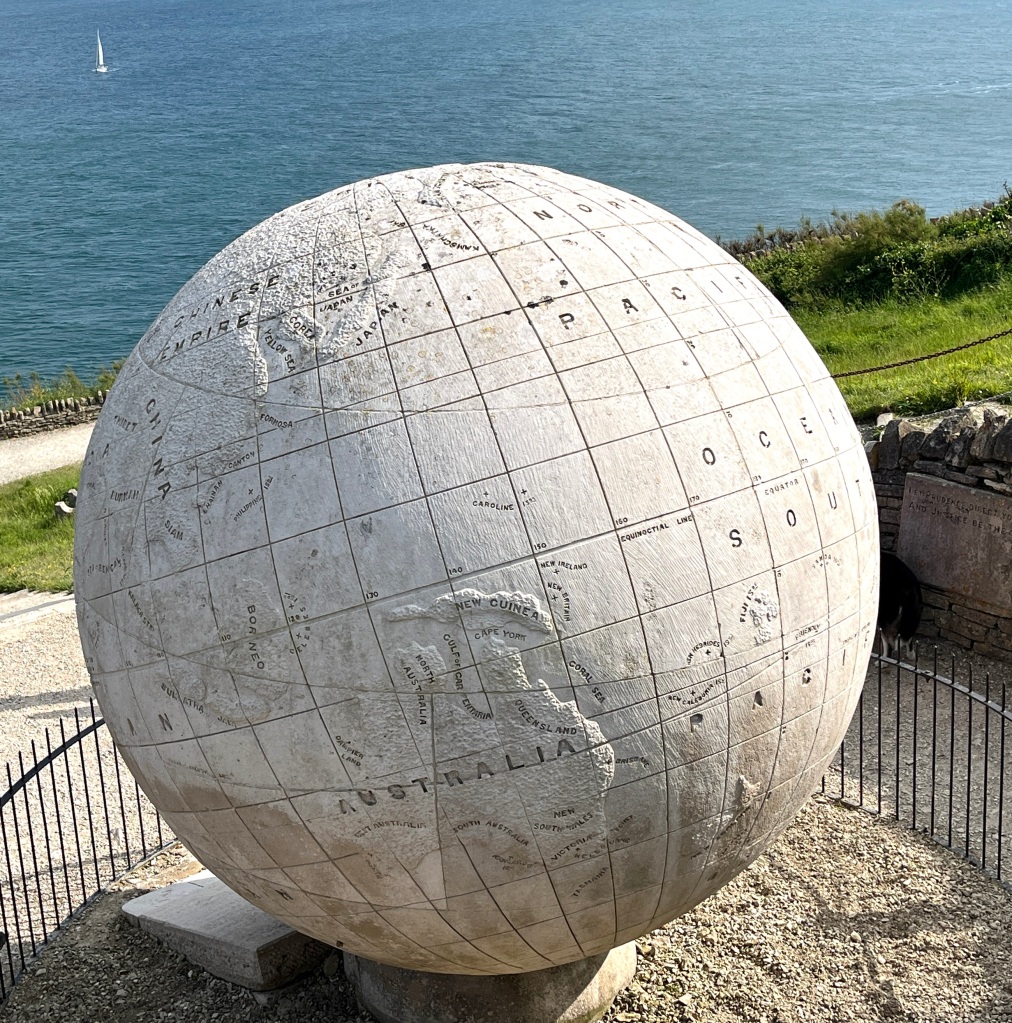
GREAT GLOBE

    Great Globe (1887), a vast perfectly formed stone ball inscribed with an eclectic selection of places. Many will be little known or unknown to random visitors such as me. The Society Isles (Pacific) sound pleasant.

    COMPASS POINTS

    Stone Benches Surrounding the globe, at various heights and angles on a steep stope, are stone benches, each clearly marked with a compass point. In an ideal world there would be an equally fine analemmatic sundial.

    GSS Category:

    All photos by Keith Salvesen except header image Huligano0 OS CC

    TRINITY COLLEGE CAMBRIDGE . HORIZONTAL SUNDIAL

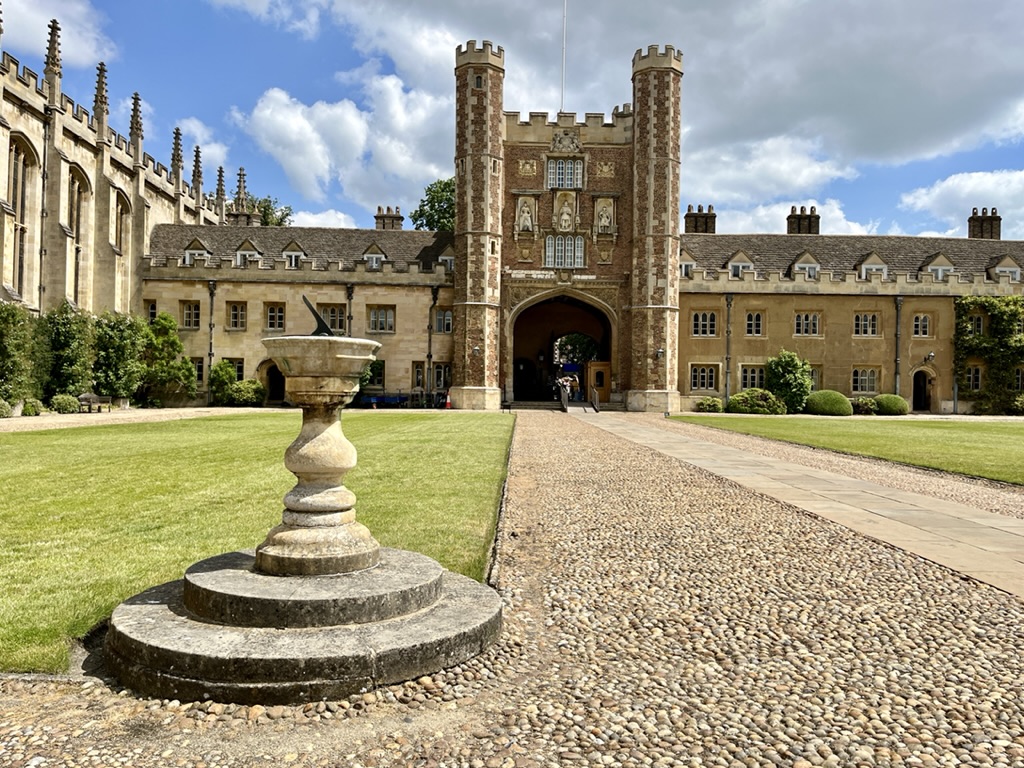
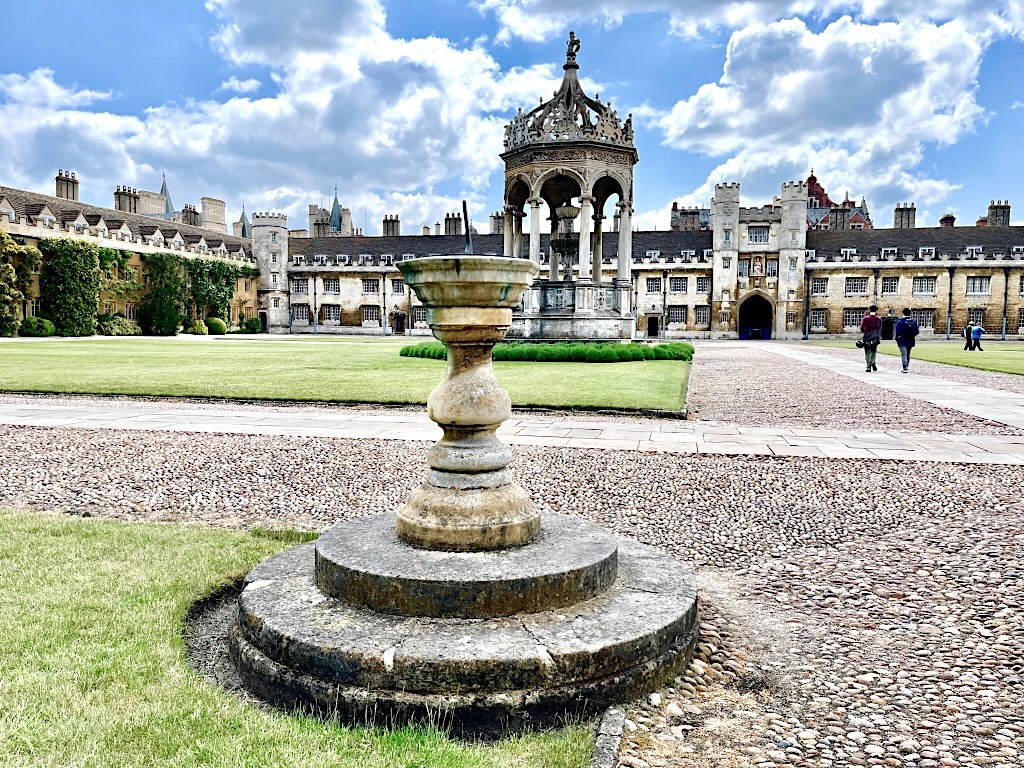
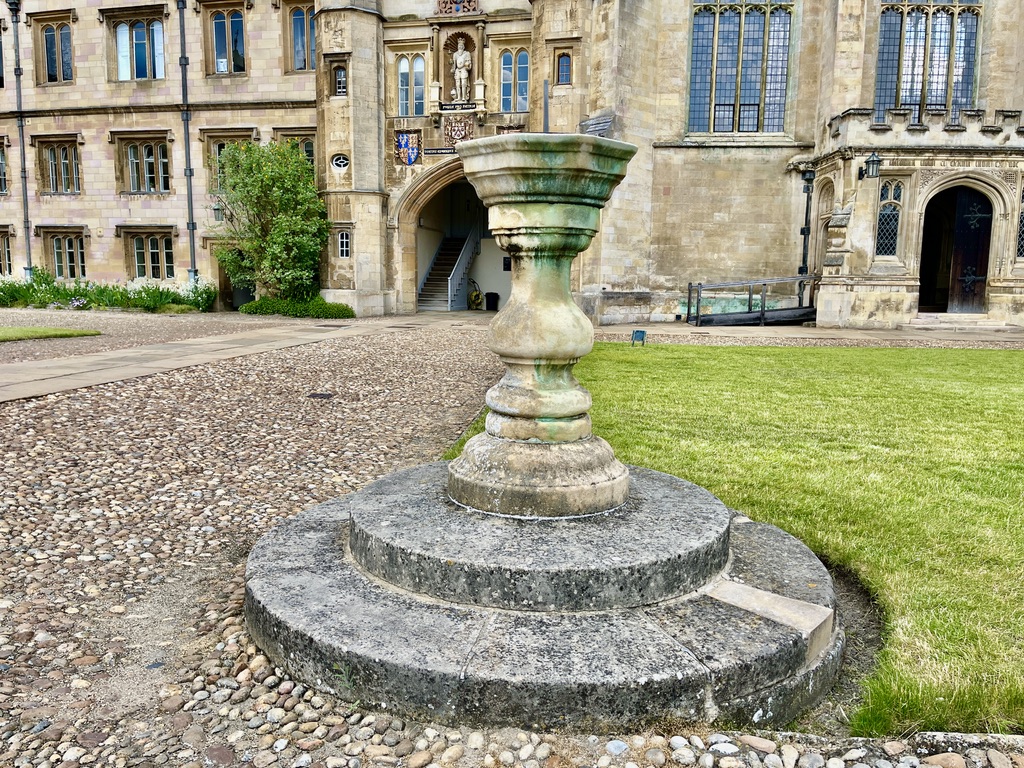
    Trinity College Cambridge . Sundial – view from Master’s Lodge to Great Gate (Keith Salvesen)

    TRINITY COLLEGE CAMBRIDGE . GREAT COURT

    THE TALE OF TWO DIALS

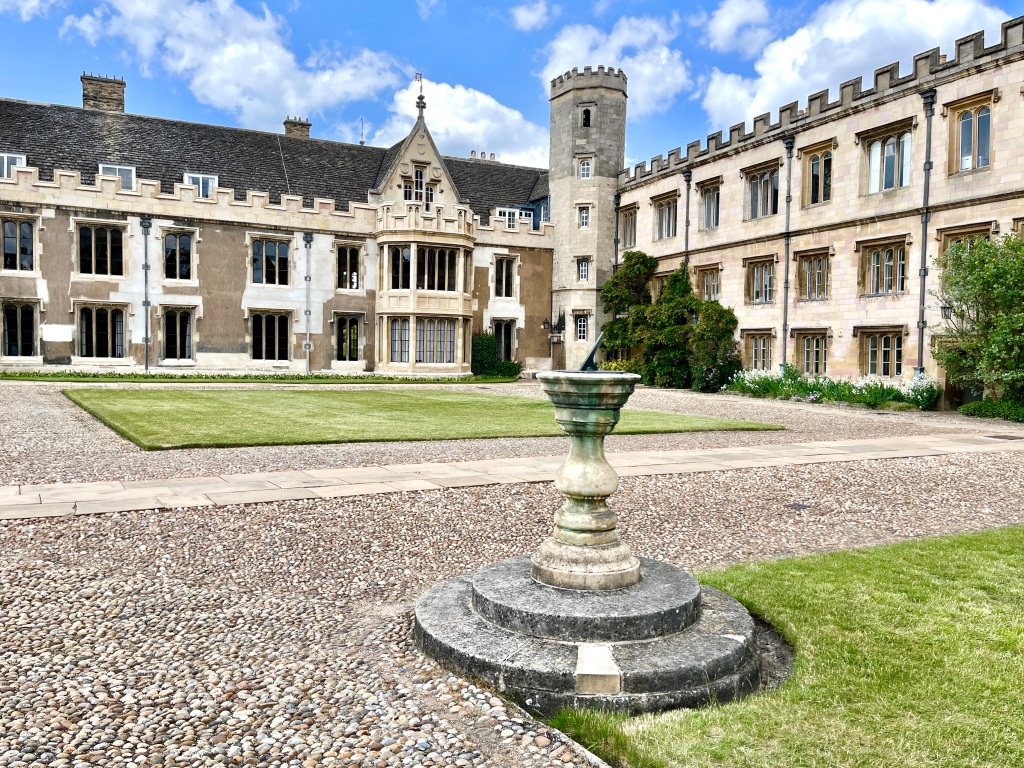
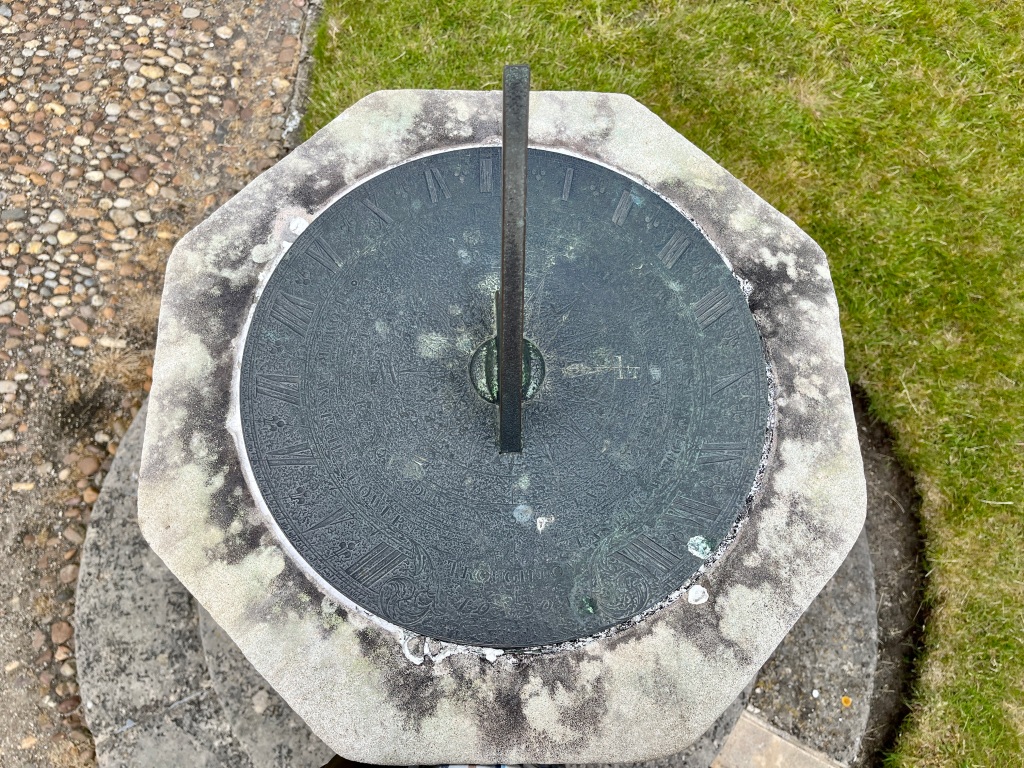
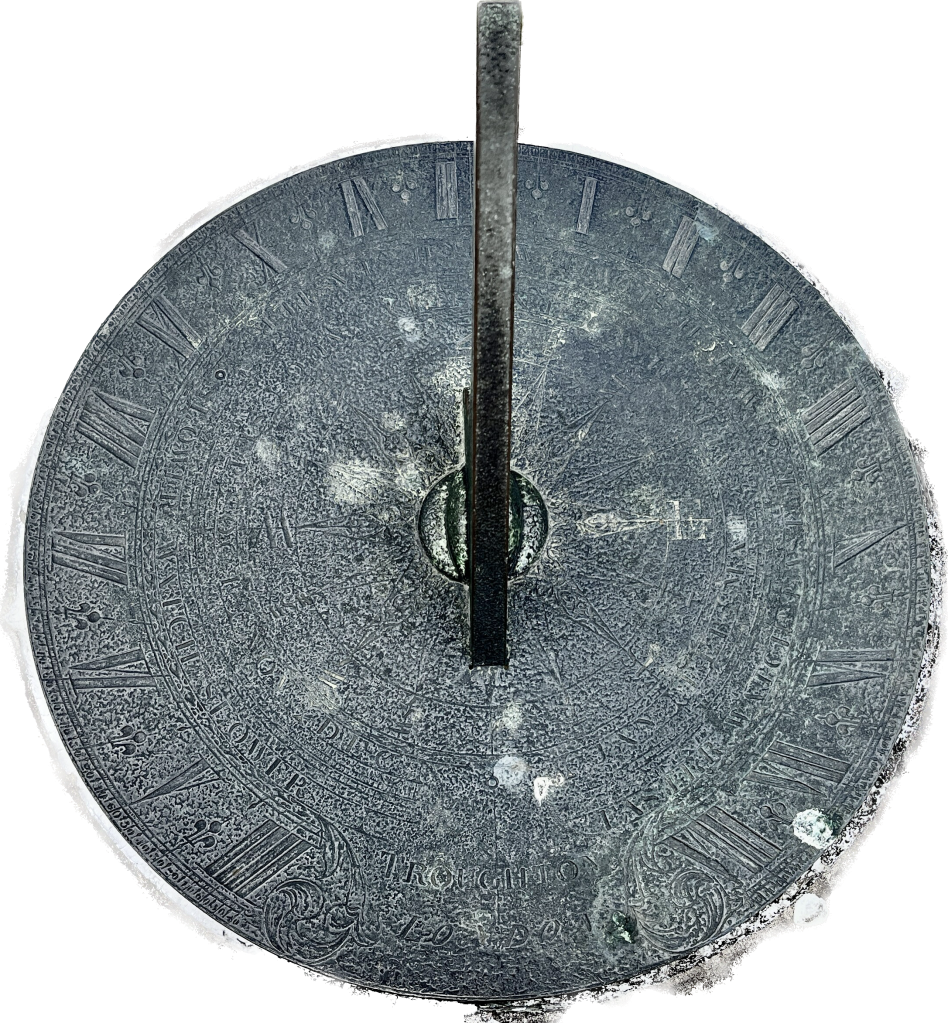
    GRADE II ✣ 1704, dial renewed in 1795 by Edward Troughton of London. Simple stone baluster with moulded base and cap, set on 2 steps. RCHM.

    The fine C18 horizontal sundial in Great Court has a long history, and an intriguing twist in its story. Over a period of 3 years I must have walked past or near it thousands of times without giving it a glance. The passage of the day was marked by the chimes of the famous clock, a sound that stays with me even today.

    Trinity College Cambridge . Sundial – view towards the Master’s Lodge (Keith Salvesen)

    Trinity College Cambridge . Sundial – view from above (Keith Salvesen)


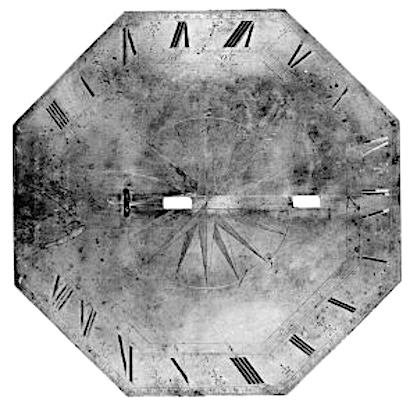
    The description ends with an intriguing footnote:The baluster pedestal on which the dial stands may be the same one which supported an earlier dial by John England (see BSS Register, SRN 5295). Which leads to the story of the original dial that was in place until Troughton’s renewal in 1795.

      John England Dial Plate 1704

    The image above shows a gnomon-less dial plate made by John England in 1704. Like the pedestal, the plate is octagonal. It was rediscovered in a cupboard in the College in 2002. BSS recorded the find as follows:

    Trinity College Cambridge . Sundial – view S towards the Fountain (Keith Salvesen)


    GSS Category: Horizontal Dial; Pedestal Dial

    All photos: Keith Salvesen (Matric. 1970)

    PAUL . PENZANCE . CORNWALL . St Pol de Leon – Vertical Dial 1810

    ST POL de LEON . PAUL . CORNWALL

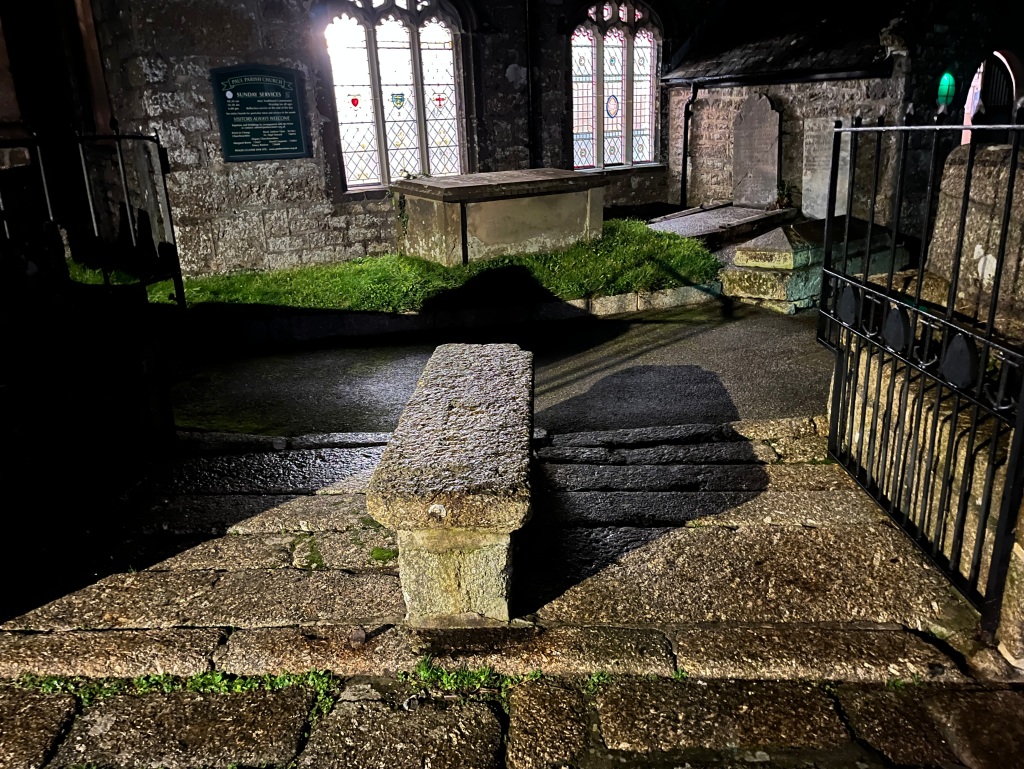
    GRADE I ✣ C15; enlarged 1600; Restoration 1875. A most interesting church set on the hill above the famous small fishing village of Mousehole. St Pol has much to offer, not least a memorial to Dolly Pentreath, supposed last monoglot Cornish speaker; and a fine example of a coffin stone in the lychgate. The village churchyard has a small maze with a wonderful view LINK.  Congenial pub. 50.0896 / -5.5461 / SW464270

    DIAL

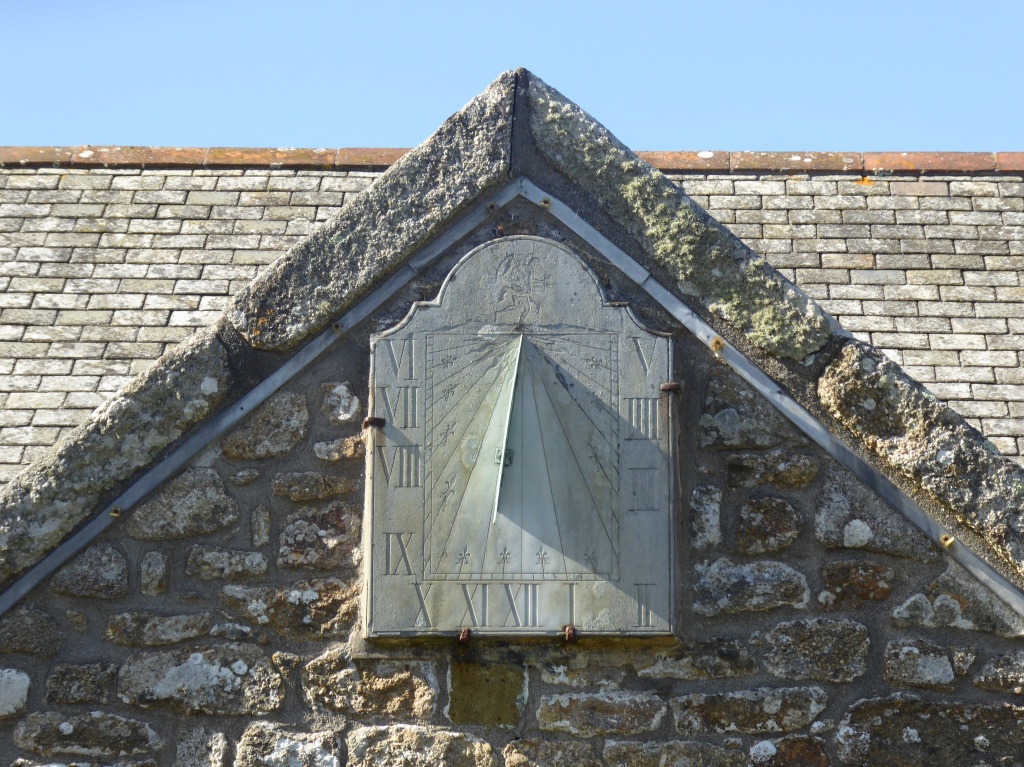
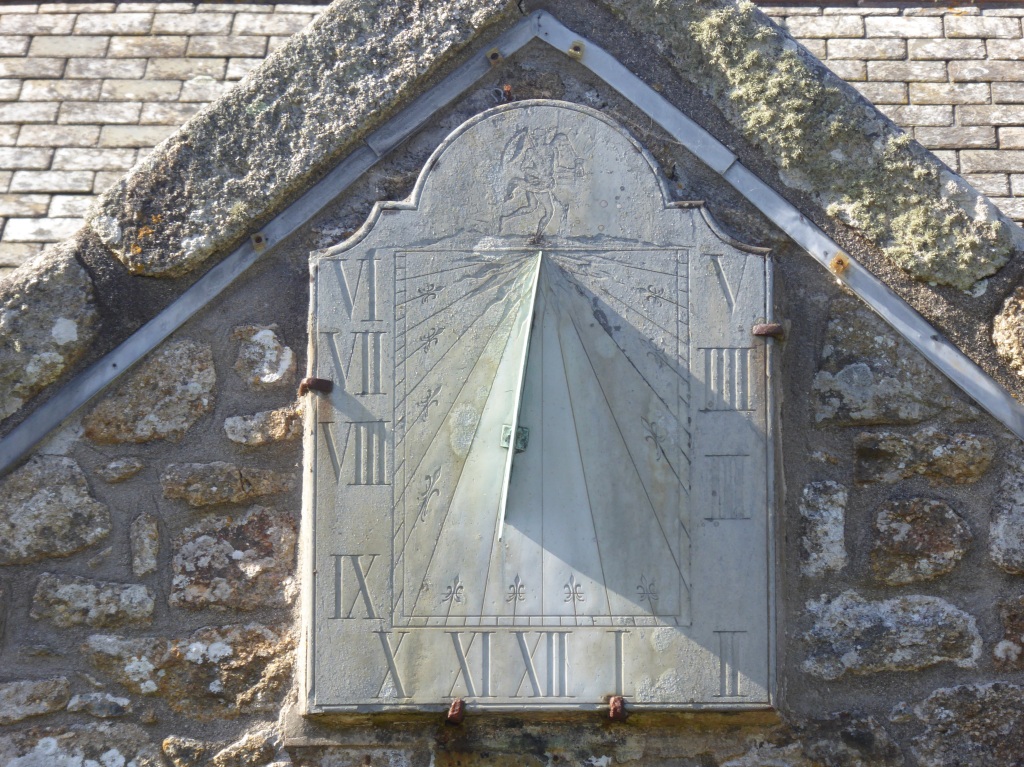
    BSS notes that the engraving is excellent and remains clear to this day. The half hour lines each have a fleur de lys and all the lines originate from the sun’s rays around the gnomon root. Caroline Martin’s delightful small book on Cornish Sundials notes the interesting and unusual gnomon. To which one adds that the gnomon points to XI rather than noon.

    MRS CROWLEY

    One benefit from a recent visit to the Penzance area was to make the acquaintance of Mrs Crowley and her remarkable sketch books of the dials of Devon and Cornwall. Her progress around both counties in the 1950s produced dozens of beautifully produced drawings of dials. The details are so closely observed and the drawings so clear that it is difficult to imagine how she managed the task.

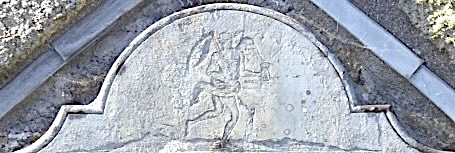
    On this page, Mrs Crowley – who usually drew compete dials – has focussed on 3 dials with similar designs on the ogee tops above the gnomon. I think it probable that she chose not to make drawings of the complete dials because she was so taken with the similar depictions of Old Father Time with his scythe and hourglass. All 3 churches are within 10 miles of each other.

    COFFIN STONE . ST POL de LEON . CORNWALL

    GSS Category: Vertical Dial; Cornish Sundial; Sundial Drawings; Coffin Stone;

    All photos: Keith Salvesen

    STEEPLE LANGFORD . WILTS . ALL SAINTS – MILLENNIUM SUNDIAL

    ALL SAINTS . STEEPLE LANGFORD . WILTS

    GRADE I C13 origins; C14, C15 development; extensive restoration 1873 (Carpenter). C12 font. 3 scratch dials (separate post). 10m NW of Salisbury. 51.1363 / -1.9493 / SU036374

    DIAL

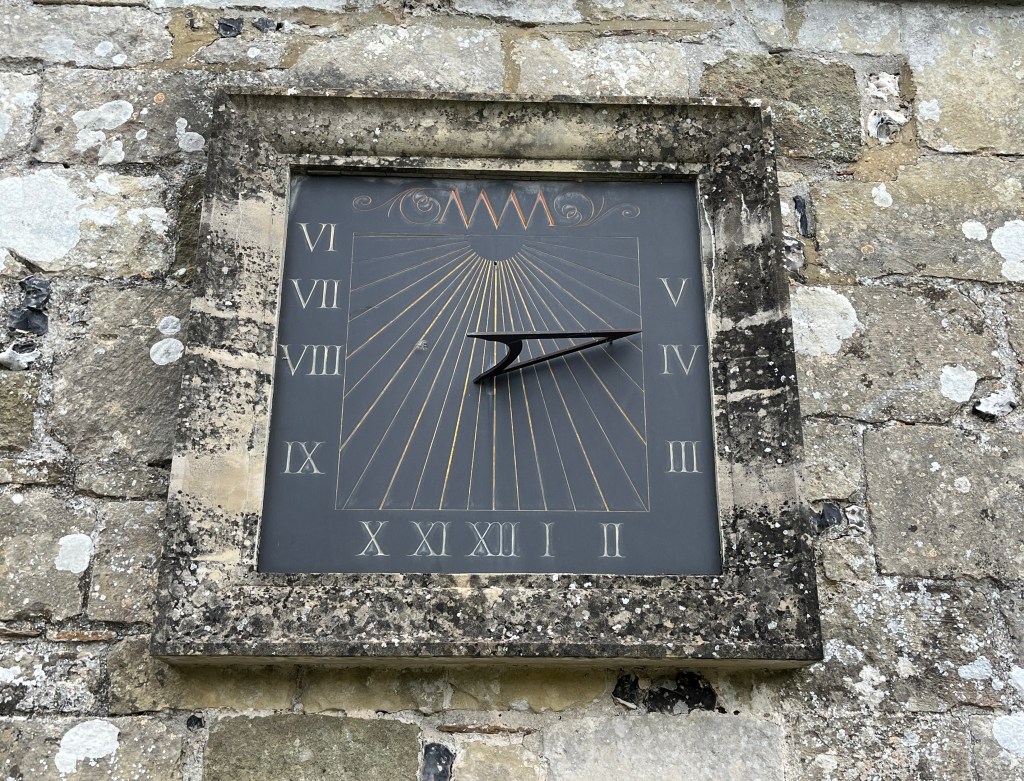
    The dial is 10′ up on the SE corner of the nave. Gold lines on slate ground. Open gnomon. Numerals not gold. Date at top with scrolls all in Red. Uses XII and IV, with all numerals vertically arranged, and shows 6am to 6pm in half hours. Lines drawn from small semicircle at root. Full length half hour lines (BSS).

    This is a fine MM dial and a pleasure to walk towards. Hopefully the gnomon can soon be pegged back into the upper hole, making the time of day easier to determine.

    GSS Category: Vertical Dial; Millennium Dial; Dial Dates

    All photos: Keith Salvesen