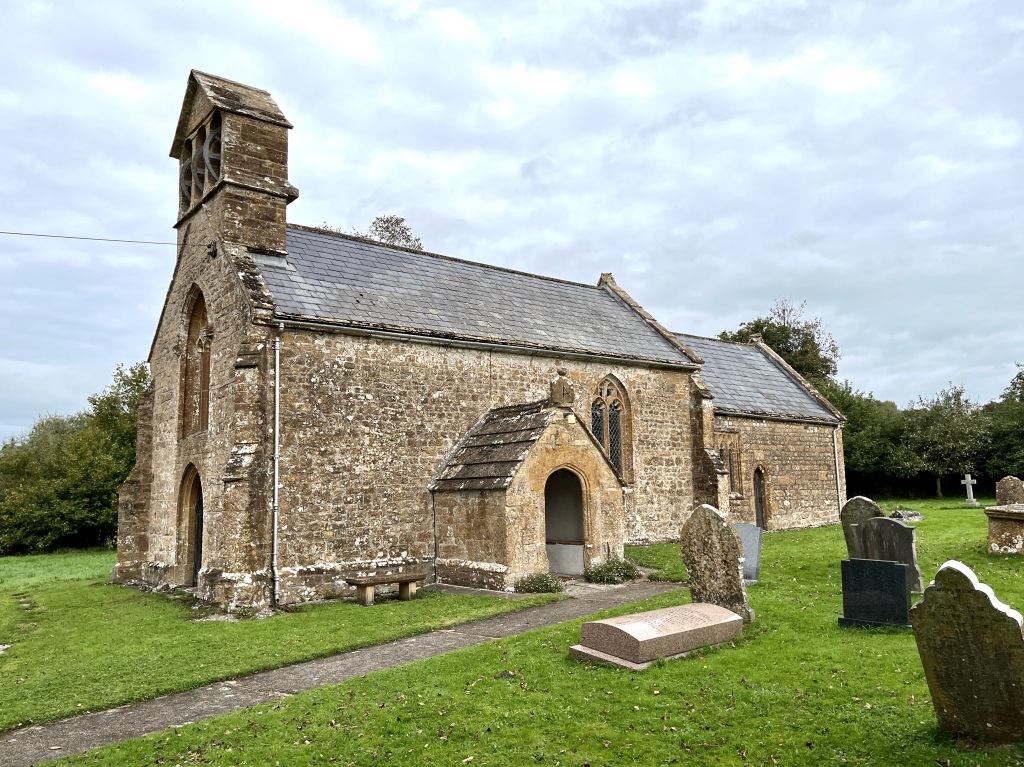
GRADE I ✣ Late C13, records from 1334. A charming small church, with its 3 bells hung on wheels. A plaque lists 19 men who returned safely from WW1; it is a ‘Doubly Thankful’ village with no casualties in WW2 either. See also neighbouring STOCKLINCH OTTERSEY, a closely linked church. Close to Barrington Court NT. 50.9508 / -2.8797 / ST383171
✣
DIAL
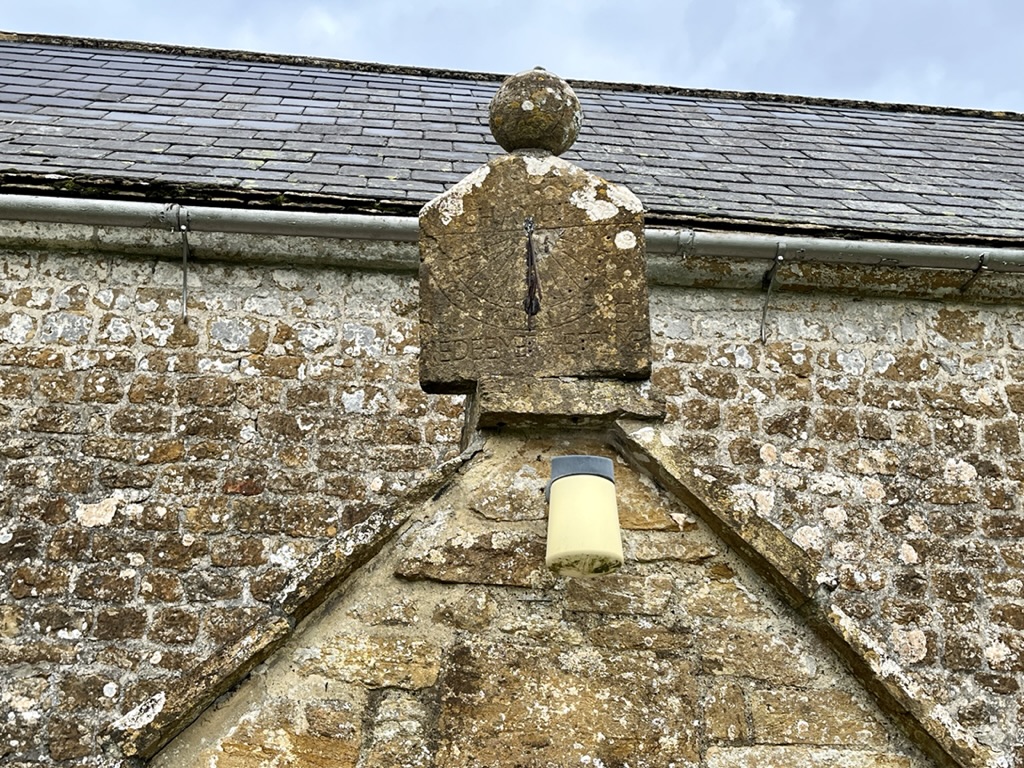
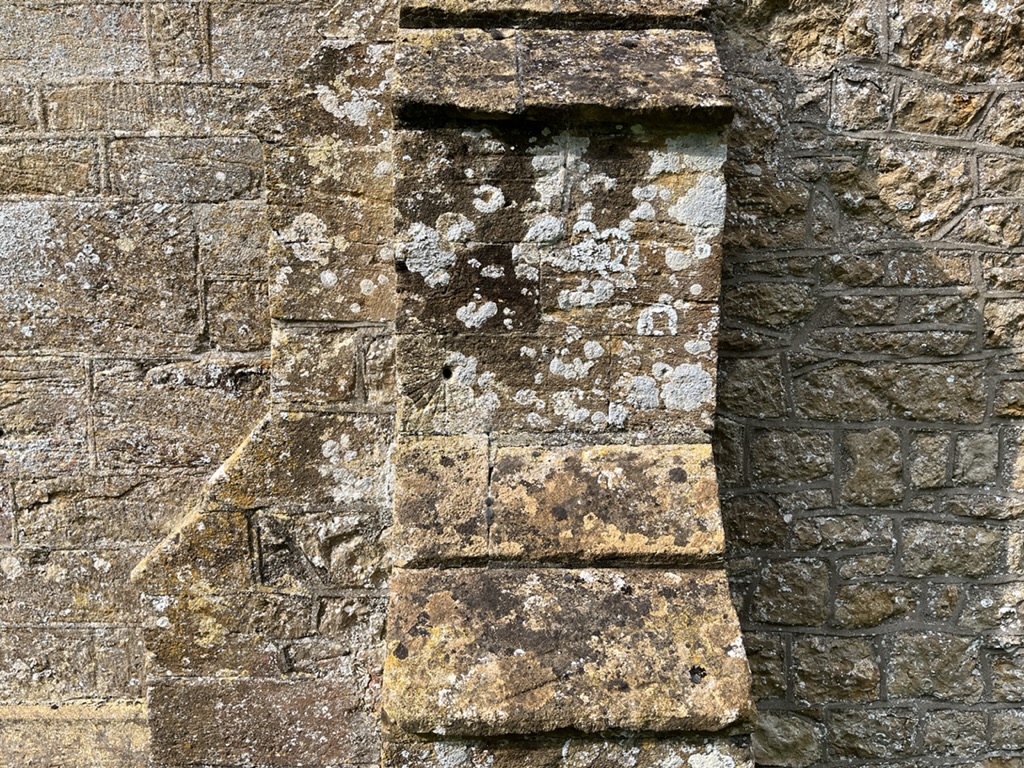
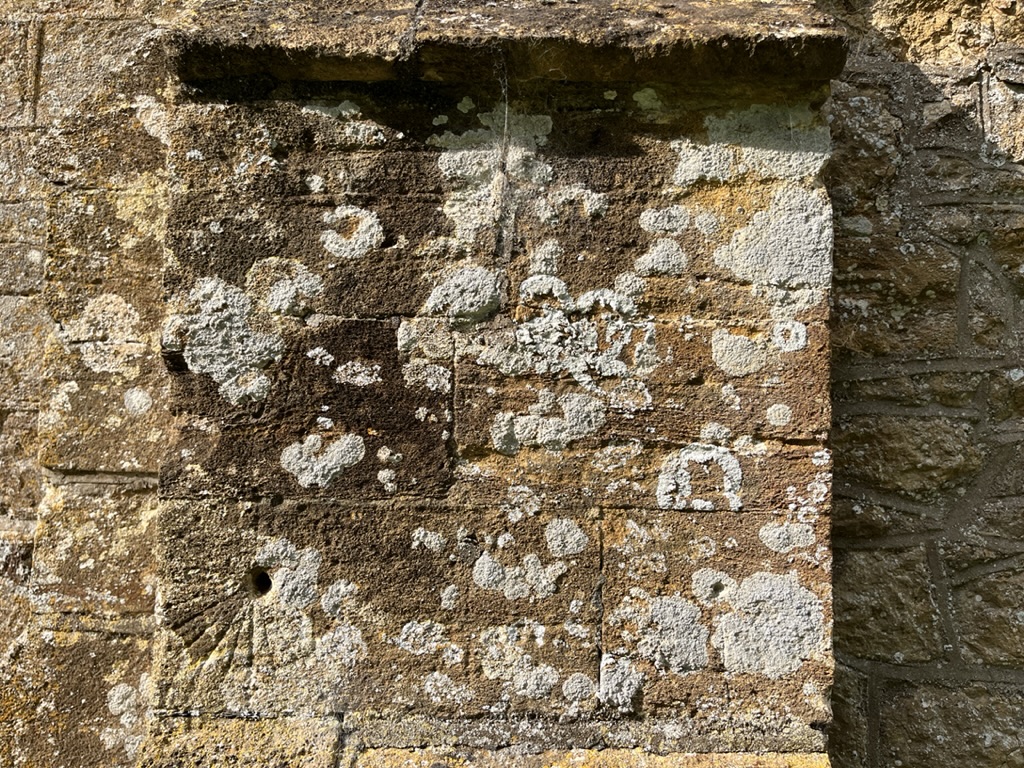
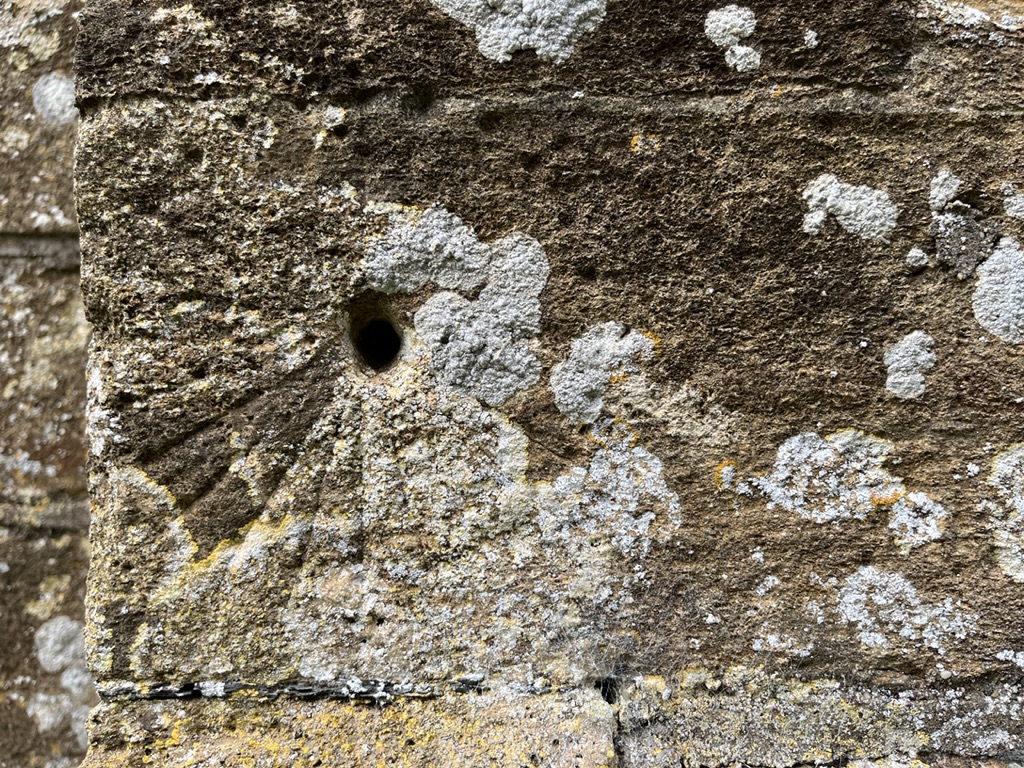
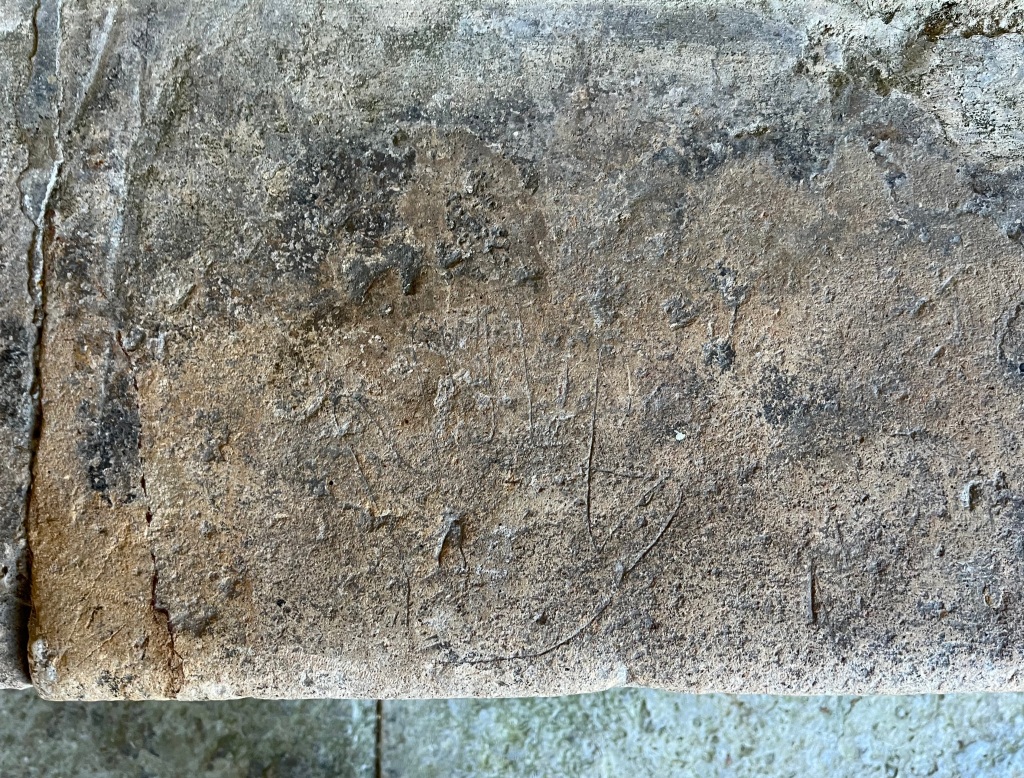
The dial is perched on the apex of the squat porch. It is square, significantly canted, and with ‘shoulders’ upon which rests a ball finial. Given its exposed position, the dial is in good condition. BSS dates it to 1612. There is a clear-cut semicircle with a full complement of lines, and with pocks marking the half hours.
CANTING
GNOMON ANGLES
INSCRIBED MOTTO
The words WATCH AND PRAY are inscribed above the dial face. Erosion and lichen have made it hard to see. Below the dial are the words REDEEME THE TIMES, with the final S fitted in above the line. The numerals – damaged LHS – are Arabic.
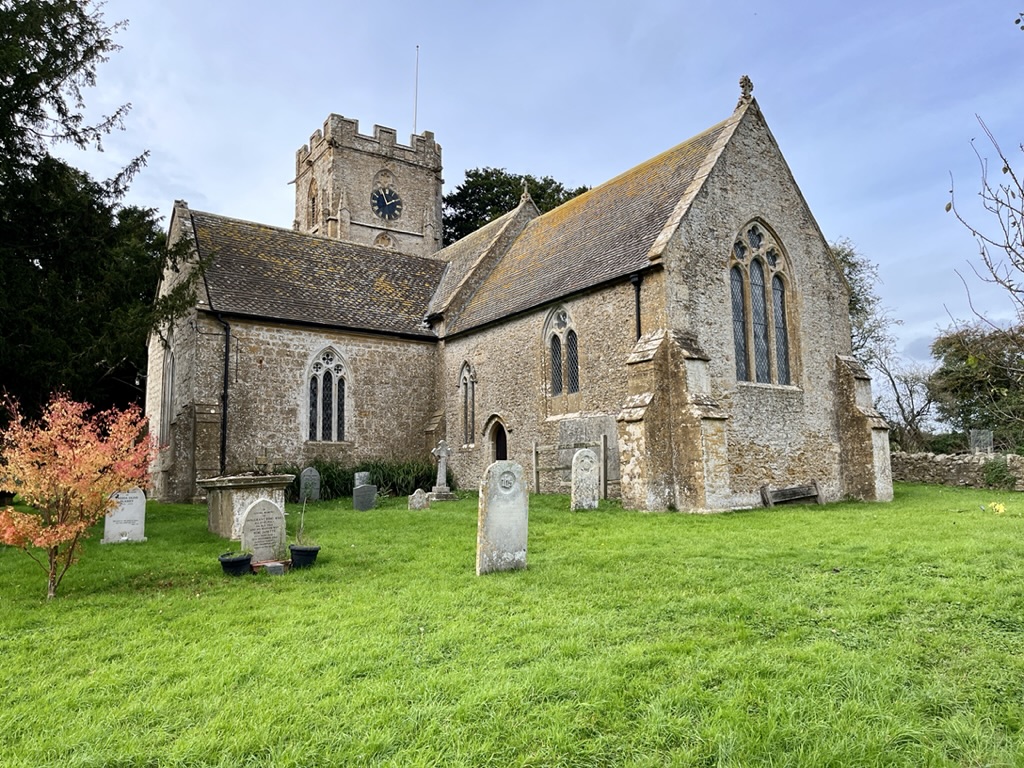
GRADE II* † C13 (of which traces), C15, major C19 restoration. An attractive church to visit, close to Barrington Court NT. 50.9606 / -2.8884 / T377182
DIAL
DEH visited in Sept 1912 and recorded: The dial is on the W side of the Priest’s door… 2 early A.M. lines are all that show but the stone is badly weathered and others may have been on it.
The erosion is doubtless worse now. One can just about make out a short horizontal 6-line L side, and a trace line below. Without DEH’s pioneering scratch dial project, I doubt that this little dial would ever have achieved a later mention.
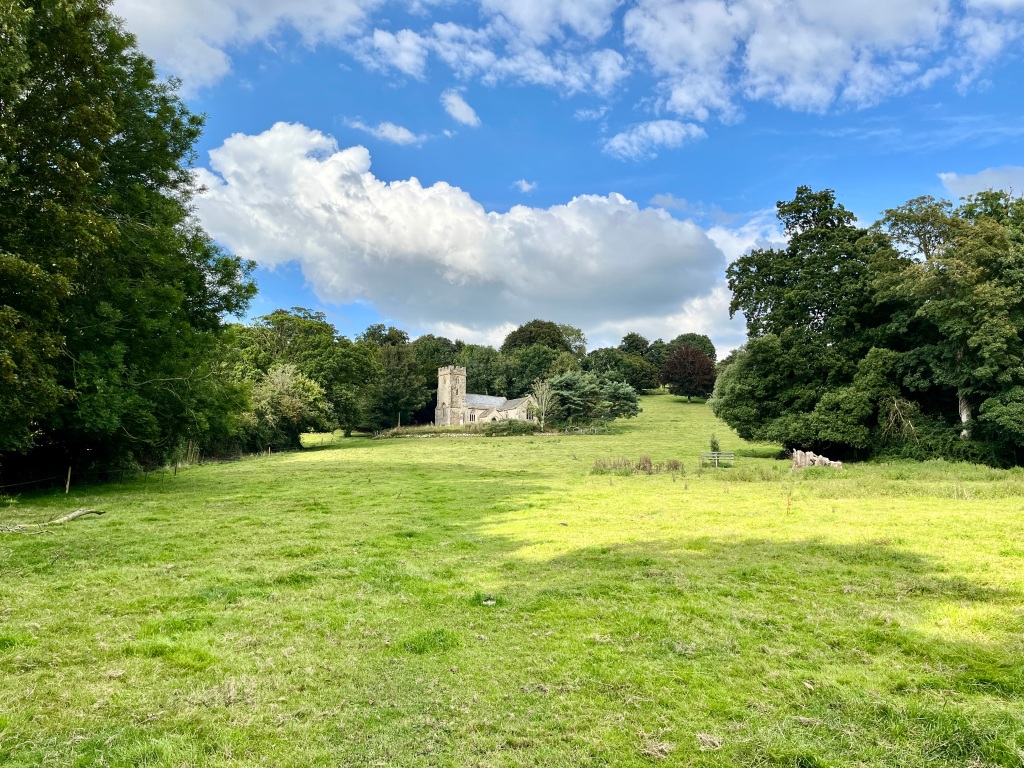
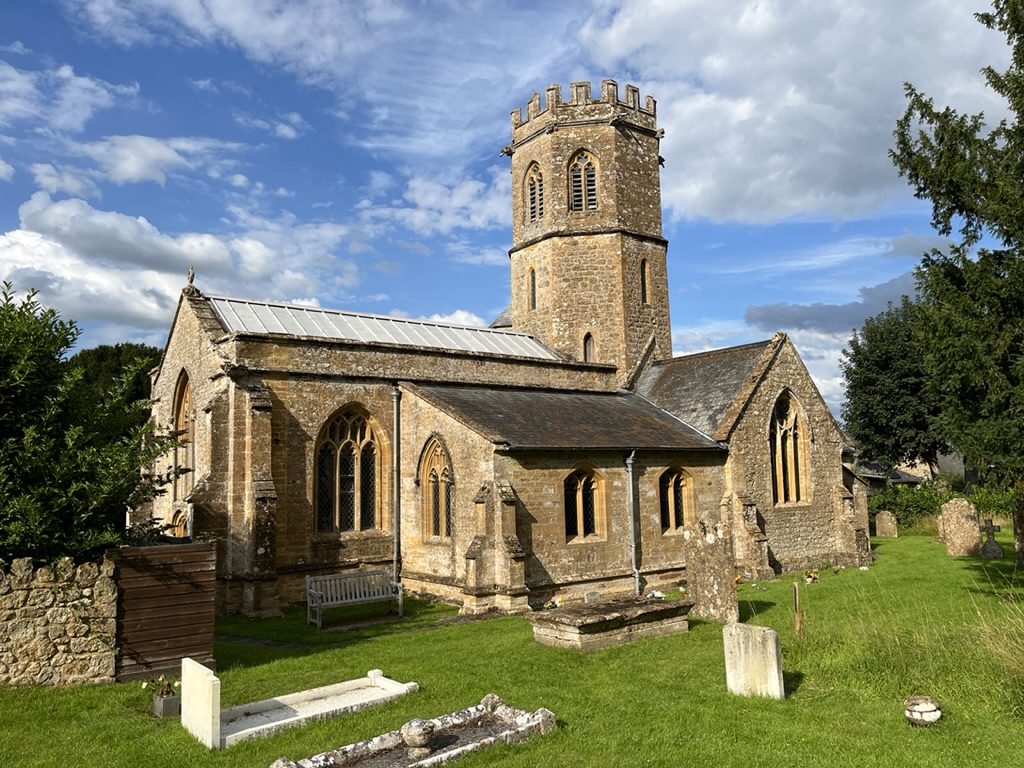
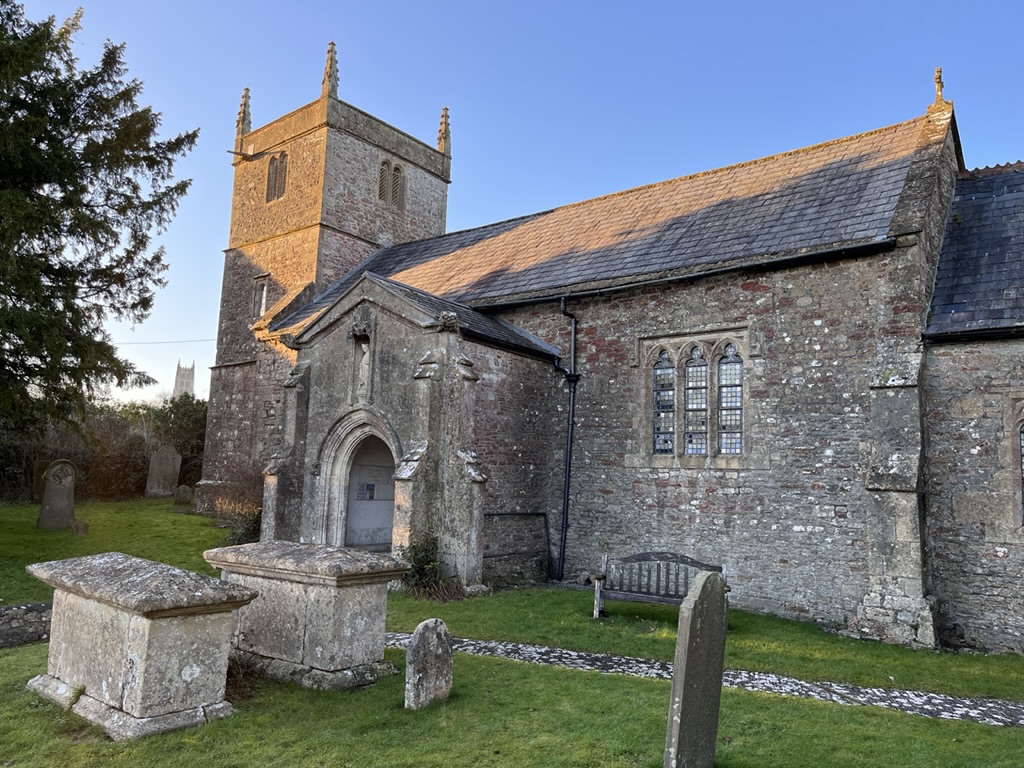
GRADE II* † Mainly C13, C14. Norman font. Alone on a hillside, accessible only on foot. Originally a separate parish from the close-by village of Stocklinch Magdalene; later amalgamated; now redundant and in the care of CCT. 3m NE of Ilminster. 50.9535 / -2.8813 / ST381174
DIAL
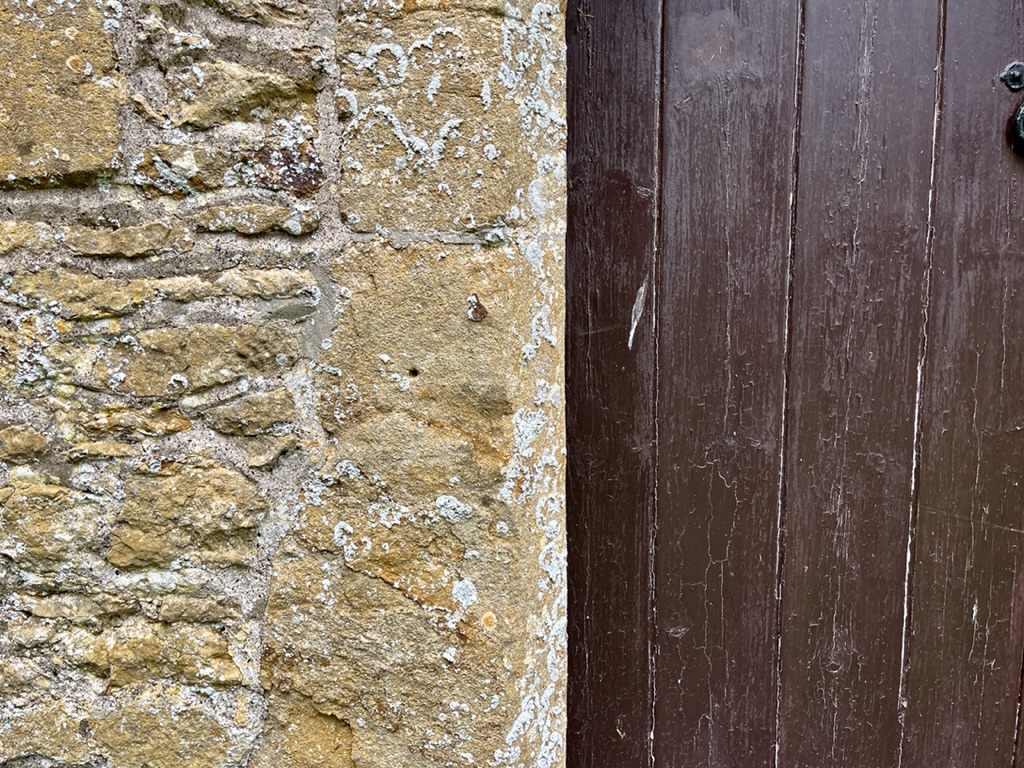
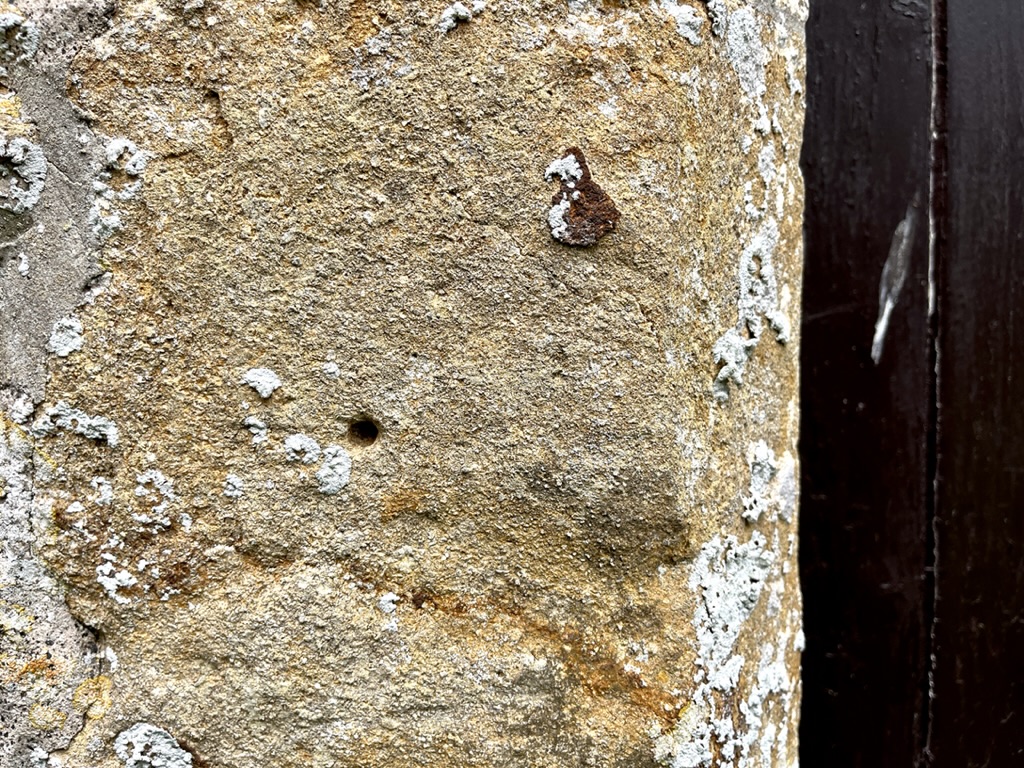
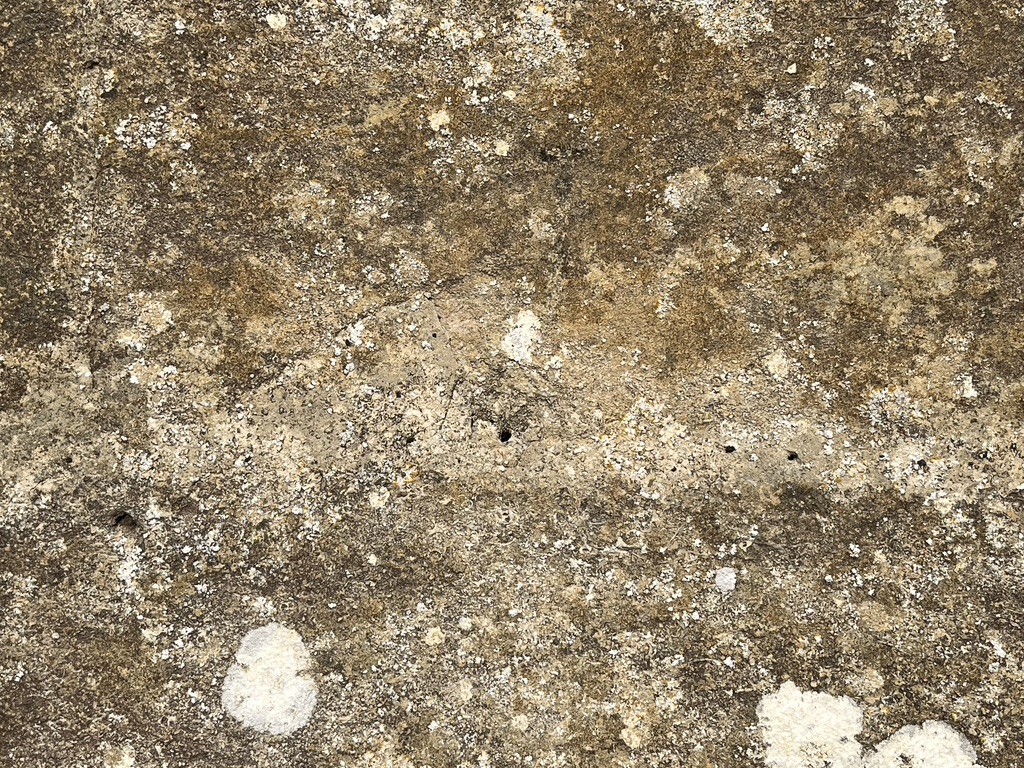
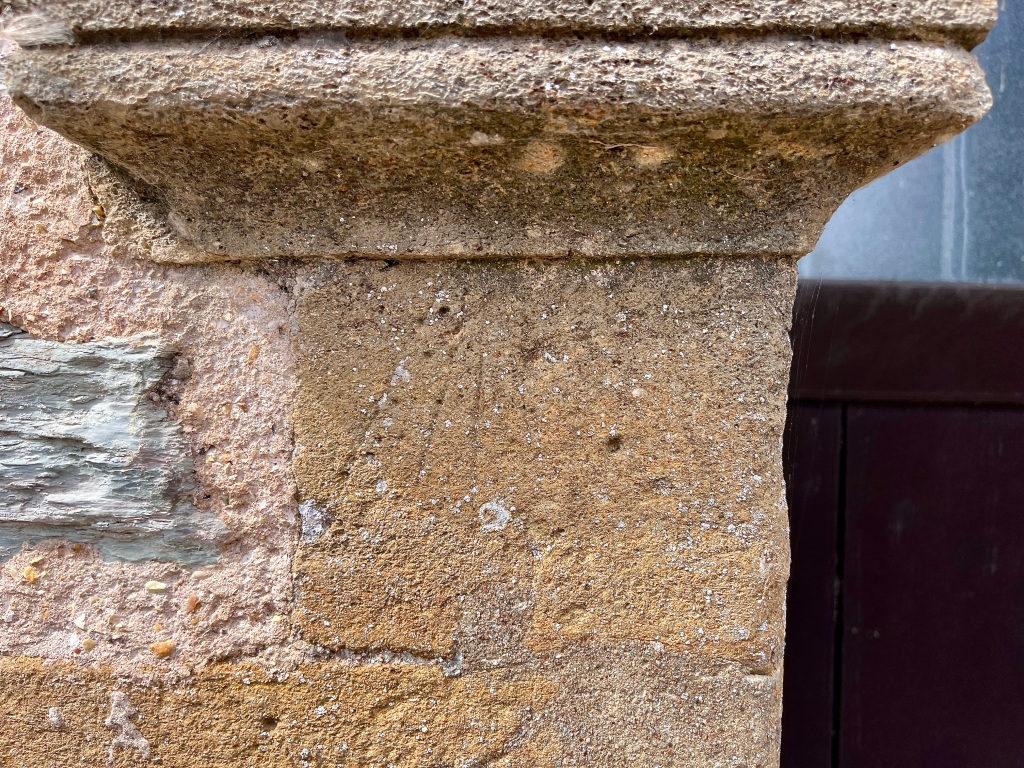
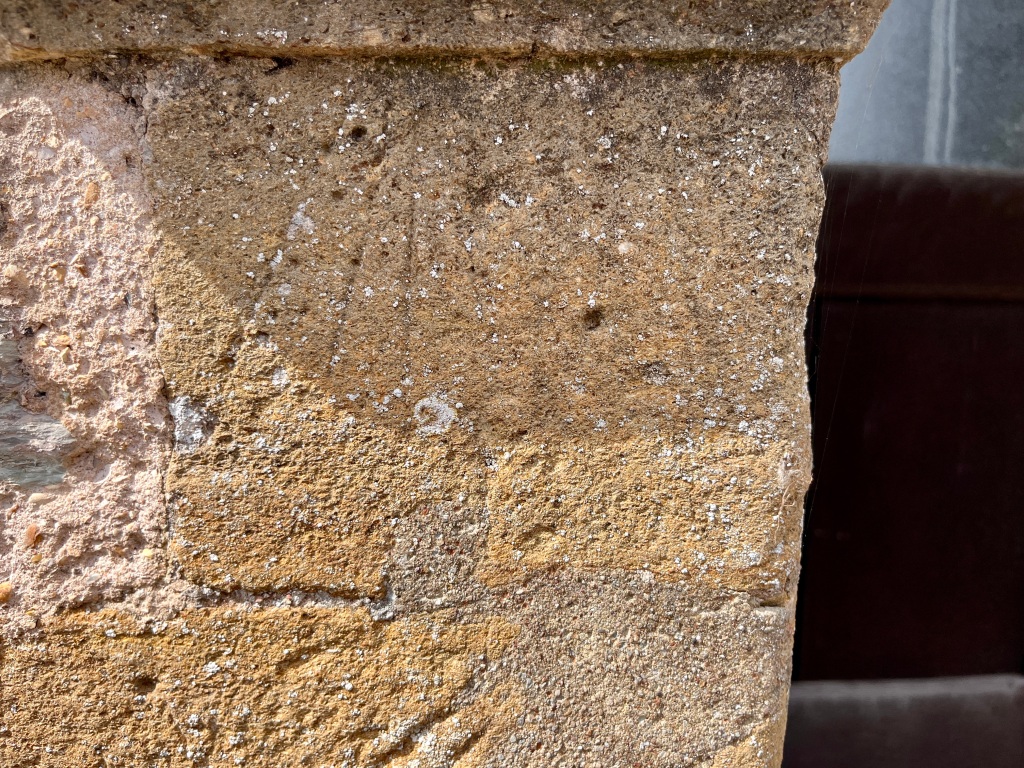
DEH visited St Mary in September 1912, one of his earliest field trips from Downside Abbey on his motorcycle in search of scratch dials. As he described it there is a doubtful dial on the E side of the Priest’s door. It is in a likely position, but the stone is so badly weathered that no lines can be traced upon it. To which I can only add even less so 100+ years later, especially with lichen obscuring scrutiny.
I include this record both because St Mary repays a visit for its location alone, and for completeness. Very close is the small Church of Stocklinch Magdalene, and it’s a short distance to BARRINGTON church with 4 scratch dials; and Barrington Court (NT) which has 2 outstanding pillar dials in the gardens.
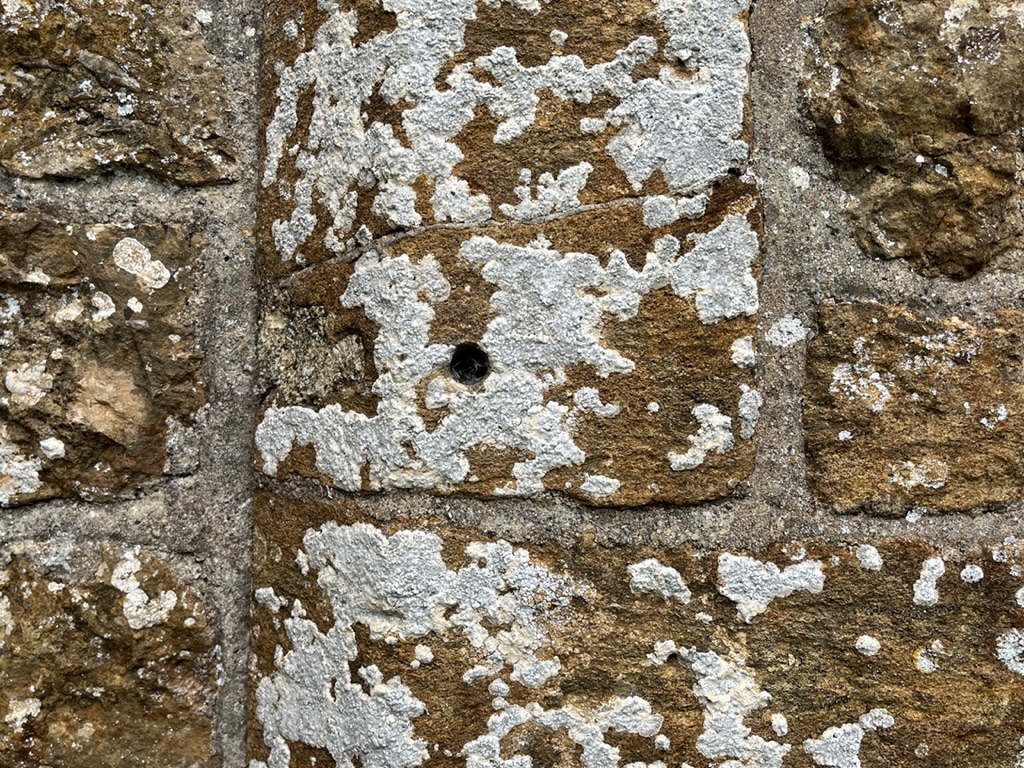
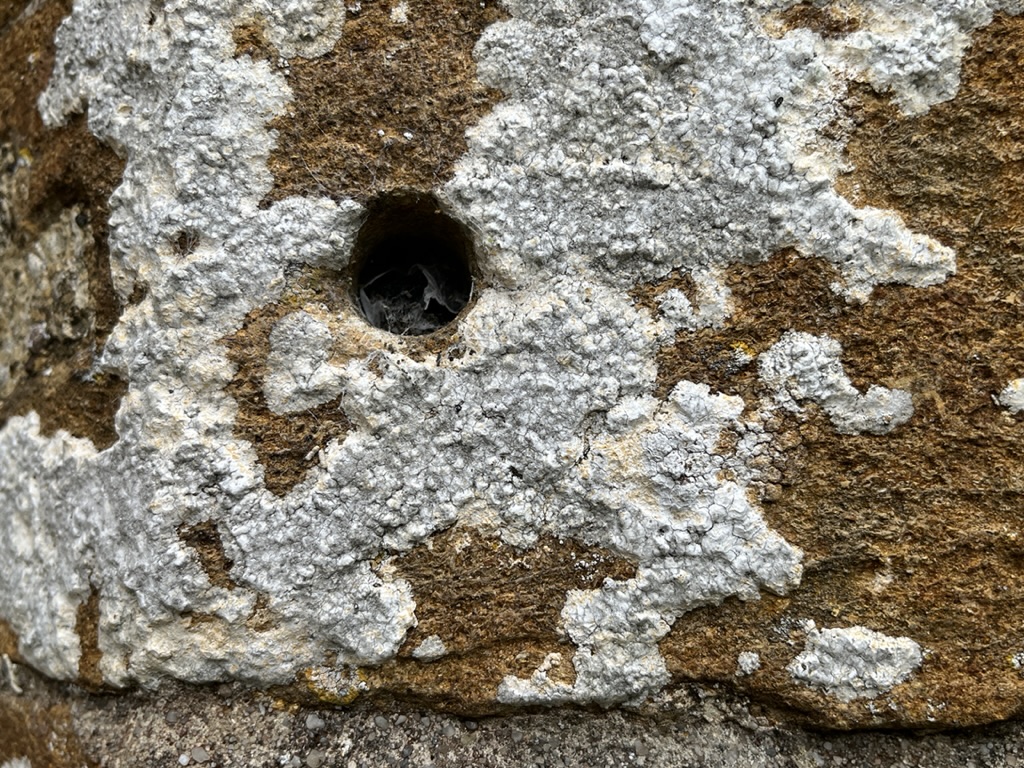
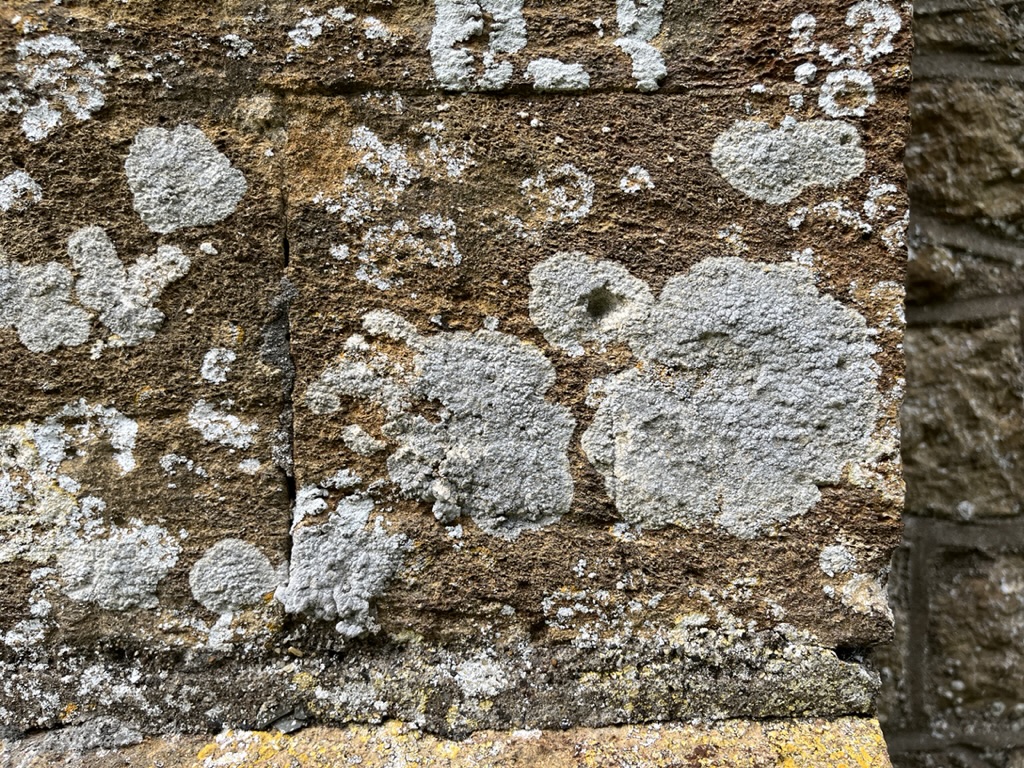
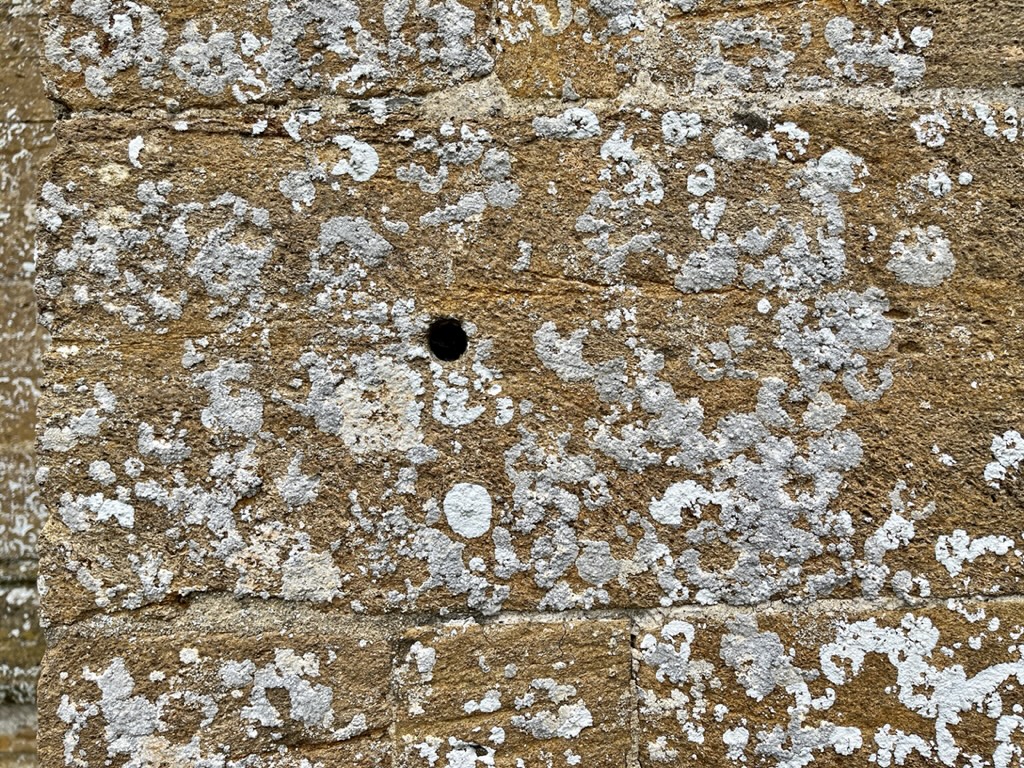
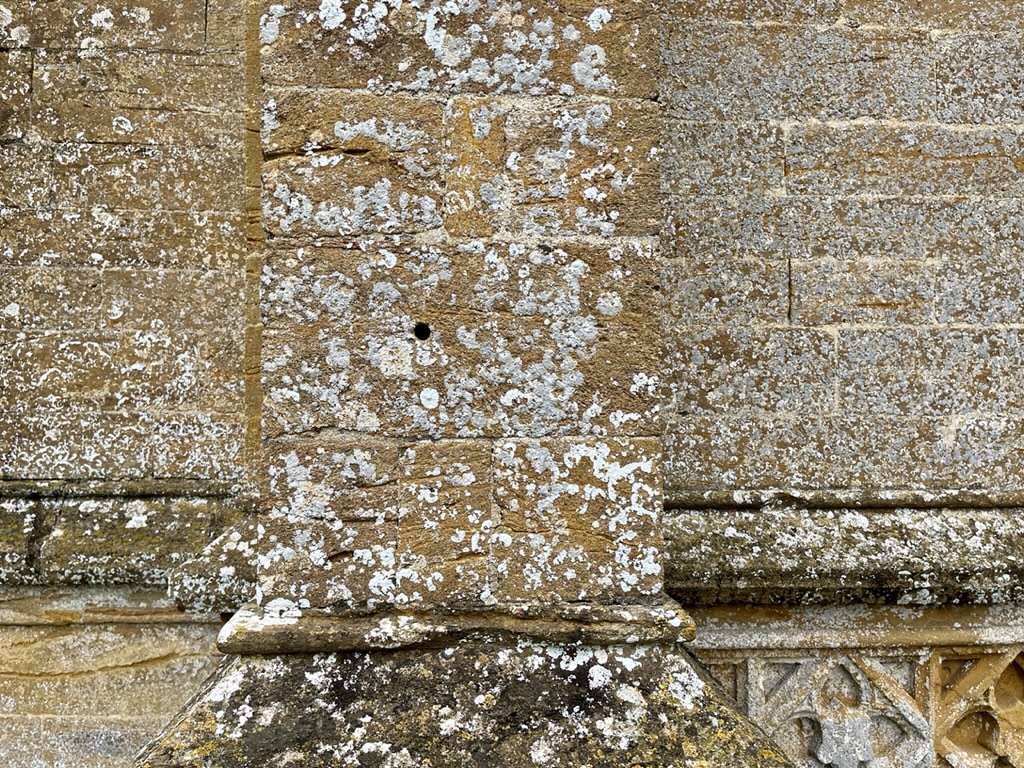
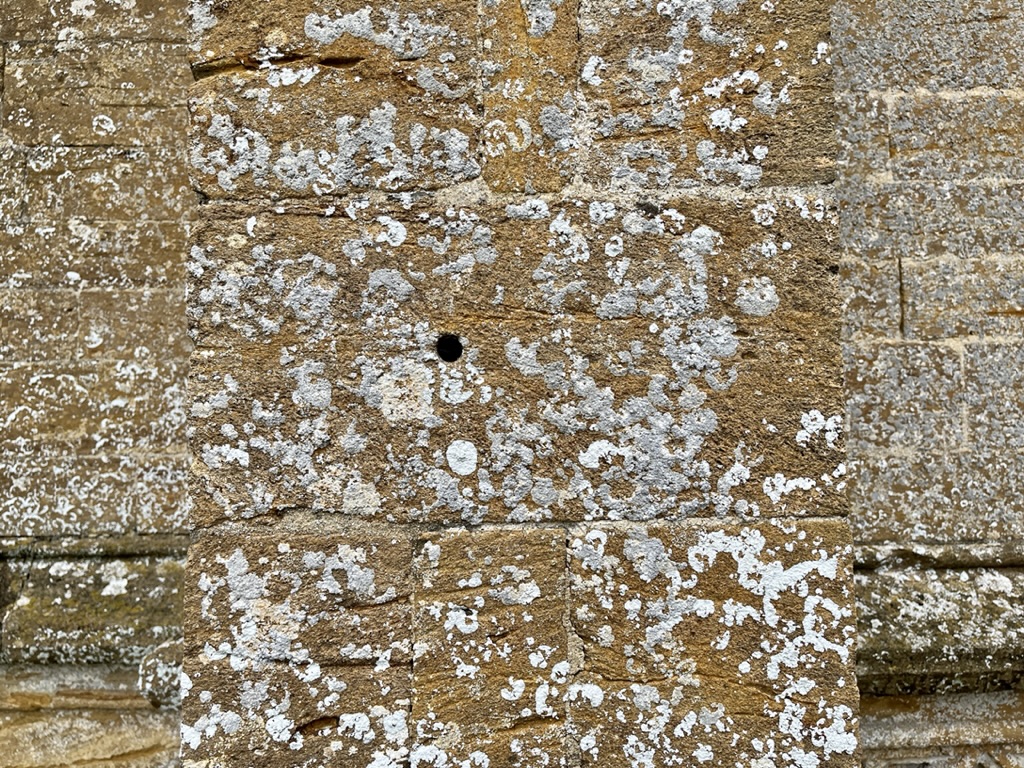
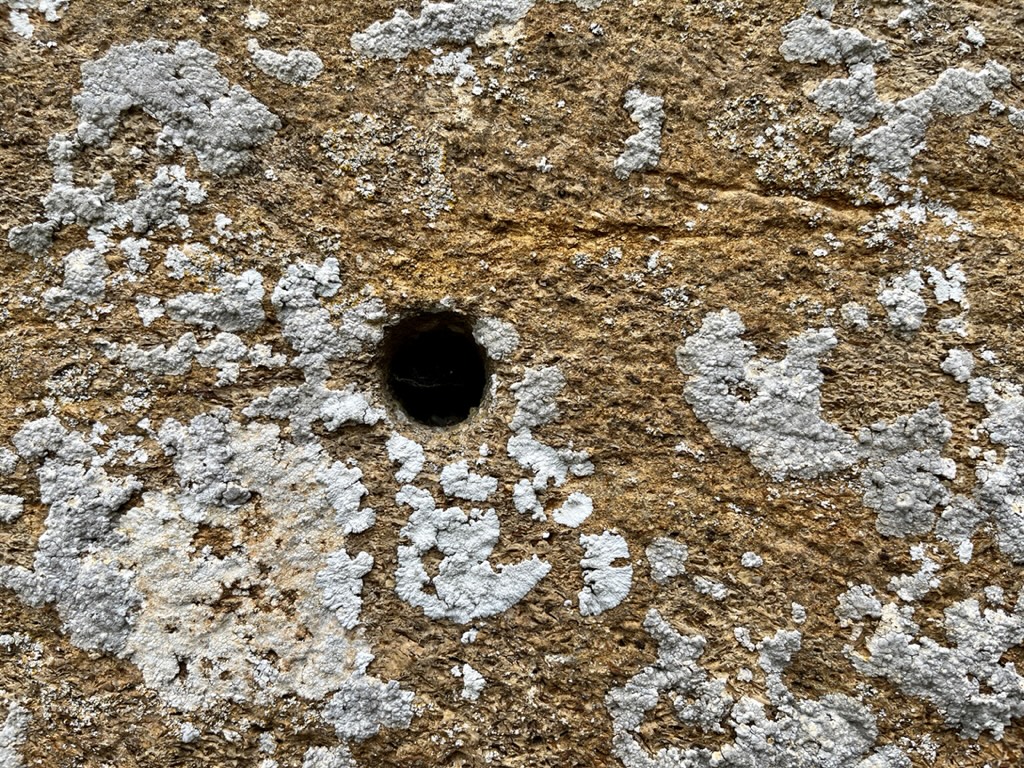
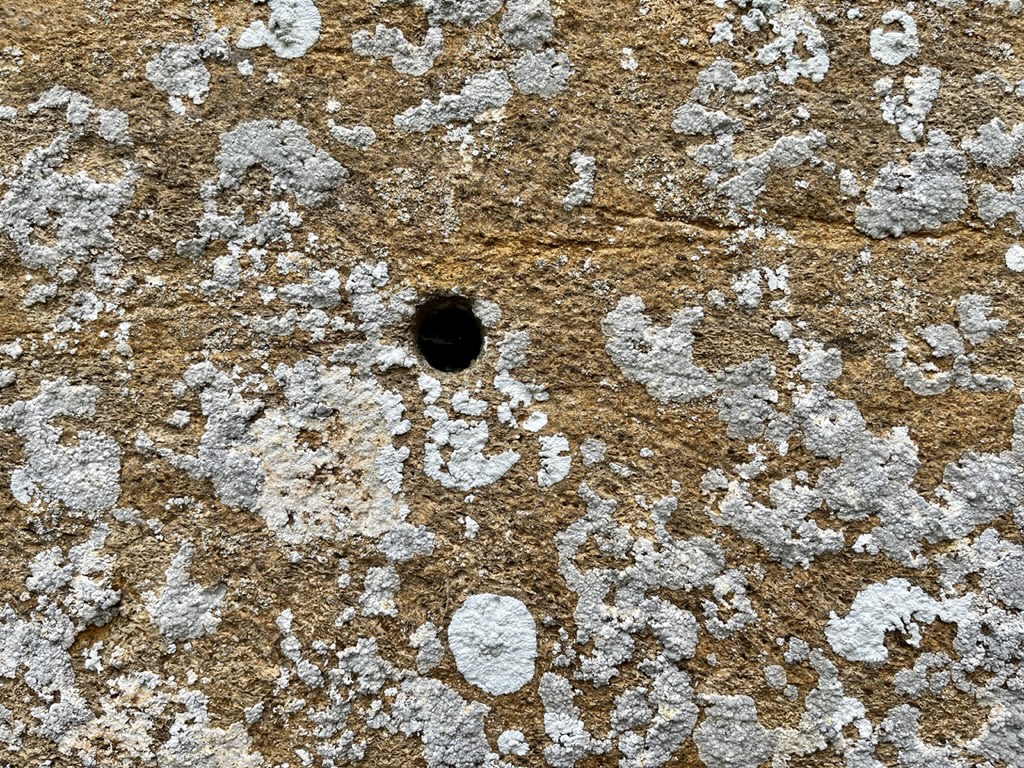
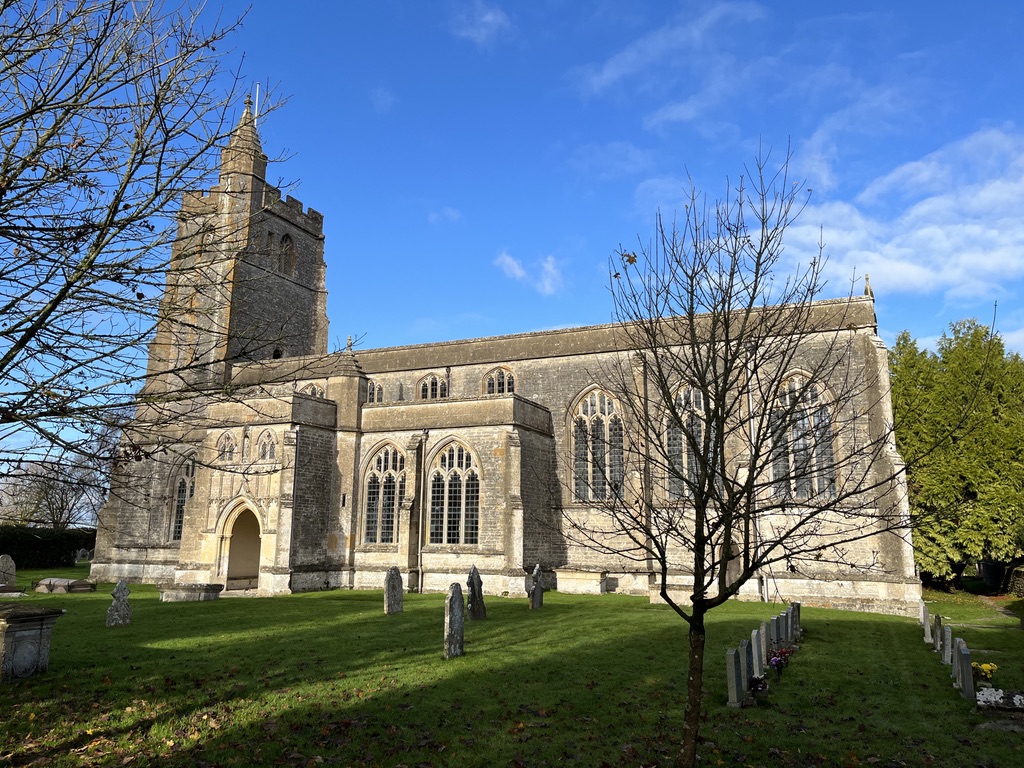
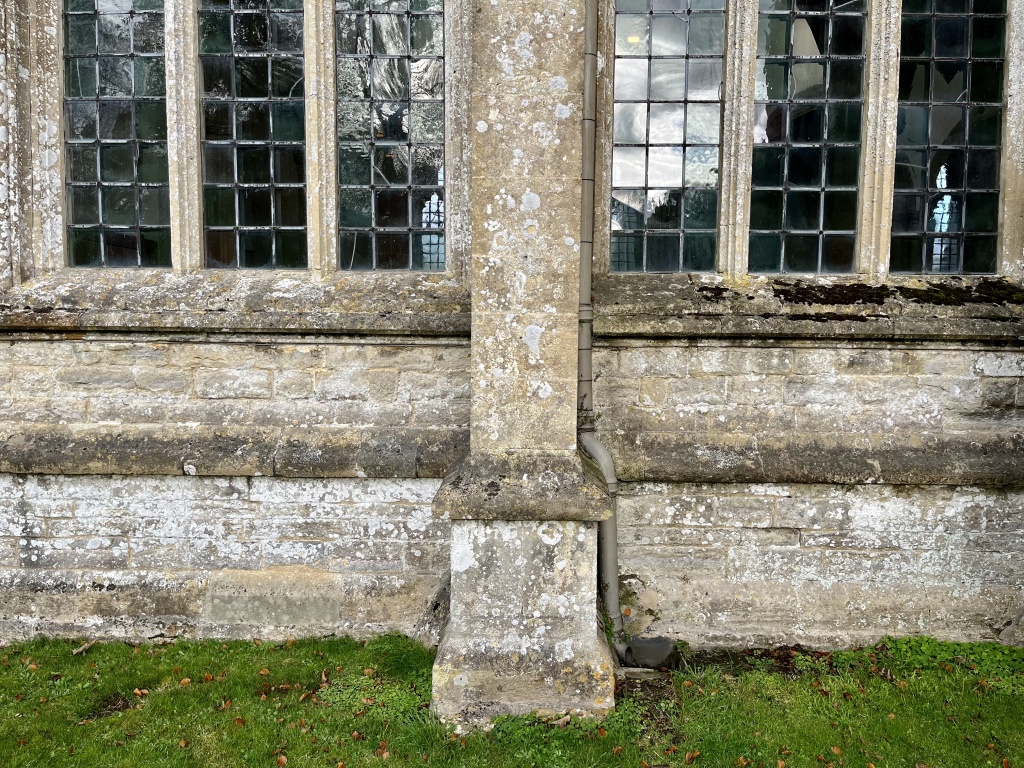
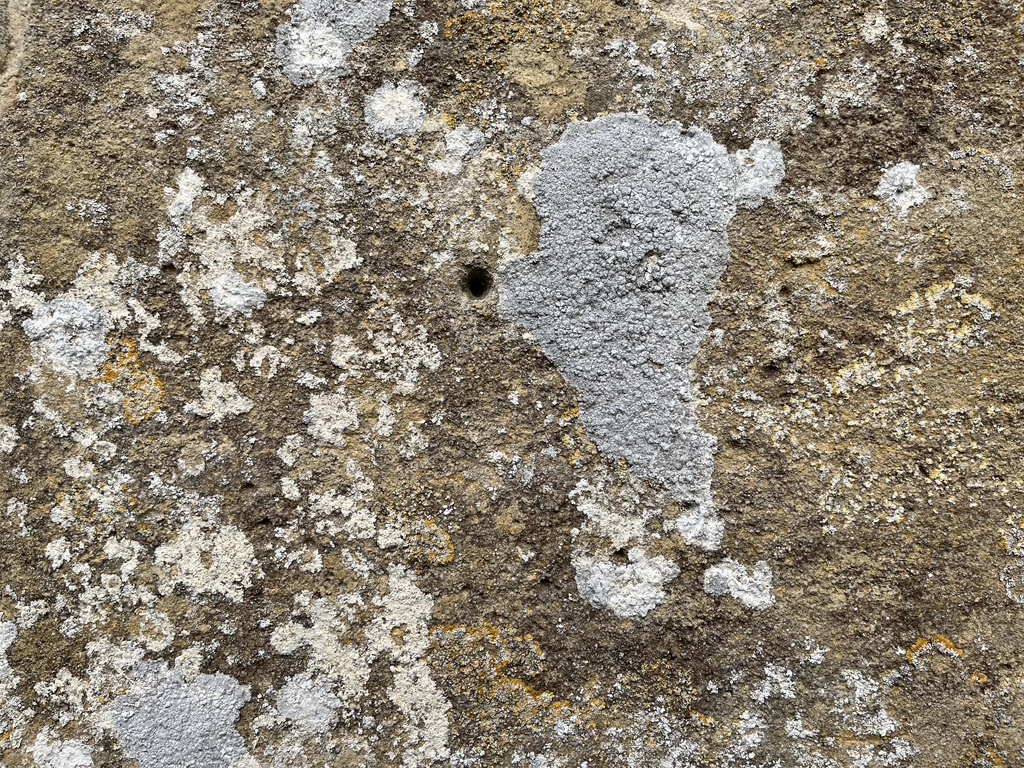
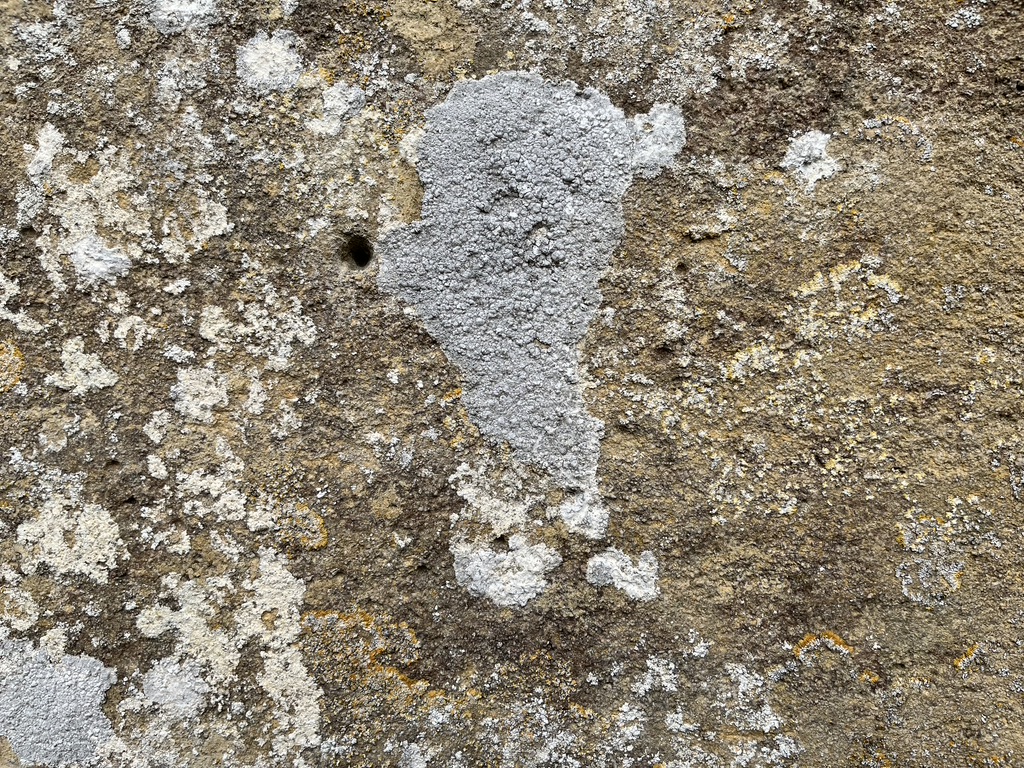
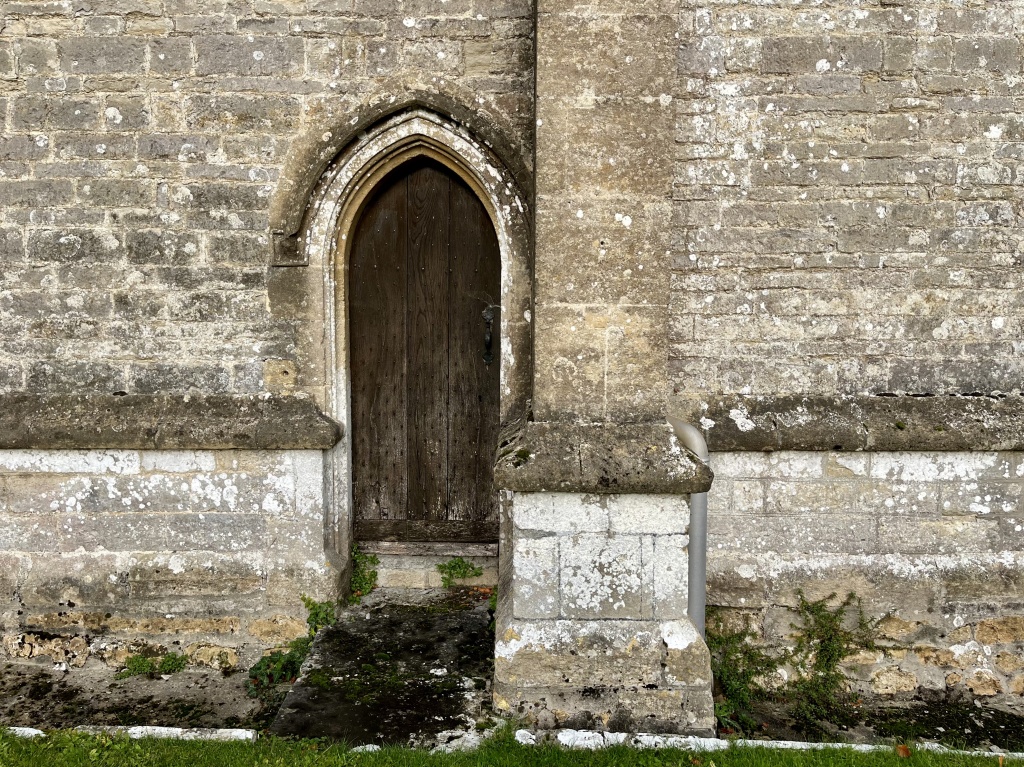
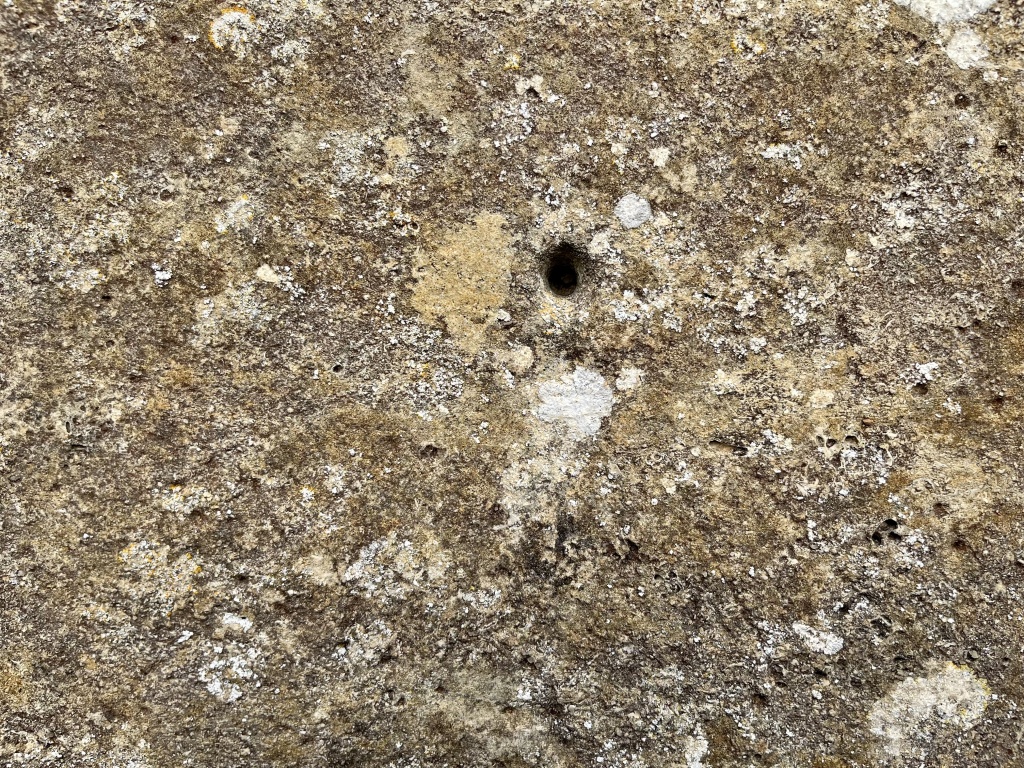
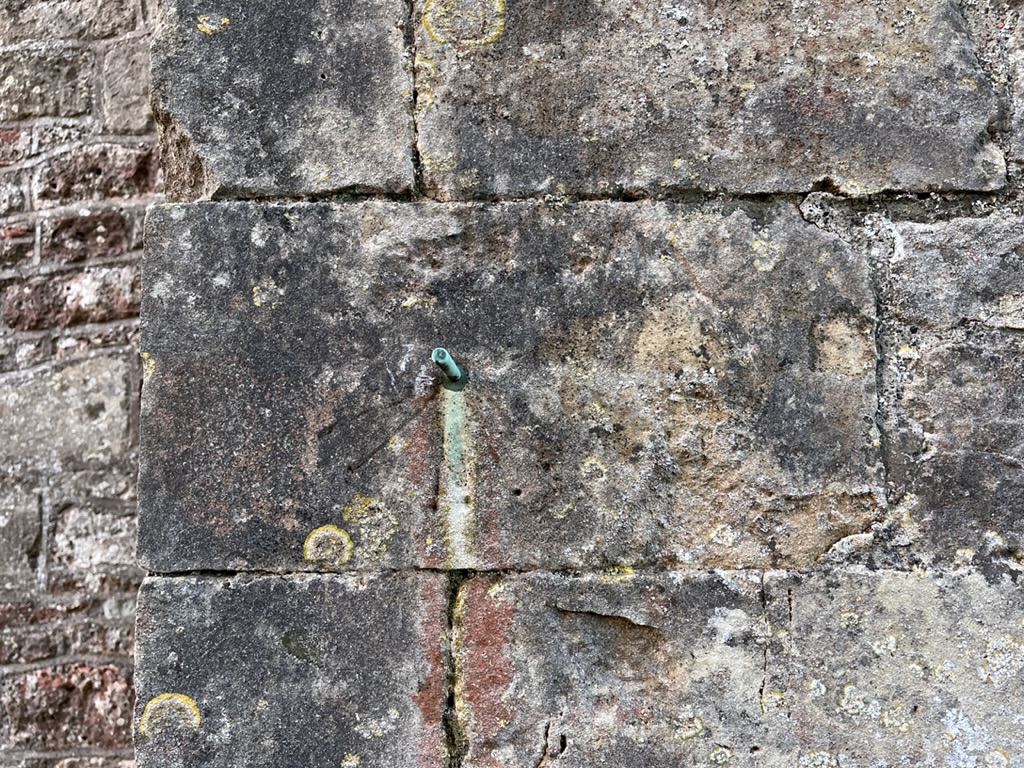
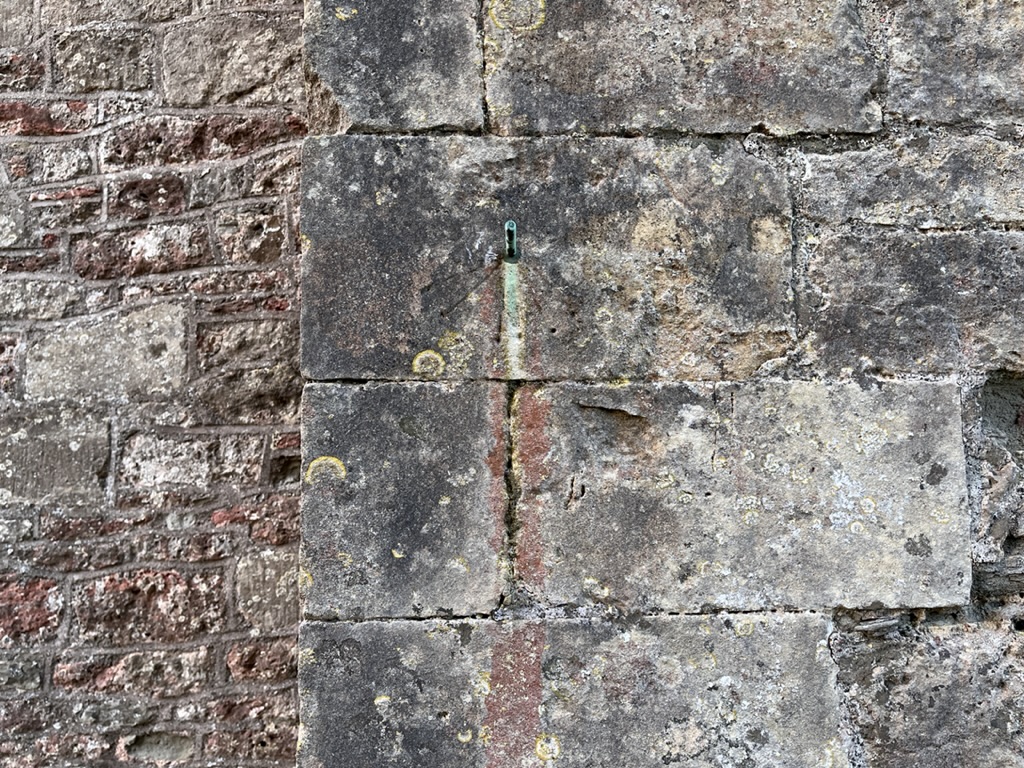
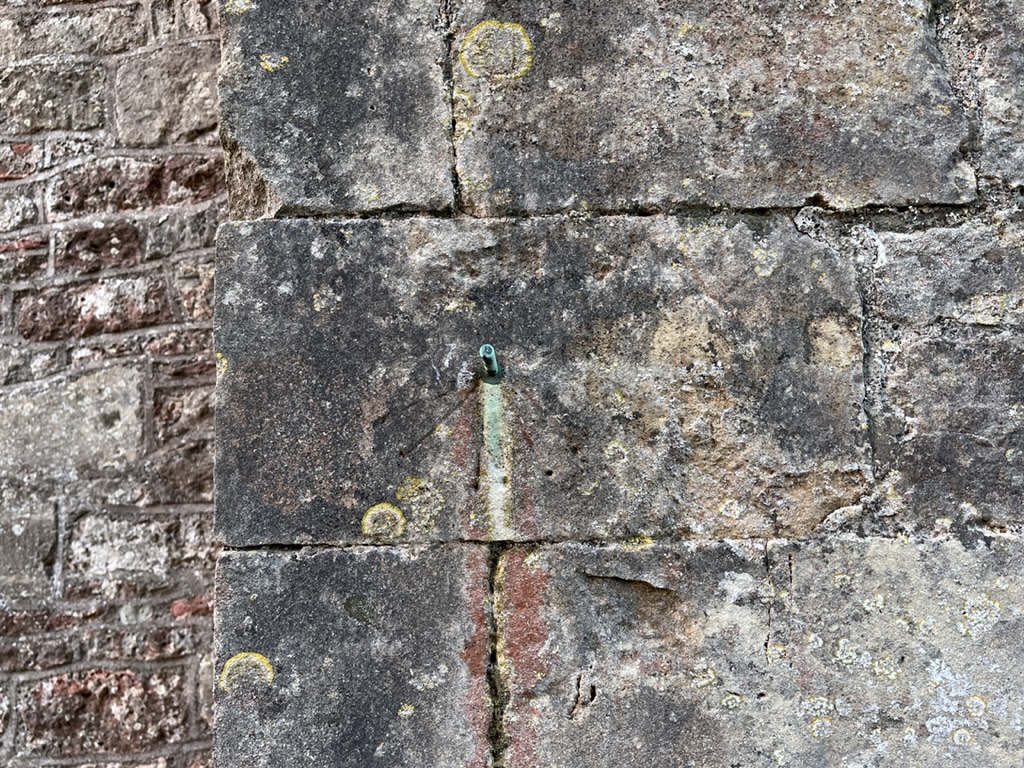
On the same side of the priest’s door, 2 stones lower, is a smaller apparently drilled hole with some sort of lining (?), but also no dial-ish features.
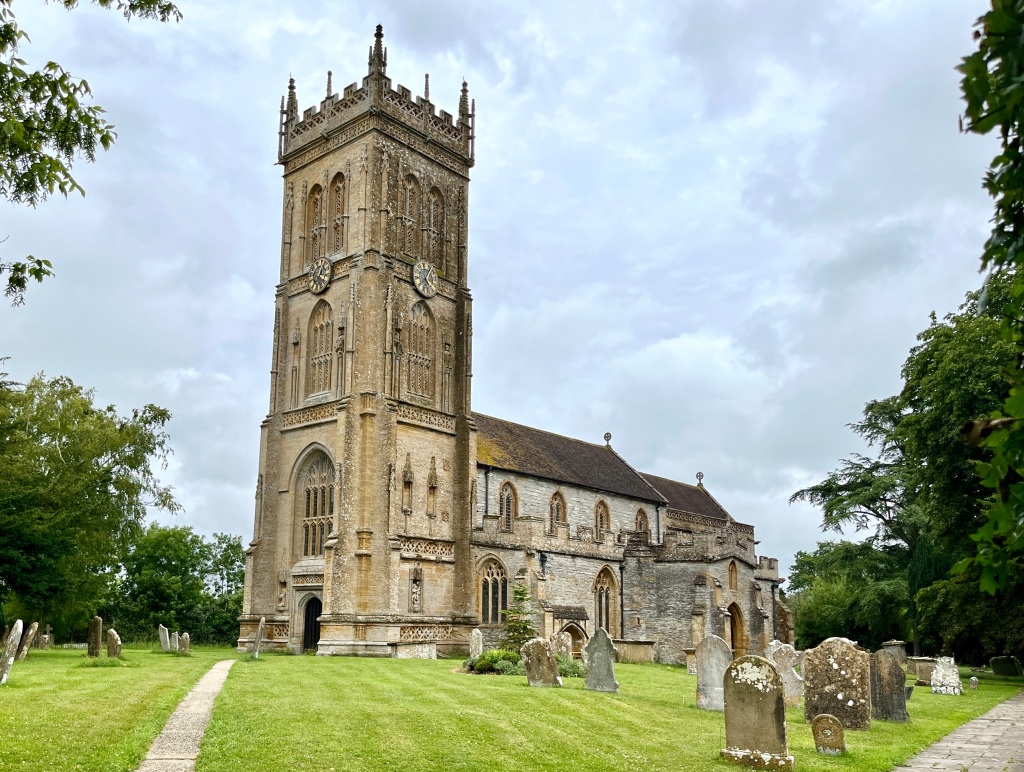
GRADE l † C13 origins; mainly C15 with C19 slightly controversial restoration. Dec and Perp. A fine-looking church with a handsome octagonal tower (one of a number in the area). Picturesque PEV. Combine with Barrington Court (NT) – 2 remarkable pillar dials: one is a dodecahedron with pentagonal faces (post in due course). 4m N of Ilminster. 50.9592 / -2.8712 / ST389181
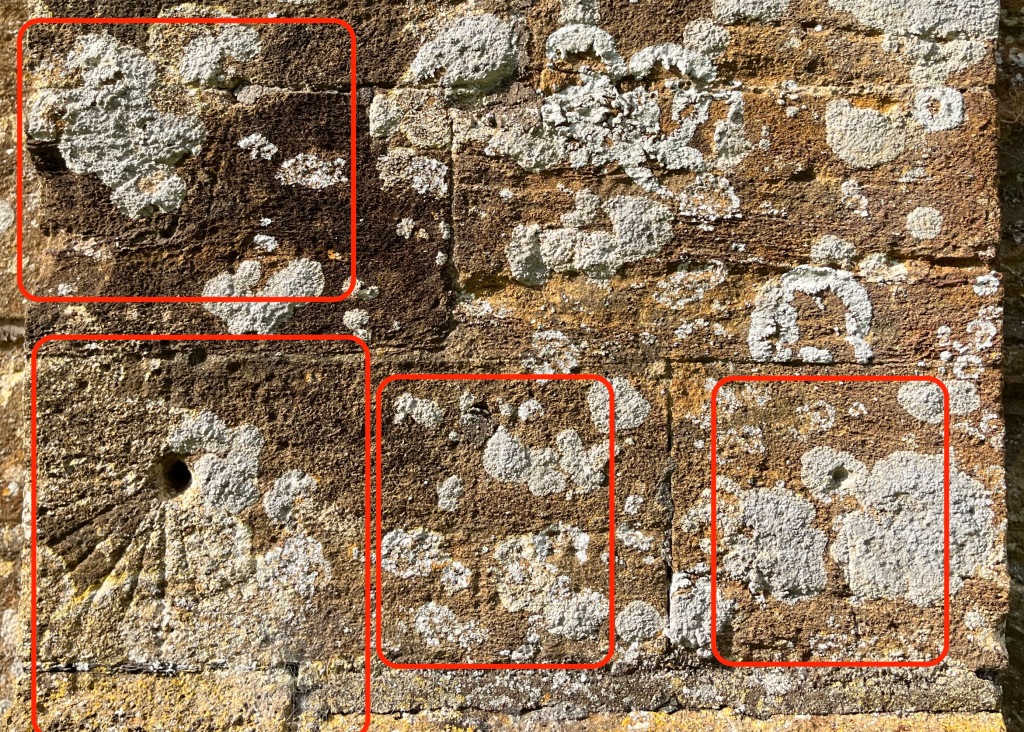
DEH the pioneering Downside monk visited on Sept 10th 1912 on one of his early dialling expeditions using a motorbike to get around. He recorded 3 dials in a group on the buttress at the W corner of the S transept. There is a fourth plausible dial in the same location.
DIALS
DIAL BUTTRESS
DIAL 1
This interesting dial has 10 / 11 radials extending from an enlarged gnomon hole. 8 & 9 are marked by deeper cut lines, suggesting the most important Mass time was Terce. The lower half of the dial has a few pocks on or near the circumference. Intriguingly the top half of the dial has a complete semi-circle of pocks. These are quite carefully graduated so that midnight has the largest, and on either side the size of pock reduces. There’s a trace of a single line upwards from the gnomon hole to midnight. DEH noted This dial has been added to and made into a wheel.
DIAL 2
Immediately above Dial 1, with a blocked gnomon hole in the mortar-line. There are 2 clear lines and 3 (4?) others. 2 (3?) appear to end in pocks.
DIAL 3
Dial 3 is sandwiched between Dials 1 and 4. The most obvious feature is the blocked hole. There is a faint noon line and the hint of a 9 line.
DIAL 4
On a quoin stone E of Dial 1 is a shallow hole from which a single thin line extends to mark noon. Plausibly a dial – especially as in a group – but perhaps not definite.
GRADE 1 † C14, C15 with C19 restorations. Predominantly Perp. A large and impressive building in a small community, admired by PEV: ‘of great interest’. A companion to nearby Huish Episcopi. 9m NW of Yeovil. 50.9865 / -2.8042 / ST436210
NOTE: this post has been superseded in April 2024 after a visit in sunshine. The faint dial markings owing to poor light are now legible. The text is much the same. See the new post HERE
DIAL
St Martin . Kingsbury Episcopi . Som – Scratch Dial
The dial is located on the W buttress on the S side, and has a gnomon hole large enough to be seen from the church path. DEH visited in Sept 1912 and noted that, because the dial is about 8′ above ground level, it would have been moved to its present position during reconstruction of the tower (the oldest part of the church).
The dial is very eroded, and it is now hard to make out the details. DEH describes a complete wheel of thin lines without a circle. More than a hundred years later, the design is very faint indeed. Neither inspection nor photos reveal what DEH will have seen.
GRADE I † Mainly early C15, some older fragments; later restorations. A huge church for a small village. Simon Jenkins awards it ** and with good reason. Wonderful bench ends, not to be missed. See BLB for more. Midway between Wincanton and Ilchester. 51.0417 / -2.5214 / ST635270
DIALS
DEH visited in April 1914 and recorded 3 dials, all on S facing buttresses, one close to the priest’s door. They are very eroded. There are possible remnants of 2 further dials, mentioned below.
DIAL 1
St Michael . North Cadbury . Som. – Scratch Dial
DEH169. (1) This dial is on the first buttress w. of the s. porch. It is 5 feet above the ground, the noon line is 4 inches in length, the stylehole is 5/8 of an inch in depth by 1/2 an inch in diameter, and the aspect is s. by 15° e.
Located on the buttress W of S porch. An obvious style hole with a semicircle (6 – 6) of unobtrusive small pocks. Photography has its limitations and St Michael tested them. Records mention 13 to 16 pocks. One can just make out the faintest of traces of lines at noon and 2.
BSS suggests a possible dial immediately above. Assuming a style hole in the mortar line, there are a few pocks in the immediate area, but rather disorganised. Doubtful rather than plausible.
DIAL 2
St Michael . North Cadbury . Som. – Scratch Dial
DEH170. (2) This dial is on the first buttress E. of the s. porch. It is 4 feet 10 inches above the ground, the noon line is 3 inches in length, the style hole is about 11/2 inches in depth by 3/4 of an inch in diameter. The aspect is s. by 15° e.
As with Dial 1, very eroded and with little visible detail even when one is quite close. There are 8 detectable lines with a perimeter of pocks, probably (BSS) 13 with extra pocks at 8.30 and 10.30 – presumably Mass indicators.
DIAL 3
St Michael . North Cadbury . Som. – Scratch Dial
DEH 171. (3) This dial is on a buttress e. of the priest’s door. It is 5 feet 8 inches above the ground, the noon line is 4 1/4 inches in length, the style hole is 7/8 of an inch in depth and 1/2 an inch in diameter, and the aspect is s. by 15° e.
Situated on S side of the chancel, on the buttress E of the Priests’ door. There are 13 lines and a full complement of 24 pocks. The line angles are at approx 15º intervals. BSS notes a possible ‘tiny dial’ above it.
MEDIEVAL GRAFFITI
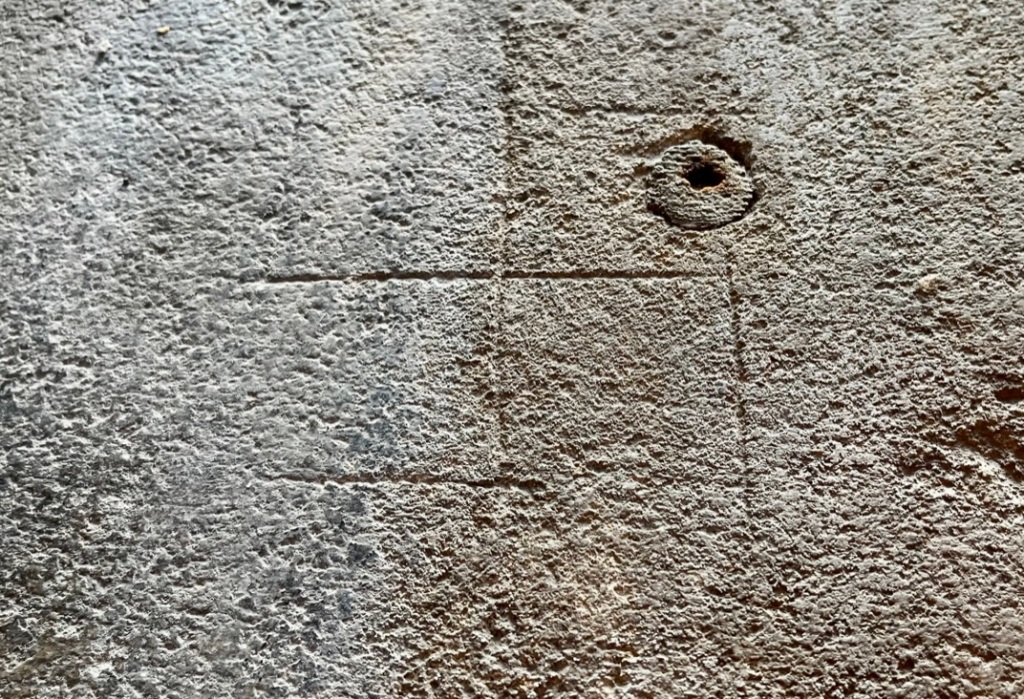
The porch contains the original stone benches on either side. These are often troves of graffiti, in particular apotropaic symbols and other ritual protection marks designed to repel evil or to prevent its entering the church. These signs are quite common to find in other locations both outside and inside a church (see HERE). However, in many churches, stone benches were replaced in succeeding centuries. St Michael has retained the benches, on which there are excellent examples of marks that are relatively rare. There are hands here, and a medieval swastika (a Sanskrit word) from several centuries before its more recent symbolic adoption. It incorporates a repelling circle mark, where evil may be captured within its continuous circumference.
GRADE 1 † C12 origins; mainly C14; much rebuilt C15/C16; further rebuilding late C18; restoration C19. One of only two churches with this Dedication (Fulbourne Cambs is the other). A pleasing and unpretentious church. Very close to Downside Abbey/. 51.2552 / -2.4896 / ST659507
DIALS
Downside Abbey was home to Dom Ethelbert Horne, the pioneer dial collector and analyst who covered Somerset with skill and determination, using a motorcycle to get around. He began the project in 1913, and recorded the dials at St Vigor on Nov 3 – perhaps they were his first finds. His book with its careful explanations is a vade mecum for any dial enthusiast (even one with no connection with the County).
DIAL 1
Dial 1 is located at SW corner of the nave, high up (7′) on a quoin stone. DEH noted The Mass line in this dial is sharp and distinct, and made at a different time from the other lines. He makes no comment on the design. There are 6 lines each with a terminal pock, with hints of a couple more. DEH makes no mention of a gnomon, but with his usual thoroughness measured the depth of the hole. It is certain, therefore, that the existing (copper?) rod was inserted relatively recently.
DIAL 2
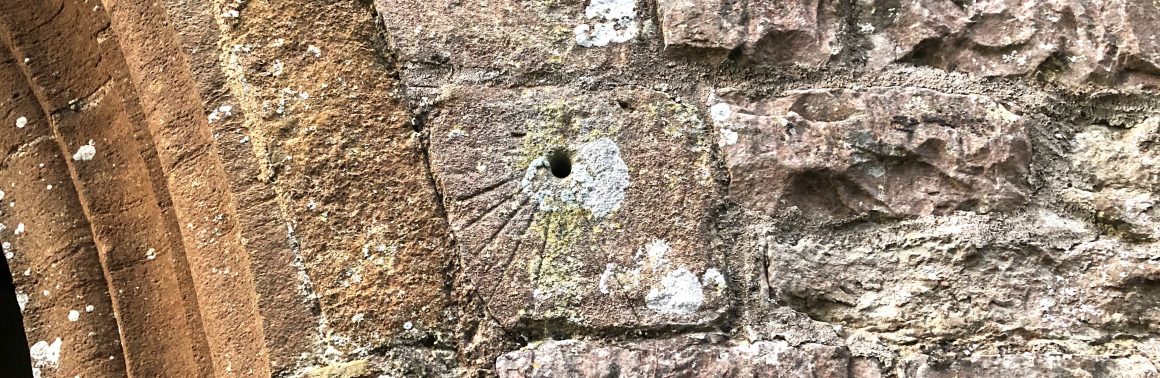
Dial 2 is on the buttress between S porch and E end of the nave. DEH commented: Encircled. No hour lines can be seen on this ancient and badly worn dial. the remains of 2 circles close apart. Were it not for the noticeable gnomon hole, it would be easy to pass this one by.
DIAL 3
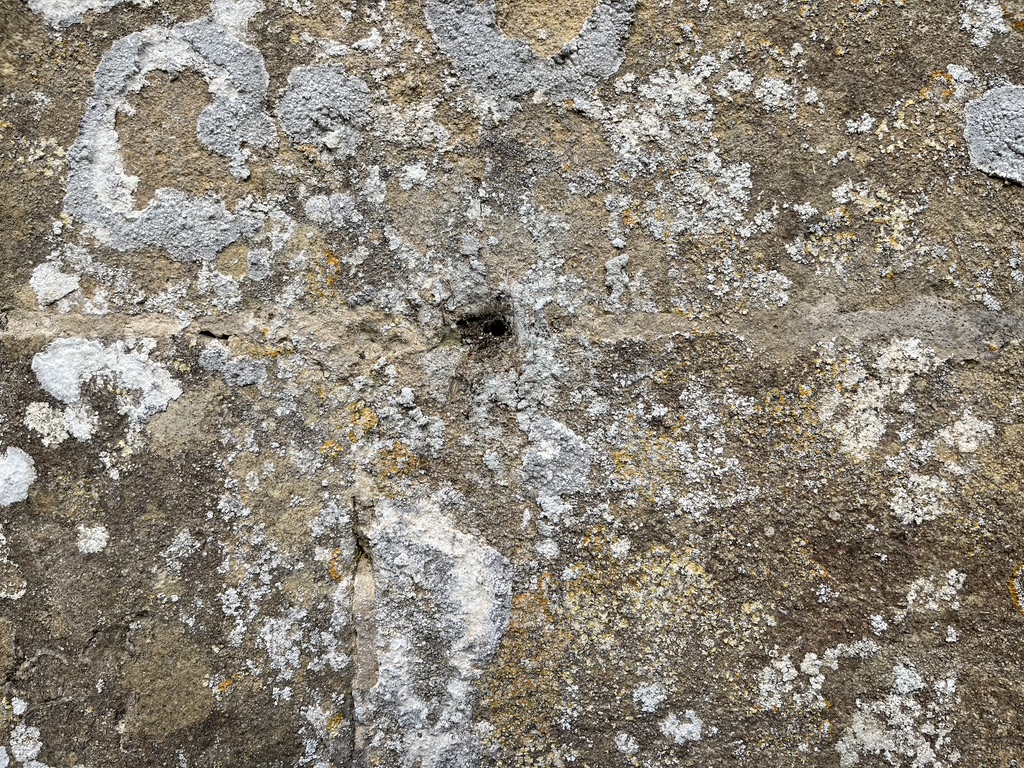
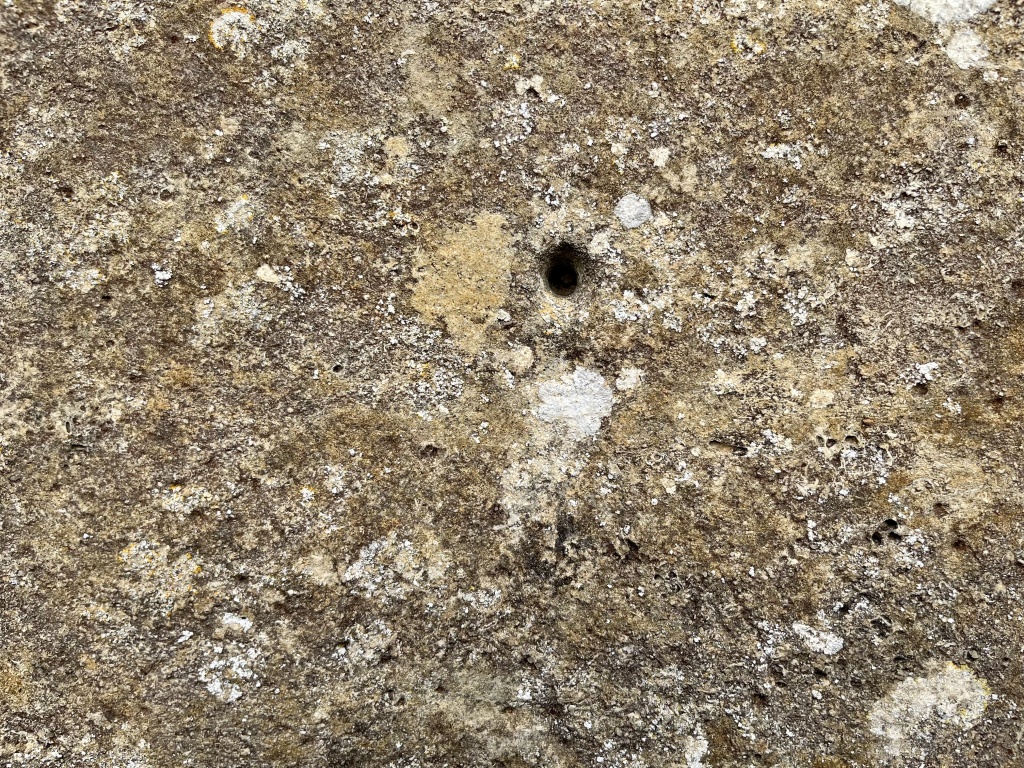
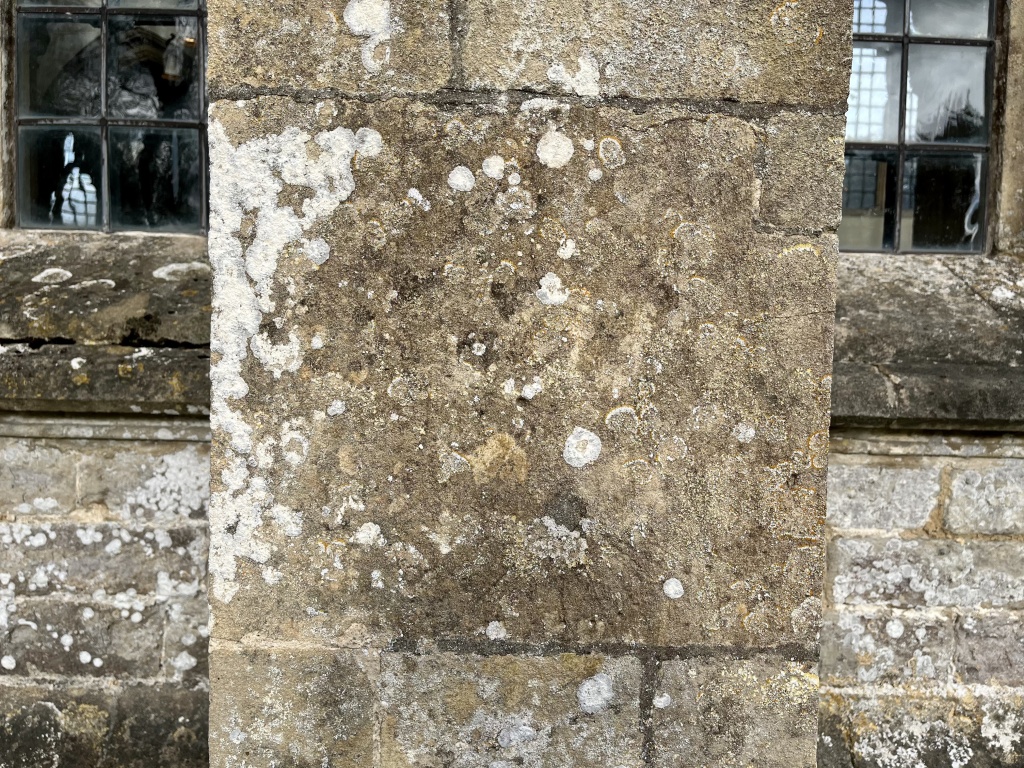
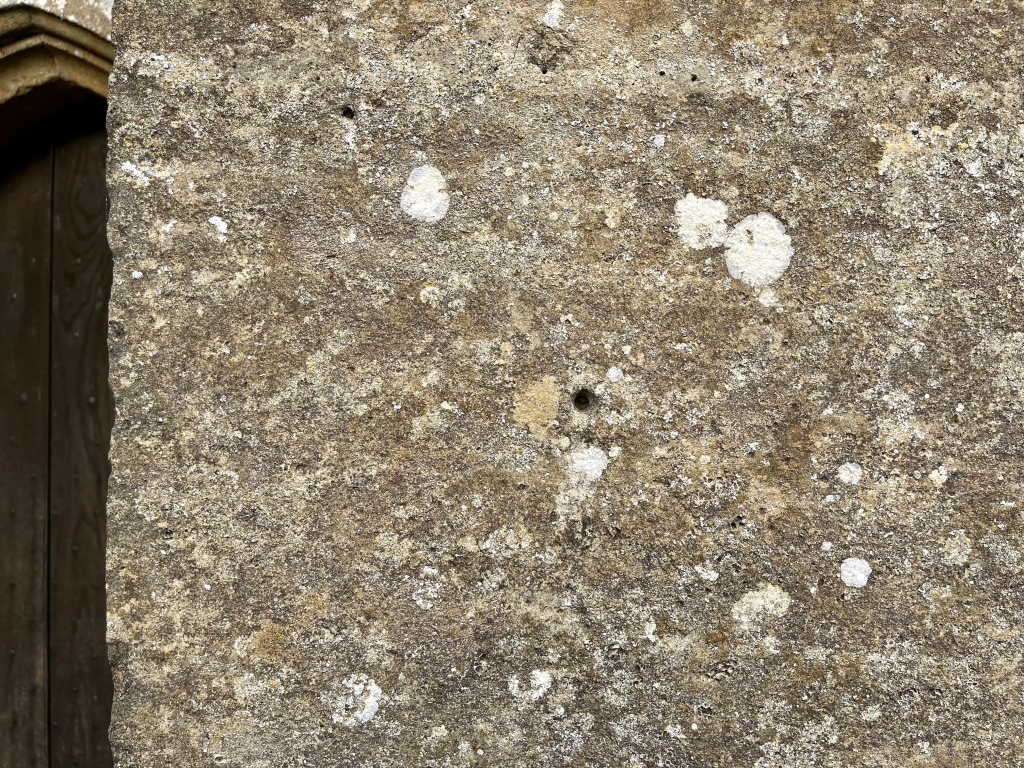
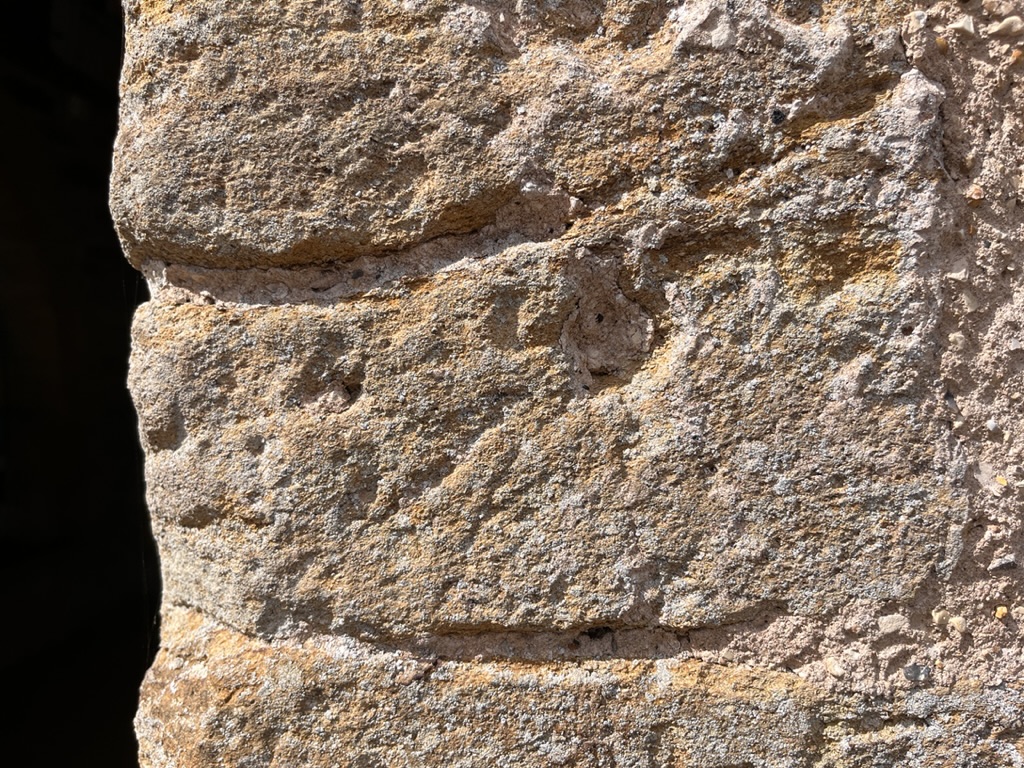
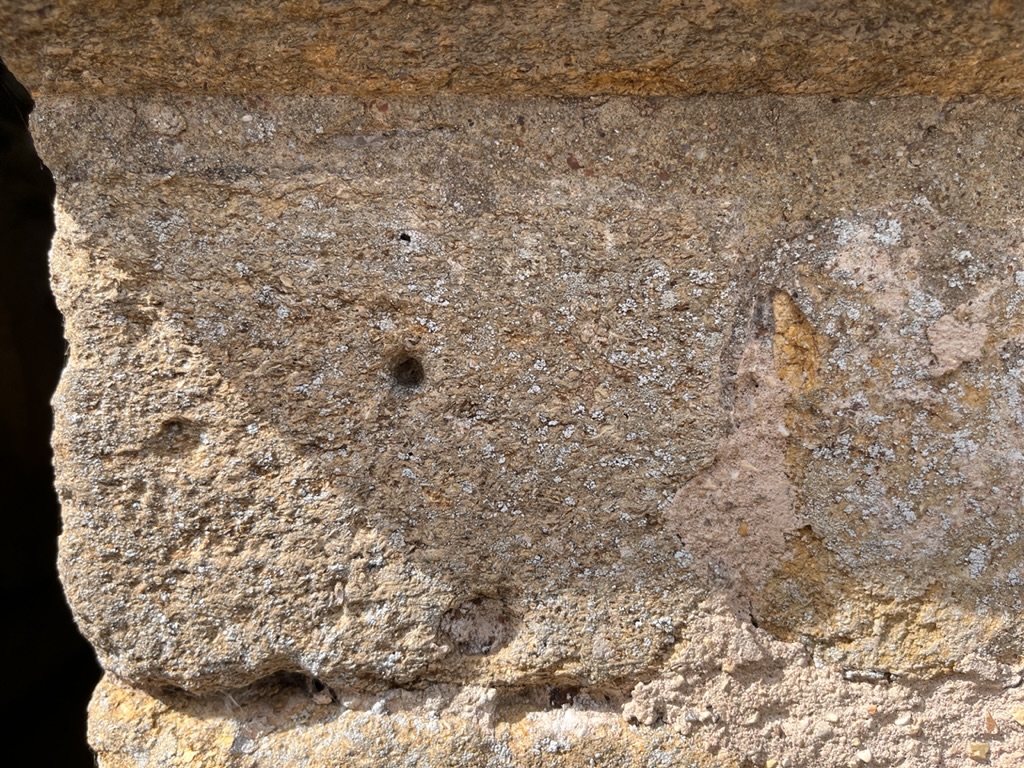
To be found on the W side of the entrance to S porch, 3′ 3″ high. Or so noted DEH very specifically. He mentions a style hole and a noon line 3½” long, but I spent some time examining this area and indeed the corresponding position on E side of the doorway (because field notes are occasionally confused), with no convincing dial identifiable. Here are photographs of the location, for what they are worth…
DEDICATION
In C6 there was a ‘hermit preacher’ and Christian missionary who became Bishop of Bayeux. He died c537 AD and was canonized as St Vigor (Lat.) or in due course Saint Vigeur (Fr.). The Norman conquest brought his followers to England and his name first appears in an eleventh-century breviary at Worcester.
Another account is that in the early C12, manorial rights for Stratton passed to a Norman family who came from Saint-Vigor-le-Grand, Normandy.
ST VIGOR IN FRESCO
Frescoes at the Churches of St Vigor Ste Suzanne Les Coevrons, and St Vigor de Neau cc / os / tourisme
GSS Category: Scratch Dials
All photos Keith Salvesen; St Vigor as credited; source material Bath Record Office, Wiki
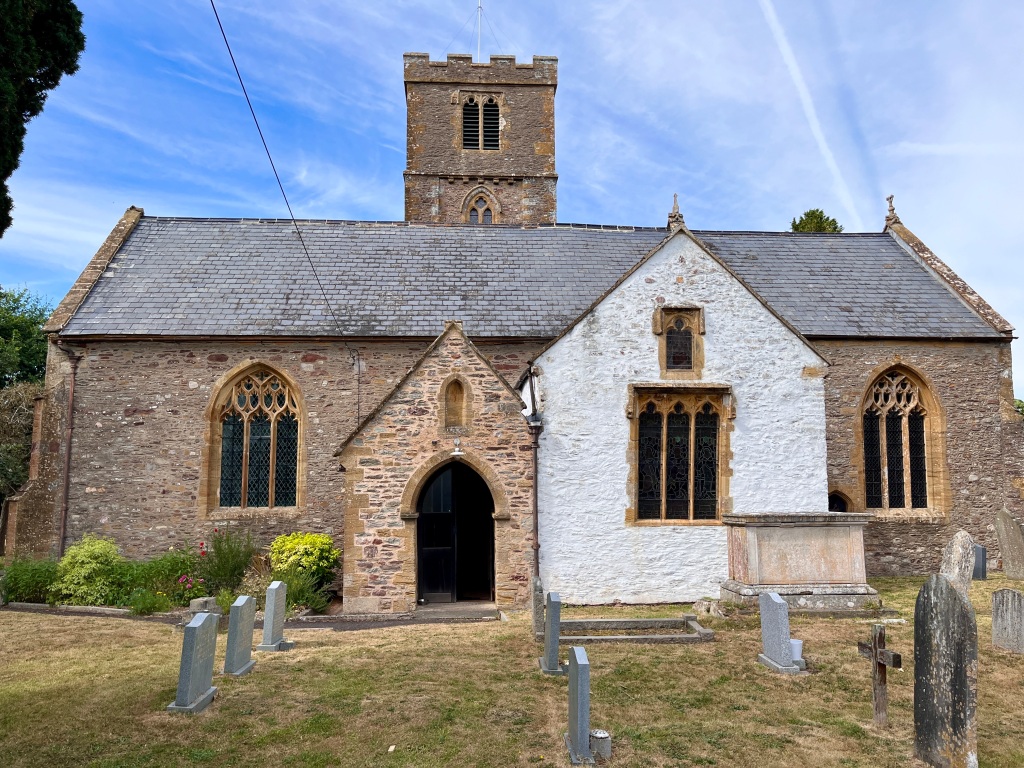
GRADE I † C12 origins, mainly C13; C15 perp additions and C19 restoration. A most attractive building, highly praised as an uncommonly interesting churchPEV. Called All Saints until C16. Traces of C17 wall paintings. 6 bells, earliest 1590. Additional dials found. 5m E of Taunton. 51.0224 / -3.0355 / ST274252
DIALS
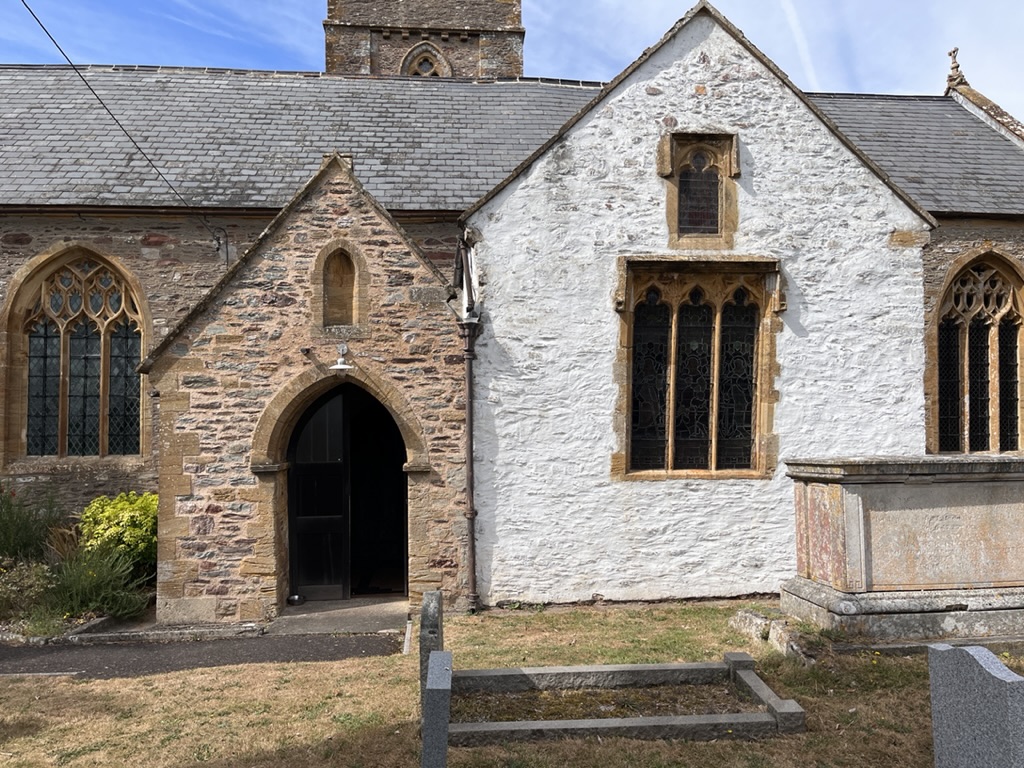
DEH visited St Michael in Sept 1913 and noted a group of 3 dials on W side of the porch. He recorded All three of these dials are close together, very poor in construction, and one or other of them is probably only a copy dial, but the lines of all have been added to, and it is difficult to say which is the original. Dial 2 is the least explicable.
There are 3 other dials (one is debatable): 2 on E side of the porch, in much the same position as Dials 1-3; 1 on the W window jamb of the whitewashed chapel. This last is in good condition comparatively; and the more precise design suggests it was the latest and presumably superseded the others in accuracy and legibility.
DIAL 1
DEH: 152. (1) This dial is on the w. side of the s. porch, 4 feet 8 inches above the ground. The noon line is 4 inches in length, the style hole is filled, and the aspect is s. by 8° e.
A fairly conventional morning dial with 9 (10?) lines, with the lines marking (roughly) Tierce and noon cut deeper. It’s difficult to interpret the pocks, if that is what they are. Several correspond with the relevant radials; the vertical seems to have a 2nd pock lower down (Mass time marker?). Possibly they were added later.
DIAL 2
DEH: 153. (2) This dial is close by the side of No 1. The noon line is 4 inches in length, the style hole is filled, aspect as above.
Dial 2 is confusing. How did that mish-mash of lines, hole-infilling, and extensive repair come about – and when? There’s no doubt that in the mix is a very basic dial with 2 lines curving left that appear to radiate from the mortar line above.
The 4 quite deep and almost parallel incisions just below the 2-line dial are problematic. It’s hard to see them as part of the overall dial design on that stone. And 4 verticals in a row would make a poor marker for noon. Also, it does not seem that they would converge at the same position as for the identifiable dial. In fact, seen on their own, they might be taken as an apotropaic mark of the grid and pock kind (though they are not convincing in that respect either).
DIAL 3
DEH: 154. (3) Six inches above No. 2, a dial with noon line 3 inches in length, the style hole filled, aspect as above.
This morning dial has 3 lines that radiate from the stone overhang, There is a small hole at the apex where presumably a thin style was inserted. The upper line ends with 2 clear pocks, and must have marked the most significant Mass time of the day (in this case, Tierce)
DIAL 4
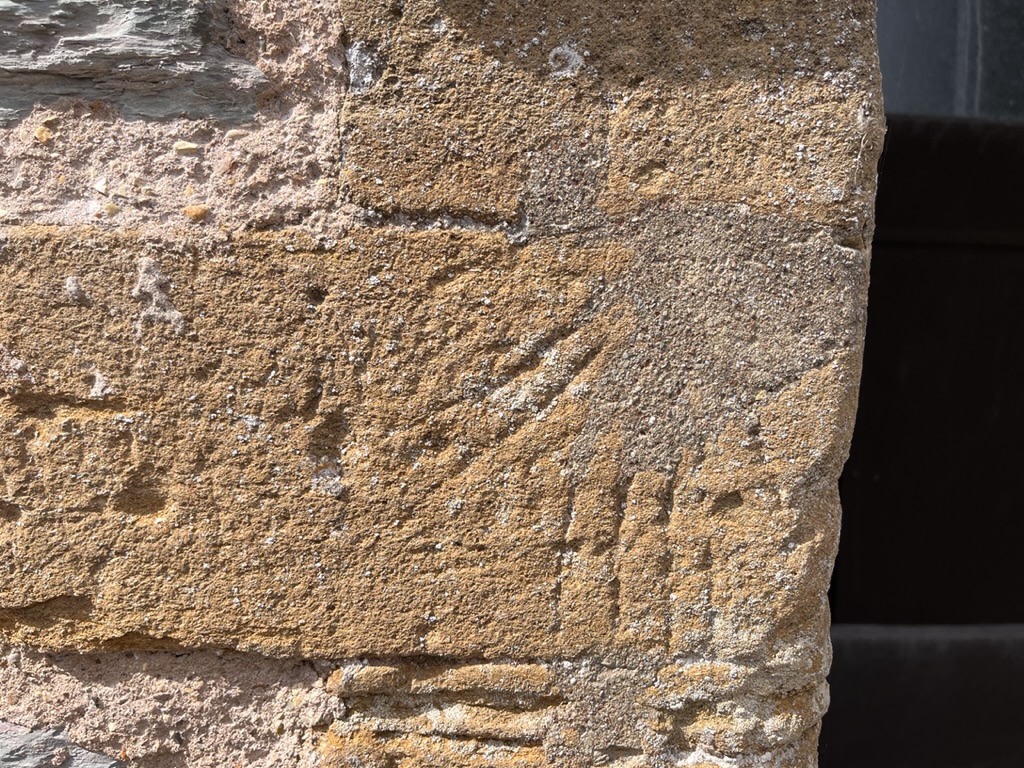
A rough, eroded, and damaged dial on E jamb of the porch, level with dials 1 – 3. There are 6 detectable lines, 2 very faint. Again, a morning dial, with Tierce marked with a pock. The filled gnomon hole is big, but that may have occurred over time.
DIAL 5
This small dial is in the corresponding position opposite dial 3. It is simpler and less well defined, with a small style hole and 3 detectable lines radiating from the hole, only one being easily visible. It might be classified as ‘doubtful’ but for its relationship to dial 3 on the other side of the entrance, which I think upgrades it to ‘plausible’.
DIAL 6
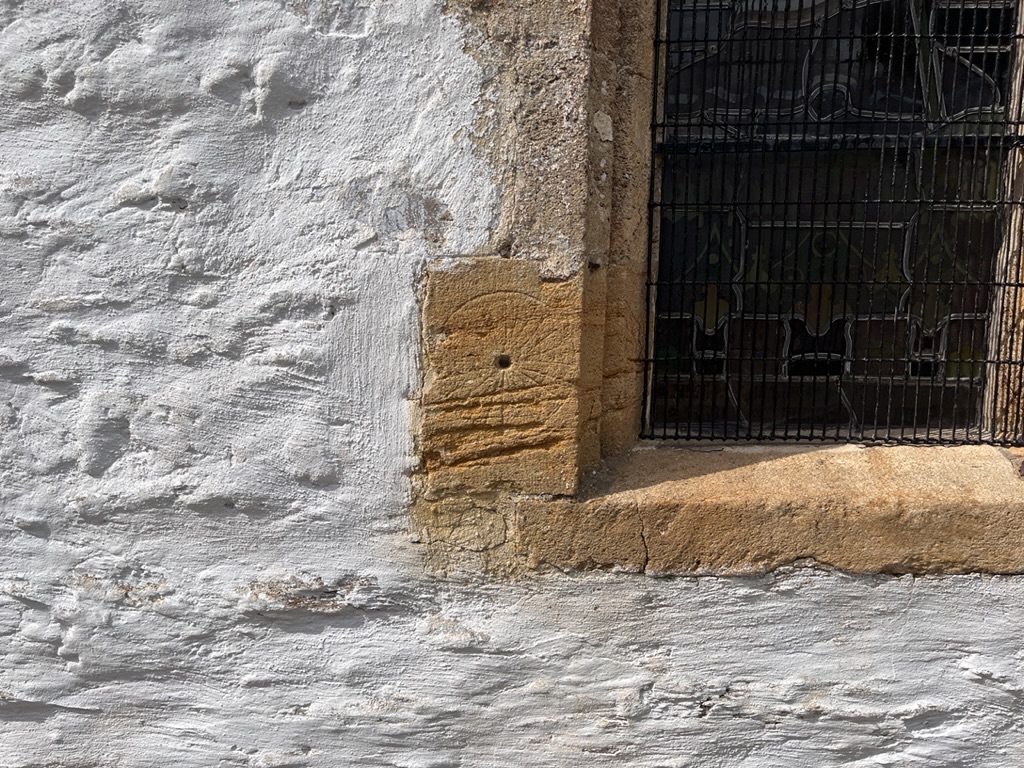
This attractive dial, originally completely encircled, has survived the passage of time rather better than the others. There are 18 lines that make up a 3/4 circle, with a deeper cut noon line and a large style hole. The angles between the lines are somewhat random but I expect that the dial was effective as a marker of the progress of the day.
The way in which the dial stone has been cut to fit the space could suggest that it was relocated. In a way it might make more sense if rotated 90º clockwise, but testing that theory using a photo didn’t look right.
































 GAUDIUM SUB SOLE . SUNDIALS . MEDIEVAL TO MODERN