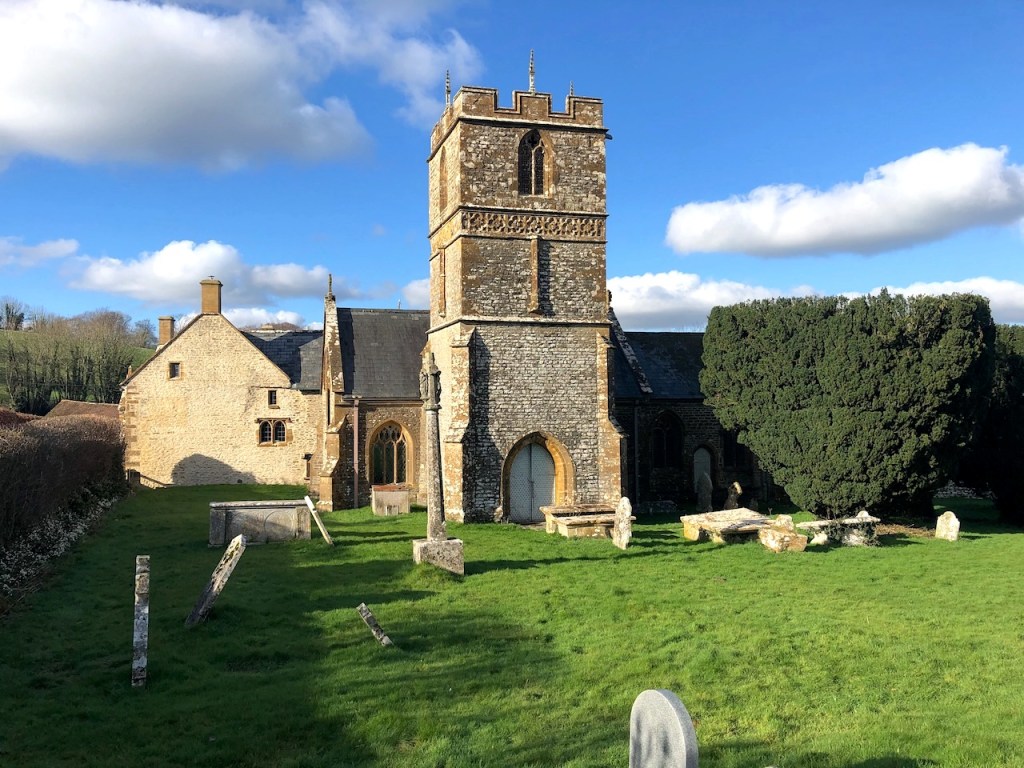
MONTACUTE . SOMERSET . ST CATHERINE . 2 dials

St Catherine . Montacute . Somerset

MONTACUTE . SOMERSET . ST CATHERINE

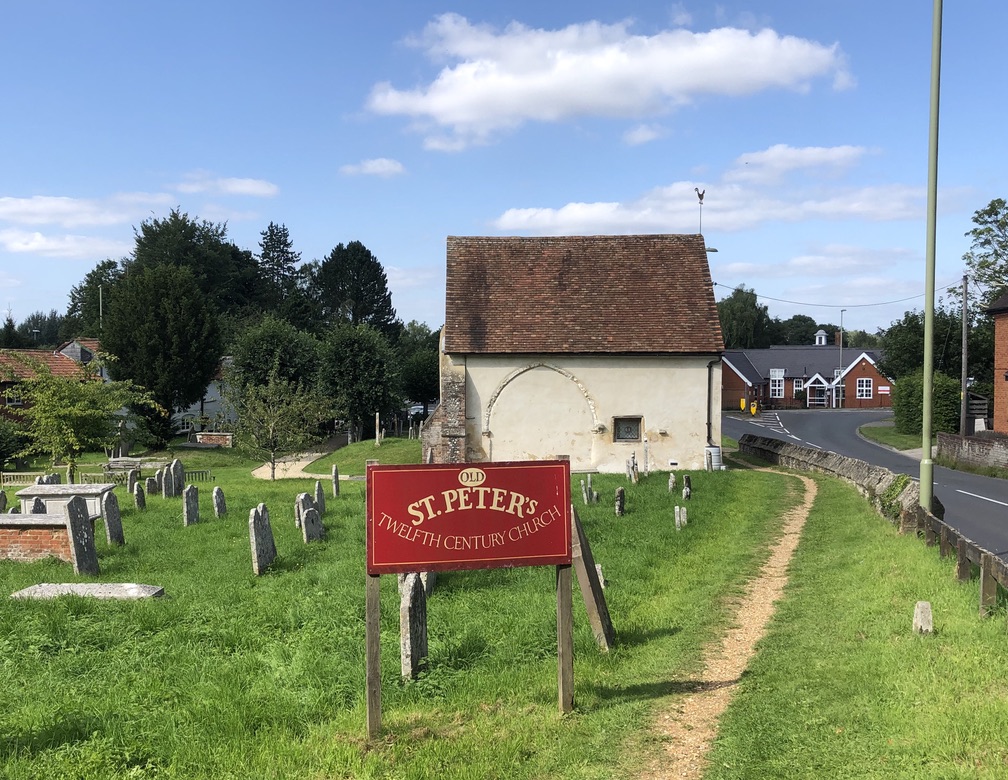
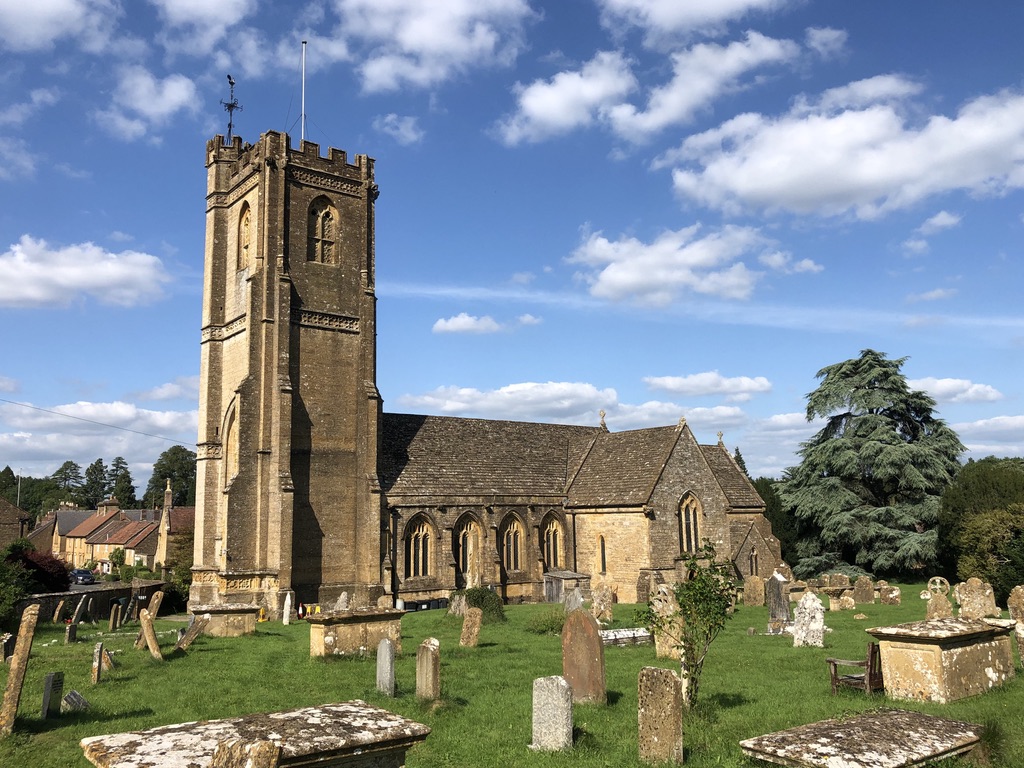
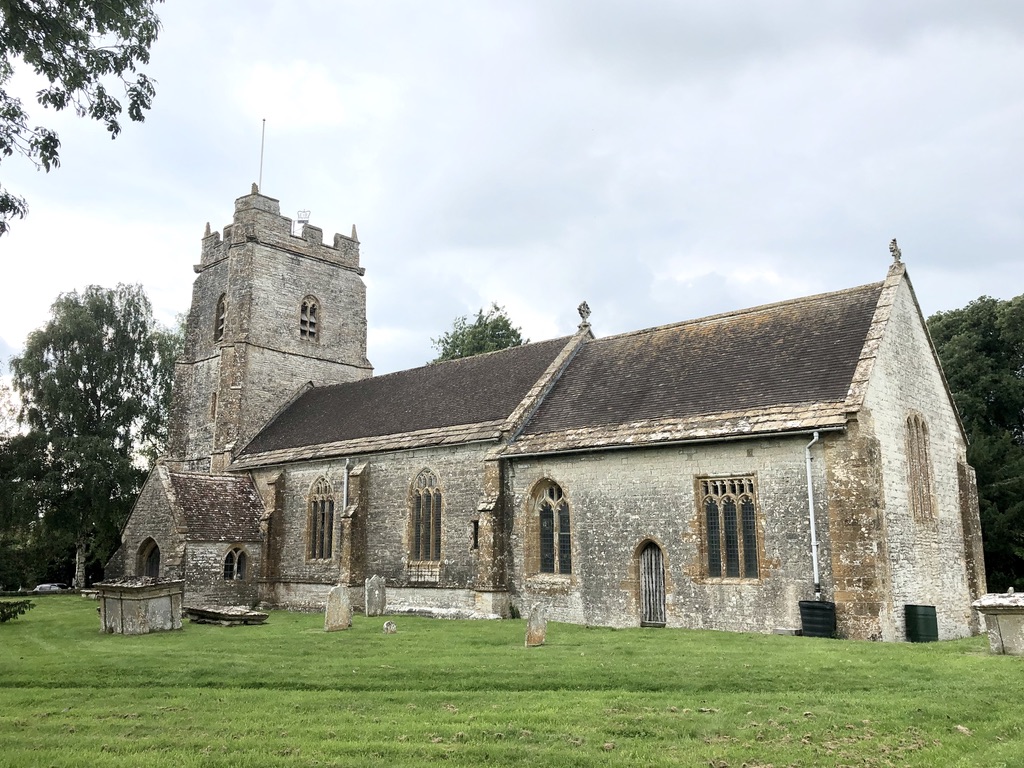
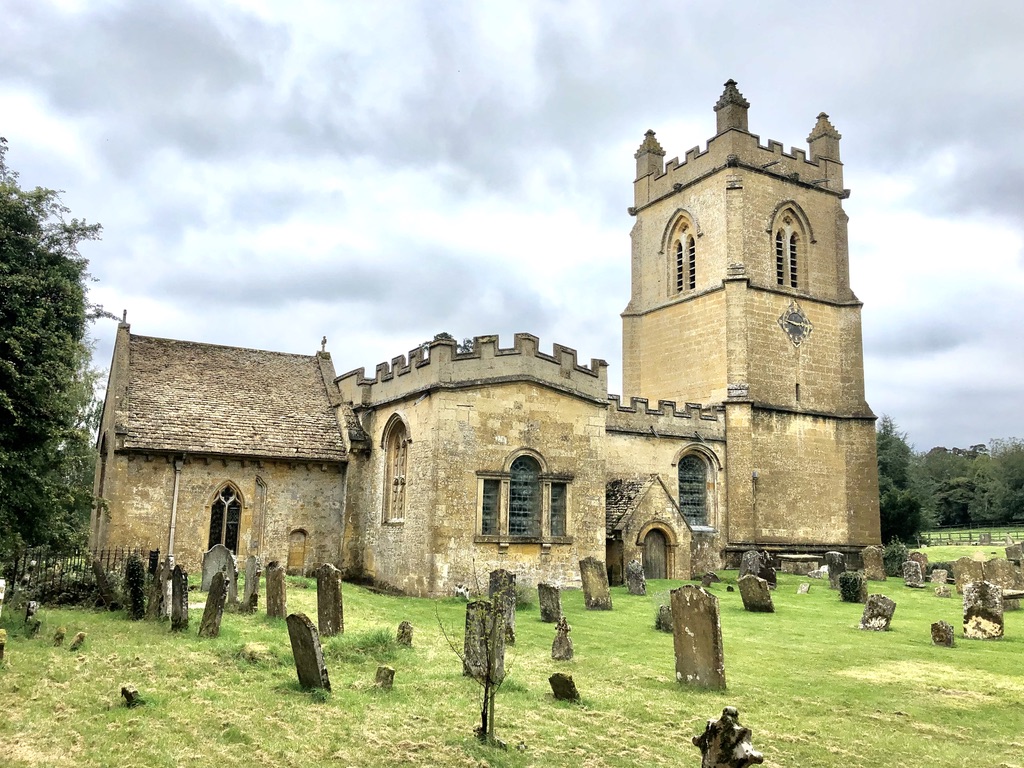
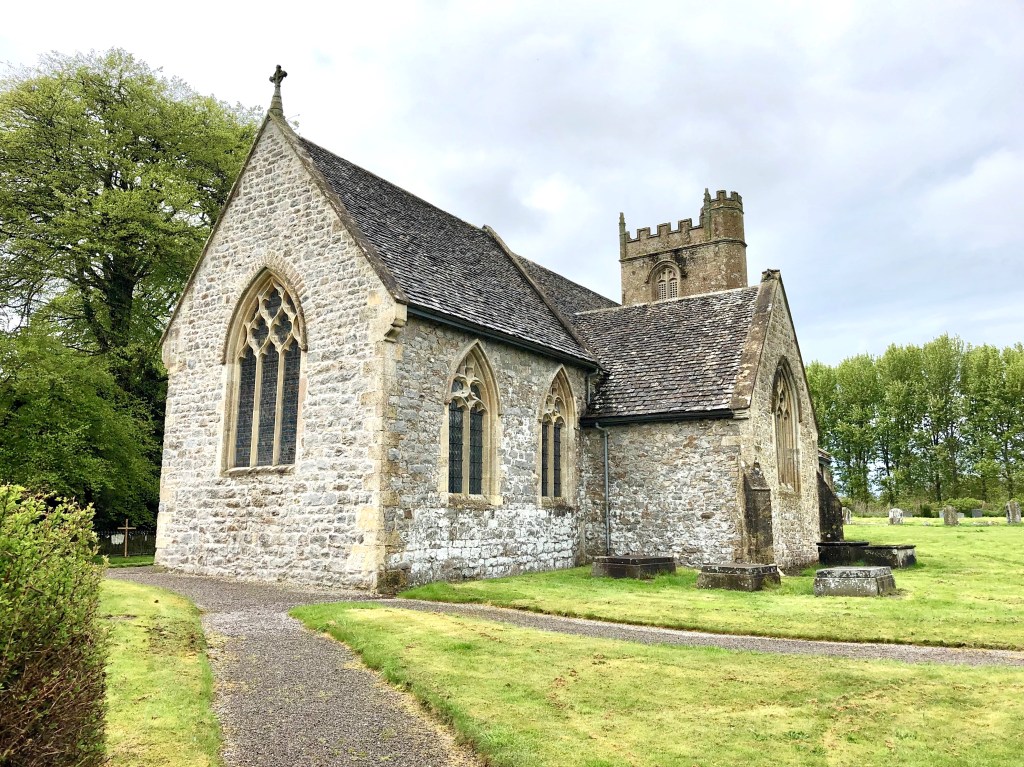
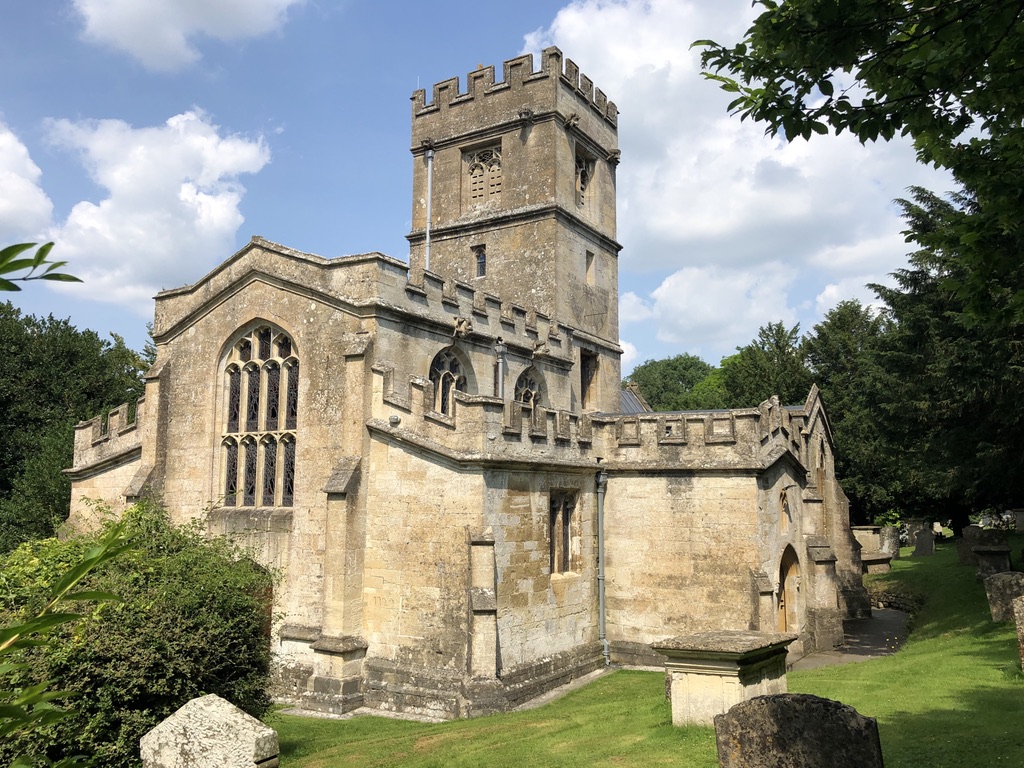
GRADE II*. C12 origins on earlier pre-conquest site; extended in C13; tower C15; Victorian restoration. Outcompeted as an historic building by Montacute (the house) NT, worth a visit in its own right, obviously. 4 miles NW of Yeovil. 50.9498 / -2.7178 / ST496169

DIALS

DIAL 1

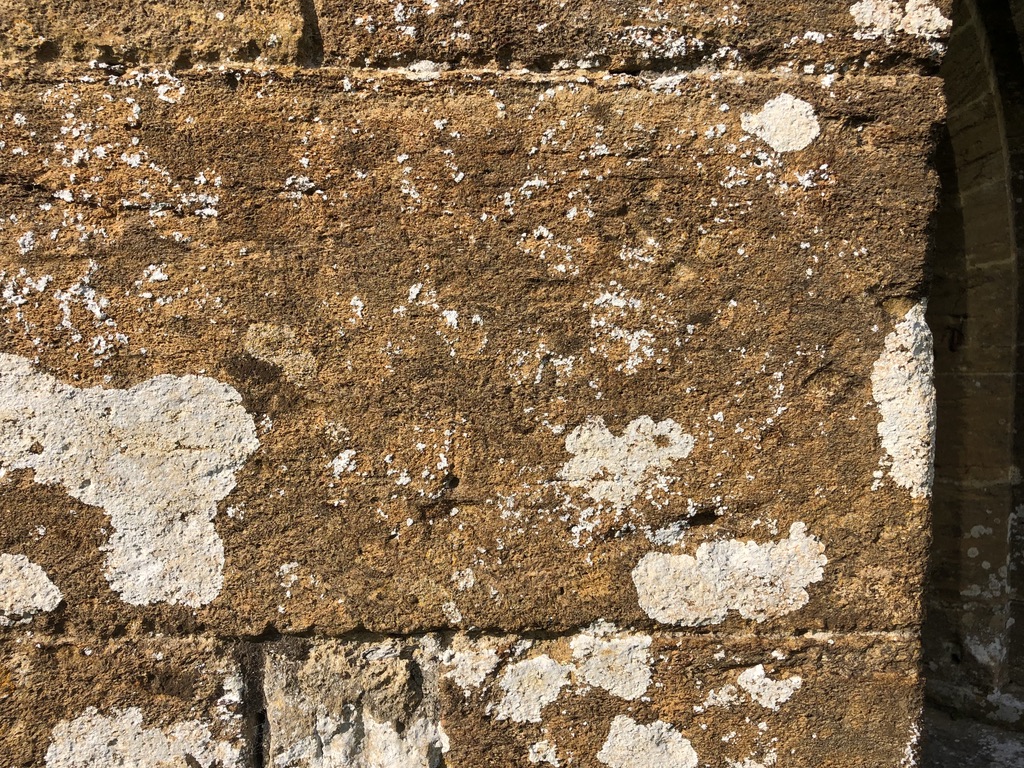
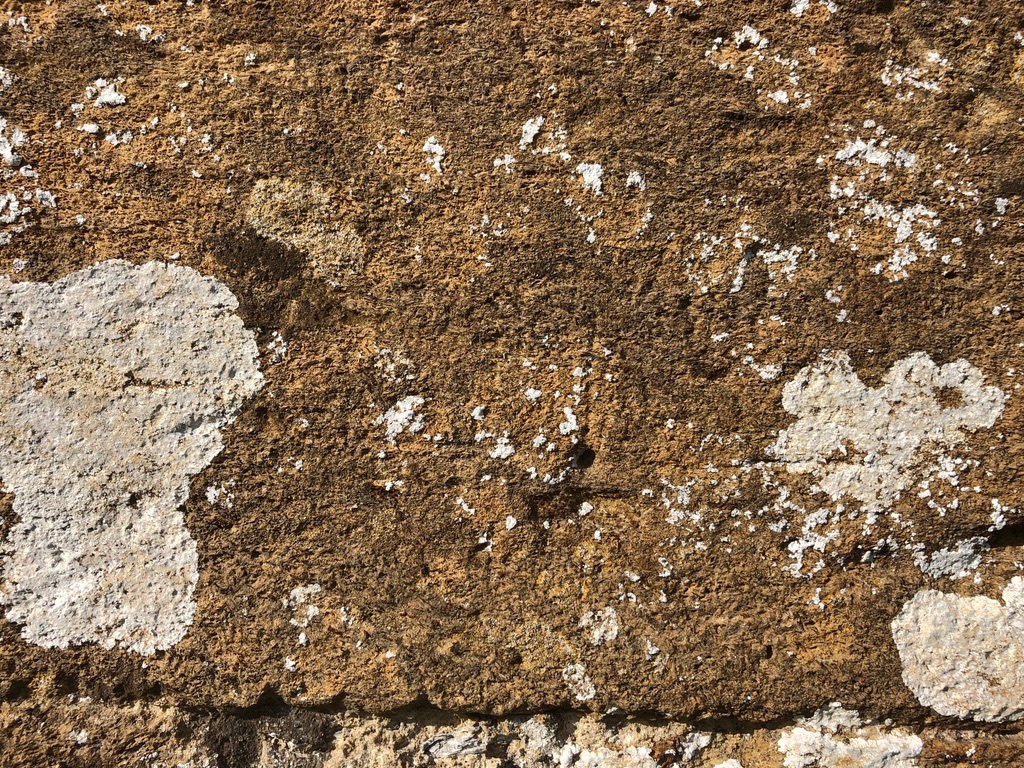
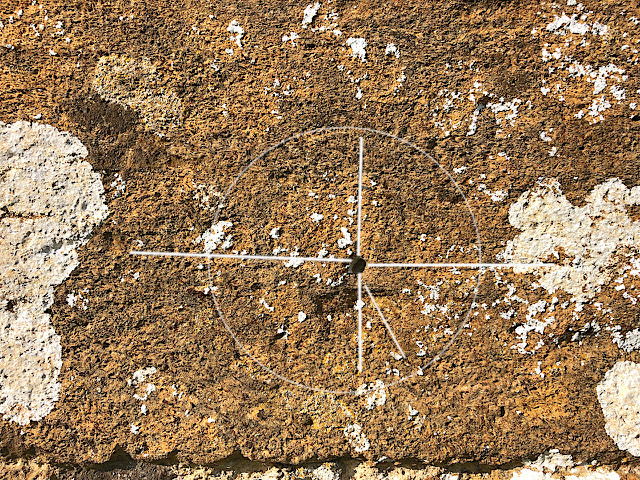
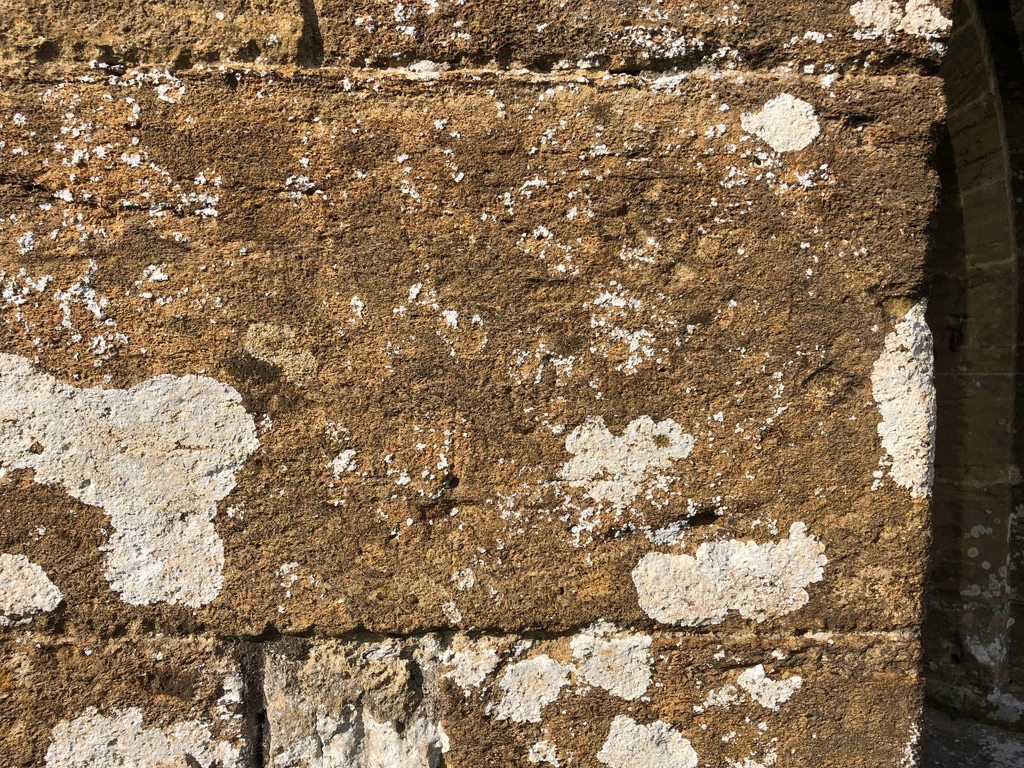
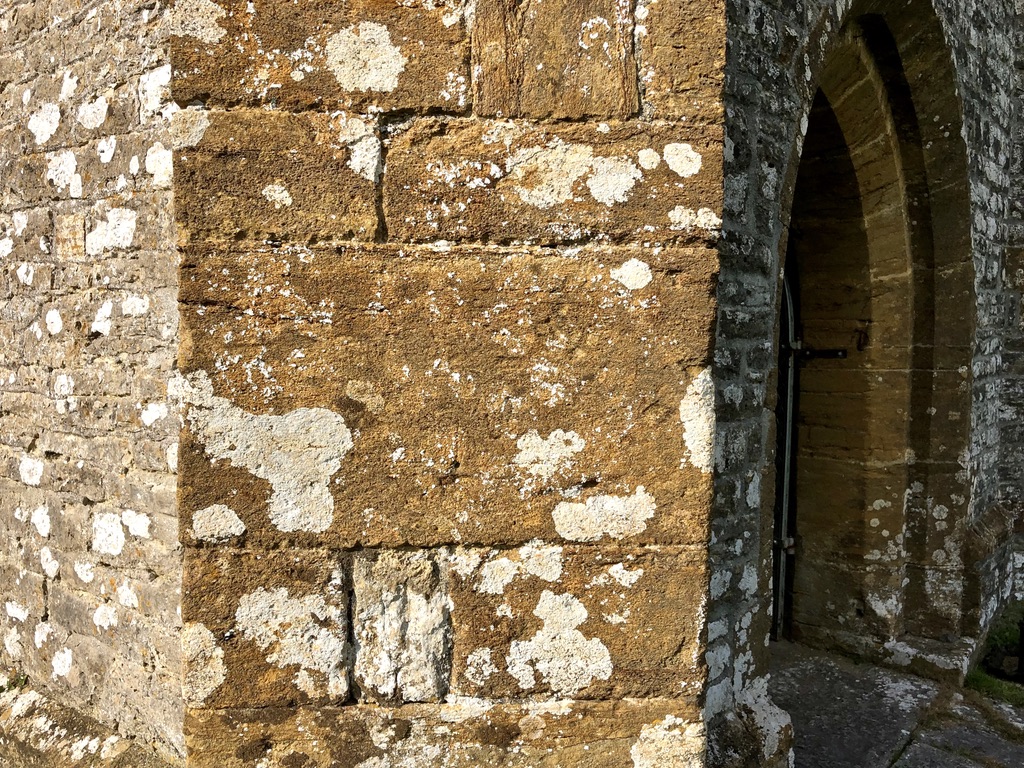
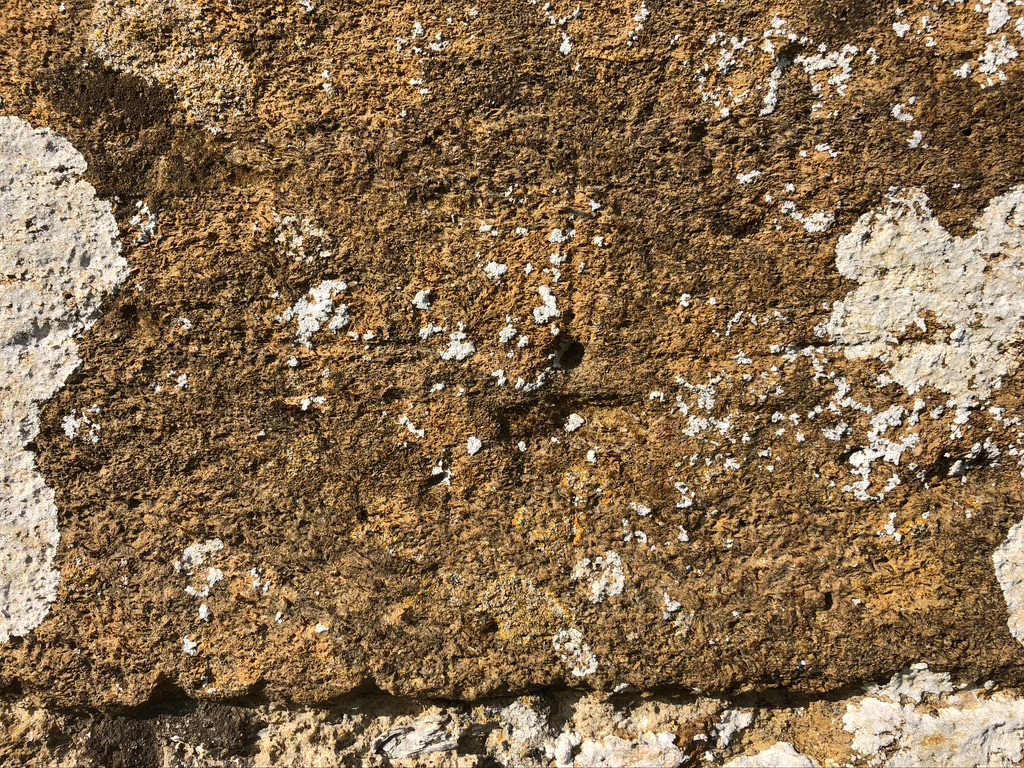
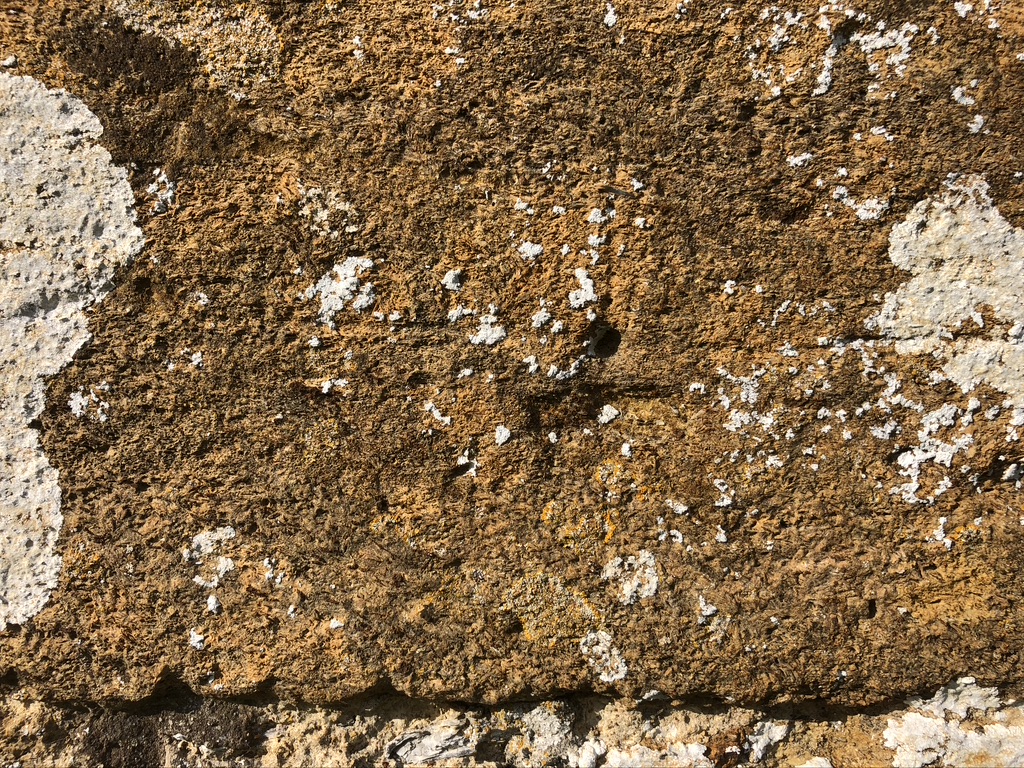
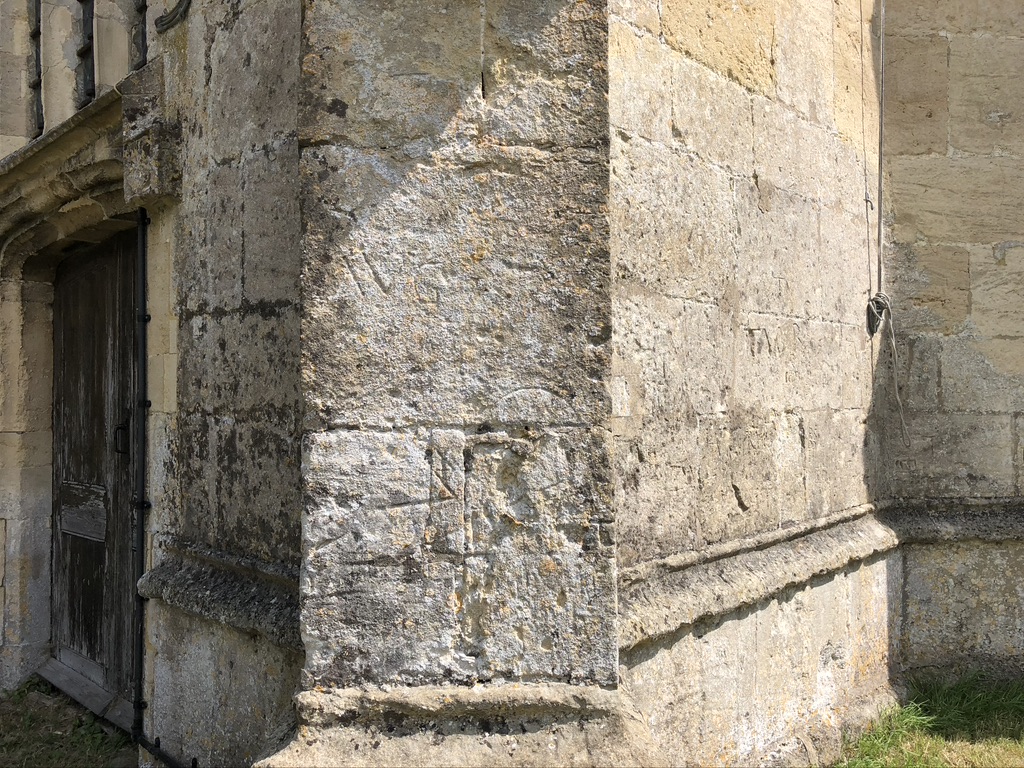
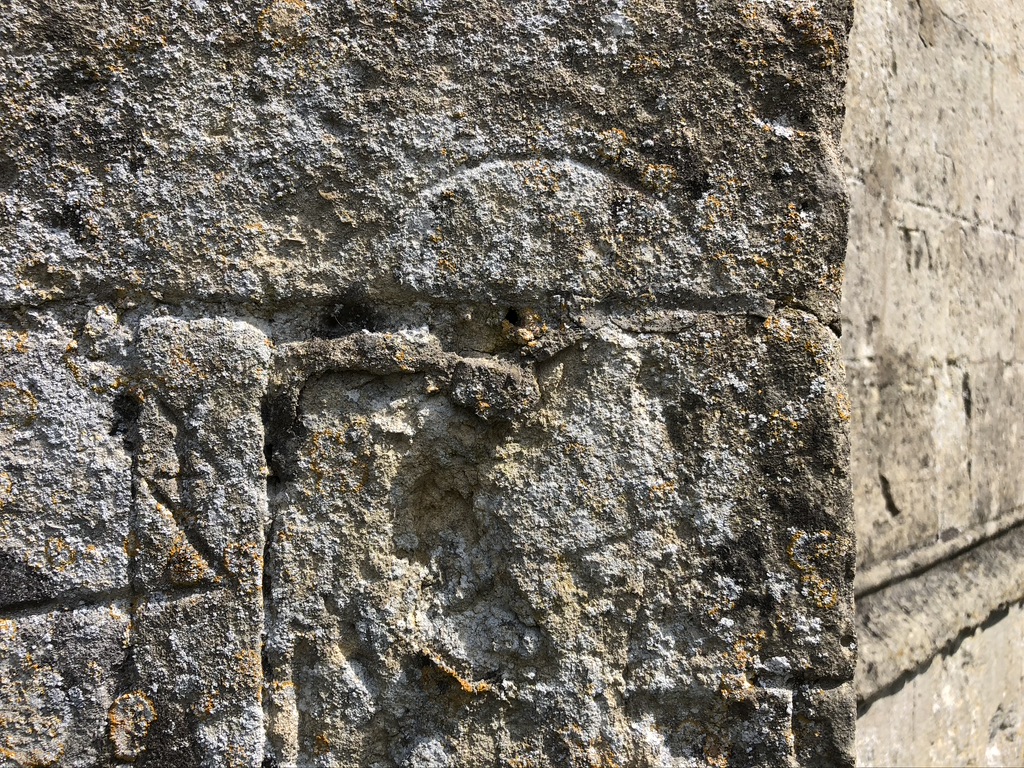
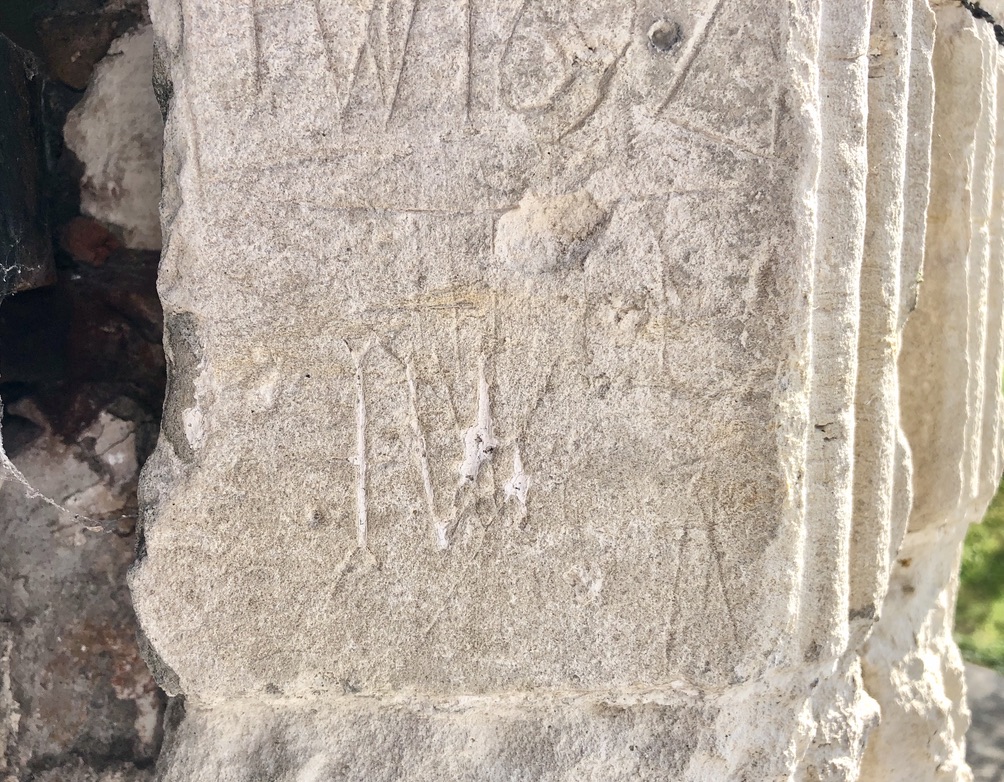
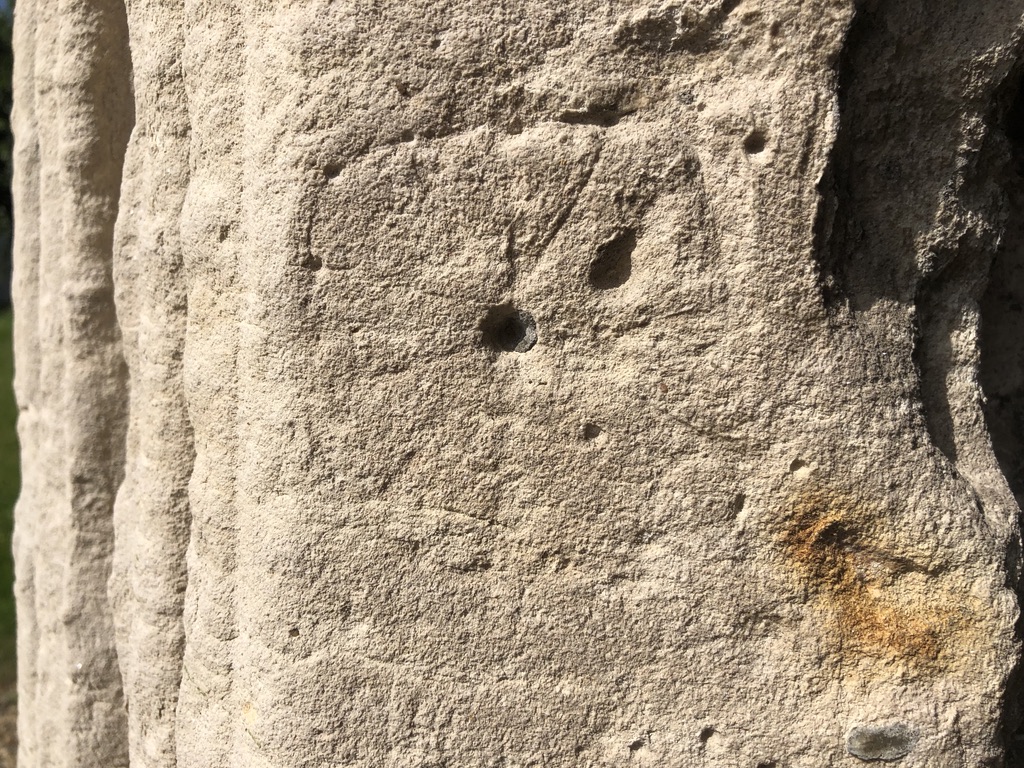
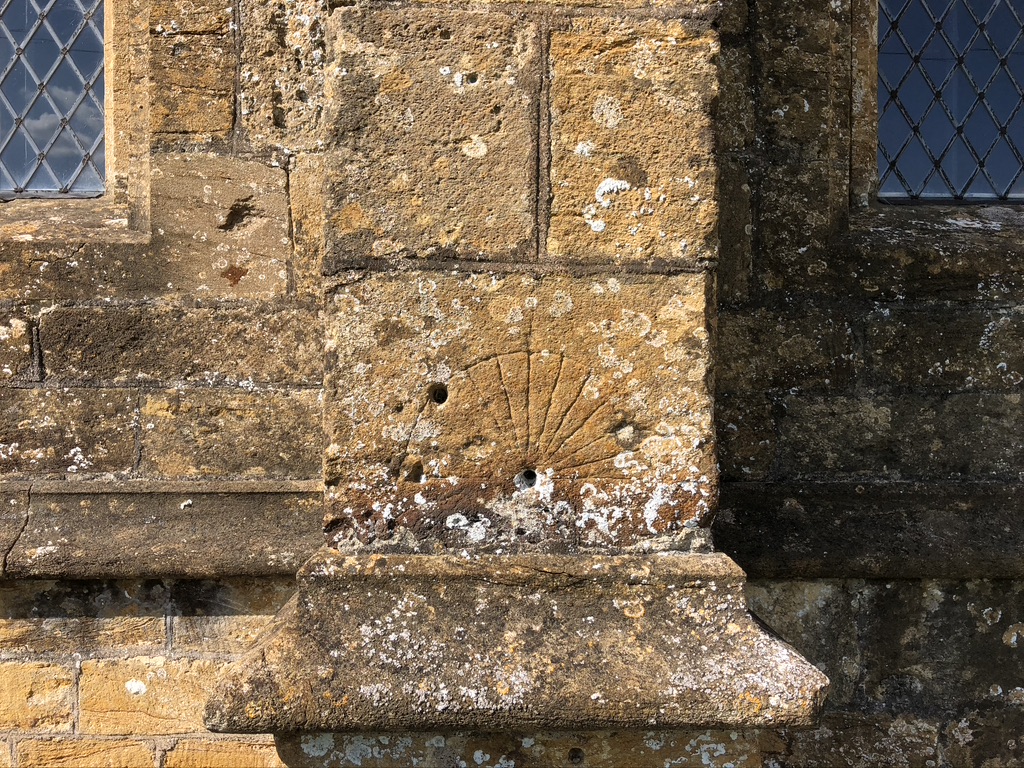
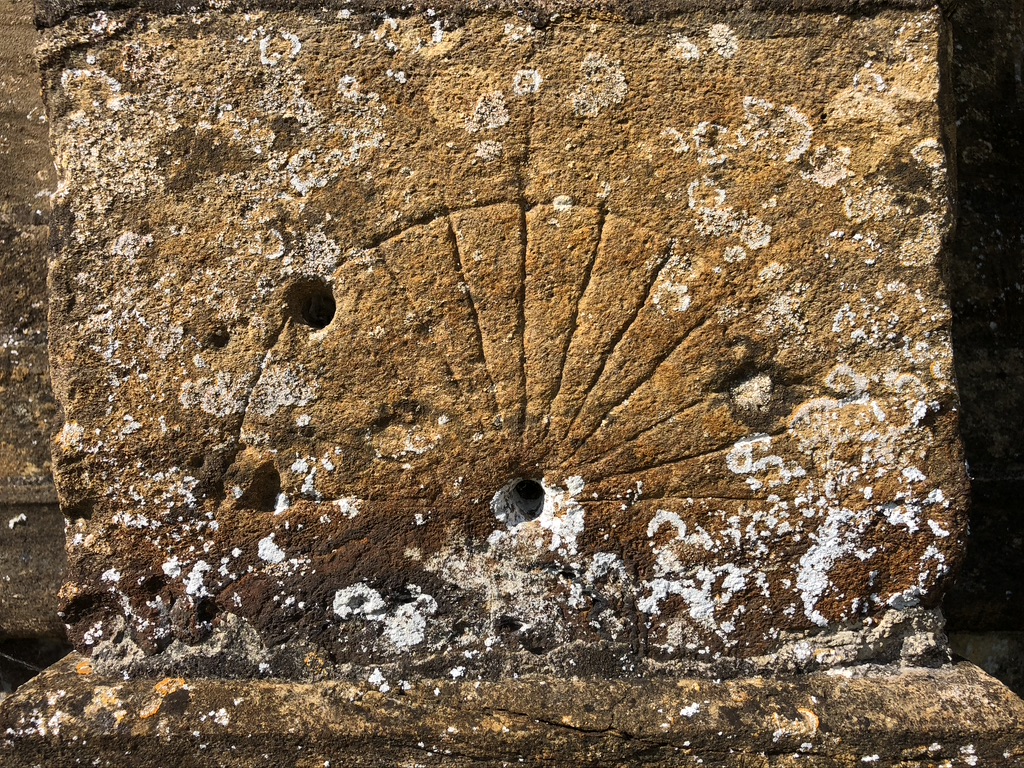
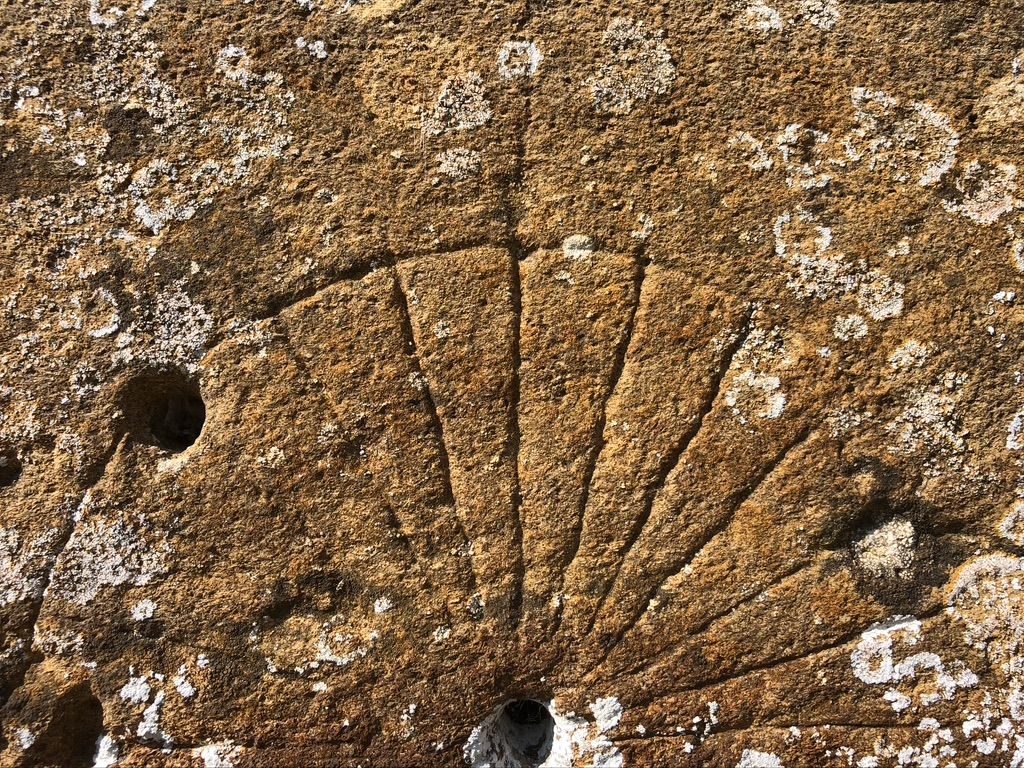
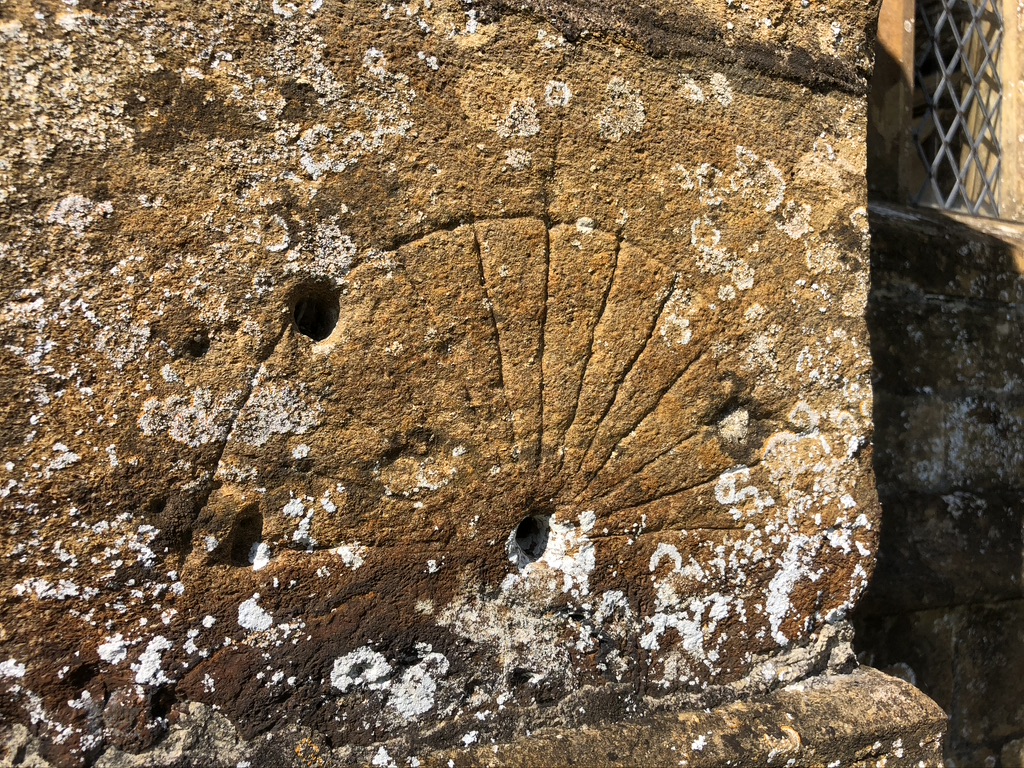
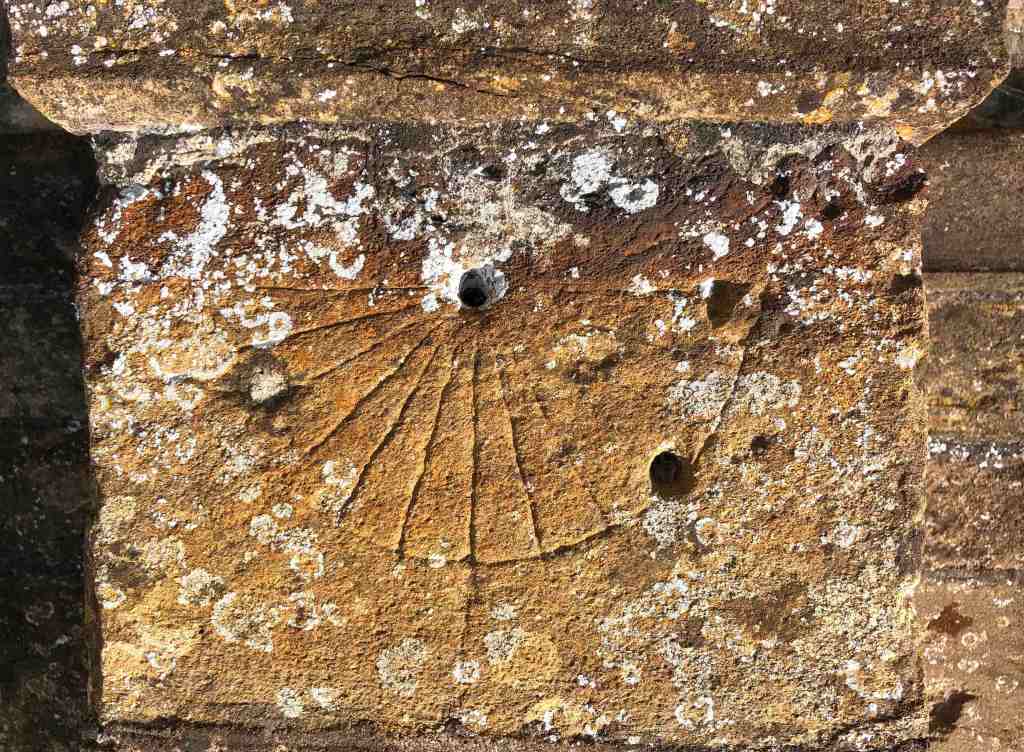
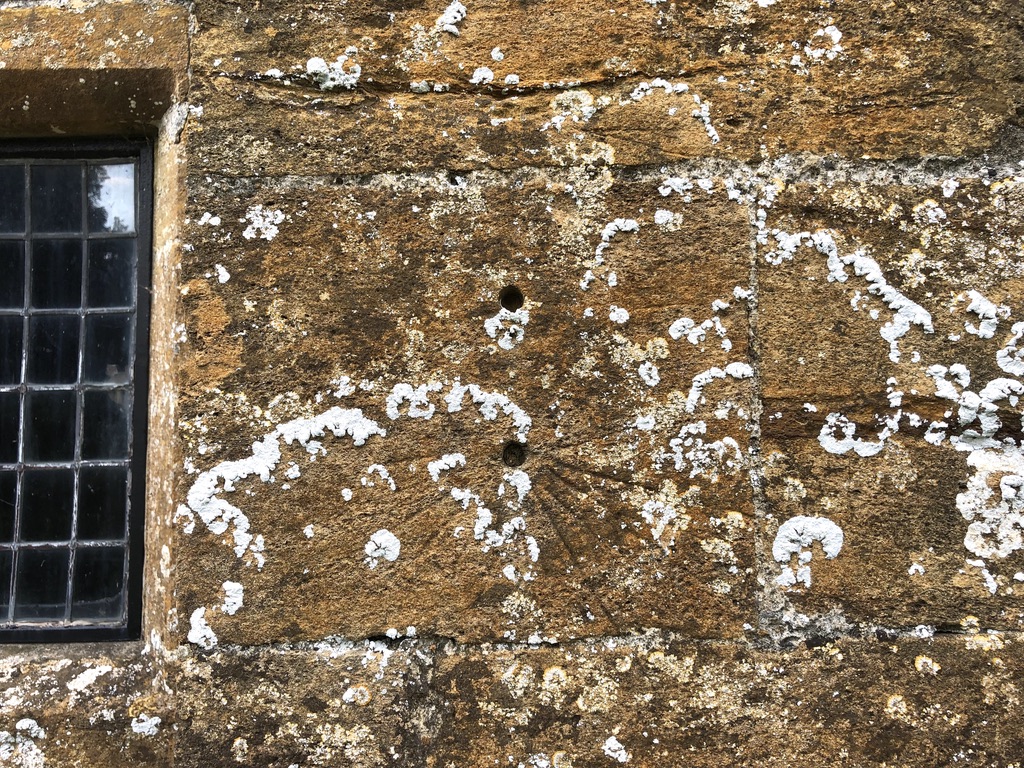
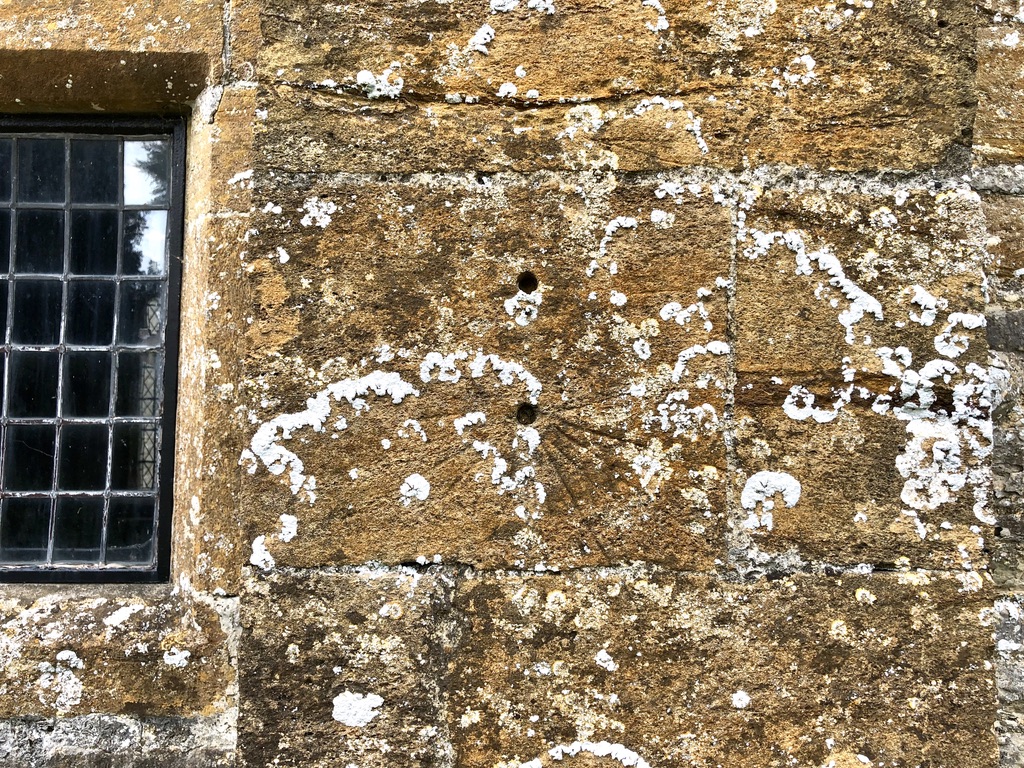
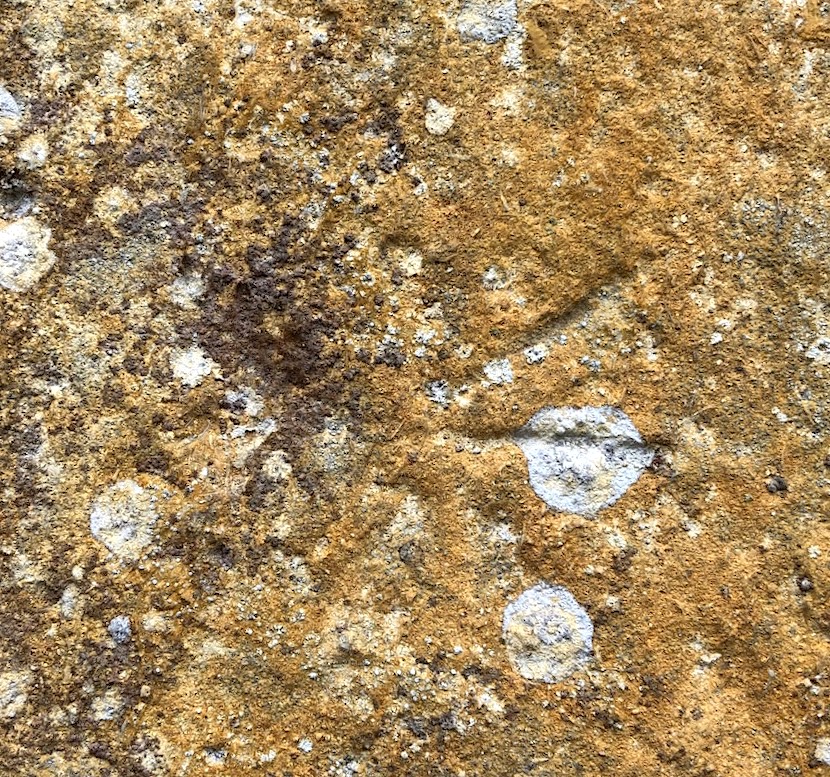
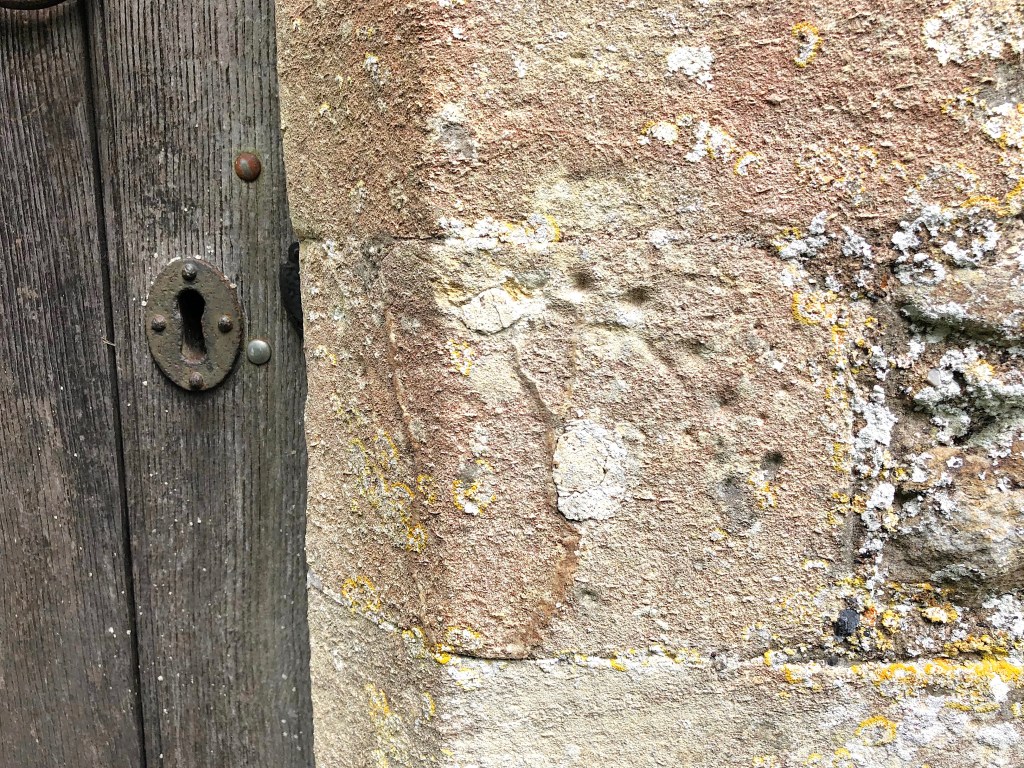
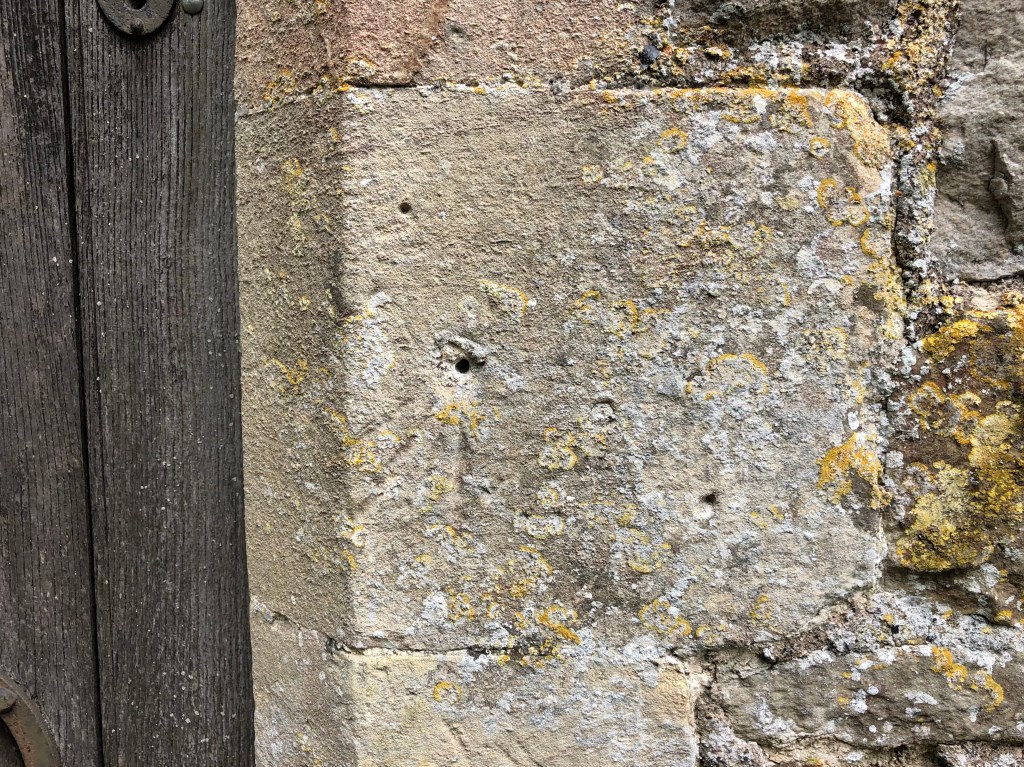
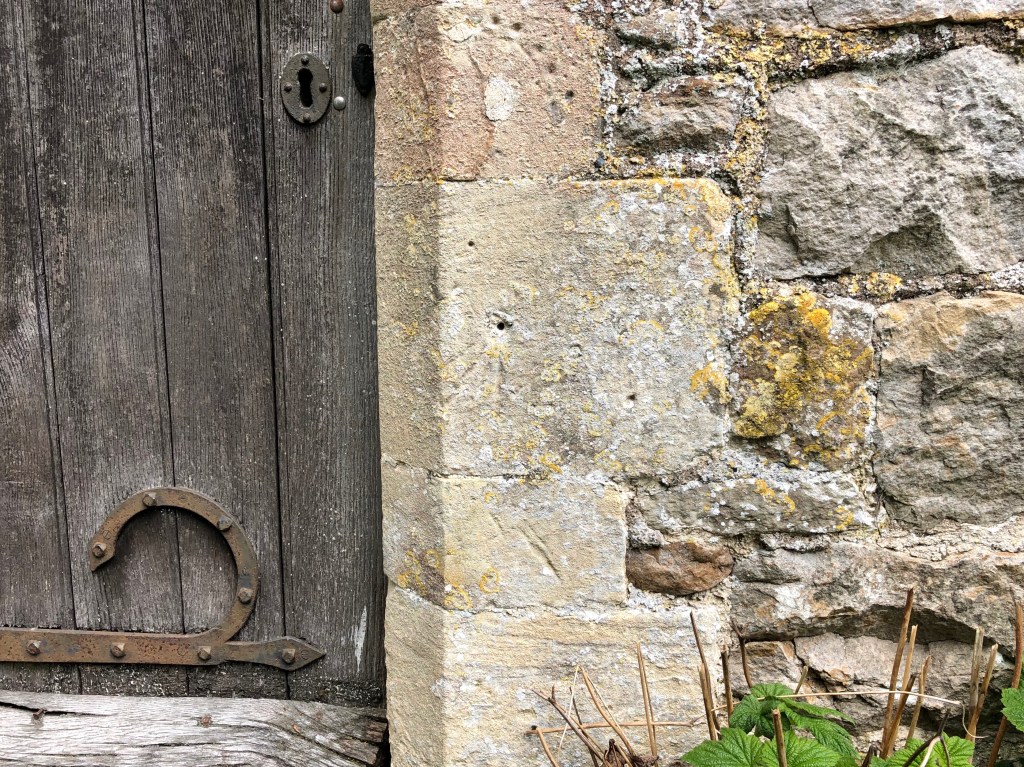
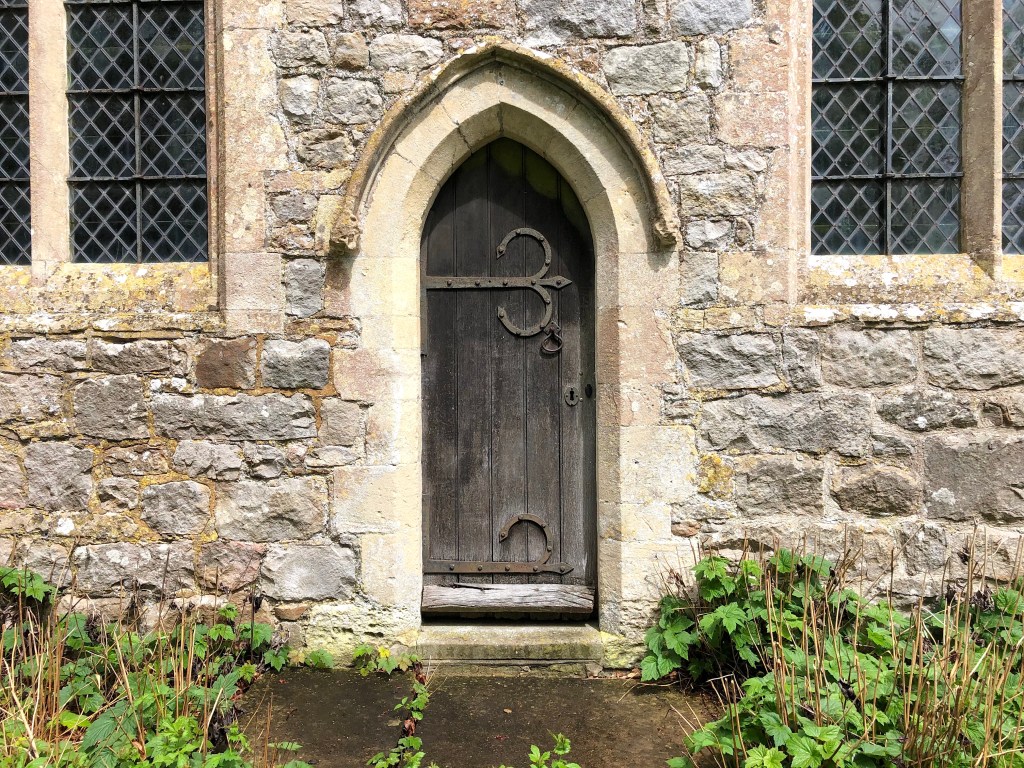
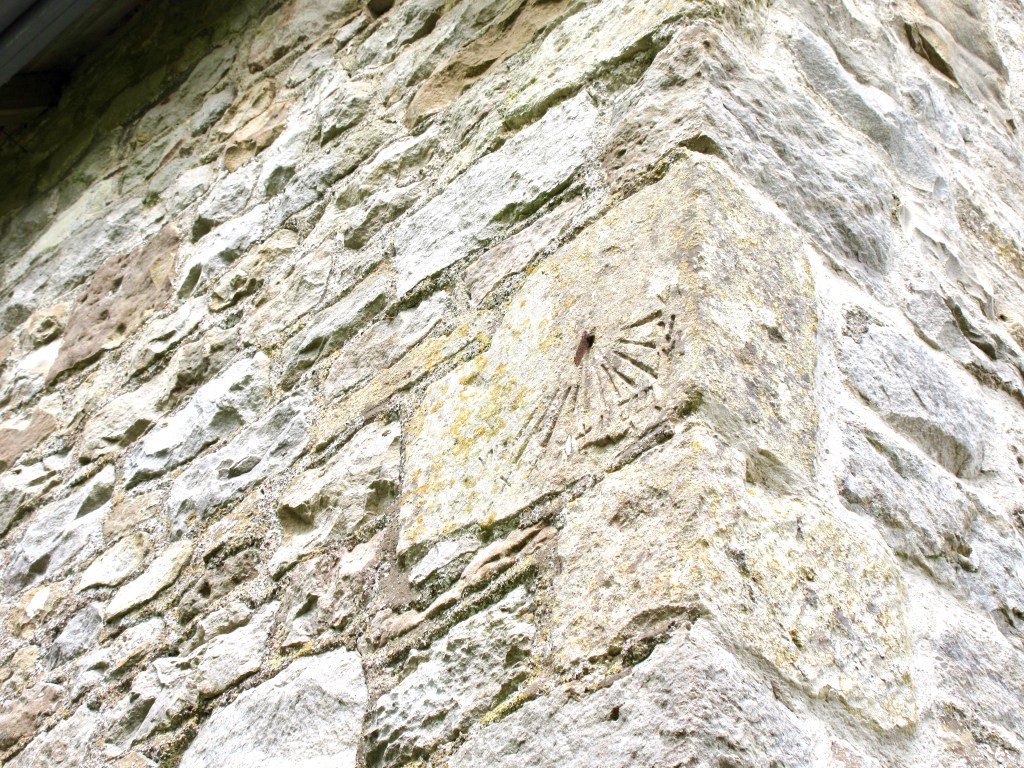
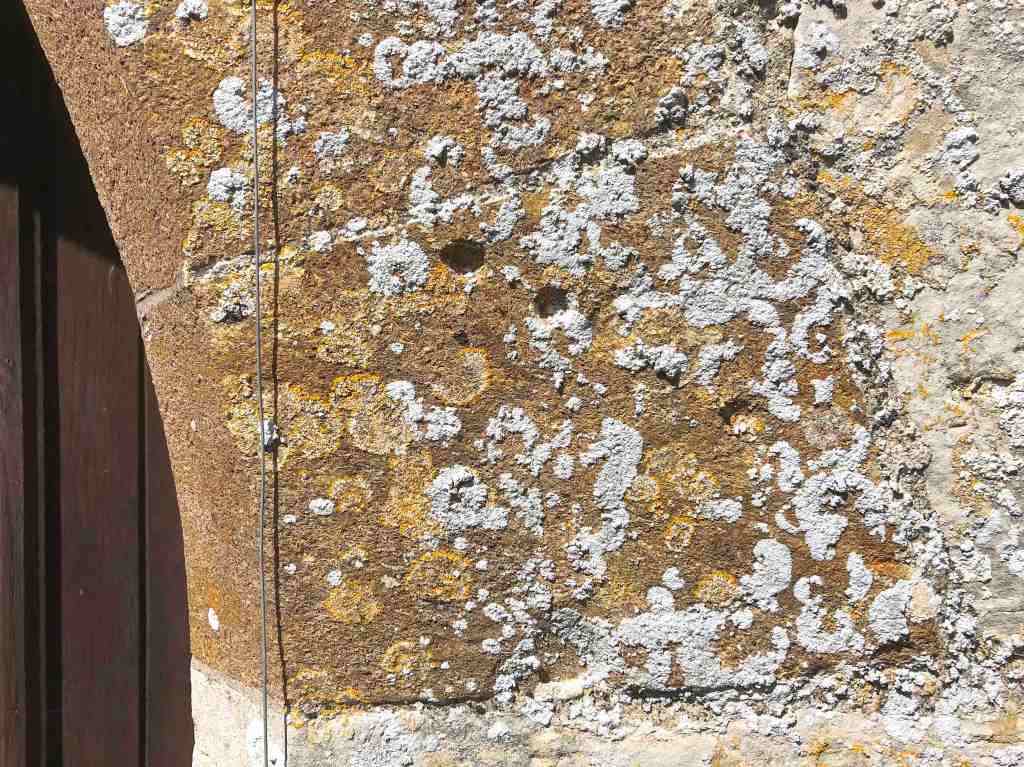
Repositioned and inverted on a S. buttress. An unusually large style hole, with other holes and pocks that may be markers, or perhaps irrelevant. The top left hole, on the circle, is the most likely to be related – perhaps a emphatic reminder for Mass. The afternoon lines are emphasised and the noon line elongated, though it looks a casual later addition. See below for image with the dial reverted

St Catherine . Montacute . Som – Scratch Dial 1

Father Horne DEH visited Montacute on 18 June 1914 and recorded it thus:

205. This dial is on the second buttress from the tower, at a height of 5 feet 7 inches above the ground. The noonline is 5 inches in length, the stylehole is 1 1/4 inches deep by 3/4 of an inch in diameter, and the aspect is s. by 12° e. Type 5b.

This is a rare example (and perhaps none exists now, a century later) of a possible style fragment found in situ. The record continues:

This dial is upside down, and hence has been moved from its original place. A fragment of the metal style was extracted about an inch in length, and which had rusted down to about 1/2 of an inch in diameter. It appears to be a piece of iron. June 18th, 1914.

DIAL 1 REVERTED

St Catherine . Montacute . Som – Scratch Dial 1 Reverted

DIAL 2

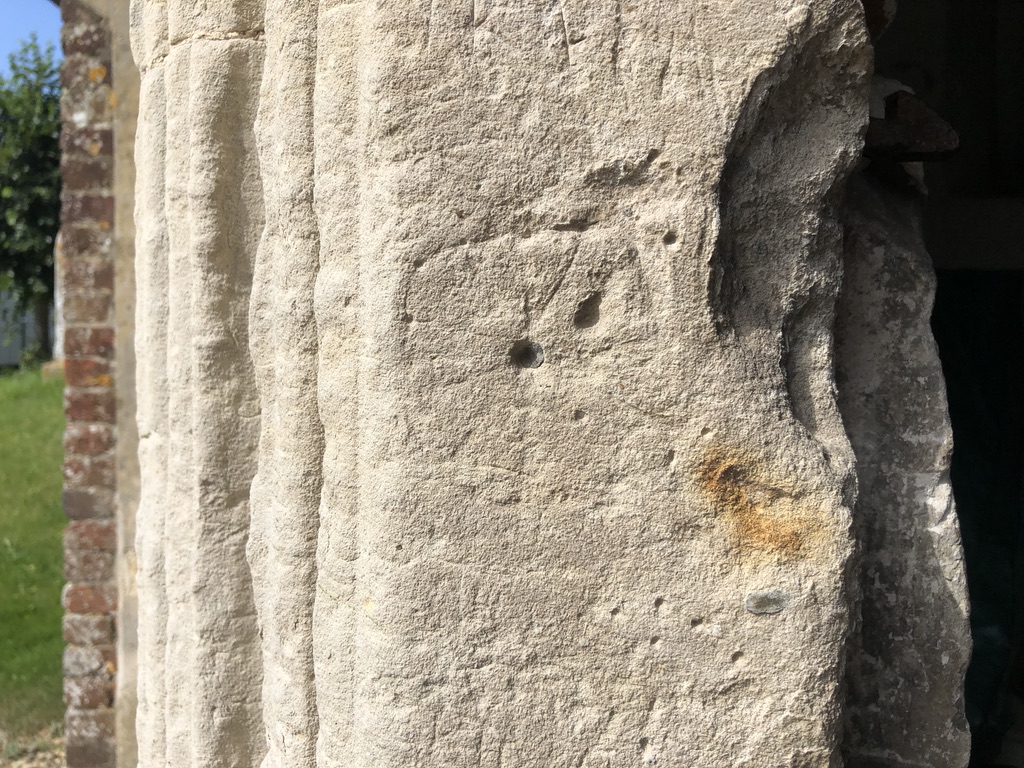
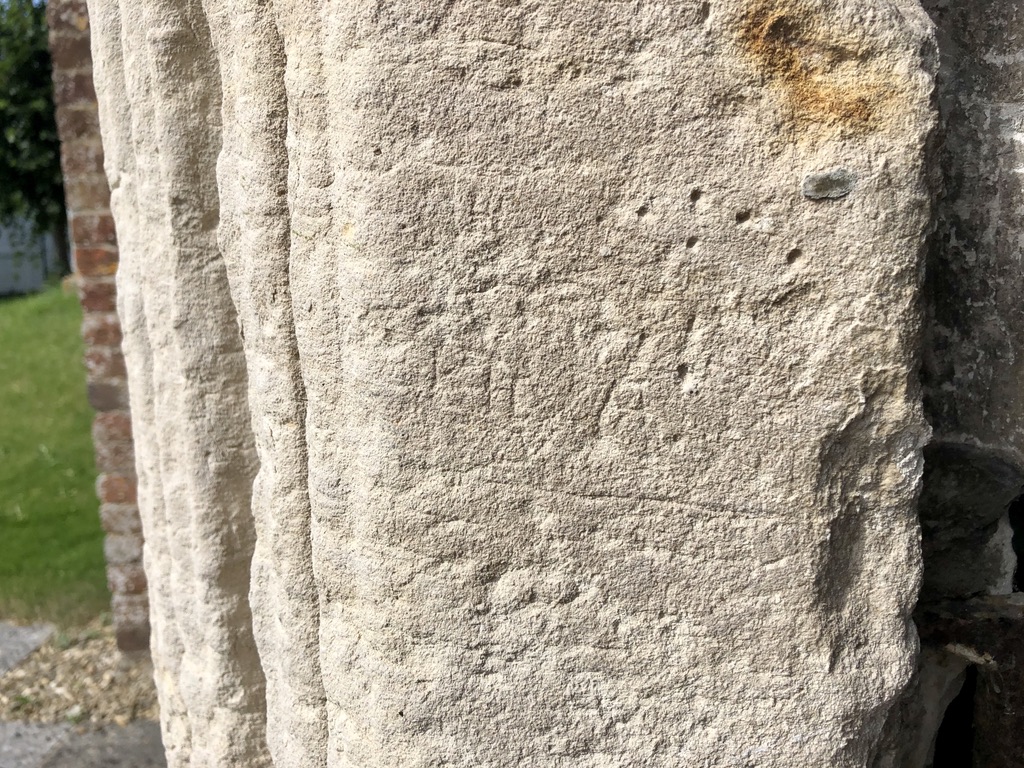
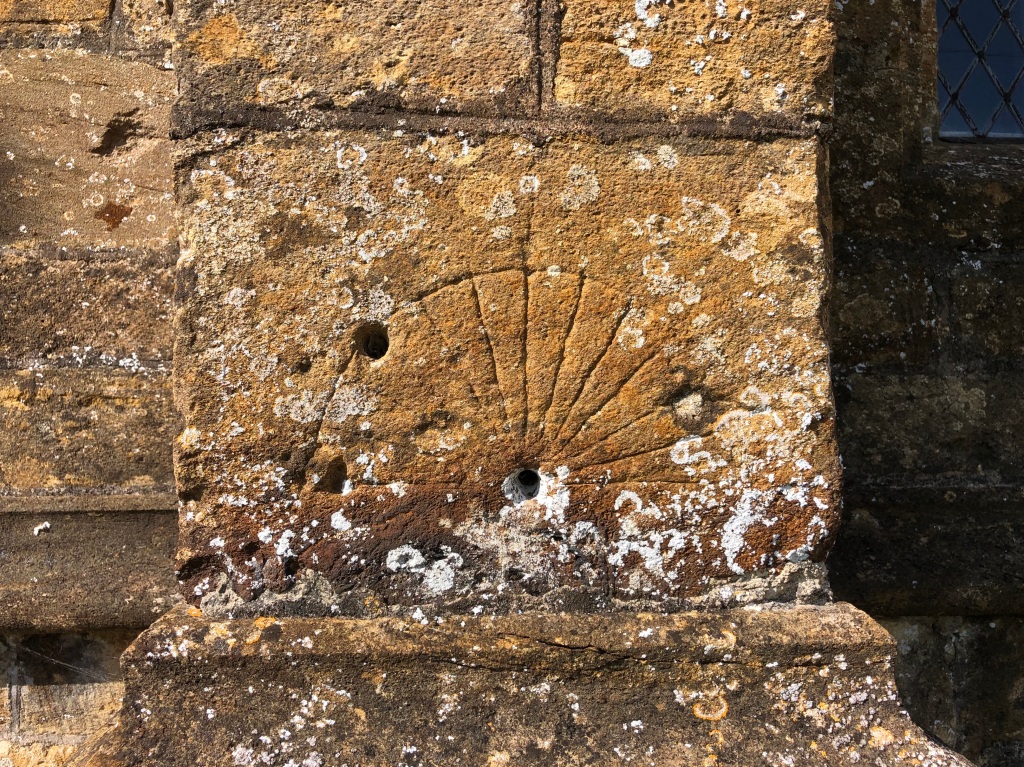
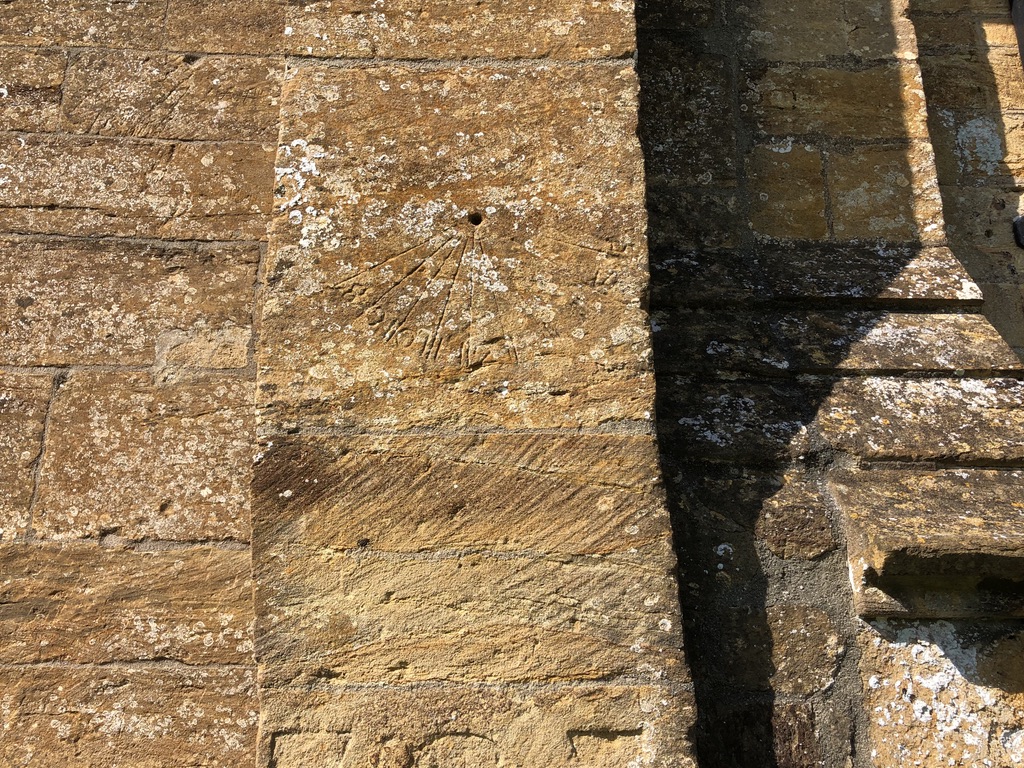
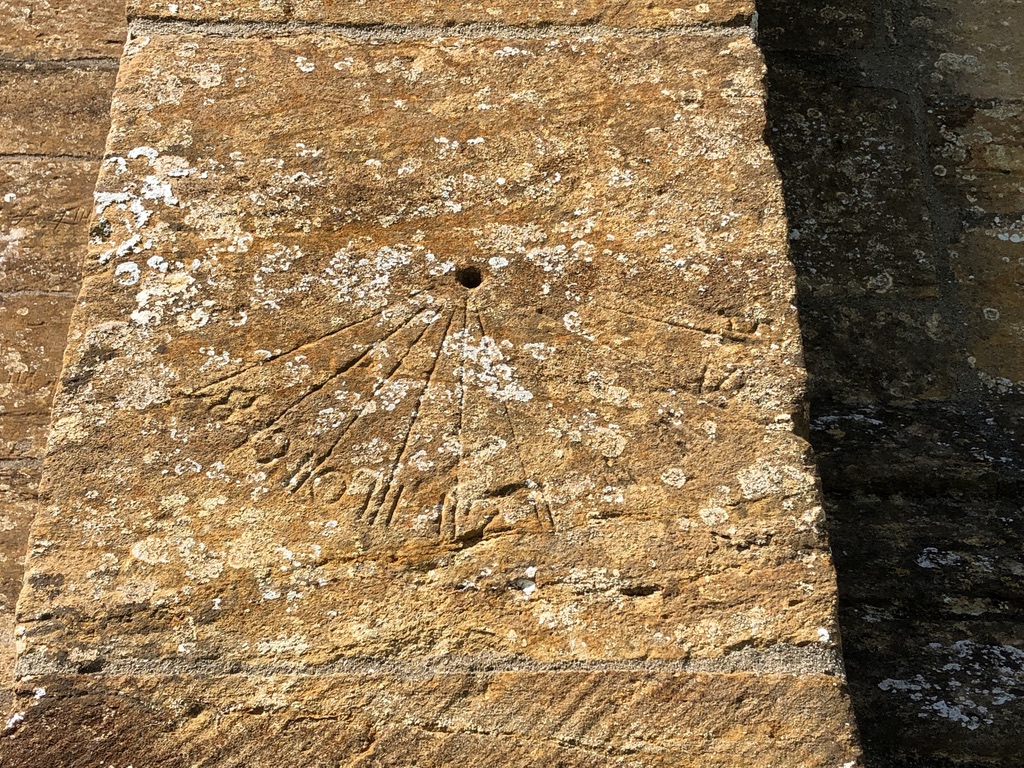
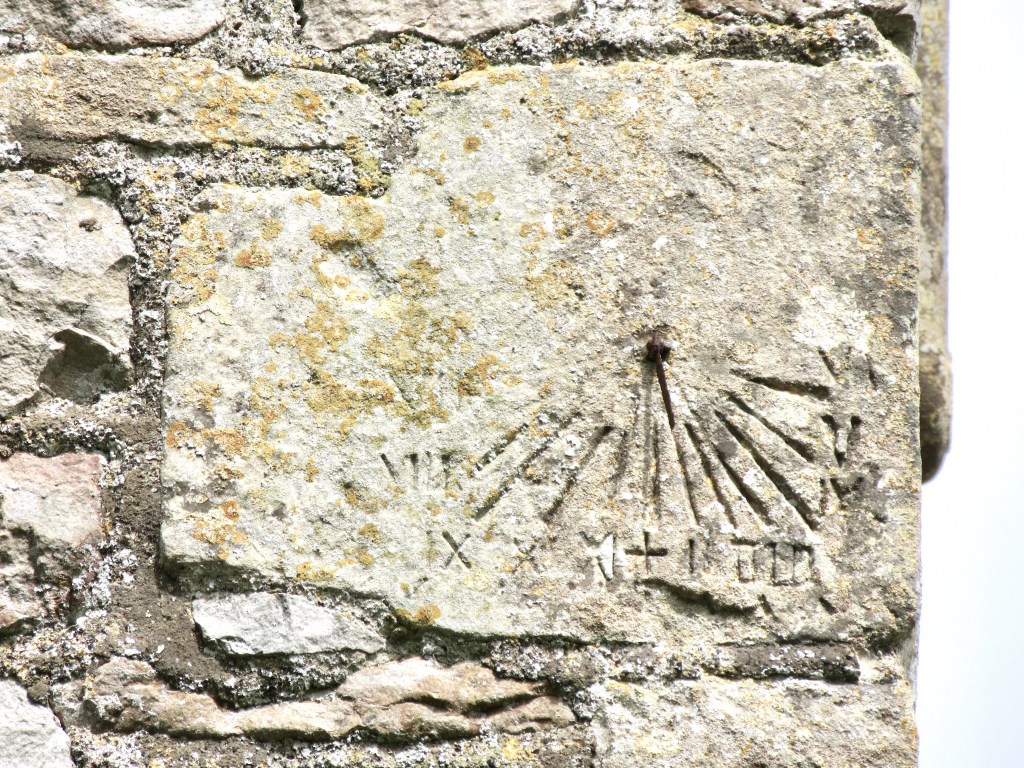
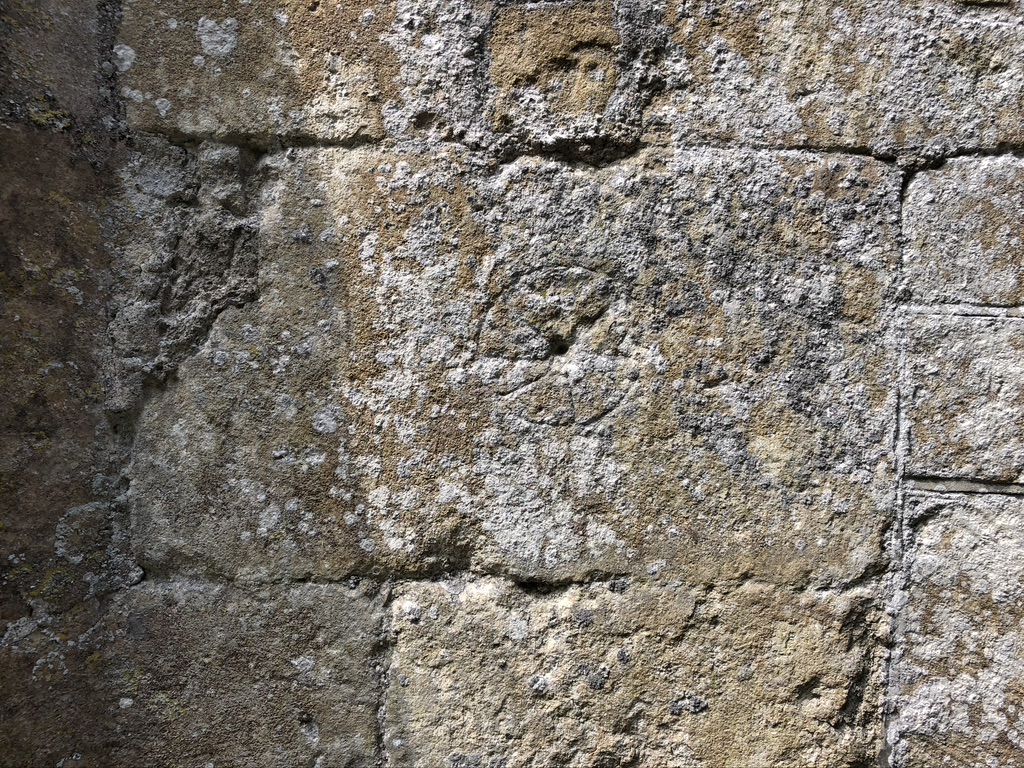
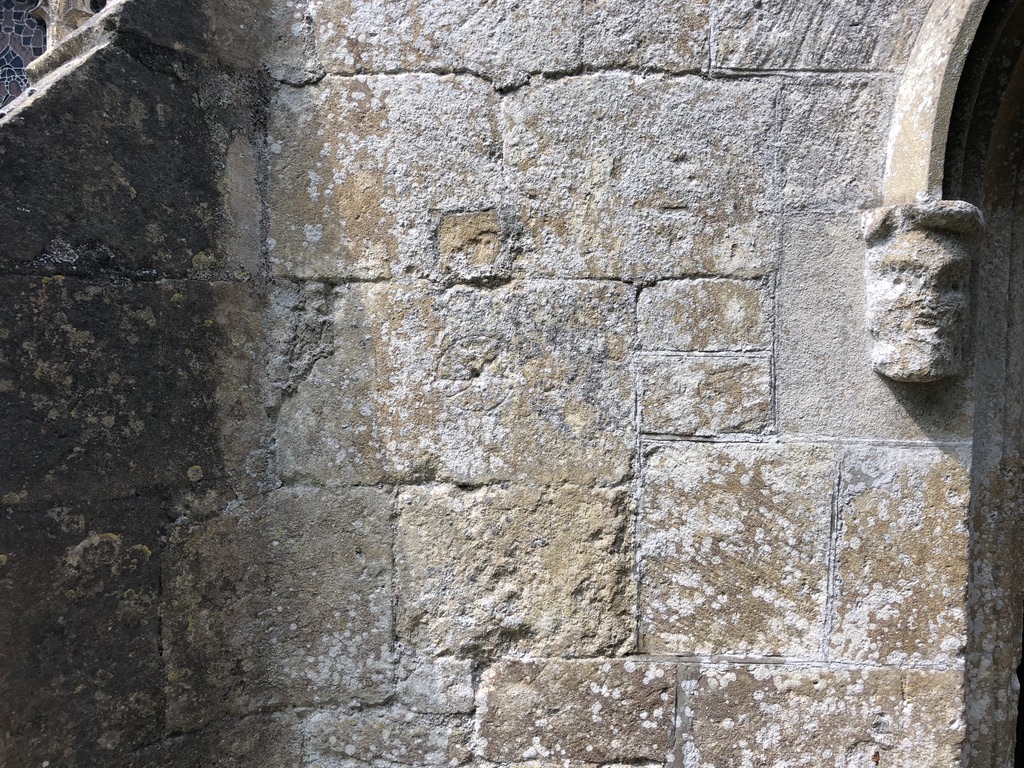
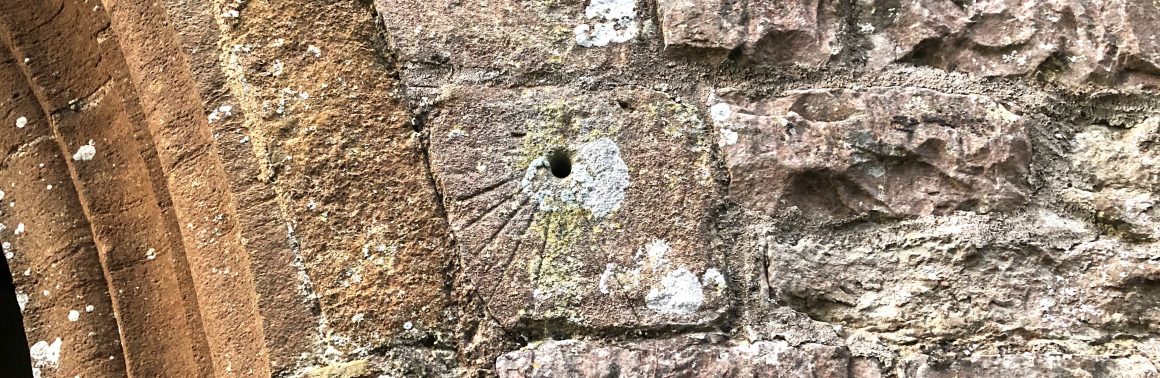
On the second (E.) tower buttress on the S. side, another dial, unrecorded by Father Horne presumably because it doesn’t strictly fall within the – or his – scratch dial definition. However, it is a fine dial in its own right and deserves to feature here even if not quite qualified for inclusion.

I haven’t yet found an analysis of this dial in the usual resources. The lines are unevenly spaced but not graduated. The hours are clearly marked from 8 to noon in Arabic numerals; then faintly (eroded?) from 1 to 5 in Roman numerals. The 3-line is barely visible.

This Arabic / Roman numbering mix is not something I have come across before. It may help to date the dial – late C16 perhaps? Any further information would be welcome.

Ref: Somerset Historic Environment Record: There are two engraved sundials on the south side of the church. The first is semicircular and reset upside down on the second buttress west from the steps down to the boiler house. There are three marker holes. The second is on the E buttress for the tower and the divisions are numbered in a combination of Roman and arabic numbers. 

GSS Category: Scratch Dial(s); Old Dial

All photos: Keith Salvesen

ODCOMBE . SOMERSET – ST PETER & ST PAUL: SCRATCH DIAL

St Peter and St Paul . Odcombe . Somerset

ST PETER AND ST PAUL . ODCOMBE . SOMERSET

GRADE II*. C13 origins, mainly C15, later restoration, transepts added 1874. 3 miles W. of Yeovil, close to Montacute. 50.9365 / -2.7031 / ST506154

DIAL

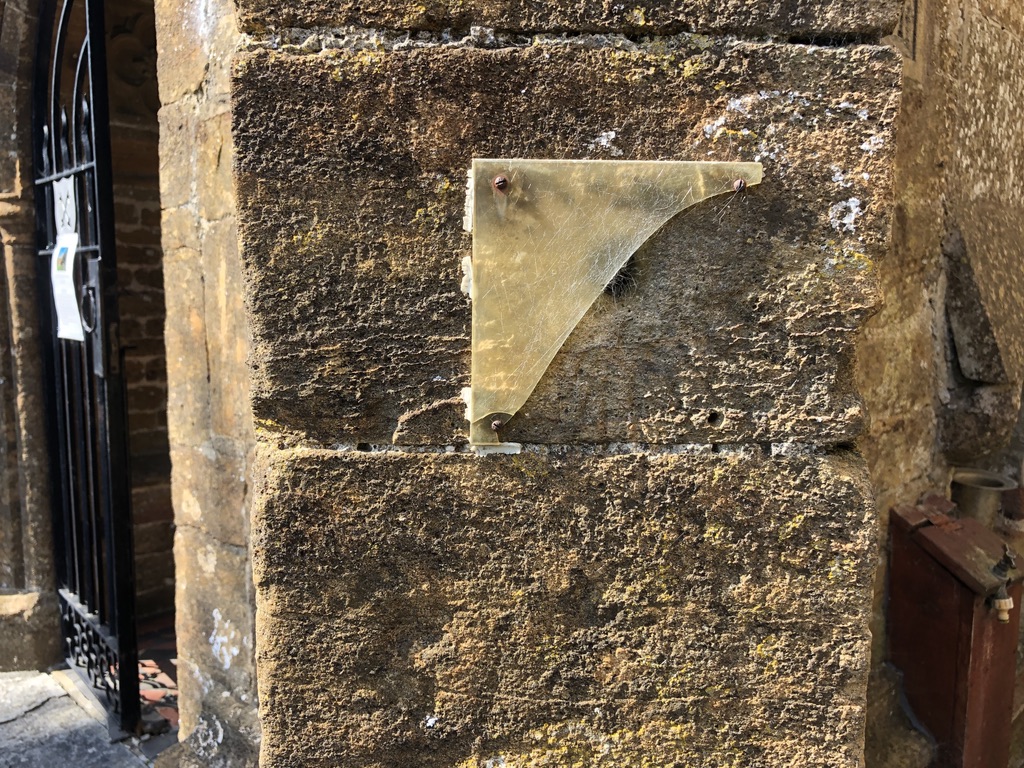
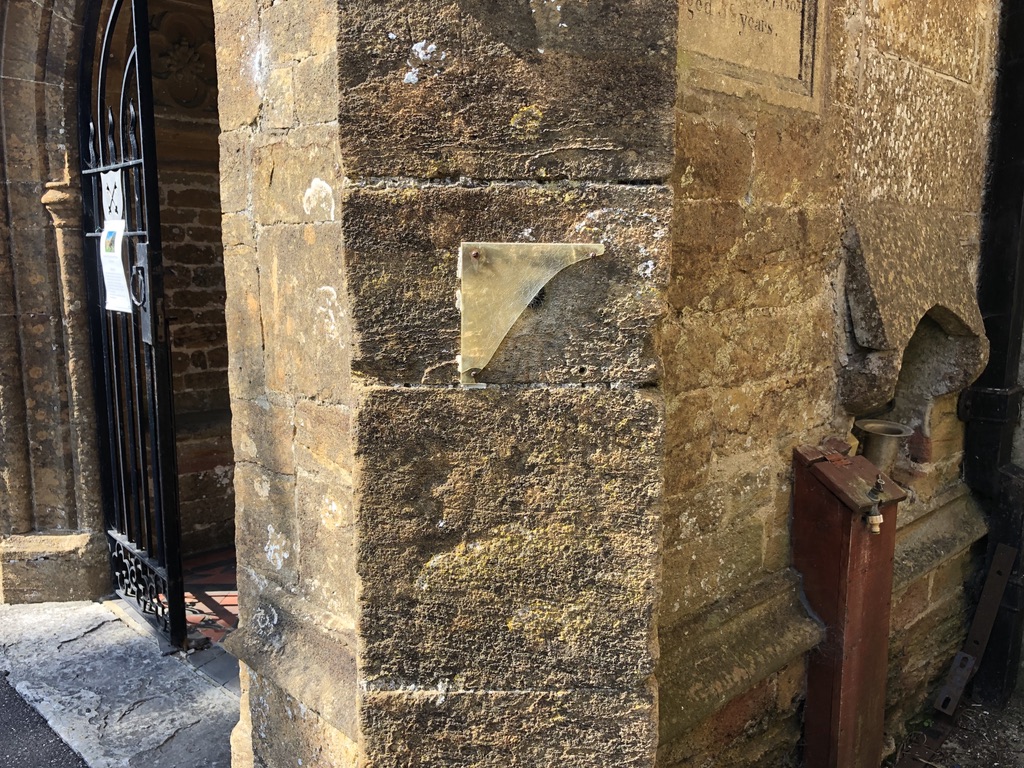
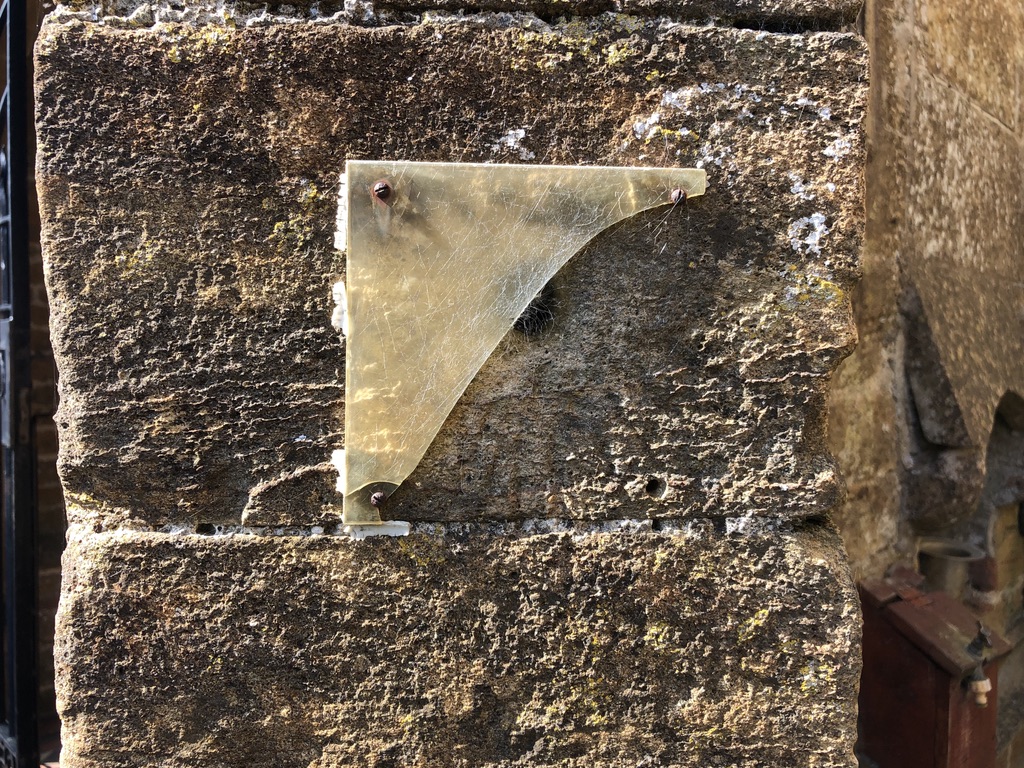
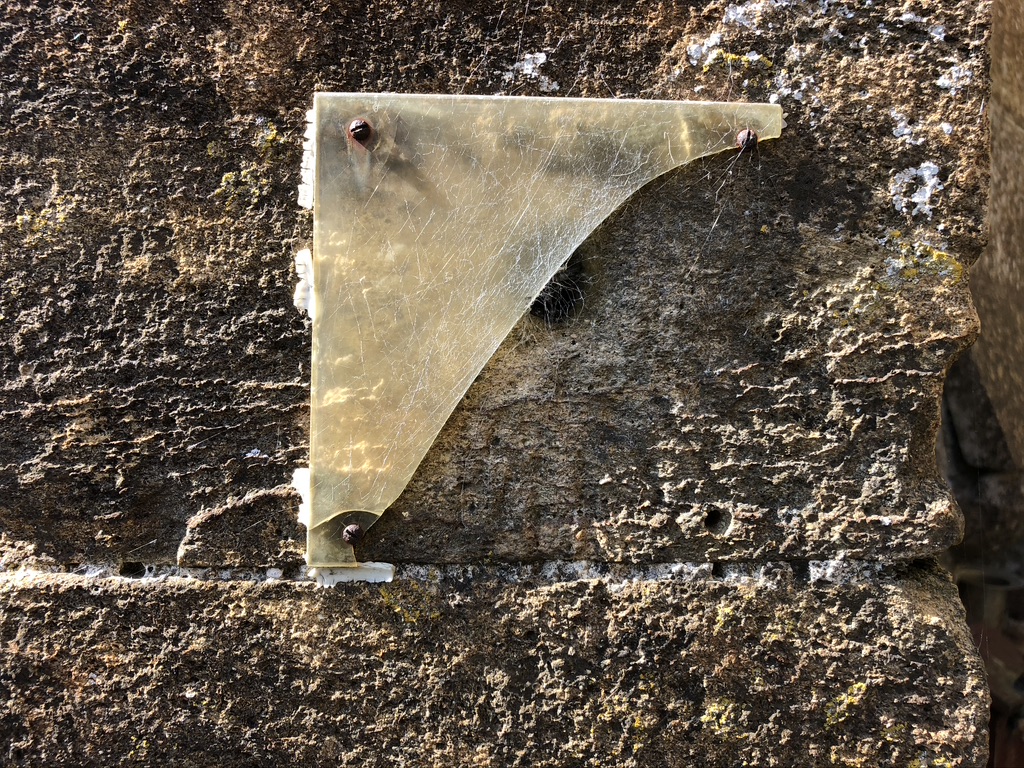
The dial, once located E. of the porch, is disappointingly half-concealed by a discoloured and broken perspex sheet screwed over it. It’s a well-intended method of protection, of course, but some say it is preferable to leave a dial to erode naturally over the centuries. Possibly a covering like this could actually cause deterioration.

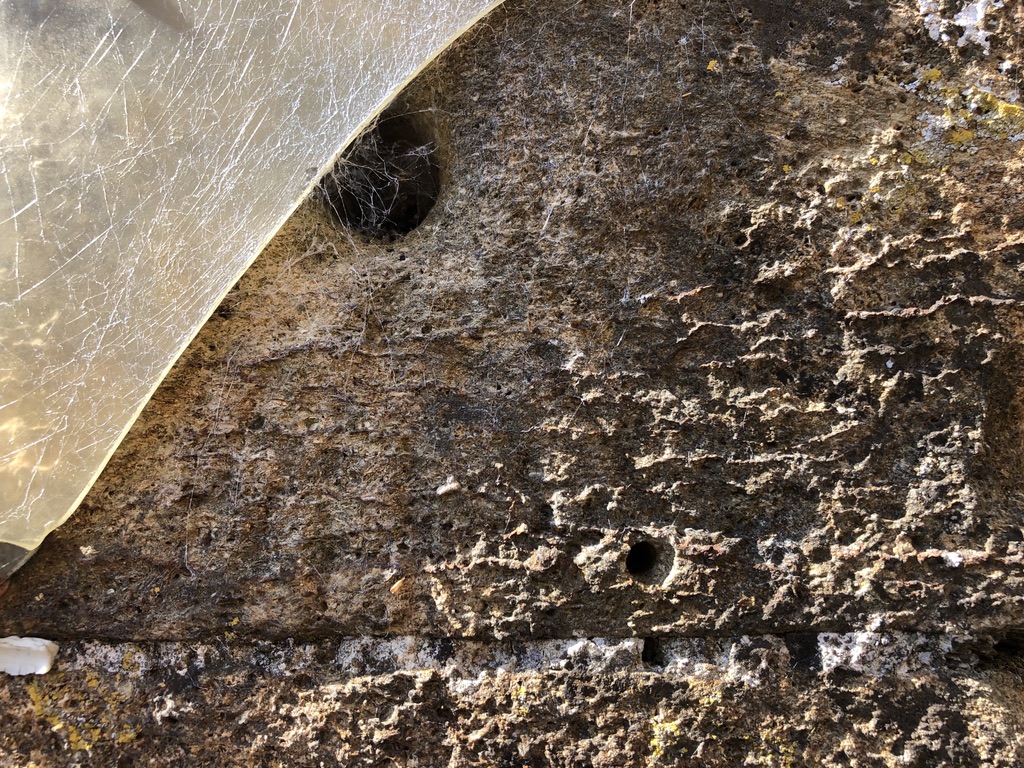
A number of clear graduated lines are visible in the lower R quadrant. There is a large pock, with a couple of small holes in the mortar below. The large one – between the terminus of two afternoon lines – may well be part of the dial. It’s too large to be the location of the missing screw for the covering. Perhaps that was fixed in a smaller hole in the mortar.

St Peter and St Paul . Odcombe . Somerset – Scratch Dial

Dom Ethelbert Horne DEH visited Odcombe church on June 8th, 1915. He noted: this dial is on the s.e. face of the buttress, and hence may not be in its original position and his record states:

208. This dial is on the s.e. angle buttress of the s. porch. It is 4 feet 4 inches above the ground, the noonline is 3 inches in length, the stylehole is 4 1/4 inches deep by 1 inch in diameter, and the aspect is s.e. Type 3. June 8th, 1915.

GSS Category: Scratch Dial

All photographs – Keith Salvesen

MARSTON MAGNA . SOM. ST MARY – SCRATCH DIAL

St Mary . Marston Magna . Som

ST MARY . MARSTON MAGNA . SOM .

GRADE I. Pre-conquest origins, largely rebuilt in c.1360 and reworked thereafter. Plenty to investigate and to test your building dating skills. BLB summary HERE. 5m NE of Yeovil, NW of Sherborne. 50.999 / -2.5807 / ST593223

DIAL

A single dial. St Mary was visited by DEH on May 18th 1915 and he recorded:

199. This dial is on the first buttress to the w. of the priest’s door. It is 7 feet 4 inches above the ground, the noon-line is 4 1/2 inches in length, the style hole is 1/2 an inch deep by 3/4 of an inch in diameter, and the aspect is s. by 10°e. Type 3. May 18th, 1915.

St Mary . Marston Magna . Som – Scratch Dial

The radials go beyond 180º, with quite a variation in spacing, depth, and length. There are notably longer and deeper afternoon lines with one extending to the stone below, which may signify a Mass time. Either that quadrant more deeply incised, or maybe recut at a later date. The extent of erosion in the lower left quadrant suggests the latter.

The style hole is large. DEH makes no comment on the equally large hole immediately above. I could see no other dial signs – lines or pocks – linked to it. I wondered if it was the original dial on this prominent buttress, of the most basic type – simply a hole with a stick in it (the shadow would still be an indicator of the passage of time). Rather than elaborate it, a new dial was added beneath.

GSS Category: Scratch Dial

Photos: Keith Salvesen

TEMPLE GUITING . GLOS . ST MARY – SCRATCH DIAL

Temple Guiting . Glos . St Mary

GRADE 1. C12 chancel, nave; continuing development; Largely rebuilt C16, tower in C17. Mid-Victorian restoration (Cutts). Cotswolds, between Winchcombe and Stow-on-the-Wold. 51.949 / -1.8685 / SP091278

DIAL

TWC in his 1935 ‘Origins and Use of Scratch Dials’ includes Temple Guiting in his county lists (along with nearby Guiting Power). There is no other information that I can find in any of the usual resources nor going beyond them. The century-by-century work on this church make it hard to know where to look, especially as stones may have been relocated or even removed.

STOP PRESS

Within an hour of posting this, more research revealed Guiting sightings of 3 dials. An article by Rev. P. Sullivan for the Bristol and Gloucestershire Archaeological Society (1924, Vol 46, 169-86) lists many Glos. dials including the following:

All are quite high up, which is no real excuse for missing all of them, even when in a hurry. I clearly need to go back. Please stop here unless you want to check out a less obvious / certain dial

Temple Guiting . Glos . St Mary – Scratch Dial

With limited time for a visit, the only dial-like marks I could find were under window of the transept (if that’s the right term) on the N. side. There are 2 clear lines; one faint line; and a couple of possibles but too eroded to be sure. I may easily have missed a real dial(s); this is the candidate I noticed.

My thoughts are that this is a small, simple dial cut on an older-seeming stone; that it has been relocated, presumably from the S. front; and that it has been rotated 90º anticlockwise. There’s the hint of a filled style hole below the dark patch that looks different from the lichen.

Temple Guiting . Glos . St Mary – Scratch Dial

GSS Category: Scratch Dial

Photos: Keith Salvesen

WINTERBOURNE BASSETT . WILTS . ST KATHERINE & ST PETER – 4 DIALS

Winterbourne Bassett . Wilts . St Katherine & St Peter

ST KATHERINE & ST PETER . WINTERBOURNE BASSETT . WILTS

GRADE 1. Records from C12. Mainly late C13 / C14, expanded C15, restored mid-C19. An architectural gem (Betjeman). Dedication has varied over time. 4m N. of Avebury. 51.4731 / -1.8554 / SU101749

DIALS

4 dials identified: 3 scratch dials and 1 ‘very early scientific dial’ (BBS)

DIAL 1

Priest’s Door R. Pock dial with 5 clear dots on pinkish stone (similar position and style to eg Maiden Newton Dorset).

Winterbourne Bassett . Wilts . St Katherine & St Peter – Scratch Dial 1

DIALS 2 & 3

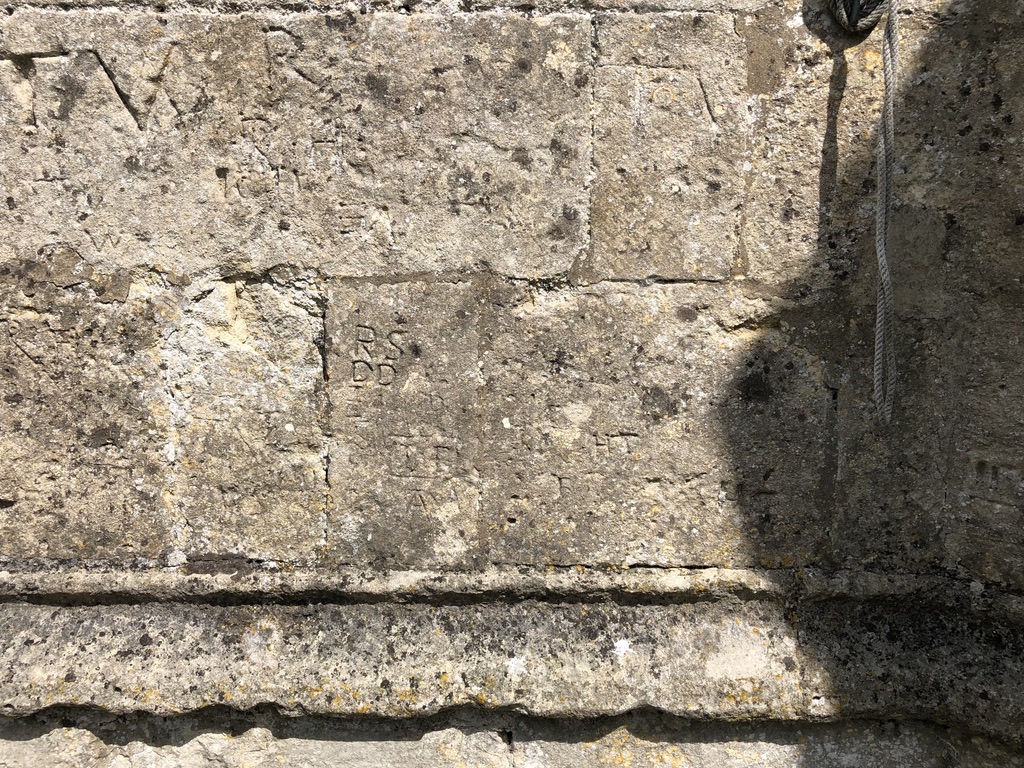
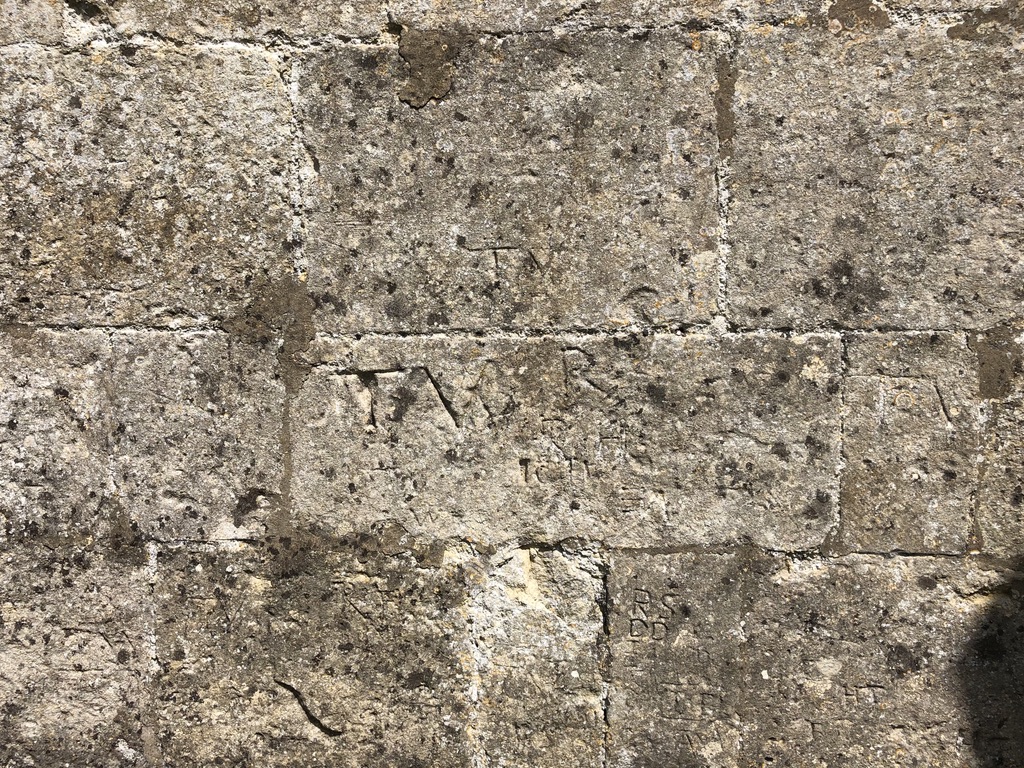
Priest’s Door R, lower down. Dial 2 is a conventional dial with 4 lines in L. lower quadrant; noon line emphasised. Adjacent to less clear Dial 3 with filled style hole and 2 clear thin radials and (perhaps) a very faint noon line. There’s a possible additional dial on this stone, at best a style hole with eroded lines.

Winterbourne Bassett . Wilts . St Katherine & St Peter – Scratch Dials 2 & 3

DIALS 1, 2 & 3

Winterbourne Bassett . Wilts . St Katherine & St Peter – Scratch Dials 1 – 3
Winterbourne Bassett . Wilts . St Katherine & St Peter – Priest’s Door with 3 scratch dials

DIAL 4

High on quoin on S. side, a far more sophisticated gnomon dial. The BSS record from some years ago states: ‘Probably upright Roman numerals with cross for noon (not easy to see). Very early scientific dial. Gnomon may be a replacement’.

A photo taken last month removes the doubt. The incised lines – of variable width, some with a slight wedge shape, some quite deep (or less eroded) – have Roman numerals from VII round to VI. The IX to III horizontal line of numerals works well. The noon cross is very clear. I wonder if the stumpy little gnomon indicates that it is old (even if not original). Did gnomon design later develop to more elegant and longer markers?

Winterbourne Bassett . Wilts . St Katherine & St Peter – Scientific Dial with Roman Numerals

GSS Category: Scratch Dial; Scientific Dial

All photos – Keith Salvesen

BRATTON . WILTS . ST JAMES THE GREAT . SCRATCH DIAL; Painted dial 1801

CHURCH OF ST JAMES THE GREAT . BRATTON . WILTS

CHURCH OF ST JAMES THE GREAT . BRATTON . WILTS

GRADE ll*. Mainly C14 / C15, broadly Perp. Earlier origins. C19 work by G. Scott & T. Wyatt. Solitary in a combe behind the village and a real challenge to discover (ignore ‘Church Lane’). Well worth the effort to visit, as is Bratton Camp iron-age hill fort with its early white horse to W. 51.2665 / -2.1244 / ST914519

DIAL

CHURCH OF ST JAMES THE GREAT . BRATTON . WILTS – SCRATCH DIAL

A simple small dial, encircled, with several slightly curving radials. 3 or 4 pocks that may relate to it. Located W. of the S. porch, level with the head stop L. of the arch.

OLD DIAL

On S. face of the tower, a large painted dial dated 1801 ‘TEMPUS FUGIT’. The long spindly gnomon casts an impressively long shadow.

GSS Categories: Scratch Dail; Old Dial

All photos – Keith Salvesen

MAIDEN NEWTON . DORSET . ST MARY (3) . SCRATCH DIAL 2? (unrecorded)

St Mary . Maiden Newton . Dorset

DEDICATION † St Mary. Mid C12 / earlier foundation; main development C15; C19 restoration

LISTING † Grade I

LOCATION † 8 miles NE. of Dorchester, 12 miles SE. of Yeovil, in the valley below the A37 racetrack. Hardy’s ‘Chalknewton’. More of a small town than a village, with a few shops, a garage and a station rather than (as elsewhere locally) a single shop and a halt. 50.7775 2.5727 SY597977

DIAL 1

See detailed post for the recorded dial in the chancel doorway (RHS) HERE

St Mary . Maiden Newton . Dorset . Scratch Dial on Chancel doorway

DIAL 2 (?)

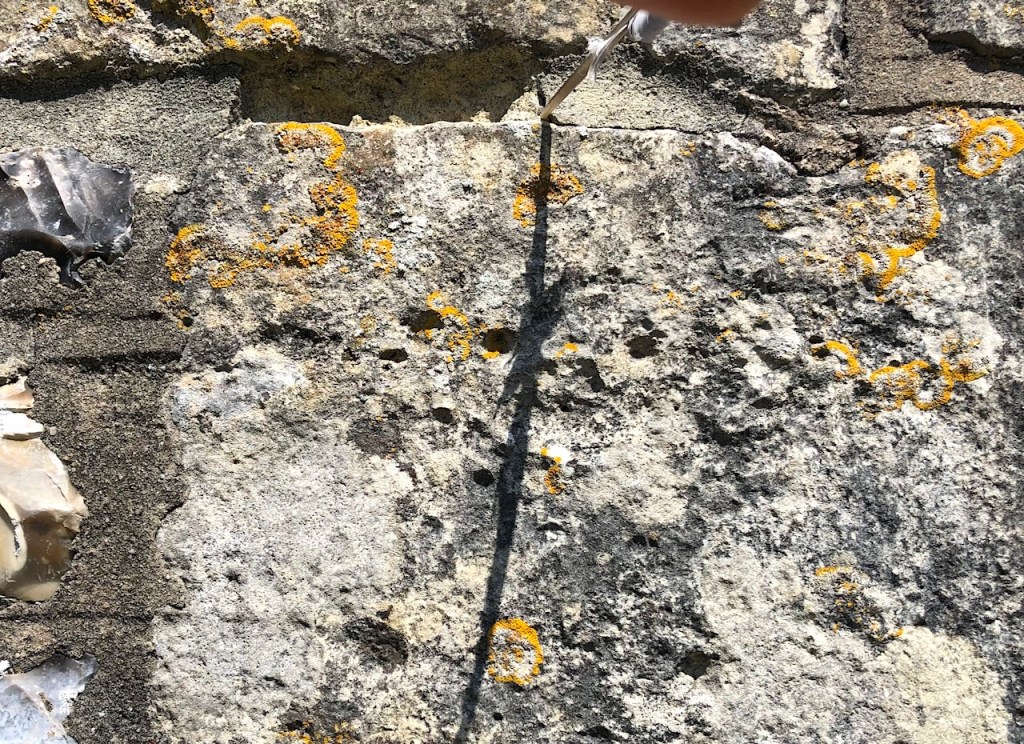
The dial is at eye-level on the quoin of the buttress between the porch and the Chancel door. It is not recorded, and I can see why (a) it may have been overlooked and or (b) why, if noticed, it may have discounted as a definite dial. So I’ll argue the case.

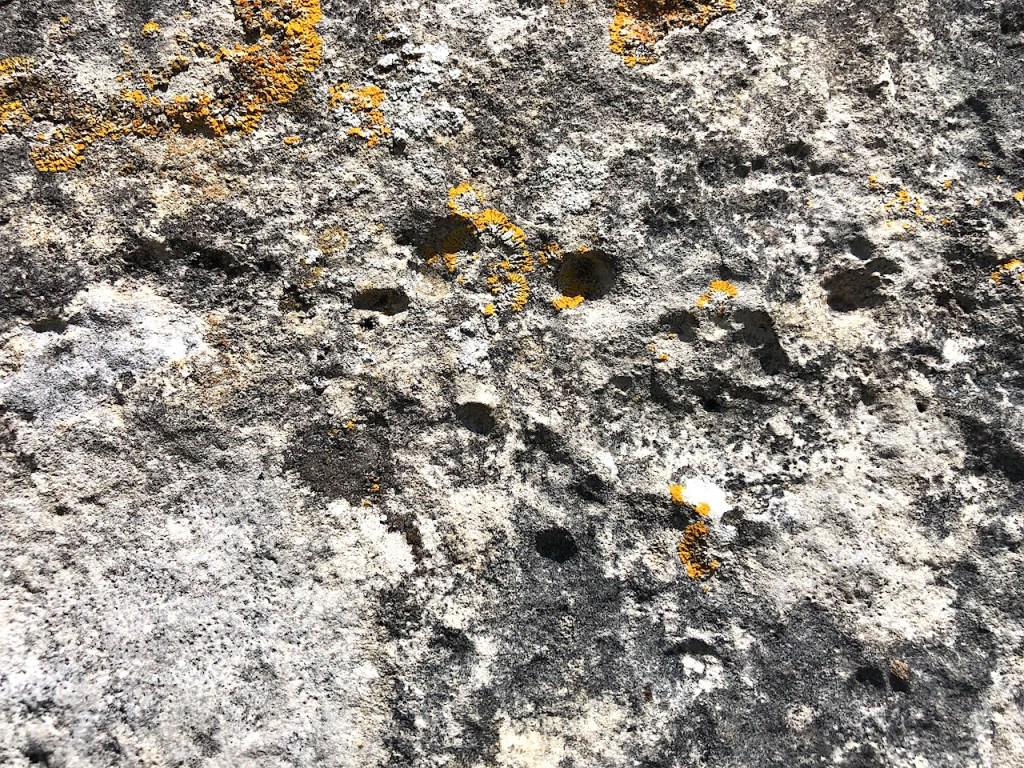
This is a pock dial with no radials. There are 3 large pocks on a slight curve, and a couple of small ones slightly out of line. There are other pocks lower down, two of which (presuming a gnomon in the mortar immediately above) seem to relate to the large pocks – one might even be a noon indicator.

Using a crow’s feather as a style centred in the mortar above the large pocks, the shadow cast was photographed at about 11.30

St Mary . Maiden Newton . Dorset . Scratch Dial 2? (unrecorded)

St Mary . Maiden Newton . Dorset . Scratch Dial 2? (unrecorded) . ‘Timed’ with a crow’s feather
St Mary . Maiden Newton . Dorset . Scratch Dial 2? (unrecorded) . Details of the pocks
St Mary . Maiden Newton . Dorset . Scratch Dial 2? (unrecorded) . Location c/w Dial 1 beside the Chancel door

NOTES † There is a fine sundial ‘on S. face of tower, square slab with simple capping, iron gnomon and date 1630BHO. See OLD DIAL menu LINK

GSS Category: Scratch Dial

All photos : Keith Salvesen

FEOCK . CORNWALL . CHURCH OF ST FEOCK . SCRATCH DIAL

Church of St Feock . Feock . Cornwall


CHURCH OF ST FEOCK. FEOCK . CORNWALL

GRADE ll*. C15 with earlier origins. Complete rebuild in C18 ‘incorporating C15 windows, arcade and doorways’ HE. Separate C13 bell tower (cf Gunwalloe), listed G ll. 5m S. of Truro. 50.2057 / -5.0502 / SW824384

Only 4 scratch dials are recorded for Cornwall, this being one (see also Manaccan). I assume the main reason is that the local building materials – granites, serpentine, and other hard rock – are unrewarding to work with when cutting a dial

DIAL

The dial is located prominently on the left side of the porch. Clearly the stone is different from and older than the surrounding stones (BSS dates the dial as C15), so it must have been rescued from the earlier building and reused in a typical dial position during the C18 reconstruction. The graffito SS 1766 makes a good case for being the date of relocation.

The recorded dial is under the date and has 3 or 4 adjacent indistinct short lines described (BSS) as ‘remote’. I take this to mean unlinked to the large style hole. To me they seem rather random and arguably not in the right place / at the right angle to be of much use. There’s the hint of an eroded circle. This basic dial’s main interest (apart from its extreme rarity in the county) arguably lies in the way it was incorporated and marked so appropriately during the rebuilding.

OTHER MARKS

A. I assume SS to be the initials of the stonemason who reset the dial – rather boastfully larger than the incised date. Given the date, it seems unlikely to reference ‘Saints’. B. As for the triangular indented ‘nostrils’ with the trace of a partial circle, I have no idea – possibly the site of a later fixing? C. The vertical line to the right is another puzzle, with its carefully cut decorative ends (one eroded). I’d like it to be a cross, but there’s no indication of a horizontal.

More interesting is the ‘pattern’ lower right. When I first looked at the stone, I presumed from the clearer lines radiating from a centre, the 3 or 4 apparent pocks, and the trace of a circle, that this was the recorded dial. The upwards direction of the lines suggested that the ‘dial’ had been upper left and that the stone was inverted when reused (as is often the case with dial stones), after which the initials and date were added.

Here’s how the stone might have looked. Perhaps there are actually 2 dials on it?

Church of St Feock . Feock . Cornwall – Scratch Dial
St Feock . Cornwall . Stocks

NOTE: see also the entry for MANACCAN for a second recorded Cornish dial; and St Martin for 1 or even 2 candidates as hitherto unrecorded dials.

GSS Category: Scratch Dial

All photos: Keith Salvesen
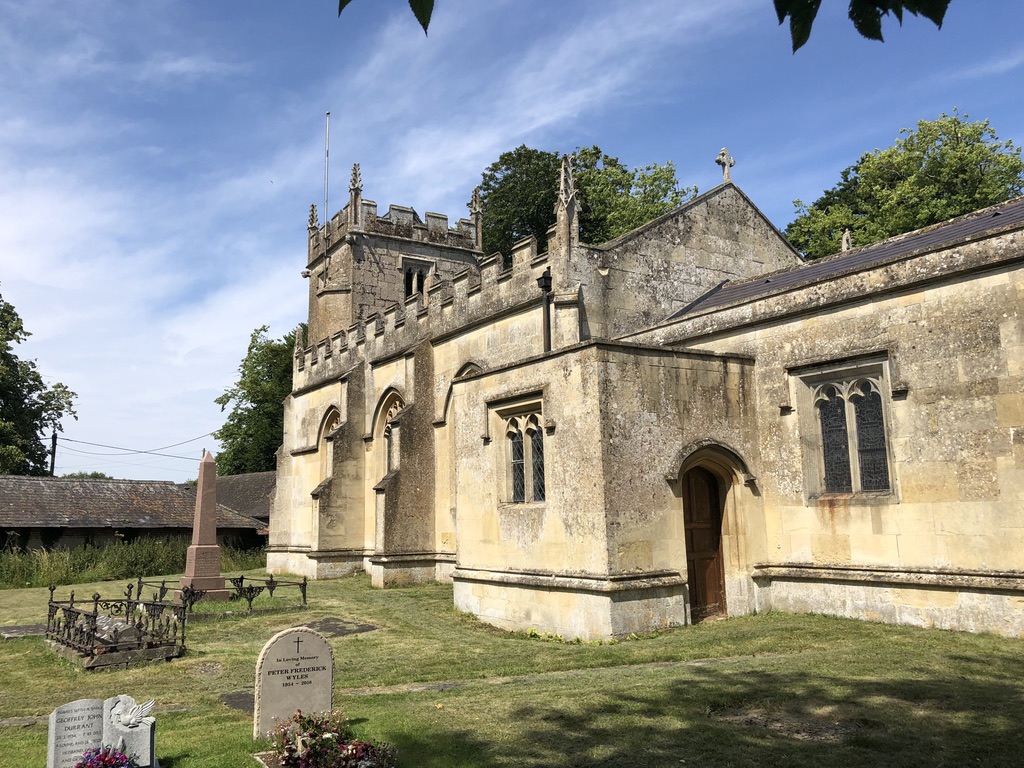
MANACCAN . CORNWALL . CHURCH OF ST MANACCUS . SCRATCH DIAL

St Manacca . Manaccan . Cornwall


CHURCH OF ST MANACCUS . MANACCAN . CORNWALL

GRADE 1. C12 and C15. Lizard Peninsula, S. of Helford River. Small village protected by a network of narrow roads from tourist hordes. 50.0832 / -5.127 / SW763250

Only 4 scratch dials are recorded for Cornwall, this being one. I assume the main reason is that the local building materials – granites, serpentine, and other hard rock – are unrewarding to work with when cutting a dial

DIAL

The small dial is cut to the right of the splendid Norman doorway, on a cylindrical pillar moulding. BSS suggests this may be a unique location. The lines curve away from the gnomon hole and there is the hint of a partial circle. The overall style is rustic and the condition is poor. It was noted in 2002 (L Burge) that there is a cross † ‘at Mass’ but on a dull day I could not make it out.

NOTE: see also the entry for FEOCK for a second recorded Cornish dial; and St Martin for 1 or even 2 candidates as hitherto unrecorded dials (link to be added).

GSS Category: Scratch Dial

All photos: Keith Salvesen
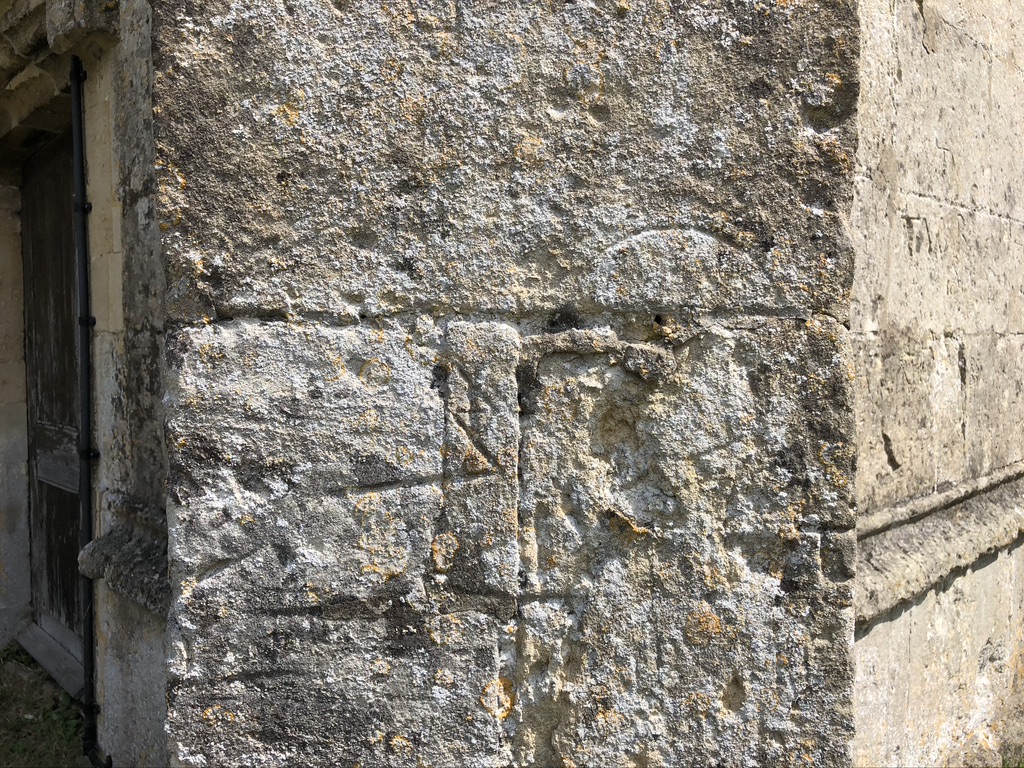
ASHILL . SOM . CHURCH OF THE BLESSED VIRGIN MARY – 3 SCRATCH DIALS

Church of the Blessed Virgin Mary . Ashill . Somerset

CHURCH OF THE BLESSED VIRGIN MARY . ASHILL . SOM.

GRADE II*. C12 / C13 on the site of an earlier church; later additions and alterations. Just off the A303 between Taunton (7m) and Ilminster (3m). 50.9508 / -2.9677 / ST321172

DIALS

Dom Ethelbert Horne DEH visited Ashill, during his Somerset dial-seeking perambulations, on 16 August 1915. He found 3 dials closely grouped on the SE corner of the nave. As I am finding, his descriptions from more than a century ago have been eroded by the passage of time and by work carried out in the intervening period, for example filled style holes.

DIAL 1

115. (1) This dial is on the s.e. corner of the nave. It is 6 feet above the ground, the noonline is 2 1/2 inches in length, the stylehole is 1 1/4 inches deep by 1 inch diameter, and the aspect is s. by 10° e. Type 2

Notes: the ‘6 feet’ is from the base of the nave wall, which is below the churchyard level; the style hole has been filled in the interim

Church of the Blessed Virgin Mary . Ashill . Somerset – Scratch Dial 1

DIAL 2

116. (2) About 10 inches to the e. of the above is another dial, which may be only a copy. The noonline is 2 1/2 inches in length, the stylehole, which is in a joint, is filled, and the aspect is as above. Type 2.

Notes: the lines are more spidery, less distinct, and more random than dial 1

Church of the Blessed Virgin Mary . Ashill . Somerset – Scratch Dial 2

DIAL 3

117. (3) Two feet below the last named is another, also probably a copy. The noonline is 4 1/2 inches in length, the stylehole, which is in a joint, is filled, and the aspect is as above. Type 2. August 16th 1915.

Church of the Blessed Virgin Mary . Ashill . Somerset – Scratch Dial 3
Church of the Blessed Virgin Mary . Ashill . Somerset – Scratch Dial 3 annotated

DIALS 1 & 2

Church of the Blessed Virgin Mary . Ashill . Somerset – Dials 1 & 2

DEH notes that ‘it is rather difficult to determine whether Nos. 2 and 3 are only copies of No. 1 or whether they are original’. Having seen and photographed (as he could not) the dials, I am wondering whether the rudimentary dial 2 was in fact the first, with ‘dial 1’ cut later, copying and improving on it.

Dial 3 is rather different to either of its companions. DEH categorises each dial as being in his ‘Type 2’ (of about 12); perhaps that is what he means by ‘copy’ – ie the general style, not the physical details

BLB LINK

GSS Category: Scratch Dial

All photos: Keith Salvesen