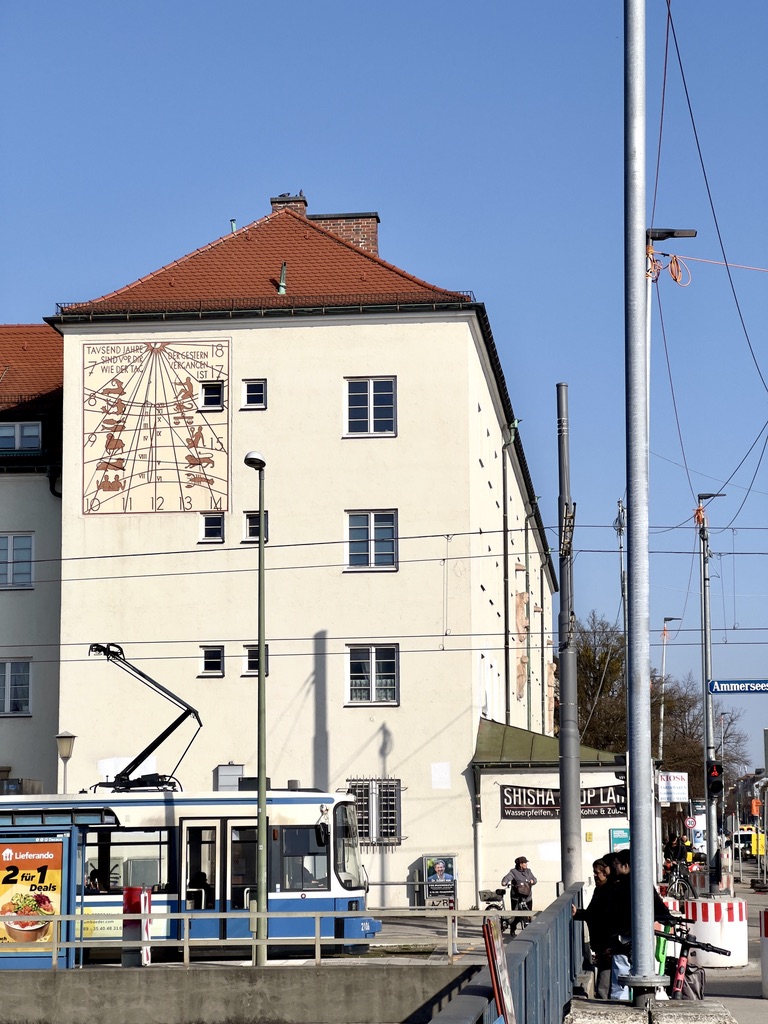
MUNICH . LAIM DISTRICT – Modern Noon Dial

NOON DIALS

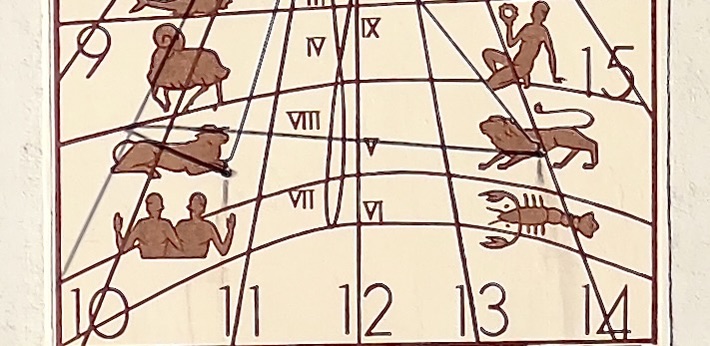
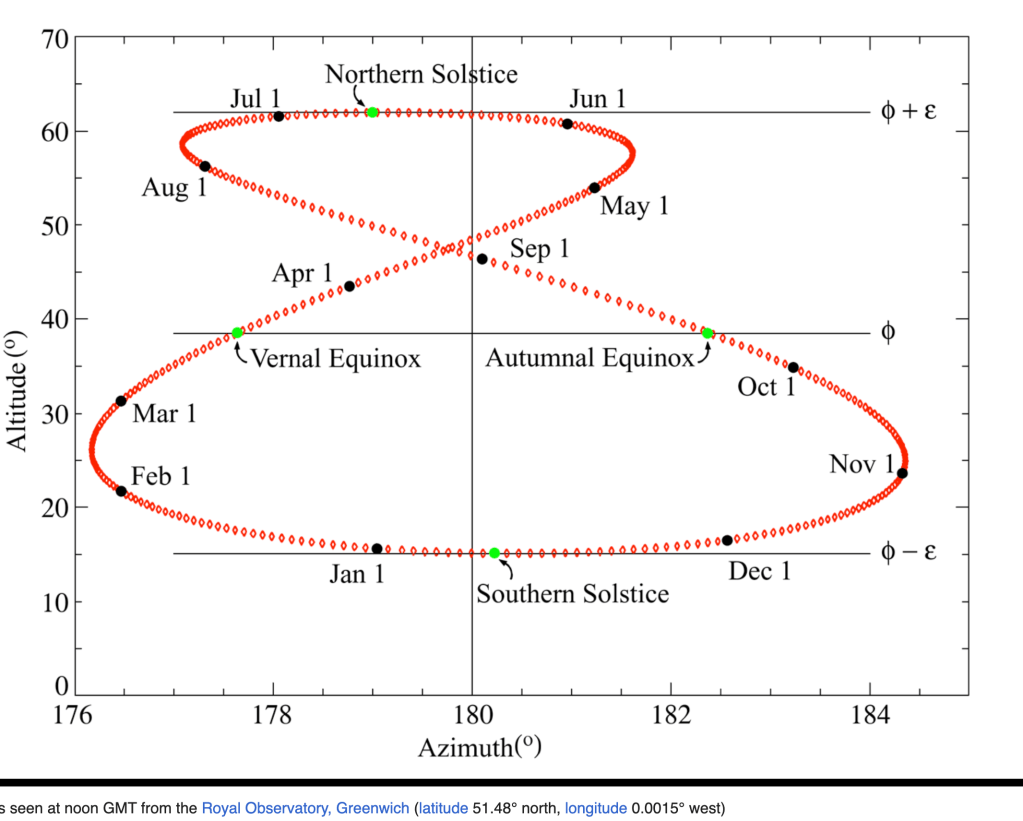
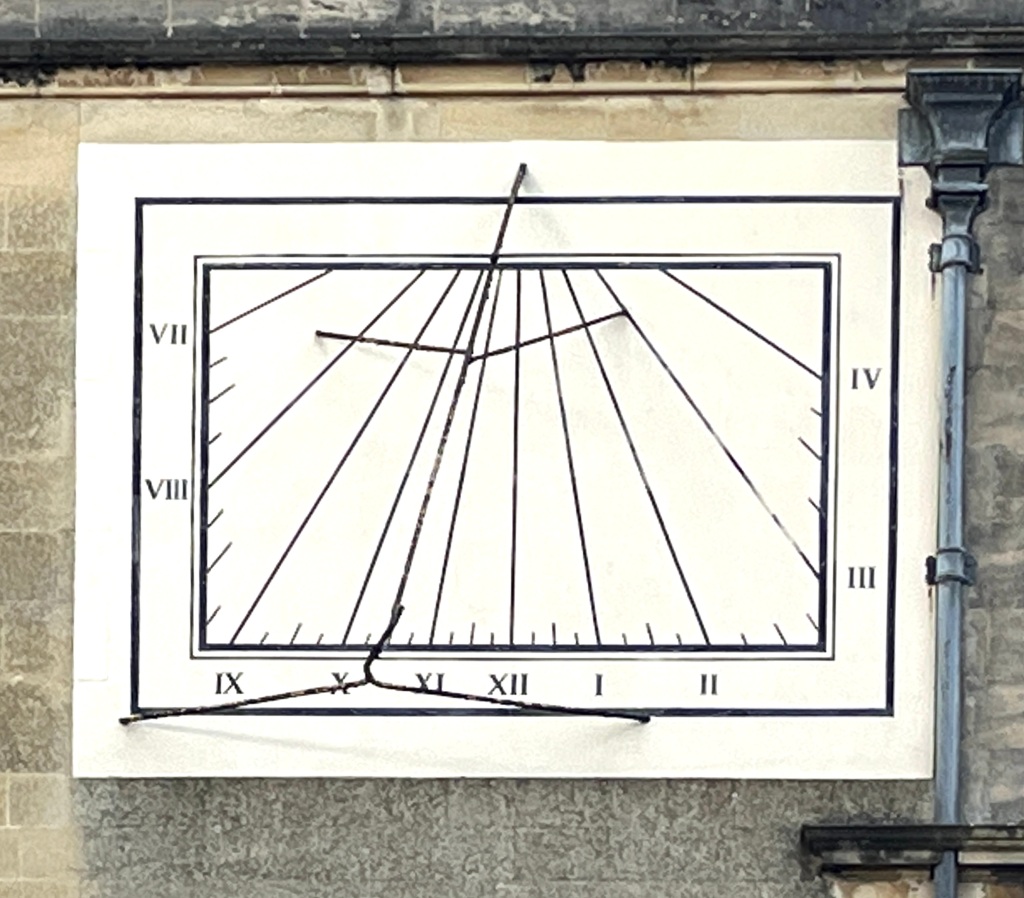
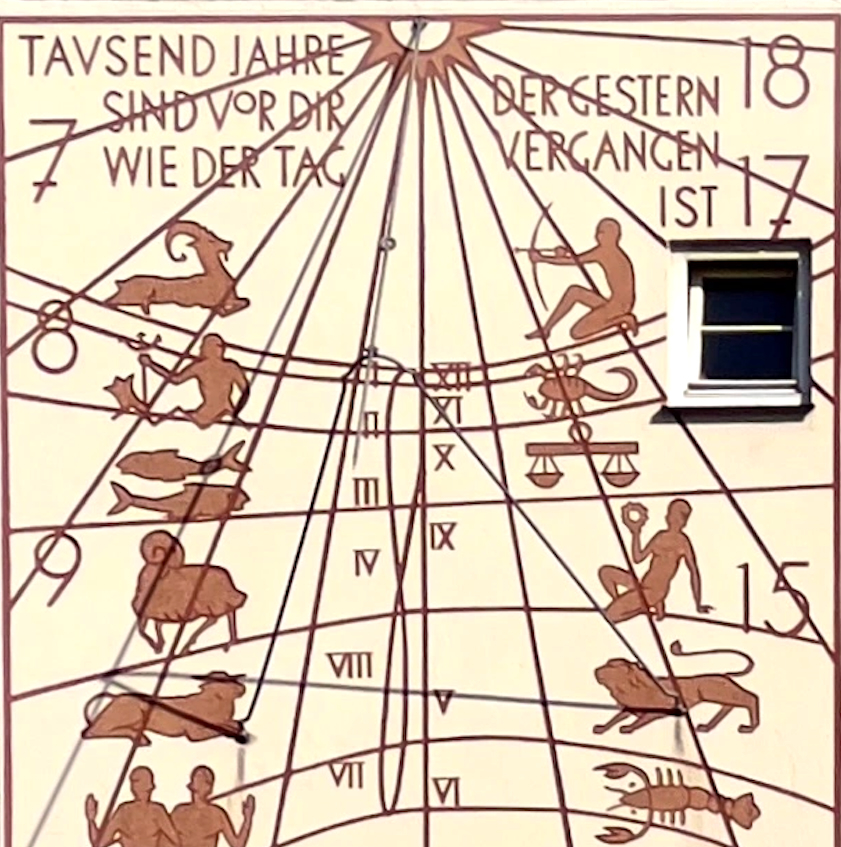
A noon dial / noon mark serves as a method of pinpointing midday, when the sun is at its highest and due south. The origins are ancient. Here, the relevant area is in the centre, flanked by Roman numerals. My maths / science skills are few and I will spare you a rudimentary explanation. The key words are Equation of Time, Analemma, and (my non-technical choice) figure of eight.

This image has an empty alt attribute; its file name is screenshot-2025-03-23-at-12.21.49.png

In the centre of the dial is a narrow figure of eight bounded by the numerals. You can just make out the raised bracket that supports a slender gnomon. You can see a small ring through which, at the perfect moment, the sun’s rays strike the face of the dial:
If you want to know more, there is a concise entry at ANALEMMA (Wiki)

This image has an empty alt attribute; its file name is screenshot-2025-03-23-at-12.21.49.png

This image has an empty alt attribute; its file name is screenshot-2025-03-23-at-12.21.49.png

GREEN TEMPLETON COLLEGE OXFORD

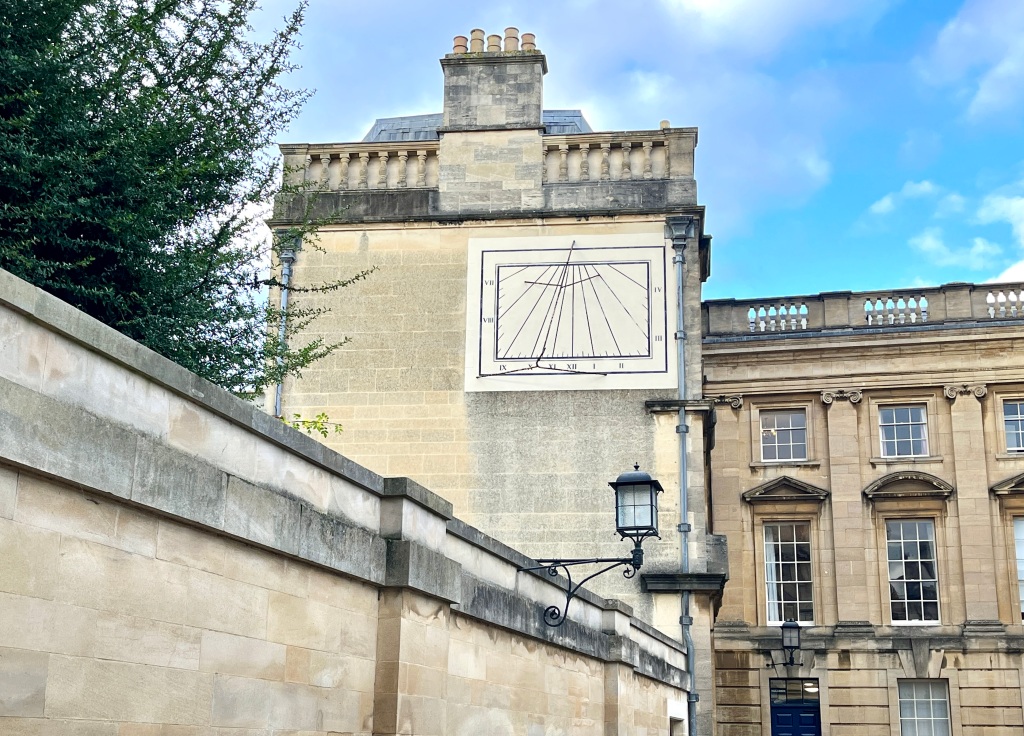
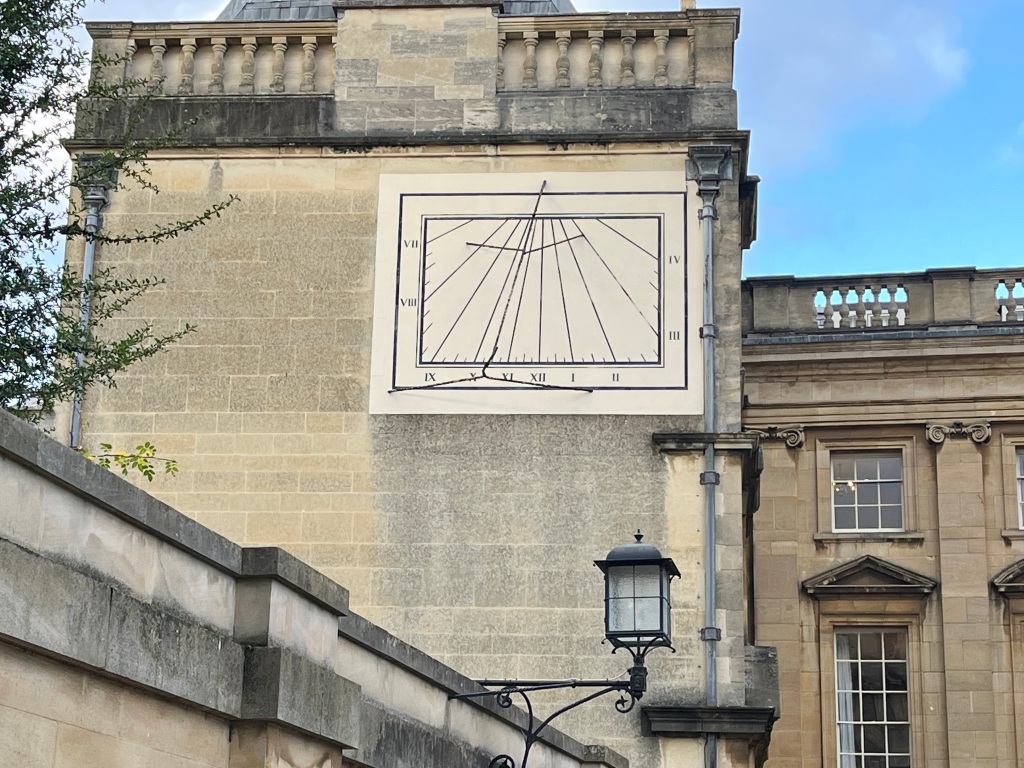
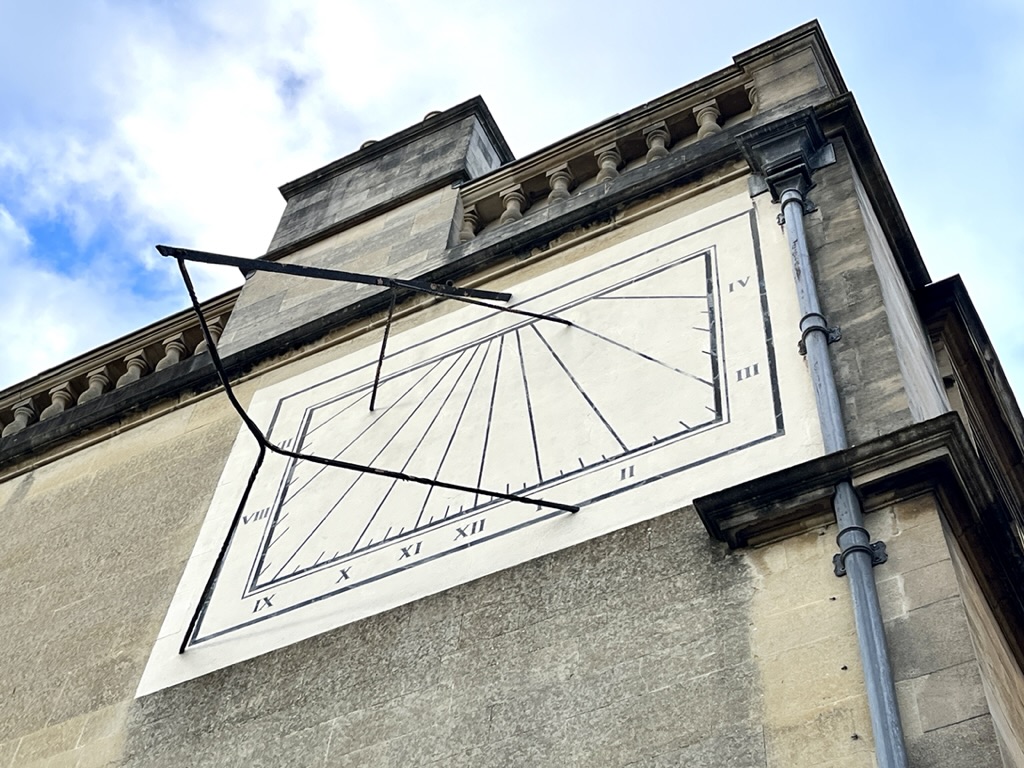
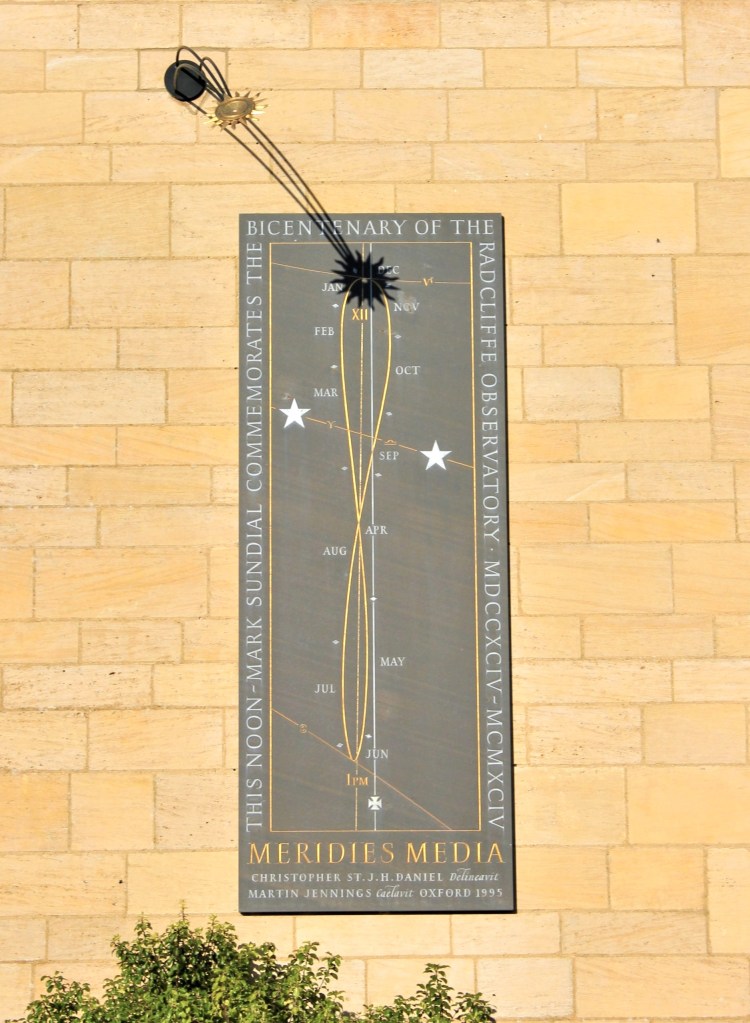
A modern (1995) noon-dial commemorating the Bicentenary of the Radcliffe Observatory, designed by the renowned Christopher Daniel, founder of the British Sundial Society. The critical alignment of the sun’s rays are projected onto the surface of the dial at noon (MERIDIES MEDIA), focused by the small ring.
THE COLLEGE’S NOTES

  • It works by using a spot of light cast by the nodus (the gilded sun with a hole in the middle), falling upon the slate dial-plate and tracking from left to right across it.
  • It is declining because the wall it is attached to does not face due south but ‘declines’ away from the compass point
  • Noon-mark means it gives the point at which the sun at its zenith crosses the Greenwich meridian and the Oxford meridian (the vertical white line down the centre of the dial)
  • Mean-time means you can read clock-time from the dial by following the progress of the year along the figure-of-eight marking, known as an analemma or equation of time correction curve. This makes allowances for the effect of variations in the apparent motion of the sun at different times of year.
Screenshot

GSS Category: Analemma; Equation of Time; Munich Sundial; Nodus; University Sundial

CREDIT: John Renner, for another great find from his travels
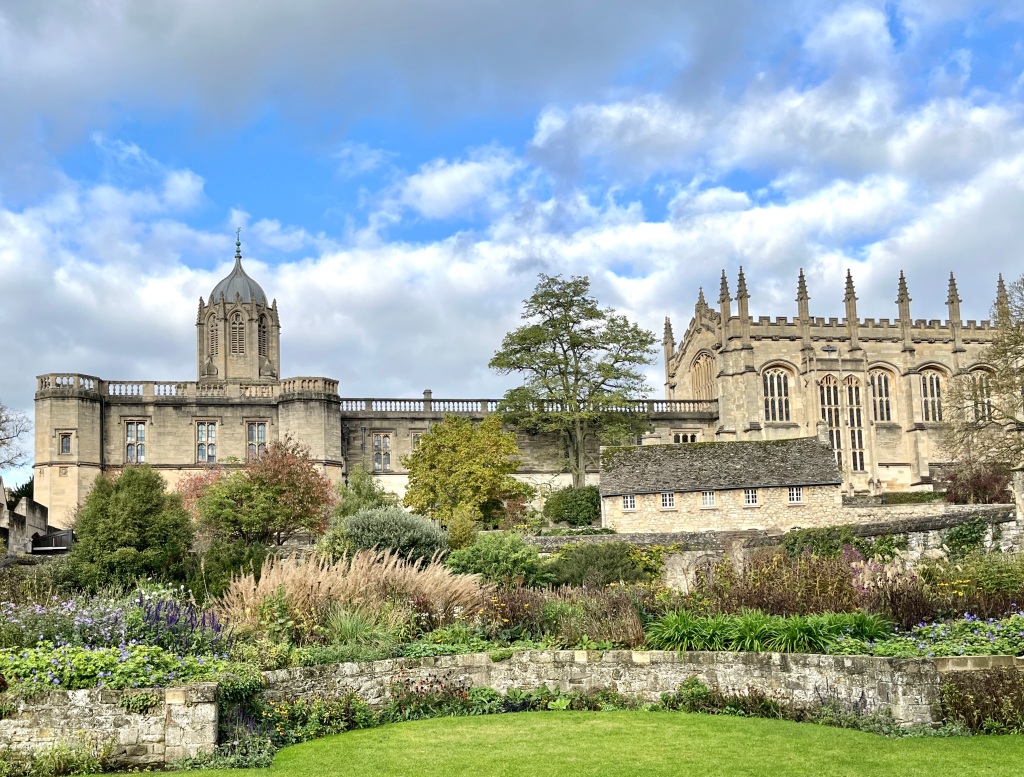
CHRIST CHURCH COLLEGE . OXFORD – Vertical Dial c1750

CHRIST CHURCH COLLEGE . OXFORD . VERTICAL DIAL

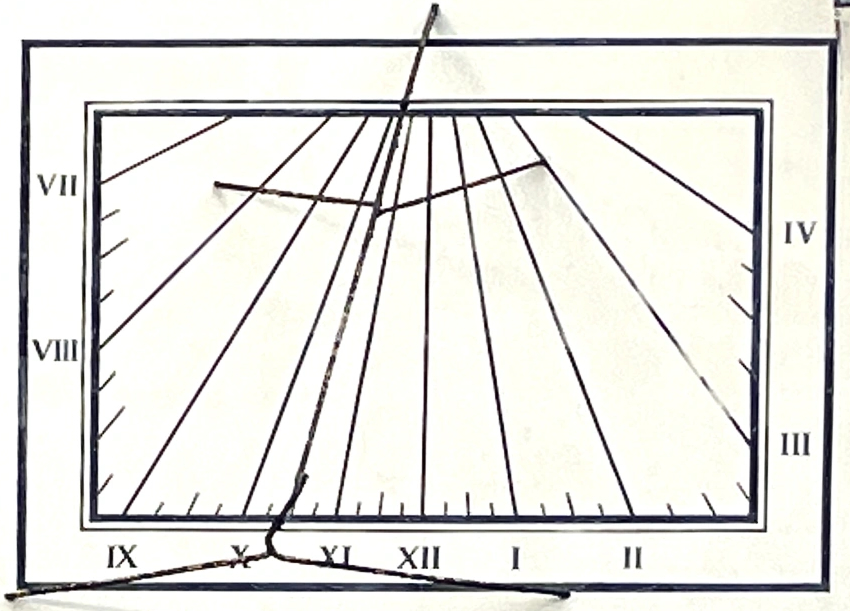
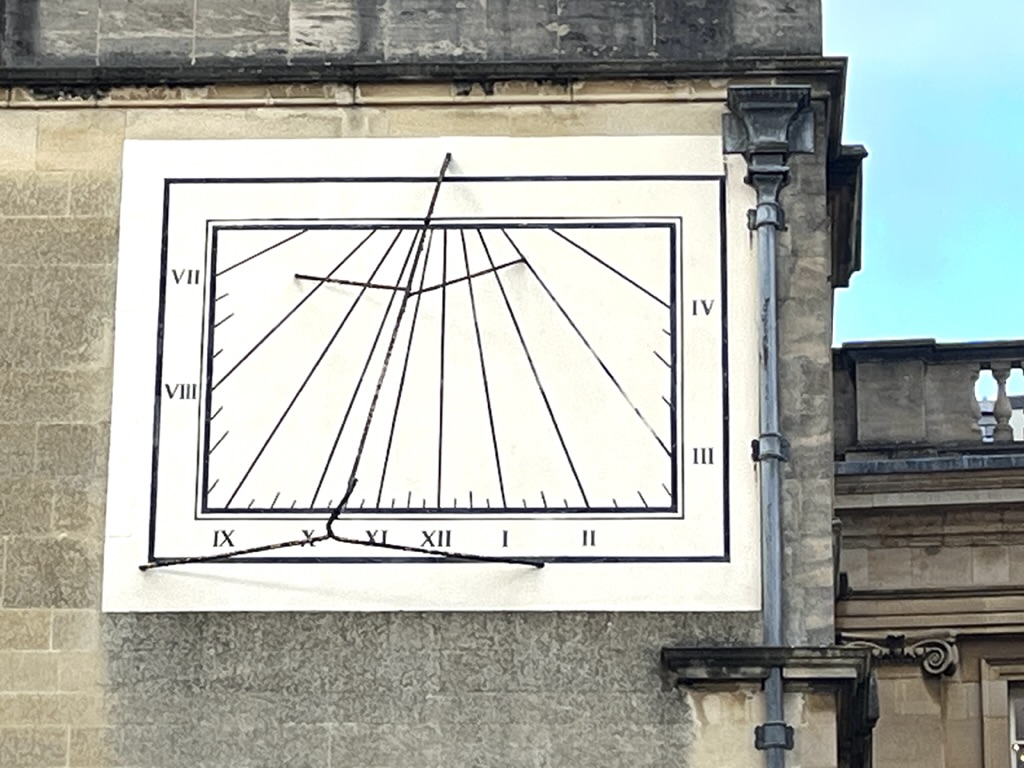
Located on W side of the Peckwater quad. c 1750, recently restored. Its position restricts the marked hour to VII – IV. Described rather harshly as a very plain and severely functional sundial of no great beauty in one source. Its simplicity and clarity in a City with many fine and some most elaborate sundials gives it some distinction.

Several other historic Christ Church dials both in the College and on the Cathedral (including mural dials) are sadly no longer extant. However, John Foad BSS points out that there is an outstanding multiple dial in the Pocock Garden, made by David Brown and installed 1998. There is also a small unobtrusive vertical dial elsewhere. These will have their own post in due course.

Christ Church Cathedral runs on Oxford time, five minutes and two seconds behind GMT. This is presumably a throwback to the late C19 before Standard Time was introduced by Statute, though there may be more arcane collegiate reasons.

To be linked in due course to the 2 modern sundials in the College.

GSS Category: Vertical Dial; Oxford Sundial; University Sundial; Old Sundial (C18)

All photos: Keith Salvesen

ROUSHAM HOUSE . OXFORDSHIRE – Dollond Horizontal Sundial

DOLLAND SUNDIAL AT ROUSHAM HOUSE OXON

BSS RECORD

By the pigeon house in the rose garden east of the house is a bronze horizontal dial 314mm in diameter made by Dollond of London.. It shows the customary hours IV – VIII divided into halves and quarters.The hours are also displayed in Arabic numerals and divided into periods of 10 And 2 minutes. There is an Equation of Time scale and round the centre of the dial a 16-point compass rose. There is a noon gap to compensate for the 7/16″ thick gnomon. The dial is mounted on a tapering stone column with a circular capital.

DOLLAND

Dolland workshops were active from approx 1750 to 1850. The business was founded by John Dolland who was joined by his son Peter, and later other members of the family. The name became synonymous with the crafting of intricate and precise scientific instruments. Sundial plates were a (rare, I think) sideline. Dolland collections can be found in many museums and individual pieces in auction rooms. All items have the Dolland mark, but some cannot be attributed with certainty to a particular member of the family.

George Dollond was elected to a fellowship into the Royal Society in 1819 and was an active participant in founding the Astronomical Society in 1820 (Confusingly, his son was also called George)

LINK TO THE ROUSHAM SITE

GSS Category: Horizontal Sundial; Country House Sundial; Dolland Sundial

All photos: Keith Salvesen

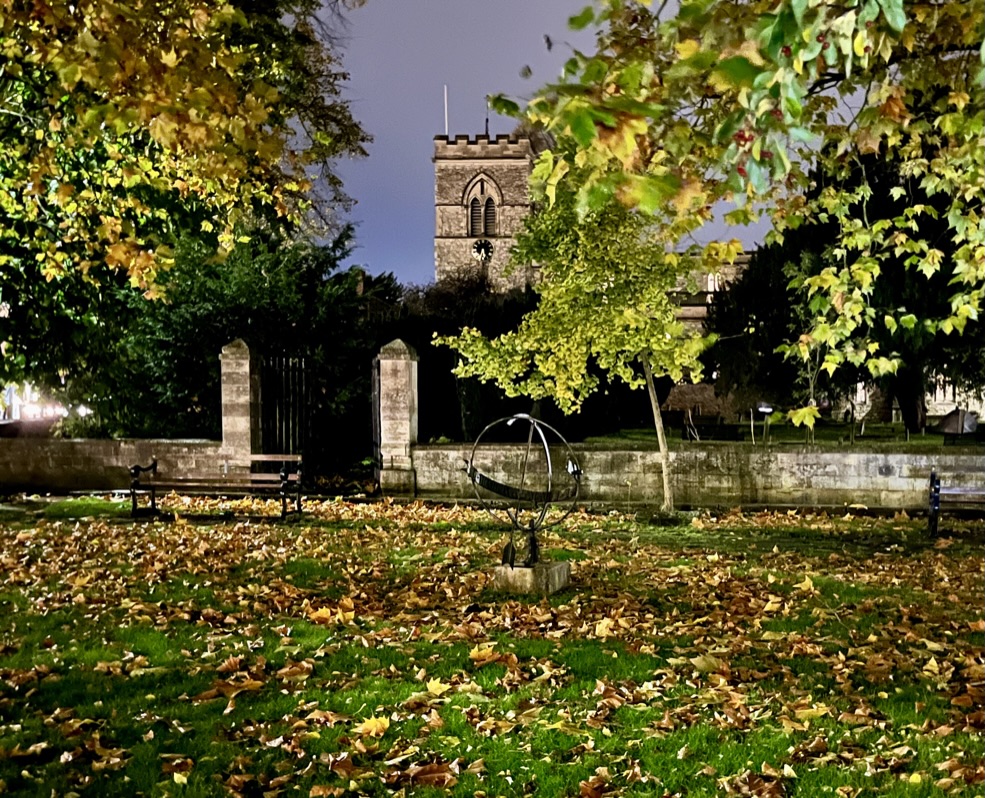
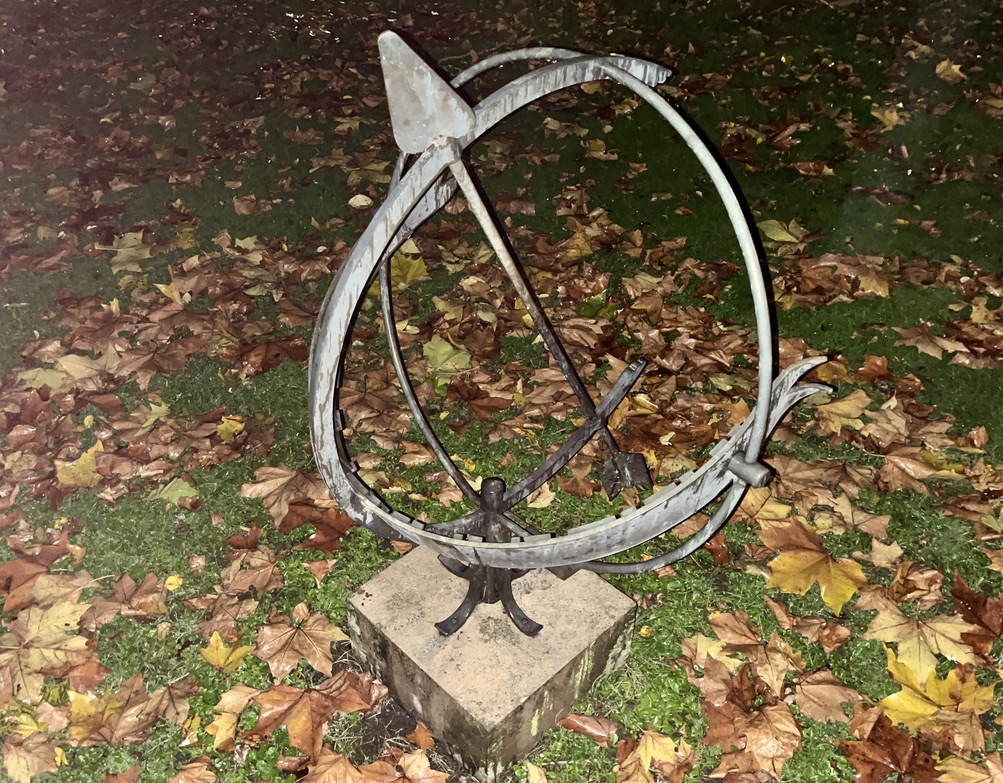
OXFORD . ST GILES . ARMILLARY SPHERE

ST GILES . ARMILLARY SPHERE

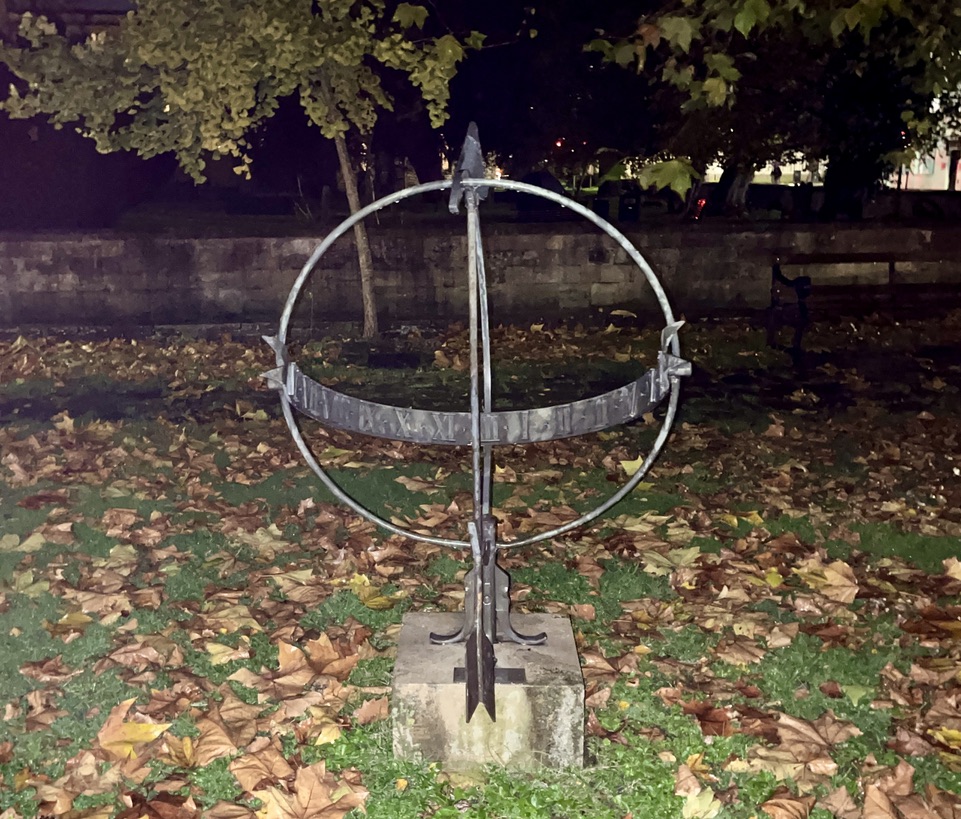
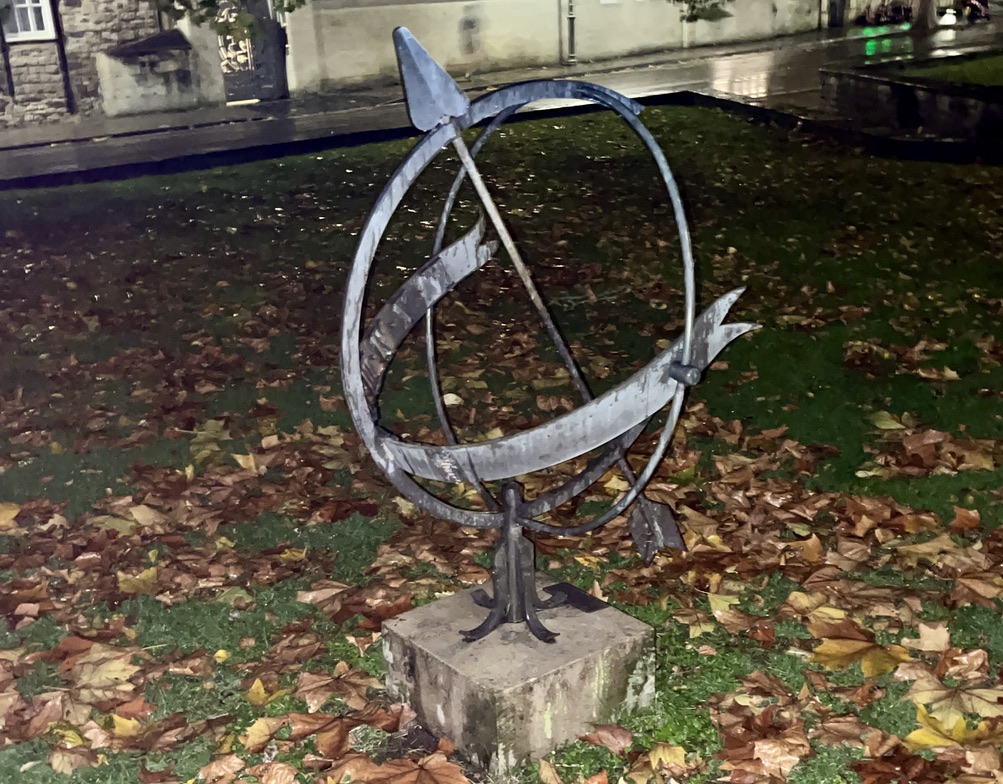
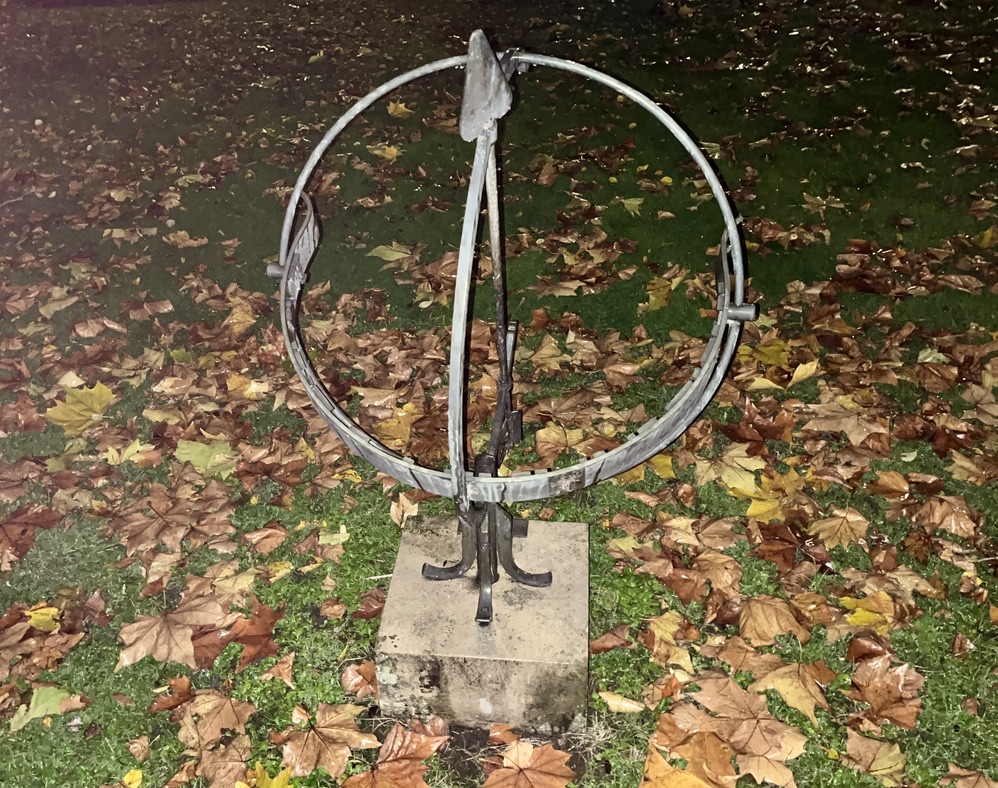
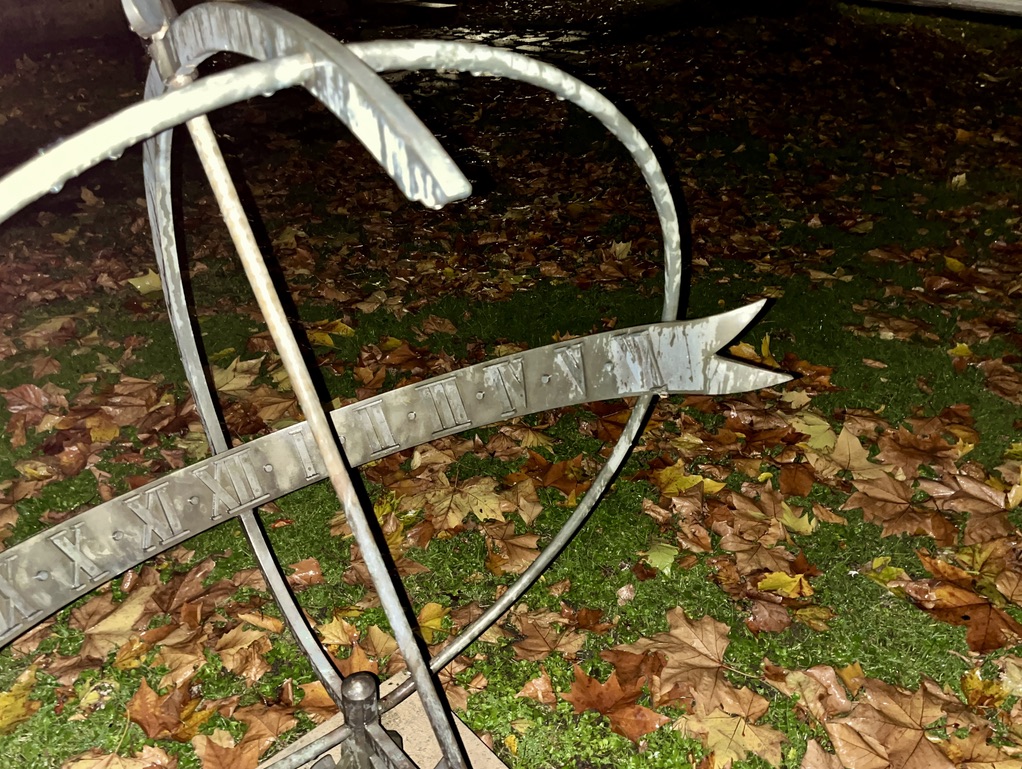
The armillary sphere is on the grassy area close to St Giles churchyard, where the road north forks towards Blenheim NW, and to Banbury NE. It was evening and rain had been pelting down. The way to a pub led me past the dial, and I was tempted to see what an iPhone camera would make of it.

The dial was given to The City of Oxford in 1986 by its twin city Bonn, and made by a local blacksmith (to Bonn, that is.)

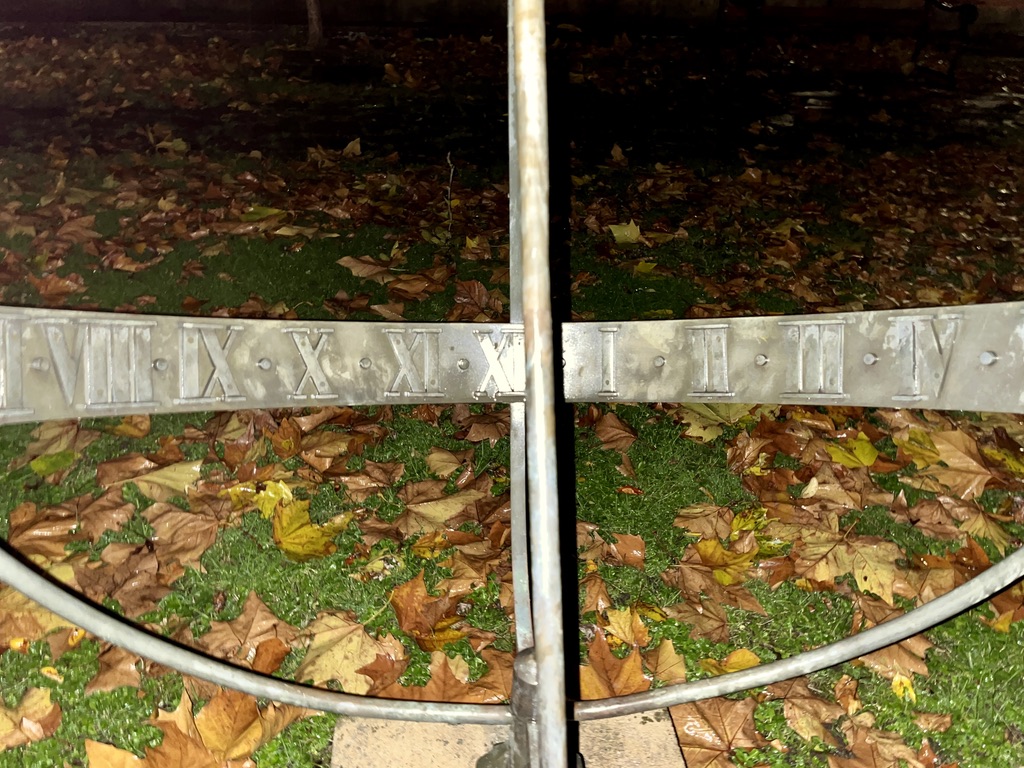
BSS RECORD: Modern equatorial memorial dial in an armillary sphere in the churchyard. The dial is the equatorial ring of an armillary sphere. It shows 6am to 6pm with raised cast Roman hour numerals and half hour dots. The other two rings are vertical – a north-south meridian ring open on the south side and an east-west ring. The axial arrow forms the gnomon. There is no nodus. It is not adjustable for latitude. The dial is mounted on a small stone slab. There is a small plaque on the slab.

Margaret Stanier in her book on Oxford dials, calls it a fine bit of ironwork, with bold numerals, easy to read. She notes that the rings are positioned so that their shadows cannot obliterate that of the gnomon.

The experiment with a phone worked quite well, I think. The details are legible, possibly more so than photos taken in sunlight. And it makes a change.

GSS Category: Armillary Sphere; Modern Dial; Oxford Sundials

All photos: Keith Salvesen

NEW COLLEGE OXFORD . Vertical Millennium Dial

New College Oxford . Vertical Sundial

NEW COLLEGE . OXFORD

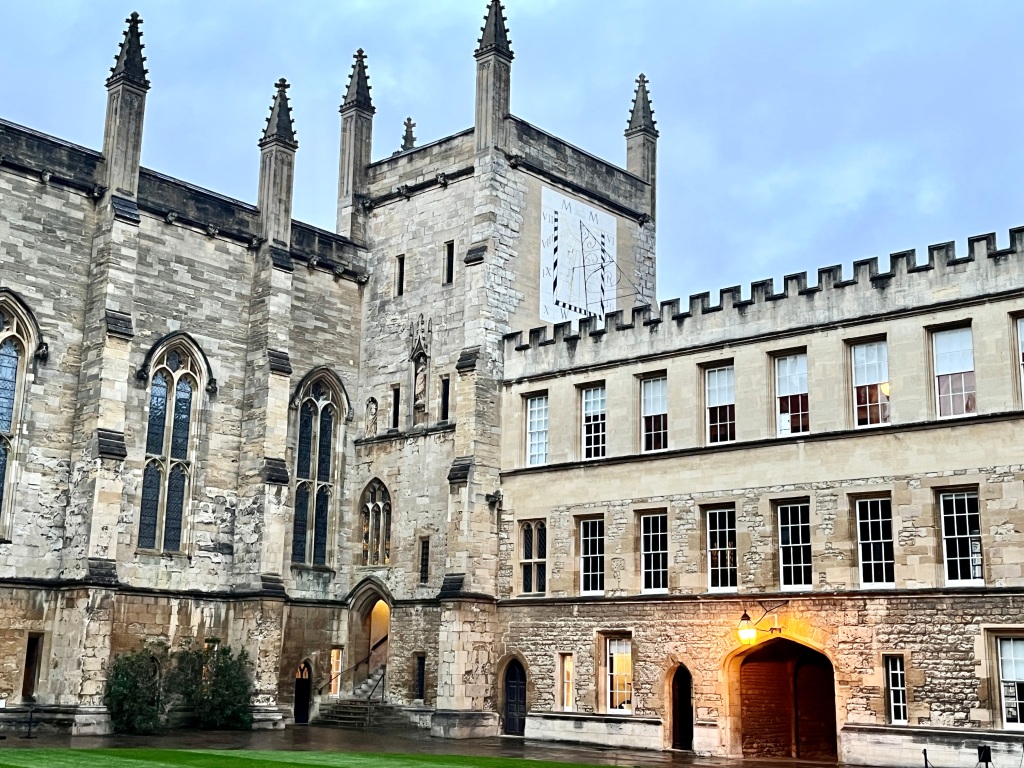
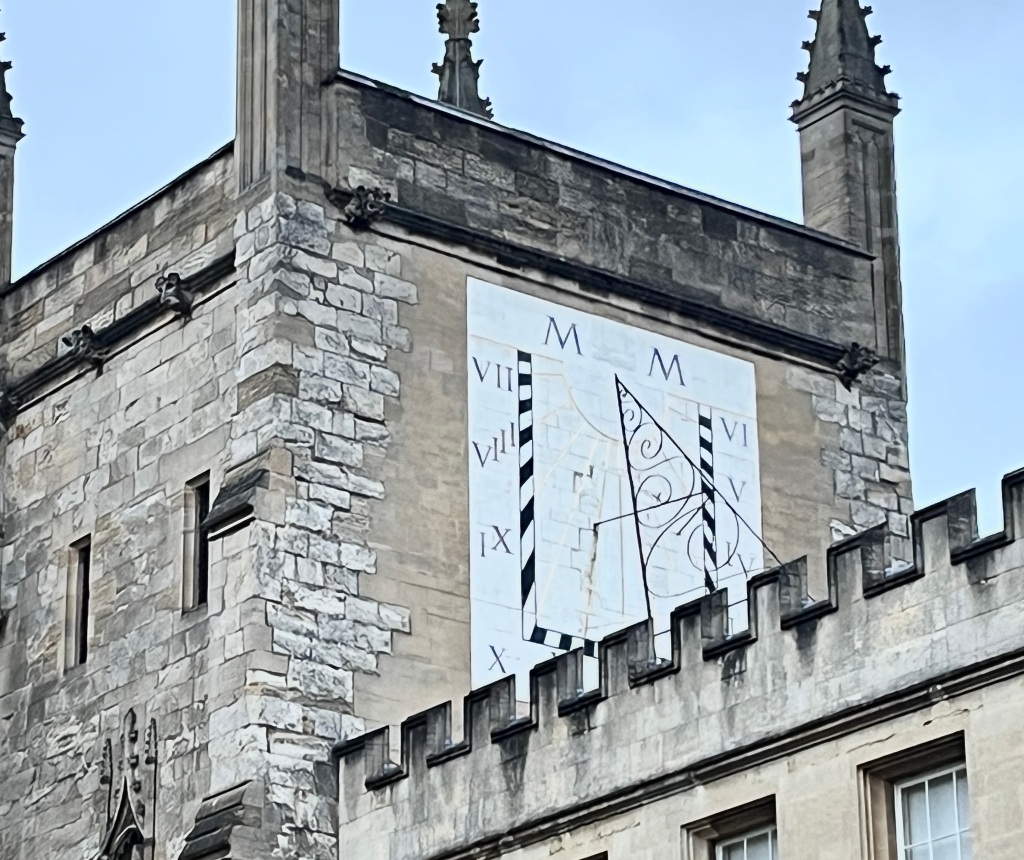
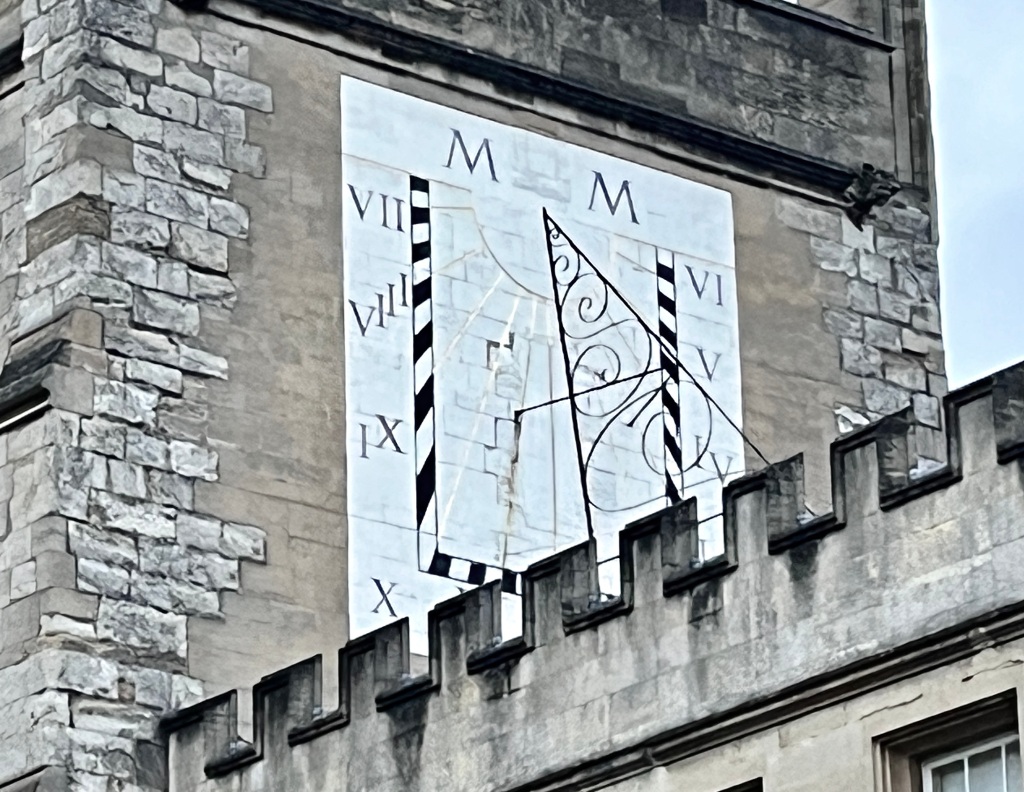
Dusk on a rainy November evening is not an ideal time to photograph high-up sundials, especially ones with intricate but delicate gnomons. Entering the Great Quadrangle, the sundial is visible on the Muniment Tower, beyond which is the Garden Quad. The position of the dial somewhat limits the photographer. A certain amount of refining has been needed in presentation, which I hope will be excused. The dial face is pale blue (white in some photos I have come across). The light conditions resulted in a rather startling blue that I have attempted not very successfully to tone down.

New College Oxford . Vertical Sundial

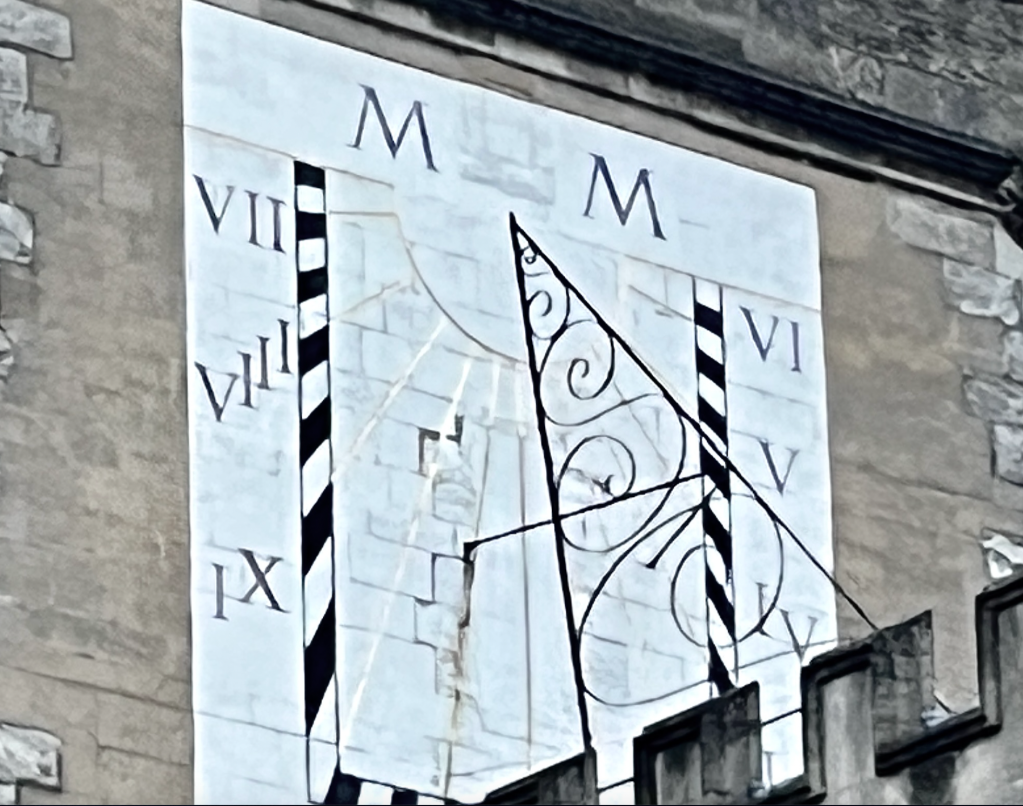
The New College Millennium dial is on the S facing wall of the Muniment Tower. Quite apart from photographic considerations, the high position means that it is not possible to see the whole dial from ground level. One cannot, for example, see that the M M at the top is matched by W W at the bottom, standing for William of Wykeham who founded New College in 1379; nor that noon is marked by a golden cross.

New College Oxford . Vertical Sundial

The dial marks quarter hours, as indicated by the chequered perimeter. Margaret Stanier mentions a wall-mounted plate showing the EQUATION OF TIME ; and she notes that there was a vertical dial in the same position from 1696 until c1850, then being obliterated by restoration and refacing.

BRITISH SUNDIAL SOCIETY ARTICLE – HARRIET JAMES

This excellent article from the BSS Bulletin Vol 12 .1 of Feb 2000 was published very shortly after the installation of the dial. It has all the material you need regarding the dial, and there are some very clear images that give a view of the whole dial. It also covers the original C17 dial in the gardens.

New College Oxford . Vertical Sundial

GSS Category: Vertical Dial; Millennium Dial; University Dial

All photos: Keith Salvesen. Source material: Margaret Stanier ‘Oxford Sundials’ 2003. College diagram: BLB; tip of the hat to Michael Lalos, a fellow dial enthusiast, who also used the BSS Bulletin

BROUGHTON GRANGE GARDENS . OXON – Pedestal Dial

Broughton Grange dates from early C17. Gradual development resulted in a fine house with an extensive estate owned by the Morrell family and associated with the Bloomsbury Group via Lady Ottoline. The whole estate was bought in the 1990s. New gardens have been beautifully landscaped and an arboretum created. The property is renowned as one of the finest contemporary private gardens, to which there is public access. You can find out more here: BROUGHTON GRANGE 3m SW of Banbury 52.0415 / 1.3776 / SP4338

The dial stands at the centre of the Parterre and Rose Garden, overlooking the smart box hedges. It is dated MDCCLI (1751). I’ve spent some time trying to figure out the inscription, some of which cannot be read even with a magnifying glass. I have settled (provisionally) on Tempora Servio, ‘I Serve the Times’ or a similar conjunction of tempus and servere. This formulation does not specifically appear in eg the expanded edition of Gatty; however tempora is in common usage, often with its companion, mores. Any other suggestions welcome, a definitive ruling would be ideal.

GSS Category: Horizontal Dial; Pedestal Dial; Garden Dial

All photos: Keith Salvesen