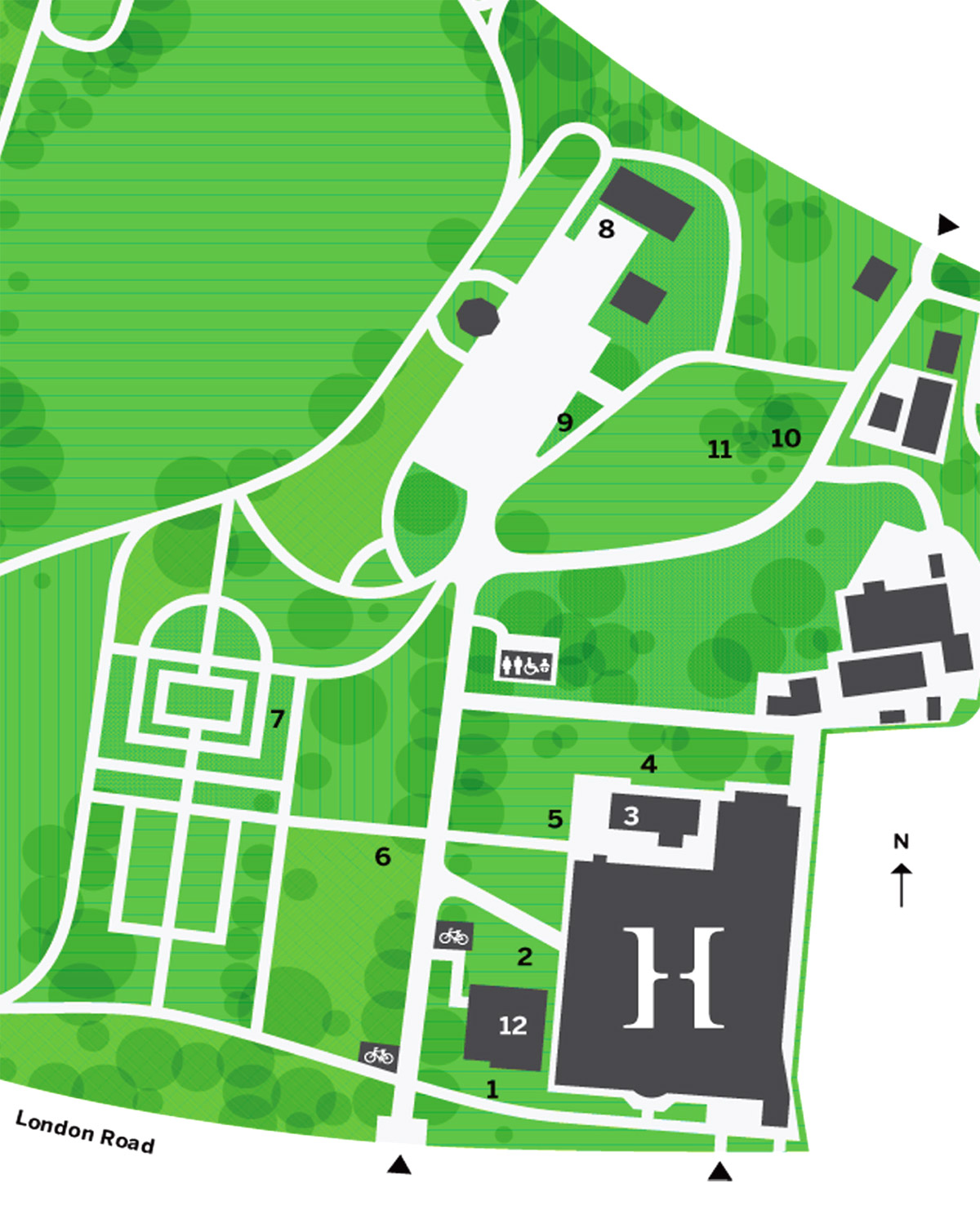
The Borough Gardens in Dorchester are close to the centre of town. They were laid out and opened in the 1890s as ‘pleasure grounds’, as they remain. There is plenty to offer for all ages in an agreeable undulating space. Lawns, tennis courts, a bandstand, paddling pool, playground, a fountain, a memorial obelisk and more.
ANALEMMATIC SUNDIAL
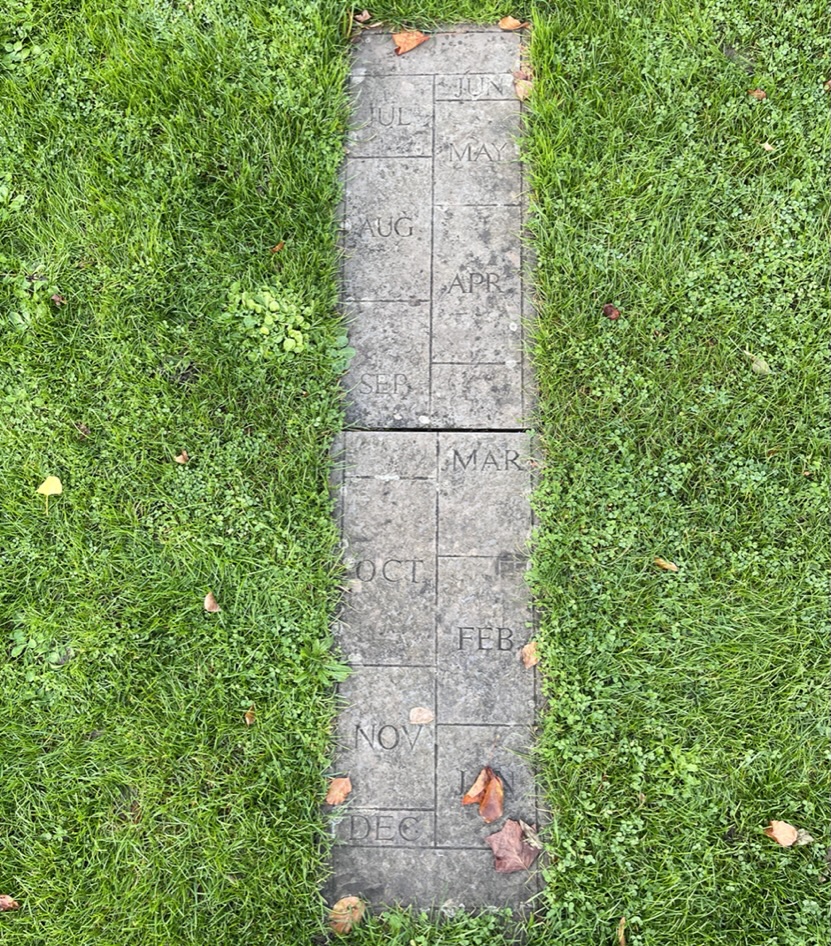
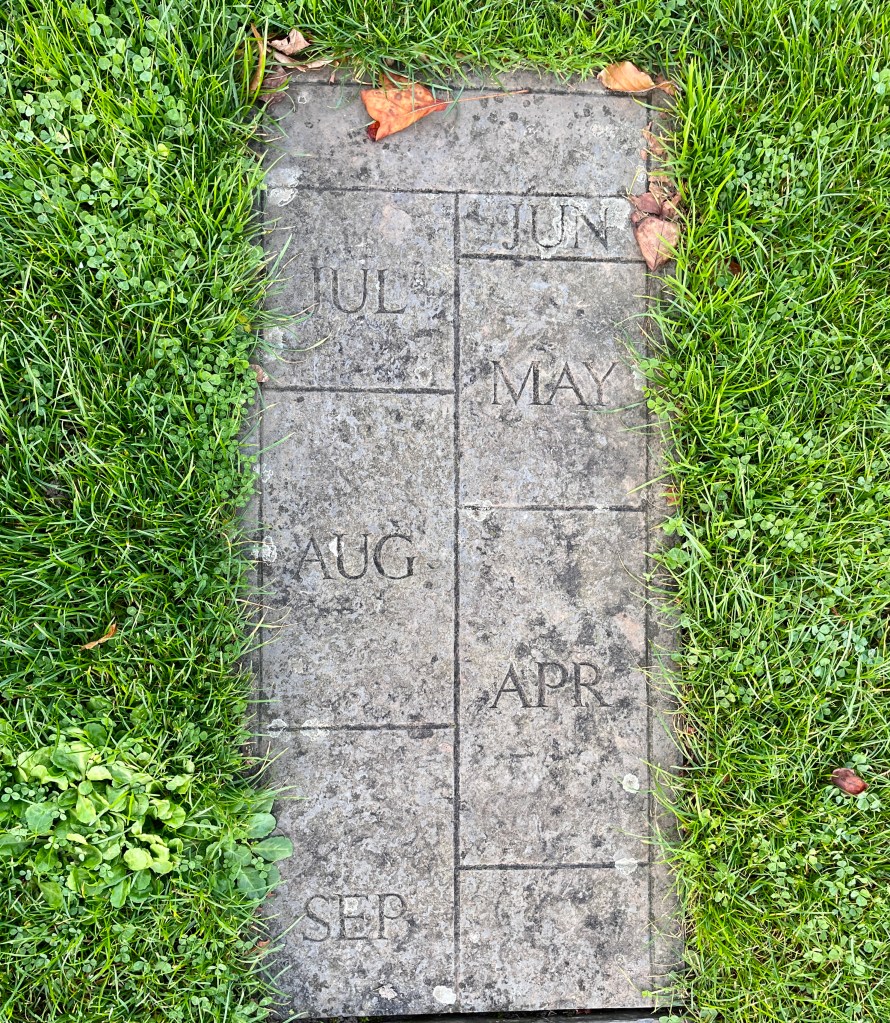
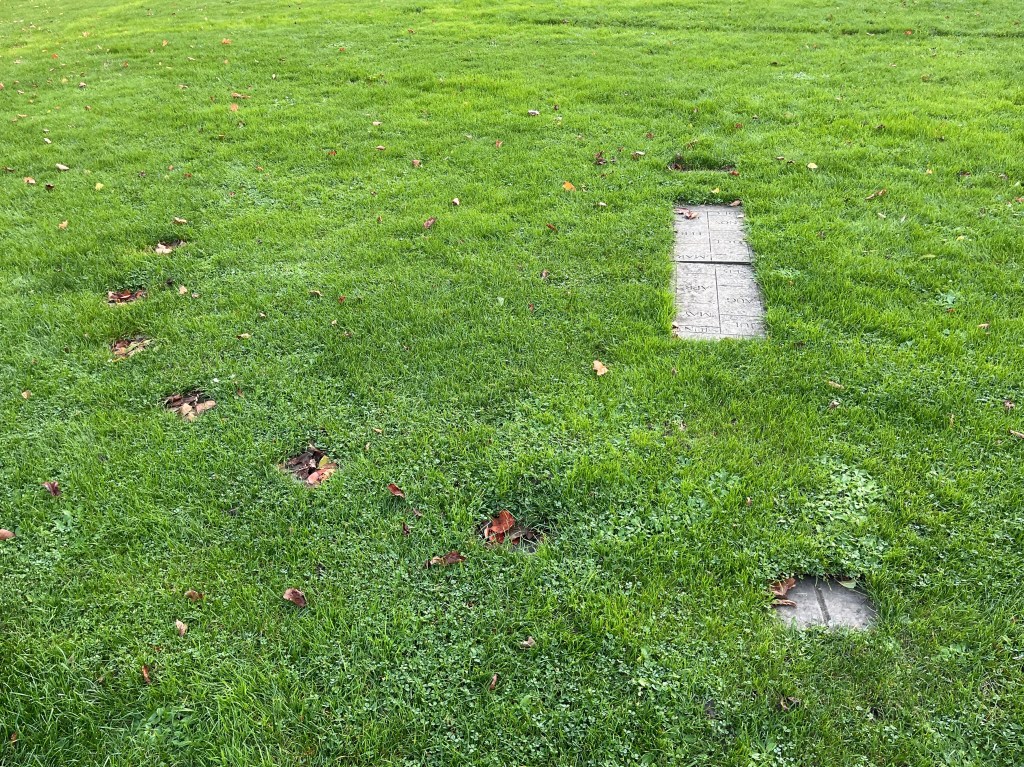
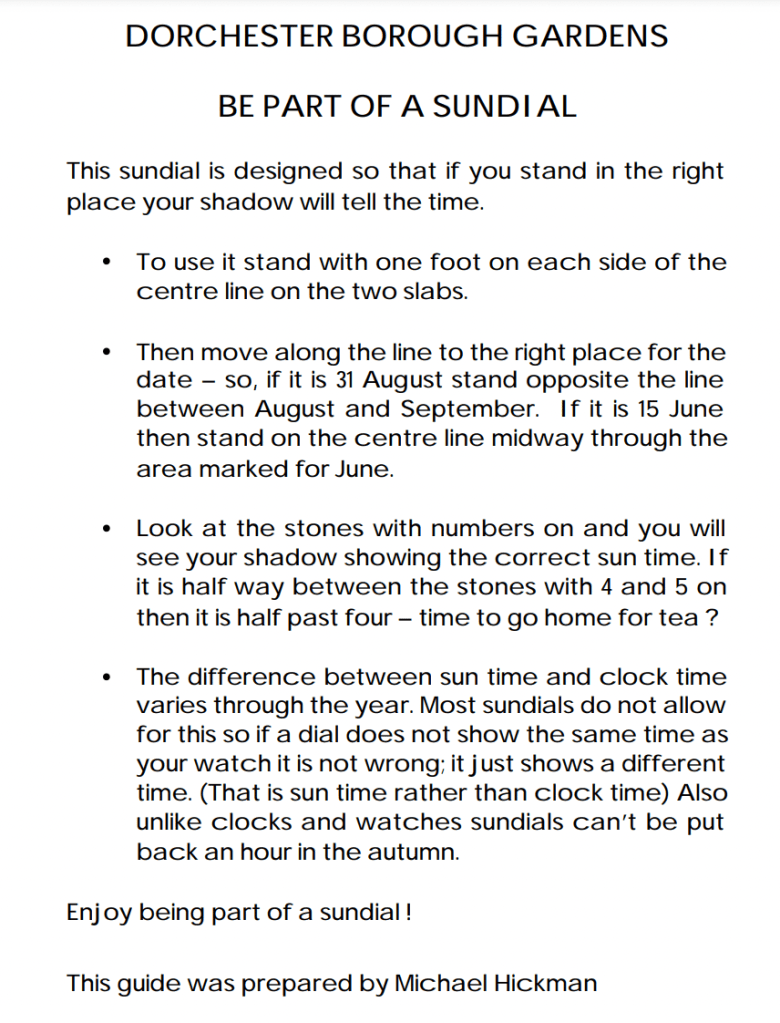
Amongst the attractions, close to the bandstand, is a modern analemmatic sundial. I don’t know the date it was laid out, but the BSS record is 1998 with the note: The dial is laid out in the play area near the bandstand. Hour markers adjusted for longitude, an hour added for summertime use. Shows hours from 7am to 7pm.
When I visited a few days ago, several small boys were having a kick around, with the dial in the centre of the pitch. No other type of dial would have worked for the purpose. The dial was partly concealed by uncut grass and leaves – the latter covering each numbered stone completely (I had to move some). I liked the way that the dial has several roles: time-telling in an interesting way; an open invitation to be the gnomon; an educative function; and artful horizontal stonework blending in with grassy and leafy surroundings. And a ‘jumpers for goalposts’ pitch into the bargain.
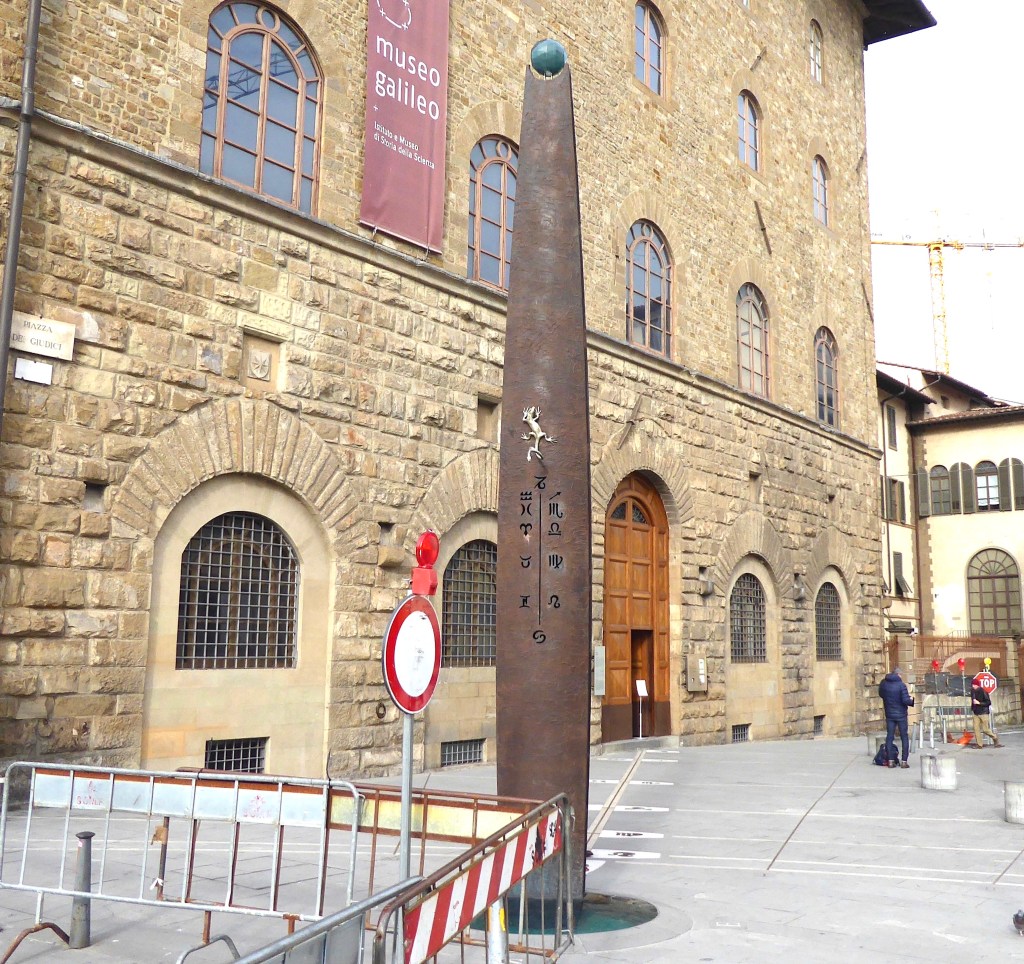
Lizard / Viper Gnomon of Monumental Dial . Museo Galileo . Florence
MONUMENTAL SUNDIAL . MUSEO GALILEO . FLORENCE
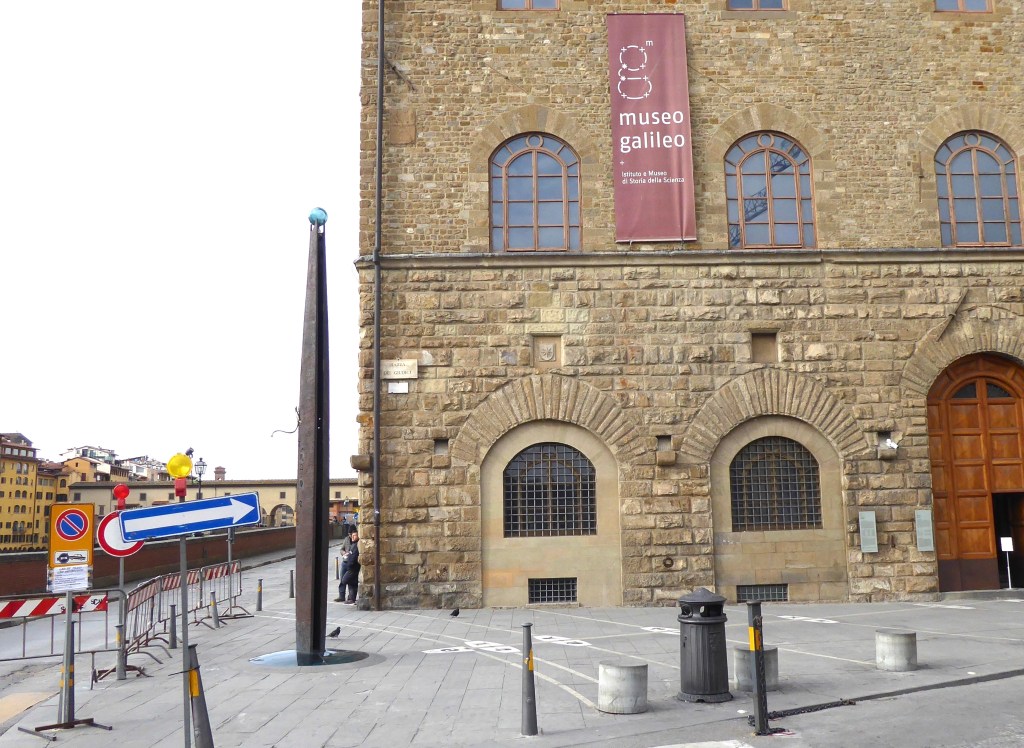
The Museo Galileo‘s Monumental Sundial was built as a mathematical ornament in 2007. The slender bronze column (stele) is in fact formed from two matching columns closely aligned, symbolising day and night. The (mid)day stele faces south, with a vertical meridian line on which the shadow is cast by a lizard’s tail (actually, an imaginary half-lizard, half-viper). The night stele faces north and signifies the constellations Ursa Major and Ursa Minor that enable the Pole Star to be identified.
Monumental Dial . Museo Galileo . Florence
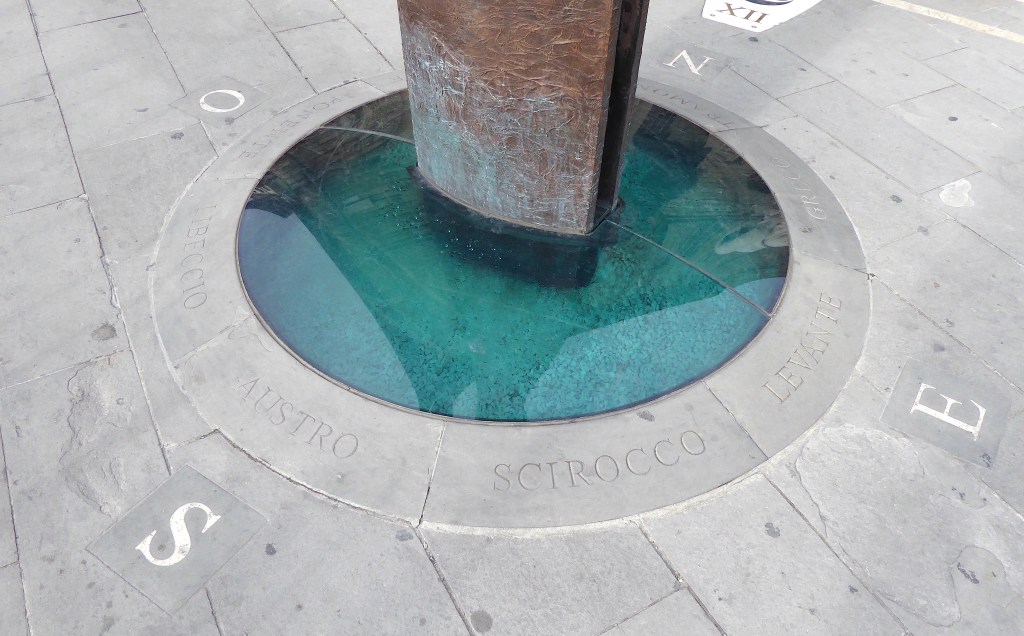
The encircled quadrant design on the pavement at the base of the bronze columns indicates the geographic orientation. This glass base of the gnomon, and also the Zodiac signs in the meridian line (below), are up-lit after dark.
Orientation dial . Monumental Dial . Museo Galileo . Florence
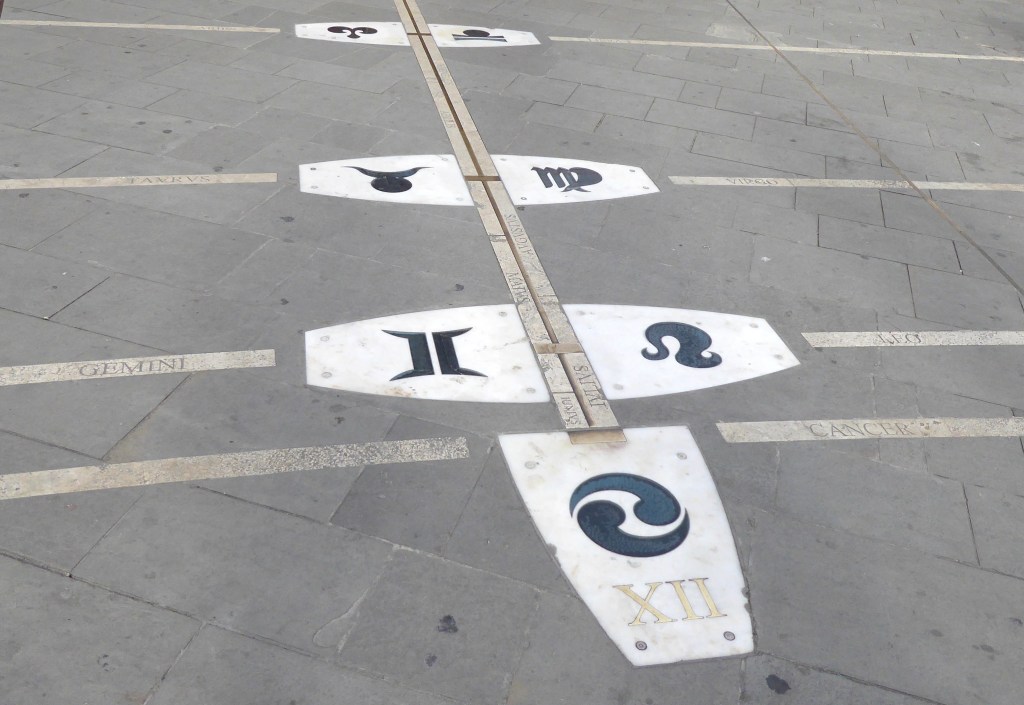
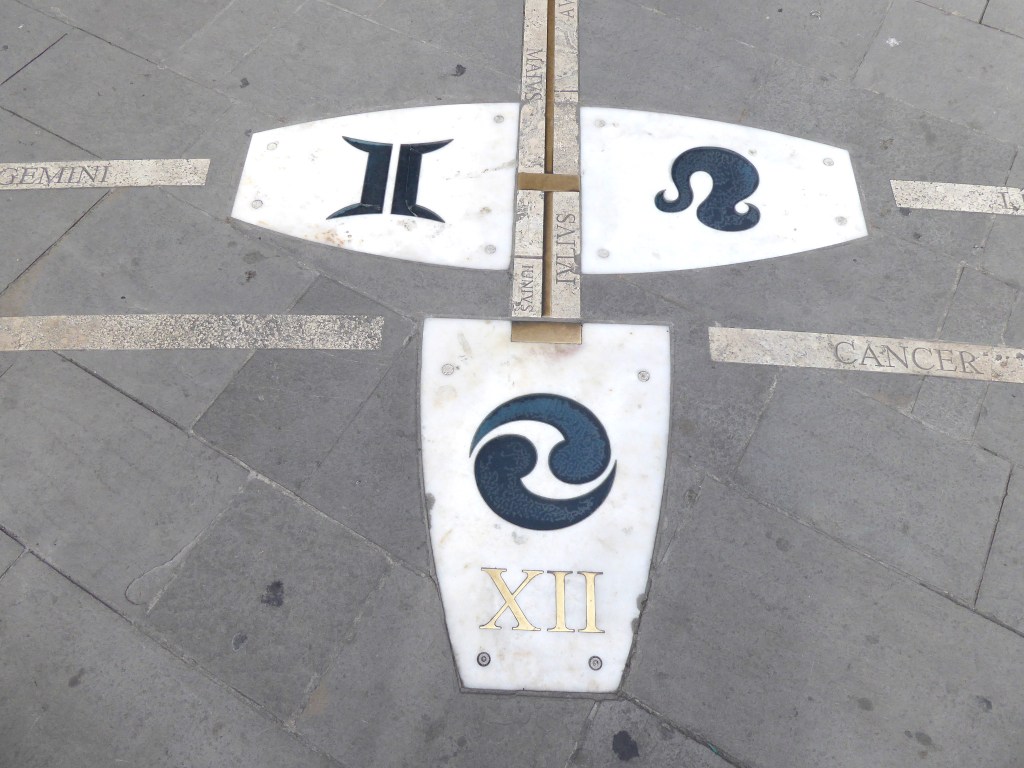
The Museo explains the meridian line in helpfully simple terms: A travertine and brass meridian line is drawn on the pavement, flanked with glass and marble signs of the Zodiac. The meridian line extends for about 15 metres from the museum entrance, where the winter solstice is marked, to the base of the gnomon, where the summer solstice is marked. The travertine curves crossing the meridian line indicate the date. The brass radial lines forming a grid with the two solstitial curves indicate the hours.
The seasons and the four elements are symbolised by the choice of materials: travertine for the earth and autumn; glass for the water and winter; grey stone for the air and spring; bronze for the fire and summer.
LIZARD / VIPER GNOMON ON THE SOUTH FACE OF THE COLUMN
This extraordinary sundial stands by the Arno with the Ponte Vecchio (which itself has a wonderful dial LINK) close by to the west. For anyone with even a minuscule interest in or curiosity about the gradual development of scientific instruments and techniques from medieval times onwards, pay a visit to the excellent online gallery LINK. Look in particular for the two astronomical telescopes made by Galileo himself.
The North American Sundial Society has very good online information about this unique dial. You can watch a short animation of how this gnomonic sundial works here LINK
For those interested in finer details of the way the dial works, the museum’s detailed account is included at the end of this article.
Museo Galileo – Istituto e Museo di Storia della Scienza
NASS (North American Sundial Society) Video: Filippo Camerota, Luise Schnabel, Giorgio Strano
How the Sundial works
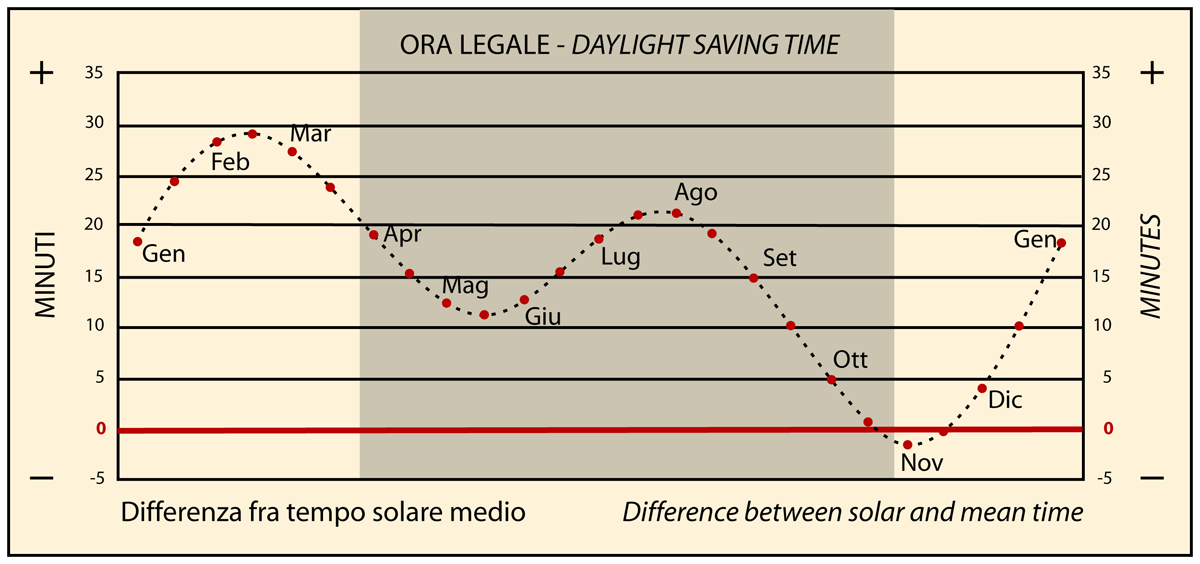
The shadow cast by the glass polyhedron atop the large bronze gnomon indicates the date and time. The hours from 9:00 AM to 2:00 PM are marked out by radial brass lines. The date is indicated by the travertine traversal lines which mark the Sun’s diurnal course for various periods of the year – precisely when the Star enters the signs of the Zodiac. The shadow cast by the gnomon changes in length during the course of the days and seasons, and indicates true solar time for the place where it is located, which is a different time than that of our wristwatches, known as mean time. In respect to mean time, true solar time has a periodic variation that can exceed a quarter of an hour.
Moreover, during daylight saving time, the hands of a clock are moved forward one hour. For example, true midday in the month of February would be indicated by the sundial around 12:28 AM while in the month of July it would be indicated around 1:20 PM daylight saving time.
To read the hour and date, you have to identify the hour lines and the calendrical lines closest to the gnomon’s shadow. When the shadow does not fall exactly on a hour line, you can read the half-hours and quarters with close approximation by ideally subdividing the space between two hour lines in two or four parts. The date can also be read by referring to the Zodiac signs and the start of the months marked out along the meridian line.
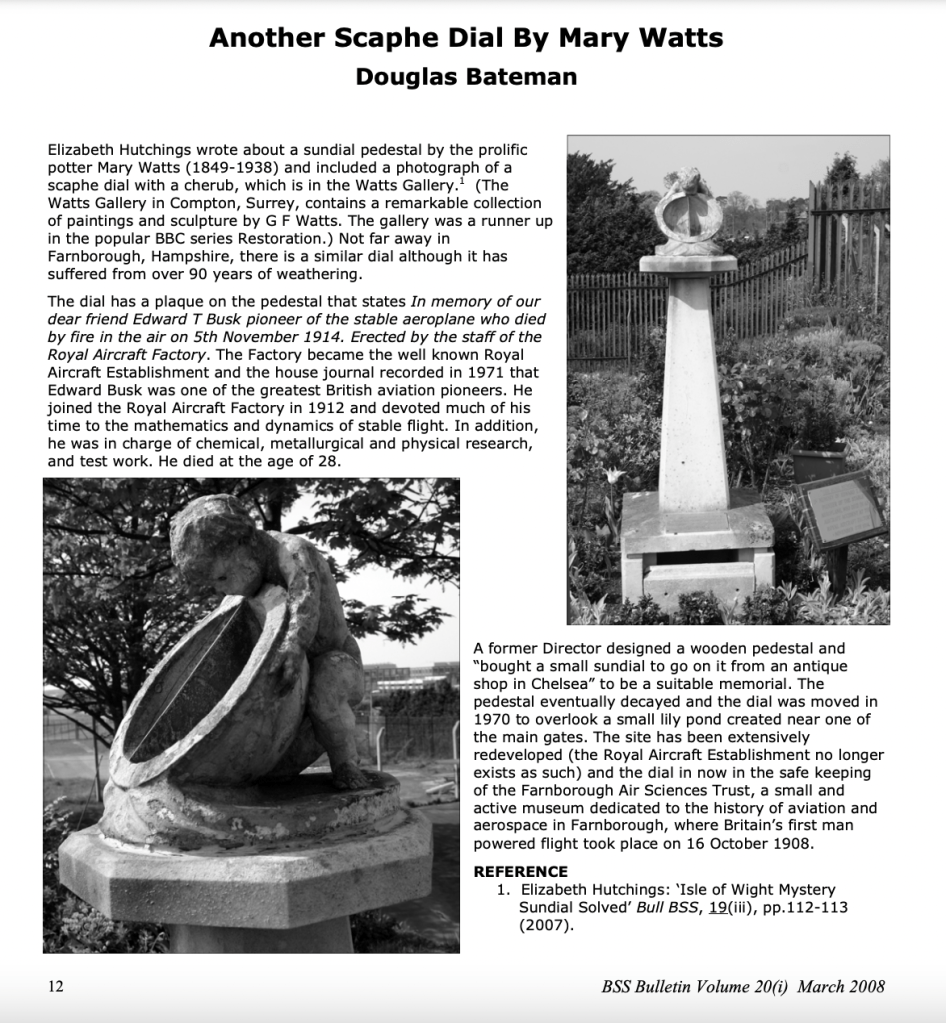
The WATTS GALLERY in Compton, Surrey showcases the work of artist G. F. WATTS and his wife MARY WATTS, exemplar of the Arts and Crafts Movement. The enterprise has expanded hugely since I last visited and took photos of the sundials there. The Gallery link above will give all the current information you could wish for.
You can find out about the remarkable Scaphe Dial at the gallery HERE
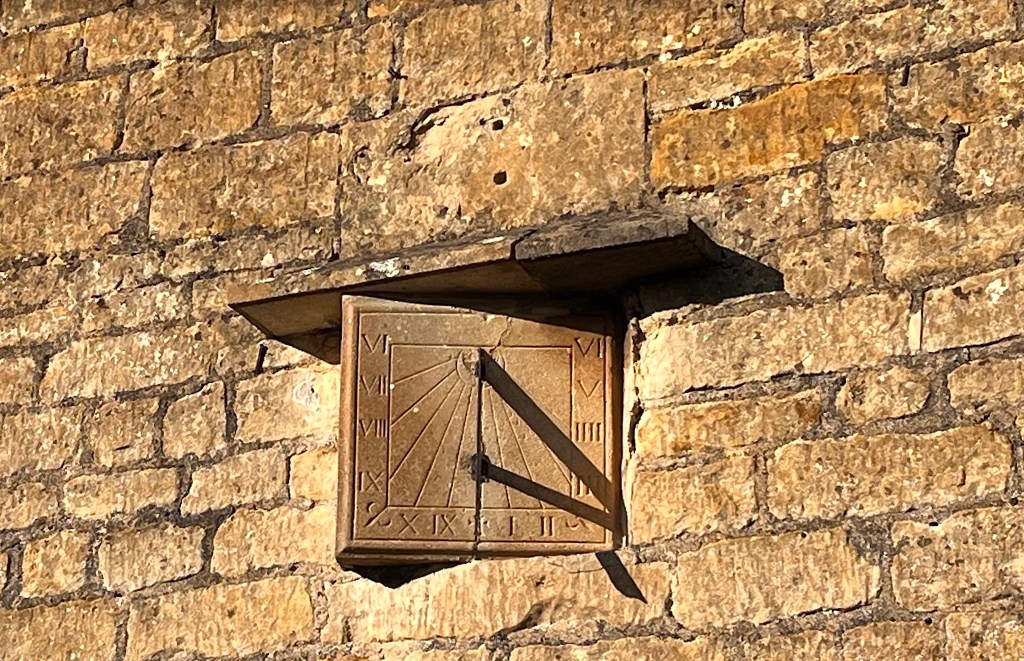
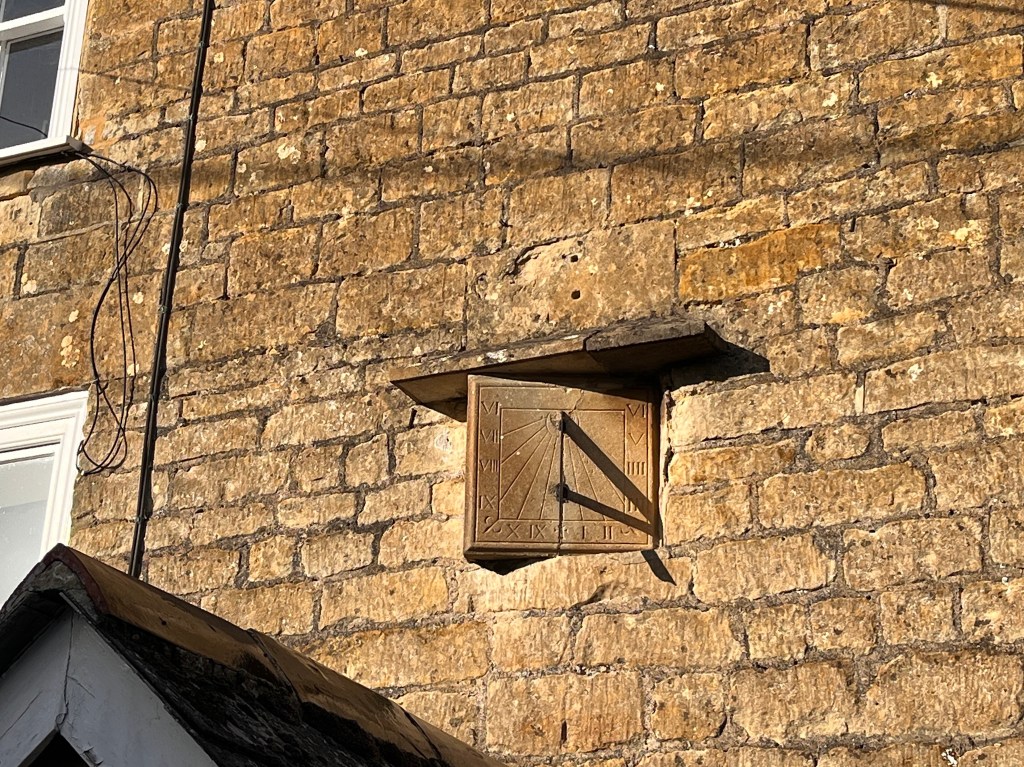
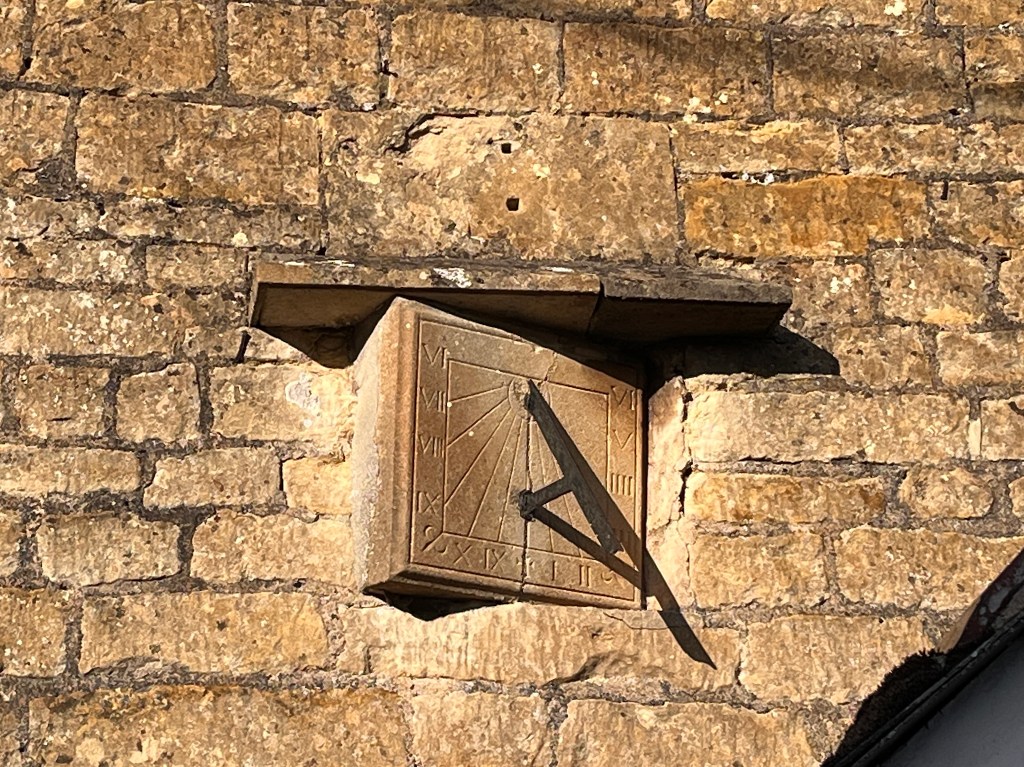
Vertical Dial on Village House . Marnhull . Dorset
The dial is above the front door of a house in the village, with a stone ledge above it. It doesn’t give the impression of being old. There is little sign of weathering or erosion and the incisions are all equally clean. BSS gives it as C18?? and suggests it may be a replacement for an earlier dial. Given the design, I wonder if it is actually a modern C20 direct copy of the original?
The dial is canted to face south and provide an accurate reading. Noon is marked, as often, by a cross. The archaic use of IIII for IV might also suggest a careful copy of an old dial, as may the flourishes in the lower corners.
Vertical Dial on Village House . Marnhull . Dorset
GSS Category: Vertical Dial; Canted Dial; Dial on house
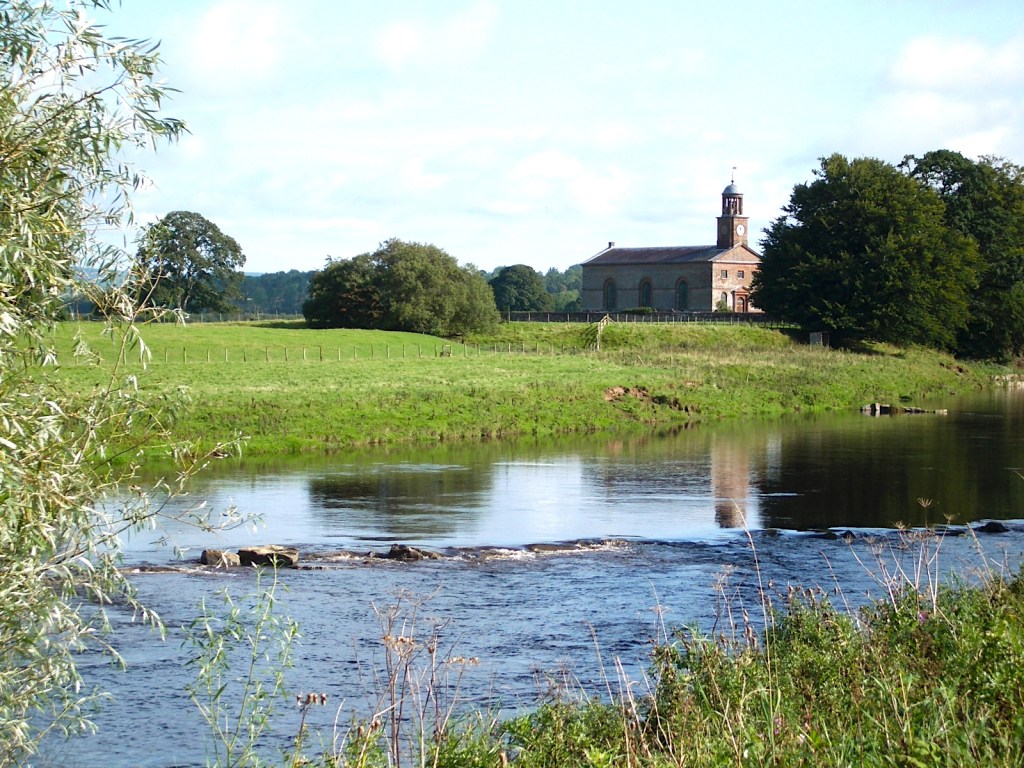
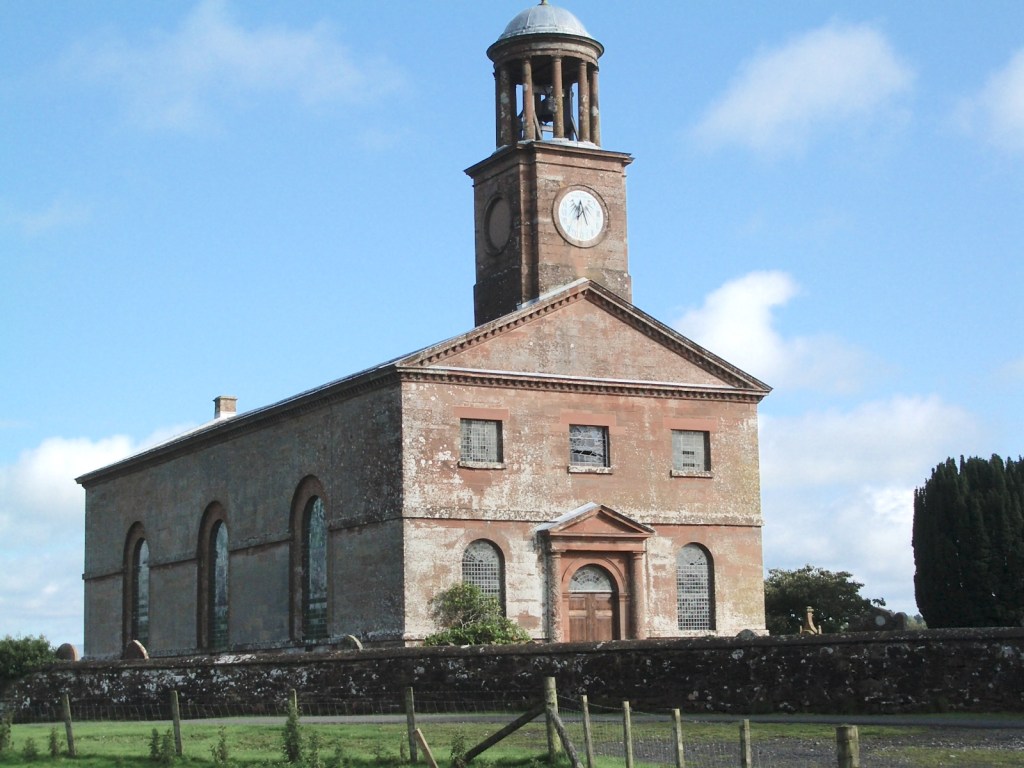
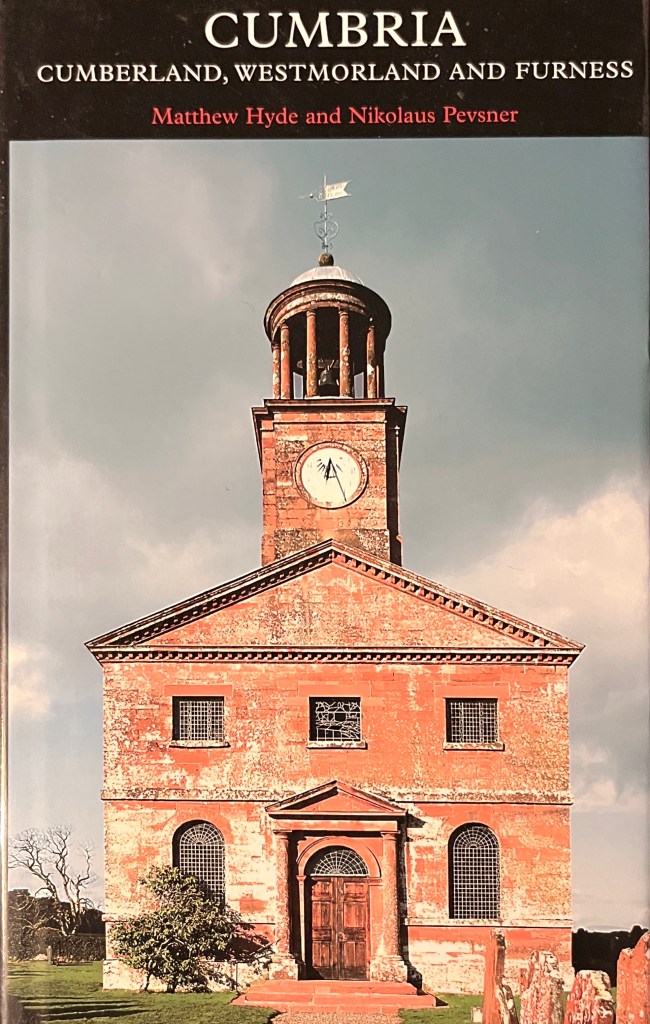
GRADE II* † Built 1776. A fine, uncomplicated Georgian building externally; restored and much remodelled internally 1890s by Temple Moore. ‘Urbane and assured‘PEV. Original clock on the bell tower replaced by a memorial sundial dated 19†18. Selected for the cover image for Cumbria in Pevsner’s Buildings of England series. 8m N of Longtown. 55.0386 / -2.9543 / NY391719
Kirkandrews . Cumbria . Walter Baxter Geo
DIAL
This handsome church has a moving story to tell. The tower originally had a clock. In 1918, this was replaced by a commemorative sundial to honour the two sons of the Graham family from nearby Netherby, after their safe return home from WW1.
The dial has an inscription around the circumference that reads in two parts, and a Motto
FOR OUR TWO DEAR SONS FFG & RPG WHO LIVED TO COME HOME FROM THE GREAT WAR THANKS BE TO GOD ALONE
LUX POST UMBRAM
The motto and its sentiments are self-explanatory. The same – or very similar – formula has been noted in northern Italy MG; and (I notice) for abstract art works that contain both light and shadow…
DIAL
The dial has an attractive design marking hours and 1/2 hours from 6 round 5. It appears to be hand-painted rather than machine made. The robust gnomon casts a clear shadow that also benefits sheep, cows, and salmon-fishermen in season.
Kirkandrews . Cumbria . Walter Baxter Geo
GSS Category: Vertical Dial; Sundial Motto; Memorial Mottos
Credits: Keith Salvesen; Walter Baxter dial close-up Geo ; Alun Bull English Heritage PEV; Yale University Press (cover image)
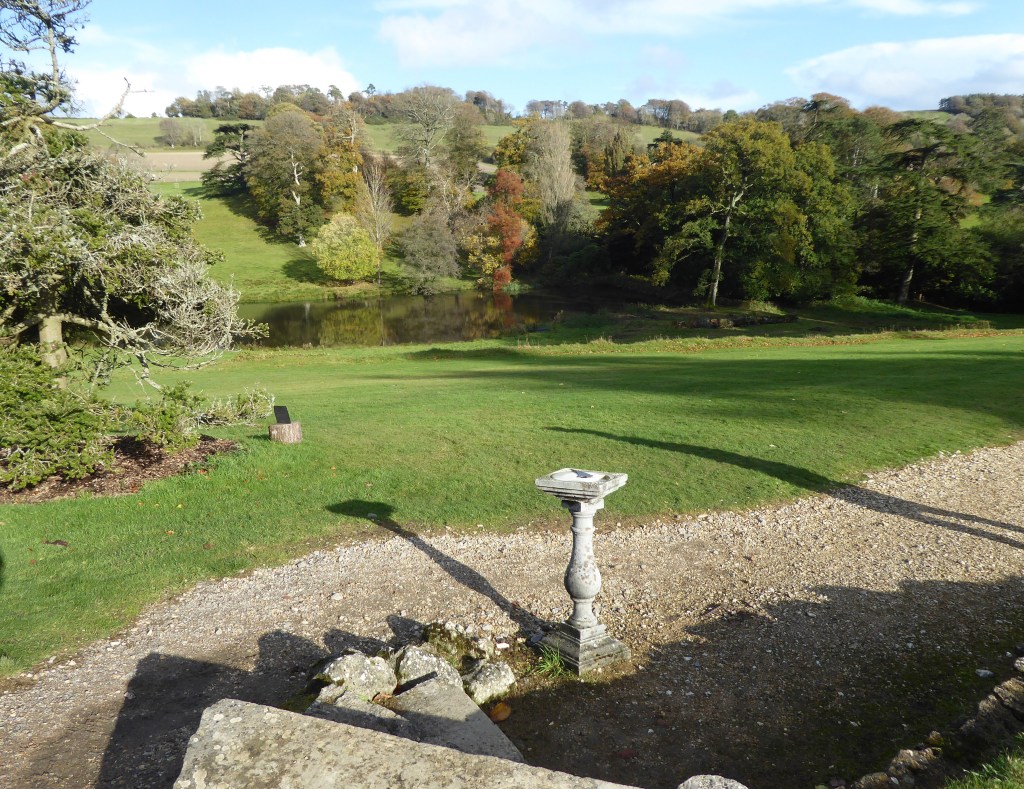
A sundial on the terrace of this fine house, with its C17 origins and unbroken line of Digbys. The renowned gardens are especially worth visiting in Spring. It features a collapsible gnomon, an unusual feature not conducive to enhancing its primary purpose.
The HORNIMAN MUSEUM in South London is a wondrous place for people of all ages. Few (or no) visitors will fail to find something of interest or inspiration. Click on the link to find out more (rather than have me give a lengthy description of the excellent collection).
Among the many innovative collections and installations is a brilliant SUNDIAL TRAIL that showcases 12 different and distinct types of sundial. These are dotted around the park (not all are outside). Some have an additional ingenious feature that makes them unique – incorporating morse code for an inscription, for example.
Roman Sundial . Horniman Museum . London
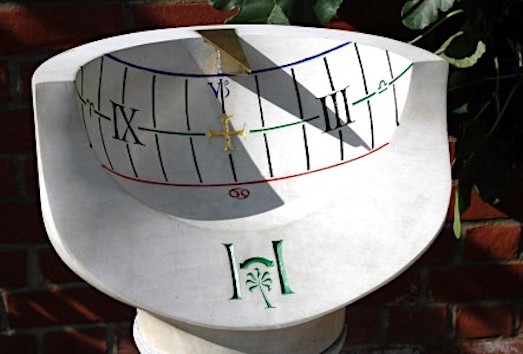
The dial was designed by John Moir and constructed by Ray Ashley. The gnomon’s shape is based upon the ‘H’ from the old Horniman Museum logo. The edge of the shadow created by the ‘H’ indicates solar time. The museum’s image below when the dial was newly made shows it in action, so to speak.
THE HORNIMAN ROMAN DIAL
Roman Sundial . Horniman Museum . London
The dial has a central cross marking the noon line. In addition, signs of the Zodiac are marked though I don’t know enough to say how they fit into the design – why, for example, pisces is below the noon line.
Roman Sundial . Horniman Museum . London
I have a second Horniman dial to write up in due course. You can find details of all the dials on the Horniman website (see link above). There is also SUNDIAL TRAIL MAP(do not open if you want to discover the dials unassisted…).
Roman Sundial . Horniman Museum . London
GSS Category: Roman Dial; Bowl Dial
All photos, Keith Salvesen; specific information / new dial image, Horniman Museum
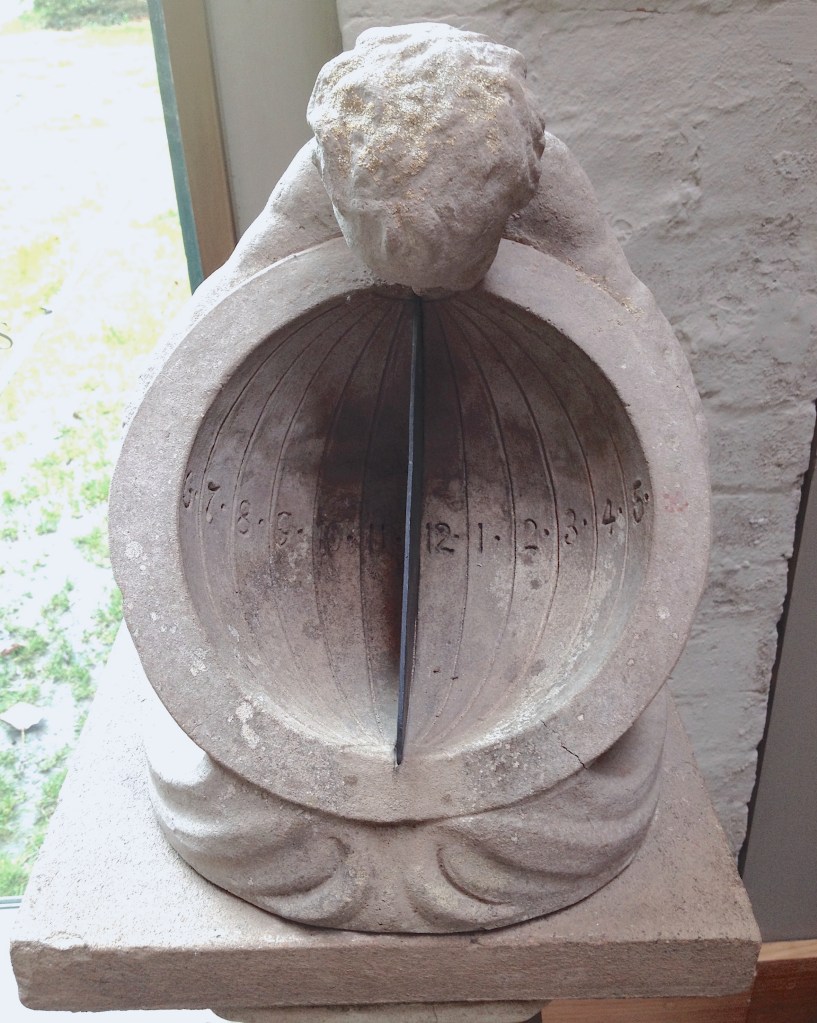
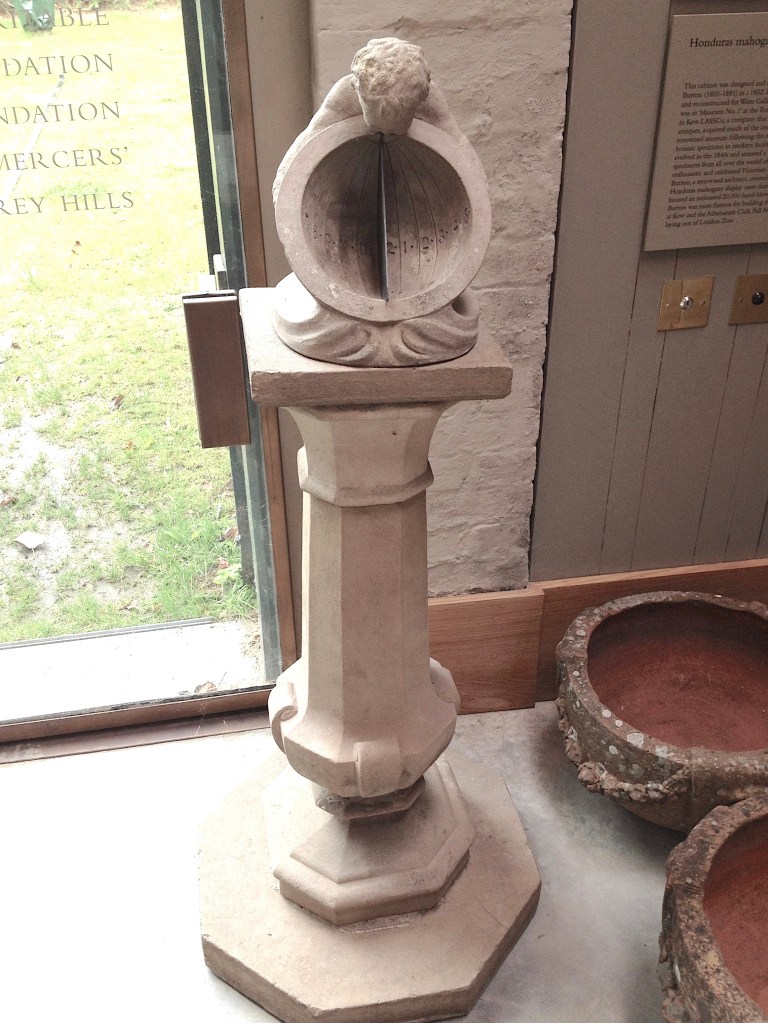
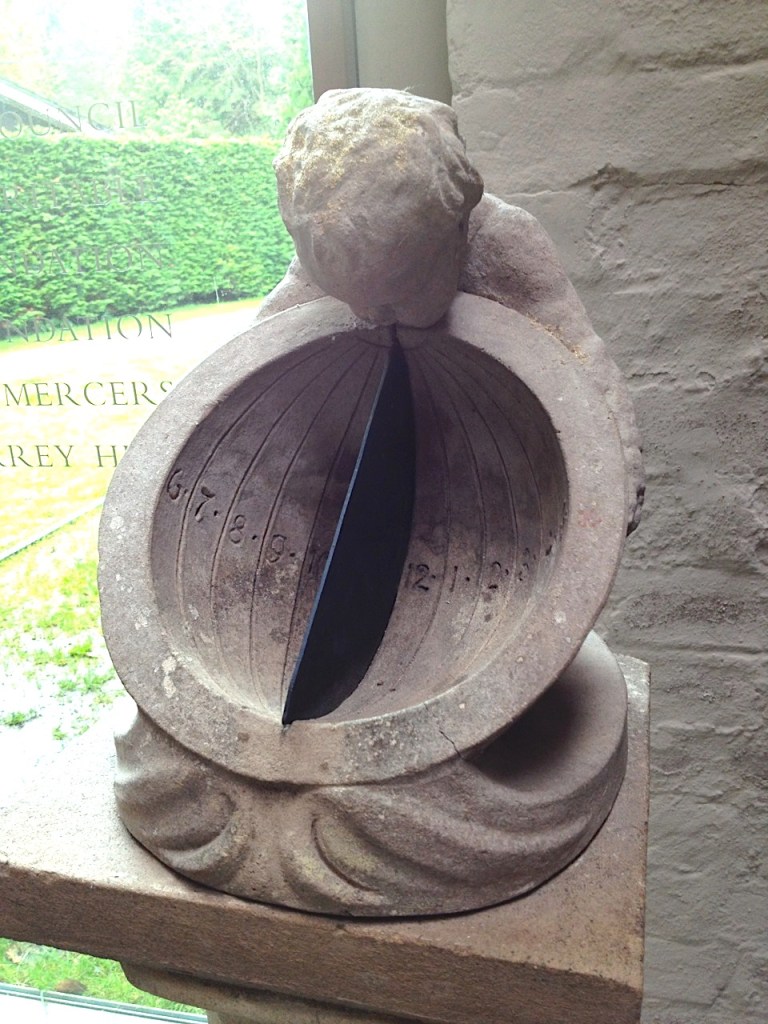
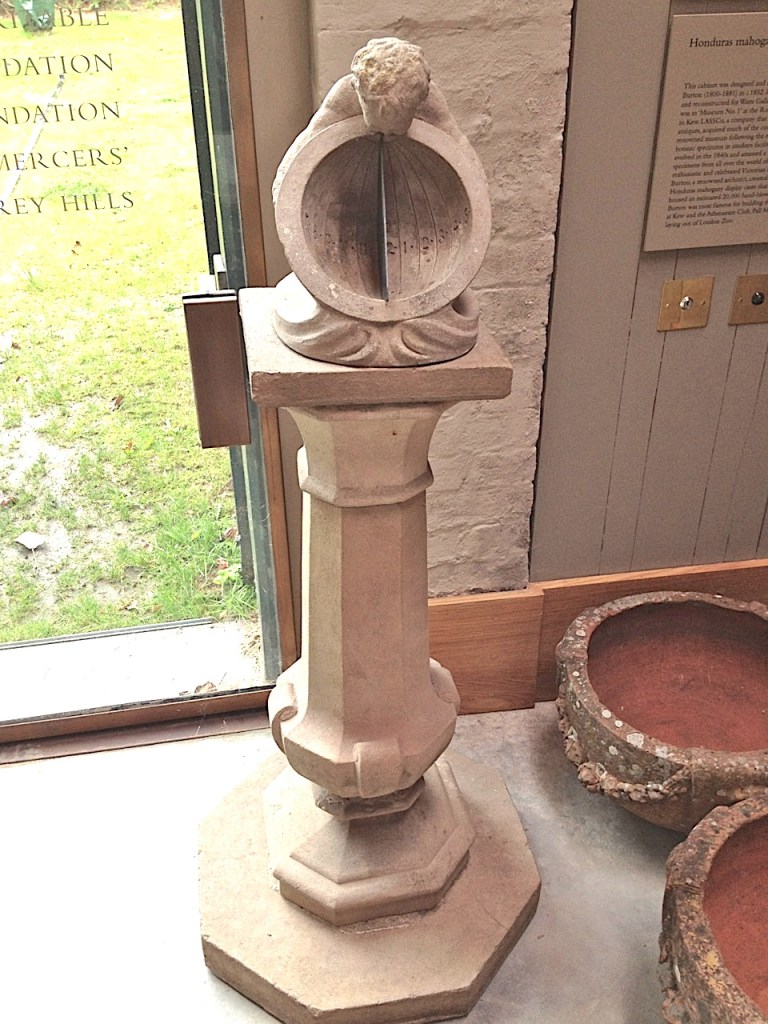
The WATTS GALLERY in Compton showcases the work of artist G. F. WATTS and his wife MARY WATTS, exemplar of the Arts and Crafts Movement. The enterprise has expanded hugely since I last visited and took photos of the sundials there. The Gallery link above will give all the current information you could wish for. This remarkable scaphe dial had been moved inside to protect it from the elements.
Scaphe Dial . Watts Gallery . Compton . Surrey
Some years ago, BSS published an article about the dial and its context. It is evident that the dial has been skilfully restored from a slightly forlorn state when the article was written. Possibly the title should be ‘Another Dial Pedestal by Mary Watts surmounted by a small Scaphe Dial from a shop in Chelsea’?
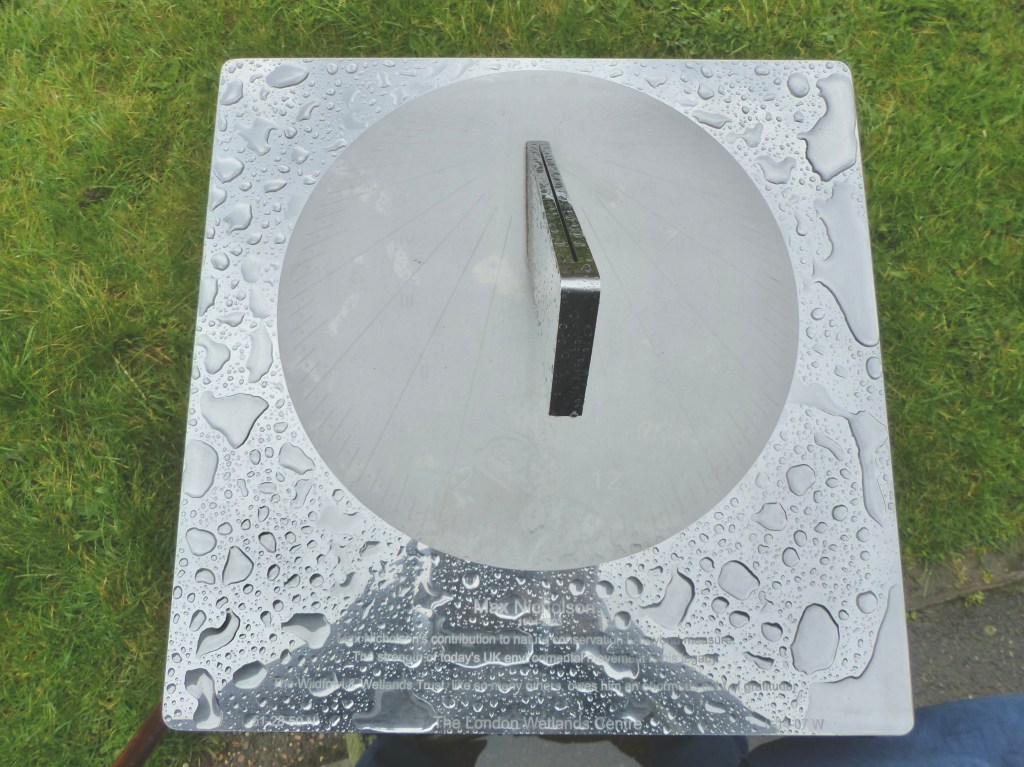
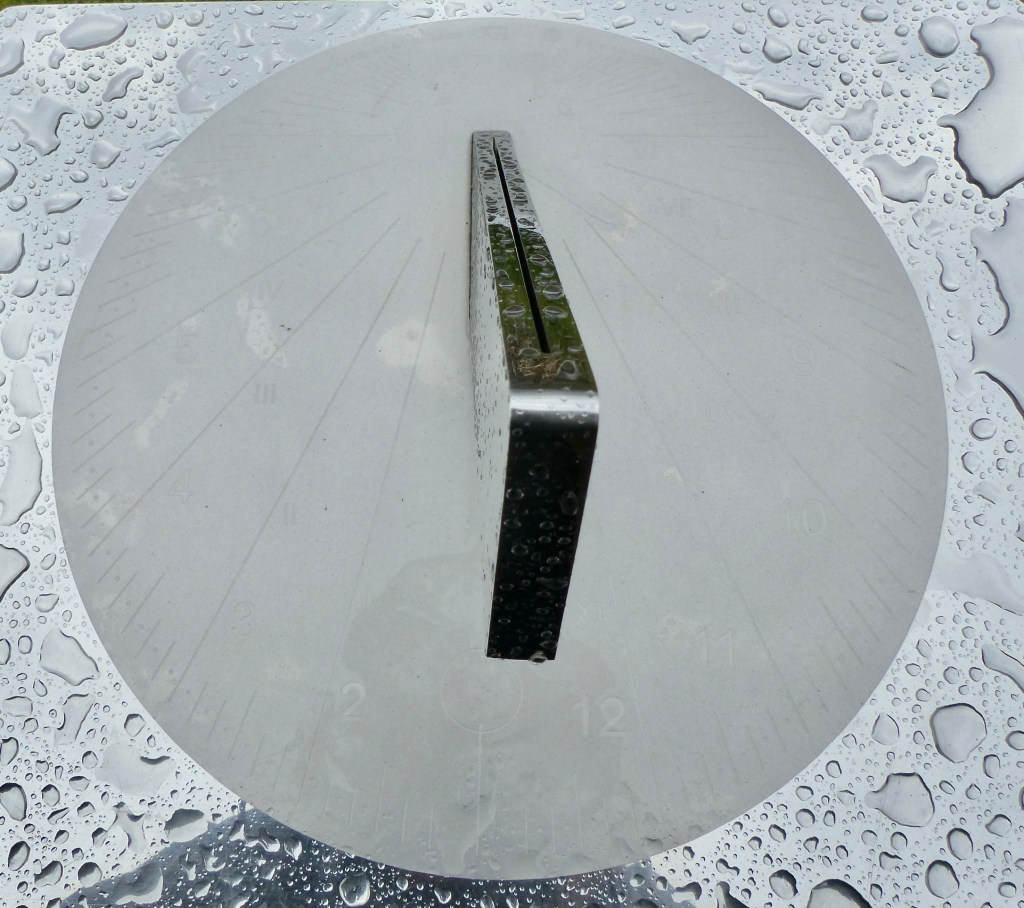
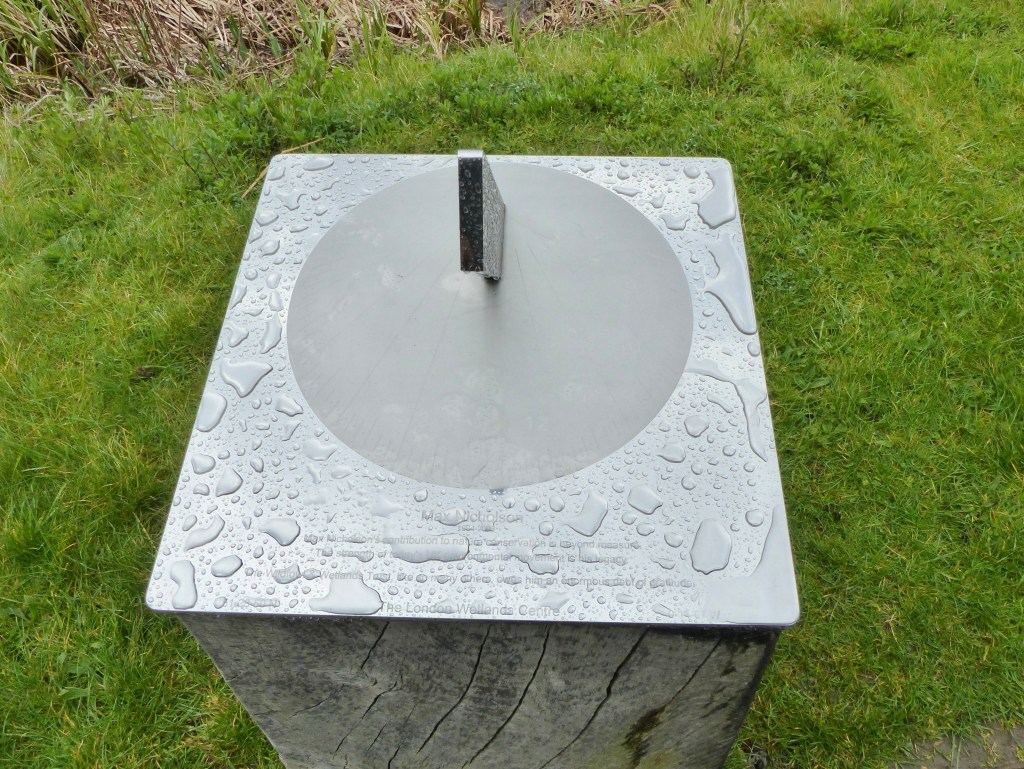
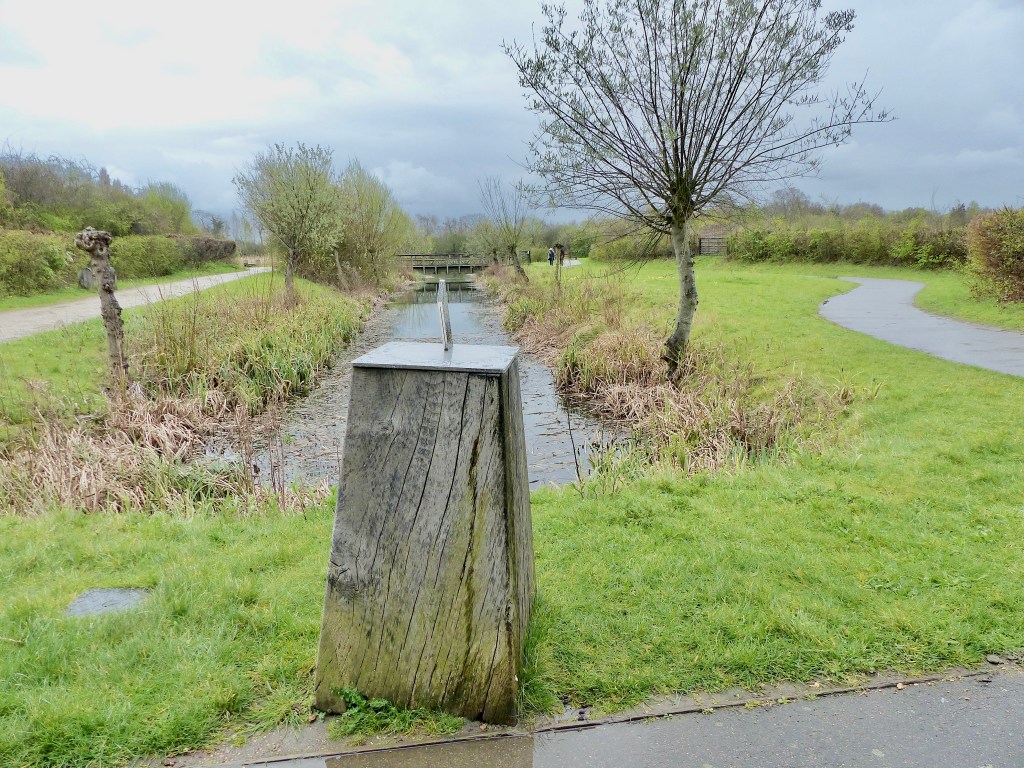
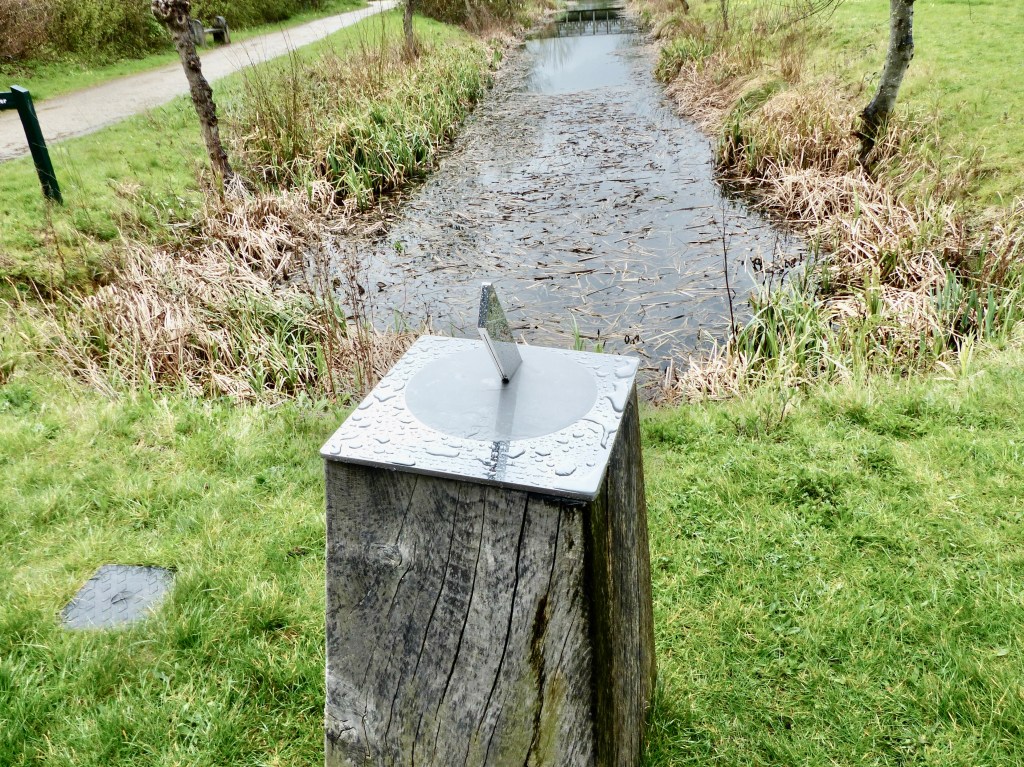
Max Nicholson Memorial Sundial . Wildlife & Wetlands
A memorial sundial for Max Nicholson (1904 – 2003), founder of the World Wildlife Fund WWF. The setting is at the wonderful LONDON WETLAND CENTRE at Barnes London, a short distance south of Hammersmith Bridge. Nicholson was a pioneering ornithologist, environmentalist, and conservationist. There is a second memorial sundial at Sedbergh, where Nicholson was at school. Both were designed by his son Piers.
The hour lines have Arabic numerals for summer time and Roman for winter time; between the hour lines are short ten-minute lines and five-minute spots.
The mirror-polished stainless steel gives strong reflections, and the gnomon, which casts the shadow, appears to “float in air” because the matt circle appears to be continuous though part of it is in fact a reflection.
For about 5 minutes at solar noon, when the sun is at its highest in the sky, a line of light shines through the slit in the gnomon. This design feature is used to orient the sundial exactly to true North so that it can be read to the narest minute or two.
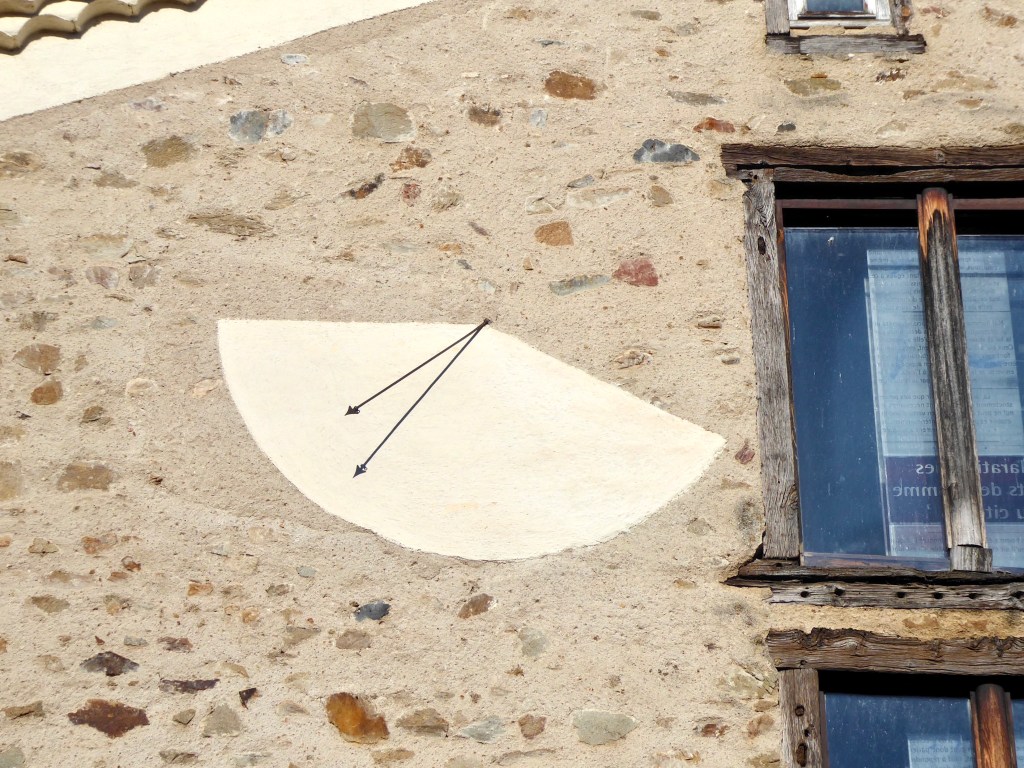
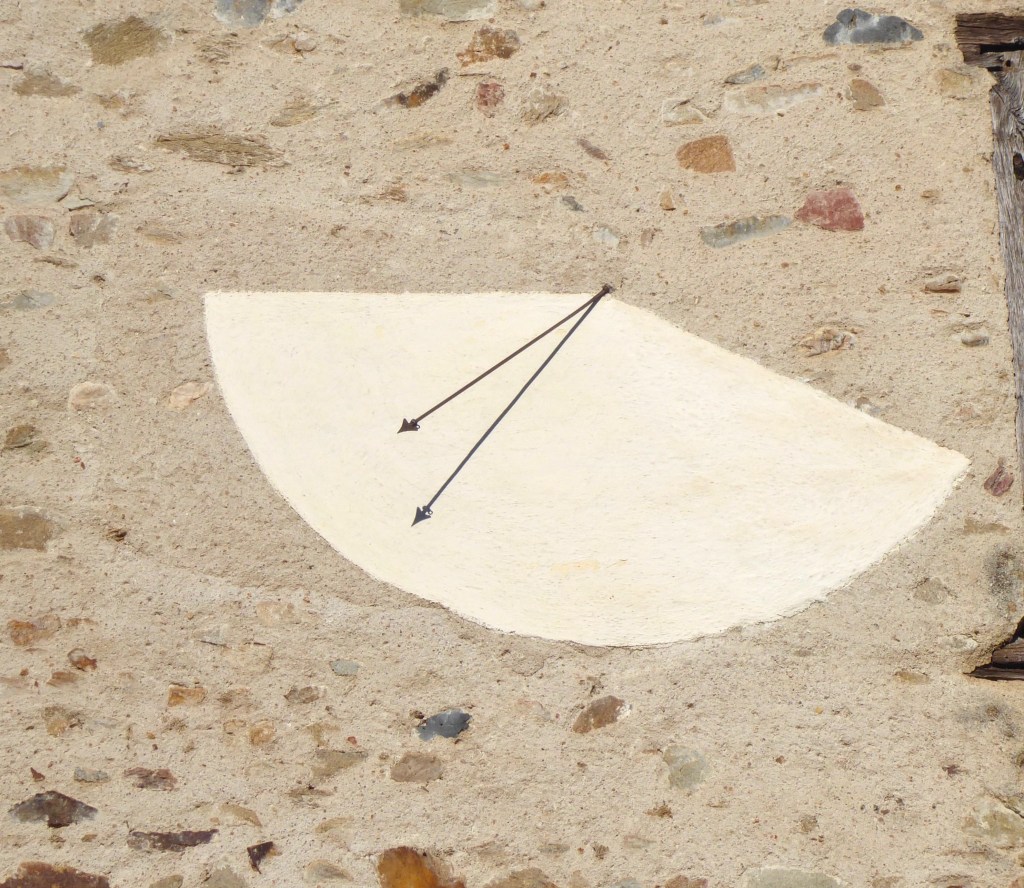
Lavaudieu is a small Auvergne town with a fine romanesque Abbey. For present purposes, the sundial on the wall of the Mairie is the attraction. On a bright sunny day, the simplicity and legibility of this civic dial is hard to beat. The ‘arrowheads’ might be considered a little too ornate for the overall design.
‘Moins est plus’ might be a good motto for the dial, as it is more generally. As soon as I saw it I knew it would be in my top 20 non-medieval dials. It still is.























 GAUDIUM SUB SOLE . SUNDIALS . MEDIEVAL TO MODERN