GRADE 1 ❖ Mainly C15, C16; C19 restoration. Plenty of interest for the visitor / church crawler, including C15 wagon roof; particularly well furnished interiorBLB; box pews; fine Jacobean woodwork. Peal of 6 bells (earliest 1613). Inc. by Simon Jenkins in ‘England’s Thousand Best Churches’, with photo. 51.1975 / -2.5873 / ST590444
DIAL
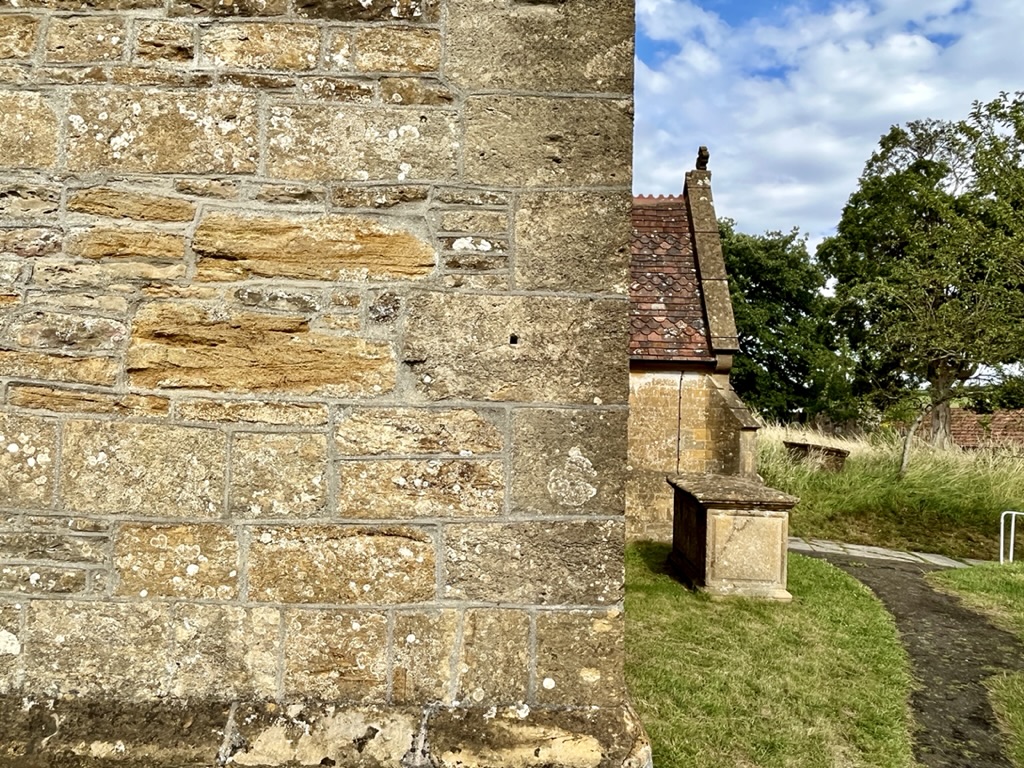
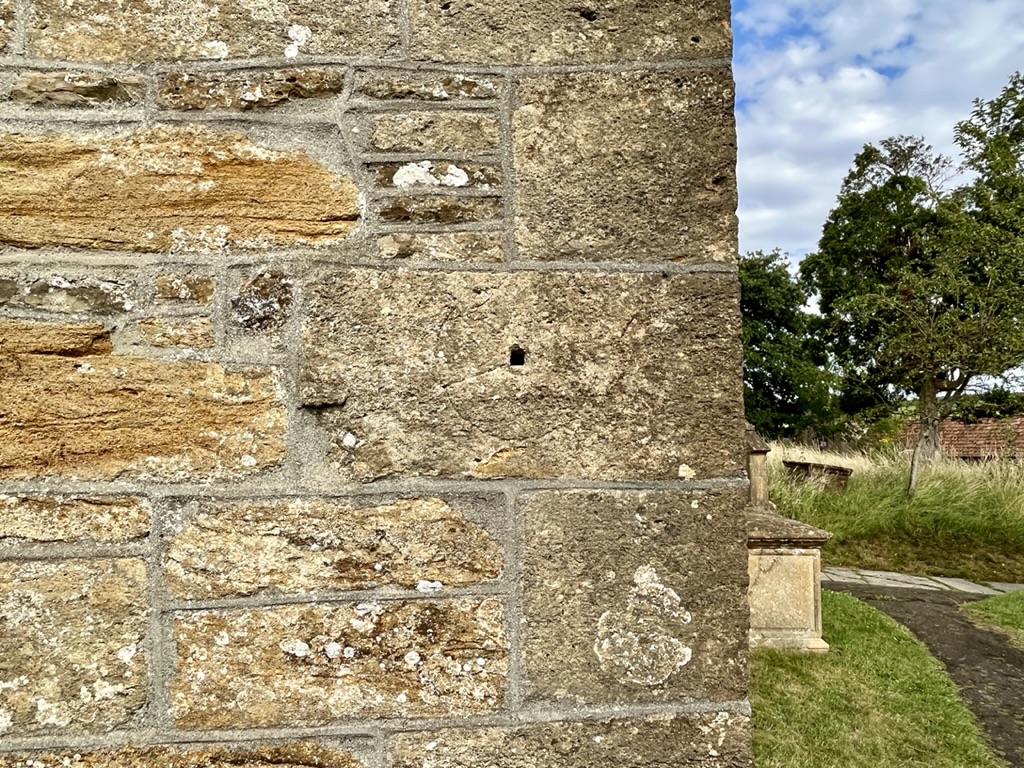
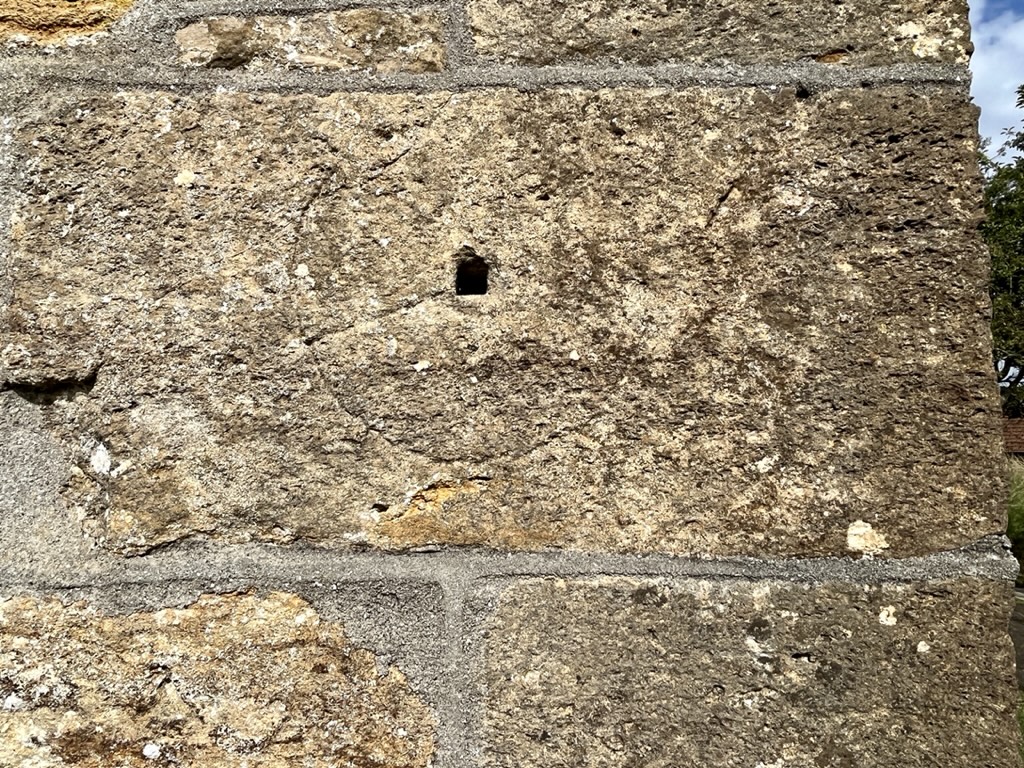
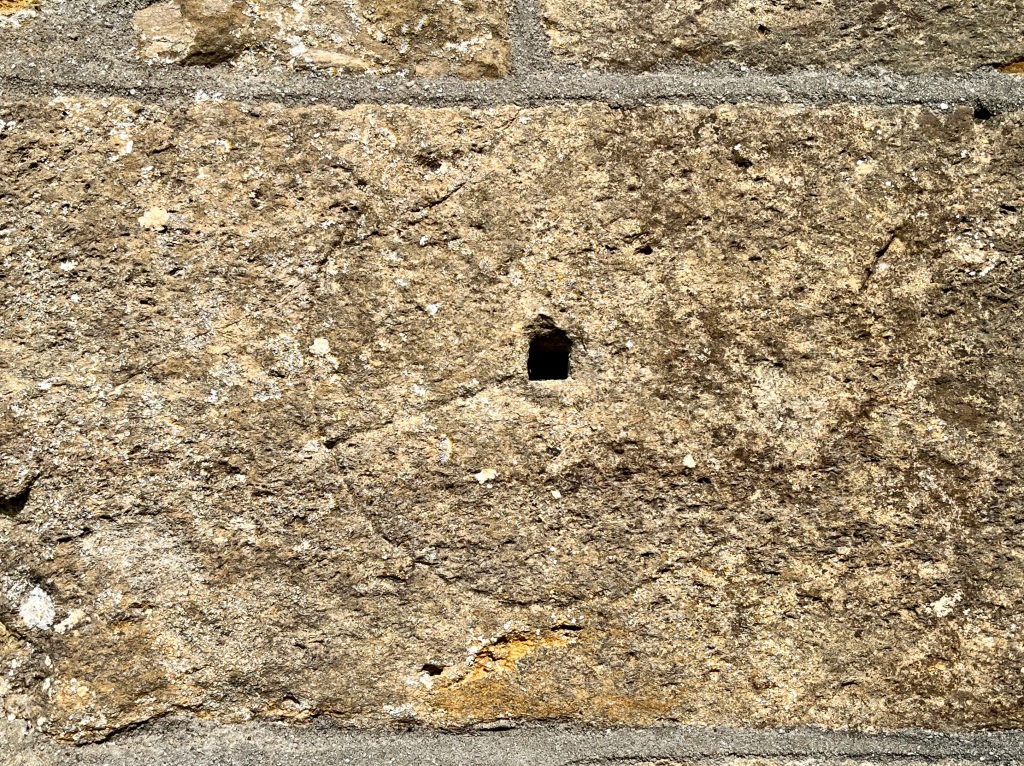
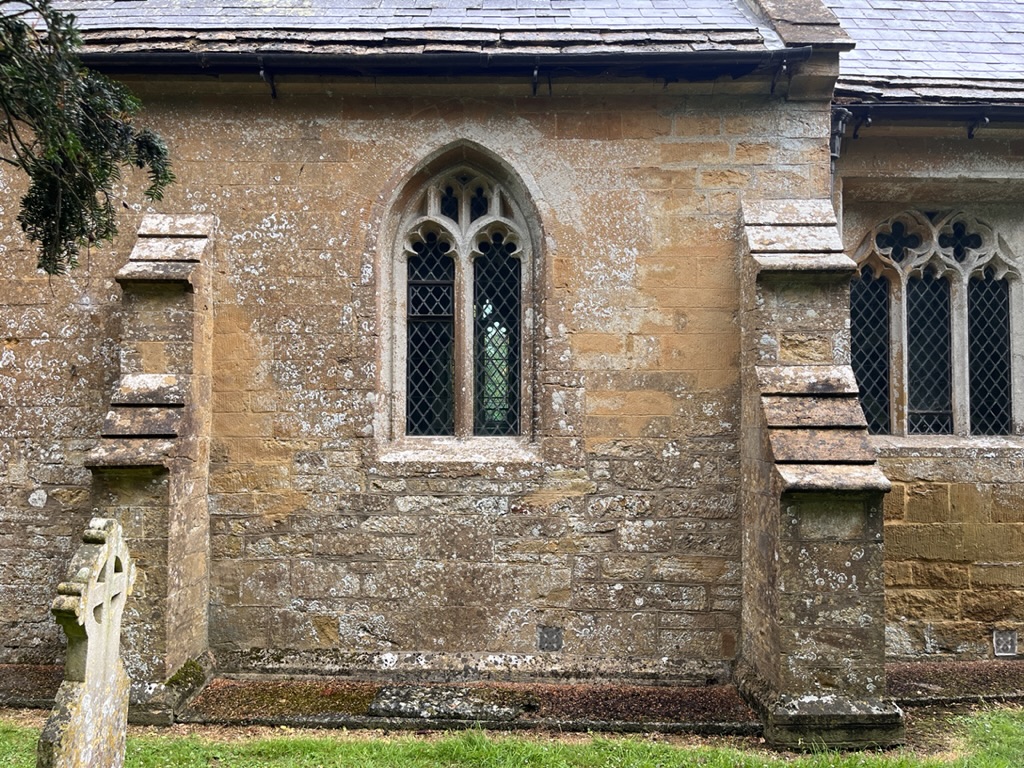
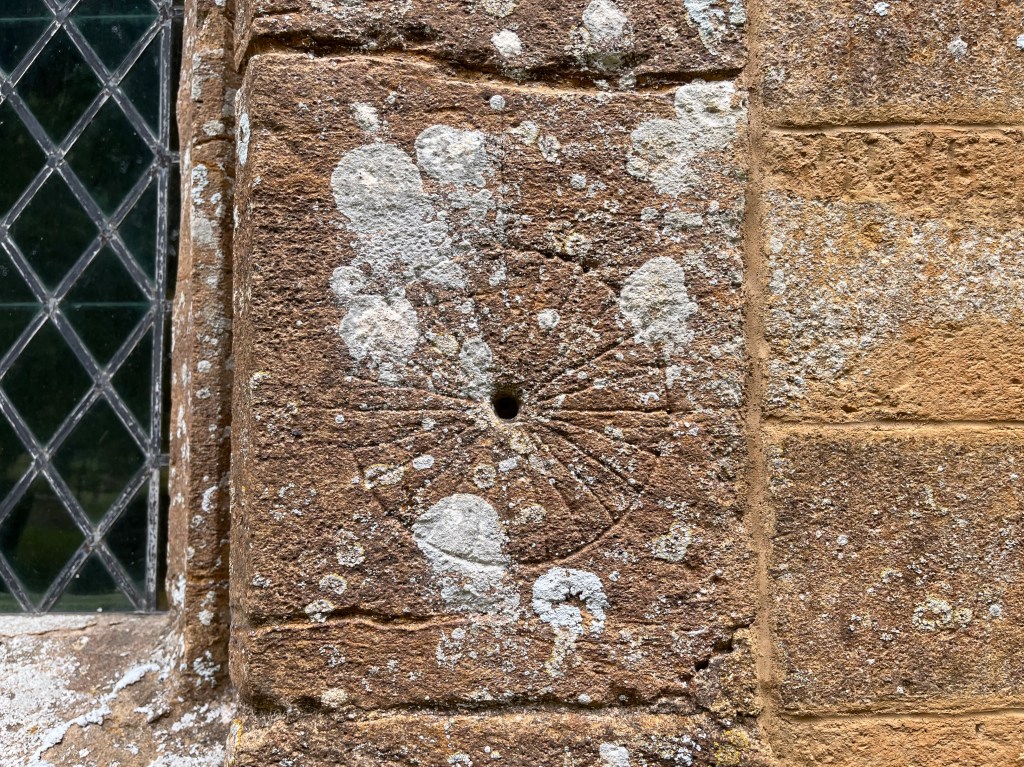
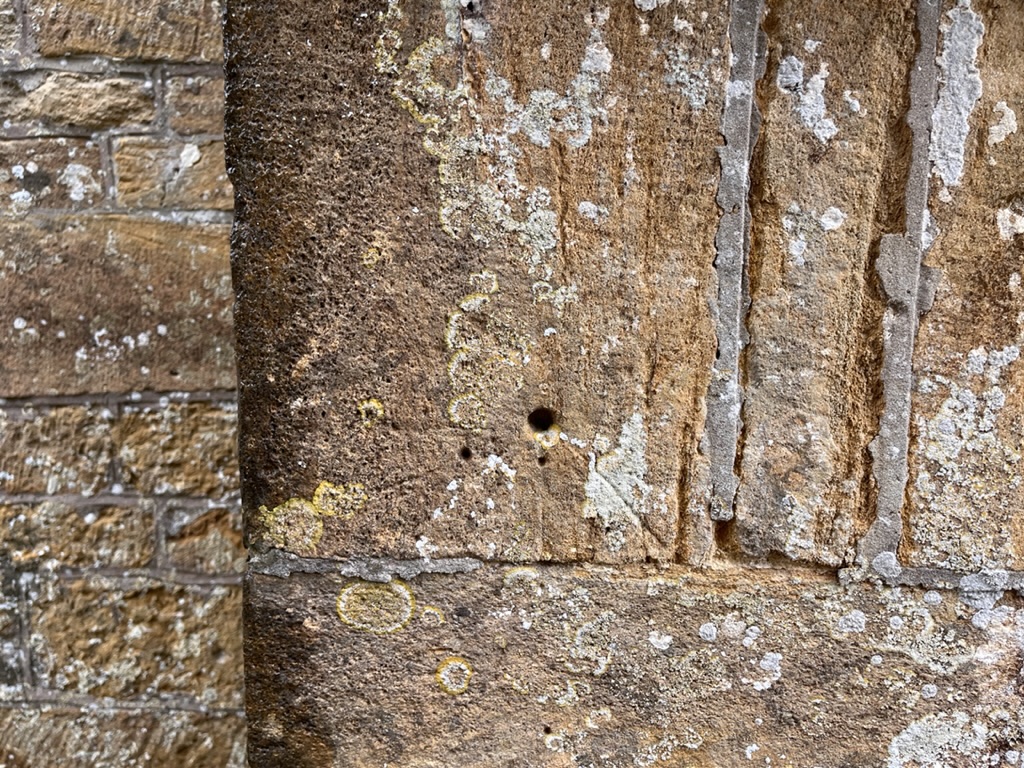
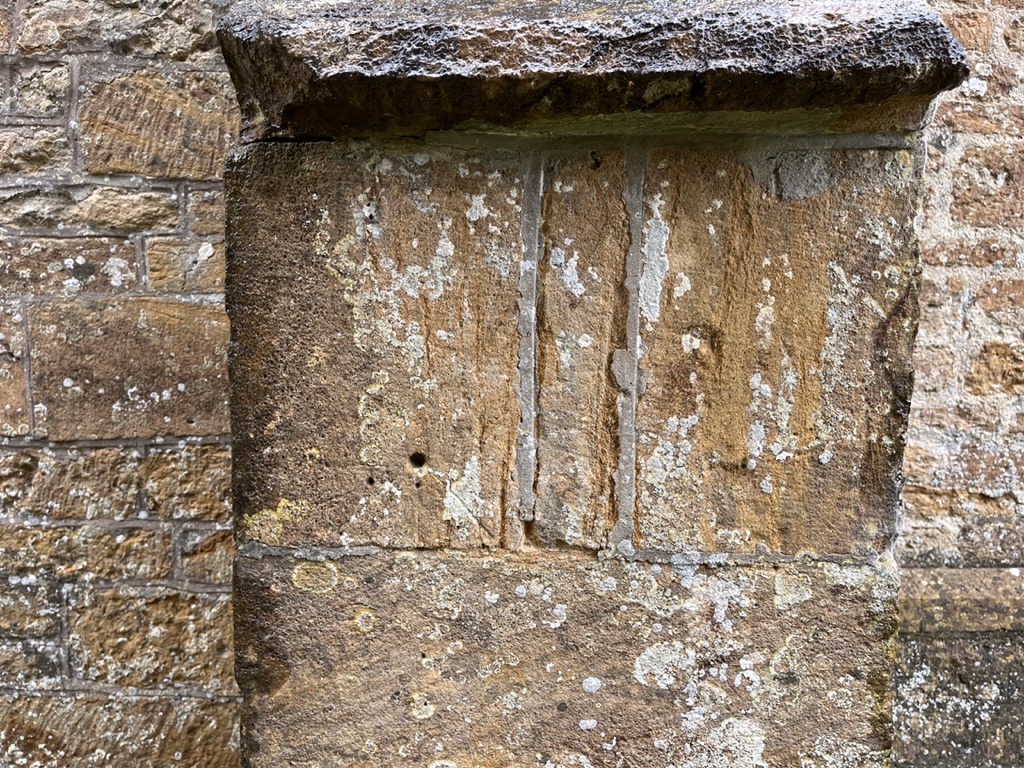
The existence of a scratch dial is debatable. The church was one of the earliest visited by DEH, on October 8th 1911. His record is one of the shortest of his entire project: On the buttress to the W of the priest’s door into the chancel is a stylehole at a height of 5′ 10″ from the ground. There are no remains of either a circle or lines, but from the soft nature of the stone they may have been weathered away.
Points in favour of dial status include its central position on the stone and the height. Against is the peculiarity of the hole itself; and the fact that the stone shows no sign of weathering, even 100+ years later,
GSS Category: Scratch Dial; Mass Dial; Doubtful Dail eg
GRADE II* ❖ C12; chancel, porch late C13; enlargements; late C19 / early C20 restorations. Excellent late Norman south door. C12 font. The oldest church in the New Forest. The village and church have great military significance. WW1: a Military Hospital for severe casualties of non-British soldiers. WW2: Divisional HQ for planning D-Day. Large churchyard, commemorative graves, and a fine memorial. The church contains a moving exhibition of the wartime history. Queen Mary visited and seeing that Sikhs were lacking turbans, supplied them; and seeing broom handles being used as crutches, supplied walking sticks. 50.8146 / -1.5681 / SU305017
DIAL
The dial is on E jamb of S Porch, late C13. The right side is concealed by render of some sort. Despite erosion, it is possible to make out 8 lines. Iron gnomon remnant protruding.
ARG visited in June 1924. He detected part of an indistinct circle, but 100 years later there is no trace. He noted that the style-hole retains its metal gnomon, broken off and projecting very slightly. The original? It is rare enough to find remnants of metal in a gnomon hole, let alone (if ever) to be able to identify one as pre-1600.
Amusingly innovative metal gnomon. Clungungford . Salop
A special gravestone
GSS Category: Scratch Dial; Mass Dial; Dial with gnomon remnant
In a format variation, I will side-step the usual scene-setting para. In comparison with its host building, the somewhat elusive scratch-dial is an infinitesimal part. It is quite rare, I think, to find a scratch dial on a cathedral, abbey, or other major church building. Romsey has one that would be easily overlooked without clues. Next time I’m in Romsey I’ll take a proper camera on a sunny day.
DIAL
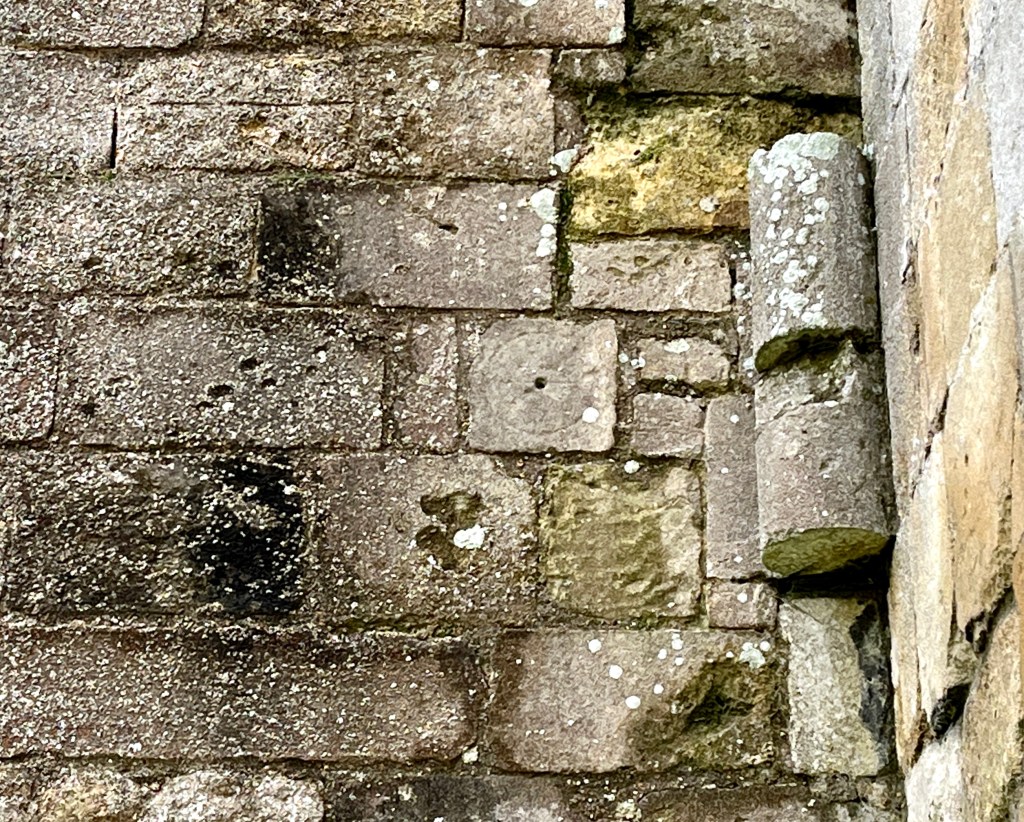
The dial is at the E end of the Abbey, inverted on the N face of the S buttress about 4 meters high.
The BSS record describes it as Accurately cut or made. Repositioned, eroded, damaged. Rudimentary (Norman) dial. Probably inverted (faint line and pock URQ. Too high for measurement.
GSS Category: Scratch Dial; Mass Dial; Norman Mass Dial
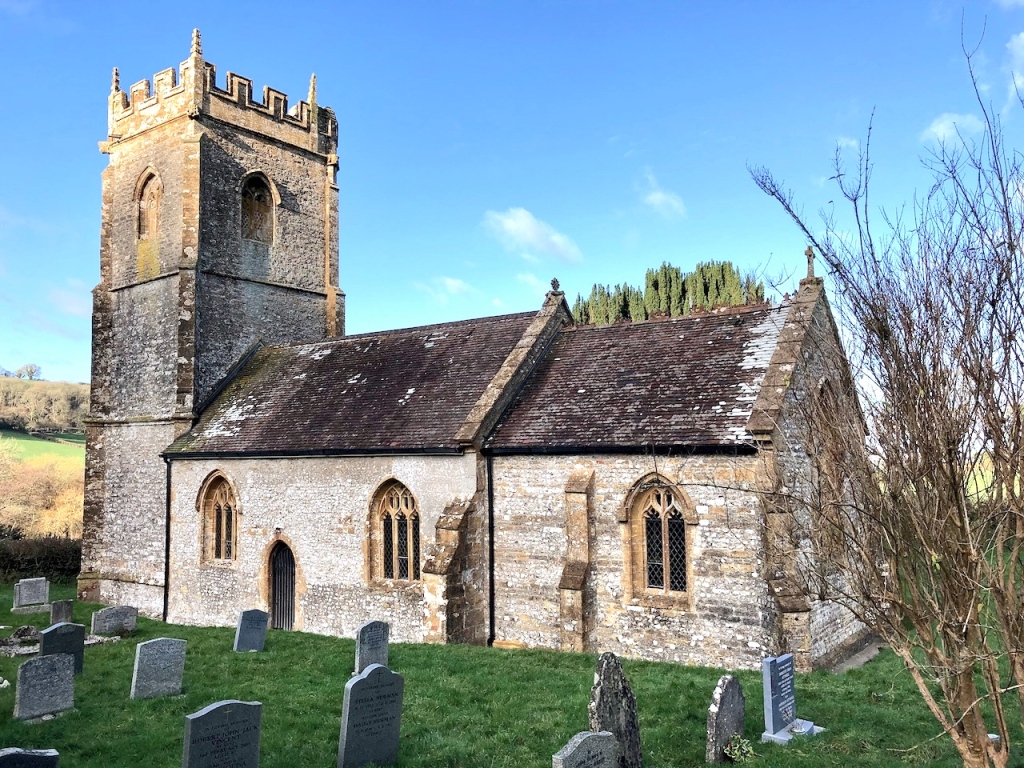
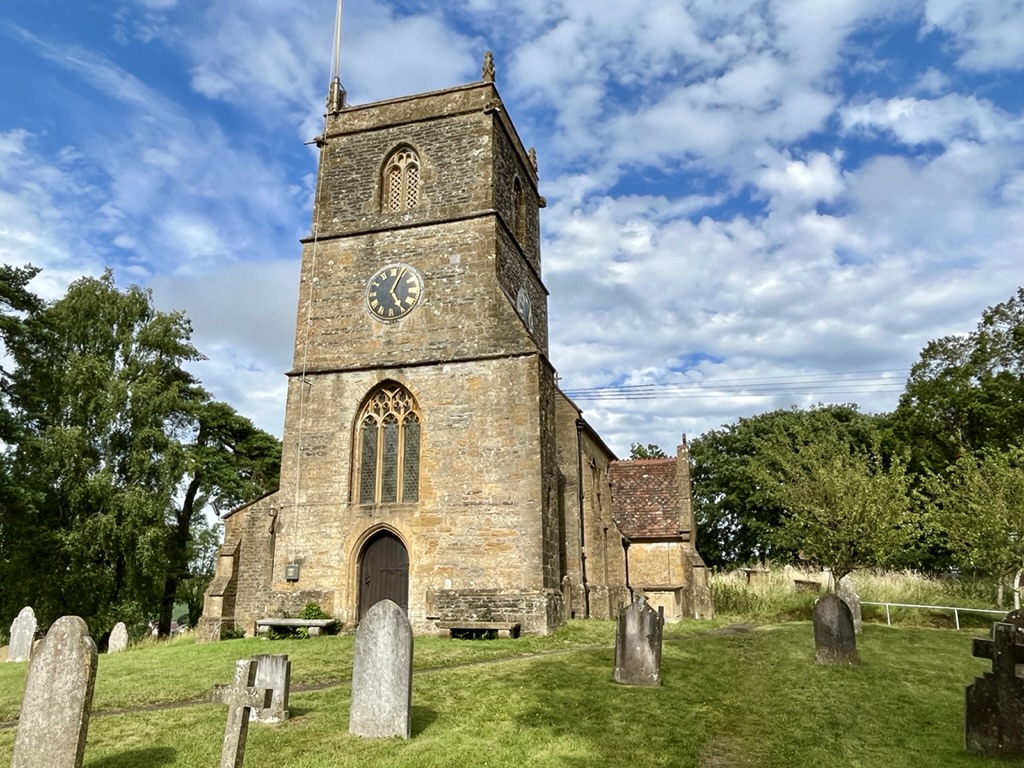
GRADE II ✣ C12 traces (BHO); then C13 on; C15 tower; Wyatt rebuilding 1860s. A few early features remain. An interesting, well-kept building and churchyard. 6m NW of Salisbury via Wilton. 51.1079 / -1.8758 / SU087342
DIALS
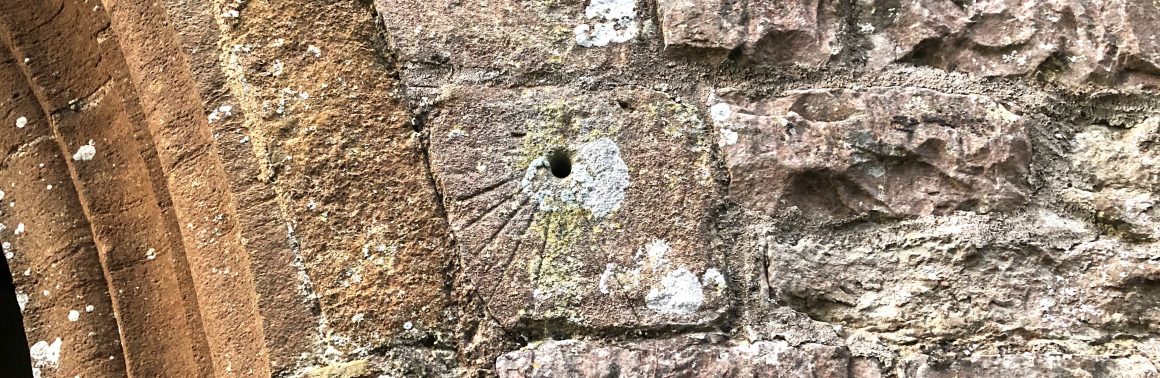
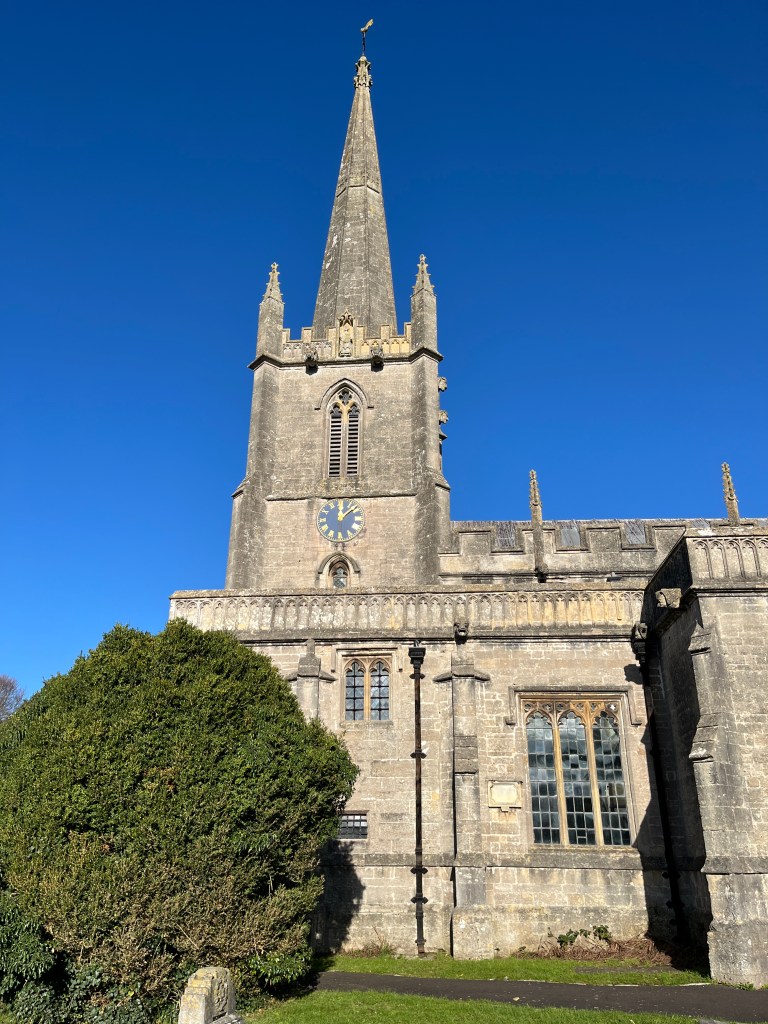
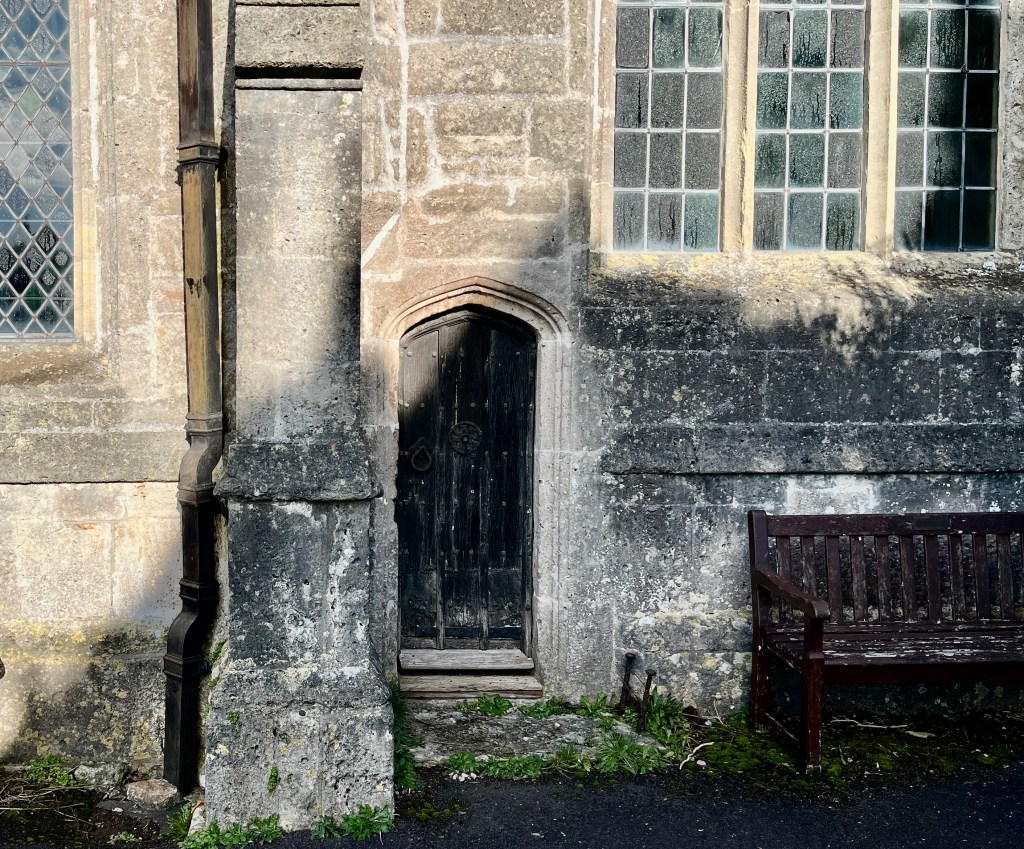
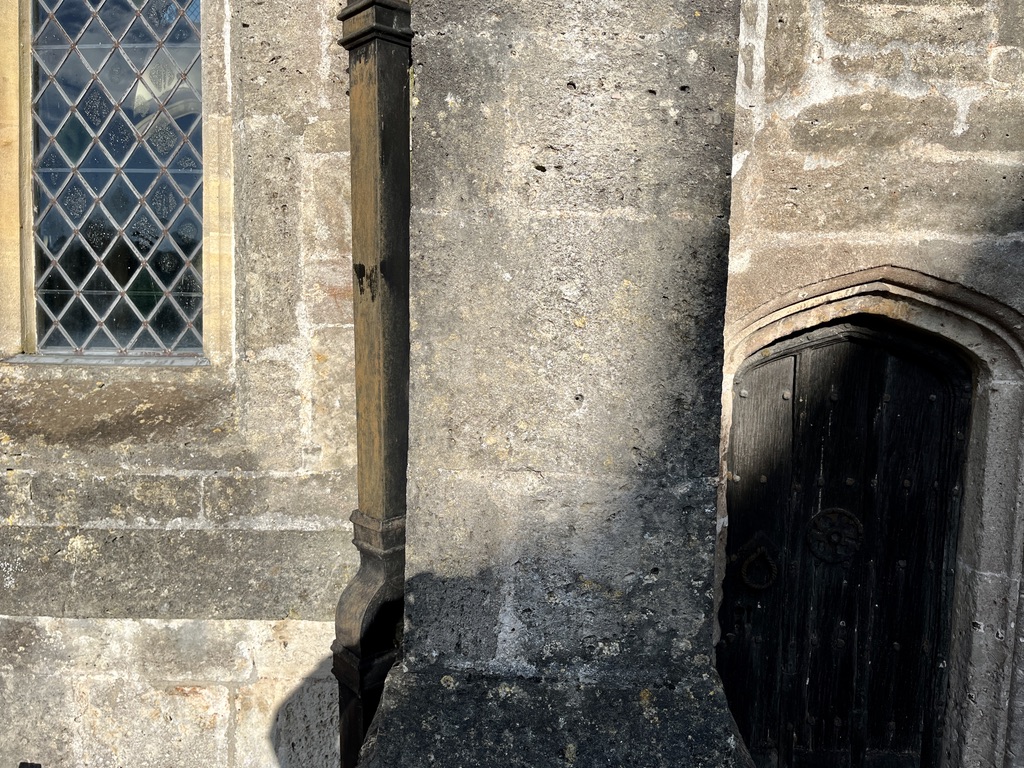
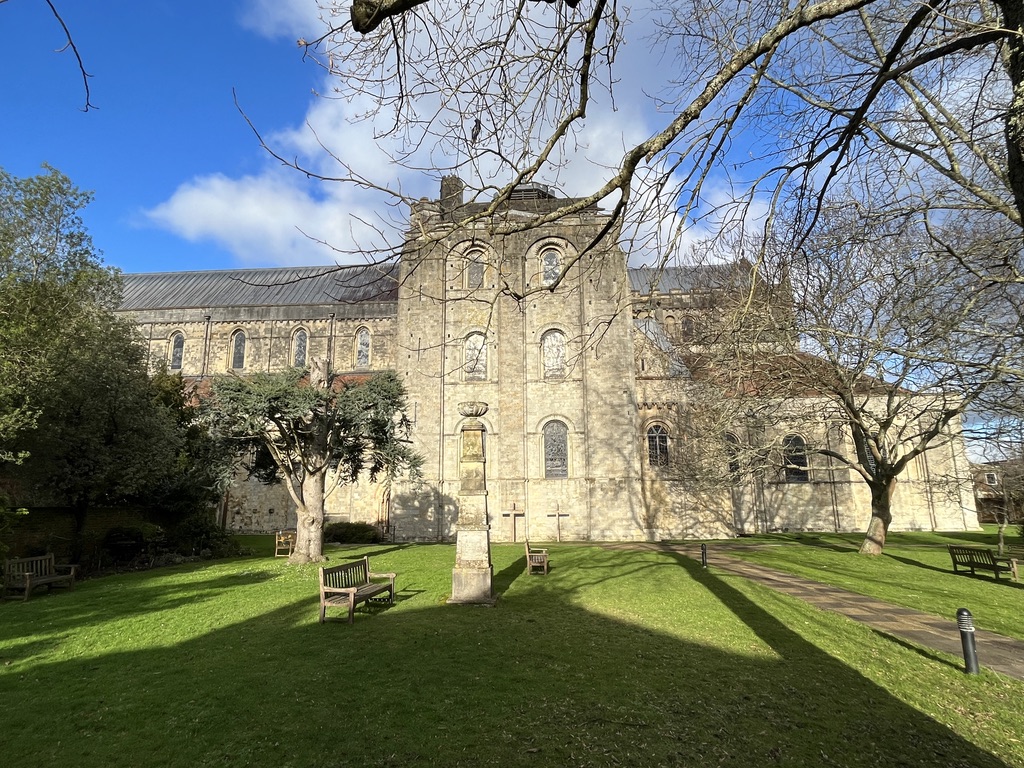
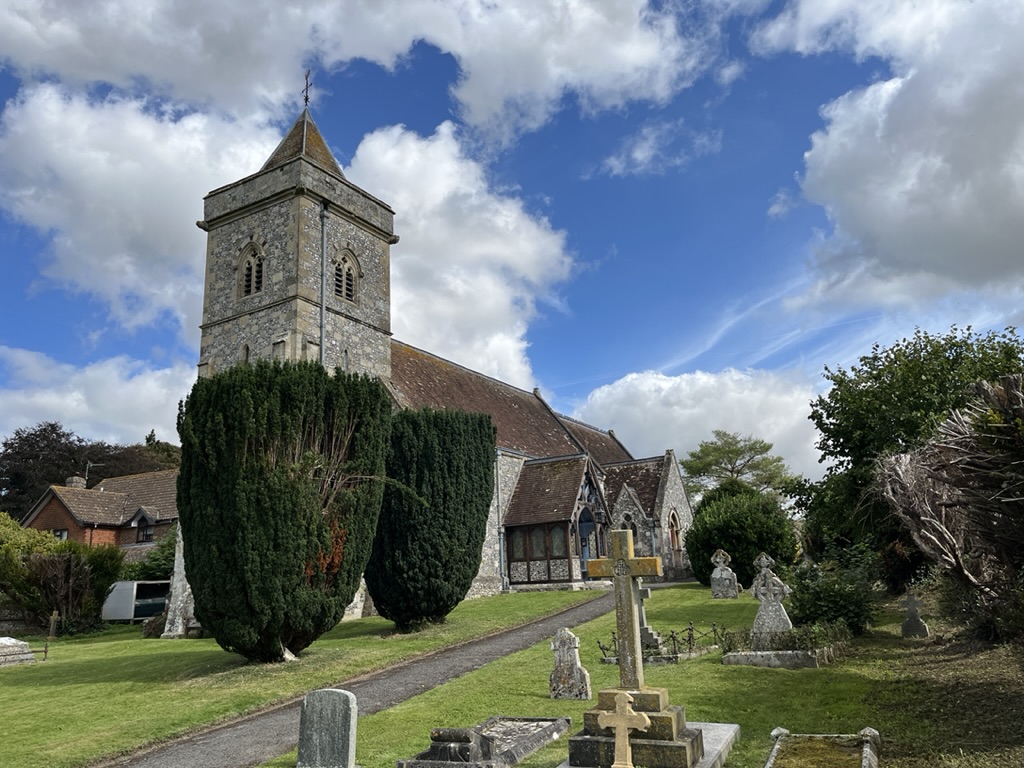
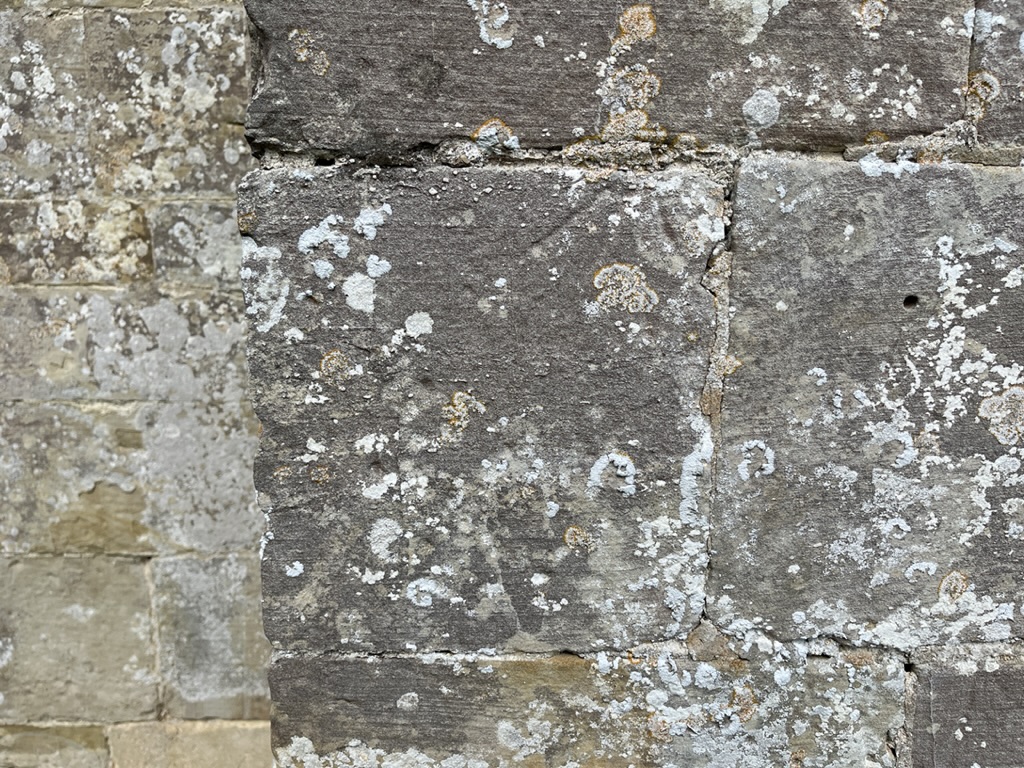
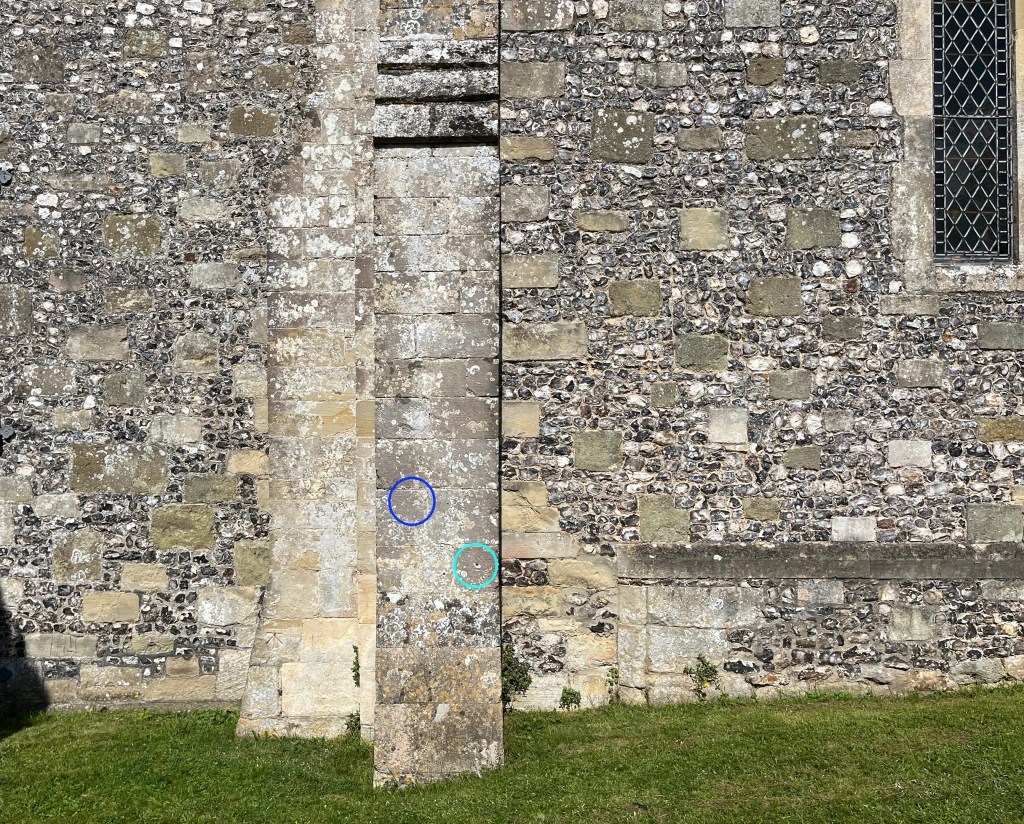
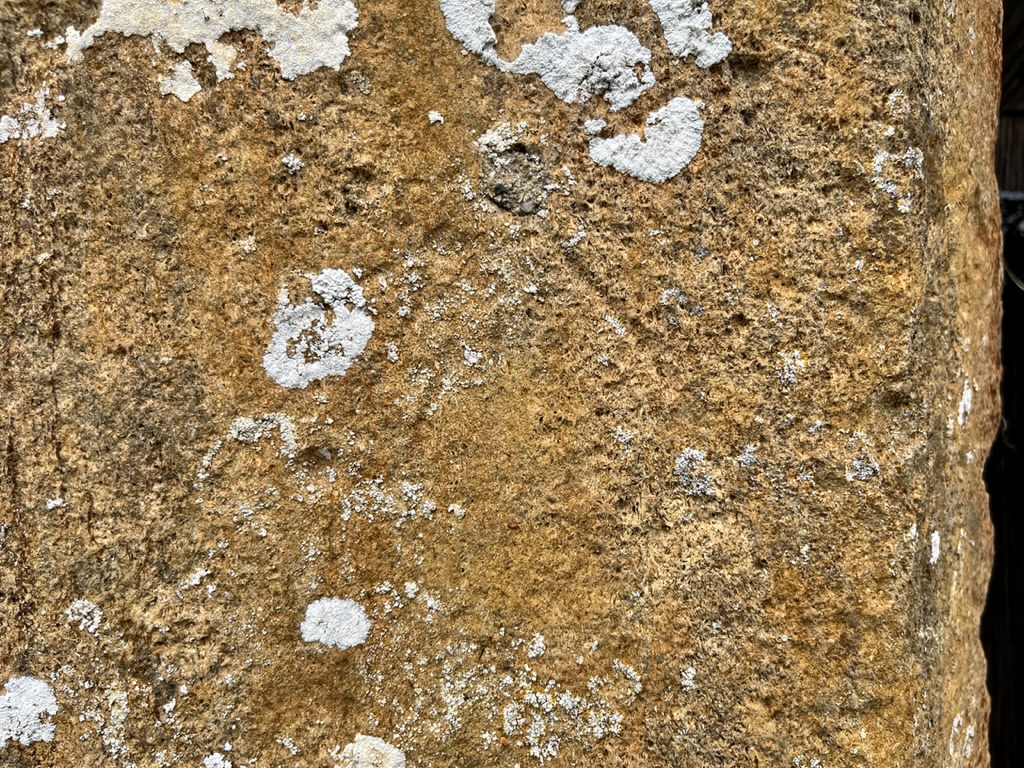
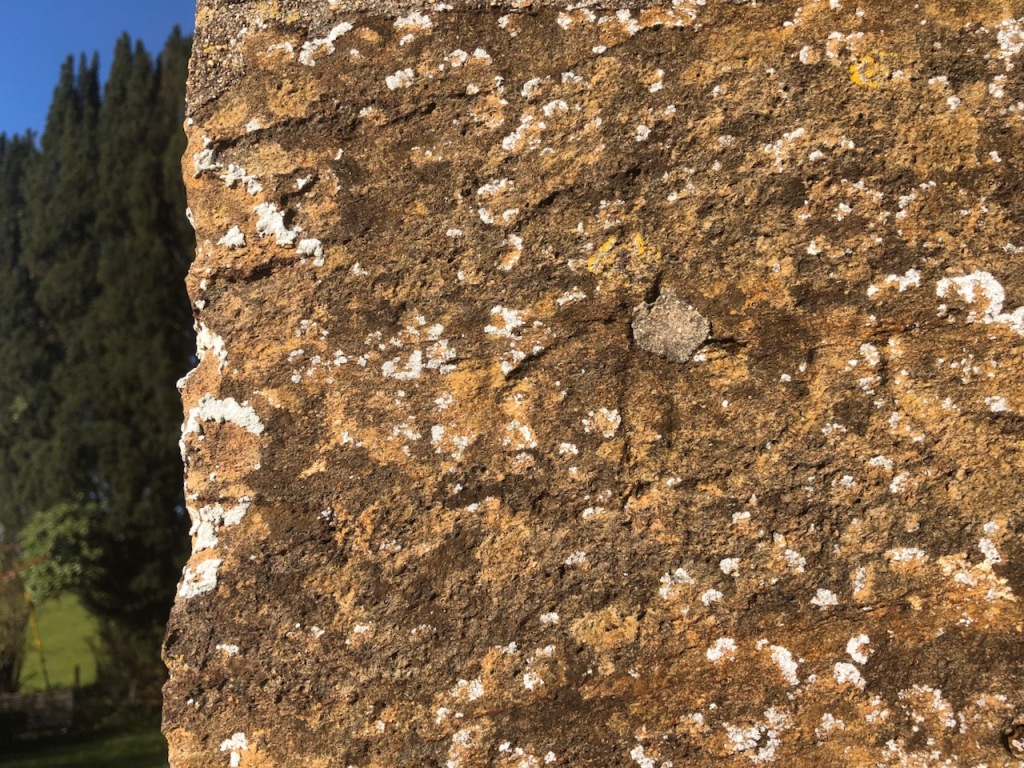
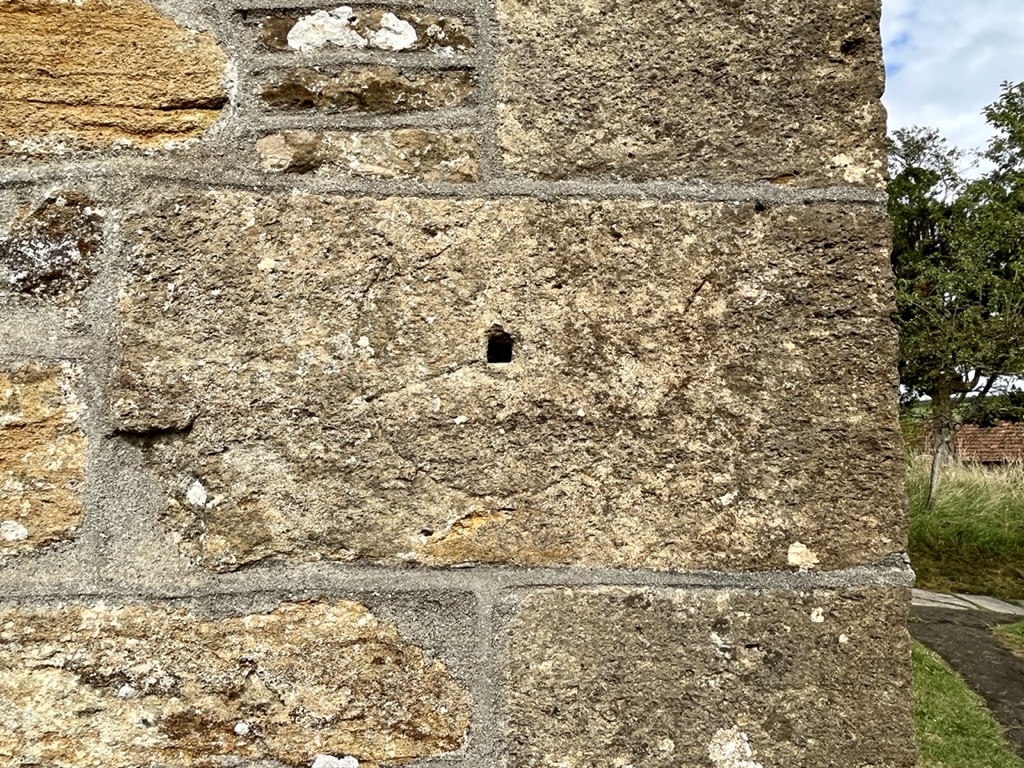
Two scratch dials are recorded with descriptions, with a third mentioned in tentative terms (BSS). When I visited, the only dial I found didn’t match the descriptions nor was it in any location mentioned. There were a few quite plausible gnomon holes but none had any additional dial-ish features, not even eroded traces. Clearly I need to return and try harder next time I’m in the area.
DIAL
A very basic dial with the gnomon hole in the mortar line. Two clear lines either side of noon, possible terminal pocks (if so, perhaps later additions). LLQ there’s a faint trace of a third line.
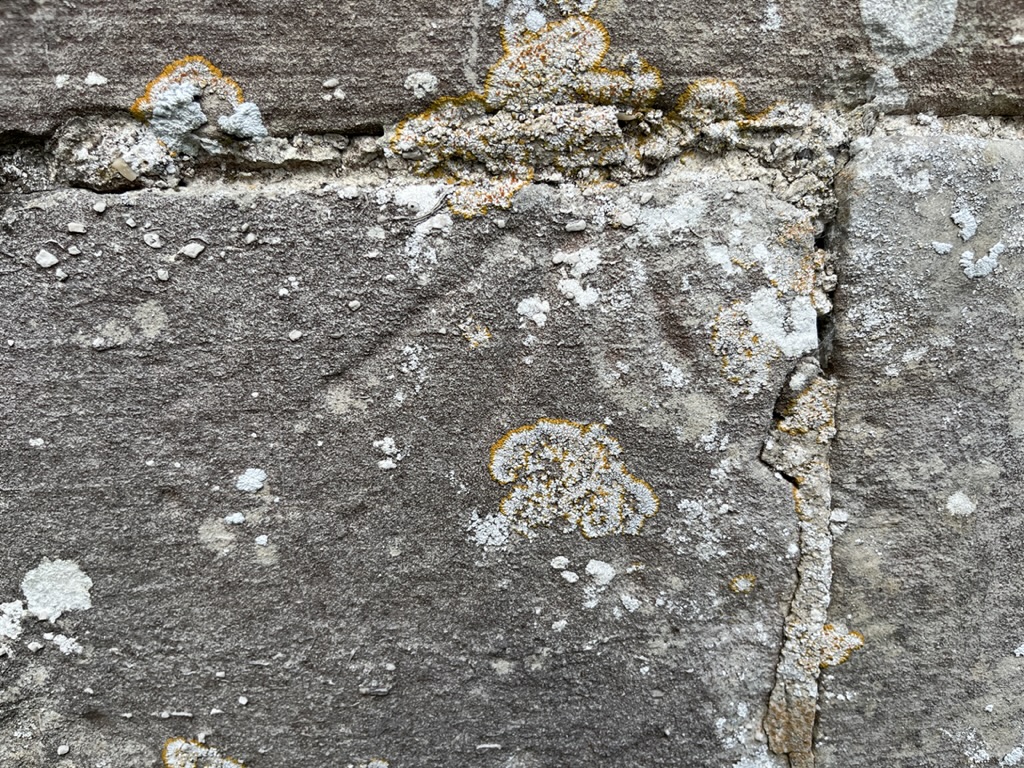
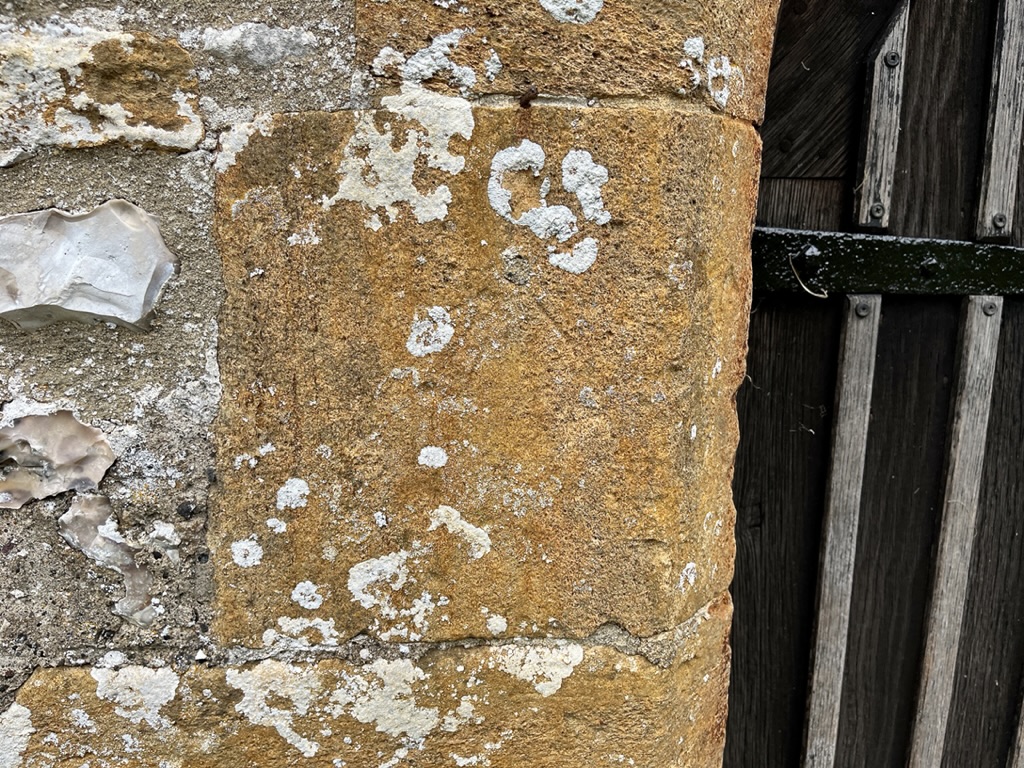
The dark blue circle in image 1 below marks the dial above; the pale blue circle marks image 2. Image 3 is one of several examples that, apart from holes, have no visible dial characteristics.
DEDICATION † St Mary Magdalene. C15 (on the site of a ?C11 church). Mid C18 rebuilding / restoration (after collapsed chancel). A few early fittings. Screen, font, bells, wall tablets of note. Fragment of stone in middle S. buttress of chancel with pre-conquest interlacementBHO.
LOCATION † Remote extended hamlet deep in farming country a few miles SW. of Sherborne and NE. of Dorchester. Nestled under the north flank of a long ridge. Reached by lanes to N. and a very steep narrow lane down from the ridge. The church is immediately below, set into the hillside. 50.8331, -2.543, ST618038
DIAL 2 (new record)
A while ago, I featured a dial, not previously recorded, on the SW face of the LHS buttress by the entrance door. We live close to St Mary but I had never noticed the dial until I saw it in direct evening sunlight, spotting the filled gnomon hole first (see below).
On a visit to the church last week, I looked more carefully at the S doorway. And there was another dial, LHS, that I (and others) had overlooked. It’s a much clearer dial than the first.
St Mary Magdalene . Batcombe . Dorset – Scratch Dial 2
The filled gnomon hole is in the upper half of the dial stone. There are 6 / 7 lines, one with an apparent terminal pock. There is no clear noon line, but the lines from 9 to 12 suggest a significant time of the day for observance. The deeper none line may also mark a mass time mid-pm. There is a very distinct line URQ that ends in a pock but can have had no meaningful role in marking the passage of the day.
Batcombe . Dorset . St Mary Magdalene . Scratch Dial 1
NOTES † A small ritual protection mark – a tiny shield-shaped face – R of the entrance door. Such apotropaic symbols were carved or scratched usually by a door or window or in the porch to prevent evil from entering the church and to repel it from the vicinity.
LOCATION † 3m SW of Yeovil, near E & W Coker 50.9048 / -2.6949 / ST512119
An extended village close to the A30 yet approached by lanes (as they are actually named) rather than roads. A peaceful feel to it, especially at dusk when this poor photo was taken. The church had ‘much work’ carried out in C15 and C18. Tower probably of 1123, in three stages, font possibly from same date. BLB.
I visited St Mary a couple of years ago at dusk (it was last on a list), so I have re-photographed the church and updated the post.
DIAL † At the W. end and quite easily overlooked. DEH did not investigate or list it in 1915. A full circle, one clear radial and a square style hole. Possible trace of outer circle top left. Not noted in BLB, HE, nor in TWC extensive list of Somerset dials. I found only one reference to this dial that led me here; since then, one passing reference to a sundial in the porch – perhaps this dial relocated in C15?
NOTES The circular font is thought to be original dating from 1123, and the clock mechanism was built and installed before 1707. There are 6 bells in the tower, 3 of which are from the Purdue (Closworth) foundry, with the earliest being dated 1591
St Nicholas . Dinnington . Som. (Geo / Sarah Smith )
ST NICHOLAS . DINNINGTON . SOMERSET
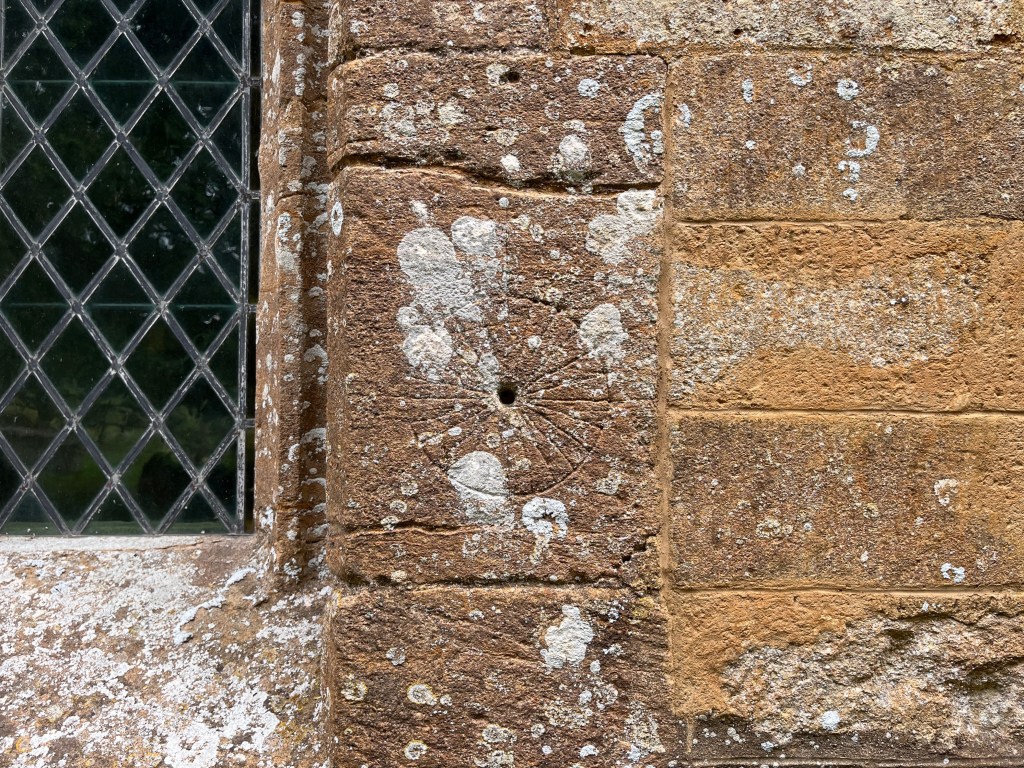
GRADE II † Established C12, first recorded 1207; mostly C15; restoration 1863. C13 (?) font. Originally the chapelry to nearby Seavington St Mary. Very pretty, both the building and the dial. 5m NW of Crewkerne. 50.9113 / -2.8505 / ST403127
DIAL
St Nicholas . Dinnington . Som. – Scratch Dial
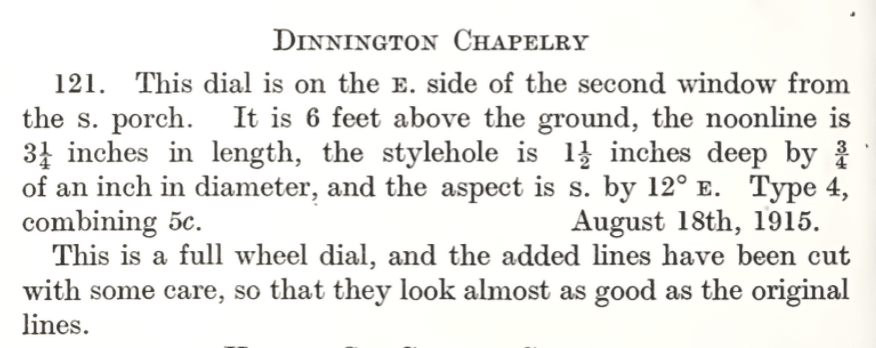
DEH visited in August 1915 and added a note to his often largely measurement-based record.
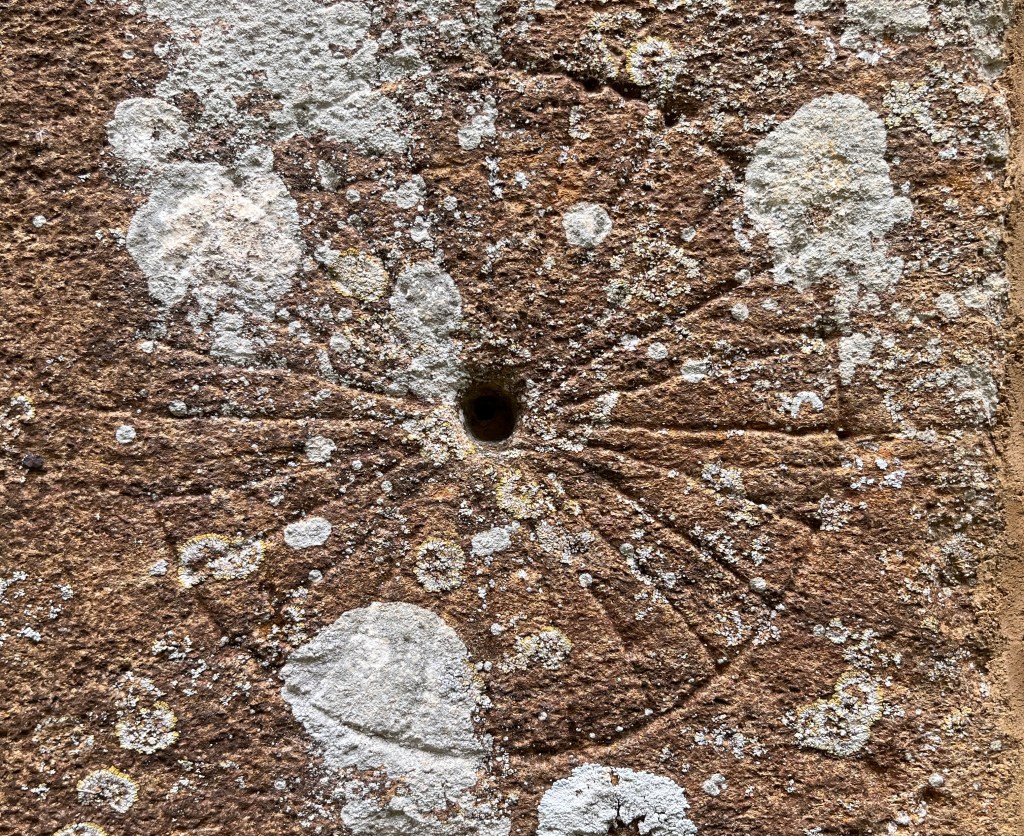
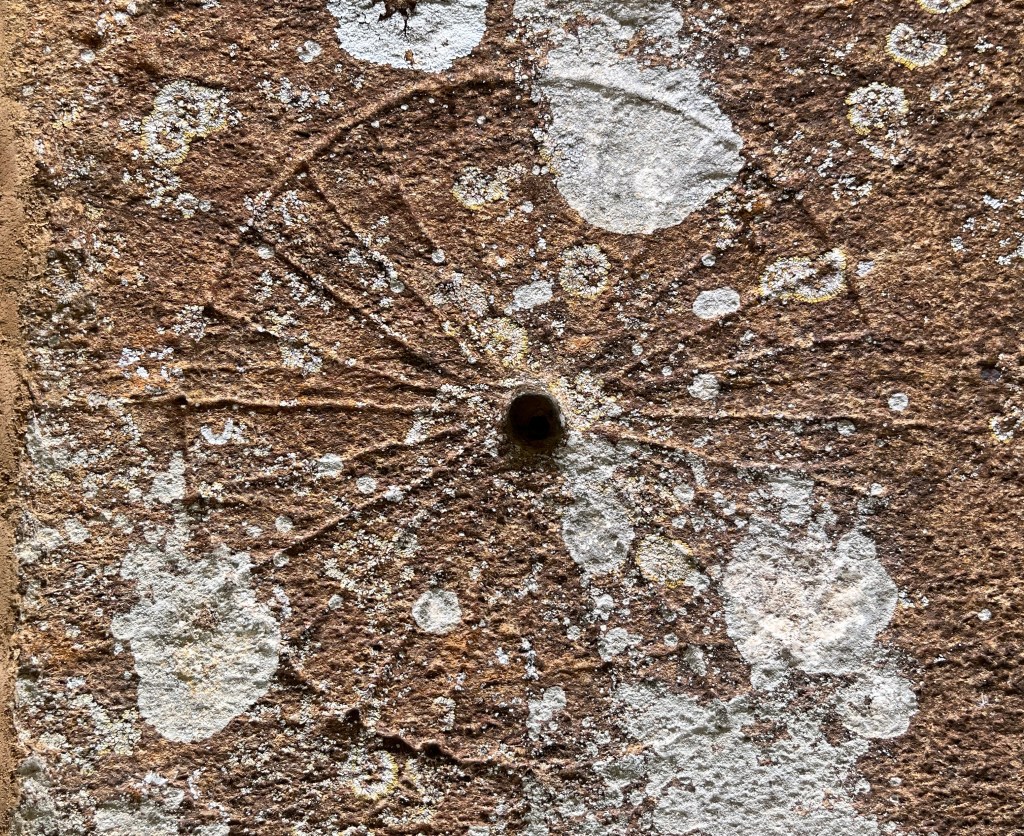
There is a full complement of 24 lines, with areas of erosion, radiating from the gnomon hole in the centre of the dial stone. I am not clear which added lines DEH refers to. I infer that the dial may have been a hemisphere marking dawn to dusk only from the horizontal 6-to-6 lines. Then perhaps for reasons of aesthetics / symmetry an upper hemisphere was cut to match it.
St Nicholas . Dinnington . Som. – Scratch Dial and 180º rotation
There’s another conundrum concerning the 4 terminal pocks in UR quadrant (above). If the dial is in its original position (L), they would have been useless and indeed pointless. But if the dial stone was at some stage at 90º or (more likely and convincingly) 180º from its present position, they would be effective as daytime Mass markers. In the rotated image (R), the pocks are in the right place to emphasise forenoon Mass.
GSS Category: Scratch Dial; Mass Dial
All photos: Keith Salvesen, except header image Sarah Smith / Geo /
GRADE II* † C13 origins (nave, chancel), considerable enlargement late C15. Norman font, trace wall paintings. Now in the care of CCT. Adjacent to Seavington St Michael and 4m E of Ilminster. 50.9306 / -2.851 / ST402149
DIALS
DEH visited St Mary in Sept 1912 on one of his early dial research expeditions in Somerset☩. He recorded a single dial on a buttress (Dial 1). BSS does not have a specific record for St Mary. I wasn’t prepared for the multi-dial display on either side of the porch..
☩
DIAL 1
St Mary . Seavington St Mary . Somerset
Dial 1 is described by DEH in more detail than usual:
This dial is on a buttress half-way between the s. porch and chancel. It is about 5 feet 5 inches above the ground, the noonline is 3 1/2 inches in length, the style hole is 1/2 an inch deep to the top of the metal shank which is still within it, and about 1/2 an inch in diameter. On the noonline, close to the stylehole, is a hole for a peg, and there is another at the extreme end of this line in the next stone. There is also a peg-hole on the mass line.
There are 7 lines, starting with the horizontal 6am. The noon line seems to be a close double line, with noon itself being between them (as other churches in the area). There’s also a hint that it extends to the stone below, with a small terminal pock. The deeper cut line in the lower right quadrant presumably marked the main Mass of the day. No metal shank was evident.
St Mary . Seavington St Mary . Somerset
PORCH DIALS
Numbering needs correction at some time… 8 & 9 should be in the same row as 4 – 7; 10 & 11 should replace 8 & 9
DIALS 2 & 3
On the W side of the door are 2 adjacent dials on the same stone and of a similar design. Both seem to have been complete circles, now eroded. The larger has a very small style hole. The smaller has a couple of pocks but whether they relate to its function is not clear.
St Mary . Seavington St Mary . Somerset
☩
DIALS 4 – 6
On the E side of the door are 3 dials in a row on a single large stone, one with a string of pocks. Dials are shown in order left to right.
Dial 4
Dial 5
Dial 6
☩
Dial 7 (?)
Completing the line of small circle dials on the stone is a hole lower R. No definite lines / pocks are readily discernible but a photo enlargement suggests faint lines at 11 and 1. A damaged area just above the mortar line might mark extended noon line. There’s a faint impression of a circle. Is this a dial? The hole is in a logical place on the stone and would match the other 3 dials in scale.
☩
Dial 8 ?
On the quoin stone next to Dial 7, another similar hole without noticeable markings. In close-up it’s hard to make much of it – faint evidence of a circle, perhaps? – except that it fits the overall picture of a line of small encircled dials.
☩
Dial 9
In the top R corner is a quite different type of dial, semi-circular with several lines and circumference pocks that more or less match hour line positions. It strays onto the adjacent quoin stone and there’s an impression that it might once have had a top half, with the stone later replaced.
☩
Dials 10 & 11
Both dials are immediately below the others, and resemble dials 2 & 3. 10 is an eroded (part) circle with no discernible style hole. 11 is a complete circle with a very small hole from which – originally or perhaps later – a single line curves downward.
GSS Category: Scratch Dials; Multiple Church Dials
GRADE II † C14 nave, chancel, 3-stage W tower; C15 nave rebuilt, N chapel added. Victorian restoration 1866. 14 Consecration Crosses (usually 12 or fewer). S. of the Sherborne – Yeovil A30 road, approx half way between the two towns 50.9175 / 50°55’3″N / ST603132
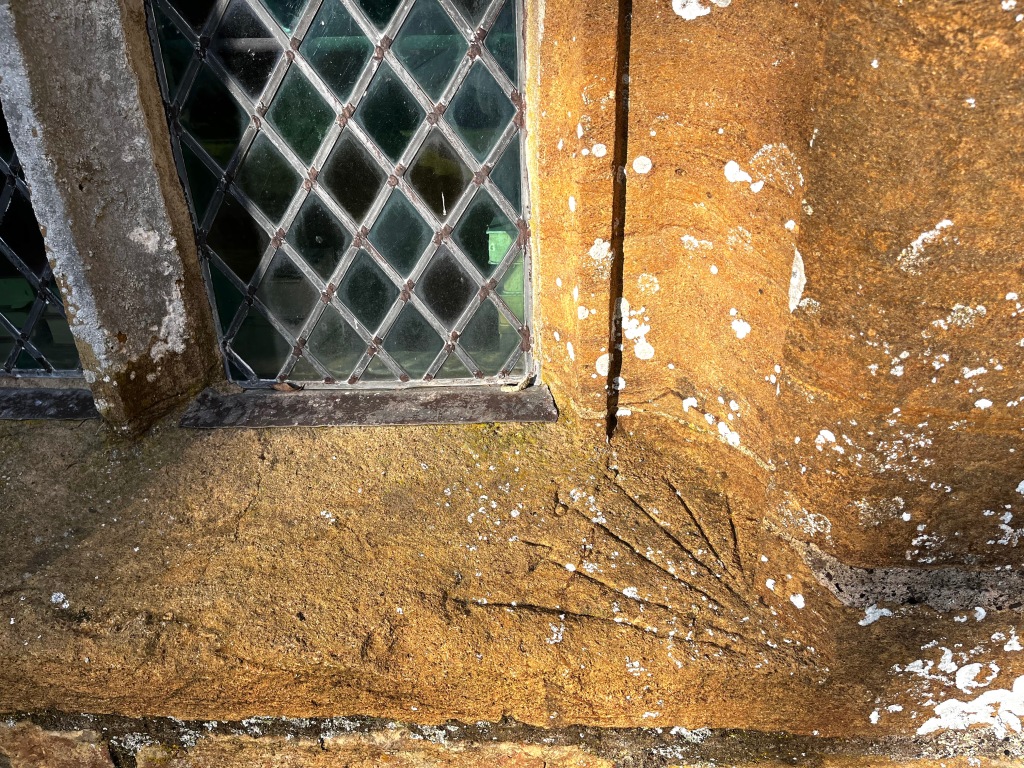
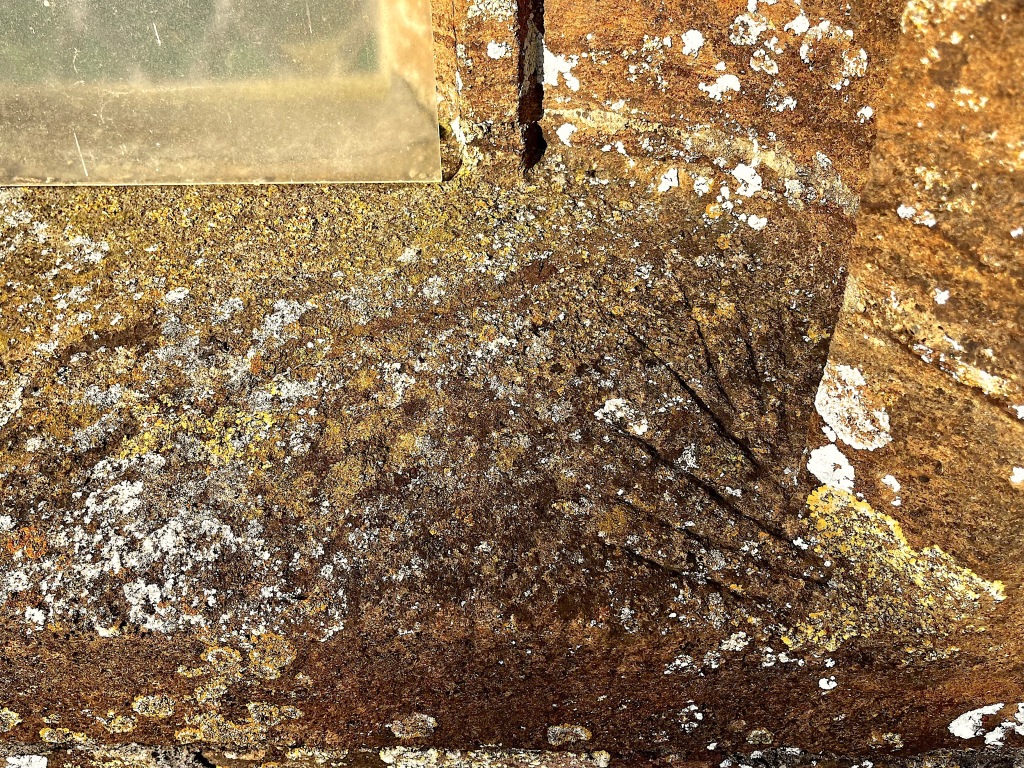
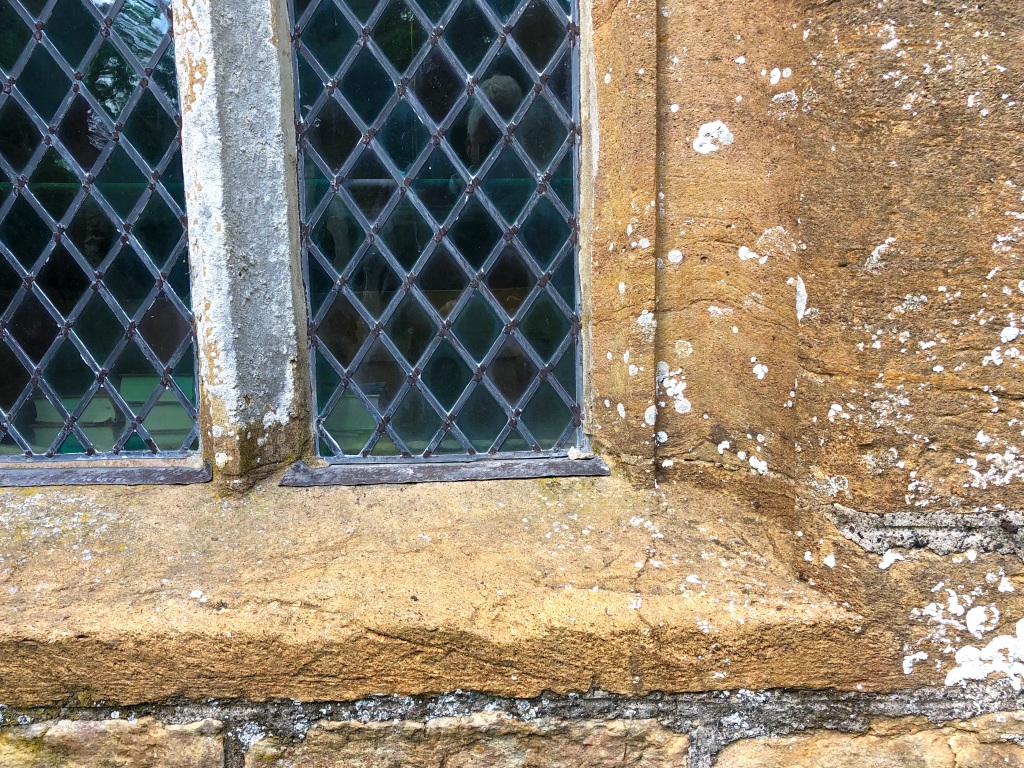
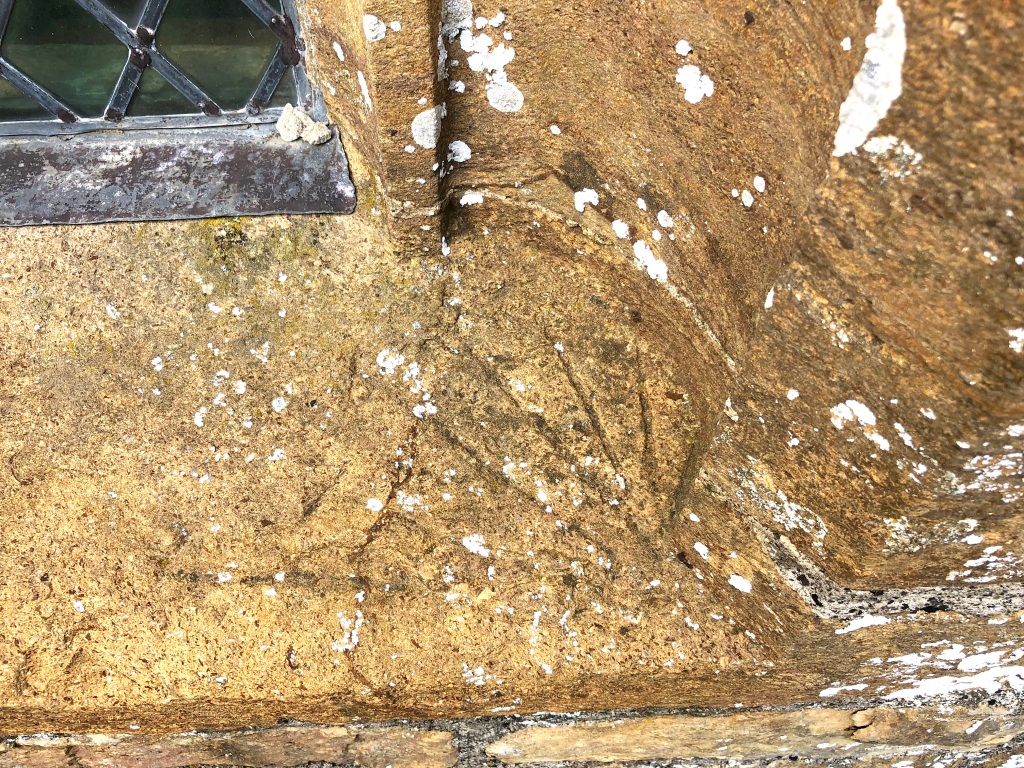
I last wrote about St Mary at a time when churches were locked for Covid reasons. I was able to feature the 2 extraordinary and very rare external sill dials in a post HERE Recently, I returned to the church to investigate the third and most unusual dial located actually inside the church. Here is that dial, with a recap of the sill dials.
Scratch Dials located inside a porch are not especially rare, with quite a few examples within a 25 mile radius of Thornford. They are found where dials were originally cut in the stone surrounds of a medieval church doorway and a porch was subsequently added. In some cases, the new porch entrance had a new dial cut to replace its redundant predecessor.
St Mary Magdalene, Thornford, Dorset – interior scratch dial
THORNFORD DIAL 3 – INSIDE THE CHURCH
Very rarely is a dial found actually inside the church itself. This may occur when a dial stone has been relocated from the outside to repair an interior wall; or as part of wider building works, as with Stoke St Gregory Somerset. Thornford has a most interesting example.
INTERIOR DIAL
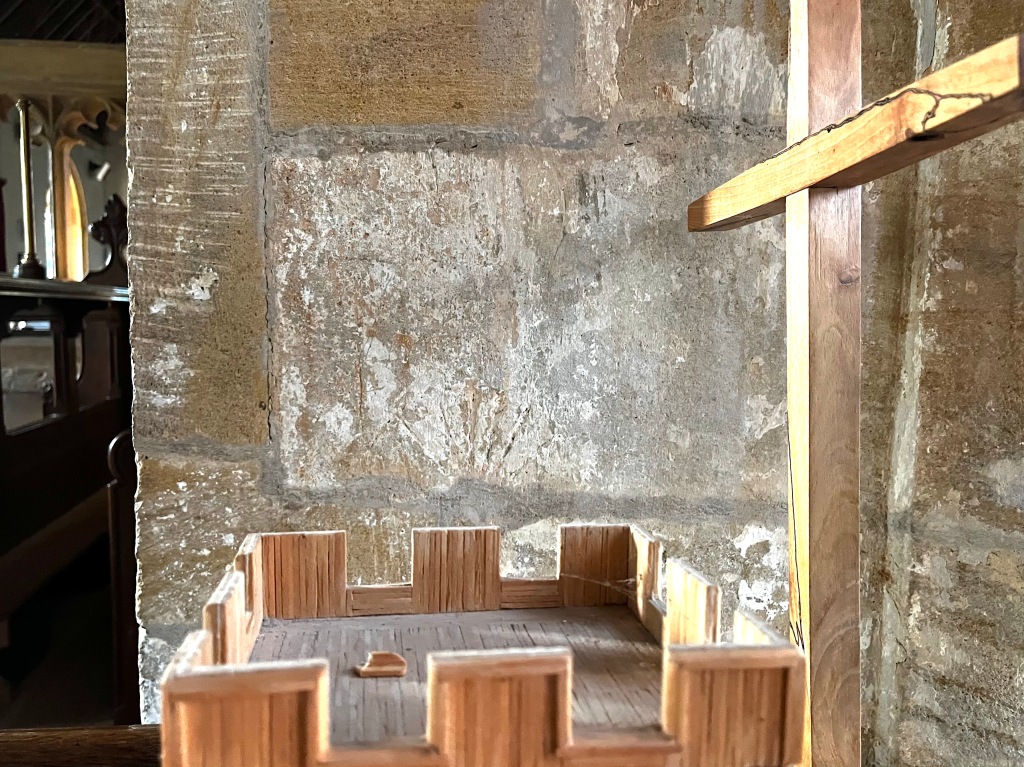
St Mary Magdalene, Thornford, Dorset – interior scratch dial
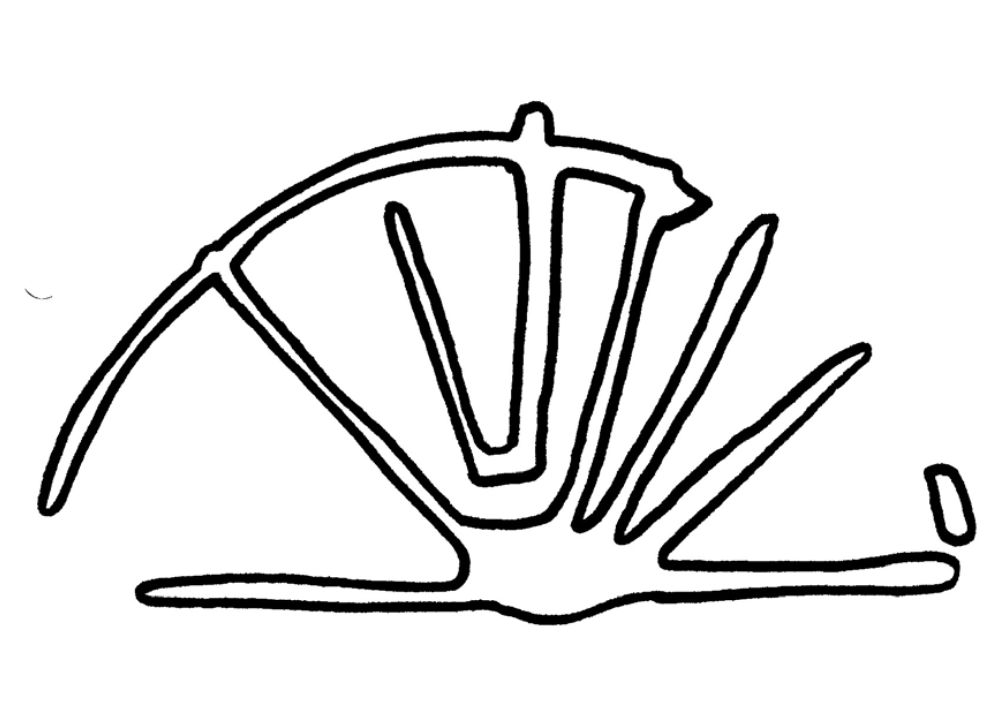
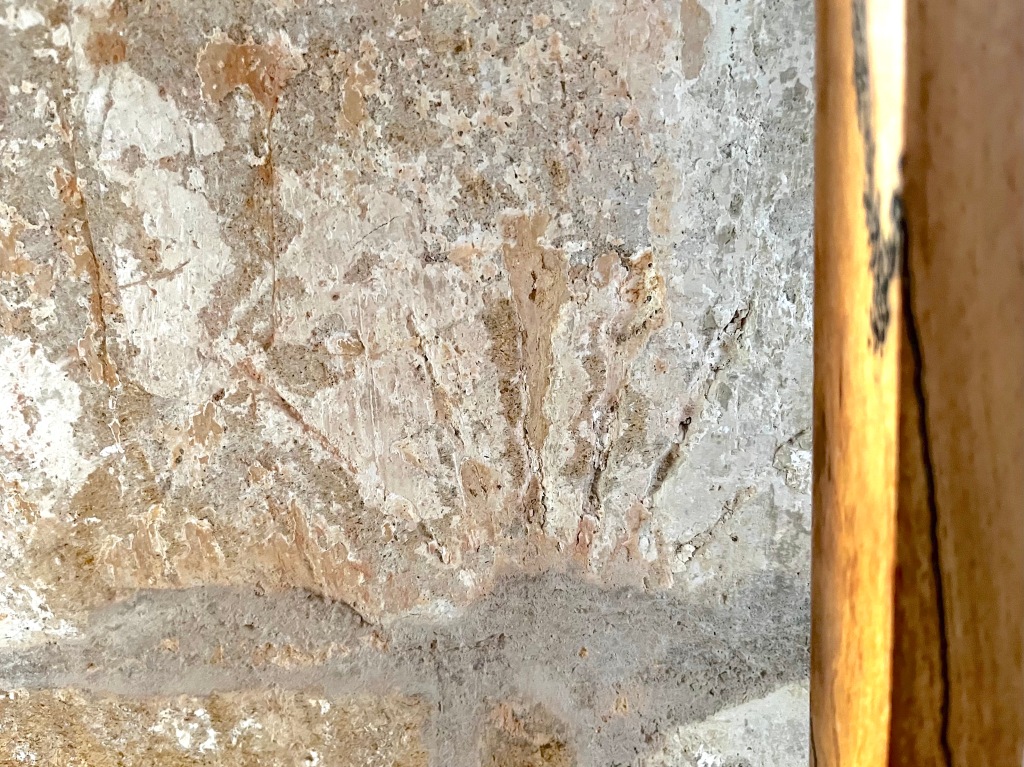
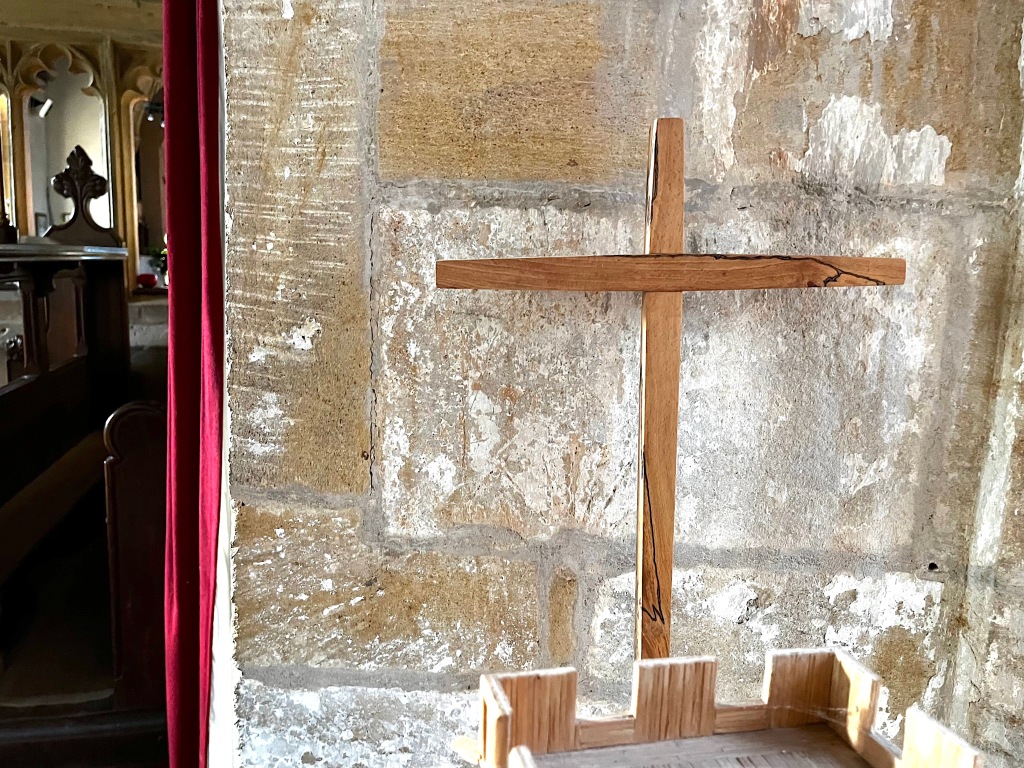
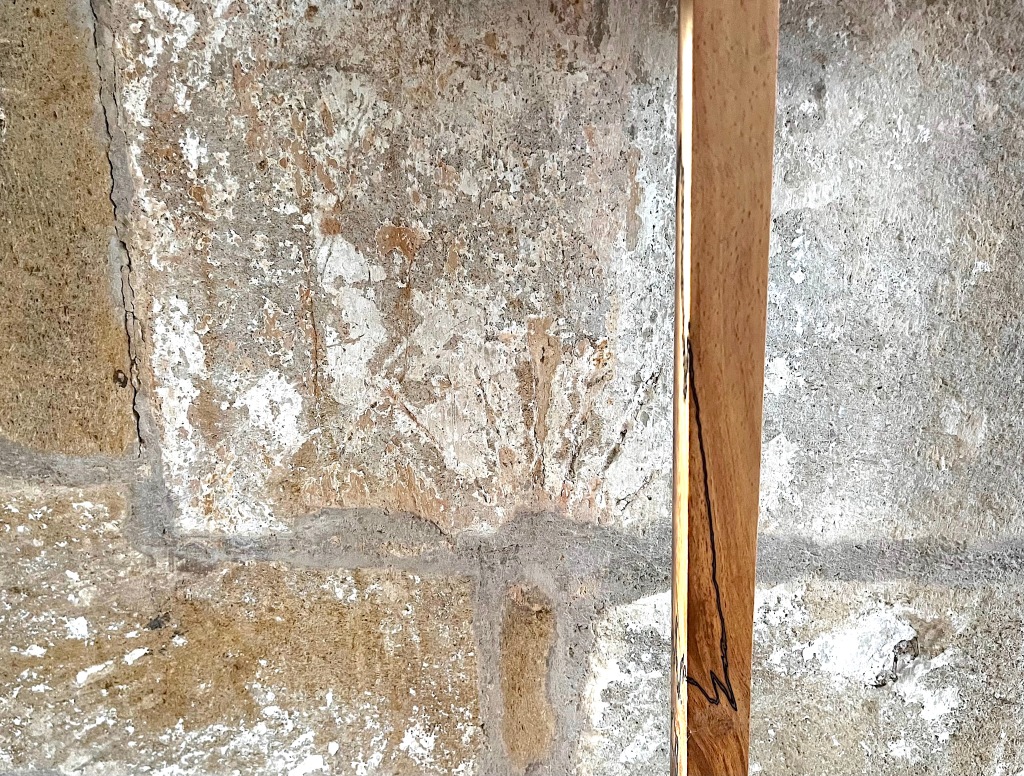
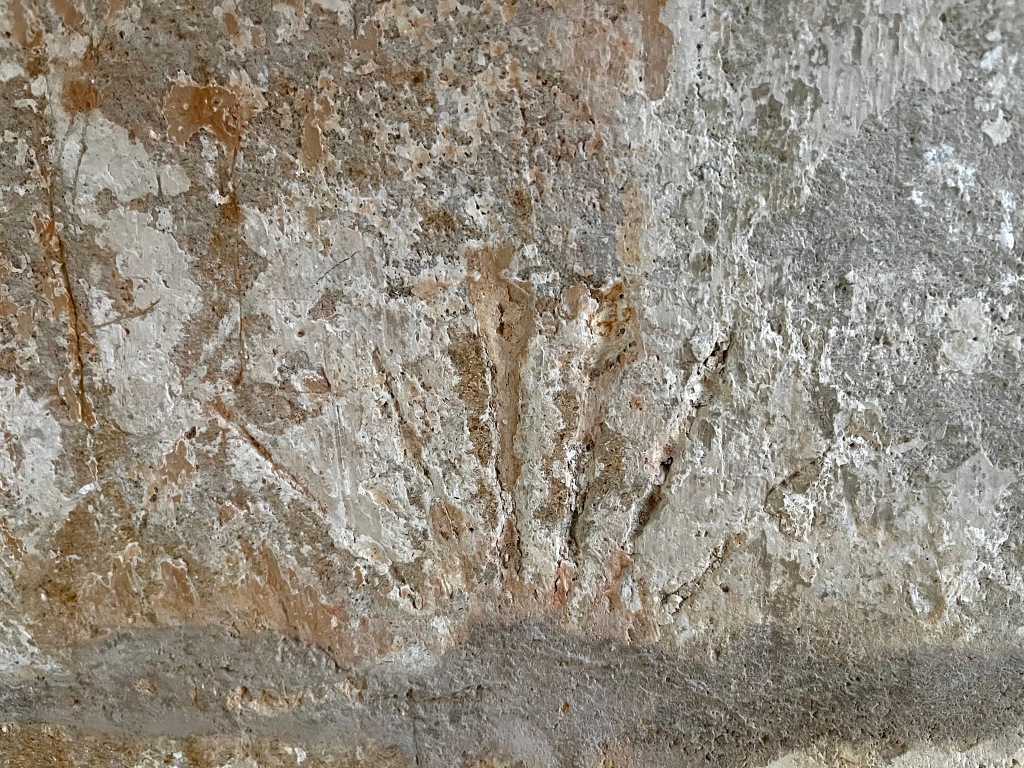
A remarkable dial – relocated, inverted, overpainted, and all but hidden in the chancel on the N side of the church on the E face of the window jamb, with a wooden toy castle for company. There are 8 lines of almost the same length, somewhat rough-hewn. 2 are barely perceptible.
Thornford – interior dial (BSS)
St Mary Magdalene, Thornford, Dorset – interior scratch dial
TWO RARE SILL DIALS
St Mary was one of the earliest churches to be covered in this project, probably because it is only 2 villages away from ours. I featured the 2 the two very rare ‘sill’ scratch dials, both on the quoins of the E. corner of the window sills either side of the blocked chancel doorway, with the window jambs acting as gnomon. These are not unique, but I believe there are fewer than 5 other examples. The link to that article is HERE.
NOTES † Stone screen, c15 font, early organ, a number of Consecration crosses (RCHM says 14), from badly eroded Hamstone to clear-cut. Tithe Tomb in the churchyard with a basin into which tenants contributed to the wealth of the Lord of the Manor by making an annual payment ‘on St Thomas’s Day’ to be allowed to keep their own hay
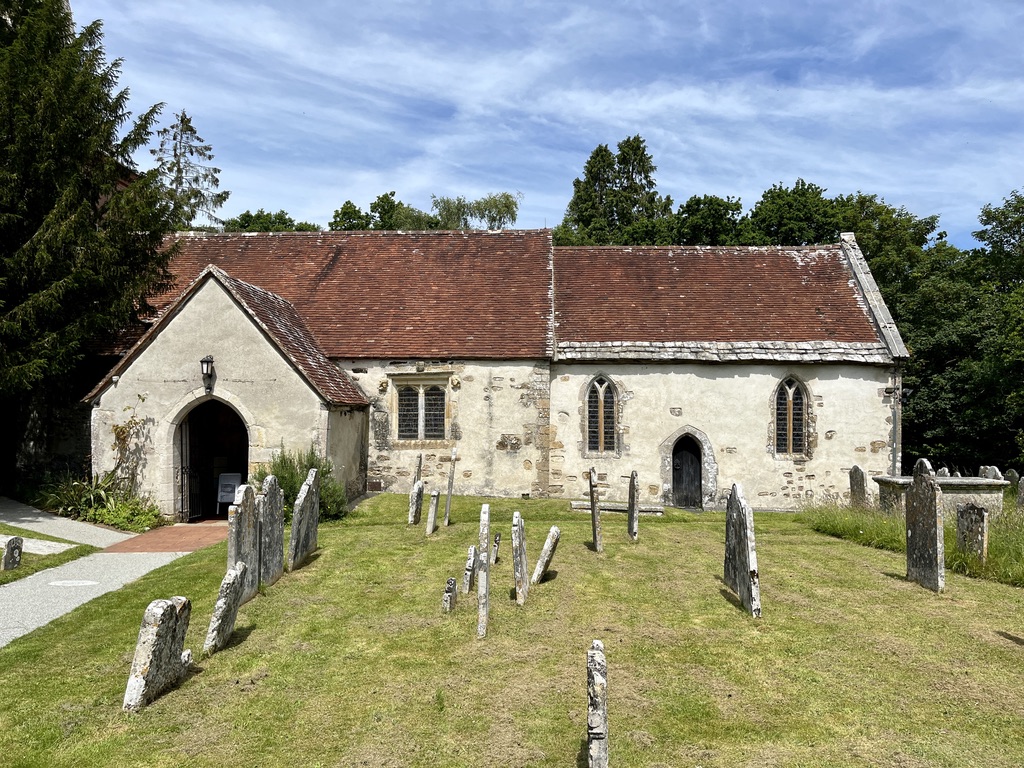
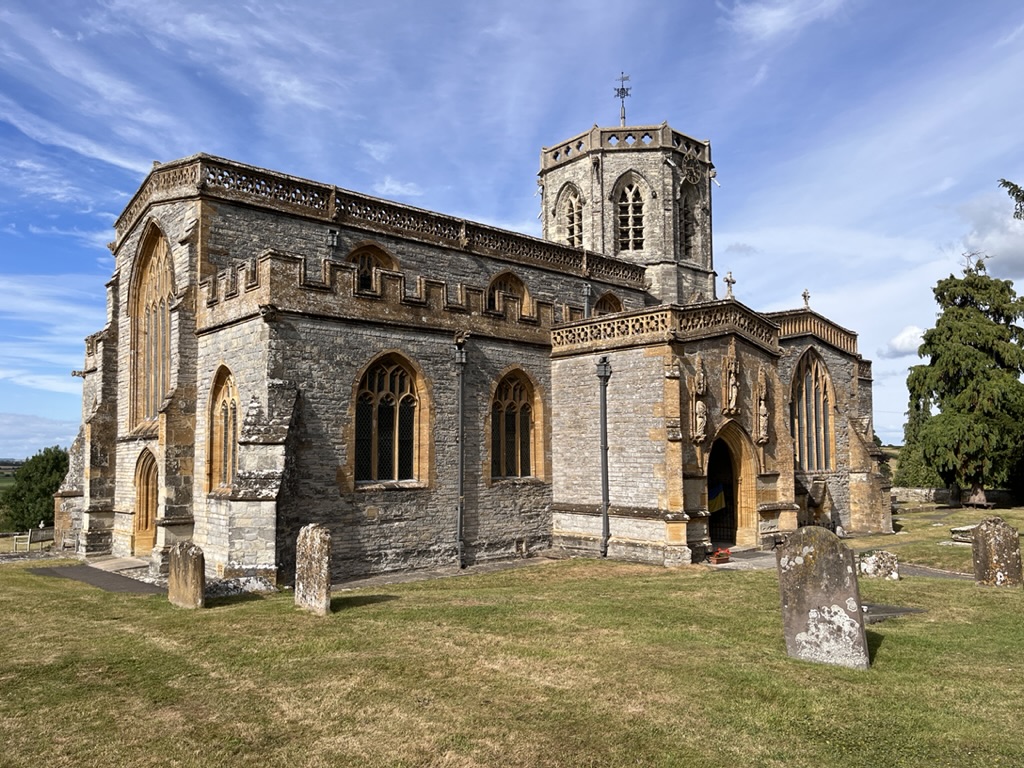
GRADE I † Norman origin, gradually growing from c1300 to a substantial building for a village. C19 further expansion and rebuilding. Mostly local sandstone, some blue lias (as found on the Jurassic Coast). Octagonal tower cf neighbouring Stoke St Gregory. 8m E of Taunton. 51.0255 / -2.9717 / ST319255
DIAL?
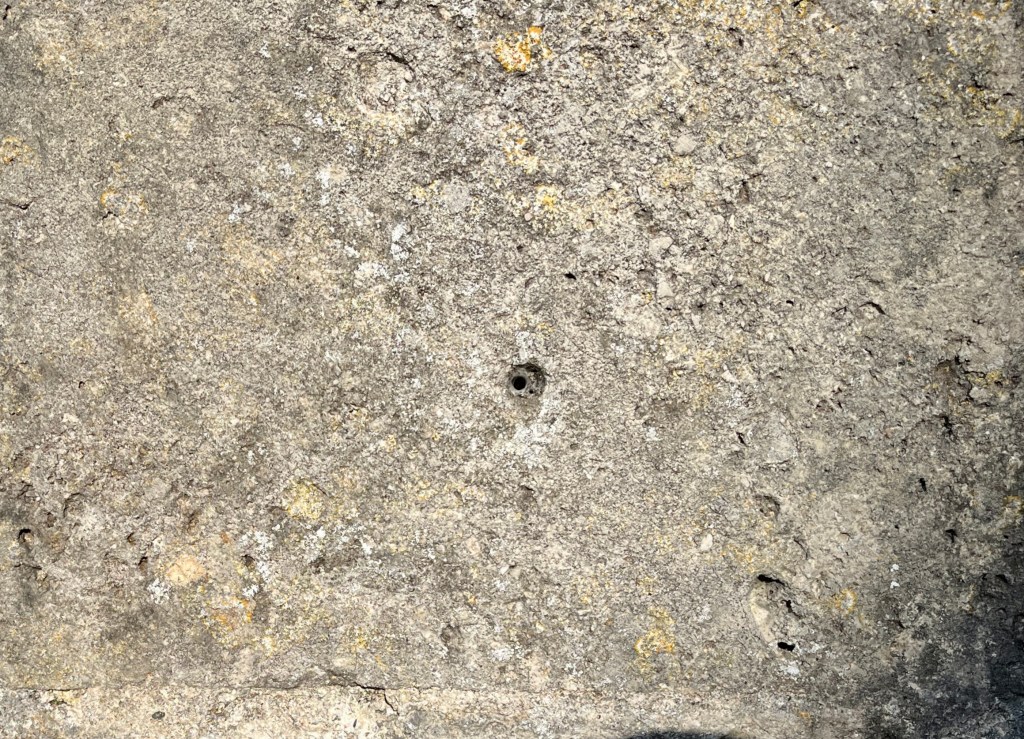
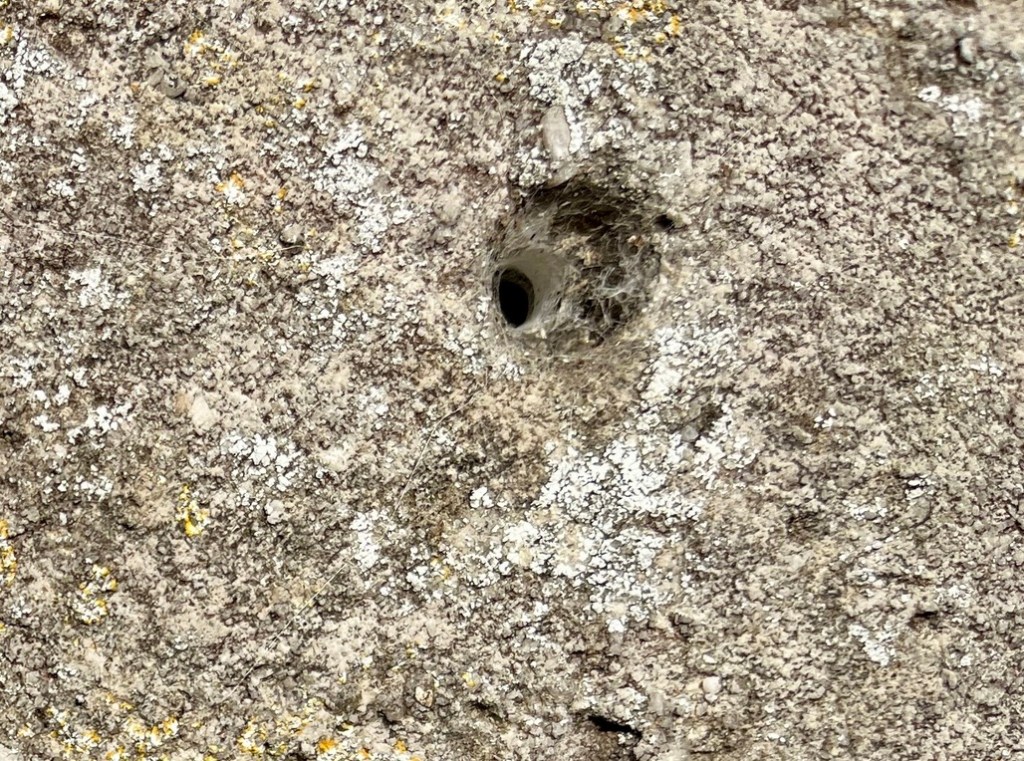
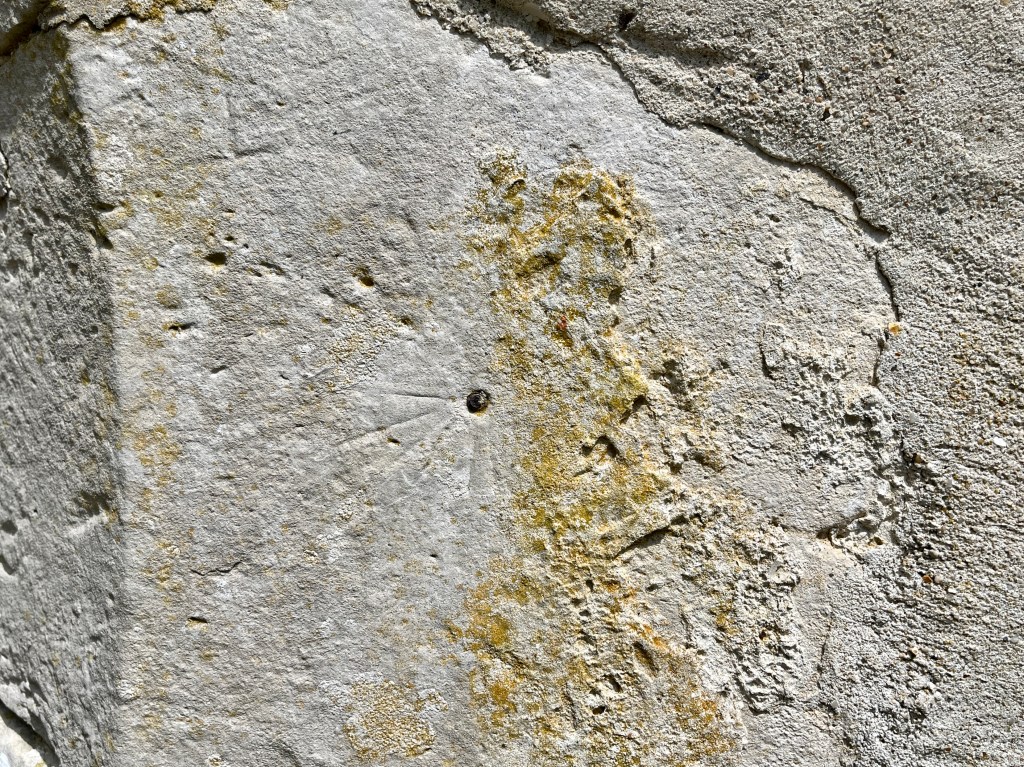
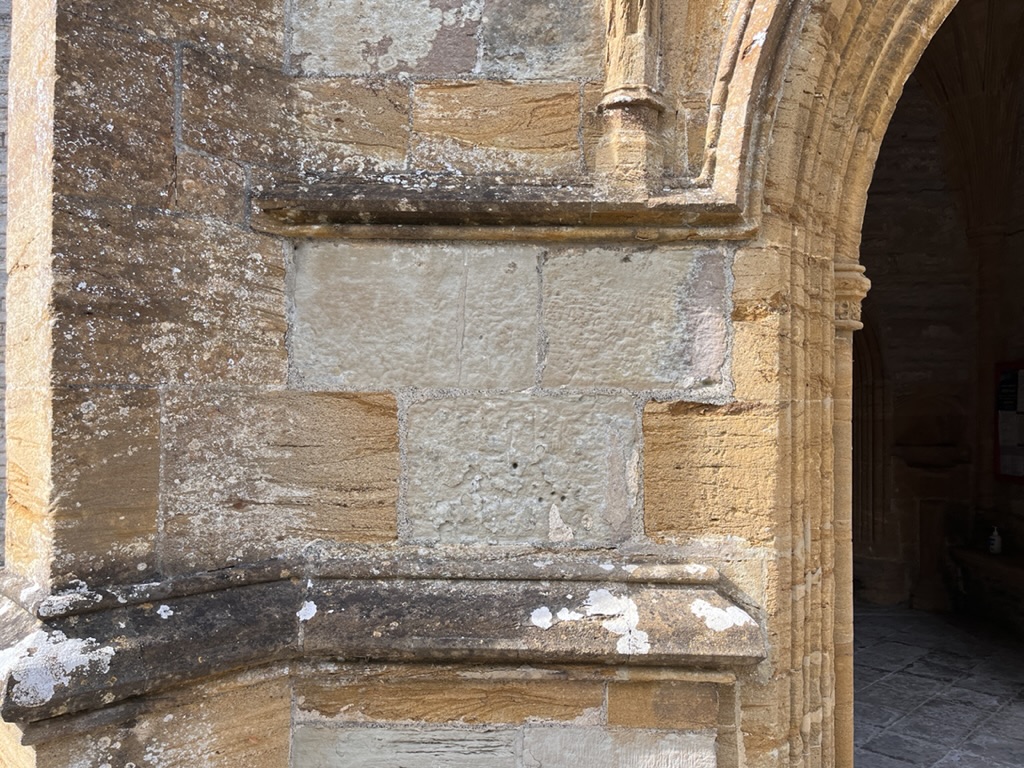
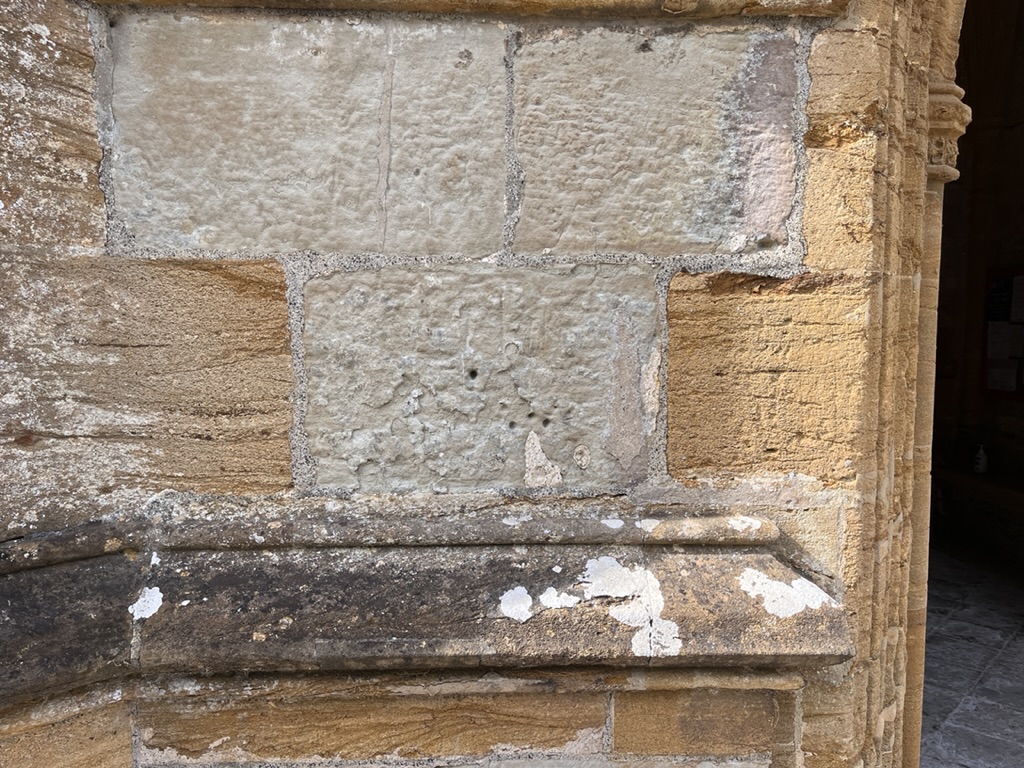
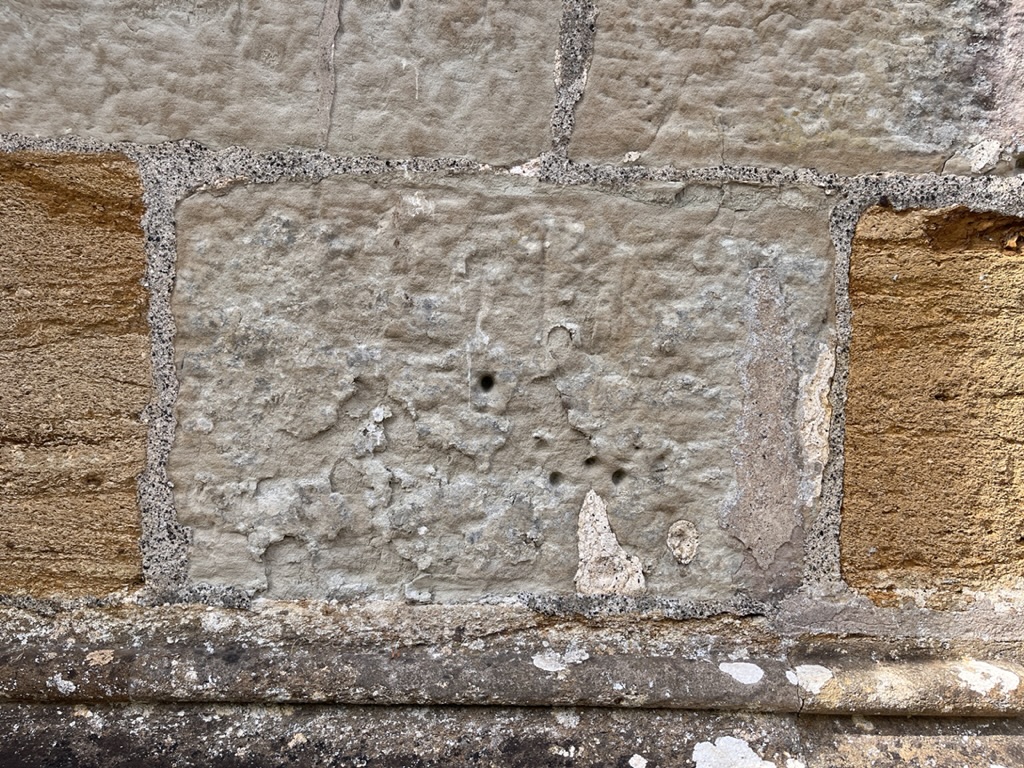
DEH visited in 1912 and somewhat hesitantly included this church in his pioneering survey of Somerset dials: There is a doubtful dial on the w. side of the s. porch. It consists of a much worn stone, with a stylehole (?) which is filled up, and some marks that might be lines. The stone is so soft and worn that it is impossible to say with certainty whether it was once a dial.
St Peter and St Paul . North Curry . Somerset
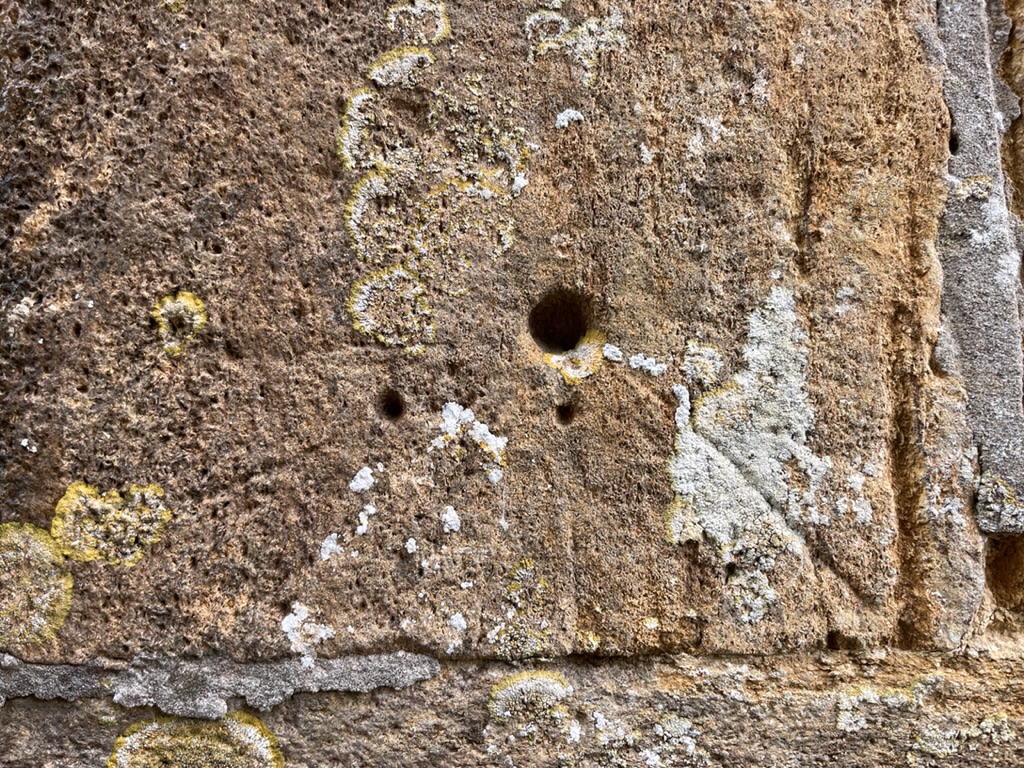
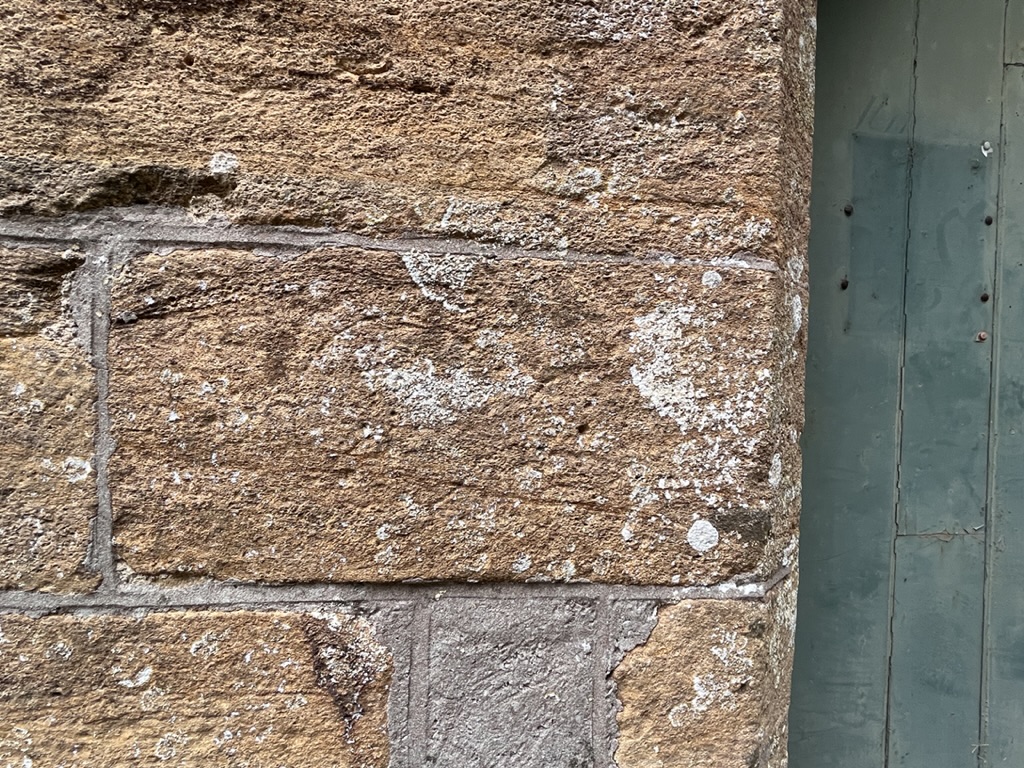
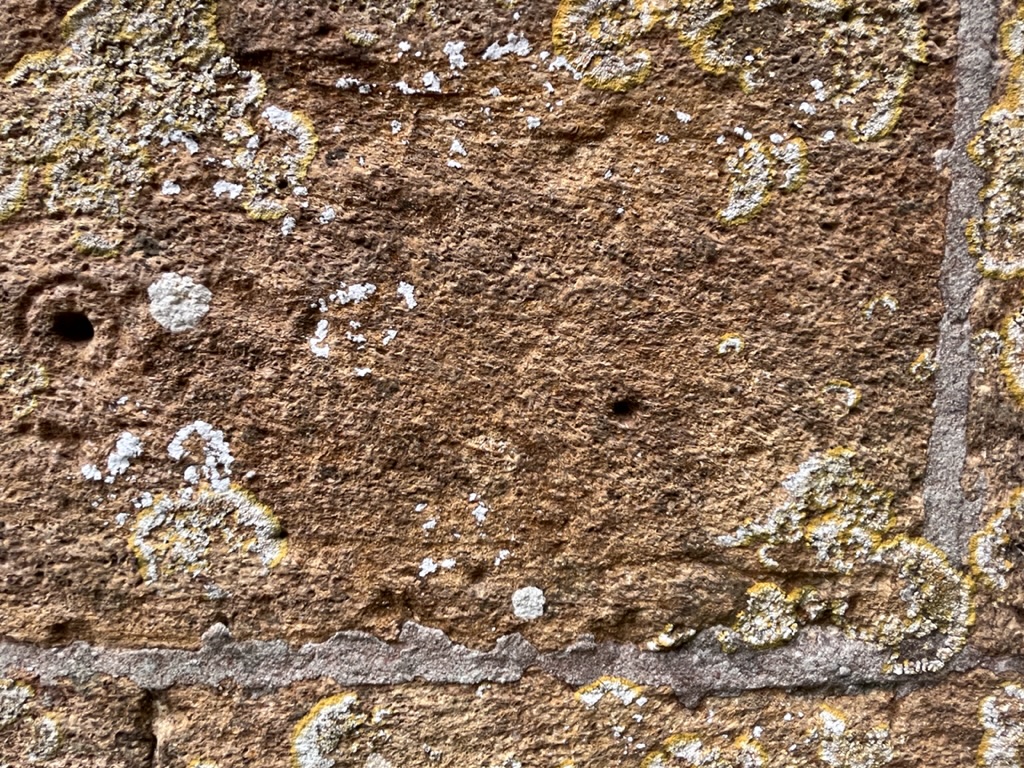
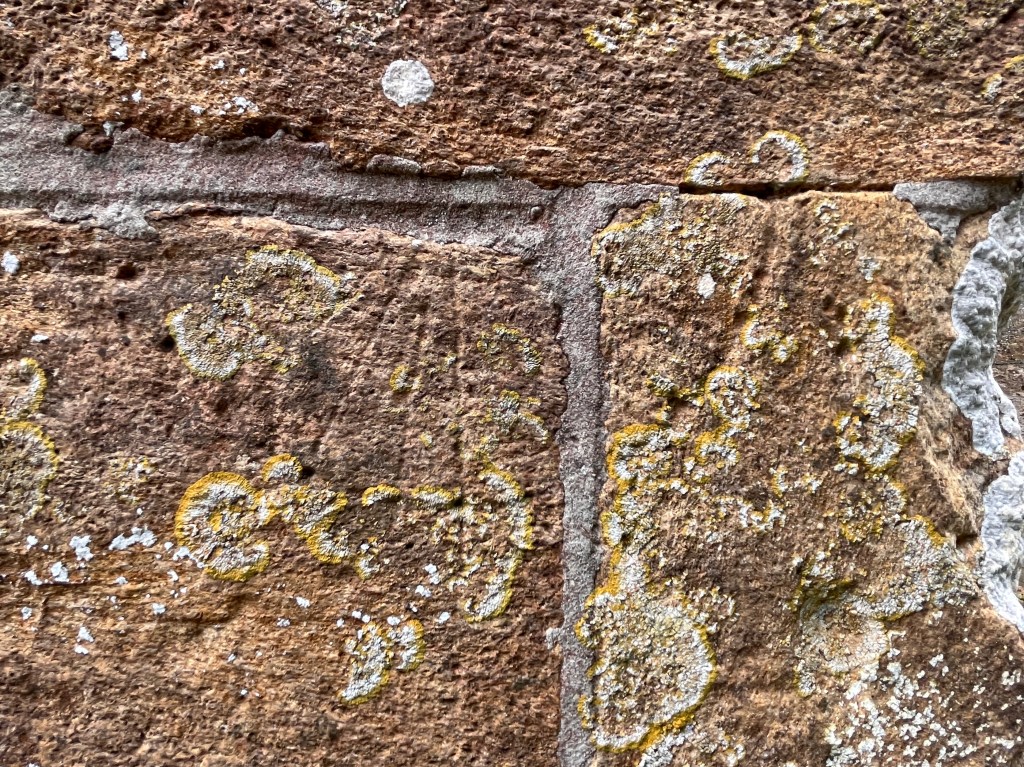
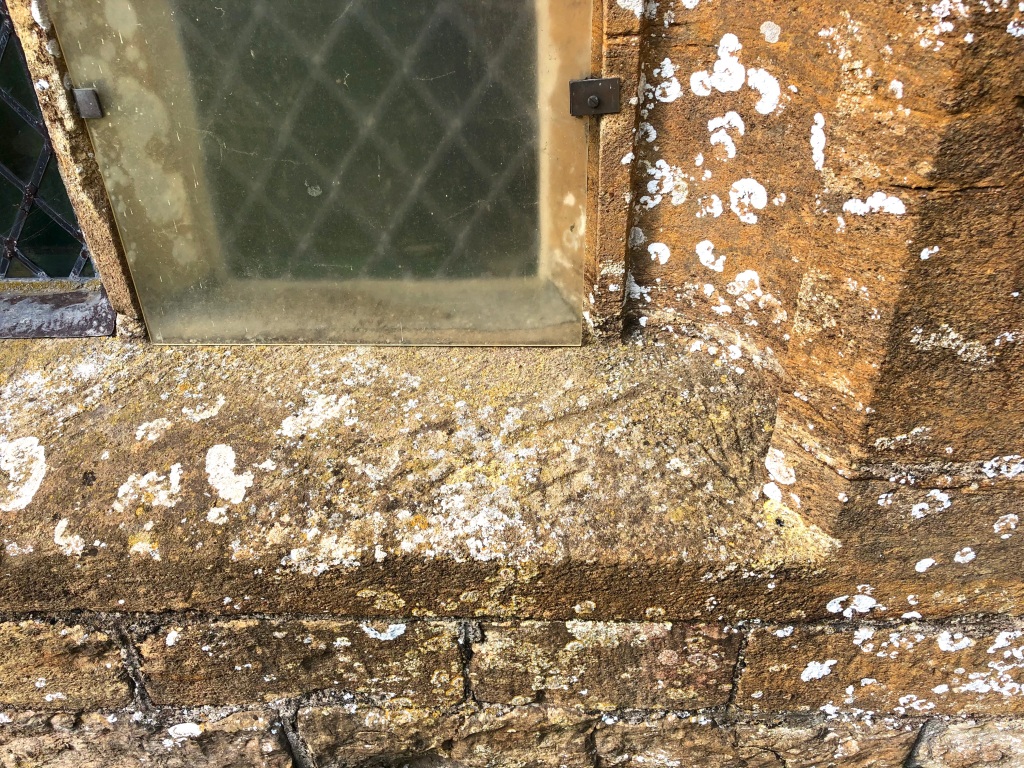
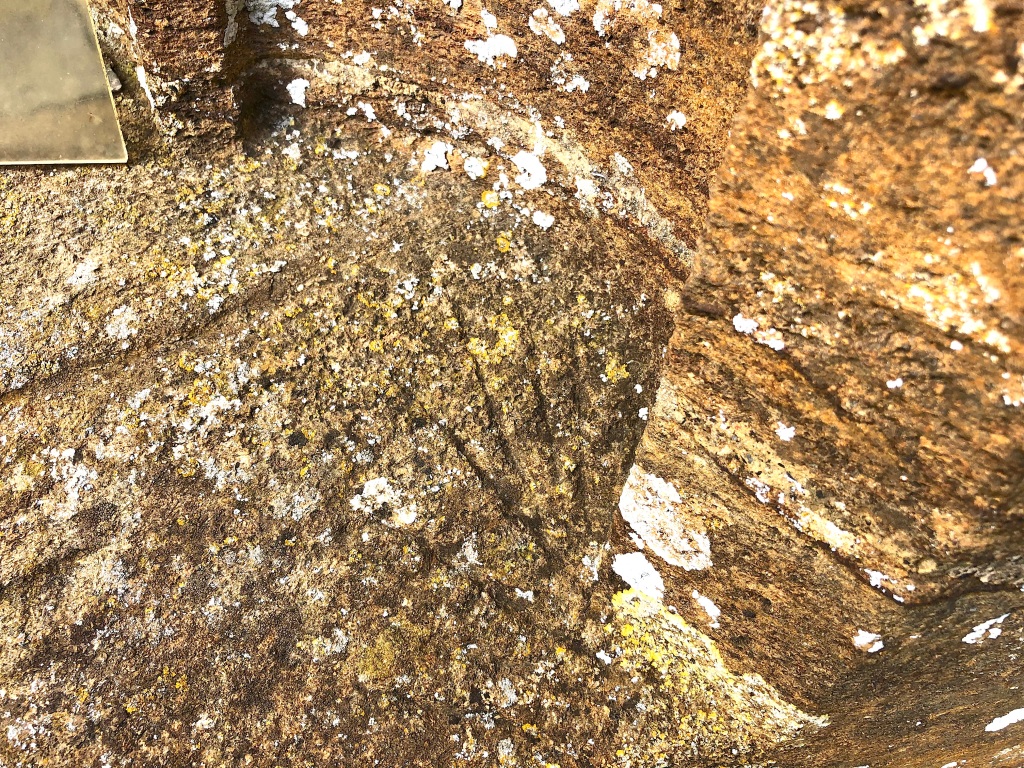
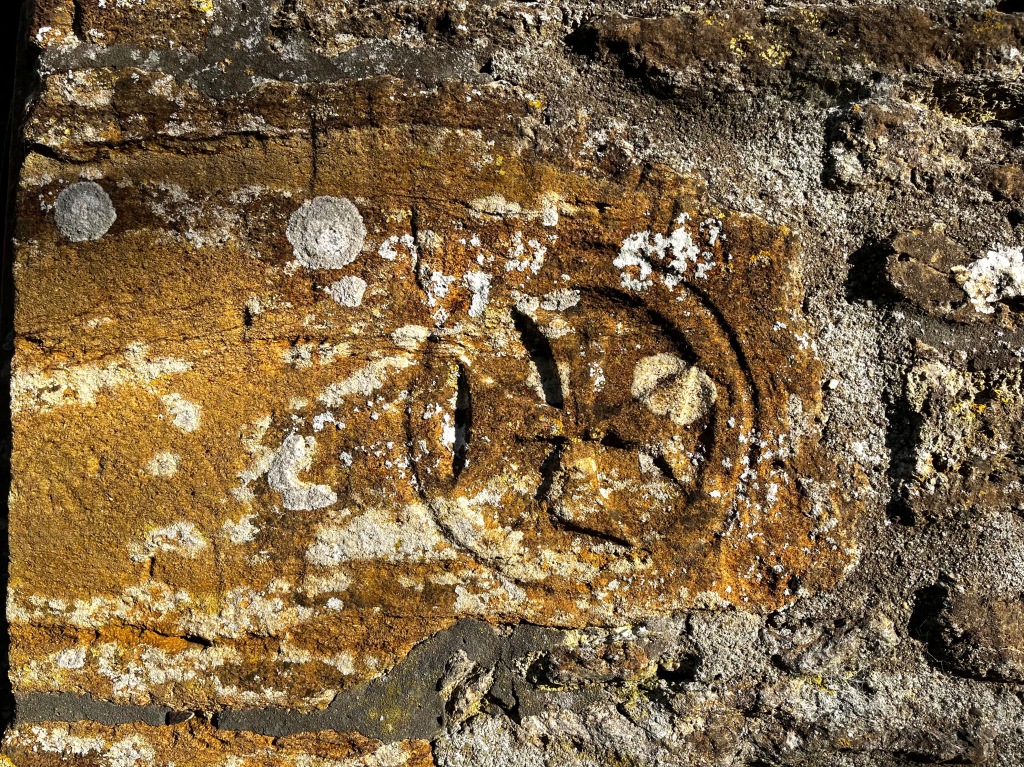
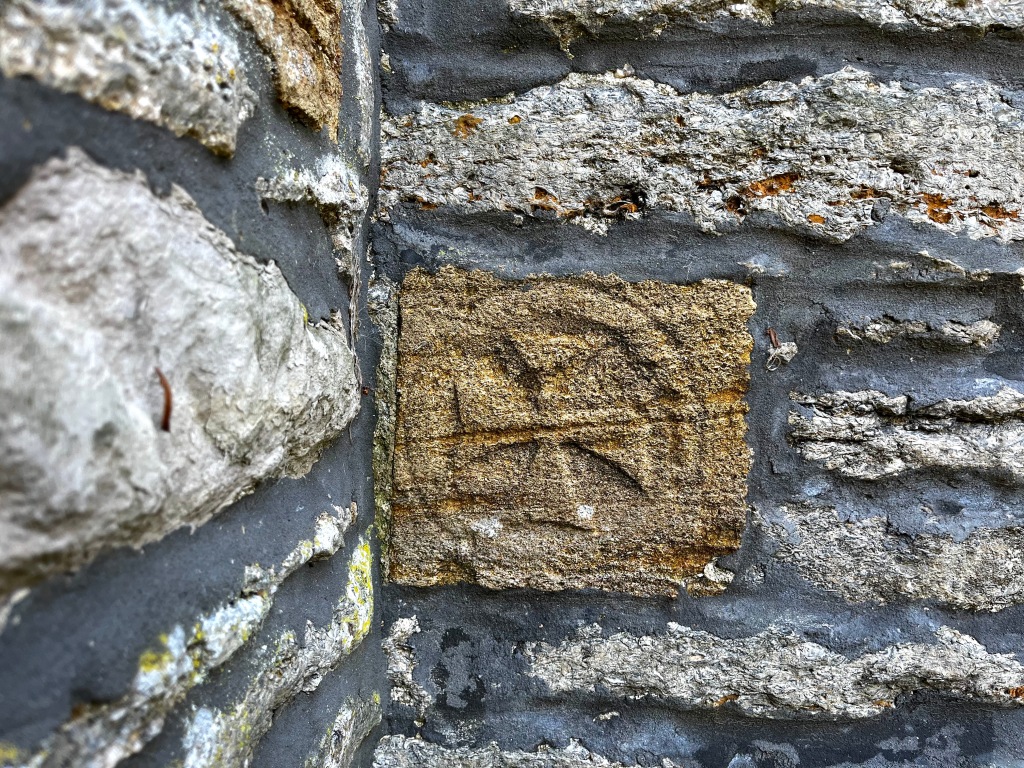
There is nothing extant in that location to match the description given. The reference to soft, worn stone suggests the blue lias component of the porch front (built c1502). If so, the obvious candidate for a dial is shown in the photos: but how might such a confiruration have worked? BBS does not mention it. The conclusion must be… not a dial.











 )
)










 GAUDIUM SUB SOLE . SUNDIALS . MEDIEVAL TO MODERN