SHERE . SURREY . ST JAMES – Multiple Scratch Dials

ST JAMES . SHERE . SURREY

GRADE I ❖ C12 Norman tower and north nave wall; C13 south aisle and chapel; C14 enlargement, chancel; restorations 1895 by S. Weatherley. Fine C13 font. Most unusual C14 Anchorite cell, definitely in use. Excellent graffiti, in particular several shields. Approved by PEV. Midway between Guildford and Dorking. 51.2191 /  -0.463 / TQ074477

DIALS

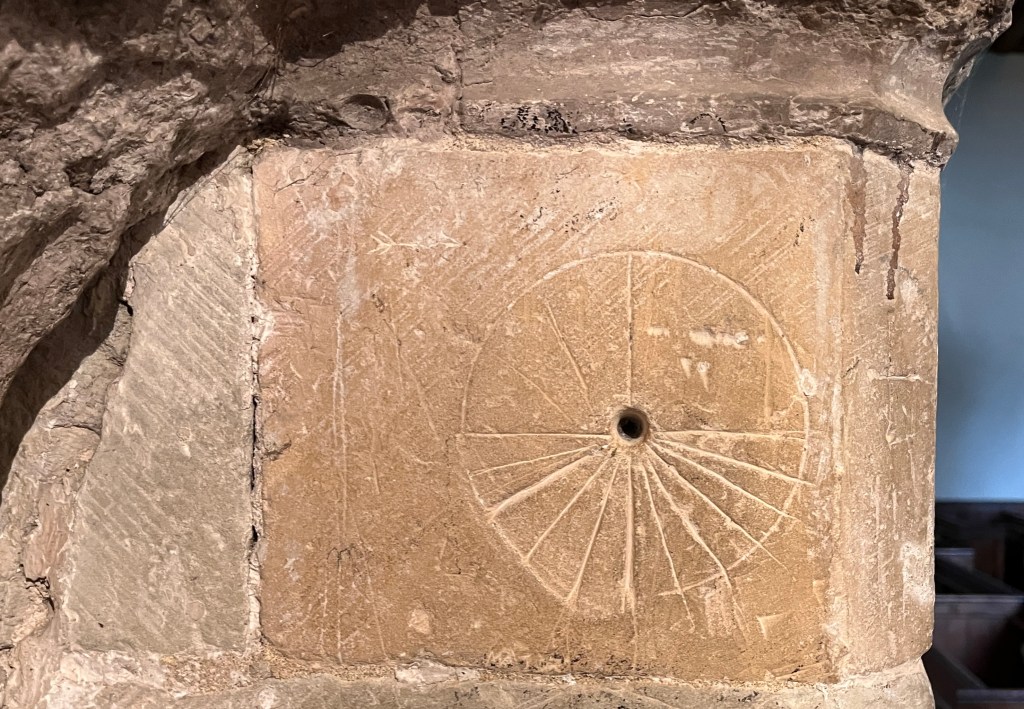
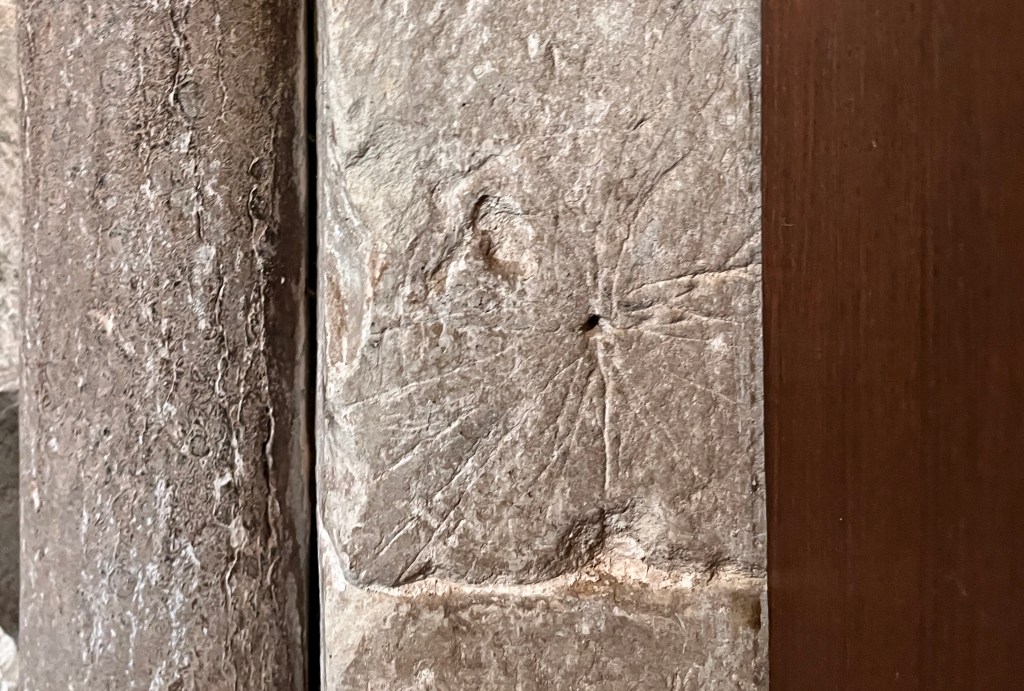
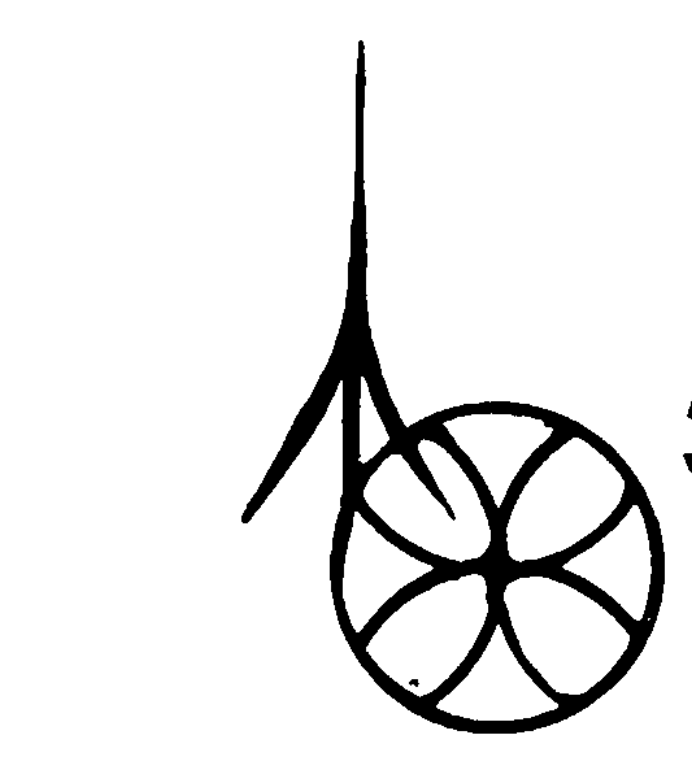
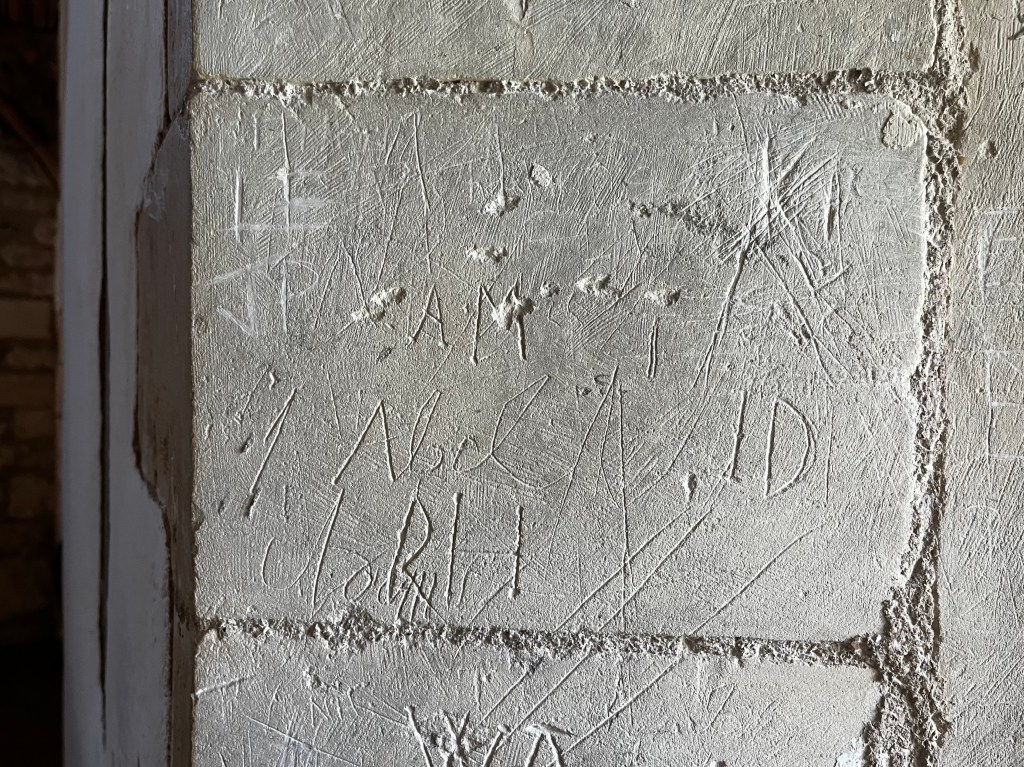
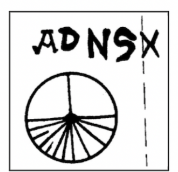
As with many multiple scratch dial churches, there are differing estimates of the number of dials, in this case of between 7 and 11. Sources vary, as do the eras when researches were carried out: Victoria County History Surrey (1911); D Renn 1986 (detailed survey); BSS 2000 (images – Lester); 2008 (drawings – Wood). I have decided to lead with 8 dials that are (I think) indisputably the real thing. Each is headed by the relevant BSS diagram and all are close to the pre-porch doorway. The close-up photos say as much about each dial than I could usefully describe.

DIAL 1

DIAL 2

DIAL 3
DIAL 4
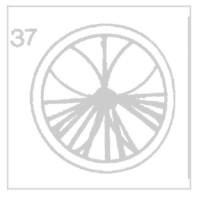
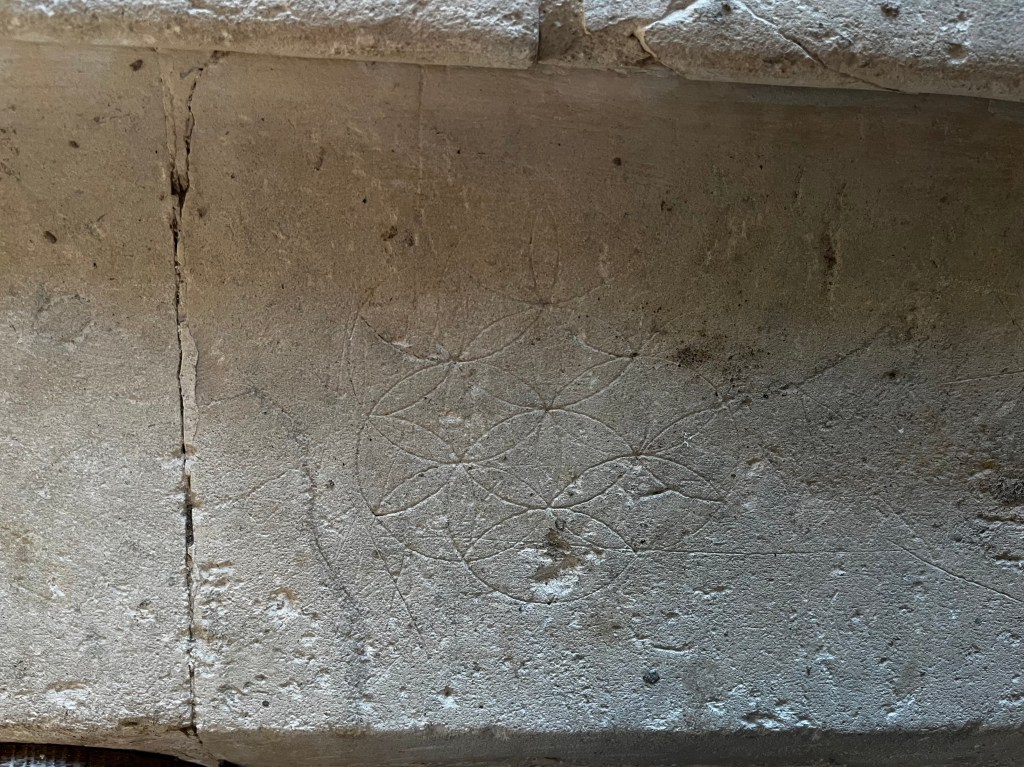
Unusually, this dial has 3 circles, and incorporates decorative compass work to form 2 petals.

DIAL 5

DIAL 6

DIAL 7

DIAL 8

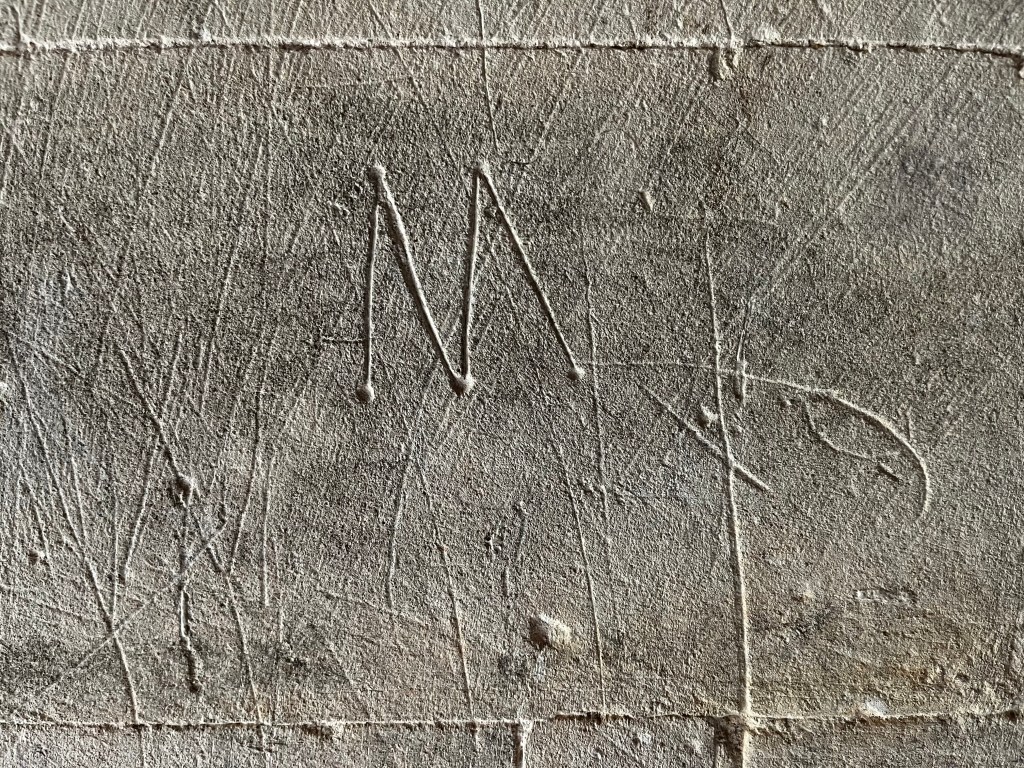
A simple deeply-scored dial that cuts into a quatrefoil ‘4-leaf cover’ compass design, presumably apotropaic. The church has a great many protection marks of all kinds, together with several shields. I may feature a selection in due course.

DIALOGRAM

The 8 blue-ringed designs below are all dials. The arrowed 9th, LHS, is debatable – see below The arrows RHS indicate (1) probably one of many crosses; and (2) a mystery, see below.

DIAL 9?

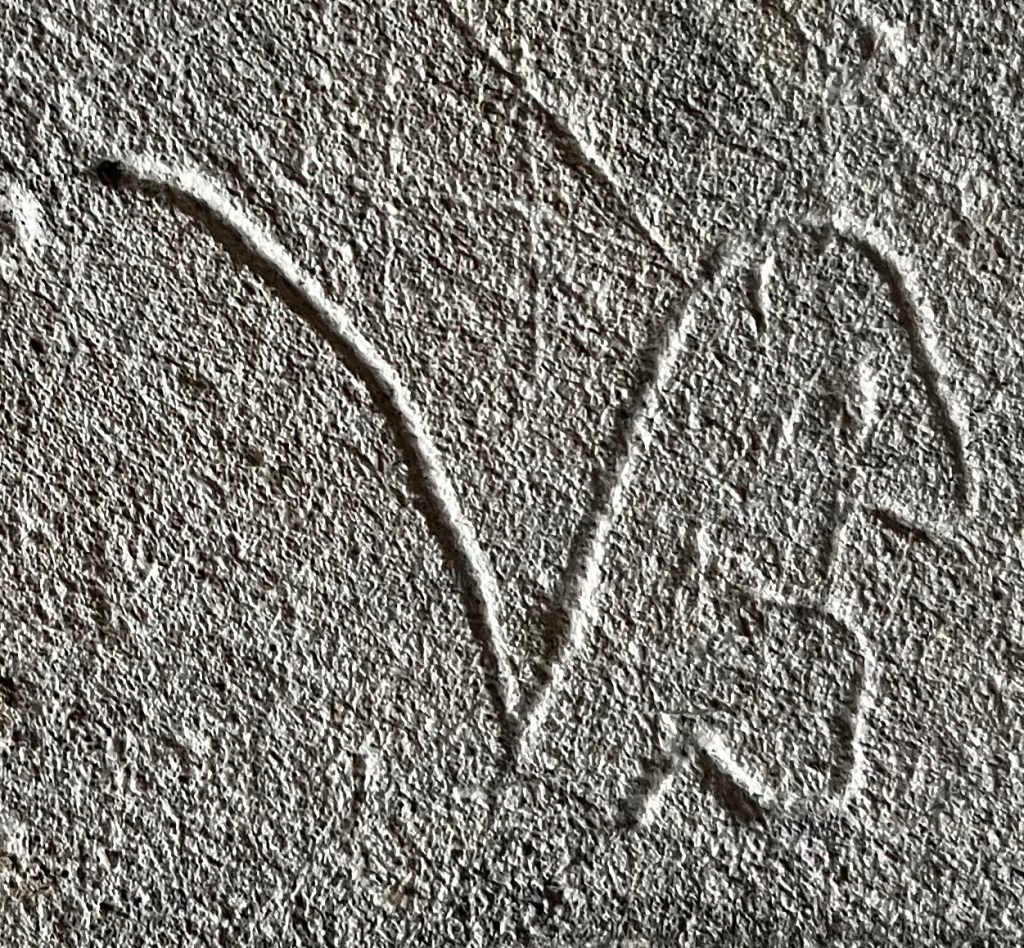
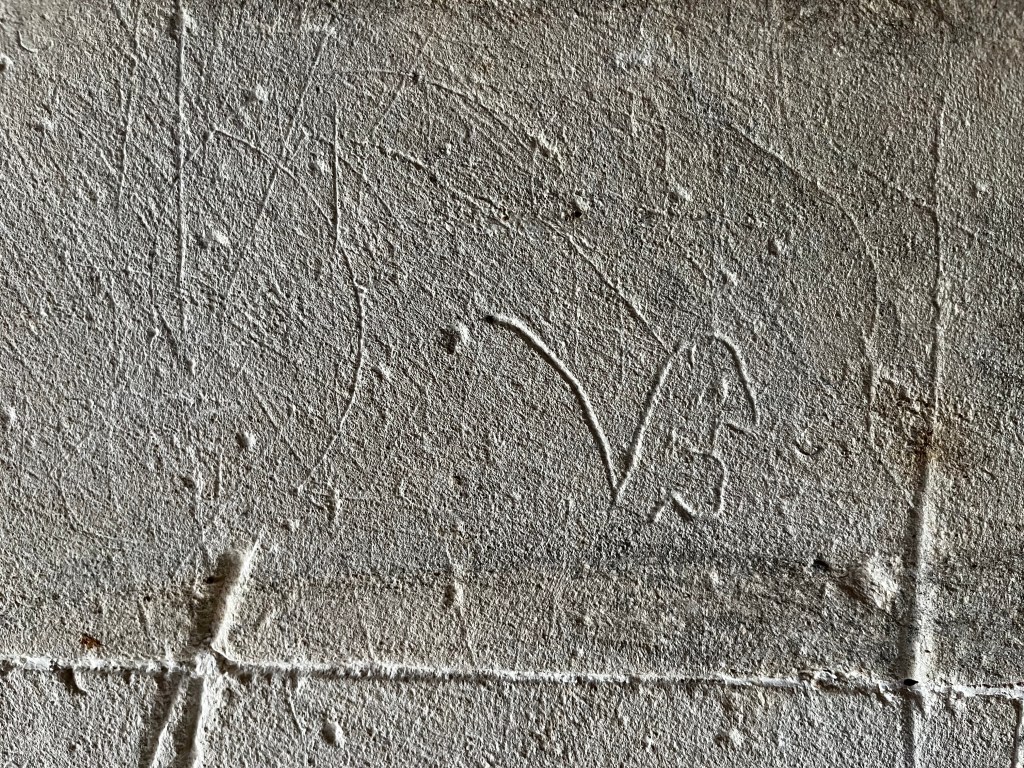
Renn’s count of 10 dials includes this ‘lamda’ incision. When I photographed dial 7, only the top of the scar was included. I am a confirmed dial optimist, but it didn’t occur to me to photograph it separately / include it as a dial..

DIAL 10?

Perplexing. An afternoon dial. Noted in Renn’s survey, on which BSS record is based. Described as Inside church (inside S porch). E face of W jamb. Behind door frame. Lines 4. I didn’t find it. Unlike the impressive array of forward- facing dials in the porch, this one must be small, cut on an angle as Renn indicates, and of little use for marking the passage of the day.

ANNOTATED DRAWING

The green circles mark the uncertainties. There is also a suggestion that there were once 2 other dials, now extant (S chancel wall, E pilaster buttress).

REFERENCES

Victoria County History, Surrey, 3 (1911), 120

Renn DF: Scratch Dials in Surrey, Surrey Archaeological Collections, vol 77, 1986

The British Sundial Society

MUCHELNEY ABBEY . SOMERSET . Scratch Dial (Rare Example)

✠ 

MUCHELNEY ABBEY . SOMERSET

GRADE I ✠  C7 origins with a long and fascinating history amply covered by many sources. The Wiki entry gives a good brief account. Now only the Abbot’s House and the Lavatorium remain intact. The ruined foundations are all that can be seen of the Abbey buildings and layout.

The Abbot’s House has a number of apotropaic marks including hexfoils and taper burns, noted on the relevant pages here.

✠ 

DIAL

We visited the Abbey knowing approximately what to expect from the Abbot’s House. It is well worth exploring, and there are helpful EH volunteers on hand to give information.

We eventually reached the West Kitchen, which has a door to the S side of the building. It was a great surprise to find a simple and eroded scratch dial between the doorway and the East Kitchen window. It is quite rare to find a scratch dial on a building other than a church. Non-secular dials can occasionally be found on medieval barns. Perhaps the Abbot’s dial was originally part of the original abbey building, and re-sited. I’d prefer to think that a factotum had cut the dial specially for an Abbott so that he could keep track of the important times of the monastic day for which he was responsible.

This is not an easy dial to analyse. Certainly there is a horizontal line ( 6-to-6) that runs through the gnomon hole (very faint RHS). There is a deeper cut noon line that seems to extend above the hole to the mortar line.

As often, a b&w image can assist with finer details. There is a faint 9-line, suggesting that Terce was the primary time for observance. Possibly a further line at 11? No relevant markings LRQ.  Possibly there is a line ULQ just above the horizontal.

It is clear that EH and the guides know about the dial, but I have been unable to find a reference to it elsewhere. Probably a local research group will have recorded it, but otherwise it seems that this unusual dial (for location) is very little known

MUCHELNEY ABBEY . SOUTH FRONT

Muchelney Abbey – Abbot’s House S side showing W kitchen door . Photo by DeFacto OS CC

GSS Category: Scratch Dial; Mass Dial

All photos: Keith Salvesen

GORWELL BARN . DORSET – Hexfoil / Daisy Wheel & Church Marks

GORWELL BARN . DORSET

The barn is part of Gorwell Farm about 3m N of Abbotsbury, deep within the folds of steep hills, with ancient trackways, a stone circle, and strewn with sarsen stones. It has several uses, including as an excellent wedding venue; a lecture venue in particular for historical, geological, and similar types of research; and an educational centre.

The barn is C17 and has been sympathetically restored. During the process, work on the interior walls uncovered a fine hexfoil, and stones with graffiti and other marks. These are usually associated with churches, but barns were also ornamented in this way.

This is not a dial post, but it fits in with the ancillary purpose of including related matters of interest (see MENU and the various subcategories)

HEXFOIL

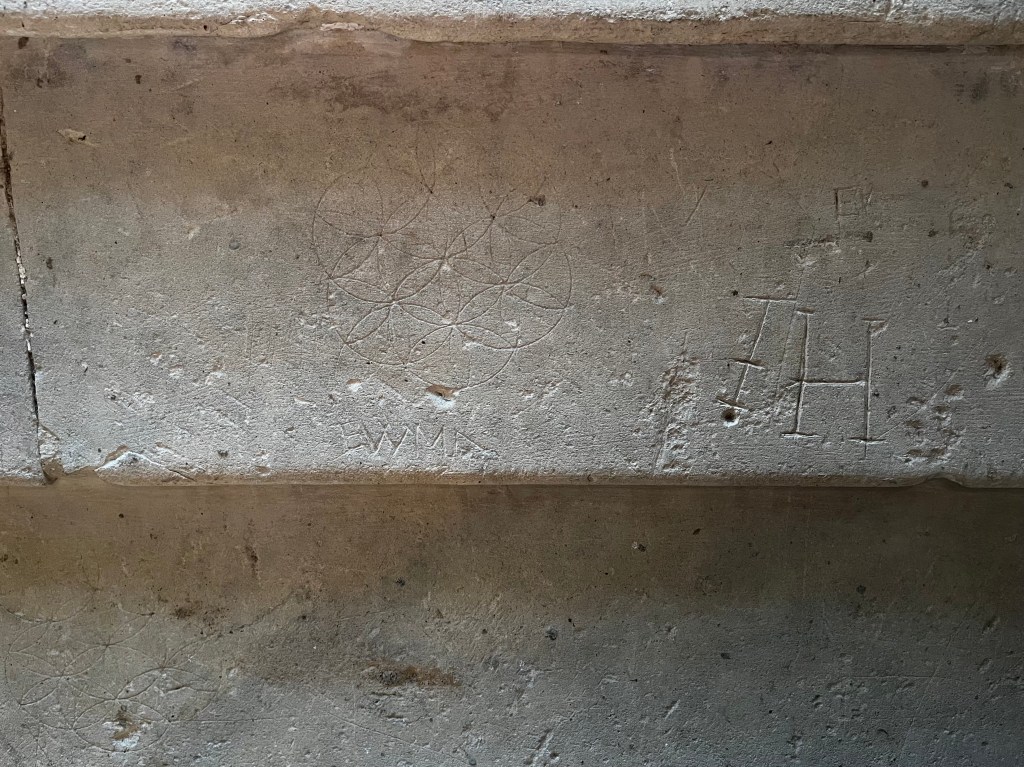
Hexfoils (hexafoils), also called daisy wheels or petals, are not uncommon. They are mostly found in churches; less often in secular buildings. Generally they are compass-drawn and symmetrical. There are three main theories to explain them, not mutually exclusive.

1. A form of Consecration Cross (an attribution given eg to the fine hexfoil at St Mary, Cerne Abbas, Dorset below). However, the many thousands of conventional crosses on churches all over the country suggest that there would be little need for a large daisy wheel except perhaps in a significant church. Often there are several on a church, each marking a particular event such as a Bishop’s visit or blessing. The maximum is generally 12, though a few churches (eg St Mary, Holnest, Dorset) have 14.

2. Symbols created by masons in the course of construction, a theory debunked firmly by medieval graffiti expert Matthew Champion on several irrefutable grounds.

3. Ritual protection marks (apotropaic symbols) designed to ward off / neutralise evil. To this can be added the concept of the Demon Trap whereby evil is confined within the circle – a line with no end – rendering it powerless.

Hexfoil . St Mary . Cerne Abbas . Dorset

‘4-LEAF CLOVER’ and GEOMETRIC SYMBOLS

I haven’t found such a clear example of a 4-petal style before. It is both decorative and protective: again, evil is attracted to it and then caught by the unbroken lines. Strengthening the case, the design to the left is an eroded example of a fairly common protection mark. These involve a geometric shape – usually a rectangle – with a pattern of joined dots. More complex ones look something like a square solitaire board.

SEMICIRCLE

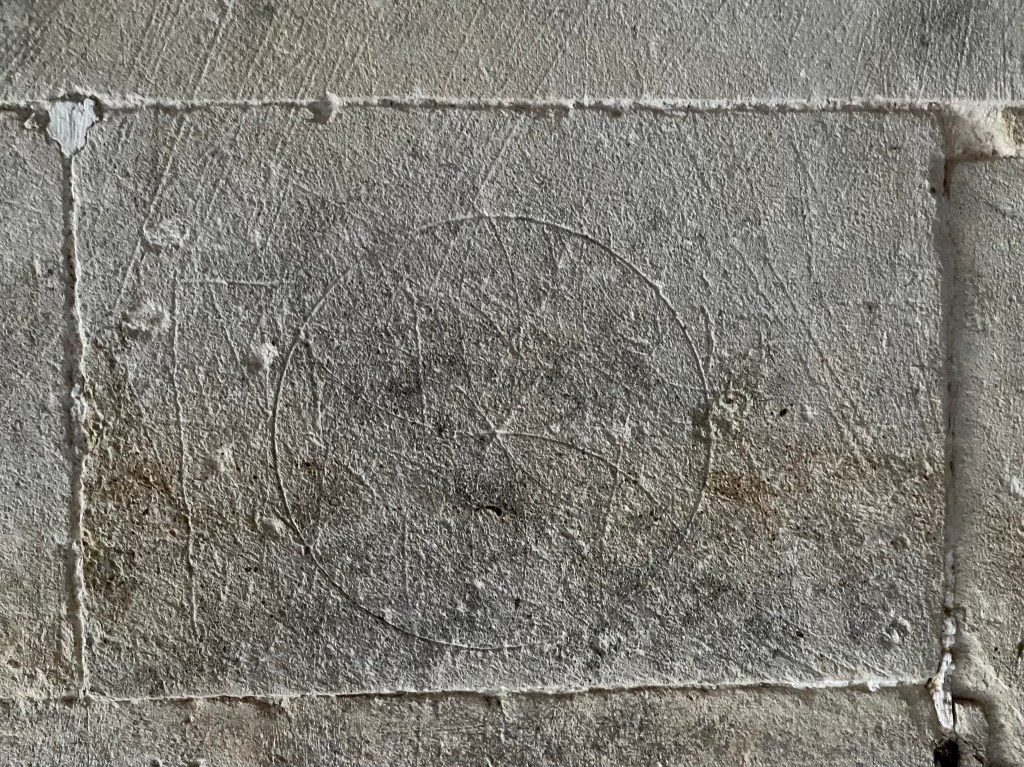
This looks compass drawn. There is a hole on the lowest part of the circumference which – if a sundial – would be significant as marking noon.

MISCELLANEOUS GRAFFITI

GSS Category: Hexfoil; Daisy Wheel; Church Marks; Graffiti; Secular apotropaic symbols

All photos Keith Salvesen, and remembering the Sarsen Stone project

FIDDLEFORD MANOR . DORSET – Hexfoils, Graffiti, Ritual Protection Marks

Fiddleford Manor Dorset - Medieval Graffiti
Fiddleford Manor . Sturminster Newton . Dorset

FIDDLEFORD MANOR . STURMINSTER NEWTON . DORSET

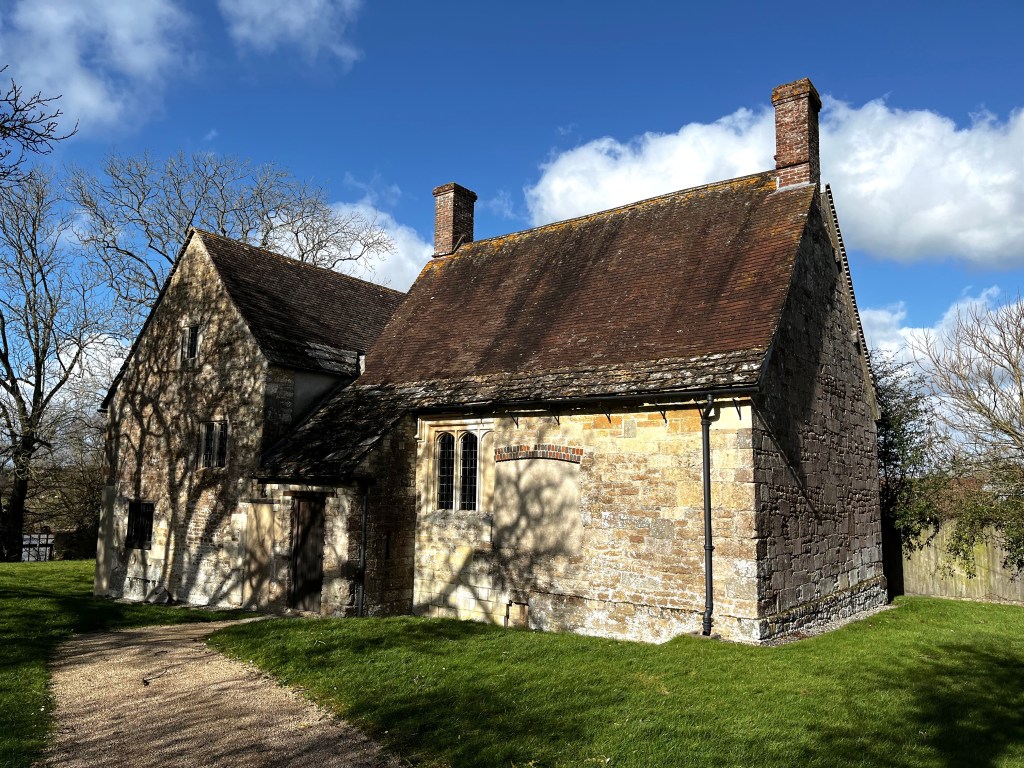
GRADE I † C14 The principal parts of a small stone manor house, built c1370 for the Sheriff of Somerset & Dorset. It has undergone many changes since, but the splendid timber roofs over the great hall and solar… (remain intact). Scheduled as an Ancient Monument. Under the care of English Heritage Two miles E of Sturminster Newton. 50.9213 /  -2.2847 / ST800135

Fiddleford Manor . Sturminster Newton . Dorset – a wall of various types of church mark including a hexfoil

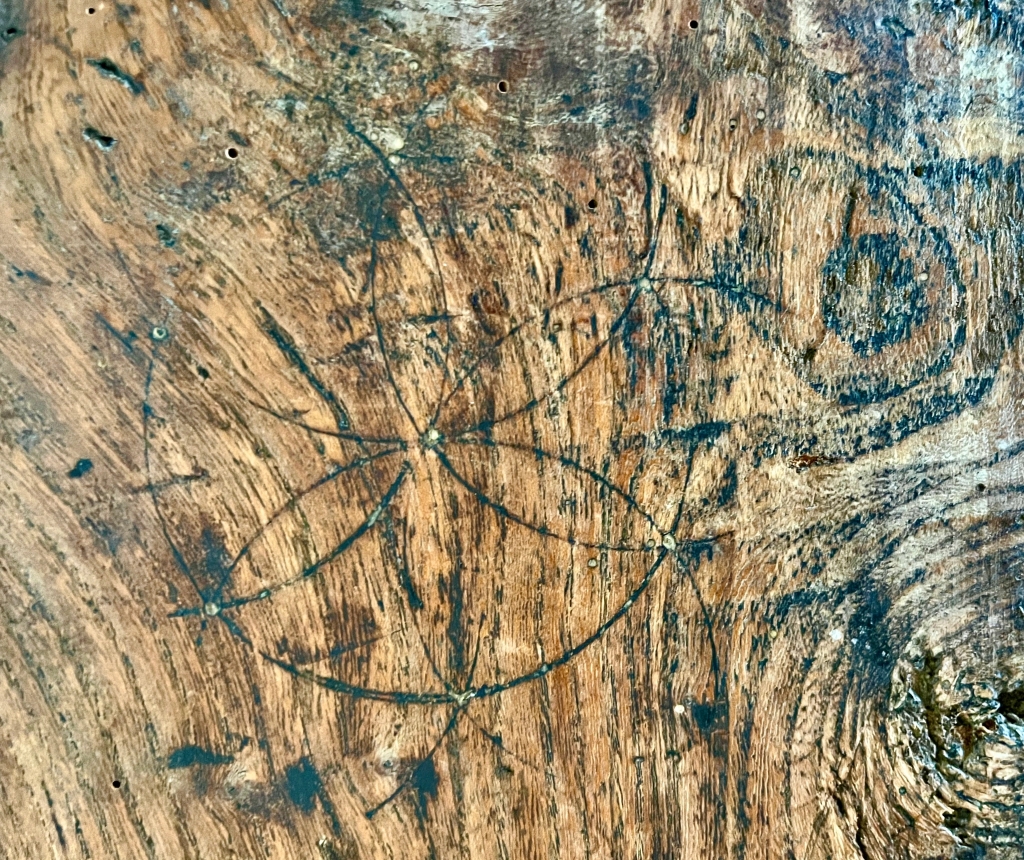
The most spectacular medieval manor house interior in Dorset PEV, an authoritative opinion that will never be challenged. There is no dial here, but the amazing graffiti could equally be found in a church, though generally not in such profusion. Besides dials of all kinds, this site includes medieval building marks – symbols, initials, dates, other graffiti. These categories can be found in the Menus on the front page. However, Fiddleford manor is so special that it deserves its own main entry rather than being relegated to a sub-menu.

HEXFOILS

MARIAN MARKS

GRAFFITI

GSS Category: Church Marks; Marian Marks; Ritual Protection; Hexfoils; Medieval Graffiti

All photos: Keith Salvesen