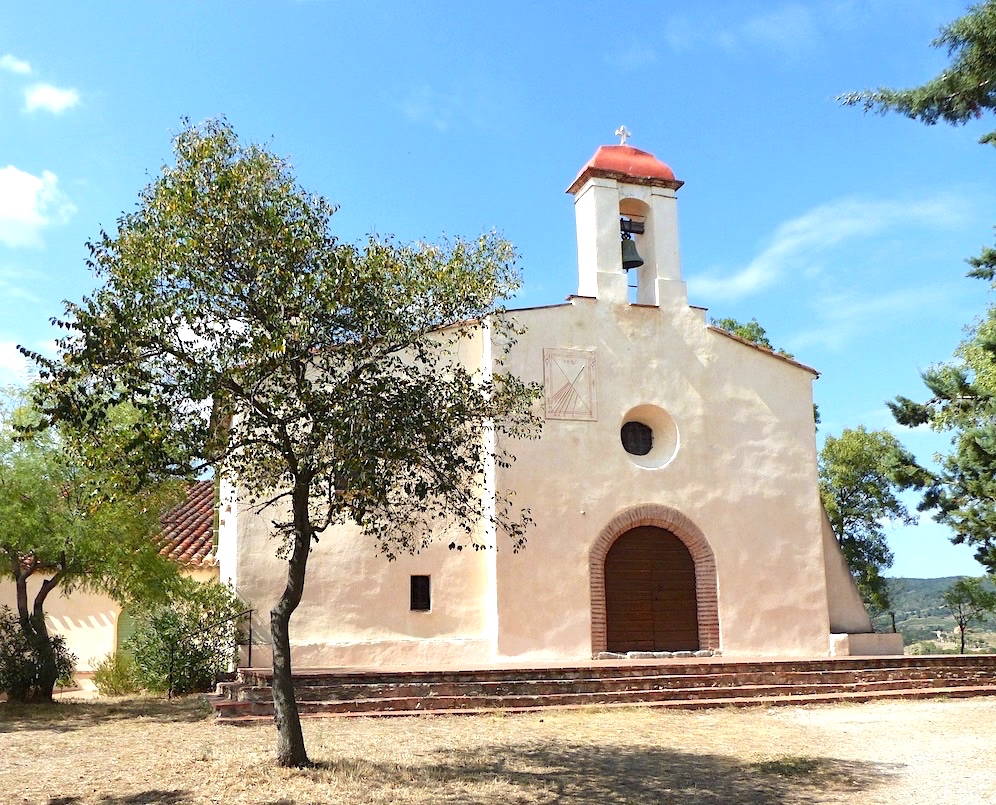
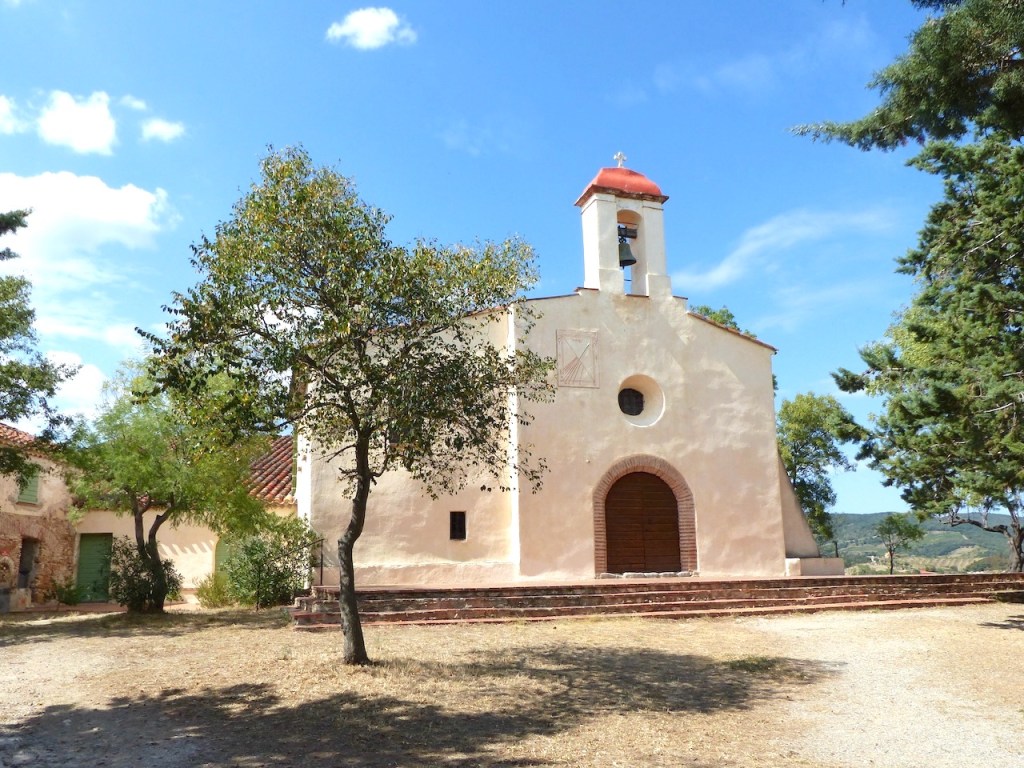
Céret lies south of Perpignan, in the foothills of the Pyrenees quite close to the Spanish border. The Hermitage is a short distance to the north. The modern art museum in Céret has many works by Picasso, including sculpture and ceramics; and by other famous artists of the period.
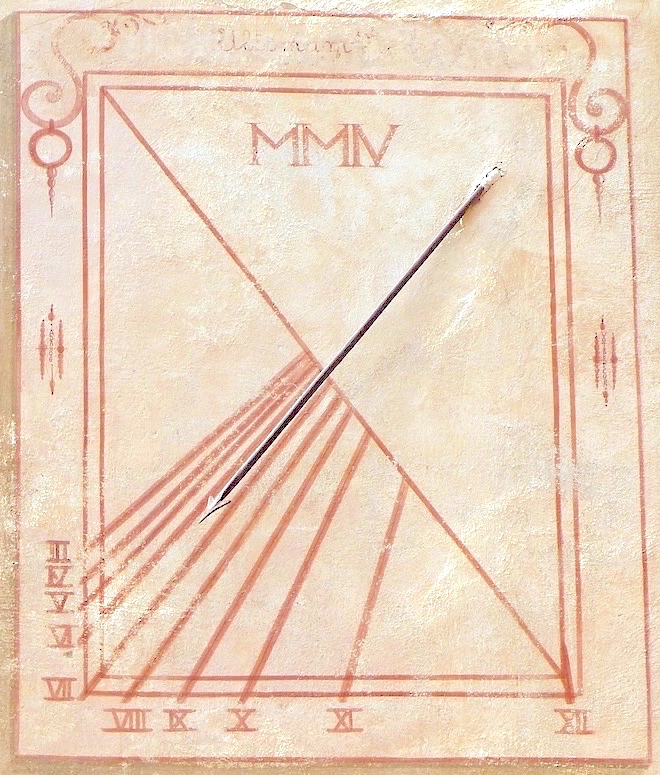
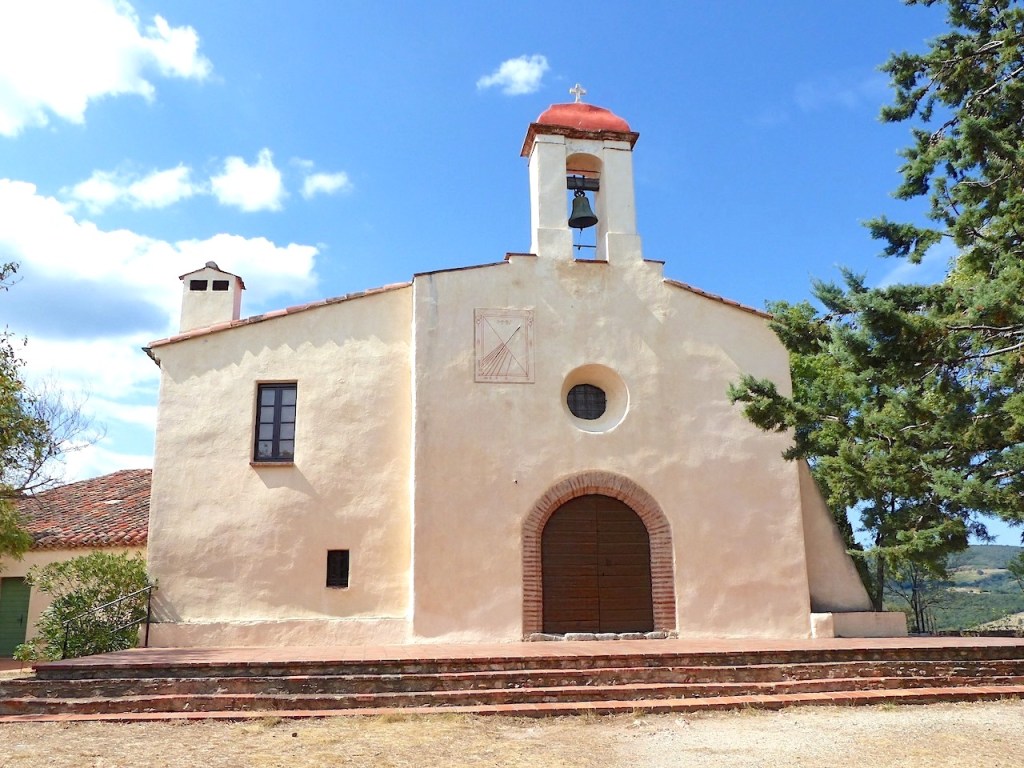
St Ferréol Hermitage, Céret, France – sundial (2004)
This enjoyably rustic sundial is painted directly onto the facade of the C13 chapel (restoration C18). It is intriguing for the way in which the radials are moored, carefully graduated, on the diagonal of the dial face. The arrow gnomon forms part of the opposite diagonal. As an amateur, to me the design of the dial looks quite complicated, especially the calculation of the angle and distance between 11 & noon.
I am still trying to work out the inscription at the top. It seems to be ‘Ultimum’, which could be a neat Latin way of saying something like ‘To the end of Time / Jusqu’ à la fin du temps’
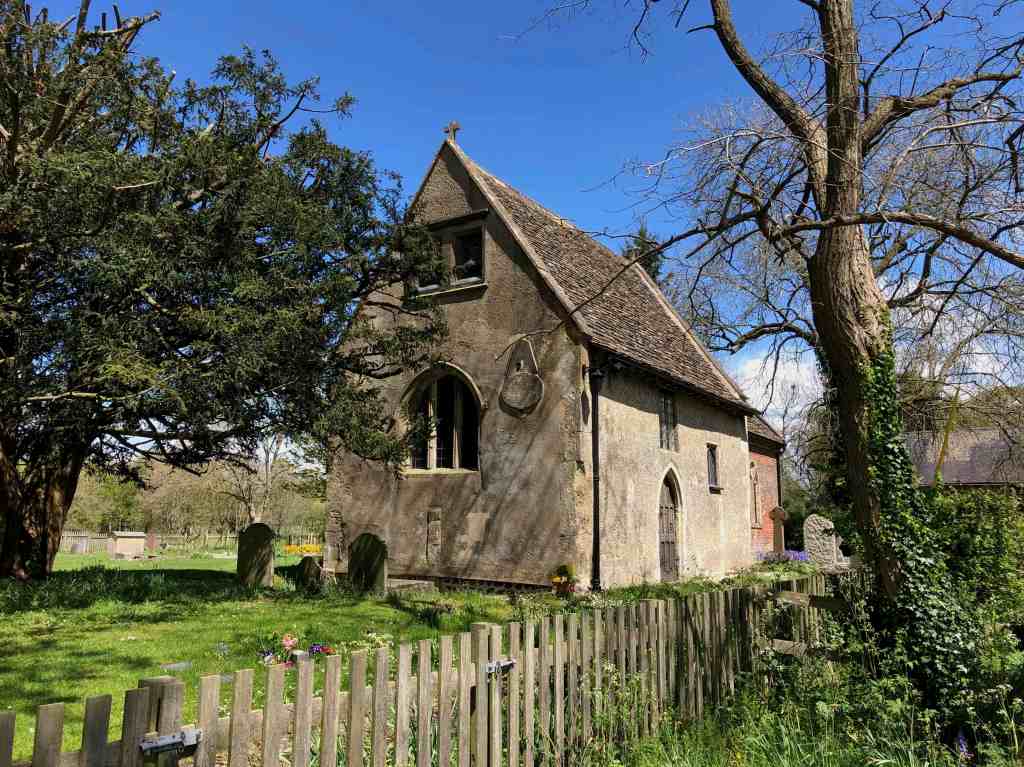
GRADE 1. Saxon church, C10-C11 origins with C14 reworking; later work, C19 alterations, subsequent restoration. ‘Awletone’ was first recorded in 825. Historically, at various times united with and detached from All Saints Alton Priors, which is situated just a couple of fields away. Midway between Pewsey and Devizes, close to K&A canal and Marlborough Downs. 51.3572 / -1.8467 / SU107620
St Mary . Alton Barnes . Wilts – Scratch Dial 1
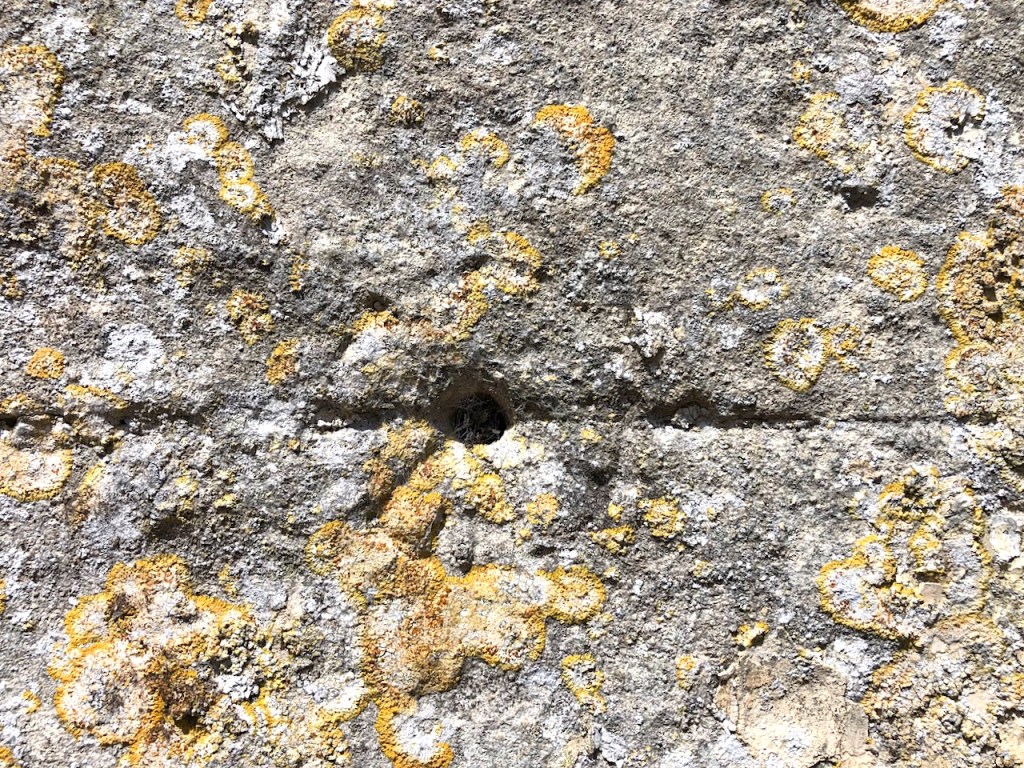
DIAL 1
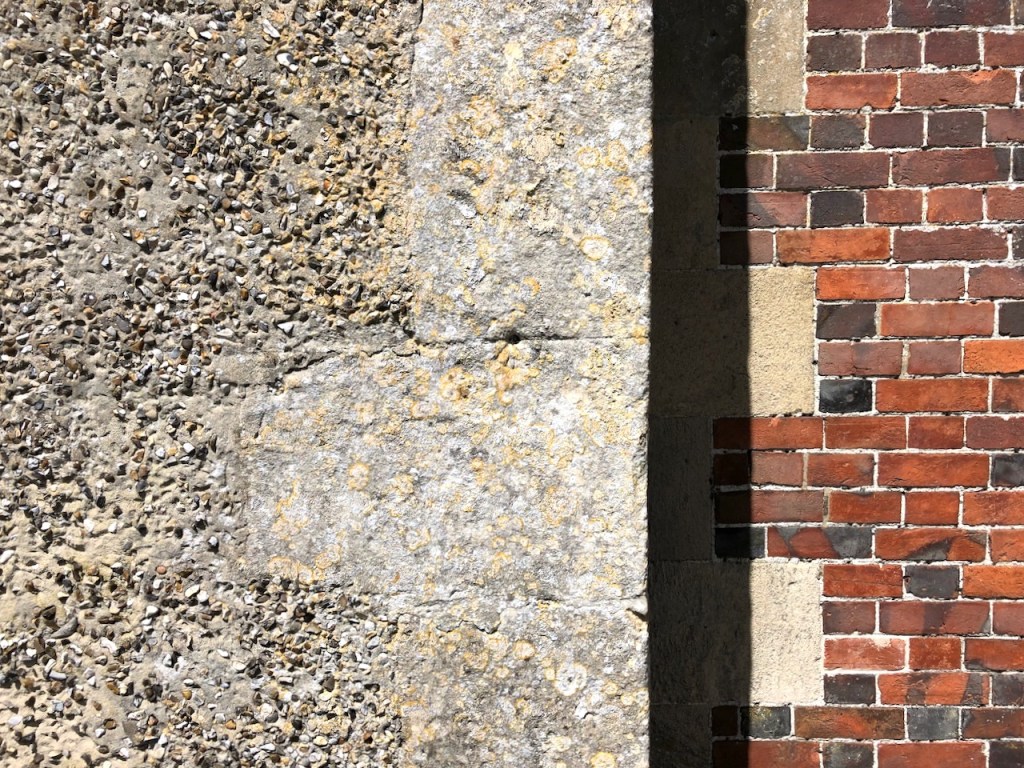
This unassuming little dial is on the N. side of the church, facing the Alton Barnes white horse carved in chalk on Milk Hill nearby. It does not seem to be the dial mentioned elsewhere, for which see Dial 2. I have seen no record of it.
The mortar line acts as the horizontal, and a full circle incorporates both radials and pocks. I sense that this is quite an early dial, perhaps dating from the C14 work on the church. I assume it was originally on the S. side of the church; it must have been relocated to the N. side at some later time. It may look somewhat crude, but fairly robust cutting may have helped to preserve it over the centuries.
St Mary . Alton Barnes . Wilts – Scratch Dial 1
DIAL 2
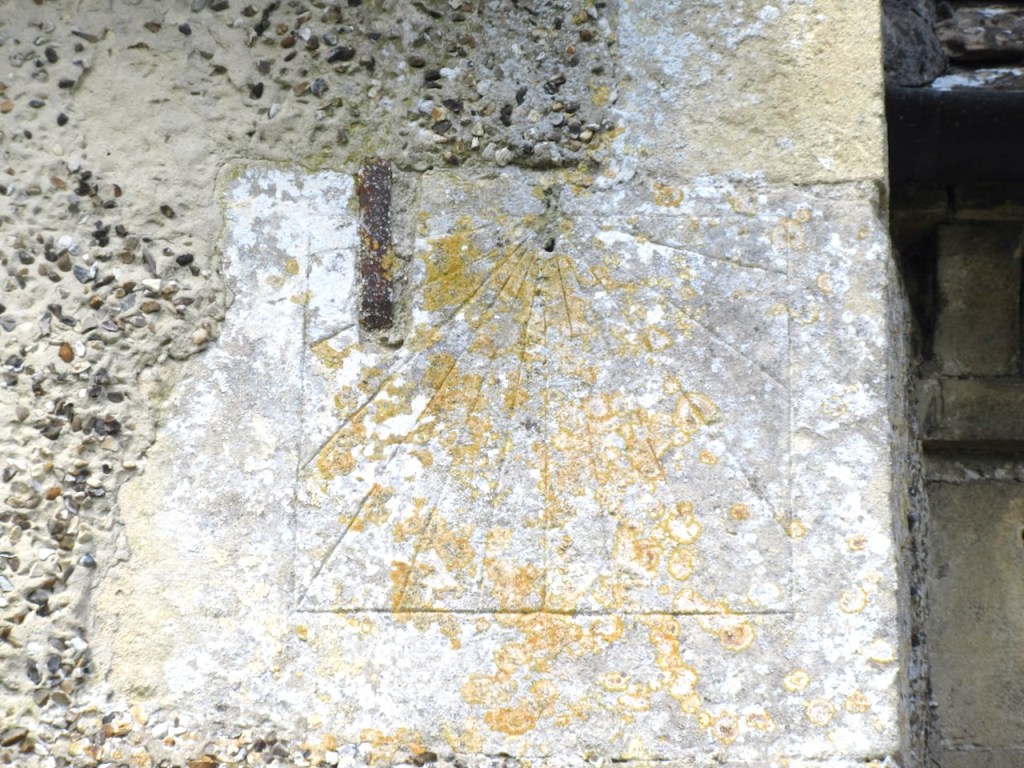
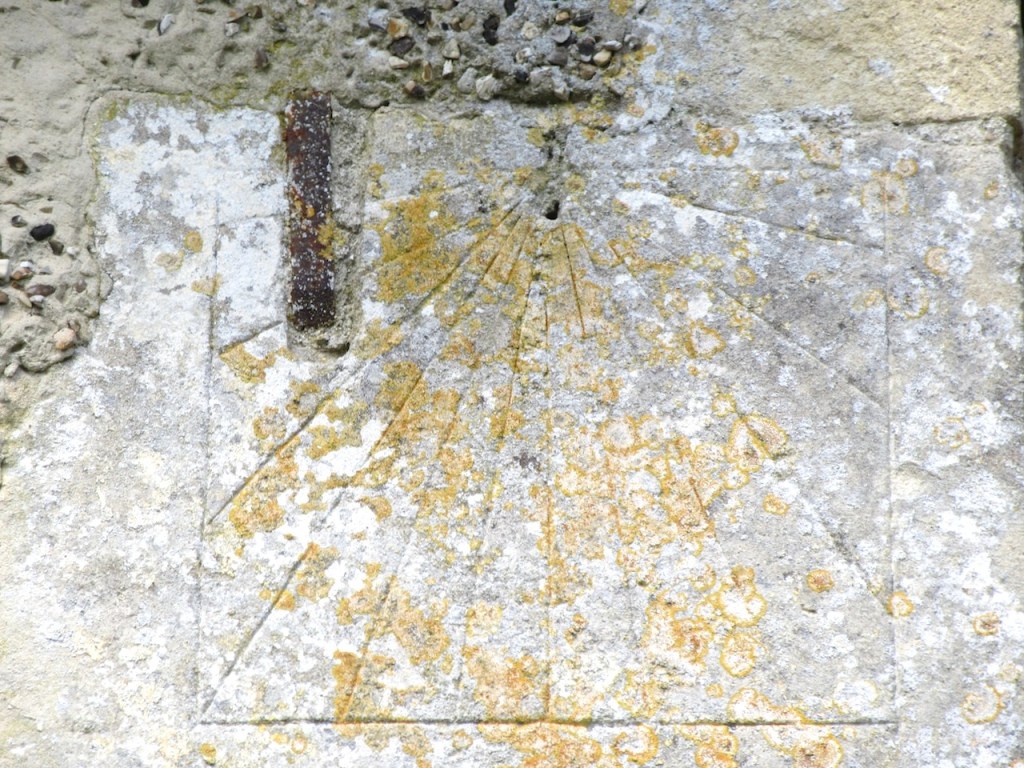
‘Scratch sundial on south-east quoins’ HE
St Mary . Alton Barnes . Wilts – Scratch Sundial 2
This is the dial that seems to be referred to elsewhere. I speculate C18 or possibly C17. It is high up under the eaves, so much so that it was half in shadow at noon (see gallery below). Perhaps that indicates a relocation at some time, but to a less useful position as a sundial. With a gnomon at the top and in the shade, the dial’s effectiveness would be notably diminished. Perhaps, by then, it was mainly decorative.
St Mary . Alton Barnes . Wilts – Scratch Sundial 2
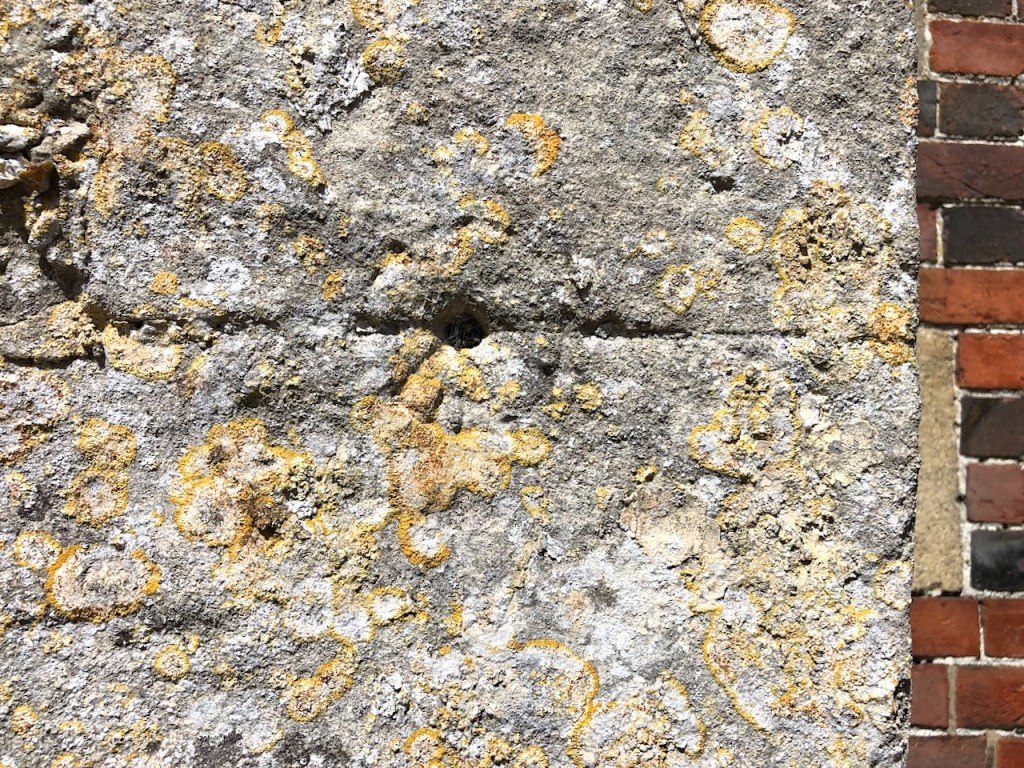
UNDIAL
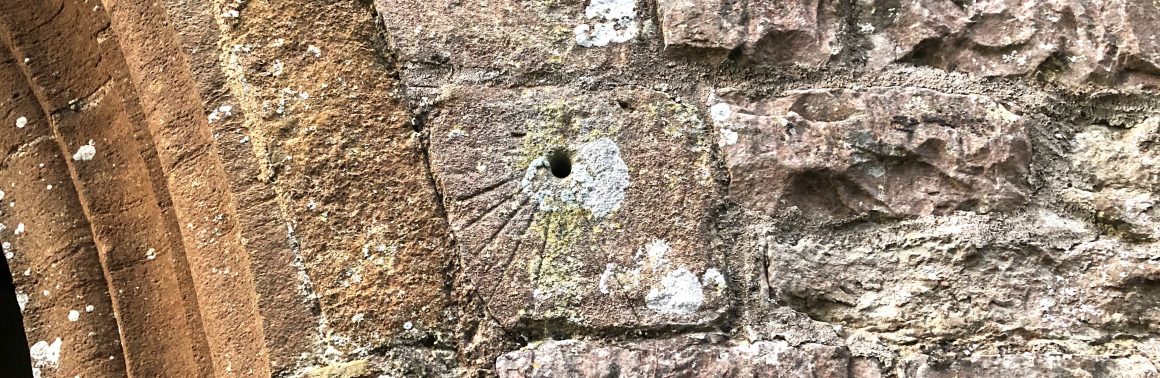
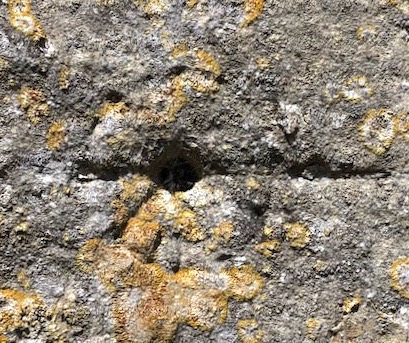
Quite often a possible dial suggests itself, though is probably (or on closer inspection, definitely) not one. Here, I liked the look of the filled style hole and the pocks in a plausible formation. I inverted the image to see if it looked any more likely. Not really (I’m happy to be corrected by an expert).
DEDICATION † ST MARY THE VIRGIN – dated from mid C14, gradual expansion in C15, C18 restoration (Crickmay). The South Chapel is a notable example of 14th-century architecture, well preserved and not greatly altered from its original form BHO.
LISTING † Grade II*
LOCATION † S. of Sherborne, E. of main road to Cerne Abbas. A straggling small village with records dating from C12, approached by lanes rather than roads. The church is set slightly apart from the centre. In 1985 the Parish name was changed from Wootton Glanville for reasons hard to ascertain. A peaceful feel to the community. 50.872 / -2.4558 / 2°27’20″W / ST68008
Glanvilles Wootton . Dorset . St Mary the Virgin – Scratch Dial
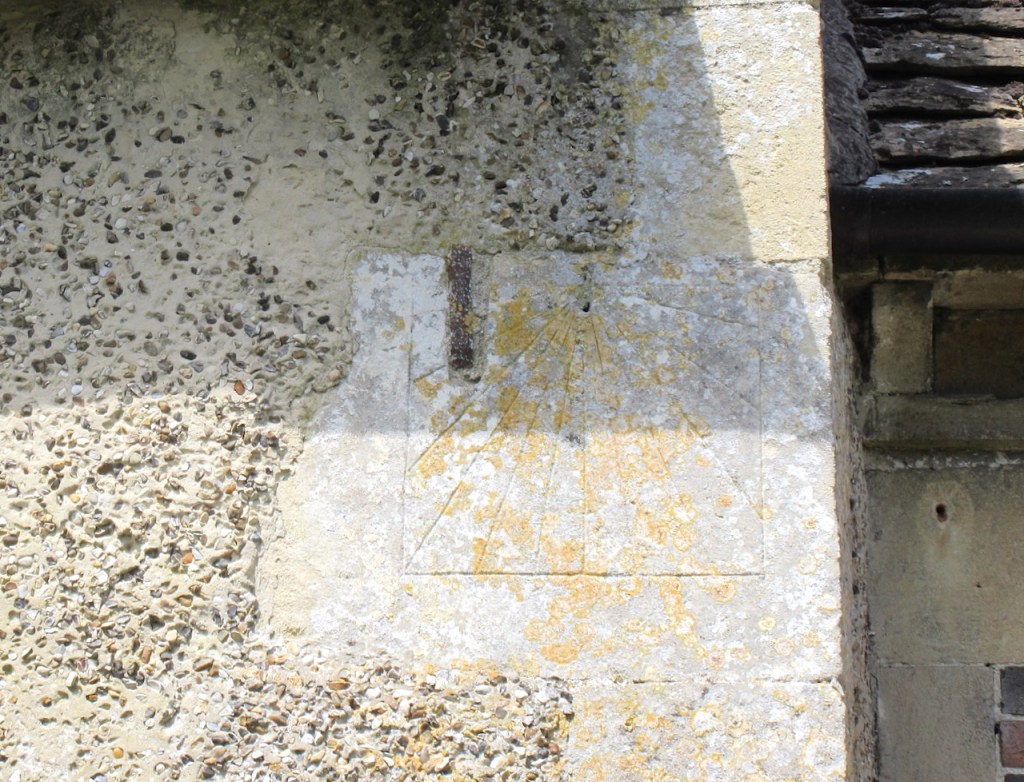
DIAL † On W. buttress of S. wall of S. Chapel, 2m high, with (later) iron gnomon* in square style-hole. Last visited in January drizzle, when marks were hard to make out and photo ‘work’ was needed. On a sunny April day, the marks were clear. Pocks (12+) of varied sizes. 8 radials with irregular angles. A notably emphasised noon-line in depth and width, and with additional terminal pock(s). GLP notes that it is 4º from vertical. The 3 larger pocks presumably marked local Mass times (very approx Terce, Sext & None). *Gnomon is iron, 130mm long, rectangular cross section. Modern. BSS
From the time of day indicated by the gnomon’s shadow, I estimated the o’clock time. Checking my watch, the shadow was just 17 minutes fast…
Glanvilles Wootton . Dorset . St Mary the Virgin . Scratch DialGlanvilles Wootton . Dorset . St Mary the Virgin . Scratch Dial
BSS record of markings – GLP
Glanvilles Wootton . Dorset . St Mary the Virgin . Emphasised noon-line with added pock(s)
NOTES † noted in RCHM / BHO but not BLB / HE / TWC. The village has a fine Manor House. Round Chimneys Farm – once owned by John Churchill Duke of Marlborough – has significant entries in Hutchins, RCHM III Dorset; and good details in BHOLINK.
St Georges de Boscherville . Normandy . Vertical Sundial
The beautiful C12 Abbey of St Georges de Boscherville in Normandy is very much in the Michelin ‘vaut le voyage’ category. Advantage has been taken of the extensive abbey grounds to display innovative bee-hives and an excellent display of modern sundials. The most complex will feature here in due course. Meanwhile, enjoy this attractive sundial with its cleverly effective gnomon.
St Georges de Boscherville . Normandy . Vertical Sundial
St Georges de Boscherville . Normandy . Vertical Sundial
The motto Tant ici passerent le temps passé nous passons means roughly ‘So much past time has passed here; we (also) pass’. It sounds better in the original.
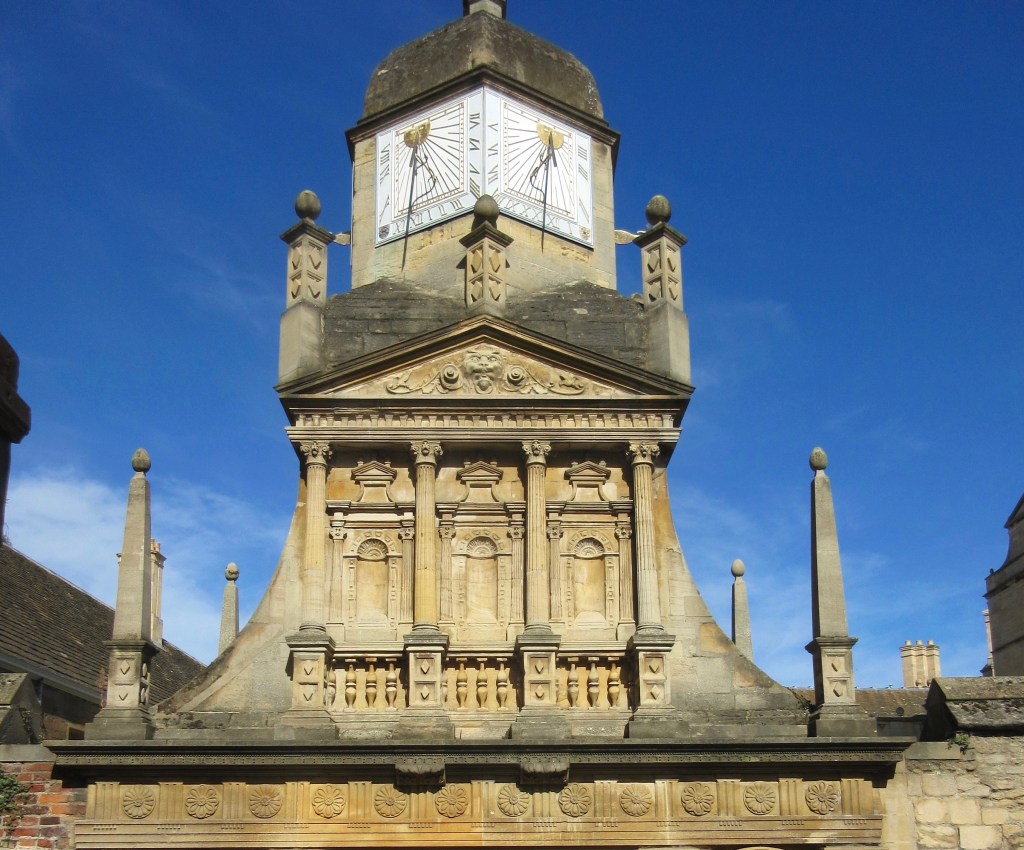
Gonville and Caius College Cambridge – Sundial over the Gate of Honour
This handsome modern set of dials was installed in 1963 as part of the 400th anniversary celebration of the college’s re-foundation by John Caius. There are 6 vertical sundials, arranged in 3 pairs placed round the hexagonal tower. They were designed by astronomer and Fellow, Dr Message, and the Junior Bursar Dr Powell. The bronze dial faces are painted with vitreous enamel. They replace the original set of sundials dating from 1557, of which only traces remained.
There is something very satisfying about this set of dials. The symmetry, the proportions, the materials, and the design all seem to work in harmony. Cambridge colleges have many sundials between them, many original and ancient (Queen’s College sundial is a perfect example). Of the modern dials, the Gate of Honour is adorned by arguably the finest.
Gonville and Caius College Cambridge – Sundial over the Gate of Honour
The college has three gates that represent the stages of academic life: matriculation, entered through the Gate of Humility; undergraduate life, with regular passage through the Gate of Virtue during a student’s career; and finally graduation, with students passing through the Gate of Honour to the Senate House to receive their degrees.
Gonville and Caius College is one of the oldest colleges of Cambridge University. It was founded in 1348 by Edmund Gonville, who has suffered the cruel fate of rarely being mentioned nowadays; the college is almost invariably referred to simply as ‘Caius’, after John Caius, the man who re-founded the college in 1557 at a time when it had fallen on hard times.
52.2057 / 0°7’1″E / TL447584
GGS Category – Modern Dial (replacing Old Dial); Multi-facet dial; University Sundial; Cambridge Sundial




 GAUDIUM SUB SOLE . SUNDIALS . MEDIEVAL TO MODERN