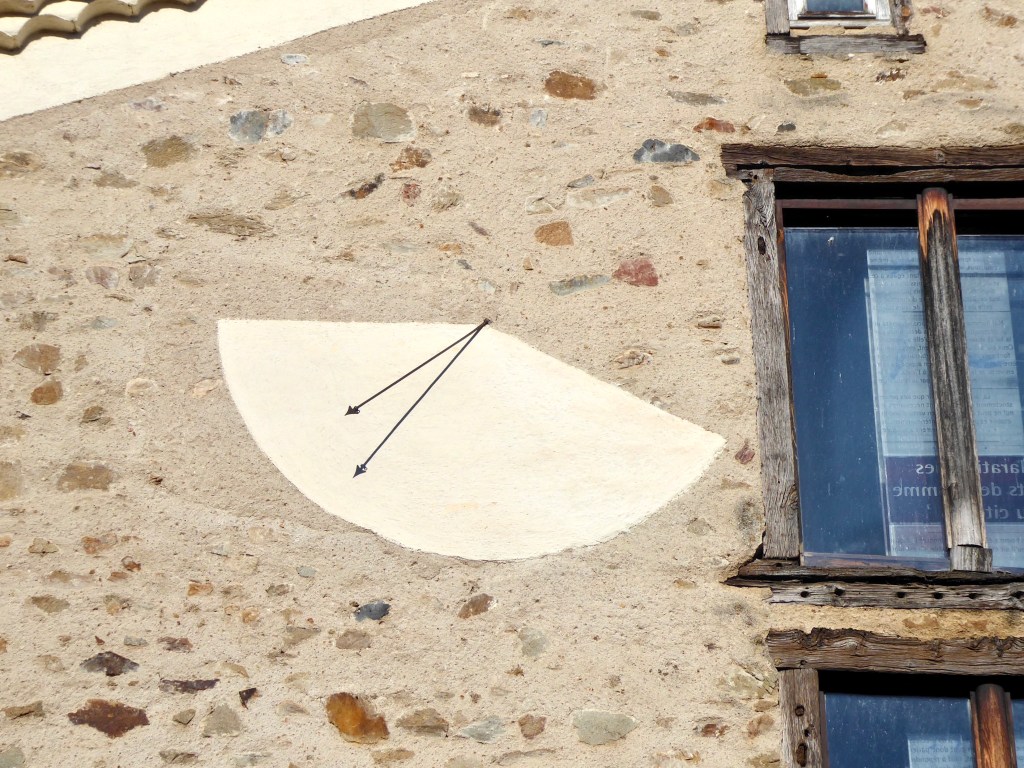
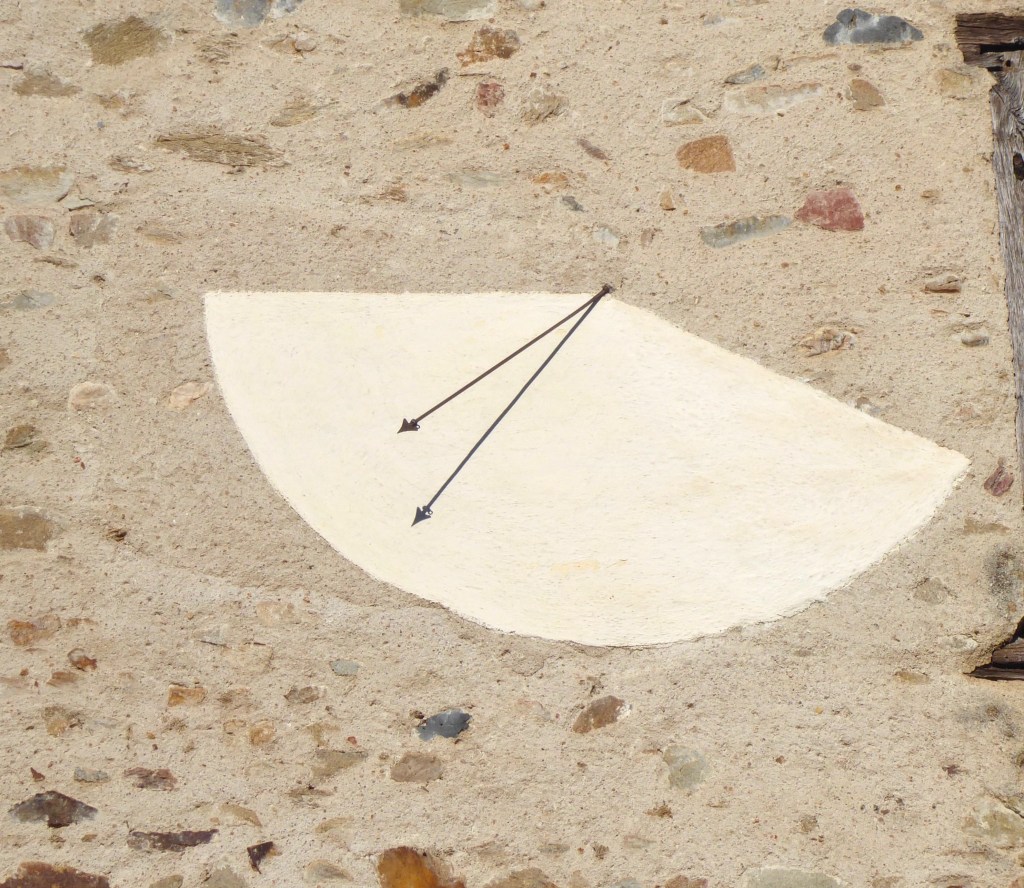
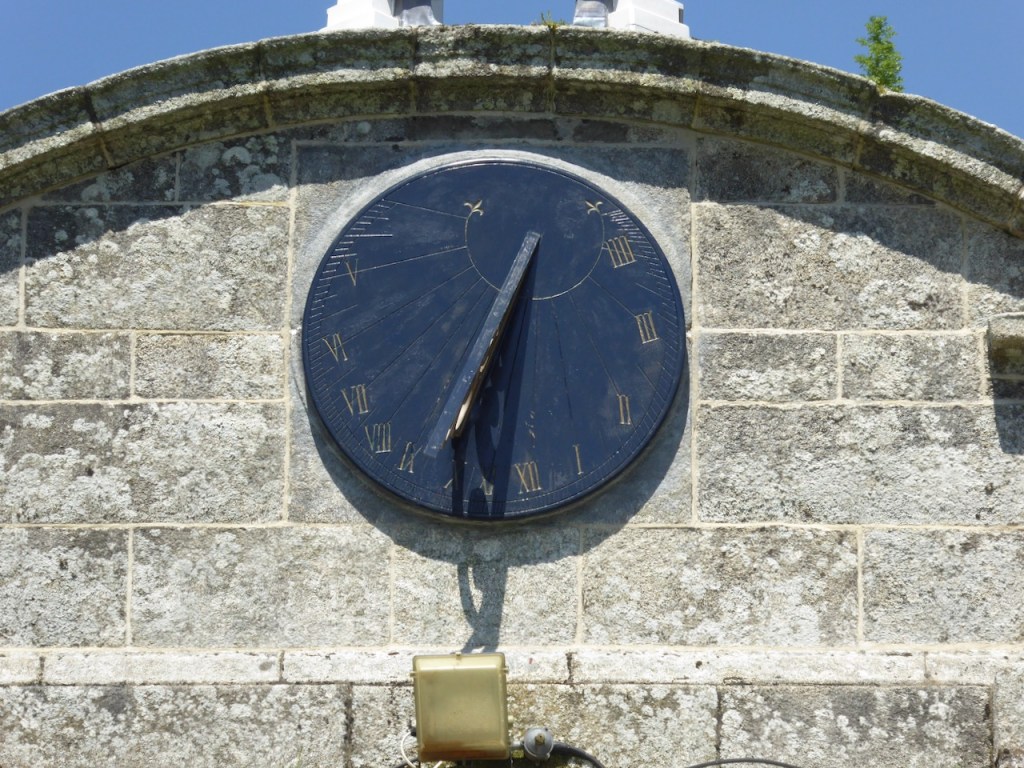
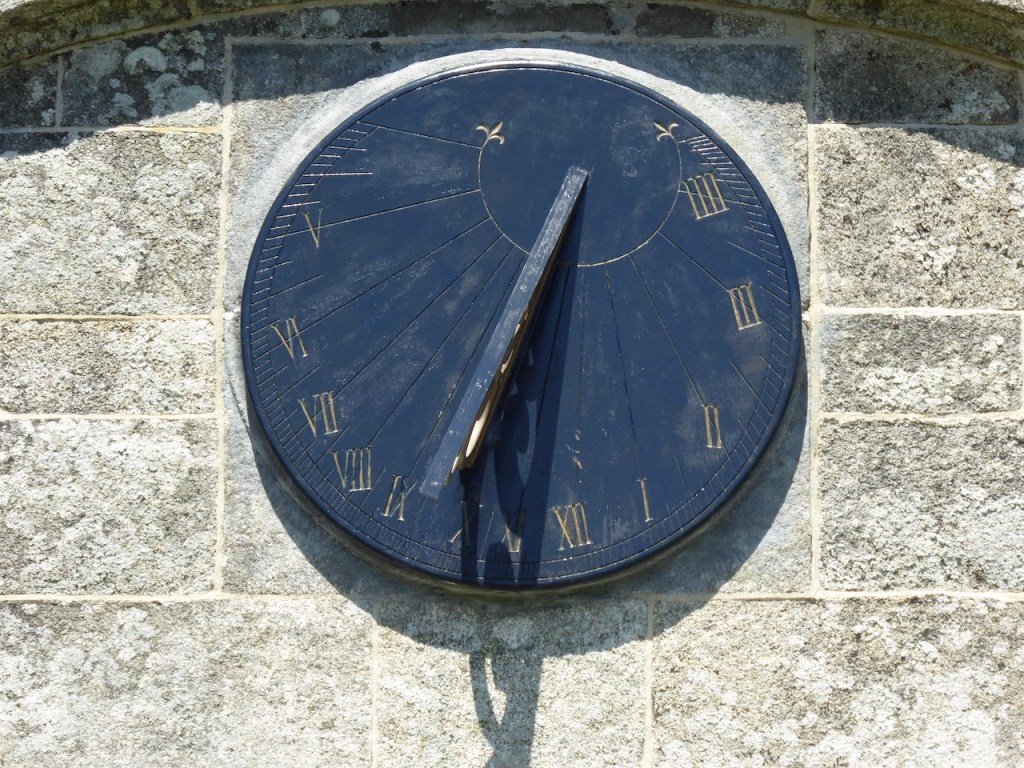
Lavaudieu is a small Auvergne town with a fine romanesque Abbey. For present purposes, the sundial on the wall of the Mairie is the attraction. On a bright sunny day, the simplicity and legibility of this civic dial is hard to beat. The ‘arrowheads’ might be considered a little too ornate for the overall design.
‘Moins est plus’ might be a good motto for the dial, as it is more generally. As soon as I saw it I knew it would be in my top 20 non-medieval dials. It still is.
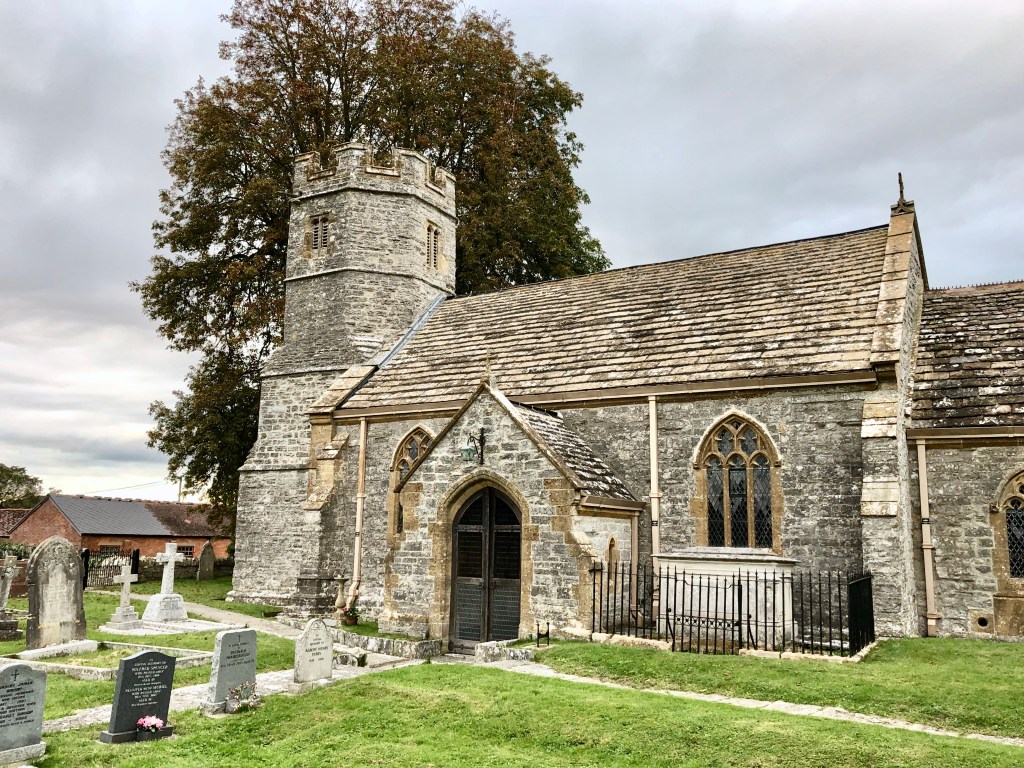
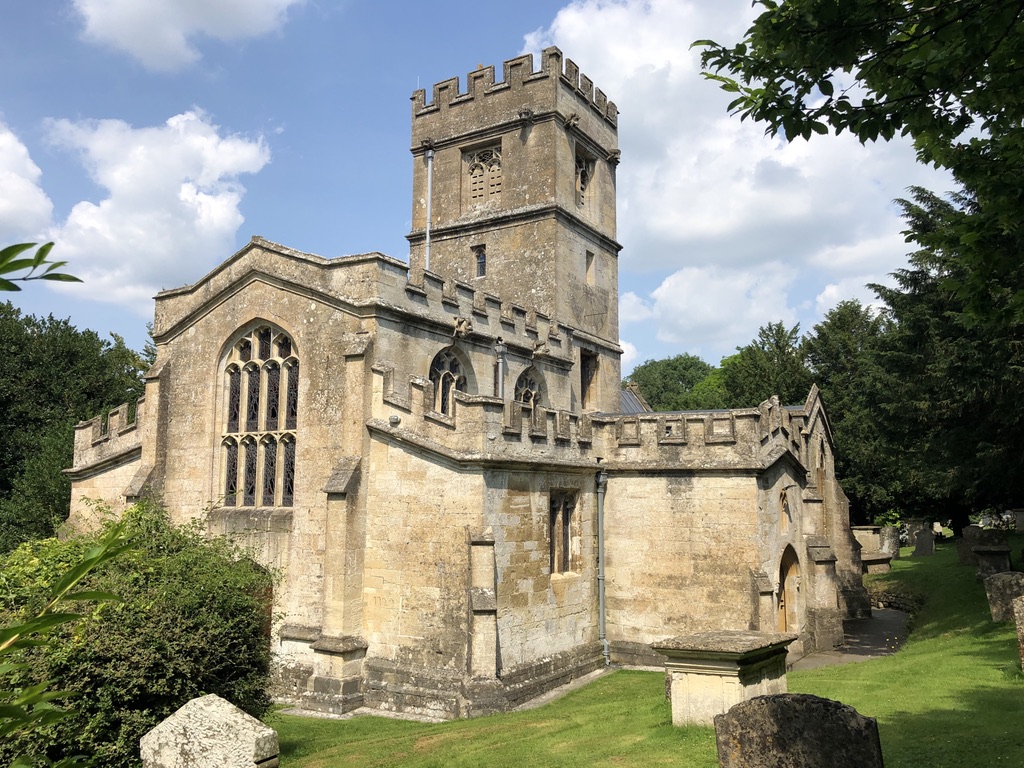
St George is a wonderful church with Saxon origins, C12 foundation, C15 tower; and much T H Wyatt work / restoration mid C19. Treasures include the C12 font, a `truly amazing piece’ (Pevsner) of black Tournai marble. High up on the third stage of the C15 tower is a magnificent C18 sundial: details HERE and an image below.
SCRATCH DIAL
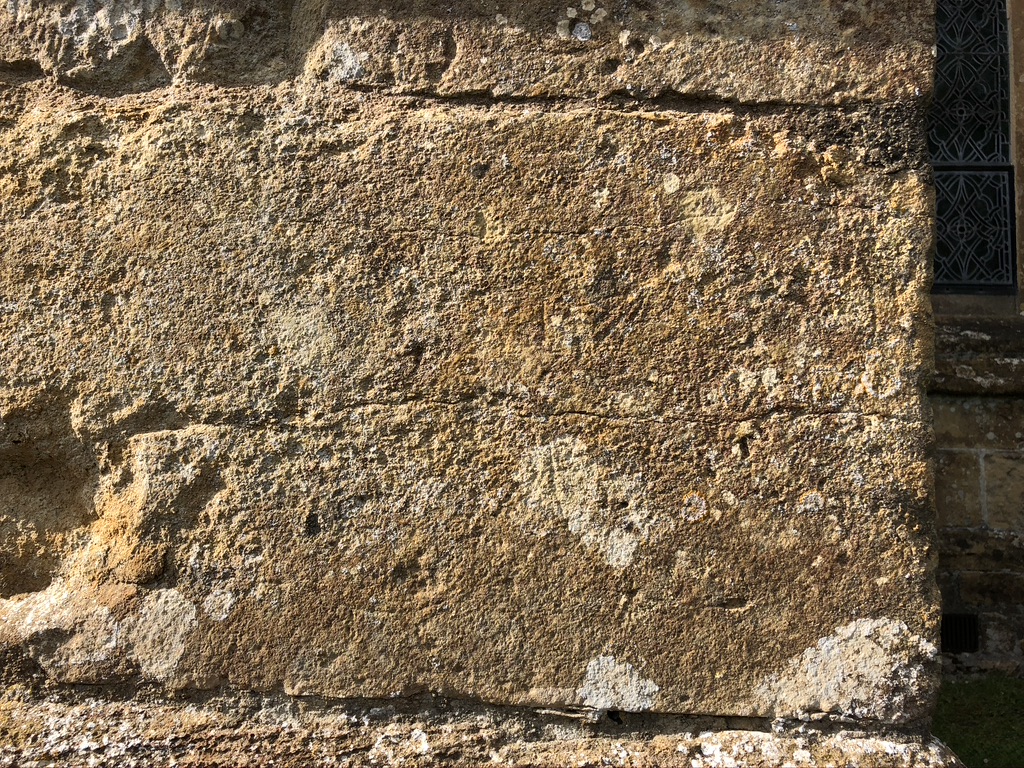
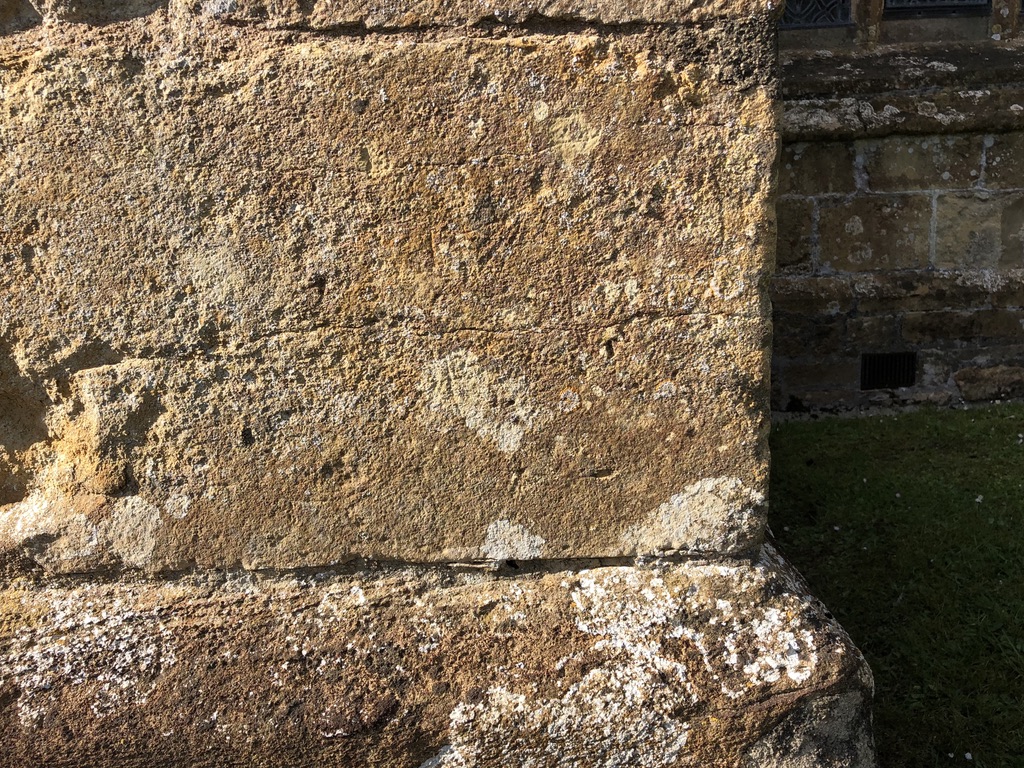
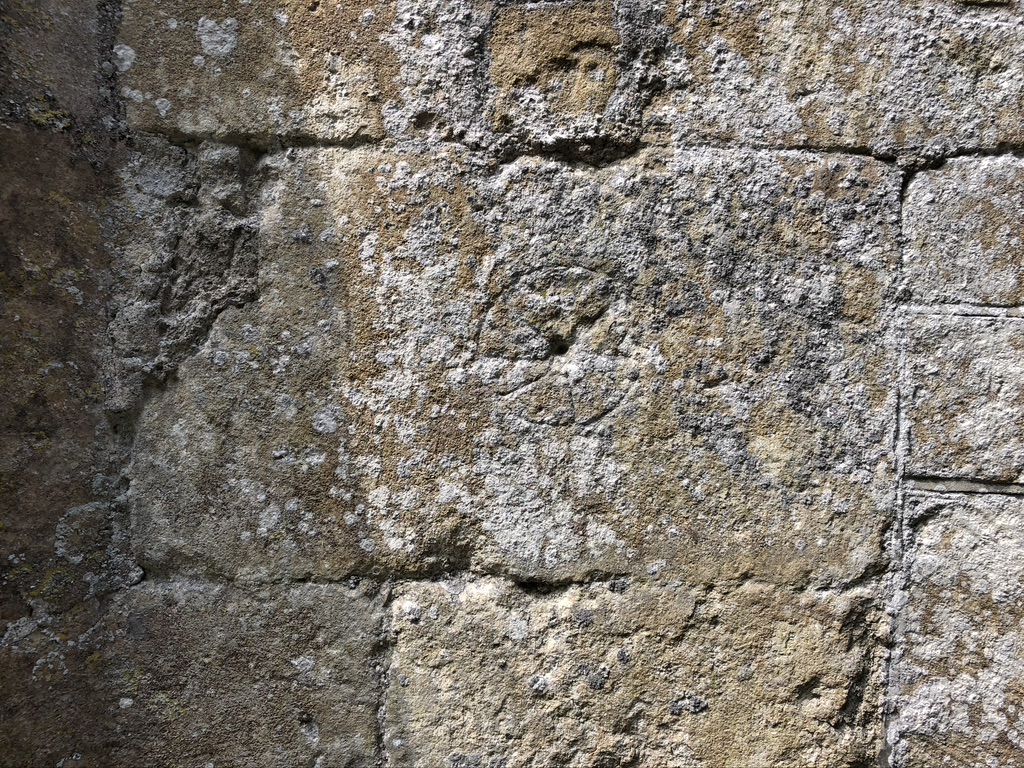
While visiting St George, I decided to have a brief look at the exterior for church marks in general: graffiti, dates, masons’ marks etc. I was not expecting much, in particular because of the extensive C19 work. However on the W end buttress of the C15 tower, facing SW, there was a large incised design worth inspection.
St George . Preshute . Wilts – scratch dial on the W buttress of the tower
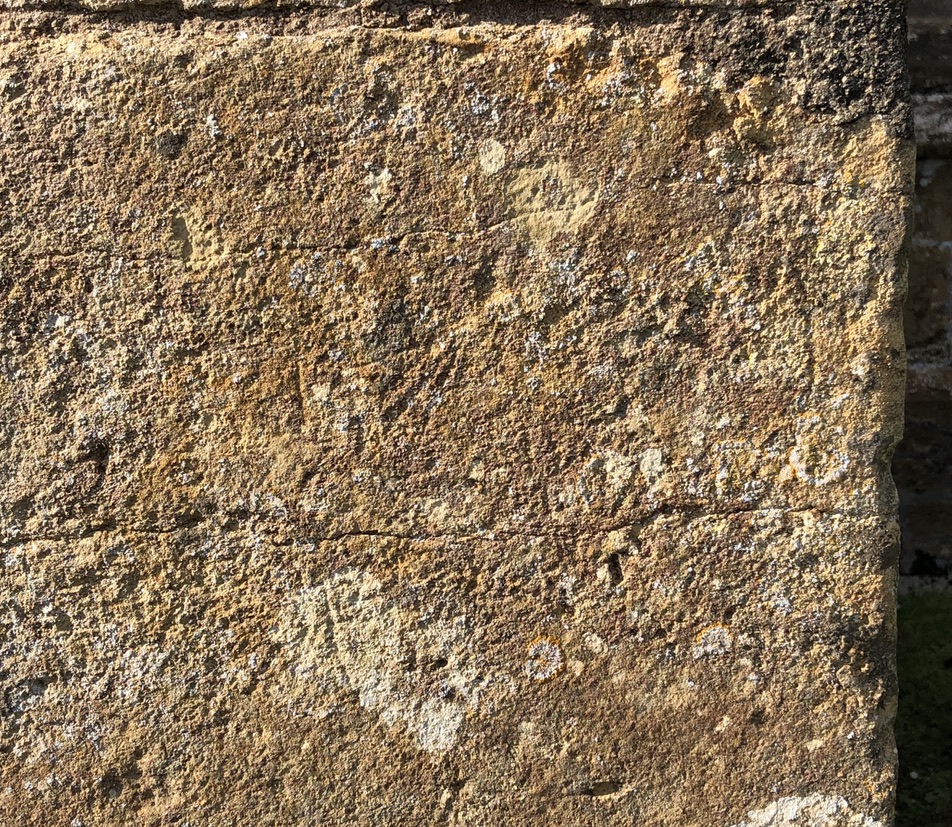
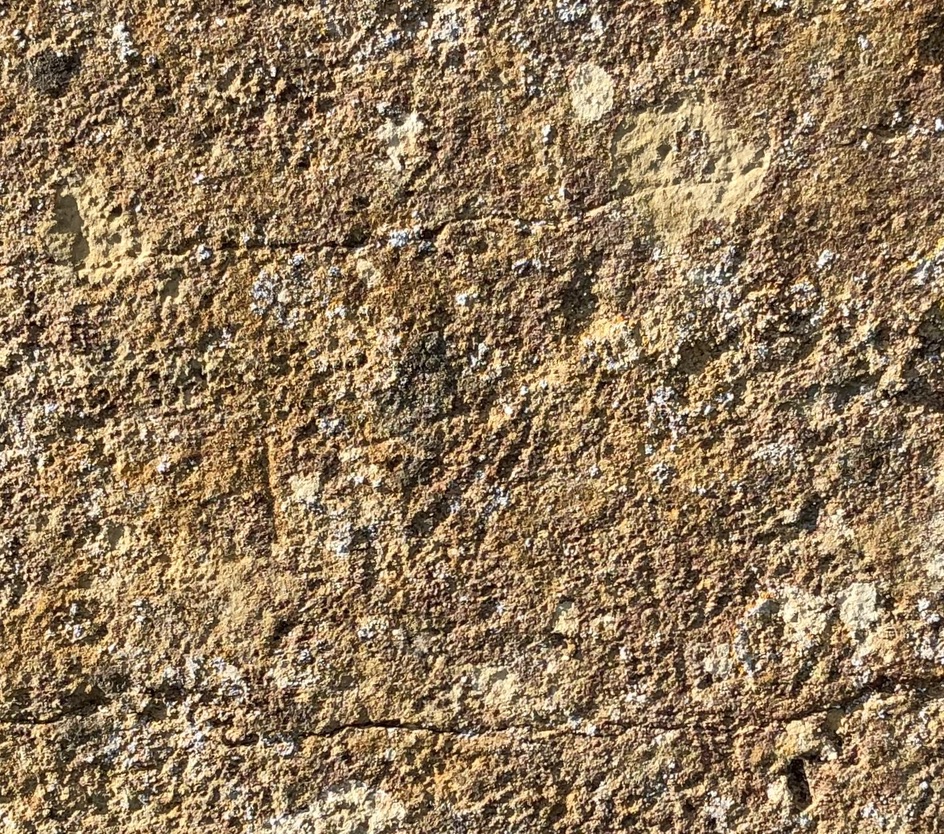
The design is a partial / eroded circle with a central shallow style hole. A noon line extends downwards to the edge of the circle, passing through a pock on the way and ending with a shallow pock. Other pocks mark the approximate edge of the circle on both sides of the noon line. In the lower L quadrant, the pock between the style hole and the pock at the edge of the circle may have been to emphasise the 9-line as indicating the time of a morning Mass, in this case Terce.
St George . Preshute . Wilts – scratch dial on the W buttress of the tower
The British Sundial Society BSS has considered the evidence and added the Preshute dial to its Mass Dial records. In many ways a lucky find, since I was not looking for nor expecting a dial at all.
St George . Preshute . Wilts – scratch dial on the W buttress of the tower
GRADE II* † C15 (C13 origins). Restored and N. aisle added C19. A handsome spired church, unusual in a region where most churches have towers, in the lovely setting of a small hamlet reached by a network of lanes. 51.0337 / -2.509 / ST644261
DIALS
St Mary is a most rewarding church to visit, both the exterior and interior. You will find brief points of note at Camelot Parishes. DEH on his visit in April 2014 recorded 2 medieval dials (2 & 3 below) but there are others, including a more elaborate later one with Roman numerals (C17?) above the porch.
DIAL 1
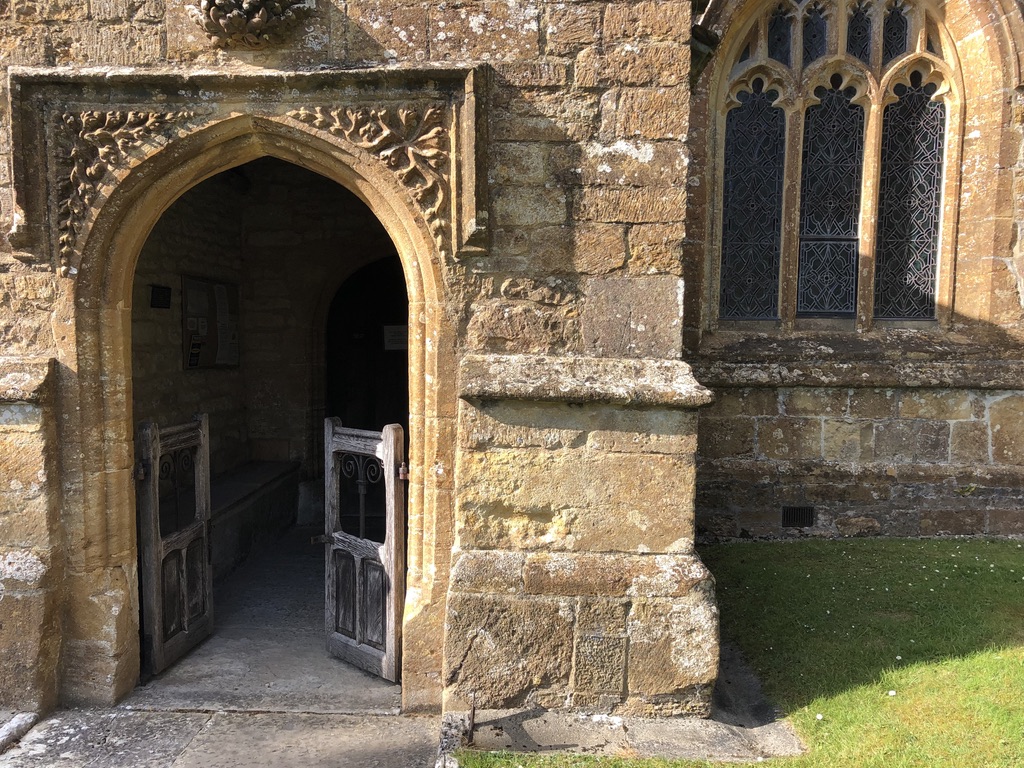
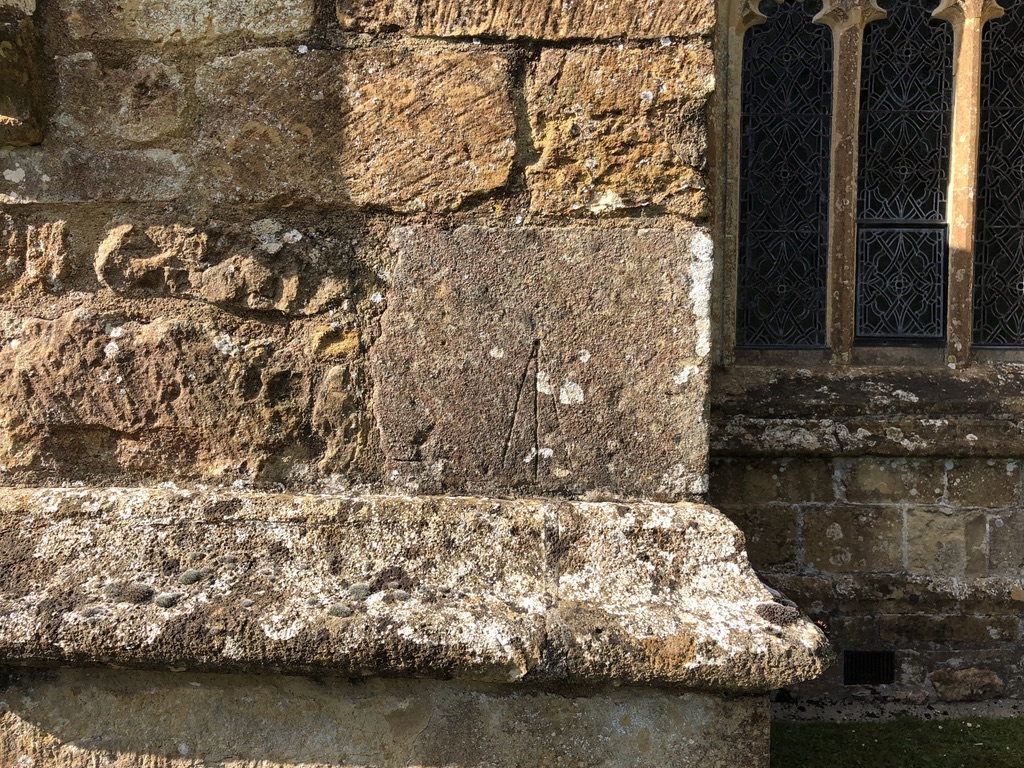
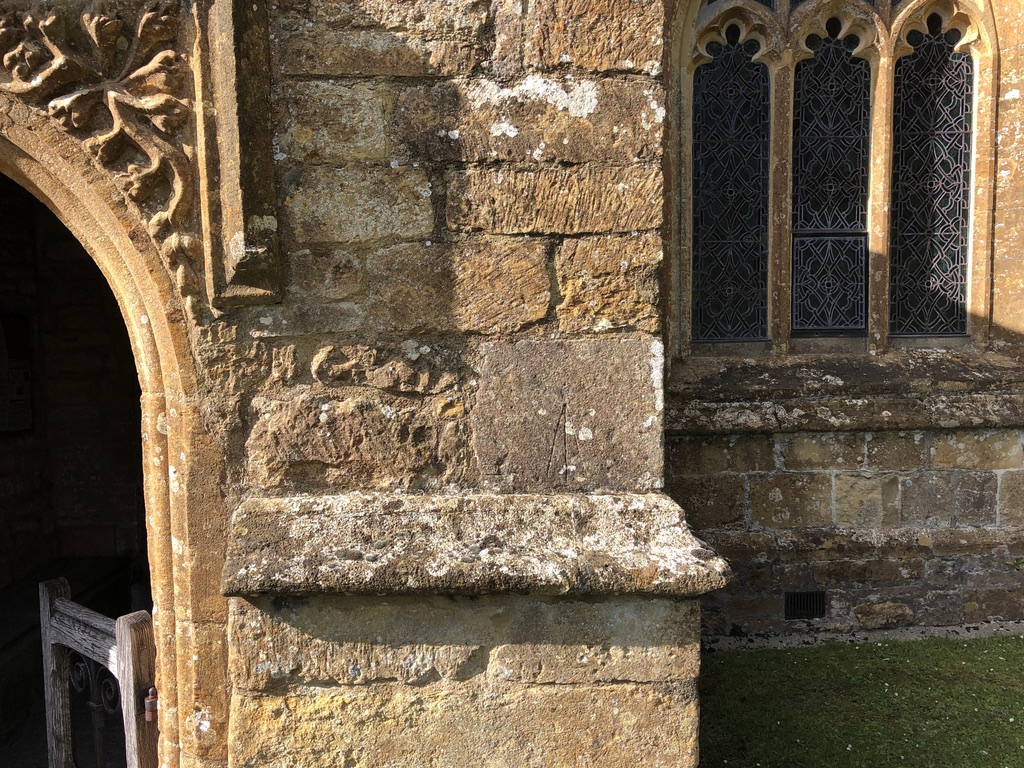
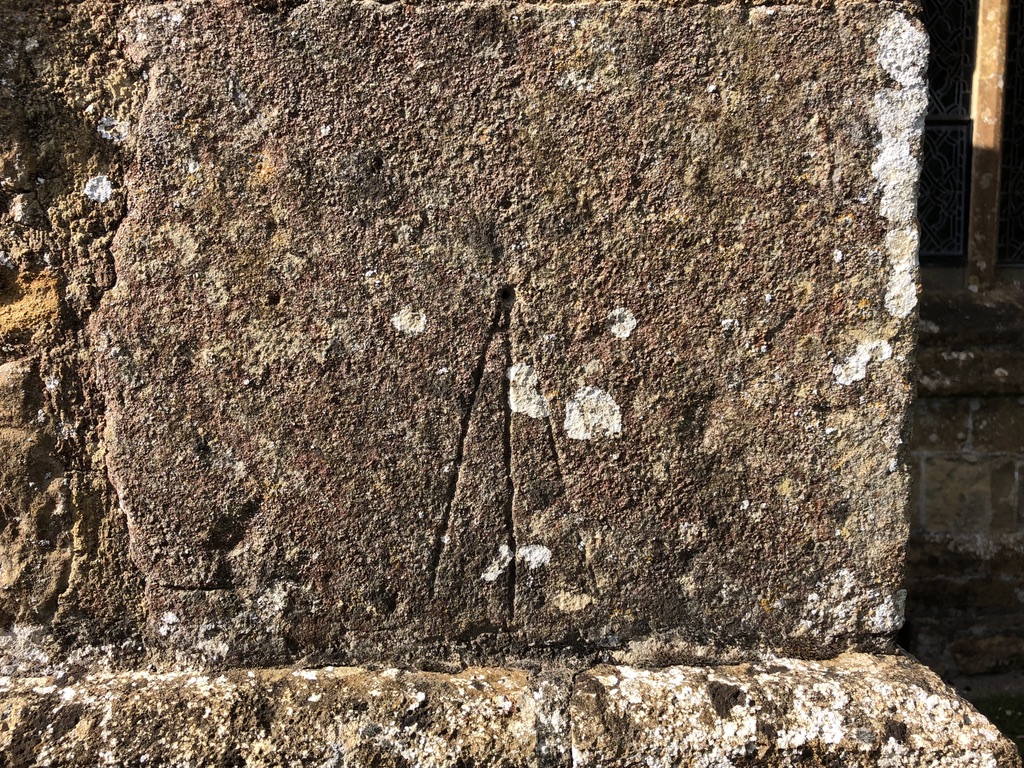
Compton Pauncefoot . Somerset . St Mary – scratch dial on the porch
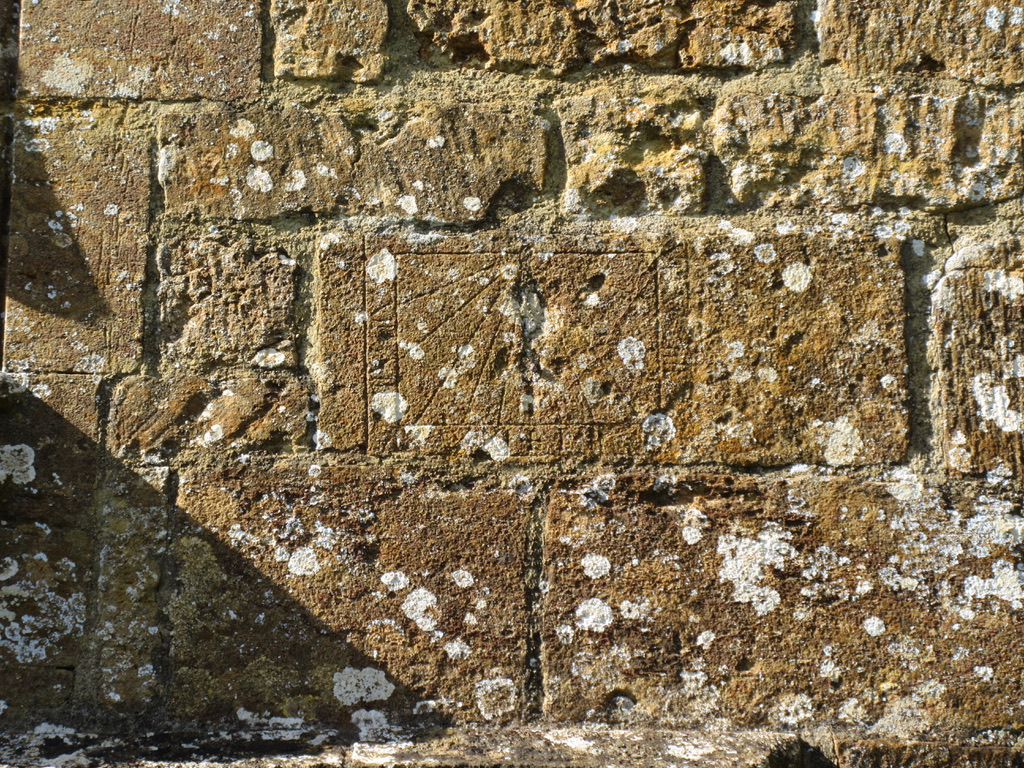
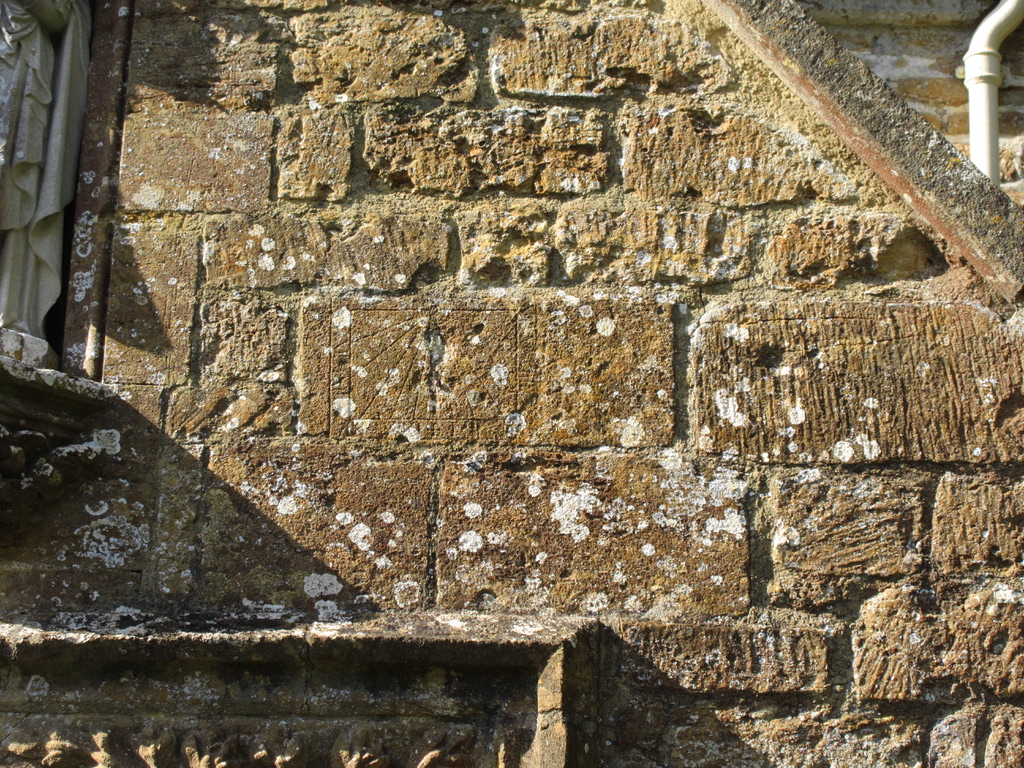
Dial 1 A very visible 3-line dial on a large stone RHS of the porch. It consists simply of a small style hole with a long noon line and a single line the same length cut on each side. Despite its prominent location, the dial seems largely unremarked though perhaps it is mentioned in the church archives. The actual stone differs from the ones around it – perhaps it was relocated during restoration to a more prominent position on the porch. It is strange that DEH didn’t include this dial in his records for the church.
Compton Pauncefoot . Somerset . St Mary – scratch dial on the porch
DIAL 2
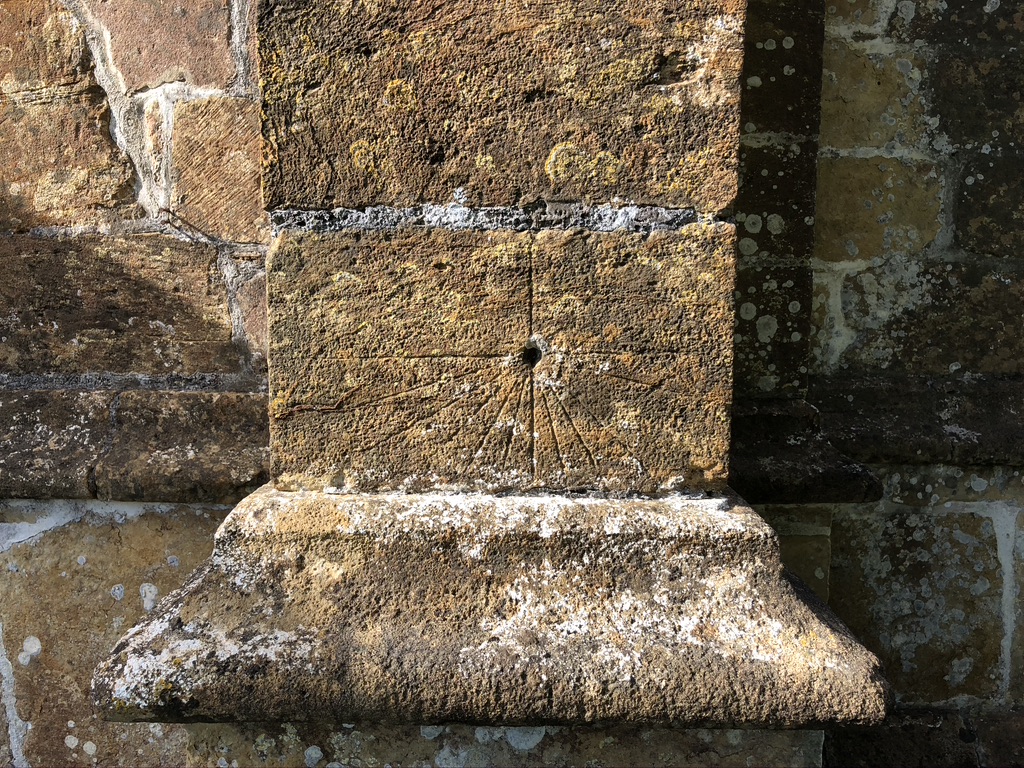
Compton Pauncefoot . Somerset . St Mary – scratch dial on the E buttress of the nave
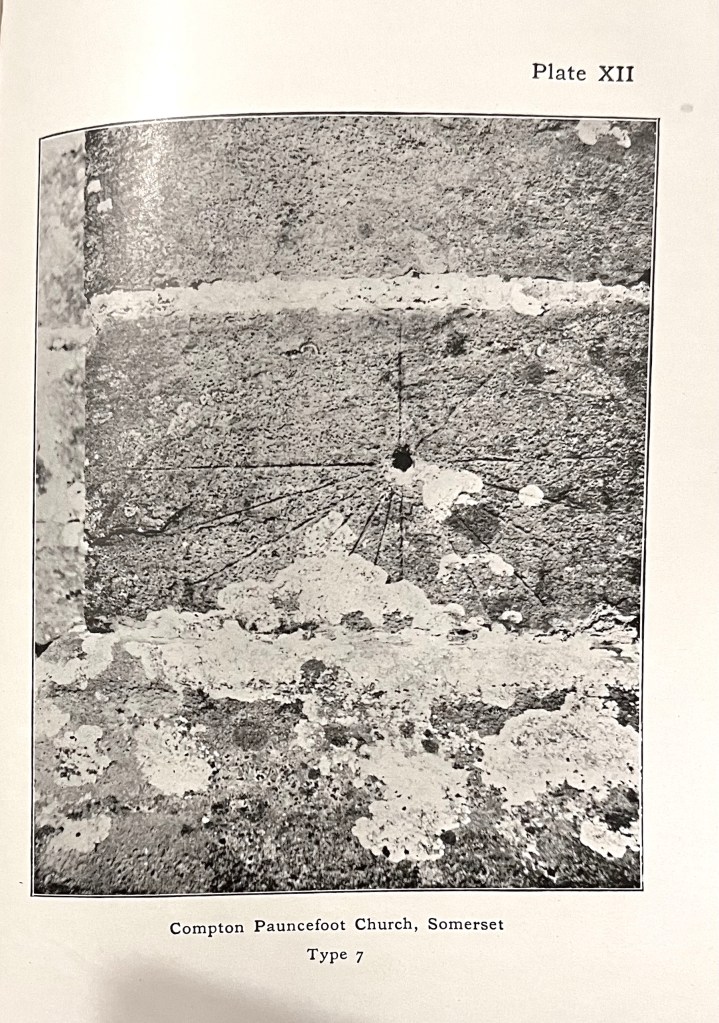
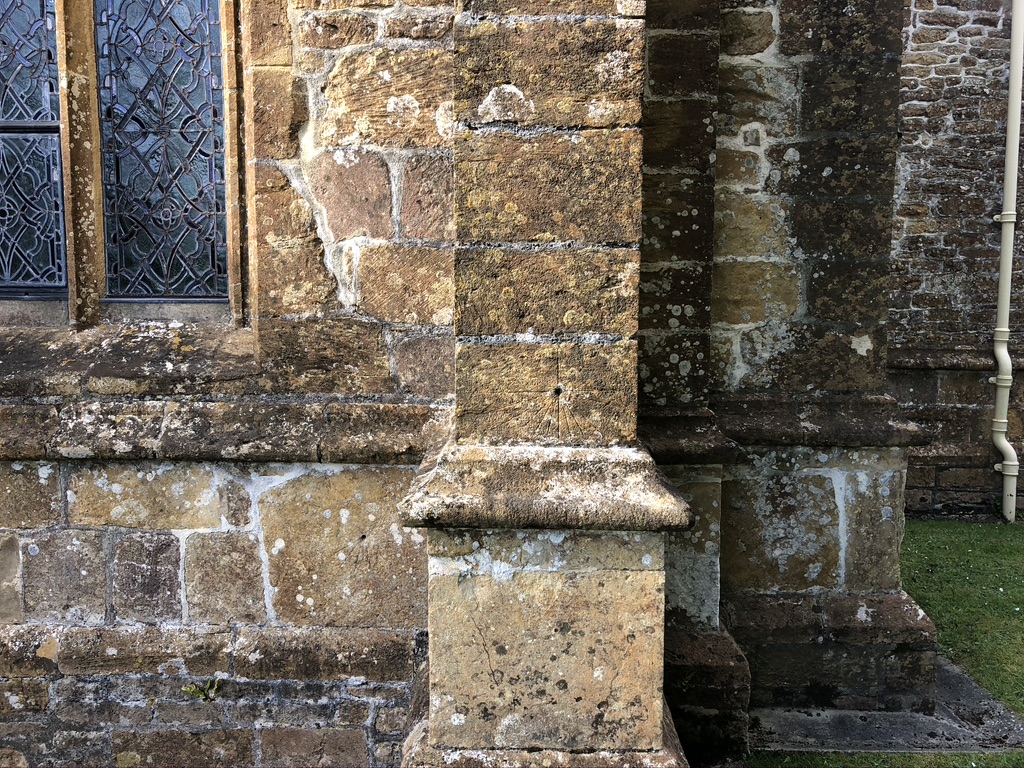
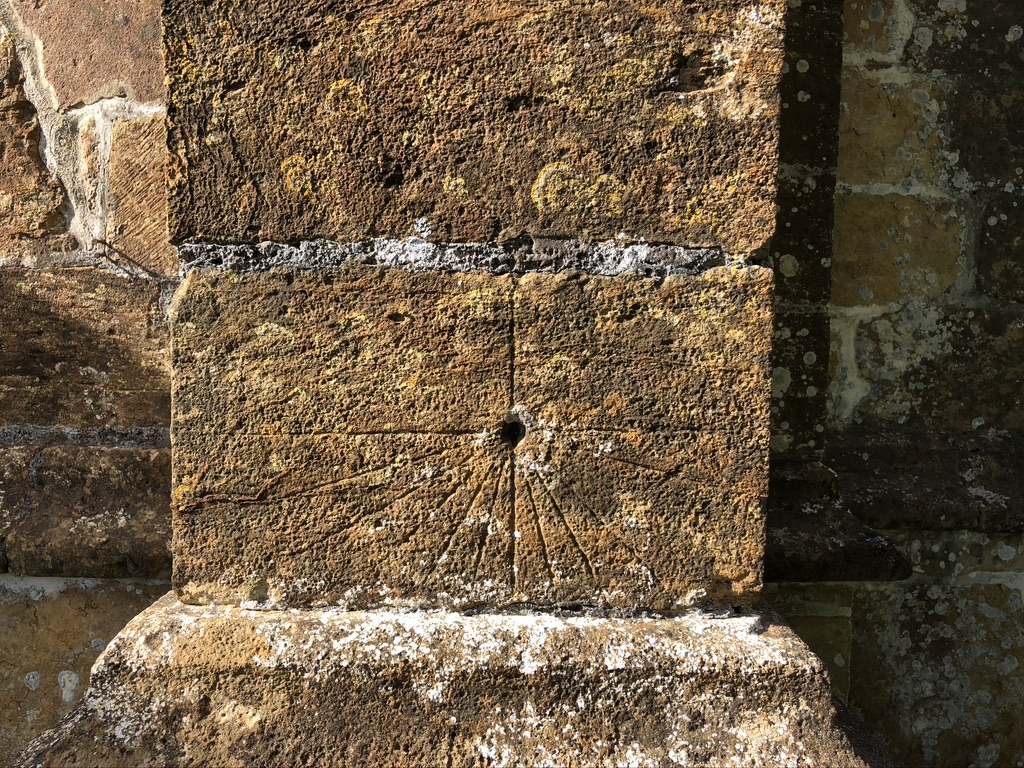
Dial 2 is located on the buttress at E end of the nave. It is close to being an ideal dial for study. The style hole is (nearly) centred on the stone. The noon line is not only emphasised, it extends upwards to ‘midnight’. There’s a distinct optical impression of a circle. The horizontal (6-to-6) line extends almost the full width of the stone. Other lines are unusually long, reaching beyond the notional circle. They are carefully graduated to optimise the accuracy of the dial. One mystery is the absence of the 4-line. I couldn’t find a trace of one. It seems unlikely that a single line has eroded completely; but a reason for omitting one line on an otherwise complete and indeed symmetrical dial is hard to think of.
DEH chose the dial to illustrate Type 7
DEH177. (2) This dial is on the buttress at the s.e. corner of the nave. It is 4 feet 6 inches above the ground, the noon- line is 4 1/2 inches in length, the stylehole is 1 inch in depth by 3/4 of an inch in diameter, and the aspect is s. by 20°e. Type 7. April 24th, 1914.
Compton Pauncefoot . Somerset . St Mary – scratch dial on the E buttress of the nave
DIAL 3
Compton Pauncefoot . Somerset . St Mary – scratch dial beside the E buttress of the nave
Dial 3 is close to the same buttress, smaller, more rustic (earlier) and lower down. There are 9 certain lines and a couple of traces (one possibly above the 6 am horizontal). Their spacing is somewhat random. 4 lines end in pocks.
DEH 176. (1) This dial is on the wall w. of the buttress at s.e. corner of the nave. It is 2 feet 8 inches above the ground, the noonline is 4 1/2 inches in length, the stylehole is open, and the aspect is s. by 20° e. Type 3.
Compton Pauncefoot . Somerset . St Mary – scratch dial beside the E buttress of the nave
DIALS 4 a – d
Compton Pauncefoot . Somerset . St Mary – scratch dial(s)
Dial 4 This is in fact a dial / dial-related group on a single quoin stone, but treated as a dial unit for convenience. The overall design has 4 elements. There are 3 eroded (part) circles – two overlapping – with a small rough dial within the top circle. In this group of interlinked components, each is of a type often identified either as dials or as remnants of eroded dials. See eg CHURCH STRETTON Such a collection on a single stone perhaps suggests experimentation with dial-making. Or the (part-)circles may simply be decoration or (not unknown) doodles. Anyway, I decided to lump them together as one dial rather than to try to sort out the tangle. Any interpretations would be welcome.
Compton Pauncefoot . Somerset . St Mary – scratch dial(s)
DIAL 5
Compton Pauncefoot . Somerset . St Mary – scratch dial / C17 sundial
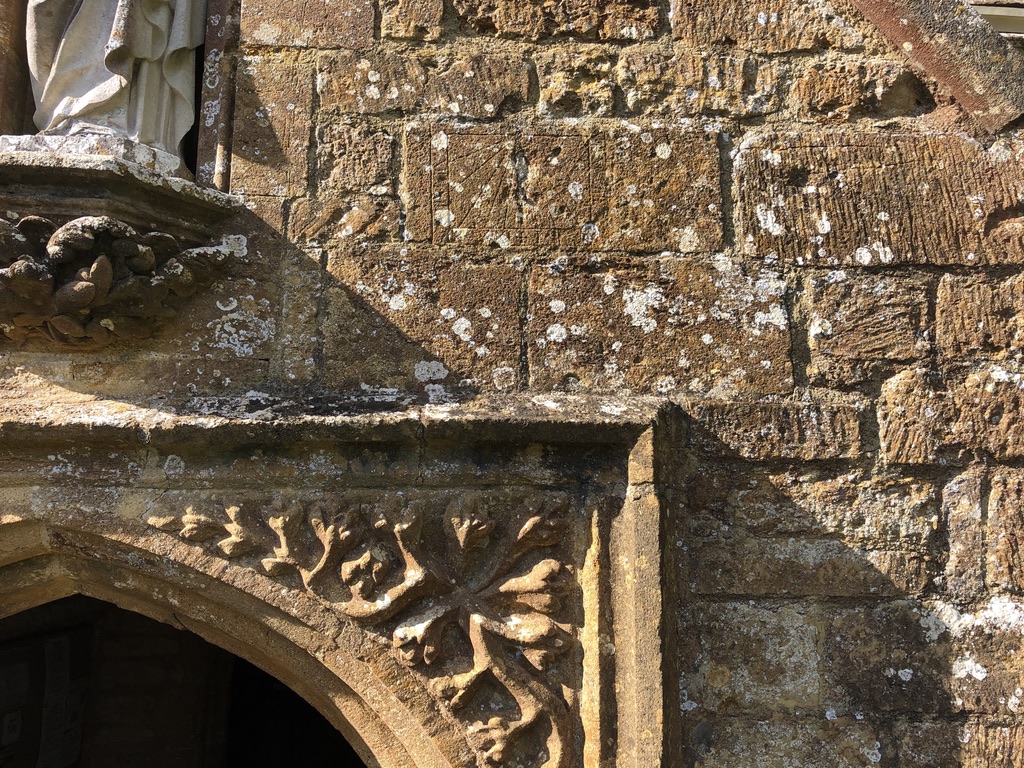
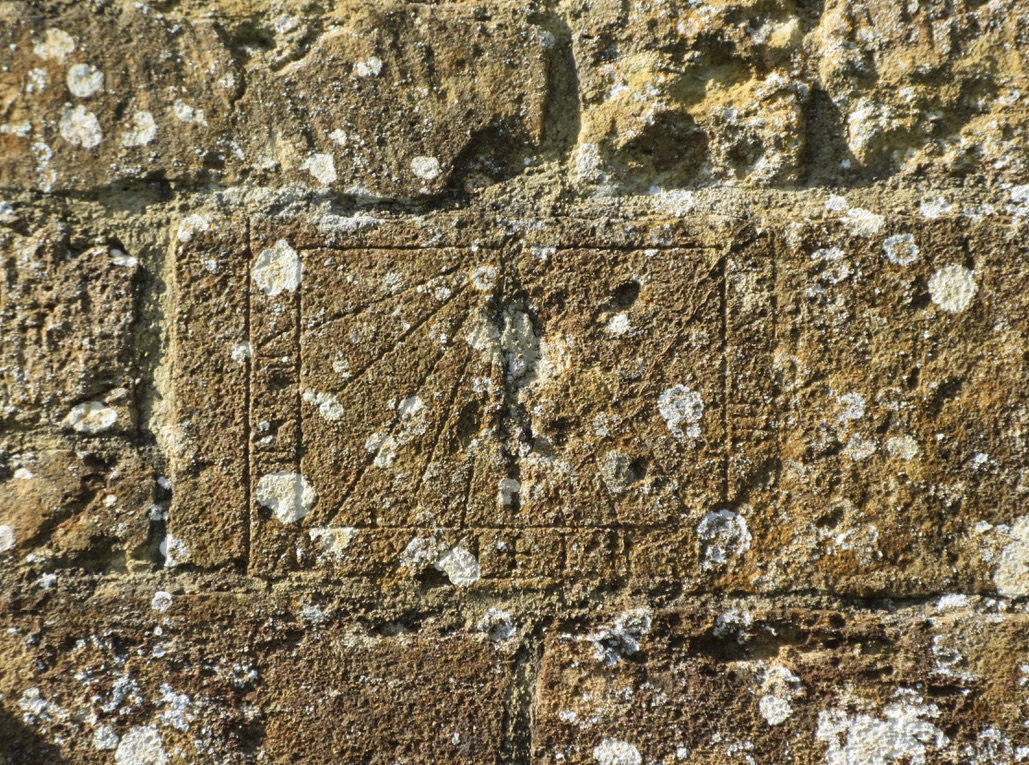
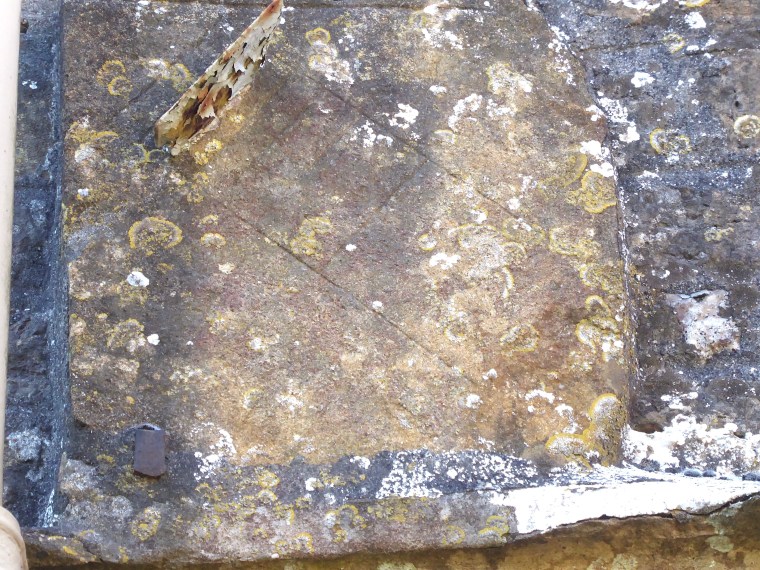
Dial 5 is a C17 later accurately incised dial on the fine porch above a cusped ogee-arched statue recess with foliated baseBLB with its C19 statue of Virgin and Child. This dial is similar to several others in S. Somerset & W. Dorset (some are included under the heading OLD DIALS). The radials are contained within a rectangle, carefully incised and graduated. The noon line is more deeply cut, and leads down from the damaged area at the top of which is a filled style hole. Possibly the area of damage immediately below it indicates that a metal gnomon plate was later fixed there. The frame round the dial shows Roman numerals (IV as IIII) except for noon, which is marked by a cross (a conventional style).
Compton Pauncefoot . Somerset . St Mary – scratch dial / C17 sundial
GRADE I † Early C12 traces, rebuilt and extended C15. S. tower added in 1638. Restored and added vestry C19. 2 bells cast on site in 1275, the oldest in Dorset. Notable C12 font. 50.8467 / -2.6524 / ST541054
SCIENTIFIC DIAL
Once you have located the church at the very end of the hamlet – a dead end – of a very long lane, it immediately looks distinctive. In the present context, the dial on the tower – inscribed on S. parapet William Lardar Esq. Thomas Horsford Warden 1638 – is most unusual, not least because it faces due E.
DEH, in a rare excursion into Dorset while researching the scratch dials of Somerset in 1914, recorded this dial as a C17 scientific dial of 1638: E declining down to midday only. No trace of another dial for later in day.
GLP has written the definitive interpretation of the dial, and I include his complete record which explains the dial far better than I ever could.
It would be good to know if this blade of a gnomon is / may be original and has been (re)painted over the years. Also, to know why special dials were almost always sited next to a drainpipe…
GSS Category: Scientific Dial; Scratch Dial; Old Dial
All photos – Keith Salvesen; record extract – Gordon Le Pard
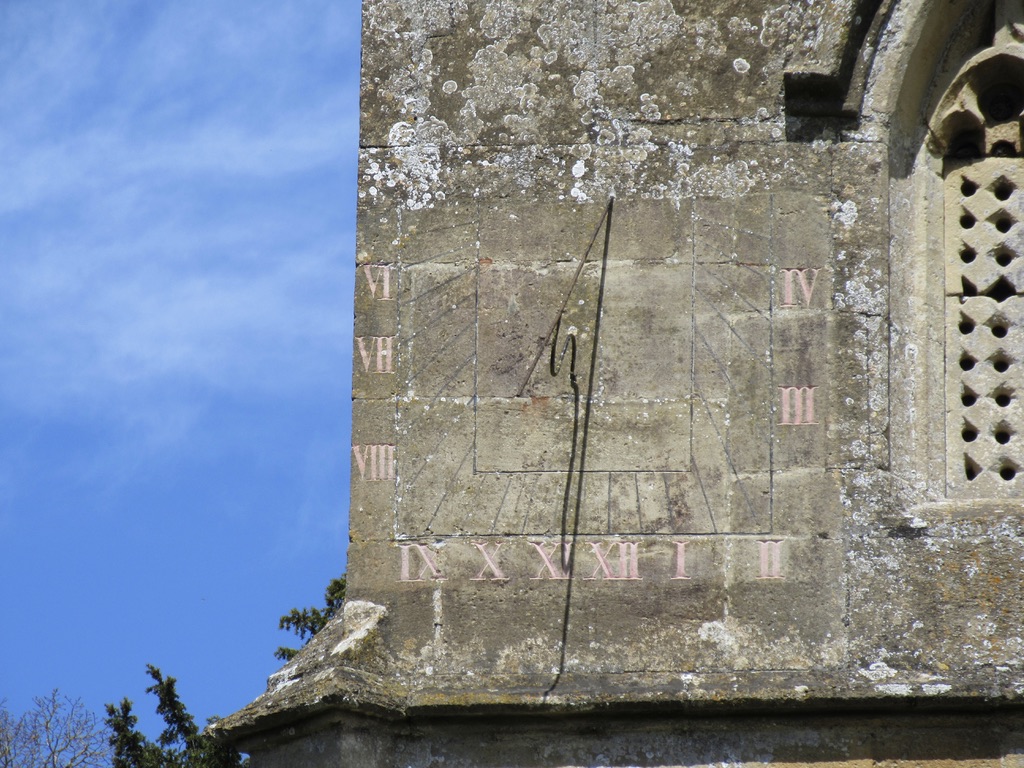
High up on the third stage of the C15 tower is a magnificent C18 sundial. A border of Roman serif numerals from 6am to 4pm frame a complex design of carefully graduated radials that mark the hours and the half hours. The large but slender gnomon casts a long shadow.
St George . Preshute . Wilts – the sundial on the tower
The imbalance in the hour marks – 6 to the left of the noon line, 4 to the right – presumably arises from the orientation of the church and its relation to the angle of the sun (though that’s probably not the correct technical way to express it).
St George . Preshute . Wilts – the sundial on the tower
NOTE there is a plausible medieval scratch dial on one buttress (not as yet recorded). It’s status is under consideration by others… If it is deemed a dial I will write it up separately.
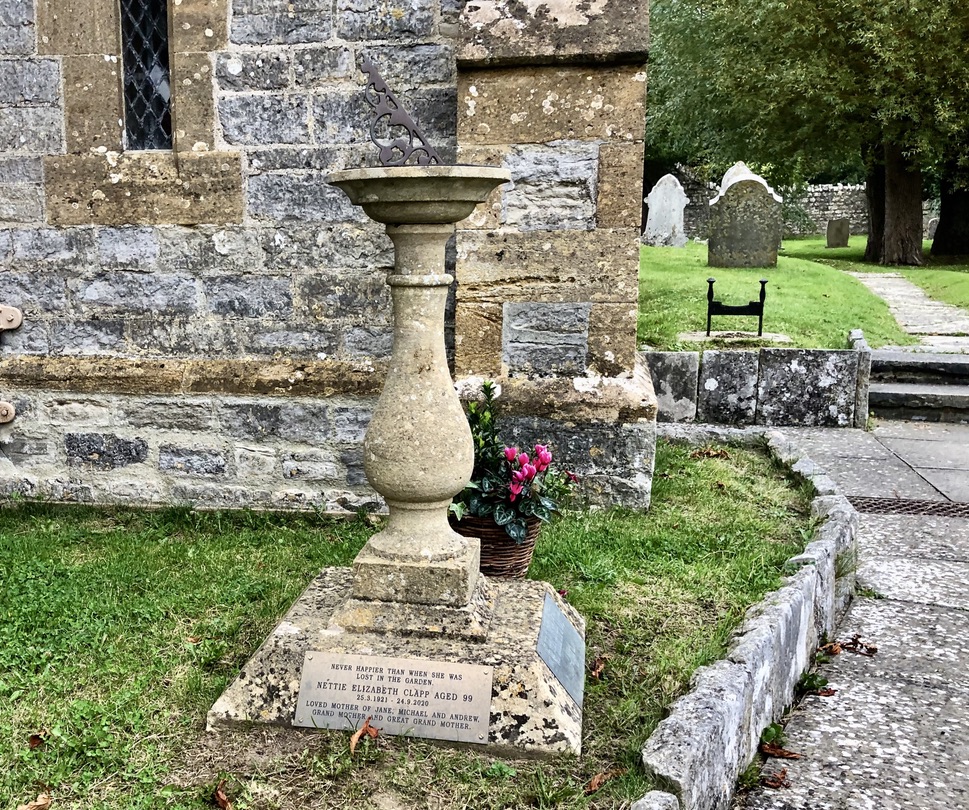
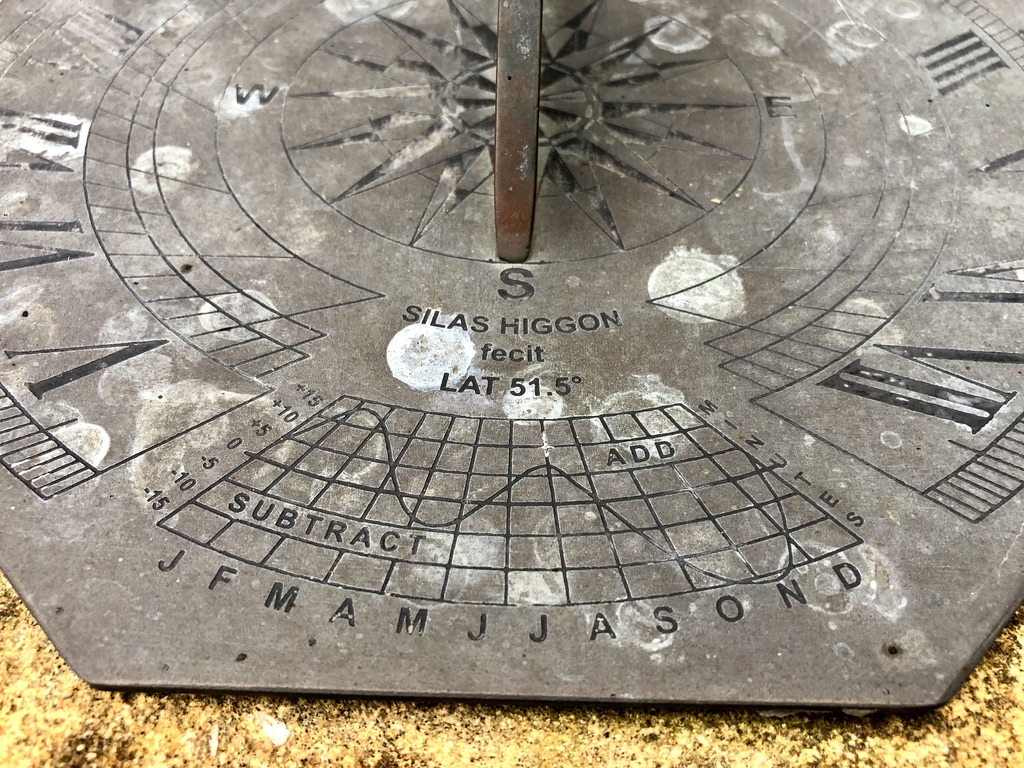
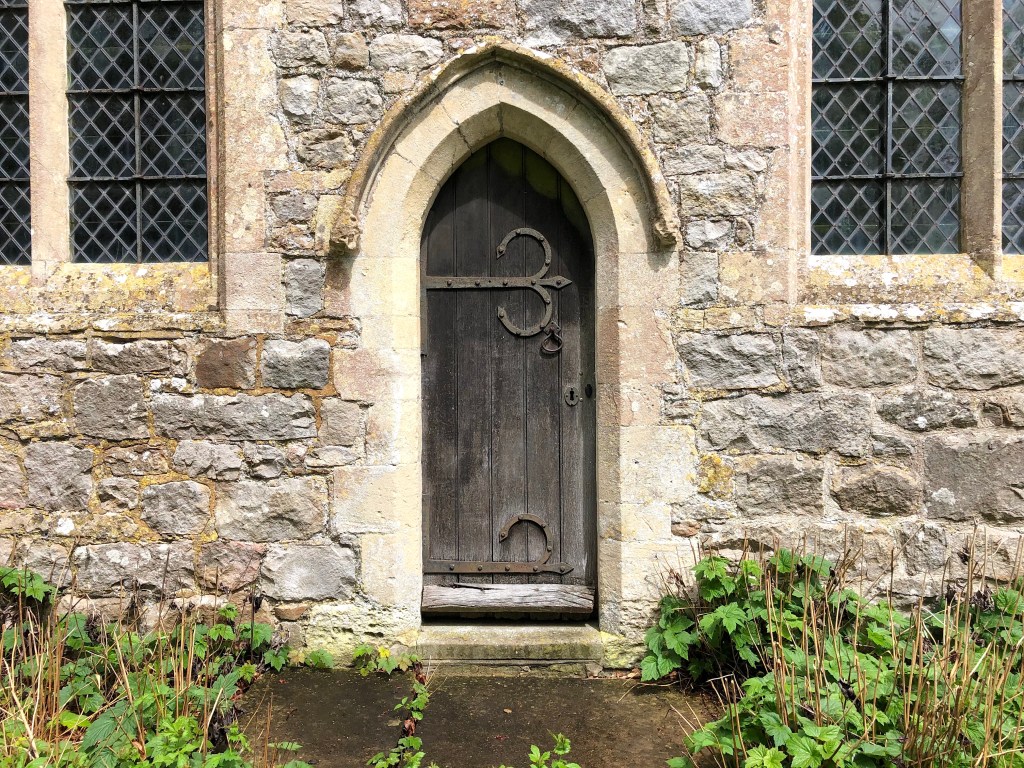
GRADE II* † C13 with C15 reworking and C19 restoration. Like nearby PODIMORE, a 4-stage tower with octagonal upper stages. One of several churches in the area with (unusually in such a close group) dials inside S. porch. A modern memorial horizontal sundial by Silas Higgon has an interesting plate (see below). Located S. of the A303, between Queen Camel and Cadbury Castle (a dominant hill fort nearby, and well worth the climb). 51.0226 / -2.5564 / ST610249
DIAL
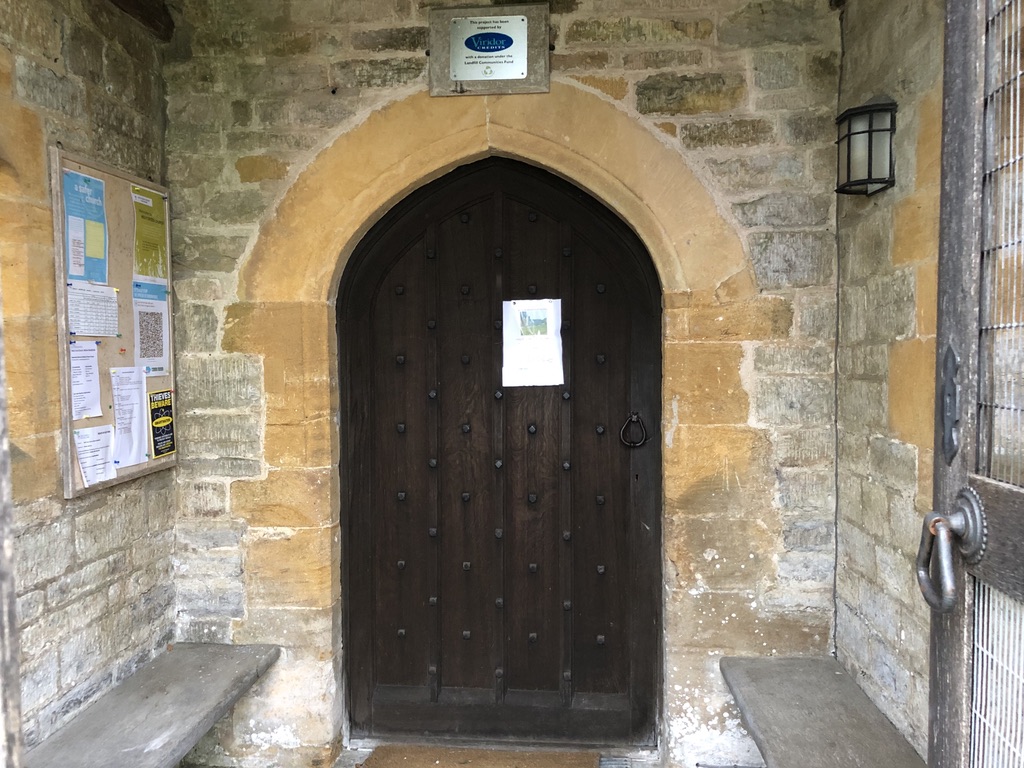
Another small and attractive church in the Yeovilton area, most of which have scratch dials. Like some of its neighbours, the dial of Holy Cross is located within the S. porch, a later addition. On his visit in 2014, DEHrecorded:
183. This dial is on the e. side of the inner door of the s. porch. It is 3 feet 7 inches above the floor, the noonline is 5 inches in length, the stylehole, which is filled up, is in the solid stone and not in a joint. The aspect is s. by 20° E. Type 3. April 24th, 1914.DEH
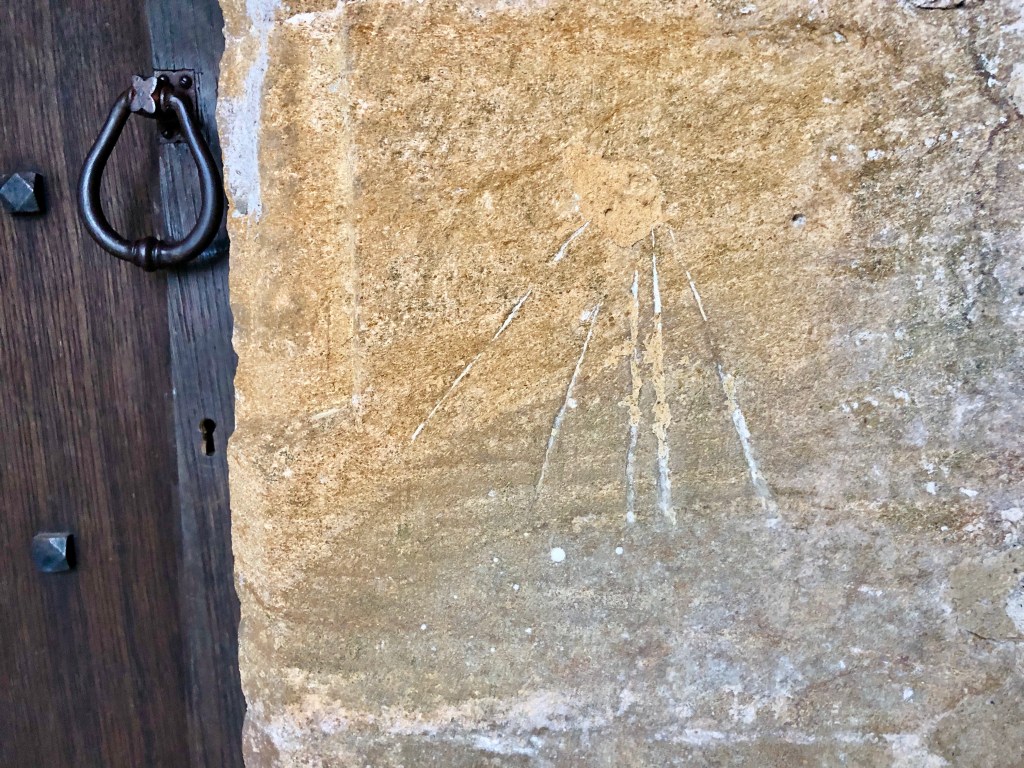
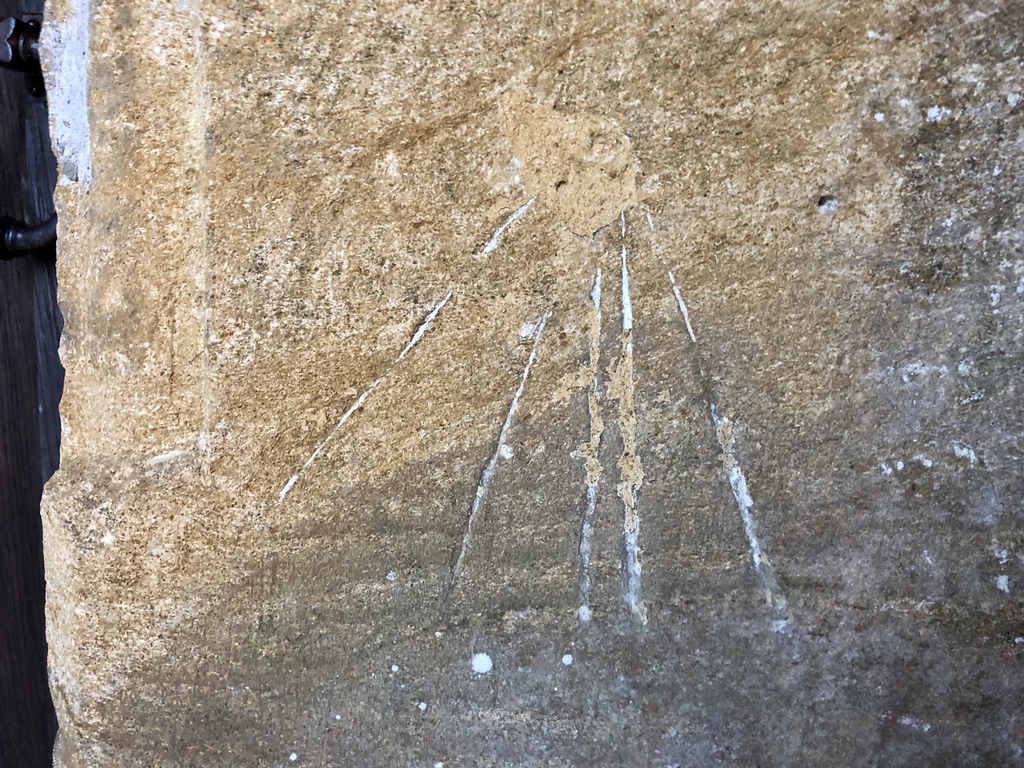
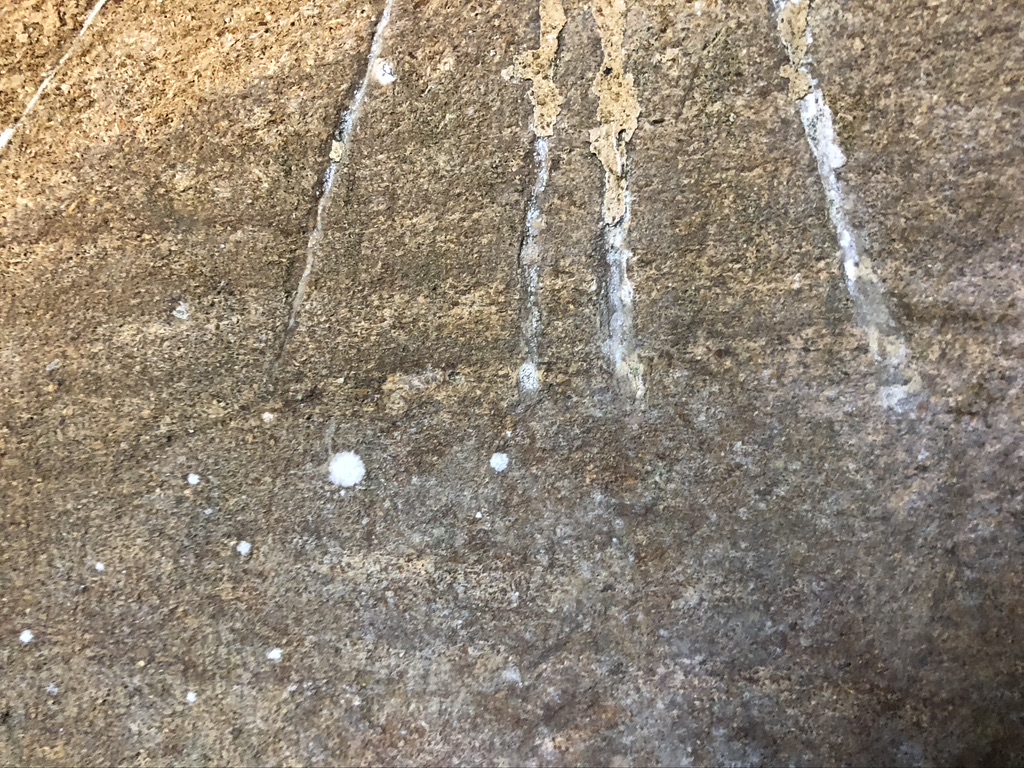
The dial is scratched into a stone on RHS of the original doorway. The filled gnomon hole, near the centre of the stone, has 5 long lines descending. At some stage the porch has been whitewashed (as was often done cf WAYFORD), and paint traces remain evident on the dial and elsewhere in the porch (on graffiti and witch marks, for example).
As I understand it, 2 almost parallel vertical lines on dials like this were probably intended as the edges of an ‘absent’ noon line, with the true vertical midway between them as opposed to a line marker.
Russborough House . Wicklow . Ireland – Courtyard Gateway Sundial
RUSSBOROUGH HOUSE . Co WICKLOW . IRELAND – COURTYARD GATEWAY SUNDIAL
Russborough House . Wicklow . Ireland – Courtyard Gateway Sundial
Russborough House, built mid C18 for Joseph Leeson, is one of Ireland’s finest Georgian houses. Set in a large estate in the Wicklow Mountains, the house is renowned for its outstanding art collections (see http://www.russborough.ie/art).
The pleasing and straightforwardly solid gateway to the Courtyard has a most interesting angled sundial with no part of it in an expected place. One consequence of its position is that the graduations are notably complex. The main photo in the gallery below shows this far better than I can explain it.
It is clearly not an old dial. I have seen one photograph that suggests that at some time it has been painted blue. I need to investigate further and will add the details if I can find a date for the dial.
Russborough House . Wicklow . Ireland – Courtyard Gateway Sundial
Winterbourne Bassett . Wilts . St Katherine & St Peter
ST KATHERINE & ST PETER . WINTERBOURNE BASSETT . WILTS
GRADE 1. Records from C12. Mainly late C13 / C14, expanded C15, restored mid-C19. An architectural gem (Betjeman). Dedication has varied over time. 4m N. of Avebury. 51.4731 / -1.8554 / SU101749
DIALS
4 dials identified: 3 scratch dials and 1 ‘very early scientific dial’(BBS)
DIAL 1
Priest’s Door R. Pock dial with 5 clear dots on pinkish stone (similar position and style to eg Maiden Newton Dorset).
Winterbourne Bassett . Wilts . St Katherine & St Peter – Scratch Dial 1
DIALS 2 & 3
Priest’s Door R, lower down. Dial 2 is a conventional dial with 4 lines in L. lower quadrant; noon line emphasised. Adjacent to less clear Dial 3 with filled style hole and 2 clear thin radials and (perhaps) a very faint noon line. There’s a possible additional dial on this stone, at best a style hole with eroded lines.
Winterbourne Bassett . Wilts . St Katherine & St Peter – Scratch Dials 2 & 3
DIALS 1, 2 & 3
Winterbourne Bassett . Wilts . St Katherine & St Peter – Scratch Dials 1 – 3Winterbourne Bassett . Wilts . St Katherine & St Peter – Priest’s Door with 3 scratch dials
DIAL 4
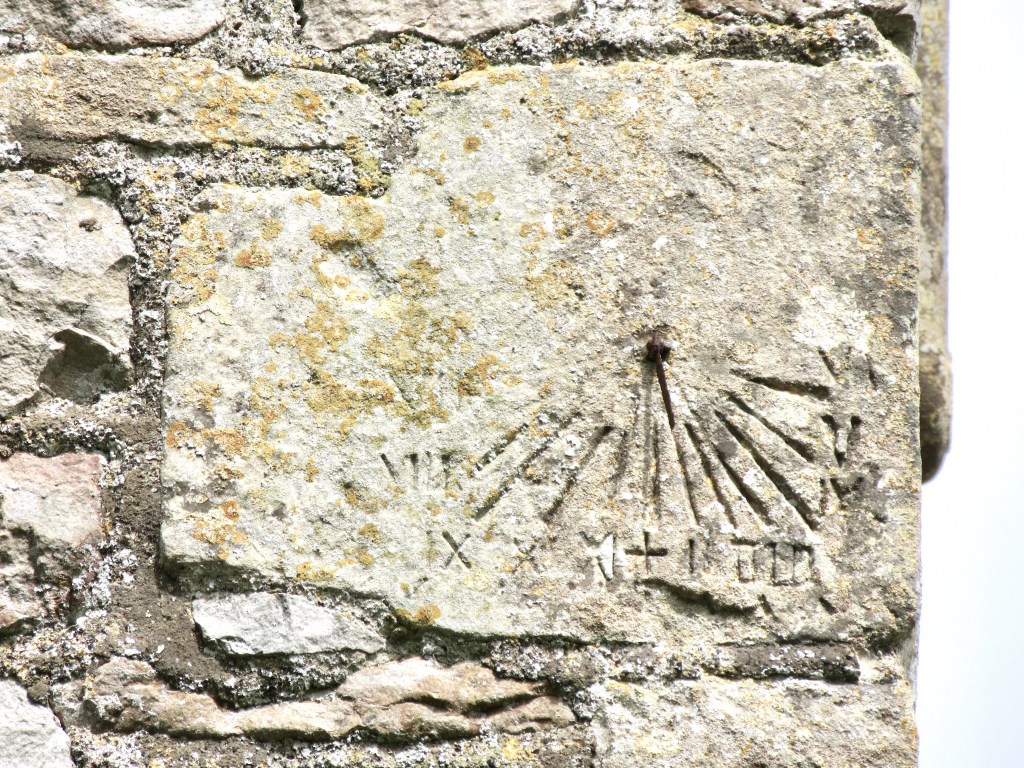
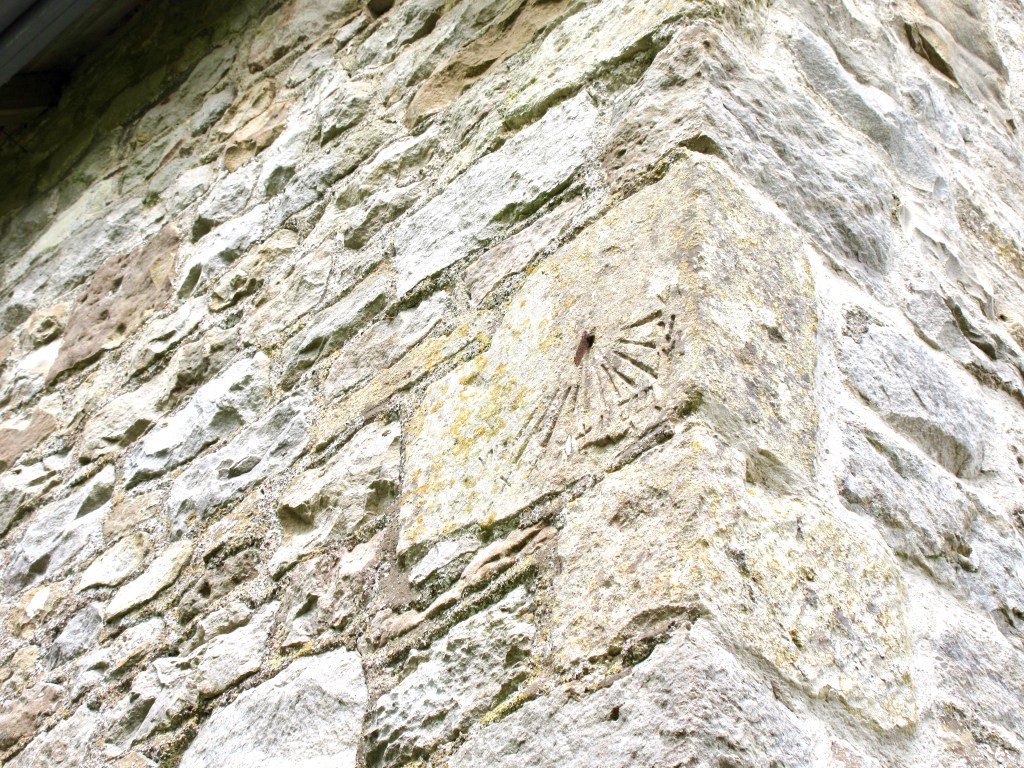
High on quoin on S. side, a far more sophisticated gnomon dial. The BSS record from some years ago states: ‘Probably upright Roman numerals with cross for noon (not easy to see). Very early scientific dial. Gnomon may be a replacement’.
A photo taken last month removes the doubt. The incised lines – of variable width, some with a slight wedge shape, some quite deep (or less eroded) – have Roman numerals from VII round to VI. The IX to III horizontal line of numerals works well. The noon cross is very clear. I wonder if the stumpy little gnomon indicates that it is old (even if not original). Did gnomon design later develop to more elegant and longer markers?
Winterbourne Bassett . Wilts . St Katherine & St Peter – Scientific Dial with Roman NumeralsWinterbourne Bassett . Wilts . St Katherine & St Peter – Scientific Dial with Roman Numerals
Rhubha Rèidh Lighthouse Sundial . Gairloch Museum .
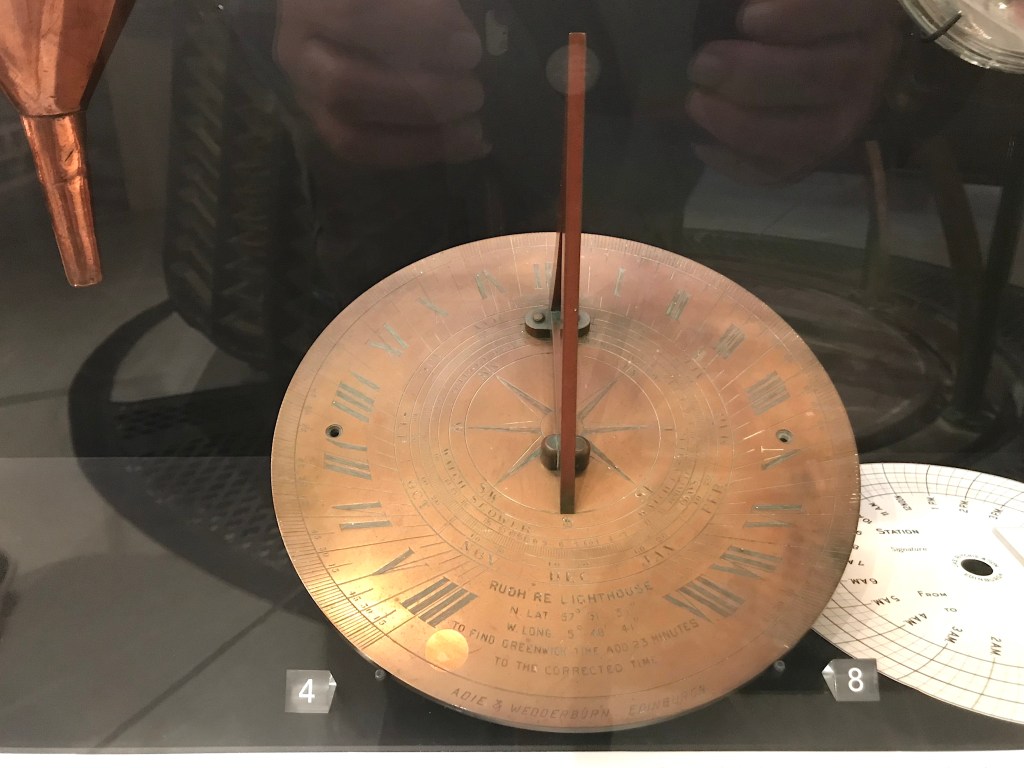
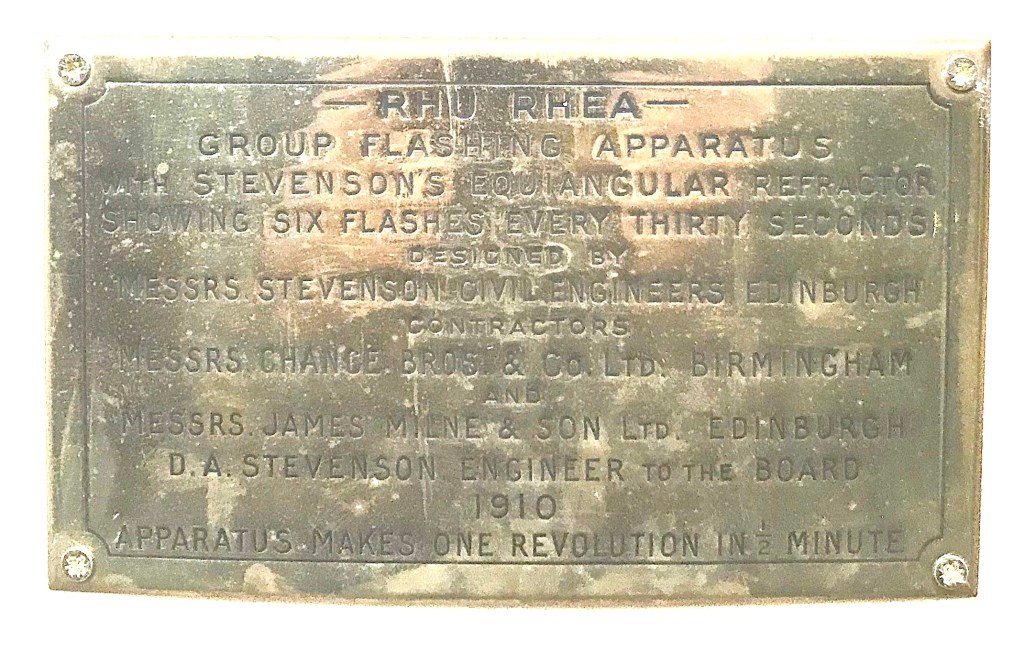
Rhubha Rèidh lighthouse is situated at Melvaig, near Gairloch, Wester Ross. Confusingly, there are several ways to spell the name. Correctly, it is as shown in the title above. However the map below omits the first h in Rhubha. The Northern Lighthouse Board uses Rubh Reidh for the lighthouse itself, perhaps for simplicity. The dial featured is marked Rudh Re. The brass plaque for the lighthouse is headed Rhu Rhea. Whichever, the pronunciation ‘roo ray’ is roughly correct. OS grid · NG7396491847
The lighthouse stands at the remote north west tip of a plump peninsular at the end of a narrow track, with Loch Ewe emerging into the sea to the east. It is one of the ‘Stevenson’ lighthouses, designed by David and completed in 1912. It was automated in 1980 and is still operational. If you want a secluded and unusual place to stay, you can book accommodation in the main building. Official tarmac ends halfway along the 6 mile (or so) road, which continues as an access road. This part of the coastline can be a good place for dolphin and whale watching – if you are lucky, a Minke.
‘Rudh Re’ Lighthouse Sundial . Gairloch Museum .
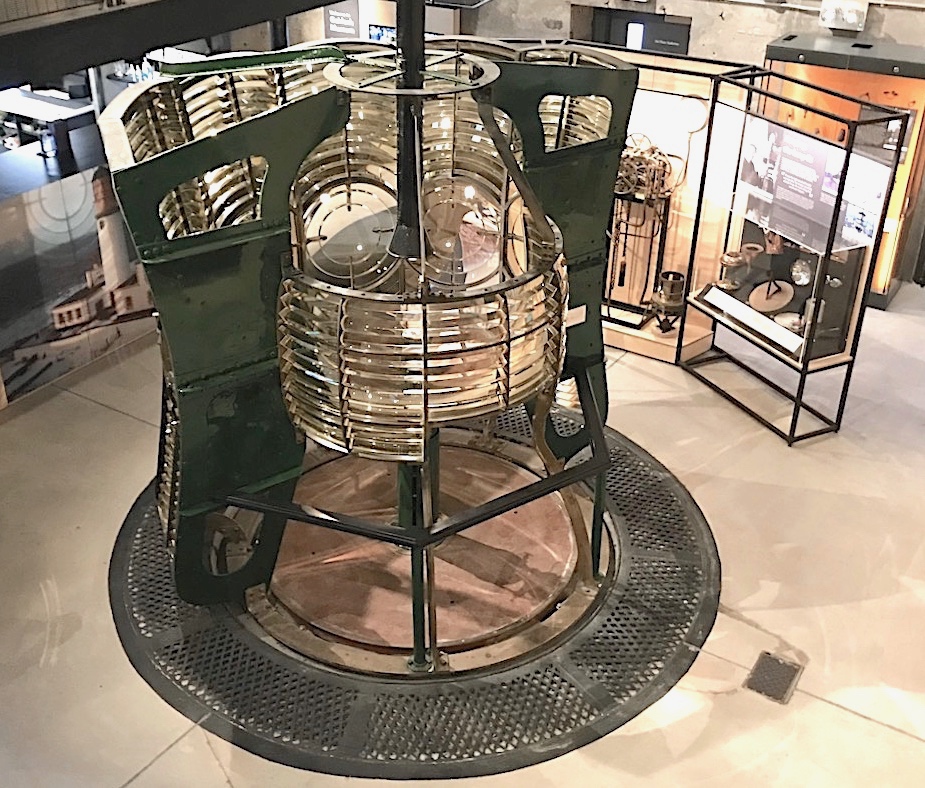
The dial is on display in the outstanding GAIRLOCH MUSEUM, winner of the Art Fund’s Museum of the Year 2020. Small it may be, but packed with interest. The dial is in a glass case displayed with related items. The entire lantern is housed in the main room, viewable from a gallery above as well as at floor level. Its Fresnel lenses are intact. In a parallel life, I have been peripherally involved with a working ‘clockwork lighthouse’ bedded on mercury, with its original Fresnel lenses (Hope Town, Abaco, Bahamas) – possibly the last survivor. There is another lighthouse on the island, long abandoned but still with at least some of its Fresnel lenses.
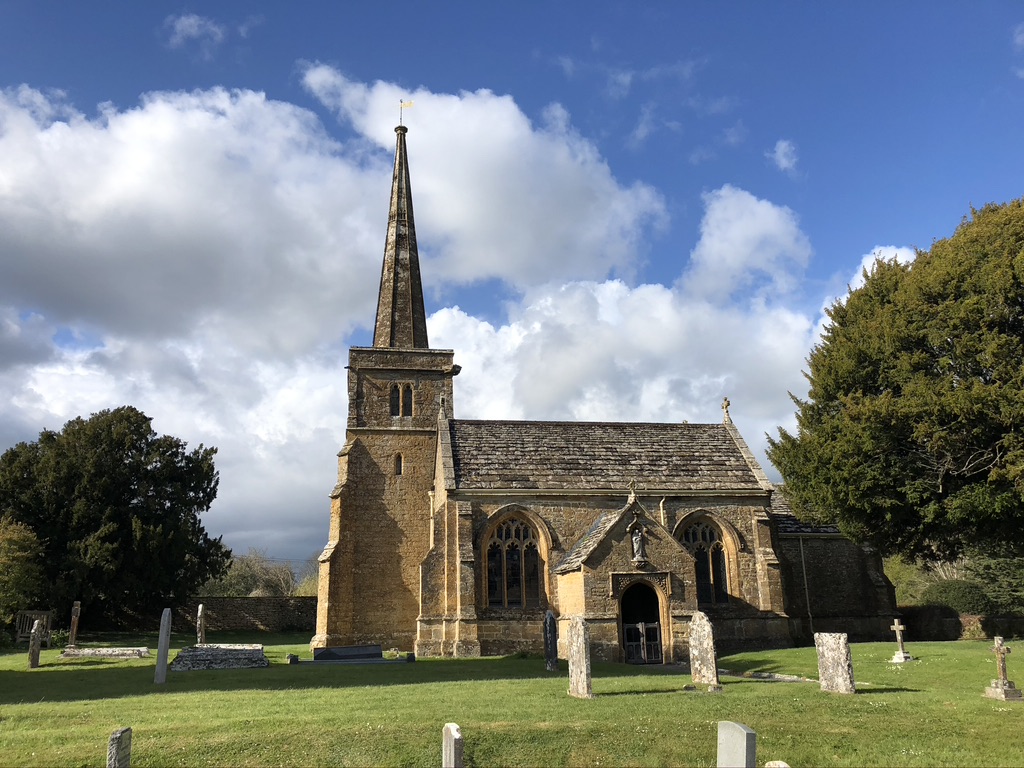
GRADE ll*. Mainly C14 / C15, broadly Perp. Earlier origins. C19 work by G. Scott & T. Wyatt. Solitary in a combe behind the village and a real challenge to discover (ignore ‘Church Lane’). Well worth the effort to visit, as is Bratton Camp iron-age hill fort with its early white horse to W. 51.2665 / -2.1244 / ST914519
DIAL
CHURCH OF ST JAMES THE GREAT . BRATTON . WILTS – SCRATCH DIAL
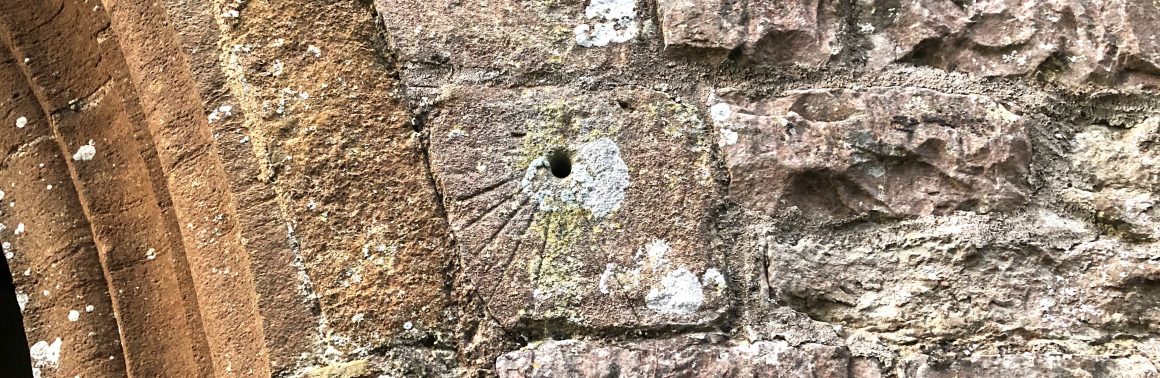
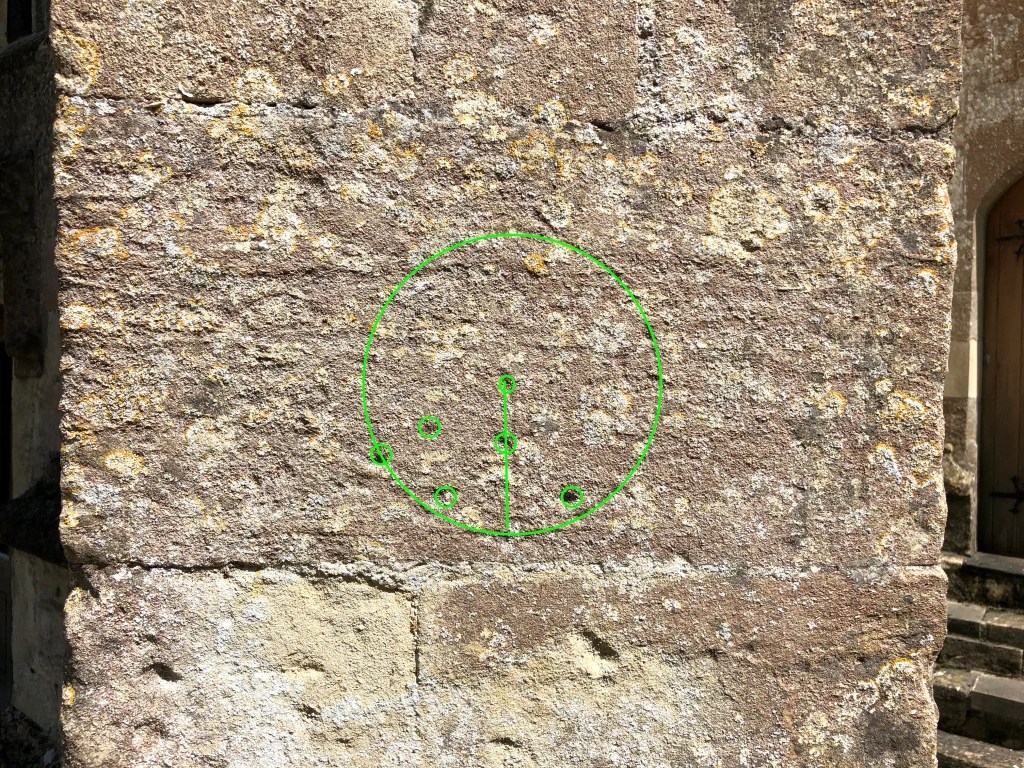
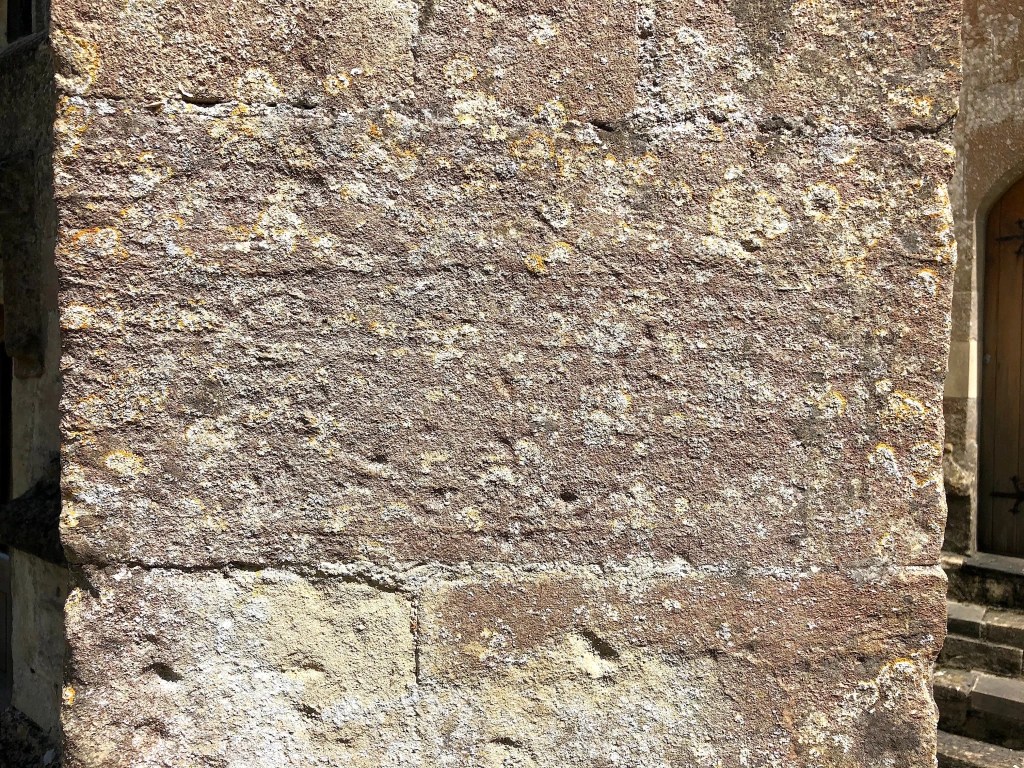
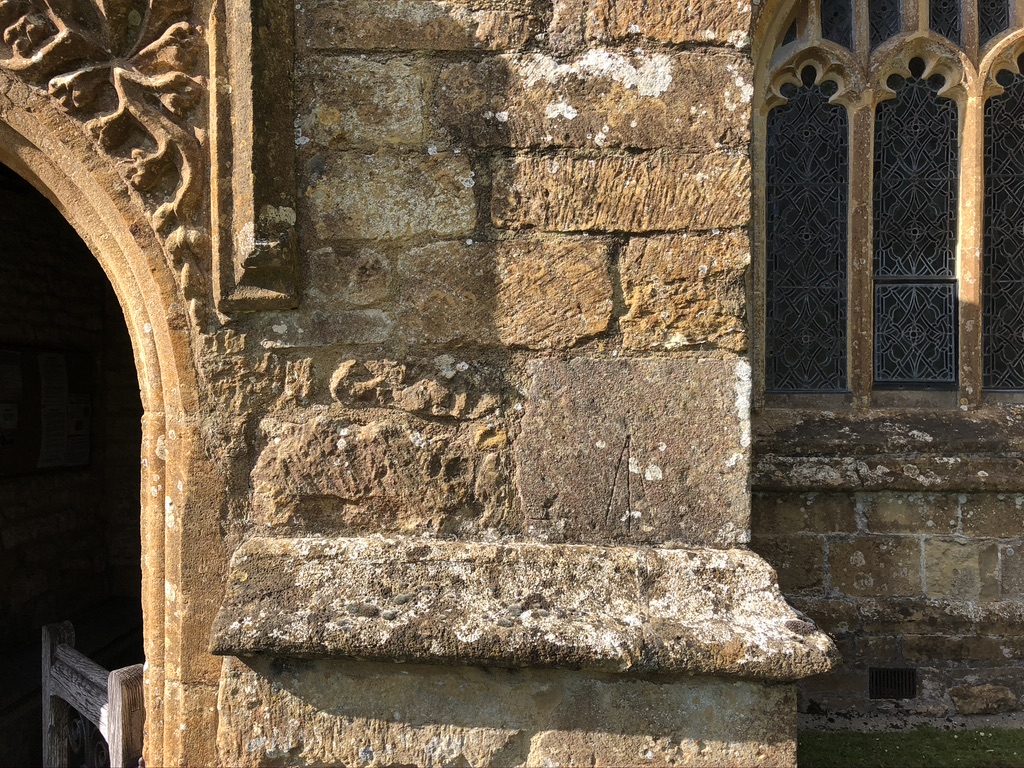
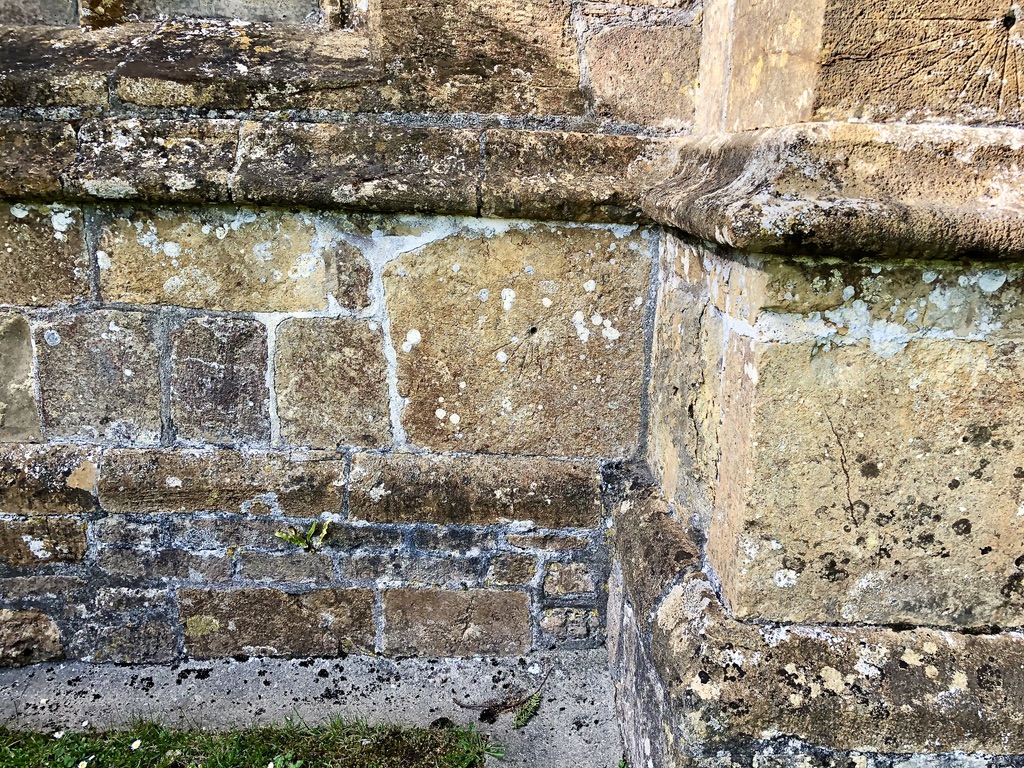
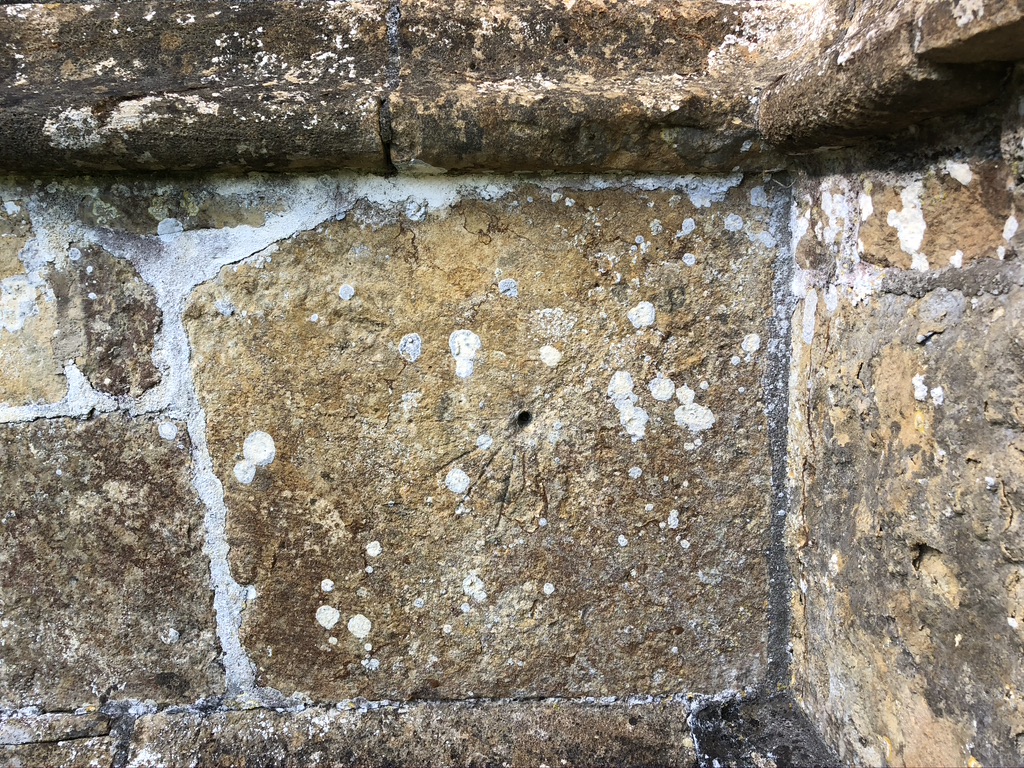
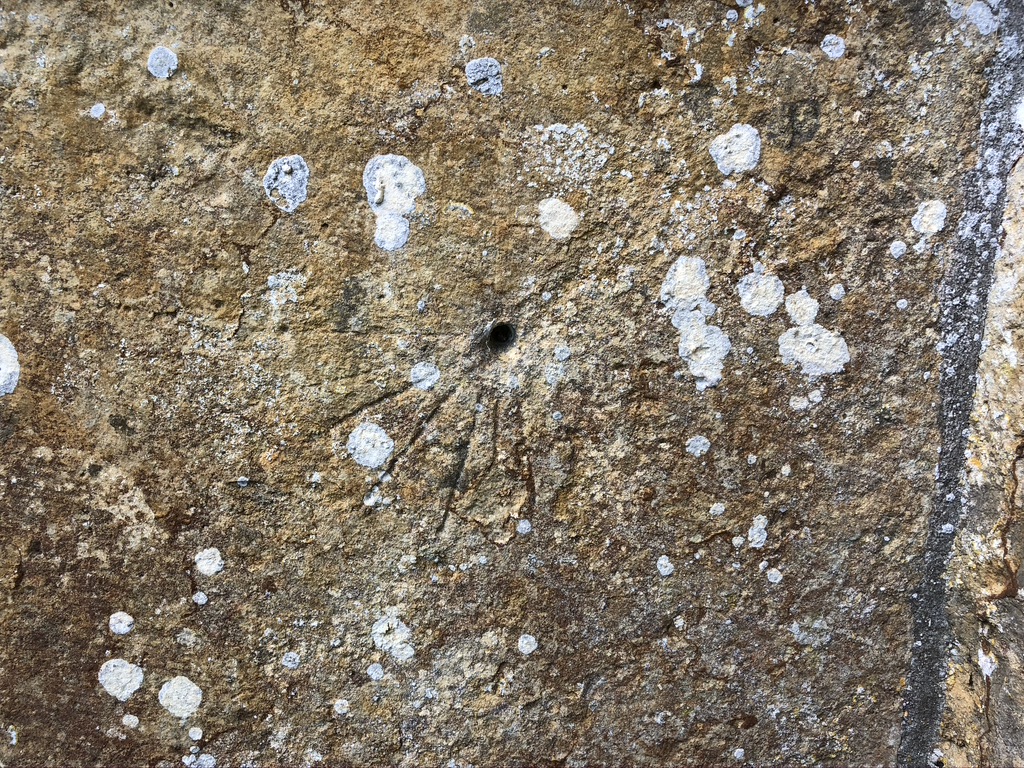
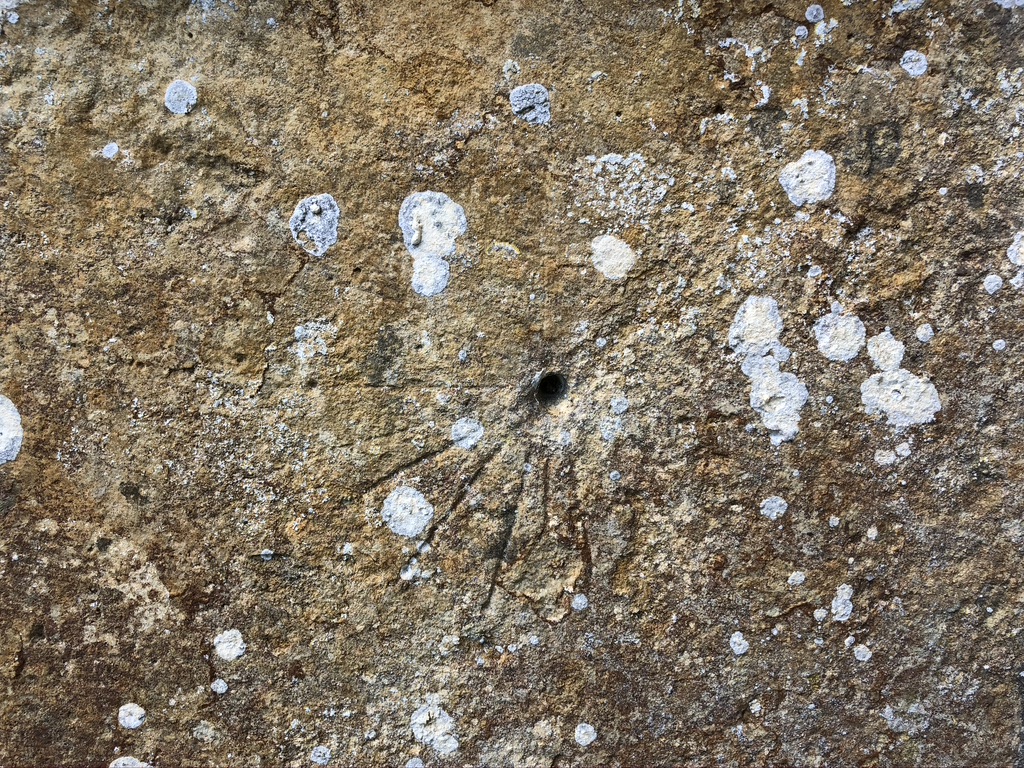
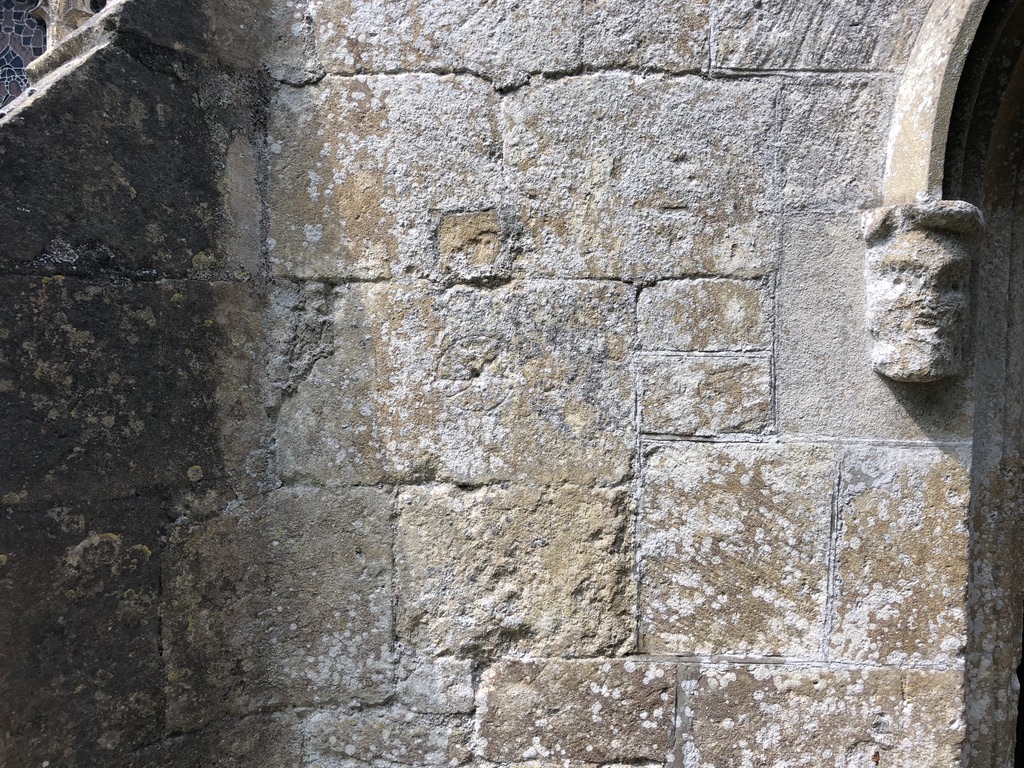
A simple small dial, encircled, with several slightly curving radials. 3 or 4 pocks that may relate to it. Located W. of the S. porch, level with the head stop L. of the arch.
CHURCH OF ST JAMES THE GREAT . BRATTON . WILTS – SCRATCH DIAL
OLD DIAL
On S. face of the tower, a large painted dial dated 1801 ‘TEMPUS FUGIT’. The long spindly gnomon casts an impressively long shadow.


























 GAUDIUM SUB SOLE . SUNDIALS . MEDIEVAL TO MODERN