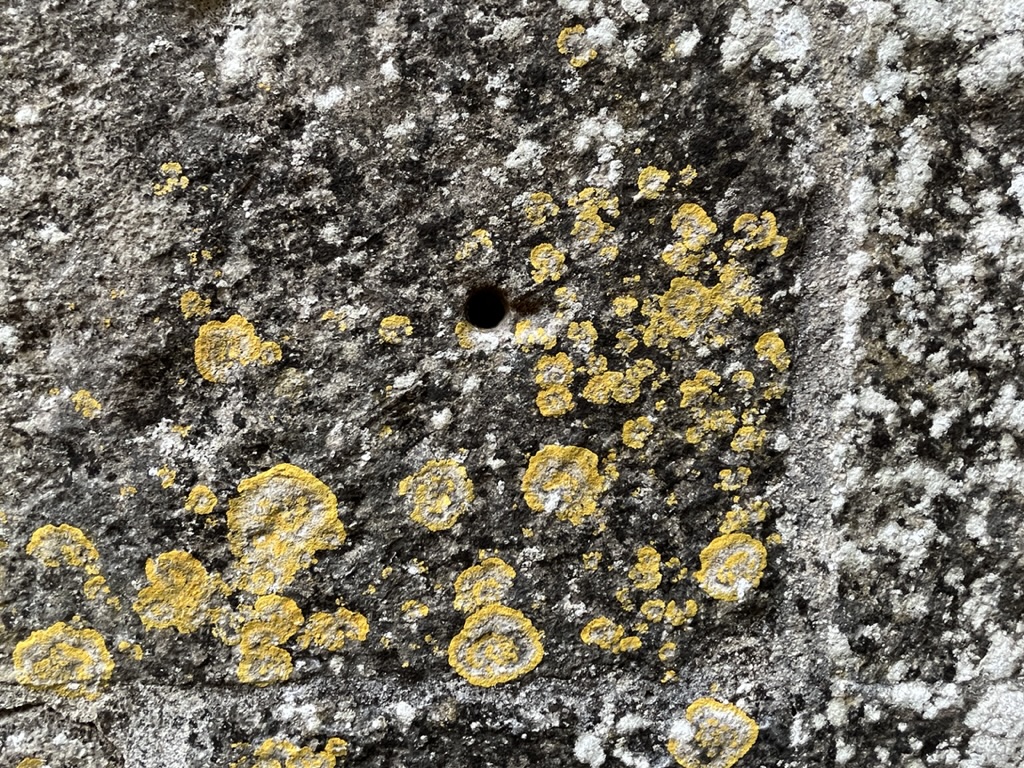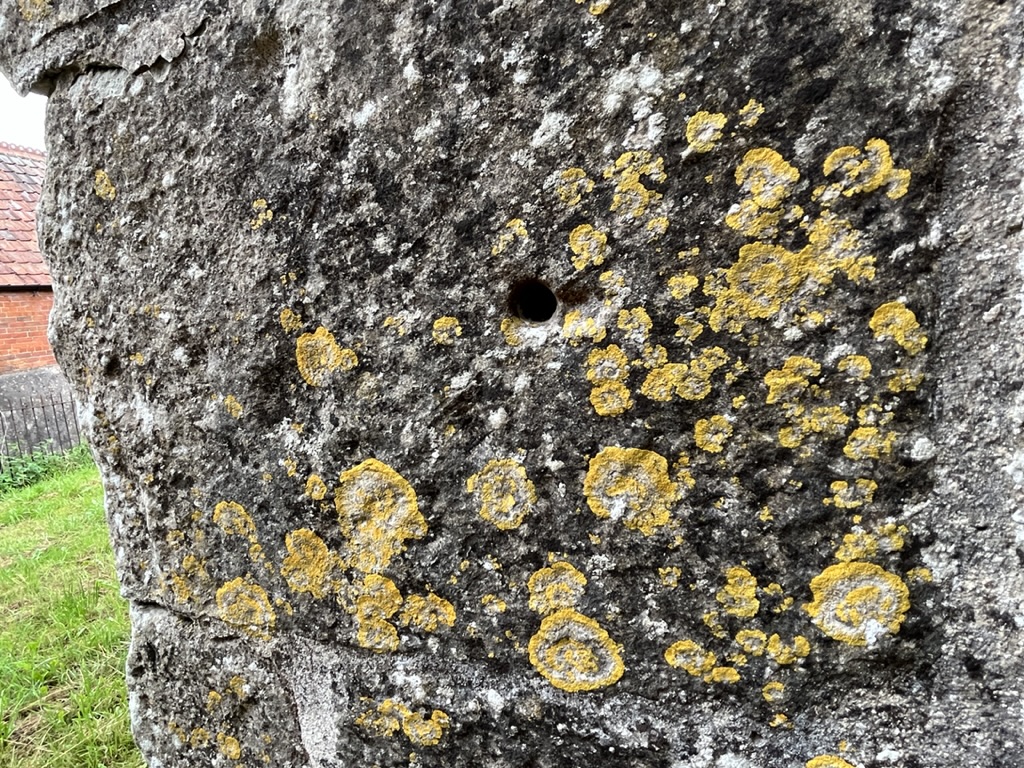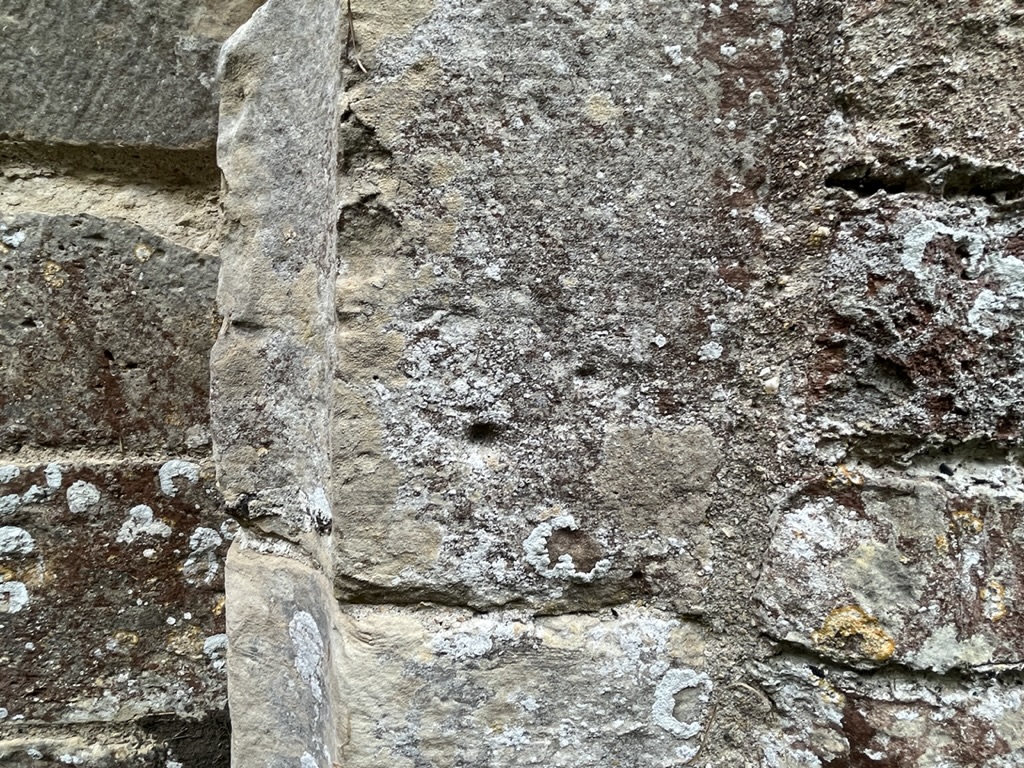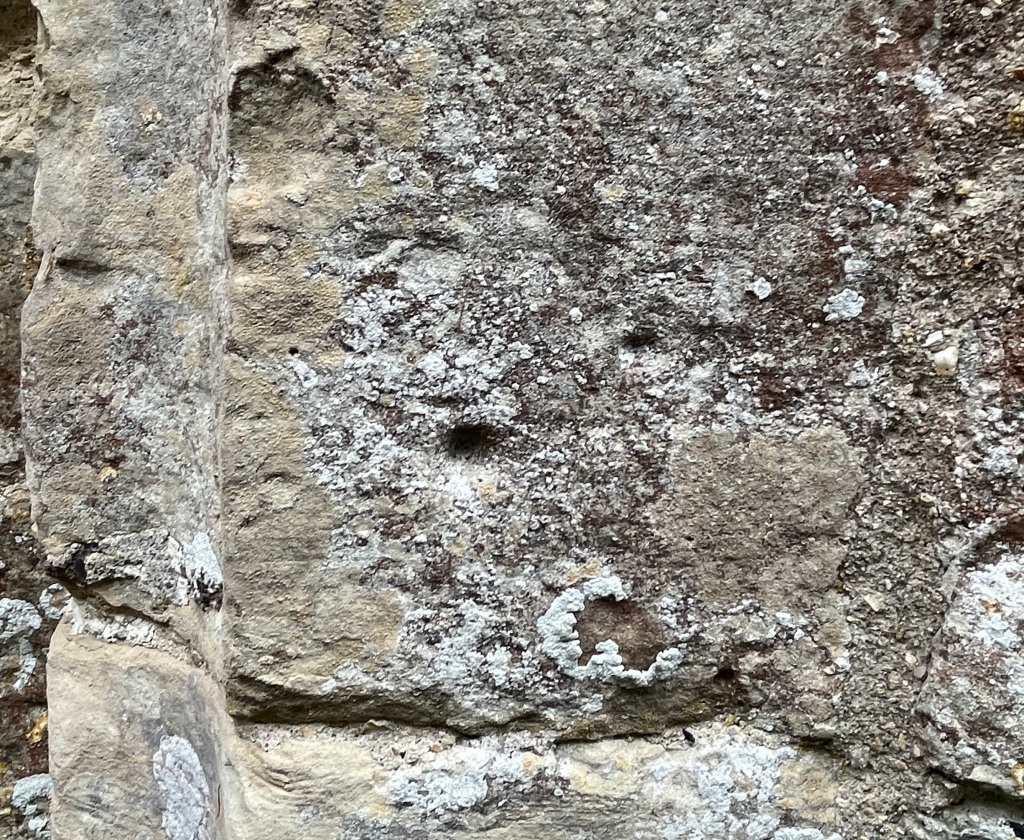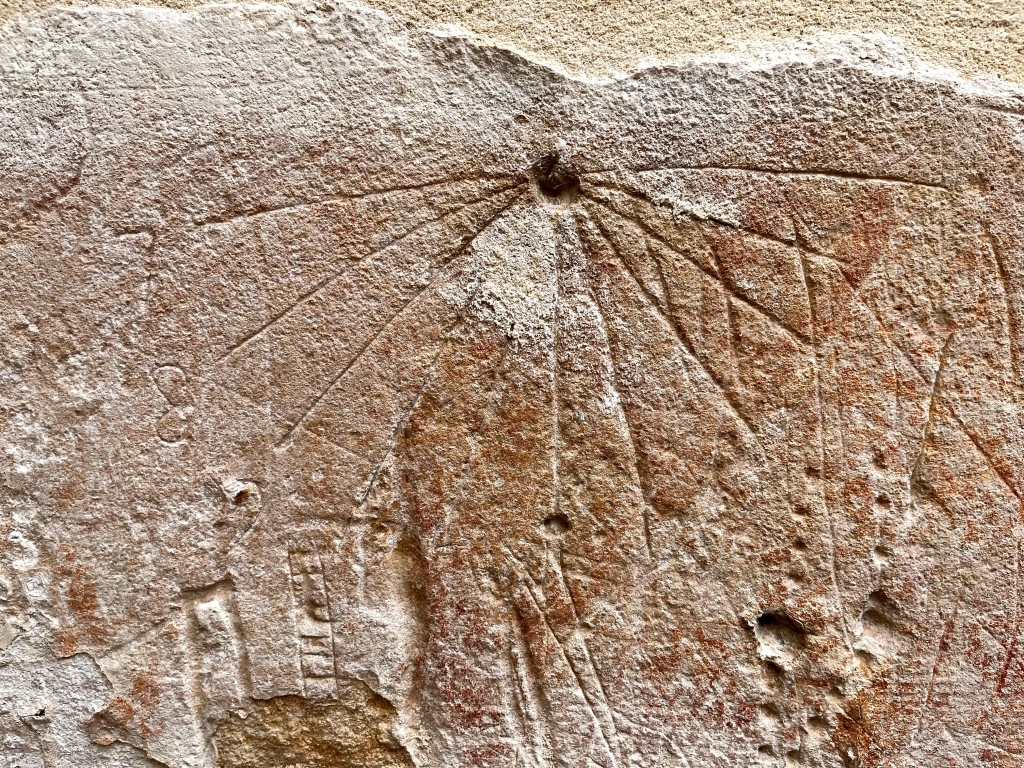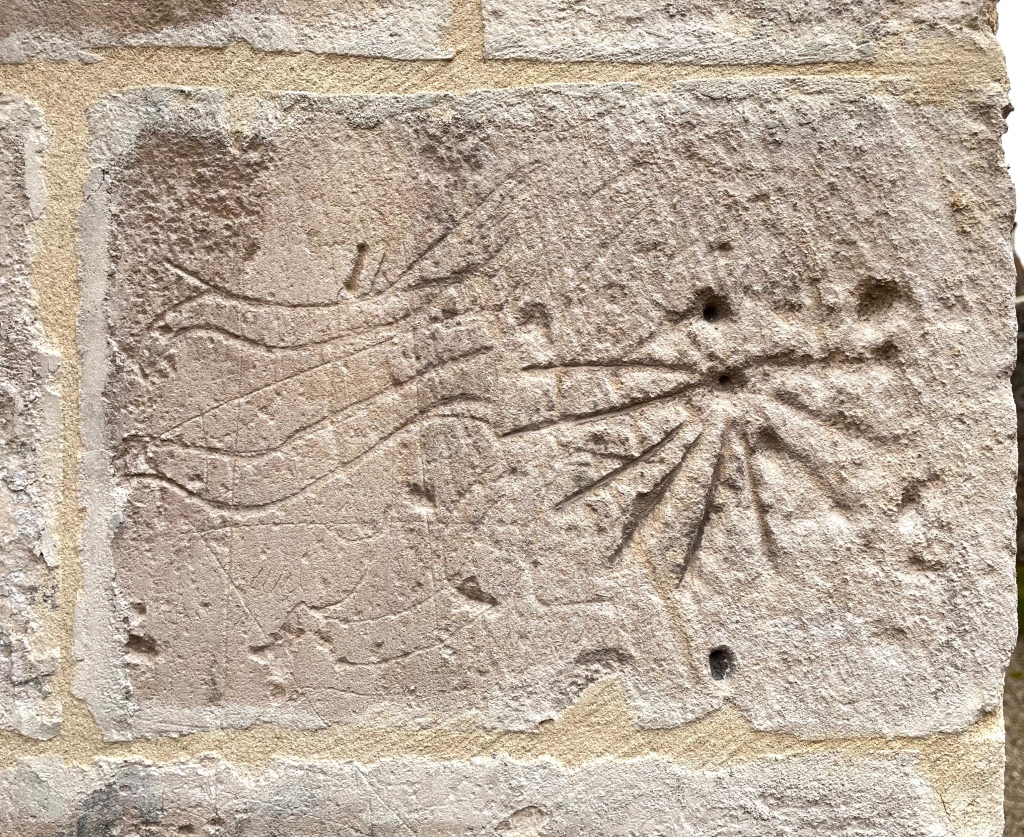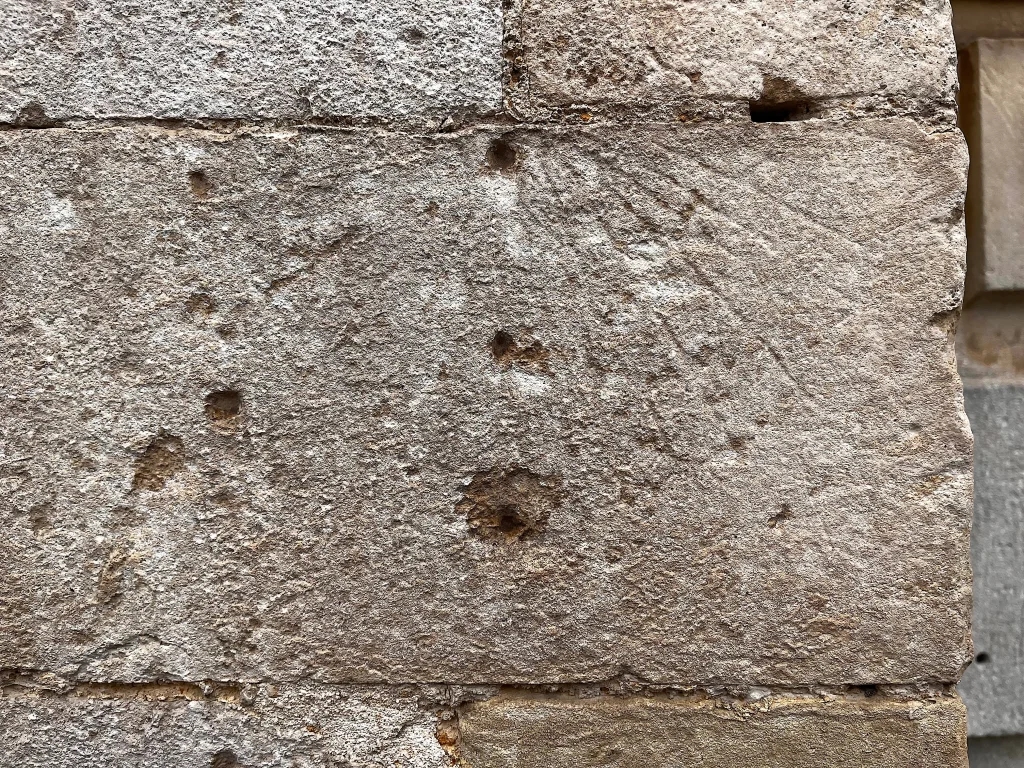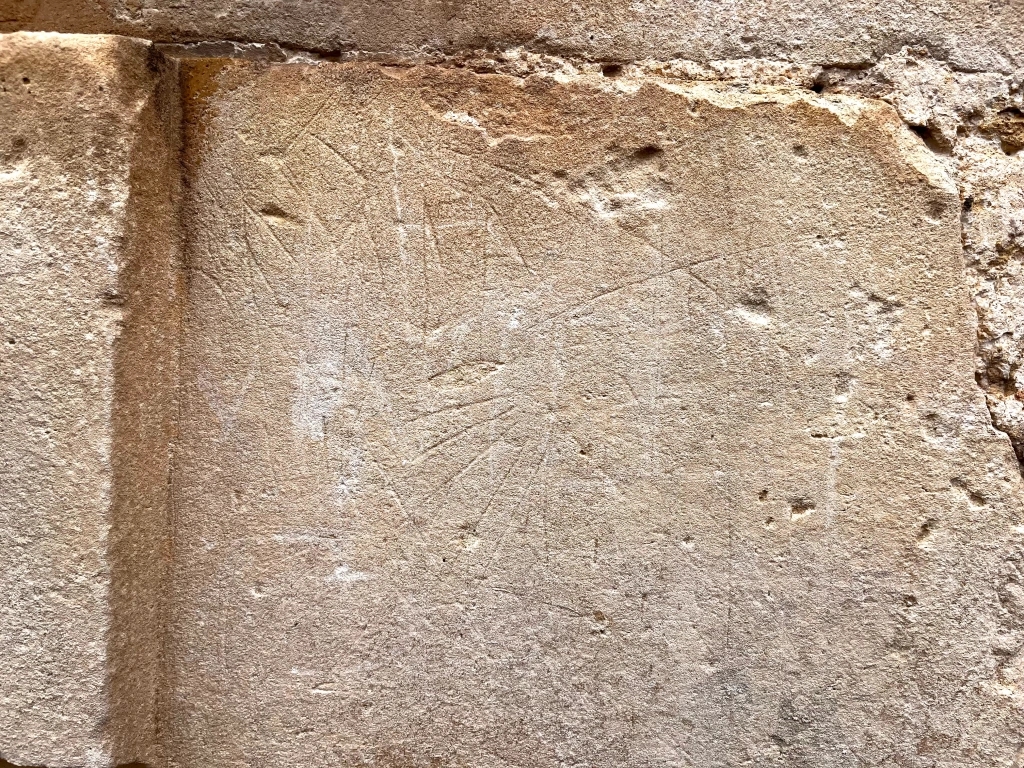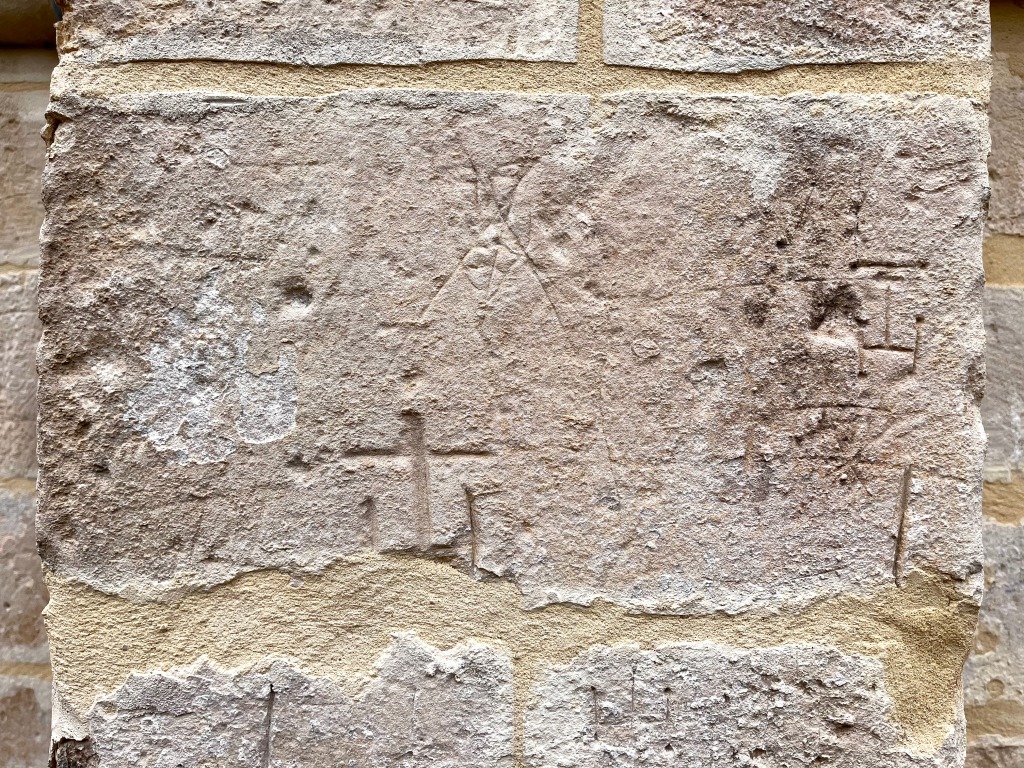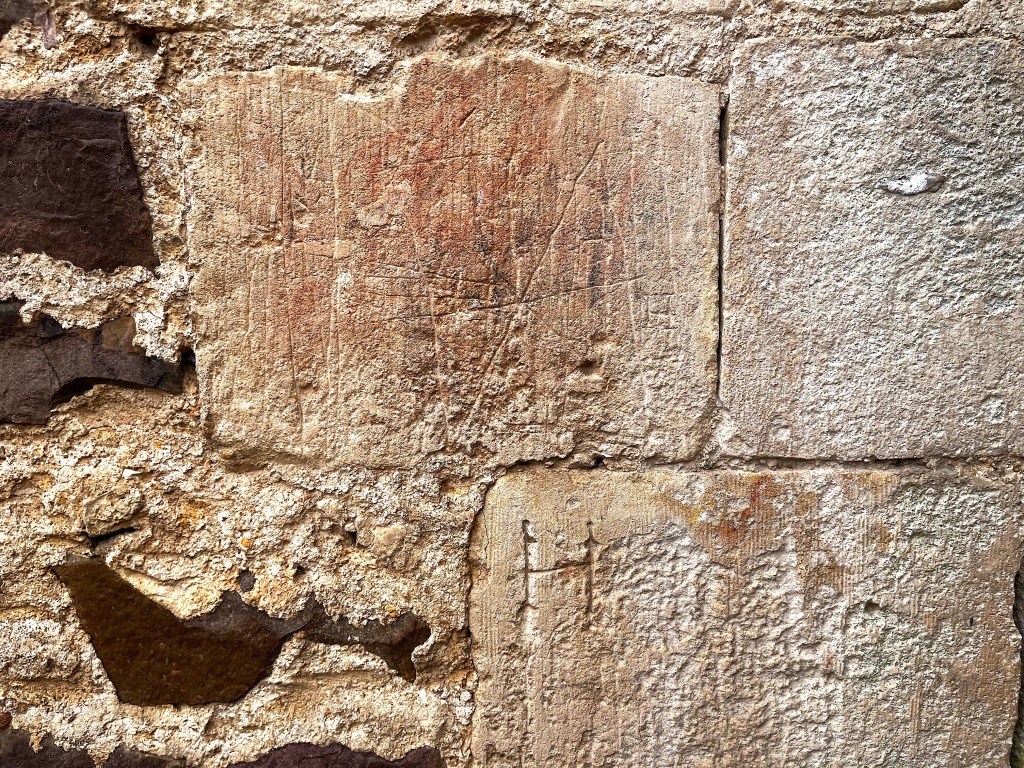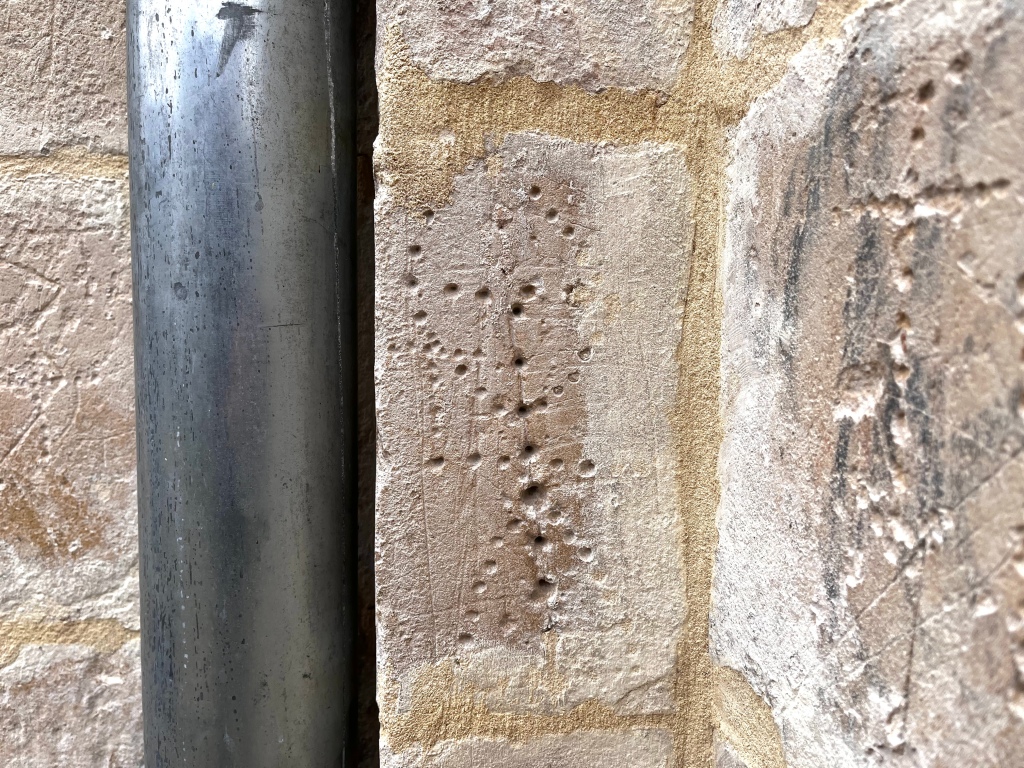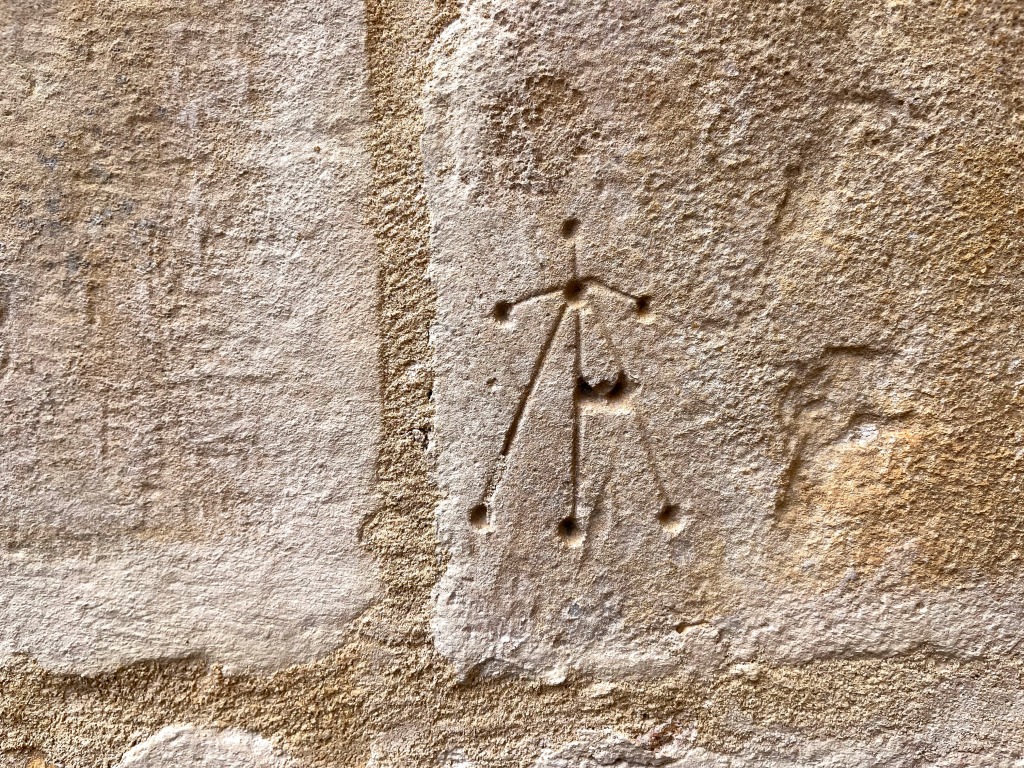
SHERE . SURREY . ST JAMES – Multiple Scratch Dials

ST JAMES . SHERE . SURREY

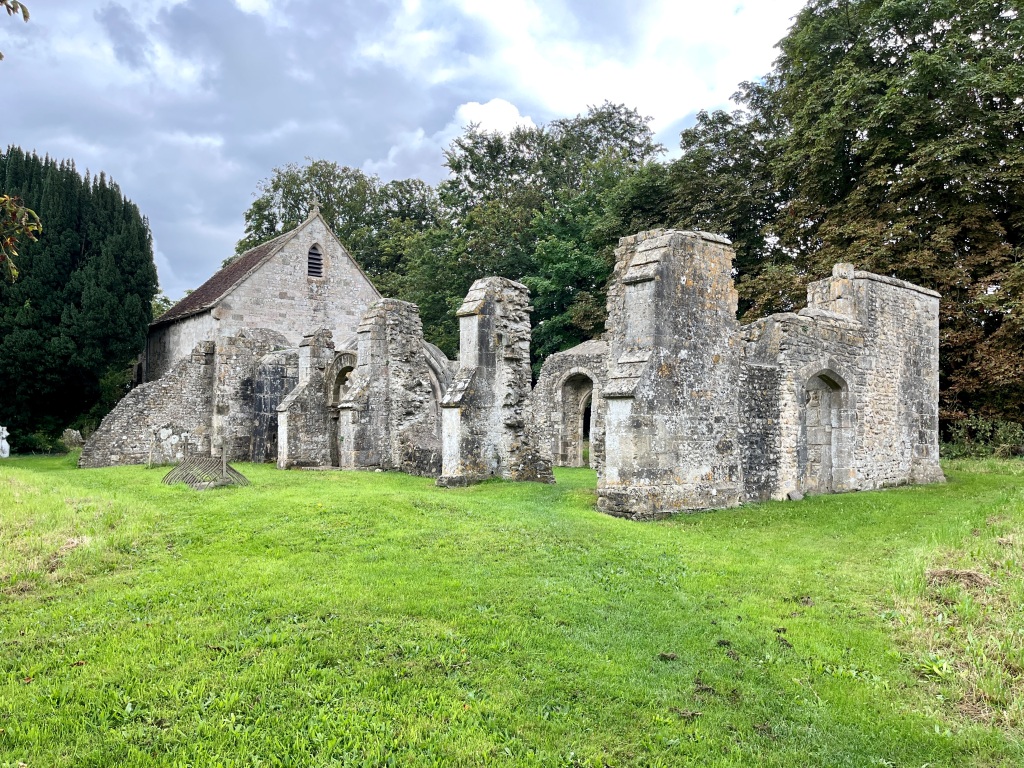
GRADE I ❖ C12 Norman tower and north nave wall; C13 south aisle and chapel; C14 enlargement, chancel; restorations 1895 by S. Weatherley. Fine C13 font. Most unusual C14 Anchorite cell, definitely in use. Excellent graffiti, in particular several shields. Approved by PEV. Midway between Guildford and Dorking. 51.2191 /  -0.463 / TQ074477

DIALS

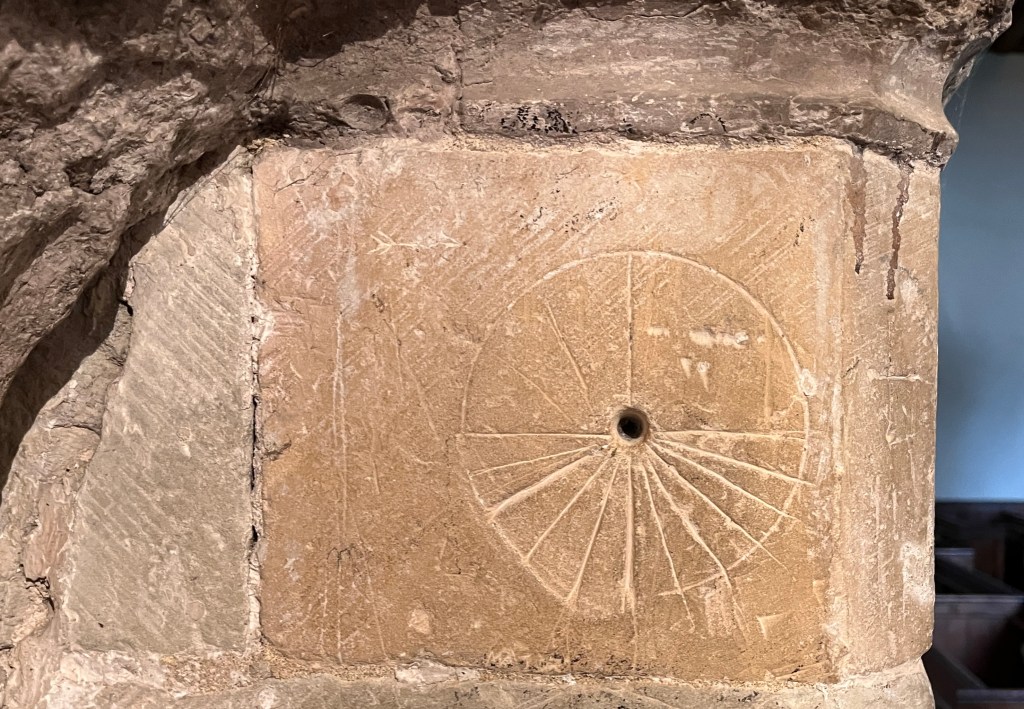
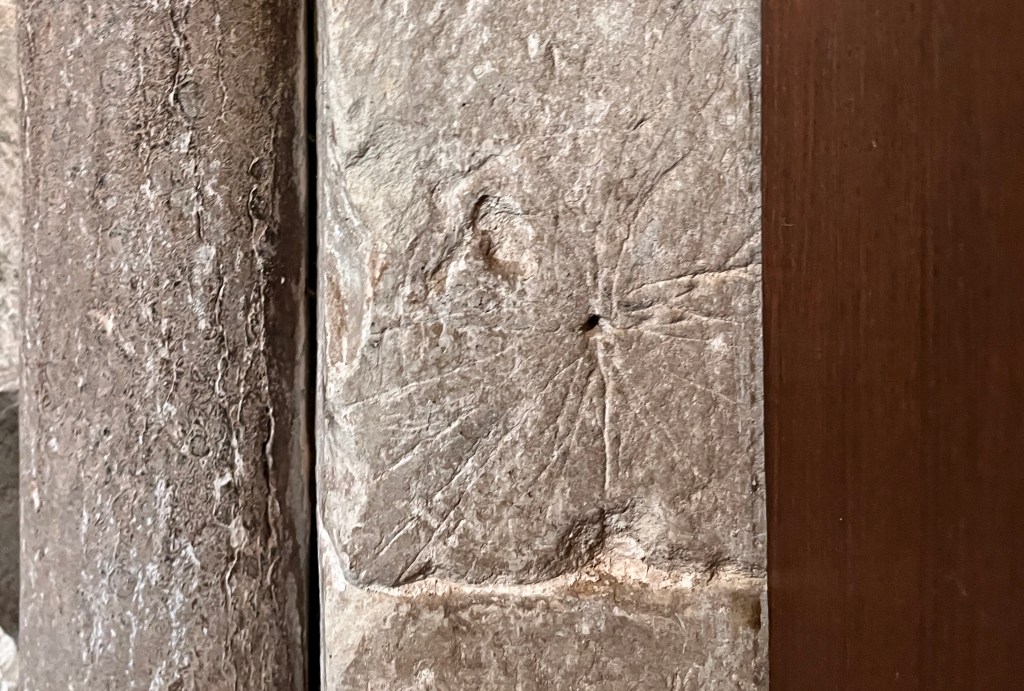
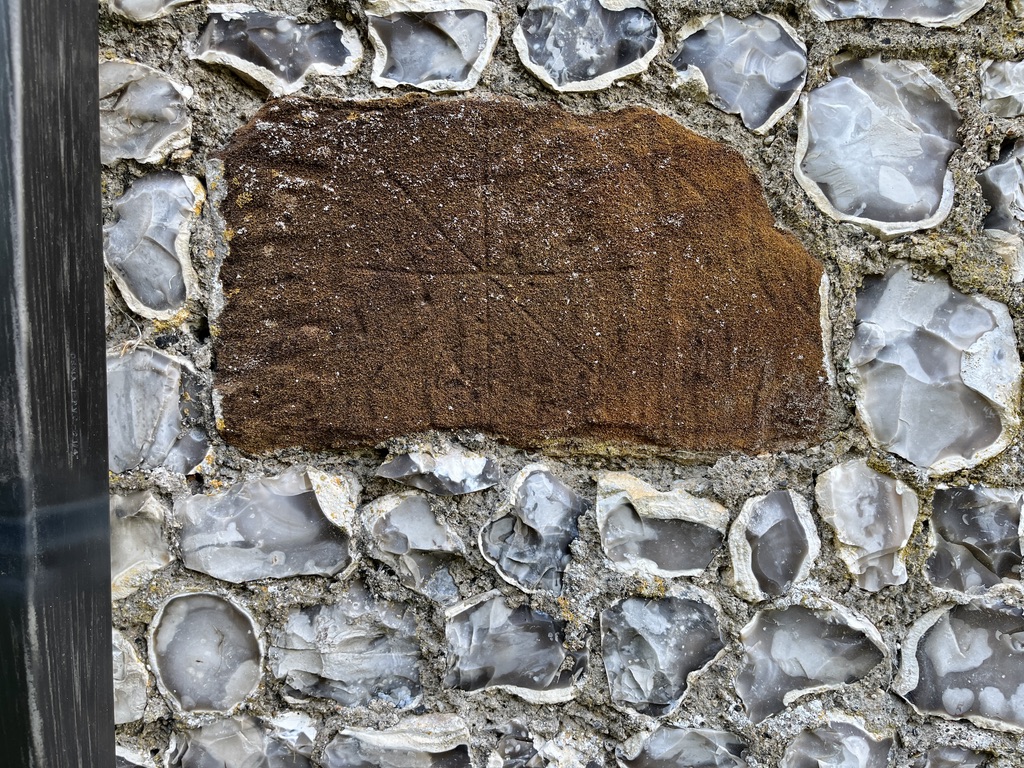
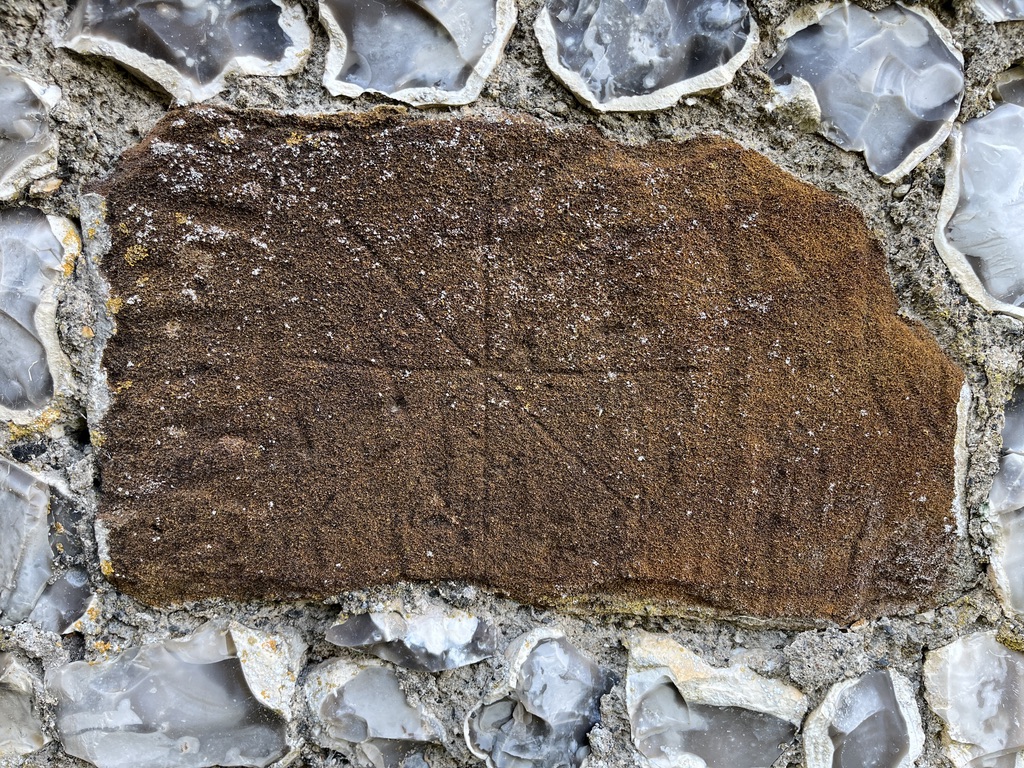
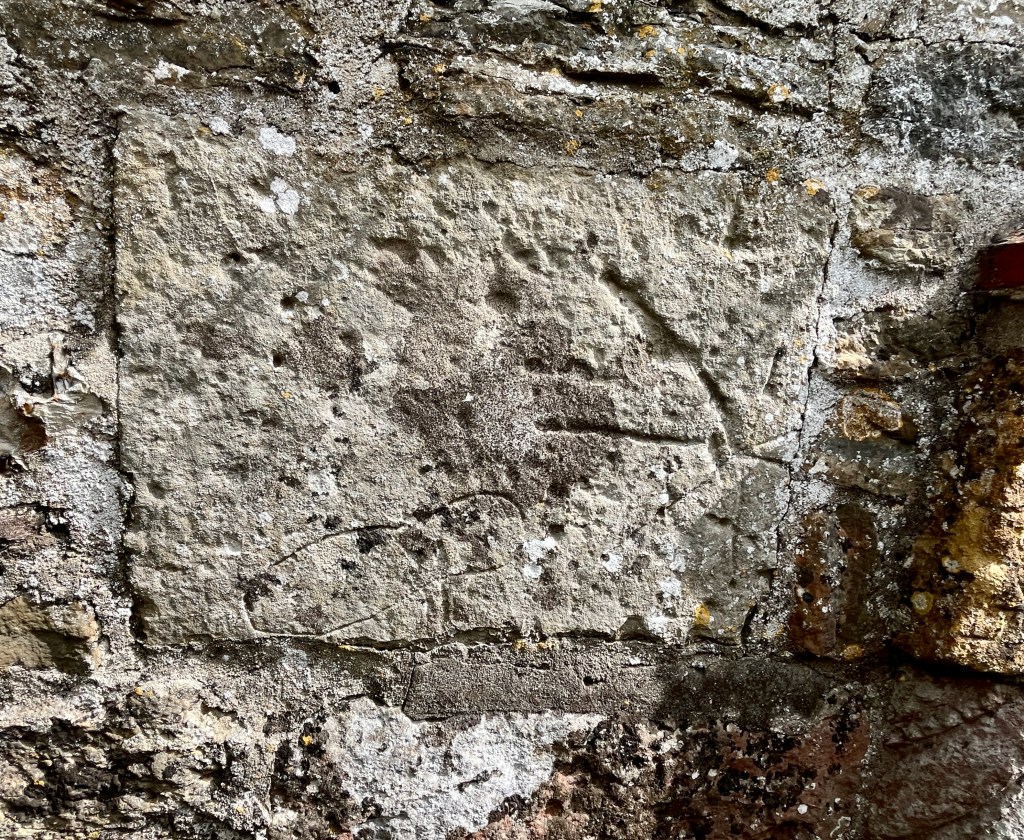
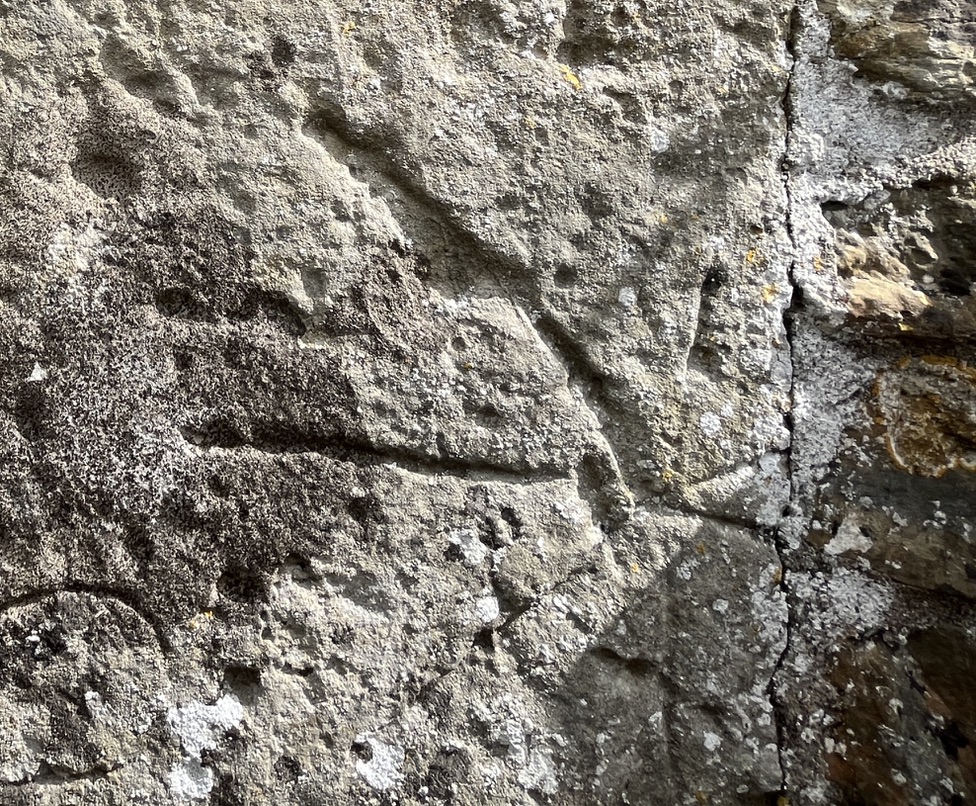
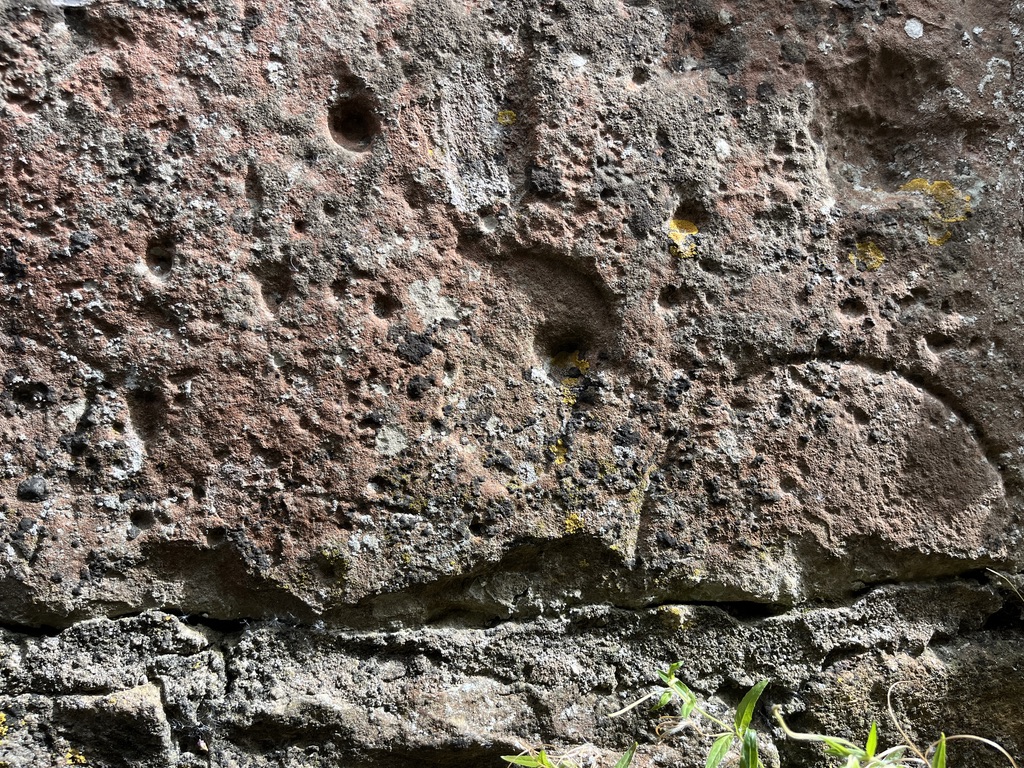
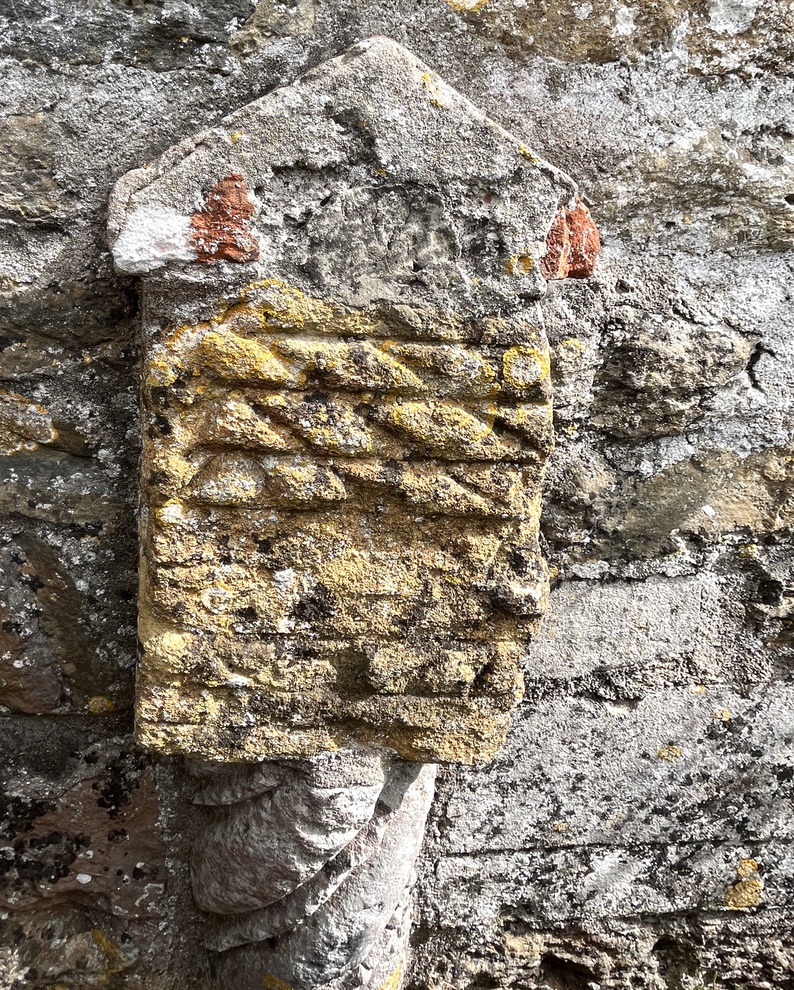
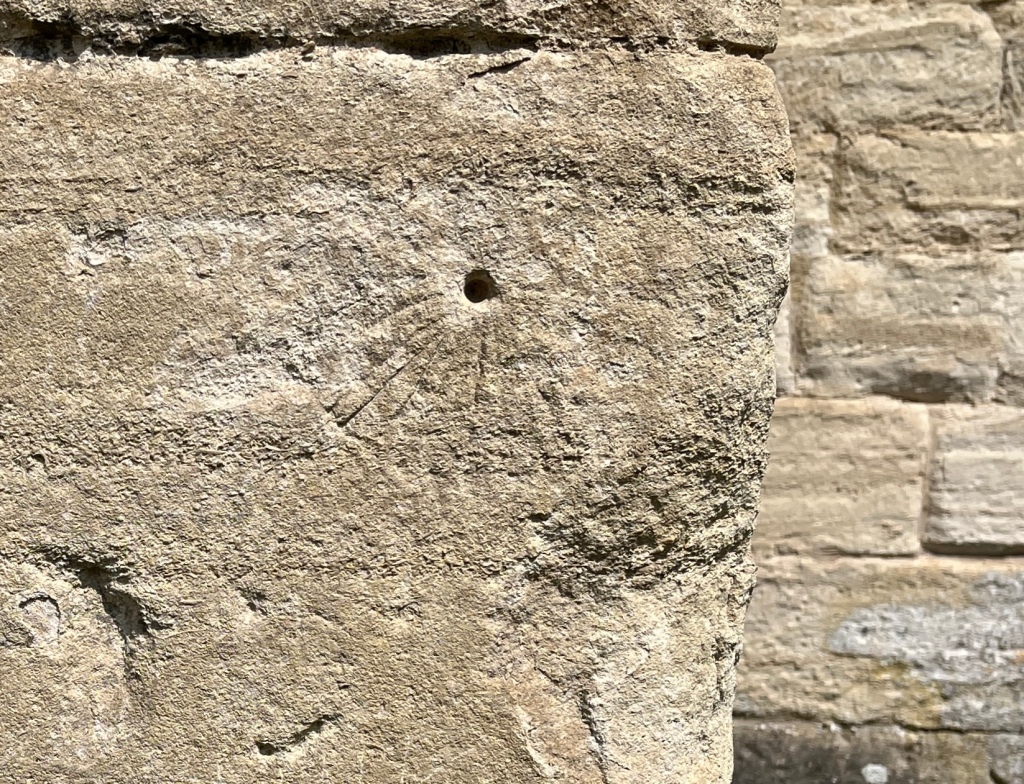
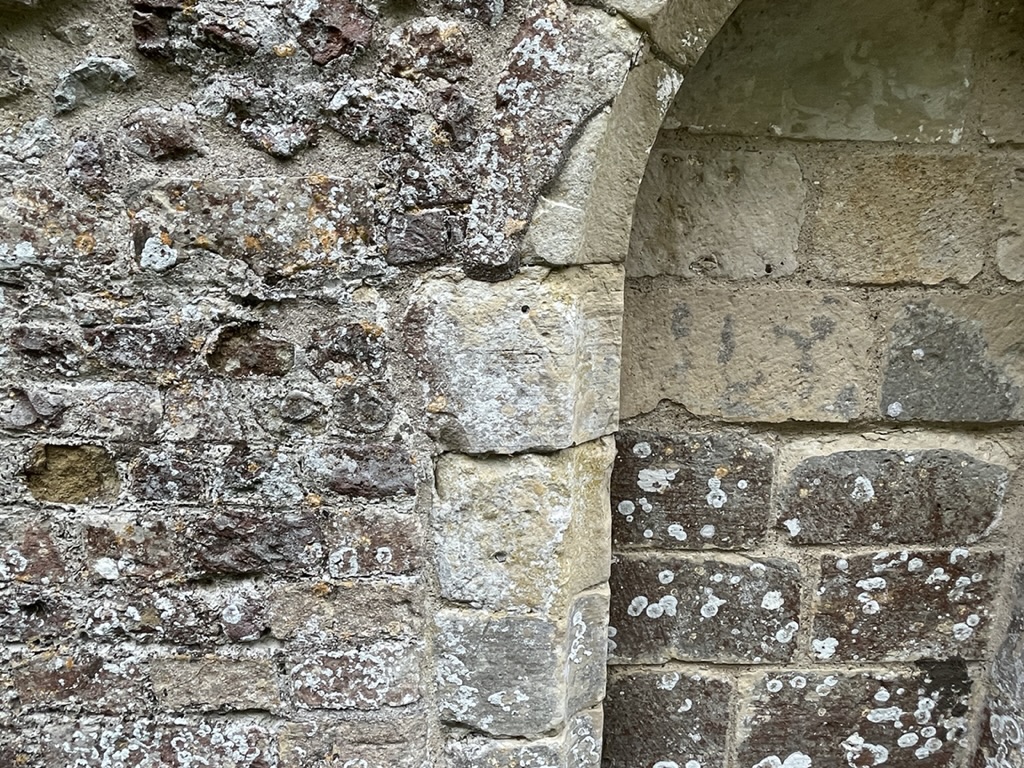
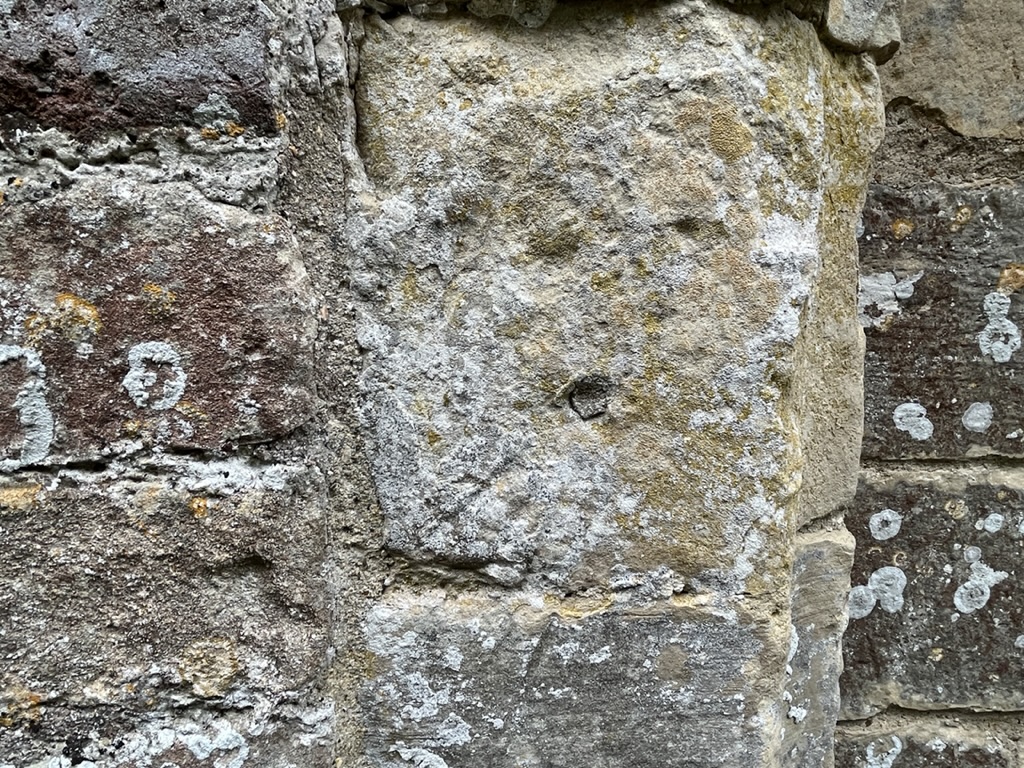
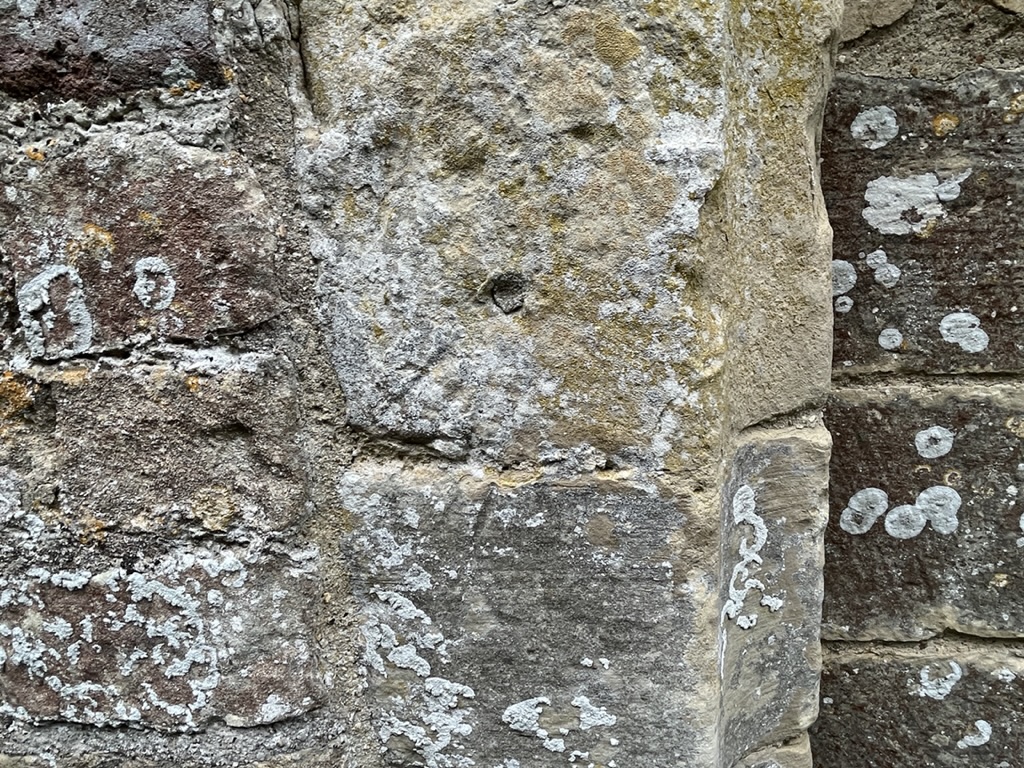
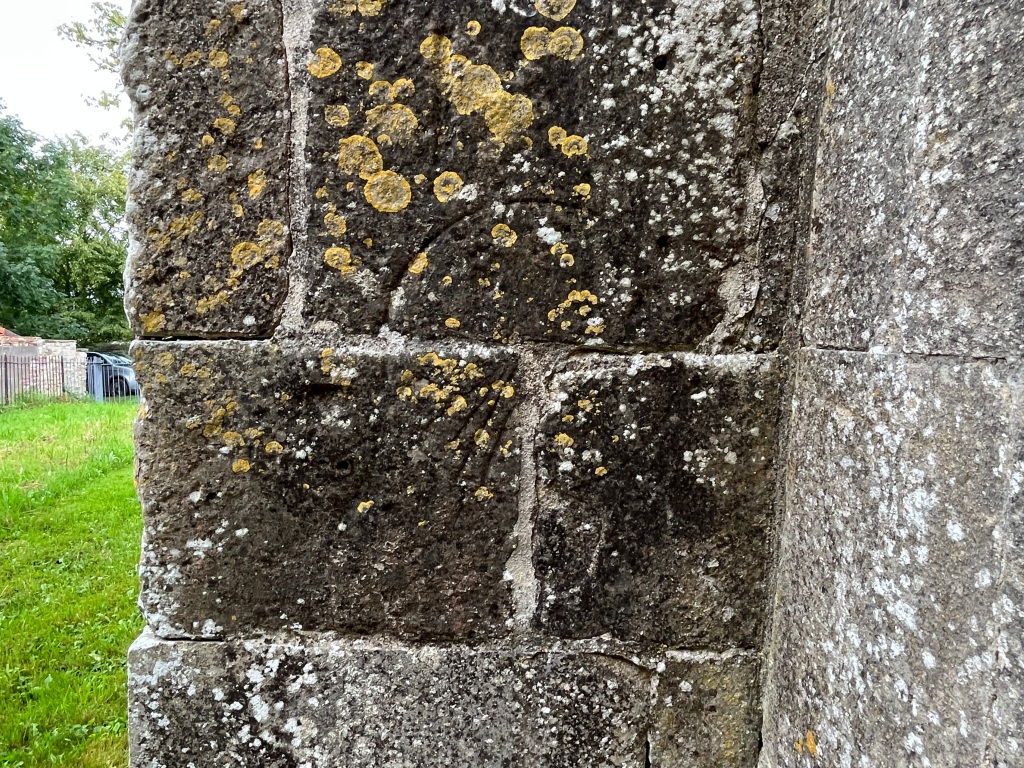
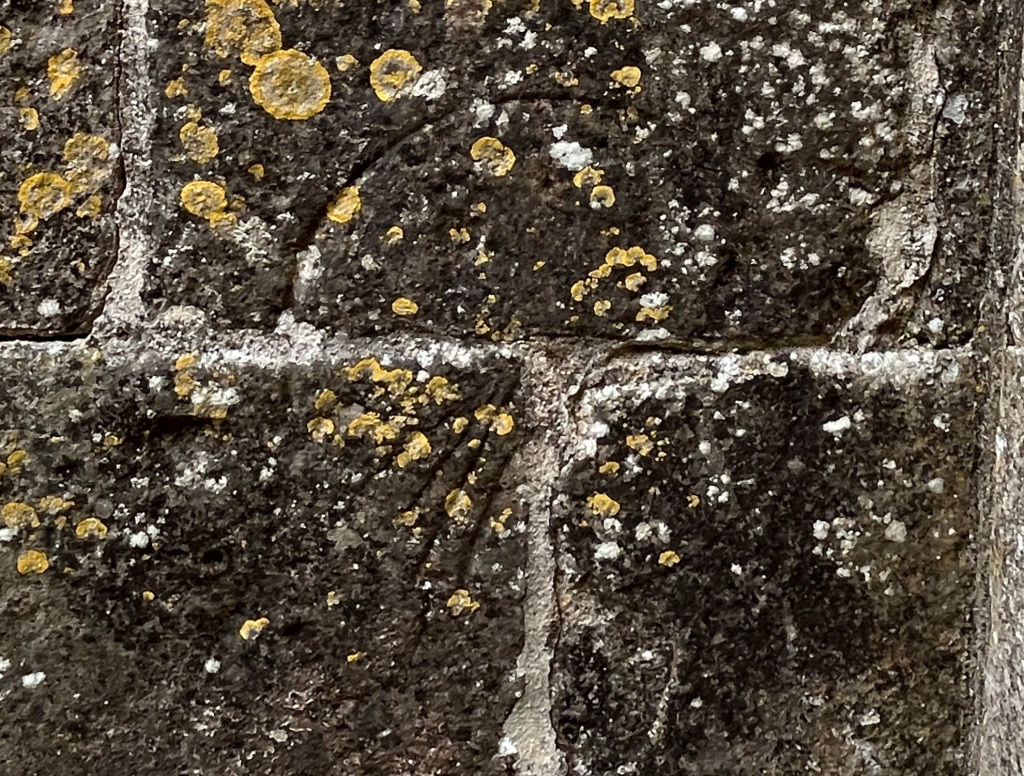
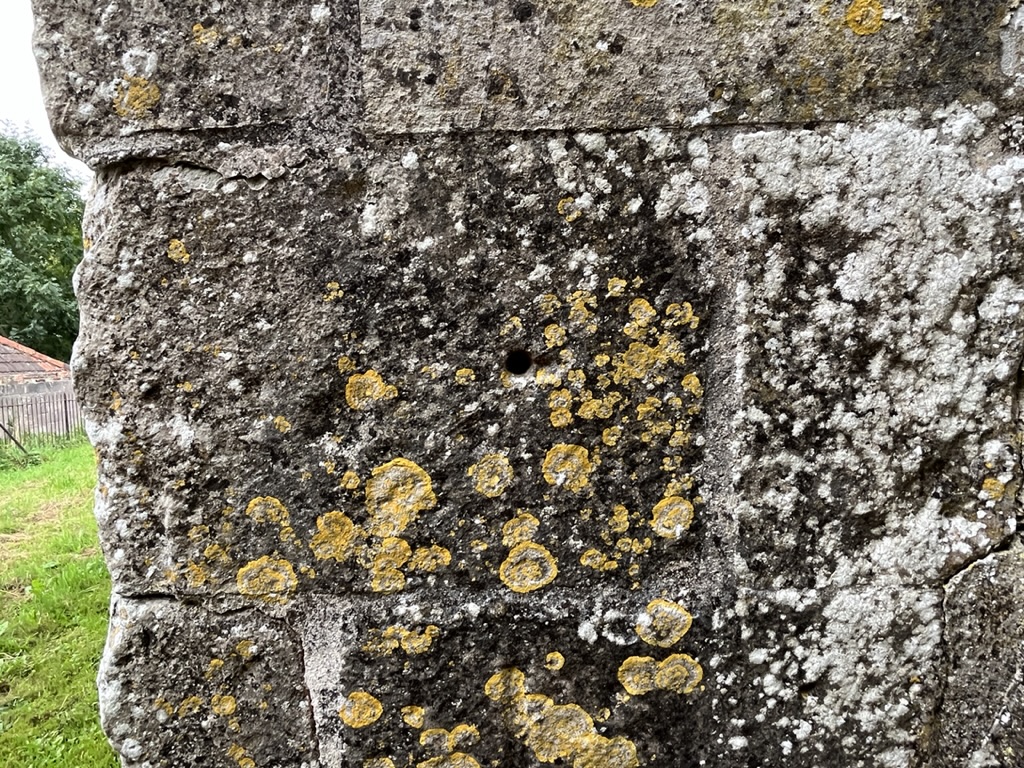
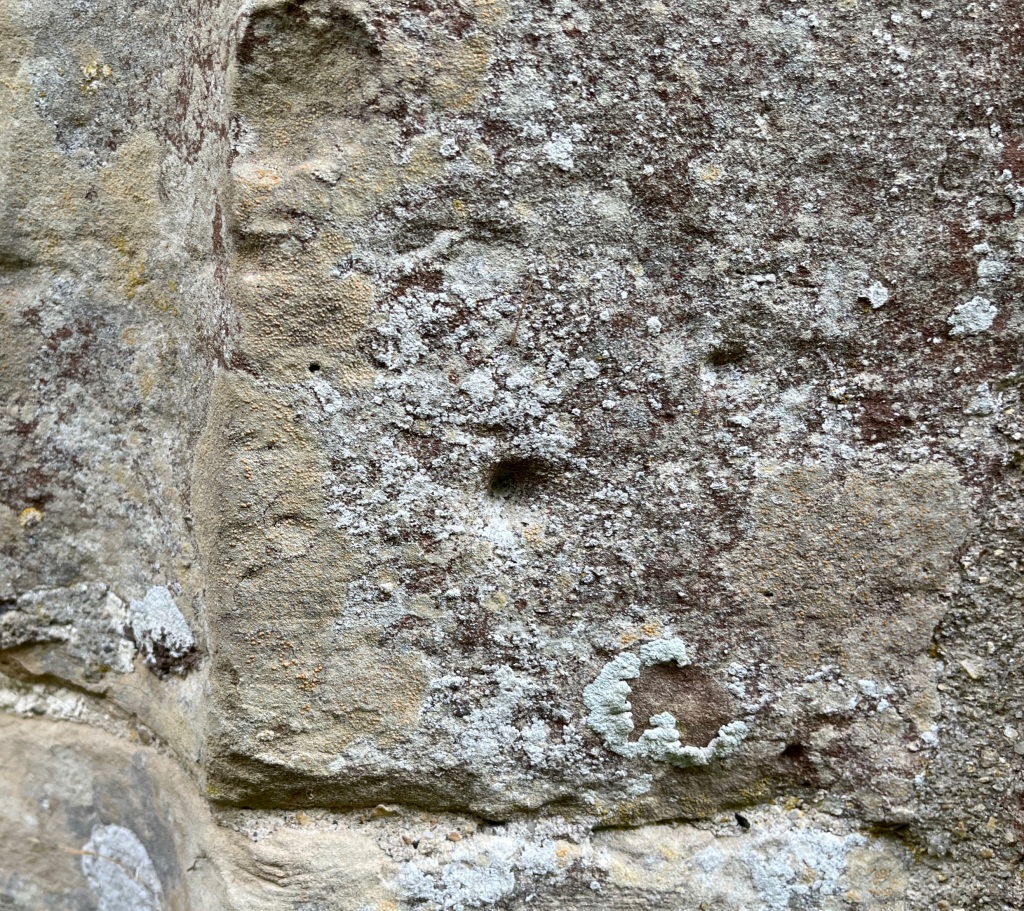
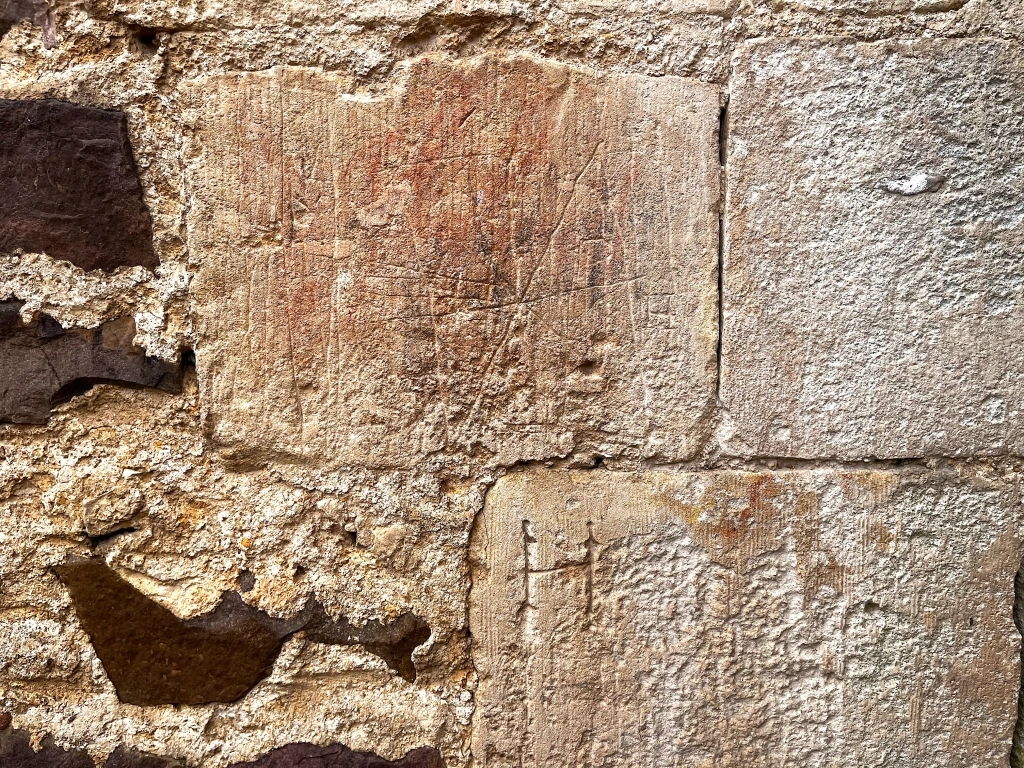
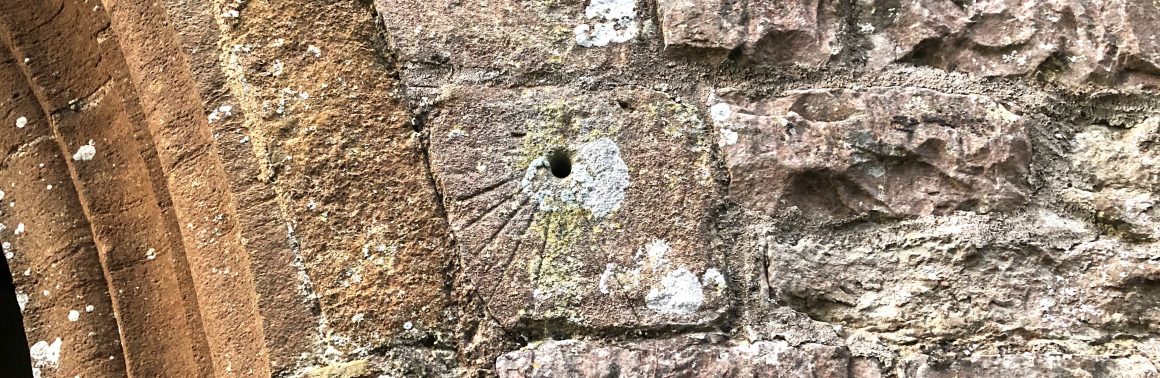
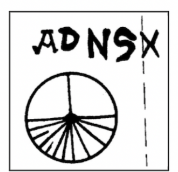
As with many multiple scratch dial churches, there are differing estimates of the number of dials, in this case of between 7 and 11. Sources vary, as do the eras when researches were carried out: Victoria County History Surrey (1911); D Renn 1986 (detailed survey); BSS 2000 (images – Lester); 2008 (drawings – Wood). I have decided to lead with 8 dials that are (I think) indisputably the real thing. Each is headed by the relevant BSS diagram and all are close to the pre-porch doorway. The close-up photos say as much about each dial than I could usefully describe.

DIAL 1

DIAL 2

DIAL 3
DIAL 4
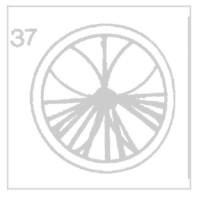
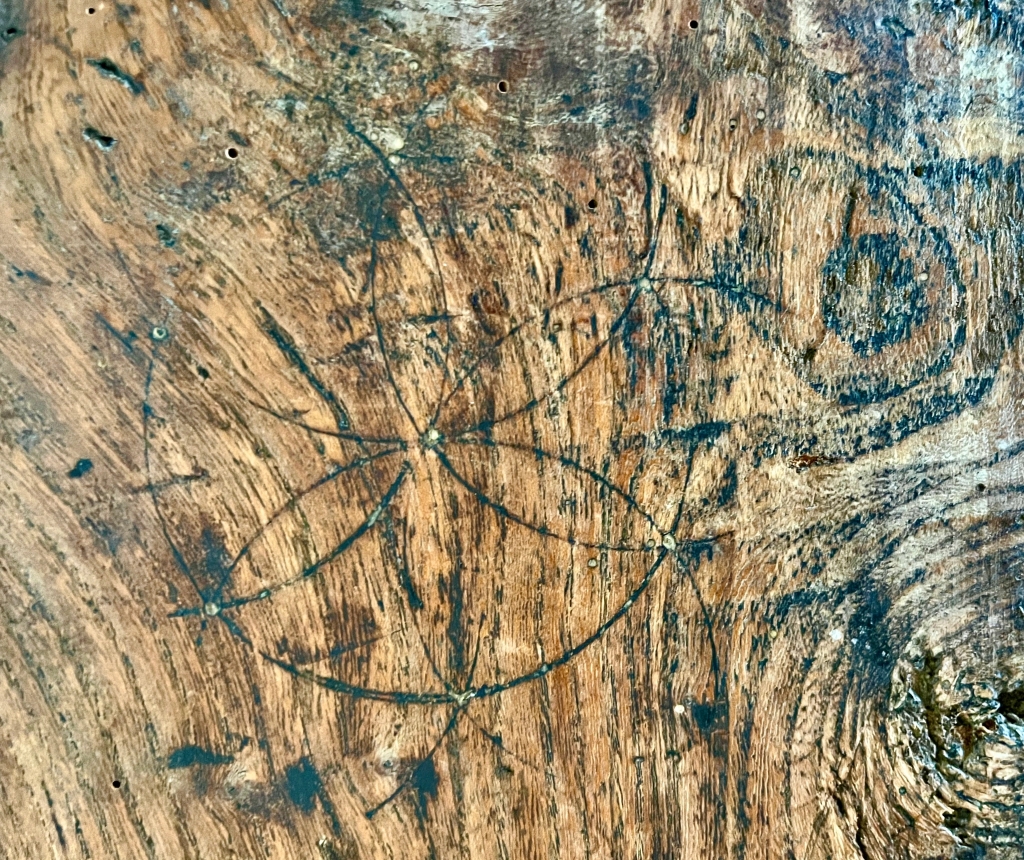
Unusually, this dial has 3 circles, and incorporates decorative compass work to form 2 petals.

DIAL 5

DIAL 6

DIAL 7

DIAL 8

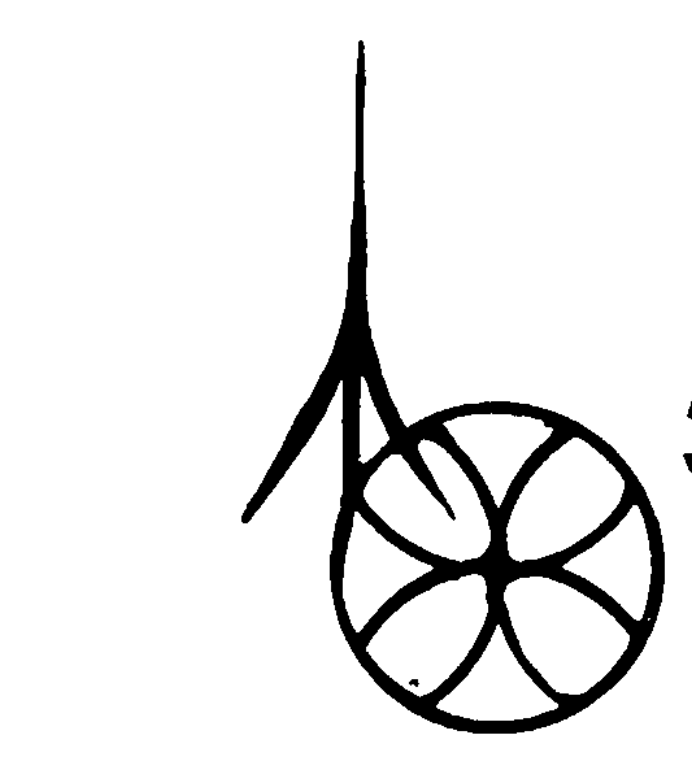
A simple deeply-scored dial that cuts into a quatrefoil ‘4-leaf cover’ compass design, presumably apotropaic. The church has a great many protection marks of all kinds, together with several shields. I may feature a selection in due course.

DIALOGRAM

The 8 blue-ringed designs below are all dials. The arrowed 9th, LHS, is debatable – see below The arrows RHS indicate (1) probably one of many crosses; and (2) a mystery, see below.

DIAL 9?

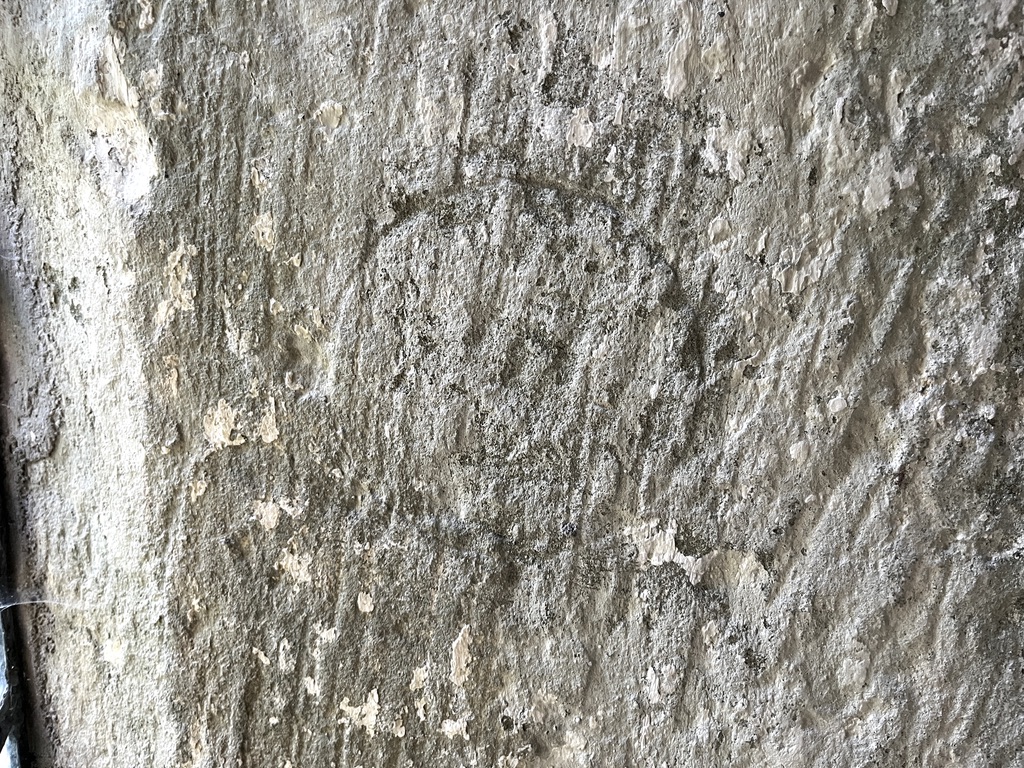
Renn’s count of 10 dials includes this ‘lamda’ incision. When I photographed dial 7, only the top of the scar was included. I am a confirmed dial optimist, but it didn’t occur to me to photograph it separately / include it as a dial..

DIAL 10?

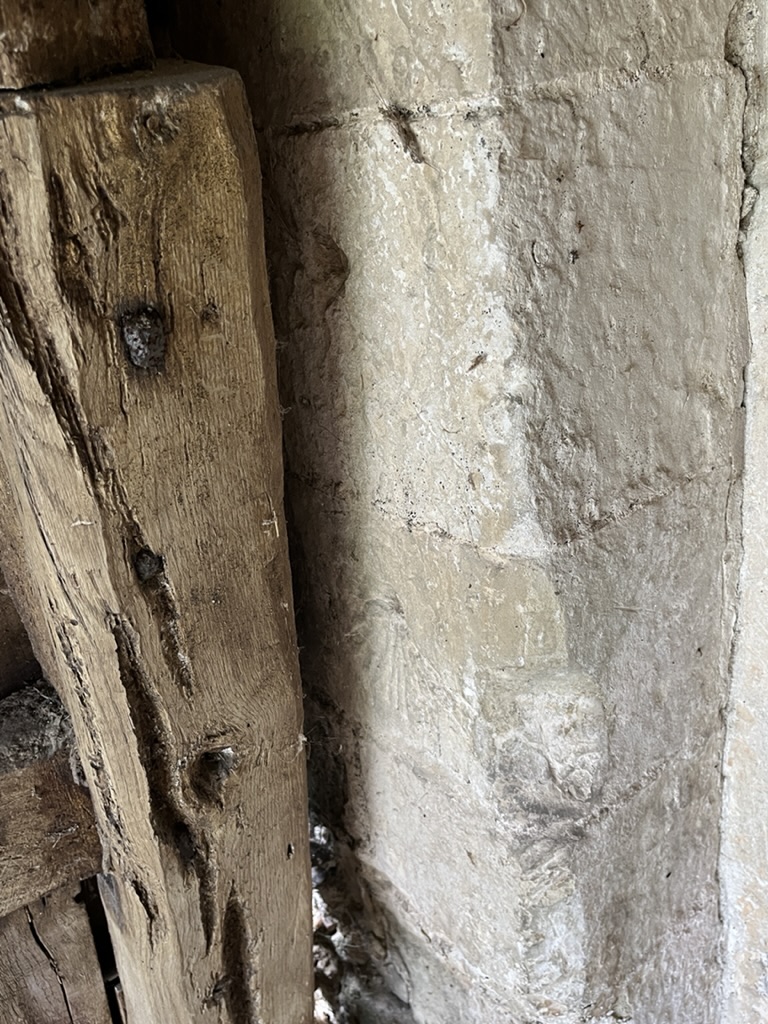
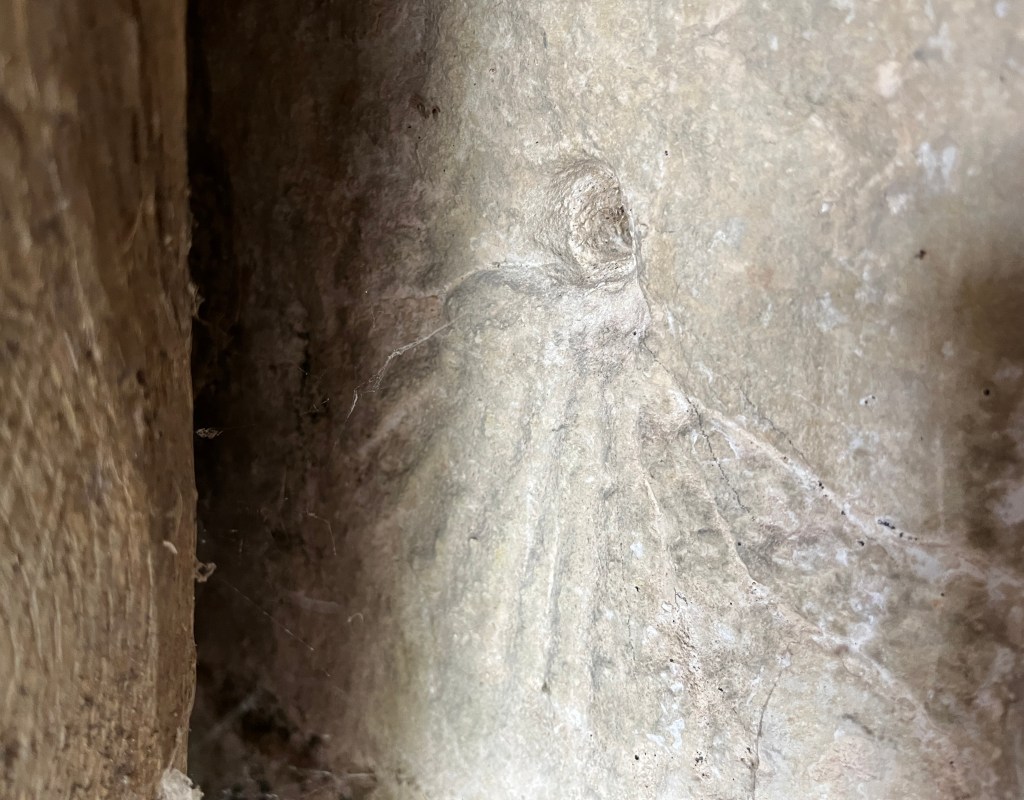
Perplexing. An afternoon dial. Noted in Renn’s survey, on which BSS record is based. Described as Inside church (inside S porch). E face of W jamb. Behind door frame. Lines 4. I didn’t find it. Unlike the impressive array of forward- facing dials in the porch, this one must be small, cut on an angle as Renn indicates, and of little use for marking the passage of the day.

ANNOTATED DRAWING

The green circles mark the uncertainties. There is also a suggestion that there were once 2 other dials, now extant (S chancel wall, E pilaster buttress).

REFERENCES

Victoria County History, Surrey, 3 (1911), 120

Renn DF: Scratch Dials in Surrey, Surrey Archaeological Collections, vol 77, 1986

The British Sundial Society

SPETISBURY . DORSET . ST JOHN THE BAPTIST – TWO SCRATCH DIALS (?)

Spetisbury Church as drawn by Thomas Rackett for the 2nd edition of Hutchings’ History of Dorset

ST JOHN THE BAPTIST . SPETISBURY . DORSET

GRADE 1 ✣ Late C12 / early C13 origins; west tower late C15 / early C16. Major mid C19 restorations from 1858 by T H Wyatt, and later works. 3m SE of Blandford Forum. 50.8258 / -2.13 / ST909029

TWO PROXIMATE DIAL-LIKE DESIGNS

The two incised stones are located either side of the drainpipe on S wall of the chancel. Both have 8 segments (as with a Saxon / Tide Dial). A gnomon hole is conspicuously absent from both. There’s no trace of filling. There are one or two pocks on each, but random and with no specific relation to the overall designs.

GLP in his comprehensive survey of Dorset church scratch dials concluded that the dials “…are just graffiti of unknown date”. He explains that he has included these near-matching designs since otherwise “they might be mistaken for genuine dials”.

Apotropaic symbols? These don’t conform to any mainstream style of protection mark. And they are not in a location that Evil would naturally choose to gain entry.

My own theory is that these 2 designs were scratched on adjacent dark stones during the lengthy C19 restoration period. Perhaps there was a small competition between 2 apprentice masons engaged on the work, or bored by it.

DIAL 1

The cruder of the two, with bent lines and an awkwardly gouged curving ‘noon line’.

DIAL 2

More carefully designed and executed than Dial 1, and with the hint of circle round it.

GSS Category: Scratch Dial; Mass Dial; Church Graffiti circular pattern; False scratch dials

All photos: Keith Salvesen; Rackett print OS

TARRANT CRAWFORD . DORSET . ST MARY – Scratch Dial

ST MARY . TARRANT CRAWFORD . DORSET

LISTING Grade I ✣ C12 origins with abbey links; C12 chancel; C13 nave and refenestration, porch; C15, tower. An astonishing church beyond the scope of this project. Besides the building itself, there are wonderful early C14 wall paintings to admire, also C16 wagon roof & C13 coffin lids. Major restoration in 1911. A very unspoilt church retaining many medieval features PEV. In the care of CCT. 5m SE of Blandford Forum 50.8307 /  -2.1107 / ST922034

DIAL

A number of features make this dial rather special. It is inside an intriguing church; it is cut into the architrave of a (historically) relocated doorway; and the design is endearingly haphazard. There are 5 radials from the gnomon hole, mainly LLQ from (roughly) Terce to just past midday. The lines are uneven in length, depth, spacing and straightness ,not least because of the oddly squarish perimeter. One can’t tell what lies behind the cement repair, but it doesn’t seem that the perimeter continues beyond what one can see.

BSS Diagrams

APOTROPAIC CIRCLES

There are two circles cut into one of the window jamb, the lowest with a dot in the centre. These are a simple form of protection symbol, repelling evil and preventing it from entering the church. Some theorise that these and more complex designs (eg ‘daisy wheels’) trapped evil within the circle – so-called demon traps.

GSS Category: Scratch Dial; Mass Dial; Protection Mark, Apotropaic Symbol

All photos: Keith Salvesen

OKEFORD FITZPAINE . DORSET . ST ANDREW – Scratch Dial (re-sited)

ST ANDREW . OKEFORD FITZPAINE . DORSET

LISTING: II* ❖ Records from 1302; mainly C15. ‘Extensive restoration’ 1865 (J Hicks). A fine church set in a large, sloping churchyard. 4m S of Sturminster Newton. 50.8965 /  –2.2753 / ST807108

DIAL

No need to pass through the Lych-gate to find it. 20 yards to the left on the outside of the wall, you will find the dial reset ‘with other architectural fragments, probably placed there during restoration of 1865‘ GLP.

The dial is a spidery creation (‘a six-pointed star formed of three intersecting lines’ GLP). It’s hard to imagine how, in its original position, it could have been very useful. Perhaps the rustic work of a sacristan in idle moments? Possibly it is not a dial at all.

UPPER STONE

LOWER STONE

The stone below (a different type?) has a half-circle, and a promising gnomon hole above left. Neither has other dial features.

SHOE OUTLINES

Without being unduly dismissive of the dial, the most interesting features of these stone fragments are the outlines of 2 small shoes – one incomplete, the other cut off by the edge of the stone. The iconography of medieval protection marks is a whole separate subject of study, outside my remit. In brief some recurring features found on or in buildings – both religious and secular – are defined as protection marks. Specific examples include outlines of hands (eg North Cadbury), feet, and shoes. Other counter-witchcraft methods involved items being walled up in dwellings. These include childrens’ shoes and toys; glass phials; bones; animal skulls; and dead cats. To explore further, the excellent book by Brian Hoggard ‘Magical House Protection’ should be your guide.

Of St Andrew’s 6 bells, one has an excellent inscription worth mentioning: I OFTEN HAVE BEEN BEATE AND BANGED MY FRIENDS REJOICE TO SEE ME HANGED AND WHEN MY FRIENDS DO CHANCE TO DIE THEN I FOR THEM WILL LOUDLY CRIE

Another fragment incorporated into the wall

GSS Category: Scratch Dial; Mass Dial; Re-sited Dial; Shoe protection mark

All photos: Keith Salvesen

BRADFORD-ON-AVON . WILTS . TITHE BARN – Scratch Dial

TITHE BARN . BRADFORD-ON-AVON . WILTS

GRADE I ✣ The huge tithe barn is dated to the 1330s, replacing an older barn. Even allowing for restoration and maintenance over the centuries, the barn very much retains the feel of a building unchanged for several hundred years. Its situation right by – and lower than – the K&A canal adds to the pleasure of the general surroundings.

DIAL

Scratch dials on buildings other than churches are rare. TWC mentions only 4 in his (admittedly dated) list of non-church dials, one of which is a tithe barn. Featured in this project are KENILWORTH ABBEY which has a dial on a barn that is a small part of the whole; and MUCHELNEY ABBEY which has one on the S wall of the Abbot’s Lodging. Neither can be regarded as entirely secular.

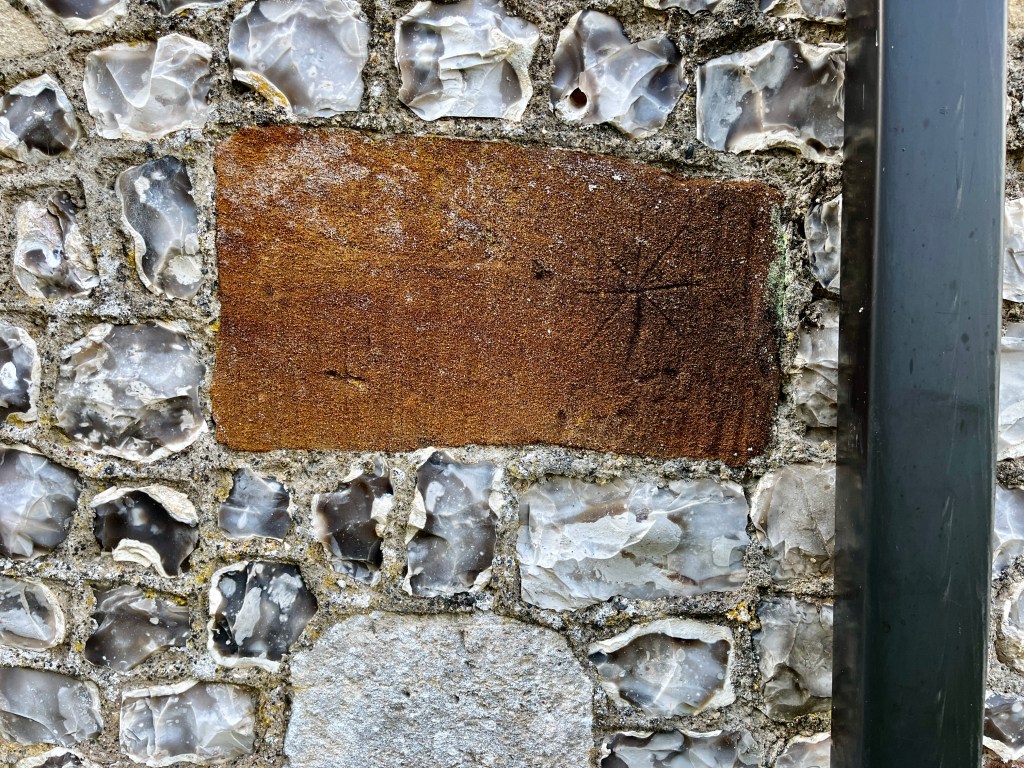
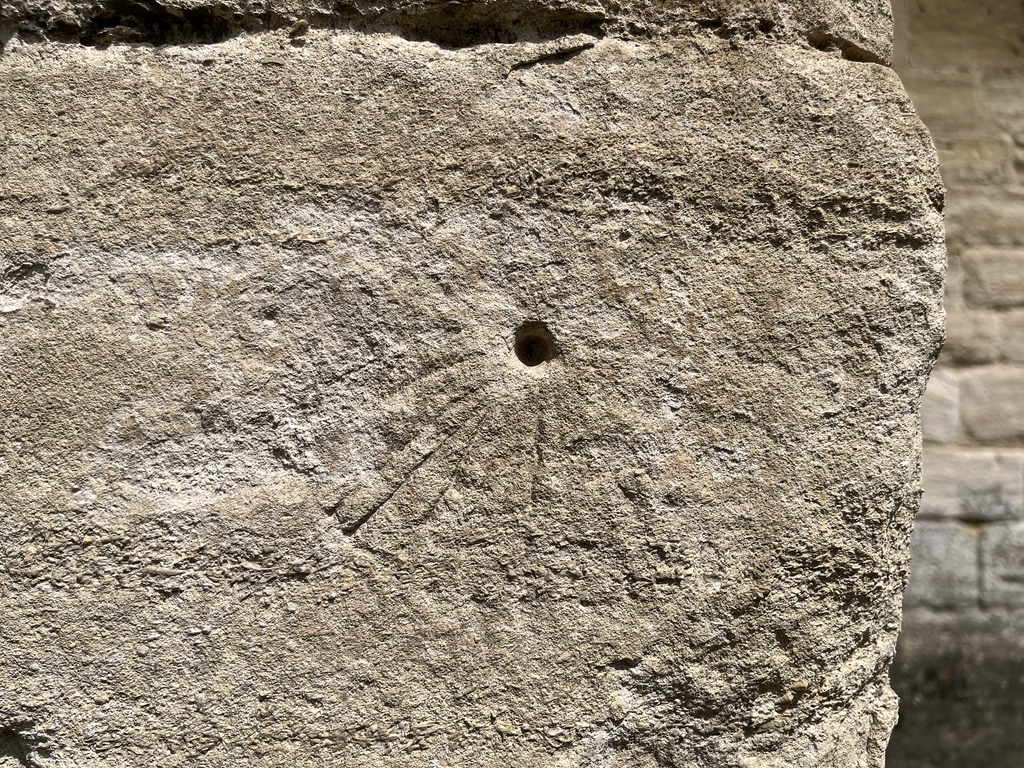
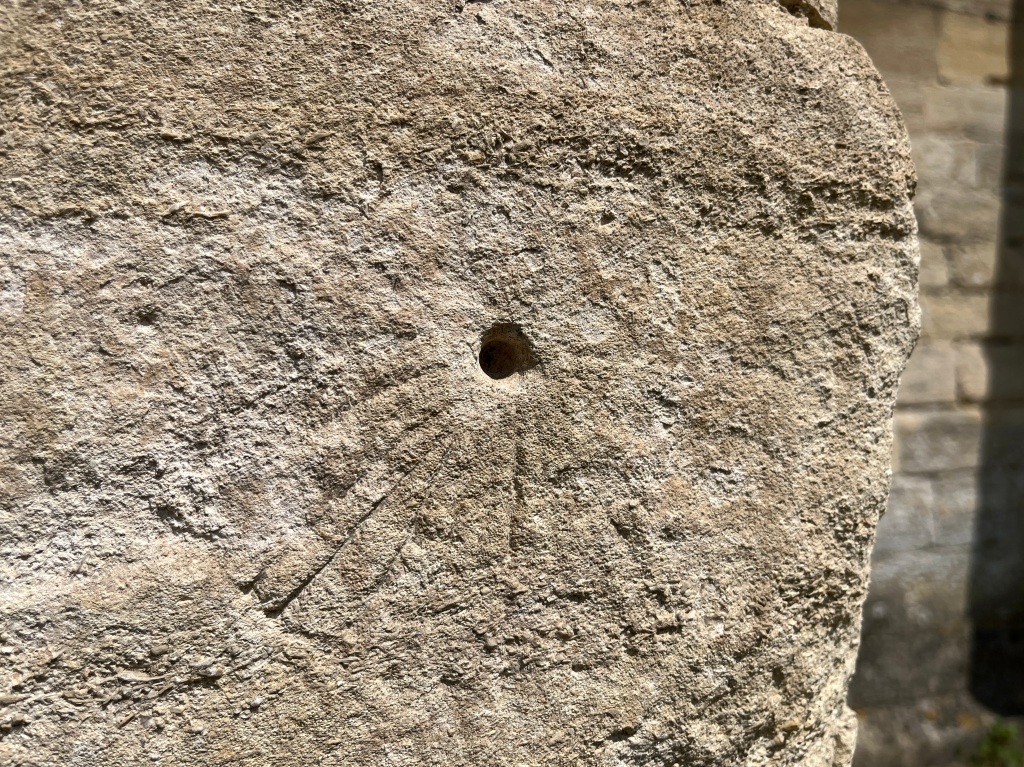
The Bradford dial is located on the S wall on a buttress quoin stone near the entrance of the large E doorway. It is considerably eroded and damaged. I can’t see any trace of a dial above the horizontal and I take it to be a semicircle. There are ± 8 visible lines – impossible to be sure. The noon line is deeper cut and 9 (terce) seems more sharply incised, suggesting the main hour of observance. I am almost certain there there are terminal pocks on several lines, an impression taken more from the photos than from direct observation.

PROTECTION MARKS AND GRAFFITI

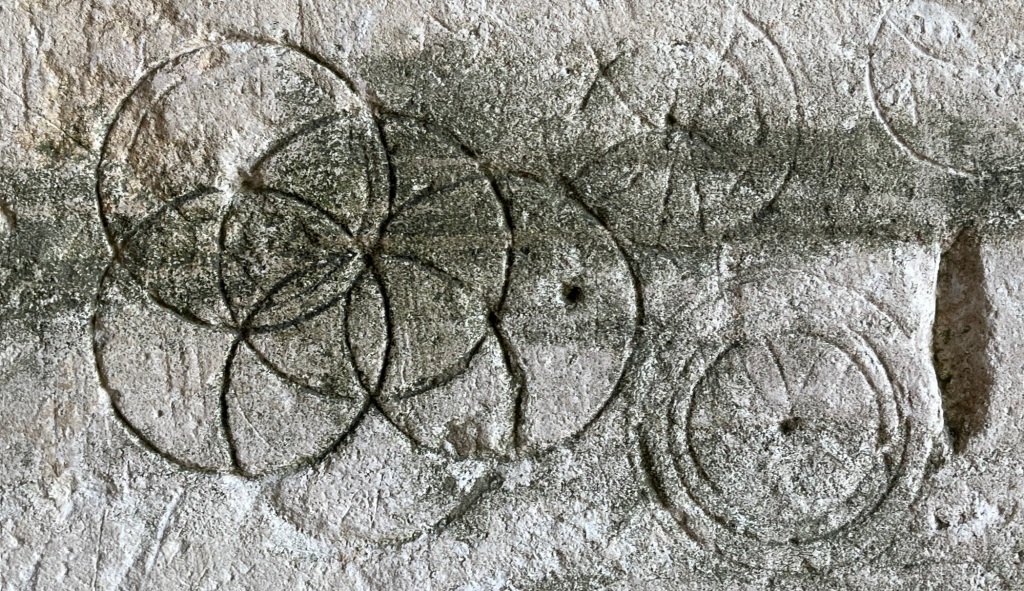
Unsurprisingly for such a magnificent medieval structure, there is a vast omnium-gatherum of graffiti and protection marks, mainly at or close to the great entrances as one might expect. Anyone remotely interested in such marks will have a field day. Here is a small gallery.

ENGLISH HERITAGE

BRADFORD-ON-AVON MUSEUM

GSS Category: Scratch Dial; Scratch Dial on Barn; Secular Mass Dials; Protection Marks; Medieval Graffiti

All photos: Keith Salvesen. Please ask for specific use permission to use any of these. Normally I am relaxed, but these images relate to parallel research.


POTTERNE . WILTS . ST MARY – Scratch Dial

St Mary . Potterne . Wilts (Benefice drawing)

ST MARY . POTTERNE . WILTS

GRADE I ❖ Saxon origins; built C13; C15 work to tower; restorations 1870s. A remarkably uniform E.E. design HE; An E.E. church of exceptional purity and classicity PEV. Features of interest include an Anglo-Saxon tub font with rim inscribed in Latin; a C14 font; fine woodwork; C17(?) Royal Arms of puzzling design. Good graffiti on pillars. Outside, there is an unusual Dole Stone; and the scratch dial featured here. 2m S of Devizes. 51.326 / -2.0079 /  ST995585

DIAL

The dial is located on a quoin stone of the buttress at W end of S side. The gnomon hole is centred quite accurately, and surrounded by a ring of small pocks of roughly equal size. The spacing is uneven. 12 of them are drilled in the lower half, in a semicircle that includes the horizontal ‘6-to-6’ line. The other 7 are above the horizontal in the night zone. The pock at notional midnight has 3 on either side, forming an almost symmetrical design. These can only be for decorative purposes, being of no use in marking the passage of the day / night.

As for radial lines, despite erosion 5 lines are visible – 3 LLQ, a faint noon line, the horizontal line RHS. Each terminates with a pock. There remain hints of 2 or 3 others.

GRAFFITI . FONT WITH LATIN INSCRIPTION . COMPASS-DRAWN PROTECTION MARKS

The VV in the first image, assuming it is an initial, is in the distinctive form of a Marian mark, a commonly found protection symbol standing for the ‘Virgin of Virgins’.

GSS Category: Scratch Dial; Mass Dial

All photos Keith Salvesen; header drawing from the Benefice site

MUCHELNEY ABBEY . SOMERSET . Scratch Dial (Rare Example)

✠ 

MUCHELNEY ABBEY . SOMERSET

GRADE I ✠  C7 origins with a long and fascinating history amply covered by many sources. The Wiki entry gives a good brief account. Now only the Abbot’s House and the Lavatorium remain intact. The ruined foundations are all that can be seen of the Abbey buildings and layout.

The Abbot’s House has a number of apotropaic marks including hexfoils and taper burns, noted on the relevant pages here.

✠ 

DIAL

We visited the Abbey knowing approximately what to expect from the Abbot’s House. It is well worth exploring, and there are helpful EH volunteers on hand to give information.

We eventually reached the West Kitchen, which has a door to the S side of the building. It was a great surprise to find a simple and eroded scratch dial between the doorway and the East Kitchen window. It is quite rare to find a scratch dial on a building other than a church. Non-secular dials can occasionally be found on medieval barns. Perhaps the Abbot’s dial was originally part of the original abbey building, and re-sited. I’d prefer to think that a factotum had cut the dial specially for an Abbott so that he could keep track of the important times of the monastic day for which he was responsible.

This is not an easy dial to analyse. Certainly there is a horizontal line ( 6-to-6) that runs through the gnomon hole (very faint RHS). There is a deeper cut noon line that seems to extend above the hole to the mortar line.

As often, a b&w image can assist with finer details. There is a faint 9-line, suggesting that Terce was the primary time for observance. Possibly a further line at 11? No relevant markings LRQ.  Possibly there is a line ULQ just above the horizontal.

It is clear that EH and the guides know about the dial, but I have been unable to find a reference to it elsewhere. Probably a local research group will have recorded it, but otherwise it seems that this unusual dial (for location) is very little known

MUCHELNEY ABBEY . SOUTH FRONT

Muchelney Abbey – Abbot’s House S side showing W kitchen door . Photo by DeFacto OS CC

GSS Category: Scratch Dial; Mass Dial

All photos: Keith Salvesen

SUTTON VENY . WILTS . ST LEONARD – Scratch Dials

ST LEONARD . SUTTON VENY . WILTS

GRADE II ✣ C12, C13, C16. Originally cruciform with crossing tower. Chancel arch blocked and west part of church partly dismantled 1868, gradual deterioration. Chancel used as a mortuary. Declared redundant 1970; now in the care of CCT. A surprising and rather poignant place to visit, all well worth examining. Note the bier. 3m SE of Warminster. 51.1728 / -2.1323 / ST908415

DIALS

St Leonard is a multi-dial church with 9 dials recorded by BSS (1994), of which some details are scant. Four are described only as ‘gnomon hole only’ / ‘cannot be classified’. Featured below are 8 designs that I have concluded are dials, or might be (if only doubtful) in a couple of cases.

DIAL 1

Dials 1 and 2 are together LHS of the Priest’s door

DIAL 2

DIAL 3

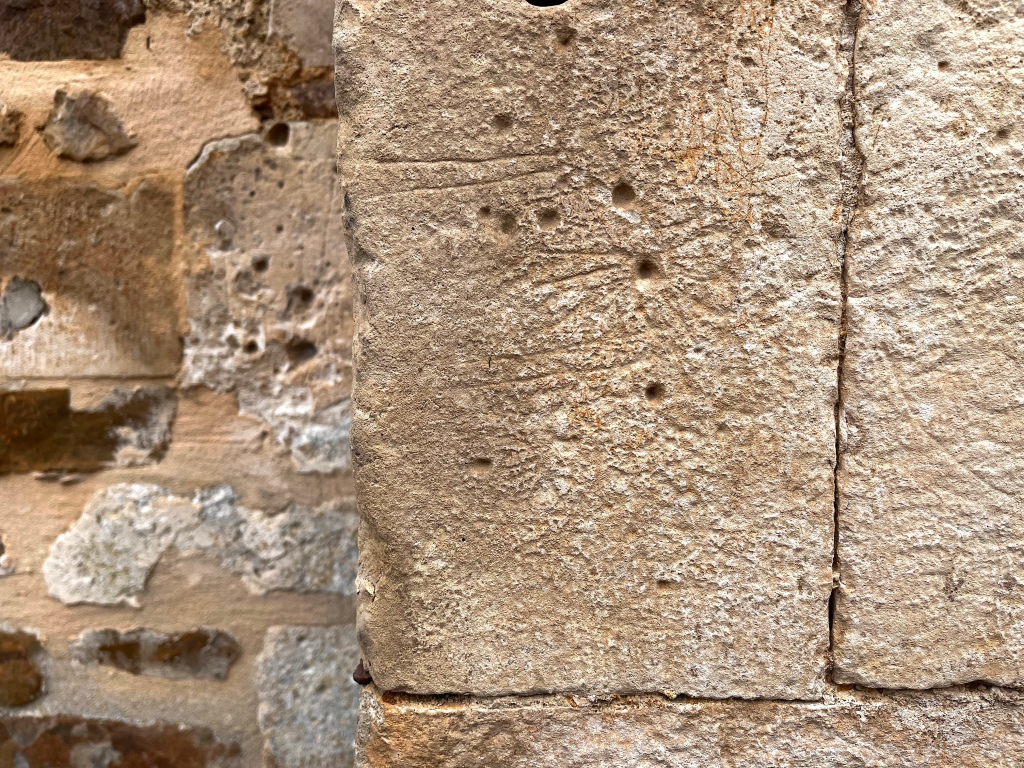
Hint of a circle, esp. ULQ

DIAL 4

A hint of a circle, esp ULQ

DIAL 5

Dial stone presumed to have been re-sited and rotated 90º

DIAL 6

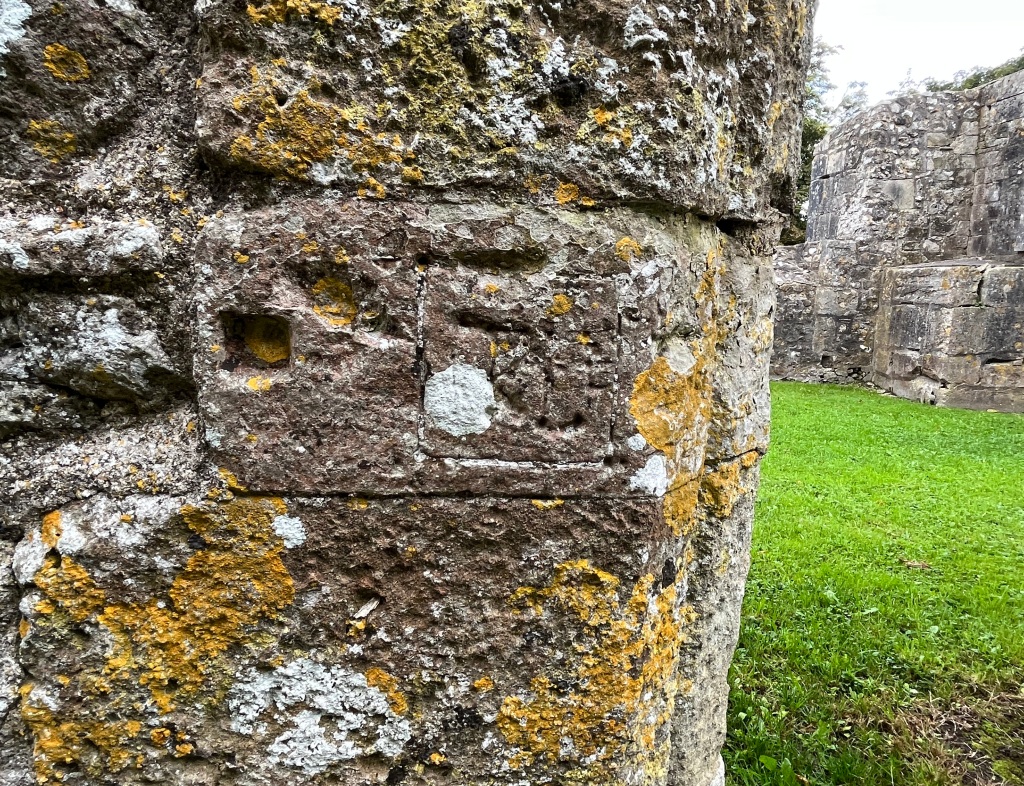
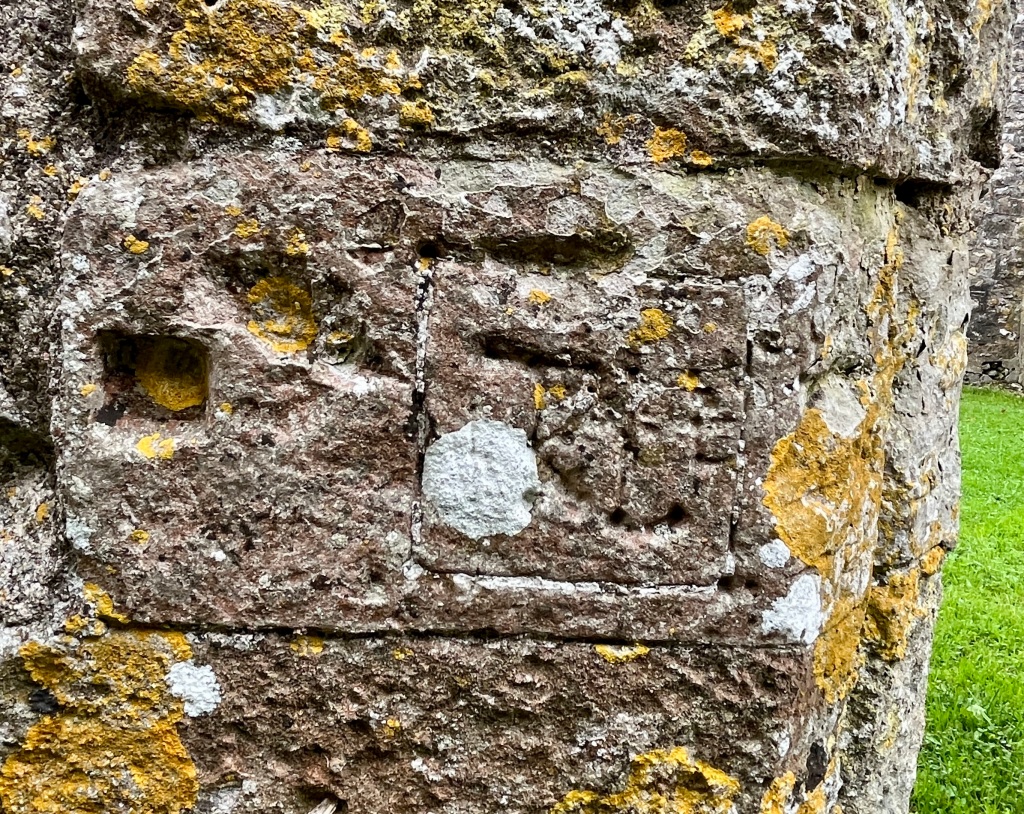
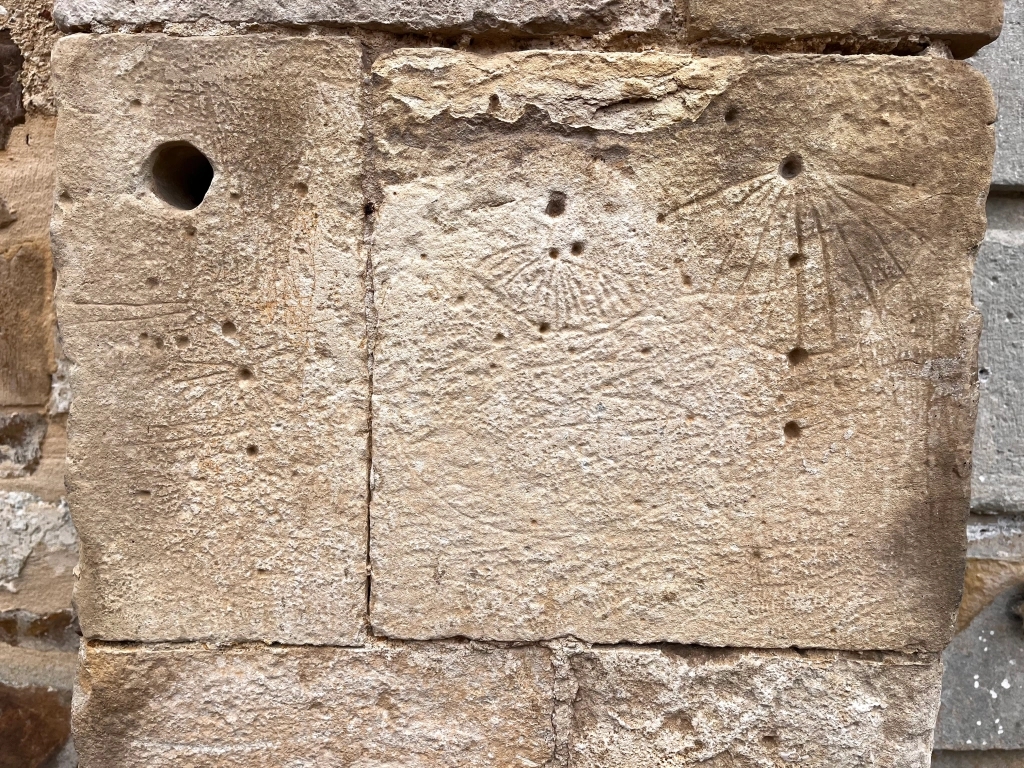
A remarkable dial within a square, with 2 large holes at bottom that appear to represent noon. It’s almost certainly unique. There’s mention of a Norman dial: perhaps this is it. There’s an apotropaic feel to it.

DIAL 7

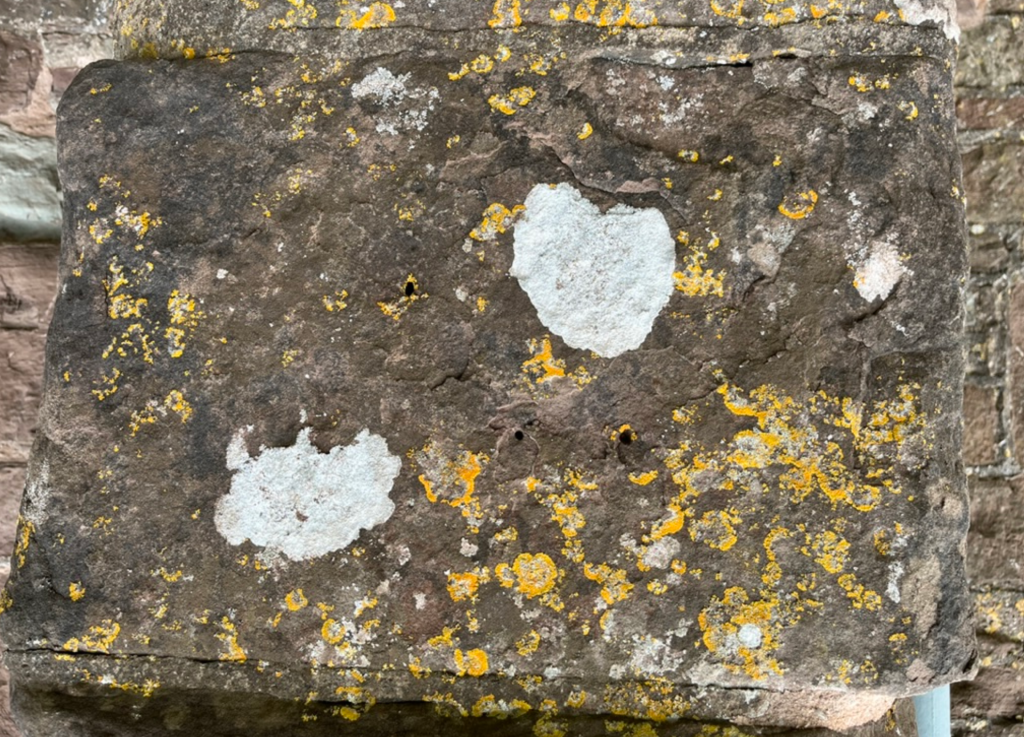
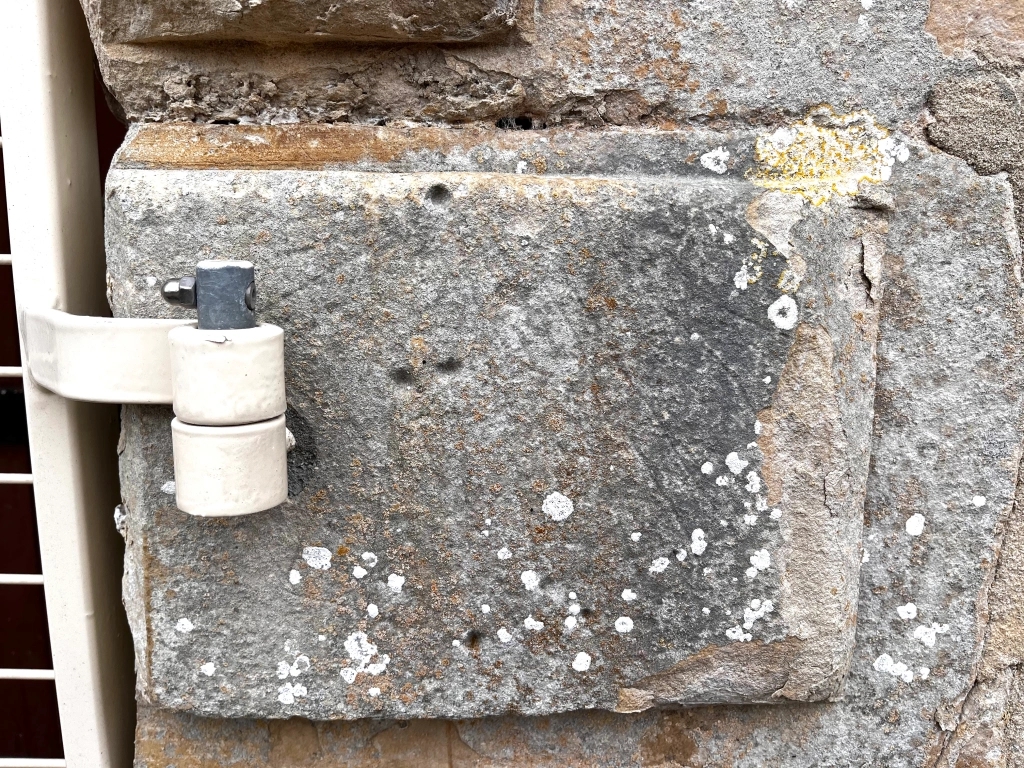
Nearly excluded from consideration. However the small holes are accurately on a circumference, and there’s the possibility of a small gnomon hole under the lichen. Borerline.

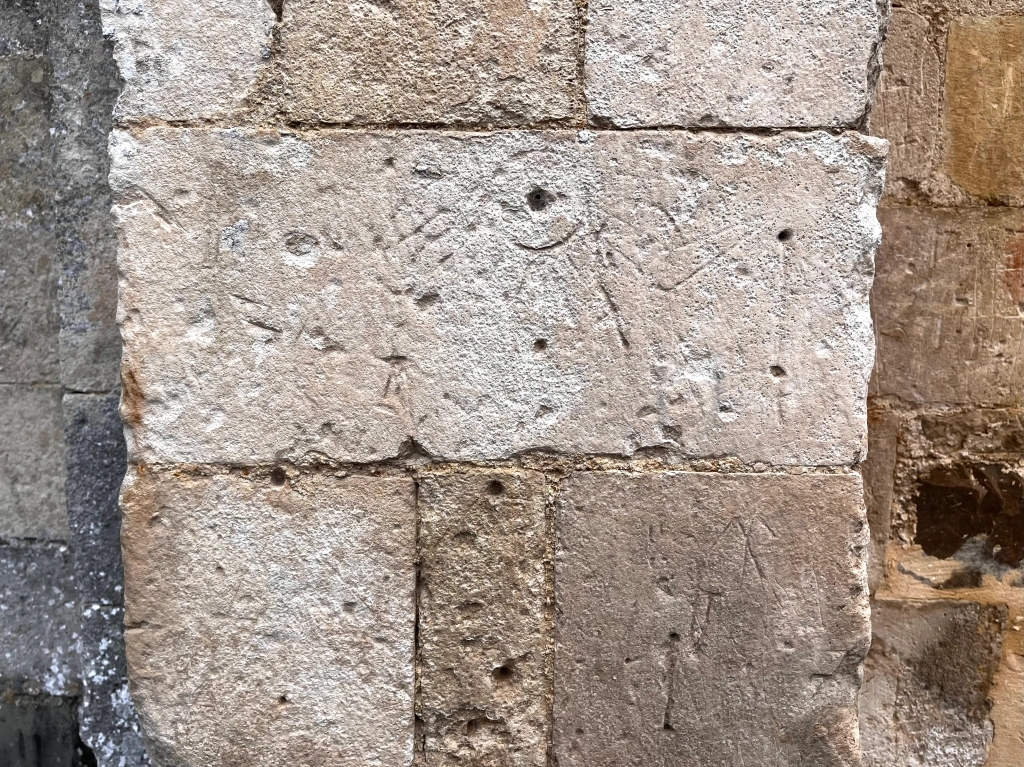
Probably not a dial but looks a bit more promising when rotated 90º. The pocks are (roughly) evenly spaced and there is a slight curve. No evident gnomon hole. Maybe simply a drilled design bored by a bored sacristan.

Credits: Churches Conservation Trust; Wiltshire Medieval Graffiti Survey (WMGS)

GREAT DURNFORD . WILTS . ST ANDREW – 4 Scratch Dials

ST ANDREW . GREAT DURNFORD . WILTS

GRADE II ✣ A fine Norman church built late C11 (nave); chancel c1200; tower C13. Major restorations ±1900 (Ponting). An estimable entrance. Worthwhile (PEV) and (more graciously) one of Wiltshire’s most delightful churches (Betjeman). Lovely font; wall paintings; pilgrim crosses, protection marks & graffiti. 6m N of Salisbury. 51.1244 / -1.8301 / SU119361

DIAL 1

Dial 1 is semicircular, located on the E buttress of the nave, close to the Priest’s door. It is in pleasingly good condition. Almost all lines of this 6-to-6 dial are visible, though much eroded RHS. The incisions are somewhat haphazard, and it is slightly odd that the most significant cut – the noon line – is so random.

DIALS WITHIN THE SOUTH PORCH

On entering the porch, the splendid door into the church itself invites immediate exploration inside. However, the porch conceals 3 scratch dials that a handful of people might like to investigate. There is scant reference to the scratch dials either side of the doorway. A dial LHS is recorded by BSS; one RHS is vaguely hinted at; another dial RHS is not noted anywhere that I can find, perhaps a new (modern) discovery.

DIAL 2

This dial is quite easy to find, half-concealed LHS but visible as one walks past. There are well defined lines, with the noon line probably the almost vertical one with a small pock at the end. I wondered if the straggly lines LRQ were later additions. Without them, the lines are all LLQ and (as with Dial 4 below) indicate mid-morning as the main part of the day for a service.

DIAL 3

Dial 3 is hidden away RHS of the fine door, even less accessible than dial 2. It is a fascinating example of a ’24 hour’ dial, with a full complement of spidery lines of random length of which almost all are still visible.

DIAL 4

Also RHS and even less visible is a conventional ‘morning’ dial, with 4 lines (the upper one is faint) leading down to the slightly deeper cut noon line. This configuration again suggests that mid-morning began the important part of the day for observance before noon.

If you want to know more about this church, in particular the inside, there is a good article HERE

APOTROPAIC SYMBOLS, DEMON TRAPS, PILGRIM CROSSES, GRAFFITI

A selection of church marks in the porch. The 2 compass-drawn circles are not dials but [probably] ‘demon traps’. In superstitious medieval times it was believed that evil could be prevented from entering the holy building with protection marks. In this type, evil would become trapped within the never-ending circle. The VV and the M on the wooden door are Marian marks standing for the Virgin Mary, who bars entry to the church by evil.

GSS Category: Scratch Dial; Mass Dial; [Vertical Dial]; Dial inside porch; Apotropaic Symbols; Protection Marks; Pilgrim Crosses

All photos: Keith Salvesen; drawings BHO

URVILLE . NORMANDY . NOTRE DAME – Multiple Scratch Dials, Protection Marks & Graffiti

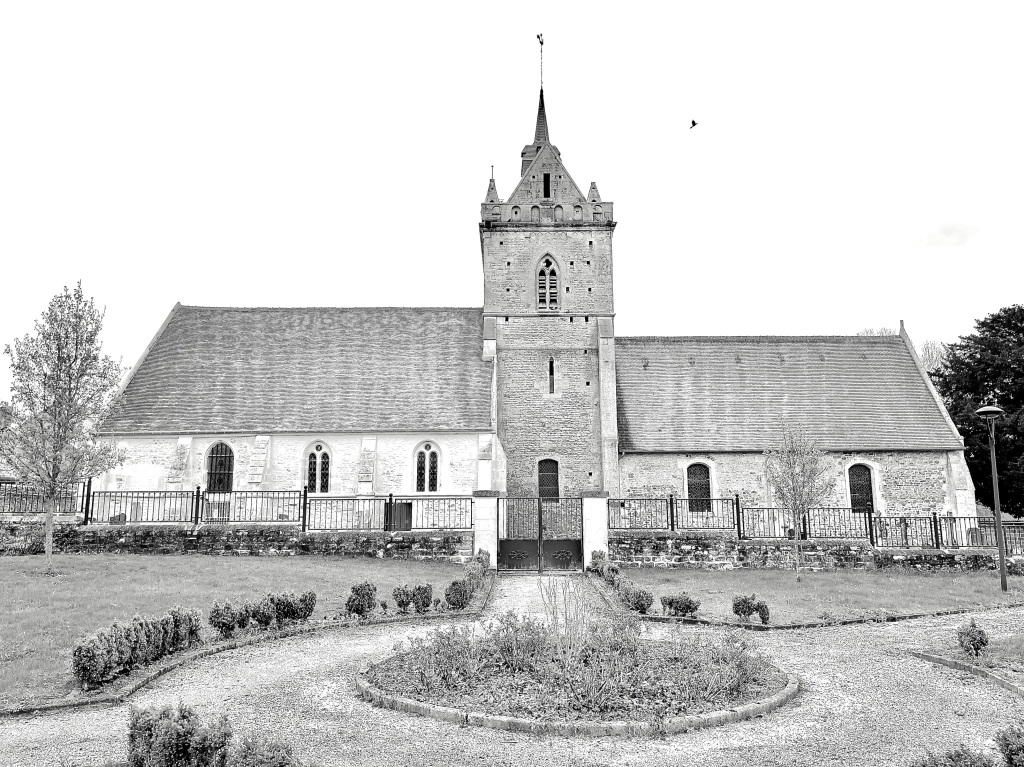
ÉGLISE NOTRE DAME DE URVILLE . NORMANDY

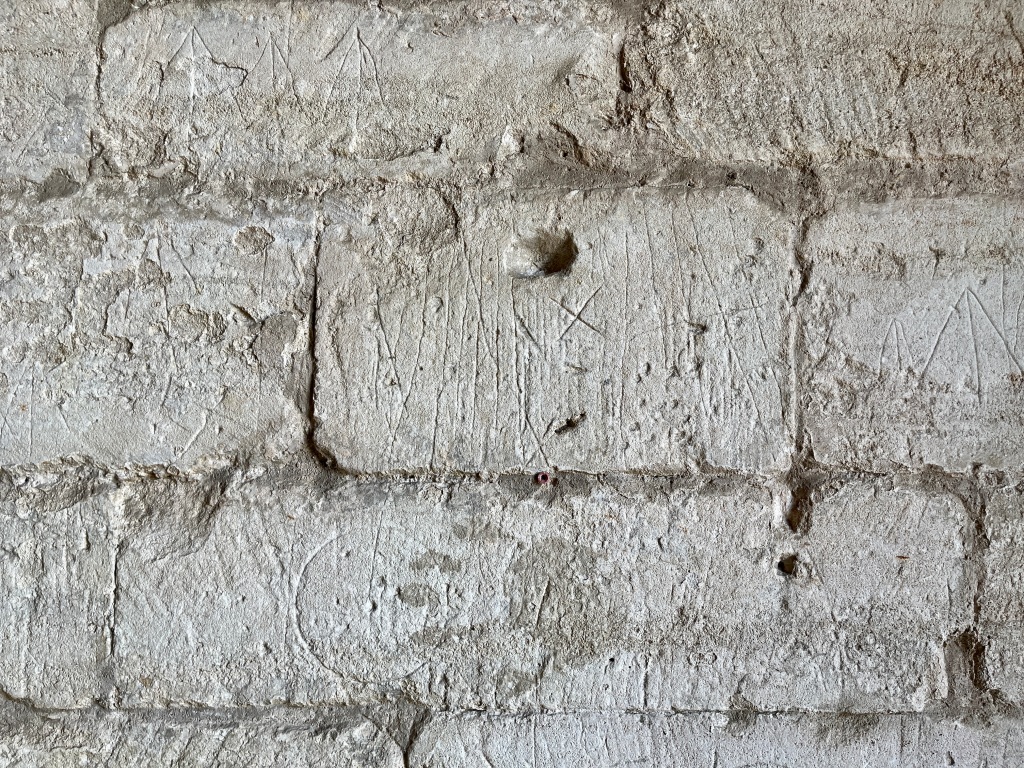
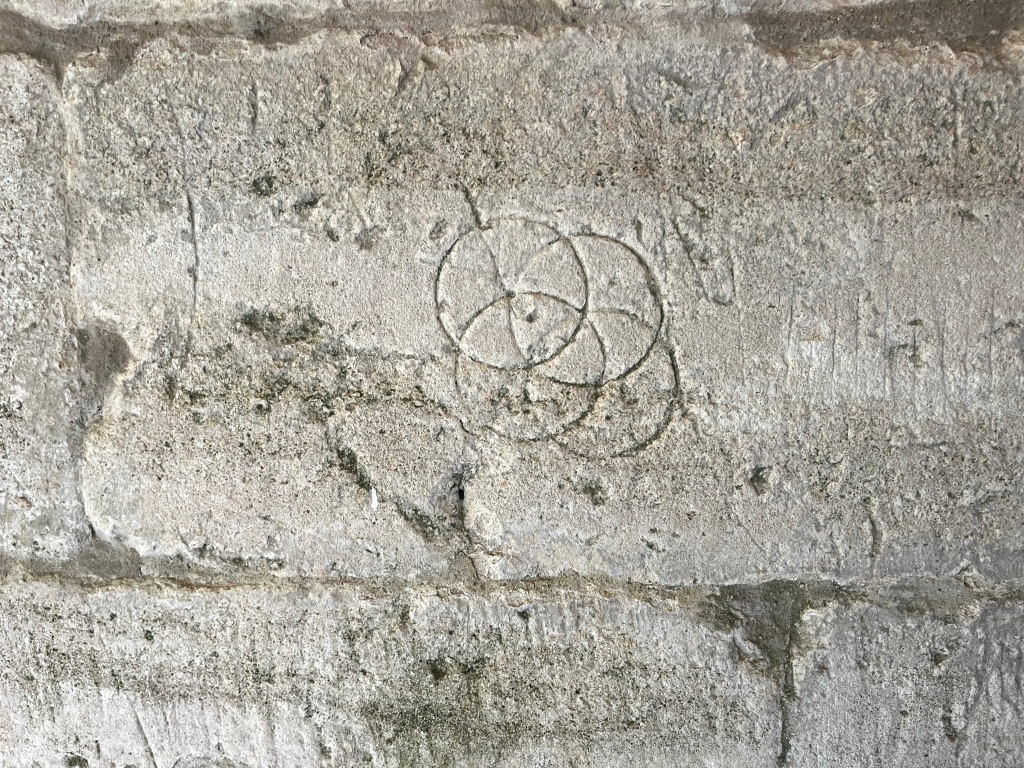
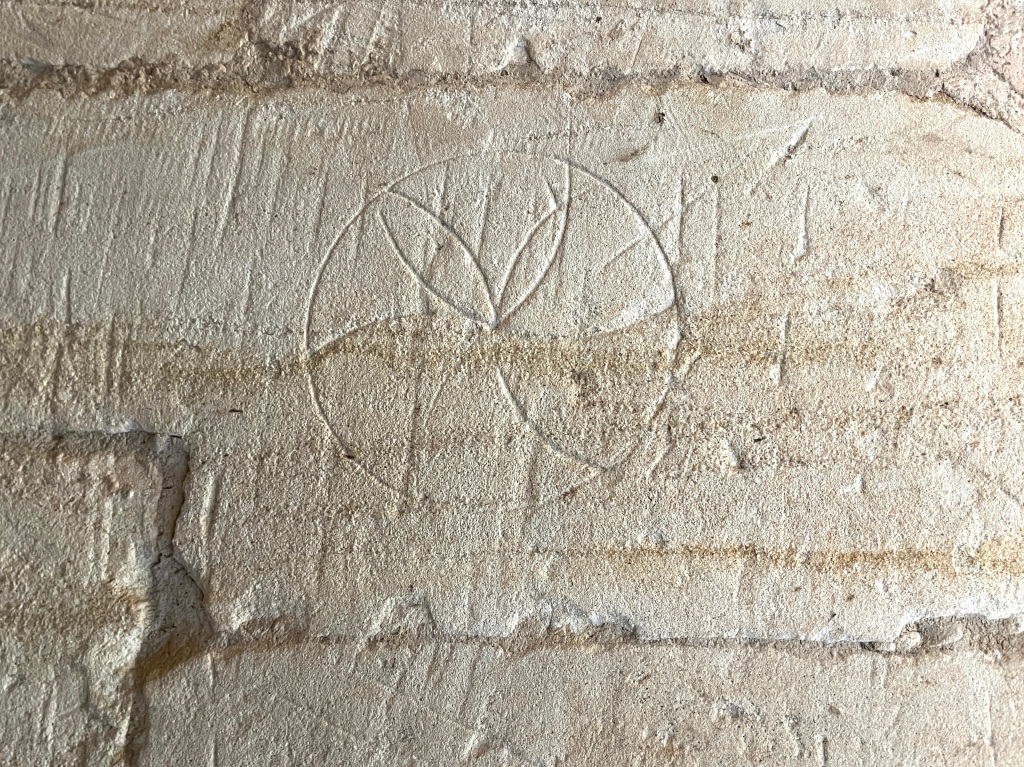
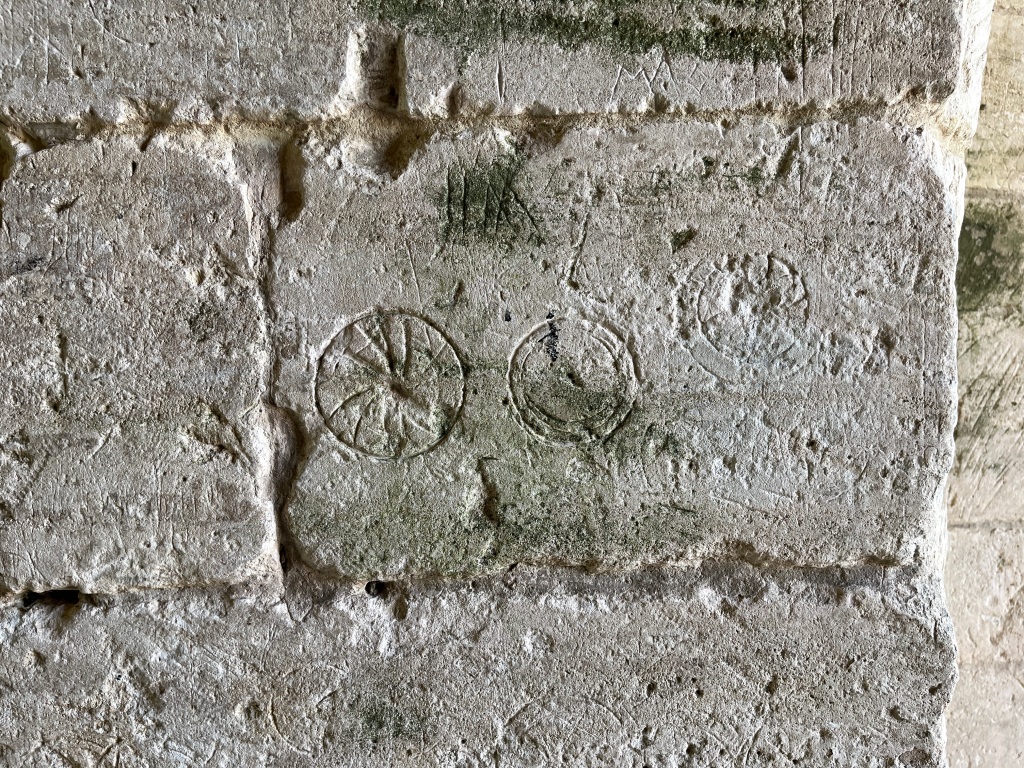
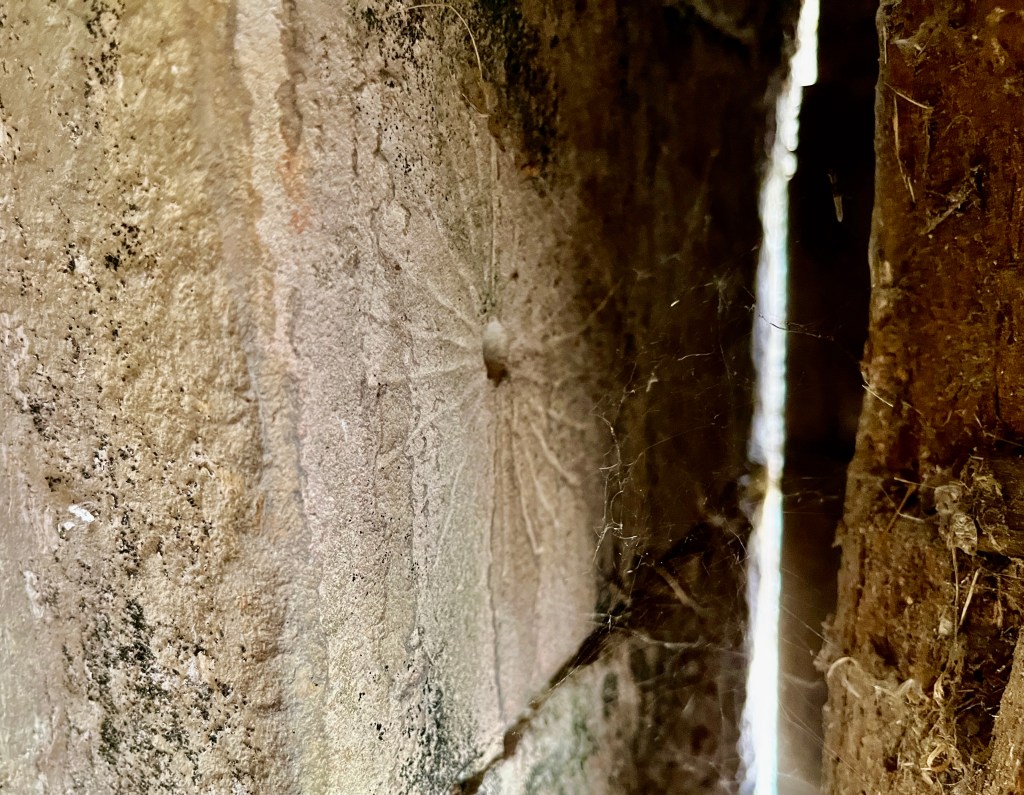
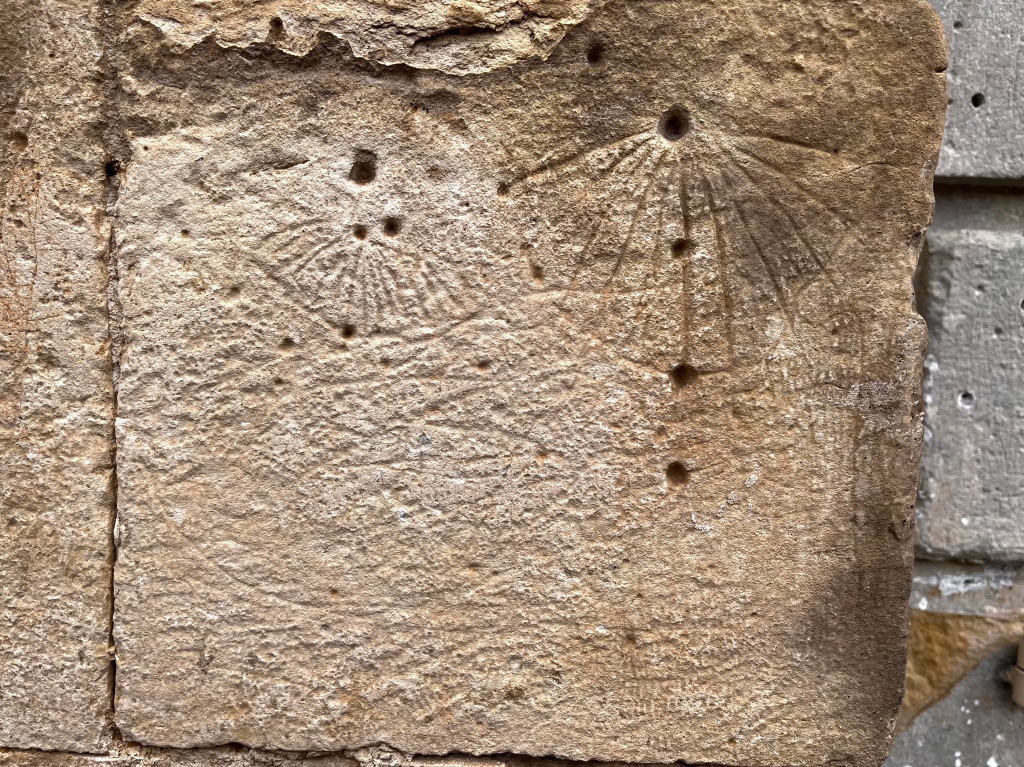
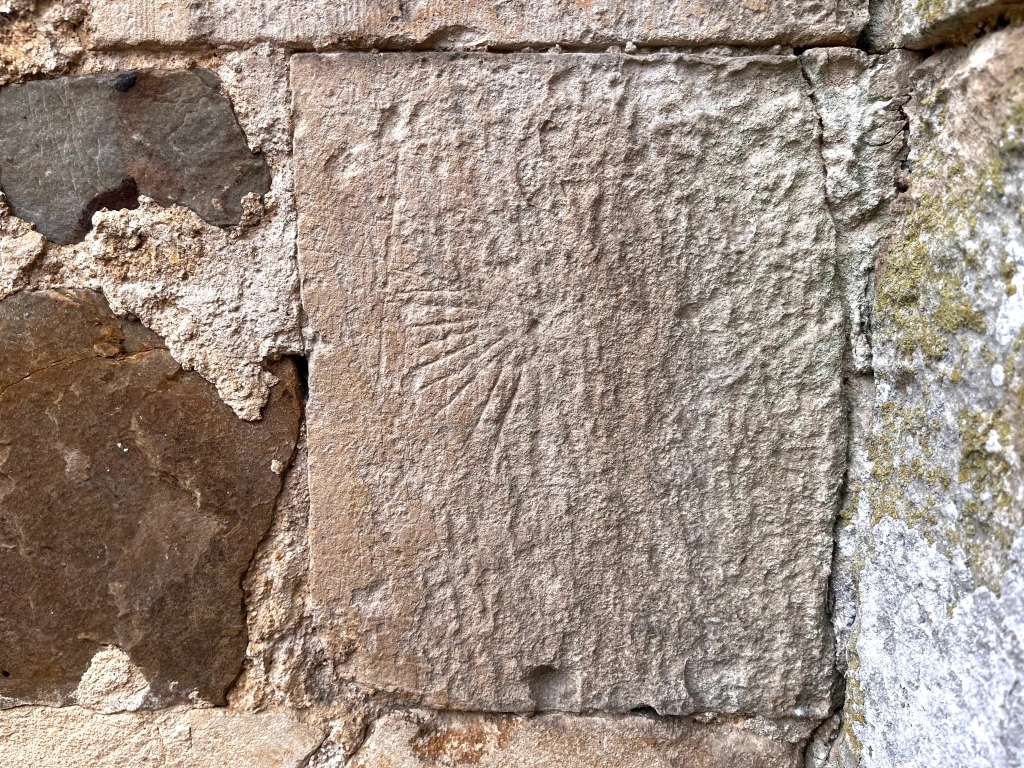
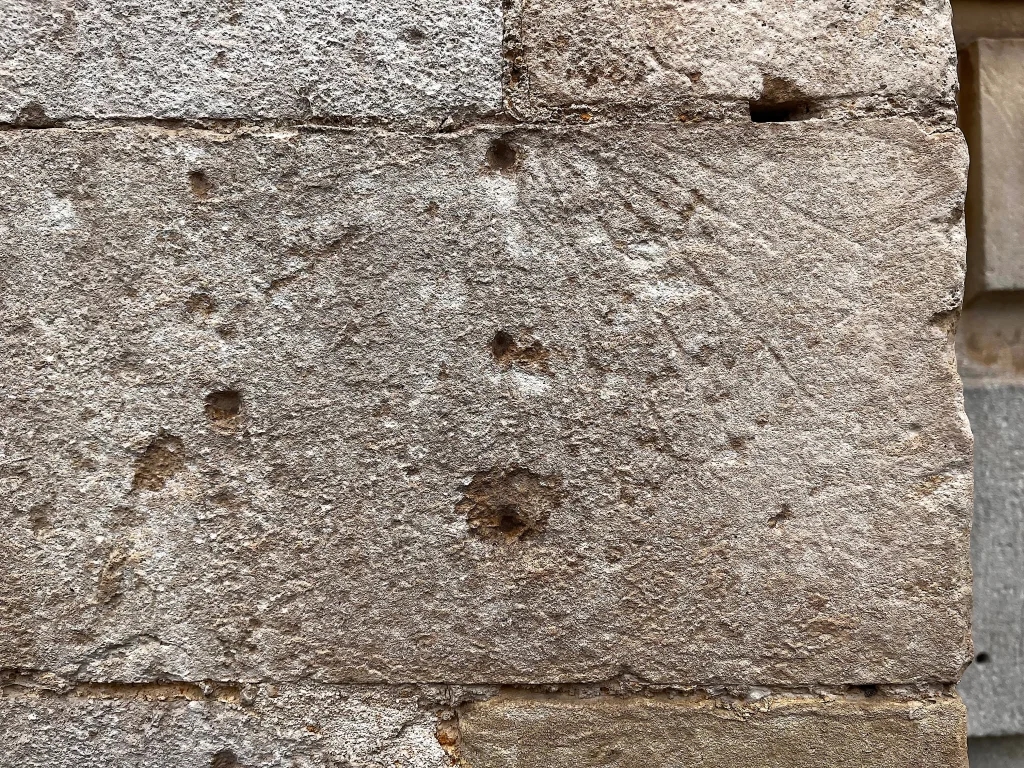
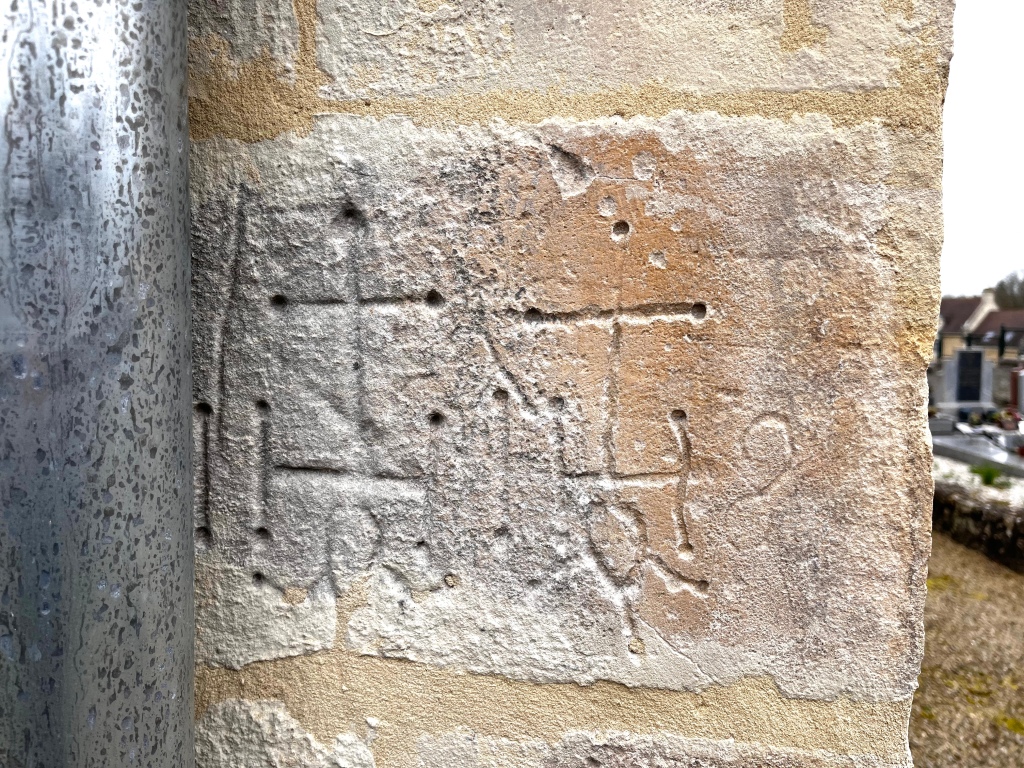
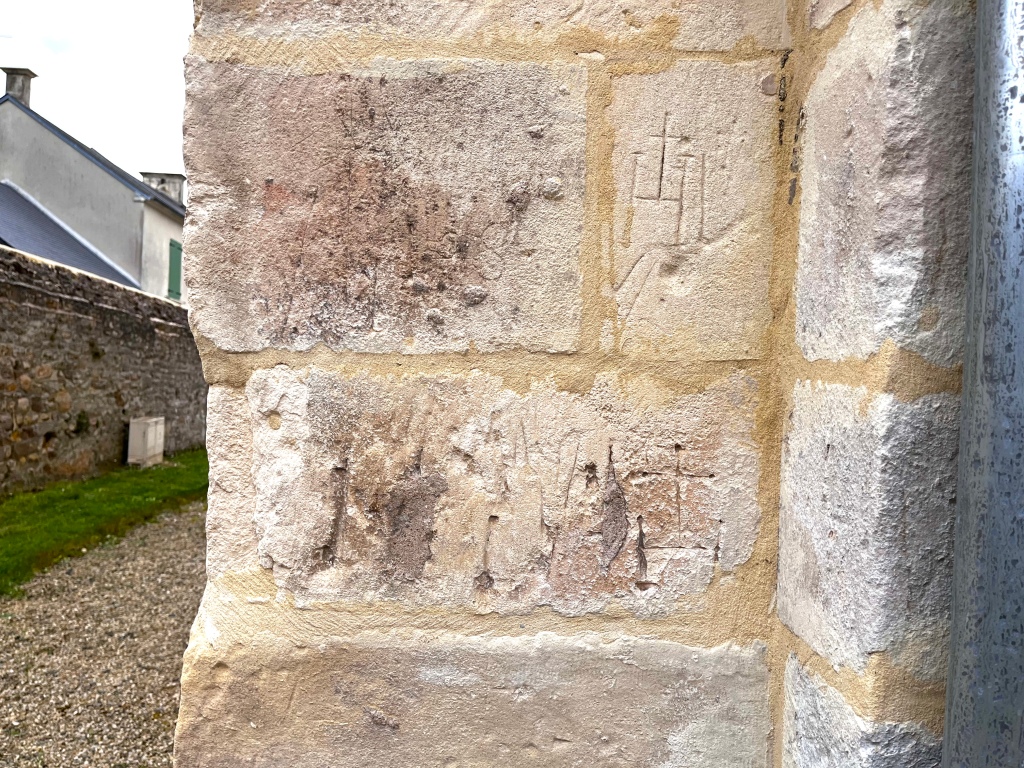
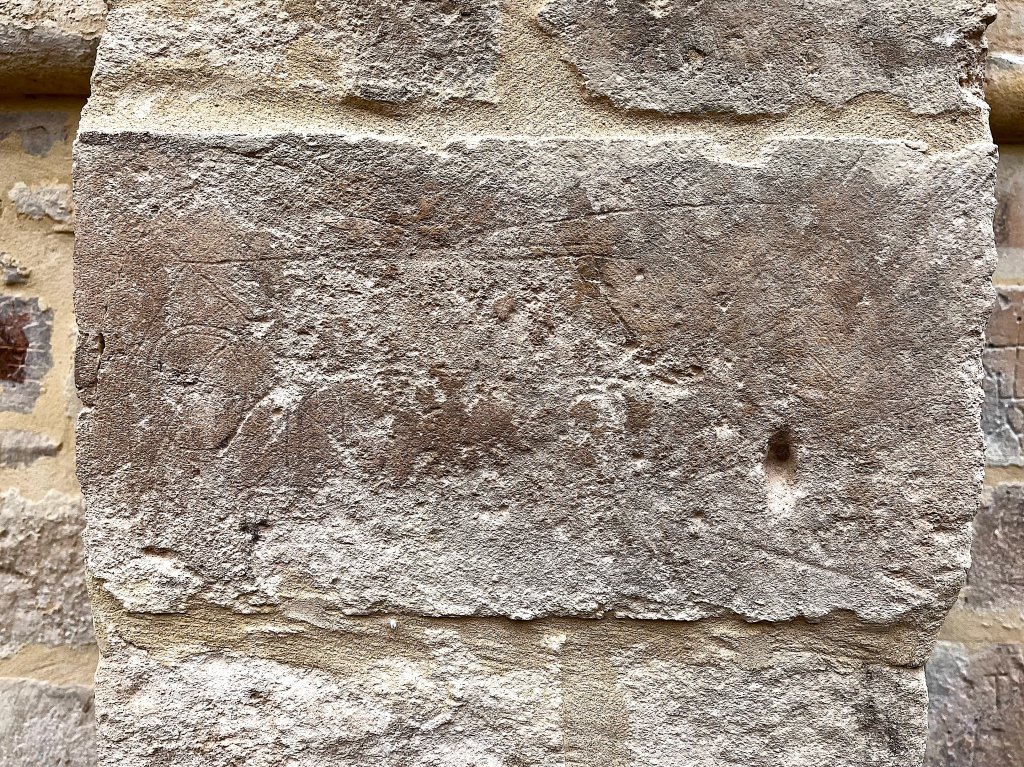
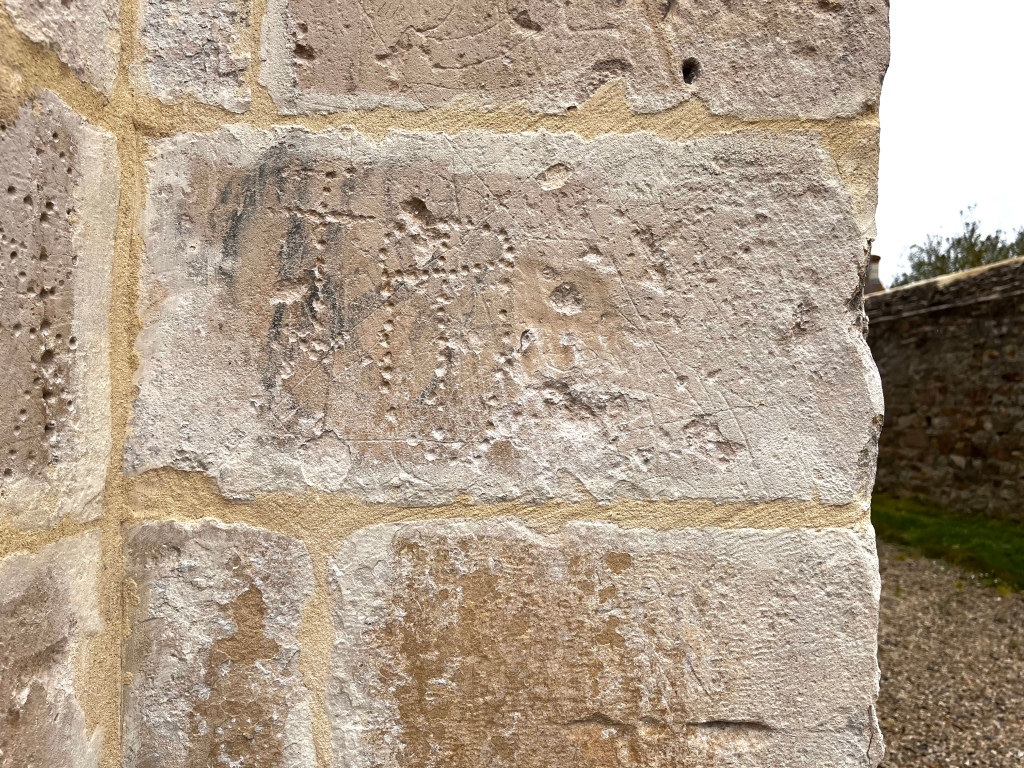
The area between Caen and Alençon contains a surprising number of churches with scratch dials. There are some rich pickings for scratch dial and church mark enthusiasts. It is not exactly a destination in itself, but is certainly vaut le voyage if you are in the region. Several churches have a plethora of designs and Urville is one of them. I gave up counting the dials and disentangling overlapping ones when the score reached twenty. 49° 01′ 31.44″ N, 0° 17′ 53.88″ W

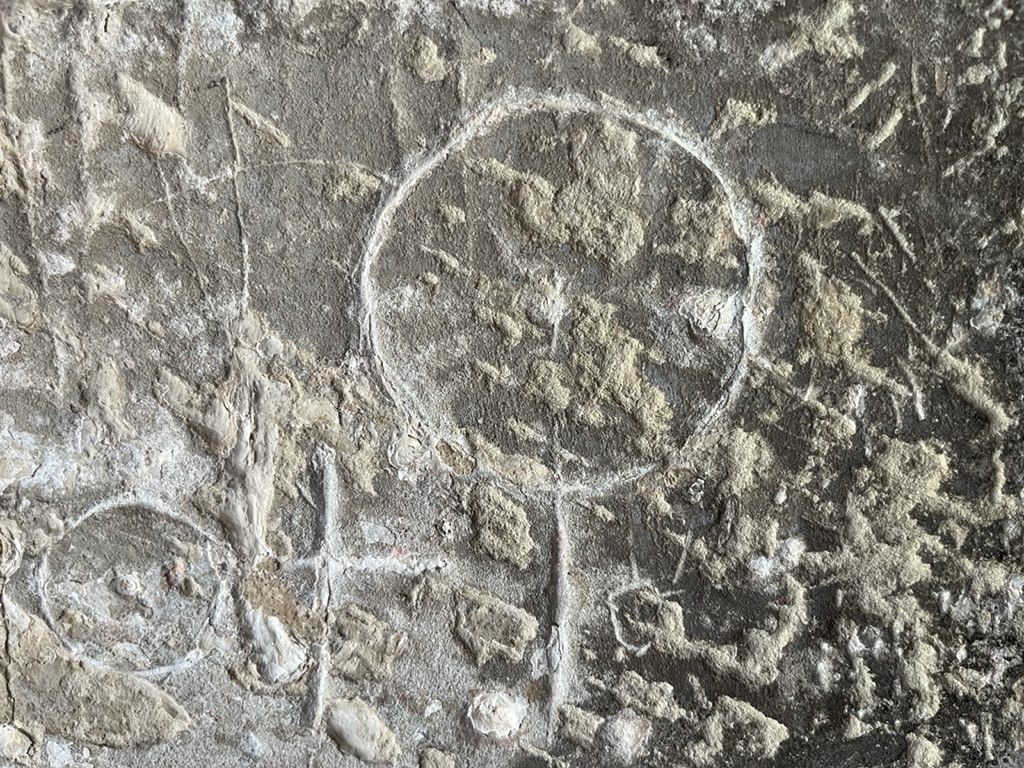
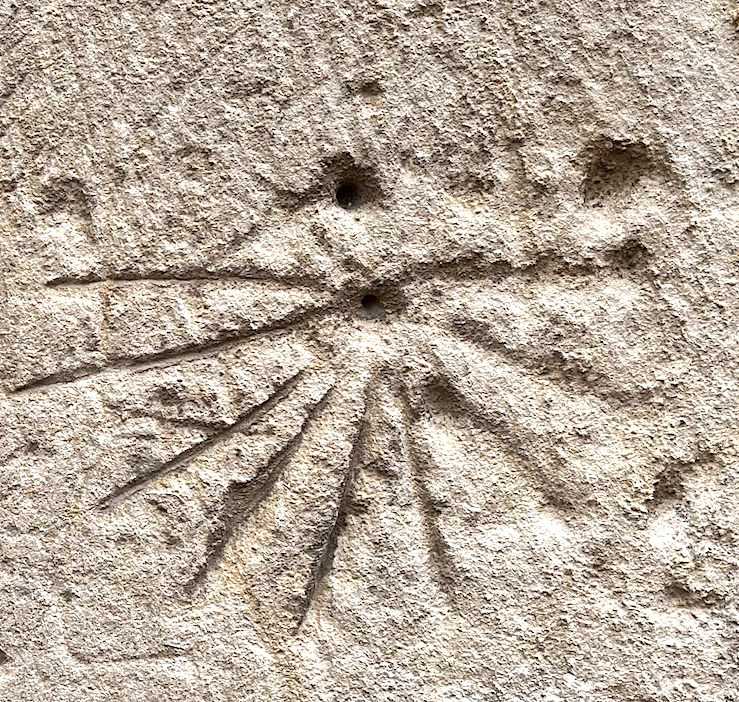
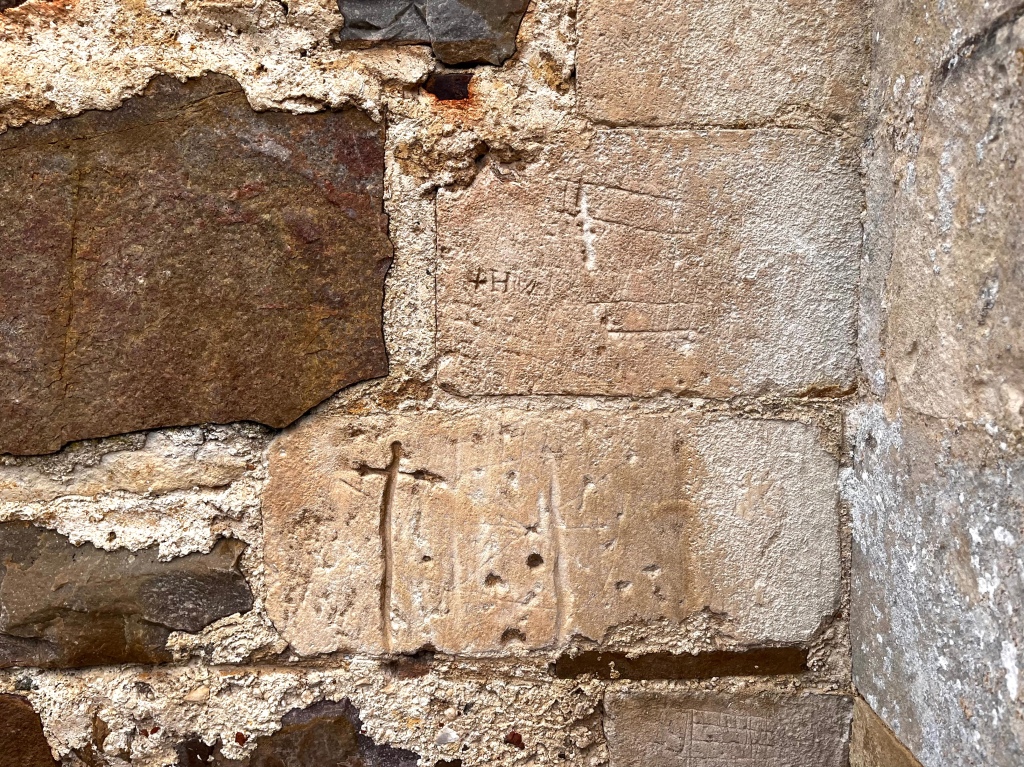
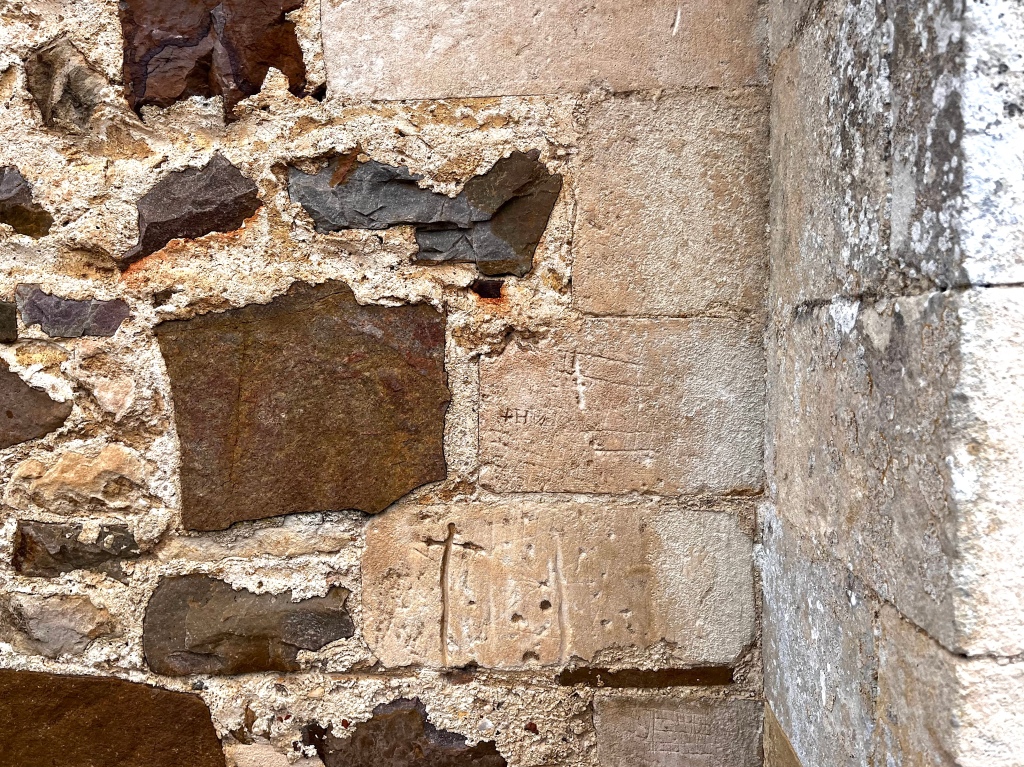
There is no point in trying to analyse this amazing collection of dial art, nor guess its significance. It’s hard to find out much about the church at all except for the official write up to the effect This parish church, built in the village centre, replaced the former place of worship which had become too small. The present church is said to be C17. Using British churches as a guide, some of the dials & graffiti seem earlier. Presumably some of the original church’s stones were reused. It might make sense that the new church tempted the villagers to add to an existing display. Here is a varied selection.

DIALS

APOTROPAIC SYMBOLS, GRAFFITI and other designs

GSS Category: Scratch Dial (Normandy France); Mass Dial (Normandy France); Medieval Sundial (Normandy France); Church Graffiti; Apotropaic Symbols; Protection Marks

All photos: Keith Salvesen