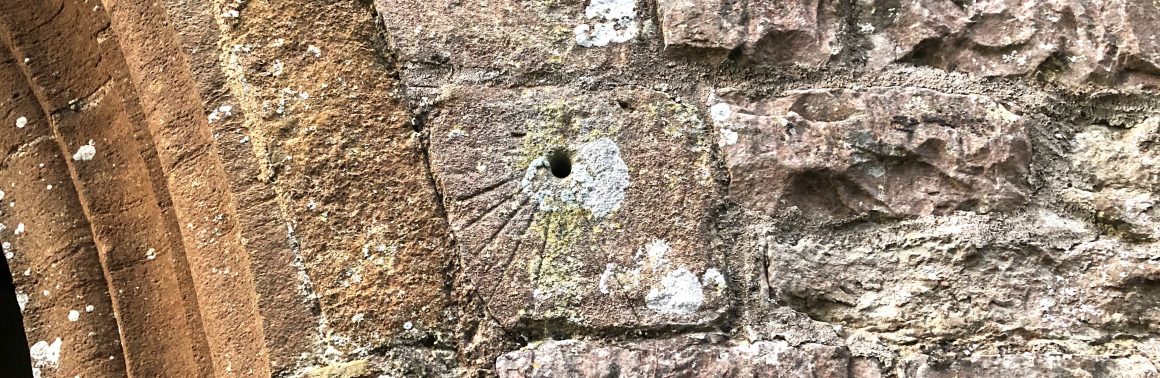
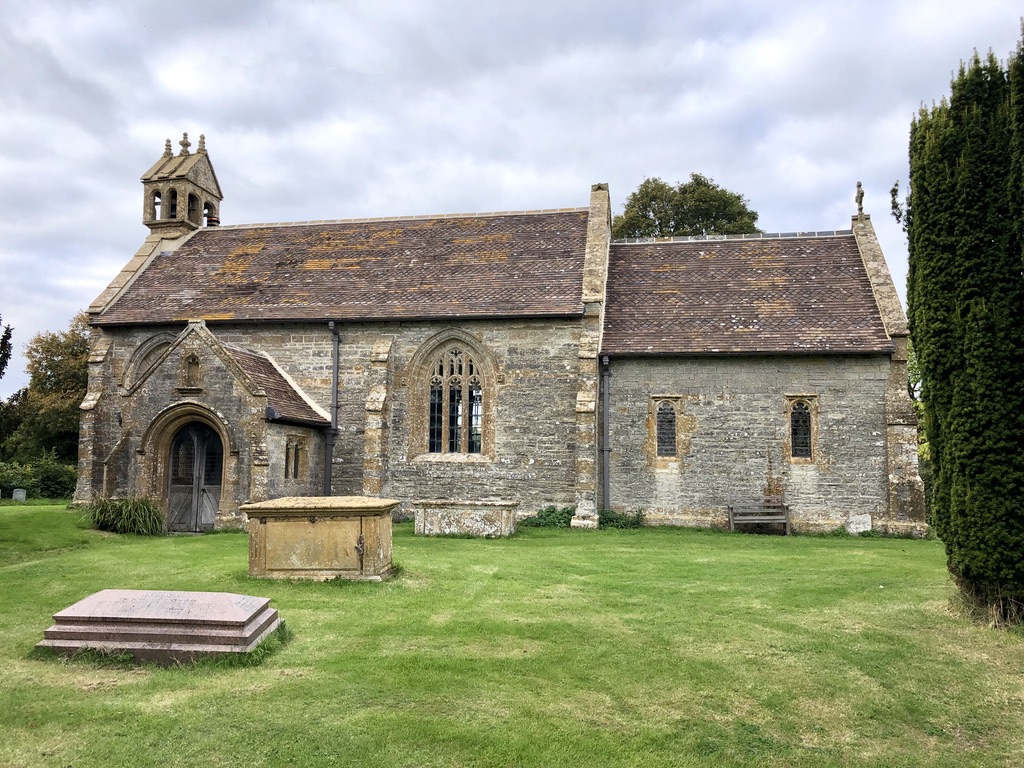
ASHINGTON . SOM . ST VINCENT – 2 Scratch Dials

St Vincent . Ashington . Som.

ASHINGTON . ST VINCENT . SOM

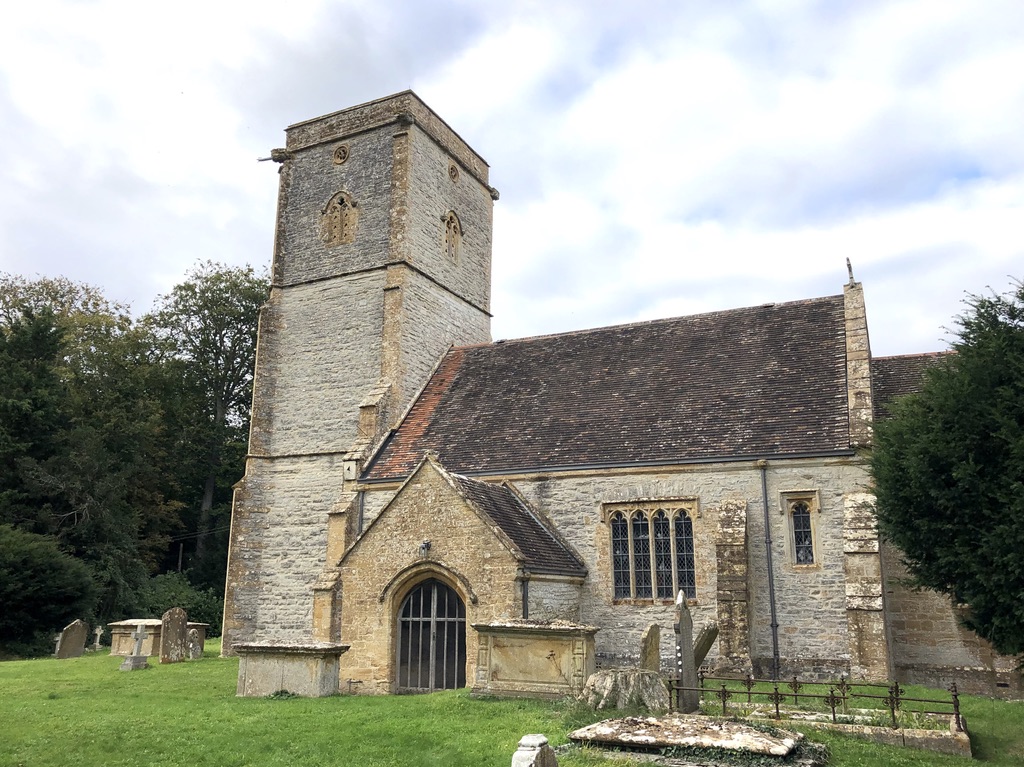
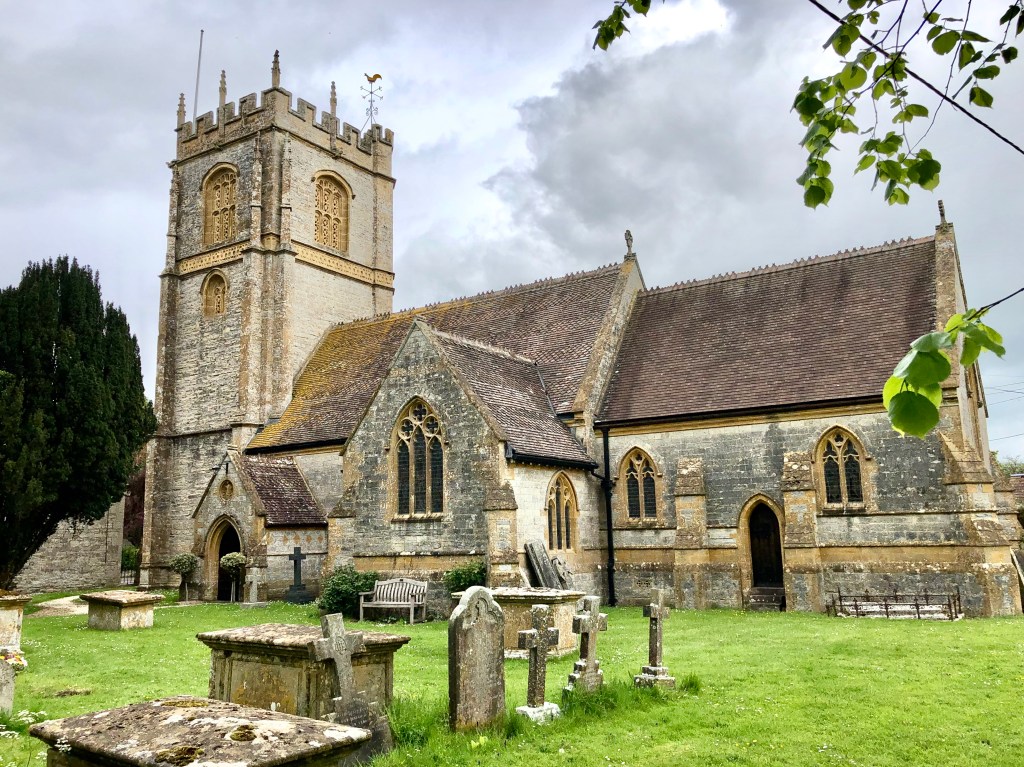
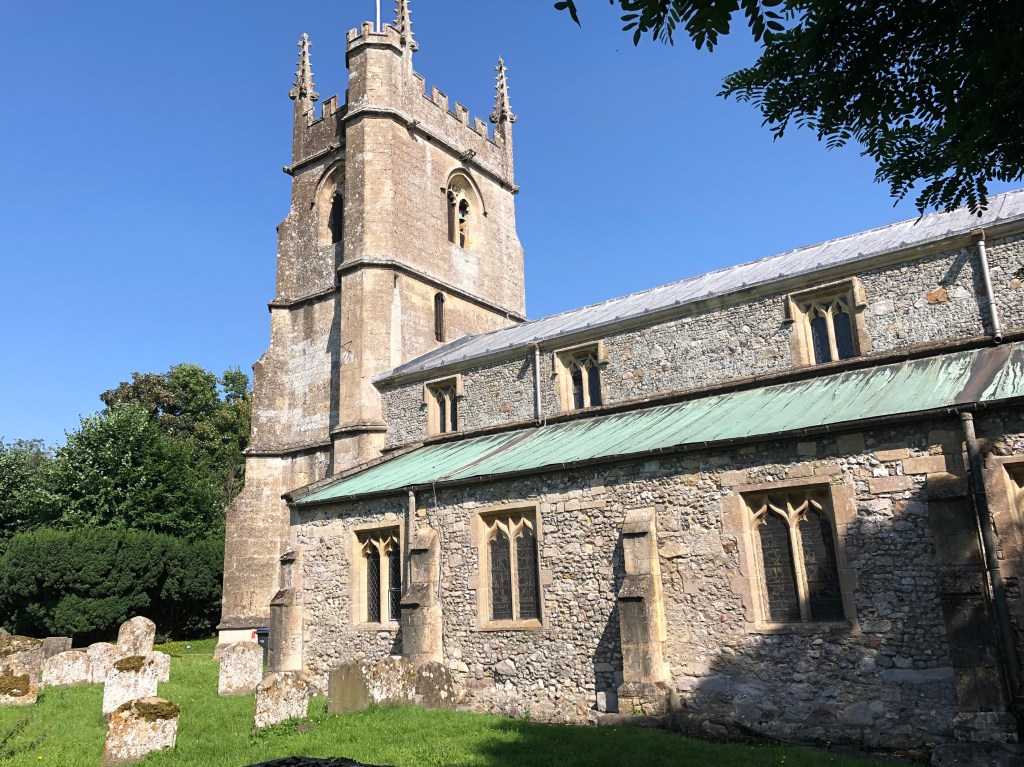
GRADE I † C13 origins in simple form, with later additions of porch, nave and chancel. A pretty and unassuming small church adorned with a notable bell turret. BLB highlights a number of interesting features. Located between Yeovil and RNAS Yeovilton, close to several other good ‘dial’ churches. 50.9904 /  -2.6267 / ST561214

DIALS

DIAL 1

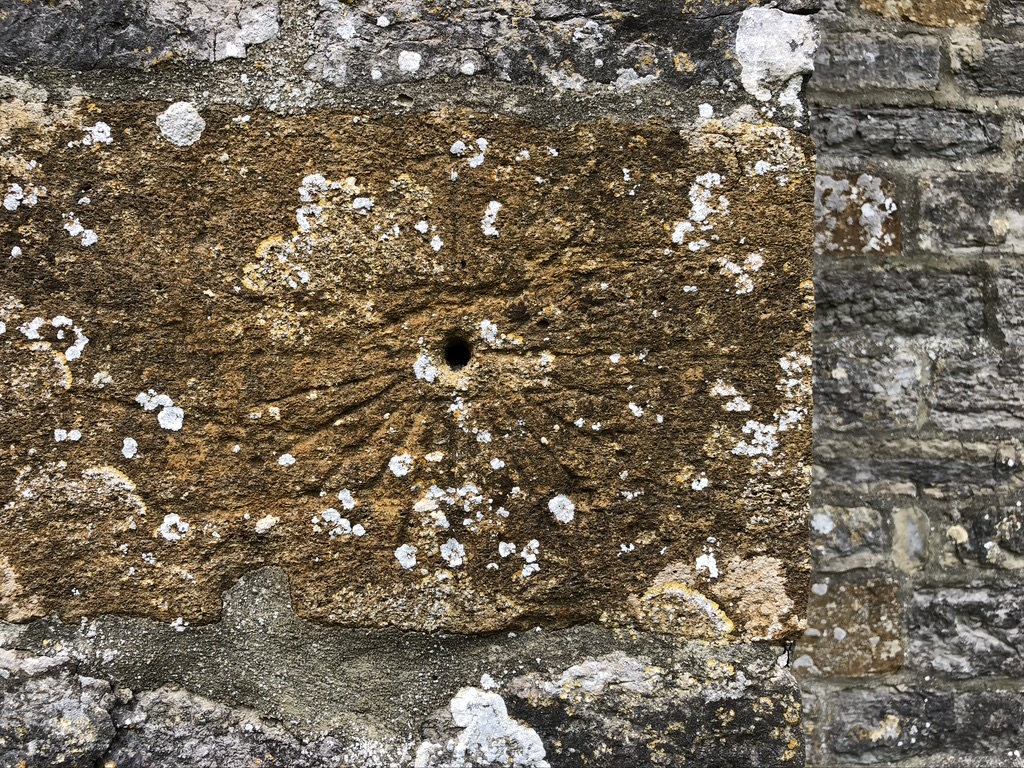
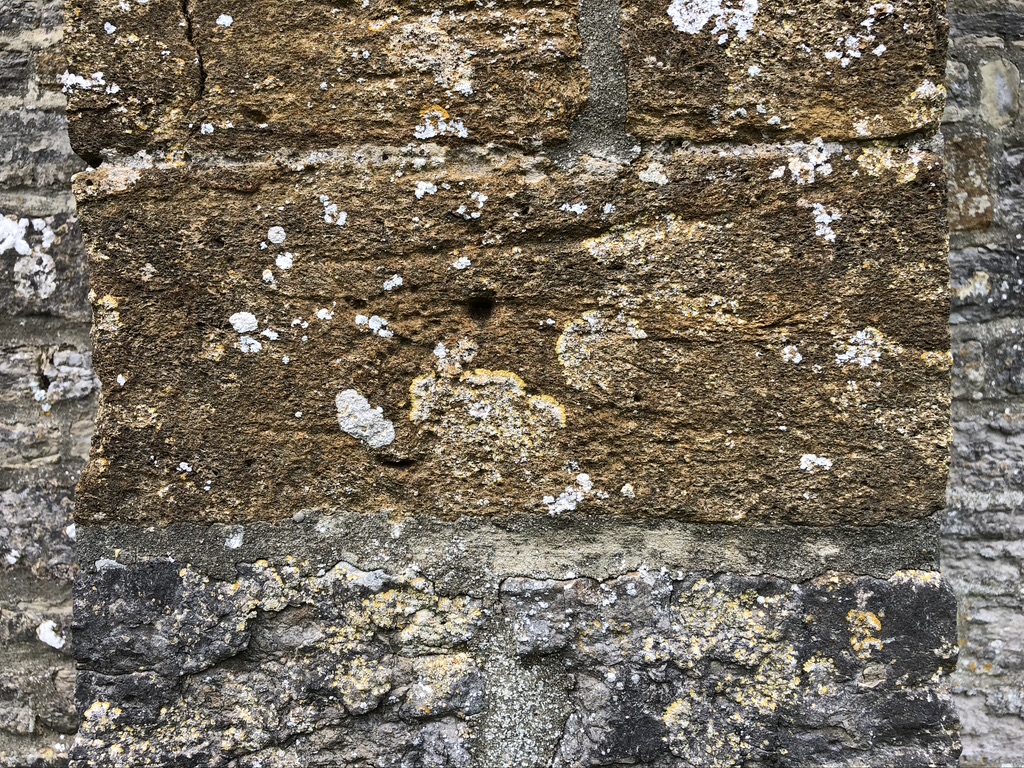
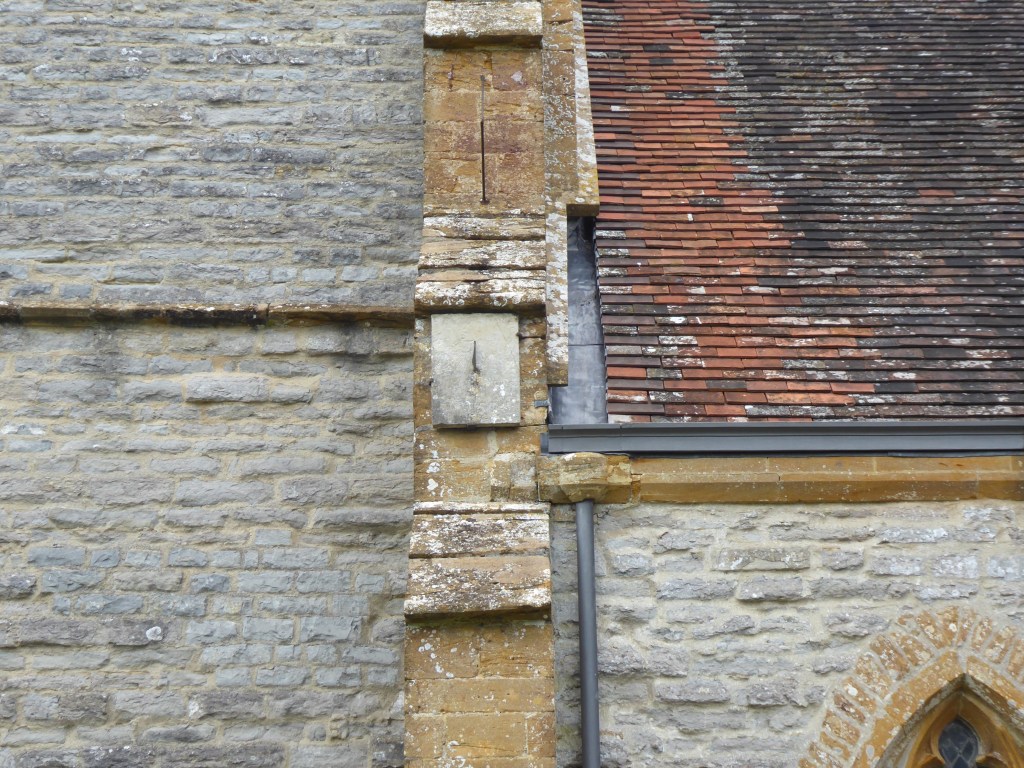
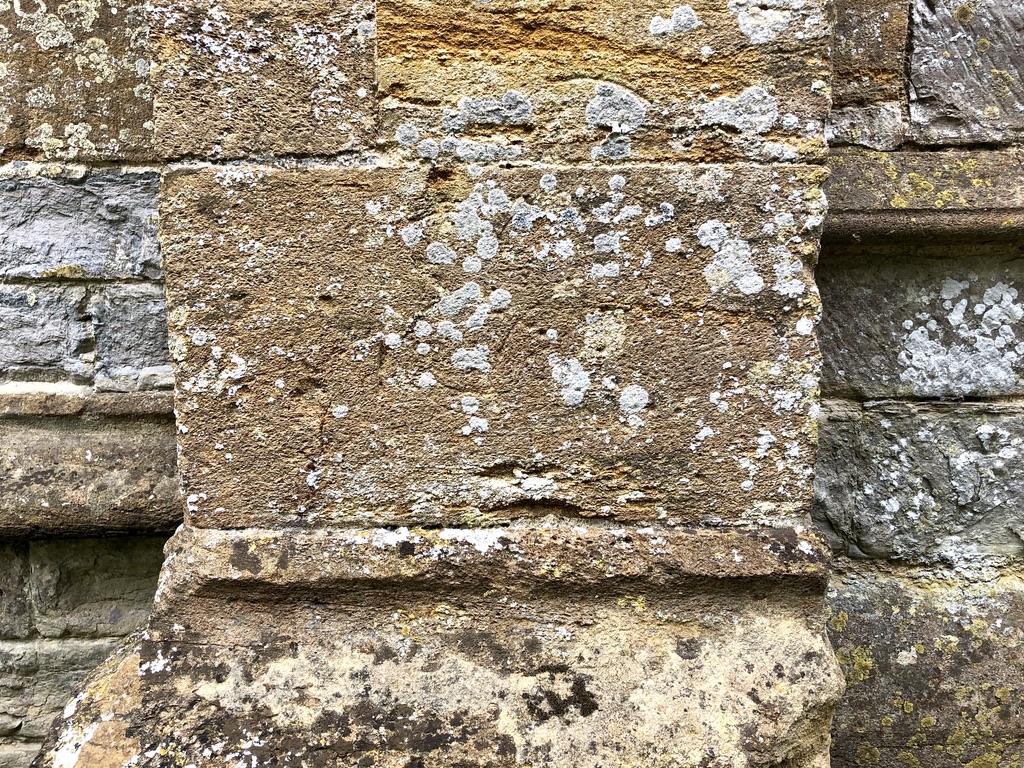
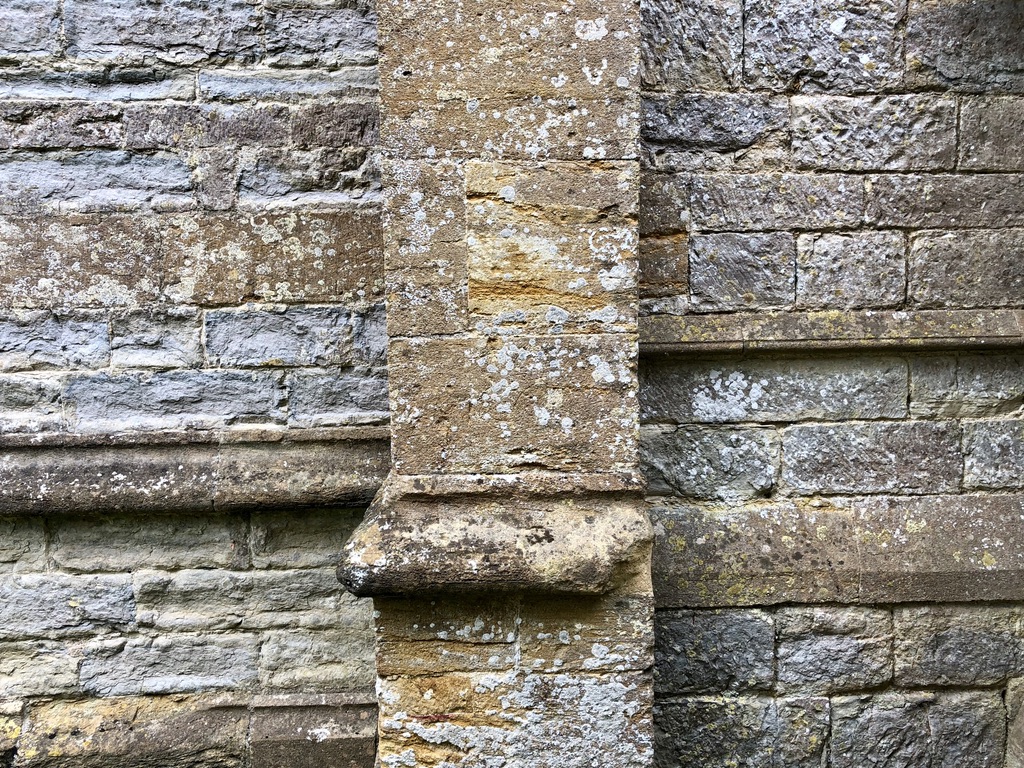
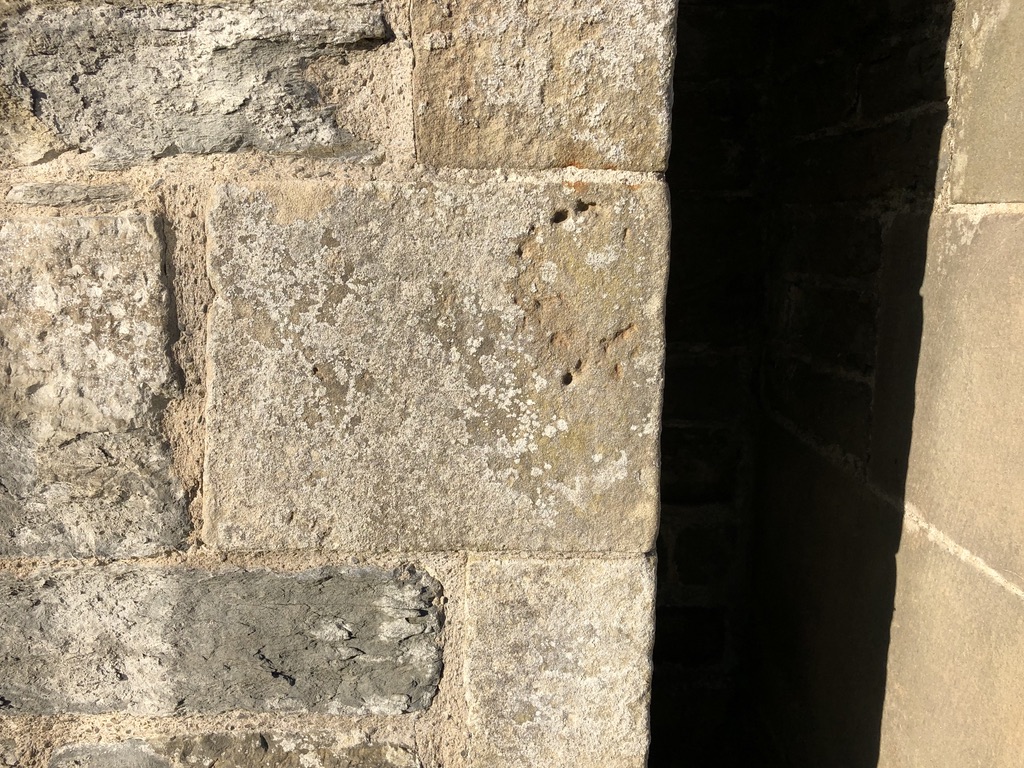
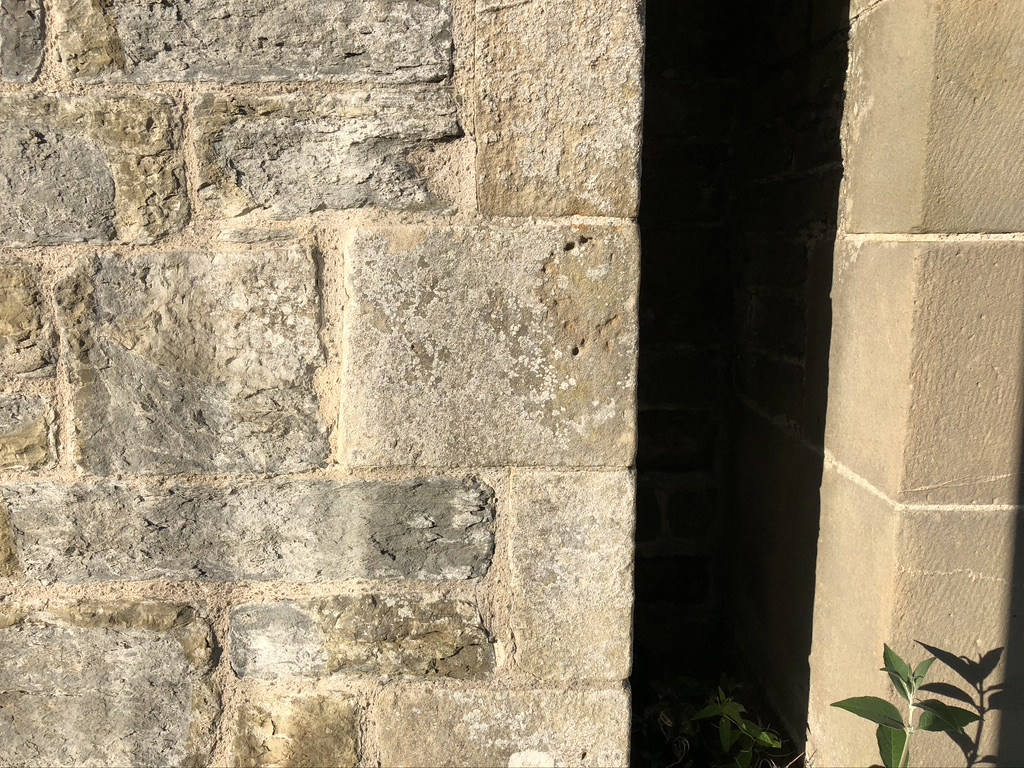
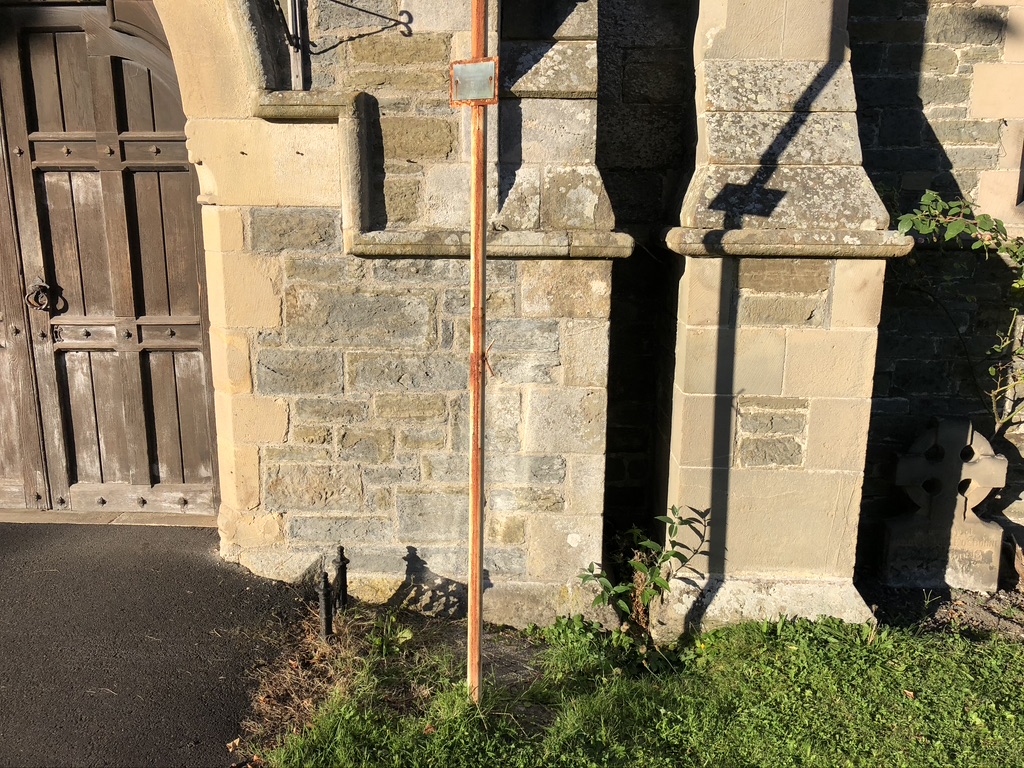
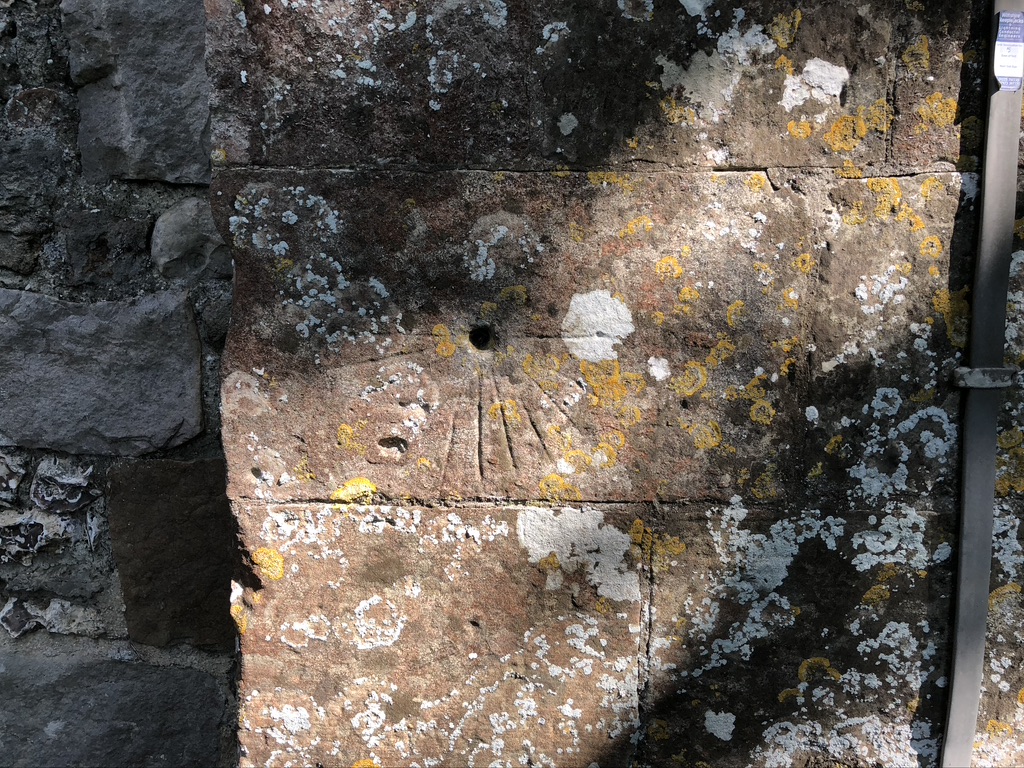
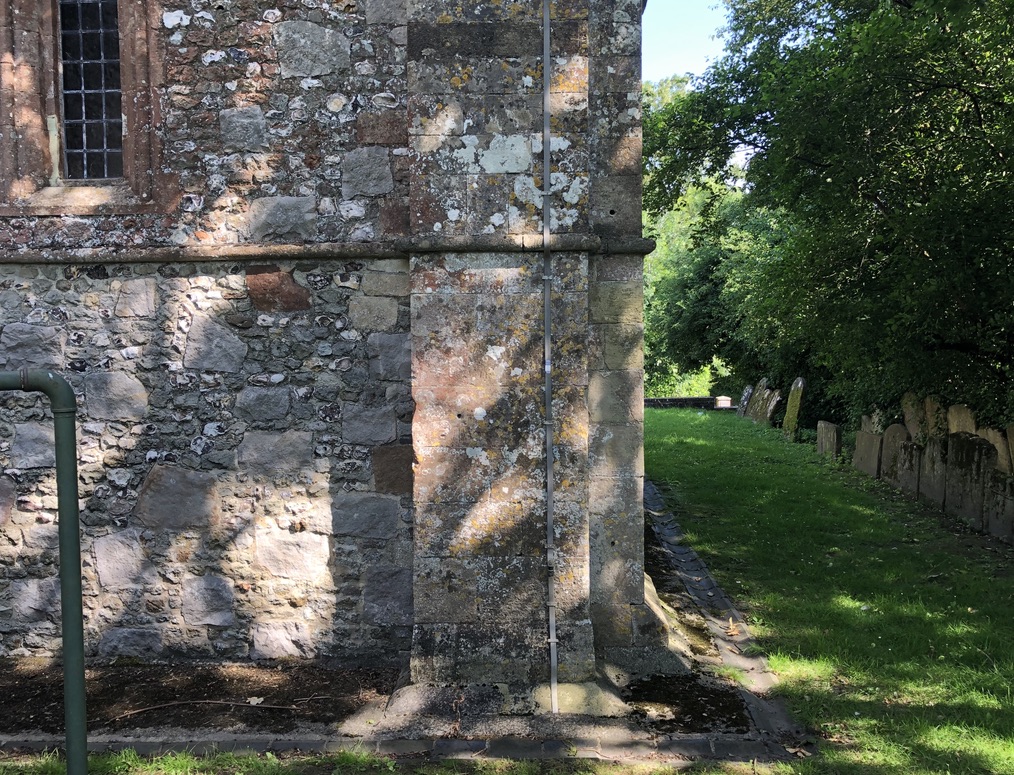
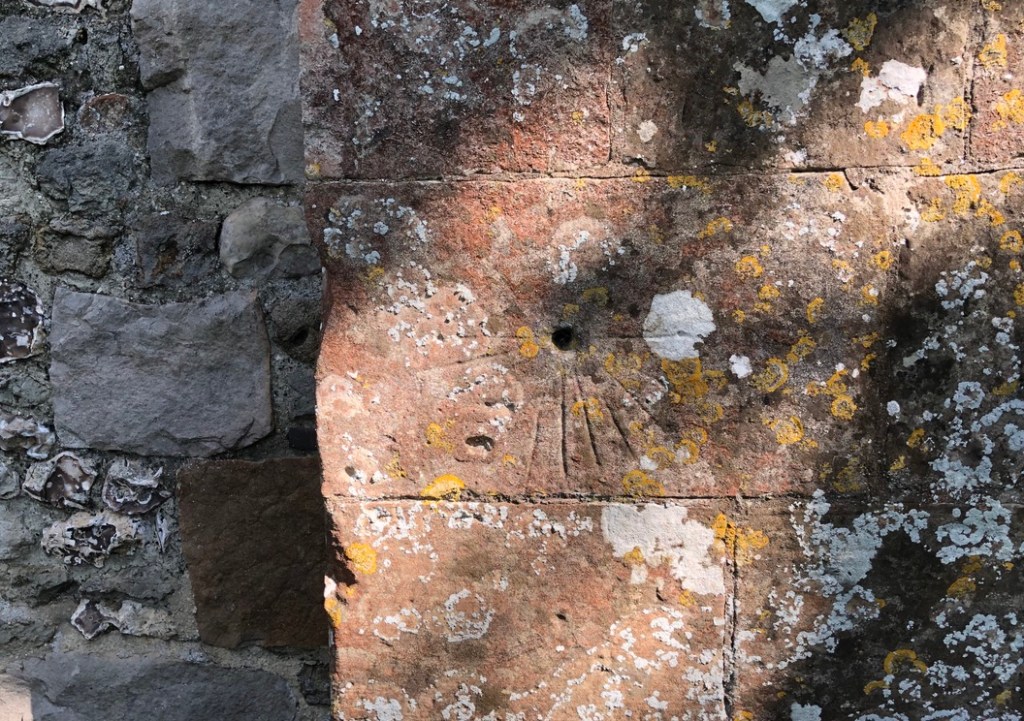
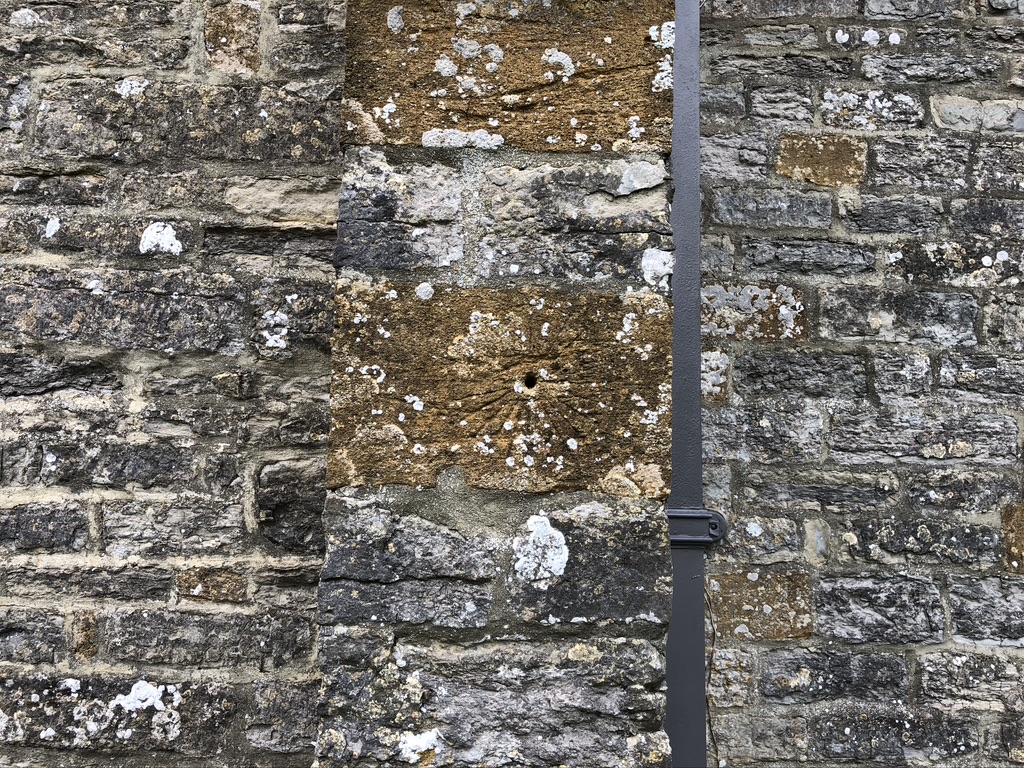
The buttress where the nave joins the chancel is the focal point for 2 scratch dials, one above the other. The upper circle dial is pleasingly elaborate with ± 18 radials fanning out from the style hole, many ending in pocks. Because of erosion I can’t be sure, but given that the circle was evidently complete, I suspect the full 24 hours were once cut. The lines in the lower ‘morning’ quadrant are deeper cut. Some lines extended to the mortar. A very satisfactory dial for an amateur to find.
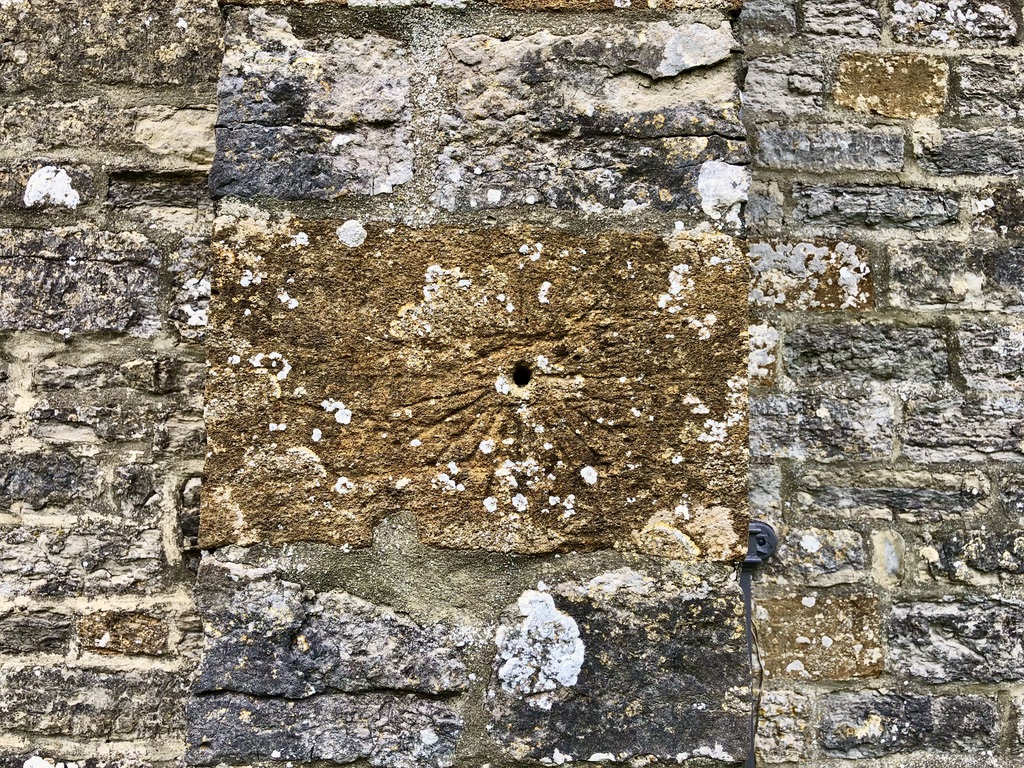
St Vincent . Ashington . Som – Scratch Dial 1

DEH visited St Vincent and other churches in the vicinity in May 1915. His field research primarily involved locating scratch dials throughout Somerset, taking meticulous but limited measurements of them, and making a general record, with occasional specific notes. As the pioneer of modern dial study, he was less concerned with the finer details we can now hope for, and he rarely included information about radials, pocks, angles and so on – nor put forward theories. Of Dial 1, he simply noted:

184. (1) This dial is on the second buttress e. of the s. porch. It is 6 feet 5 inches above the ground, the noonline is 4 inches in length, the stylehole is nearly 2 inches in depth by 3/4 of an inch in diameter, and the aspect is s. by 10° e. Type 4.
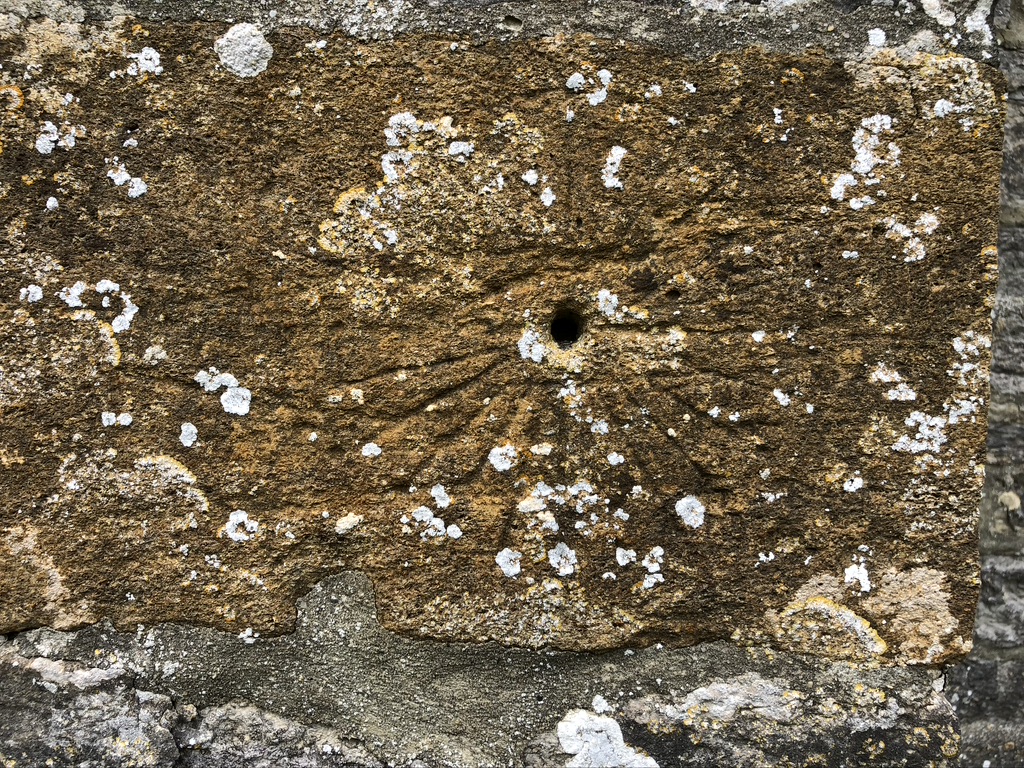
DIALS 1 & 2
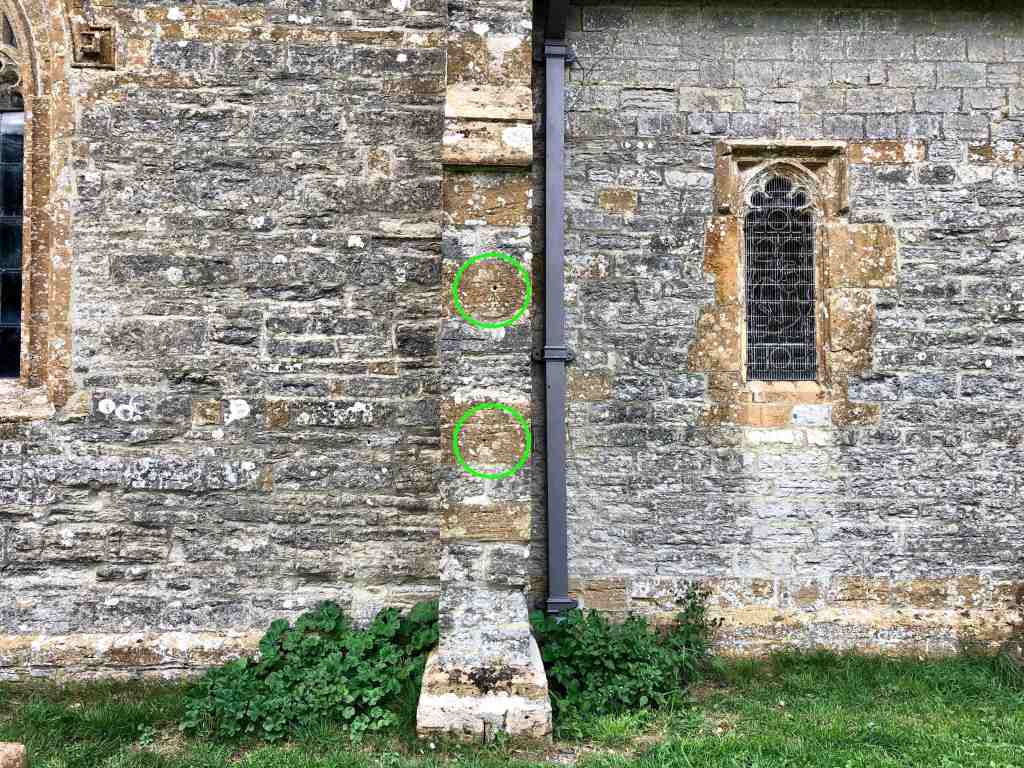
St Vincent . Ashington . Som – 2 Scratch Dials

DIAL 2

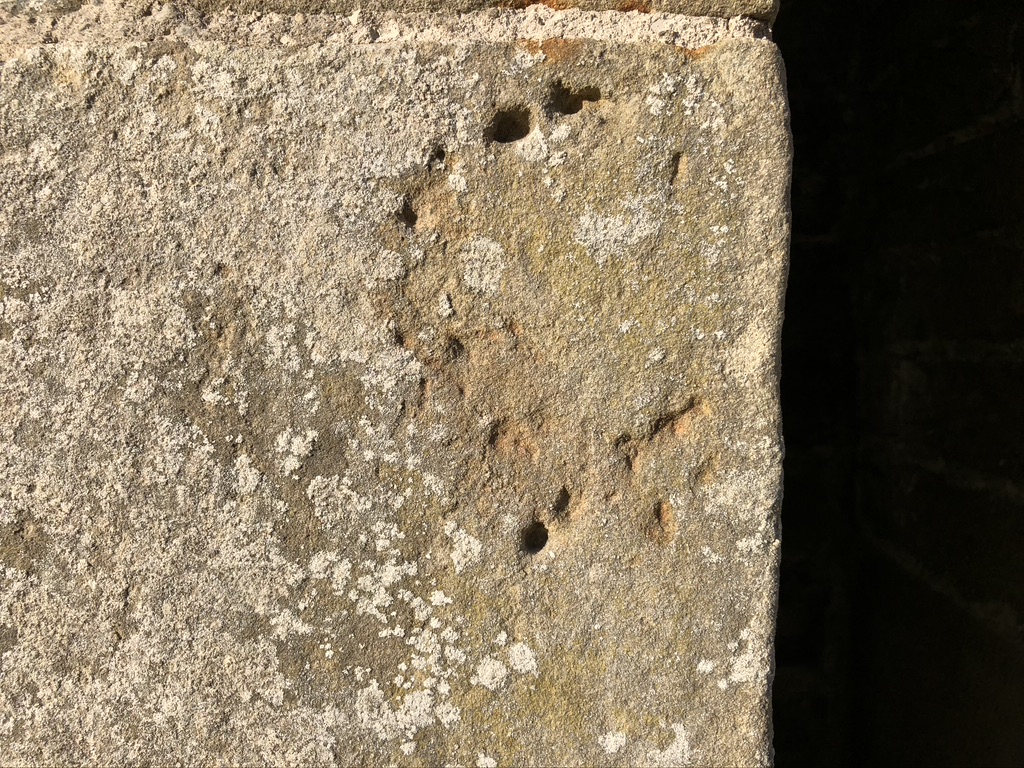
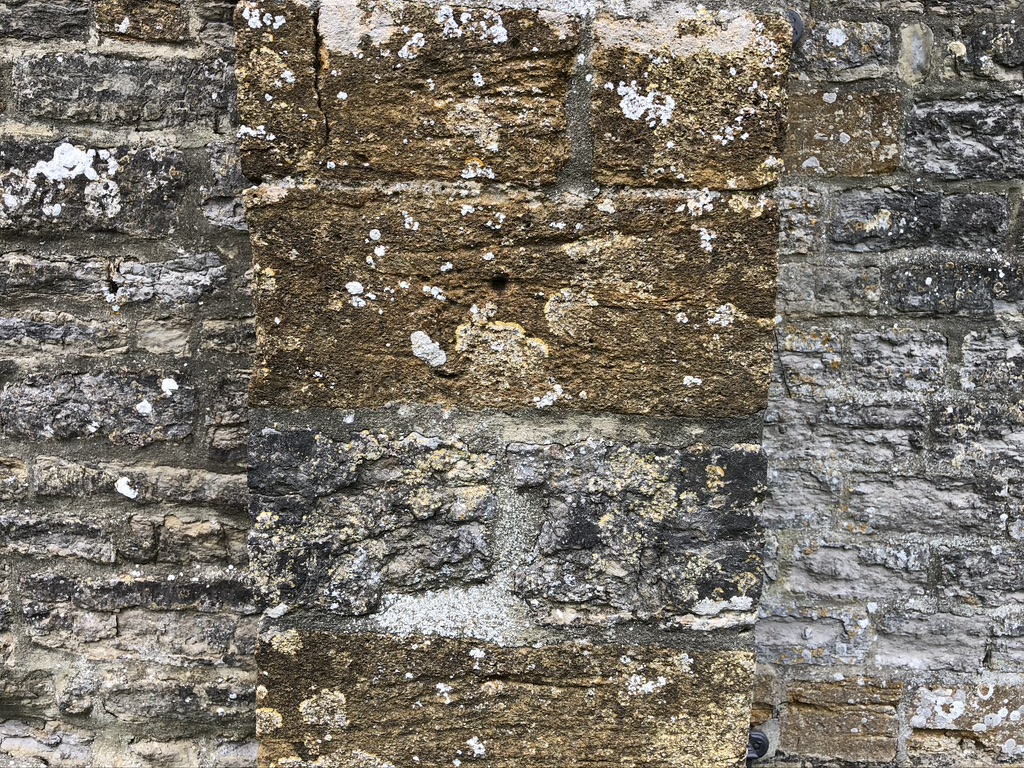
St Vincent . Ashington . Som – Scratch Dial 2

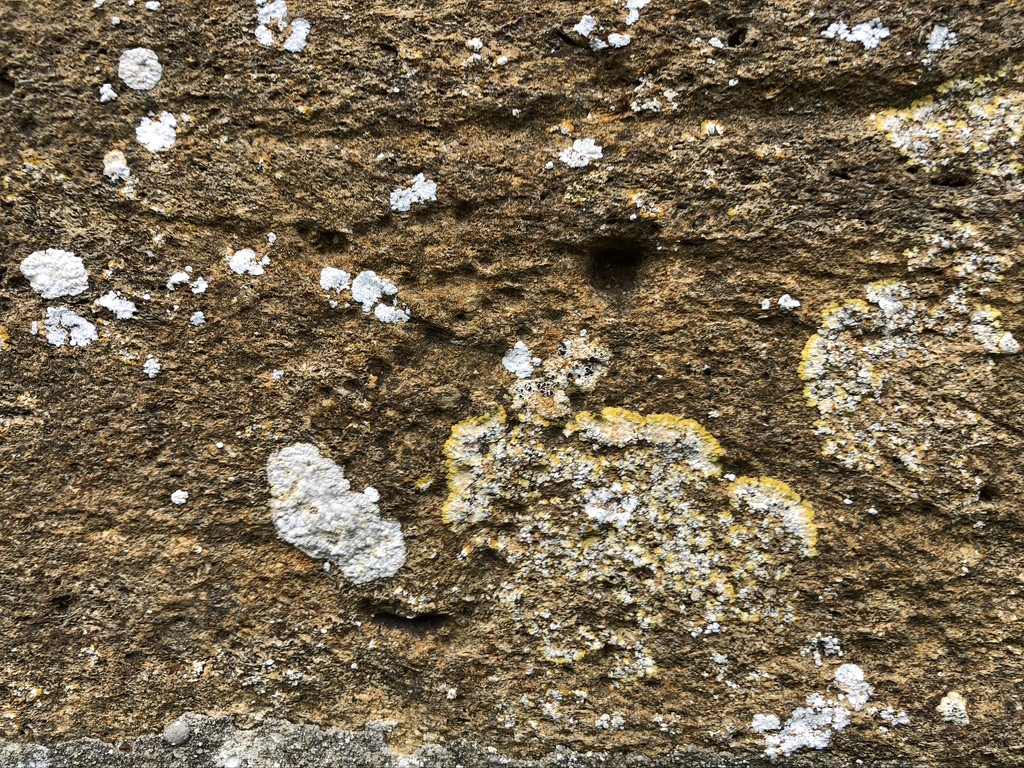
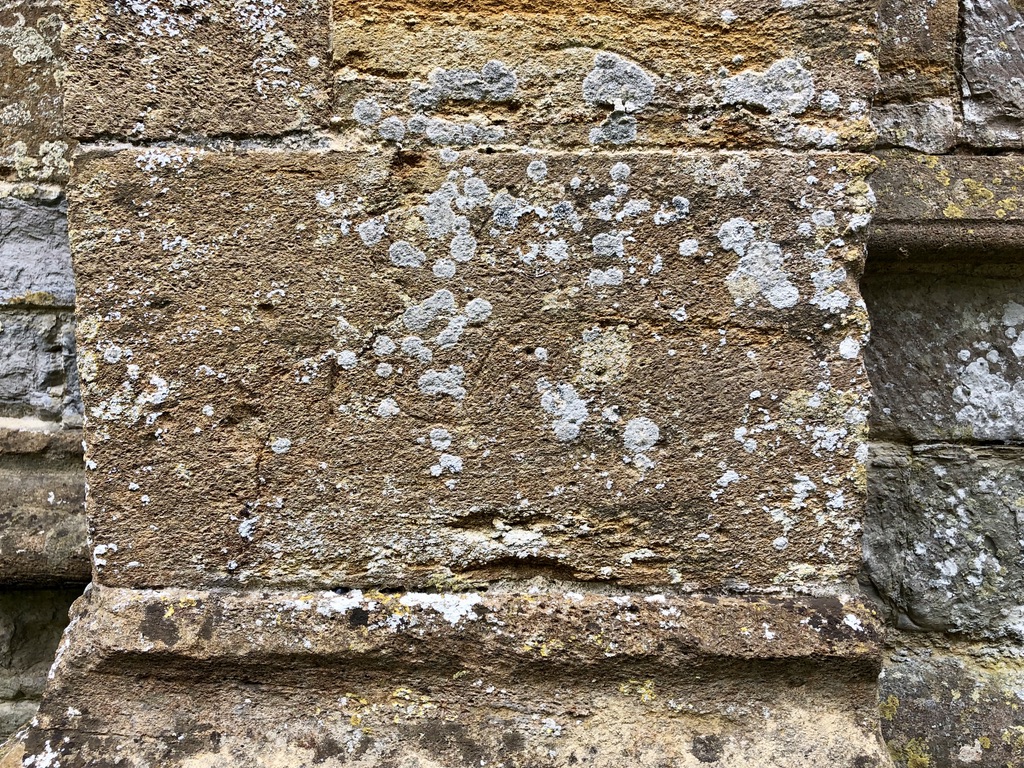
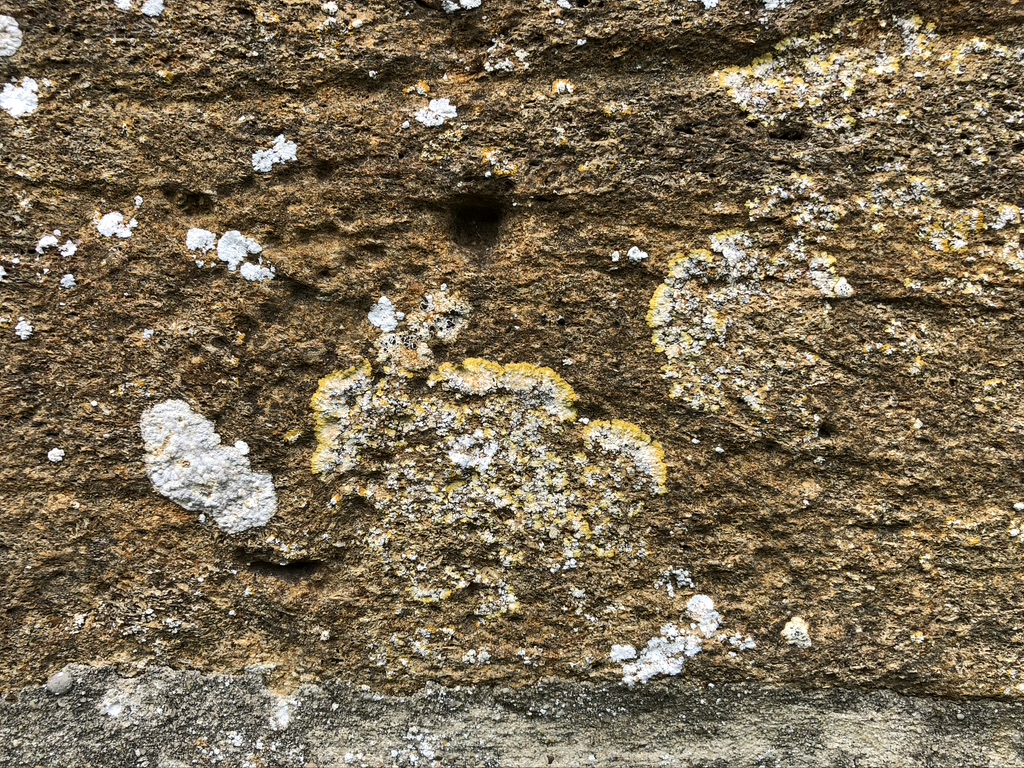
DEH 185. (2) On the same buttress, 2 feet 3 1/2 inches lower down, is a second dial. The noonline is 3 inches in length, and the stylehole is 1/2 an inch deep. Type3. May 19th 1915.

He added the comment: The lower of these two dials may be only a copy of the one above, but it is badly weathered and it is difficult to judge. Puzzling, because this dial (to which DEH assigns a different Type) seems quite unlike its companion above. There are few discernible lines, and some are wholly or in part made up of pocks. It is much less ambitious and much more rustic. It almost seems that it was the first dial on the buttress, and Dial 1 was a much more artful improvement.
GSS Category: Scratch Dial

Photos: Keith Salvesen

L’ÉGLISE DE ST PIERRE . TOUQUES . NORMANDY – Early Sundial

St Pierre . Touques . Normandy

L’ÉGLISE DE ST PIERRE . TOUQUES . NORMANDY

A simple Romanesque church, the oldest in Calavados, dating from mid C11 with subsequent additions. There is scant information online – a few notes converted from French to English. Over the centuries the church was damaged by battles, by lightning strike, and sundry other misfortunes. One source notes In the 17th century the nave was amputated. By late C18 the church was abandoned and in C19 designated a Historic Monument. In C20 it was adapted as a cultural space for concerts and art exhibitions.

DIAL

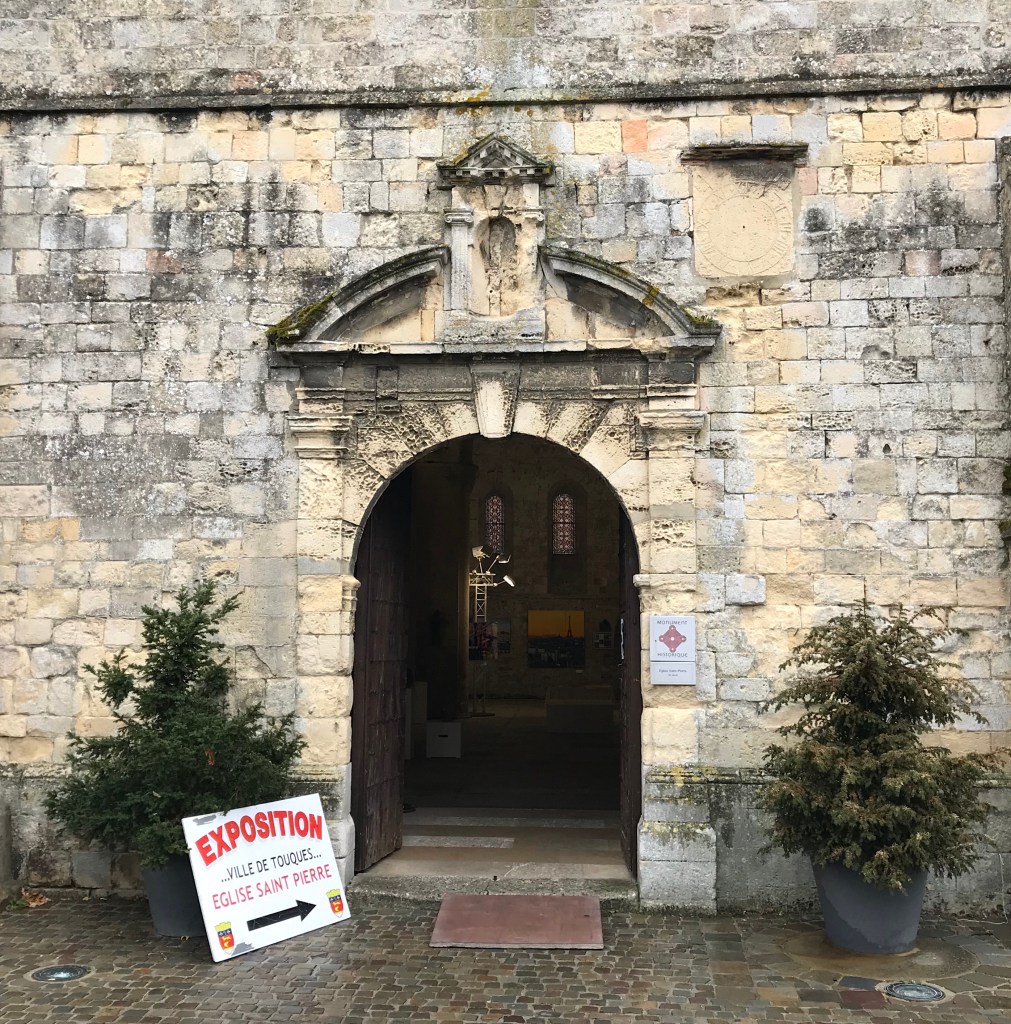
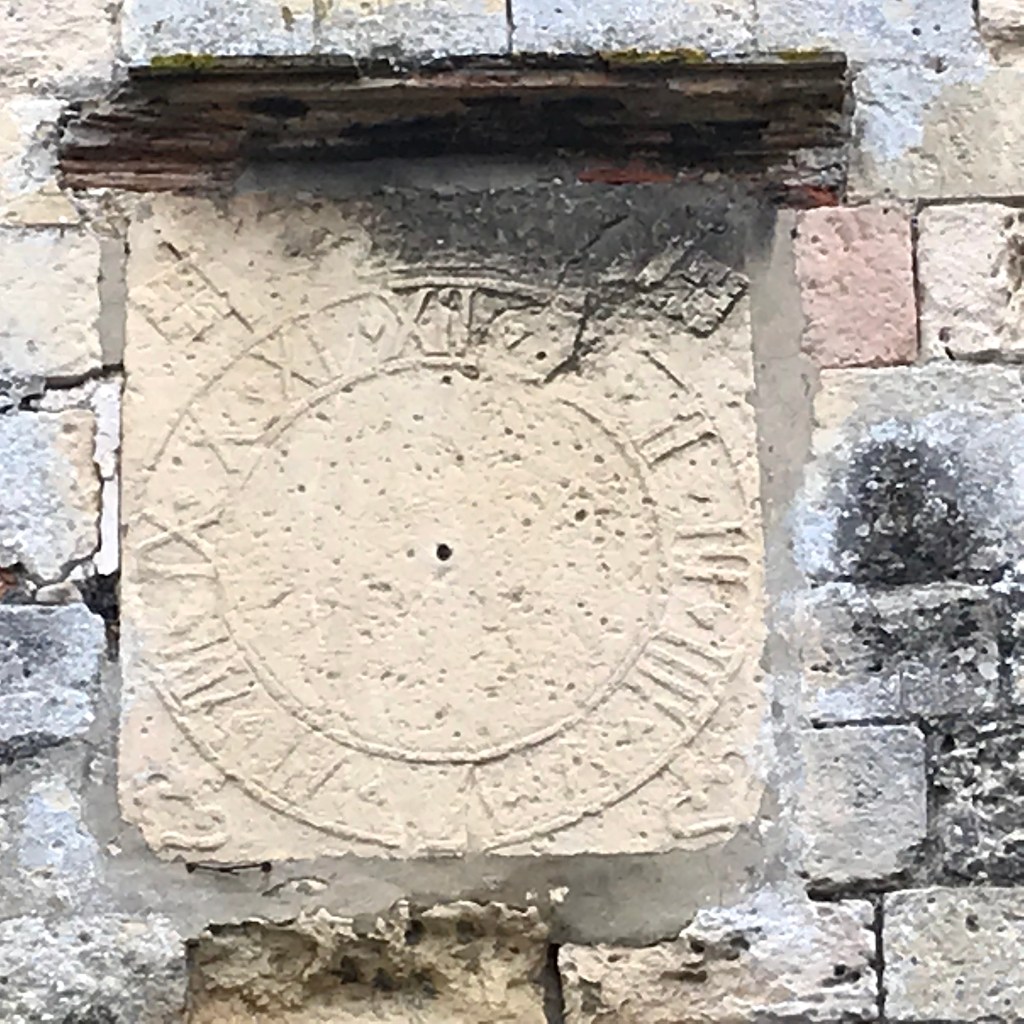
This large dial is above the entrance doorway. It has roman numerals and a cross key decoration. There is no gnomon. The lower half is quite eroded. Mortar repair has been carried out rather enthusiastically. There is no date, and it is hard to determine how old the dial is. St Pierre was disused by 1800 so the dial, under its time-worn lintel, seems unlikely to have been added later. On the other hand there’s a sense that the present dial is a replacement for an older one. But a great deal older than the final one shown here.

St Pierre . Touques . Normandy – gnomon-less sundial of uncertain age

For comparison, the dial below is in Colmar (quite near Strasbourg). It never saw 1582.

GSS Category: Old Dial

Photos: Keith Salvesen; CC

LIMINGTON . SOM. BLESSED VIRGIN MARY – Scratch Dial (inside porch); 2 Vertical Dials

St Mary . Limington . Som.

LIMINGTON . SOM . BLESSED VIRGIN MARY

GRADE I † C14 with earlier C13 features -1st Rector recorded 1215 BLB; C15 work and later; C19 restoration. Cardinal Wolsey’s first Living. One of several good village churches with dials in the vicinity of RNAS Yeovilton. 50.9989 / -2.6546 / ST541223

DIALS

DIAL 1

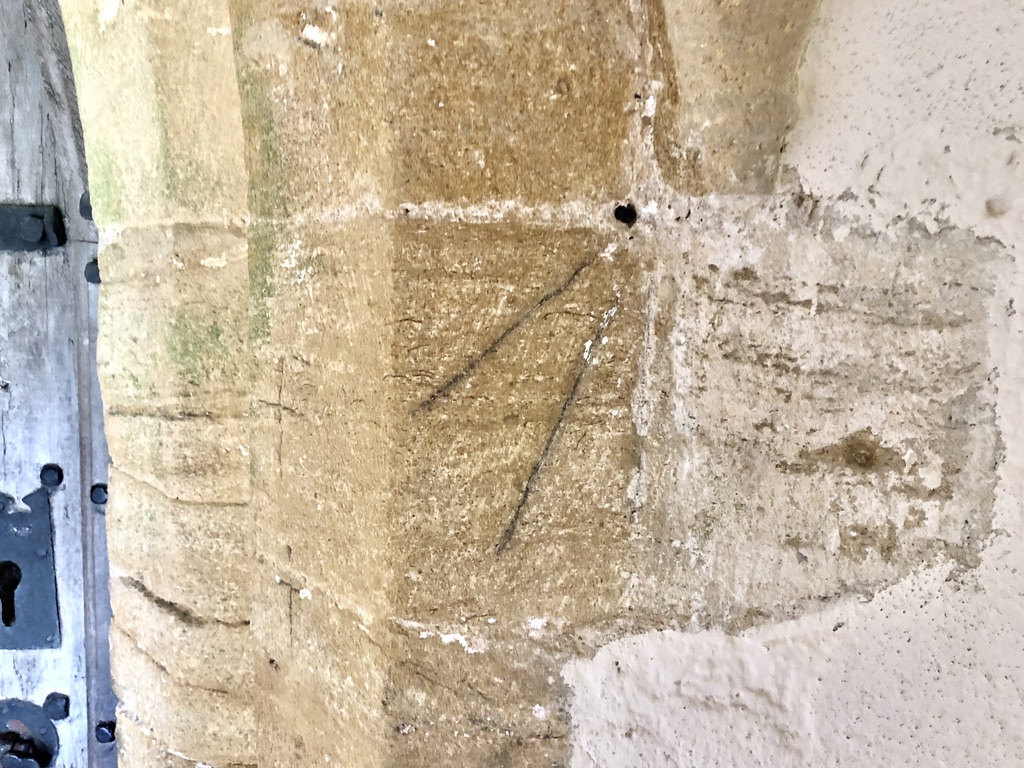
South Somerset is unusual for the number for scratch dials located inside a (later added) S. porch beside the original doorway. Limington is one (see also BLACKFORD, for example). St Mary also has medieval graffiti and other marks in the porch, some shown in the images below. As often over the life of a church, walls were whitewashed so the paint flecks are not unusual. For a good example of an ‘internal’ porch still painted over, see WAYFORD.

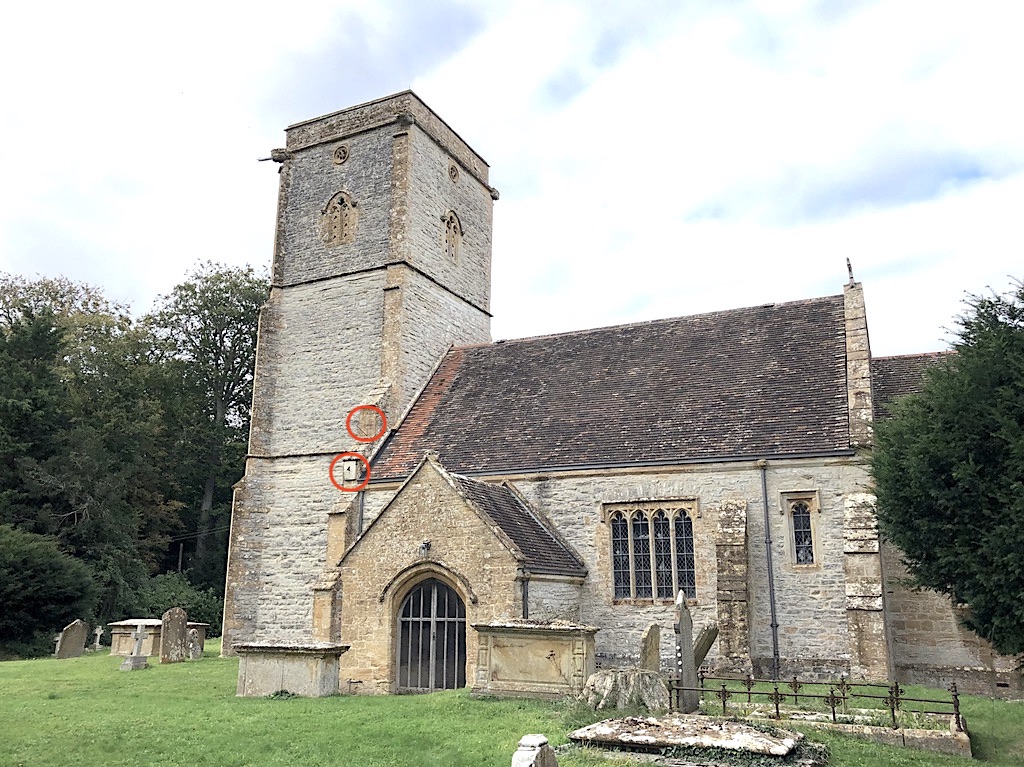
NOTE: There are also 2 vertical dials, one above the other, on the S. buttress of the tower. In due course I’ll add a link to a separate post about them; meanwhile see below.

St Mary . Limington . Som. – Scratch Dial inside the S. porch

DEH visited St Mary in May 1915 and noted that ‘the lines are sharp and clean cut’. He records:

197. (1) This dial is on the e. side of the inner door of the s. porch. It is 4 feet 11 inches above the floor, the noonline is 5 inches in length, the stylehole, which is in a joint, is filled, and the aspect is s. by 20° e. Type 2

DIAL 2

DEH also found a second dial and, from his description, I missed it on my visit and walked straight past it. He records:

198. (2) This dial is on a buttress to the w. of the priest’s door. It is 5 feet 1 inch above the ground, the noonline is 4 inches in length, the stylehole is 1/2 inches deep by 3/4 of an inch in diameter, and the aspect is s. by 15° e. Type 5c.

I took a rather bad photo of the buttress from a distance and can find no obvious dial. However I did find what may be an eroded and be-lichened dial on the angled buttress at the E. end, facing SE. There’s more than one part circle here. So this may be a third dial – or it doesn’t rank as a dial and (if he saw it) DEH discounted it. The latter, most likely. Limington is yet another church to revisit and check. I will amend accordingly.

TWO VERTICAL DIALS

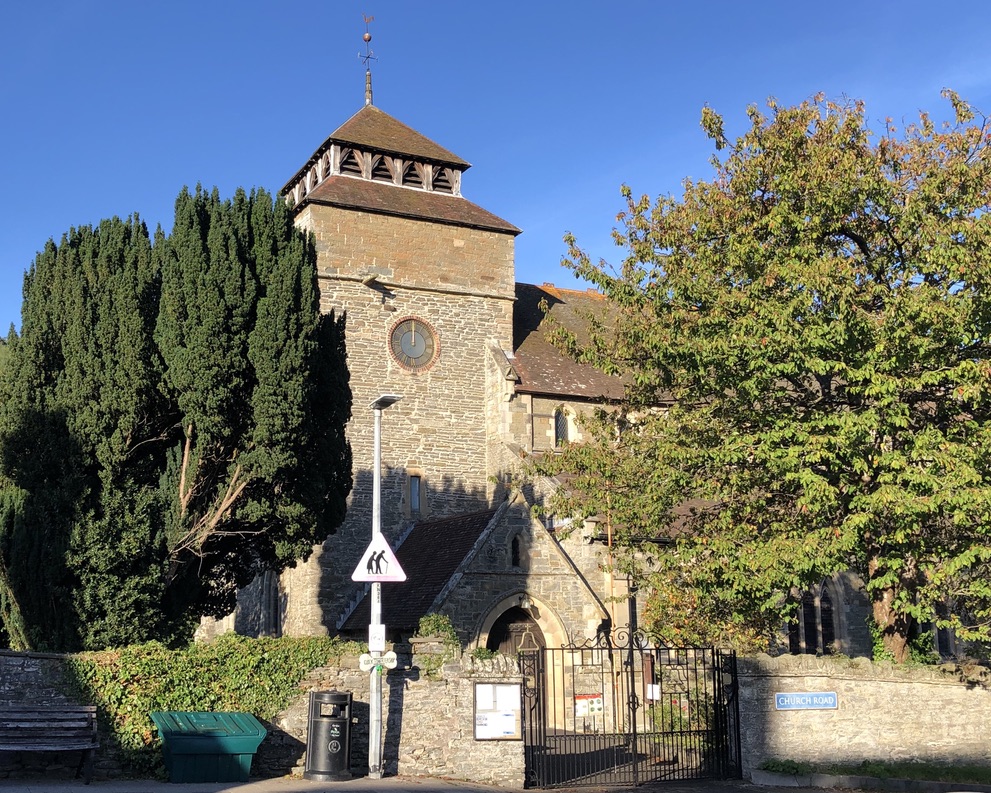
There are 2 vertical dials on the buttress of the tower. I didn’t photograph them specifically, though they are visible in a general photo of the church. The image on the right is (I think) CC but if not, many apologies to the photographer…

GSS Category: Scratch Dials

Photos: Keith Salvesen

CHILTON CANTELO . SOM . ST JAMES – trace dials? (unrecorded)

St James . Chilton Cantelo . Som

GRADE II* † C15 tower, ‘earlier fragments’ BLB. Later church significantly restored mid C18 (‘unremarkable’). An early church made Gothic. Located N. of Yeovil, S. of the dreaded A303, an area with several good dial churches and some intriguing village names. 50.9974 / -2.6138 / ST570221

DIALS (?)

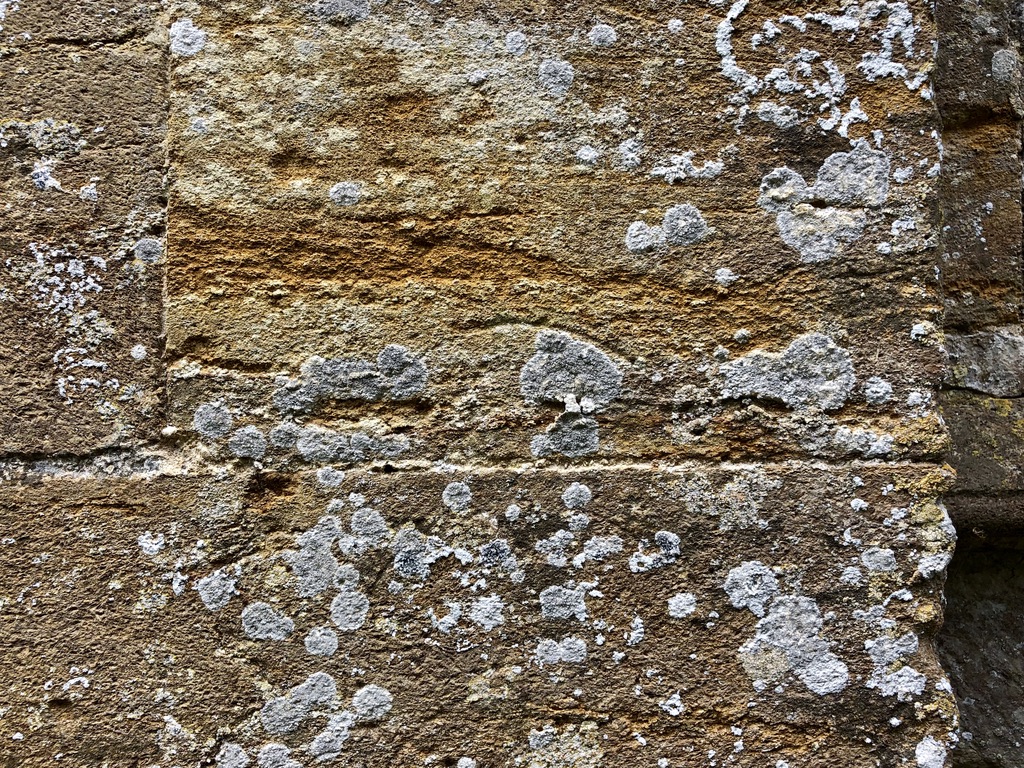
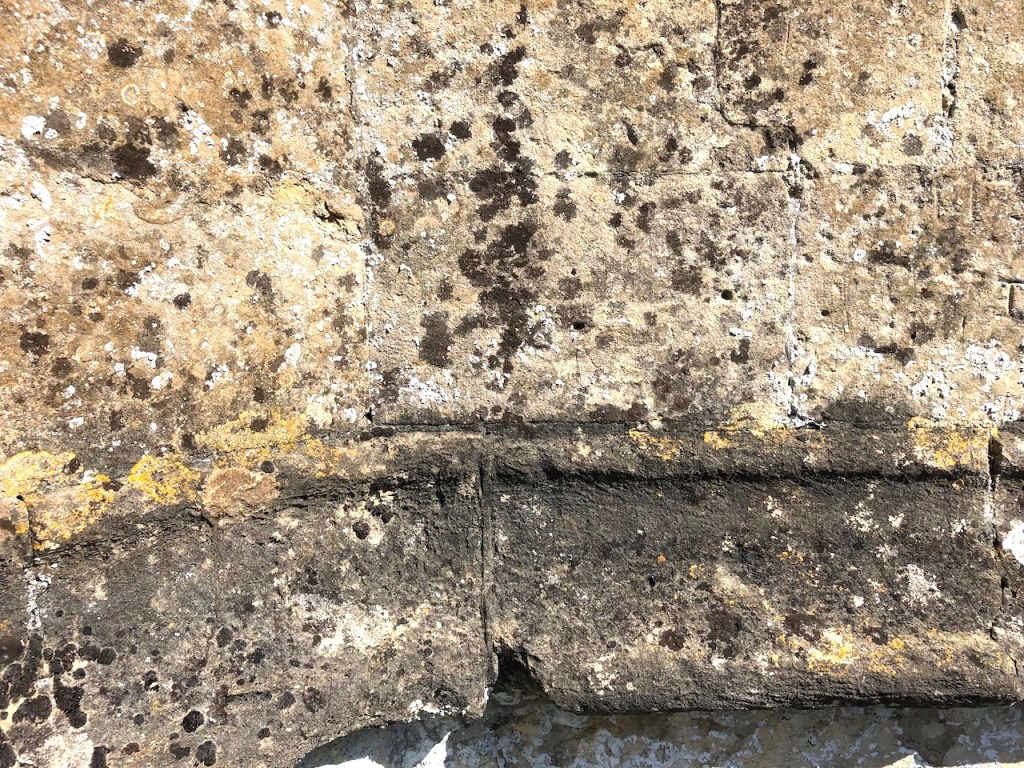
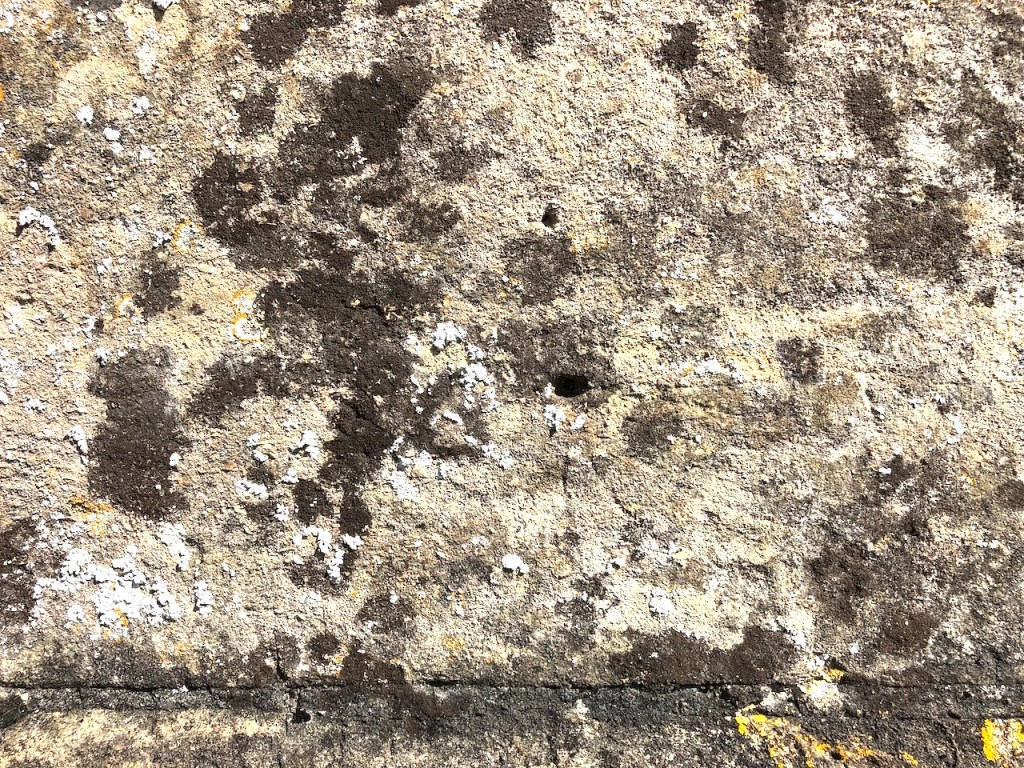
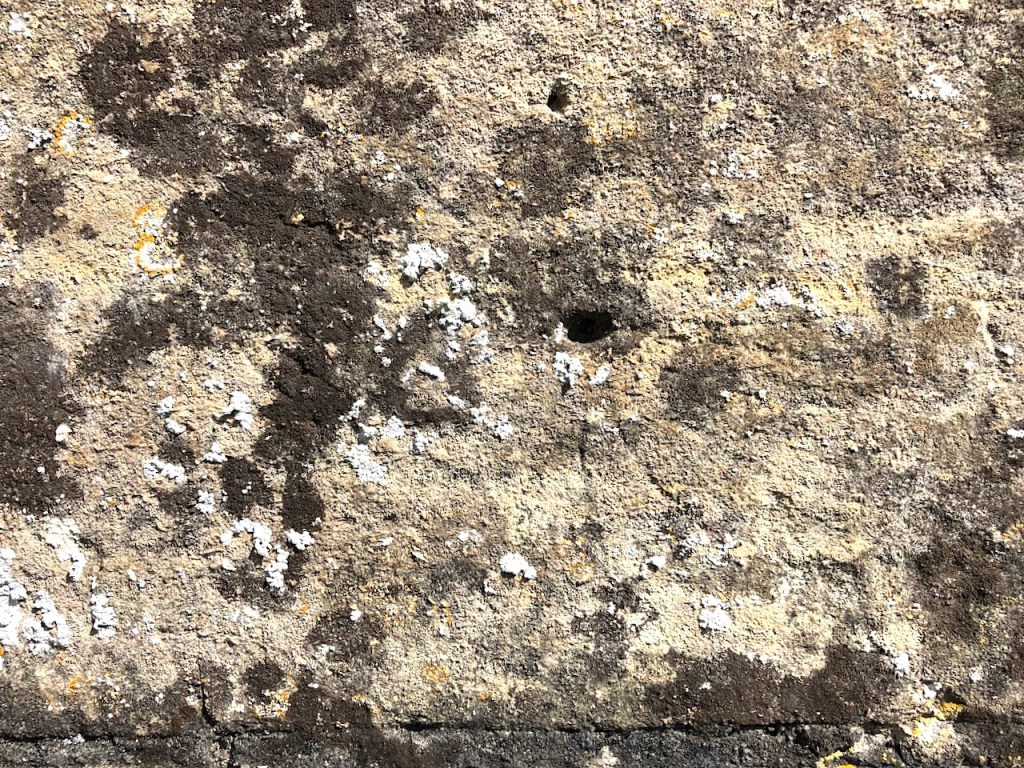
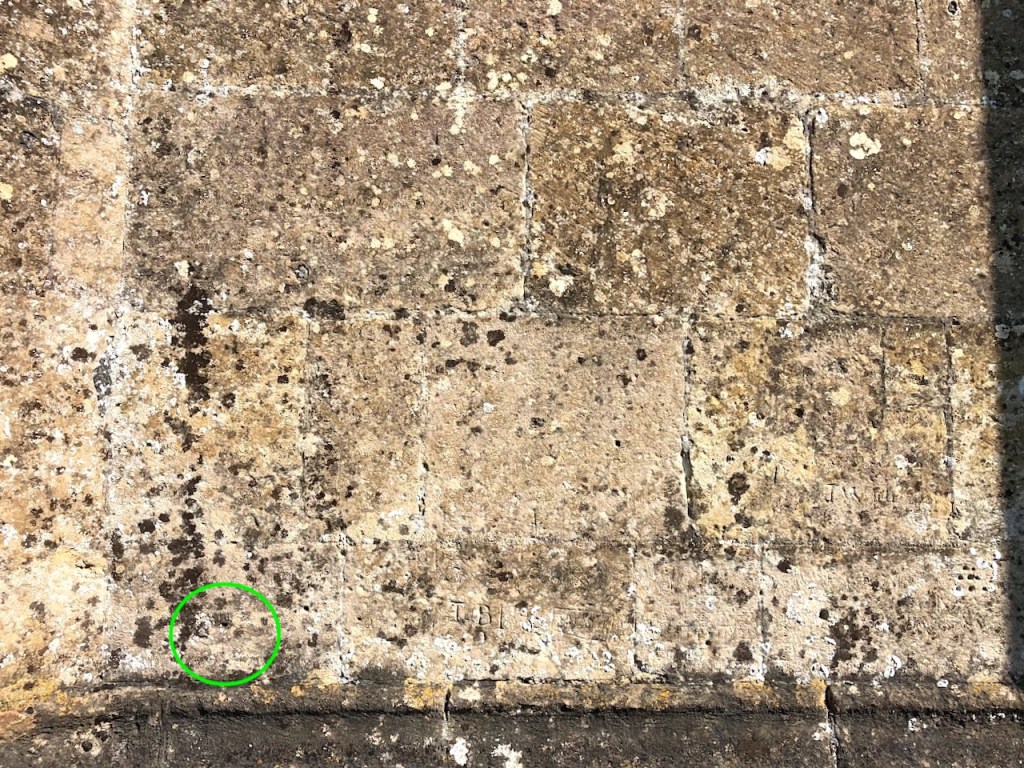
This buttress on the tower is not one to get too excited about. However, 2 stones caught my attention. The top eroded or damaged stone shows most of a semicircle. It does not appear to continue onto the stone below. The lower stone has – just below the mortar line – a similar very faint semicircle, with a more visible one underneath. To the left are some scratchings including a crescent.

One feature of this group is that the damaged stone may have been relocated; it doesn’t match those around it. Overall it is probably best to view these marks as doodles – using a nail and string? – more than dials. It is not recorded by DEH of BSS. All the same, it was worth taking a close look. Any views, positive or negative, welcome.

St James . Chilton Cantelo . Som – traces of scratch dials?

GSS Category: Scratch Dials (possible)

Photos: Keith Salvesen

HOUGHTON . HANTS . ALL SAINTS – 2 Scratch Dials

All Saints . Houghton . Hants

ALL SAINTS . HOUGHTON . HANTS

GRADE II* † Early C12 origins, C13 aisles, C14 chancel, C15 alterations, 1875 and 1882 restorations BLB. One of several attractive villages on or close to the River Test. Houghton is midway between Stockbridge (N) and Romsey (S). Exploring locally – especially Mottisfont – is well worthwhile (nice pubs as well). 51.0922 / -1.5139 / SU341326

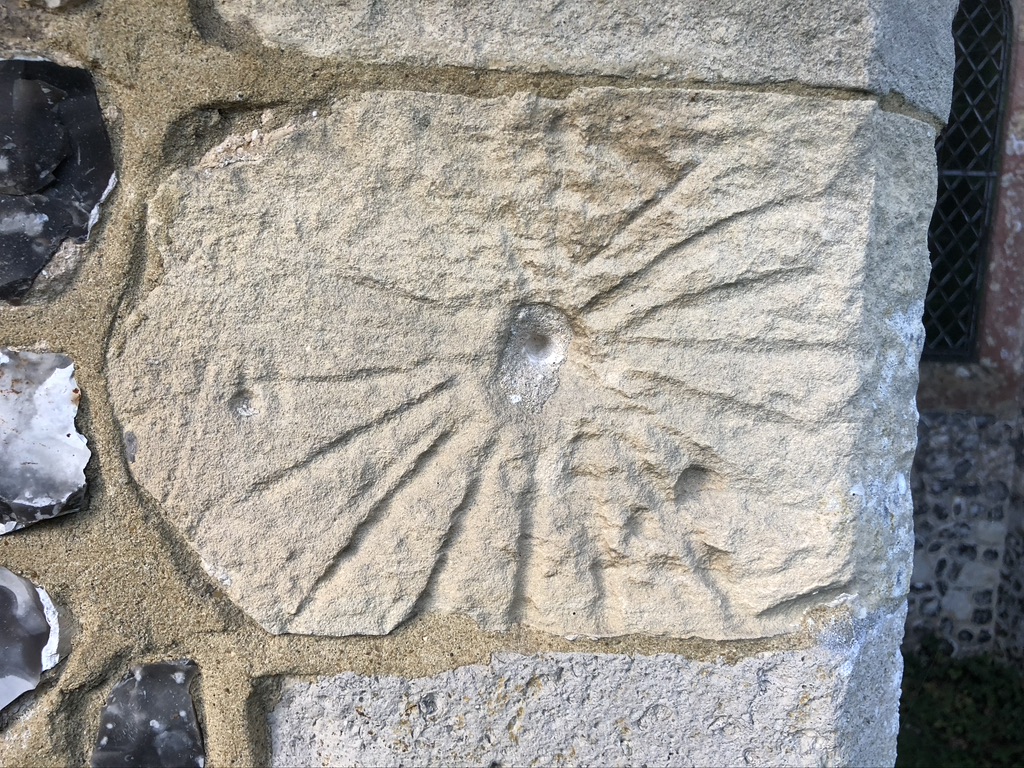
All Saints . Houghton . Hants – Scratch Dial 1

DIAL 1

The dial is located on a quoin stone on the nave E. of the porch and ‘crudely cut’ BSS. There are 17 lines in all, some very eroded; and 3 pocks that are probably unrelated. The gnomon is of particular interest. For obvious reasons, discoveries of plausible remains of a gnomon are very scarce. BSS records (1994) that the stub of one was noted, the hole being otherwise filled. I did not notice the hint of a stub, and the photos suggest an intact mortar filling with a neatly rounded pock in the centre.

DIAL 2

The dial is located low down on the SE. corner of the chancel. 4 lines, with the hole in the horizontal mortar line and filled. BSS records (1996) the dial as originally complete but with the right half replaced by another stone. The fact of a new quoin stone seems certain. The intriguing questions are what the dial might have looked like when complete; and whether the other half was used elsewhere on the exterior during any of the later additions and restorations.

I checked dial 1 on a fleeting evening visit, and didn’t look for another. The BSS image below suggests that the upper L quadrant, the horizontal mortar line where the lines converge, and the hole at the intersection might be worth investigating when I am next passing.

All Saints . Houghton . Hants – Scratch Dial 2

GSS Category – Scratch Dial

All photos Keith Salvesen except Dial 2, BSS records

KNIGHTON . POWYS . ST EDWARD – Scratch Dial (?)

St Edward . Knighton . Powys

KNIGHTON . POWYS . ST EDWARD

GRADE II † ‘Victorian Gothic rebuilding of earlier church of which the medieval west tower is the only survival- no remains of 1752 Georgian rebuildBLB. A handsome reconstructed church in a pleasant town, well-situated on Offa’s Dyke close to the point where Powys meets Hereford and Shropshire. The only church dedication to St Edward in Wales – he, along with St Richard, seem to be somewhat overlooked across much of Britain. 52.3457 / -3.0477 / SO287724

DIAL?

The double rebuilding of a medieval church (except for its tower) must inevitably have expunged almost all traces of the early building, and with that its church marks. Or so you would think. Yet when I visited the church on a warm September evening in sunshine, I saw what – on a church with a different history – might be taken as a medieval pock dial. I realise that it is most unlikely. However, restoration and rebuilding does not preclude the reuse and / or relocation of stones from the original church. It was a common practice, for obvious reasons.

St Edward . Knighton . Powys – scratch dial?

There is no visible style hole. The curved pocked pattern seems intentional but – absent some architectural or decorative purpose – it is difficult to account for the design. Given the church history, claiming dial status is debatable. However I have seen far less convincing dials elsewhere. The stone fits with the church. Its location on the porch wall – perhaps intentionally during reconstruction – is appropriate. But probably I have an amateur dial collector’s over-optimism. Maybe this sort of find shows how intriguing the analysis of church marks can be.

GSS Category: Scratch Dial

Photos: Keith Salvesen

PEWSEY . WILTS . ST JOHN THE BAPTIST – Scratch Dials

St John the Baptist . Pewsey . Wilts

PEWSEY . WILTS . ST JOHN THE BAPTIST

GRADE I † Saxon origins. C11 Norman and later development inc. C12 nave, C13 aisles, C16 tower, C18 expansion, C19 restorations. An interesting church, with C12 Norman limestone font with suspended cover; and wonderful early C17 clock. Enjoy the Kennet & Avon canal while you are there. 51.3379 / -1.7664 / SU163598

DIAL

The dial is on S. side of the chancel, on the E. quoin stone of E. end buttress. The appearance is of a classic 6-to-6 dial (not within a semicircle) on a lovely colourful stone. 11 clear lines (the 9 line is not visible – erosion? Omission of the Terce line seems unlikely). The longer 11 line extends to the mortar line below. 3 lines are emphasised inc. noon line. There are several pocks, a few at the end of lines – those at the ends of the horizontal must almost certainly part of the dial.

I wrote ‘appearance’ above, because looking closely at the photos, the dial is in fact slightly less straightforward. There are 2 faint lines and the hint of another in the upper right quadrant (see large image below).

St John the Baptist . Pewsey . Wilts – Scratch Dial

DIAL 2? (unrecorded)

In several places on the outside walls there are groups of church marks and graffiti – initials, dates, apotropaic (witch) marks / Marian symbols. While photographing these I noticed a very small rustic dial scratched in the angle of wall and buttress on the S. side. I might have ignored it or classified it as ‘doubtful’, but the crude cuts in the stone running from the putative style hole suggest a casual dial attempt – possibly a trial run, and / or a contribution to the gallery of marks in this area.

GSS Catregory: Scratch Dial

All photos: Keith Salvesen