LISTING II* ❖ C13, C15 and early C16, good Victorian and later restorations. A link to the well-presented history of the church and its context in the village is given below. One bell is of particular historical interest. A multiple scratch dial church: BSS records 7 from a 1994 survey. I feature 9 candidates below, of which 2 are probably not-a-dials, leaving 7. But are they the same 7, I wonder? 6m E of Trowbridge. 51.3209 / -2.1195 / ST917579
GSS Category: Scratch Dial; Mass Dial; Multiple Scratch Dial Church
All photos: Keith Salvesen [
I am beginning to find my own photos borrowed for online use. I don’t really mind, especially for this sort of niche interest, but a link to this project might be good]
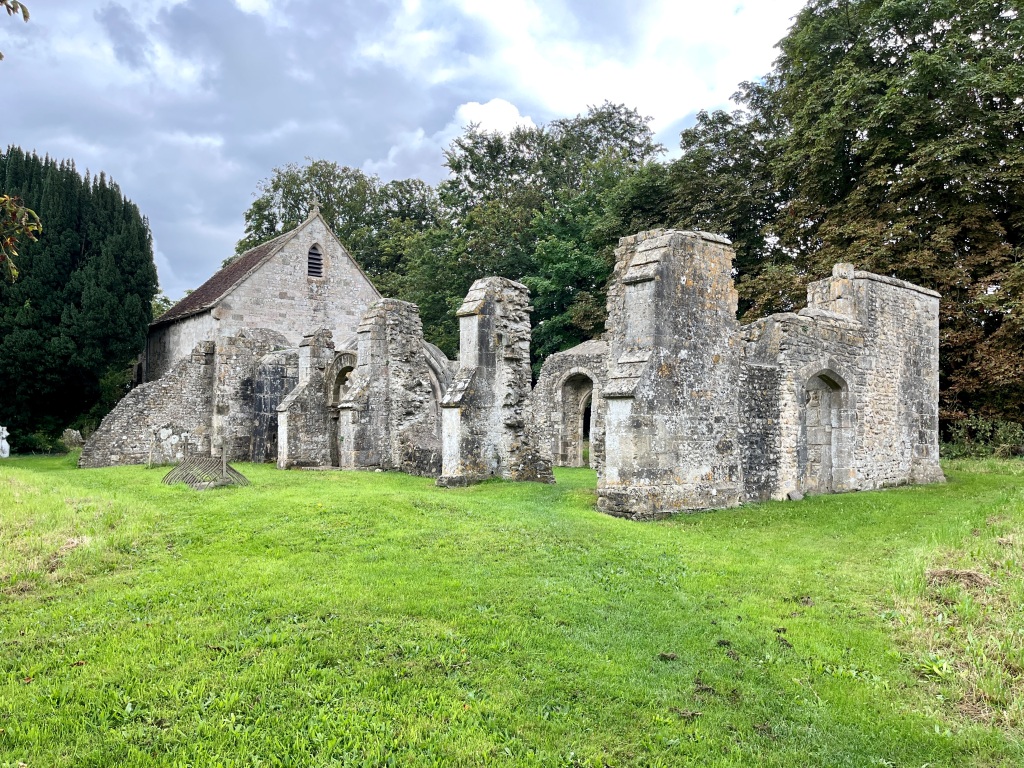
GRADE II ✣ C12, C13, C16. Originally cruciform with crossing tower. Chancel arch blocked and west part of church partly dismantled 1868, gradual deterioration. Chancel used as a mortuary. Declared redundant 1970; now in the care of CCT. A surprising and rather poignant place to visit, all well worth examining. Note the bier. 3m SE of Warminster. 51.1728 / -2.1323 / ST908415
DIALS
St Leonard is a multi-dial church with 9 dials recorded by BSS (1994), of which some details are scant. Four are described only as ‘gnomon hole only’ / ‘cannot be classified’. Featured below are 8 designs that I have concluded are dials, or might be (if only doubtful) in a couple of cases.
DIAL 1
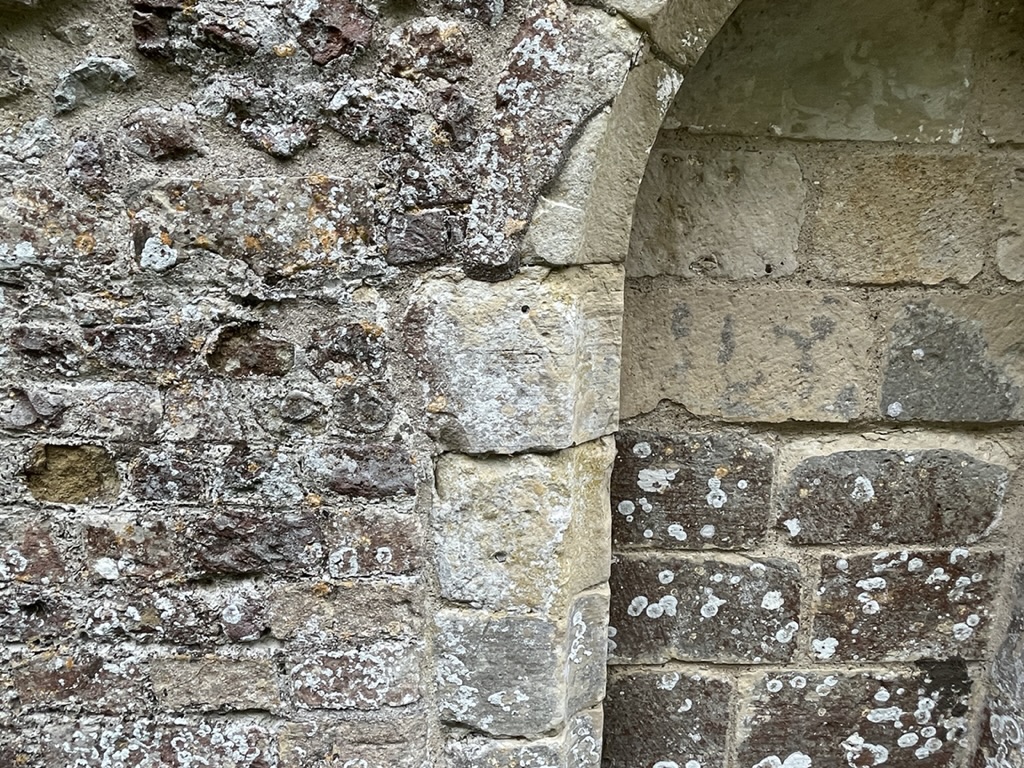
Dials 1 and 2 are together LHS of the Priest’s door
DIAL 2
DIAL 3
Hint of a circle, esp. ULQ
DIAL 4
A hint of a circle, esp ULQ
DIAL 5
Dial stone presumed to have been re-sited and rotated 90º
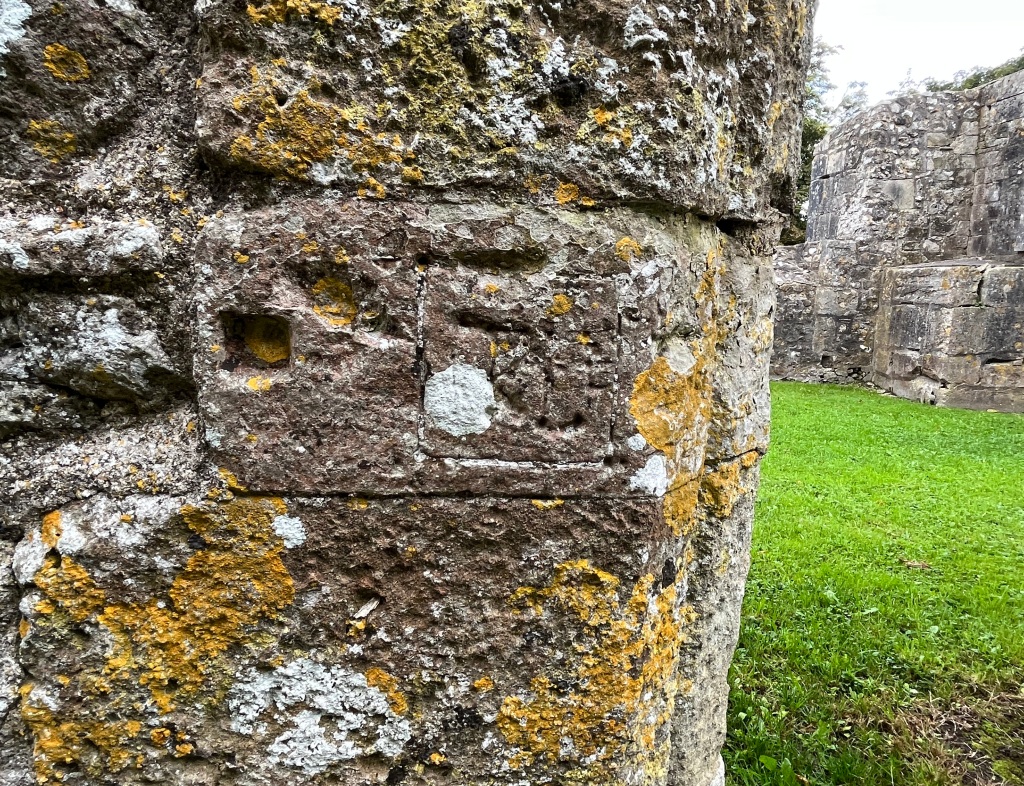
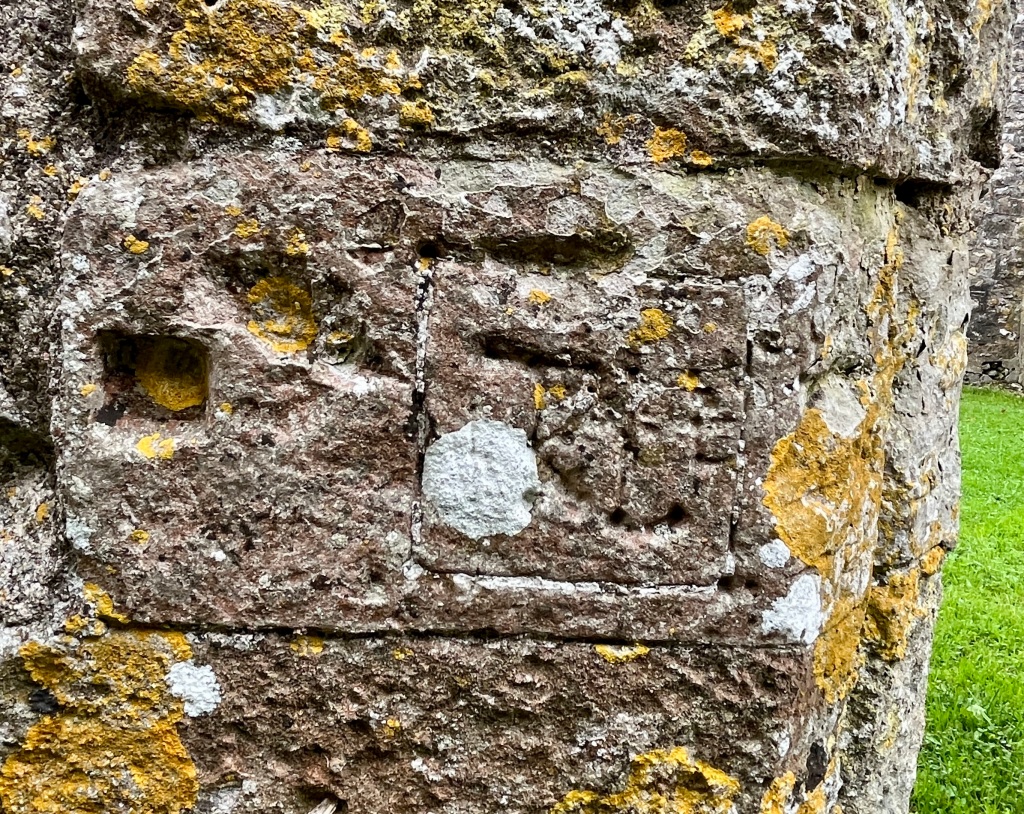
DIAL 6
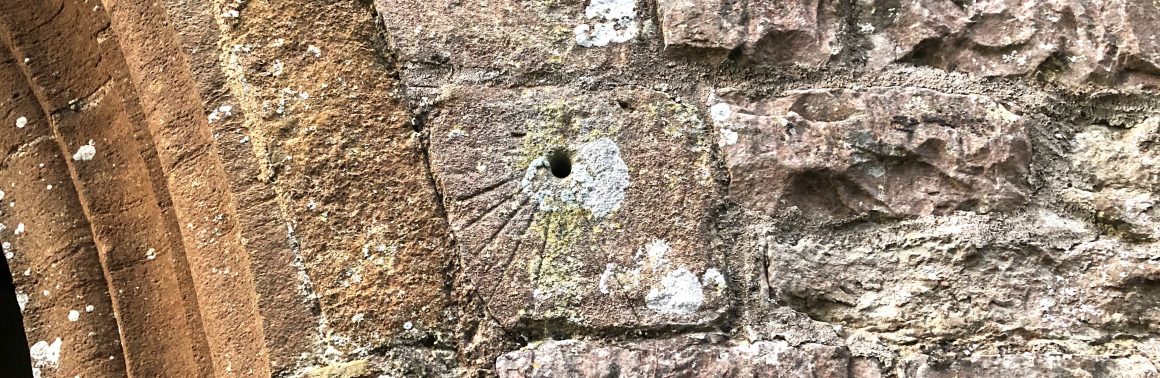
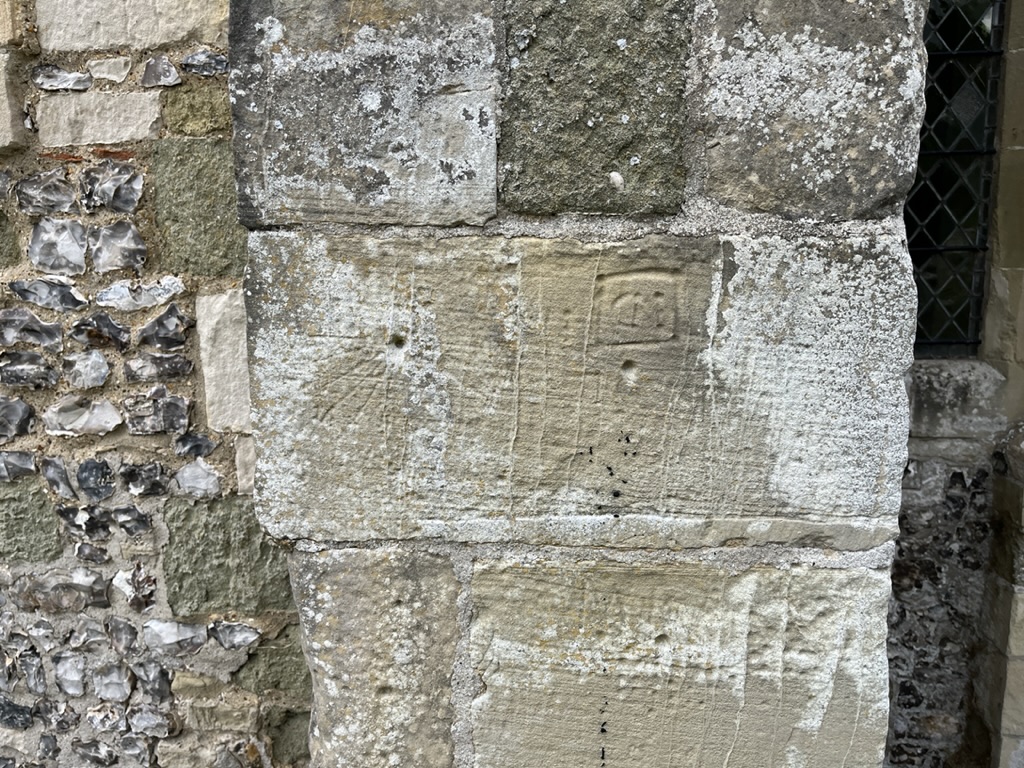
A remarkable dial within a square, with 2 large holes at bottom that appear to represent noon. It’s almost certainly unique. There’s mention of a Norman dial: perhaps this is it. There’s an apotropaic feel to it.
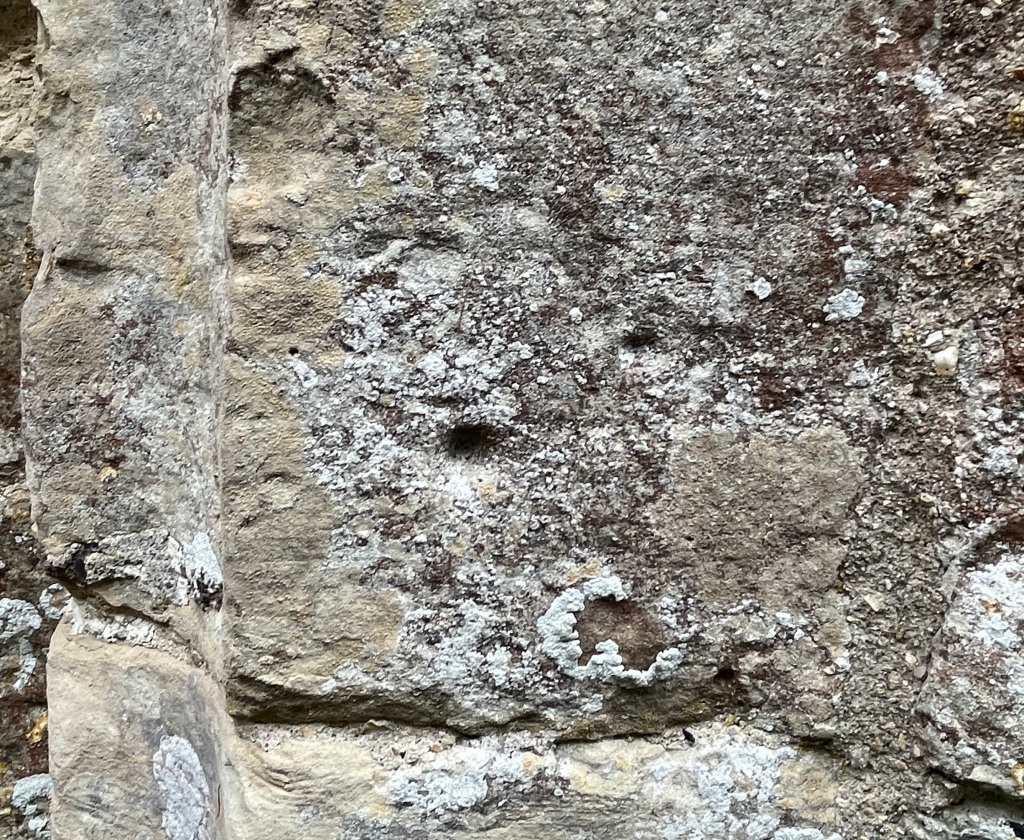
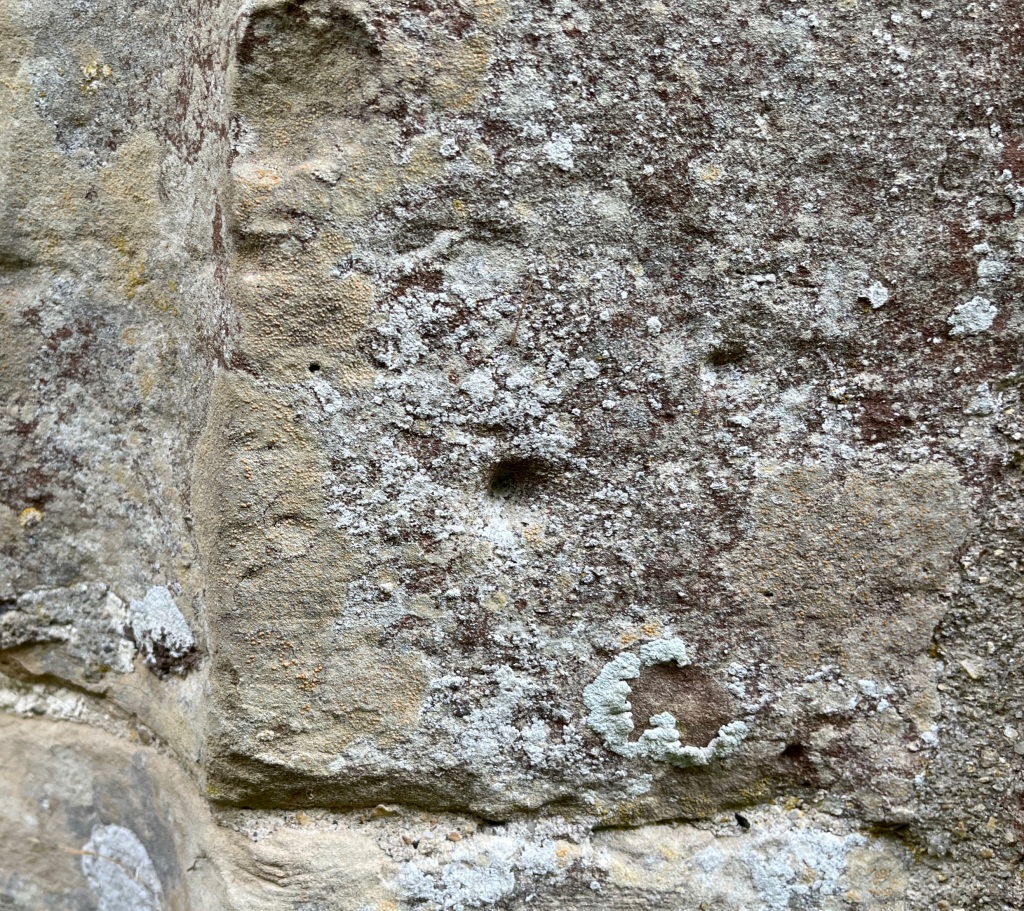
DIAL 7
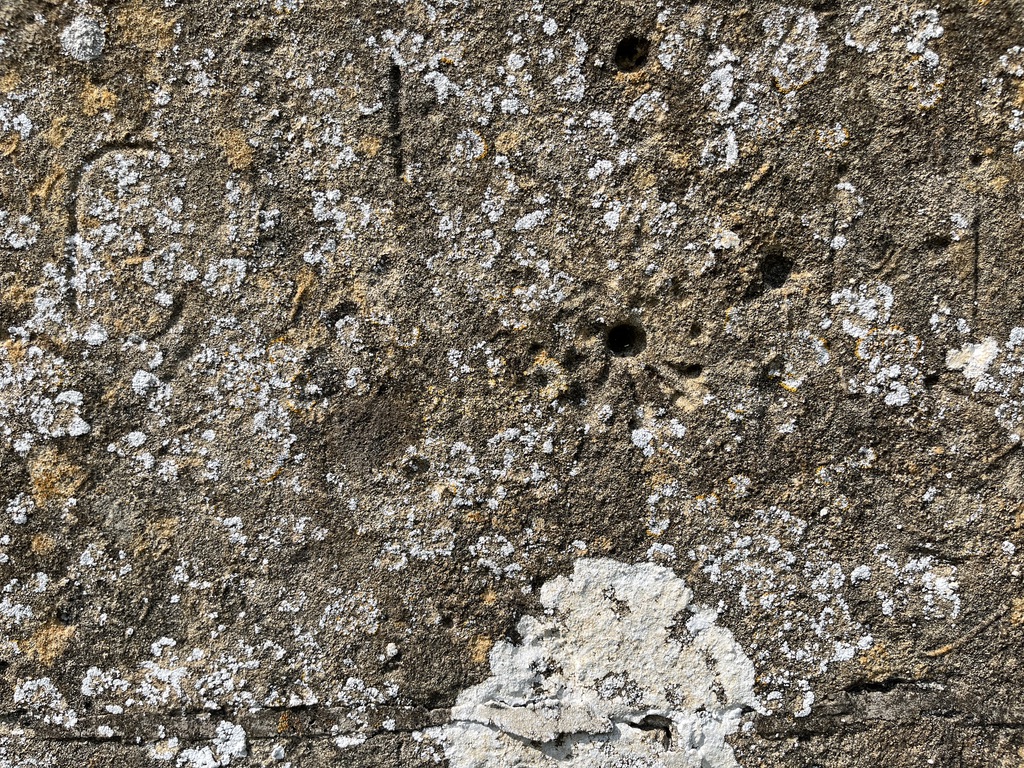
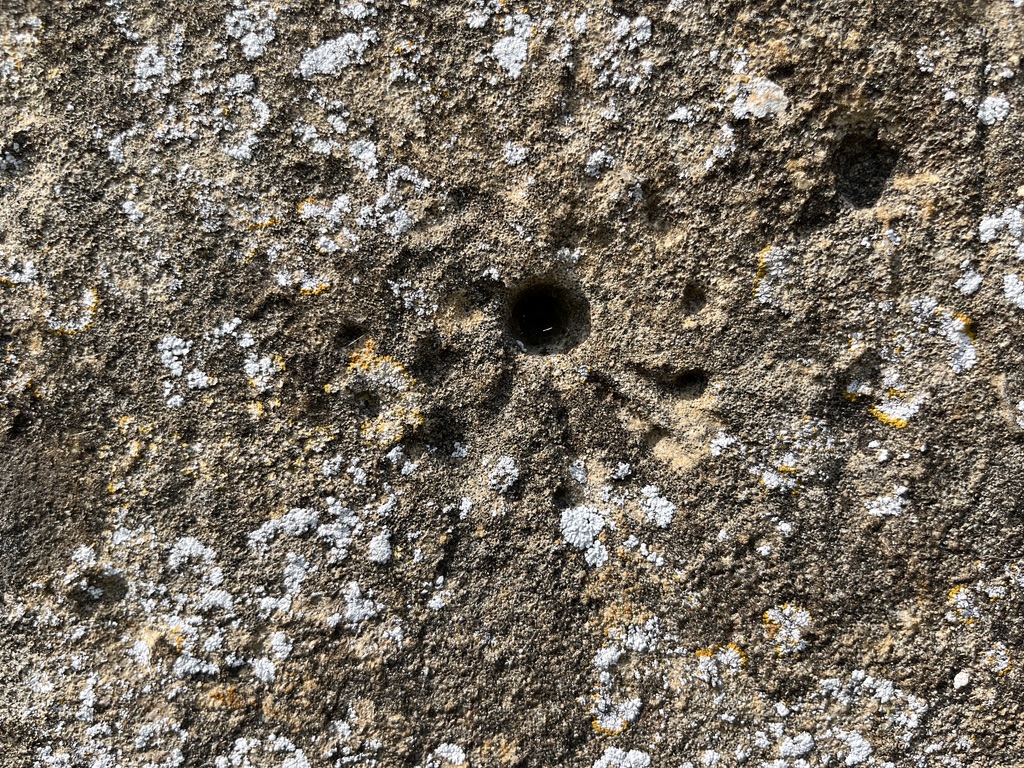
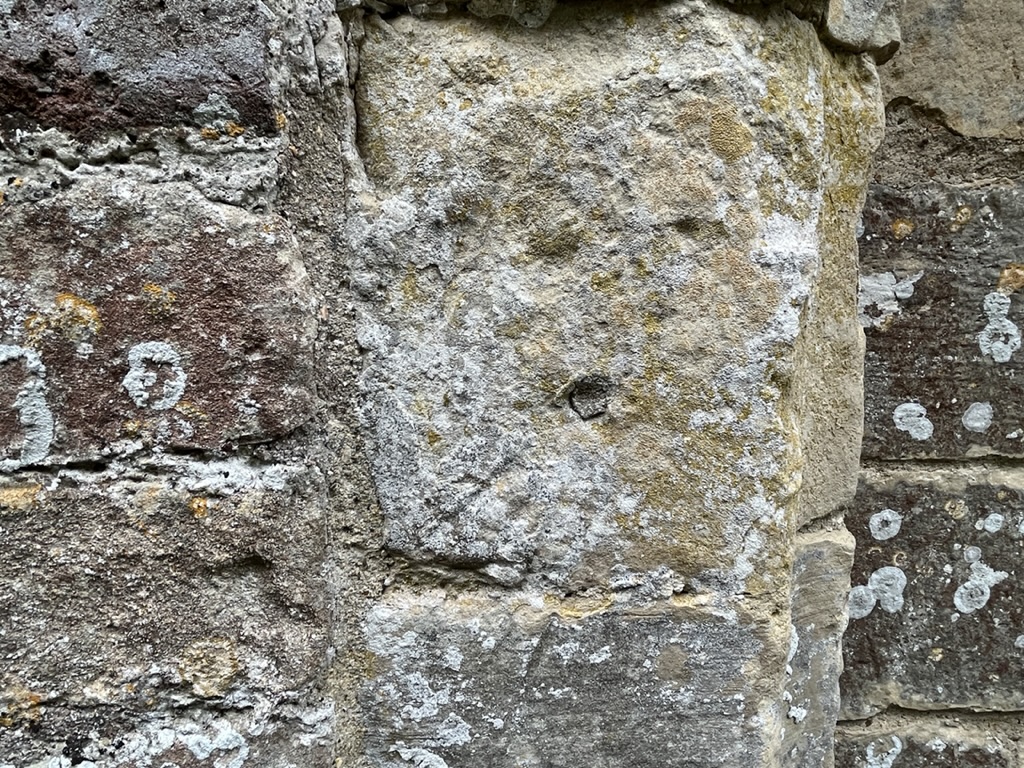
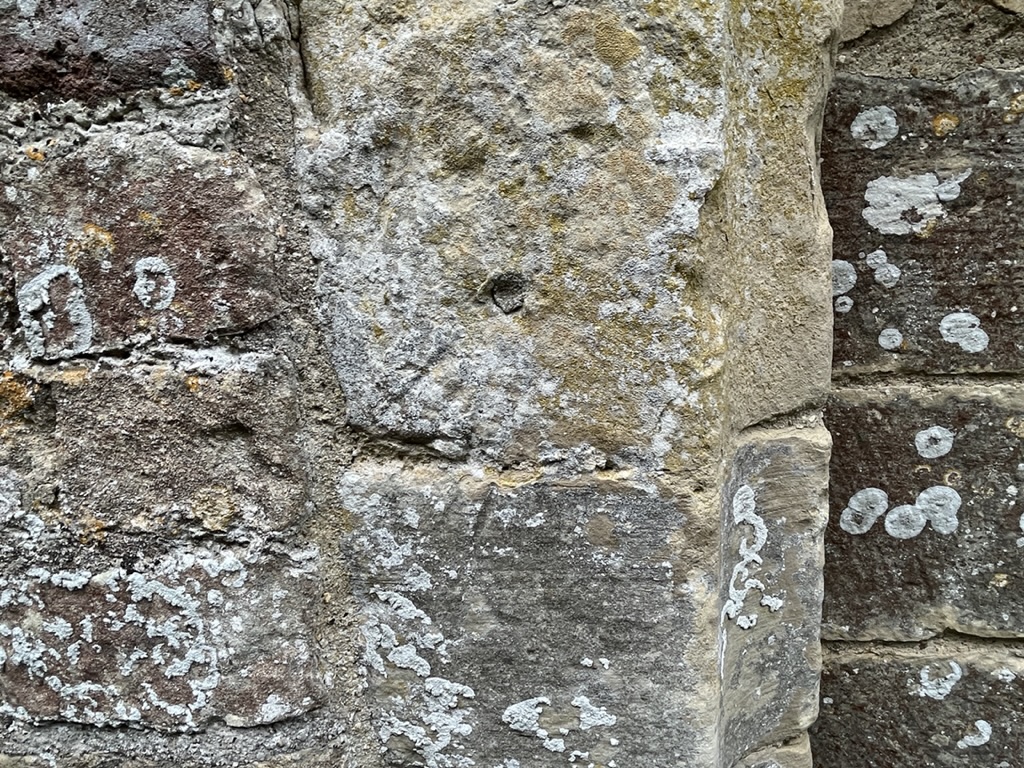
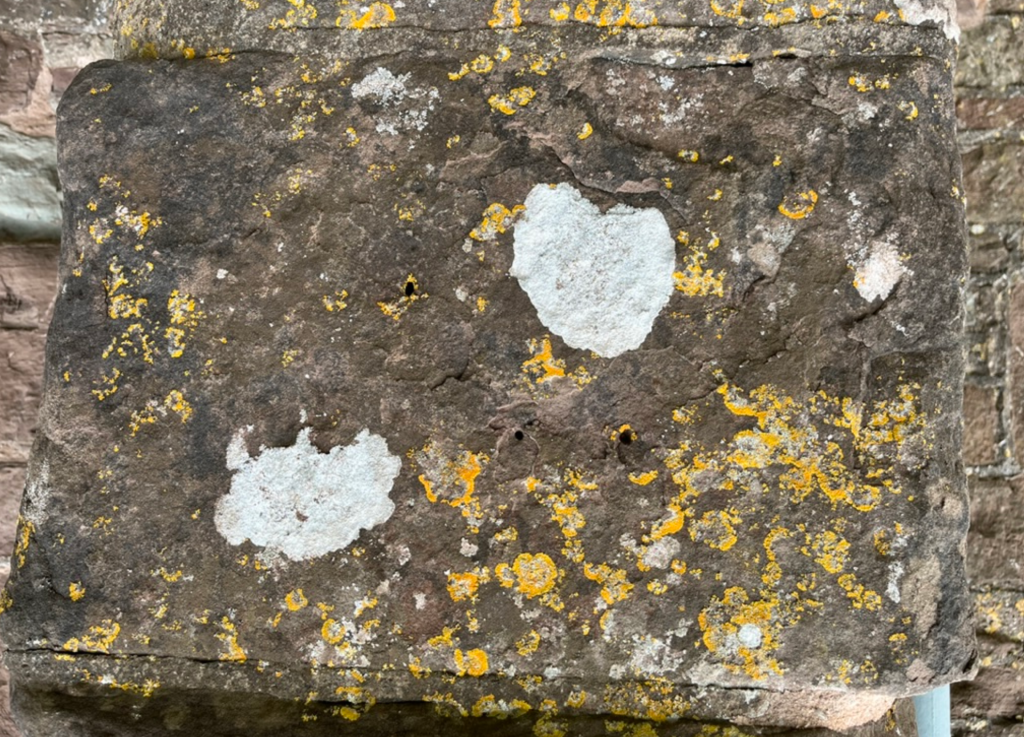
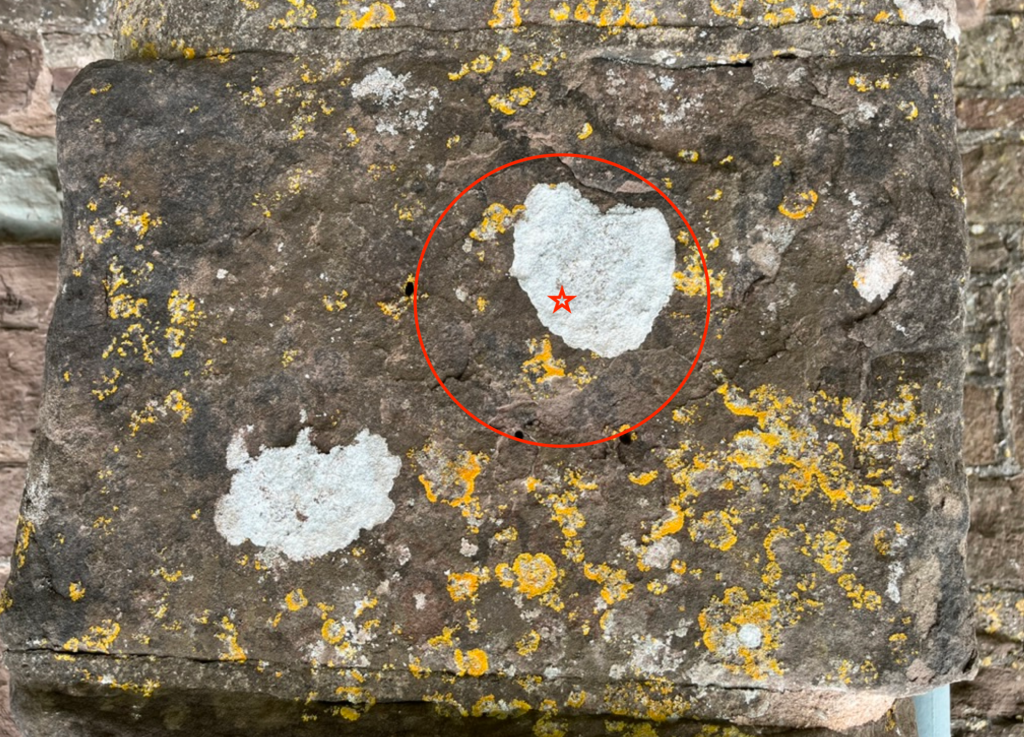
Nearly excluded from consideration. However the small holes are accurately on a circumference, and there’s the possibility of a small gnomon hole under the lichen. Borerline.
Probably not a dial but looks a bit more promising when rotated 90º. The pocks are (roughly) evenly spaced and there is a slight curve. No evident gnomon hole. Maybe simply a drilled design bored by a bored sacristan.
GRADE II ✣ A fine Norman church built late C11 (nave); chancel c1200; tower C13. Major restorations ±1900 (Ponting). An estimable entrance. Worthwhile (PEV) and (more graciously) one of Wiltshire’s most delightful churches (Betjeman). Lovely font; wall paintings; pilgrim crosses, protection marks & graffiti. 6m N of Salisbury. 51.1244 / -1.8301 / SU119361
All Saints also has a vertical dial which will feature separately
DIAL 1
Dial 1 is semicircular, located on the E buttress of the nave, close to the Priest’s door. It is in pleasingly good condition. Almost all lines of this 6-to-6 dial are visible, though much eroded RHS. The incisions are somewhat haphazard, and it is slightly odd that the most significant cut – the noon line – is so random.
DIALS WITHIN THE SOUTH PORCH
On entering the porch, the splendid door into the church itself invites immediate exploration inside. However, the porch conceals 3 scratch dials that a handful of people might like to investigate. There is scant reference to the scratch dials either side of the doorway. A dial LHS is recorded by BSS; one RHS is vaguely hinted at; another dial RHS is not noted anywhere that I can find, perhaps a new (modern) discovery.
DIAL 2
This dial is quite easy to find, half-concealed LHS but visible as one walks past. There are well defined lines, with the noon line probably the almost vertical one with a small pock at the end. I wondered if the straggly lines LRQ were later additions. Without them, the lines are all LLQ and (as with Dial 4 below) indicate mid-morning as the main part of the day for a service.
DIAL 3
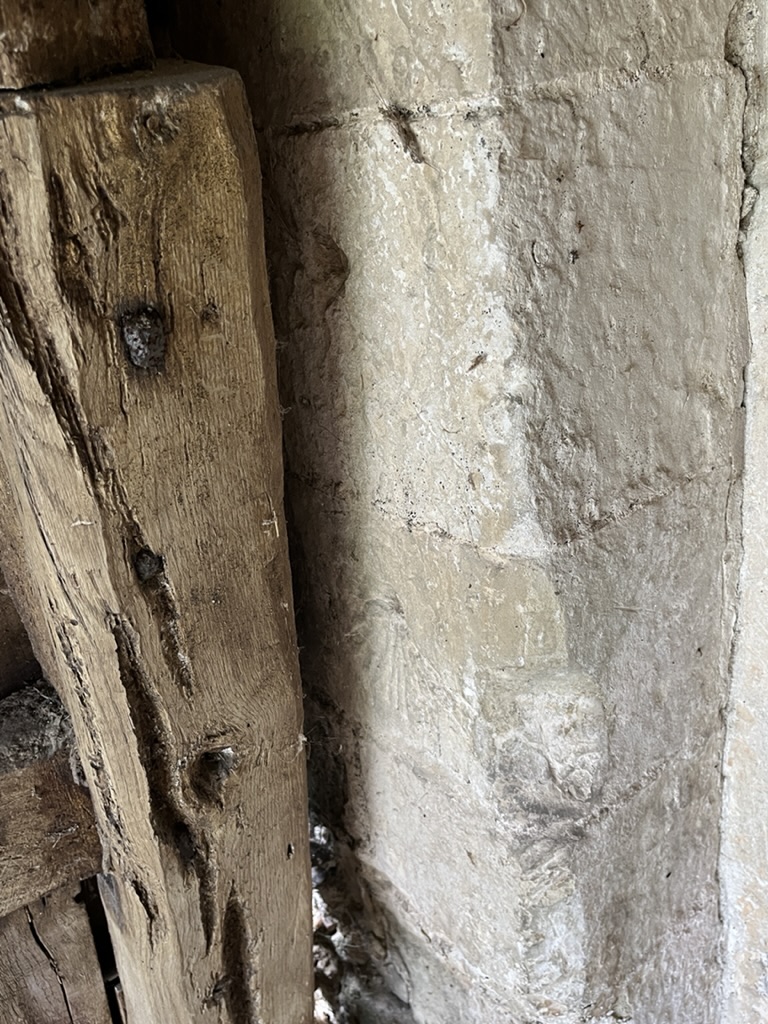
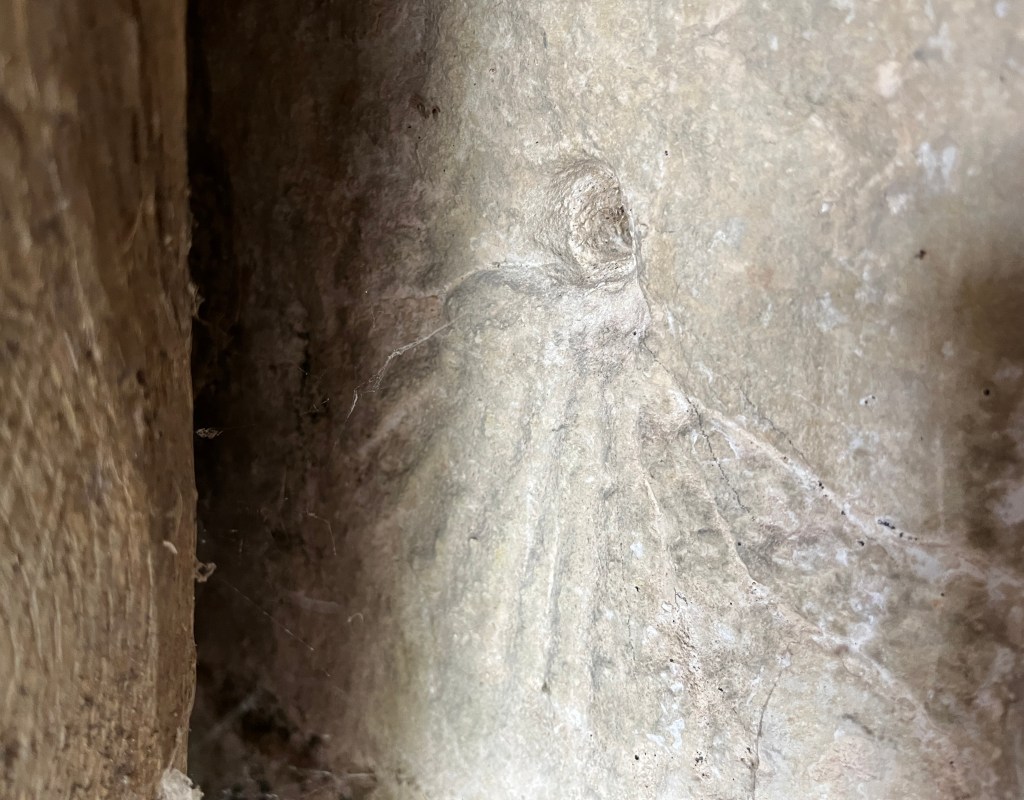
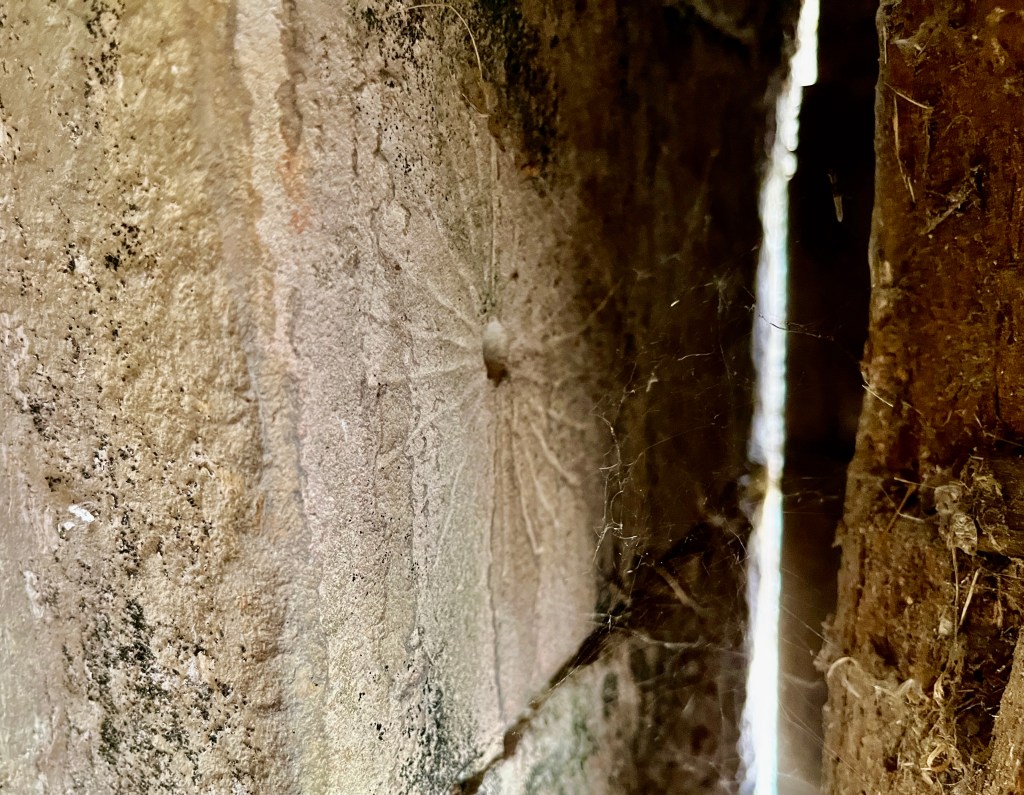
Dial 3 is hidden away RHS of the fine door, even less accessible than dial 2. It is a fascinating example of a ’24 hour’ dial, with a full complement of spidery lines of random length of which almost all are still visible.
DIAL 4
Also RHS and even less visible is a conventional ‘morning’ dial, with 4 lines (the upper one is faint) leading down to the slightly deeper cut noon line. This configuration again suggests that mid-morning began the important part of the day for observance before noon.
If you want to know more about this church, in particular the inside, there is a good article HERE
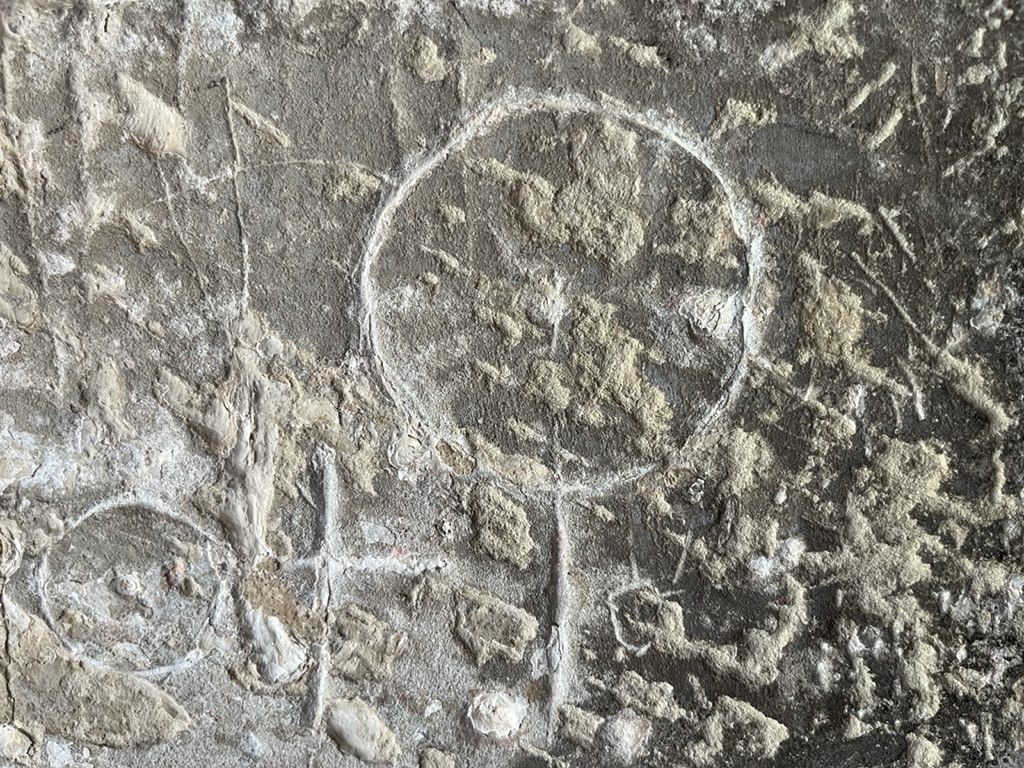
A selection of church marks in the porch. The 2 compass-drawn circles are not dials but [probably] ‘demon traps’. In superstitious medieval times it was believed that evil could be prevented from entering the holy building with protection marks. In this type, evil would become trapped within the never-ending circle. The VV and the M on the wooden door are Marian marks standing for the Virgin Mary, who bars entry to the church by evil.
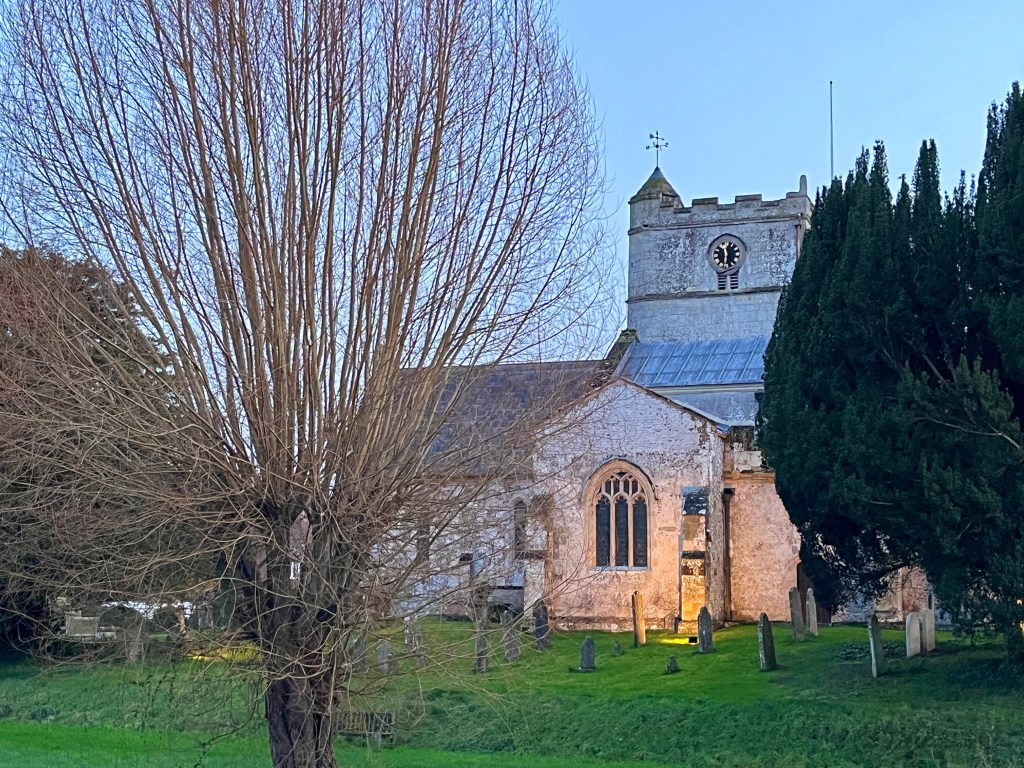
GRADE II* † Saxon origins (vestiges still visible); C13, C15; rebuilt tower 1667 (unusually, lower than the nave roof-line); restorations (Wyatt). Split from Burcombe village (S Burcombe) by A30 and hard to find. St John is the sole remnant of N Burcombe. Declared redundant 2005. I could not gain entry. 5m W of Salisbury. 51.0798 / 1.8971 / SU073311
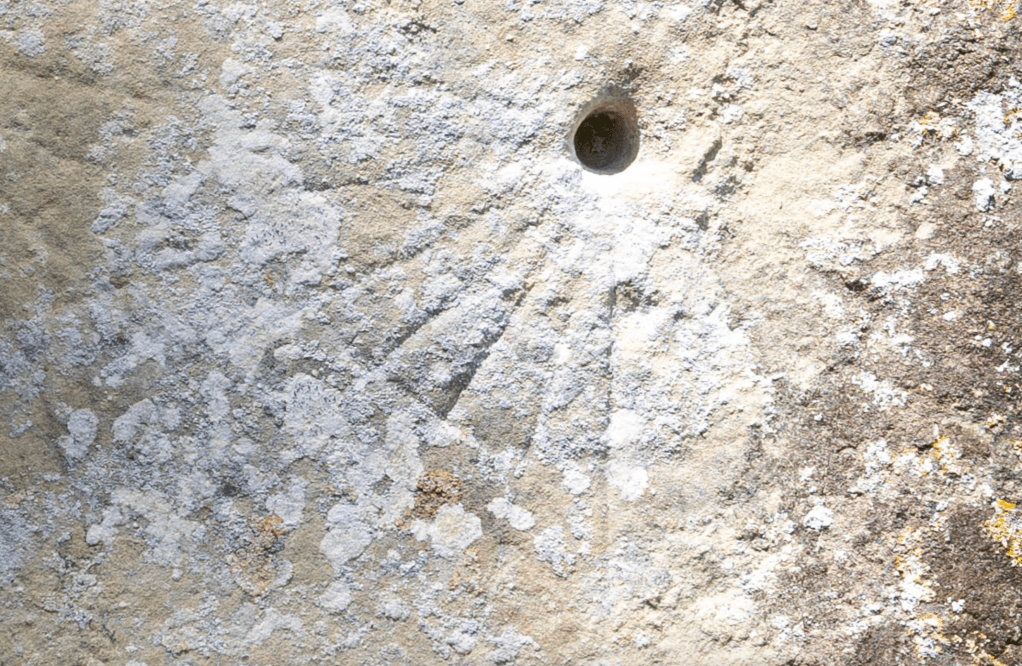
DIAL
St John . Burcombe . Wilts – Scratch Dial
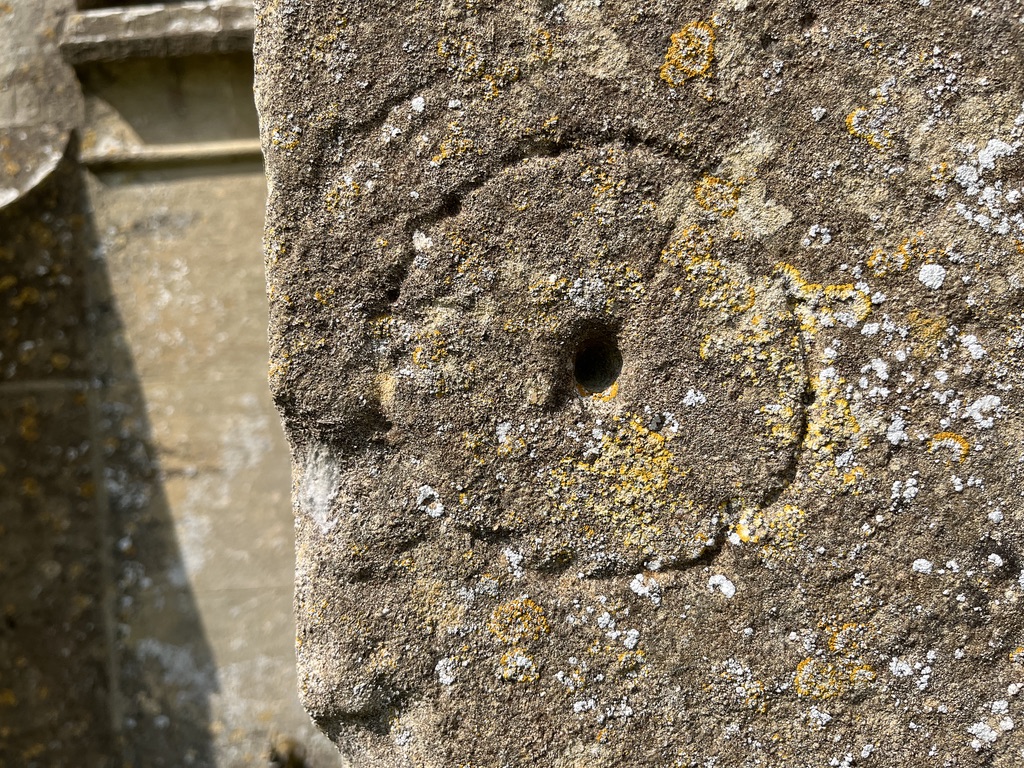
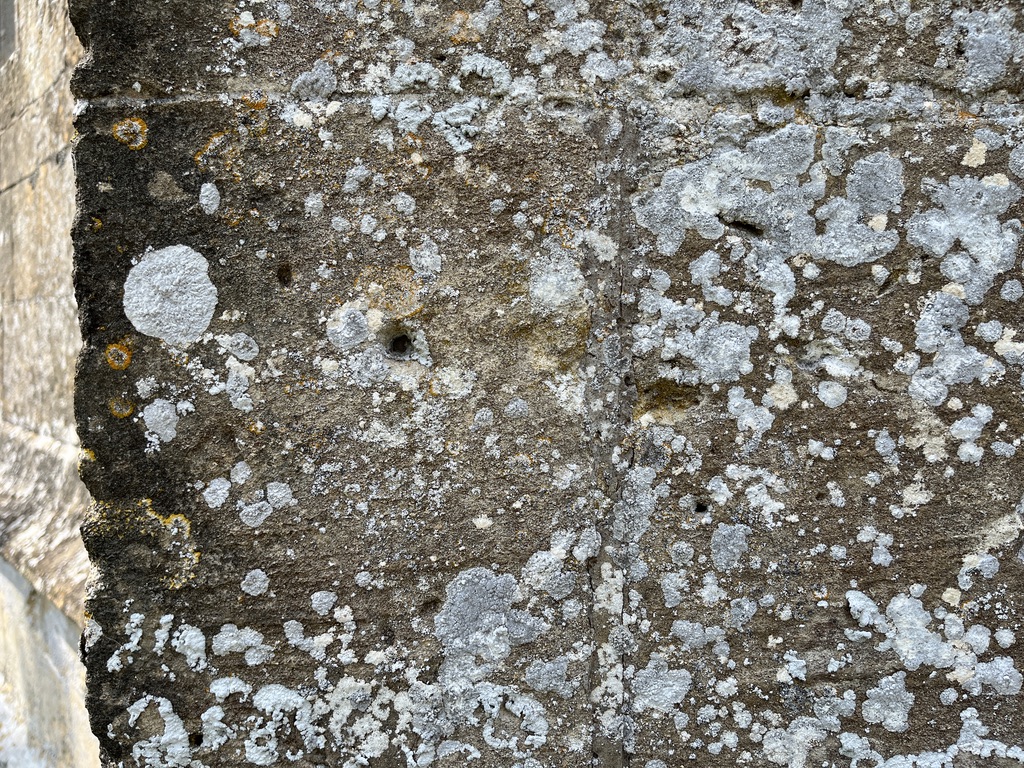
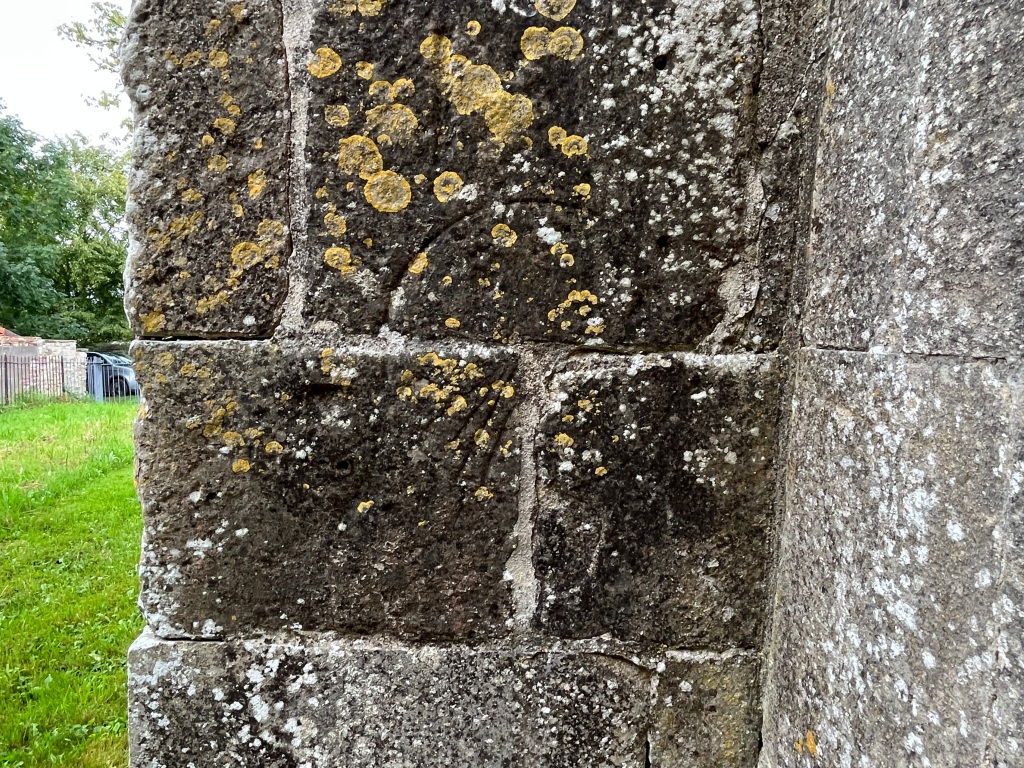
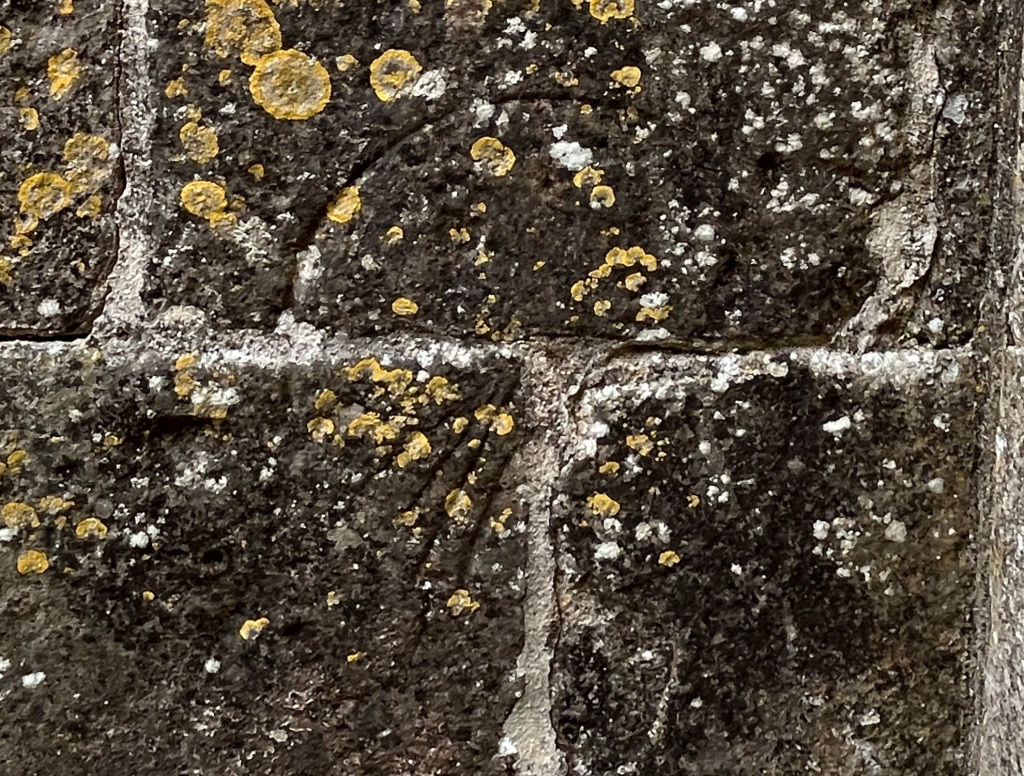
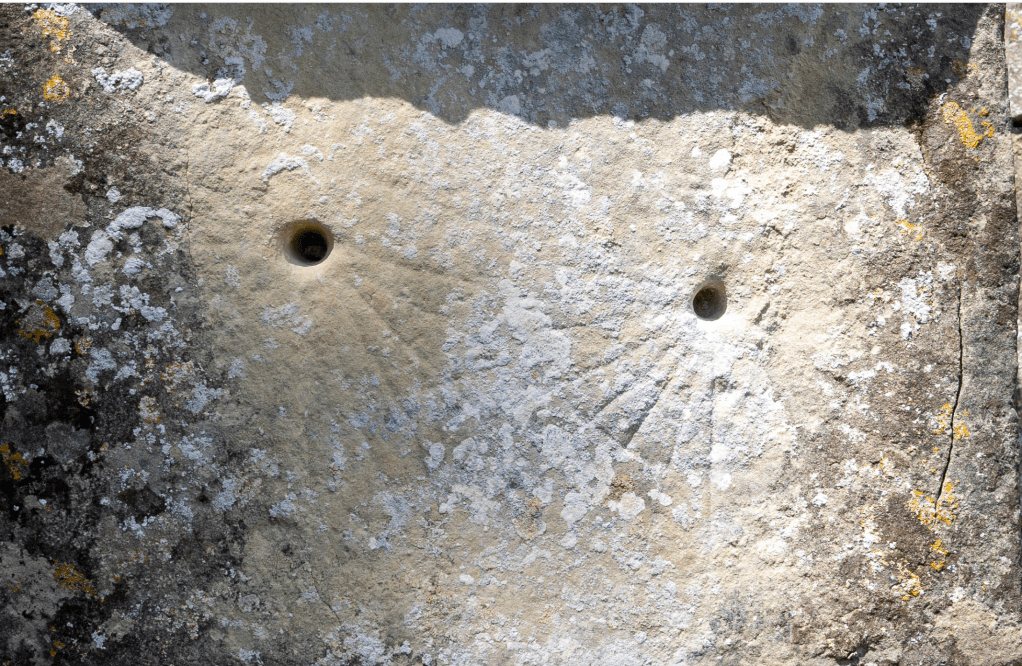
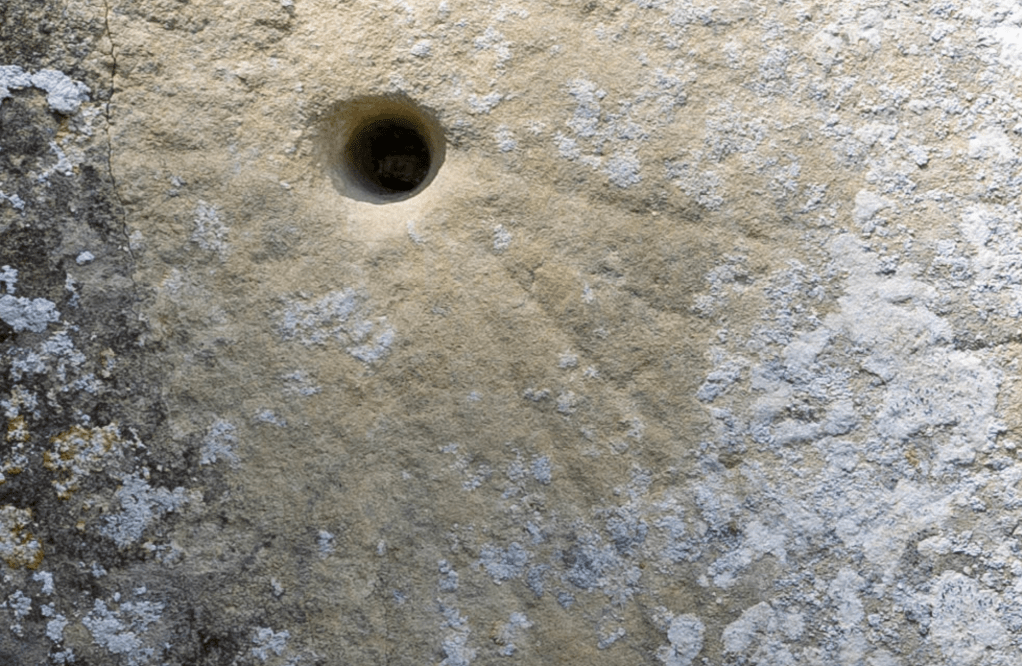
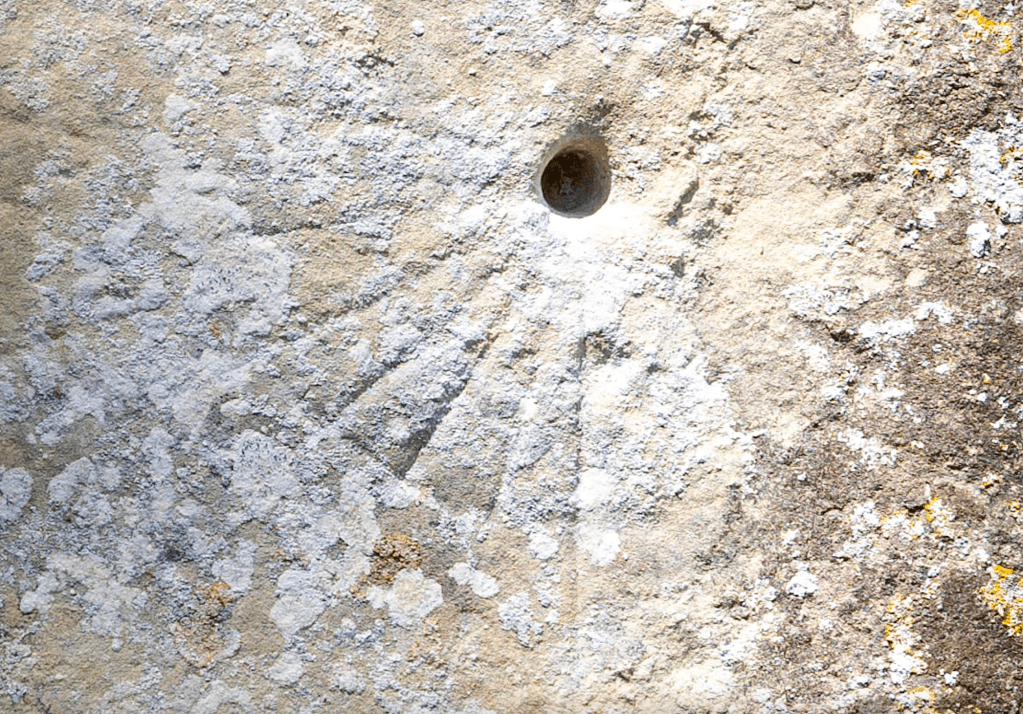
The Burcombe dial is a slight secret, mentioned in TWC‘s Wiltshire dial list but not elsewhere that I can see. St John is also hard to find: check the location carefully before you try. This is a pretty dial, a messy mix of lines and pocks below the horizontal. The noon line – usually an eye-catcher – is upstaged by lines with varying degrees of curve and pocking. It’s hard to interpret, but the two ‘raking light’ photos add a bit of perspective.
St John . Burcombe . Wilts – Scratch Dial
VERTICAL DIAL
St John . Burcombe . Wilts – Vertical Dial
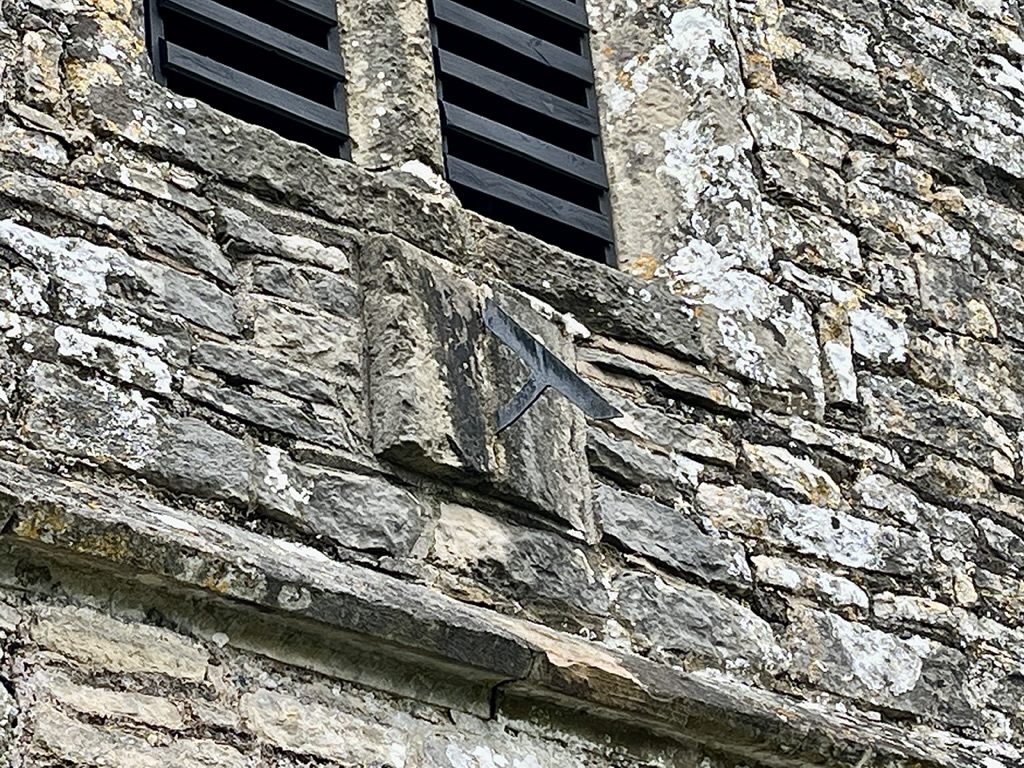
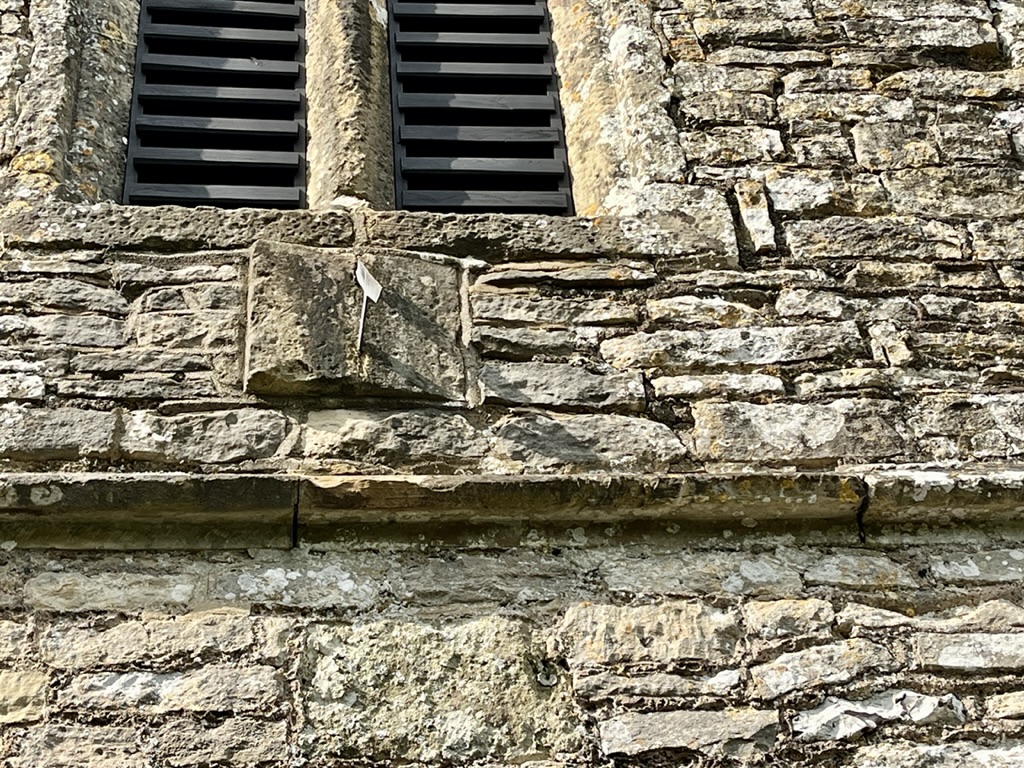
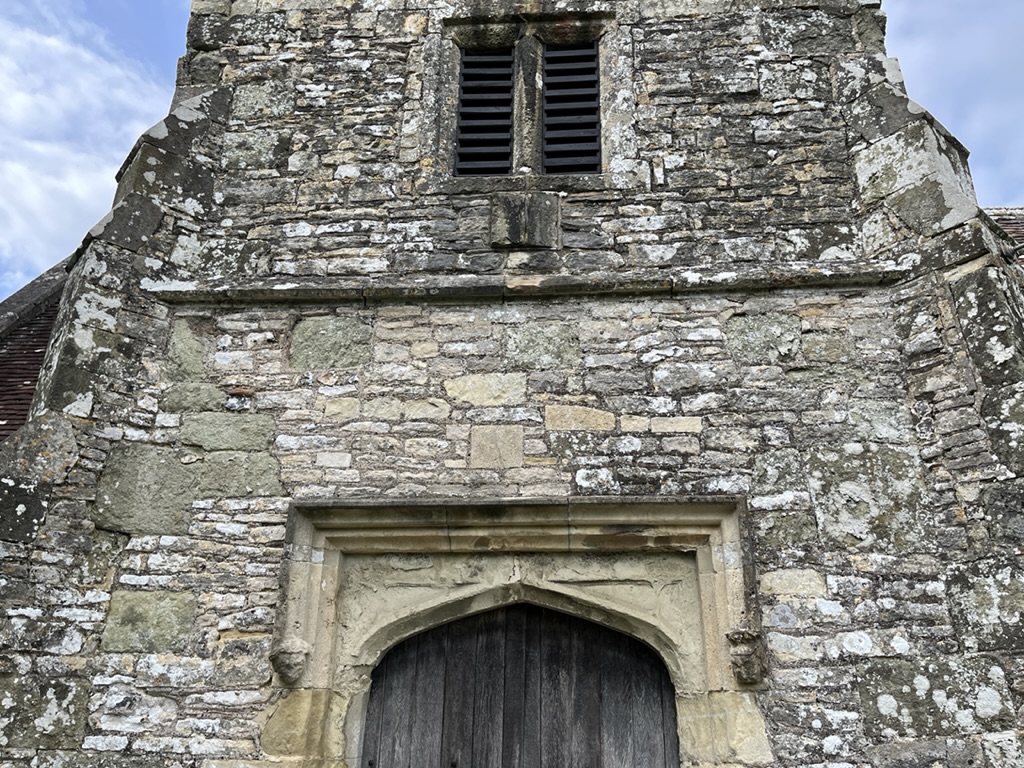
St John also has a canted vertical dial above the porch, with a pleasingly robust gnomon. It fits in with the stonework around it and looks old. However any details on the dial face have been eroded. Unfortunately I didn’t have a proper camera with me to check closely for lines etc. but I wouldn’t expect revelations.
Quaere placename – a mapping mistake
In the early 17th century, when John Speed prepared a map of Wiltshire he copied a version by Christopher Saxton, which showed but did not name North Burcombe. On his own map, Speed labelled the village Quaere (Latin for query), presumably because he intended to check the name later, but never did, and his engraver copied the annotation as if it were the village’s name. Later map printers in turn copied Speed’s map and ‘Quaere’ appeared on maps of Wiltshire for 145 years until Emanuel Bowen corrected the mistake in his 1755 map of the county. (WIKI)
GRADE 1 † C12 south aisle, 2 Norman arches; C13 chancel; C14 tower; C15 nave & north transept. Restoration 1845 by T. H. Wyatt. Early (C12?) font carved from a single piece of Jurassic limestone. One of several fine Chalke Valley churches situated south of the A30 between Shaftesbury and Salisbury. It’s an attractive long cut between the two. 51.0361 / -1.8473 / SU108263
DIALS
On the S-facing central buttress of the tower there are two adjacent scratch dials on the same stone that merge. It isn’t immediately clear (to me) which came first. Whichever, presumably the time came as the church developed when more accuracy in marking the day’s passage was required.
BSS references a 3rd dial on S wall. Other records mention two scratch dials and one sundial on south side. See below for an attempt to ID the sundial.
DIALS 1 (L) & 2 (R)
Coombe Bissett . Wilts . St Michael – Scratch Dials
Dial 1 is recorded as: Irregular dial with 15° lines in both quadrants.
Dial 2 is noted as: Cannot be classified. Eroded, damaged. Mass or line deeply cut.
My visit was early evening, and the quality of the detail in my photos is unimpressive (see above). For example, there is only the hint of the part-circle of Dial 2. Fortunately, this is a church that another dial collector has visited and later he uploaded his photos to BHO / Disqus. Mark Wolstenholme’s excellent images give a much clearer and sharper view of the details of both dials and their intersection.
DIAL 3 (?)
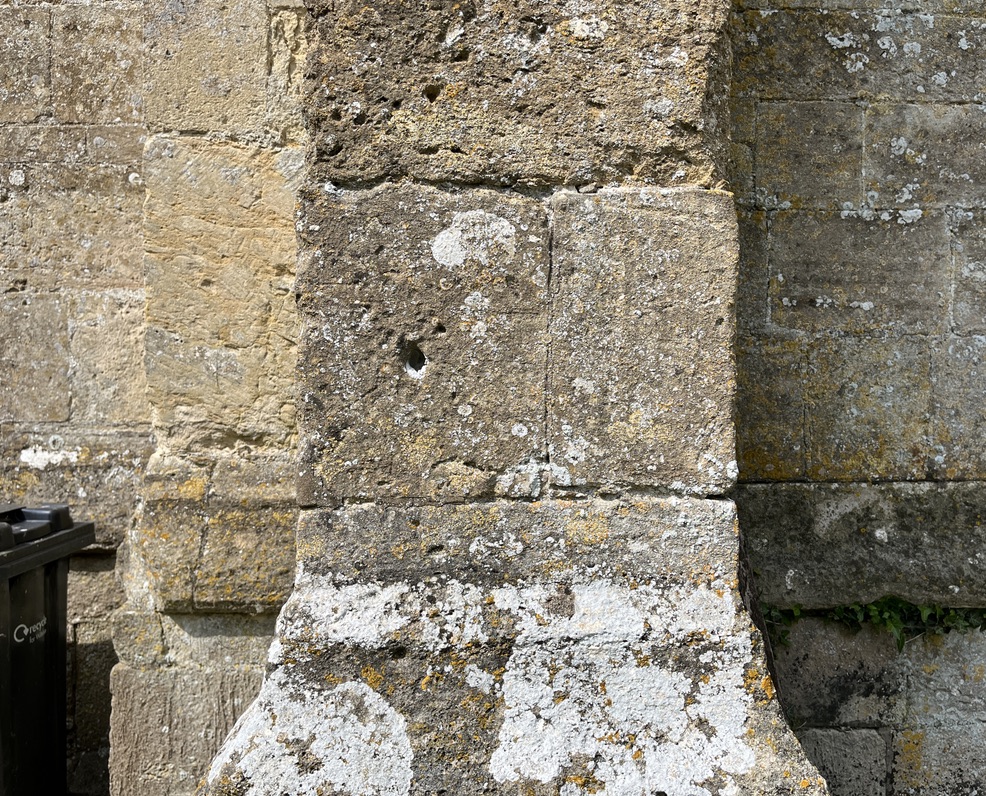
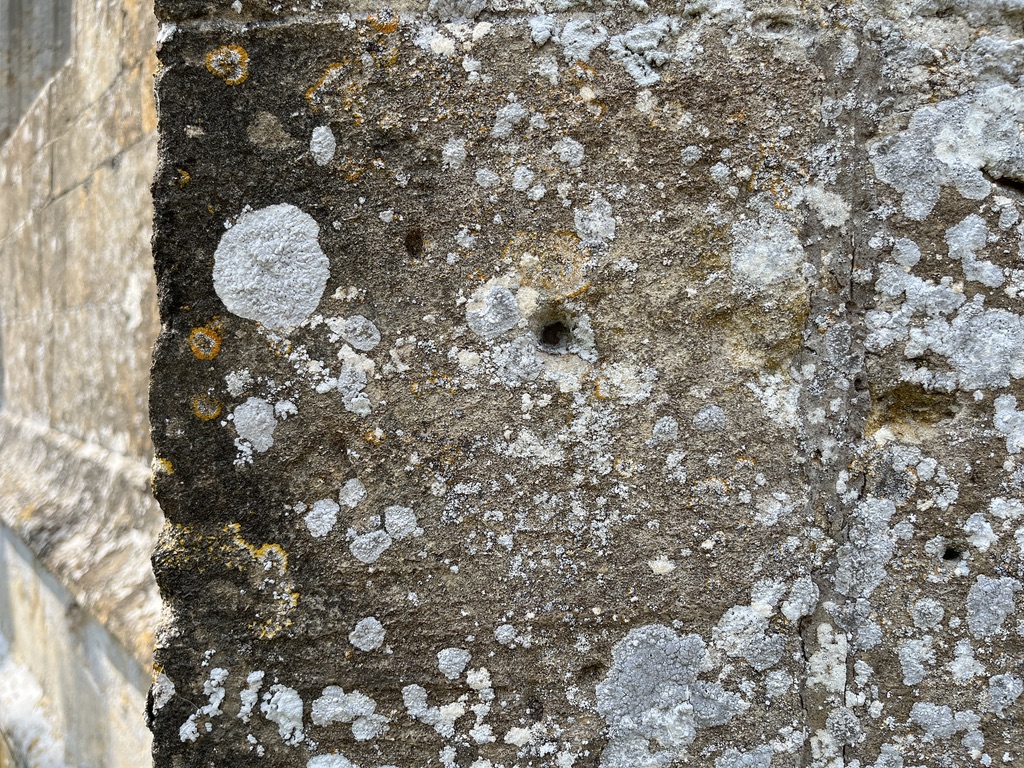
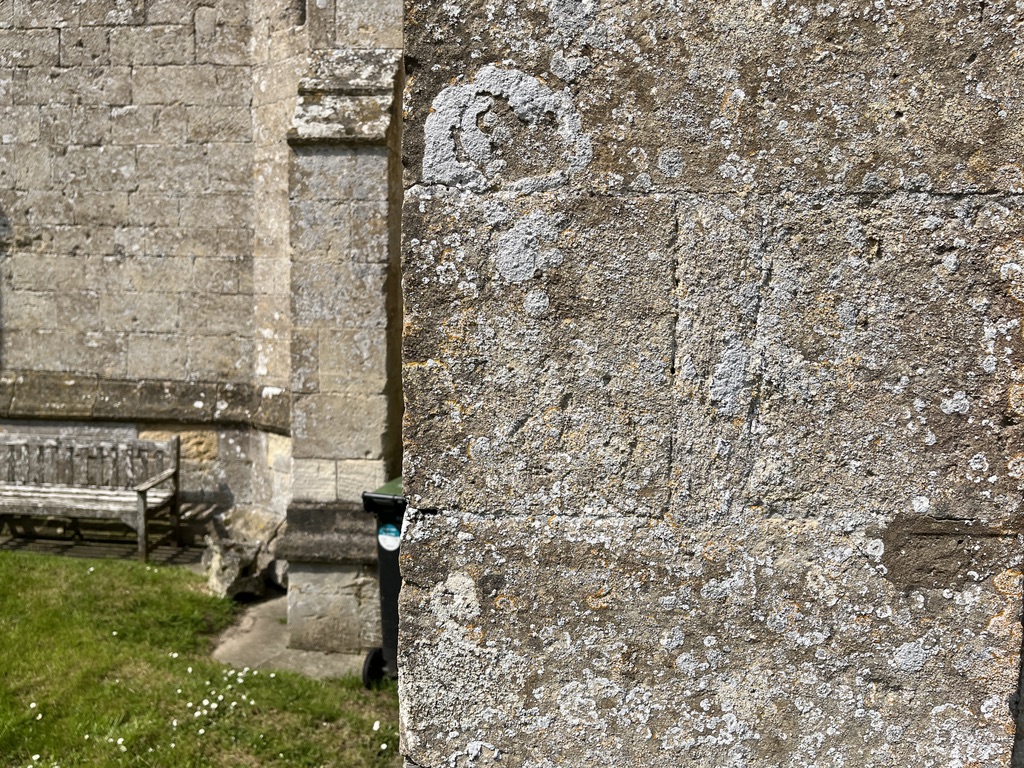
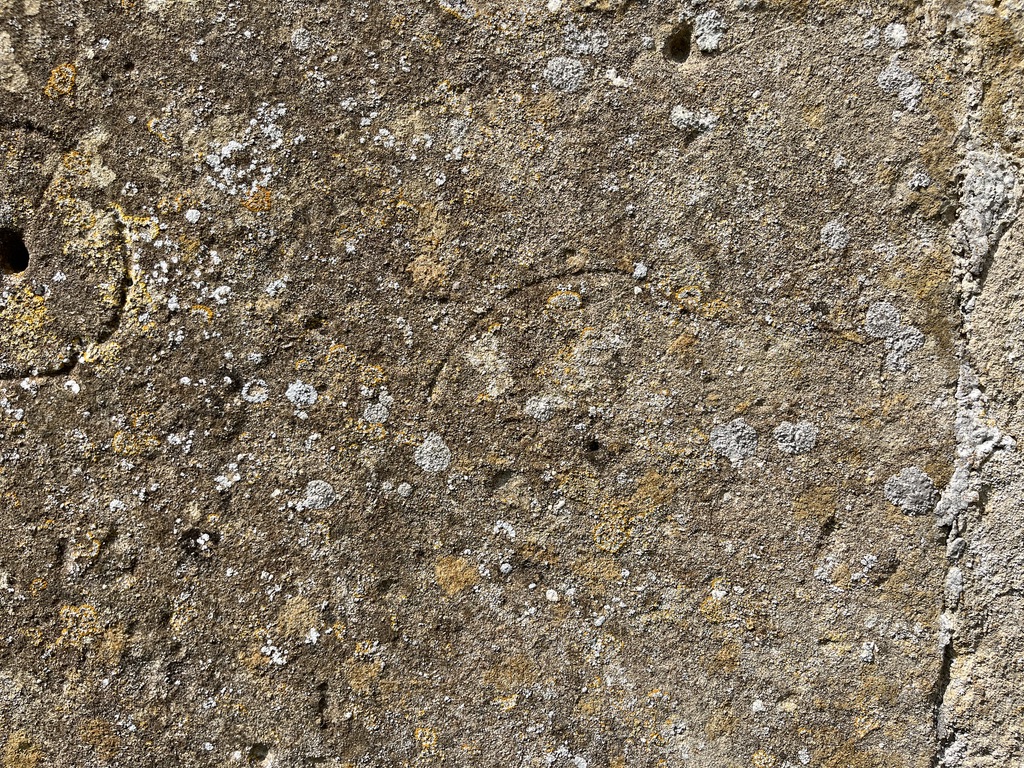
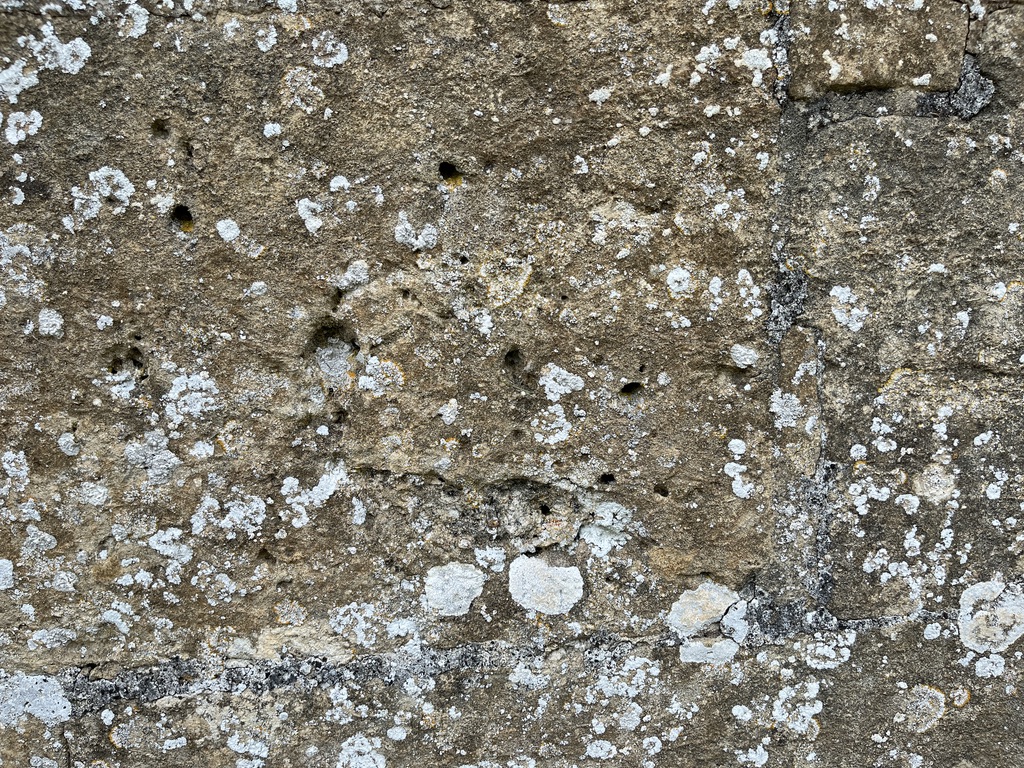
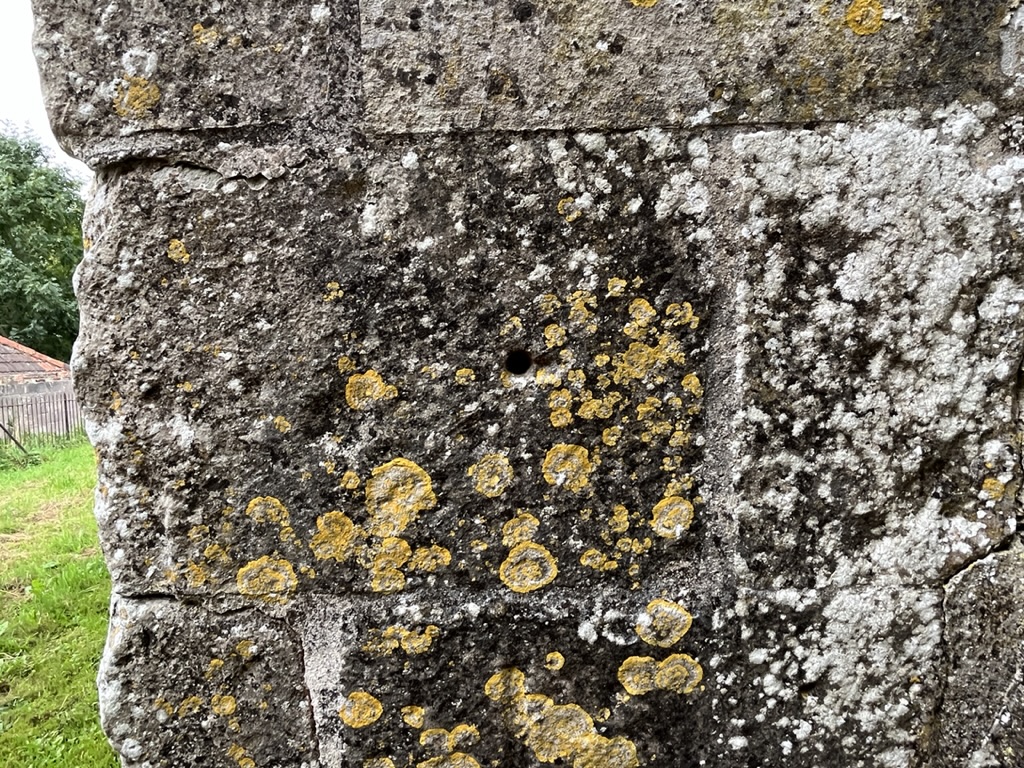
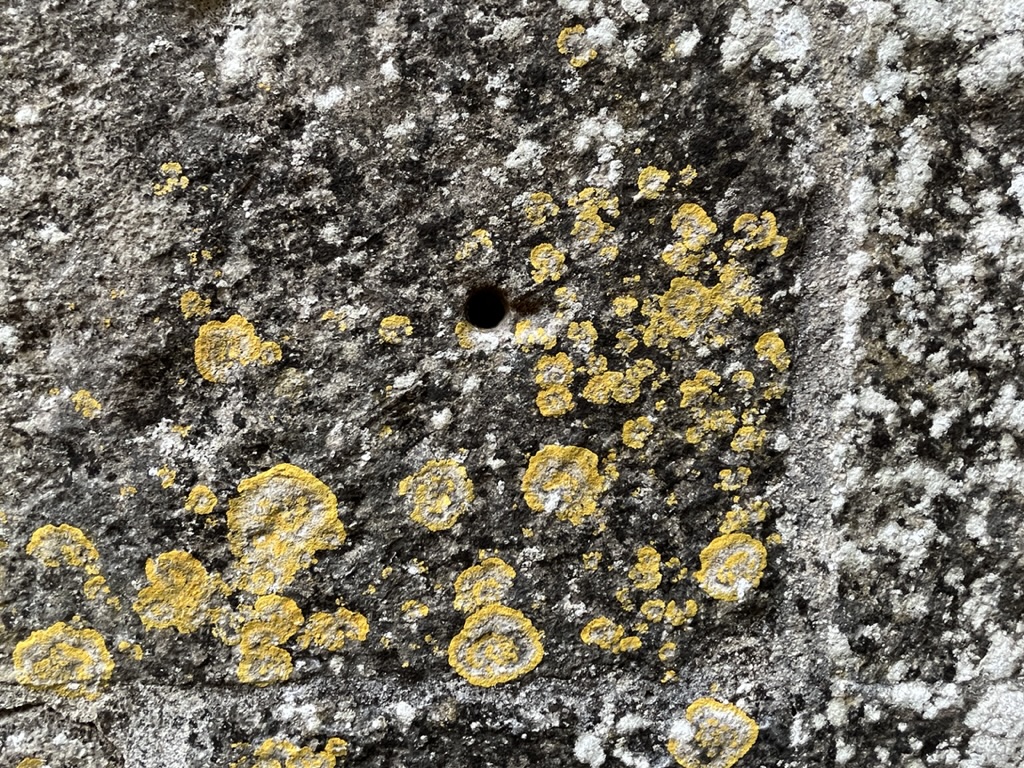
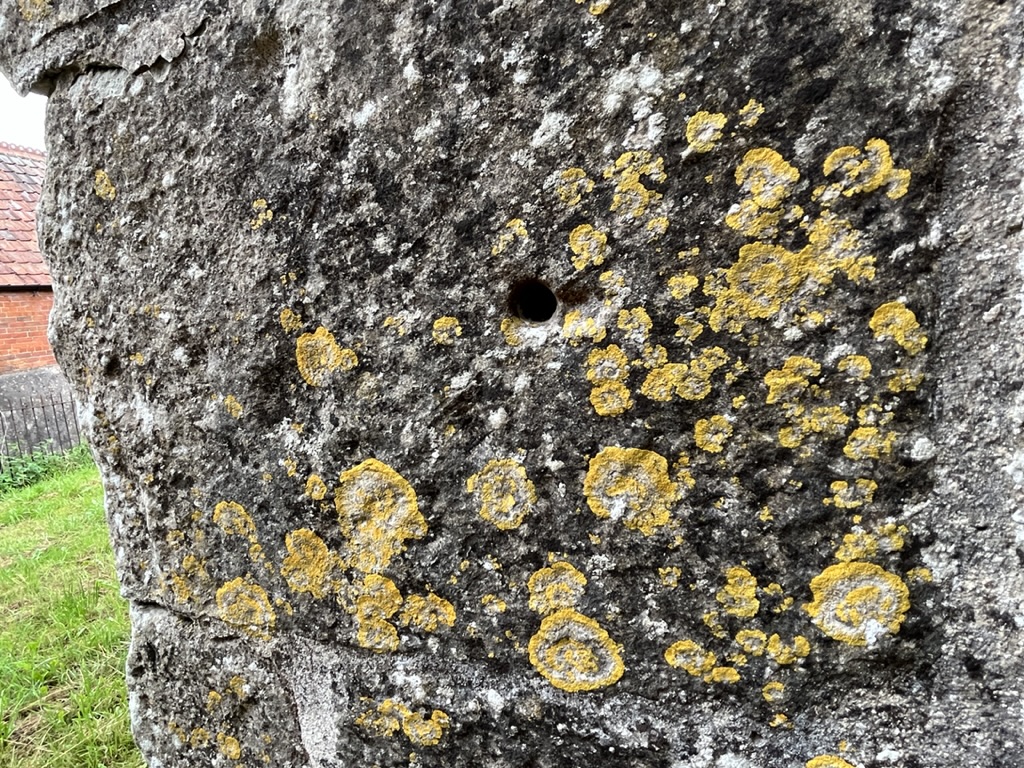
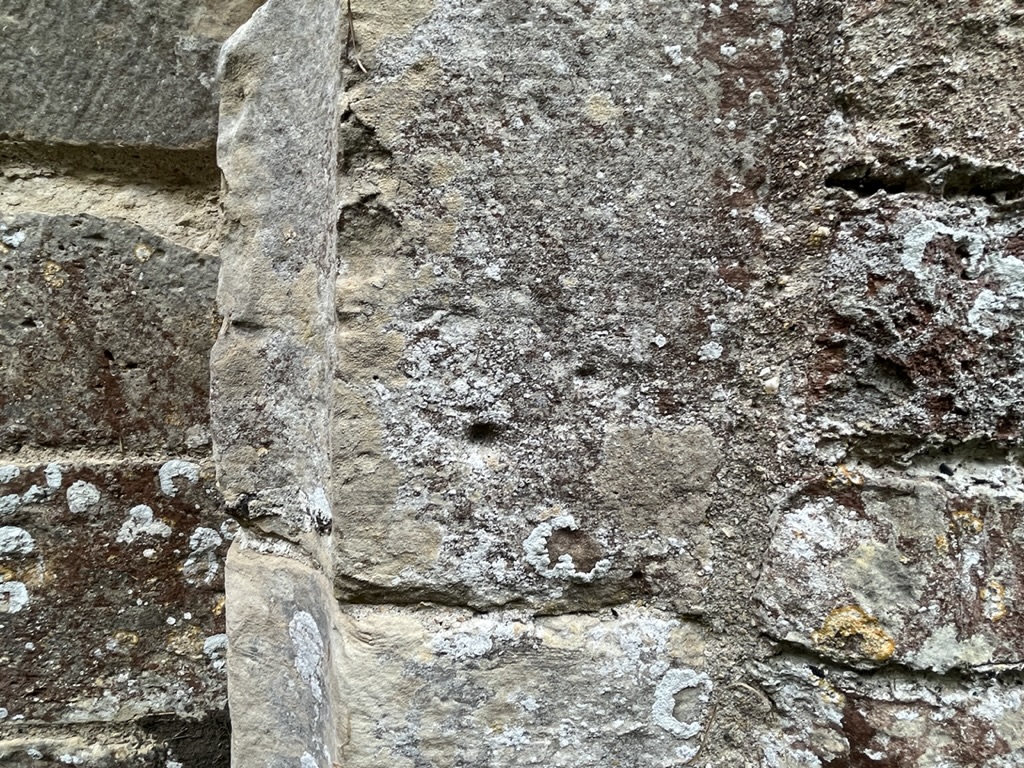
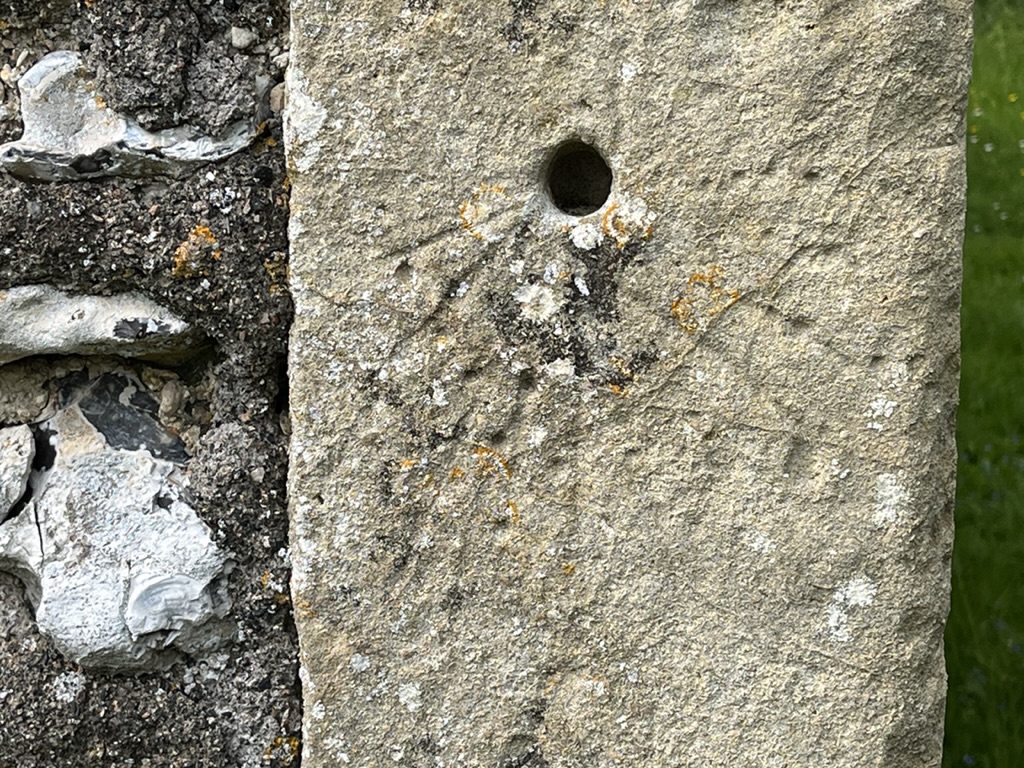
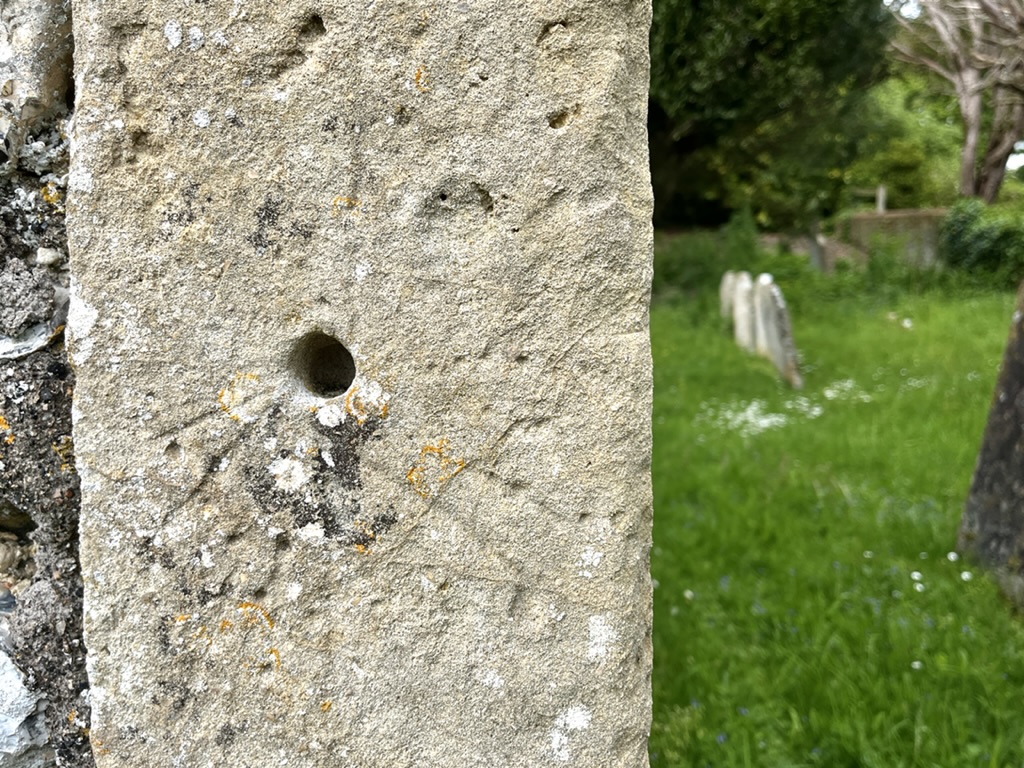
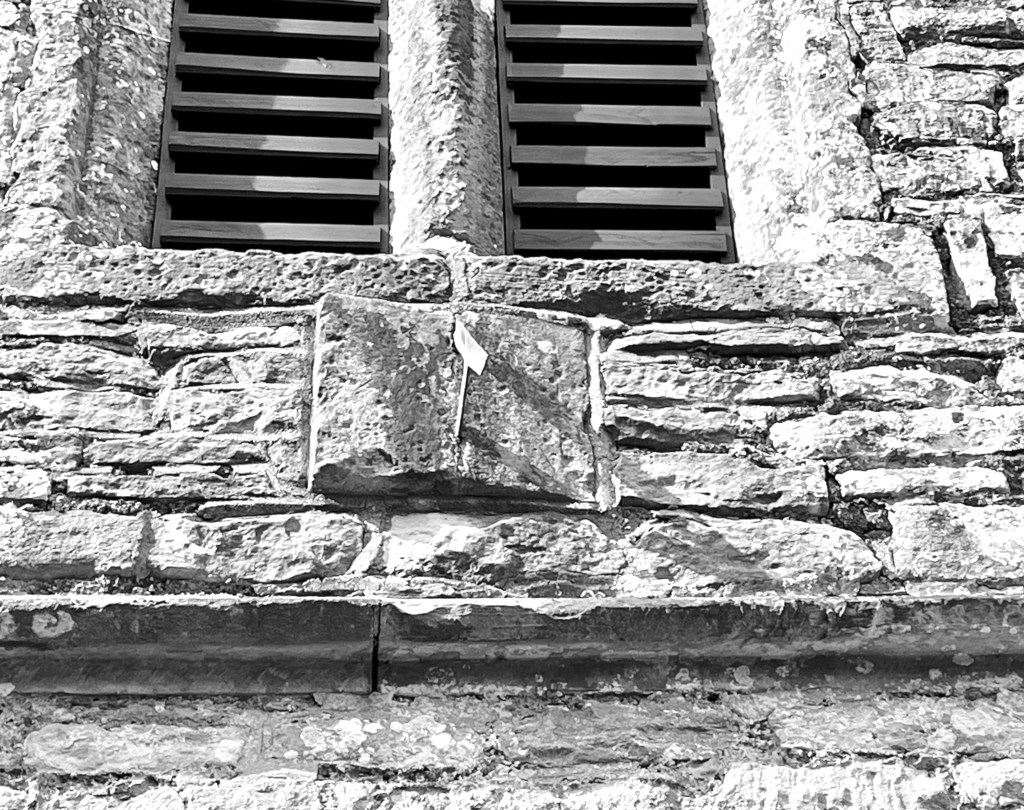
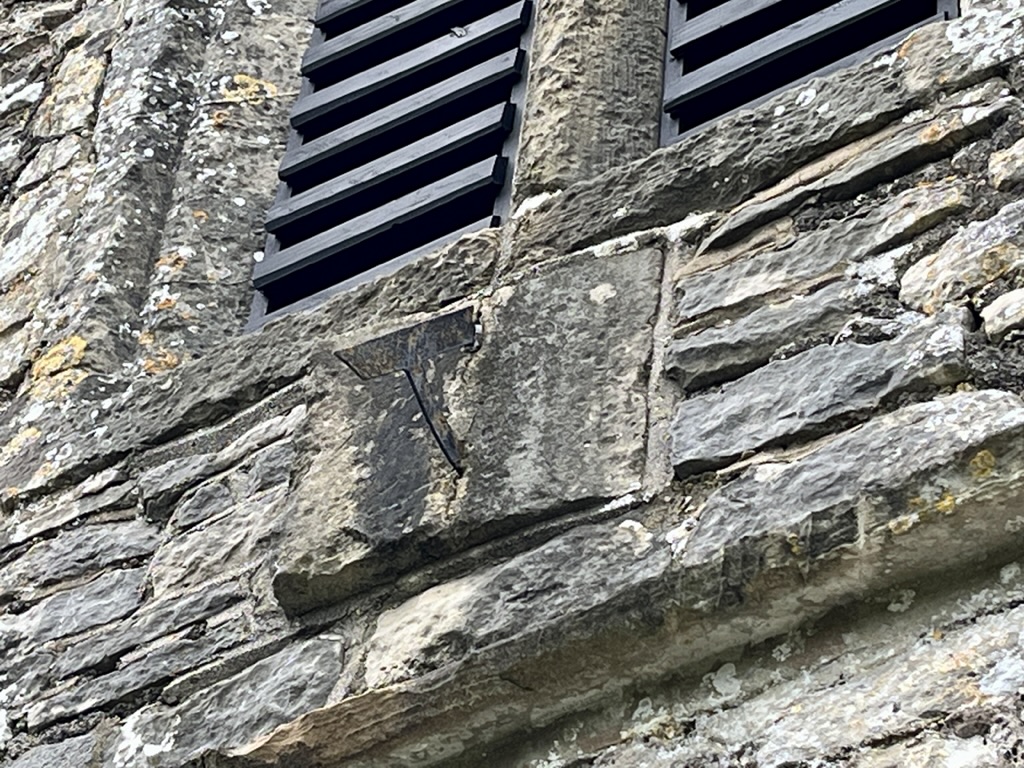
Another dial is recorded as being on the tower, S wall, a short distance W of the ‘dial buttress’ above. The description states Early Christian ‘Tombstone’ dial. Accurately cut or made. Modern replacement. I found this baffling, and the only conceivable candidate I could find in the area may or may not fit the bill. Somehow I doubt it. Suggestions of its purpose would be welcome…
Coombe Bissett . Wilts . St Michael
GSS Category: Scratch Dial; Mass Dial
Photos: Keith Salvesen; special thanks to Mark Wolstonholme who uploaded his detailed photos to the BHO site os and to Disqus os


































 GAUDIUM SUB SOLE . SUNDIALS . MEDIEVAL TO MODERN