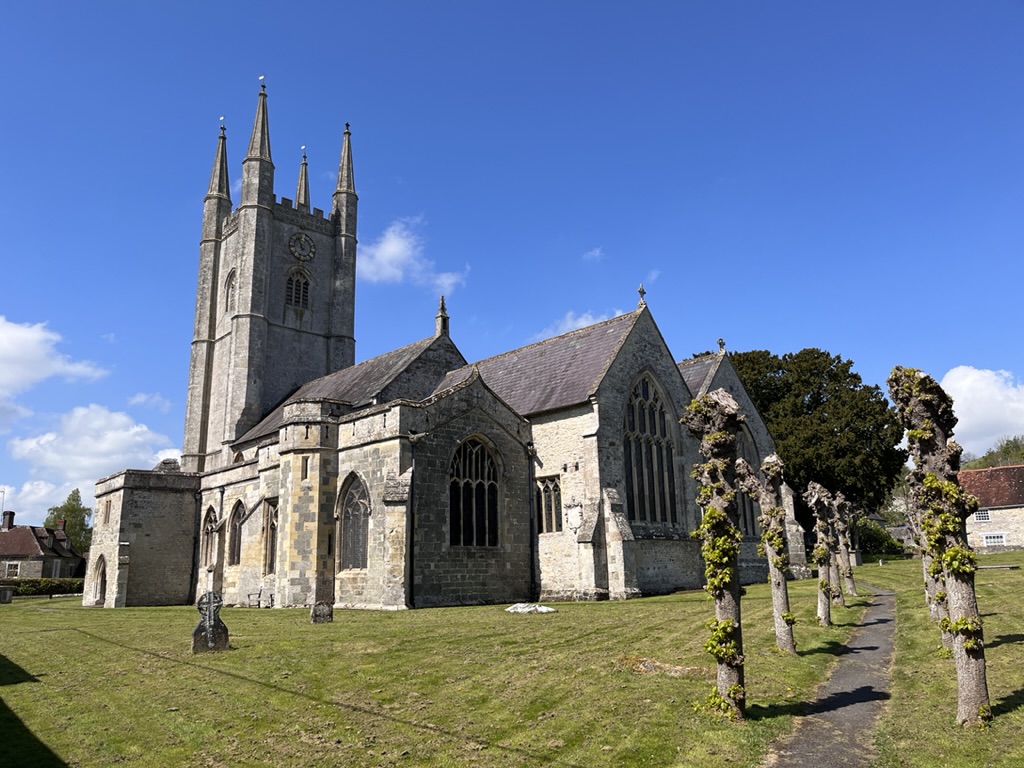
GRADE I ♱ Saxon foundation. C12 (first record 1102) early C14, C15, 1845 restoration. C12 Purbeck marble font bowl. Jacobean box pews. Spiritual home of the Dukes of Somerset, duly commemorated. Original 14th century oak door, fittings. 18th-century metal sundial LINK. 7m SW of Warminster. Longleat, Stourhead nearby. 51.1468 / -2.2821 / ST803386
DIAL
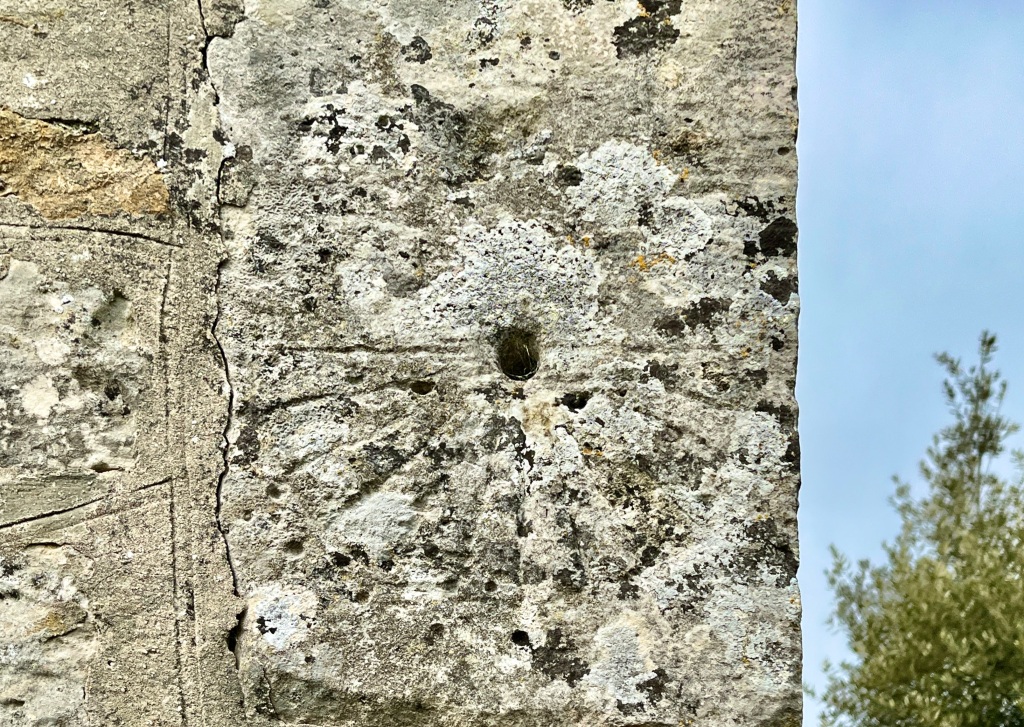
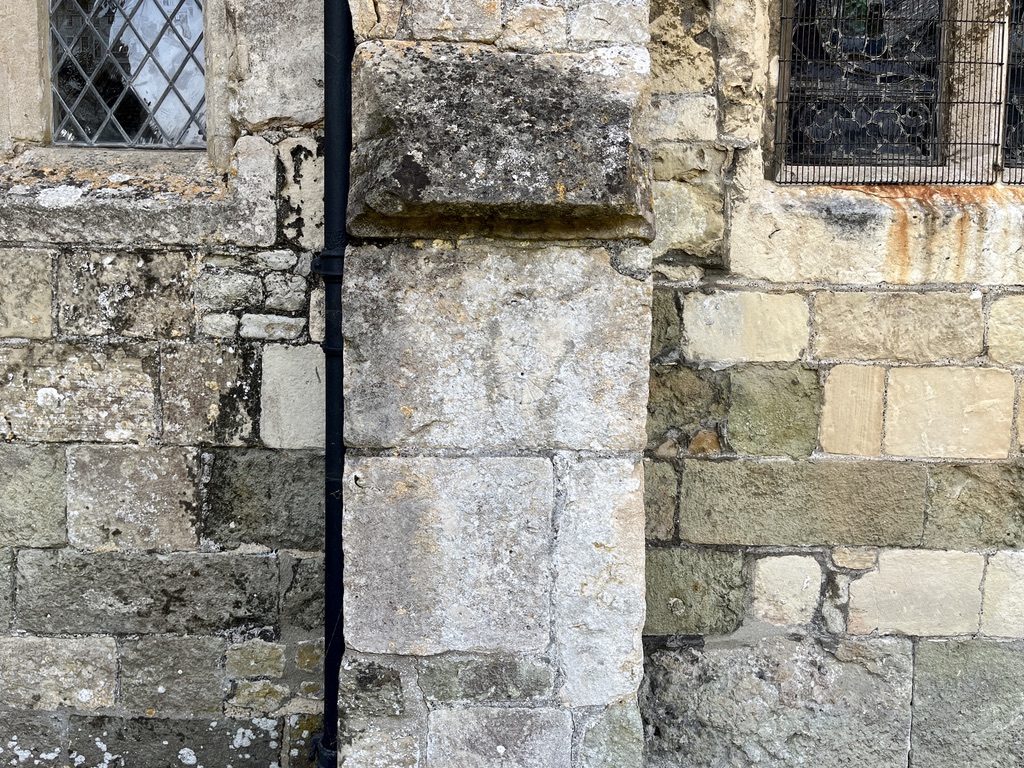
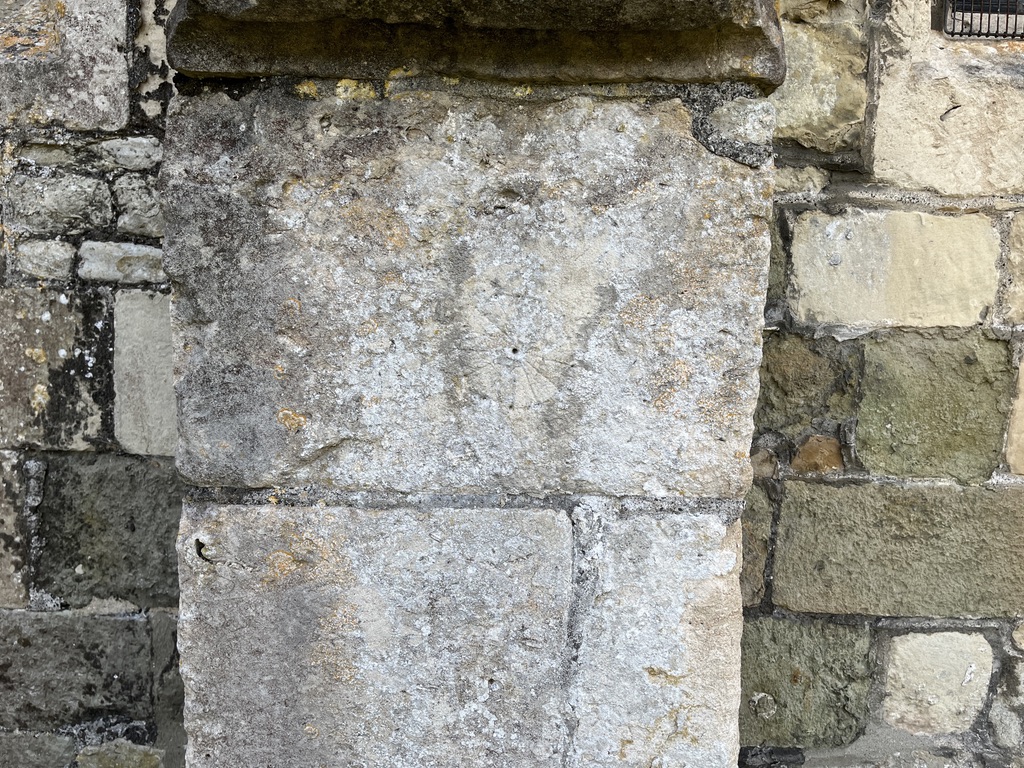
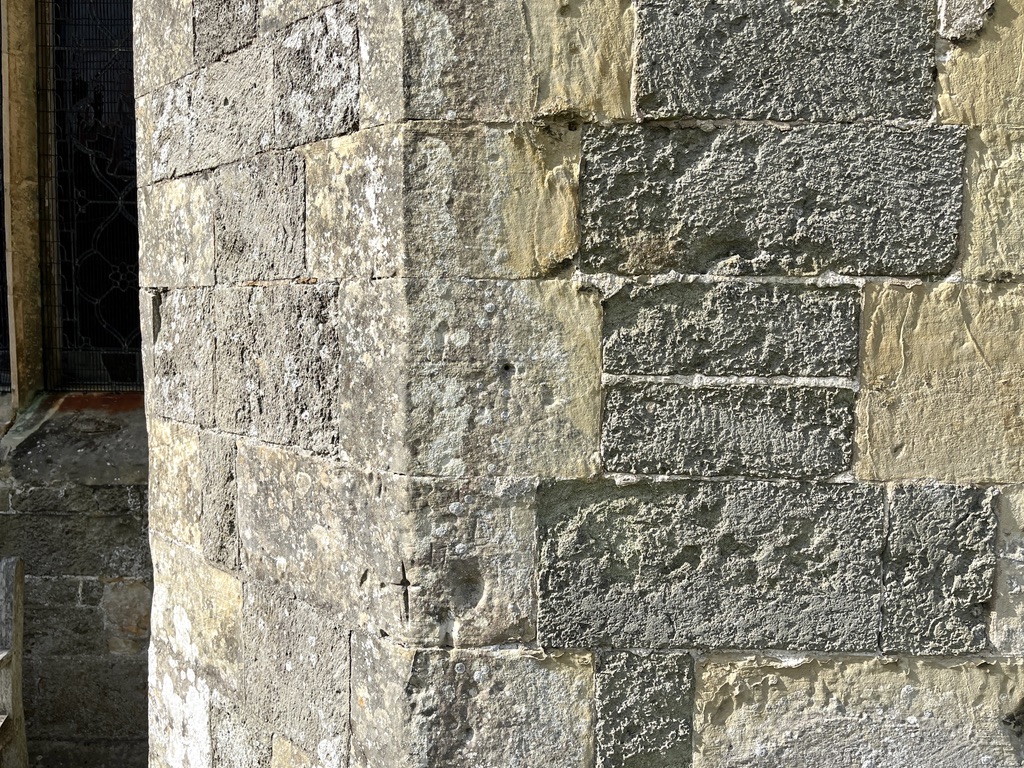
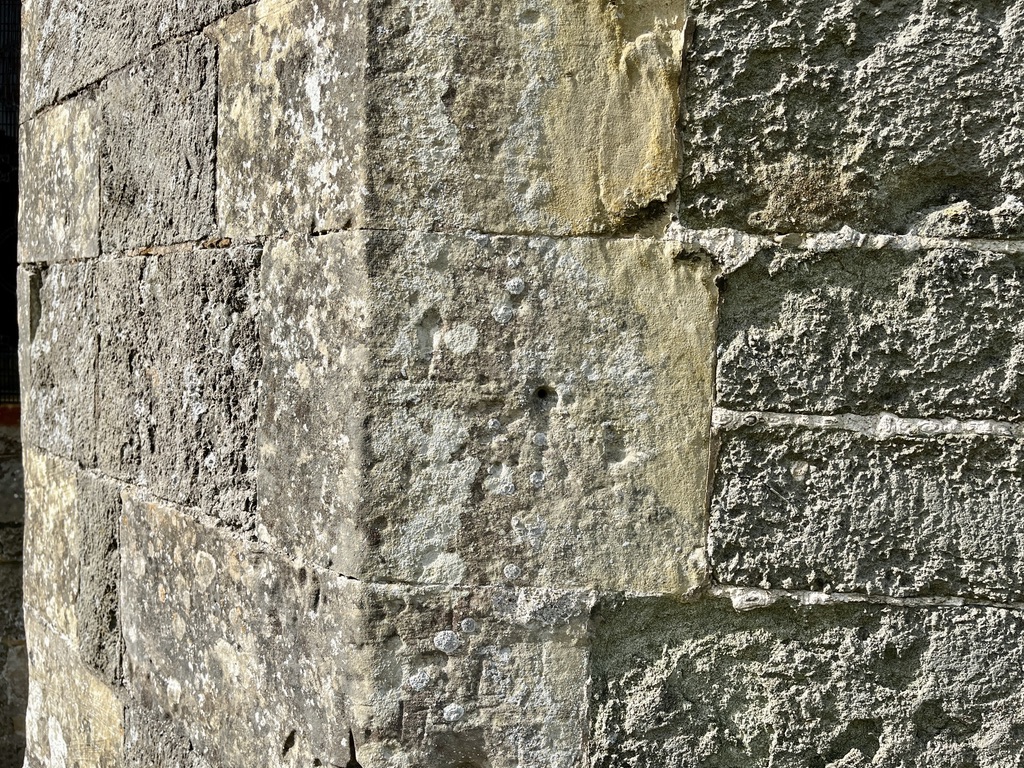
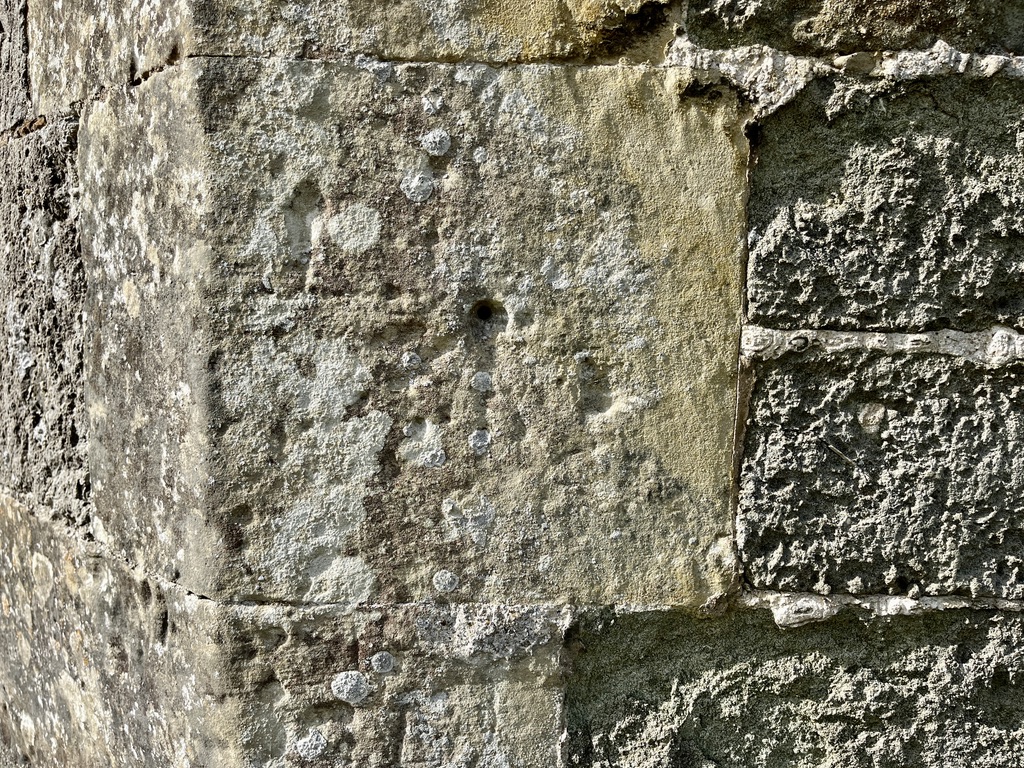
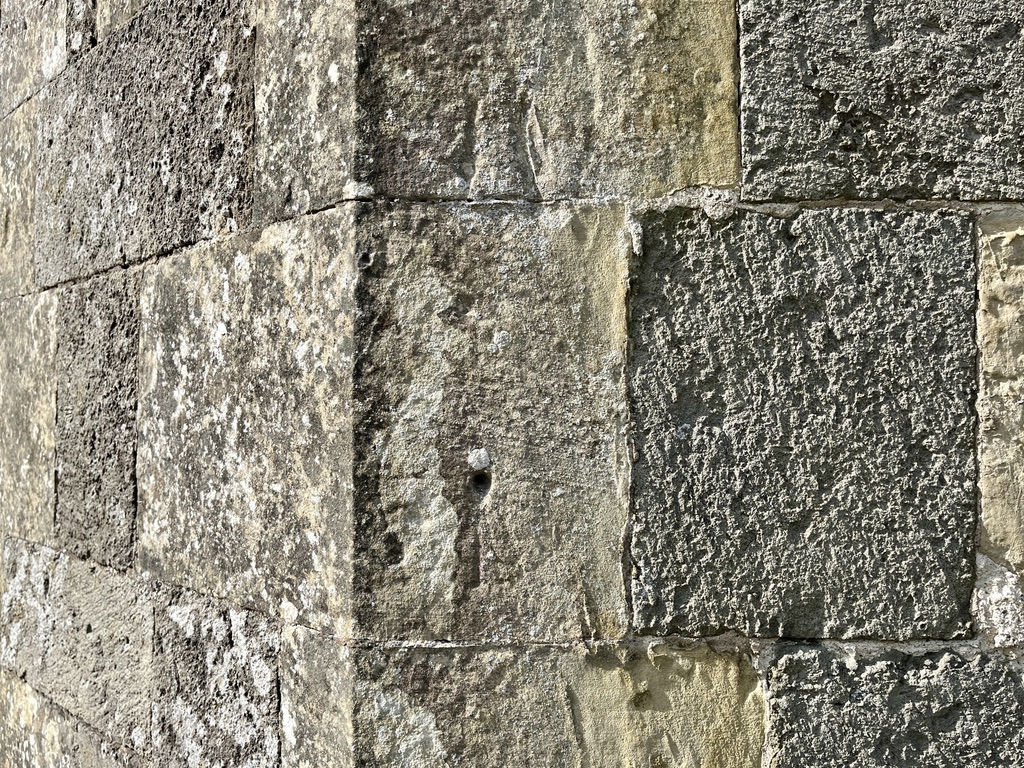
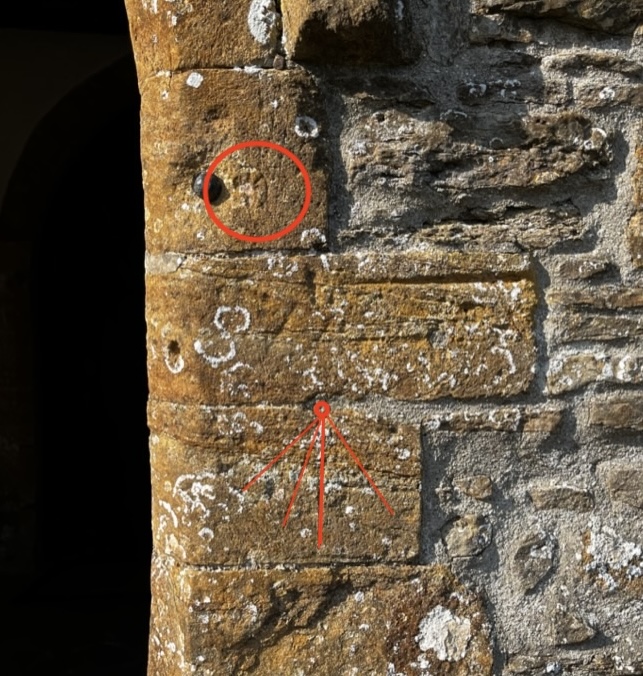
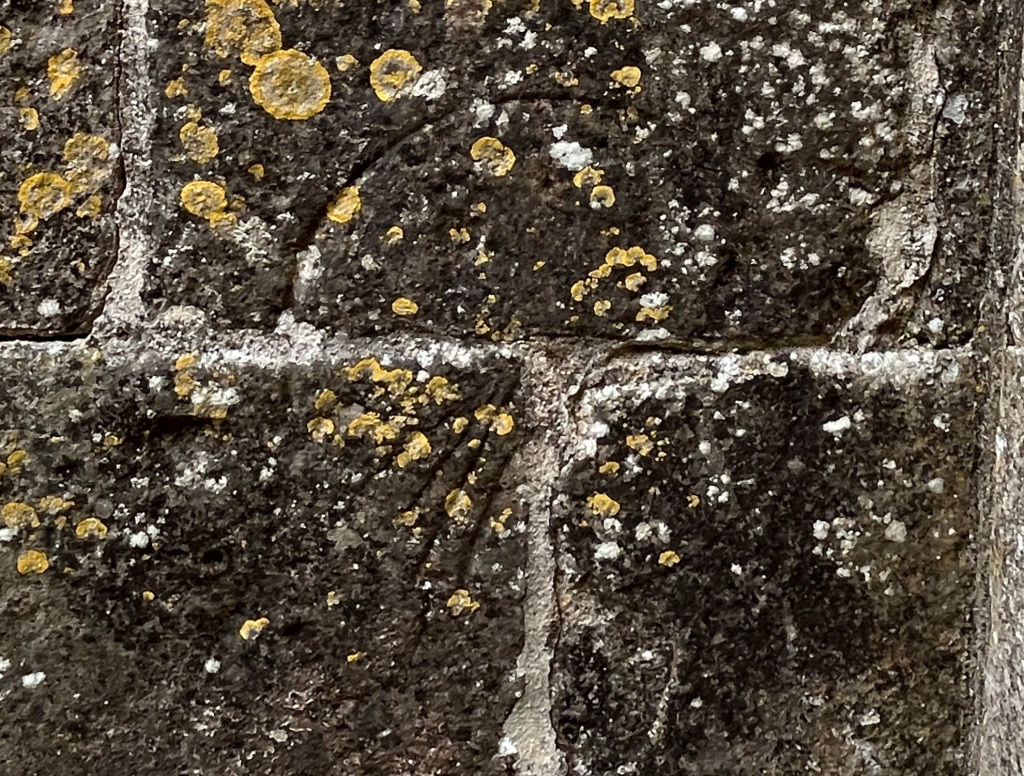
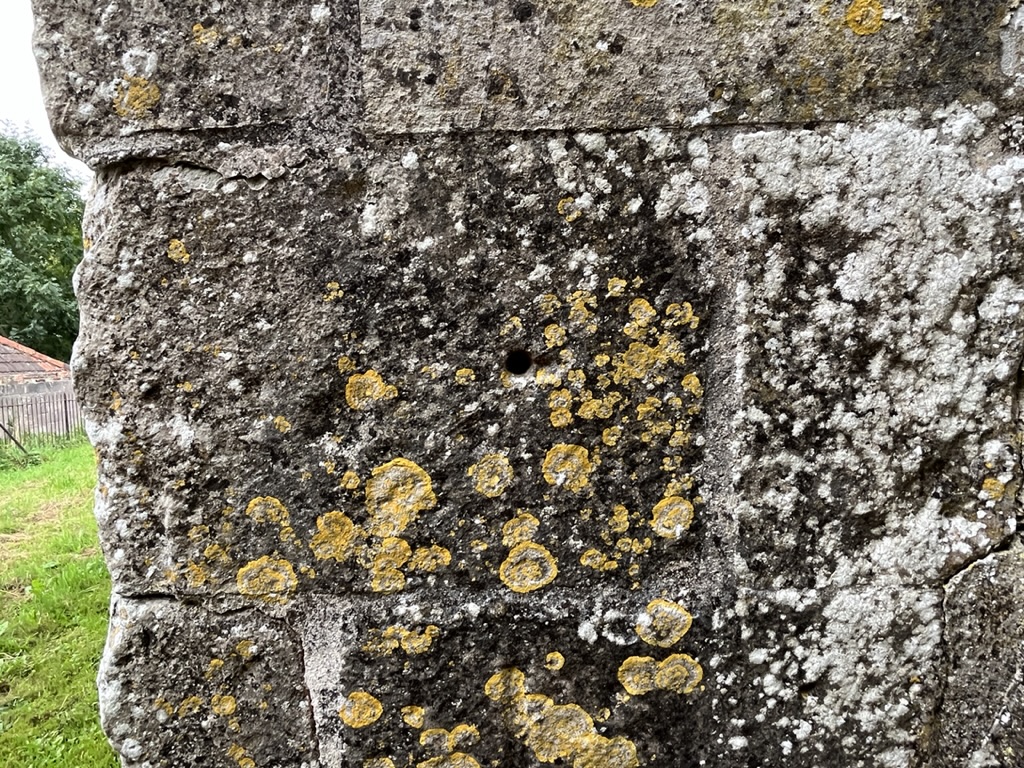
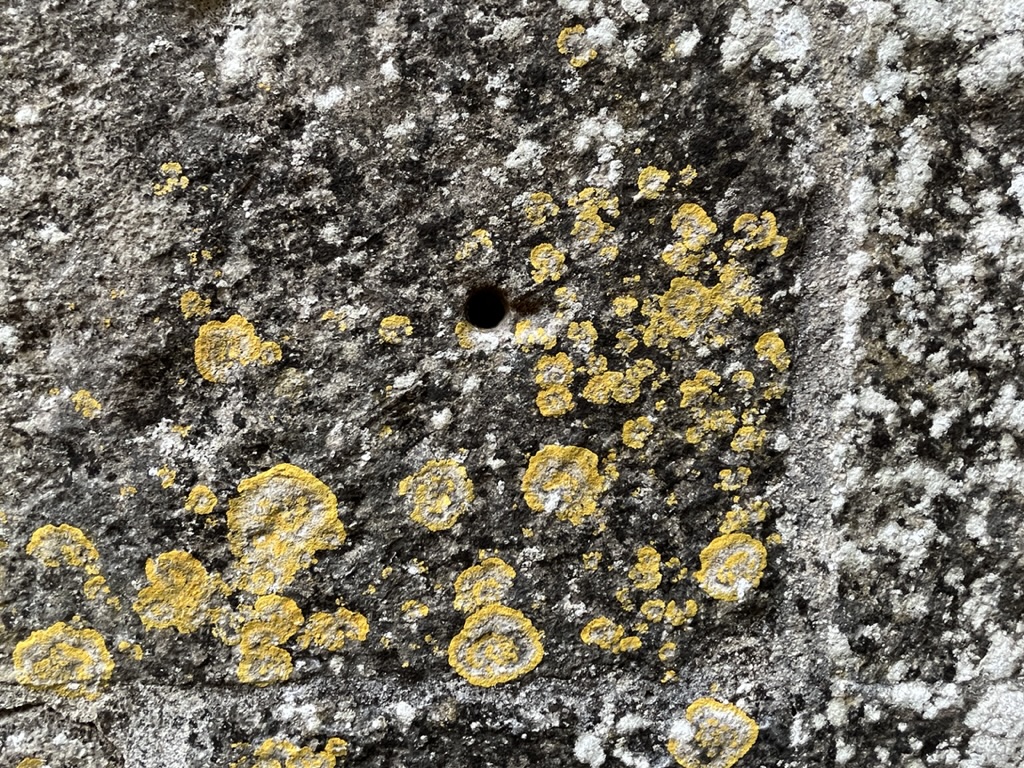
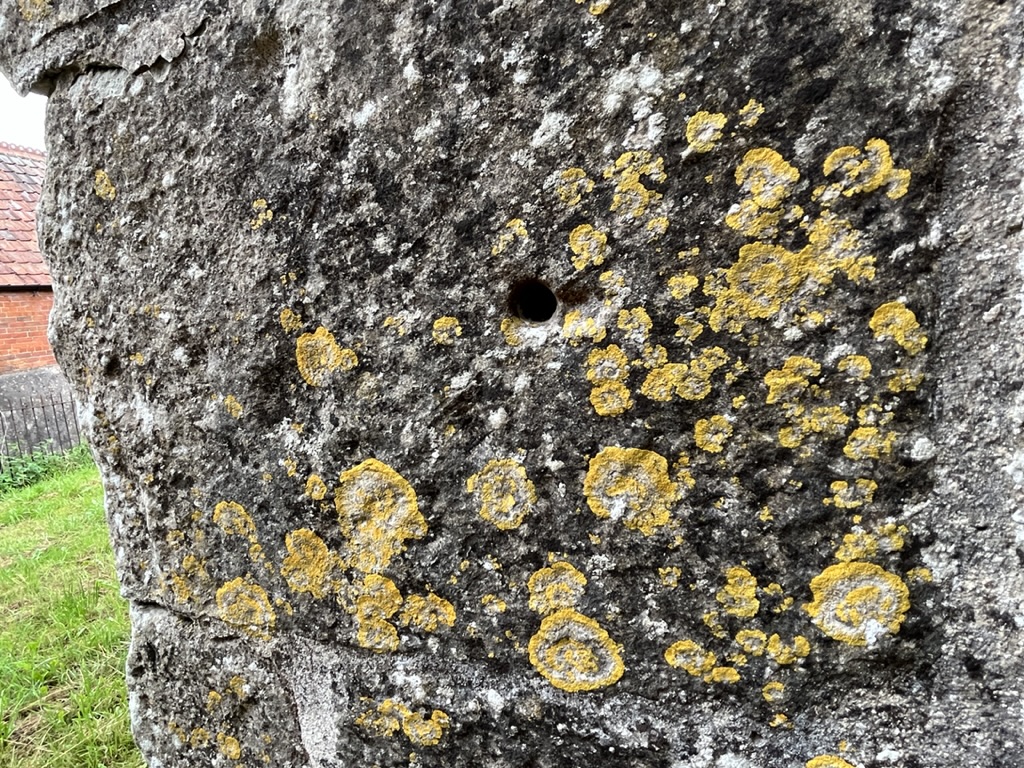
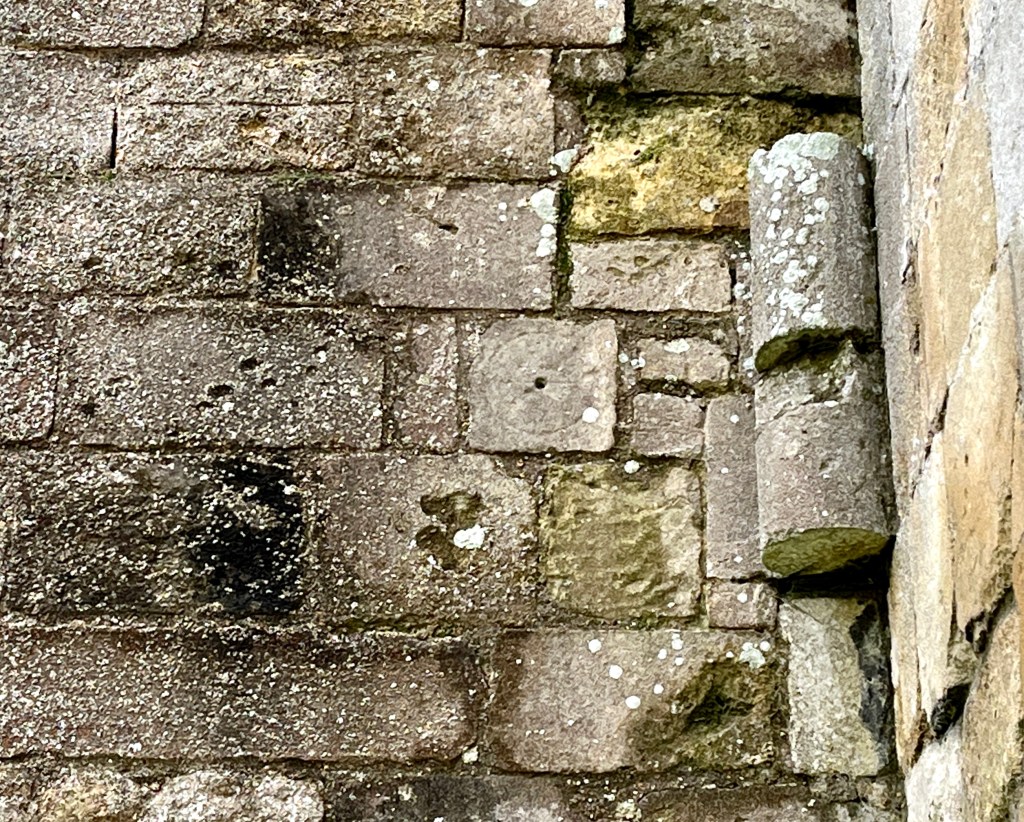
The dial is located on a quoin stone on the angled W buttress of the nave, in effect facing SE. There are 8 lines (2 faint RHS), with a hint of a horizontal across the filled gnomon hole. In LLQ the large gap between the first 2 lines appears to have a pock midway between them, spaced accurately enough to be deliberate. If so, it may have been intended as a marker of Terce as the most significant hour of observance.
TWO-FACED DIAL: above the porch is an intriguing metal dial with 2 faces at right angles, facing SE and SW. This will be written up separately.
GSS Category: Scratch Dial; Mass Dial
All photos Keith Salvesen except header, Retired QA (OS CC)
GRADE I ♱ C14, C15; C19 restoration. Mainly Perpendicular, with a very impressive 3-stage tower. C14 font. Splendid gargoyles. Very close to MUCHELNEY ABBEY. 9m NW of Yeovil 50.9865 / -2.8042 / ST436210
NOTE This post supplements a previous post written last year HERE. There was poor light with inadequate details of the dial, now remedied in sunlight. The text is much the same.
DIAL
The dial is cut on the W buttress, S side of the tower on a large stone that is the width of the buttress. DEH visited in Sept 2012 – this was one of his early churches, perhaps because of its proximity to Downside Abbey. He describes a large, deep style hole. He counted a full complement of 24 lines: a complete wheel of thin lines without a circle. Nearly 100 years later, the design is not as clear-cut.
DEH also noted that the dial stone may have been moved during restoration of the tower, which might account for its height on the buttress (8 ft).
GRADE I ✠ C7 origins with a long and fascinating history amply covered by many sources. The Wiki entry gives a good brief account. Now only the Abbot’s House and the Lavatorium remain intact. The ruined foundations are all that can be seen of the Abbey buildings and layout.
The Abbot’s House has a number of apotropaic marks including hexfoils and taper burns, noted on the relevant pages here.
✠
DIAL
We visited the Abbey knowing approximately what to expect from the Abbot’s House. It is well worth exploring, and there are helpful EH volunteers on hand to give information.
We eventually reached the West Kitchen, which has a door to the S side of the building. It was a great surprise to find a simple and eroded scratch dial between the doorway and the East Kitchen window. It is quite rare to find a scratch dial on a building other than a church. Non-secular dials can occasionally be found on medieval barns. Perhaps the Abbot’s dial was originally part of the original abbey building, and re-sited. I’d prefer to think that a factotum had cut the dial specially for an Abbott so that he could keep track of the important times of the monastic day for which he was responsible.
This is not an easy dial to analyse. Certainly there is a horizontal line ( 6-to-6) that runs through the gnomon hole (very faint RHS). There is a deeper cut noon line that seems to extend above the hole to the mortar line.
As often, a b&w image can assist with finer details. There is a faint 9-line, suggesting that Terce was the primary time for observance. Possibly a further line at 11? No relevant markings LRQ. Possibly there is a line ULQ just above the horizontal.
It is clear that EH and the guides know about the dial, but I have been unable to find a reference to it elsewhere. Probably a local research group will have recorded it, but otherwise it seems that this unusual dial (for location) is very little known
MUCHELNEY ABBEY . SOUTH FRONT
Muchelney Abbey – Abbot’s House S side showing W kitchen door . Photo by DeFacto OS CC
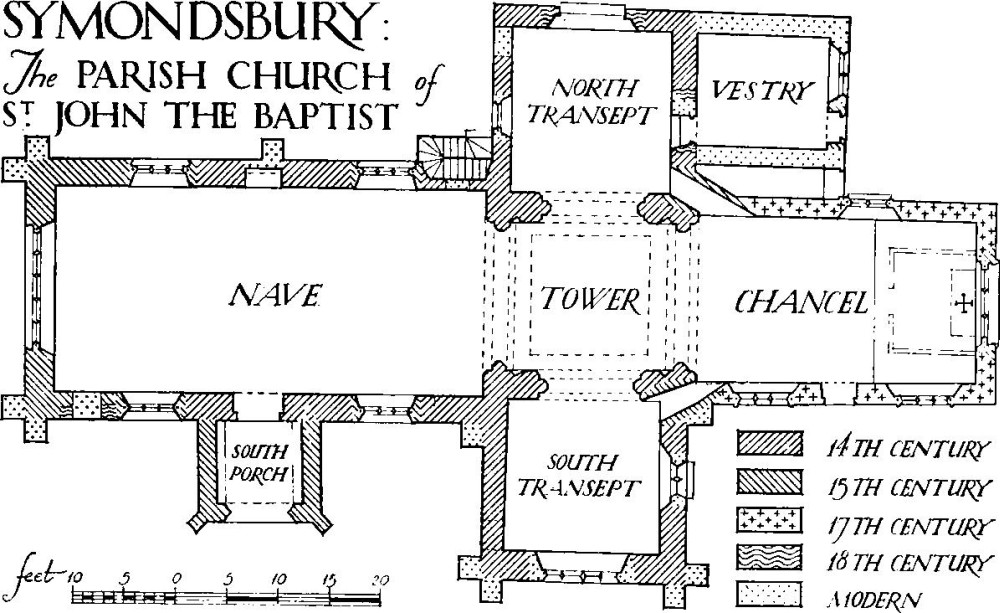
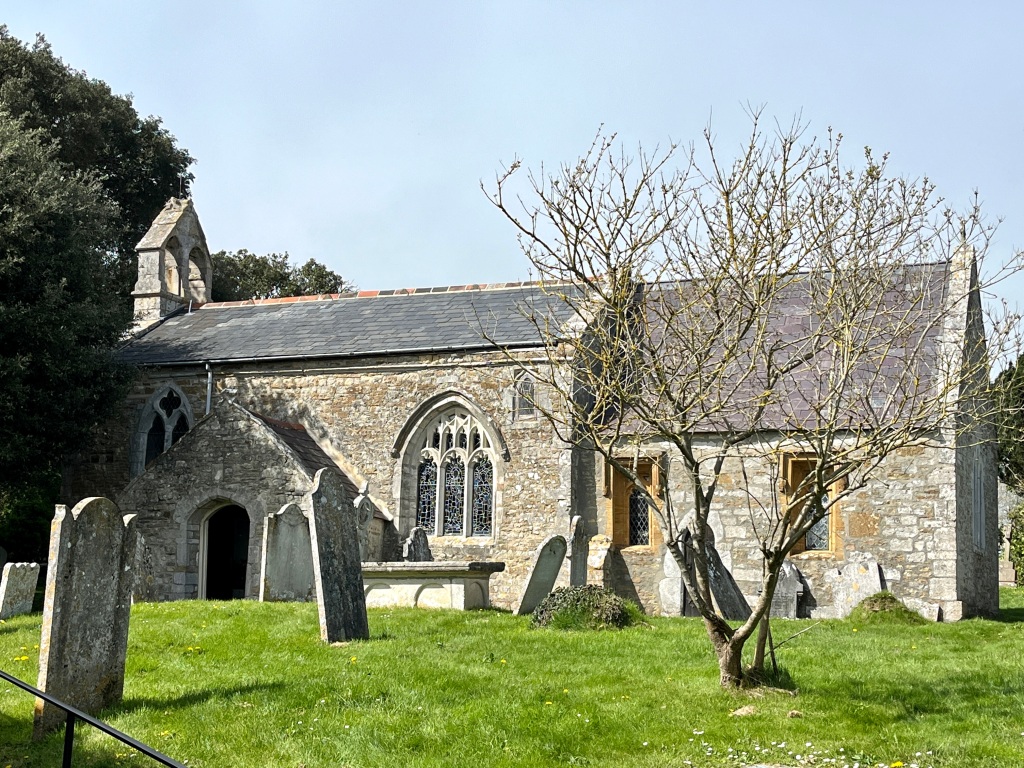
GRADE I ❖ C14, rebuilt from earlier church (BHO); C15 S porch, C17 chancel rebuilt. Wagon-type nave roof. Gargoyles. An attractive and well-kept church. Also recommended: visit the Symondsbury Estate complex. 2m W of Bridport. 50.7396 / -2.7879 / SY445936
DIAL
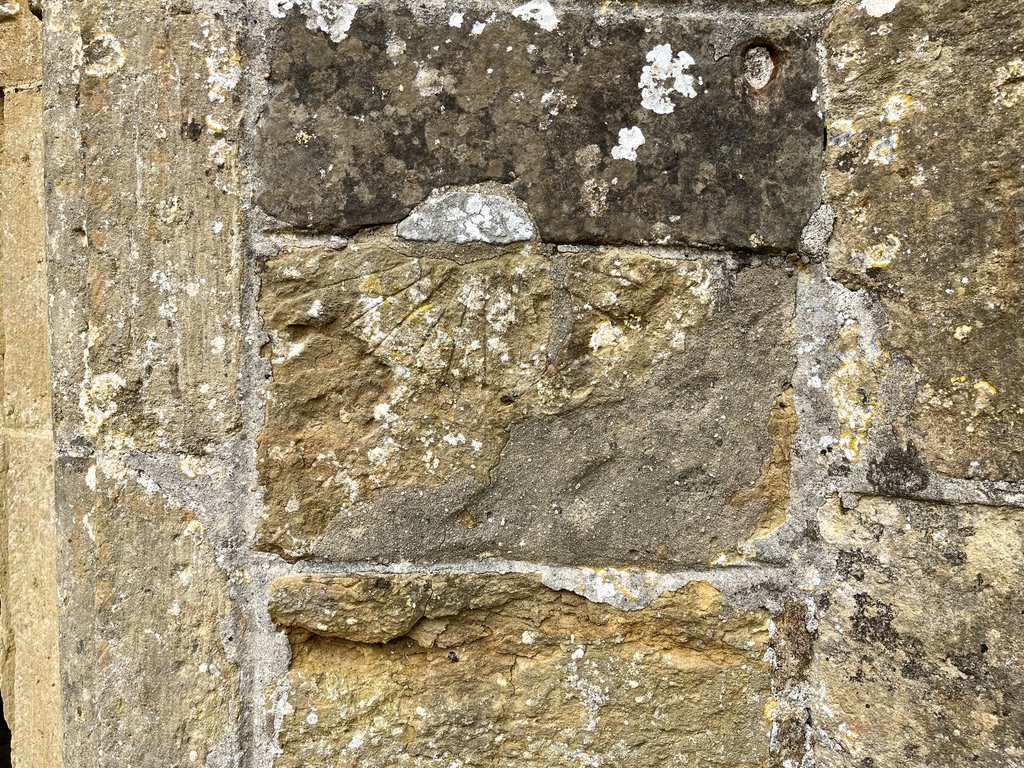
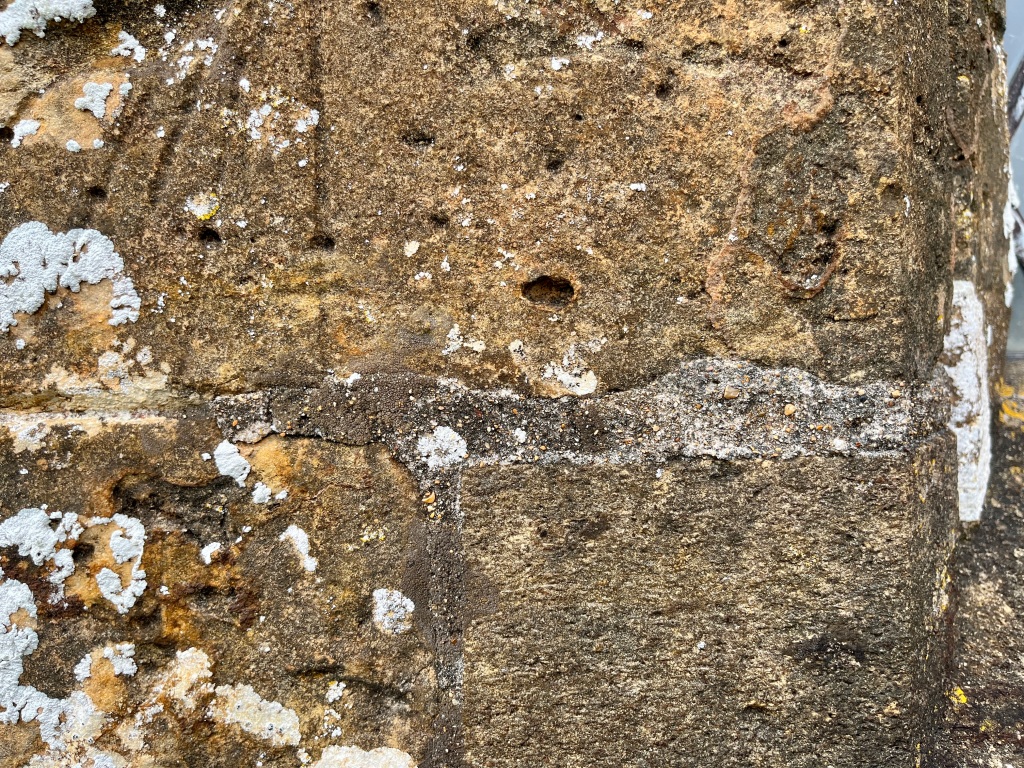
The dial is on E. jamb of the porch entrance. The gnomon hole is in the mortar line, from which 10 lines radiate in a semi-circle. The noon line is terminates in a pock. RHS, is considerably damaged / erosion. Noted by GLP as a very accurate dial.
GRADE I ☩ C14 nave and aisles; C14/15 chancel; C15 west tower. S porch rebuilt in 1848 (see below). A handsome church with pleasing proportions. 6m N of Bridport, 9m S of Crewkerne. 50.7923 / -2.7528 / SY470994
✣
DIAL
The dial dates to C15 and is on W jamb of SW window of S aisle. Allowing for damage, it is a (near) semi-circle with 11 lines of varying length. 8 of them have holes, some terminal and some on the longer lines. GLP notes that the dial is extremely accurately drawn. (GLP) The dial is now shaded by the C19 porch that replaced a smaller one.
GRADE II* ☩ C13 Chancel, Nave; other remnants eg blocked C13 doorway. Later additions and restorations. Fine hexagonal pulpit, one panel carved 1630 RW.IM. With its bellcote, a charming small church. On W edge of Weymouth. 50.6248 / -2.5048 / SY643806
DIAL
The dial is high up (c 3m) on the chancel quoin stone SE corner. GLP dates to C13. Semi-circular (a hint of a complete circle?), with 13 lines. Some terminal pocks. One line – corresponding with Terce – is deeper incised, with a hole outside the circumference.
GRADE I ✣ Saxon origins, remnants from late C12; Chancel C13, north and south chantries C14, aisles rebuilt late C14, remainder C15. Highly praised *** by SJ: the screen is the best in Wiltshire; excellent stained glass… A small town fortunately by-passed by the dread A303. 51.0893 / -2.2711 / ST 811322
DIALS
St Michael provides plenty of scope for scratch dial sleuths to bicker about. BBS records 6. The Mere Historical Society records show Handwritten notes on green paper by John Ingram to Dr David Longbourne relating to a sundial (scratch dial) on the buttress of St Michael’s Church, Mere, 1990’s. The Church’s helpful info suggests 2 or perhaps 3. I believe there are at least 6 and possibly up to 10 dials in all.
The BSS record of 6 dials gives 1 – 3 in a cluster on buttress 2 E of the porch (see 4, 9 & 10 below); and 4 – 6 grouped further E on buttress 5 / S wall stairway area.
DIAL 1
DIAL 2
DIAL 3
DIAL 4
(and see plausible dials 9 & 10 on same stone))
DIAL 5
DIAL 6
DIAL 7
DIAL 8 (?)
DIALS 4 (above), 9 & 10
Dials 4, 9 and 10 – all different types – are on the same stone and to an extent impinge on each other.
DIAL 9
DIAL 10
CONCLUSION: enthusiasm can be an enemy of accuracy, and there is always some leeway with multiple dial Churches. I haven’t tried to analyse each dial – the array will with any luck elicit some opinions.
DEDICATION † ST ANDREW – C15, mid-C19 restoration; C13 font
LISTING † GRADE II*
LOCATION † 5 miles SW of Sherborne, a sprawling village set deep in farming country. Some fine old buildings dating from C16, now mixed in with modern housing. A fine village cross with C15 shaft. A friendly very rural place. No street lights. 50.8762 / -2.5445 / ST617086
In the early days of this site when I was researching scratch dials close to us in Dorset, I discovered that our own village church had one that was already recorded. It didn’t look very ‘dial-ish’ so I was pleased to find an authoritative drawing of it by GLP. My original post is HERE and see below for an image.
ST ANDREW . DIAL 2
The dial is semicircular, RHS of the porch, and just below Dial 1. The gnomon hole is in the mortar line, and plugged. The horizontal mortar line acts as a ‘6-to-6’ line, split by the vertical noon line. This is deeper incised than the three other visible lines.
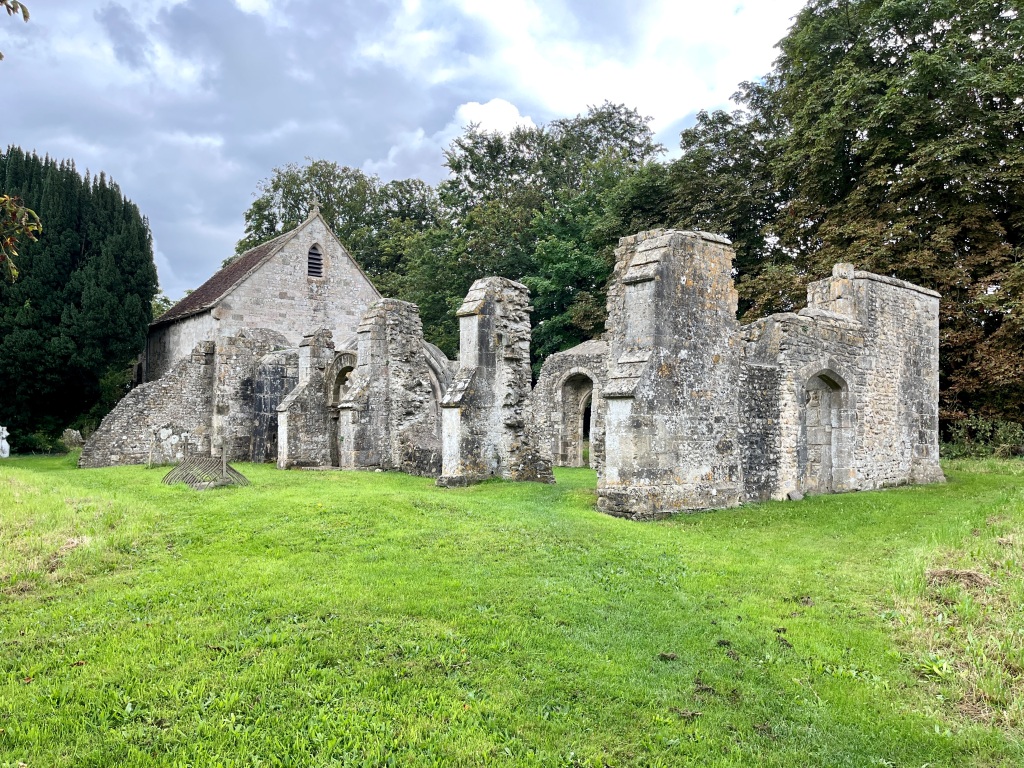
GRADE II ✣ C12, C13, C16. Originally cruciform with crossing tower. Chancel arch blocked and west part of church partly dismantled 1868, gradual deterioration. Chancel used as a mortuary. Declared redundant 1970; now in the care of CCT. A surprising and rather poignant place to visit, all well worth examining. Note the bier. 3m SE of Warminster. 51.1728 / -2.1323 / ST908415
DIALS
St Leonard is a multi-dial church with 9 dials recorded by BSS (1994), of which some details are scant. Four are described only as ‘gnomon hole only’ / ‘cannot be classified’. Featured below are 8 designs that I have concluded are dials, or might be (if only doubtful) in a couple of cases.
DIAL 1
Dials 1 and 2 are together LHS of the Priest’s door
DIAL 2
DIAL 3
Hint of a circle, esp. ULQ
DIAL 4
A hint of a circle, esp ULQ
DIAL 5
Dial stone presumed to have been re-sited and rotated 90º
DIAL 6
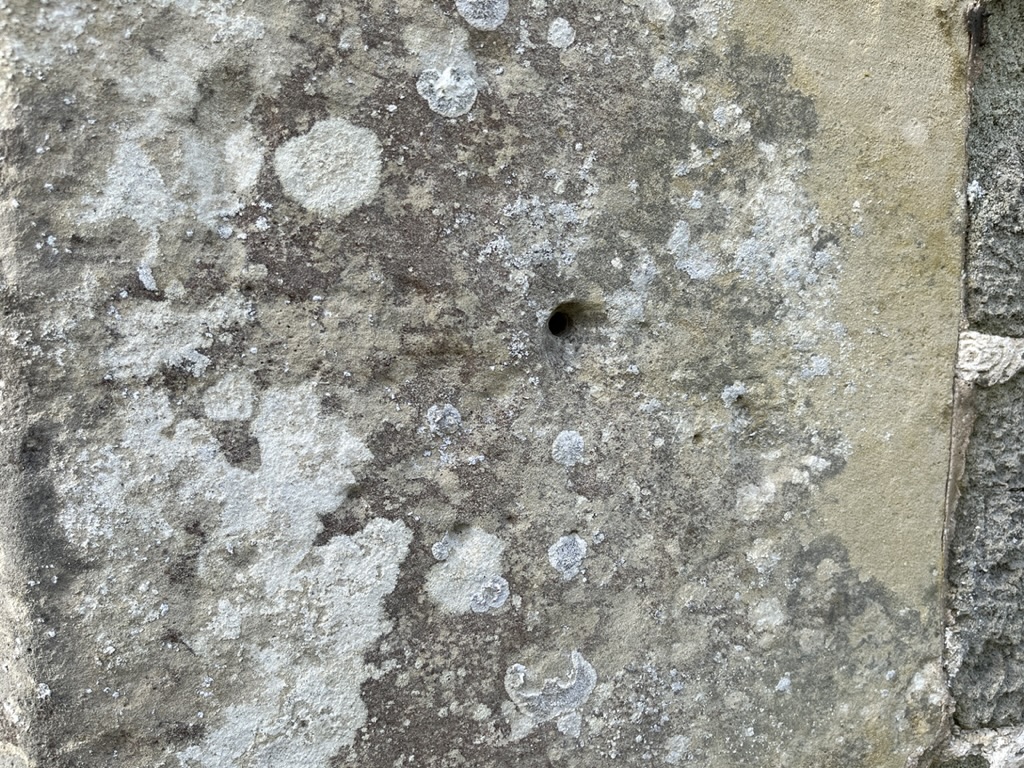
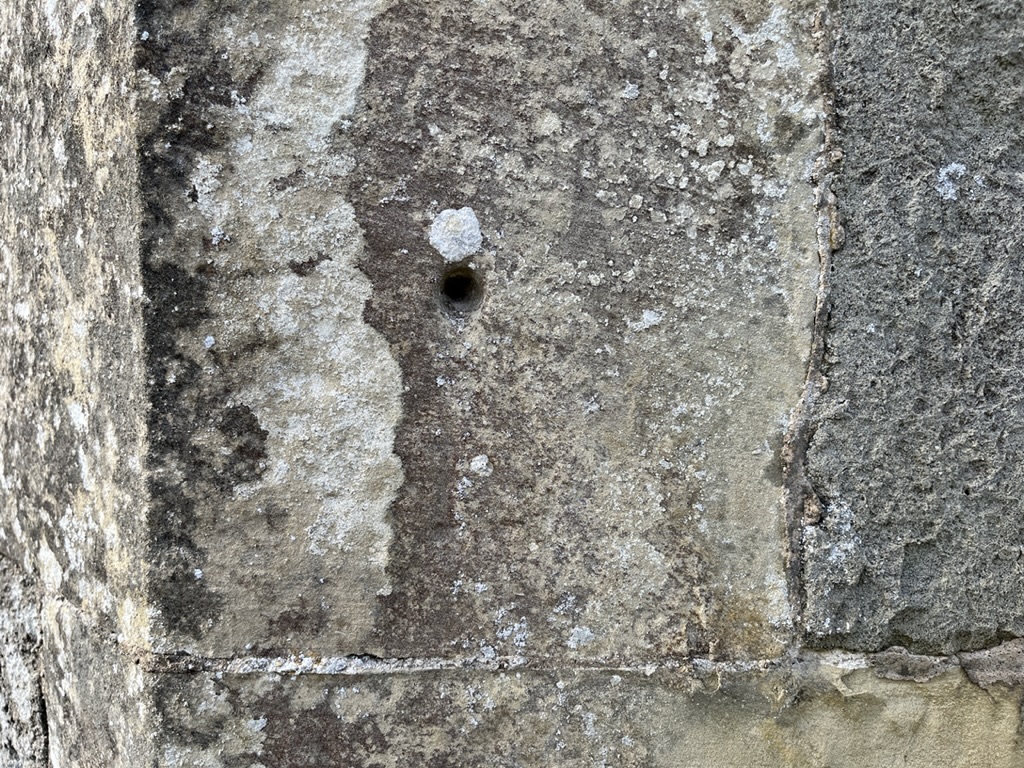
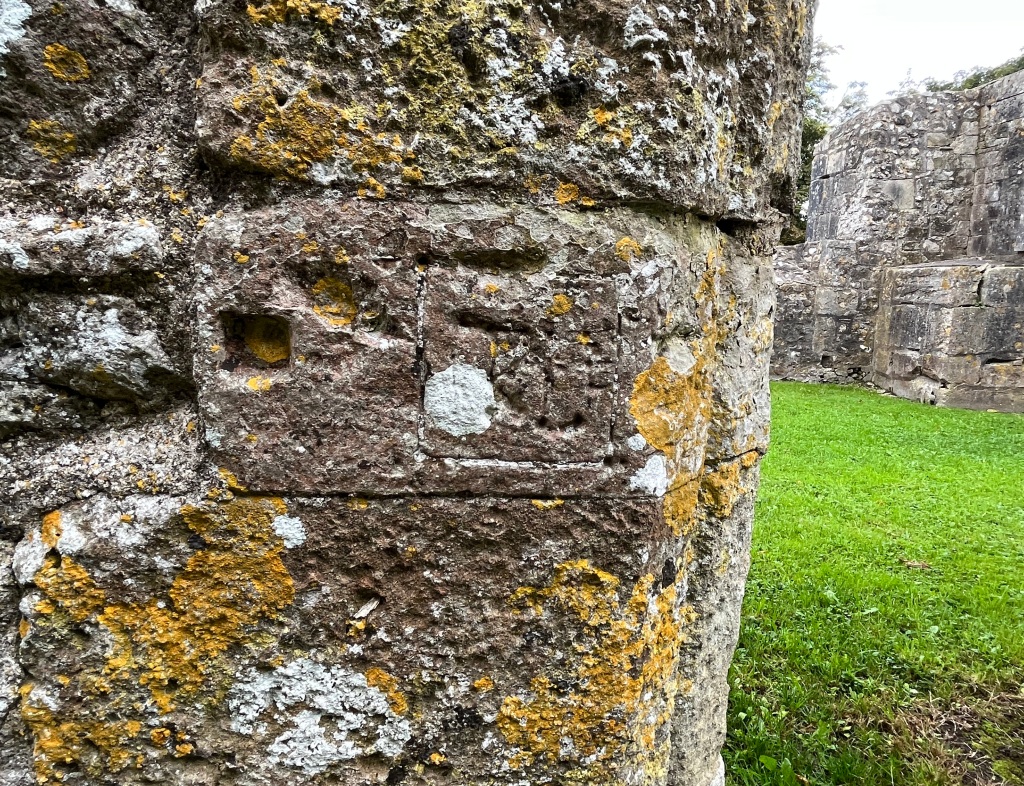
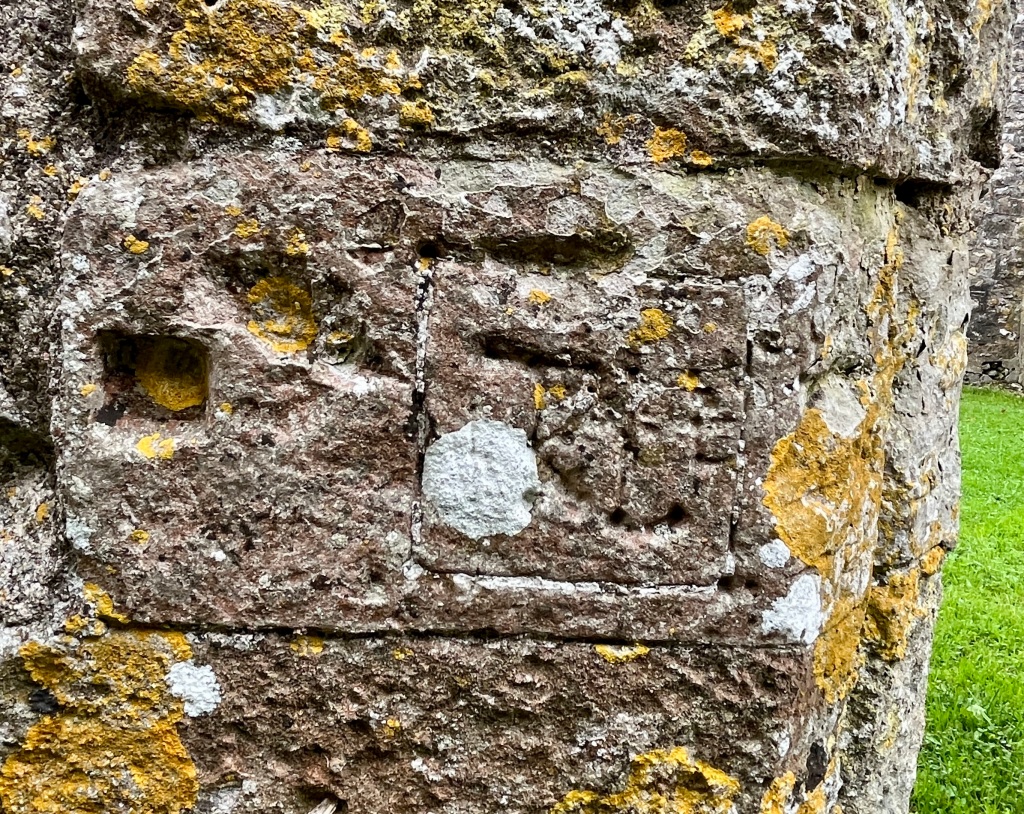
A remarkable dial within a square, with 2 large holes at bottom that appear to represent noon. It’s almost certainly unique. There’s mention of a Norman dial: perhaps this is it. There’s an apotropaic feel to it.
DIAL 7
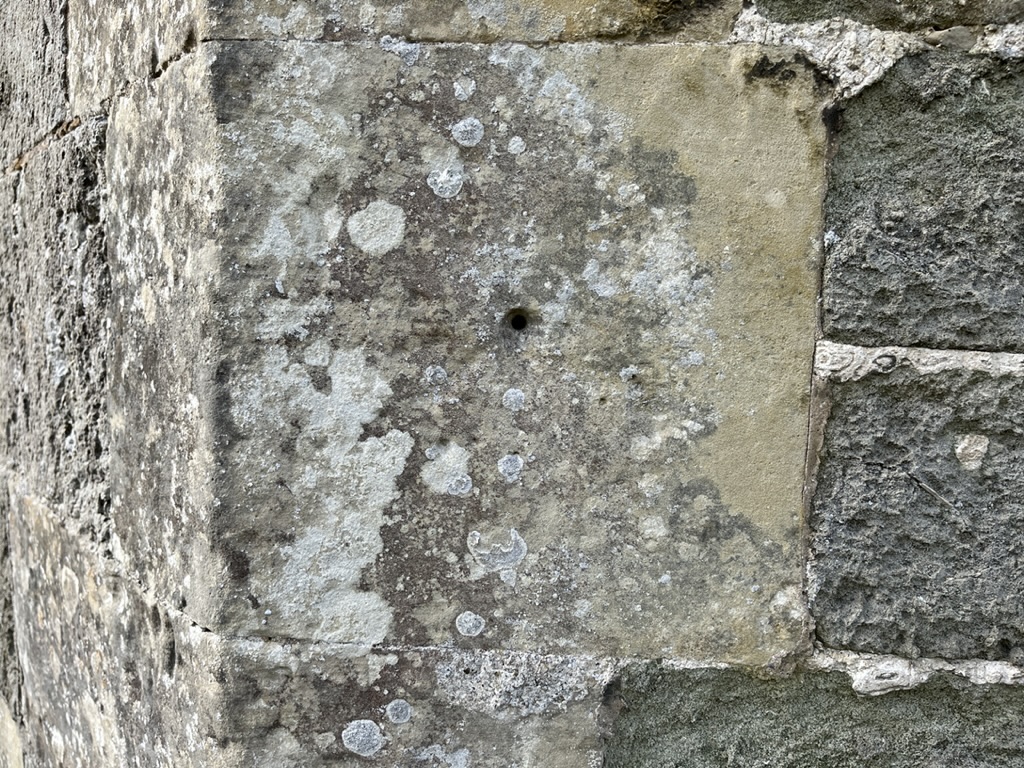
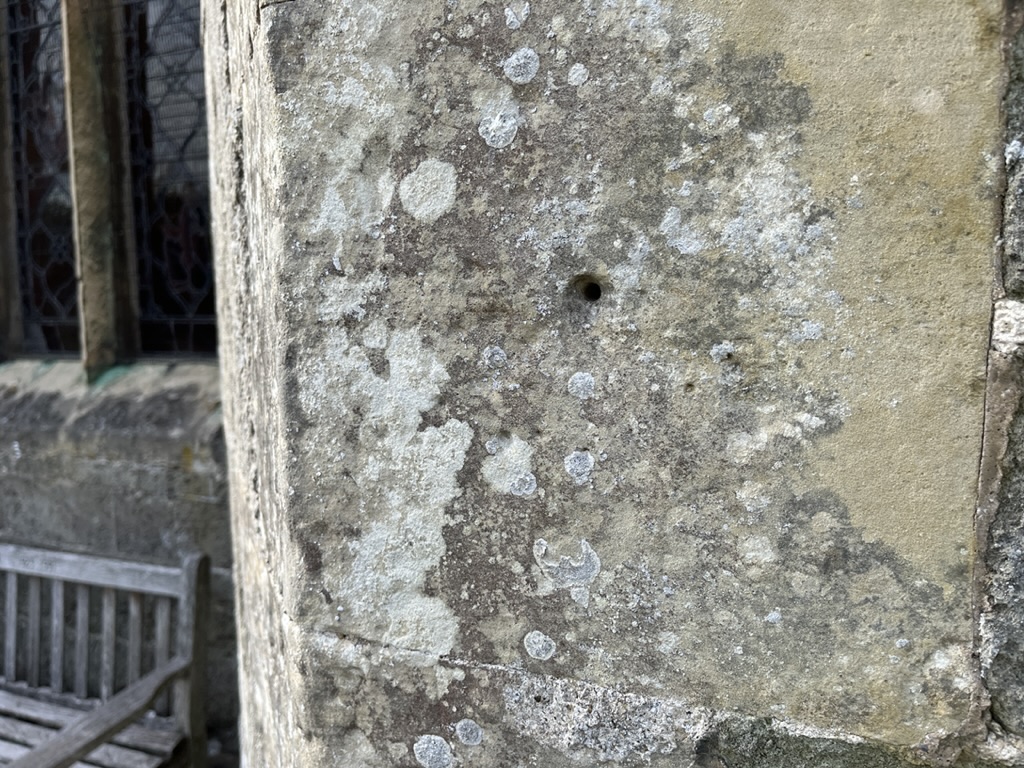
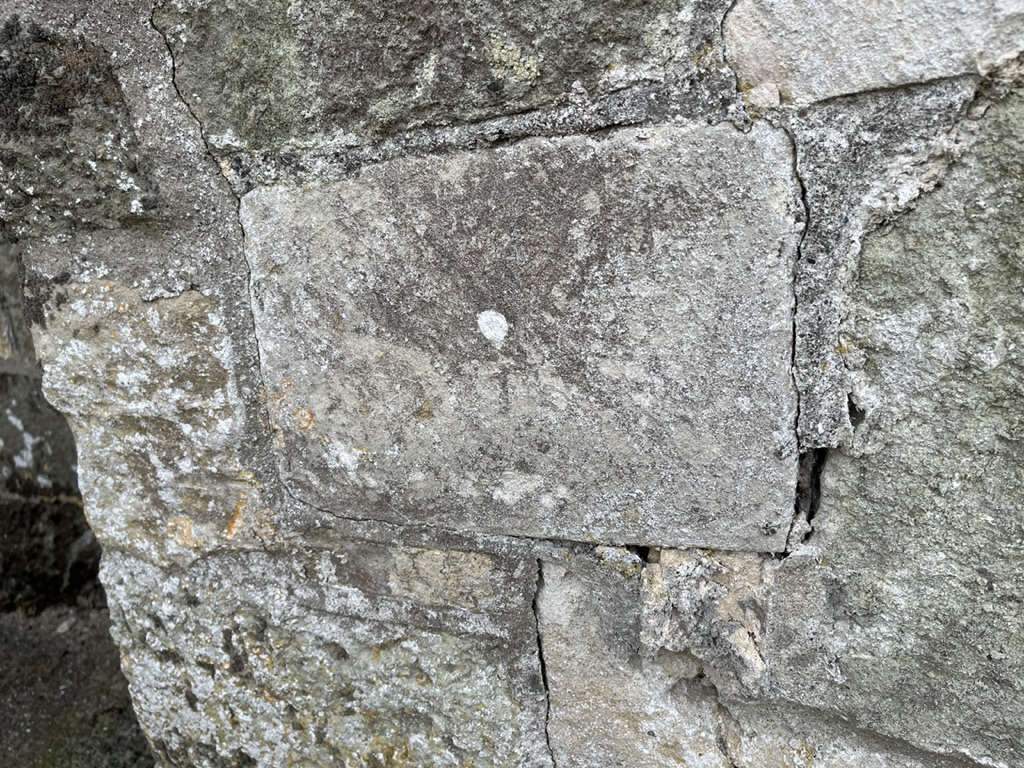
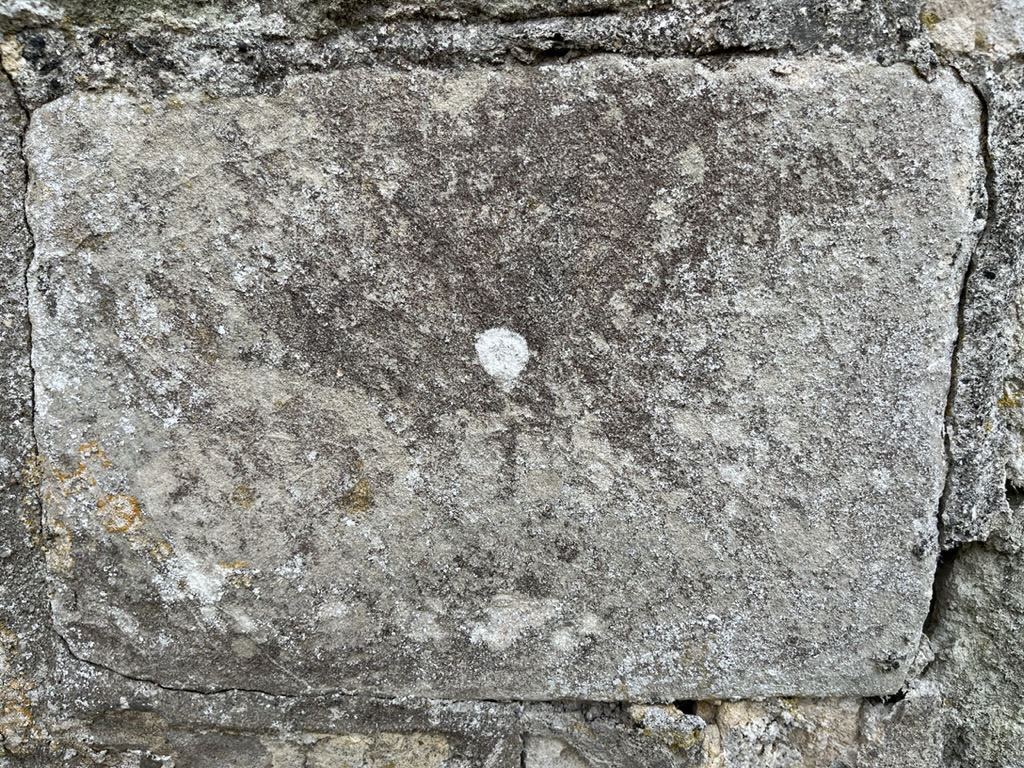
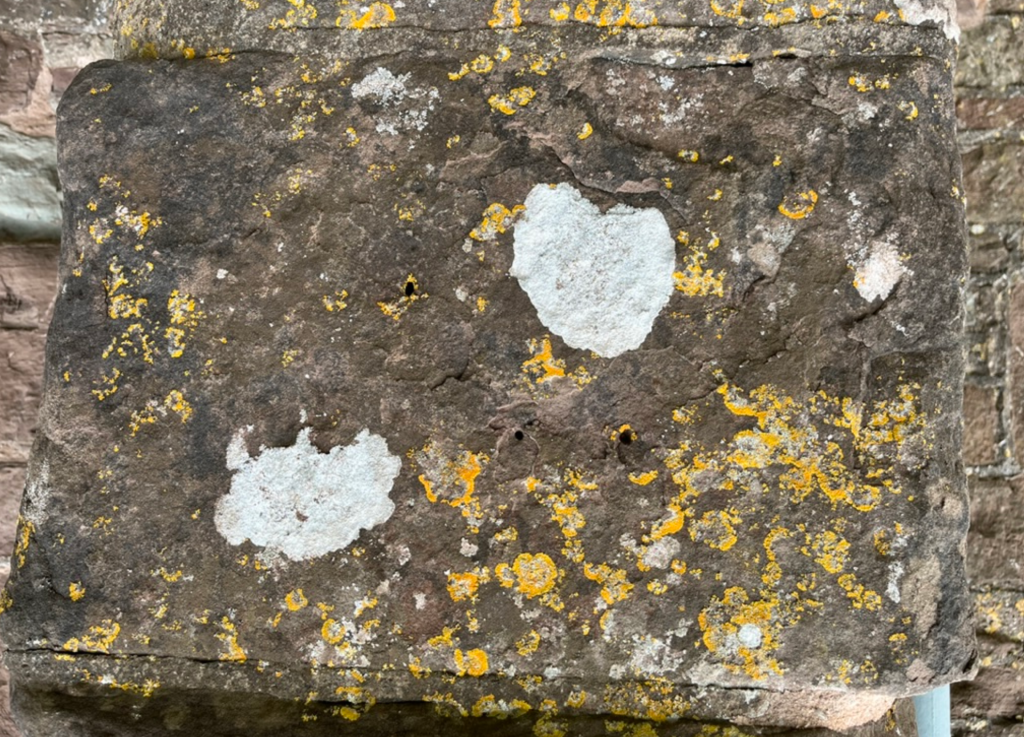
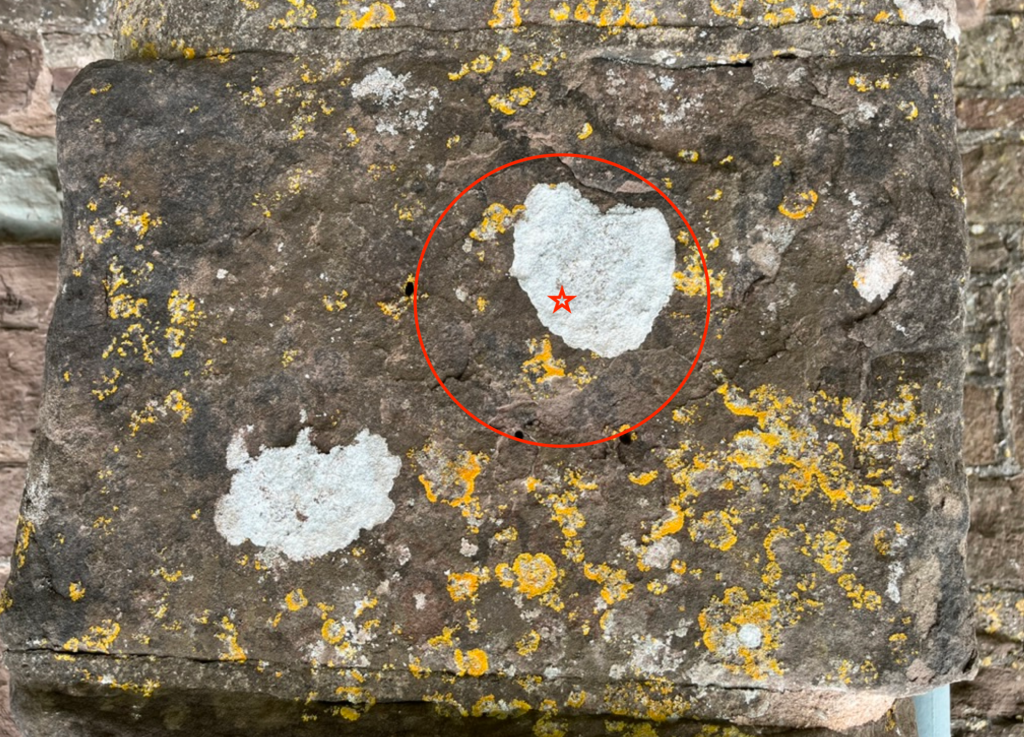
Nearly excluded from consideration. However the small holes are accurately on a circumference, and there’s the possibility of a small gnomon hole under the lichen. Borerline.
Probably not a dial but looks a bit more promising when rotated 90º. The pocks are (roughly) evenly spaced and there is a slight curve. No evident gnomon hole. Maybe simply a drilled design bored by a bored sacristan.
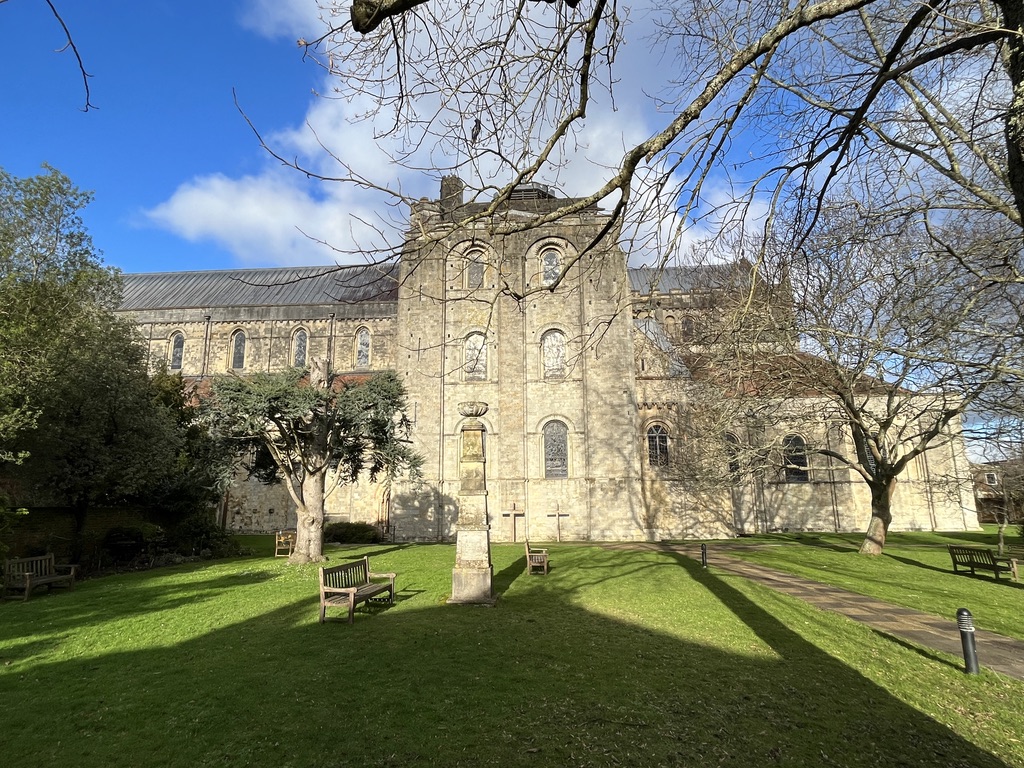
In a format variation, I will side-step the usual scene-setting para. In comparison with its host building, the somewhat elusive scratch-dial is an infinitesimal part. It is quite rare, I think, to find a scratch dial on a cathedral, abbey, or other major church building. Romsey has one that would be easily overlooked without clues. Next time I’m in Romsey I’ll take a proper camera on a sunny day.
DIAL
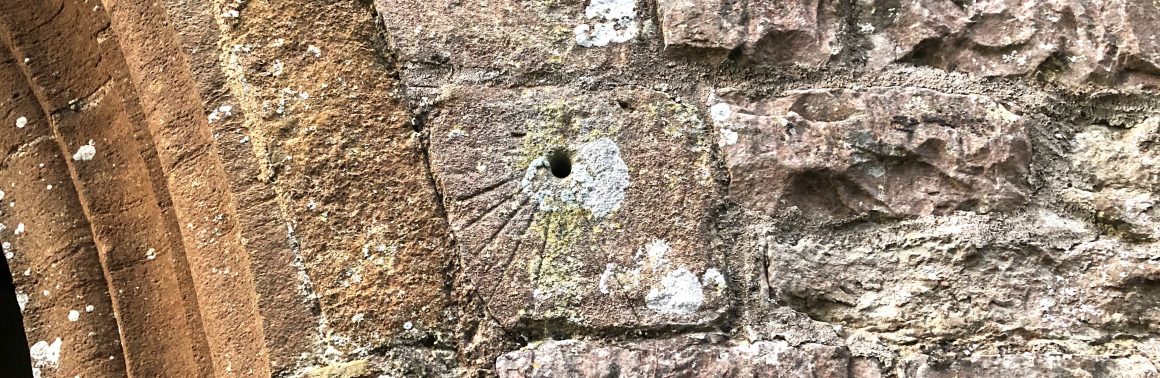
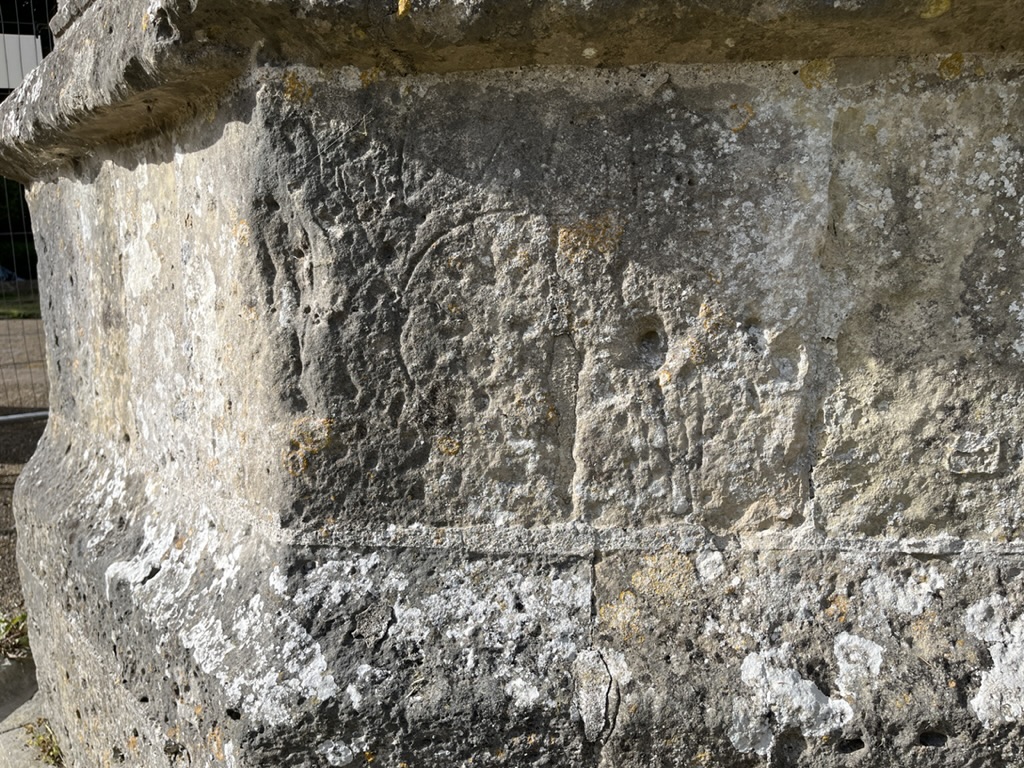
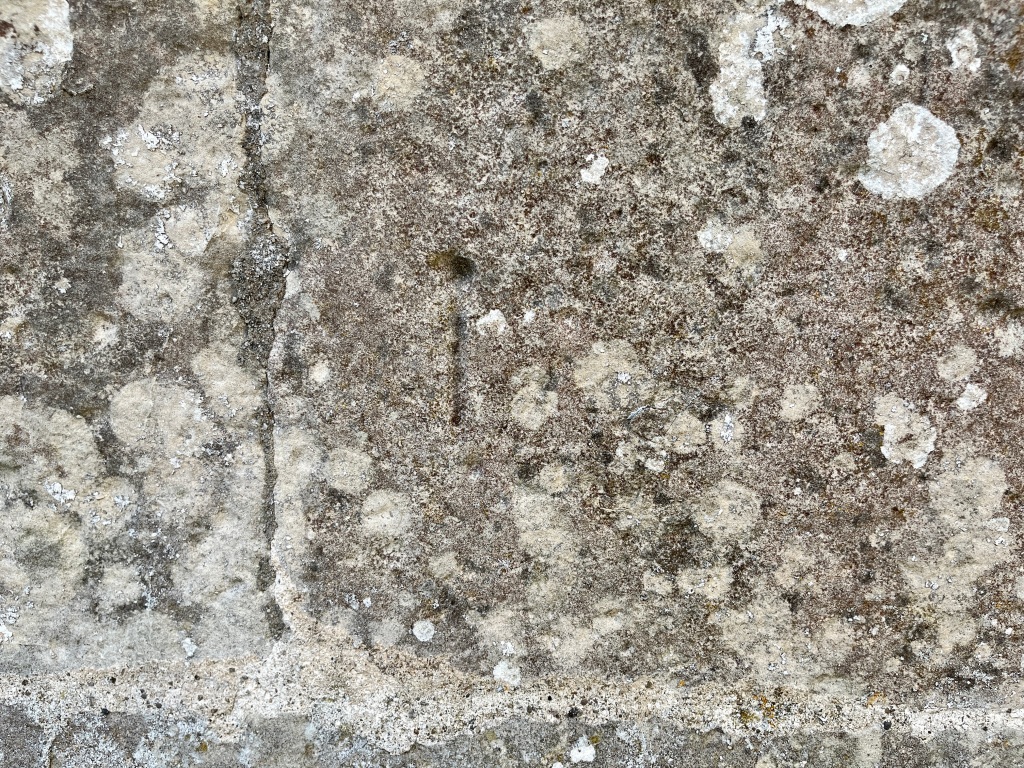
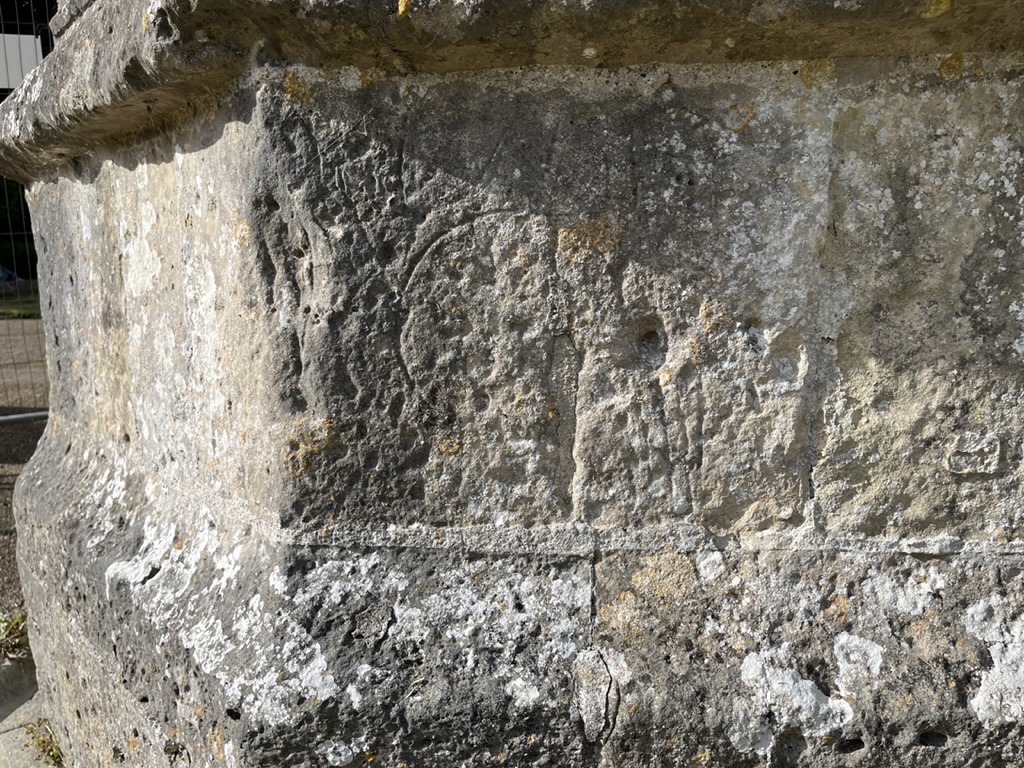
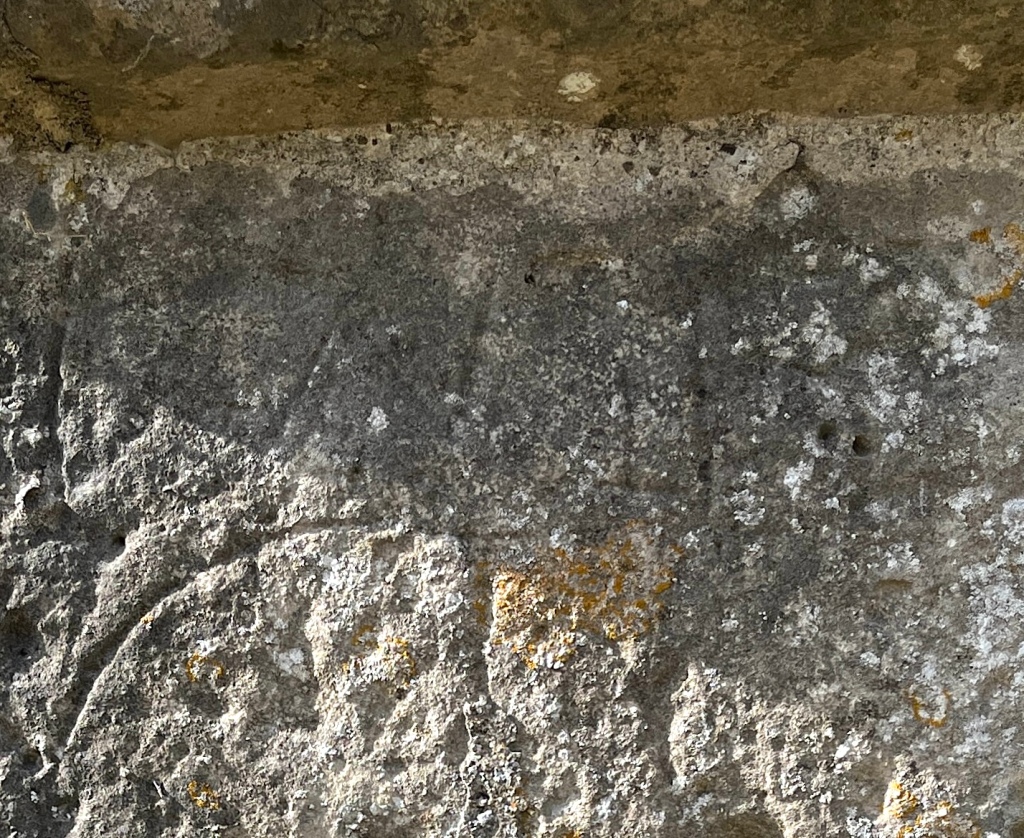
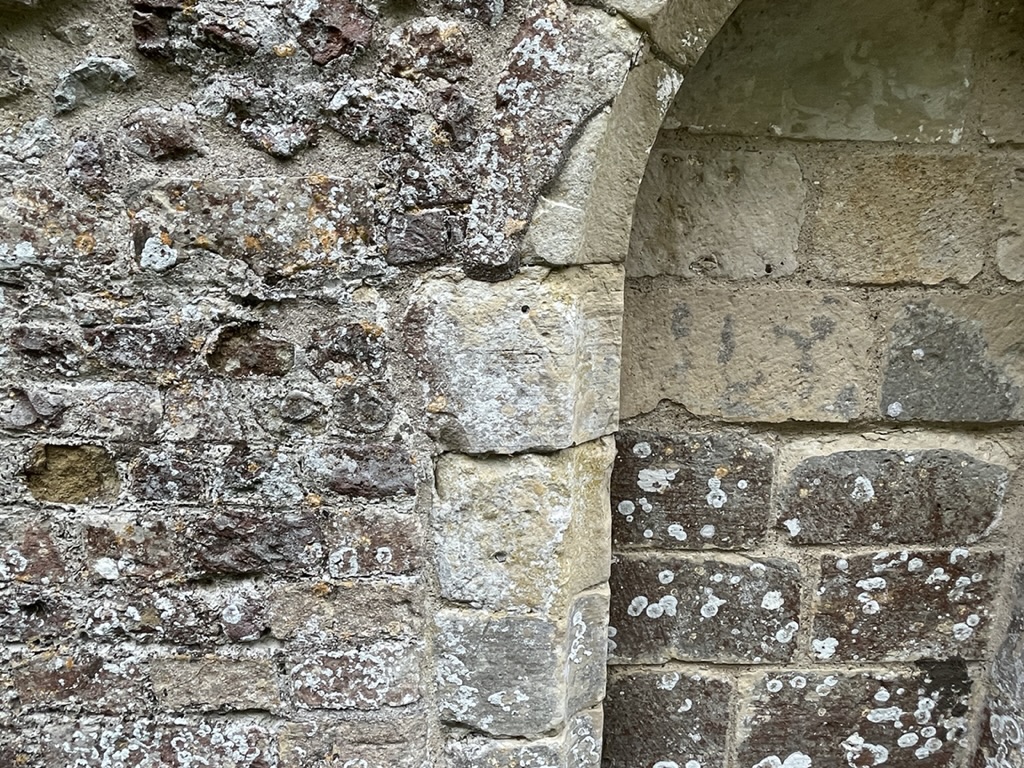
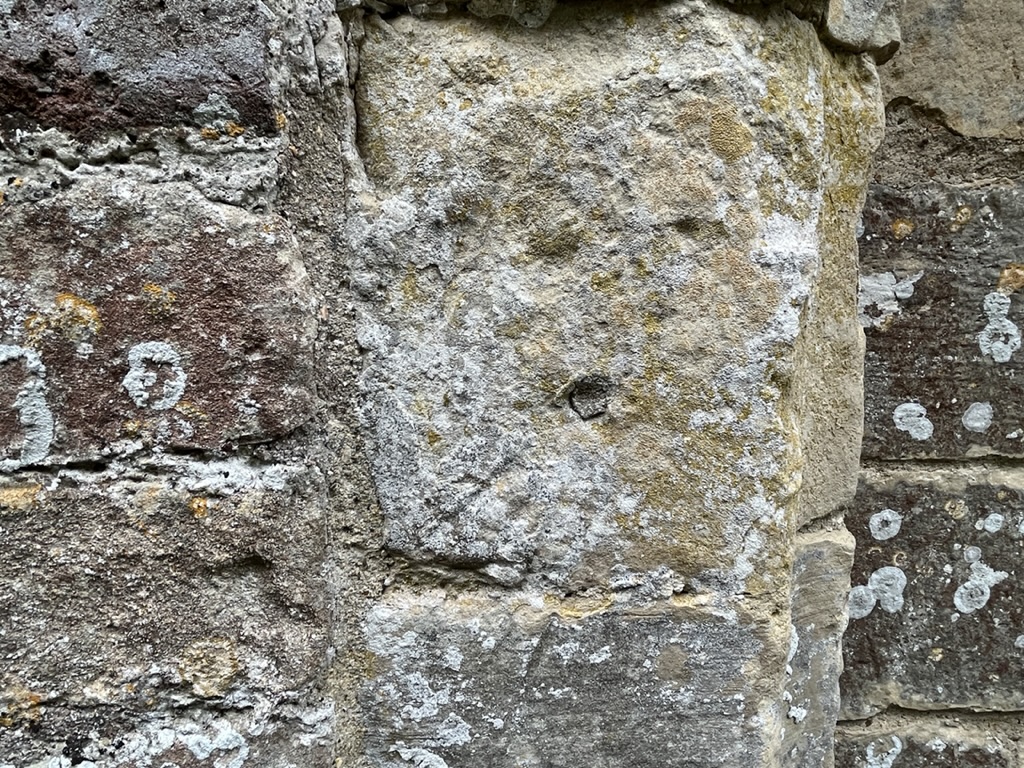
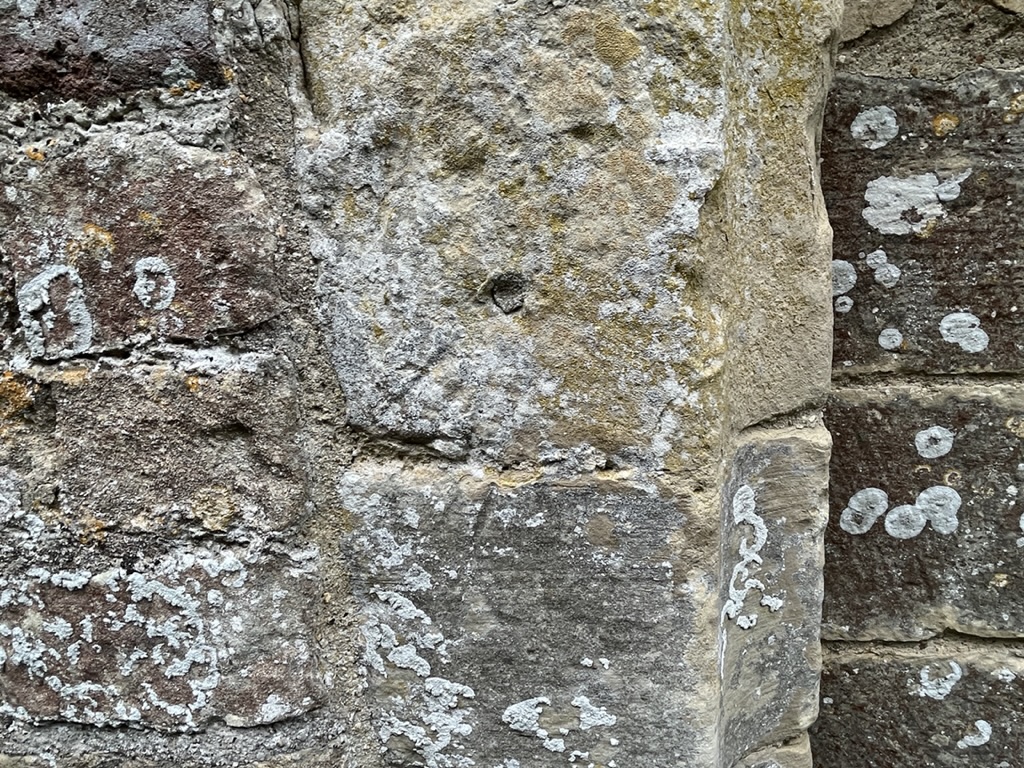
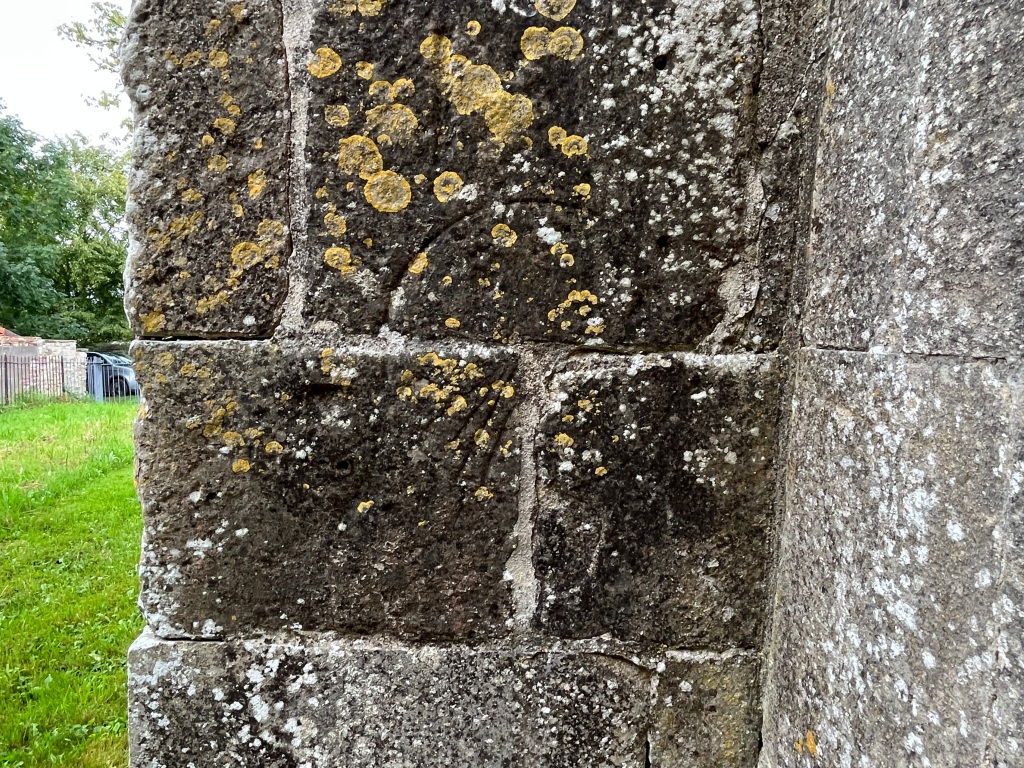
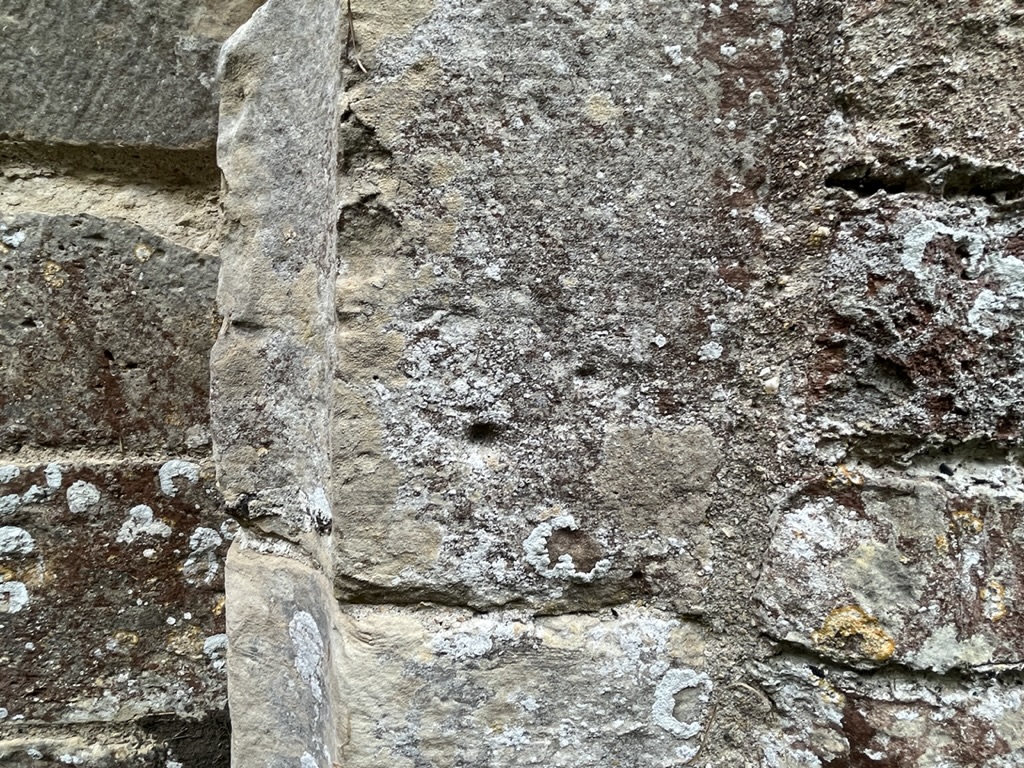
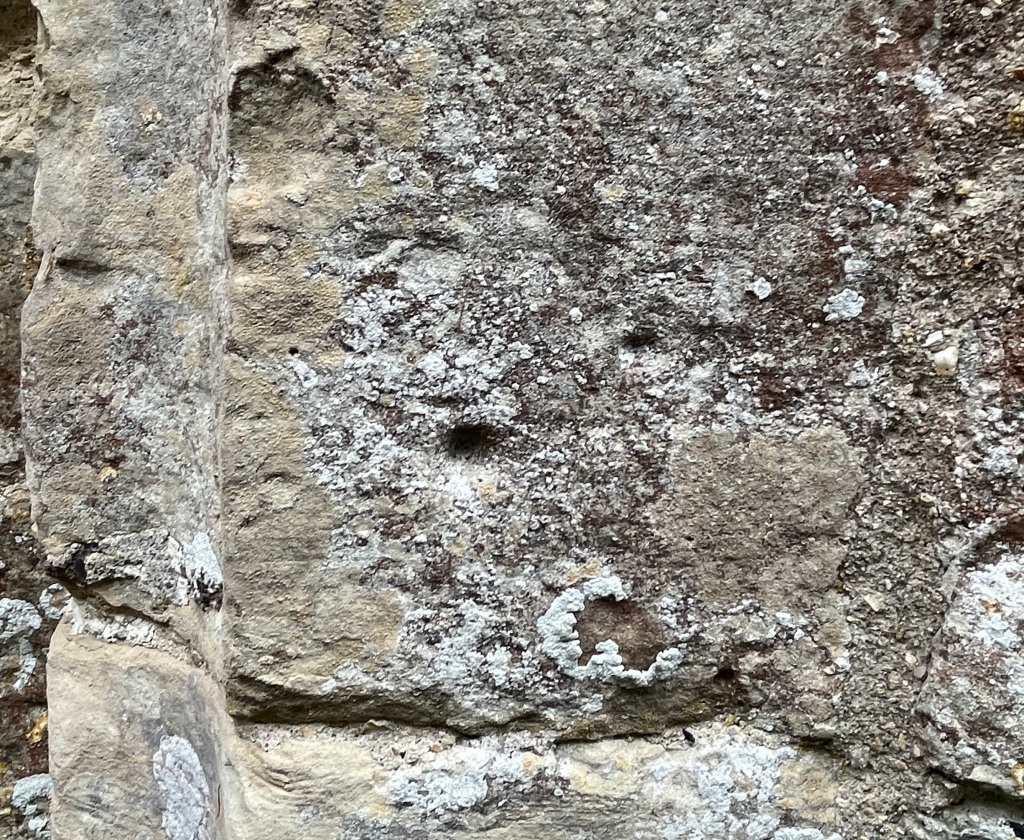
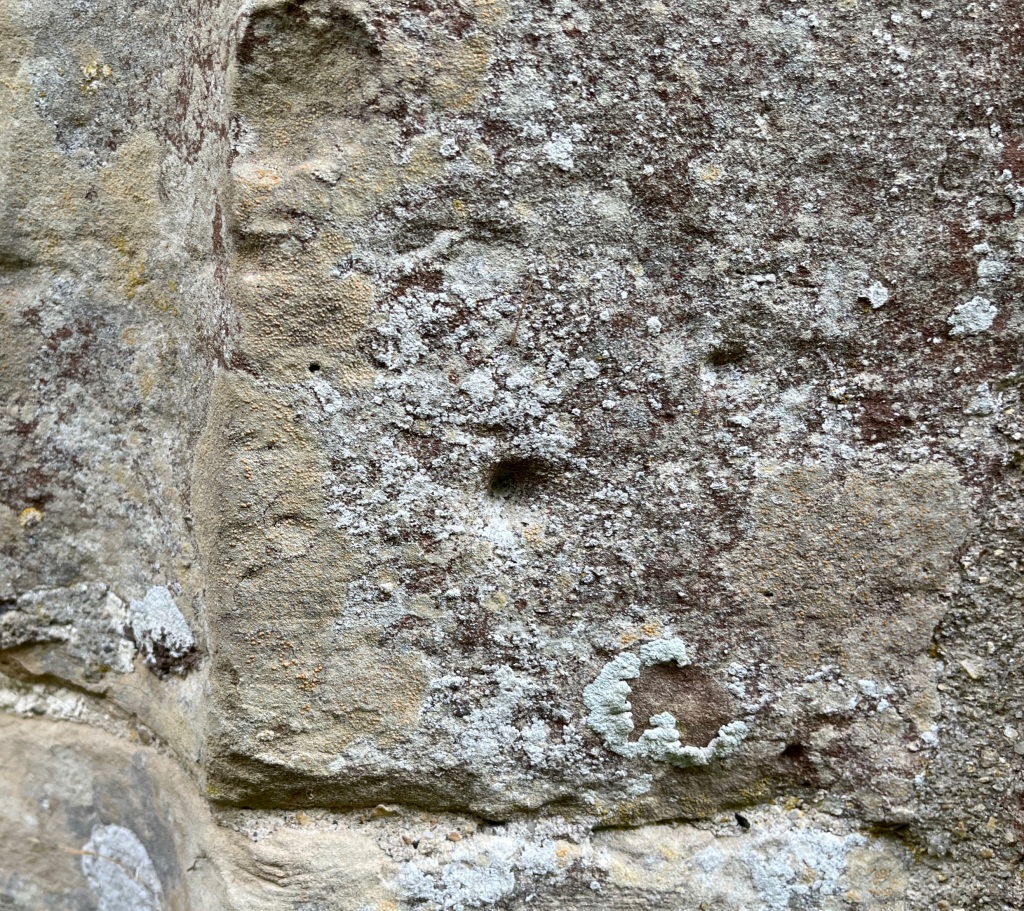
The dial is at the E end of the Abbey, inverted on the N face of the S buttress about 4 meters high.
The BSS record describes it as Accurately cut or made. Repositioned, eroded, damaged. Rudimentary (Norman) dial. Probably inverted (faint line and pock URQ. Too high for measurement.
GSS Category: Scratch Dial; Mass Dial; Norman Mass Dial



































 GAUDIUM SUB SOLE . SUNDIALS . MEDIEVAL TO MODERN