MAX GATE . DORCHESTER – Thomas Hardy’s Vertical Dial

MAX GATE

Max Gate is a fine house on the eastern edge of Dorchester, designed and built by Thomas Hardy (with his father and brother) in 1885. He lived there until his death in 1928. He had two wives, Emma and then Florence, and during the ‘Max Gate years’ there were complicated relationships, sadly beyond the scope of this article.

In 1940 the house was bequeathed to the National Trust by Hardy’s sister. It was listed Grade I in 1970 with the stipulation that it should be lived in. The NT gives generous access to the interior, and there are conducted tours of the house and grounds. It is not exactly ‘lived in’, but it does feel homely rather than museum-like. To see Hardy’s desk and other writerly items feels a privilege. ‘Tess’ was written there, also ‘Jude’, the ‘The Mayor of Casterbridge’, and much of his poetry.

MAX GATE – VERTICAL SUNDIAL

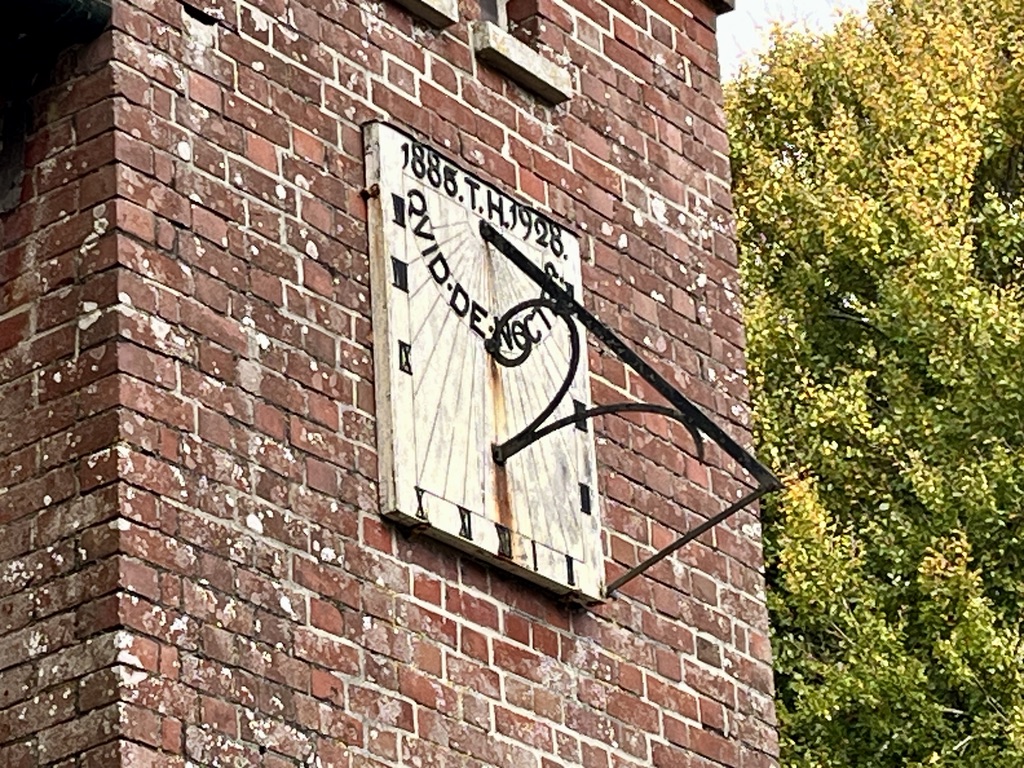
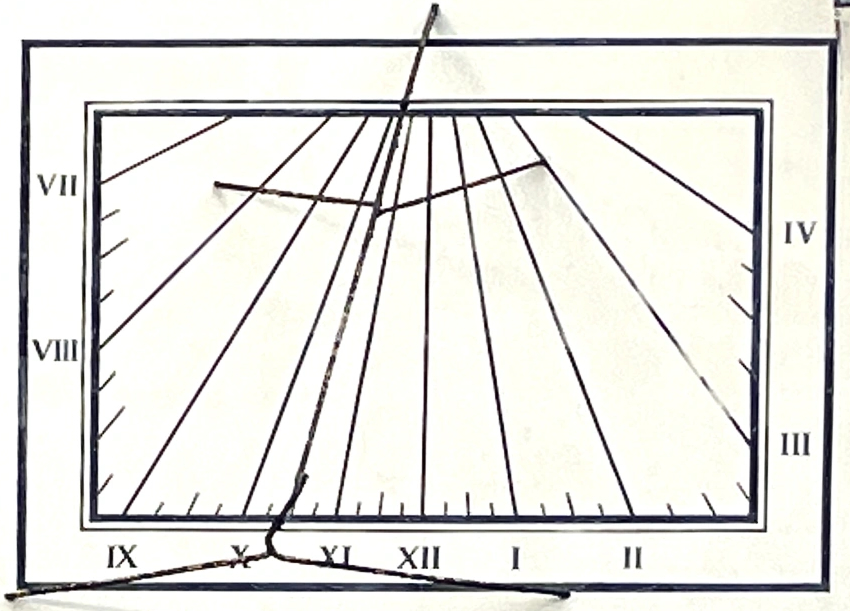
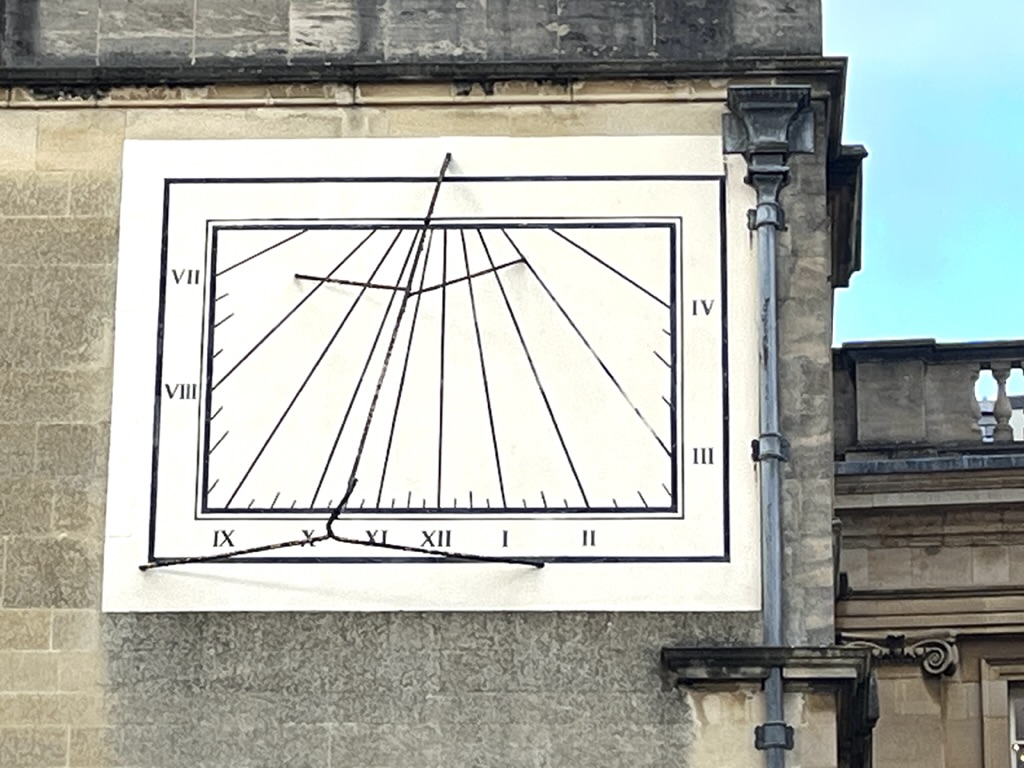
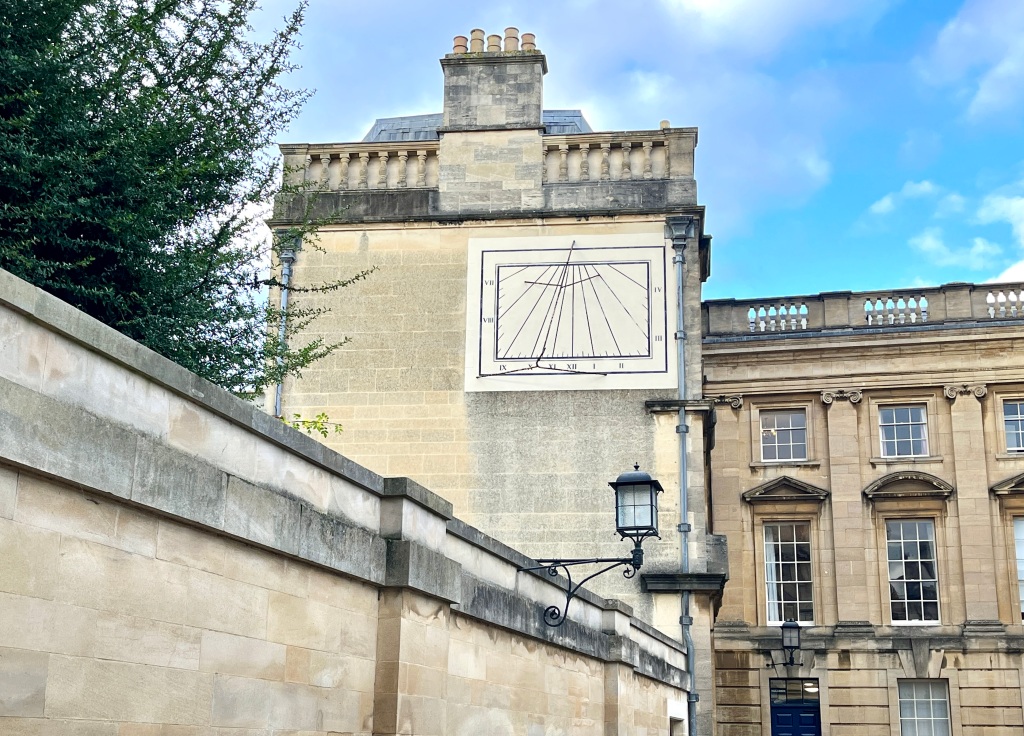
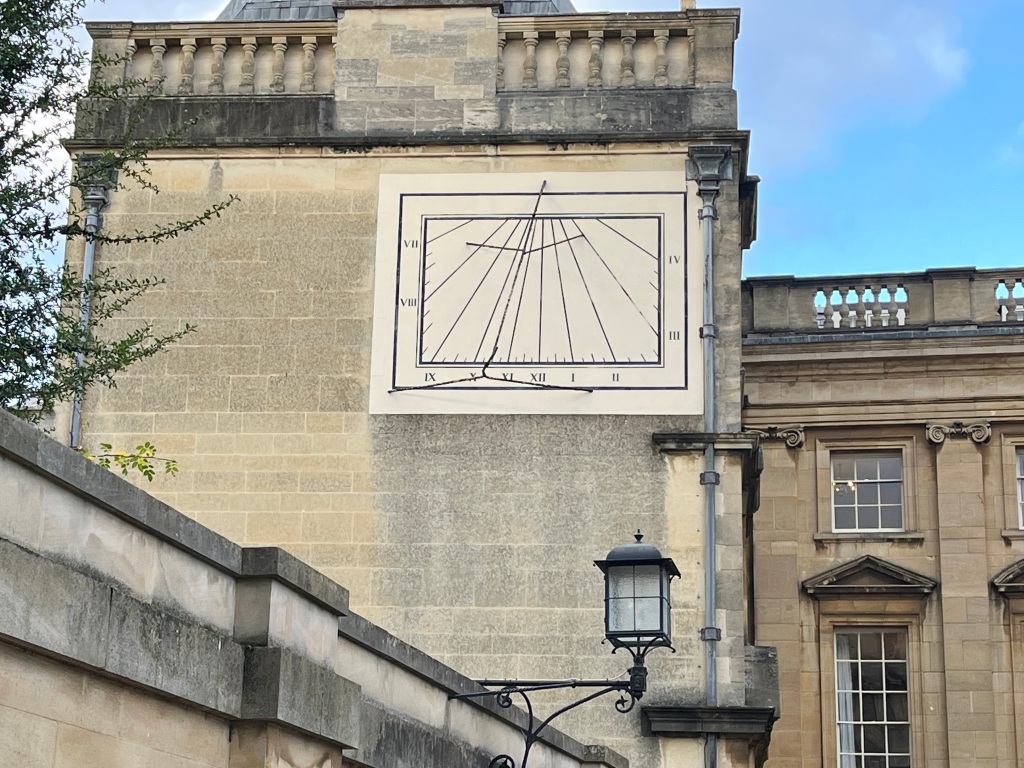
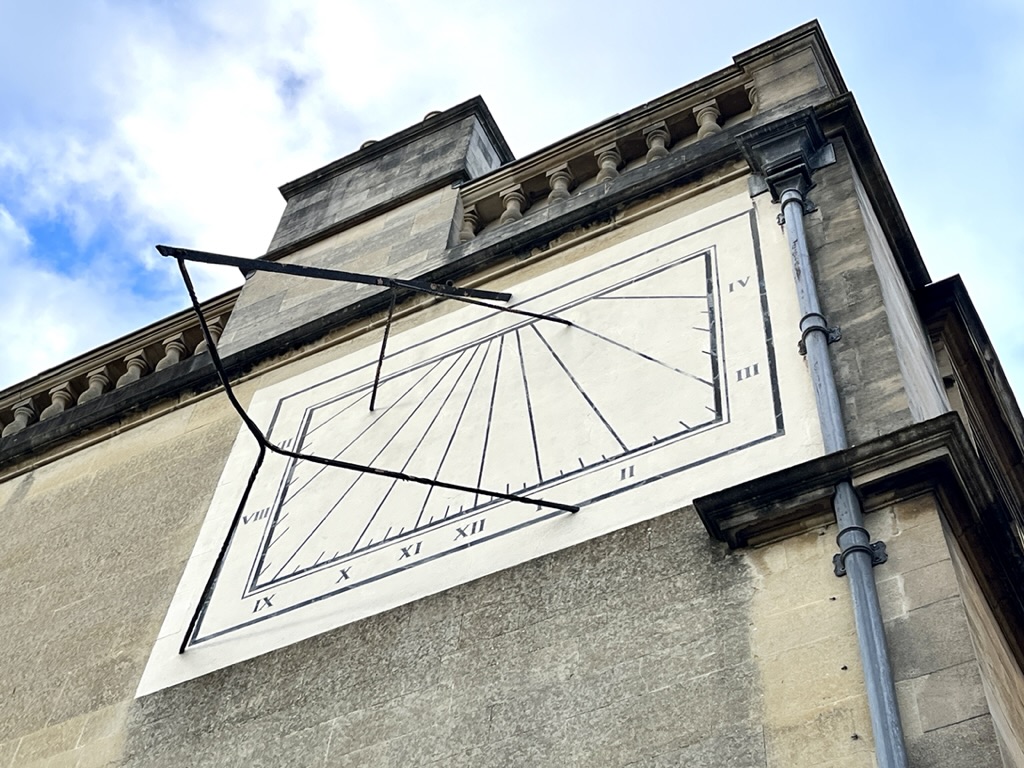
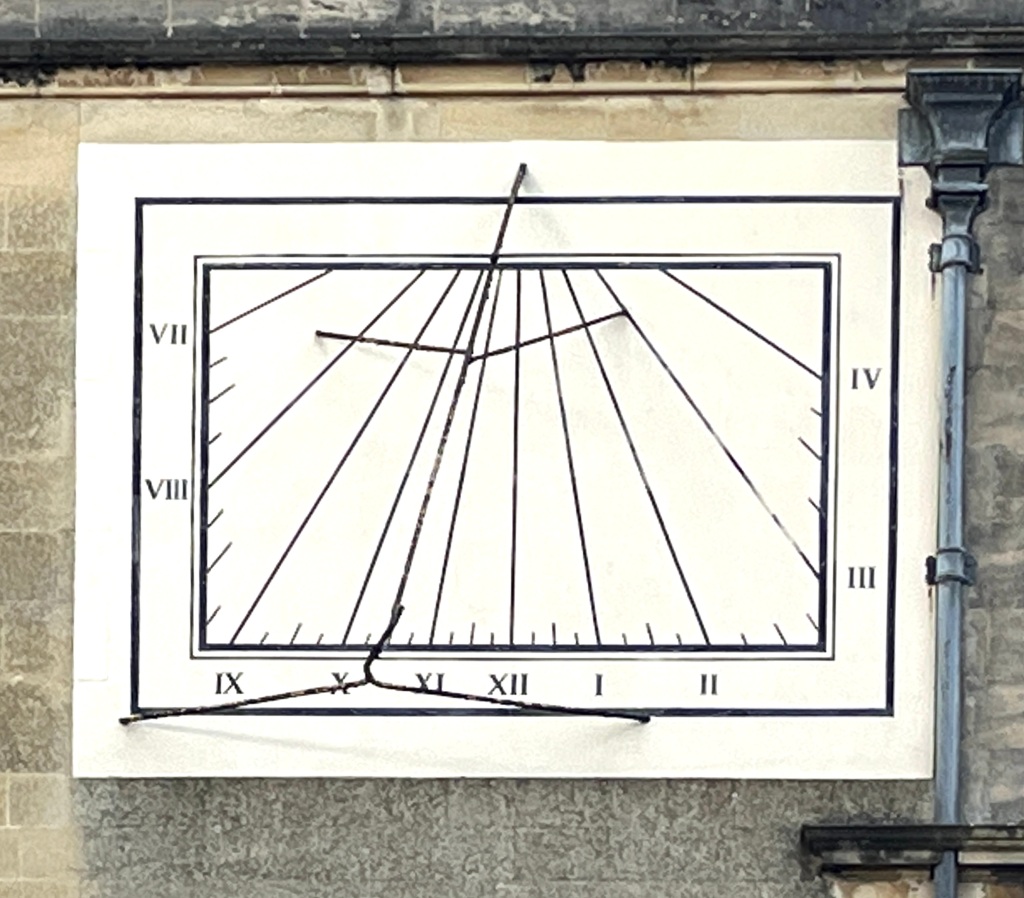
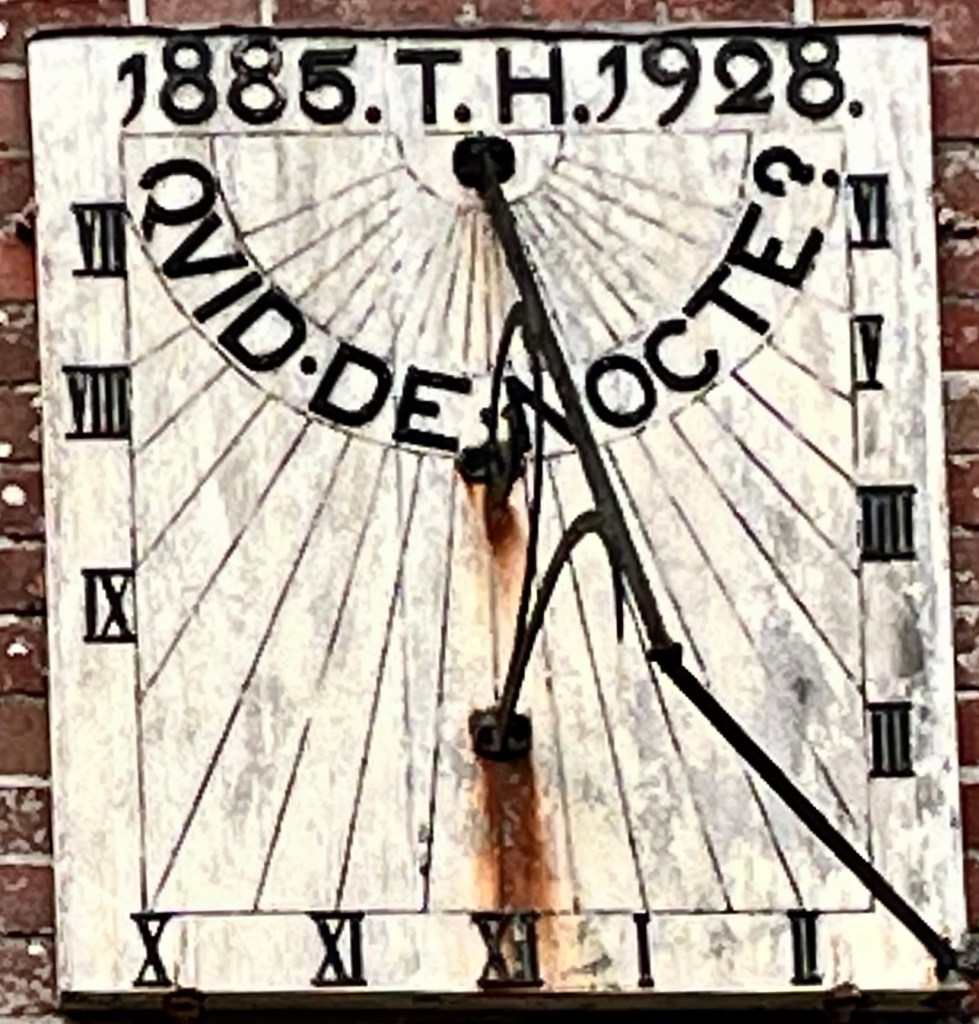
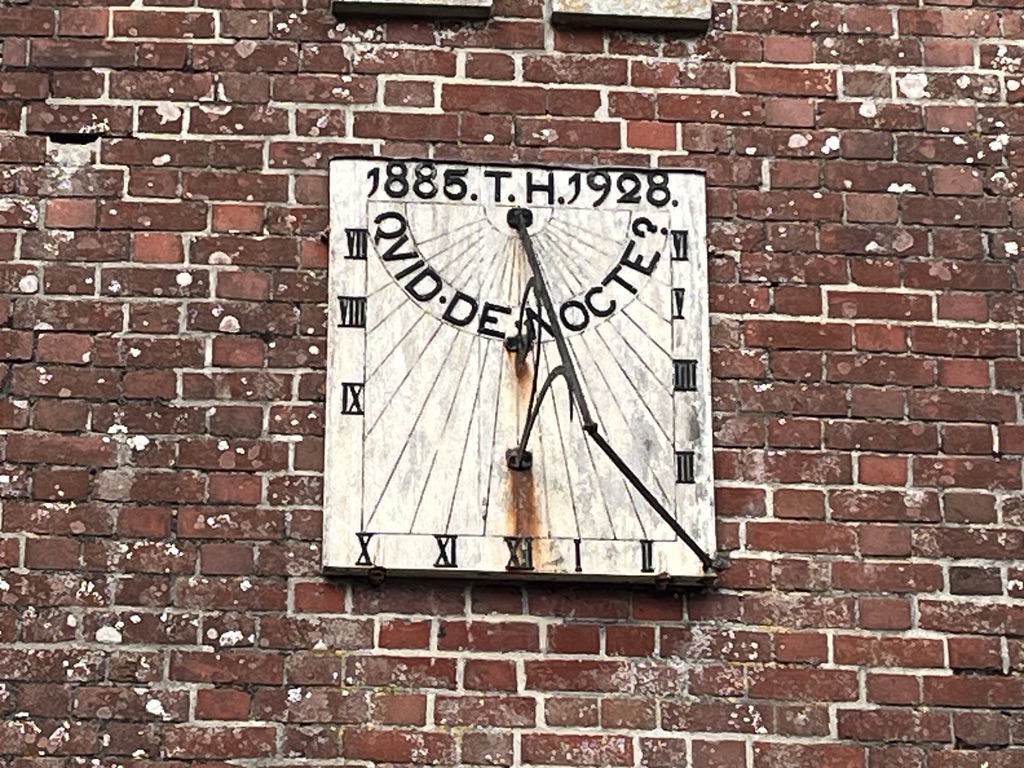
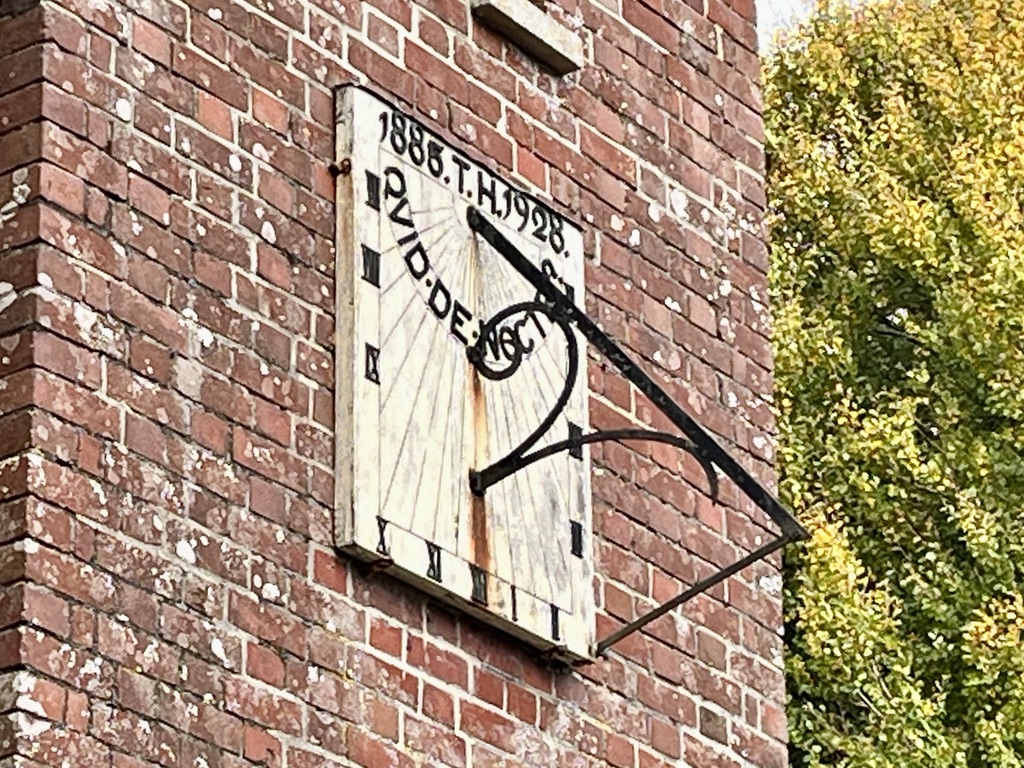
High up on the east tower, the dial is a good example of a sundial that (besides its primary use) acts as a memorial, and tastefully reflects the significance of the dedicatee. It is also very visible and easy to read at a distance. The lightly ornamental gnomon is moored at the bottom right corner as you face the dial. The style is simple, with 12 hours marked from 7.00am to 6.00pm and 24 radials to record half hours. The dial plate is white-painted wood. Overall the dial is in poor condition, but I gather that there are plans to carry out complete restoration during 2026.

.

MOTTO

QUID DE NOCTE?

Literally, ‘WHAT OF THE NIGHT ?’ Interrogative sundials are relatively unusual, and I am unsure when the inclusion of question-marks began. The simplest reply might be ‘NIHIL’ – the sun is asleep.

.The marriage certificate (1839) of Thomas Hardy’s parents at Melbury Osmond church, Dorset

GSS Category: Vertical Dial; Memorial Dial; Dial Mottoes

Credits: Keith Salvesen (all photos); National Trust; Melbury Osmond church
BELCHALWELL . ST ALDHELM . Vertical Dial

ST ANDREW . BELCHALWELL . DORSET

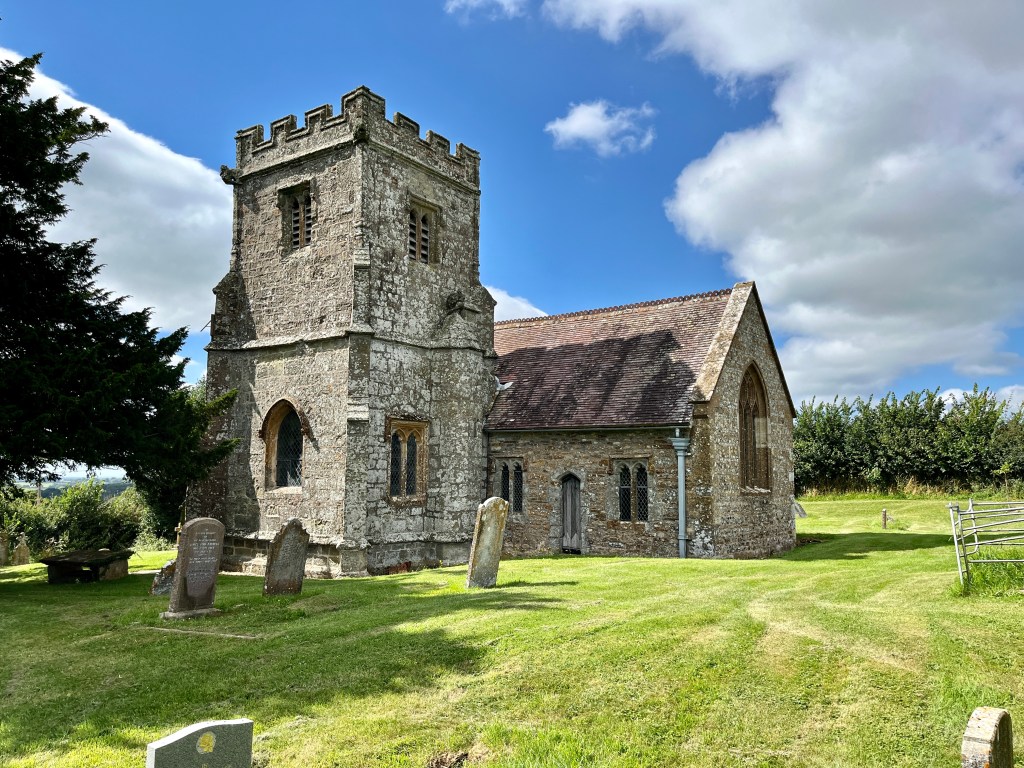
Listed II* ❖ South door, part of S nave wall c.1190; C15 nave, south tower, porch, part of chancel; C18 works and restorations. A lonesome church in the heart of the Blackmore Vale. If unfamiliar with the area use a map or satnav. You’ll find a fascinating little church. 4m S of Sturminster Newton. 50.8873 / -2.2964 / ST792098

DIAL

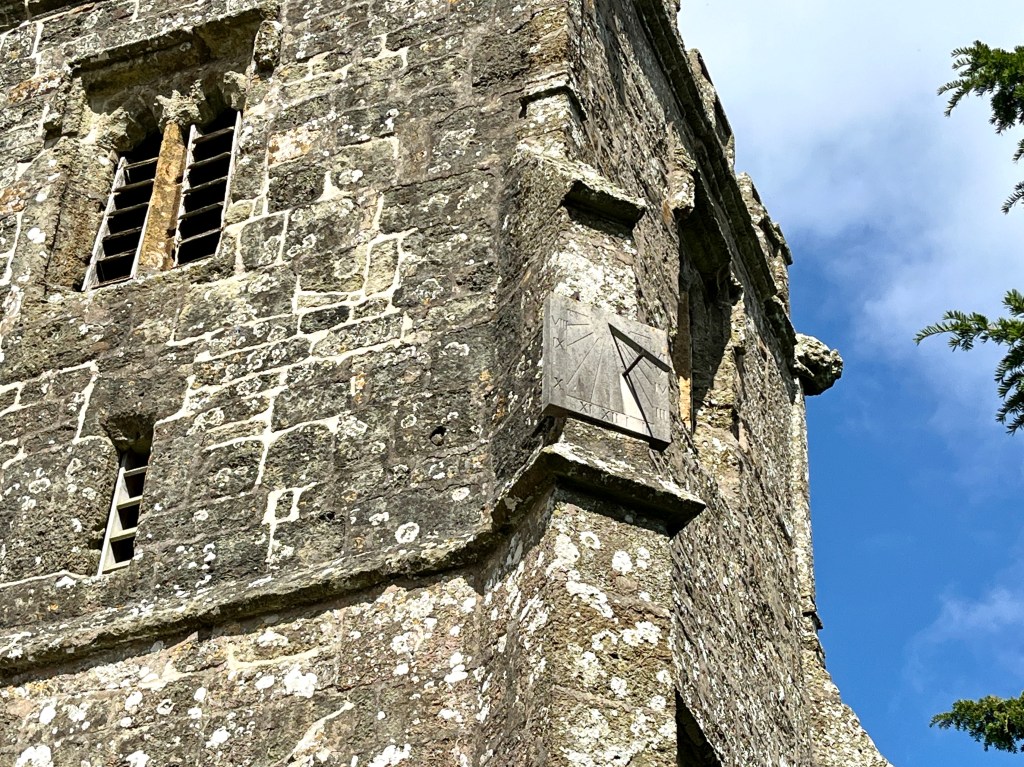
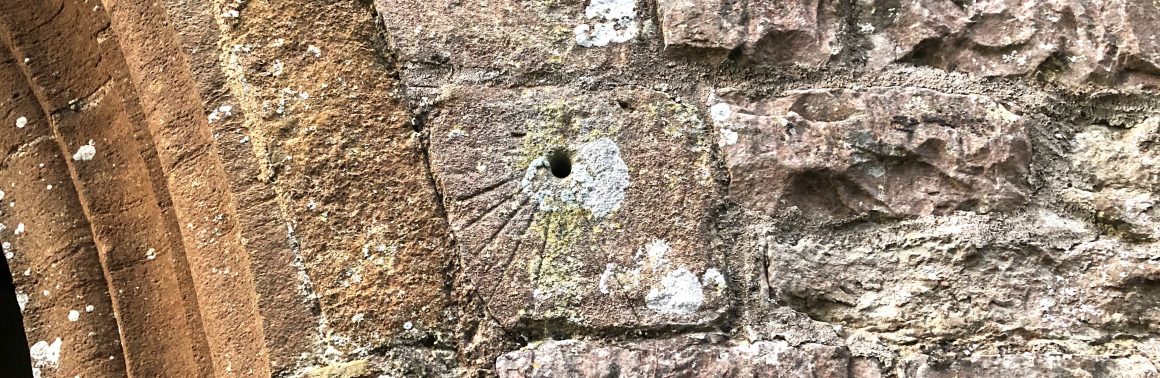
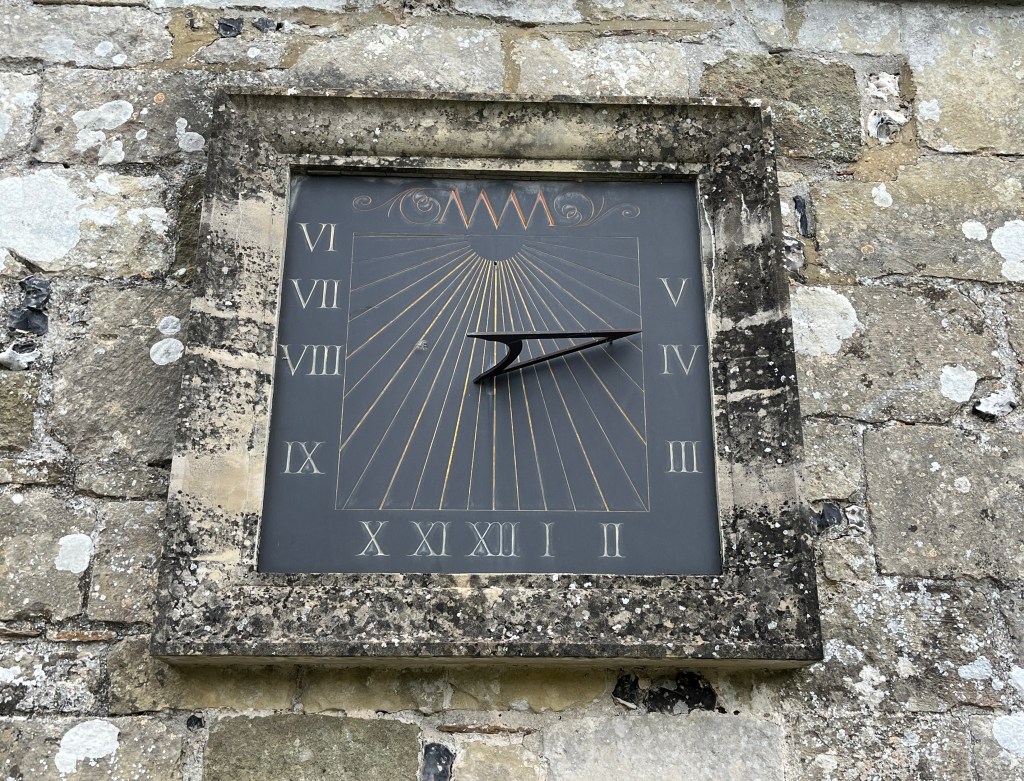
A conventional dial, simple and a bit incongruous high up on the SW buttress of the tower. It is in fact a locally-made replica of a dial which had existed in the same position on the church since the late 18th or early 19th century (BSS). It is very slightly canted on the angled buttress, with the lines cut from VIII to VI. Including the horizontal line, this is (unusually?) a VII – VII dial.
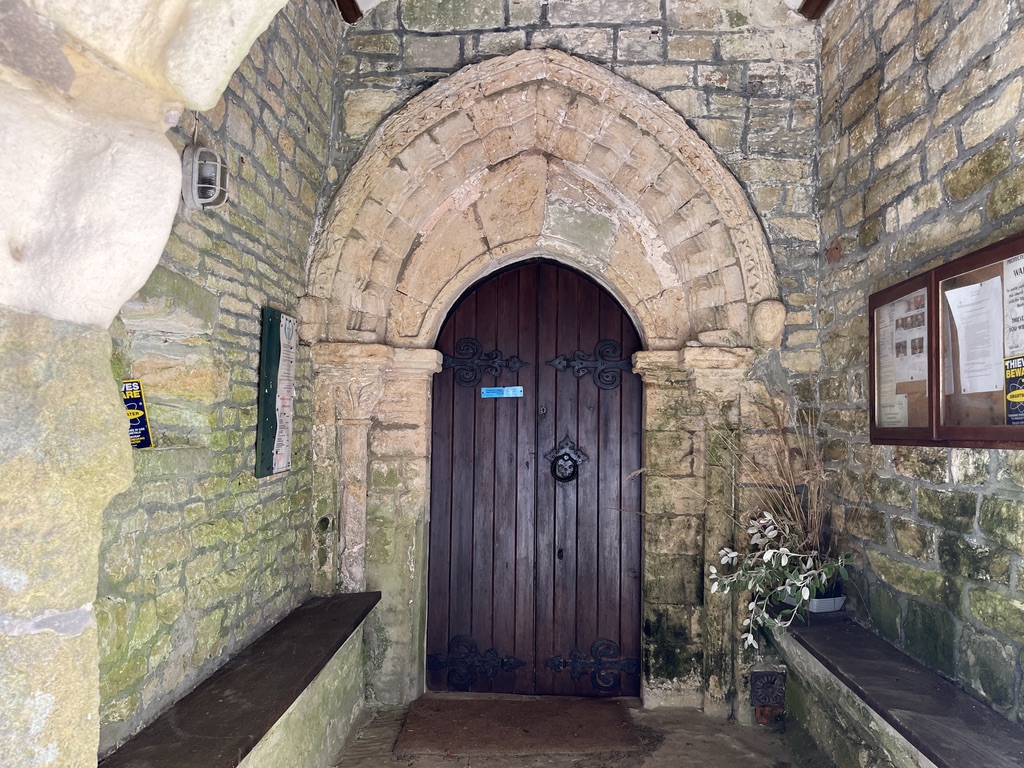
Late Norman porch and Painted arch

GSS Category: Vertical Dial; Canted dial; Replaced old dial; Replica Vertical Dial

All photos: Keith Salvesen

CHRIST CHURCH COLLEGE . OXFORD – Vertical Dial c1750

CHRIST CHURCH COLLEGE . OXFORD . VERTICAL DIAL

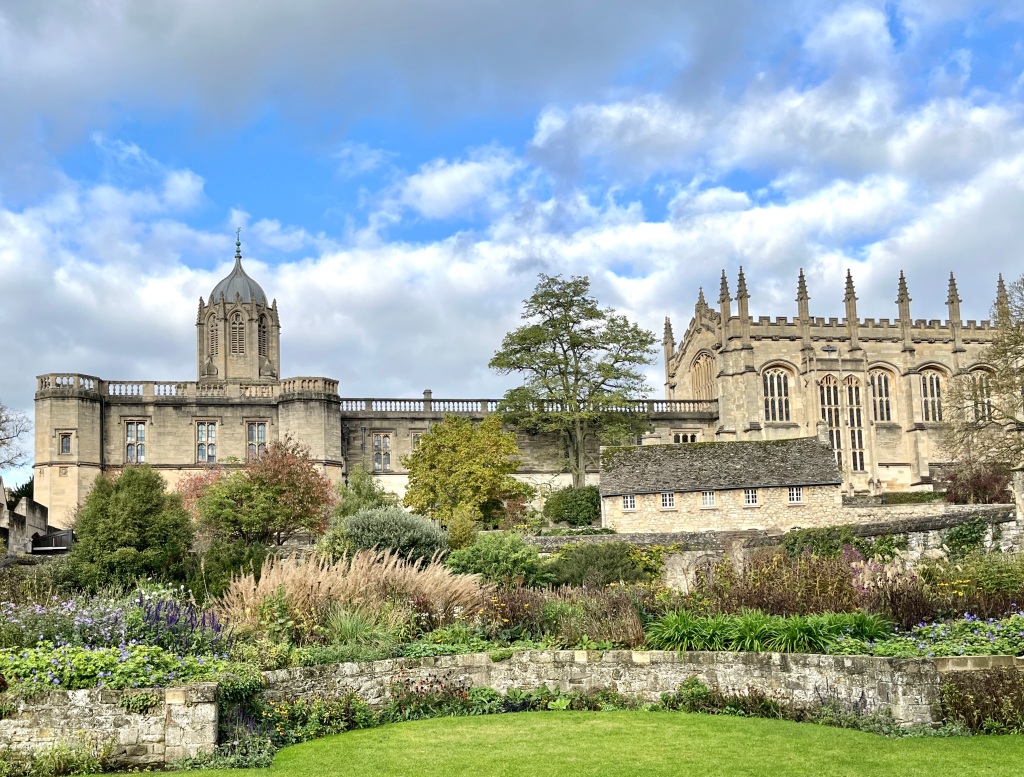
Located on W side of the Peckwater quad. c 1750, recently restored. Its position restricts the marked hour to VII – IV. Described rather harshly as a very plain and severely functional sundial of no great beauty in one source. Its simplicity and clarity in a City with many fine and some most elaborate sundials gives it some distinction.

Several other historic Christ Church dials both in the College and on the Cathedral (including mural dials) are sadly no longer extant. However, John Foad BSS points out that there is an outstanding multiple dial in the Pocock Garden, made by David Brown and installed 1998. There is also a small unobtrusive vertical dial elsewhere. These will have their own post in due course.

Christ Church Cathedral runs on Oxford time, five minutes and two seconds behind GMT. This is presumably a throwback to the late C19 before Standard Time was introduced by Statute, though there may be more arcane collegiate reasons.
To be linked in due course to the 2 modern sundials in the College.

GSS Category: Vertical Dial; Oxford Sundial; University Sundial; Old Sundial (C18)

All photos: Keith Salvesen

GREAT DURNFORD . WILTS . ST ANDREW – Vertical Dial

ST ANDREW . GREAT DURNFORD . WILTS

GRADE II ✣ A fine Norman church built late C11 (nave); chancel c1200; tower C13. Major restorations ±1900 (Ponting). An estimable entrance. Worthwhile (PEV) and (more graciously) one of Wiltshire’s most delightful churches (Betjeman). Lovely font; wall paintings; pilgrim crosses, protection marks & graffiti. 6m N of Salisbury. 51.1244 / -1.8301 / SU119361
Note: separate post on the 4 scratch dials in the porch HERE
The dial is on the south wall of the tower, 8m up. Markings a bit unclear. Shows 8am to 7pm, 15 min marks. Half hours marked by triple dot pattern. Mounted in flint rubble wall of tower – rebuilt in 17th C – below and to the right of the clock. BSS Record

GENERAL VIEW

DIAL WITH ROMAN NUMERALS

DIAL ANGLES and TRIPLE DOT HALF-HOUR MARKERS

GSS Category: Vertical Dial; Church Vertical Dial

All photos Keith Salvesen

PENZANCE . CORNWALL . ST MARY – Vertical Dial

St Mary Penzance . Bill Henderson . Geo / Wikimedia

ST MARY . PENZANCE . CORNWALL

GRADE II* ✣ Originally a chantry chapel of Madron parish; records from 1321. In due course rebuilt, and reconsecrated 1838. Destructive arson in 1985; 2 recent attempts. 8 bells of interest. Some traces of the past remain, eg memorial tablets*. 50.1165 / -5.533 /  SW475300

VERTICAL DIAL

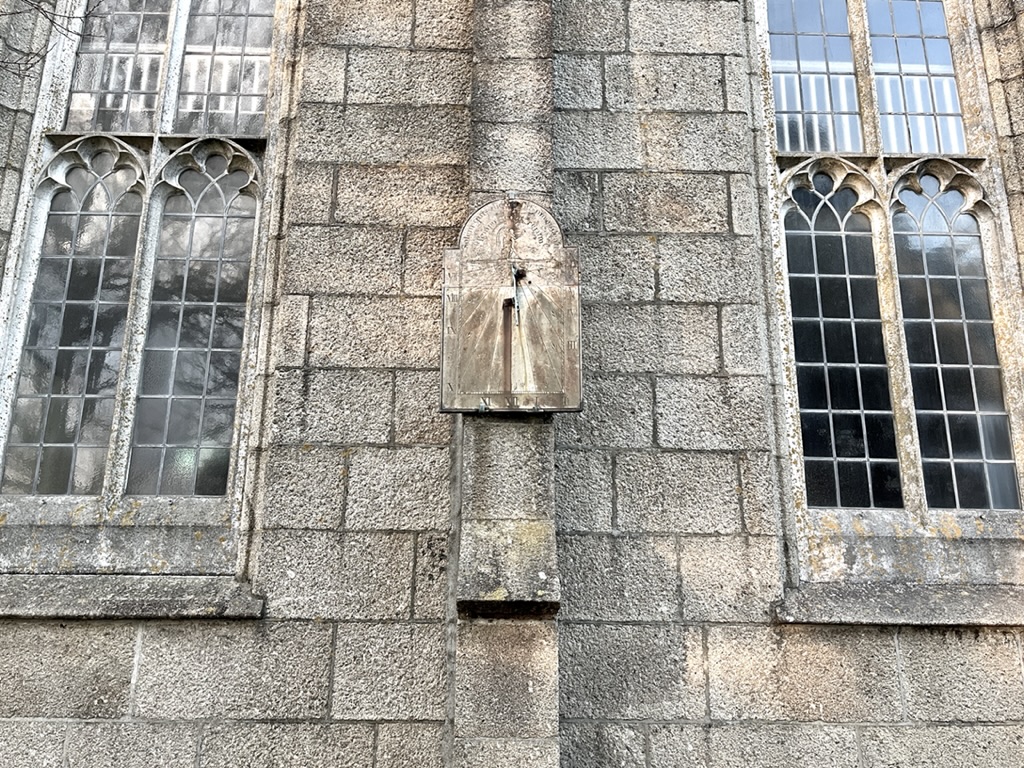
This slate dial with its bronze gnomon was originally made for a chapel near the church. The BSS records indicate that the dial declined 12º W in that position, but needed to be canted in its new position to correct for the different declination of the buttress of St Mary’s where it is now to be found.

The dial clearly predates the building of St Mary. Perhaps ± 1800 would cover it. For a chapel, the 5 minute intervals noted below suggest a quite sophisticated dial.

MOTTOES

There are two learned mottoes cut inside the arch at the top, with Father Time below them.

Solem quis dicere falsum audeat Who would dare to call the sun false (Virgil)
Tempus edax rerum Time the consumer of all things (Ovid)

CONSTRUCTION

Mrs Crowley, who sketched dials of Devon & Cornwall, noted a difference between stone top and bottom; and the horizontal line seems too high to be an indicator of the equinoxes and, in any case, there is no nodus on the gnomon. The engraving is good, there are decorative half-hour markers and the hours are divided down to five minute intervals.

In the sanctuary is a Baroque tablet to John Tremenheere, d. 1701, with Doric columns, broken segmental pediment and a winged skull at the base (HE). His tomb is in a family vault below the centre aisle. I am a direct descendent, but unlikely to join him.

GSS Category: Vertical Dial

All photos Keith Salvesen except header as cited

STEEPLE LANGFORD . WILTS . ALL SAINTS – MILLENNIUM SUNDIAL

ALL SAINTS . STEEPLE LANGFORD . WILTS

GRADE I C13 origins; C14, C15 development; extensive restoration 1873 (Carpenter). C12 font. 3 scratch dials (separate post). 10m NW of Salisbury. 51.1363 / -1.9493 / SU036374

DIAL

The dial is 10′ up on the SE corner of the nave. Gold lines on slate ground. Open gnomon. Numerals not gold. Date at top with scrolls all in Red. Uses XII and IV, with all numerals vertically arranged, and shows 6am to 6pm in half hours. Lines drawn from small semicircle at root. Full length half hour lines (BSS).

This is a fine MM dial and a pleasure to walk towards. Hopefully the gnomon can soon be pegged back into the upper hole, making the time of day easier to determine.

GSS Category: Vertical Dial; Millennium Dial; Dial Dates

All photos: Keith Salvesen

CLEY-NEXT-THE-SEA . NORFOLK . ST MARGARET – A Horizontal Vertical dial

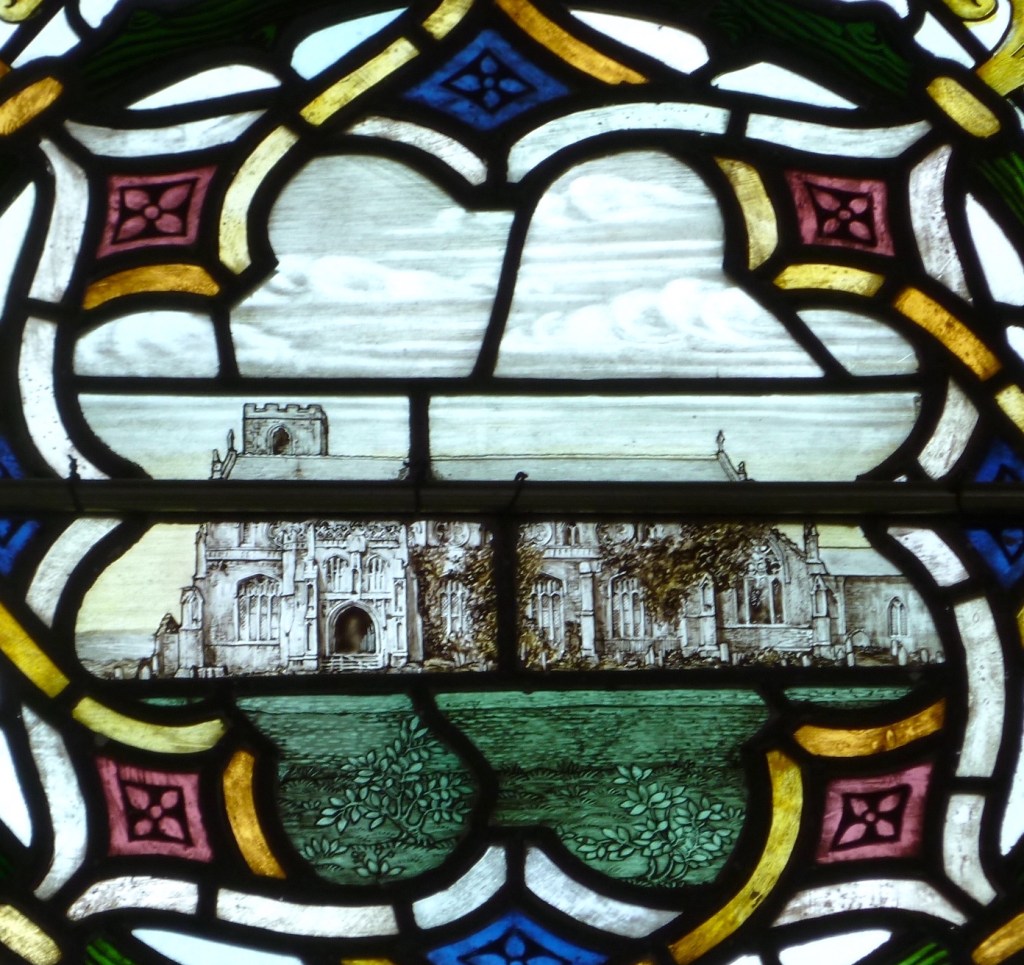
St Margaret of Antioch . Cley-Next-The-Sea . Stained Glass Window (cr Keith Salvesen)

ST MARGARET . CLEY-NEXT-THE-SEA . NORFOLK

GRADE 1 C14 and C15. An important and rather wonderful church, part-ruined. One of SJ‘s 1000 Best Churches: a sea church stranded inland. PEV describes a most striking and improbable-looking building, splendid from the S, but splendid in large parts rather than as a whole. 52.9464 / 1.0475 / TG048431

DIAL

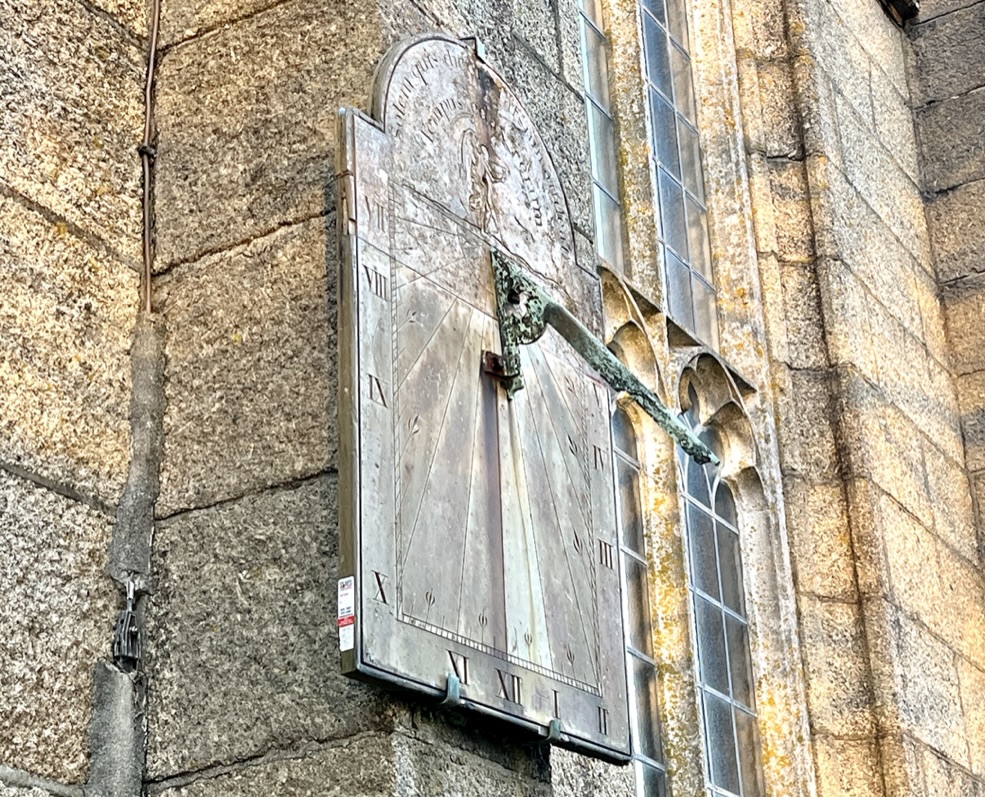
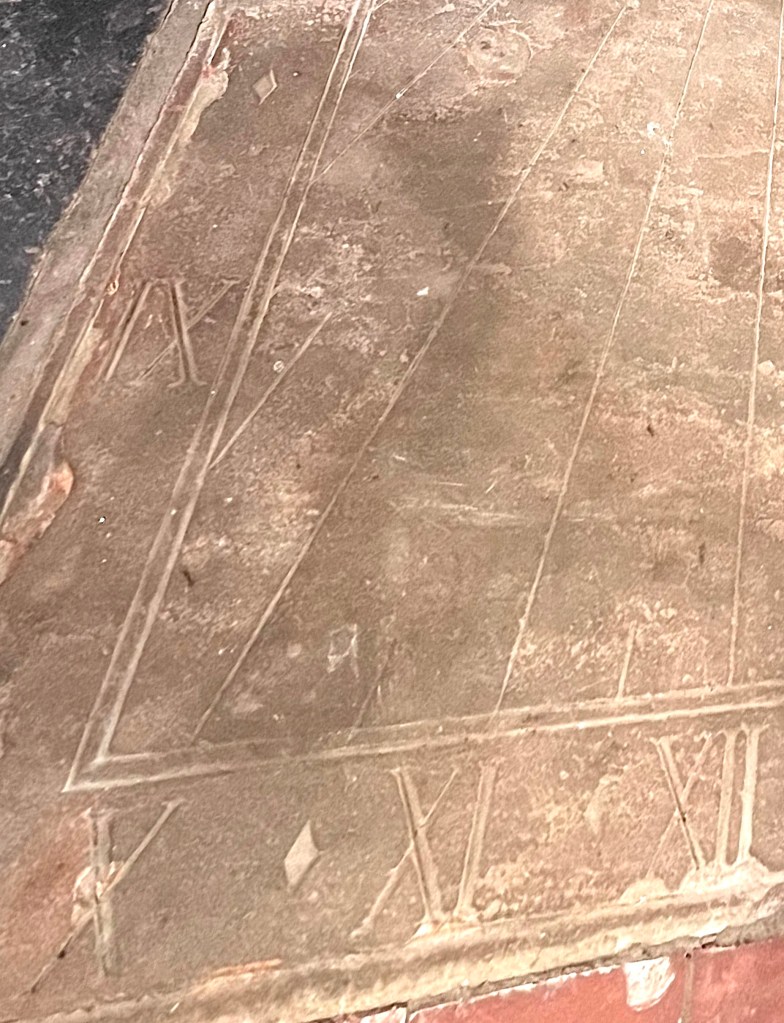
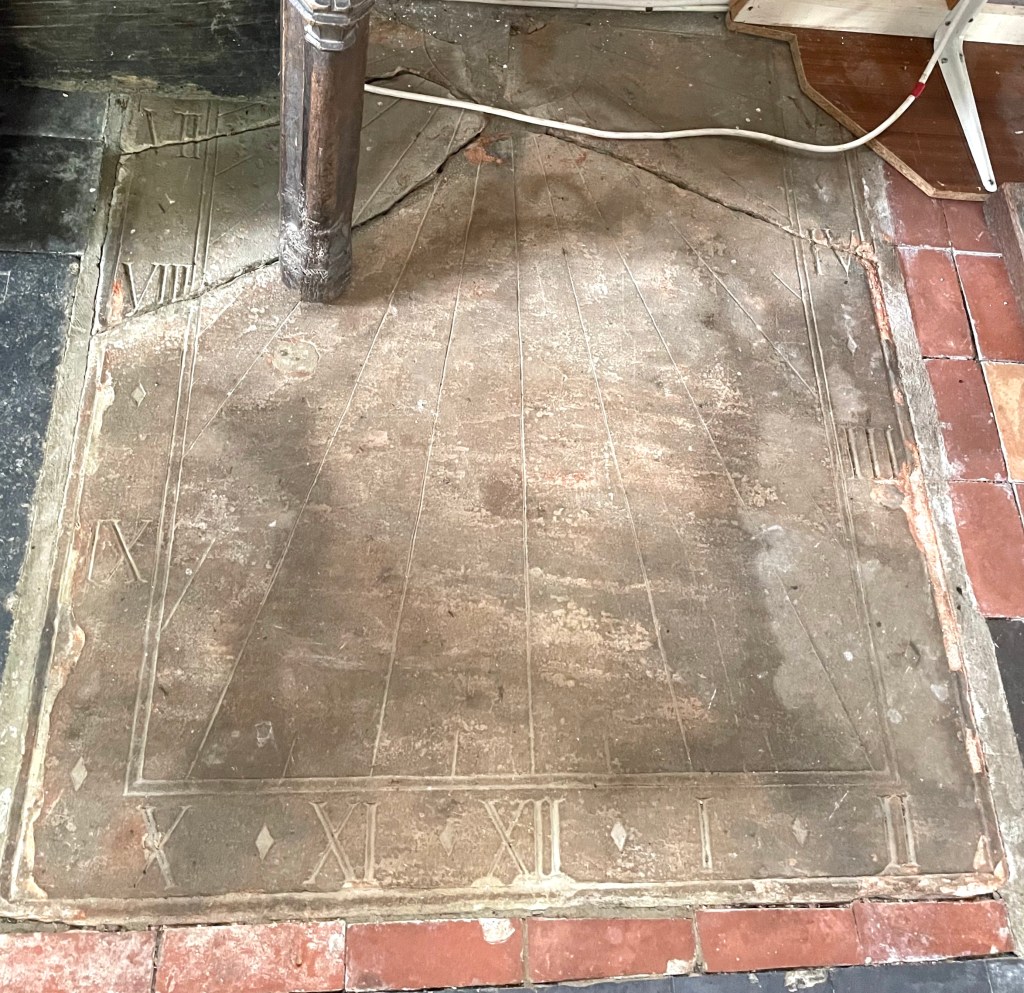
I am grateful to my friends in Cley, Hanne Siebers and Klausbernd Vollmar, for discovering and photographing this most unusually positioned dial that has been incorporated into the floor of the church, serving a new purpose despite its damaged state.

St Margaret . Cley-next-the-Sea – Vertical Dial set in the Chancel Floor (Hanne Siebers & Klausbernd Vollmar

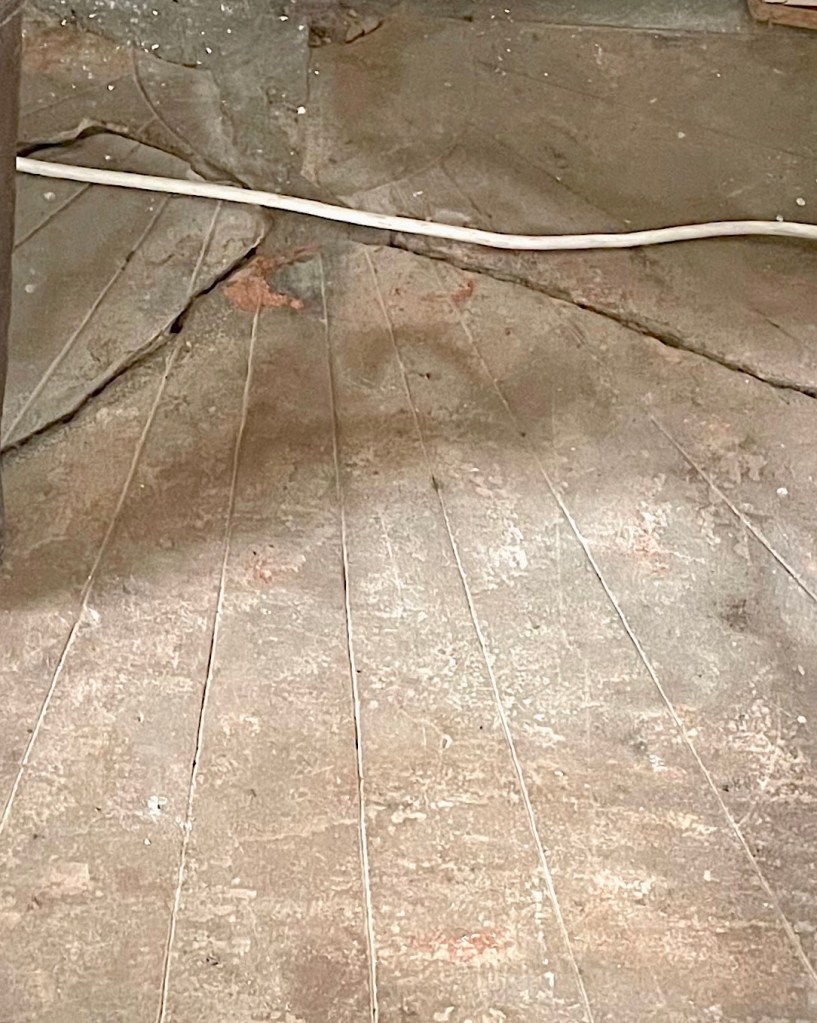
The lines are more-or-less equally spaced, suggesting that the dial’s aspect was originally due S. The hours are separated by lozenges, and half-hours are marked. At the back / top end of the dial, there is considerable damage. It is just possible to make out a semicircle with a hole where the gnomon would have been. The incised numerals VII, VIII, III, and IV are less worn and indeed are surprisingly sharp, which might suggest that the dial was below a ledge of some sort that protected the upper part from weathering. One puzzle is the way in which VIII is split by a single crack, yet part of the numeral appears to be missing completely.

DATING THE DIAL

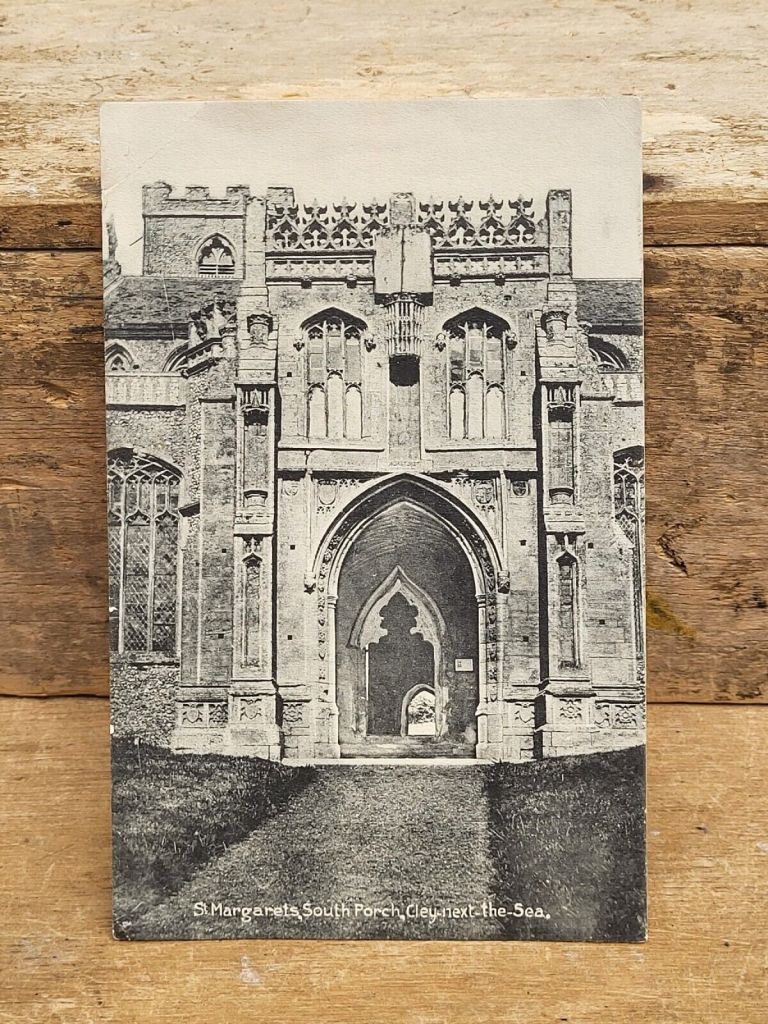
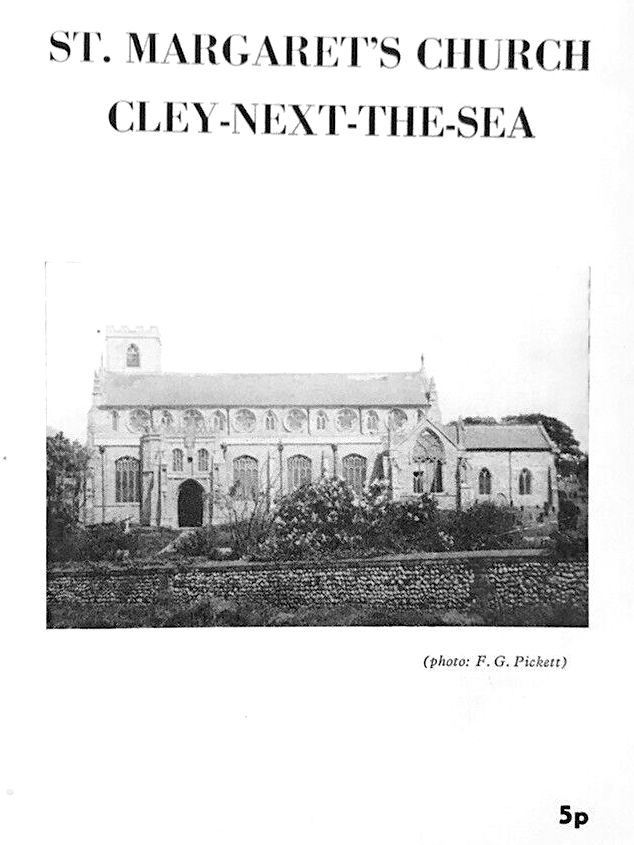
I initially thought that the dial was ±1800. The date of its removal and repositioning was unrecorded in the usual sources. As it turns out (with many thanks to Rev. Richard Lowery and Richard Jefferson) the change of location happened within the last 50 years or so. The dial had been high up on the S porch, but had become a danger. It was taken down and set in the floor of the chancel. The damage occurred at some stage during the relocation.

The earliest depiction I can find is a lovely drawing by John Sell Cotman dated 1818. It gives the dial due prominence and I think it can be confidently dated to ±1750. The work interestingly show the state of ruination as Cotman saw it.

St Margaret . Cley-next-the-Sea – John Sell Cotman – Art Institute of Chicago

Old photos and postcards can be a good way to approximate a date (or a span)

In 1959, C L S Linnell produced a Booklet for the Church. It was obviously successful – there were 4 reprints, the last in 1973. The cover photo of the Church shows the dial in its rightful place (though quite probably it was not updated for the reprints). Certainly by 2000, the dial had been repurposed.

An excellent account of the church and some of its medieval details (roof bosses &co) can be found with this link NORFOLK CHURCHES.

GSS Category: Sundial; Vertical Dial; Old Dial; Repositioned Dial

Photographs: header photo, Keith Salvesen; dial photos (with edits for clarity), Hanne Siebers and Klausbernd Vollmar with thanks as ever for their interest in this dial project and for their excellent contributions from other churches; other images os / cc / as shown

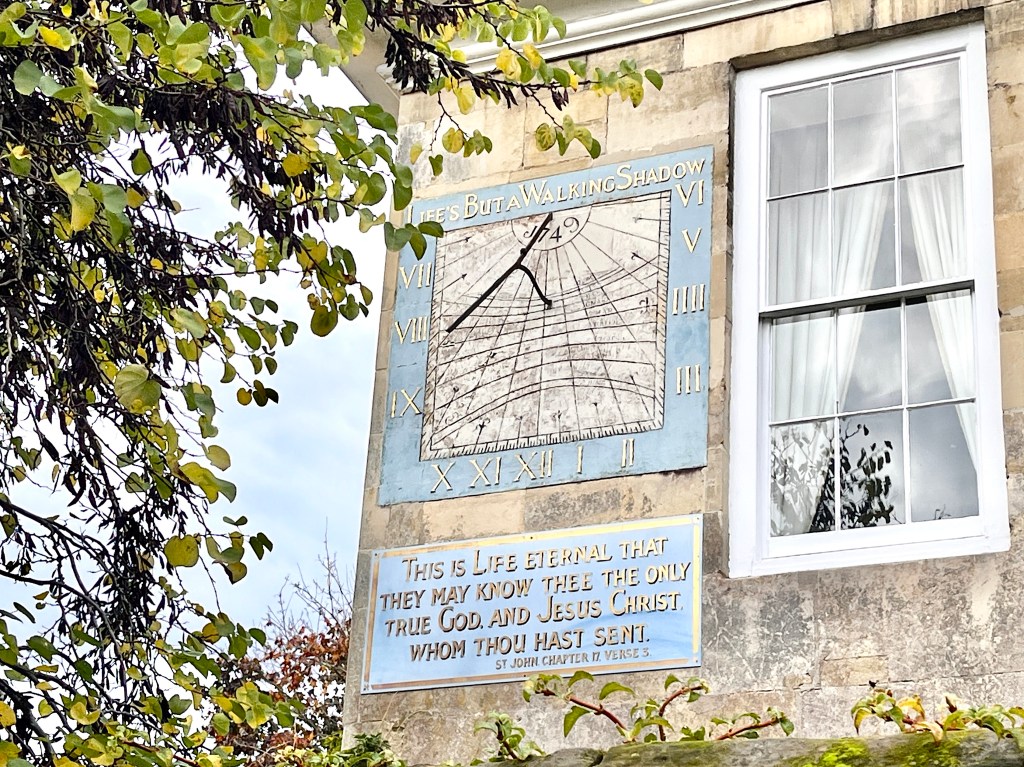
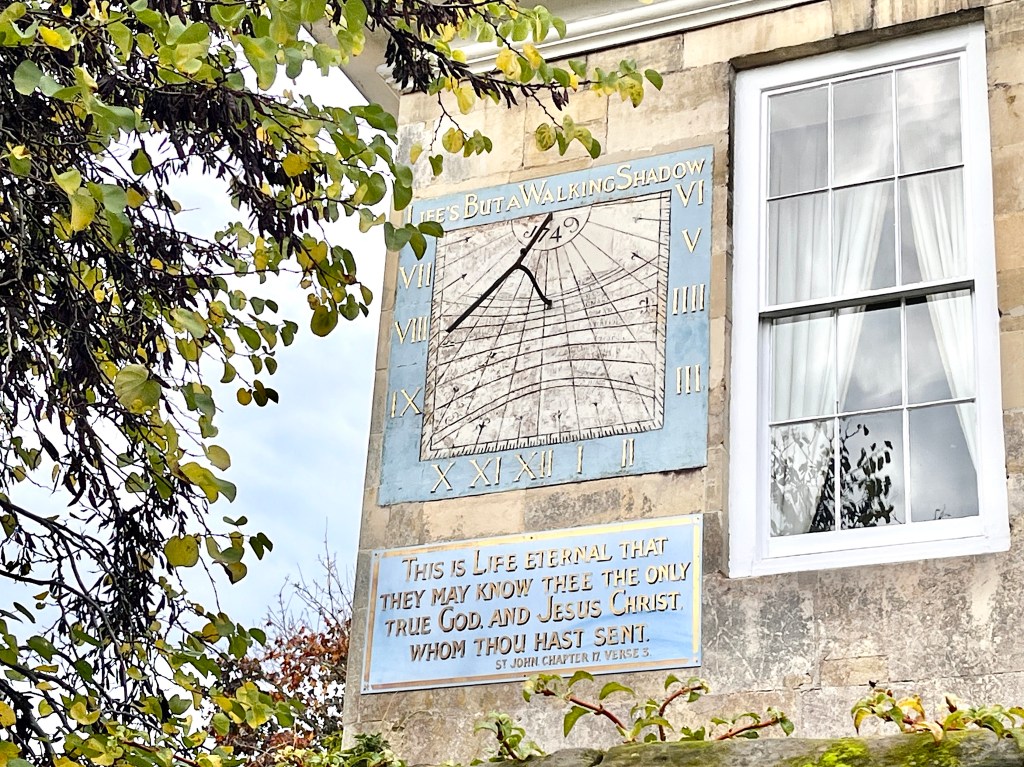
SALISBURY . THE CLOSE . ‘LIFE’S BUT A WALKING SHADOW’ – Vertical Dial 1749

Malmesbury House . St Ann’s Gate . Salisbury . Wilts – Vertical Dial 1749

The Close in Salisbury has plenty to recommend it besides a central building for which superlatives are inadequate. Malmesbury House (GV I) by St Ann’s Gate has a particular claim to fame in sundial terms, with the context succinctly explained in the image below. 51.0659 / -1.7938 / SU145296

The very fine sundial on the house is dated 1749. The motto is part of the familiar speech taken from Macbeth Act 5 Scene 5 as Macbeth reacts to the news of Lady Macbeth’s death. It’s not exactly uplifting.

Below is a short text from the Gospel of St John. The dial itself is in very good condition. My amateurishness precludes any meaningful interpretation of the scientific aspect. I will add any significant details in due course.

GSS Category: Vertical Dial; Sundial Motto

All photos: Keith Salvesen