LISTING II* ✣ Early C12 origin; nave extended late C12; early C14 chancel, transepts, squat tower; C15 porch; C19 north vestry and restoration. 3 squints (‘hagioscopes’, as I have recently discovered). 4m E of Blandford forum, nestled in a valley with several other Tarrants. 50.854 / -2.0902 / ST937060
DIAL
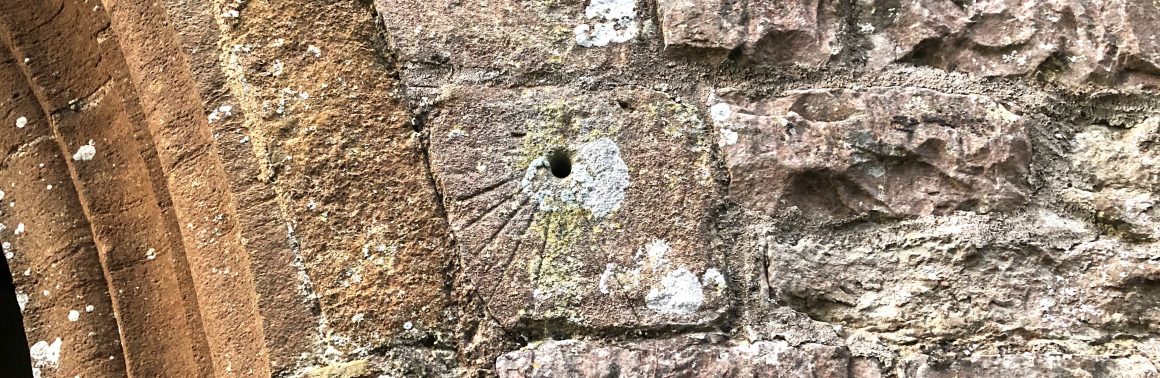
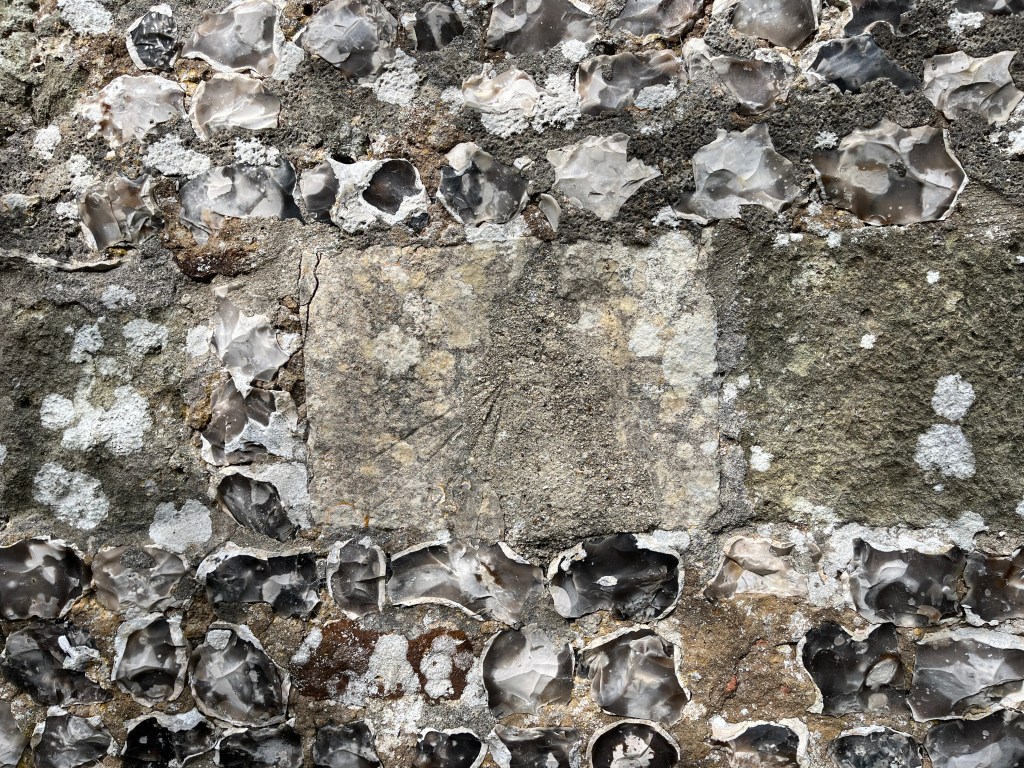
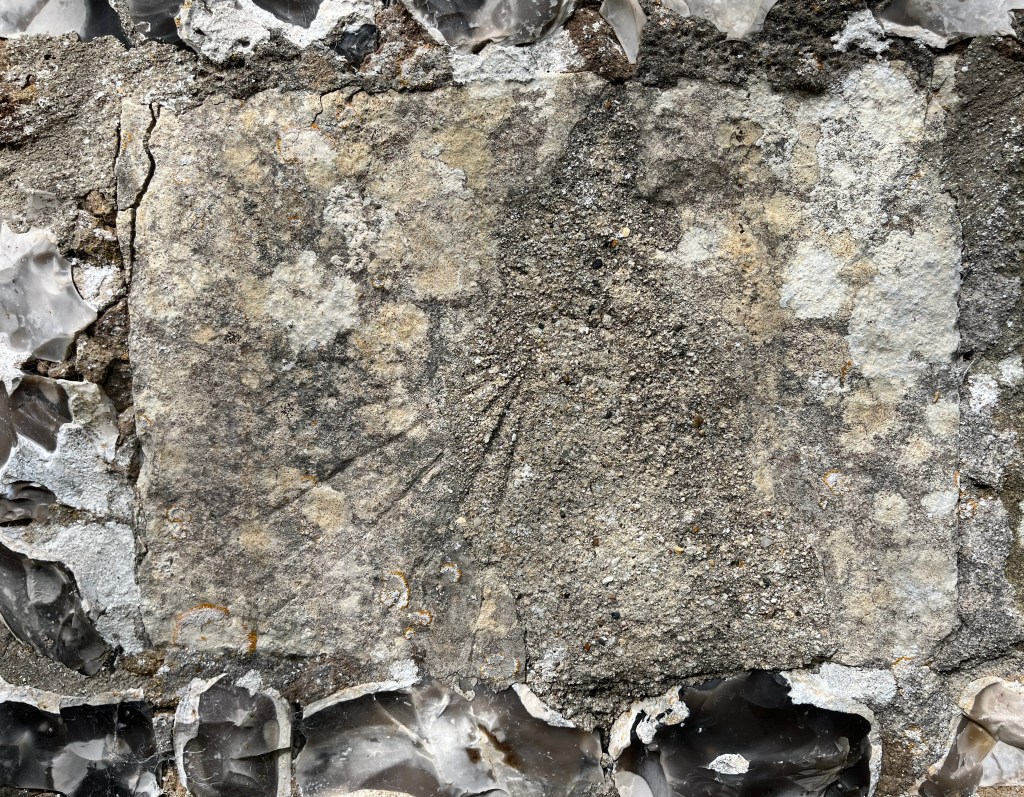
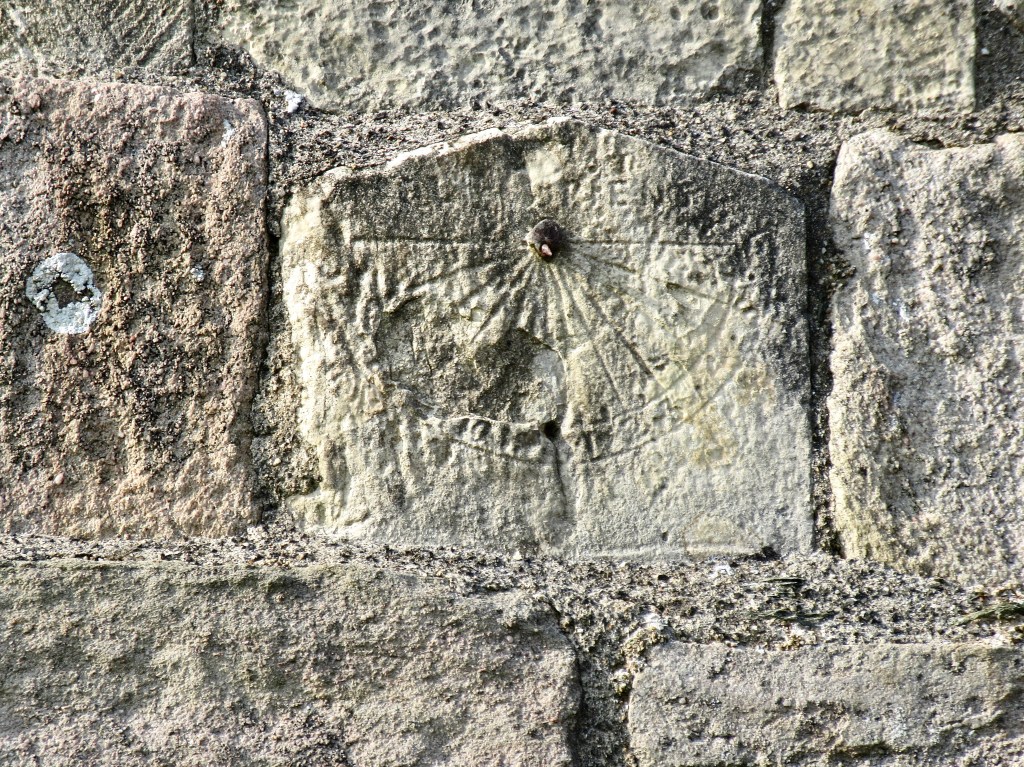
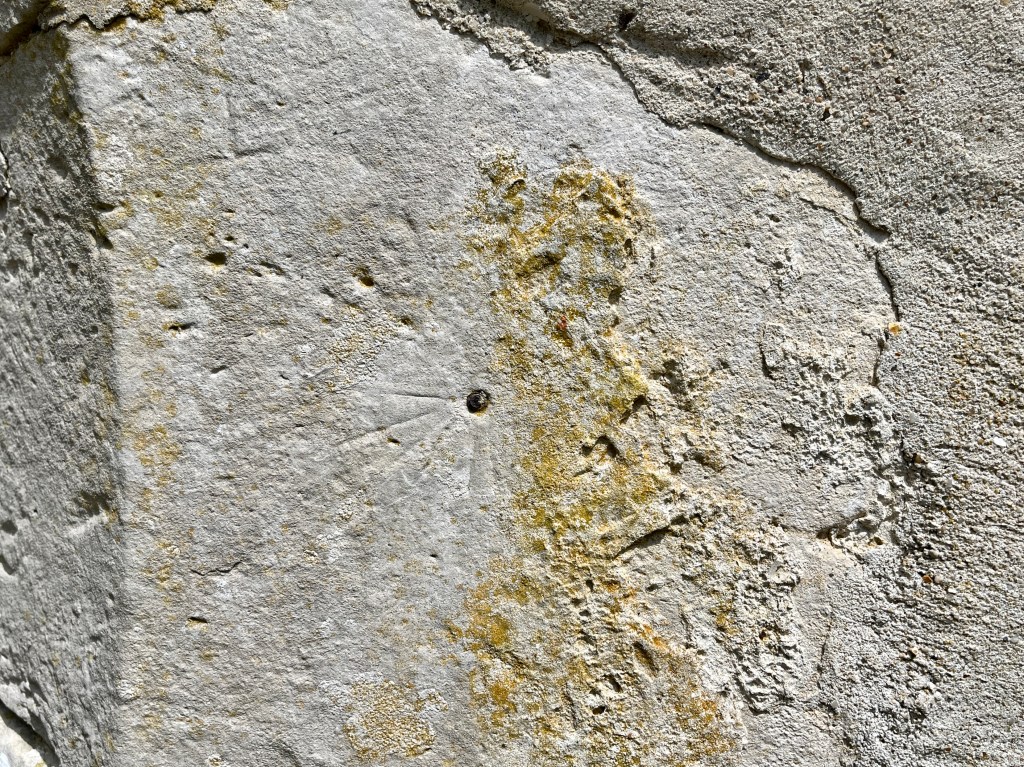
An attractively simple dial set in flint, perhaps not its original location. There are 6 lines LHS from the horizontal (6) down to to 11. Two are very faint. A morning dial, with 2 slightly deeper cut / longer lines suggesting Nones as the main time for observation. The absence of an obvious gnomon hole – open or filled – is a puzzle. There is a slightly paler area where the radials converge, perhaps marking the site of a gnomon hole filled centuries ago, now worn to a smooth patch
GSS Category: Scratch Dial; Mass Dial; Medieval Sundial Dorset
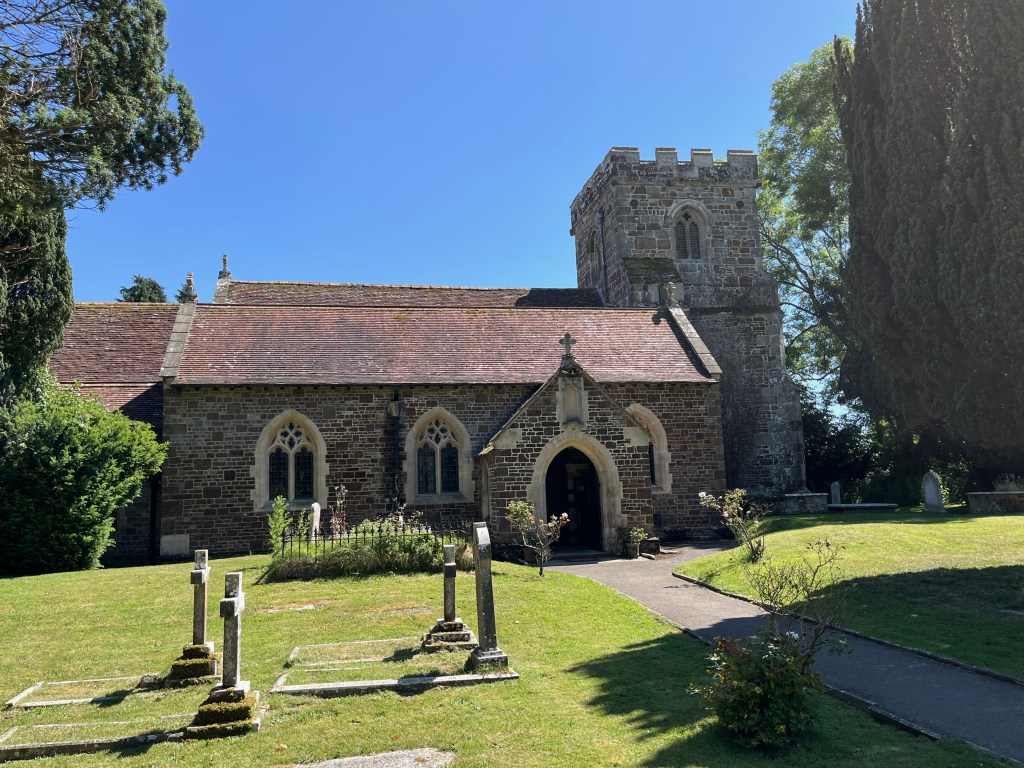
LISTING: II* . C12, C13 (of which remnants); C14, C15, 1868 restoration by G. G. Scott. C14 door. Good C14 stained glass. 53.3234 / -0.368 / TF088819
DIAL
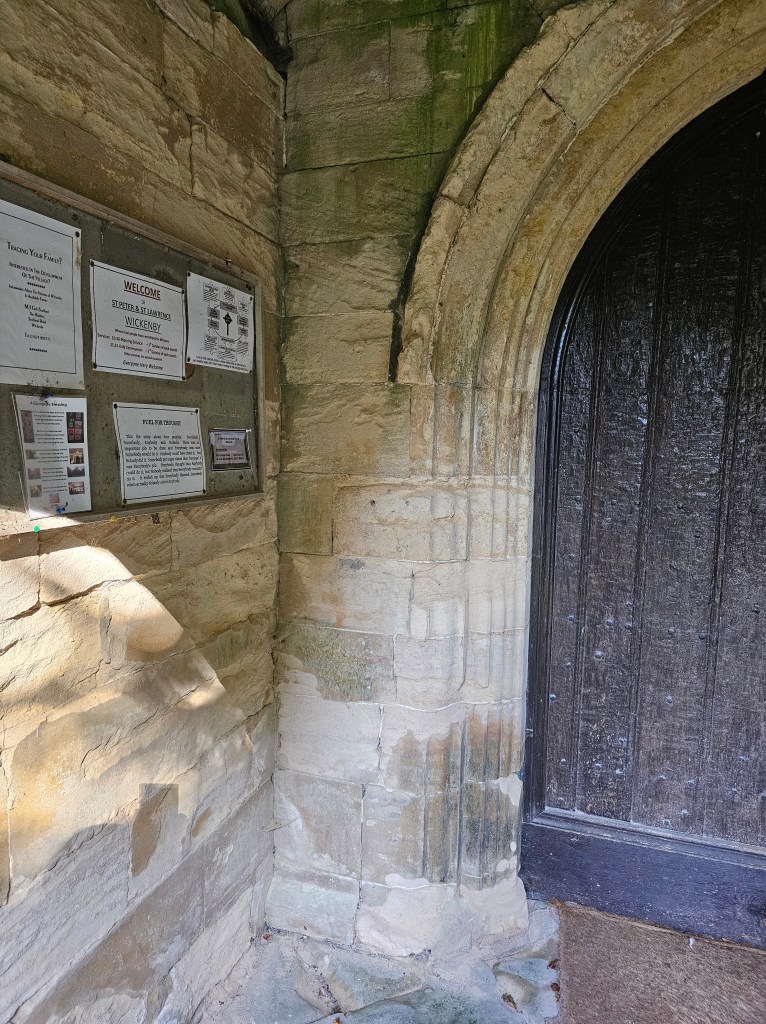
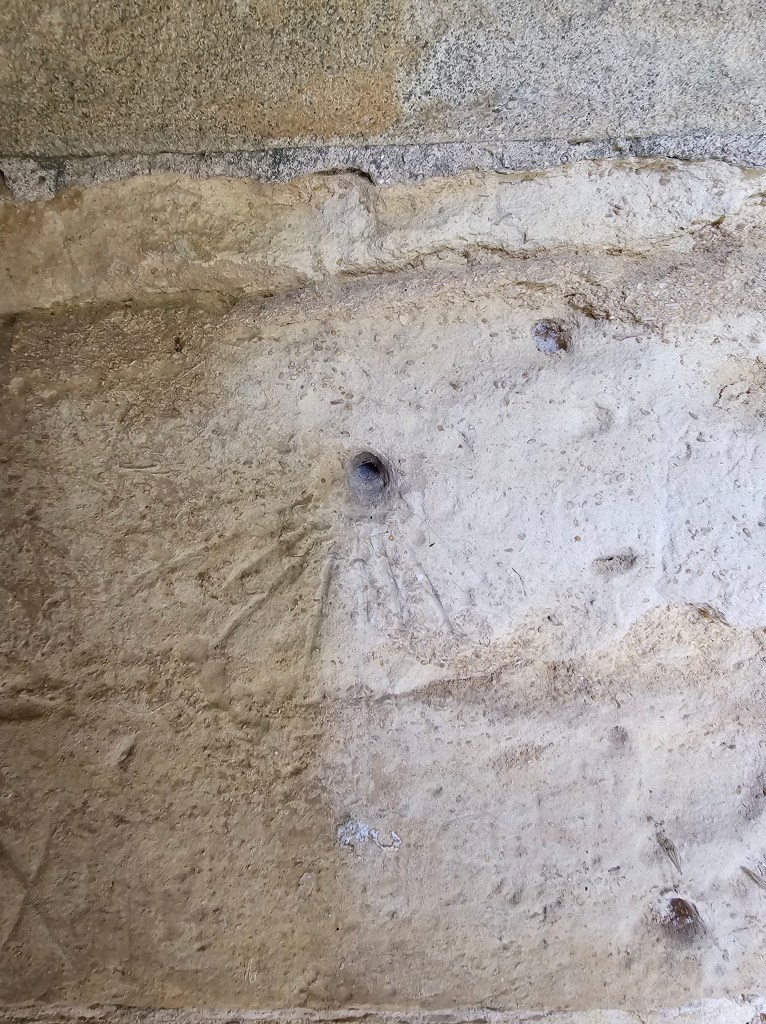
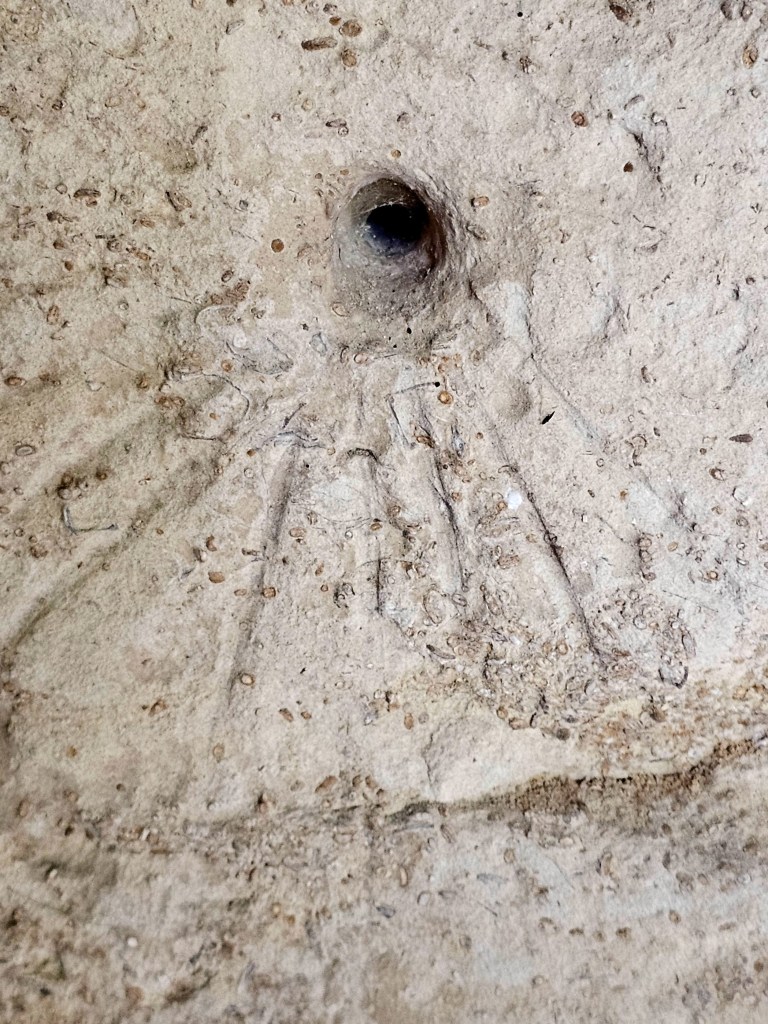
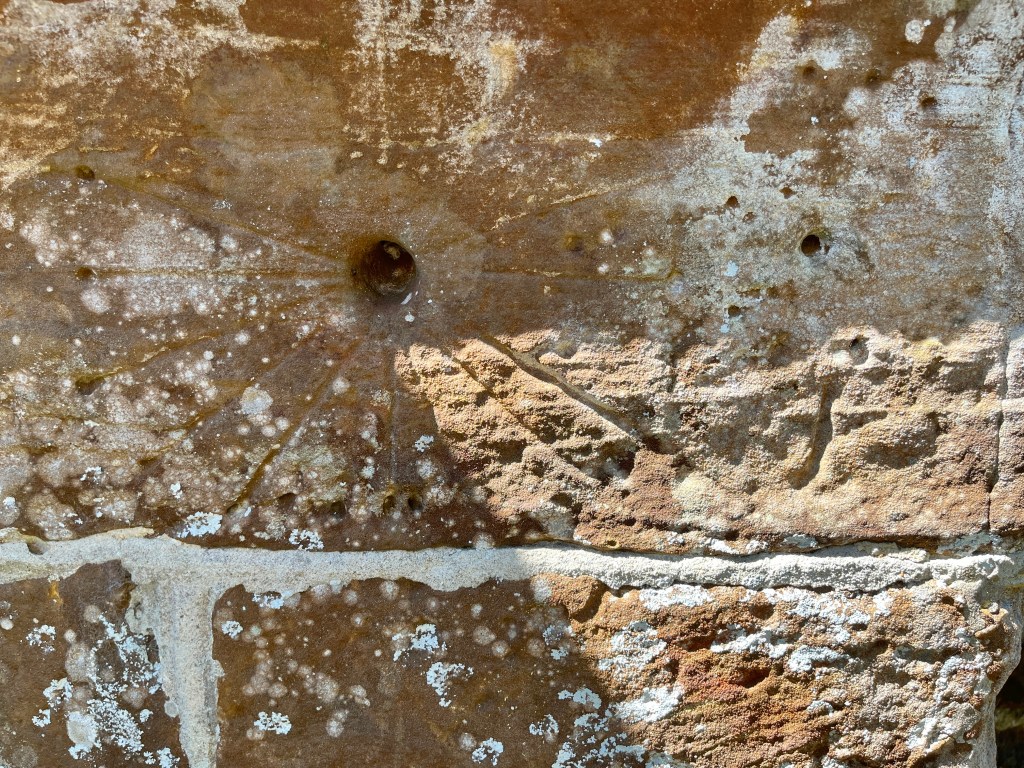
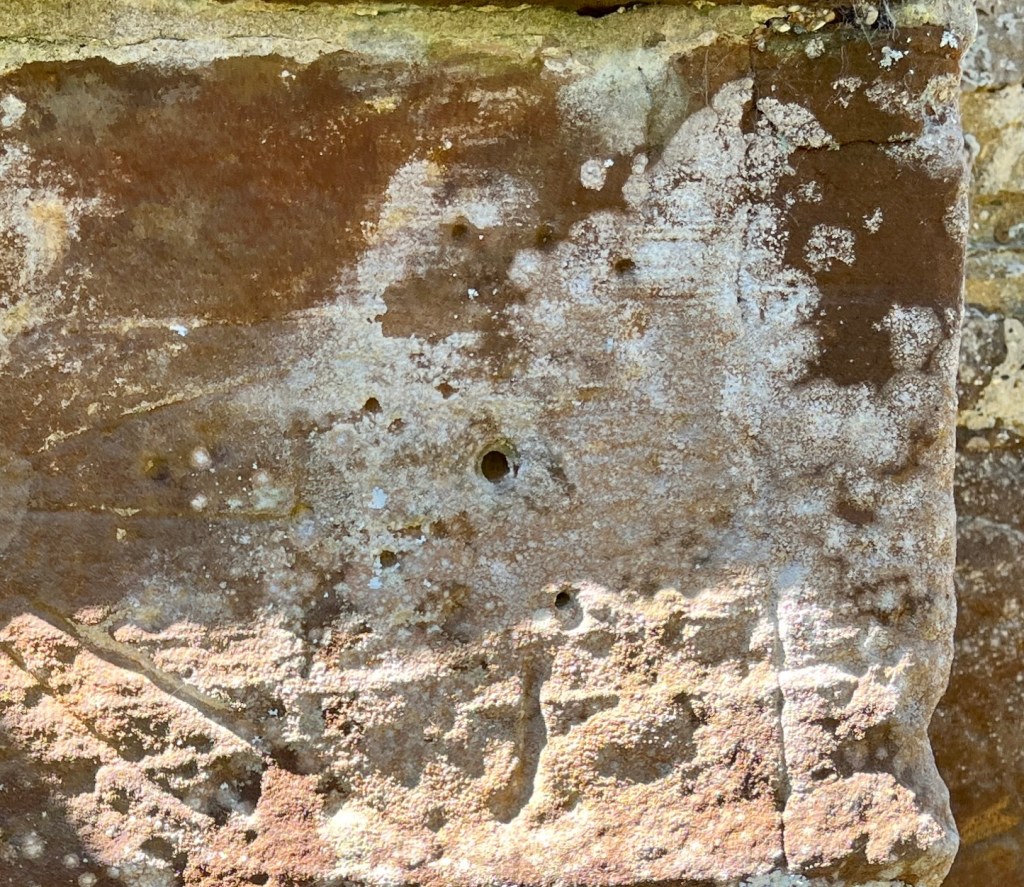
Located within later porch, LHS of entrance door. 7 clear lines; probably one upper LHS, very faint. Deep gnomon hole. Noon line perhaps marked with a pock 2″ below? Of interest, the 2 deeper and longer cut lines LHS of the vertical. These suggest that the main time of day for observance was Terce, or (as cut) somewhere between that and midday.
Unrecorded by BSS. I am grateful to Keith Freeman for contacting me about this dial, and for his excellent photos
GSS Category: Scratch Dial; Mass Dial; Scratch Dial within porch
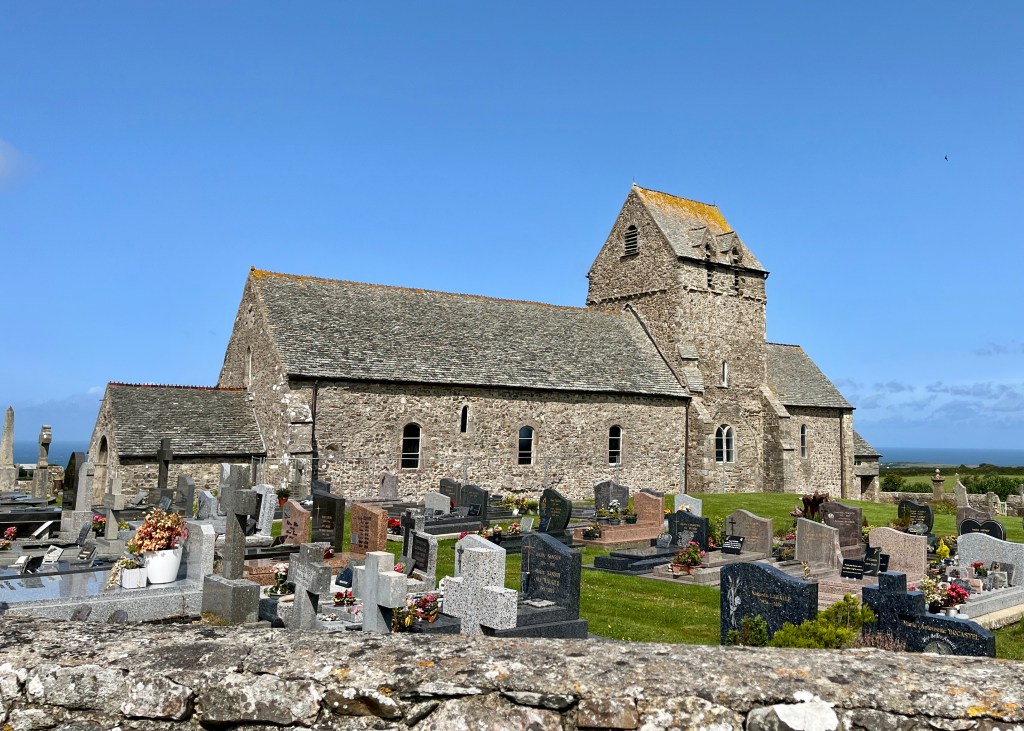
A fine Romanesque church (C11 / 12) in the far NW of the Cotentin peninsular. From its elevated position in the coastal landscape, the sea can be seen on both sides. Of several good dials in the area (other posts will follow), this is the one that is closest to being a scratch dial, being cut directly into the gnomon stone. Other church dials in the region are vertical dials on, rather than cut into, their location.
DIAL
The dial is high up on the E buttress. Seen from the ground, the dial stone blends with the surrounding stones. Seen close to, the awkward setting – shaped angled top with filling around it – suggests relocation. Wherever originally positioned, the height of the dial on the buttress must have been an effective way to use the church’s prominent position to mark passage of the day for the local community.
The dial face has a layout similar to other dials in the area, 12 lines inside a double circle containing the numerals. A possible noon hole on the inner circle; possible noon line extending below it. The short pointed gnomon is a much later addition. LLQ is badly damaged. Beneath the angled top is an eroded inscription, the clearest letter being E. ‘RIEN’?
Finally, this photo from the excellent Michel Lalos french sundial site. I’m not sure when it was taken, but I expect within the last 20 years or so. It graphically shows how degraded and damaged the dial has come during a mere couple of decades. Sadly, LLQ is falling apart.
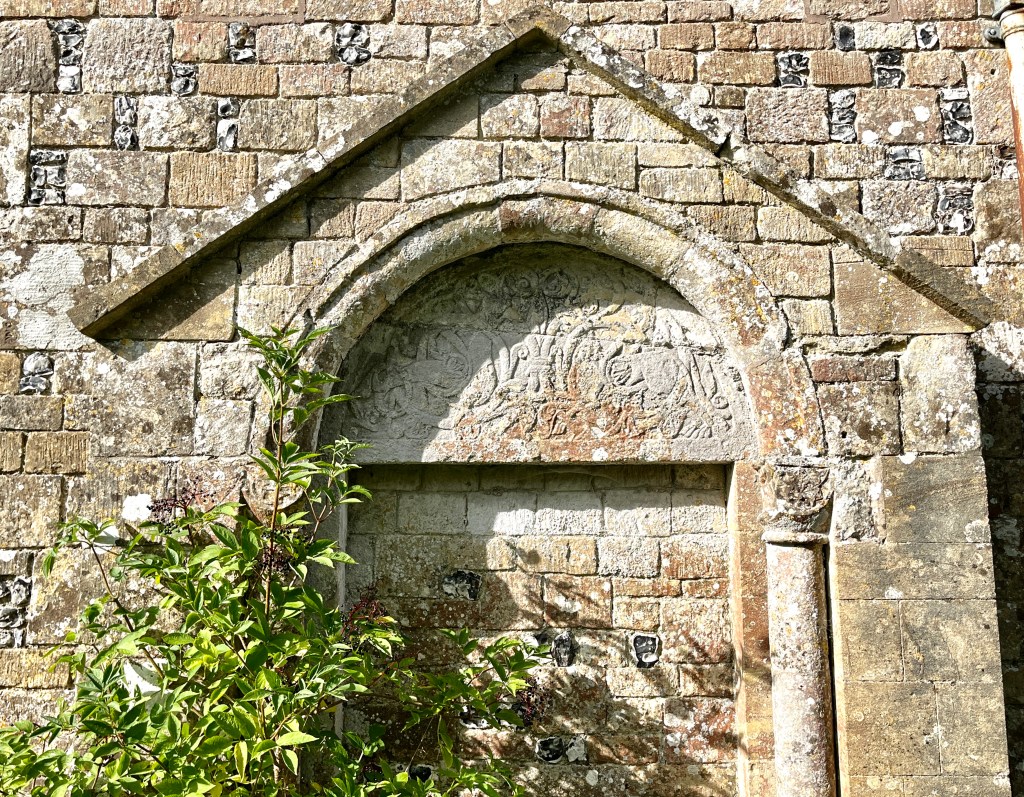
GRADE I ❖. C11 – evidenced from 1078, probably on site of a wooden church. C14, C17, mid-C18 alterations / additions. Major restoration 1874-76 (Butterfield). One of several excellent and varied Wylye valley churches with dials (eg Stockton (18); Heytesbury; Chitterne; Sutton Veny). Wonderful C11 / Saxon tympanum. 3m SE of Warminster. 51.1755 / 2.0908 / ST937418
DIAL
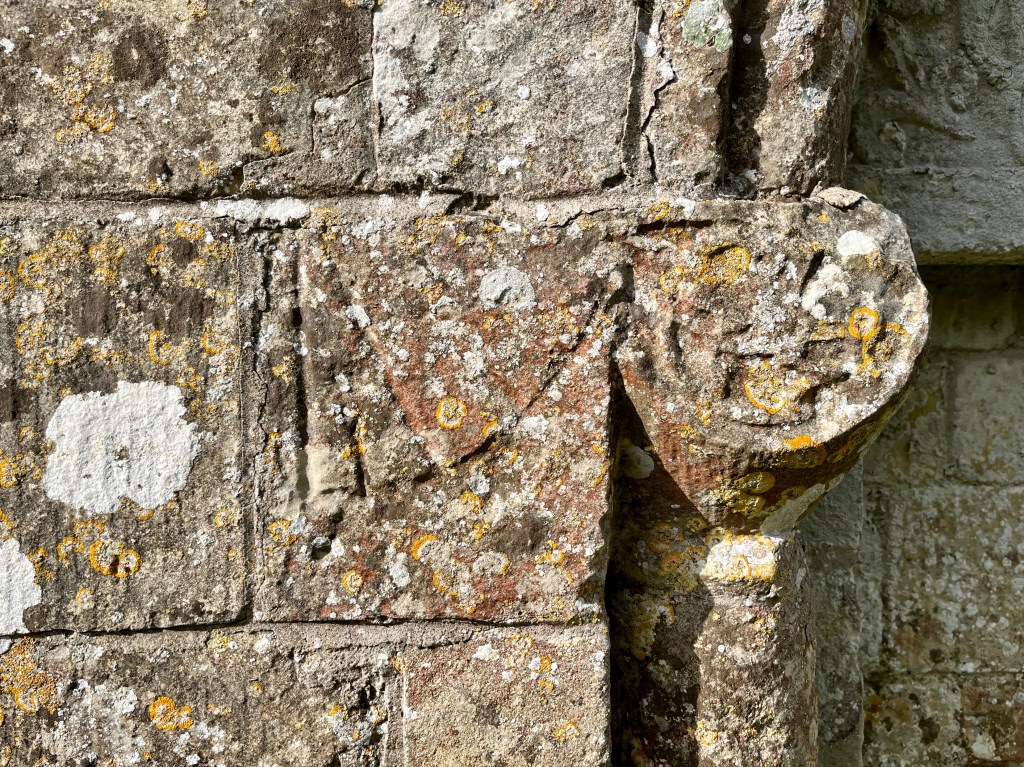
The dial is in a privileged position high on a quoin stone next to the tympanum. It is in fact the LRQ of a complete dial that must have been divided during restorations.This quarter includes the noon line.
TYMPANUM
The dial is LHS at tympanum height, just visible behind the elder
GSS Category: Scratch Dial; Mass Dial; Wiltshire Sundials
LISTING: II* ❖ Records from 1302; mainly C15. ‘Extensive restoration’ 1865 (J Hicks). A fine church set in a large, sloping churchyard. 4m S of Sturminster Newton. 50.8965 / –2.2753 / ST807108
DIAL
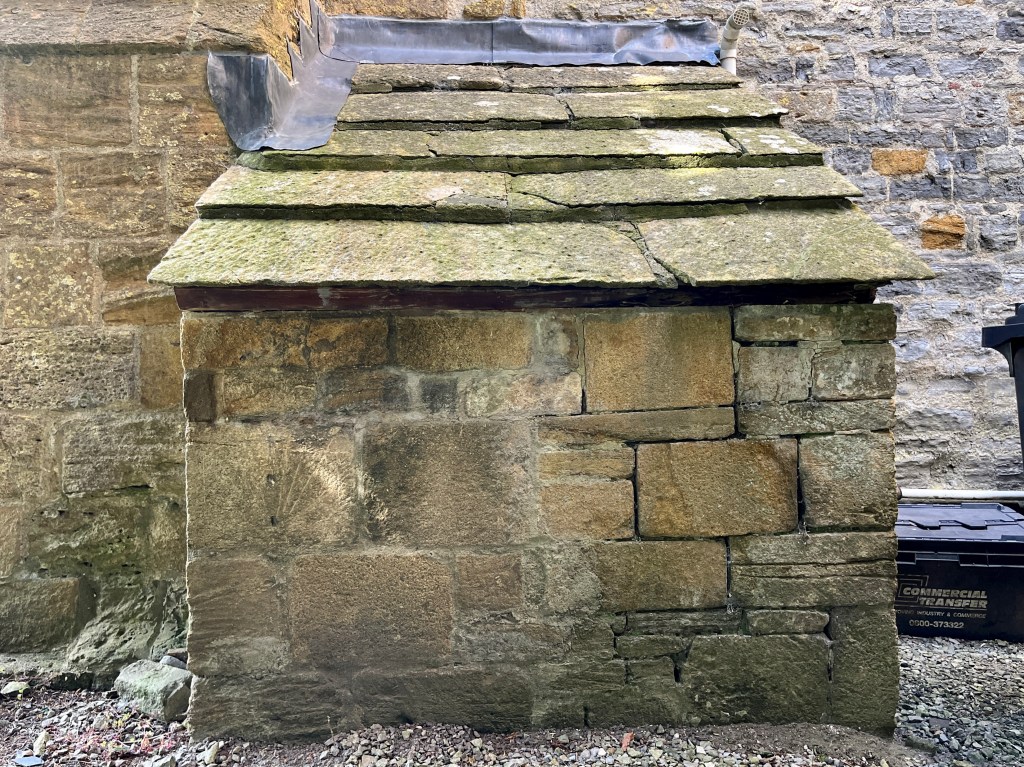
No need to pass through the Lych-gate to find it. 20 yards to the left on the outside of the wall, you will find the dial reset ‘with other architectural fragments, probably placed there during restoration of 1865‘ GLP.
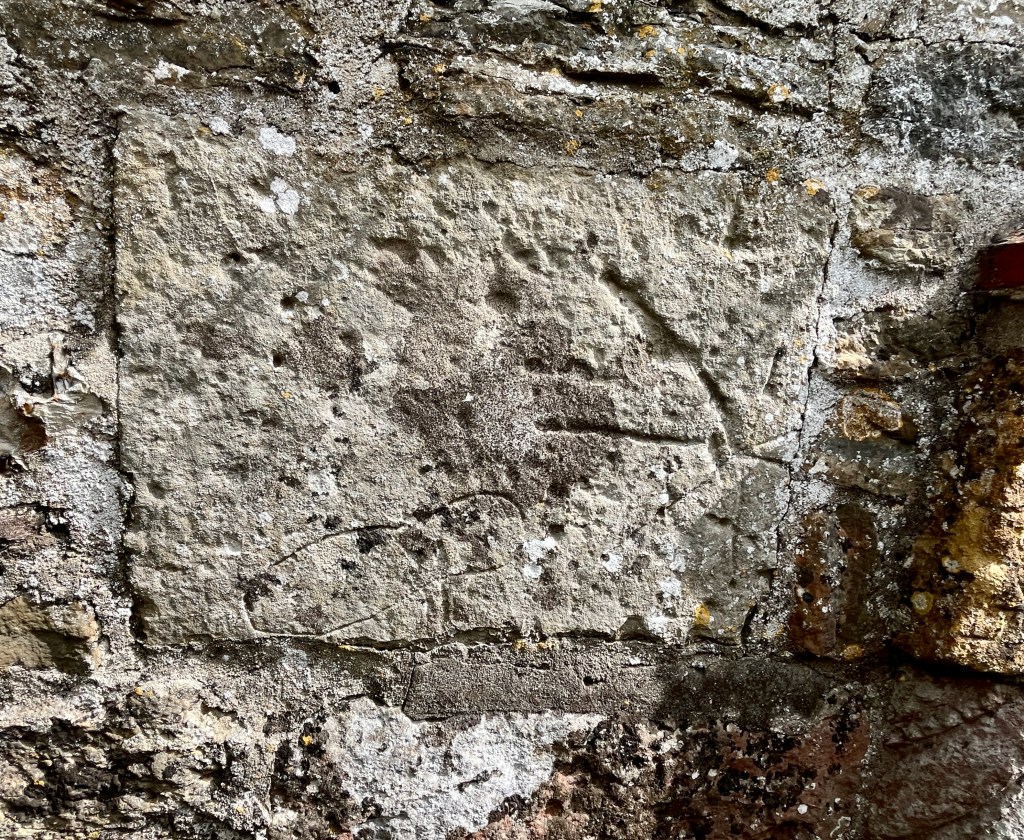
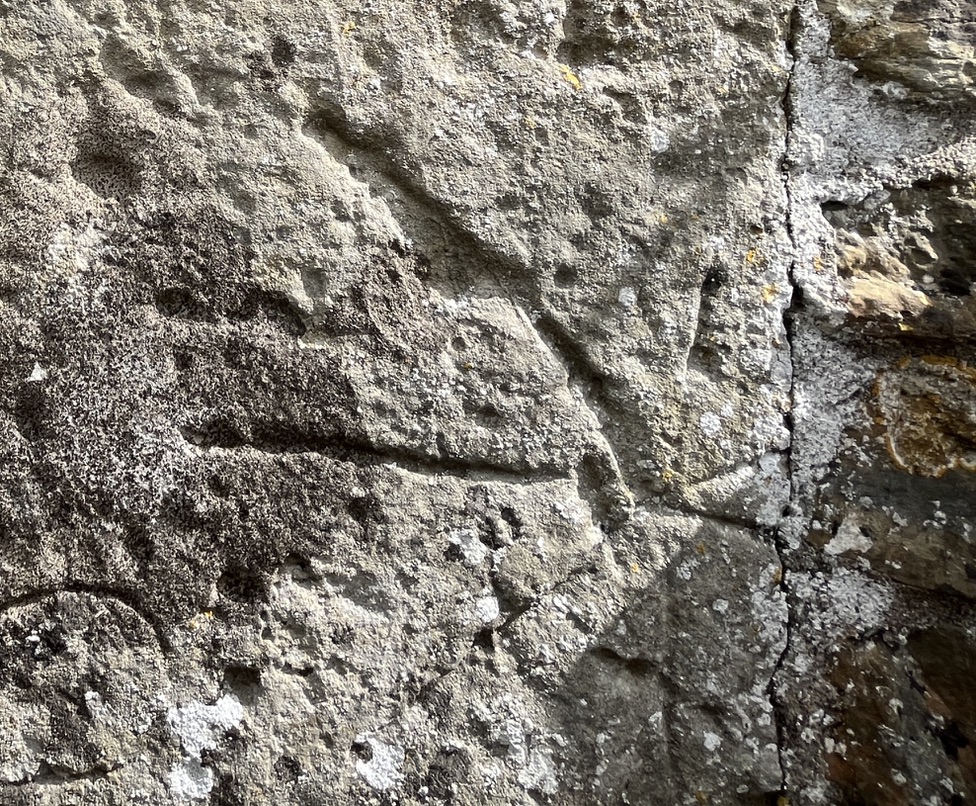
The dial is a spidery creation (‘a six-pointed star formed of three intersecting lines’ GLP). It’s hard to imagine how, in its original position, it could have been very useful. Perhaps the rustic work of a sacristan in idle moments? Possibly it is not a dial at all.
UPPER STONE
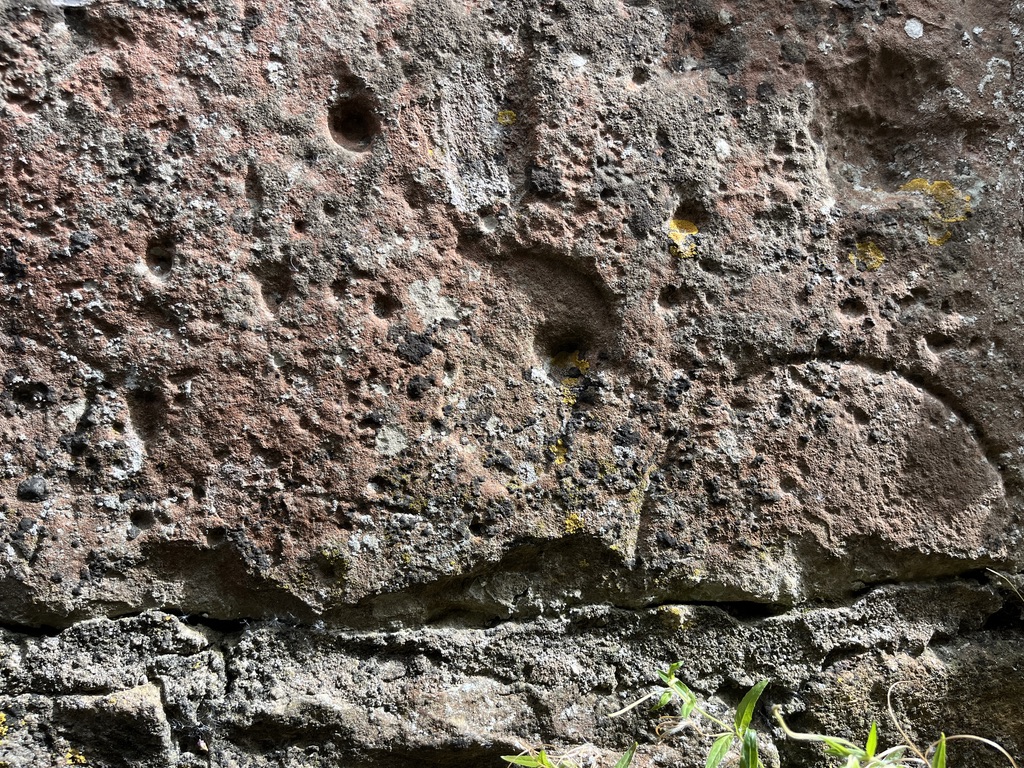
LOWER STONE
The stone below (a different type?) has a half-circle, and a promising gnomon hole above left. Neither has other dial features.
SHOE OUTLINES
Without being unduly dismissive of the dial, the most interesting features of these stone fragments are the outlines of 2 small shoes – one incomplete, the other cut off by the edge of the stone. The iconography of medieval protection marks is a whole separate subject of study, outside my remit. In brief some recurring features found on or in buildings – both religious and secular – are defined as protection marks. Specific examples include outlines of hands (eg North Cadbury), feet, and shoes. Other counter-witchcraft methods involved items being walled up in dwellings. These include childrens’ shoes and toys; glass phials; bones; animal skulls; and dead cats. To explore further, the excellent book by Brian Hoggard ‘Magical House Protection’ should be your guide.
Of St Andrew’s 6 bells, one has an excellent inscription worth mentioning: I OFTEN HAVE BEEN BEATE AND BANGED MY FRIENDS REJOICE TO SEE ME HANGED AND WHEN MY FRIENDS DO CHANCE TO DIE THEN I FOR THEM WILL LOUDLY CRIE
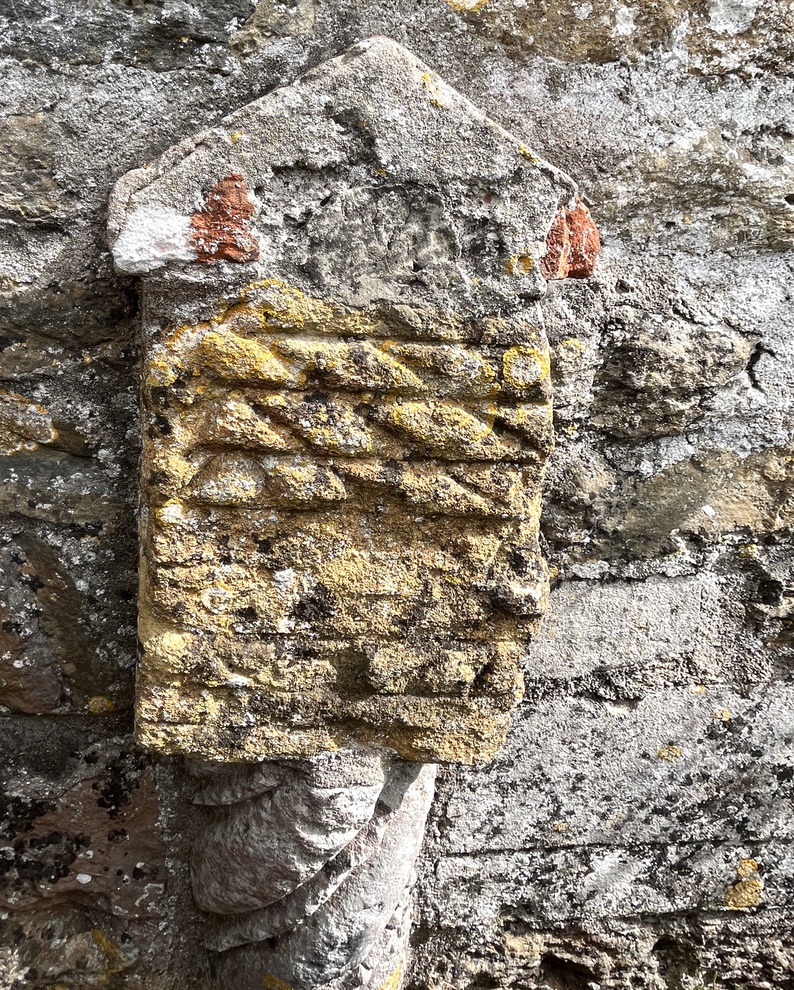
Another fragment incorporated into the wall
GSS Category: Scratch Dial; Mass Dial; Re-sited Dial; Shoe protection mark
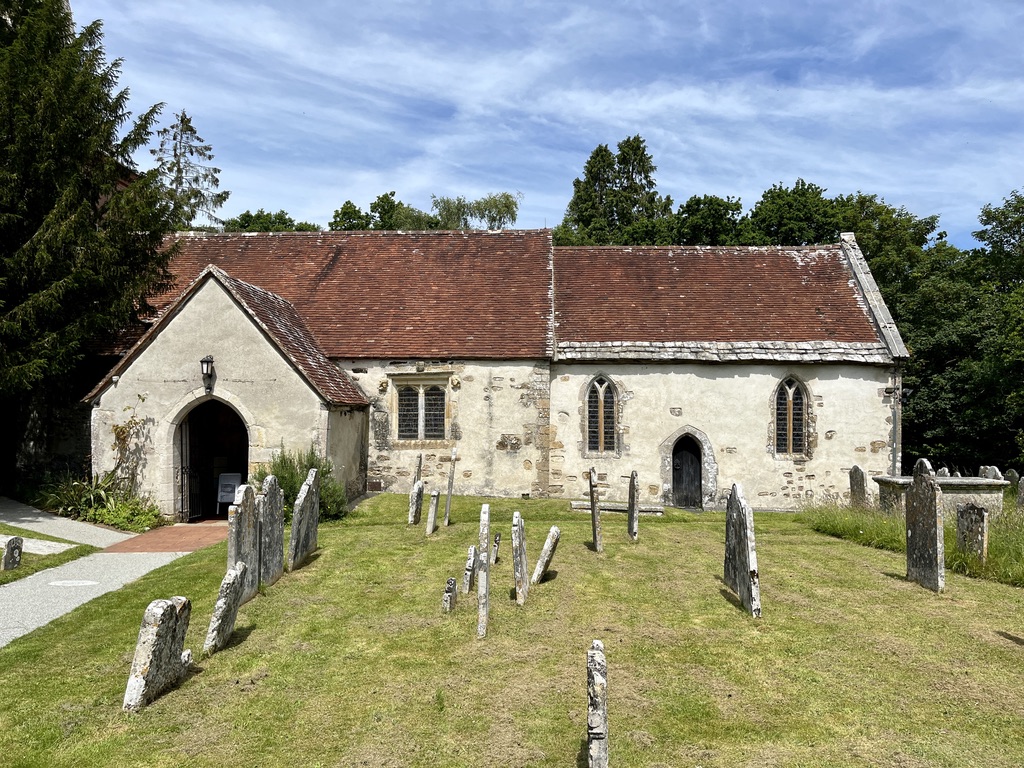
GRADE II* ✣ C13; C15 chancel rebuilt; C16 porch, bell-cote; later restorations esp 1847. A fascinating small church with plenty to offer the visitor besides the look of it including: medieval protection marks and graffiti; remains of wall paintings; tiles; good pew ends; an intriguing porch; a nice memorial horizontal dial in the churchyard; and the grave of Noel Thelwell (beloved pony cartoonist) and his wife. The church information sheets are models of their kind. 3m N of Romsey; 8m S of Stockbridge. 51.0193 / -1.5084 / SU345245
The dial was recorded in April 1922 by ARG, the originator of scratch dial research in Hampshire. He, like pioneer Somerset dial researcher DEH 10 years earlier, was equipped with a camera.
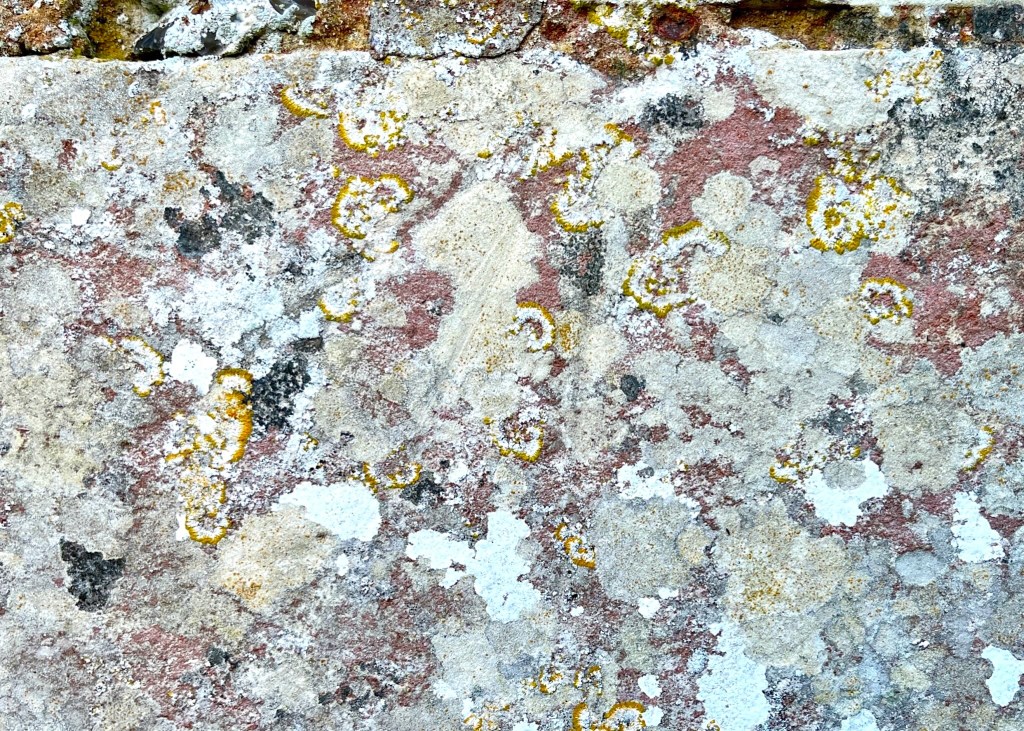
ARG noted 4 definite lines of equal length, perhaps more under the lichen. Located on SE quoin stone of the chancel, facing due S. Style hole about 4 ft high, in mortar line (thus forming the horizontal / 6-to-6 line).
There were several later descriptions of this dial. The last official BSS record (photo below) was made in 1994.
❖
DIAL IN JANUARY 2024
The condition of the dial may have deteriorated from weathering, however the apparent repair work since 1994 may be the reason why the lines are now so indistinct.
❖
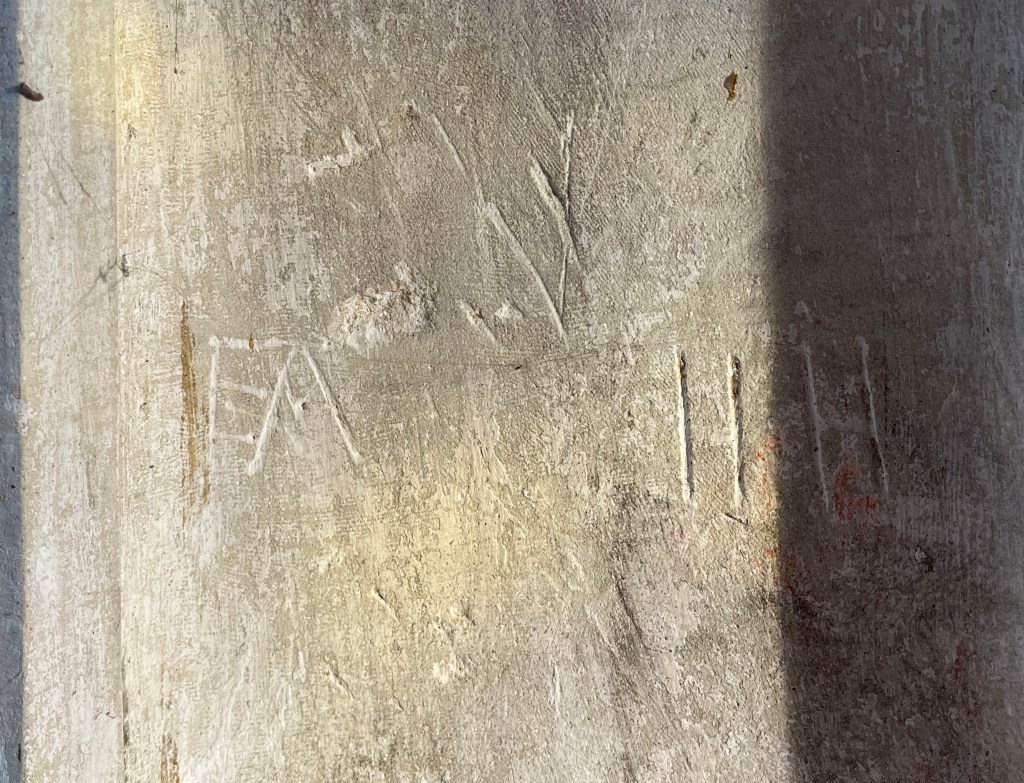
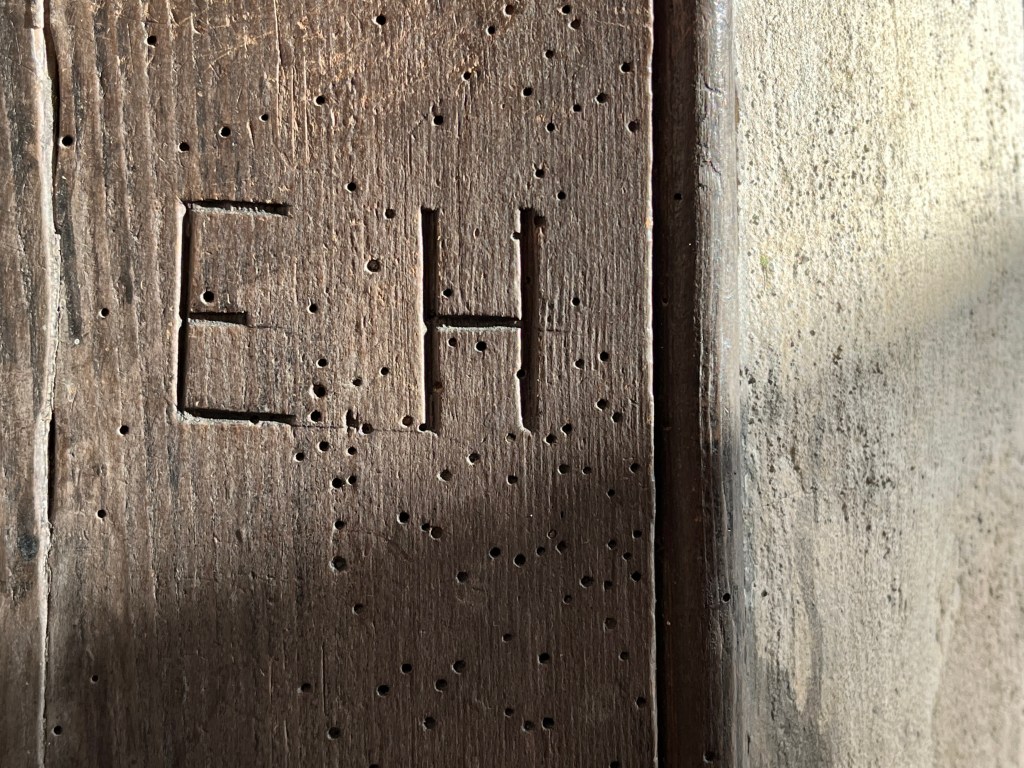
GRAFFITI and PROTECTION MARKS
FUTHER READING
HAMPSHIRE FIELD CLUB & ARCHAEOLOGICAL SOCIETY HERE
GSS Category: Scratch Dial; Mass Dial; Church Graffiti; Protection Mark; Marian Mark
GRADE II* ❖ C12; chancel, porch late C13; enlargements; late C19 / early C20 restorations. Excellent late Norman south door. C12 font. The oldest church in the New Forest. The village and church have great military significance. WW1: a Military Hospital for severe casualties of non-British soldiers. WW2: Divisional HQ for planning D-Day. Large churchyard, commemorative graves, and a fine memorial. The church contains a moving exhibition of the wartime history. Queen Mary visited and seeing that Sikhs were lacking turbans, supplied them; and seeing broom handles being used as crutches, supplied walking sticks. 50.8146 / -1.5681 / SU305017
DIAL
The dial is on E jamb of S Porch, late C13. The right side is concealed by render of some sort. Despite erosion, it is possible to make out 8 lines. Iron gnomon remnant protruding.
ARG visited in June 1924. He detected part of an indistinct circle, but 100 years later there is no trace. He noted that the style-hole retains its metal gnomon, broken off and projecting very slightly. The original? It is rare enough to find remnants of metal in a gnomon hole, let alone (if ever) to be able to identify one as pre-1600.
Amusingly innovative metal gnomon. Clungungford . Salop
A special gravestone
GSS Category: Scratch Dial; Mass Dial; Dial with gnomon remnant
GRADE II* ❖ Norman origins on Saxon site; 1261 first Rector; C14 chancel and Tower. Victorian additions and restoration. Royal Coat of Arms of George II 1754. DHCT rates as fabulously interesting. Secluded within the New Forest. 50.7888 / -1.9231 / SZ055988
DIALS
All Saints has two adjacent dials low down on the same stone of a small buttress at the E end. One is elaborate; the other is rustic.
DIAL 1
There are 17 lines and 7 pocks within an incomplete circle. Noon seems to be indicated by 3 pocks under a shorter line. The longer line no doubt indicates the main time of observance as None.
DIAL 2
This simple dial has 2 sets of 3 pocks. The lower set would work for mid-morning to early afternoon, presumably to emphasise the main daily Mass. The upper set can only be ‘decorative’, perhaps the work of a bored sacristan practising symmetry.
GSS Category: Scratch Dial; Mass Dial; Medieval Sundial
GRADE I ❖ Saxon origins as cruciform chapel. Tower added c1180. Expansion C13, C14; C15 additions; C19 alterations. No dedication. A very fine and interesting church, the late Saxon work being of major importanceHE. Without any doubt one of the most interesting churches in DorsetPEV. 50.7889 / -1.956 / SZ031988
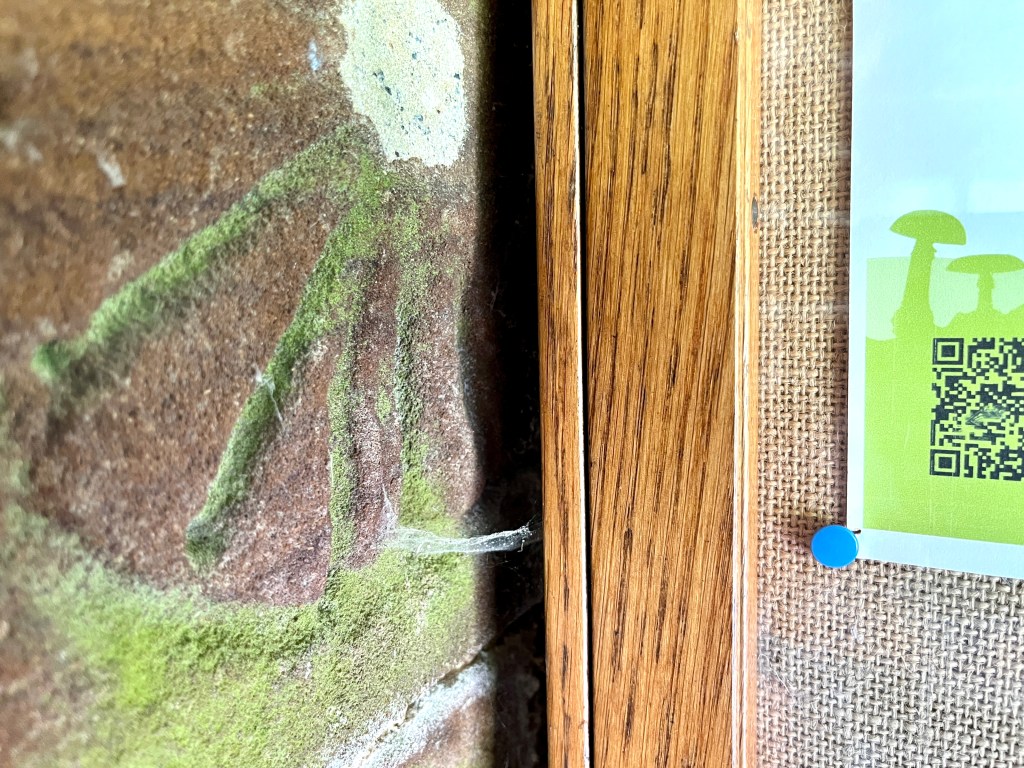
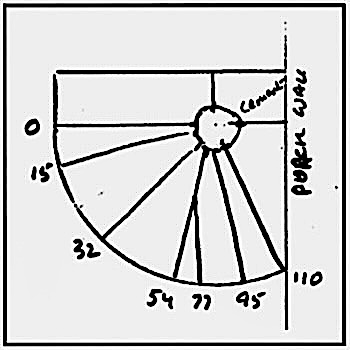
The dial is within the porch, RHS of the door and partially obscured by a noticeboard. The original BSS record (2006) notes a filled gnomon hole with 8 radials, encircled [see diagram]. Four irregular moss-filled lines are clearly visible; a couple more are just detectable. The noticeboard stymies the sort of hopeful slantwise photo behind an obstruction that can occasionally be revealing.
BSS Diagram
Although this is a Parish Church, it lies within the grounds of Canford School. There are some unsurprising visiting restrictions. If you have an interest in early churches, you will want to spend some time investigating the interior and working out the gradual development. See PEV DORSET p171 and ff.
There is quite a lot of graffiti, much of it old but with later pupil initials etc. As a bonus, there is a good vertical dial on the apex at the E end, which will be written up separately.
GSS Category: Scratch Dial; Mass Dial; Scratch Dial within porch; Vertical Dial
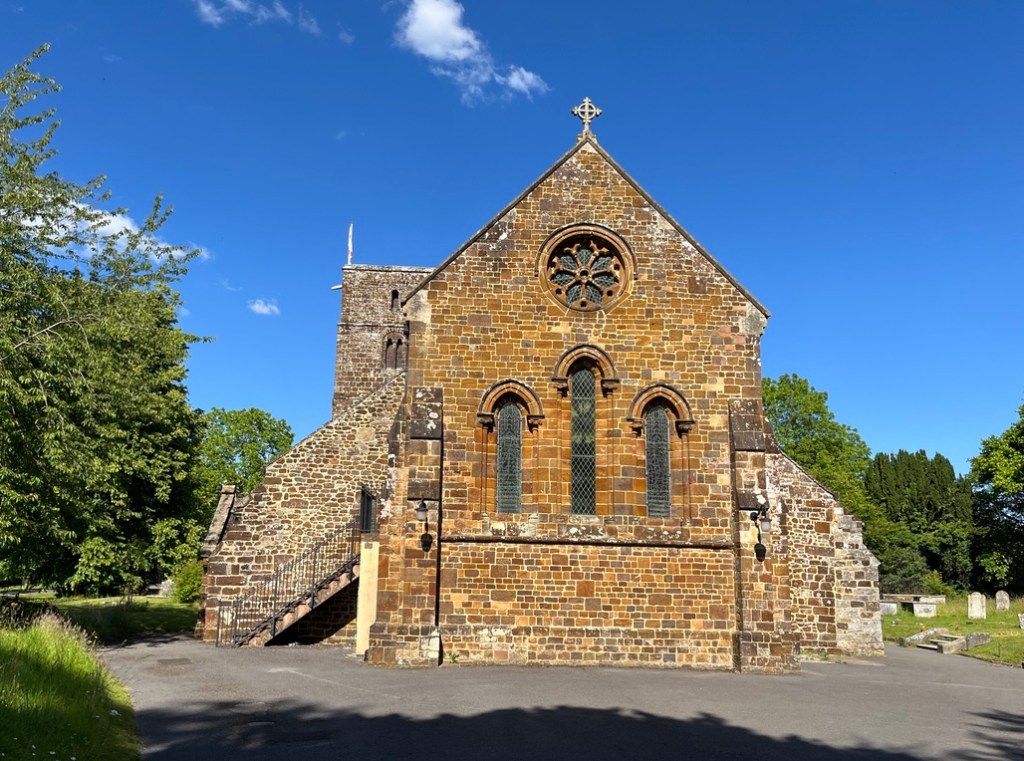
GRADE II* ❖ C13 and later, south aisle added 1870s. Three stage octagonal tower, a feature of this area of Somerset (see Barrington, Stoke St Gregory, North Curry, Podimore and Weston Bamfylde). Close by is a fine market cross with a cube dial, also found in other towns and villages locally (eg Martock, Ilchester) – separate post in due course. 51.0009 / -2.6818 / ST522226
DIAL
Without guidance, it would be easy to overlook the dial. DEH does not mention it. I only discovered it from the very informative church leaflet. Despite the clues to its position, it still took me a while to find the relocated and inverted dial, barely 2ft off the ground.
Dial details – Church Leaflet
.
REVERSION
With relocated dials, especially inverted ones, it’s often worth seeing how they originally looked. This dial takes on a different appearance when righted.
The two dark areas are almost certainly the footings for a vertical sundial. The slight alignment to the right of vertical suggests a calculated angle. The leaflet note that the dial used to be high on the south wall of the nave definitely suggests a vertical dial rather than a scratch dial (which would be pointless in a high position). Seeing it in its original location, I might have described it as an inverted vertical dial with a damaged surround and erosion evident, especially RHS where faint lines can just be detected.
So, without being didactic, I can’t be sure that this is a scratch dial as opposed to a later vertical dial. All comments welcome.
GSS Category: Scratch Dial; Mass Dial; Octagonal Church Tower Somerset; Vertical Dial

































 GAUDIUM SUB SOLE . SUNDIALS . MEDIEVAL TO MODERN