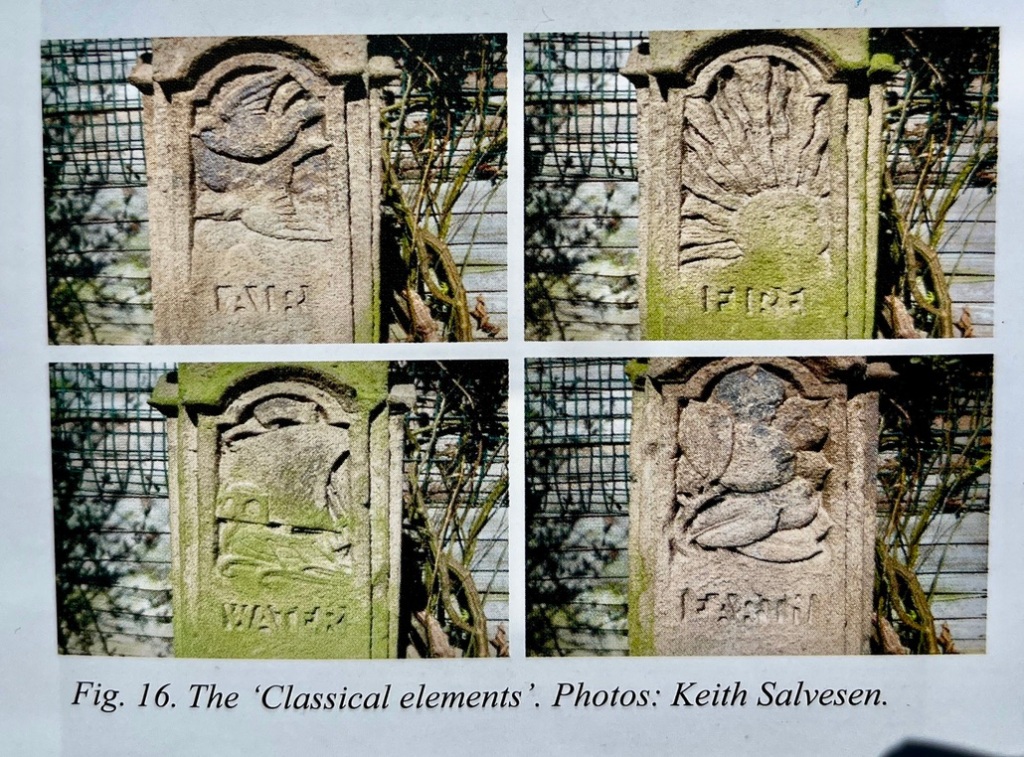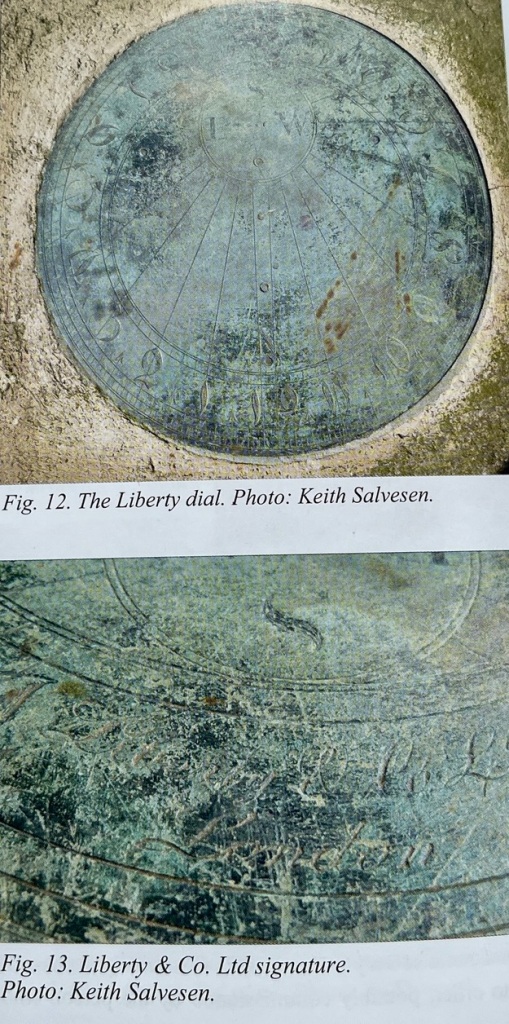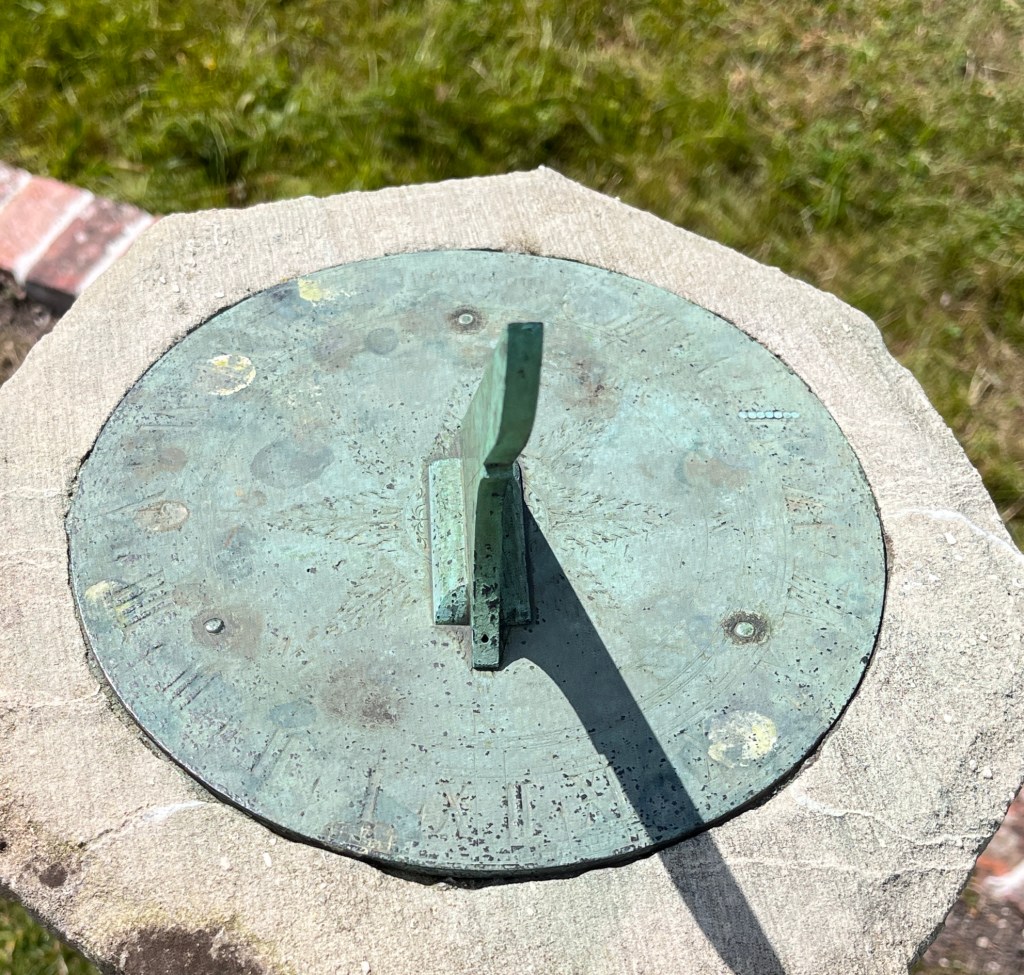
ART NOUVEAU SUNDIAL by FRANCIS BARKER with LIBERTY PEDESTAL

FRANCIS BARKER DIAL with LIBERTY ART NOUVEAU PEDESTAL

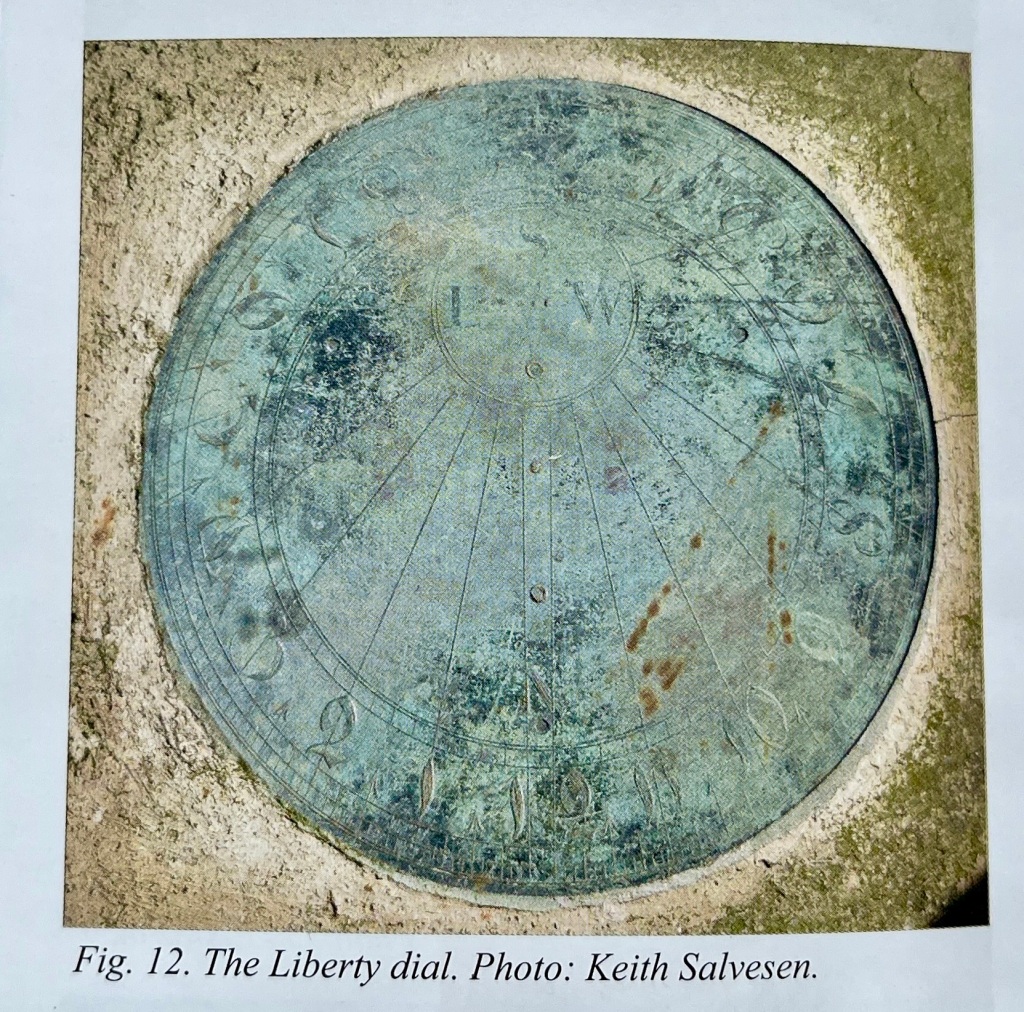
This is a gnomon-less sundial that I dug out of a pigsty at my home. I was about 10. The sty had layers of compacted earth and garden material that almost reached the top, the legacy of the previous owners. I had always wondered whether there might be hidden treasure, and eventually my curiosity got the better of me.

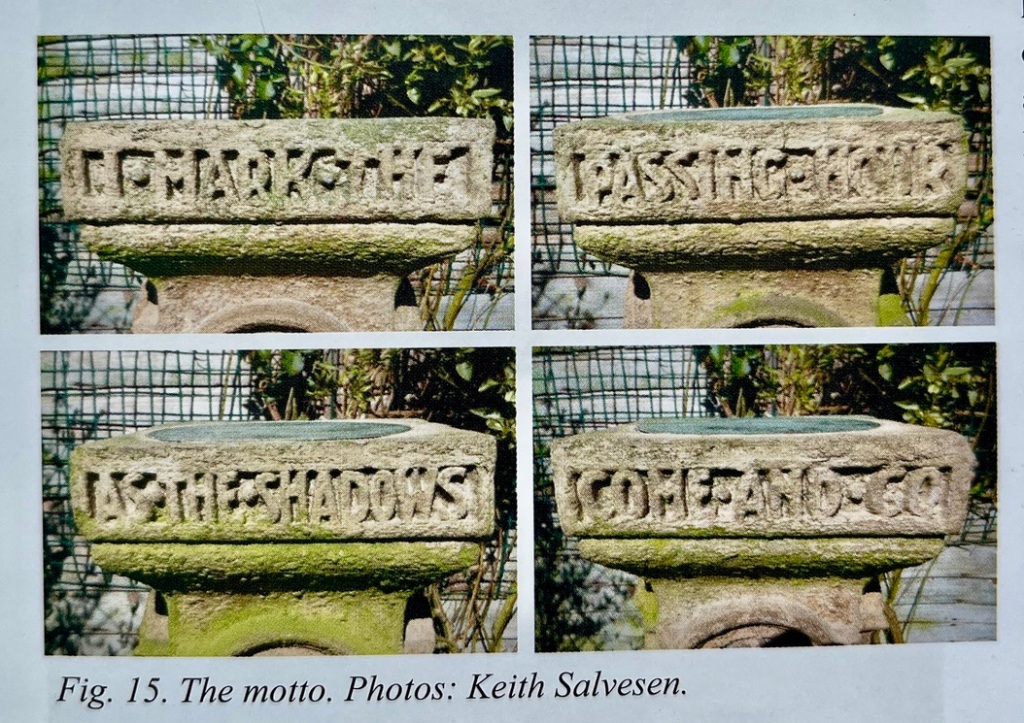
I gradually dug down until, suddenly, my spade hit something with a loud clonk. It took a while but eventually I was able to prise out… a prize. It has lived on as a garden ornament / flower pedestal for many years, with 4 changes of address. Eventually it has settled in Dorset.

Later – by then a BSS member – I sought advice about my dial. In due course Sue Manston included the dial in an detailed article by Jo Elsworth in the BSS Bulletin 118. Volume 33(ii) – June 2021
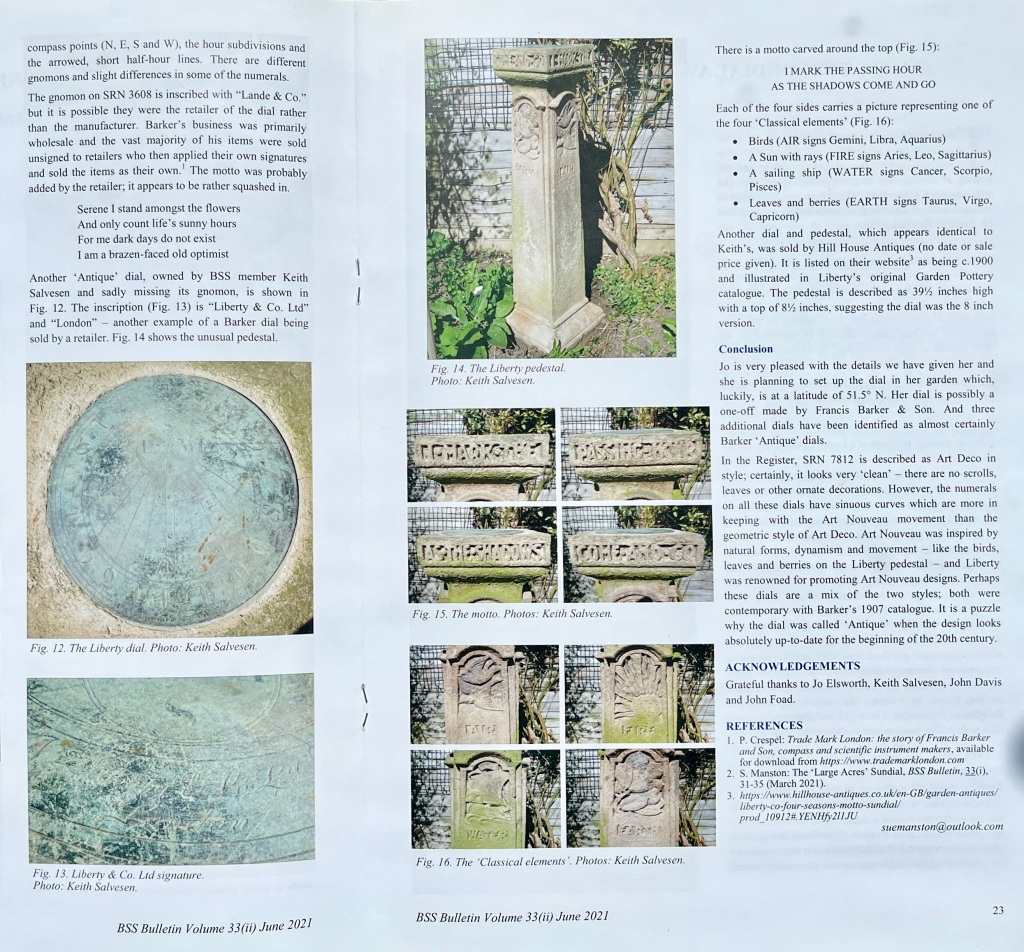
The author Jo Elsworth notes that similar dials have been described as ‘Antique’ and Art Deco. For the reasons she gives, the classification as Art Nouveau is the most approriate,
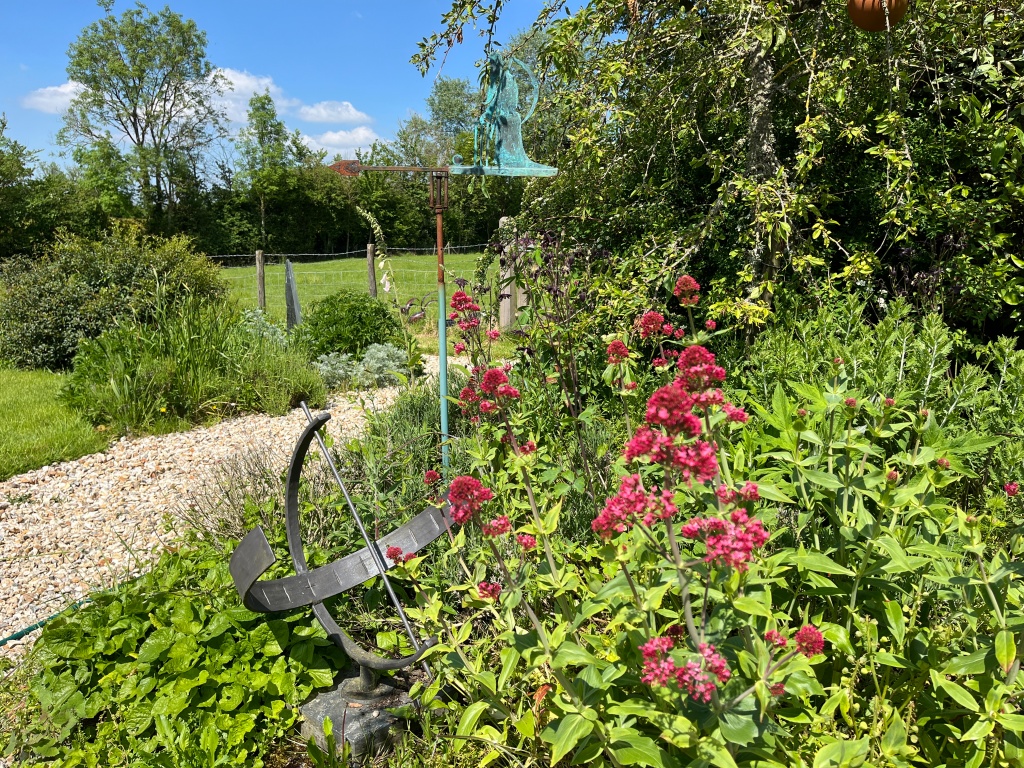
Also in the garden: a modern armillary sphere, watched over by Father Time
GSS Category: Horizontal Dial; Barker Sundial Plate; Liberty Sundial Pedestal; Art Nouveau Sundial.

All photos: Keith Salvesen; BSS article – Sue Manston, with thanks

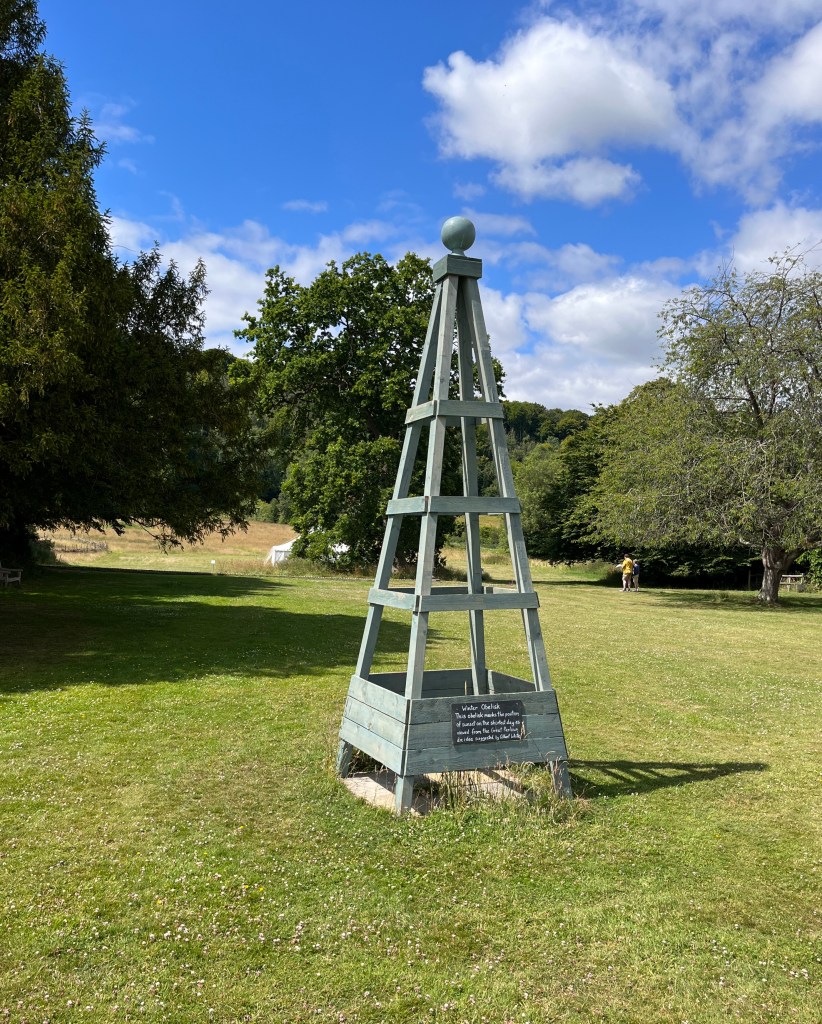
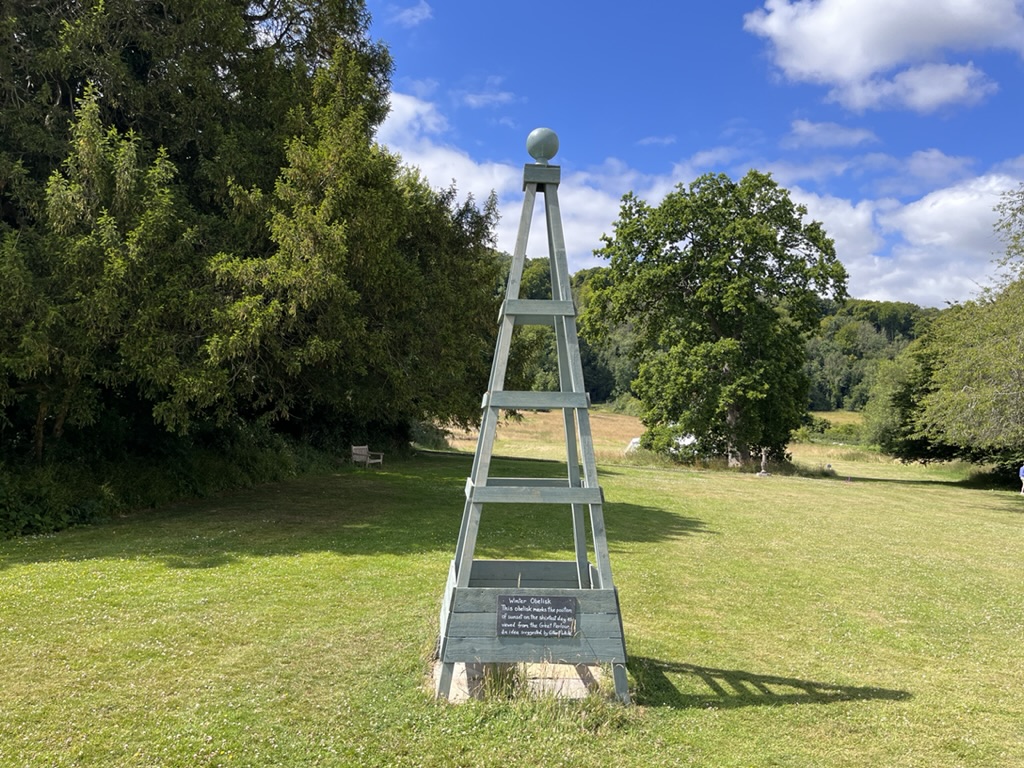
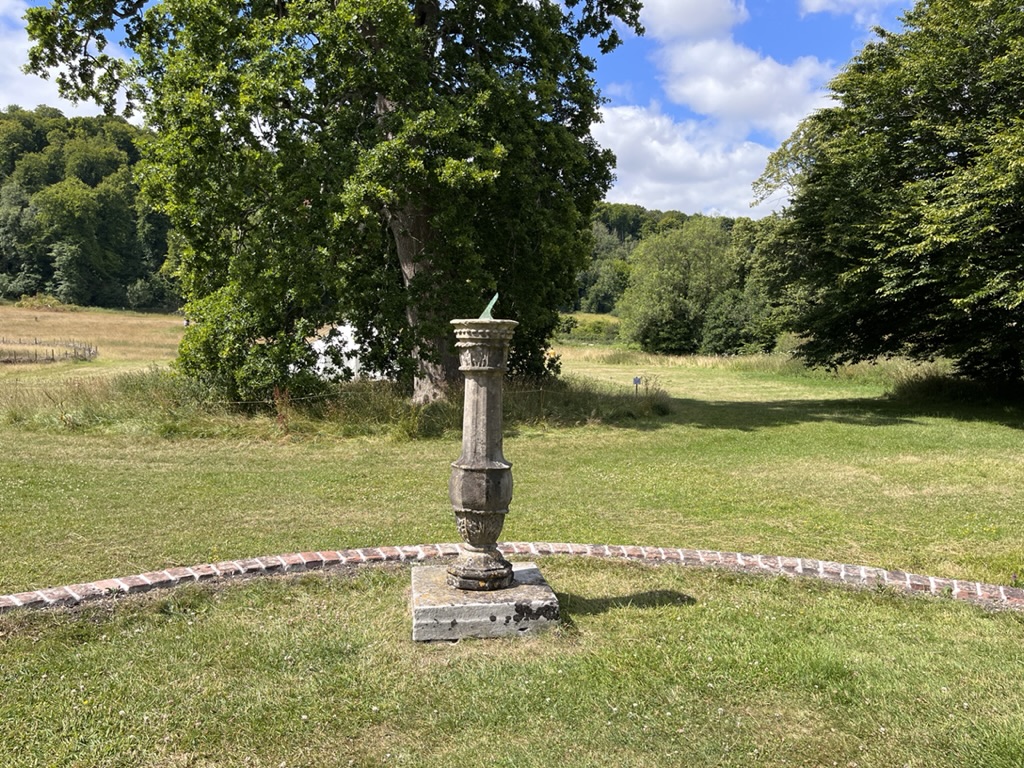
WINTER OBELISK & HORIZONTAL SUNDIAL . SELBORNE . HANTS

Selborne in Hampshire was home to the C18 naturalist GILBERT WHITE (1720 – 93), renowned naturalist and considered to be one of the earliest ecologists. The link above will take you to the Wiki page about him. The history of the garden can be found at SELBORNE. If you are in the area, Selborne is well worth visiting. In particular, the extensive park contains examples of White’s propagation and conservation ideas that were way ahead of their time. And two very different dials.

Gilbert White . NPG

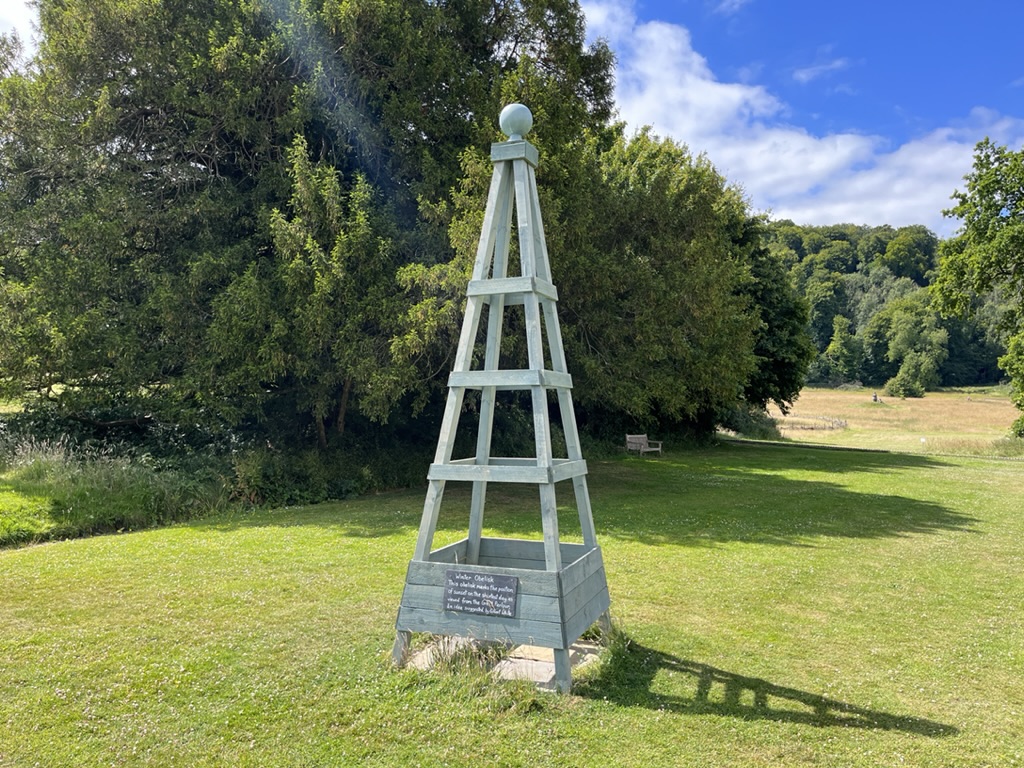
Much the most interesting feature at Selborne for present purposes is the Winter Obelisk, based on an idea by White. The structure is designed to ‘mark the position of sunset on the shortest day as viewed from the Great Parlour‘. Possibly it is a unique example of an obelisk dial having such a special – and limited – purpose. Perhaps it doesn’t count as a dial at all (cf Stonehenge / summer solstice). Seeing the shadows cast on the grass by the structure, perhaps there is scope to mark out a different kind of dial with a wider application (though not necessarily when viewed from the Great Parlour).

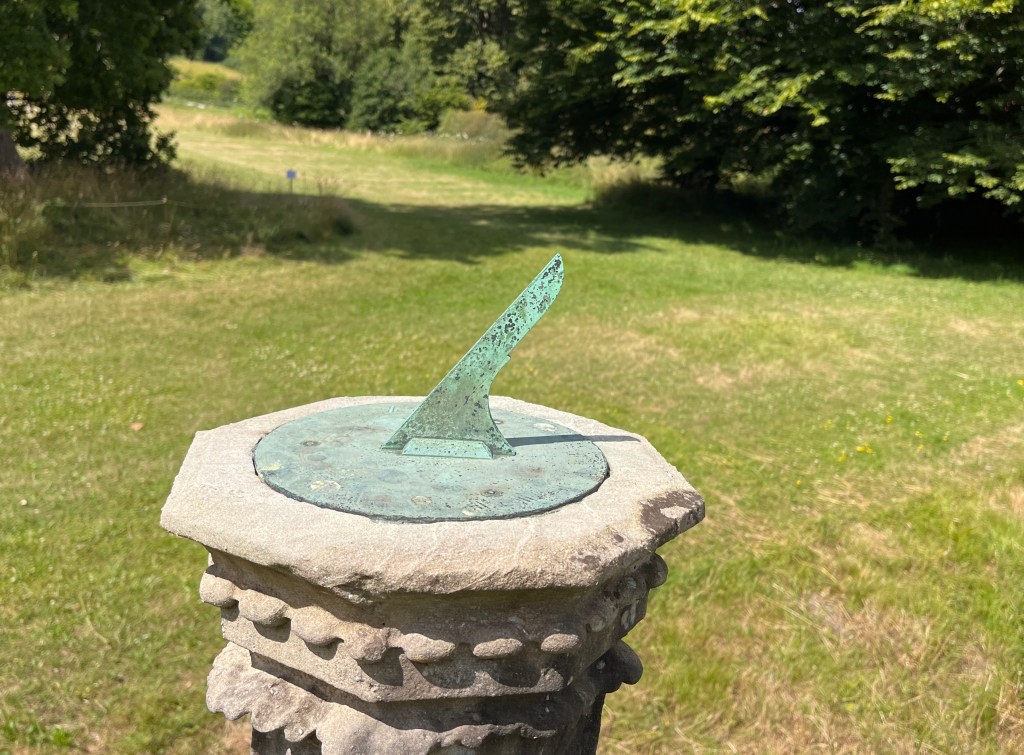
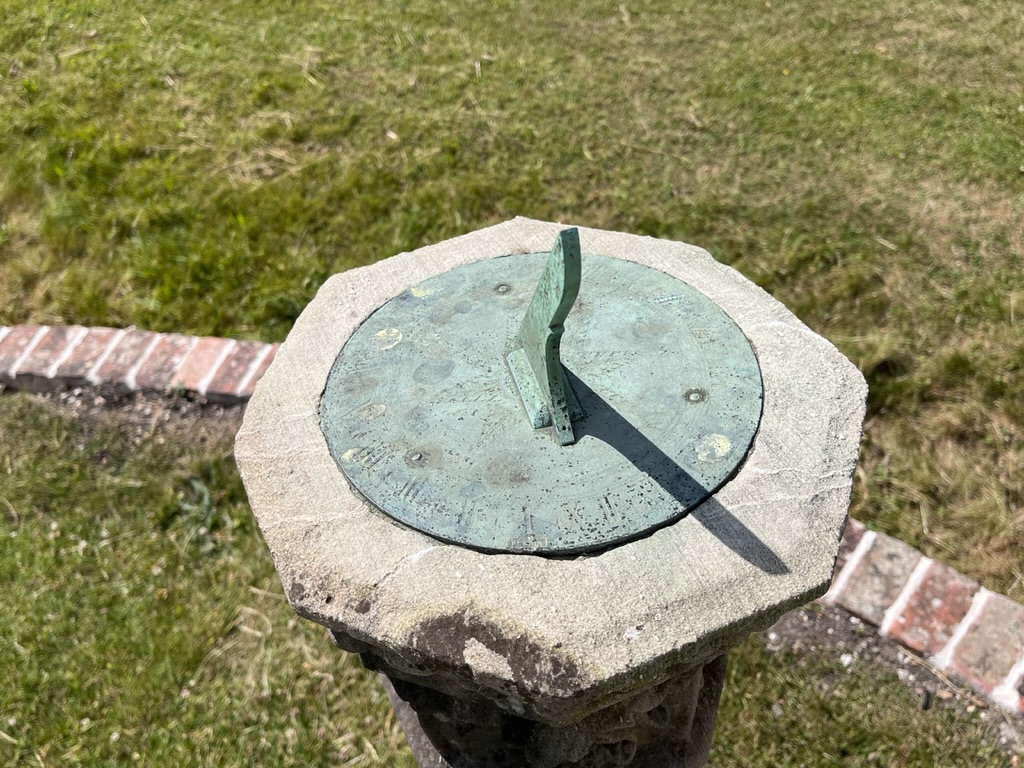
The second dial at Selborne is conventional and very much a park dial, standing above the Ha-ha. Is the dial contemporary in the historic sense, or in the modern sense (there are similar early C20 dials)? The former it seems: Both the ha-ha and the stone sundial standing on the lawn above it were features of White’s ‘New Gardens’. HE

GSS Category: Sundial; Horizontal Dial; Obelisk Dial

All photos: Keith Salvesen

WEST CHELBOROUGH . DORSET . ST ANDREW – C17 Scientific Dial

ST ANDREW . WEST CHELBOROUGH . DORSET

GRADE I † Early C12 traces, rebuilt and extended C15. S. tower added in 1638. Restored and added vestry C19. 2 bells cast on site in 1275, the oldest in Dorset. Notable C12 font. 50.8467 /  -2.6524 / ST541054

SCIENTIFIC DIAL

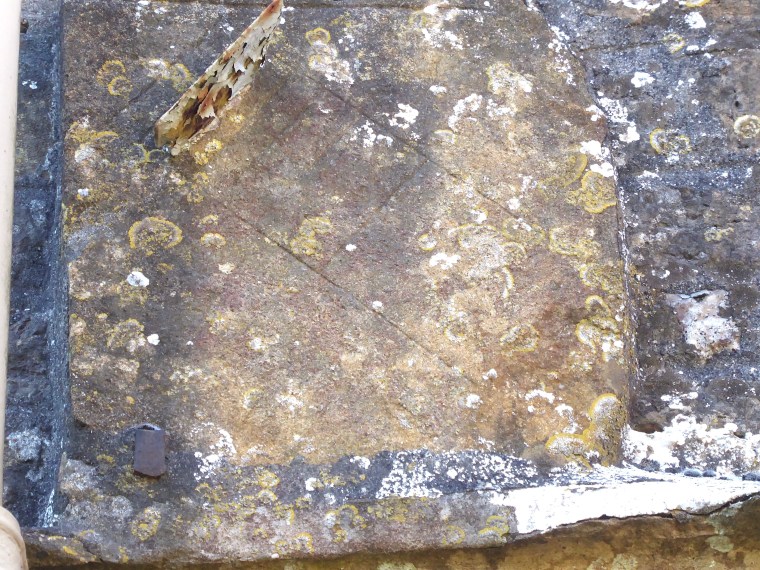
Once you have located the church at the very end of the hamlet – a dead end – of a very long lane, it immediately looks distinctive. In the present context, the dial on the tower – inscribed on S. parapet William Lardar Esq. Thomas Horsford Warden 1638 – is most unusual, not least because it faces due E.

 DEH, in a rare excursion into Dorset while researching the scratch dials of Somerset in 1914, recorded this dial as a C17 scientific dial of 1638: E declining down to midday only. No trace of another dial for later in day.

GLP has written the definitive interpretation of the dial, and I include his complete record which explains the dial far better than I ever could.

It would be good to know if this blade of a gnomon is / may be original and has been (re)painted over the years. Also, to know why special dials were almost always sited next to a drainpipe…

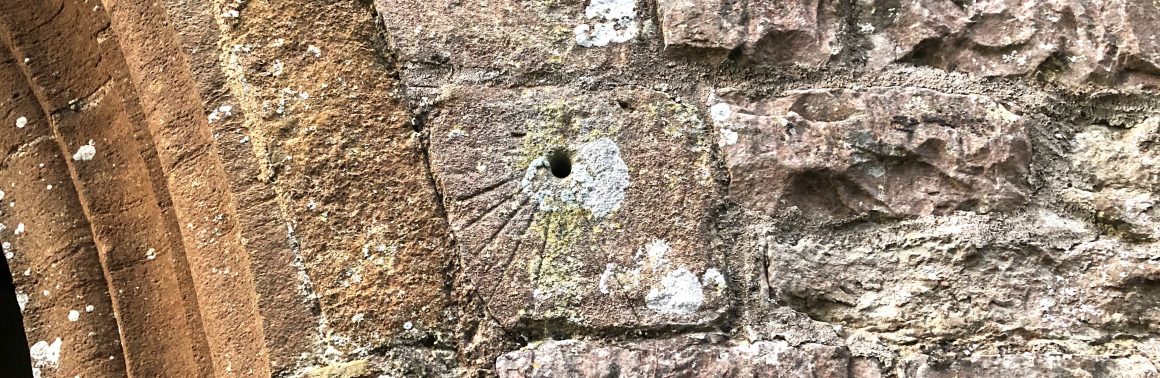
GSS Category: Scientific Dial; Scratch Dial; Old Dial

All photos – Keith Salvesen; record extract – Gordon Le Pard