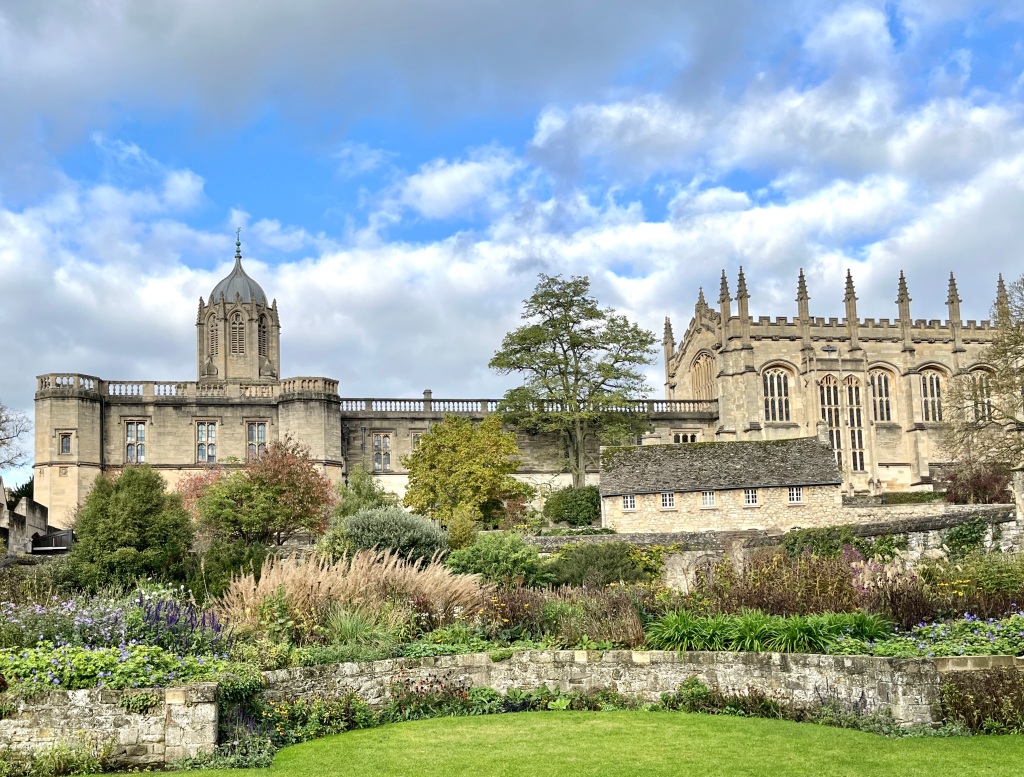
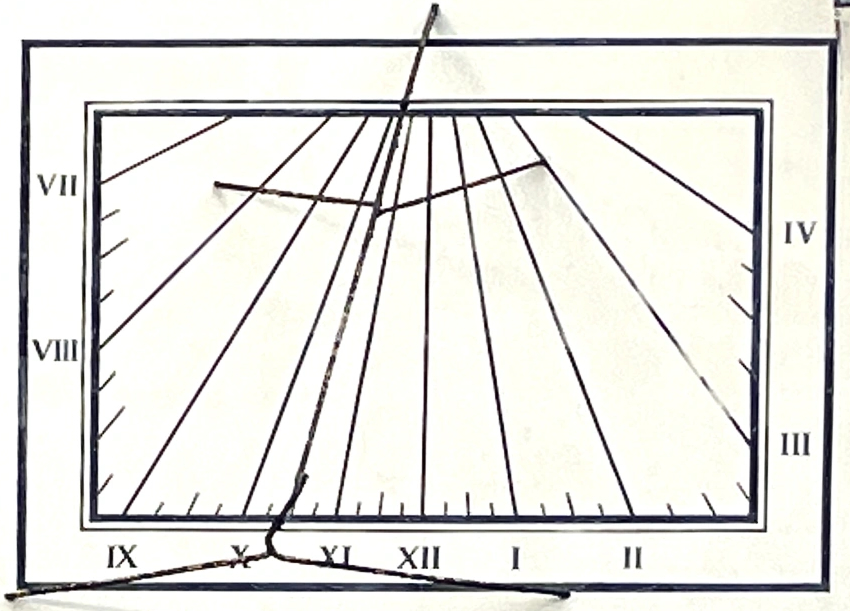
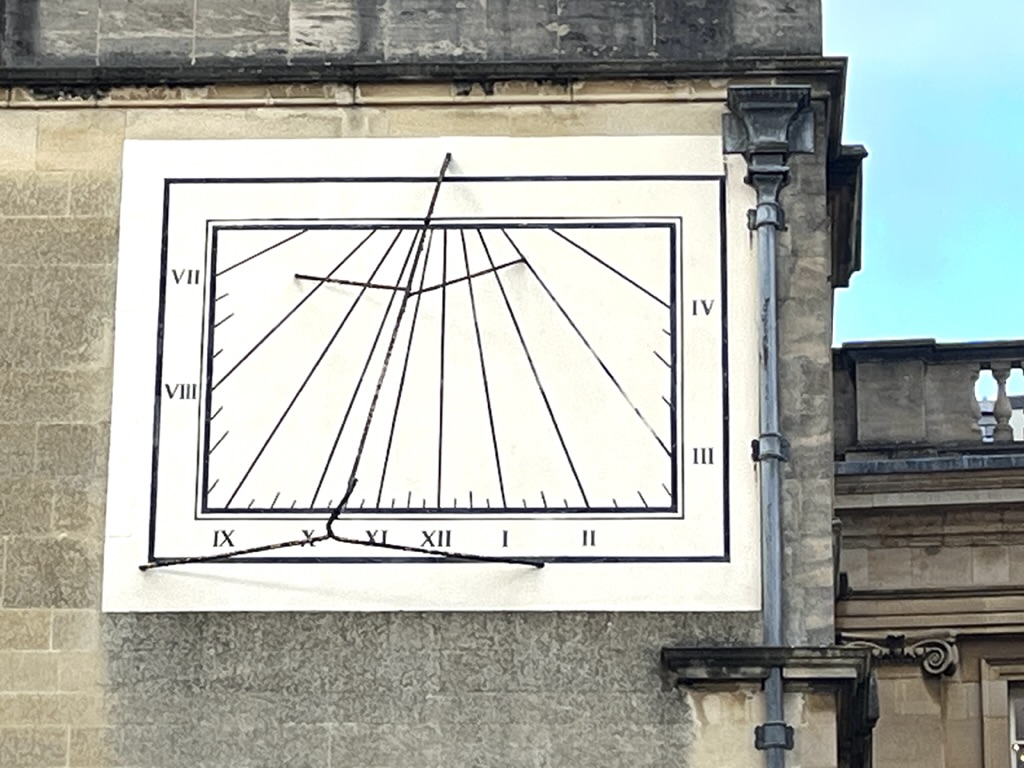
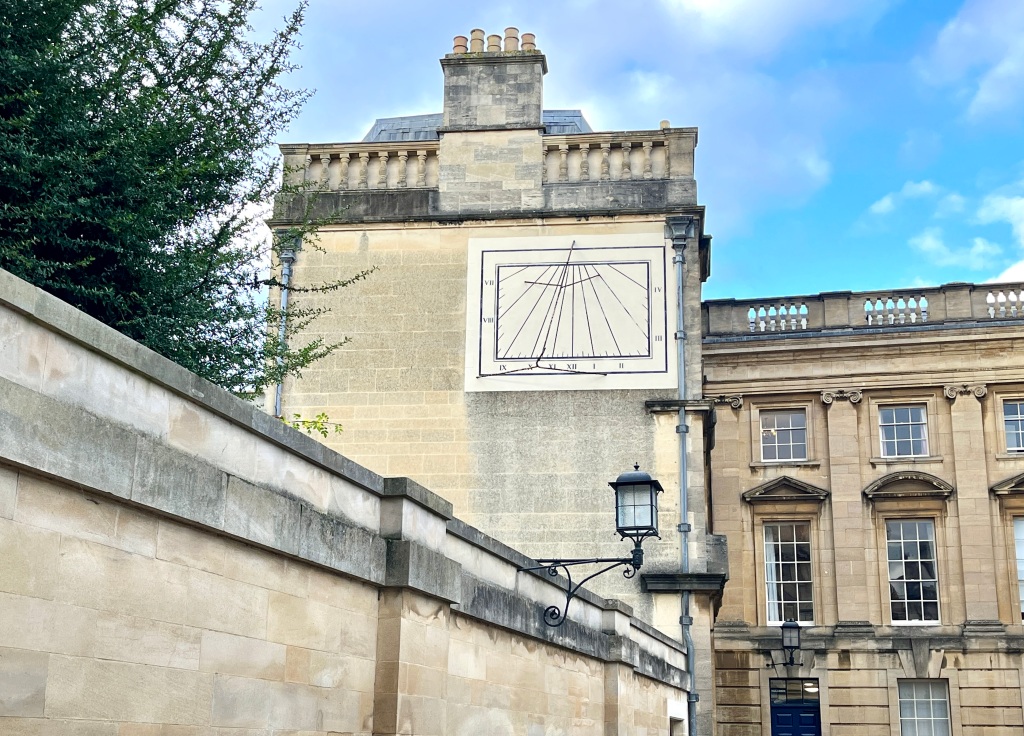
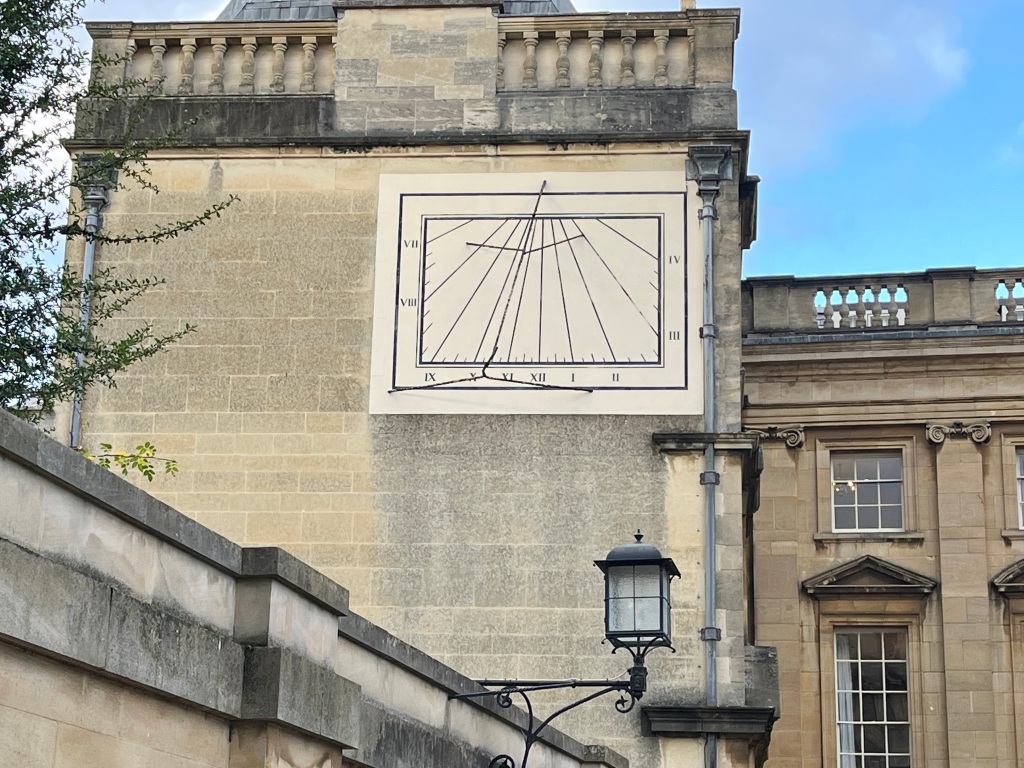
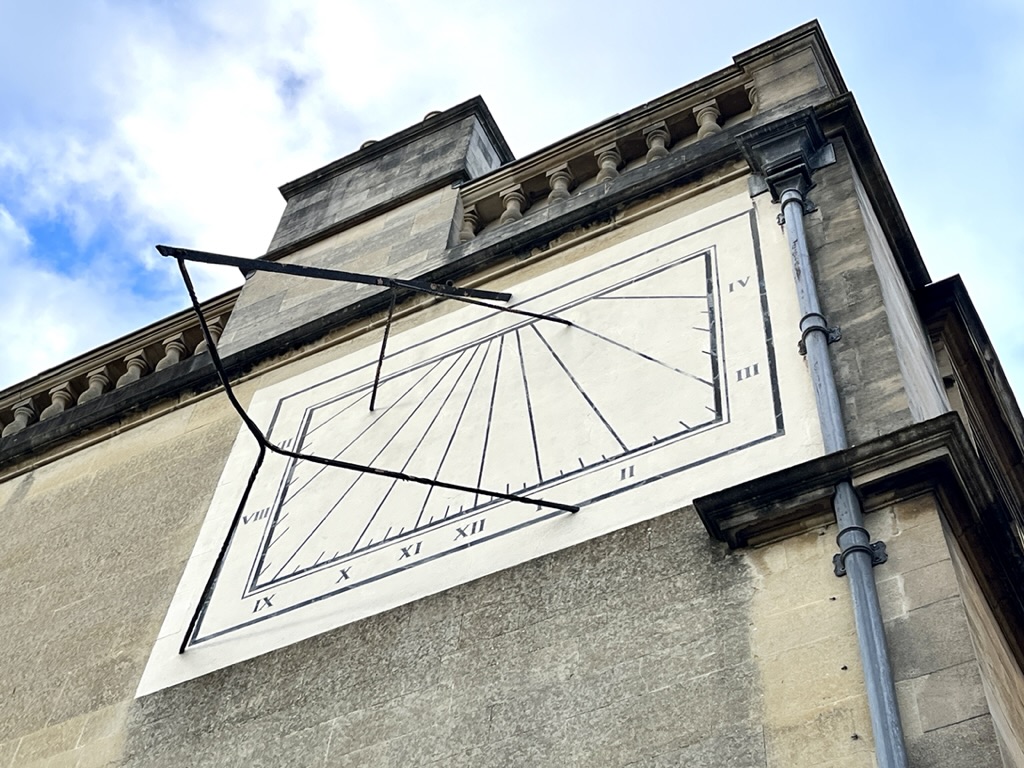
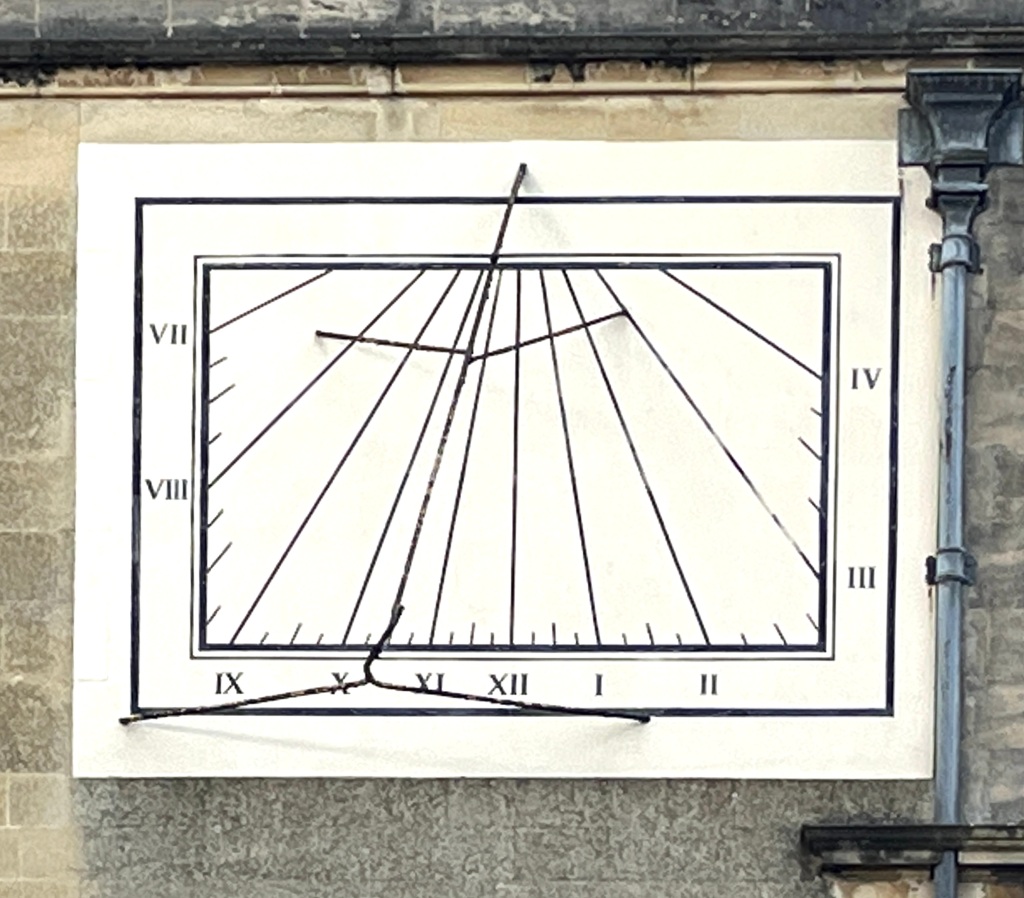
Located on W side of the Peckwater quad. c 1750, recently restored. Its position restricts the marked hour to VII – IV. Described rather harshly as a very plain and severely functional sundial of no great beauty in one source. Its simplicity and clarity in a City with many fine and some most elaborate sundials gives it some distinction.
Several other historic Christ Church dials both in the College and on the Cathedral (including mural dials) are sadly no longer extant. However, John Foad BSS points out that there is an outstanding multiple dial in the Pocock Garden, made by David Brown and installed 1998. There is also a small unobtrusive vertical dial elsewhere. These will have their own post in due course.
Christ Church Cathedral runs on Oxford time, five minutes and two seconds behind GMT. This is presumably a throwback to the late C19 before Standard Time was introduced by Statute, though there may be more arcane collegiate reasons.
To be linked in due course to the 2 modern sundials in the College.
GSS Category: Vertical Dial; Oxford Sundial; University Sundial; Old Sundial (C18)
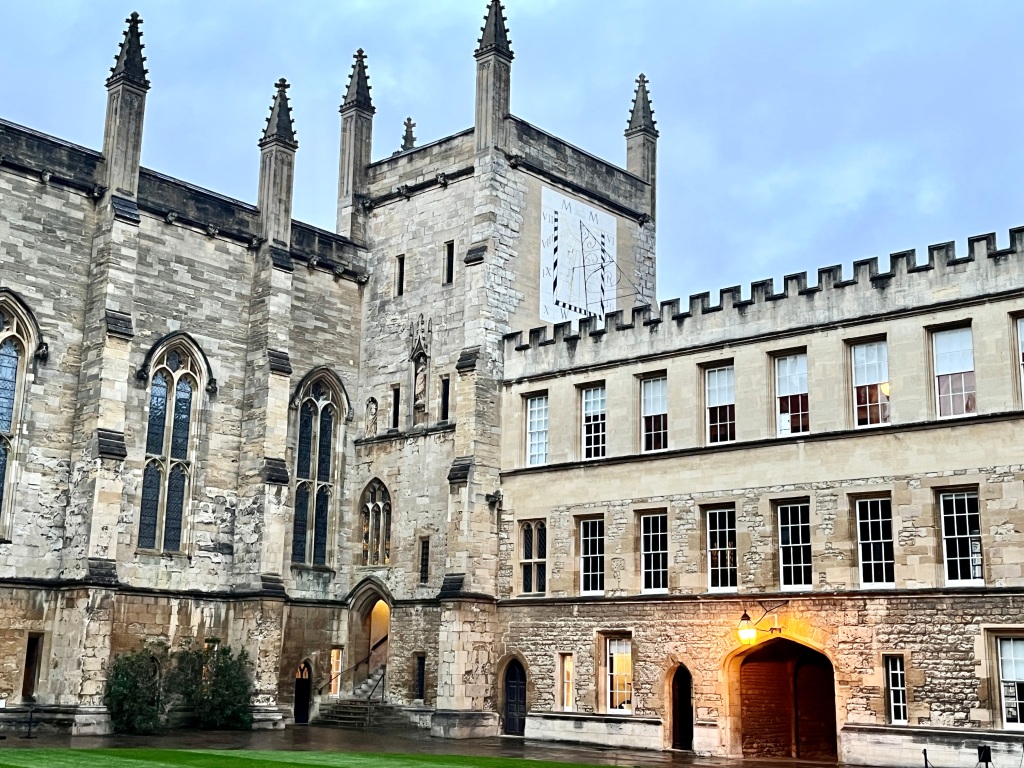
Dusk on a rainy November evening is not an ideal time to photograph high-up sundials, especially ones with intricate but delicate gnomons. Entering the Great Quadrangle, the sundial is visible on the Muniment Tower, beyond which is the Garden Quad. The position of the dial somewhat limits the photographer. A certain amount of refining has been needed in presentation, which I hope will be excused. The dial face is pale blue (white in some photos I have come across). The light conditions resulted in a rather startling blue that I have attempted not very successfully to tone down.
New College Oxford . Vertical Sundial
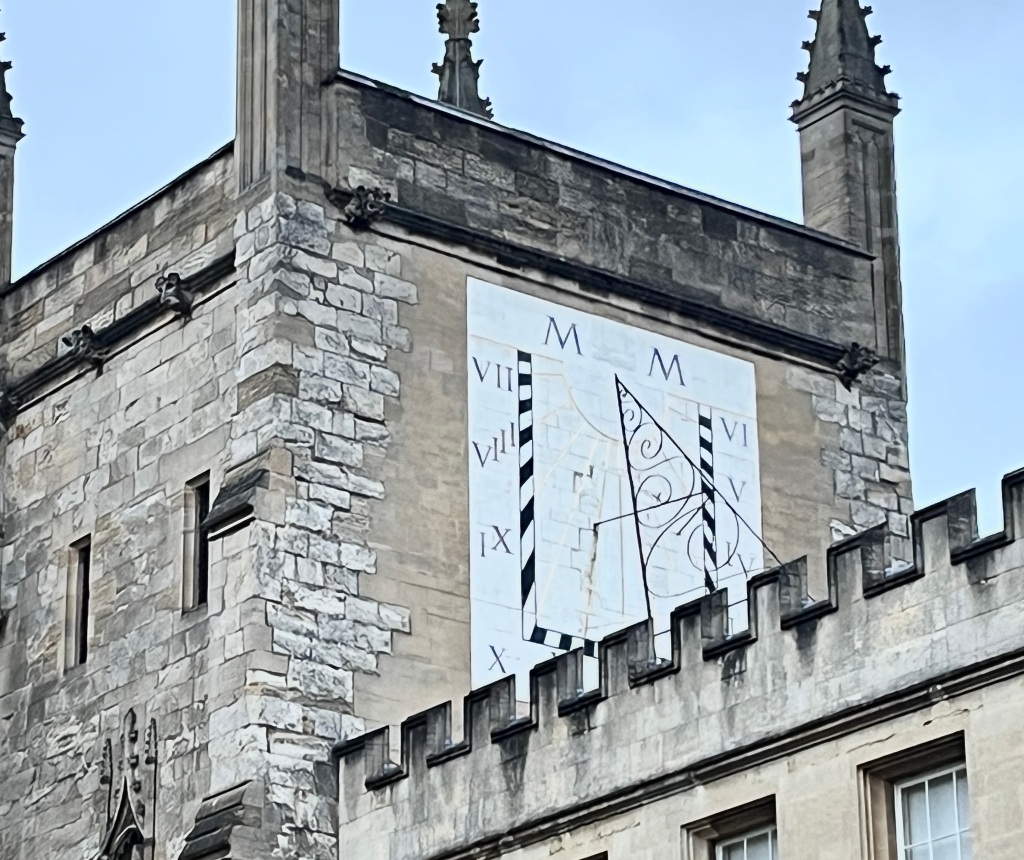
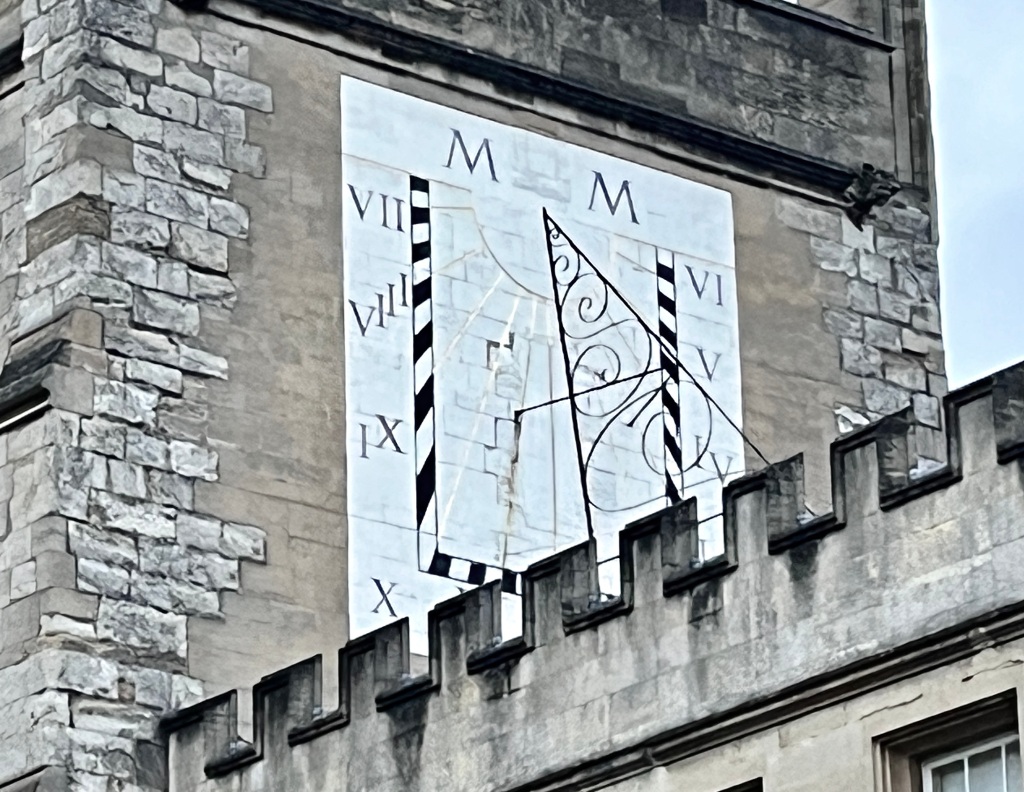
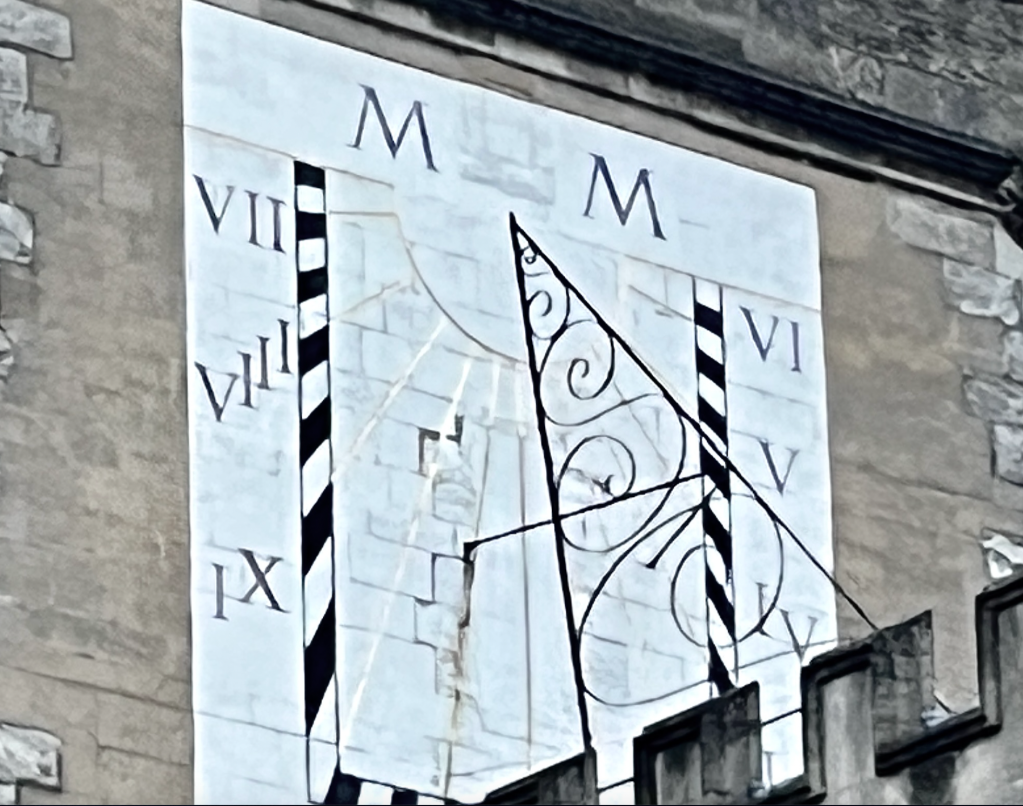
The New College Millennium dial is on the S facing wall of the Muniment Tower. Quite apart from photographic considerations, the high position means that it is not possible to see the whole dial from ground level. One cannot, for example, see that the M M at the top is matched by W W at the bottom, standing for William of Wykeham who founded New College in 1379; nor that noon is marked by a golden cross.
New College Oxford . Vertical Sundial
The dial marks quarter hours, as indicated by the chequered perimeter. Margaret Stanier mentions a wall-mounted plate showing the EQUATION OF TIME ; and she notes that there was a vertical dial in the same position from 1696 until c1850, then being obliterated by restoration and refacing.
BRITISH SUNDIAL SOCIETY ARTICLE – HARRIET JAMES
This excellent article from the BSS Bulletin Vol 12 .1 of Feb 2000 was published very shortly after the installation of the dial. It has all the material you need regarding the dial, and there are some very clear images that give a view of the whole dial. It also covers the original C17 dial in the gardens.
GSS Category: Vertical Dial; Millennium Dial; University Dial
All photos: Keith Salvesen. Source material: Margaret Stanier ‘Oxford Sundials’ 2003. College diagram: BLB; tip of the hat to Michael Lalos, a fellow dial enthusiast, who also used the BSS Bulletin
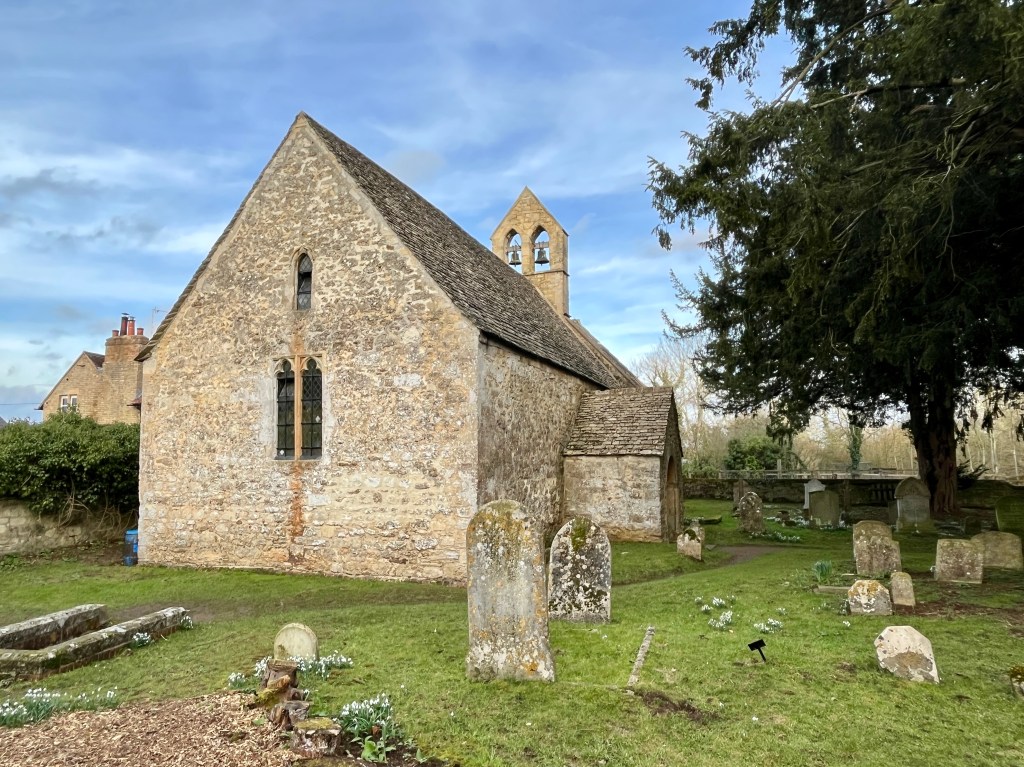
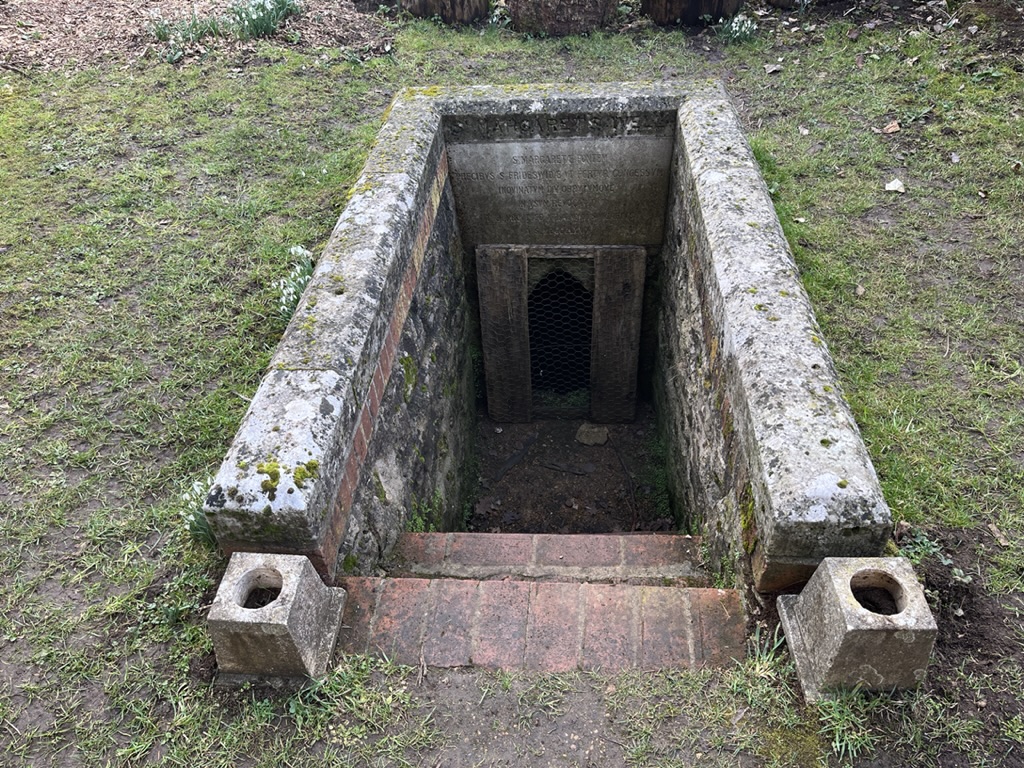
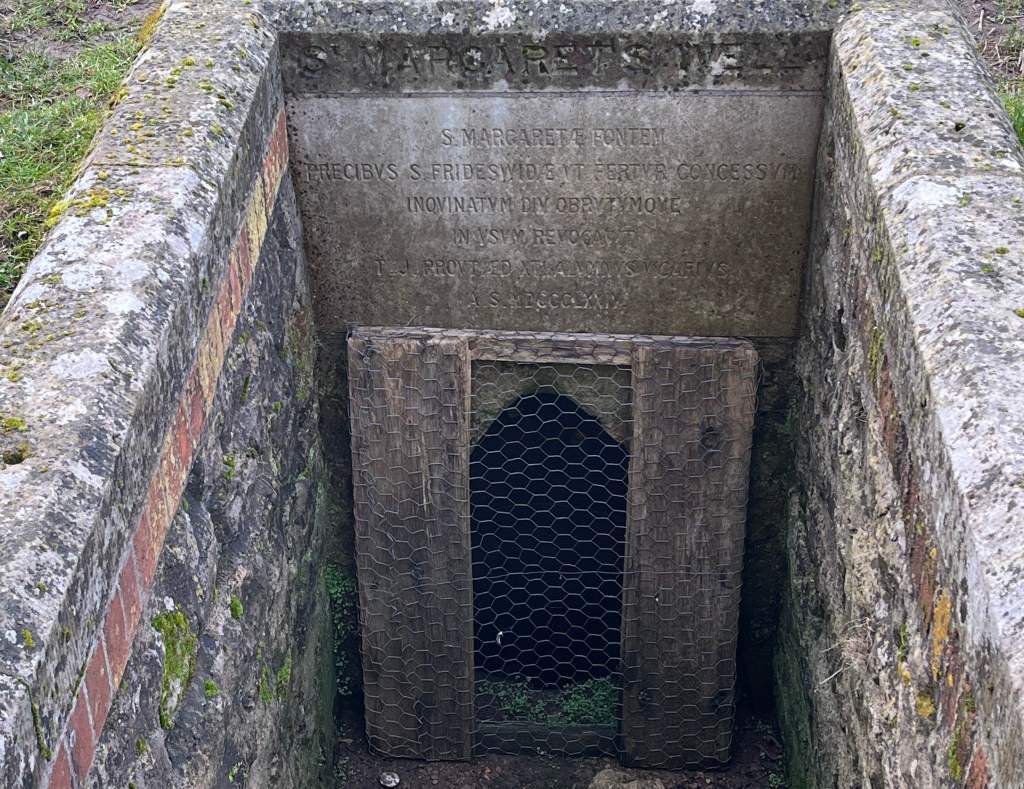
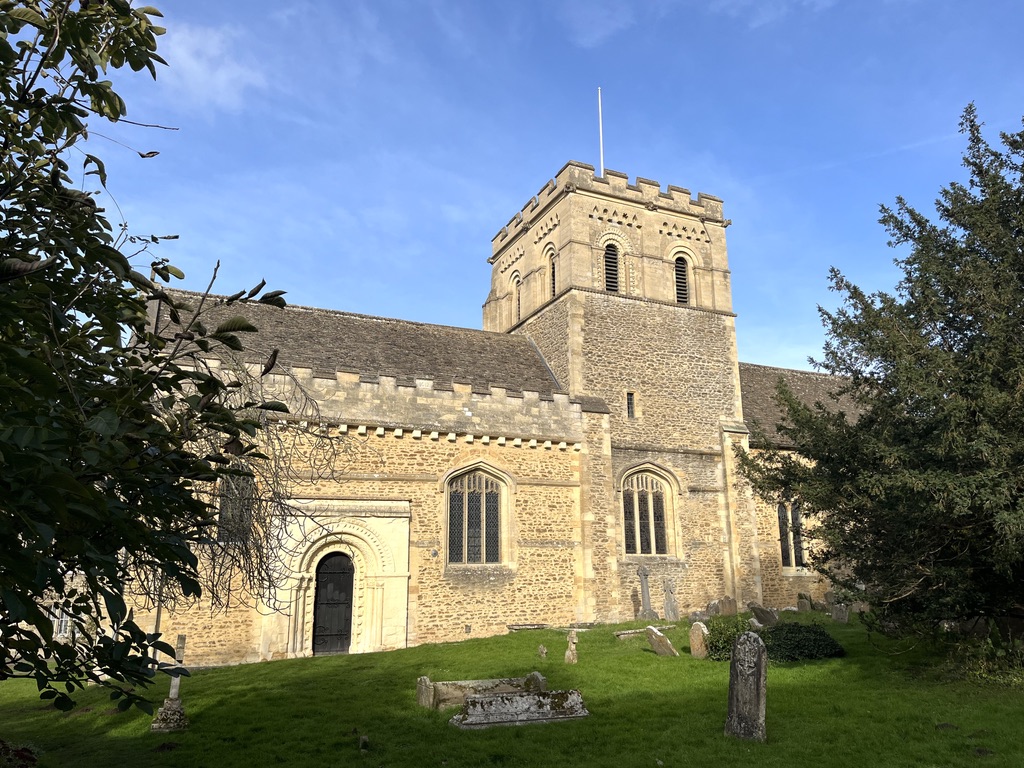
GRADE I † C12 origins on site of Saxon church; c13 rebuilding (chancel, nave), S porch added; C15 & later restorations (latest in 1936). Unheated and candlelit until 1975. Much of interest – remarkably secluded location, a Holy well, a direct link with Alice in Wonderland, an excellent riverside pub. Within ring road W of Oxford, N of Botley Road, at the end of a mile of narrow lane. Check a map before you go… 51.7691 / 1.2976 / SP485080
❖ The clearest illustrated article about St Margaret, its history, and its significance can be found at David Ross’s excellent BRITAIN EXPRESS. This includes the sad story of the celibate St Frideswide (C7), Patron Saint of Oxford and a roundabout system, & her suitor Algar. It also covers the origins of the Holy well, its healing powers and its link to Alice’s ‘treacle well’. An informed tour of the church ends with helpful directions to it.
DIALS
DIAL 1
St Margaret of Antioch . Binsey . Oxford – Scratch Dial 1
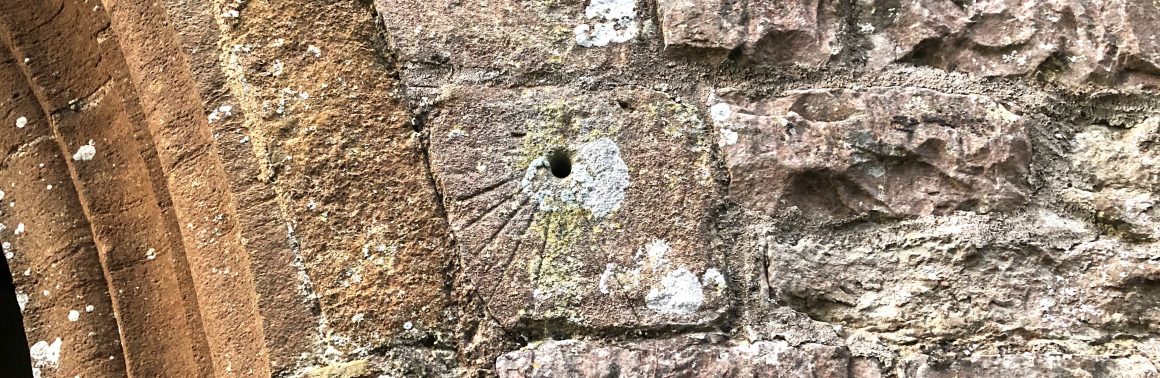
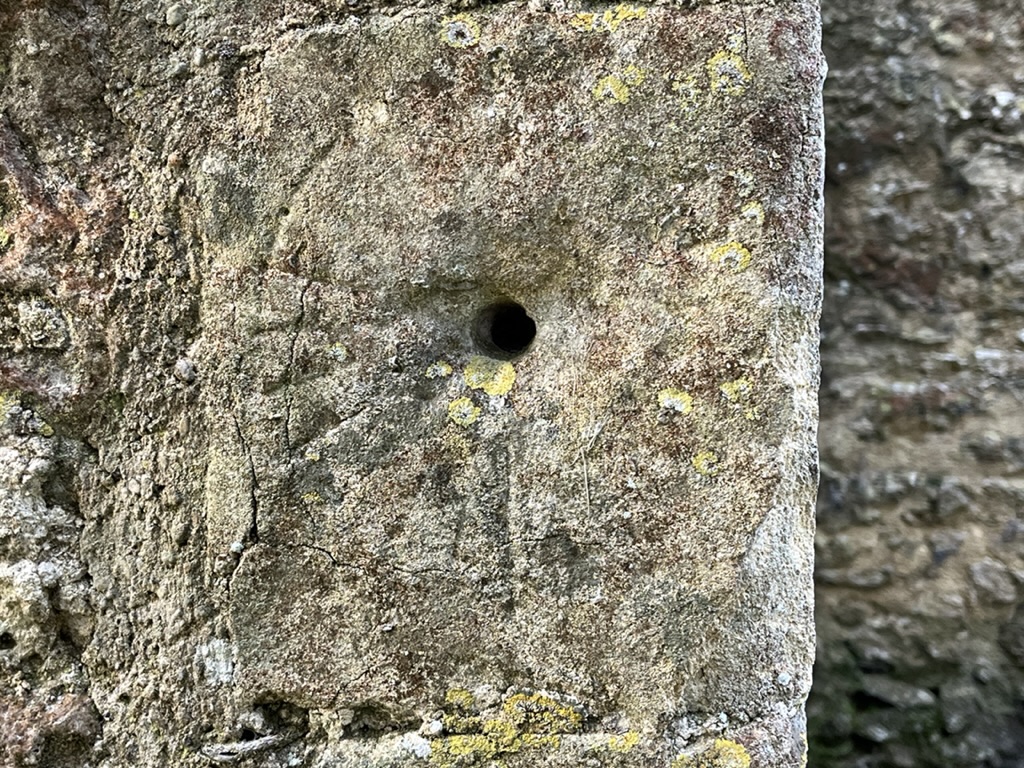
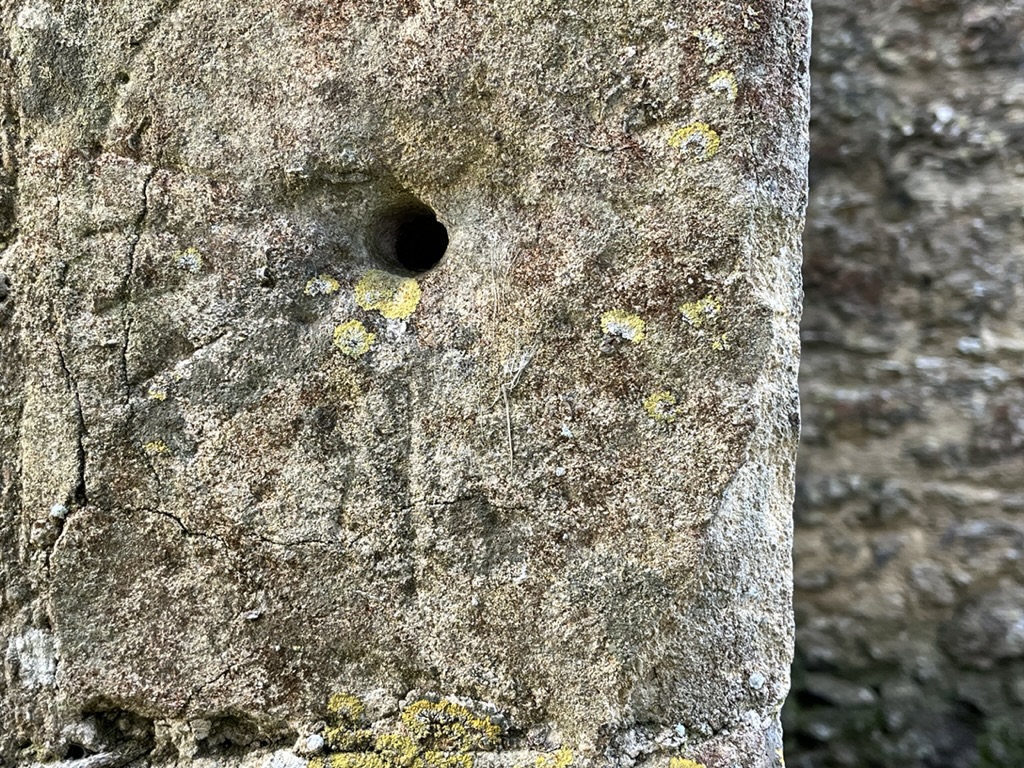
On the quoin RHS of the porch entrance, with a large slightly recessed gnomon hole. A morning dial, very eroded in the 3 other quadrants. Originally encircled (BSS)? The visible evidence of a complete circle is scant. 8 lines, some extending over split stone. The noon line is emphasised – longer and deeper cut. A hint of double pocks at lower end – just possibly a dotted cross ✣?
DIAL 2
St Margaret of Antioch . Binsey . Oxford – Scratch Dial 2
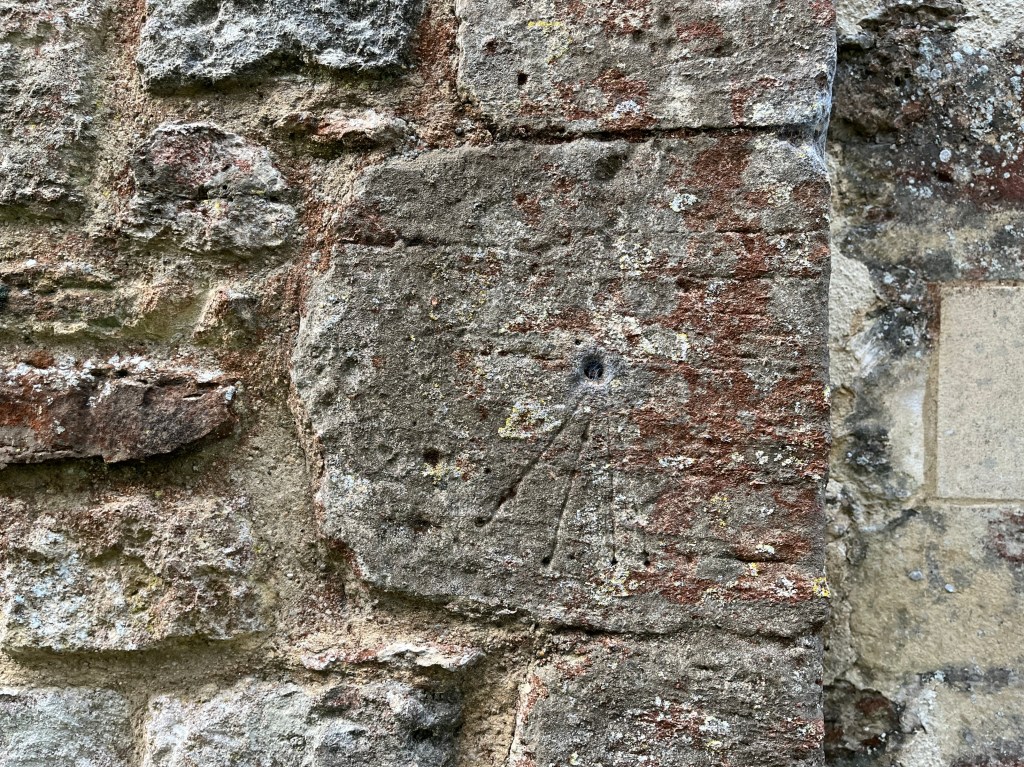
Located on the nave buttress adjoining the chancel. 4 lines radiating from a central hole in the dial stone, one slightly curved; 7 clear pocks all on or at the end of the lines. Unlike dial 1, there is no exact vertical line. The puzzle is to identify the noon line. On some dials, there is a notional noon line formed by a narrow gap between 2 near-vertical lines – not the case here. Presumably it is line 2, being extended and having 2 pocks. Line 3 is too flimsy for the task. Line 1 presumably marks a service time between Terce and noon.
ST MARGARET’S WELL
GRAFFITI ANCIENT & MODERN
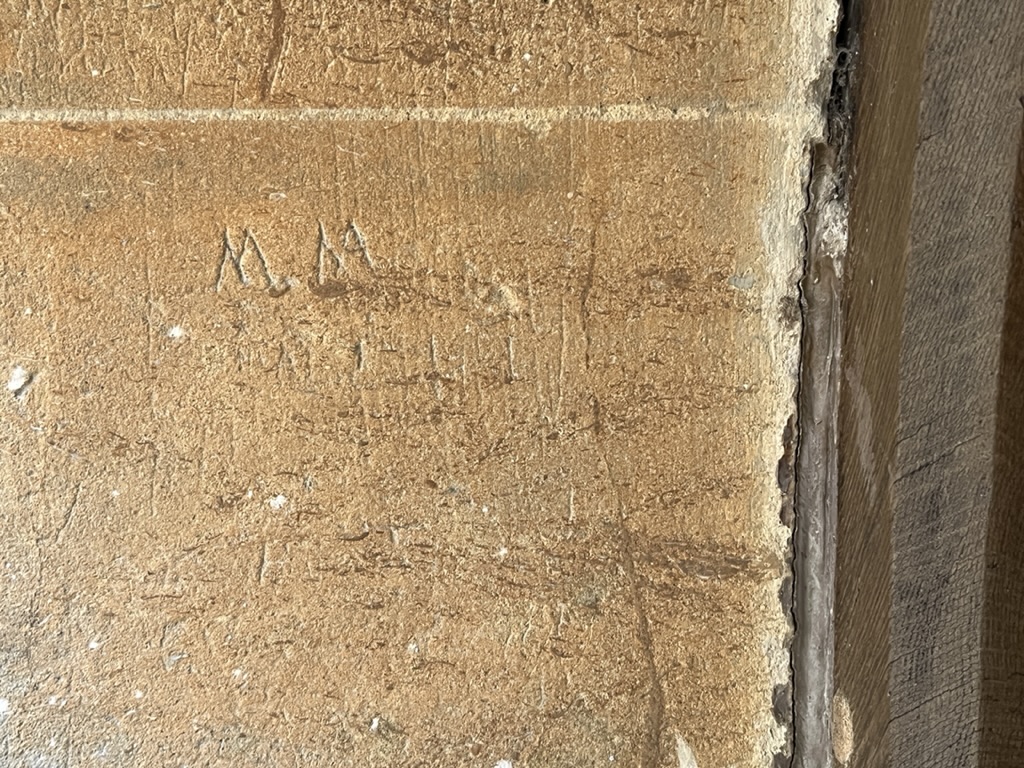
There is a certain amount of graffiti in the porch, some of which is not medieval. Included are initials, 2 (unconvincing?) inverted Marian marks; and some scratchings of hard-to-decipher script, something I haven’t often seen.
After your visit you may need refreshment: I recommend the excellent nearby PERCH INN
GRADE 1 † An exceptional Romanesque church built mid to late C12 (nave, tower, chancel) with later additions, restoration, and conservation. The Norman features dominate, especially the wonderful doorways. There’s too much history here (and in Iffley village) to distil: PEV should be the first stop, or BHO online Best of all, go there. SE. Oxford 51.7274 / -1.2382 / SP527034
DIALS
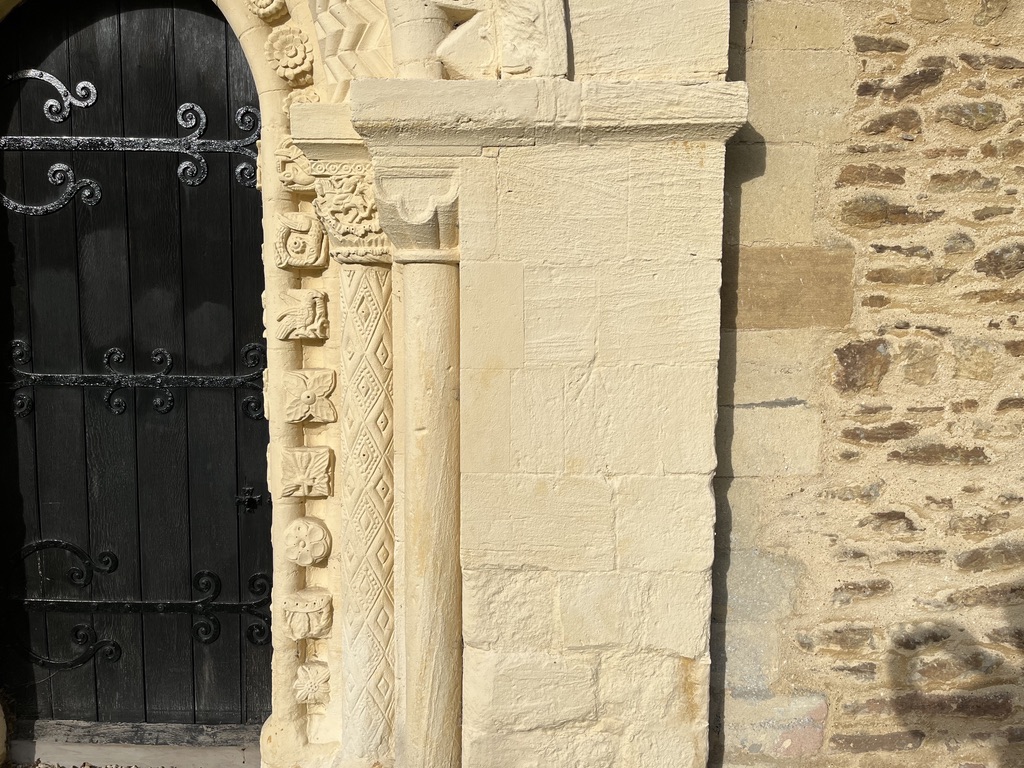
St Mary has two dials, one conventional, and one of a most unusual type that I haven’t met before. In relation to Dial 1, it’s worth mentioning that in 2017 conservation architects oversaw “a programme of conservative repair to the exuberant Romanesque masonry of the church’s west front and south door. This included the application by stone conservators of a pigmented limewash, helping to preserve the stone and improve the overall legibility of the facade”.
DIAL 1
St Mary . Iffley . Oxford – Scratch Dial 1
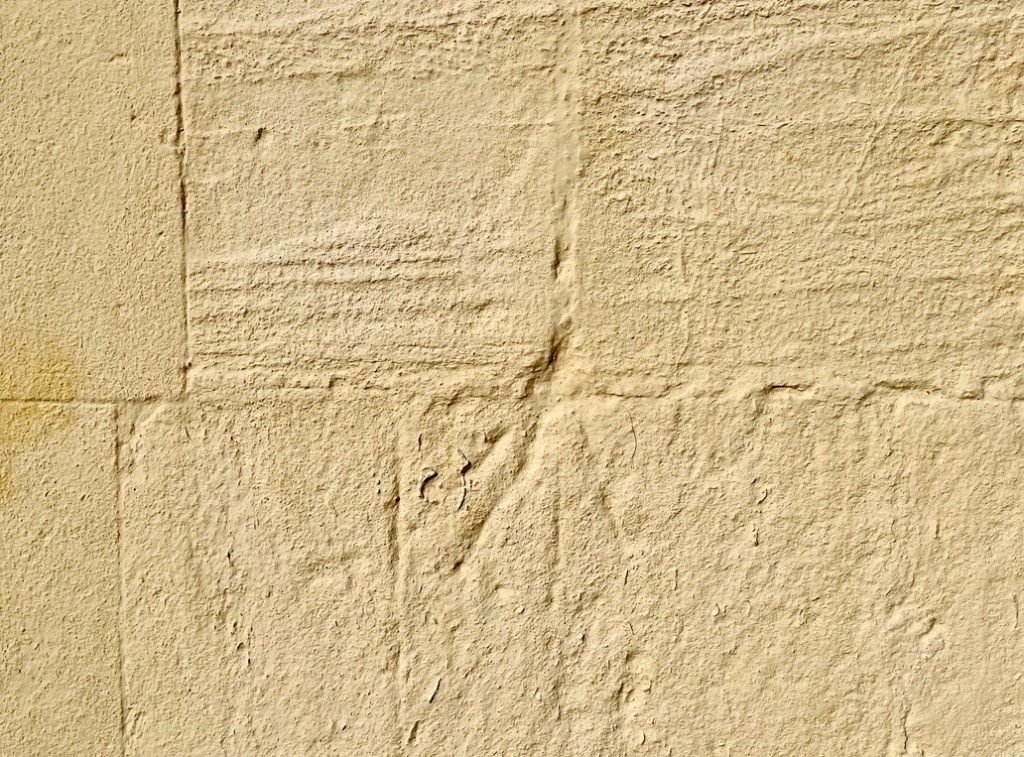
Dial 1 is on the right side of the lovely S. doorway. It has 4 straight radials, 3 with terminal pocks. The noon line may have a second pock above the end one; there are perhaps other dots. The style hole in the join of the stones creates the horizontal line. The careful preservation methods noted above have to an extent made the dial hard to analyse in greater detail. Fortunately BSS has an archive image that predates recent work. Much more detail is evident; for example the pocks are clearer (and there are more of them). It makes for an interesting comparison.
St Mary . Iffley . Oxford – Scratch Dial 1 (BSS archive)
DIAL 1 GALLERY
St Mary . Iffley . Oxford – Scratch Dial 1 – Gallery
DIAL 2
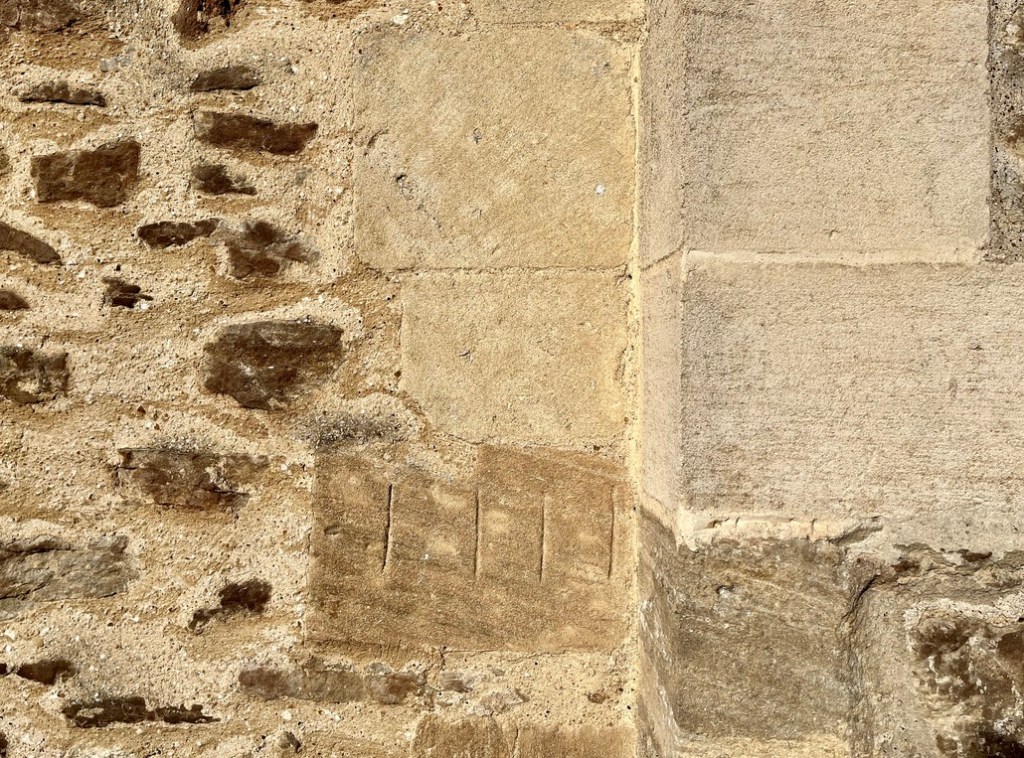
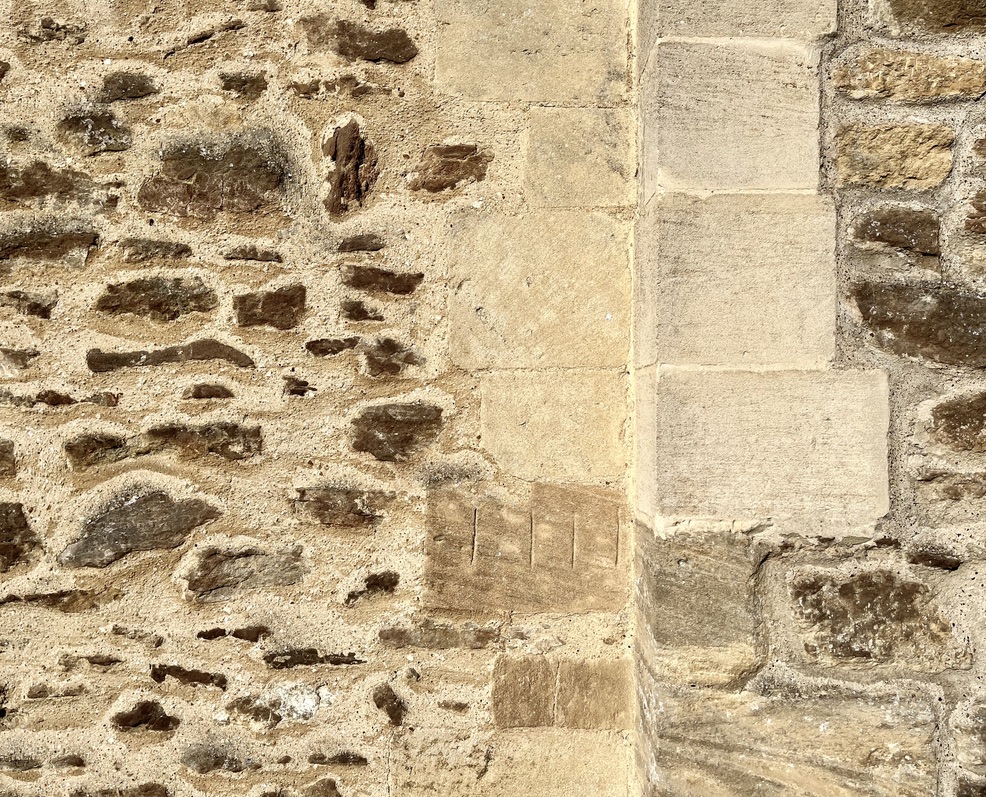
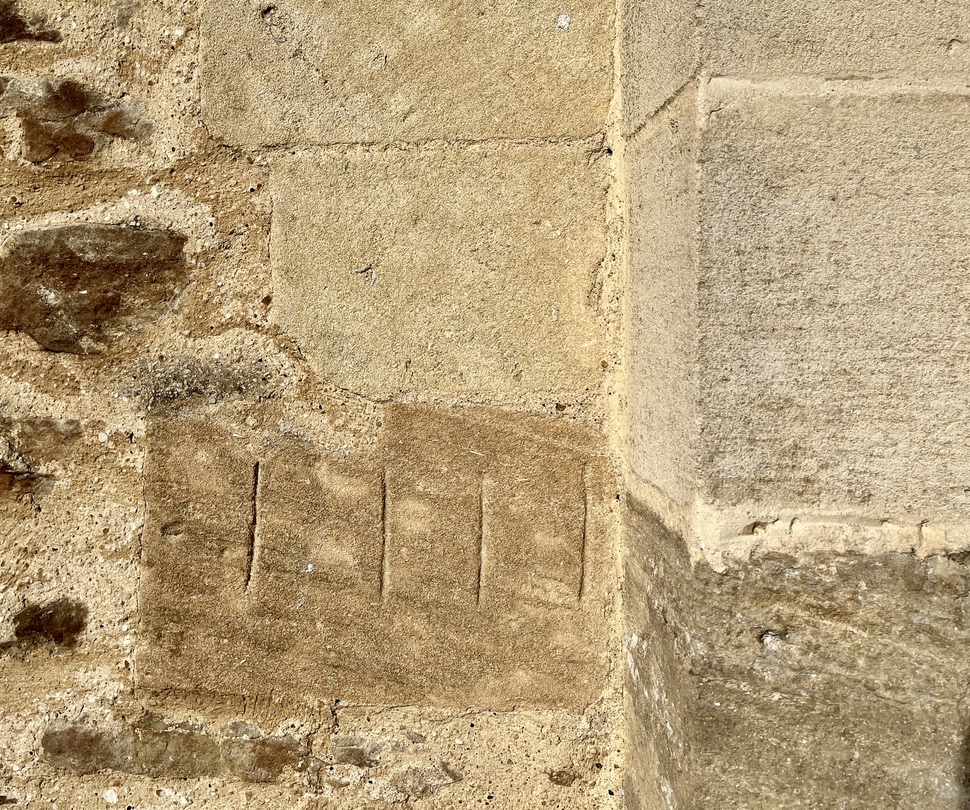
This highly unusual dial (if it is one at all) is on the S. side of the church, in the angle where the tower meets the nave. It consists of 4 incised parallel lines on a single stone. Just that. The passage of the day can be observed as the sun moves round, with the quoin acting as a vertical gnomon. The shadow cast moves gradually over the 4 lines from left to right, indicating the time of day. Its position suggests that it was primarily of use as a morning dial, perhaps signifying the Canonical hours for Mass. BSS records it as a ‘linear scale of markings from the wall shadow’.
St Mary . Iffley . Oxford – Scratch Dial 2
The photos below give an idea of how the dial works in practice. I visited on a sunny day, but unfortunately at the wrong time of day to test the shadow theory. This dial is yet another that I need to revisit to understand it.
St Mary . Iffley . Oxford – Scratch Dial 2 Gallery














 GAUDIUM SUB SOLE . SUNDIALS . MEDIEVAL TO MODERN