CHÂTEAU de VAUVILLE . CONTENTIN . JARDIN BOTANIQUE
The Château dates from mid-C12. Thereafter – like many similar large houses in the region – it suffered many changes in fortune over the centuries. It has been described as ‘one of the finest examples of fortified architecture in the Nord-Cotentin‘. It is still in the ownership of the same family. During WW2 the house was pillaged and severely damaged. Restorations since then have resulted in a very fine building in lovely surroundings.
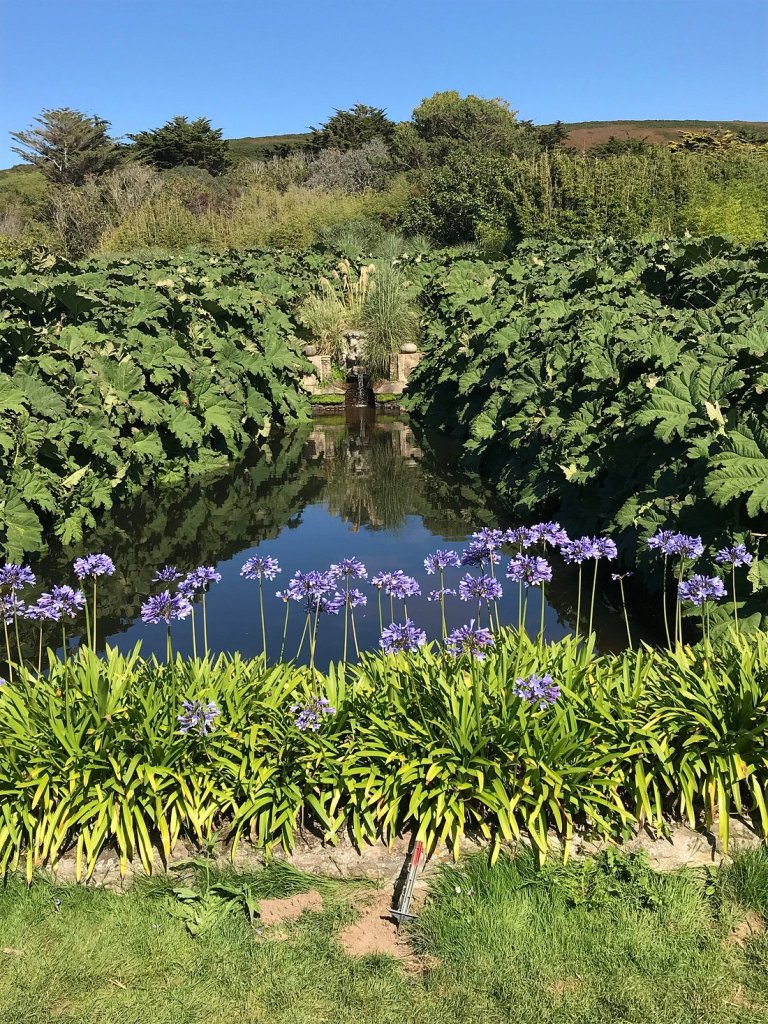
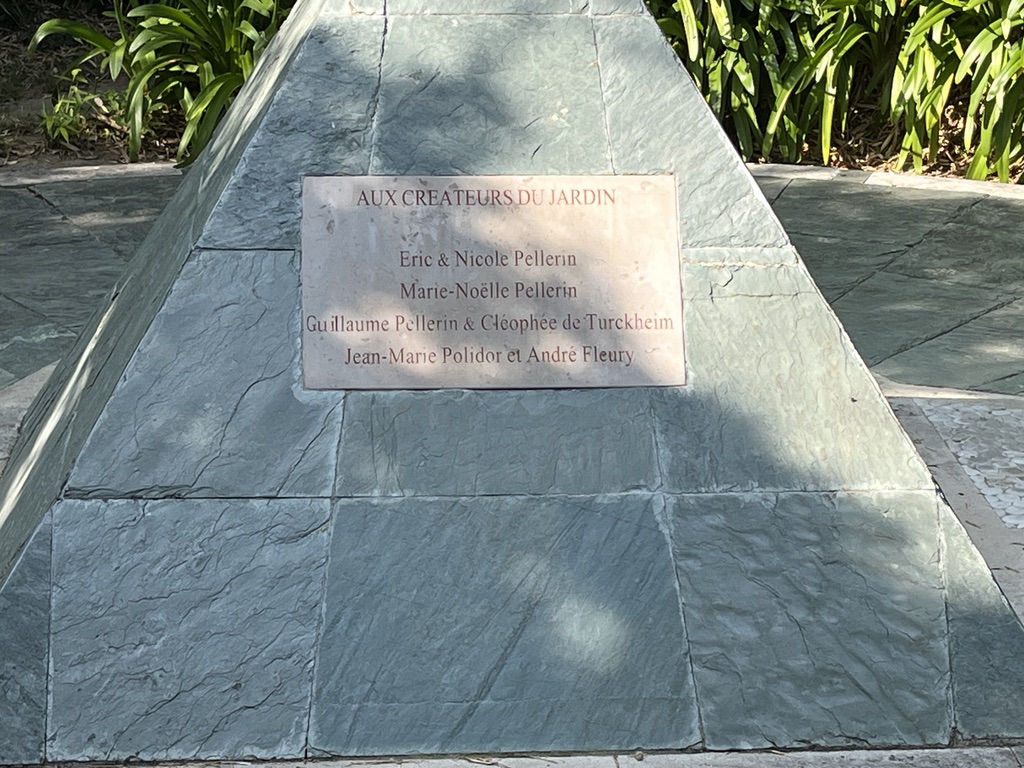
The splended gardens were created after the war by Eric Pellerin and feature a huge variety of the semi-tropical plants and trees that thrive on the western edge of the Cotentin coast.
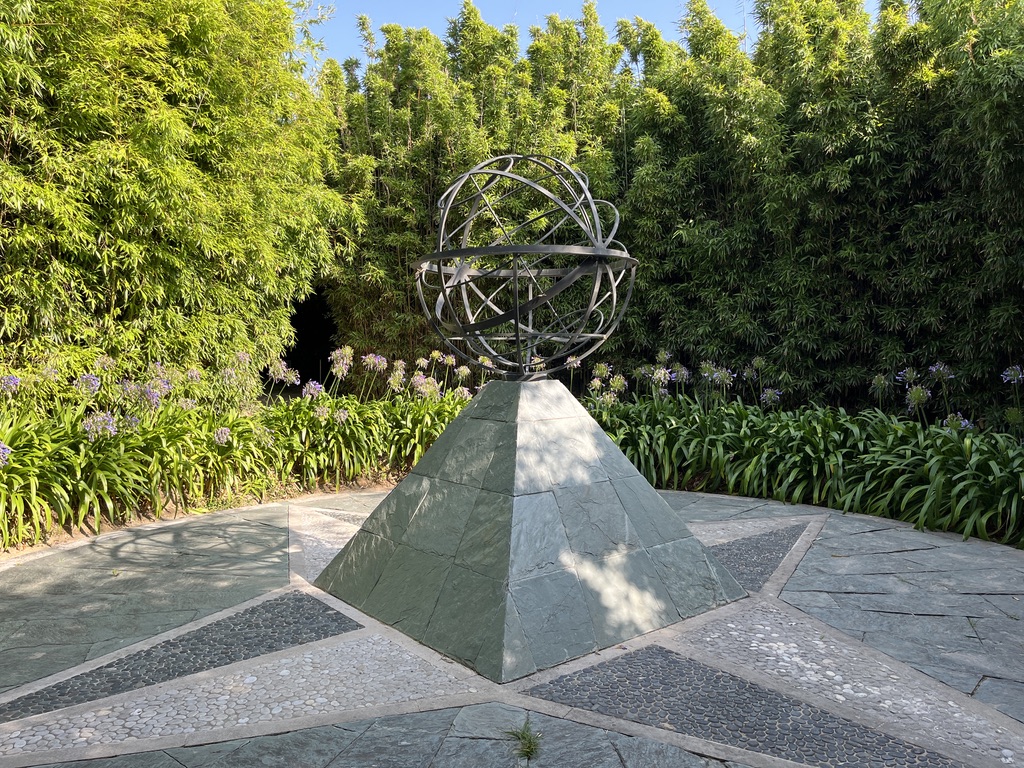
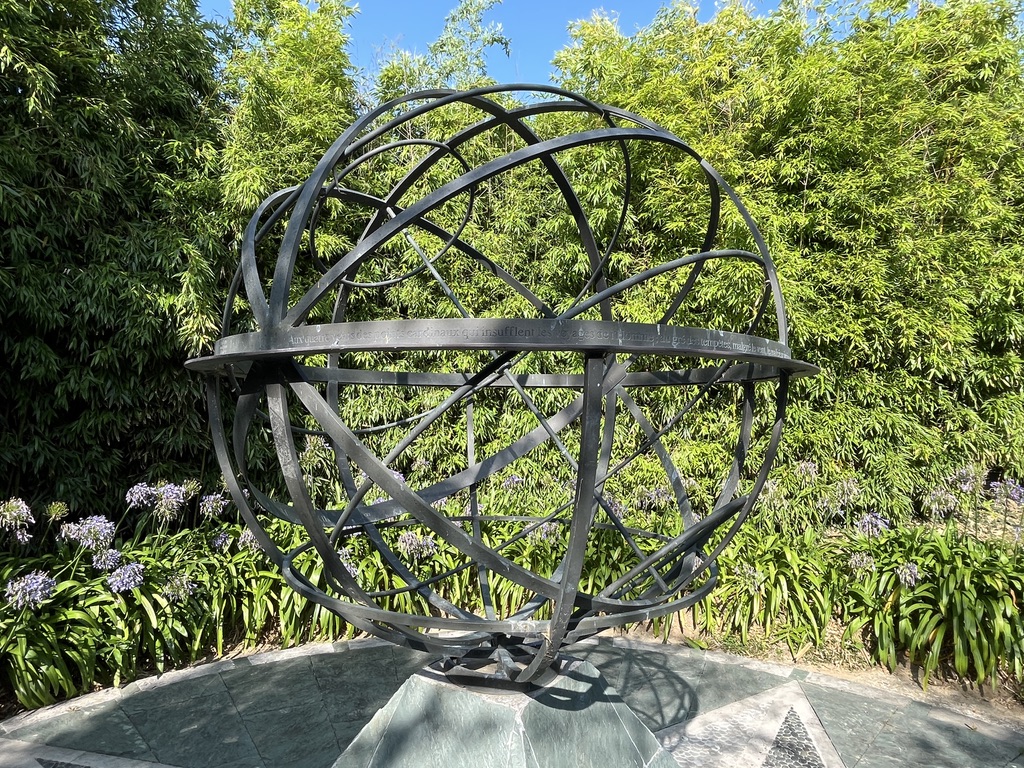
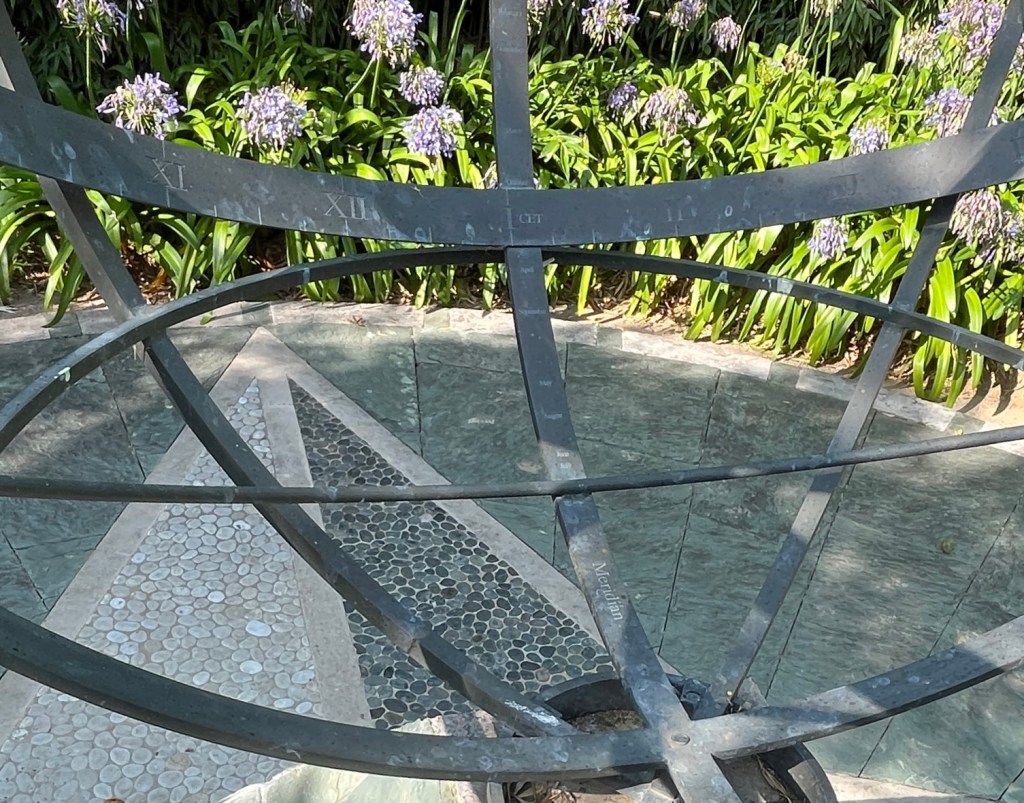
ARMILLARY SPHERE
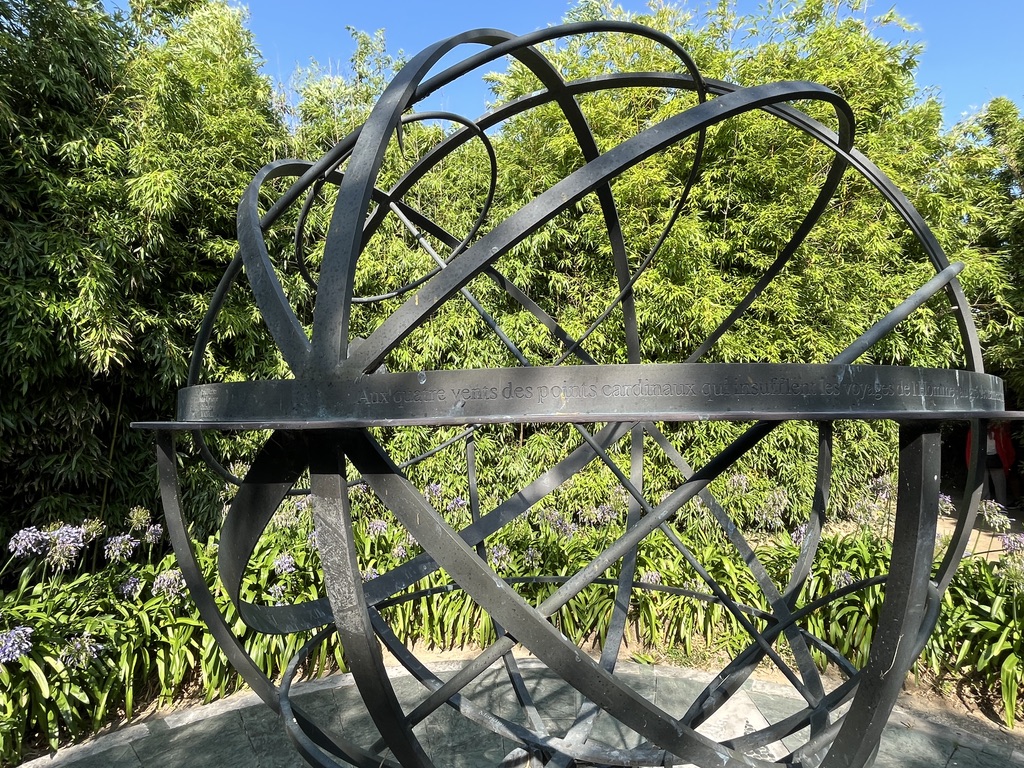
The sphere seems (to me, anyway) fairly complex, and rather than trying to interpret it I think that high resolution images taken from a number of angles is more useful. There is an engraved inscription that girdles the dial and includes personal tributes to Pellerin and others.
All photos: Keith Salvesen / Rolling Harbour or OS online
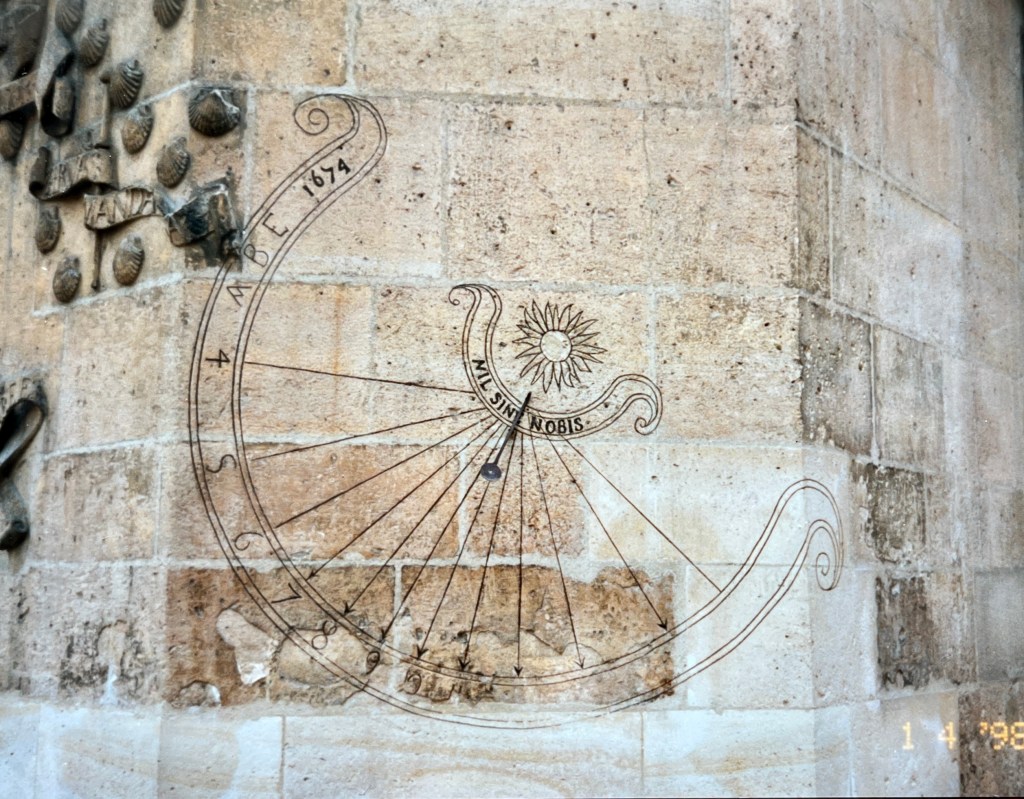
The collection of the National Museum of the Middle Ages is housed in a wonderful building, at one time an abbatiale. There is some debate about the dates of the origins and the building of the Hôtel; and of later rebuilding / restoration. The large sundial on the south wall of the courtyard is dated 1674. This was the reign of the Sun King (1643 – 1715), and a sun with its rays was an obviously fitting theme for the times.
See addendum Sep 2025 below, with thanks to Linda Roundhill
DIAL
The lines on the dial face are carefully graduated and the hours marked with Arabic numerals. Several lines terminate in arrows, suggesting a busy schedule of mainly forenoon masses.
MOTTO
NIL SINE NOBIS. A. B. F. 1674.
The inscription is usually translated as Nothing [Exists] Without Us. Margaret Gatty (1809-18730, in her comprehensive work The Book of Sun-Dials, gave the Cluny dial an unusually detailed entry:
NIL SINE NOBIS. A. B. F. 1674. Nothing exists without us.
A dial on the wall of a courtyard on the south side of the Hôtel Cluny, Paris, had this inscription. The word nobis referred to the rays of the sun which were represented on its face. The Hôtel Cluny, a very beautiful specimen of rather elaborate fourteenth century Gothic architecture, was bought in 1625 for the abbess and nuns of Port Royal, and was known as Port Royal de Paris. It was re-established by Louis XIV. in 1665, on a fresh basis, and was looked upon as schismatic by the community of Port Royal des Champs. This dial must have been erected in the time of the first abbess of the new foundation, Sœur Dorothée Perdreau, who held office till 1684.
Cluny Museum and its sundial: detailed entry by Margaret Gatty
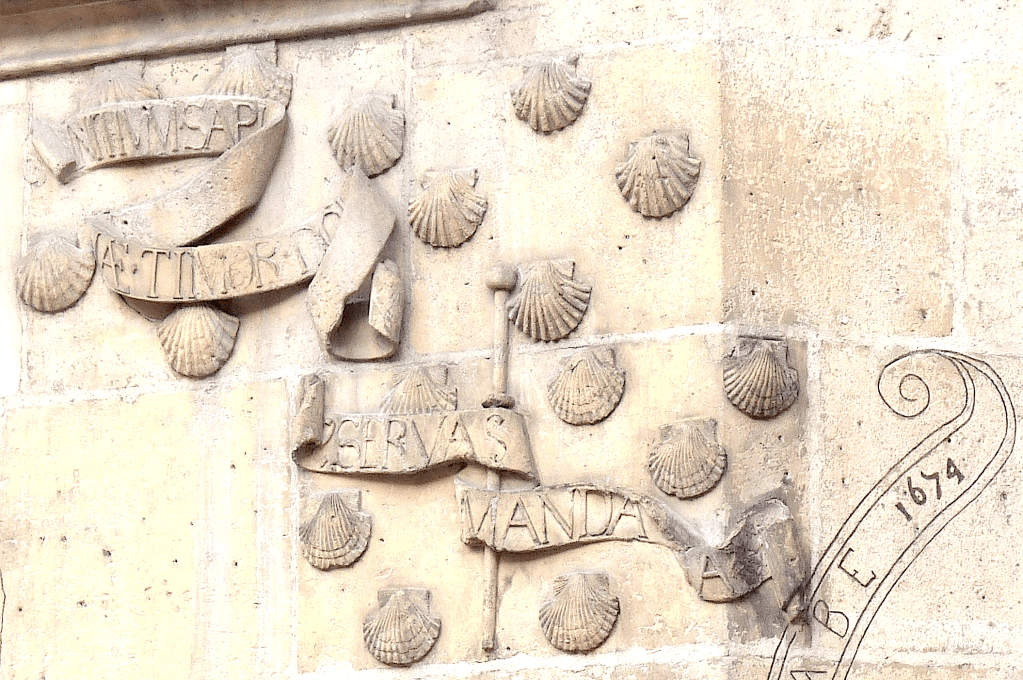
SCALLOP SHELLS and HERALDIC MOTTOS
The scallop shells are interwoven with two inscriptions (or possibly a single one in two parts) which deserve a mention as part of the overall design. The shells themselves evidence an ancient Pilgrimage route that passed close by – the long Rue St Jacques is a few meters to the North.
The heraldic mottos are said to read, firstly: Servire Deo Regnare Est – To Serve God Is To Reign; MG suggests, without much conviction, that the other (or part of it) may be as shown below.
With very rusty Latin and a bit of internet work, I can’t make either interpretation fit the scrolls we can see. Possibly they relate to a different part of the Musée, and the shell one(s) are different. I’ll have to leave the reader to try to puzzle this out (all suggestions welcome).
ADDENDUM SEPTEMBER 2025
Many thanks to Linda Roundhill for solving the puzzle that I feebly left for others to interpret
The top left ribbon scroll with the scallop shells is a scripture verse “The fear of God is the beginning of wisdom”. From Proverbs 9. The lower left is a Christian catch phrase, ‘To serve God is to reign’, derived from John 12. This was hard because some of the letters are missing or hidden. The scroll on the right says “Keep My commandments” which is a short version of Matthew 19:17, and many other passages. Again, some letters are obscured.
GSS Category: Early Sundial / Vertical Dial; French Sundial; Sundial Motto
Credits: all photos Keith Salvesen – please seek use permission for these detailed ones; Musée Cluny for the Unicorn
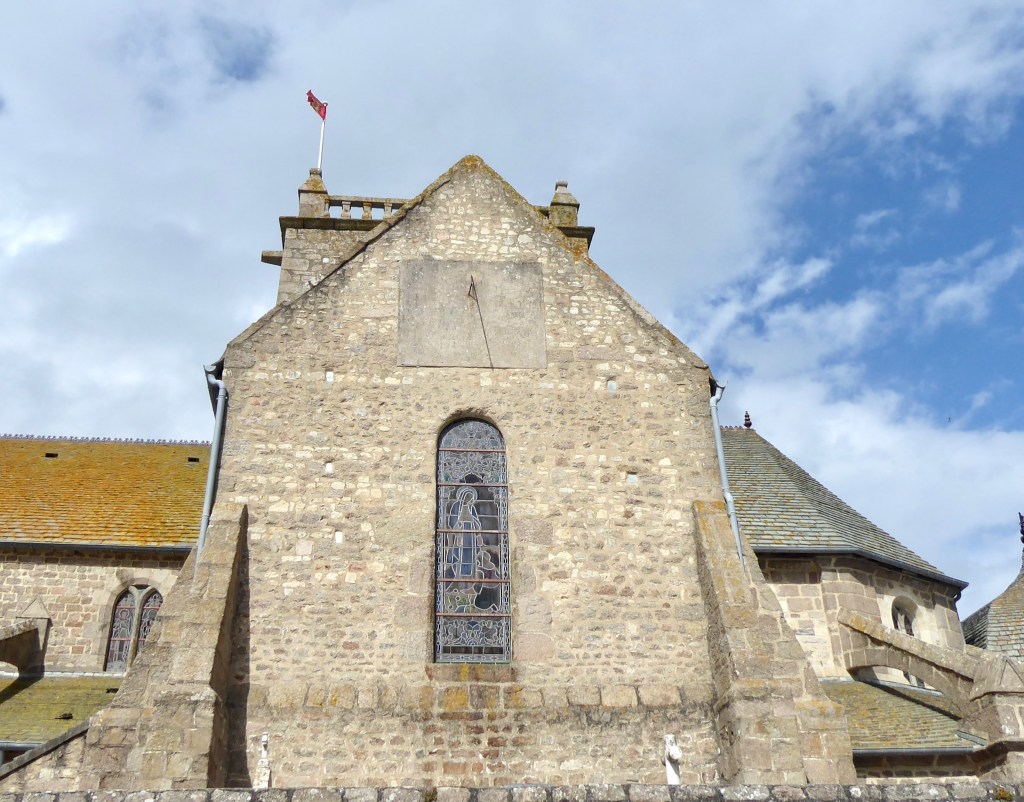
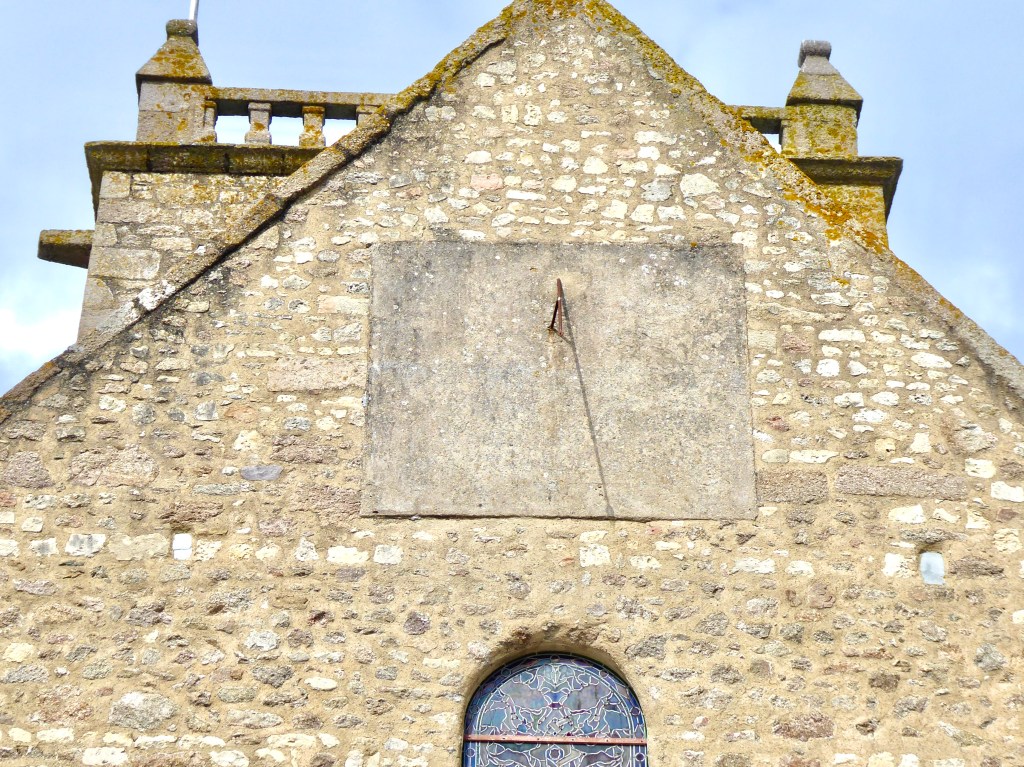
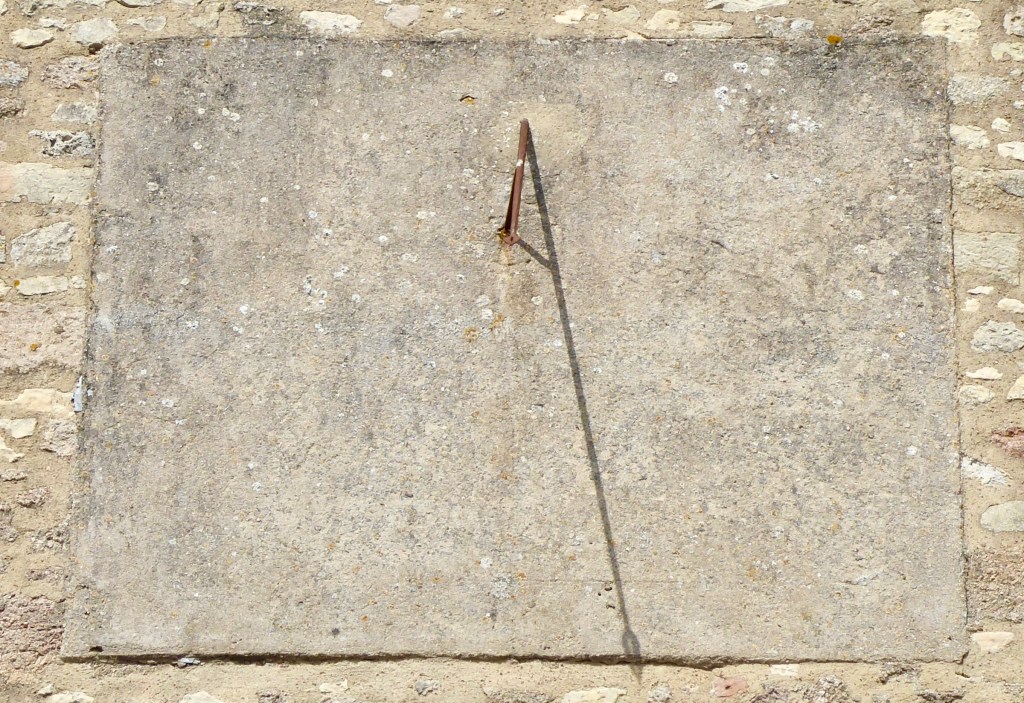
Barfleur is a small town / large village on the NE tip of the Contentin peninsula in Normandy, roughly due E of Cherbourg. The church of St Nicolas, despite the initial impression, was built mid-C17. Later additions and restoration mid-C19 incorporated an impressively large sundial (it doesn’t seem to have been a later addition).
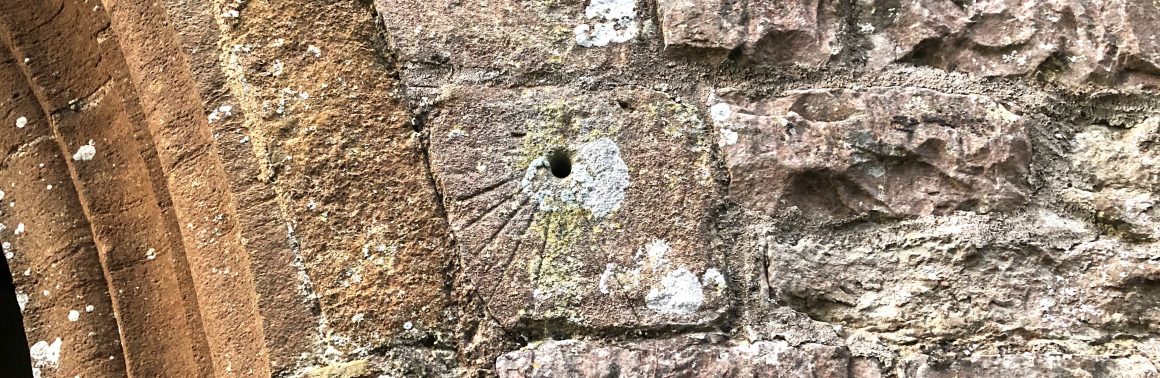
The face of the dial has almost entirely been obliterated, with half a dozen very faint lines just visible in the lower L quadrant. There is also the hint of a frame under the cast shadow, though it might simply be the remains of a horizontal line. Erosion by the sea over many decades has made the details speculative. The gnomon may possibly be original. Whether or not, the design of the tip is clever and includes a small hole at the tip that creates a neat spearhead.
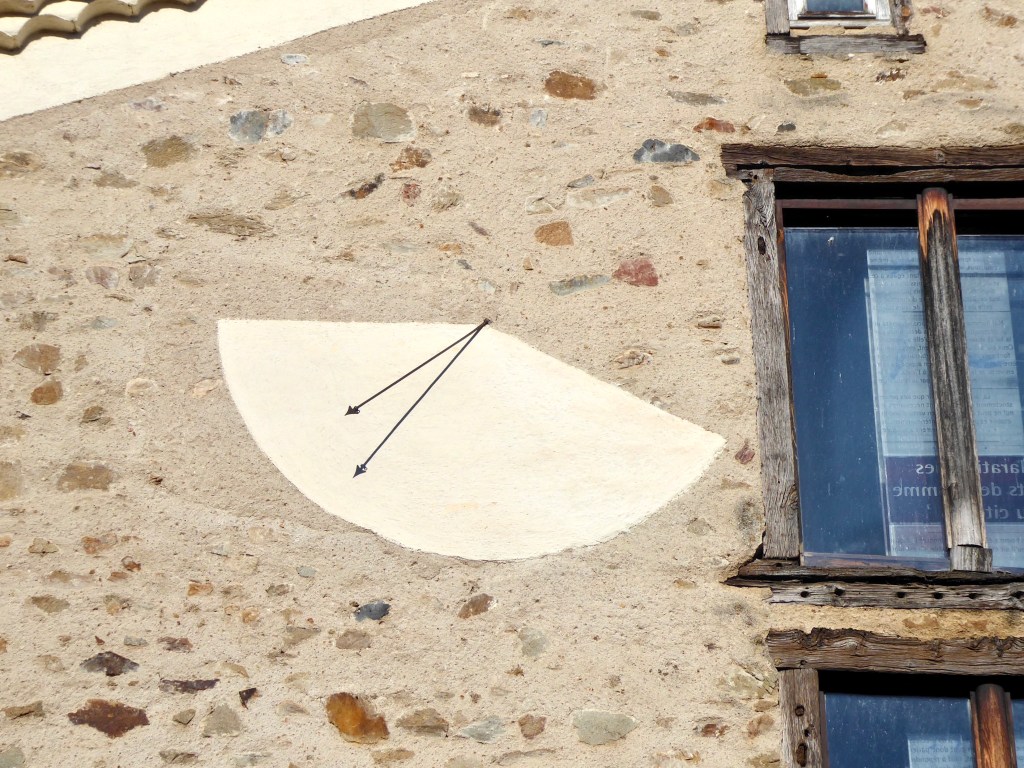
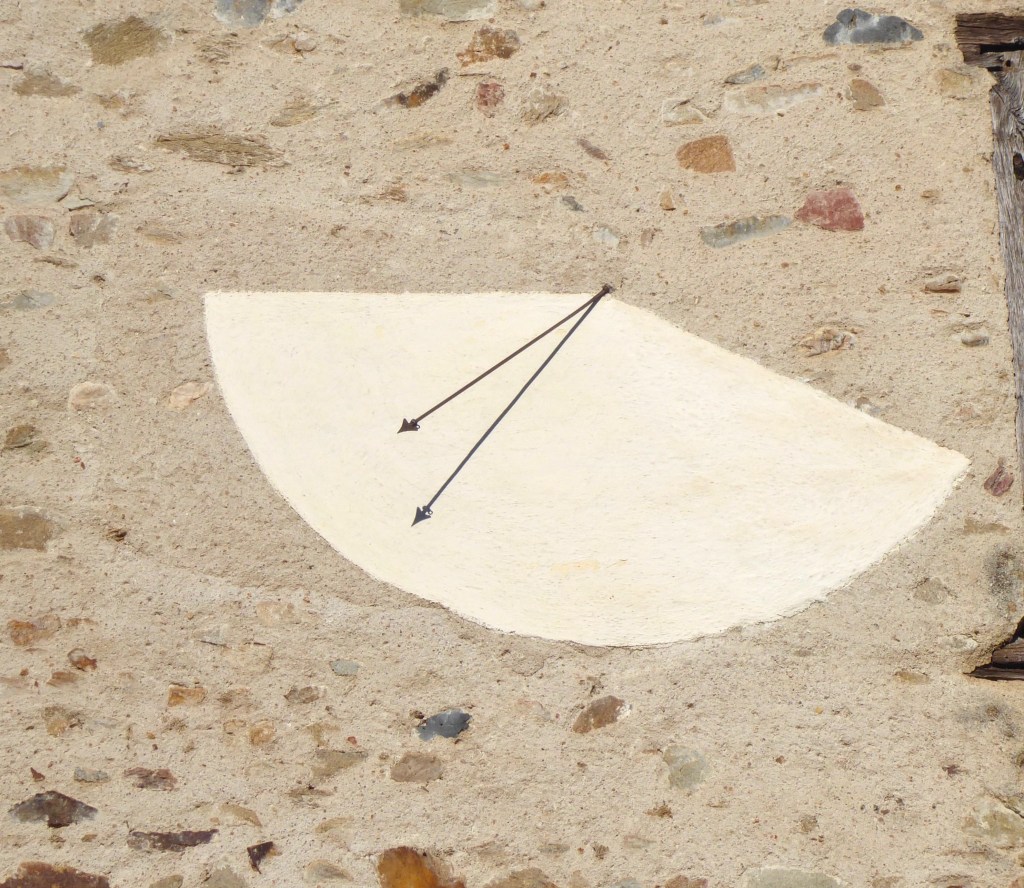
Lavaudieu is a small Auvergne town with a fine romanesque Abbey. For present purposes, the sundial on the wall of the Mairie is the attraction. On a bright sunny day, the simplicity and legibility of this civic dial is hard to beat. The ‘arrowheads’ might be considered a little too ornate for the overall design.
‘Moins est plus’ might be a good motto for the dial, as it is more generally. As soon as I saw it I knew it would be in my top 20 non-medieval dials. It still is.
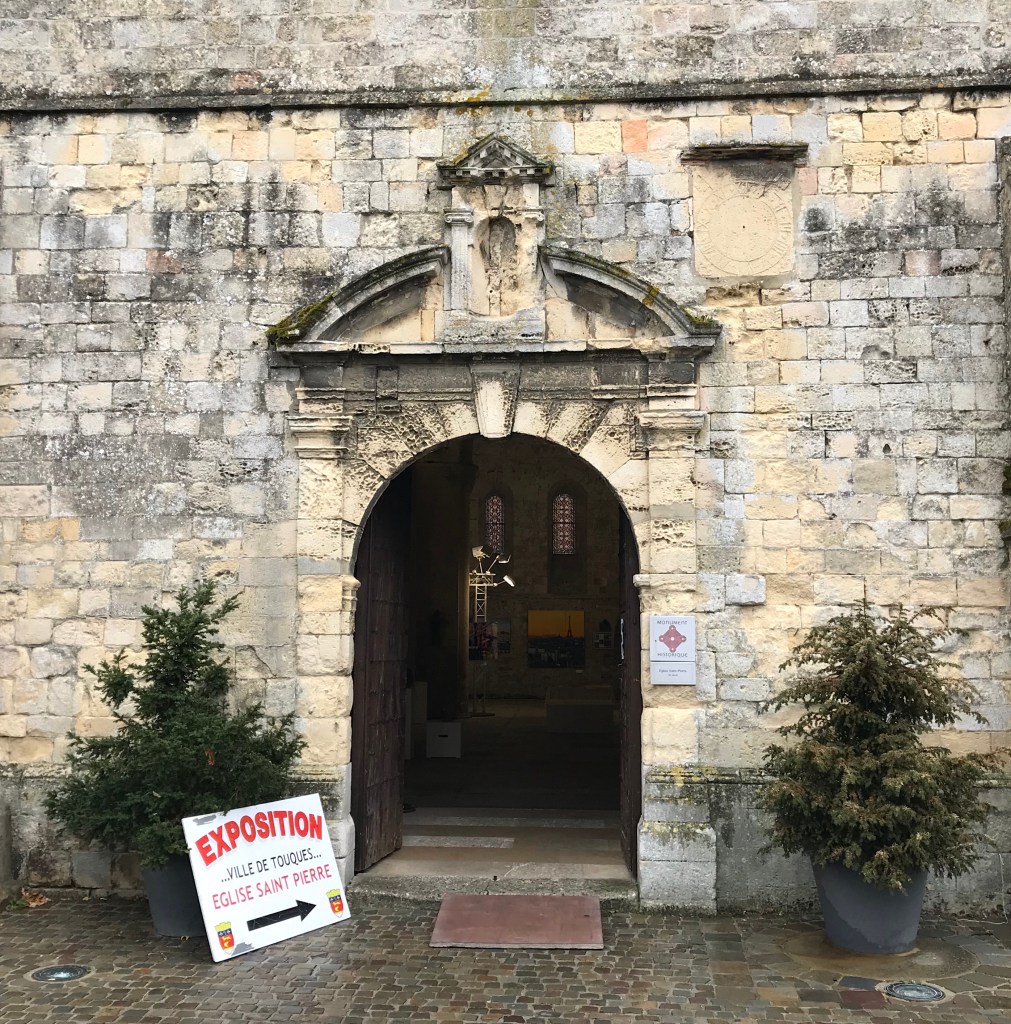
A simple Romanesque church, the oldest in Calavados, dating from mid C11 with subsequent additions. There is scant information online – a few notes converted from French to English. Over the centuries the church was damaged by battles, by lightning strike, and sundry other misfortunes. One source notes In the 17th century the nave was amputated. By late C18 the church was abandoned and in C19 designated a Historic Monument. In C20 it was adapted as a cultural space for concerts and art exhibitions.
DIAL
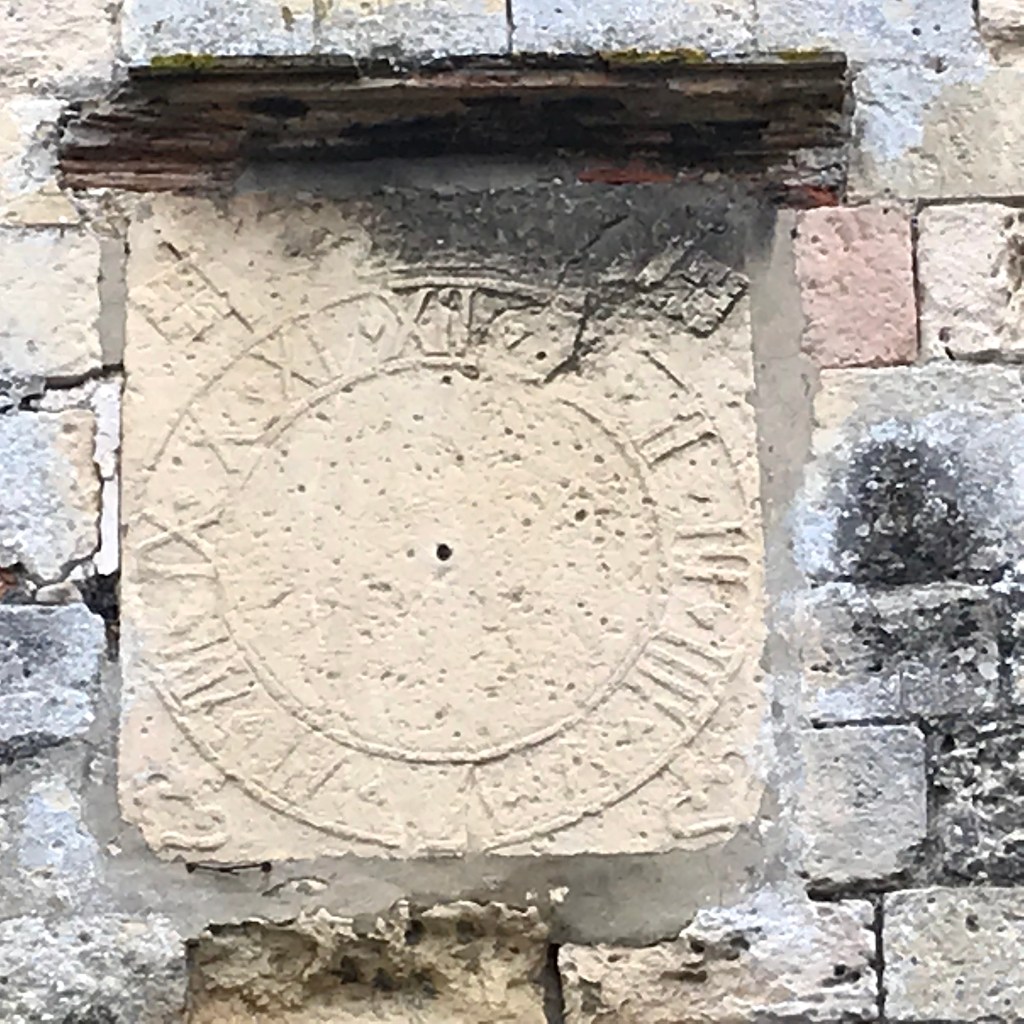
This large dial is above the entrance doorway. It has roman numerals and a cross key decoration. There is no gnomon. The lower half is quite eroded. Mortar repair has been carried out rather enthusiastically. There is no date, and it is hard to determine how old the dial is. St Pierre was disused by 1800 so the dial, under its time-worn lintel, seems unlikely to have been added later. On the other hand there’s a sense that the present dial is a replacement for an older one. But a great deal older than the final one shown here.
St Pierre . Touques . Normandy – gnomon-less sundial of uncertain age
St Pierre . Touques . Normandy – gnomon-less sundial of uncertain age
For comparison, the dial below is in Colmar (quite near Strasbourg). It never saw 1582.

















 GAUDIUM SUB SOLE . SUNDIALS . MEDIEVAL TO MODERN