OXFORD . HISTORY of SCIENCE MUSEUM – GRAFFITI, SYMBOLS & SCRATCHINGS

OXFORD HISTORY OF SCIENCE MUSEUM

OXFORD . HISTORY of SCIENCE MUSEUM – GRAFFITI, SYMBOLS, & SCRATCHINGS

The History of Science Museum in Broad Street, Oxford, has a wonderful collection of scientific instruments dating from the Middle Ages to C19. There is a rich hoard to be investigated. As you enter, you will see an outstanding display of the many instruments that over the ages have been used to measure the passage of time. A superb pair of armillary spheres is / are featured HERE. Only the Museo Galileo in Florence has given me such pleasure.

GRAFFITI, SYMBOLS, & SCRATCHINGS

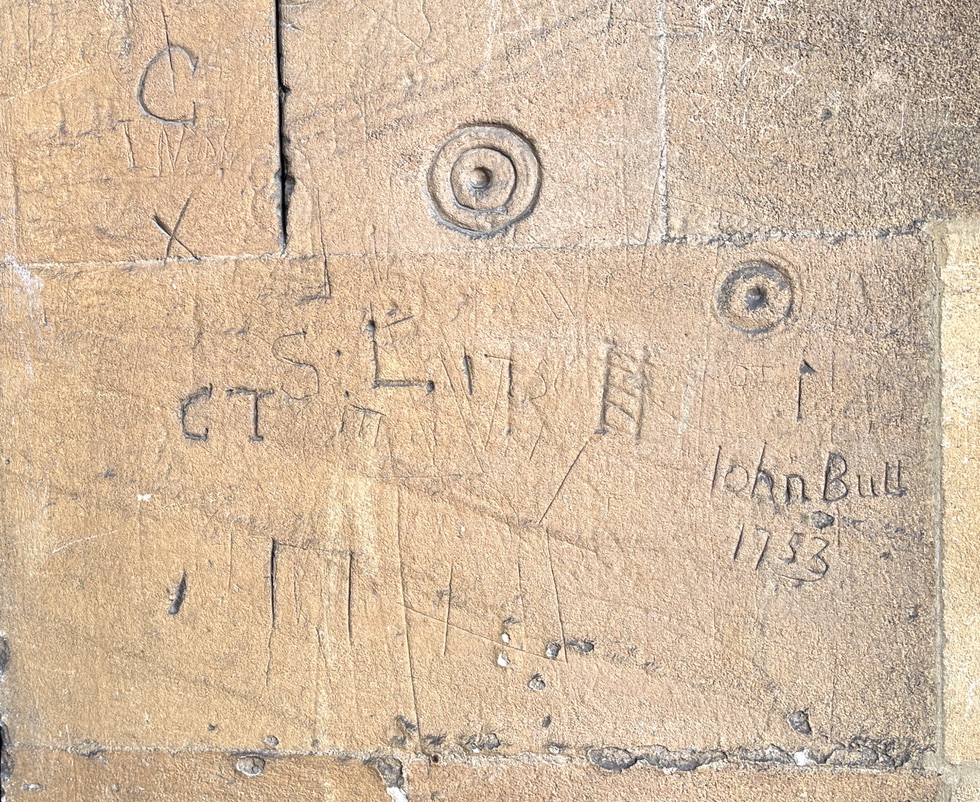
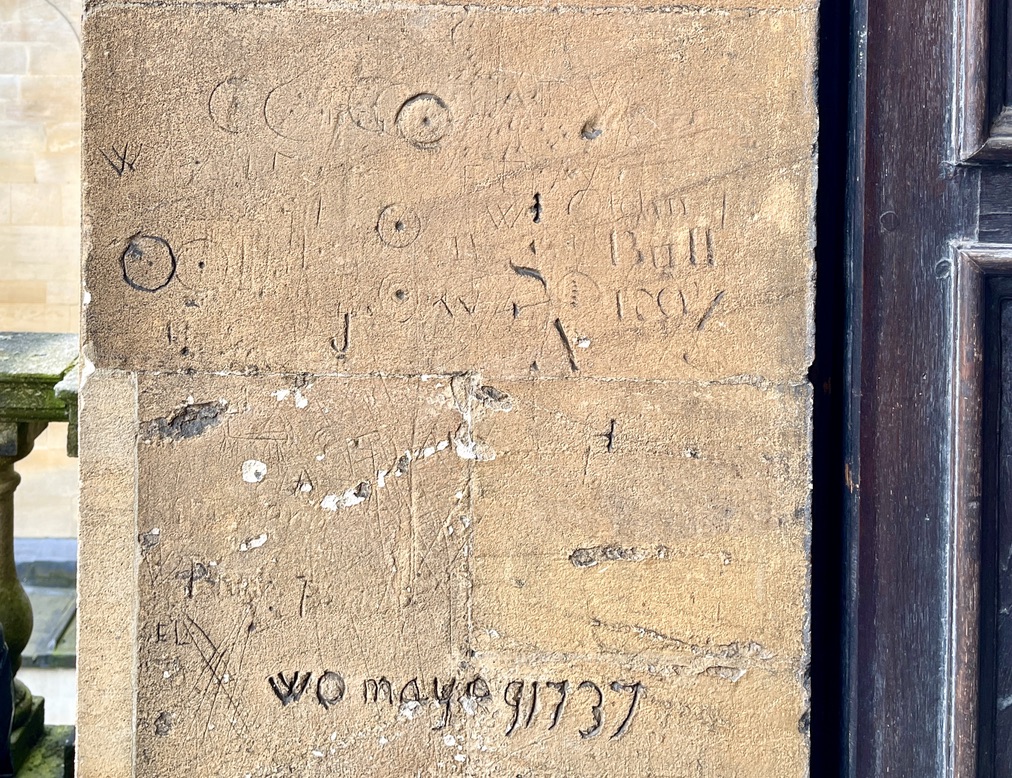
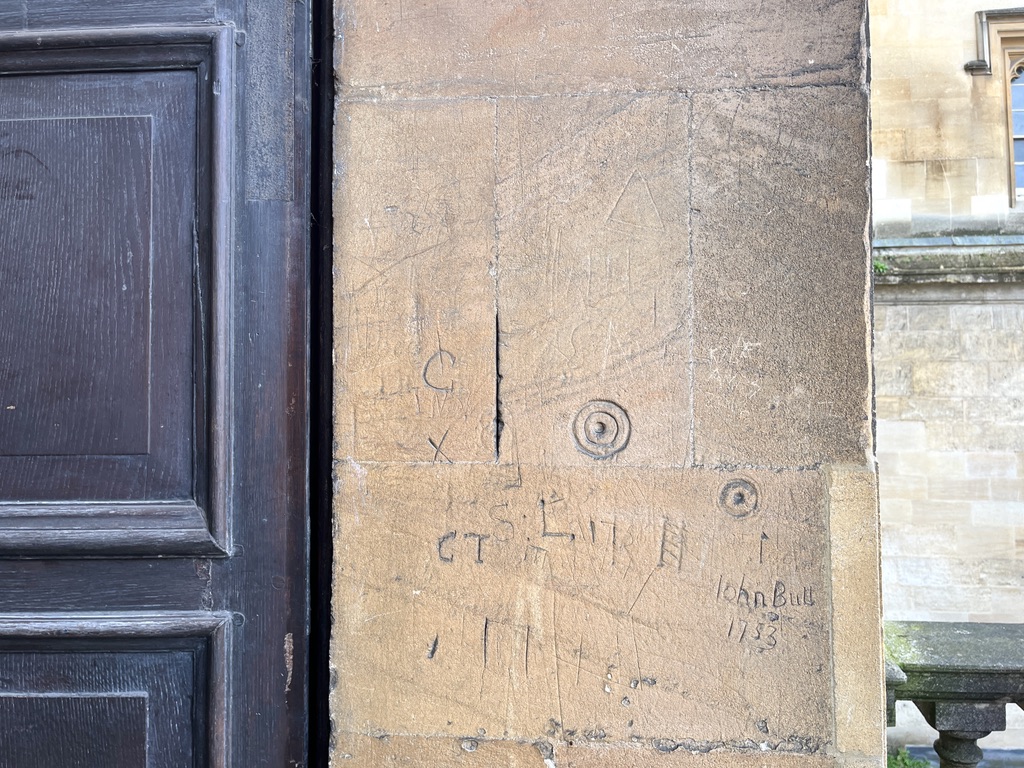
On each side jamb of the entrance to the Museum, there is a fine collection of graffiti of several kinds. Below is a selection of the marks from either side, left first. These include names and dates, with a Bull (1753) on one side, and a later Bull (1891) on the other; and a couple of probable mason’s marks, together with random scratchings accumulated over time.

MARIAN MARKS and PROTECTION (APOTROPAIC) SYMBOLS

By C17 the concept of thwarting evil by means of incised marks on churches and other buildings (eg the TITHE BARN Bradford-on-Avon) was weakening, yet superstition and the fear of evil lingered on. This building – the original Ashmolean – dates to the late C17. By this time, many medieval incised devices – eg scratch dials – had become things of the past. However, to some extent the comfort of cutting marks to ward off evil persisted. This would explain the various Marian marks VV (Virgo Virginum) on the jambs.

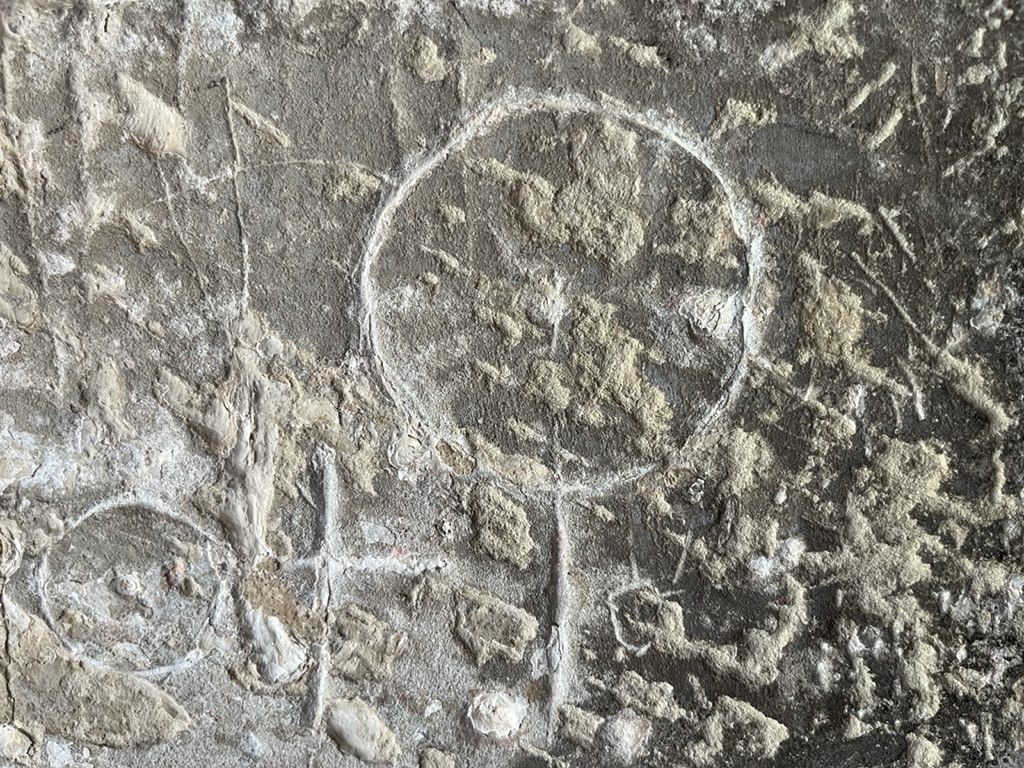
There is also a good collection of compass-drawn circles of varying completeness, accuracy, and depth. In medieval times these were the simplest form of demon trap, luring evil inside a circle from which it could not escape. The principle continued in later centuries.

LEFT SIDE
RIGHT SIDE
GSS Category: Apotropaic marks; Marian marks; Protection marks; Demon Traps; Compass-drawn circles; Graffiti on public buildings;

Reference: History of Science Museum – Oxford; Matthew Champion – Medieval Graffiti

All photos: Keith Salvesen / Rolling Harbour

GREAT DURNFORD . WILTS . ST ANDREW – 4 Scratch Dials

ST ANDREW . GREAT DURNFORD . WILTS

GRADE II ✣ A fine Norman church built late C11 (nave); chancel c1200; tower C13. Major restorations ±1900 (Ponting). An estimable entrance. Worthwhile (PEV) and (more graciously) one of Wiltshire’s most delightful churches (Betjeman). Lovely font; wall paintings; pilgrim crosses, protection marks & graffiti. 6m N of Salisbury. 51.1244 / -1.8301 / SU119361

DIAL 1

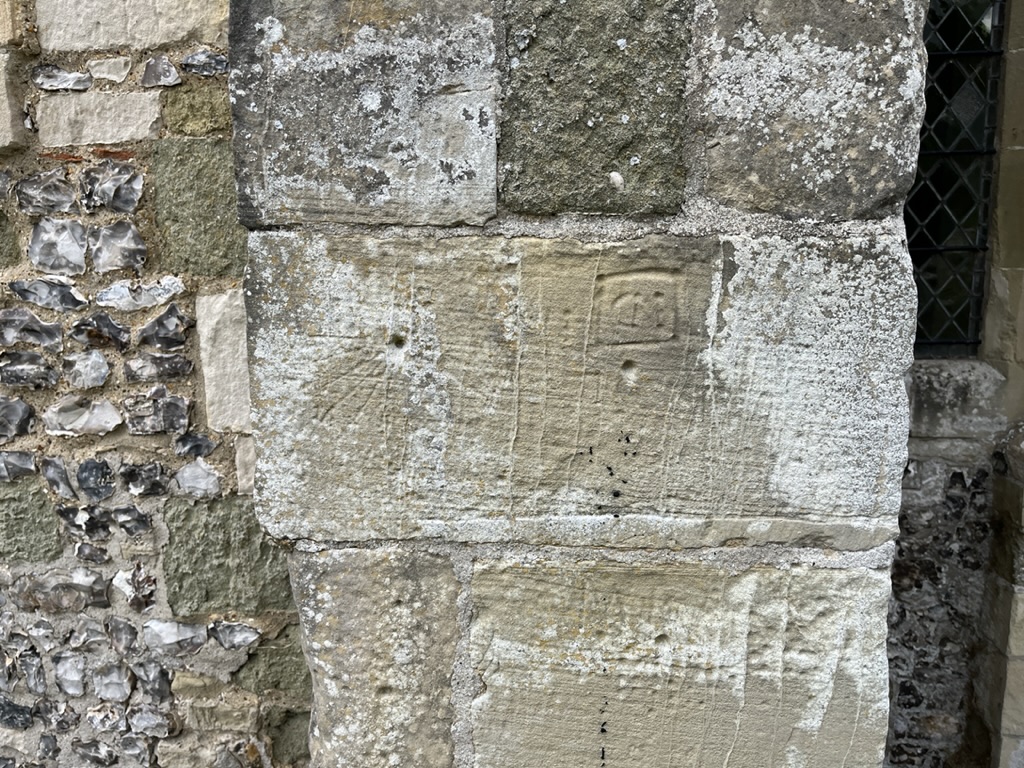
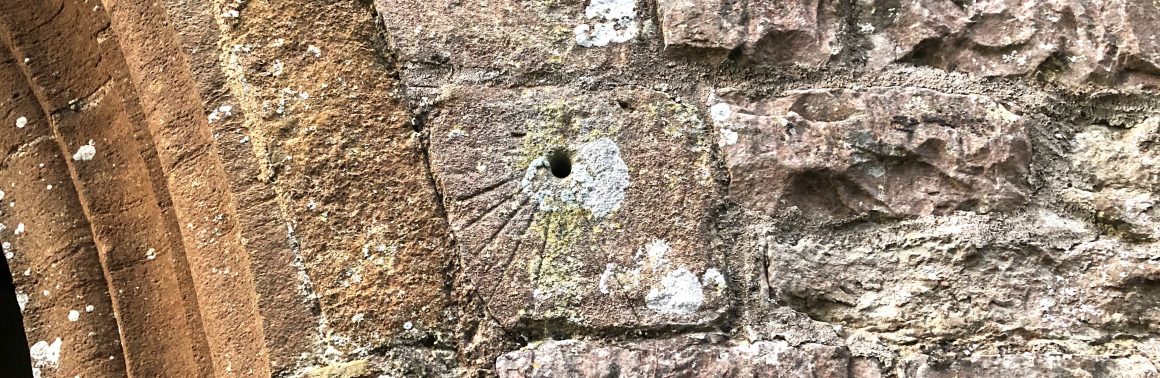
Dial 1 is semicircular, located on the E buttress of the nave, close to the Priest’s door. It is in pleasingly good condition. Almost all lines of this 6-to-6 dial are visible, though much eroded RHS. The incisions are somewhat haphazard, and it is slightly odd that the most significant cut – the noon line – is so random.

DIALS WITHIN THE SOUTH PORCH

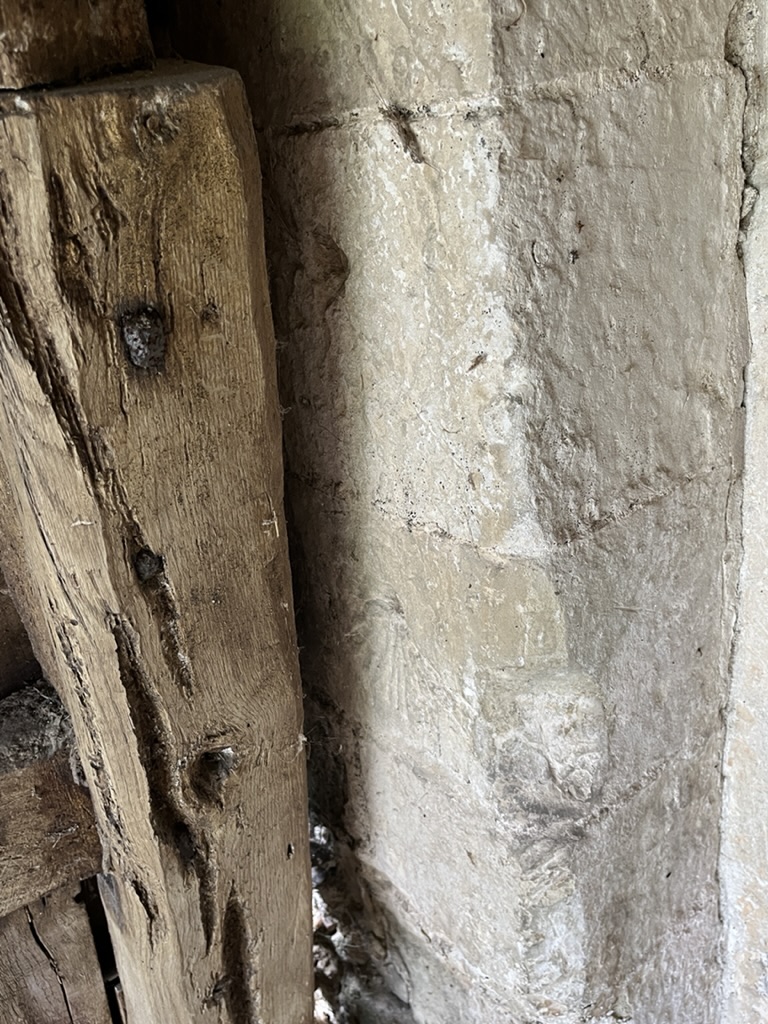
On entering the porch, the splendid door into the church itself invites immediate exploration inside. However, the porch conceals 3 scratch dials that a handful of people might like to investigate. There is scant reference to the scratch dials either side of the doorway. A dial LHS is recorded by BSS; one RHS is vaguely hinted at; another dial RHS is not noted anywhere that I can find, perhaps a new (modern) discovery.

DIAL 2

This dial is quite easy to find, half-concealed LHS but visible as one walks past. There are well defined lines, with the noon line probably the almost vertical one with a small pock at the end. I wondered if the straggly lines LRQ were later additions. Without them, the lines are all LLQ and (as with Dial 4 below) indicate mid-morning as the main part of the day for a service.

DIAL 3

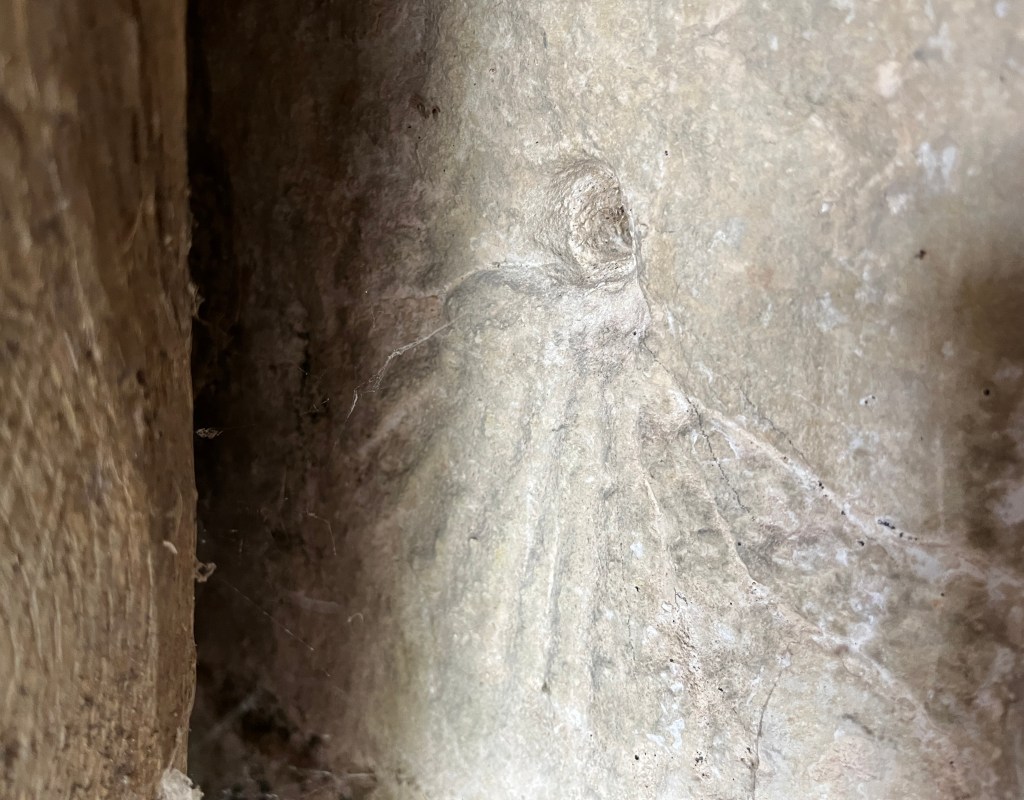
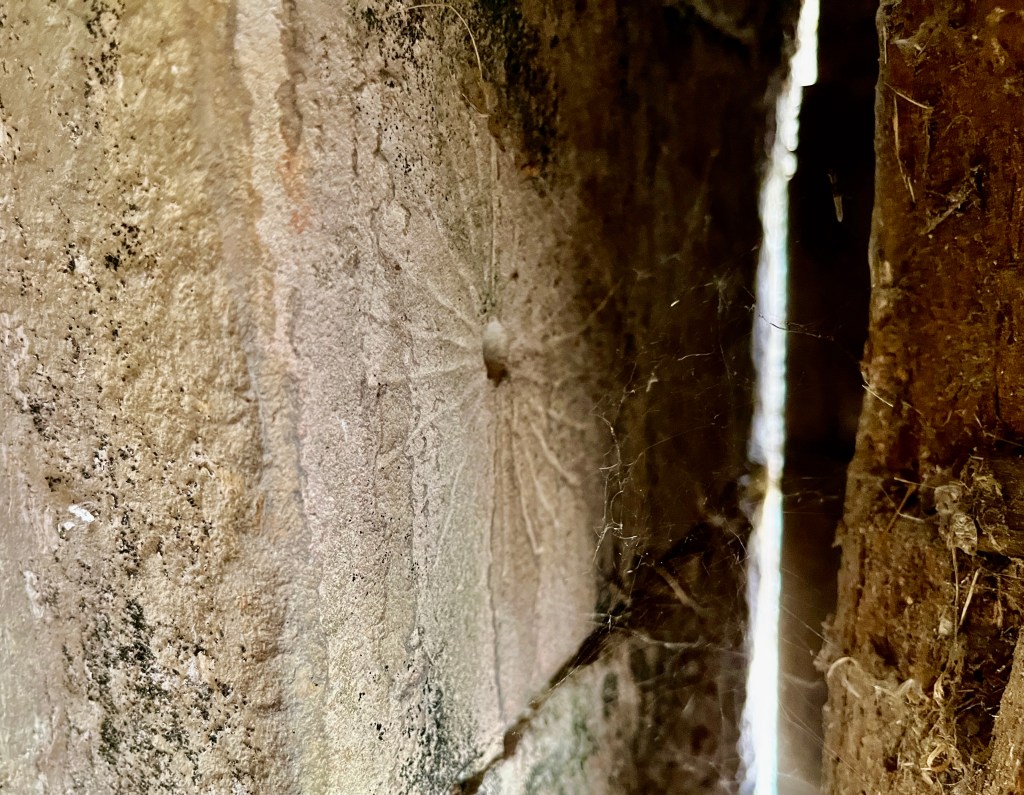
Dial 3 is hidden away RHS of the fine door, even less accessible than dial 2. It is a fascinating example of a ’24 hour’ dial, with a full complement of spidery lines of random length of which almost all are still visible.

DIAL 4

Also RHS and even less visible is a conventional ‘morning’ dial, with 4 lines (the upper one is faint) leading down to the slightly deeper cut noon line. This configuration again suggests that mid-morning began the important part of the day for observance before noon.

If you want to know more about this church, in particular the inside, there is a good article HERE

APOTROPAIC SYMBOLS, DEMON TRAPS, PILGRIM CROSSES, GRAFFITI

A selection of church marks in the porch. The 2 compass-drawn circles are not dials but [probably] ‘demon traps’. In superstitious medieval times it was believed that evil could be prevented from entering the holy building with protection marks. In this type, evil would become trapped within the never-ending circle. The VV and the M on the wooden door are Marian marks standing for the Virgin Mary, who bars entry to the church by evil.

GSS Category: Scratch Dial; Mass Dial; [Vertical Dial]; Dial inside porch; Apotropaic Symbols; Protection Marks; Pilgrim Crosses

All photos: Keith Salvesen; drawings BHO