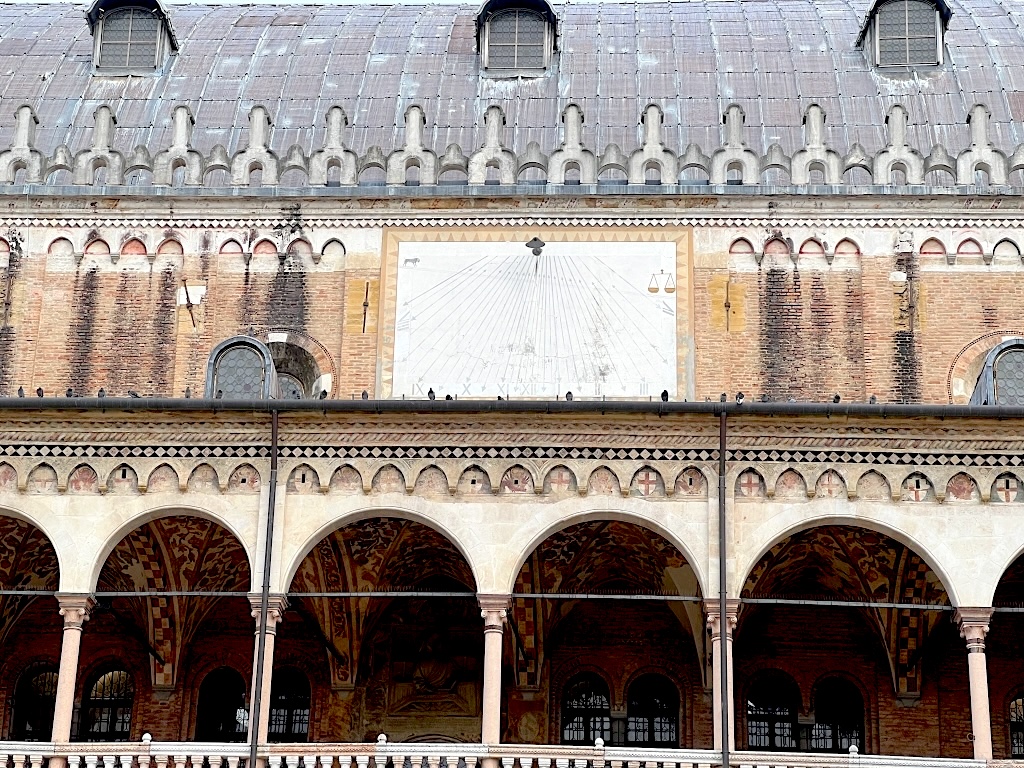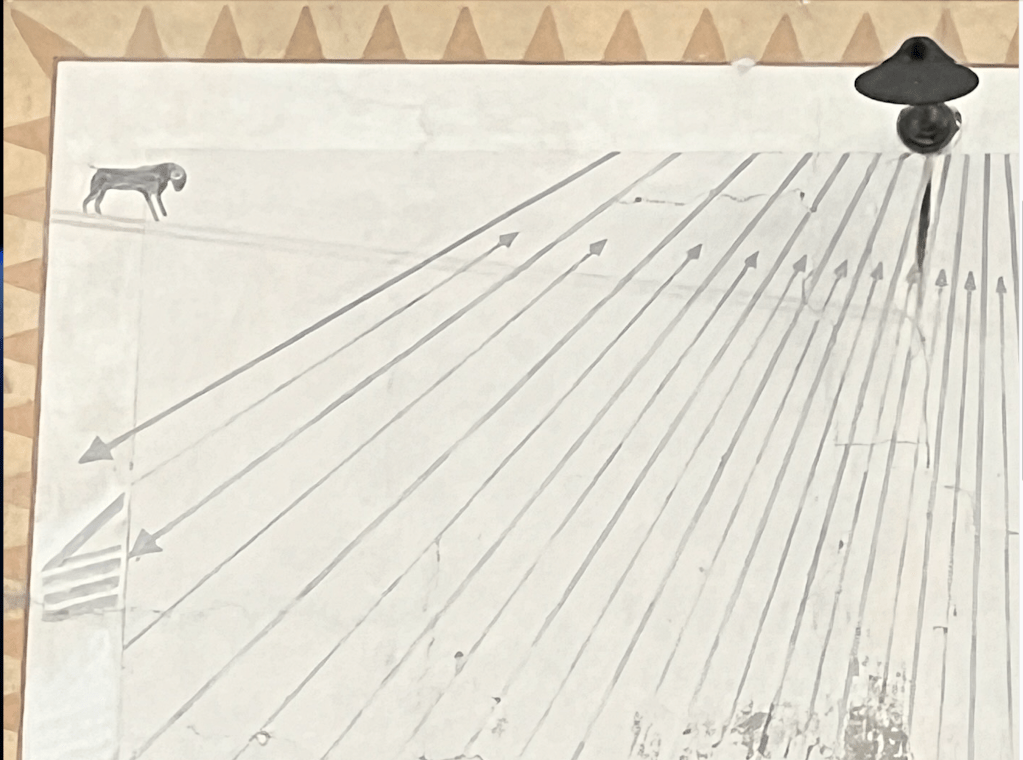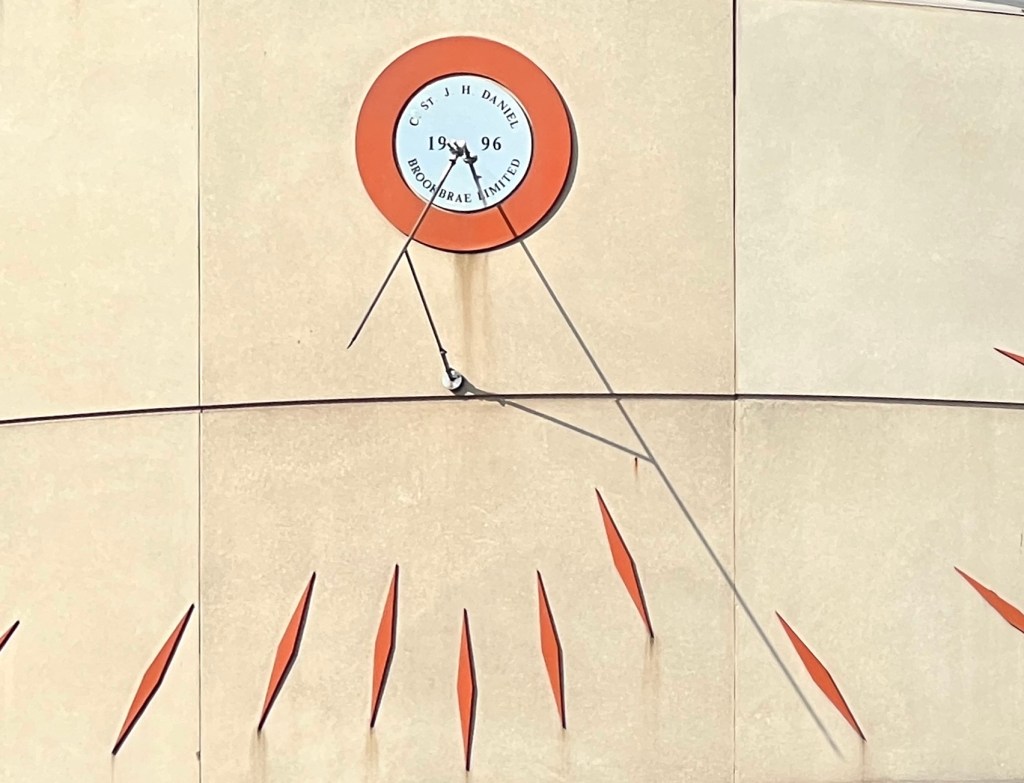
An attractive vertical dial, accurately angled, with Arabic numerals. Semi-circle perimeter and round top gnomon stay. There’s a slight jeux d’ésprit feel to the gnomon. There was no sun on the dial when we visited: I wondered how well it would work in practice.
GSS Category: Vertical Dial; Church Sundial France; Ornamental Gnomon
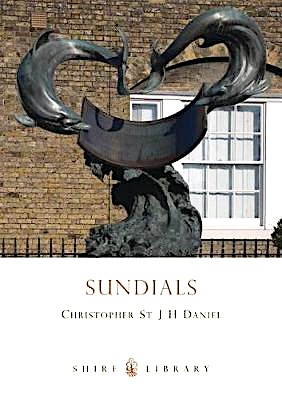
Christopher St.J.H. Daniel MBE, the maker of this dial, was the pre-eminent and most prolific sundial designer of the modern era. With 3 others, he was a founder member of the British Sundial Society BSS. He died in 2022, leaving a rich legacy of erudition and skill within his specialised sphere and beyond. His sundial book, published by Shire, is an excellent place to learn about sundials and their continuing relevance in a somewhat esoteric field.
LISTING: II* . C12, C13 (of which remnants); C14, C15, 1868 restoration by G. G. Scott. C14 door. Good C14 stained glass. 53.3234 / -0.368 / TF088819
DIAL
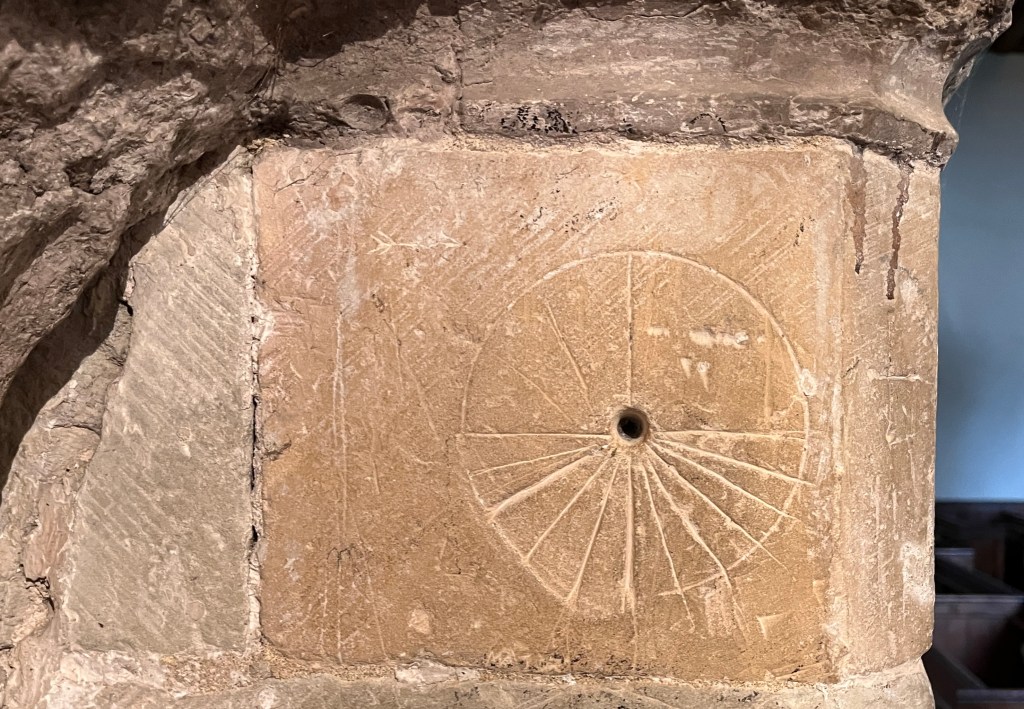
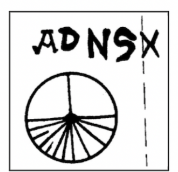
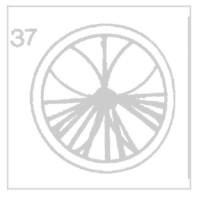
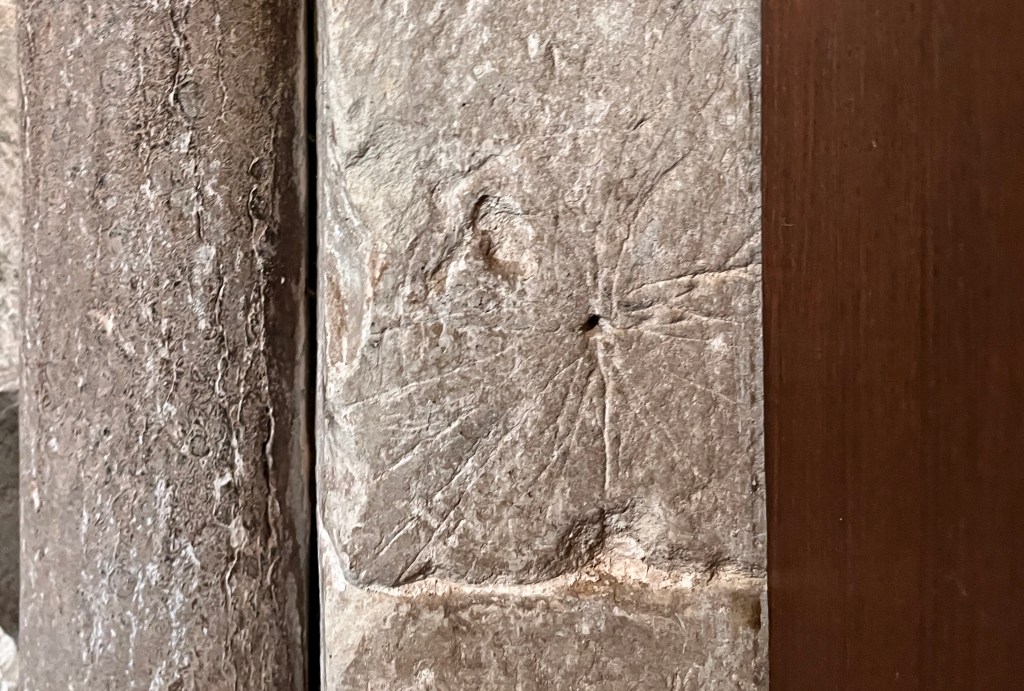
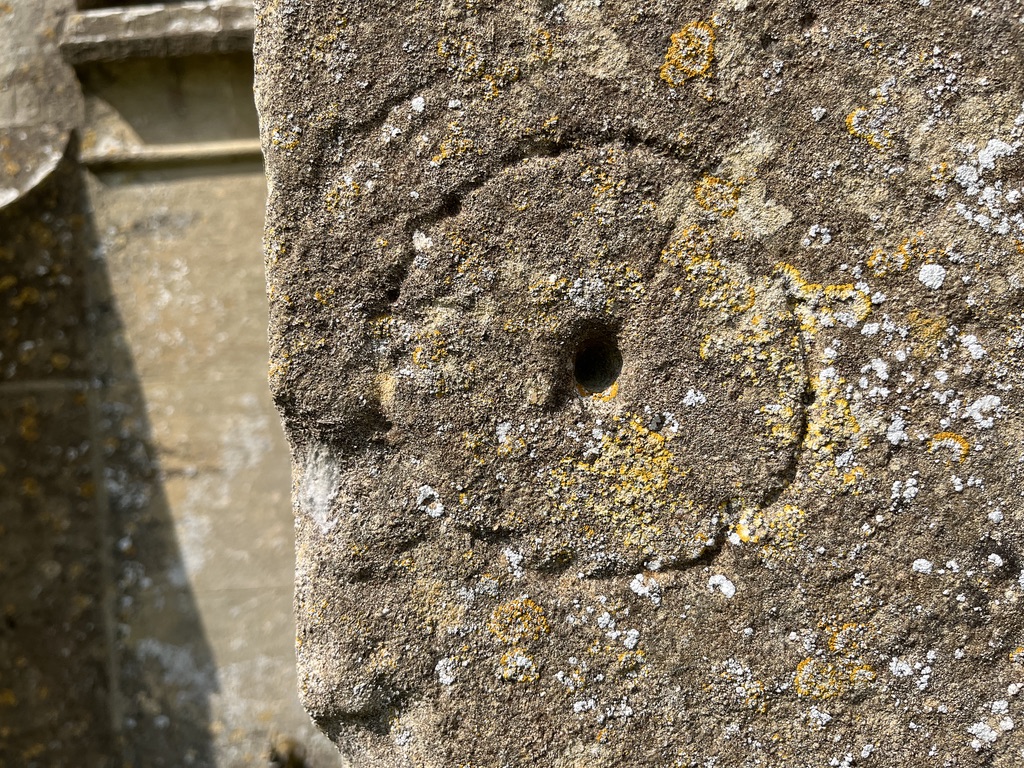
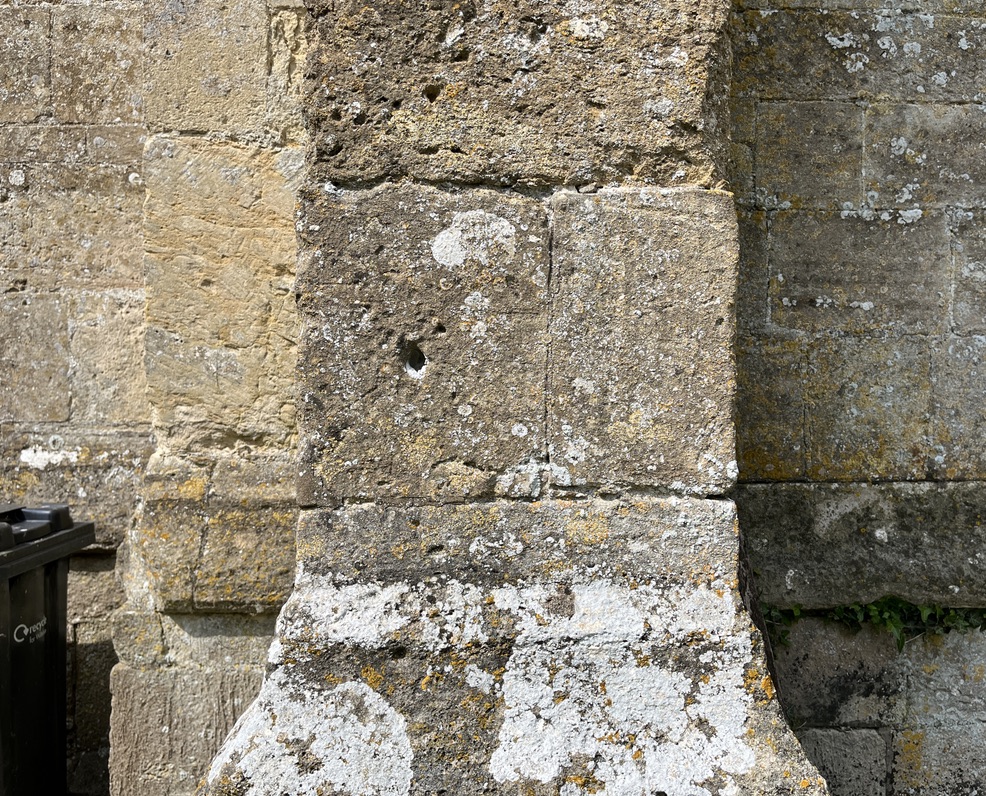
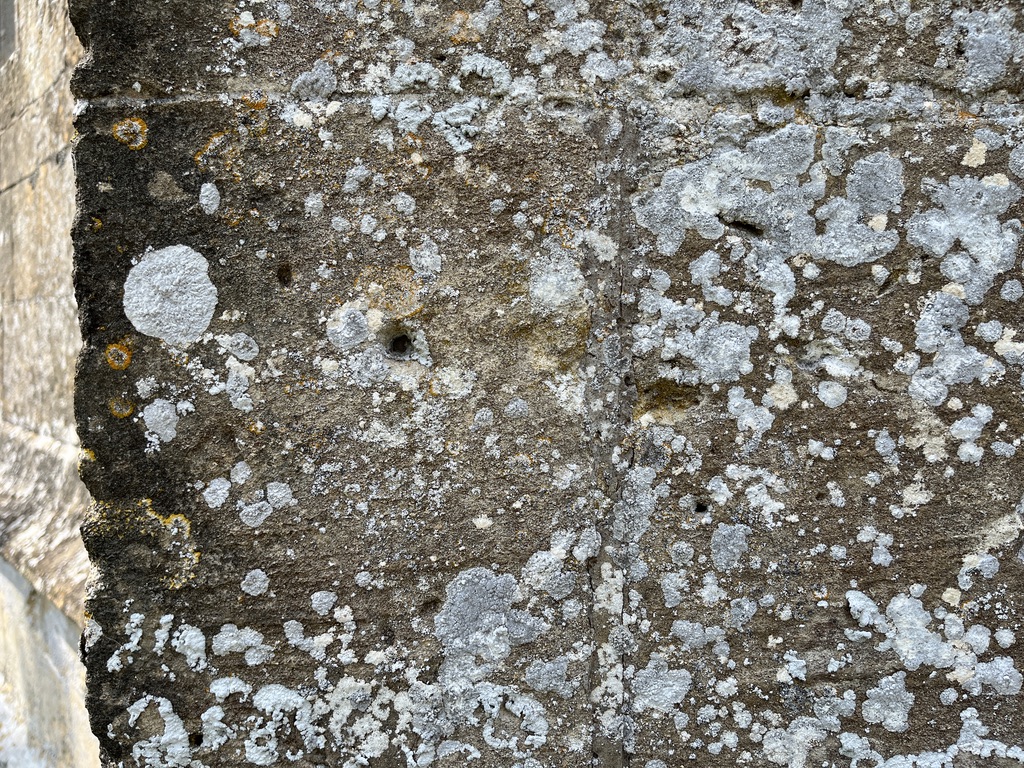
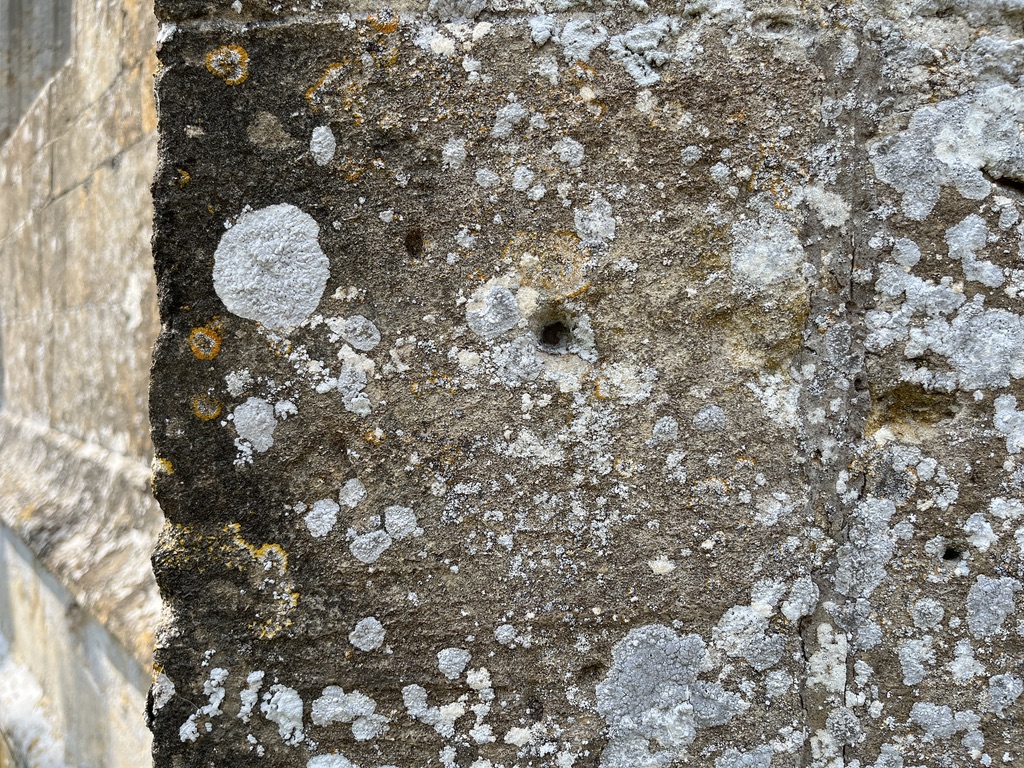
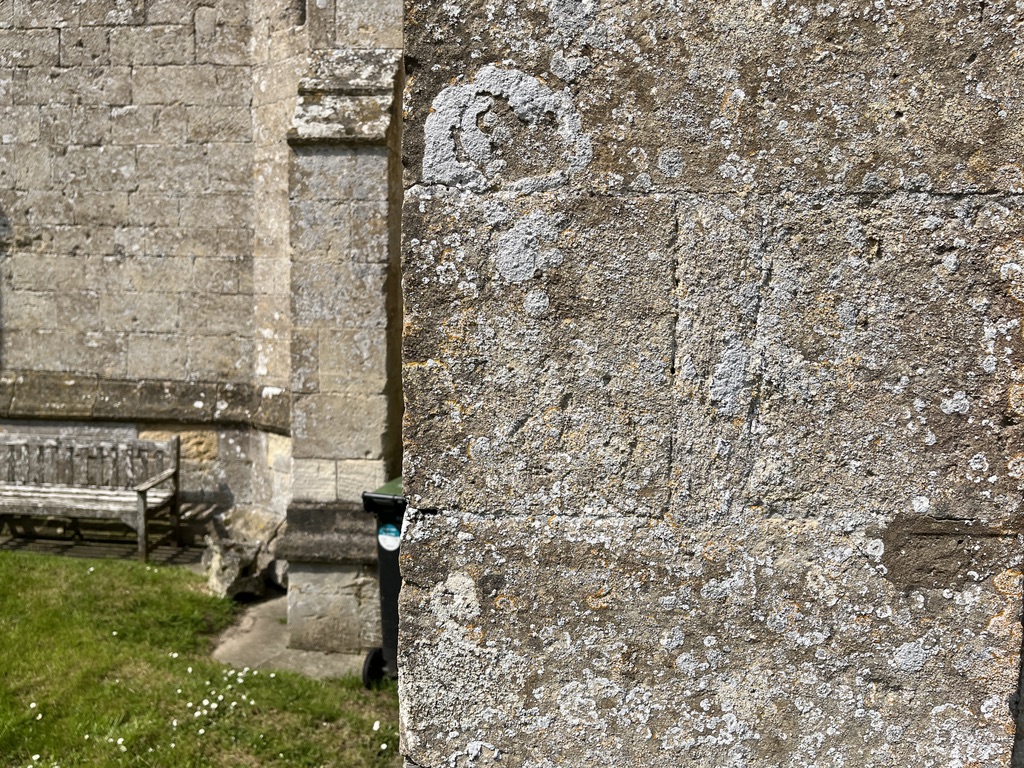
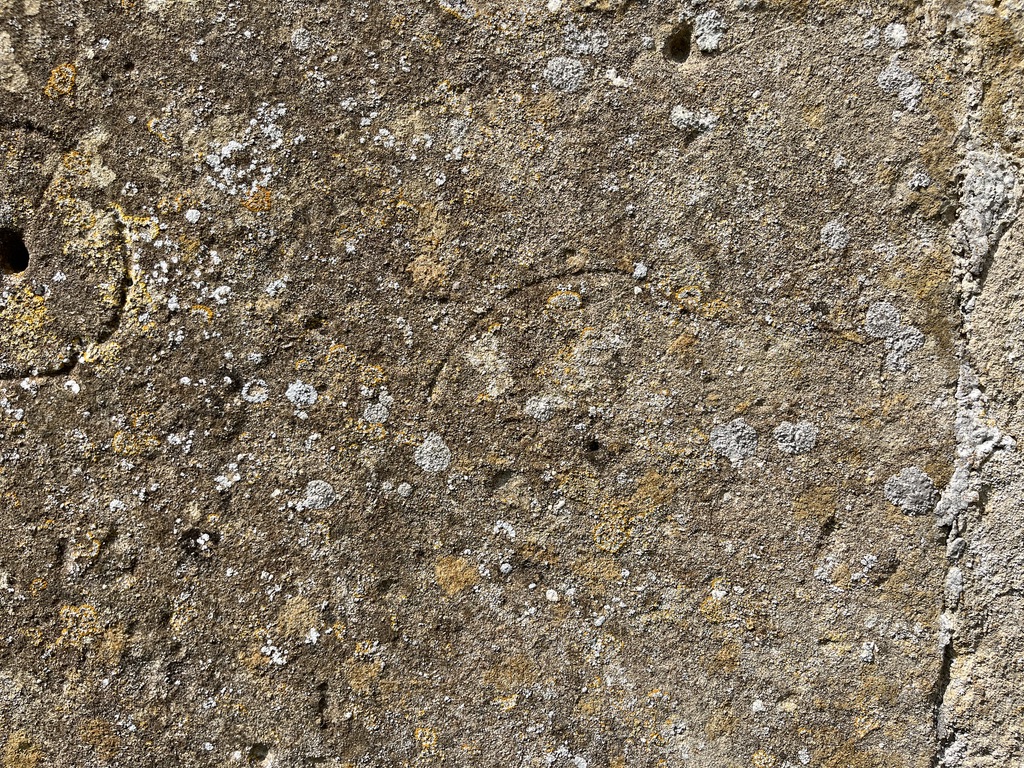
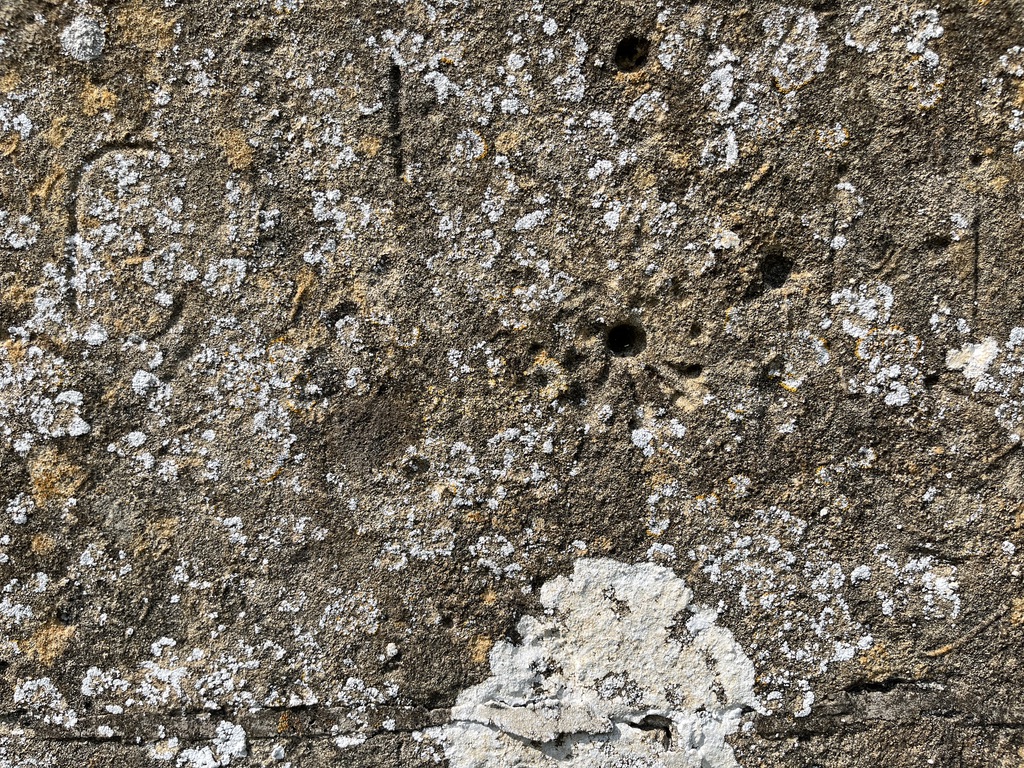
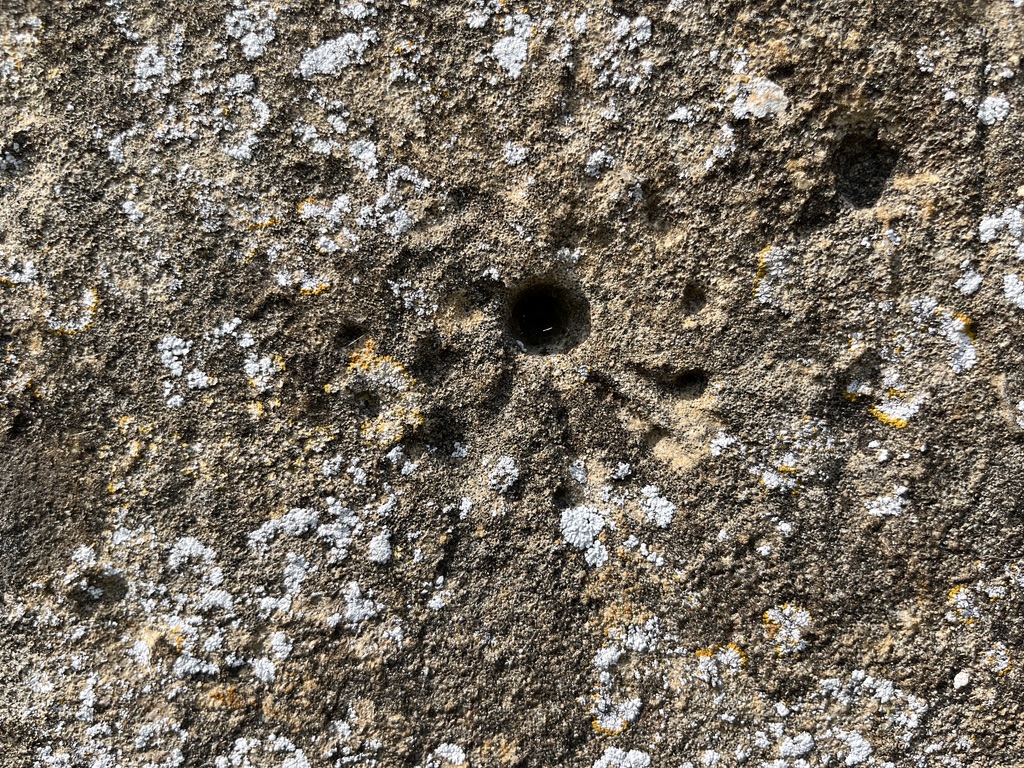
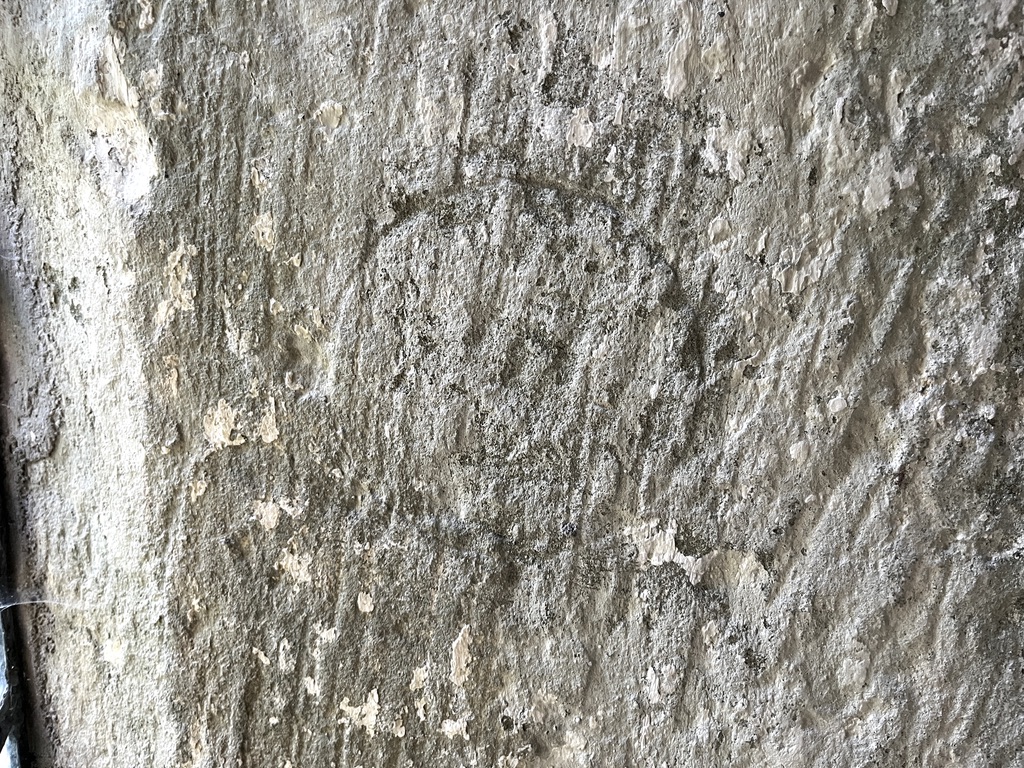
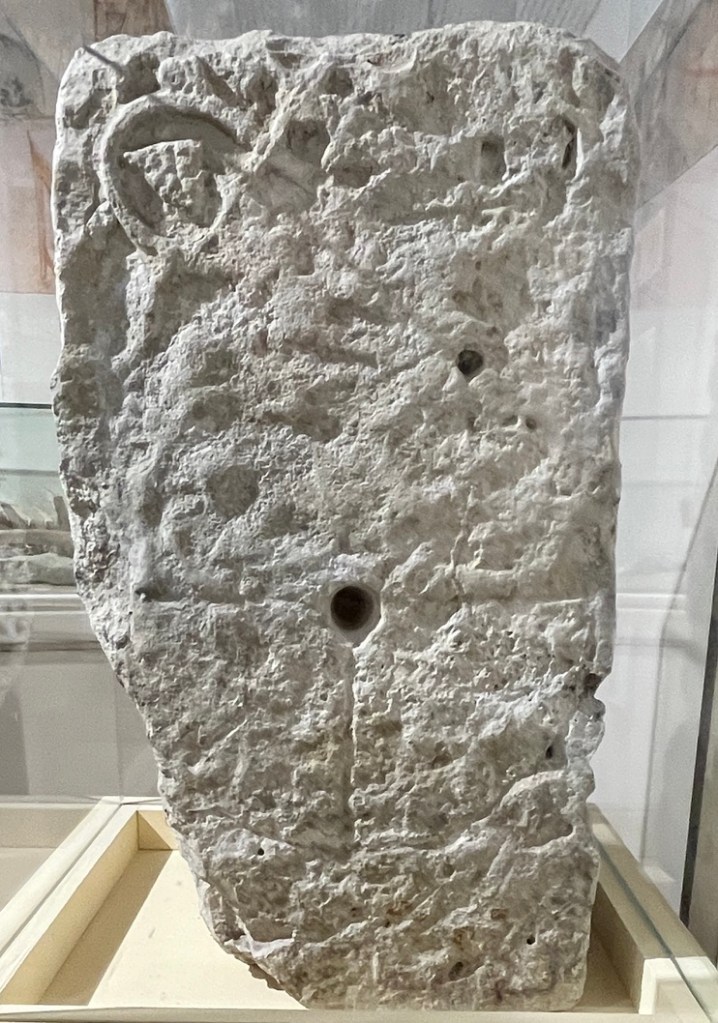
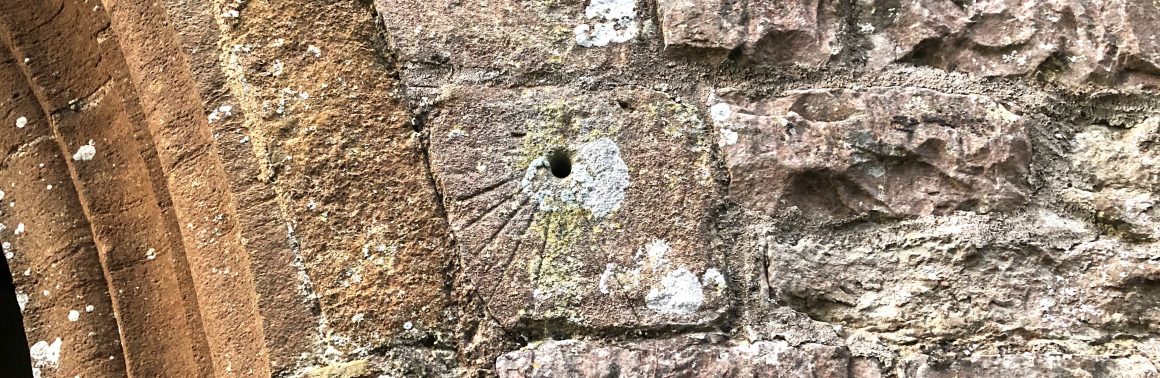
Located within later porch, LHS of entrance door. 7 clear lines; probably one upper LHS, very faint. Deep gnomon hole. Noon line perhaps marked with a pock 2″ below? Of interest, the 2 deeper and longer cut lines LHS of the vertical. These suggest that the main time of day for observance was Terce, or (as cut) somewhere between that and midday.
Unrecorded by BSS. I am grateful to Keith Freeman for contacting me about this dial, and for his excellent photos
GSS Category: Scratch Dial; Mass Dial; Scratch Dial within porch
This idiosyncratic garden is close to Port Racine in the NW corner of the Cotentin peninsular, in the Vallée des Moulins. There is a tumbling stream that at one time flowed past more than a dozen mills, of which some ruins remain. The garden was created in homage to the poet and screen-writer Jacques Prévert. After his death (1977), trees were planted by his wife, Yves Montand, Juliette Gréco, and Picasso among others, a quality tribute to his artistic achievements.
Amid the peaceful woodland bordering the stream are artfully twisting paths. These reveal clusters of metalwork sculptures, inscribed poems hanging from trees, and plenty of somewhat surreal creations. In amongst the foliage I spotted this sphere. Enjoy the poem.
An orange on the table
Your dress on the rug
And you in my bed
Sweet gift of the present
Freshness of the night
Warmth of my life
C13 origins. By C19 the church had become a place of pilgrimage for one Thomas Hélye, whose remains are rather eerily displayed in a case in the nave. In due course, the church needed to expand to accommodate pilgrims and the work was eventually completed in the 1920s.
DIAL
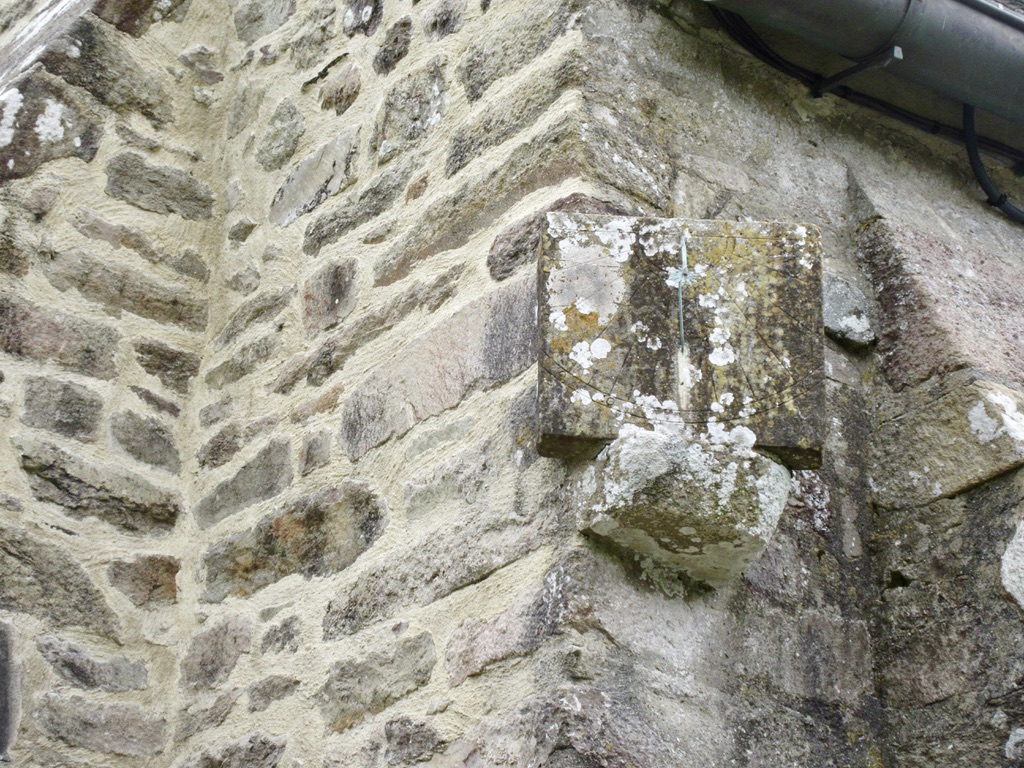
The dial is located on the second stage of the tower, in a position and at a height to record the passage of the day for all to see. The dial (date uncertain) with its Arabic numerals is large enough to mark 1/4 hours. It is canted for accuracy. The gnomon, unusually, is formed from two separate bent rods that (see large image below) have been carefully sited to cast the shadow.
GSS Category: Verical Dial; Normandy Vertical Dial; Sundial France
The church of St Gilles at Auderville is one of several churches in the region with similar dials located high up on one end, in this case the E buttress.
The dial is both canted and also slightly angled downwards, enough to notice from ground level. The Roman numerals are Blackletter, as can be found on other churches in the area. I haven’t come across the ‘horseshoe’ 9 before. The modern angled gnomon is plain and functional.
NOTE: 2 years on from my previous visit here on a very damp autumn day, I have returned on a sunny late-summer day. This post replaces the rather enervating photos from then with some brighter and more legible ones now.
The Borough Gardens in Dorchester are close to the centre of town. They were laid out and opened in the 1890s as ‘pleasure grounds’, as they remain. There is plenty to offer for all ages in an agreeable undulating space. Lawns, tennis courts, bandstand, paddling pool, playground, fountain, a memorial obelisk, and more.
ANALEMMATIC SUNDIAL
Amongst the attractions, close to the bandstand, is a modern analemmatic sundial. I don’t know the actual date it was laid out, but the BSS record is 1998 with the note: The dial is laid out in the play area near the bandstand. Hour markers adjusted for longitude, an hour added for summertime use. Shows hours from 7am to 7pm.
A lost village with a sad backstory. Once it was a remote small community in the centre of the vast acres of Salisbury Plain, with pretty cottages and a fine church. It was already a huge military training area before WW2 and the decision was made to evict the populace. As the record states: Given nowhere else to go, Imber’s villagers were ‘liberated’ of their homes in 1943, with just 47 days notice, to make way for American troops to train for the liberation of Europe during World War II.
The displaced population believed – or were led to believe – that in due course they would be able to return to their homes and to normality, but they were not permitted to go back. The cottages were replaced by large buildings to create battle scenarios. Only the Church of St Giles was left alone. You can read more HERE
DIALS
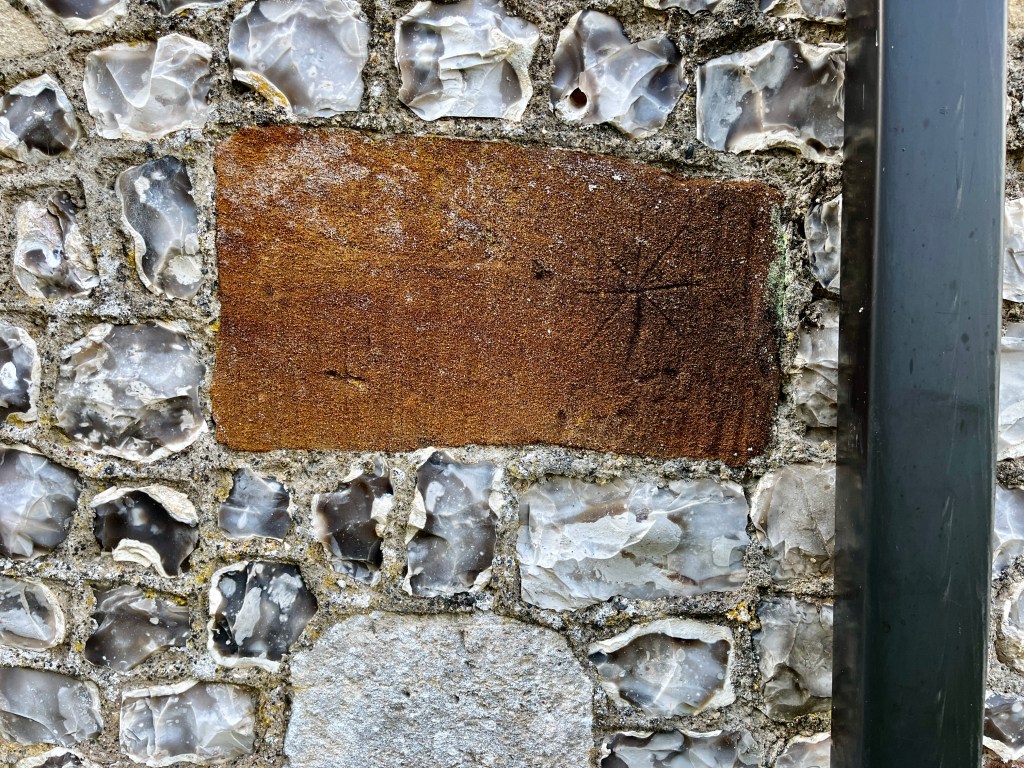
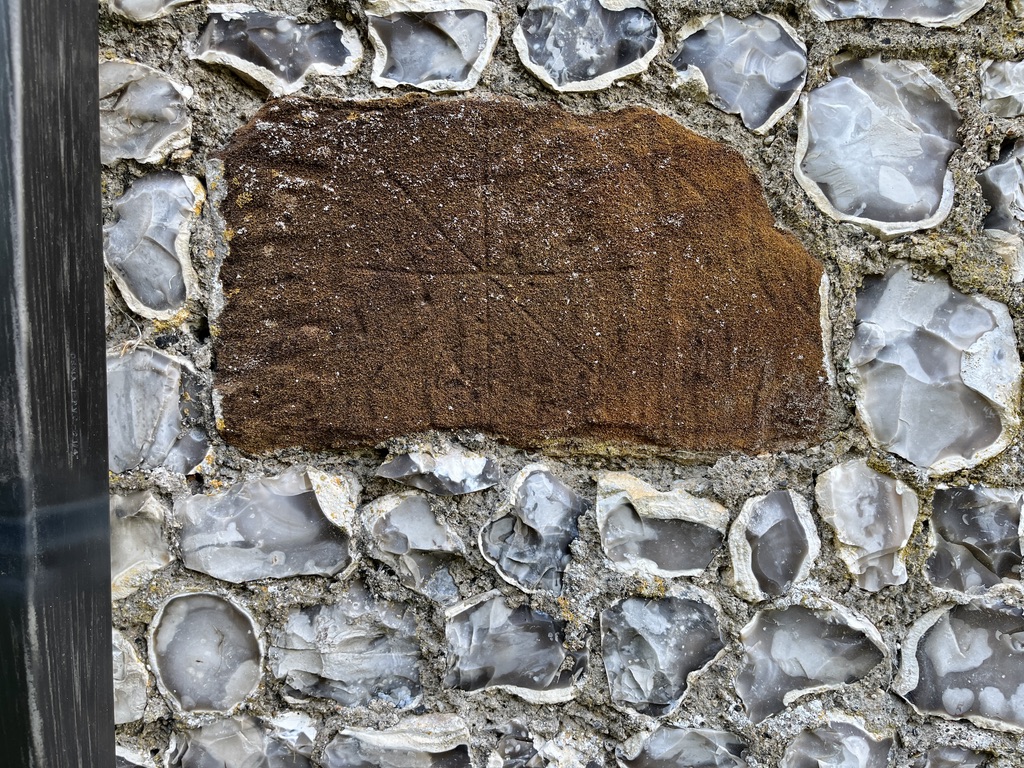
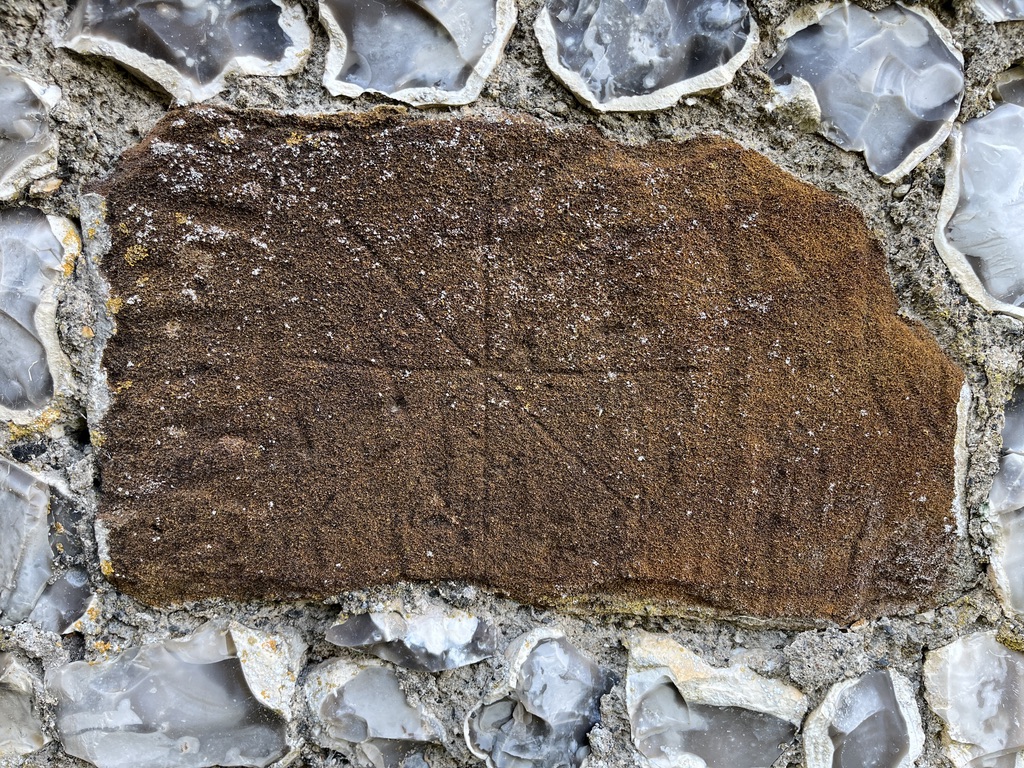
For obvious reasons, access is permitted on only a few specific days of the year. I recently visited on an Open Day, not least because I had found a clear record of two scratch dials. There aren’t any. However there is a wonderful collection of church marks of all types. Much of the trove is in inaccessible parts of the church.
GRAFFITI AND APOTROPAIC SYMBOLS IN THE PORCH
In the time available I briefly examined the porch. Shown below is an illustrative selection (by an amateur) from a far wider choice; I hope to return the Church. Meanwhile here are the key references for further exposition.
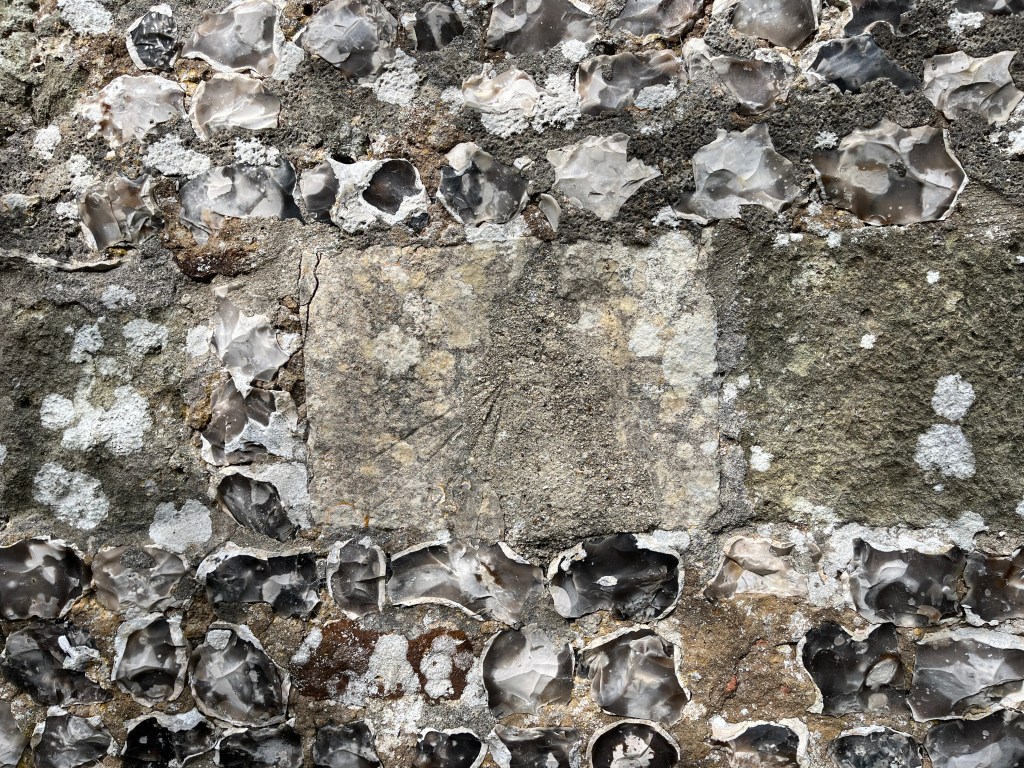
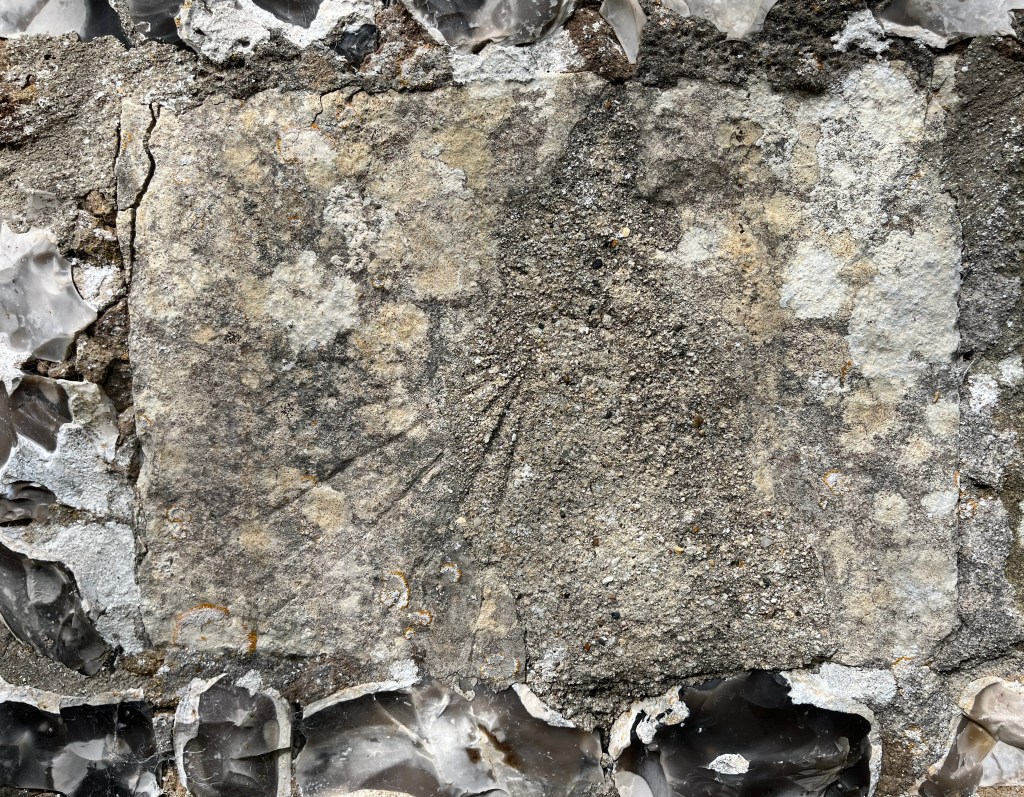
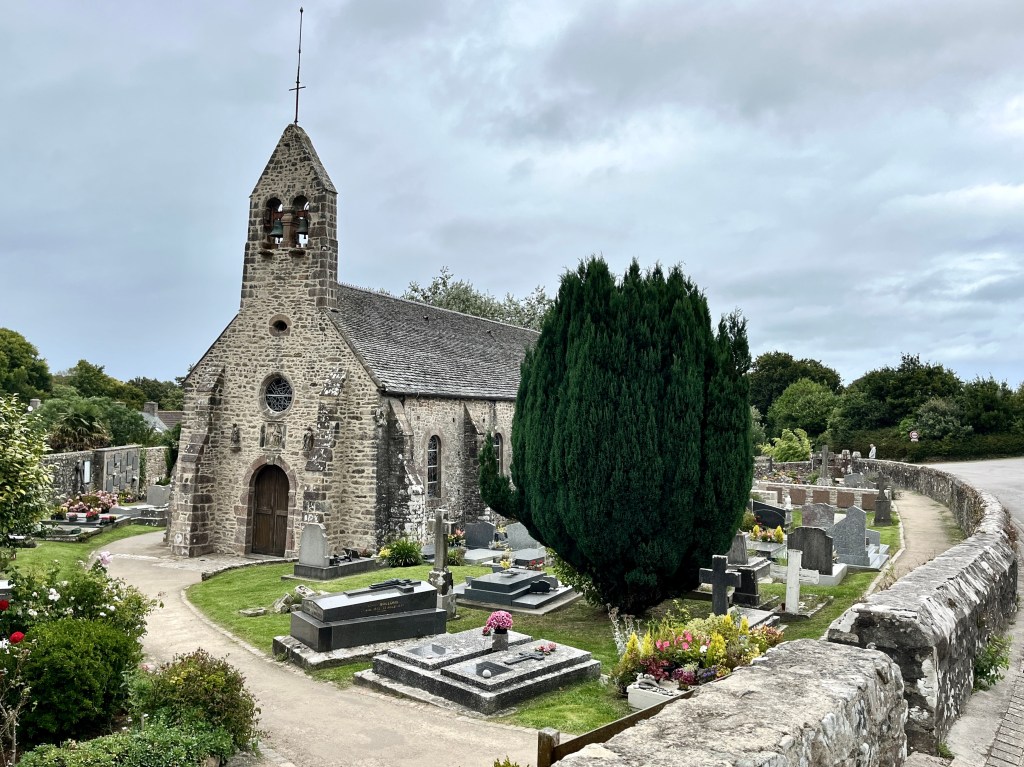
A fine Romanesque church (C11 / 12) in the far NW of the Cotentin peninsular. From its elevated position in the coastal landscape, the sea can be seen on both sides. Of several good dials in the area (other posts will follow), this is the one that is closest to being a scratch dial, being cut directly into the gnomon stone. Other church dials in the region are vertical dials on, rather than cut into, their location.
DIAL
The dial is high up on the E buttress. Seen from the ground, the dial stone blends with the surrounding stones. Seen close to, the awkward setting – shaped angled top with filling around it – suggests relocation. Wherever originally positioned, the height of the dial on the buttress must have been an effective way to use the church’s prominent position to mark passage of the day for the local community.
The dial face has a layout similar to other dials in the area, 12 lines inside a double circle containing the numerals. A possible noon hole on the inner circle; possible noon line extending below it. The short pointed gnomon is a much later addition. LLQ is badly damaged. Beneath the angled top is an eroded inscription, the clearest letter being E. ‘RIEN’?
Finally, this photo from the excellent Michel Lalos french sundial site. I’m not sure when it was taken, but I expect within the last 20 years or so. It graphically shows how degraded and damaged the dial has come during a mere couple of decades. Sadly, LLQ is falling apart.
GRADE II ❖ Medieval base. 6-metre Column dated 1741. One sundial face also has that date. All but plinth block entirely rebuilt 1982. The fluted Tuscan column was perhaps copied from a similar one at Wilton. 8m NW of Yeovil. 50.970 / -2.7666 / ST462192
DIAL
The images were taken starting from approx. NW, moving counter-clockwise. All four faces are included, some clearer than others. The various gnomon styles are shown. I have divided the photos into 2 blocks for simplicity. The dial is topped with a ball finial, which in turn supports an attractive weathervane.
As if this sundial were not enough, Martock’s very fine All Saints church has an excellent cube dial over the gateway: ALL SAINTS . MARTOCK . CUBE DIAL
MARTOCK HISTORY CLUB has a good article about the dial and other local features of interest.