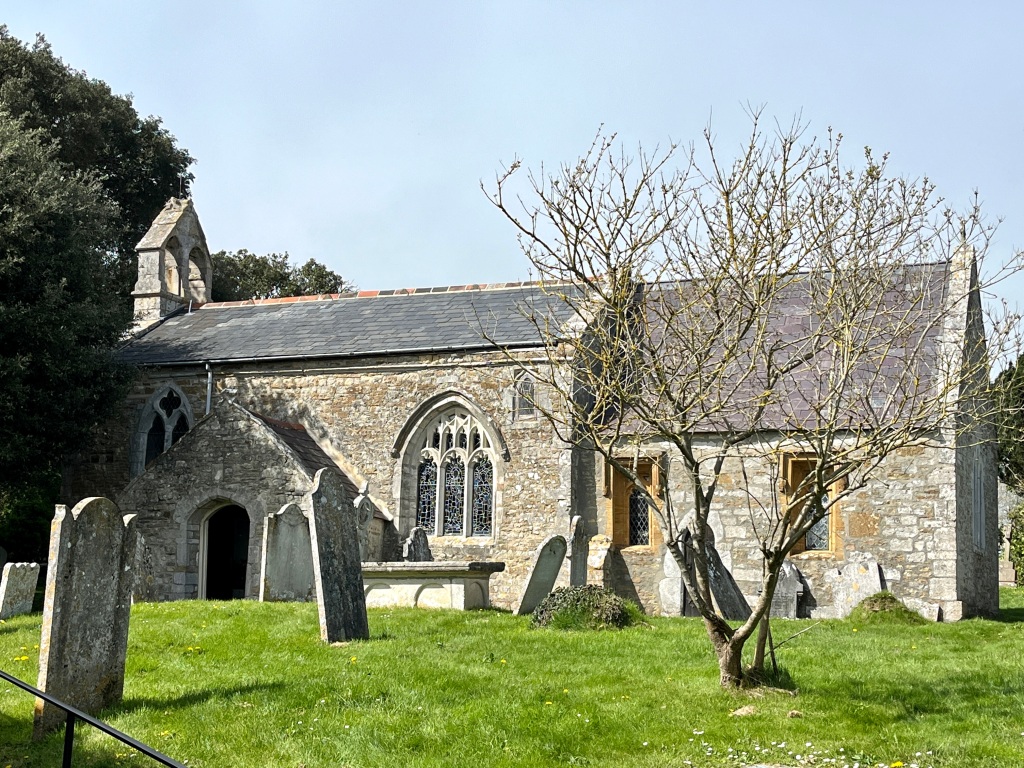
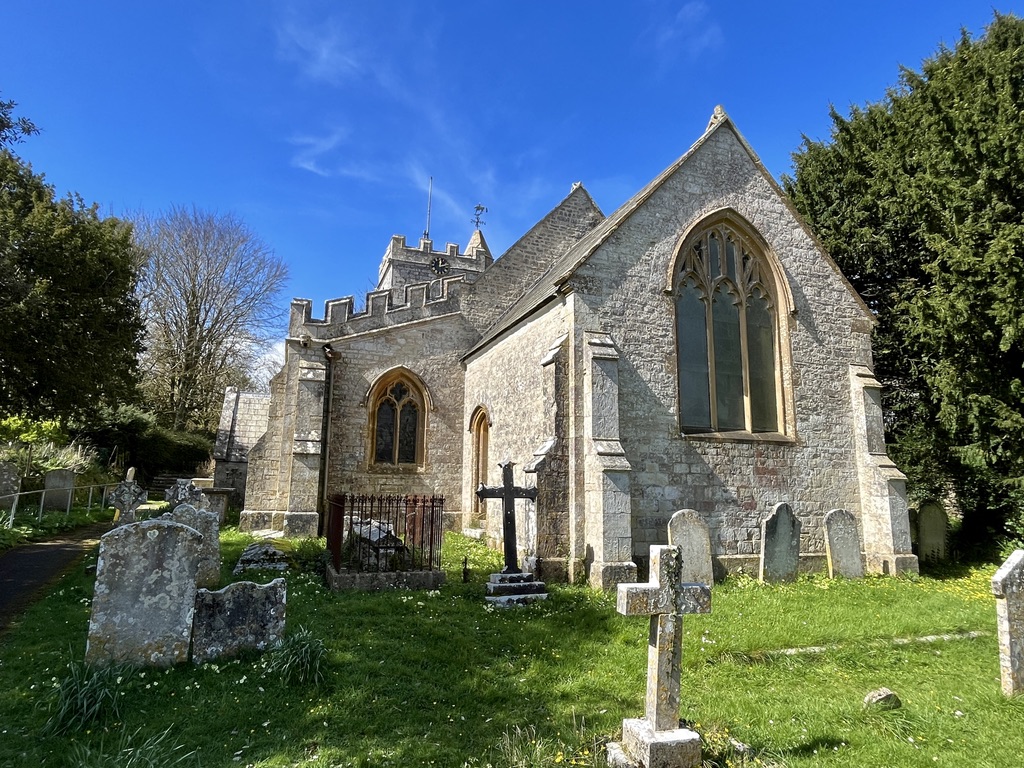
GRADE II* ☩ C13 Chancel, Nave; other remnants eg blocked C13 doorway. Later additions and restorations. Fine hexagonal pulpit, one panel carved 1630 RW.IM. With its bellcote, a charming small church. On W edge of Weymouth. 50.6248 / -2.5048 / SY643806
DIAL
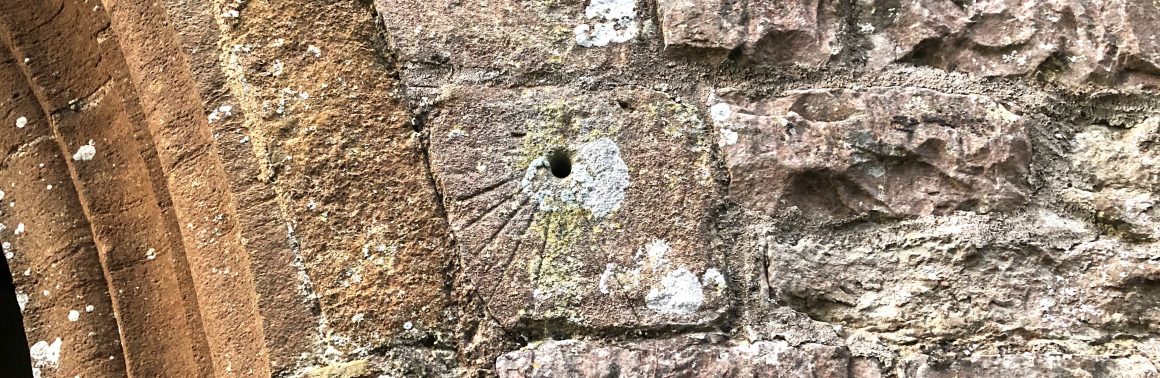
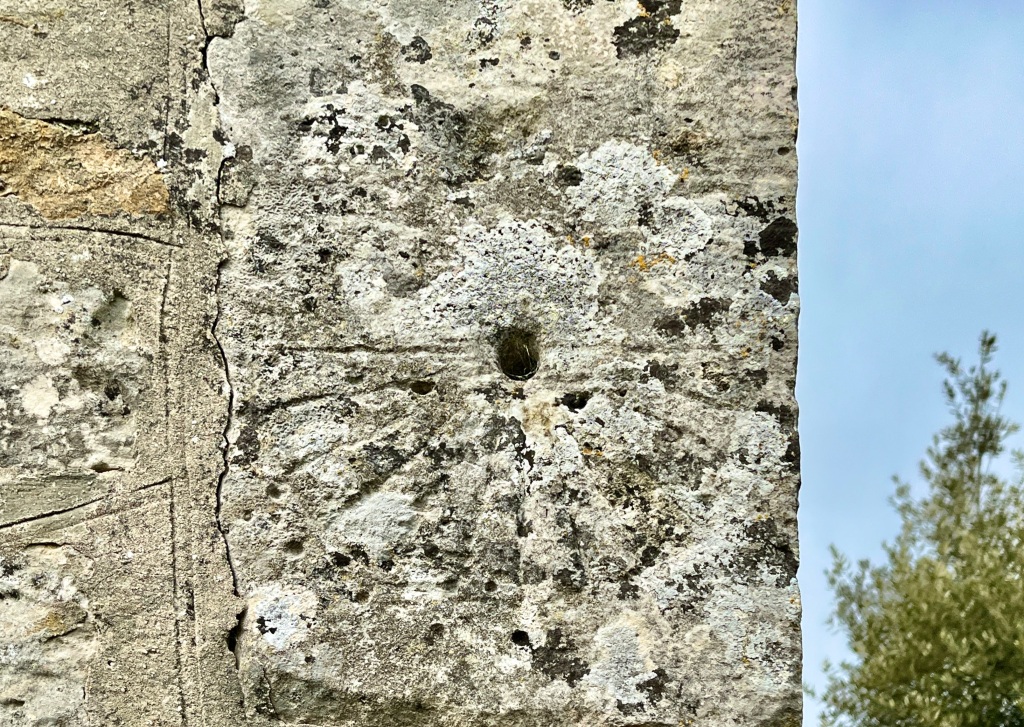
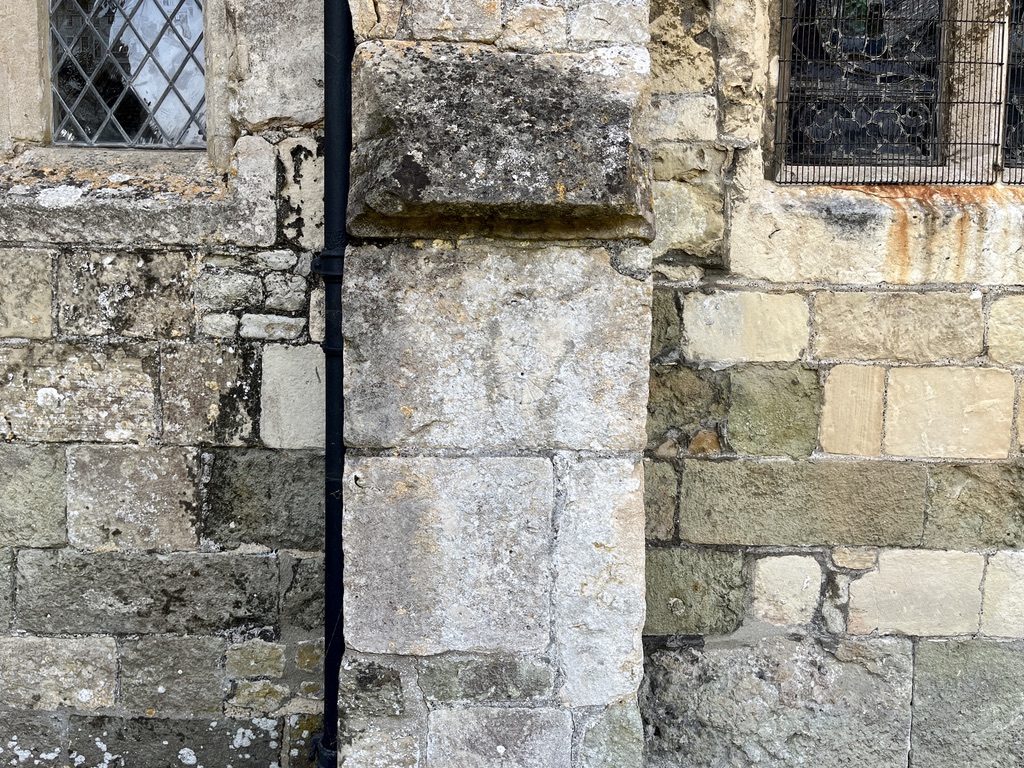
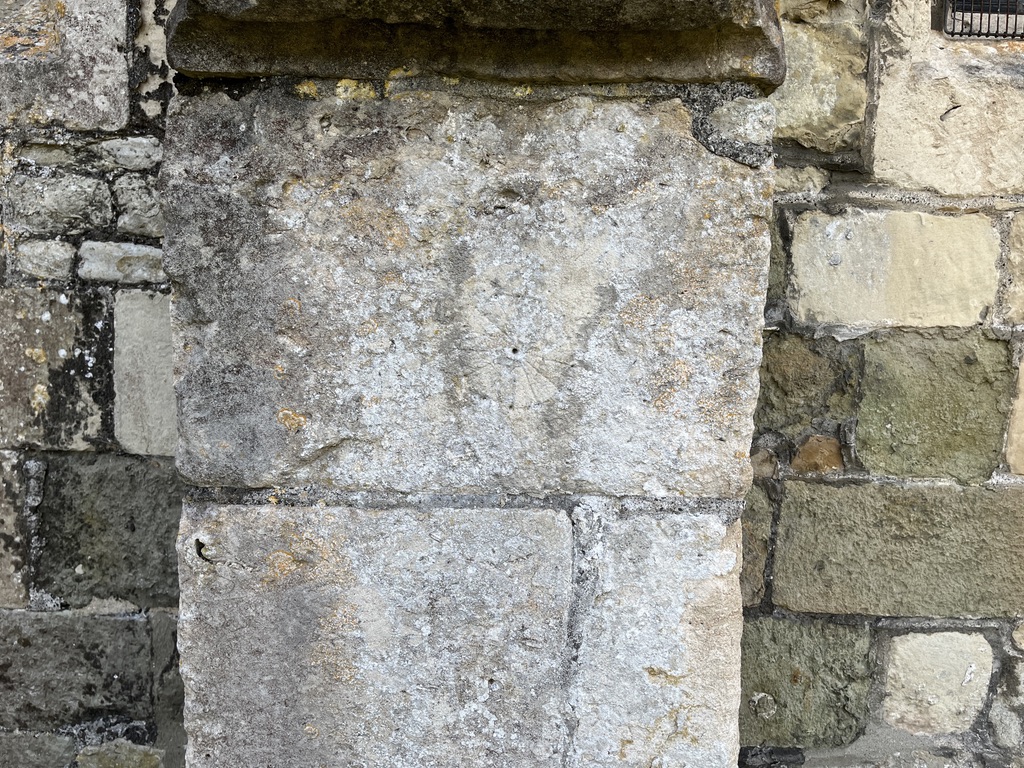
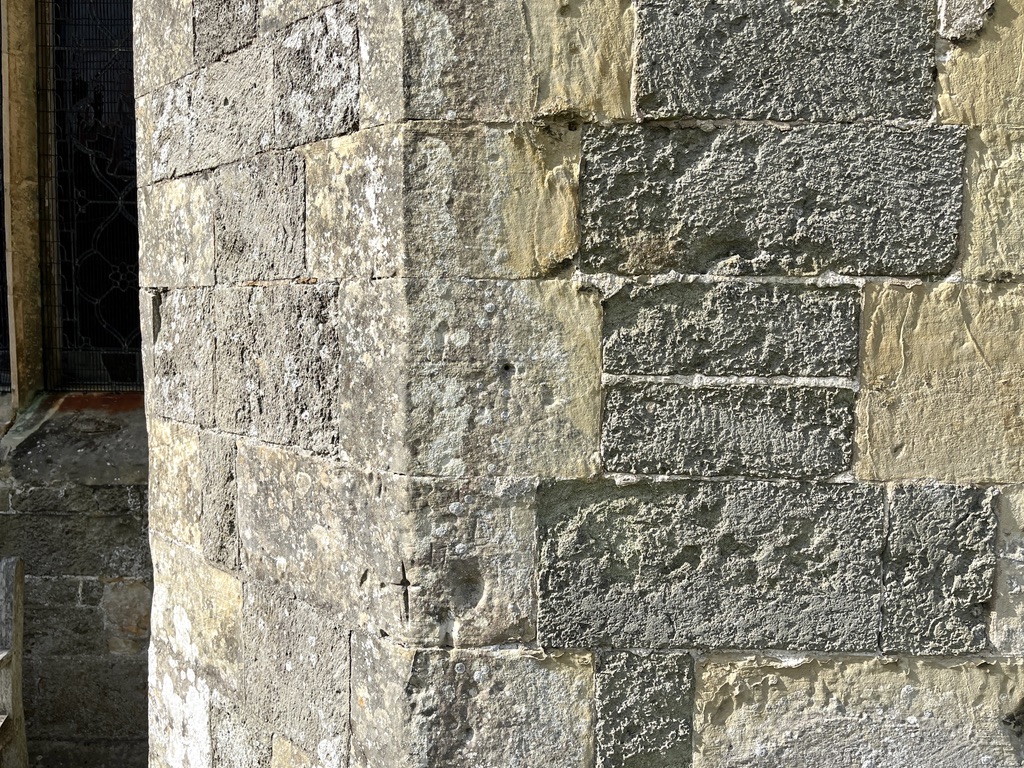
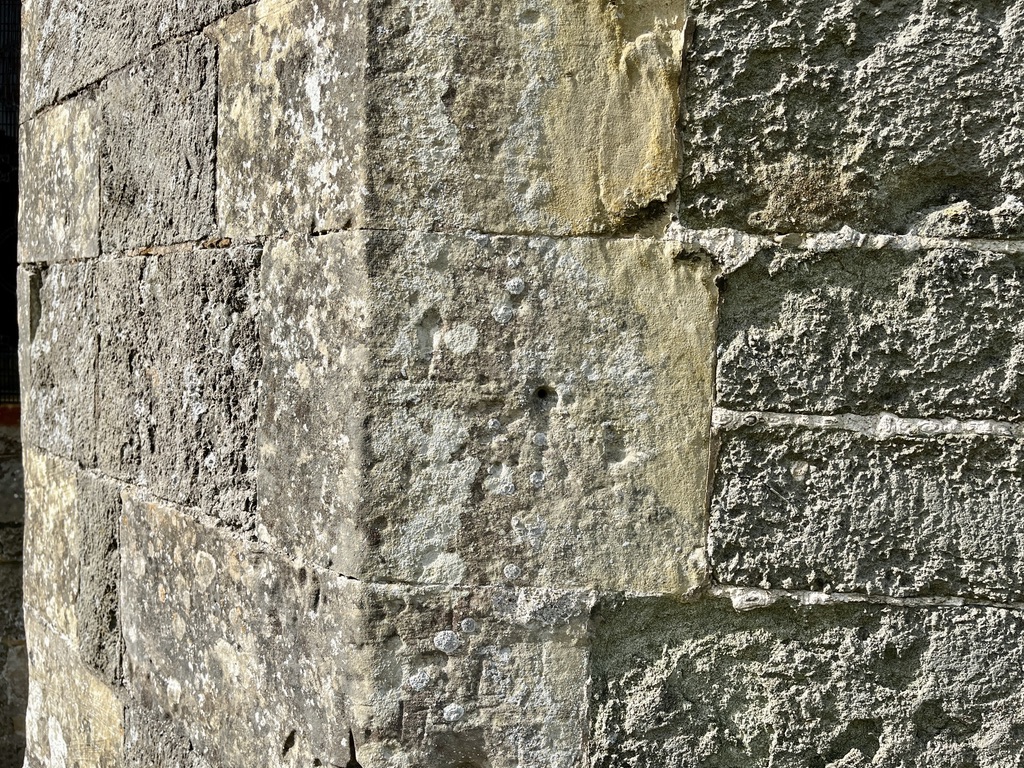
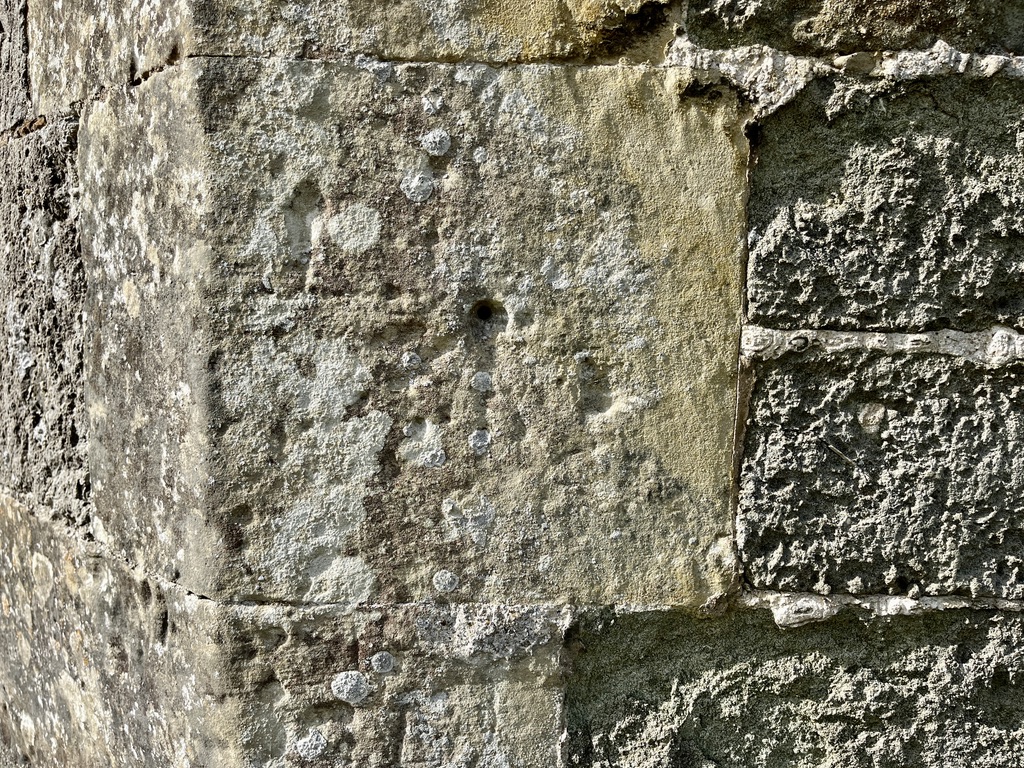
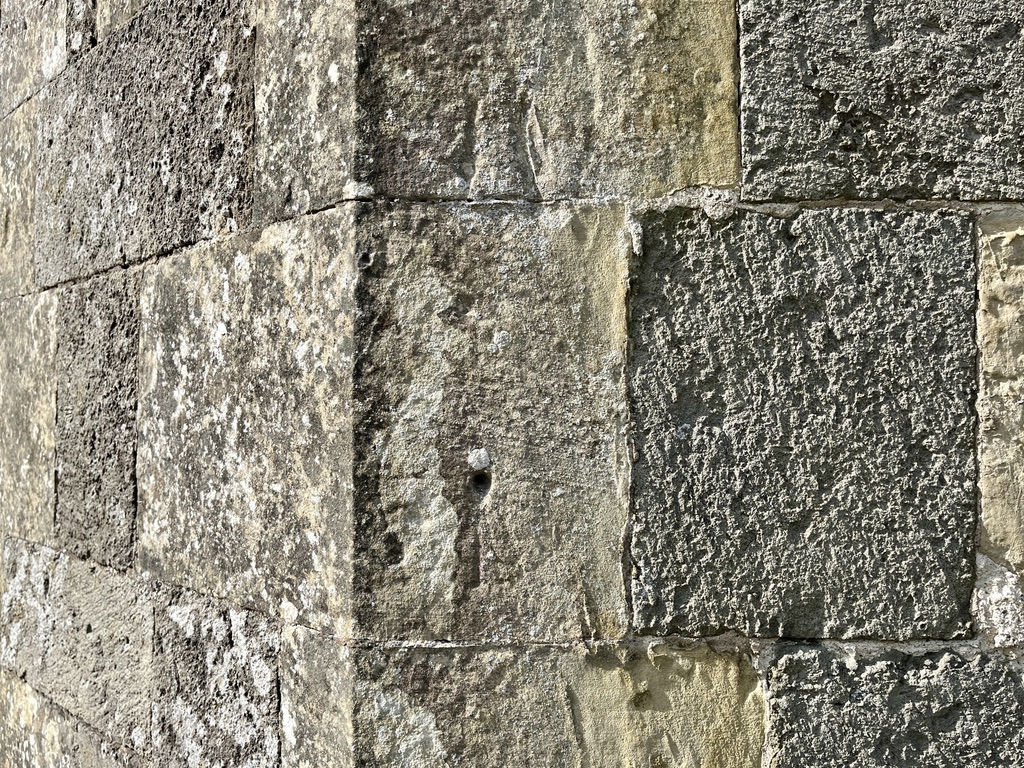
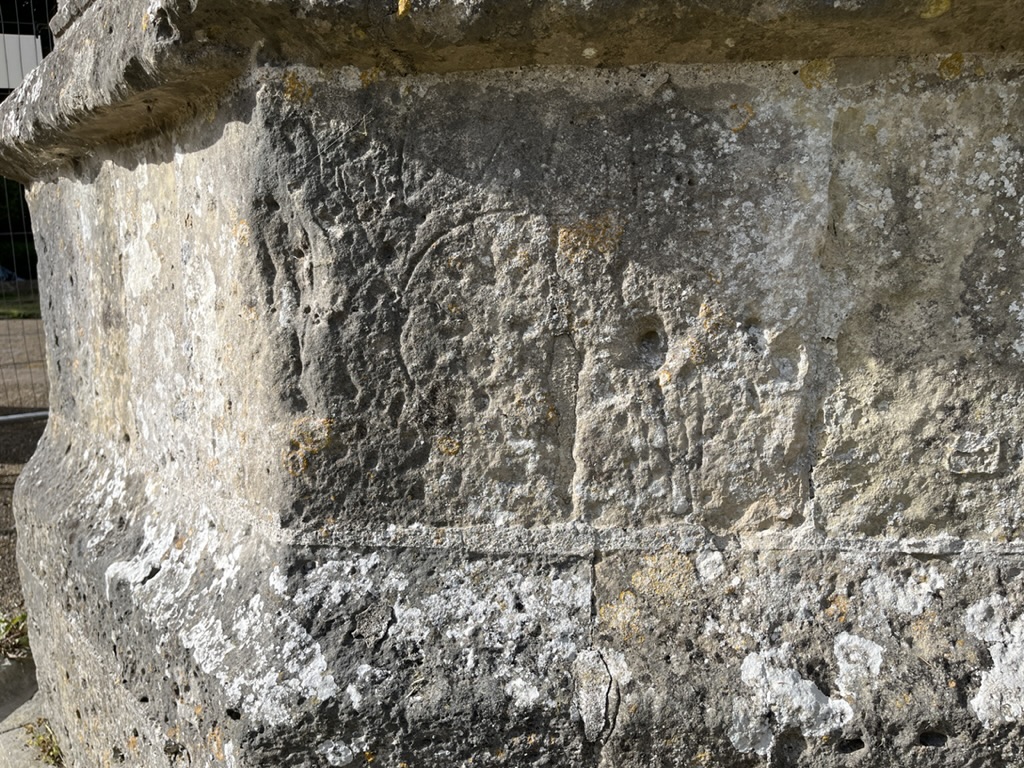
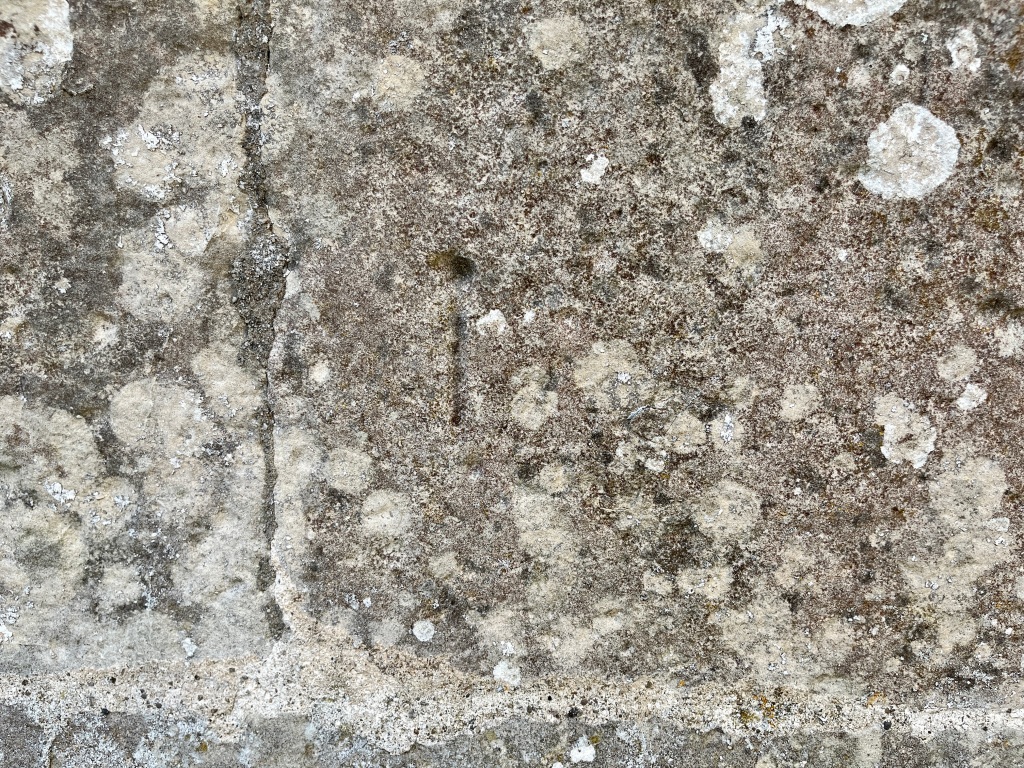
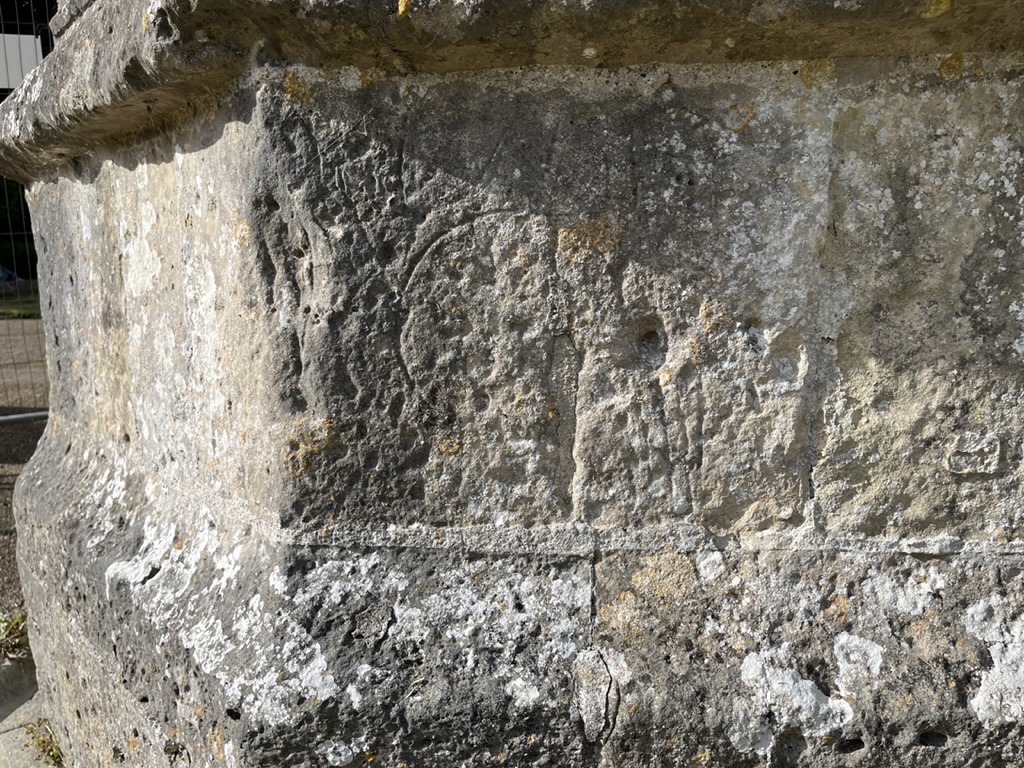
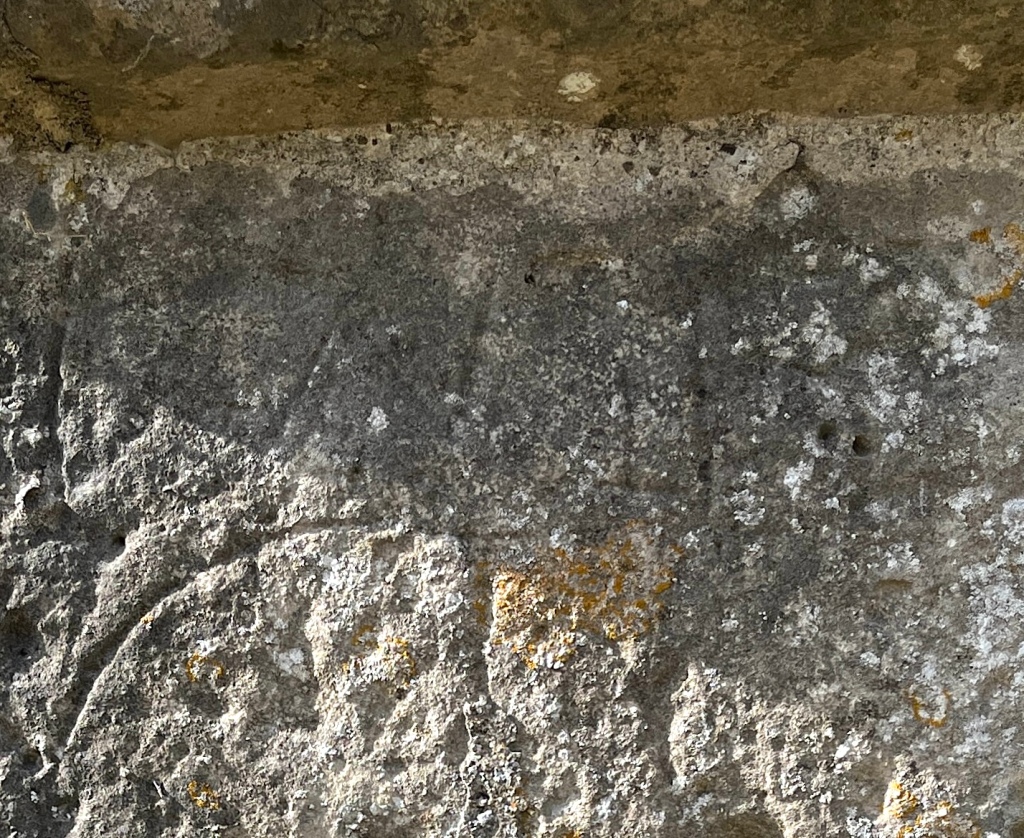
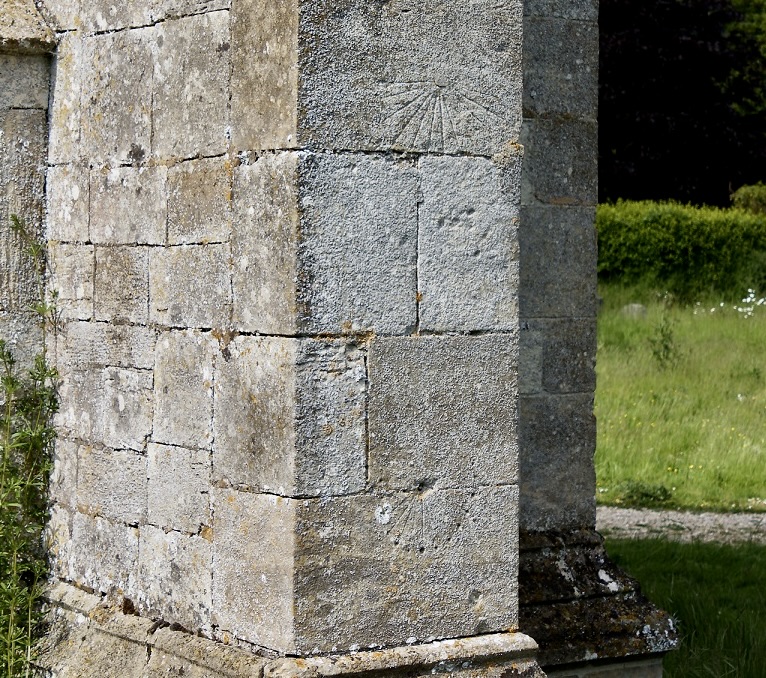
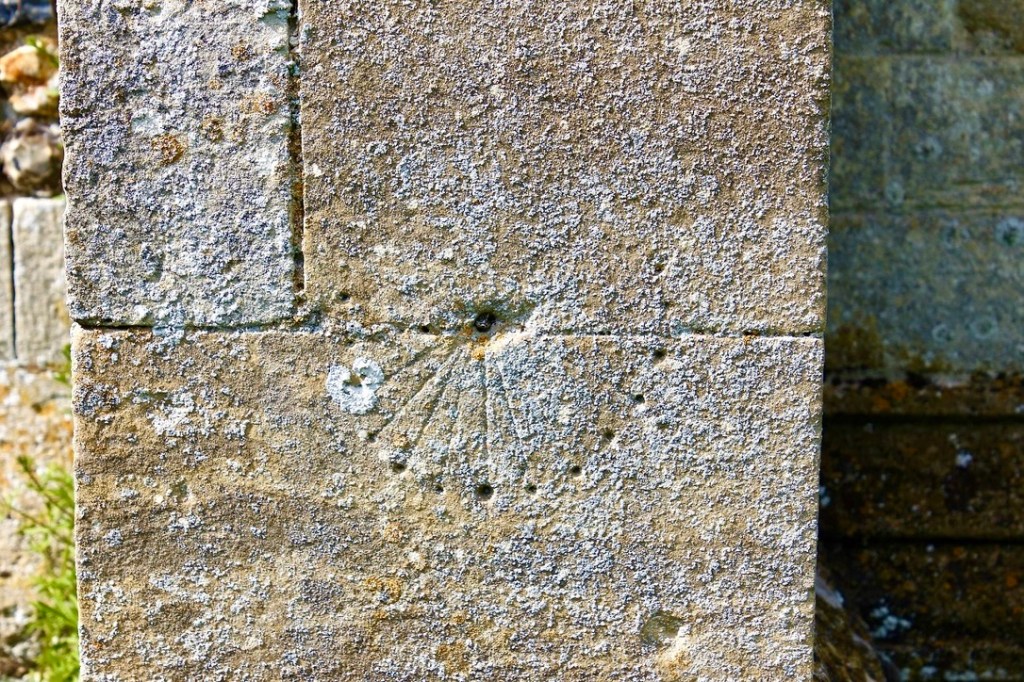
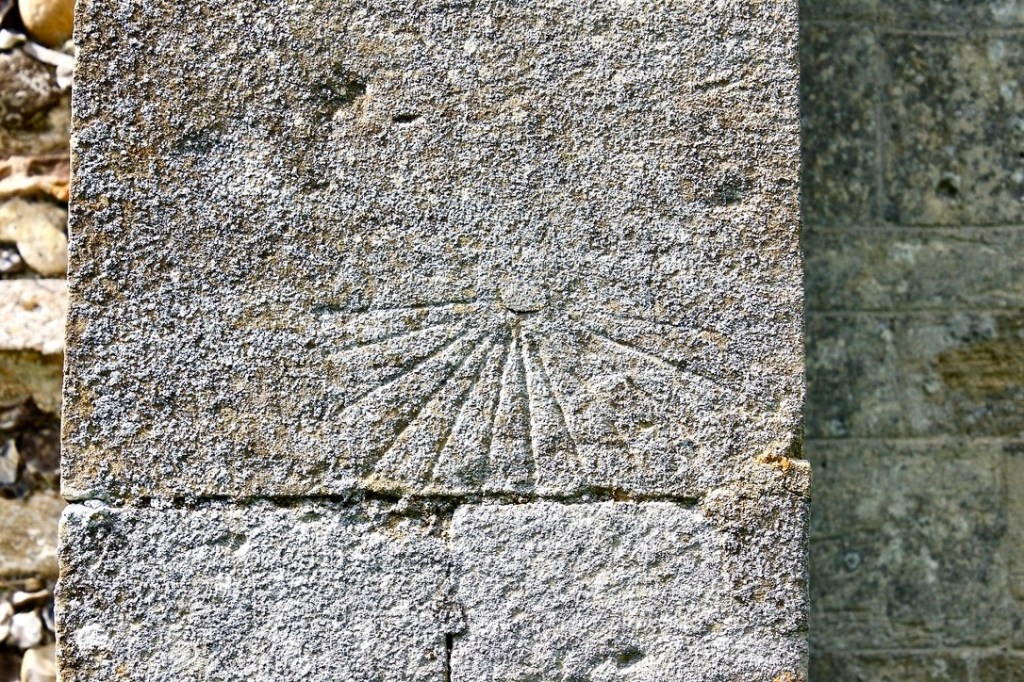
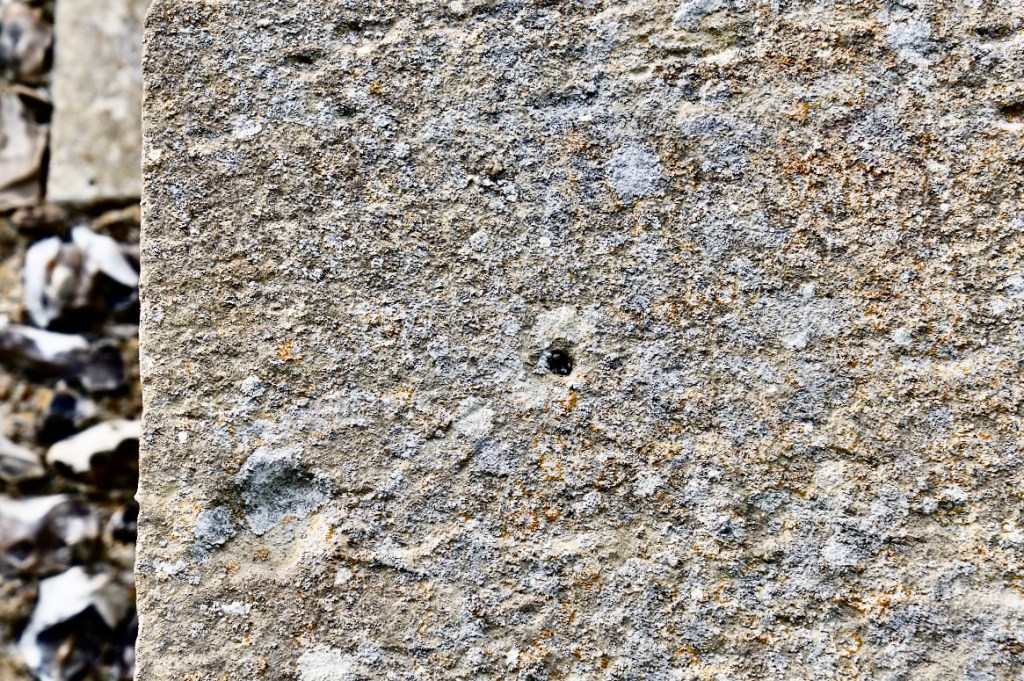
The dial is high up (c 3m) on the chancel quoin stone SE corner. GLP dates to C13. Semi-circular (a hint of a complete circle?), with 13 lines. Some terminal pocks. One line – corresponding with Terce – is deeper incised, with a hole outside the circumference.
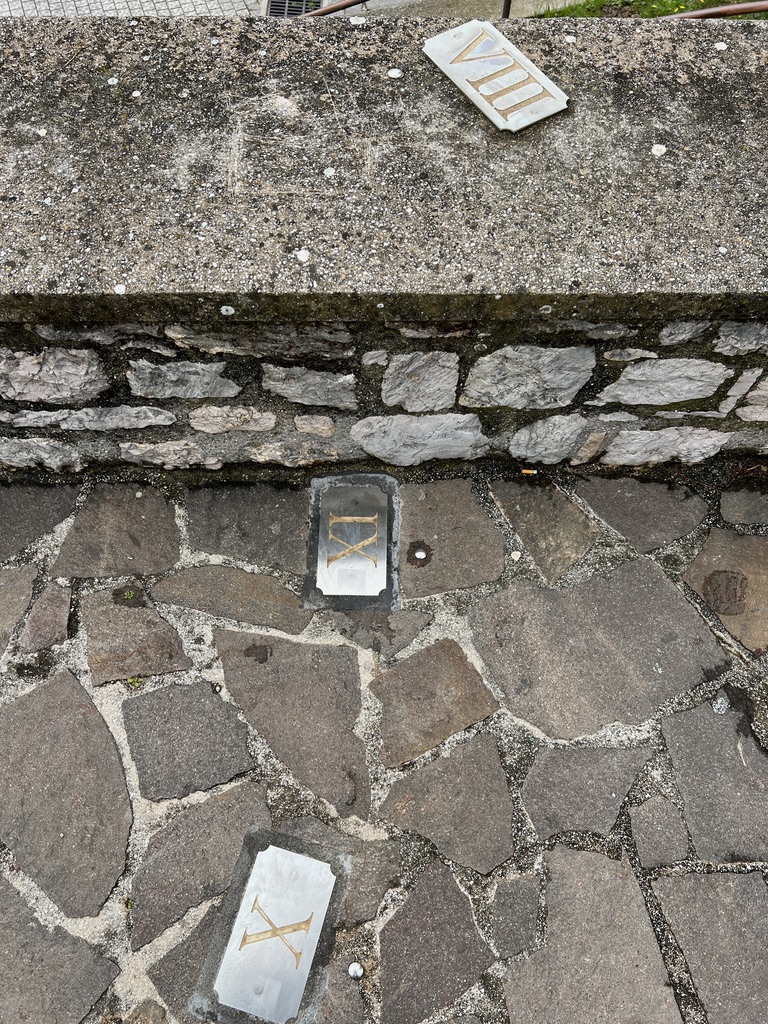
Corciano is an attractive small town 12km west of Perugia, walled and with much of its medieval origins still evident. In contrast, the Commune has commissioned interesting modern projects, for example a residential complex designed by Renzo Piano and inspired by Rubik’s cubes.
The town has initiated an ambitious project, financed by the municipality, to make an itinerary that combines culture, history, astronomy, landscape and science and can be used free of charge for everyone: citizens, schools and tourists.
BORGO del SOLE
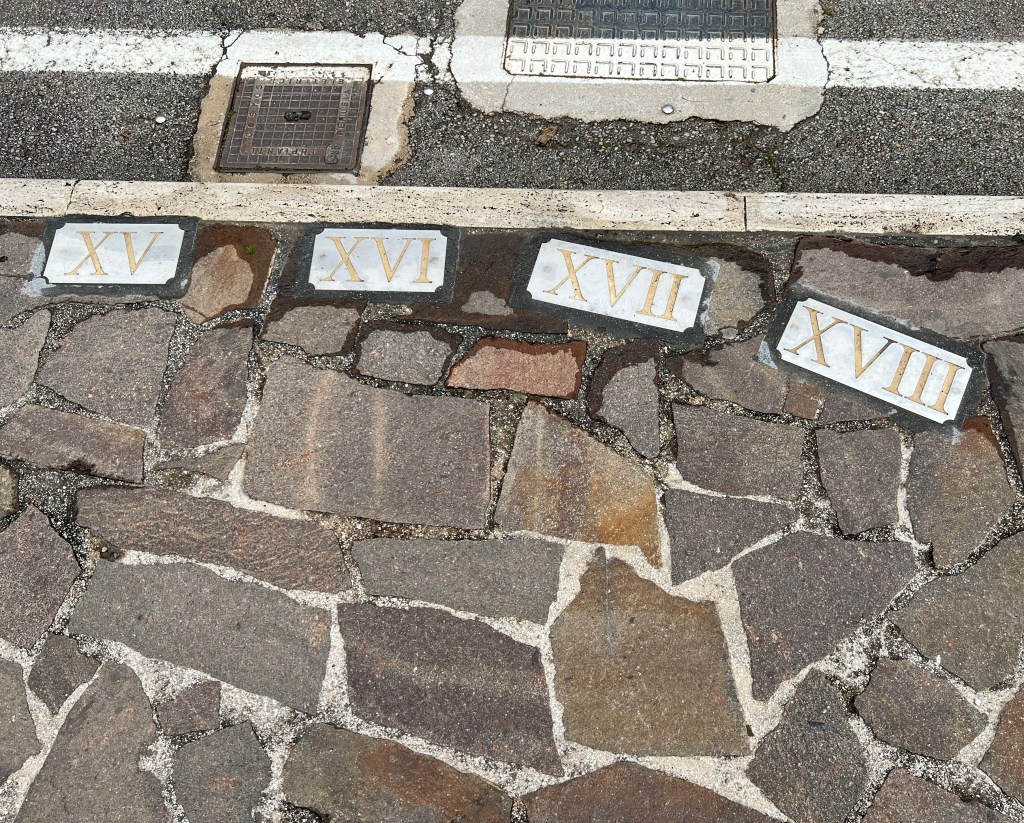
The Sundial Trail links 3 different kinds of sundial at sites carefully chosen for each type. These are an Armillary Sphere (Equatorial Dial); an Analemmatic Sundial; and a Ptolemaic Plinth in the Gardens. Other types of dial are planned.
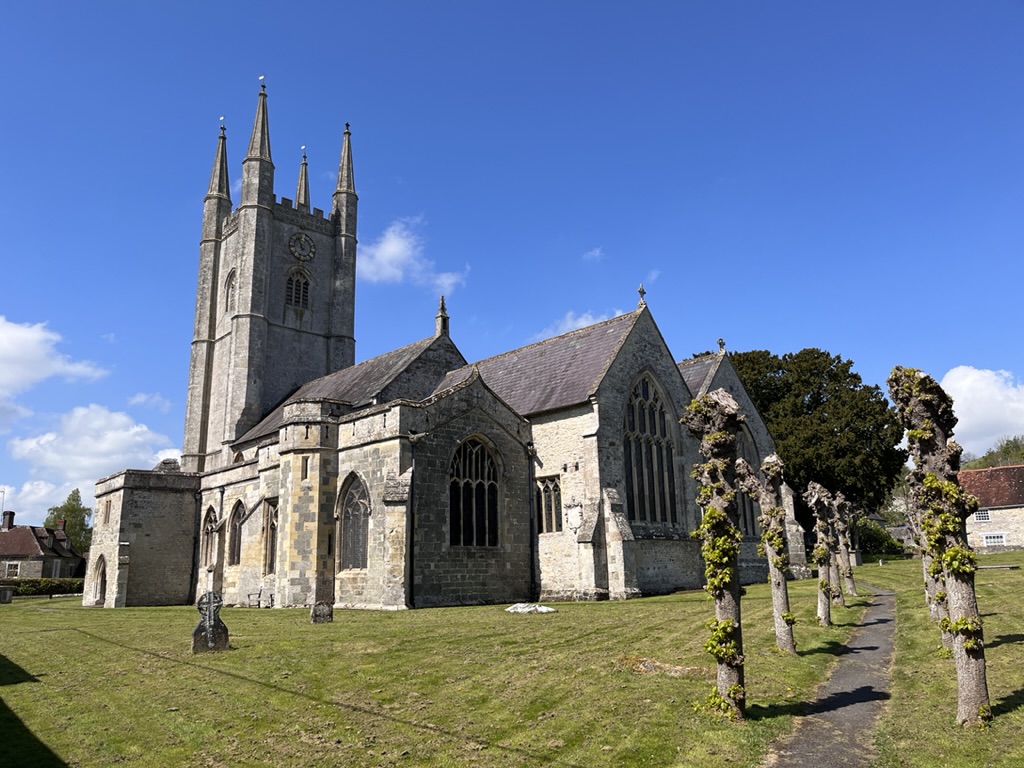
GRADE I ✣ Saxon origins, remnants from late C12; Chancel C13, north and south chantries C14, aisles rebuilt late C14, remainder C15. Highly praised *** by SJ: the screen is the best in Wiltshire; excellent stained glass… A small town fortunately by-passed by the dread A303. 51.0893 / -2.2711 / ST 811322
DIALS
St Michael provides plenty of scope for scratch dial sleuths to bicker about. BBS records 6. The Mere Historical Society records show Handwritten notes on green paper by John Ingram to Dr David Longbourne relating to a sundial (scratch dial) on the buttress of St Michael’s Church, Mere, 1990’s. The Church’s helpful info suggests 2 or perhaps 3. I believe there are at least 6 and possibly up to 10 dials in all.
The BSS record of 6 dials gives 1 – 3 in a cluster on buttress 2 E of the porch (see 4, 9 & 10 below); and 4 – 6 grouped further E on buttress 5 / S wall stairway area.
DIAL 1
DIAL 2
DIAL 3
DIAL 4
(and see plausible dials 9 & 10 on same stone))
DIAL 5
DIAL 6
DIAL 7
DIAL 8 (?)
DIALS 4 (above), 9 & 10
Dials 4, 9 and 10 – all different types – are on the same stone and to an extent impinge on each other.
DIAL 9
DIAL 10
CONCLUSION: enthusiasm can be an enemy of accuracy, and there is always some leeway with multiple dial Churches. I haven’t tried to analyse each dial – the array will with any luck elicit some opinions.
GRADE II* ☩ C15 west tower; otherwise mainly rebuilt 1846 retaining very little of the original church (?Ferry). Set in a pretty village close to the coast that has the feel of an earlier age (in a good way). 5m E of Weymouth. 50°38’45″N / 2°23’29″W / SY724829
DIAL
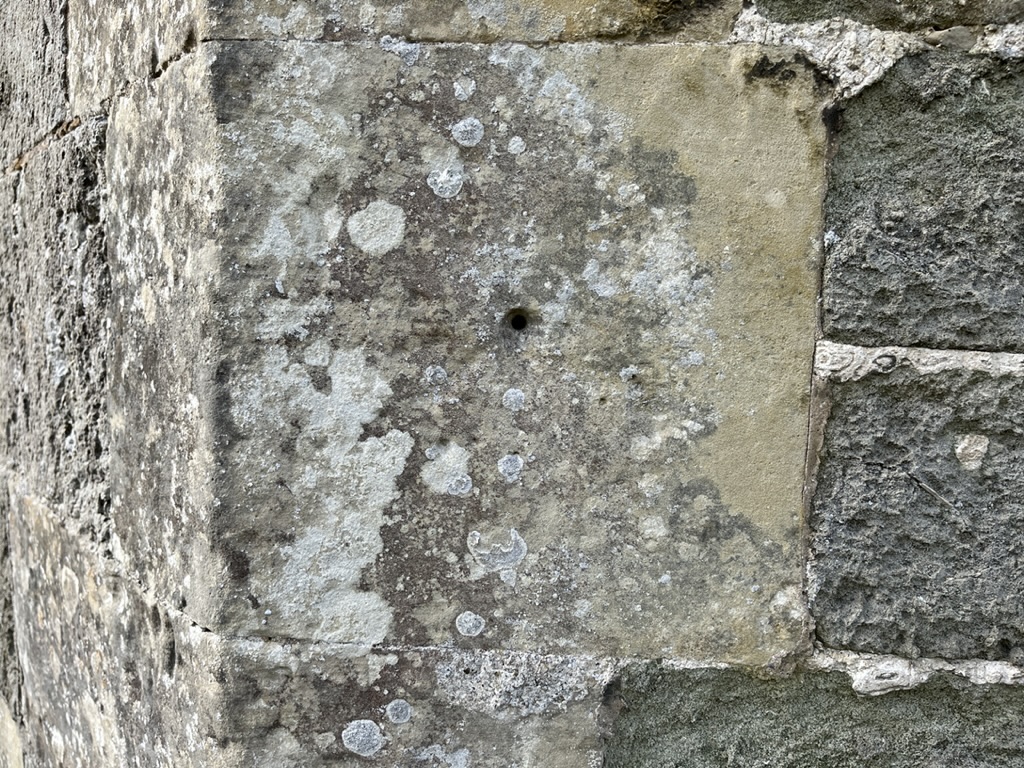
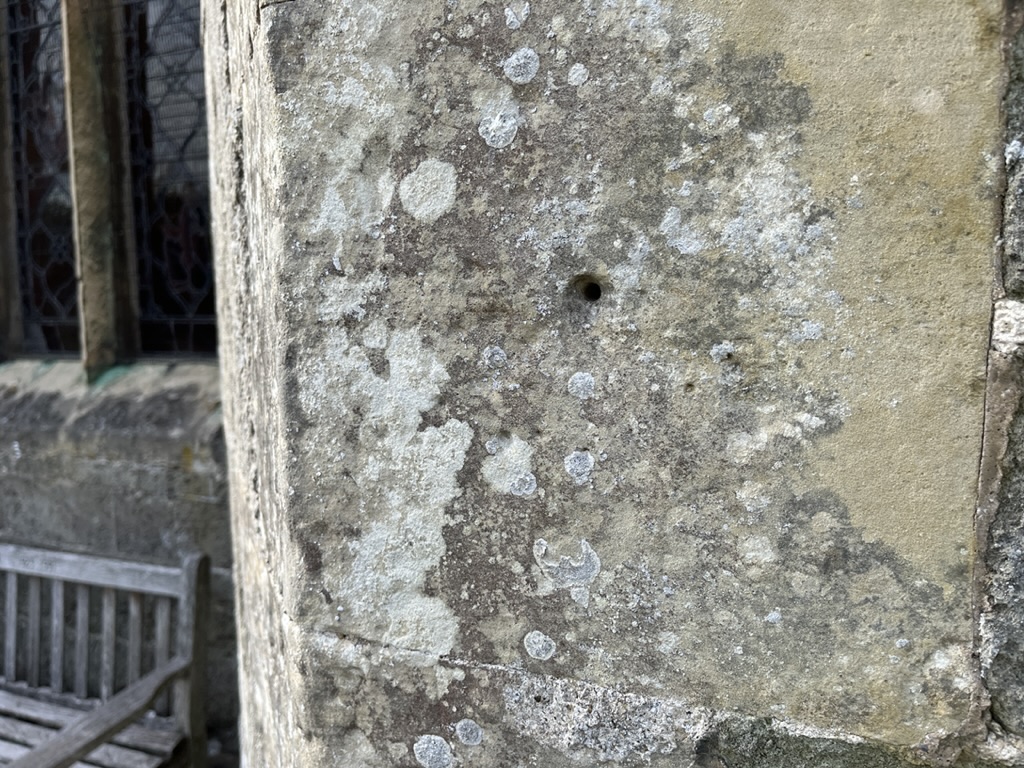
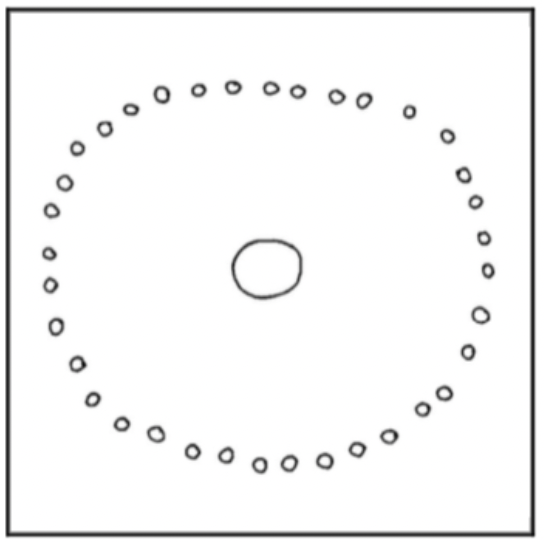
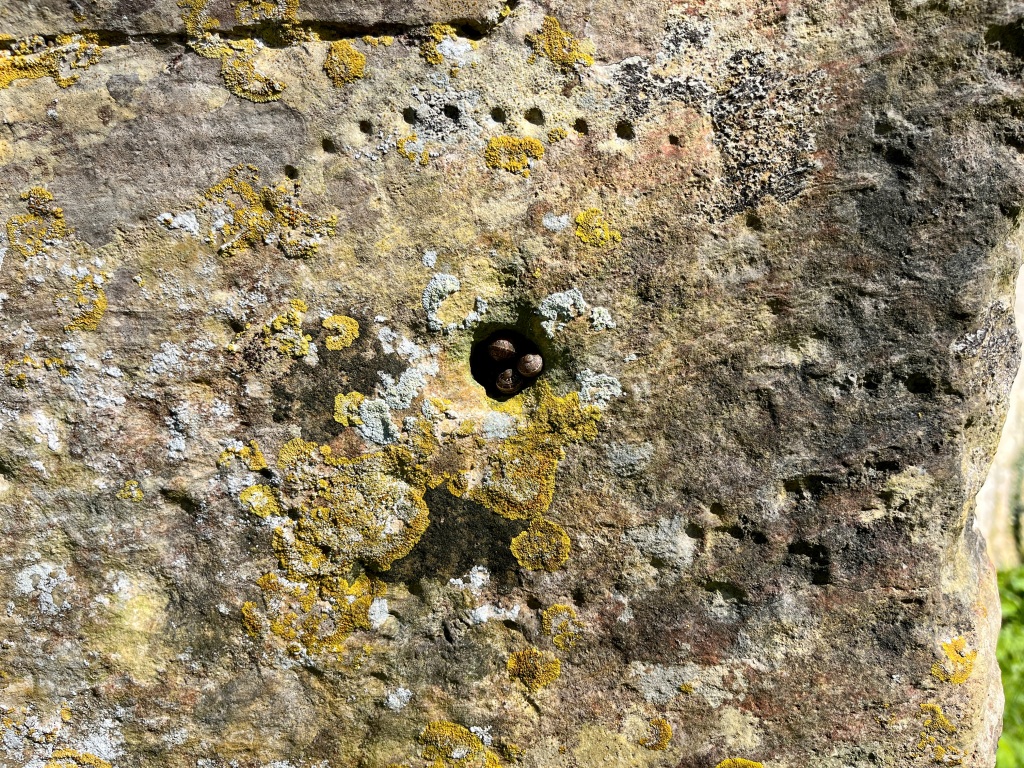
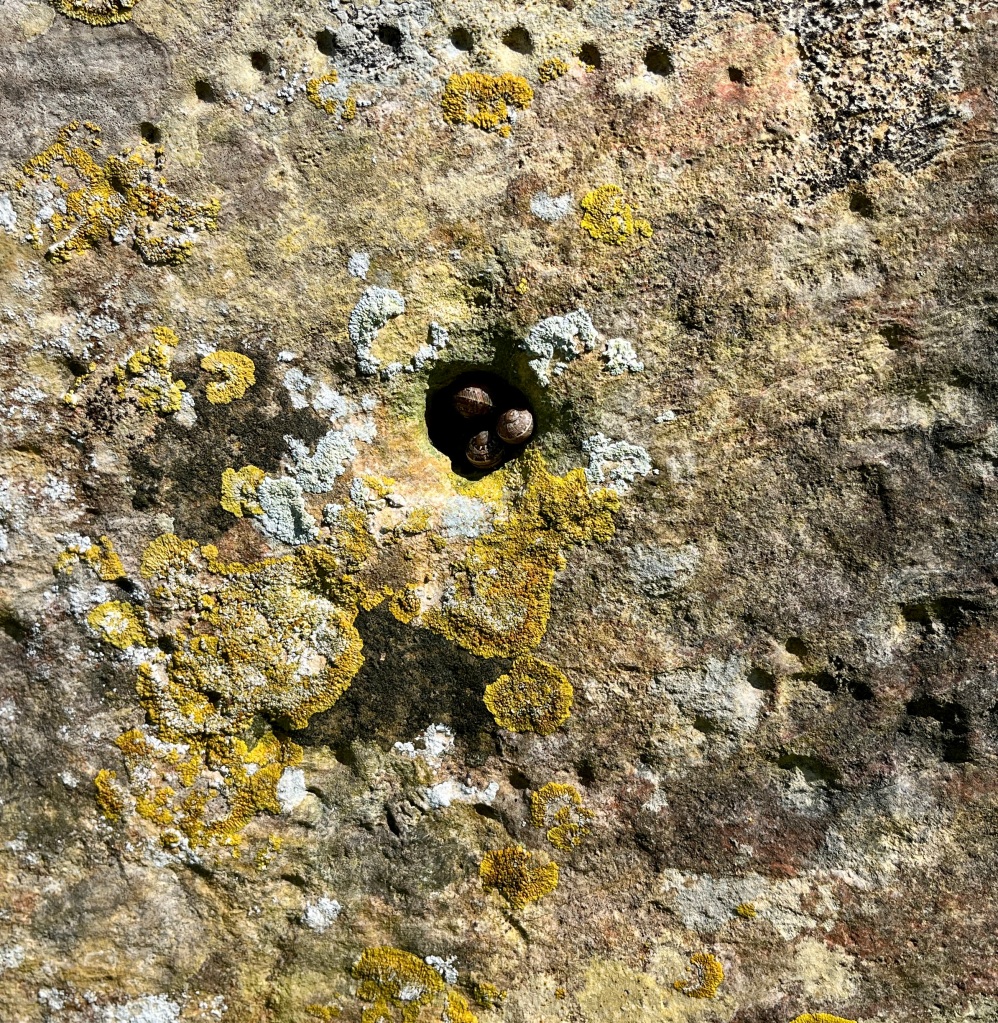
This unusual dial is cut on the SW buttress of the tower. I say cut, but in fact it is drilled in a complete circle of small holes surrounding a large gnomon hole centred on the dial stone. There are no lines at all (as with eg TRENTAFPUDDLETINTINHULL).
St Osmond . Osmington – Dial Diagram BSS
In all there are 36 holes that form an irregular circle flattened at the top. The ring of pocks is (unsurprisingly) not entirely accurate, as the diagram above (GLP; BSS) shows.
As for a noon line, I wonder if the short downward line of (apparent) small pocks, below and to the left of damaged area, mark noon. It’s not vertical, but the design of the dial and its position on the SW face of the buttress perhaps called for a slightly offset noon marker.
The gnomon hole has clearly been enlarged at some time, and sufficiently so to provide a modern home for small snails.
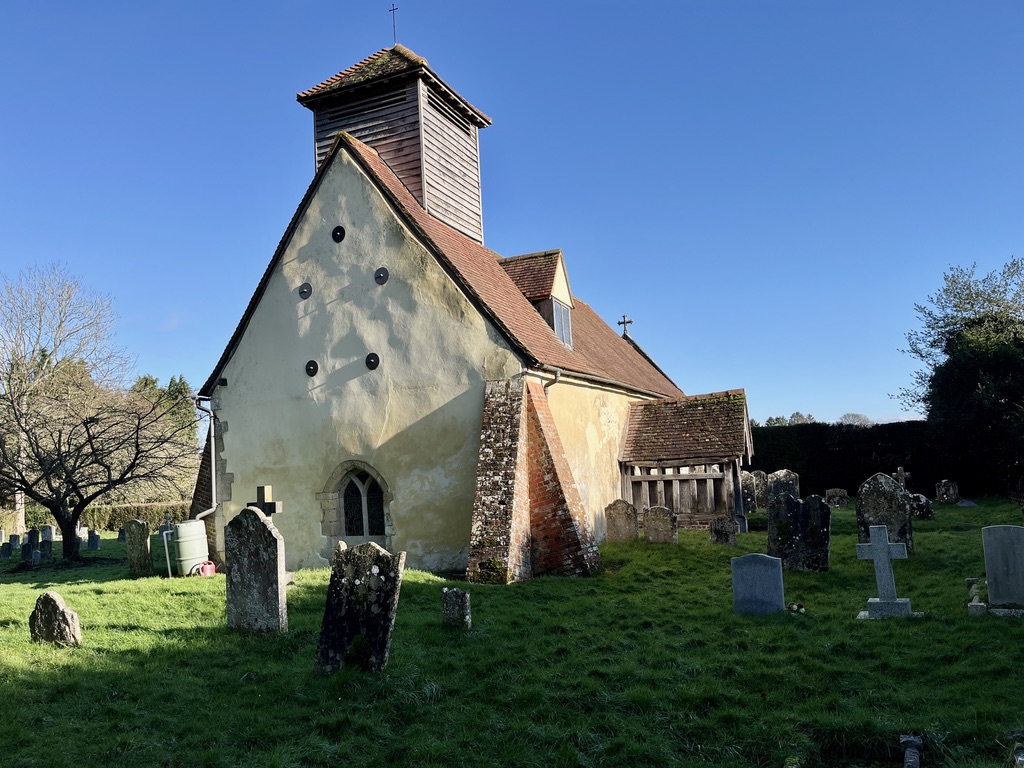
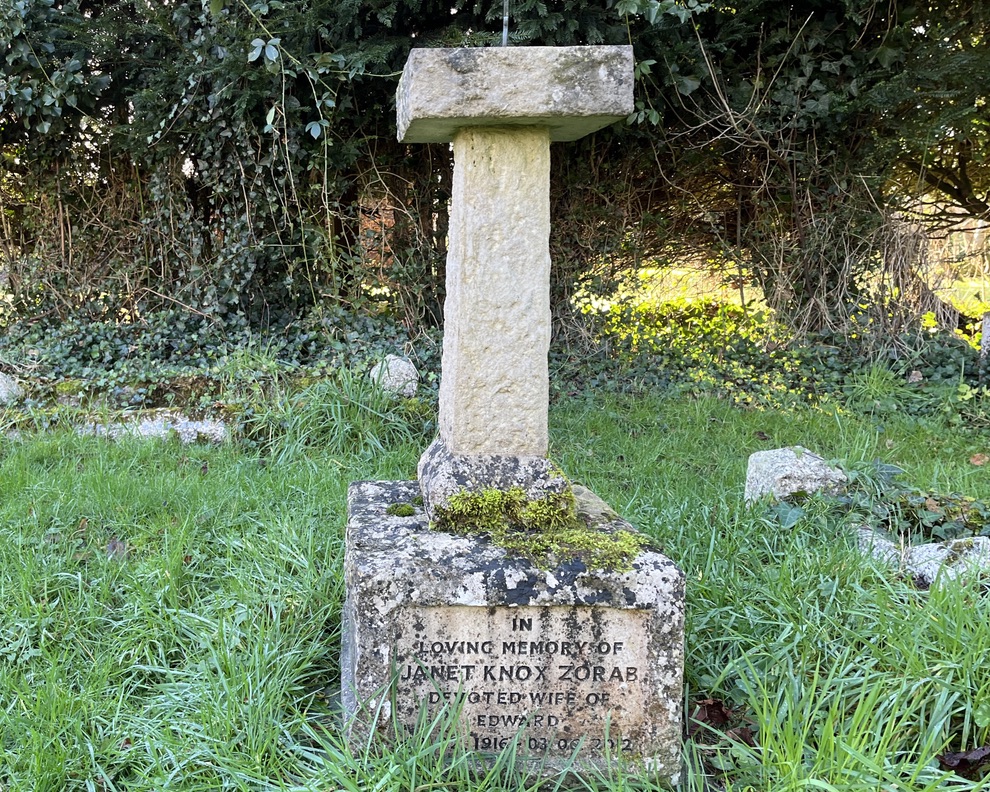
St Andrew is a fine church, and fully lives up to the interest its appearance suggests. Before looking closely at and inside the church for dials and apotropaic marks, I walked over to the sundial in the churchyard.
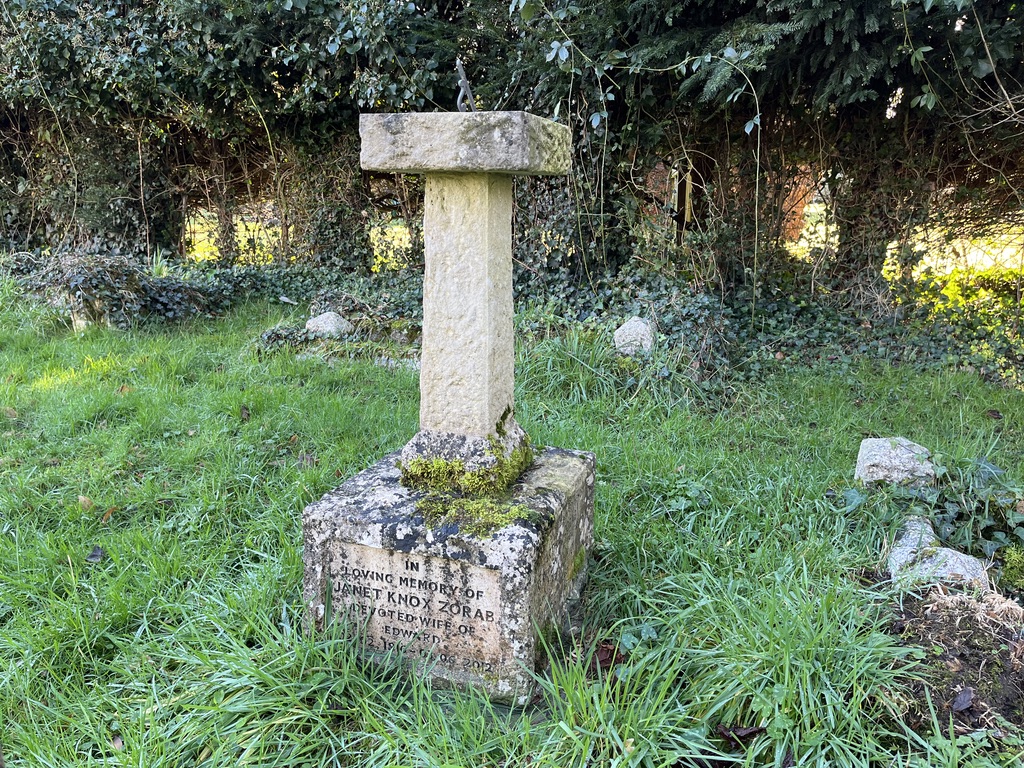
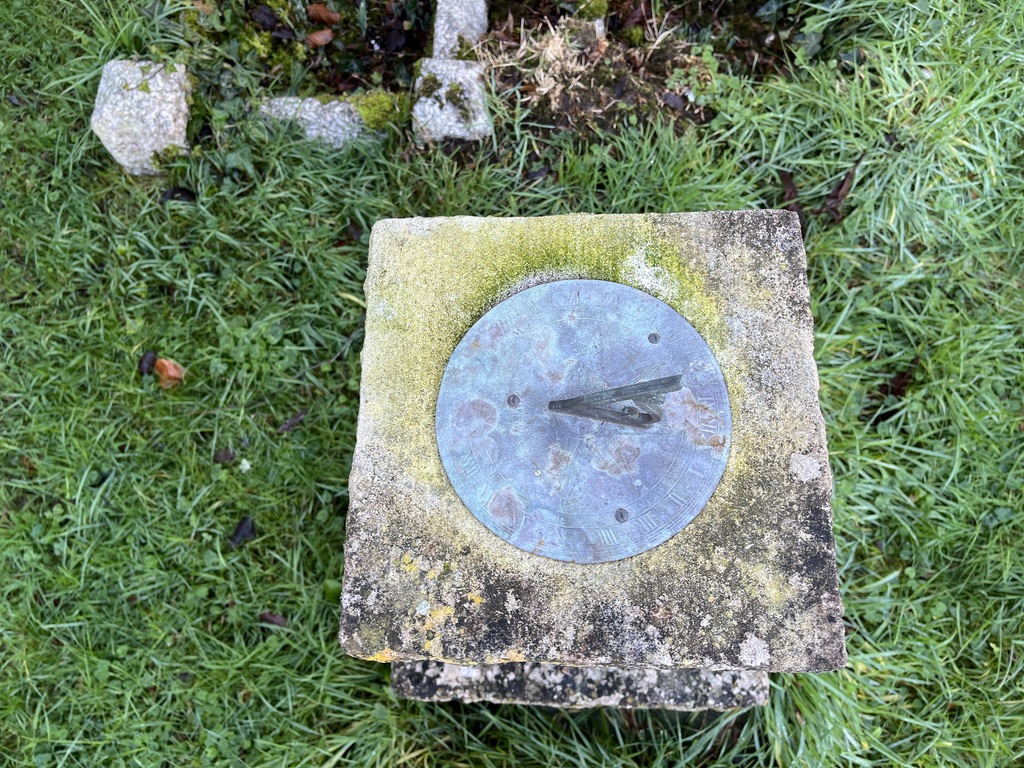
It proved to be a simple and quite elegant Memorial sundial for Janet Knox Zorab who lived to be nearly 100.
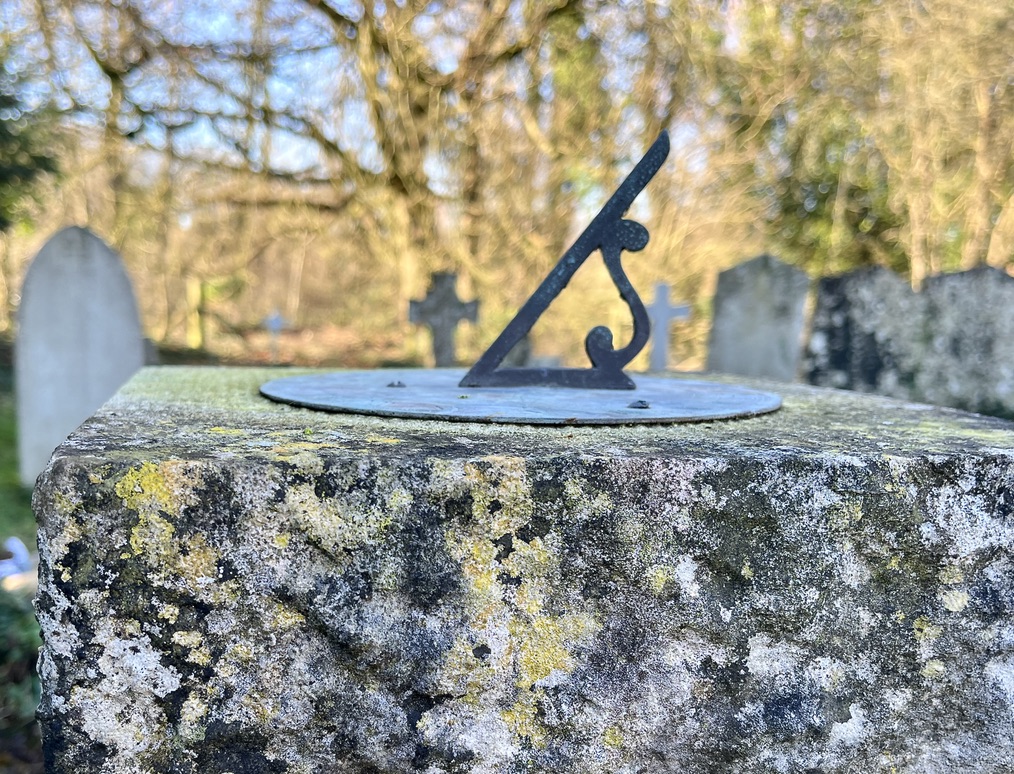
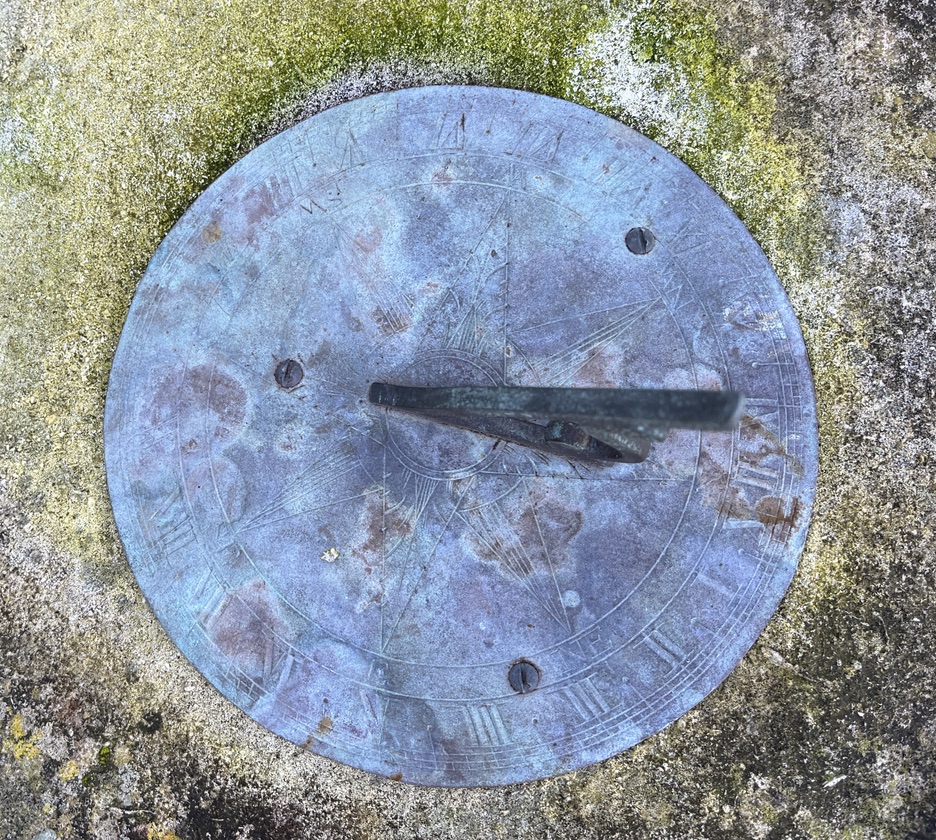
The dial plate and gnomon are conventional. The rustic feel to the churchyard and the closeness to a rather special church provide a peaceful setting for a memorial.
GSS Category: Horizontal Sundial; Pedestal Sundial; Memorial Sundial
Corciano is an attractive small town 12km west of Perugia, walled and with much of its medieval origins still evident. In contrast, the Commune has commissioned interesting modern projects, for example a residential complex designed by Renzo Piano and inspired by Rubik’s cubes.
The town has initiated an ambitious project, financed by the municipality, to make an itinerary that combines culture, history, astronomy, landscape and science and can be used free of charge for everyone: citizens, schools and tourists.
BORGO del SOLE
The Sundial Trail links 3 different kinds of sundial at sites carefully chosen for each type. These are an Armillary Sphere (Equatorial Dial); an Analemmatic Sundial; and a Ptolemaic Plinth in the Gardens. Other types of dial are planned.
GRADE II ✣ A fine Norman church built late C11 (nave); chancel c1200; tower C13. Major restorations ±1900 (Ponting). An estimable entrance. Worthwhile (PEV) and (more graciously) one of Wiltshire’s most delightful churches (Betjeman). Lovely font; wall paintings; pilgrim crosses, protection marks & graffiti. 6m N of Salisbury. 51.1244 / -1.8301 / SU119361
Note: separate post on the 4 scratch dials in the porchHERE
The dial is on the south wall of the tower, 8m up. Markings a bit unclear. Shows 8am to 7pm, 15 min marks. Half hours marked by triple dot pattern. Mounted in flint rubble wall of tower – rebuilt in 17th C – below and to the right of the clock. BSS Record
All Saints . Burnham Thorpe . Norfolk (Explore West Norfolk)
GRADE I ✣ First record DB 1087; first rector 1229. C13 expanded C14 & C15. The birthplace of Horatio Nelson; baptised in the C13 font. The gradual development reveals much of interest, enriched by the Nelson connection. A fine North Norfolk church. 52.9412 / 0.7549 / TF852417
DIALS
All Saints has 2 large clear dials on the same buttress. Contributor Erica Clarkson found an unobtrusive third dial on a quoin stone, not otherwise recorded as far as I can see.
All Saints . Burnham Thorpe . Norfolk (EC)
DIAL 1
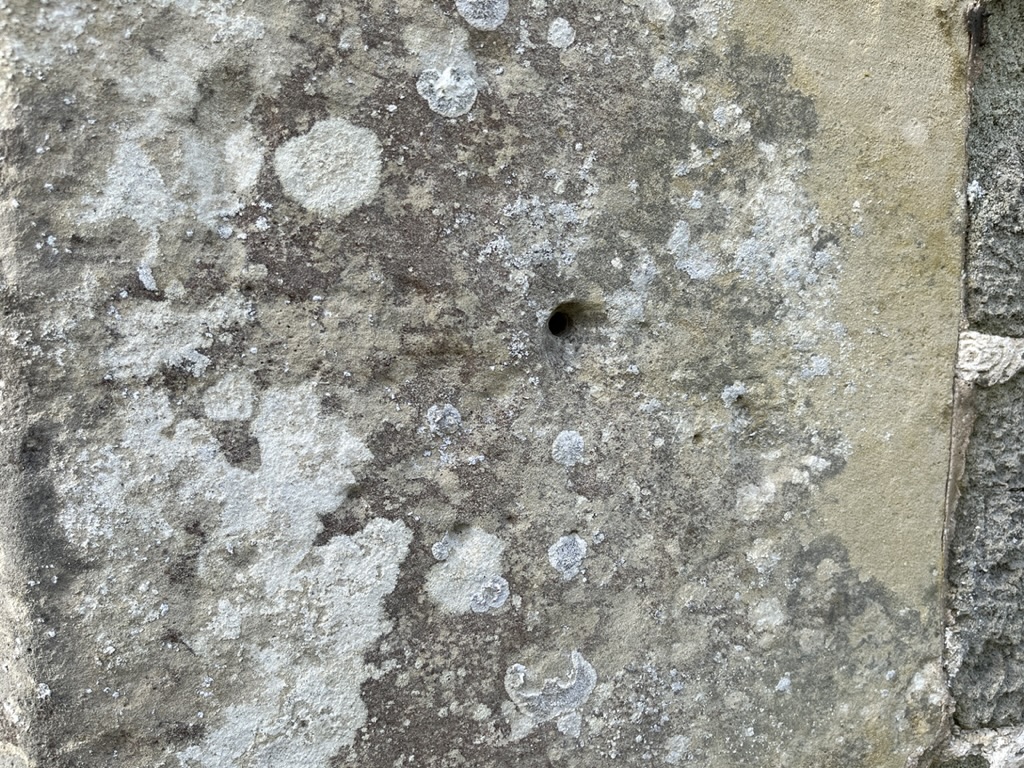
A fine dial low down on the buttress. There are 3 pocks above the the gnomon hole in the mortar line. Below is a semi-circle of lines all ending in pocks, the noon one being largest. The well-defined lines cut LLQ suggest that morning / None was the main hour for observance.
DIAL 2
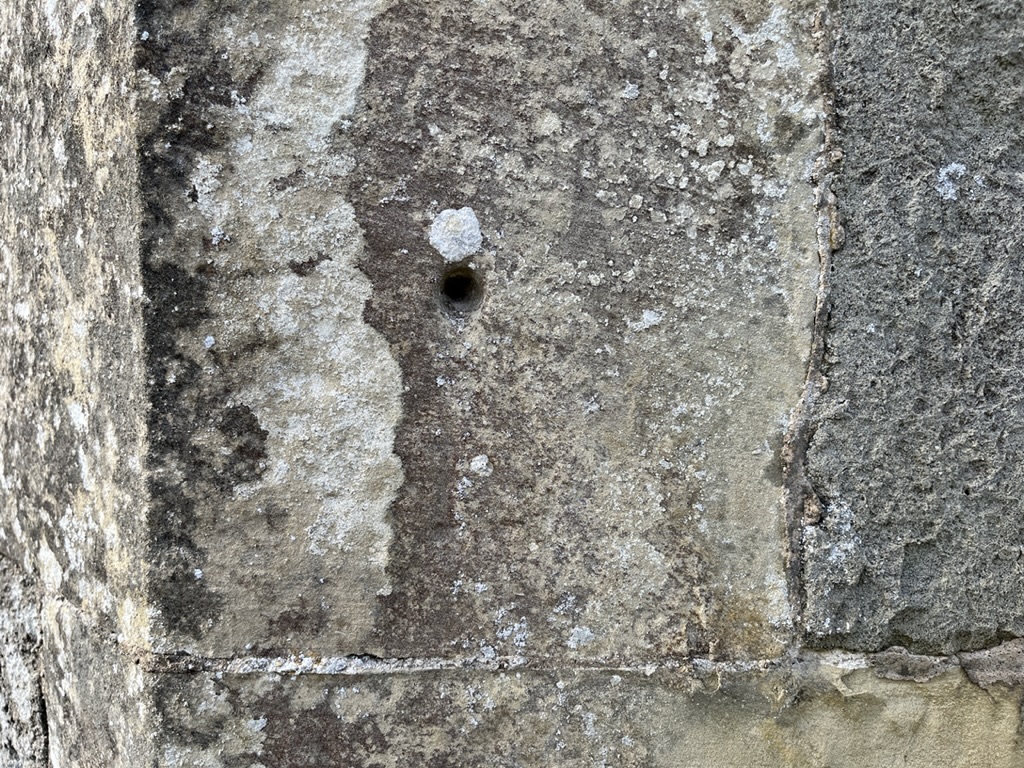
Dial 2 has 12 lines radiating from a plugged gnomon hole. There are no pocks. There’s minor puzzle: which is the noon line? The deepest cut line is the seventh line from the LHS horizontal rather than the sixth, and slightly offset to the right. In addition, 3 or 4 lines seem cut off at the mortar line, suggesting a rearrangement of the stonework at some time. (It might also explain why Dial 1 is so low down on the buttress).
DIAL 3
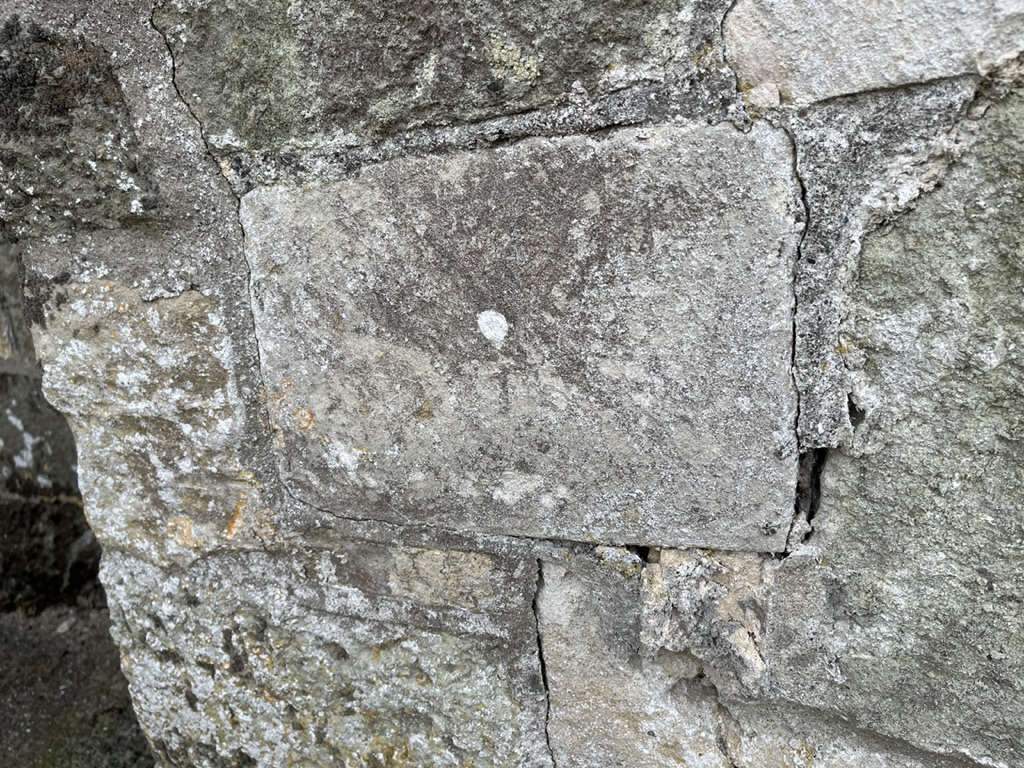
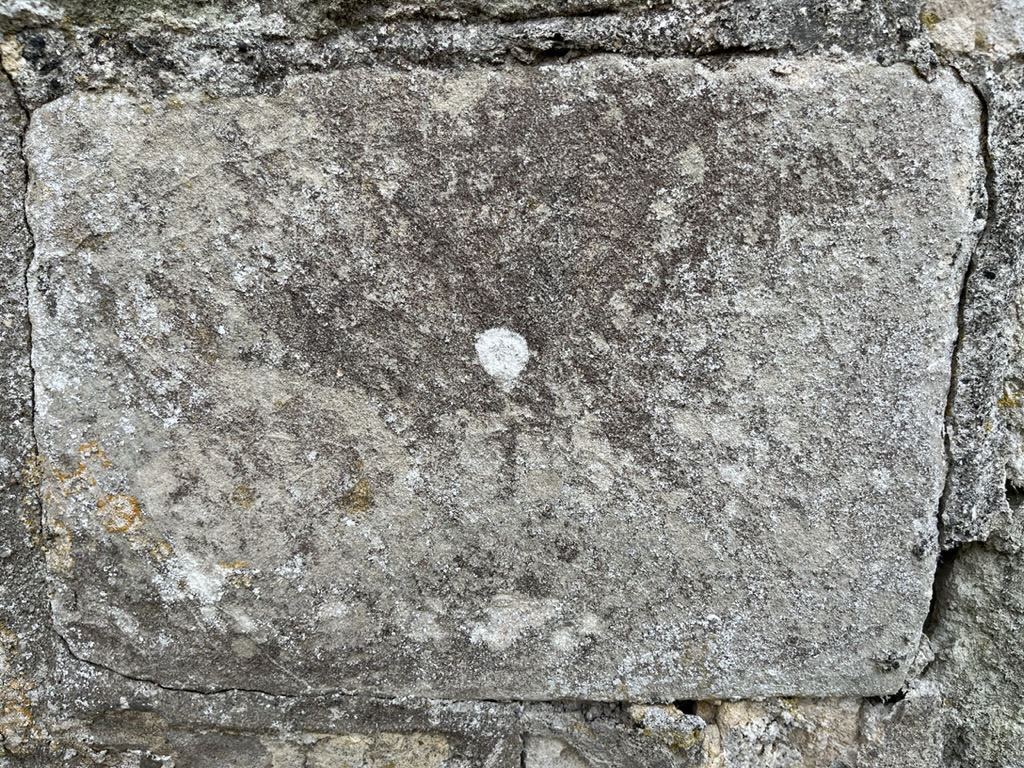
A simple time marker centred in the dial stone, from an earlier period. 2 lines are visible L side. Probably that was all that was required in (say) C13, in simpler times and before the church had developed. The position of the lines suggests that None was the (main) service time.
GSS Category: Scratch Dial; Mass Dial; Buttress Dial
Credits: All photos Erika Clarkson with thanks, except header as shown
A pair of armillary spheres dating to about 1700 show competing models of the universe. One has the Earth stationary at the center in the Ptolemaic system of the ancient Greeks. The other shows the later Copernican system, in which the sun is at the center and the Earth and the other planets revolve around it HoHS

























 GAUDIUM SUB SOLE . SUNDIALS . MEDIEVAL TO MODERN