GRADE II* ❖ C12 to C15, with major C19 restoration. Local lias stone. Cruciform plan. Tower octagonal, in three stages, probably C15. In an area with several octagonal tower churches, this is the only one with 3 stages. Earliest recorded rector 1309. Close to Keinton Mandeville (2 dials). 3m NE of Somerton. 51.0828 / -2.6585 / ST539317
DIAL
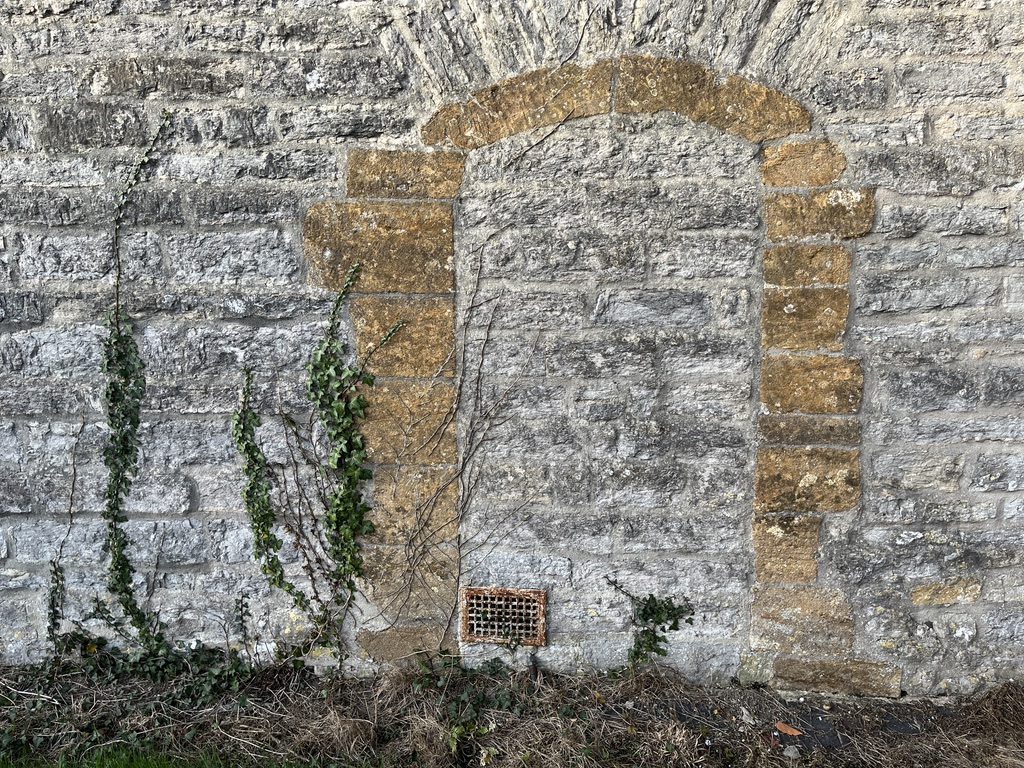
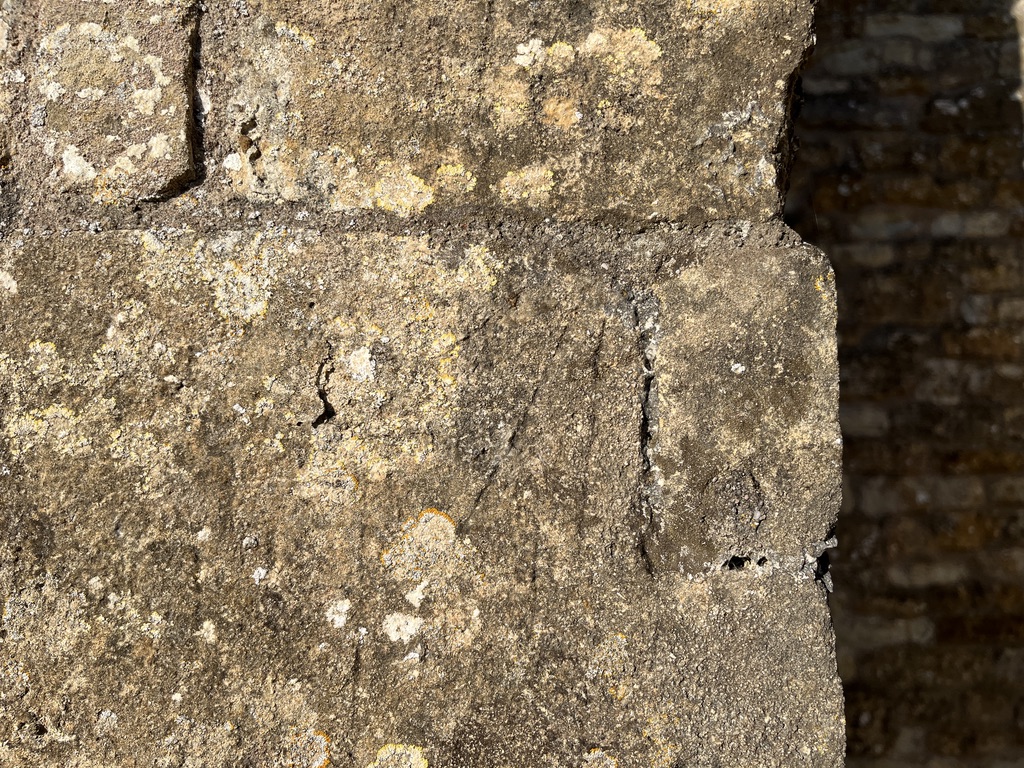
DEH visited on 26 May 1914. On W side of the blocked doorway on S side of the church, he found a dial low down. He noted a 5 inch noon line and a blocked style-hole in the mortar joint.
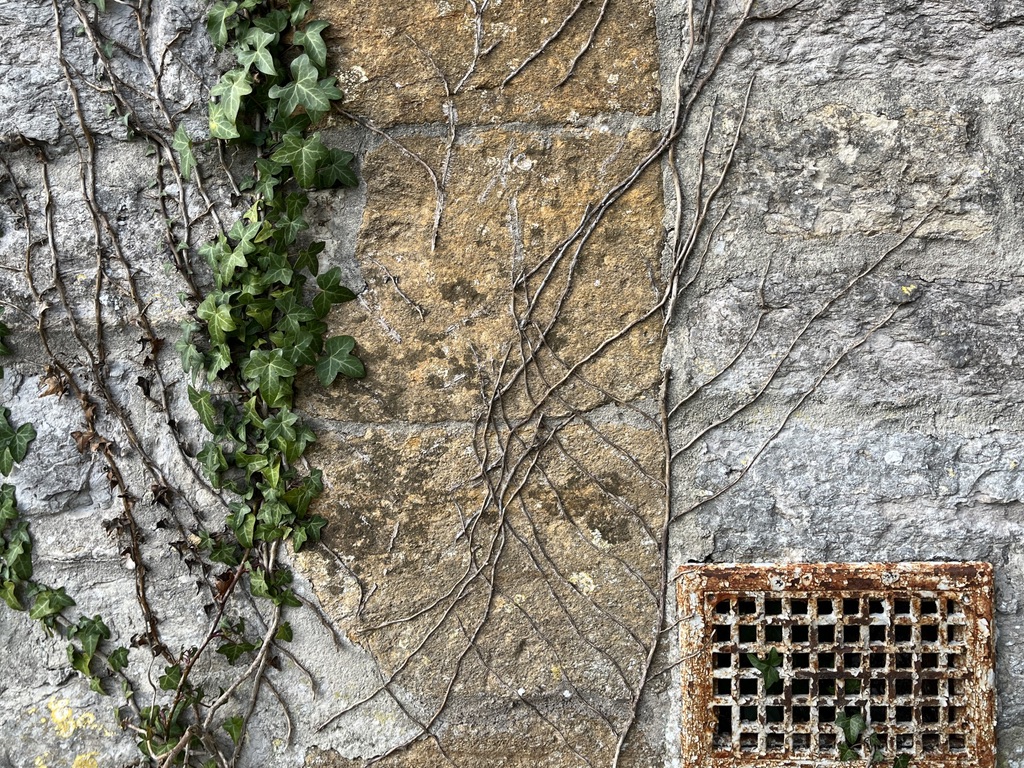
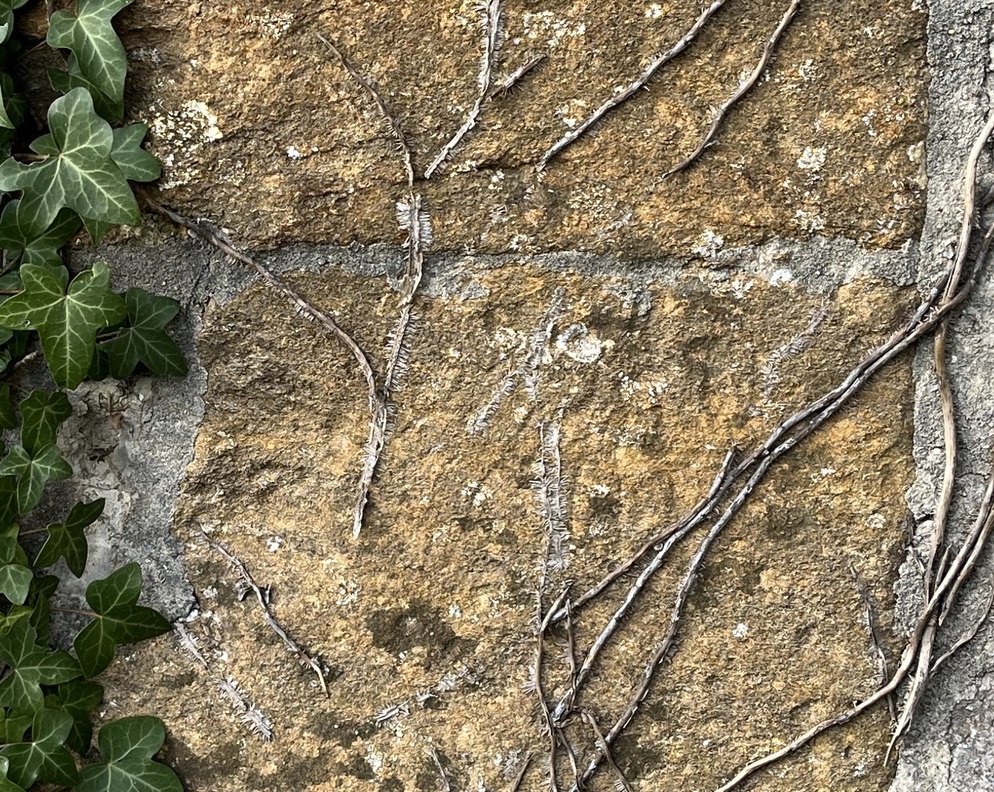
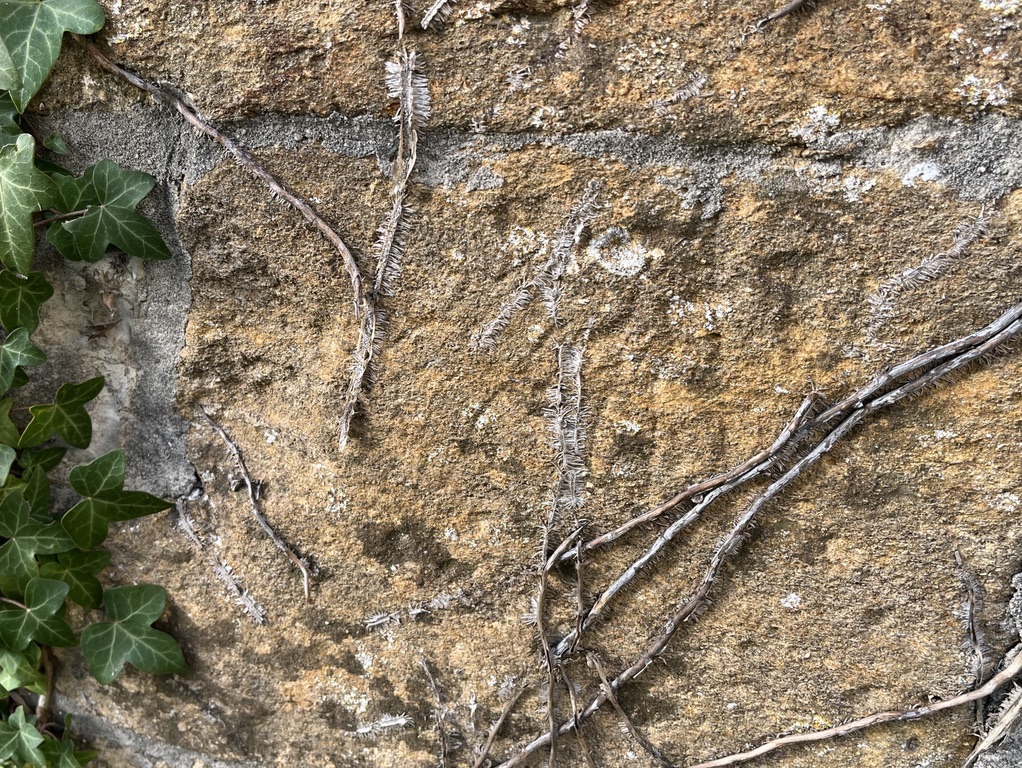
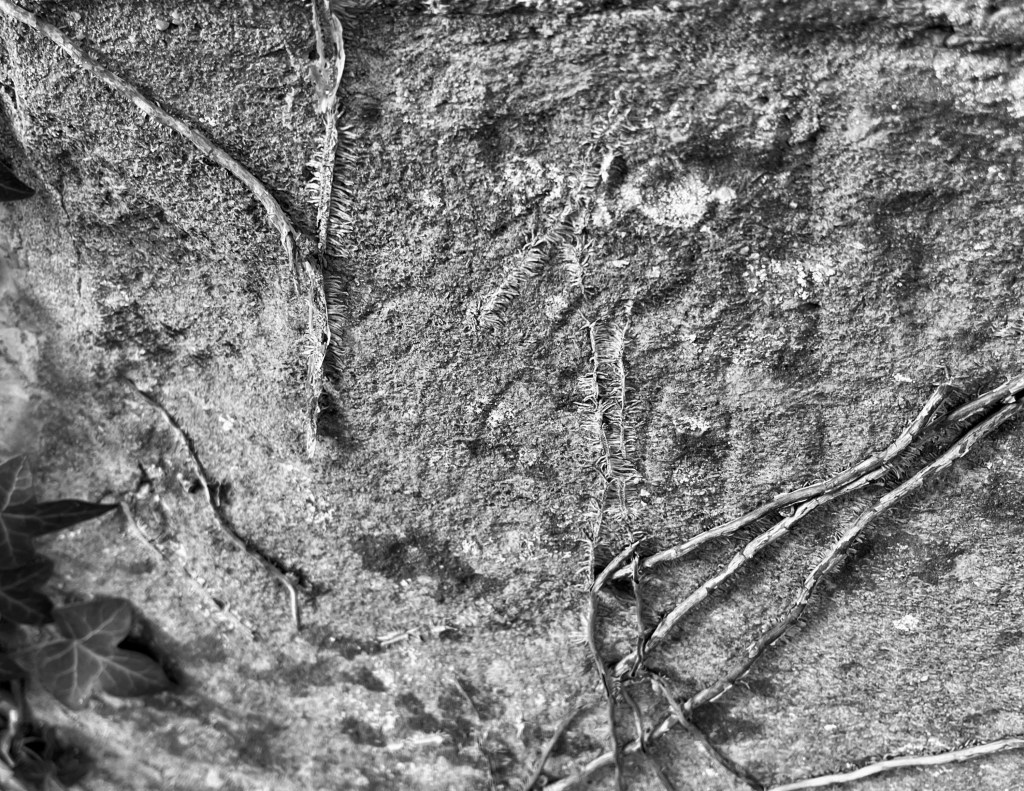
Eventually I found the dial, LHS amidst ivy both alive and dead. Its position close to ground level renders it useless for its purpose, yet it doesn’t seem to have been relocated. The ‘design’ consists of 4, perhaps 5, spidery radials descending untidily from the mortar line. It is 100+ years and a lot of ivy since DEH recorded the dial, and we can predict that it will soon be concealed by ivy, or eroded away.
B & W COMPARISON
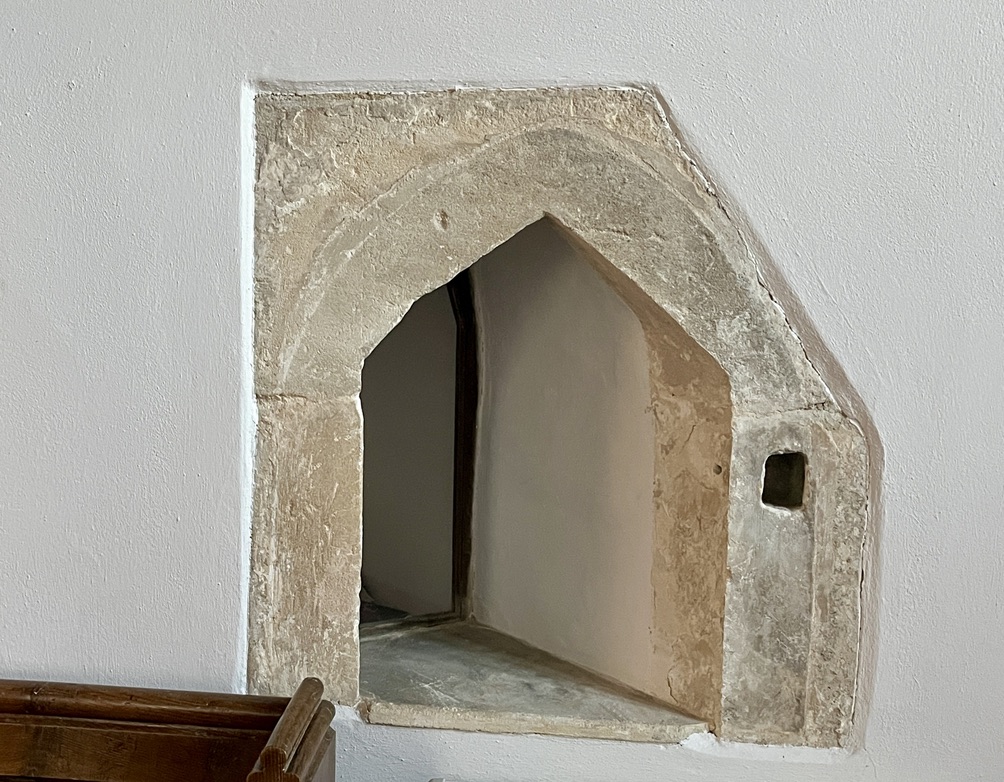
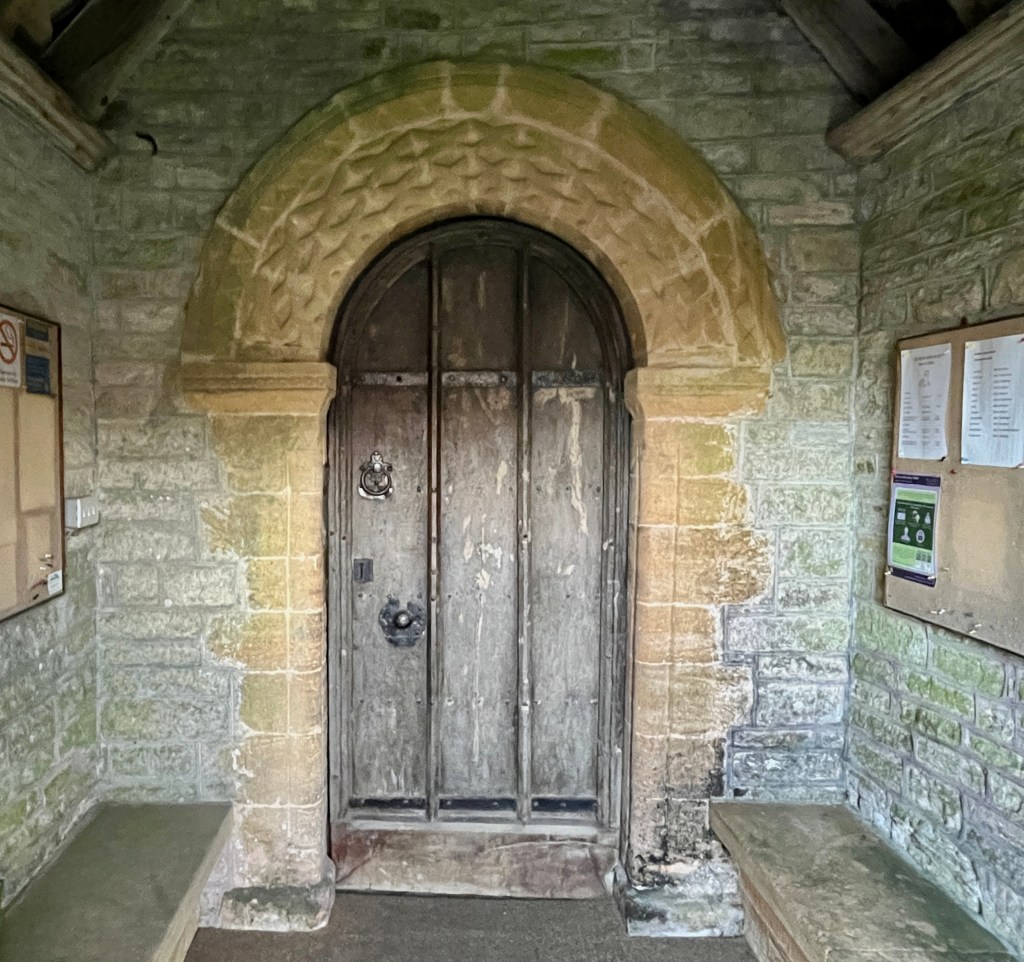
A fine Squint and a handsome Norman doorway
GSS Category: Scratch Dial; Mass Dial; Church erosion; Squint; Norman Doorway
All photos: Keith Salvesen / Rolling Harbour except excellent main photo, Geoff Pick / Wiki
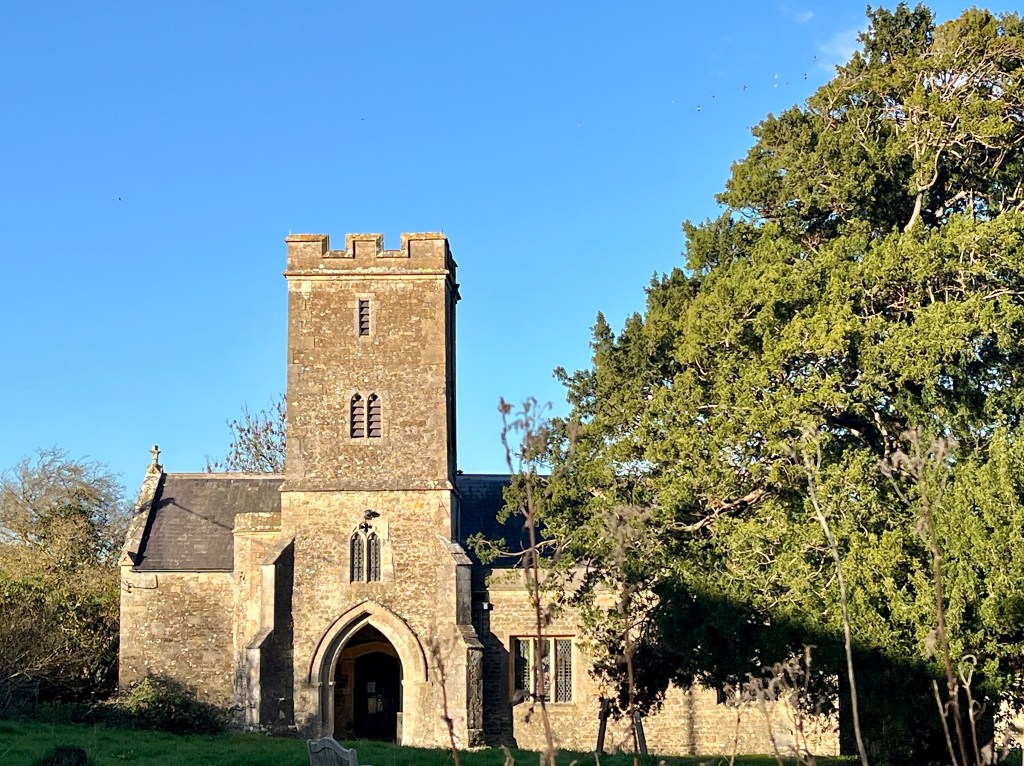
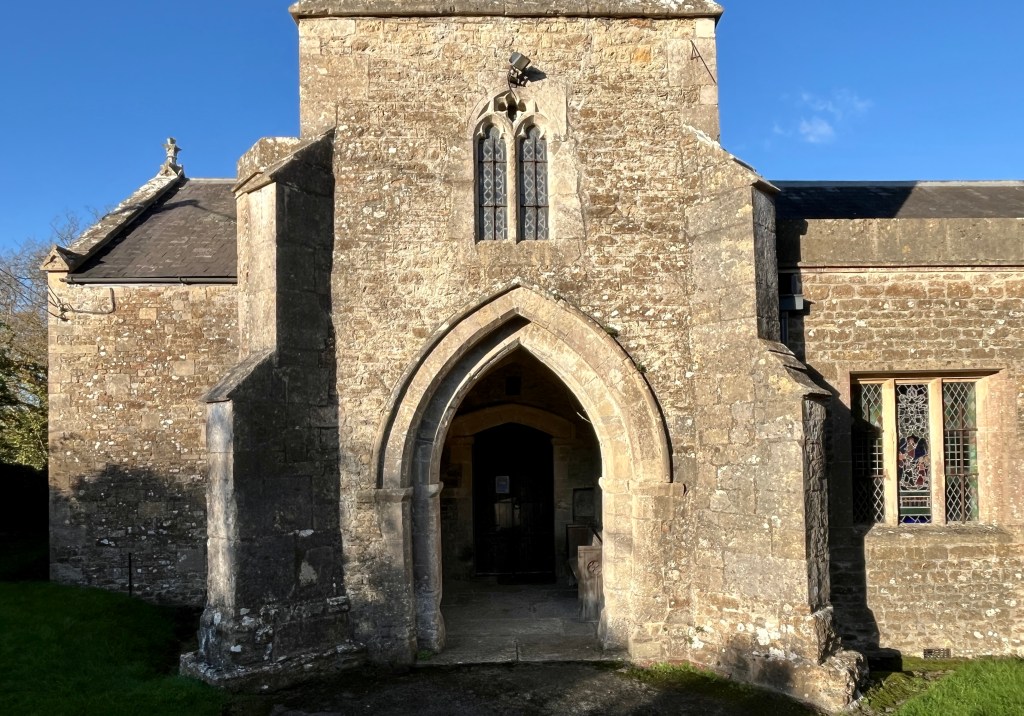
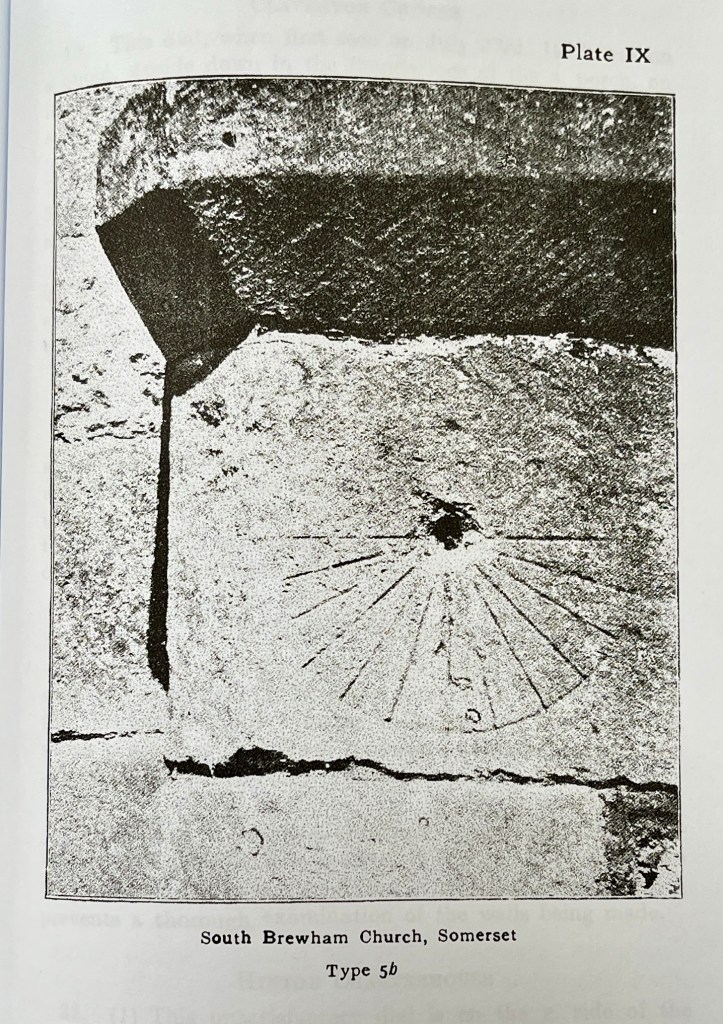
GRADE II* ❖ Early origins; mainly C14 / C15; additions C19 (inc. Ferrey). PEV gives this small church quite a detailed entry. This is lias stone country. The building, the churchyard, and the setting make this a fine country church. There are 2 scratch dials. Visited by DEH on 10 Sept 1912. 12m N of Yeovil. 51.0566 / -2.6271 / ST561287
❖
DIAL 1
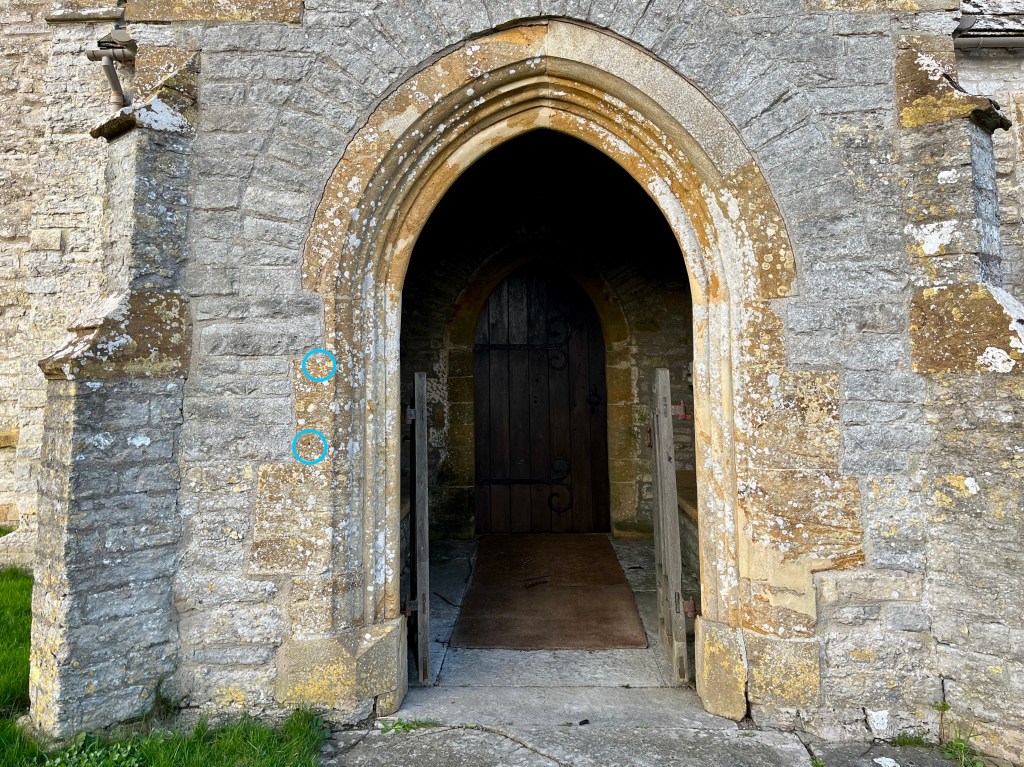
On a quoin stone W side of S porch, the gnomon hole easily seen. DEH calls it a faint scratchy dial, and thought that the hole may still contain the style. He seems not to have checked; later in his dialing project, he would have. There’s no trace now.
Babcary 1
DIAL 2
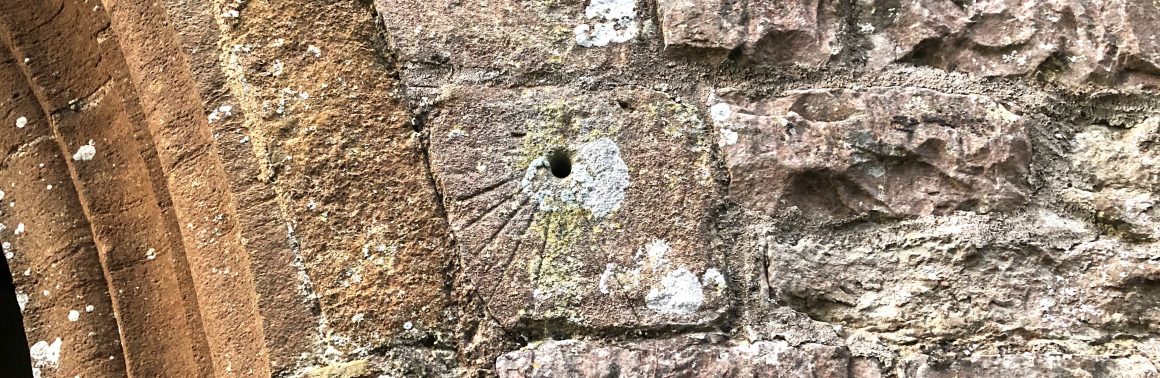
A few inches above Dial 1 is an indistinct dial, noted by DEH. But for his careful records, no one would notice it now, a century later. 4 faint and somewhat wonky radials can just be made out LLQ, descending from a shallow hole now covered by lichen. This has a slight bluish tinge suggestive of a copper rod being used as a gnomon, a speculation too far.
GGS Category: Scratch Dial; Mass Dial; Somerset Scratch Dial
GRADE II* ❖ C13 origins; subsequent interventions; much rebuilt late C19 with local stone cut and squared. 2-stage tower. 2 scratch dials and a vertical dial. Interesting and varied graffiti. A rewarding church to visit. 3m NE of Bruton. 51.1239 / 51°7’25″N / ST719361
DIALS
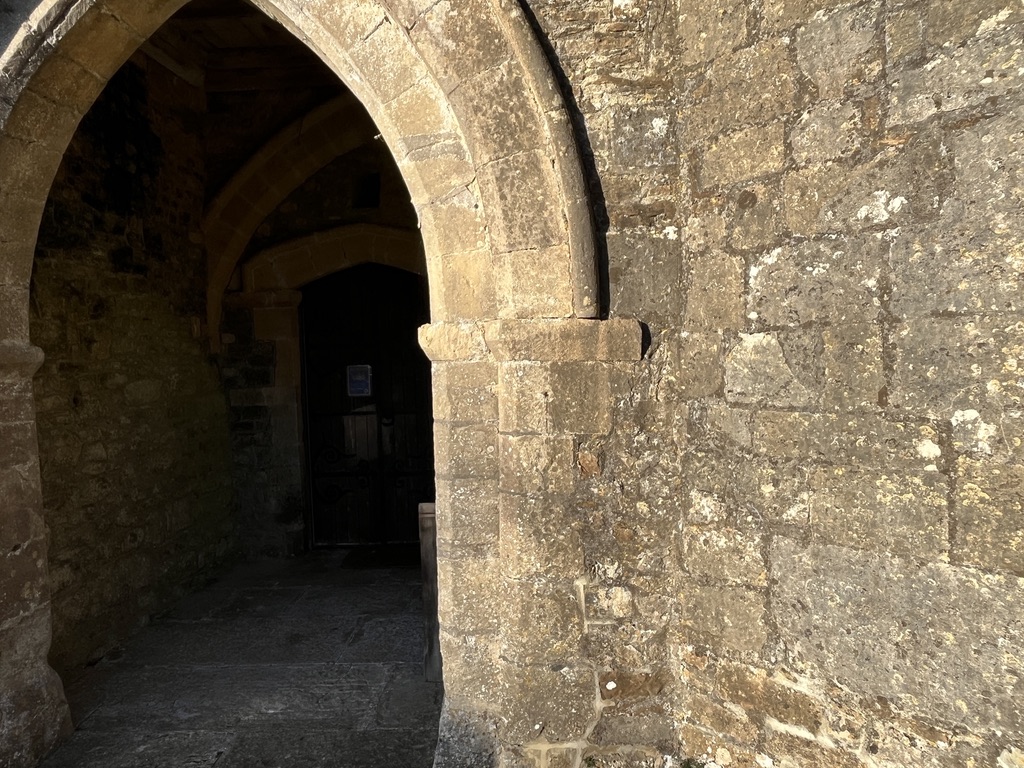
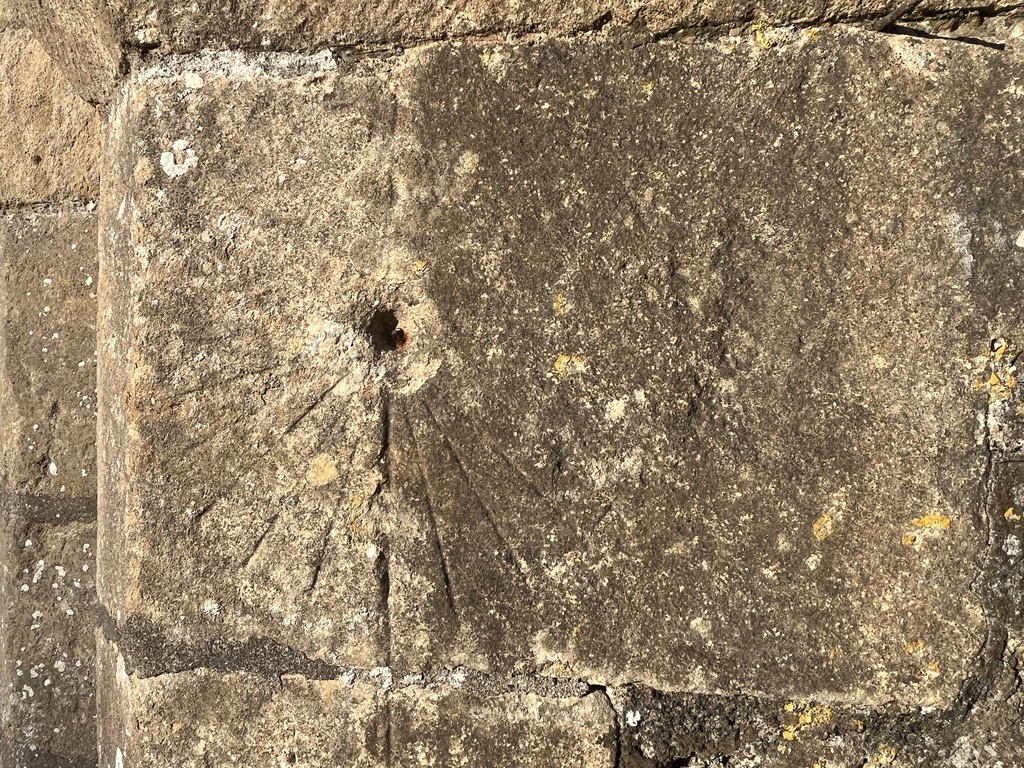
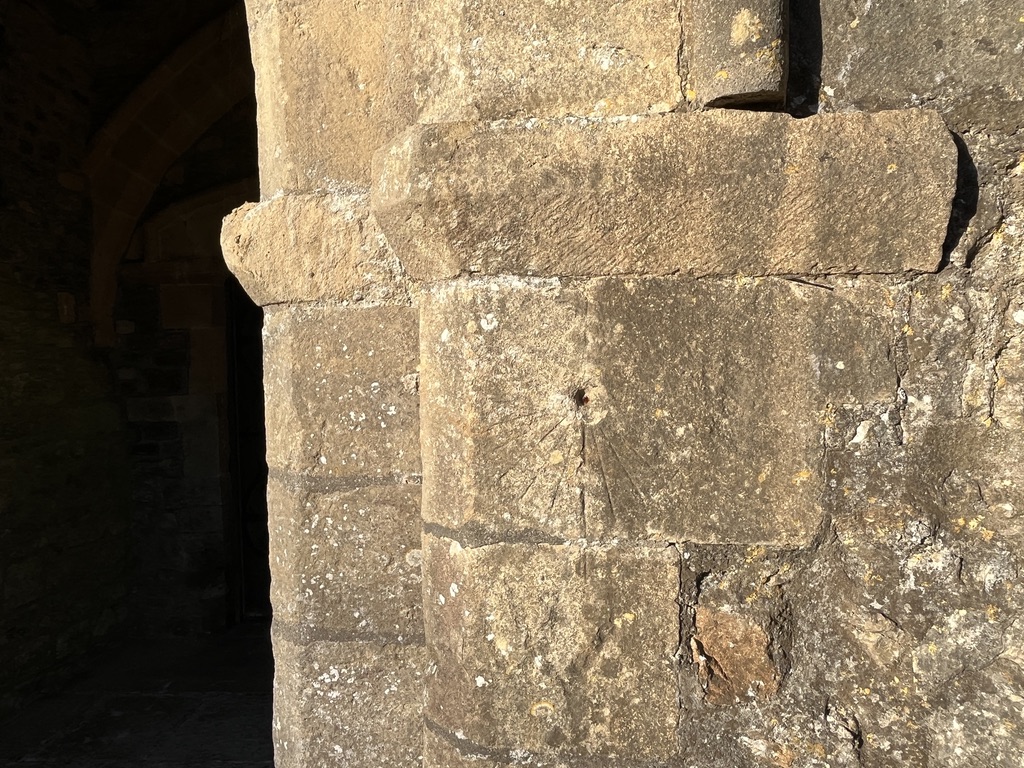
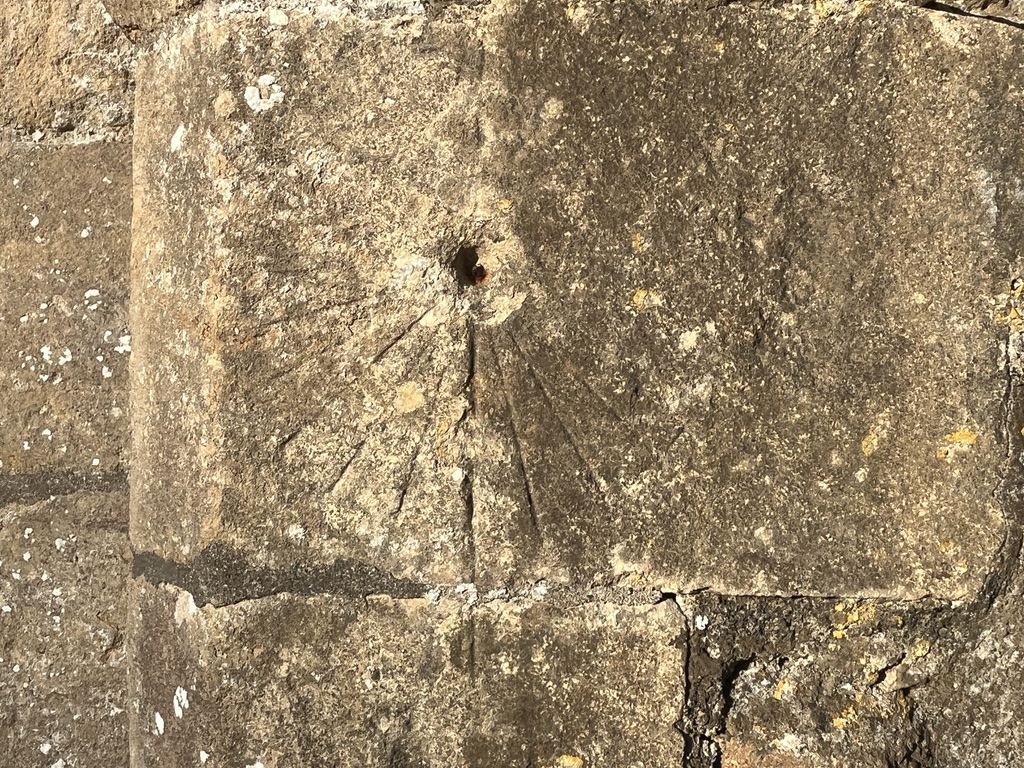
DEH visited St John on April 17th 1914, on his motorbike and with his camera. He recorded two scratch dials. Dial 1 is on E side of S porch. It has changed significantly since DEH recorded it in 1914. Dial 2 is on E side of the inner door of S porch, unchanged. The vertical dial at the top of the E buttress of the tower will be dealt with separately.
DIAL 1
Dom Ethelbert Horne, 1914
DIAL 1, with its large and damaged gnomon hole, is clearly visible as one approaches the church. The DEH photo above shows that in 1914, it had quite accurately cut even-spaced ‘6 – 6’ radials within a semicircle. A century later, erosion has reduced definable radials to 9, with overall decay of the lines. However, in the intervening years the noon-line has been cut deeper, and now extends onto the stone below.
GNOMON
DEH describes ‘part of the iron style… (is) level with the face of the stone, but rusted away at the sides’. It’s pleasing to find that it is still there. It’s not especially rare to find the remains of a metal rod gnomon, however most if not all those extant will have been put in place very much later than the date that the dial was cut.
DIAL 2
Stepping into the porch, Dial 2 is immediately visible. There are 5 radials descending from the mortar line. Pleasingly simple, and it is interesting to note that the photographs of this dial, almost a century apart, are much the same.
DOM ETHELBERT HORNE’S PHOTOS (April 17th 1914)
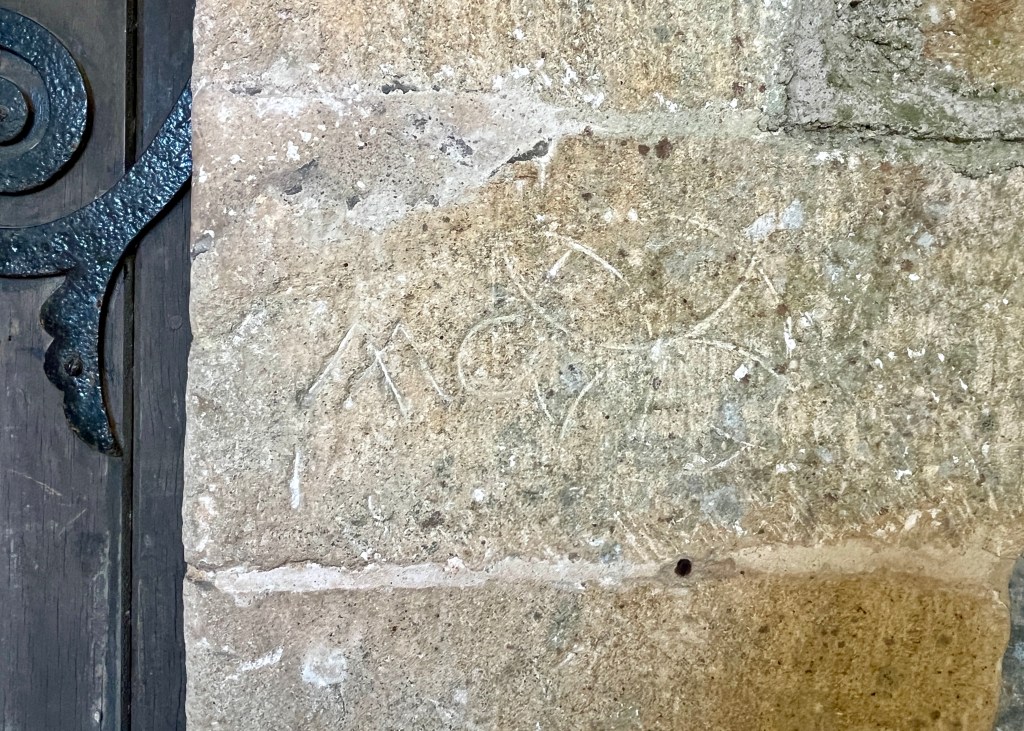
GRAFFITI
GSS Category: Scratch Dial; Mass Dial; Iron Gnomon; Church Graffiti
GRADE 1 ❖ Mainly C15, C16; C19 restoration. Plenty of interest for the visitor / church crawler, including C15 wagon roof; particularly well furnished interiorBLB; box pews; fine Jacobean woodwork. Peal of 6 bells (earliest 1613). Inc. by Simon Jenkins in ‘England’s Thousand Best Churches’, with photo. 51.1975 / -2.5873 / ST590444
DIAL
The existence of a scratch dial is debatable. The church was one of the earliest visited by DEH, on October 8th 1911. His record is one of the shortest of his entire project: On the buttress to the W of the priest’s door into the chancel is a stylehole at a height of 5′ 10″ from the ground. There are no remains of either a circle or lines, but from the soft nature of the stone they may have been weathered away.
Points in favour of dial status include its central position on the stone and the height. Against is the peculiarity of the hole itself; and the fact that the stone shows no sign of weathering, even 100+ years later,
GSS Category: Scratch Dial; Mass Dial; Doubtful Dail eg
GRADE II* ❖ Norman origins, C14 work, rebuilt C15, restored 1872. An attractive church both outside and in. Visited by DEH on 6 Oct 1911 on one of his early dial expeditions from Downside Abbey. Roughly halfway between Wells and Shepton Mallet. 51.199 / -2.6094 / ST575446
DIAL
DEH recorded a single dial on W corner of S aisle. He noted a 2.5 inch deep gnomon hole, and commented ‘…this dial is cut on soft red sandstone and has all 12 hour lines… many of them probably added to the original design’. More than 100 years later, only 9 are legible.
GSS Category: Scratch Dial; Mass Dial; Dial erosion
GRADE II* ❖ C13 – C15; C19 restoration (some by T H Wyatt). Quite large, with nave, chancel, north and south porches, south vestry, west tower. Predominantly Perp. Busy history and plenty to look at, approval by PEV. 10m N of Castle Cary; 16m S of Shepton Mallet 51.124 / -2.4854 / ST661361
DIALS
There are 3 dials (one unrecorded?). W of the porch, low down on a relocated quoin stone, there are 2 interesting near-overlapping dials cut on W face. This is a good example of ‘dials ancient and modern’: a small early dial – simple and rustic – superseded by a later dial cut with attention to detail. The 3rd dial is on the buttress E of the porch.
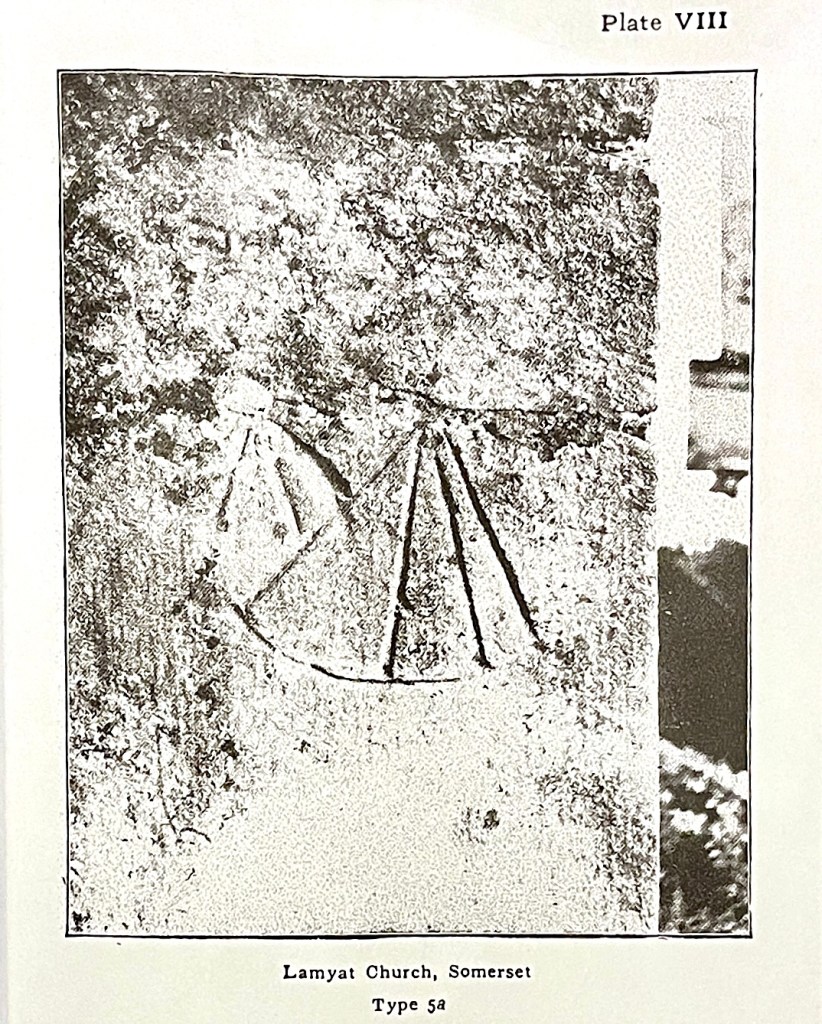
DEH visited the church on 16 October 1913 . By now he was using a camera to photograph selected dials, including Lamyatt. The quality of his images is surprisingly good. He also used a motorcycle to extend the scope of his researches from Downside Abbey. More about this extraordinary monk in due course.
Note: single ‘t’ Lamyatt; plugged gnomon hole, now invisible
DIALS 1 and 2
DEH visited the church on 16 October 1913 and recorded dials 1 & 2.
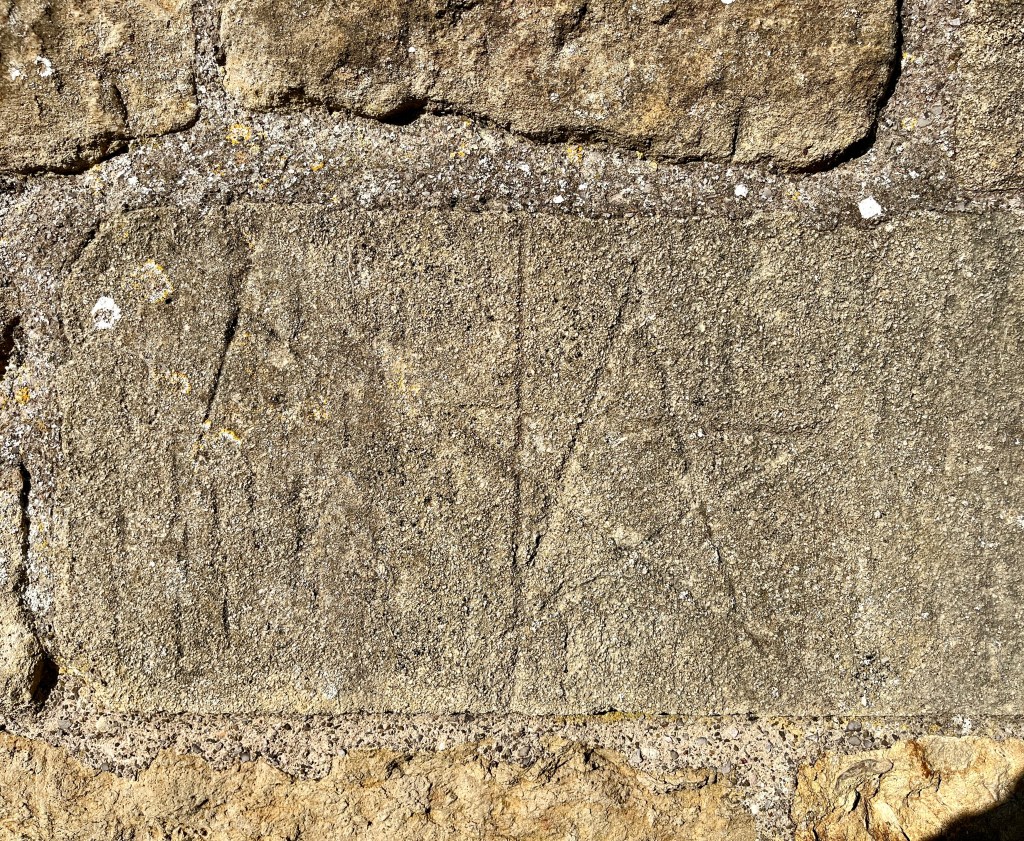
DIAL 1. This small dial has 3 radials emerging from a now undetectable gnomon hole in the corner of the mortar line ULQ. The deeper cut and crudely bent line RHS suggests that the main canonical hour for observance was Nones. In due course a replacement dial was called for.
DIAL 2
DIAL 2. On the same quoin stone, also W-facing, a later and far more practical dial was cut. 4 radials the same length fan out from a gnomon hole in the mortar line (the original plug?). These are arranged within a minor arc, and scale up both in width and depth LHS to RHS. The overall effect indicates competence and care by the maker.
The radials each end in a dot (one is barely detectable). The line spacing of the dial in its original position arrangement is a puzzle. In a literal way, noon would be exactly between lines 2 and 3, as sometimes found on other churches.
DIAL 3
On the buttress E of porch, at head height, a dial with 2 long lines descending from a mortar line that has a hint of a gnomon hole. It seems to be in its original position. Presumably the vertical mortar line – now a crack – acted as the noon line dividing the 2 radials from the smaller quoin stone.
GRADE II* ❖ Original church built C12; rebuilt 1790; restorations 1860s. 5 bells, of which one cast in Bristol c1380 (PEV). Delightfully situated beyond a large farmyard (in adverse weather a visitor might wish they had brought wellies). 6m SE of Shepton Mallet. 51.1383 / -2.4807 / ST664377
DIAL
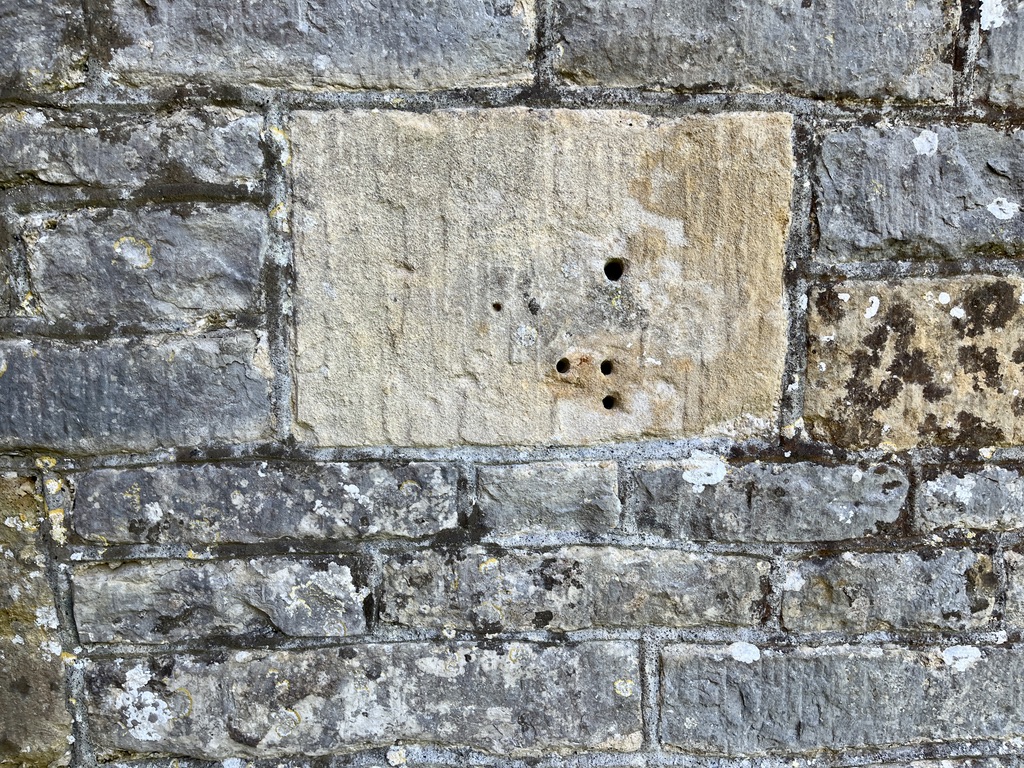
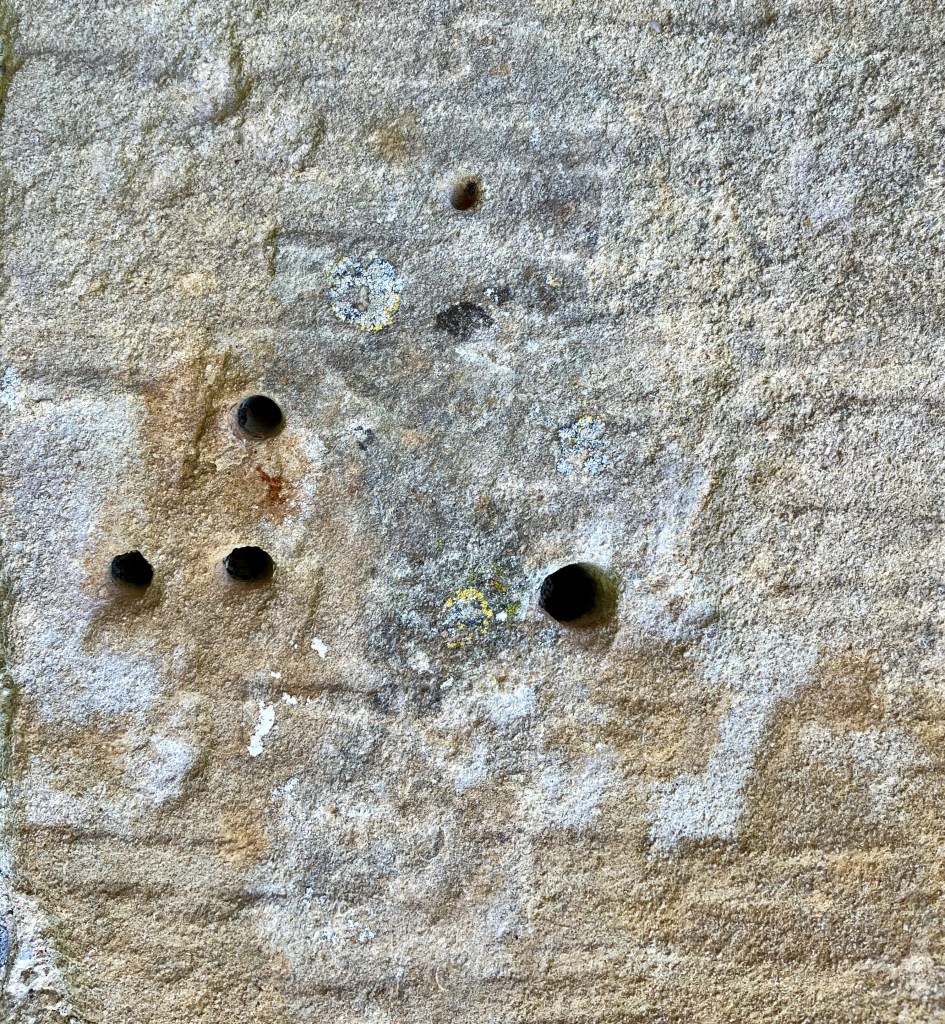
One of DEH’s early finds, in June 1912, as his researches spread out from Downside Abbey. He describes the dial as easily found, and ‘curious’. And so it is. I’d welcome any wise views on this unusual configuration.
‘There appears to be little doubt but that this arrangement of five holes is really a dial. While no other has been found exactly like it, it shows a family likeness to those on the churches of Seavington St Mary and Whitelackington’.
But each of these just has a single large style-hole, as opposed to the array at Milton.
Seavington St MaryWhitelackington
ROTATION
Occasionally it helps to rotate a dial image to check correct orientation. Not here though.
GSS Category: Scratch dial; Mass Dial; Repositioned dial; Dial interpretation; DEH – early research
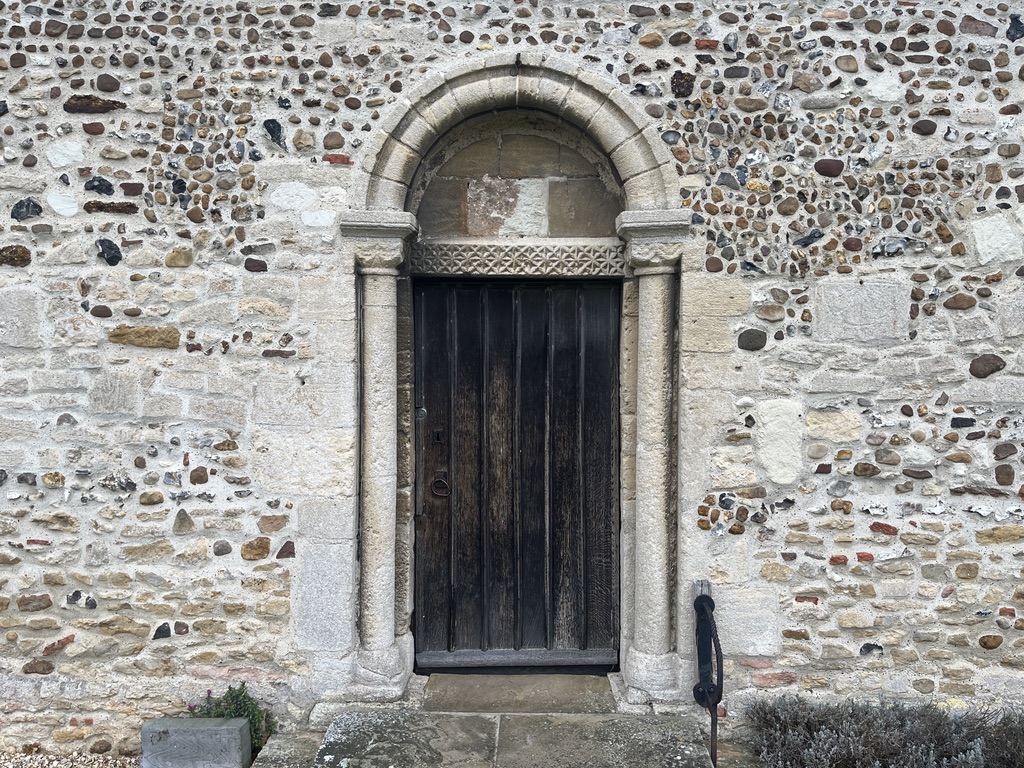
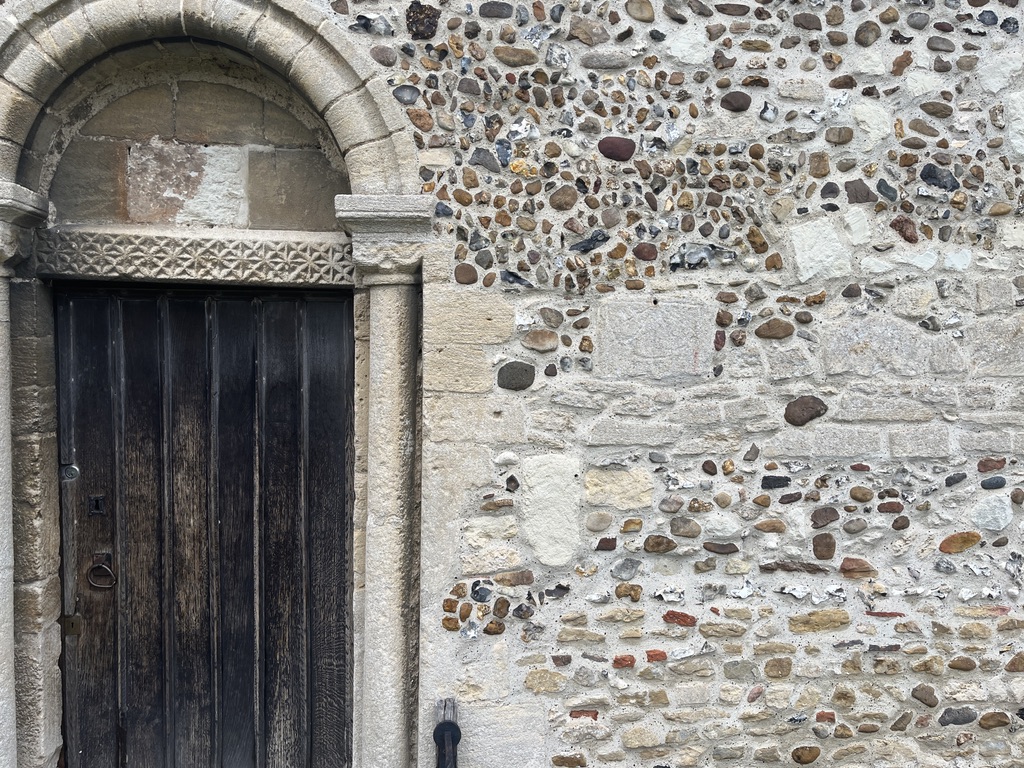
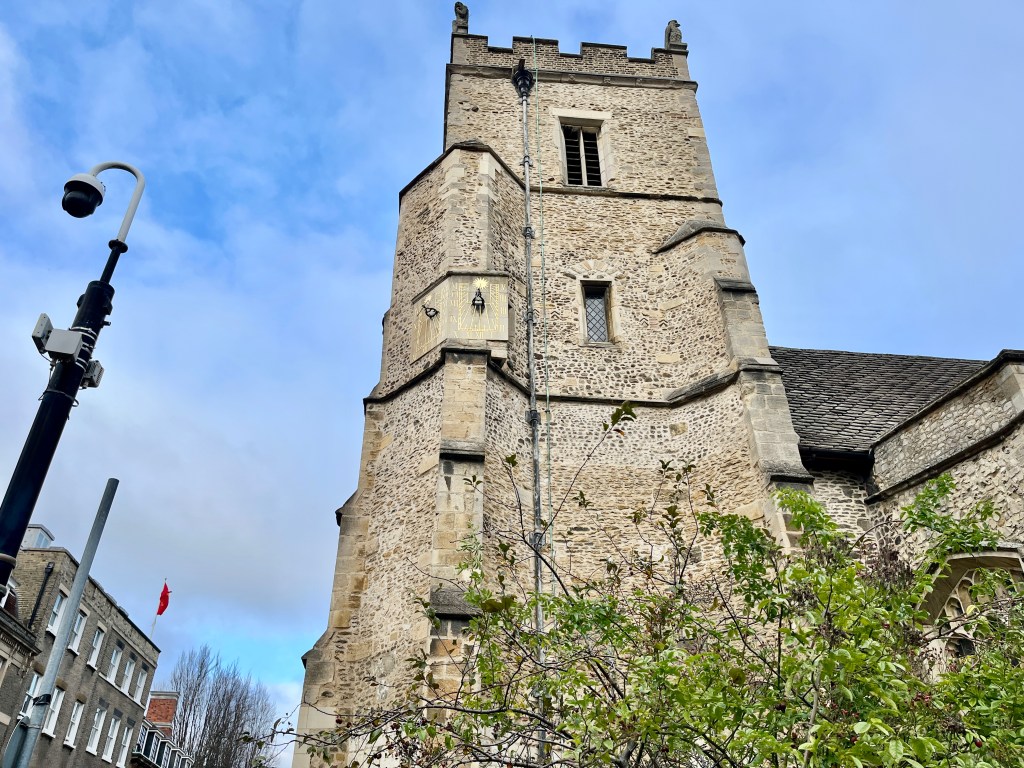
GRADE 1 ❖ Early C12, nave & chancel arch c1120; font late C12; C15 tower and alterations. Overall of considerable interest. Clear evidence of the church’s early state. Fine scratch dials either side of the doorway. Good for graffiti hunters (check the timbers in the bell tower). 5m S of central Cambridge. 52.1492 / 0.0973 / TL435521
DIALS
❖
DIAL 1
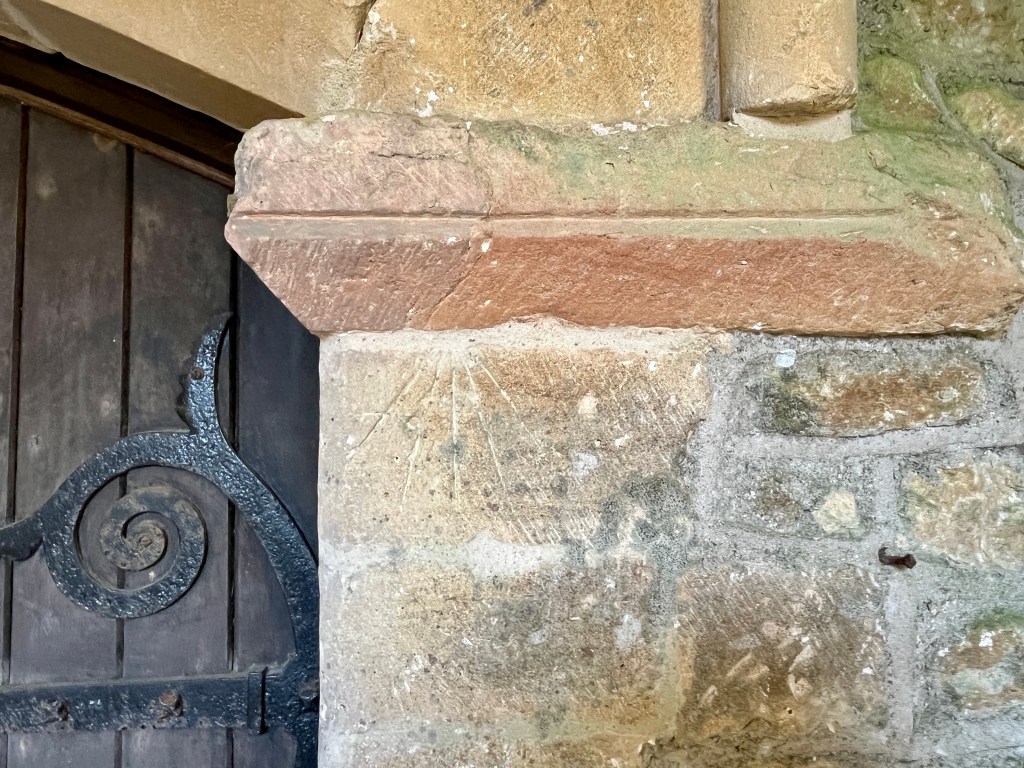
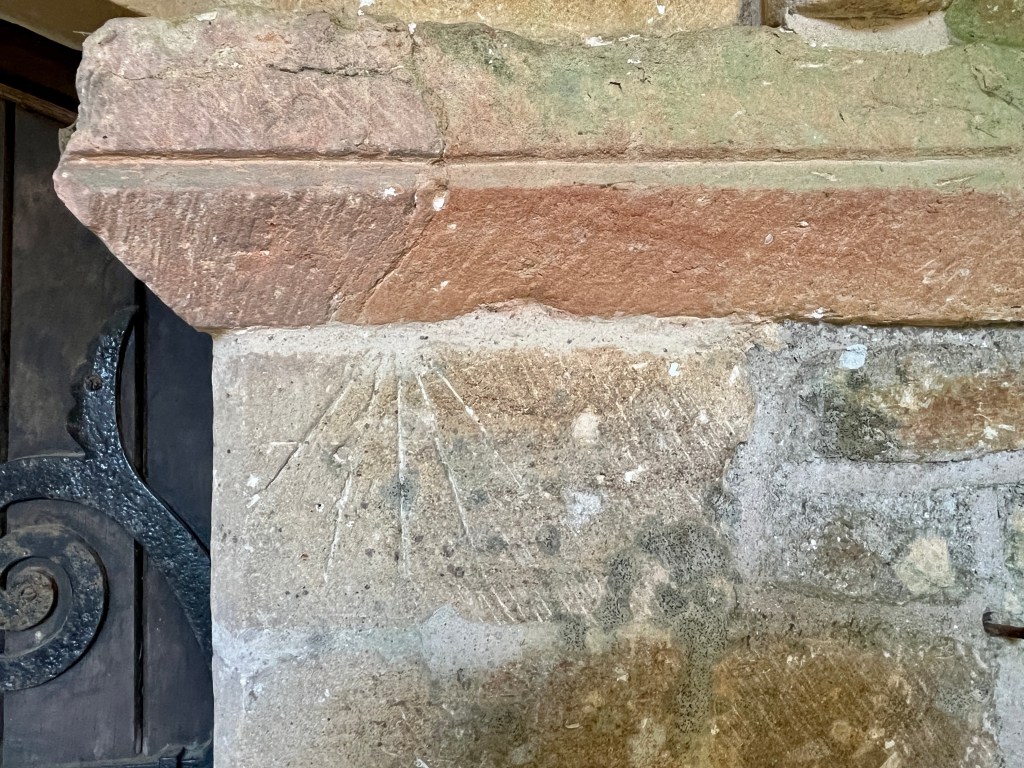
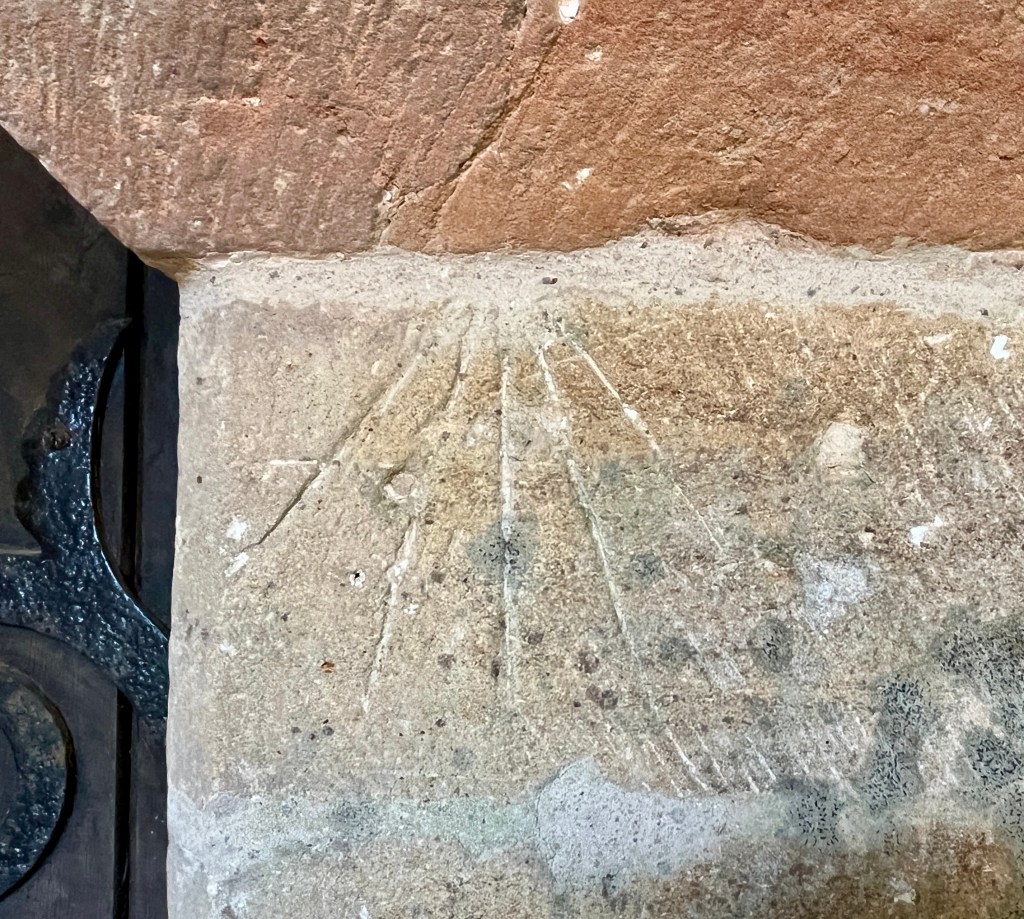
An ‘unusually large’ Canonical or Anglo-Saxon dial (Brooks / Stanier). A semi-circle with 6 radials descending from the horizontal line. The ‘last’ radial is endearingly wonky compared with the rest, as if a casual afterthought. The gnomon hole is quite large and deep, but that could have happened at any stage in the dial’s history. Repair / restoration work doesn’t impinge on the dial, though the dial stone has been reshaped at some time.
❖
DIAL 2
This companion dial is very similar, though with less detail visible. One distinction is that there are 2 adjacent radials LLQ that are deeply cut by comparison with the rest. This is a ‘morning’ dial – the canonical ‘terce’ / 9am – indicating the main time for observance for the community.
The puzzle here is that there are 2 near-identical dials in close proximity, for the same purpose. Plenty of ‘dial churches’ have more than one. A primitive early dial might later be replaced by a more sophisticated one, but it is rare to find an almost-matching pair. A C13 sexton might cut a dial on the same wall or buttress as a C12 dial, but he’d make his own mark for posterity.
❖
BSS RECORDS
There’s a more modern mystery involving the records of the British Sundial Society. 20-30 years ago, small-res photos were taken of both dials. This was for the general record rather than for detailed analysis. Even allowing for small cameras of the era, the comparison with the photos above is startling .
GSS Category: Scratch Dial; Mass Dial; Medieval Church; Medieval Graffiti
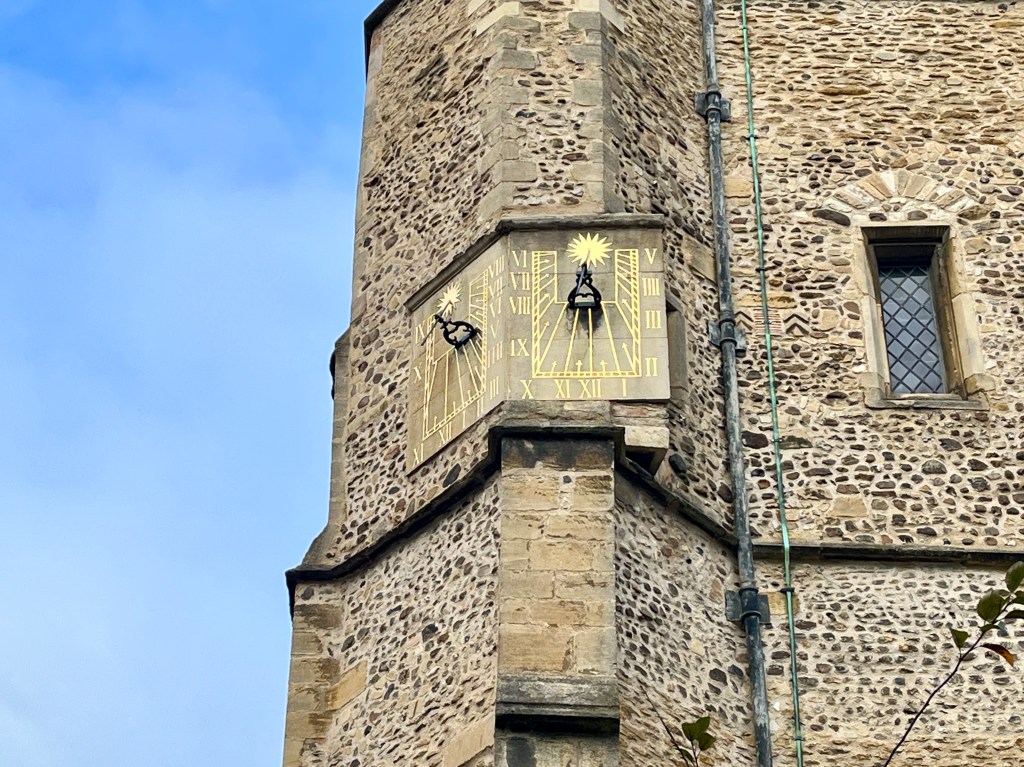
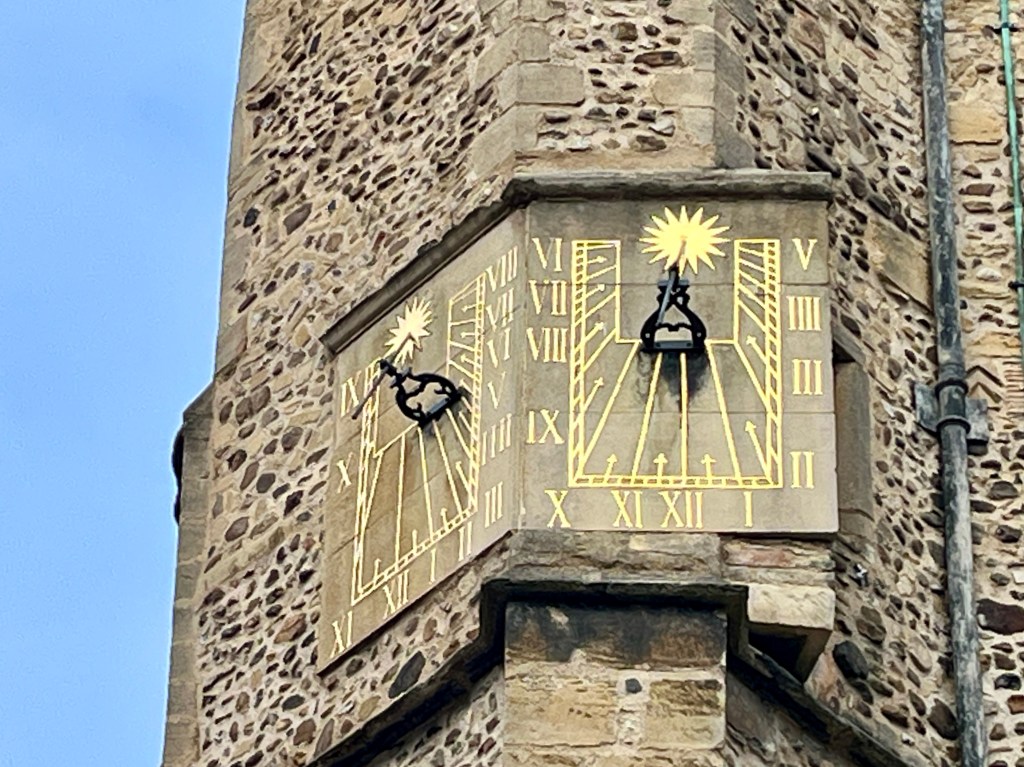
A large double-faceted dial high up on the SW buttress of the Church, above Trumpington Street. The faces are angled due S; and SW. They are easy to read despite the height, and appear to be in excellent condition. Comparing my recent photos with one from 2000, it looked as though the dial must have been repaired / repainted / refreshed since then. BSS confirms that the dial was recently re-gilded at August 2014.
Brooks and Stanier note that the present dial replaces a much earlier dial (date and position unknown) that was ‘designed by a Mr Butterfield and repainted in 1614 at a cost of 18 pence’.
South Face showing gnomon stay (B&W for clarity)
GSS Category: Cambridge Sundial; University Sundial; Double facet dial;
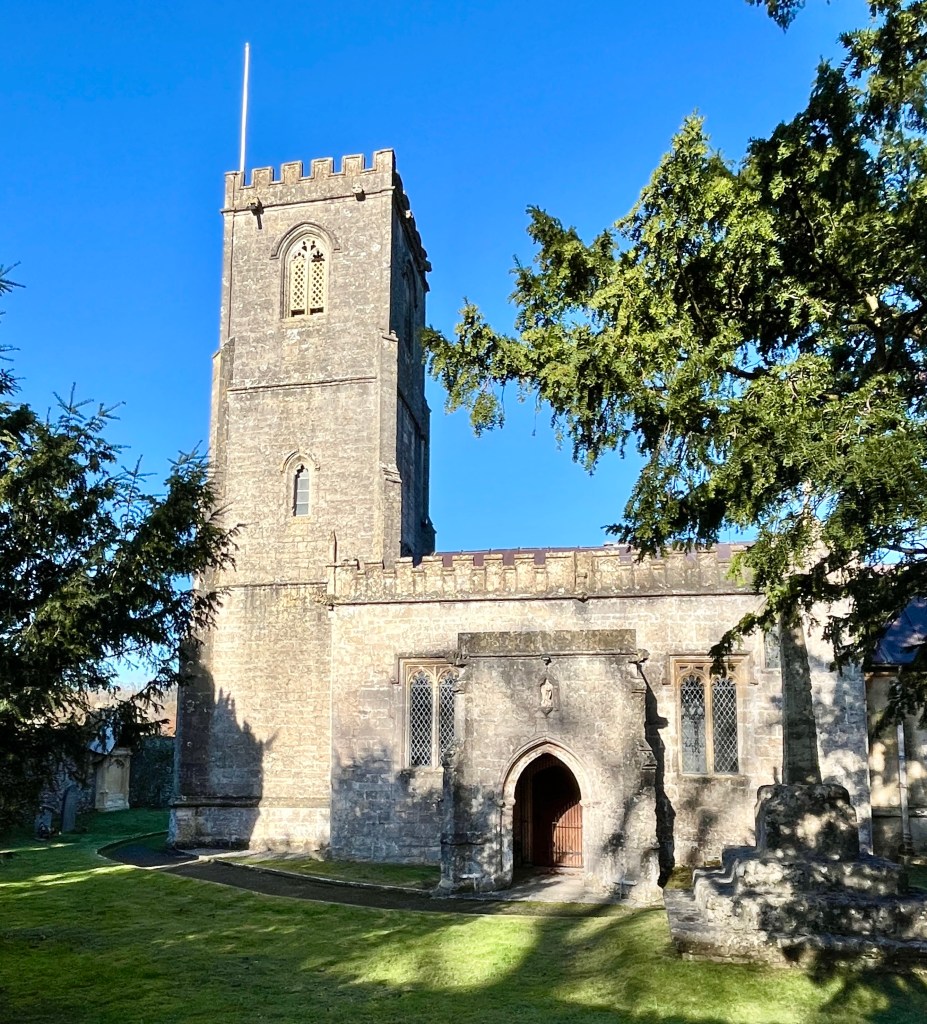
GRADE 1 ❖ C14, C15, restored 1825 by Jesse Gane of Evercreech; further in 1843; late C19 work. Very tall 3-stage ‘Mendip-type’ tower, visible from some distance. Worthwhile interior. Town prosperity partly from silk and enhanced by railway in 1862 – axed by Beeching in 1966 despite intervention by John Betjeman. 51.1463 / -2.5026 / ST649386
UPDATE: Yesterday I wrote dismissively of the St Peter’s dial, based on camera photos. Now that I have seen my iPhone photos (almost always the best option for close-up shots but I had nearly run out of battery) I have changed my tune a bit…
DIAL
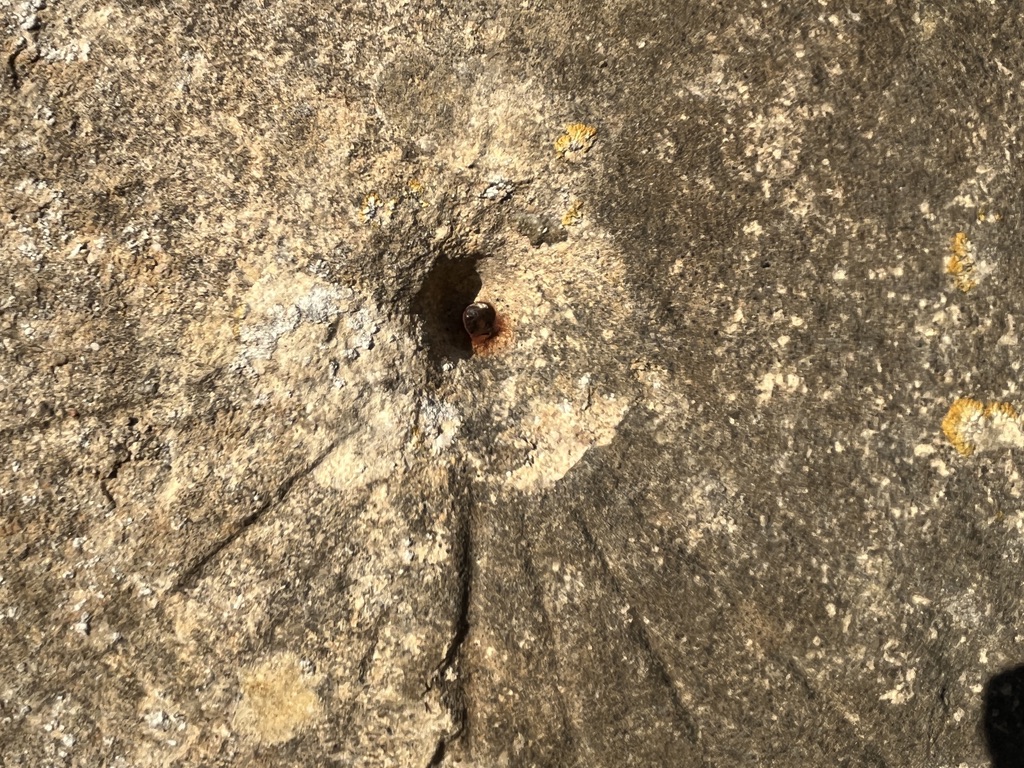
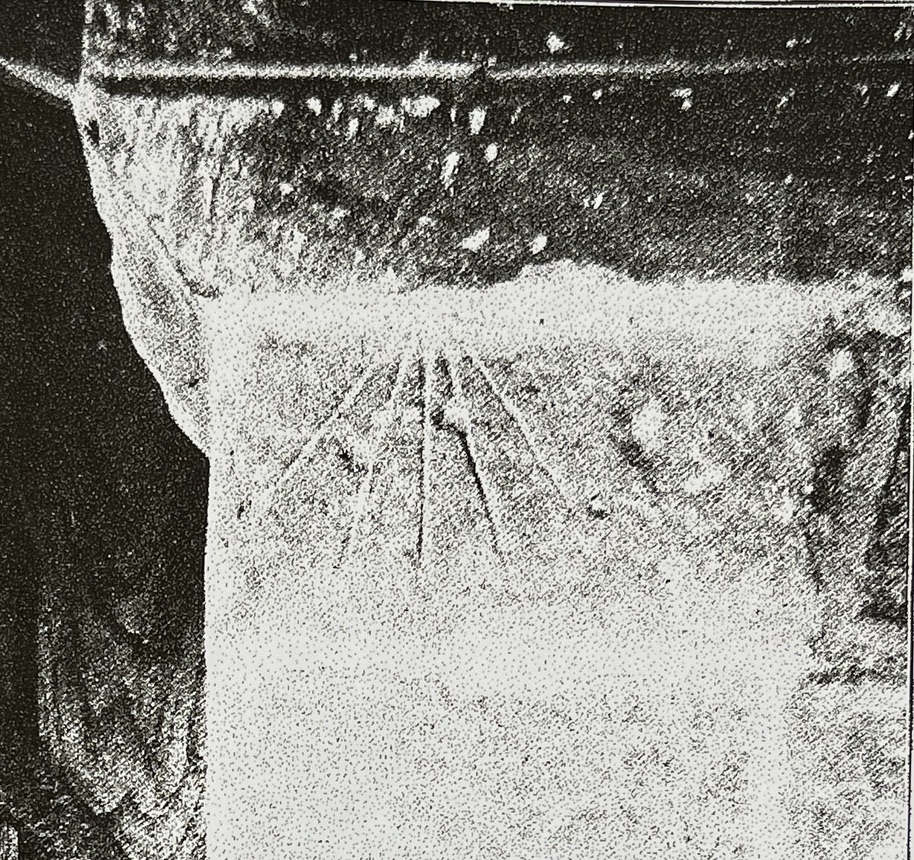
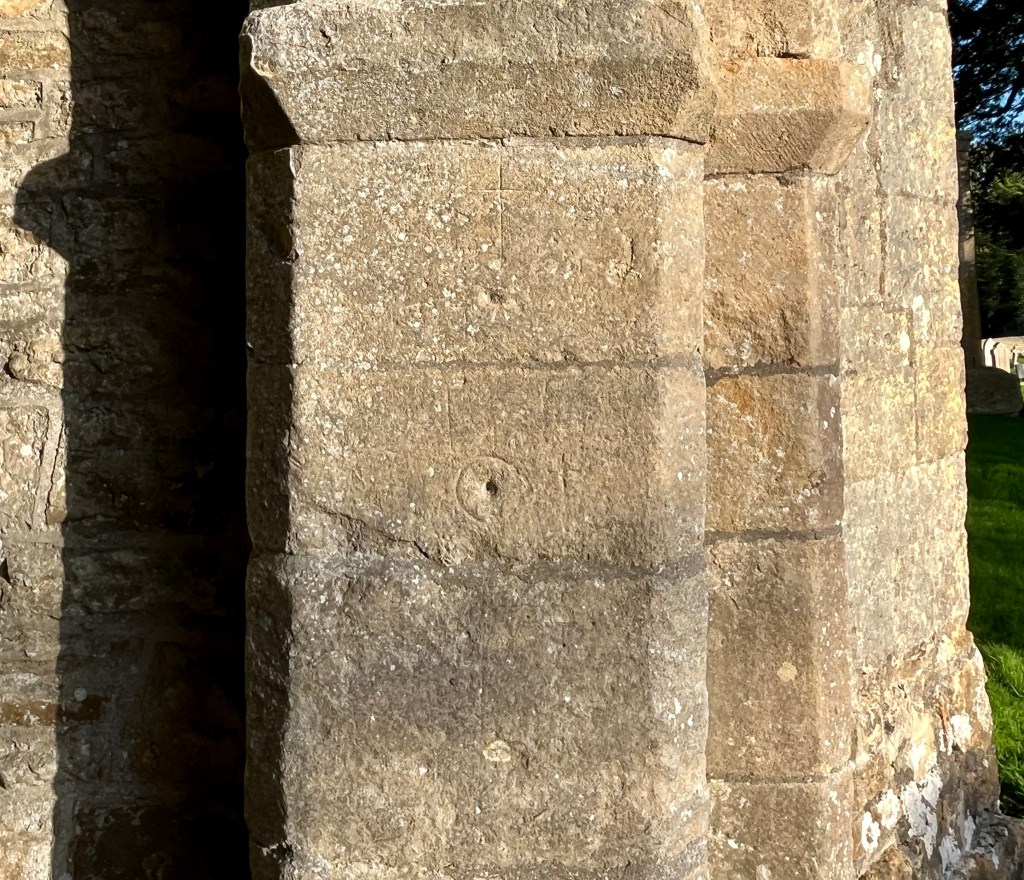
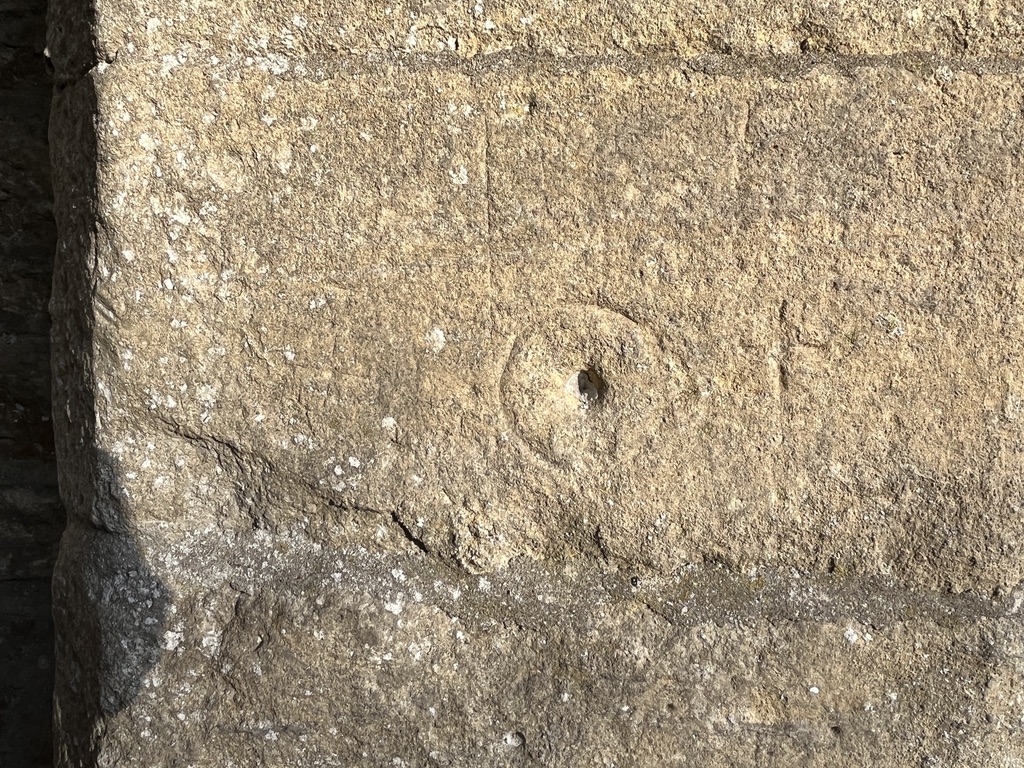
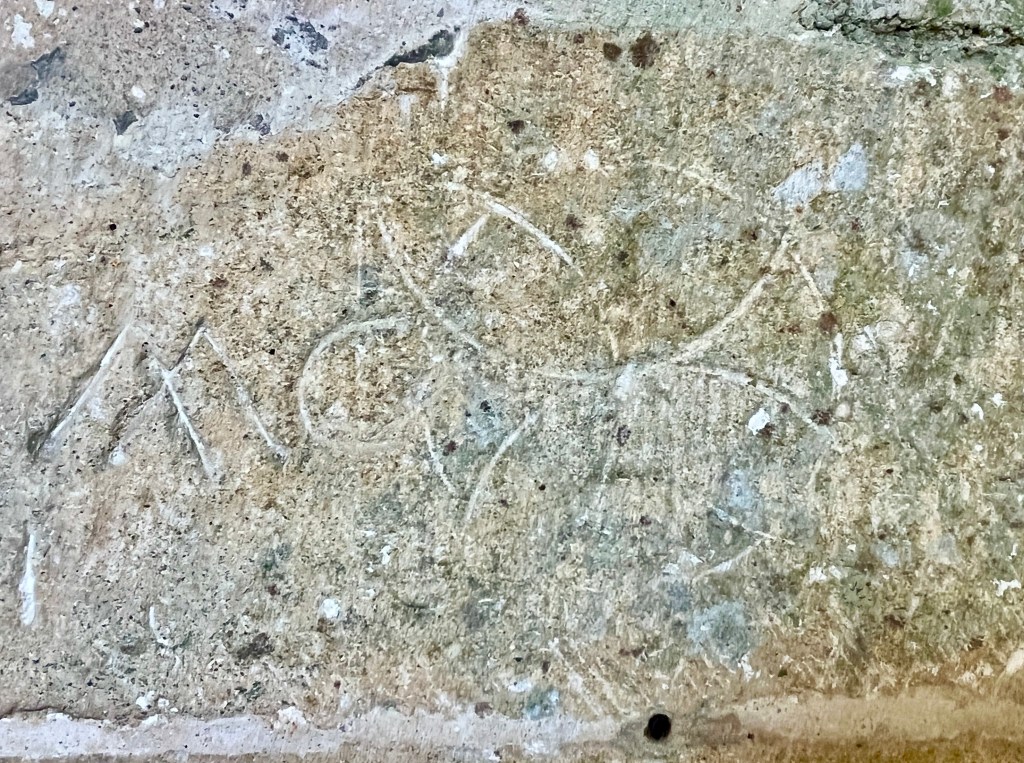
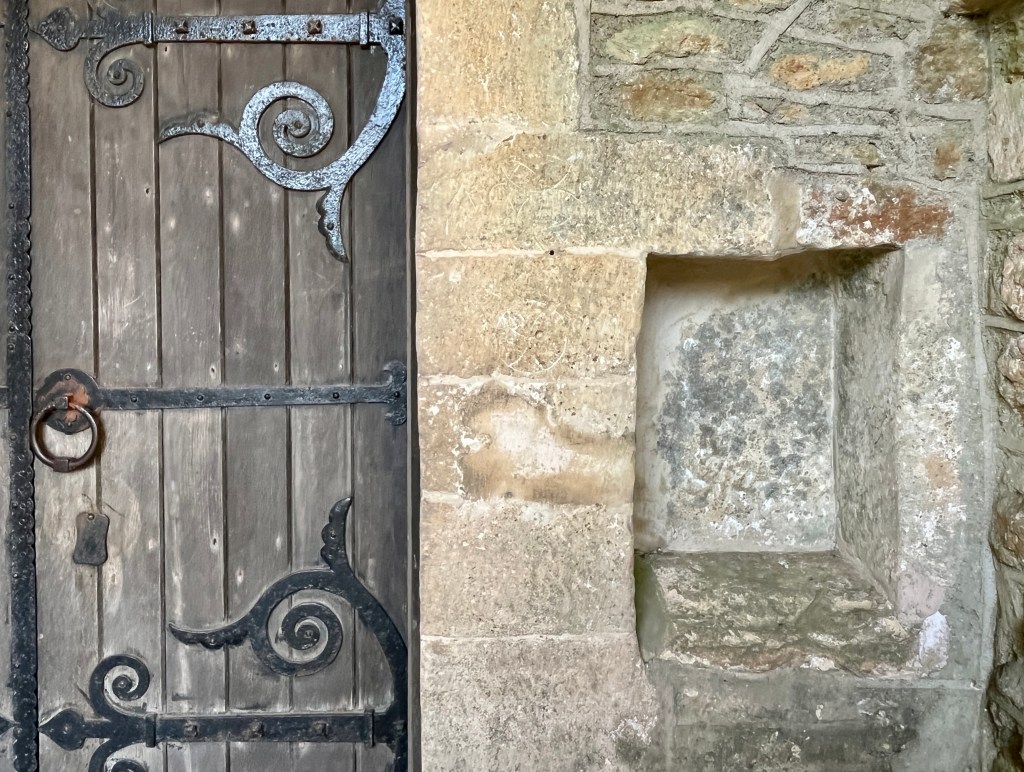
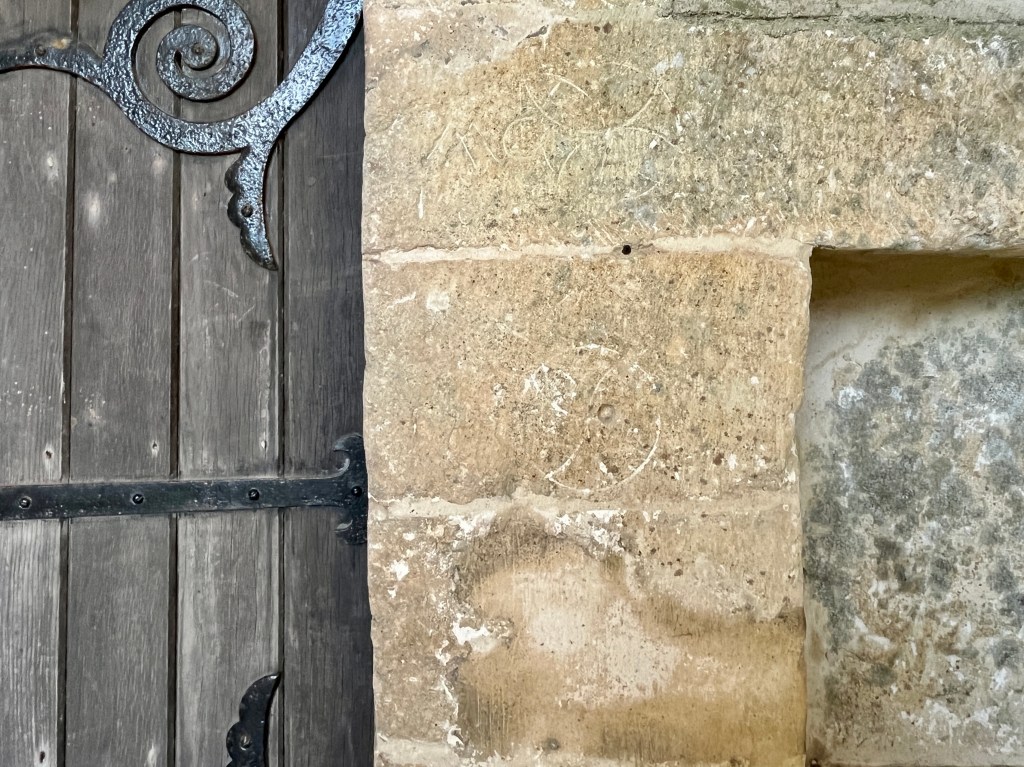
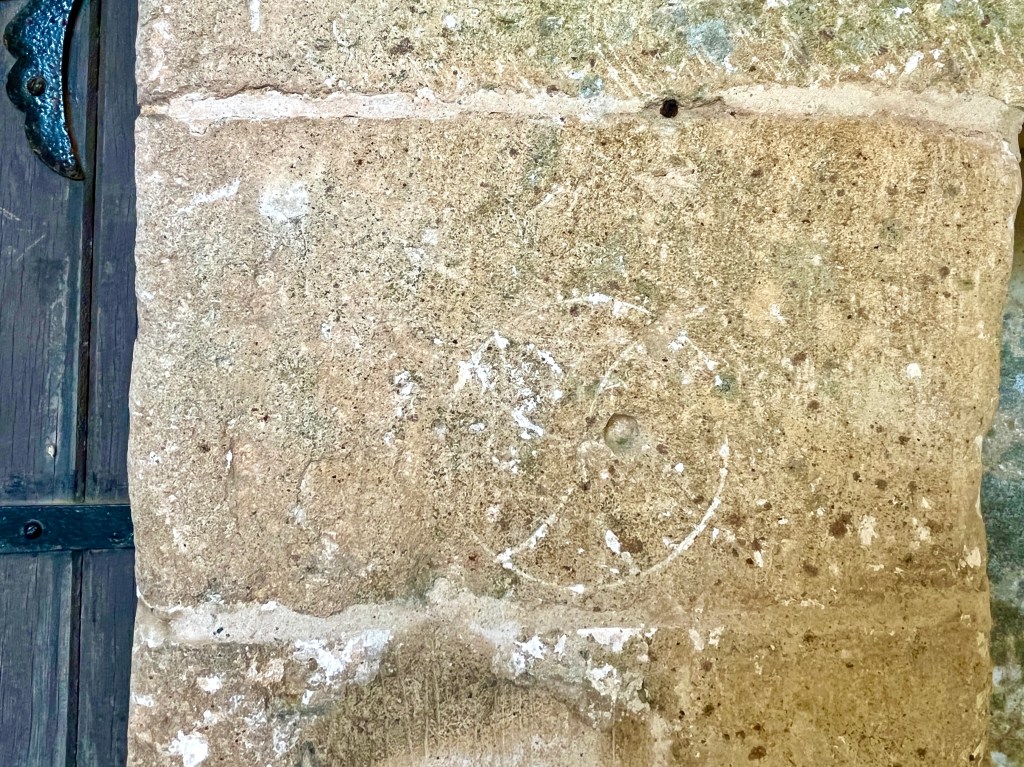
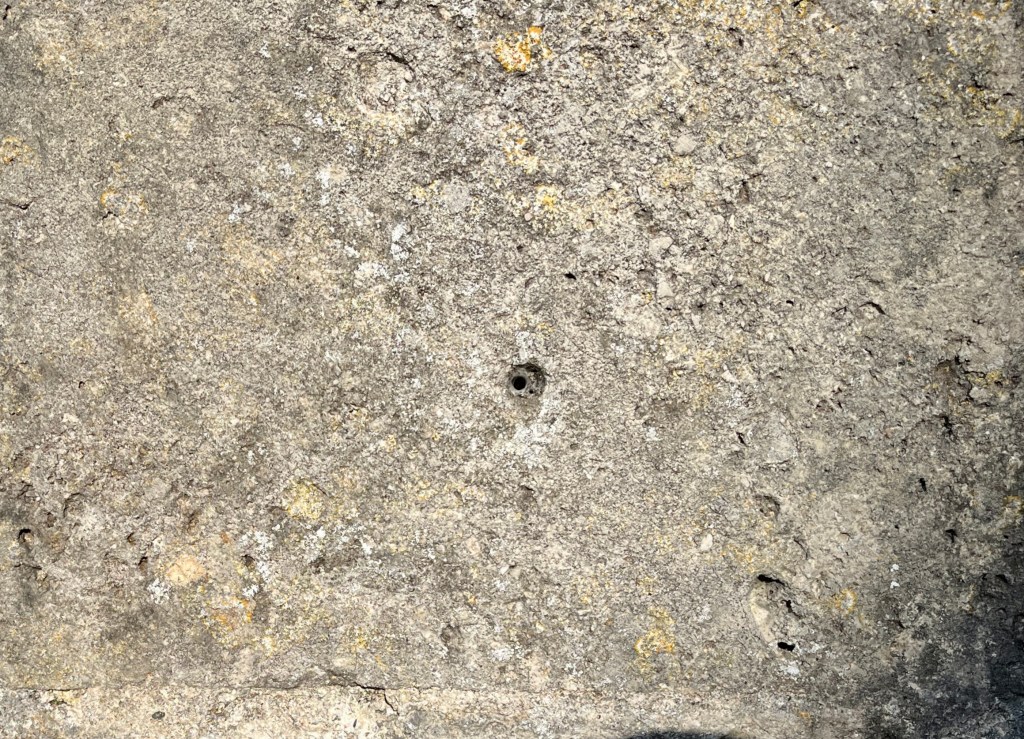
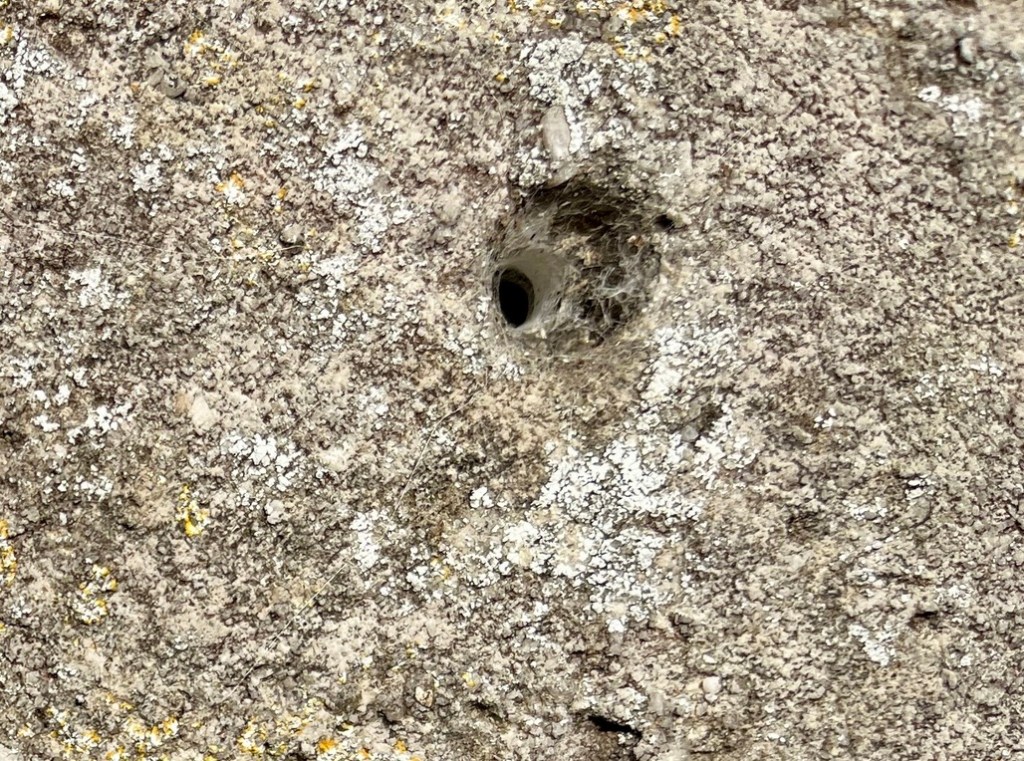
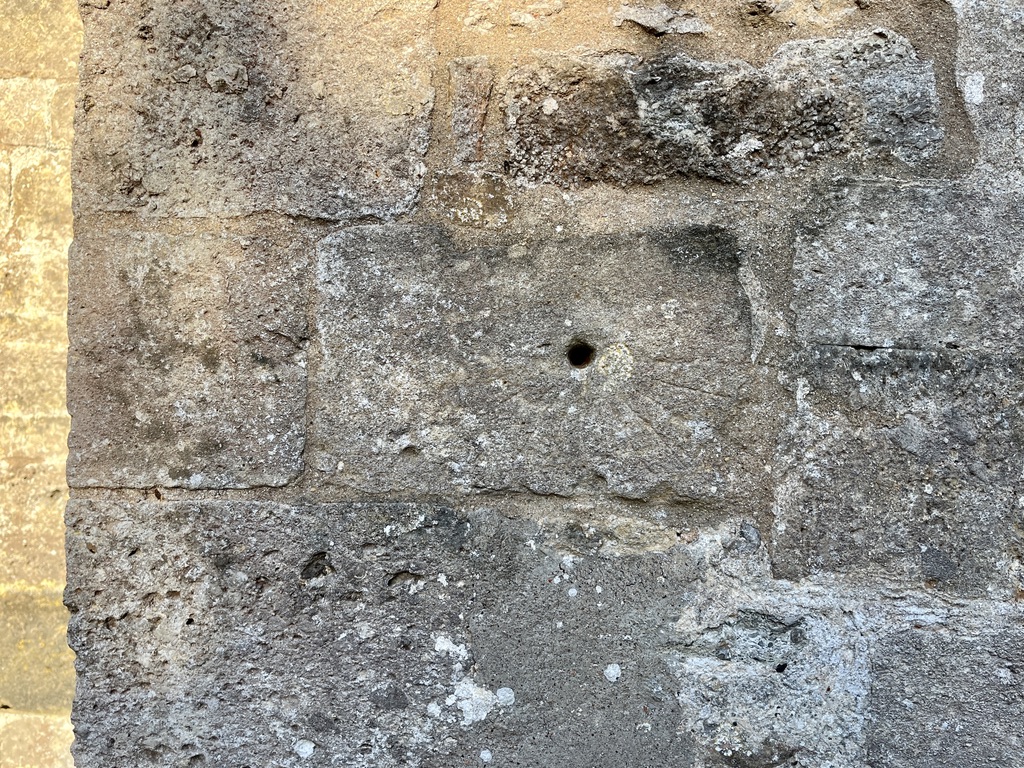
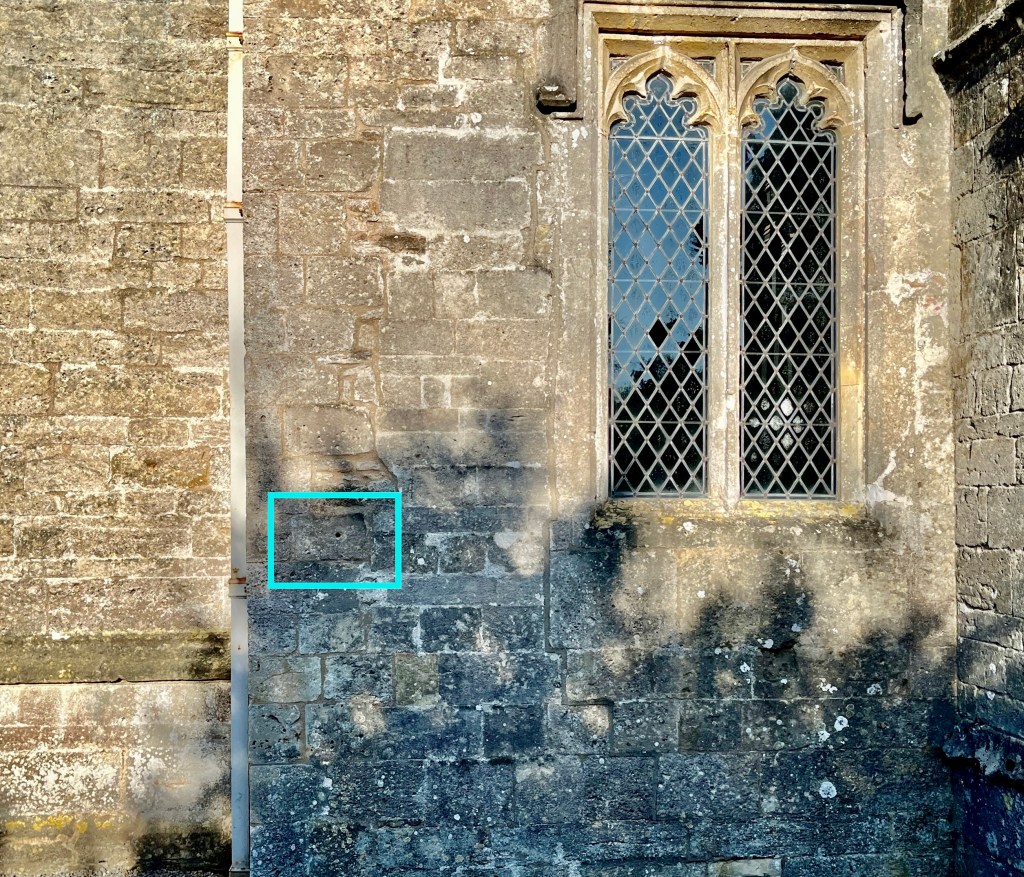
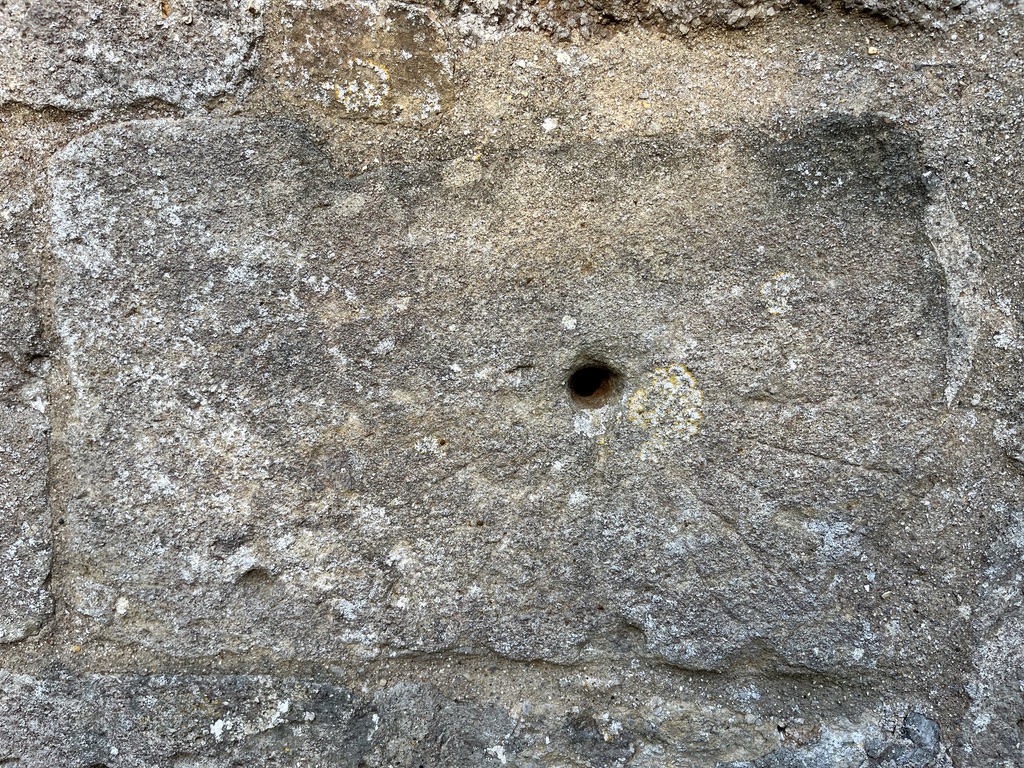
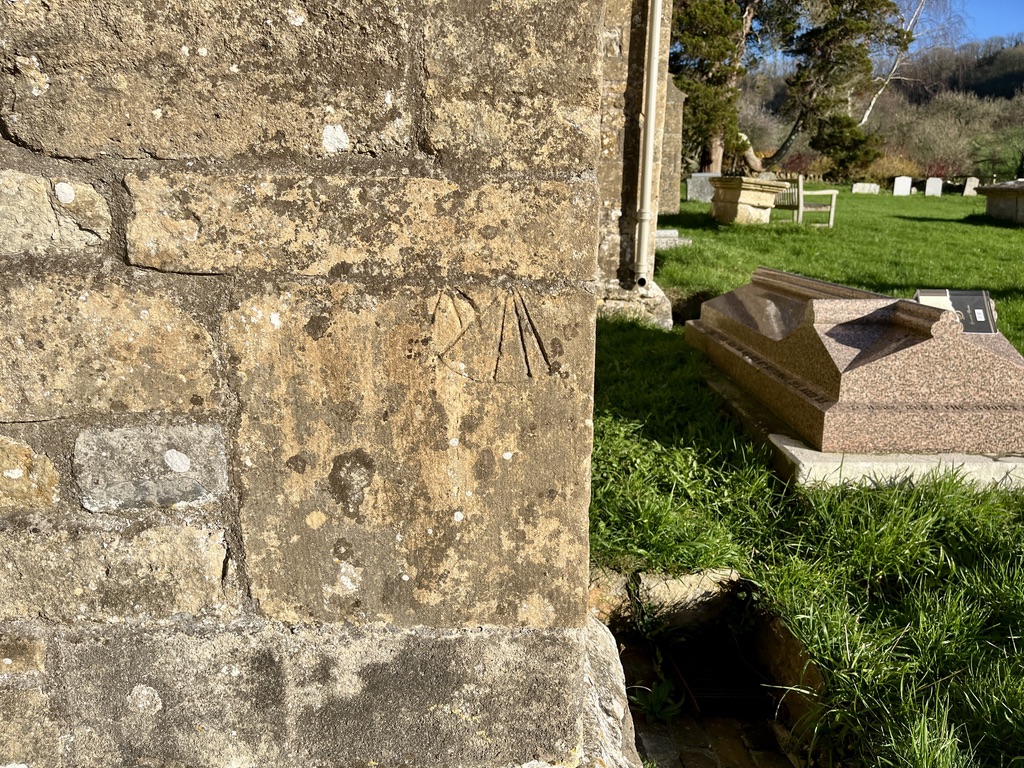
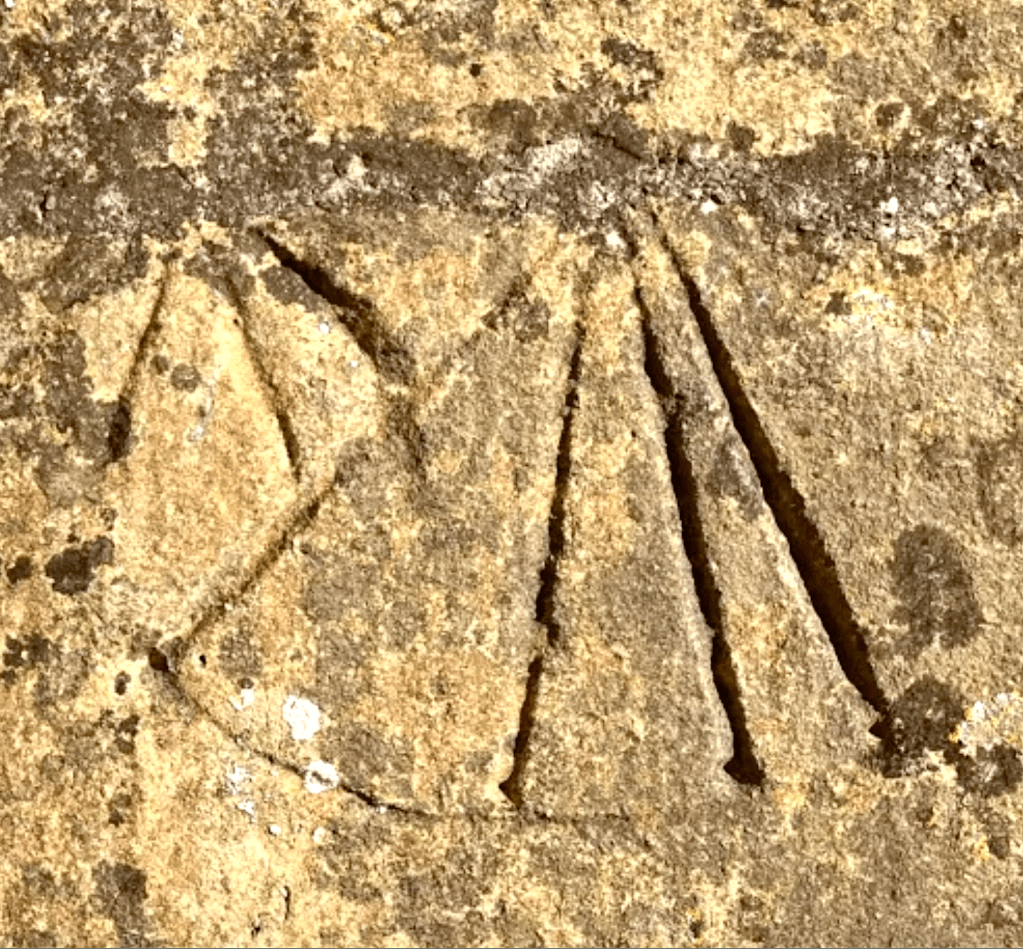
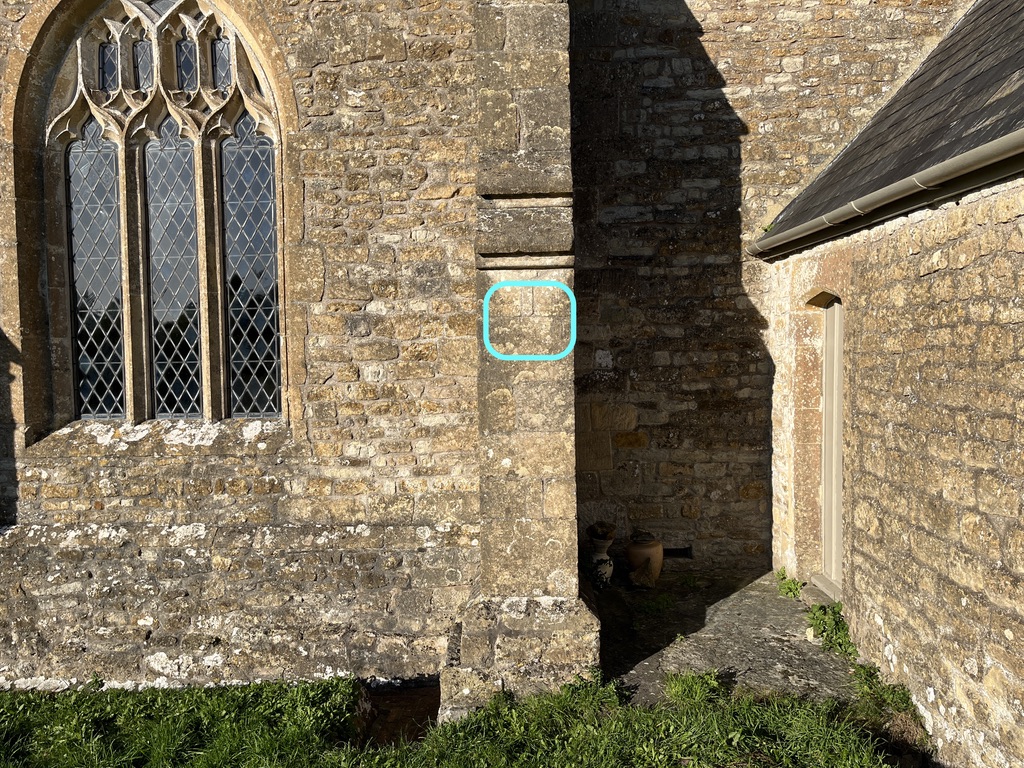
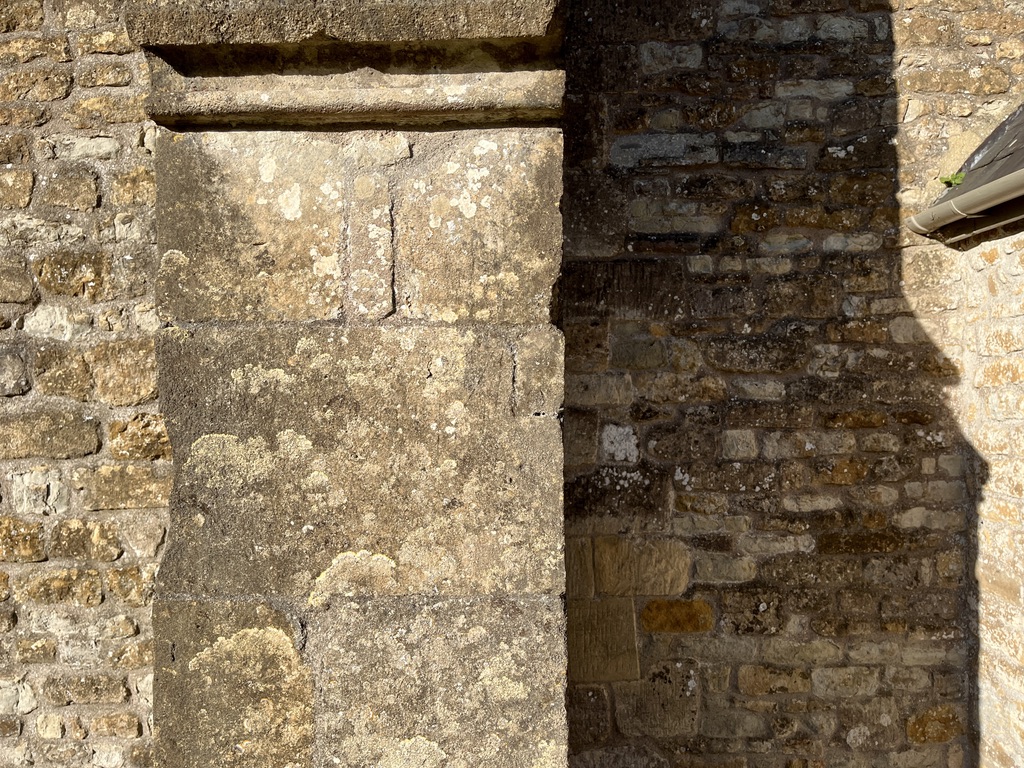
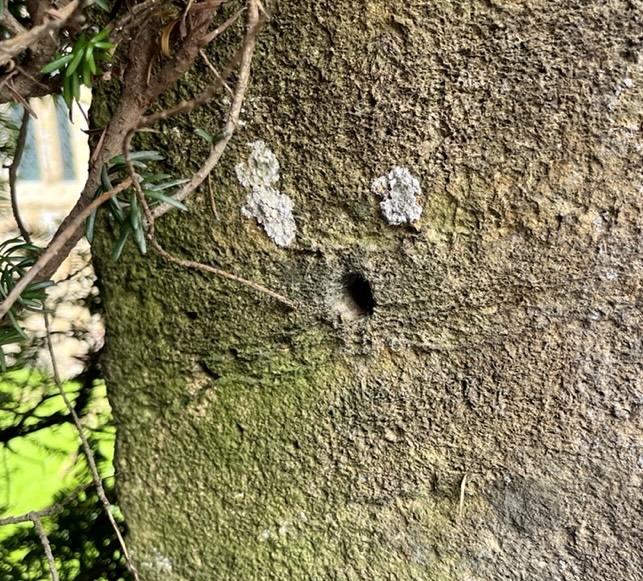
Emphatically not vaux le voyage, and included here mainly because in 1913 DEH counted it as a dial [85] when compiling his exhaustive record of Somerset scratch dials. On SE buttress of the tower he found a ‘quite clear’ circle with a shallow style hole, but without any lines. He put the design in his Doubtful category.
Keith Salvesen
100 + years since the record was made, the circle has eroded away and the hole is not shallow. I had decided to demote this to the not-a-dial category. However, looked at closely and at an angle, it appears that what was once DEH’s ‘shallow hole’ has more recently been neatly drilled deeper into the stone (in fact, a dial would now be workable using a rod or stick). So I conclude that there is evidence of dialishness, though doubtful.
Keith Salvesen
GSS Category: Scratch Dial; Somerset Scratch Dial; Dom Ethelbert Horne
Credits: photos and research – Keith Salvesen (Nov 2025)




















 GAUDIUM SUB SOLE . SUNDIALS . MEDIEVAL TO MODERN