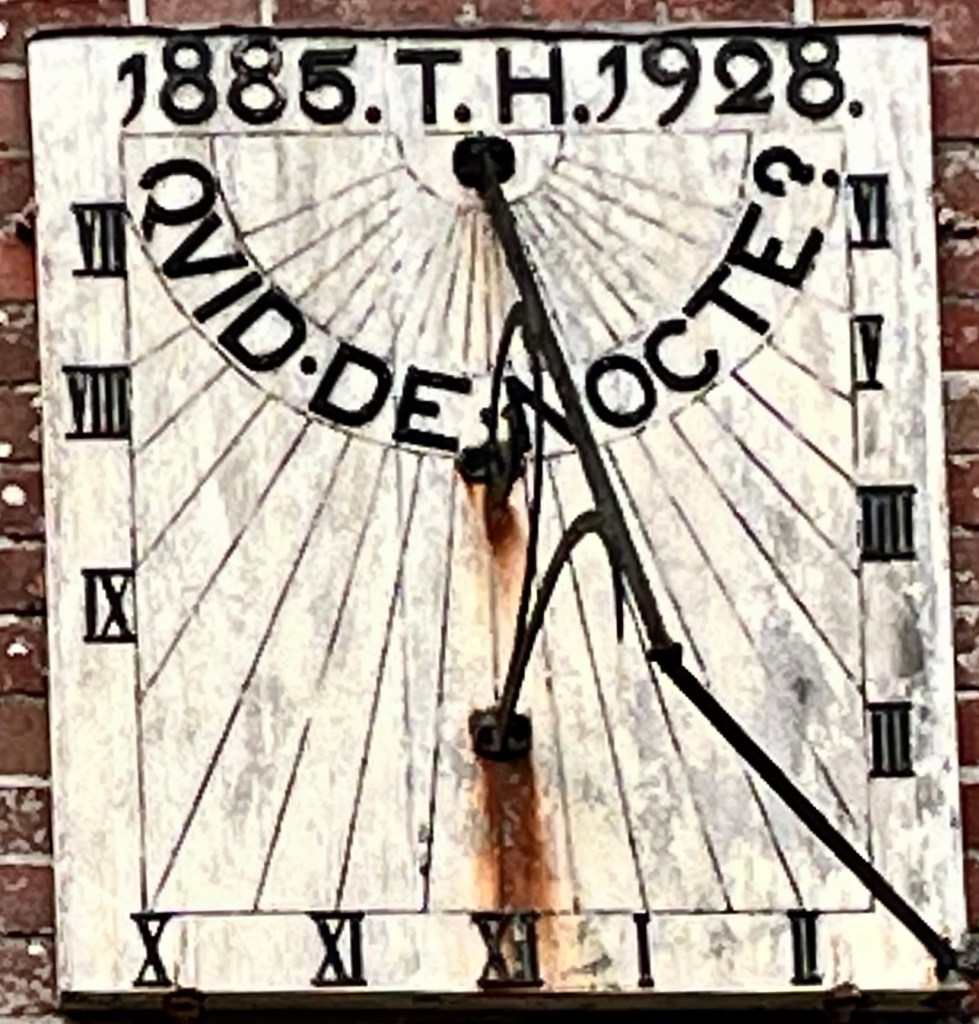
MAX GATE . DORCHESTER – Thomas Hardy’s Vertical Dial

MAX GATE

Max Gate is a fine house on the eastern edge of Dorchester, designed and built by Thomas Hardy (with his father and brother) in 1885. He lived there until his death in 1928. He had two wives, Emma and then Florence, and during the ‘Max Gate years’ there were complicated relationships, sadly beyond the scope of this article.

In 1940 the house was bequeathed to the National Trust by Hardy’s sister. It was listed Grade I in 1970 with the stipulation that it should be lived in. The NT gives generous access to the interior, and there are conducted tours of the house and grounds. It is not exactly ‘lived in’, but it does feel homely rather than museum-like. To see Hardy’s desk and other writerly items feels a privilege. ‘Tess’ was written there, also ‘Jude’, the ‘The Mayor of Casterbridge’, and much of his poetry.

MAX GATE – VERTICAL SUNDIAL

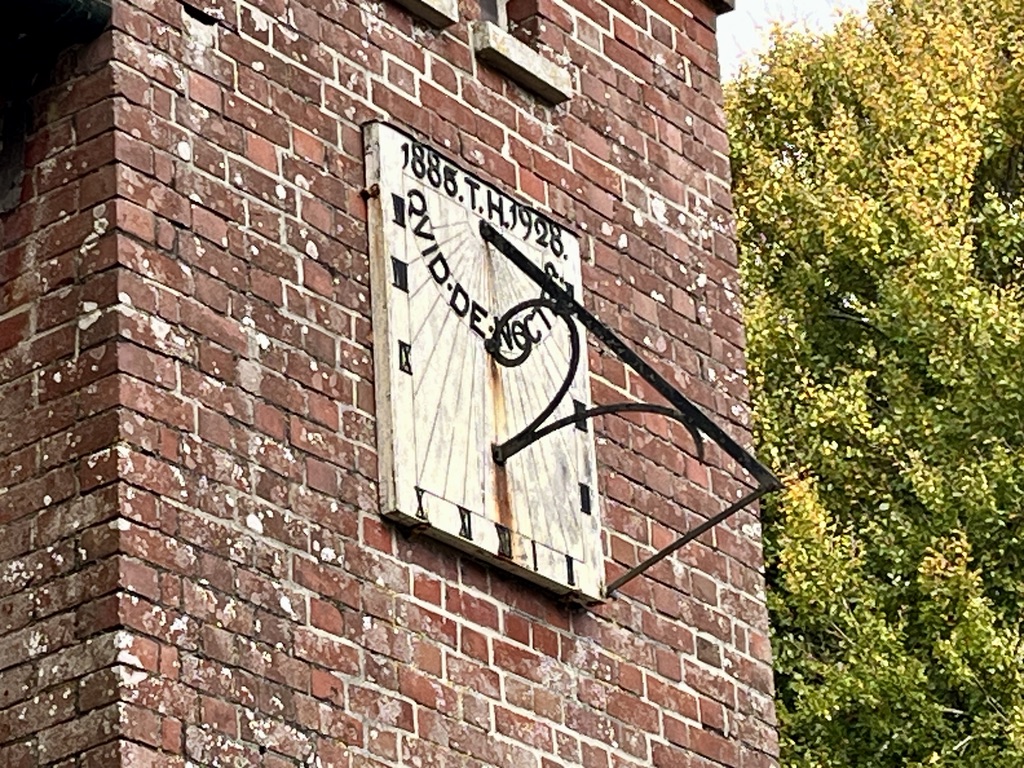
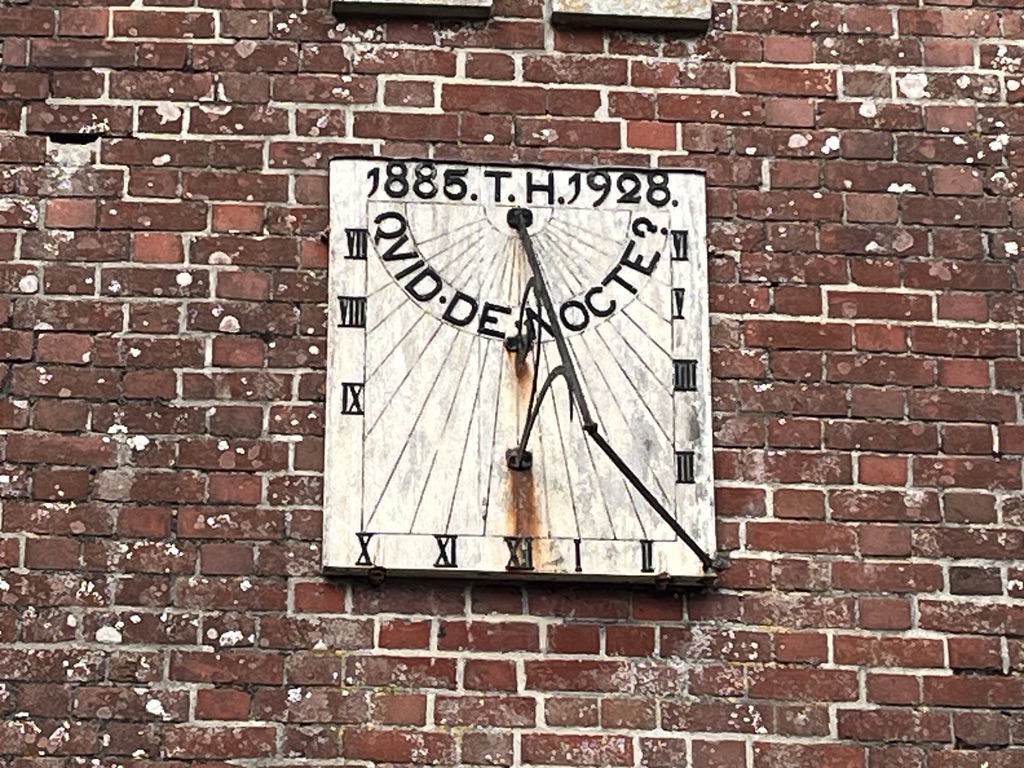
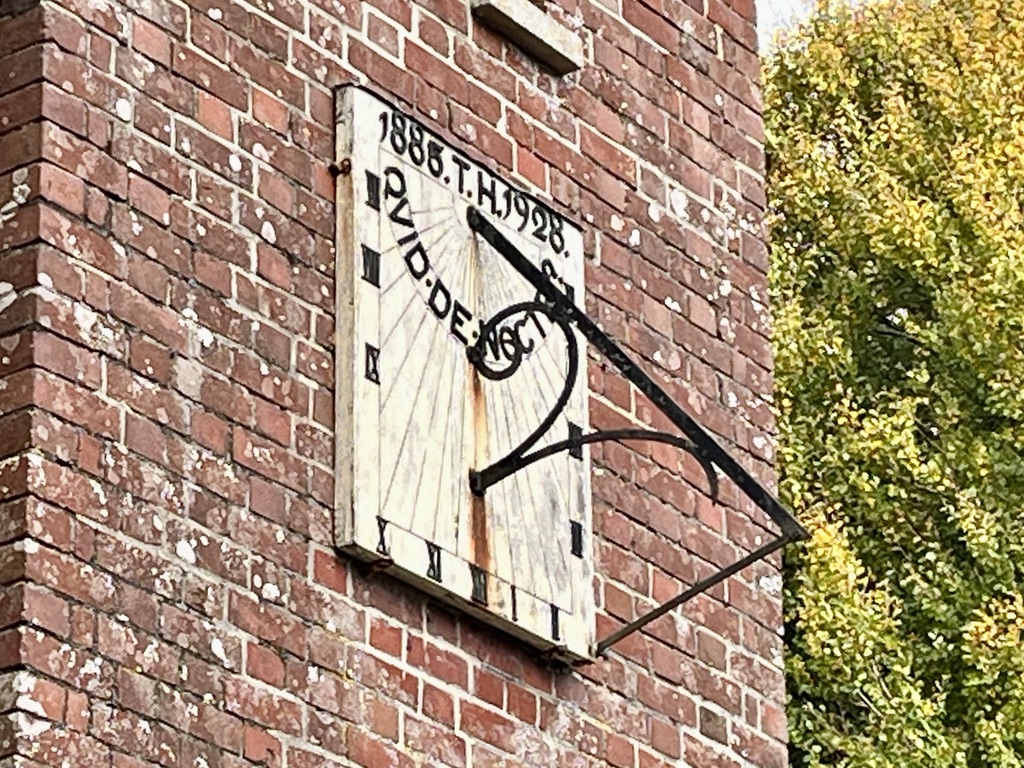
High up on the east tower, the dial is a good example of a sundial that (besides its primary use) acts as a memorial, and tastefully reflects the significance of the dedicatee. It is also very visible and easy to read at a distance. The lightly ornamental gnomon is moored at the bottom right corner as you face the dial. The style is simple, with 12 hours marked from 7.00am to 6.00pm and 24 radials to record half hours. The dial plate is white-painted wood. Overall the dial is in poor condition, but I gather that there are plans to carry out complete restoration during 2026.

.

MOTTO

QUID DE NOCTE?

Literally, ‘WHAT OF THE NIGHT ?’ Interrogative sundials are relatively unusual, and I am unsure when the inclusion of question-marks began. The simplest reply might be ‘NIHIL’ – the sun is asleep.

.The marriage certificate (1839) of Thomas Hardy’s parents at Melbury Osmond church, Dorset

GSS Category: Vertical Dial; Memorial Dial; Dial Mottoes

Credits: Keith Salvesen (all photos); National Trust; Melbury Osmond church

HORTON . GLOS . ST JAMES THE ELDER – Vertical Dial

Benefice Photograph

ST JAMES THE ELDER . HORTON . GLOS

GRADE I ❖ C12 origins; rebuilt C14; subsequent alterations C15/16; restoration 1865. Fine S porch with a splendid collection of carvings; interesting monuments within. On the Cotswold Way NE of Chipping Sodbury. 51°33’49″N   2°20’20″W ST766850

VERTICAL DIAL

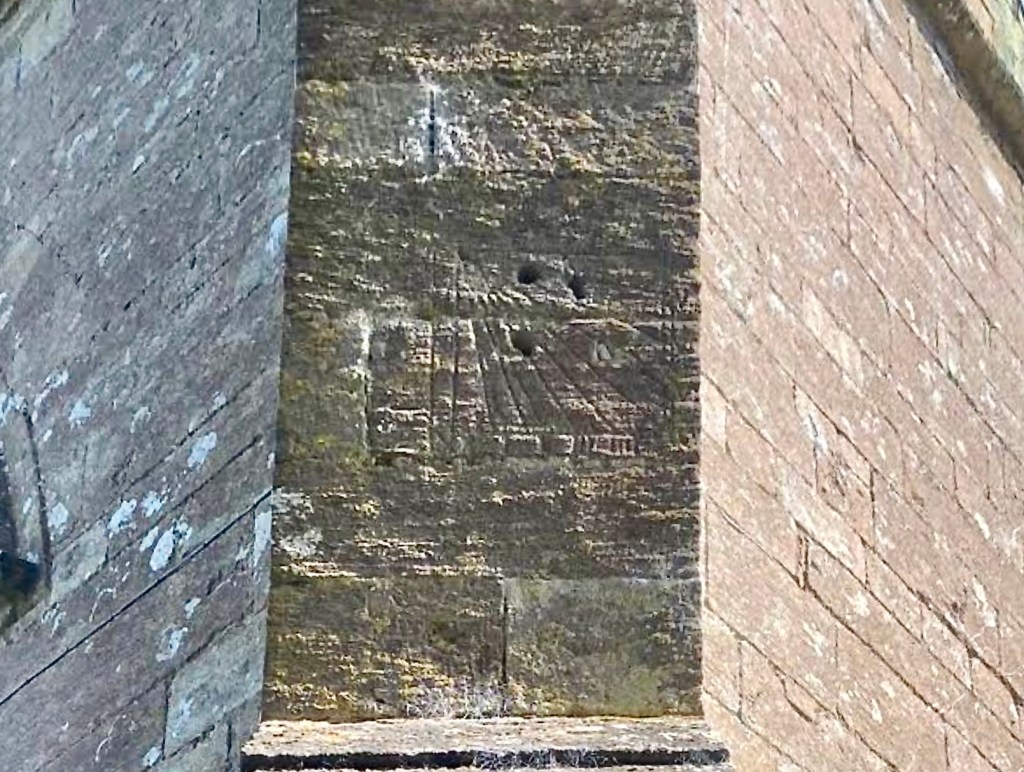
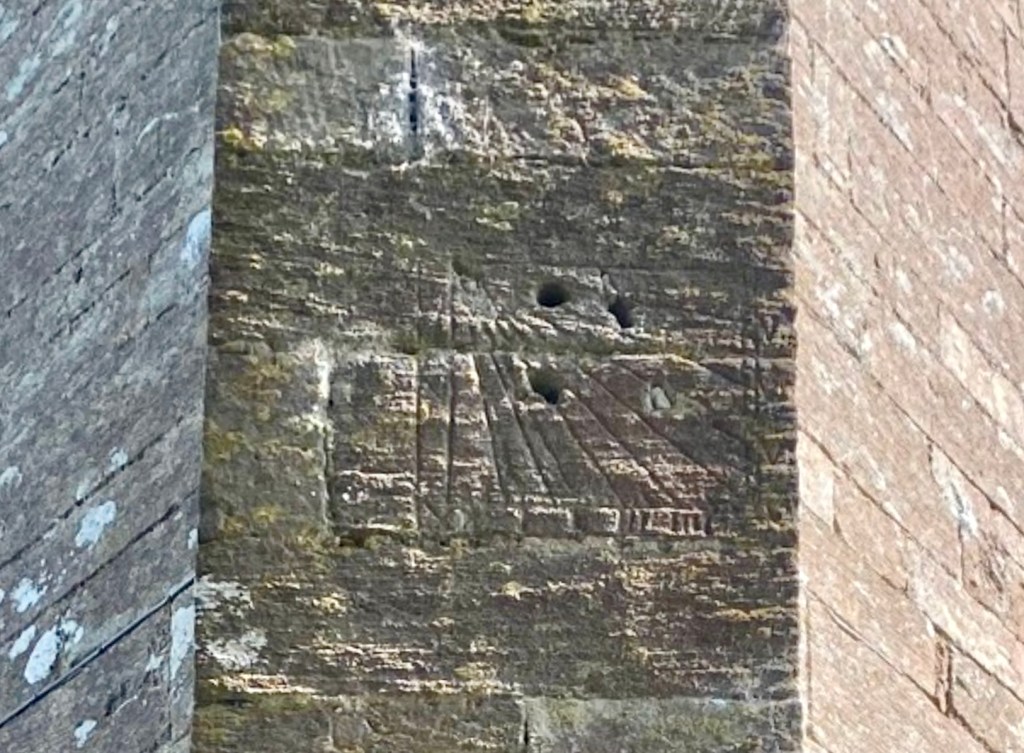
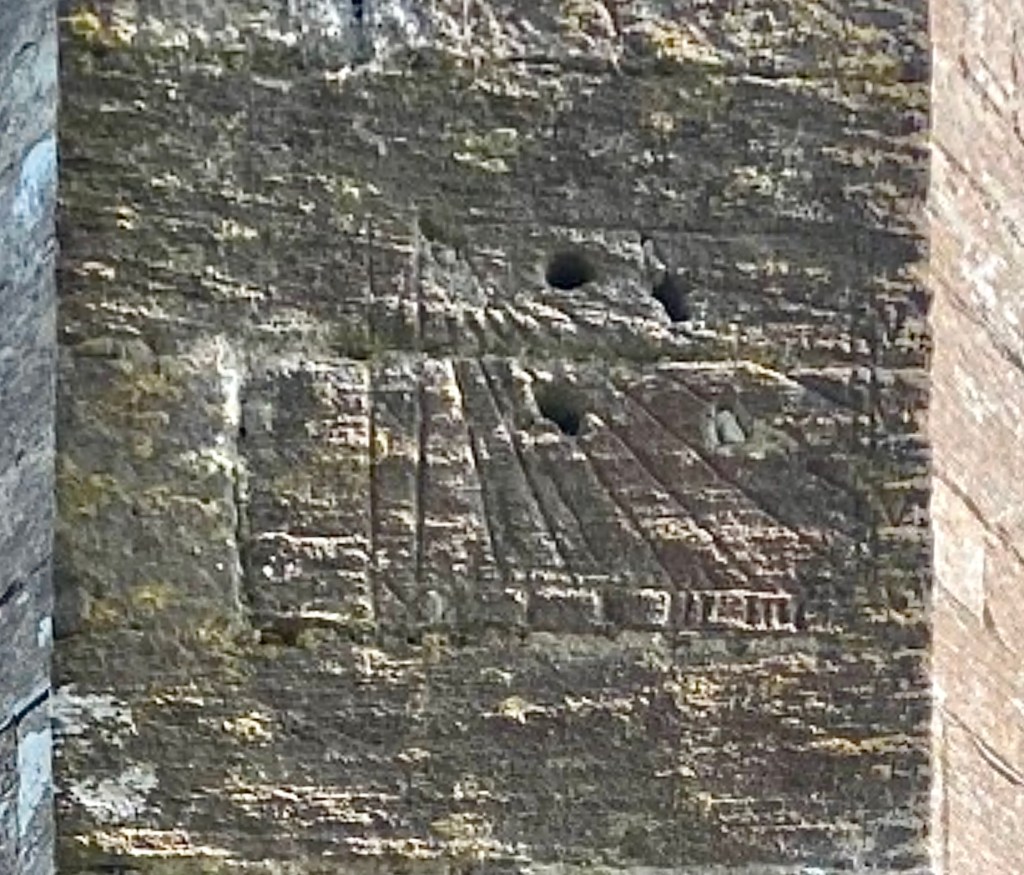
This rather splendid dial, cut high on a buttress, is somewhat rustic for its exalted position. It faces SW, which explains why the lines radiate from a corner, rather than top centre or central to the dial stone. The randomness of the radials and the gaps between them suggests difficulty matching them with the positions of the roman numerals along the base and RHS of the dial.

BRITISH SUNDIAL SOCIETY RECORD 1998

GSS Category: Vertical Dial; Dial on Church

CREDIT: Martin May, with thanks for contacting me and for the excellent photos of this interesting dial

WINTERBORNE STICKLAND . DORSET . ST MARY: DOUBLE-FACED VERTICAL DIAL

❖ ❖ ❖

ST MARY . WINTERBORNE STICKLAND . DORSET

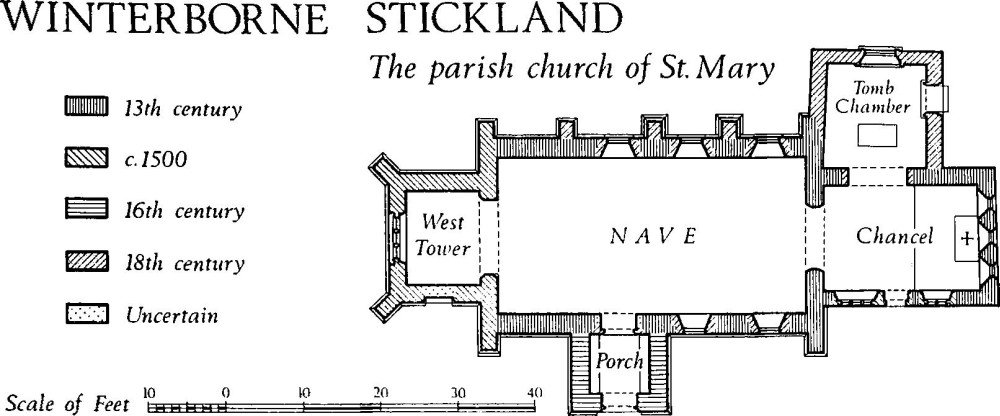
GRADE 1 ✣ C13 origins; Tower ± 1600; considerable restoration C18. A charming country church, seemingly plain but with much to justify its listing. Tomb chamber. 2 (perhaps 3) scratch dials, written up separately. Graffiti: C17 & 18 initials & dates on responds of tower arch. 5m S of Blandford. Close-by St Andrew’s at W/B Houghton makes a pleasant short visit. 50.8409 / -2.2363 / ST834046

❖ ❖ ❖

SUNDIAL

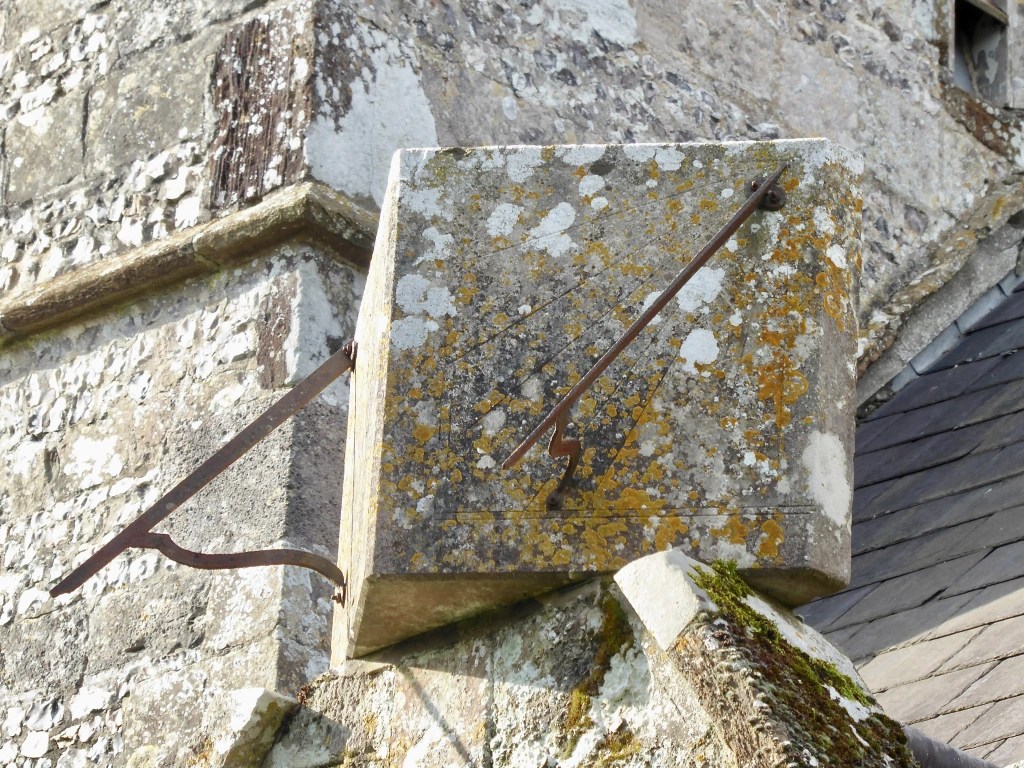
A fine double-faced dial on the S. porch gable, angled SE and SW. Both faces match in design, with identical scrolled iron gnomons. BHO dates to C18th. BSS mentions Roman numerals, but I couldn’t find any trace even with close-up photos.

❖ ❖ ❖

SW FACE

❖ ❖ ❖

SE FACE

❖ ❖ ❖

Geograph image from c2010 for comparison of condition of stone and lichen coverage

GSS Category: Vertical Sundial; Double-faced Sundial; Porch Gable Sundial

All photos: Keith Salvesen except last, Geograph 2010

DALI DIAL [anag.] . PARIS . CADRAN SOLAIRE

‘Derrick’ . Sticky Mango Rice . A fine artist captures the essence of Paris mingled with a surreal addition – link below

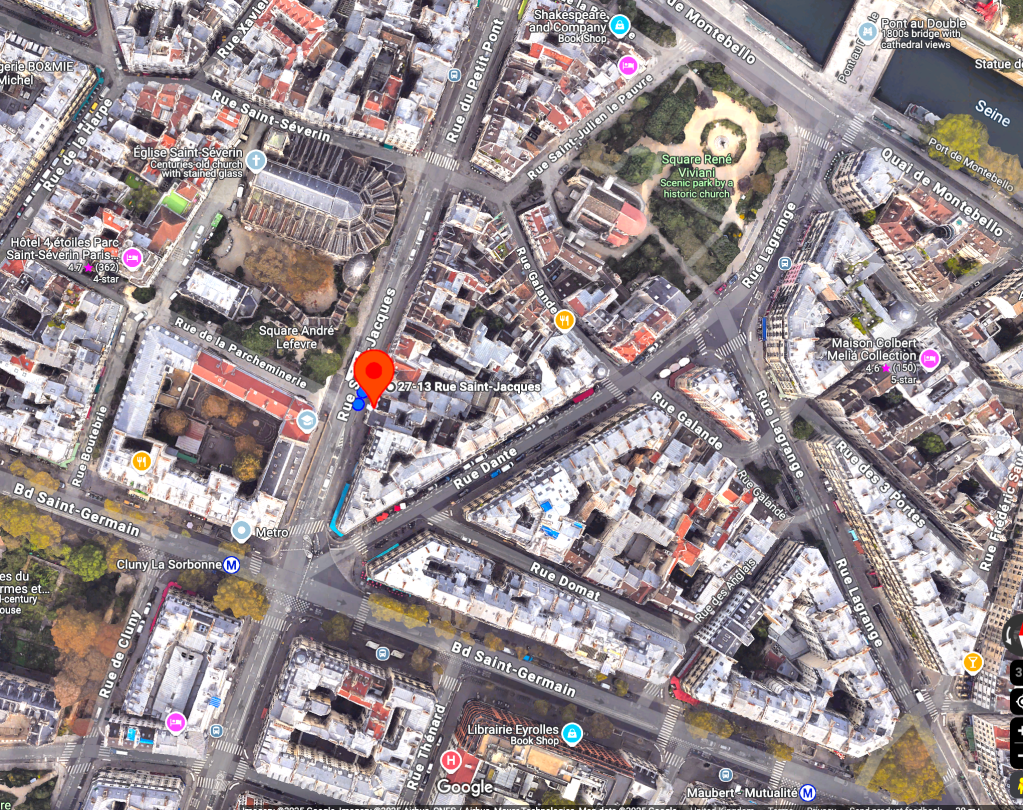
SALVADOR DALI’S SUNDIAL (1966) . PARIS . 27 Rue St Jacques

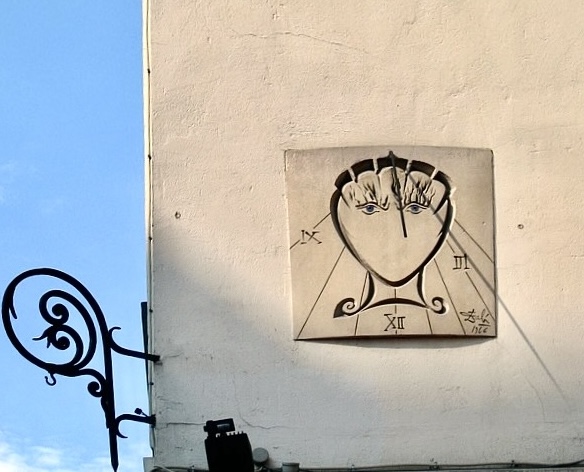
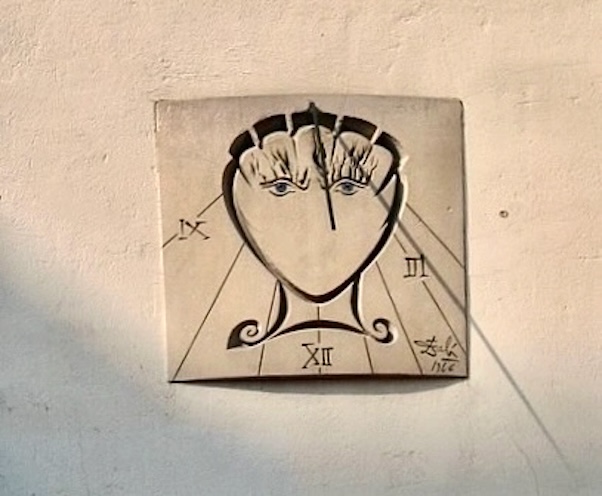
Unassumingly sited and not easily visible to passers-by unless walking north on the eastern trottoir, is a splendid sundial designed by Salvador Dali (1904-1989). Those who do notice it might well be entertained by the Daliesque appearance, but because of the dial’s position they may not see the artist’s signature and the date 1966**

‘Derrick’: a rather beautiful close-up depiction of the Dial

IRL

Ken Eckert Wiki

DIAL DETAILS

Pierre Guernier at French Moments

Pierre Guernier of French Moments notes that the Dali dial, cast in concrete, was a gift to friends who had a nearby boutique. The clue to the shell motif lies in the name of the street which forms part of the Pilgrimage route across Paris. The fiery eyebrows represent the sun; and the lower part of the dial obviously references the famous moustache.

DALI SHADOWS

GAUME – WikiMedia 2010

ATLAS OBSCURA

This excellent resource includes unusual and off-beat finds. It describes Dali’s dial, and notes the accompanying excitement when it was inaugurated on 15 November 1966 at a ceremony with pomp and large media coverage. Dali was no shrinking violet.

We can probably conclude that Dali’s forays into horology were relatively successful with his Parisian sundial. But for its poor positioning, it might function well or adequately. Less accurate were his more ambitious blueprints for timepieces, all being woefully deficient in design and immensely challenging in construction.

** It’s fair to say that for the English, the important ’66 dates are confined to the Battle of Hastings; the Great Fire of London; and the World Cup.

CREDITS

Derrick – Sticky Mango Rice (check out his other work)

https://www.instagram.com/derrick_sketches/?hl=en

© French Moments and pierre@frenchmoments.com with thanks

Atlas Obscura

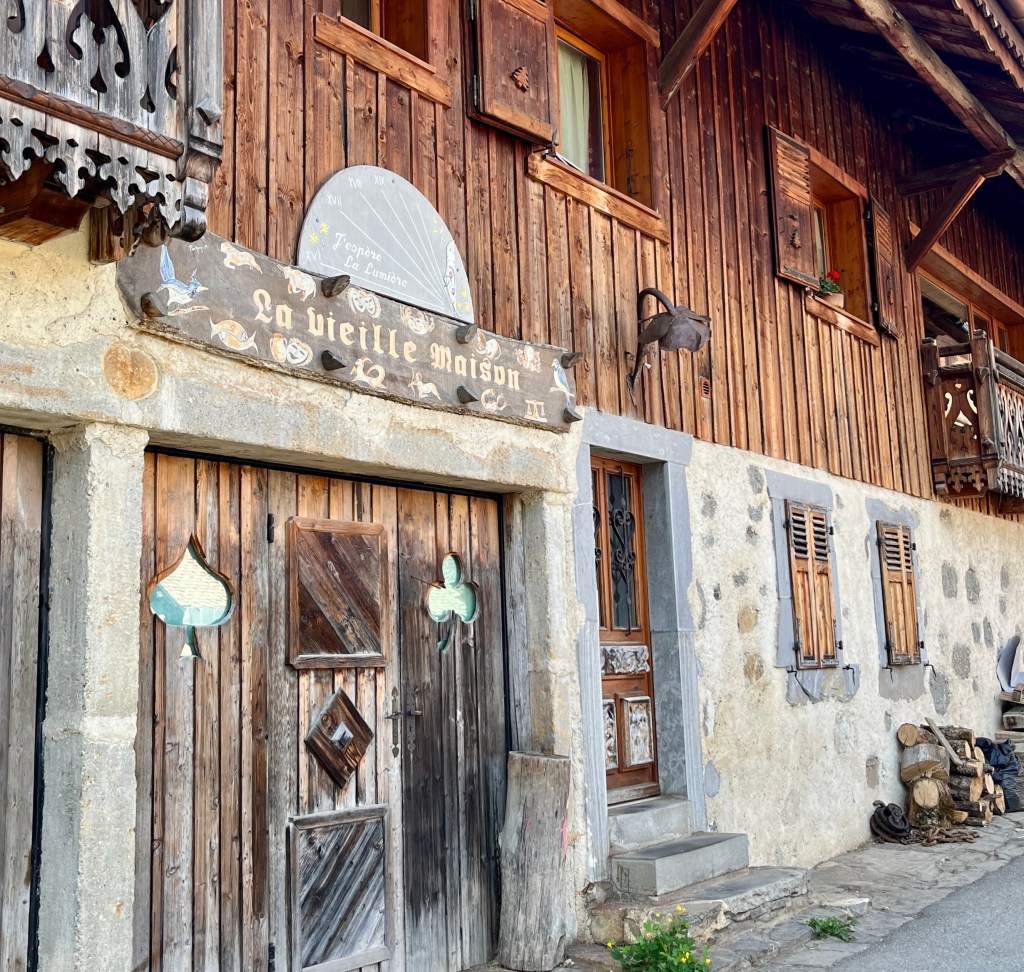
RUSTIC ALPINE SUNDIAL . FRENCH ALPS

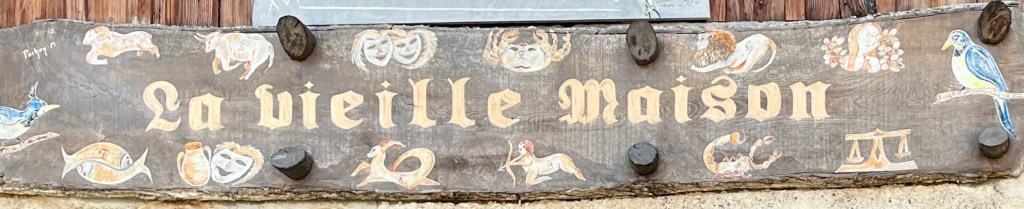
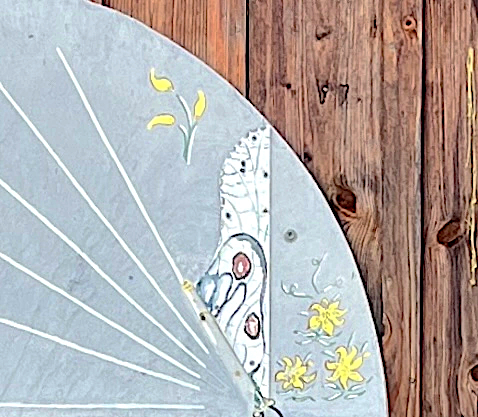
A chance find in a tiny hamlet on the French / Italian border: this rather lovely home-crafted sundial. In a simple unshowy way, it is designed with care and lends enchantment to its overall purpose. I enjoyed seeing the passage of (part of) the day being marked by this dial.

The inclusion of notably cheerful signs of the Zodiac adds to the charm.

The pretty gnomon has an ingenious simplicity. Altogether a delightful find.

GSS Category: Vertical Dial; Rustic Dial; Semi-circle dial; Sundial France

All photos: Keith Salvesen

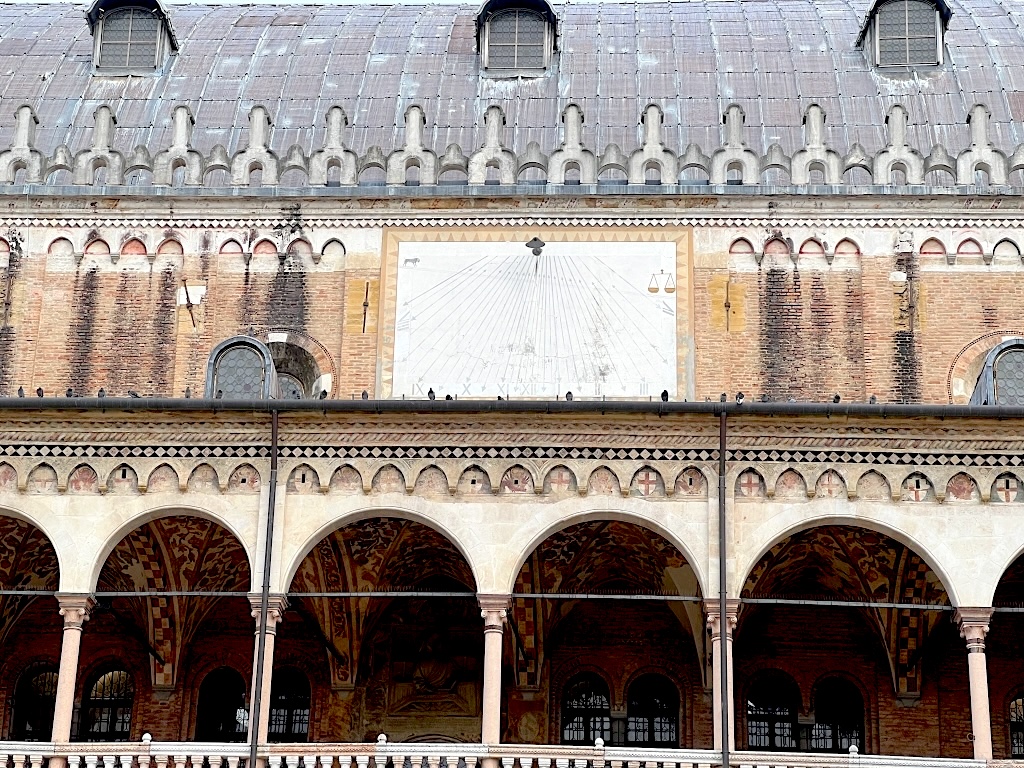
PADUA . PALAZZO DELLA RAGIONE . SPECTACULAR SUNDIAL

Padua . Palazzo della Ragione . Sundial . John Renner

PADUA . PALAZZO DELLA RAGIONE . SUNDIAL

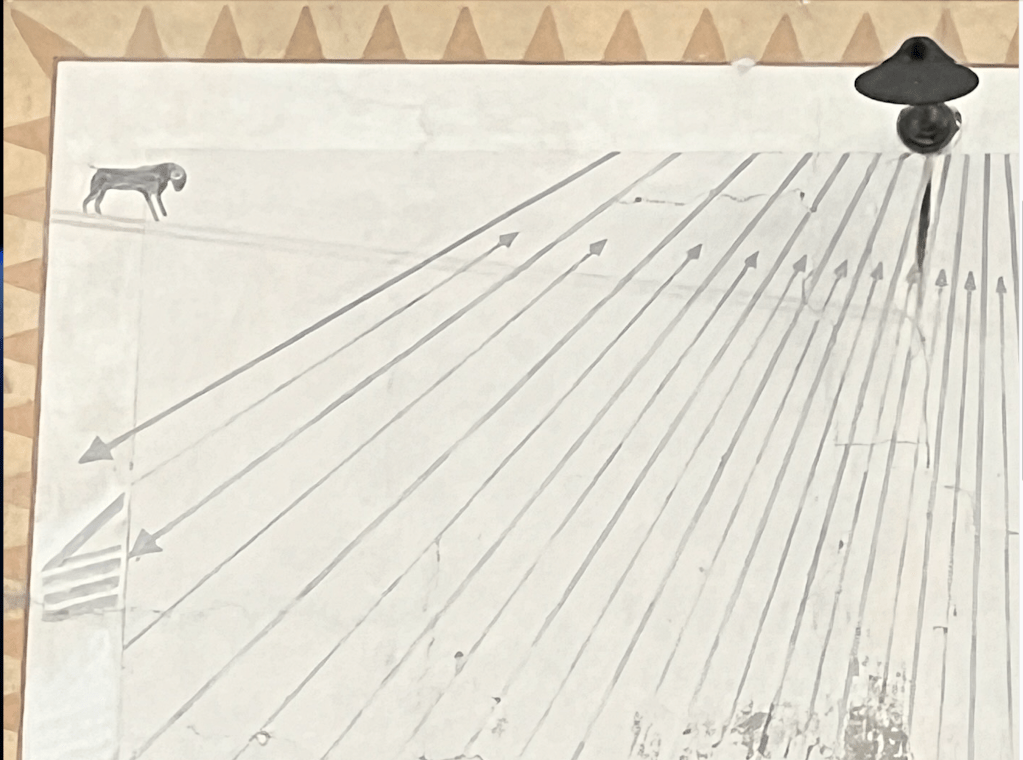
A confident and assertive sundial to match the glory and prosperity of the city. The lines divide the hours from VIII to IV into quarters. Each has an arrowhead, with (?unusually) reversal of the ‘minor quarter’ arrows.

GNOMON

At first glance you may wonder why there’s just a dark splodge where one might hope to see a gnomon. It is the gnomon. In researching the dial I came across a really helpful photo by Richard Mortel* that reveals the gnomon to be the ‘pin-hole’ type, the effectiveness of which is clearly shown.

Padua . Palazzo della Ragione . Sundial Pinhole . Richard Mortel

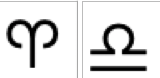
The upper half of the dial has an angled line across the whole dial, leading from an indeterminate animal (in fact a sheep) to a set of scales: Aries and Libra in opposition (Note: this Zodiacal conjunction should not be investigated, for fear of unwanted advice about who you should be dating).

There is an additional aspect to this dial that I am currently researching. First of all I have to clear use permission, but I hope to add to write again soon about this splendid dial. The clue is ‘Meridian’.

Credits: John Renner for his excellent photos of this fantastic sundial taken recently; *Richard Mortel for his clear illustrative photo of the gnomon taken a while back (with apologies if I have wrongly taken it as CC / OS)

OMONVILLE-la-PETITE . COTENTIN . SAINT-MARTIN – Vertical Dial

SAINT MARTIN . OMANVILLE-la-PETIT . CONTENTIN

An attractive vertical dial, accurately angled, with Arabic numerals. Semi-circle perimeter and round top gnomon stay. There’s a slight jeux d’ésprit feel to the gnomon. There was no sun on the dial when we visited: I wondered how well it would work in practice.

GSS Category: Vertical Dial; Church Sundial France; Ornamental Gnomon

All photos: Keith Salvesen

AUDERVILLE . MANCHE . ST GILLES – Vertical Dial

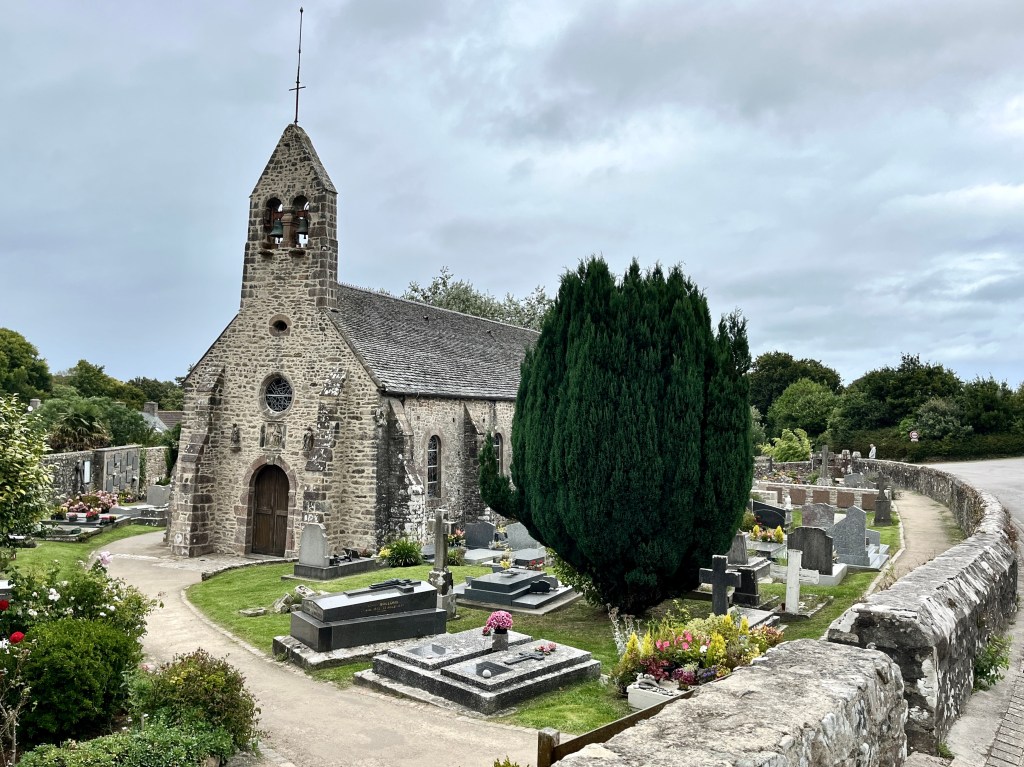
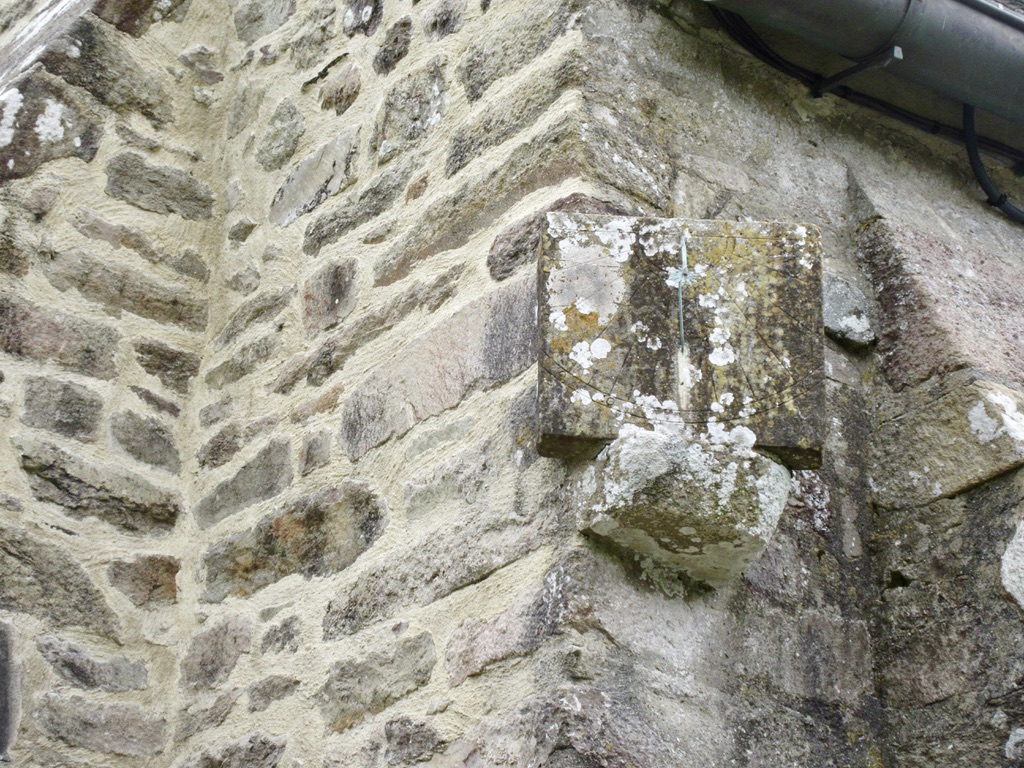
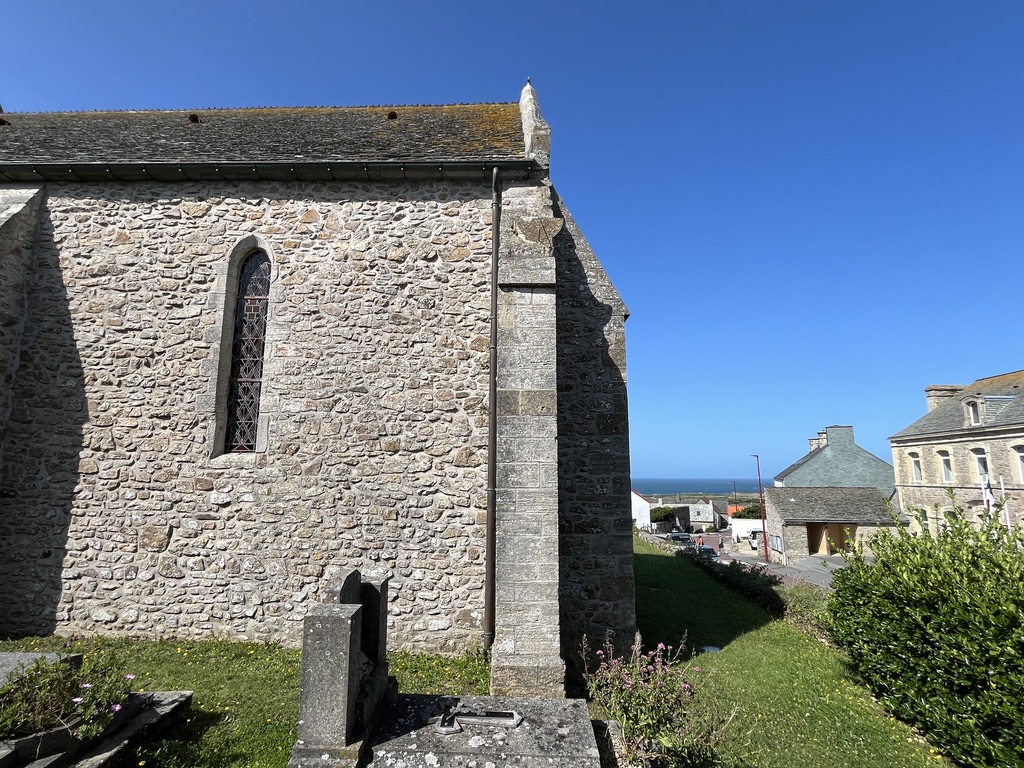
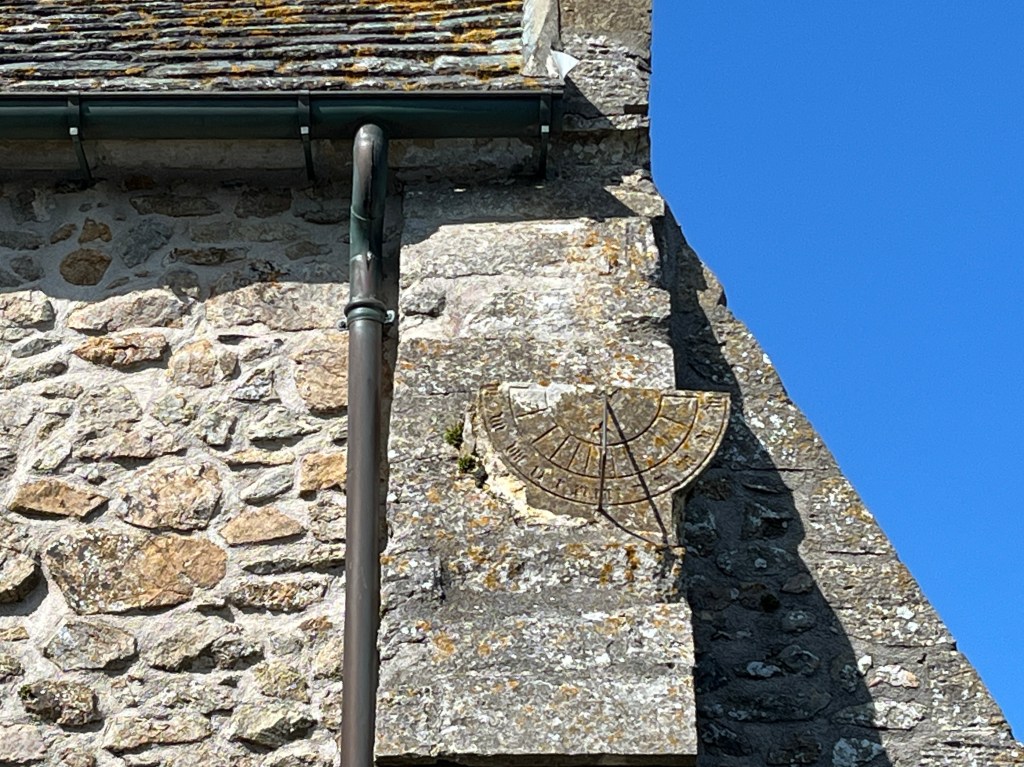
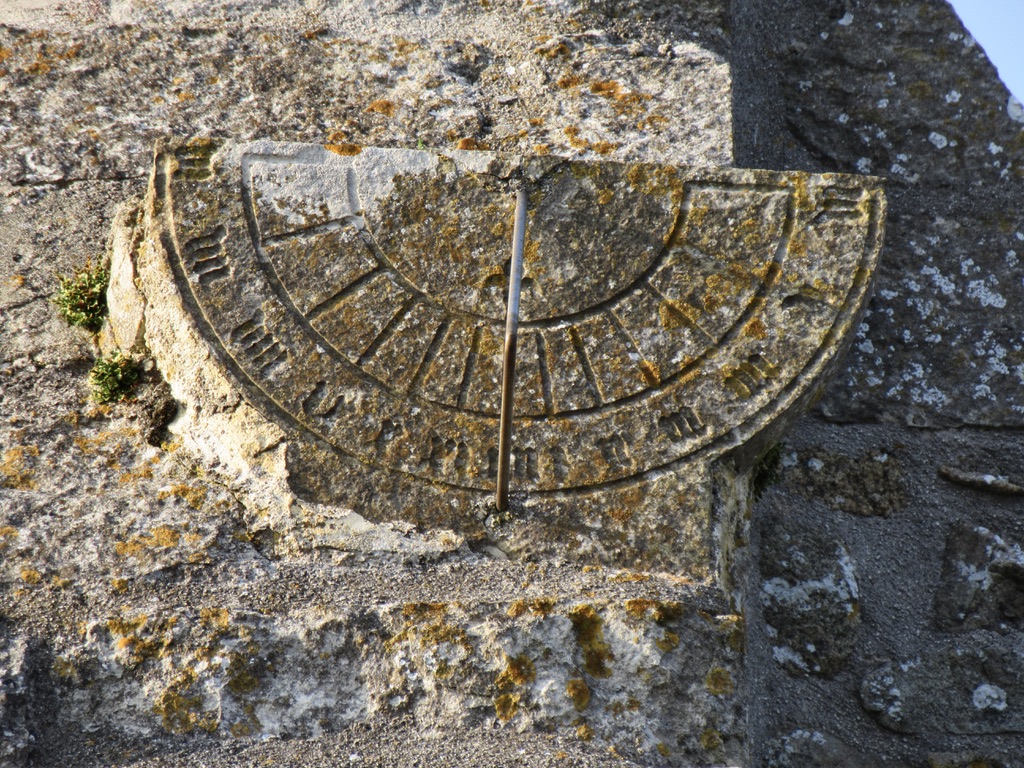
The church of St Gilles at Auderville is one of several churches in the region with similar dials located high up on one end, in this case the E buttress.
The dial is both canted and also slightly angled downwards, enough to notice from ground level. The Roman numerals are Blackletter, as can be found on other churches in the area. I haven’t come across the ‘horseshoe’ 9 before. The modern angled gnomon is plain and functional.

GSS Category: Vertical Dial Normandy France

All photos: Keith Salvesen

COGOLIN . VAR . FRANCE – Vertical Dials

booking.com

L’ÉGLISE SAINT-SAUVEUR et SAINT ÉTIENNE . COGOLIN . VAR

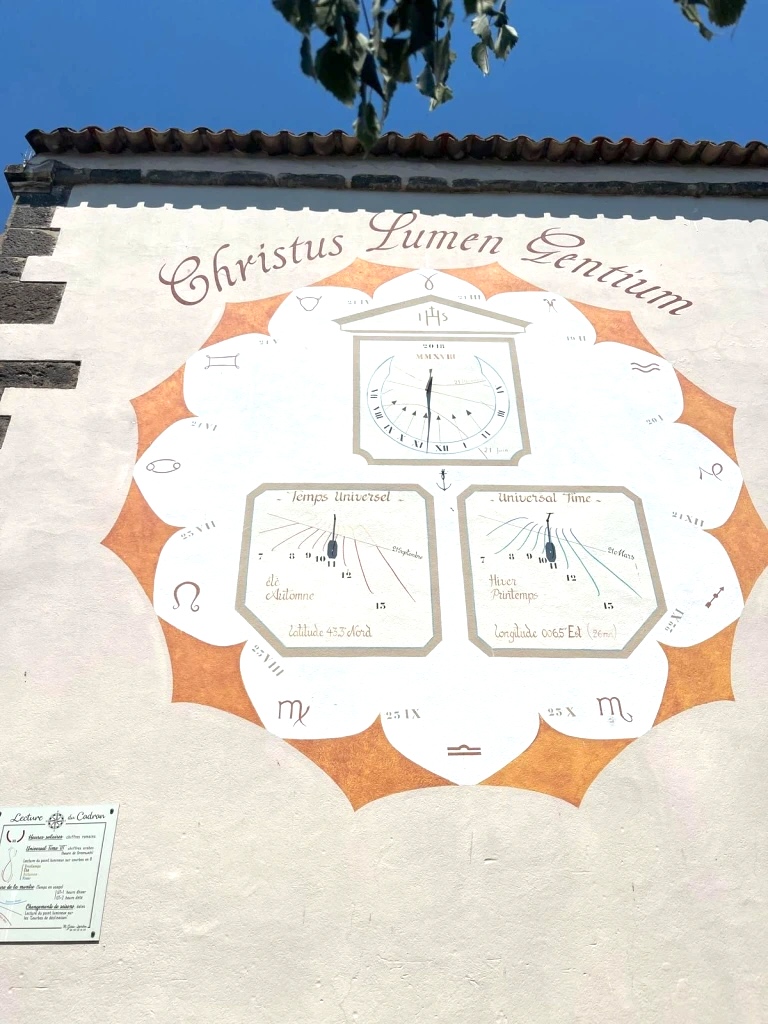
COGOLIN is an attractive and relatively small town with a harbour close to Port Grimaud. Both towns are a short jet-ski ride from St Tropez. The church, with its double dedication, may date to C11.

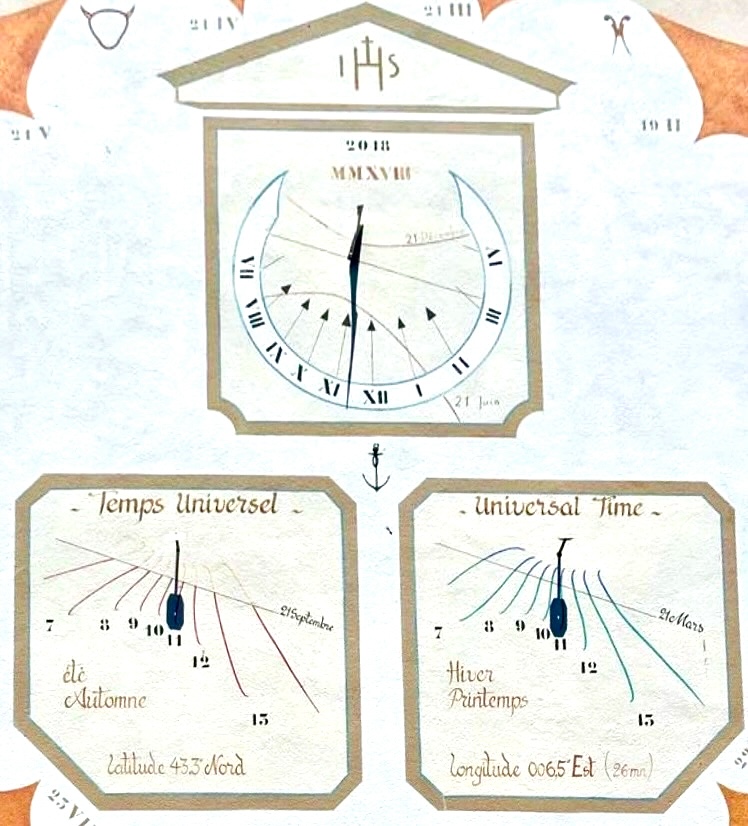
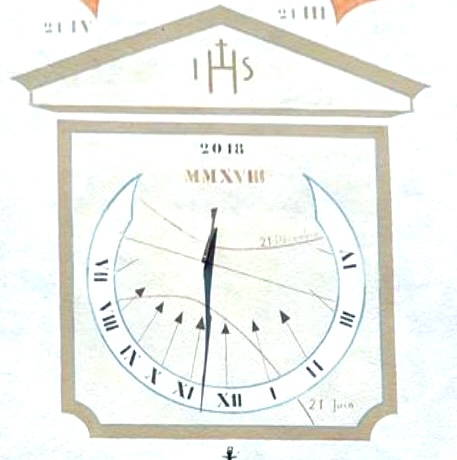
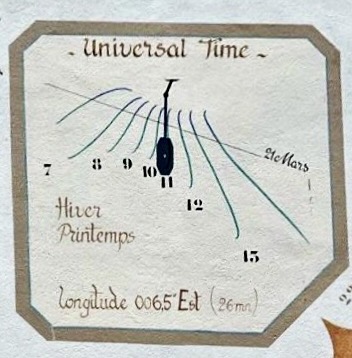
This intriguing dial was created by M. Garde-Lebreton in 2018. It manages to combine accuracy, legibility, and charm. An excellent bonus is the very careful explanation of the dial on a separate plate. An object lesson of modern dial design and analysis.

DIAL 2

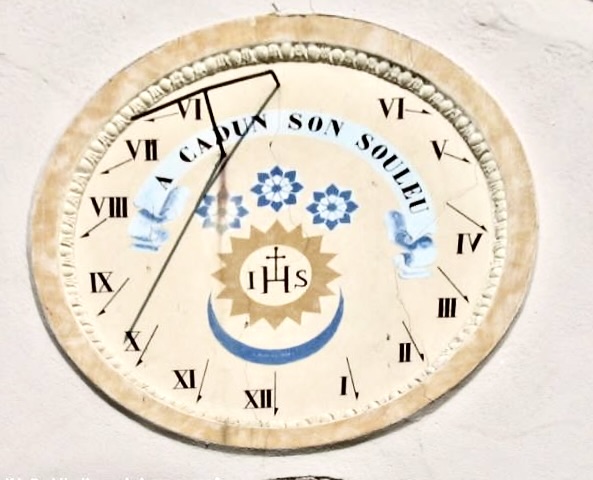
St-Sauveur has a second attractive dial, another good example of a modern dial that combines its purpose with cheerful style. Engraved and painted on cement.

Props: Michel Lalos

GSS Category: Vertical Dial; Dial on Church Wall; Modern Dial; France Sundial

CREDITS: Charly Salvesen with many thanks; R Collins; booking.com; Michel Lalos

BELCHALWELL . ST ALDHELM . Vertical Dial

ST ANDREW . BELCHALWELL . DORSET

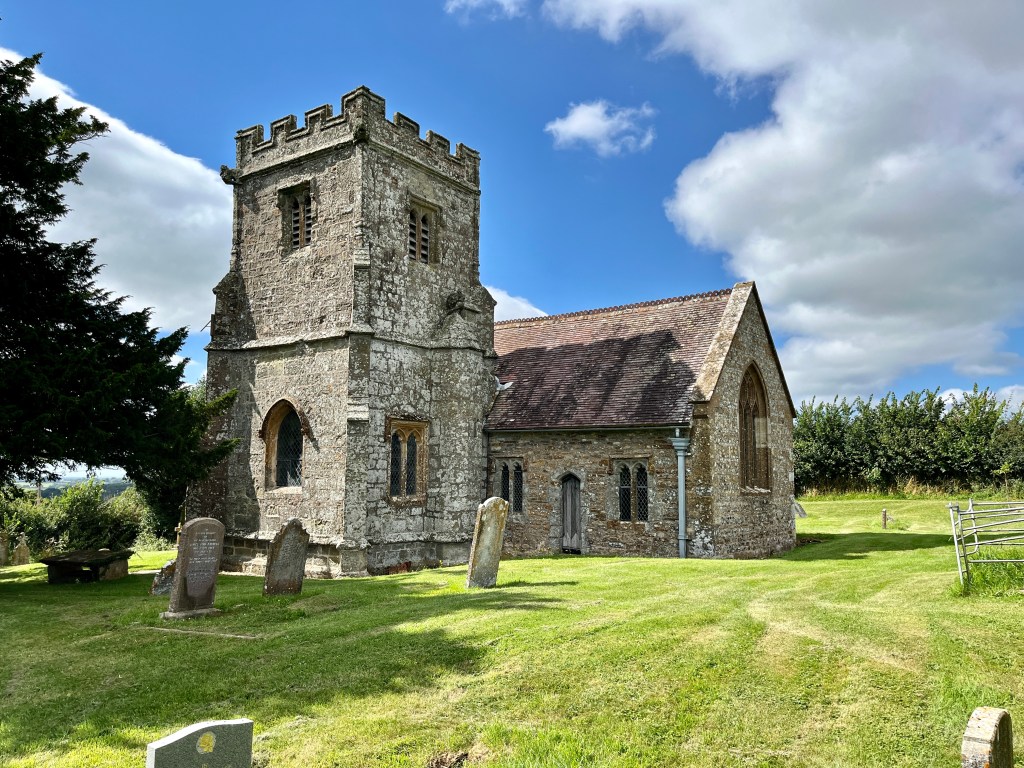
Listed II* ❖ South door, part of S nave wall c.1190; C15 nave, south tower, porch, part of chancel; C18 works and restorations. A lonesome church in the heart of the Blackmore Vale. If unfamiliar with the area use a map or satnav. You’ll find a fascinating little church. 4m S of Sturminster Newton. 50.8873 / -2.2964 / ST792098

DIAL

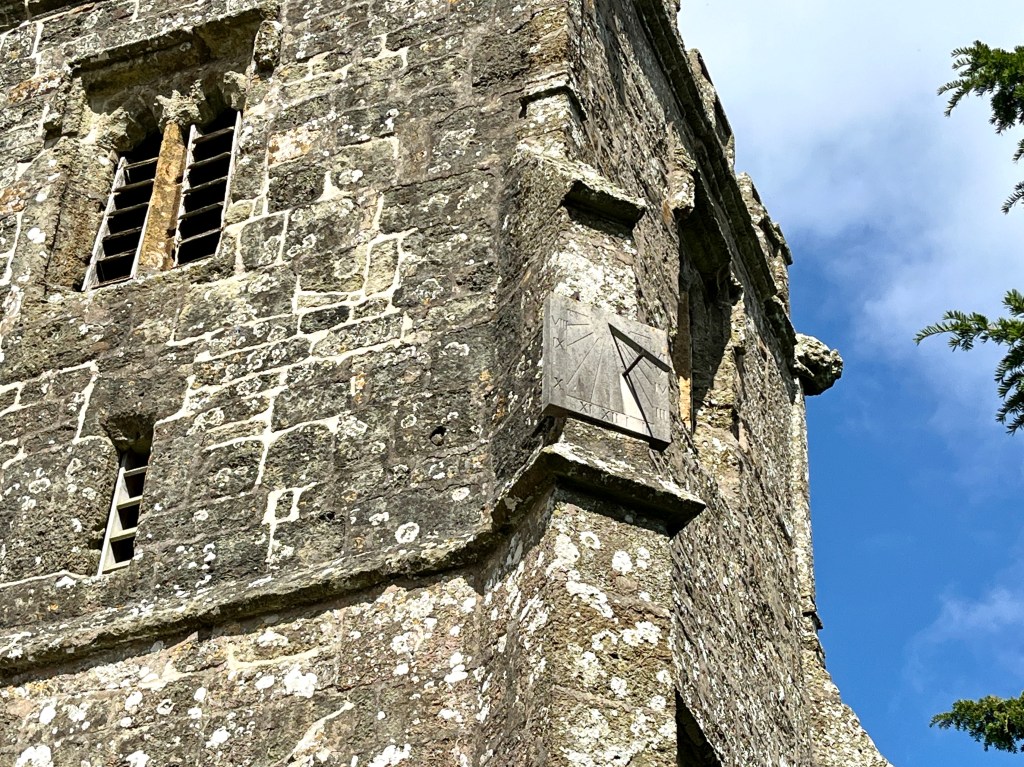
A conventional dial, simple and a bit incongruous high up on the SW buttress of the tower. It is in fact a locally-made replica of a dial which had existed in the same position on the church since the late 18th or early 19th century (BSS). It is very slightly canted on the angled buttress, with the lines cut from VIII to VI. Including the horizontal line, this is (unusually?) a VII – VII dial.

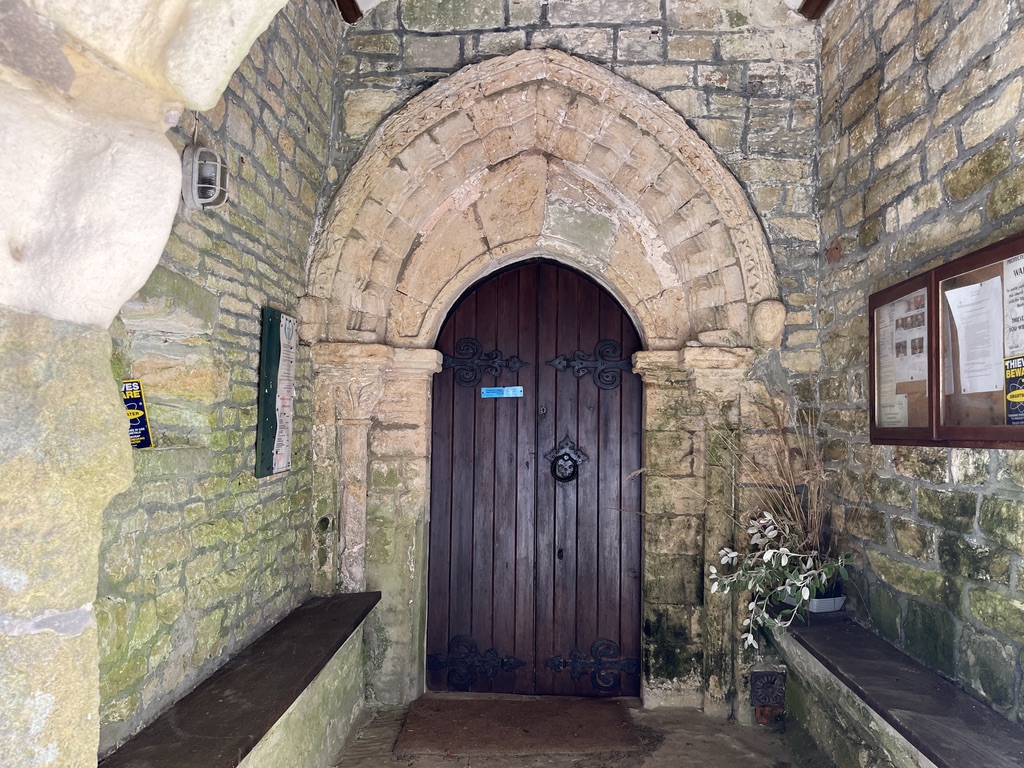
Late Norman porch and Painted arch
GSS Category: Vertical Dial; Canted dial; Replaced old dial; Replica Vertical Dial

All photos: Keith Salvesen