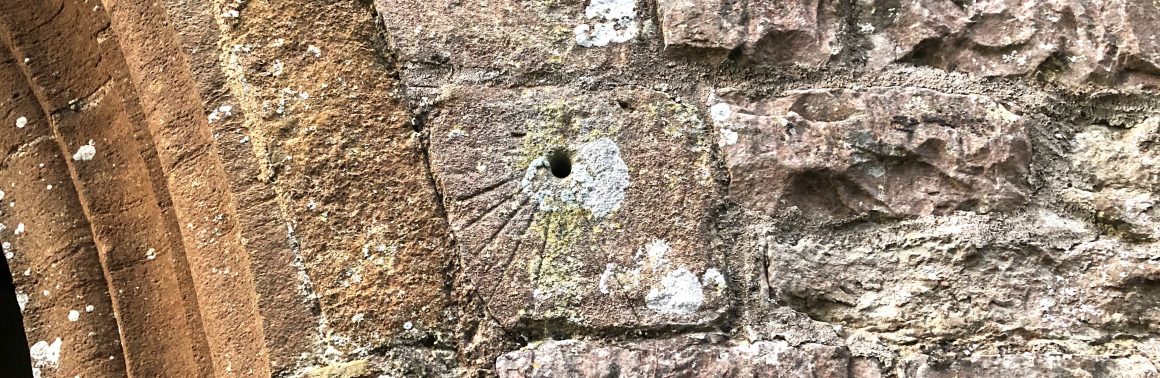
SHERE . SURREY . ST JAMES – Multiple Scratch Dials

ST JAMES . SHERE . SURREY

GRADE I ❖ C12 Norman tower and north nave wall; C13 south aisle and chapel; C14 enlargement, chancel; restorations 1895 by S. Weatherley. Fine C13 font. Most unusual C14 Anchorite cell, definitely in use. Excellent graffiti, in particular several shields. Approved by PEV. Midway between Guildford and Dorking. 51.2191 /  -0.463 / TQ074477

DIALS

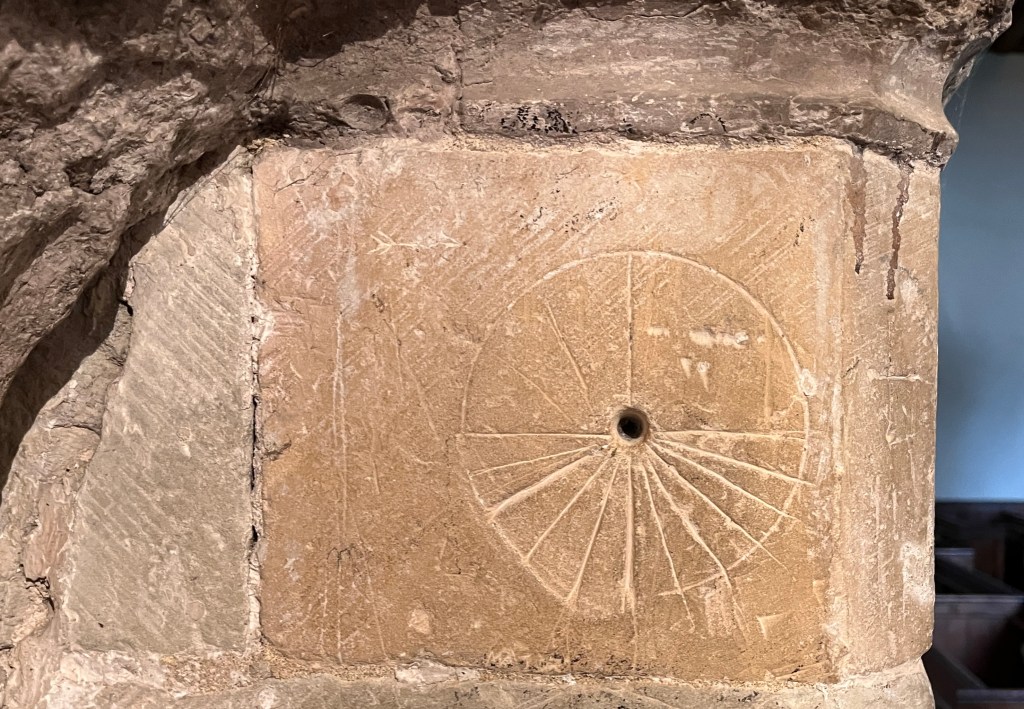
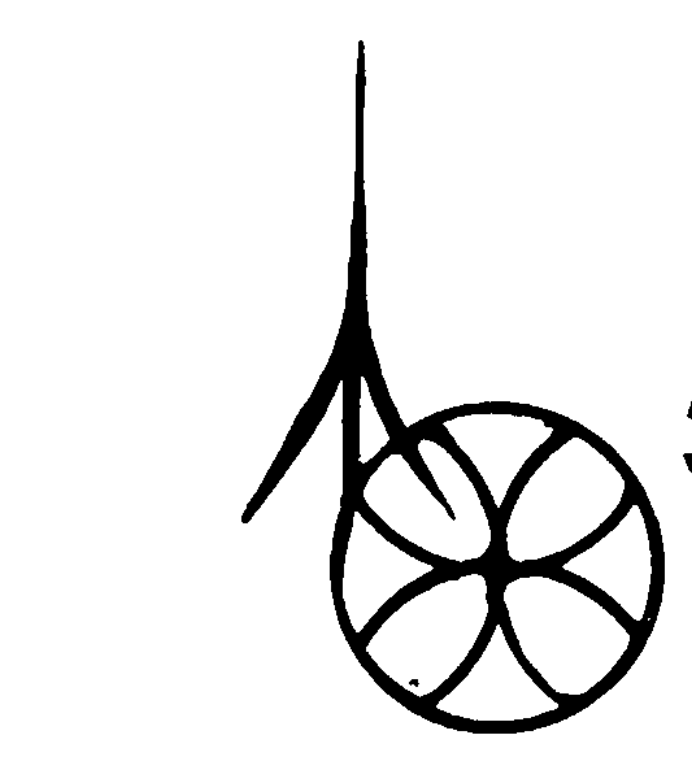
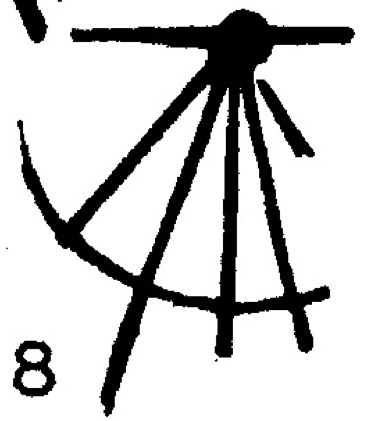
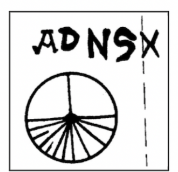
As with many multiple scratch dial churches, there are differing estimates of the number of dials, in this case of between 7 and 11. Sources vary, as do the eras when researches were carried out: Victoria County History Surrey (1911); D Renn 1986 (detailed survey); BSS 2000 (images – Lester); 2008 (drawings – Wood). I have decided to lead with 8 dials that are (I think) indisputably the real thing. Each is headed by the relevant BSS diagram and all are close to the pre-porch doorway. The close-up photos say as much about each dial than I could usefully describe.

DIAL 1

DIAL 2

DIAL 3
DIAL 4
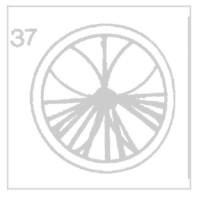
Unusually, this dial has 3 circles, and incorporates decorative compass work to form 2 petals.

DIAL 5

DIAL 6

DIAL 7

DIAL 8

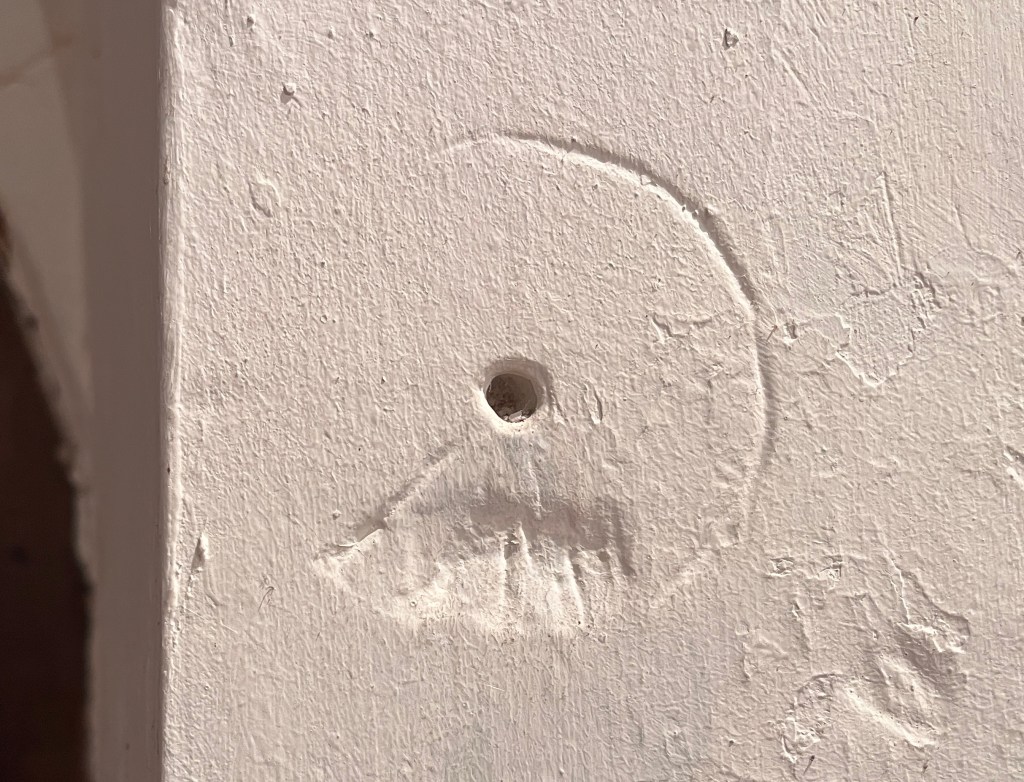
A simple deeply-scored dial that cuts into a quatrefoil ‘4-leaf cover’ compass design, presumably apotropaic. The church has a great many protection marks of all kinds, together with several shields. I may feature a selection in due course.

DIALOGRAM

The 8 blue-ringed designs below are all dials. The arrowed 9th, LHS, is debatable – see below The arrows RHS indicate (1) probably one of many crosses; and (2) a mystery, see below.

DIAL 9?

Renn’s count of 10 dials includes this ‘lamda’ incision. When I photographed dial 7, only the top of the scar was included. I am a confirmed dial optimist, but it didn’t occur to me to photograph it separately / include it as a dial..

DIAL 10?

Perplexing. An afternoon dial. Noted in Renn’s survey, on which BSS record is based. Described as Inside church (inside S porch). E face of W jamb. Behind door frame. Lines 4. I didn’t find it. Unlike the impressive array of forward- facing dials in the porch, this one must be small, cut on an angle as Renn indicates, and of little use for marking the passage of the day.

ANNOTATED DRAWING

The green circles mark the uncertainties. There is also a suggestion that there were once 2 other dials, now extant (S chancel wall, E pilaster buttress).

REFERENCES

Victoria County History, Surrey, 3 (1911), 120

Renn DF: Scratch Dials in Surrey, Surrey Archaeological Collections, vol 77, 1986

The British Sundial Society

WEST CLANDON . SURREY . ST PETER & ST PAUL – 4 Unusual Scratch Dials

St Peter & St Paul . West Clandon . Surrey

GRADE II* † Saxon origins, mentioned DB, no remnants remain. Nave dated c1180; rebuilding ± 1200, chancel added; tower added then or soon after. Mid-Victorian restorations; shingled spire rebuilt 1913. Much of interest within the church – see HERE for highlights. 6m NE of Guildford. 51.2509 /  -0.5052 / TQ044512

DIALS

There are 4 dials, each of significance. On the S wall of the chancel, there is a wonderful dial framed in ashlar stone as if to emphasise its qualities. Inside the church – not just inside the porch – are 3 dials cut on the same stone. Interior dials are almost inevitably the result of relocation and are scarce enough (cf THORNFORD); 3 together must be very rare.

DIAL 1

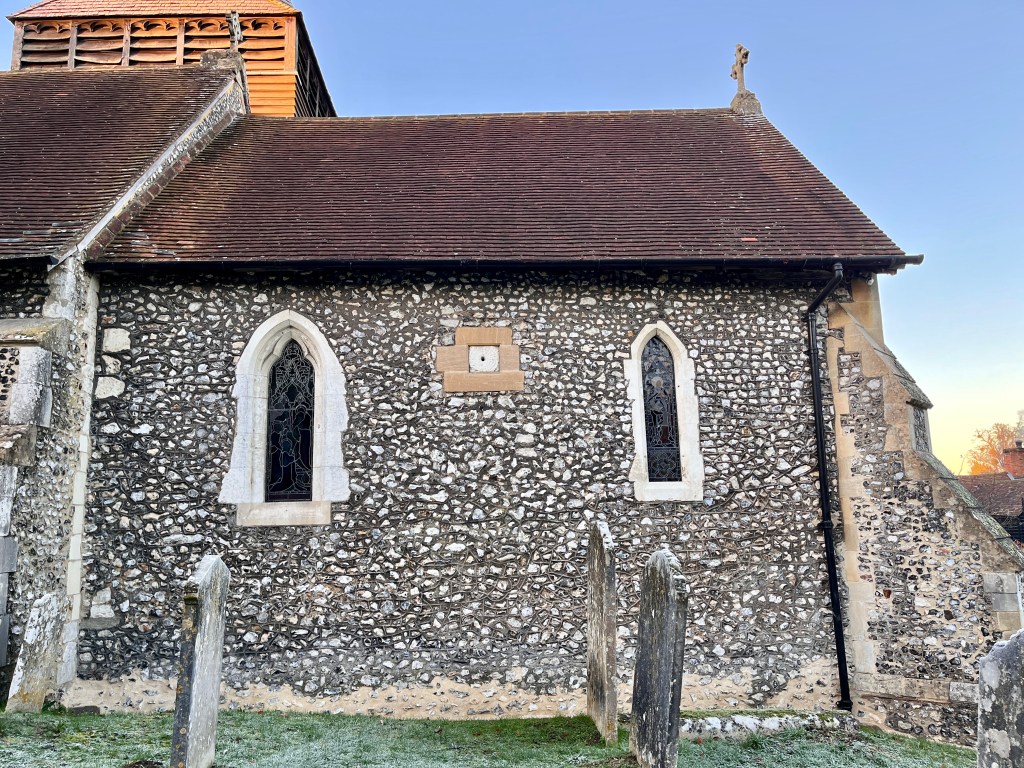
POSITION Relocated from a buttress to the S wall of the chancel, enclosed by a surround of 4 stones set into the local flint and described elsewhere as …marred by the addition of an inappropriate stone frame (an arguable view?). BSS notes a possible inversion based on variations in the size of the dots; but that would nullify the point of the emphatic noon line design. Unless the 4 pocks were added later of course…

DATE The dial seems so sophisticated in design and execution that I had thought it ±C15. However BHO records a stone on which is cut an early circular sundial probably of the 12th century; it has three circles and is divided in twenty-four spaces by radiating lines; four dots mark the hour of noon and a small cross that of six p.m. A Surrey survey records Dated c 1180 by Johnston (1900, 74), SyAC, 21 (1908), 83-100. This date certainly corresponds to the construction of the nave / the additions soon after. So this is a very early dial probably dating from the construction of the church in its present form and clearly merits its prominent location and ashlar protection.

DEREK RENN in his research on the dials of Surrey considered this dial to be the most elaborate in the county, describing it as three concentric circles divided by 24 equidistant radii, having drilled holes at the intersections, as well as on the arms of an external cross and beside another line at right angles to the cross.

HOW THE DIAL WORKS AS A CALENDAR

DR also explains ingeniously how the dial might have worked: This would function best as an equatorial dial… mounted in the plane of the equator with its upright pointer parallel to the earth’s axis and not vertical, but even then little more than one-half of the dial would be necessary. A possible explanation is that the dial also functioned as a calendar: a peg was moved daily from hole to hole, the cross marking the point at which the peg progressed to the next circle. Another peg counted the number of complete circuits of the ‘board’ for the year on the four separate holes, with the odd days as well. In arithmetical terms: 24 x 3 x (4+1) – 360, +(4+1) = 365

DIALS 2 – 4

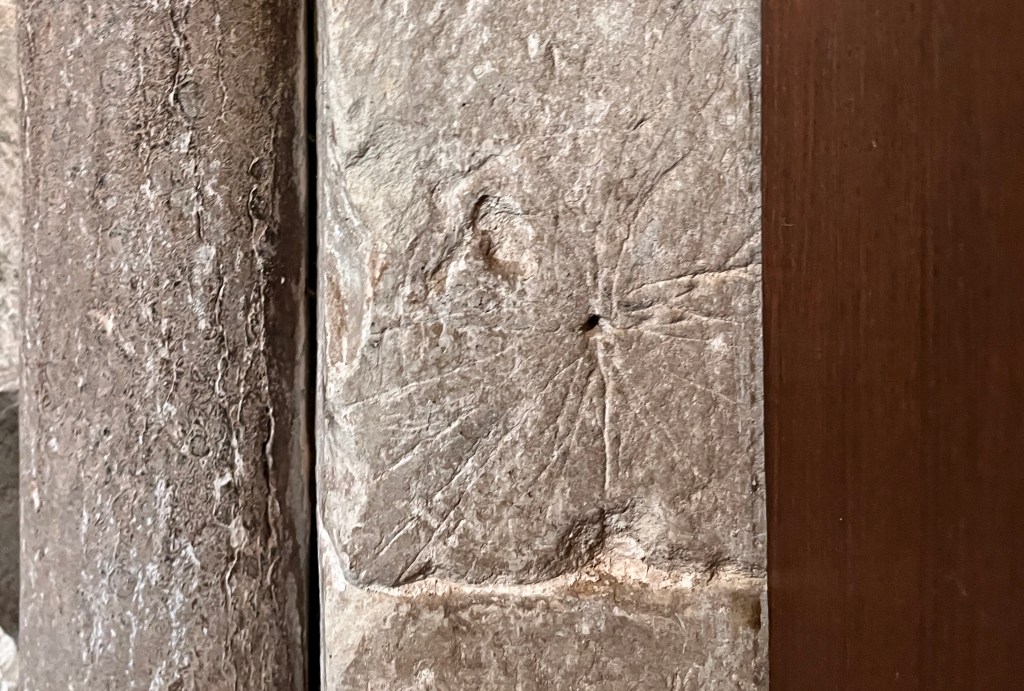
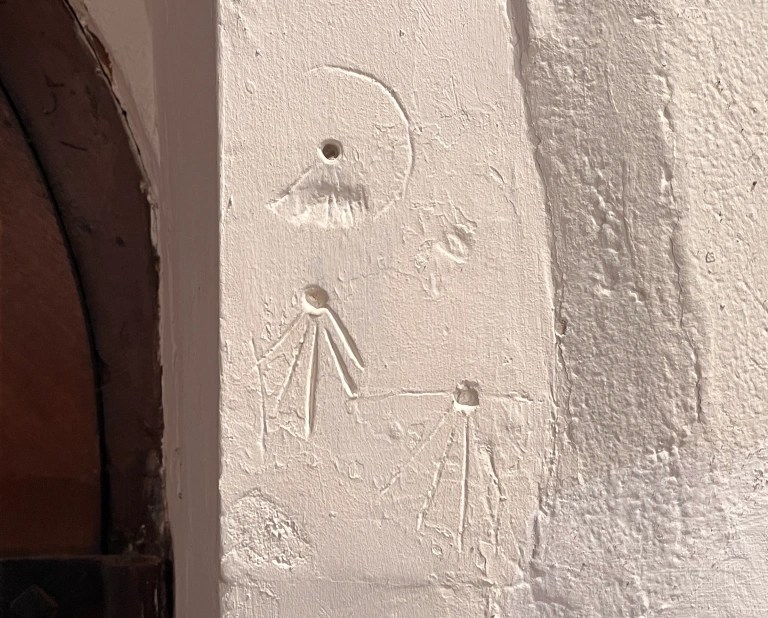
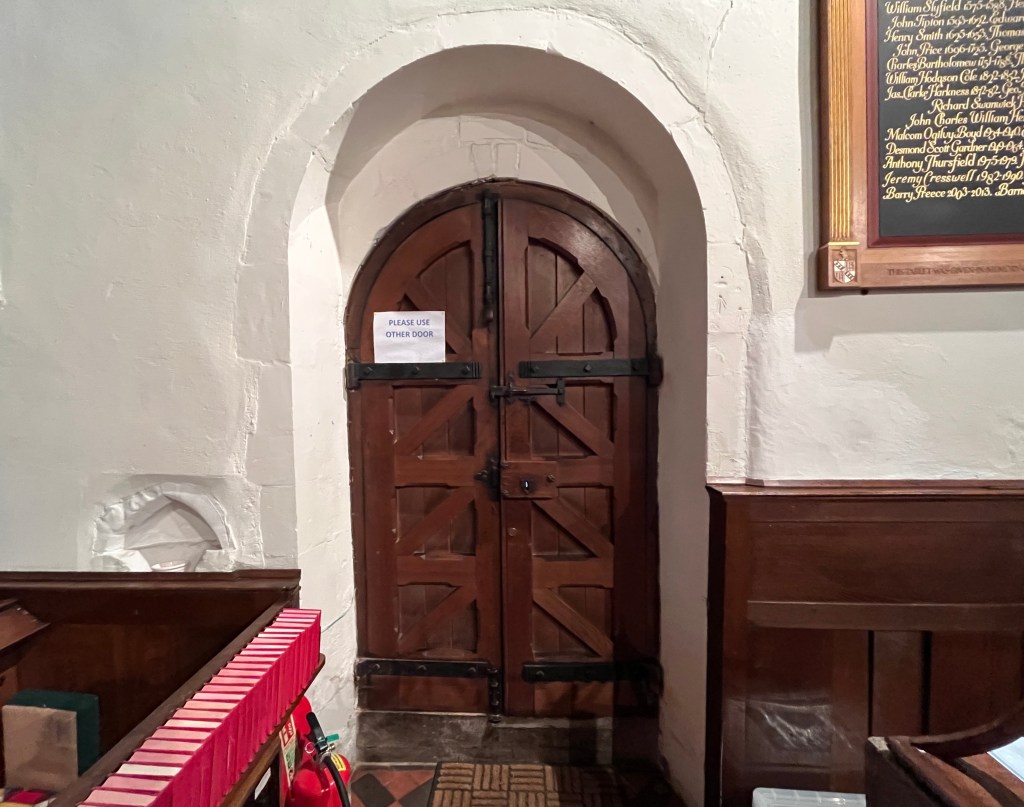
These 3 dials are closely grouped on a single stone on the north face of the west jamb of the south doorway. It would be interesting to know where they were originally located, and when / why they were moved to their present position with a purely decorative function.

DIAL 1 has 7 lines including the horizontals in a late a.m. to early p.m. formation. They are rather untidily incised and only 6 are clearly distinguishable. They are within a very faint perimeter curve, with 3 extending beyond it.

DIAL 2 has 5 lines radiating from a large (for its size) style hole. The lines are interestingly formed: 2 lightly cut a.m. lines; 2 deeper cut p.m. lines and extended noon line. The incisions of the latter 3 are unusually decorative, with one being slightly wedge-shaped. Overall, it seems clear that the afternoon was the most important time for daily religious purposes.

DIAL 3 is fully encircled with one clear line roughly corresponding to Tierce. The other 2 (3?) are faint and rudimentary in comparison. Another large style hole completes the design.

GSS Category: Scratch Dial; Multiple Dials; Early Dials

All photos: Keith Salvesen. Research material: usual resources BLB HE BHO &co; David Ross; Derek Renn