Corciano is an attractive small town 12km west of Perugia, walled and with much of its medieval origins still evident. In contrast, the Commune has commissioned interesting modern projects, for example a residential complex designed by Renzo Piano and inspired by Rubik’s cubes.
The town has initiated an ambitious project, financed by the municipality, to make an itinerary that combines culture, history, astronomy, landscape and science and can be used free of charge for everyone: citizens, schools and tourists.
BORGO del SOLE
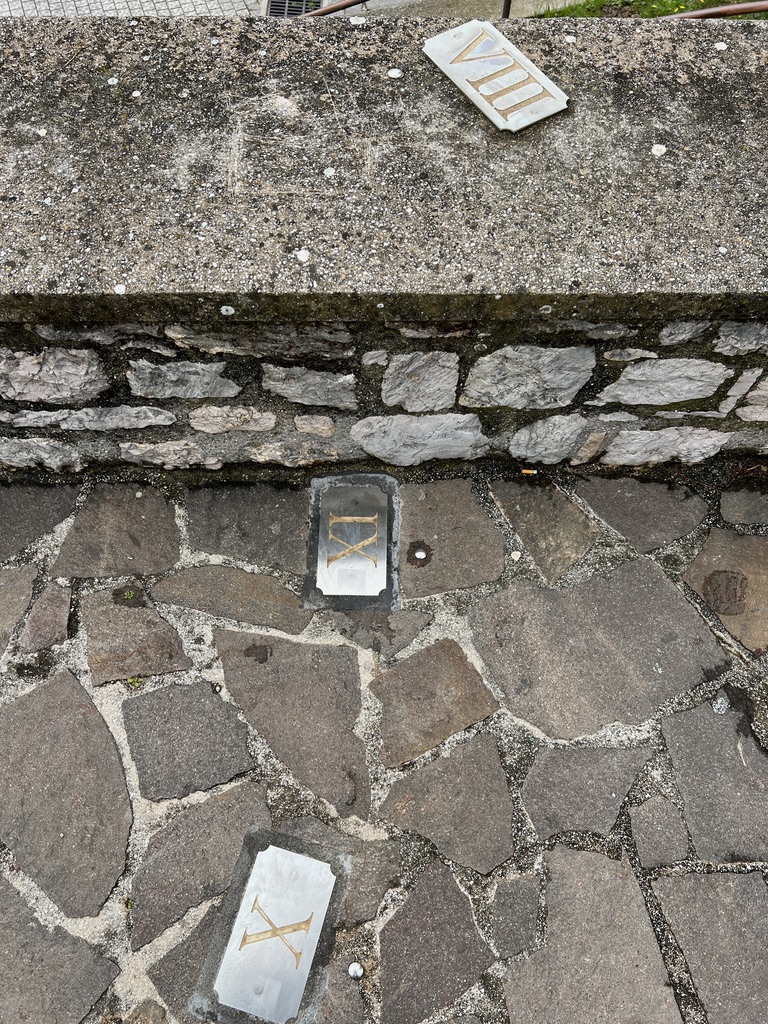
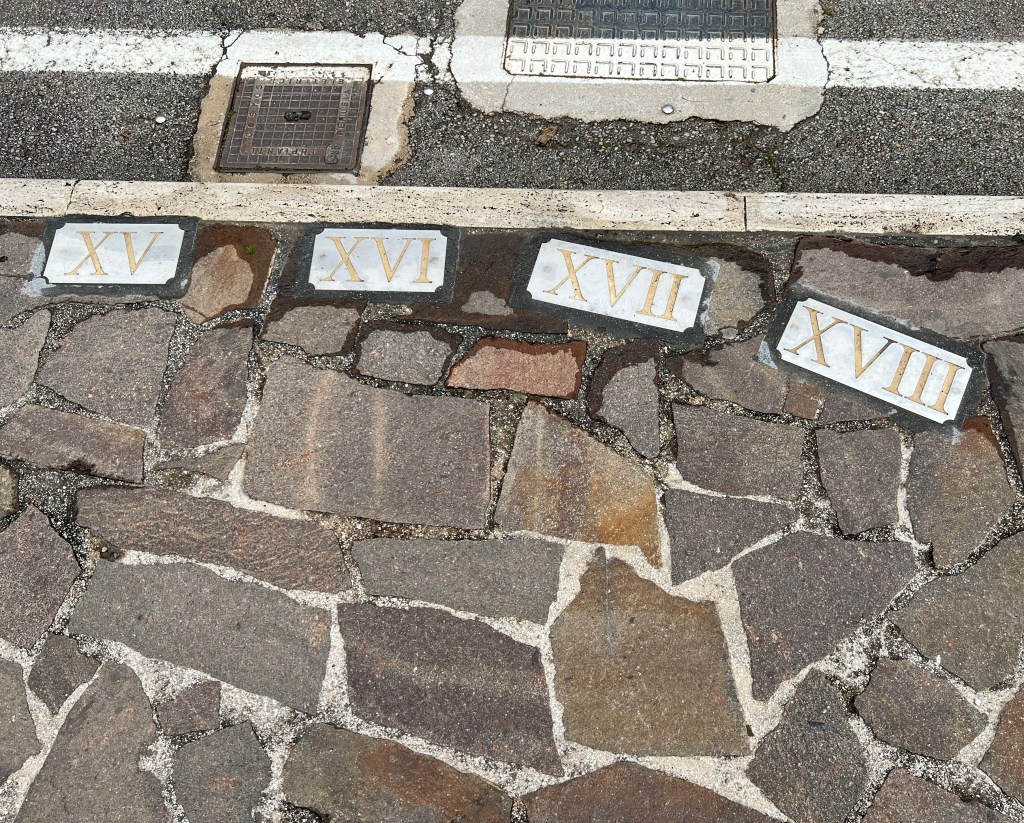
The Sundial Trail links 3 different kinds of sundial at sites carefully chosen for each type. These are an Armillary Sphere (Equatorial Dial); an Analemmatic Sundial; and a Ptolemaic Plinth in the Gardens. Other types of dial are planned.
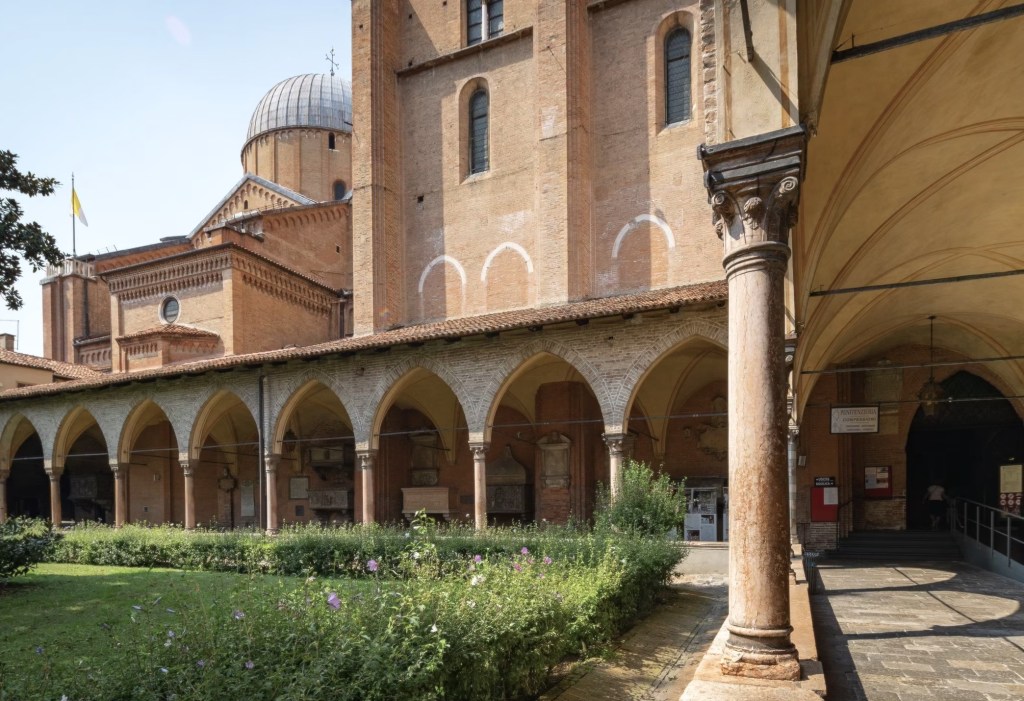
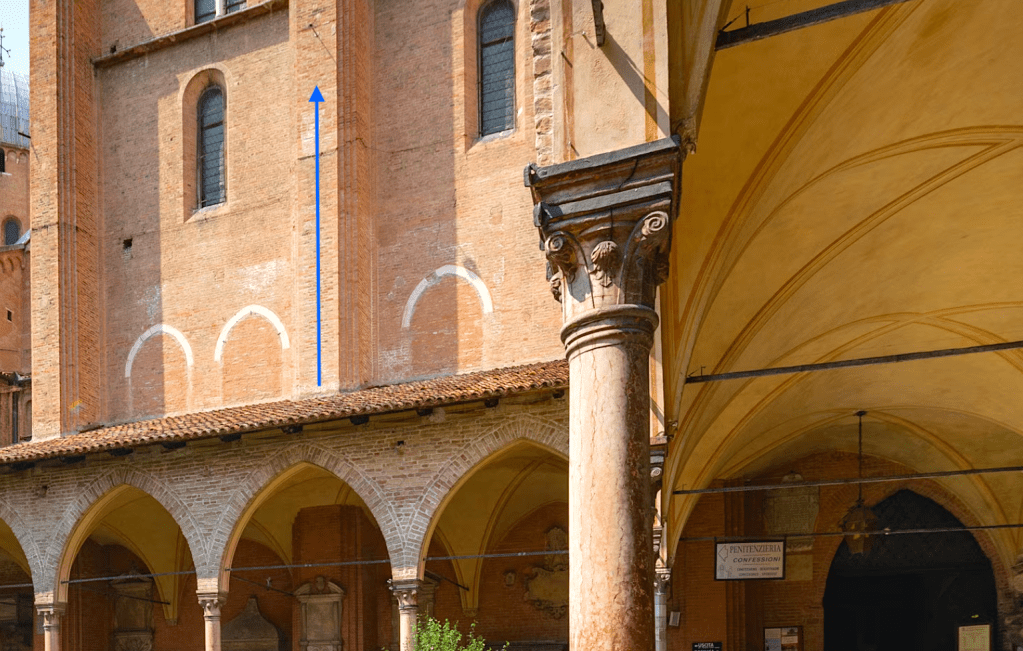
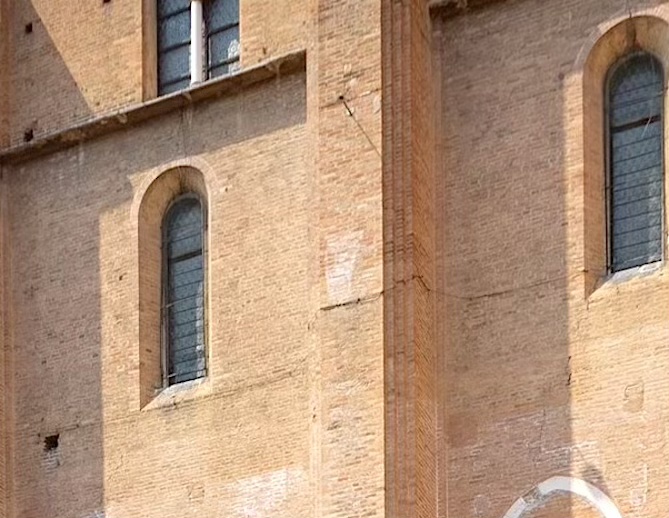
The oblong dial is located high up on the south side of the Basilica. Its modern design contrasts notably with its setting. I can imagine some debate over modern versus traditional styles. It was installed in 2020; a caption refers to renovation.
The dial’s height and size makes it very visible. John Renner, who took these photos, suggests convincingly that there must always have been a dial of some sort there, I’d have thought, to be visible to the friars from their cloister and help them say their hours on time. I have now managed to locate a photo taken from the cloister of an earlier dial with a much simpler day-marker. Probably it replaced an even earlier one.
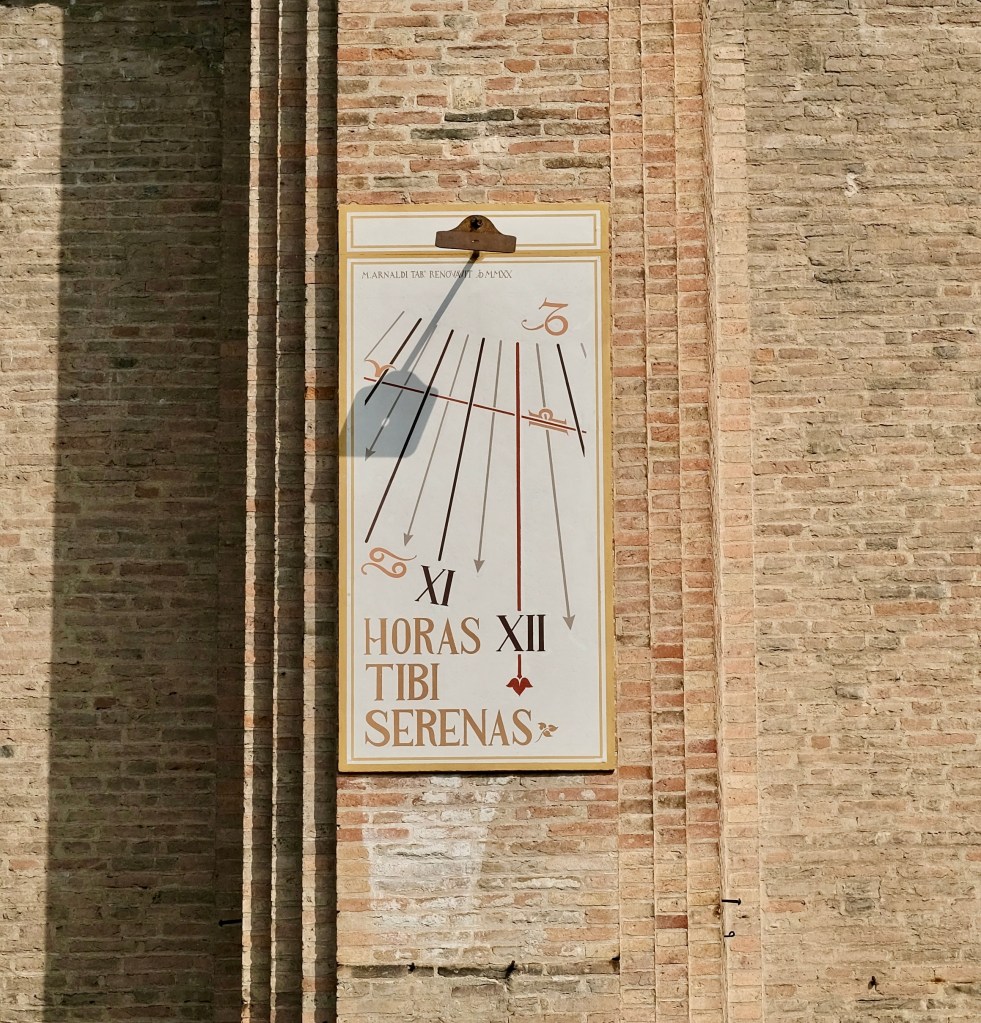
The details of the new dial include 4 signs of the Zodiac; 2 midday roman numerals; 1/2 hours marked with pale arrowed lines; and a fairly traditional motto. The most interesting feature is the gnomon, which is tilted for accuracy and looks adjustable. As the photos clearly show, the sun’s rays are focused through a small hole onto the dial face – here, at exactly 9.30 am.
See HERE for the Scaphe Dial in the Padua Botanical Gardens (one of 3 dials there)
Basilica of St Anthony . Padua . Wiki
GSS Category: Modern Dial; Vertical Dial; Dials in Italy
All photos: John Renner, with thanks as always; Expedia for the old dial
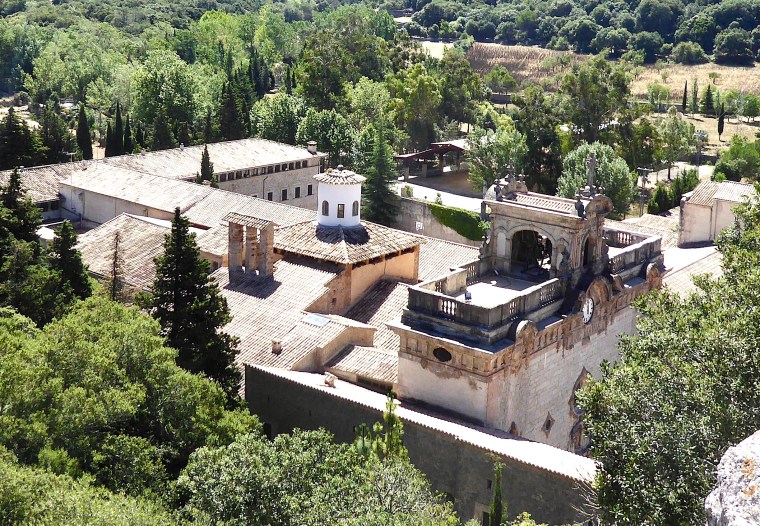
The secluded Monastery of Lluc is situated near Escorca in the Tramuntana mountains of Mallorca. It dates from the c13, and is famous for its Black Madonna, the discovery of which is said to have led to the monastery’s foundation . It is a place of pilgrimage. The location is remote and peaceful, though inevitably the monastery has become an essential stop on the tourist and coach party trail. We returned there recently, not having visited Mallorca for more than 20 years. The buildings were much as we remembered, but the parking and visitor arrangements were more regimented and complex. Before, one just drove down the narrow road from the main mountain road and parked in the forecourt area close to the buildings. Now, everything is (unsurprisingly) geared to a daily mass influx of people and their needs for sustenance and souvenirs. We were pleased to see that it is still possible to stay at Lluc in one of small rooms under a long covered walk where the monks once slept. You can even book a room for the night.
Lluc Monastery . Mallorca – Sundial
A short walk from the monastery, there is a path that leads up to a calvary and some great views. Along the way is an amazing multiple vertical sundial. It was designed by Rafael Soler, and carved in 1991. It displays with some style the evolution of sundials from medieval to modern. There are two historical dials, one solar dial, and two seasonal dials.
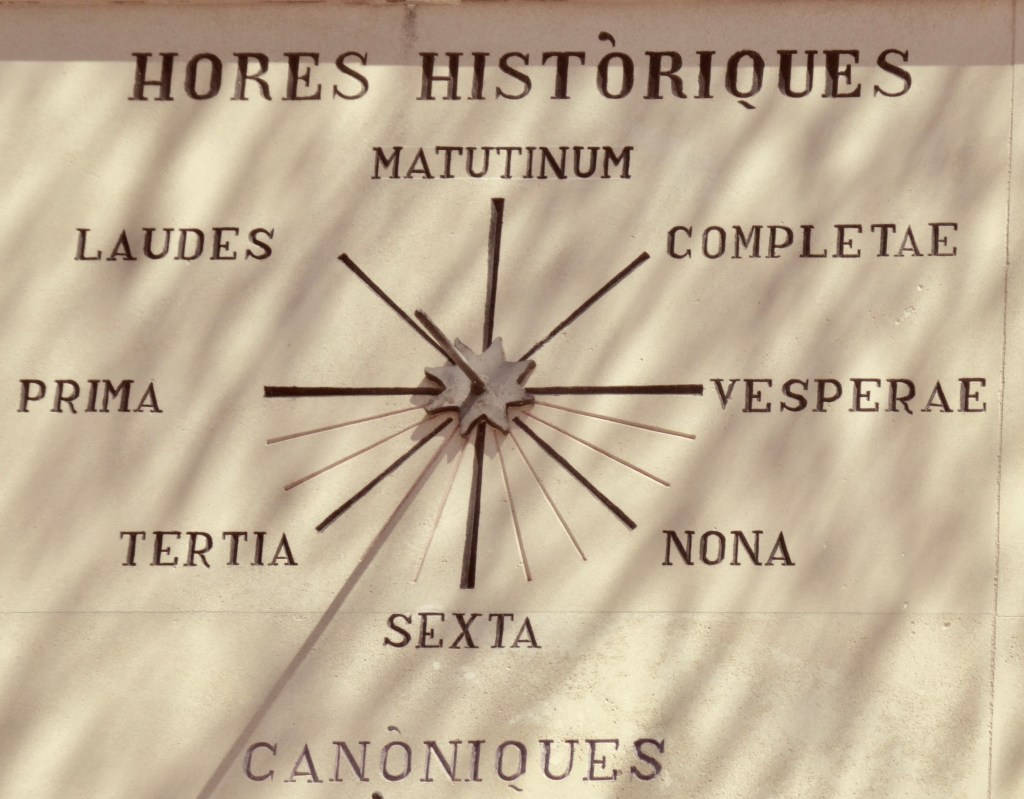
CANONICAL HOURS – LATINATE
This dial simply records the 3-hourly canonical divisions of the liturgical day (as with the early medieval mass / scratch dials), starting with midnight (top) and working counterclockwise round a central gnomon.
Lluc Monastery . Mallorca – Sundial (Canonical)
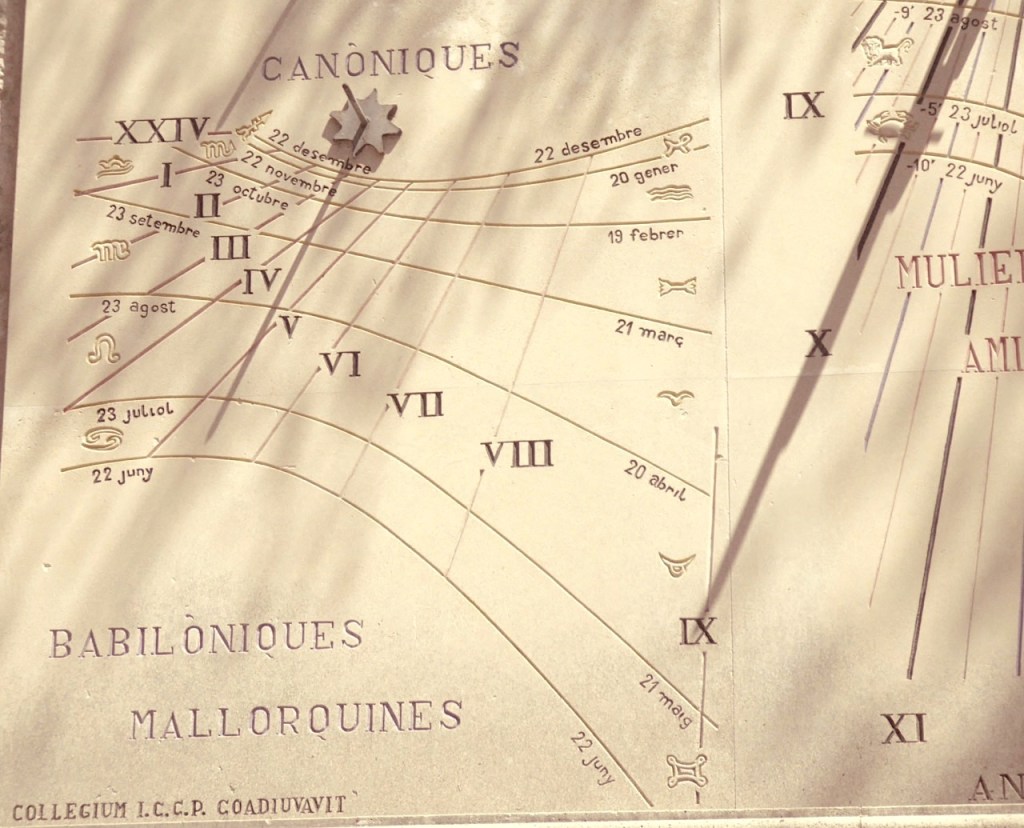
CANONICAL HOURS – BABYLONIAN / MALLORQUIN
A more complex dial, starting at noon shown as XXIV (I’m not clear why not XII) through to 21.00. The dial includes months and the signs of the Zodiac.
The centre dial shows true solar time. The polar gnomon (triangular) shows the hours, the pointer shows the date with the declination lines. The inscription MULIER AMICTER SOLE (Woman Clothed by the Sun) references an account in the Book of Revelations. You can find out more HERE
Lluc Monastery . Mallorca – Sundial
MEAN TIME DIAL (SUMMER /AUTUMN)
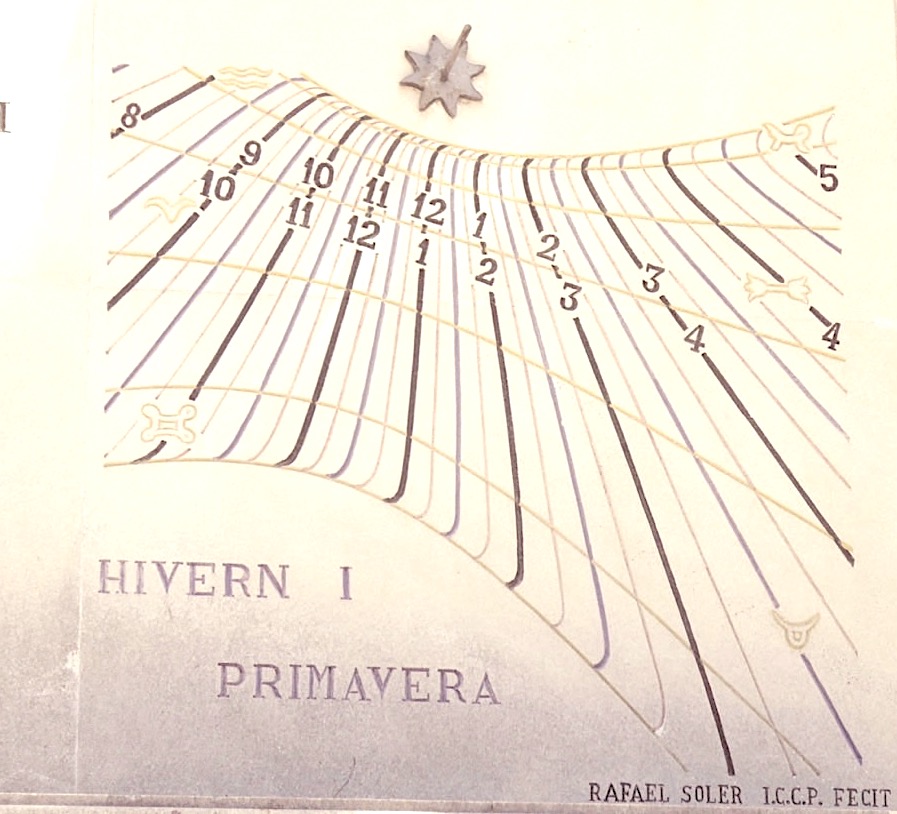
The two right-hand sundials are complementary and each covers two seasons. Presumably for a particular month, one dial will be reliable as to time and the ‘off-season’ one will not. The words are Catalan eg Hores Mitjanes = Mean Time; Estiu I Tardor = Summer and Autumn.
Lluc Monastery . Mallorca – Sundial
MEAN TIME DIAL (WINTER / SPRING)
Lluc Monastery . Mallorca – Sundial
BBS Record
The creation of these dials was obviously a labour of love and skill combined. There’s doubtless plenty more to be said about these sundials and the splendid ensemble but I decided not to get too technical – indeed, as an amateur I don’t understand enough to do so. The rather washed out appearance of the images was operator error – I had the camera on the wrong settings and didn’t realise until too late…
Lluc Monastery . Mallorca
GSS Category: canonical to modern multi-dial; sundial Lluc Mallorca
All photos: Keith Salvesen; snippet from BSS record
Original Credits: ‘Props to arby101ca and lumbricus, members of a geocaching & waymarking website called Groundspeak. They hiked to Lluc (respect!) and wrote informatively about these dials. I found relatively little elsewhere.









 GAUDIUM SUB SOLE . SUNDIALS . MEDIEVAL TO MODERN