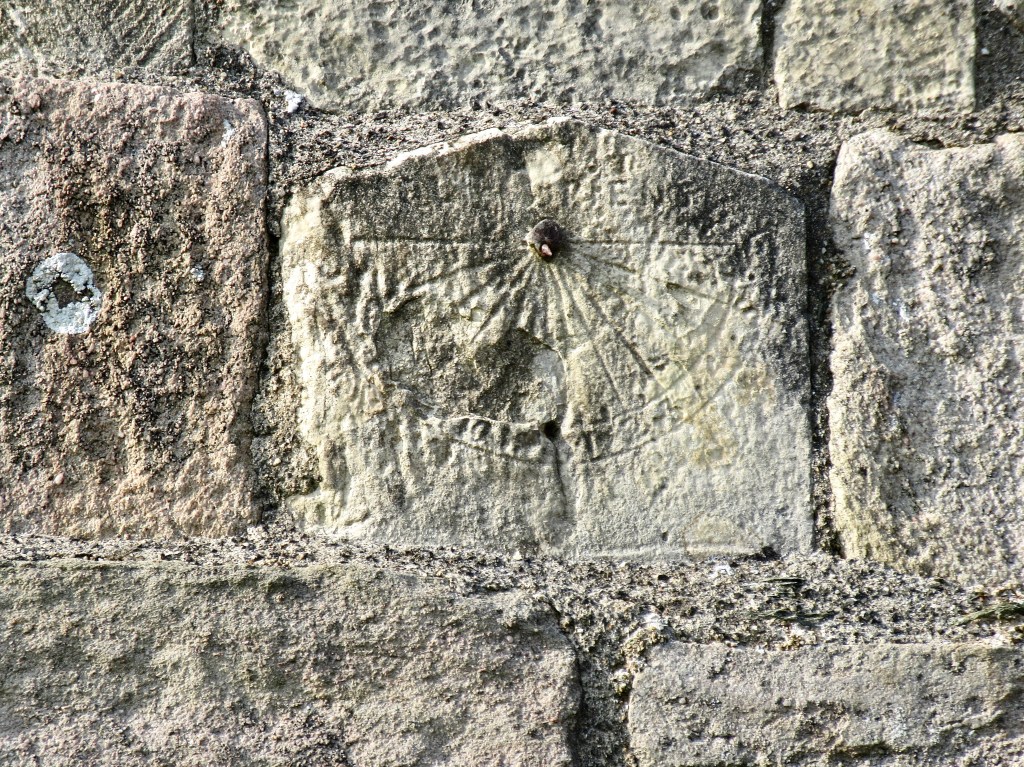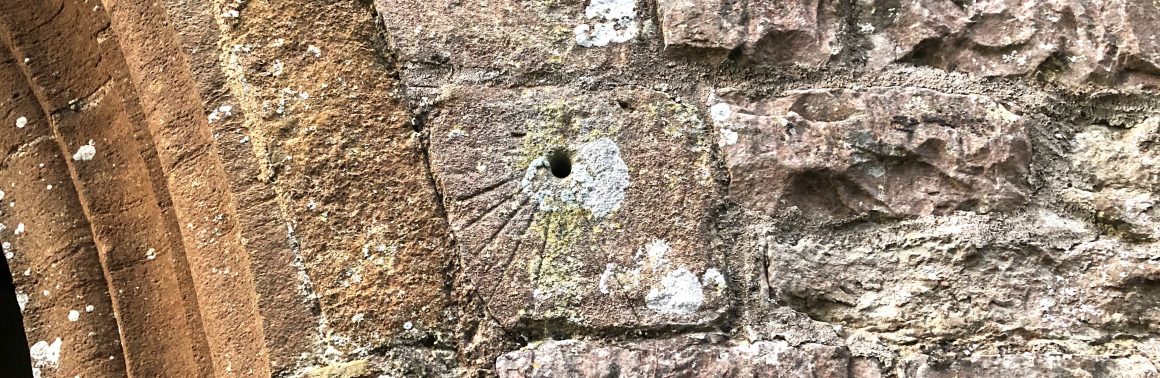
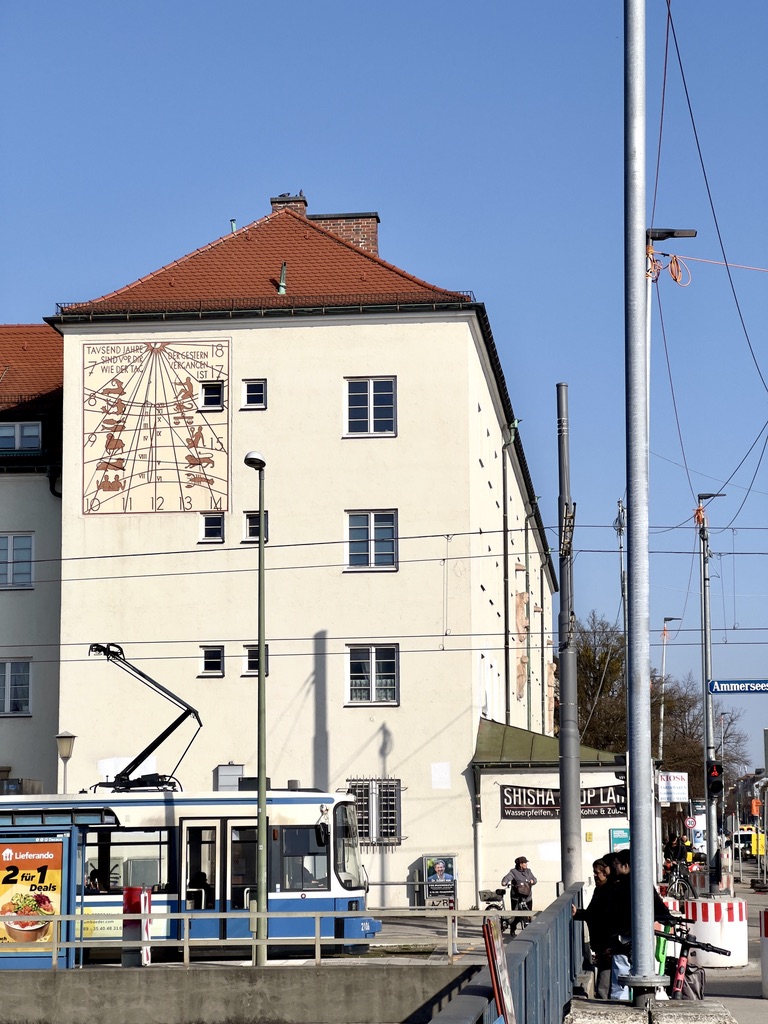
MUNICH . LAIM DISTRICT – Modern Noon Dial

NOON DIALS

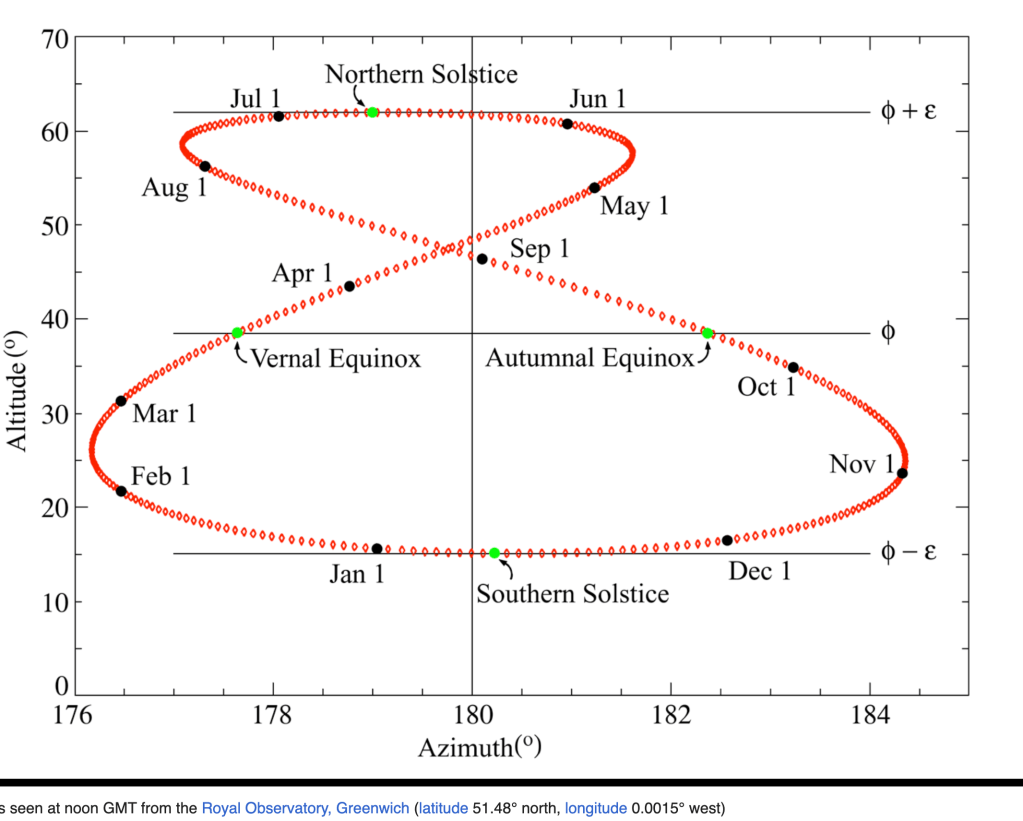
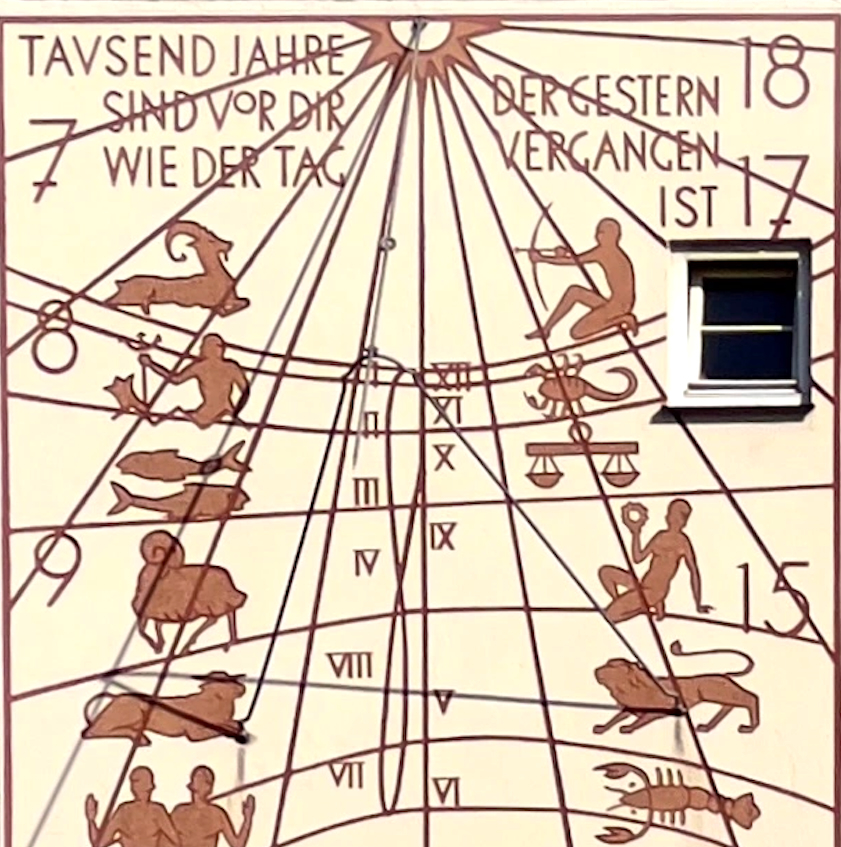
A noon dial / noon mark serves as a method of pinpointing midday, when the sun is at its highest and due south. The origins are ancient. Here, the relevant area is in the centre, flanked by Roman numerals. My maths / science skills are few and I will spare you a rudimentary explanation. The key words are Equation of Time, Analemma, and (my non-technical choice) figure of eight.
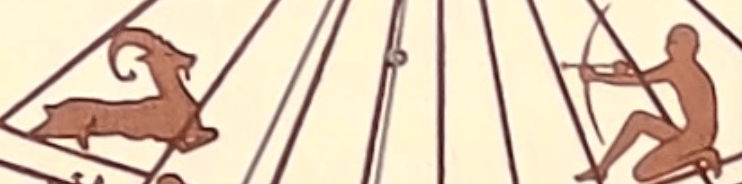
This image has an empty alt attribute; its file name is screenshot-2025-03-23-at-12.21.49.png

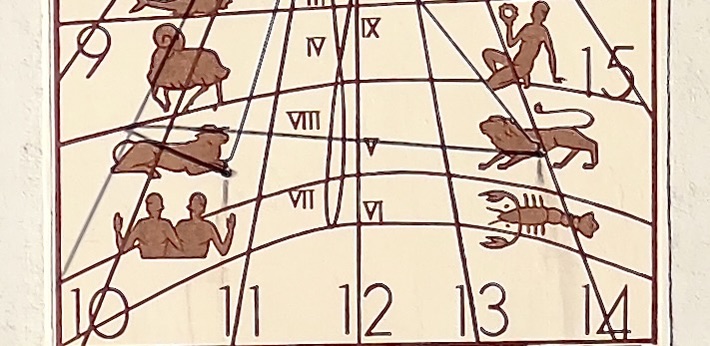
In the centre of the dial is a narrow figure of eight bounded by the numerals. You can just make out the raised bracket that supports a slender gnomon. You can see a small ring through which, at the perfect moment, the sun’s rays strike the face of the dial:
If you want to know more, there is a concise entry at ANALEMMA (Wiki)

This image has an empty alt attribute; its file name is screenshot-2025-03-23-at-12.21.49.png

This image has an empty alt attribute; its file name is screenshot-2025-03-23-at-12.21.49.png

GREEN TEMPLETON COLLEGE OXFORD

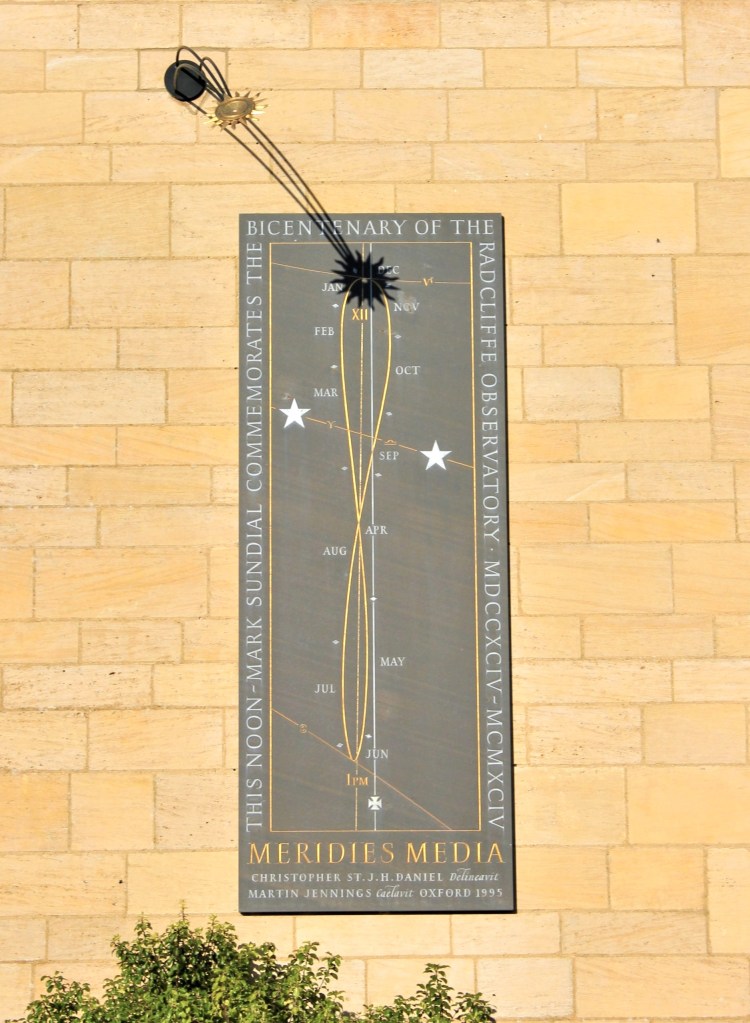
A modern (1995) noon-dial commemorating the Bicentenary of the Radcliffe Observatory, designed by the renowned Christopher Daniel, founder of the British Sundial Society. The critical alignment of the sun’s rays are projected onto the surface of the dial at noon (MERIDIES MEDIA), focused by the small ring.
THE COLLEGE’S NOTES

  • It works by using a spot of light cast by the nodus (the gilded sun with a hole in the middle), falling upon the slate dial-plate and tracking from left to right across it.
  • It is declining because the wall it is attached to does not face due south but ‘declines’ away from the compass point
  • Noon-mark means it gives the point at which the sun at its zenith crosses the Greenwich meridian and the Oxford meridian (the vertical white line down the centre of the dial)
  • Mean-time means you can read clock-time from the dial by following the progress of the year along the figure-of-eight marking, known as an analemma or equation of time correction curve. This makes allowances for the effect of variations in the apparent motion of the sun at different times of year.
Screenshot

GSS Category: Analemma; Equation of Time; Munich Sundial; Nodus; University Sundial

CREDIT: John Renner, for another great find from his travels

DALI DIAL [anag.] . PARIS . CADRAN SOLAIRE

‘Derrick’ . Sticky Mango Rice . A fine artist captures the essence of Paris mingled with a surreal addition – link below

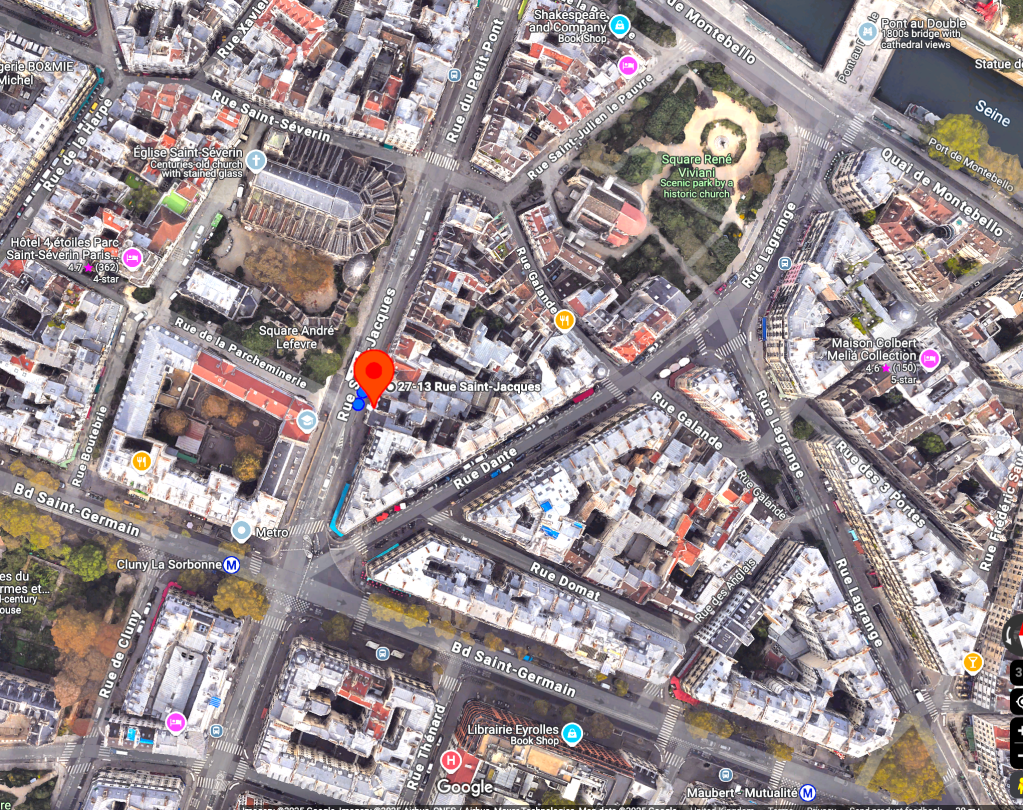
SALVADOR DALI’S SUNDIAL (1966) . PARIS . 27 Rue St Jacques

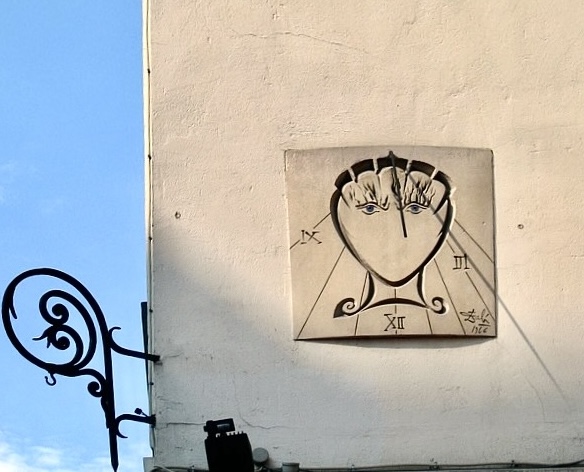
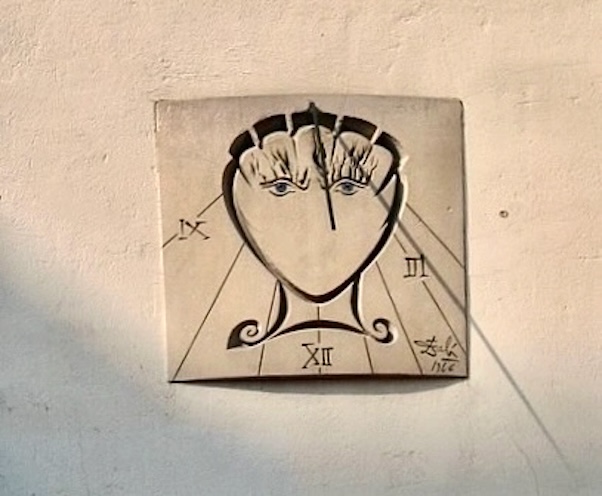
Unassumingly sited and not easily visible to passers-by unless walking north on the eastern trottoir, is a splendid sundial designed by Salvador Dali (1904-1989). Those who do notice it might well be entertained by the Daliesque appearance, but because of the dial’s position they may not see the artist’s signature and the date 1966**

‘Derrick’: a rather beautiful close-up depiction of the Dial

IRL

Ken Eckert Wiki

DIAL DETAILS

Pierre Guernier at French Moments

Pierre Guernier of French Moments notes that the Dali dial, cast in concrete, was a gift to friends who had a nearby boutique. The clue to the shell motif lies in the name of the street which forms part of the Pilgrimage route across Paris. The fiery eyebrows represent the sun; and the lower part of the dial obviously references the famous moustache.

DALI SHADOWS

GAUME – WikiMedia 2010

ATLAS OBSCURA

This excellent resource includes unusual and off-beat finds. It describes Dali’s dial, and notes the accompanying excitement when it was inaugurated on 15 November 1966 at a ceremony with pomp and large media coverage. Dali was no shrinking violet.

We can probably conclude that Dali’s forays into horology were relatively successful with his Parisian sundial. But for its poor positioning, it might function well or adequately. Less accurate were his more ambitious blueprints for timepieces, all being woefully deficient in design and immensely challenging in construction.

** It’s fair to say that for the English, the important ’66 dates are confined to the Battle of Hastings; the Great Fire of London; and the World Cup.

CREDITS

Derrick – Sticky Mango Rice (check out his other work)

https://www.instagram.com/derrick_sketches/?hl=en

© French Moments and pierre@frenchmoments.com with thanks

Atlas Obscura

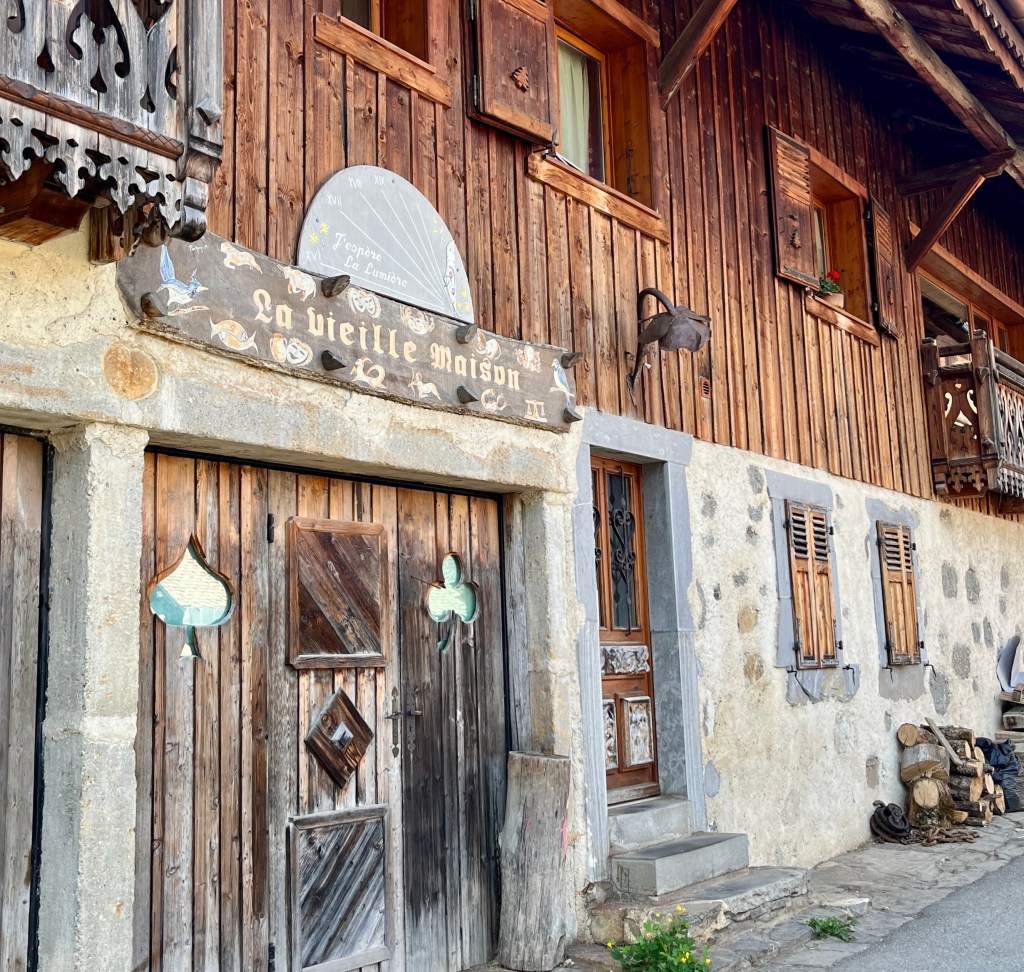
RUSTIC ALPINE SUNDIAL . FRENCH ALPS

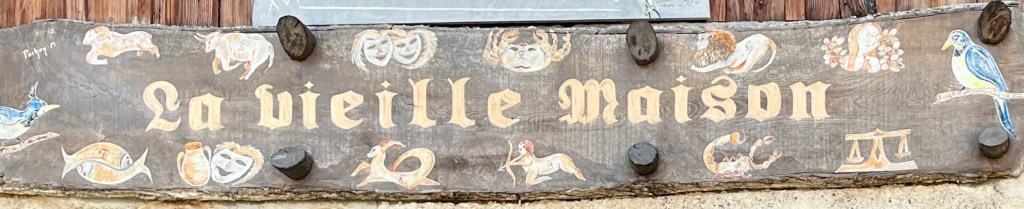
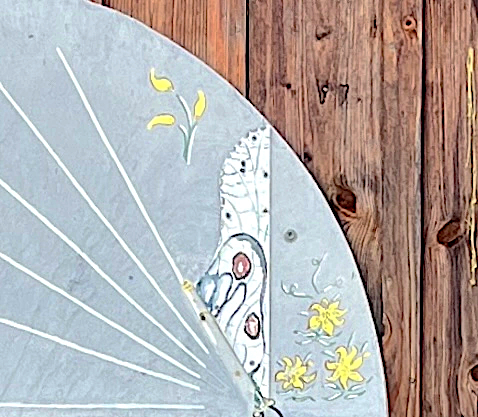
A chance find in a tiny hamlet on the French / Italian border: this rather lovely home-crafted sundial. In a simple unshowy way, it is designed with care and lends enchantment to its overall purpose. I enjoyed seeing the passage of (part of) the day being marked by this dial.

The inclusion of notably cheerful signs of the Zodiac adds to the charm.

The pretty gnomon has an ingenious simplicity. Altogether a delightful find.

GSS Category: Vertical Dial; Rustic Dial; Semi-circle dial; Sundial France

All photos: Keith Salvesen

CHÂTEAU de VAUVILLE . COTENTIN . JARDIN BOTANIQUE – Armillary Sphere

Tripadvisor

CHÂTEAU de VAUVILLE . CONTENTIN . JARDIN BOTANIQUE

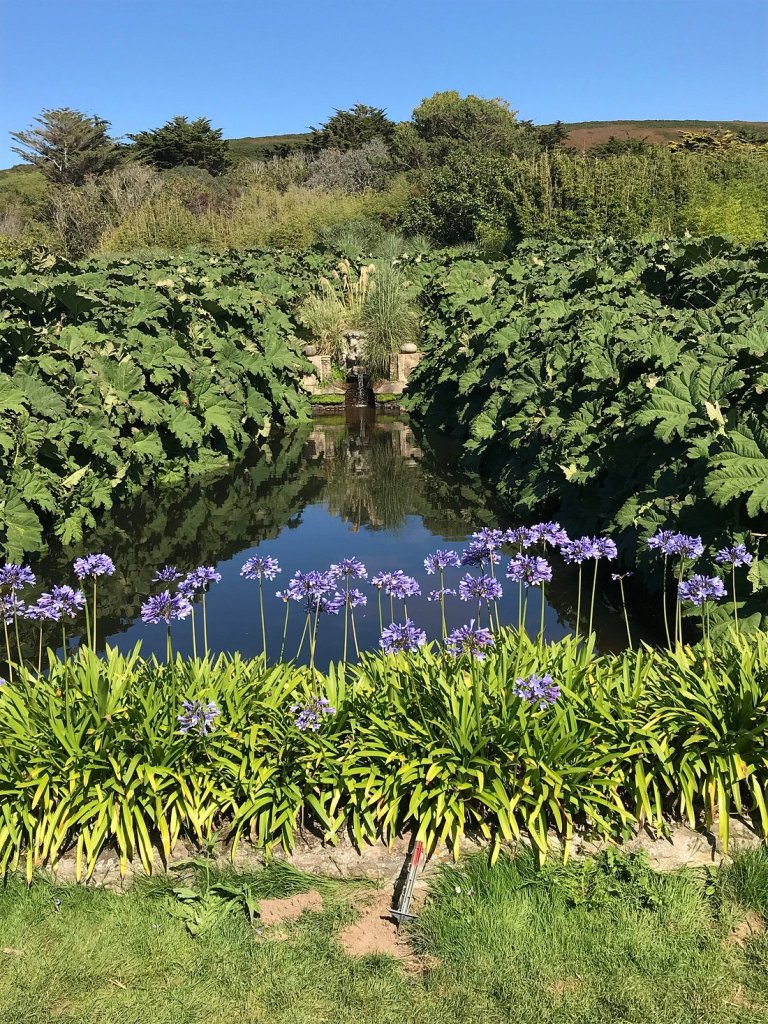
The Château dates from mid-C12. Thereafter – like many similar large houses in the region – it suffered many changes in fortune over the centuries. It has been described as ‘one of the finest examples of fortified architecture in the Nord-Cotentin‘. It is still in the ownership of the same family. During WW2 the house was pillaged and severely damaged. Restorations since then have resulted in a very fine building in lovely surroundings.

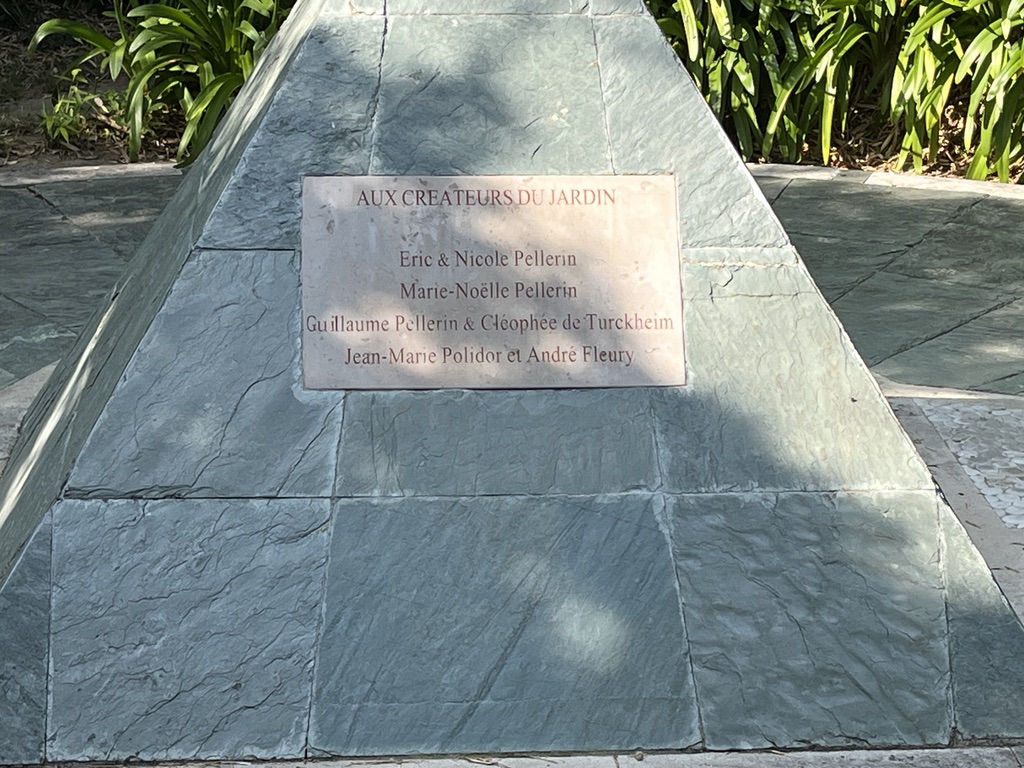
The splended gardens were created after the war by Eric Pellerin and feature a huge variety of the semi-tropical plants and trees that thrive on the western edge of the Cotentin coast.

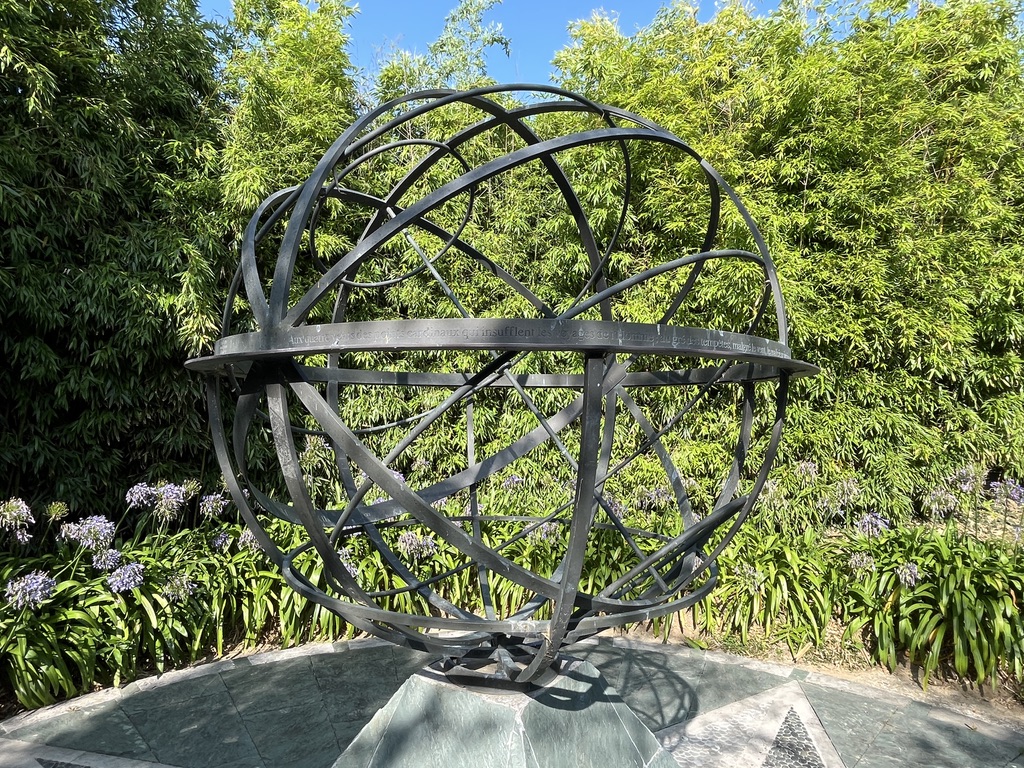
ARMILLARY SPHERE

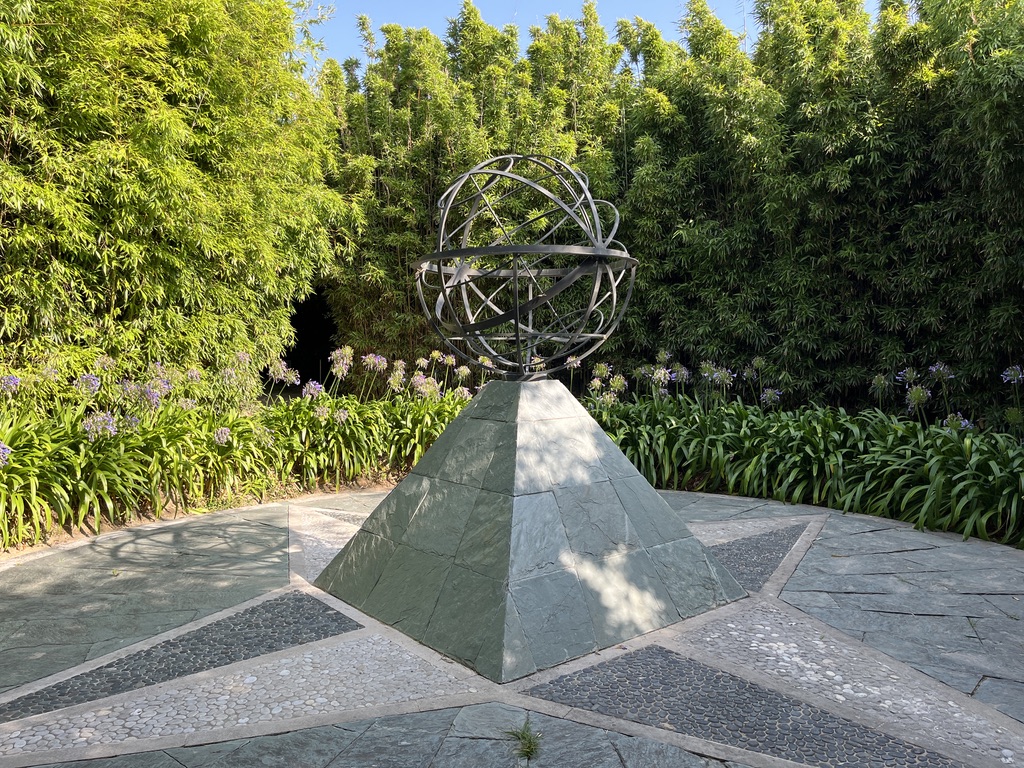
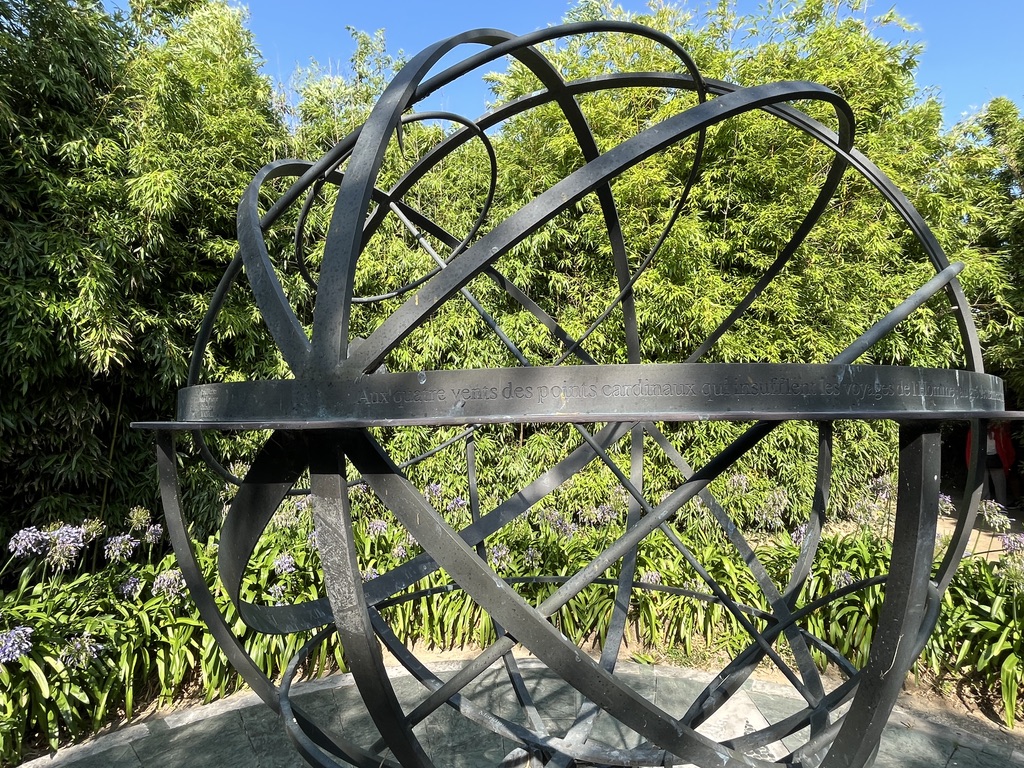
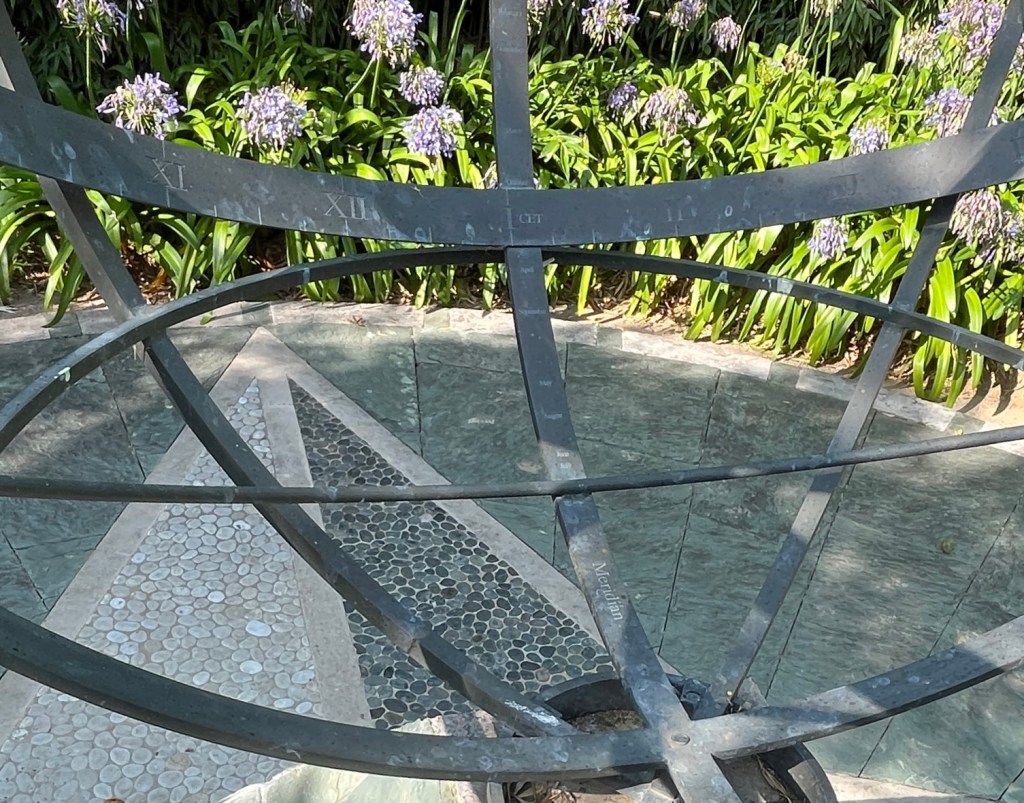
The sphere seems (to me, anyway) fairly complex, and rather than trying to interpret it I think that high resolution images taken from a number of angles is more useful. There is an engraved inscription that girdles the dial and includes personal tributes to Pellerin and others.

All photos: Keith Salvesen / Rolling Harbour or OS online

GSS Category: Armillary Sphere; French Sundial; Normandy Sundial; Botanical Garden Dial

PADUA . PALAZZO DELLA RAGIONE . SPECTACULAR SUNDIAL

Padua . Palazzo della Ragione . Sundial . John Renner

PADUA . PALAZZO DELLA RAGIONE . SUNDIAL

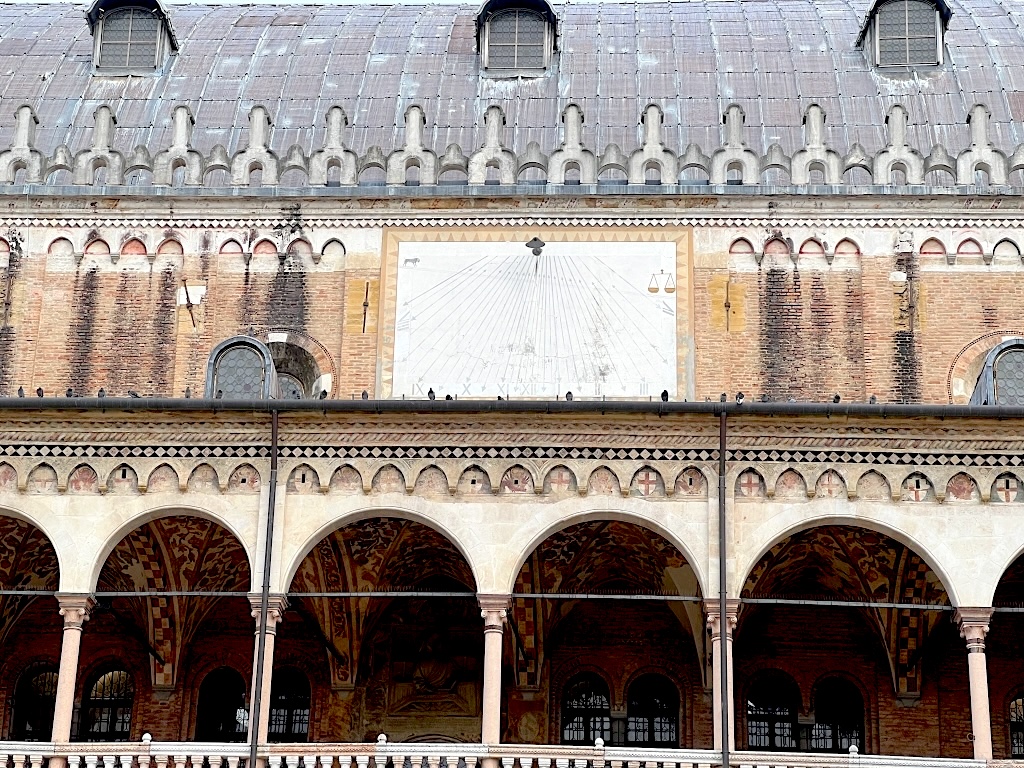
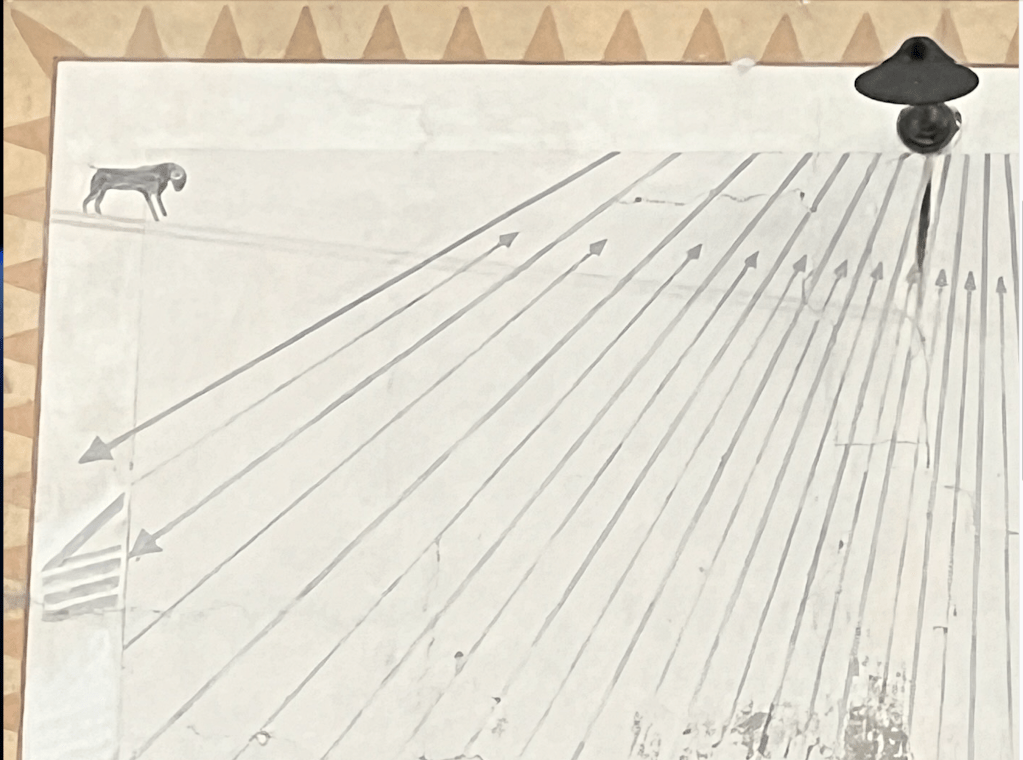
A confident and assertive sundial to match the glory and prosperity of the city. The lines divide the hours from VIII to IV into quarters. Each has an arrowhead, with (?unusually) reversal of the ‘minor quarter’ arrows.

GNOMON

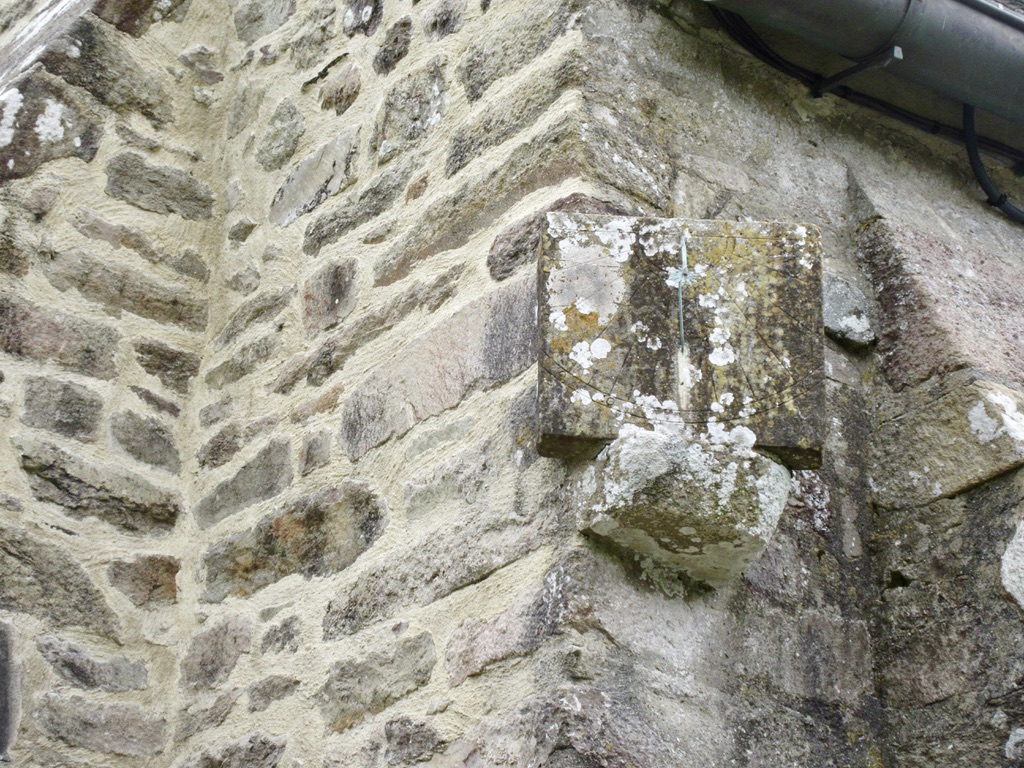
At first glance you may wonder why there’s just a dark splodge where one might hope to see a gnomon. It is the gnomon. In researching the dial I came across a really helpful photo by Richard Mortel* that reveals the gnomon to be the ‘pin-hole’ type, the effectiveness of which is clearly shown.
Padua . Palazzo della Ragione . Sundial Pinhole . Richard Mortel

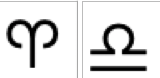
The upper half of the dial has an angled line across the whole dial, leading from an indeterminate animal (in fact a sheep) to a set of scales: Aries and Libra in opposition (Note: this Zodiacal conjunction should not be investigated, for fear of unwanted advice about who you should be dating).

There is an additional aspect to this dial that I am currently researching. First of all I have to clear use permission, but I hope to add to write again soon about this splendid dial. The clue is ‘Meridian’.

Credits: John Renner for his excellent photos of this fantastic sundial taken recently; *Richard Mortel for his clear illustrative photo of the gnomon taken a while back (with apologies if I have wrongly taken it as CC / OS)

OMONVILLE-la-PETITE . COTENTIN . SAINT-MARTIN – Vertical Dial

SAINT MARTIN . OMANVILLE-la-PETIT . CONTENTIN

An attractive vertical dial, accurately angled, with Arabic numerals. Semi-circle perimeter and round top gnomon stay. There’s a slight jeux d’ésprit feel to the gnomon. There was no sun on the dial when we visited: I wondered how well it would work in practice.

GSS Category: Vertical Dial; Church Sundial France; Ornamental Gnomon

All photos: Keith Salvesen

JARDIN PRÉVERT . COTENTIN . MANCHE – Armillary Sphere

JARDIN DE PRÉVERT . COTENTIN . MANCHE

This idiosyncratic garden is close to Port Racine in the NW corner of the Cotentin peninsular, in the Vallée des Moulins. There is a tumbling stream that at one time flowed past more than a dozen mills, of which some ruins remain. The garden was created in homage to the poet and screen-writer Jacques Prévert. After his death (1977), trees were planted by his wife, Yves Montand, Juliette Gréco, and Picasso among others, a quality tribute to his artistic achievements.

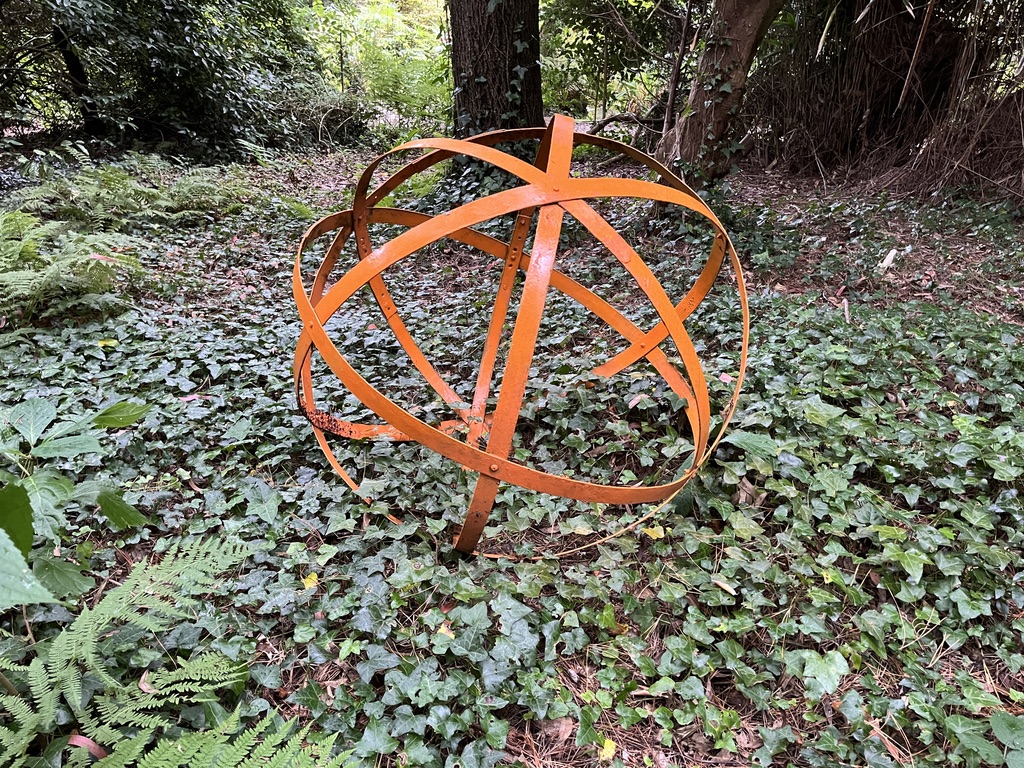
Amid the peaceful woodland bordering the stream are artfully twisting paths. These reveal clusters of metalwork sculptures, inscribed poems hanging from trees, and plenty of somewhat surreal creations. In amongst the foliage I spotted this sphere. Enjoy the poem.

An orange on the table
Your dress on the rug
And you in my bed
Sweet gift of the present
Freshness of the night
Warmth of my life

GSS Category: Armillary Sphere; Sundial Art

All photos Keith Salvesen except JT (os)

BIVILLE . MANCHE . SAINT-PIERRE – Vertical Dial

SAINT-PIERRE . BIVILLE . MANCHE

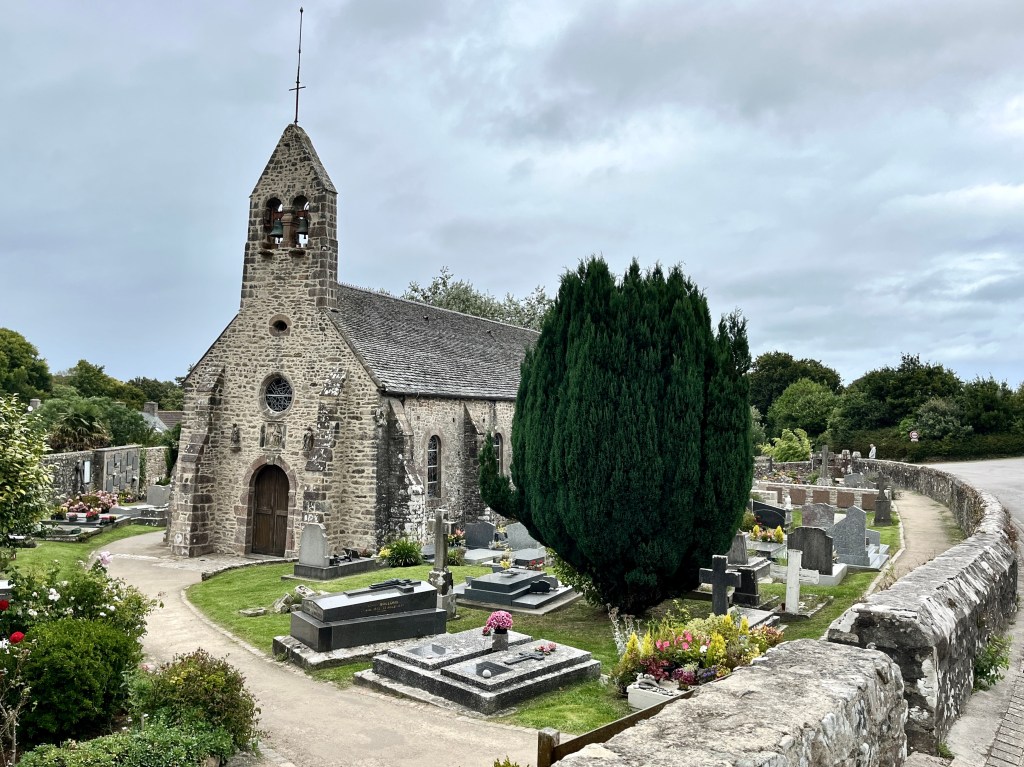
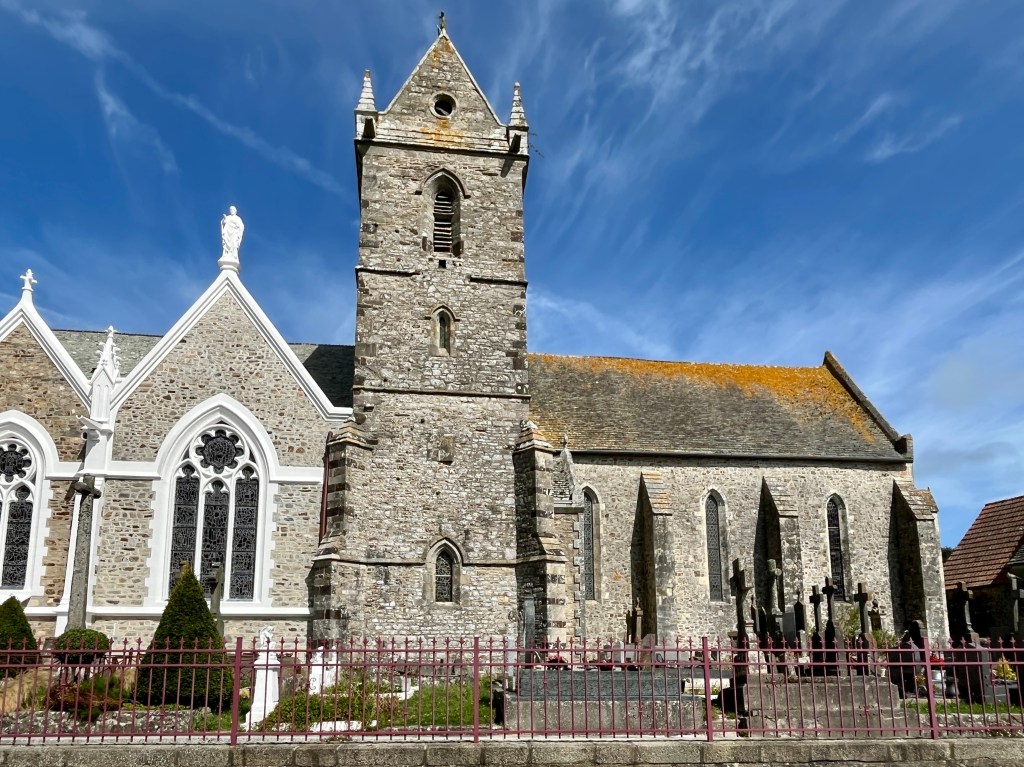
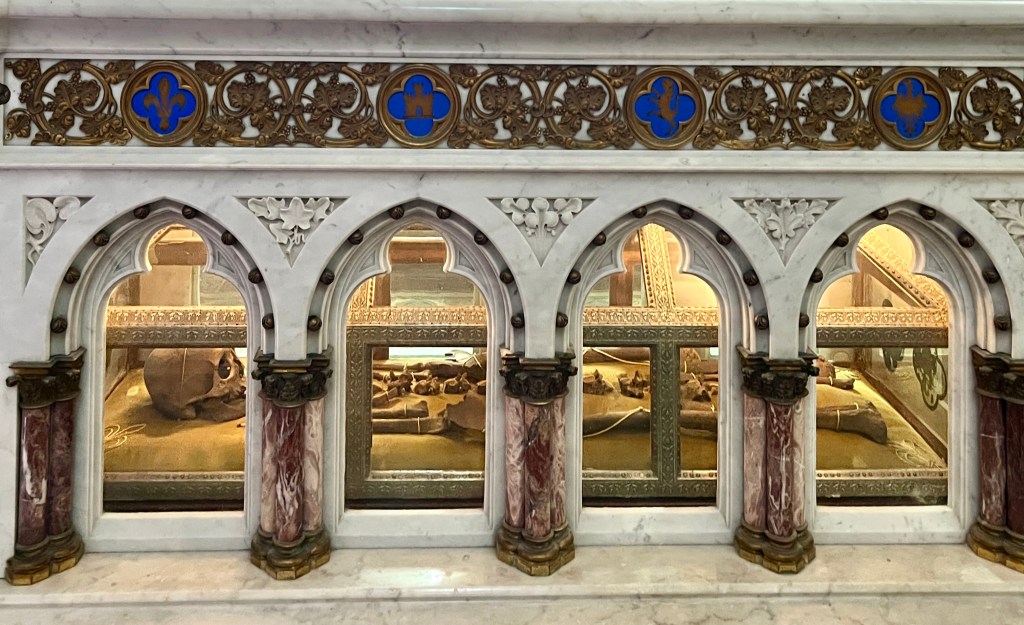
C13 origins. By C19 the church had become a place of pilgrimage for one Thomas Hélye, whose remains are rather eerily displayed in a case in the nave. In due course, the church needed to expand to accommodate pilgrims and the work was eventually completed in the 1920s.

DIAL

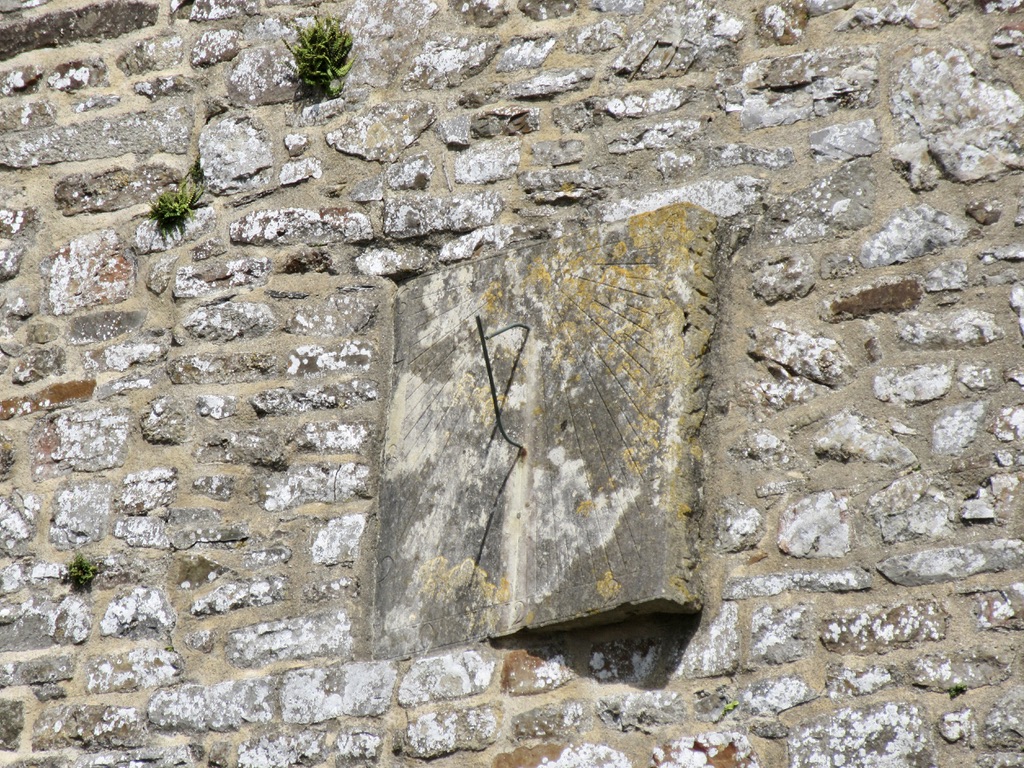
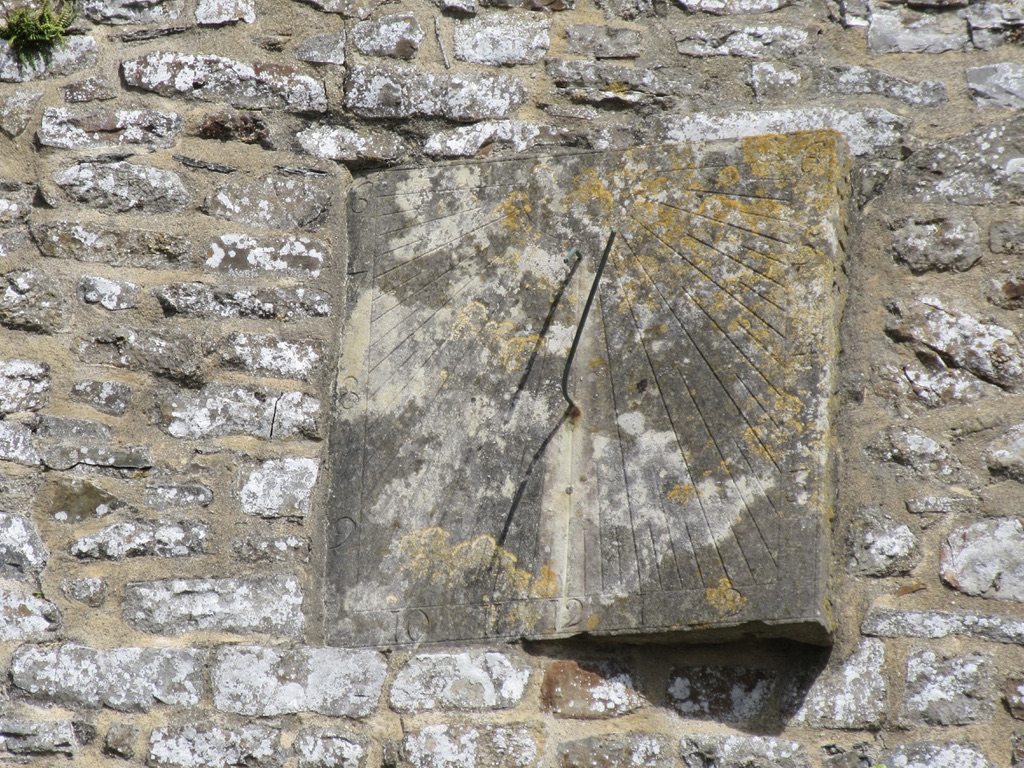
The dial is located on the second stage of the tower, in a position and at a height to record the passage of the day for all to see. The dial (date uncertain) with its Arabic numerals is large enough to mark 1/4 hours. It is canted for accuracy. The gnomon, unusually, is formed from two separate bent rods that (see large image below) have been carefully sited to cast the shadow.

GSS Category: Verical Dial; Normandy Vertical Dial; Sundial France

All photos: Keith Salvesen

AUDERVILLE . MANCHE . ST GILLES – Vertical Dial

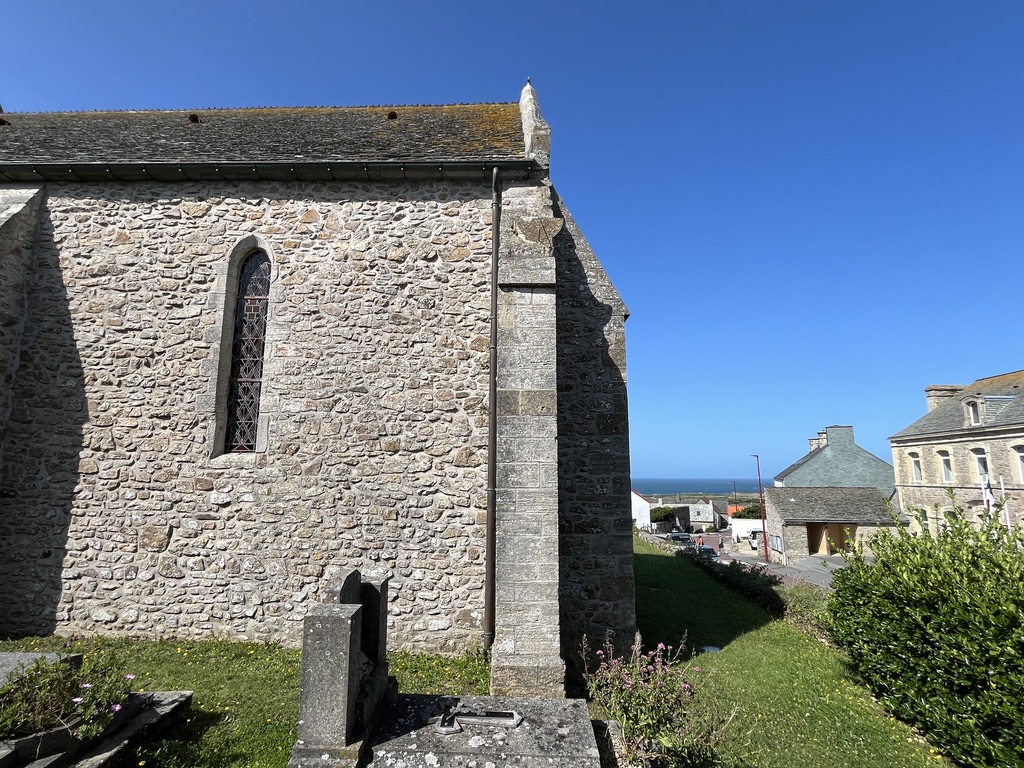
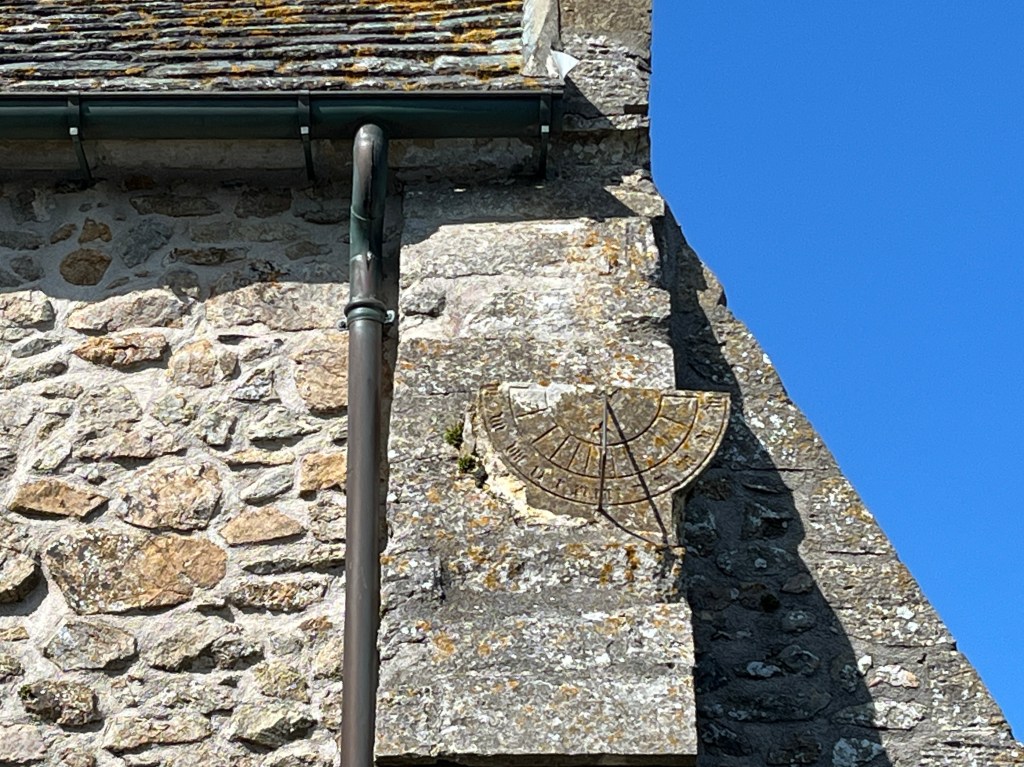
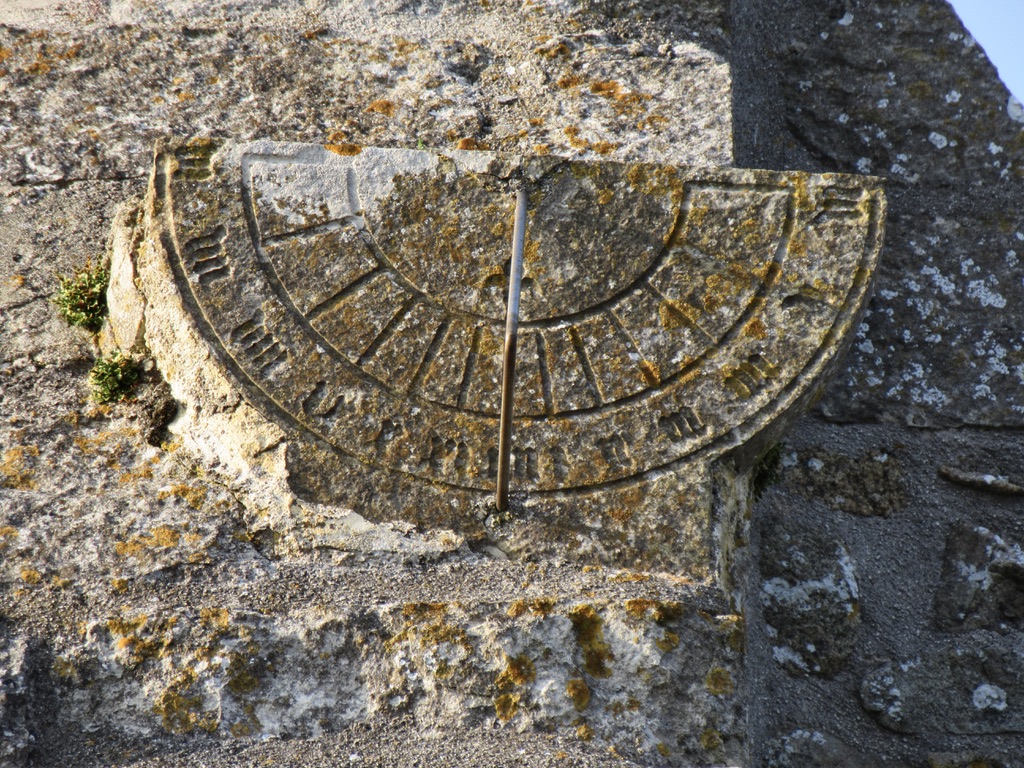
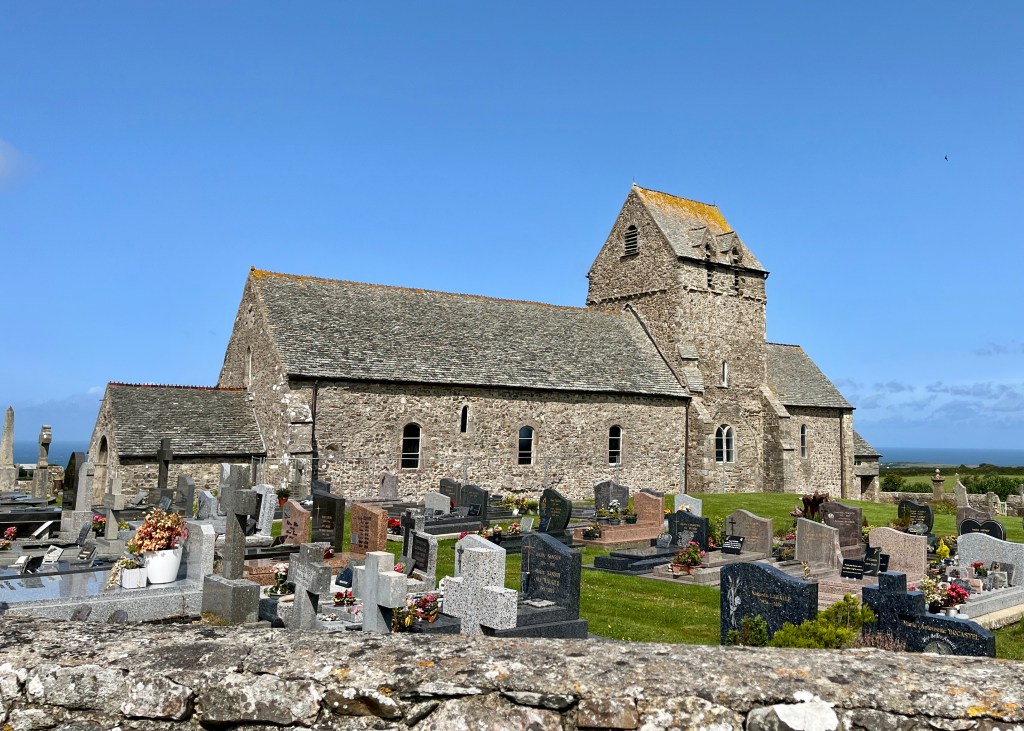
The church of St Gilles at Auderville is one of several churches in the region with similar dials located high up on one end, in this case the E buttress.

The dial is both canted and also slightly angled downwards, enough to notice from ground level. The Roman numerals are Blackletter, as can be found on other churches in the area. I haven’t come across the ‘horseshoe’ 9 before. The modern angled gnomon is plain and functional.

GSS Category: Vertical Dial Normandy France

All photos: Keith Salvesen

JOBOURG . NORMANDY . NOTRE DAME – Scratch Dial

NOTRE-DAME . JOBOURG . NORMANDY

A fine Romanesque church (C11 / 12) in the far NW of the Cotentin peninsular. From its elevated position in the coastal landscape, the sea can be seen on both sides. Of several good dials in the area (other posts will follow), this is the one that is closest to being a scratch dial, being cut directly into the gnomon stone. Other church dials in the region are vertical dials on, rather than cut into, their location.

DIAL

The dial is high up on the E buttress. Seen from the ground, the dial stone blends with the surrounding stones. Seen close to, the awkward setting – shaped angled top with filling around it – suggests relocation. Wherever originally positioned, the height of the dial on the buttress must have been an effective way to use the church’s prominent position to mark passage of the day for the local community.

The dial face has a layout similar to other dials in the area, 12 lines inside a double circle containing the numerals. A possible noon hole on the inner circle; possible noon line extending below it. The short pointed gnomon is a much later addition. LLQ is badly damaged. Beneath the angled top is an eroded inscription, the clearest letter being E. ‘RIEN’?

Finally, this photo from the excellent Michel Lalos french sundial site. I’m not sure when it was taken, but I expect within the last 20 years or so. It graphically shows how degraded and damaged the dial has come during a mere couple of decades. Sadly, LLQ is falling apart.

Cadran Solaire . Jobourg . Notre Dame (Michel Lalos)

GSS Category: Scratch Dial; Mass Dial; Sundial France; Vertical Dial

All photos: Keith Salvesen except final, Michel Lalos