PADUA . PALAZZO DELLA RAGIONE . SPECTACULAR SUNDIAL

Padua . Palazzo della Ragione . Sundial . John Renner

PADUA . PALAZZO DELLA RAGIONE . SUNDIAL

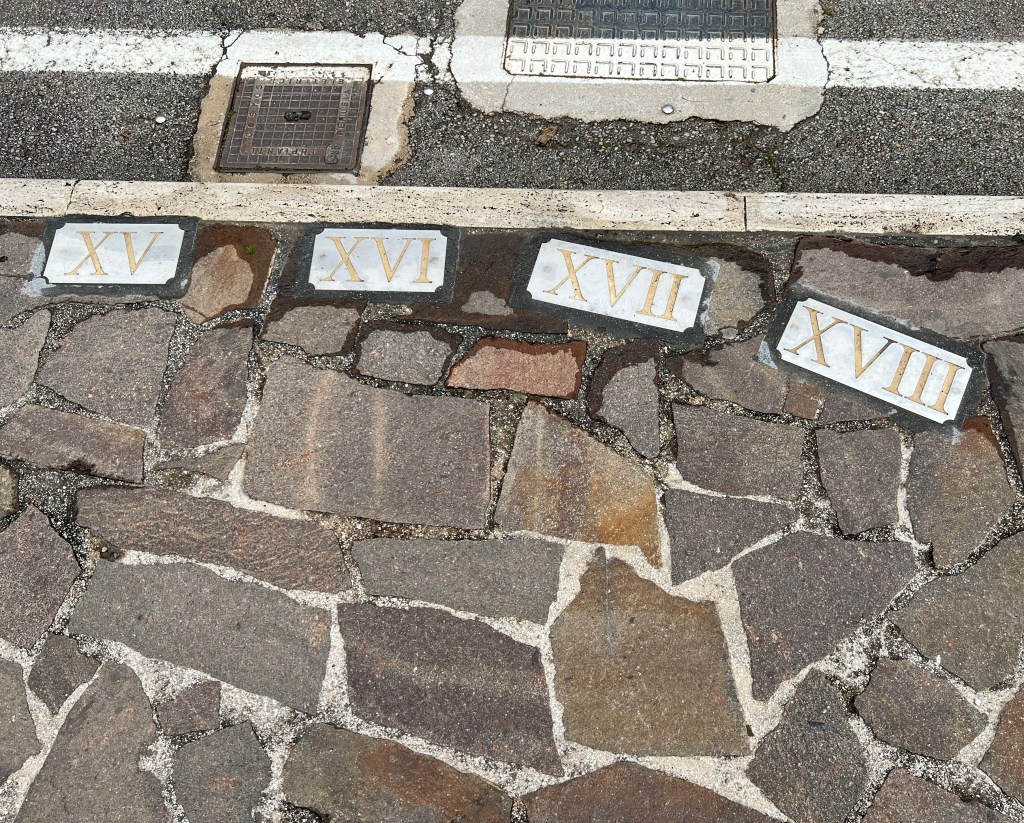
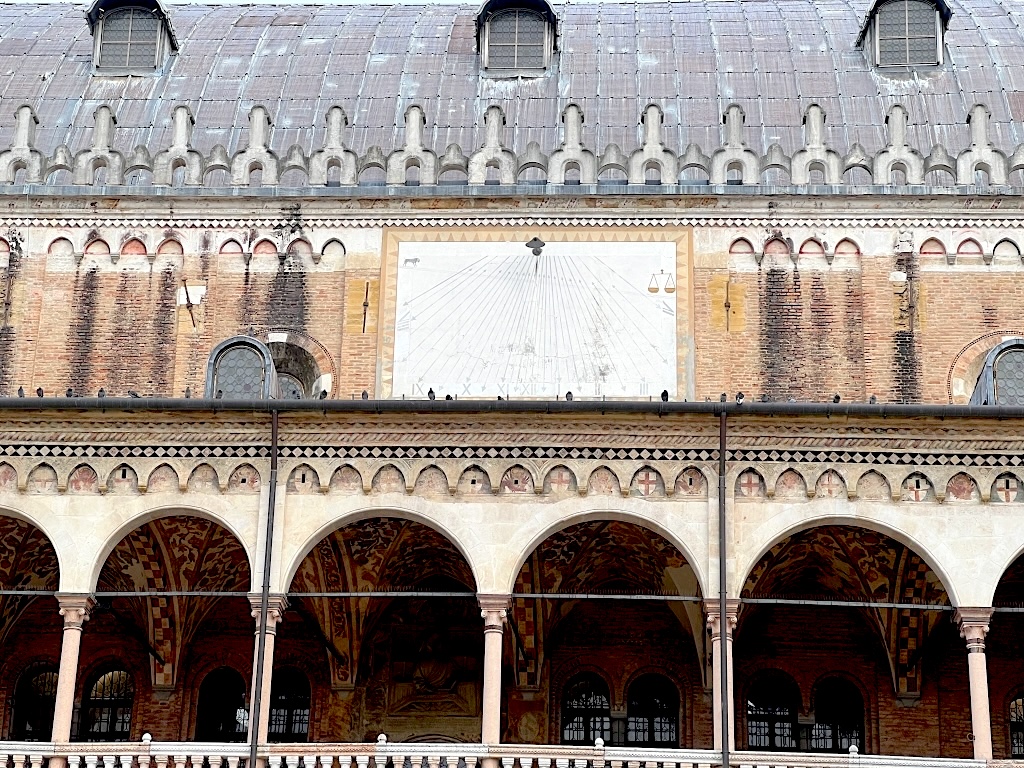
A confident and assertive sundial to match the glory and prosperity of the city. The lines divide the hours from VIII to IV into quarters. Each has an arrowhead, with (?unusually) reversal of the ‘minor quarter’ arrows.
GNOMON

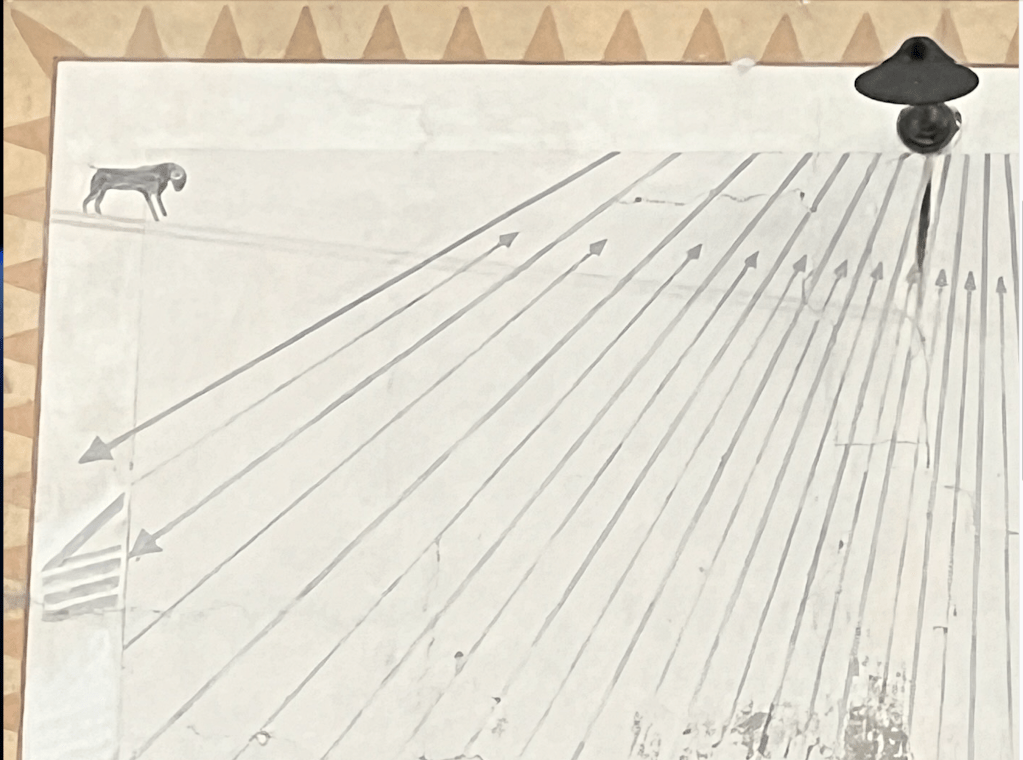
At first glance you may wonder why there’s just a dark splodge where one might hope to see a gnomon. It is the gnomon. In researching the dial I came across a really helpful photo by Richard Mortel* that reveals the gnomon to be the ‘pin-hole’ type, the effectiveness of which is clearly shown.

Padua . Palazzo della Ragione . Sundial Pinhole . Richard Mortel

The upper half of the dial has an angled line across the whole dial, leading from an indeterminate animal (in fact a sheep) to a set of scales: Aries and Libra in opposition (Note: this Zodiacal conjunction should not be investigated, for fear of unwanted advice about who you should be dating).

There is an additional aspect to this dial that I am currently researching. First of all I have to clear use permission, but I hope to add to write again soon about this splendid dial. The clue is ‘Meridian’.
Credits: John Renner for his excellent photos of this fantastic sundial taken recently; *Richard Mortel for his clear illustrative photo of the gnomon taken a while back (with apologies if I have wrongly taken it as CC / OS)

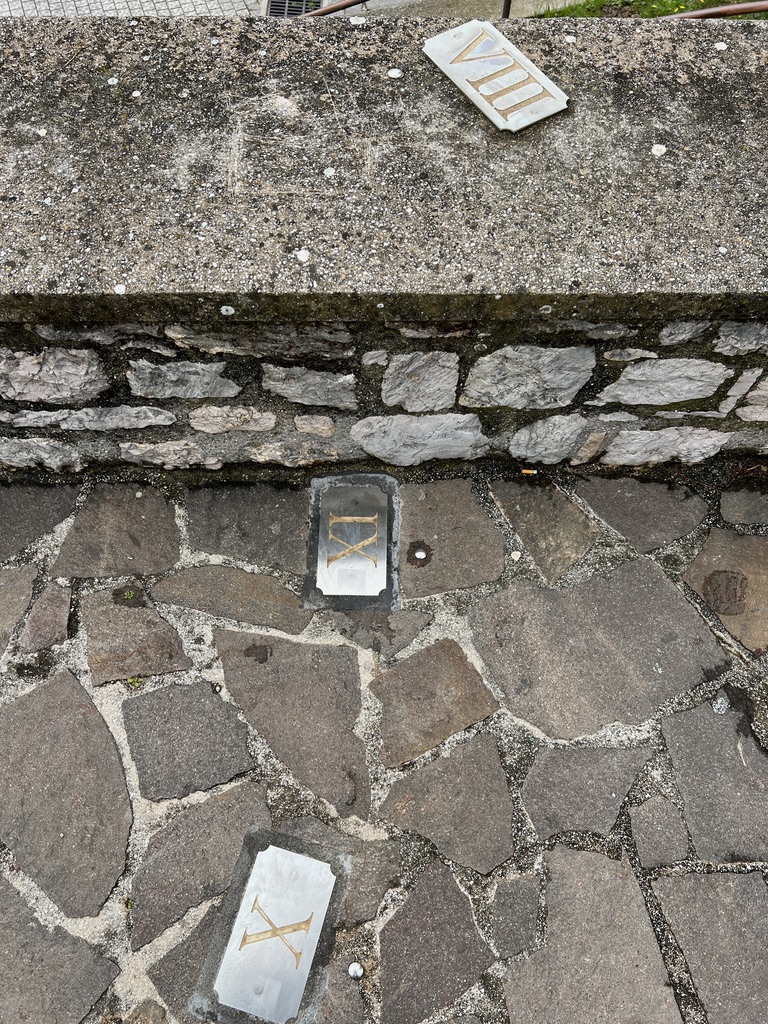
CORCIANO . UMBRIA (2): Analemmatic Sundial

CORCIANO . UMBRIA . ANALEMMATIC DIAL

Corciano is an attractive small town 12km west of Perugia, walled and with much of its medieval origins still evident. In contrast, the Commune has commissioned interesting modern projects, for example a residential complex designed by Renzo Piano and inspired by Rubik’s cubes. 

The town has initiated an ambitious project, financed by the municipality, to make an itinerary that combines culture, history, astronomy, landscape and science and can be used free of charge for everyone: citizens, schools and tourists.

BORGO del SOLE

The Sundial Trail links 3 different kinds of sundial at sites carefully chosen for each type. These are an Armillary Sphere (Equatorial Dial); an Analemmatic Sundial; and a Ptolemaic Plinth in the Gardens. Other types of dial are planned.

See also CORCIANO (1)
GSS Category: Analemmatic Dial; Dial Italy

Credits: with thanks to John & Jane (gnomon) Renner

CORCIANO . UMBRIA (1) – Armillary Sphere

CORCIANO . UMBRIA . ARMILLARY SPHERE

Corciano is an attractive small town 12km west of Perugia, walled and with much of its medieval origins still evident. In contrast, the Commune has commissioned interesting modern projects, for example a residential complex designed by Renzo Piano and inspired by Rubik’s cubes. 

The town has initiated an ambitious project, financed by the municipality, to make an itinerary that combines culture, history, astronomy, landscape and science and can be used free of charge for everyone: citizens, schools and tourists.

BORGO del SOLE

The Sundial Trail links 3 different kinds of sundial at sites carefully chosen for each type. These are an Armillary Sphere (Equatorial Dial); an Analemmatic Sundial; and a Ptolemaic Plinth in the Gardens. Other types of dial are planned.

GSS Category: Armillary Sphere; Sundial Italy

Photos: John Renner, with thanks

PADUA . VENETO . BASILICA of ST ANTHONY

SUNDIAL

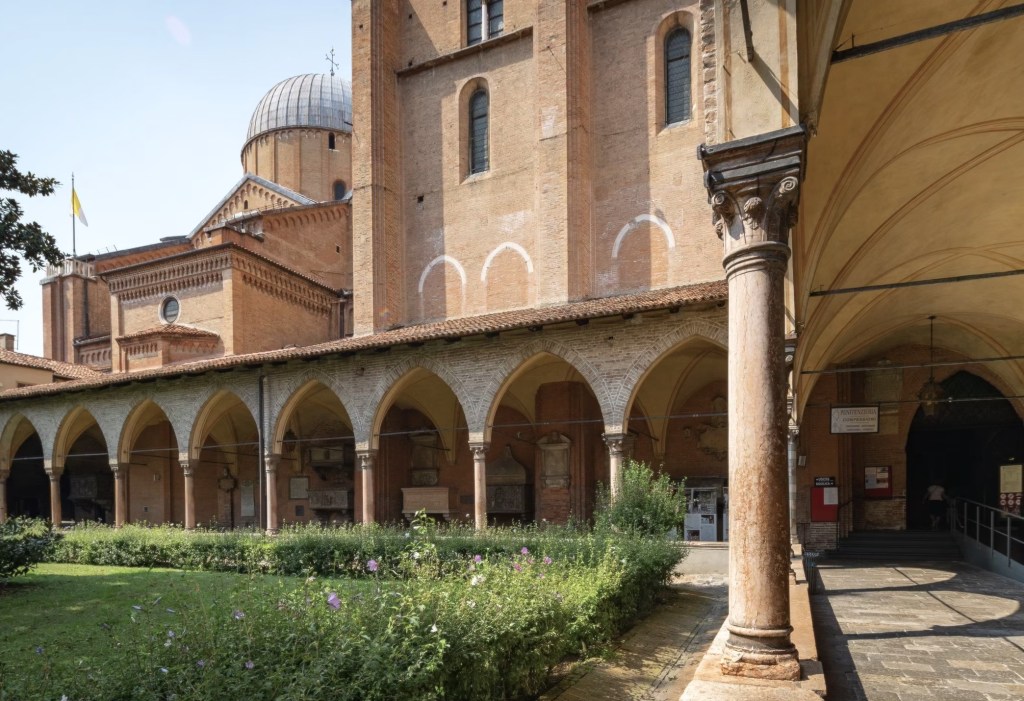
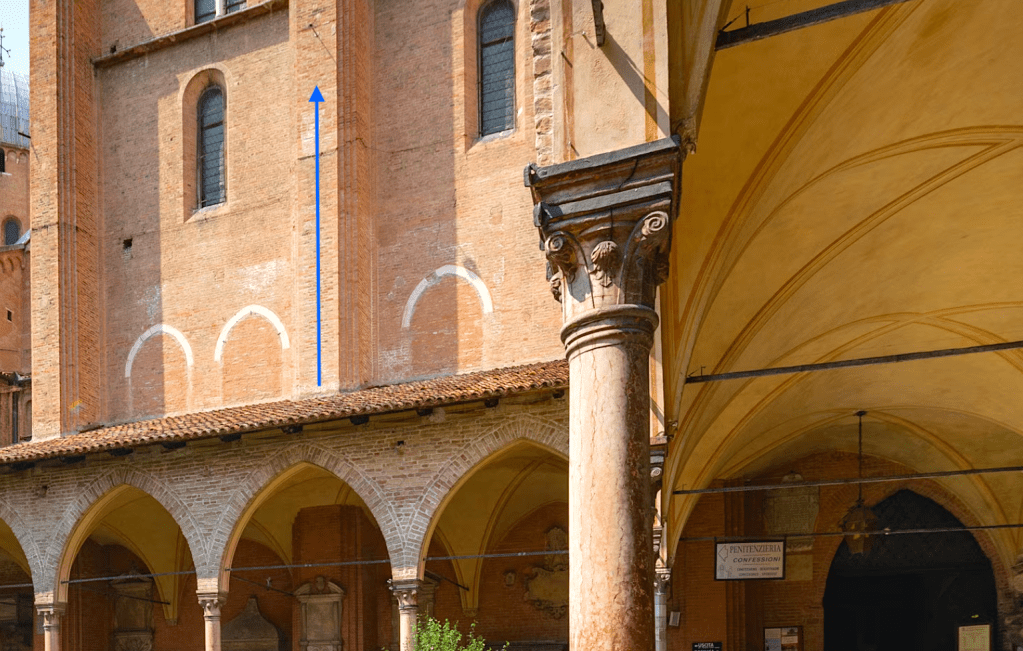
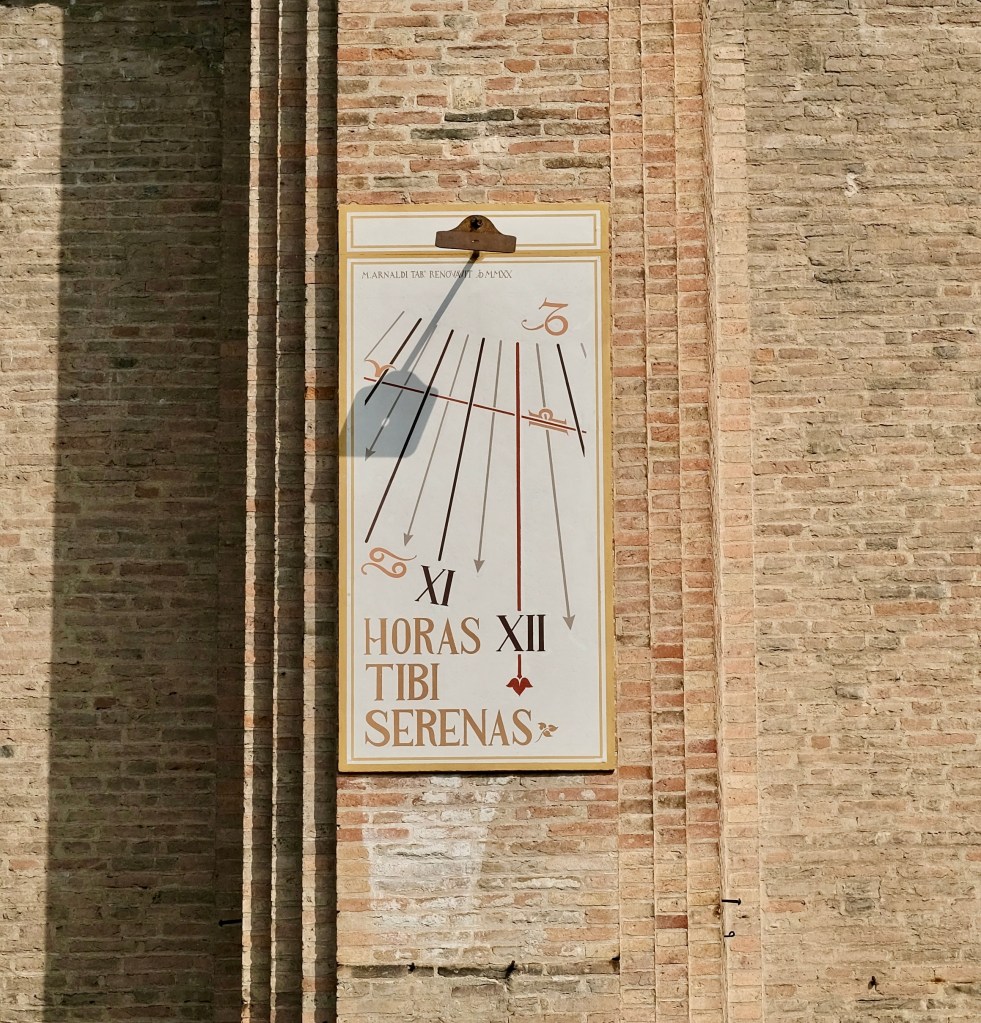
The oblong dial is located high up on the south side of the Basilica. Its modern design contrasts notably with its setting. I can imagine some debate over modern versus traditional styles. It was installed in 2020; a caption refers to renovation.

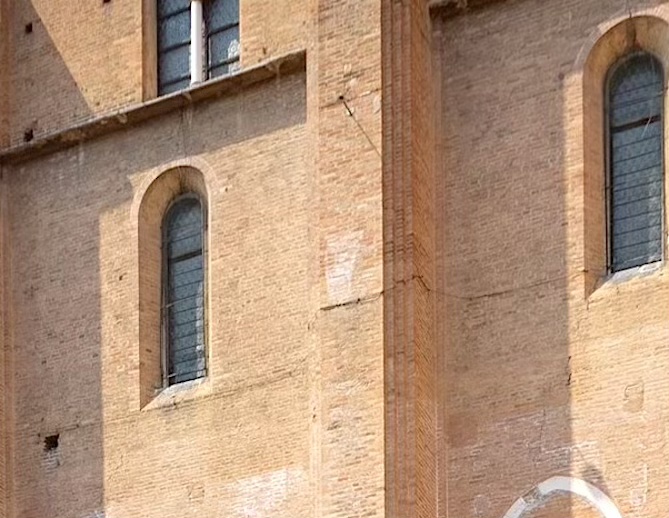
The dial’s height and size makes it very visible. John Renner, who took these photos, suggests convincingly that there must always have been a dial of some sort there, I’d have thought, to be visible to the friars from their cloister and help them say their hours on time. I have now managed to locate a photo taken from the cloister of an earlier dial with a much simpler day-marker. Probably it replaced an even earlier one.

The details of the new dial include 4 signs of the Zodiac; 2 midday roman numerals; 1/2 hours marked with pale arrowed lines; and a fairly traditional motto. The most interesting feature is the gnomon, which is tilted for accuracy and looks adjustable. As the photos clearly show, the sun’s rays are focused through a small hole onto the dial face – here, at exactly 9.30 am.

See HERE for the Scaphe Dial in the Padua Botanical Gardens (one of 3 dials there)

Basilica of St Anthony . Padua . Wiki

GSS Category: Modern Dial; Vertical Dial; Dials in Italy

All photos: John Renner, with thanks as always; Expedia for the old dial

PADUA . BOTANICAL GARDENS . SCAPHE DIAL

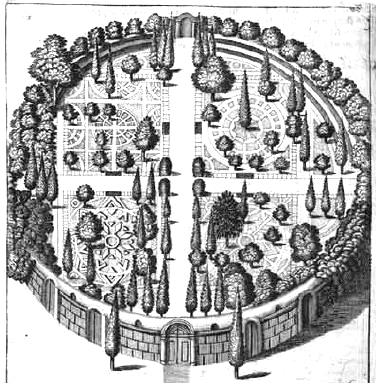
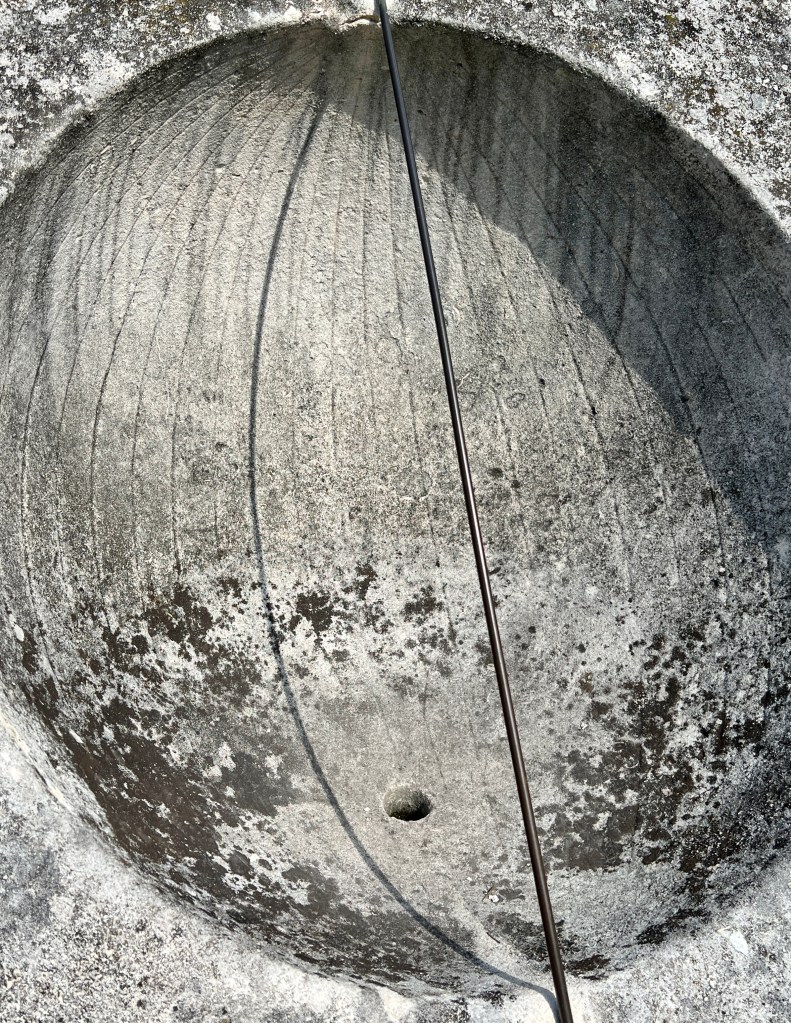
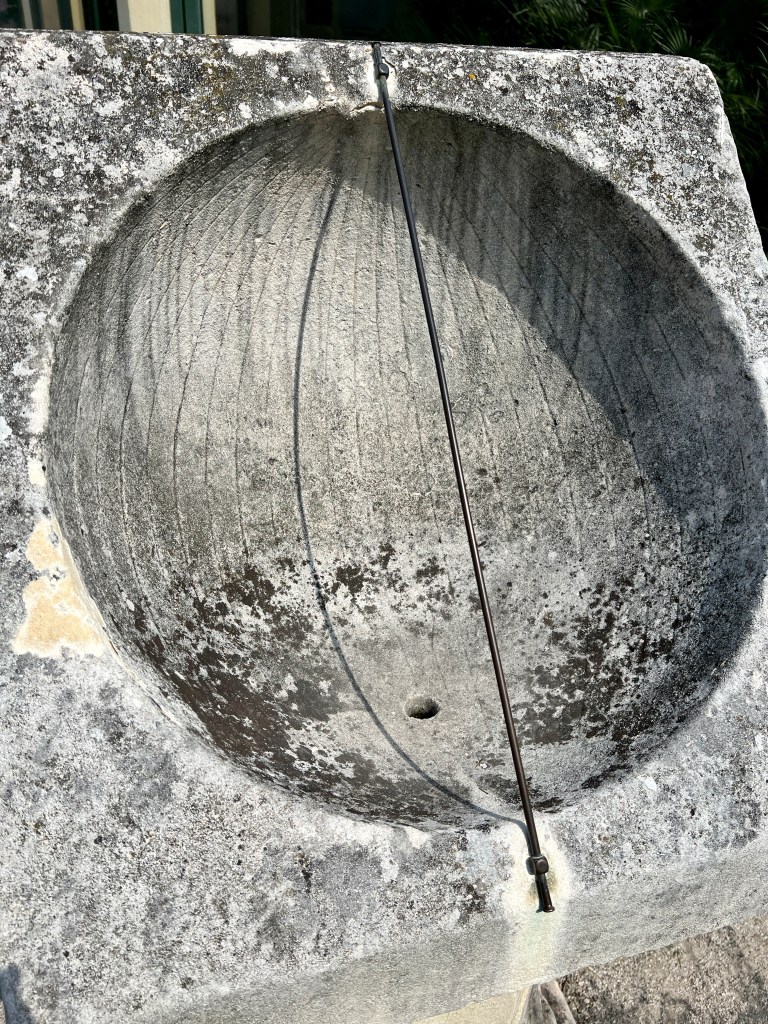
This wonderful example of a scaphe dial is one of 3 dials in the Botanical Gardens of Padua. There is also a cube dial and a cylinder dial (separate post). This first-ever public garden* was created in 1545, and the original layout has been preserved. This is not the space for a short wander round, but there’s plenty of interesting material online. It has been an important centre for scientific research since its inception and, unsurprisingly, it is a UNESCO World Heritage Site.

*Pisa’s botanical garden was actually completed a year earlier but disqualified on a technicality that I haven’t pursued.

GSS Category: Scaphe Dial; Botanical Garden Sundial; Europe Dials

All photos: John Renner, with many thanks

BASILICA di SANTA MARIA NOVELLA . FLORENCE – Danti’s Armillary Sphere

SANTA MARIA NOVELLA . FLORENCE . ARMILLARY SPHERE

EGNAZIO DANTI* 1536 – 1586 (also, Ignazio), Dominican monk and polymath, became renowned for his wide learning and intellectual precision. He was a mathematician, cartographer, astronomer (some say ‘cosmographer’) to Cosimo I, and much more. There’s plenty about him – and indeed about his 3 very different dials at SMN – online.

Recommended sites for an informed overview of the dial include that of the Basilica itself SMN.IT; also ARTELEONARDO and ACCADEMIAGALLERY

For those wishing to dig deep into the complex analysis and the historical context of the dial, you can do no better than study the lead article by Simone Bartolini & Marco Pierozzi in the BULLETIN OF THE BRITISH SUNDIAL SOCIETY VOLUME 22(iv) – December 2010. You can download it.

Egnazio Danti

ARMILLARY SPHERE

The armillary sphere consists of two perpendicular bronze circles with a diameter of 1.30 cm. The vertical one represents the meridian and indicates the exact moment when the sun is at its highest point, noon. On the equinox day, these two circles create a cross-shaped shadow, while elongated circle shadows are formed on other days. (AG)

REFORMATION OF THE CALENDAR

Danti’s sphere was installed on the S facade of the SMN in 1572. This device enabled him to determine the equinox precisely, and thus the true length of the year. Measurements the following spring confirmed the conjecture that the equinox was earlier than indicated by the Julian calendar, in fact by 11 days. As Wiki (always good on this sort of topic) puts it: The reforms of Julius Caesar in 45 BC put the Roman world on a solar calendar. This Julian calendar was faulty in that its intercalation still allowed the astronomical solstices and equinoxes to advance against it by about 11 minutes per year. Pope Gregory XIII introduced a correction in 1582; the Gregorian calendar was only slowly adopted by different nations over a period of centuries, but it is now by far the most commonly used calendar around the world.

MERIDIAN DIAL SMN Link to the article on Danti’s marvellous dial inside the Basilica

INSCRIBED TABLETS BELOW THE DIAL

GSS Category: Armillary Sphere; Spherical Dial; Astronomical Dial; Sundial Italy

All photos: Keith Salvesen except header (Wiki)

Ignazio Danti by Bartolomeo Passarotti (c1576-86). Source: Musée des beaux-arts de Brest

accademia gallery florence

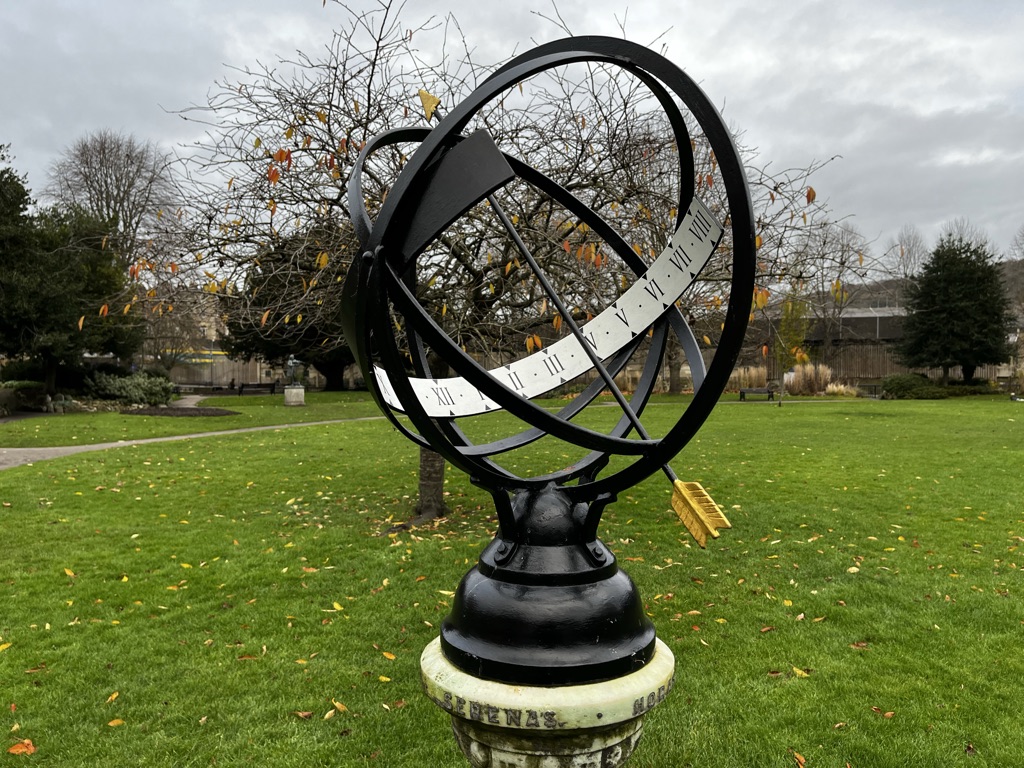
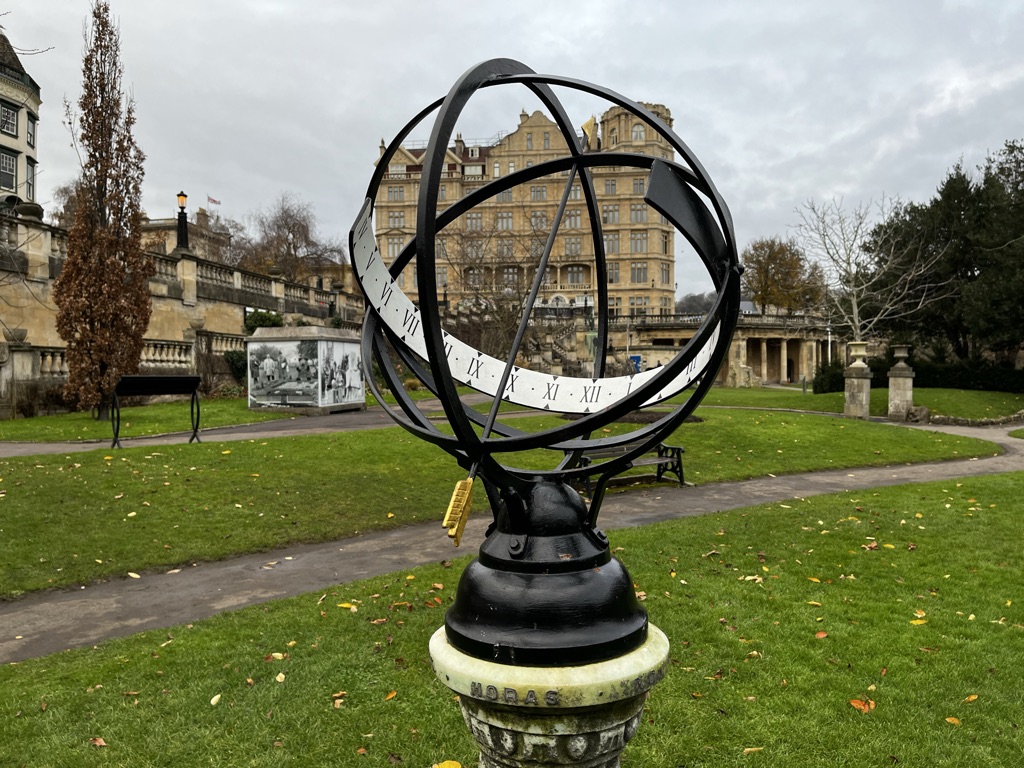
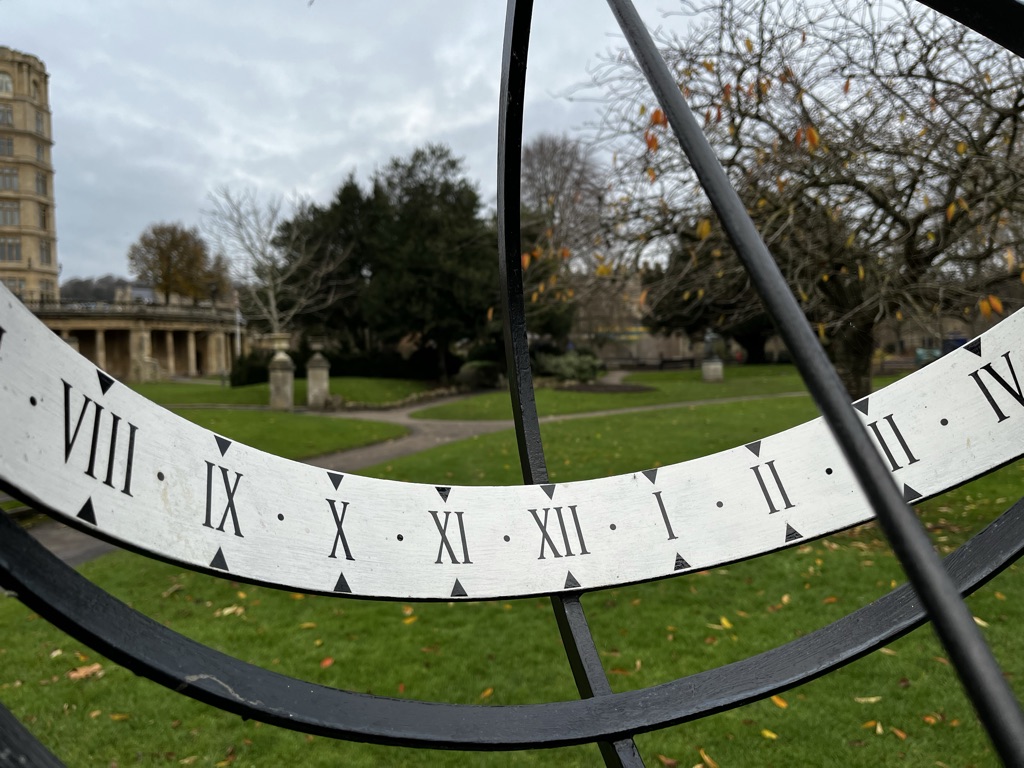
BATH . PARADE GARDENS. British Sundial Society – Armillary Sphere

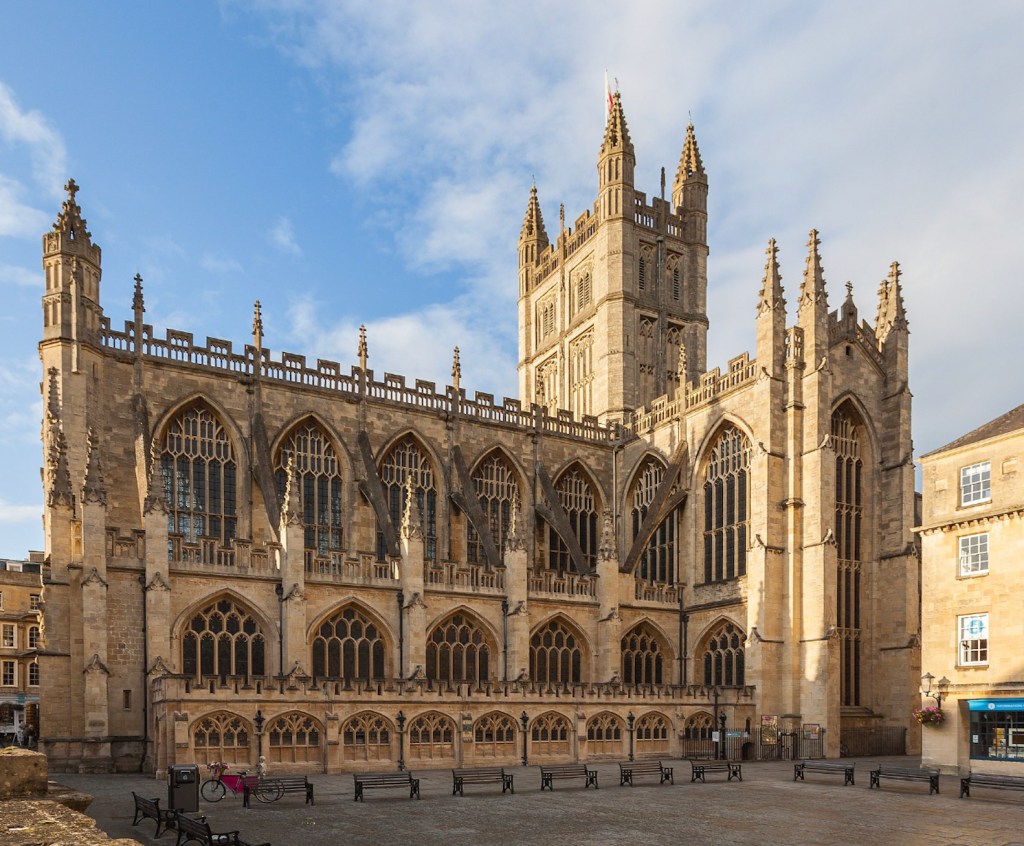
Bath Abbey . Diego Delso Geo cc

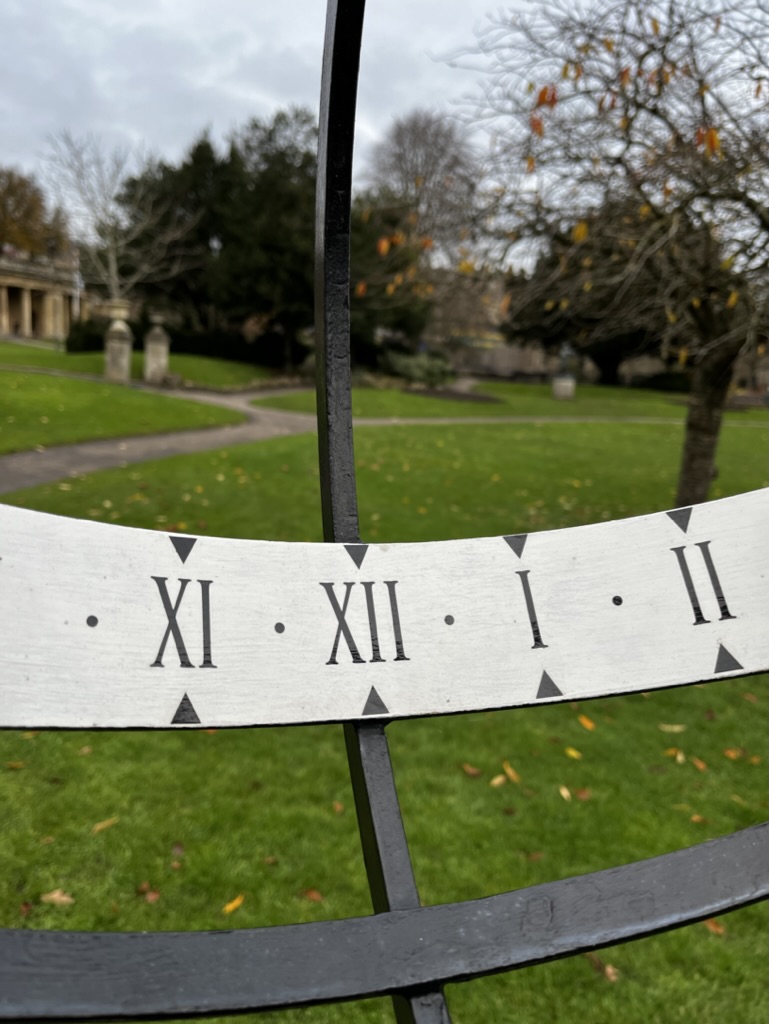
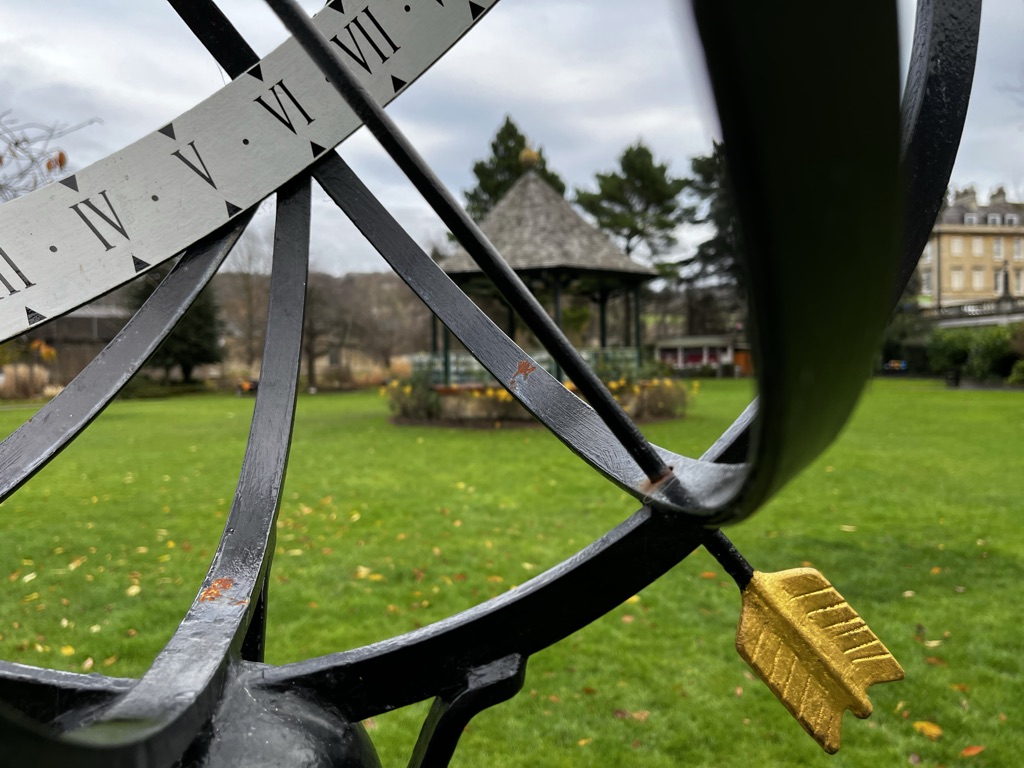
BRITISH SUNDIAL SOCIETY . ARMILLARY SPHERE . PARADE GARDENS . BATH

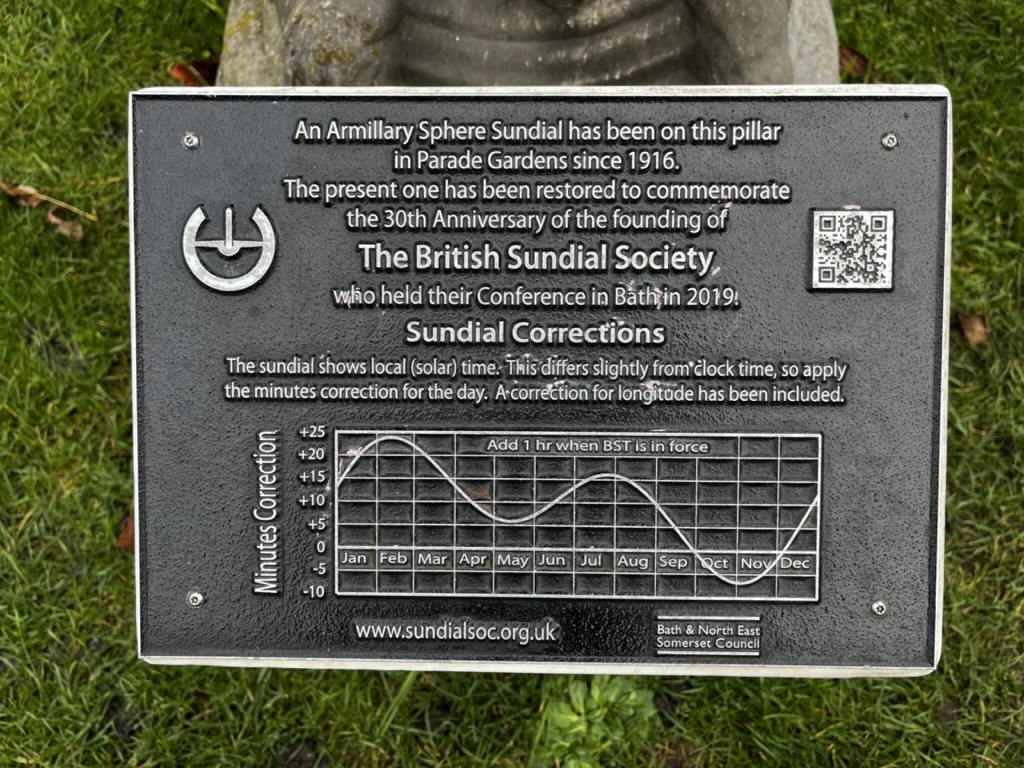
Bath . Commemorative Sundial Plaque

The plaque above gives all the details (including a bar code) necessary to admire and appreciate this excellent armillary sphere that was installed to celebrate the 30th anniversary of the foundation of BSS. My visit to Bath was spoiled by bad weather: gloom with only occasional respite from rain. Hence these rather unsatisfactory photos, which I have had to cheer up somewhat. I intend to replace them in due course, when a visit to Bath coincides with sunshine. The Motto, explained below, describes my predicament.

The gallery of images below gives a 360º view of the dial against glimpses of the Bath setting. One or two are meant to be ‘arty’, never my strong suit.

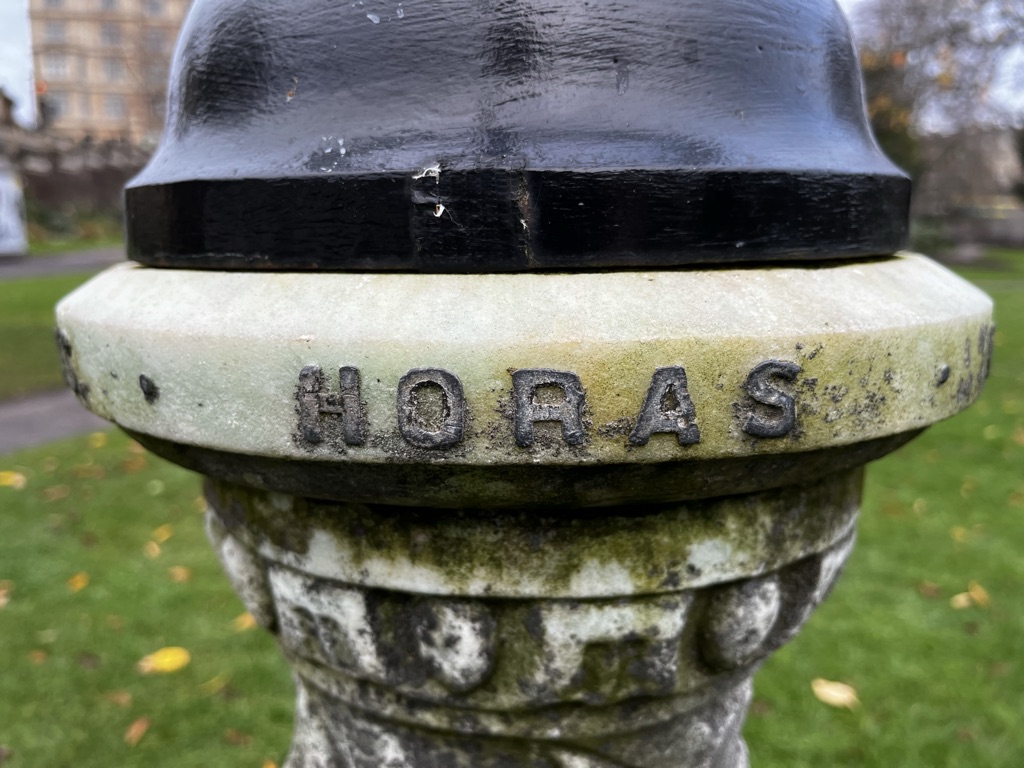
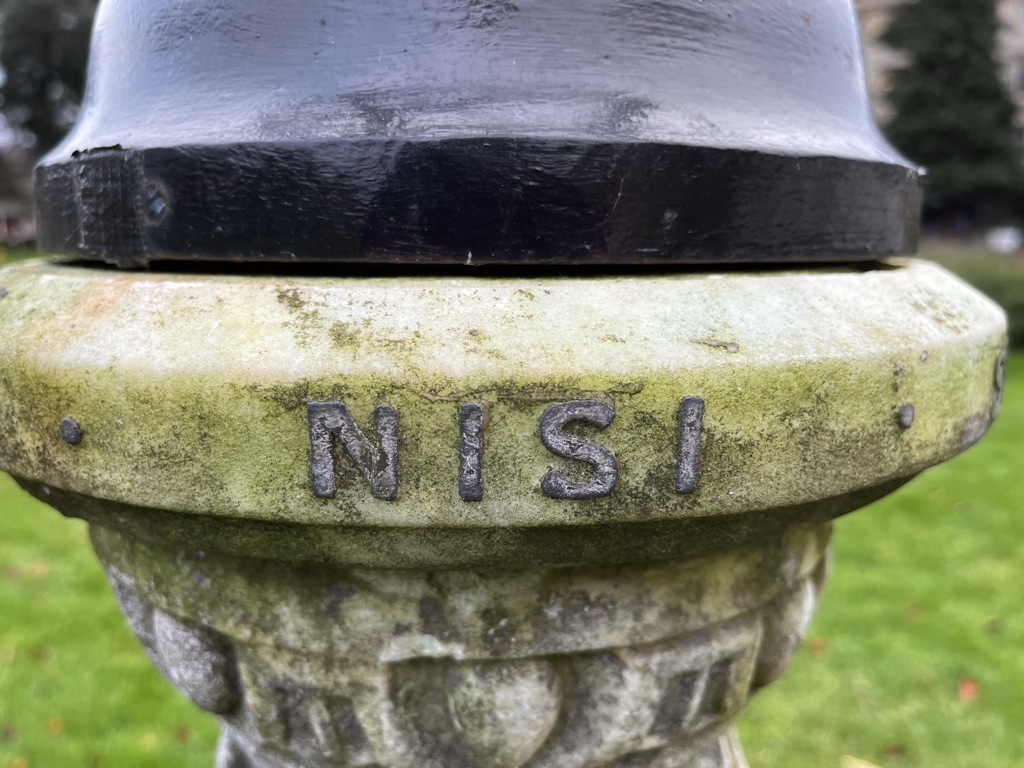
MOTTO

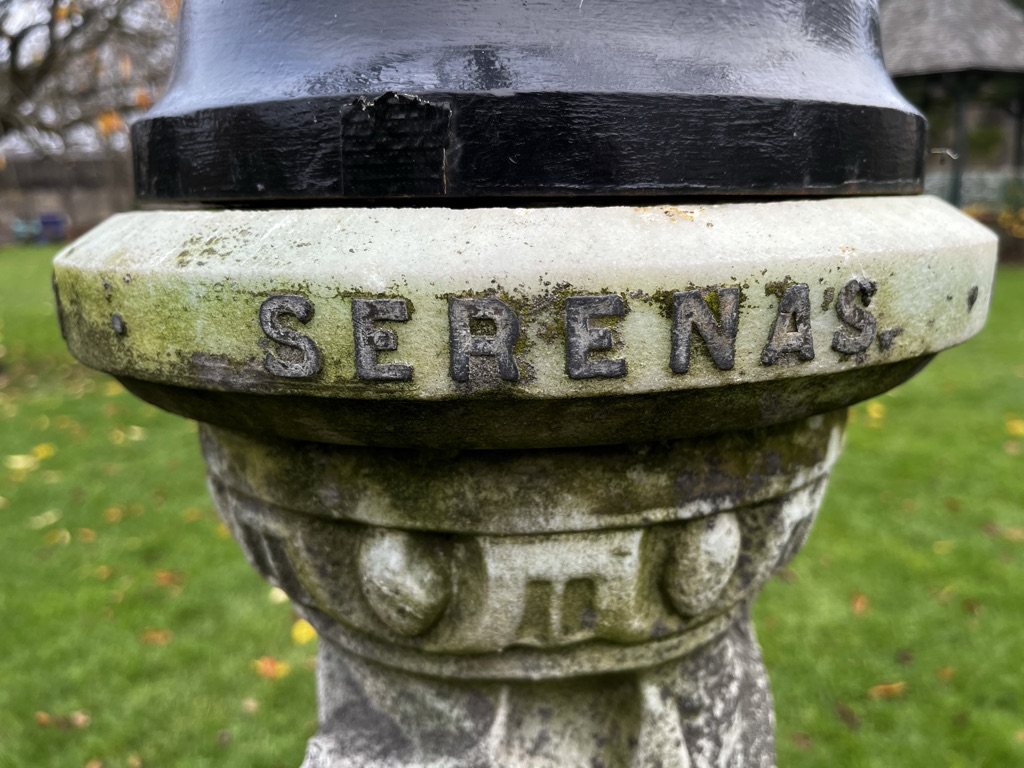
‘I ONLY RECKON THE BRIGHT HOURS’ is the translation given by Margaret Gatty (p.45 of the compact volume). Other versions include I ONLY COUNT CLEAR HOURS and I ONLY COUNT THE HOURS THAT ARE SERENE. MG wrote (of the succinct Latin version) that the motto is too good to be uncommon, and gives a number of locations where it may be found in England, Scotland, and (unexpectedly) Venice, of which Hazlitt wrote …there is a softness and a harmony in the words and in the thought unparalleled. None of the above modern motto variations works very well; it’s hard to come up with a translation as elegant as the original in Latin. The word ‘serenas’ is the real problem….

ADDENDUM Dictionary research including Chambers – far the best for archaic words and usages – clarifies the motto. A subsidiary meaning of ‘serene’ was, in the past, ‘an expanse of clear sky’; ‘cloudless’; or in one source, ‘sunny’. On countless modern sundials, this Latin formulation is the familiar I only count the sunny hours.

Sundial Aldeburgh . David Dixon Geo cc

GSS Category: Armillary Dial; Armillary Sphere, Commemorative Sundial

All photos: Keith Salvesen except header image Diego Delso Geo cc; Moot Hall, Aldeburgh Dial David Dixon Geo cc

PONTE VECCHIO . FLORENCE – ‘ UNEXPECTED TIMES’: A C14 SUNDIAL

sundial-ponte-vecchio-florence-4

‘ UNEXPECTED TIMES’: A SUNDIAL ON THE PONTE VECCHIO

This article was written a while back, in the pre-Covid era. Now I have a sundial site up and running, this dial and some others from Florence have a new space.

Florence in January.  -8°C at night, zero during the day – but sunny enough in the middle of the day to be able to have coffee or even lunch outside. Apart from the Uffizi, no queues for anywhere. Most significant places on the tourist trail almost to oneself. Despite the cold, there is no frost: the air is so dry that the pavements, piazzas and even the cars are quite clear of frozen white crystals. By the river I caught the electric flash of a male kingfisher flying up from the water to an overhanging bush, his hunting perch. I watched him as he scanned the water below, occasionally diving down and returning to the same branch. Twice, I could see the glint of a tiny fish in his beak. 

sundial-ponte-vecchio-florence-5

Over the years I don’t know how often I have crossed the Ponte Vecchio – or even simply walked to the mid-point to admire the views up and down river from the open areas between the pricey shops. This time I was walking the length of the Vasari corridor that connects the Palazzo Vecchio to the Palazzo Pitti on the other side of the Arno. A section runs straight over the bridge and then passes across the facade of Santa Felicita, into which the Medici family could sneak from the corridor to a large private balcony for spiritual refreshment. Passing the middle of the west side of the bridge, in the ‘tourist photo op’ gap where Cellini’s bust adds to the photogenic view, I have never before looked upwards.

sundial-ponte-vecchio-florence-2

Here, on the roof of a shop, is an ancient sundial, supported by a white marble pillar. An eroded and almost illegible engraving below the pillar records that in 1333, floods caused the bridge to collapse and that “twelve years later, as pleased the Commune, it was rebuilt with this ornamentation”. The sundial itself, with its columnar divisions reminiscent of a rose window, marks the CANONICAL HOURS. The gnomon’s shadow indicates the hour of the day. If the sundial is the ‘ornamentation’ to which the inscription refers, then it is around 650 years old.

If you look closely, you’ll see, halfway up the south face of the hexagonal column, a lizardsundial-ponte-vecchio-florence-1

Seeing the sundial for the first time ever, yet in such a familiar place was a reminder that Florence is a city that demands great attention as one walks through the streets. Many buildings, even unassuming ones, have fine adornments high up that will catch the eye… but only if you are looking out for them. 

sundial-ponte-vecchio-florence-7