St Mary . Castle Bank . Stafford – Geoff Pick Geo CC / OS
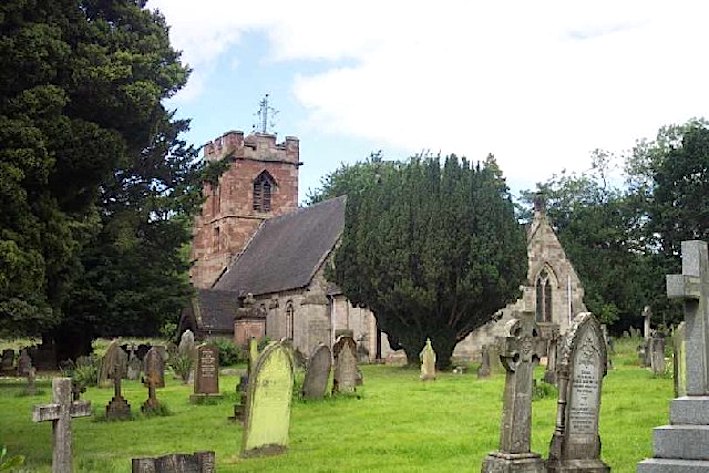
CHURCH OF ST MARY . CASTLE BANK . STAFFORD
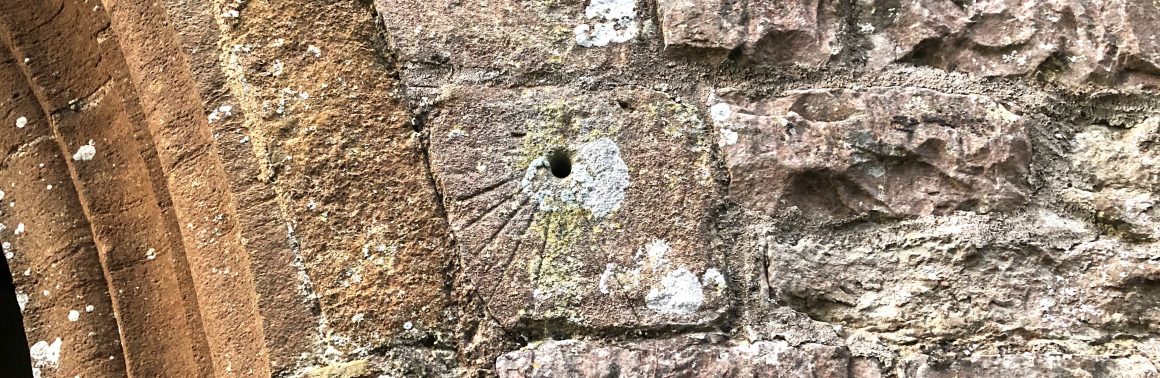
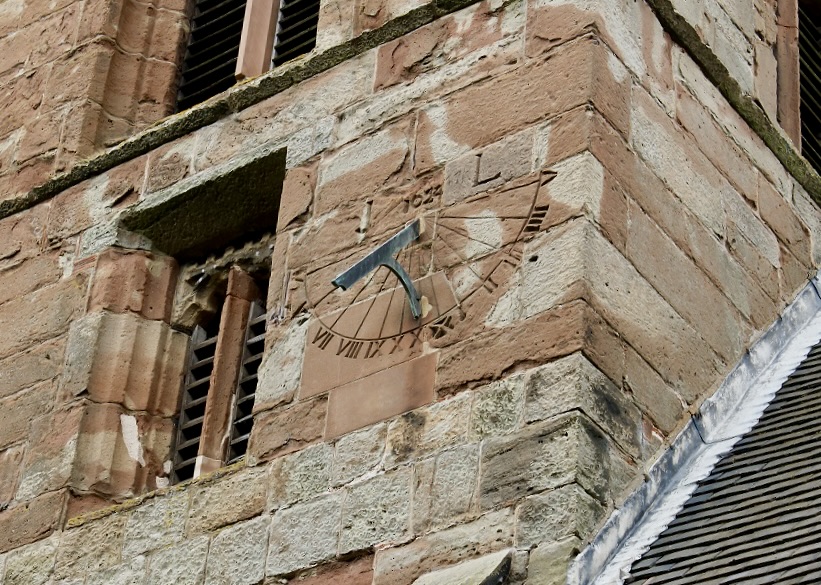
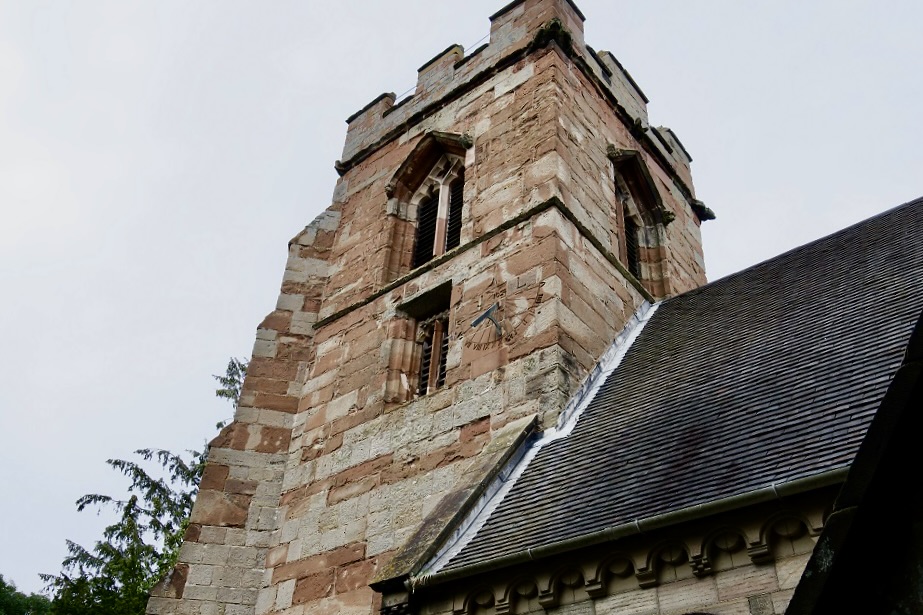
GV II* † C15 tower; otherwise mainly C19. Tower has 2 diagonal buttresses, plinth, south 2-light straight-headed window with sundial to right: incised inverted semi-circle with gnomon and inscription: J 1624 L BLB . In Newport Road below the castle, not to be confused with the large ‘collegiate’ parish church, also St Mary. 52.7969 / -2.141 / SJ905221
St Mary . Castle Church . – Vertical Sundial
DIAL
The vertical dial is high up on the S side of the tower, a semicircle with Roman numerals, with the date 1624 and on either side of it the letters J and L. The date may fit with work carried out on the upper stage of tower in C17. As can be seen, there has been good repair work on the dial, so that it is observably both ancient and modern.
GSS Category: Vertical Dial; Church Sundial; Old Sundial
All photos: Erika Clarkson, with many thanks for this and her other contributions to this project; Geoff Pick for his photo of the church Geo CC / OS
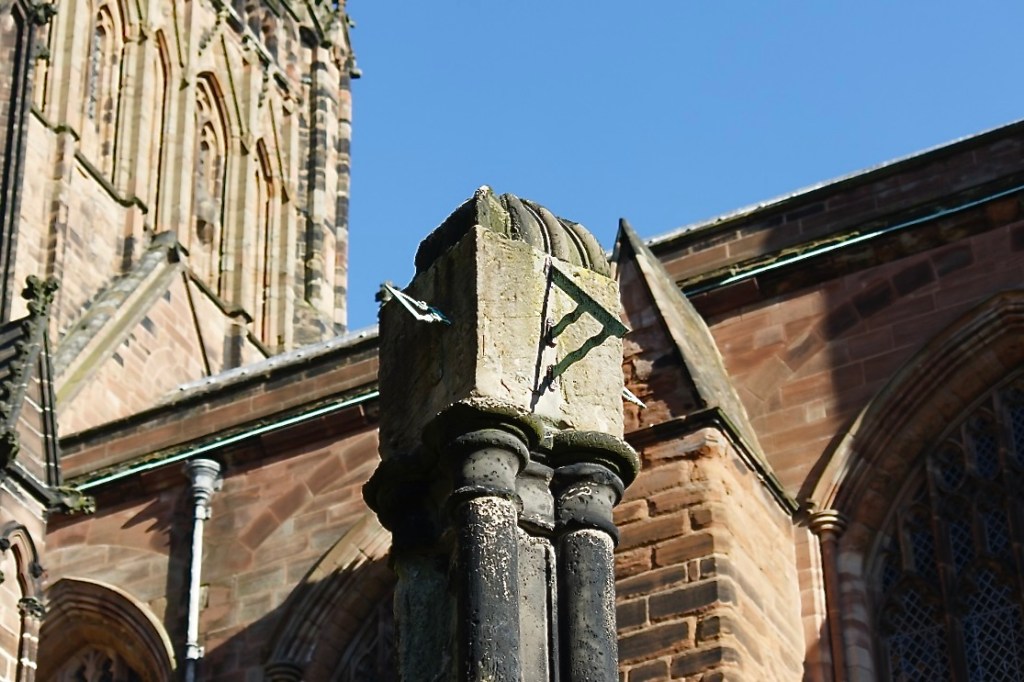
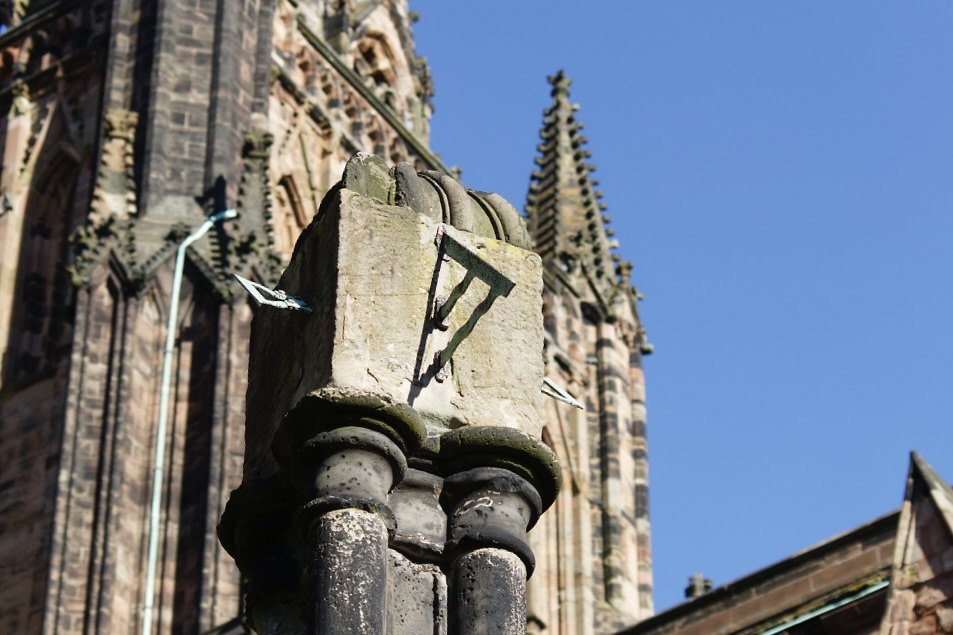
GRADE II † Large Cube Dial on a tall column. BLB / HE give the most complete descriptions: Date uncertain, probably C17 or early C18; 1st recorded 1781. Ashlar. Tall quatrefoil pier on plinth, with ring and moulded capital supporting cube with dials and gnomons to each face, reeded domical (domed) cap. An unusual feature whose origin is unknown, removed in 1781 and re-erected to the west end of the cathedral in 1785, removed and sold in 1881, and returned and re-erected on its present site in 1929.
Lichfield Cathedral – Cube Dial on Column
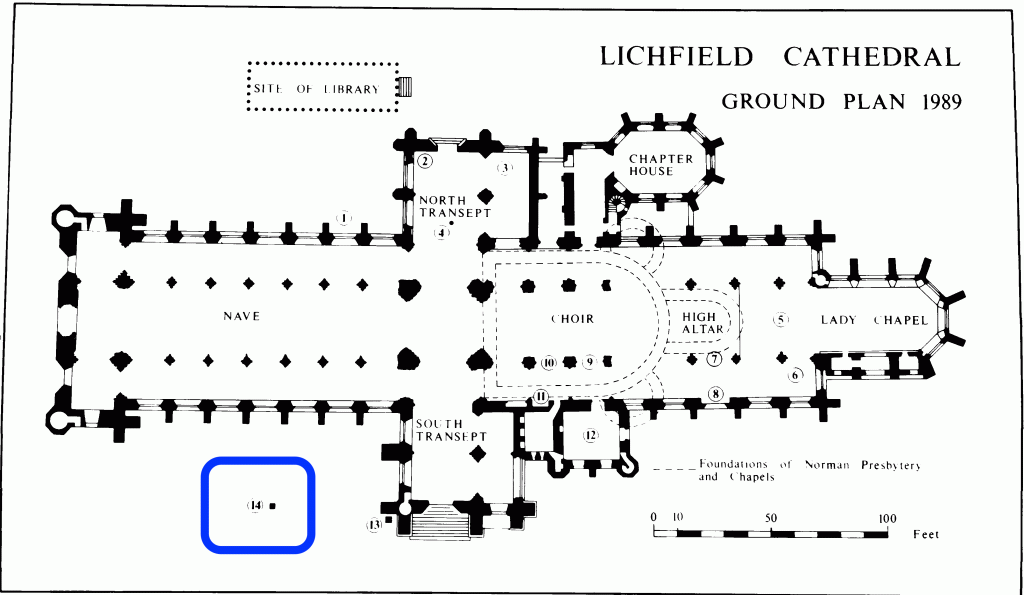
BHO notes: A sundial near the south doorway of the cathedral was removed in 1781 and re-erected in 1785 at the west end in order to regulate the clock on the tower. It was removed in 1881 and passed into private hands. It was returned to the cathedral in 1929 and placed on a pedestal in its present position south of the nave.
The clock in question was (without going into detail) probably the first Cathedral clock, which was in position by 1491. BHO suggests that the original clock was still in place in early C17 and probably not replaced or superseded by another clock until late C18. If so, the dial’s removal and re-erection in 1780s would have been to regulate the original clock.
Lichfield Cathedral – Cube Dial on Column
The handsome domed dial has a single gnomon on each face. The gnomons and lines obviously differ on each side. Numerals are Arabic rather than Roman.
Assuming the Cathedral conforms to the usual church orientation, the Cube’s angle in its position on the S side of the building is some 45º out of true from what might be expected. Presumably the explanation is that the cube was originally cut for a different position, and after several relocations its present position and orientation provides optimum accuracy. Any other suggestions would be welcome.






 GAUDIUM SUB SOLE . SUNDIALS . MEDIEVAL TO MODERN