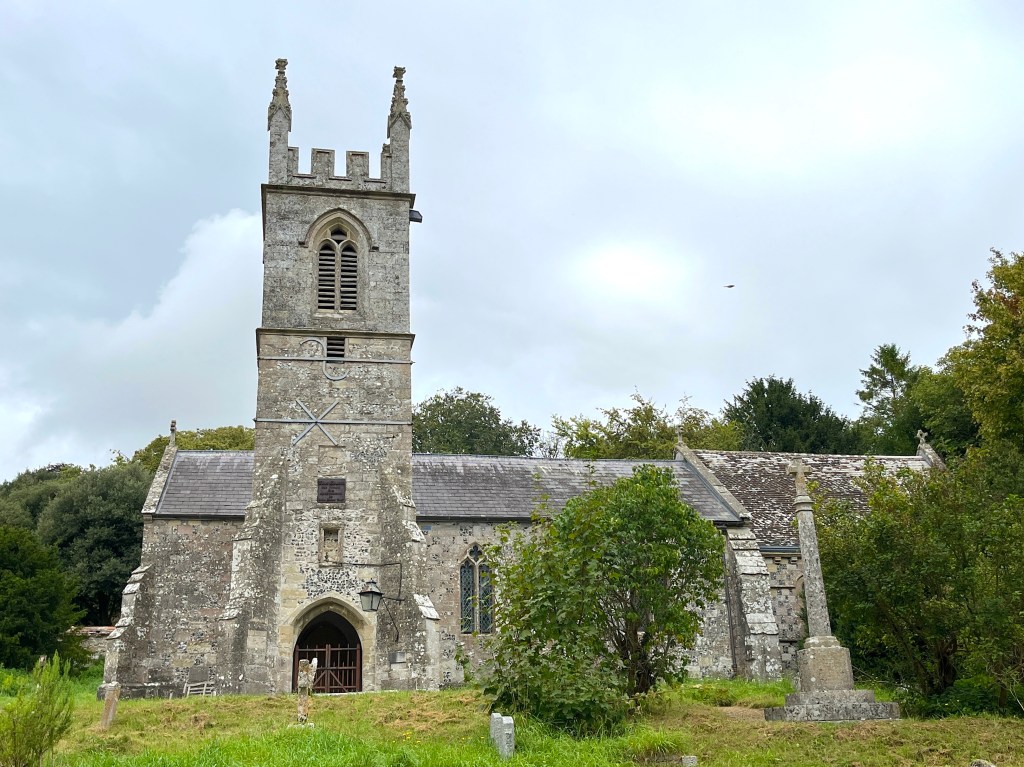
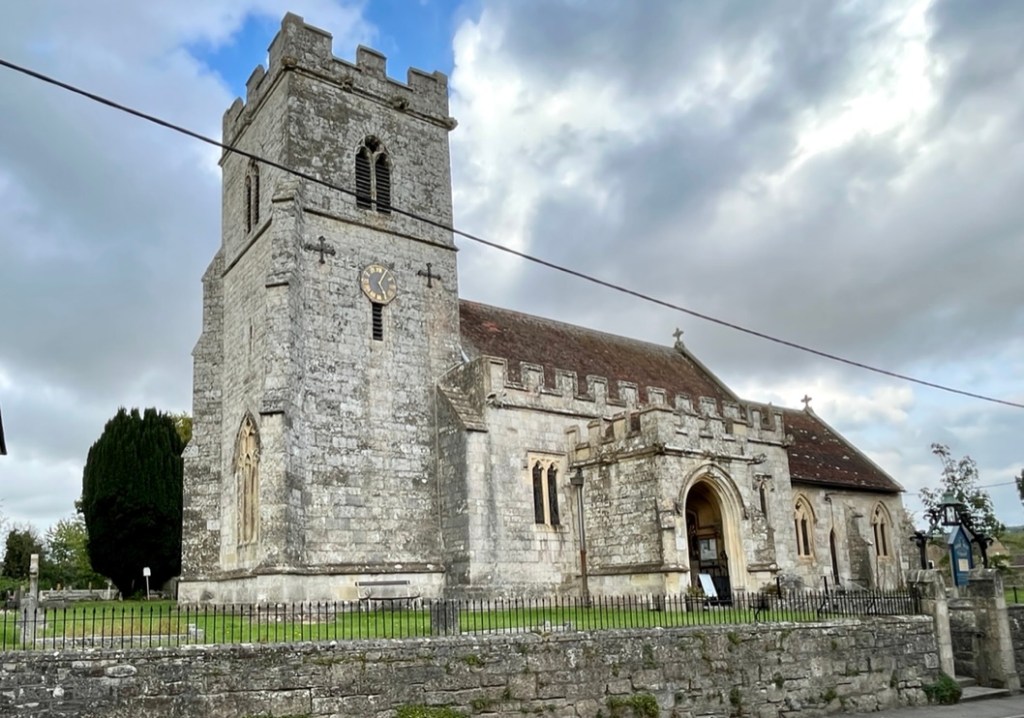
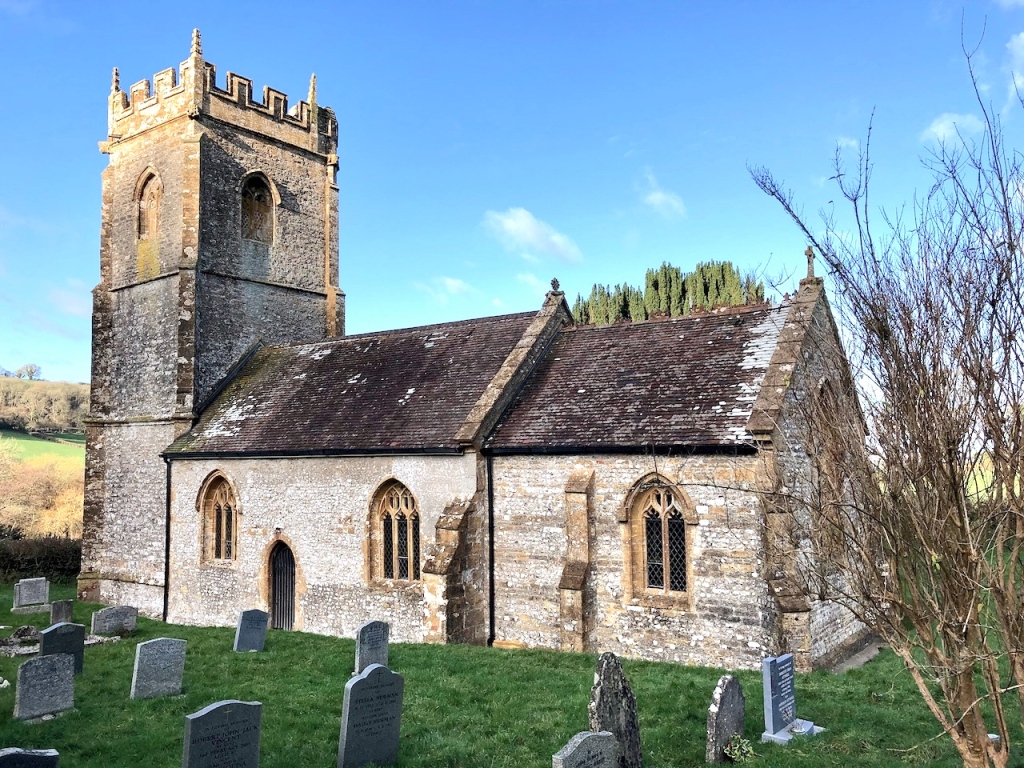
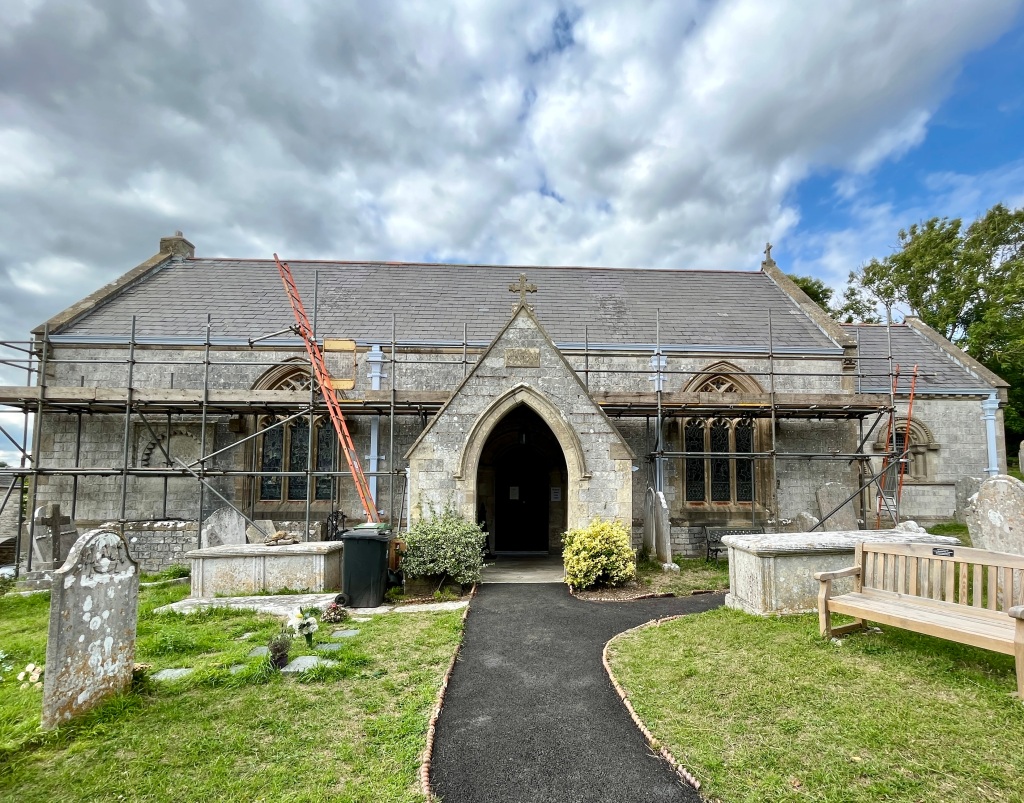
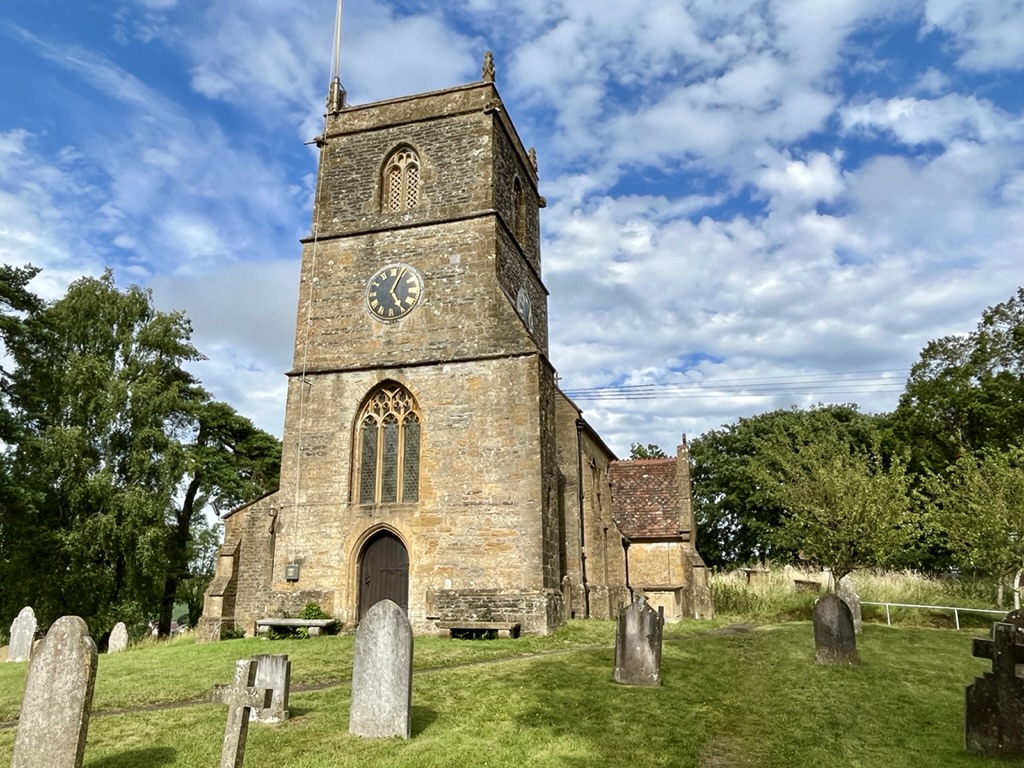
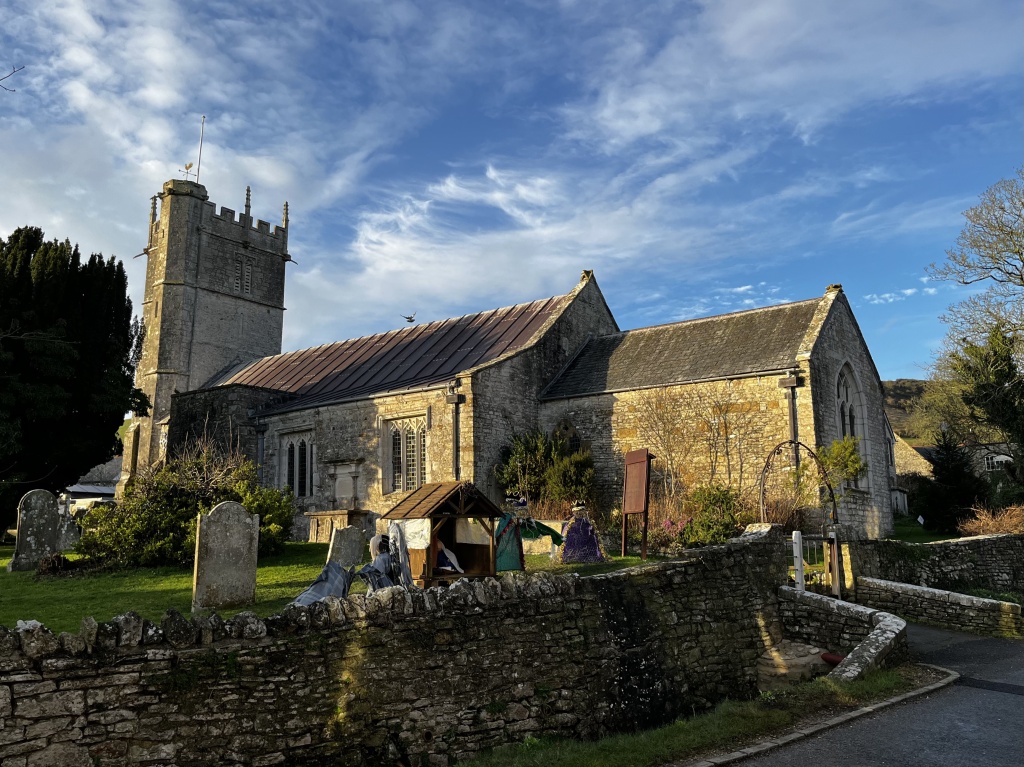
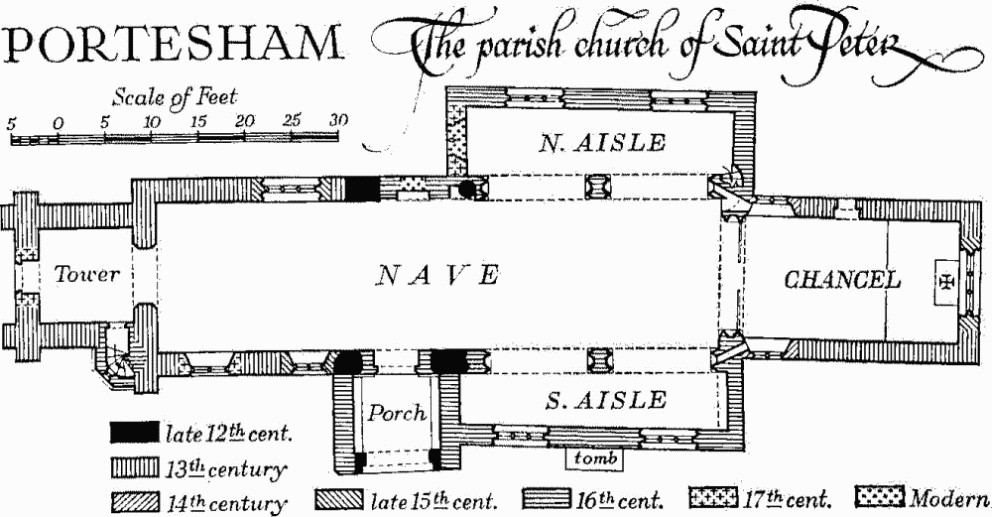
GRADE II* † C13 origins; C15 expansion; 1846 rebuilding by Wyatt. Wonderful pulpit. Well positioned beside an excellent pub to quench congregational thirst after righteousness. An ideal peaceful country church, despite being just S of the hectic A303 raceway. 51.1389 / -1.9898 / SU008377
DIAL 1
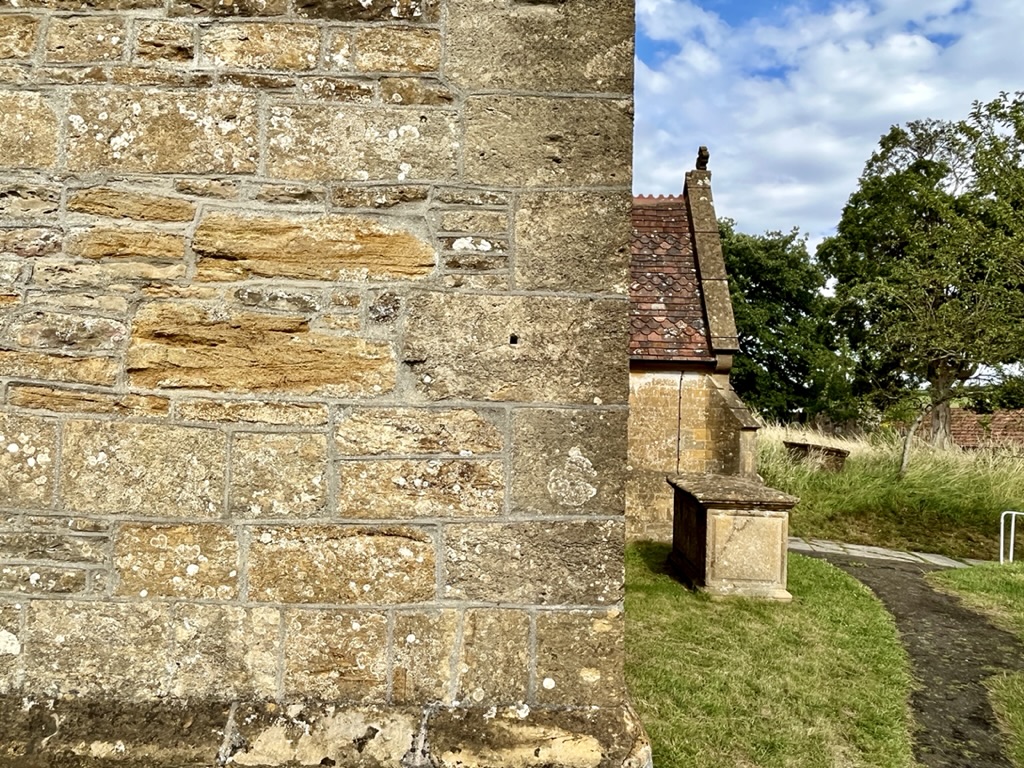
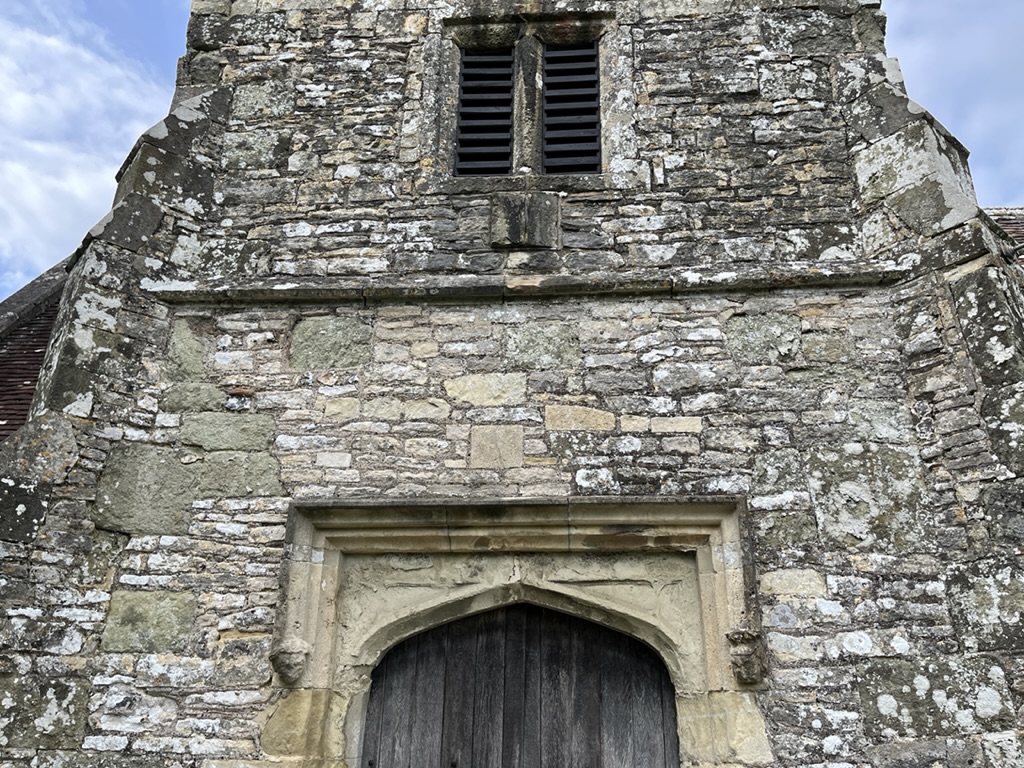
I very recently featured the inverted dial on the nave wall, tucked away quite low down on E side of the buttress.
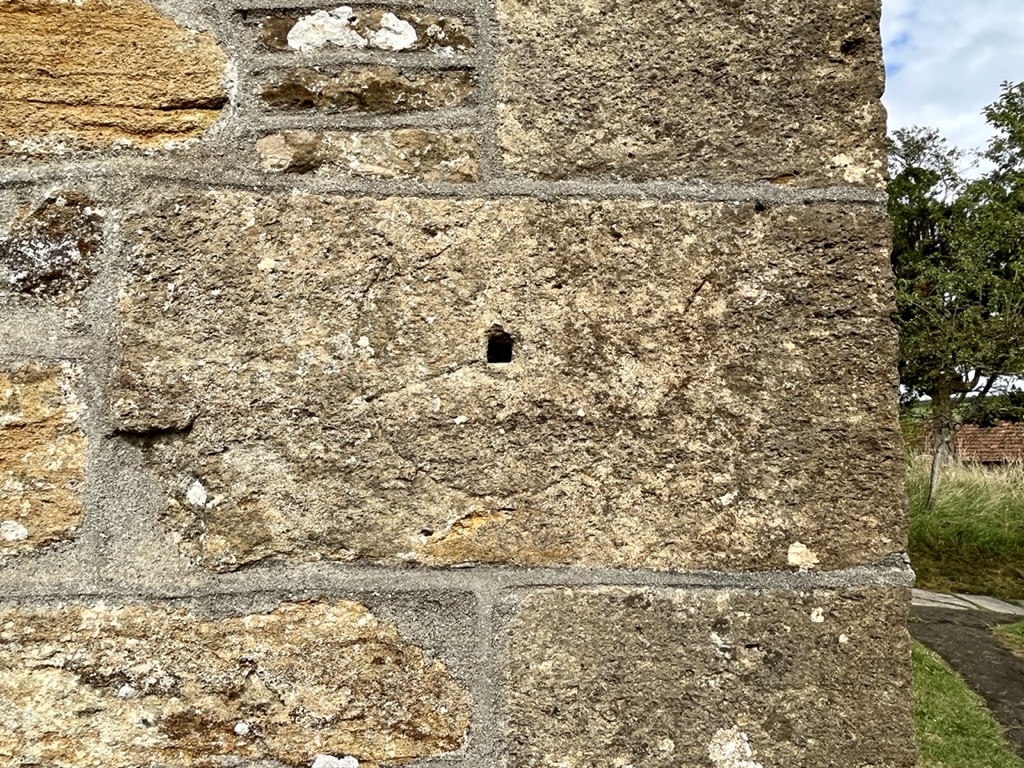
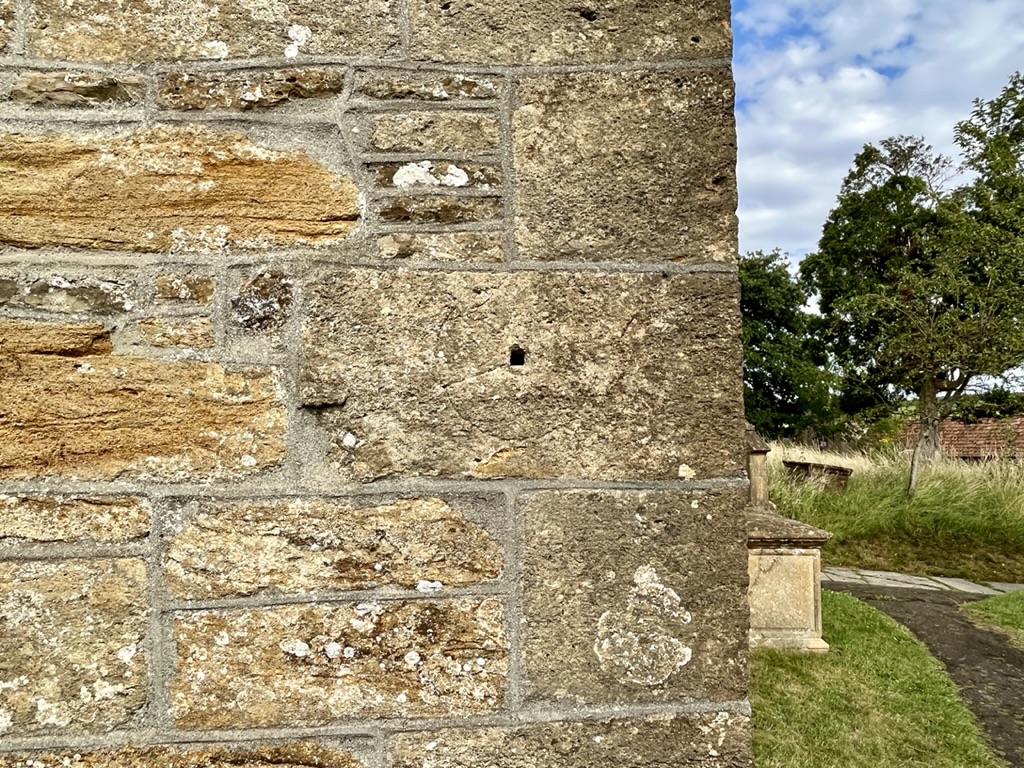
Almost immediately I was contacted by Lee Baines, pointing out that I’d missed a mass dial in poor condition (but at least right way up) with standard three radials in SW quadrant. By chance I was passing Wylye yesterday, and I am pleased to be able to correct the omission so soon.
DIAL 2
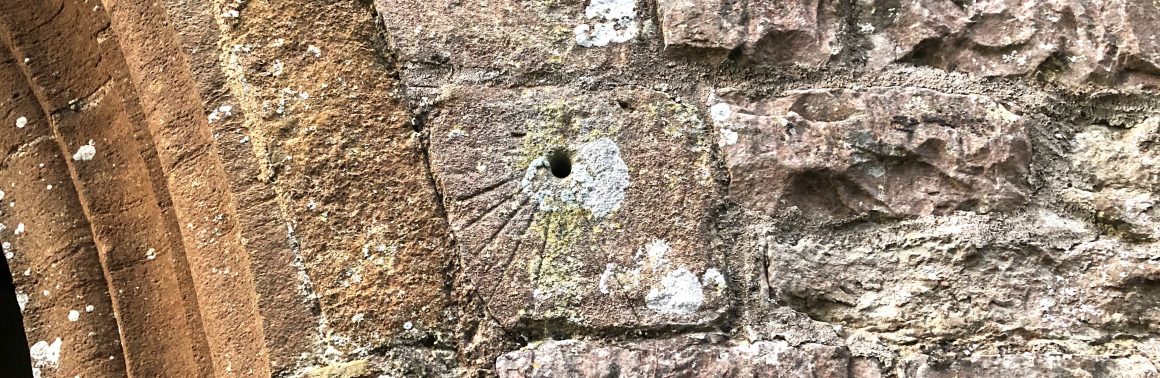
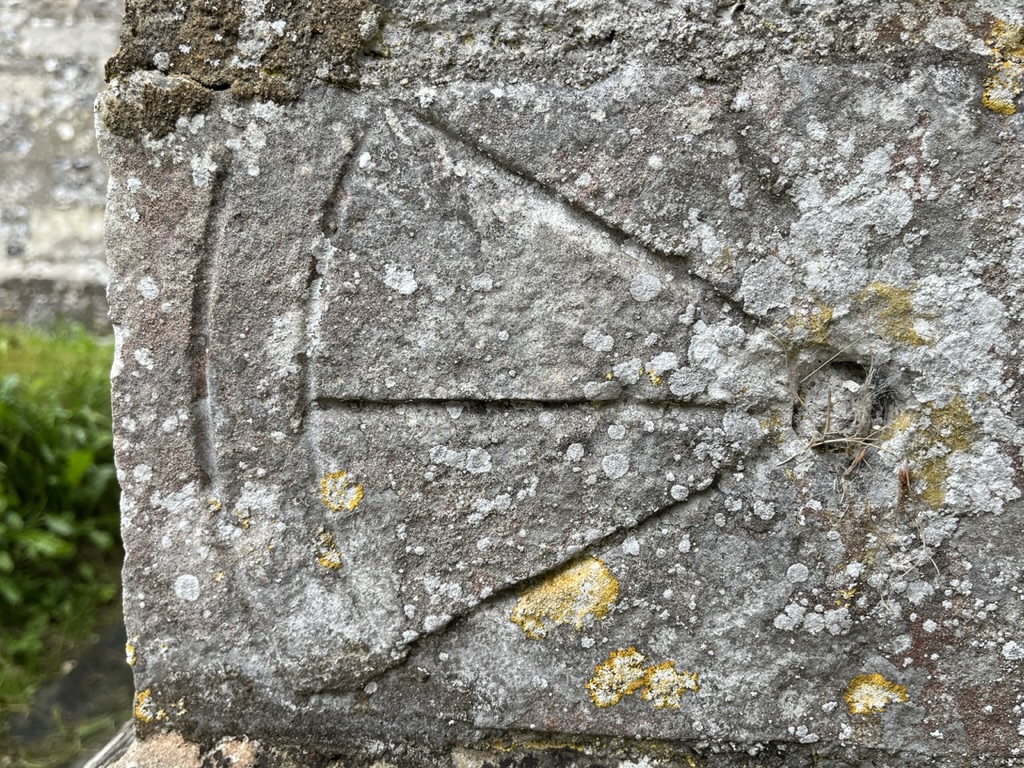
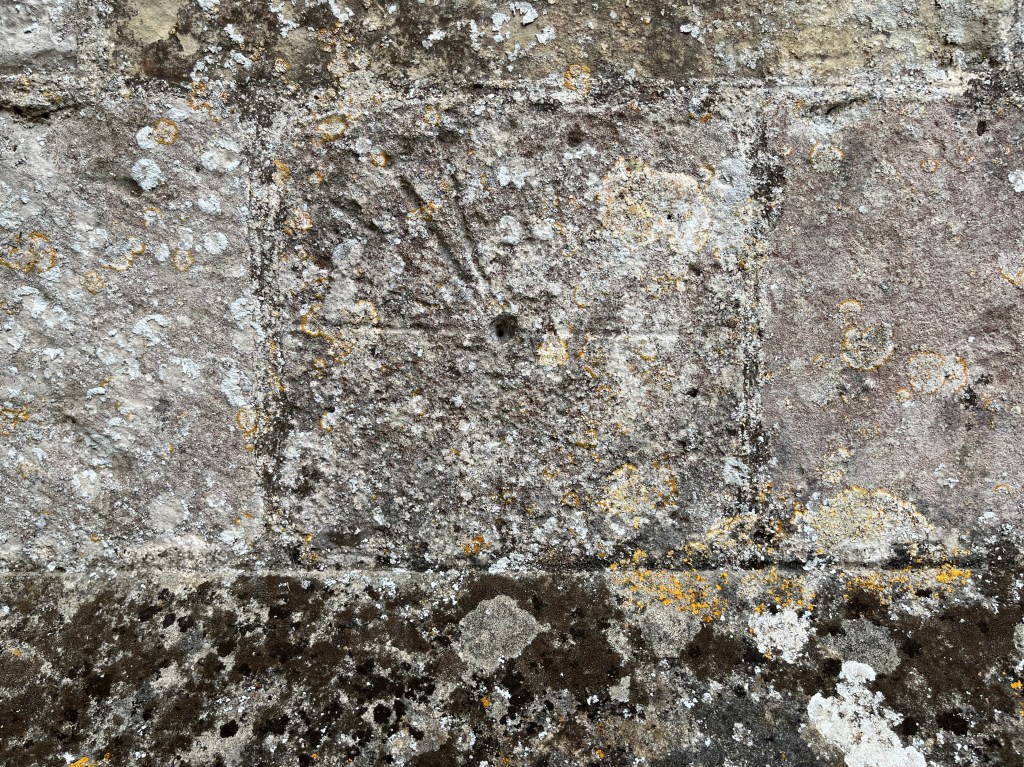
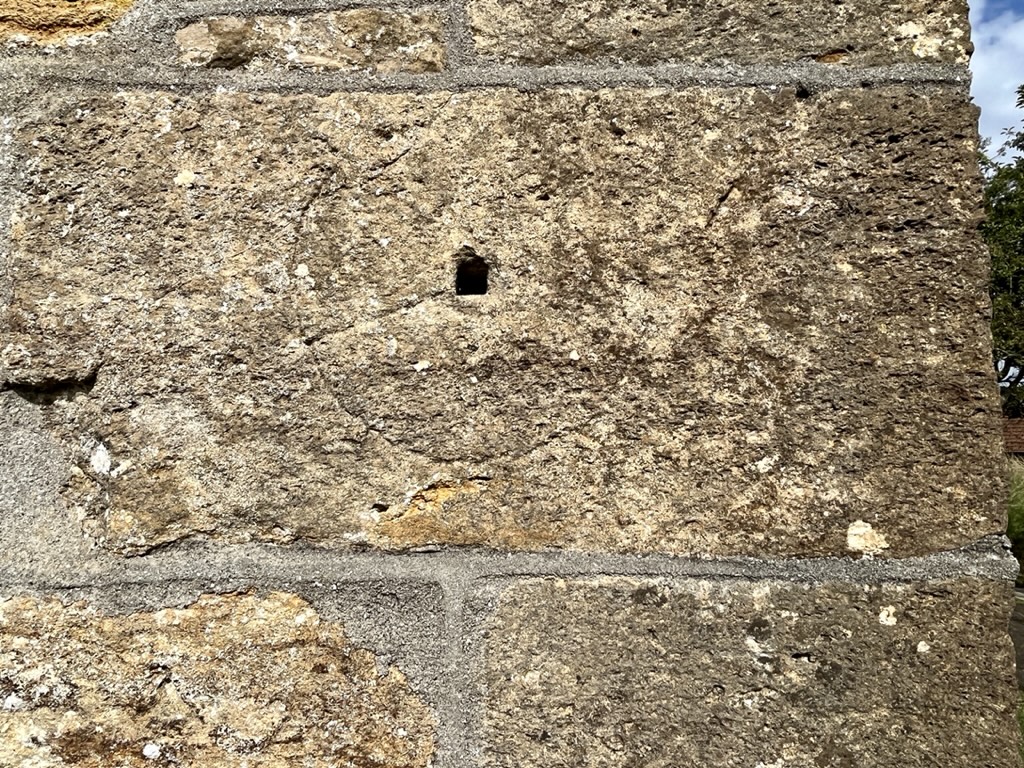
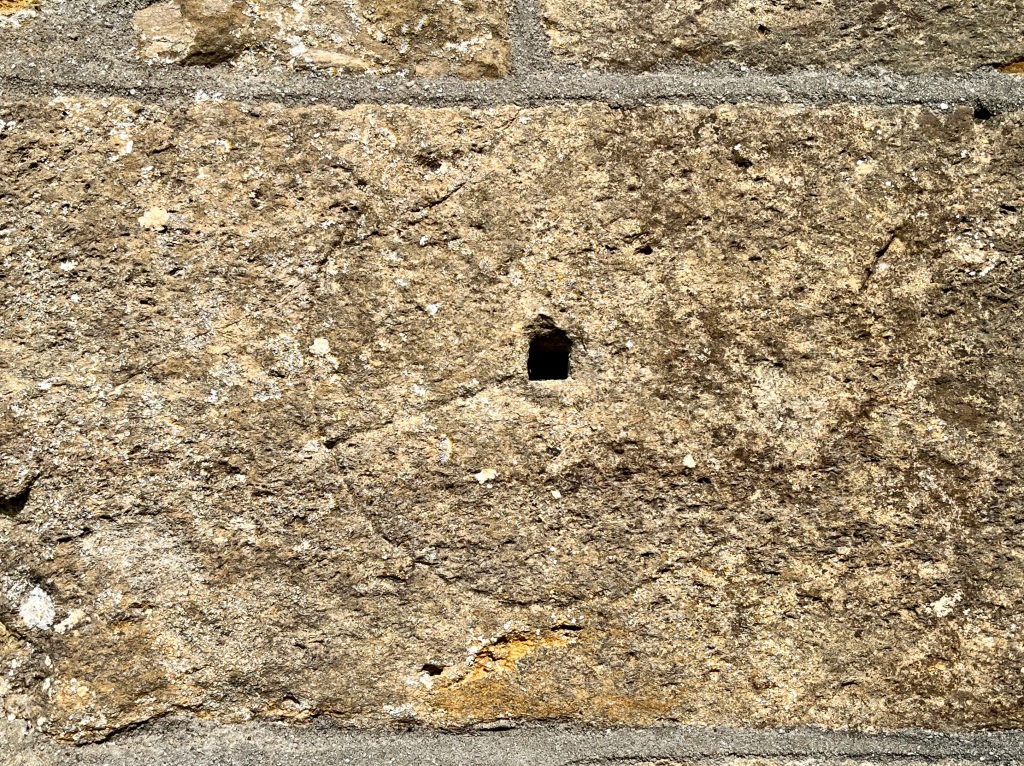
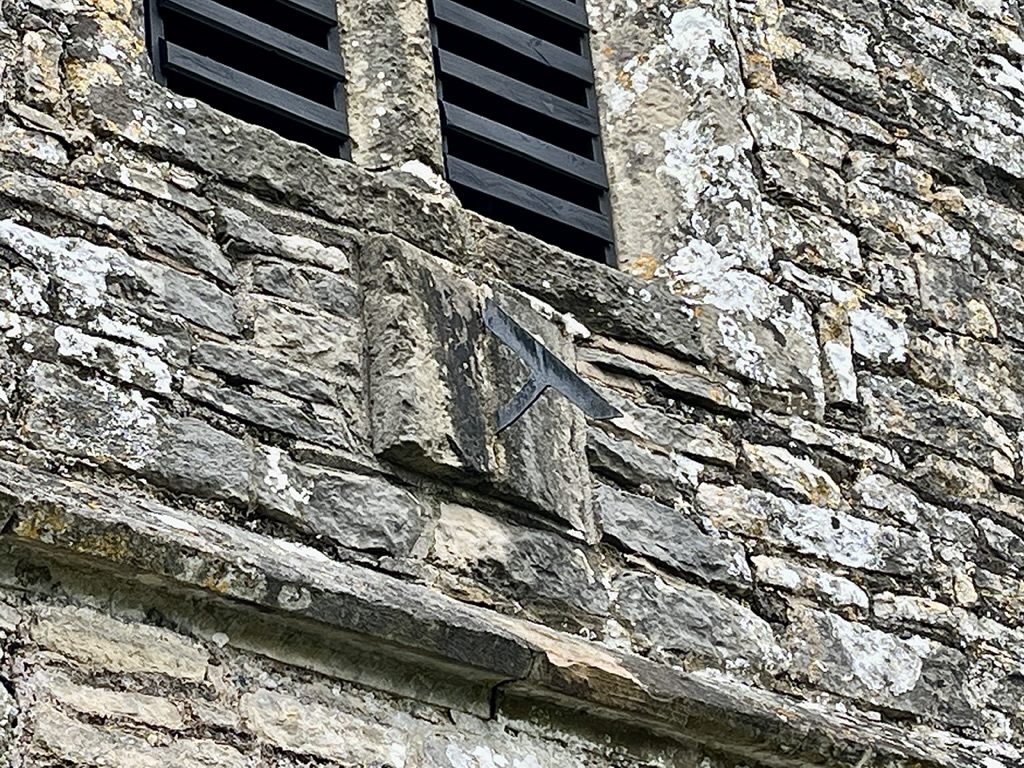
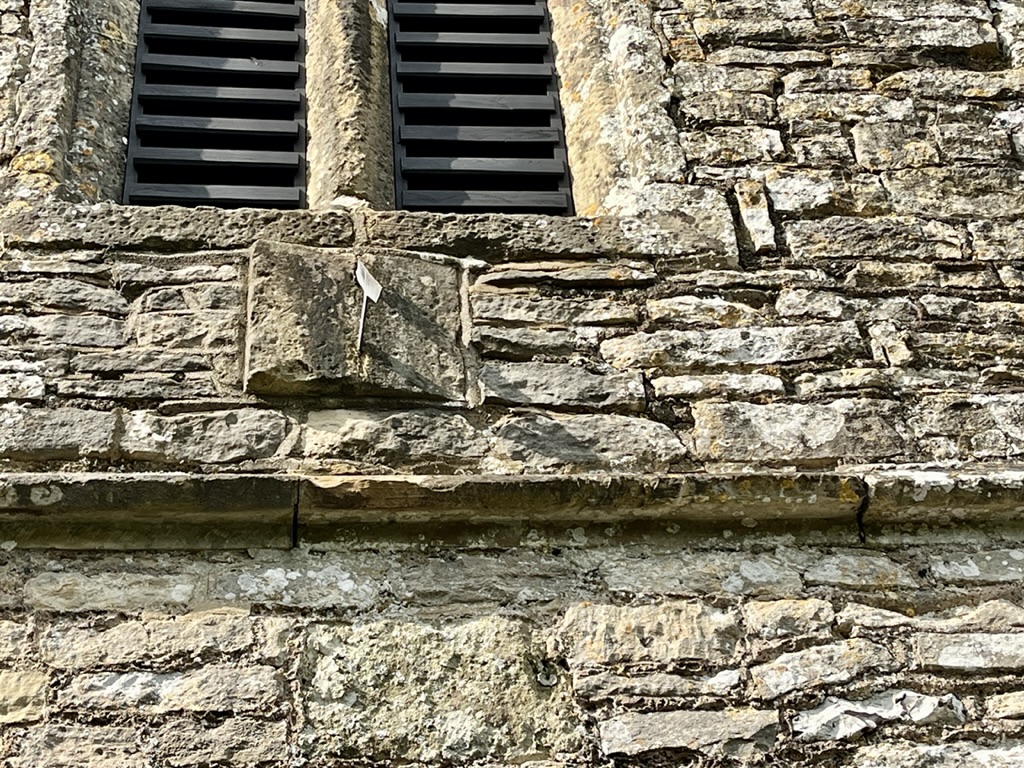
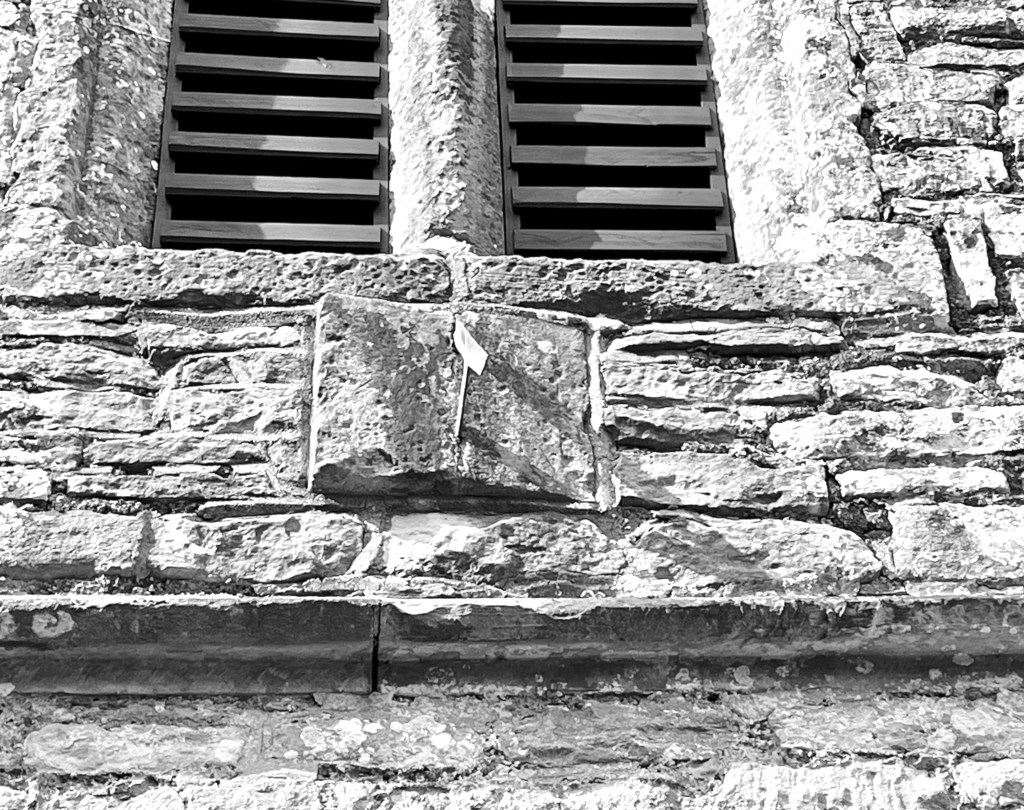
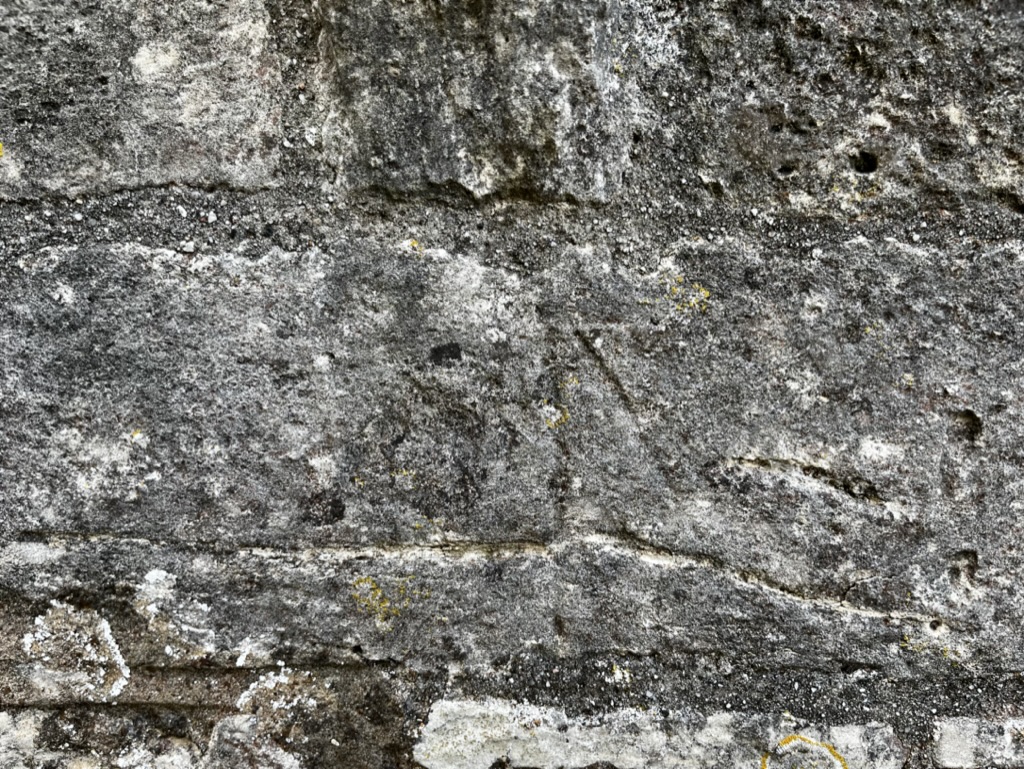
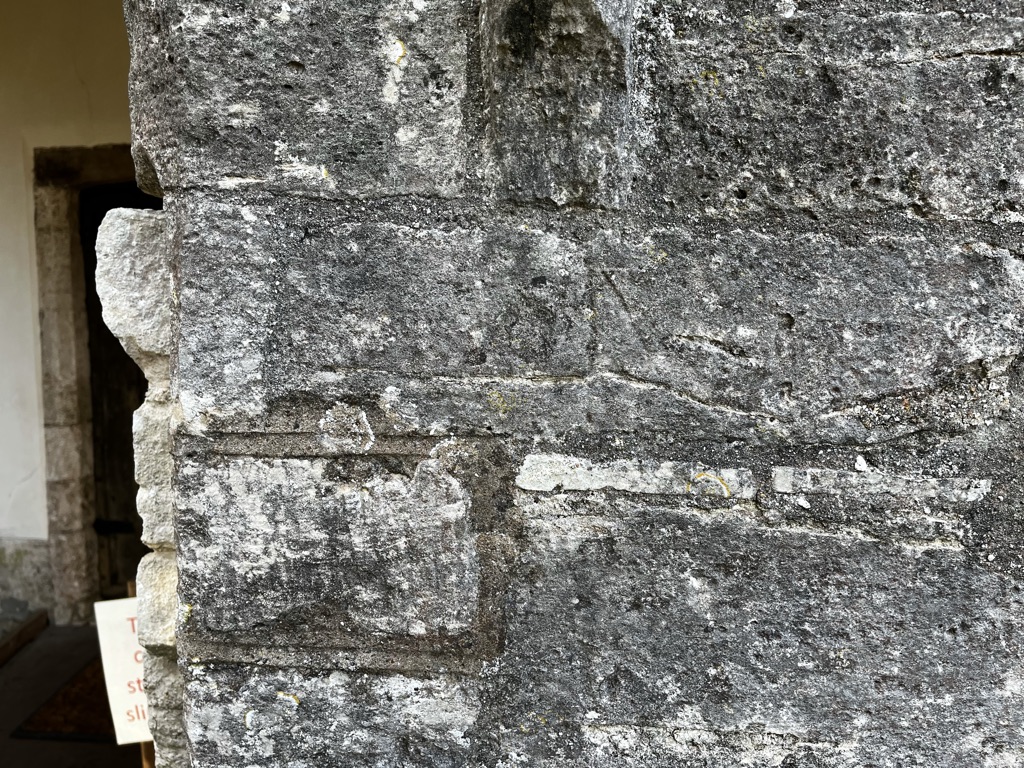
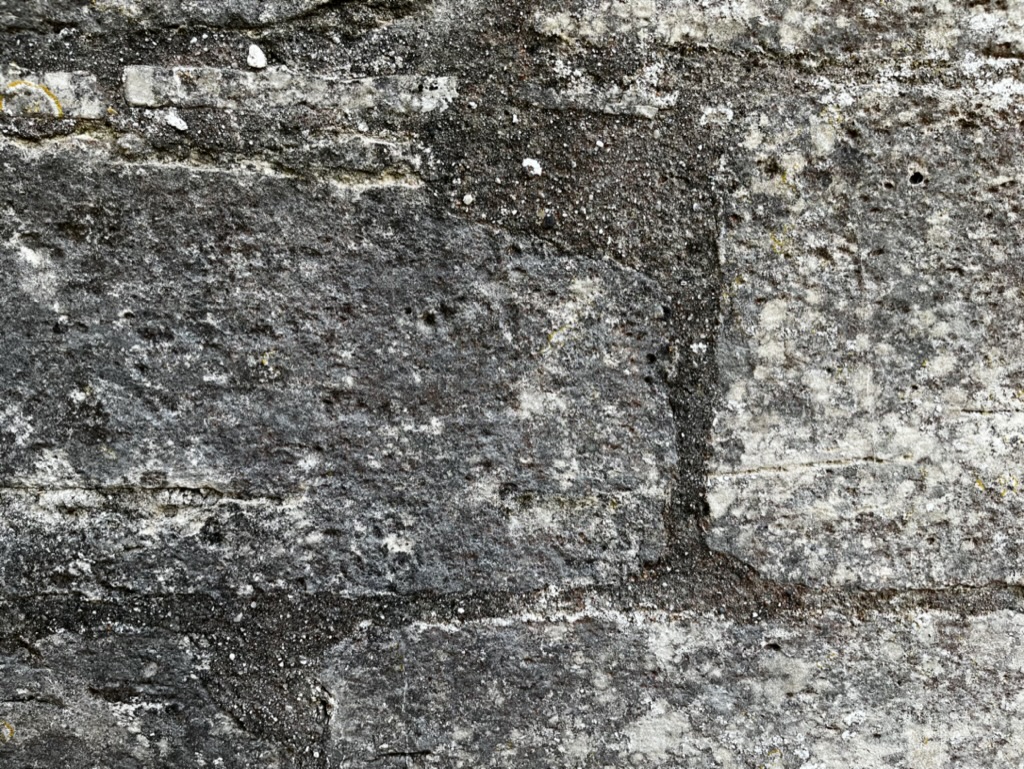
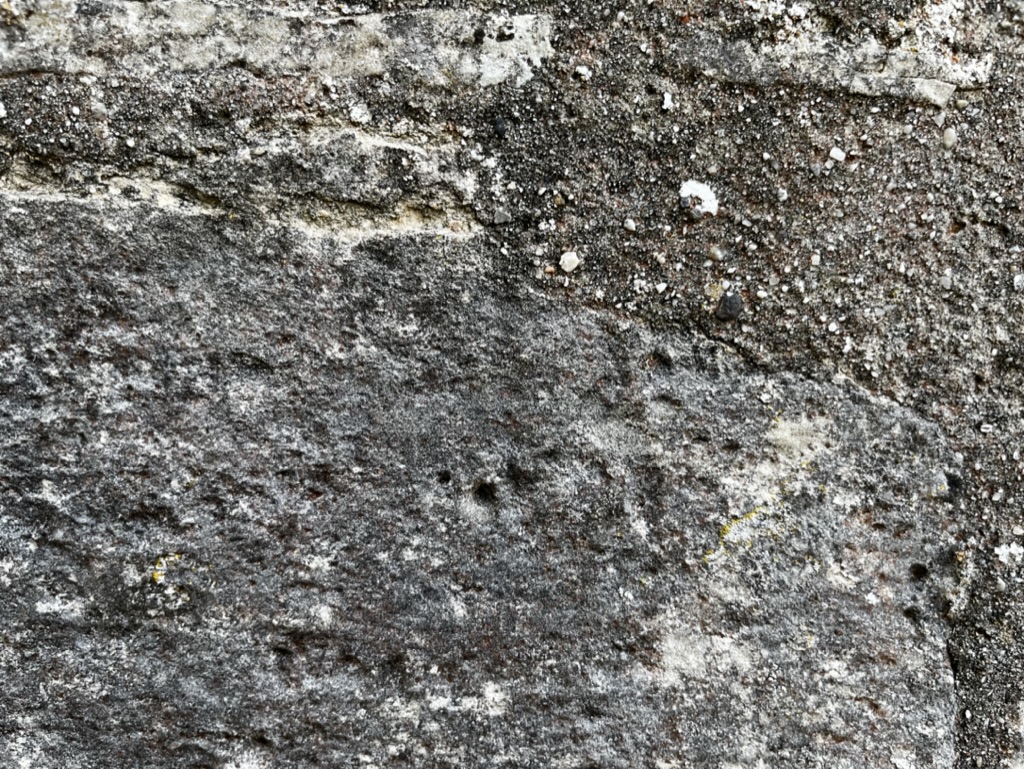
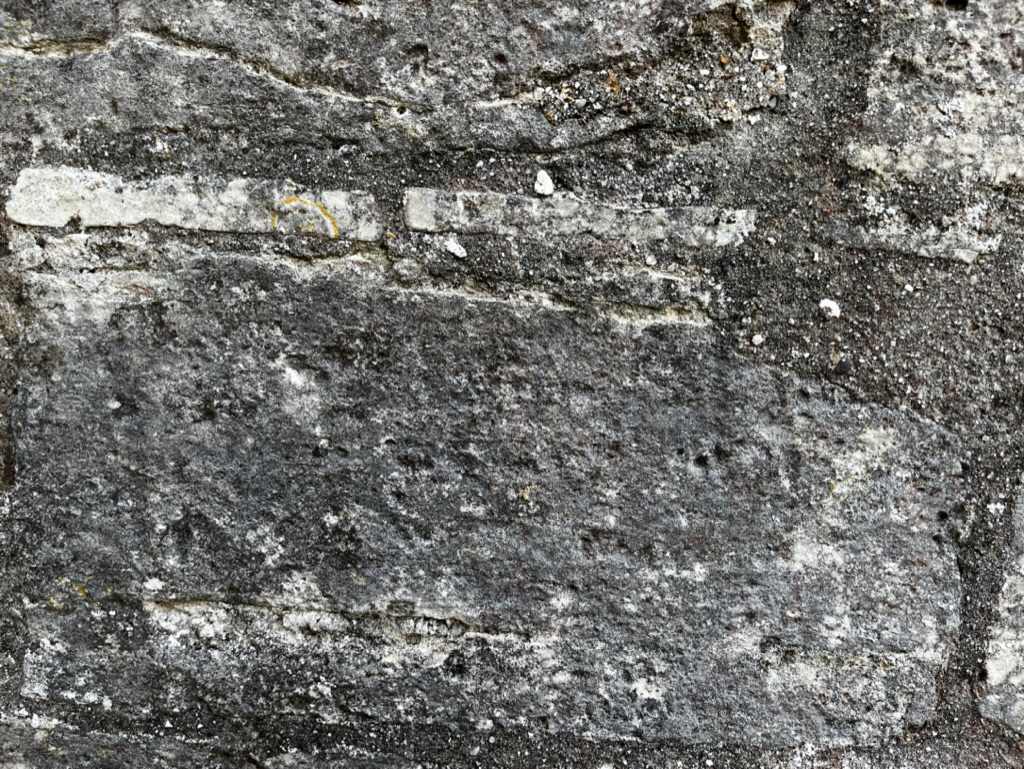
The dial is a good example of a less common feature. The joint between 2 stones acts as an emphasised noon line, with the gnomon hole in the mortar line above it. The mortar line doubles as a 6-to-6 line. There are 3 lines in LLQ, neither straight nor accurately leading to the gnomon hole. The deeper cut line corresponds approximates the Mass time Terce. The overall lack of finesse of this rustic dial suggests that it is rather earlier than Dial 1.
GSS Category: Scratch Dial; Mass Dial
All photos: Keith Salvesen; many thanks to Lee Baines for pointing out my omission
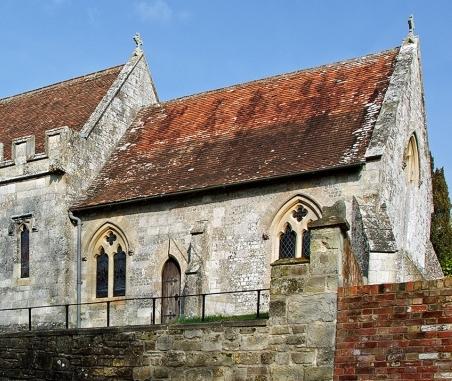
GV II* † C12 origins; C13 records; C15; restorations 1833 J Davis, 1861 W Hardwick; and 1912. Now redundant. Cast-iron plaque records 1833 rebuilding. Surprisingly large for a small community hidden away on the banks of the Wylye river (nb close to a very busy A303 intersection; check a map or you may miss the little side-road and could be going back and forth for some time. Close to Wylye. 51.146 / 51°8’45″N / -2 / 2°0’0″W SU000385
DIAL
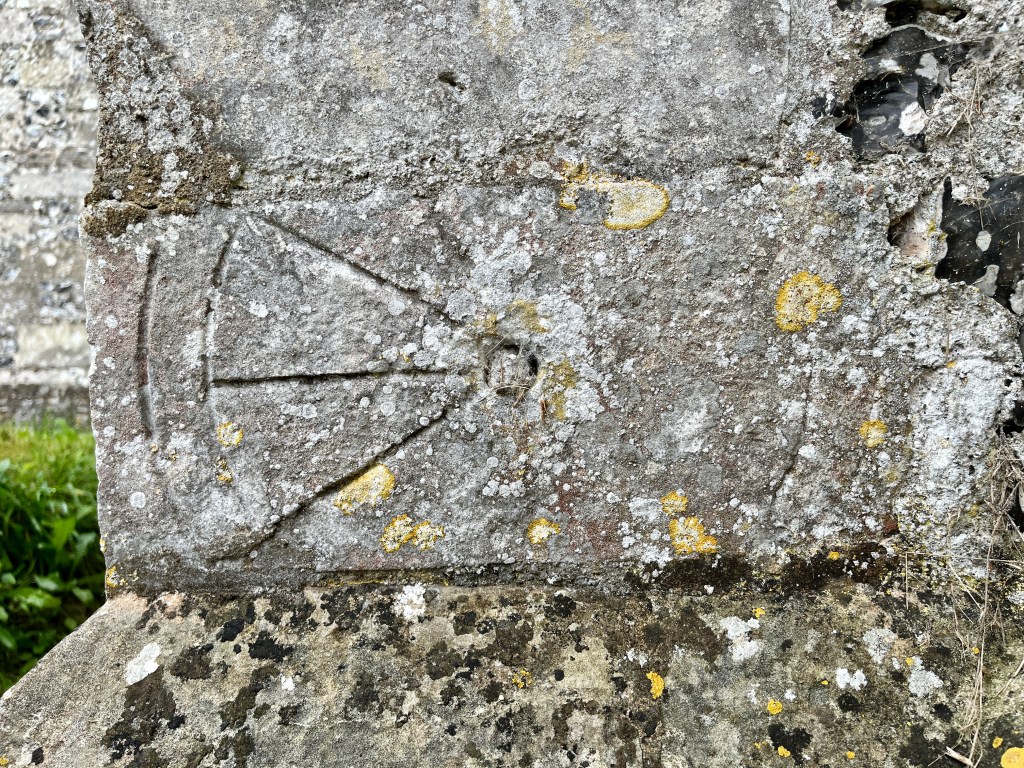
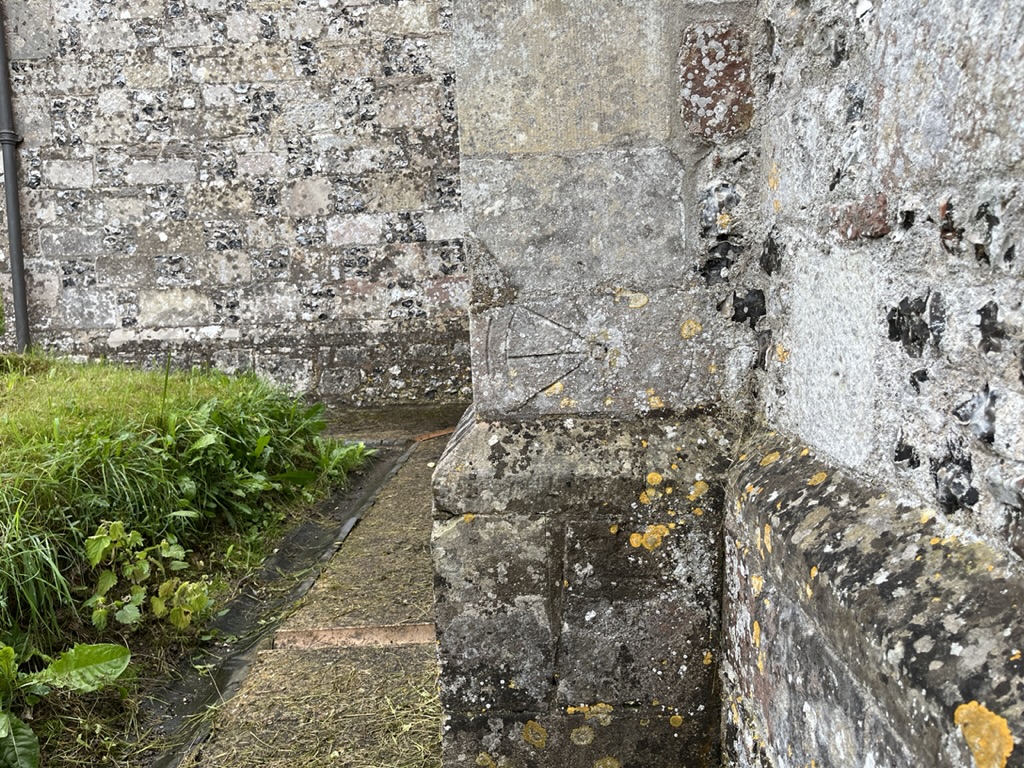
Part of the original dial stone was at some stage relocated and reused as a building block in a most unexpected place. You will find it N side, low down on the side of a buttress, facing W. In its working days, it must have been a fine marker of the passage of the day.
From the visible fragment one can tell that the dial was almost certainly cut over 2 (or more?) stones. The double circle – faintly seen RHS – gives an idea of the overall size.
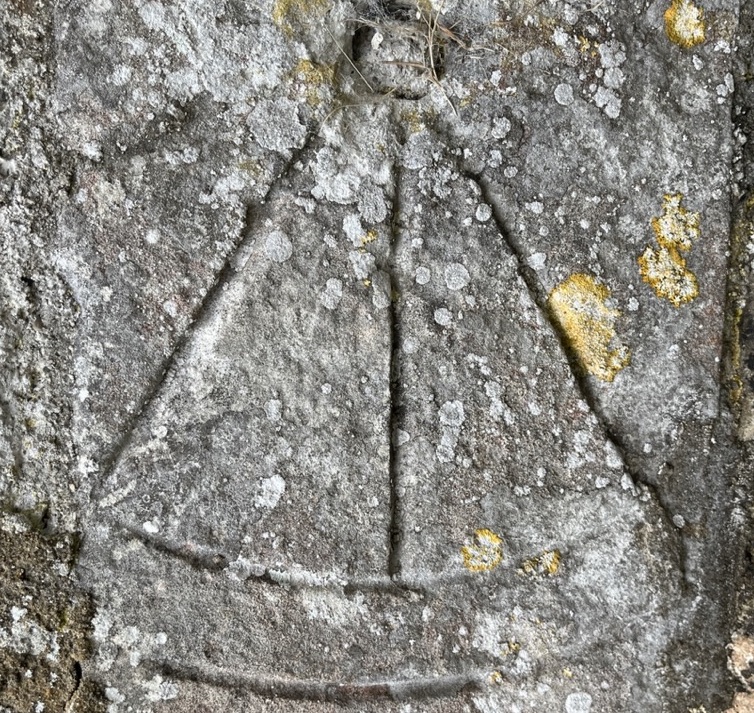
Rotation of the stone 90º anticlockwise reveals well-defined XI – noon – I lines
GV II* † C13, C15, 1863 restoration by T.H. Wyatt. PEV notes Very well preserved C9 Saxon cross shaft with fine carving… against north wall of chancel. Worth visiting close-by St Mary (no dial), an agreeable church. 7m SE of Warminster. 51.1586 / -2.0503 / ST965399
DIAL
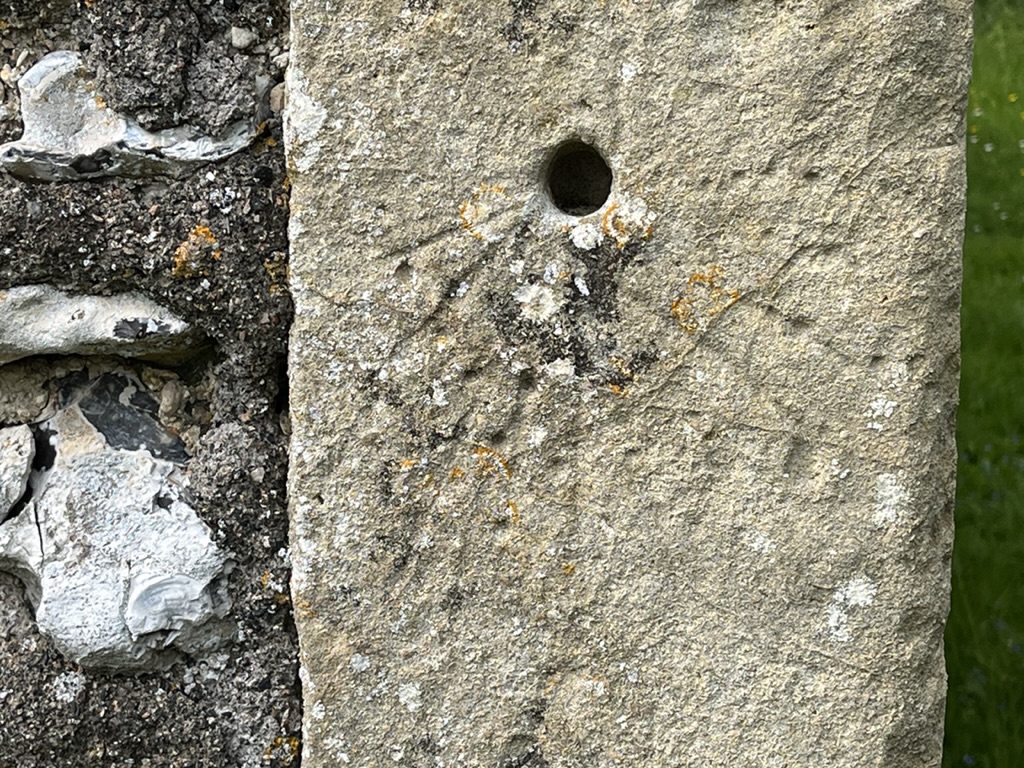
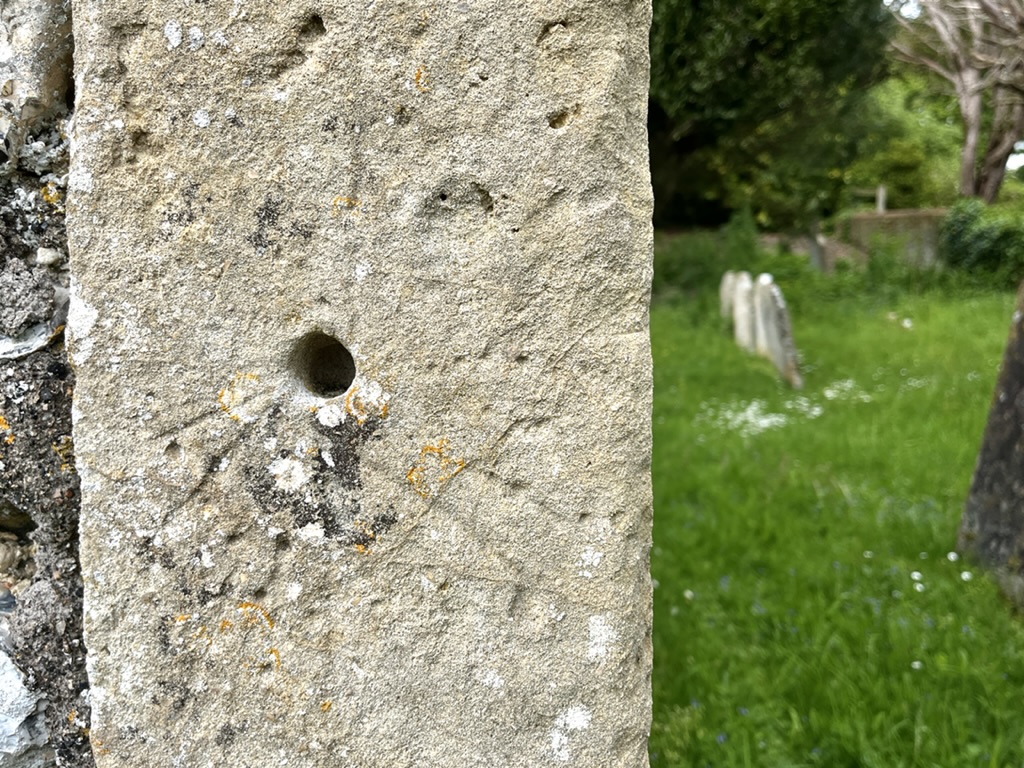
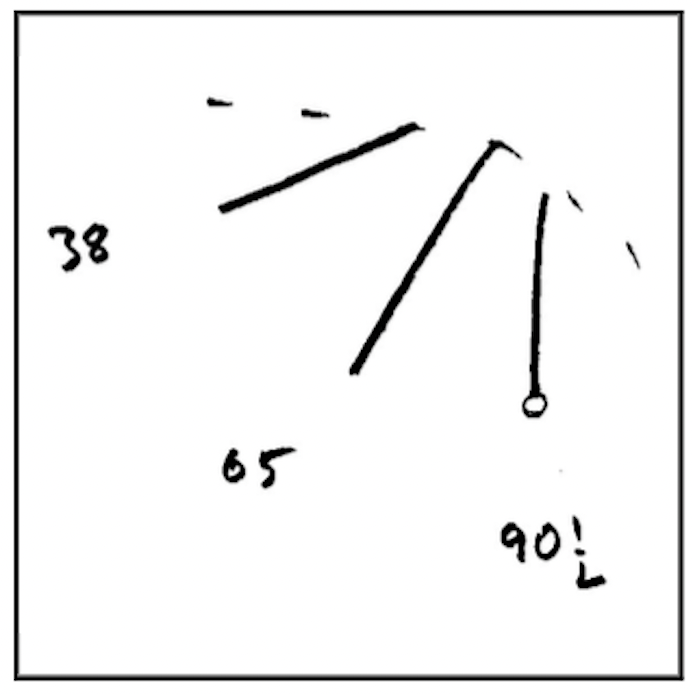
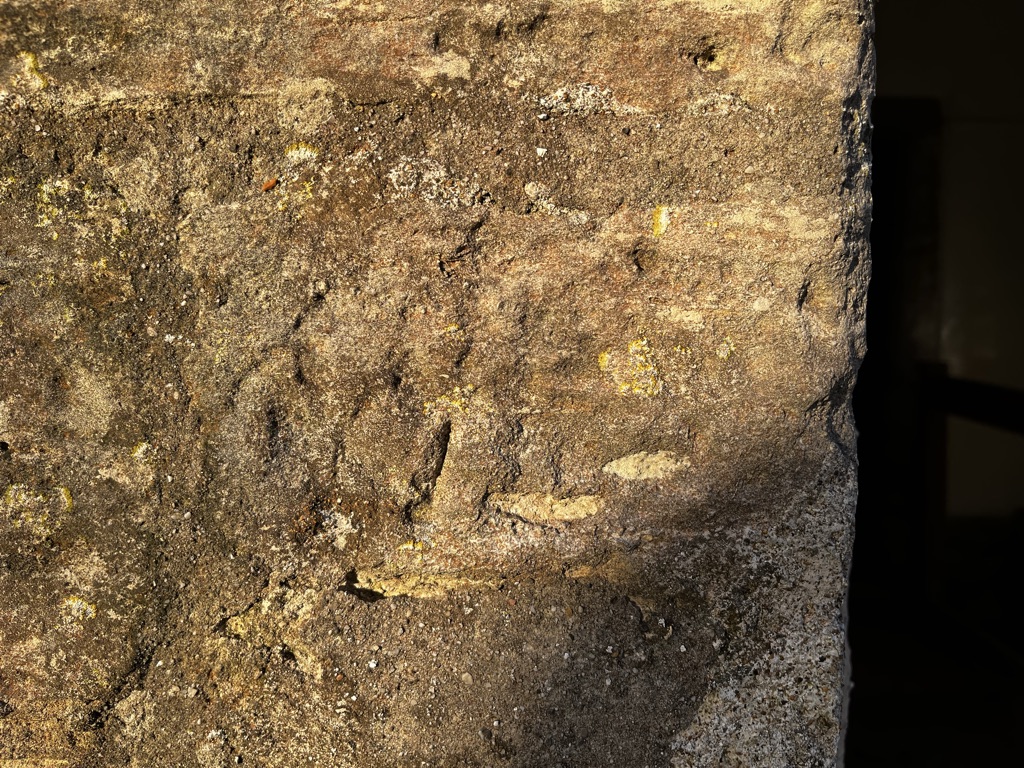
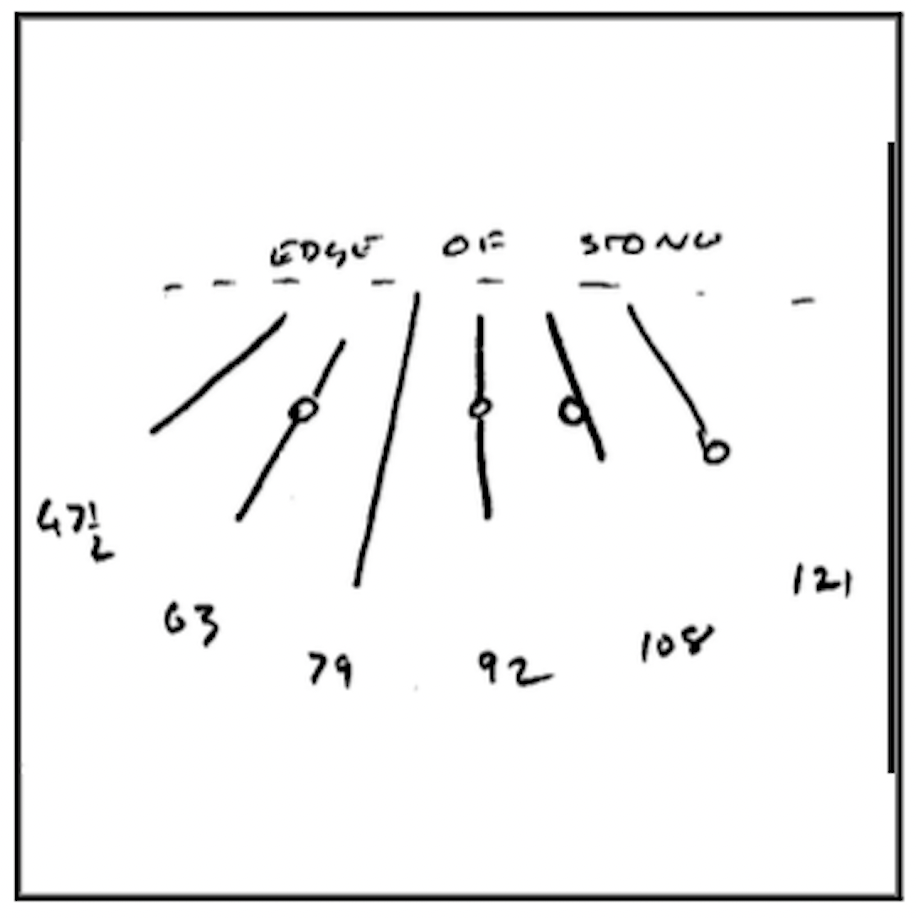
An enigma: the dial recorded for St Peter gives the details shown below. However at the position and height specified is a single hole drilled near the centre of the stone. There are no markings whatsoever that I could make out. I looked at similar locations on the S side without success.
Chancel, S wall, to R of priest door. Height 1.4m. Worn. Dial (Norman?) with tides, with duodec., sometimes both. Mason-cut or roughly scratched
I realise this is a disappointing post. On balance I decided it would be worth writing up. This visit was part of a 3-day project with the Wylye Valley churches. I also failed to locate the dial at nearby Knook; and I didn’t get a full score for the multiple dials noted at Stockton (17) and Sutton Veny (9). There were a couple of new finds to even up the score. Not all older records are accurate; then again, neither am I… Any guidance with the dial(s) on this Church would be welcome.
GRADE II* † C13 origins; C15 expansion; 1846 rebuilding by Wyatt. Well positioned next to an excellent pub for congregational thirst after righteousness. An ideal peaceful country church, despite being just S of the hectic A303 raceway. 51.1389 / -1.9898 / SU008377
Addendum: just after posting this, I was told of a dial I had missed (thanks, Lee). By coincidence we were driving past Wylye the next day. Separate post for Dial 2 HERE
DIAL
The dial is on the nave wall, tucked away quite low down on E side of the buttress where the tower joins the nave. It is upside down, suggesting that the stone was reused during building work – a plausible theory is that inversion indicated that a dial had outlived its original purpose.
REVERTED DIAL
Assuming a 180º turn, this is an afternoon dial, with the lines in the quadrant R of the noon line indicating the important part of the day for observance corresponding with the canonical hour None.
DEDICATION † St Mary Magdalene. C15 (on the site of a ?C11 church). Mid C18 rebuilding / restoration (after collapsed chancel). A few early fittings. Screen, font, bells, wall tablets of note. Fragment of stone in middle S. buttress of chancel with pre-conquest interlacementBHO.
LOCATION † Remote extended hamlet deep in farming country a few miles SW. of Sherborne and NE. of Dorchester. Nestled under the north flank of a long ridge. Reached by lanes to N. and a very steep narrow lane down from the ridge. The church is immediately below, set into the hillside. 50.8331, -2.543, ST618038
DIAL 2 (new record)
A while ago, I featured a dial, not previously recorded, on the SW face of the LHS buttress by the entrance door. We live close to St Mary but I had never noticed the dial until I saw it in direct evening sunlight, spotting the filled gnomon hole first (see below).
On a visit to the church last week, I looked more carefully at the S doorway. And there was another dial, LHS, that I (and others) had overlooked. It’s a much clearer dial than the first.
St Mary Magdalene . Batcombe . Dorset – Scratch Dial 2
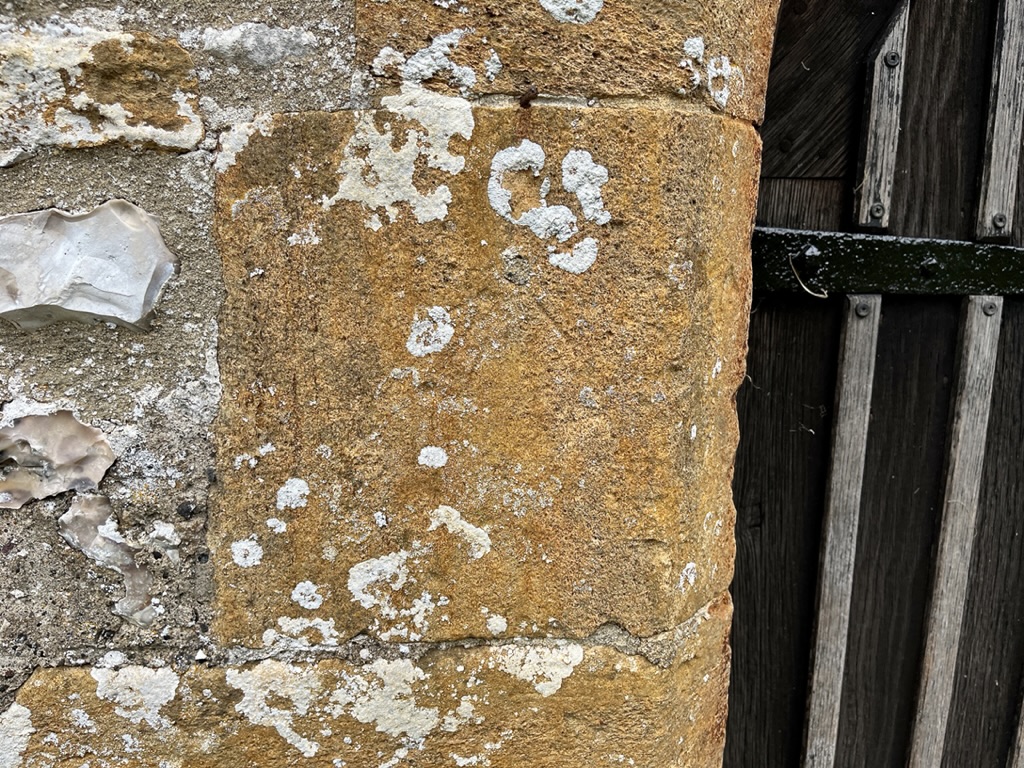
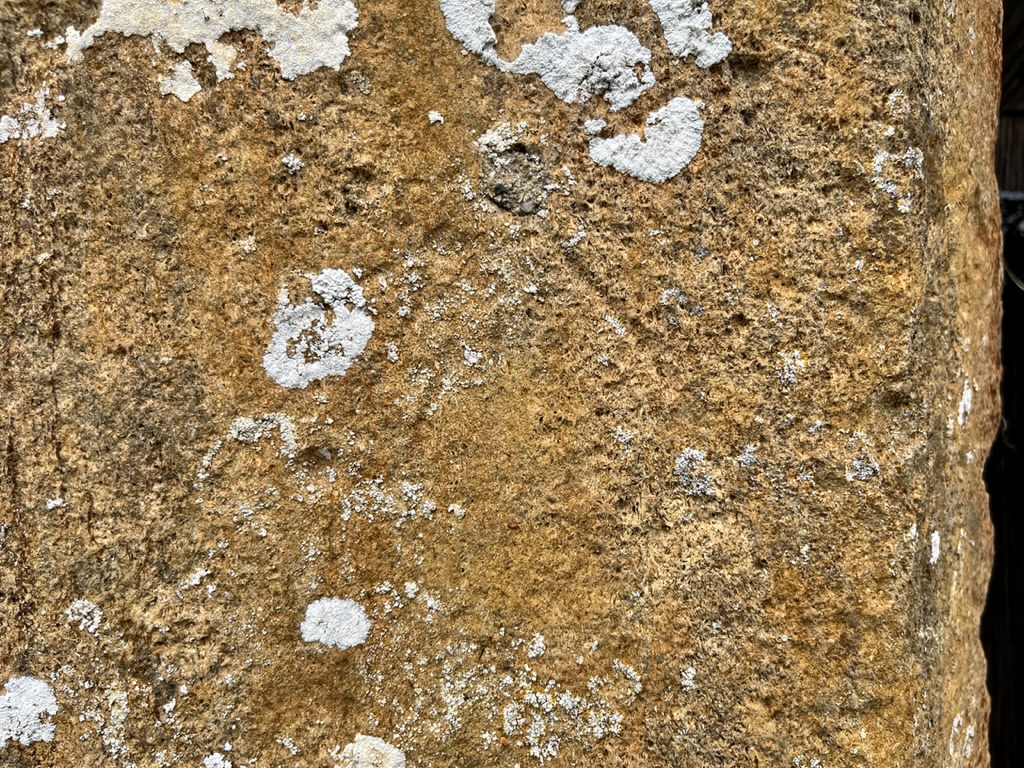
The filled gnomon hole is in the upper half of the dial stone. There are 6 / 7 lines, one with an apparent terminal pock. There is no clear noon line, but the lines from 9 to 12 suggest a significant time of the day for observance. The deeper none line may also mark a mass time mid-pm. There is a very distinct line URQ that ends in a pock but can have had no meaningful role in marking the passage of the day.
Batcombe . Dorset . St Mary Magdalene . Scratch Dial 1
NOTES † A small ritual protection mark – a tiny shield-shaped face – R of the entrance door. Such apotropaic symbols were carved or scratched usually by a door or window or in the porch to prevent evil from entering the church and to repel it from the vicinity.
GRADE II † Almost entirely rebuilt & enlarged in successive stages from the beginning of C19, incorporating reused details of C12 fragments, C14 and C15 stonework. Rather incongruous neo-Norman features. C12 Purbeck marble font; fine nail-studded medieval door. Tower-less and Spire-less. 4m N of Weymouth. 50.6506 / 50°39’2″N / SY667835
DIAL
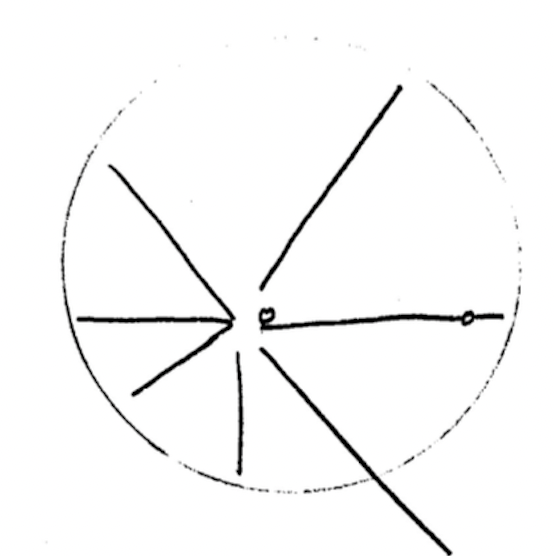
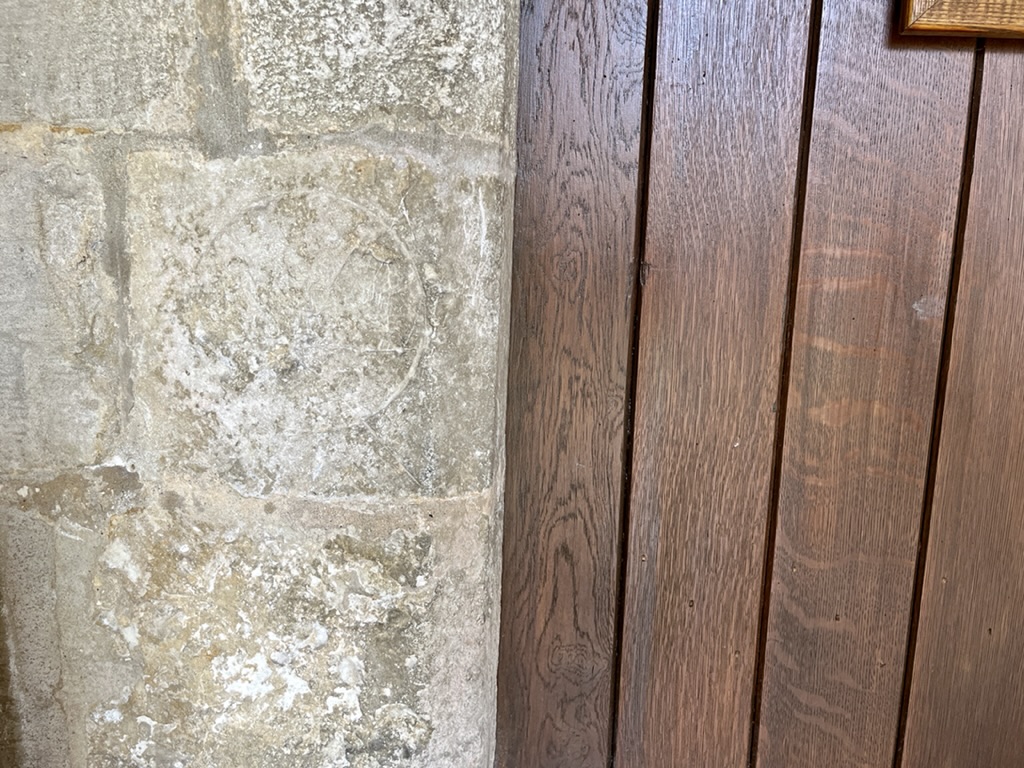
The dial is on the L jamb of the early doorway (inside later porch), and remains of a full circle are still visible. 6 lines radiate from a small filled hole that is significantly off-centre. One line is elongated beyond the circle. The None line is emphasised by a small pock near the end. The noon line (if it is one) is the most unassuming of them all. There’s a hint that very light graffiti has been superimposed on the dial.
LOCATION † 3m SW of Yeovil, near E & W Coker 50.9048 / -2.6949 / ST512119
An extended village close to the A30 yet approached by lanes (as they are actually named) rather than roads. A peaceful feel to it, especially at dusk when this poor photo was taken. The church had ‘much work’ carried out in C15 and C18. Tower probably of 1123, in three stages, font possibly from same date. BLB.
I visited St Mary a couple of years ago at dusk (it was last on a list), so I have re-photographed the church and updated the post.
DIAL † At the W. end and quite easily overlooked. DEH did not investigate or list it in 1915. A full circle, one clear radial and a square style hole. Possible trace of outer circle top left. Not noted in BLB, HE, nor in TWC extensive list of Somerset dials. I found only one reference to this dial that led me here; since then, one passing reference to a sundial in the porch – perhaps this dial relocated in C15?
NOTES The circular font is thought to be original dating from 1123, and the clock mechanism was built and installed before 1707. There are 6 bells in the tower, 3 of which are from the Purdue (Closworth) foundry, with the earliest being dated 1591
GRADE II* † Saxon origins (vestiges still visible); C13, C15; rebuilt tower 1667 (unusually, lower than the nave roof-line); restorations (Wyatt). Split from Burcombe village (S Burcombe) by A30 and hard to find. St John is the sole remnant of N Burcombe. Declared redundant 2005. I could not gain entry. 5m W of Salisbury. 51.0798 / 1.8971 / SU073311
DIAL
St John . Burcombe . Wilts – Scratch Dial
The Burcombe dial is a slight secret, mentioned in TWC‘s Wiltshire dial list but not elsewhere that I can see. St John is also hard to find: check the location carefully before you try. This is a pretty dial, a messy mix of lines and pocks below the horizontal. The noon line – usually an eye-catcher – is upstaged by lines with varying degrees of curve and pocking. It’s hard to interpret, but the two ‘raking light’ photos add a bit of perspective.
St John . Burcombe . Wilts – Scratch Dial
VERTICAL DIAL
St John . Burcombe . Wilts – Vertical Dial
St John also has a canted vertical dial above the porch, with a pleasingly robust gnomon. It fits in with the stonework around it and looks old. However any details on the dial face have been eroded. Unfortunately I didn’t have a proper camera with me to check closely for lines etc. but I wouldn’t expect revelations.
Quaere placename – a mapping mistake
In the early 17th century, when John Speed prepared a map of Wiltshire he copied a version by Christopher Saxton, which showed but did not name North Burcombe. On his own map, Speed labelled the village Quaere (Latin for query), presumably because he intended to check the name later, but never did, and his engraver copied the annotation as if it were the village’s name. Later map printers in turn copied Speed’s map and ‘Quaere’ appeared on maps of Wiltshire for 145 years until Emanuel Bowen corrected the mistake in his 1755 map of the county. (WIKI)
GRADE I † Saxon origins; DB as Aelfsige. Dedication unknown. Dated to C14 (BLB notes C13 chancel & porch). C19 restoration. Incumbents recorded from 1353. In a most attractive setting down a long path, and grouped with a large medieval tithe barn, dovecote &co. 8m E of Lewes, 6m W of Polegate. 50.8299 / 0.1369 / TQ505055
DIALS
All 4 dials are cut on either side of the blocked S doorway of the nave. 1 LHS and 3 RHS, of which an adjacent pair are low down, almost at ground level.
DIAL 1
On the L jamb of the blocked doorway, the most advanced and clearest of the 4 dials. Mid-C15? Encircled, with a full cross of vertical (12-12) and horizontal (6-6) lines emphasised by deeper incision. The lower half has 6 additional lines (and hints of a couple more). A single line UR quadrant divides it fairly accurately. The gnomon hole is (now) rather large for the size of the dial but that may have happened in the course of its history.
Alciston Church . E Sussex – Scratch Dial 1
DIAL 2
RHS of the doorway, the same height as Dial 1. A much simpler dial with 2 lines only. The worn circle contains just 2 lines LLQ, one faint and the other deeper cut. Possibly the faint line was originally the marker for Mass, and was superseded by a more visible line (hand-cut without a rule, it would seem).
Alciston Church . E Sussex – Scratch Dial 2
DIALS 3 & 4
Just above ground level are 2 enjoyable dials on the same stone, presumably re-sited from a more visible position. However the stone sits comfortably with the overall design of the doorway, so I wonder whether all the dials (or those RHS) were moved to their present position when the doorway was blocked / during restoration?
The dials are adjacent – in fact, contiguous. Both circles are endearingly wonky, though the lines are cleanly cut. Dial 3 has been more carefully incised, with some attention paid to accuracy. Dial 4 probably came first and the more sophisticated Dial 3 later replaced it.
Dial 3 has 2 small dotted crosses within its circumference, also suggesting a later date than Dial 4. One cross consists of 4 separate dots; the other has the dots connected by lines (the vertical is very faint).
Alciston Church . E Sussex – Scratch Dial 3 & 4
DIALS 2, 3, and 4 as a group
Alciston is one of several rewarding churches in the area for a visit. You could combine it with climbing Firle Beacon which, at a height of 217m, counts as a Marilyn.
Frederick Barrett – Sussex Archaeological Collections 100 1962
GRADE I † C12 origins; gradual development C13 on, with later restorations C15 / C16. S porch (where the dials are) added C16, with earlier material reused. 8m SW of Dorchester. 50.6709 / -2.5638 / SY602858
DIALS
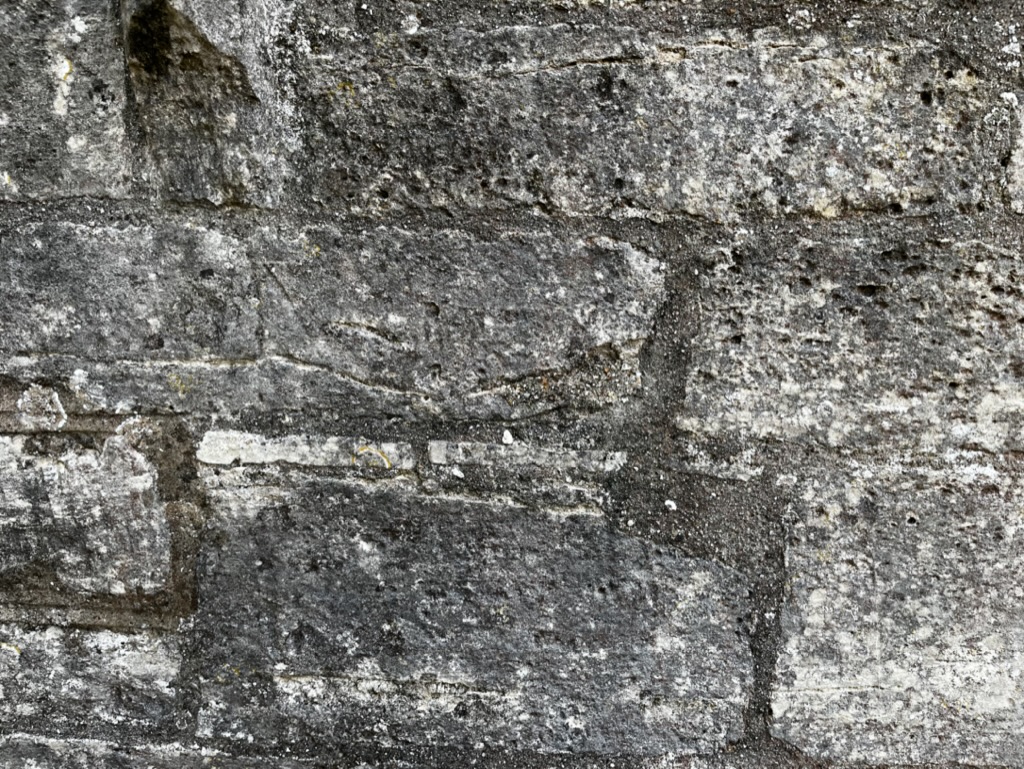
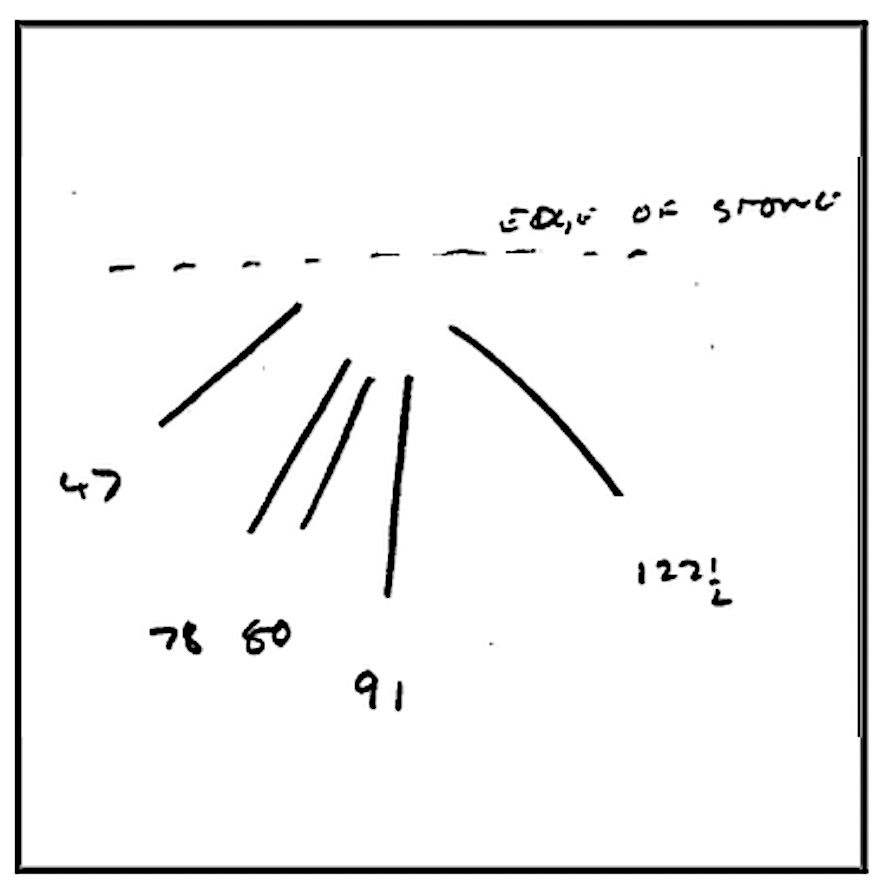
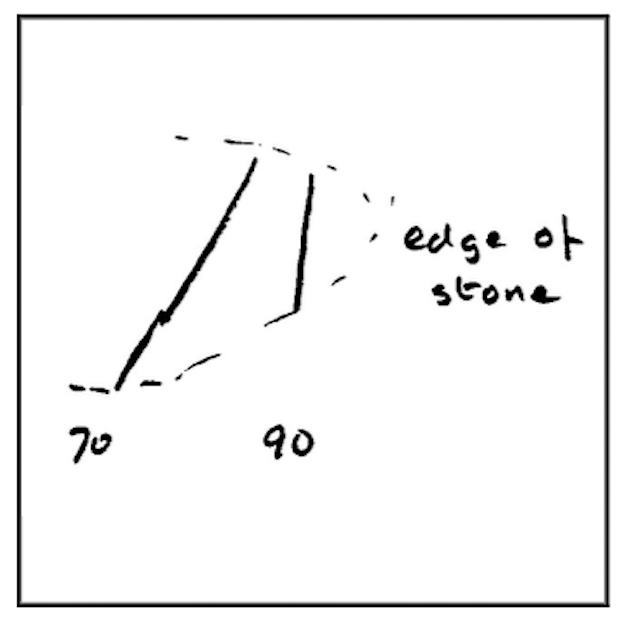
St Peter has 4 scratch dials, 3 on the E side of the S porch, 1 on the W side. One of my nemesis churches. I have visited in rain, in cloud, and in sunshine. Of the cluster of 3 on E side, I could only make out the obvious one. Eventually I managed to identify them from an enlarged photo. The BSS recorder’s diagram below gives an idea of the dials rather more clearly than my photos can.
DIAL 1
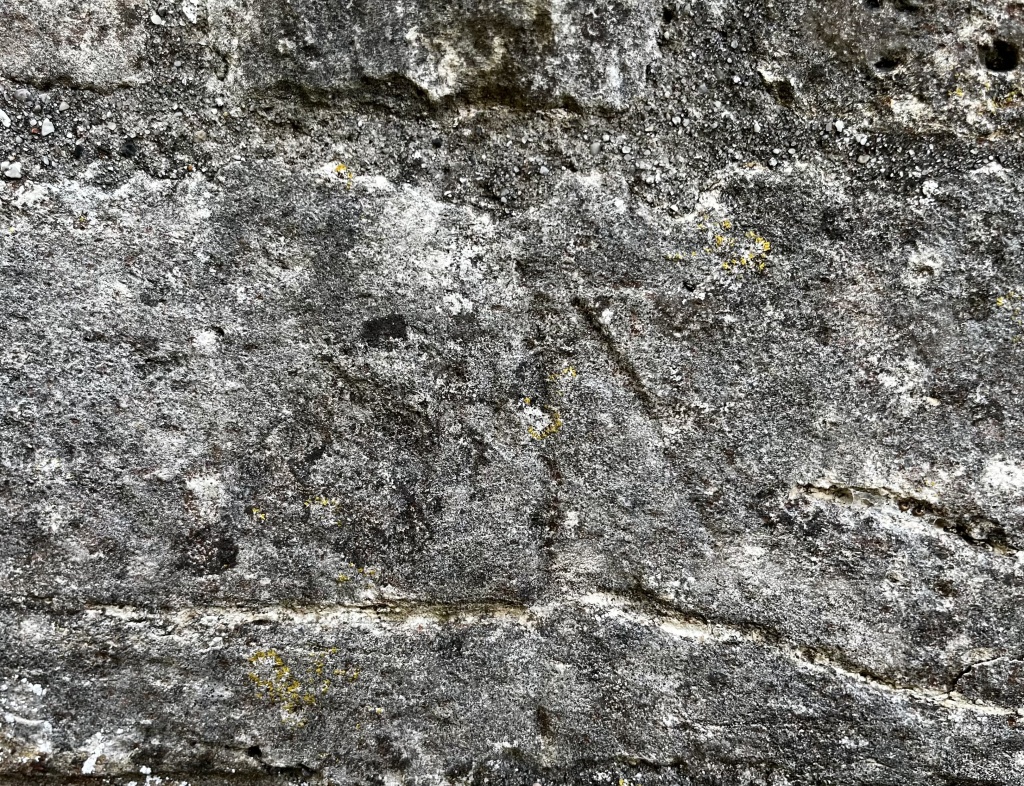
Dial 1 is located on the E side of S porch. Five lines are noted in the BSS records, of which 3 are clear and reasonably accurate. The gnomon hole is in the mortar line, where the lines converge.
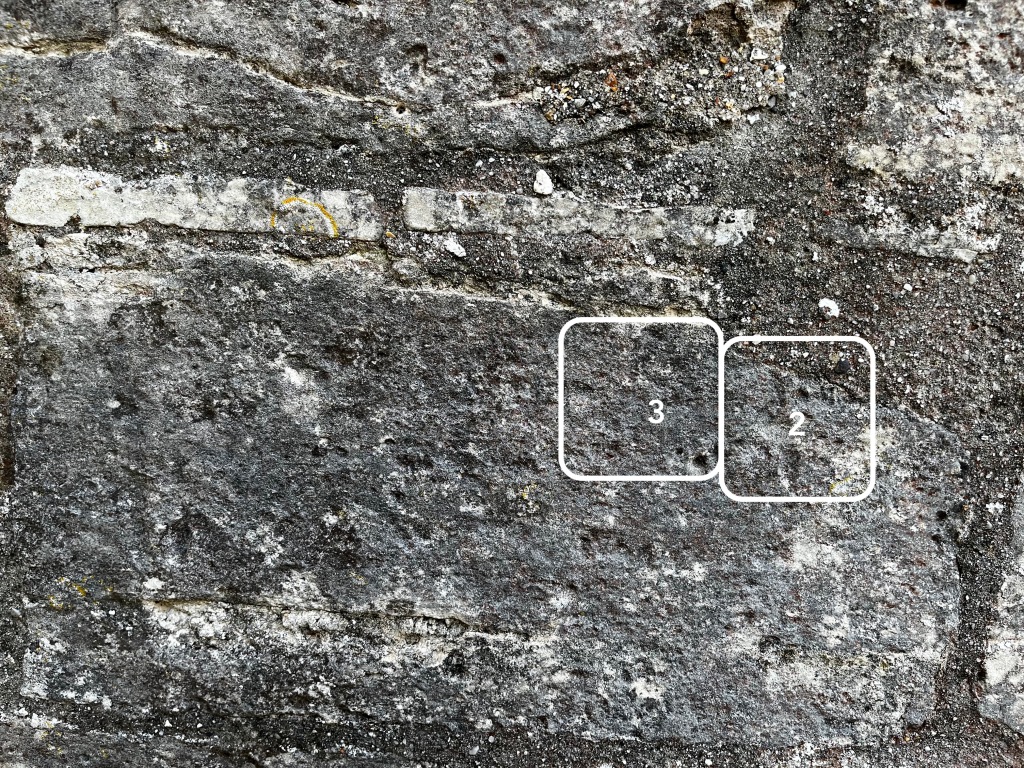
DIALS 2 & 3
Dial 2 is very basic, and would be easy to overlook. There are 2 faint lines, with the top part including the gnomon hole cemented over a damaged area.
Dial 3 is even less conspicuous: a faint wishbone shape, 2 (3?) lines, one with a pock at the end.
I would doubtless have passed over this pair; and even had I noticed them I would have discounted them in my amateur way.
DIAL 4
Dial 4 is on the west side of the south porch, on an inner quoin stone. At first glance it might be taken for an area of damage. In fact it is a dial with 6 lines, 4 of which end in pocks. It was described many years ago as not very accurately laid out and the passage of time has not improved the situation.


























 GAUDIUM SUB SOLE . SUNDIALS . MEDIEVAL TO MODERN