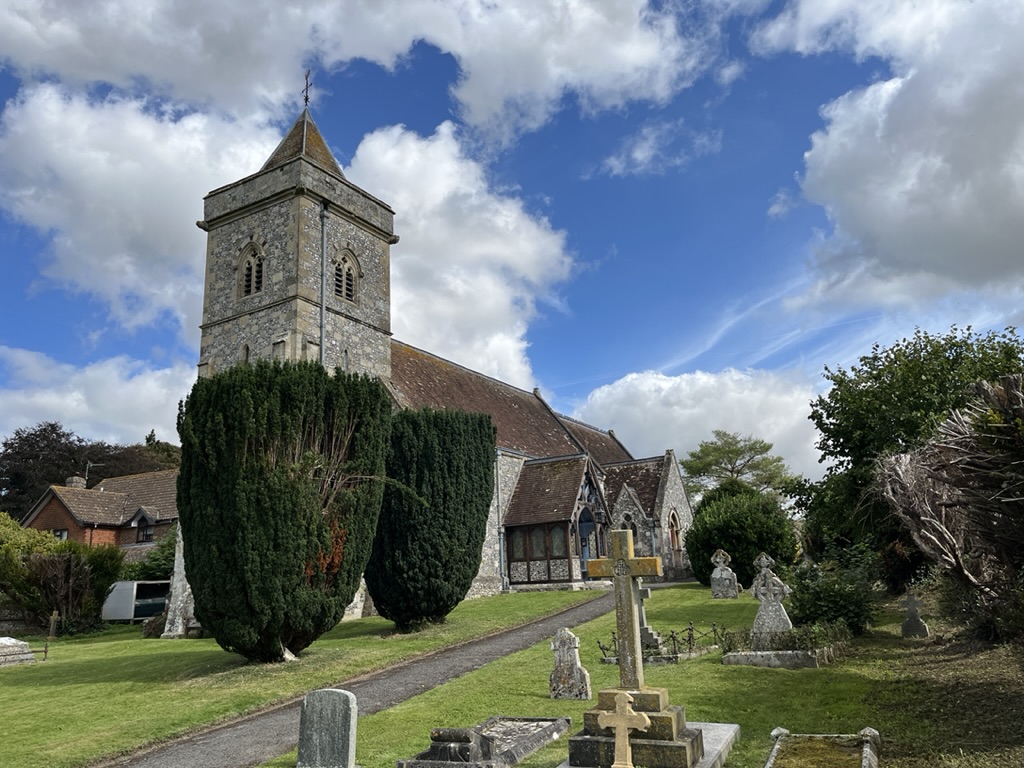
KENILWORTH . ABBEY BARN . WARKS – Rare Barn Scratch Dial

Erika Clarkson

ABBEY BARN . KENILWORTH . WARKS

Kenilworth Castle has a long and intriguing history, with royal, civil and military significance over C7 centuries or so. There is an excellent Wiki entry HERE . Anyone who learnt history at any level will be transported back to the classroom. Simon de Montfort C13; the insulting gift of tennis balls from the French to Henry V; Lady Jane Grey; Civil War(s); slighting. The entry is erudite yet clear and concise.

Erika Clarkson

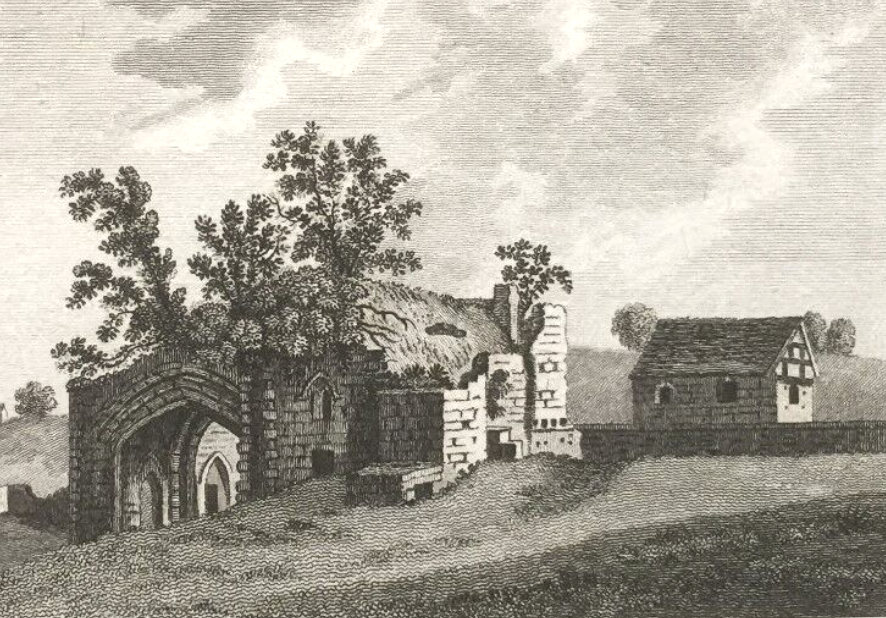
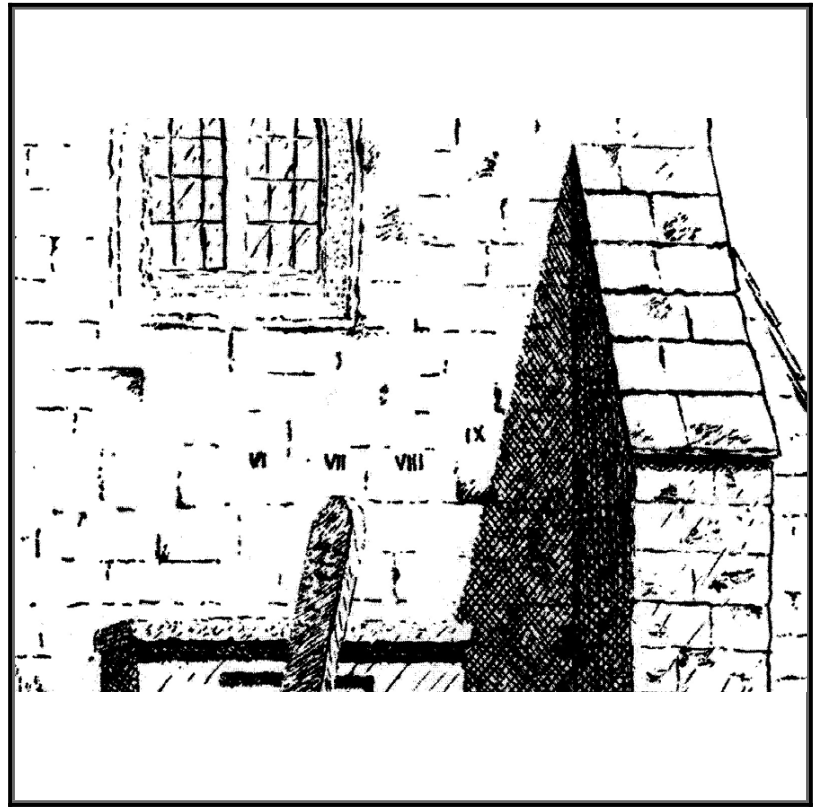
HE Historic Print Archive

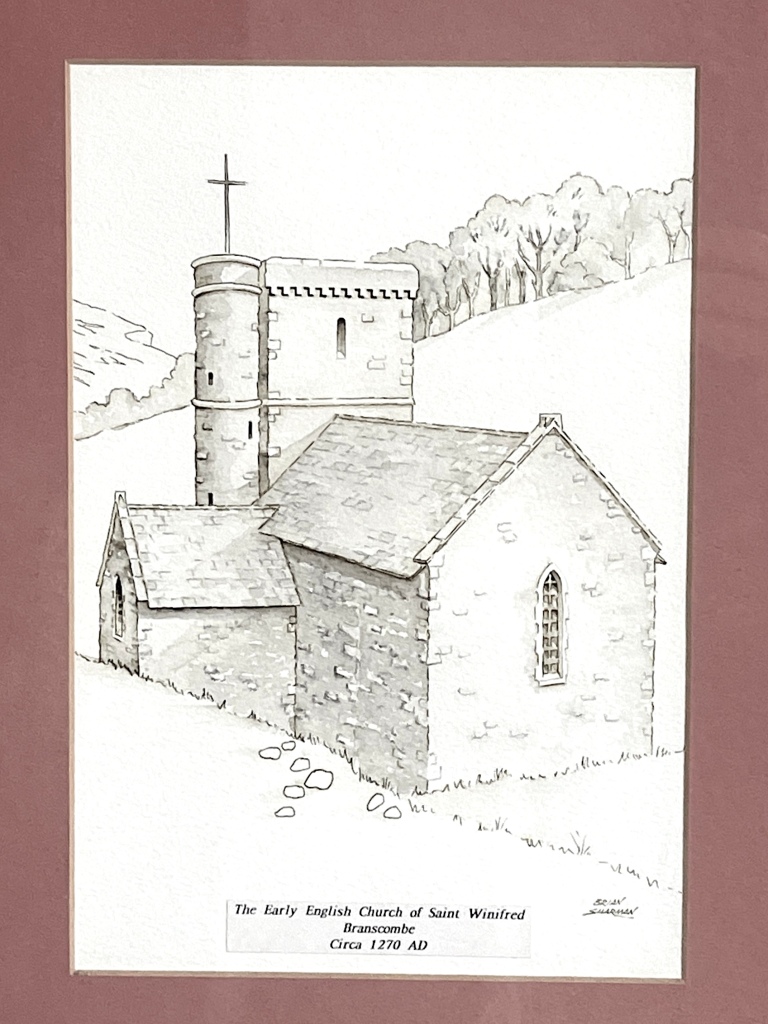
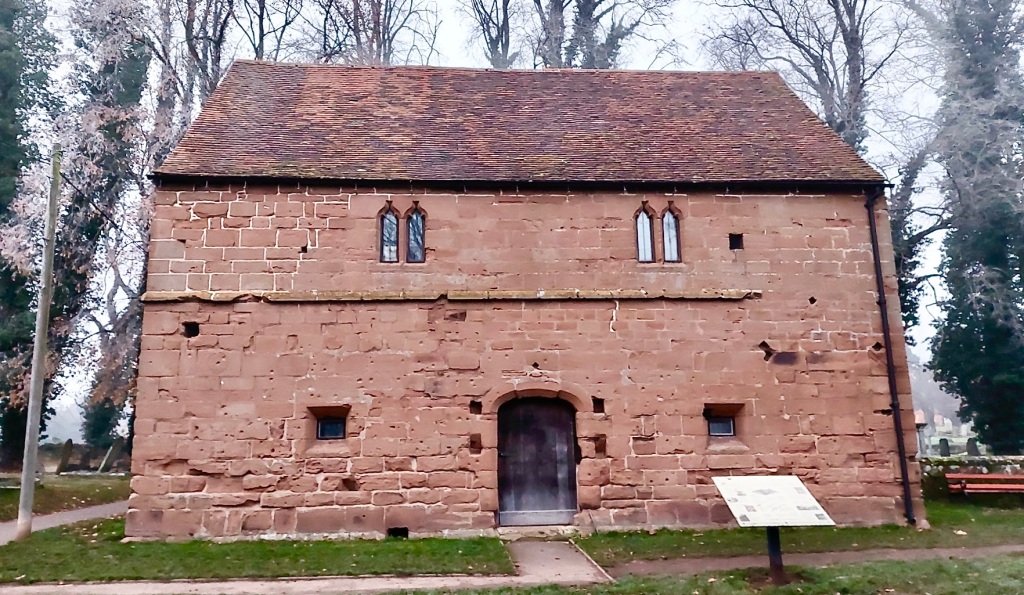
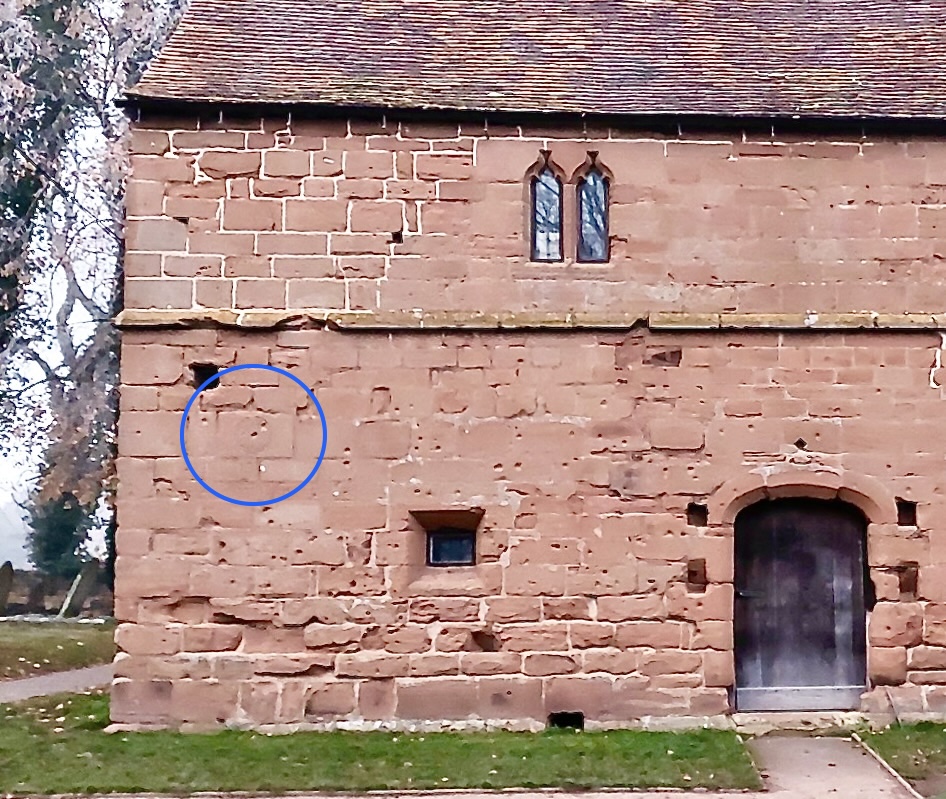
In the grounds close to the C14 gatehouse is a small 2-storey building known as the Barn, now thought unlikely to have been built as, or used as, a barn. The general view seems also to be that it had no monastic function. There were 2 latrines, which makes me wonder if it might have been some sort of lodging house for low-level family, or for visitors with a servant or two. The barn now serves as the Kenilworth Abbey Museum & Heritage Centre.

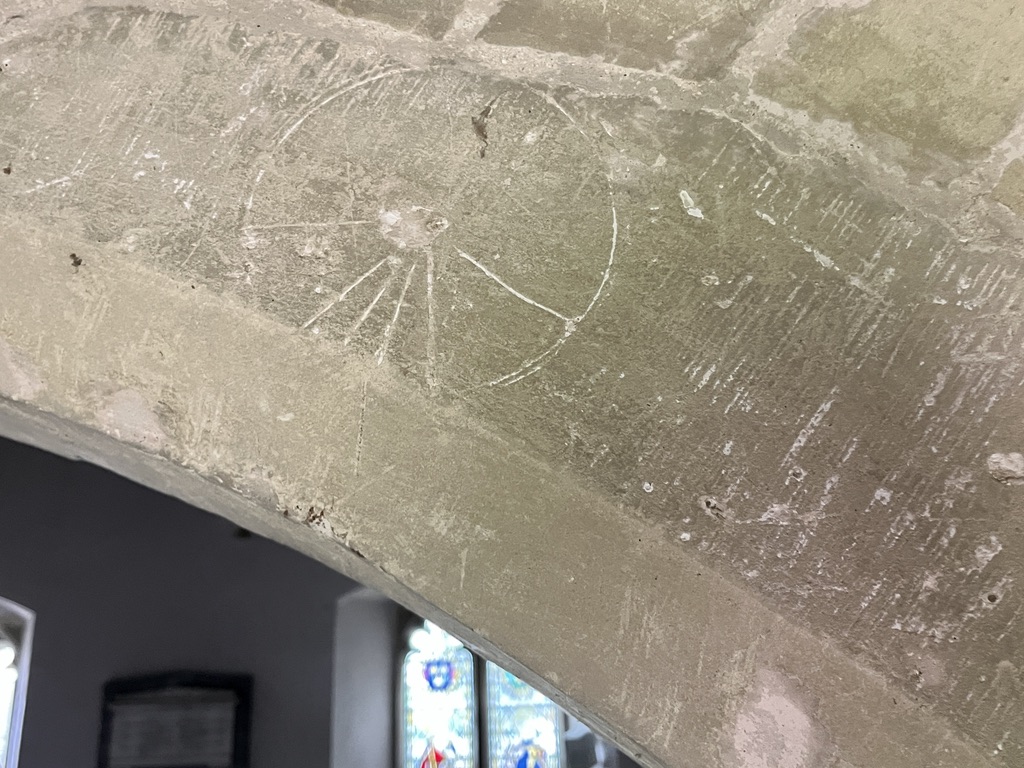
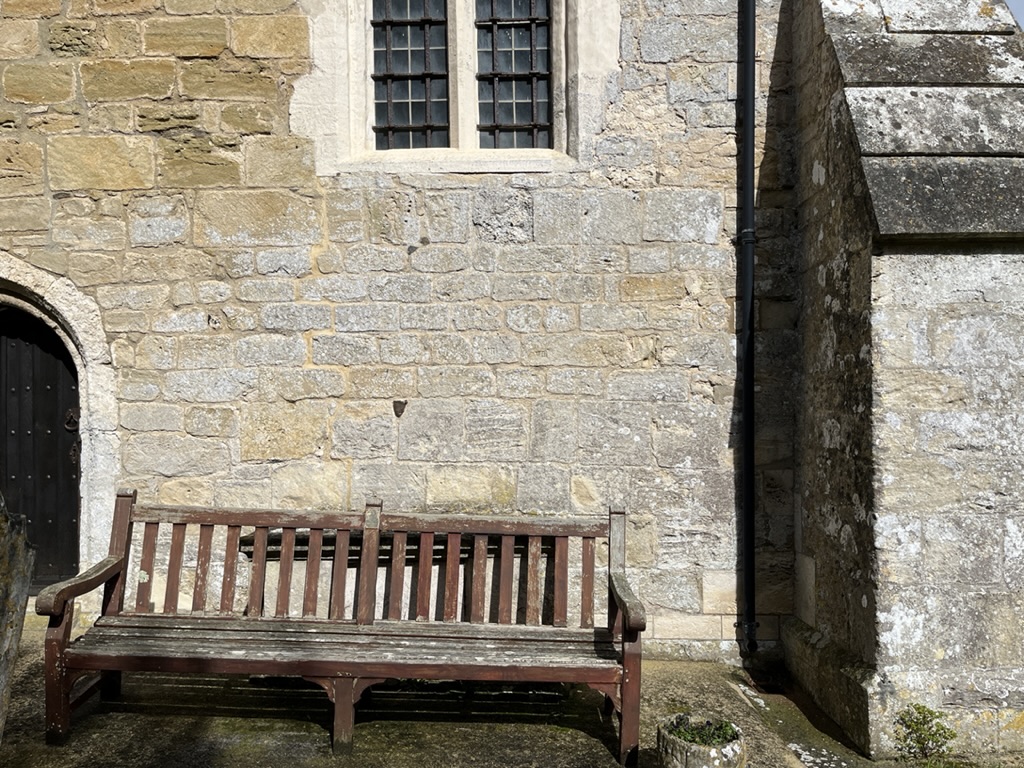
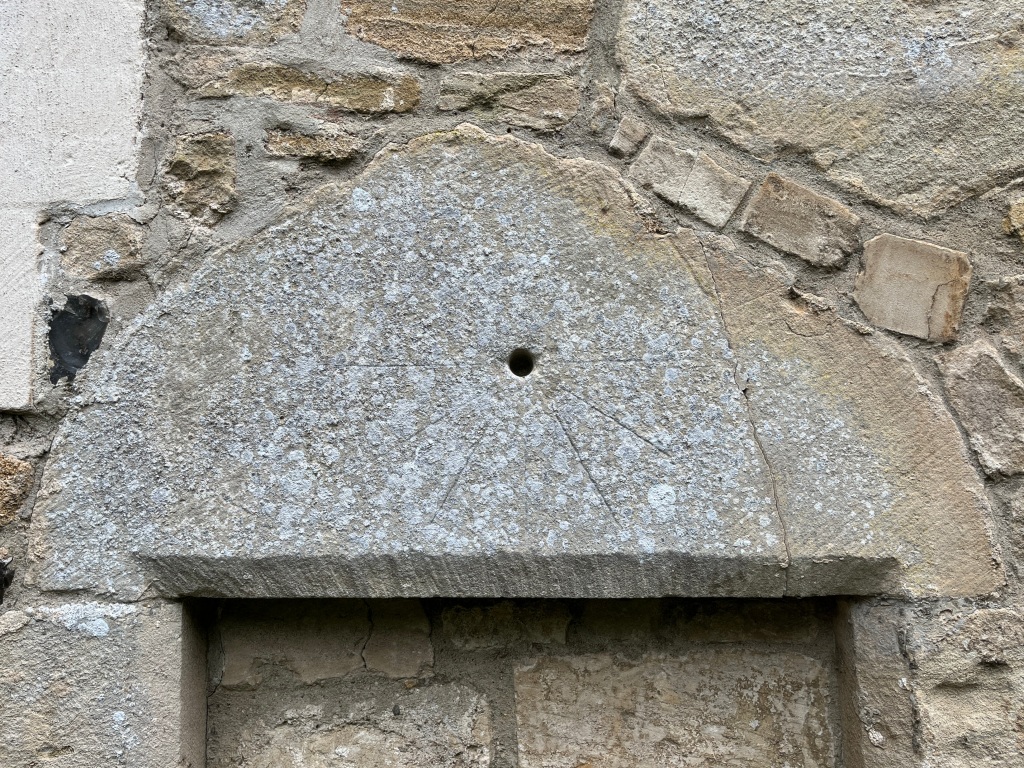
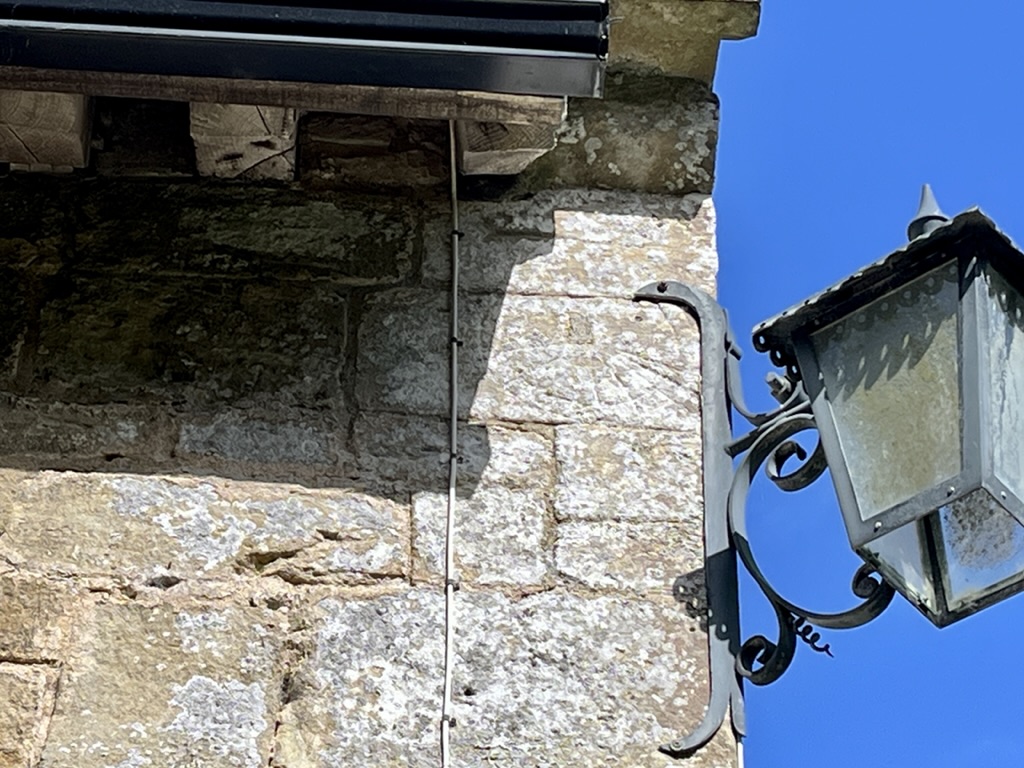
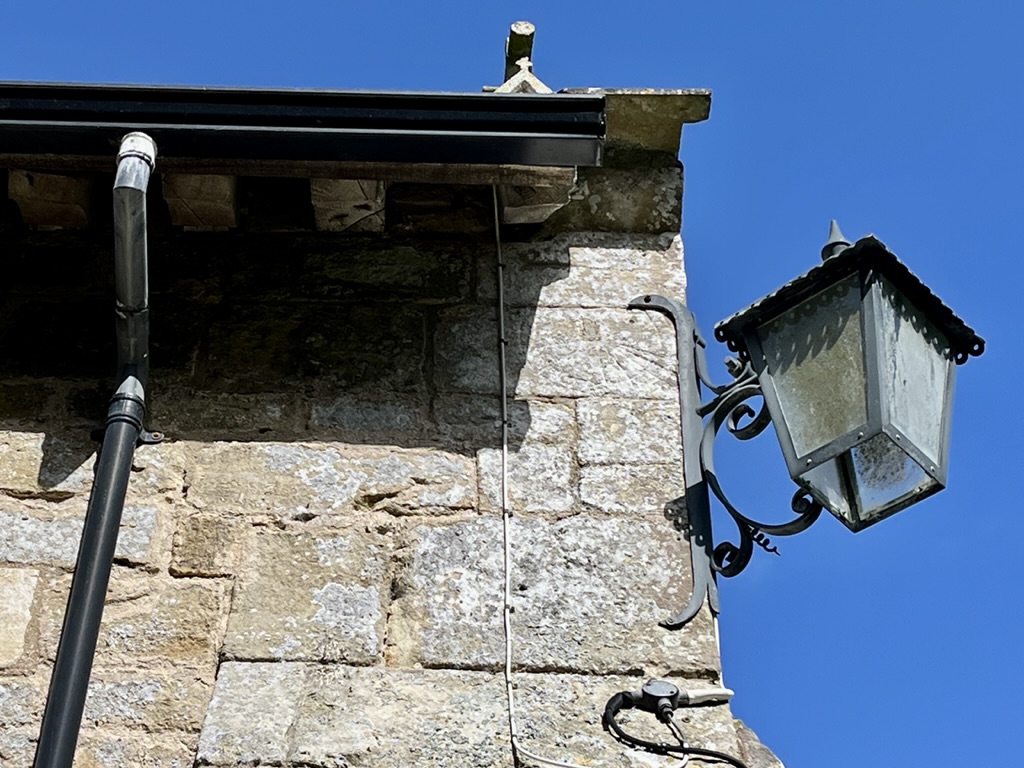
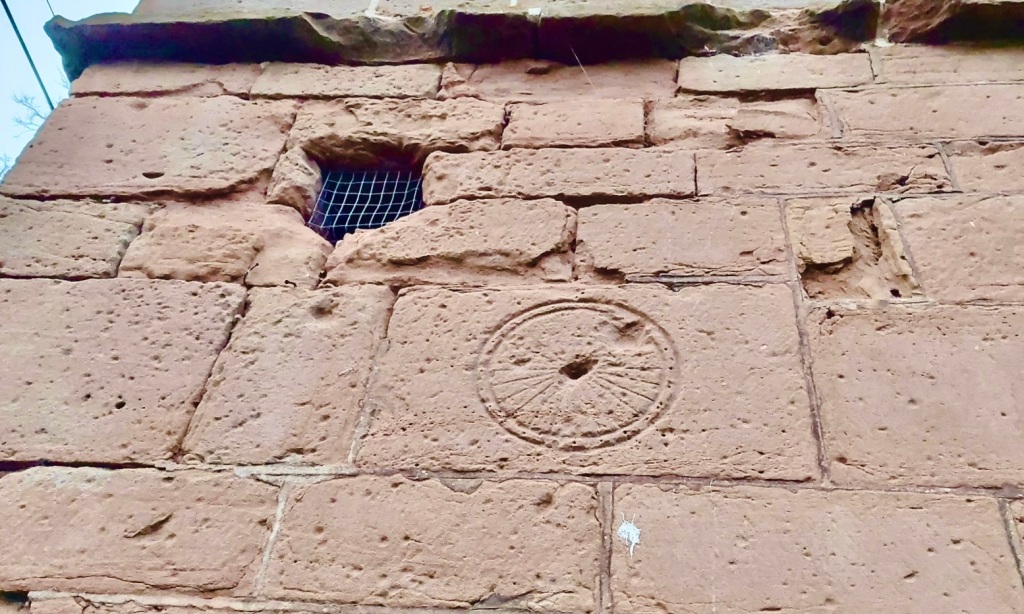
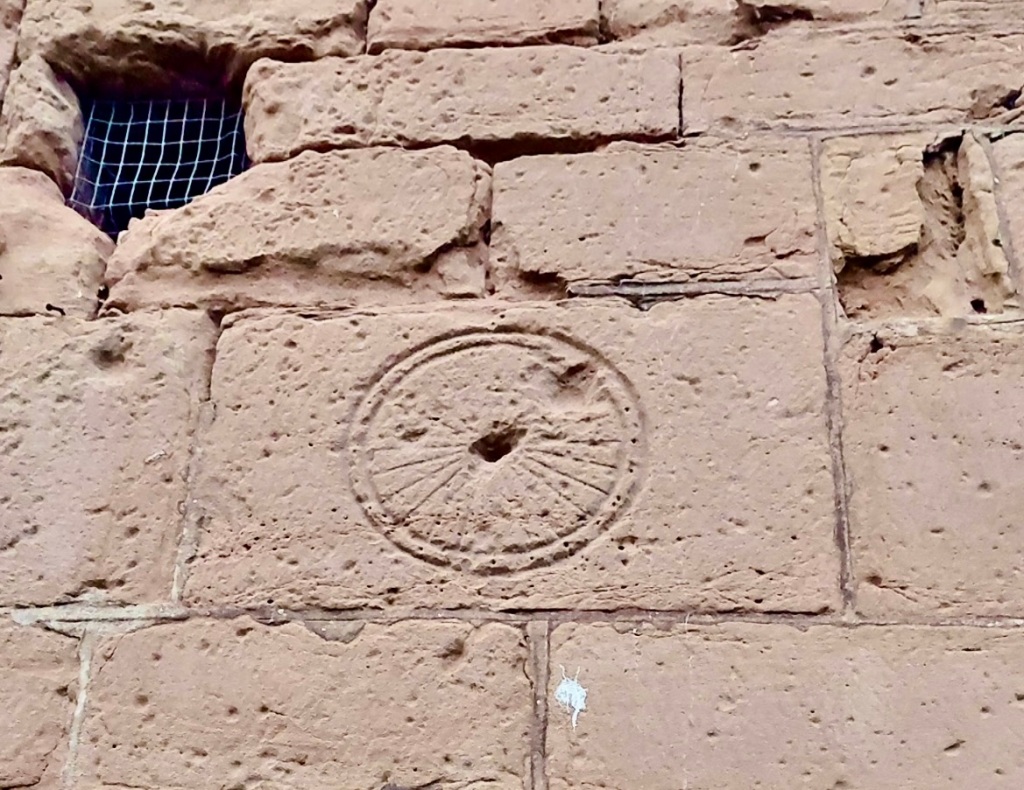
For present purposes, the barn’s significance is the scratch dial LHS on the front of the building. It is relatively rare for a dial to be cut on a secular building. Where found, it is most likely to be on a barn (Bradford-on-Avon has one on its famous tithe barn).

Erika Clarkson

DIAL

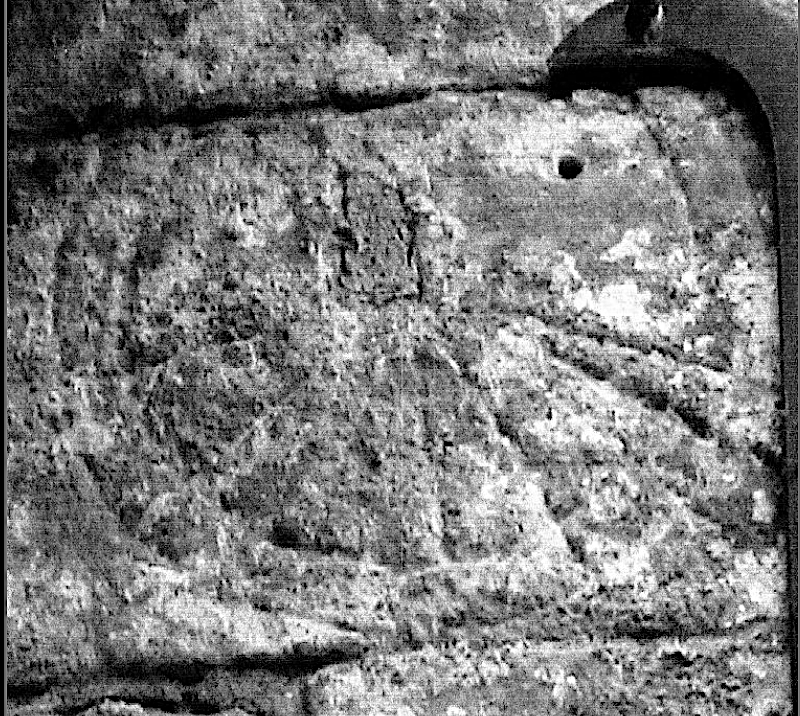
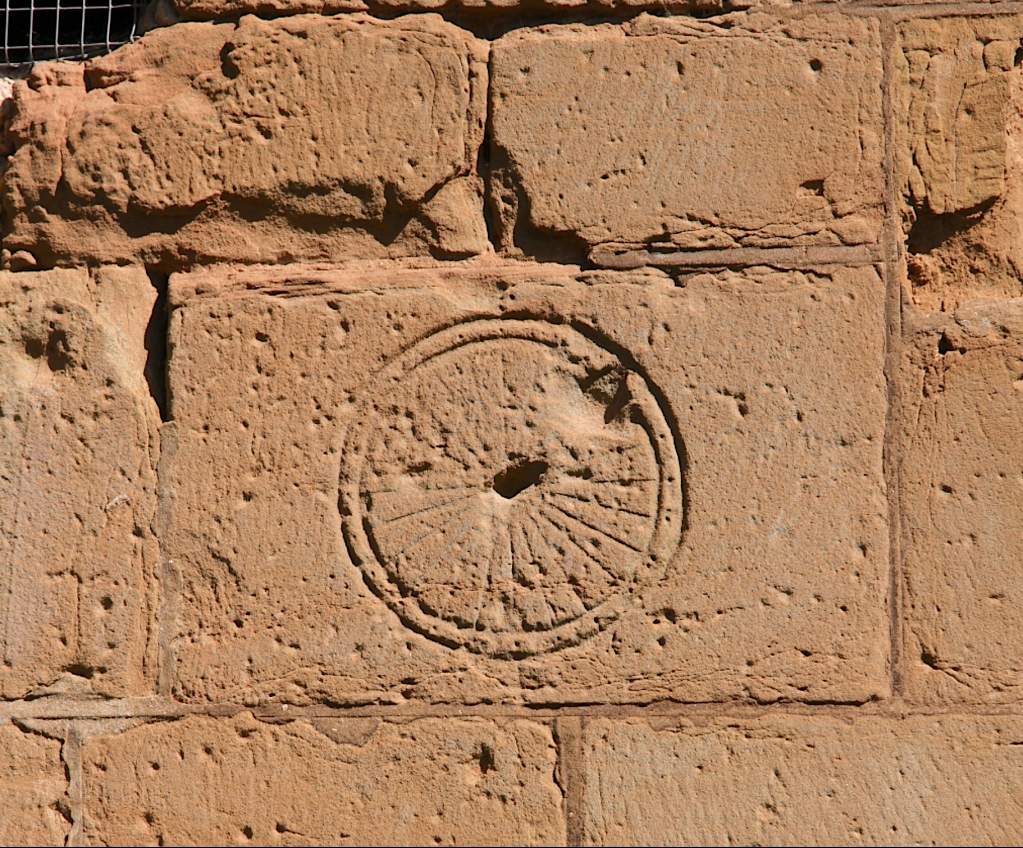
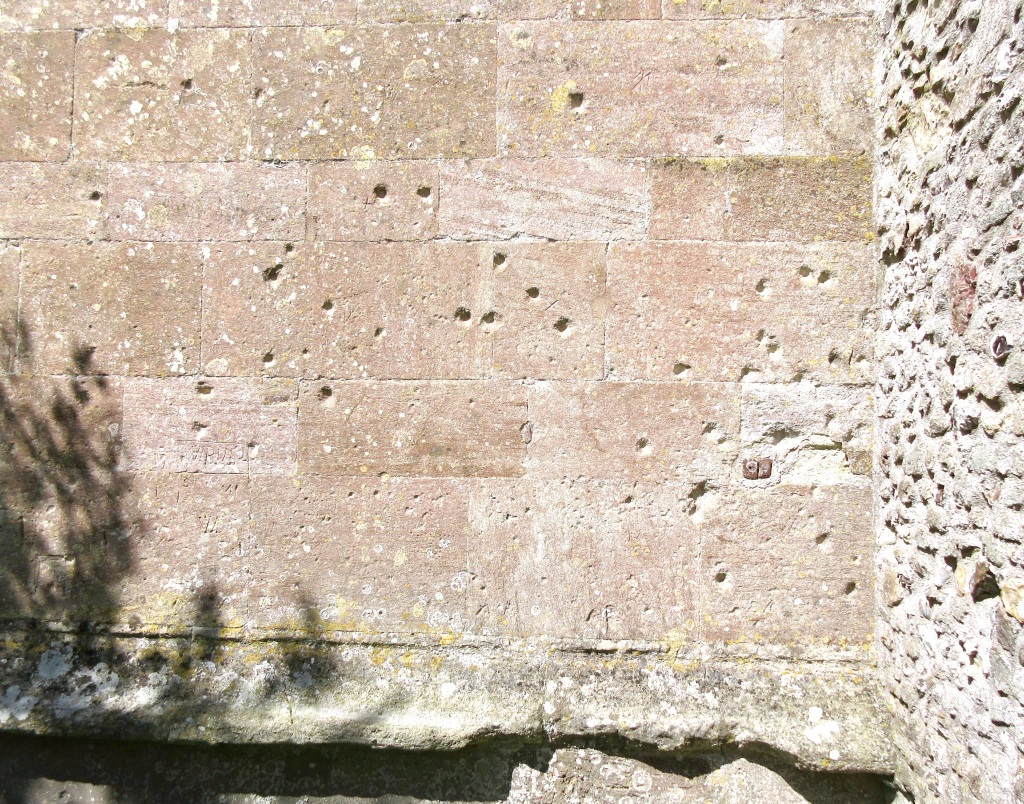
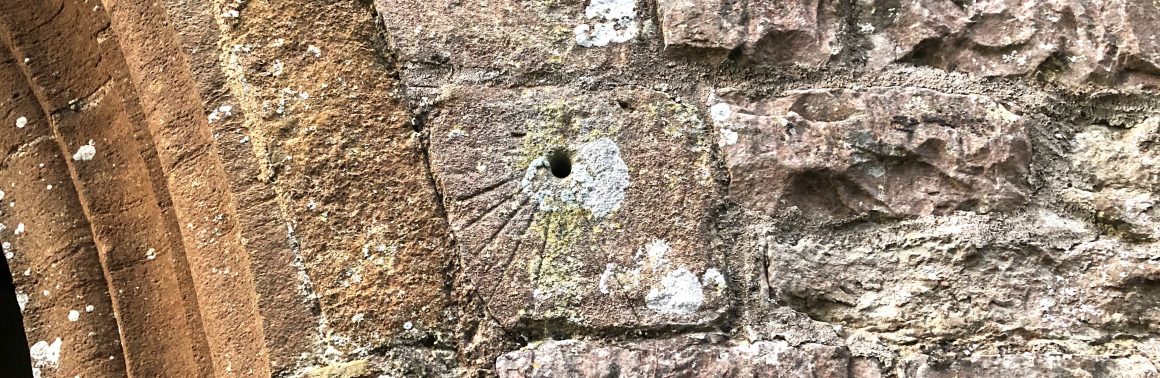
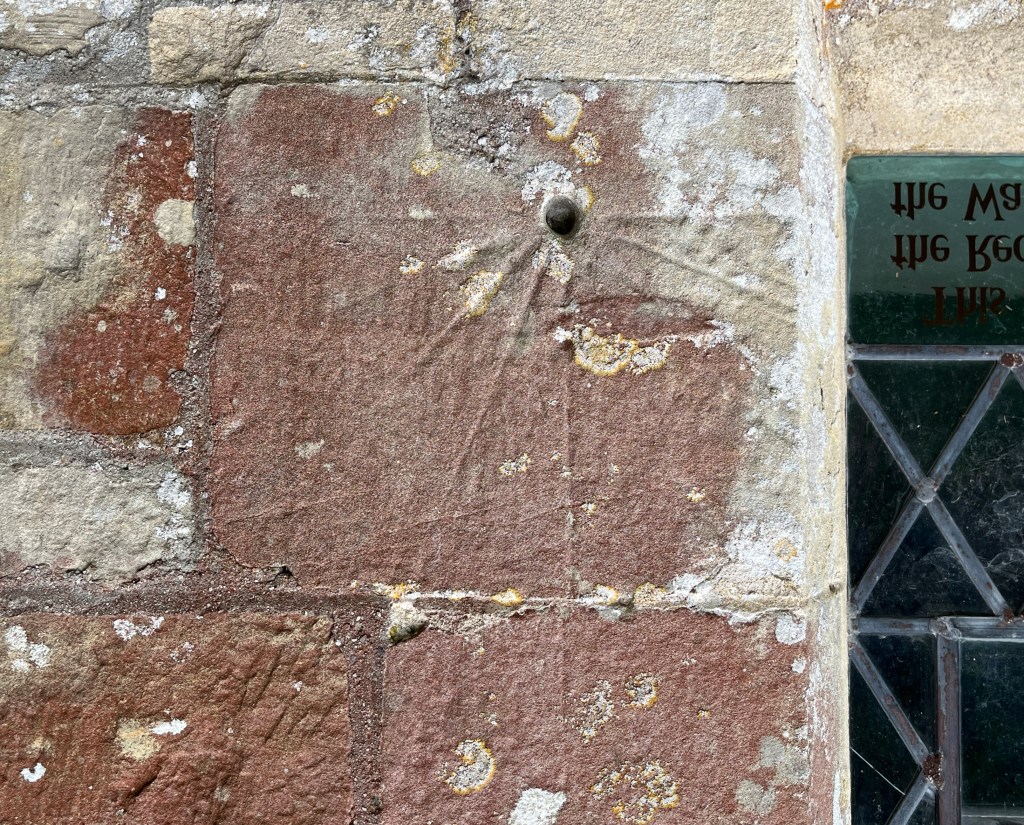
The dial is within a double circle. It has suffered from both erosion and damage – it has indeed been in the wars. There appears to be a complete set of 24 lines spaced fairly equally at 15º to form a complete circle of radials. Unusually I think, each line is matched to a small terminal pock on the ridge between the 2 circles. Those at 3, 4, and 5 have double pocks, perhaps an indication of the most important part of the day for observance. It corresponds with the canonical mid-afternoon hour NONE. The lines are also deeper cut (and thus less eroded), a common form of emphasis. It’s difficult to say whether the other more random pocks on the dial face were intended as part of it.

The gnomon hole is clearly not as it was originally. I expect there was a conventional central hole, (as the curve LHS hints) and at some stage something wedge-shaped was a clumsy substitute or replacement; or perhaps sword tips were sharpened there.

Motacilla . WIKI . OS / CC

The dial is difficult to date. Various features suggest a later date than medieval. The full 24 hour ‘clock’; the reasonably accurate c15º divisions and double circle; the decorative use of the little pocks. Overall a degree of sophistication compared with earlier dials. My uneducated amateur guess is late C15 / early C16.

One mystery is why a dial was cut onto the barn at all – why did it need one? Perhaps my ‘occasional lodging’ theory has a place here – to assist outlying guests to comply with Castle timings for Mass, feasting, or jousting.

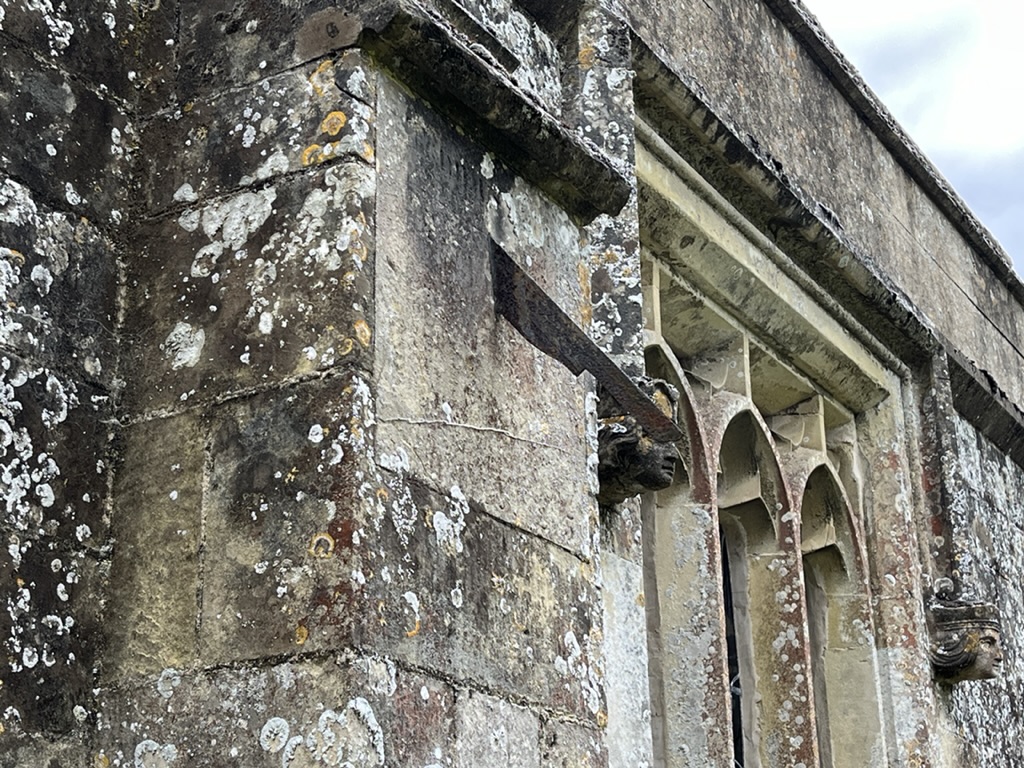
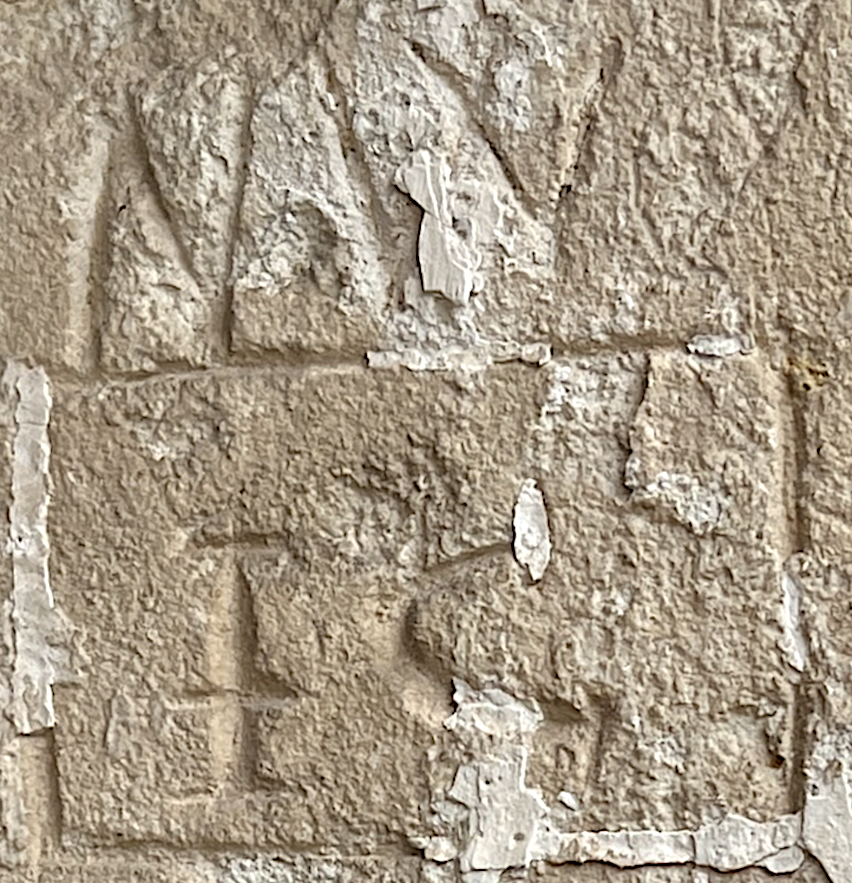
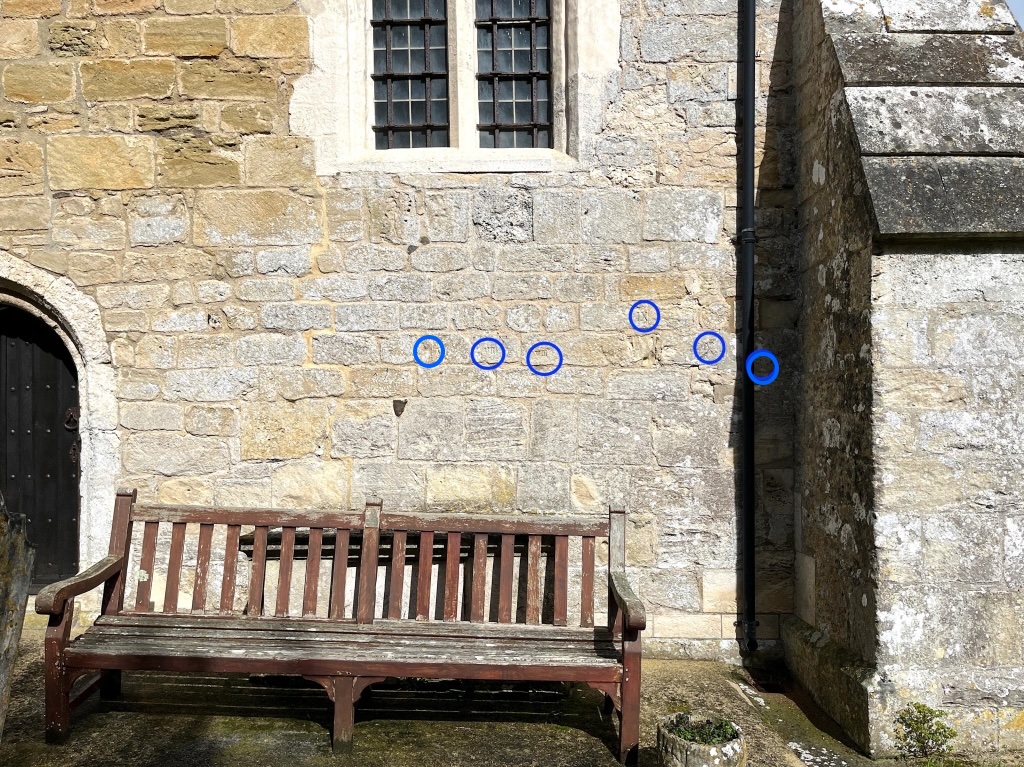
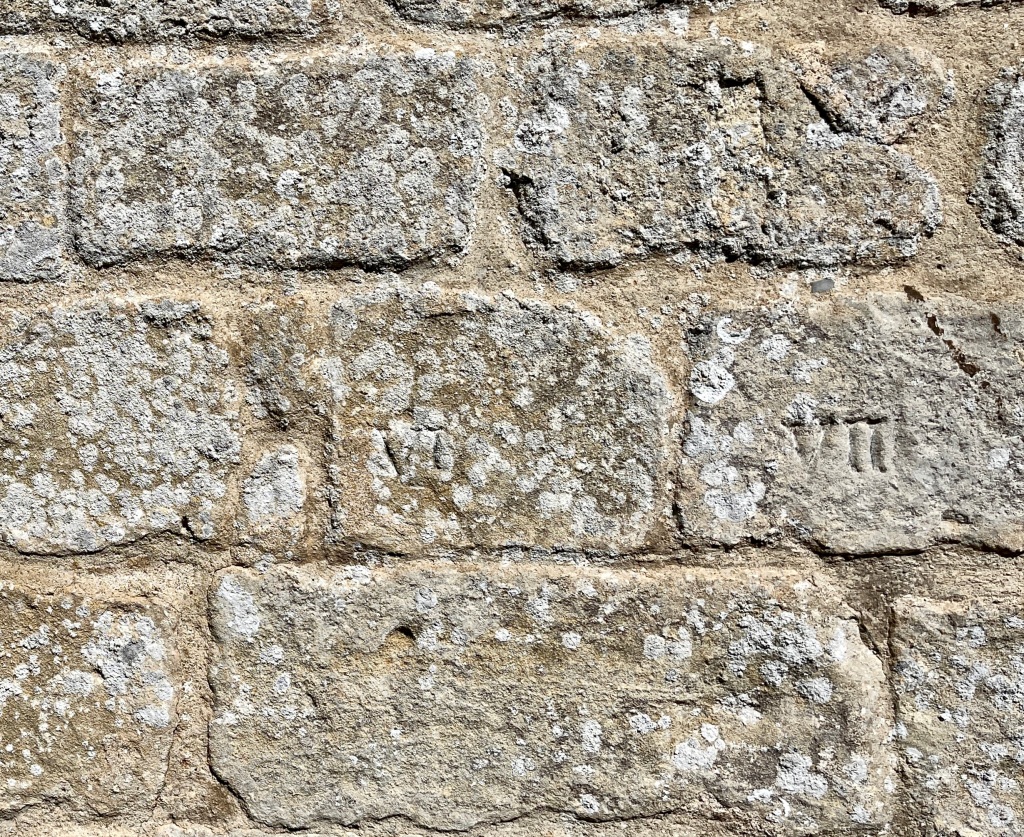
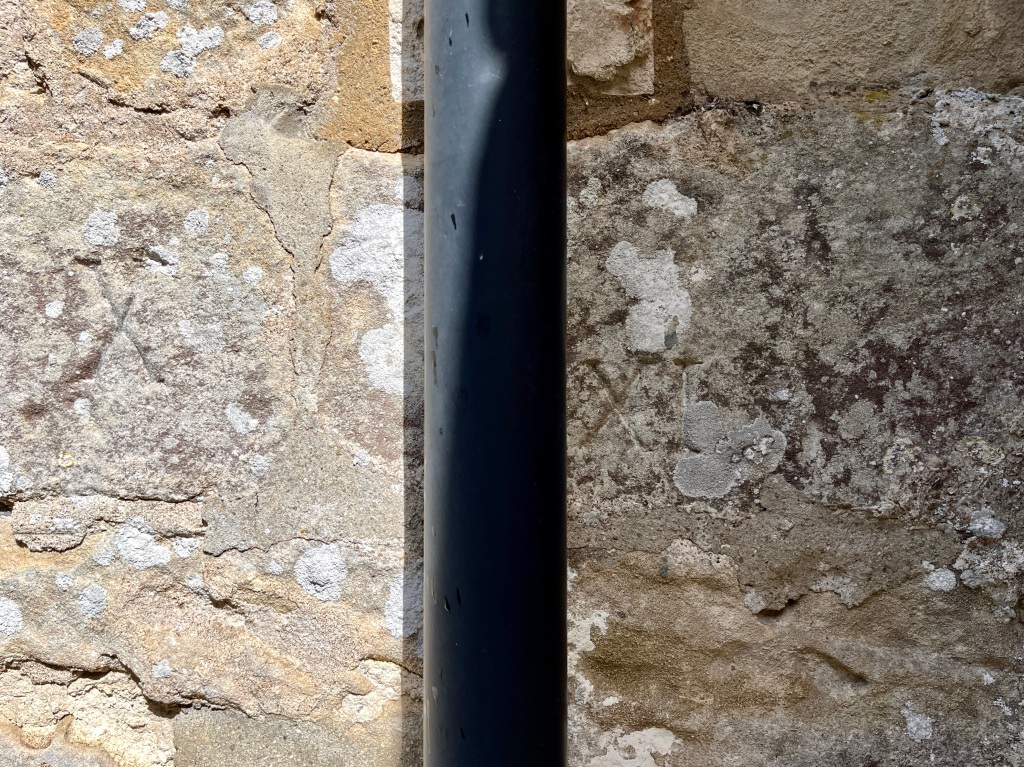
The building has been liberally decorated with musket shot (cf All Saints Alton Priors, below), most plausibly during the Civil War, in which the Castle played a significant part. For building mark / symbols / graffiti enthusiasts, there are quite a few masons’ marks to collect.

All Saints . Alton Priors . Wilts – Musket damage

GSS CATEGORY: Scratch Dial; Scratch Dial on Barn; Scratch Dial on Secular Building

CREDITS: Erika Clarkson (dial detection, images); Motacilla (image OS CC); HE print archive; Kenilworth History and Archaeology Society; Warwickshire World Article by George Evans-Hulme

BOYTON . WILTS . ST MARY THE VIRGIN – Scratch Dials

ST MARY THE VIRGIN . BOYTON . WILTS

GRADE I ✣ Origins pre-date 1159 building; some C12 features; S chapel c1280. Mainly late C13 to C15; 1860 restoration by Wyatt. Fine Giffard Chapel. Described 1850 (Hoare) as one of the most interesting parish churches in the Vale of Wily [Wylye], and its architecture has been very little altered since the death of Bishop Giffard in 1301. W window described by PEV as a tour-de-force. Painted pews. Turkeys feature in the church decoration – for why, see below. 4m NW of Wylye. 51.1553 / -2.0722 /  ST950395

DIAL 1

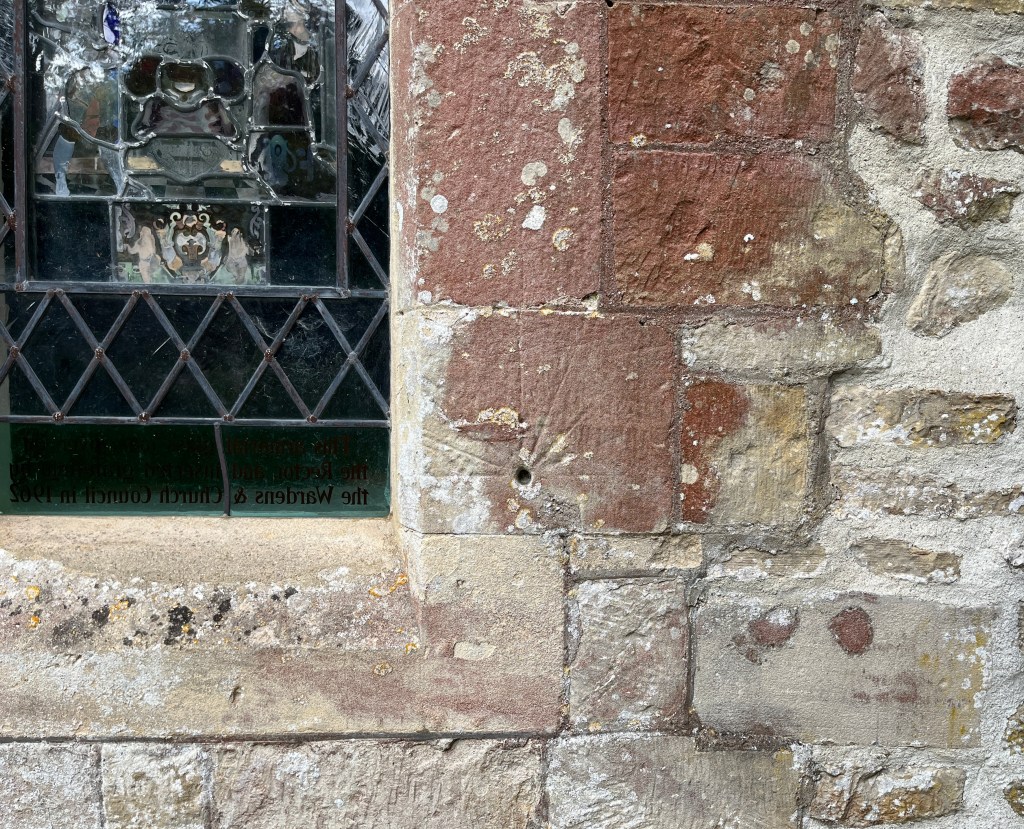
The dial is prominent on the lower right corner of the transept window. It is cut into the attractive red stone. At some time it was inverted, along with the stone above it. It’s an assertive dial, unlikely to be missed. There are 9 lines, with the noon having a pock close to the gnomon hole, then extending onto the stone below. A reverted image is shown below.

REVERTED DIAL

DIAL 2

BSS records 2 other scratch dials. Examining the separate but very similar entries for these 2 dials, it seems near-certain that they are in fact one and the same. The notes for one includes worn, error, omission, query. Report date uncertain. They differ as to whether there is a large gnomon hole or none at all; and whether there may be a circle. As it happens, I could only find one plausible candidate in the given location, so I will leave it at that.

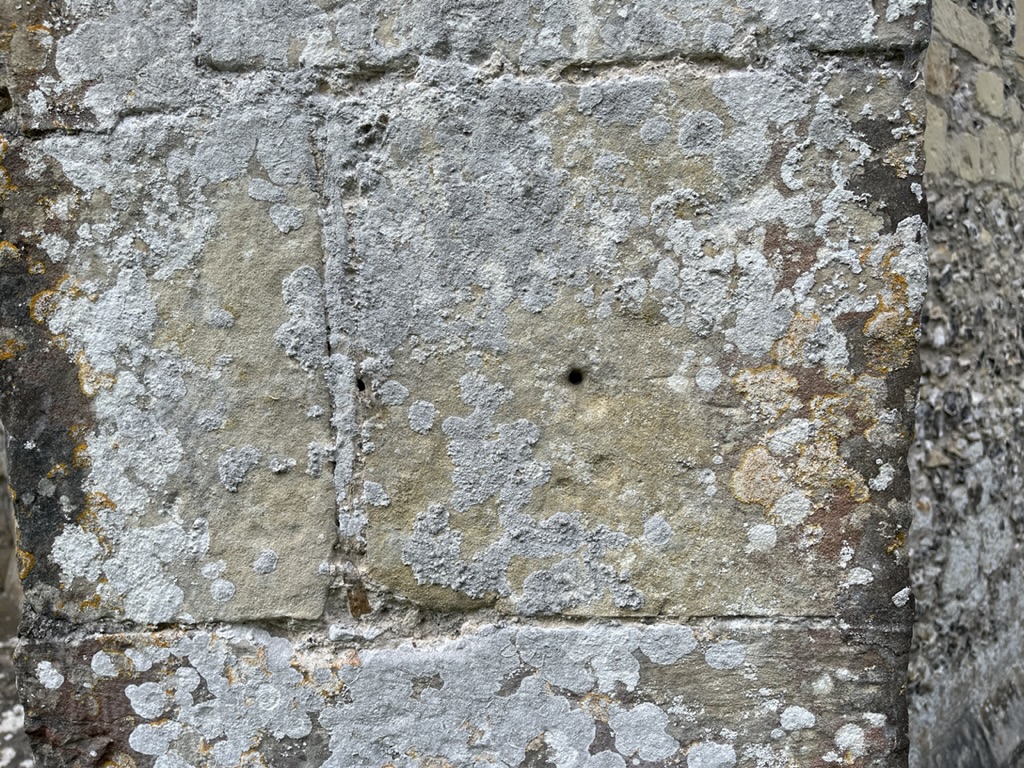
The dial is difficult to interpret, not least because it is so eroded. The larger image below hints at a noon line, with perhaps a trace of a line at XI and on the pm horizontal. There is a rough curve LRQ but no certainty that it was ever part of a circle. I doubt that the 3 shallow circular dents relate to the dial. A simple dial, then, but of use (in that location) to those passing after daybreak.

St Mary . Boyton . Wilts – Hypocrite Stone in the aisle

SIDE NOTE William Strickland, builder of Boyon Hall, was said to have brought the first wild turkey to Britain from America in the late 16th century. As a result, there are carved and painted turkeys all over the church; most notable is the lectern, shaped like a turkey instead of the traditional eagle. (David Ross – Britain Express BE)

GSS Category: Scratch Dial; Mass Dial

All photos: Keith Salvesen; ack. David Ross

SOUTH NEWTON . WILTS . ST ANDREW – Scratch Dial(s)

ST ANDREW . SOUTH NEWTON . WILTS

GRADE II ✣ C12 traces (BHO); then C13 on; C15 tower; Wyatt rebuilding 1860s. A few early features remain. An interesting, well-kept building and churchyard. 6m NW of Salisbury via Wilton. 51.1079 / -1.8758 / SU087342

DIALS

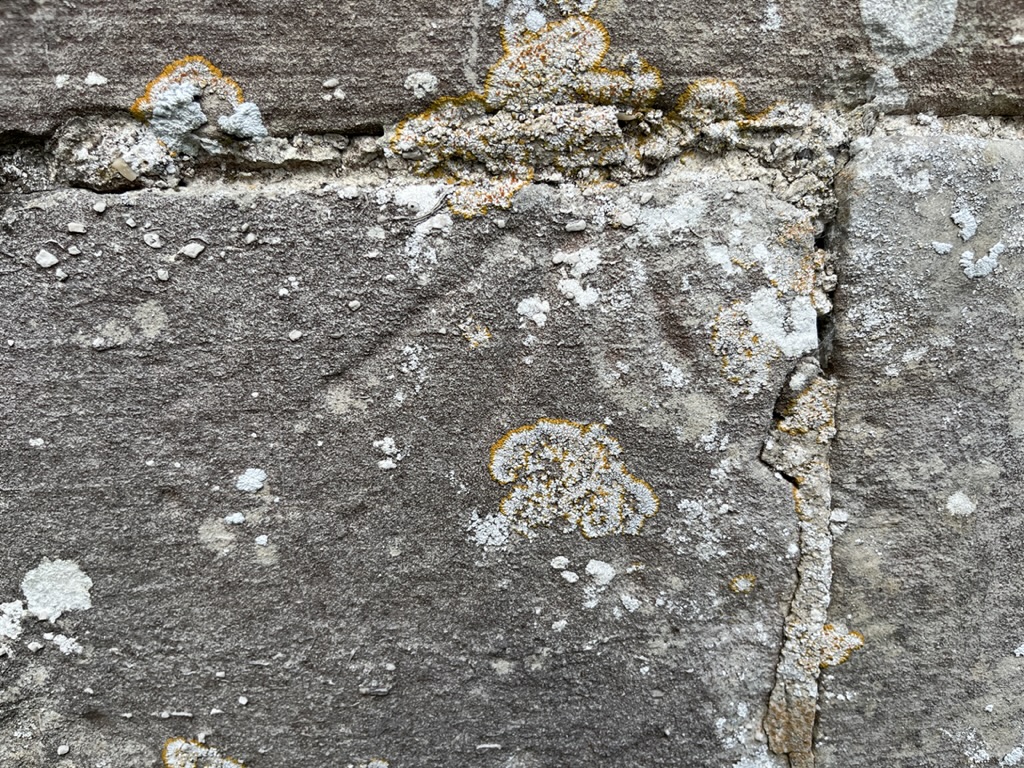
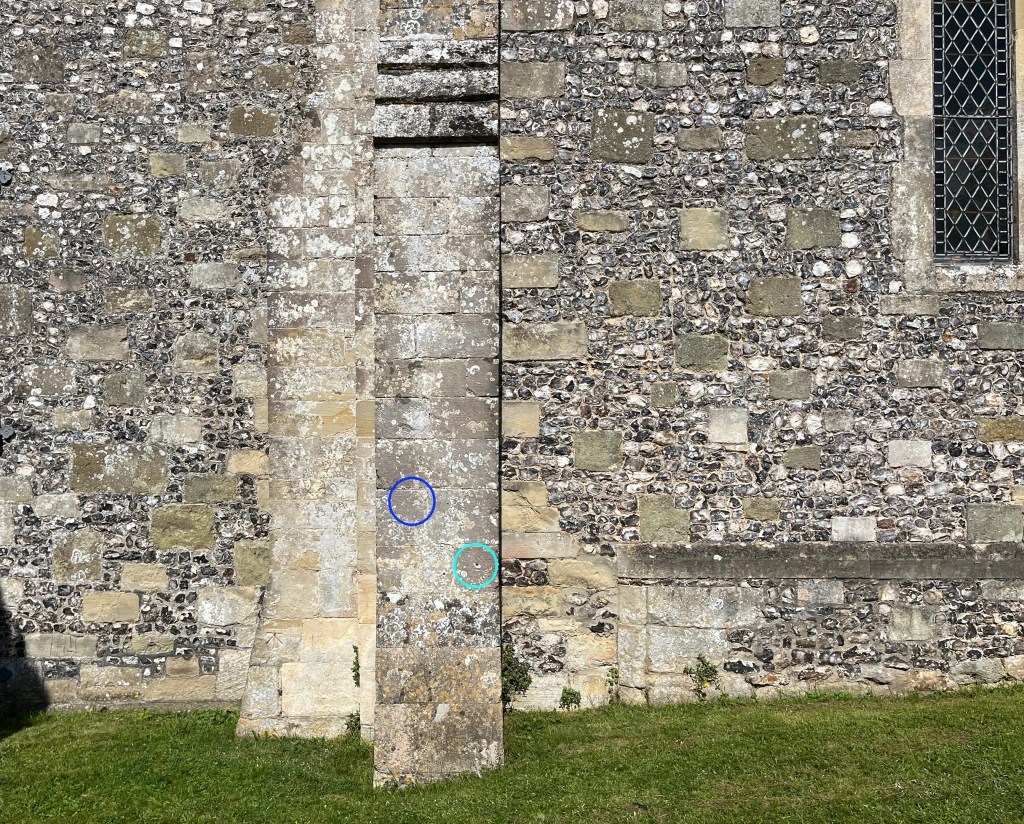
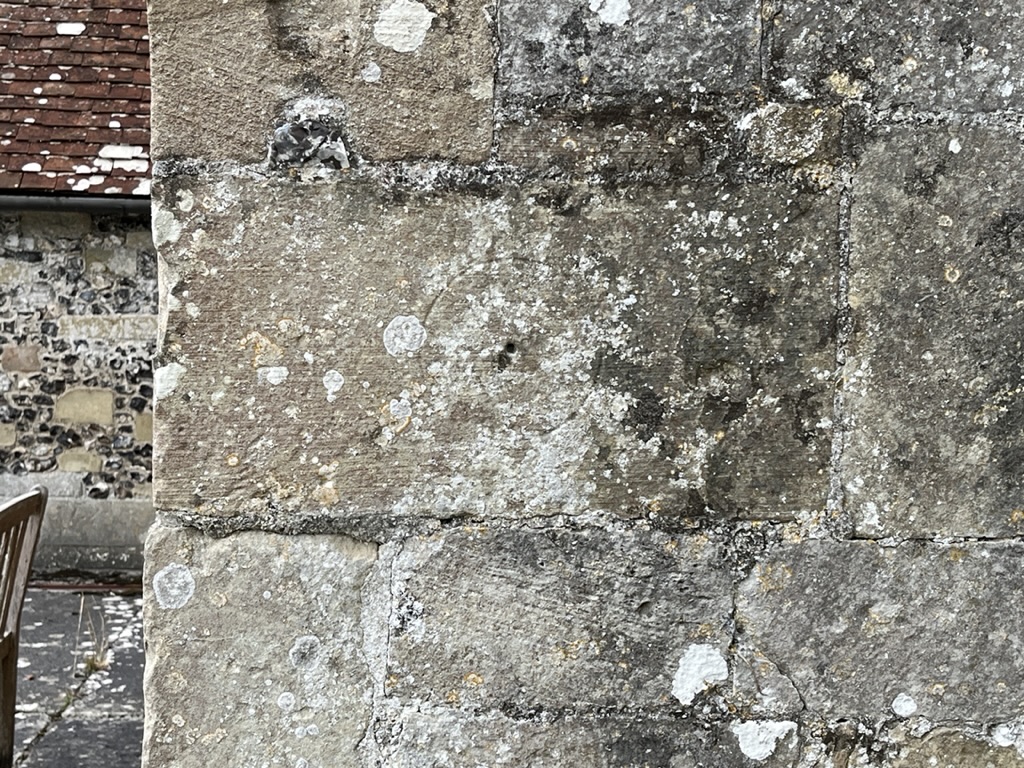
Two scratch dials are recorded with descriptions, with a third mentioned in tentative terms (BSS). When I visited, the only dial I found didn’t match the descriptions nor was it in any location mentioned. There were a few quite plausible gnomon holes but none had any additional dial-ish features, not even eroded traces. Clearly I need to return and try harder next time I’m in the area.

DIAL

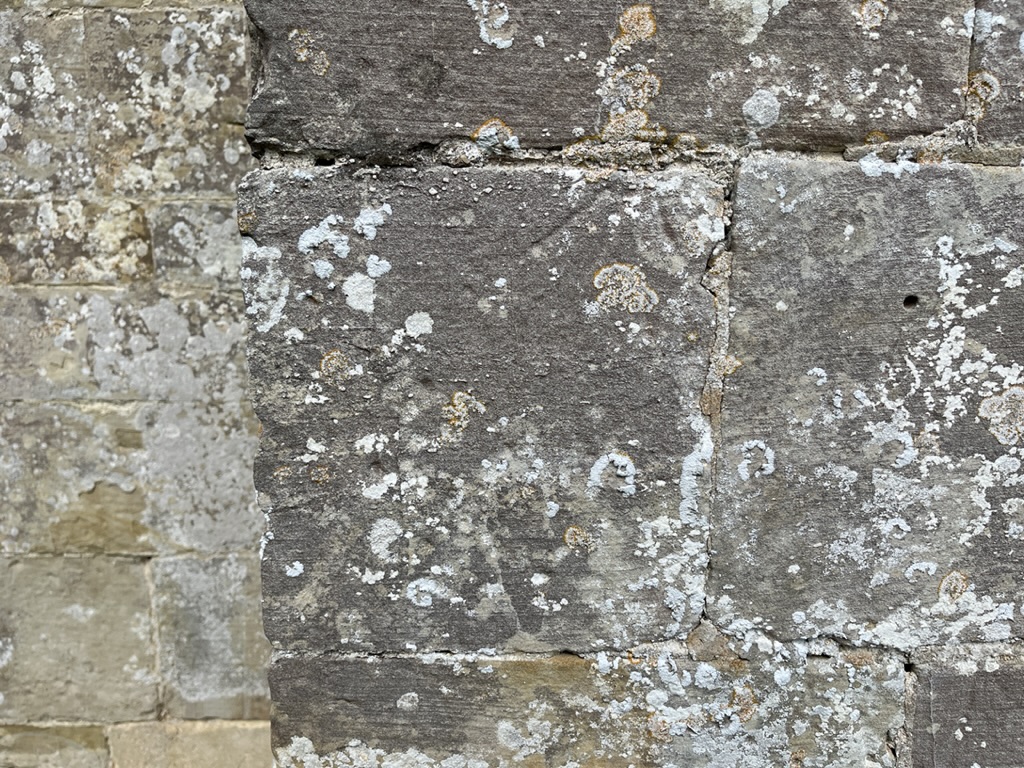
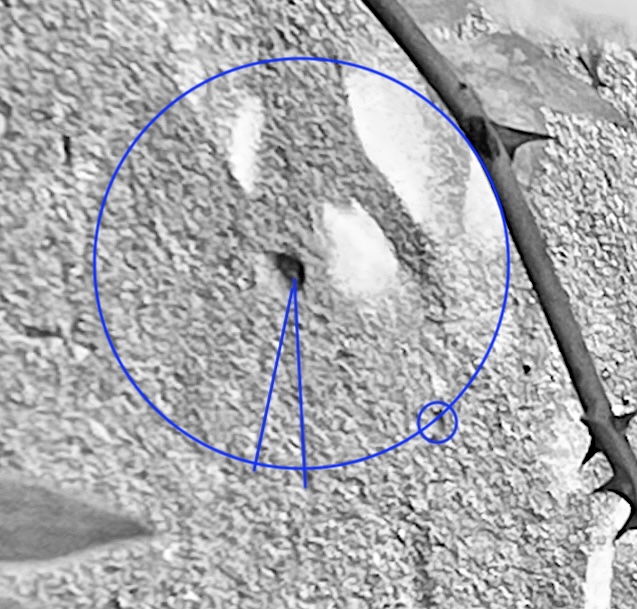
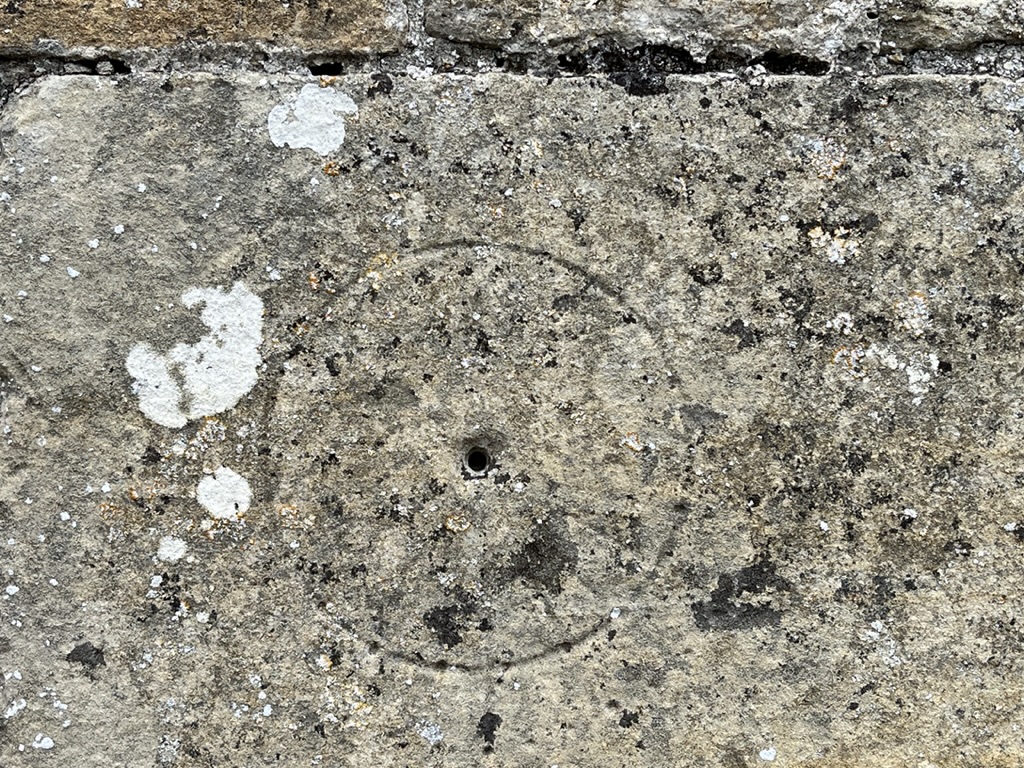
A very basic dial with the gnomon hole in the mortar line. Two clear lines either side of noon, possible terminal pocks (if so, perhaps later additions). LLQ there’s a faint trace of a third line.

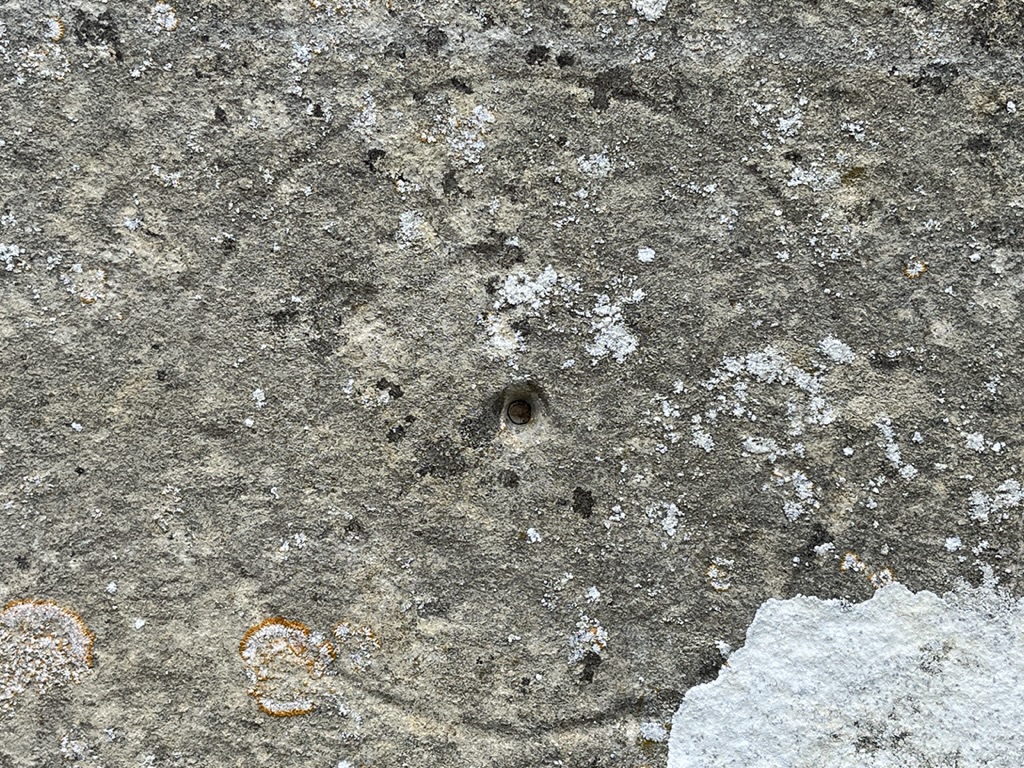
The dark blue circle in image 1 below marks the dial above; the pale blue circle marks image 2. Image 3 is one of several examples that, apart from holes, have no visible dial characteristics.

GSS Category: Scratch Dial

All photos: Keith Salvesen
WOOTTON . OXON . ST PETER – Scratch Dial

GRADE II ✣ Early CI4 origins. St Peter is a delightful small church a short distance SW of Oxford, close to Boar’s Hill and the unrivalled views over the fields towards the dreaming spires. 51.7092 / -1.3122 / SP476013

DIAL

During a recent visit to Oxford to see some of the College sundials, I found an earlier note of a possible dial at St Peter’s. I eventually found it on the E jamb of a tiny window now overgrown by a substantial laurestinus bush and protected by sharp rose thorns. Blood was drawn but it was worth the sacrifice.

The dial stone is near the centre of the photo above. Apart from the gnomon hole, it is just possible to make out traces of what must have been a full circle. There is a slight hint that it may have been a double circle. The noon line (perhaps with a terminal pock) is faint. A second line (XI) is close beside and slightly shorter.

There is a single pock on or close to what would have been the perimeter of the circle. Its position at approx None might support a theory that it belonged to the dial and indicated mid-afternoon Mass.

The dial’s angle adjusted to a more front-on view

NOTE: St Peter has an interesting concave vertical dial at the apex of the porch, to be written up separately in due course with a LINK

GSS Category: Scratch Dial; Mass Dial

All photos: Keith Salvesen

STEEPLE LANGFORD . WILTS . ALL SAINTS – 3 Scratch Dials

ALL SAINTS . STEEPLE LANGFORD . WILTS

GRADE I C13 origins; C14, C15 development; extensive restoration 1873 (Carpenter). C12 font. 3 scratch dials; and a fine Millennium dial LINK. 10m NW of Salisbury. 51.1363 / -1.9493 / SU036374

DIALS

All Saints is unusual in having 3 dials of very similar design, without the often-found stylistic developments on churches that have more than one dial.

DIAL 1

The most complete dial in terms of information for the passer-by. A complete circle with several lines clear and faint, some with a terminal pock. The noon line extends beyond the circumference, with the lines RHS indicating an afternoon dial.

DIAL 2

The dial’s circle is clear and the gnomon hole is large (with signs of recent enlargement). Apart from that only the faintest traces of lines remain, presumably lightly cut initially and eroded over the centuries.

DIAL 3

A partially obliterated circle; a gnomon hole; hints of 3 pocks LRQ. Perhaps we can deduce that this was the first of the dials. Of course, even a stick in the centre hole would give a fair idea of the time of day to the passing parishioner.

GSS Category: Scratch Dial; Mass Dial

All photos: Keith Salvesen
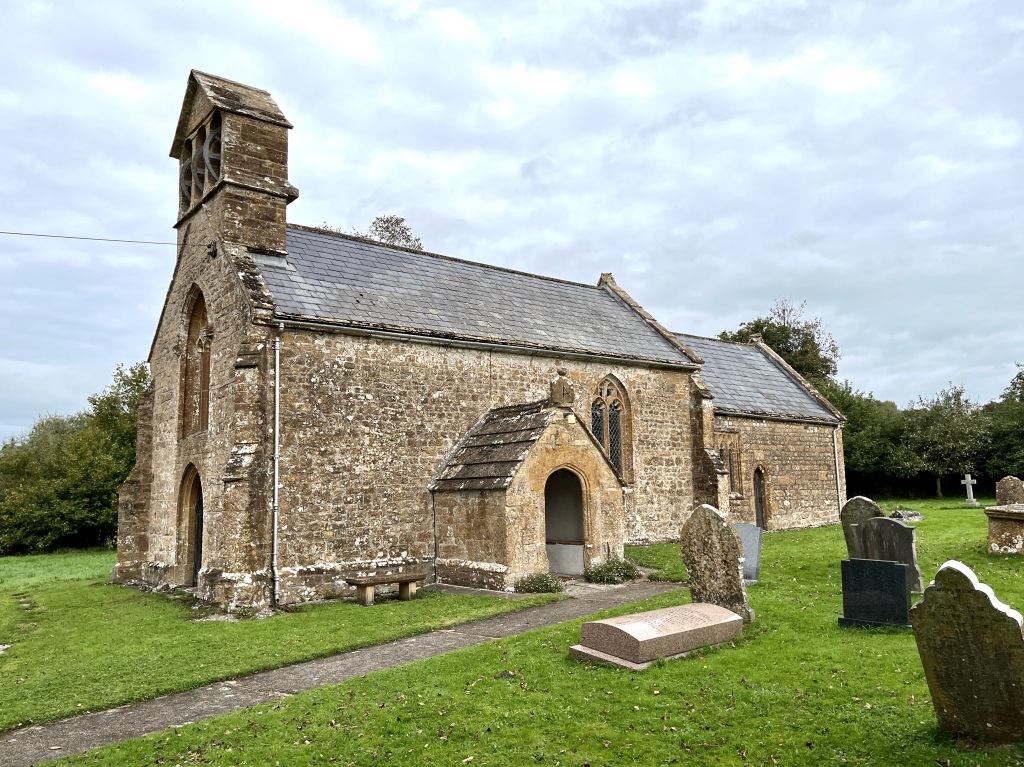
STOCKLINCH . SOM . ST MARY MAGDALEN – Vertical Dial

ST MARY MAGDALEN . STOCKLINCH . SOMERSET

GRADE I ✣ Late C13, records from 1334. A charming small church, with its 3 bells hung on wheels. A plaque lists 19 men who returned safely from WW1; it is a ‘Doubly Thankful’ village with no casualties in WW2 either. See also neighbouring STOCKLINCH OTTERSEY, a closely linked church. Close to Barrington Court NT. 50.9508 / -2.8797 / ST383171

DIAL

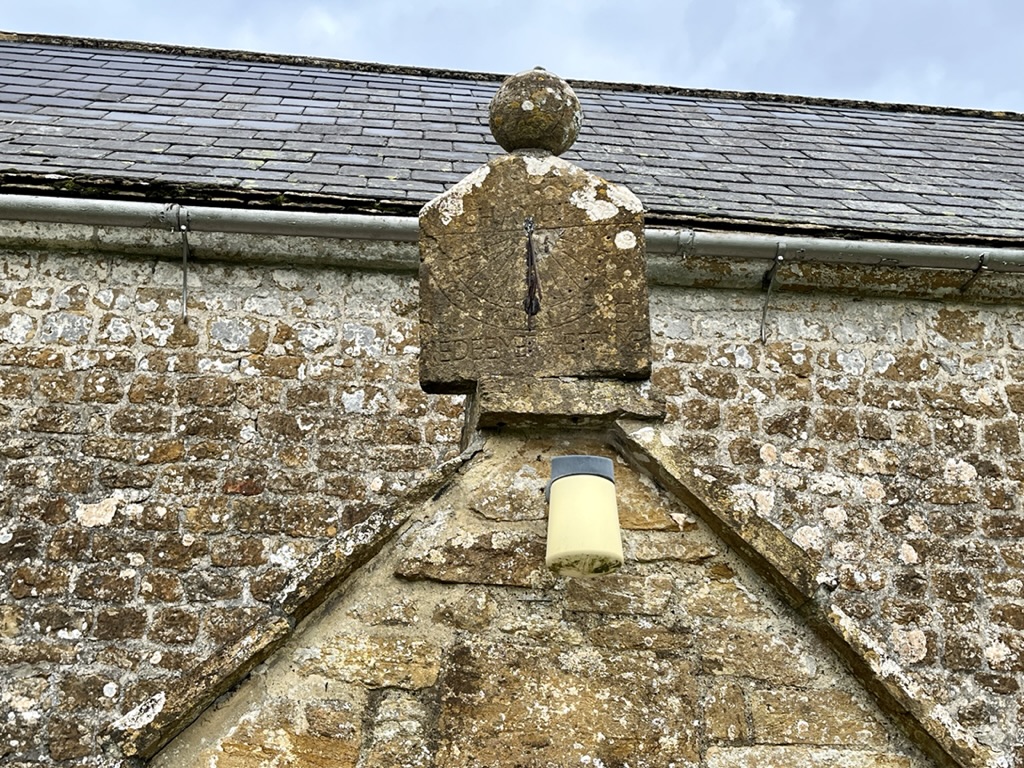
The dial is perched on the apex of the squat porch. It is square, significantly canted, and with ‘shoulders’ upon which rests a ball finial. Given its exposed position, the dial is in good condition. BSS dates it to 1612. There is a clear-cut semicircle with a full complement of lines, and with pocks marking the half hours.

CANTING

GNOMON ANGLES


INSCRIBED MOTTO

The words WATCH AND PRAY are inscribed above the dial face. Erosion and lichen have made it hard to see. Below the dial are the words REDEEME THE TIMES, with the final S fitted in above the line. The numerals – damaged LHS – are Arabic.

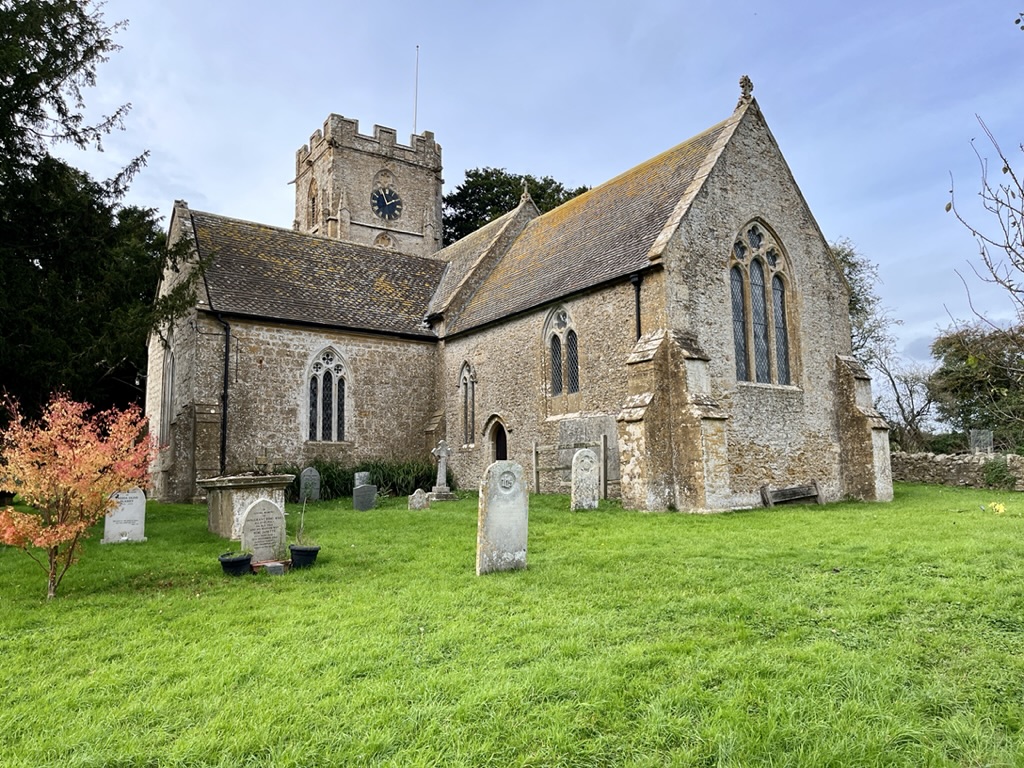
PUCKINGTON . SOM . ST ANDREW – Scratch Dial

ST ANDREW . PUCKINGTON . SOM

GRADE II* C13 (of which traces), C15, major C19 restoration. An attractive church to visit, close to Barrington Court NT. 50.9606 / -2.8884 / T377182

DIAL

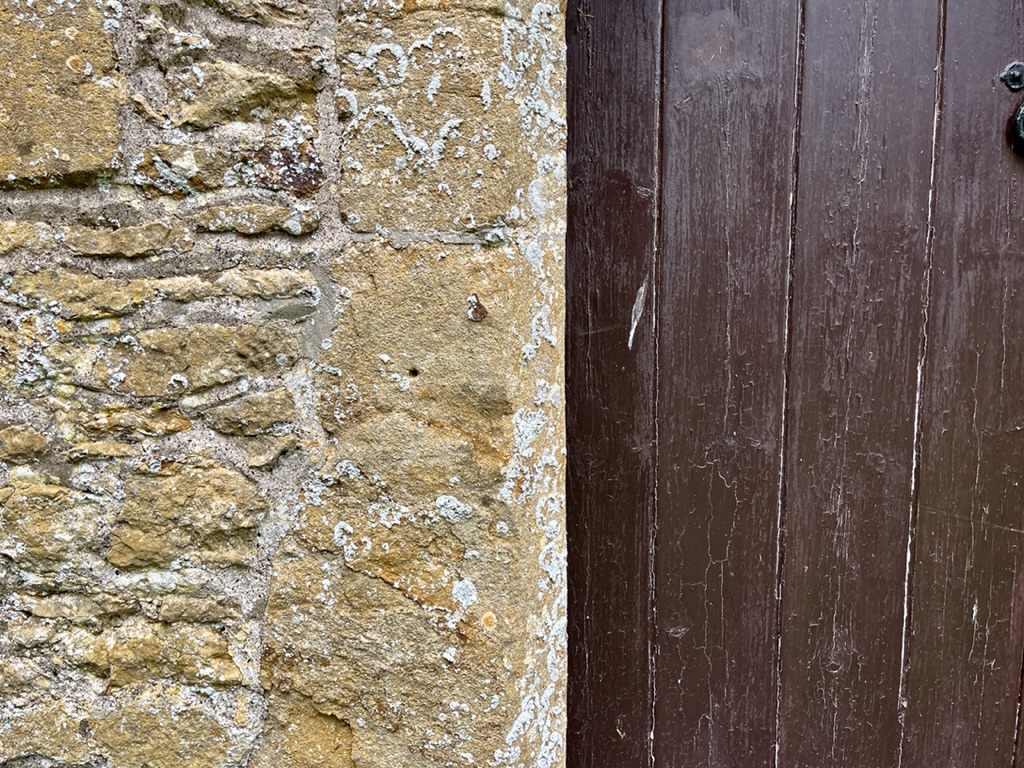
DEH visited in Sept 1912 and recorded: The dial is on the W side of the Priest’s door… 2 early A.M. lines are all that show but the stone is badly weathered and others may have been on it.

The erosion is doubtless worse now. One can just about make out a short horizontal 6-line L side, and a trace line below. Without DEH’s pioneering scratch dial project, I doubt that this little dial would ever have achieved a later mention.

GSS Category: Scratch Dial

All photos: Keith Salvesen

WYLYE . WILTS . ST MARY – Scratch Dial (2)

ST MARY . WYLYE . WILTS

GRADE II* C13 origins; C15 expansion; 1846 rebuilding by Wyatt. Wonderful pulpit. Well positioned beside an excellent pub to quench congregational thirst after righteousness. An ideal peaceful country church, despite being just S of the hectic A303 raceway. 51.1389 / -1.9898 / SU008377

DIAL 1


I very recently featured the inverted dial on the nave wall, tucked away quite low down on E side of the buttress.

Almost immediately I was contacted by Lee Baines, pointing out that I’d missed a mass dial in poor condition (but at least right way up) with standard three radials in SW quadrant. By chance I was passing Wylye yesterday, and I am pleased to be able to correct the omission so soon.

DIAL 2

The dial is a good example of a less common feature. The joint between 2 stones acts as an emphasised noon line, with the gnomon hole in the mortar line above it. The mortar line doubles as a 6-to-6 line. There are 3 lines in LLQ, neither straight nor accurately leading to the gnomon hole. The deeper cut line corresponds approximates the Mass time Terce. The overall lack of finesse of this rustic dial suggests that it is rather earlier than Dial 1.

GSS Category: Scratch Dial; Mass Dial

All photos: Keith Salvesen; many thanks to Lee Baines for pointing out my omission

FISHERTON DE LA MERE . WILTS . ST NICHOLAS – Scratch Dial

ST NICHOLAS . FISHERTON de la MERE. WILTS

GV II* C12 origins; C13 records; C15; restorations 1833 J Davis, 1861 W Hardwick; and 1912. Now redundant. Cast-iron plaque records 1833 rebuilding. Surprisingly large for a small community hidden away on the banks of the Wylye river (nb close to a very busy A303 intersection; check a map or you may miss the little side-road and could be going back and forth for some time. Close to Wylye. 51.146 / 51°8’45″N / -2 / 2°0’0″W  SU000385

DIAL

Part of the original dial stone was at some stage relocated and reused as a building block in a most unexpected place. You will find it N side, low down on the side of a buttress, facing W. In its working days, it must have been a fine marker of the passage of the day.

From the visible fragment one can tell that the dial was almost certainly cut over 2 (or more?) stones. The double circle – faintly seen RHS – gives an idea of the overall size.

Rotation of the stone 90º anticlockwise reveals well-defined XI – noon – I lines

GSS Category: Scratch Dial; Mass Dial

All photos: Keith Salvesen

CODFORD . WILTS . ST PETER – Scratch Dial

ST PETER . CODFORD . WILTS

GV II* C13, C15, 1863 restoration by T.H. Wyatt. PEV notes Very well preserved C9 Saxon cross shaft with fine carving… against north wall of chancel. Worth visiting close-by St Mary (no dial), an agreeable church. 7m SE of Warminster. 51.1586 / -2.0503 /  ST965399

DIAL

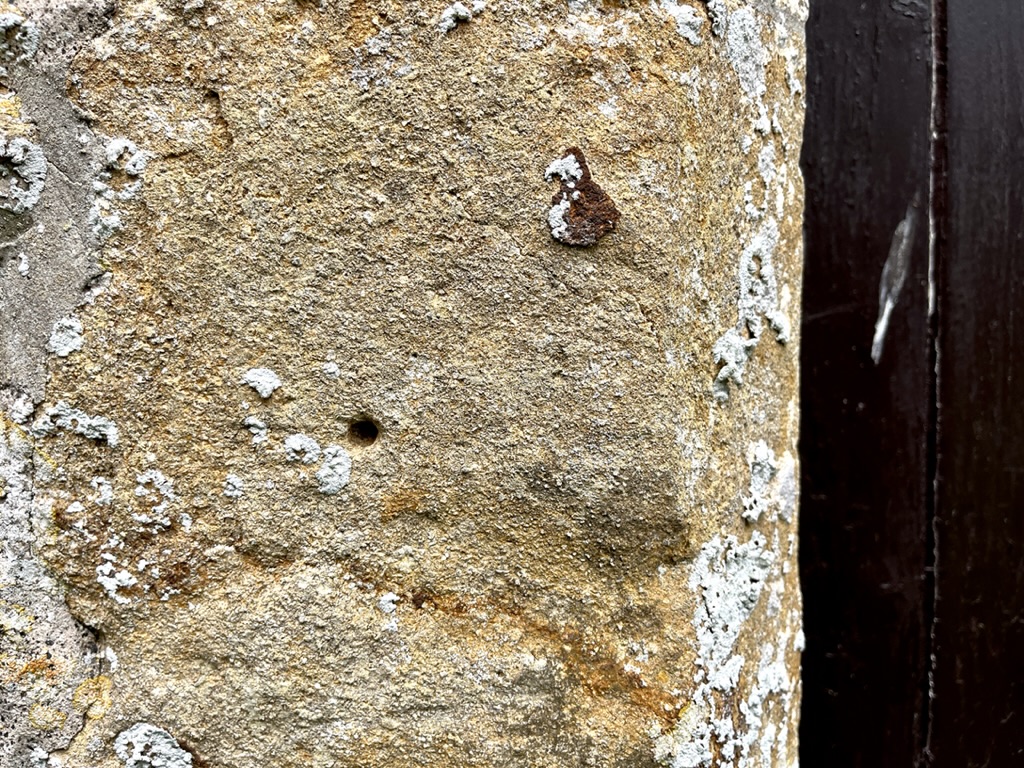
An enigma: the dial recorded for St Peter gives the details shown below. However at the position and height specified is a single hole drilled near the centre of the stone. There are no markings whatsoever that I could make out. I looked at similar locations on the S side without success.

Chancel, S wall, to R of priest door. Height 1.4m. Worn.
Dial (Norman?) with tides, with duodec., sometimes both. Mason-cut or roughly scratched

I realise this is a disappointing post. On balance I decided it would be worth writing up. This visit was part of a 3-day project with the Wylye Valley churches. I also failed to locate the dial at nearby Knook; and I didn’t get a full score for the multiple dials noted at Stockton (17) and Sutton Veny (9). There were a couple of new finds to even up the score. Not all older records are accurate; then again, neither am I… Any guidance with the dial(s) on this Church would be welcome.
GSS Category: Scratch Dial

All photos: Keith Salvesen