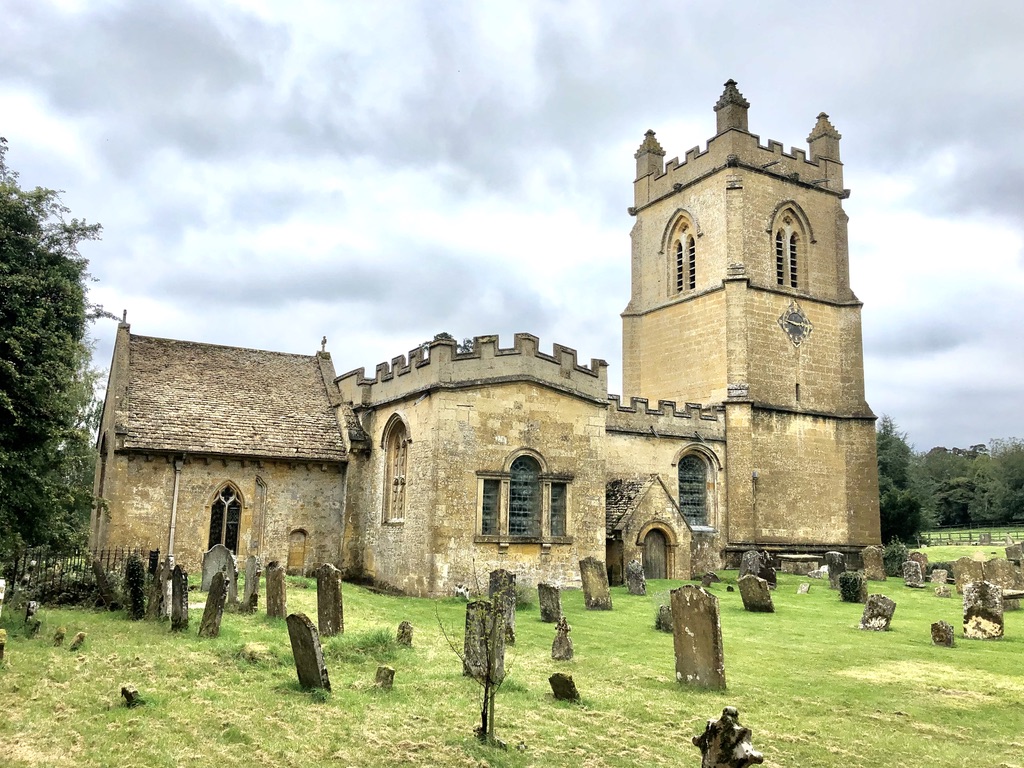
GRADE I ❖ C12 origins; rebuilt C14; subsequent alterations C15/16; restoration 1865. Fine S porch with a splendid collection of carvings; interesting monuments within. On the Cotswold Way NE of Chipping Sodbury. 51°33’49″N 2°20’20″W ST766850
VERTICAL DIAL
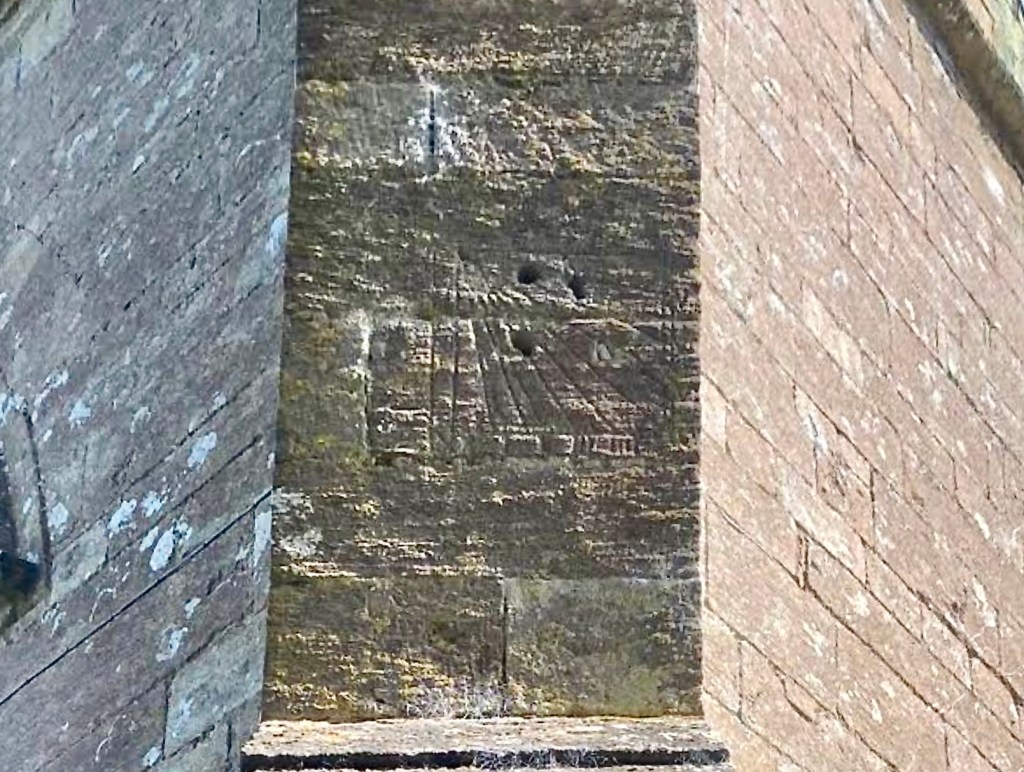
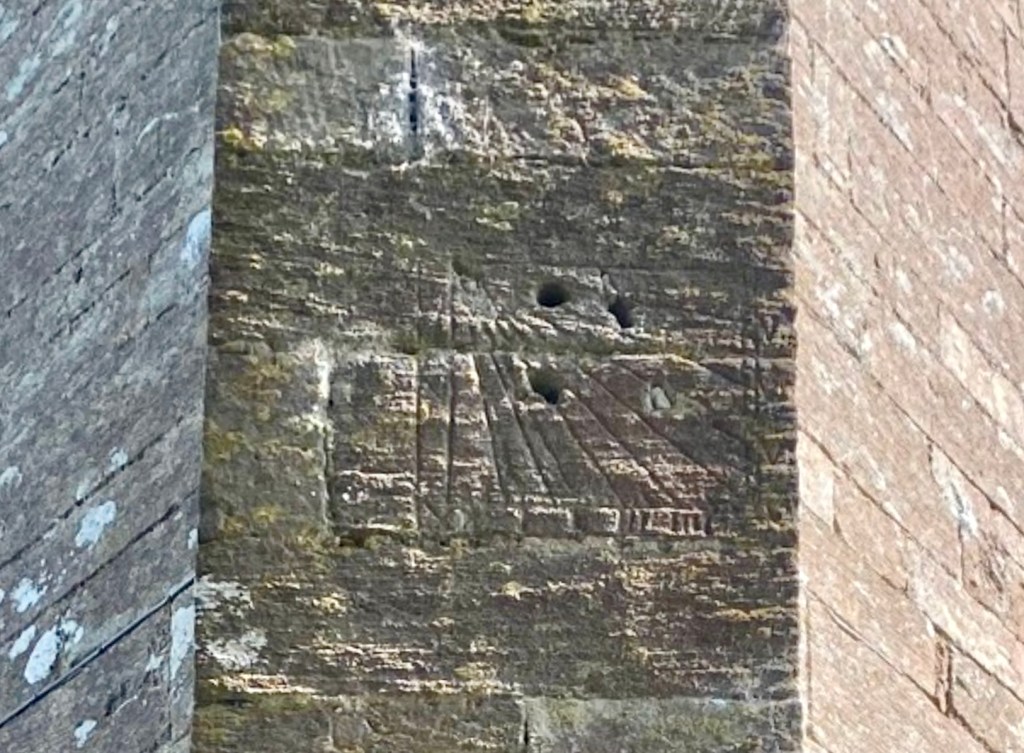
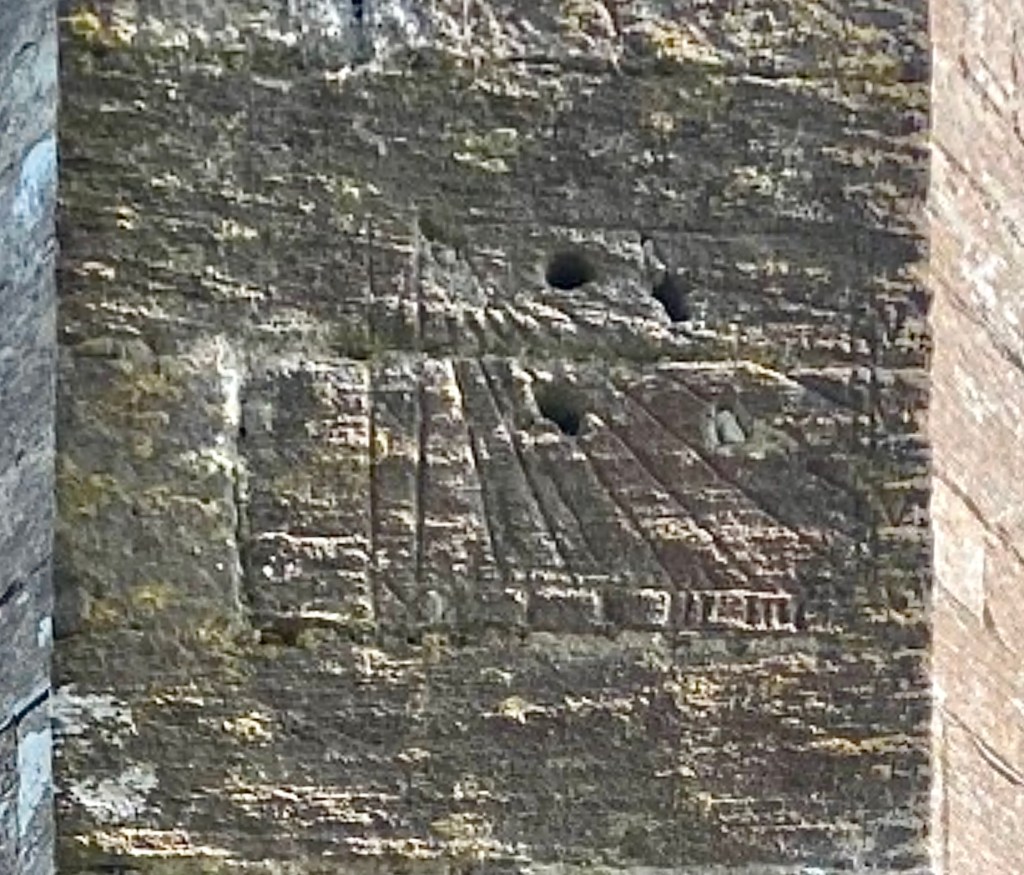
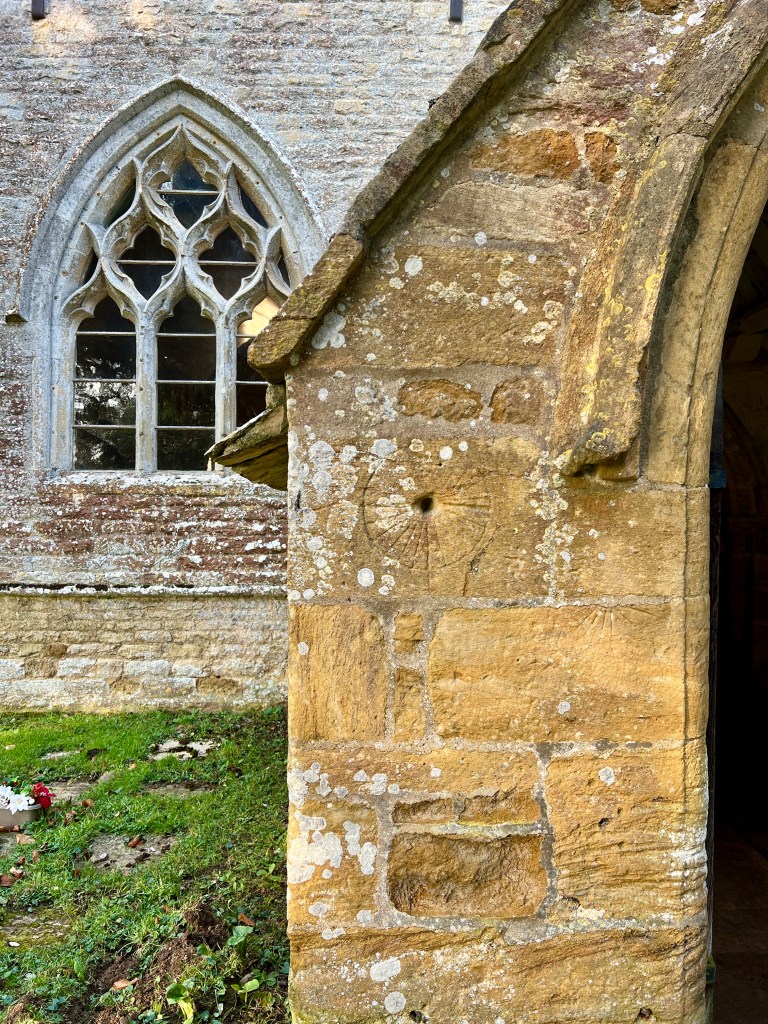
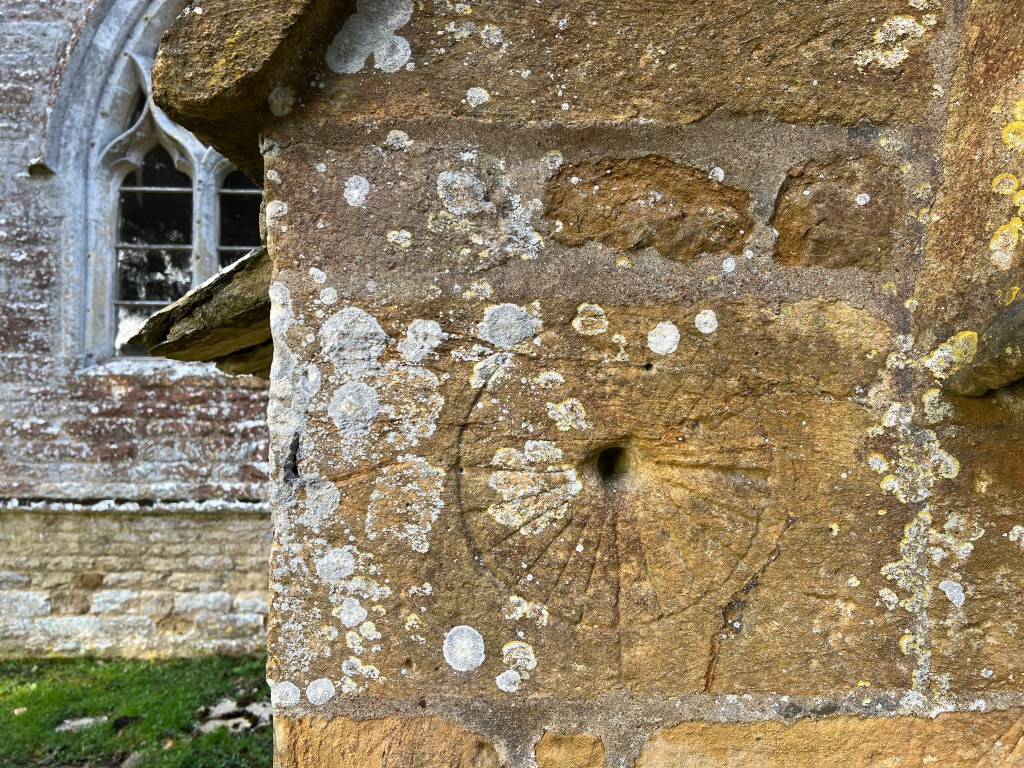
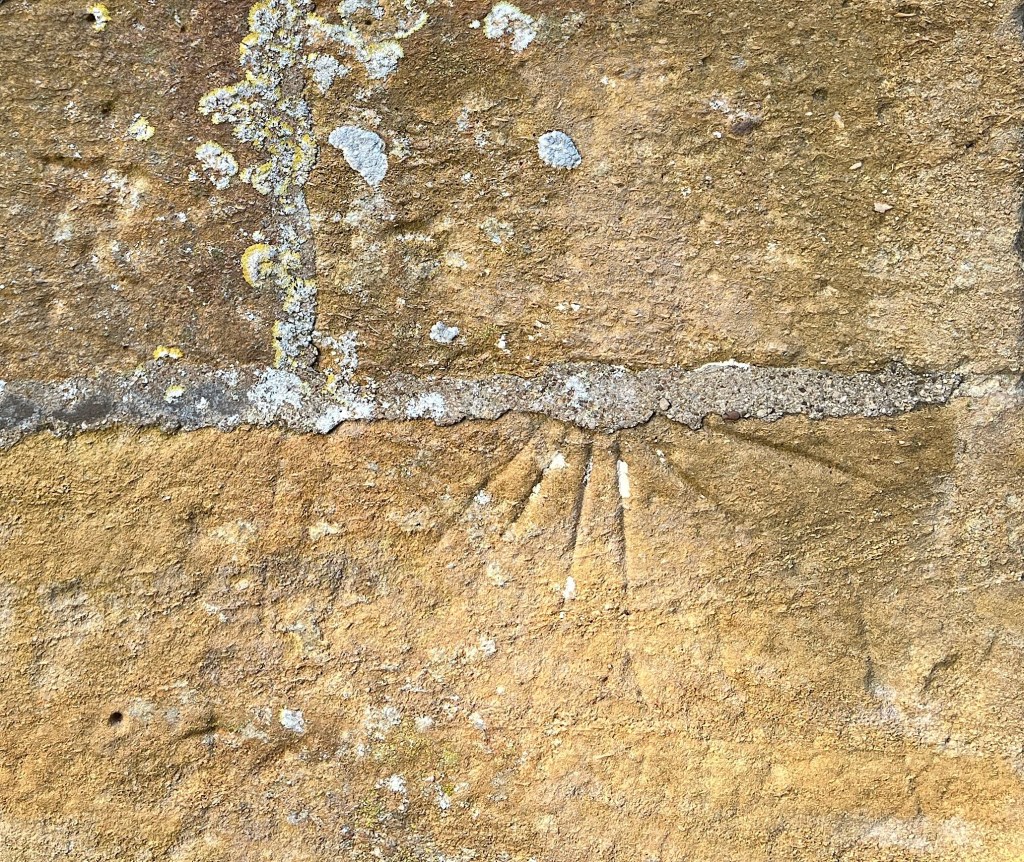
This rather splendid dial, cut high on a buttress, is somewhat rustic for its exalted position. It faces SW, which explains why the lines radiate from a corner, rather than top centre or central to the dial stone. The randomness of the radials and the gaps between them suggests difficulty matching them with the positions of the roman numerals along the base and RHS of the dial.
BRITISH SUNDIAL SOCIETY RECORD 1998
GSS Category: Vertical Dial; Dial on Church
CREDIT: Martin May, with thanks for contacting me and for the excellent photos of this interesting dial
Grade I ✣ C12 origin; gradual expansion to C15 (see BHO diagram); C19 restorations. Much of interest within, esp vast mid-C14 Doom wall painting on north wall of nave. Of note: stone bench seats within porch with incised lines where yeomen are reputed to have sharpened their arrows (cf Gnosall Staffs). In 1291 the rectory was valued at £14 13s. 4d. The extremely informative Evenlode Churches website is recommended – a model of its kind. 51.928 / -1.6598 / SP234255
John Renner
DIALS
There are 3 dials in a cluster on W face of the porch. The first is very visible and detailed, undoubtedly the latest. The second is a semi-circle type, fanned out beneath the mortar line. The third is little more than a trace between the two, perhaps a test scratching or passing whim.
John Renner
DIAL 1
John Renner
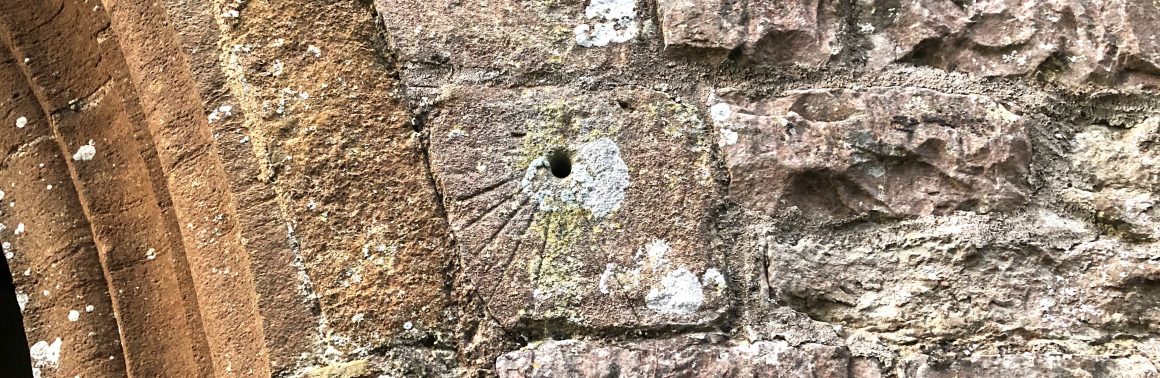
DIAL 1 has a sizable gnomon hole, enlarged over tIme. The noon line is emphasised by being cut beyond the circle boundary; it also marks Sext. The emphatic horizontal incision RHS suggests that sunset (nocturns; compline) was a significant hour for observance. There are 4, possibly 5, faint lines URQ – probably rustic knife / nail scratchings rather than part of the original dial.
DIALS 2 and 3
John Renner
DIAL 2 has 6 lines radiating from the mortar line. The discrepancy between the line spacing LLQ and LRQ was perhaps an attempt to correct the shadow-fall angle of the sun in the later part of the day.
DIAL 3 is as close to not being a dial as it could be. However, there is a badly cut line at approximately noon; and (anticlockwise) a line approximately at None. There’s also a hint that a gnomon might have been in the vertical mortar line above the horizontal.
GRADE II* ✣ Parish Church. C12 origins; C13 tower; further works C15, C17, C18; restorations 1896 ff. An attractive country church beside the Manor House, close to a remarkable village cricket ground (see below). 11m E of Tewksbury, 12m NE of Cheltenham. 51.9897 / -1.9129 / SP060323
VERTICAL DIAL
The dial is immediately above a 2-light Perpendicular window, and (when I visited) partly obscured by foliage. The gnomon-less dial is dated 1797
The dial is hard to read because of its weathered condition, its high position, and the difficulty taking a square-on photo. Little detail can be seen with the naked eye. There is evidence of a double rectangular border; and there are the remains of decoration above the dial face. The dial is prominently placed and (absent trees in front) would have been visible from quite a distance.
SCRATCH DIAL?
In his Glos dials survey, Tony Wood TW lists a scratch dial at Stanway without further detail. It is not noted in TWC’s much earlier list. I can find no other reference, and I did not find a convincing dial. The best candidate was this one, with 3 radials RHS emerging from a large hole. One other line LHS runs beside the hole rather than radiating from it. The other large hole to the left suggests that the pair may have held a fixture, and there is a similar pair lower down.
Tentative conclusion: this is possibly a scratch dial, but dubious. It might be more convincing if it were on its own.
CRICKET PITCH
Straying from dial-specific content, here is a small gallery of the extraordinary cricket pitch, the gift of J M Barrie who stayed at the house. The outfield includes significant areas of ridge and furrow undulations, rather more of a problem for fielders than batsmen I imagine. The pavilion, supported by staddle stones, is an excellent example of satisfying quirkiness. I found a old ball under it to chuck around for a while and decide which end to bowl from.
GRADE 1. C12 chancel, nave; continuing development; Largely rebuilt C16, tower in C17. Mid-Victorian restoration (Cutts). Cotswolds, between Winchcombe and Stow-on-the-Wold. 51.949 / -1.8685 / SP091278
DIAL
TWC in his 1935 ‘Origins and Use of Scratch Dials’ includes Temple Guiting in his county lists (along with nearby Guiting Power). There is no other information that I can find in any of the usual resources nor going beyond them. The century-by-century work on this church make it hard to know where to look, especially as stones may have been relocated or even removed.
STOP PRESS
Within an hour of posting this, more research revealed Guiting sightings of 3 dials. An article by Rev. P. Sullivan for the Bristol and Gloucestershire Archaeological Society (1924, Vol 46, 169-86) lists many Glos. dials including the following:
All are quite high up, which is no real excuse for missing all of them, even when in a hurry. I clearly need to go back. Please stop here unless you want to check out a less obvious / certain dial…
Temple Guiting . Glos . St Mary – Scratch Dial
With limited time for a visit, the only dial-like marks I could find were under window of the transept (if that’s the right term) on the N. side. There are 2 clear lines; one faint line; and a couple of possibles but too eroded to be sure. I may easily have missed a real dial(s); this is the candidate I noticed.
My thoughts are that this is a small, simple dial cut on an older-seeming stone; that it has been relocated, presumably from the S. front; and that it has been rotated 90º anticlockwise. There’s the hint of a filled style hole below the dark patch that looks different from the lichen.
Temple Guiting . Glos . St Mary – Scratch DialTemple Guiting . Glos . St Mary – Scratch DialTemple Guiting . Glos . St Mary – Scratch Dial
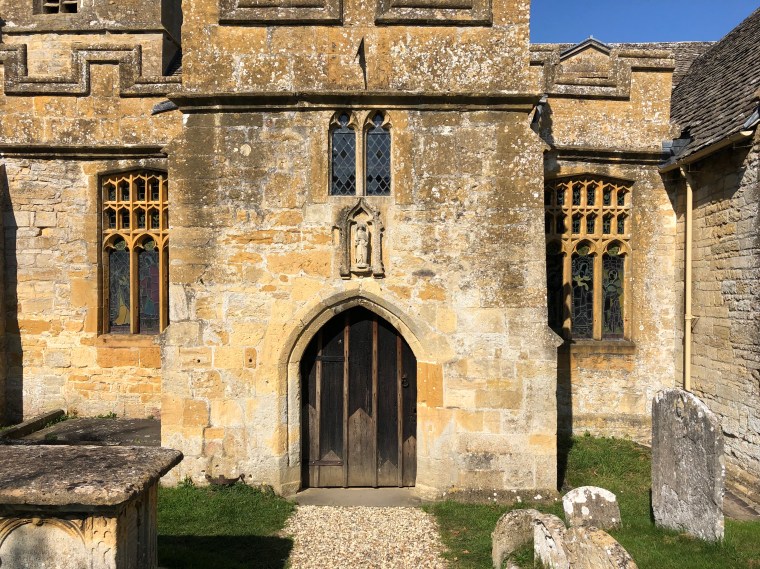
DEDICATION † ST MARGARET OF ANTIOCH – C12 origin, further building C13, later additions & restoration. The squat timber-framed bell-turret HE is C19.
LISTING † GRADE II*
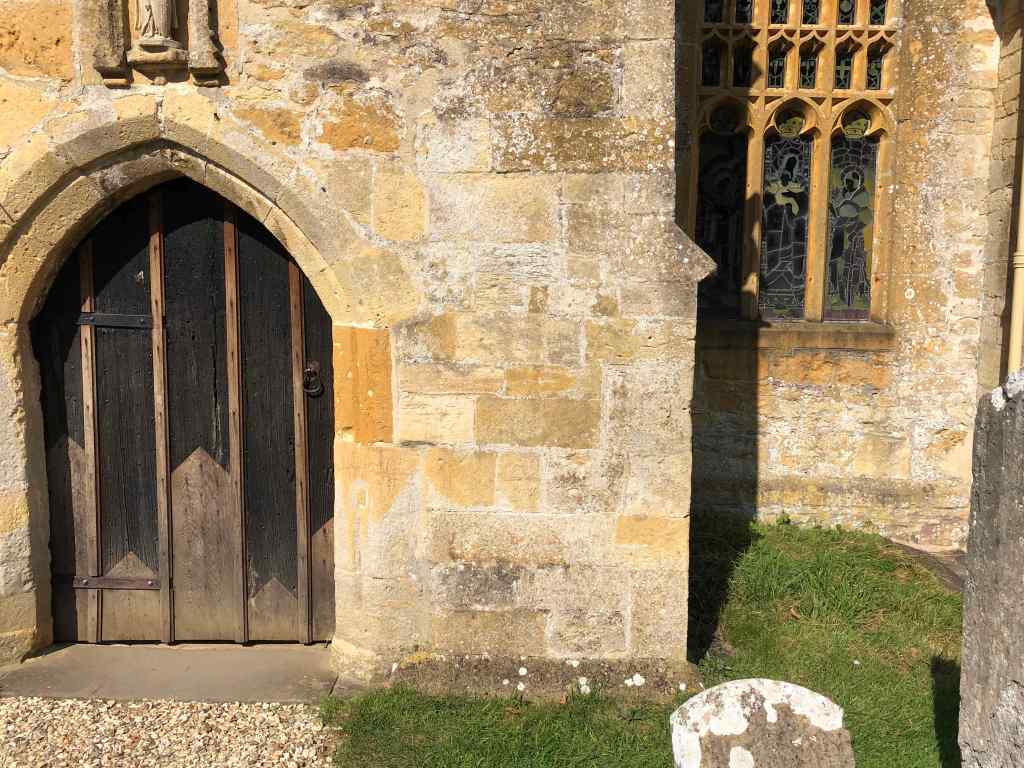
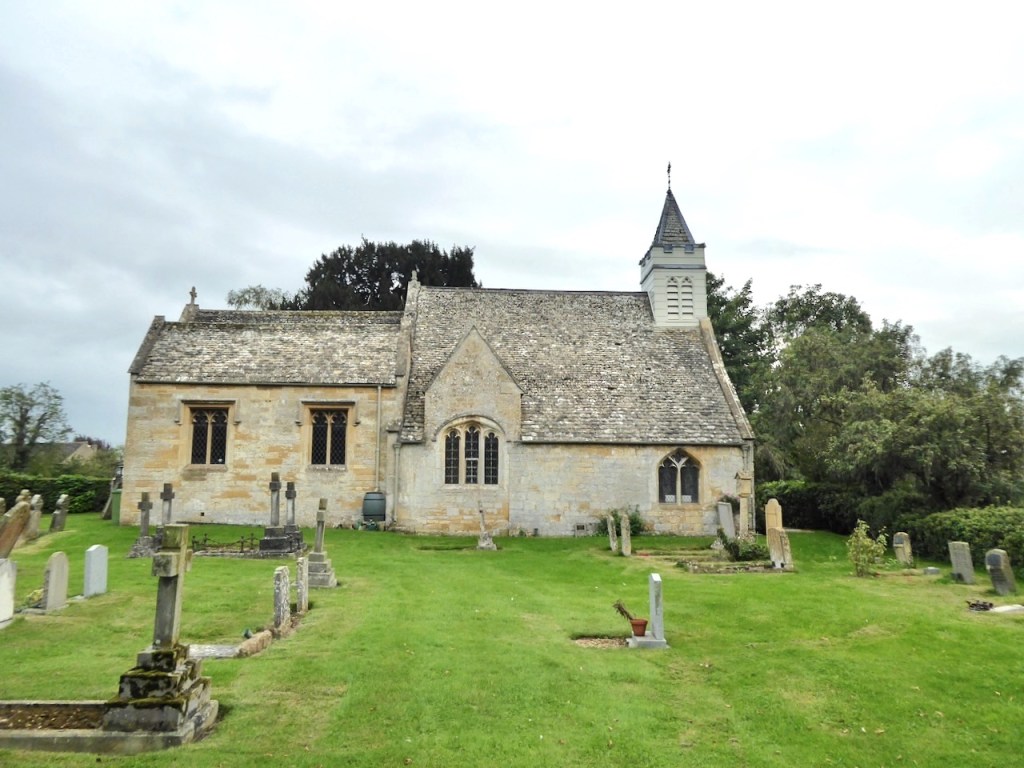
LOCATION † Off the beaten track 5 miles NW. of Winchcombe, 7 miles E. of Tewksbury. One of several ‘dial’ hamlets or villages in the Parish of OverburyBHO LINK, reached by a network of rural lanes. The first sight of St Margaret and its bell-turret was an interesting surprise. 51.9906 / -2.0267 / SO982324
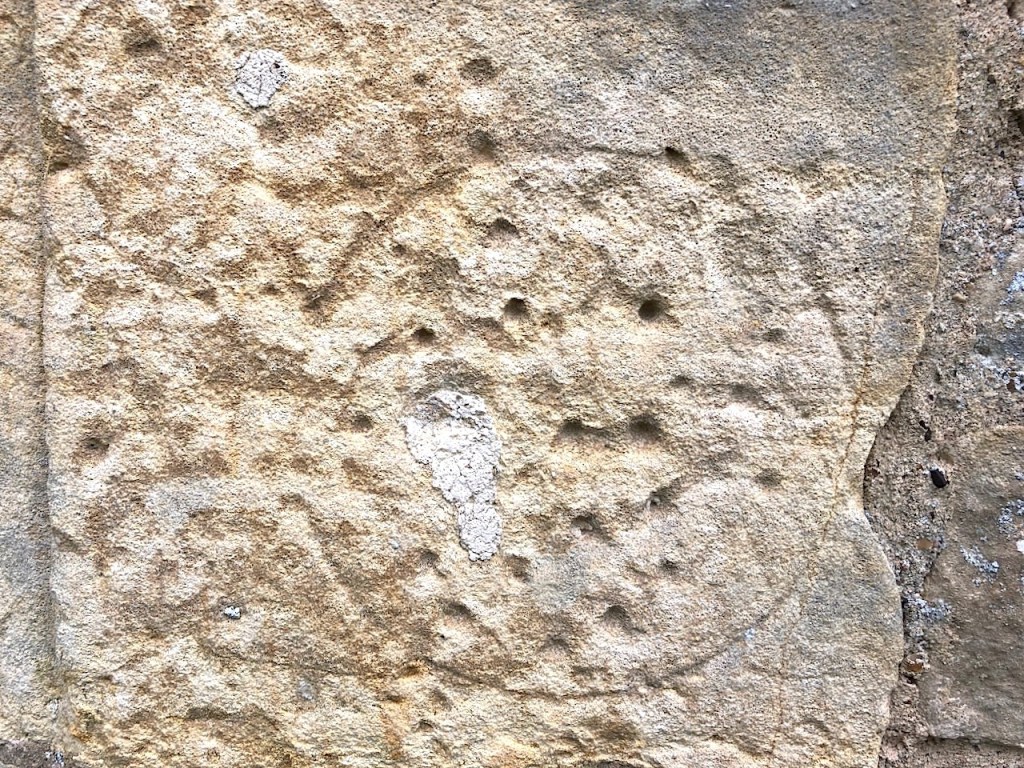
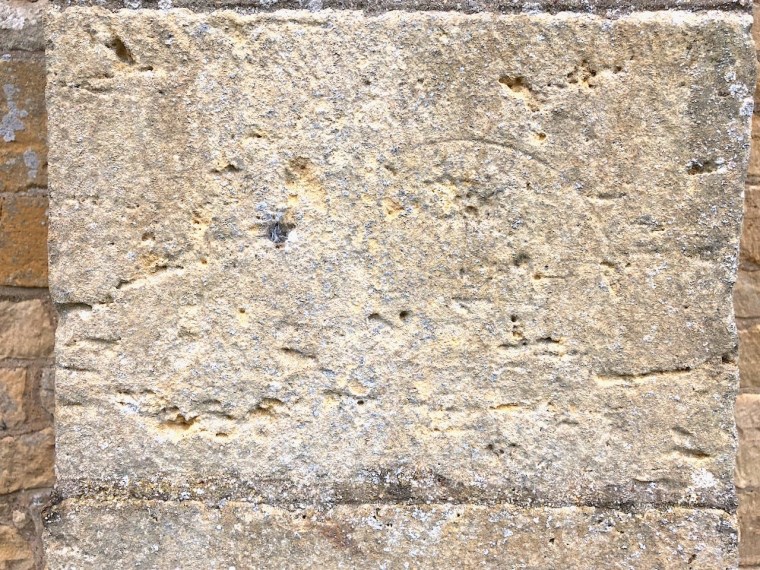
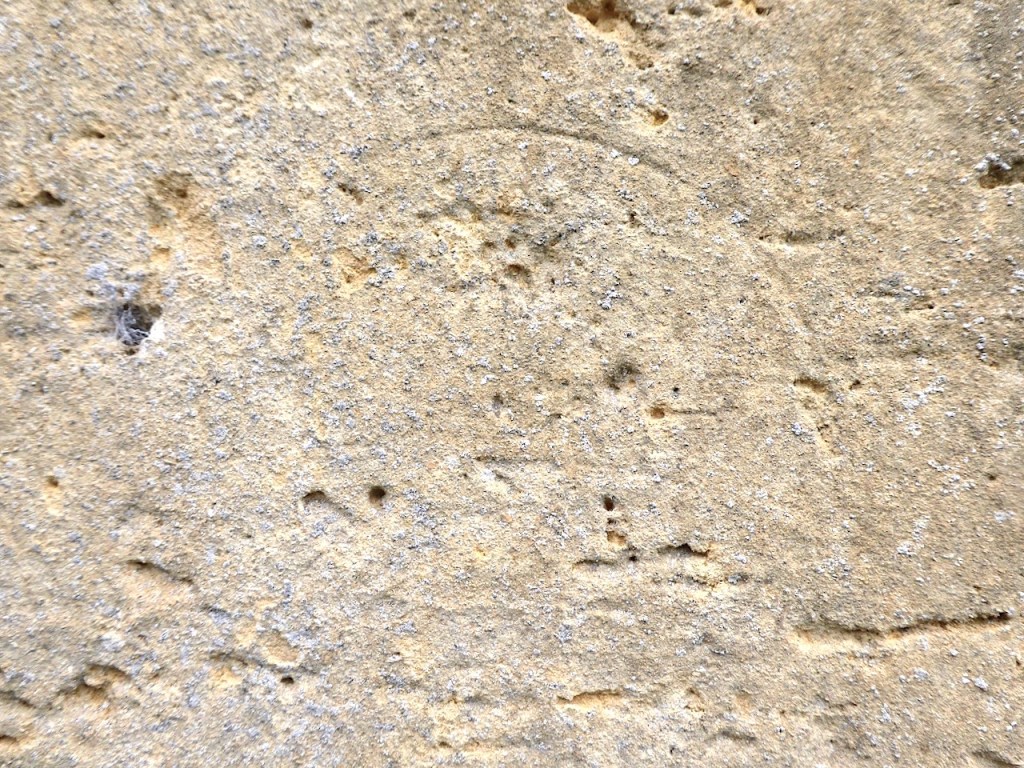
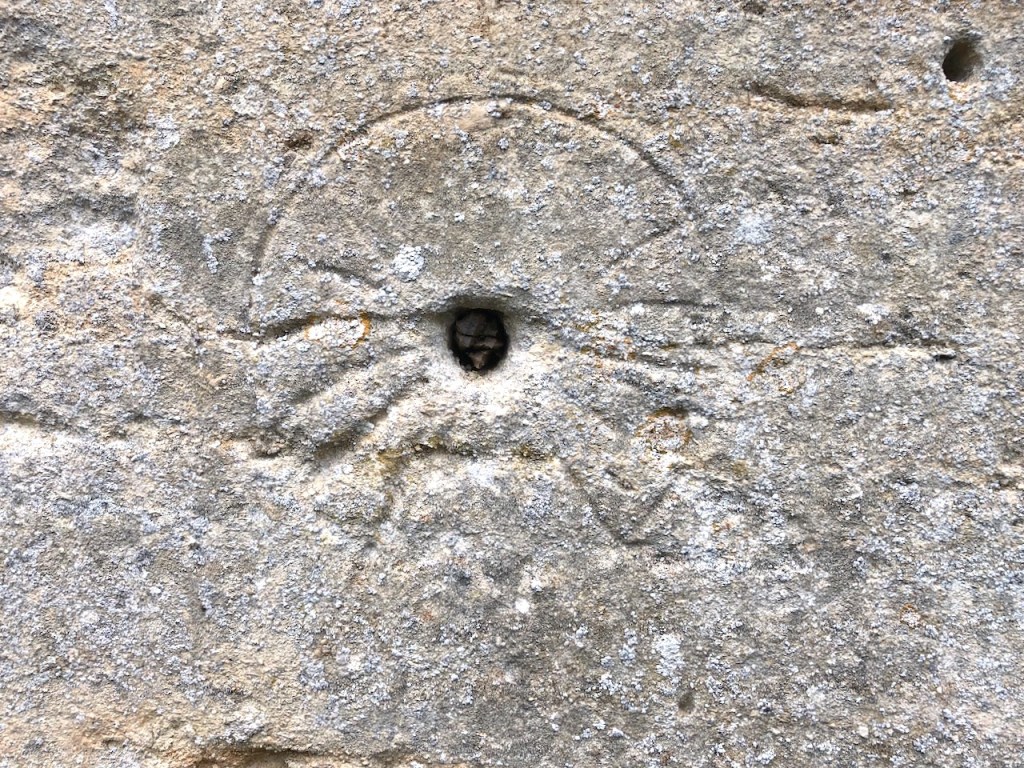
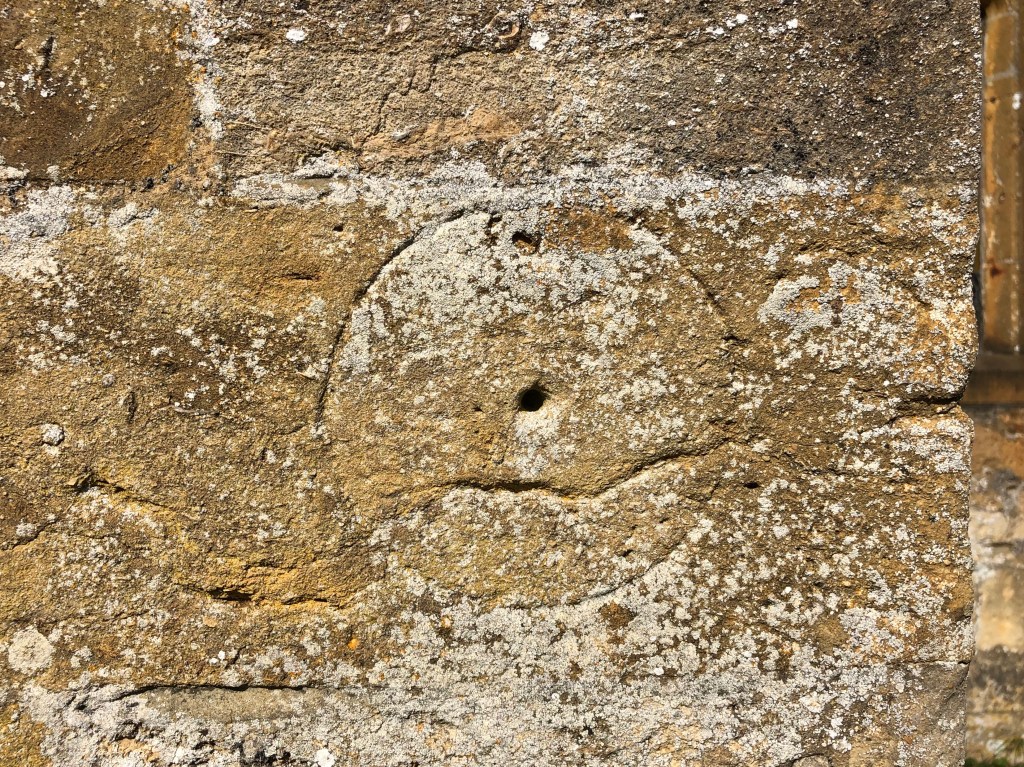
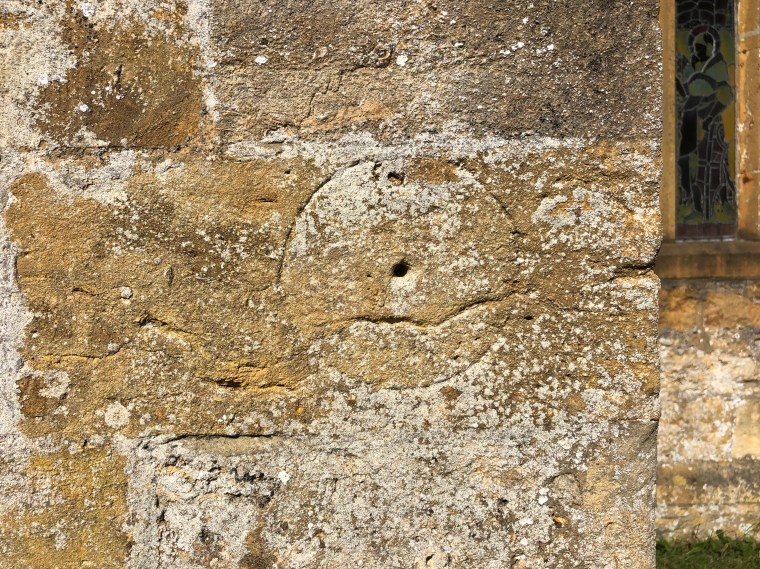
DIAL † W. jamb of the porch door, an encircled and seemingly random collection of pocks of different sizes and depths, some extending outside the circle including what must be the noon-line but marked several degrees to the left. An apparent style hole, mortared, is on roughly the right horizontal line, but way out of the natural vertical line. Very mysterious and impossible for an amateur to interpret. My tentative afterthought is that these anomalies were a way of adapting the dial and the shadow cast to adjust for the orientation of the church.
NOTES † At the time I visited, I was looking only for one dial based on the Glos. list compiled by TW, and this was obviously it. I didn’t anyway have time to investigate further. However, since then I have seen a clue that suggests another, possibly more complex dial. So I need to return one day to find it.
DEDICATION † ST NICHOLAS – late C11 or early C12 origin, mainly C13 / C14; tower added late C15
LISTING † GRADE I
LOCATION † 6 miles E. of Tewkesbury; S. of Bredon. One of a small group of appealing hamlets in the Parish of Overbury BHOLINKand beyond. Take in nearby C12 Little Washbourne with its splended hexfoil. A rewarding area for church visits and in particular scratch dials. 51.9951 / -2.0533 / SO964329
DIALS † Two dials on the S. side: one (A) on the R. jamb of the blocked doorway, one (B) on an adjacent buttress. A is clear, with varied line lengths and divisions, and the hint of an outer circle. B is badly eroded with only a partial circle clear. There is a possible ill-defined circle top left of it.
St Nicholas . Teddington . Glos . Dial ASt Nicholas . Teddington . Glos . Dial B
St Nicholas . Teddington . Glos . Scratch Dials A & B
NOTES † If you are investigating scratch dials, this area of Glos. / Worcs. is prolific for them. Advisable to check TWC ‘counties list’. It’s not infallible and some counties are slight, but it is the most comprehensive county-by-county list for general guidance. His entire short pamphlet can be found online HERE and downloaded. You can sometimes find the 1935 original online, but then you will find his 2 other (rarer) sundial pamphlets and the costs begin to mount…
LOCATION † STANTON is four miles north of Winchcombe, one of several attractive Cotswold villages in the immediate area. Many of the local churches feature scratch dials, Glos. as a whole being a hotspot. The Church of St Michael has, besides a scratch dial, a time-worn sundial over the porch. 52.0067 / -1.9013 / SP068342
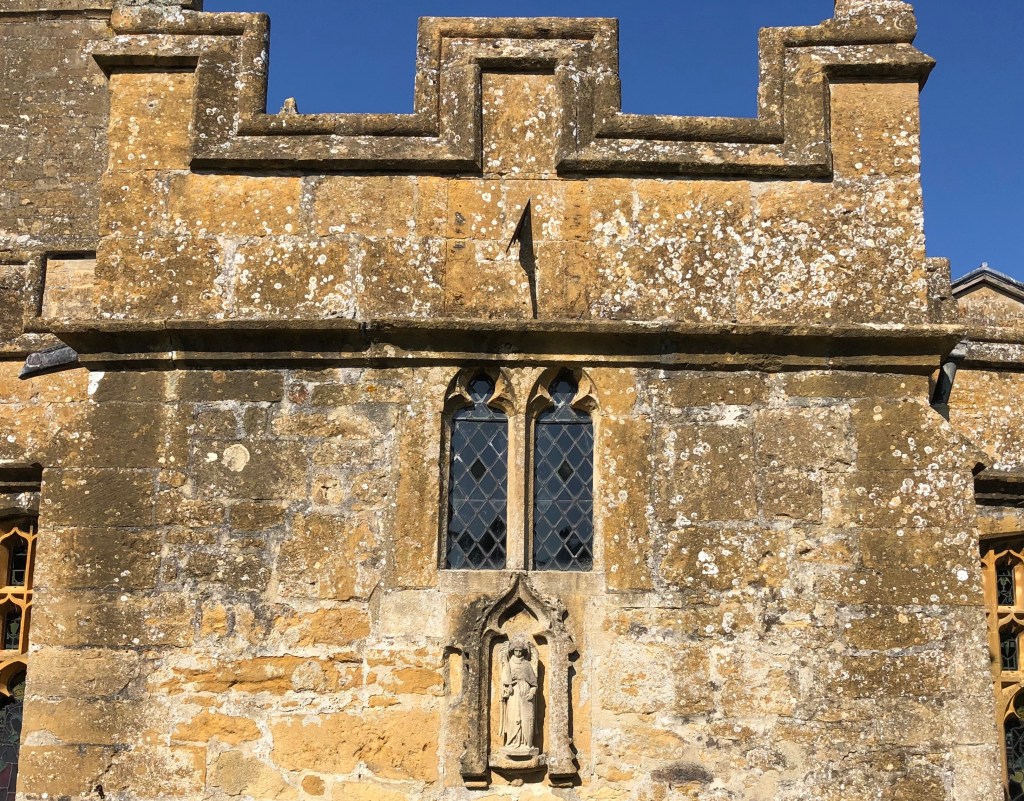
DIALS † The scratch dial is on the right side of the fine projecting porch towards the edge, and easily visible as you approach. It looks as elementary a circle dial as one could imagine. The sundial is set high on the parapet above the doorway, seemingly old, definitely battered, and with a tilted gnomon.
Stanton Glos. St Michael & All Angels . Scratch Dial
Stanton Glos. St Michael & All Angels . Scratch Dial
STANTON: THE SUNDIAL
Stanton Glos. St Michael & All Angels . SundialStanton Glos. St Michael & All Angels . Sundial
NOTES † Apart from inclusion in TW‘s extensive list of Glos. dials, I have found no further information. Not referenced in BHO / BLB / HE. For interest: the VG Stanton website notes “several bench ends are deeply ringed by the dog-chains of the sheepdogs, brought by their masters to church” and that stone benches in the porch were for the infirm to sit on and lean against the wall: “the weakest go to the wall”.
LINKS † Tony Wood TW: Mass Dials in Gloucestershire LINK ; Stanton Village Church online LINK
STANTON is a most attractive Cotswold village four miles north of Winchcombe, with several other equally agreeable villages nearby – Stanway for example. Many of the local churches feature scratch dials – this area (and Glos. in general) being a hotspot. I will cover some of these in due course.
The Church of St Michael has – besides a scratch dial – a sundial over the porch. In addition, Stanton has a fine sundial in the main street, mounted on the village cross. The cross is a Grade II listed Scheduled Monument, with Calvary steps that are medieval and formed the base of a Wayside cross. The shaft is later, and the dial, orb and cross perhaps later still. The sundial, dated to C17, is just one part of the harmonious whole. It’s a fine dial but there are obvious reservations about the gnomon and its fixing…
LOCATION 52.0067 / -1.9013 / SP068342
Village Cross with Sundial – Stanton GlosVillage Cross with Sundial – Stanton Glos
A small pretty village and an attractive simple church with a bellcote dating from C15 with earlier C12 foundations. Restoration c. 1800. Of note is a Saxon Cross / Crucifix dated to C9, originally discovered elsewhere in the village and perhaps from Winchcombe Abbey. Also, the ‘Savage Brass’, early C17. Several other churches nearby also have scratch dials; further afield also.
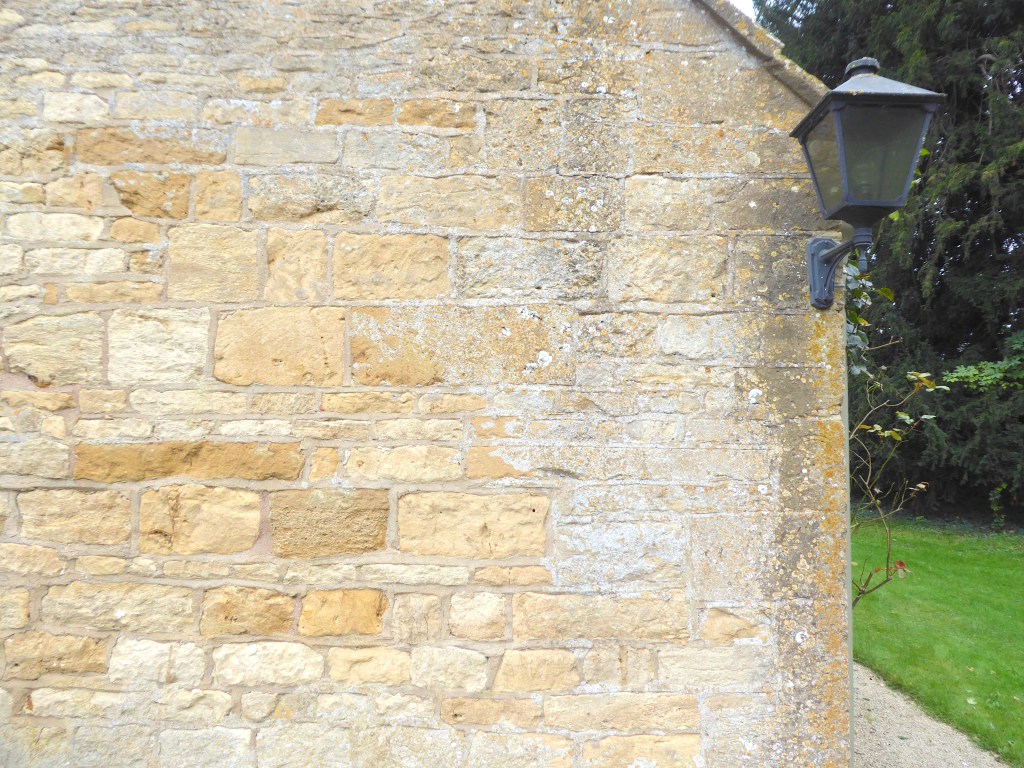
DIAL † Not readily visible. Located anachronistically on a corner under a modern lantern and next to a plastic drainpipe. It is quite large, with a pair of full circles and a variety of dots, some of which seem unlikely to relate to the dial.
St Katherine . Wormington . Glos. Double circle scratch dial
St Katherine . Wormington . Glos. Double circle scratch dial
NOTES † BLB mentions ‘Five C12 corbels below the bell turret including bears’ heads and a pair of human faces’. I missed these…























 GAUDIUM SUB SOLE . SUNDIALS . MEDIEVAL TO MODERN