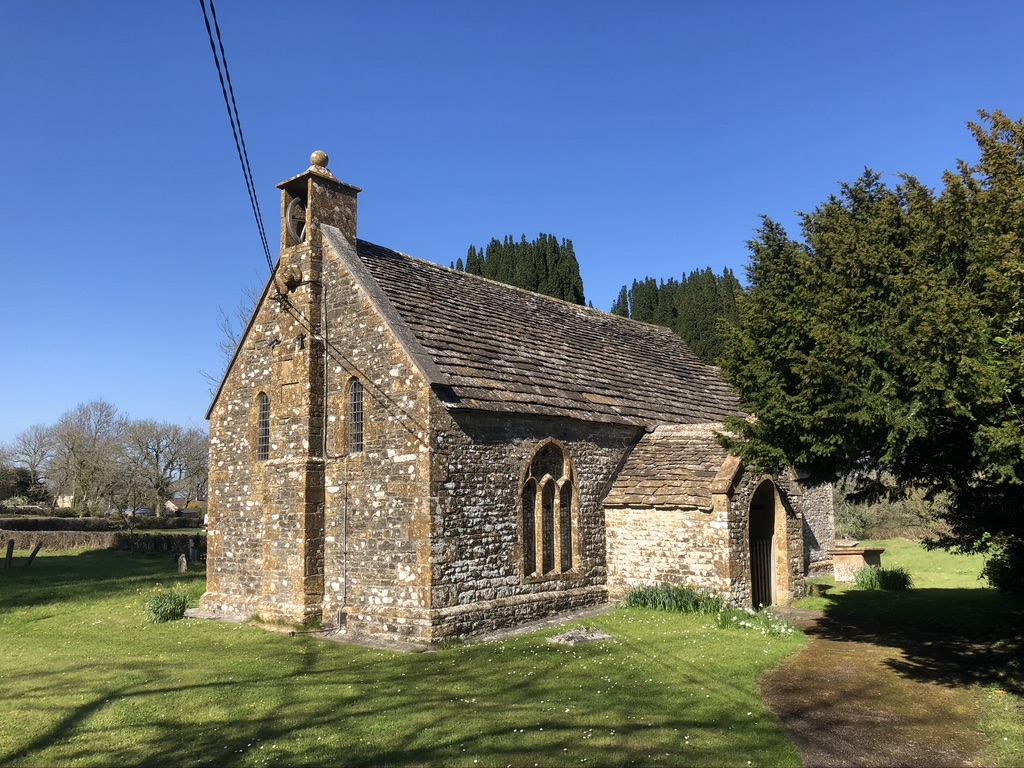
GRADE I † Early C12 traces, rebuilt and extended C15. S. tower added in 1638. Restored and added vestry C19. 2 bells cast on site in 1275, the oldest in Dorset. Notable C12 font. 50.8467 / -2.6524 / ST541054
SCIENTIFIC DIAL
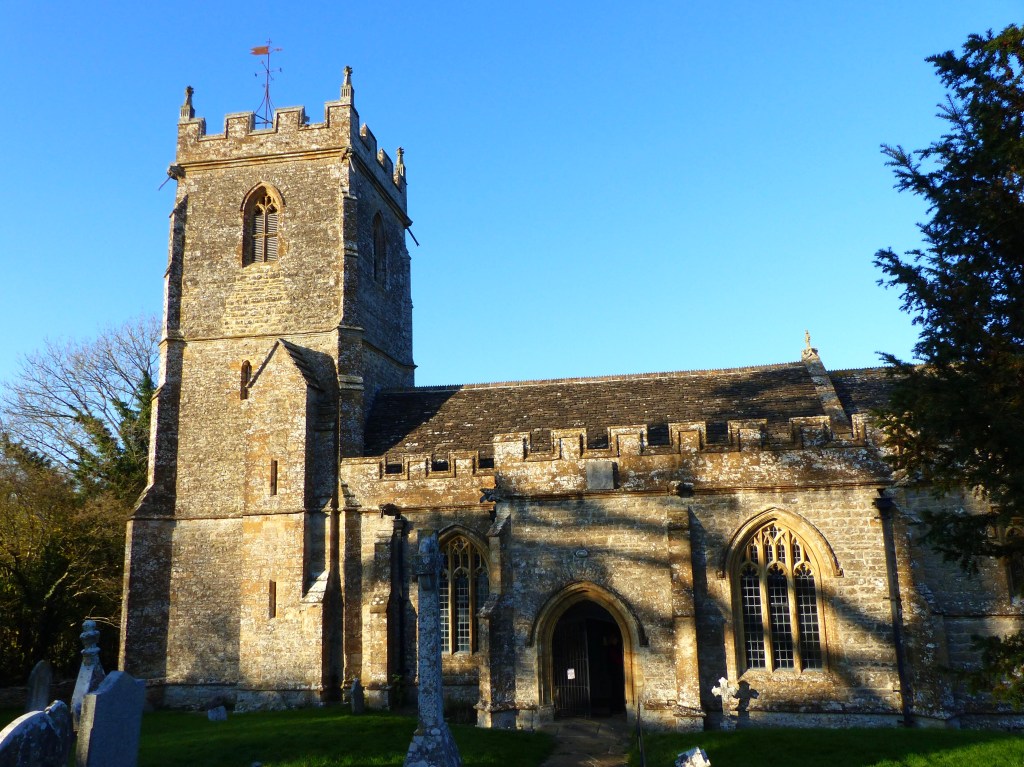
Once you have located the church at the very end of the hamlet – a dead end – of a very long lane, it immediately looks distinctive. In the present context, the dial on the tower – inscribed on S. parapet William Lardar Esq. Thomas Horsford Warden 1638 – is most unusual, not least because it faces due E.
DEH, in a rare excursion into Dorset while researching the scratch dials of Somerset in 1914, recorded this dial as a C17 scientific dial of 1638: E declining down to midday only. No trace of another dial for later in day.
GLP has written the definitive interpretation of the dial, and I include his complete record which explains the dial far better than I ever could.
It would be good to know if this blade of a gnomon is / may be original and has been (re)painted over the years. Also, to know why special dials were almost always sited next to a drainpipe…
GSS Category: Scientific Dial; Scratch Dial; Old Dial
All photos – Keith Salvesen; record extract – Gordon Le Pard
GRADE I † C13 origin, chancel & tower C15, porch C17, south chapel C18. Restored 1848. A small hamlet, a fine church, a tithe barn, a manor house. Sir Walter Raleigh prayed here. Perfect rural Dorset – secluded in a valley, reached only by narrow lanes, and very much a longcut for traffic. 2m over the fields from our house, 15+ minutes drive. 50.9127 / -2.5283 / ST629127
DIALS
St Martin has 3 scratch dials, all very different. There is a further contender that I put forward as a plausible but very rare type of dial (with a small degree of approval from BSS).
DIAL 1
St Martin . Lillington . Dorset – Scratch Dial 1
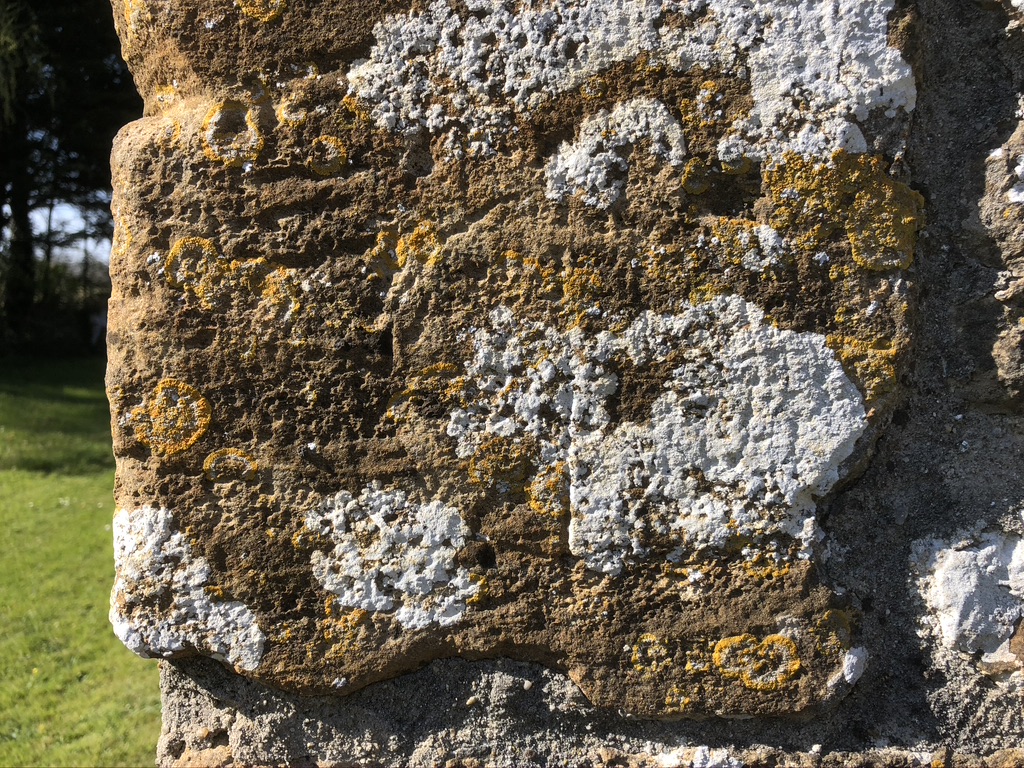
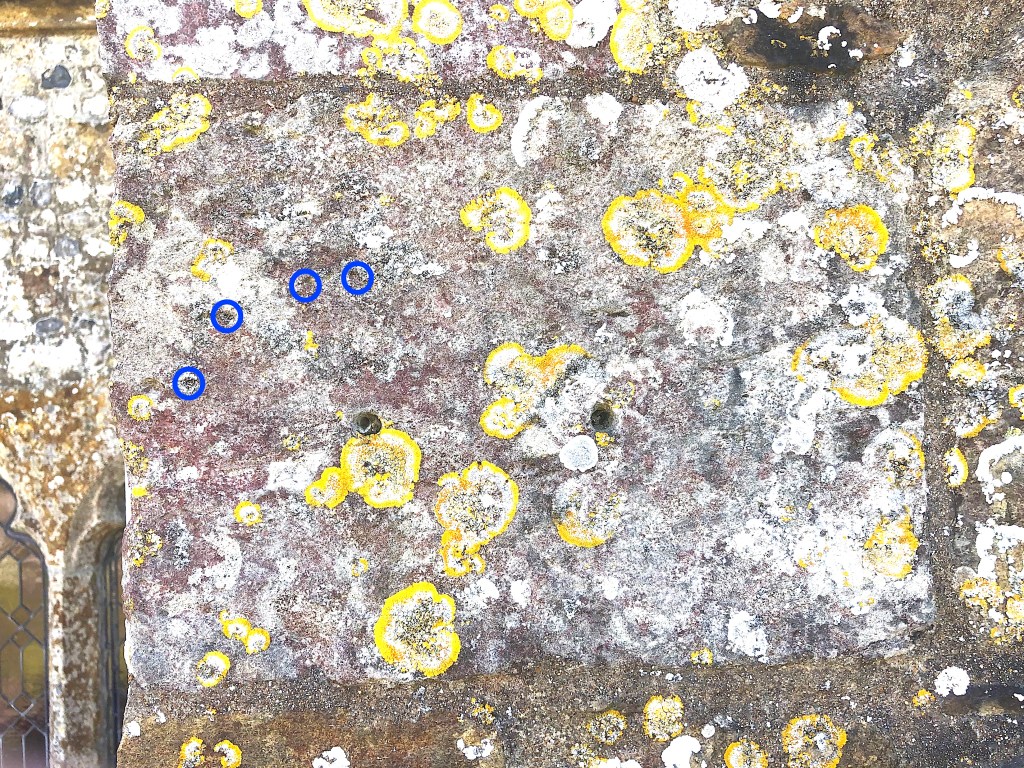
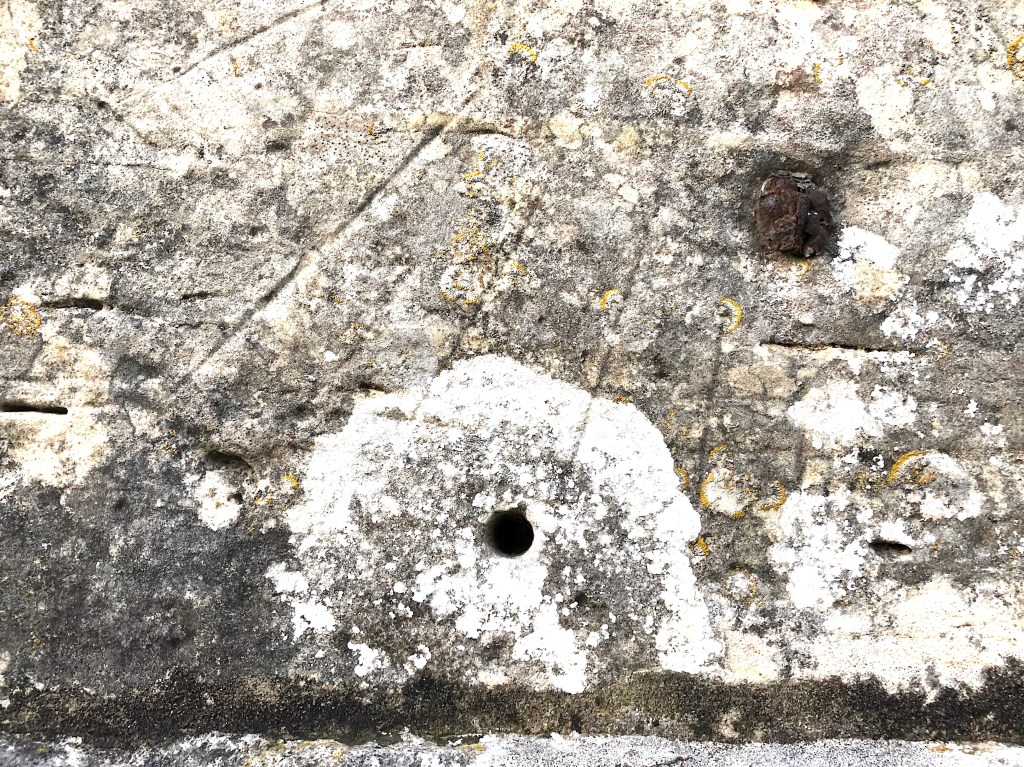
Dial 1 is located on the SW. face of the buttress at the W. end of the tower. It consists of a style hole encircled by a somewhat elliptical ring. There are traces of an inner circle or partial circle, clearest seen at the bottom of the dial. GLP describes it as very eroded, and dates it as C15 (ie when the tower was built). He refers to 2 lines but I did not notice them and I can’t pick them out in the photos.
St Martin . Lillington . Dorset – Scratch Dial 1
DIAL 2
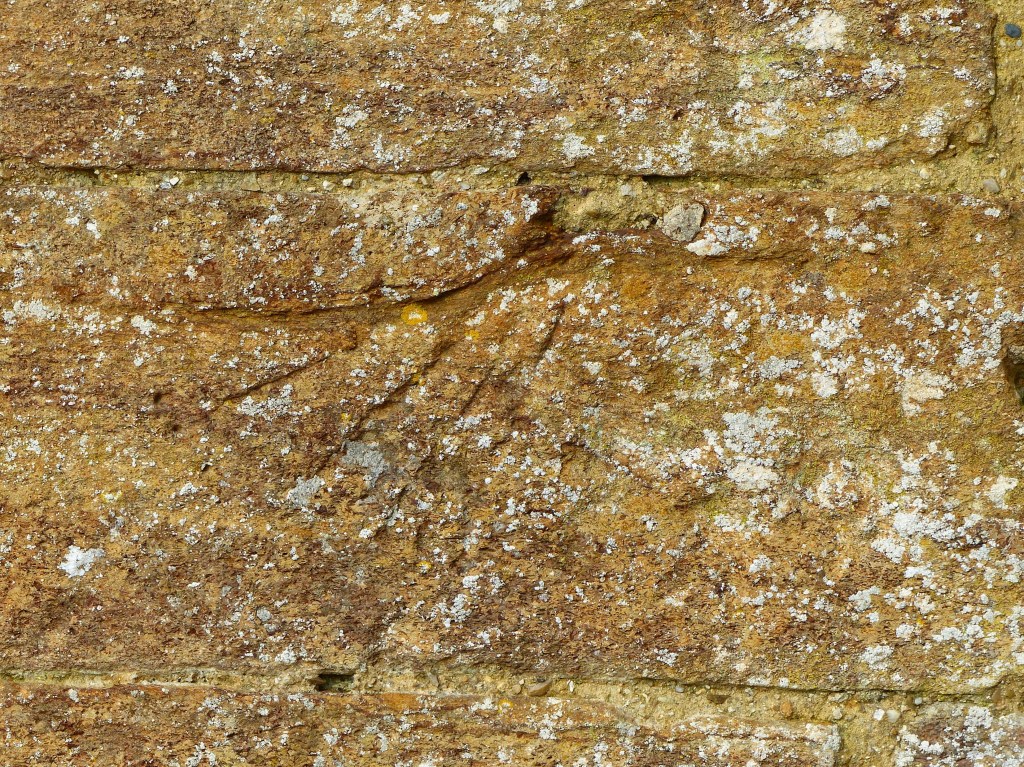
St Martin . Lillington . Dorset – Scratch Dial 2
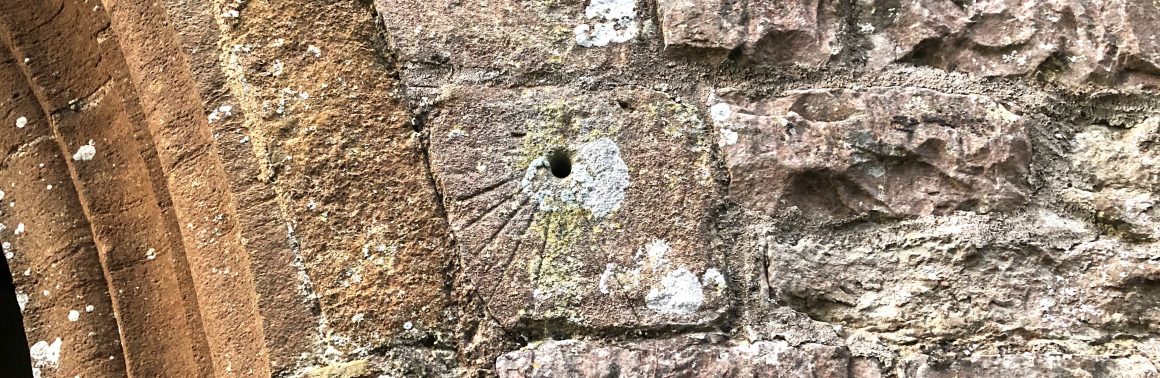
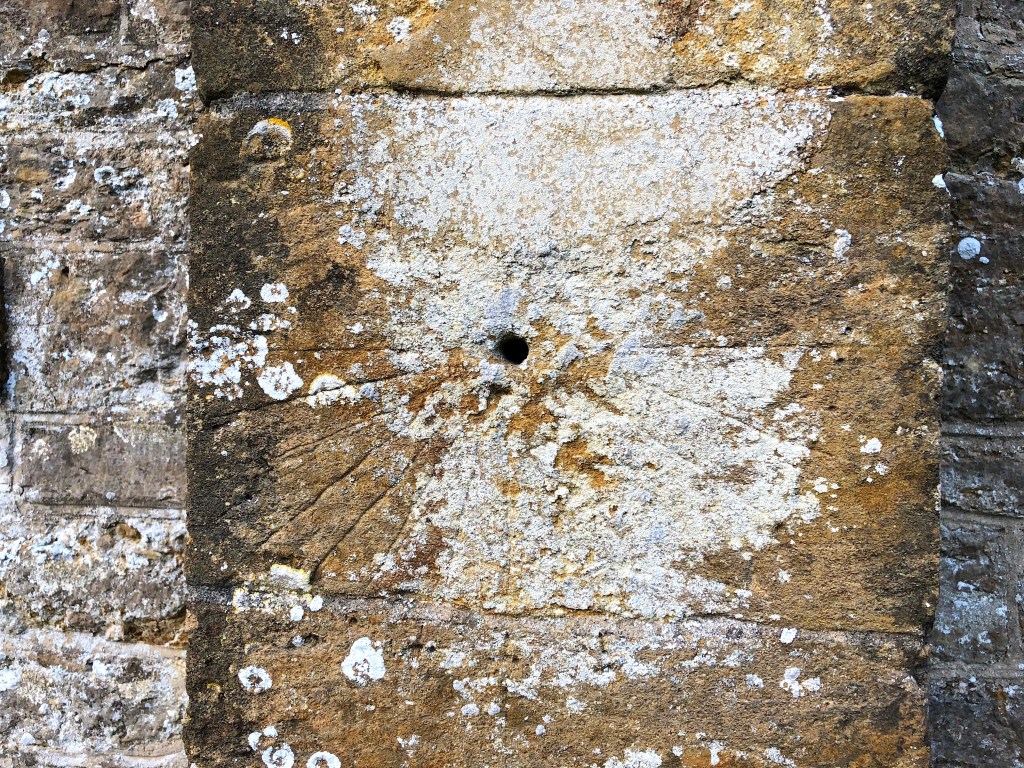
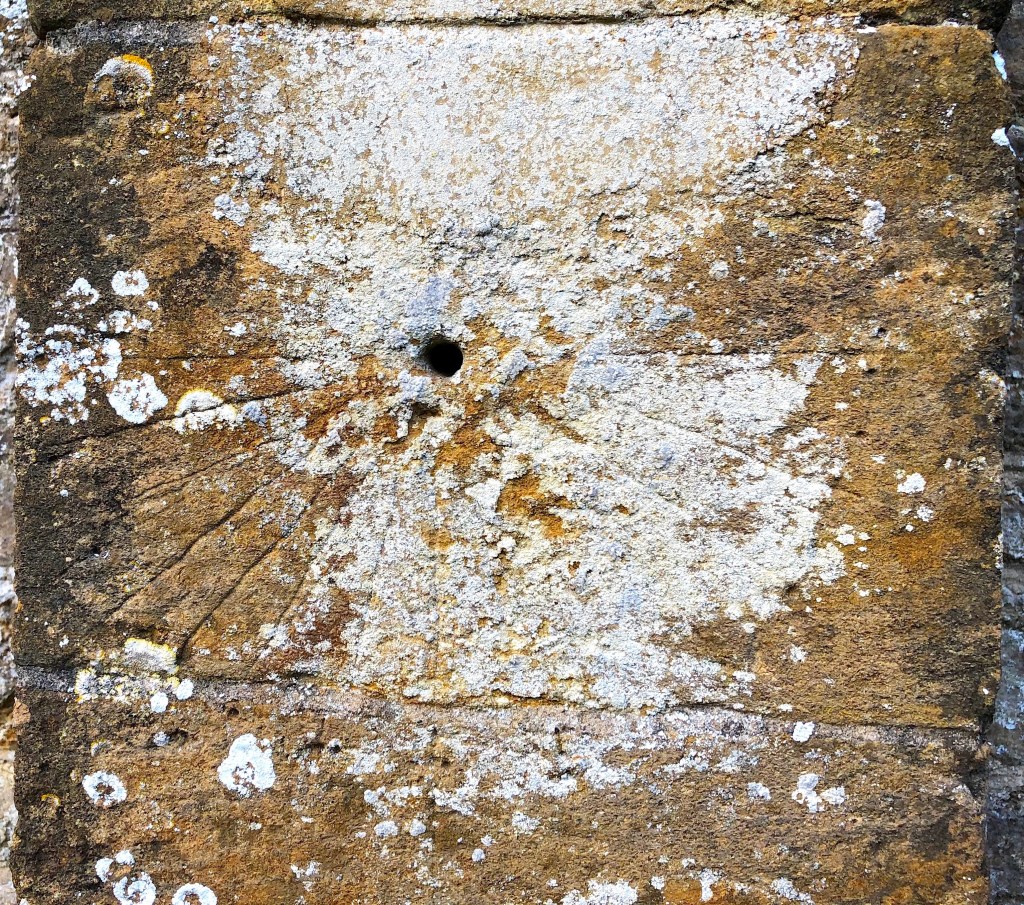
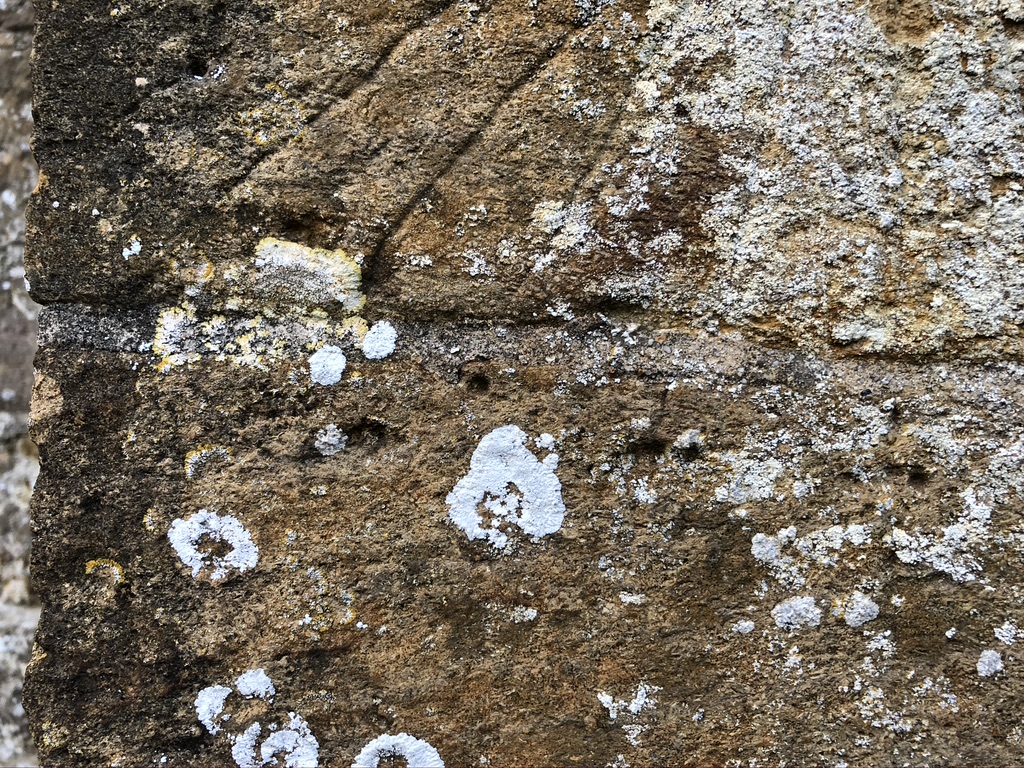
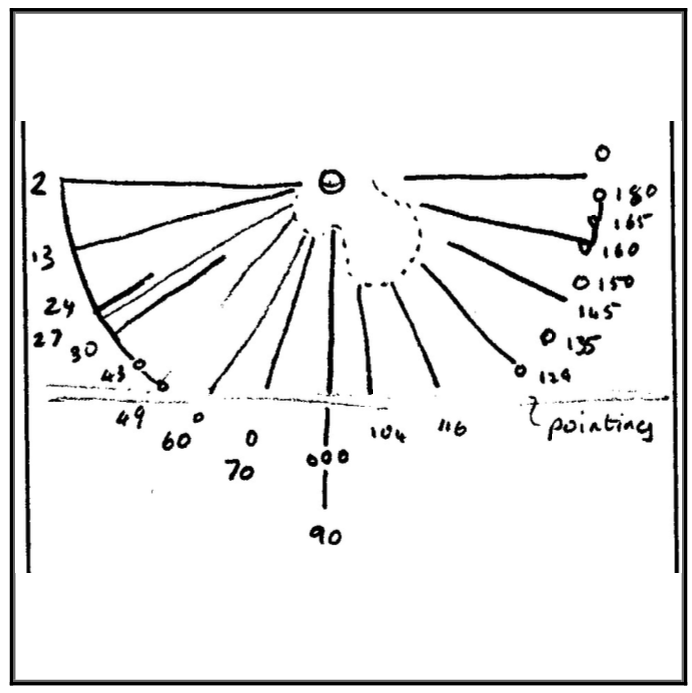
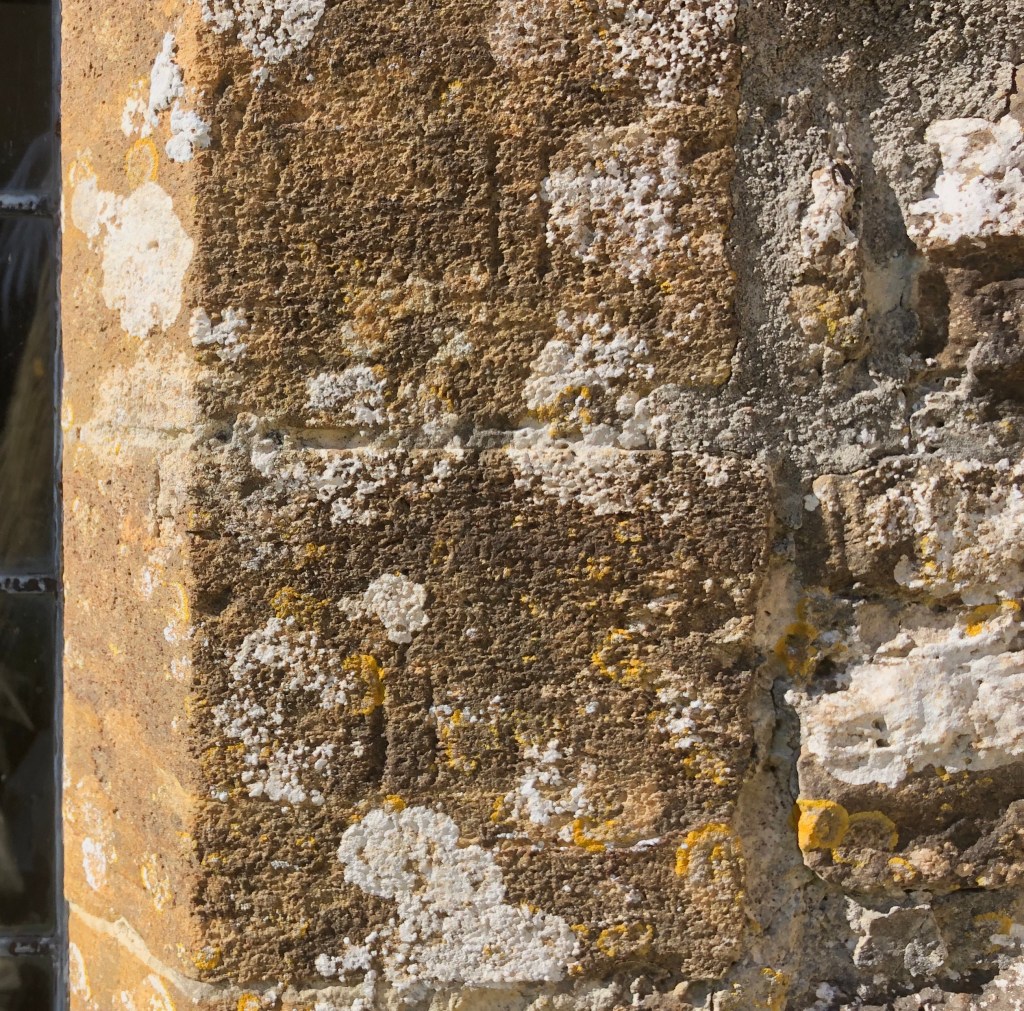
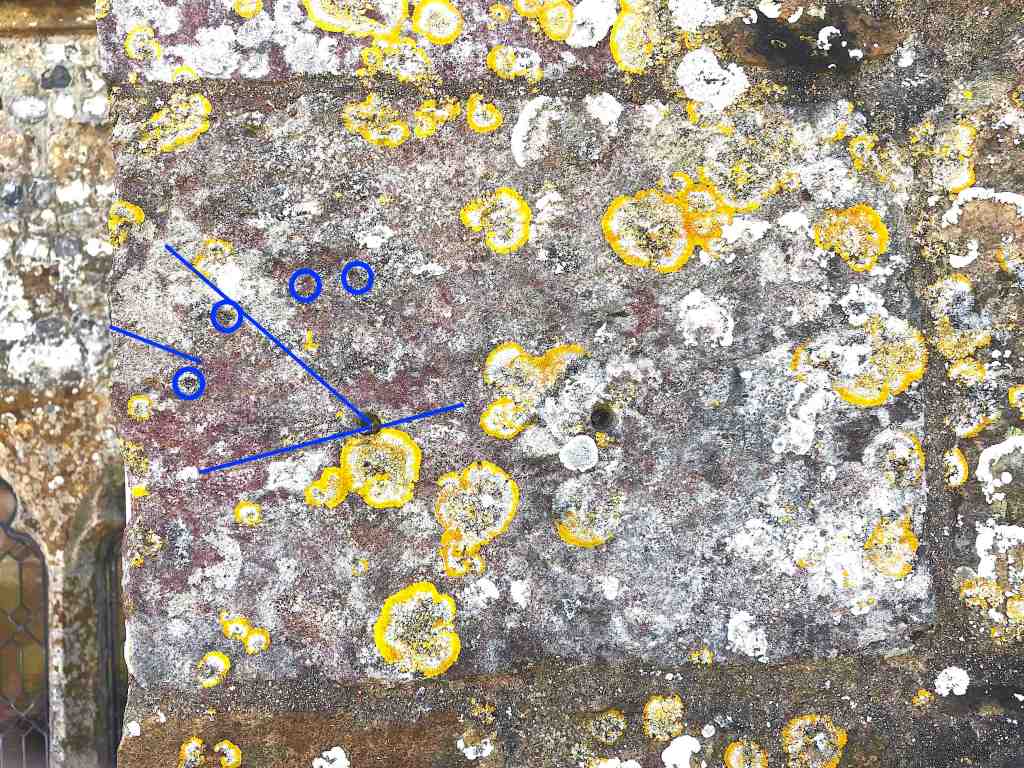
Dial 2 is at 90º to Dial 1, on the SE. face of the same buttress and indeed on the same stone. There are 5 clear lines radiating from a filled style hole, forming what might be called an ‘afternoon dial’. It’s hard to tell which is the noon line: possibly the lowest lines are angled to allow for the dial not facing due S.
GLP also dates this dial as C15. He notes that it may not be in its original position, or may have been (partly) rotated ‘then it might… have been reasonably accurate’. BSS records ‘possibly re-positioned and rotated’. But because this dial and Dial 1 are on the same stone, rotation may be less likely.
St Martin . Lillington . Dorset – Scratch Dial 2
DIAL 3
St Martin . Lillington . Dorset – Scratch Dial 3
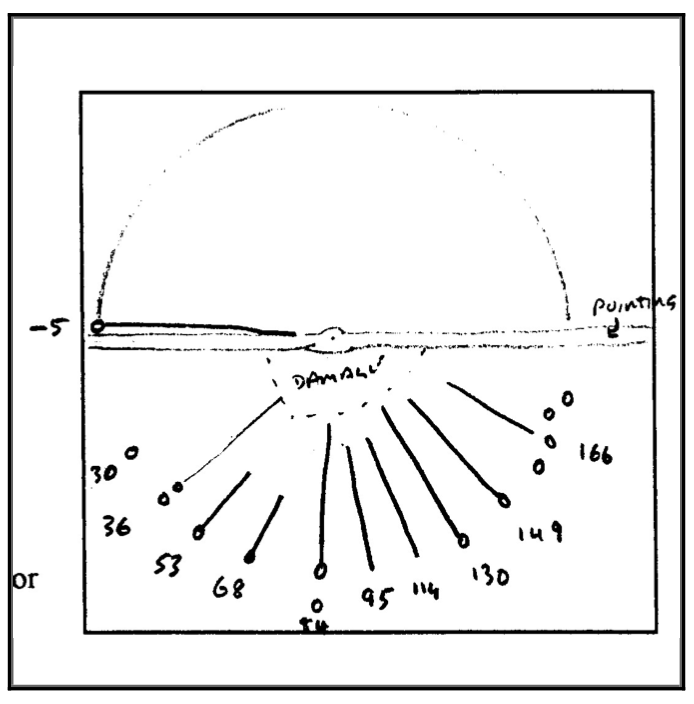
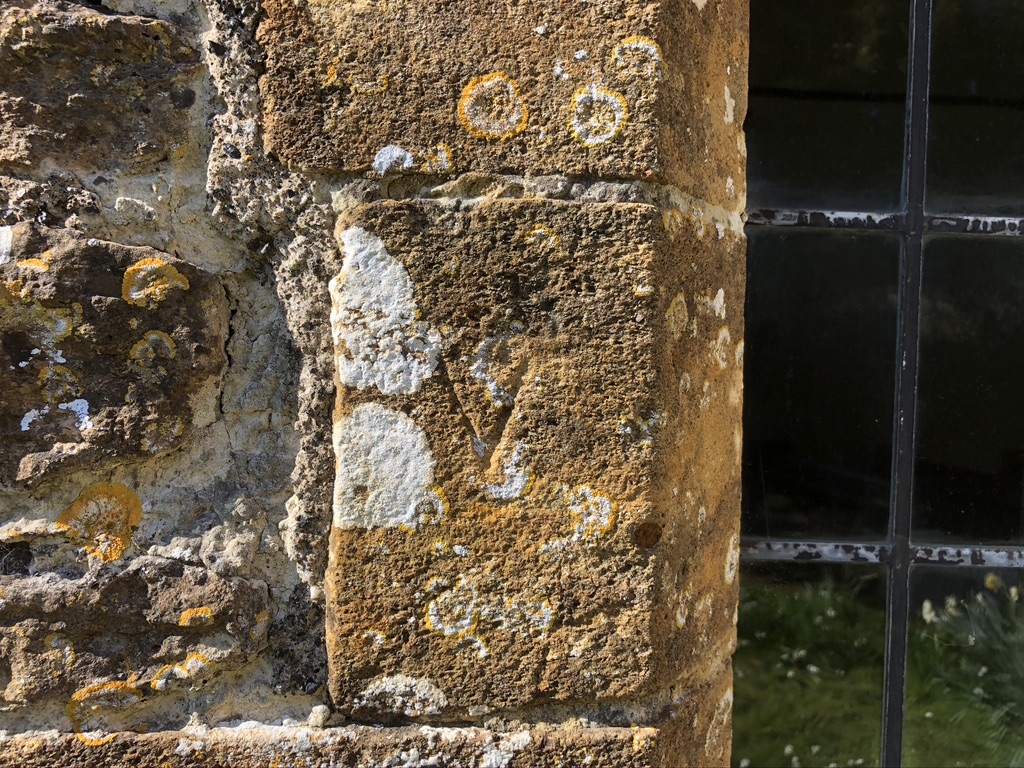
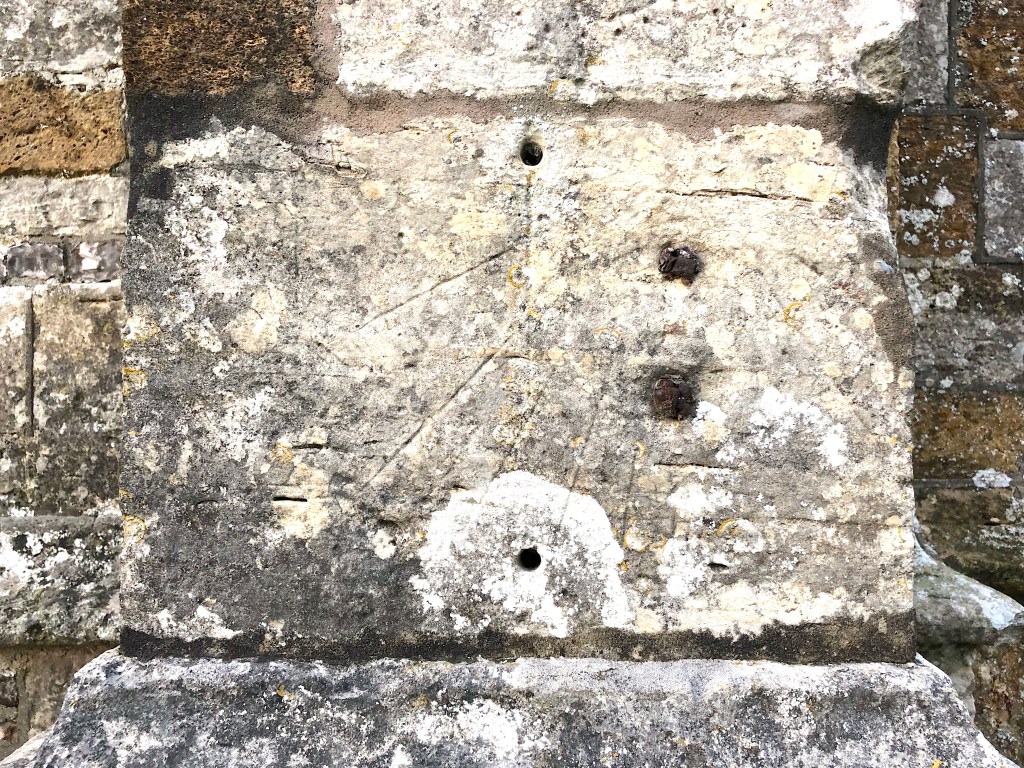
Dial 3, between of the nave window and the side-chapel, is possibly C13. The chapel, added in C18, shades the dial for half the day. GLP counts 4 lines, at least one ending in a pock, and notes shallow marks between lines possibly marking 1/2 hours. BSS also records 4 lines. I presume the uppermost mark or scar is viewed as subsequent damage. The style hole looks as if it has, or has had, metal in it.
St Martin . Lillington . Dorset – Scratch Dial 3
VERTEX DIAL?
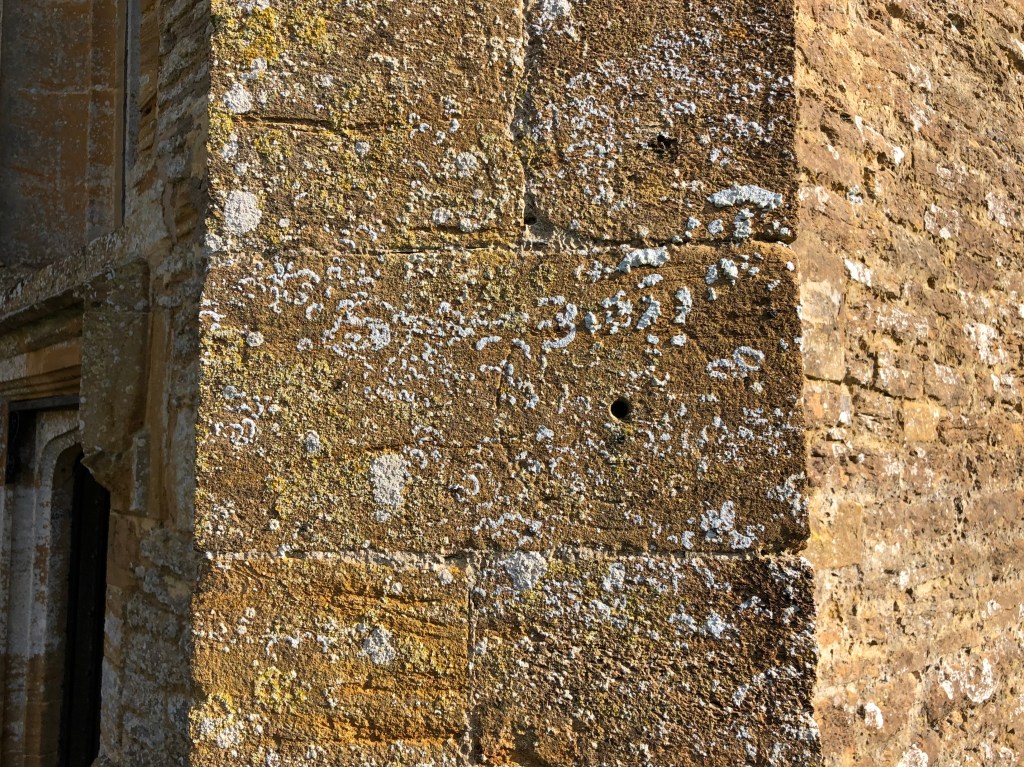
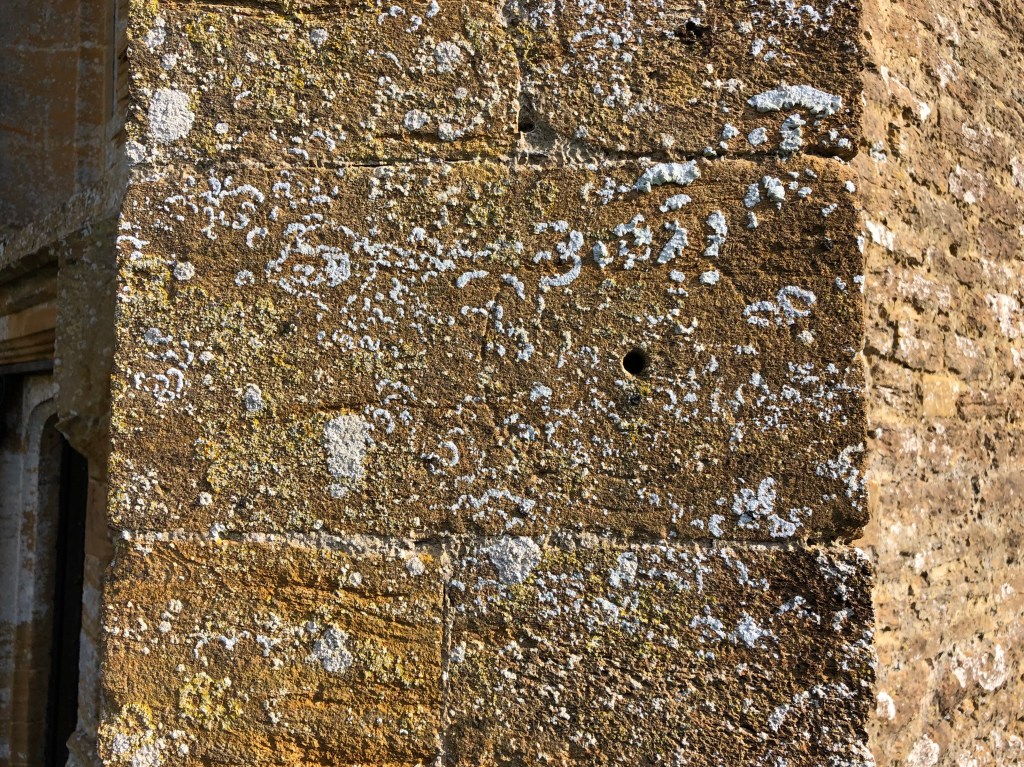
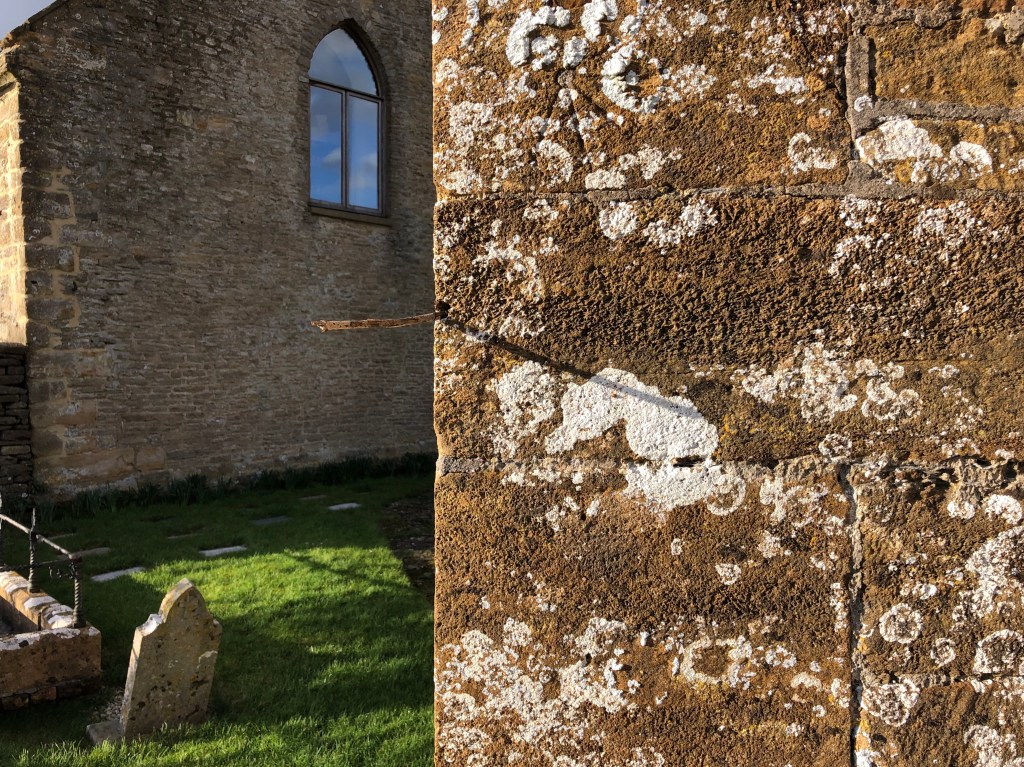
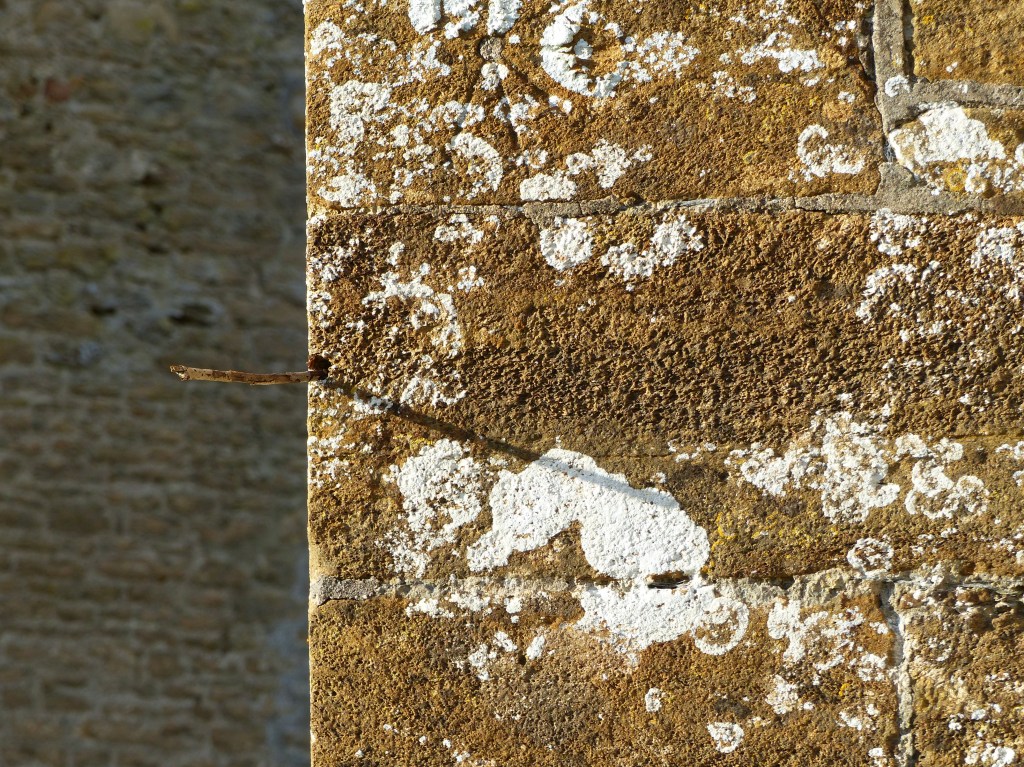
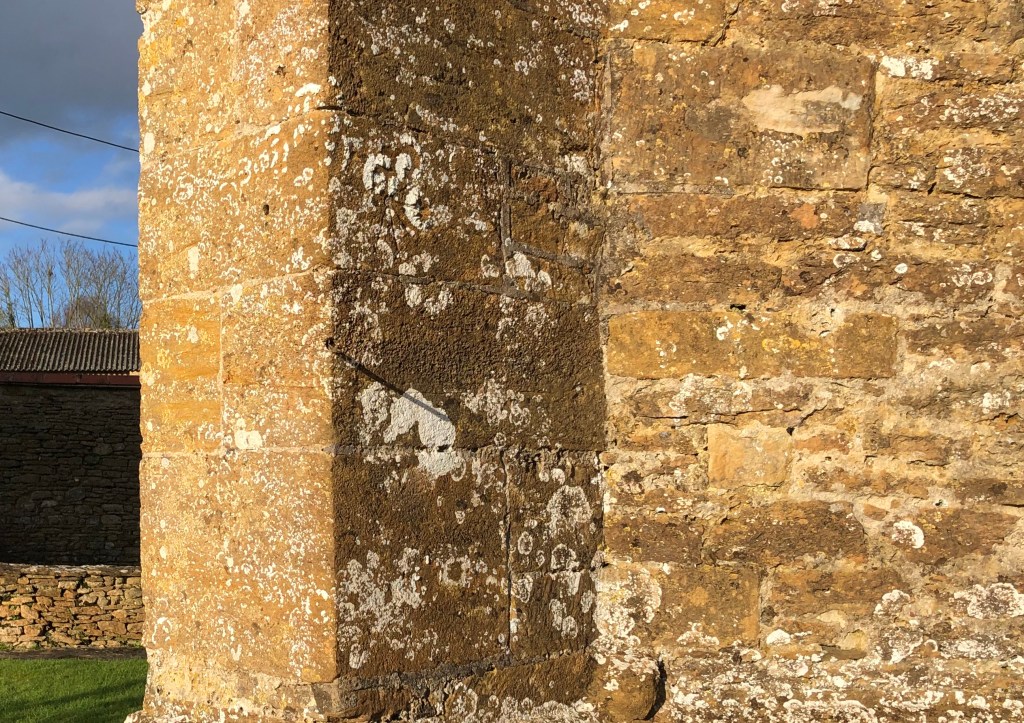
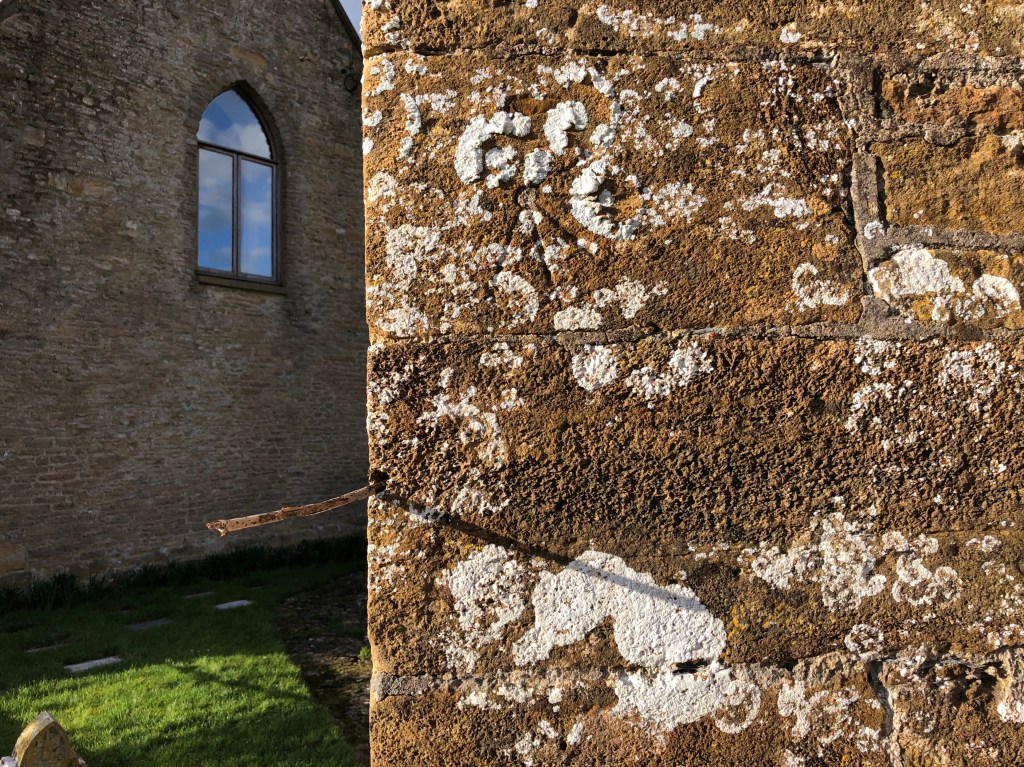
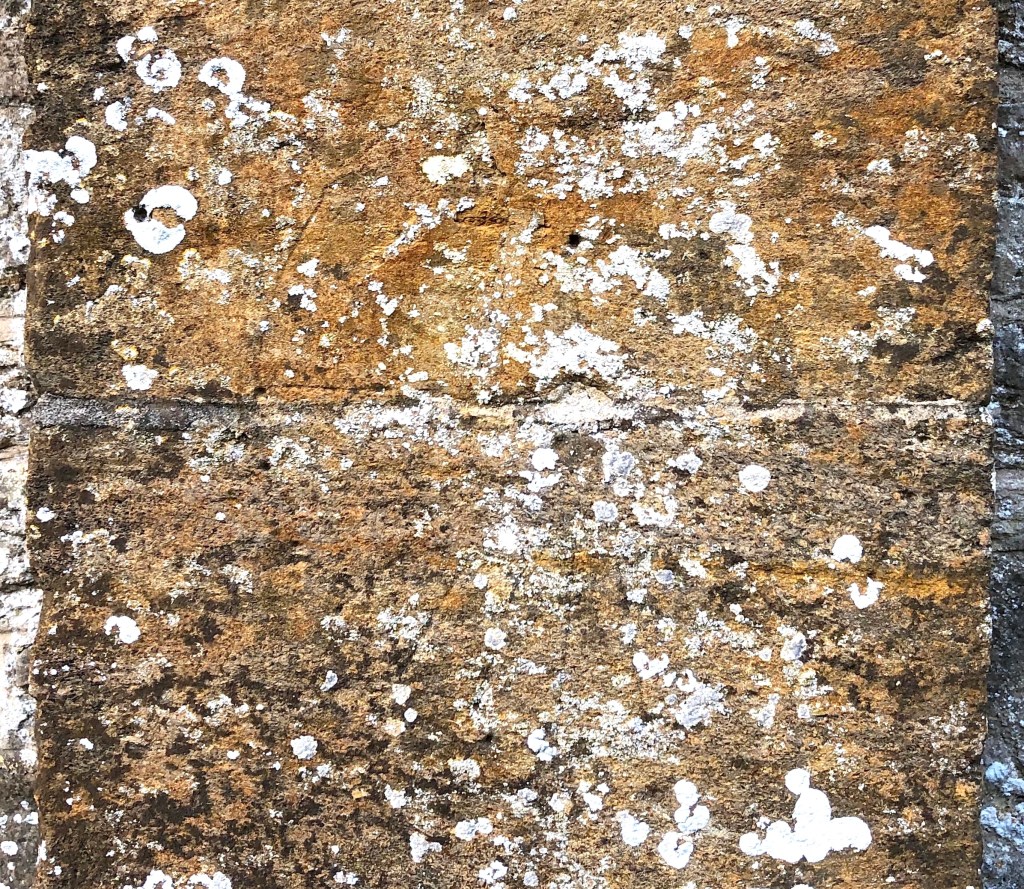
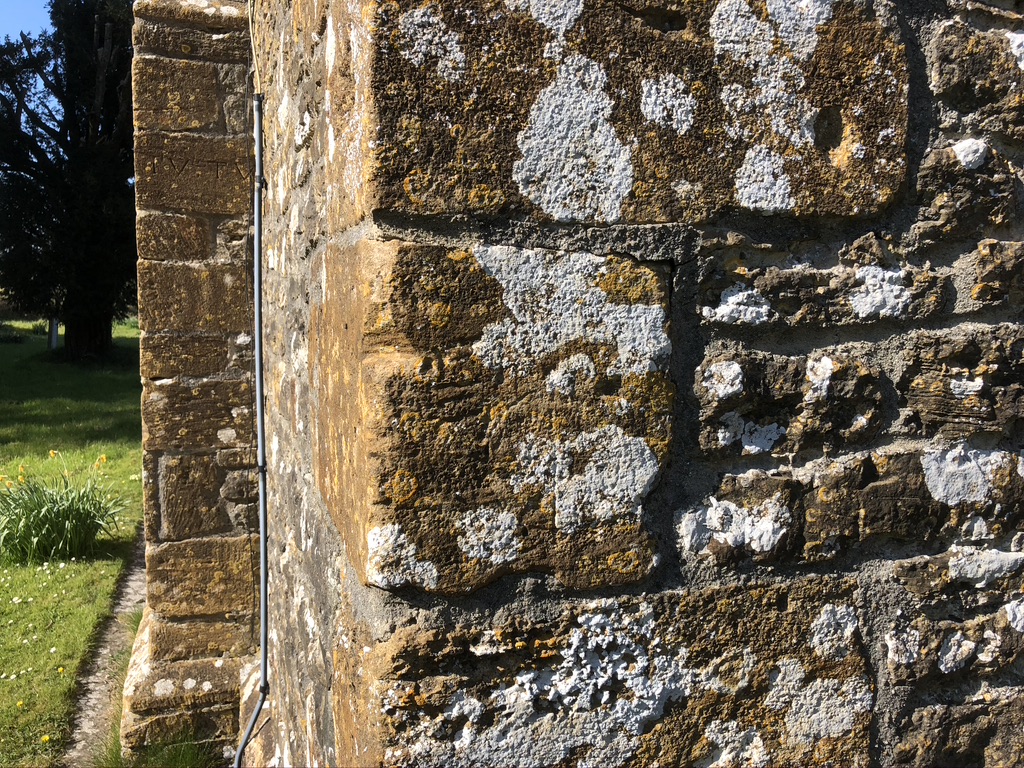
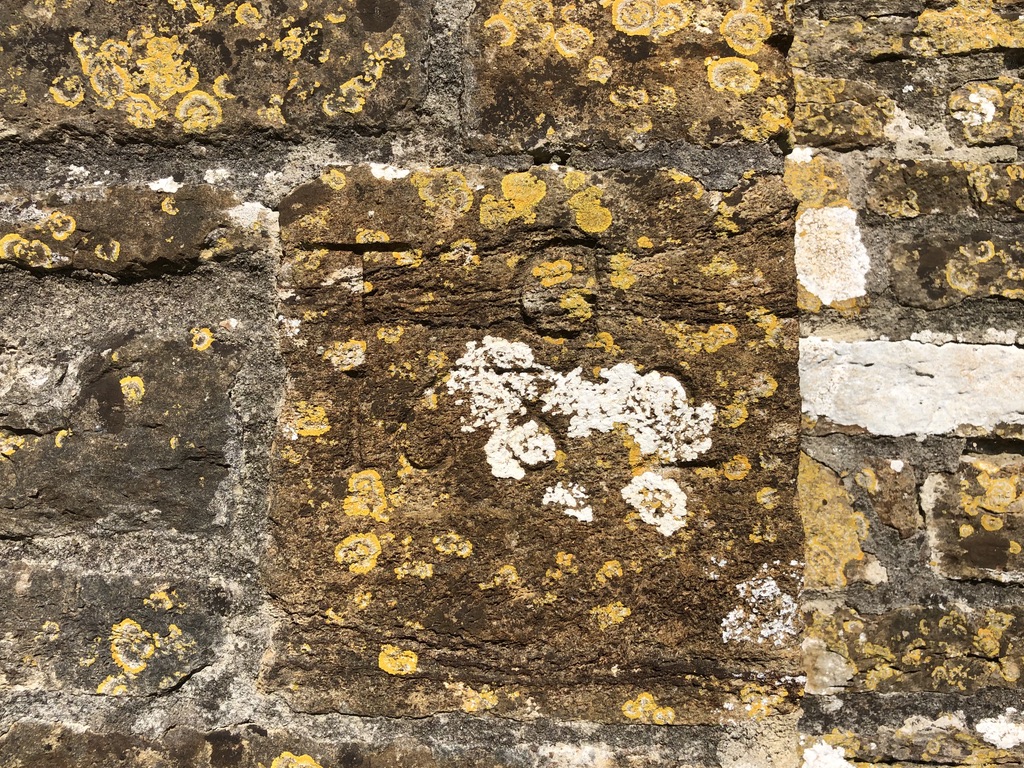
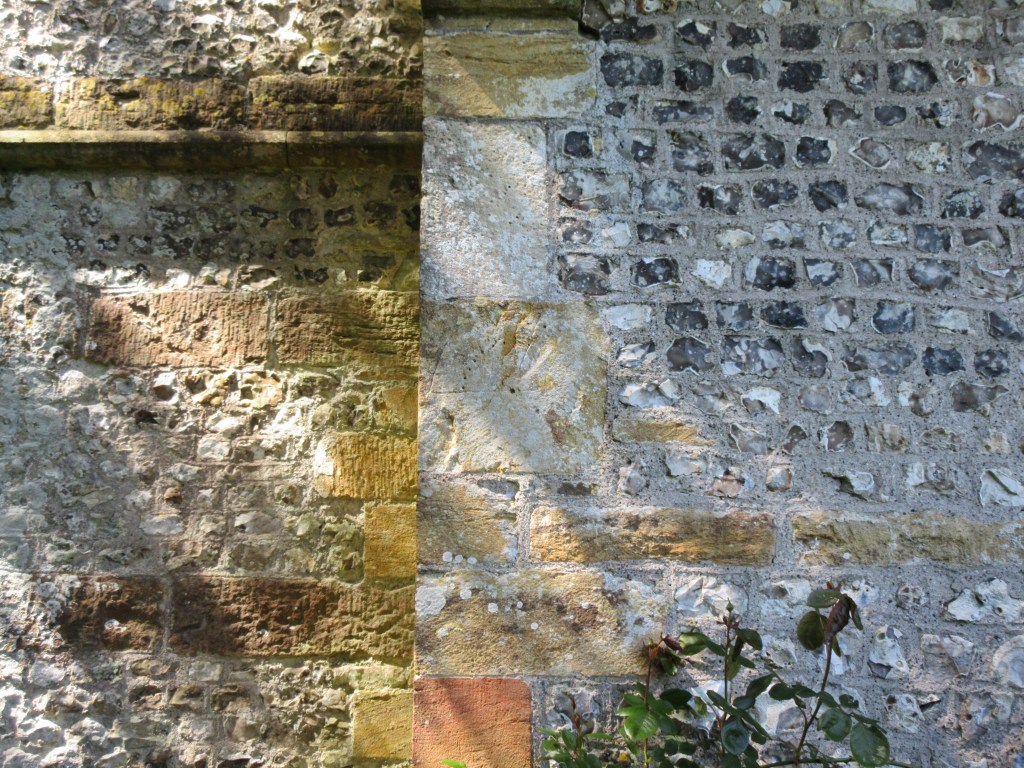
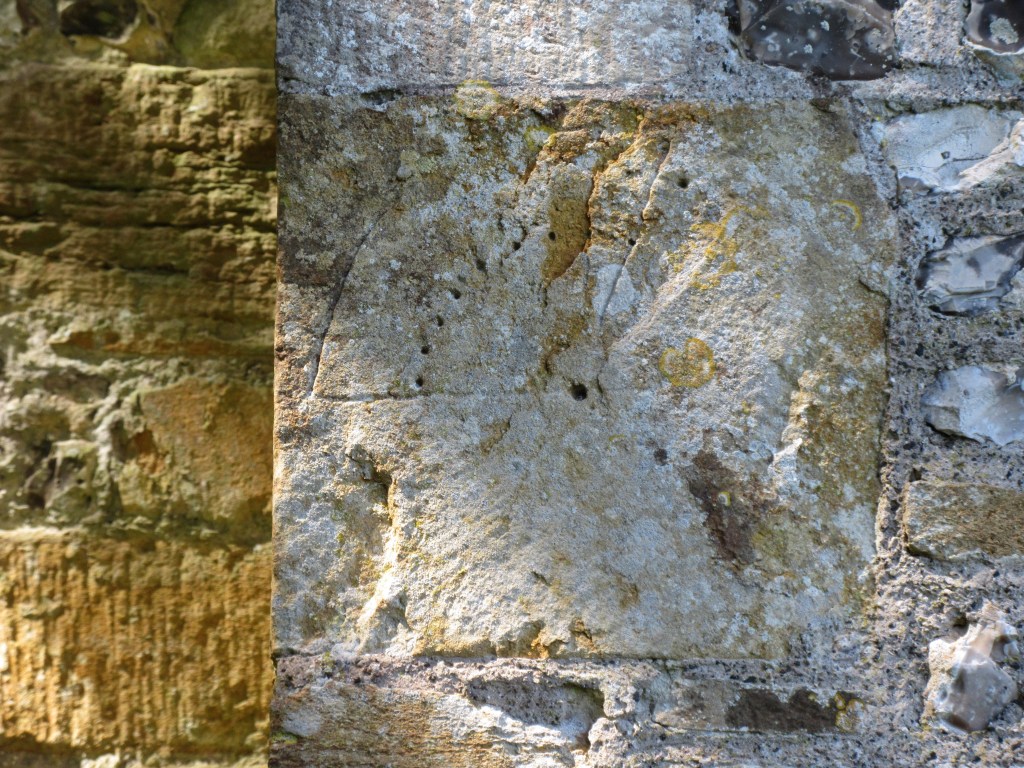
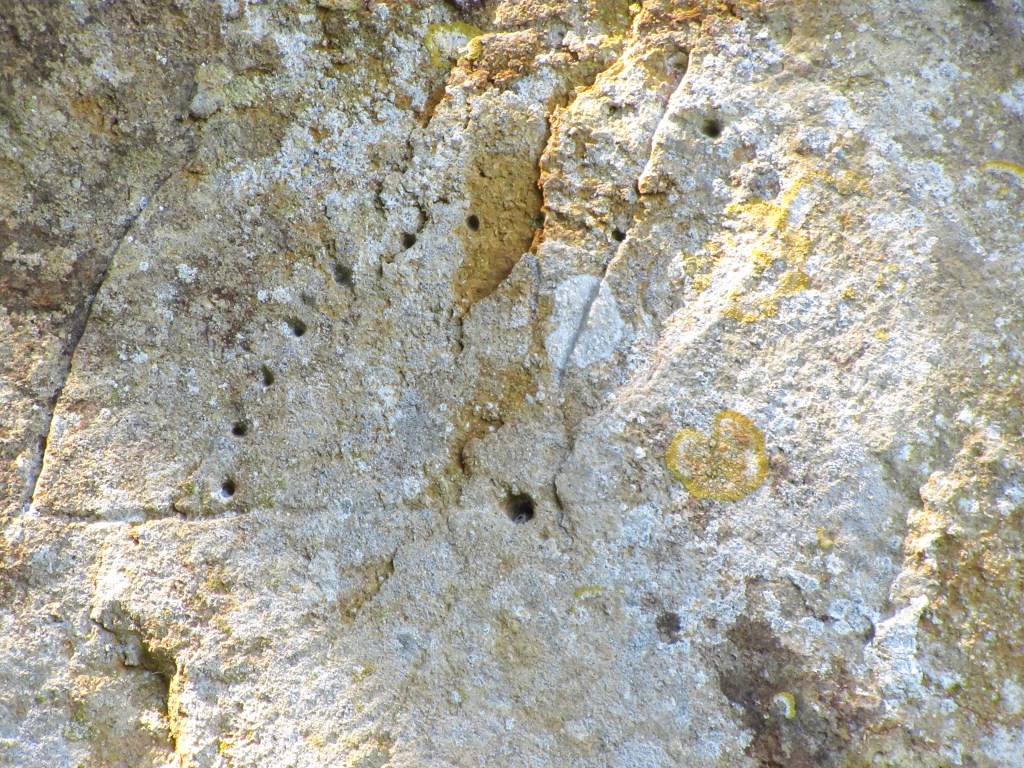
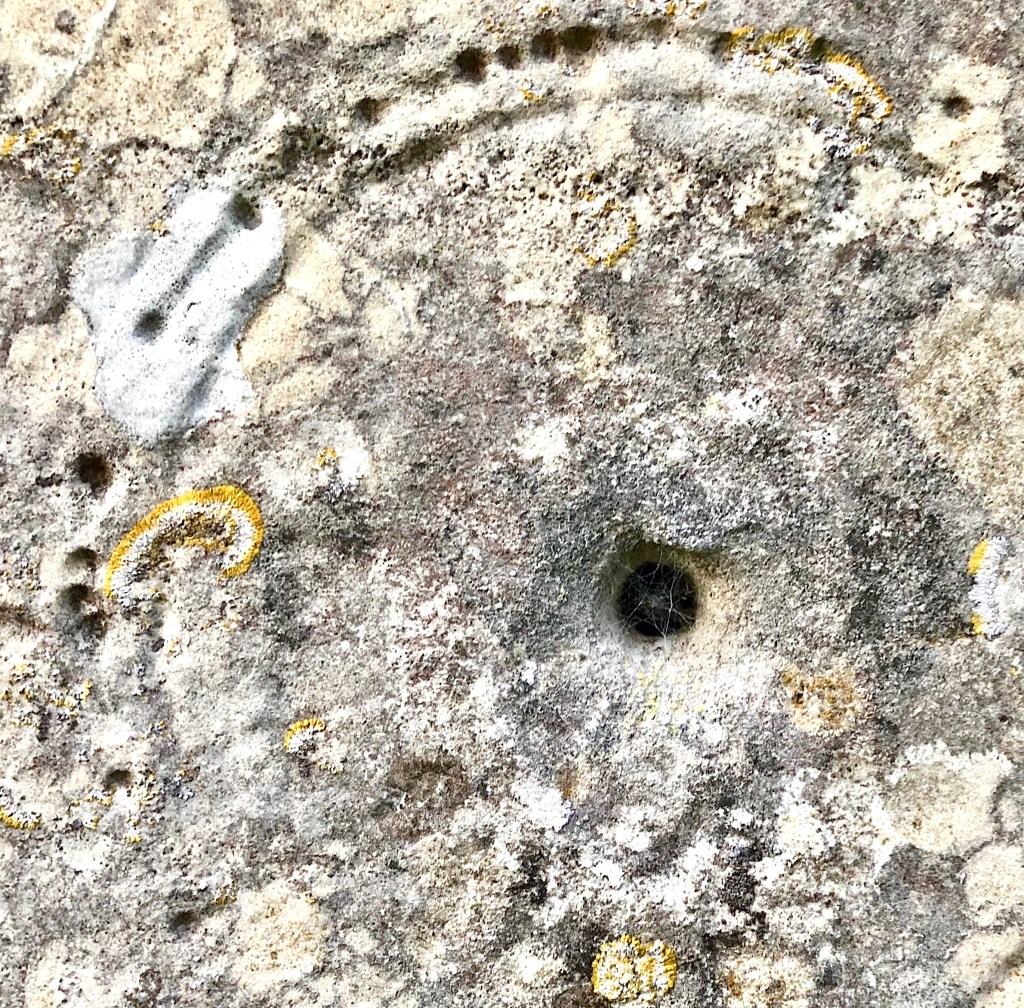
On the same buttress as dials 1 & 2 and on the stone immediately below them, is a fairly deep hole drilled precisely and straight into the corner of the stone. Because of the proximity to the other dials at right-angles to each other, I wondered if this strangely-placed hole was also a dial (and if so, whether unique). So I experimented with a stick, with the result shown below. My conclusion is that a prominent gnomon in the vertex would give a clear indication of the passage of time throughout daylight hours. In a way, it might be rather more effective than a normal dial. I could clearly see the shadow from the E. end of the church.
I put the theory out there. As always, any observations would be welcome.
St Martin . Lillington . Dorset – possible Vertex Dial
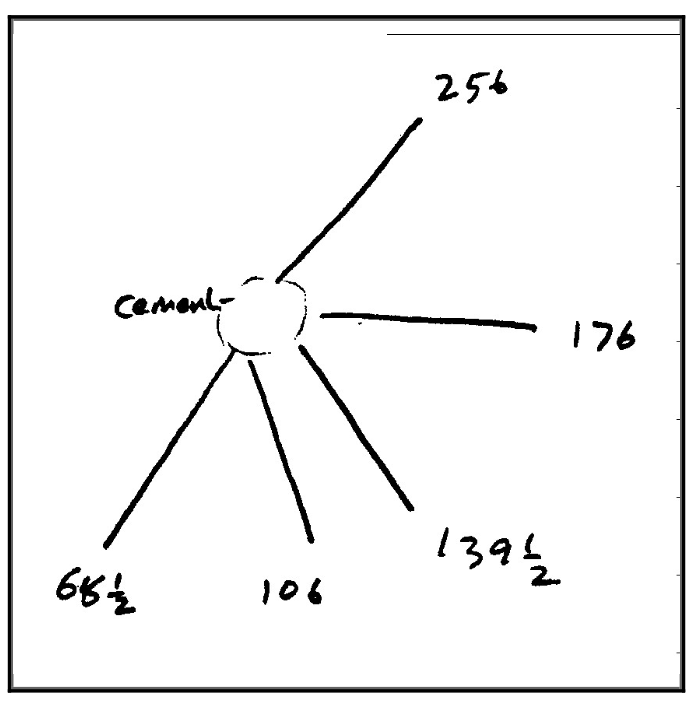
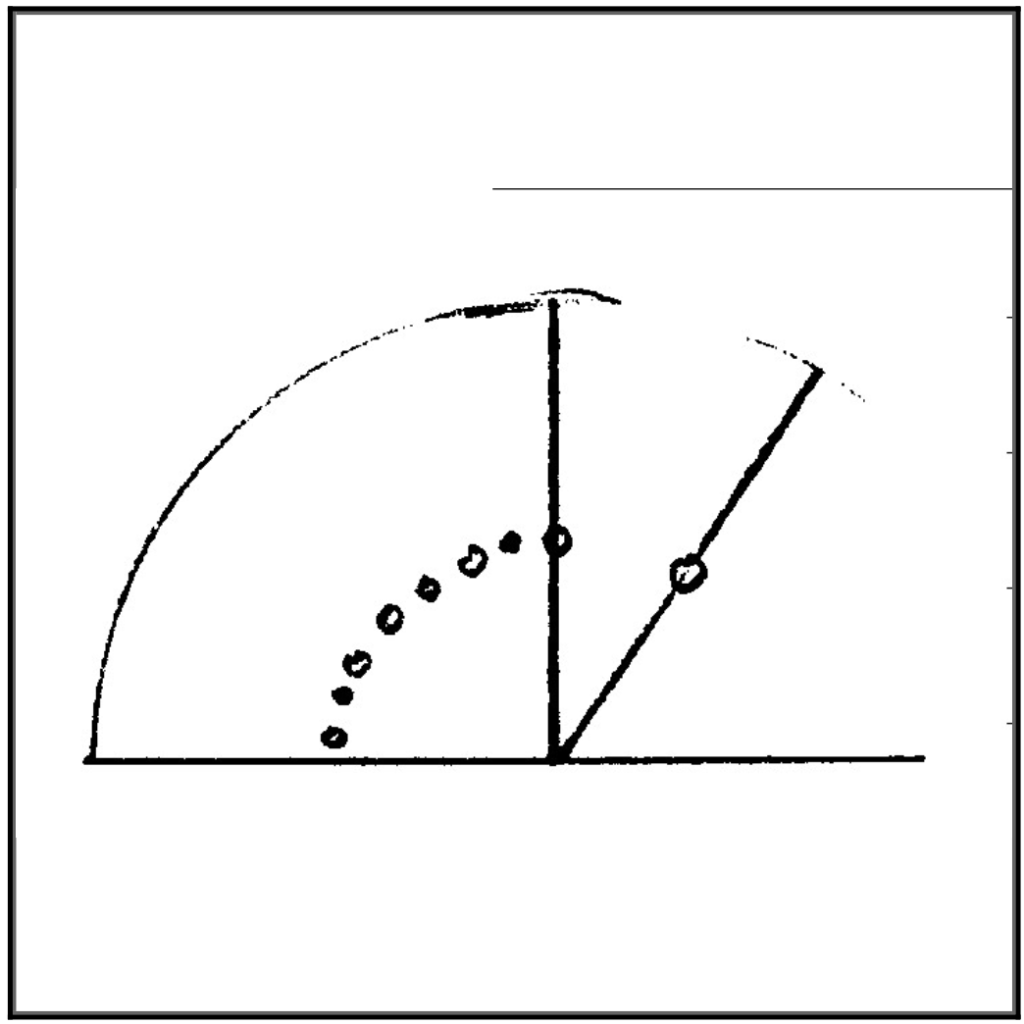
St Martin . Lillington . Dorset – BSS diagrams of the 3 scratch dials
DEDICATION † St Laurence. Mainly C15, some rebuilding C18, with restoration and additions in 1885 by Crickmay, the notable Dorset architect. One of a number of local churches with stocks.
LISTING † Grade 1
LOCATION † Not actually in Holwell but 1m N. towards Bishop’s Caundle, in a hamlet known as The Borough. Just before you turn down the lane to reach the church, don’t miss the UK’s oldest letter box still in use. It is dated 1853, just one year after roadside boxes were introduced. 50.9064 / -2.4289 / ST699119
DIALS
On the buttress E. of porch, 2 eroded scratch dials one above the other; a further small rough dial in the upper half of the lower dial. A possible dial, unrecorded, at the W. end quite high on the SW. face of a buttress. If a dial, it is inverted and presumably repositioned. The dials were photographed on different days in different lights from bright sunshine to overcast, hence the colour variations
GLP records that the 3 dials are ‘very important as 2 of them are cut across two adjoining stones. This means that they must be in situ’. He dates them to late C15.
There is also a later dial, included below: On parapet above porch arch, square stone dial with incised degrees, perhaps 18th centuryBHO
THREE DIALS ON THE BUTTRESS
St Laurence . Holwell . Dorset – 3 dials on one buttress
DIAL 1 (upper)
Semicircular with a full complement of 6-to-6 radials, eroded on R side. A disorganised pattern of lines for straightness and distancing, with many ending with pocks. Lines and pocks extend to the stone below, especially the noon line. GLP records 16 lines, 6 with pocks, further pocks including a cross formation at the end of the noon line (triple pock crossBSS). He notes some half-hour lines and comments that the dial is very accurately cut.
Dial 2 is encircled, most visibly the upper L quadrant, the R side being eroded. Compared with Dial 1, the details are indistinct. The photos below were taken in different lights to help with examination. The radials – many with terminal pocks – are within the lower half of the dial, with Dial 3 located in the upper half (see below).
GLP notes 11 lines with 6 ending in holes, plus the masonry joint as the horizontal, very inaccurately drawn with only one line in the correct position. GLP concludes that, though impressive, the dial was probably of very little use.
A small rustic dial embedded within the top half of Dial 2. Eroded stone and lichen make it hard to analyse the dial much more. The BSS diagram below is the most helpful guide. GLP mentions 3 lines and a very worn circumference line. He notes that this dial, as with Dial 2, would have been of very little use.
BSS diagram
DIAL ABOVE THE PORCH
Featured here for interest and completeness, and will be written up on the OLD DIALS page
The dial is above the S. porch. Hard to date, but relatively complex. There are no numerals, and the lines from 6am to 6pm mark the hours, half-hours and the quarter-hours, carefully graduated. Some lines (eg 8am) are emphasised. There is no gnomon though there must have been one. The presumed site seems to be slightly off-centre at the top, where there is an area of damage. The dial was renovated in 1998 by S&L Kellard of Street, and the decision must have been made not to add a modern gnomon.
DIAL 4 (unrecorded, plausible)
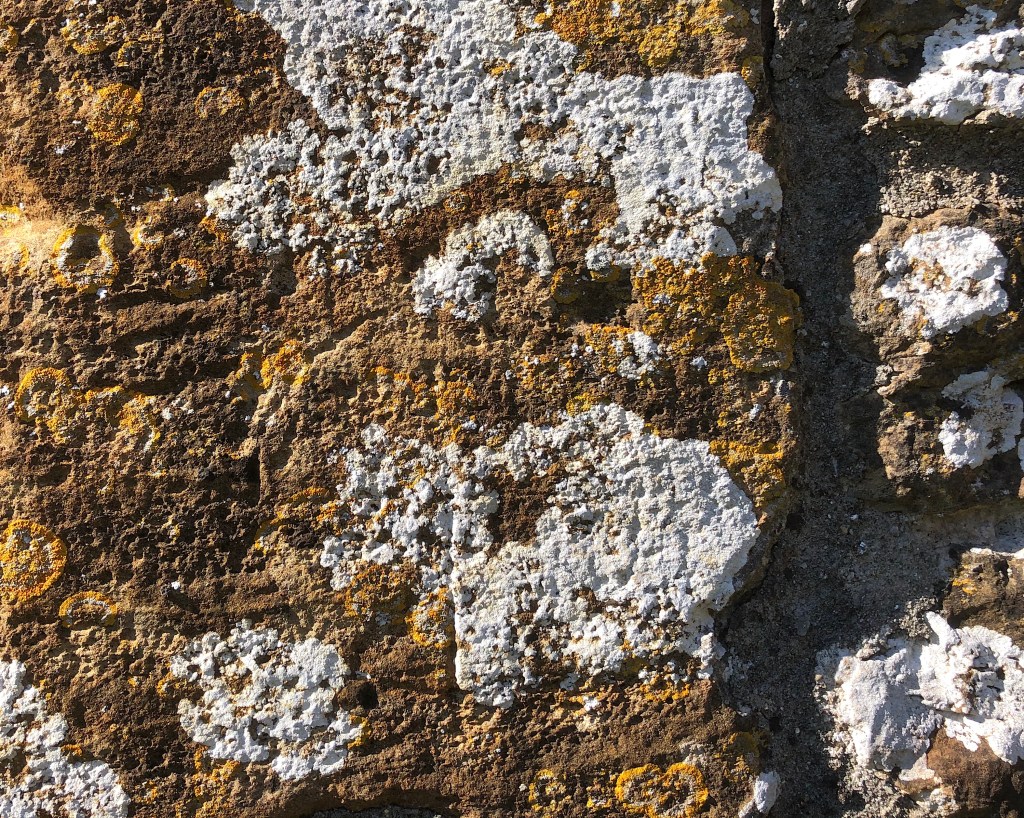
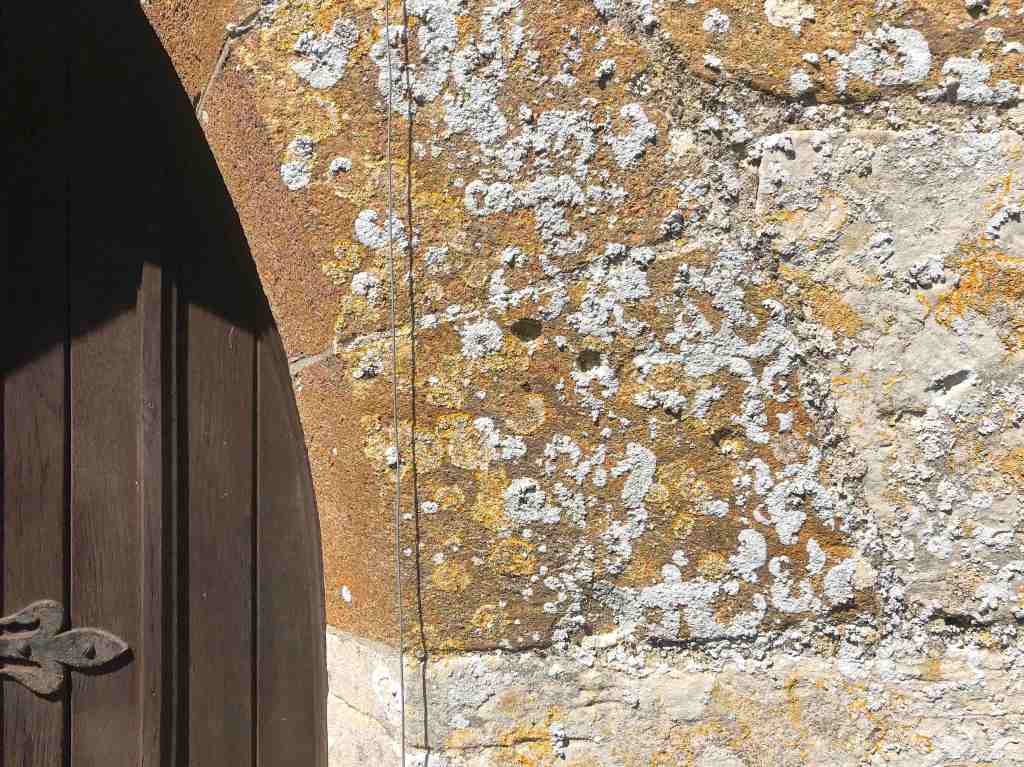
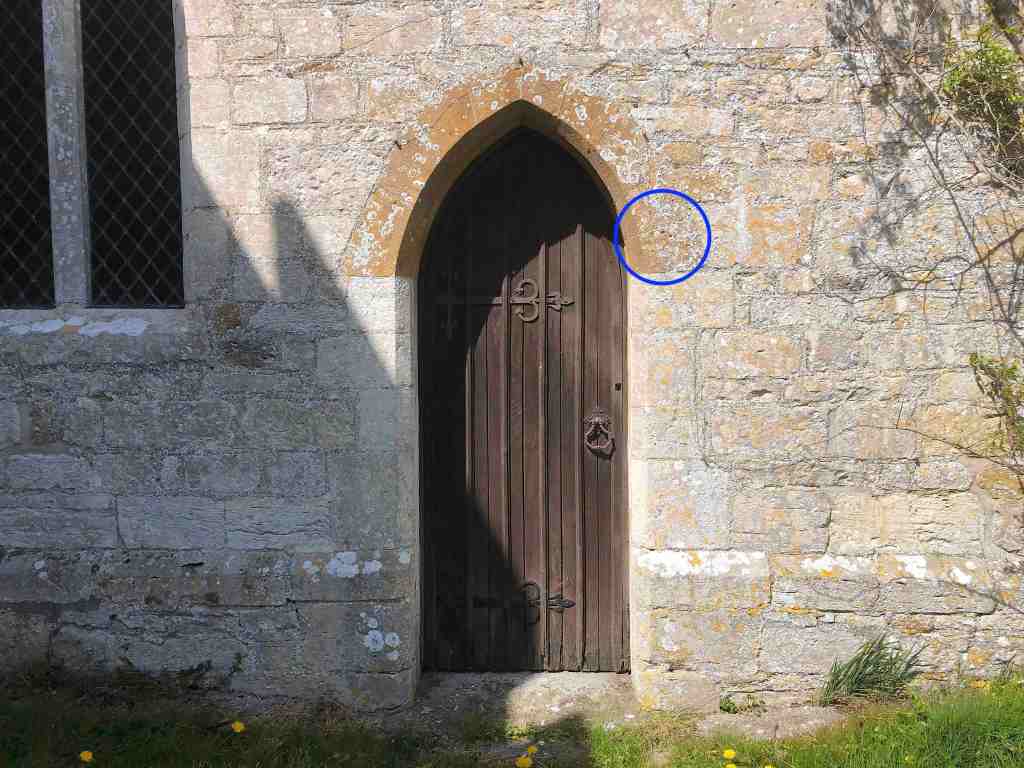
As mentioned above, there is a possible dial quite high on the SW. face of a buttress at the W end. If it is a dial, it must have been repositioned and inverted in the process (shown reverted below)
Addendum 12.22: reviewing this dial, it deserves an update from ‘plausible’ to ‘definite (re-sited)’
ST MARY . HERMITAGE . DORSET – Scratch Dial 2 (unrecorded)
DEDICATION † ST MARY C14; C17 restoration; further work c. 1800
LISTING † Grade II*
LOCATION † 4 miles N. of Cerne Abbas; S. of Sherborne 50.8611 / -2.4991 / ST649069
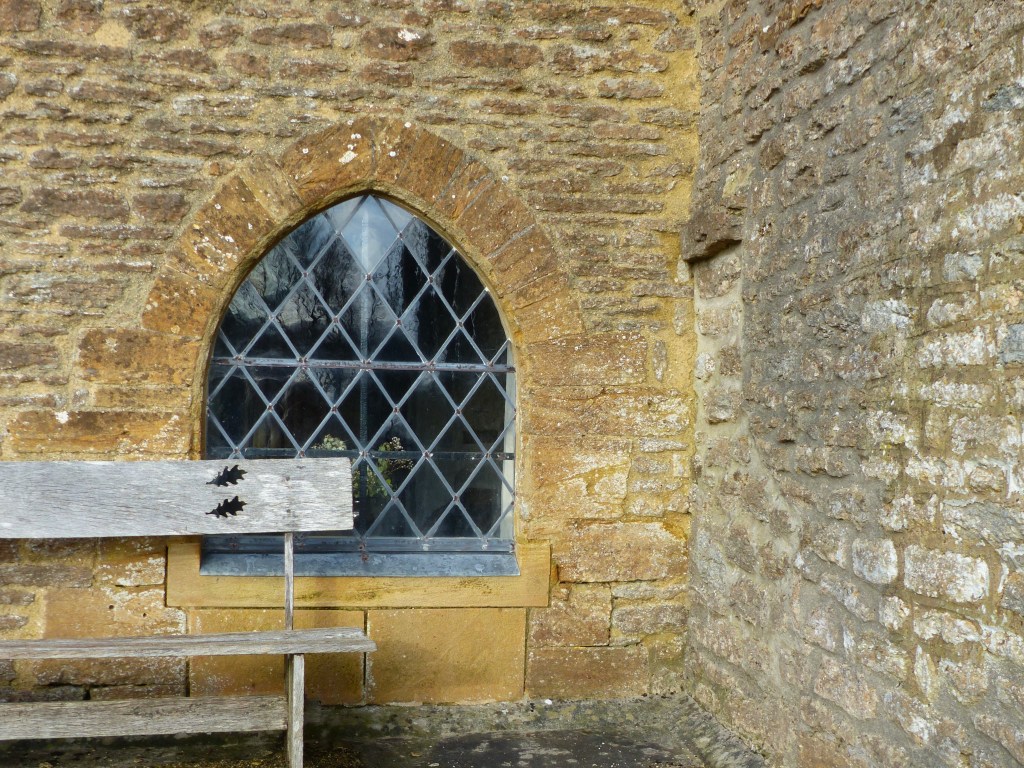
A very small, simple church (‘free chapel‘) tucked away under a hillside in a discreet corner of this hamlet. Approached along the edge of the drive of the former Rectory. Supposed hermetic origin. If you didn’t know it was there, you’d miss it – the bell-cote hardly shows above the trees.
Hermitage . Dorset . St Mary . Scratch Dial 2 (unrecorded)
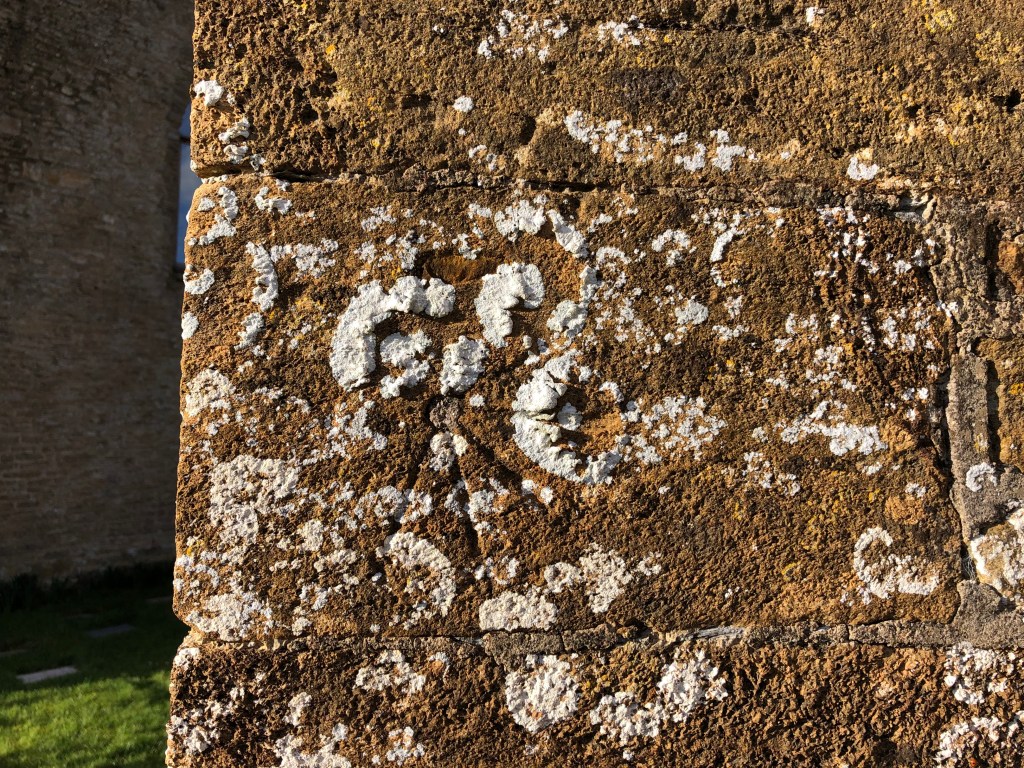
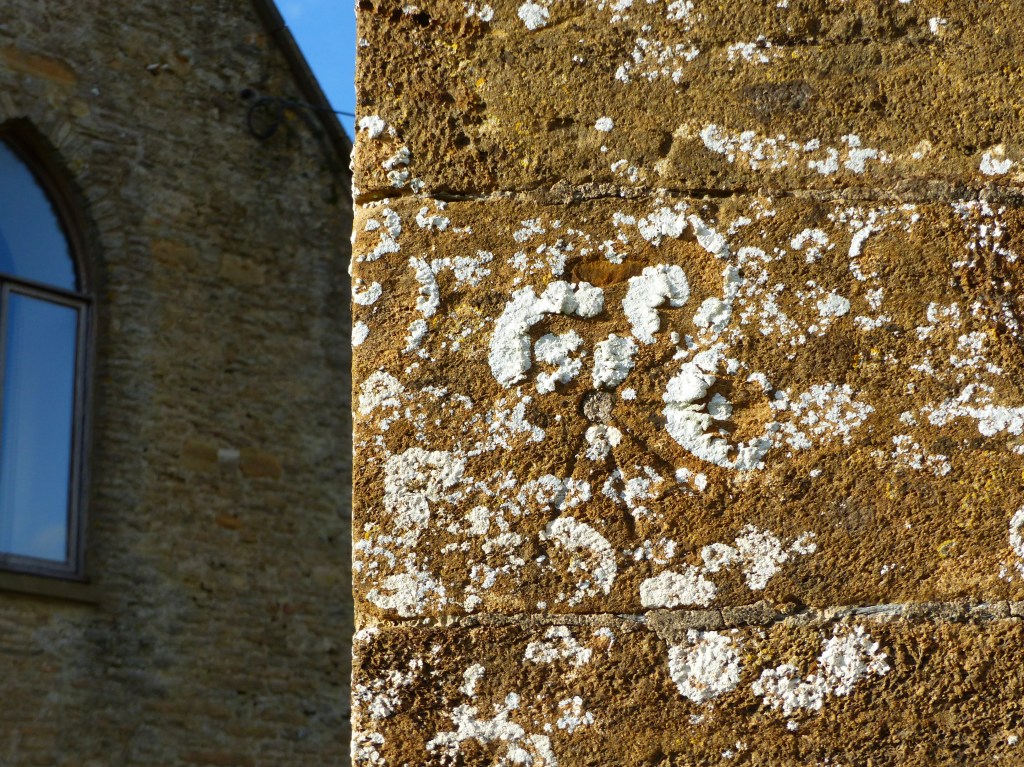
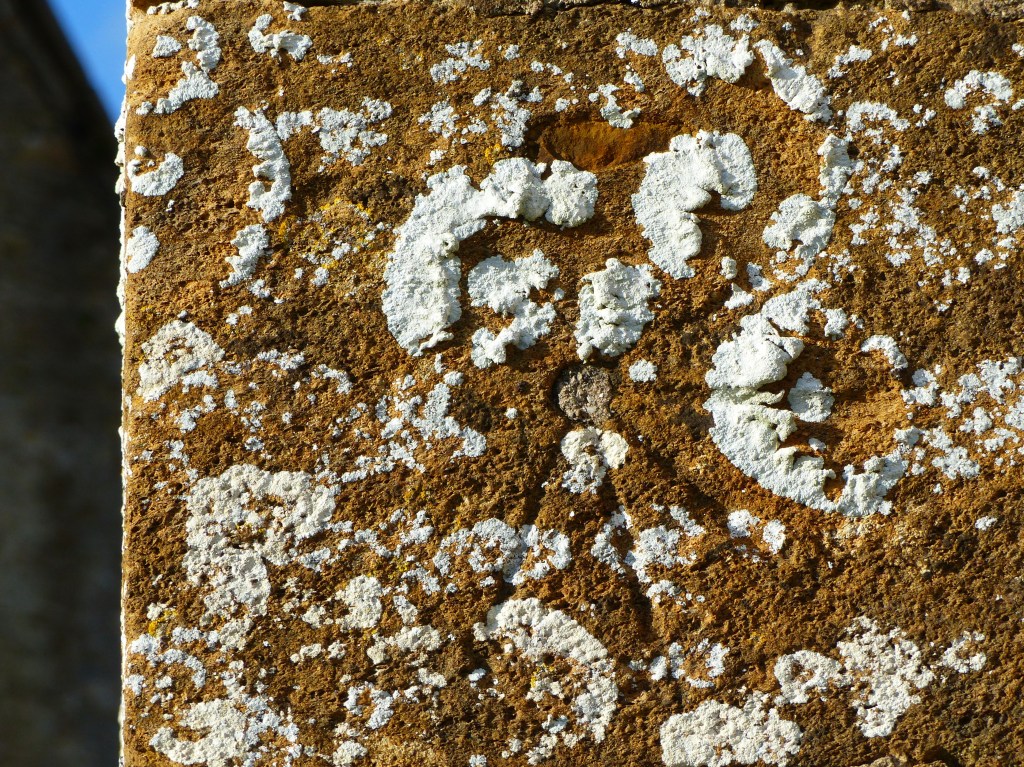
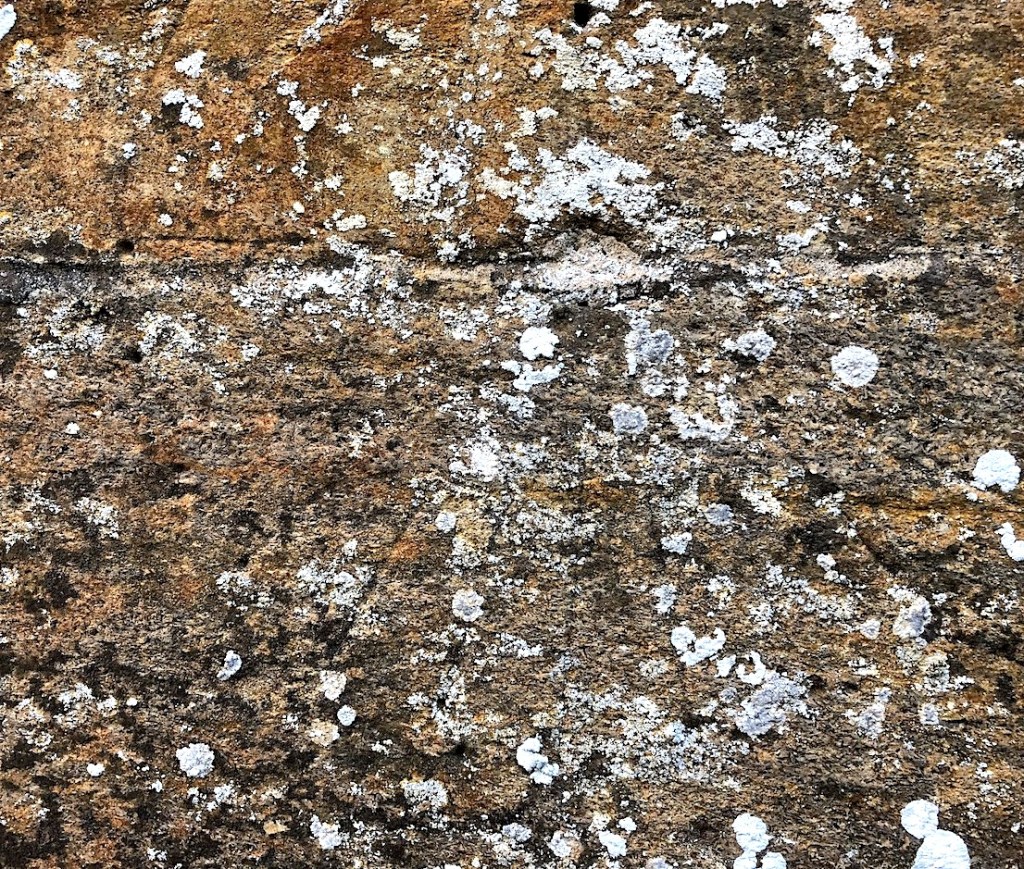
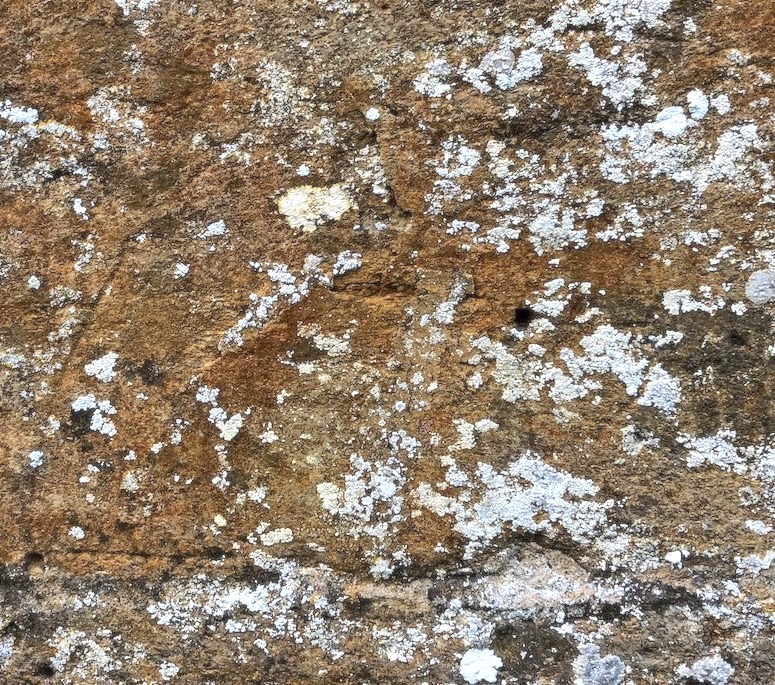
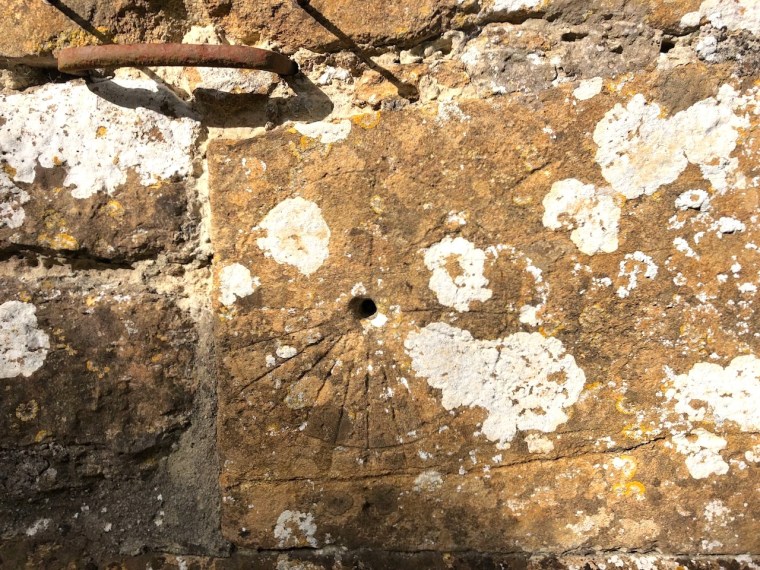
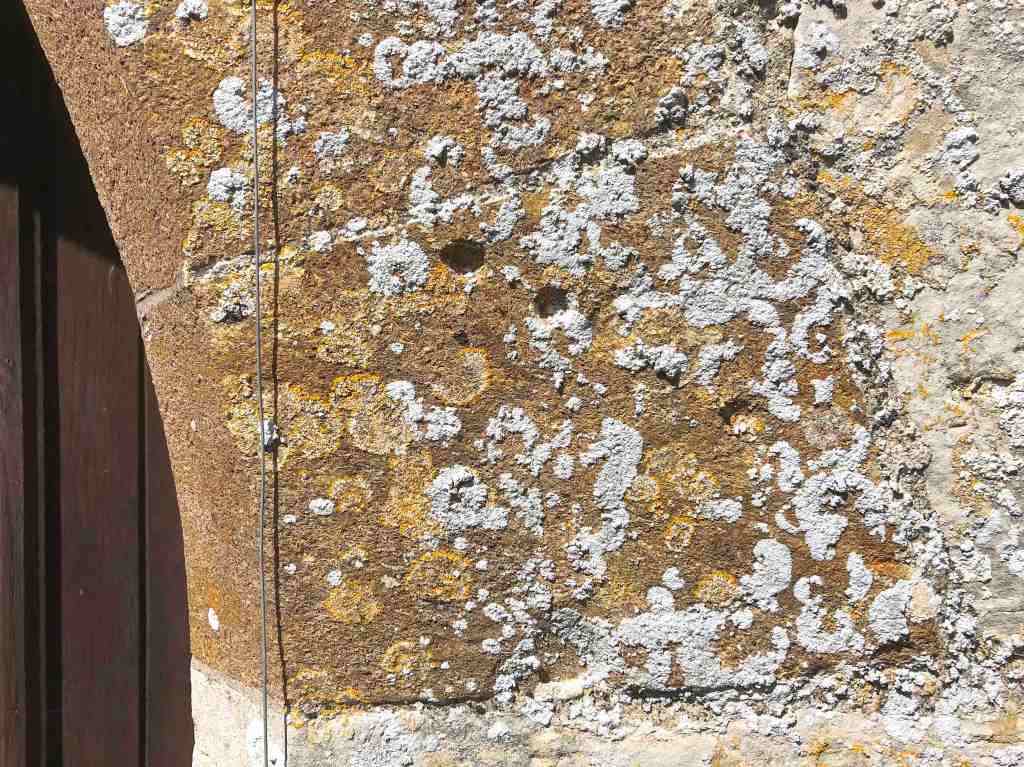
A return to Hermitage to check for other church marks / graffiti produced an unexpected reward – a second dial, hitherto unnoticed and unrecorded, on a quoin stone at the W. corner of the S. side. In strong sunlight, it was clearly visible through a coating of lichen.
Hermitage . Dorset . St Mary . Scratch Dial 2 (unrecorded)
The dial is encircled, with a clear cut noon-line that extends vertically but less markedly to a diameter. There is a fainter full width 6-line, so that the visible lines form roughly equal quadrants. No other radials are definite, though the rough cut at 10 might be one and seems to emanate from the centre. There is a hint of (part of a) second circle on the right side. At the centre is a very small hole in the lichen, so assessing its actual size is not possible. The gallery below includes photos taken from 3 slightly different angles.
Hermitage . Dorset . St Mary . Scratch Dial 2 (unrecorded)
Hermitage . Dorset . St Mary . Witch marks and graffiti
Hermitage . Dorset . St Mary . Scratch Dial 2 (unrecorded)
GSS Category: Scratch Dial; witch marks and graffiti
DEDICATION † St Mary. Mid C12 / earlier foundation; main development C15; C19 restoration
LISTING † Grade I
LOCATION † 8 miles NE. of Dorchester, 12 miles SE. of Yeovil, in the valley below the A37 racetrack. Hardy’s ‘Chalknewton’. More of a small town than a village, with a few shops, a garage and a station rather than (as elsewhere locally) a single shop and a halt. 50.7775 2.5727 SY597977
DIAL 1
See detailed post for the recorded dial in the chancel doorway (RHS) HERE
St Mary . Maiden Newton . Dorset . Scratch Dial on Chancel doorway
DIAL 2 (?)
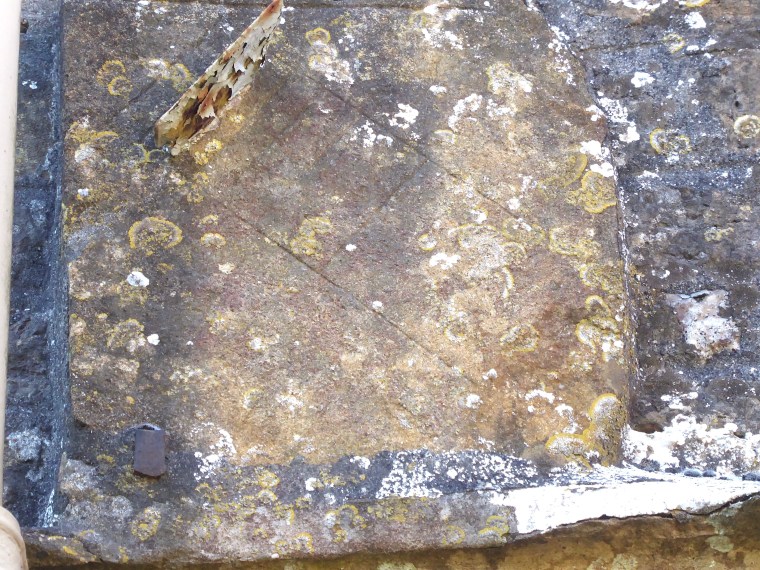
The dial is at eye-level on the quoin of the buttress between the porch and the Chancel door. It is not recorded, and I can see why (a) it may have been overlooked and or (b) why, if noticed, it may have discounted as a definite dial. So I’ll argue the case.
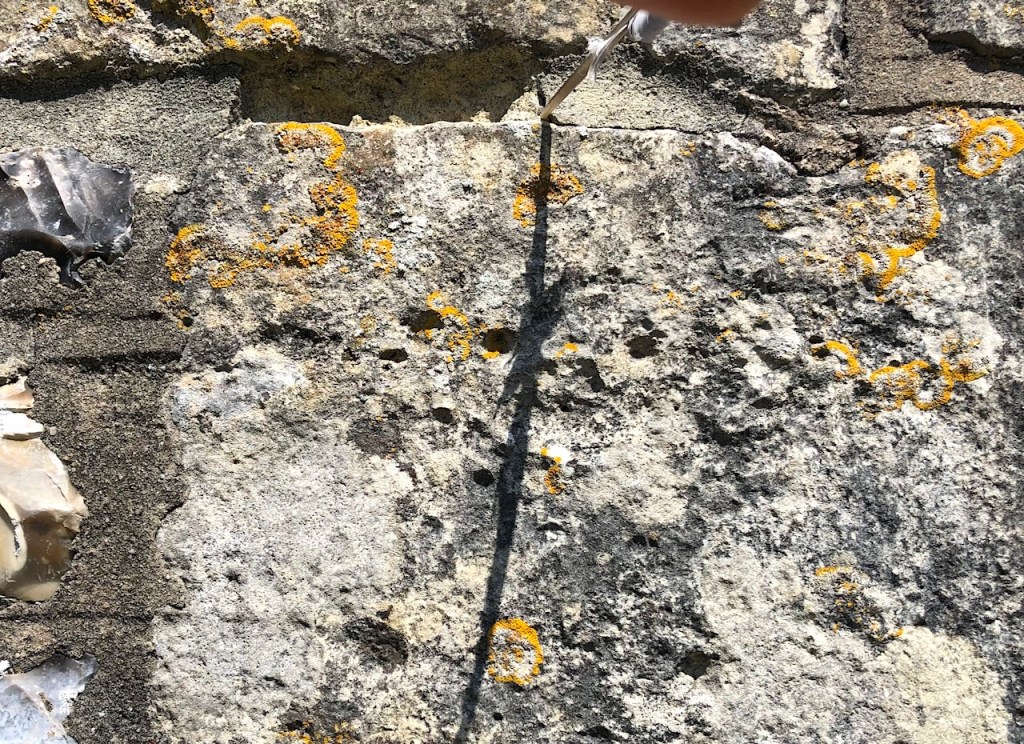
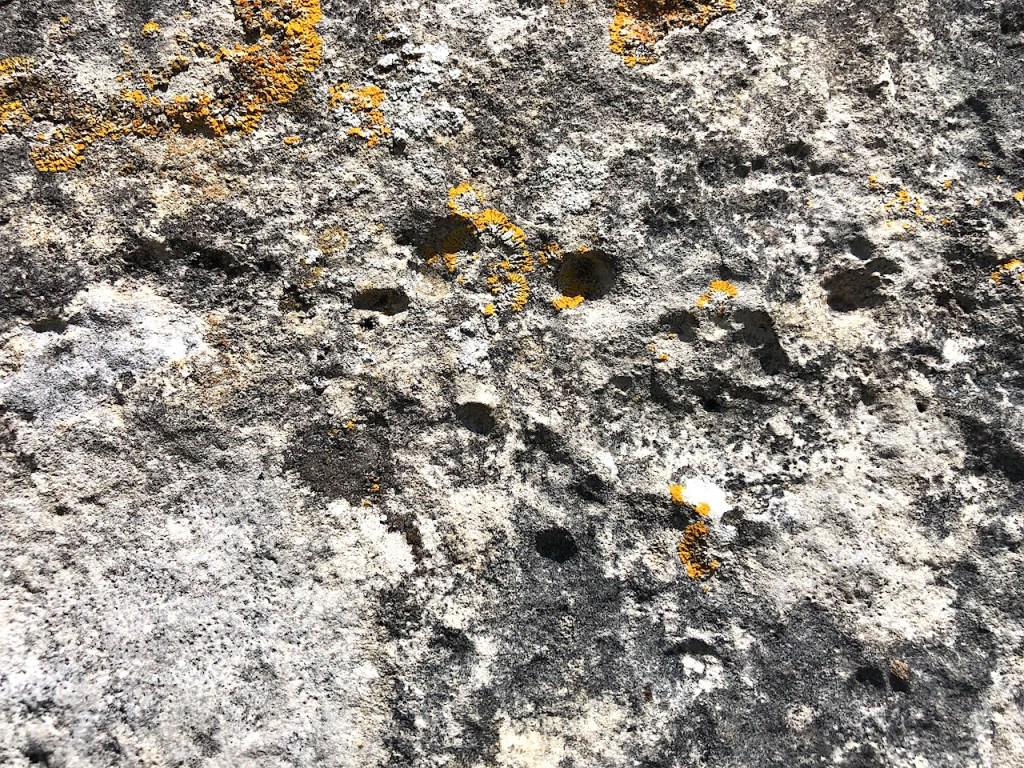
This is a pock dial with no radials. There are 3 large pocks on a slight curve, and a couple of small ones slightly out of line. There are other pocks lower down, two of which (presuming a gnomon in the mortar immediately above) seem to relate to the large pocks – one might even be a noon indicator.
Using a crow’s feather as a style centred in the mortar above the large pocks, the shadow cast was photographed at about 11.30
St Mary . Maiden Newton . Dorset . Scratch Dial 2? (unrecorded)St Mary . Maiden Newton . Dorset . Scratch Dial 2? (unrecorded) . ‘Timed’ with a crow’s featherSt Mary . Maiden Newton . Dorset . Scratch Dial 2? (unrecorded) . Details of the pocksSt Mary . Maiden Newton . Dorset . Scratch Dial 2? (unrecorded) . Location c/w Dial 1 beside the Chancel door
NOTES † There is a fine sundial ‘on S. face of tower, square slab with simple capping, iron gnomon and date 1630‘ BHO. See OLD DIAL menu LINK
GRADE II*. Former parish church, now a private chapel in the grounds of the Manor House*. Largely rebuilt in 1870. A few C15 fragments remain. A secluded hamlet with only 2 or 3 cottages besides the Manor and its extensive lake. Excellent walking country. Hidden in a valley midway between Sherborne and Dorchester. 50.8232 / -2.4865 / ST658027
Up Cerne Church . Dorset . ‘Dorset Churches’
DIAL
The dial is quite high on a square quoin stone on the S. Nave. It is inverted and was perhaps saved as an interesting feature – and moved – during the major C19 rebuild. The stone itself is not matched by others nearby and is clearly older, with significant damage.
Up Cerne Church . Dorset . Scratch Dial
The dial is roughly formed, with an endearingly wonky eroded semicircle containing a curve of rather haphazard pocks. The horizontal line is clear. If there was a noon line, damage to the stone has erased it, together with (presumably) other features of the dial. It’s hard to tell if the striations in the damaged quadrant evidence radials.
BSS Diagram – Up Cerne
Up Cerne Church . Dorset . Scratch Dial
*The Manor House and its grounds are private. There is no public access to the church, which is barely visible from the road. I was fortunate (being local) to be able to gain permission to visit. This is not a dial worth visiting on the off-chance
Up Cerne Church . Dorset . Scratch Dial
GSS Category: Scratch Dial
All photos Keith Salvesen except the church – Dorset Churches online
GRADE II*. C14 chancel & nave; C15 W. tower, N. porch. Much of interest in the church of the village of swine (or possibly wild boar). Font, bells, gargoyles, ‘dropped’ chancel, and a fine stained glass millennial sundial. Midway between Dorchester (S.E.) and Crewkerne (N.W.) 50.7799 / -2.6224 / SY562979
St Andrew and St Peter . Toller Porcorum . Dorset – Scratch Dial(s)
DIALS
Two adjacent dials – one doubtful – high up on a quoin stone on the N. aisle. Dial 1 is definitely a dial, though hard to see for erosion, lichen and height. Dial 2 is a possible dial with a style hole, but no longer other visible dial attributes if there ever were any. The stone has plainly been relocated.
Toller Porcorum Drawing BSS
St Andrew and St Peter . Toller Porcorum . Dorset – Scratch Dial(s)
Besides being relocated, the orientation of the dial suggests it is inverted or possibly – as GLP suggests – rotated by 90º. He detected 4 pock marks in or close to the upper-left quadrant (see BSS diagram above). I did not notice them and they are only faintly visible in my photos (taken with my camera held above my head), highlighted in image 1 below. I did detect 4 faint lines / partial lines. The overall configuration (image 2) would make better sense if the stone were rotated 90º anticlockwise.
Dial with pocks highlighted; dial with lines added
St Andrew and St Peter . Toller Porcorum . Dorset – Scratch Dial(s) – annotated pock & line images
As for possible Dial 2, GLP suggests it might have been a practice style hole or an earlier discontinued attempt at a dial. It’s hard to see why a such a very slightly different location was thought better, though. My amateur theory is that the stone was originally on the S. side, set at 90º anticlockwise, with the time-telling part of the true dial being (as often) in the lower left quadrant. The (then) upper hole might have been an earlier very basic time of day indicator – just a stick in a hole to cast a shadow without the need for refinements.
LINKS for information about the church, the village and its history:
The charming stained glass millennial sundial is a striking addition to an already attractive building. It features on GSS in a different dial category, but it merits inclusion here. [Secretly, this is the dial I prefer]
St Andrew and St Peter . Toller Porcorum . Dorset – Stained Glass Millennial Sundial
GRADE 1. C15 tower, S. aisle; C16 chancel, nave, S. porch; C19 restoration, additions. Mainly perp style. 6 miles N.E. of Dorchester. 50.7733 / -2.4045 / SY715971
DIALS
Two adjacent but very different scratch dials on the S.E. buttress of the tower. The image above shows how they are composed on the buttress. There are also two vertical dials, one Old(1794) the other Modern. There is a plausible third scratch dial – see below.
DIAL 1
St Mary . Piddlehinton . Dorset . Scratch Dial 1
More than twenty pocks in a varied configuration, with a concentration in the UL quadrant. 3 rings are evident there, and the pattern of the pocks suggests that 3 circles were once complete. A number of faint and indistinct radials, with emphasised vertical (noon) and horizontal lines. GLP points out significant variation in the hours in the divisions marking the hours.
St Mary . Piddlehinton . Dorset . Scratch Dial 1
DIAL 2
This is a busy dial for the amateur to interpret. GLP concludes for several reasons that it is later than Dial 1. He suggests that the 2 ‘iron stubs’ may evidence an attempt to update (add sophistication to?) the dial by adding a gnomon. The large photo in the gallery shows the debatable ‘style and single noon line’ dial – see notes
St Mary . Piddlehinton . Dorset . Scratch Dial 2
DIAL 3?
A plausible third scratch dial is incorporated in the lower dial (noted as ‘doubtful’ elsewhere). I have come across these before, and most certainly appear to be dials of the simplest kind. A clear and deliberate vertical line leading downwards from an apparent style hole suggests a noon line cut below a style. At the most basic level, this would function as a marker of the passage of the day. The overall configuration on the buttress suggests a progression in sophistication from that early marker. So I prefer ‘plausible’ to ‘doubtful’.
DEDICATION † St Mary. Mid C12 / earlier foundation; main development C15; C19 restoration
LISTING † Grade I
LOCATION † 8 miles NE. of Dorchester, 12 miles SE. of Yeovil, in the valley below the A37 racetrack. Hardy’s ‘Chalknewton’. More of a small town than a village, with a few shops, a garage and a station rather than (as elsewhere locally) a single shop and a halt. 50.7775 2.5727 SY597977
St Mary . Maiden Newton . Dorset . Scratch Dial on Chancel doorway
DIAL † On arch stone, E. side of chancel door. GLP dates as early C15, with a ‘rough arc of 5 holes across 2 stones’. I was at a loss to see how this dial could have worked with such a shallow arc and without a style hole. HoweverGLP points out that the arc’s approximate centre lies in a joint between 2 stones, so subsequent repointing presumably covered up the hole
St Mary . Maiden Newton . Dorset . Scratch Dial on Chancel doorway
NOTES † There is a fine sundial on S. face of tower, square slab with simple capping, iron gnomon and date 1630BHO. See OLD DIAL menu LINK
DEDICATION † ST MARY THE VIRGIN – dated from mid C14, gradual expansion in C15, C18 restoration (Crickmay). The South Chapel is a notable example of 14th-century architecture, well preserved and not greatly altered from its original form BHO.
LISTING † Grade II*
LOCATION † S. of Sherborne, E. of main road to Cerne Abbas. A straggling small village with records dating from C12, approached by lanes rather than roads. The church is set slightly apart from the centre. In 1985 the Parish name was changed from Wootton Glanville for reasons hard to ascertain. A peaceful feel to the community. 50.872 / -2.4558 / 2°27’20″W / ST68008
Glanvilles Wootton . Dorset . St Mary the Virgin – Scratch Dial
DIAL † On W. buttress of S. wall of S. Chapel, 2m high, with (later) iron gnomon* in square style-hole. Last visited in January drizzle, when marks were hard to make out and photo ‘work’ was needed. On a sunny April day, the marks were clear. Pocks (12+) of varied sizes. 8 radials with irregular angles. A notably emphasised noon-line in depth and width, and with additional terminal pock(s). GLP notes that it is 4º from vertical. The 3 larger pocks presumably marked local Mass times (very approx Terce, Sext & None). *Gnomon is iron, 130mm long, rectangular cross section. Modern. BSS
From the time of day indicated by the gnomon’s shadow, I estimated the o’clock time. Checking my watch, the shadow was just 17 minutes fast…
Glanvilles Wootton . Dorset . St Mary the Virgin . Scratch DialGlanvilles Wootton . Dorset . St Mary the Virgin . Scratch Dial
BSS record of markings – GLP
Glanvilles Wootton . Dorset . St Mary the Virgin . Emphasised noon-line with added pock(s)
NOTES † noted in RCHM / BHO but not BLB / HE / TWC. The village has a fine Manor House. Round Chimneys Farm – once owned by John Churchill Duke of Marlborough – has significant entries in Hutchins, RCHM III Dorset; and good details in BHOLINK.




































 GAUDIUM SUB SOLE . SUNDIALS . MEDIEVAL TO MODERN
