MAX GATE . DORCHESTER – Thomas Hardy’s Vertical Dial

MAX GATE

Max Gate is a fine house on the eastern edge of Dorchester, designed and built by Thomas Hardy (with his father and brother) in 1885. He lived there until his death in 1928. He had two wives, Emma and then Florence, and during the ‘Max Gate years’ there were complicated relationships, sadly beyond the scope of this article.

In 1940 the house was bequeathed to the National Trust by Hardy’s sister. It was listed Grade I in 1970 with the stipulation that it should be lived in. The NT gives generous access to the interior, and there are conducted tours of the house and grounds. It is not exactly ‘lived in’, but it does feel homely rather than museum-like. To see Hardy’s desk and other writerly items feels a privilege. ‘Tess’ was written there, also ‘Jude’, the ‘The Mayor of Casterbridge’, and much of his poetry.

MAX GATE – VERTICAL SUNDIAL

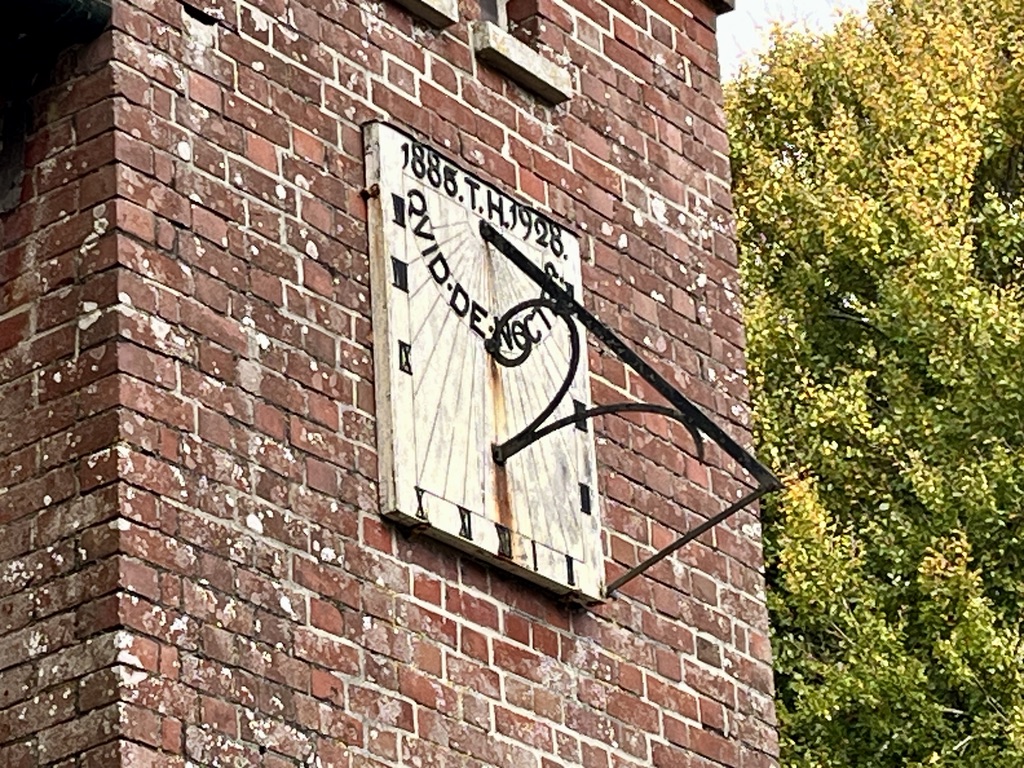
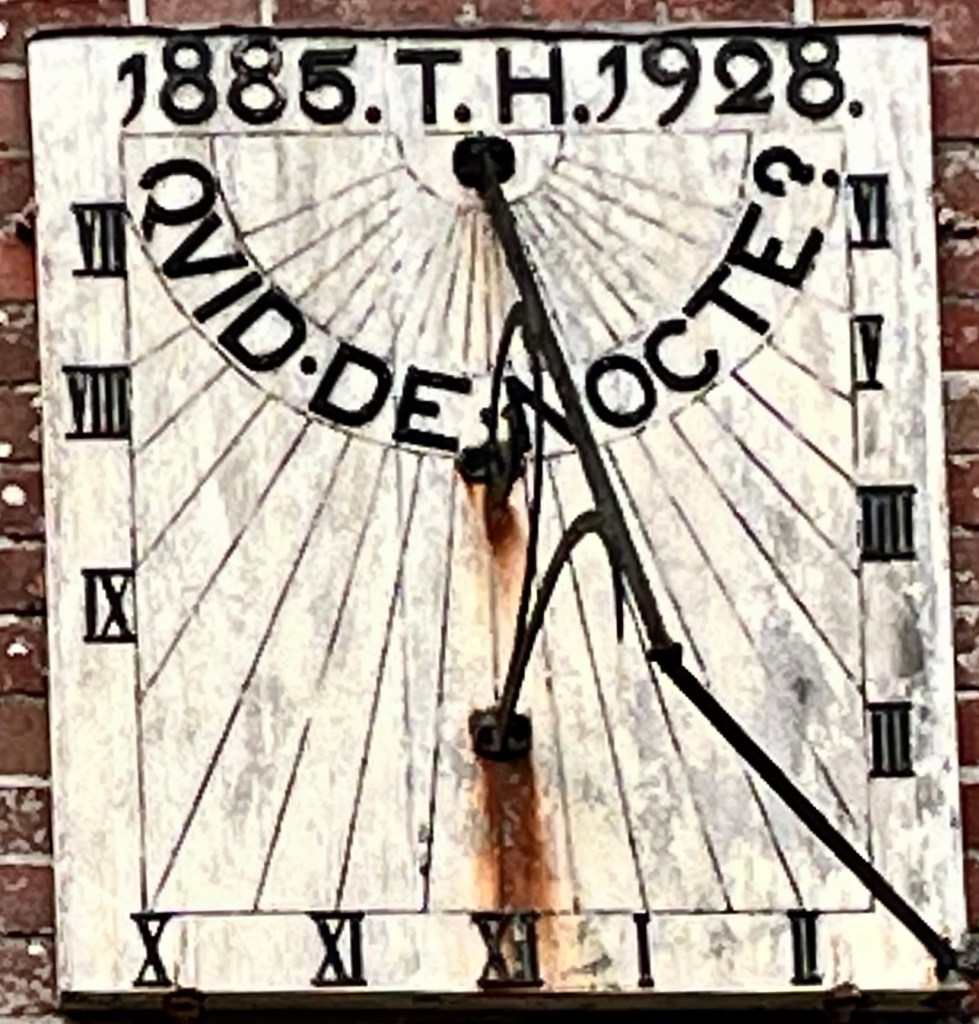
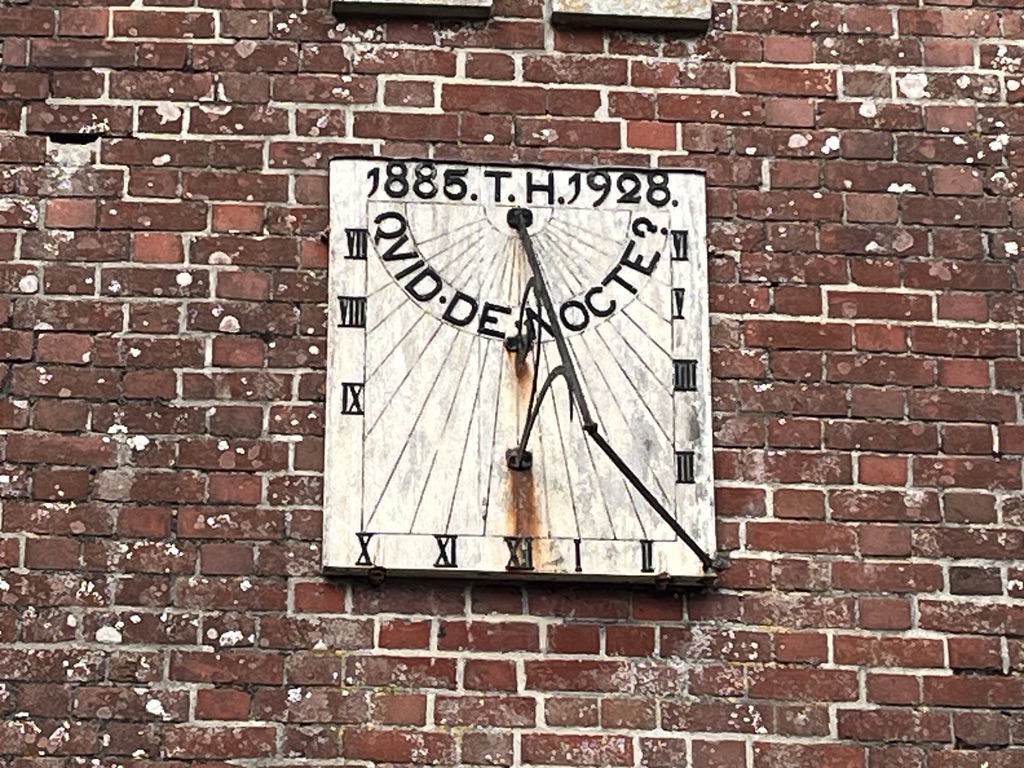
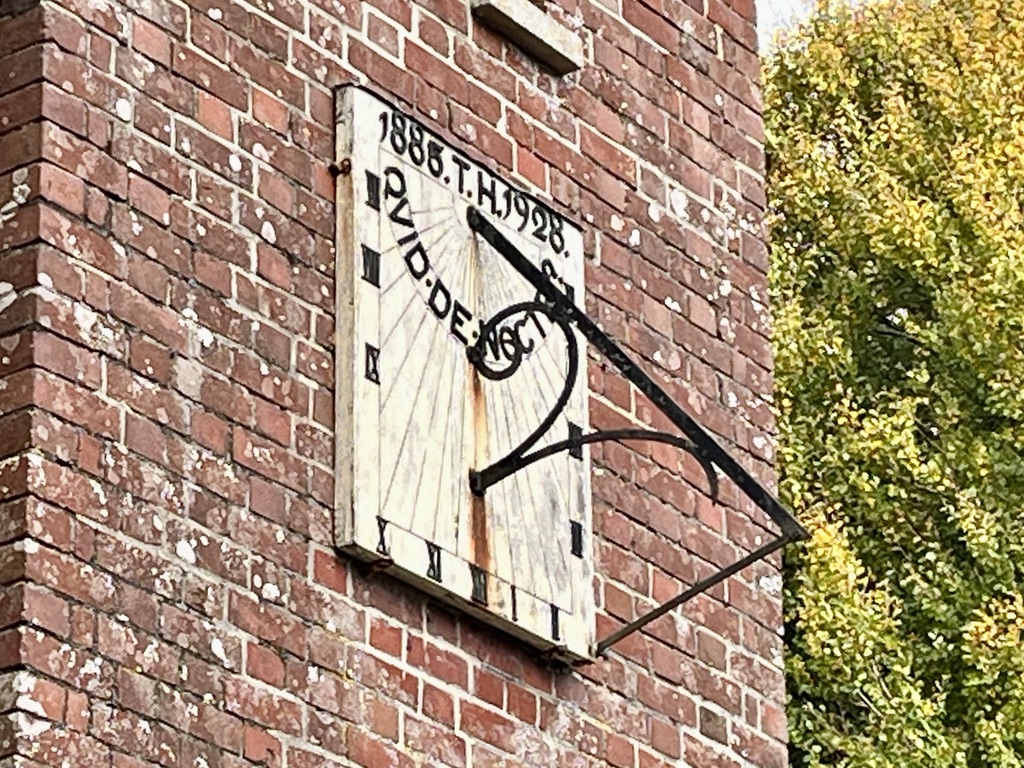
High up on the east tower, the dial is a good example of a sundial that (besides its primary use) acts as a memorial, and tastefully reflects the significance of the dedicatee. It is also very visible and easy to read at a distance. The lightly ornamental gnomon is moored at the bottom right corner as you face the dial. The style is simple, with 12 hours marked from 7.00am to 6.00pm and 24 radials to record half hours. The dial plate is white-painted wood. Overall the dial is in poor condition, but I gather that there are plans to carry out complete restoration during 2026.

.

MOTTO

QUID DE NOCTE?

Literally, ‘WHAT OF THE NIGHT ?’ Interrogative sundials are relatively unusual, and I am unsure when the inclusion of question-marks began. The simplest reply might be ‘NIHIL’ – the sun is asleep.

.The marriage certificate (1839) of Thomas Hardy’s parents at Melbury Osmond church, Dorset

GSS Category: Vertical Dial; Memorial Dial; Dial Mottoes

Credits: Keith Salvesen (all photos); National Trust; Melbury Osmond church

WINTERBORNE STICKLAND . DORSET . ST MARY: 3 Scratch Dials

St Mary . Winterborne Stickland . Dorset

❖ ❖ ❖

ST MARY . WINTERBORNE STICKLAND . DORSET

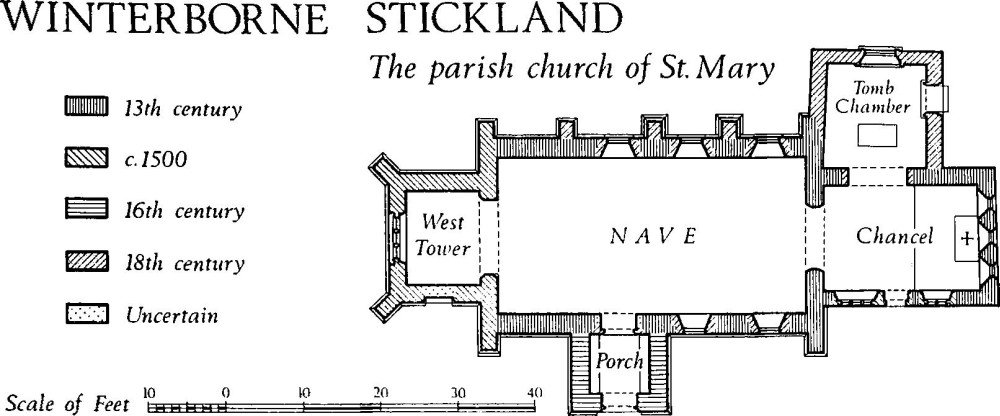
GRADE 1 ✣ C13 origins; Tower ± 1600; considerable restoration C18. Scratch Dials 3; Graffiti: C17 & 18 initials & dates on responds of tower arch. 5m S of Blandford. 50.8409 / -2.2363 / ST834046

See separate entry DOUBLE-FACET DIAL ABOVE PORCH

❖ ❖ ❖

SCRATCH DIALS

DIAL 1

SE corner of the Chancel. 8 lines with extended noon line. A morning dial, cut in or near LLQ.

❖ ❖ ❖

DIAL 2

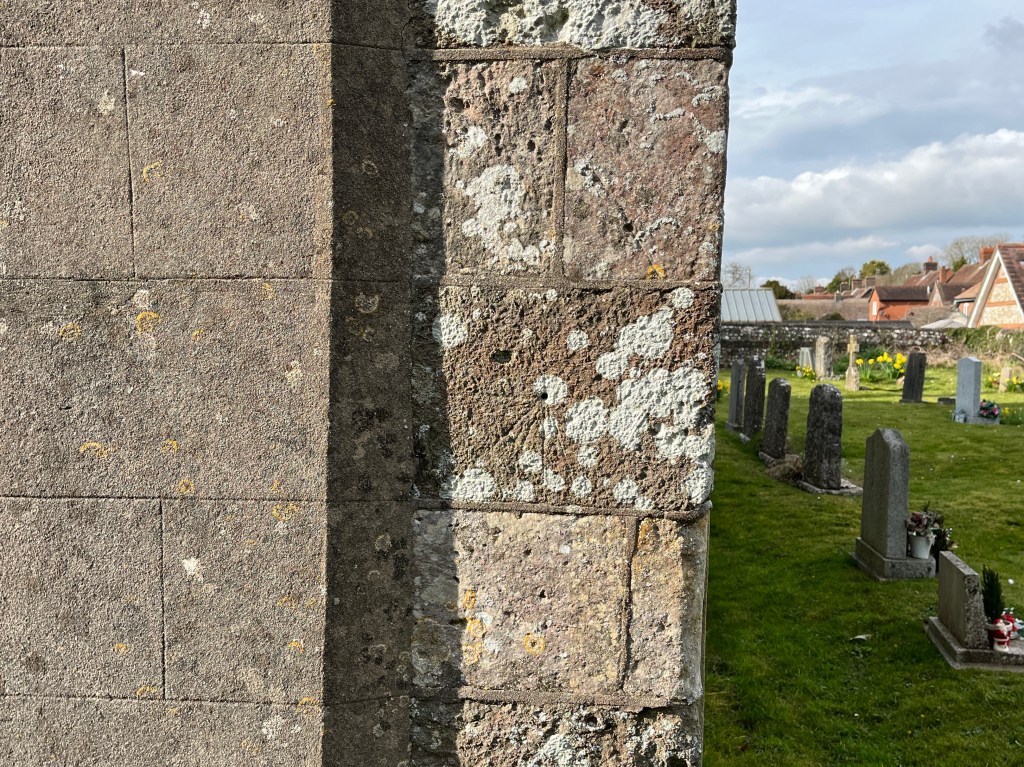
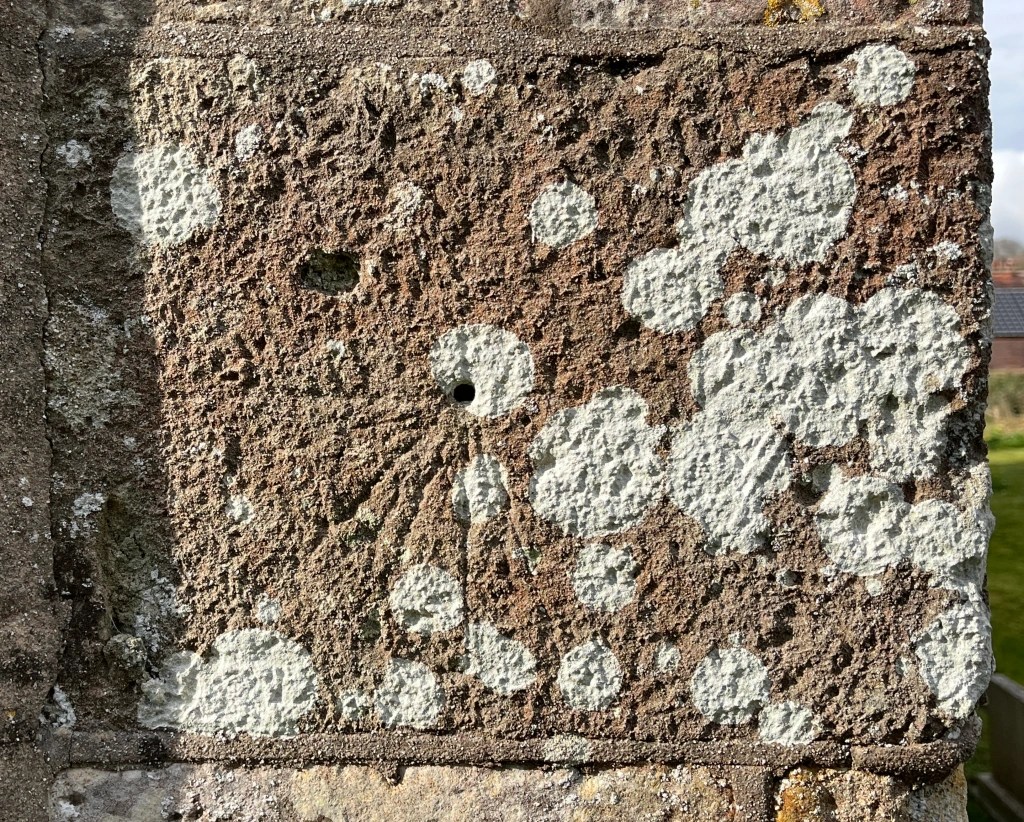
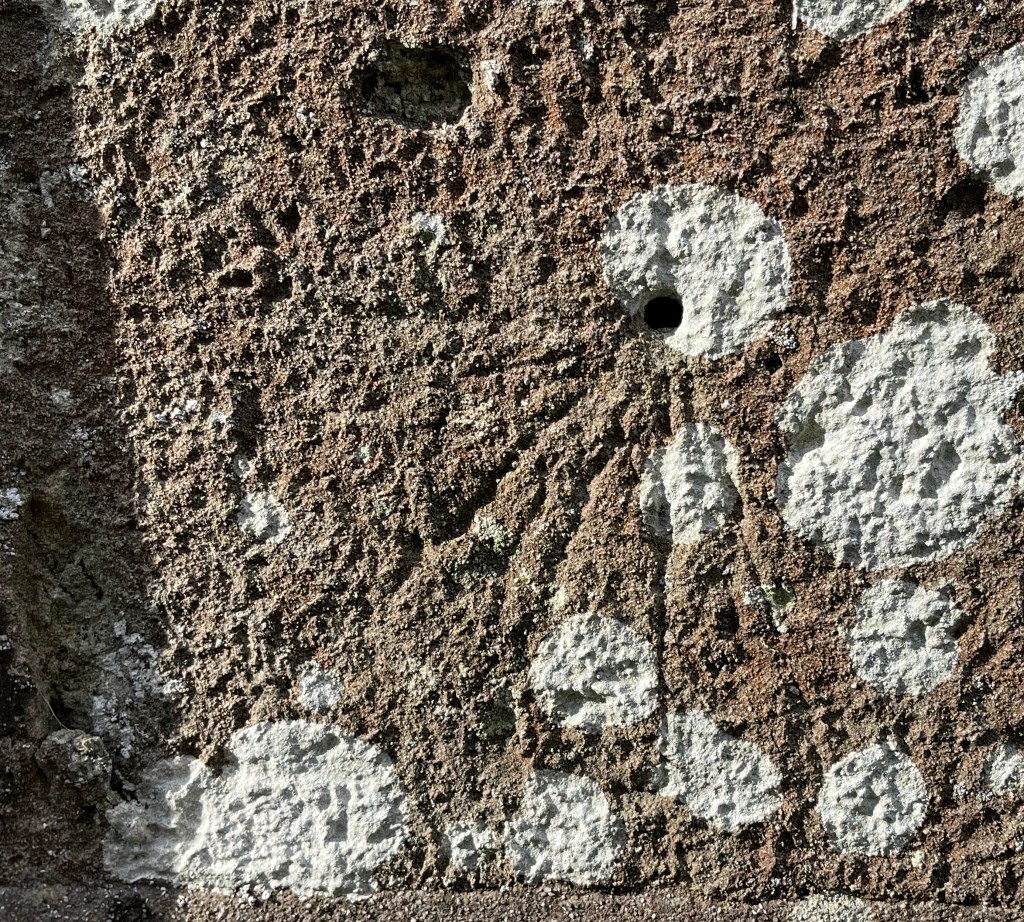
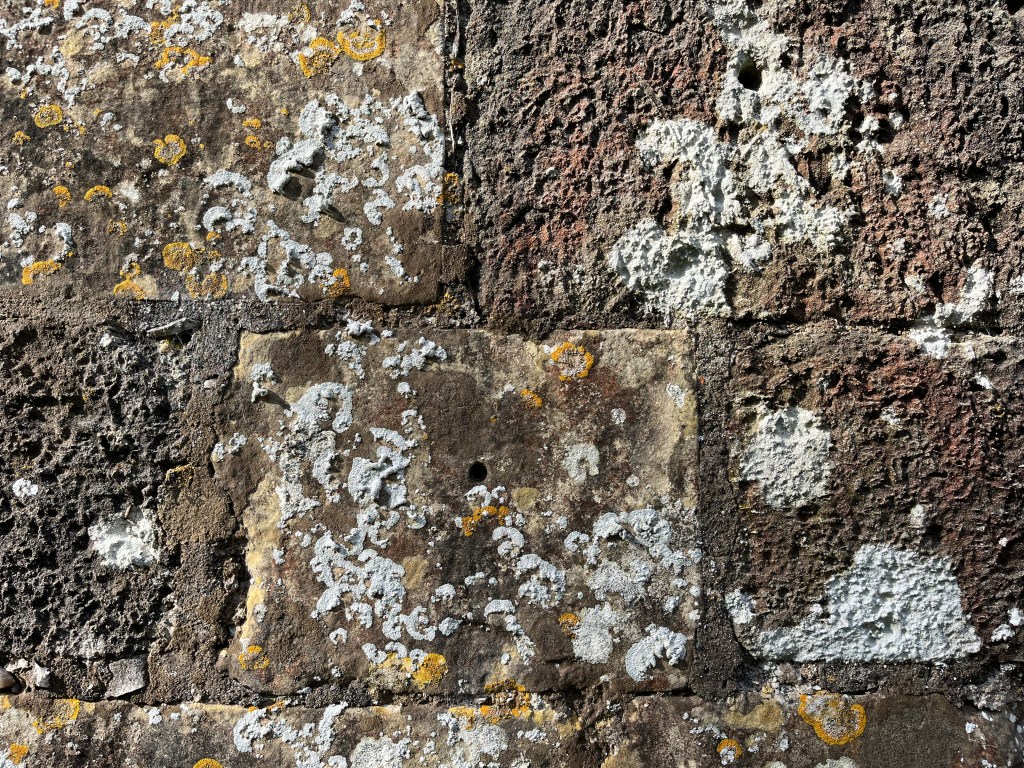
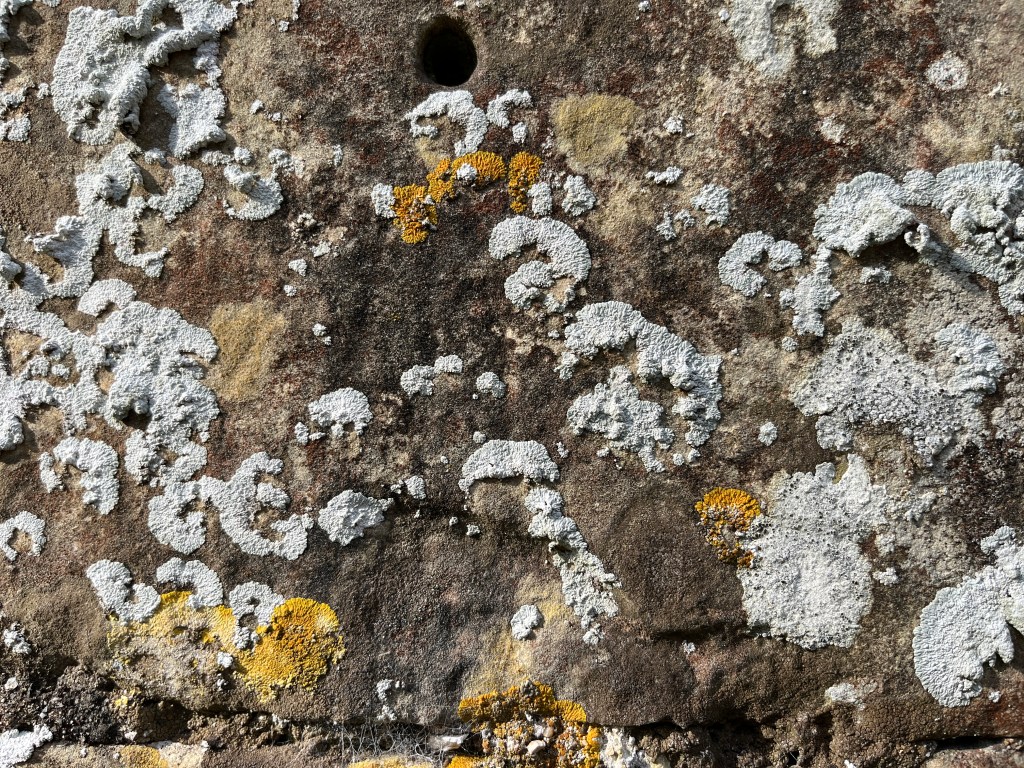
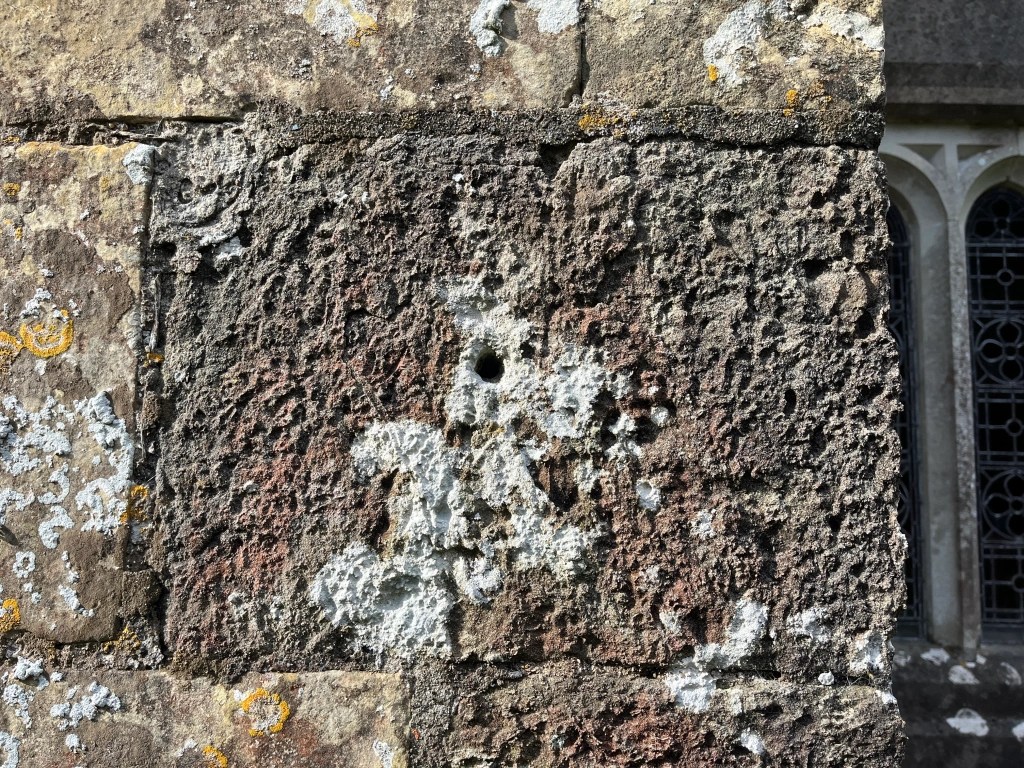
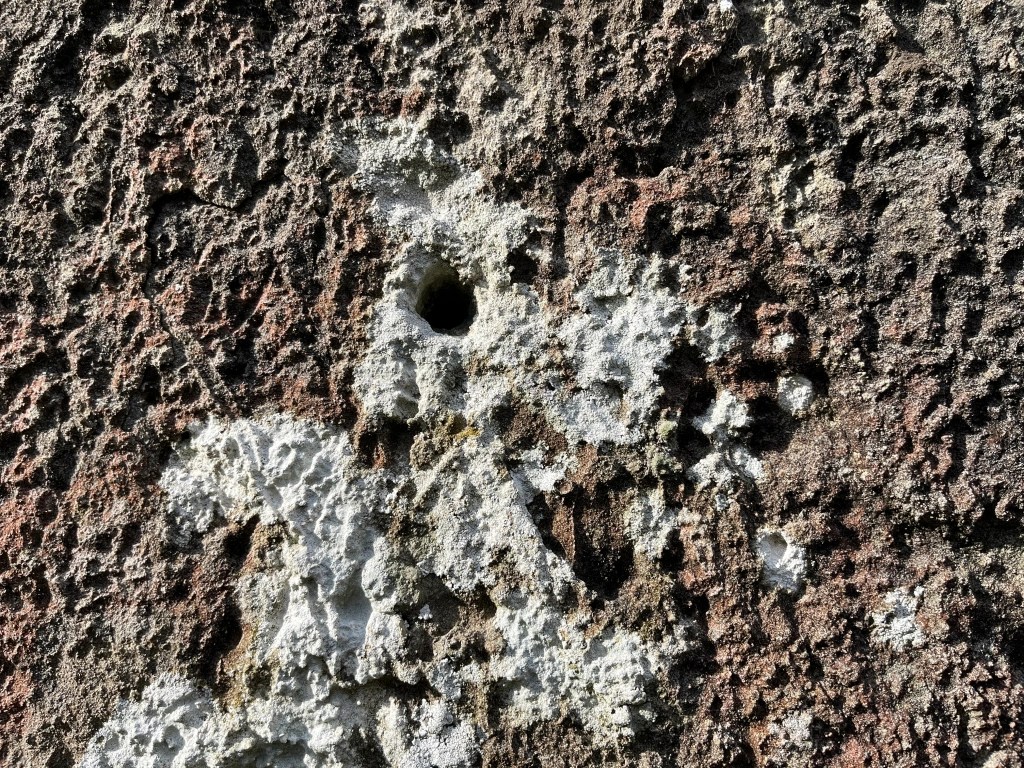
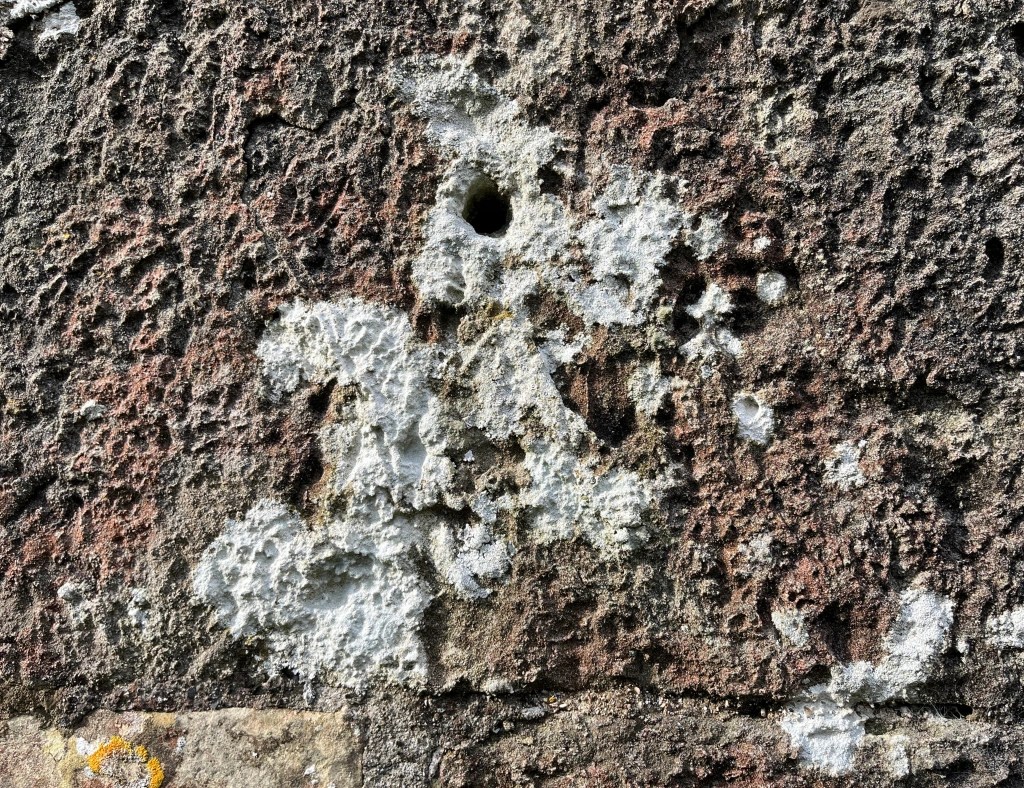
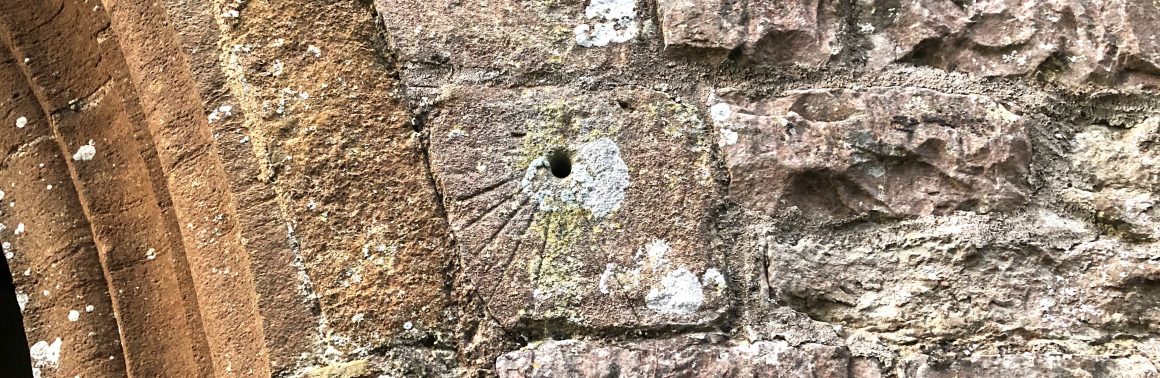
SE corner of nave buttress. Worn and at first sight just a gnomon hole near the centre of the stone. On closer examination and despite the lichen, a number of lines can be detected (GLP suggests 7).

❖ ❖ ❖

\

DIAL 3

SE corner of nave buttress, immediately above Dial 2 but on a larger and different stone type. Very degraded / eroded, but two downward lines are just visible.

NOTE: GLP, in his comprehensive survey of Dorset scratch dials, considers all 3 dials to be C13

GSS Category: Scratch Dials; Mass Dials; Medieval Sundials; Dorset Scratch Dials

All photos Keith Salvesen; Ref. Gordon Le Pard

WINTERBORNE STICKLAND . DORSET . ST MARY: DOUBLE-FACED VERTICAL DIAL

❖ ❖ ❖

ST MARY . WINTERBORNE STICKLAND . DORSET

GRADE 1 ✣ C13 origins; Tower ± 1600; considerable restoration C18. A charming country church, seemingly plain but with much to justify its listing. Tomb chamber. 2 (perhaps 3) scratch dials, written up separately. Graffiti: C17 & 18 initials & dates on responds of tower arch. 5m S of Blandford. Close-by St Andrew’s at W/B Houghton makes a pleasant short visit. 50.8409 / -2.2363 / ST834046

❖ ❖ ❖

SUNDIAL

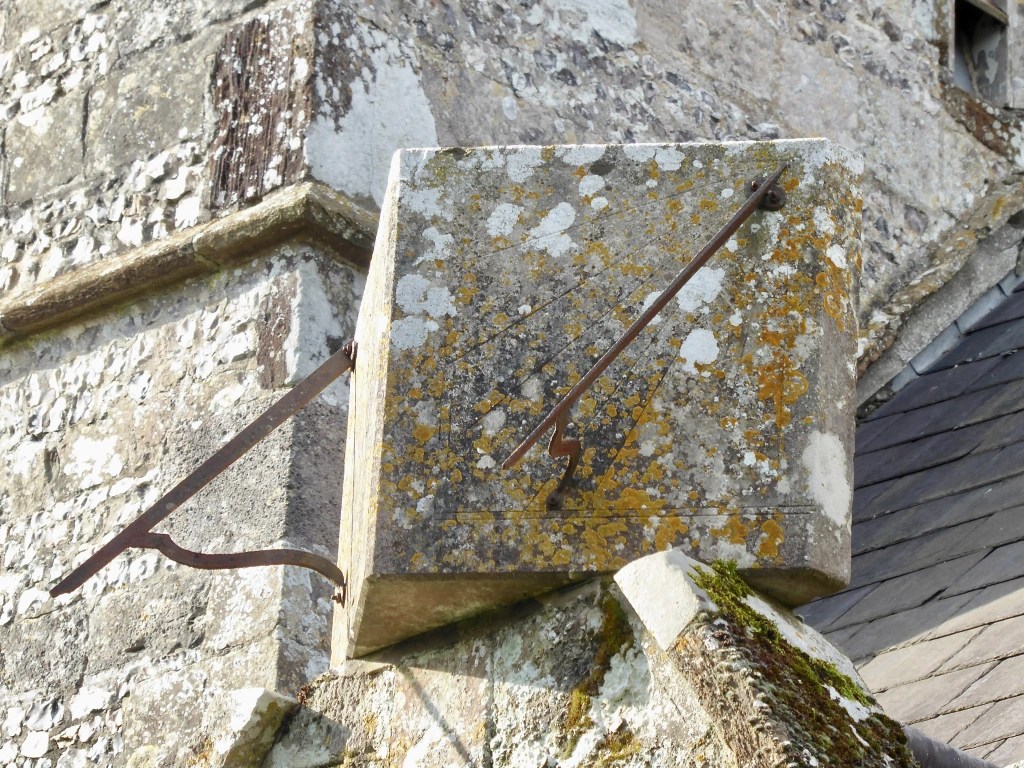
A fine double-faced dial on the S. porch gable, angled SE and SW. Both faces match in design, with identical scrolled iron gnomons. BHO dates to C18th. BSS mentions Roman numerals, but I couldn’t find any trace even with close-up photos.

❖ ❖ ❖

SW FACE

❖ ❖ ❖

SE FACE

❖ ❖ ❖

Geograph image from c2010 for comparison of condition of stone and lichen coverage

GSS Category: Vertical Sundial; Double-faced Sundial; Porch Gable Sundial

All photos: Keith Salvesen except last, Geograph 2010

WIMBORNE MINSTER . DORSET . ST CUTHBERGA – PILLAR DIAL

Ethan Doyle White . Wiki. CC/OS

ST CUTHBERGA . WIMBORNE MINSTER . DORSET

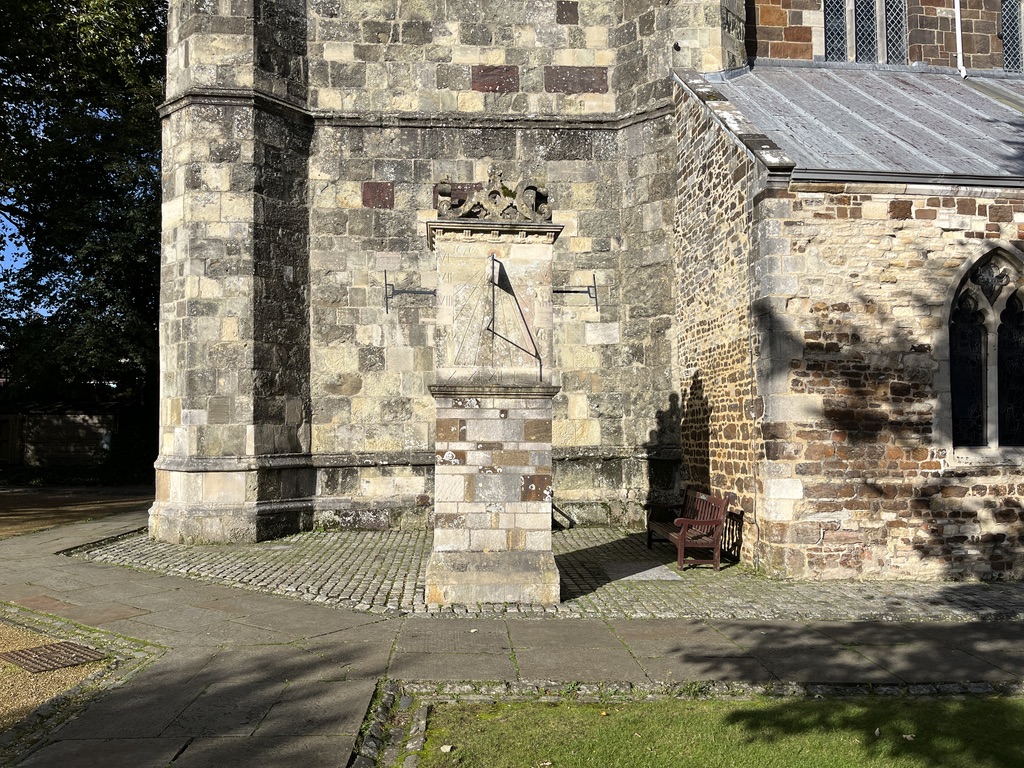
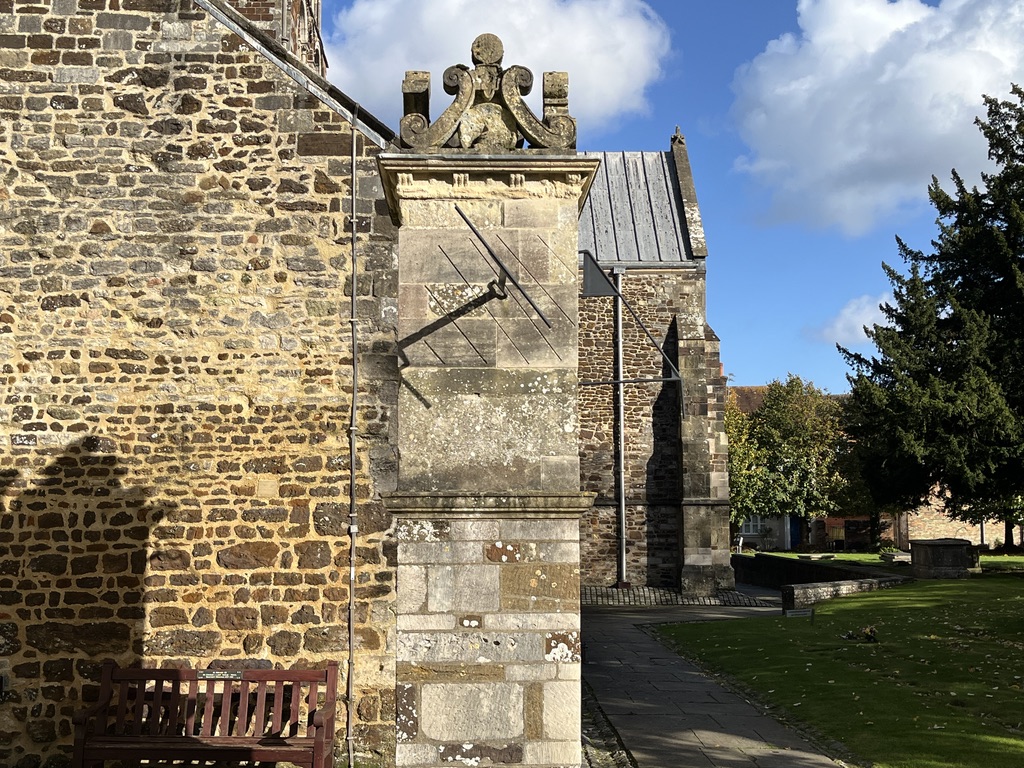
The origins of the Minster date back to the C8. The building seen today dates from early C12 with development during subsequent centuries. Leaving aside the merits of the splendid building, the impressively large stone block on the S side is unmissable. The plinth alone is 6′ high; S face is 4′ wide; E & W faces are 3′ wide. N face has an inscribed tablet only.

DIAL DATES

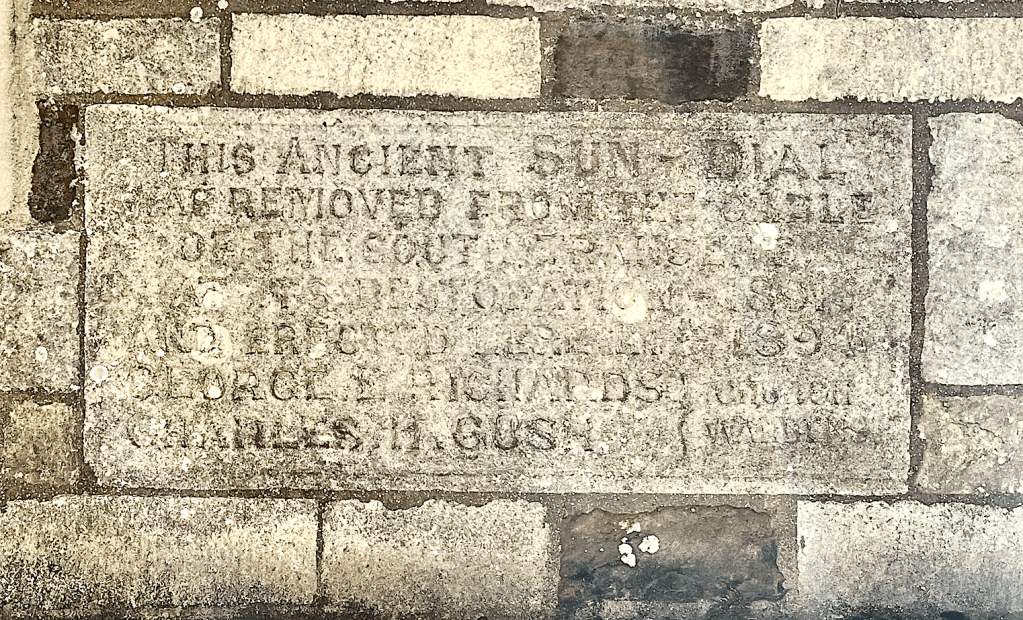
The images featured below give a good idea of each face, gnomon, and relative aspects, so I won’t go into more detail. However there is a conundrum about dates. There was at least one relocation of the dial, and areas of restoration / repair are evident. The inscription on N face is This ancient sun-dial was removed from the gable of the South transept at its restoration 1891 and was erected here 1894 George E Richards [and] Charles H Gush Churchwardens.

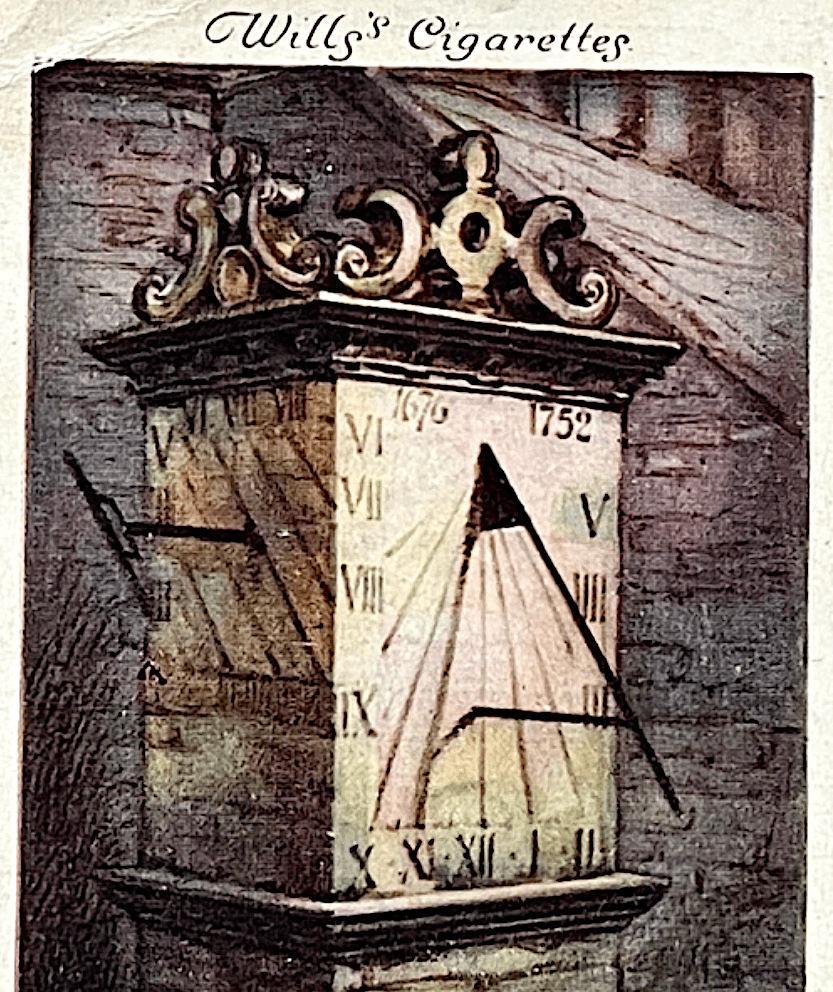
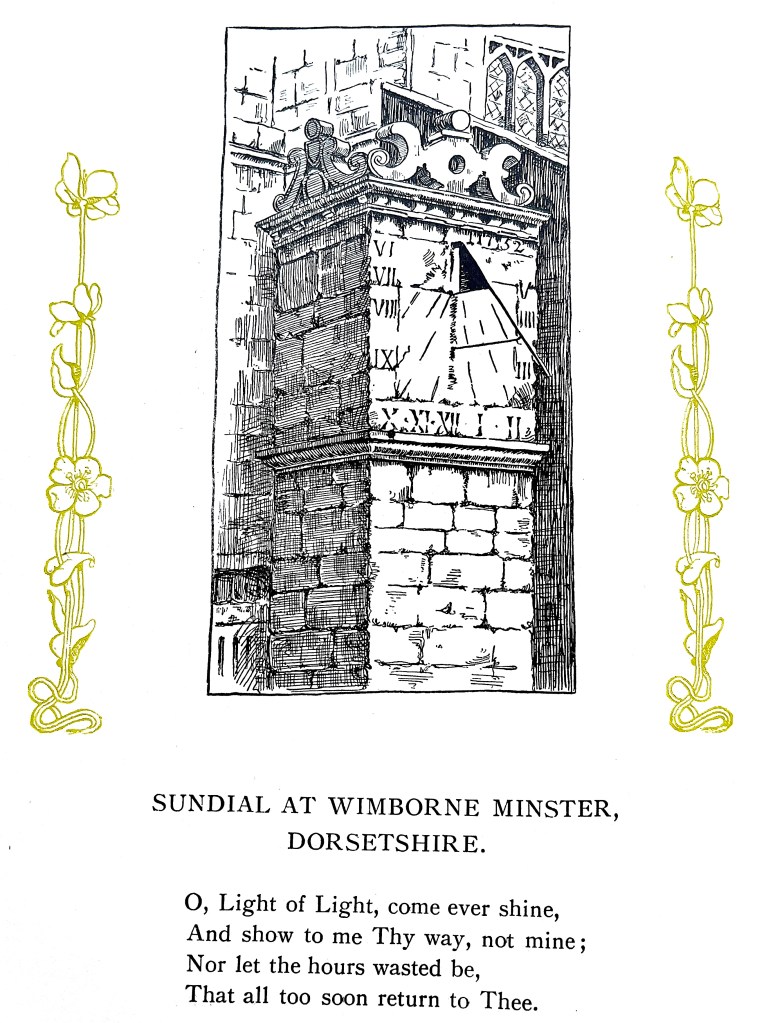
As seen today, the date 1676 is given top left of the south face on new stone. There is no date in the corresponding position on the right side. However in T G W Henslow’s delightful Ye Sundial Booke (1st ed 1914), his charming drawing shows the date 1732 in the top right of the south face with no date on the left side. And more confusingly, in the Wills’s cigarette card sundial series (1928, see below), both dates are shown.

SOUTH

SOUTH WEST

WEST

NORTH WEST

NORTH

EAST

SOUTH EAST

Ye Sundial Booke . T G W Henslow

A BRIEF HISTORY OF THE MINSTER

WILLS’S CIGARETTE CARD SUNDIAL SERIES 1928

FRY’S CHOCOLATE CARD SUNDIAL SERIES

GILLINGHAM MUSEUM . DORSET – Scratch Dial cut into Anglo-Saxon Cross

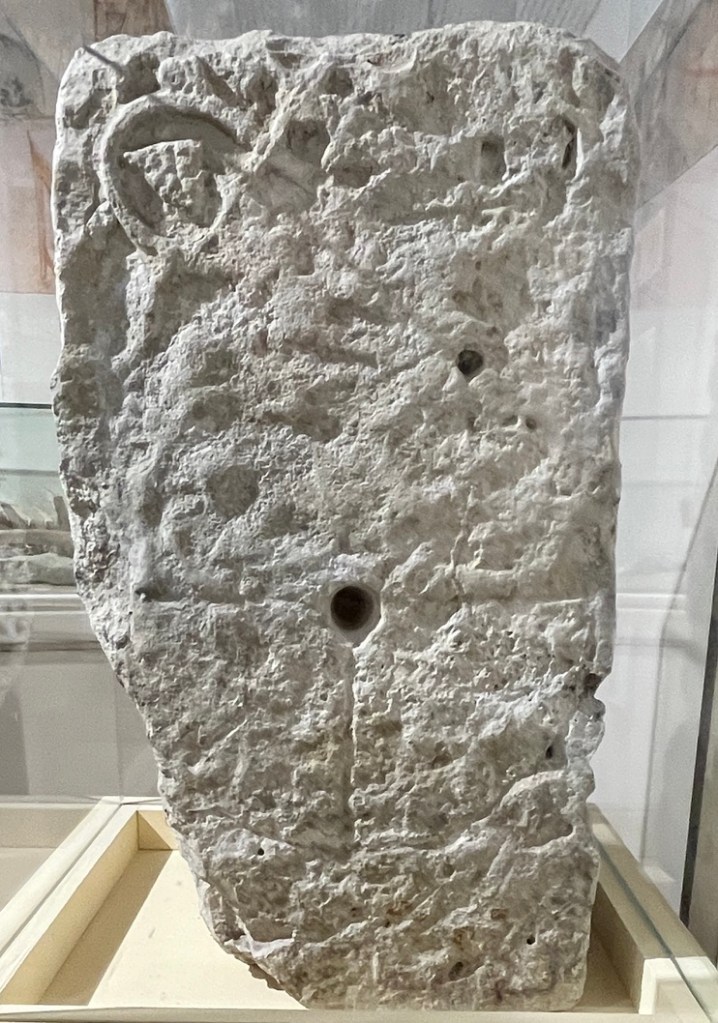
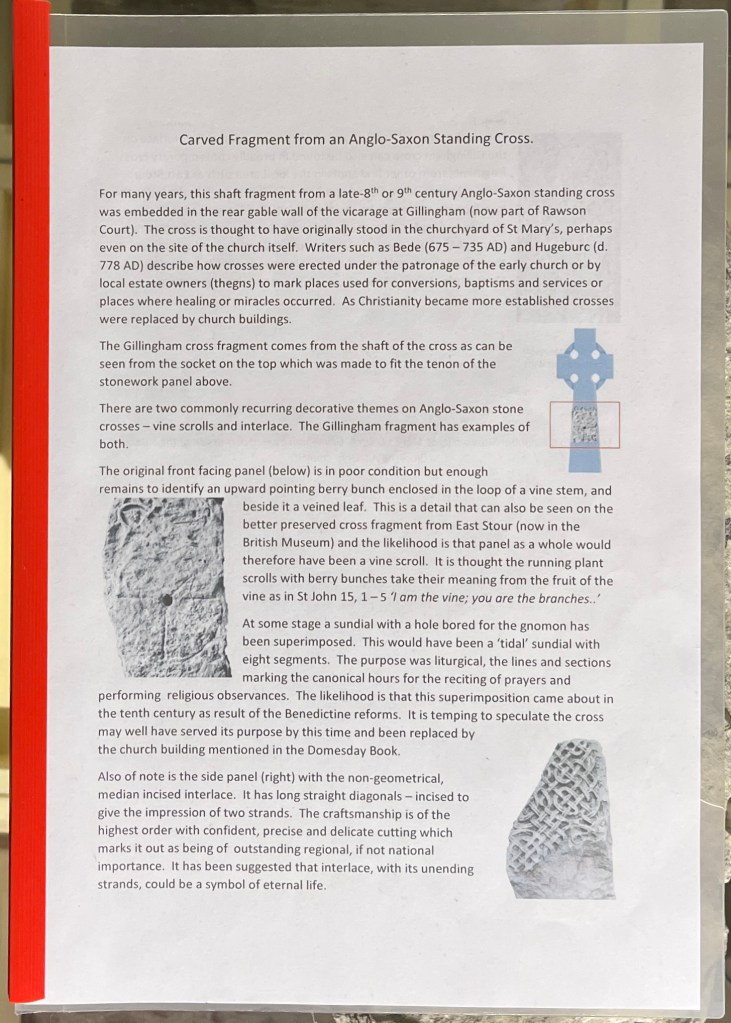
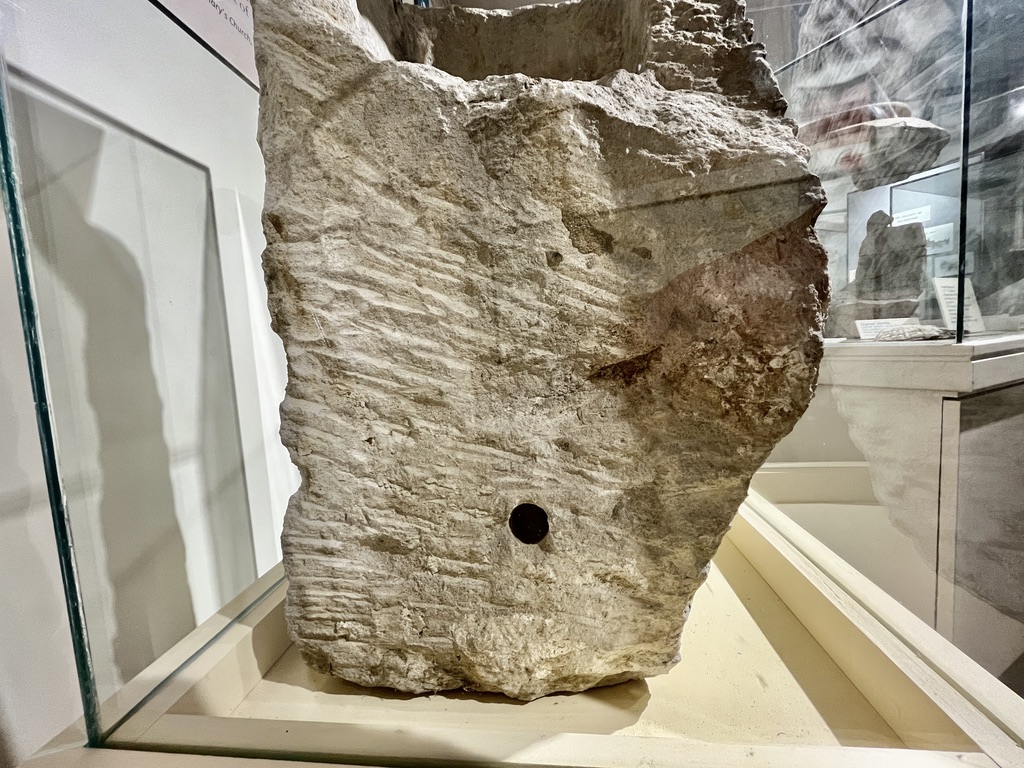
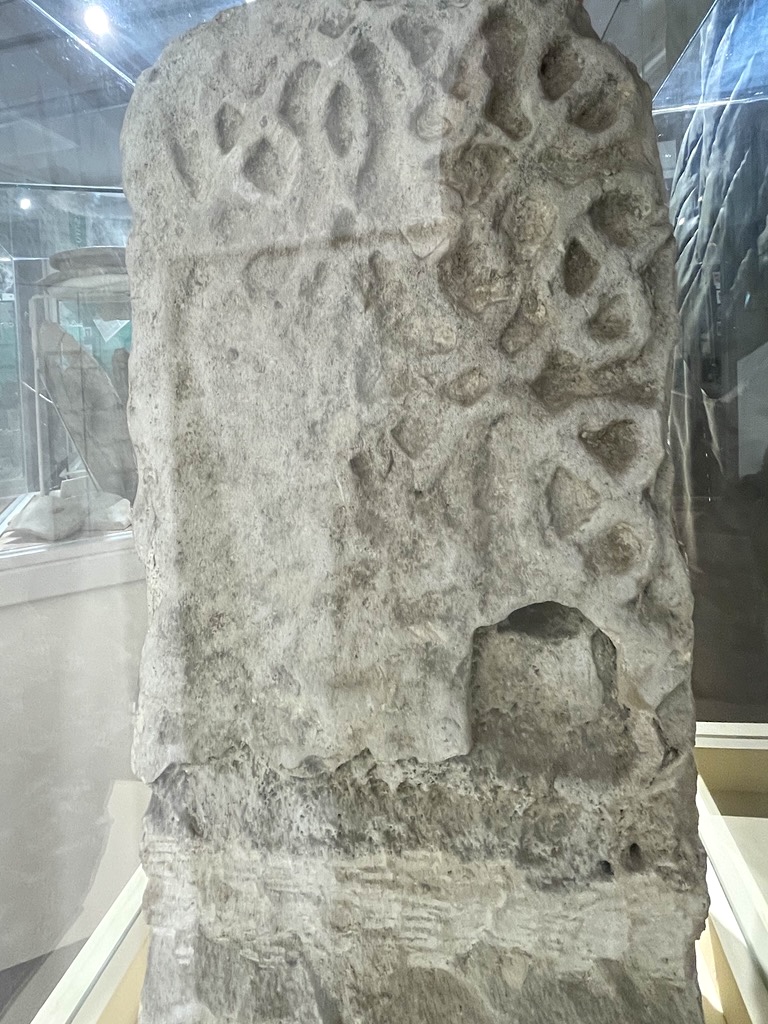
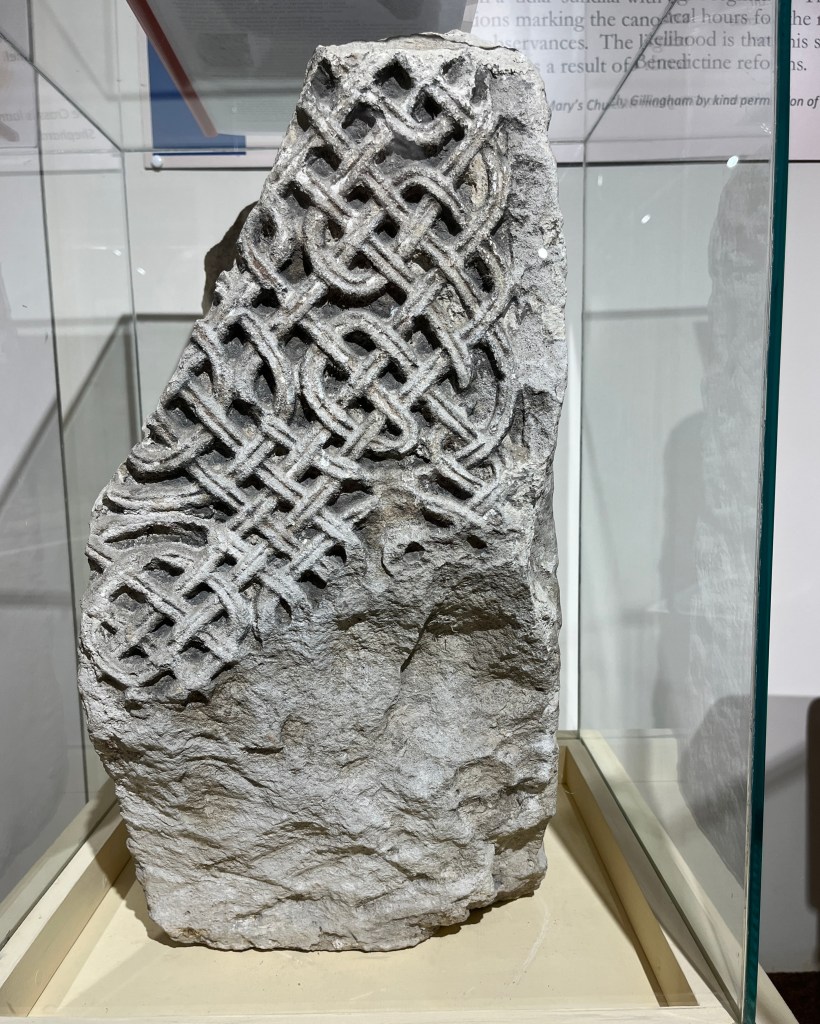
GILLINGHAM in Dorset has a well-curated Museum spanning prehistory to our lifetime. The many and varied displays include a very special one, a handsome carved fragment of an Anglo-Saxon standing cross. Below are images of all four sides of this wonderful stone. It is enhanced by the later addition of an early dial – a Tide dial.

TIDE DIAL

The dial has a complete horizontal (‘6-to-6’) line, an emphatic noon line, and a short deep line corresponding to the canonical Terce, marking the significant part of the day for observance. An arc of circumference is below; there is no hint of a complete circle.

MUSEUM INFORMATION SHEET

DIAL TWO?

Above right on the stone is a smaller hole with (from some angles) 3 very faint lines radiating from it. Very doubtful, but mentioned for completeness. Possibly an imitative attempt by a bored sacristan.

Second Dial above right?

THE OTHER THREE SIDES

Gillingham Museum, where the stone is on loan from the Church of St Mary the Virgin, Gillingham.

Dr John Shepherd: Shephard J F (2023) – Carved fragment from an Anglo-Saxon standing cross and the arrival of Christianity in Gillingham in Annual Report and Review, Dorset Historic Churches Trust 18,  6-7.  

David Lloyd – Gillingham Local History Society

 Images courtesy Tom Wickson (Dorset Historic Churches Trust)

D

TARRANT RUSHTON . DORSET . ST MARY – Scratch Dial

ST MARY . TARRANT RUSHTON . DORSET

LISTING II* ✣ Early C12 origin; nave extended late C12; early C14 chancel,
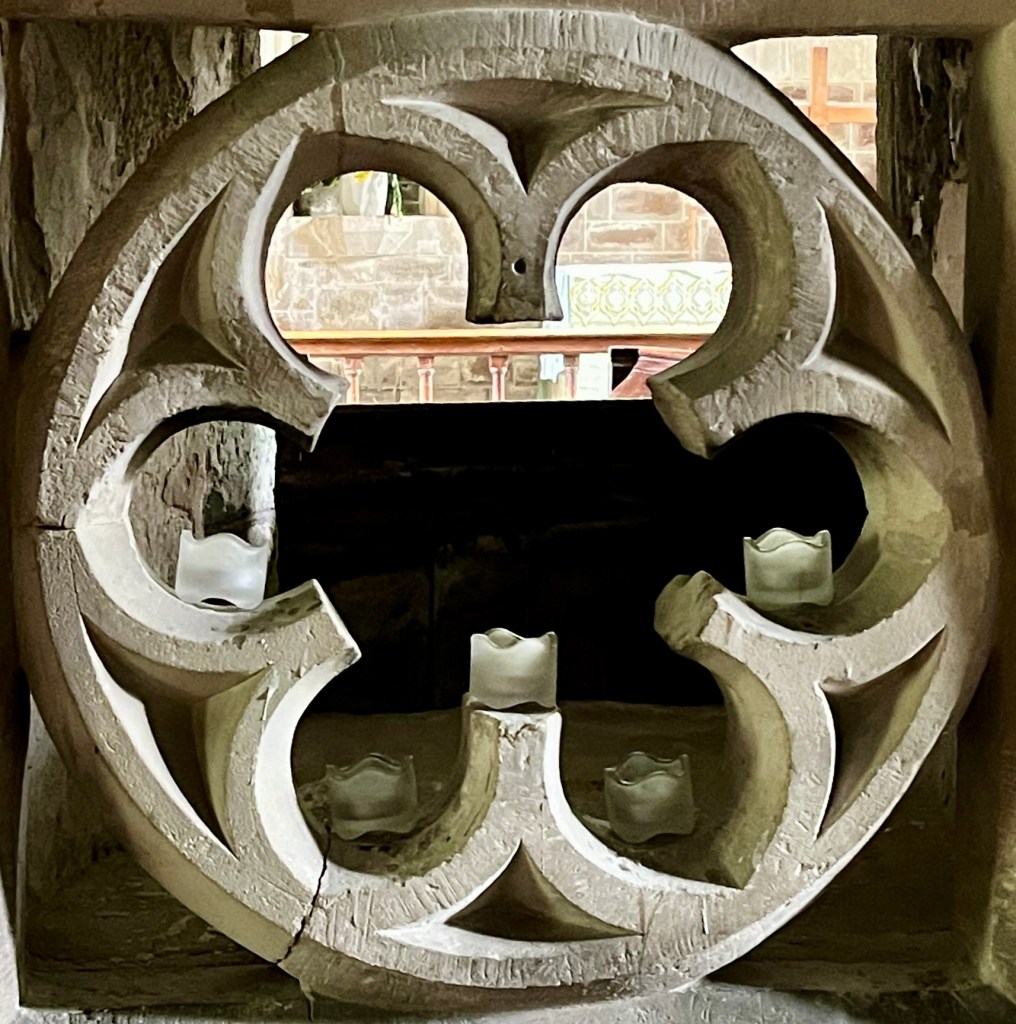
transepts, squat tower; C15 porch; C19 north vestry and restoration. 3 squints (‘hagioscopes’, as I have recently discovered). 4m E of Blandford forum, nestled in a valley with several other Tarrants. 50.854 / -2.0902 /  ST937060

DIAL

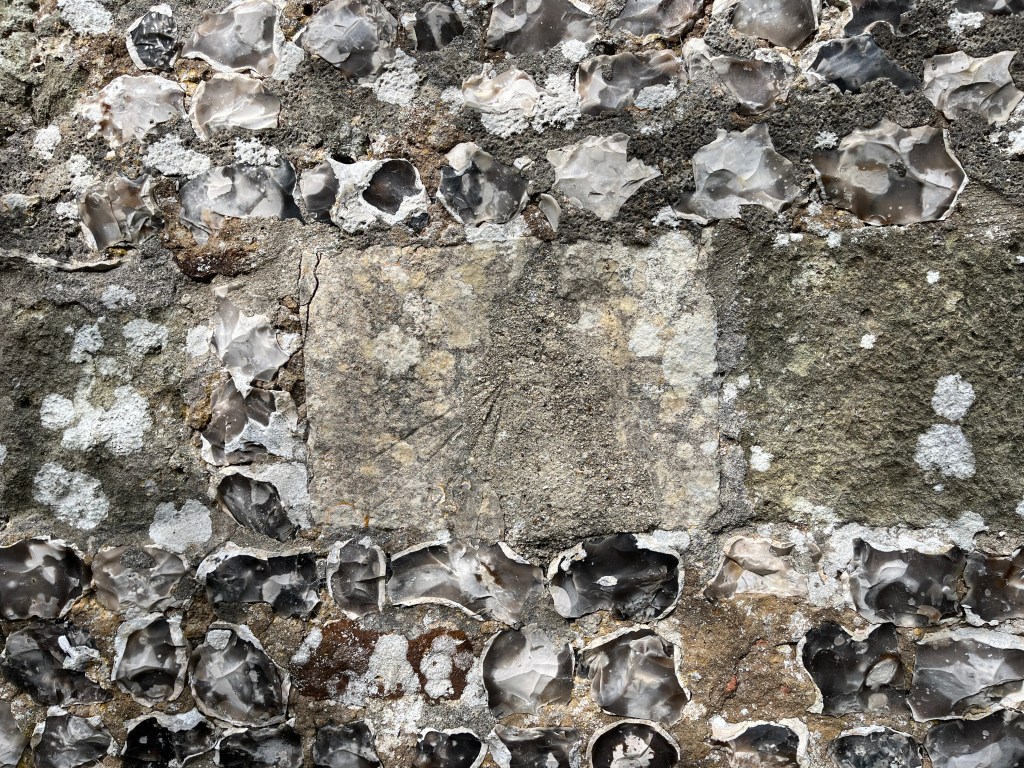
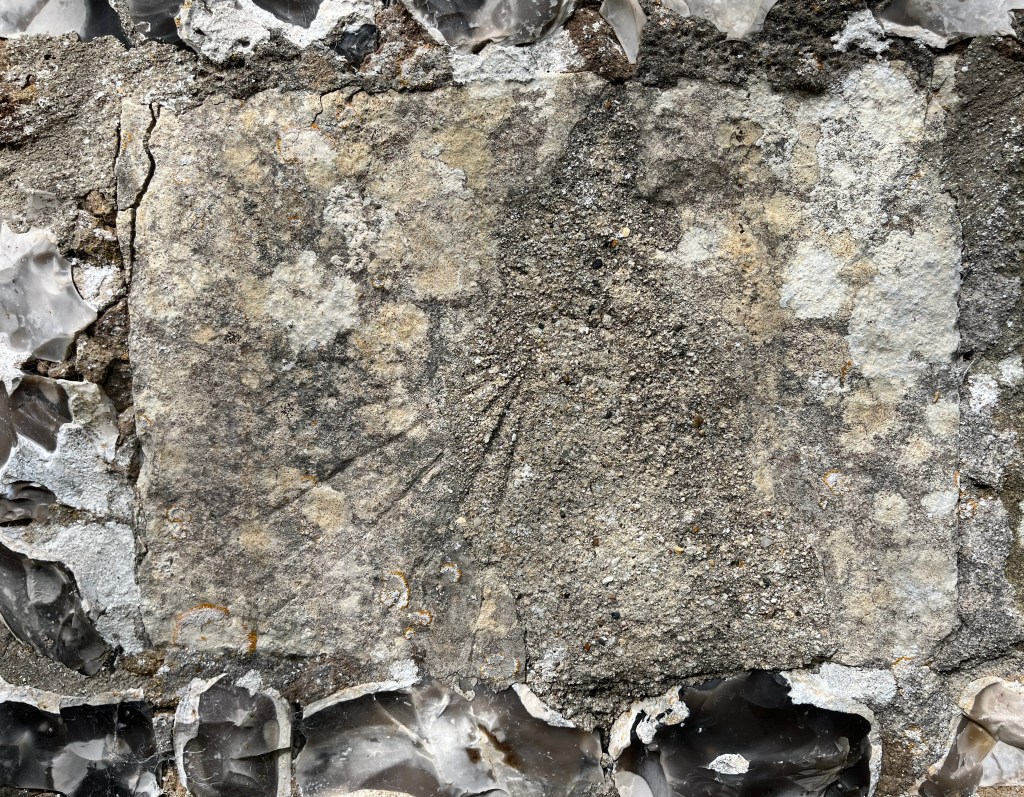
An attractively simple dial set in flint, perhaps not its original location. There are 6 lines LHS from the horizontal (6) down to to 11. Two are very faint. A morning dial, with 2 slightly deeper cut / longer lines suggesting Nones as the main time for observation. The absence of an obvious gnomon hole – open or filled – is a puzzle. There is a slightly paler area where the radials converge, perhaps marking the site of a gnomon hole filled centuries ago, now worn to a smooth patch

GSS Category: Scratch Dial; Mass Dial; Medieval Sundial Dorset

All photos: Keith Salvesen

BOROUGH GARDENS . DORCHESTER – Analemmatic Sundial

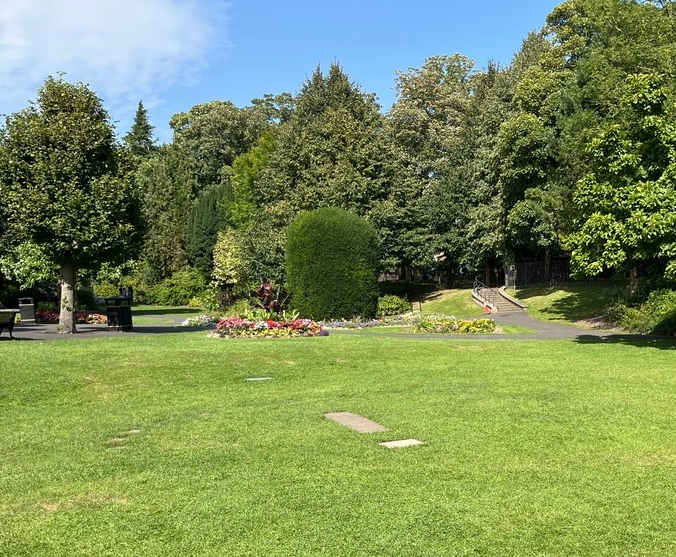
The Borough Gardens in Dorchester are close to the centre of town. They were laid out and opened in the 1890s as ‘pleasure grounds’, as they remain. There is plenty to offer for all ages in an agreeable undulating space. Lawns, tennis courts, bandstand, paddling pool, playground, fountain, a memorial obelisk, and more.

ANALEMMATIC SUNDIAL

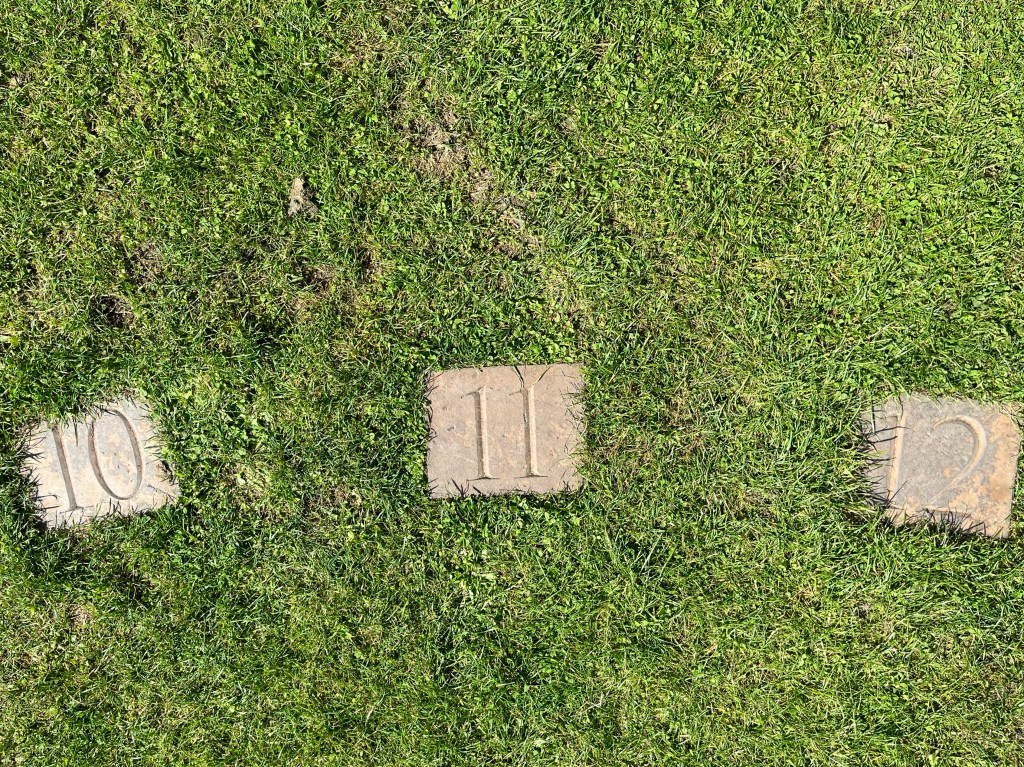
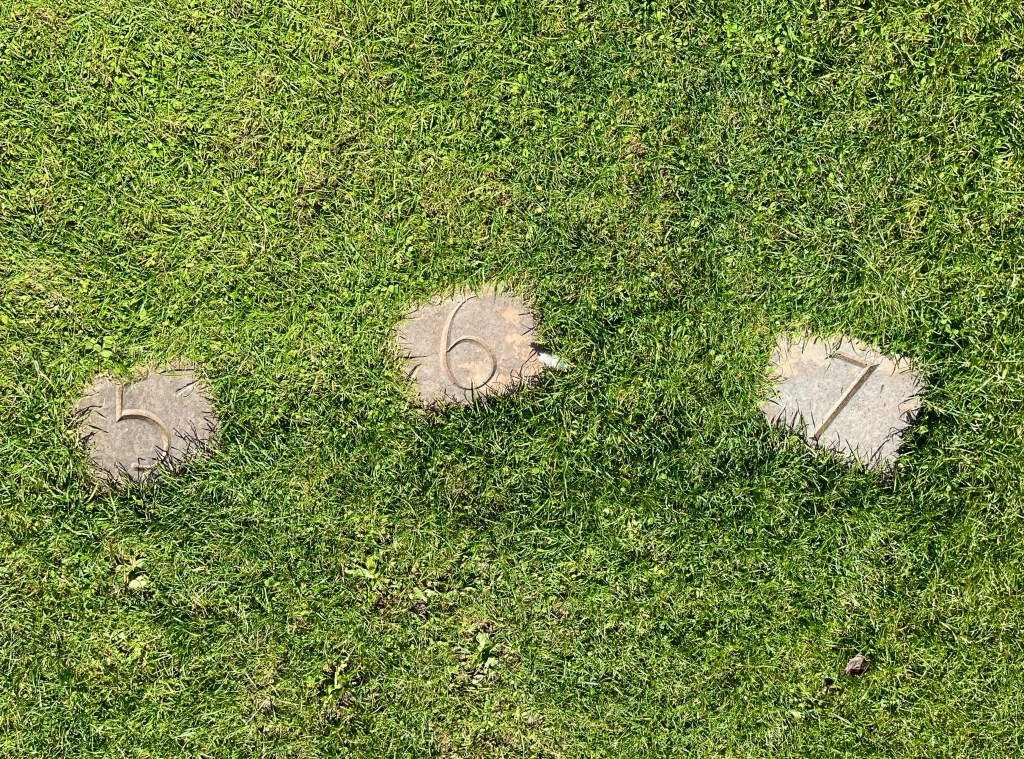
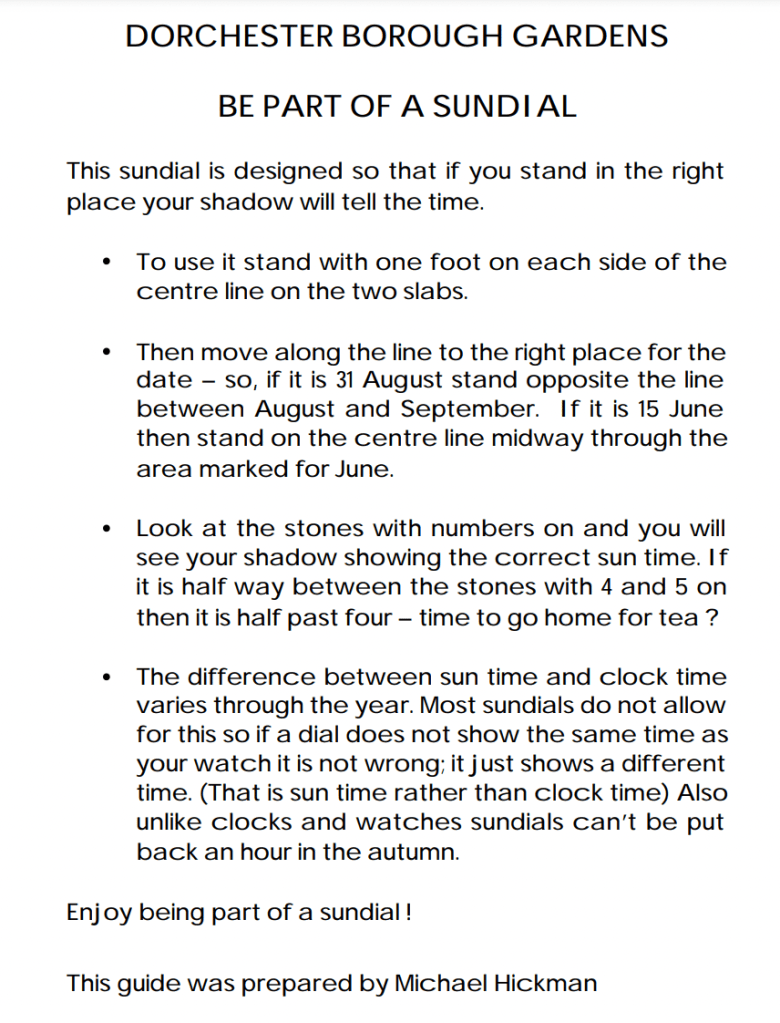
Amongst the attractions, close to the bandstand, is a modern analemmatic sundial. I don’t know the actual date it was laid out, but the BSS record is 1998 with the note: The dial is laid out in the play area near the bandstand. Hour markers adjusted for longitude, an hour added for summertime use. Shows hours from 7am to 7pm.

CALENDAR

GSS Category: Analemmatic Sundial

All photos: Keith Salvesen; written information from municipal sources with thanks

BELCHALWELL . ST ALDHELM . Vertical Dial

ST ANDREW . BELCHALWELL . DORSET

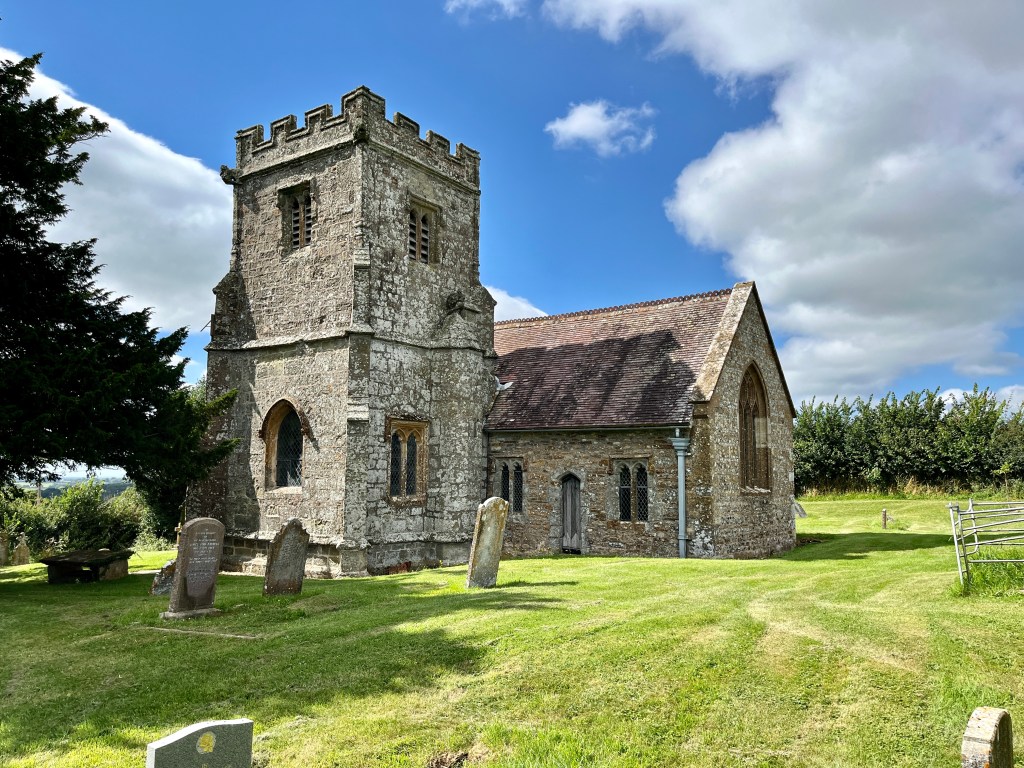
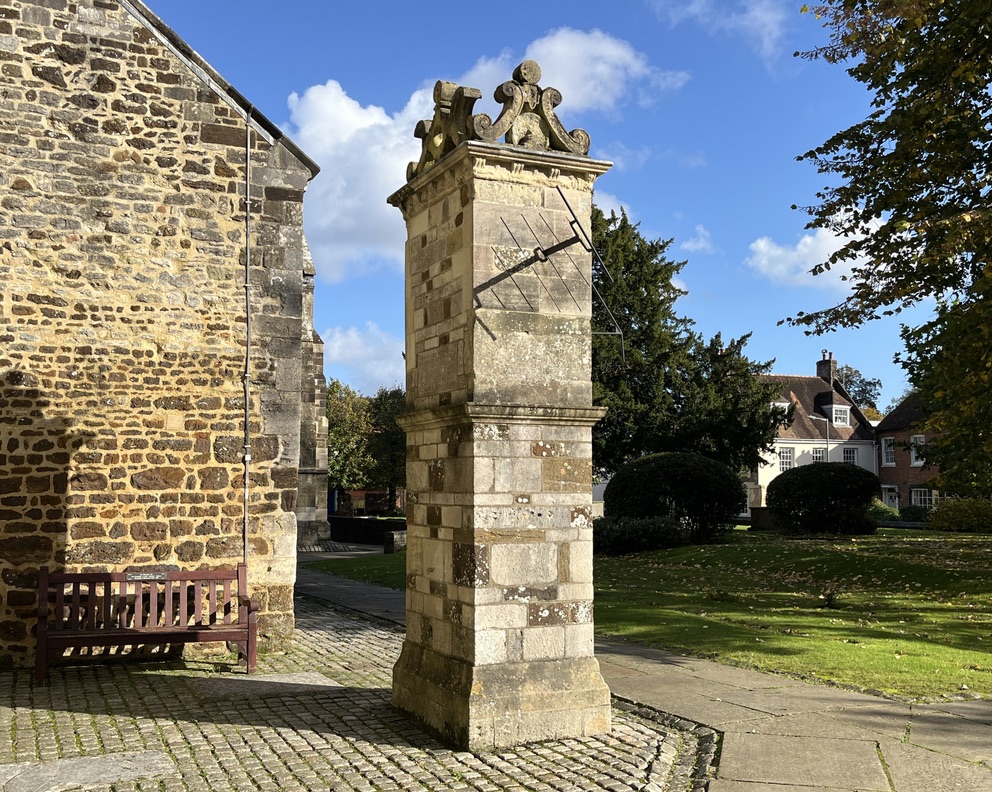
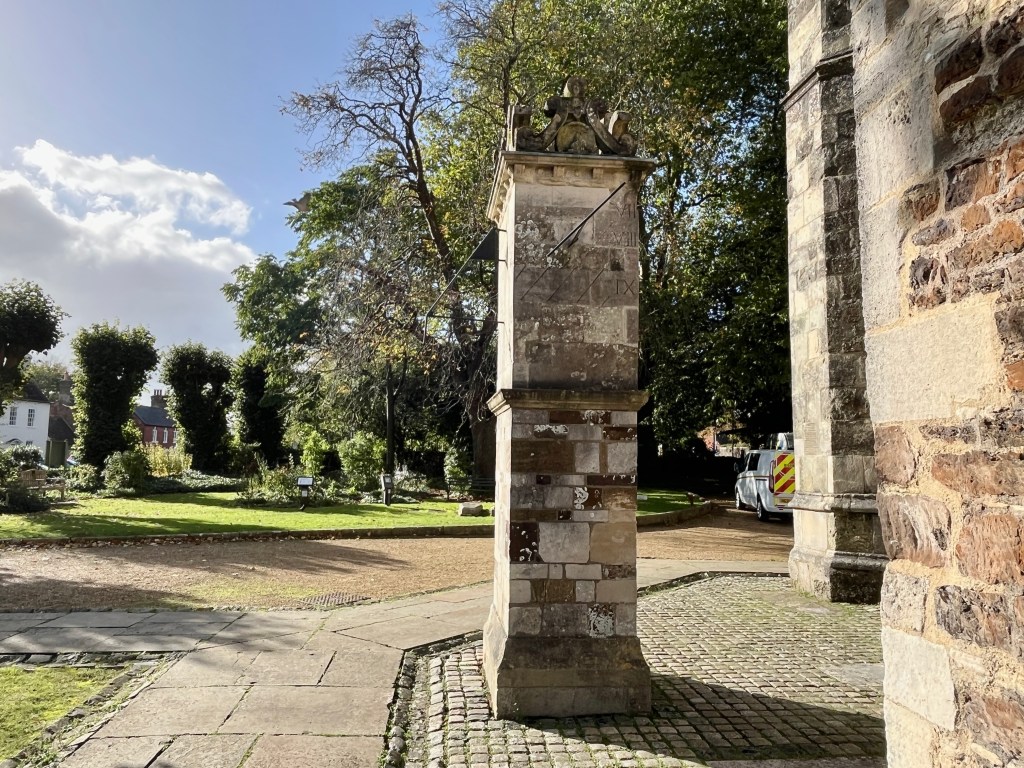
Listed II* ❖ South door, part of S nave wall c.1190; C15 nave, south tower, porch, part of chancel; C18 works and restorations. A lonesome church in the heart of the Blackmore Vale. If unfamiliar with the area use a map or satnav. You’ll find a fascinating little church. 4m S of Sturminster Newton. 50.8873 / -2.2964 / ST792098
DIAL

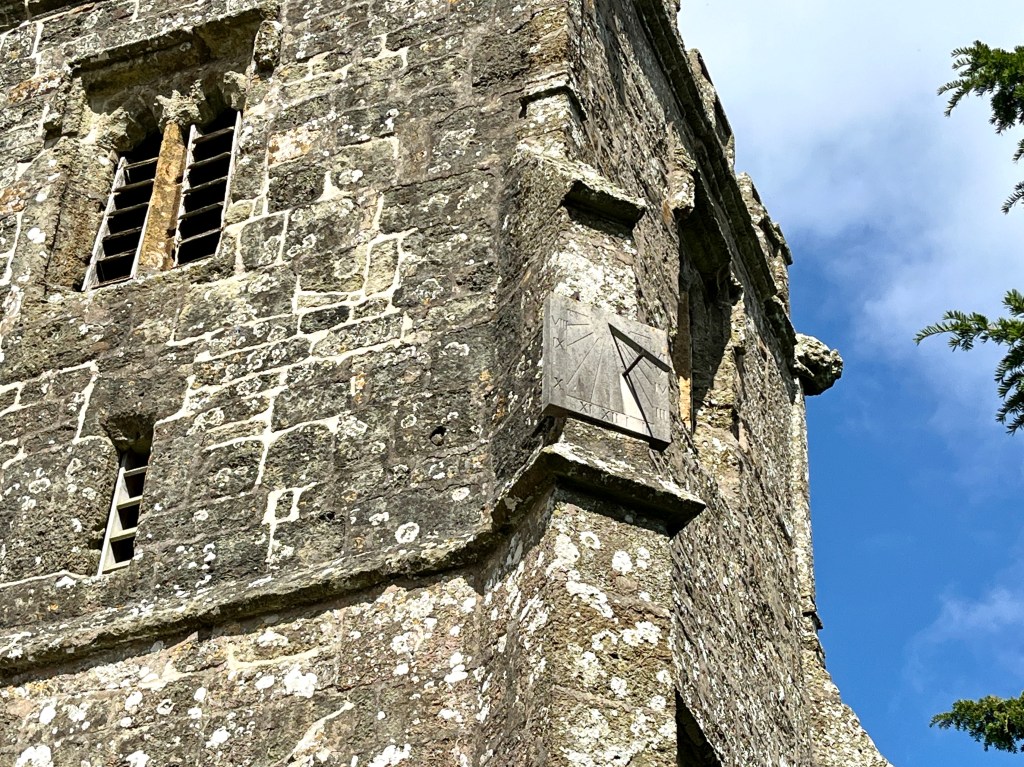
A conventional dial, simple and a bit incongruous high up on the SW buttress of the tower. It is in fact a locally-made replica of a dial which had existed in the same position on the church since the late 18th or early 19th century (BSS). It is very slightly canted on the angled buttress, with the lines cut from VIII to VI. Including the horizontal line, this is (unusually?) a VII – VII dial.

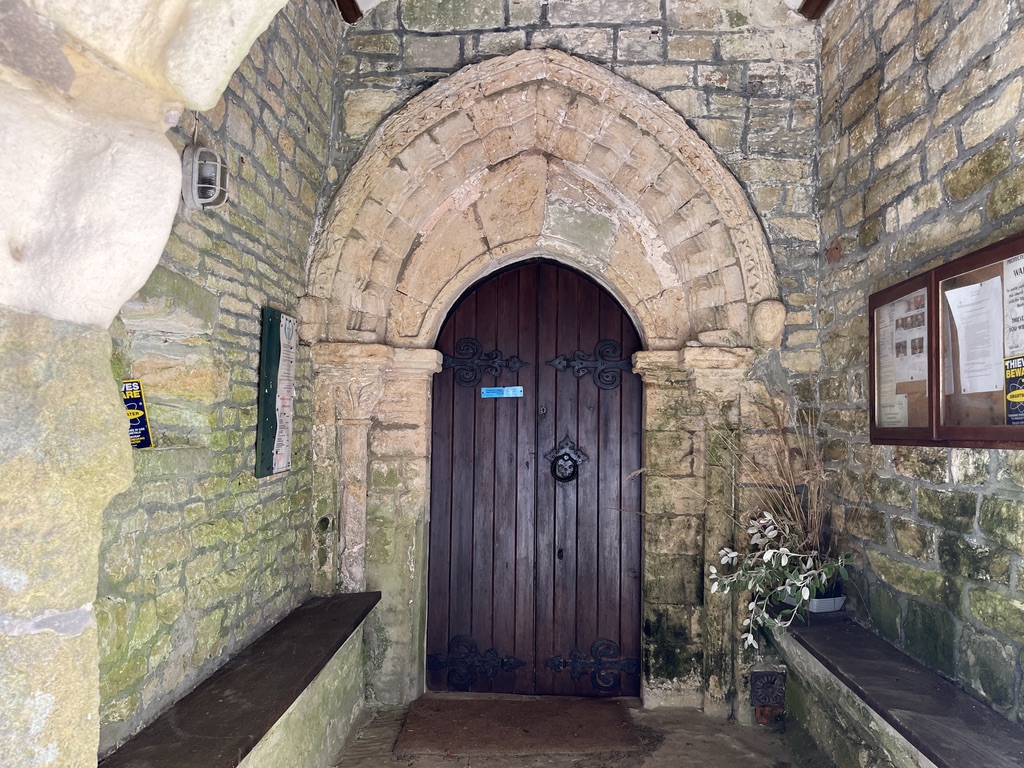
Late Norman porch and Painted arch
GSS Category: Vertical Dial; Canted dial; Replaced old dial; Replica Vertical Dial

All photos: Keith Salvesen

ILCHESTER . SOM . MARKET CROSS

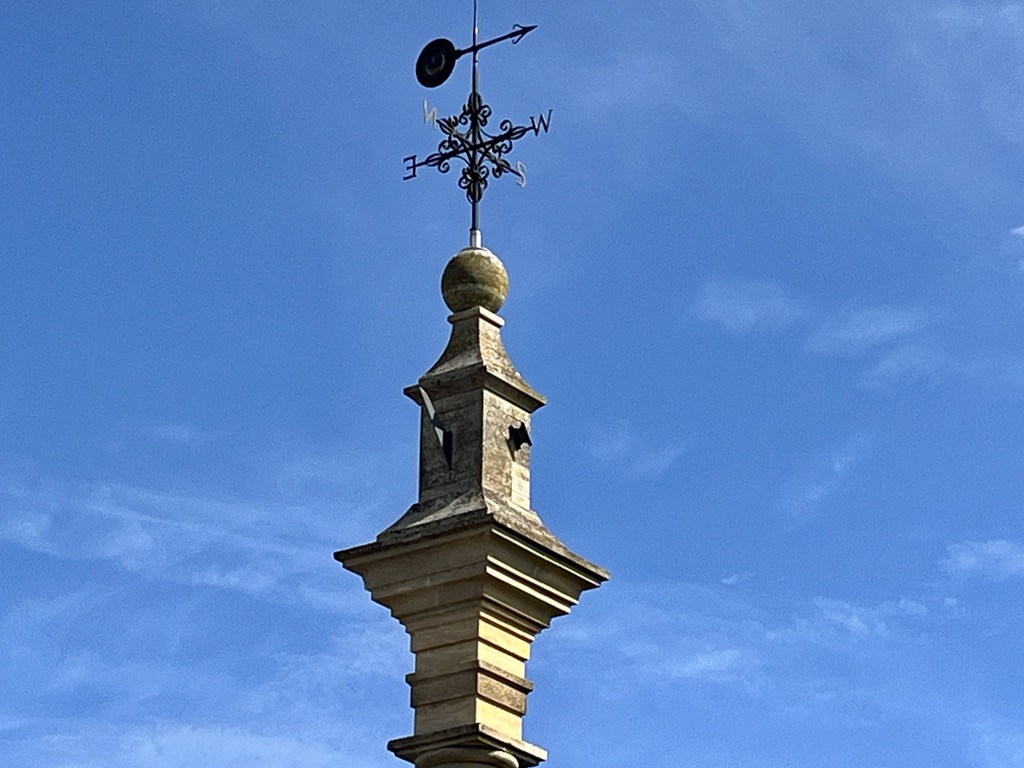
GRADE II ❖. 1795. Market Cross on site of earlier cross. Ham stone. Circular base with two chamfered offsets, set on circular step; square stepped plinth carrying simple Doric column with entablature moulding over, then square-plan block with sundials having sheet metal gnomons, and a ball finial with wrought-iron wind vane. (VCH, Vol III, 1974).

DIAL M FOR MISFORTUNE

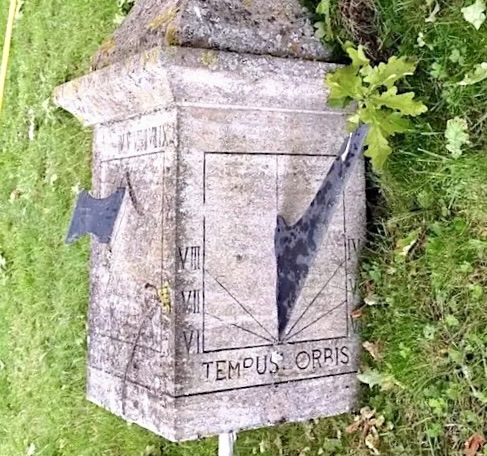
The VCH record of 1974 pre-dated 2 subsequent calamities. The original dial, erected in 1792 was significantly damaged in 1990 gales. A replacement with new column, dial, and gnomons was erected in 1991 (BSS). The original dial motto was indecipherable and was replaced by a new motto Tempus Orbis.

Then in 2017, a car drove directly into the monument, smashing the base and causing the whole edifice to collapse (see below). ST 52193 22723

This is a fine example of a Market Cross, one of 3 or 4 in the region (eg Martock). Tall, slender, and uncomplicated, the dial is pleasingly in proportion to the overall design. My camera didn’t deal with the height well enough to show the detail. Several angles of the dial and gnomons are shown, but not the markings on each face. However, there is a close-up view of one face of the dial below.

MONUMENTAL DAMAGE 2017

Early one August morning a car drove directly into the monument. The driver seems to have been unhurt, and was arrested for drunk driving (outcome unknown). The impact smashed the base and destabilised the entire structure. The images below show the dramatic aftermath. The monument was in due course rebuilt using parts of the original structure(s) where possible. It now, unsurprisingly, in excellent condition.

The restorers BODEN & WARD earned a prestigious award for this challenging project. The link will take you to their records; the photos of some of the reconstruction work are fascinating.

TEMPUS ORBIS

A simple-seeming motto that is hard to translate. Not mentioned by Gatty. The literal ‘Time (of the) World’ doesn’t really work. Perhaps ‘the Circle of Time’, given that the quotidian day lights each face as the world orbits the sun.

GSS Category: Cube Dial; Market Cross; Market Cross Sundial; Pillar Sundial

Image Credit: Keith Salvesen; BBC / Christopher Brown; Somerset Live; Bowden & Ward

SHERBORNE SCHOOL (SSG) . DORSET . VERTICAL DIAL

SCIENCE BUILDING DIAL

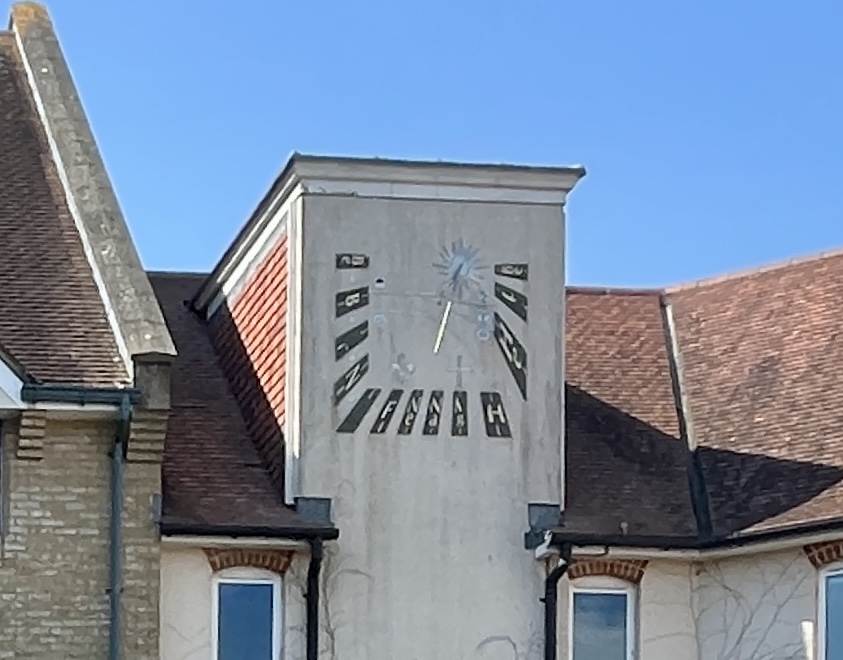
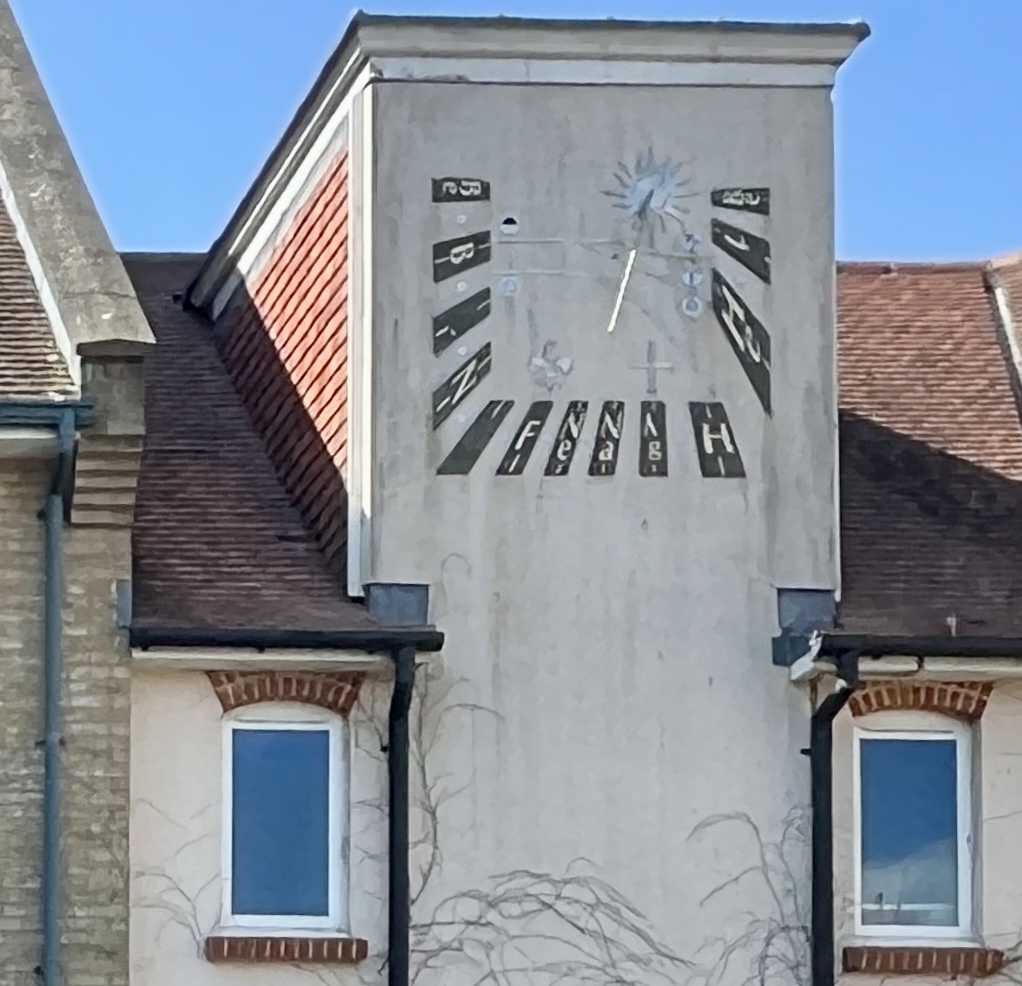
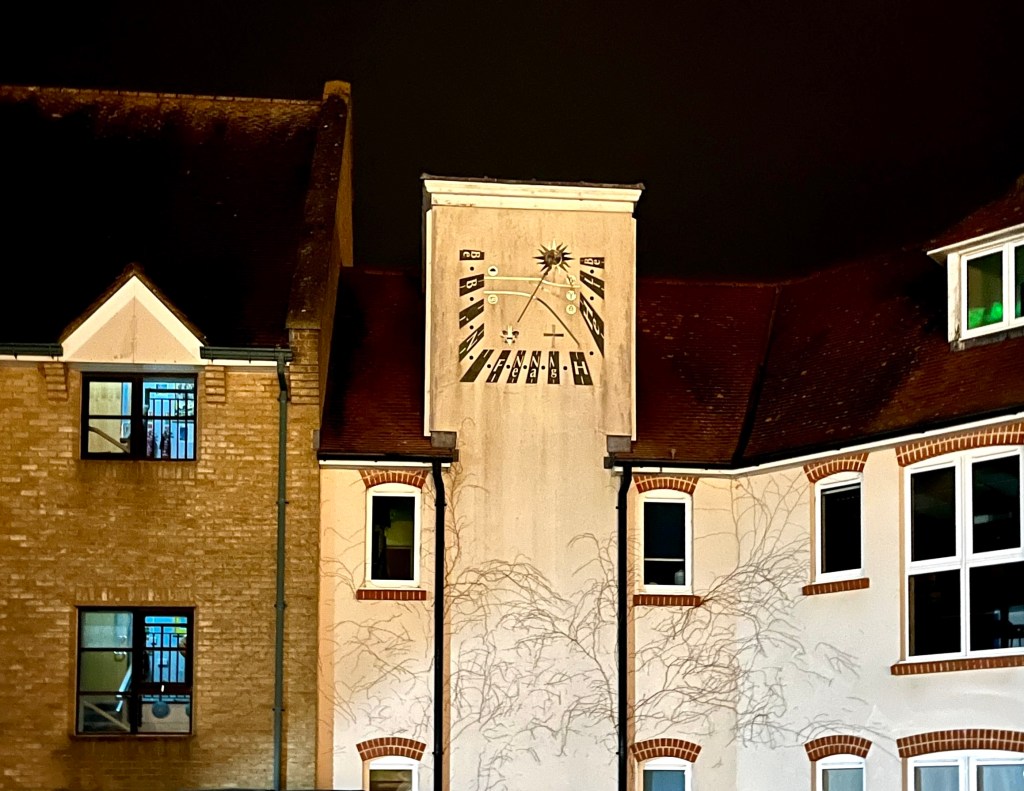
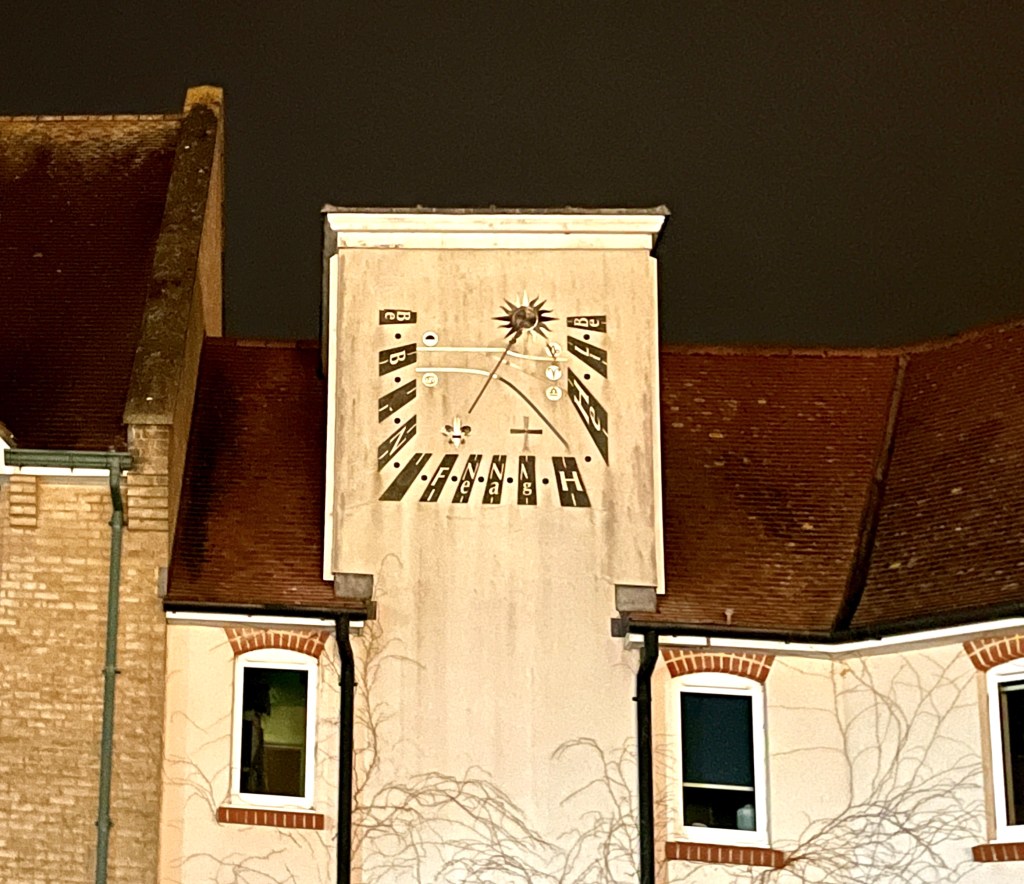
This ingenious dial is located on the south front of the school’s new science building. The Old Shirburnian Society site has a helpful ARTICLE featuring various sundials in the town: here is the relevant entry.

The photos were taken recently at two events at the school, one during the day and the other in the evening. The distance to and the height of the dial precluded clarity using a phone lens. As it has turned out, the main evening photo gives the best detail of the various elements of the dial noted above.

GSS Category: Vertical Dial; Modern Sundial; Technical Sundial; Scientific Sundial

All photos: Keith Salvesen; Descriptive material from Old Shirburnian Society