PAUL . PENZANCE . CORNWALL . St Pol de Leon – Vertical Dial 1810

ST POL de LEON . PAUL . CORNWALL

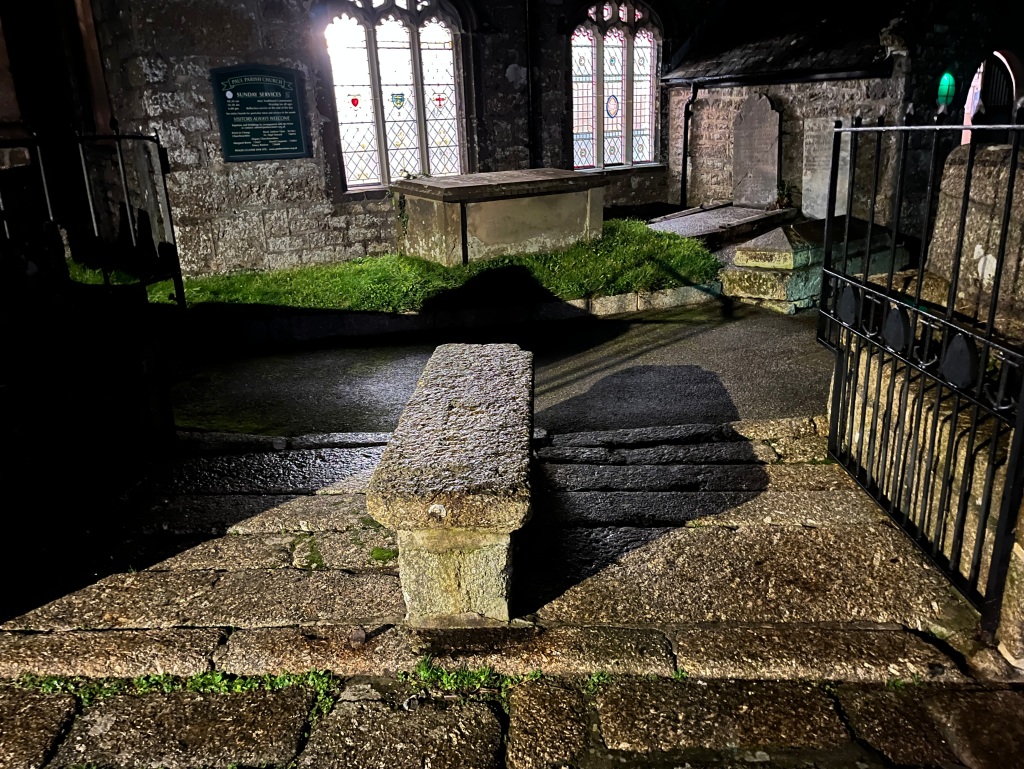
GRADE I ✣ C15; enlarged 1600; Restoration 1875. A most interesting church set on the hill above the famous small fishing village of Mousehole. St Pol has much to offer, not least a memorial to Dolly Pentreath, supposed last monoglot Cornish speaker; and a fine example of a coffin stone in the lychgate. The village churchyard has a small maze with a wonderful view LINK.  Congenial pub. 50.0896 / -5.5461 / SW464270

DIAL
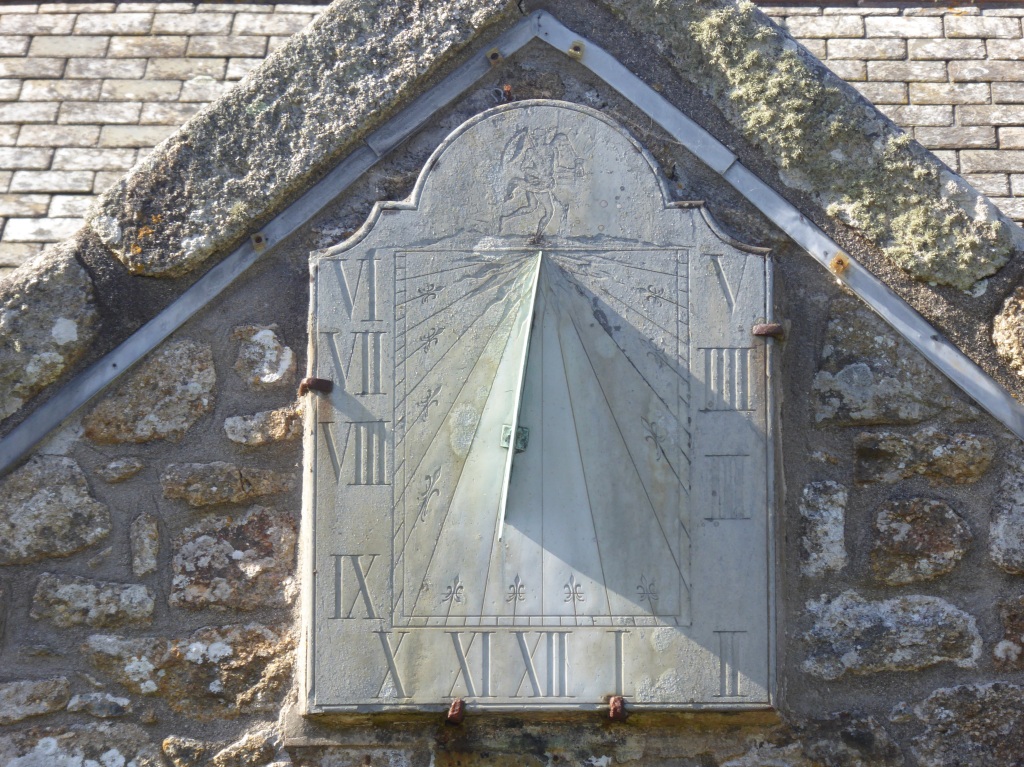
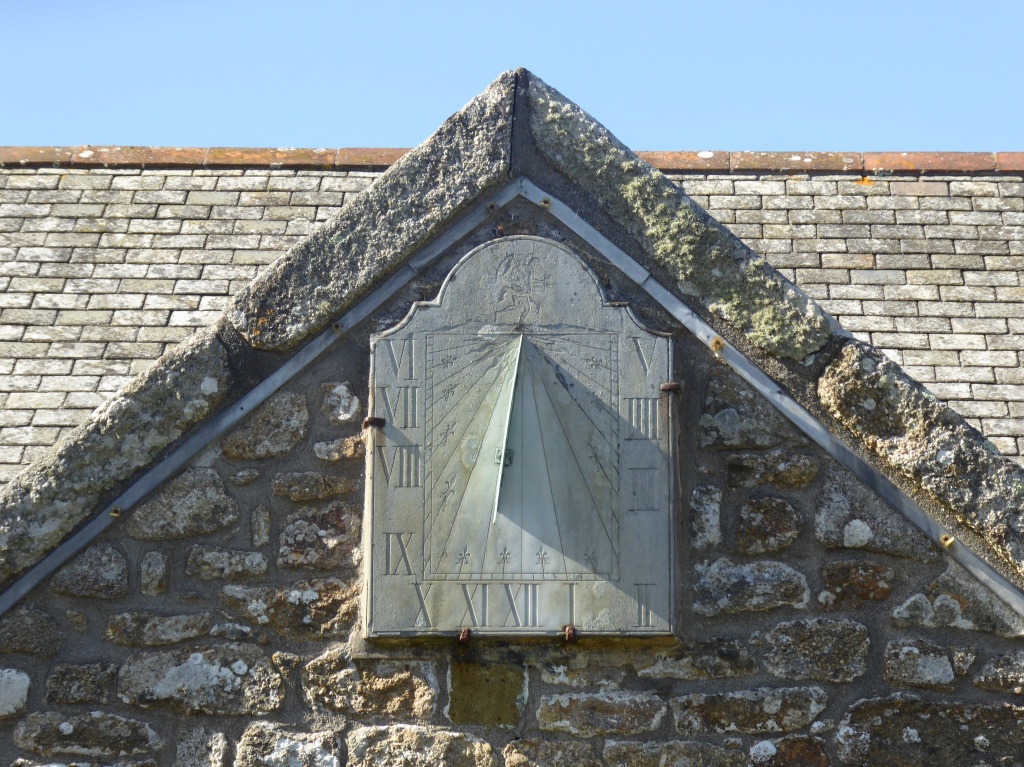
BSS notes that the engraving is excellent and remains clear to this day. The half hour lines each have a fleur de lys and all the lines originate from the sun’s rays around the gnomon root. Caroline Martin’s delightful small book on Cornish Sundials notes the interesting and unusual gnomon. To which one adds that the gnomon points to XI rather than noon.

MRS CROWLEY

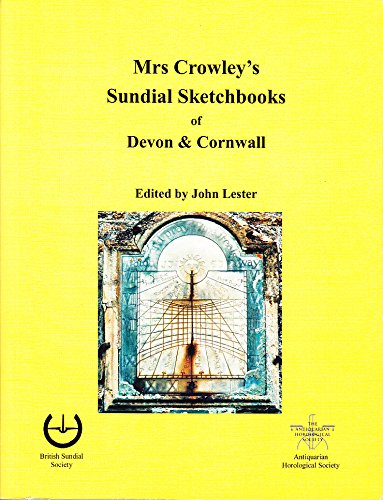
One benefit from a recent visit to the Penzance area was to make the acquaintance of Mrs Crowley and her remarkable sketch books of the dials of Devon and Cornwall. Her progress around both counties in the 1950s produced dozens of beautifully produced drawings of dials. The details are so closely observed and the drawings so clear that it is difficult to imagine how she managed the task.

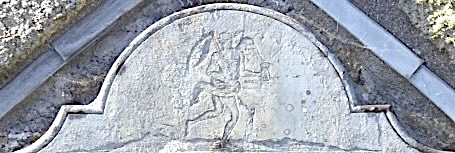
On this page, Mrs Crowley – who usually drew compete dials – has focussed on 3 dials with similar designs on the ogee tops above the gnomon. I think it probable that she chose not to make drawings of the complete dials because she was so taken with the similar depictions of Old Father Time with his scythe and hourglass. All 3 churches are within 10 miles of each other.

COFFIN STONE . ST POL de LEON . CORNWALL
GSS Category: Vertical Dial; Cornish Sundial; Sundial Drawings; Coffin Stone;

All photos: Keith Salvesen

PENZANCE . CORNWALL . ST MARY – Vertical Dial

St Mary Penzance . Bill Henderson . Geo / Wikimedia

ST MARY . PENZANCE . CORNWALL

GRADE II* ✣ Originally a chantry chapel of Madron parish; records from 1321. In due course rebuilt, and reconsecrated 1838. Destructive arson in 1985; 2 recent attempts. 8 bells of interest. Some traces of the past remain, eg memorial tablets*. 50.1165 / -5.533 /  SW475300

VERTICAL DIAL

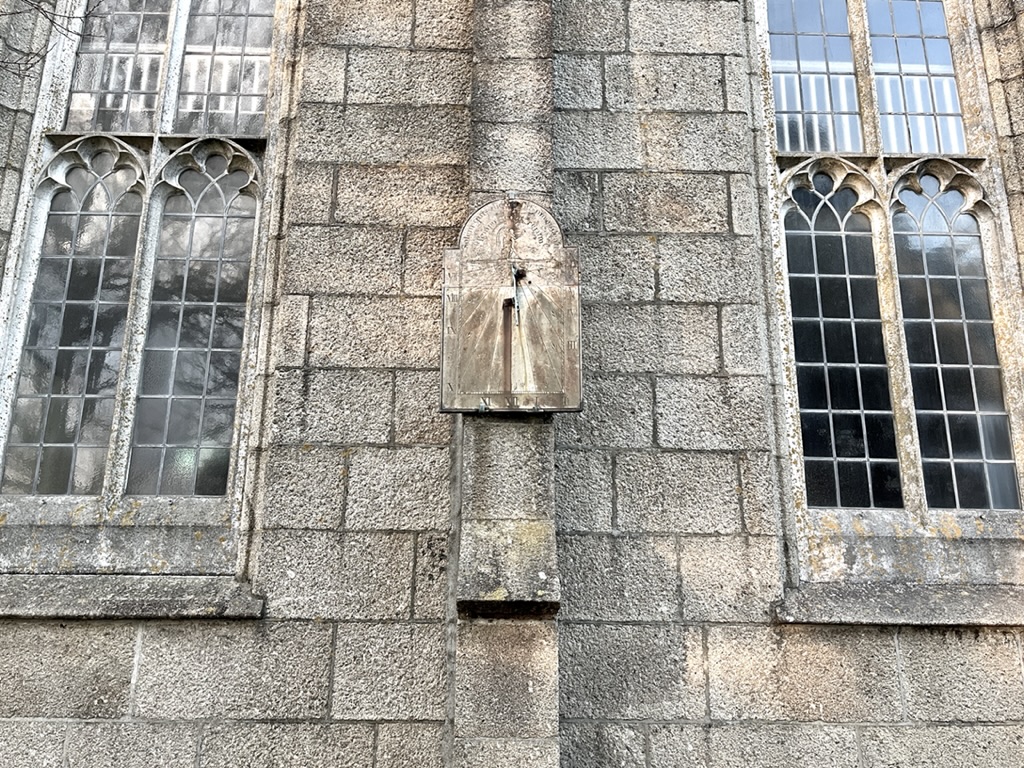
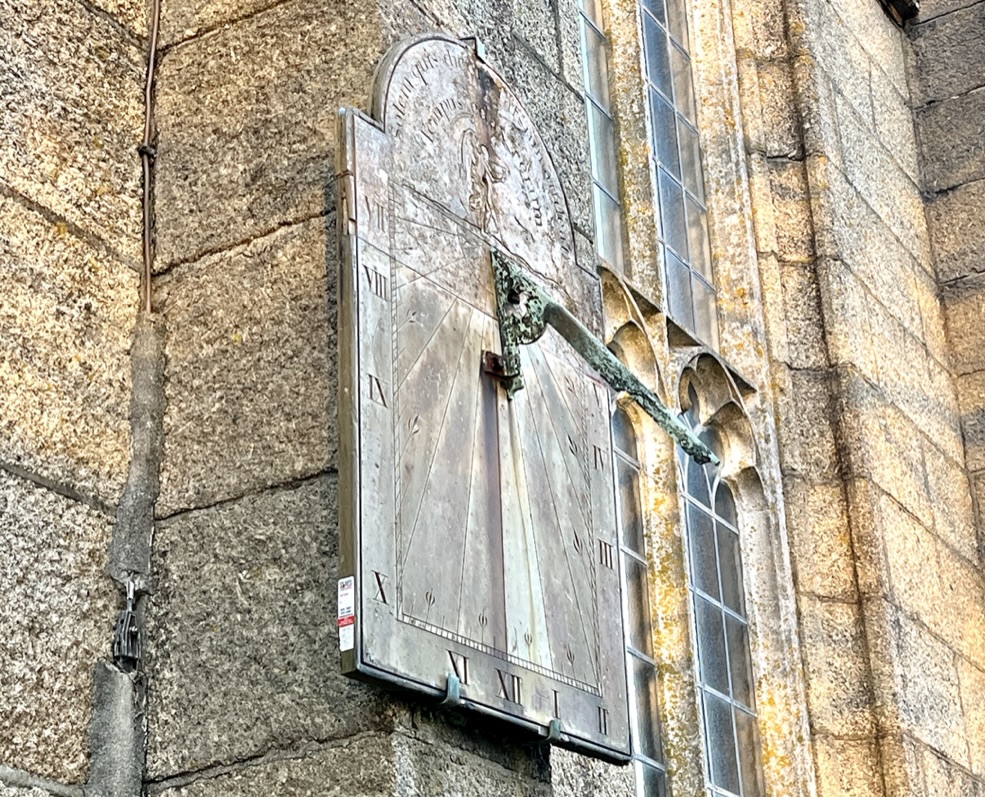
This slate dial with its bronze gnomon was originally made for a chapel near the church. The BSS records indicate that the dial declined 12º W in that position, but needed to be canted in its new position to correct for the different declination of the buttress of St Mary’s where it is now to be found.

The dial clearly predates the building of St Mary. Perhaps ± 1800 would cover it. For a chapel, the 5 minute intervals noted below suggest a quite sophisticated dial.

MOTTOES

There are two learned mottoes cut inside the arch at the top, with Father Time below them.

Solem quis dicere falsum audeat Who would dare to call the sun false (Virgil)
Tempus edax rerum Time the consumer of all things (Ovid)

CONSTRUCTION

Mrs Crowley, who sketched dials of Devon & Cornwall, noted a difference between stone top and bottom; and the horizontal line seems too high to be an indicator of the equinoxes and, in any case, there is no nodus on the gnomon. The engraving is good, there are decorative half-hour markers and the hours are divided down to five minute intervals.

In the sanctuary is a Baroque tablet to John Tremenheere, d. 1701, with Doric columns, broken segmental pediment and a winged skull at the base (HE). His tomb is in a family vault below the centre aisle. I am a direct descendent, but unlikely to join him.

GSS Category: Vertical Dial

All photos Keith Salvesen except header as cited

BOCONNOC PARISH CHURCH . CORNWALL – Vertical Dial (1716)

Boconnoc Parish Church

BOCONNOC PARISH CHURCH . CORNWALL

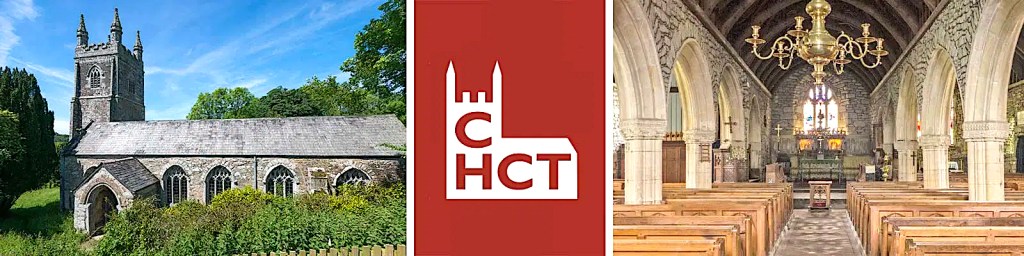
GRADE I † The Church forms part of the Boconnoc Estate and has no Dedication*. Probably C12 origins as the Manor Chapel; gradual development; restored 1873. Now in the care of the Cornwall Historic Churches Trust. 10 m SW of Liskeard. 50.4159 / -4.6099 / SX146605

DIAL

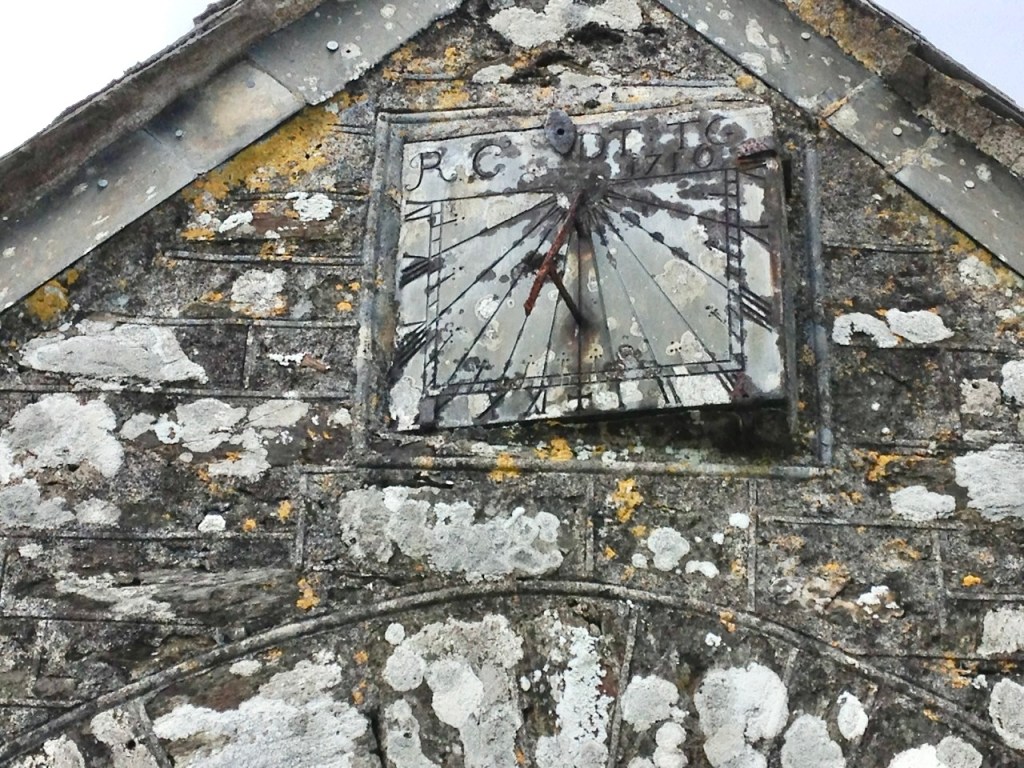
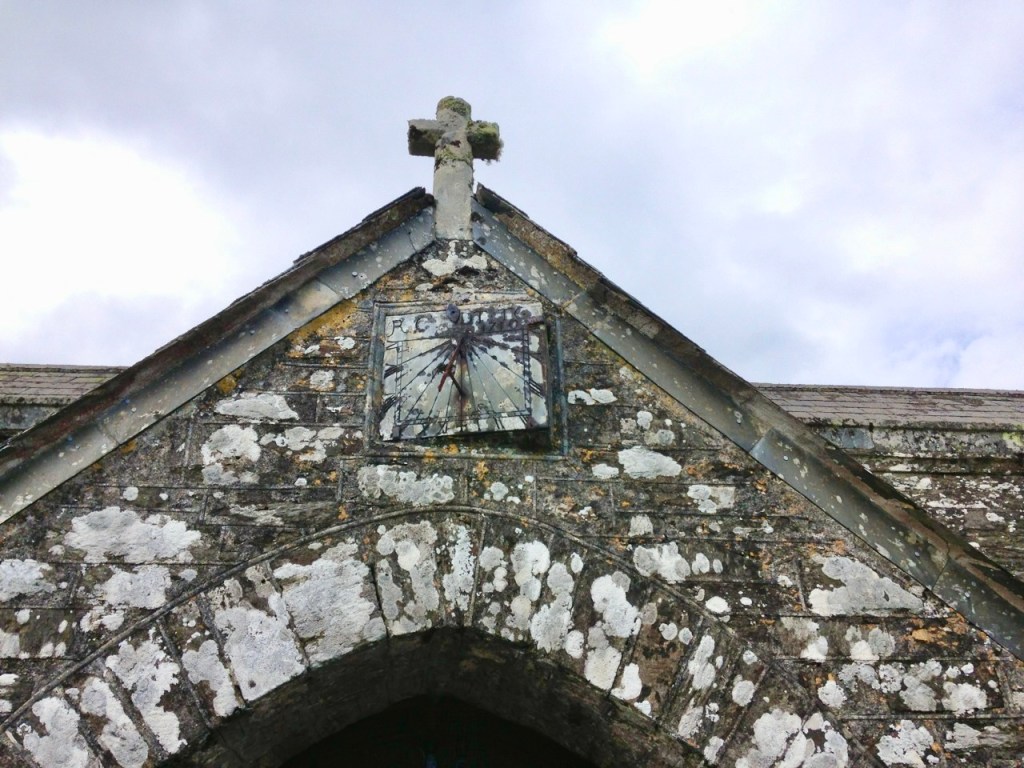
The time-worn dial is set into the apex of the porch and canted westwards. Dated 1716, it is also inscribed with a set of 3 double initials RC, DT, & TG. ‘RC’ is in a different style, and the date – perhaps significantly – is below the two other pairs of initials. Possibly the latter installed the dial in honour of the former.

The dial shows 1/4 as well as 1/2 hours. The 12 of noon is replaced by a cross. IIII is used for IV. The gnomon is presumably not original, but has clearly been in situ for a considerable time.

* Sadly no St Boconnoc is listed in the Ox. Book of Saints)

GSS Category: Vertical Dial. Old (post medieval) Dial

Photos: Keith Salvesen; Header CHCT

TRELISSICK GARDENS . CORNWALL – CORNUBIAE HORTOS AMABANT

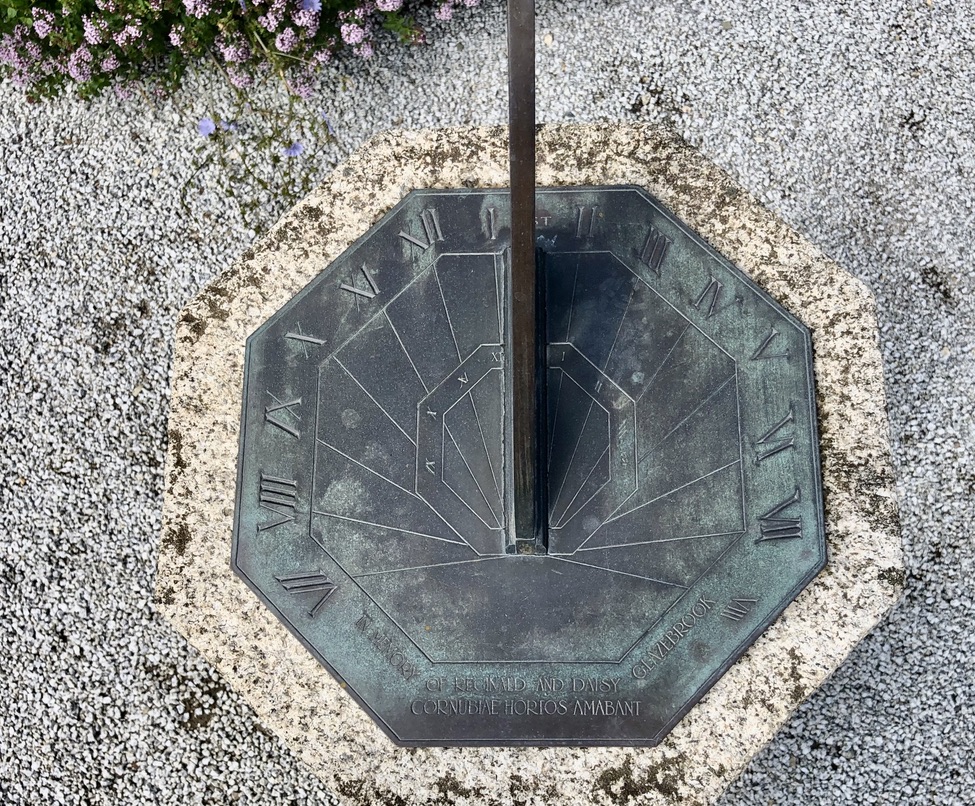
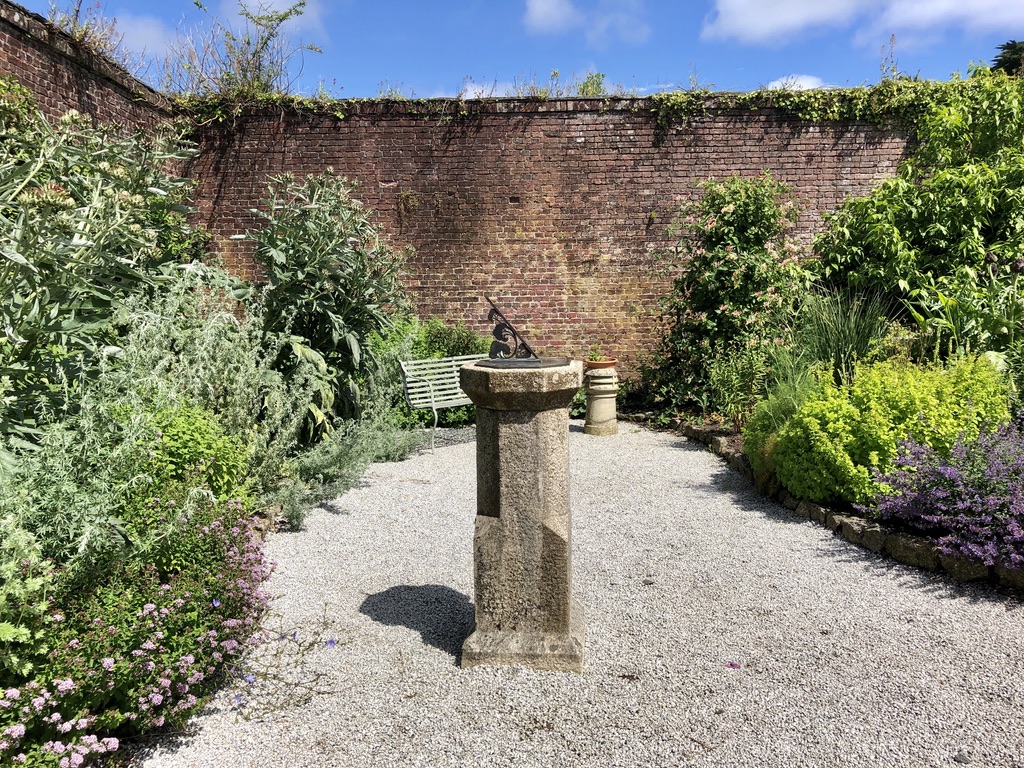
A modern dial in the walled garden at Trelissick NT, with a rather charming motto for the couple commemorated ‘Spouses (who) loved gardens’. It may be unique: I have found no other example, and it does not appear in Margaret Gatty’s compendious collection of Cornish sundial mottos.

GSS Category: Modern Dial

Photos: Keith Salvesen

FEOCK . CORNWALL . CHURCH OF ST FEOCK . SCRATCH DIAL

Church of St Feock . Feock . Cornwall


CHURCH OF ST FEOCK. FEOCK . CORNWALL

GRADE ll*. C15 with earlier origins. Complete rebuild in C18 ‘incorporating C15 windows, arcade and doorways’ HE. Separate C13 bell tower (cf Gunwalloe), listed G ll. 5m S. of Truro. 50.2057 / -5.0502 / SW824384

Only 4 scratch dials are recorded for Cornwall, this being one (see also Manaccan). I assume the main reason is that the local building materials – granites, serpentine, and other hard rock – are unrewarding to work with when cutting a dial

DIAL

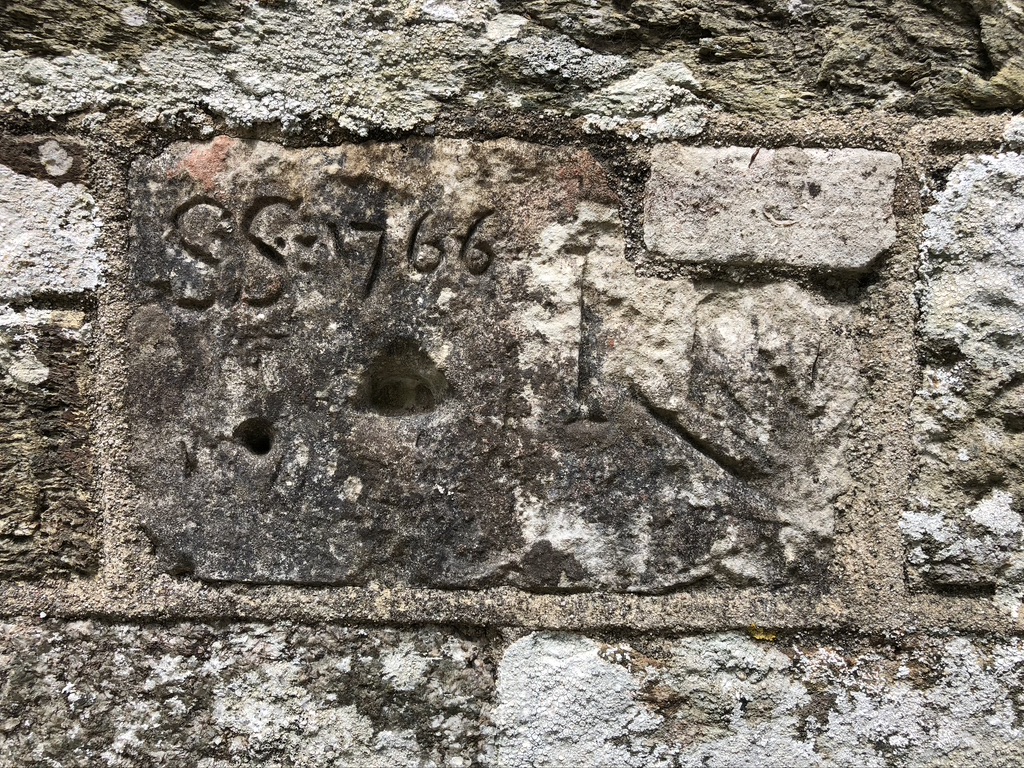
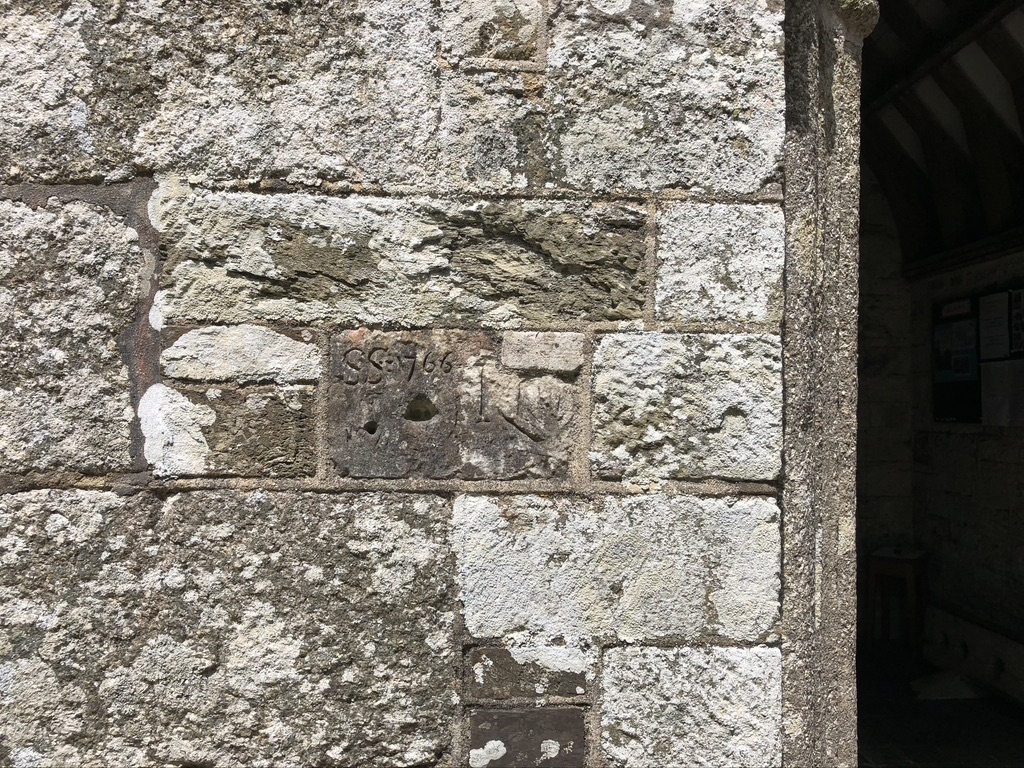
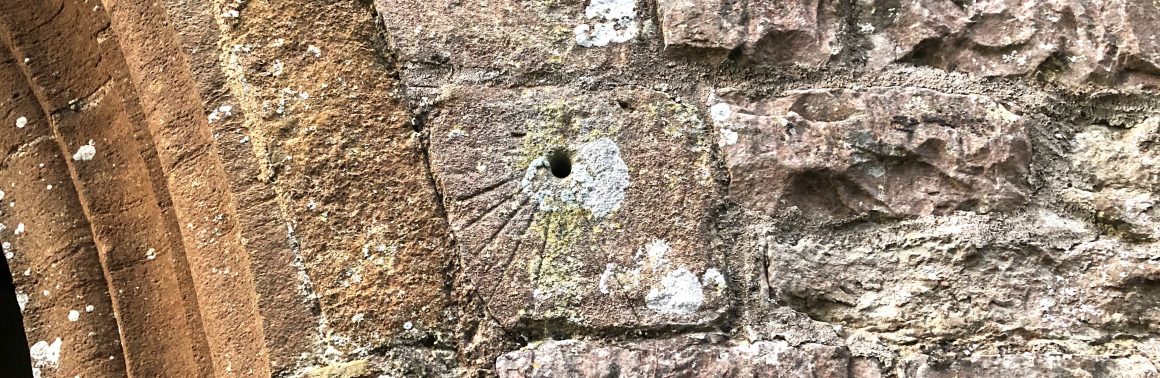
The dial is located prominently on the left side of the porch. Clearly the stone is different from and older than the surrounding stones (BSS dates the dial as C15), so it must have been rescued from the earlier building and reused in a typical dial position during the C18 reconstruction. The graffito SS 1766 makes a good case for being the date of relocation.

The recorded dial is under the date and has 3 or 4 adjacent indistinct short lines described (BSS) as ‘remote’. I take this to mean unlinked to the large style hole. To me they seem rather random and arguably not in the right place / at the right angle to be of much use. There’s the hint of an eroded circle. This basic dial’s main interest (apart from its extreme rarity in the county) arguably lies in the way it was incorporated and marked so appropriately during the rebuilding.

OTHER MARKS

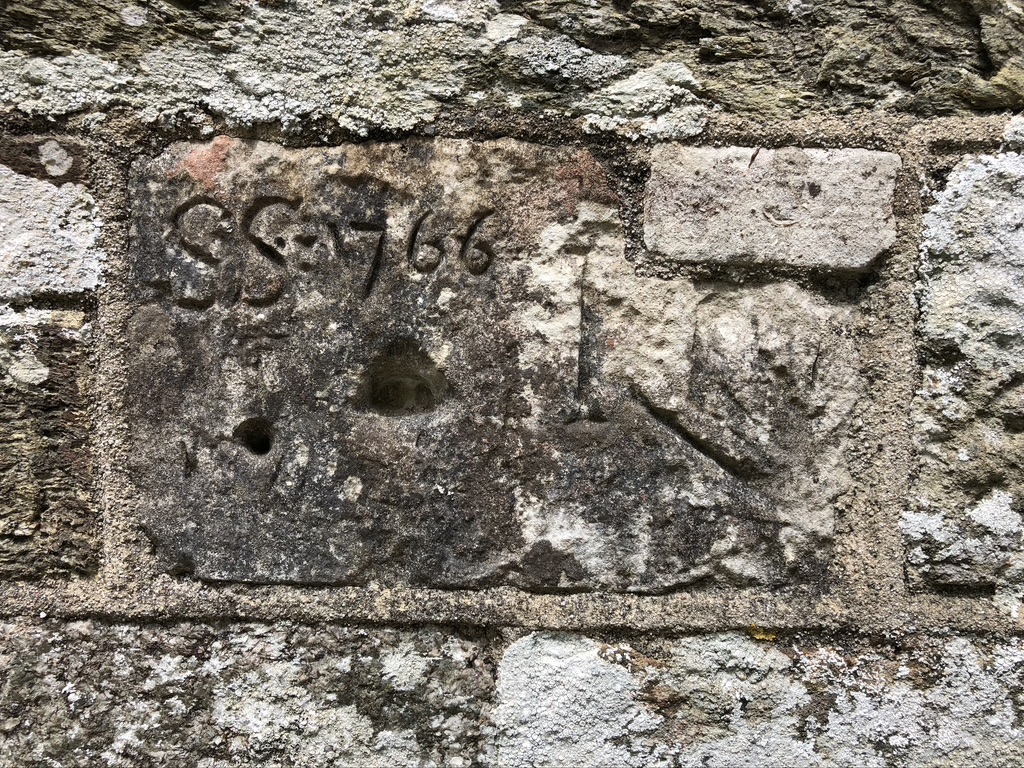
A. I assume SS to be the initials of the stonemason who reset the dial – rather boastfully larger than the incised date. Given the date, it seems unlikely to reference ‘Saints’. B. As for the triangular indented ‘nostrils’ with the trace of a partial circle, I have no idea – possibly the site of a later fixing? C. The vertical line to the right is another puzzle, with its carefully cut decorative ends (one eroded). I’d like it to be a cross, but there’s no indication of a horizontal.

More interesting is the ‘pattern’ lower right. When I first looked at the stone, I presumed from the clearer lines radiating from a centre, the 3 or 4 apparent pocks, and the trace of a circle, that this was the recorded dial. The upwards direction of the lines suggested that the ‘dial’ had been upper left and that the stone was inverted when reused (as is often the case with dial stones), after which the initials and date were added.

Here’s how the stone might have looked. Perhaps there are actually 2 dials on it?

Church of St Feock . Feock . Cornwall – Scratch Dial
St Feock . Cornwall . Stocks

NOTE: see also the entry for MANACCAN for a second recorded Cornish dial; and St Martin for 1 or even 2 candidates as hitherto unrecorded dials.

GSS Category: Scratch Dial

All photos: Keith Salvesen
MANACCAN . CORNWALL . CHURCH OF ST MANACCUS . SCRATCH DIAL

St Manacca . Manaccan . Cornwall


CHURCH OF ST MANACCUS . MANACCAN . CORNWALL

GRADE 1. C12 and C15. Lizard Peninsula, S. of Helford River. Small village protected by a network of narrow roads from tourist hordes. 50.0832 / -5.127 / SW763250

Only 4 scratch dials are recorded for Cornwall, this being one. I assume the main reason is that the local building materials – granites, serpentine, and other hard rock – are unrewarding to work with when cutting a dial

DIAL

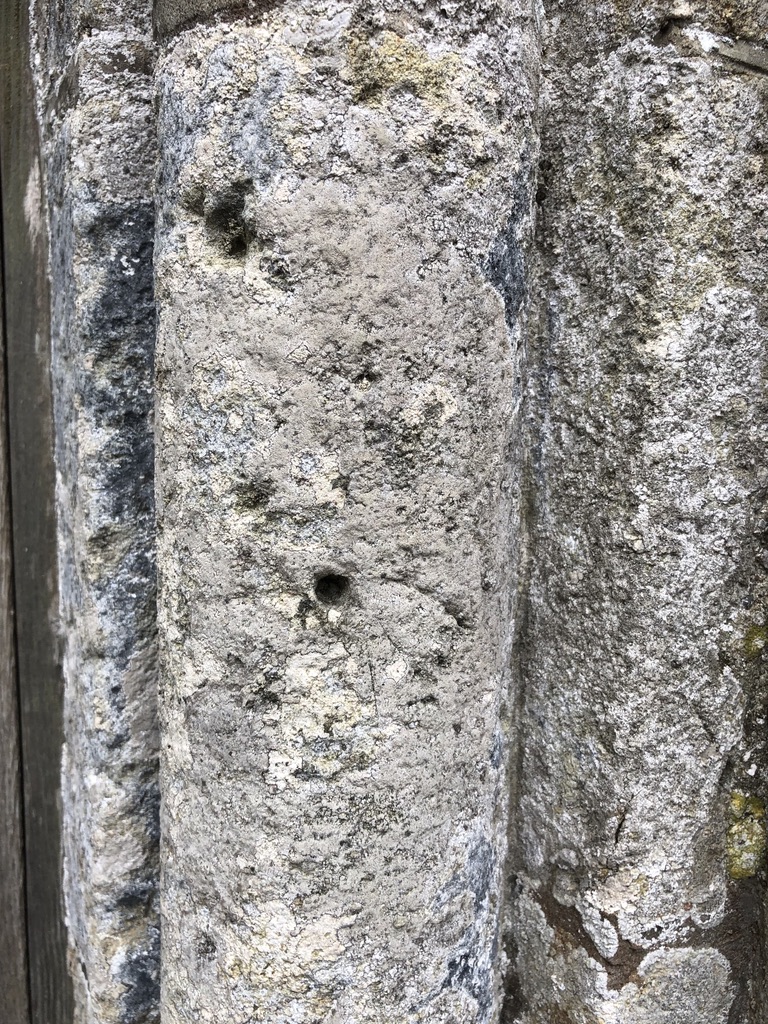
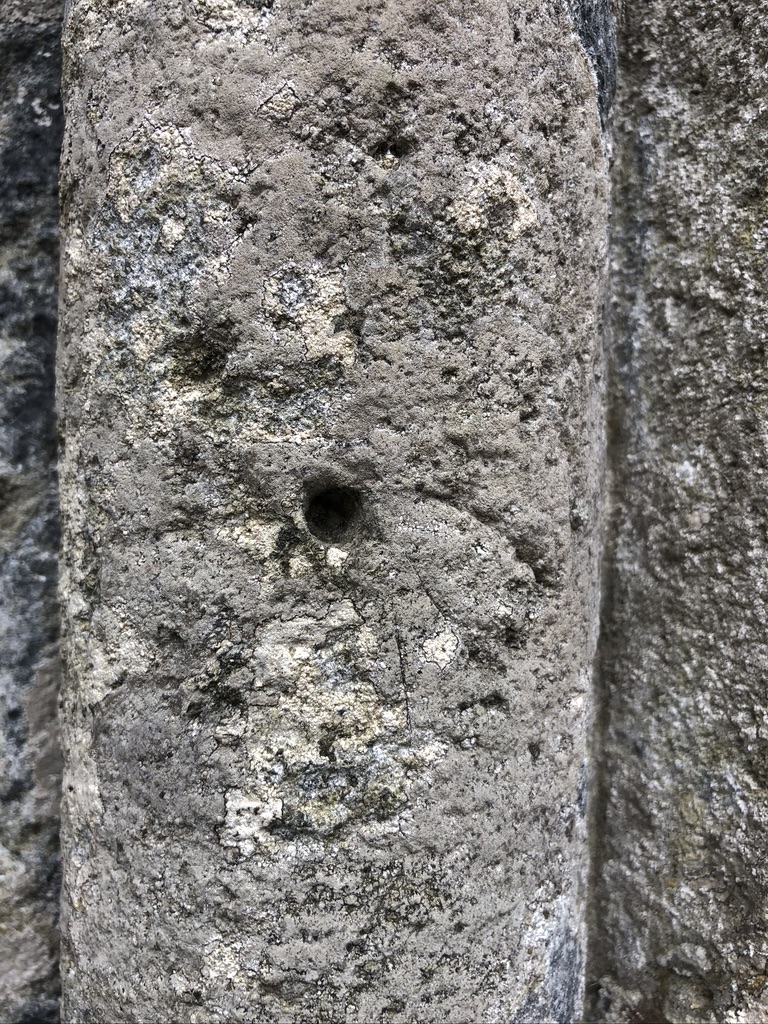
The small dial is cut to the right of the splendid Norman doorway, on a cylindrical pillar moulding. BSS suggests this may be a unique location. The lines curve away from the gnomon hole and there is the hint of a partial circle. The overall style is rustic and the condition is poor. It was noted in 2002 (L Burge) that there is a cross † ‘at Mass’ but on a dull day I could not make it out.

NOTE: see also the entry for FEOCK for a second recorded Cornish dial; and St Martin for 1 or even 2 candidates as hitherto unrecorded dials (link to be added).

GSS Category: Scratch Dial

All photos: Keith Salvesen