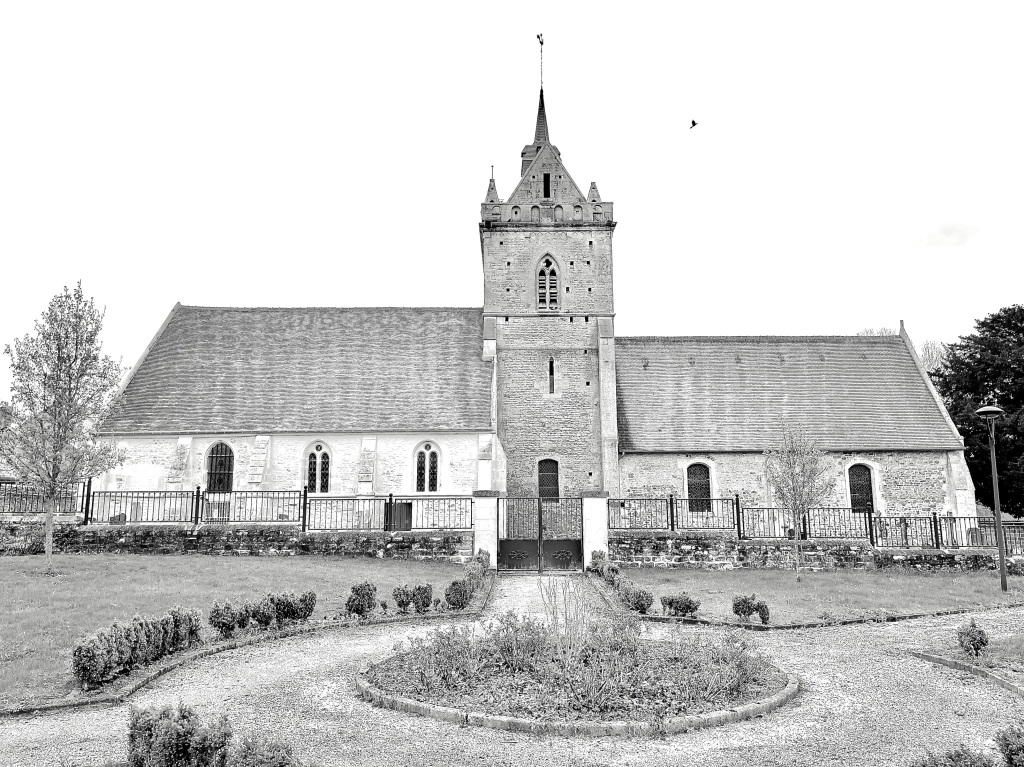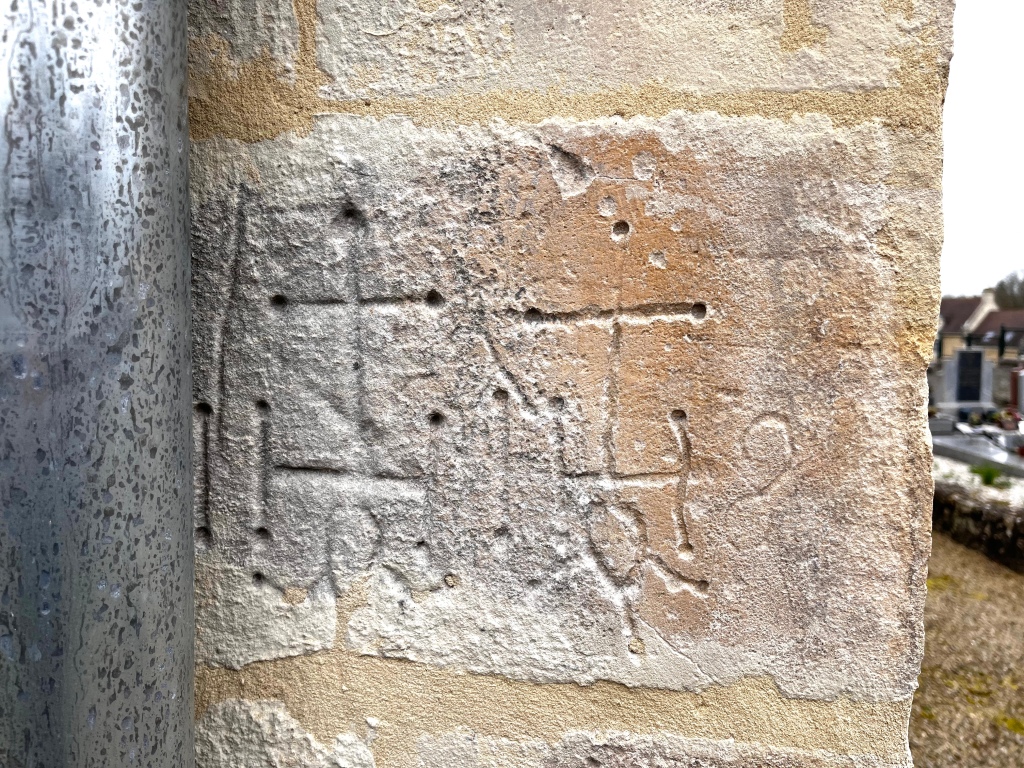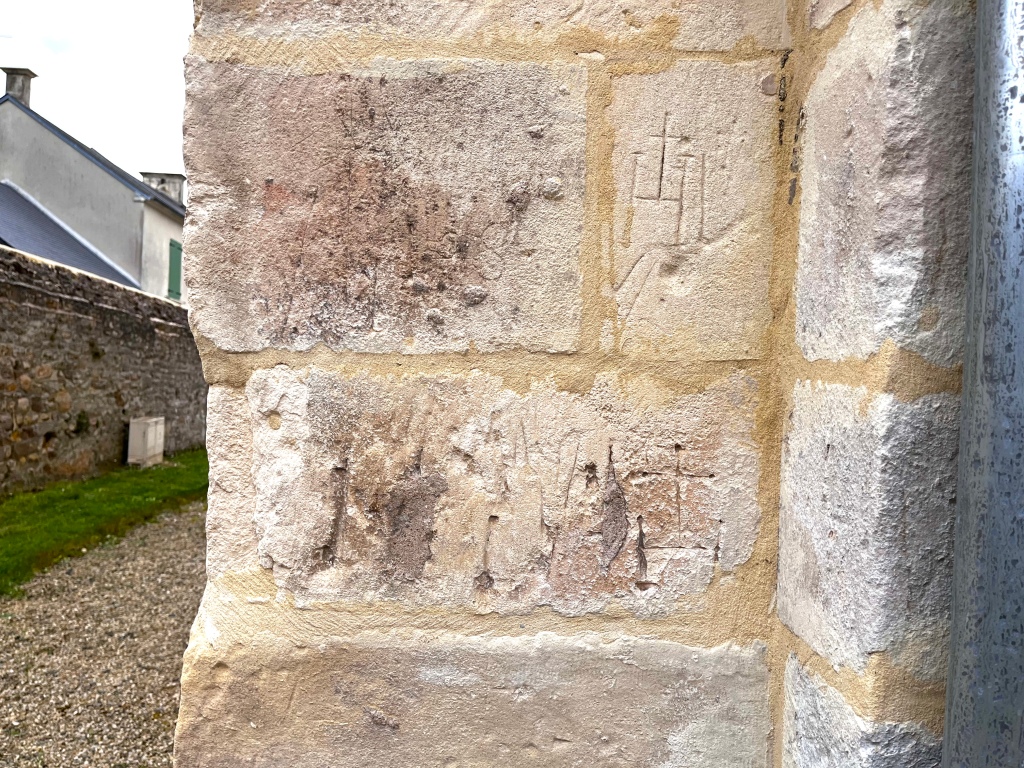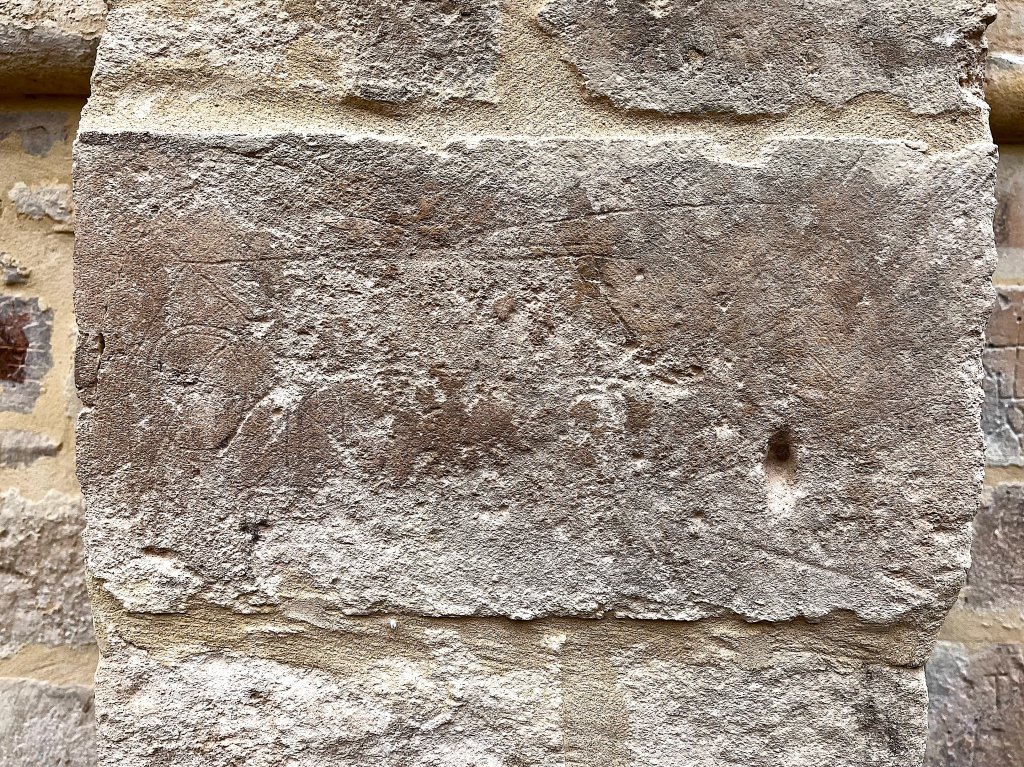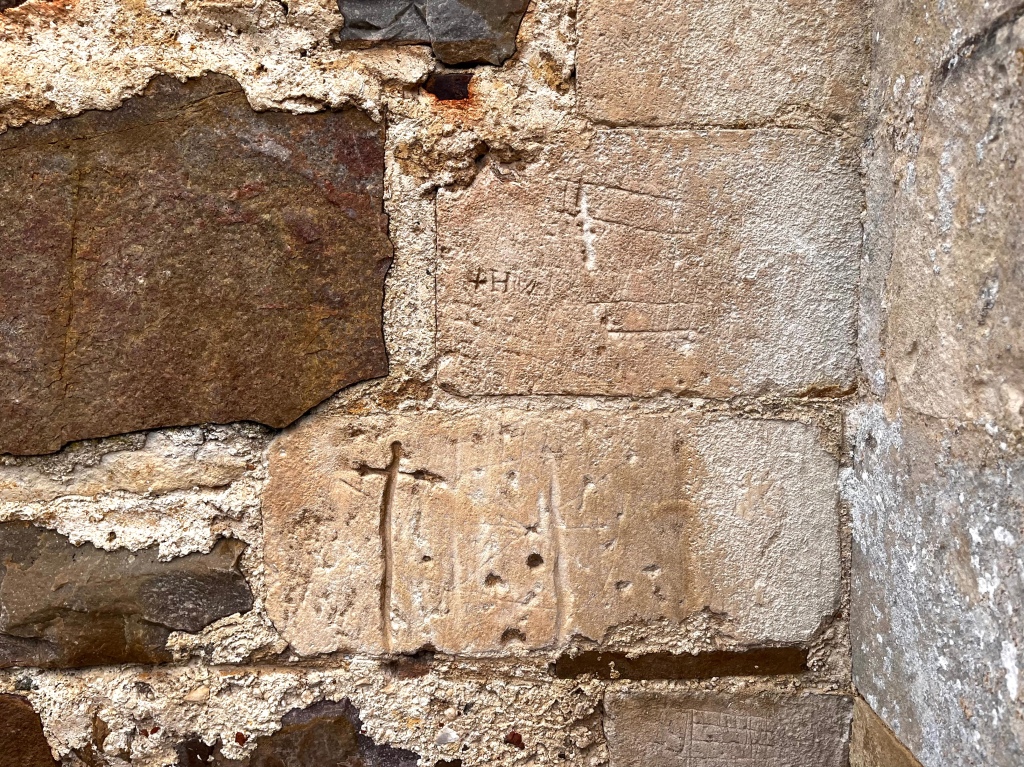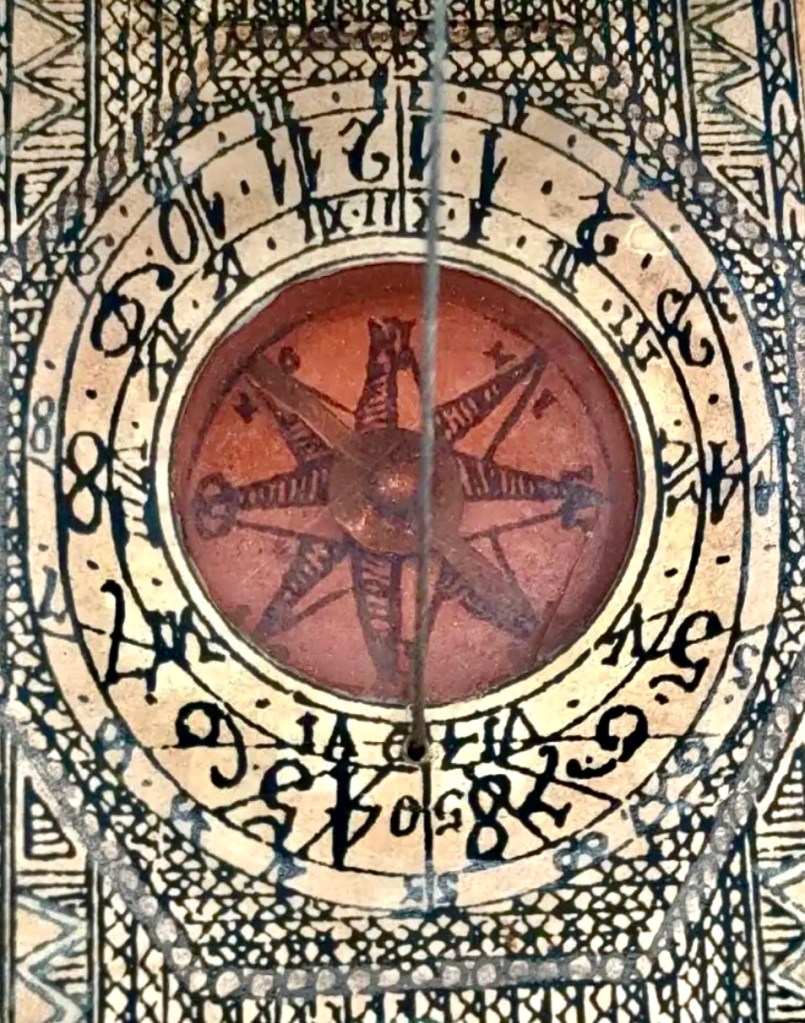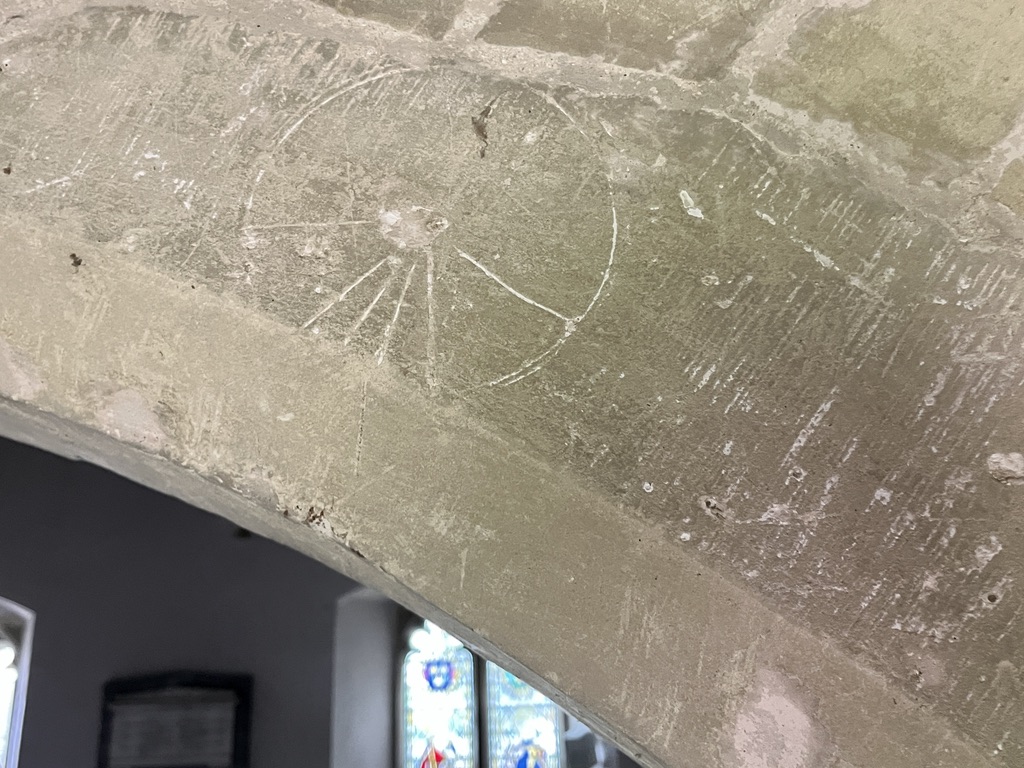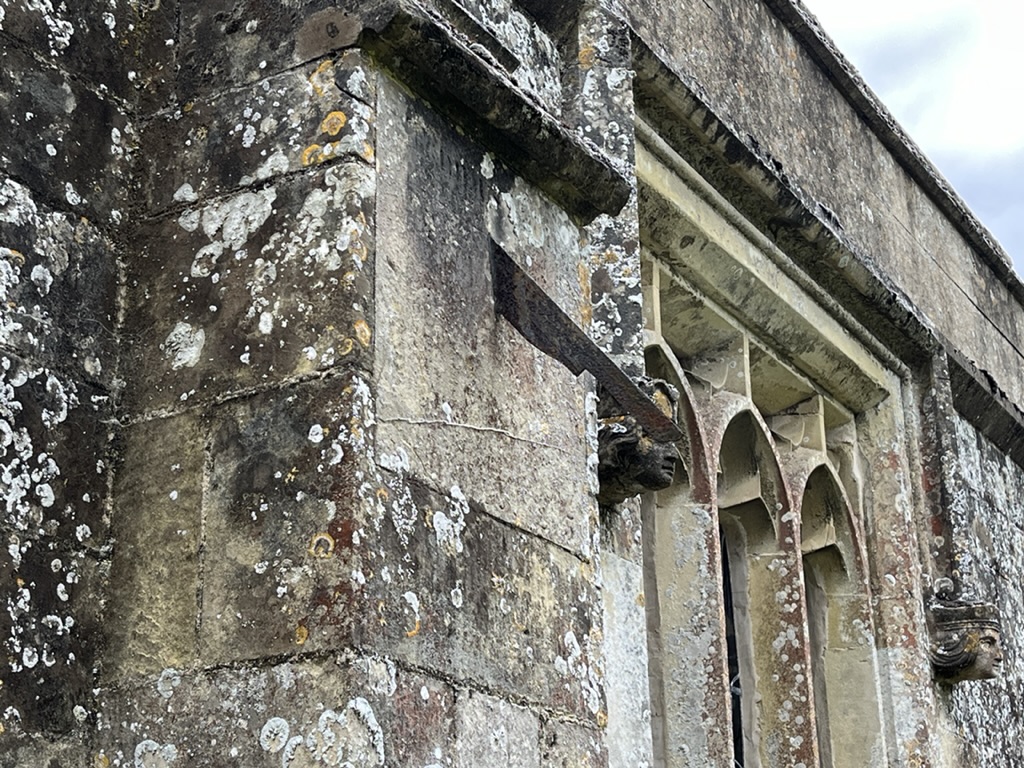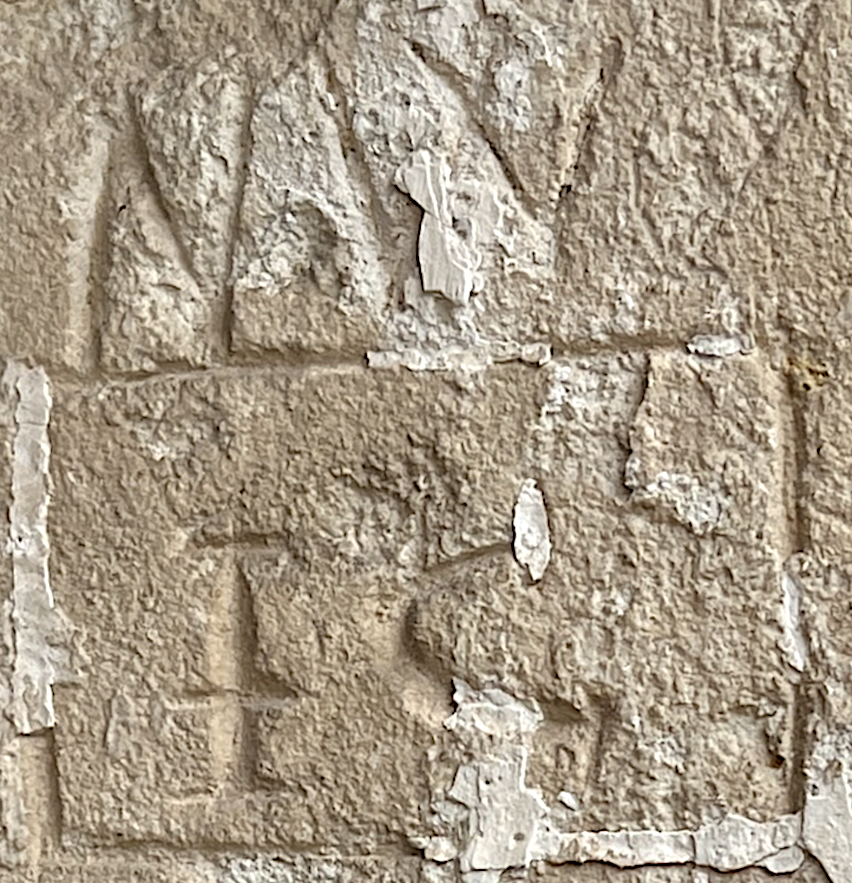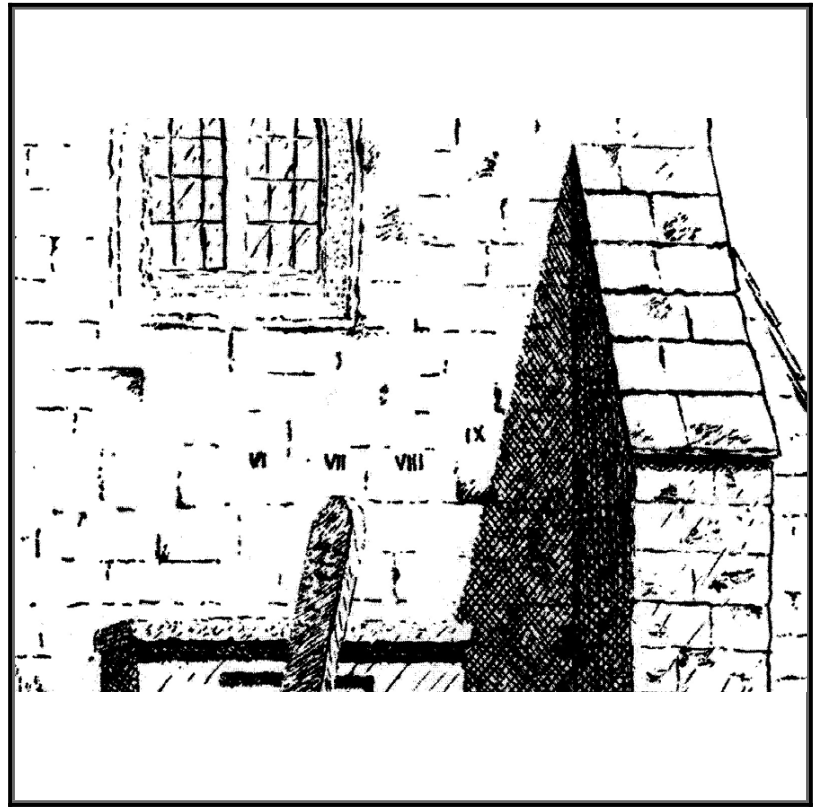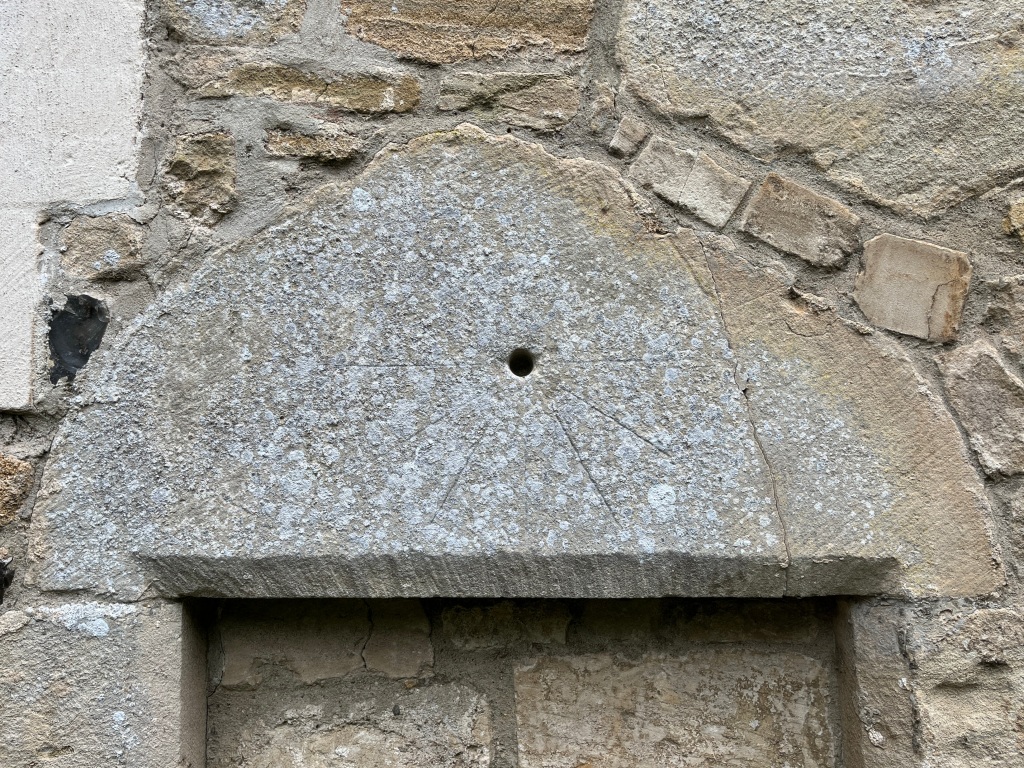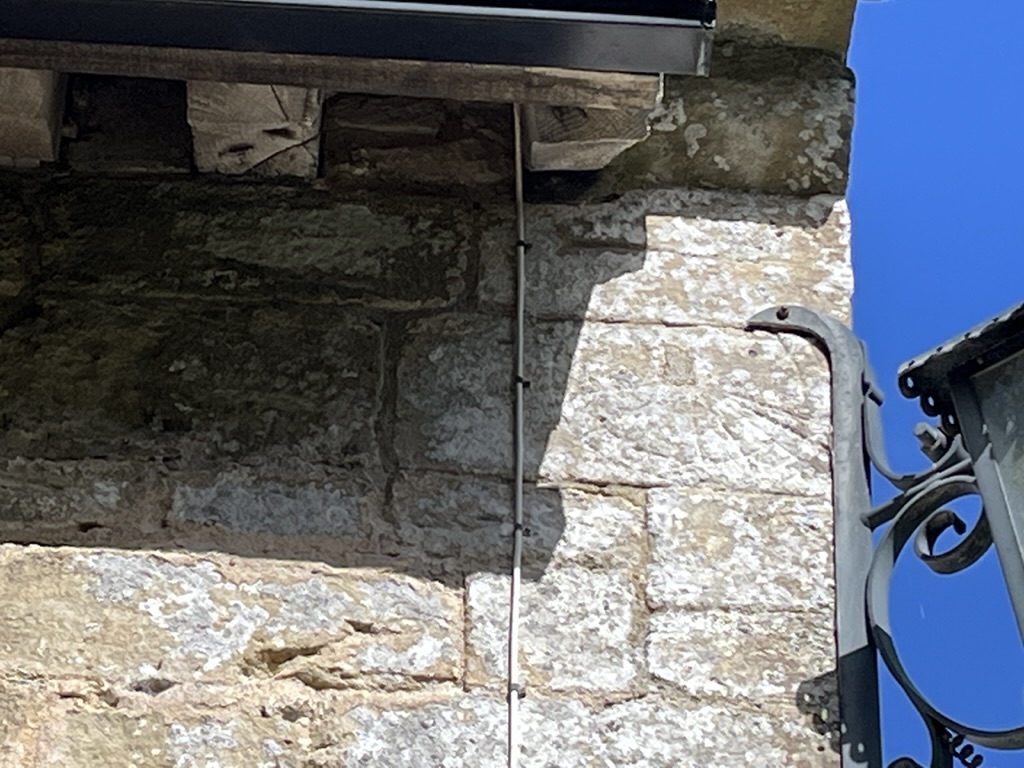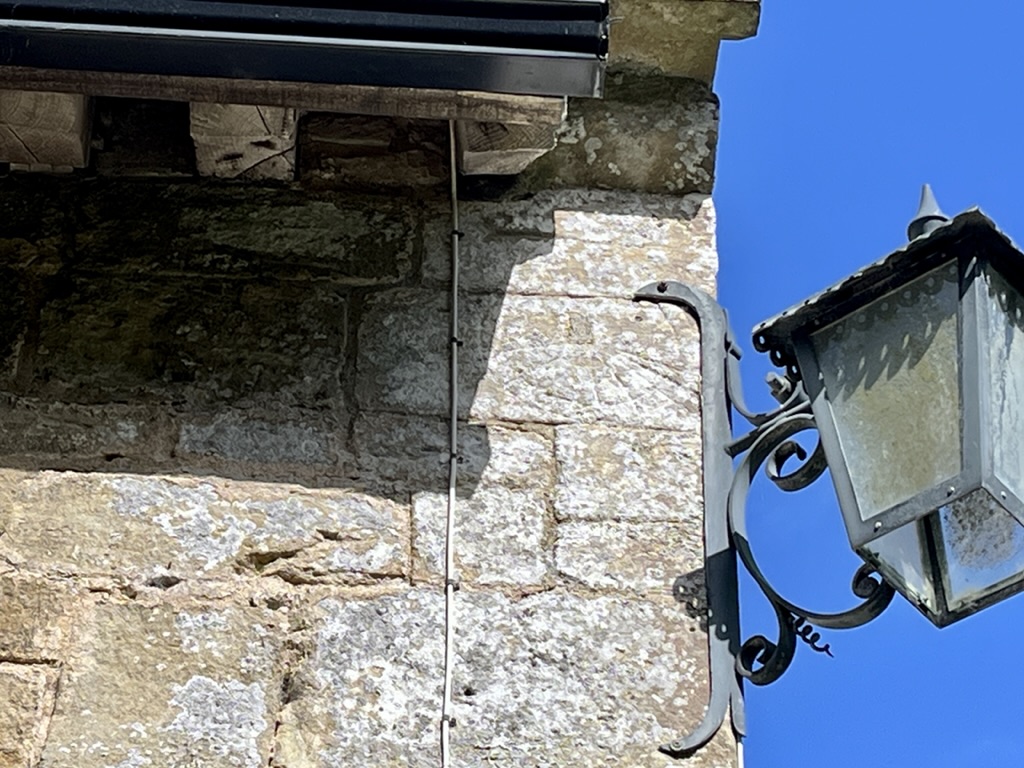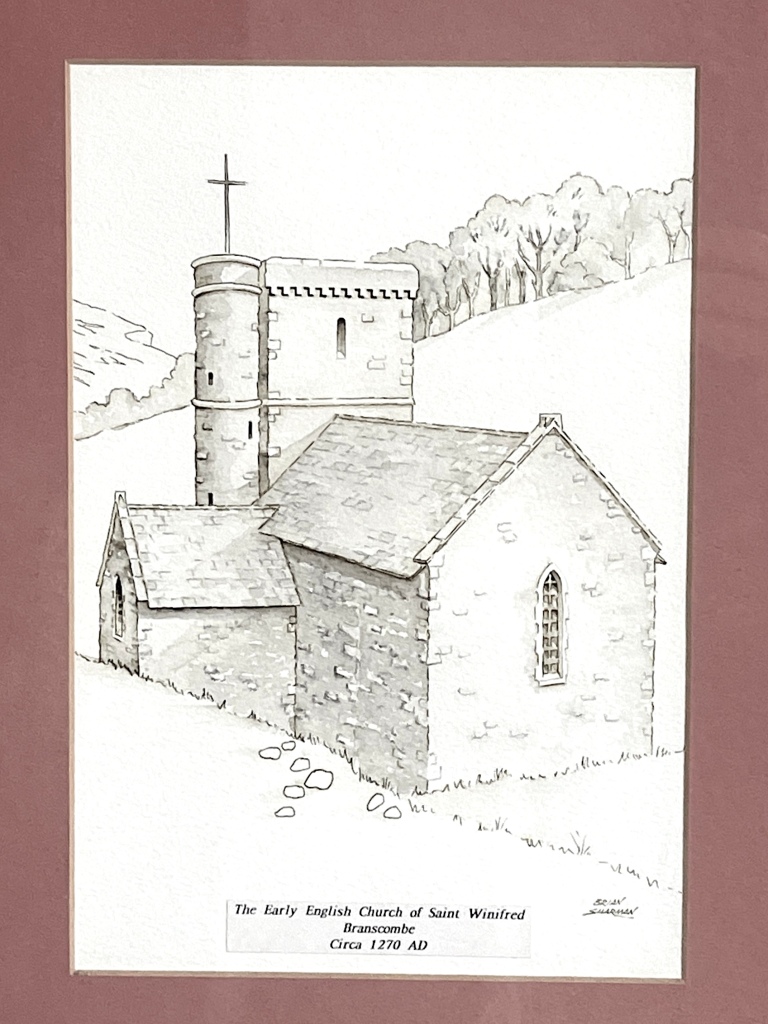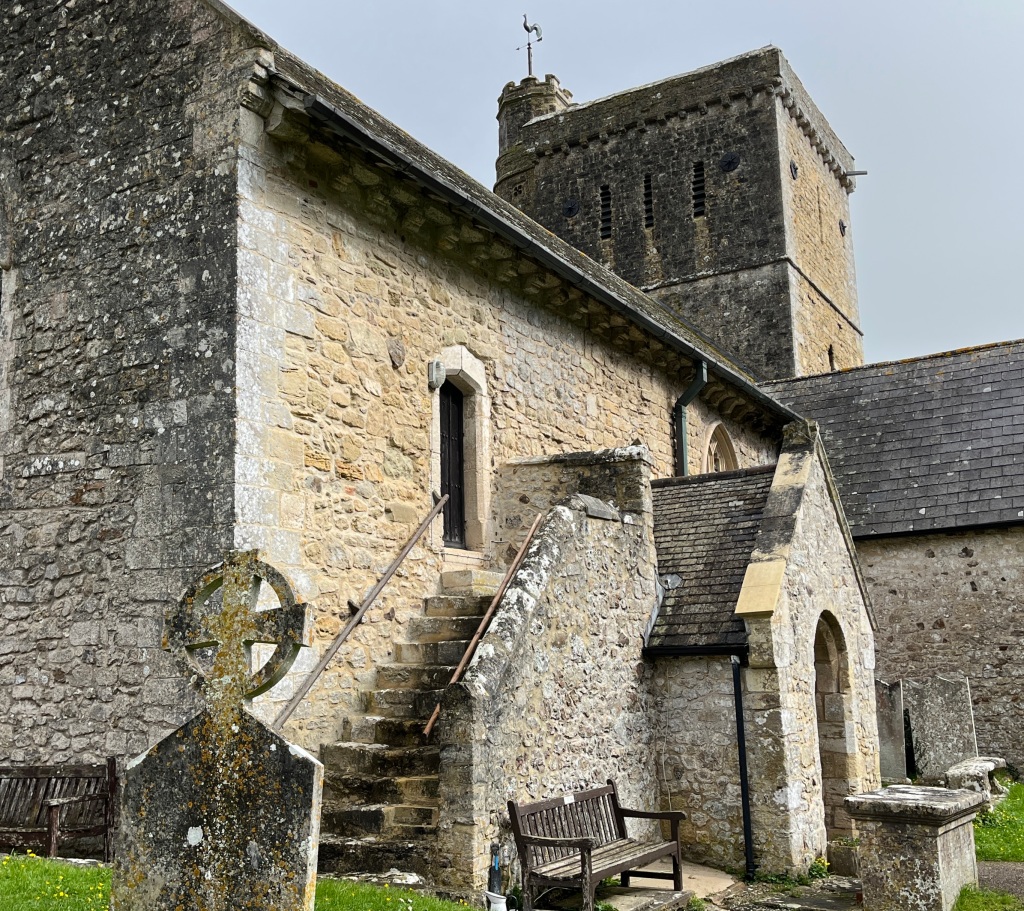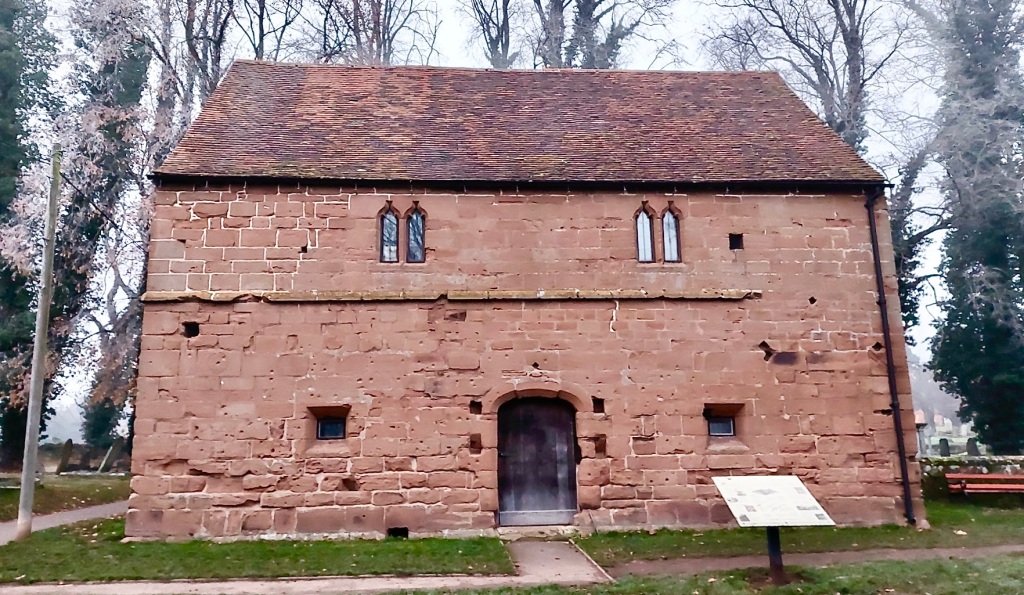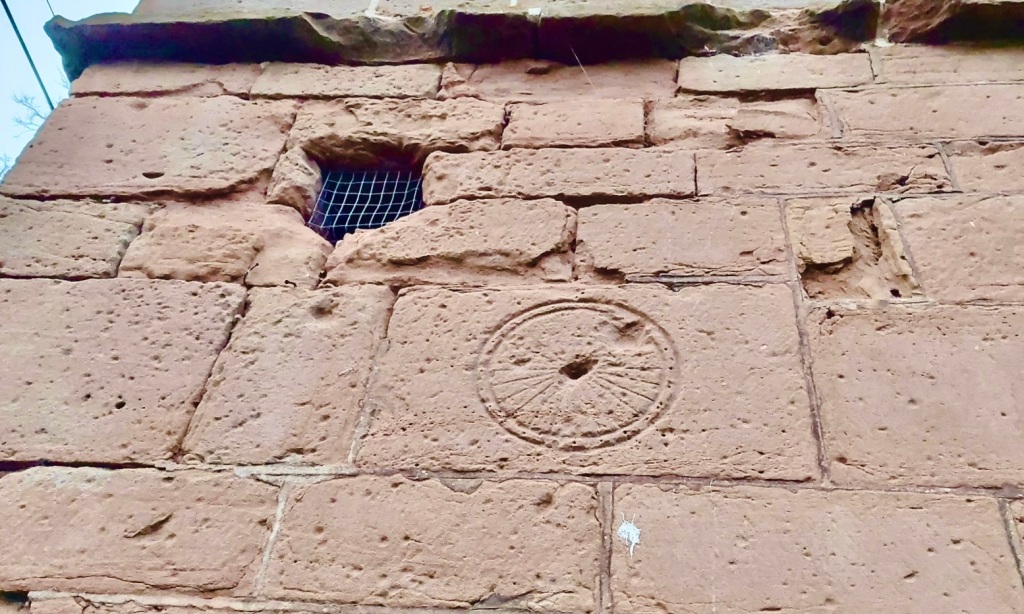
GRADE 1 † Mid-C13 with earlier origins; expansion to C16; restorations by Ferrey and Scott 1860 and later. A most impressive Parish church with a 4-stage tower. Admired by PEV as one of the loveliest of Somerset churches on account of its splendid Perp. work on the nave; and for being remarkably airy and spacious. 50.9693 / -2.7687 / ST461191
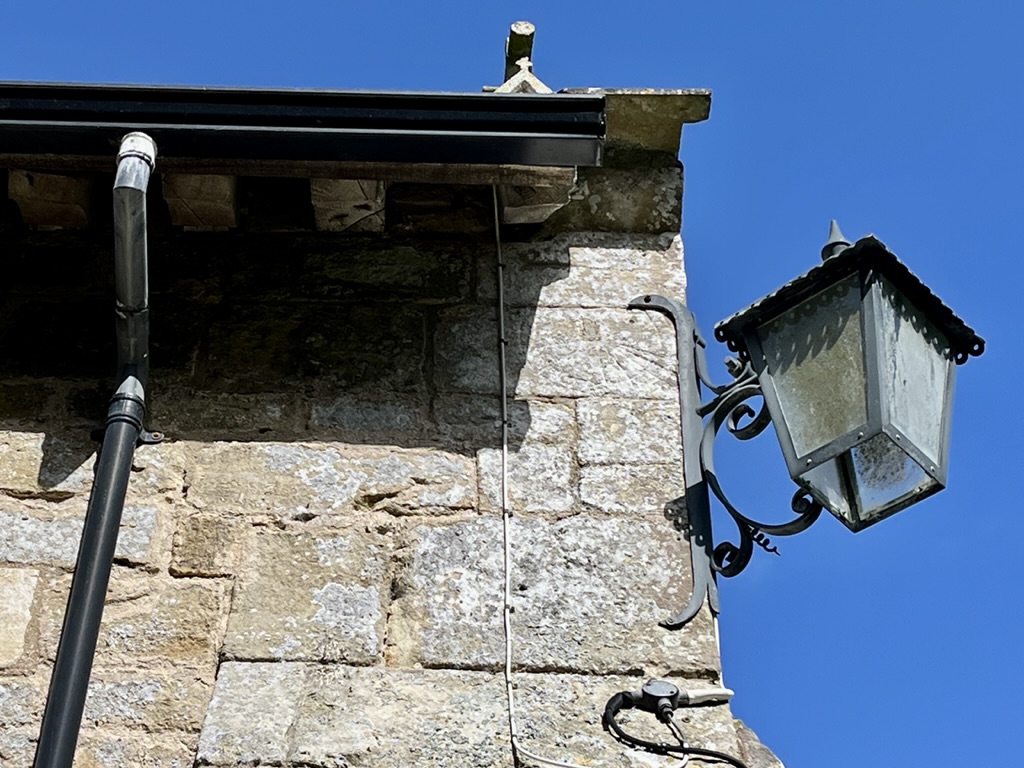
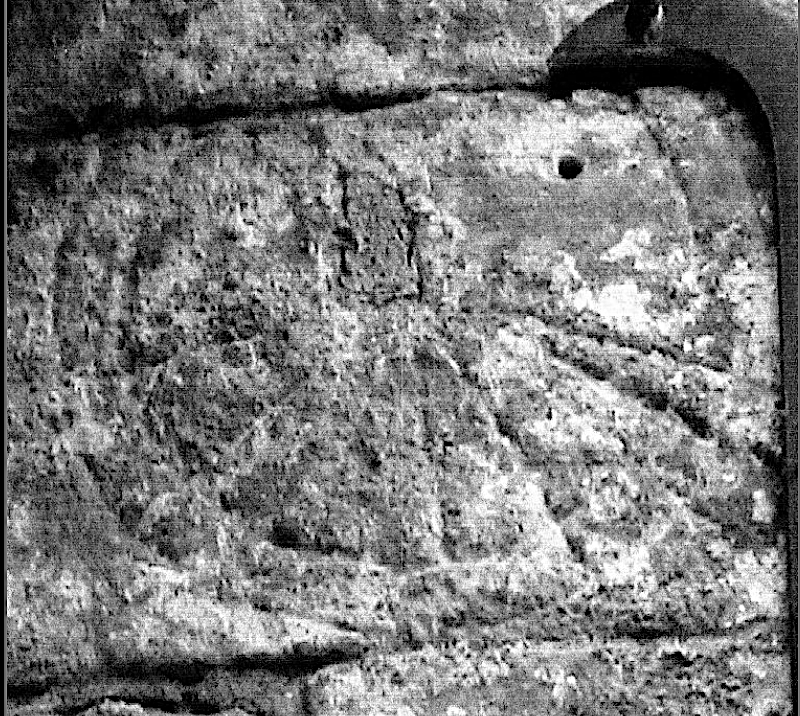
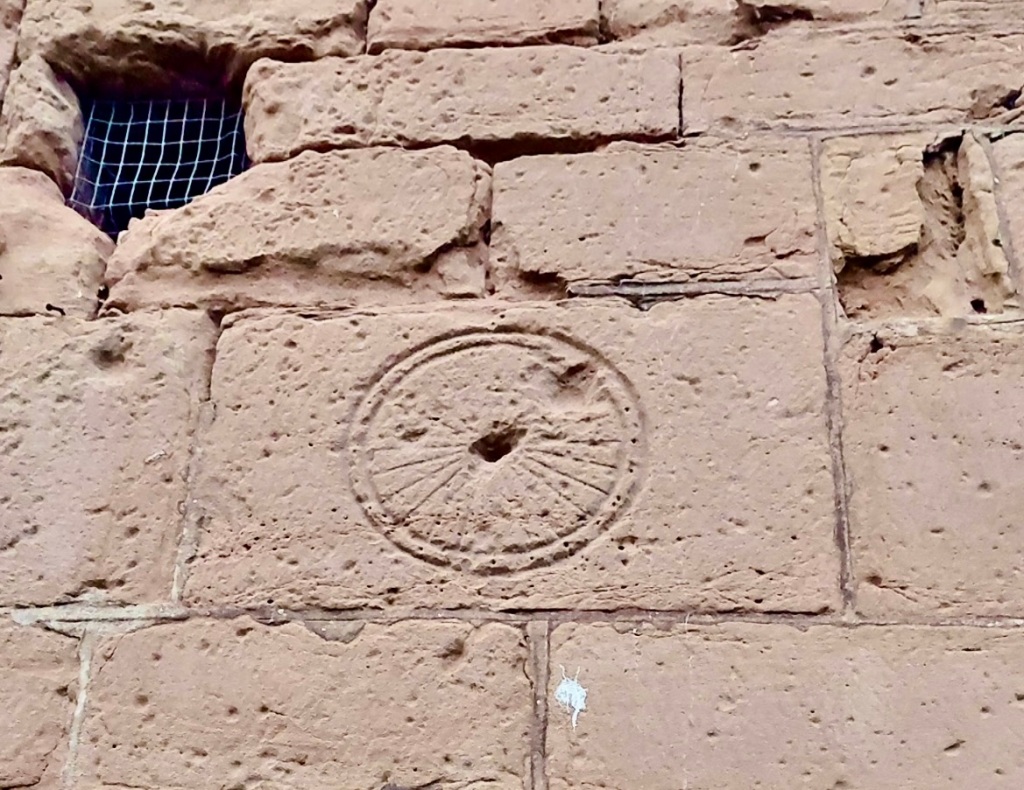
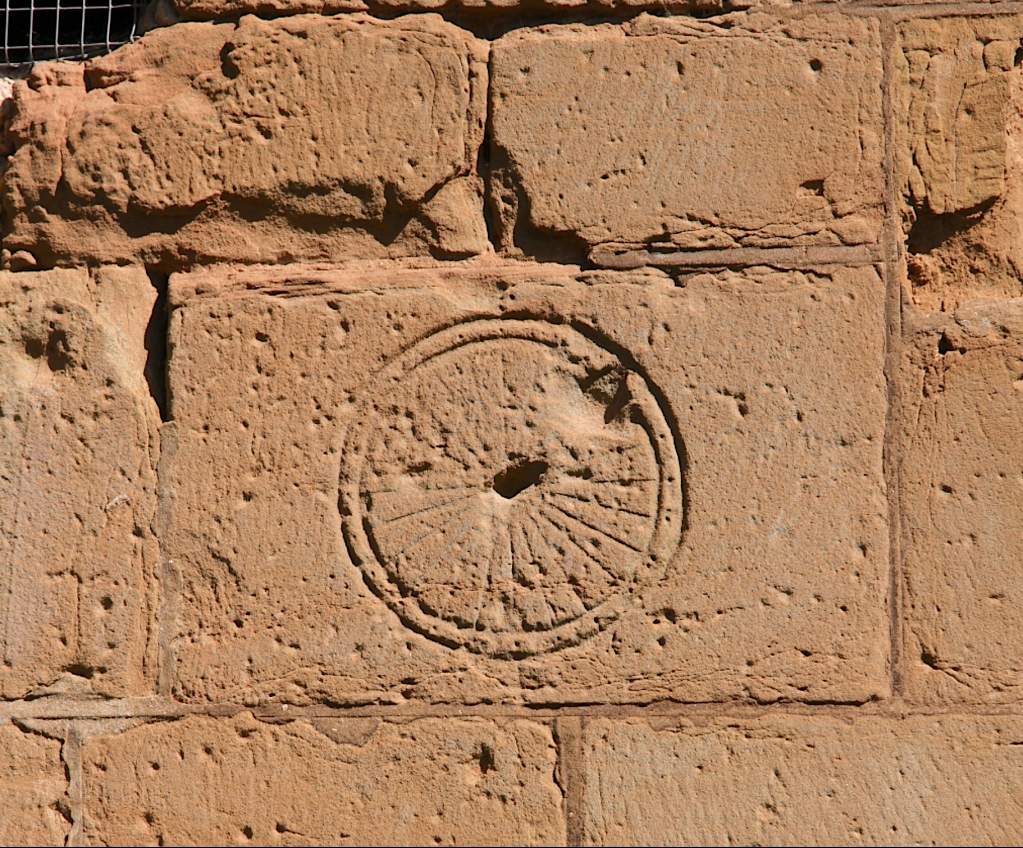
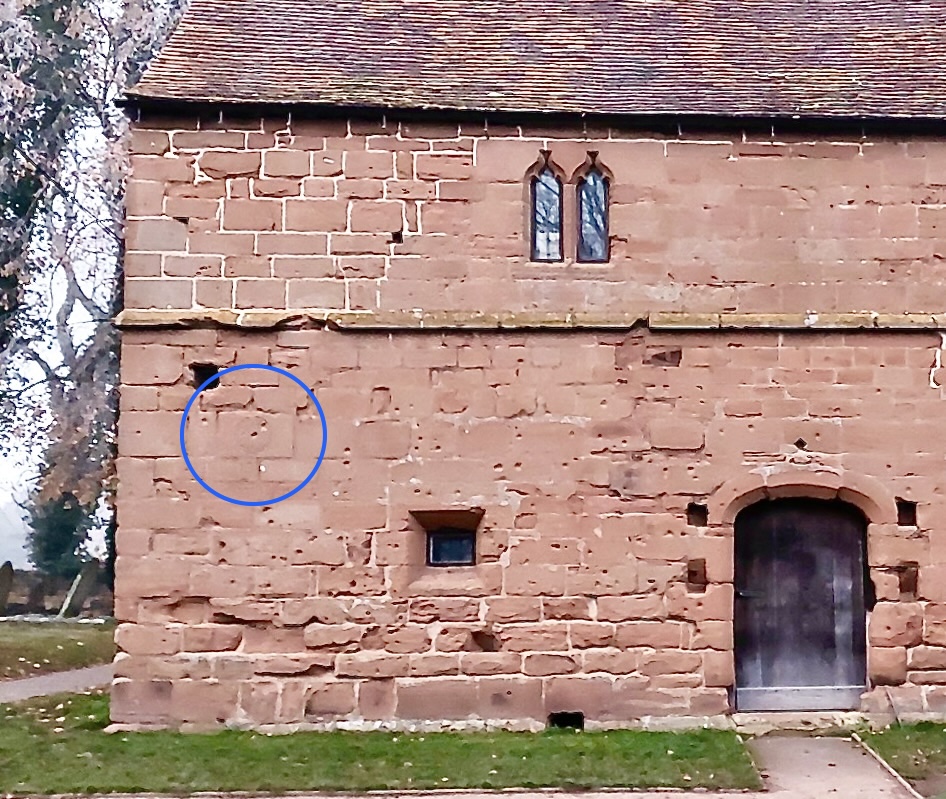
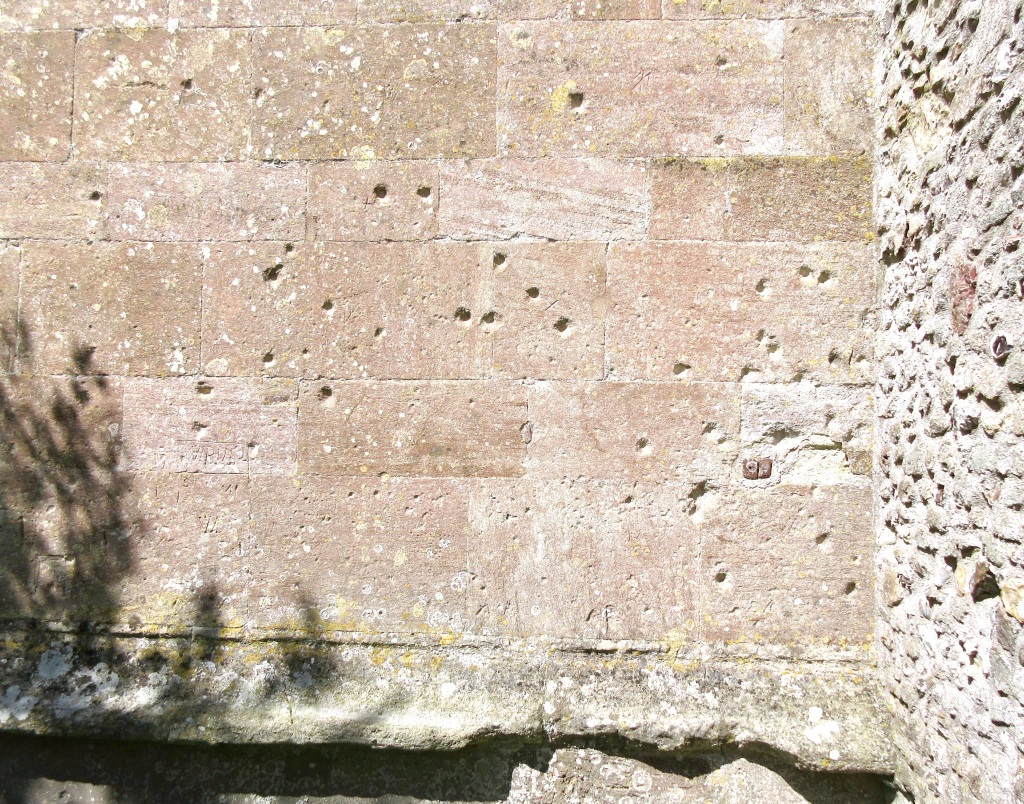
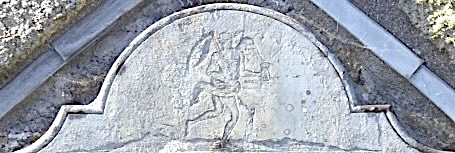
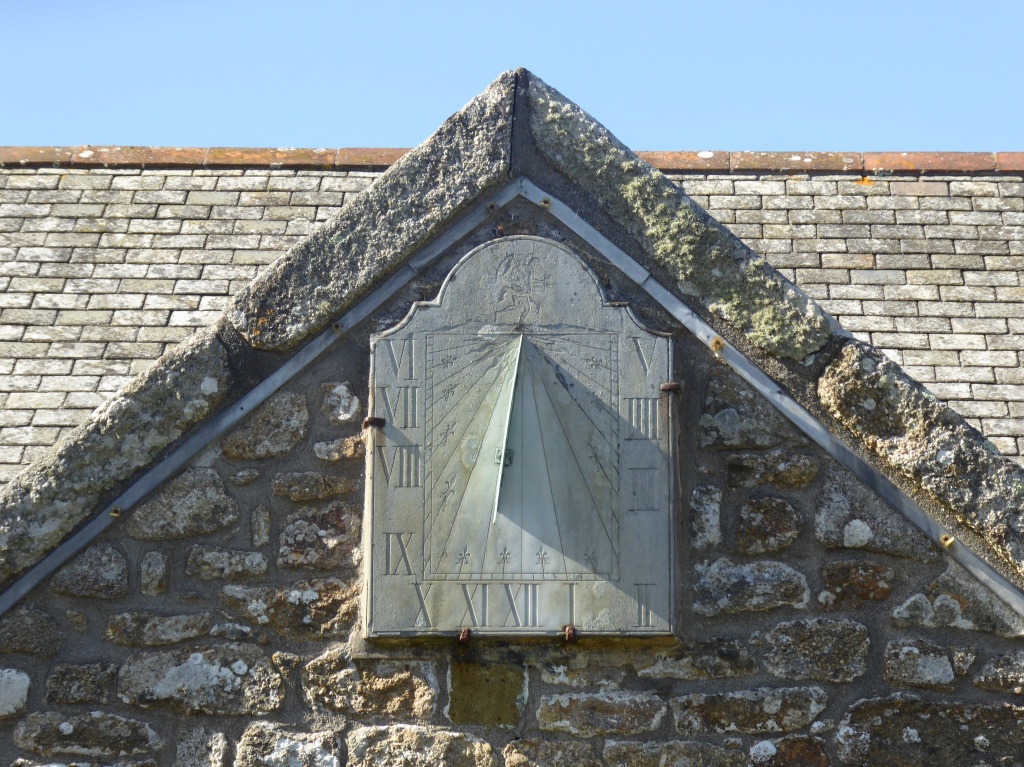
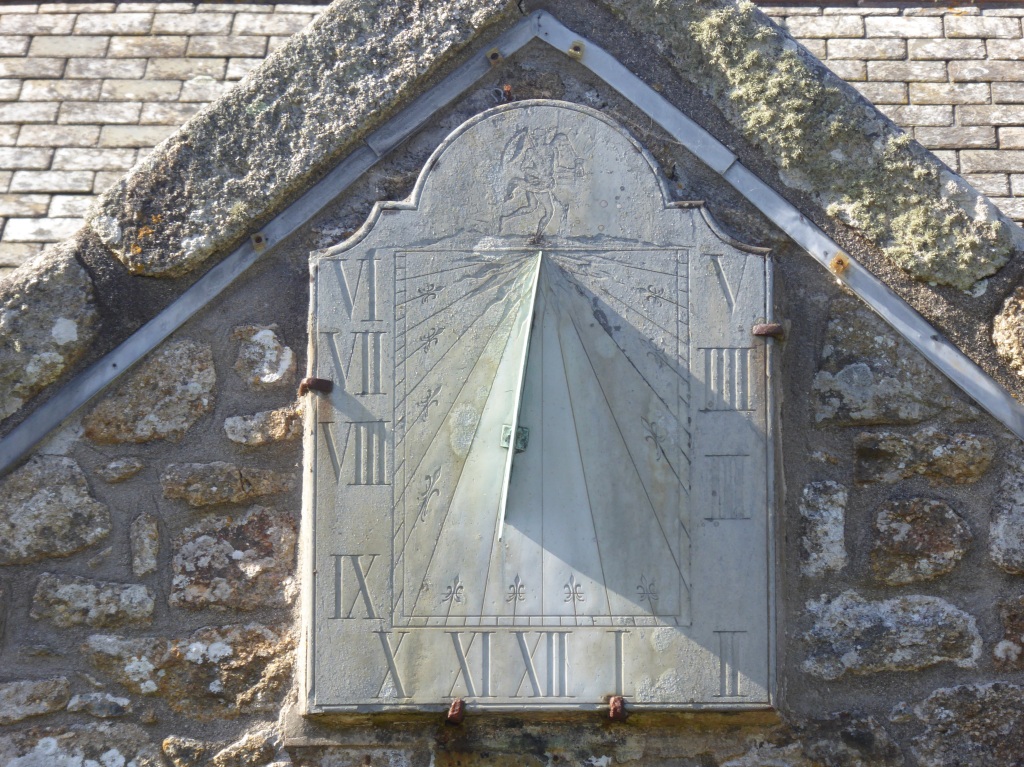
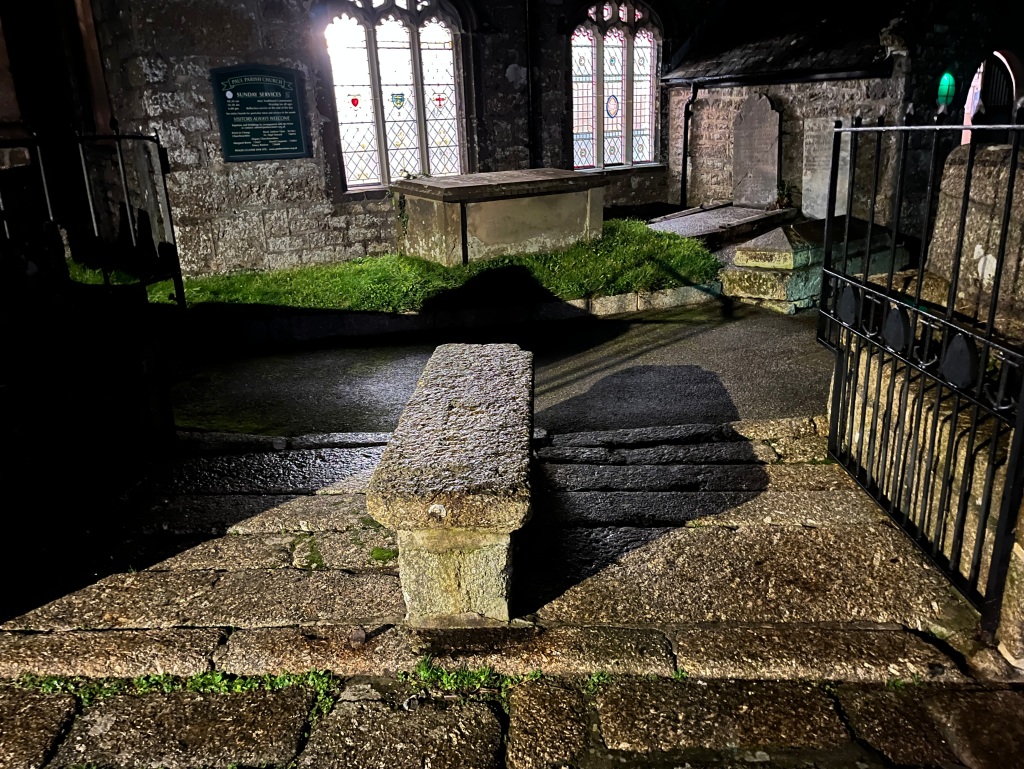
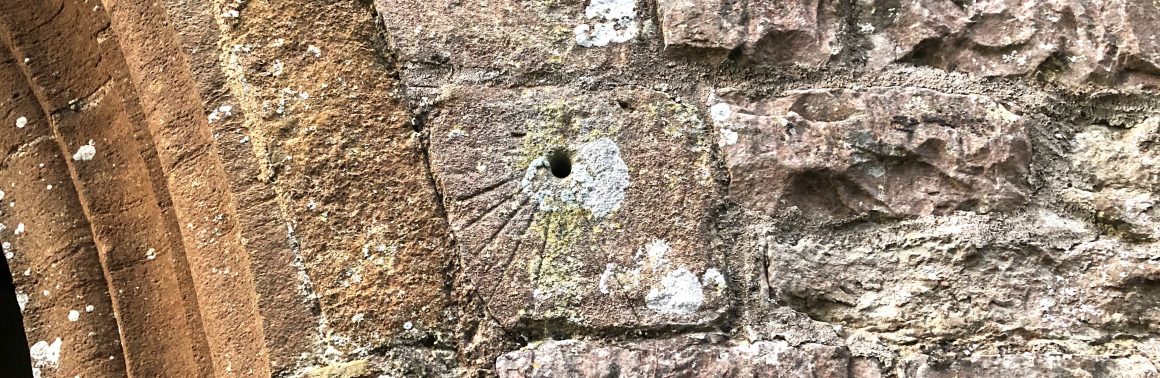
A fine cube dial in good condition. It apparently replaced one that had been in the same position, but it is not clear when. The images largely speak for themselves. However I have noticed from the close-up photos that the dial is canted slightly west. It’s worth repeating that it is never possible to get a decent photo of the 4th side of a cube.
All Saints merits time set aside for a visit. Stocks enthusiasts will enjoy a particularly fine example. You’ll find a gallery of them HERE.
GSS Category: Cube Dial; Church Sundial; Canted Dial; Village Stocks
GRADE I ✣ Origins pre-date 1159 building; some C12 features; S chapel c1280. Mainly late C13 to C15; 1860 restoration by Wyatt. Fine Giffard Chapel. Described 1850 (Hoare) as one of the most interesting parish churches in the Vale of Wily [Wylye], and its architecture has been very little altered since the death of Bishop Giffard in 1301. W window described by PEV as a tour-de-force. Painted pews. Turkeys feature in the church decoration – for why, see below. 4m NW of Wylye. 51.1553 / -2.0722 / ST950395
DIAL 1
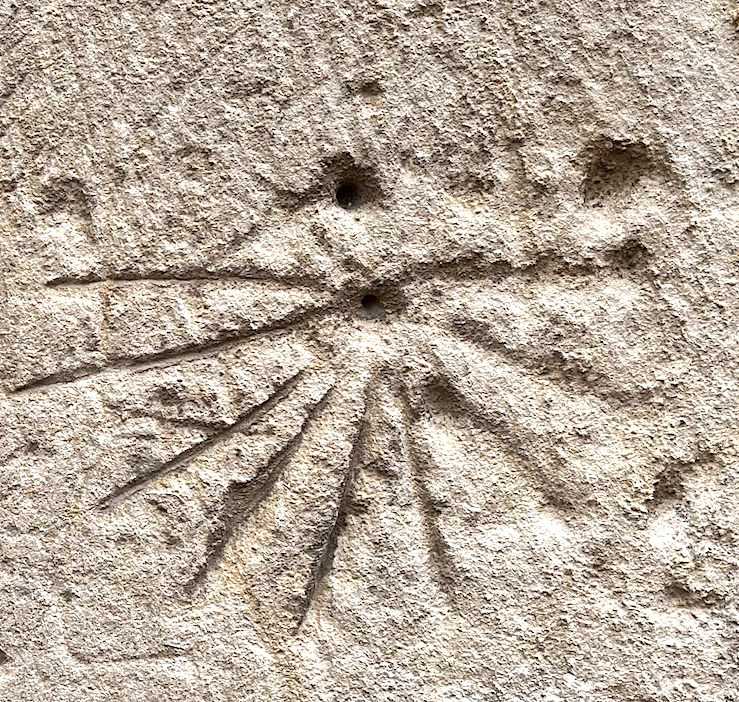
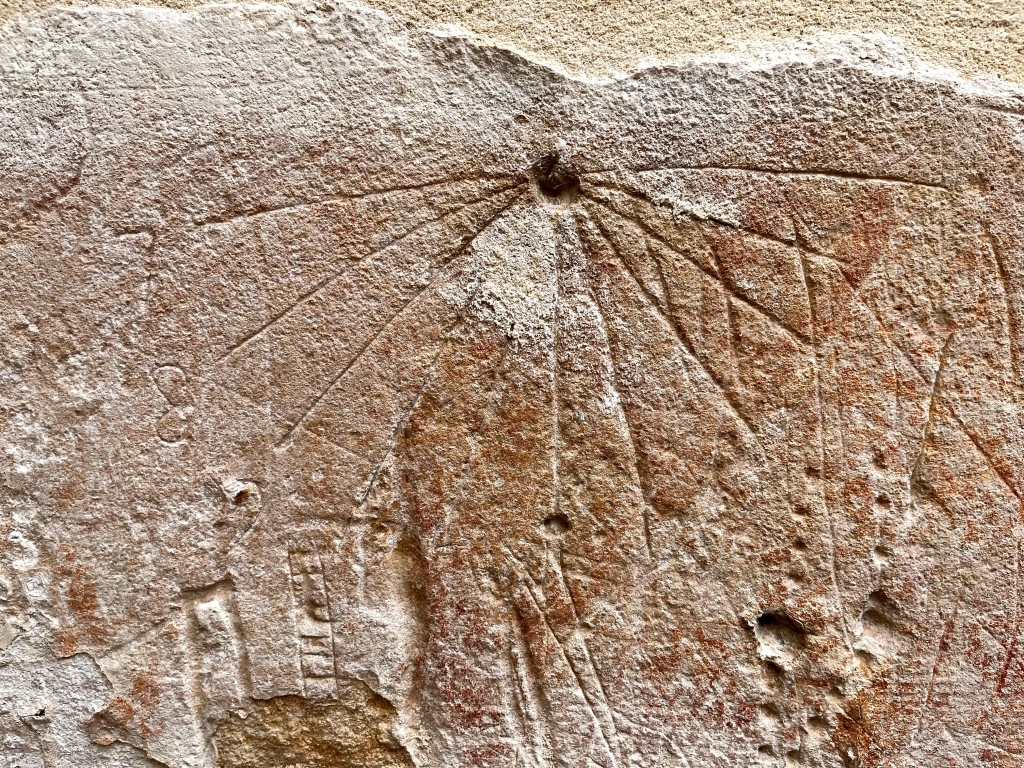
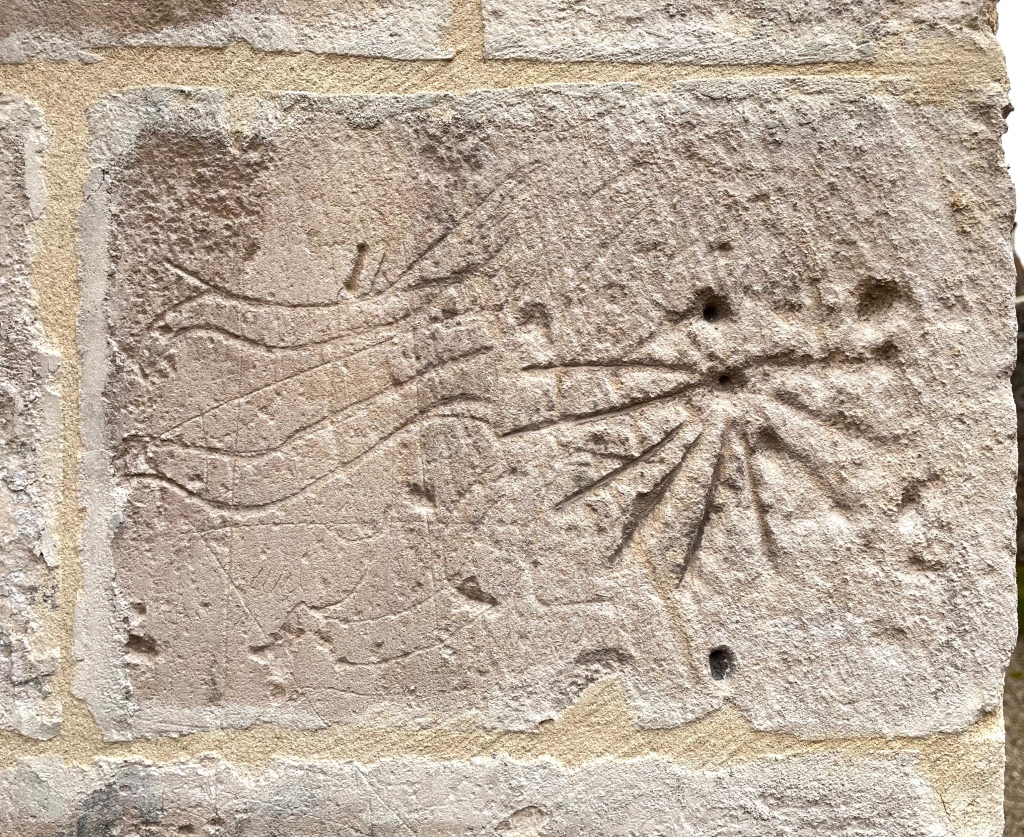
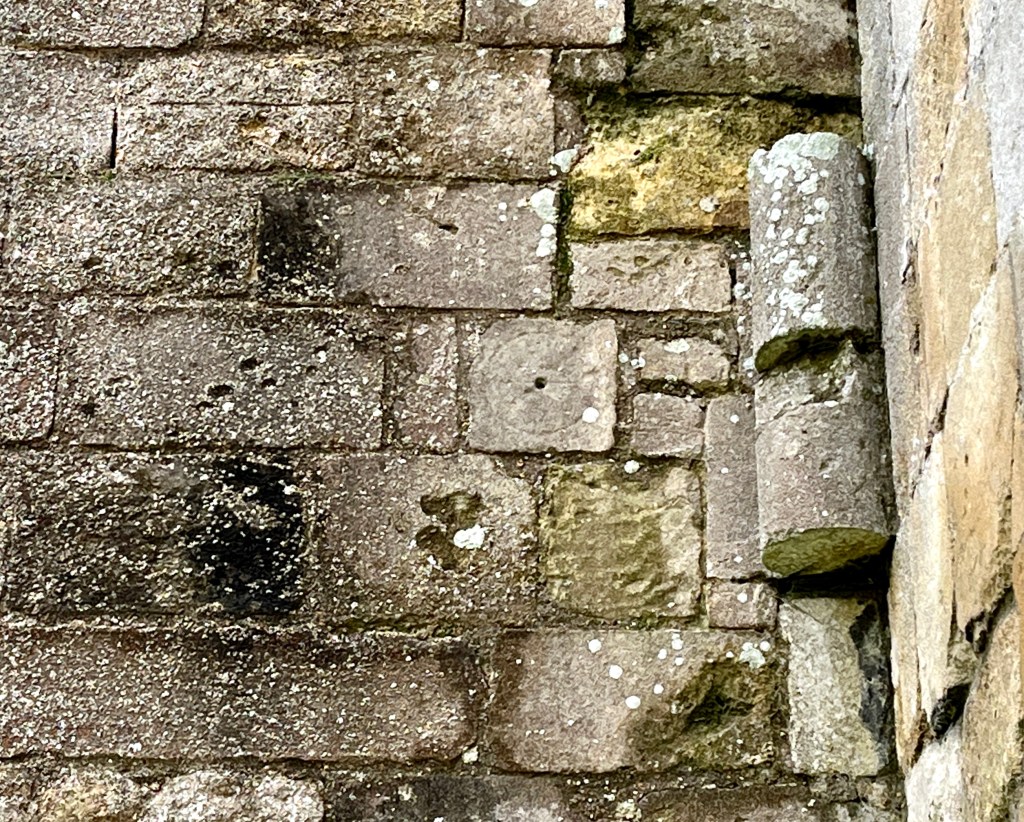
The dial is prominent on the lower right corner of the transept window. It is cut into the attractive red stone. At some time it was inverted, along with the stone above it. It’s an assertive dial, unlikely to be missed. There are 9 lines, with the noon having a pock close to the gnomon hole, then extending onto the stone below. A reverted image is shown below.
REVERTED DIAL
DIAL 2
BSS records 2 other scratch dials. Examining the separate but very similar entries for these 2 dials, it seems near-certain that they are in fact one and the same. The notes for one includes worn, error, omission, query. Report date uncertain. They differ as to whether there is a large gnomon hole or none at all; and whether there may be a circle. As it happens, I could only find one plausible candidate in the given location, so I will leave it at that.
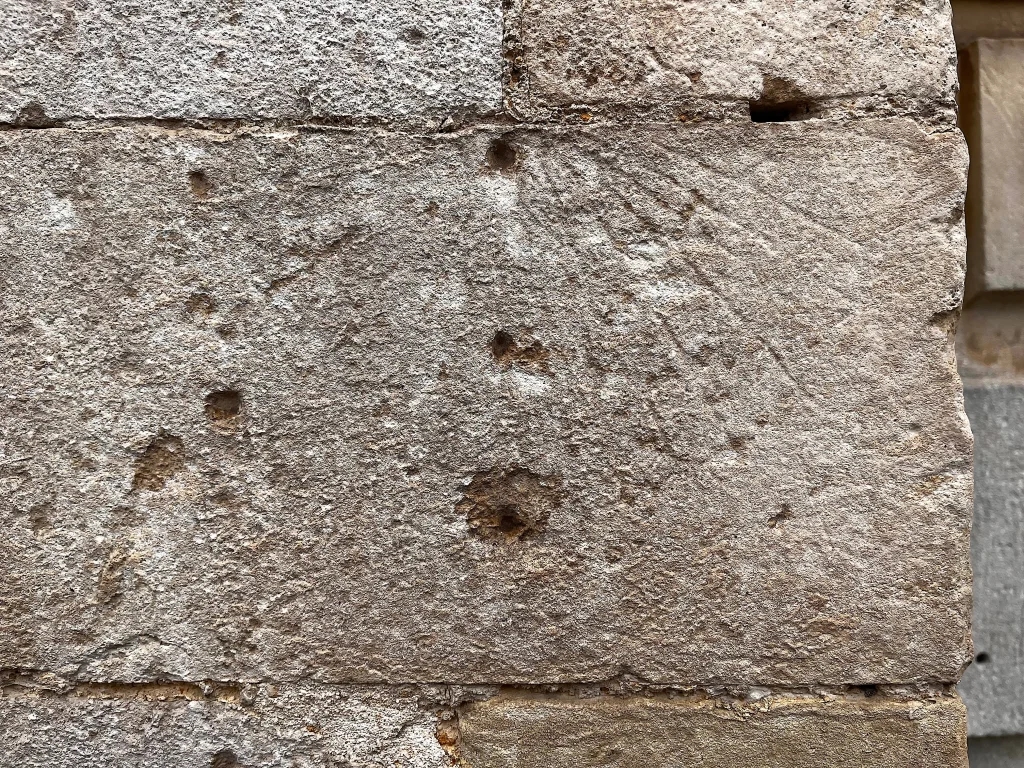
The dial is difficult to interpret, not least because it is so eroded. The larger image below hints at a noon line, with perhaps a trace of a line at XI and on the pm horizontal. There is a rough curve LRQ but no certainty that it was ever part of a circle. I doubt that the 3 shallow circular dents relate to the dial. A simple dial, then, but of use (in that location) to those passing after daybreak.

St Mary . Boyton . Wilts – Hypocrite Stone in the aisle
SIDE NOTE William Strickland, builder of Boyon Hall, was said to have brought the first wild turkey to Britain from America in the late 16th century. As a result, there are carved and painted turkeys all over the church; most notable is the lectern, shaped like a turkey instead of the traditional eagle. (David Ross – Britain Express BE)
The armillary sphere is on the grassy area close to St Giles churchyard, where the road north forks towards Blenheim NW, and to Banbury NE. It was evening and rain had been pelting down. The way to a pub led me past the dial, and I was tempted to see what an iPhone camera would make of it.
The dial was given to The City of Oxford in 1986 by its twin city Bonn, and made by a local blacksmith (to Bonn, that is.)
BSS RECORD: Modern equatorial memorial dial in an armillary sphere in the churchyard. The dial is the equatorial ring of an armillary sphere. It shows 6am to 6pm with raised cast Roman hour numerals and half hour dots. The other two rings are vertical – a north-south meridian ring open on the south side and an east-west ring. The axial arrow forms the gnomon. There is no nodus. It is not adjustable for latitude. The dial is mounted on a small stone slab. There is a small plaque on the slab.
Margaret Stanier in her book on Oxford dials, calls it a fine bit of ironwork, with bold numerals, easy to read. She notes that the rings are positioned so that their shadows cannot obliterate that of the gnomon.
The experiment with a phone worked quite well, I think. The details are legible, possibly more so than photos taken in sunlight. And it makes a change.
GSS Category: Armillary Sphere; Modern Dial; Oxford Sundials
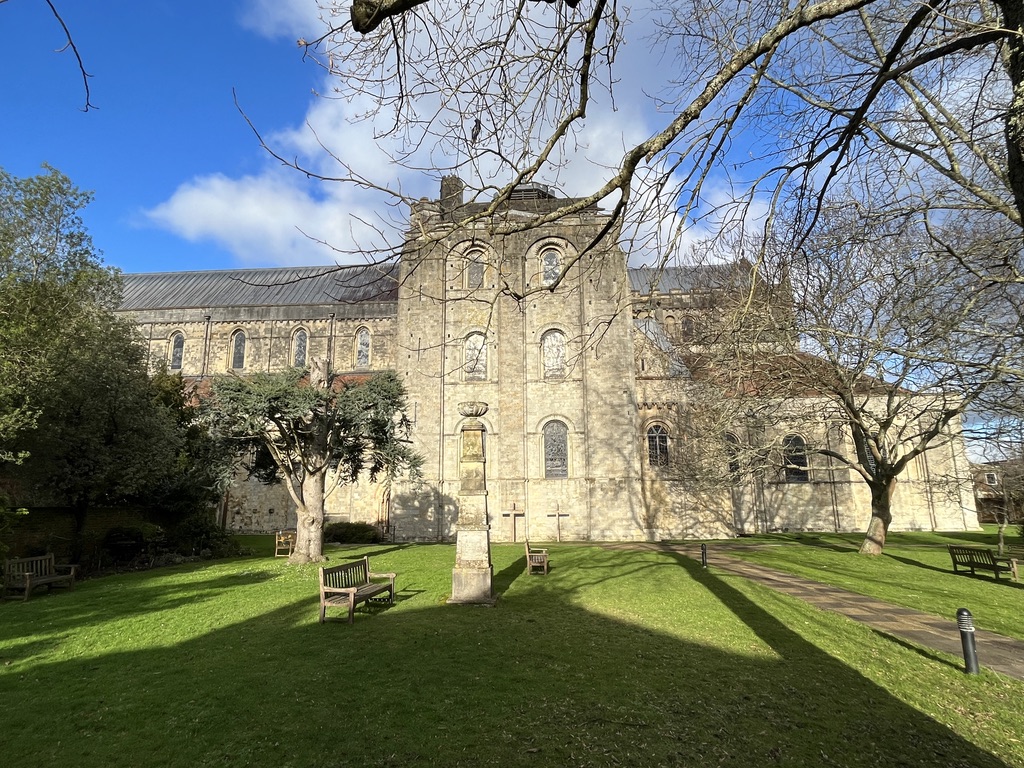
GRADE II ✣ C12 traces (BHO); then C13 on; C15 tower; Wyatt rebuilding 1860s. A few early features remain. An interesting, well-kept building and churchyard. 6m NW of Salisbury via Wilton. 51.1079 / -1.8758 / SU087342
DIALS
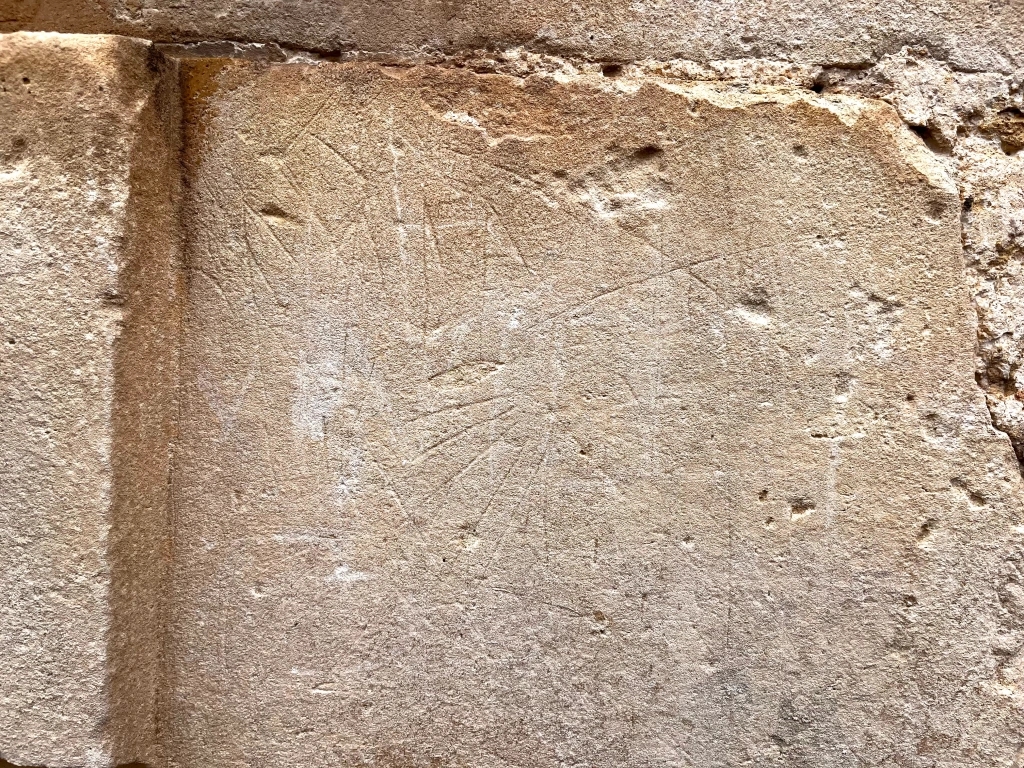
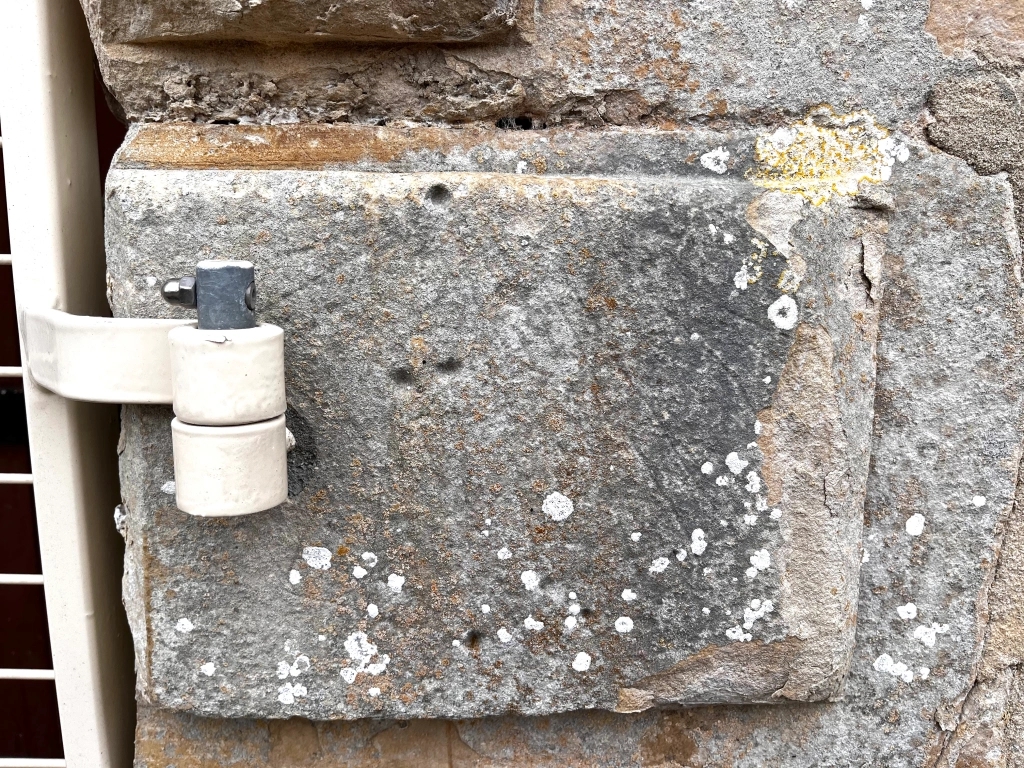
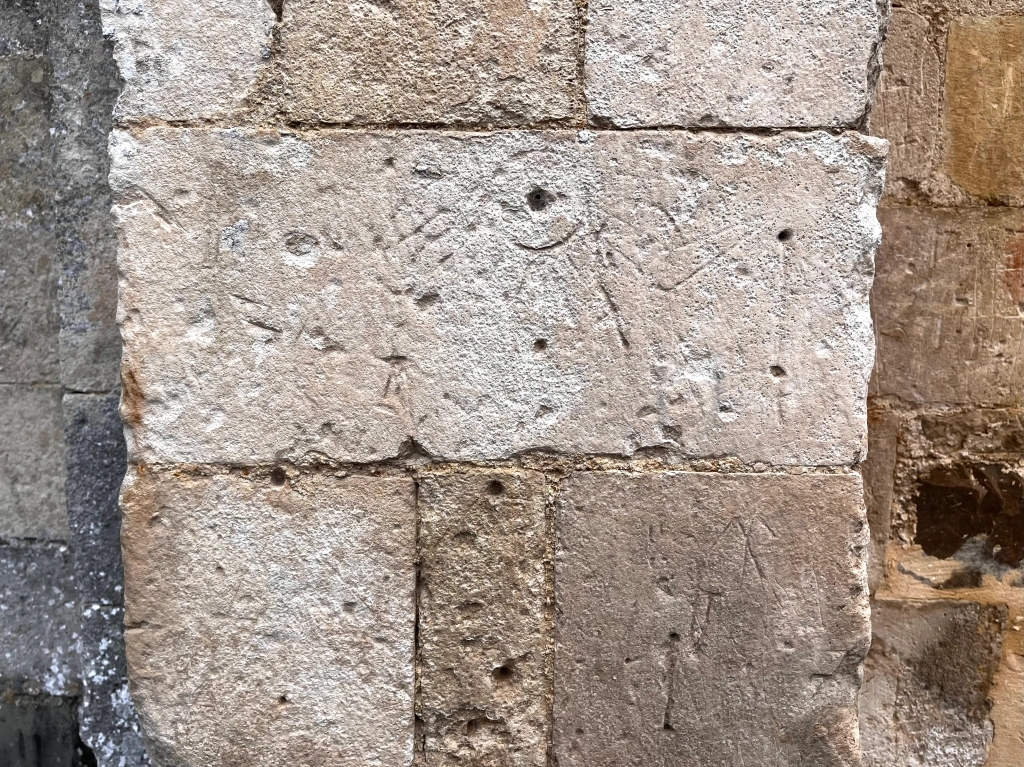
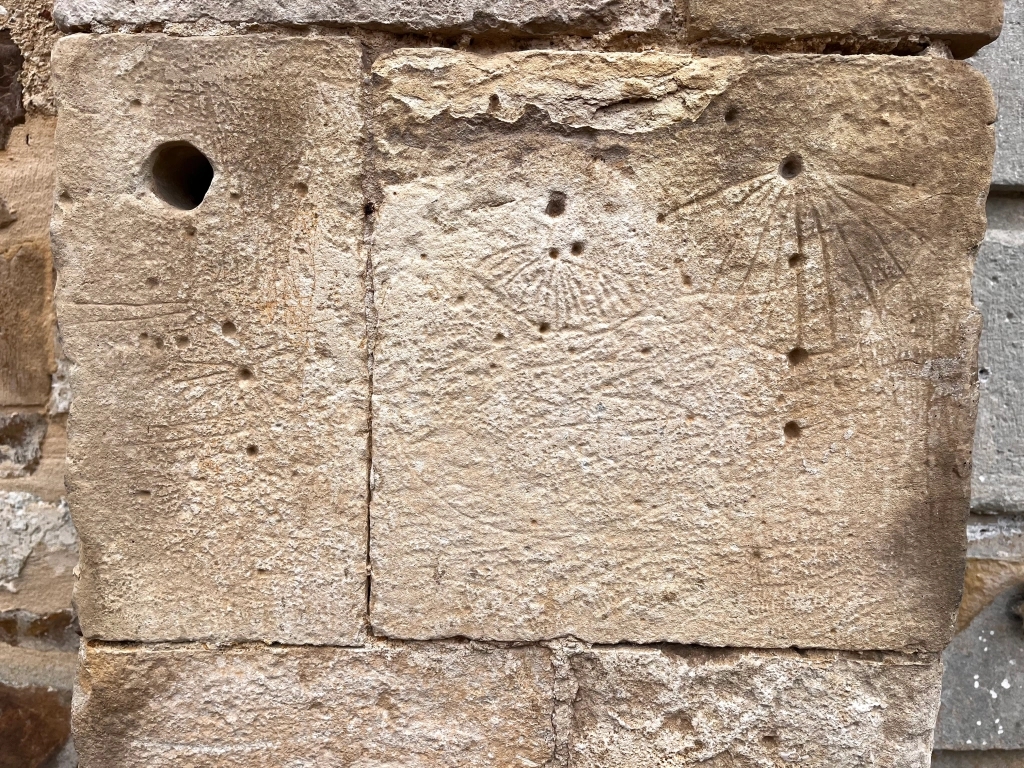
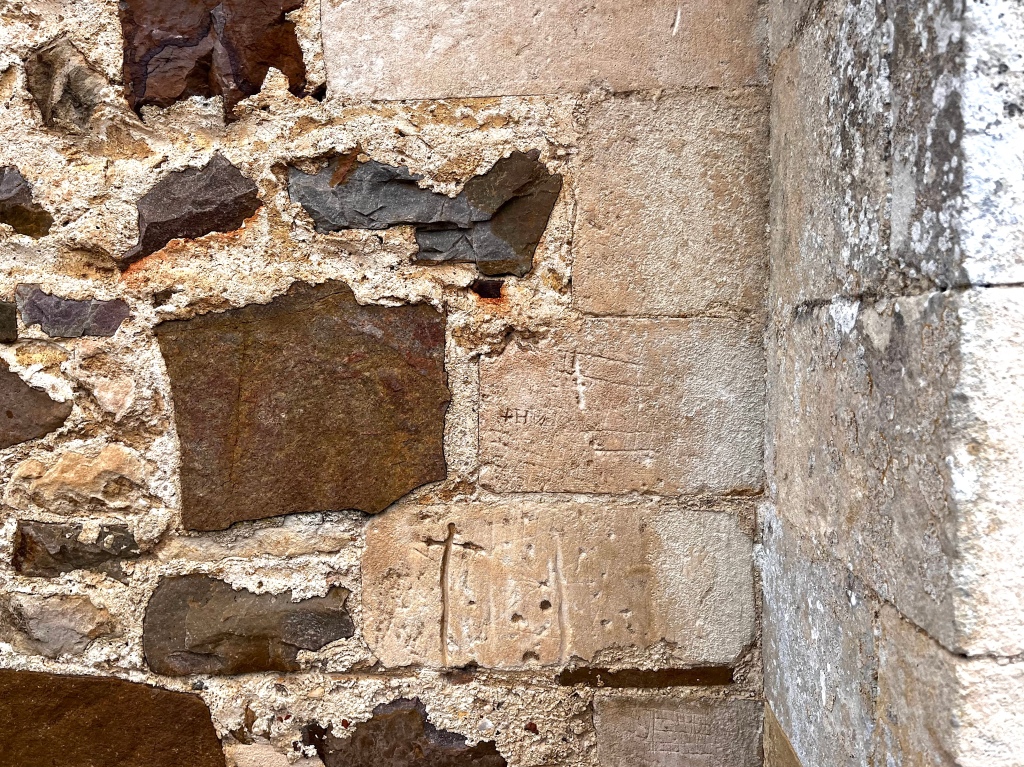
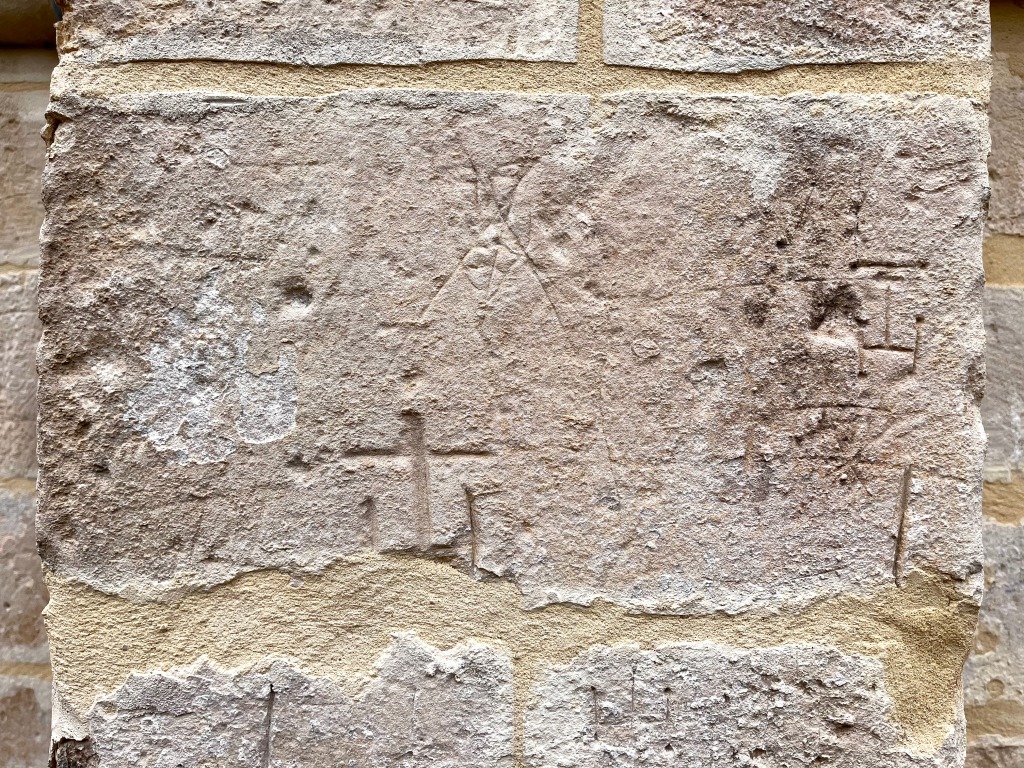
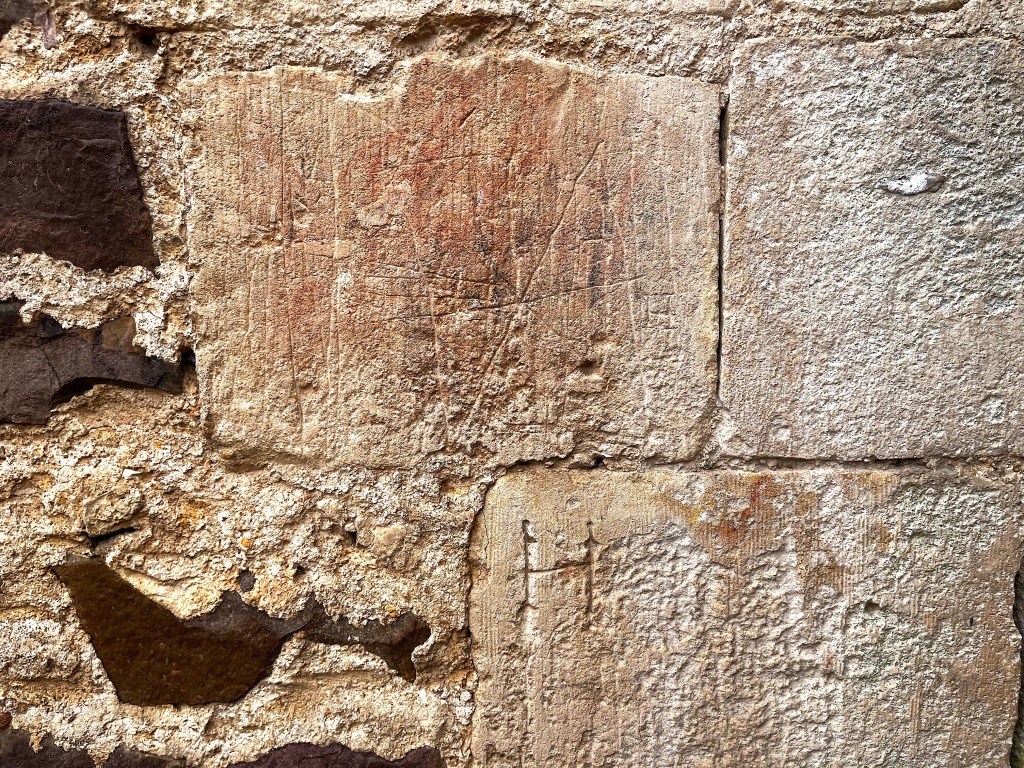
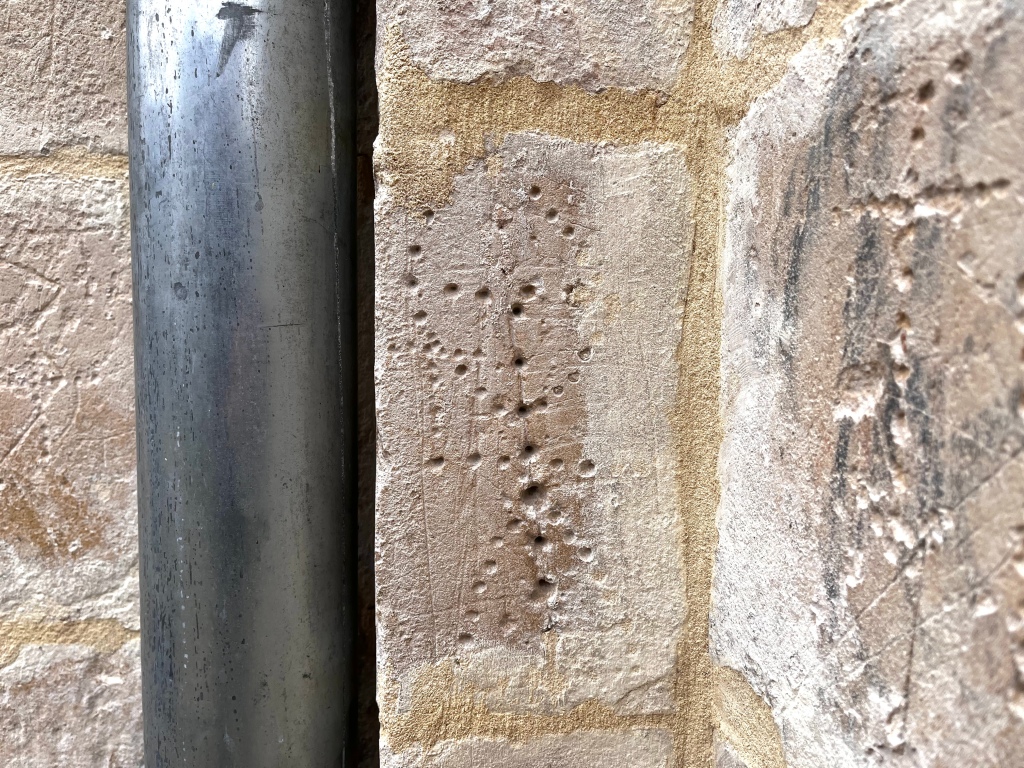
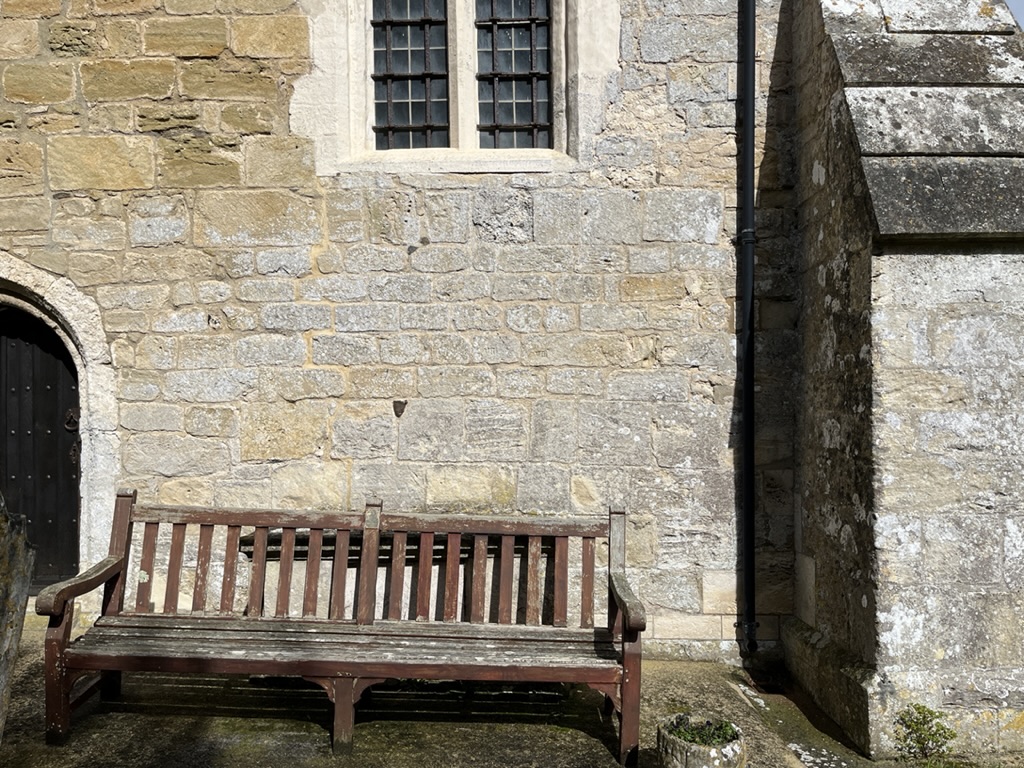
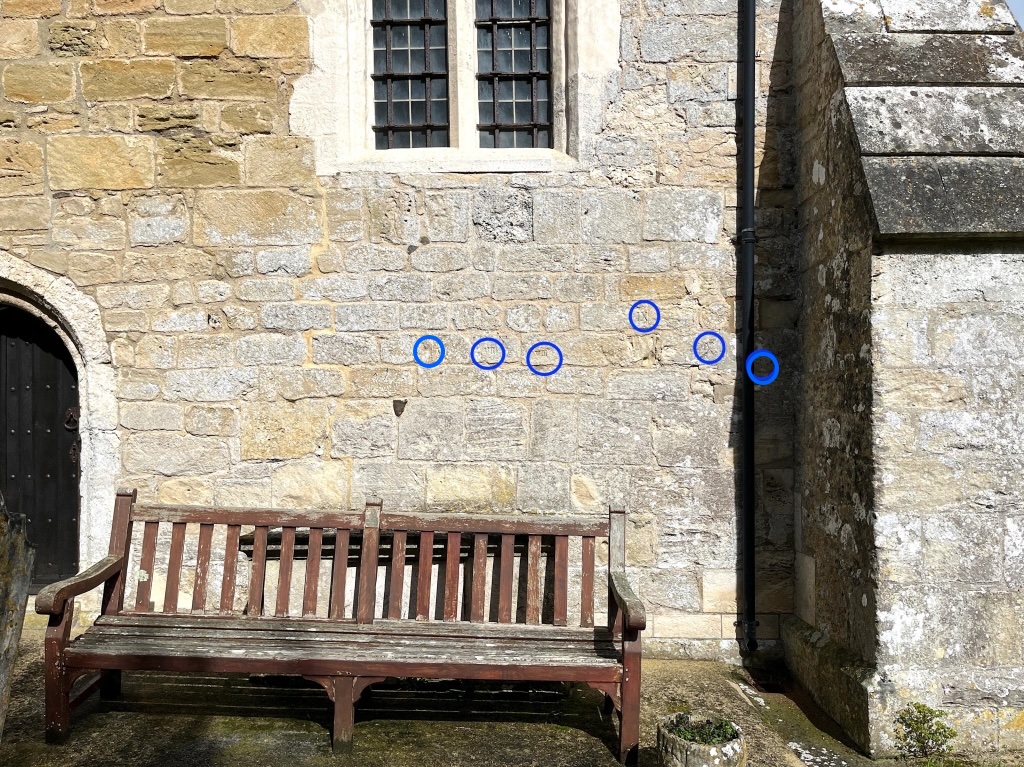
Two scratch dials are recorded with descriptions, with a third mentioned in tentative terms (BSS). When I visited, the only dial I found didn’t match the descriptions nor was it in any location mentioned. There were a few quite plausible gnomon holes but none had any additional dial-ish features, not even eroded traces. Clearly I need to return and try harder next time I’m in the area.
DIAL
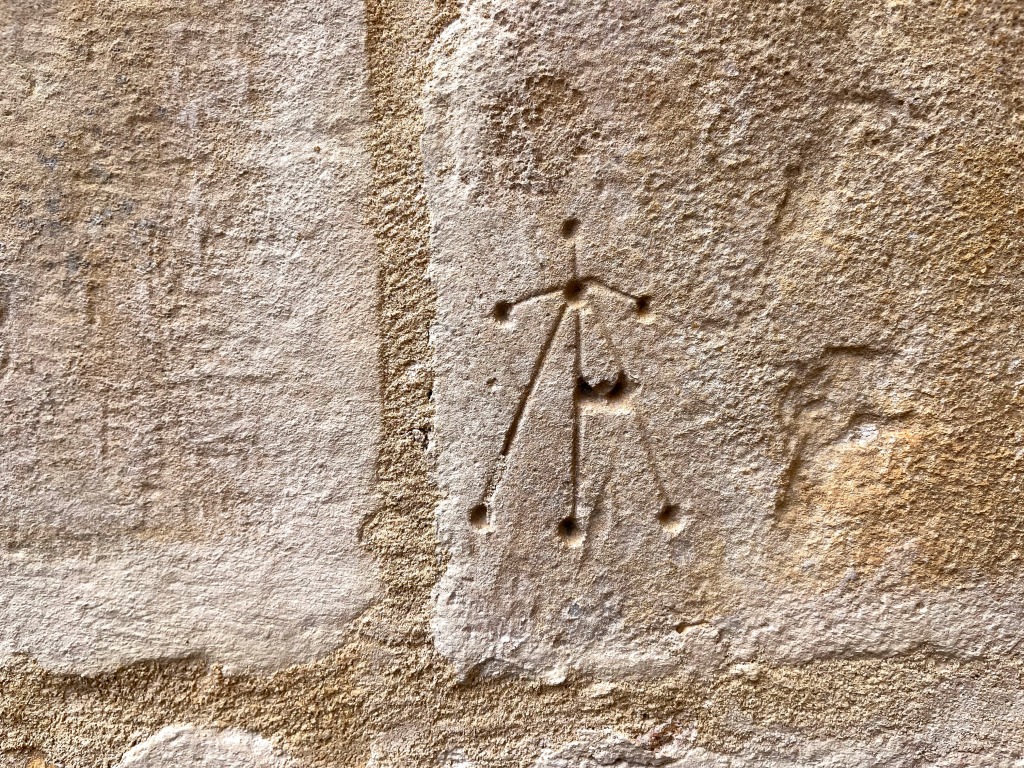
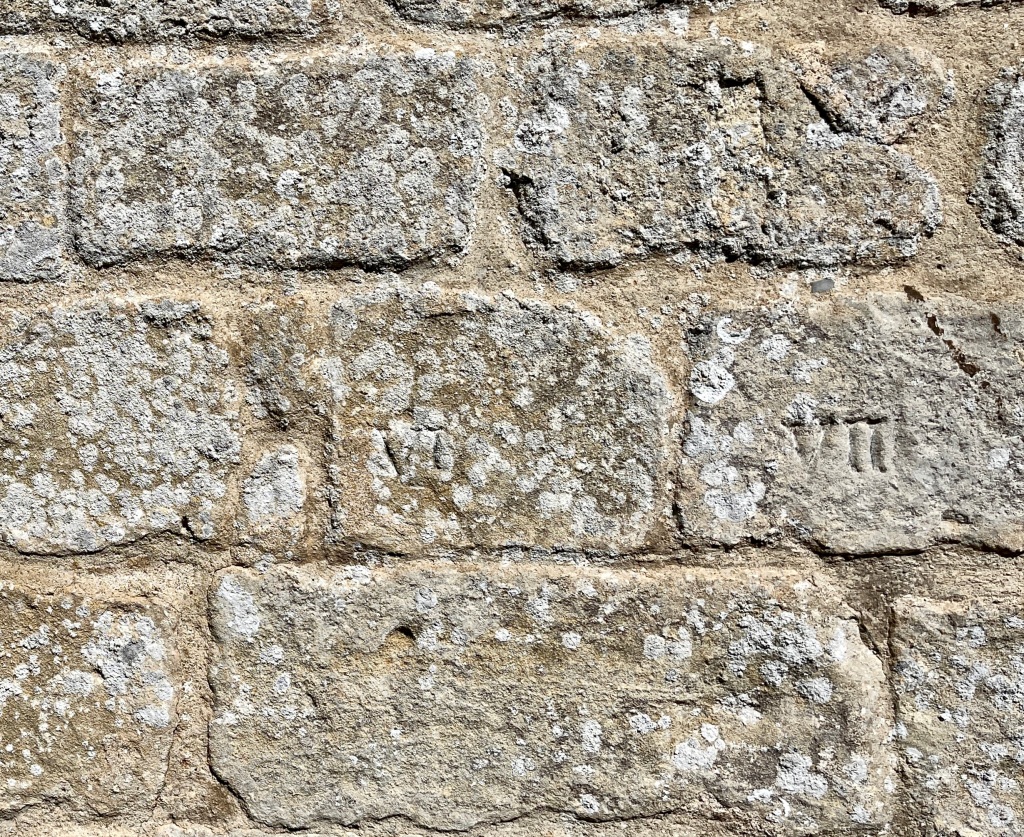
A very basic dial with the gnomon hole in the mortar line. Two clear lines either side of noon, possible terminal pocks (if so, perhaps later additions). LLQ there’s a faint trace of a third line.
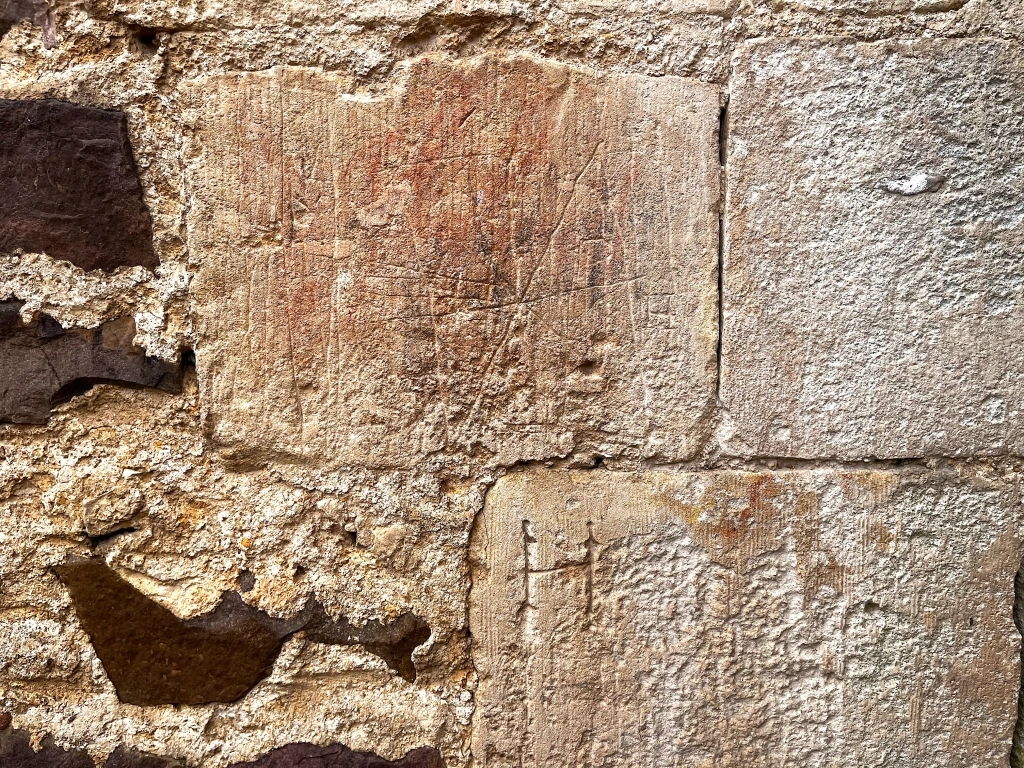
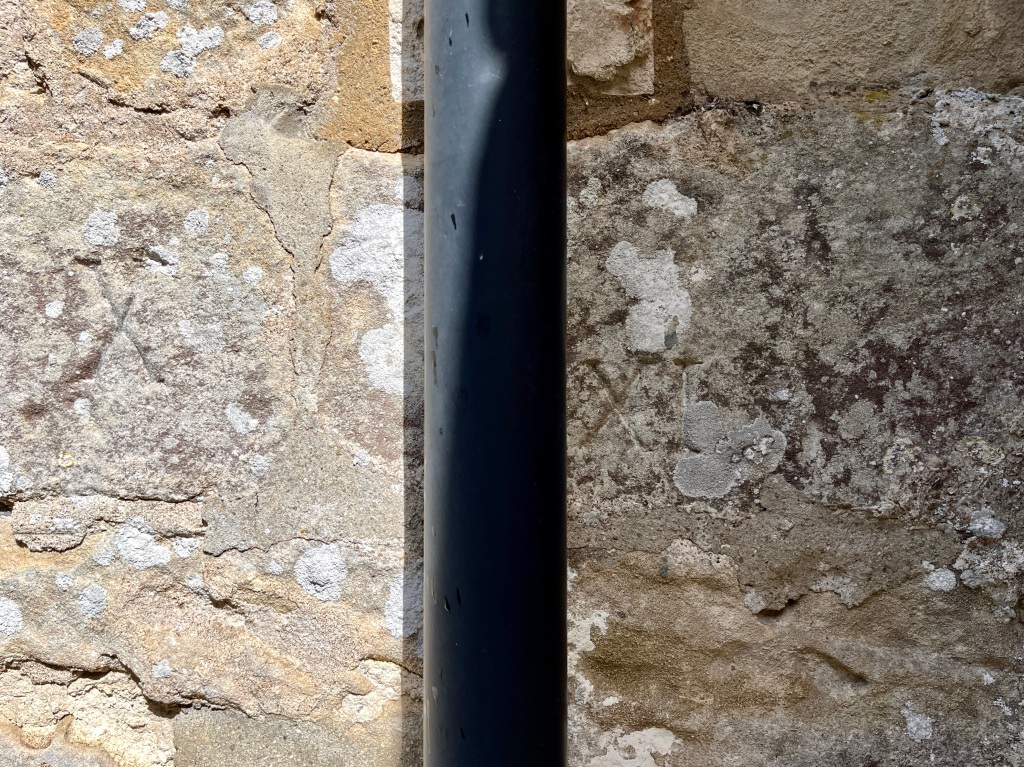
The dark blue circle in image 1 below marks the dial above; the pale blue circle marks image 2. Image 3 is one of several examples that, apart from holes, have no visible dial characteristics.
The Atkins longcase clock above has the initials FA and the date 1781 scratched in a corner of the glass. One year earlier, Francis Atkins had been elected Master of the Clockmakers Company in recognition of his standing. Perhaps this clock was first to be made when his term came to an end.
Opening the door at the front reveals a feature so unexpected that it is hard to believe: a full-scale Table Shewing every Day in the Year at Noon, how much the Equal or Mean Time is Faster or Slower than a Sundial. Maybe this is not so unusual, but I have never come across it.
I’m making no attempt to analyse what can clearly be seen. There may be several ways in which the Table can be read, so I’ll leave it to the reader to interpret.
There is one further interesting feature, perhaps not a rare one. The hand on the lower dial (in fact, counter-dial) has to be gently removed in order to wind up the clock. That’s where the key goes. The clock was Cleaned by Mr. Gallop, Horsecastles, Sept. 1971.
The drawing pin has its own story…
GSS Category: Equation of Time; Sundial Accuracy; Longcase clock with sundial table
St Mary Penzance . Bill Henderson . Geo / Wikimedia
ST MARY . PENZANCE . CORNWALL
GRADE II* ✣ Originally a chantry chapel of Madron parish; records from 1321. In due course rebuilt, and reconsecrated 1838. Destructive arson in 1985; 2 recent attempts. 8 bells of interest. Some traces of the past remain, eg memorial tablets*. 50.1165 / -5.533 / SW475300
VERTICAL DIAL
This slate dial with its bronze gnomon was originally made for a chapel near the church. The BSS records indicate that the dial declined 12º W in that position, but needed to be canted in its new position to correct for the different declination of the buttress of St Mary’s where it is now to be found.
The dial clearly predates the building of St Mary. Perhaps ± 1800 would cover it. For a chapel, the 5 minute intervals noted below suggest a quite sophisticated dial.
MOTTOES
There are two learned mottoes cut inside the arch at the top, with Father Time below them.
Solem quis dicere falsum audeat Who would dare to call the sun false (Virgil) Tempus edax rerum Time the consumer of all things (Ovid)
CONSTRUCTION
Mrs Crowley, who sketched dials of Devon & Cornwall, noted a difference between stone top and bottom; and the horizontal line seems too high to be an indicator of the equinoxes and, in any case, there is no nodus on the gnomon. The engraving is good, there are decorative half-hour markers and the hours are divided down to five minute intervals.
In the sanctuary is a Baroque tablet to John Tremenheere, d. 1701, with Doric columns, broken segmental pediment and a winged skull at the base (HE). His tomb is in a family vault below the centre aisle. I am a direct descendent, but unlikely to join him.
Dusk on a rainy November evening is not an ideal time to photograph high-up sundials, especially ones with intricate but delicate gnomons. Entering the Great Quadrangle, the sundial is visible on the Muniment Tower, beyond which is the Garden Quad. The position of the dial somewhat limits the photographer. A certain amount of refining has been needed in presentation, which I hope will be excused. The dial face is pale blue (white in some photos I have come across). The light conditions resulted in a rather startling blue that I have attempted not very successfully to tone down.
New College Oxford . Vertical Sundial
The New College Millennium dial is on the S facing wall of the Muniment Tower. Quite apart from photographic considerations, the high position means that it is not possible to see the whole dial from ground level. One cannot, for example, see that the M M at the top is matched by W W at the bottom, standing for William of Wykeham who founded New College in 1379; nor that noon is marked by a golden cross.
New College Oxford . Vertical Sundial
The dial marks quarter hours, as indicated by the chequered perimeter. Margaret Stanier mentions a wall-mounted plate showing the EQUATION OF TIME ; and she notes that there was a vertical dial in the same position from 1696 until c1850, then being obliterated by restoration and refacing.
BRITISH SUNDIAL SOCIETY ARTICLE – HARRIET JAMES
This excellent article from the BSS Bulletin Vol 12 .1 of Feb 2000 was published very shortly after the installation of the dial. It has all the material you need regarding the dial, and there are some very clear images that give a view of the whole dial. It also covers the original C17 dial in the gardens.
GSS Category: Vertical Dial; Millennium Dial; University Dial
All photos: Keith Salvesen. Source material: Margaret Stanier ‘Oxford Sundials’ 2003. College diagram: BLB; tip of the hat to Michael Lalos, a fellow dial enthusiast, who also used the BSS Bulletin
GRADE II ✣ Early CI4 origins. St Peter is a delightful small church a short distance SW of Oxford, close to Boar’s Hill and the unrivalled views over the fields towards the dreaming spires. 51.7092 / -1.3122 / SP476013
DIAL
During a recent visit to Oxford to see some of the College sundials, I found an earlier note of a possible dial at St Peter’s. I eventually found it on the E jamb of a tiny window now overgrown by a substantial laurestinus bush and protected by sharp rose thorns. Blood was drawn but it was worth the sacrifice.
The dial stone is near the centre of the photo above. Apart from the gnomon hole, it is just possible to make out traces of what must have been a full circle. There is a slight hint that it may have been a double circle. The noon line (perhaps with a terminal pock) is faint. A second line (XI) is close beside and slightly shorter.
There is a single pock on or close to what would have been the perimeter of the circle. Its position at approx None might support a theory that it belonged to the dial and indicated mid-afternoon Mass.
The dial’s angle adjusted to a more front-on view
NOTE: St Peter has an interesting concave vertical dial at the apex of the porch, to be written up separately in due course with a LINK
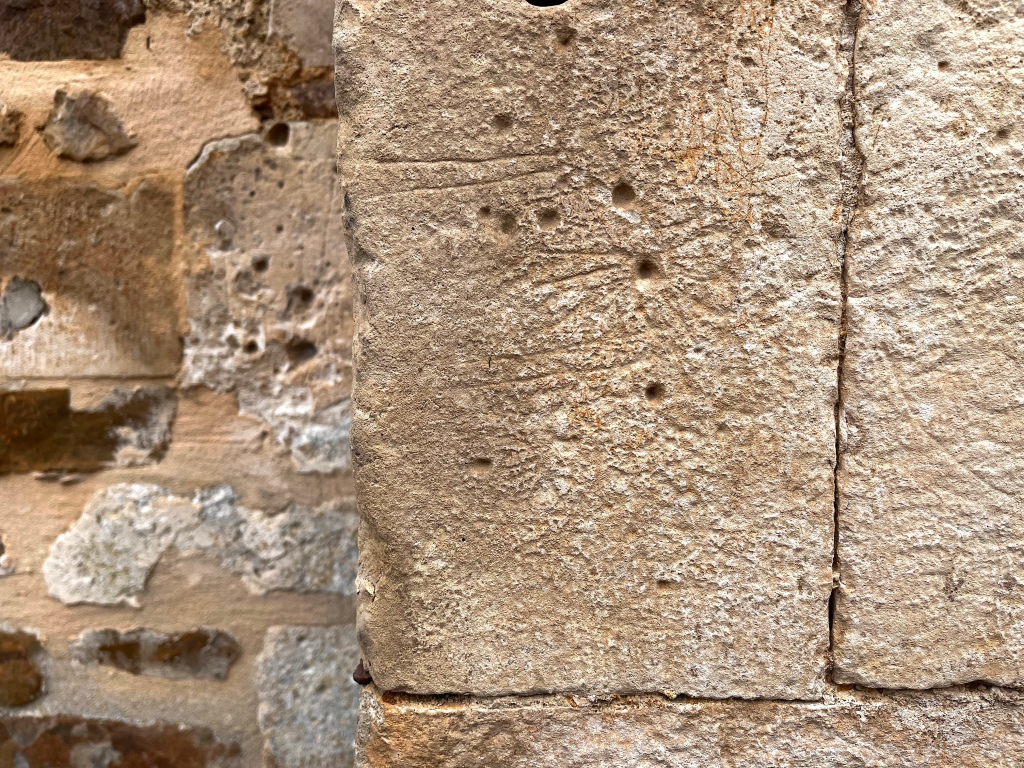
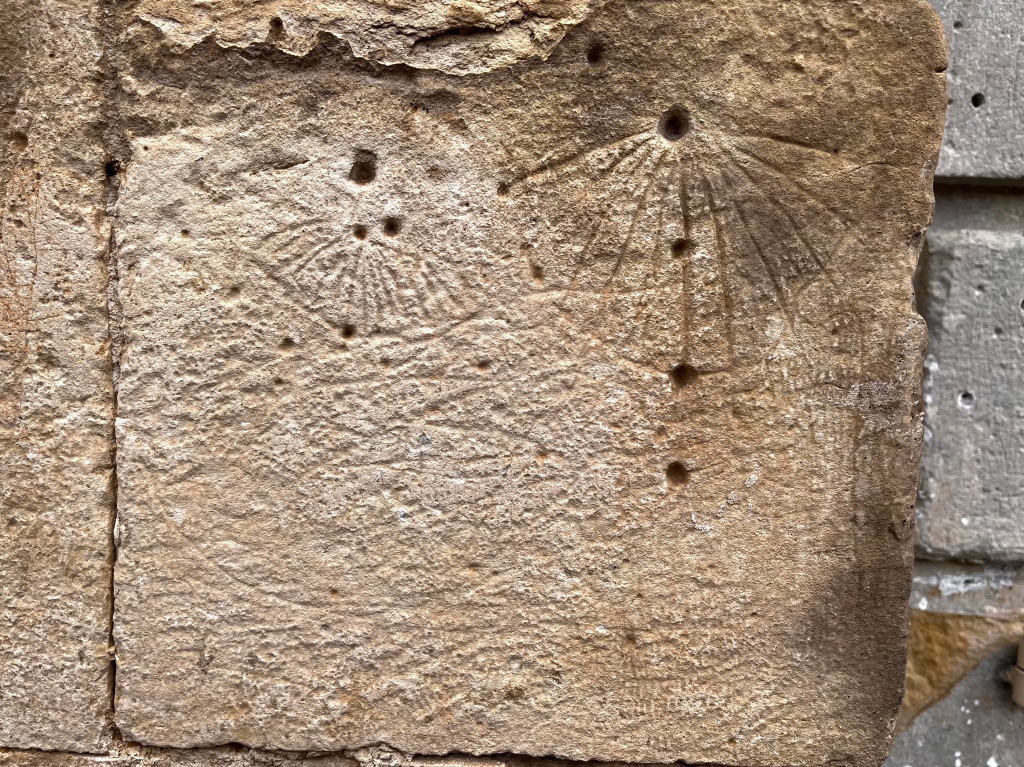
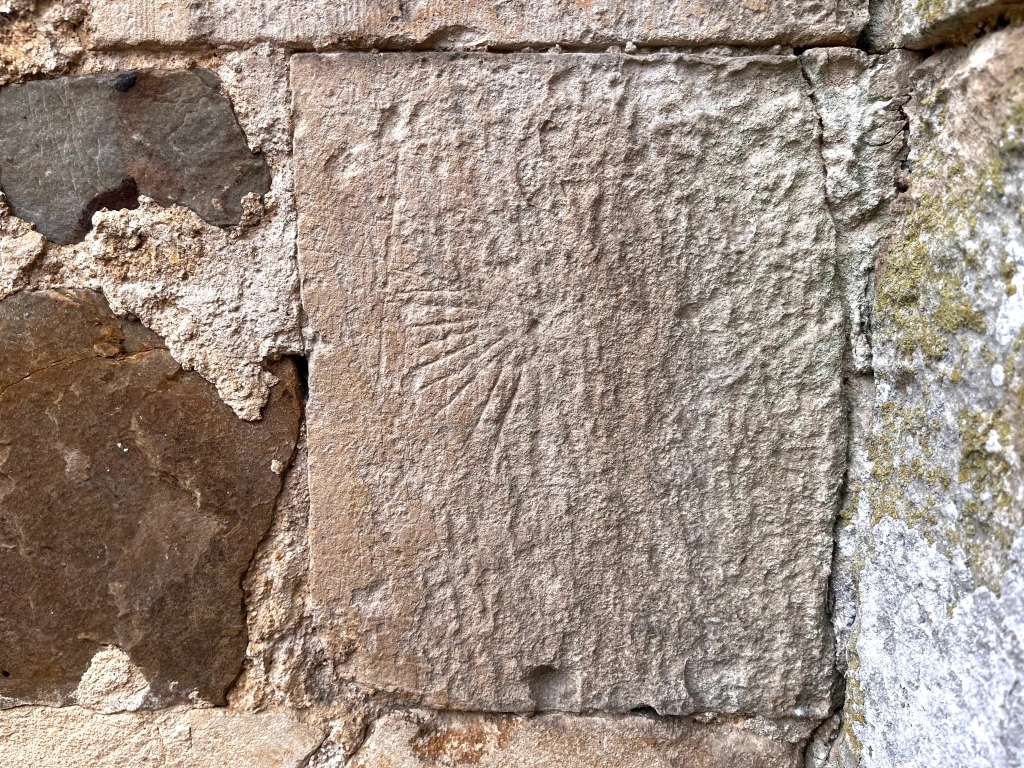
GRADE I † C13 origins; C14, C15 development; extensive restoration 1873 (Carpenter). C12 font. 3 scratch dials; and a fine Millennium dial LINK. 10m NW of Salisbury. 51.1363 / -1.9493 / SU036374
DIALS
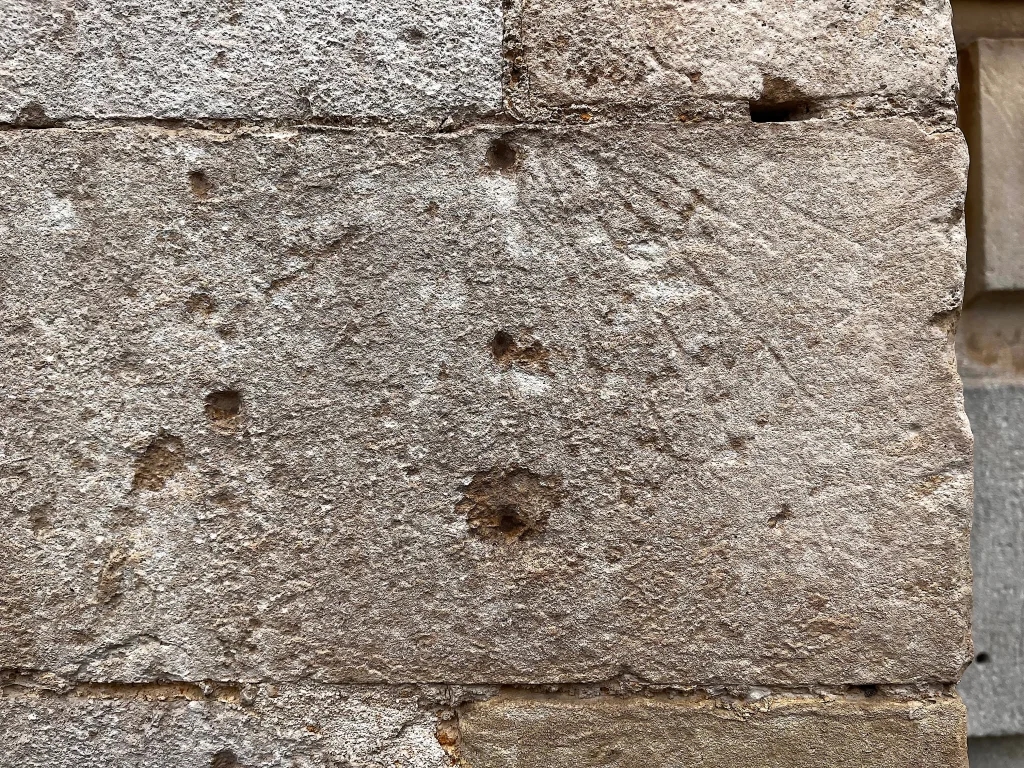
All Saints is unusual in having 3 dials of very similar design, without the often-found stylistic developments on churches that have more than one dial.
DIAL 1
The most complete dial in terms of information for the passer-by. A complete circle with several lines clear and faint, some with a terminal pock. The noon line extends beyond the circumference, with the lines RHS indicating an afternoon dial.
DIAL 2
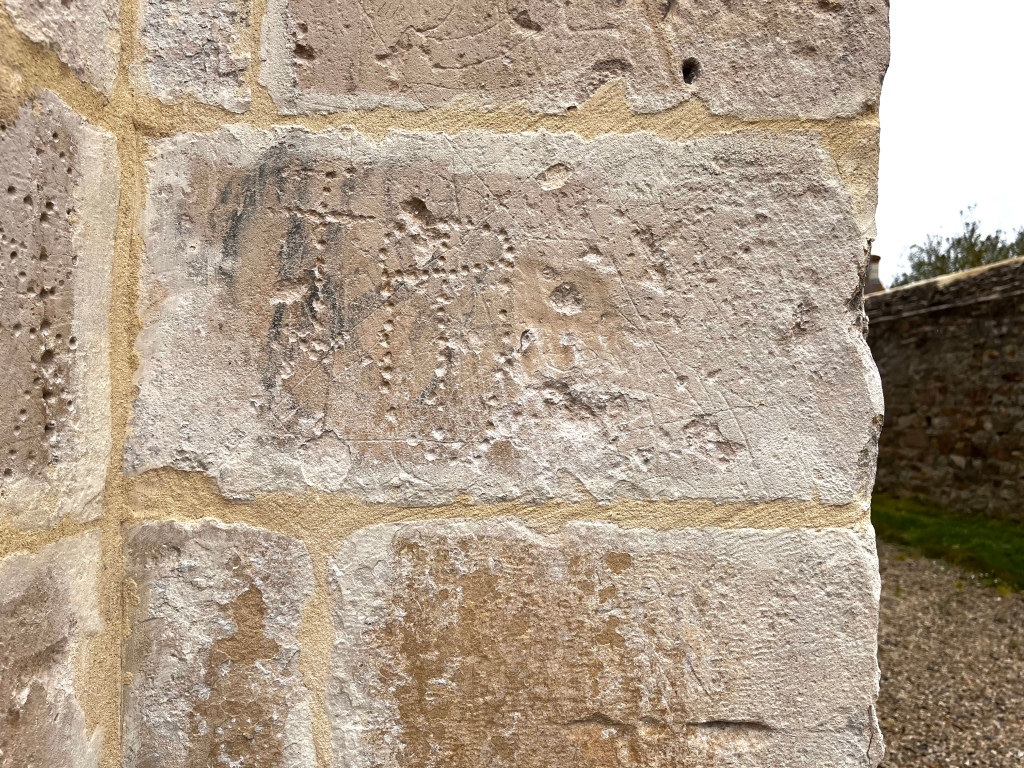
The dial’s circle is clear and the gnomon hole is large (with signs of recent enlargement). Apart from that only the faintest traces of lines remain, presumably lightly cut initially and eroded over the centuries.
DIAL3
A partially obliterated circle; a gnomon hole; hints of 3 pocks LRQ. Perhaps we can deduce that this was the first of the dials. Of course, even a stick in the centre hole would give a fair idea of the time of day to the passing parishioner.
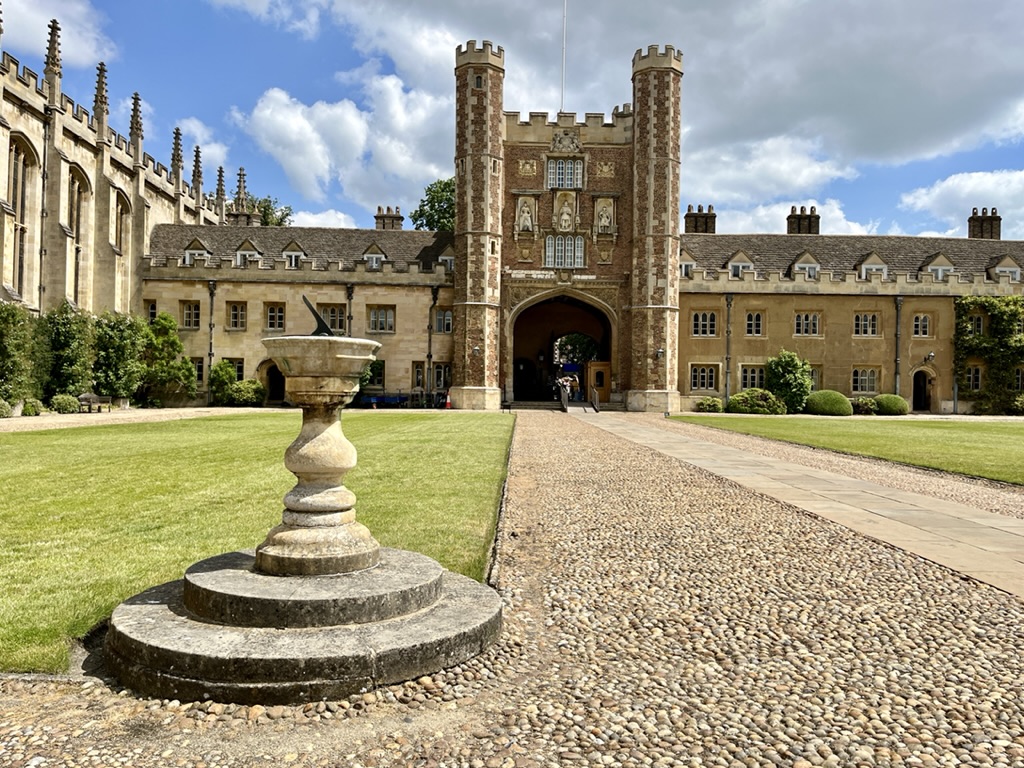
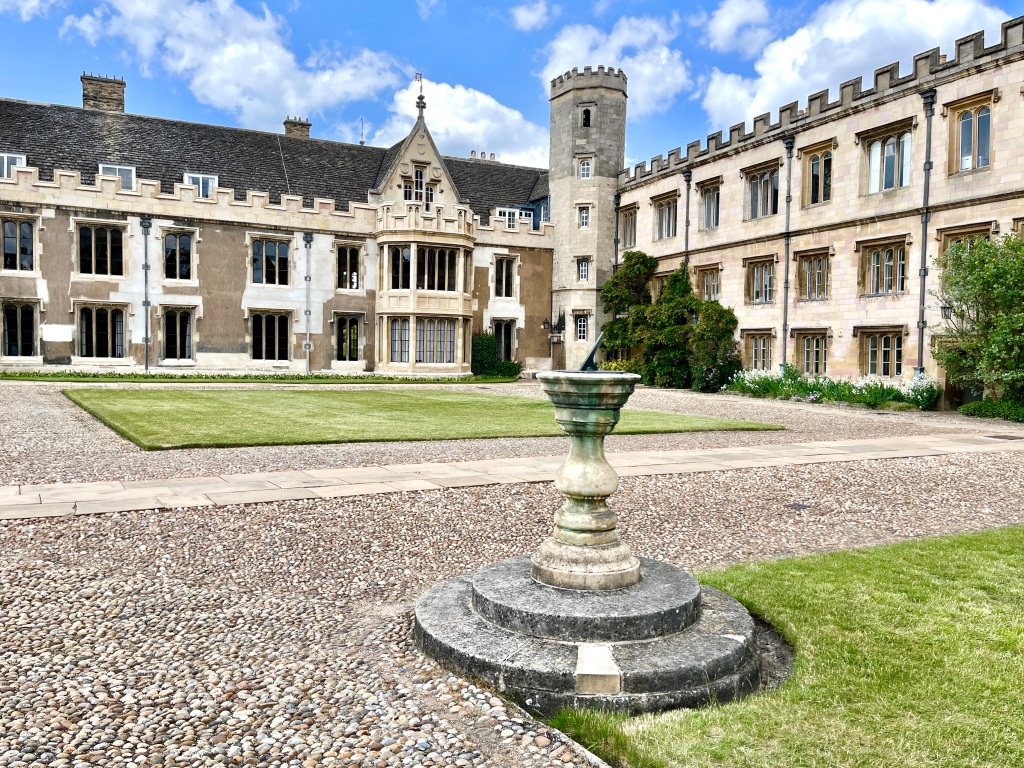
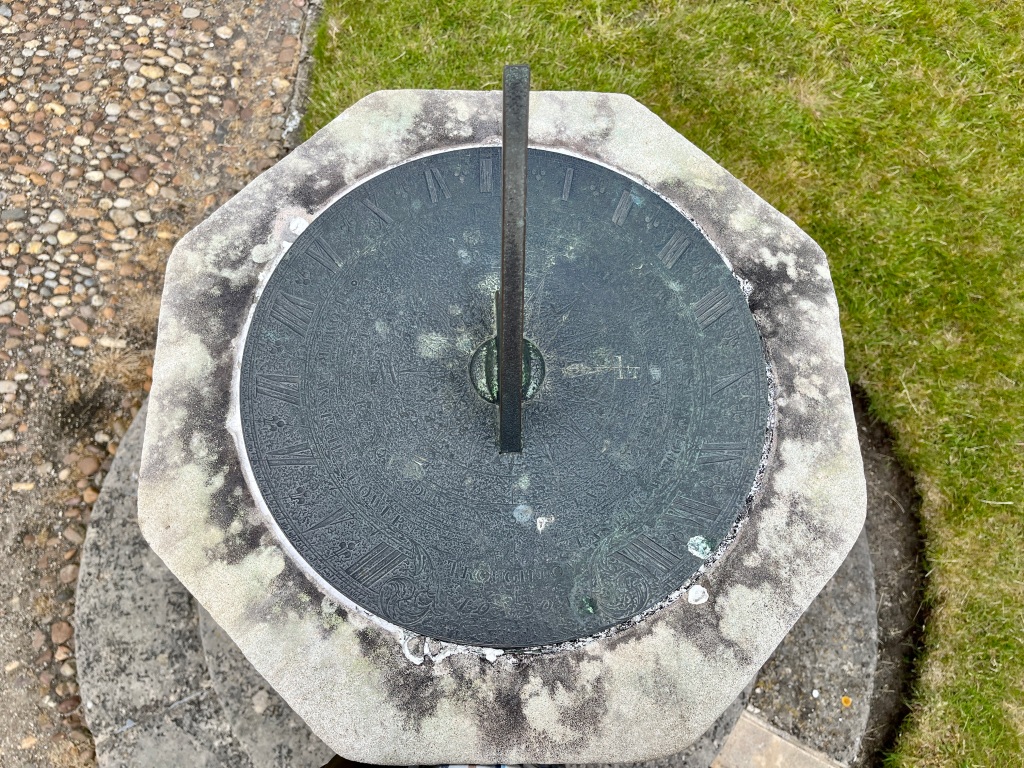
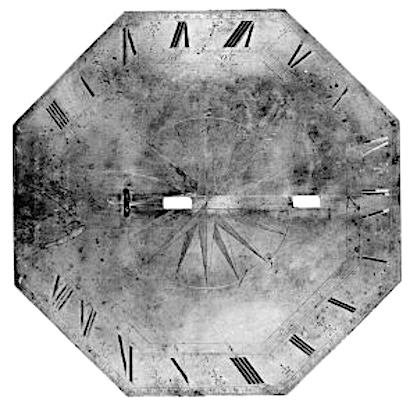
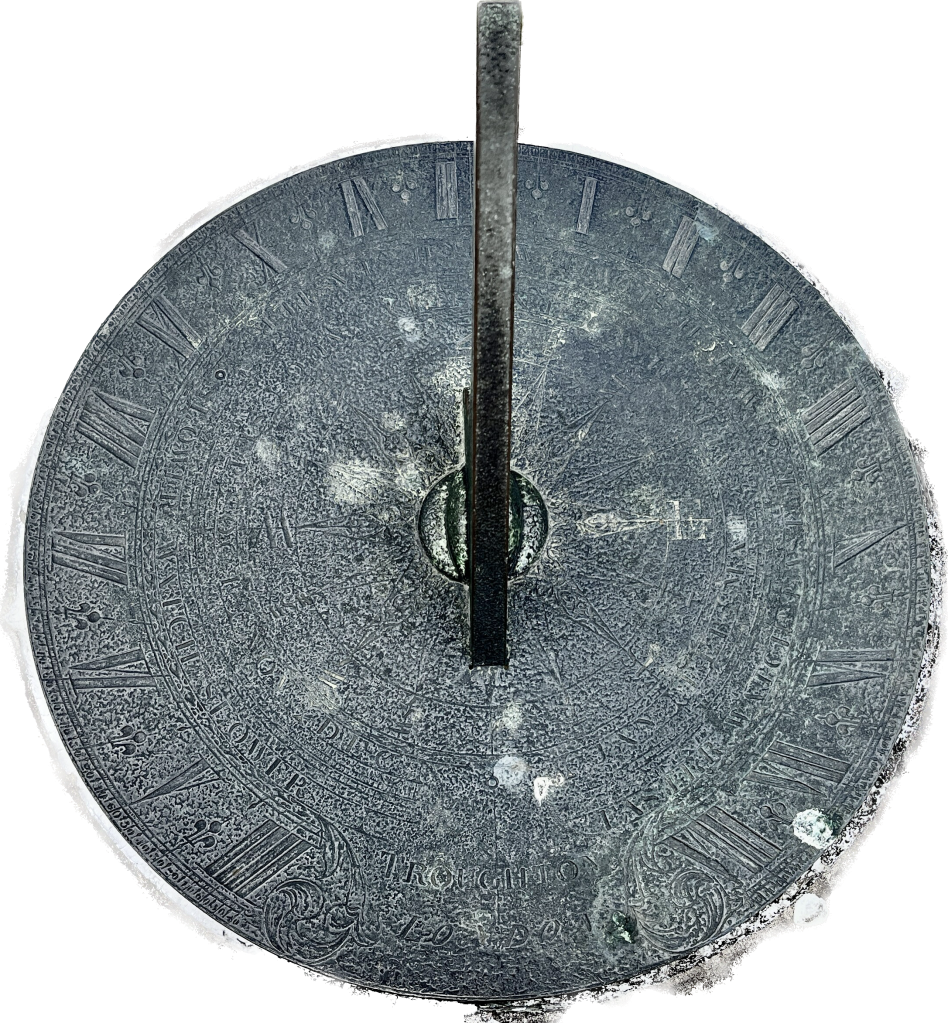
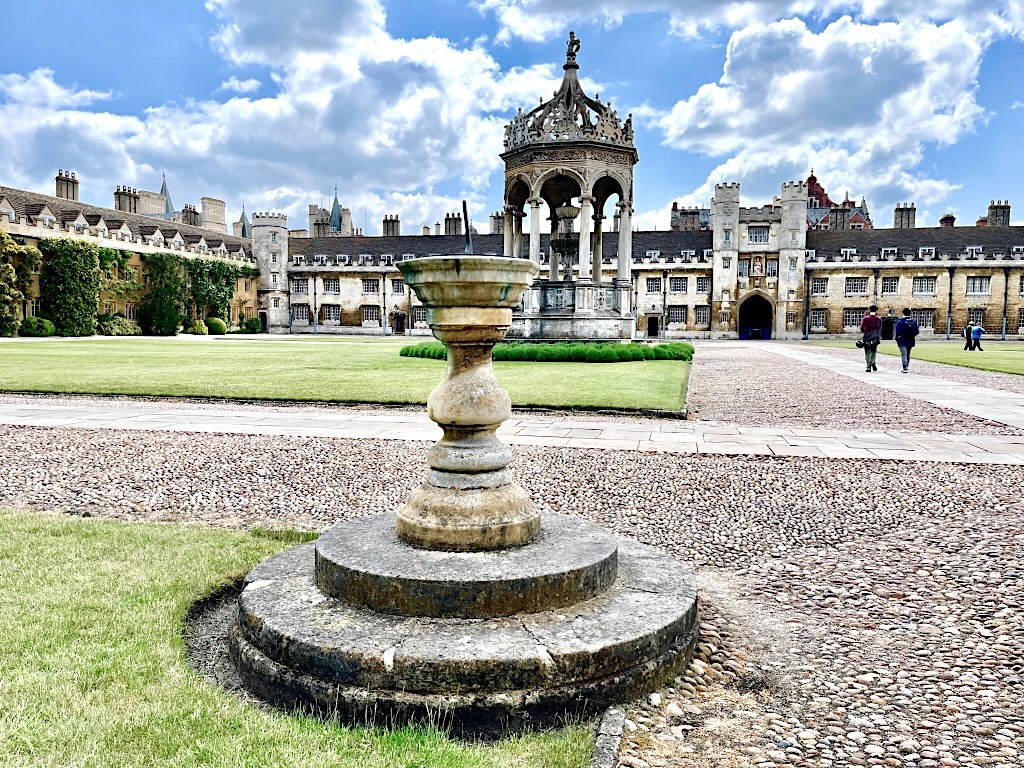
This famous Tompion dial in the Privy Garden at Hampton Court is one of a pair, the other being transferred in due course to Kew Gardens. The BSS Bulletin Jan 1997 includes side-by-side photos of both. The dial that stayed in situ, featured here, being on the left. The other dial was transferred to Kew in 1832 and not restored to Hampton Court until 1995.
I took these photos in 2011 when I was dialling-lite, and probably with an iPhone 3. Revisiting these images, I’m pleased at what a good job it did. Puzzlingly, during a quick trawl through the usual resources, inc. the Royal Collection, I have found it difficult to find any detailed images of this dial, though I found a RC image of dial 2.
Only the front of the plate is clear, and it is in remarkable good condition. There is just enough definition to give a good idea of the complexity of the calendar further back on the plate.
The precise date for the two dials in unclear. Tompion was baptised in 1639 and died in 1713. I have seen ‘towards the end of C17’; and the excellent Border Sundials points to evidence of installation in 1699.
Probably, in a sundial resource, it is permissible to include an occasional linked item, and the wonderful Hampton Court astronomical clock merits admiration at any time. I was pleased to get a straight-on shot without resorting to trickery (of which there was not much available in 2011).