TOTNES . DEVON . ST MARY – Scratch Dial

wigulf . wiki . cc / os

TOTNES . DEVON . ST MARY

GRADE 1 ✣ A fine Perpendicular church on the site of Benedictine Priory, standing proudly near the centre of the town and visible from some distance away. Mainly built mid C15 using much red sandstone. The Grade denotes the importance of the building, and the interior offers much for the visitor. Also, see the splendid Norman motte and bailey castle nearby. 50.4319 / -3.6878 / SX802604

From the Parish website

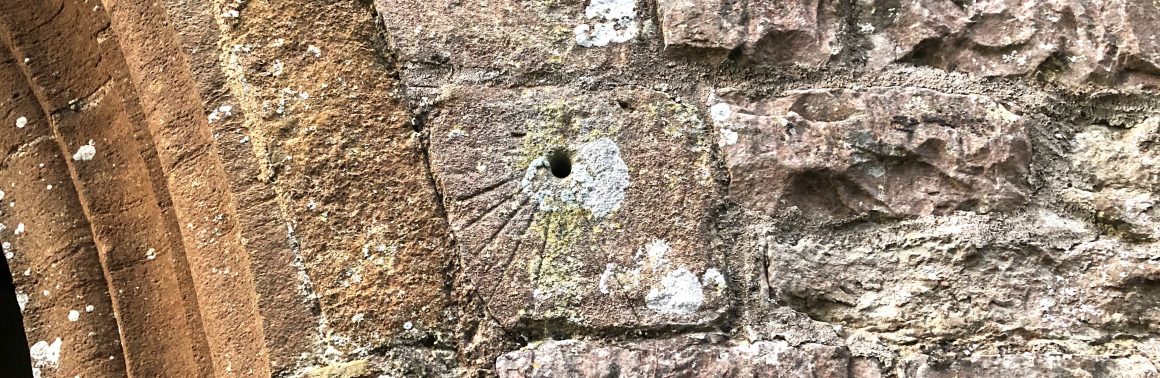
SCRATCH DIAL

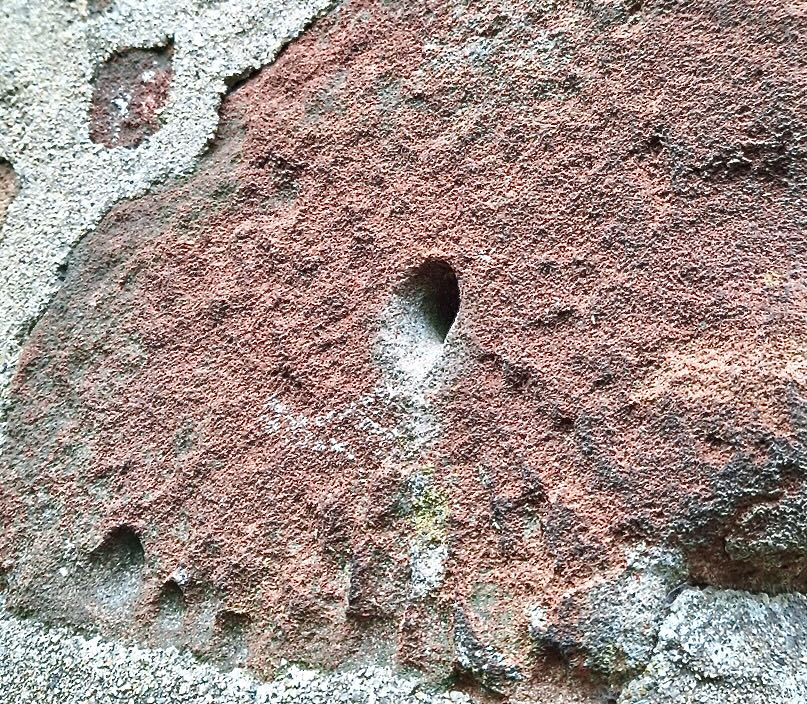
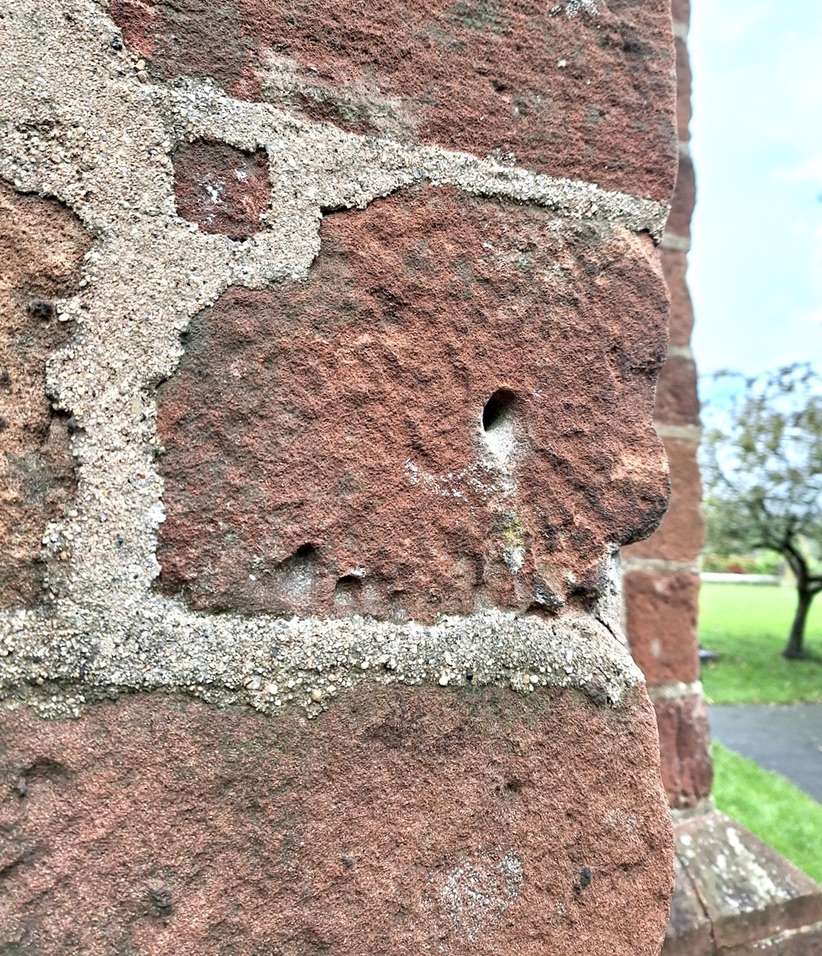
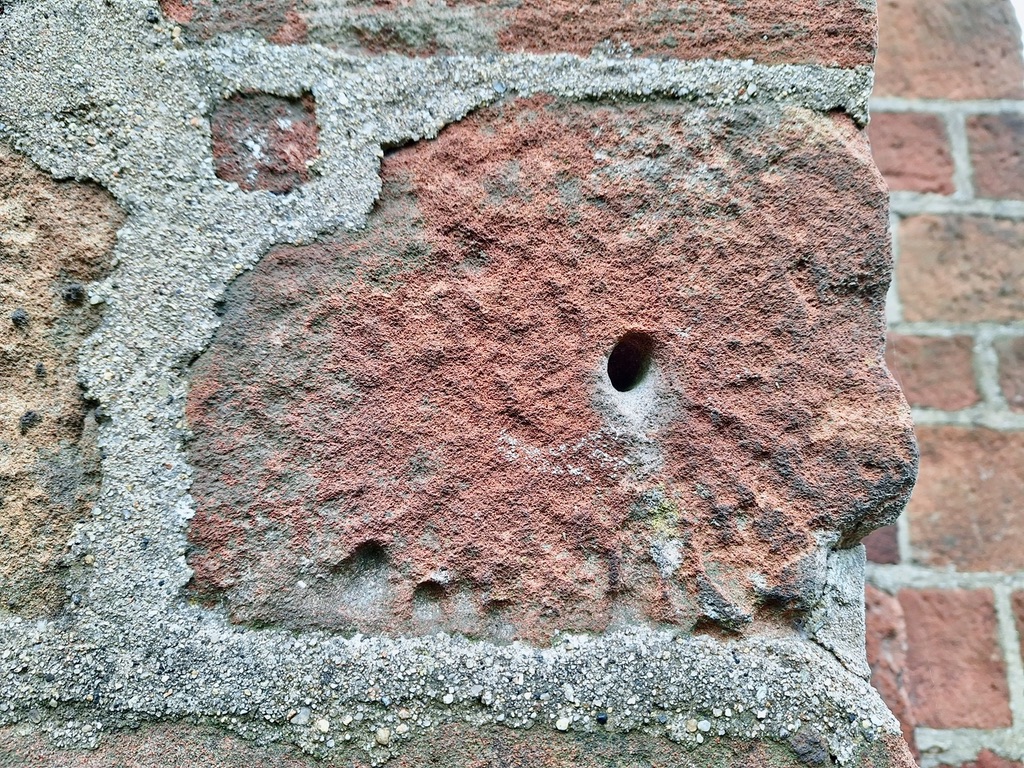
The dial is in a poor state, and tucked away on a buttress at E end of the church. It was clearly relocated from the sunny side at some time, thereafter serving a decorative function at best.

There are ±8 lines radiating from a large or enlarged gnomon hole. Unusually, they terminate in large pocks that are graduated down in size to noon and (as far as one can tell now) upwards LRQ from the noon line. At some stage the lowest holes and the bottom right corner were badly damaged but despite the remedial mortar, it is just possible to see that there were ‘afternoon holes’.
GSS Category: Scratch Dial; Dial in unusual position; Devon Scratch Dial

Credits: Erika Clarkson, for her detailed photos of the dial; wigulf . wiki . cc / os for the header image; Parish website for the view of Totnes and the church

OXFORD . HISTORY of SCIENCE MUSEUM – GRAFFITI, SYMBOLS & SCRATCHINGS

OXFORD HISTORY OF SCIENCE MUSEUM

OXFORD . HISTORY of SCIENCE MUSEUM – GRAFFITI, SYMBOLS, & SCRATCHINGS

The History of Science Museum in Broad Street, Oxford, has a wonderful collection of scientific instruments dating from the Middle Ages to C19. There is a rich hoard to be investigated. As you enter, you will see an outstanding display of the many instruments that over the ages have been used to measure the passage of time. A superb pair of armillary spheres is / are featured HERE. Only the Museo Galileo in Florence has given me such pleasure.

GRAFFITI, SYMBOLS, & SCRATCHINGS

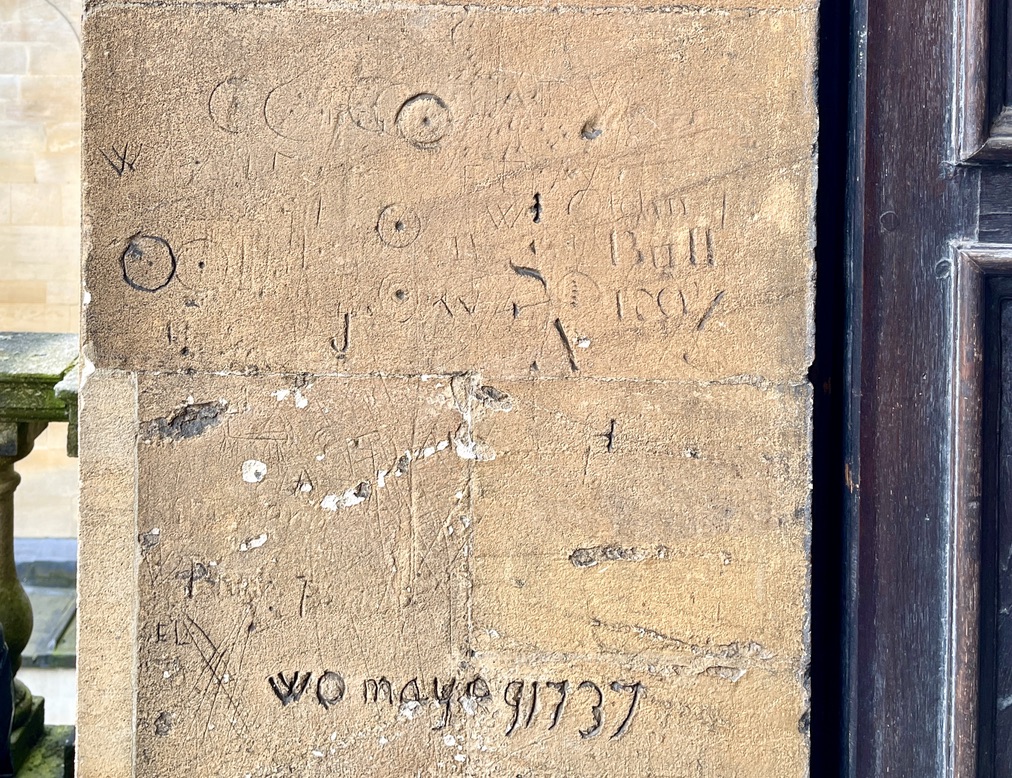
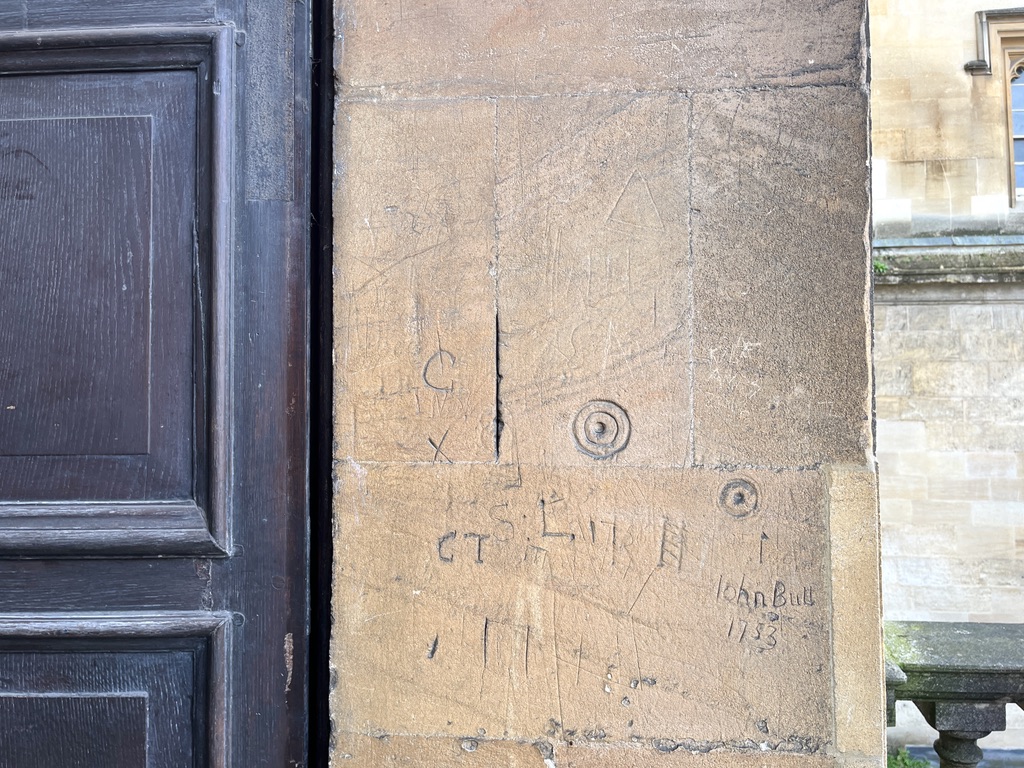
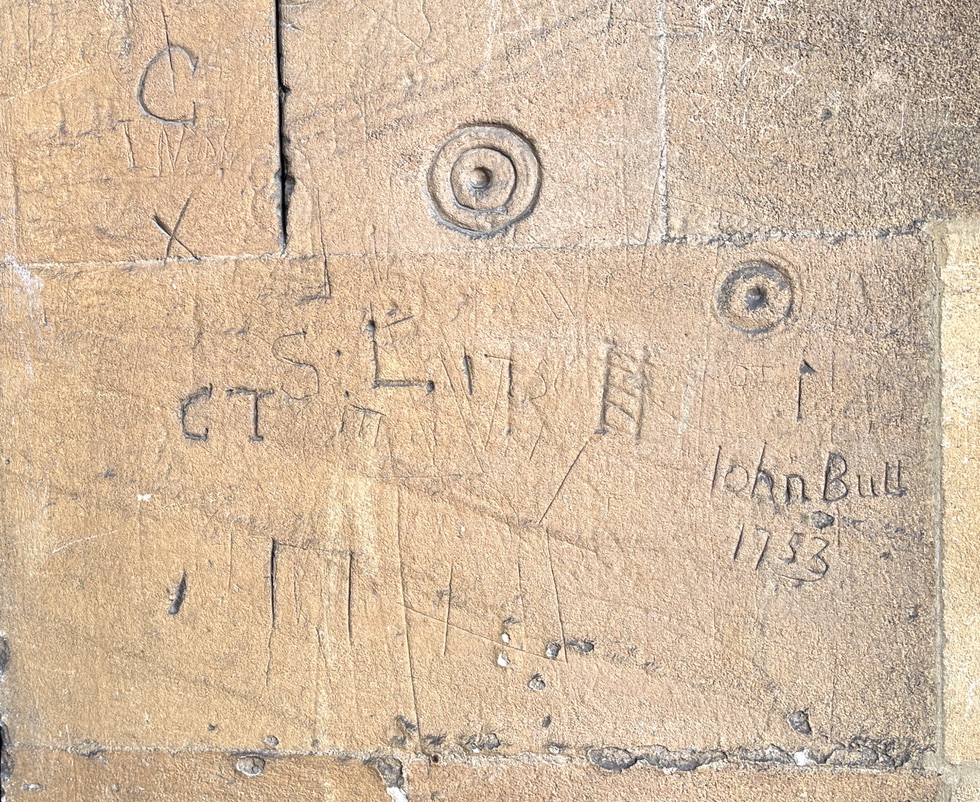
On each side jamb of the entrance to the Museum, there is a fine collection of graffiti of several kinds. Below is a selection of the marks from either side, left first. These include names and dates, with a Bull (1753) on one side, and a later Bull (1891) on the other; and a couple of probable mason’s marks, together with random scratchings accumulated over time.

MARIAN MARKS and PROTECTION (APOTROPAIC) SYMBOLS

By C17 the concept of thwarting evil by means of incised marks on churches and other buildings (eg the TITHE BARN Bradford-on-Avon) was weakening, yet superstition and the fear of evil lingered on. This building – the original Ashmolean – dates to the late C17. By this time, many medieval incised devices – eg scratch dials – had become things of the past. However, to some extent the comfort of cutting marks to ward off evil persisted. This would explain the various Marian marks VV (Virgo Virginum) on the jambs.

There is also a good collection of compass-drawn circles of varying completeness, accuracy, and depth. In medieval times these were the simplest form of demon trap, luring evil inside a circle from which it could not escape. The principle continued in later centuries.

LEFT SIDE

RIGHT SIDE

GSS Category: Apotropaic marks; Marian marks; Protection marks; Demon Traps; Compass-drawn circles; Graffiti on public buildings;

Reference: History of Science Museum – Oxford; Matthew Champion – Medieval Graffiti

All photos: Keith Salvesen / Rolling Harbour

TOTNES . DEVON . ST MARY – Vertical Dial

wigulf . wiki . cc / os

TOTNES . DEVON . ST MARY

GRADE 1 ✣ A fine Perpendicular church on the site of Benedictine Priory, standing proudly near the centre of the town and visible from some distance away. Mainly built mid-C15 using much red sandstone. The Grade denotes the importance of the building, and the interior offers much for the visitor. Also, see the splendid Norman motte and bailey castle nearby. 50.4319 / -3.6878 / SX802604

VERTICAL DIAL

St Mary online

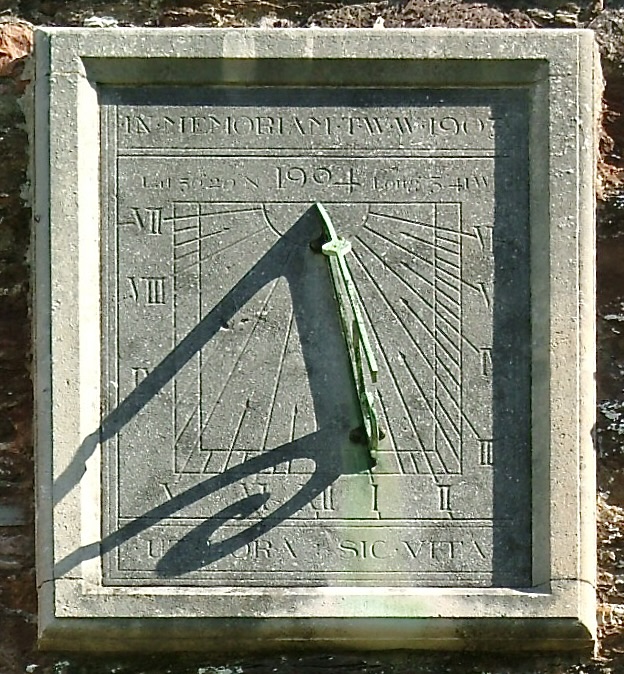
On the south wall of the church near the porch is a slate dial set in a stone frame. It declines west and shows the hours VII – VI divided into halves and quarters. Across the top is an inscription which reads In memoriam TWW 1903. Below it are the coordinates Lat 5020 ; Long 0340 W. Across the bottom of the dial is the quite common motto Ut Hora Sic Vita (Life is as an Hour).

The gnomon has a pierced nodus which causes a spot of light to appear on the dial plate. In my amateur experience, this is a relatively uncommon addition to a sundial’s capabilities.

GSS Category: Vertical Dial; Sundial with Nodus; Vertical Sundial Motto; Memorial Vertical Sundial

Photos: header, wigulf . wiki . cc / os; dial location, St Mary’s online; dial close-ups, BSS Bridol

Thanks to Erika Clarkson for giving me the details from a visit to St Mary’s, where she had found a scratch dial. I have written it up separately, being completely different in type and time.

DALI DIAL [anag.] . PARIS . CADRAN SOLAIRE

‘Derrick’ . Sticky Mango Rice . A fine artist captures the essence of Paris mingled with a surreal addition – link below

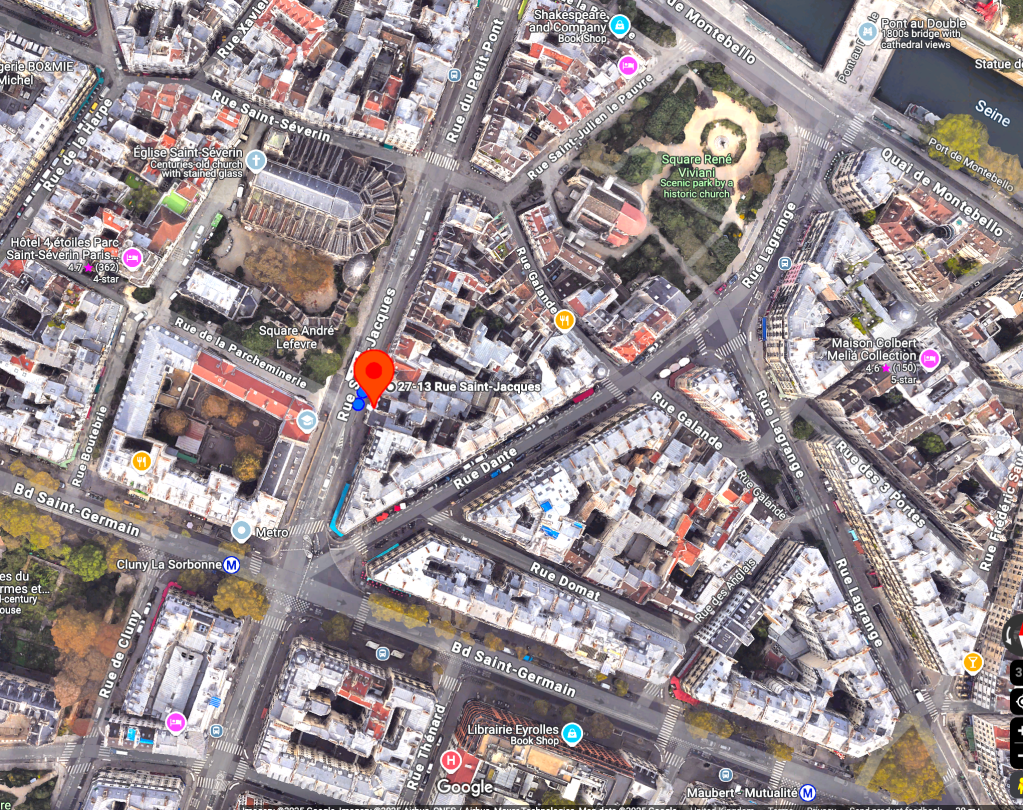
SALVADOR DALI’S SUNDIAL (1966) . PARIS . 27 Rue St Jacques

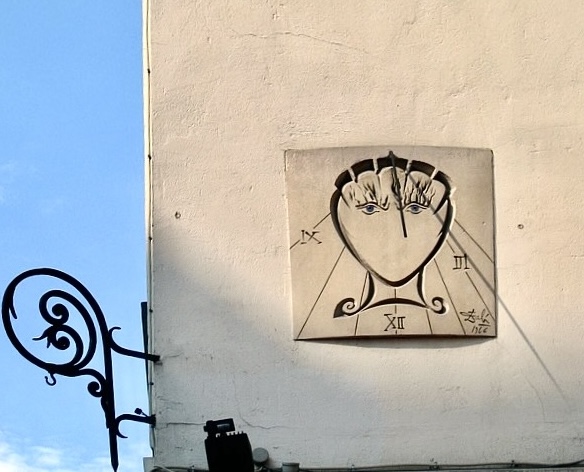
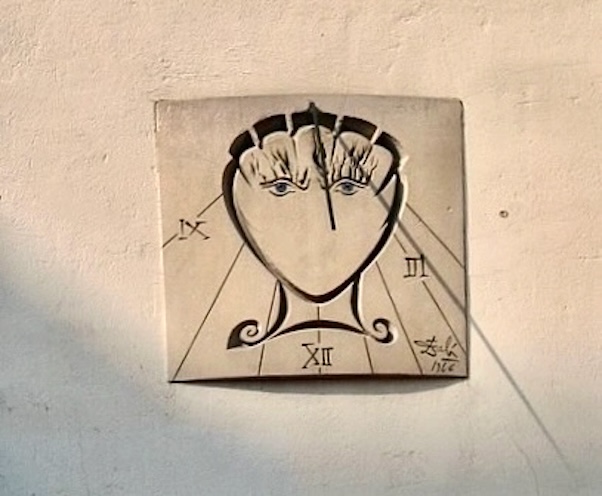
Unassumingly sited and not easily visible to passers-by unless walking north on the eastern trottoir, is a splendid sundial designed by Salvador Dali (1904-1989). Those who do notice it might well be entertained by the Daliesque appearance, but because of the dial’s position they may not see the artist’s signature and the date 1966**

‘Derrick’: a rather beautiful close-up depiction of the Dial

IRL

Ken Eckert Wiki

DIAL DETAILS

Pierre Guernier at French Moments

Pierre Guernier of French Moments notes that the Dali dial, cast in concrete, was a gift to friends who had a nearby boutique. The clue to the shell motif lies in the name of the street which forms part of the Pilgrimage route across Paris. The fiery eyebrows represent the sun; and the lower part of the dial obviously references the famous moustache.

DALI SHADOWS

GAUME – WikiMedia 2010

ATLAS OBSCURA

This excellent resource includes unusual and off-beat finds. It describes Dali’s dial, and notes the accompanying excitement when it was inaugurated on 15 November 1966 at a ceremony with pomp and large media coverage. Dali was no shrinking violet.

We can probably conclude that Dali’s forays into horology were relatively successful with his Parisian sundial. But for its poor positioning, it might function well or adequately. Less accurate were his more ambitious blueprints for timepieces, all being woefully deficient in design and immensely challenging in construction.

** It’s fair to say that for the English, the important ’66 dates are confined to the Battle of Hastings; the Great Fire of London; and the World Cup.

CREDITS

Derrick – Sticky Mango Rice (check out his other work)

https://www.instagram.com/derrick_sketches/?hl=en

© French Moments and pierre@frenchmoments.com with thanks

Atlas Obscura