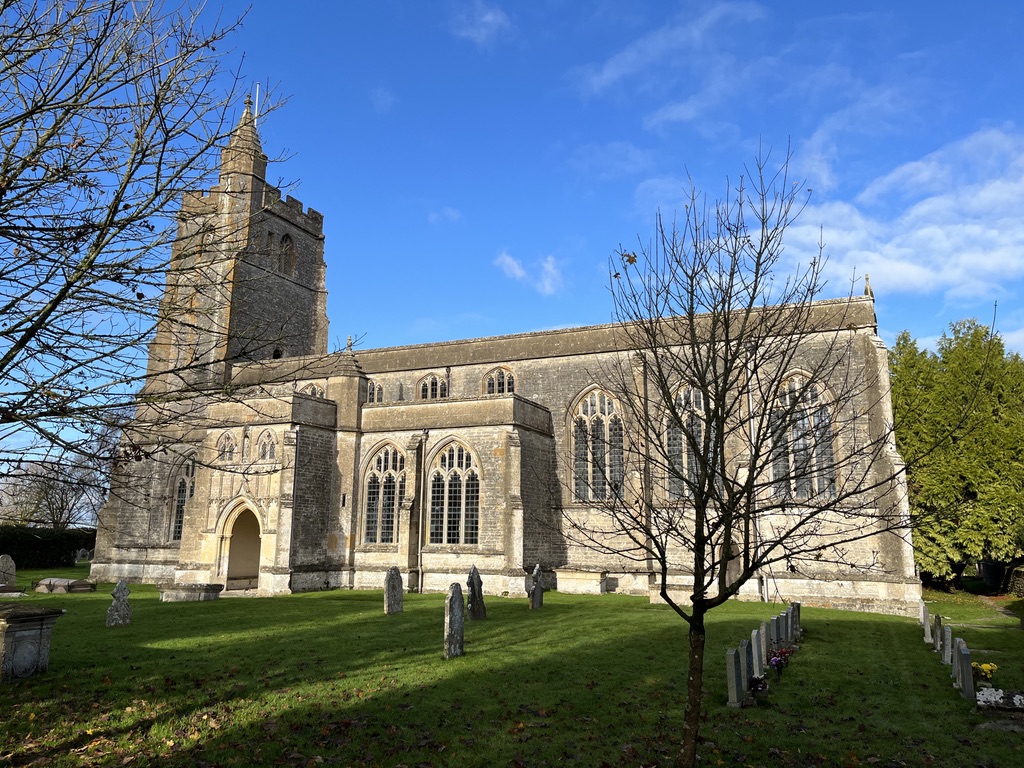
NORTH CADBURY . SOM . ST MICHAEL – Scratch Dials

St Michael . North Cadbury . Som

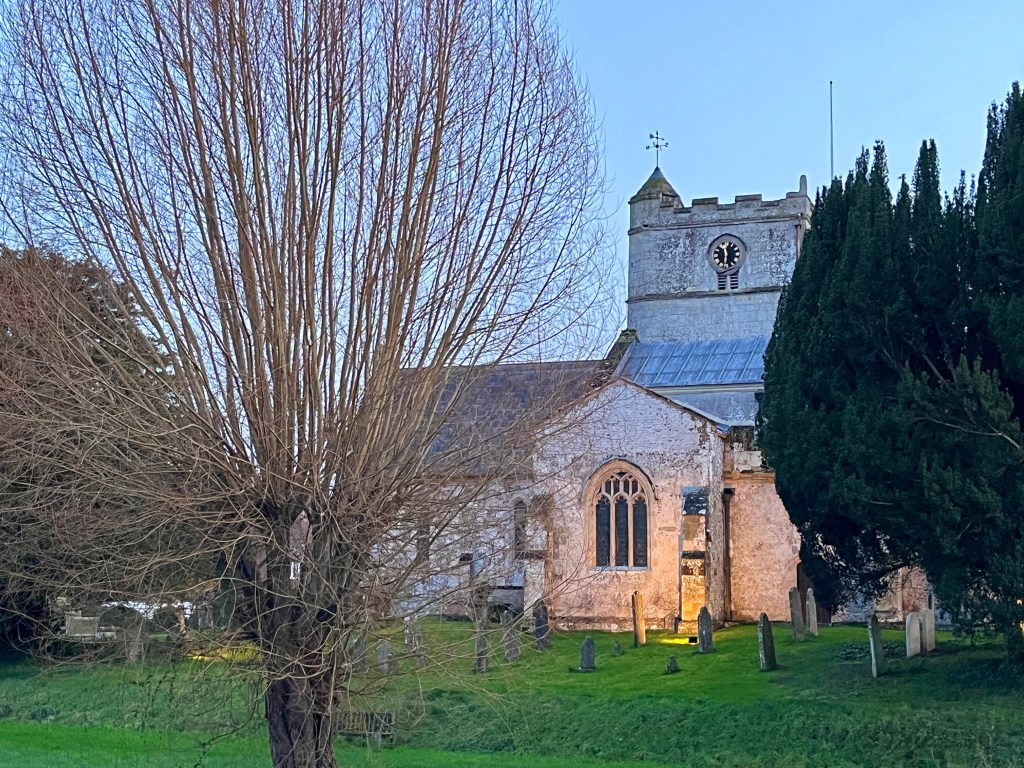
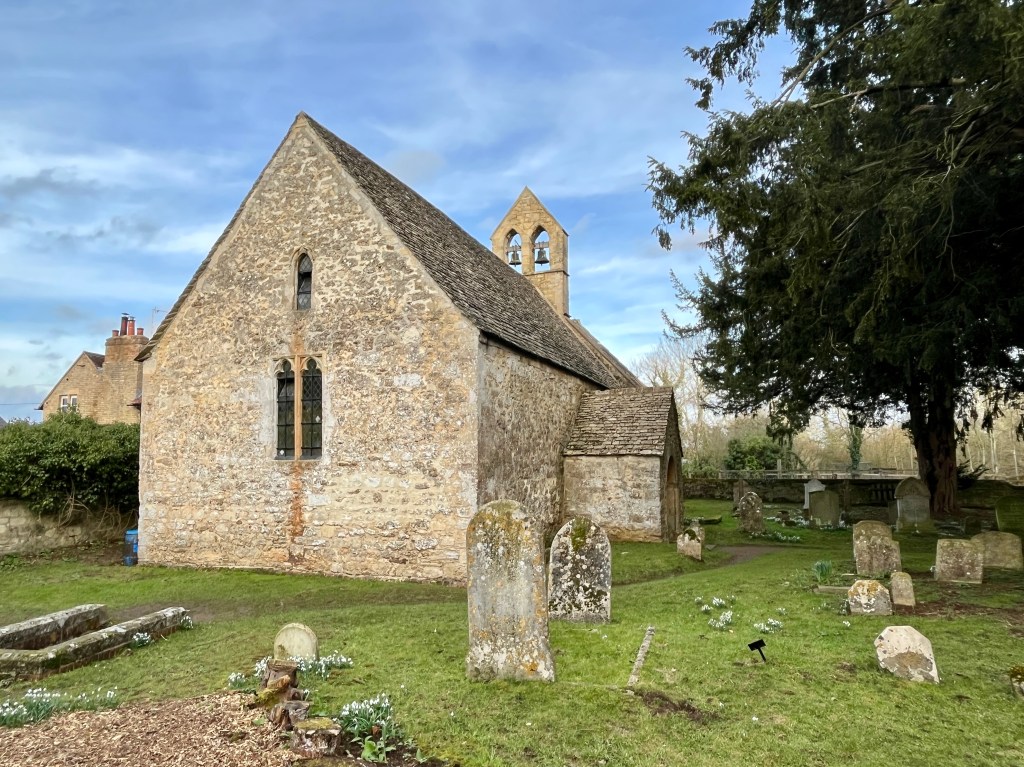
GRADE I † Mainly early C15, some older fragments; later restorations. A huge church for a small village. Simon Jenkins awards it ** and with good reason. Wonderful bench ends, not to be missed. See BLB for more. Midway between Wincanton and Ilchester. 51.0417 /  -2.5214 / ST635270

DIALS

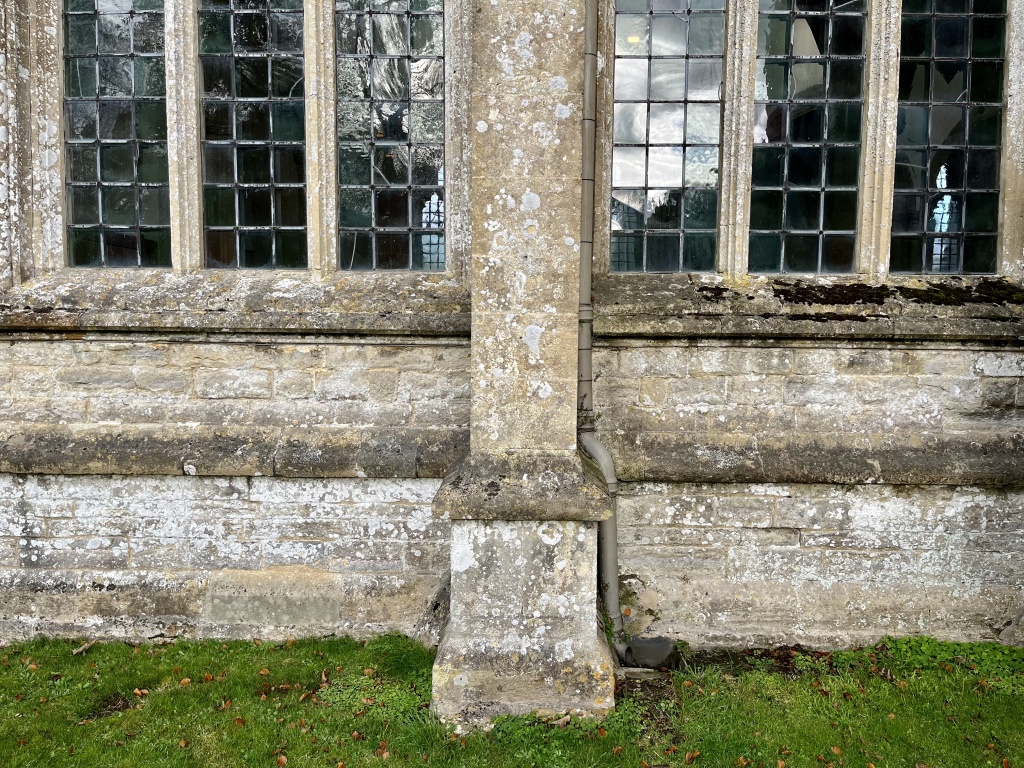
DEH visited in April 1914 and recorded 3 dials, all on S facing buttresses, one close to the priest’s door. They are very eroded. There are possible remnants of 2 further dials, mentioned below.

DIAL 1

St Michael . North Cadbury . Som. – Scratch Dial

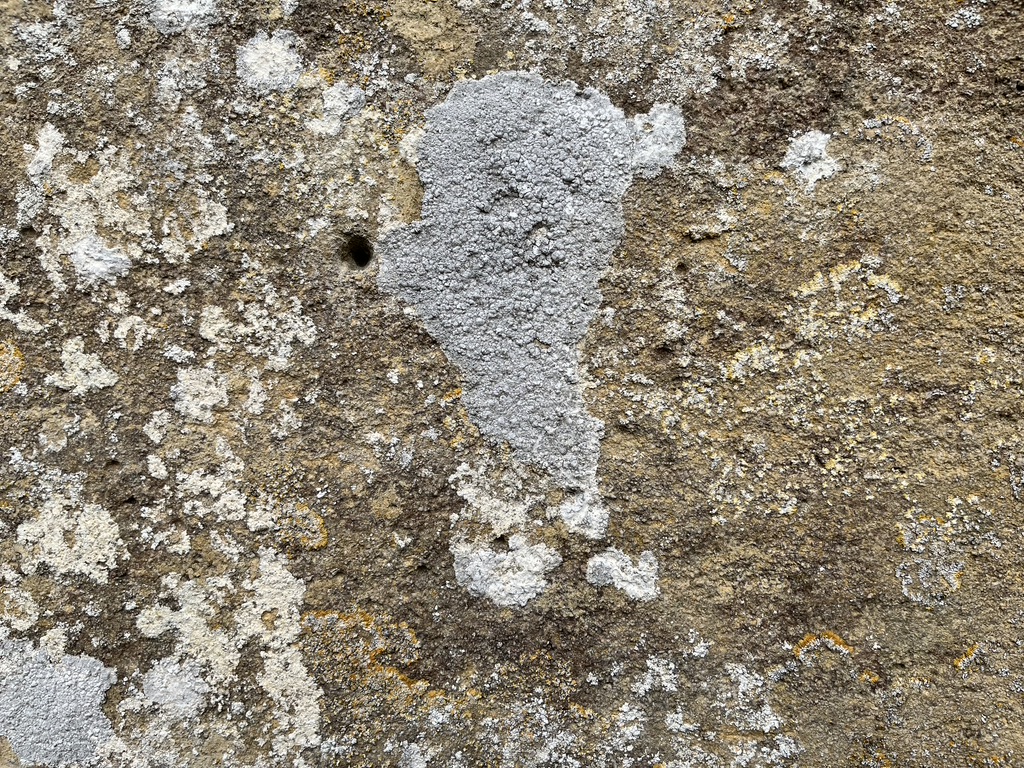
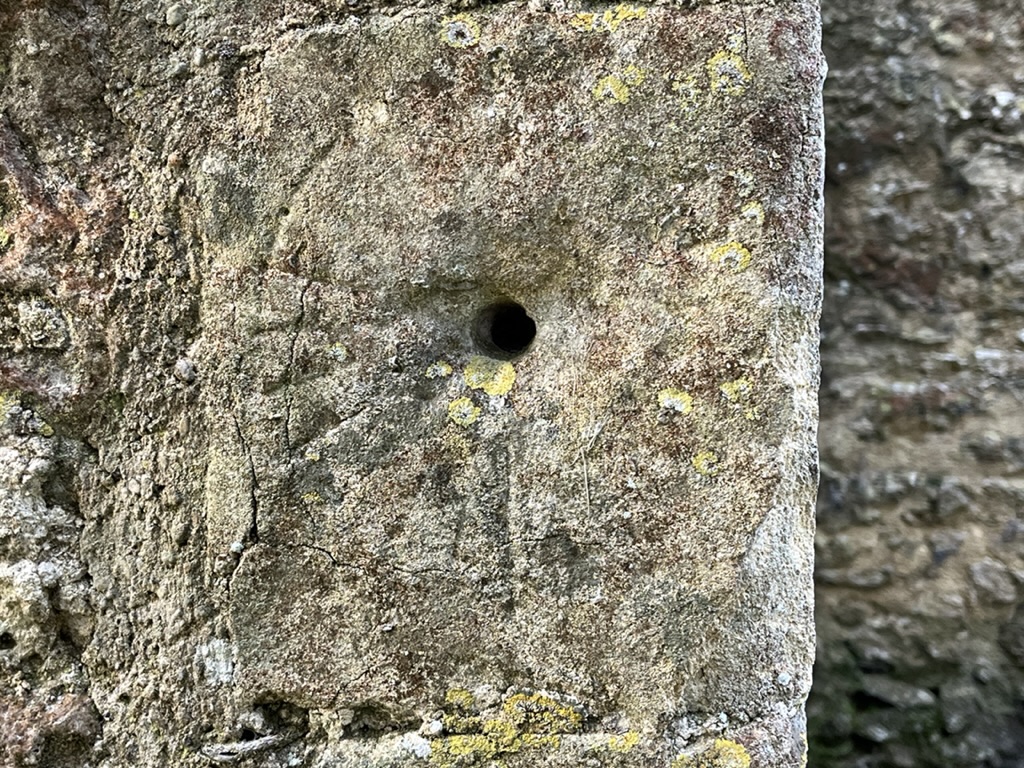
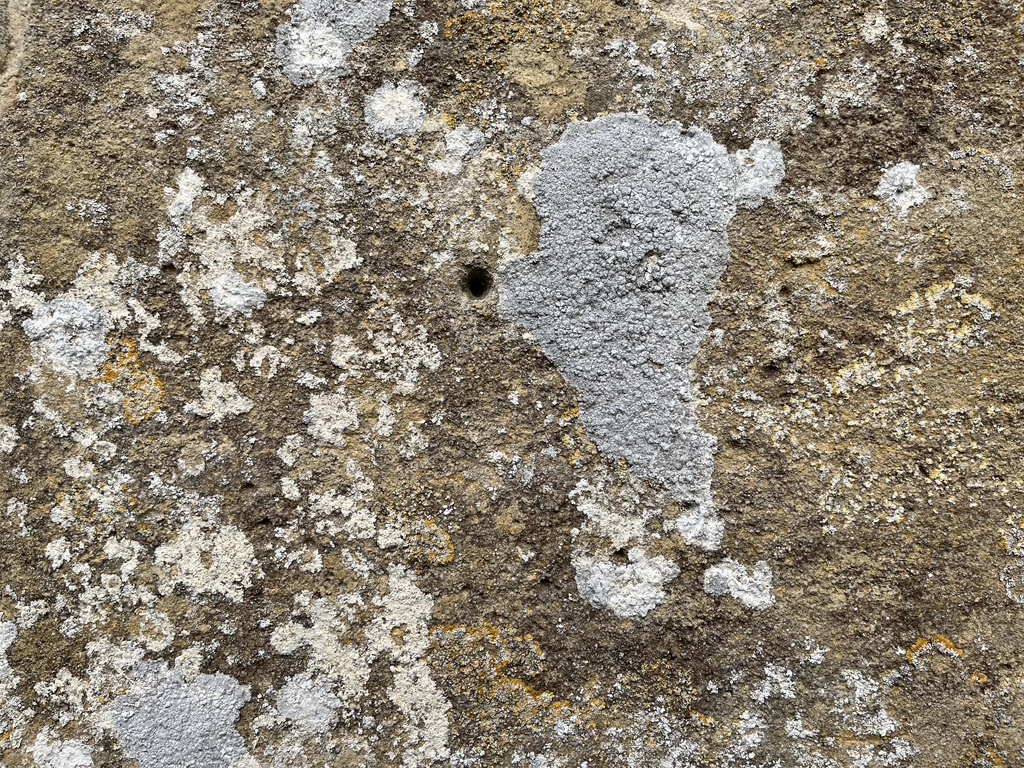
DEH 169. (1) This dial is on the first buttress w. of the s. porch. It is 5 feet above the ground, the noon line is 4 inches in length, the stylehole is 5/8 of an inch in depth by 1/2 an inch in diameter, and the aspect is s. by 15° e.

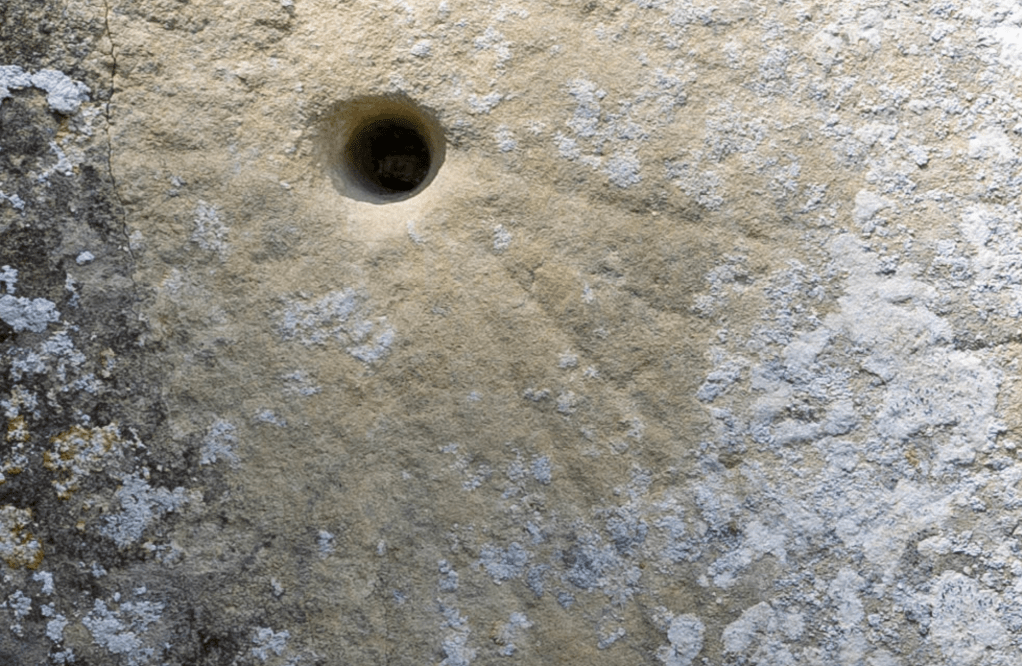
Located on the buttress W of S porch. An obvious style hole with a semicircle (6 – 6) of unobtrusive small pocks. Photography has its limitations and St Michael tested them. Records mention 13 to 16 pocks. One can just make out the faintest of traces of lines at noon and 2.

BSS suggests a possible dial immediately above. Assuming a style hole in the mortar line, there are a few pocks in the immediate area, but rather disorganised. Doubtful rather than plausible.
DIAL 2

St Michael . North Cadbury . Som. – Scratch Dial

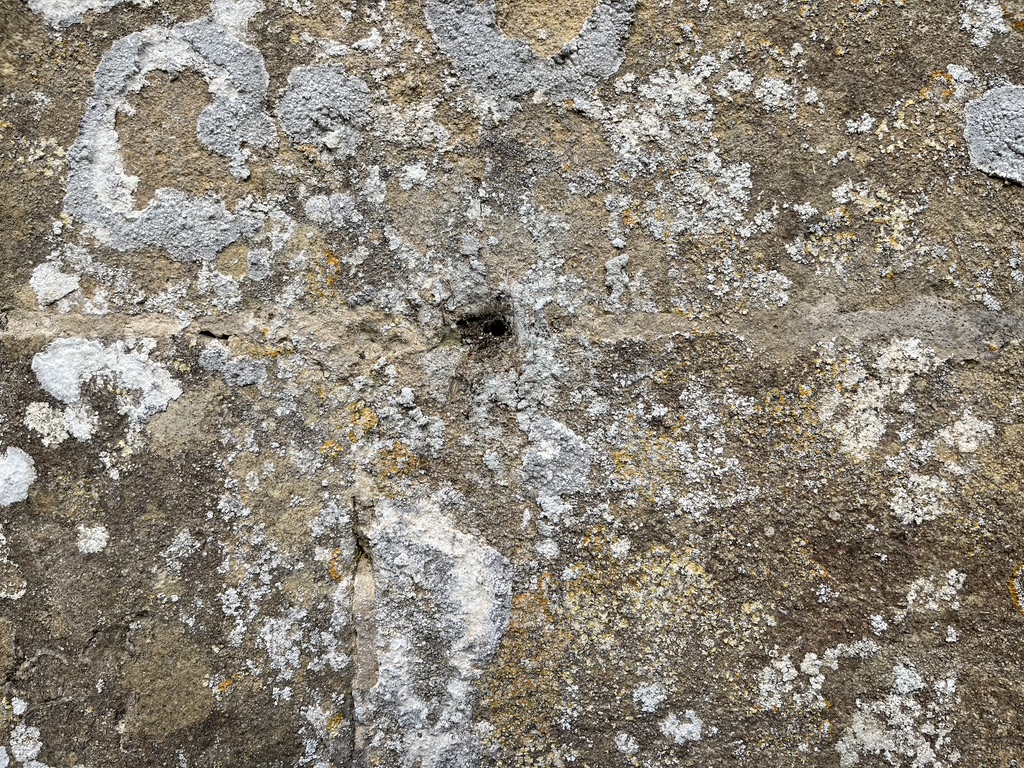
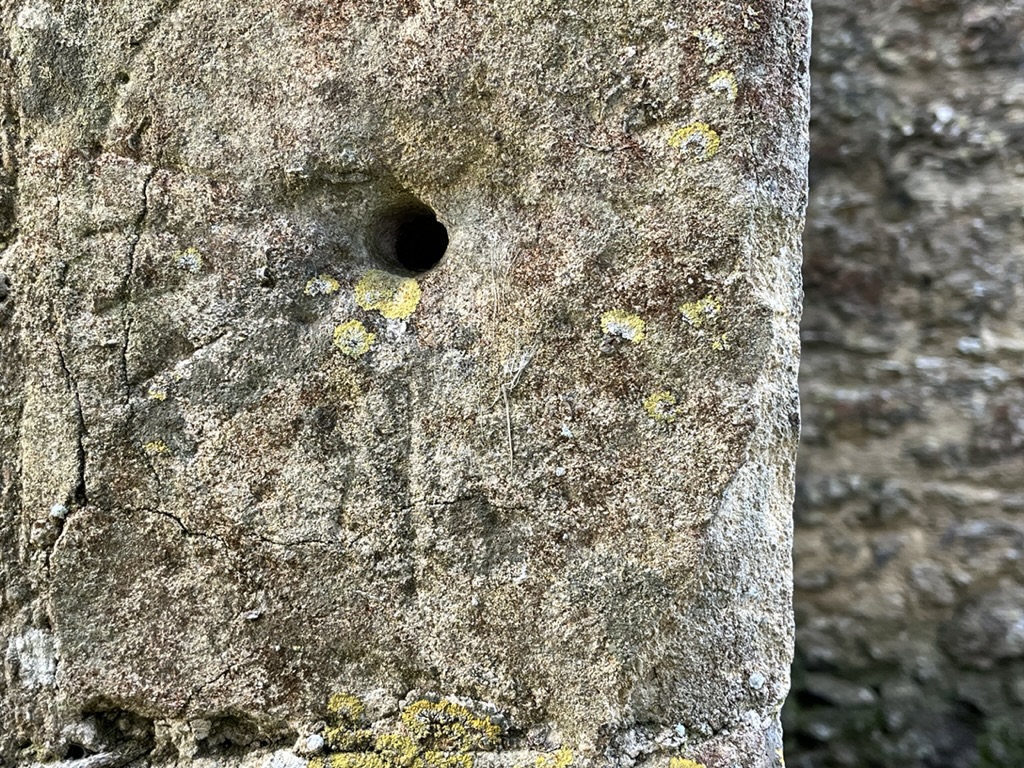
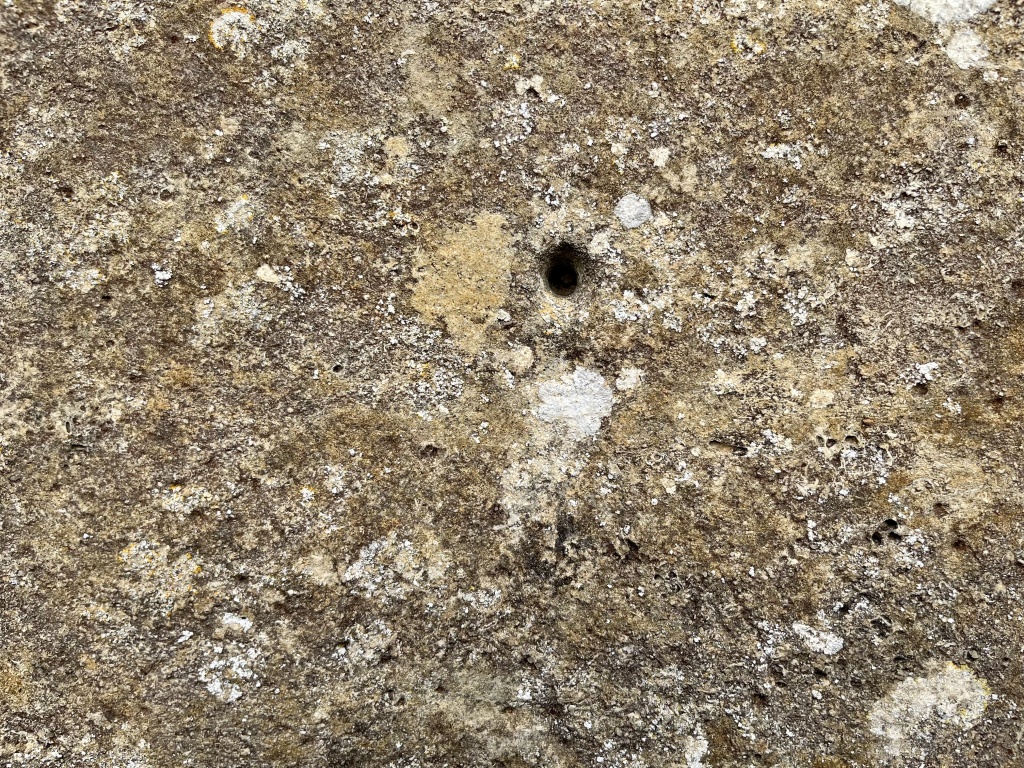
DEH 170. (2) This dial is on the first buttress E. of the s. porch. It is 4 feet 10 inches above the ground, the noon line is 3 inches in length, the style hole is about 11/2 inches in depth by 3/4 of an inch in diameter. The aspect is s. by 15° e.

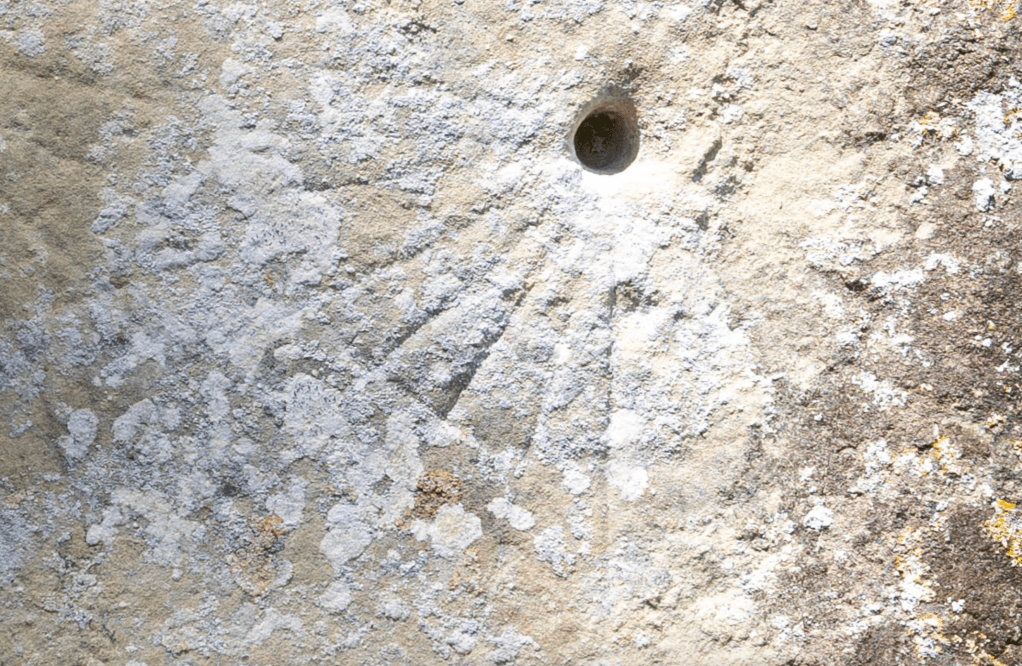
As with Dial 1, very eroded and with little visible detail even when one is quite close. There are 8 detectable lines with a perimeter of pocks, probably (BSS) 13 with extra pocks at 8.30 and 10.30 – presumably Mass indicators.
DIAL 3
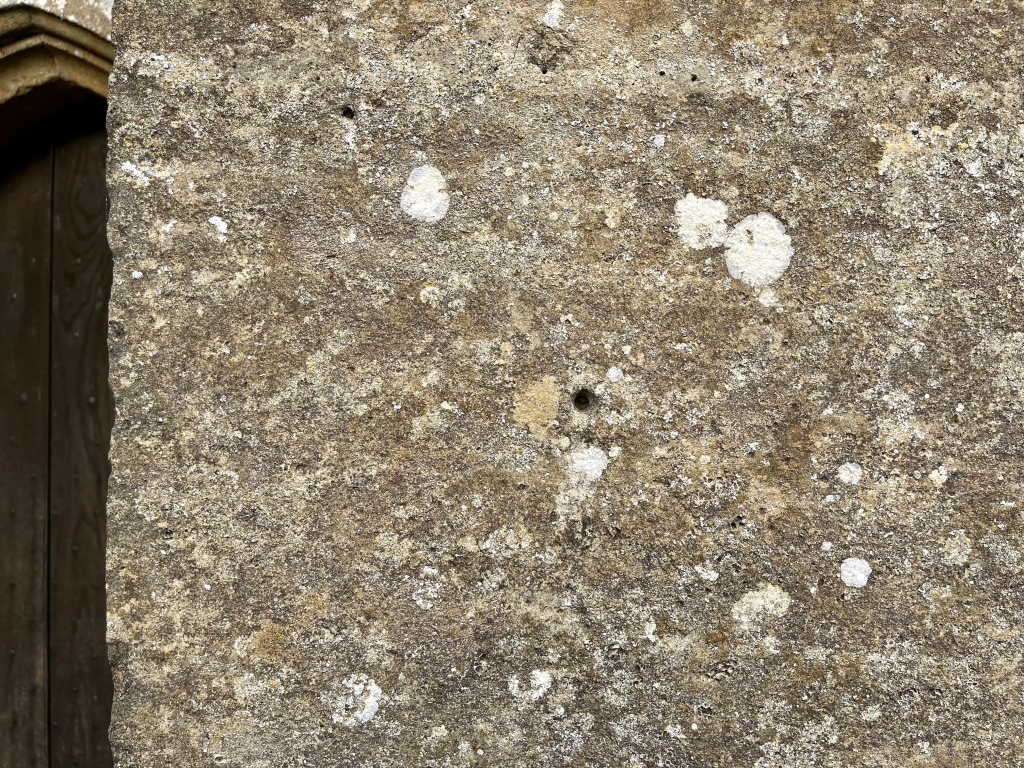
St Michael . North Cadbury . Som. – Scratch Dial

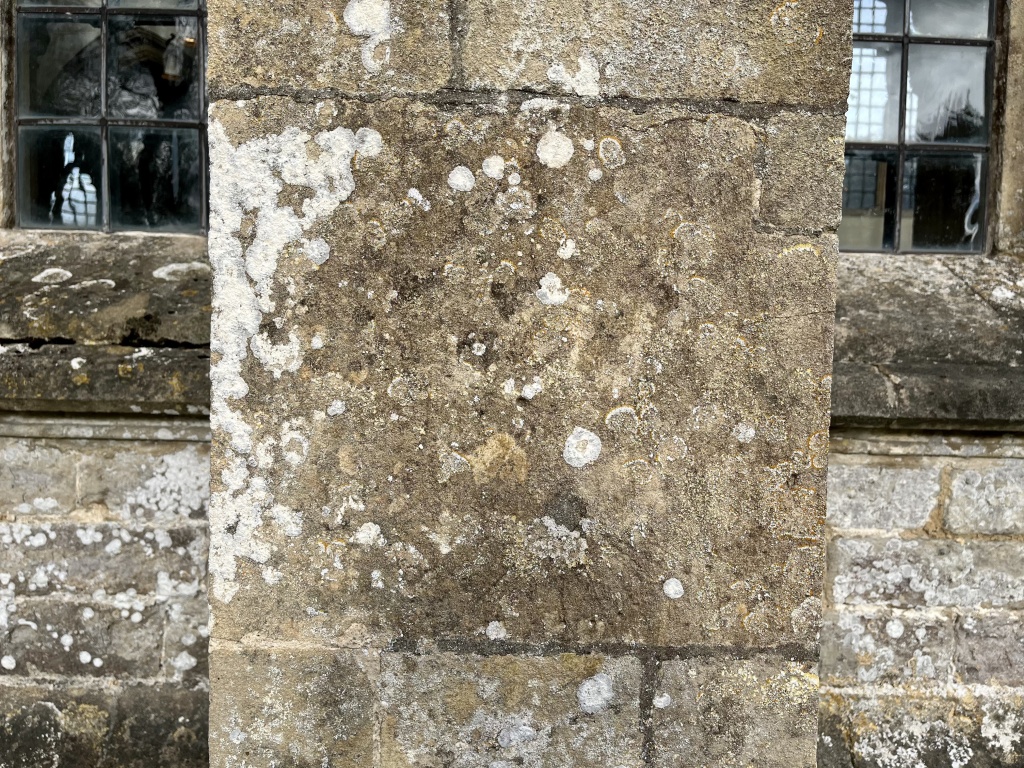
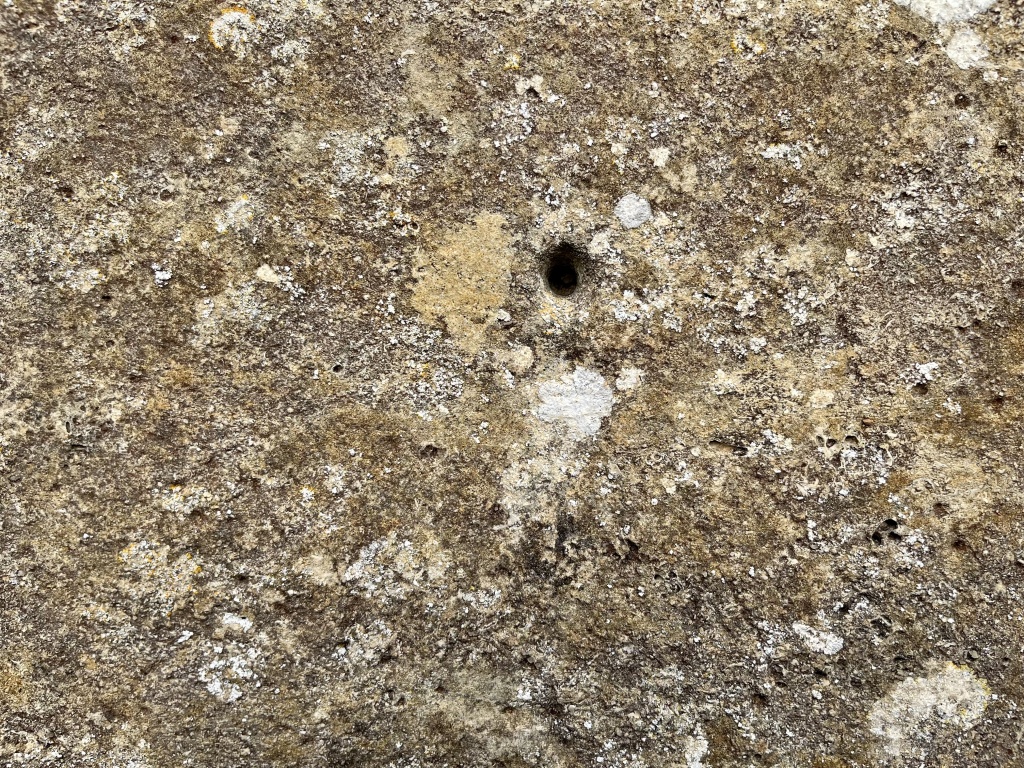
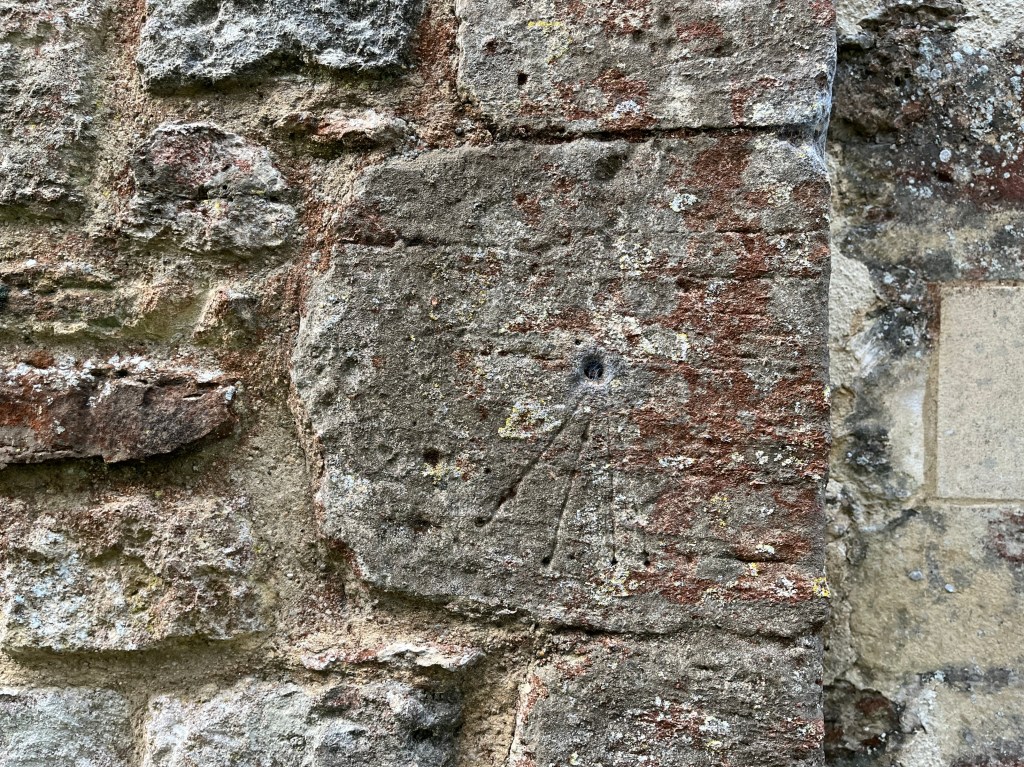
DEH 171. (3) This dial is on a buttress e. of the priest’s door. It is 5 feet 8 inches above the ground, the noon line is 4 1/4 inches in length, the style hole is 7/8 of an inch in depth and 1/2 an inch in diameter, and the aspect is s. by 15° e.

Situated on S side of the chancel, on the buttress E of the Priests’ door. There are 13 lines and a full complement of 24 pocks. The line angles are at approx 15º intervals. BSS notes a possible ‘tiny dial’ above it.
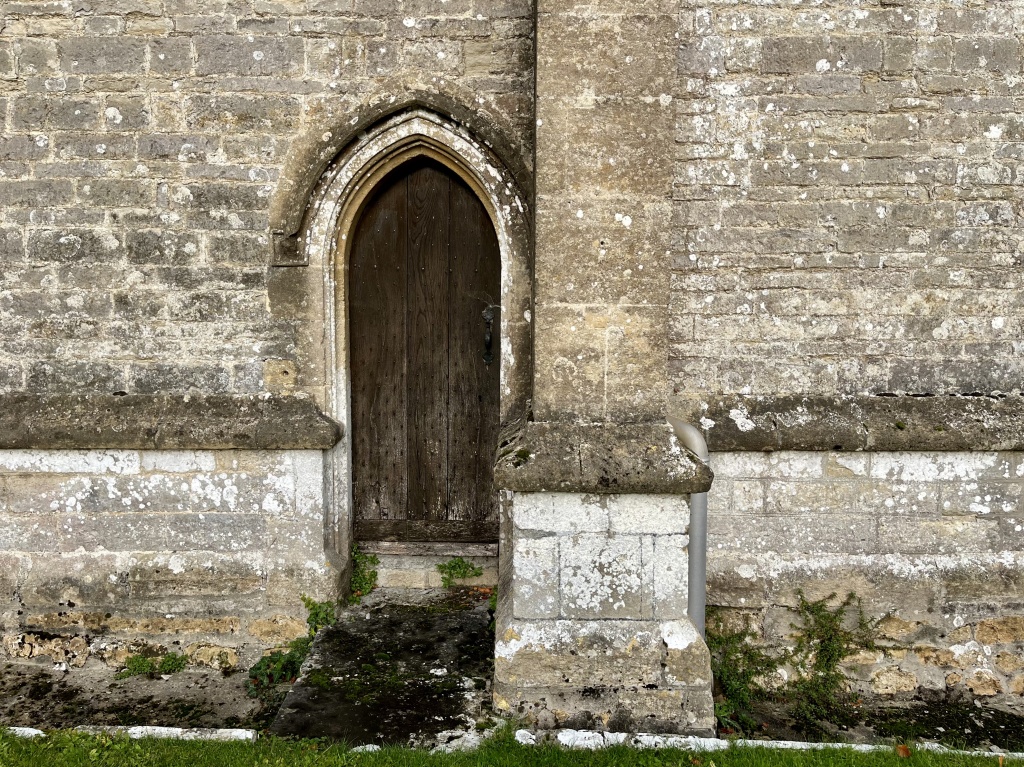
MEDIEVAL GRAFFITI

The porch contains the original stone benches on either side. These are often troves of graffiti, in particular apotropaic symbols and other ritual protection marks designed to repel evil or to prevent its entering the church. These signs are quite common to find in other locations both outside and inside a church (see HERE). However, in many churches, stone benches were replaced in succeeding centuries. St Michael has retained the benches, on which there are excellent examples of marks that are relatively rare. There are hands here, and a medieval swastika (a Sanskrit word) from several centuries before its more recent symbolic adoption. It incorporates a repelling circle mark, where evil may be captured within its continuous circumference.
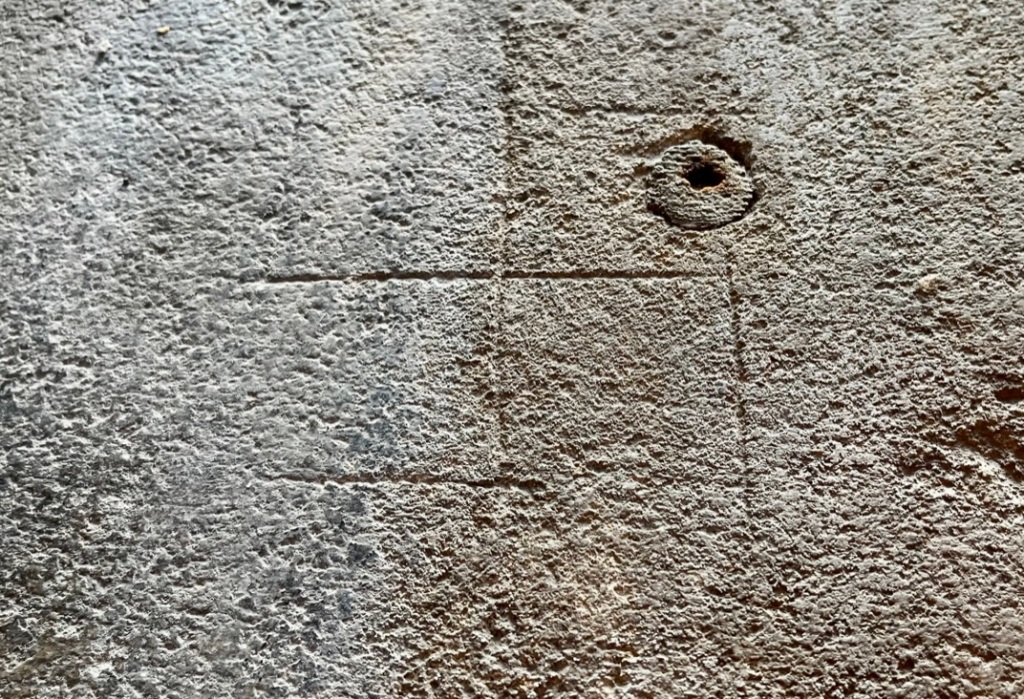
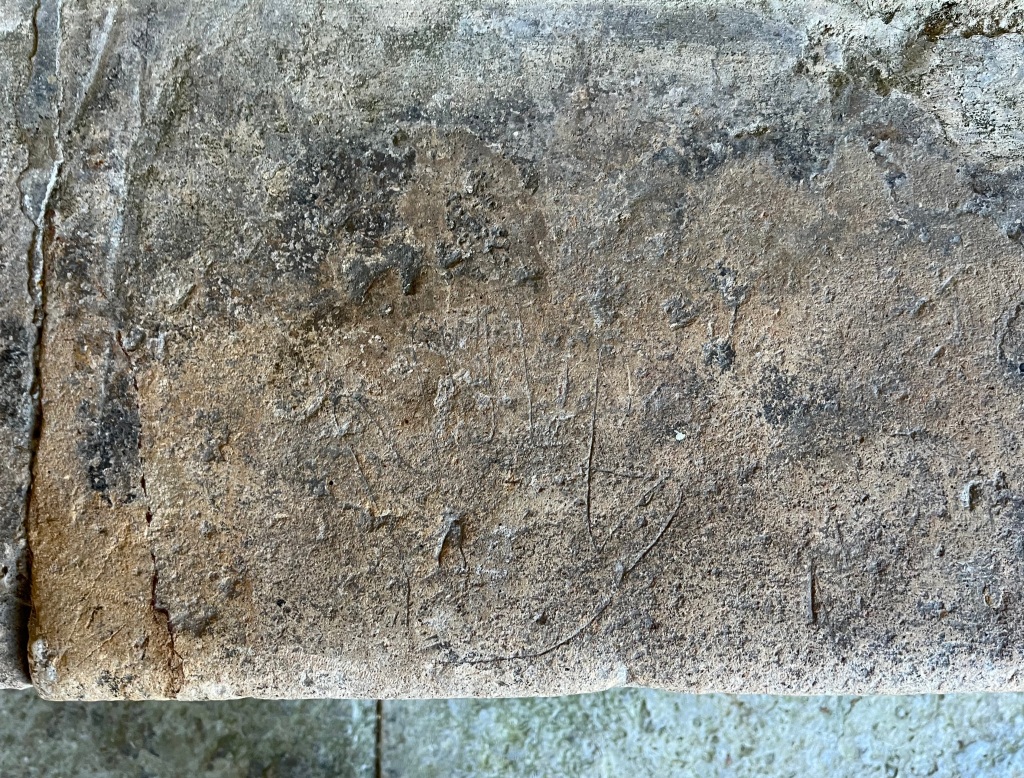
GSS Category: Scratch Dials; Mass Dials; Bench Ends; Medieval Graffiti; Apotropaic Symbols

All photos: Keith Salvesen

BASILICA di SANTA MARIA NOVELLA . FLORENCE – MERIDIAN DIAL

Santa Maria Novella, one of the most sublime churches in Tuscany, needs no general introduction. The Wiki article SMV gives a very good overview. The focus of this article is on the amazing meridian dial inside the church itself.

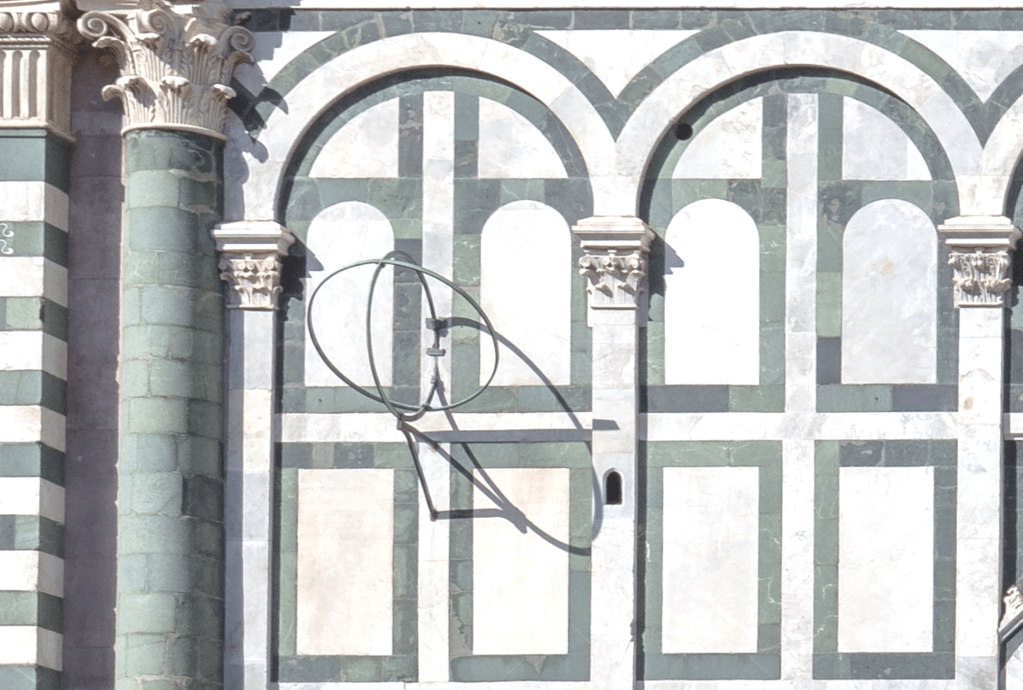
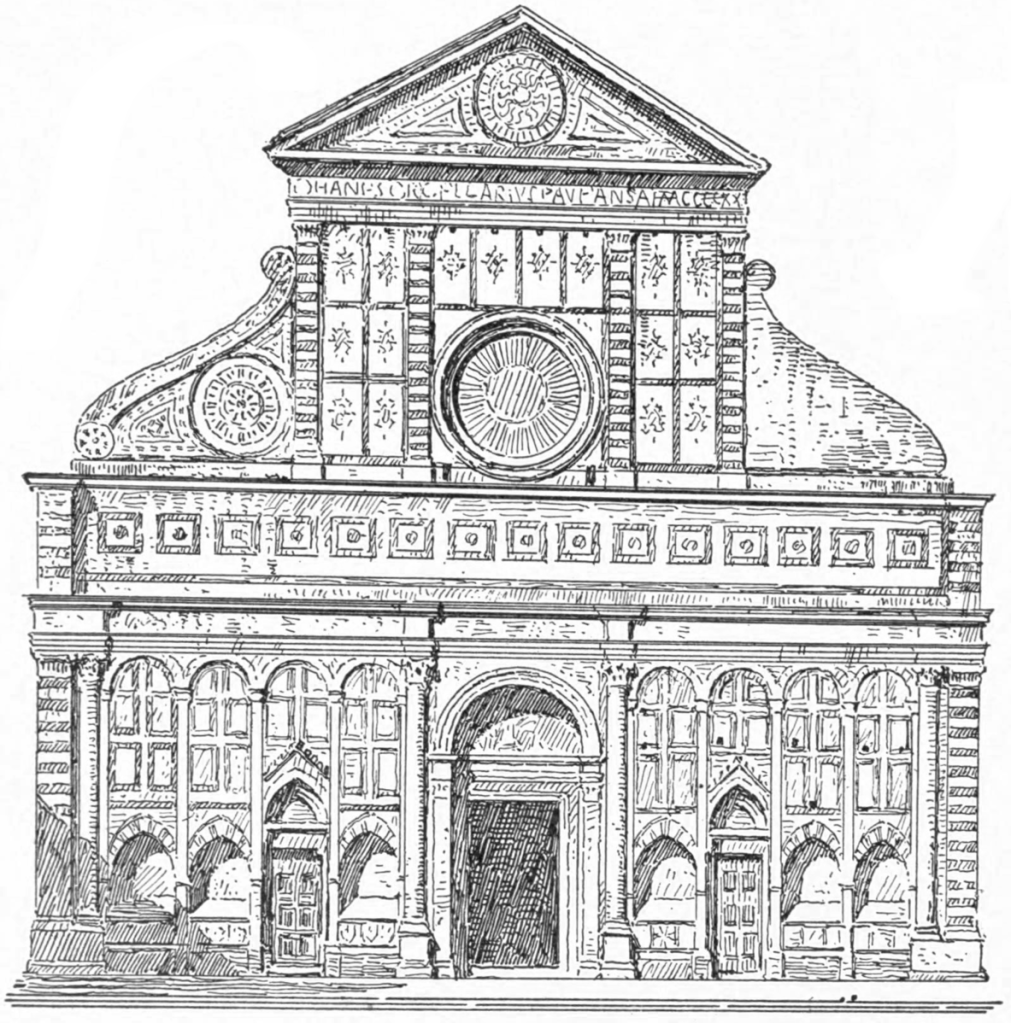
First, I should mention the 2 famous dials on the facade, the subject of much interest, investigation, and analysis including detailed articles by BSS. I plan to feature both separately in due course. On the left is an armillary sphere; on the right is an astronomical quadrant. They are the work of Egnatzio Danti, astronomer to Cosimo I, and were installed c1570.

The Museo Galileo has a comprehensive website here MG and is a superb resource for historical science. Exhibits include 2 of Galileo’s telescopes. In 2007 it held a remarkable dial-based exhibition called The Line of the Sun. The entry for SMN includes all 3 dials and gives a succinct account of their creation and significance. I am adapting / adopting some entries from the museum’s explanations.

MERIDIAN DIAL

Background: Between 1572 and 1575, the cosmographer Egnazio Danti (1536-1586) installed on the façade of Santa Maria Novella no less than three astronomical instruments: a great quadrant with sundials; an equinoctial armillary; and two ‘camera obscura gnomons’. These instruments were designed to be used for new astronomical calculations linked to the project for reforming the Julian calendar…

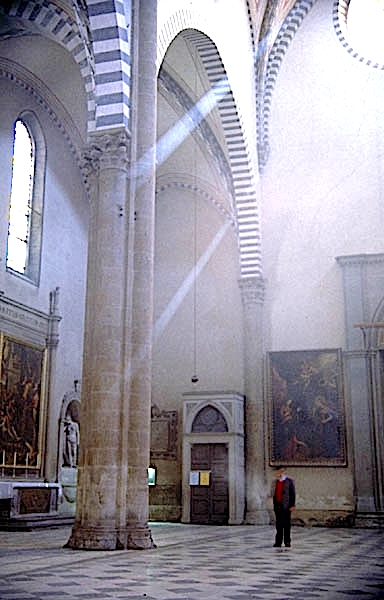
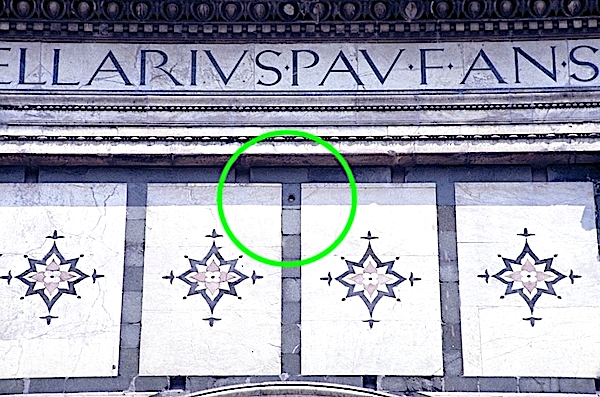
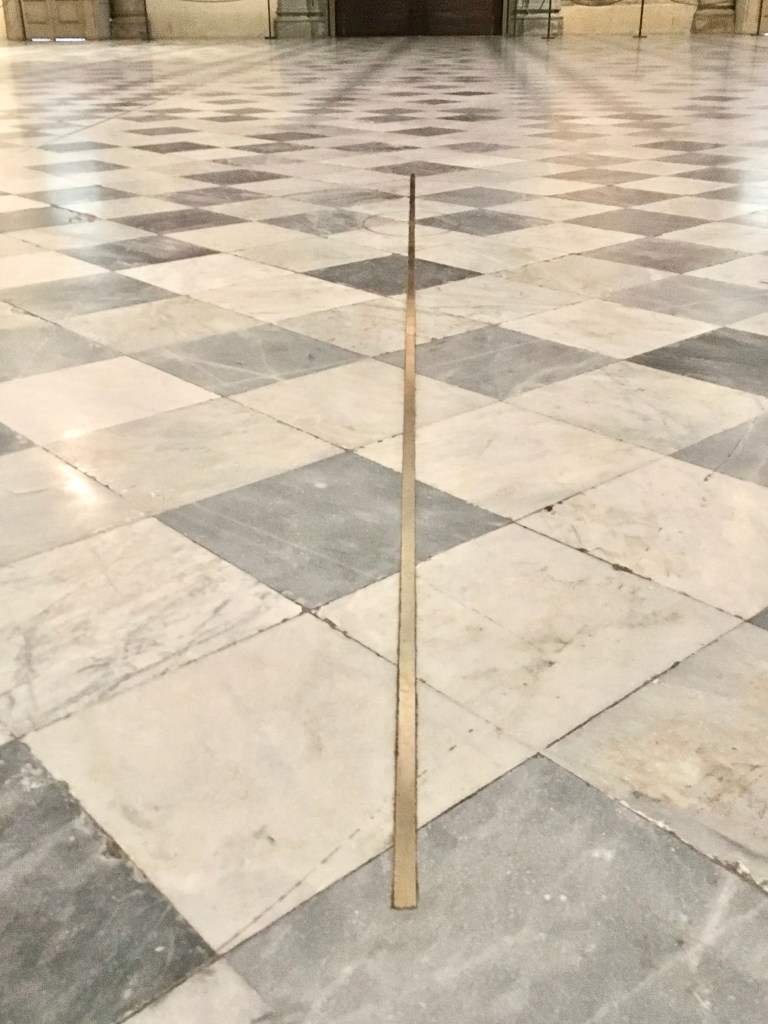
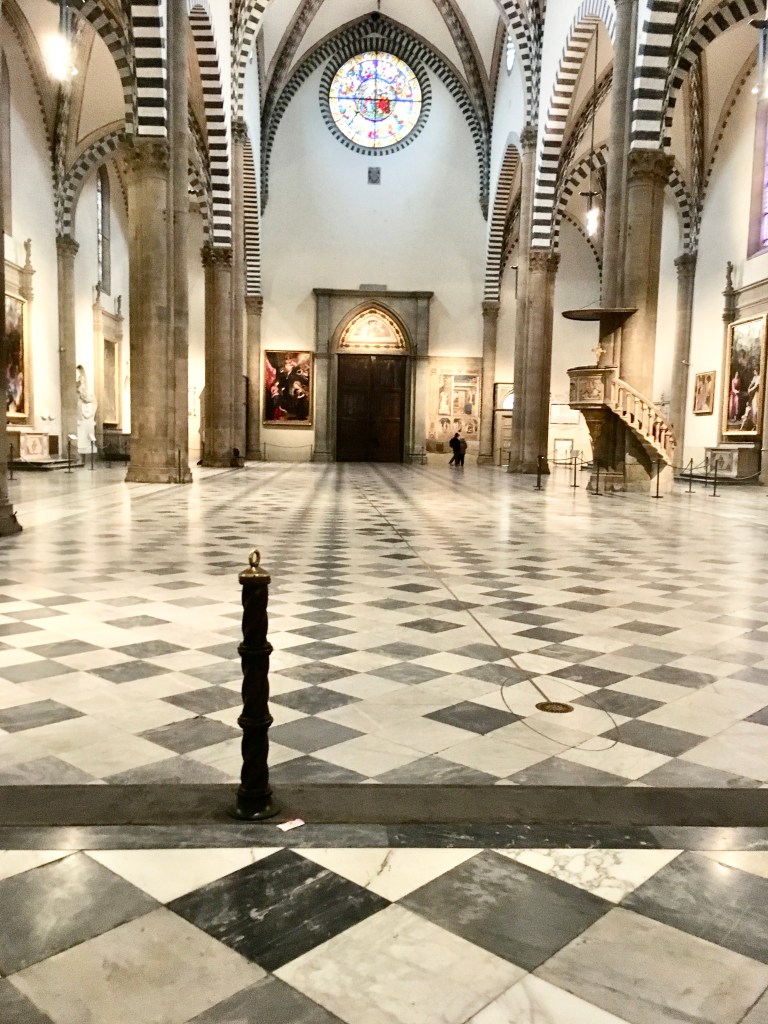
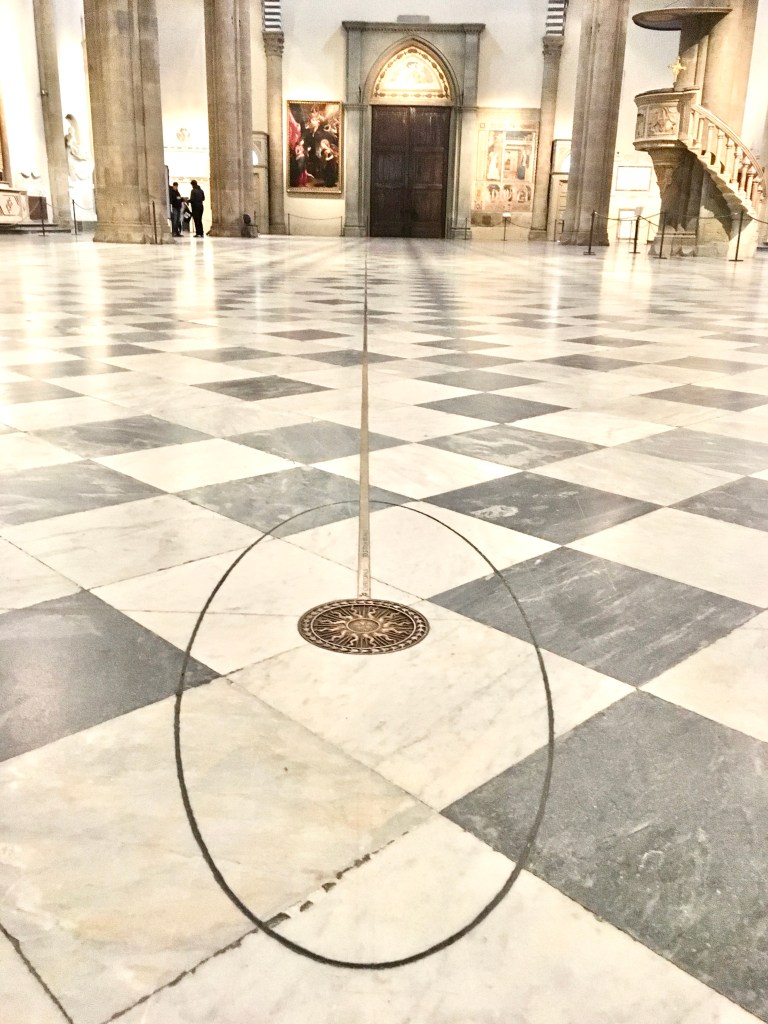
Meridian Dial: Although Danti designed the dials he was unable to complete the tracing of the meridian line on the floor of the church. He only opened gnomonic holes, first in the glass of the rose window, then on the church’s façade, much higher, and made two openings in the vaulting as well, through which rays of light would pass only during the equinoxes and the winter solstice.

Operation: The entrance of the sunbeam was through the two gnomonic holes. The pinhole on the rose-window would have allowed [the measurement of] time during the entire year. The pinhole on the façade would have allowed the same reading only in the days of the equinoxes and of the winter solstice (IMSS Multimedia Laboratory).

FACADE POSITIONS

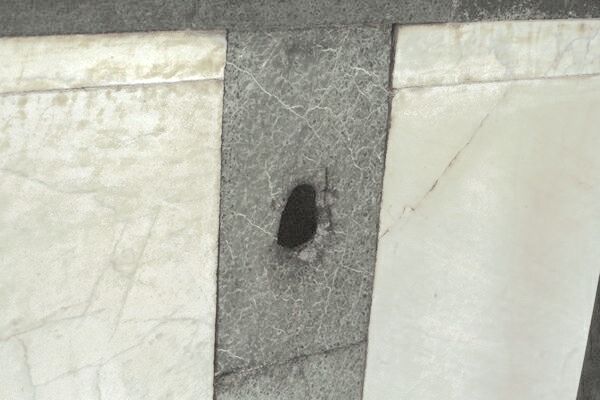
Gnomon holes on the facade in the rose window (70′ high) and just below the pediment

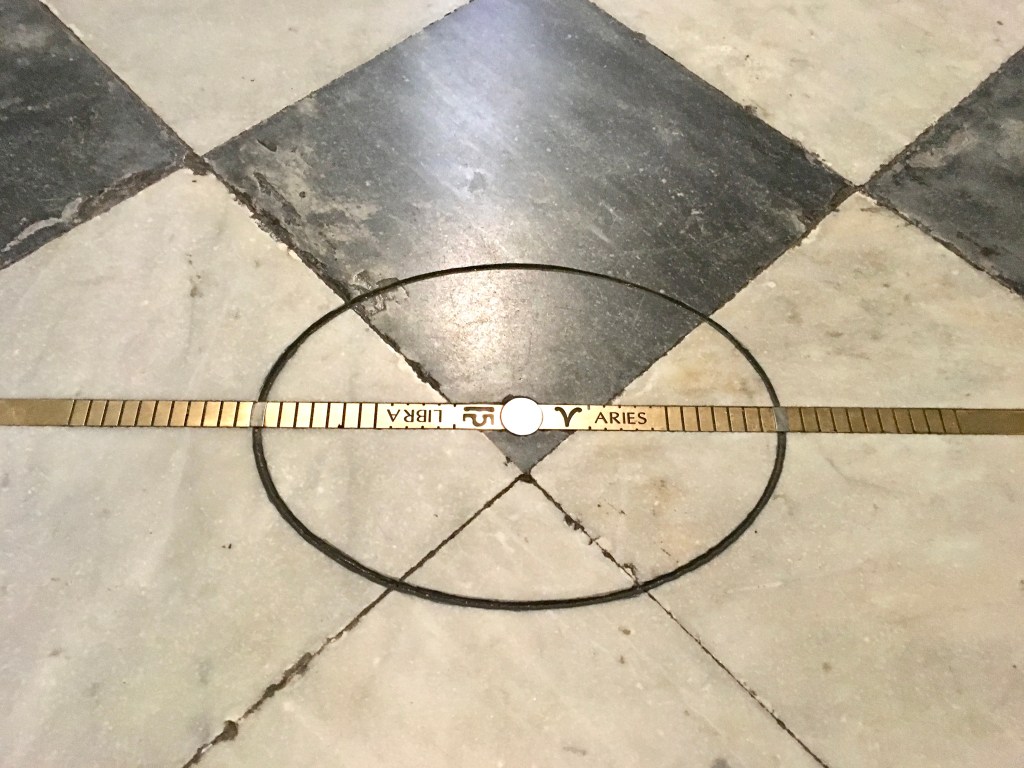
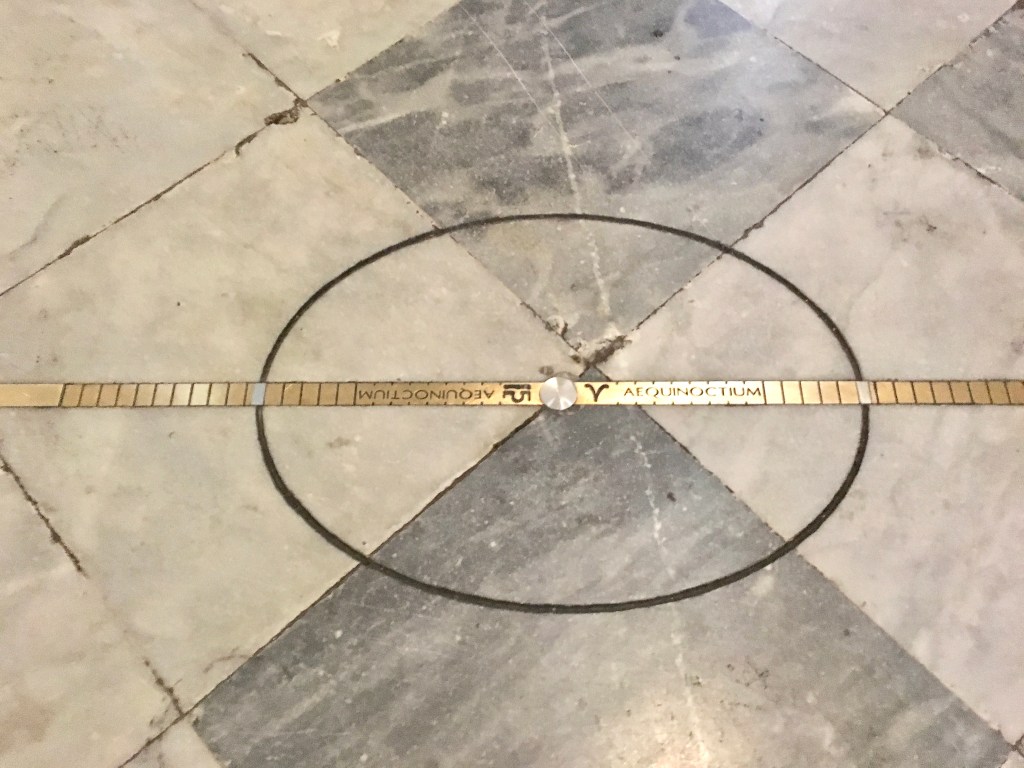
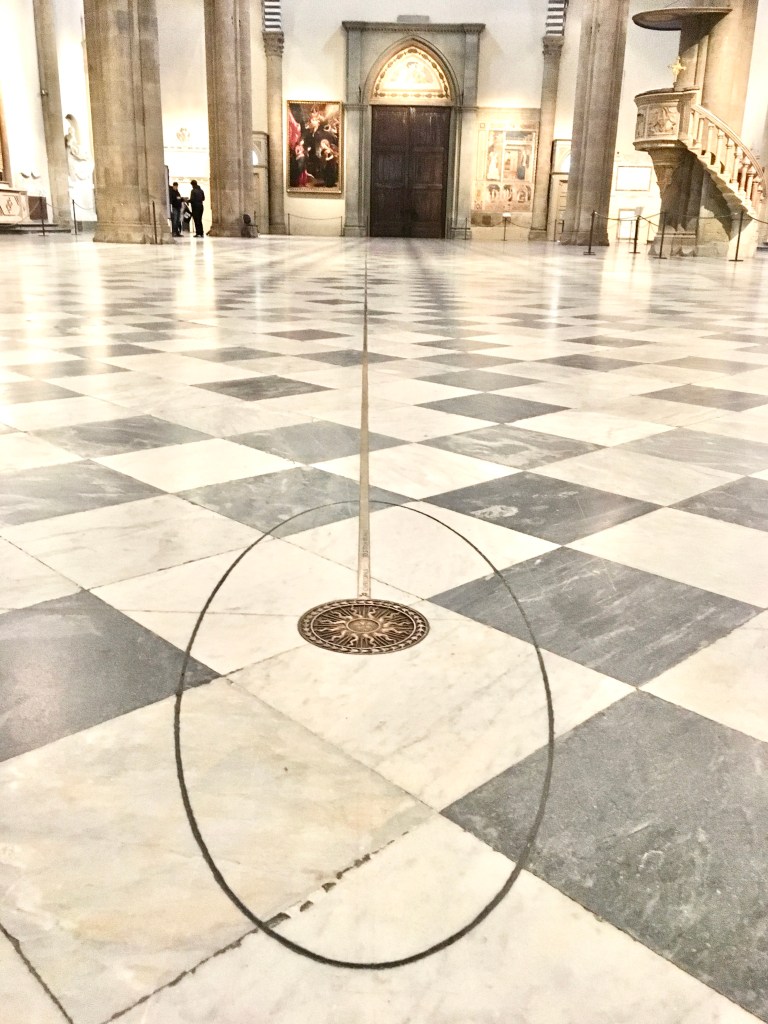
MERIDIAN DIAL IN DETAIL

Basilica of Santa Maria Novella . Firenze . Meridian Dial – Keith Salvesen

Basilica of Santa Maria Novella . Firenze . Meridian Dial – Keith Salvesen

Basilica of Santa Maria Novella . Firenze . Meridian Dial – Keith Salvesen

Basilica of Santa Maria Novella . Firenze . Meridian Dial – Keith Salvesen

Basilica of Santa Maria Novella . Firenze . Meridian Dial – Keith Salvesen

Egnazio Danti – Instituto Comprensivo

REFERENCES / CREDITS

MUSEO GALILEO

Wiki cc – header image / close-up

‘photo tsettle’ – gnomon hole positions

All dial photos – Keith Salvesen

SMN (Wiki Arch.)

COOMBE BISSETT . WILTS . ST MICHAEL & ALL ANGELS – Scratch Dials

Coombe Bissett . Wilts . St Michael

ST MICHAEL & ALL ANGELS . COOMBE BISSETT . WILTS

GRADE 1 C12 south aisle, 2 Norman arches; C13 chancel; C14 tower; C15 nave & north transept. Restoration 1845 by T. H. Wyatt. Early (C12?) font carved from a single piece of Jurassic limestone. One of several fine Chalke Valley churches situated south of the A30 between Shaftesbury and Salisbury. It’s an attractive long cut between the two. 51.0361 /  -1.8473 /  SU108263

DIALS

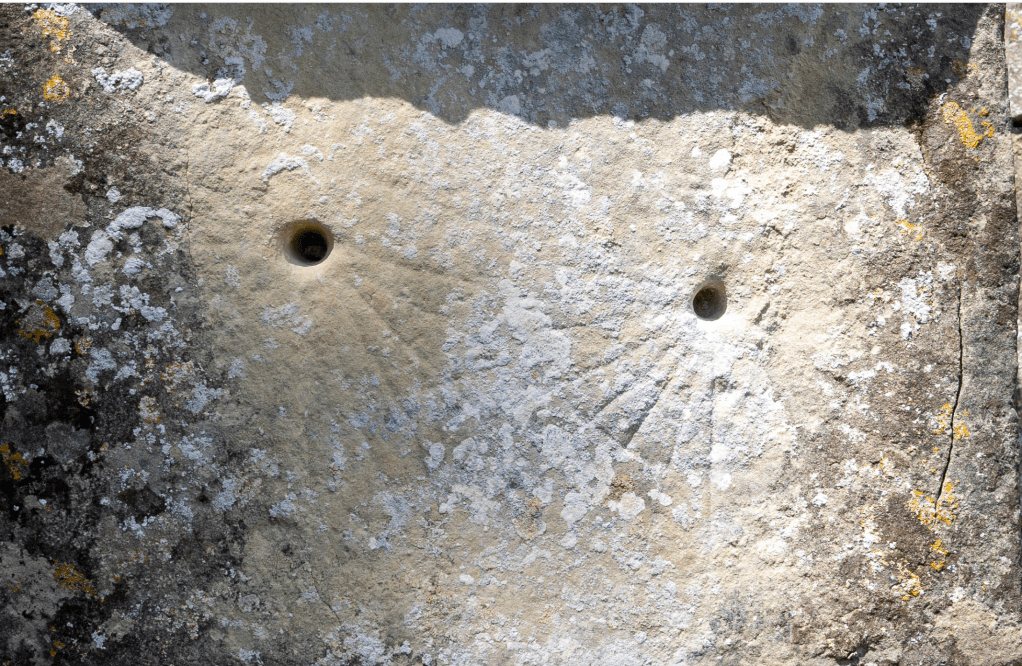
On the S-facing central buttress of the tower there are two adjacent scratch dials on the same stone that merge. It isn’t immediately clear (to me) which came first. Whichever, presumably the time came as the church developed when more accuracy in marking the day’s passage was required.

BSS references a 3rd dial on S wall. Other records mention two scratch dials and one sundial on south side. See below for an attempt to ID the sundial.

DIALS 1 (L) & 2 (R)

Coombe Bissett . Wilts . St Michael – Scratch Dials

Dial 1 is recorded as: Irregular dial with 15° lines in both quadrants.

Dial 2 is noted as: Cannot be classified. Eroded, damaged. Mass or line deeply cut.

My visit was early evening, and the quality of the detail in my photos is unimpressive (see above). For example, there is only the hint of the part-circle of Dial 2. Fortunately, this is a church that another dial collector has visited and later he uploaded his photos to BHO / Disqus. Mark Wolstenholme’s excellent images give a much clearer and sharper view of the details of both dials and their intersection.

DIAL 3 (?)

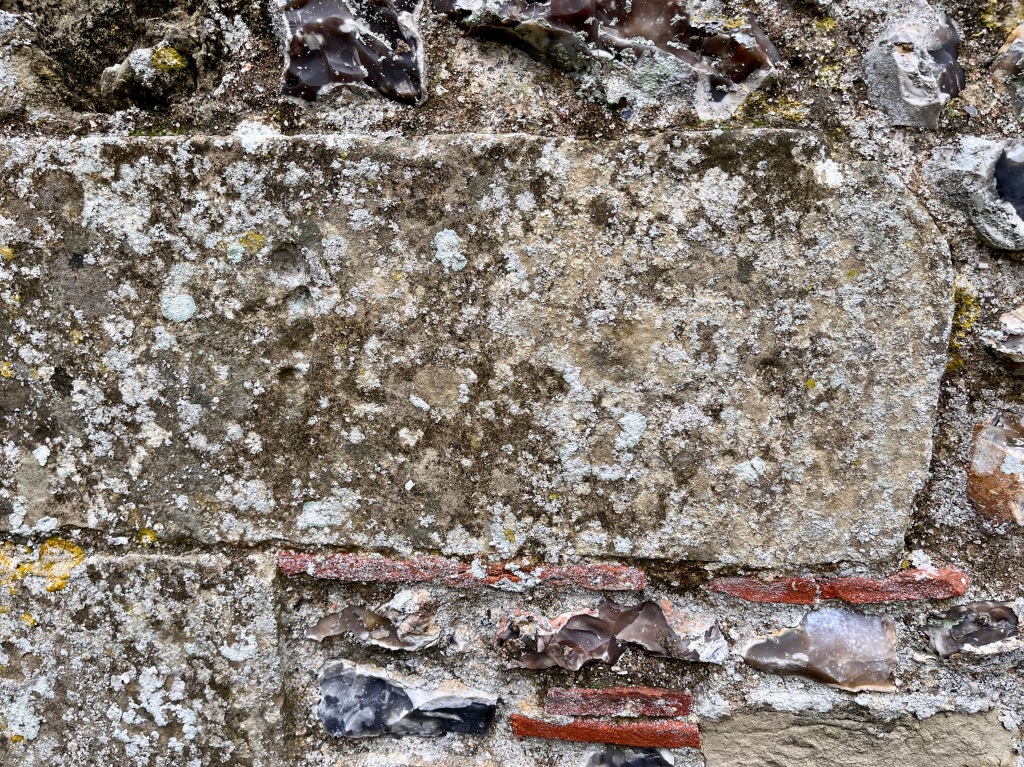
Another dial is recorded as being on the tower, S wall, a short distance W of the ‘dial buttress’ above. The description states Early Christian ‘Tombstone’ dial. Accurately cut or made. Modern replacement. I found this baffling, and the only conceivable candidate I could find in the area may or may not fit the bill. Somehow I doubt it. Suggestions of its purpose would be welcome…

GSS Category: Scratch Dial; Mass Dial

Photos: Keith Salvesen; special thanks to Mark Wolstonholme who uploaded his detailed photos to the BHO site os and to Disqus os

KIMPTON . HANTS . ST PETER & ST PAUL – Scratch Dials

St Peter and St Paul. Kimpton . Hants

ST PETER & ST PAUL . KIMPTON . HANTS

GRADE I C13, C14, C15, C18; C19 works & restorations. Cruciform, with a south aisle to the nave, south porch, and western tower. Single cell nave and chancel of c1220. Blocked north door in the nave. Unusual C19 2-stage tower is pleasingly incongruous. 6m W of Andover, just N of the dread A303. 51.2181 / -1.5988 /  SU281466

DIALS

BSS records from 2013 are based on a survey in 1995 which mentioned 2 dials quite close to each other on SE angle of S transept. For both dials BSS notes: Known only from reference. No other details. No longer extant.

ARG made the original record on his visit in July 1925, noting one dial and a doubtful one, both on the SE angle of S transept. His descriptions are as follows:

DIAL 1. On the large quoin on SE angle of S transept... late C14. He described it as an imperfect dial, with some lines LLQ, 4 of which ended in pocks; and some pocks LRQ with 2 lines extending beyond them.

DIAL 2. Noted as close-by and slightly doubtful, with a very small style hole and perhaps 3 lines on the lower half.

I found nothing to match ARG’s descriptions but I did find a plausible and a doubtful dial in the same general area.

DIAL 1

This stone doesn’t match the others in the immediate vicinity, and gives the distinct impression that it has been relocated and probably resized to fit. I think it plausible to claim this as a crude and eroded dial with traces of stubby lines in the noon area. It looked quite convincing on the day. Possibly it was relocated to a more prominent position, whether as a working dial or perhaps as a decorative quirk.

DIALS 1 & 2 – LOCATION

St Peter and St Paul. Kimpton . Hants – Two adjacent scratch dials. Possibly.

DIAL 2

This design is on a long stone close to Dial 1. Image 1 shows the stone as it is, horizontal. The 4 graduated dents caught my eye, being clearly created for a reason. There’s a slight curve to them; and a patch of cement that may (as elsewhere) fill a gnomon hole. Also – revealed in close-up – there is undeniably a deliberate thin straight line that comes directly from the hole (if it is / was one).

Rotating a photo of a dial can be useful in interpreting it (Images 2 & 3). A 90º turn here reveals a slightly more meaningful dial design. That said, to work as a dial stone, the long horizontal block would have had to be relocated from a place where it was vertical.

St Peter & St Paul . Kimpton . Hants – print (BHO)

GSS Category: Scratch Dial; Mass Dial; Medieval Sundial

All photos: Keith Salvesen
BINSEY . OXFORD . ST MARGARET of ANTIOCH – 2 Scratch Dials

St Margaret of Antioch . Binsey . Oxford

ST MARGARET of ANTIOCH . BINSEY . OXFORD

GRADE I C12 origins on site of Saxon church; c13 rebuilding (chancel, nave), S porch added; C15 & later restorations (latest in 1936). Unheated and candlelit until 1975. Much of interest – remarkably secluded location, a Holy well, a direct link with Alice in Wonderland, an excellent riverside pub. Within ring road W of Oxford, N of Botley Road, at the end of a mile of narrow lane. Check a map before you go… 51.7691 / 1.2976 / SP485080

❖ The clearest illustrated article about St Margaret, its history, and its significance can be found at David Ross’s excellent BRITAIN EXPRESS. This includes the sad story of the celibate St Frideswide (C7), Patron Saint of Oxford and a roundabout system, & her suitor Algar. It also covers the origins of the Holy well, its healing powers and its link to Alice’s ‘treacle well’. An informed tour of the church ends with helpful directions to it.

DIALS

DIAL 1

St Margaret of Antioch . Binsey . Oxford – Scratch Dial 1

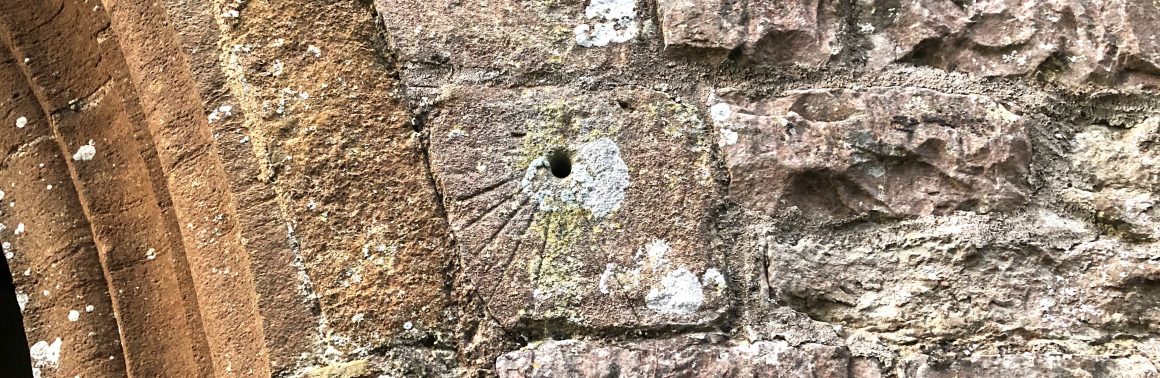
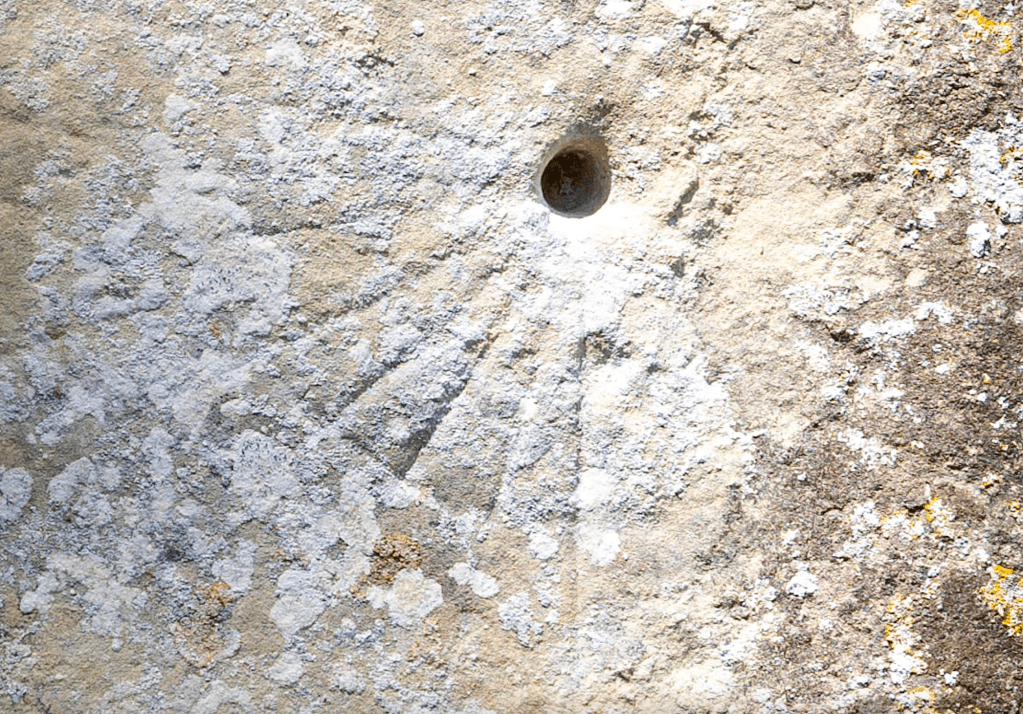
On the quoin RHS of the porch entrance, with a large slightly recessed gnomon hole. A morning dial, very eroded in the 3 other quadrants. Originally encircled (BSS)? The visible evidence of a complete circle is scant. 8 lines, some extending over split stone. The noon line is emphasised – longer and deeper cut. A hint of double pocks at lower end – just possibly a dotted cross ✣?

DIAL 2

St Margaret of Antioch . Binsey . Oxford – Scratch Dial 2

Located on the nave buttress adjoining the chancel. 4 lines radiating from a central hole in the dial stone, one slightly curved; 7 clear pocks all on or at the end of the lines. Unlike dial 1, there is no exact vertical line. The puzzle is to identify the noon line. On some dials, there is a notional noon line formed by a narrow gap between 2 near-vertical lines – not the case here. Presumably it is line 2, being extended and having 2 pocks. Line 3 is too flimsy for the task. Line 1 presumably marks a service time between Terce and noon.
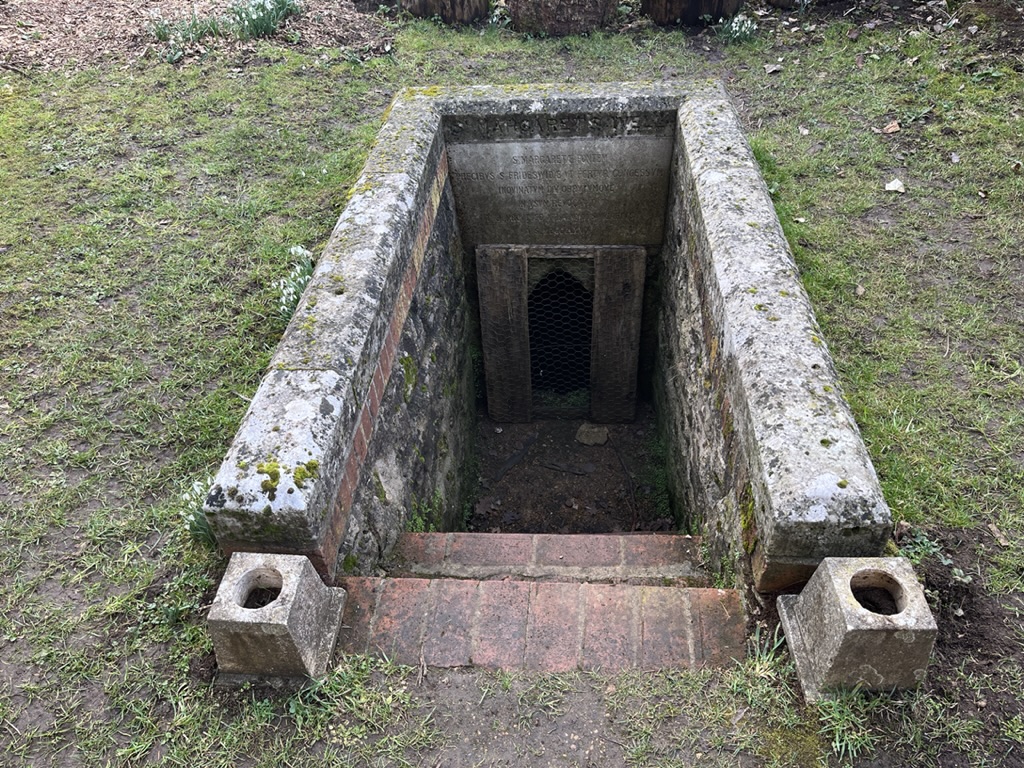
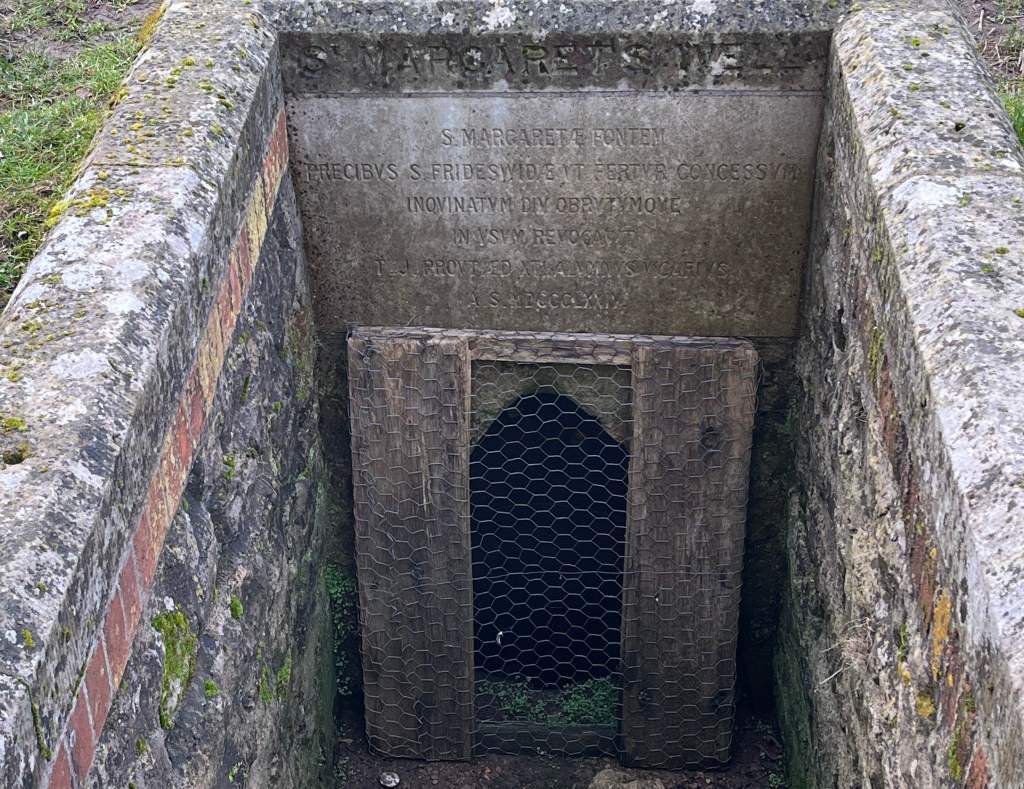
ST MARGARET’S WELL

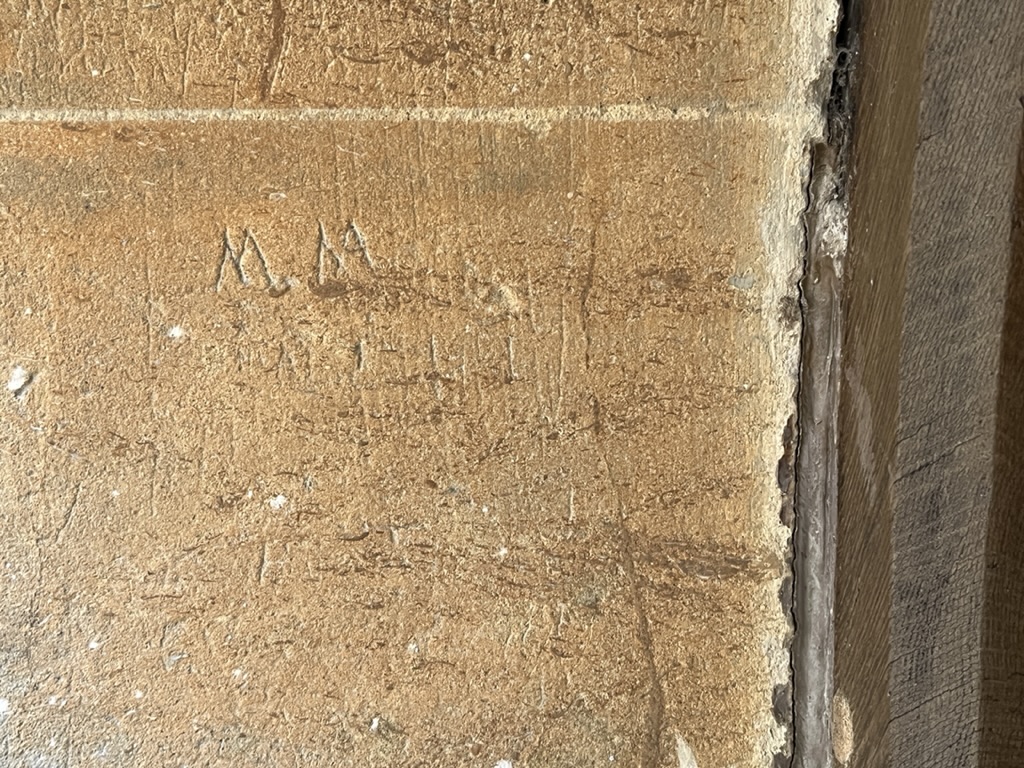
GRAFFITI ANCIENT & MODERN

There is a certain amount of graffiti in the porch, some of which is not medieval. Included are initials, 2 (unconvincing?) inverted Marian marks; and some scratchings of hard-to-decipher script, something I haven’t often seen.

After your visit you may need refreshment: I recommend the excellent nearby PERCH INN

GSS Category: Scratch Dial; Medieval Graffiti

All photos: Keith Salvesen