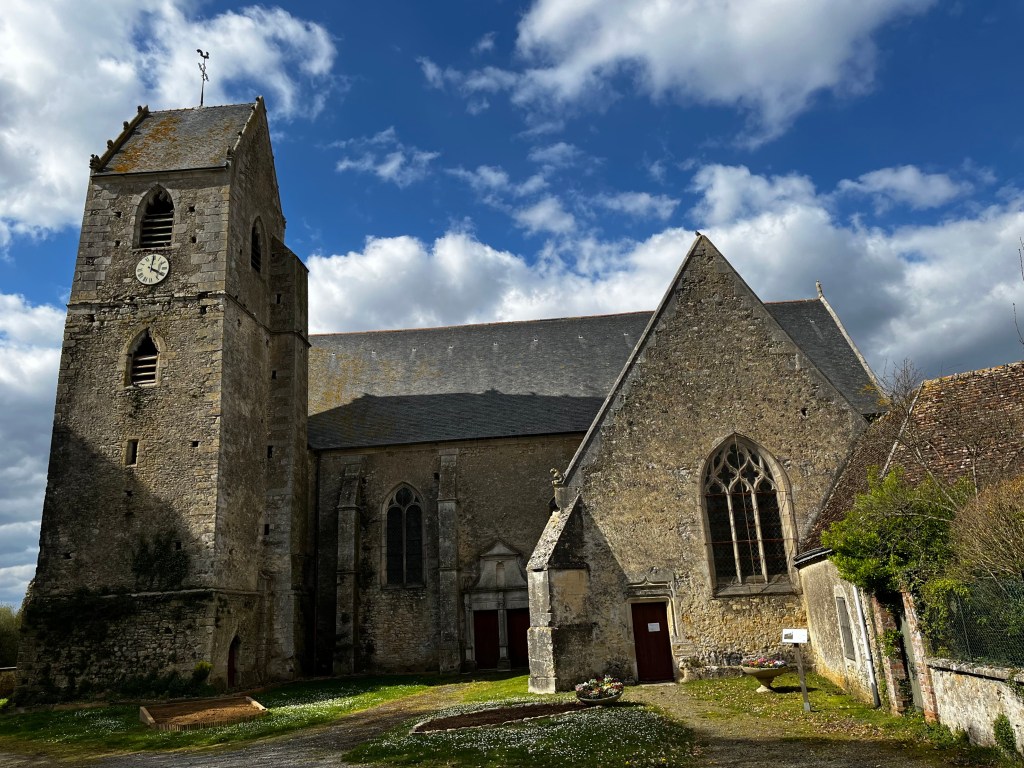
St Rémy du Val is about 12m SE of Alençon, in a countryside of fields and forests. The church of St Rémy et St Rigomer stands high above the river Bienne, beside a now-ruined small castle. It has early origins but dates mainly from C15. The strong tower also had a defensive purpose. At some stage a small and attractive renaissance double doorway was added, a pleasing architectural contrast.
DIAL

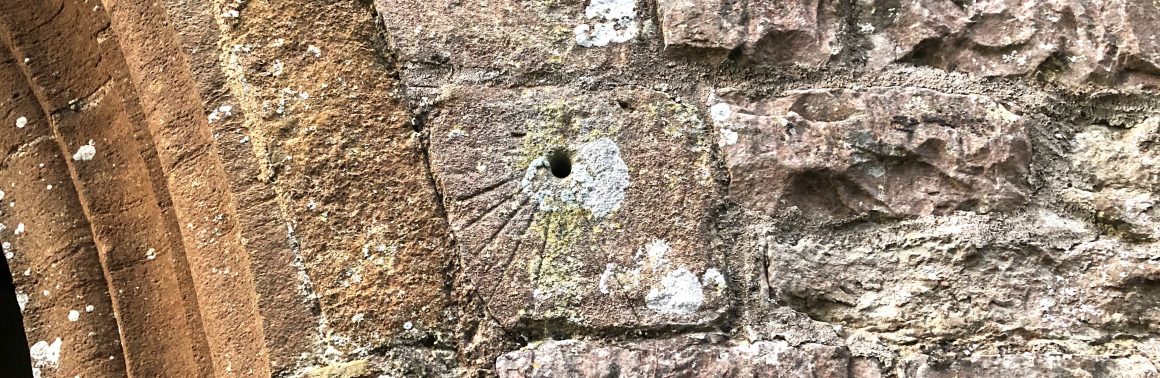
The dial is located on the SW face of the buttress shown in the foreground of the header image. There is a definite tilt to this part of the church supported by the buttress, and to the adjacent buildings (the photo exaggerates it considerably).
I wasn’t expecting to find a dial (or even looking for one), and I was lucky to see such an unobtrusive example as we walked past. I later discovered that there is one other mention of it, and of a possible small dial close to it.

The dial is considerably eroded and quite badly damaged in the lower R quadrant. Close-to, its relative sophistication is evident. The radials are within a double circle and as far as one can tell do not overlap the inner circumference. Almost certainly the lines were incised all the way round the gnomon hole. There is a hint that in the lower half – or perhaps just the lower L quadrant – there are half-hour marks as well. Perhaps these details suggest a C16 dial.

SMALL DIAL
Revised 2024
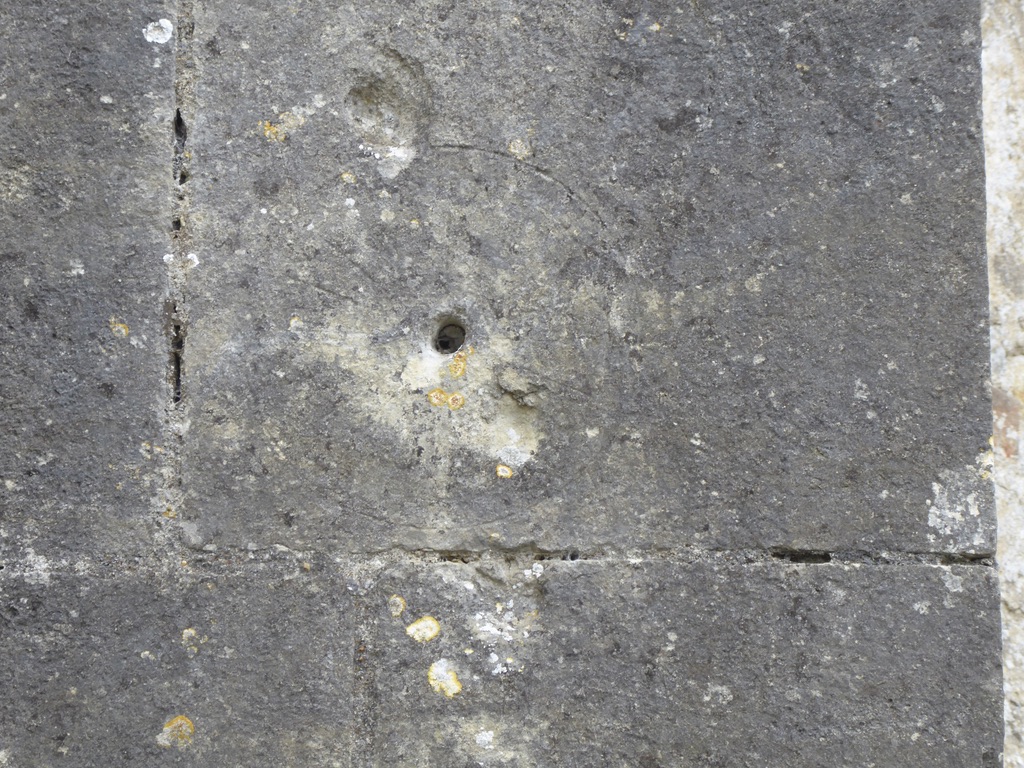
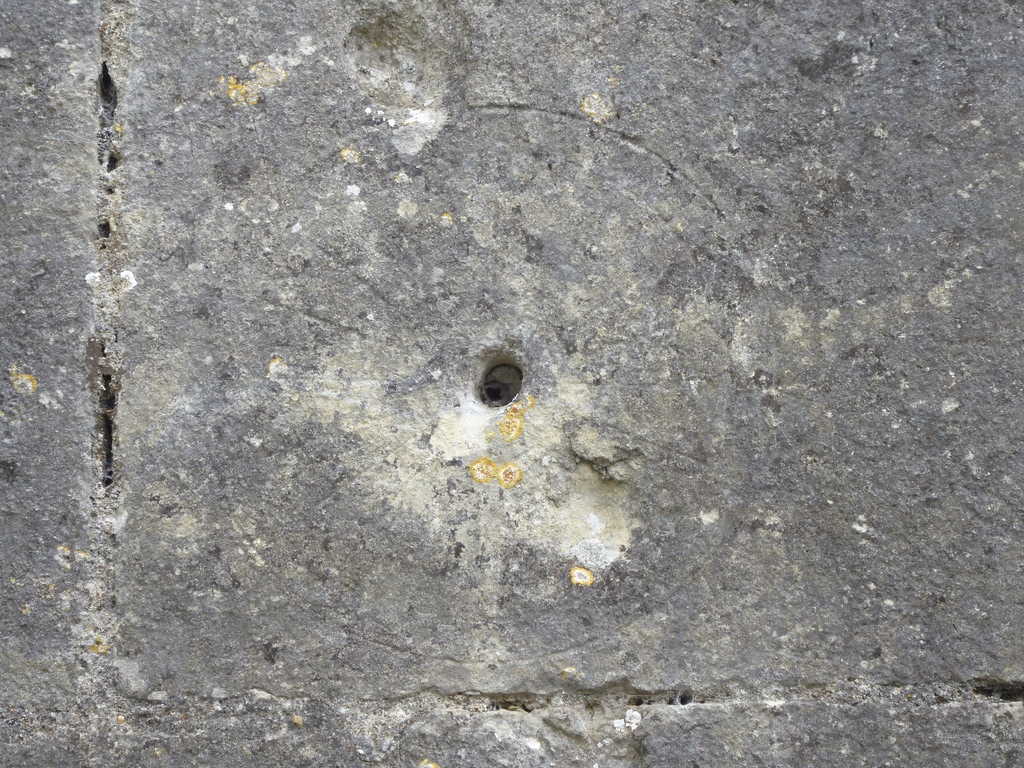
Michael Lalos, who runs a very good site for French sundials of all types, also found this small design. At first sight it doesn’t look very promising as a dial, and might be an apotropaic symbol (demon trap variety, where evil is contained within the circle). However I have since found a number of very similar designs that in their context and position are certainly dials.
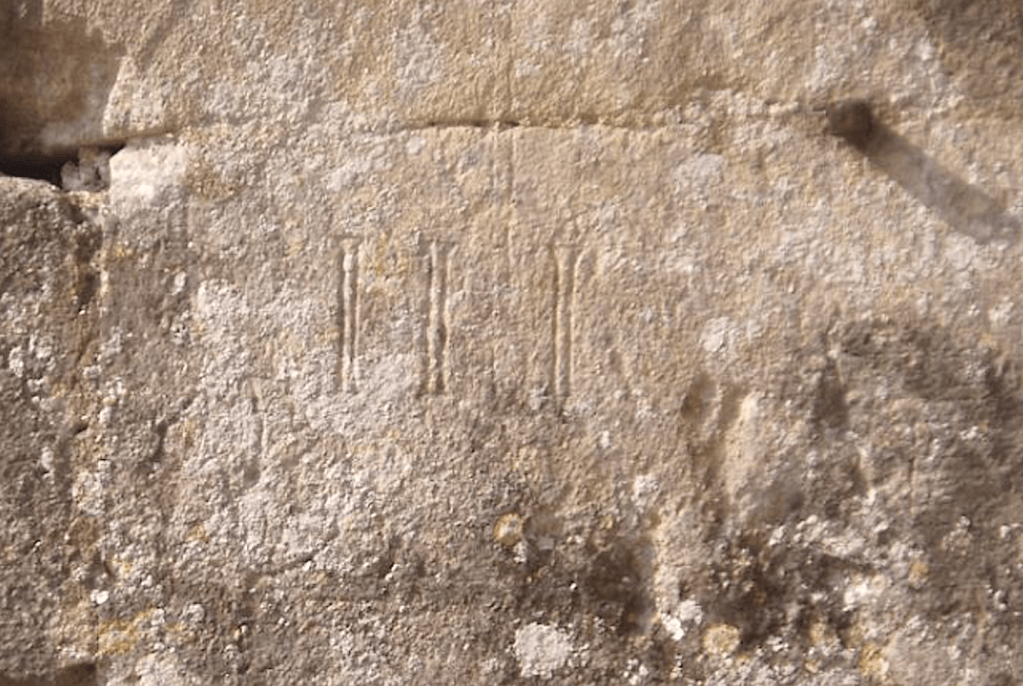
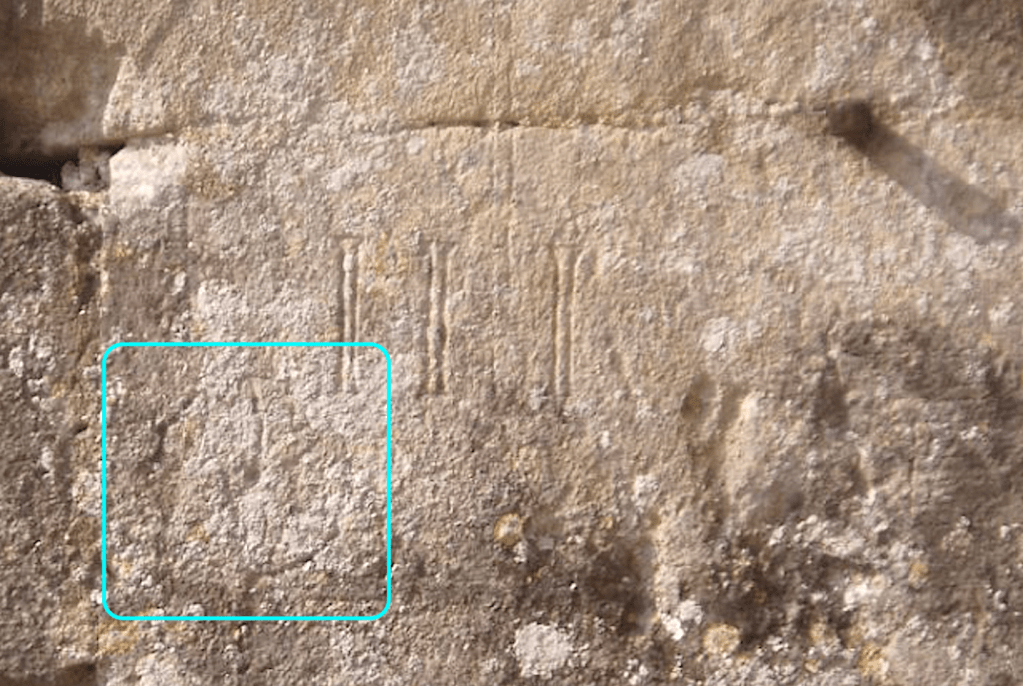
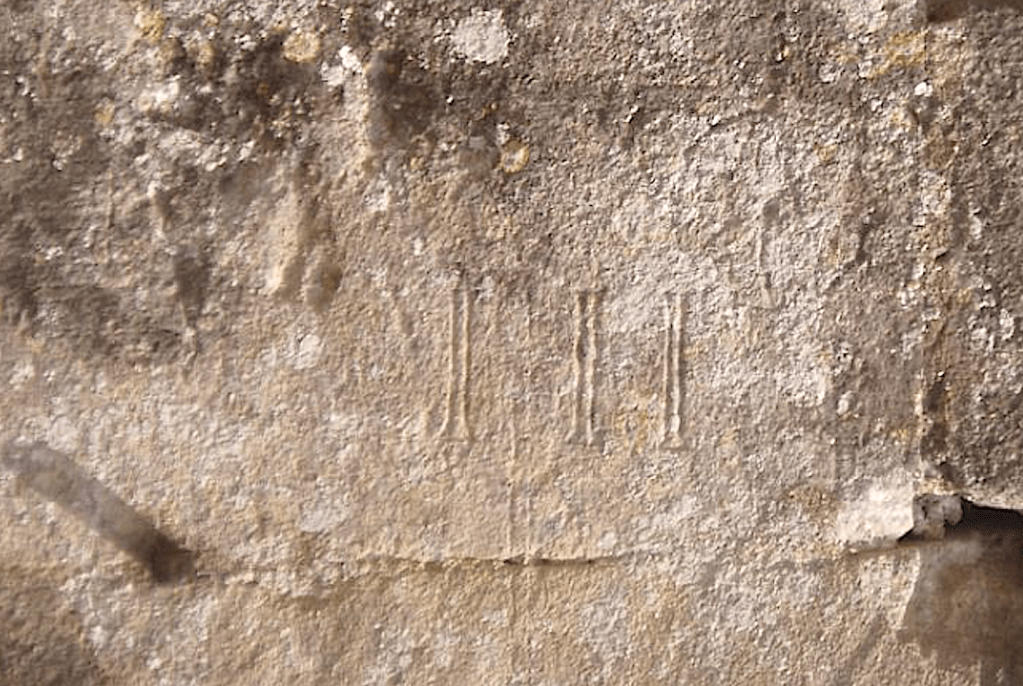
With the benefit of hindsight and the hint from M. Lalos, I now think this is a small rustic dial, and much earlier than its counterpart. One oddity is that the informally curved noon line points upwards. It can be useful to rotate a dial 180º to see how it looks.
The noon line is now in (roughly) the right place. In addition, there is a very faint line LLQ that corresponds with the canonical observance time TERCE. The inversion that gives the dial its present orientation would have occurred during rebuilding / restoration at some stage in the church’s history.
GSS Category: Scratch Dial; Mass Dial; Medieval Sundials France
All photos Keith Salvesen except the last pair, Michael Lalos
 GAUDIUM SUB SOLE . SUNDIALS . MEDIEVAL TO MODERN