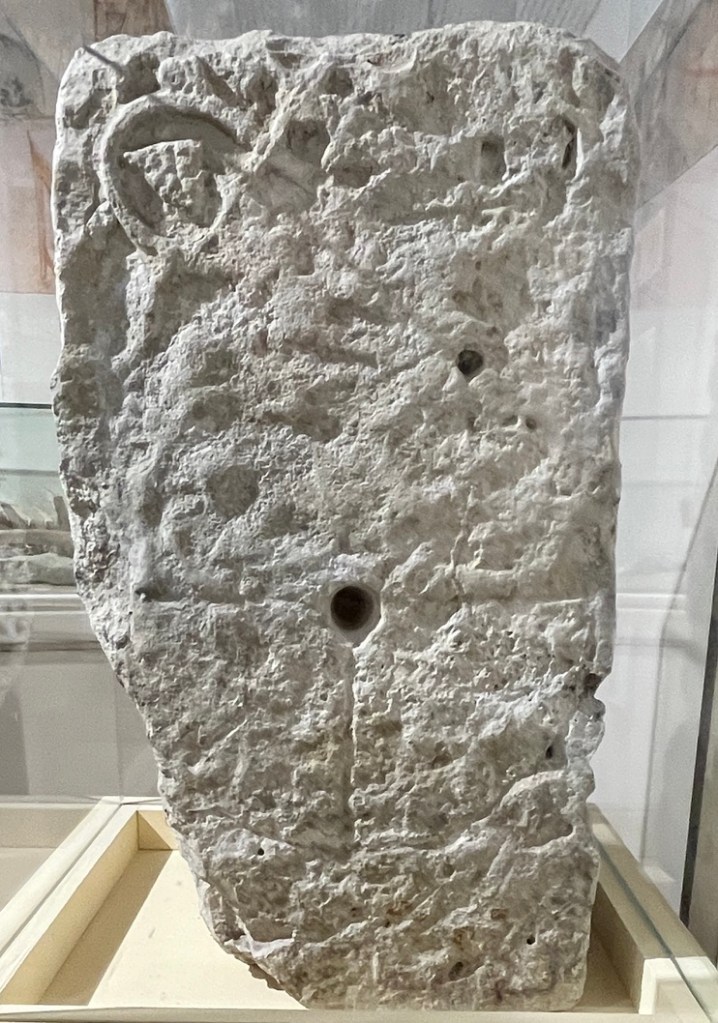
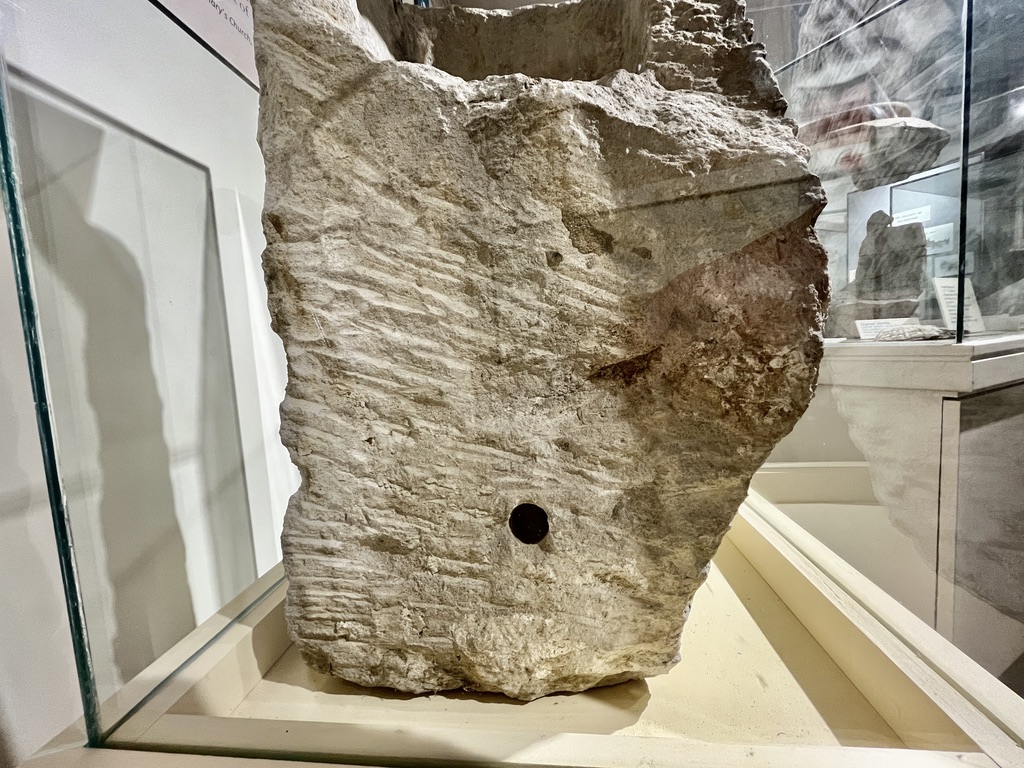
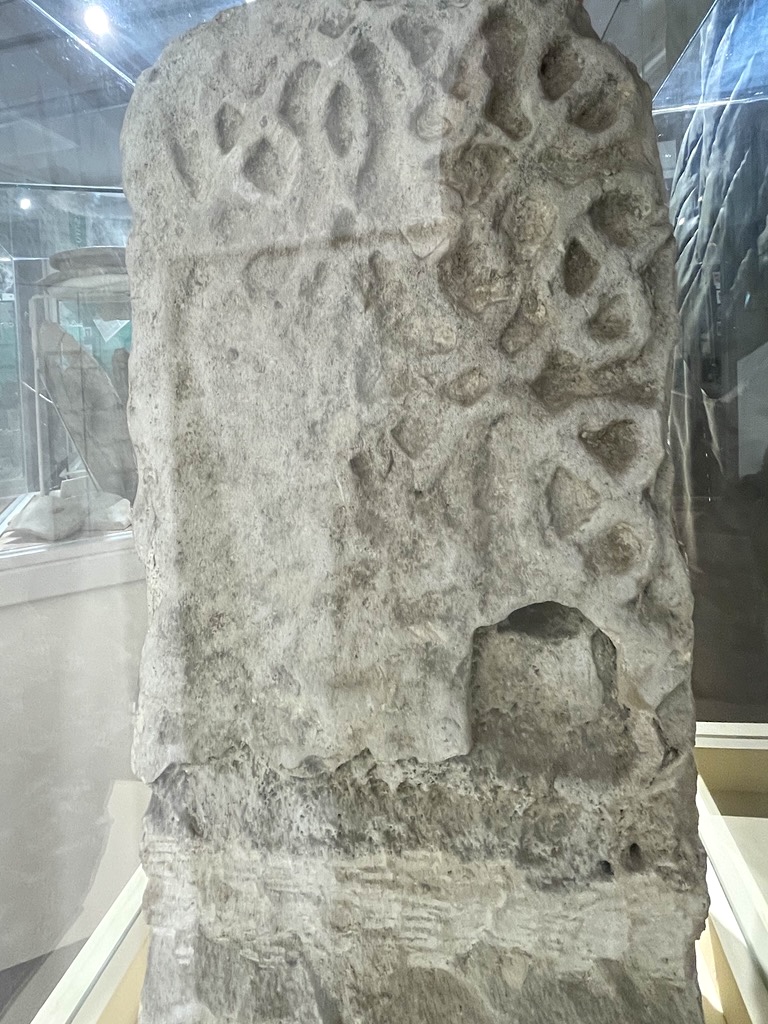
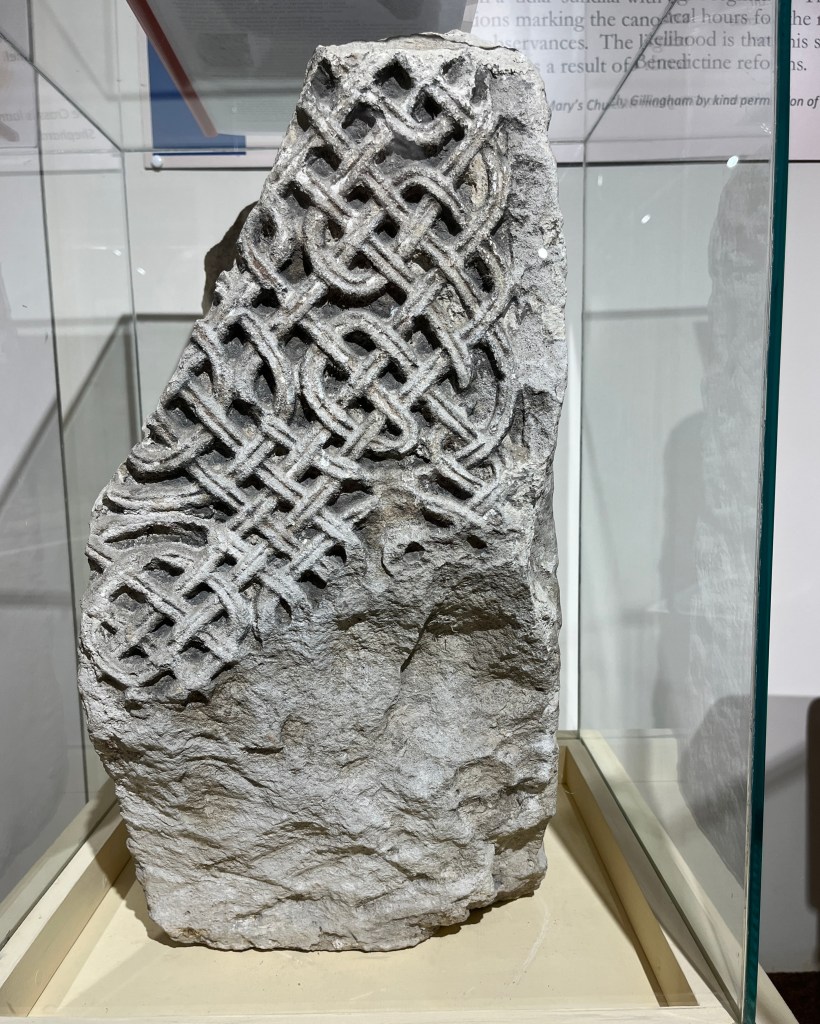
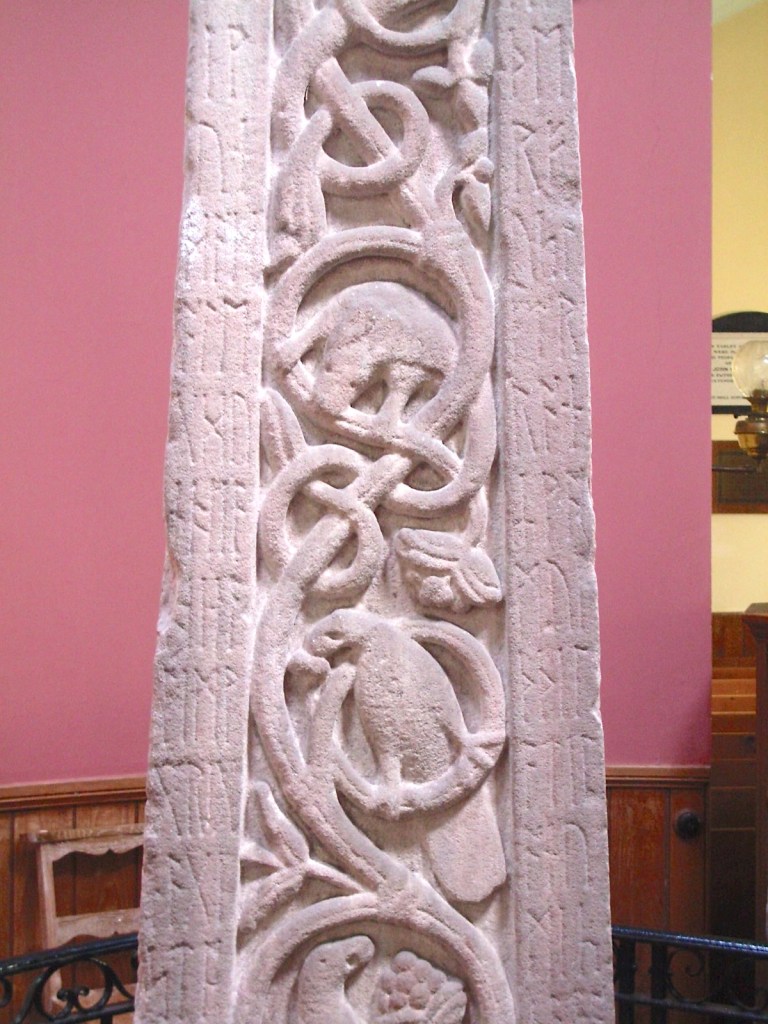
GILLINGHAM in Dorset has a well-curated Museum spanning prehistory to our lifetime. The many and varied displays include a very special one, a handsome carved fragment of an Anglo-Saxon standing cross. Below are images of all four sides of this wonderful stone. It is enhanced by the later addition of an early dial – a Tide dial.
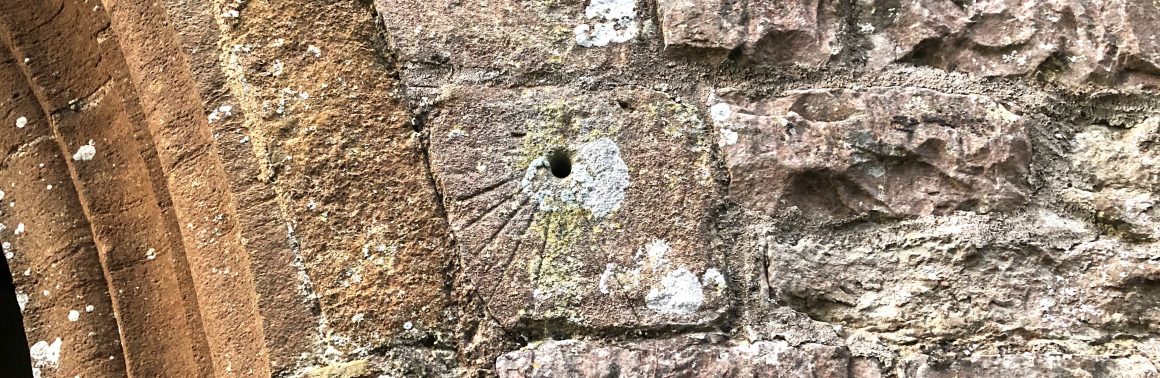
TIDE DIAL
The dial has a complete horizontal (‘6-to-6’) line, an emphatic noon line, and a short deep line corresponding to the canonical Terce, marking the significant part of the day for observance. An arc of circumference is below; there is no hint of a complete circle.
✣
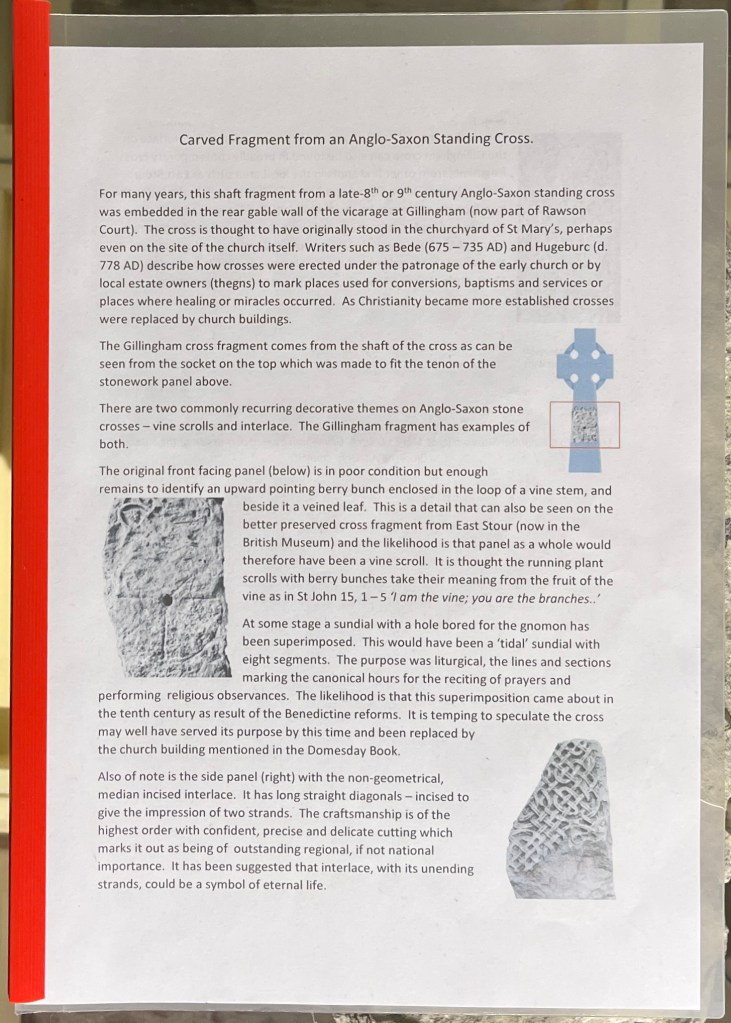
MUSEUM INFORMATION SHEET
✣
DIAL TWO?
Above right on the stone is a smaller hole with (from some angles) 3 very faint lines radiating from it. Very doubtful, but mentioned for completeness. Possibly an imitative attempt by a bored sacristan.
Second Dial above right?
✣
THE OTHER THREE SIDES
Gillingham Museum, where the stone is on loan from the Church of St Mary the Virgin, Gillingham.
Dr John Shepherd: Shephard J F (2023) – Carved fragment from an Anglo-Saxon standing cross and the arrival of Christianity in Gillingham in Annual Report and Review, Dorset Historic Churches Trust18, 6-7.
David Lloyd – Gillingham Local History Society
Images courtesy Tom Wickson (Dorset Historic Churches Trust)
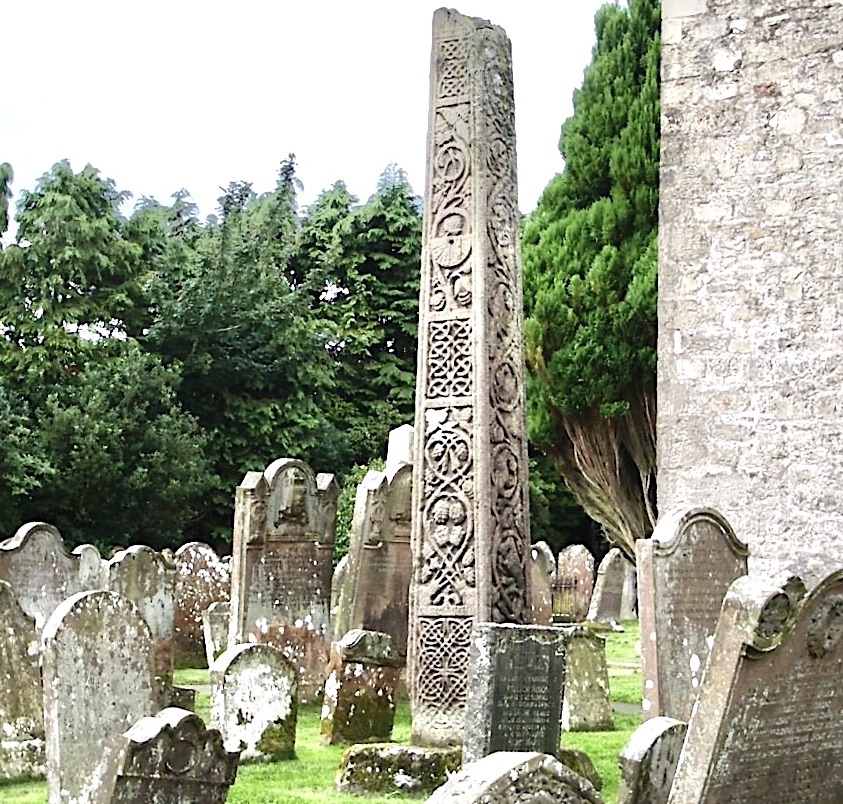
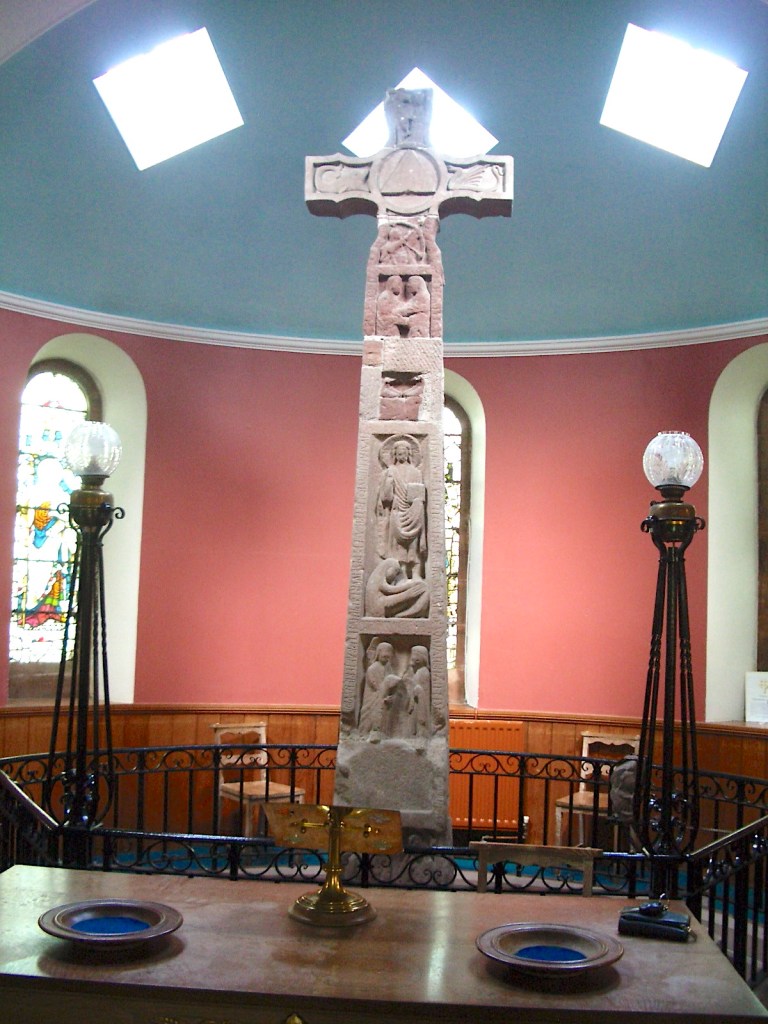
The famous Bewcastle Anglo-Saxon cross is located in St Cuthbert’s churchyard. It is dated in some sources as C8 and in others as early as C7. Whichever, it is generally believed to be the oldest British sundial. PEV praised it, with the similar Ruthwell cross, as the greatest achievement of their date in the whole of Europe. There is a replica in the British Museum.
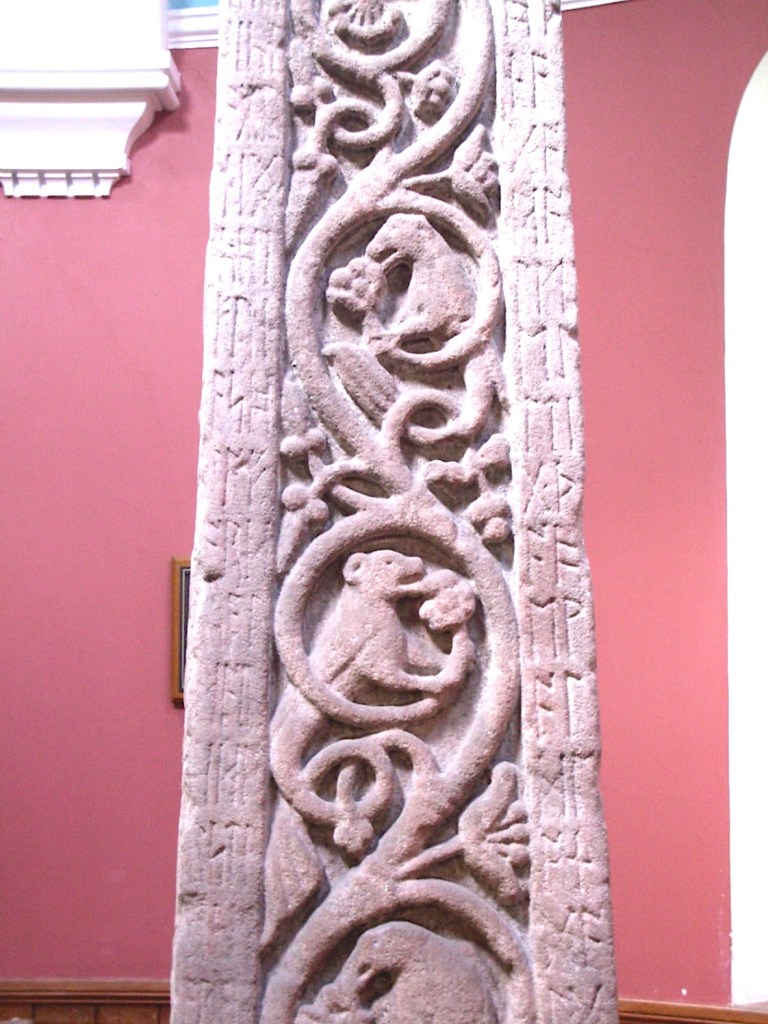
There is understandably a mass of online material analysing and explaining the cross, the wonderful carvings, and the meanings to be derived from them. I need to bypass these to focus on the astonishing early sundial incorporated into the elaborate decoration. For other aspects the Wiki entry BEWCASTLE CROSS is a good place to start.
Bewcastle Cross and Dial . Cumbria . Keith Salvesen
THE BEWCASTLE DIAL
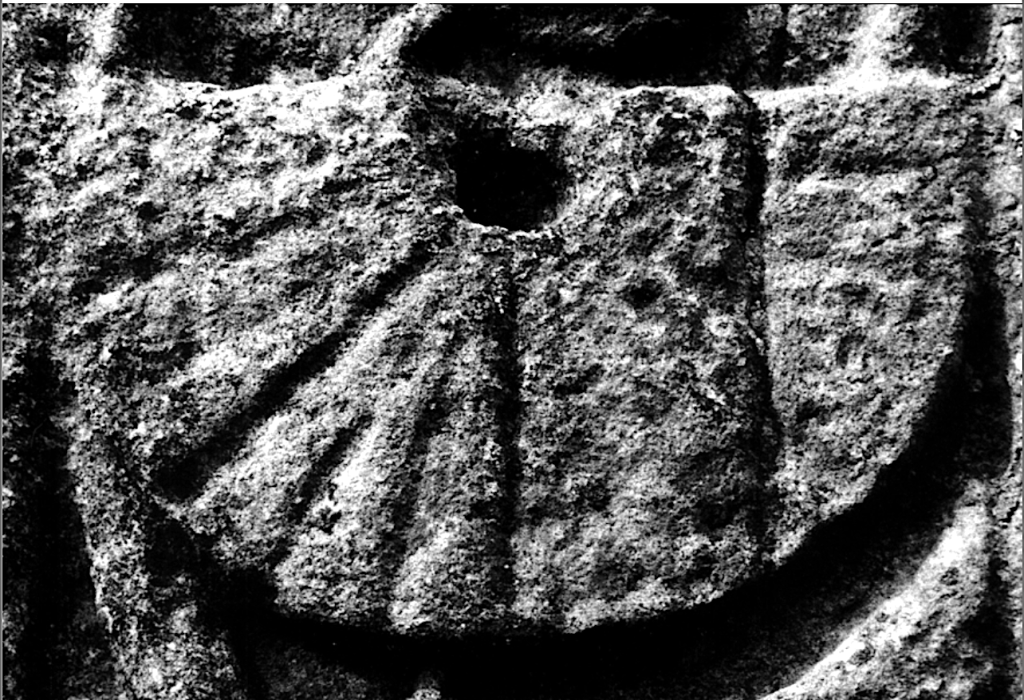
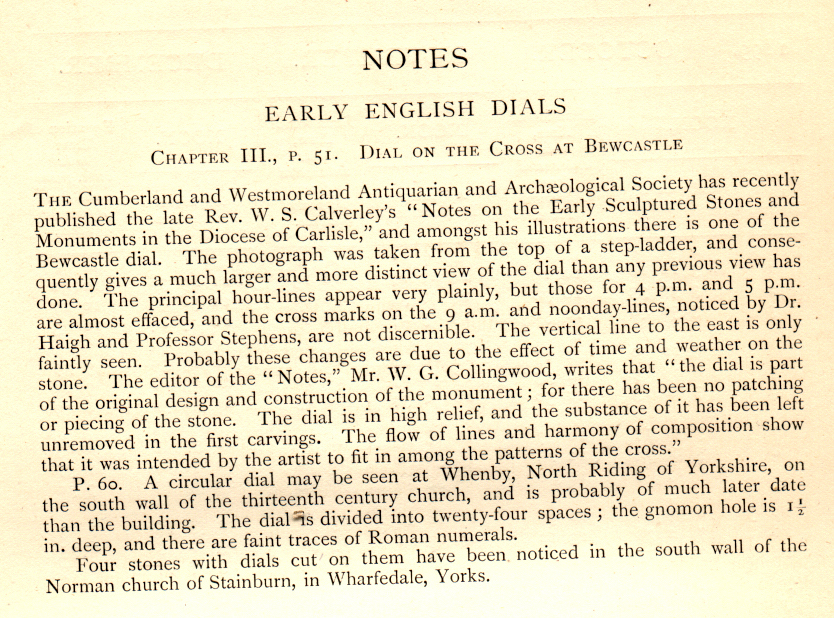
The dial is in a prominent position on the upper half of the south face. The BSS record describes the cross as Celtic, with the dial being integral to the overall design. 8 lines are noted, with the vertical line on the right side considered to be a later addition (but see below). The noon line is emphasised by being deeper cut, with 9am even more so and ending (perhaps) in a large hole. The dial must have been easy to read from afar. BSS has 3 close-up images in the archive which give a clear view of the dial and its slightly wider context.
Bewcastle Cross and Dial . Cumbria . BSS
Bewcastle Cross and Dial . Cumbria . BSS
Bewcastle is used as an example in the Wiki entry for the TIDE DIAL The article includes useful explanations and images. These lead to other related topics for those who want to investigate further. More importantly, there is a helpful analysis of the details of the sundial’s design, and how it would have worked in practice. The cross is believed to be in its original position, and one can imagine the way in which the passage of the day would have been marked for the benefit of the community.
The oldest surviving English tide dial is on the 7th- or 8th-century Bewcastle Cross… carved on the south face of a Celtic cross… and is divided by five principal lines into four tides. Two of these lines, those for 9 am and noon, are crossed at the point. The four spaces are further subdivided so as to give the twelve daylight hours of the Romans. On one side of the dial, there is a vertical line which touches the semicircular border at the second afternoon hour. This may be an accident, but the same kind of line is found on the dial in the crypt of Bamburgh Church, where it marks a later hour of the day. The sundial may have been used for calculating the date of the spring equinox and hence Easter.
Bewcastle Cross and Dial . Cumbria . Keith Salvesen
Bewcastle Cross . Diagram of each face. Eixo Wiki CC
‘Plaster Cast of an Early English Sundial’ . 1930s. (Science Museum)
Plaster cast (mounted in wooden frame) of the sundial on Bewcastle Cross, Cumberland, 670 CE. The day is divided into ‘tides’, which are cut into the stone. The gnomon is missing. Credit: A. J. Lothian
Bewcastle Cross and Dial . Cumbria . Keith Salvesen









 GAUDIUM SUB SOLE . SUNDIALS . MEDIEVAL TO MODERN