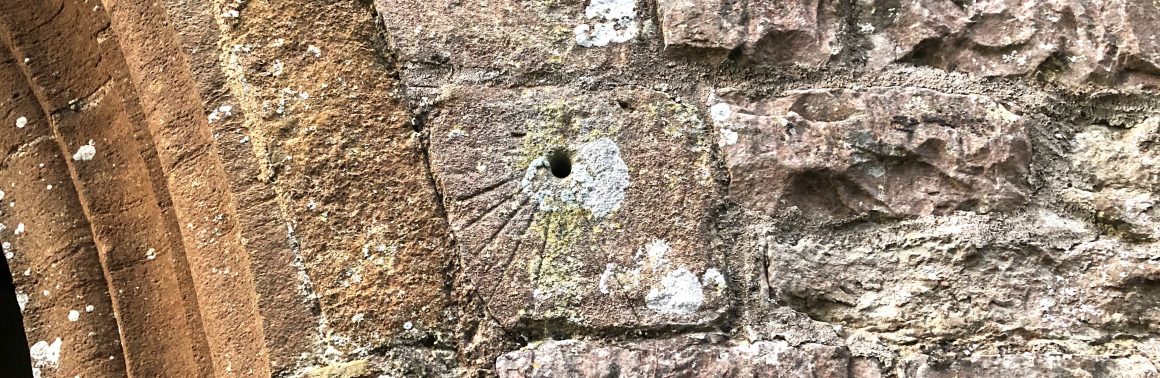
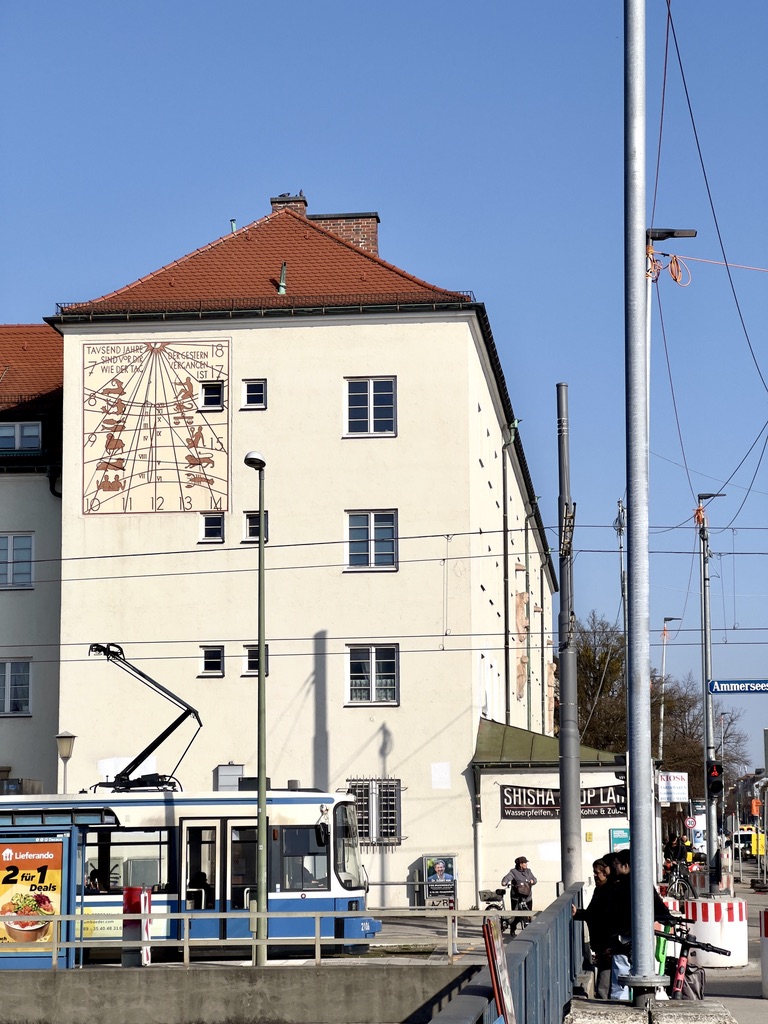
MUNICH . LAIM DISTRICT – Modern Noon Dial

NOON DIALS

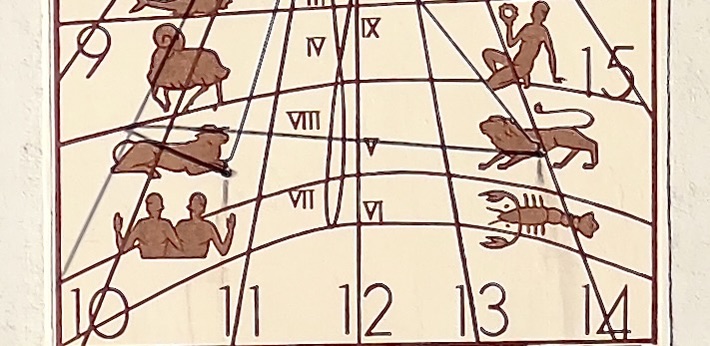
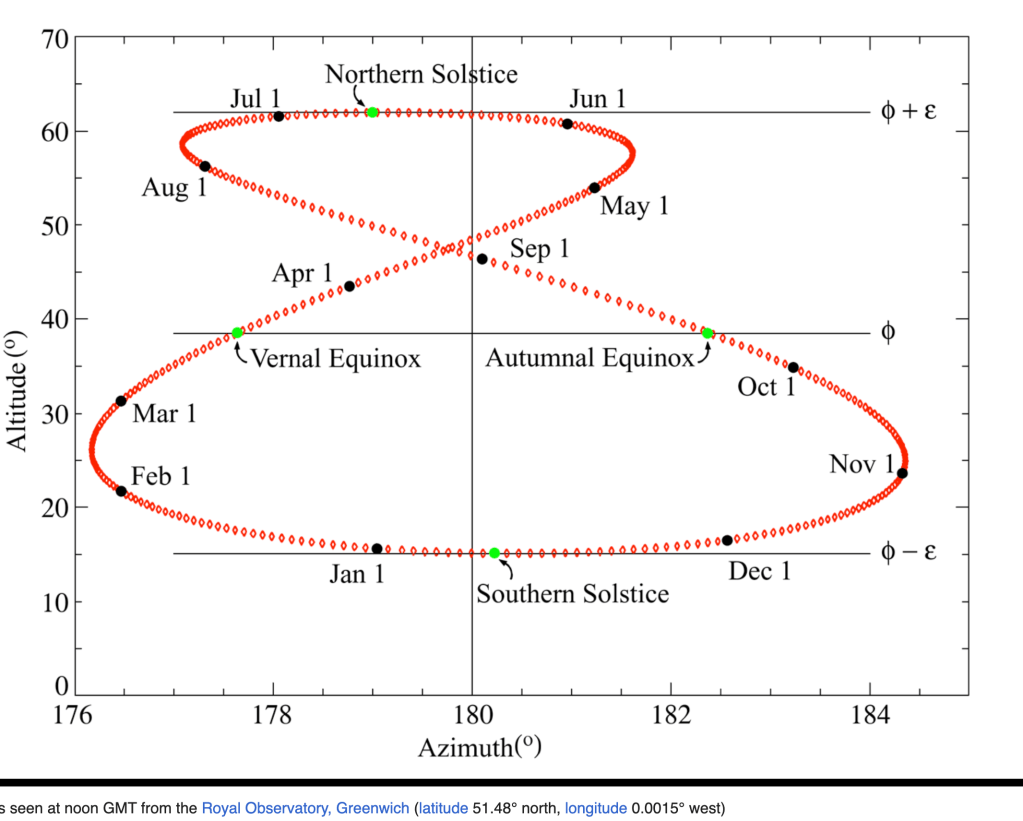
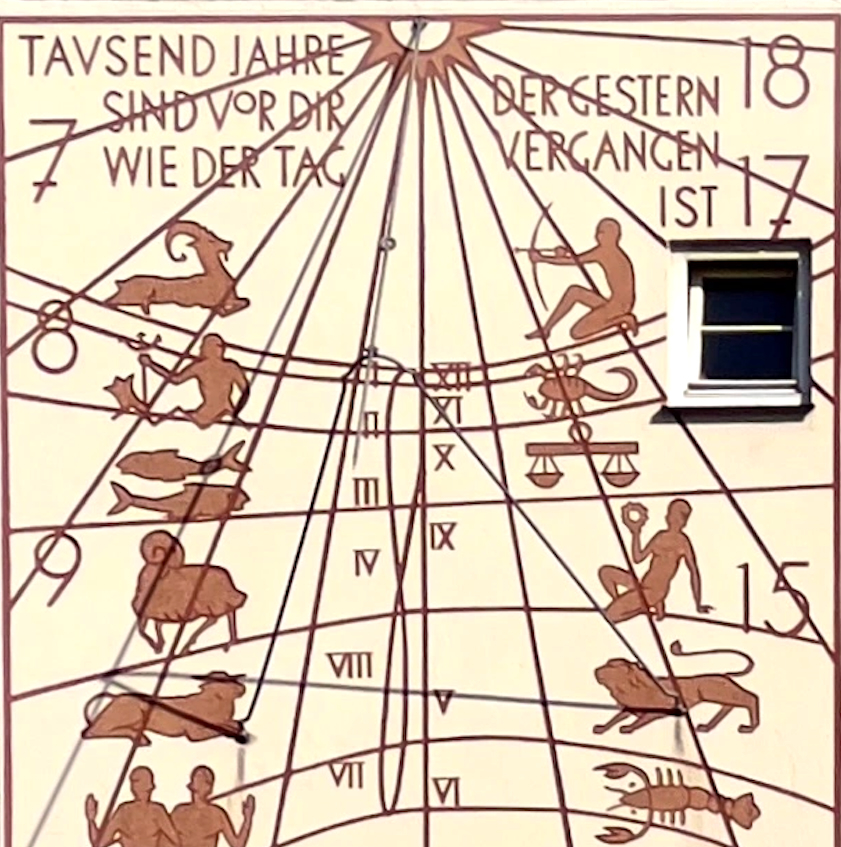
A noon dial / noon mark serves as a method of pinpointing midday, when the sun is at its highest and due south. The origins are ancient. Here, the relevant area is in the centre, flanked by Roman numerals. My maths / science skills are few and I will spare you a rudimentary explanation. The key words are Equation of Time, Analemma, and (my non-technical choice) figure of eight.
This image has an empty alt attribute; its file name is screenshot-2025-03-23-at-12.21.49.png

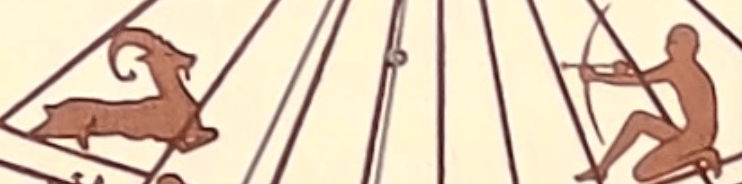
In the centre of the dial is a narrow figure of eight bounded by the numerals. You can just make out the raised bracket that supports a slender gnomon. You can see a small ring through which, at the perfect moment, the sun’s rays strike the face of the dial:
If you want to know more, there is a concise entry at ANALEMMA (Wiki)

This image has an empty alt attribute; its file name is screenshot-2025-03-23-at-12.21.49.png

This image has an empty alt attribute; its file name is screenshot-2025-03-23-at-12.21.49.png

GREEN TEMPLETON COLLEGE OXFORD

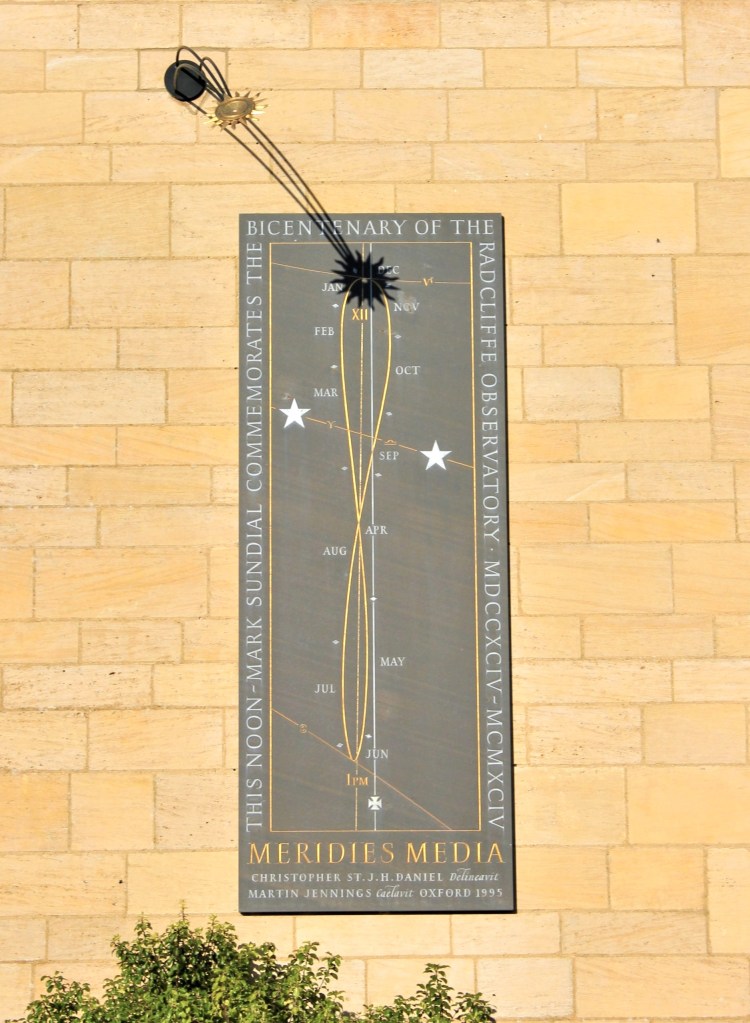
A modern (1995) noon-dial commemorating the Bicentenary of the Radcliffe Observatory, designed by the renowned Christopher Daniel, founder of the British Sundial Society. The critical alignment of the sun’s rays are projected onto the surface of the dial at noon (MERIDIES MEDIA), focused by the small ring.
THE COLLEGE’S NOTES

  • It works by using a spot of light cast by the nodus (the gilded sun with a hole in the middle), falling upon the slate dial-plate and tracking from left to right across it.
  • It is declining because the wall it is attached to does not face due south but ‘declines’ away from the compass point
  • Noon-mark means it gives the point at which the sun at its zenith crosses the Greenwich meridian and the Oxford meridian (the vertical white line down the centre of the dial)
  • Mean-time means you can read clock-time from the dial by following the progress of the year along the figure-of-eight marking, known as an analemma or equation of time correction curve. This makes allowances for the effect of variations in the apparent motion of the sun at different times of year.
Screenshot

GSS Category: Analemma; Equation of Time; Munich Sundial; Nodus; University Sundial

CREDIT: John Renner, for another great find from his travels
BASILICA di SANTA MARIA NOVELLA . FLORENCE – MERIDIAN DIAL

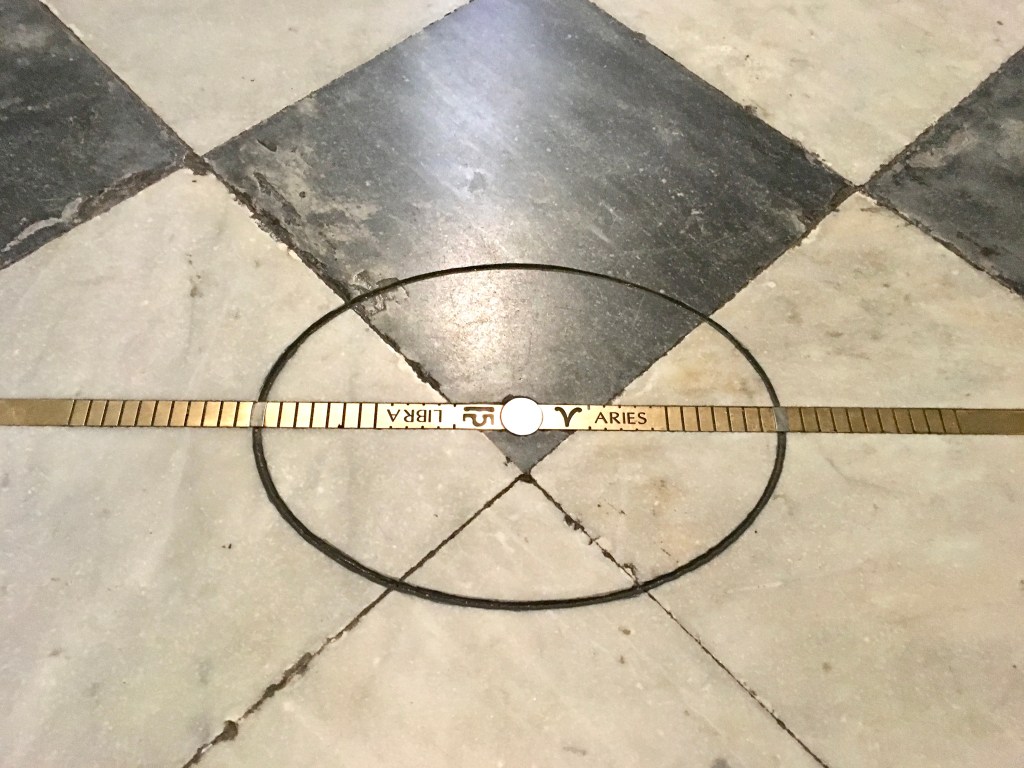
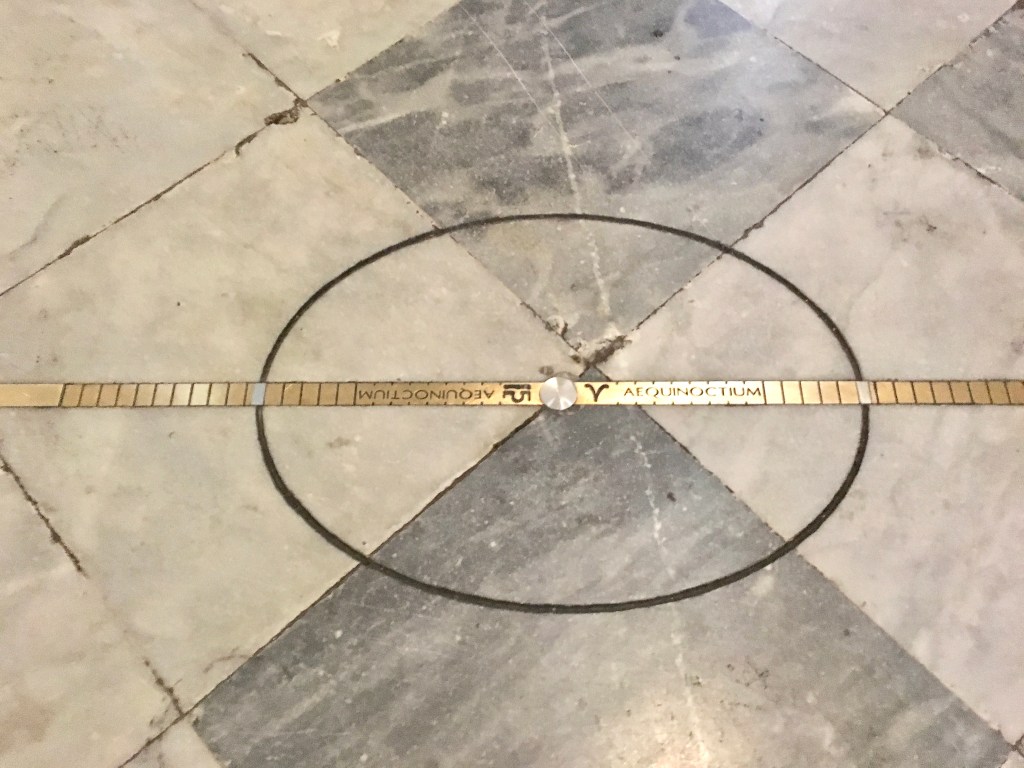
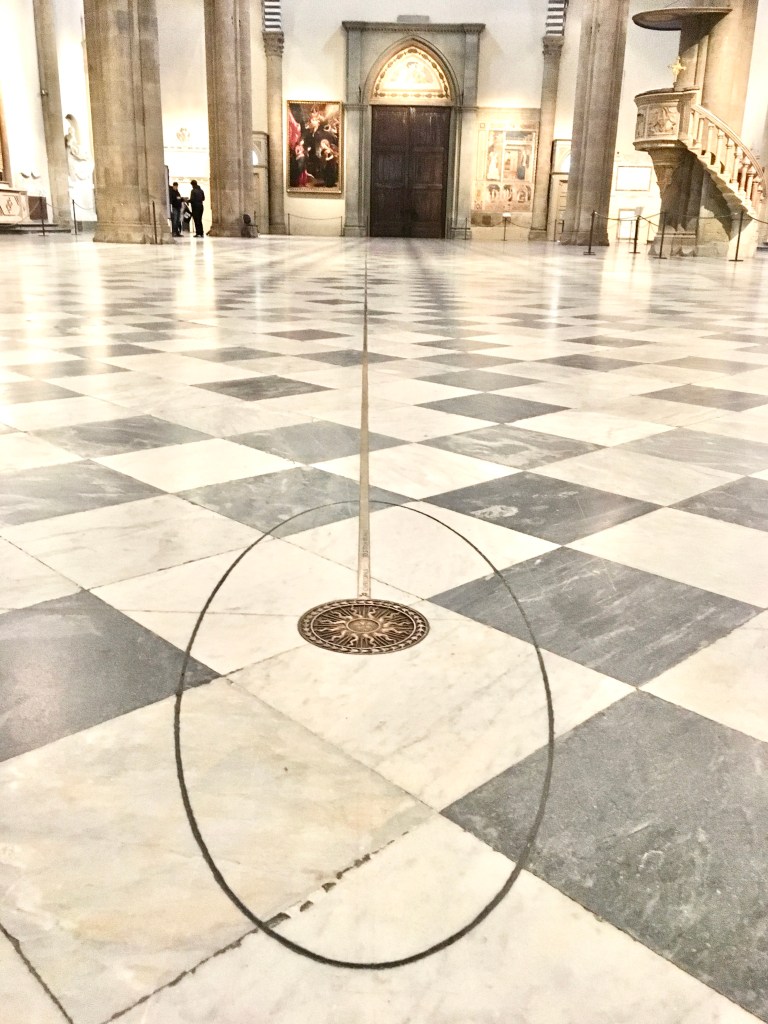
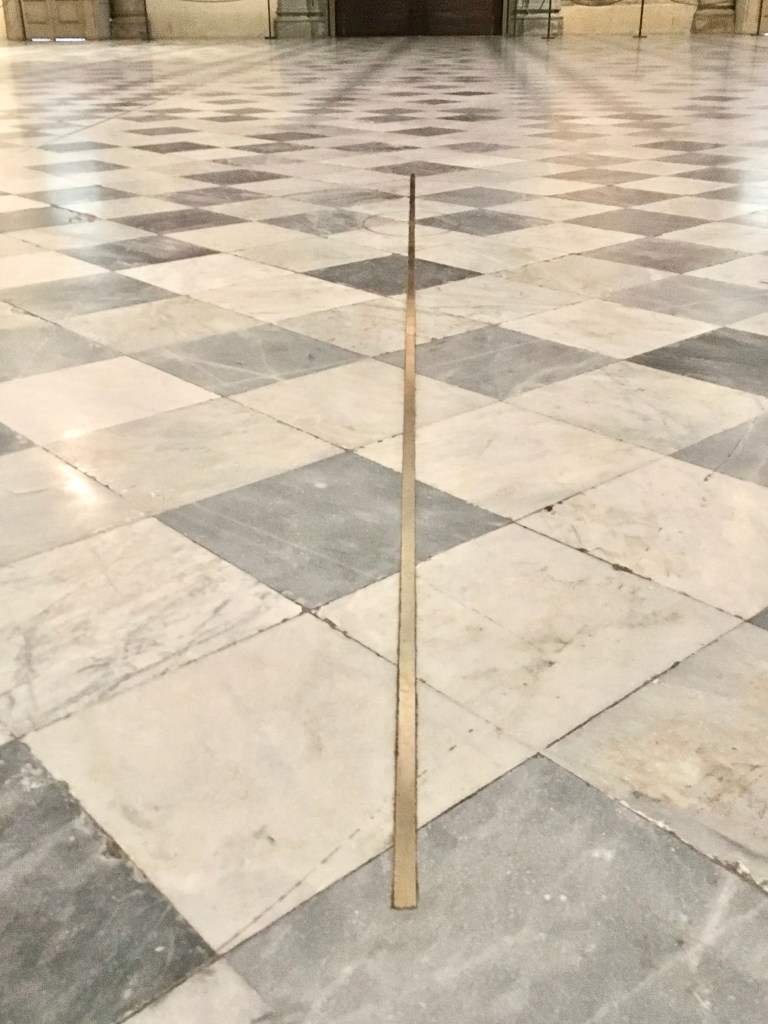
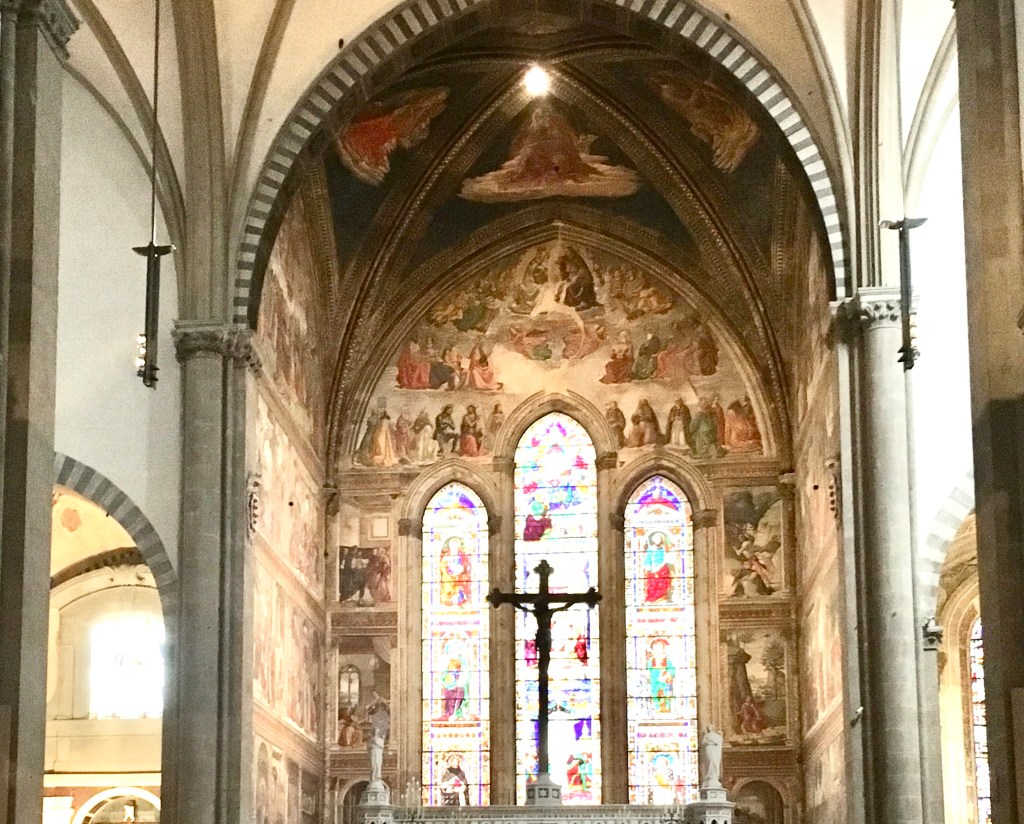
Santa Maria Novella, one of the most sublime churches in Tuscany, needs no general introduction. The Wiki article SMV gives a very good overview. The focus of this article is on the amazing meridian dial inside the church itself.

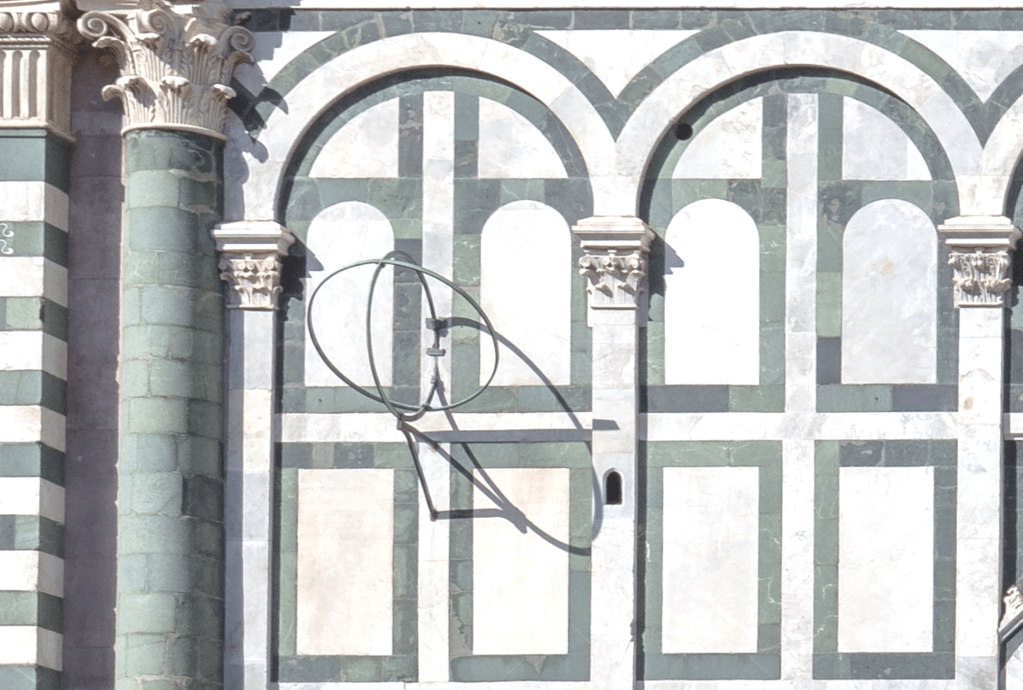
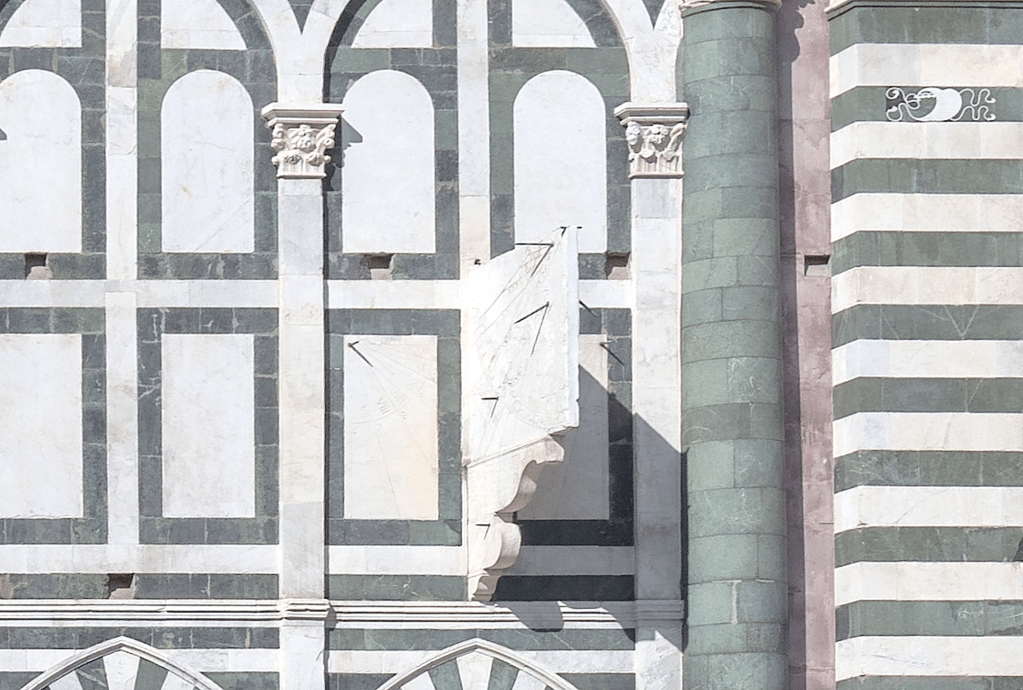
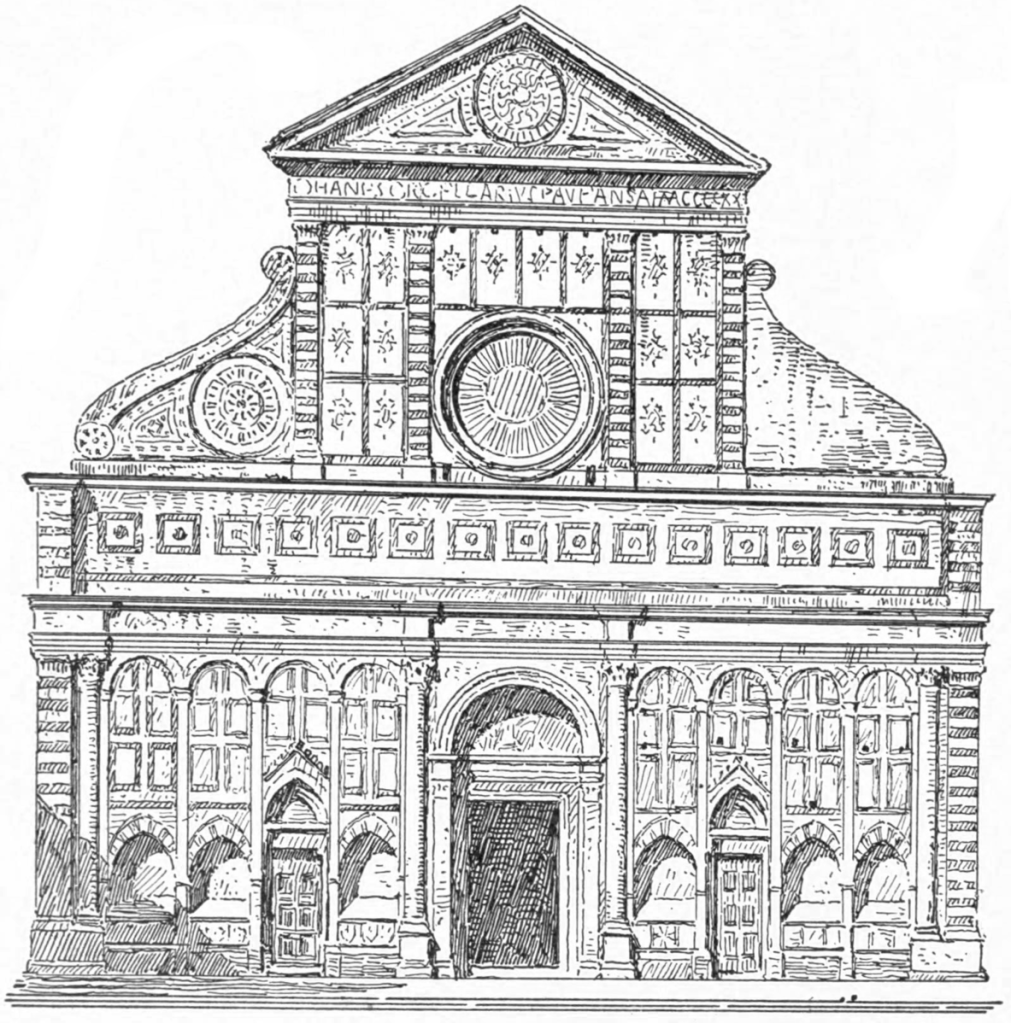
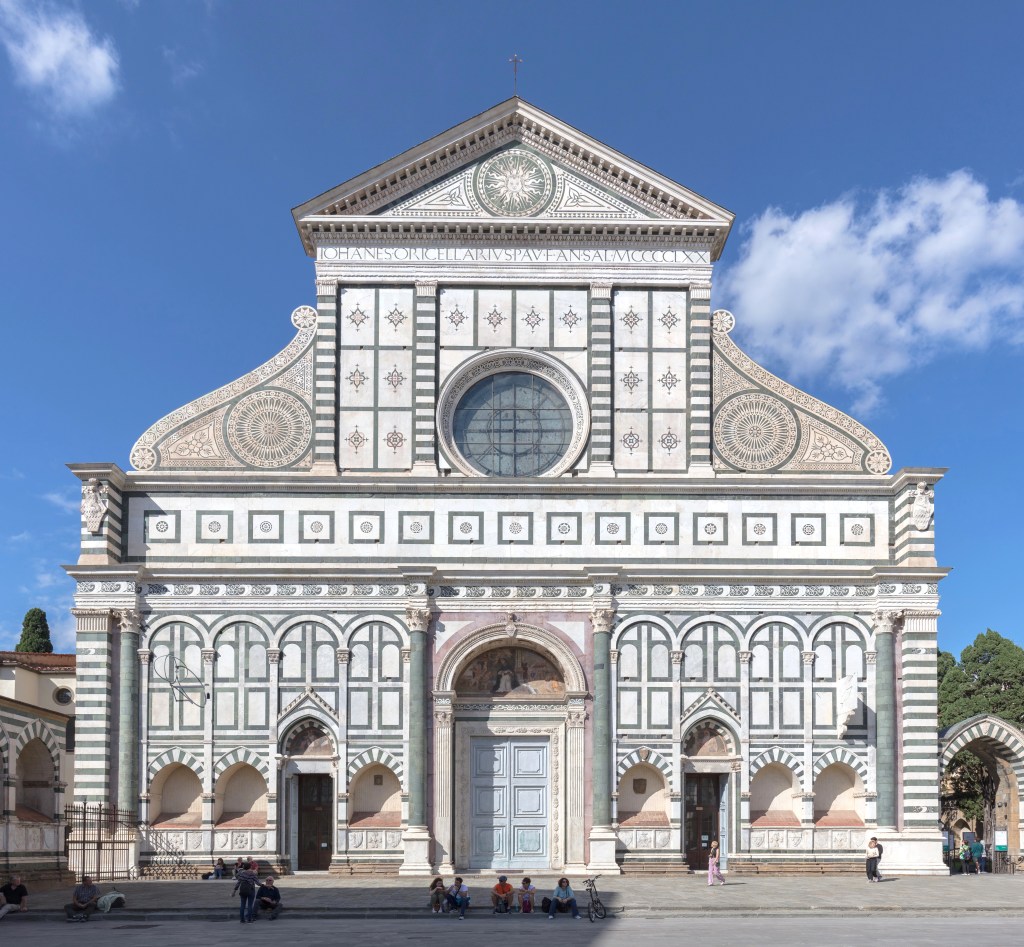
First, I should mention the 2 famous dials on the facade, the subject of much interest, investigation, and analysis including detailed articles by BSS. I plan to feature both separately in due course. On the left is an armillary sphere; on the right is an astronomical quadrant. They are the work of Egnatzio Danti, astronomer to Cosimo I, and were installed c1570.

The Museo Galileo has a comprehensive website here MG and is a superb resource for historical science. Exhibits include 2 of Galileo’s telescopes. In 2007 it held a remarkable dial-based exhibition called The Line of the Sun. The entry for SMN includes all 3 dials and gives a succinct account of their creation and significance. I am adapting / adopting some entries from the museum’s explanations.

MERIDIAN DIAL

Background: Between 1572 and 1575, the cosmographer Egnazio Danti (1536-1586) installed on the façade of Santa Maria Novella no less than three astronomical instruments: a great quadrant with sundials; an equinoctial armillary; and two ‘camera obscura gnomons’. These instruments were designed to be used for new astronomical calculations linked to the project for reforming the Julian calendar…

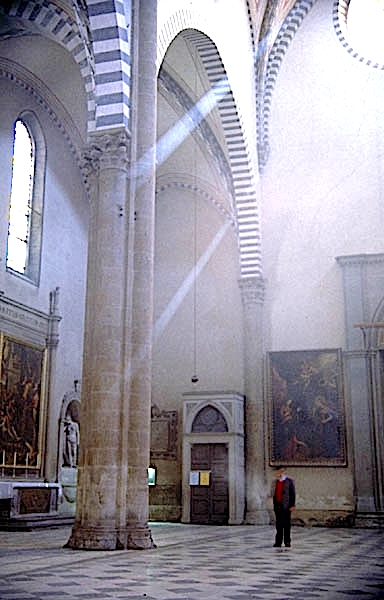
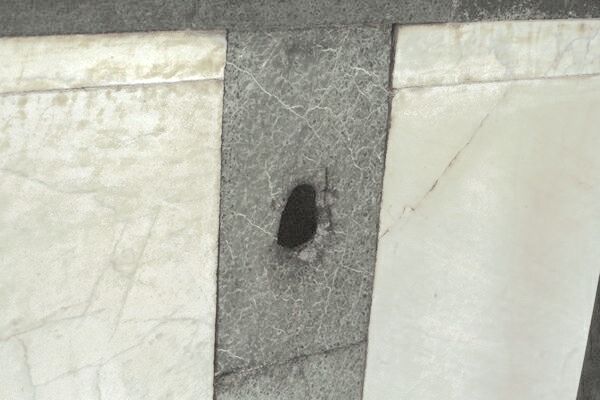
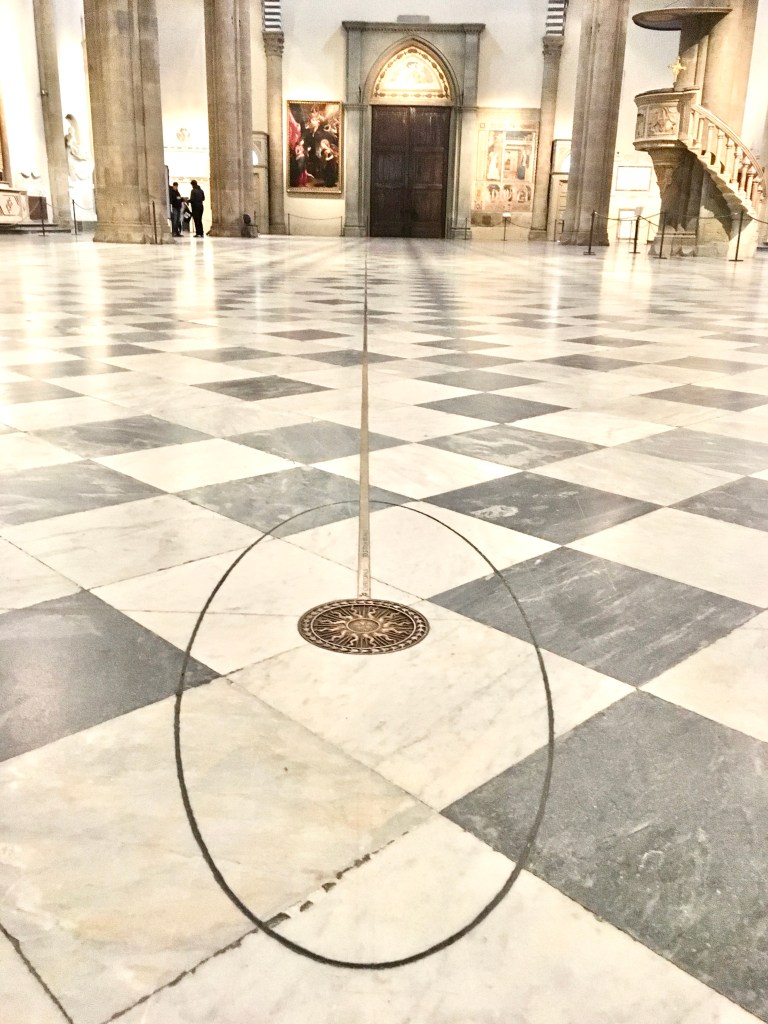
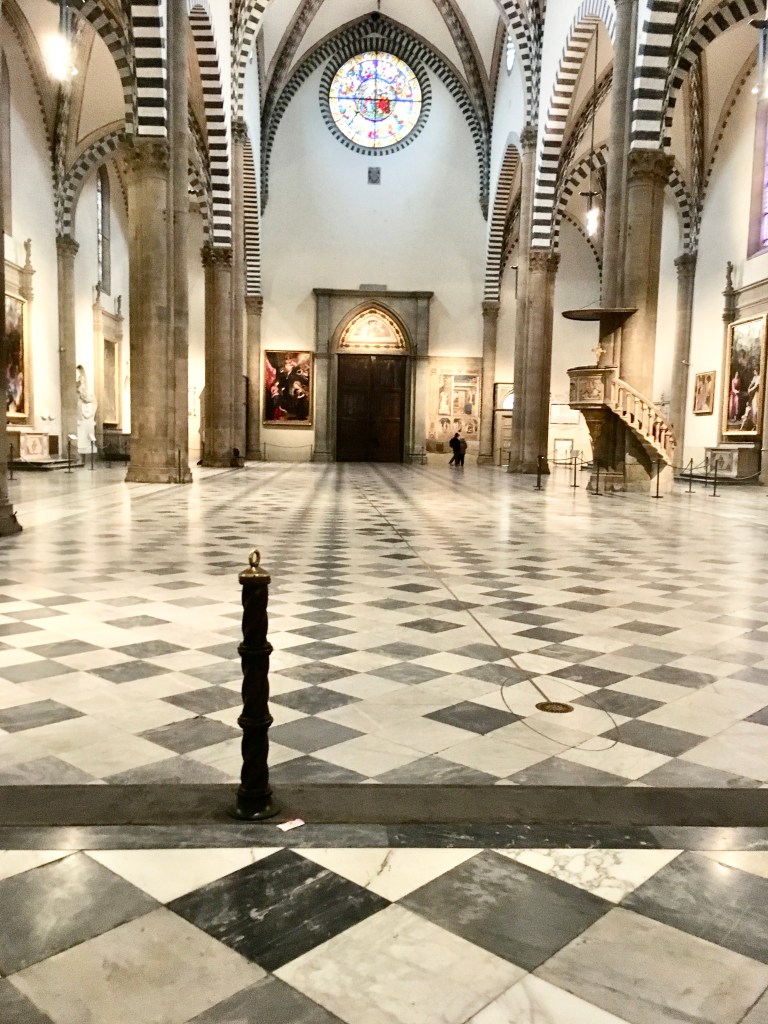
Meridian Dial: Although Danti designed the dials he was unable to complete the tracing of the meridian line on the floor of the church. He only opened gnomonic holes, first in the glass of the rose window, then on the church’s façade, much higher, and made two openings in the vaulting as well, through which rays of light would pass only during the equinoxes and the winter solstice.

Operation: The entrance of the sunbeam was through the two gnomonic holes. The pinhole on the rose-window would have allowed [the measurement of] time during the entire year. The pinhole on the façade would have allowed the same reading only in the days of the equinoxes and of the winter solstice (IMSS Multimedia Laboratory).

FACADE POSITIONS

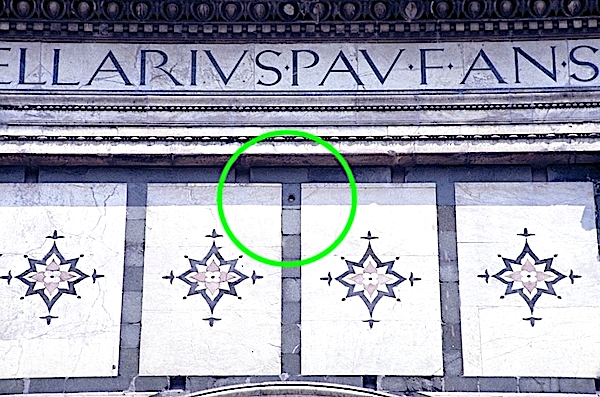
Gnomon holes on the facade in the rose window (70′ high) and just below the pediment

MERIDIAN DIAL IN DETAIL

Basilica of Santa Maria Novella . Firenze . Meridian Dial – Keith Salvesen

Basilica of Santa Maria Novella . Firenze . Meridian Dial – Keith Salvesen

Basilica of Santa Maria Novella . Firenze . Meridian Dial – Keith Salvesen

Basilica of Santa Maria Novella . Firenze . Meridian Dial – Keith Salvesen

Basilica of Santa Maria Novella . Firenze . Meridian Dial – Keith Salvesen

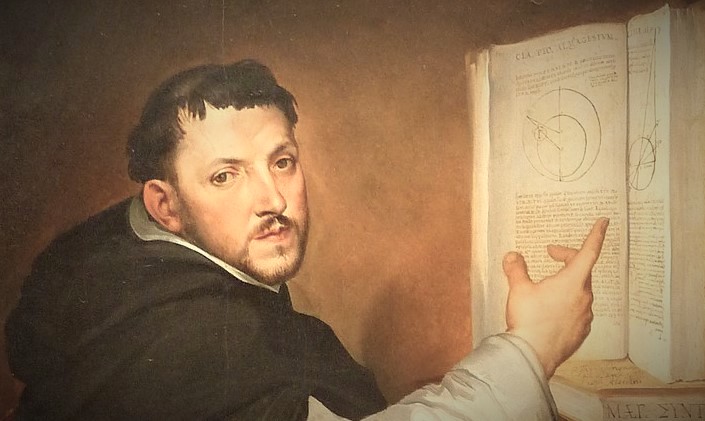
Egnazio Danti – Instituto Comprensivo

REFERENCES / CREDITS

MUSEO GALILEO

Wiki cc – header image / close-up

‘photo tsettle’ – gnomon hole positions

All dial photos – Keith Salvesen

SMN (Wiki Arch.)