RIPE . EAST SUSSEX – St John the Baptist

Ripe Church, E Sussex – Keith Salvesen

ST JOHN THE BAPTIST . RIPE

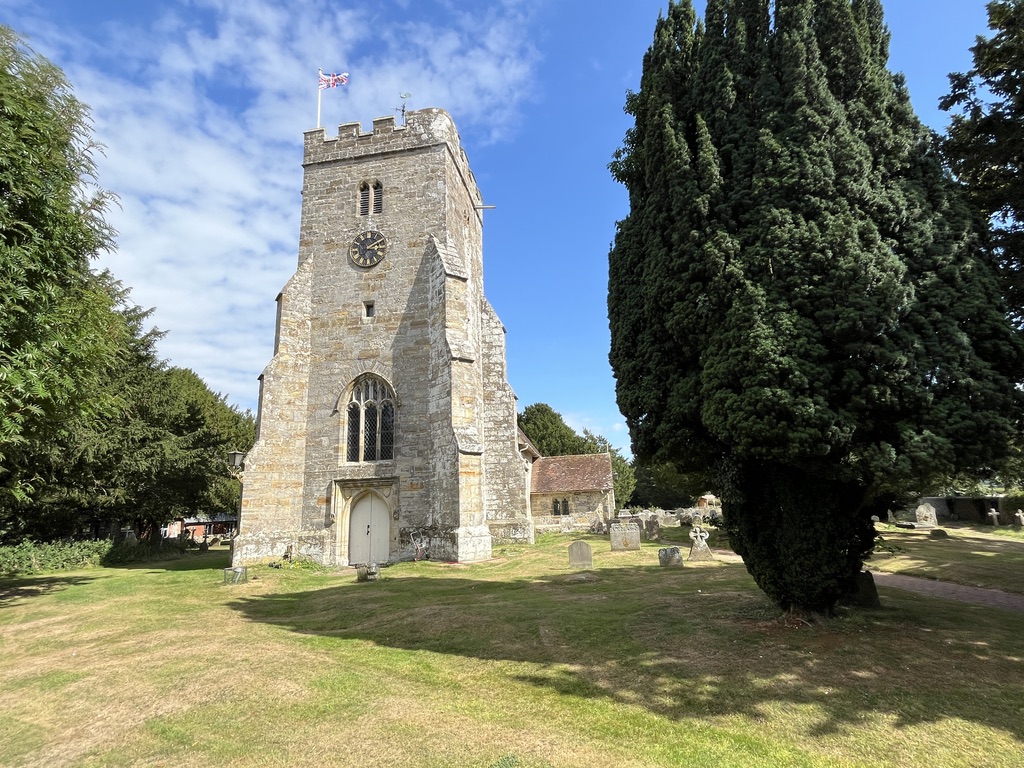
GRADE 1 ❖ C13 traces, mainly C14, C15. C19 restorations. Little information HE / BLB, but this link is informative https://sussexparishchurches.org/church/ripe-st-john-the-baptist/. One of a cluster of interesting churches in the area. 8 miles E of Lewes. 50.8684 / 0.15 /  TQ513098

DIALS

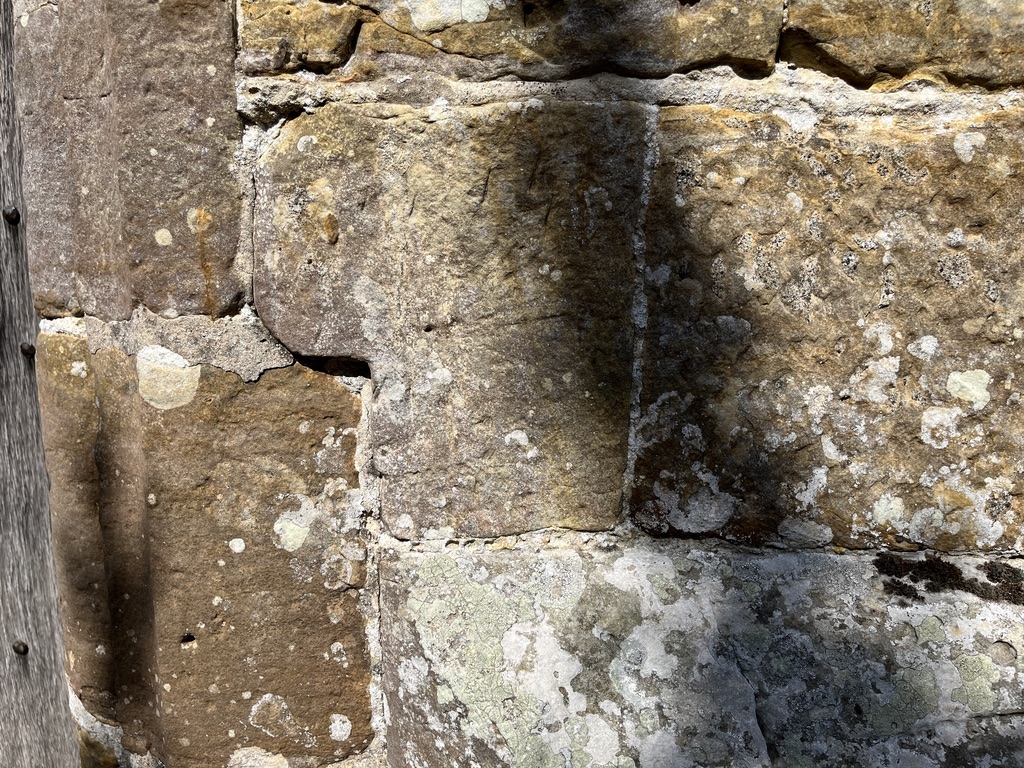
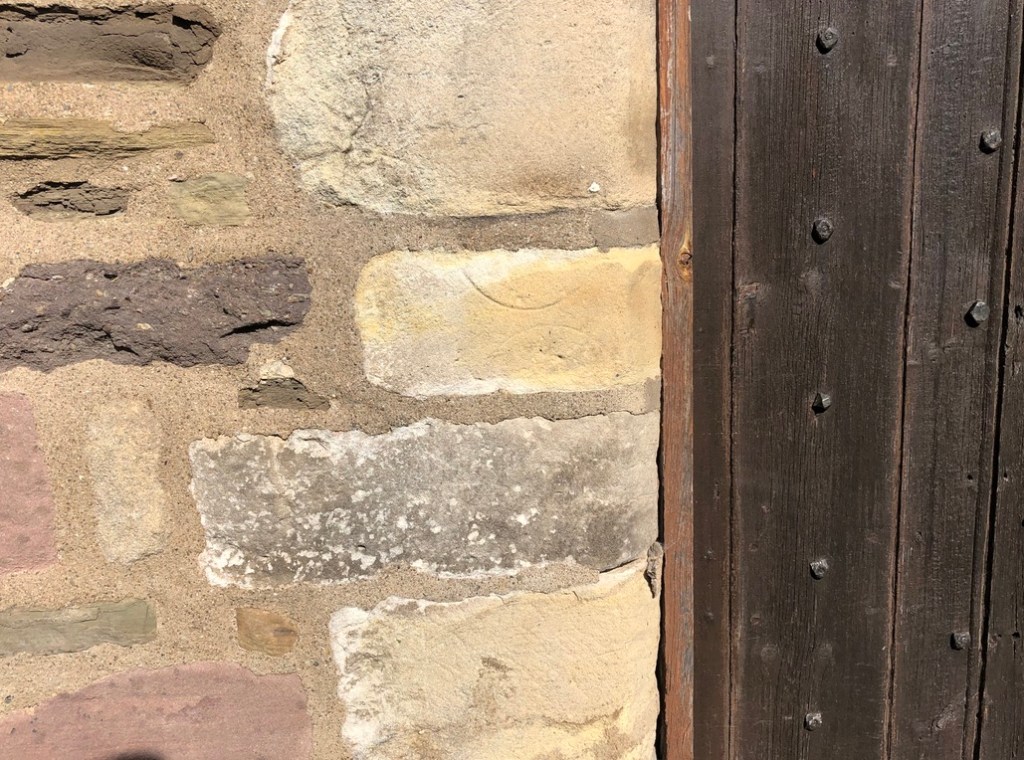
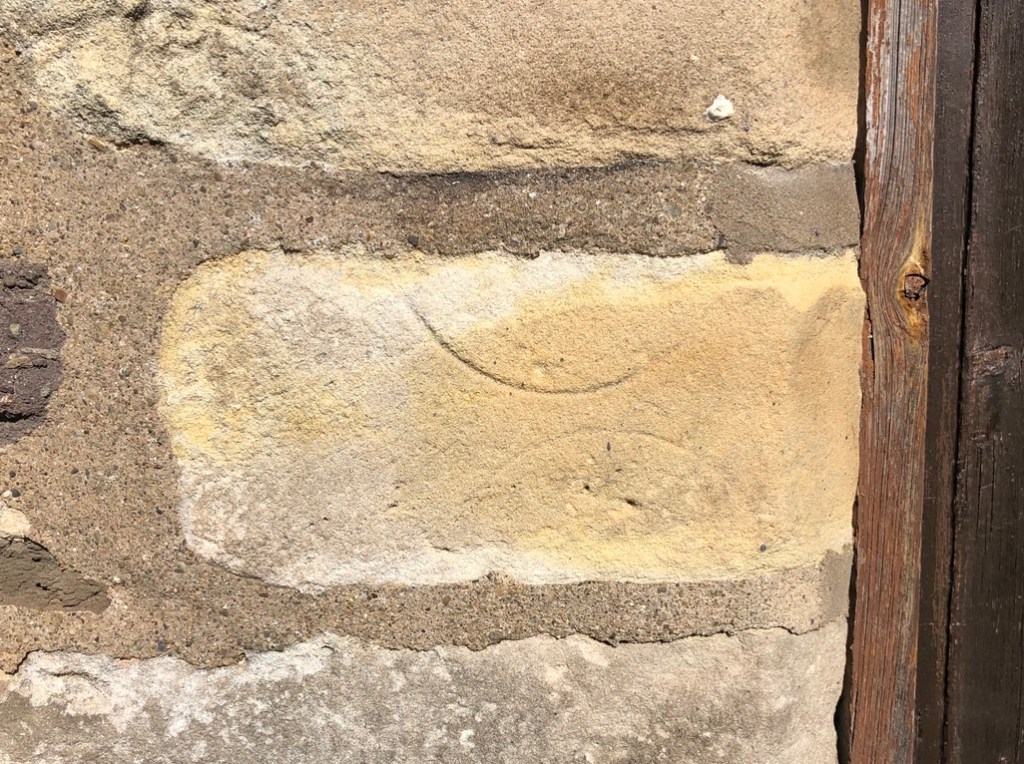
The church is said to have 3 dials, though I could only find 2 definite ones. The first is very rough, with ?2 lines dropping down from a plugged hole, and some scrapes around the area. It’s hard to see how it marked the course of the day effectively. The hardness of the stone may explain it.
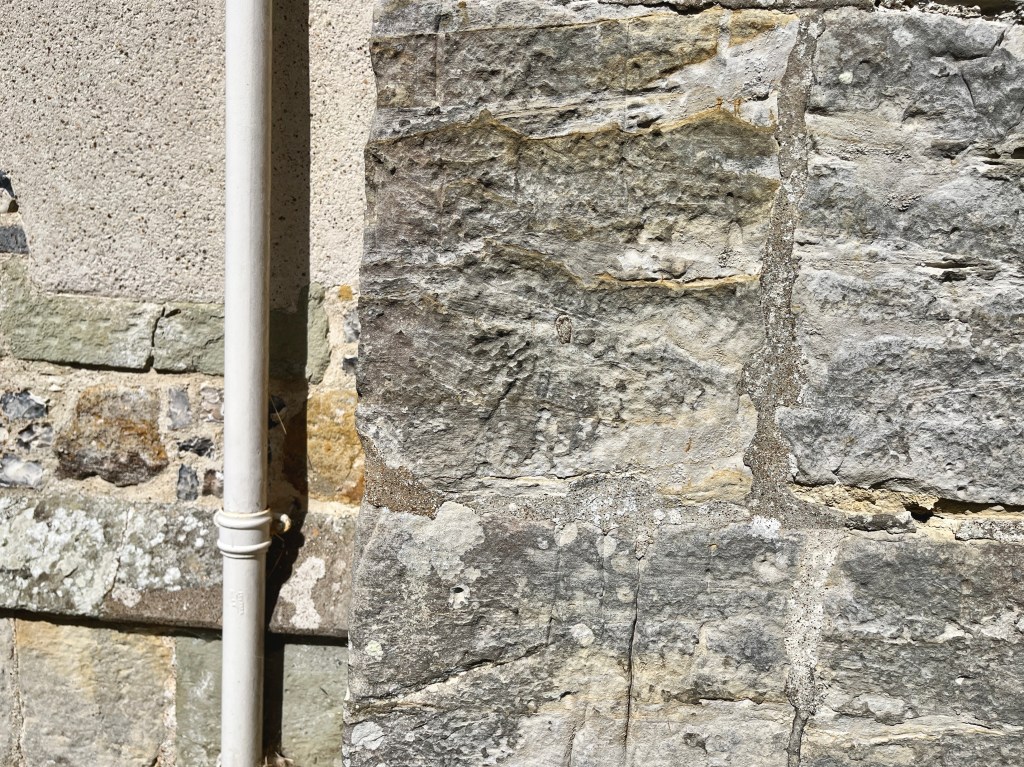
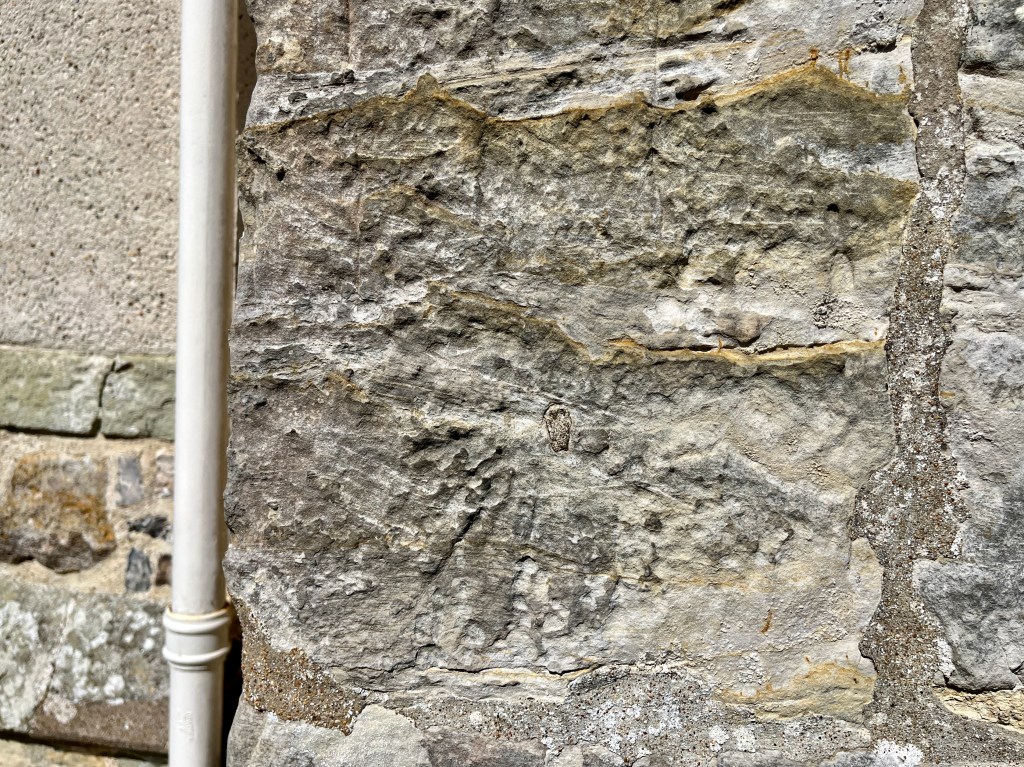
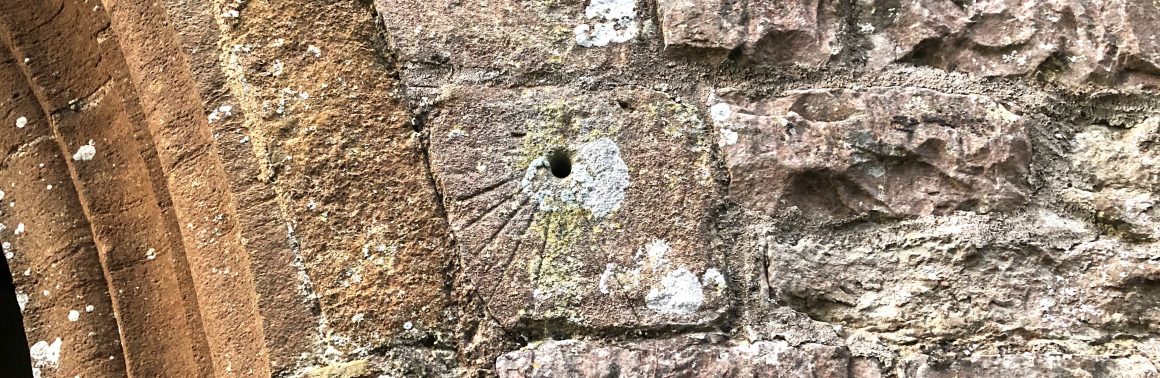
An intriguing dial in quadrant form, and cut on a shaped stone re-sited from elsewhere on the church. The images below show the dial as it is now, located URQ – the least effective location for marking the passage of today.
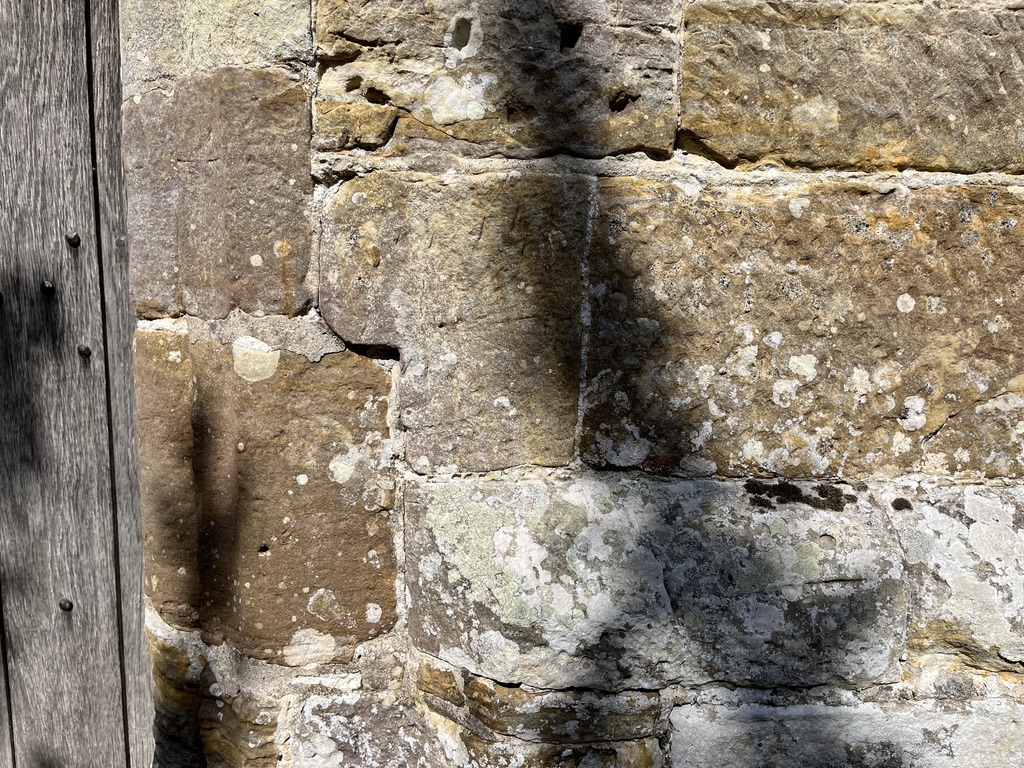
Two orientations could have worked: as a morning dial (LLQ) or an afternoon dial (RLQ). But then the stone would have needed to be recut…

I did not find a definite 3rd dial, but on an adjacent stone to the others is one with a mix of holes. Two have faint lines / possible radials. If I had to choose one, it would be top left. Any helpful views welcome.

GSS Category: Scratch Dial; Mass Dial; Lost Dial

All photos: Keith Salvesen

WOOTTON . OXON . ST PETER – Scratch Dial

GRADE II ✣ Early CI4 origins. St Peter is a delightful small church a short distance SW of Oxford, close to Boar’s Hill and the unrivalled views over the fields towards the dreaming spires. 51.7092 / -1.3122 / SP476013

DIAL

During a recent visit to Oxford to see some of the College sundials, I found an earlier note of a possible dial at St Peter’s. I eventually found it on the E jamb of a tiny window now overgrown by a substantial laurestinus bush and protected by sharp rose thorns. Blood was drawn but it was worth the sacrifice.

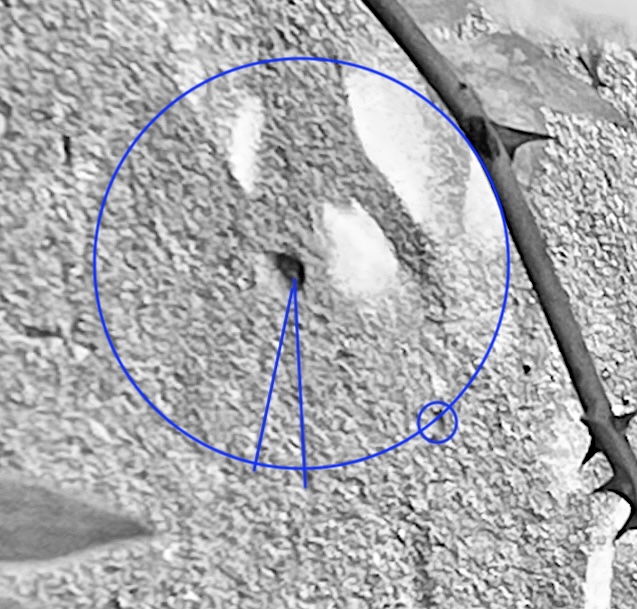
The dial stone is near the centre of the photo above. Apart from the gnomon hole, it is just possible to make out traces of what must have been a full circle. There is a slight hint that it may have been a double circle. The noon line (perhaps with a terminal pock) is faint. A second line (XI) is close beside and slightly shorter.

There is a single pock on or close to what would have been the perimeter of the circle. Its position at approx None might support a theory that it belonged to the dial and indicated mid-afternoon Mass.

The dial’s angle adjusted to a more front-on view

NOTE: St Peter has an interesting concave vertical dial at the apex of the porch, to be written up separately in due course with a LINK

GSS Category: Scratch Dial; Mass Dial

All photos: Keith Salvesen

ROTHBURY . NORTHUMBERLAND . ALL SAINTS – 2 Scratch Dials

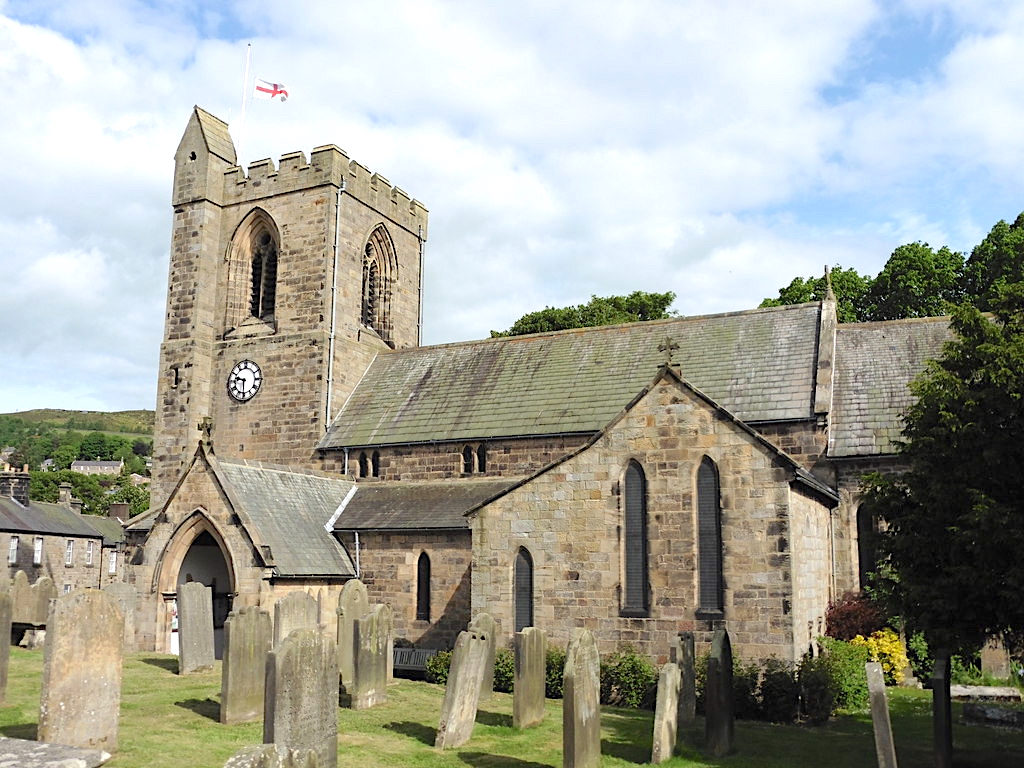
All Saints . Rothbury . Northumberland (C of E Heritage Record / Dave Evans)

ALL SAINTS . ROTHBURY . NORTHUMBERLAND

GRADE II* † On Pre-Conquest / Anglo-Saxon site. C13 / C14, rebuilding & restoration C19 in similar style. Located in Coquetdale with linked churches. 12m SW of Alnwick, close to NT Cragside. 55.309 /  -1.9106 / NU057016

DIALS

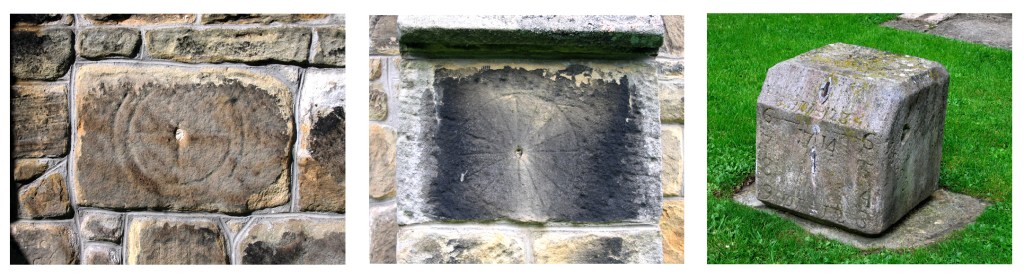
There are 2 dissimilar scratch dials on the church, and an intriguing cube dial (shown below and will feature as a separate post in the Cube Dial section) on the ground in the Churchyard.

DIAL 1

Located on the E-most buttress of the S wall of the chancel. Quite a large dial centred in its stone, with a blocked gnomon hole. There are 16 lines, encircled and fairly evenly spaced. This makes the dial out of kilter with the normal time interludes. BSS notes that instead of the 15º angles usual for this type of dial with 24 lines, they are more like 22º here.

DIAL 2

Between the 2 E-most buttresses of the S wall of the chancel. Only 3 lines radiate from the filled gnomon hole (incomplete quadrant markings): the horizontals (6-to-6) and a shorter noon line. BSS notes that in 1903 a vertical line above the hole was recorded, and so the design once had 4 quarters / sectors. The dial is contained within a double circle.

REFERENCES

The Parish of Upper Coquetdale has an interesting page about All Saints, its history, and its various features HERE

Pendulum Publications has an excellent and detailed article about the Rothbury Dials – including the C18 cube – HERE Highly recommended if you want to investigate this church and its dials further, and medieval ‘clocks’ generally. It was originally published in Clocks Magazine of November 1991.

All Saints . Rothbury . Northumberland – Keith Bates / Clocks Magazine 1991; Pendulum Publications

GSS Category: Scratch Dial; link to Cube Dial

Image Credits: Erika Clarkson for the photos from her visit; others as captioned

CHURCH STRETTON . SHROPSHIRE . ST LAURENCE – 2 scratch dials (unrecorded)

St Laurence . Church Stretton . Shropshire

GRADE 1. Church. C12 nave with C13 transepts, crossing and chancel; tower upper stage C15, vestry added 1831; transept aisles added 1868 in restoration; further restoration 1882 and 1932. Large and dignified PEV. Attractive small town and gateway to the remarkable and beautiful Long Mynd (518m). 52.5382 / -2.8088 / SO452936

DIALS

St Laurence at first sight is clearly much expanded and restored over the centuries. Parts of a much earlier church are evident. The existence of any external decorative features such a scratch dial seemed highly unlikely*. However the stonework round the small doorway looked older, reused, possibly in its original configuration. It was certainly worth walking along the path to take a look.

St Laurence . Church Stretton . Shropshire – doorway with medieval stones and 2 scratch dials

On the W. side of the doorway is a single stone with 2 simple part-dials incised. Their edge positions show that 3 stones were originally involved, but no other stones round the doorway matched the patterns, nor had obvious cuts. So in fact the positions of the stones must have been altered. From what remains of the dials, it is hard to guess how they must have looked but presumably their style holes must have been in the mortar dividing the 3 stones. Possibly this stone is inverted.

The dials are unrecorded by BSS, and I can find no other reference. It is understandable that in their present state they attract little or no attention. Perhaps the moral for dial sleuths is that any church that has a ‘dial-y’ look is worth a quick investigation.

* If I had explored further, the church records mention exterior carvings including St Laurence holding a gridiron, and a rare sheela-na-gig, probably of Saxon date. 

GSS Category: Scratch Dial

Photos: Keith Salvesen