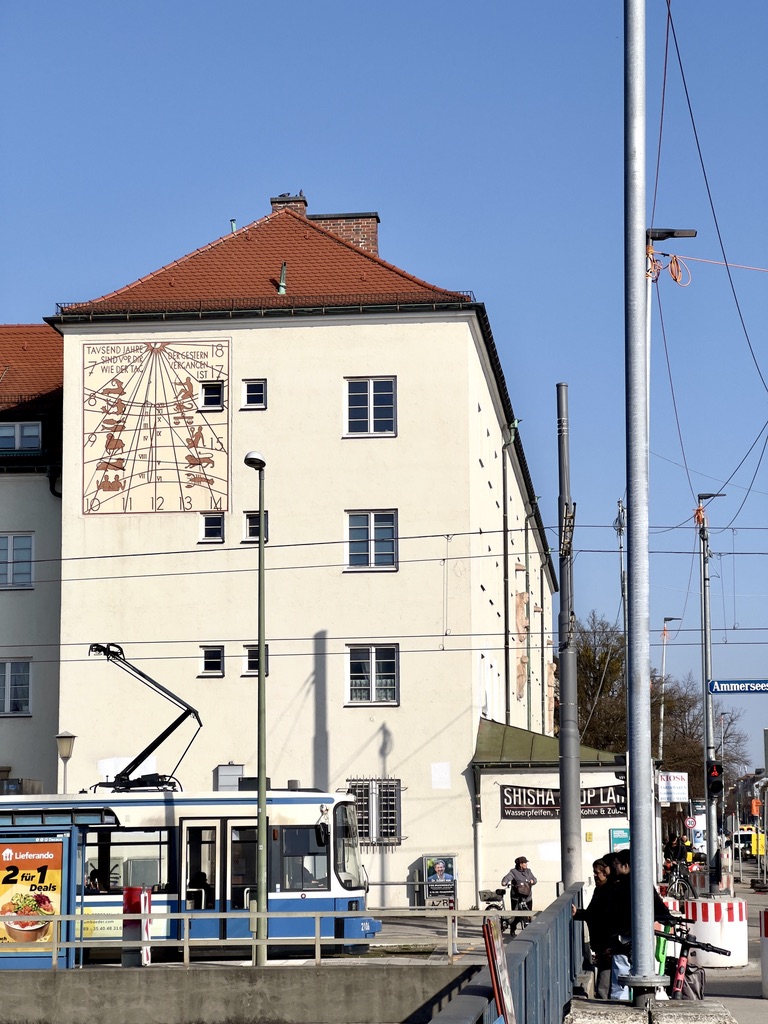
MUNICH . LAIM DISTRICT – Modern Noon Dial

NOON DIALS

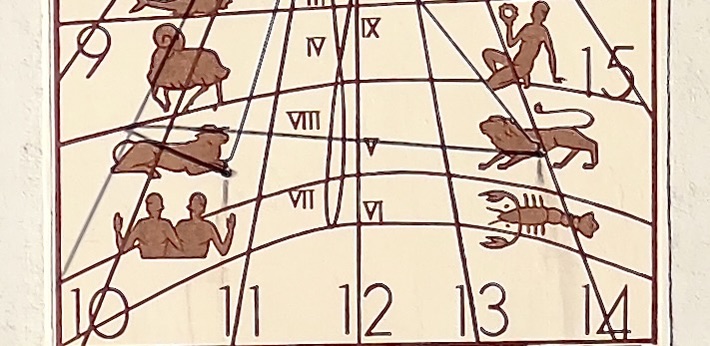
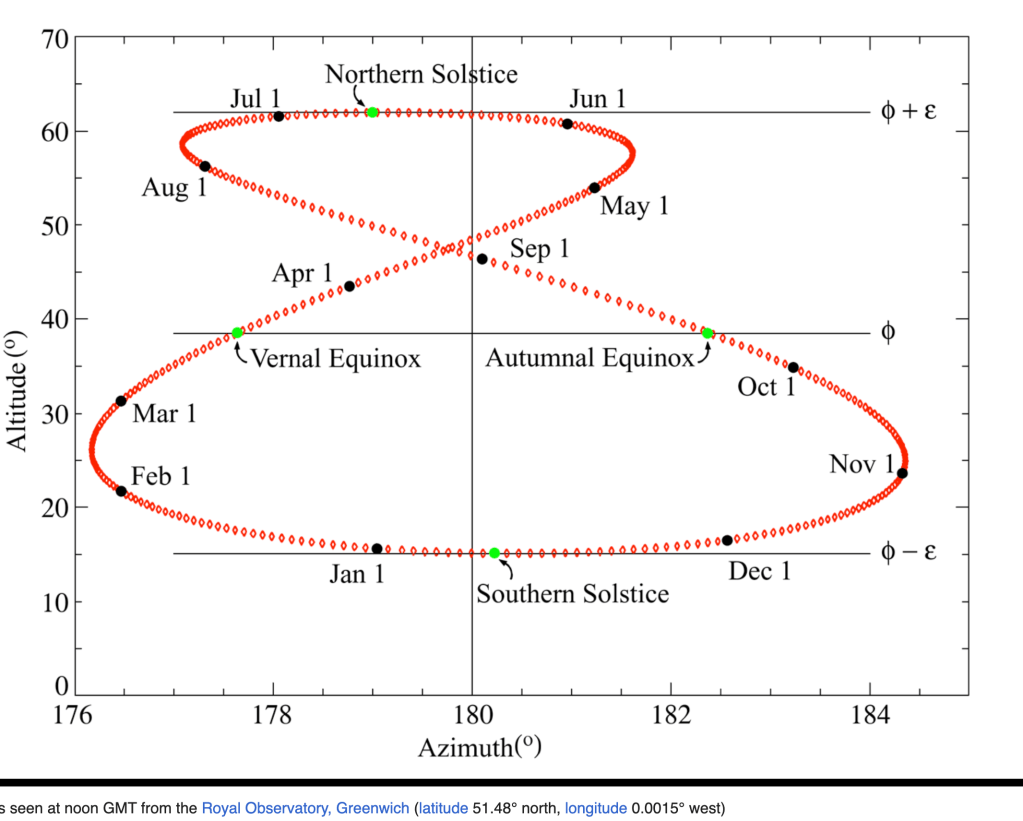
A noon dial / noon mark serves as a method of pinpointing midday, when the sun is at its highest and due south. The origins are ancient. Here, the relevant area is in the centre, flanked by Roman numerals. My maths / science skills are few and I will spare you a rudimentary explanation. The key words are Equation of Time, Analemma, and (my non-technical choice) figure of eight.

This image has an empty alt attribute; its file name is screenshot-2025-03-23-at-12.21.49.png

In the centre of the dial is a narrow figure of eight bounded by the numerals. You can just make out the raised bracket that supports a slender gnomon. You can see a small ring through which, at the perfect moment, the sun’s rays strike the face of the dial:
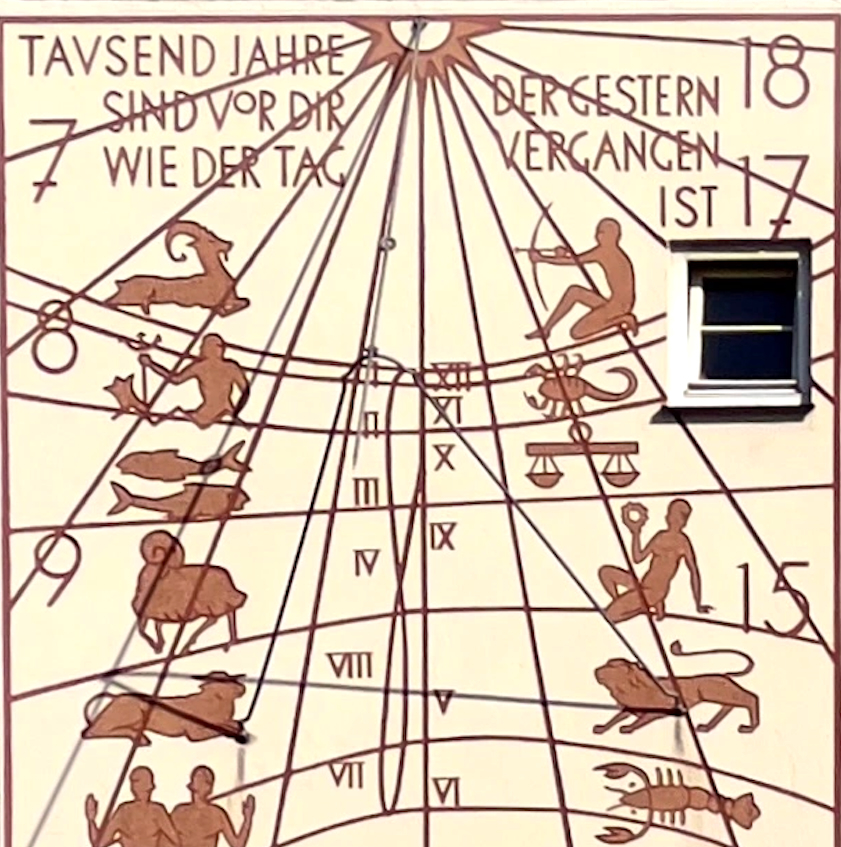
If you want to know more, there is a concise entry at ANALEMMA (Wiki)

This image has an empty alt attribute; its file name is screenshot-2025-03-23-at-12.21.49.png

This image has an empty alt attribute; its file name is screenshot-2025-03-23-at-12.21.49.png

GREEN TEMPLETON COLLEGE OXFORD

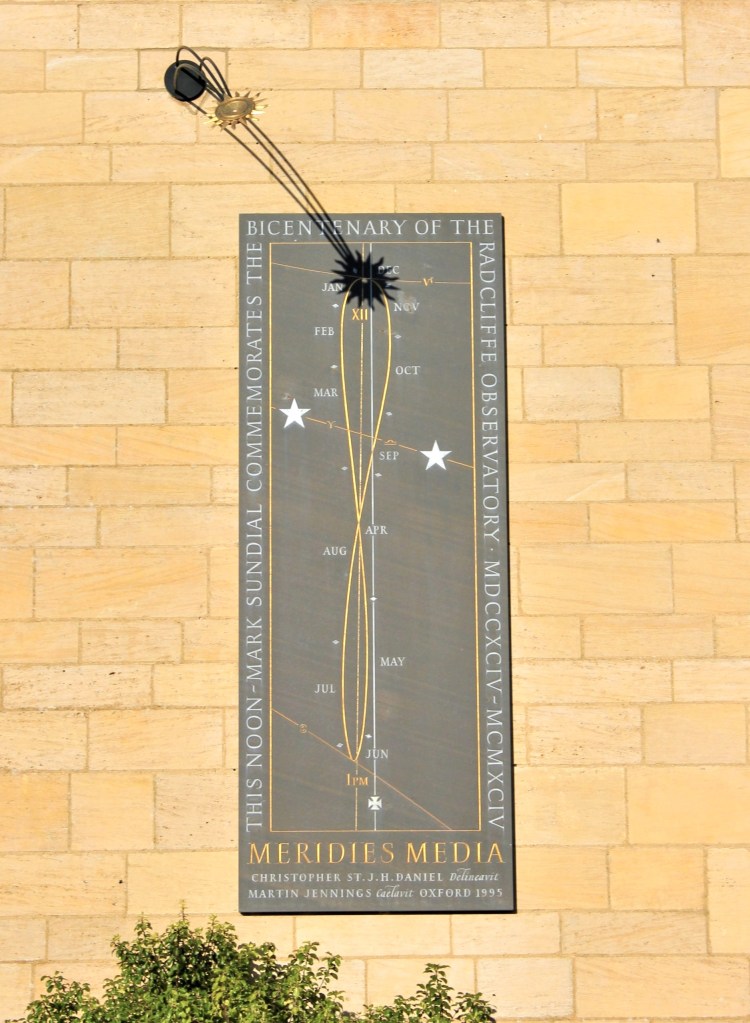
A modern (1995) noon-dial commemorating the Bicentenary of the Radcliffe Observatory, designed by the renowned Christopher Daniel, founder of the British Sundial Society. The critical alignment of the sun’s rays are projected onto the surface of the dial at noon (MERIDIES MEDIA), focused by the small ring.
THE COLLEGE’S NOTES

  • It works by using a spot of light cast by the nodus (the gilded sun with a hole in the middle), falling upon the slate dial-plate and tracking from left to right across it.
  • It is declining because the wall it is attached to does not face due south but ‘declines’ away from the compass point
  • Noon-mark means it gives the point at which the sun at its zenith crosses the Greenwich meridian and the Oxford meridian (the vertical white line down the centre of the dial)
  • Mean-time means you can read clock-time from the dial by following the progress of the year along the figure-of-eight marking, known as an analemma or equation of time correction curve. This makes allowances for the effect of variations in the apparent motion of the sun at different times of year.
Screenshot

GSS Category: Analemma; Equation of Time; Munich Sundial; Nodus; University Sundial

CREDIT: John Renner, for another great find from his travels
BARRINGTON COURT . SOM . HORIZONTAL DIAL

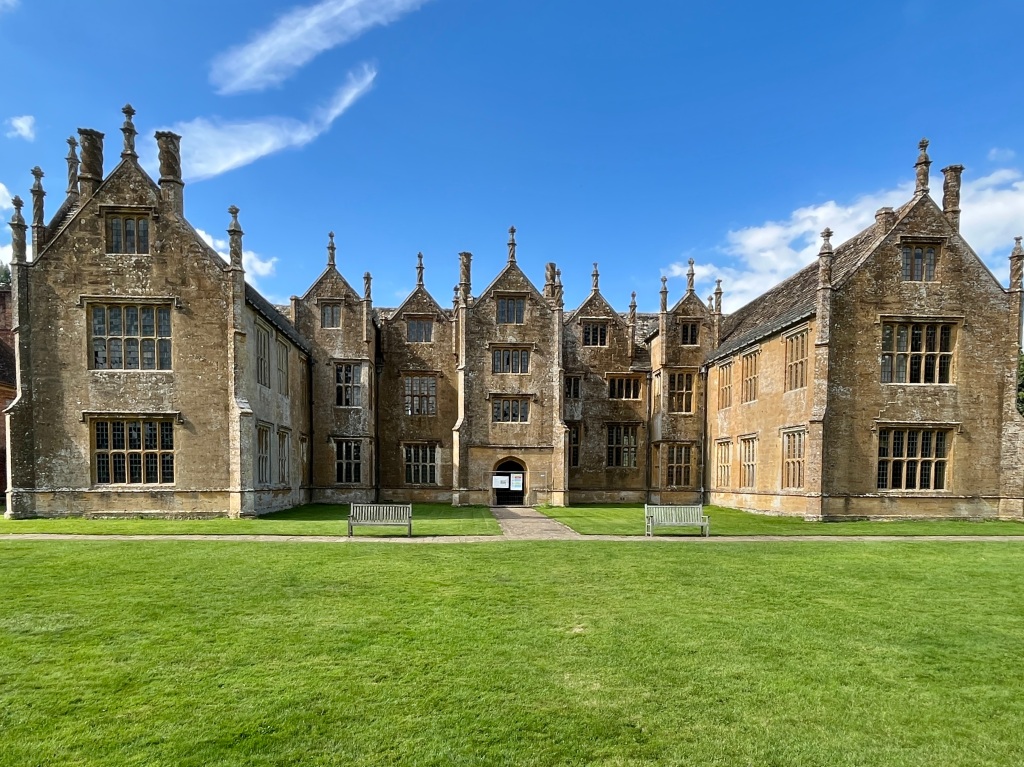
Barrington Court . Somerset

BARRINGTON COURT . SOMERSET

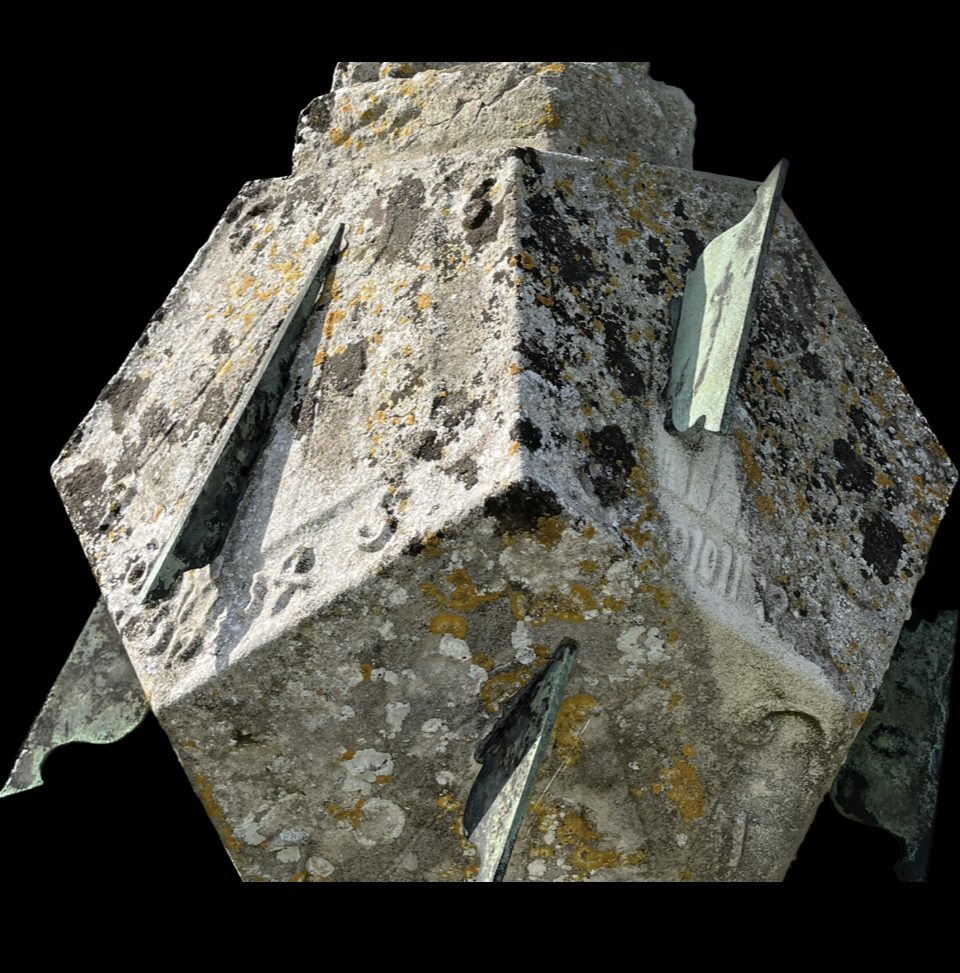
Barrington Court is a fine county house near Ilminster in Somerset, now in the care of NT. There is wonderful multi-faceted dodecahedral pillar dial in front of the house that I have written about HERE.

Barrington Court . Som . Horizontal Dial

ROSE GARDEN DIAL

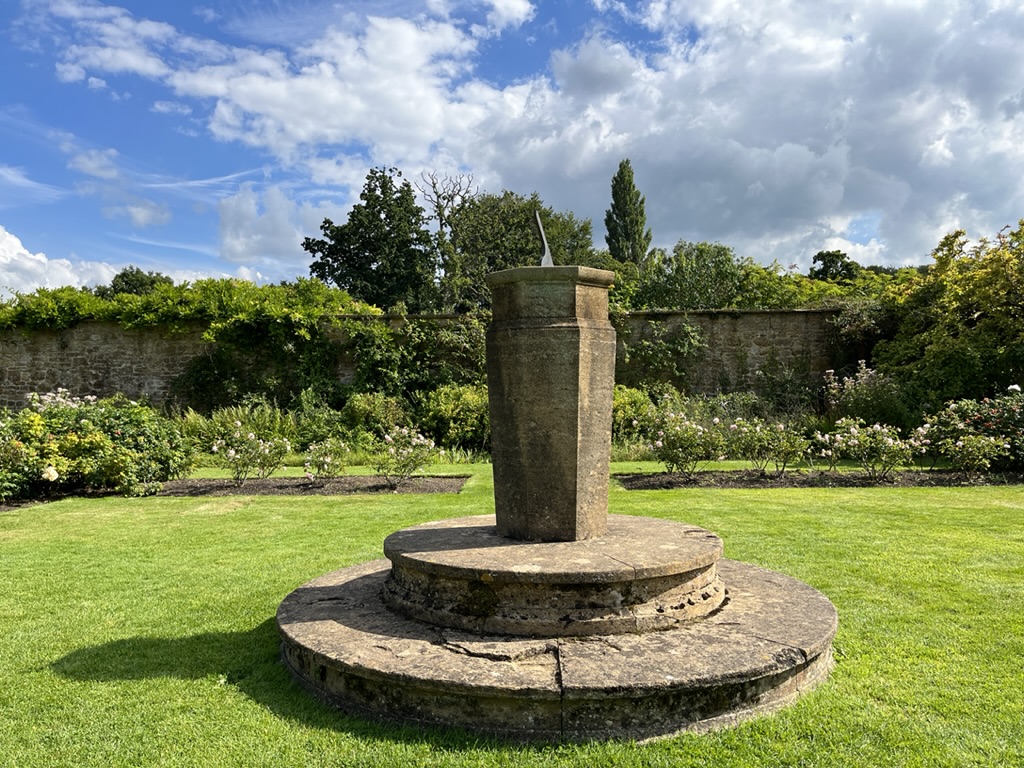
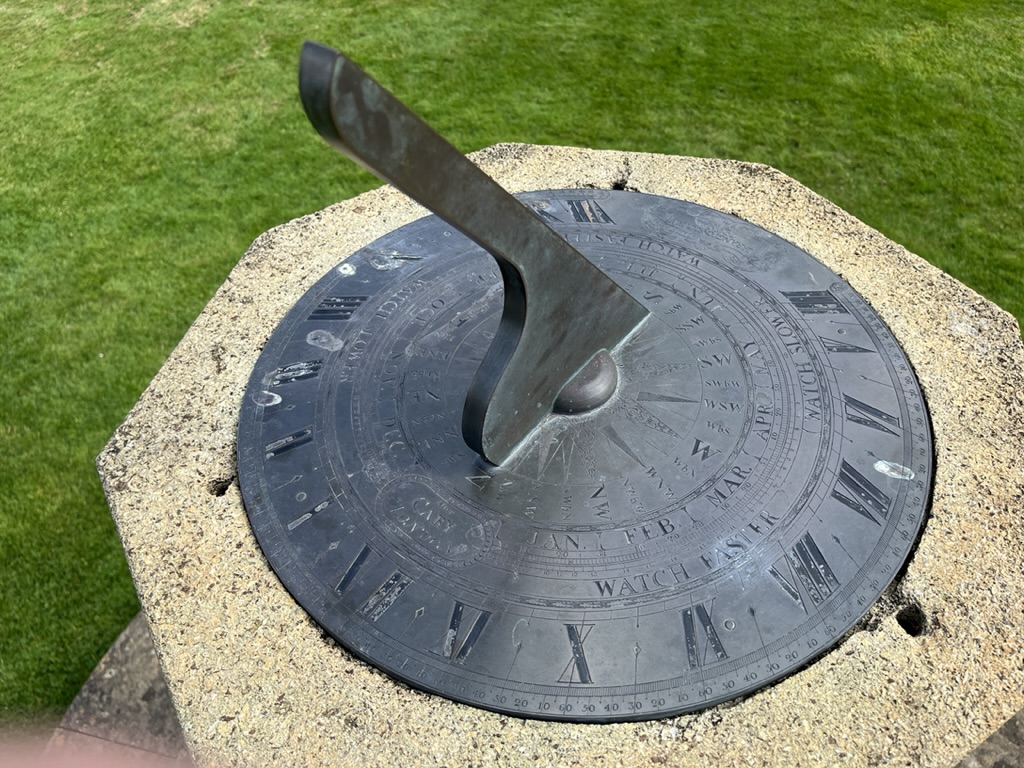
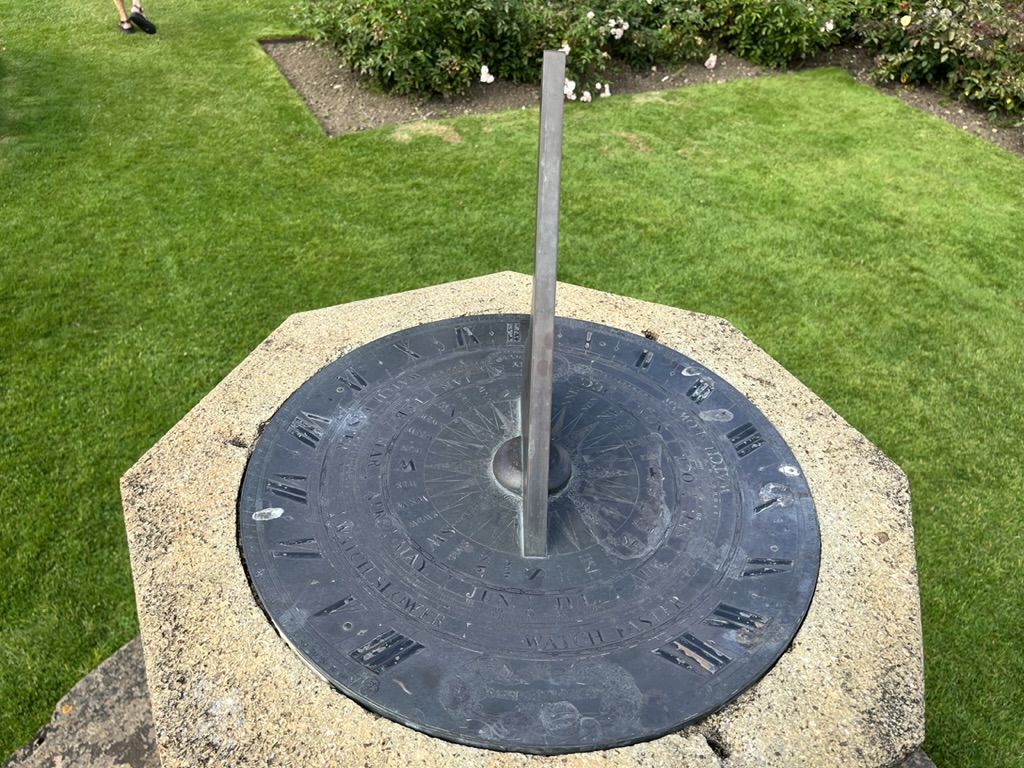
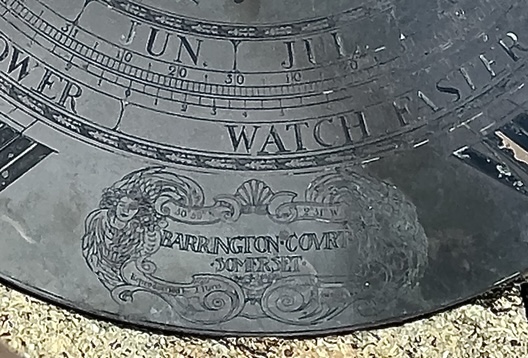
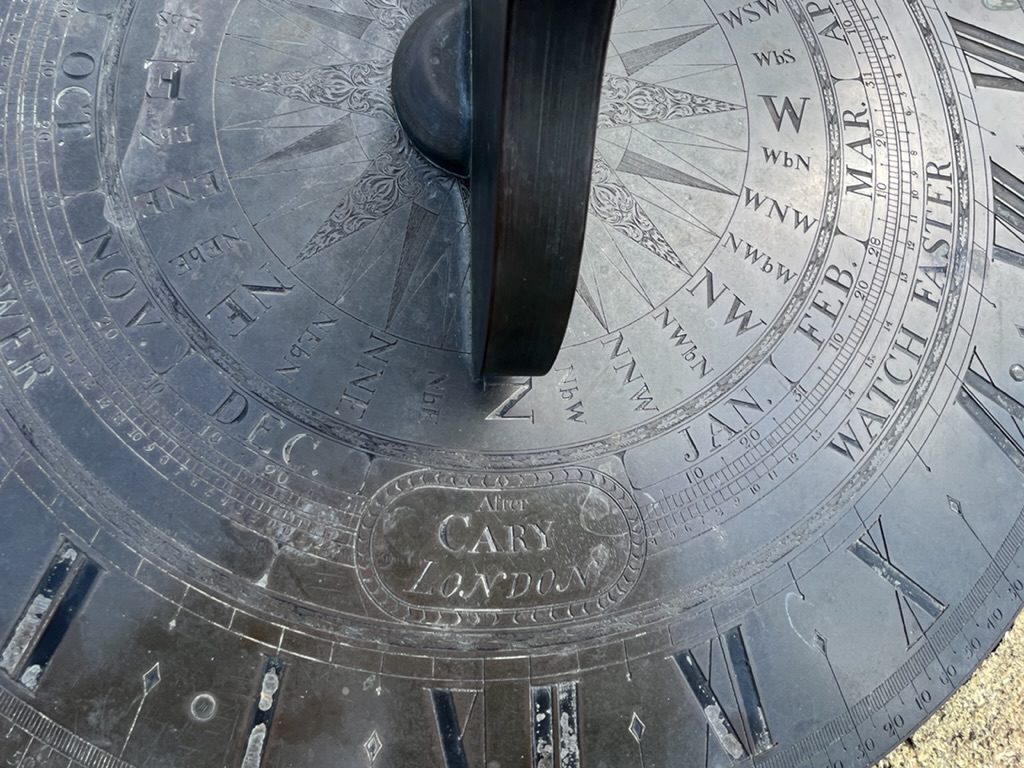
The sturdy horizontal pedestal dial stands on a double plinth in the centre of the large rose and iris garden. It has a sad recent history. In Spring 2000 the original C19 bronze dial plate by Carey was levered off and stolen. It has never been recovered.

Barrington Court . Som . Horizontal Dial after theft of plate in 2000

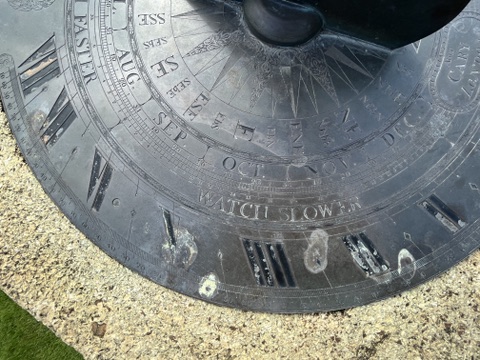
On the bright side, a wonderful faithful reproduction by John Davis was installed in 2013, and the dial is restored to its glory for the future.

It is described as an attractive horizontal dial of some complexity. The Equation of Time scale is engraved around the dial; all points of compass are shown; and it has one minute time marks BSS. These complex features can be seen clearly in the final image below.

GSS Category: Horizontal Dial; Pedestal Dial

All photos: Keith Salvesen except NT / Simon Harris above

LONGCASE CLOCK WITH A SECRET: THE EQUATION OF TIME

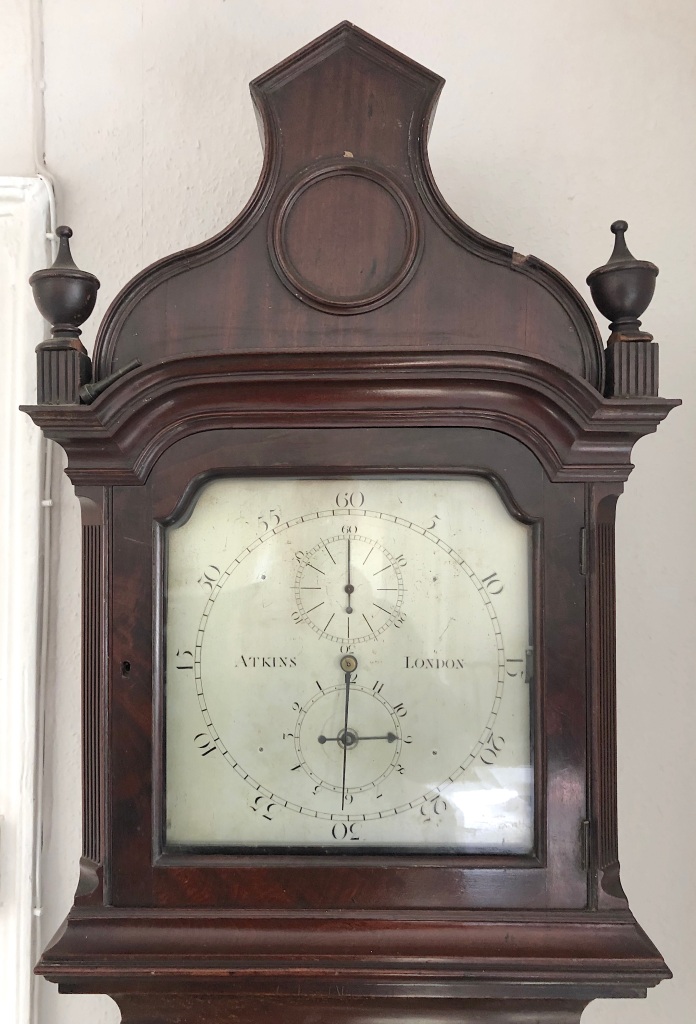
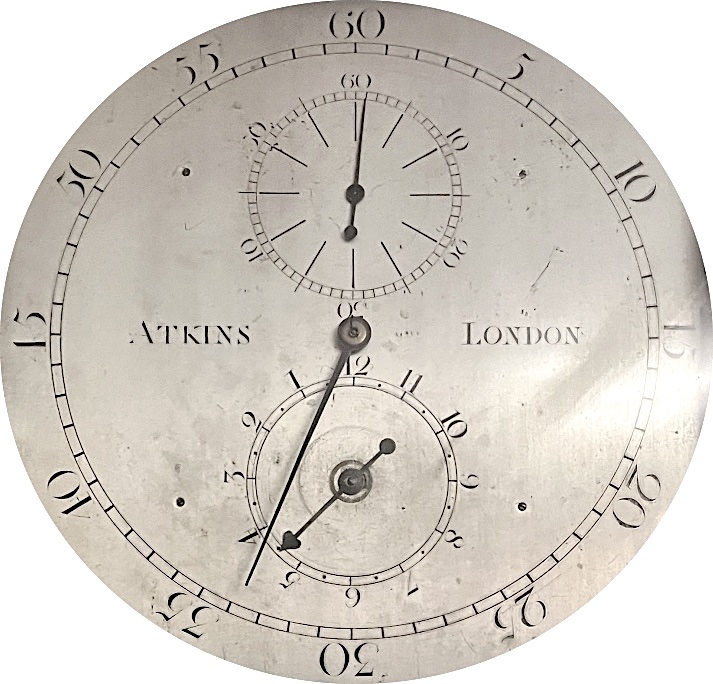
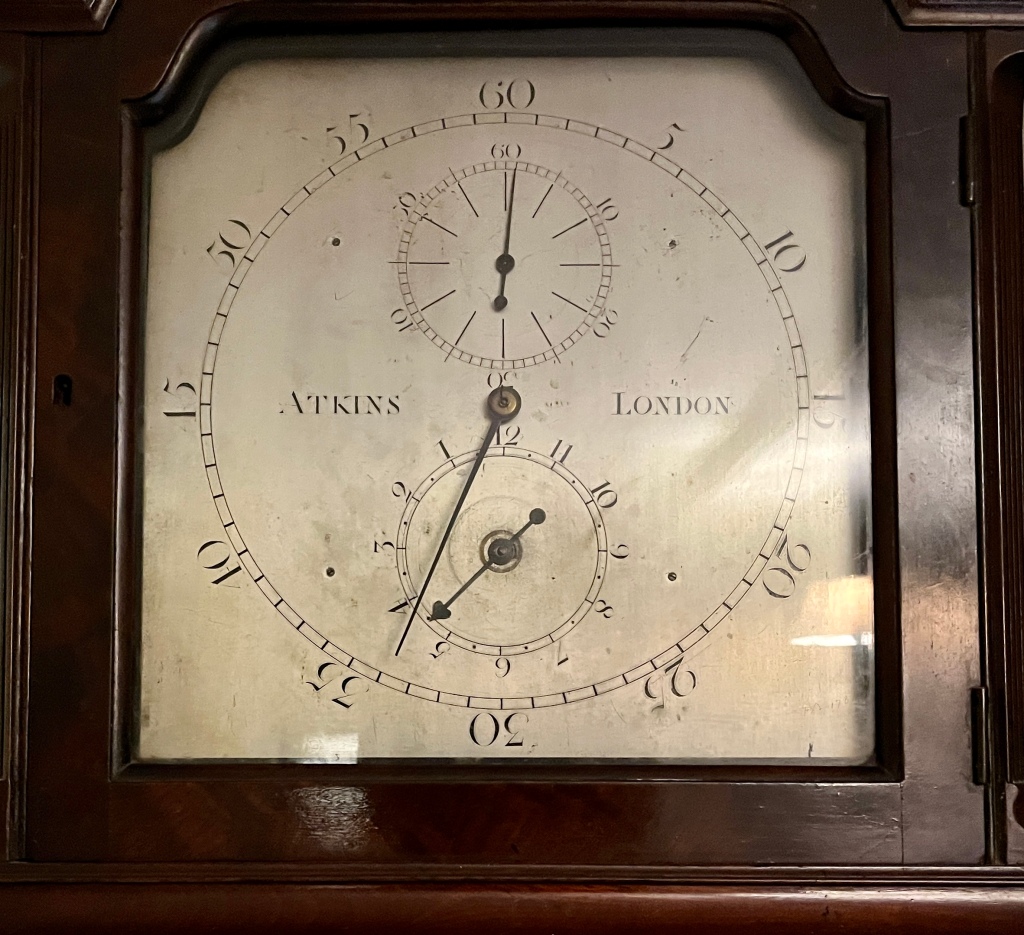
The Atkins longcase clock above has the initials FA and the date 1781 scratched in a corner of the glass. One year earlier, Francis Atkins had been elected Master of the Clockmakers Company in recognition of his standing. Perhaps this clock was first to be made when his term came to an end.

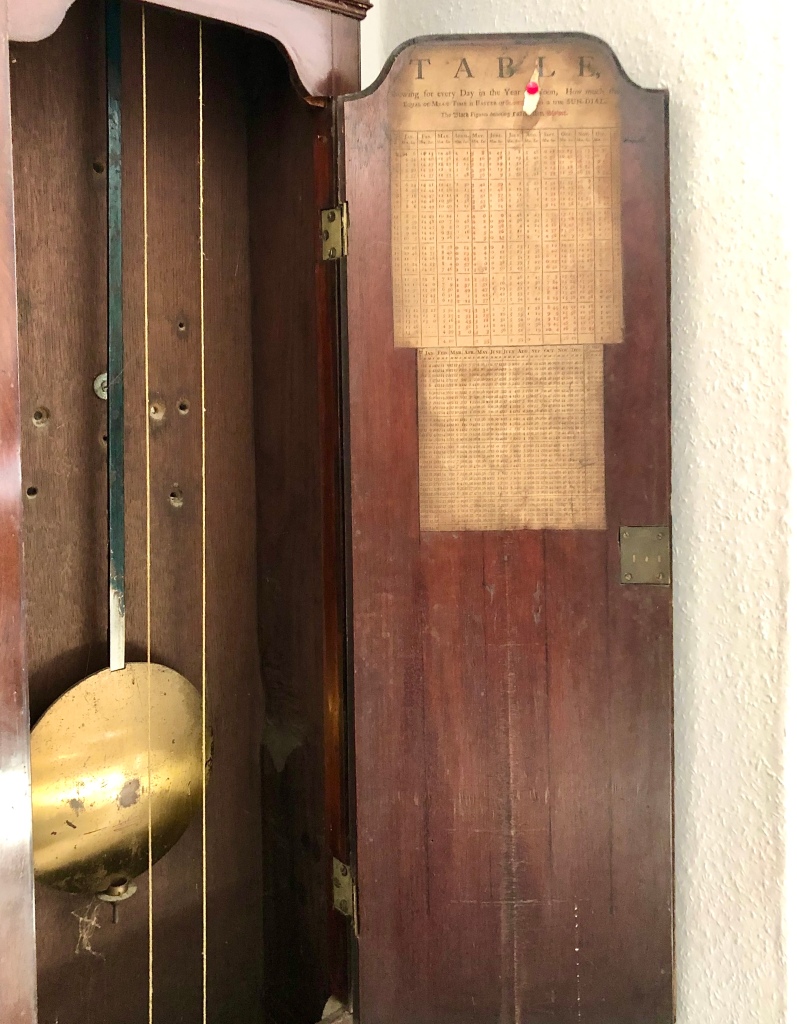
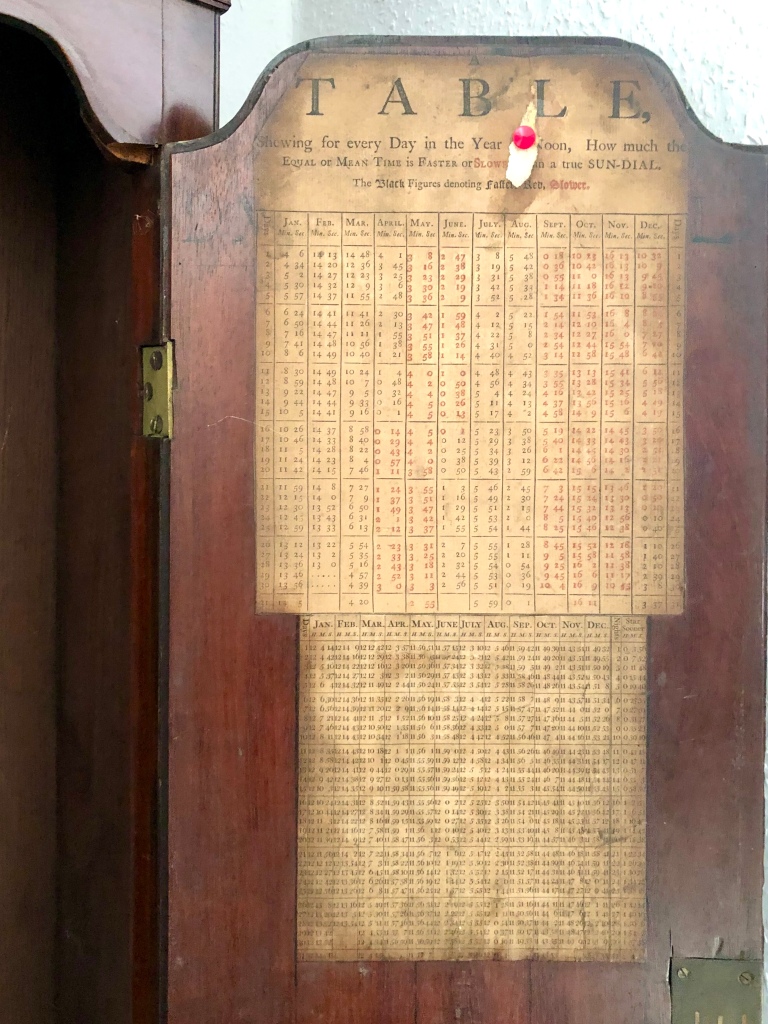
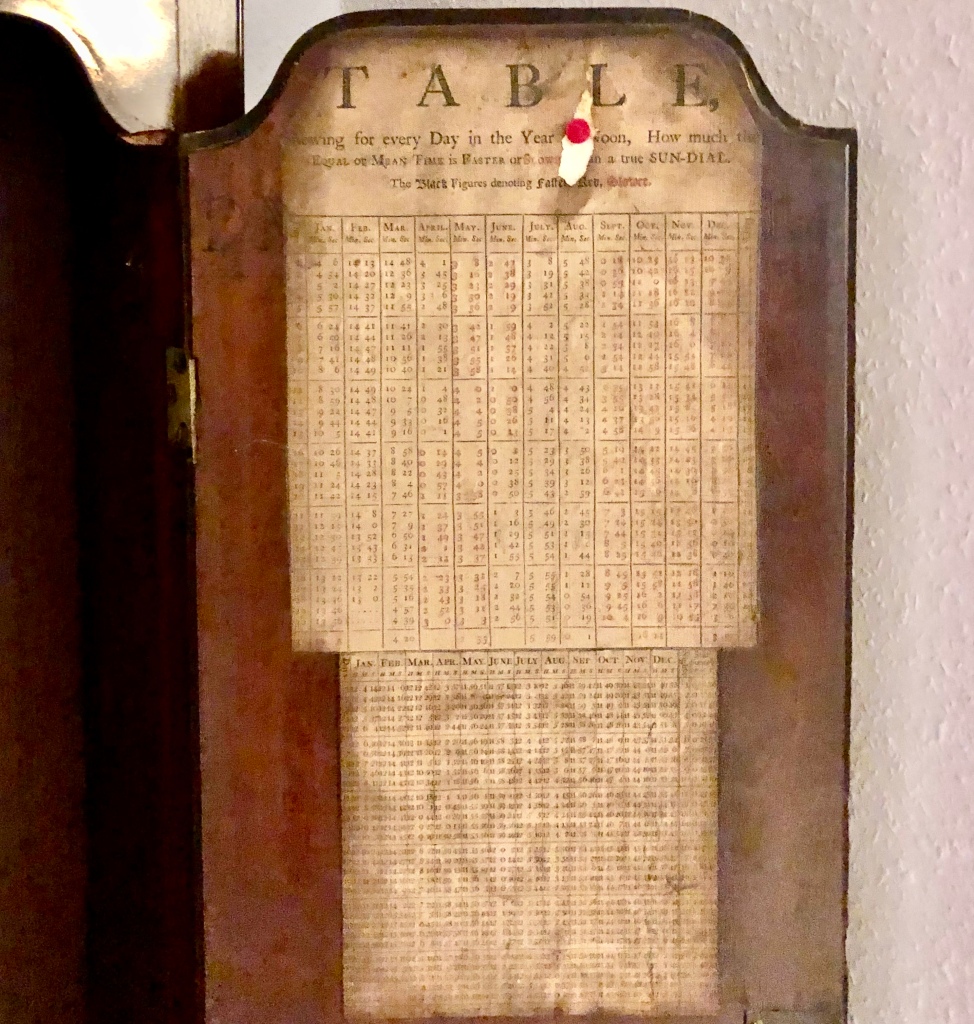
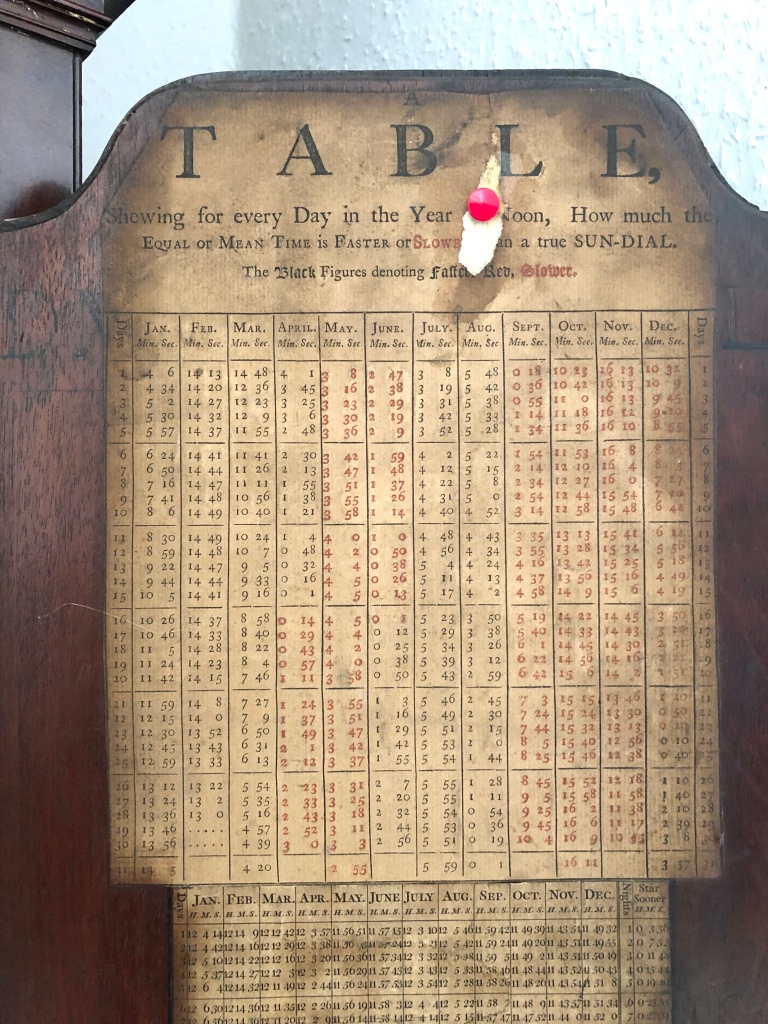
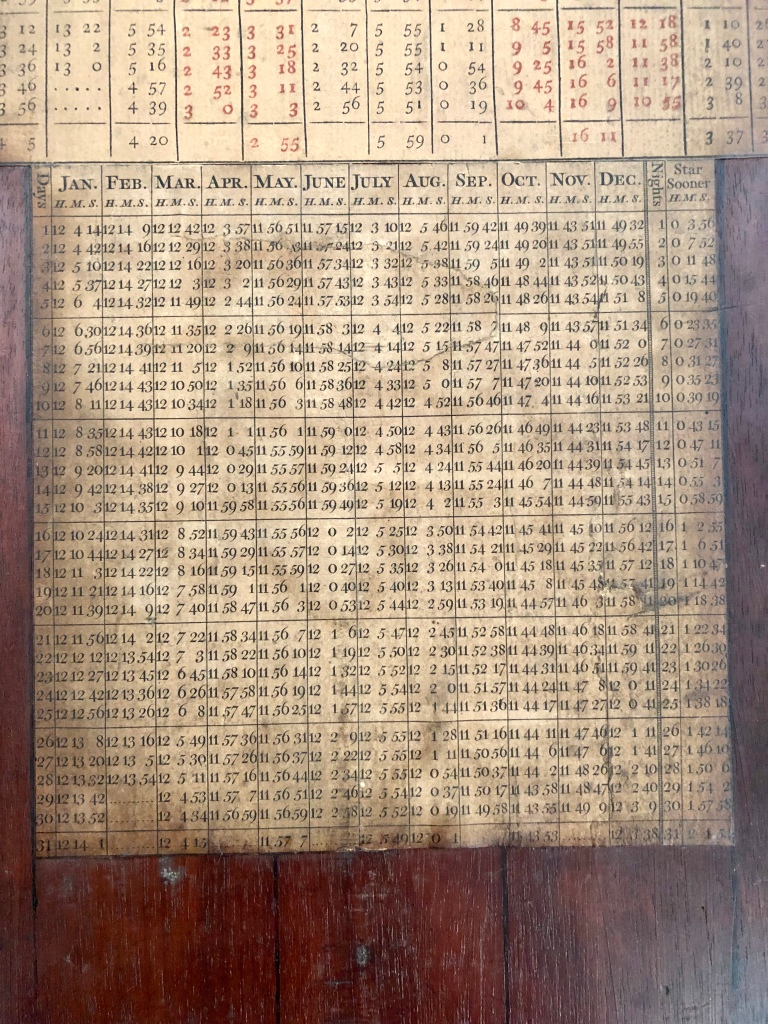
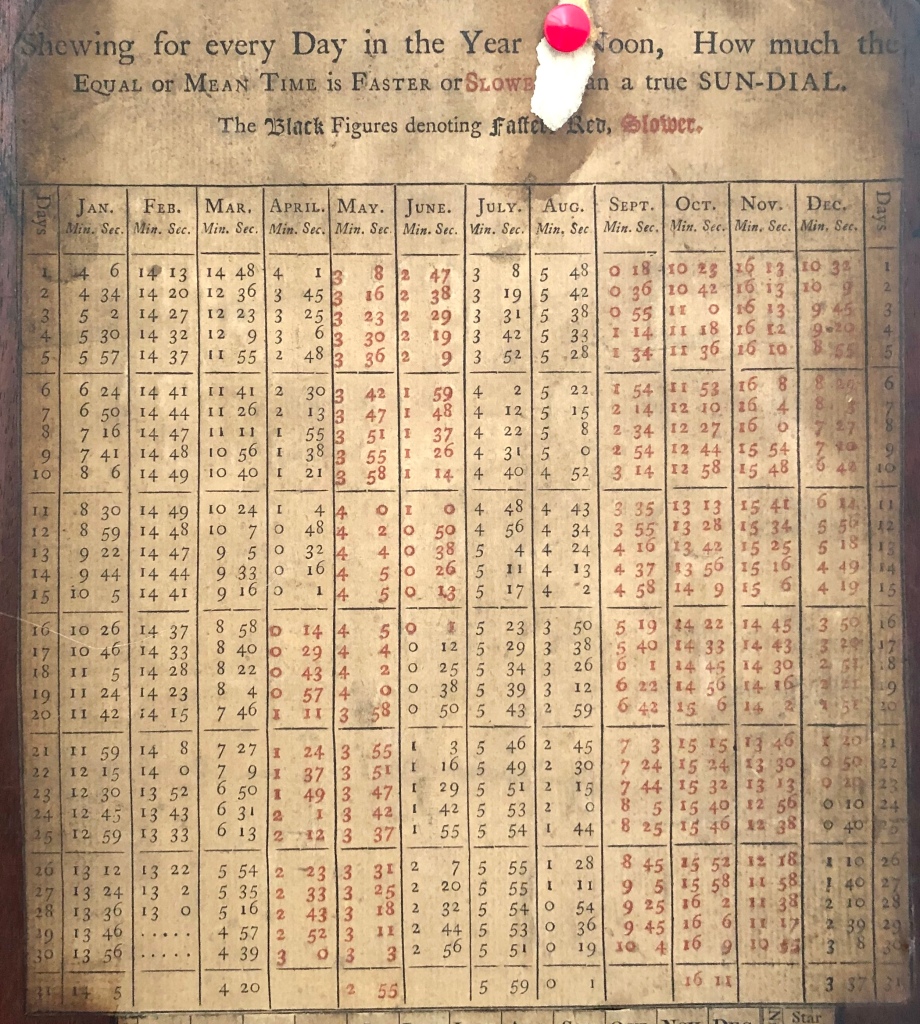
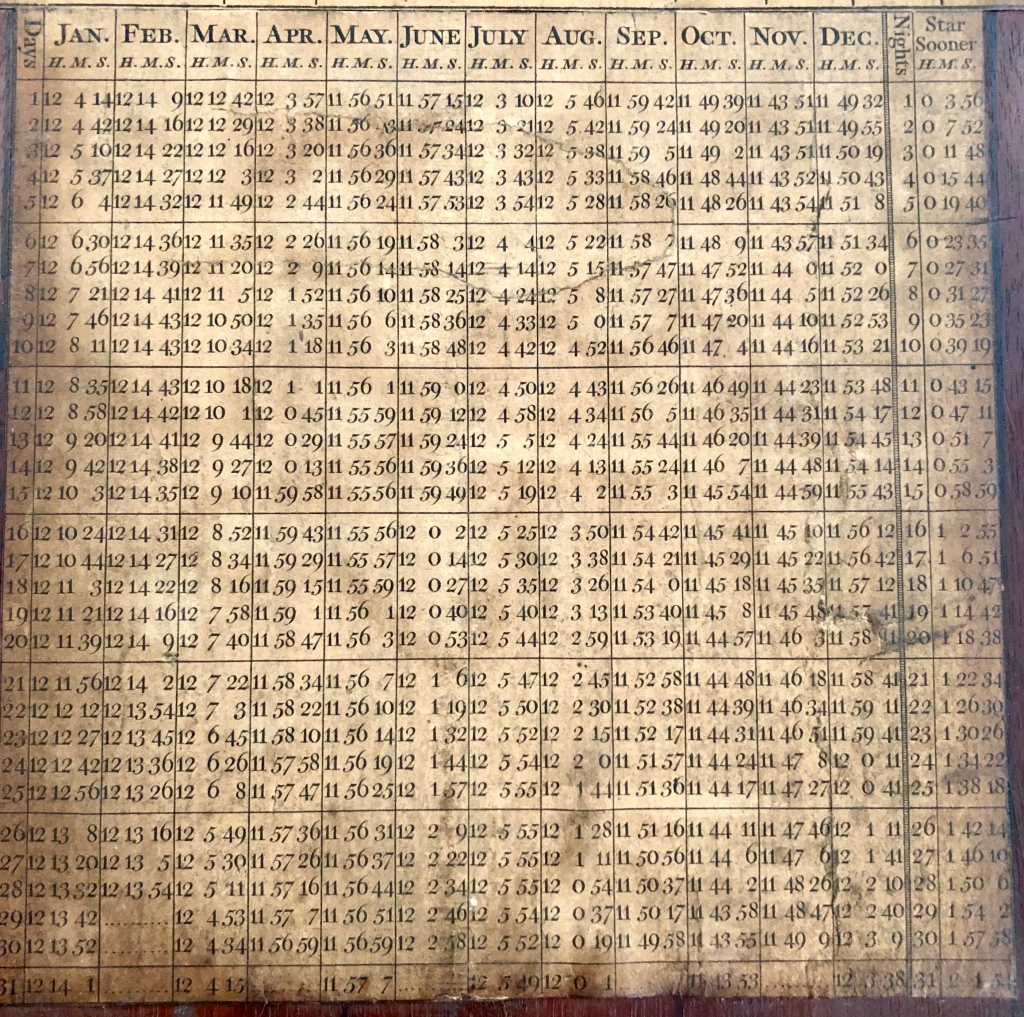
Opening the door at the front reveals a feature so unexpected that it is hard to believe: a full-scale Table Shewing every Day in the Year at Noon, how much the Equal or Mean Time is Faster or Slower than a Sundial. Maybe this is not so unusual, but I have never come across it.

I’m making no attempt to analyse what can clearly be seen. There may be several ways in which the Table can be read, so I’ll leave it to the reader to interpret.

There is one further interesting feature, perhaps not a rare one. The hand on the lower dial (in fact, counter-dial) has to be gently removed in order to wind up the clock. That’s where the key goes. The clock was Cleaned by Mr. Gallop, Horsecastles, Sept. 1971.

The drawing pin has its own story…

GSS Category: Equation of Time; Sundial Accuracy; Longcase clock with sundial table

All photos: Keith Salvesen