THORNCOMBE . DORSET – St Mary

Keith Salvesen / Rolling Harbour

ST MARY . THORNCOMBE . DORSET

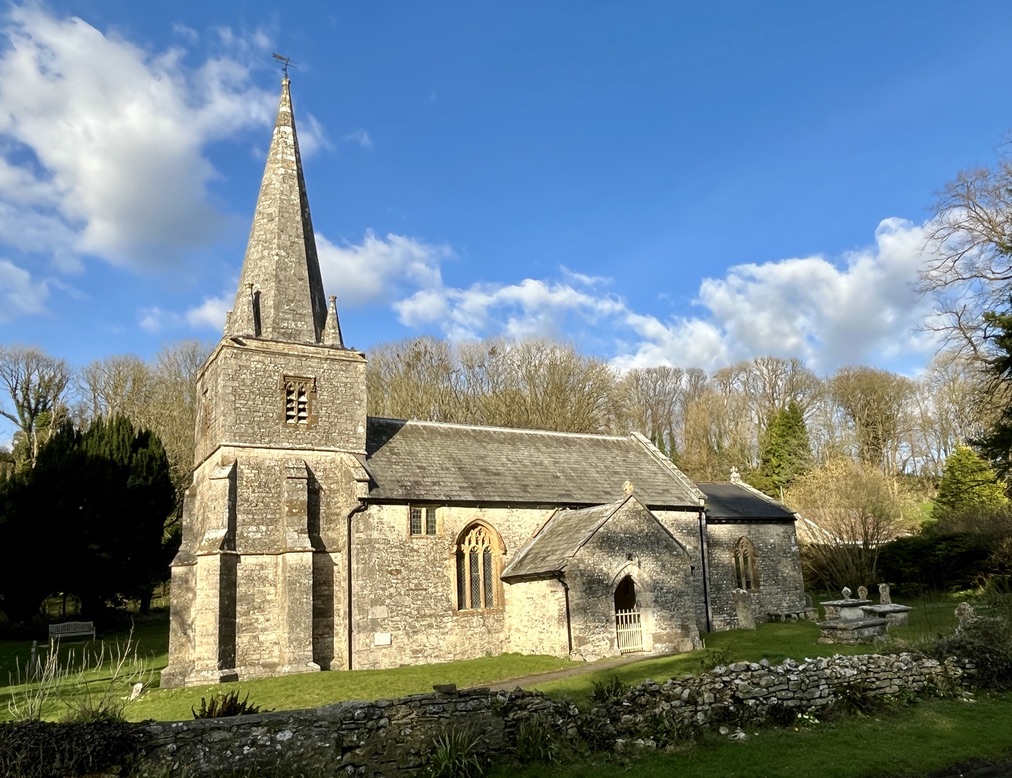
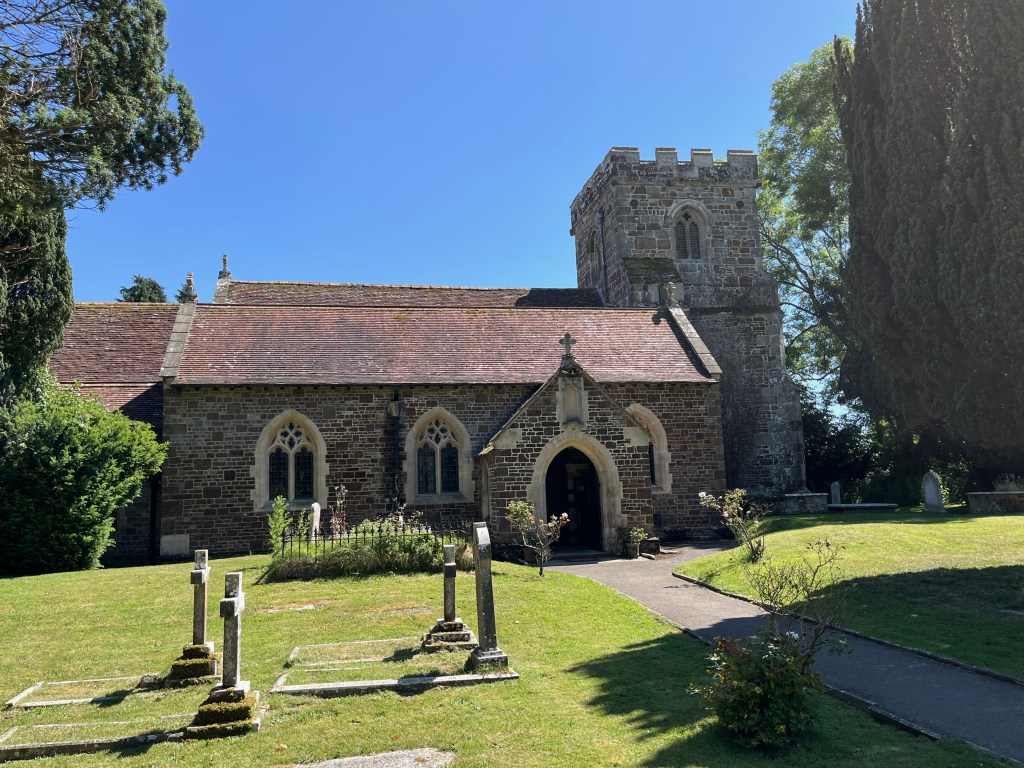
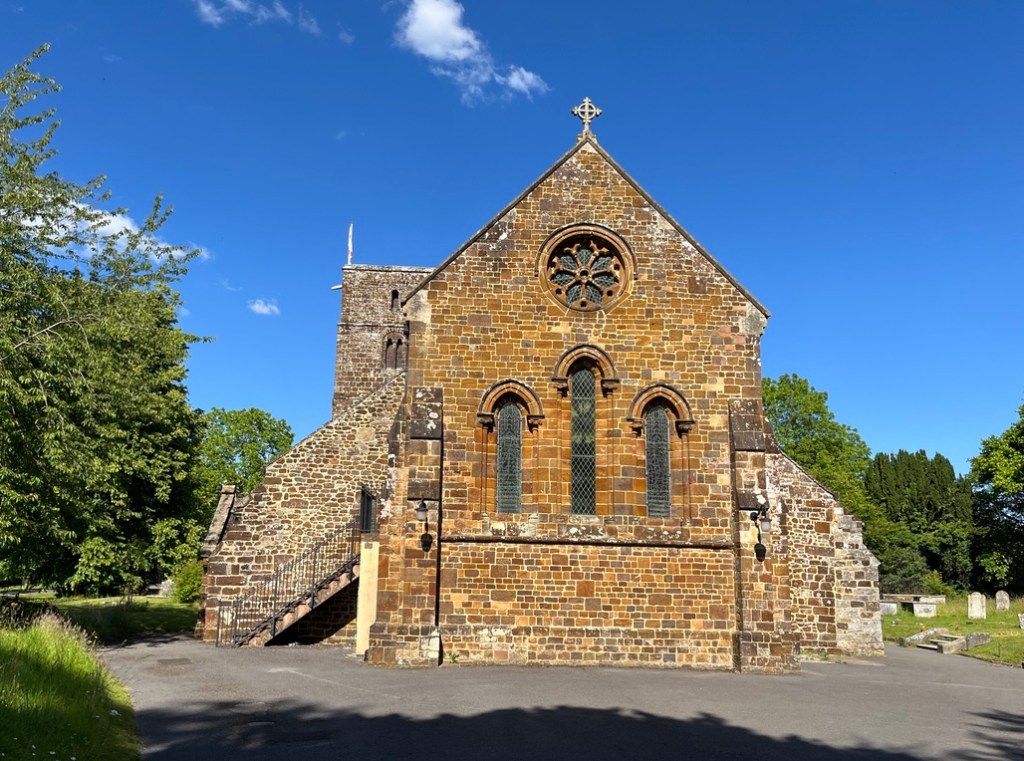
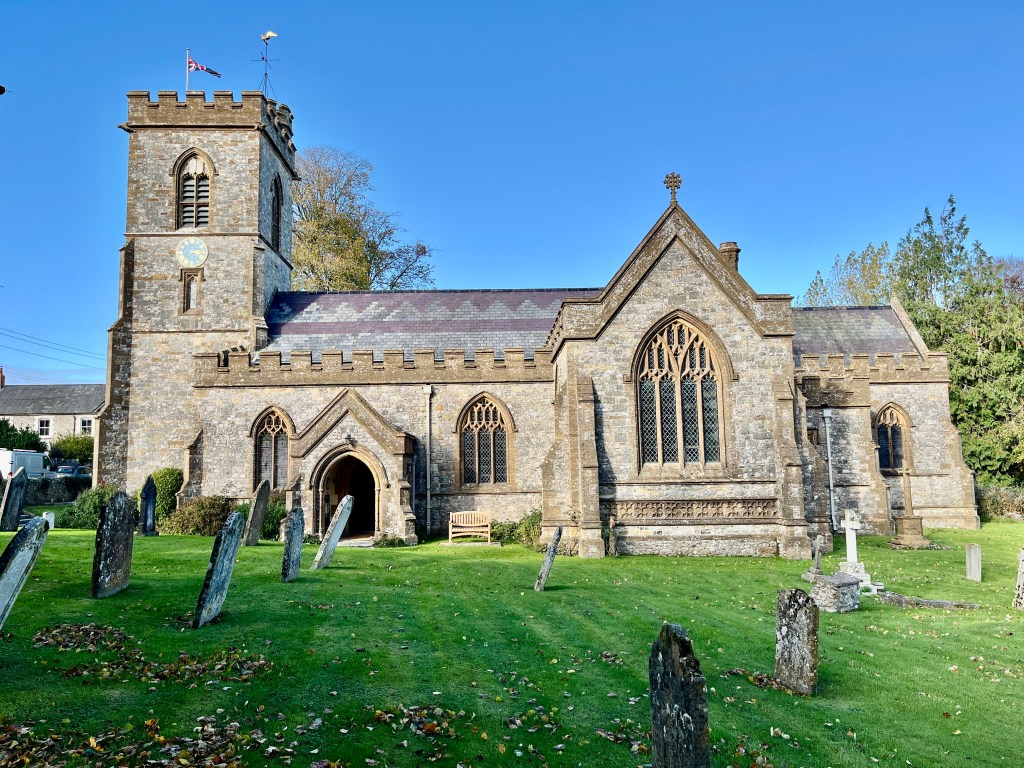
GRADE II ✣ Original dedication 1239; rebuilt 1867 perp. Dial re-sited. ‘The best brasses in Dorset’ (Pev.): full length, of Sir Thomas and Dame Joan Brook. A large church for a small village. Interesting (and at times somewhat lurid) history (see BLB). 6 miles SE of Chard. 50.8263 / 50°49’34″N .  -2.8873 / 2°53’14″W . ST375033

LOCATION

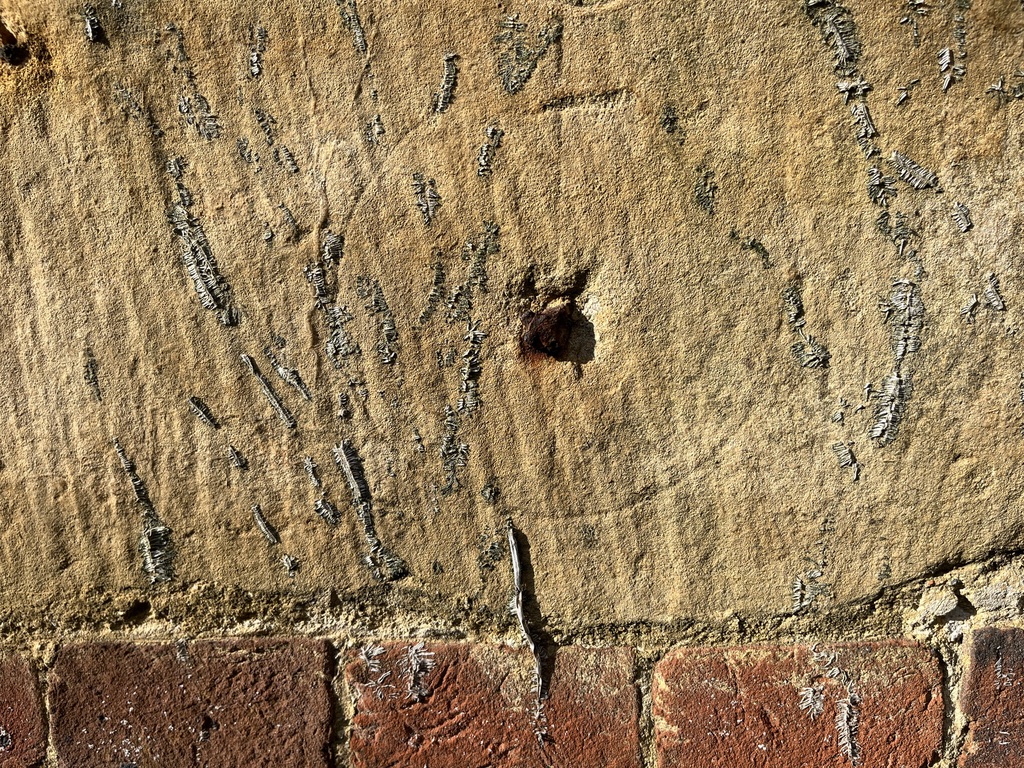
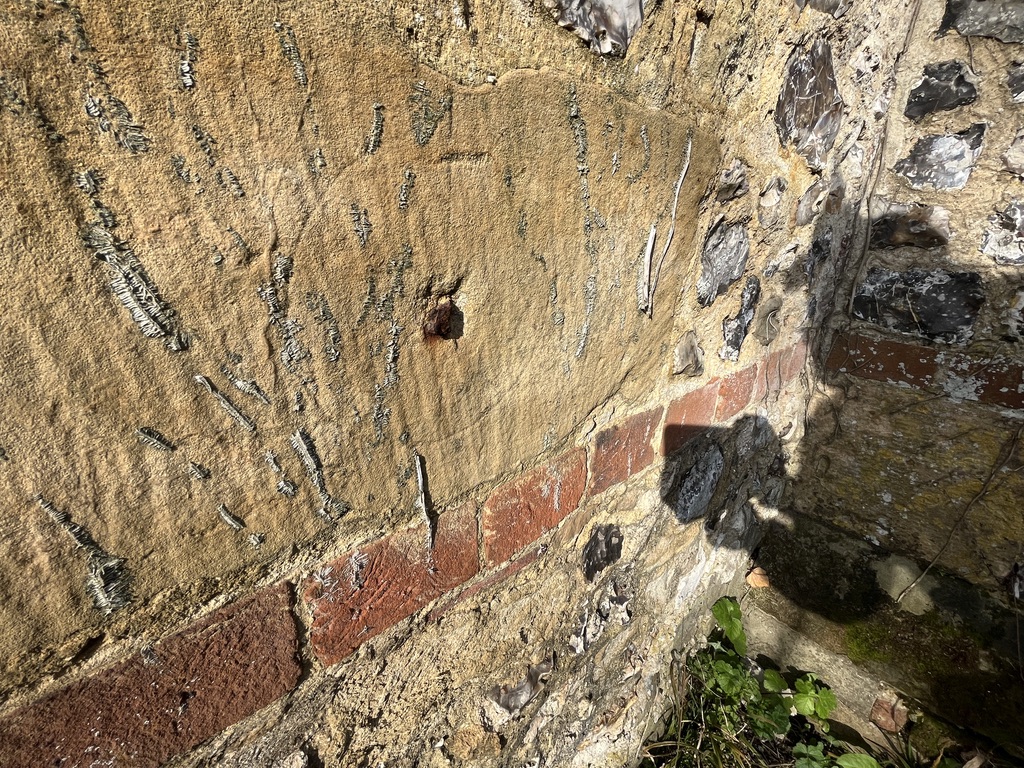
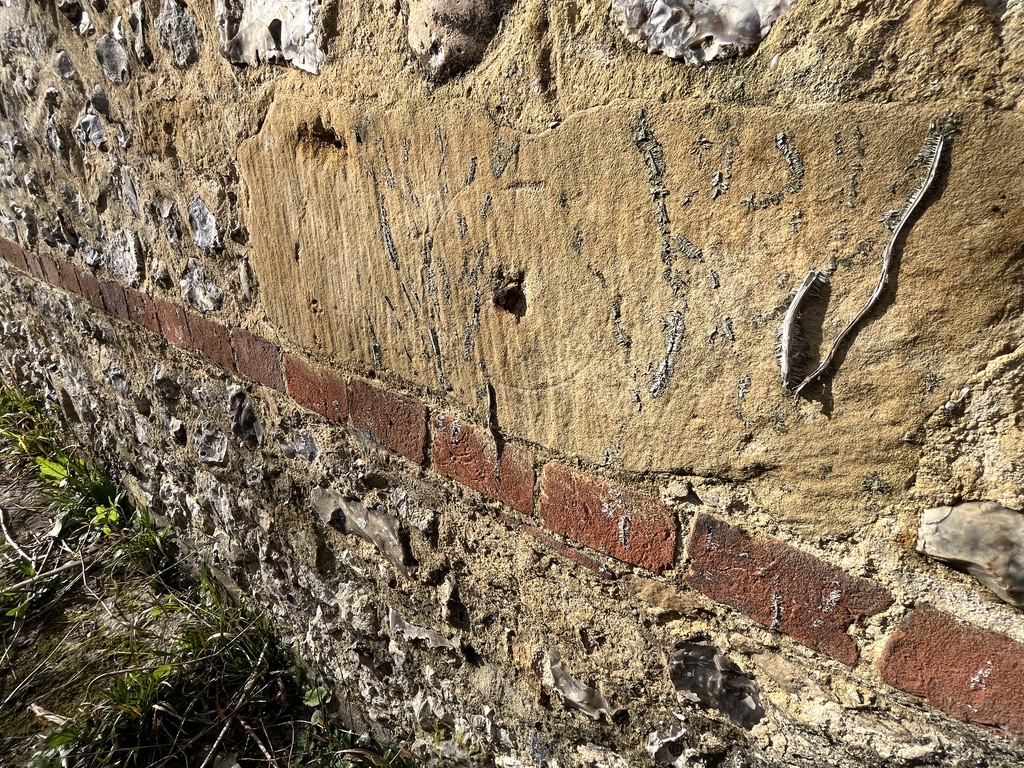
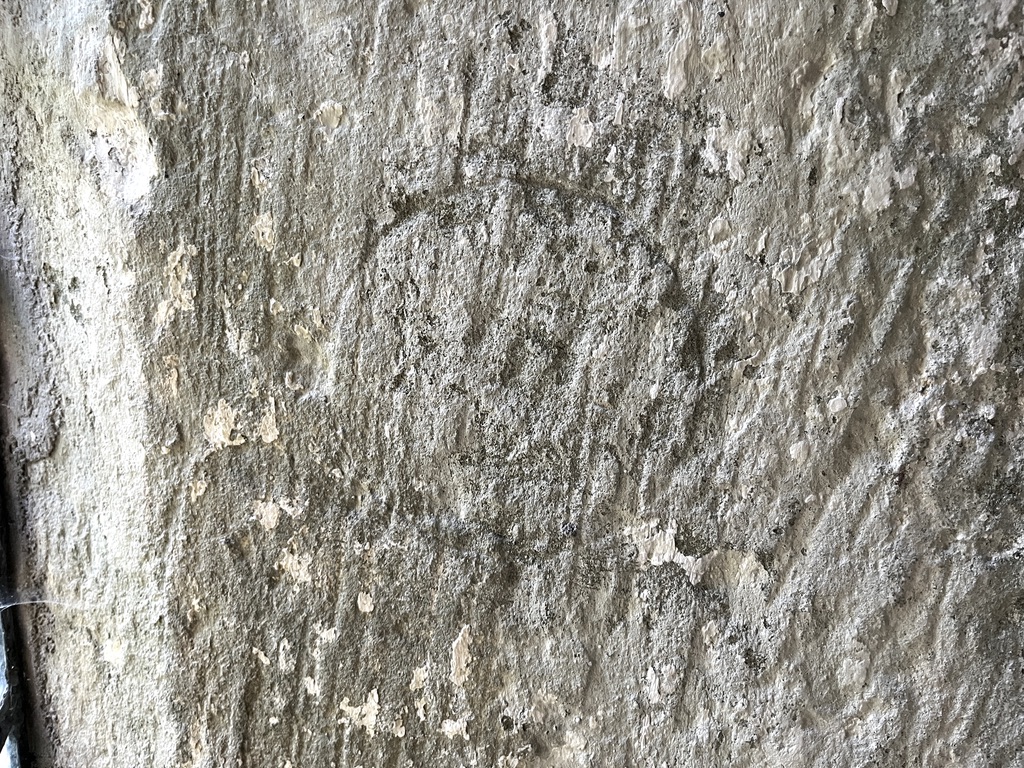
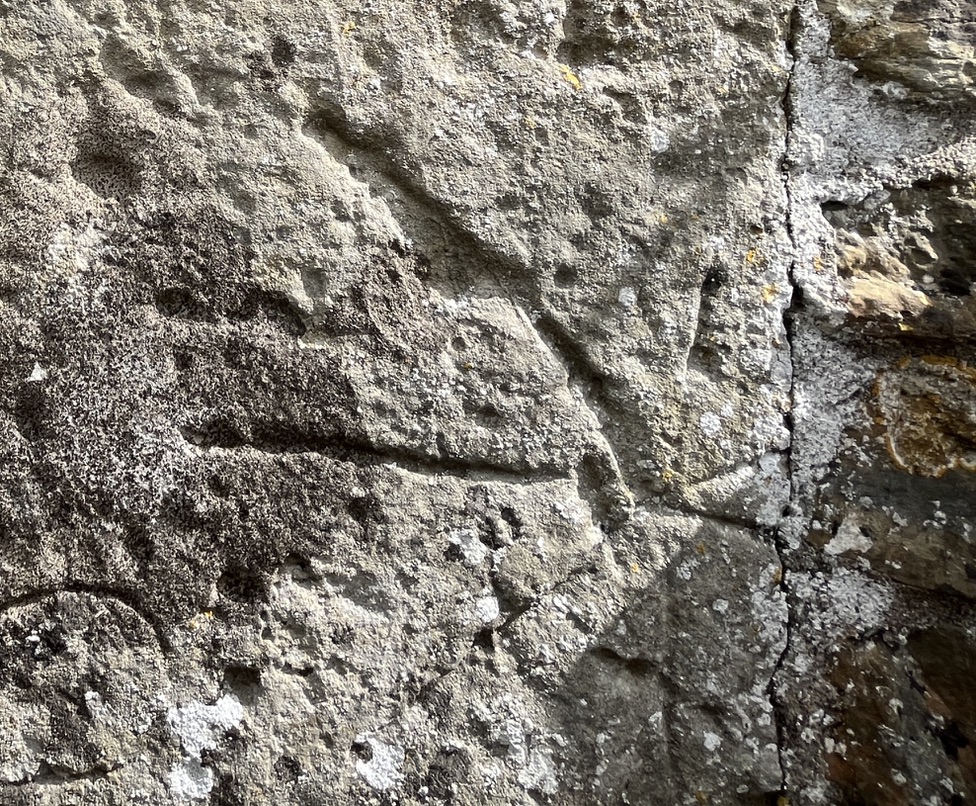
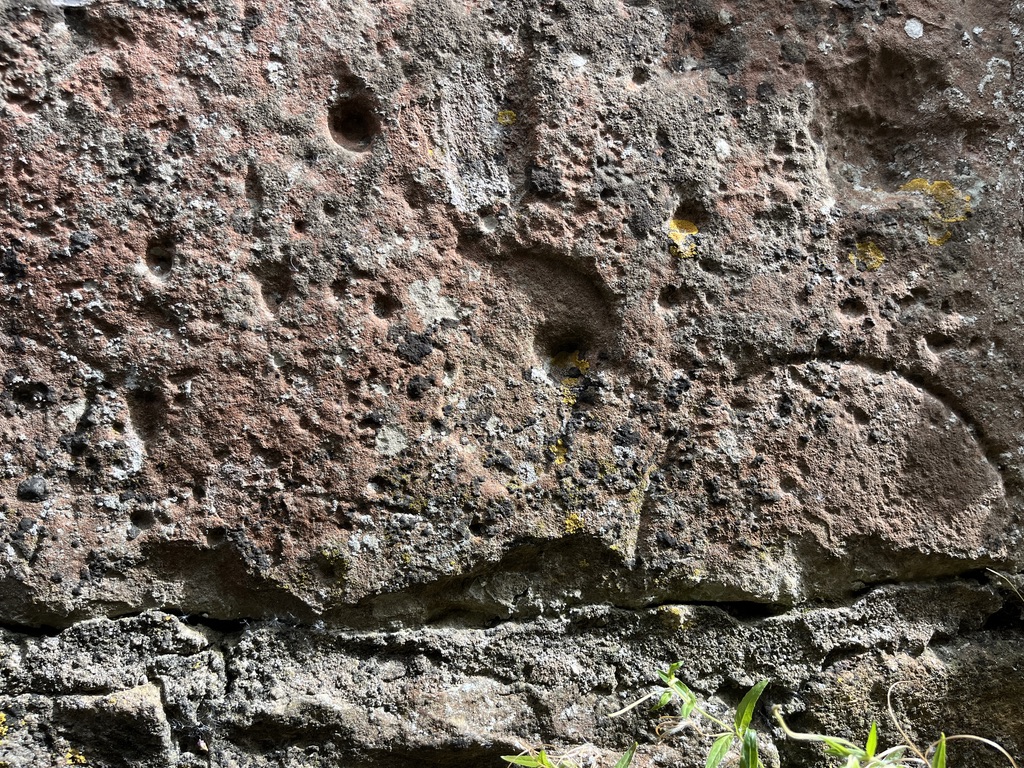
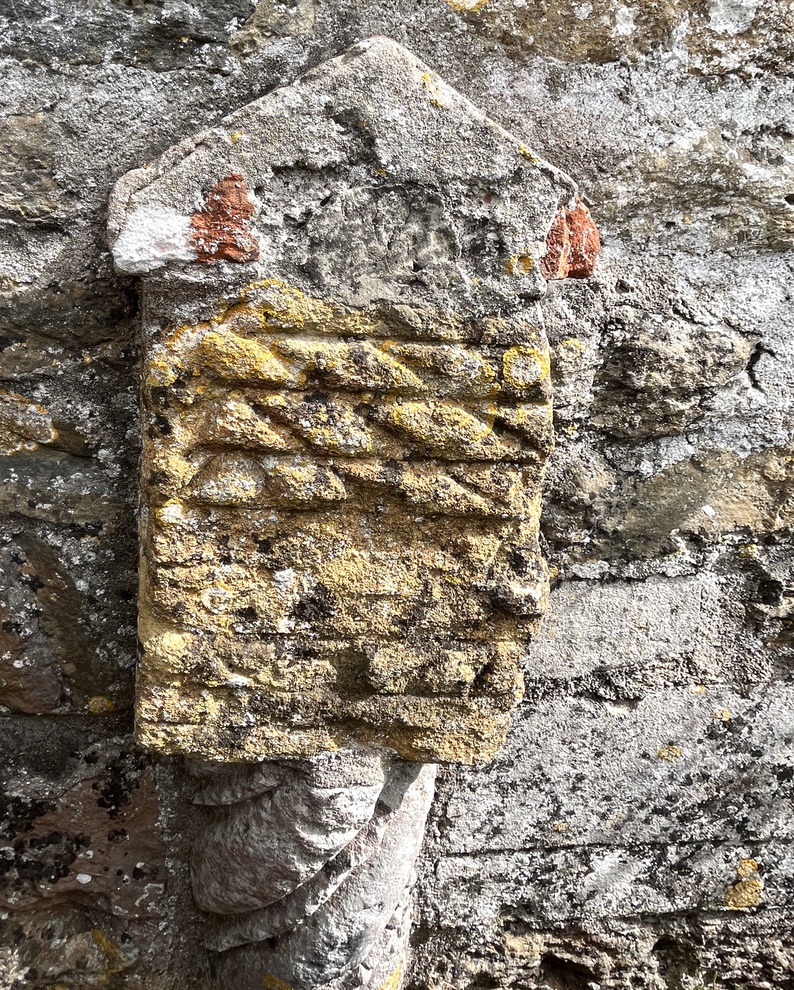
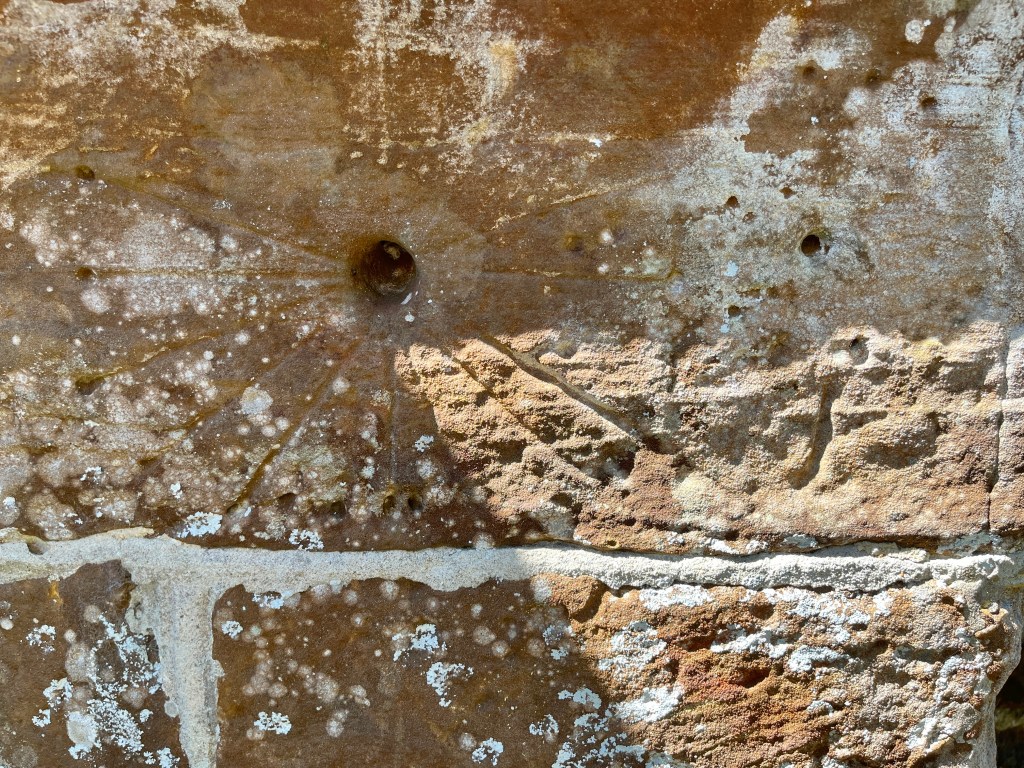
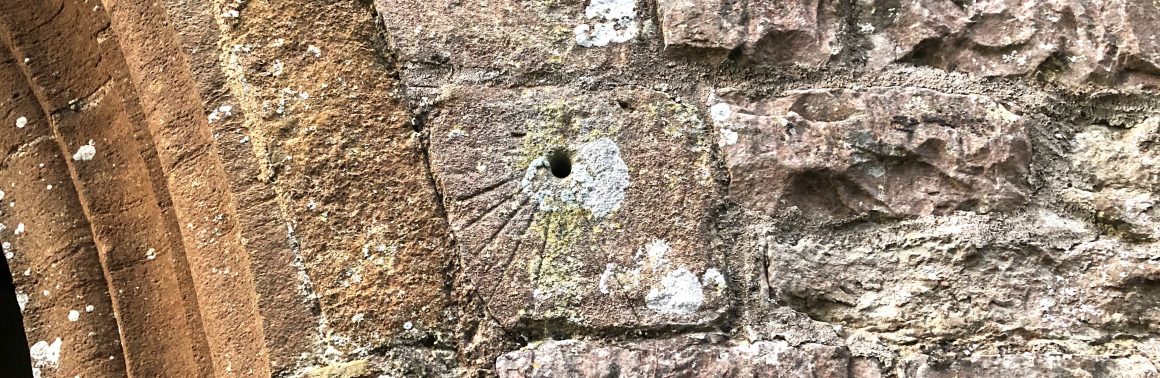
During the rebuild it looks as if care was taken to re-site the dial more or less intact. However, an obscure place was chosen, low down on N wall of the aisle, semi-hidden by a buttress. The dial is weathered and faint – even with the field notes of GLP, it took me a while to find it.
DIAL

The dial has a near-complete circumference line (damaged at the top) and 4 radials, of which only one is readily visible. Its 90° reorientation and its secluded position renders it useless for its purpose.

Rotating a B&W image of the dial-stone 90° clockwise gives a sense of how – in its original position – it would have acted as a marker for the progress of the day, observance times etc. In its current location it serves merely as a curiosity for the completest dial-chaser.

Keith Salvesen / Rolling Harbour

GSS Category: Relocated dial; Rotated dial 90°; North-facing dial

Credits: Gordon Le Pard (GLP) for his exhaustive research of the scratch dials of Dorset

WINTERBORNE HOUGHTON . DORSET . ST ANDREW – Scratch Dial

ST ANDREW . WINTERBORNE HOUGHTON . DORSET

GRADE II ✣ C13 origins. Rebuilt 1860s by T H Wyatt, using original material. Perp style with flint, banded brick, and rubble. C15 font. Loose links with owls and Thomas Hardy. A tiny village off the beaten track from Winterborne Stickland (3 scratch dials). 5m SW of Blandford Forum 50.8388 / -2.2566 / ST820043

DIAL

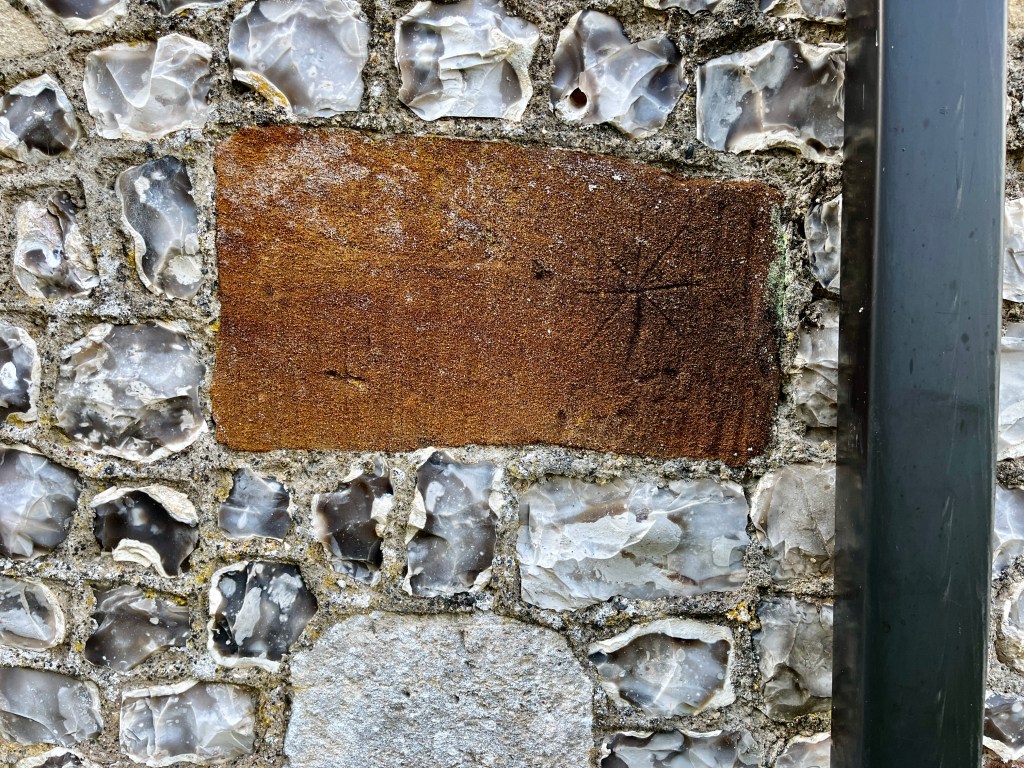
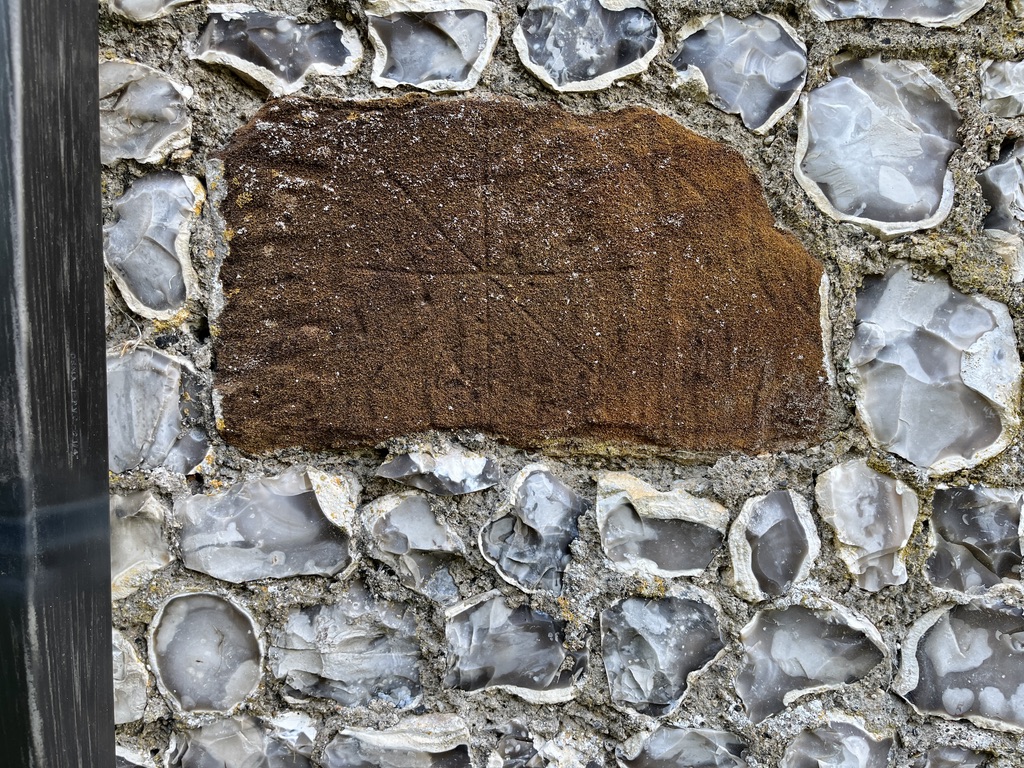
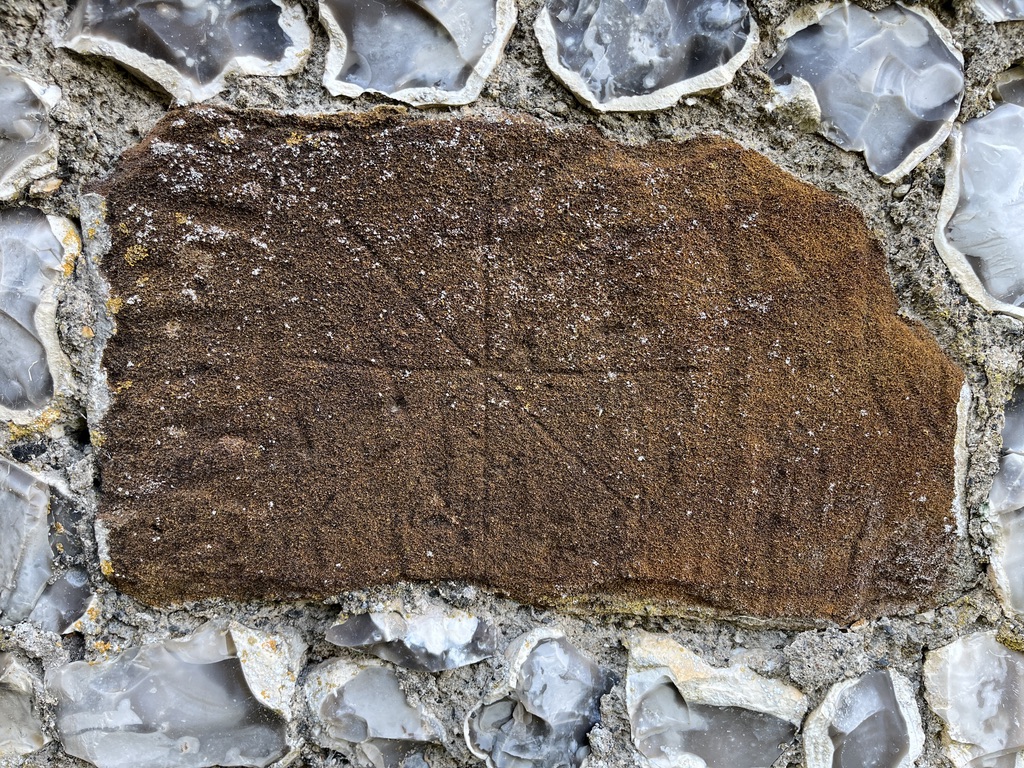
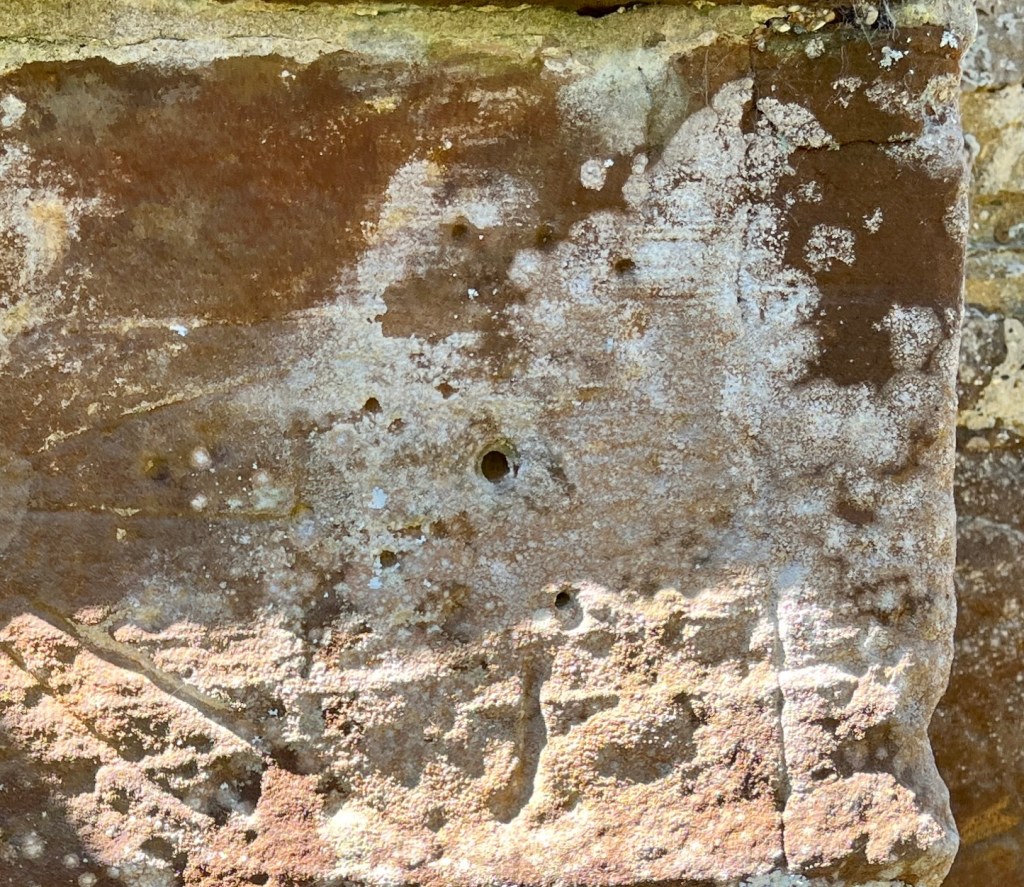
This simple configuration is very close to the category ‘Not-a-Dial’. It is 18″ above ground level, and set into an area of flint. The stone must be a re-sited remnant from the original church or some intermediate restoration. But is it likely ever to have been a marker of the passage of day?

GLP, the expert on the scratch dials of Dorset, puts this dial in the ‘doubtful’ category. He describes the circle with a single line pointing upwards, with a piece of iron (squarish) in the centre. Interestingly, he suggests that the dial might originally have been hand painted rather than having cut lines: there is an example of such a dial at Tolpuddle, quite nearby.

REVERSION

The ‘dial’, reverted, shows that the noon-line extends beyond the circumference, a fairly frequent way of emphasising the importance of that hour. The protruding rusty iron stud is a puzzle. It is accurately centred and perhaps was used to plug a gnomon hole. Possibly it had a purpose as a hook or a hanger now largely rusted away.

GSS Category: Scratch Dial; Dorset Scratch Dial; Mass Dial

All photos: Keith Salvesen / Rolling Harbour

WINTERBOURNE STEEPLETON . DORSET . ST MICHAEL – Scratch Dials (revisited)

ST MICHAEL . WINTERBOURNE STEEPLETON . DORSET

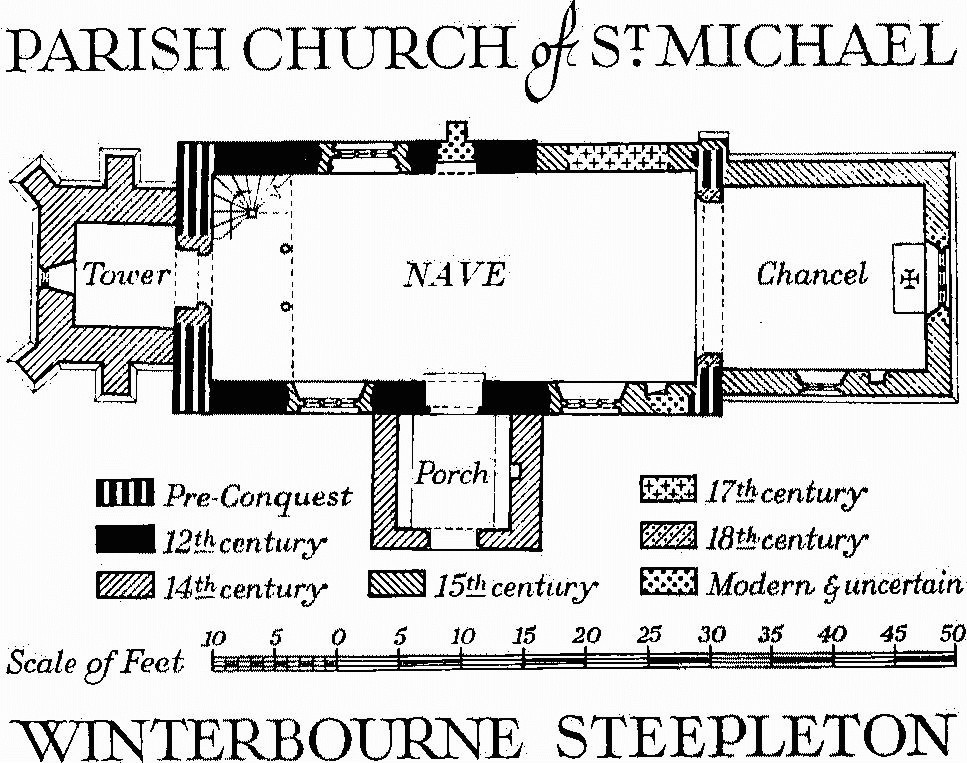
GRADE I A fine early church in a lovely setting. C11 quoins to nave; C12 nave rebuilt; C14 3-stage W tower, porch; C15 chancel. Later alterations, restorations. Just W of Dorchester, yet seeming miles away in its peaceful valley. Visit Winterbourne Monkton while you are there (2 perhaps 3 dials). 50.7067 /  -2.5266 / SY629898

DIALS

Two dials are recorded. I last visited this church more than 2 years ago, in early evening sunshine but with shadows on the church. I have recently been back in better light to re-photograph the main dial; and to check for another rudimentary dial noted on the S buttress of the tower in a 1997 survey. I didn’t find it on my first visit.

DIAL 1

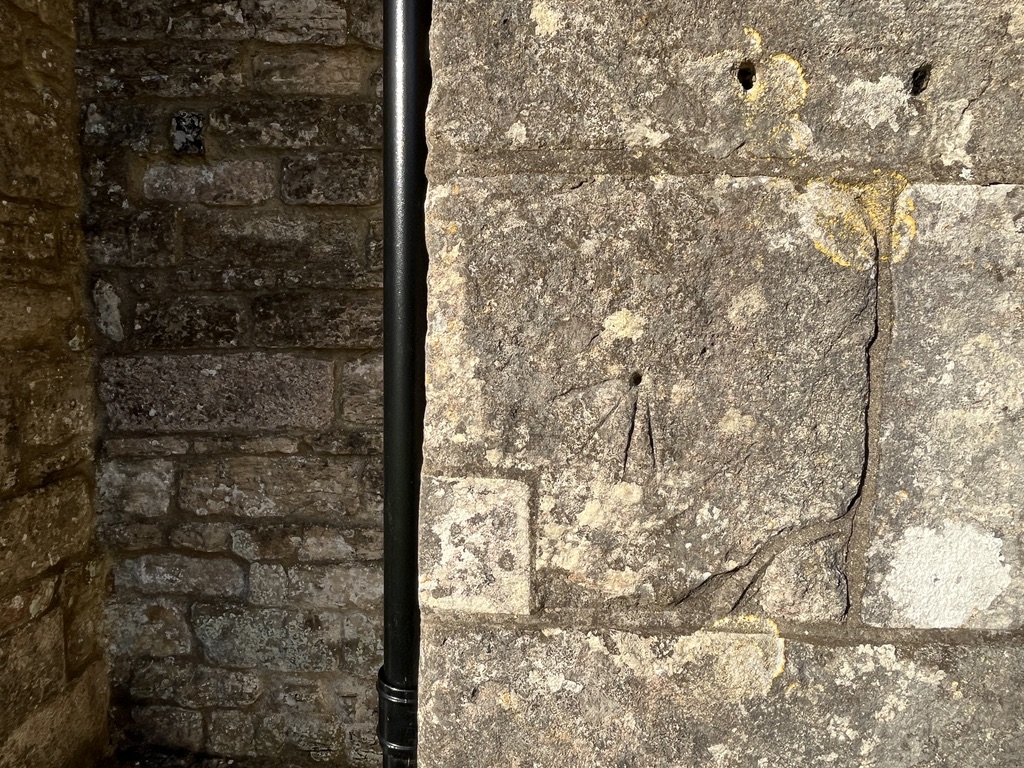
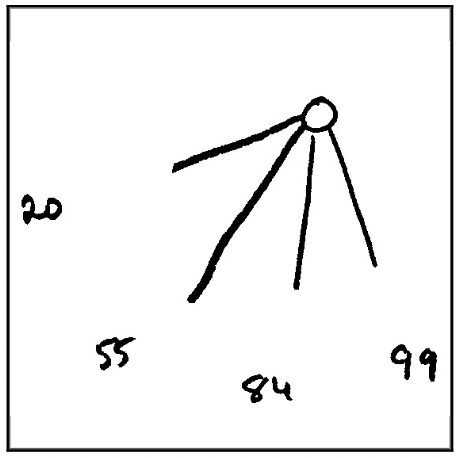
Dial 1 is located on a SW quoin stone of the nave. When examined in the 1990’s it was noted to be ‘behind a drainpipe’, which is no longer the case. By strange coincidence, when I revisited, the rest of the drainpipes were being repaired and repainted.

This is a straightforward 4-line morning dial with a pleasingly casual approach to straight lines. The two deeper incised lines suggest that late morning was the significant time of the day for observance.

DIAL 2

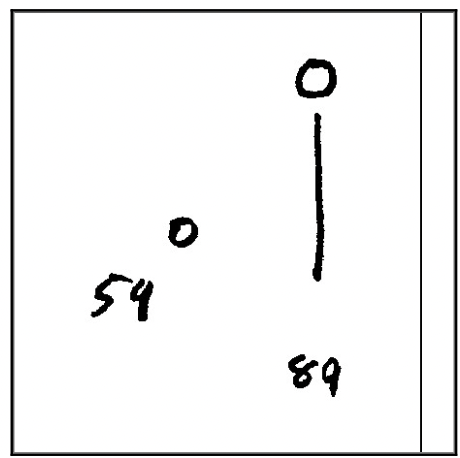
Dial 2 is so simple that I cannot claim to have discovered it this time round. It was recorded as being on S buttress of the tower, with 1 line a mere 45mm long, a small gnomon hole, and a pock LLQ . It was noted in 1997 as ‘very faint’. Although Dial 1 is mentioned in several places (eg BHO), I have found no additional reference to this tiny time marker. So for the second time I failed to find it, even in sunlight. However, a drawing was made and is all I can offer.

Do see the Saxon statue mentioned in the notice below (there is a similar one in Bradford on Avon), and indeed spend some time inside this interesting church.

GSS Category: Scratch Dial; Mass Dial; Eroded Dial

All photos Keith Salvesen; diagrams BSS

SPETISBURY . DORSET . ST JOHN THE BAPTIST – TWO SCRATCH DIALS (?)

Spetisbury Church as drawn by Thomas Rackett for the 2nd edition of Hutchings’ History of Dorset
ST JOHN THE BAPTIST . SPETISBURY . DORSET

GRADE 1 ✣ Late C12 / early C13 origins; west tower late C15 / early C16. Major mid C19 restorations from 1858 by T H Wyatt, and later works. 3m SE of Blandford Forum. 50.8258 / -2.13 / ST909029

TWO PROXIMATE DIAL-LIKE DESIGNS

The two incised stones are located either side of the drainpipe on S wall of the chancel. Both have 8 segments (as with a Saxon / Tide Dial). A gnomon hole is conspicuously absent from both. There’s no trace of filling. There are one or two pocks on each, but random and with no specific relation to the overall designs.

GLP in his comprehensive survey of Dorset church scratch dials concluded that the dials “…are just graffiti of unknown date”. He explains that he has included these near-matching designs since otherwise “they might be mistaken for genuine dials”.

Apotropaic symbols? These don’t conform to any mainstream style of protection mark. And they are not in a location that Evil would naturally choose to gain entry.

My own theory is that these 2 designs were scratched on adjacent dark stones during the lengthy C19 restoration period. Perhaps there was a small competition between 2 apprentice masons engaged on the work, or bored by it.

DIAL 1

The cruder of the two, with bent lines and an awkwardly gouged curving ‘noon line’.

DIAL 2

More carefully designed and executed than Dial 1, and with the hint of circle round it.

GSS Category: Scratch Dial; Mass Dial; Church Graffiti circular pattern; False scratch dials

All photos: Keith Salvesen; Rackett print OS

TARRANT CRAWFORD . DORSET . ST MARY – Scratch Dial

ST MARY . TARRANT CRAWFORD . DORSET

LISTING Grade I ✣ C12 origins with abbey links; C12 chancel; C13 nave and refenestration, porch; C15, tower. An astonishing church beyond the scope of this project. Besides the building itself, there are wonderful early C14 wall paintings to admire, also C16 wagon roof & C13 coffin lids. Major restoration in 1911. A very unspoilt church retaining many medieval features PEV. In the care of CCT. 5m SE of Blandford Forum 50.8307 /  -2.1107 / ST922034

DIAL

A number of features make this dial rather special. It is inside an intriguing church; it is cut into the architrave of a (historically) relocated doorway; and the design is endearingly haphazard. There are 5 radials from the gnomon hole, mainly LLQ from (roughly) Terce to just past midday. The lines are uneven in length, depth, spacing and straightness ,not least because of the oddly squarish perimeter. One can’t tell what lies behind the cement repair, but it doesn’t seem that the perimeter continues beyond what one can see.

BSS Diagrams

APOTROPAIC CIRCLES

There are two circles cut into one of the window jamb, the lowest with a dot in the centre. These are a simple form of protection symbol, repelling evil and preventing it from entering the church. Some theorise that these and more complex designs (eg ‘daisy wheels’) trapped evil within the circle – so-called demon traps.

GSS Category: Scratch Dial; Mass Dial; Protection Mark, Apotropaic Symbol

All photos: Keith Salvesen

GILLINGHAM MUSEUM . DORSET – Scratch Dial cut into Anglo-Saxon Cross

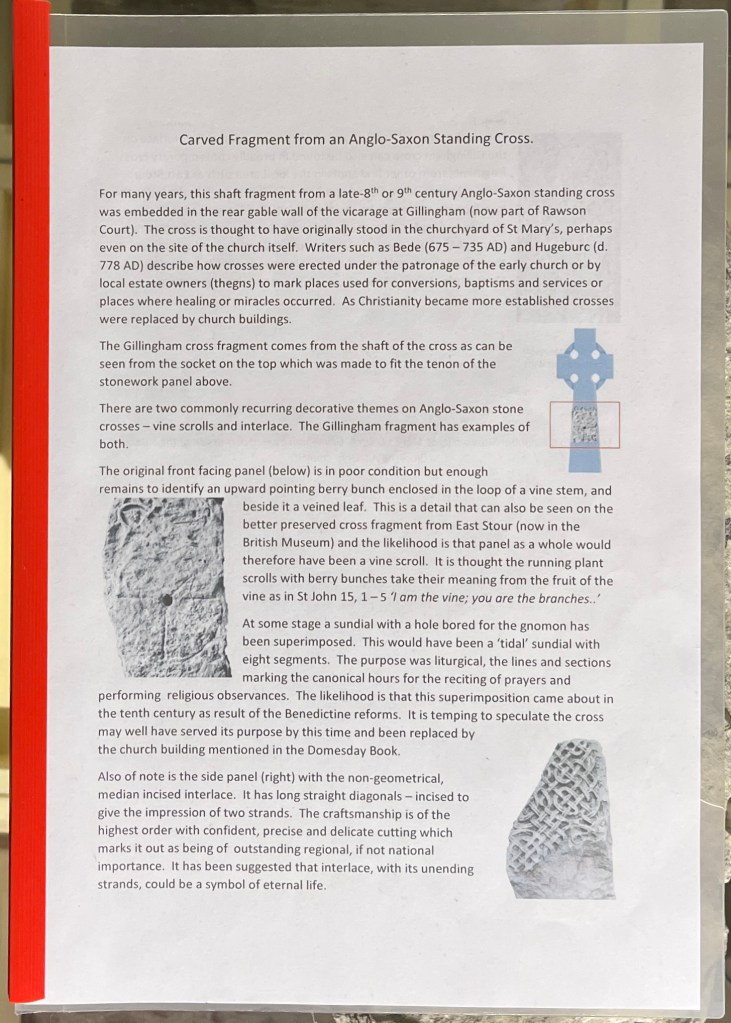
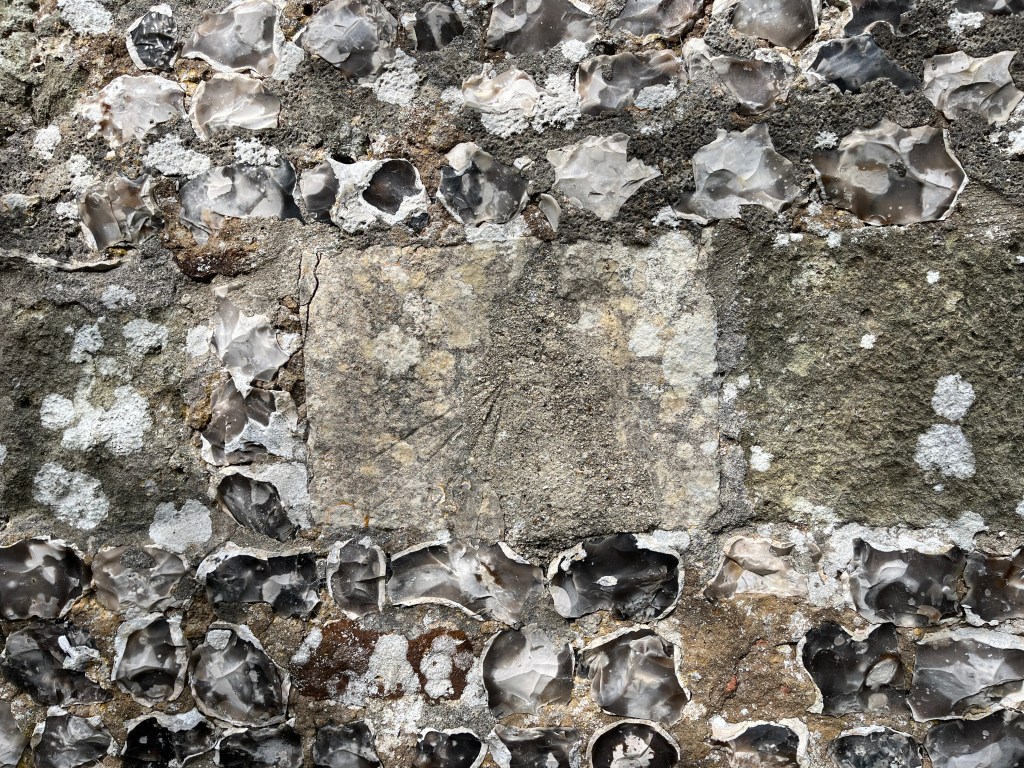
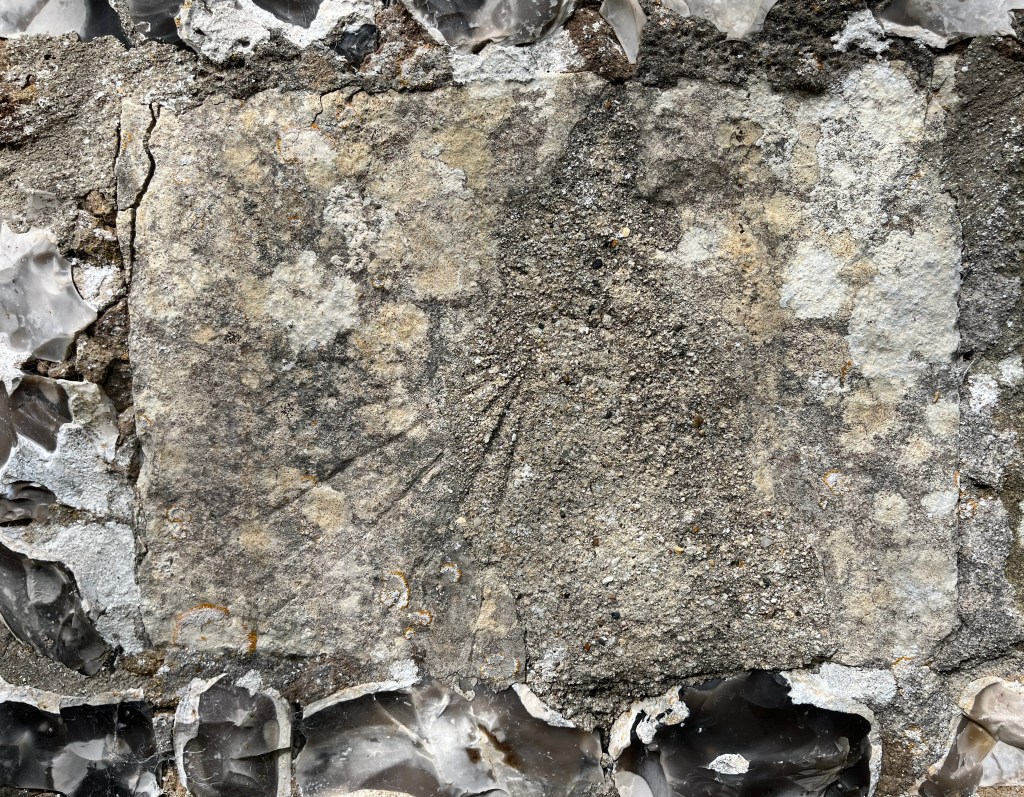
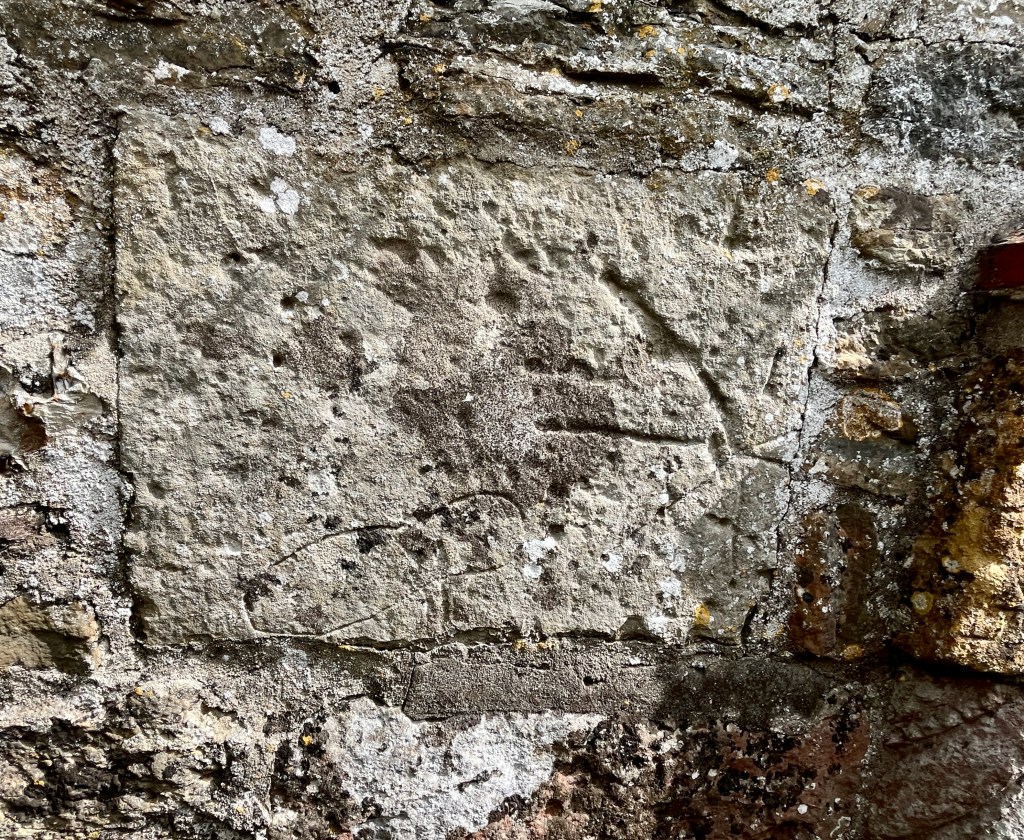
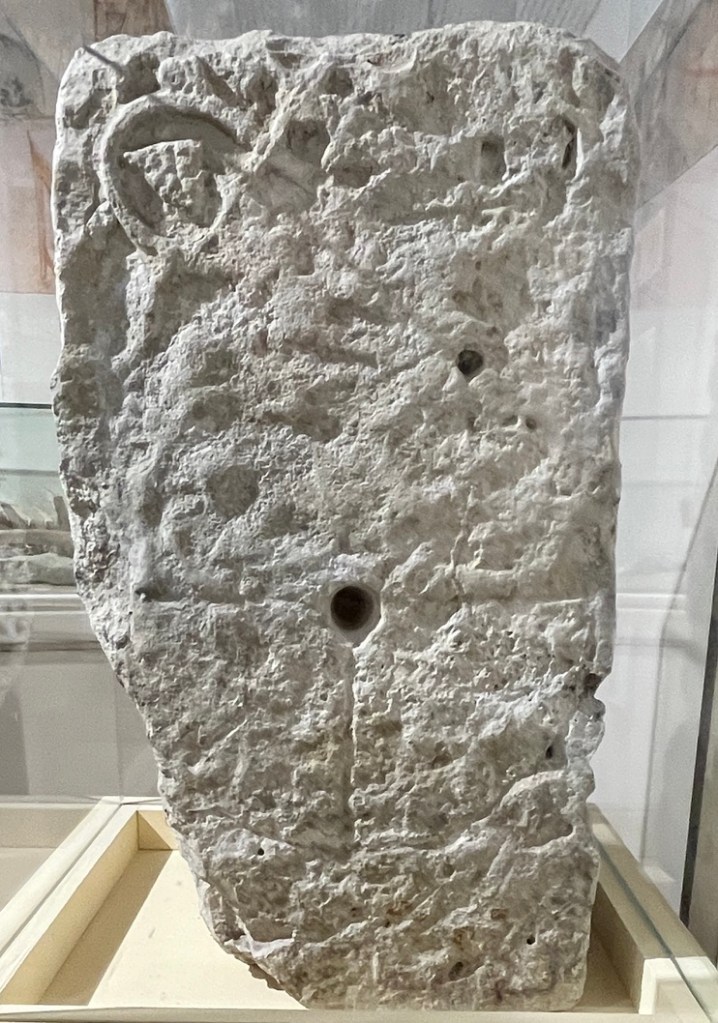
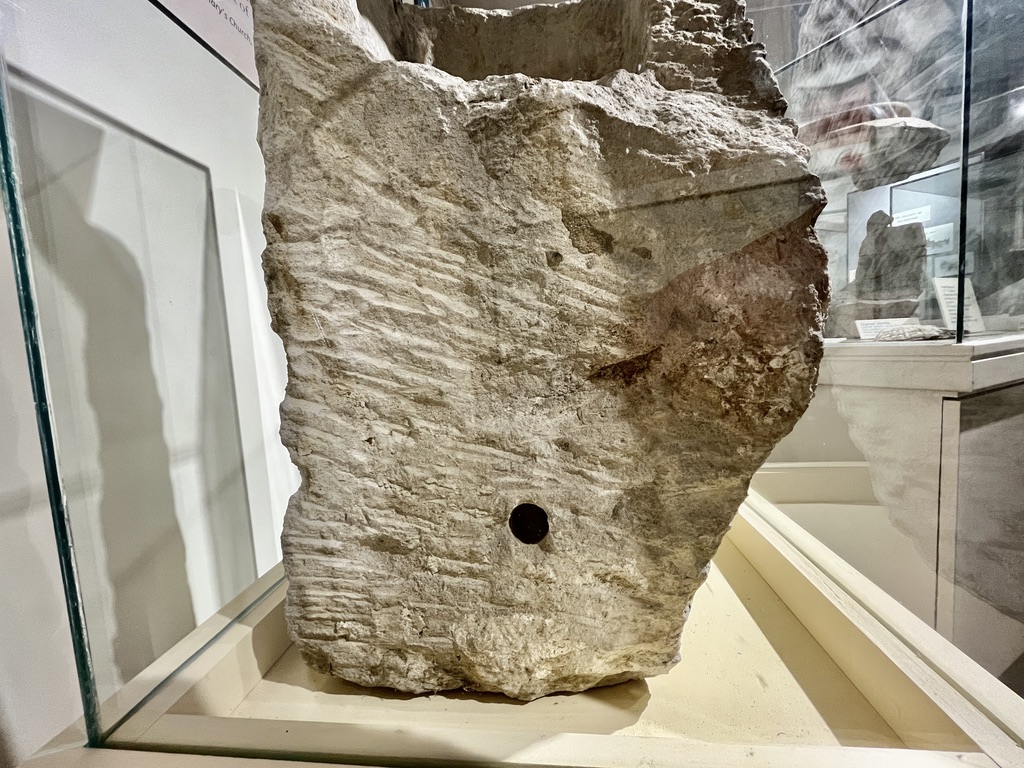
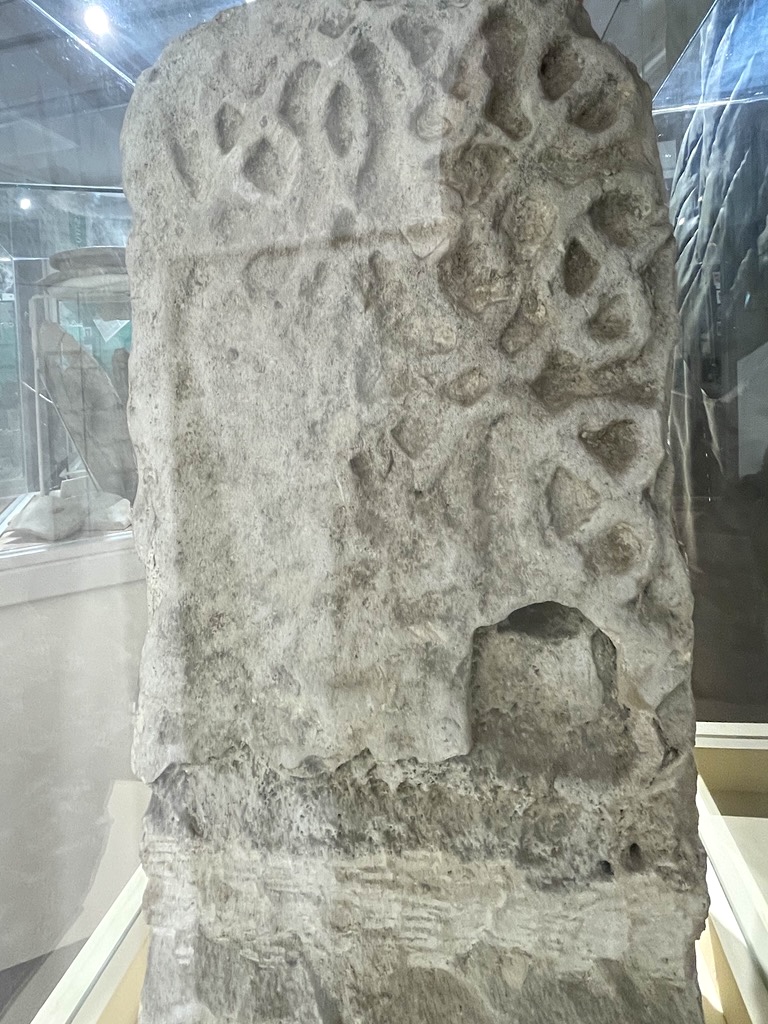
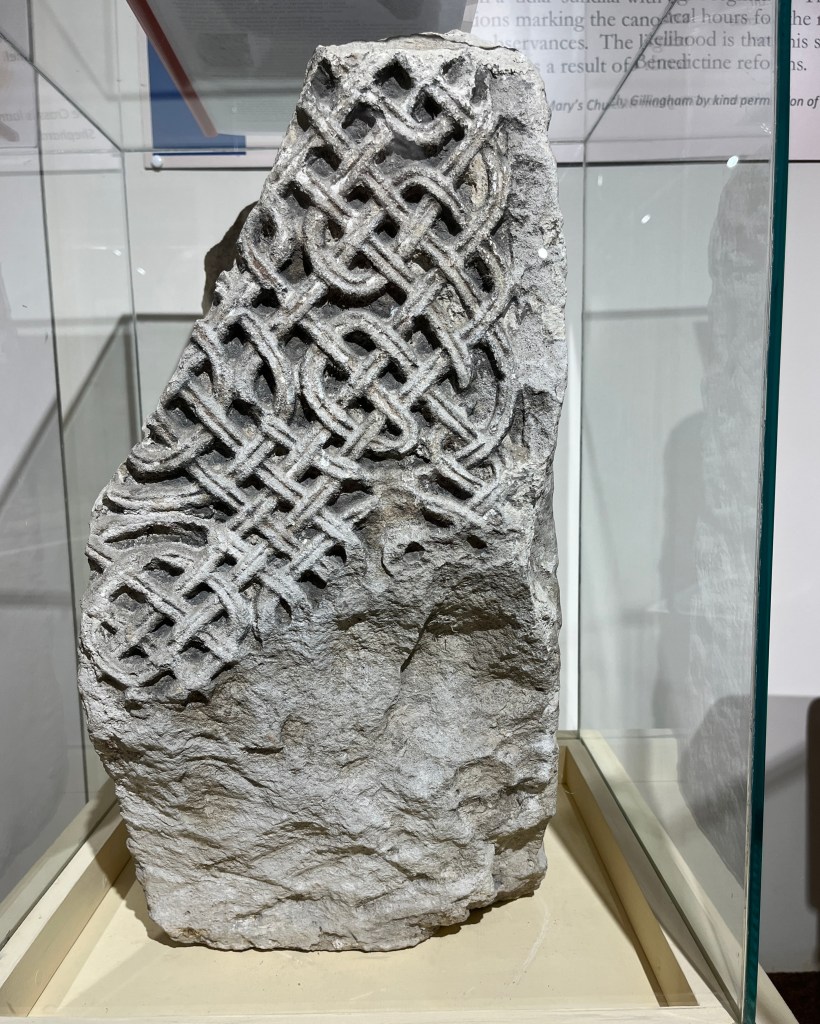
GILLINGHAM in Dorset has a well-curated Museum spanning prehistory to our lifetime. The many and varied displays include a very special one, a handsome carved fragment of an Anglo-Saxon standing cross. Below are images of all four sides of this wonderful stone. It is enhanced by the later addition of an early dial – a Tide dial.

TIDE DIAL

The dial has a complete horizontal (‘6-to-6’) line, an emphatic noon line, and a short deep line corresponding to the canonical Terce, marking the significant part of the day for observance. An arc of circumference is below; there is no hint of a complete circle.

MUSEUM INFORMATION SHEET

DIAL TWO?

Above right on the stone is a smaller hole with (from some angles) 3 very faint lines radiating from it. Very doubtful, but mentioned for completeness. Possibly an imitative attempt by a bored sacristan.

Second Dial above right?

THE OTHER THREE SIDES

Gillingham Museum, where the stone is on loan from the Church of St Mary the Virgin, Gillingham.

Dr John Shepherd: Shephard J F (2023) – Carved fragment from an Anglo-Saxon standing cross and the arrival of Christianity in Gillingham in Annual Report and Review, Dorset Historic Churches Trust 18,  6-7.  

David Lloyd – Gillingham Local History Society

 Images courtesy Tom Wickson (Dorset Historic Churches Trust)
D

TARRANT RUSHTON . DORSET . ST MARY – Scratch Dial

ST MARY . TARRANT RUSHTON . DORSET

LISTING II* ✣ Early C12 origin; nave extended late C12; early C14 chancel,
transepts, squat tower; C15 porch; C19 north vestry and restoration. 3 squints (‘hagioscopes’, as I have recently discovered). 4m E of Blandford forum, nestled in a valley with several other Tarrants. 50.854 / -2.0902 /  ST937060

DIAL

An attractively simple dial set in flint, perhaps not its original location. There are 6 lines LHS from the horizontal (6) down to to 11. Two are very faint. A morning dial, with 2 slightly deeper cut / longer lines suggesting Nones as the main time for observation. The absence of an obvious gnomon hole – open or filled – is a puzzle. There is a slightly paler area where the radials converge, perhaps marking the site of a gnomon hole filled centuries ago, now worn to a smooth patch

GSS Category: Scratch Dial; Mass Dial; Medieval Sundial Dorset
All photos: Keith Salvesen

OKEFORD FITZPAINE . DORSET . ST ANDREW – Scratch Dial (re-sited)

ST ANDREW . OKEFORD FITZPAINE . DORSET

LISTING: II* ❖ Records from 1302; mainly C15. ‘Extensive restoration’ 1865 (J Hicks). A fine church set in a large, sloping churchyard. 4m S of Sturminster Newton. 50.8965 /  –2.2753 / ST807108
DIAL

No need to pass through the Lych-gate to find it. 20 yards to the left on the outside of the wall, you will find the dial reset ‘with other architectural fragments, probably placed there during restoration of 1865‘ GLP.

The dial is a spidery creation (‘a six-pointed star formed of three intersecting lines’ GLP). It’s hard to imagine how, in its original position, it could have been very useful. Perhaps the rustic work of a sacristan in idle moments? Possibly it is not a dial at all.
UPPER STONE

LOWER STONE

The stone below (a different type?) has a half-circle, and a promising gnomon hole above left. Neither has other dial features.

SHOE OUTLINES

Without being unduly dismissive of the dial, the most interesting features of these stone fragments are the outlines of 2 small shoes – one incomplete, the other cut off by the edge of the stone. The iconography of medieval protection marks is a whole separate subject of study, outside my remit. In brief some recurring features found on or in buildings – both religious and secular – are defined as protection marks. Specific examples include outlines of hands (eg North Cadbury), feet, and shoes. Other counter-witchcraft methods involved items being walled up in dwellings. These include childrens’ shoes and toys; glass phials; bones; animal skulls; and dead cats. To explore further, the excellent book by Brian Hoggard ‘Magical House Protection’ should be your guide.

Of St Andrew’s 6 bells, one has an excellent inscription worth mentioning: I OFTEN HAVE BEEN BEATE AND BANGED MY FRIENDS REJOICE TO SEE ME HANGED AND WHEN MY FRIENDS DO CHANCE TO DIE THEN I FOR THEM WILL LOUDLY CRIE

Another fragment incorporated into the wall

GSS Category: Scratch Dial; Mass Dial; Re-sited Dial; Shoe protection mark

All photos: Keith Salvesen

HAMPRESTON . DORSET . ALL SAINTS – Scratch Dial

ALL SAINTS . HAMPRESTON . DORSET

GRADE II* ❖ Norman origins on Saxon site; 1261 first Rector; C14 chancel and Tower. Victorian additions and restoration. Royal Coat of Arms of George II 1754. DHCT rates as fabulously interesting. Secluded within the New Forest. 50.7888 / -1.9231 /  SZ055988

DIALS

All Saints has two adjacent dials low down on the same stone of a small buttress at the E end. One is elaborate; the other is rustic.

DIAL 1

There are 17 lines and 7 pocks within an incomplete circle. Noon seems to be indicated by 3 pocks under a shorter line. The longer line no doubt indicates the main time of observance as None.

DIAL 2

This simple dial has 2 sets of 3 pocks. The lower set would work for mid-morning to early afternoon, presumably to emphasise the main daily Mass. The upper set can only be ‘decorative’, perhaps the work of a bored sacristan practising symmetry.

GSS Category: Scratch Dial; Mass Dial; Medieval Sundial

All photos: Keith Salvesen

CANFORD MAGNA . DORSET . Scratch Dial

CANFORD MAGNA CHURCH . DORSET

GRADE I ❖ Saxon origins as cruciform chapel. Tower added c1180. Expansion C13, C14; C15 additions; C19 alterations. No dedication. A very fine and interesting church, the late Saxon work being of major importance HE. Without any doubt one of the most interesting churches in Dorset PEV. 50.7889 /  -1.956 / SZ031988

See Canford’s Vertical Dial HERE

DIAL

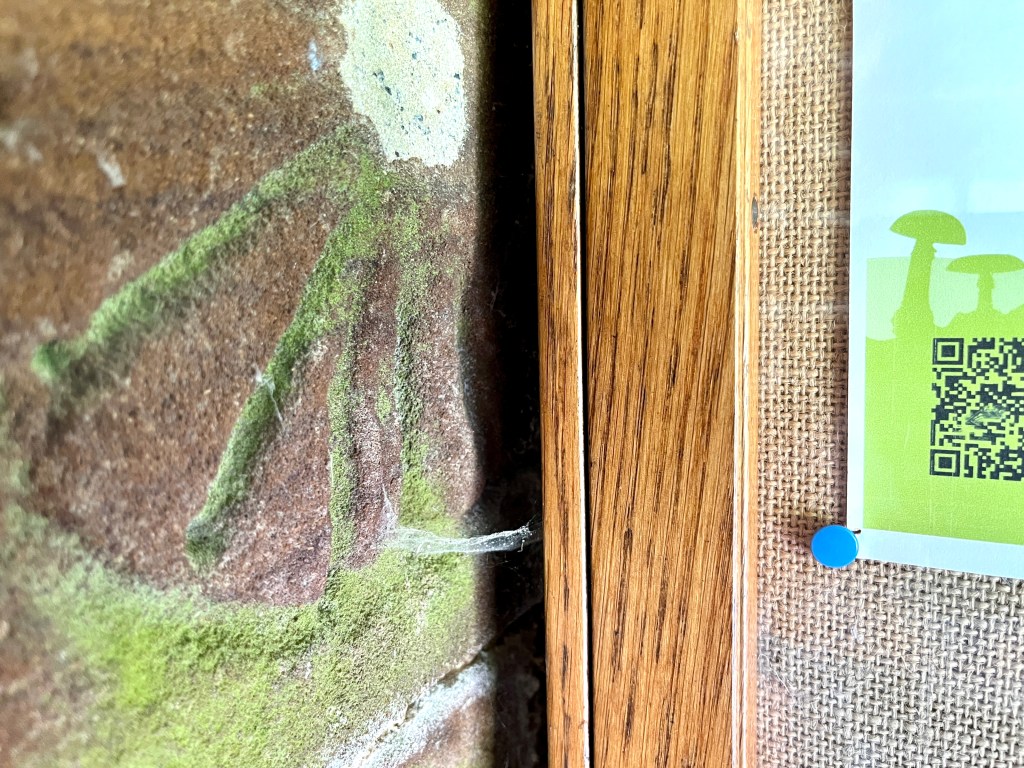
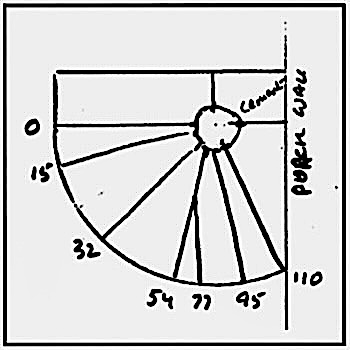
The dial is within the porch, RHS of the door and partially obscured by a noticeboard. The original BSS record (2006) notes a filled gnomon hole with 8 radials, encircled [see diagram]. Four irregular moss-filled lines are clearly visible; a couple more are just detectable. The noticeboard stymies the sort of hopeful slantwise photo behind an obstruction that can occasionally be revealing.

BSS Diagram

Although this is a Parish Church, it lies within the grounds of Canford School. There are some unsurprising visiting restrictions. If you have an interest in early churches, you will want to spend some time investigating the interior and working out the gradual development. See PEV DORSET p171 and ff.

There is quite a lot of graffiti, much of it old but with later pupil initials etc. As a bonus, there is a good vertical dial on the apex at the E end, which will be written up separately.

GSS Category: Scratch Dial; Mass Dial; Scratch Dial within porch; Vertical Dial

All photos: Keith Salvesen