CHÂTEAU de VAUVILLE . CONTENTIN . JARDIN BOTANIQUE
The Château dates from mid-C12. Thereafter – like many similar large houses in the region – it suffered many changes in fortune over the centuries. It has been described as ‘one of the finest examples of fortified architecture in the Nord-Cotentin‘. It is still in the ownership of the same family. During WW2 the house was pillaged and severely damaged. Restorations since then have resulted in a very fine building in lovely surroundings.
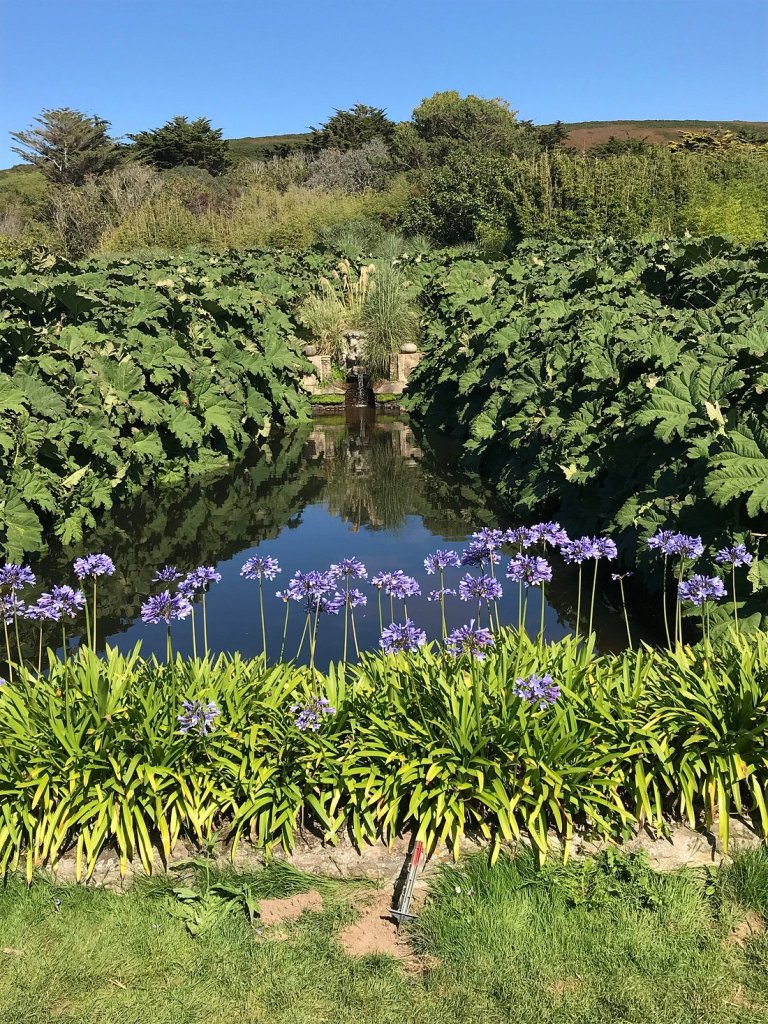
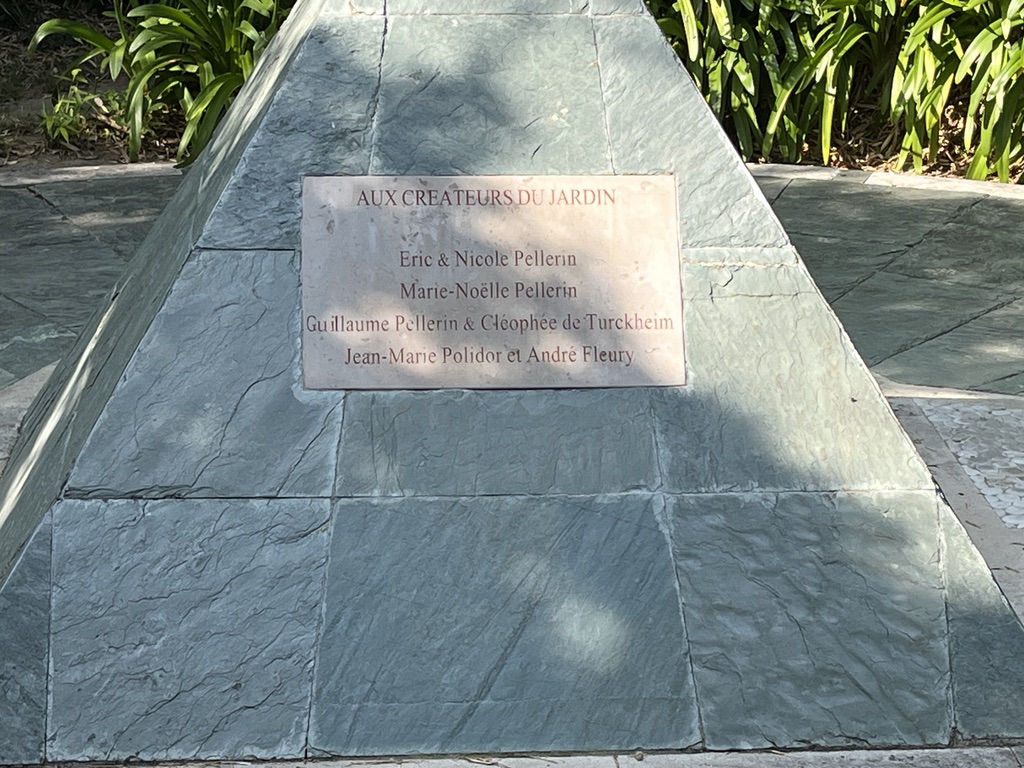
The splended gardens were created after the war by Eric Pellerin and feature a huge variety of the semi-tropical plants and trees that thrive on the western edge of the Cotentin coast.
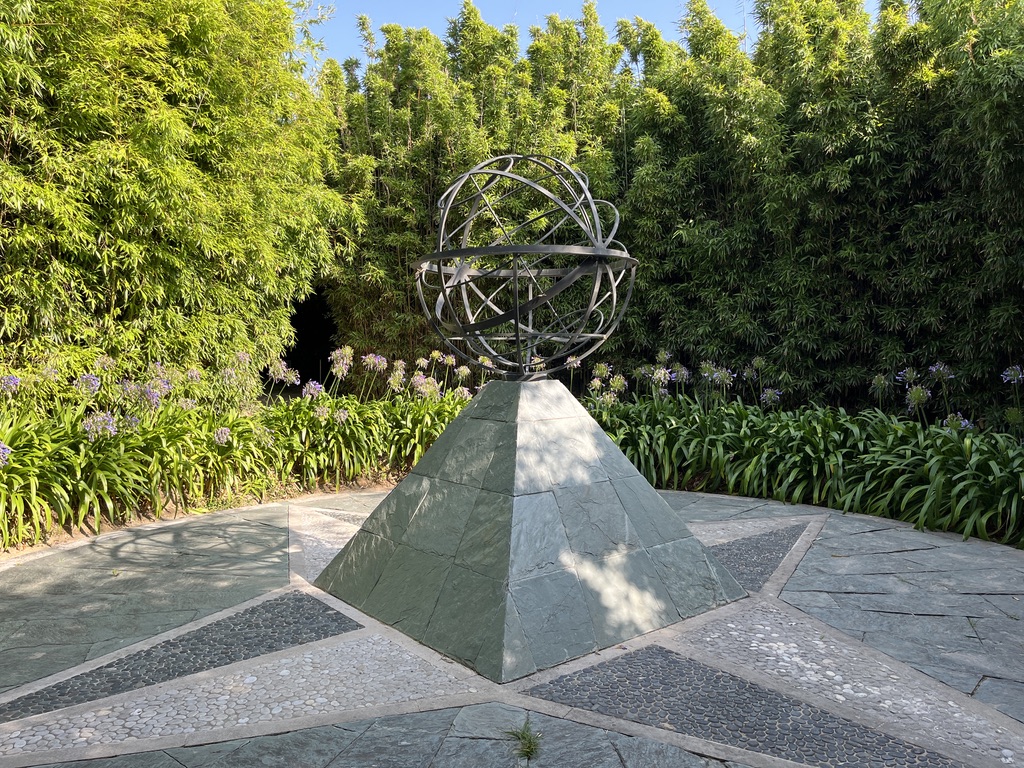
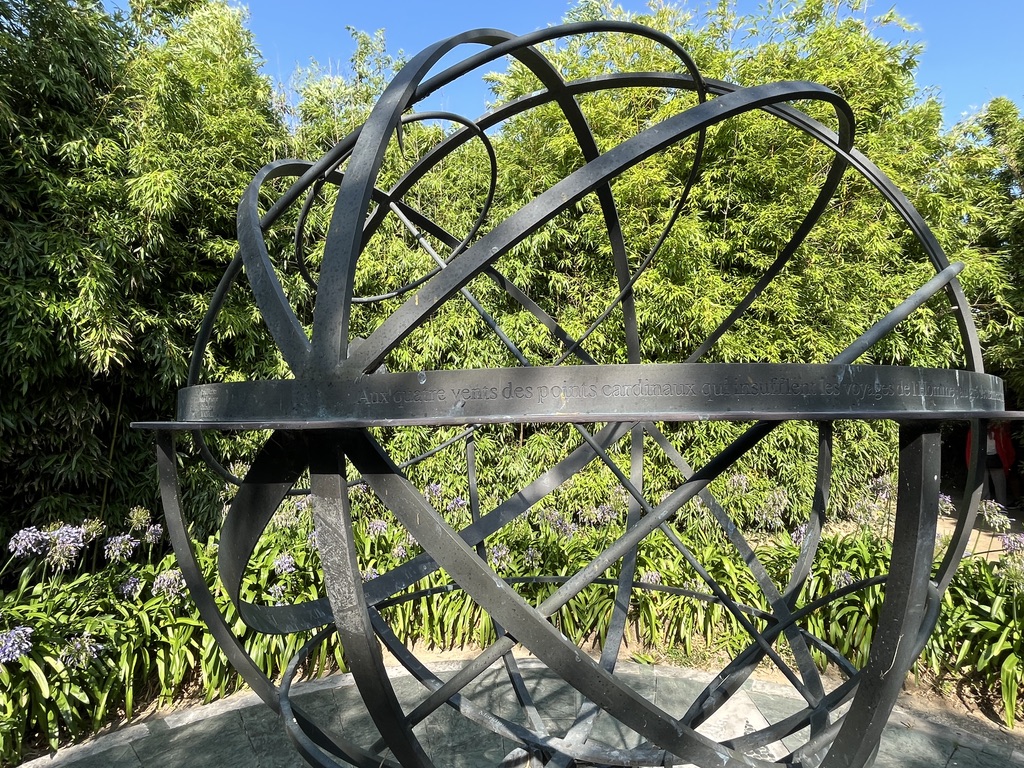
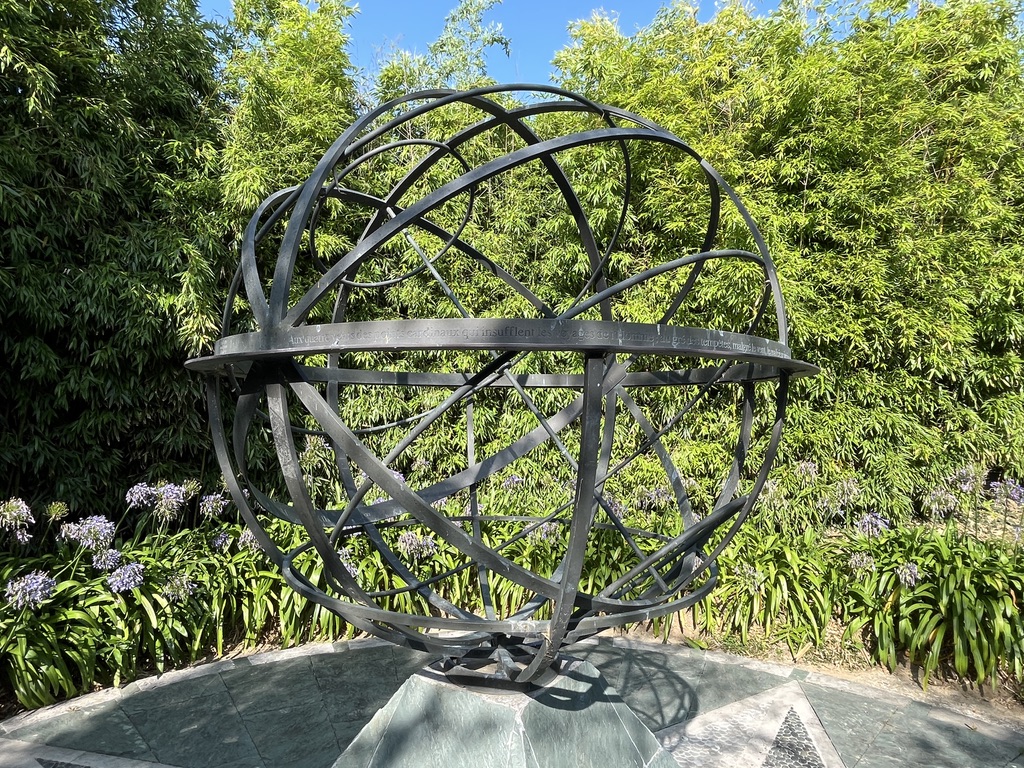
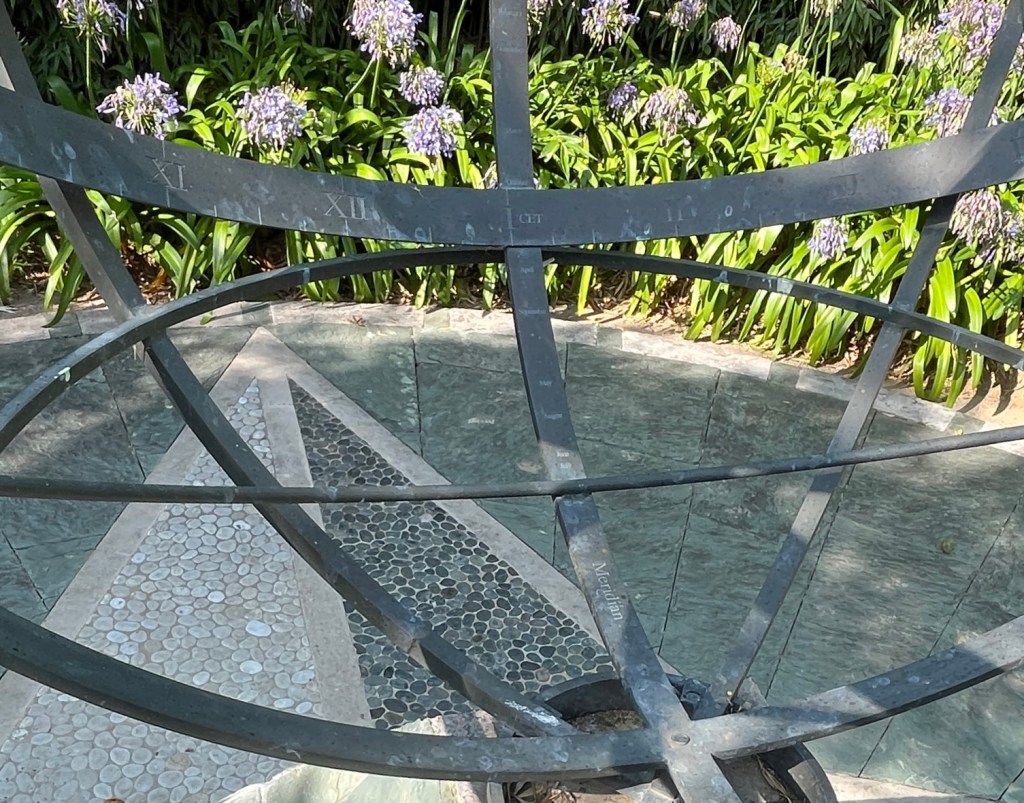
ARMILLARY SPHERE
The sphere seems (to me, anyway) fairly complex, and rather than trying to interpret it I think that high resolution images taken from a number of angles is more useful. There is an engraved inscription that girdles the dial and includes personal tributes to Pellerin and others.
All photos: Keith Salvesen / Rolling Harbour or OS online
GRADE I ⚘ C17 Attractive small manor house with lovely gardens and a small arboretum. NT. Plenty of information online. Don’t miss St Margaret’s with its remarkable scaphe dial above the porch, and 6+ scratch dials – links below. 4m NW of Yeovil
ARMILLARY SPHERE
A fine armillary sphere surmounted by a charming pairing of an exotic galleon and a delicately stylised sun. The gardens as they are now were designed by Phyllis Reiss after she and her husband bought the house in 1933. She died in 1961, leaving the property to NT. My guess is that the dial dates to mid-1930 as the new gardens took shape.
TINTINHULL GARDENS . DECORATIVE FEATURES ON THE ARMILLARY SPHERE
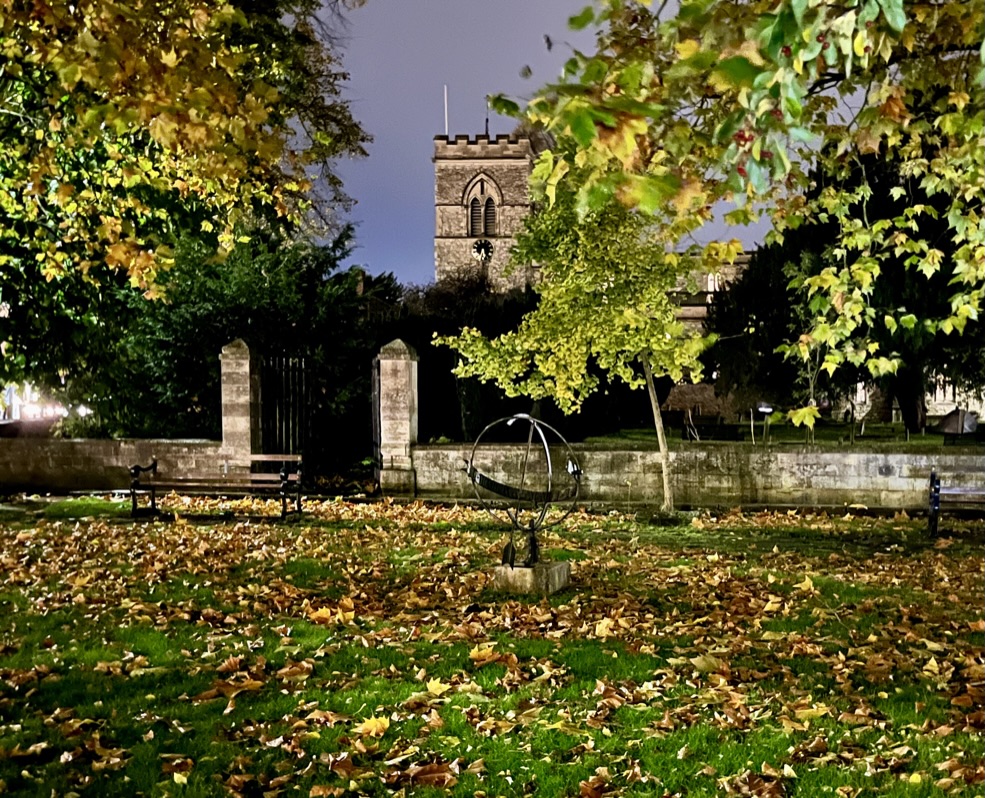
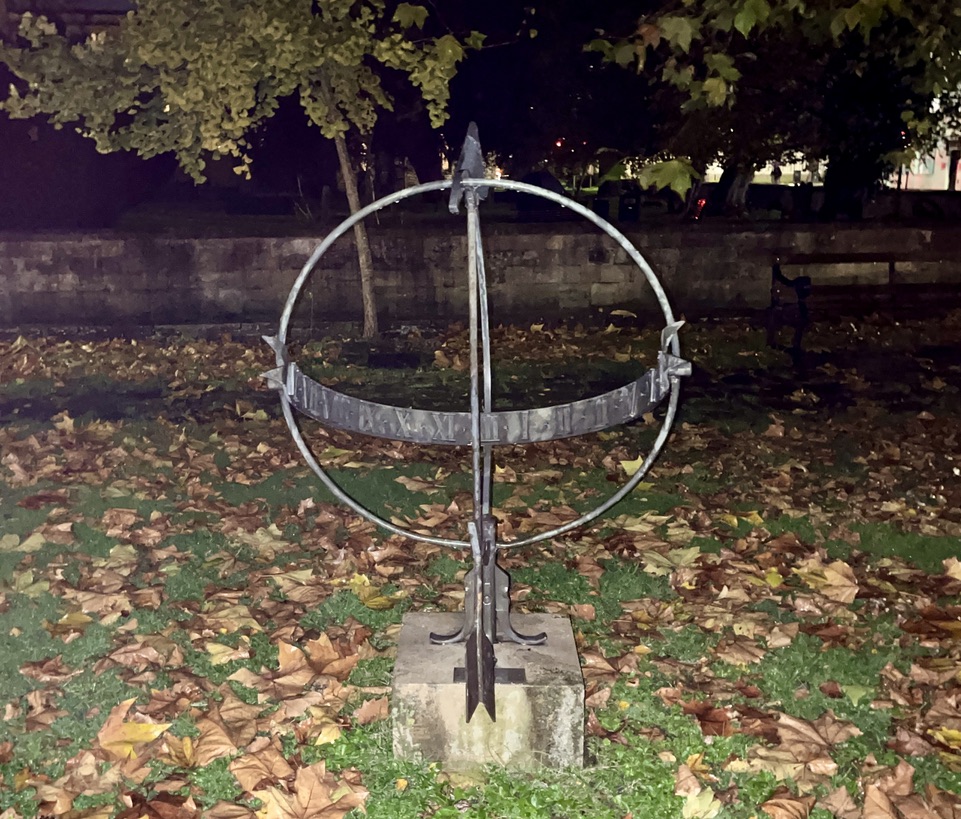
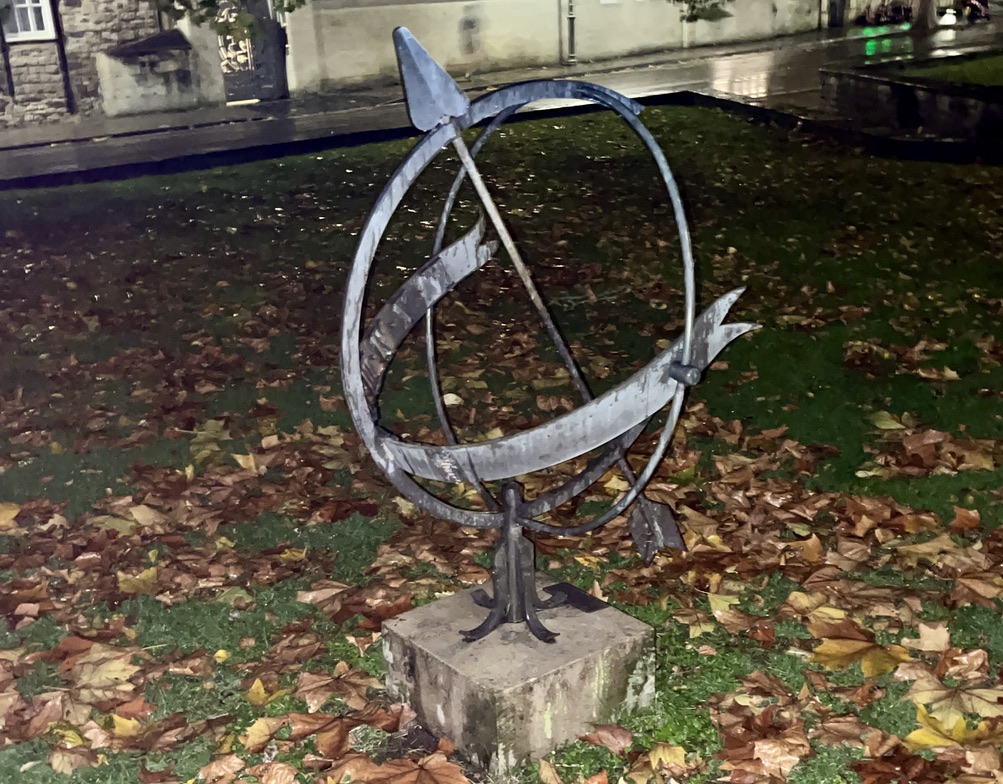
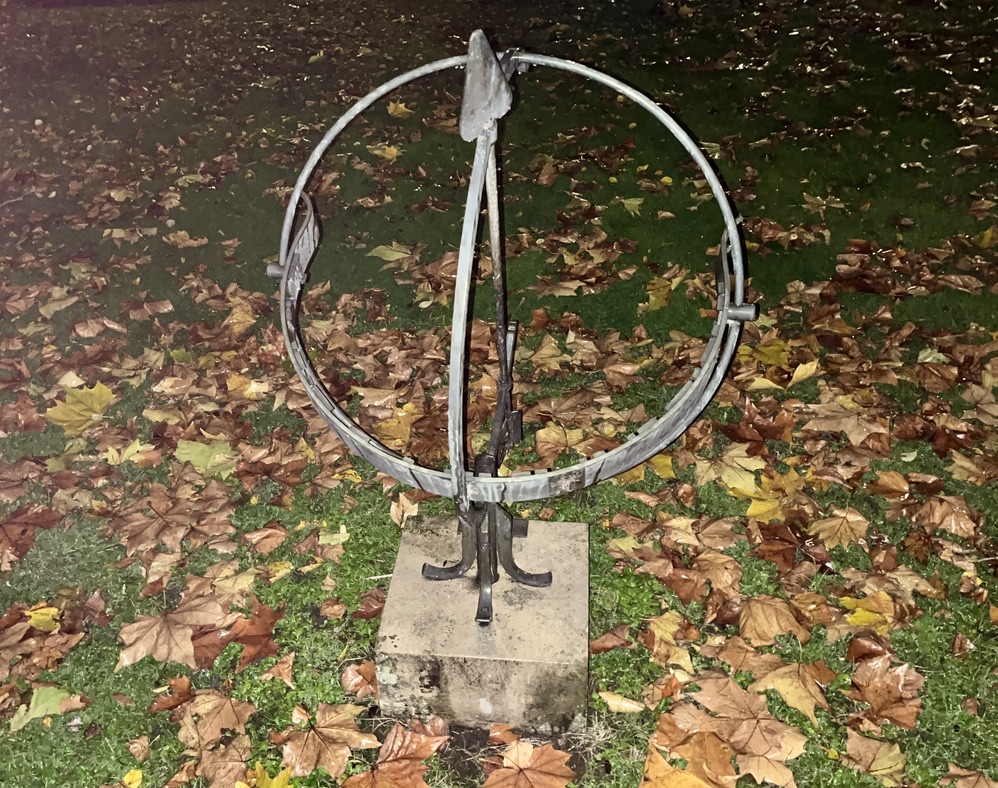
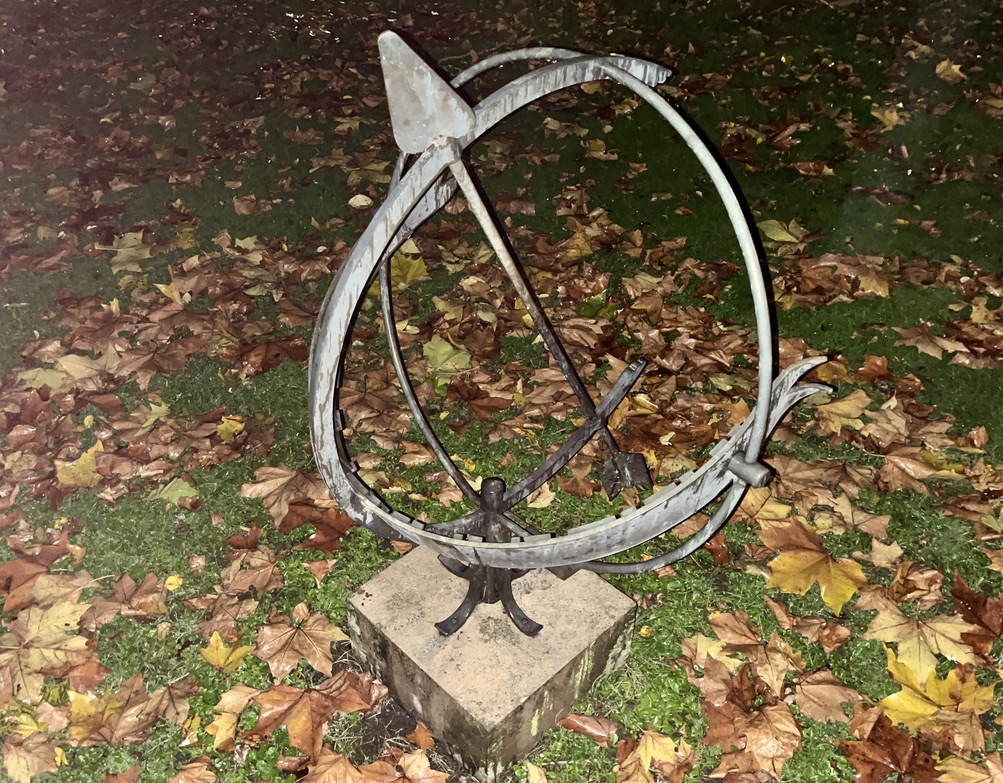
The armillary sphere is on the grassy area close to St Giles churchyard, where the road north forks towards Blenheim NW, and to Banbury NE. It was evening and rain had been pelting down. The way to a pub led me past the dial, and I was tempted to see what an iPhone camera would make of it.
The dial was given to The City of Oxford in 1986 by its twin city Bonn, and made by a local blacksmith (to Bonn, that is.)
BSS RECORD: Modern equatorial memorial dial in an armillary sphere in the churchyard. The dial is the equatorial ring of an armillary sphere. It shows 6am to 6pm with raised cast Roman hour numerals and half hour dots. The other two rings are vertical – a north-south meridian ring open on the south side and an east-west ring. The axial arrow forms the gnomon. There is no nodus. It is not adjustable for latitude. The dial is mounted on a small stone slab. There is a small plaque on the slab.
Margaret Stanier in her book on Oxford dials, calls it a fine bit of ironwork, with bold numerals, easy to read. She notes that the rings are positioned so that their shadows cannot obliterate that of the gnomon.
The experiment with a phone worked quite well, I think. The details are legible, possibly more so than photos taken in sunlight. And it makes a change.
GSS Category: Armillary Sphere; Modern Dial; Oxford Sundials
BRITISH SUNDIAL SOCIETY . ARMILLARY SPHERE . PARADE GARDENS . BATH
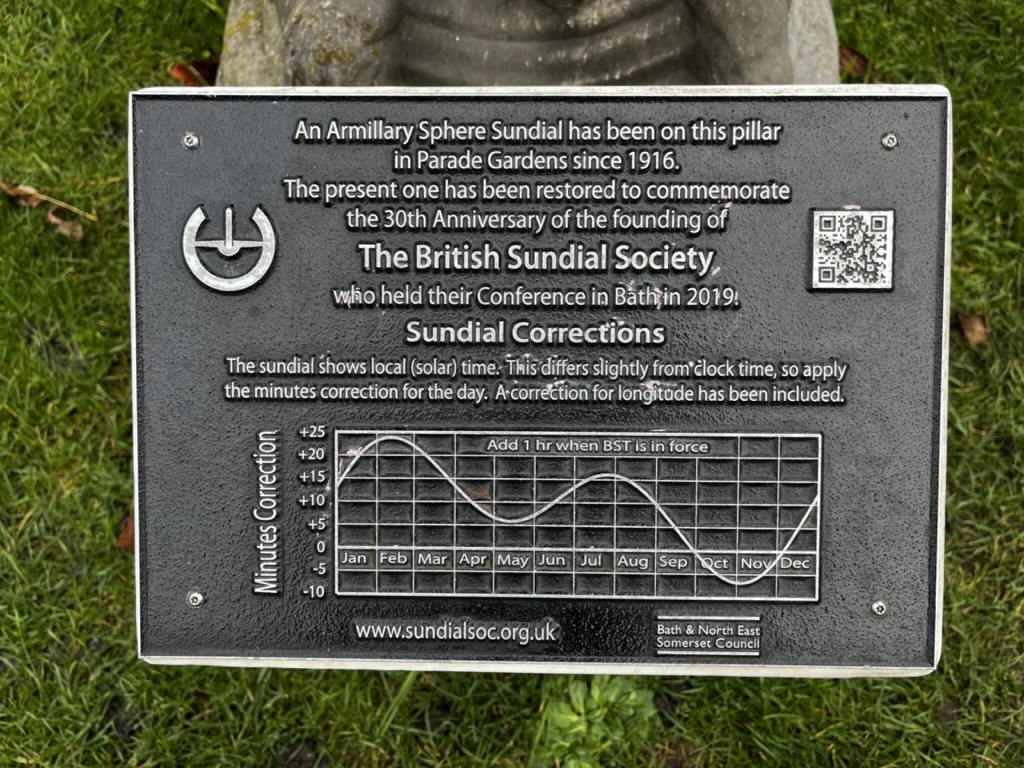
Bath . Commemorative Sundial Plaque
Armillary Sphere . Parade Gardens . Bath
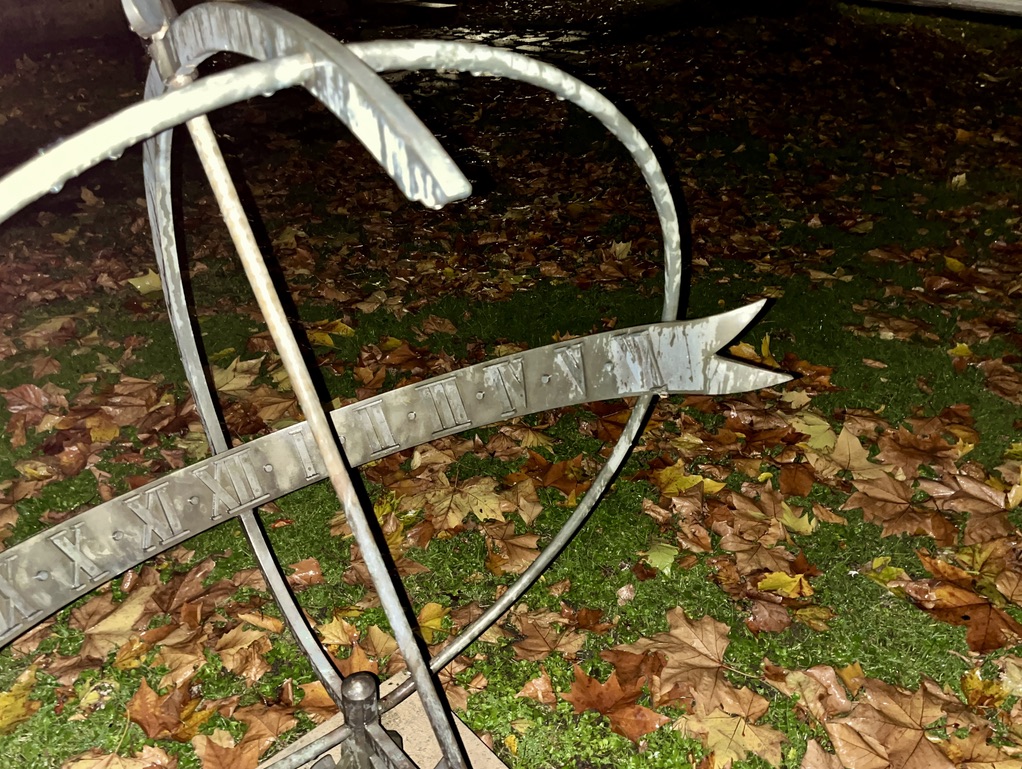
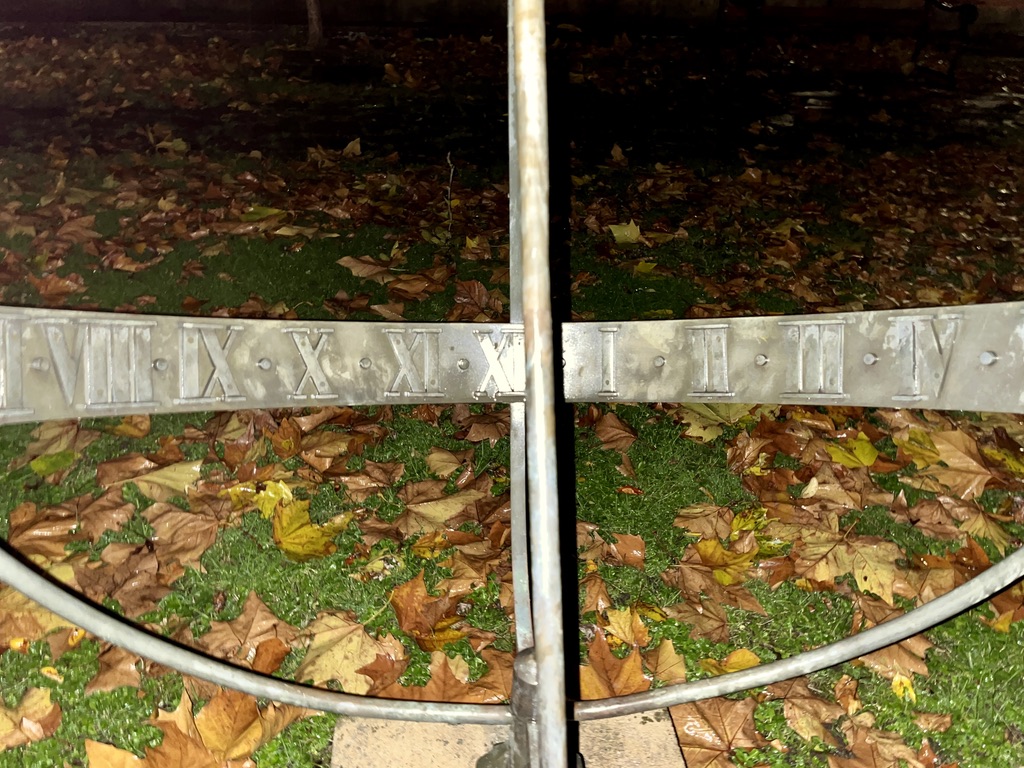
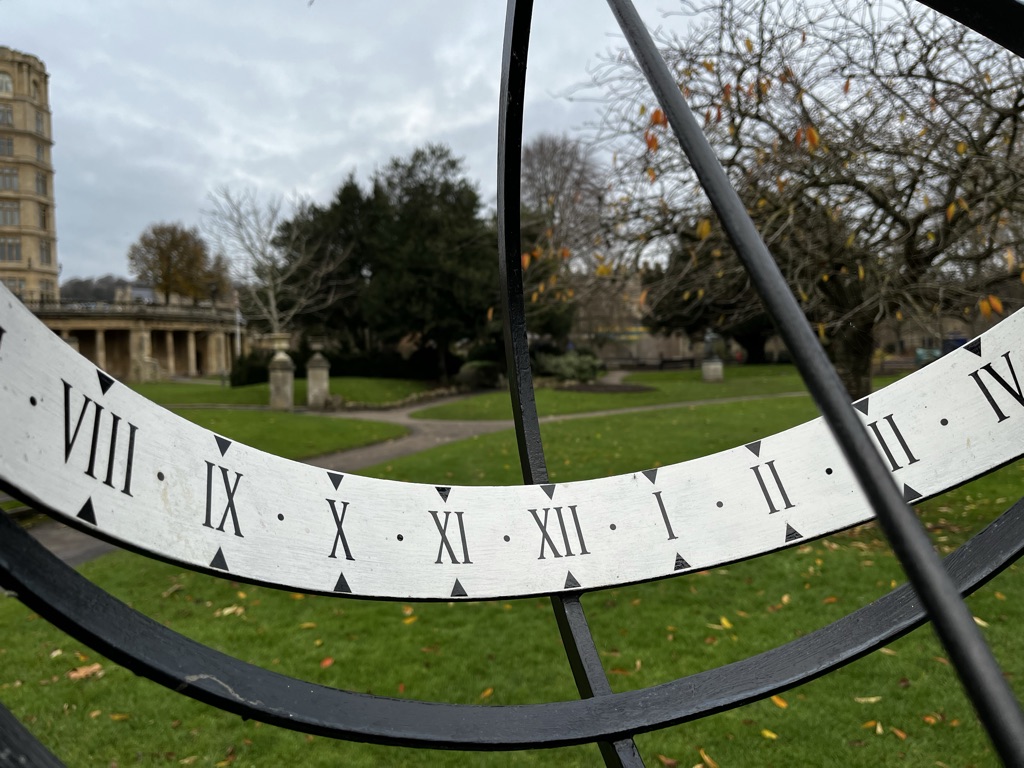
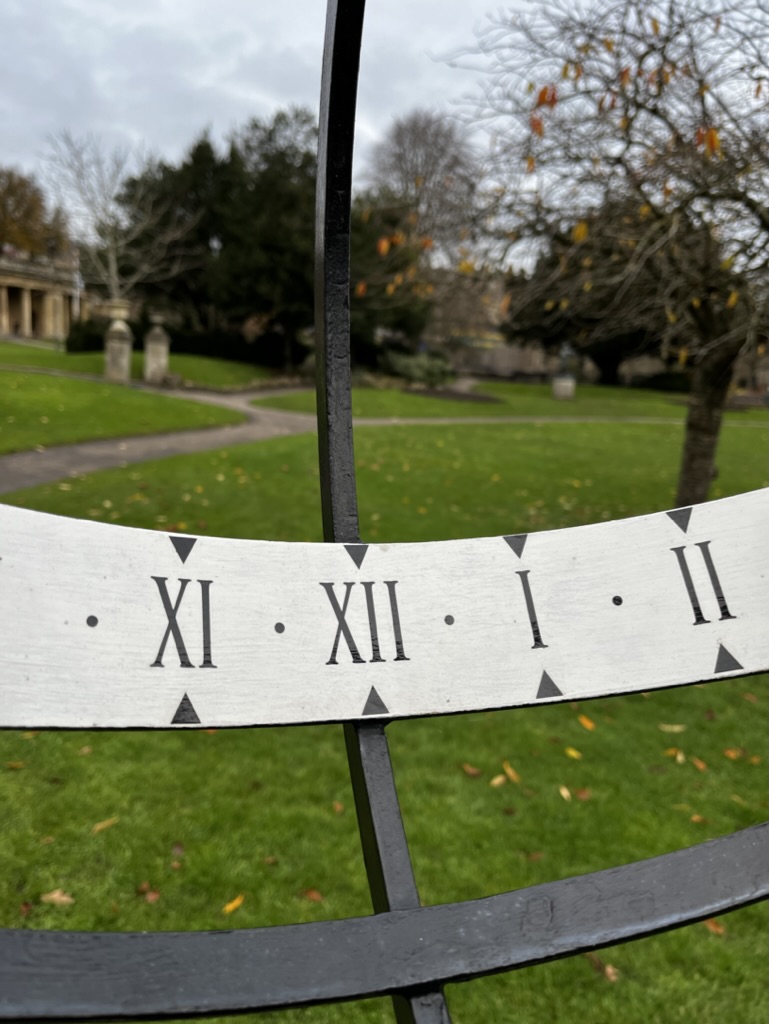
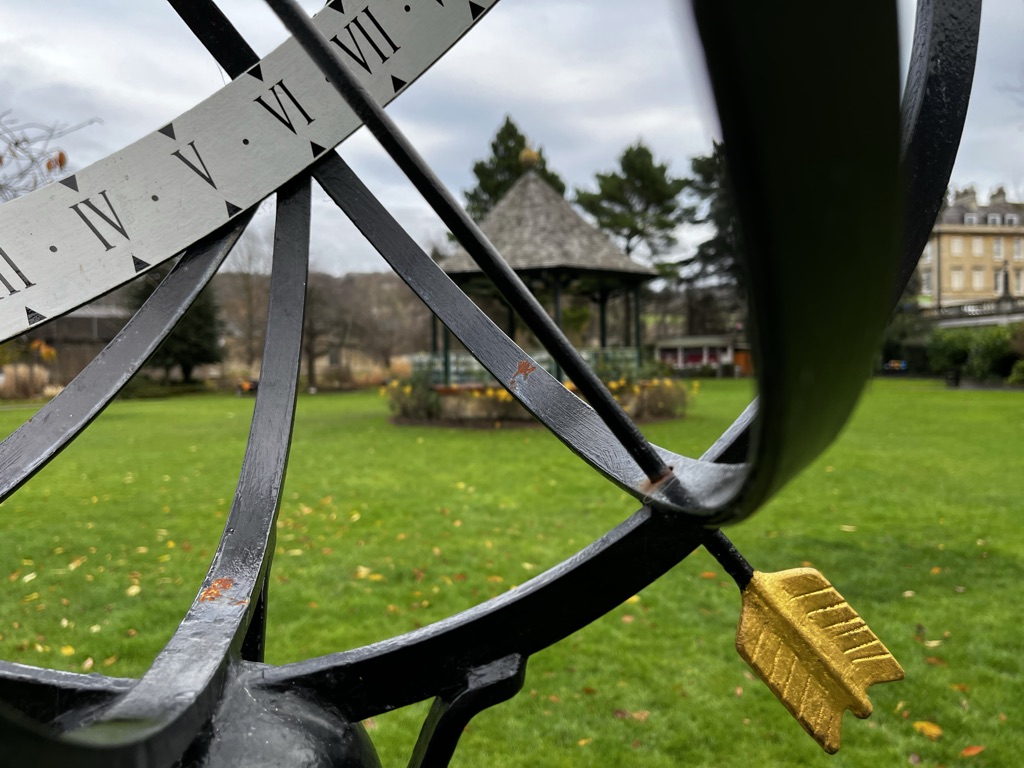
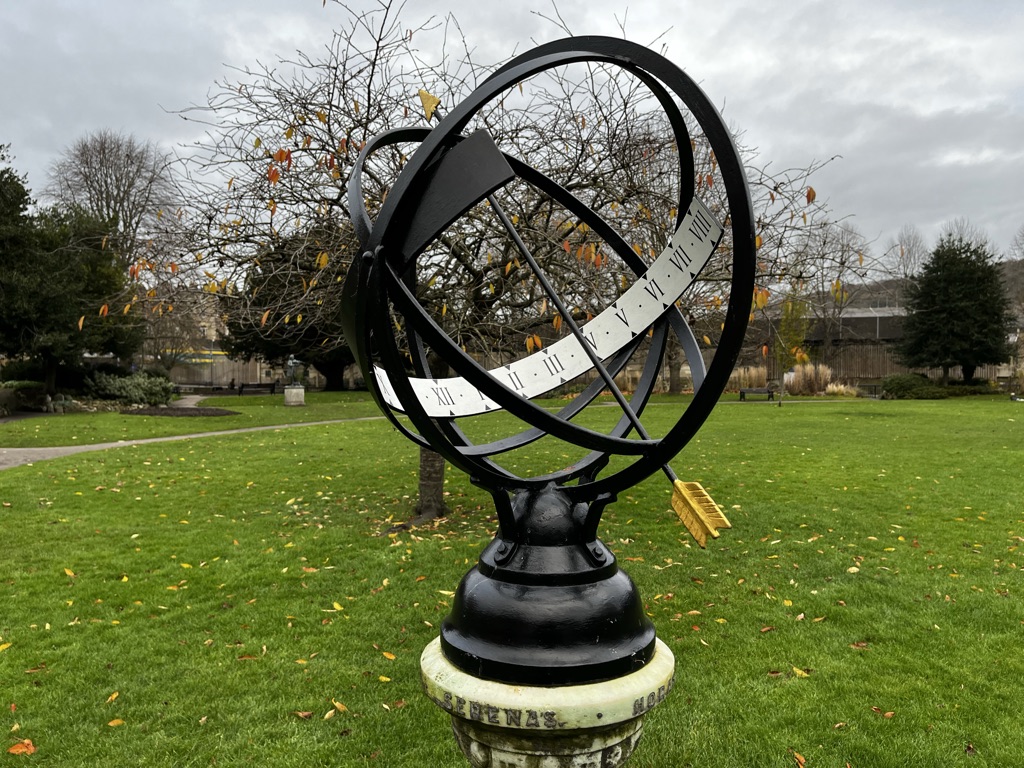
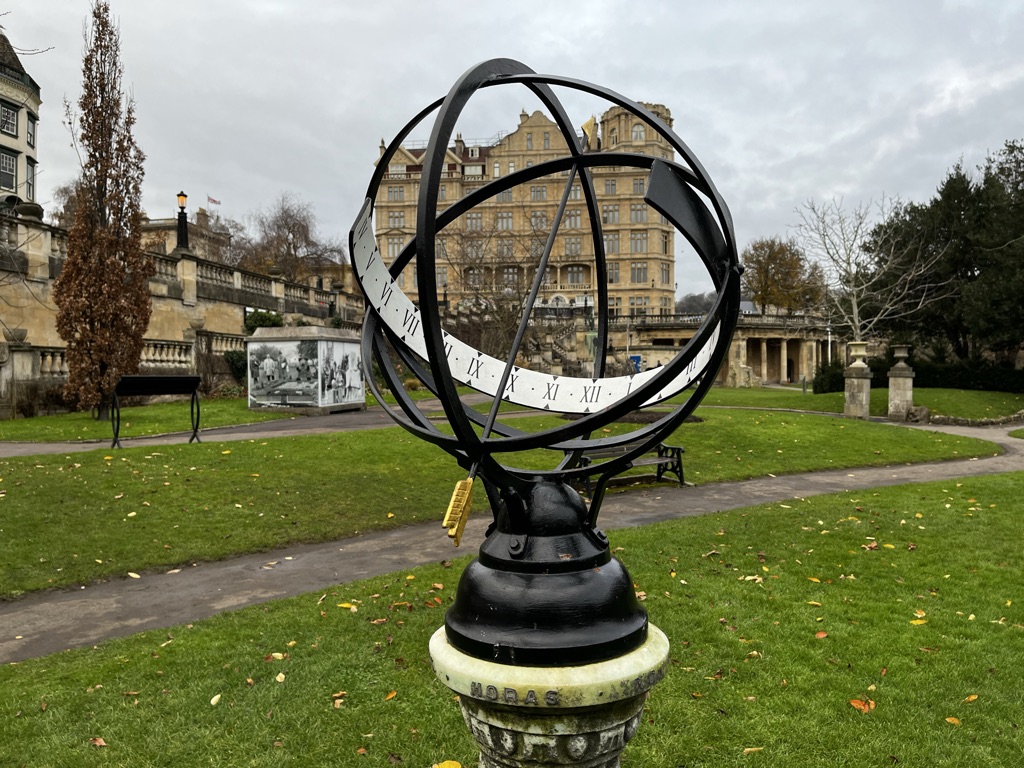
The plaque above gives all the details (including a bar code) necessary to admire and appreciate this excellent armillary sphere that was installed to celebrate the 30th anniversary of the foundation of BSS. My visit to Bath was spoiled by bad weather: gloom with only occasional respite from rain. Hence these rather unsatisfactory photos, which I have had to cheer up somewhat. I intend to replace them in due course, when a visit to Bath coincides with sunshine. The Motto, explained below, describes my predicament.
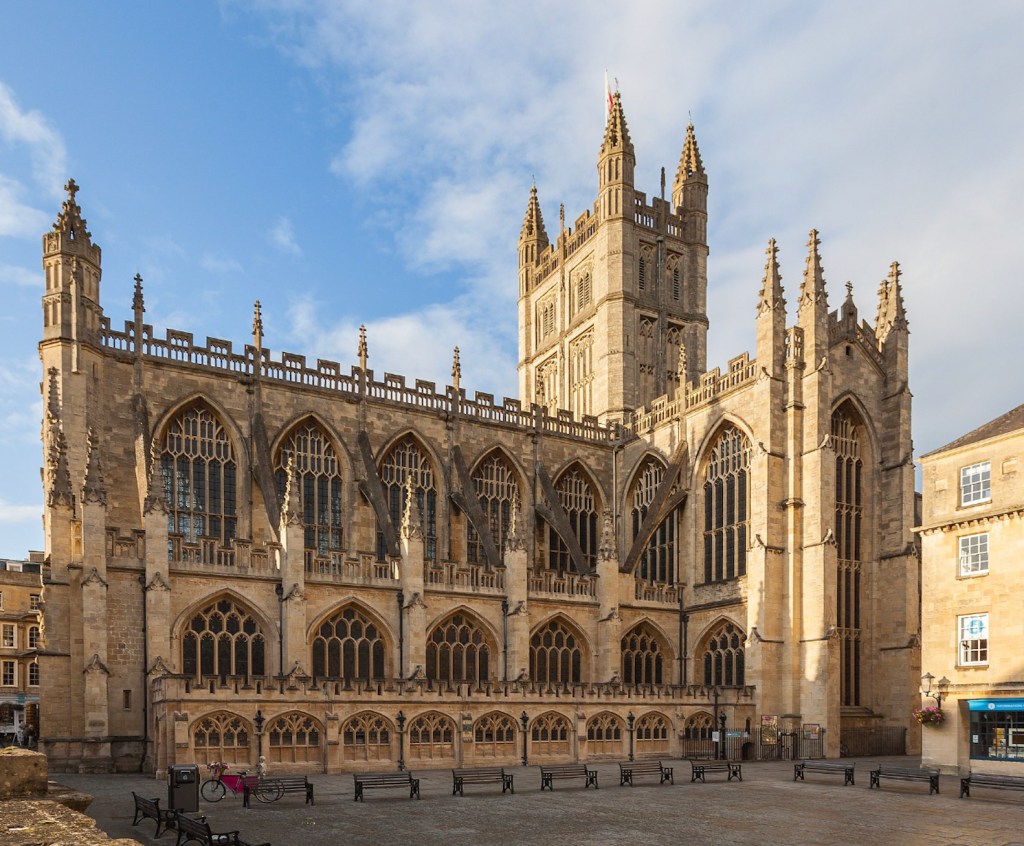
The gallery of images below gives a 360º view of the dial against glimpses of the Bath setting. One or two are meant to be ‘arty’, never my strong suit.
Armillary Sphere . Parade Gardens . Bath
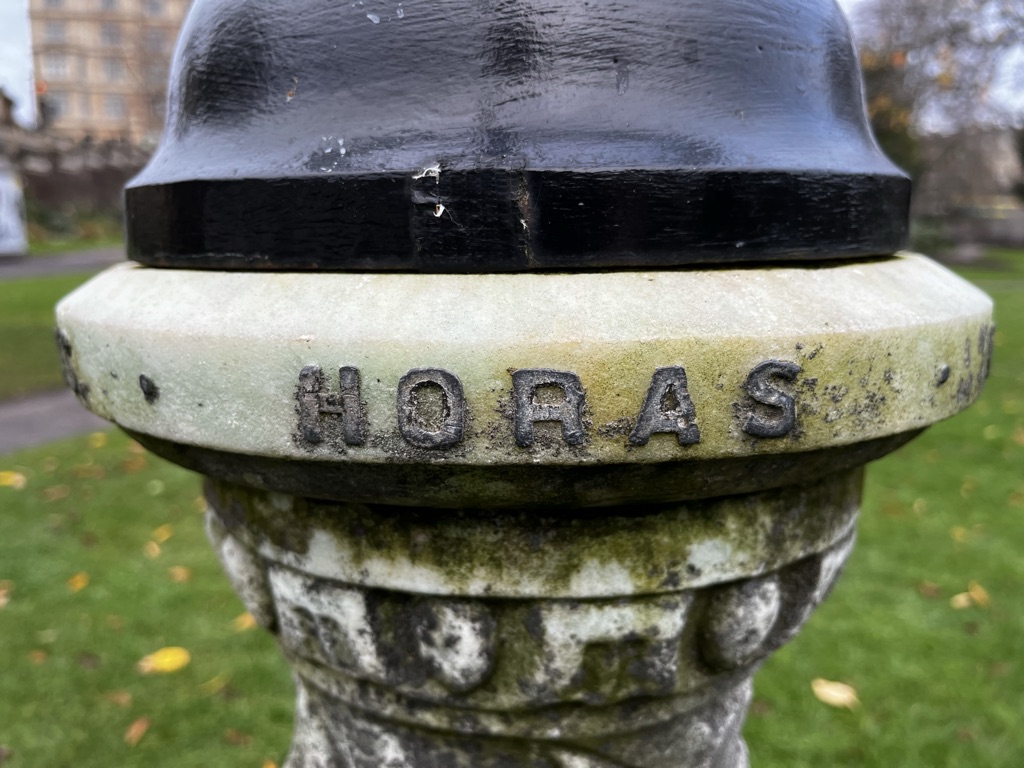
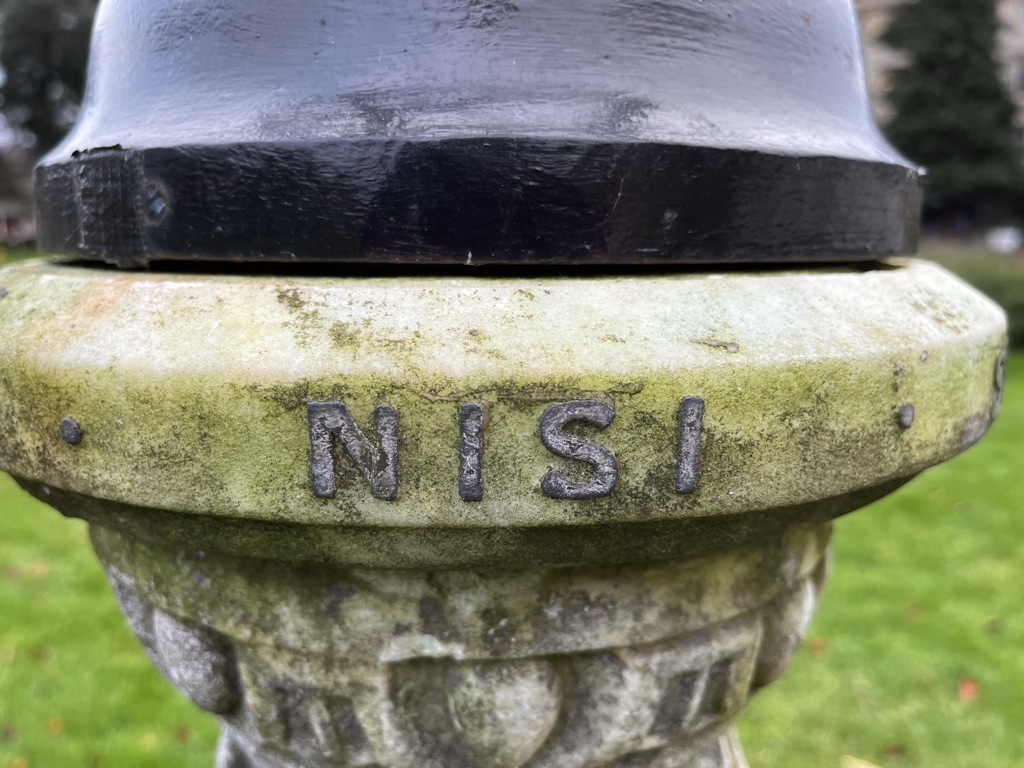
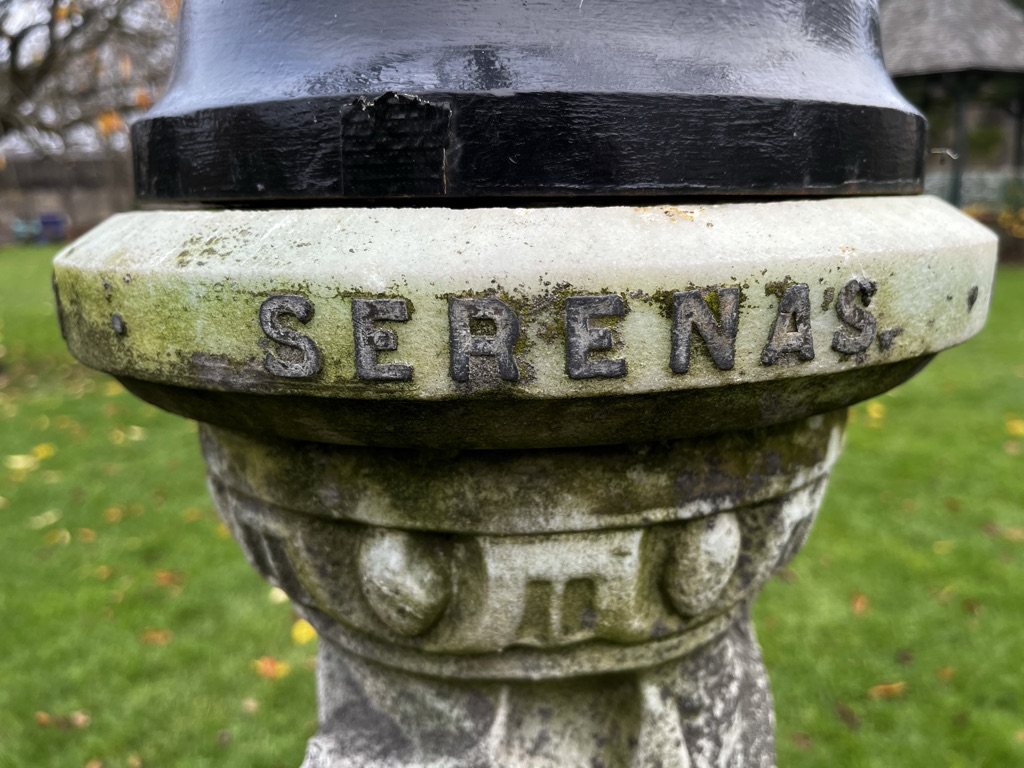
MOTTO
‘I ONLY RECKON THE BRIGHT HOURS’ is the translation given by Margaret Gatty (p.45 of the compact volume). Other versions include I ONLY COUNT CLEAR HOURS and I ONLY COUNT THE HOURS THAT ARE SERENE. MG wrote (of the succinct Latin version) that the motto is too good to be uncommon, and gives a number of locations where it may be found in England, Scotland, and (unexpectedly) Venice, of which Hazlitt wrote …there is a softness and a harmony in the words and in the thought unparalleled. None of the above modern motto variations works very well; it’s hard to come up with a translation as elegant as the original in Latin. The word ‘serenas’ is the real problem….
ADDENDUM Dictionary research including Chambers – far the best for archaic words and usages – clarifies the motto. A subsidiary meaning of ‘serene’ was, in the past, ‘an expanse of clear sky’; ‘cloudless’; or in one source, ‘sunny’. On countless modern sundials, this Latin formulation is the familiar I only count the sunny hours.





















 GAUDIUM SUB SOLE . SUNDIALS . MEDIEVAL TO MODERN