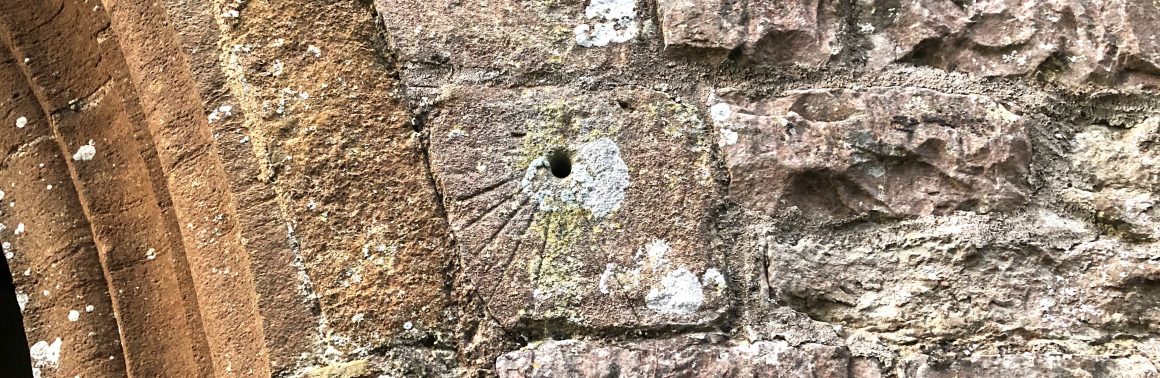
Hexfoils (aka Hexafoils), Daisy Wheels and similar designs that are currently added to the Apotropaic page. I’ll probable put (some of) these on that page too. Or not.
The hexfoil is a design with six-fold dihedral symmetry composed from six vesica piscis
An excellent entry point for those interested in hex(a)foils is (as so often, in more esoteric fields) Wiki. I commend the brief article HEXFOILS that explains the various designs and origins.
Although primarily associated with churches, hexfoils can be found in other buildings such as barns. Usually they are cut on stone, though sometimes on wood.
✣
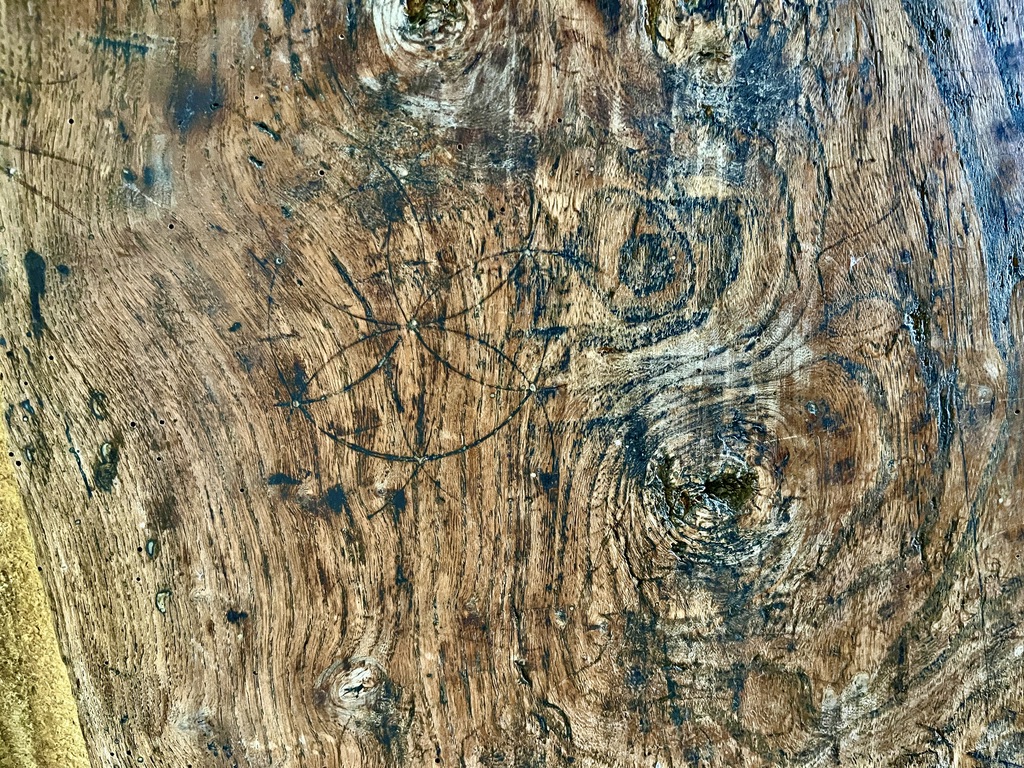
MUCHELNEY ABBEY . SOMERSET
Cut onto a door – note the still-visible compass holes


✣
GORWELL BARN . DORSET
Full post HERE

✣

✣
ST NICHOLAS OF MYRA . LITTLE LANGFORD . WILTS

✣
ST MICHAEL . BLACKFORD . SOMERSET


✣
ST MARY MAGDALENE . LODERS . DORSET
✣
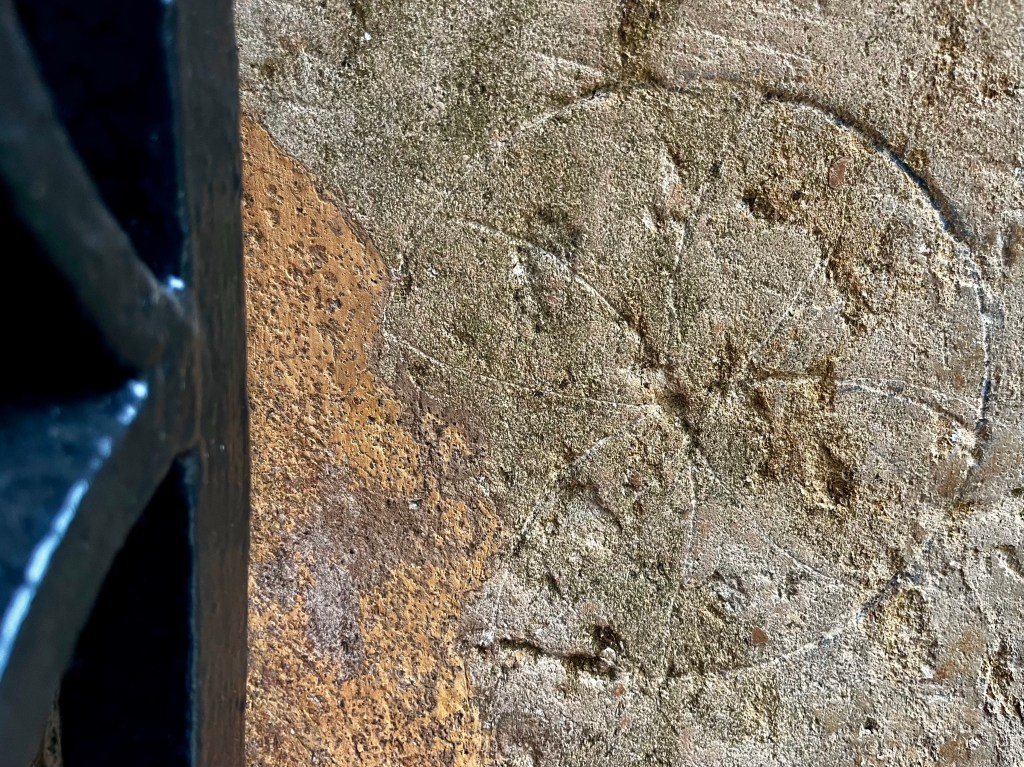
When I originally wrote up this interesting dial with its double ring of pocks, I noted the 2 (part) circles at the side. One has no discernible marks; the other has very faint marks that on closer examination are the remains of a badly eroded hexfoil with a small amount of the compass work still faintly visible.

✣
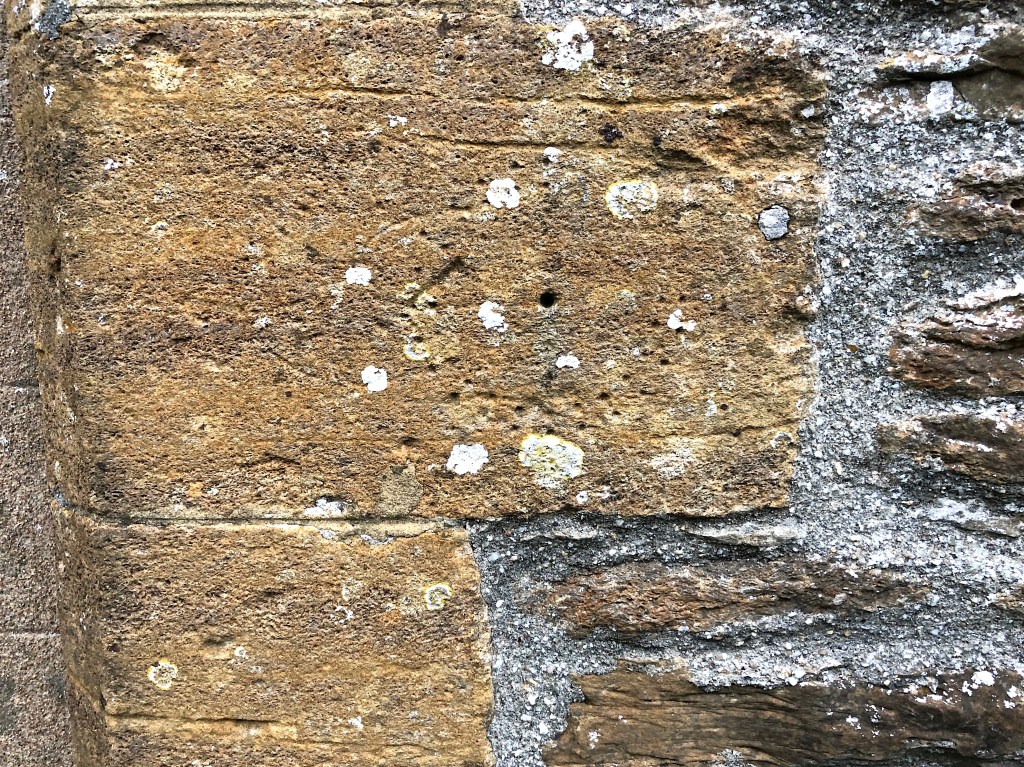
ST MARY . LITTLE WASHBOURNE . GLOS
A large eroded hexfoil to the R of the entrance to this intriguing small Norman church that stands alone in an orchard. In the care of CCT.

✣
ST THOMAS À BECKET . LYDLINCH . DORSET
A confusing 3-petal hexfoil (trefoil?) / daisy wheel, with other apotropaic marks

✣
ALL SAINTS . KINGS BROMLEY . STAFFS

✣
Crude hexfoil of uncertain age – unconvincing as a medieval design


 GAUDIUM SUB SOLE . SUNDIALS . MEDIEVAL TO MODERN