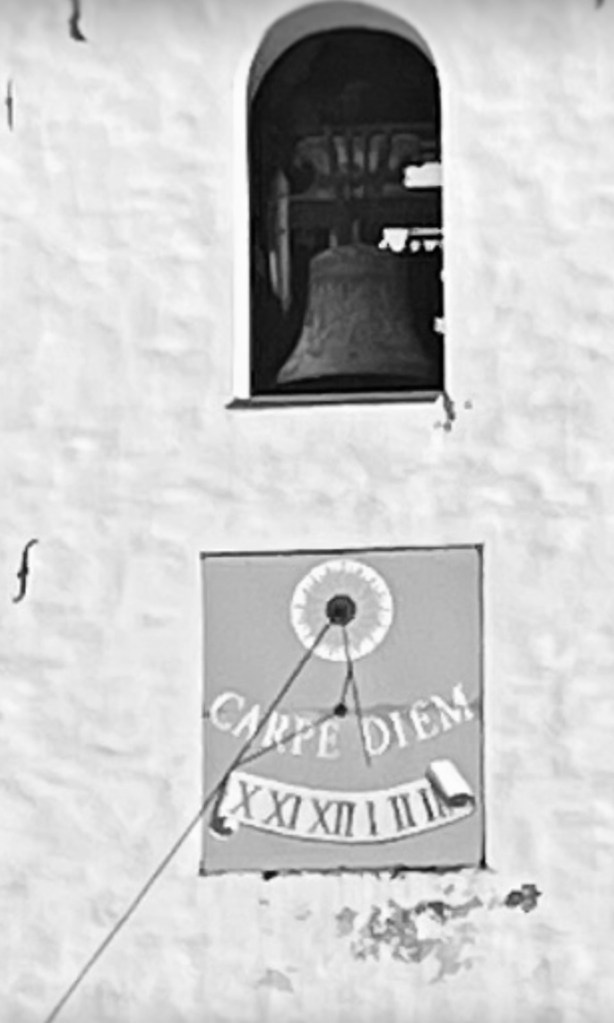
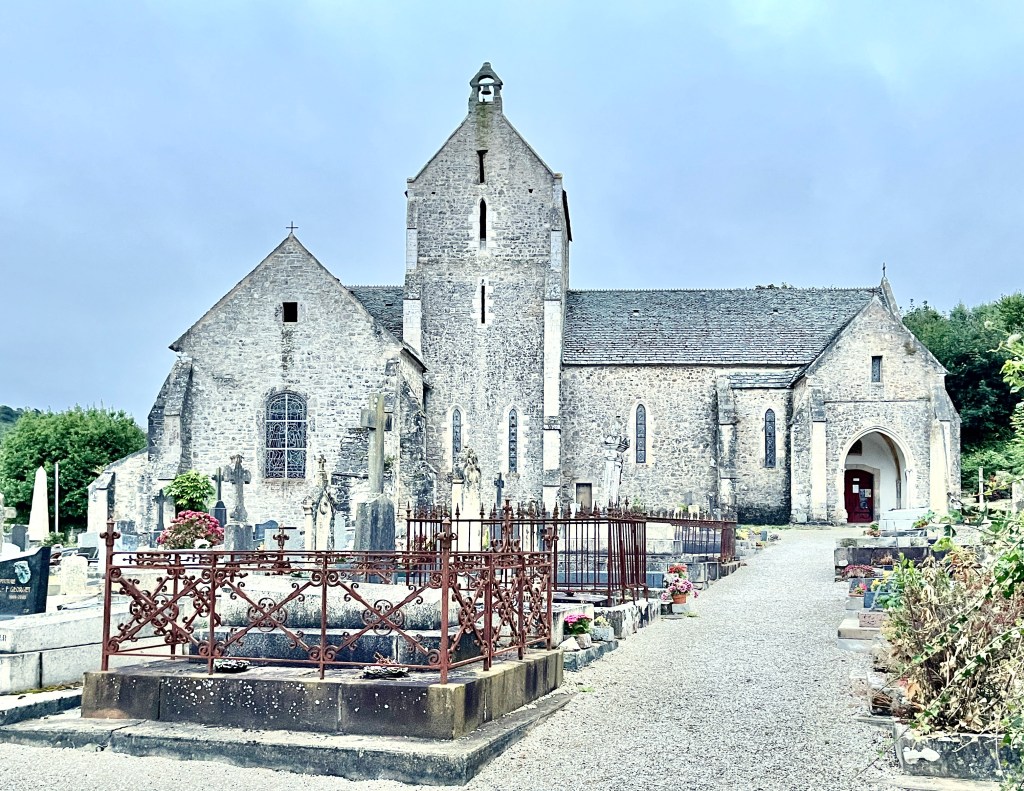
We passed this small church on the Swiss / French border several times, noting the dial and the commonplace Motto. The final time we passed through the village I took a photo from the car (I wasn’t the driver). There’s always some joy in collecting an unpretentious dial in congenial place. This is a rather blurry example.
ScreenshotScreenshot
GSS Category: Vertical Dial; Church Dial; Sundial Motto; Carpe Diem
Max Gate is a fine house on the eastern edge of Dorchester, designed and built by Thomas Hardy (with his father and brother) in 1885. He lived there until his death in 1928. He had two wives, Emma and then Florence, and during the ‘Max Gate years’ there were complicated relationships, sadly beyond the scope of this article.
In 1940 the house was bequeathed to the National Trust by Hardy’s sister. It was listed Grade I in 1970 with the stipulation that it should be lived in. The NT gives generous access to the interior, and there are conducted tours of the house and grounds. It is not exactly ‘lived in’, but it does feel homely rather than museum-like. To see Hardy’s desk and other writerly items feels a privilege. ‘Tess’ was written there, also ‘Jude’, the ‘The Mayor of Casterbridge’, and much of his poetry.
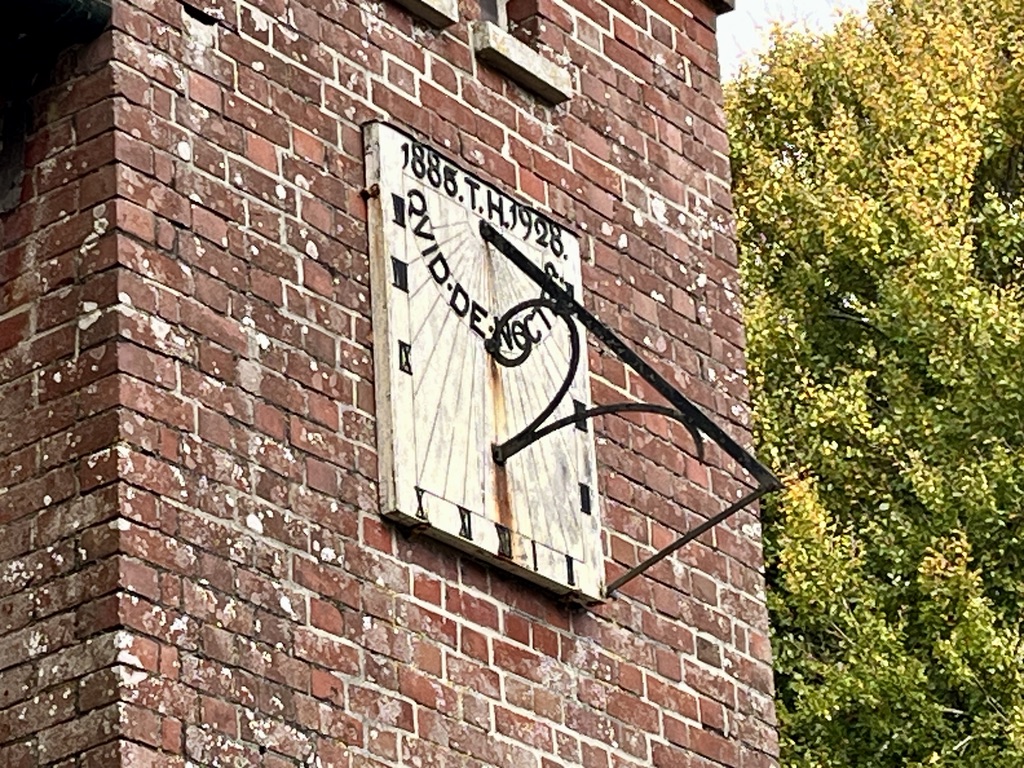
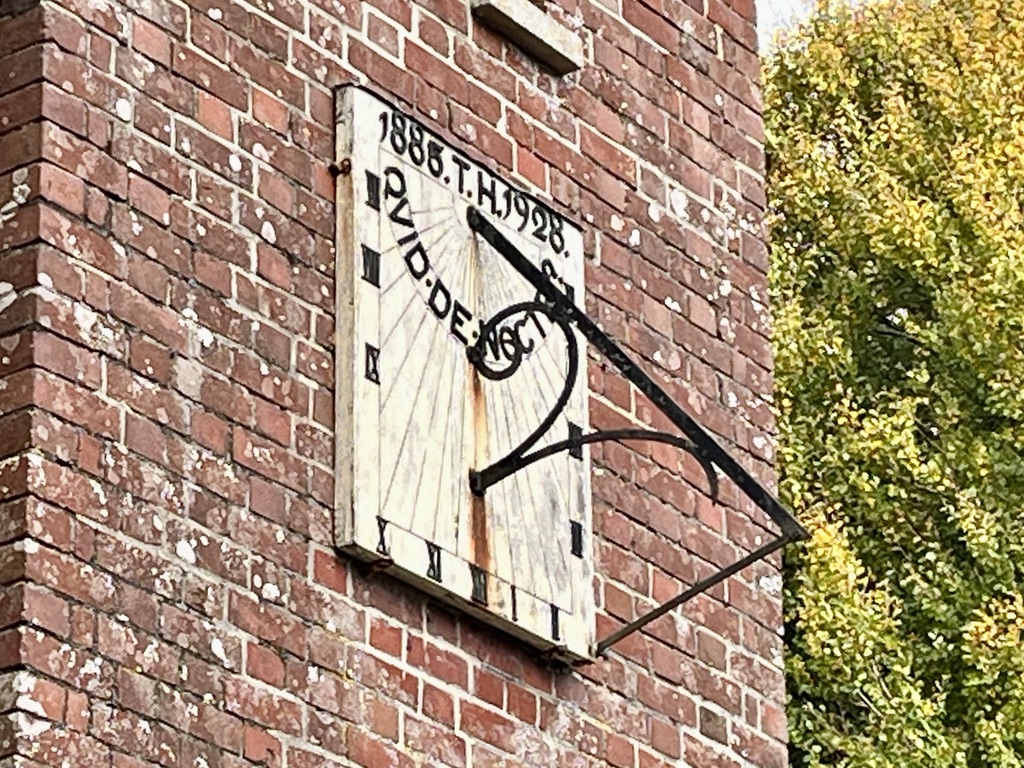
MAX GATE – VERTICAL SUNDIAL
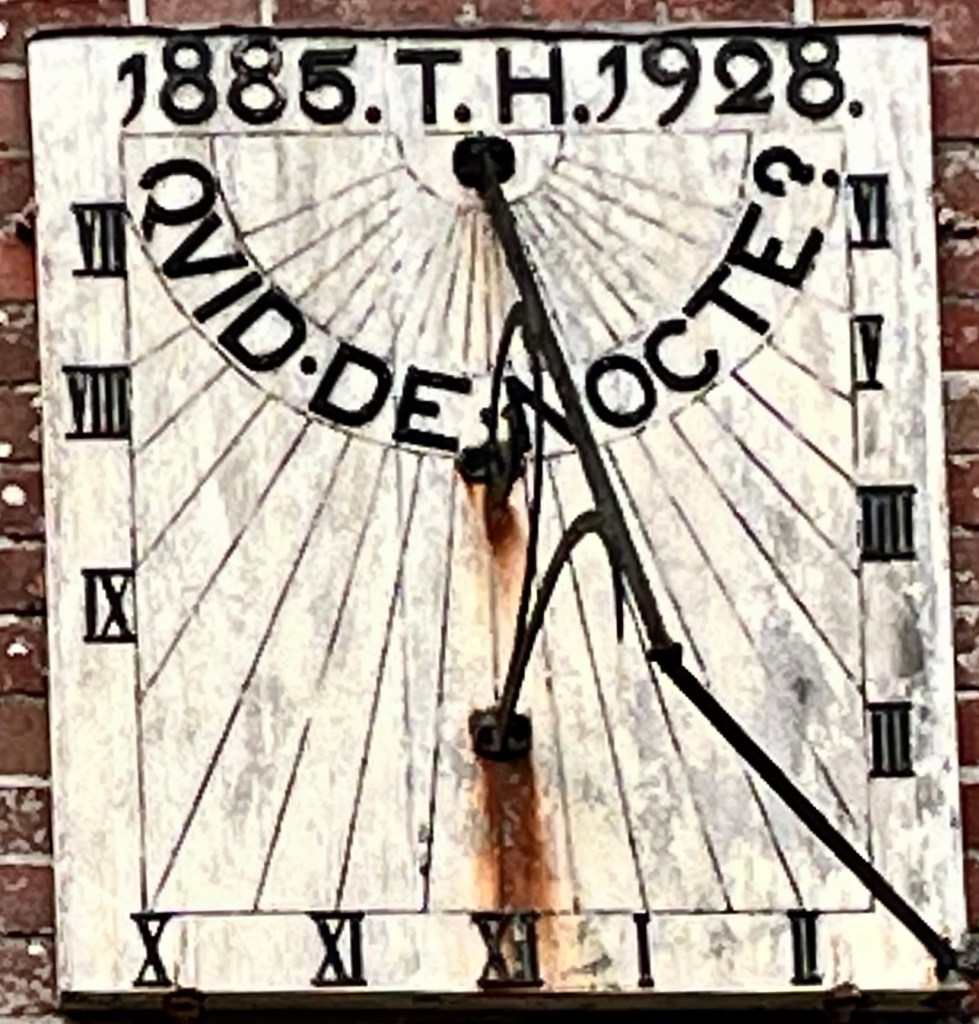
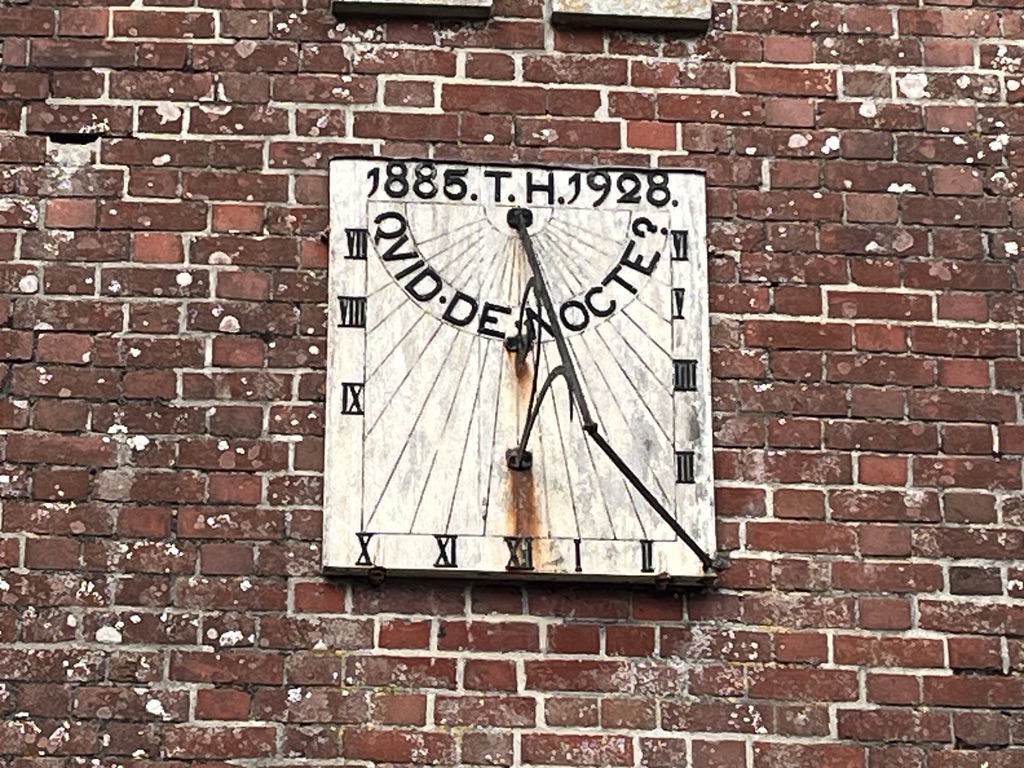
High up on the east tower, the dial is a good example of a sundial that (besides its primary use) acts as a memorial, and tastefully reflects the significance of the dedicatee. It is also very visible and easy to read at a distance. The lightly ornamental gnomon is moored at the bottom right corner as you face the dial. The style is simple, with 12 hours marked from 7.00am to 6.00pm and 24 radials to record half hours. The dial plate is white-painted wood. Overall the dial is in poor condition, but I gather that there are plans to carry out complete restoration during 2026.
.
MOTTO
QUID DE NOCTE?
Literally, ‘WHAT OF THE NIGHT ?’ Interrogative sundials are relatively unusual, and I am unsure when the inclusion of question-marks began. The simplest reply might be ‘NIHIL’ – the sun is asleep.
.The marriage certificate (1839) of Thomas Hardy’s parents at Melbury Osmond church, Dorset
GSS Category: Vertical Dial; Memorial Dial; Dial Mottoes
Credits: Keith Salvesen (all photos); National Trust; Melbury Osmond church
GRADE II ✣ Original dedication 1239; rebuilt 1867 perp. Dial re-sited. ‘The best brasses in Dorset’ (Pev.): full length, of Sir Thomas and Dame Joan Brook. A large church for a small village. Interesting (and at times somewhat lurid) history (see BLB). 6 miles SE of Chard. 50.8263 / 50°49’34″N . -2.8873 / 2°53’14″W . ST375033
LOCATION
During the rebuild it looks as if care was taken to re-site the dial more or less intact. However, an obscure place was chosen, low down on N wall of the aisle, semi-hidden by a buttress. The dial is weathered and faint – even with the field notes of GLP, it took me a while to find it.
DIAL
The dial has a near-complete circumference line (damaged at the top) and 4 radials, of which only one is readily visible. Its 90° reorientation and its secluded position renders it useless for its purpose.
Rotating a B&W image of the dial-stone 90° clockwise gives a sense of how – in its original position – it would have acted as a marker for the progress of the day, observance times etc. In its current location it serves merely as a curiosity for the completest dial-chaser.
The church was built by Dominican monks and dates to c1509. In 1693 it was largely destroyed by an earthquake. Rebuilding followed by later work and restorations followed. C20 saw a number of actual or intended improvements, encapsulated in one source as ‘underwent serious transformations… these interventions led to total abandonment of the church and also led to the collapse of the roof‘. The church is now deconsecrated and is used as a public auditorium.
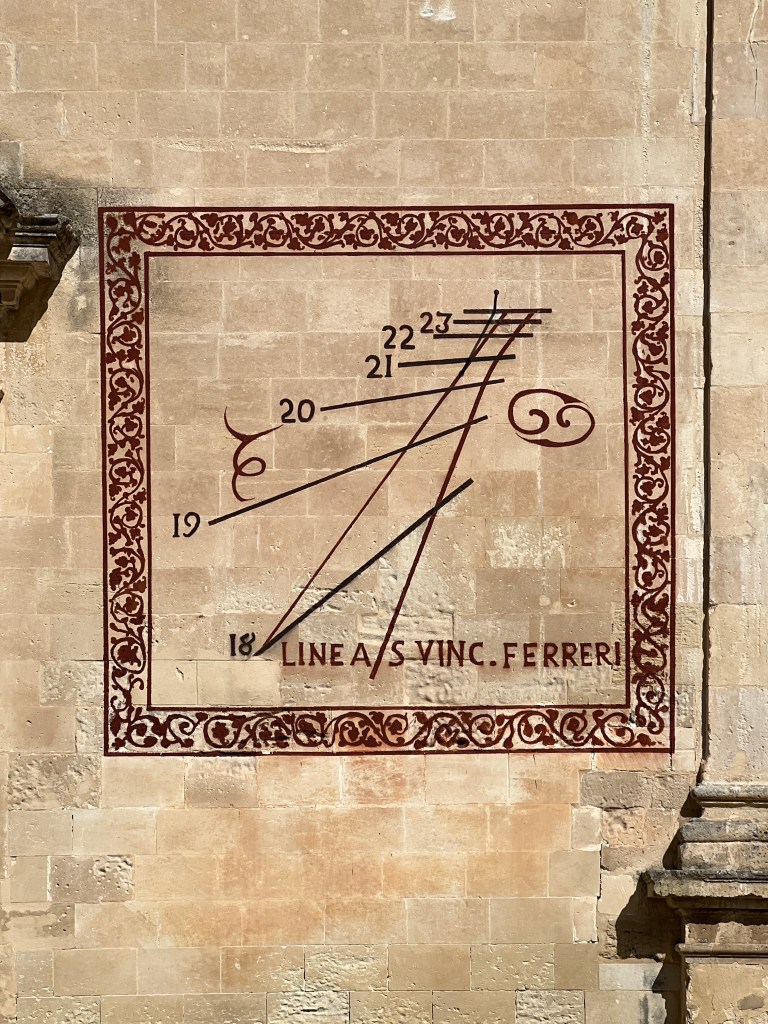
DIAL
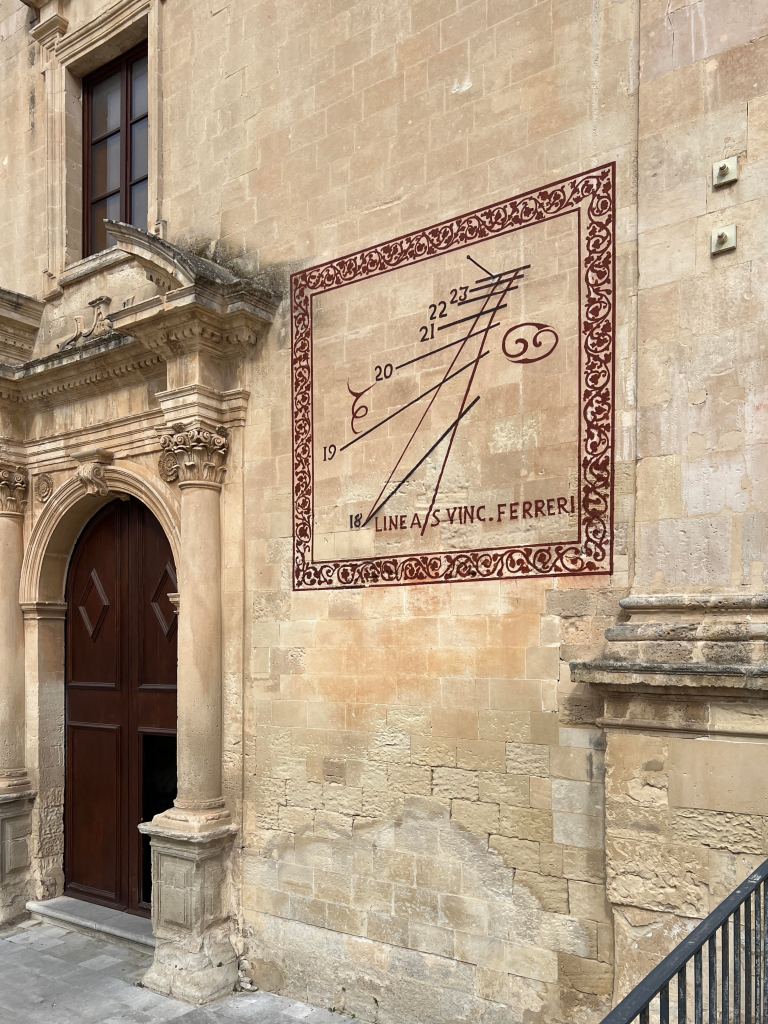
This splendid dial is on the W end wall of the church, a marker for the passage of the afternoon and evening. The location suggests that the most significant time for observance was in the latter part of the day. The hour lines are painted black; the equinox lines are red. The ‘grid’ includes an angled path from Leo to Gemini.
Credits: all photos except header, John Renner (with thanks for yet another fine Italian dial); enjoysicilia.it for helpful information about the church and its dial.
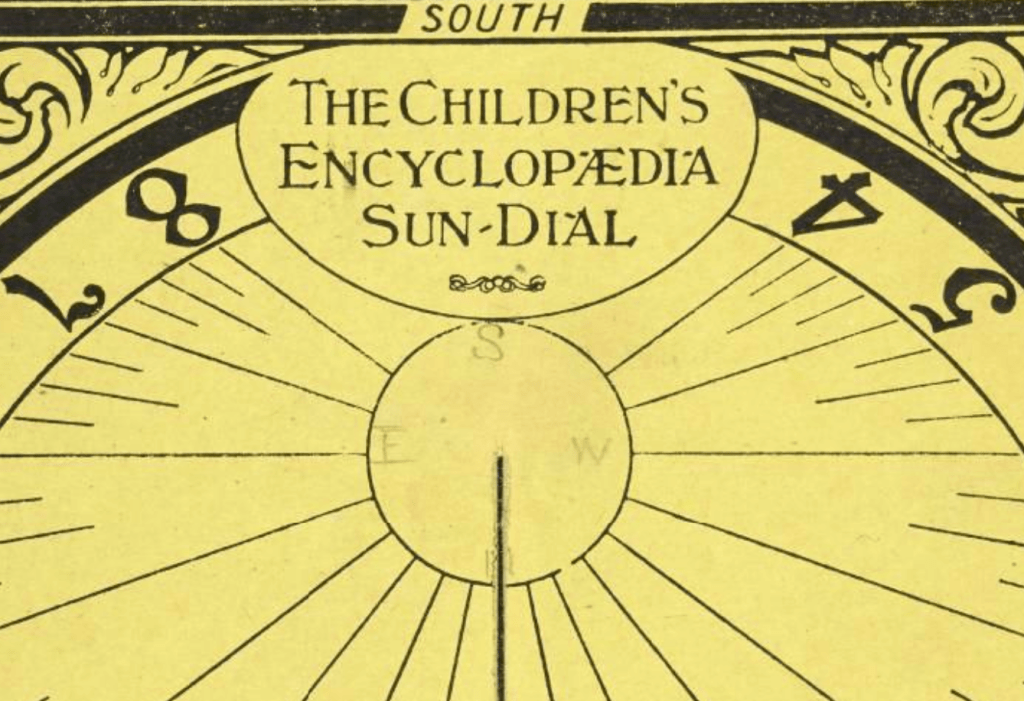
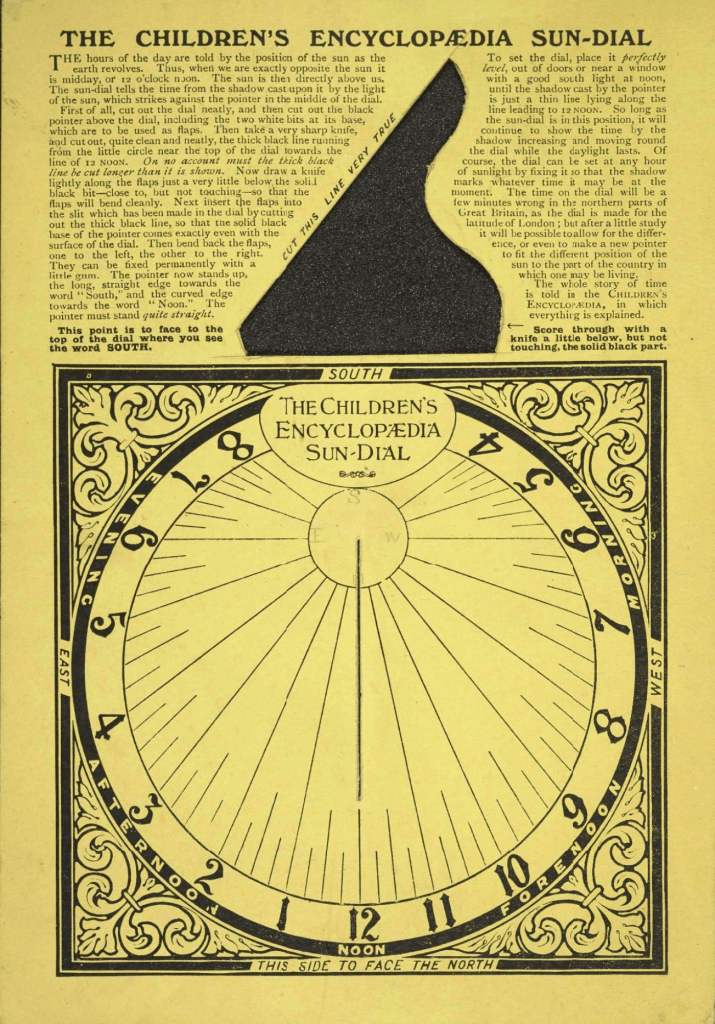
The Children’s Encyclopaedia was published between 1908 and 1964. It was an ambitious and popular learning resource devised by Arthur Mee. It covered a broad spectrum of topics that sparked interest in – and inspired – many youngsters during its long lifespan. This sundial involved some awareness of compass principles and of the passage of time in a readily understandable form. The material benefit for the young readers was a direct involvement with topics that an iPhone can help with without the underlying principles being known let alone understood. Some young enthusiast must have added compass points in the image below.
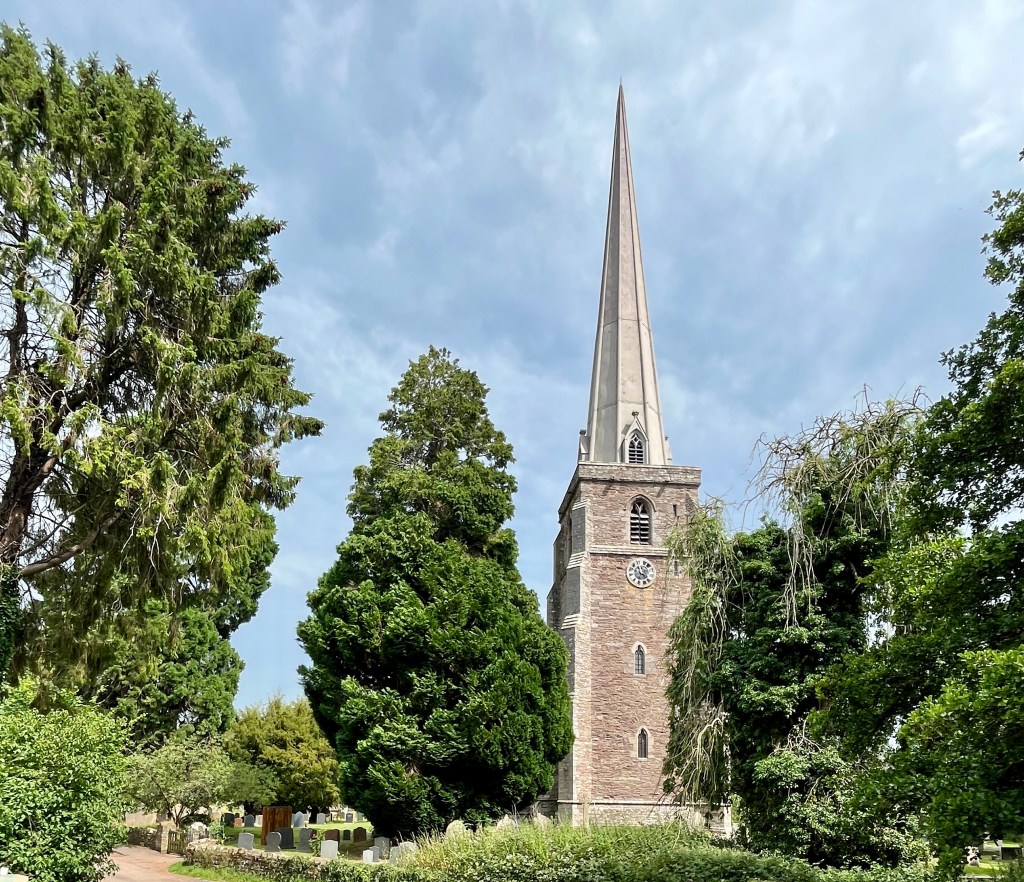
Grade 1 ✣ Foundations date to AD 745; Saxon work visible in sanctuary. Substantially Norman, built mid-C12 as a 4-chambered basilica (cf Kilpeck nearby). C13 – 14 alterations, additions. Restorations from mid C19. Impressive fibre glass spire installed 1970s. It replaces the last of several spire dramas since the original of c1320 was completed (see HERE). Situated in the Golden Valley of Herefs. 52.0412 / -2.9564 / SO344385
DIALS
DIAL 1
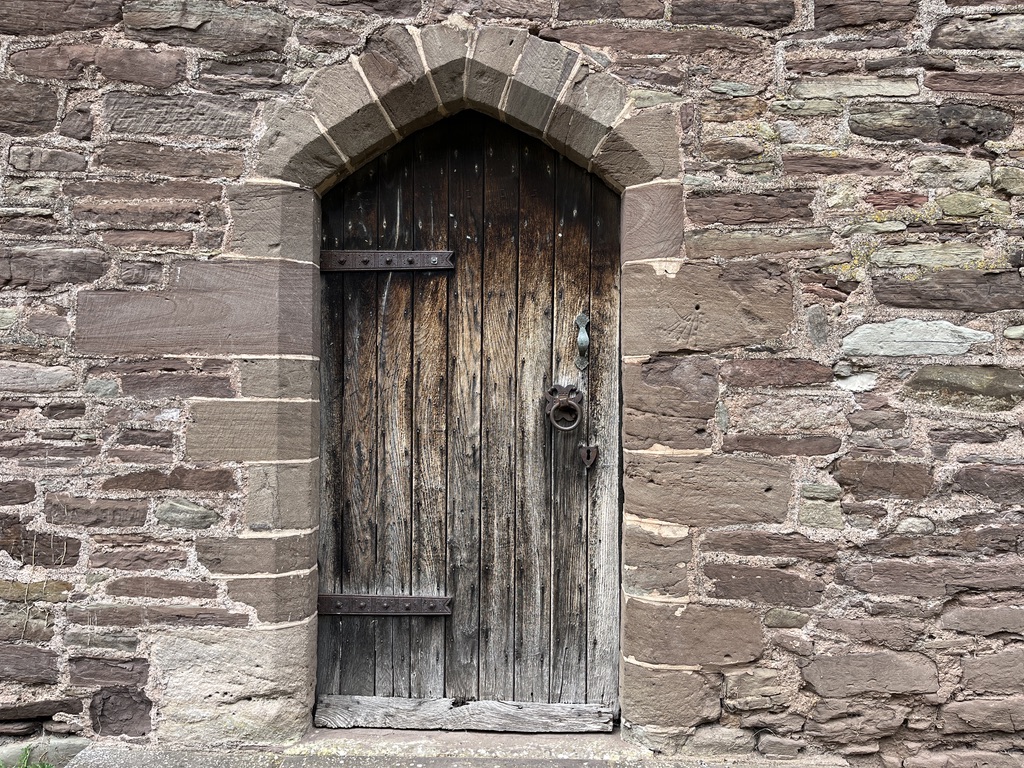
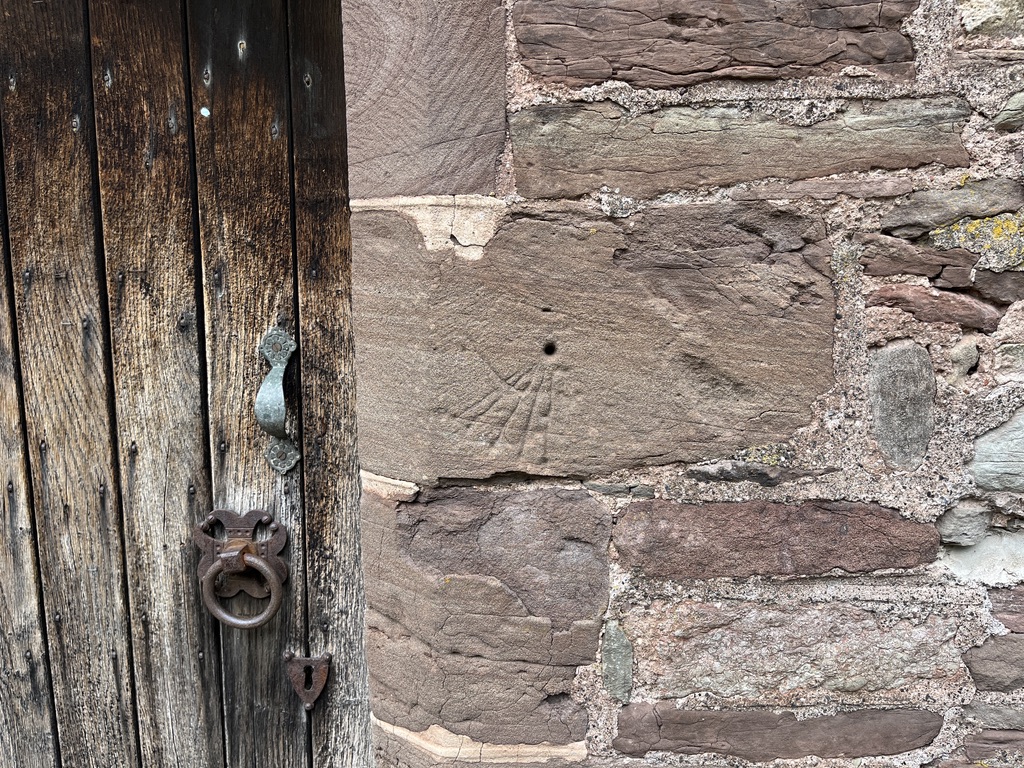
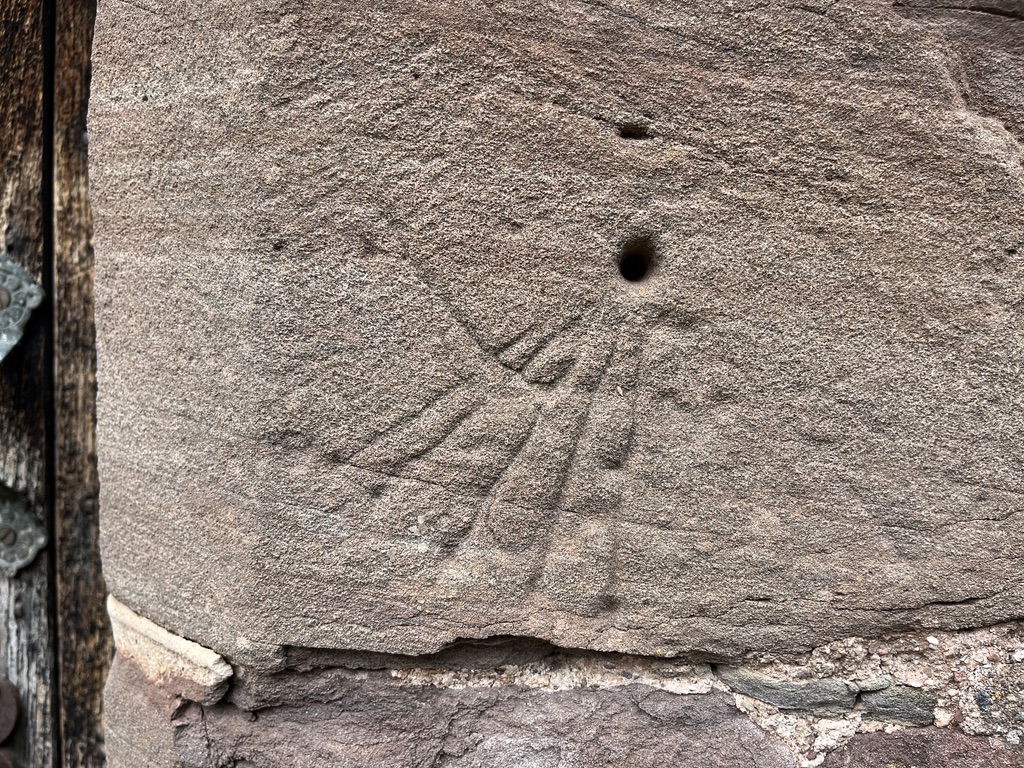
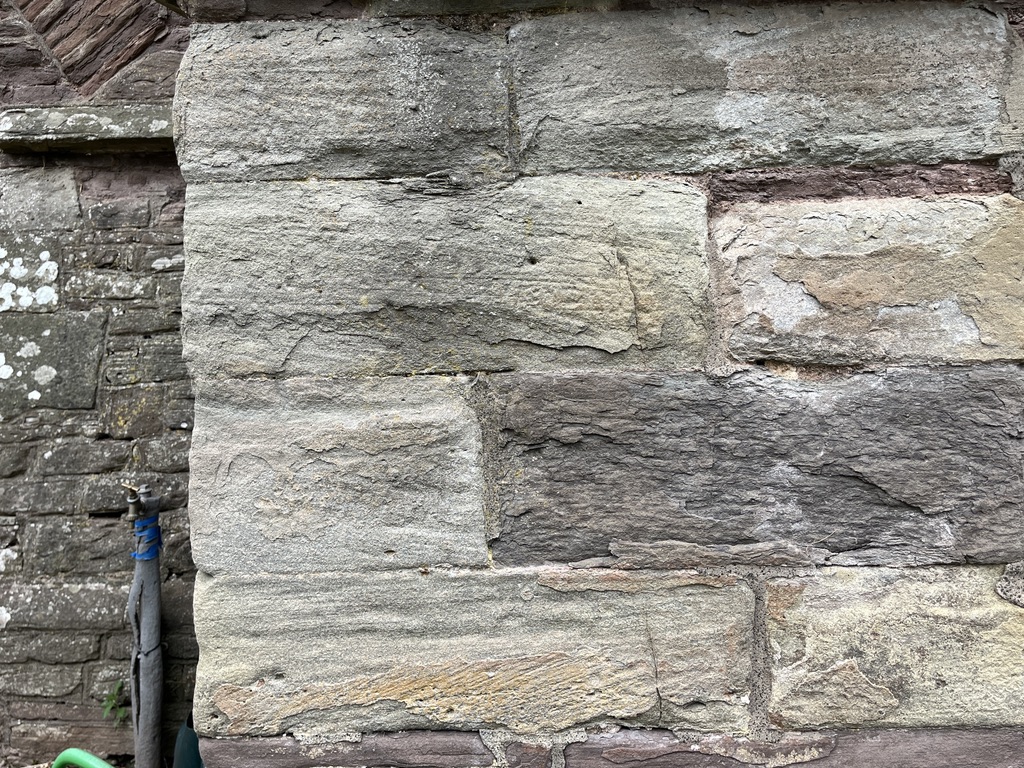
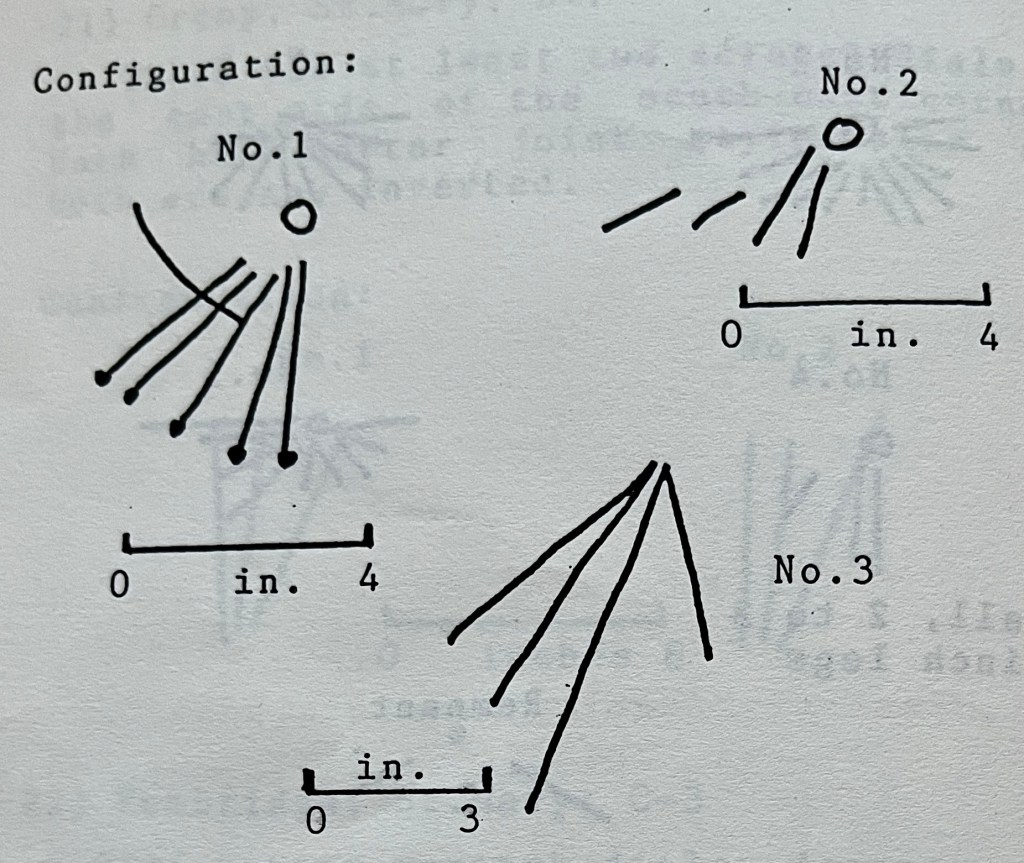
RHS of Priest’s door. A morning dial with 5 lines, each with a terminal pock. The noon line – slightly offset – has a pock halfway down.
❖❖❖❖
DIAL 2 [and 3]
On a substantial buttress, a small dial so basic that I discounted it at first. The 2 lines do not even descend properly from the gnomon hole 3 ins above. The hole looks as though it has been enlarged at some time. I assume it predated and was succeeded by Dial 1.
❖❖❖❖
DIAGRAMS OF ALL DIALS INCLUDING DIAL 3*
Dial 2: the 2 short lines LHS are near-invisible now. I wonder if they were ever part of a dial.
Dial 3: this morning dial is close to Dial 2, but I missed it. It must be above the coping stone.
❖❖❖❖
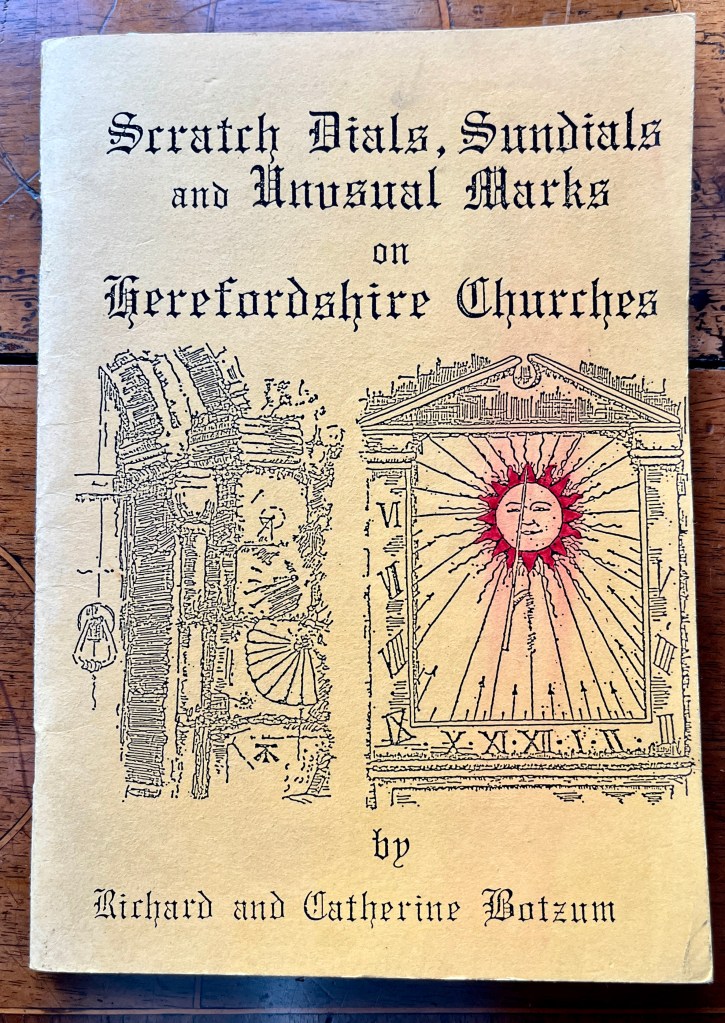
HEREFORDSHIRE DIALS The county is well-served by the excellent small book (1988) by Richard & Catherine Botzum. It covers both scratch dials and conventional church dials, with a few church marks at the end. It is a pleasant read, the sort of book I’d have enjoyed writing.
GSS Category: scratch dial; mass dial; early sundial
GRADE II* ♰ C12 origins with fine Norman arch and tympanum within the early C14 S porch; other early remnants. C14/C15 tower. Subsequent development and restorations; several phases of rebuilding C19. Of note: unusual sundial at the apex of the porch. This will be written up separately. There’s a charming calligraphed guide to the church on which, amongst the highlights, 2 scratch dials are mentioned. Roughly halfway between Yeovil and Crewkerne, on strangely-named Poop Hill. 50.9152 / -2.7523 / ST472131
DIALS
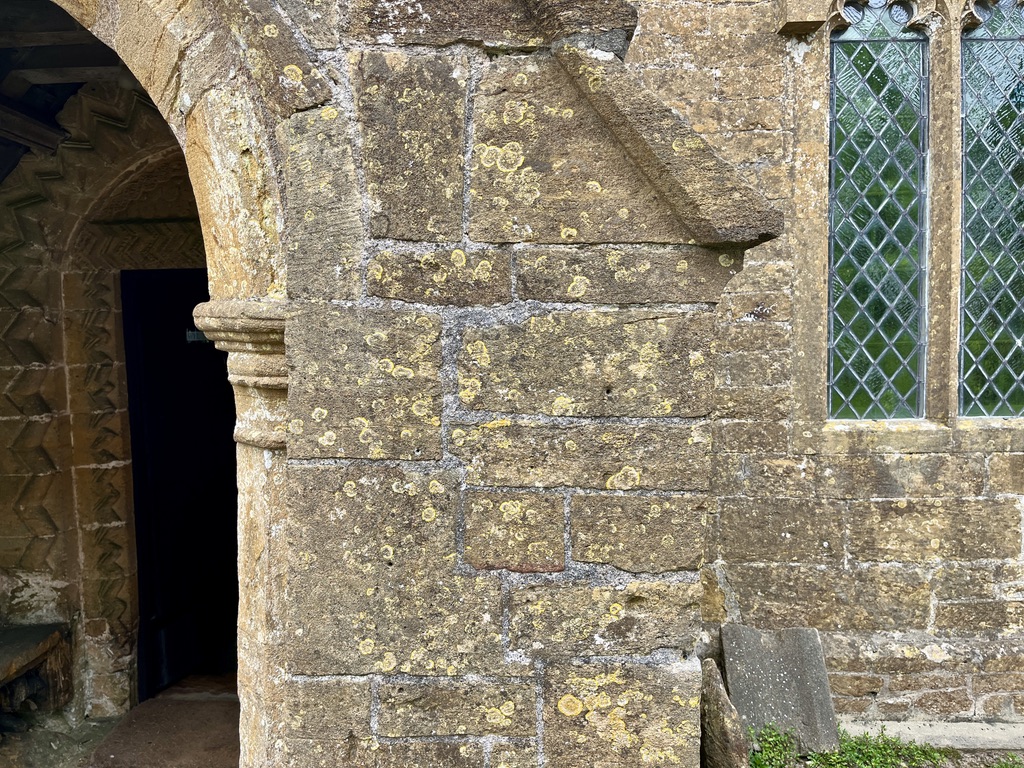
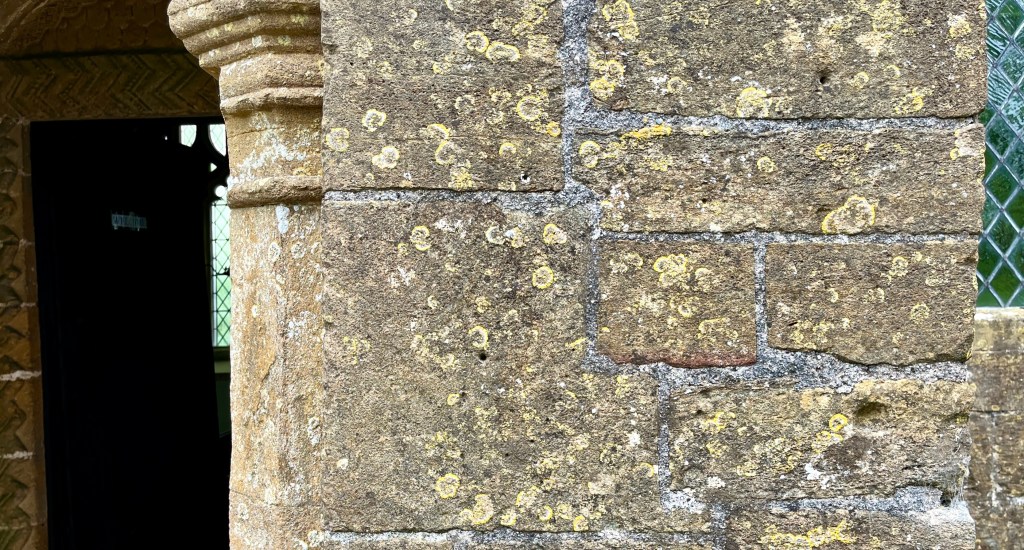
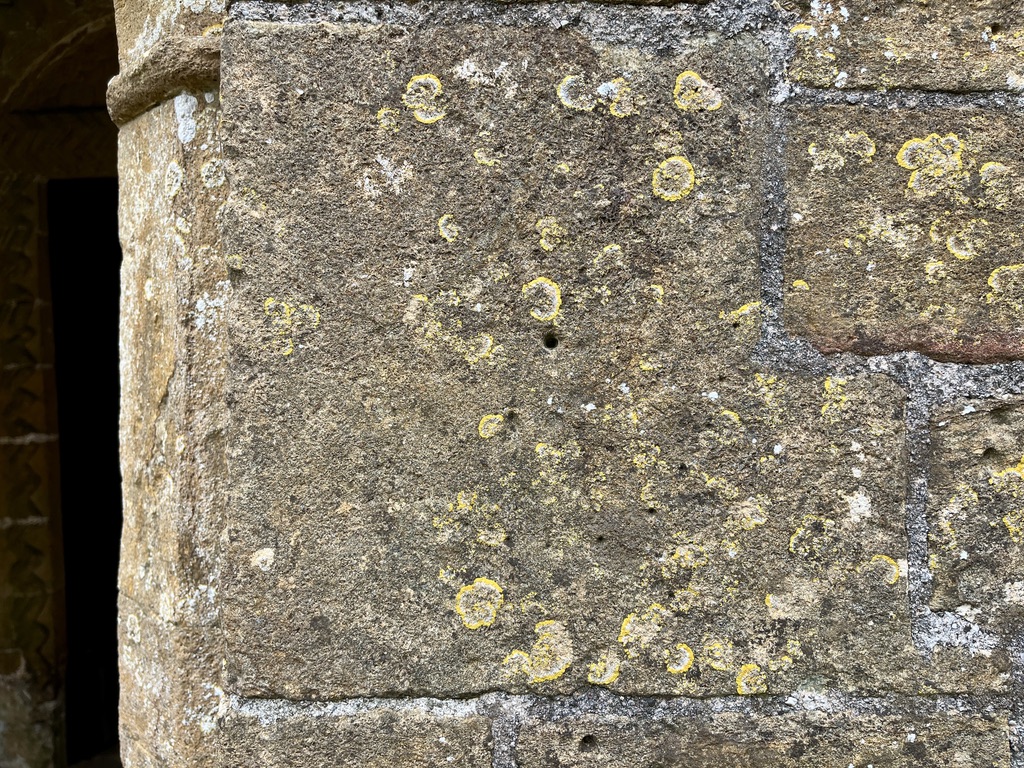
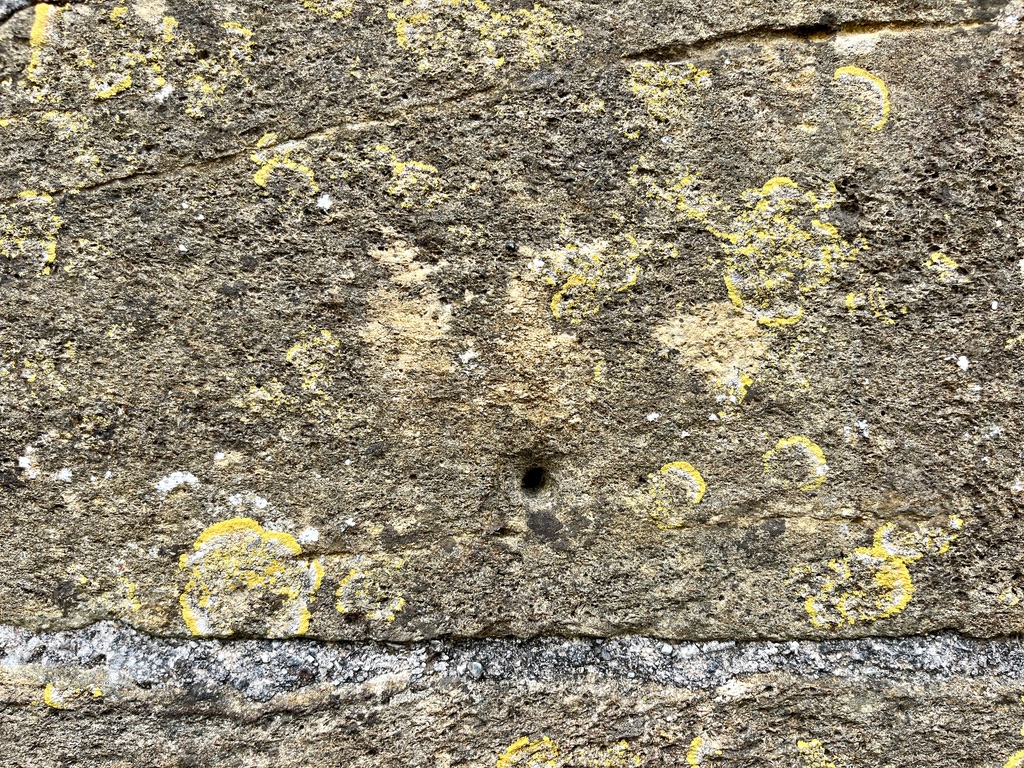
The dials are close together on the E side of the porch. They are plain holes without other visible dial-ish features or adornment – very much in the ‘doubtful’ category. Of note is that Dom Ethelbert Horne, during his exhaustive survey of all Somerset churches in early C20, did not include St Margaret in his records. However, the written church record suggests that scratch dial status was conferred some way into the past, rather than being a recent idea.
The likelihood of 2 dials in one small area, consisting only of a hole with not even a noon line between them, is pretty small. A very simple early dial might be superseded by a separate, more complex one in the fulness of time – sometimes on an adjacent stone. I’m not convinced by this pair. Probably I should find out what the church record reveals.
UPPER DIAL
LOWER DIAL
THE DIAL OVER THE PORCH WILL BE DEALT WITH SEPARATELY
GSS Category: Scratch Dial; Mass Dial; Gnomon Holes
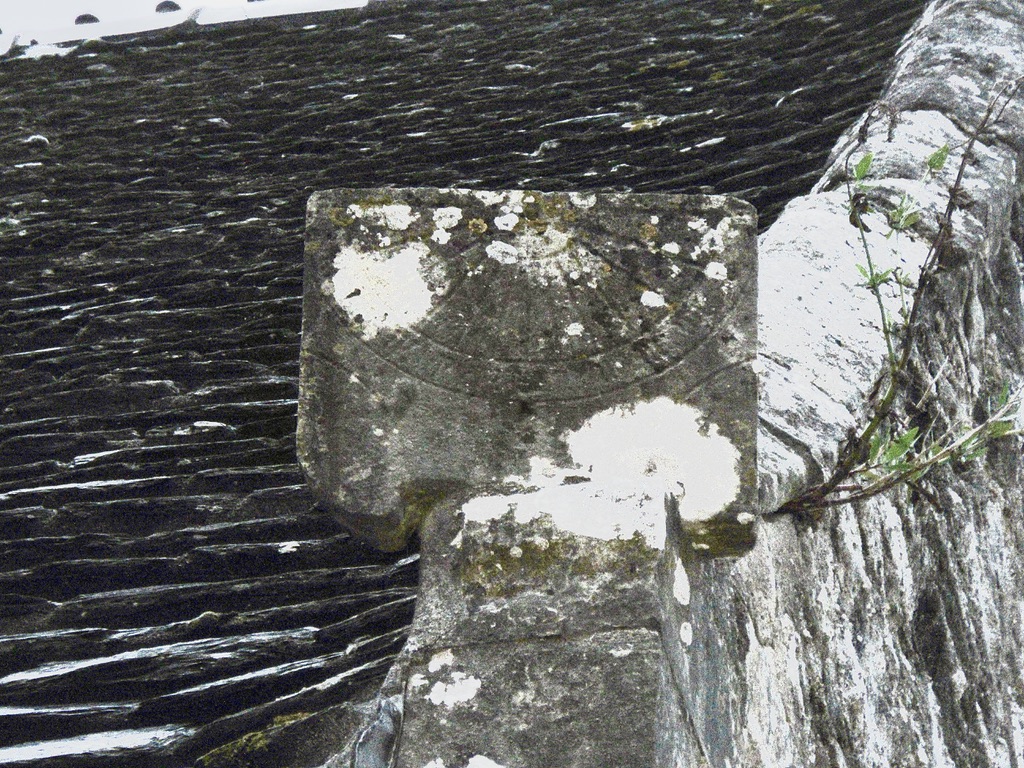
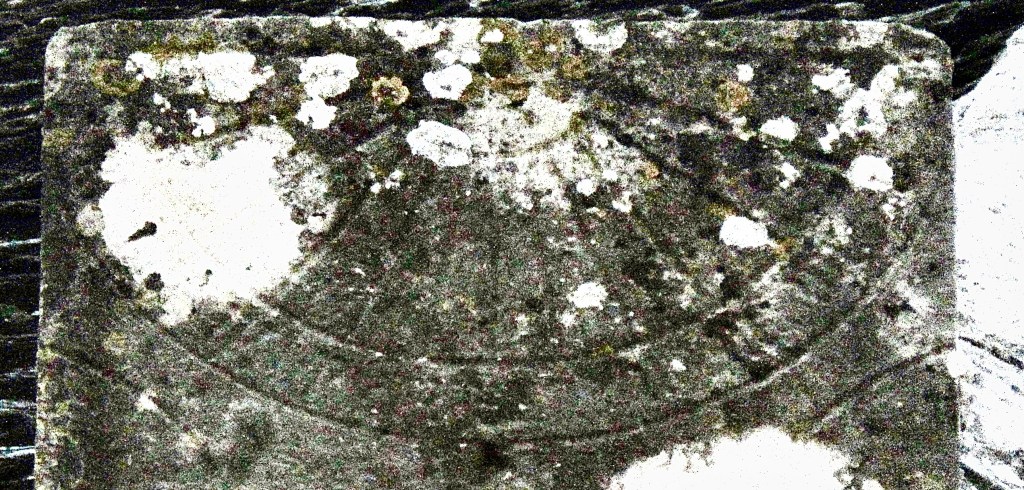
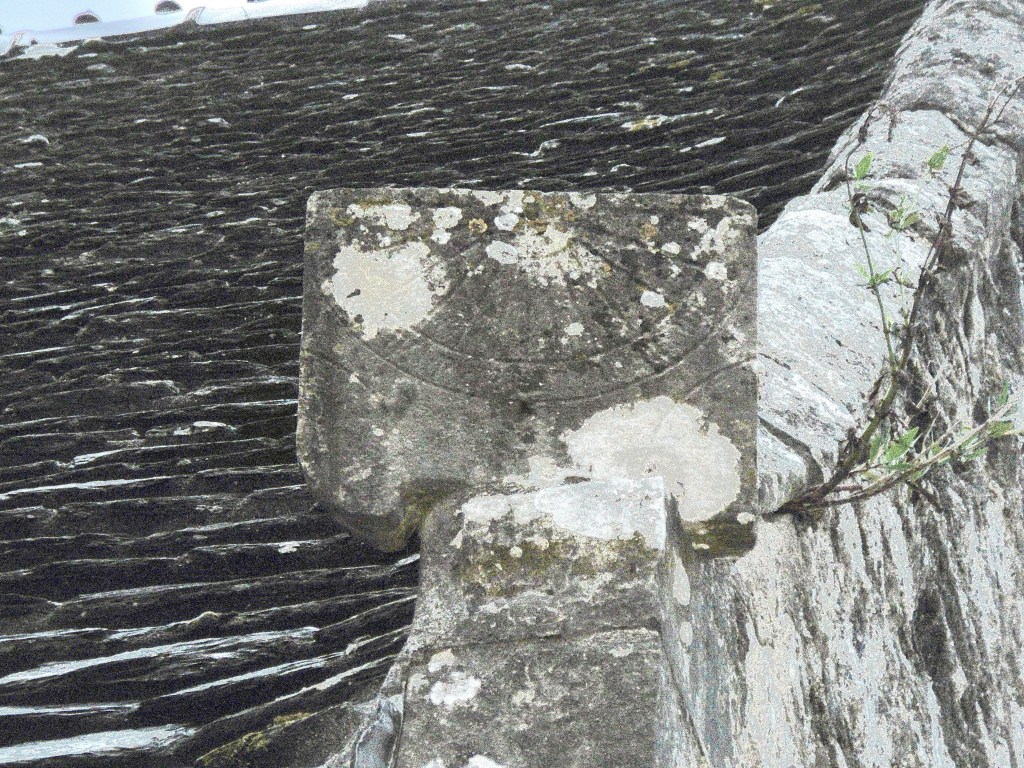
We visited this church rather late in the day, as dusk was falling. This was one of several vertical sundial churches in the area, but the images were so poor I didn’t use them. Having come across them again and made them somewhat more legible, I am adding them the series. The images speak for themselves, but not very loudly… At least the gnomon hole can be see.
GSS Category: Early vertical sundial France; Sundials Abroad
GRADE II ✣ C13 origins. Rebuilt 1860s by T H Wyatt, using original material. Perp style with flint, banded brick, and rubble. C15 font. Loose links with owls and Thomas Hardy. A tiny village off the beaten track from Winterborne Stickland (3 scratch dials). 5m SW of Blandford Forum 50.8388 / -2.2566 / ST820043
DIAL
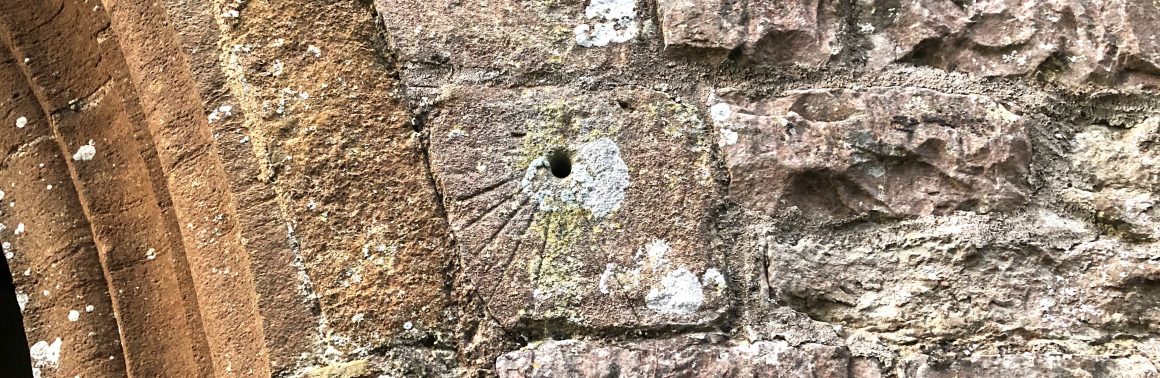
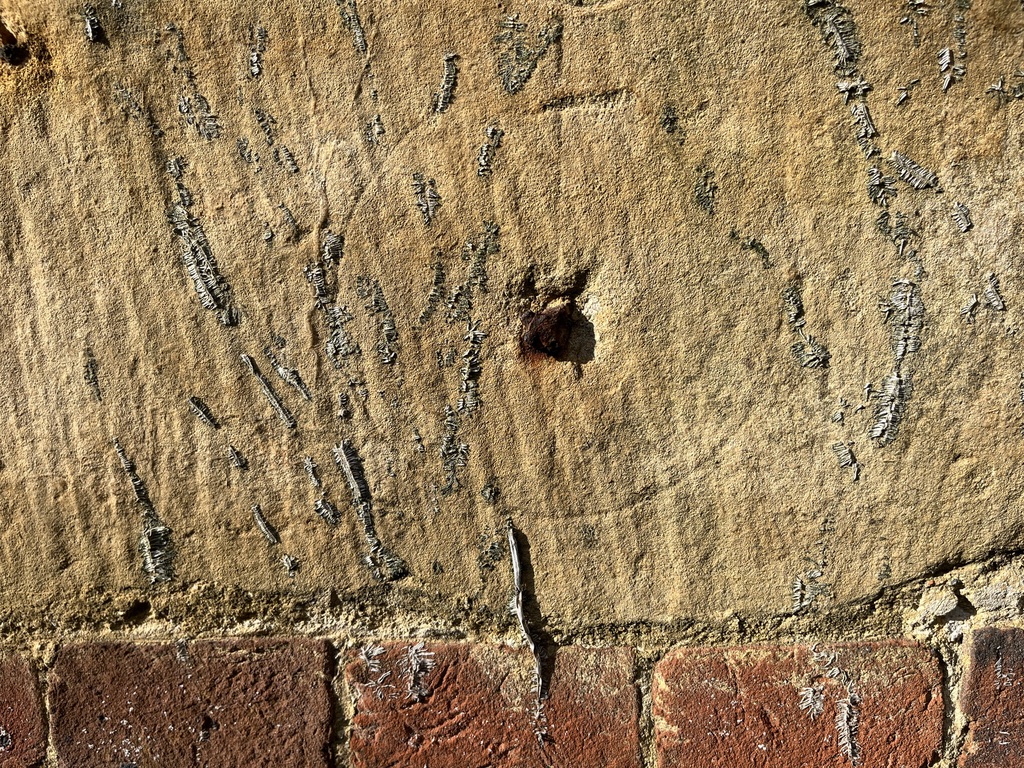
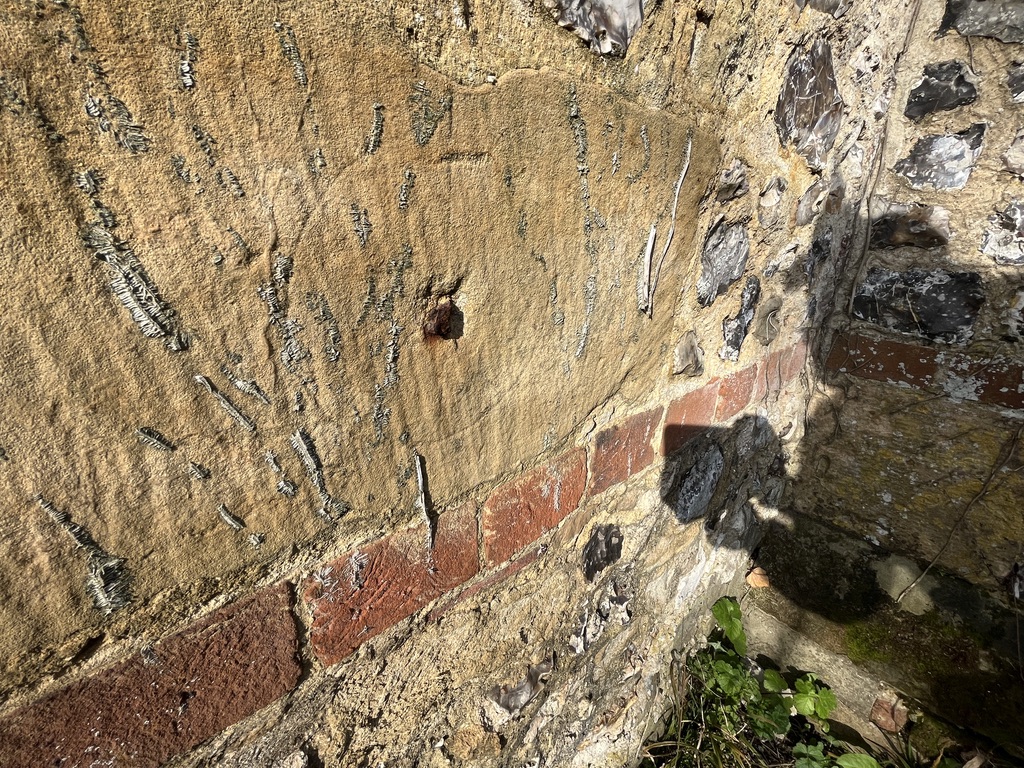
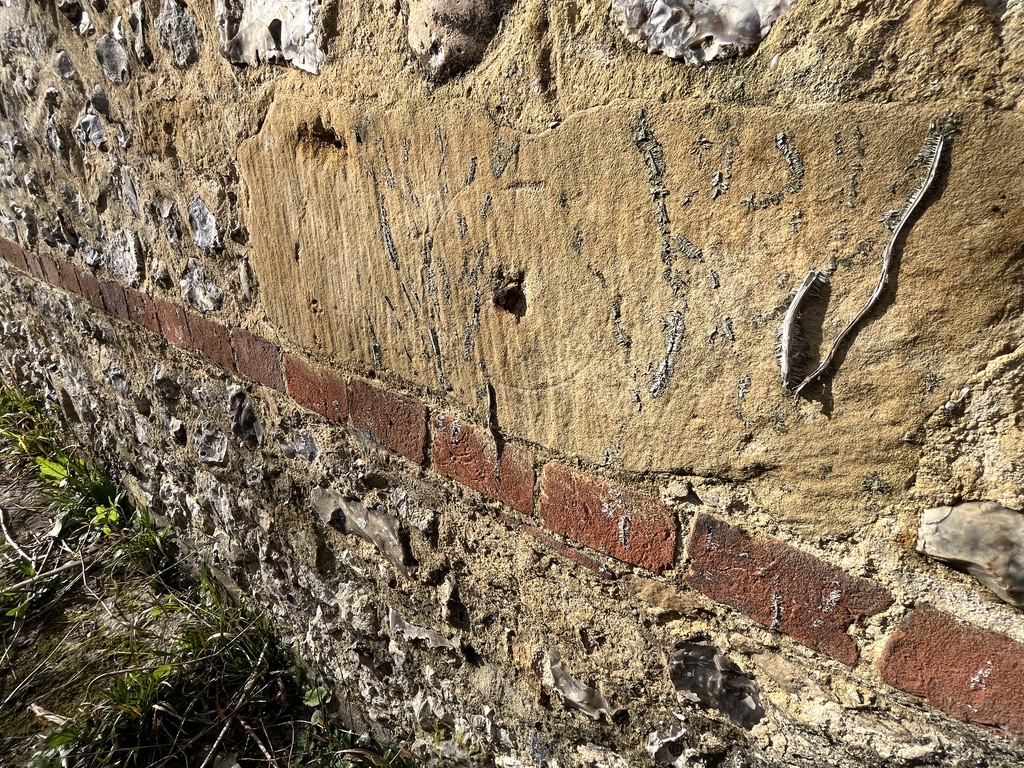
This simple configuration is very close to the category ‘Not-a-Dial’. It is 18″ above ground level, and set into an area of flint. The stone must be a re-sited remnant from the original church or some intermediate restoration. But is it likely ever to have been a marker of the passage of day?
GLP, the expert on the scratch dials of Dorset, puts this dial in the ‘doubtful’ category. He describes the circle with a single line pointing upwards, with a piece of iron (squarish) in the centre. Interestingly, he suggests that the dial might originally have been hand painted rather than having cut lines: there is an example of such a dial at Tolpuddle, quite nearby.
REVERSION
The ‘dial’, reverted, shows that the noon-line extends beyond the circumference, a fairly frequent way of emphasising the importance of that hour. The protruding rusty iron stud is a puzzle. It is accurately centred and perhaps was used to plug a gnomon hole. Possibly it had a purpose as a hook or a hanger now largely rusted away.
GSS Category: Scratch Dial; Dorset Scratch Dial; Mass Dial
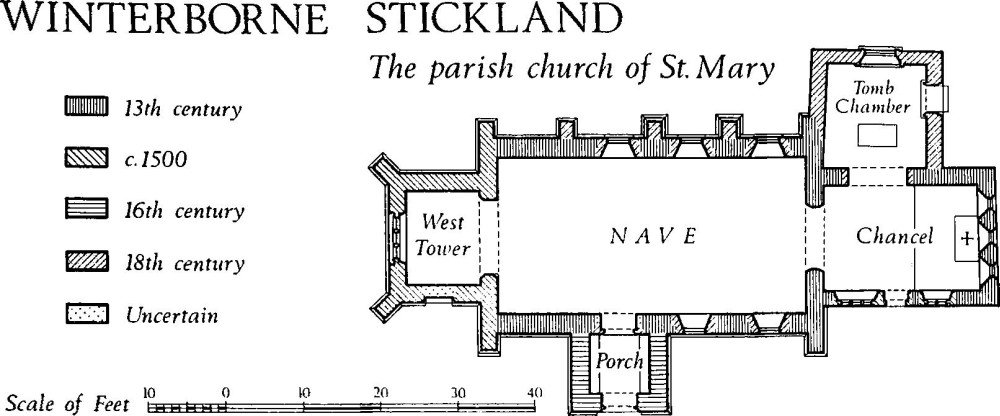
GRADE 1 ✣ C13 origins; Tower ± 1600; considerable restoration C18. A charming country church, seemingly plain but with much to justify its listing. Tomb chamber. 2 (perhaps 3) scratch dials, written up separately. Graffiti: C17 & 18 initials & dates on responds of tower arch. 5m S of Blandford. Close-by St Andrew’s at W/B Houghton makes a pleasant short visit. 50.8409 / -2.2363 / ST834046
❖ ❖ ❖
SUNDIAL
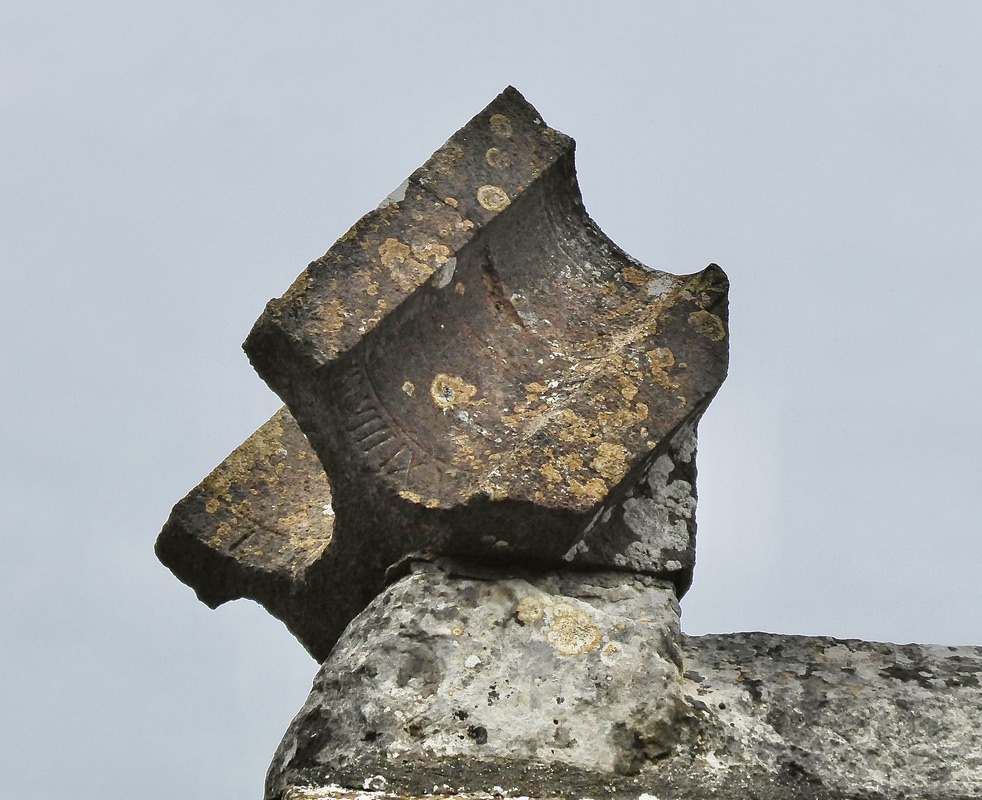
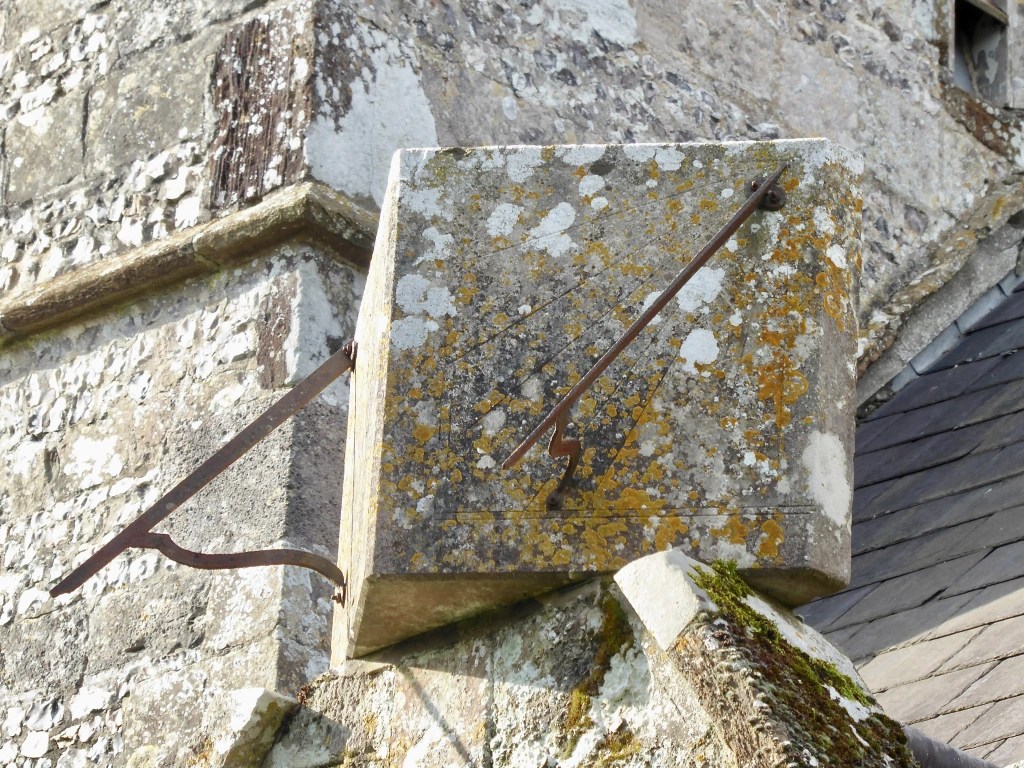
A fine double-faced dial on the S. porch gable, angled SE and SW. Both faces match in design, with identical scrolled iron gnomons. BHO dates to C18th. BSS mentions Roman numerals, but I couldn’t find any trace even with close-up photos.
❖ ❖ ❖
SW FACE
❖ ❖ ❖
SE FACE
❖ ❖ ❖
Geograph image from c2010 for comparison of condition of stone and lichen coverage



























 GAUDIUM SUB SOLE . SUNDIALS . MEDIEVAL TO MODERN