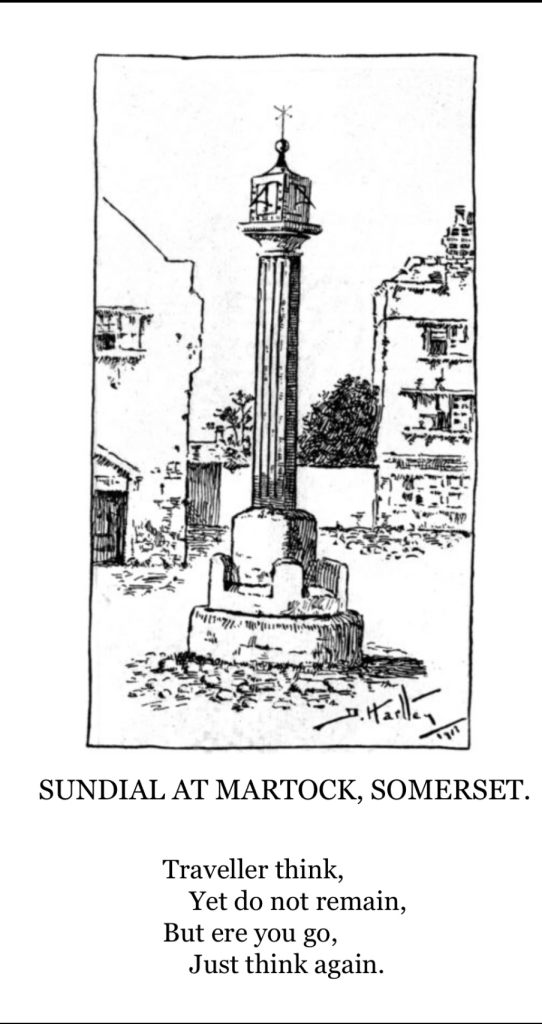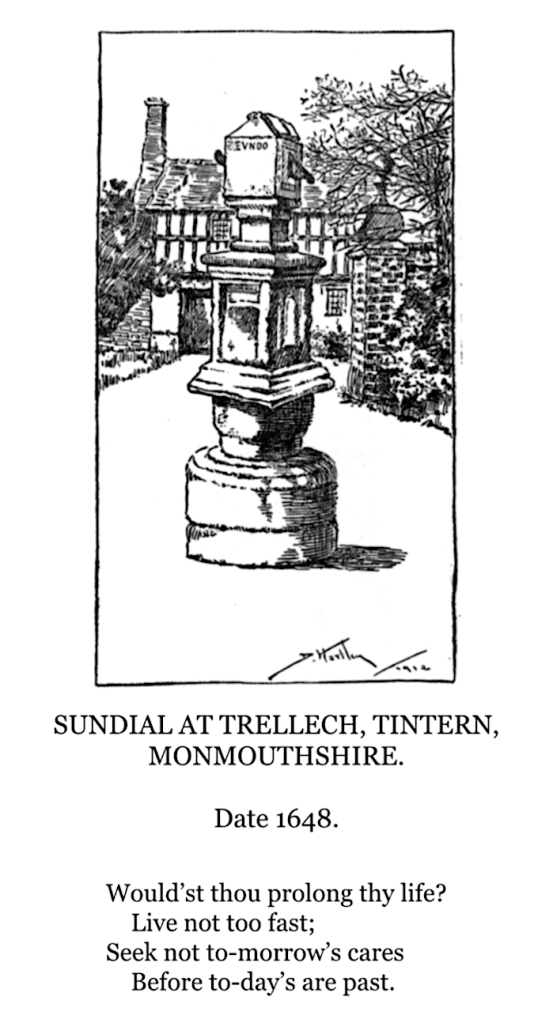

Henslow’s engaging work is available via The Project Gutenberg in eBook format, a simple and costless way to admire his work.
Project Gutenberg's Ye Sundial Booke, by Thomas Geoffrey Wall Henslow
This eBook is for the use of anyone anywhere at no cost and with almost no restrictions whatsoever. You may copy it, give it away or re-use it under the terms of the Project Gutenberg License included with this eBook or online at www.gutenberg.org/license
‘Derrick’ . Sticky Mango Rice . A fine artist captures the essence of Paris mingled with a surreal addition – link below
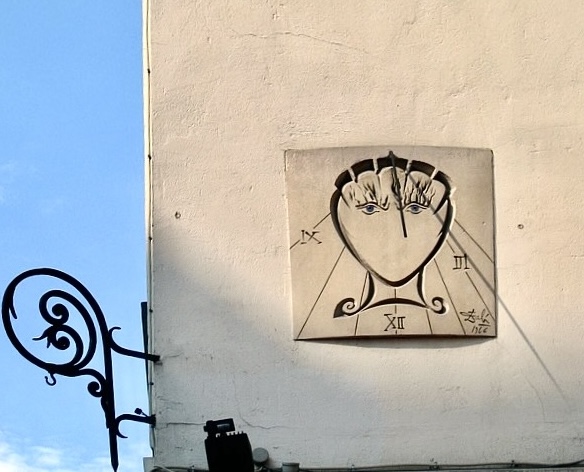
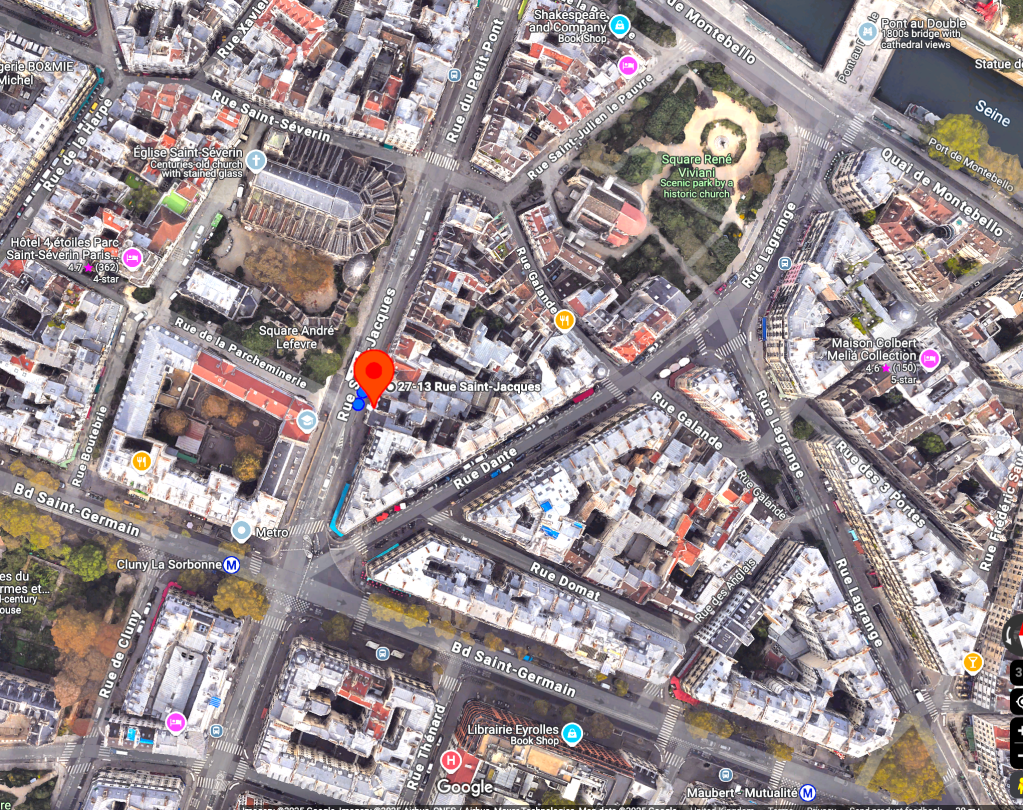
SALVADOR DALI’S SUNDIAL (1966) . PARIS . 27 Rue St Jacques
Unassumingly sited and not easily visible to passers-by unless walking north on the eastern trottoir, is a splendid sundial designed by Salvador Dali (1904-1989). Those who do notice it might well be entertained by the Daliesque appearance, but because of the dial’s position they may not see the artist’s signature and the date 1966**
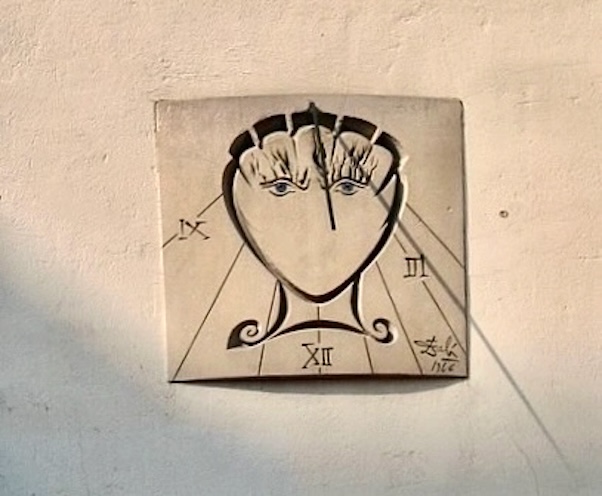
‘Derrick’: a rather beautiful close-up depiction of the Dial
IRL
Ken Eckert Wiki
DIAL DETAILS
Pierre Guernier at French Moments
Pierre Guernier of French Moments notes that the Dali dial, cast in concrete, was a gift to friends who had a nearby boutique. The clue to the shell motif lies in the name of the street which forms part of the Pilgrimage route across Paris. The fiery eyebrows represent the sun; and the lower part of the dial obviously references the famous moustache.
DALI SHADOWS
GAUME – WikiMedia 2010
ATLAS OBSCURA
This excellent resource includes unusual and off-beat finds. It describes Dali’s dial, and notes the accompanying excitement when it was inaugurated on 15 November 1966 at a ceremony with pomp and large media coverage. Dali was no shrinking violet.
The surrealist himself rode up on a lift to the sundial with his pet ocelot, for some finishing touches, and to the accompaniment of a brass band.
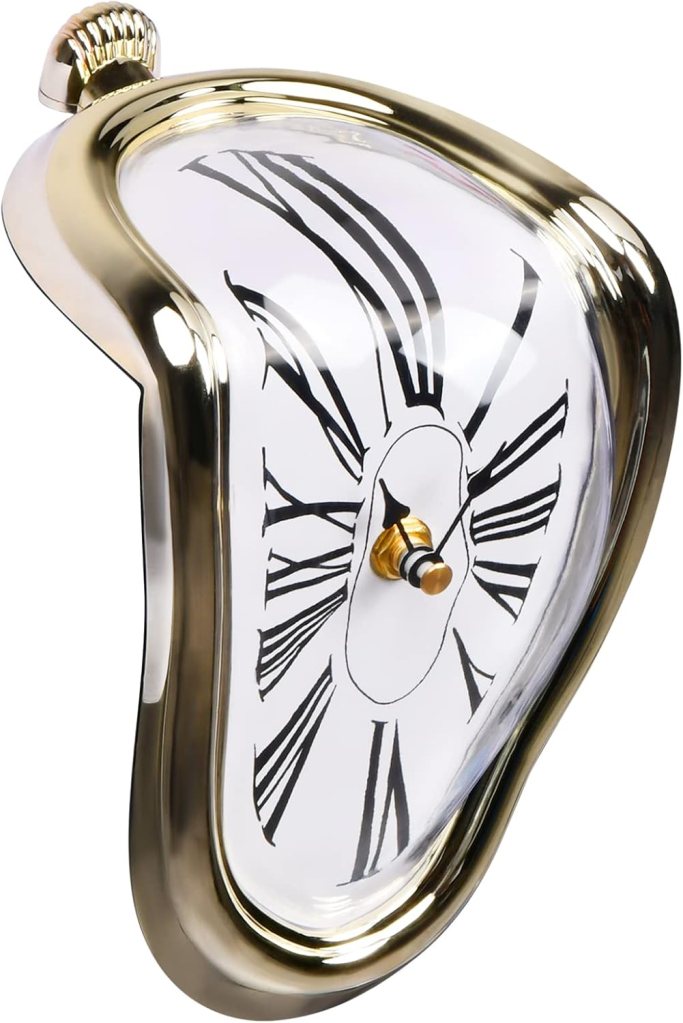
We can probably conclude that Dali’s forays into horology were relatively successful with his Parisian sundial. But for its poor positioning, it might function well or adequately. Less accurate were his more ambitious blueprints for timepieces, all being woefully deficient in design and immensely challenging in construction.
** It’s fair to say that for the English, the important ’66 dates are confined to the Battle of Hastings; the Great Fire of London; and the World Cup.
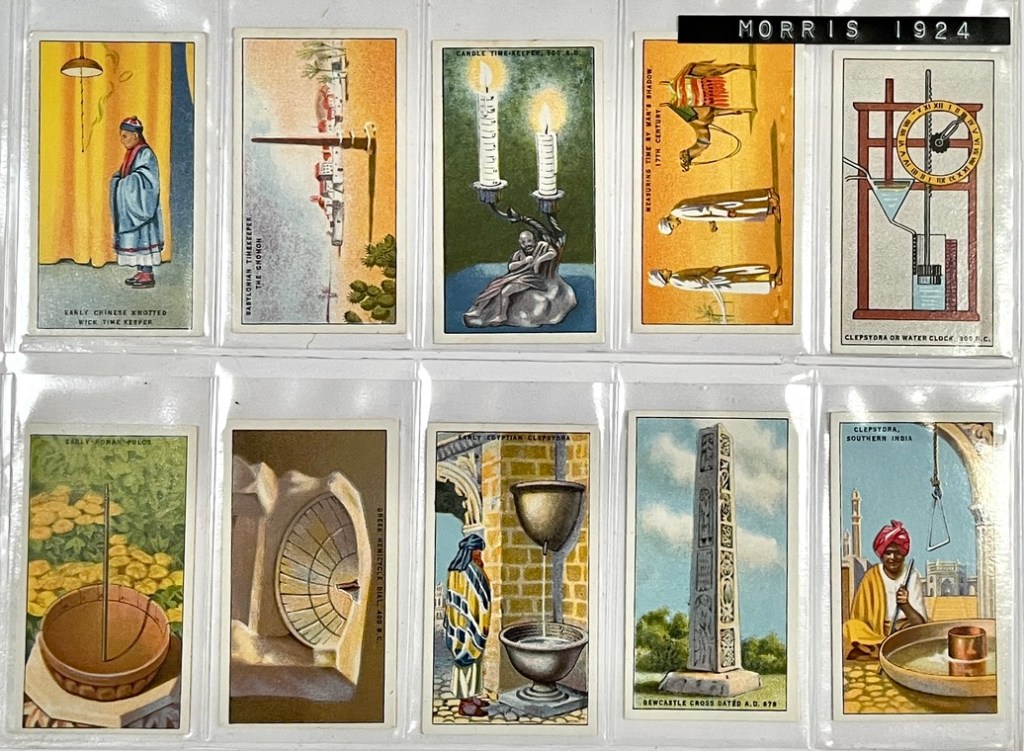
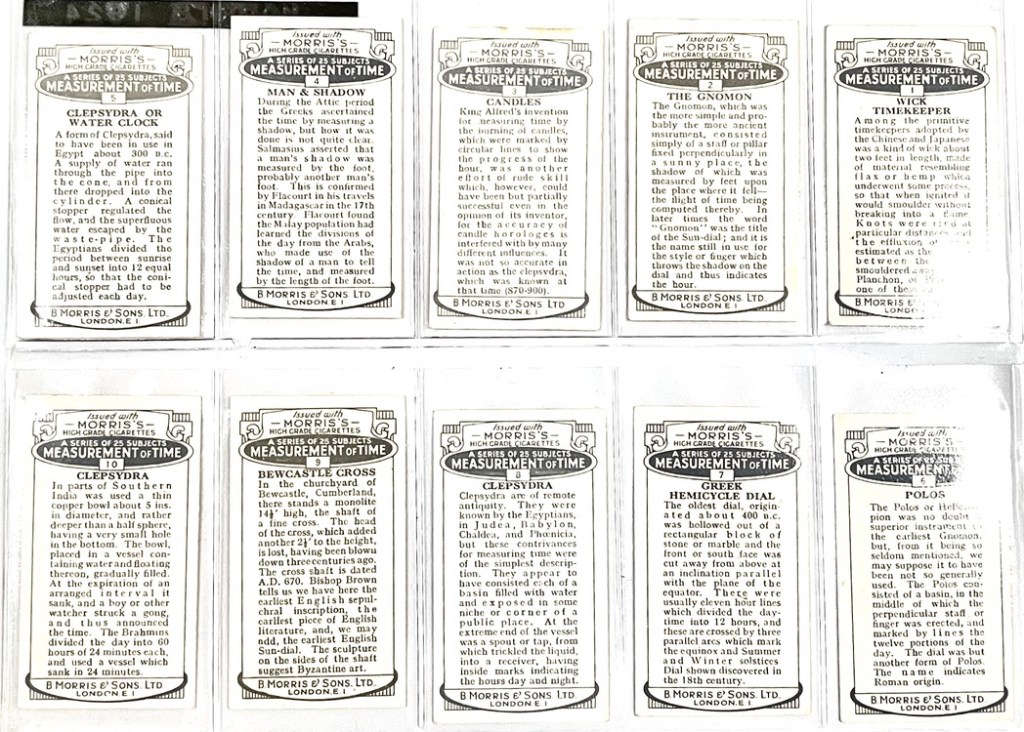
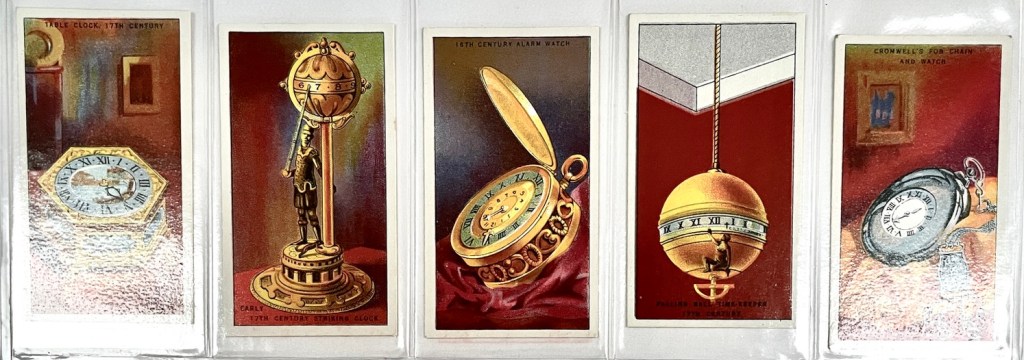
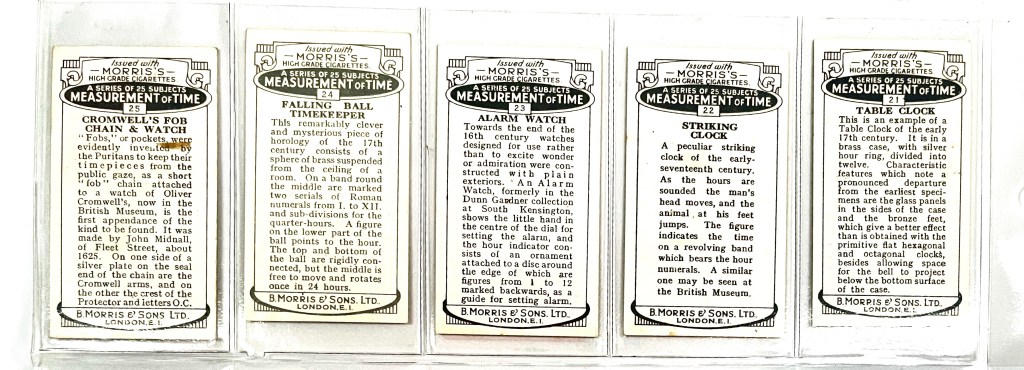
In the late C19, the first series of collectable themed cards were devised in America to encourage trade. The idea caught on, and these early examples of product placement gradually spread. Sportsmen (Cricketers), Nature, Actors, Military and Important People, were among the topics. By the turn of the century, British companies had taken up the challenge.
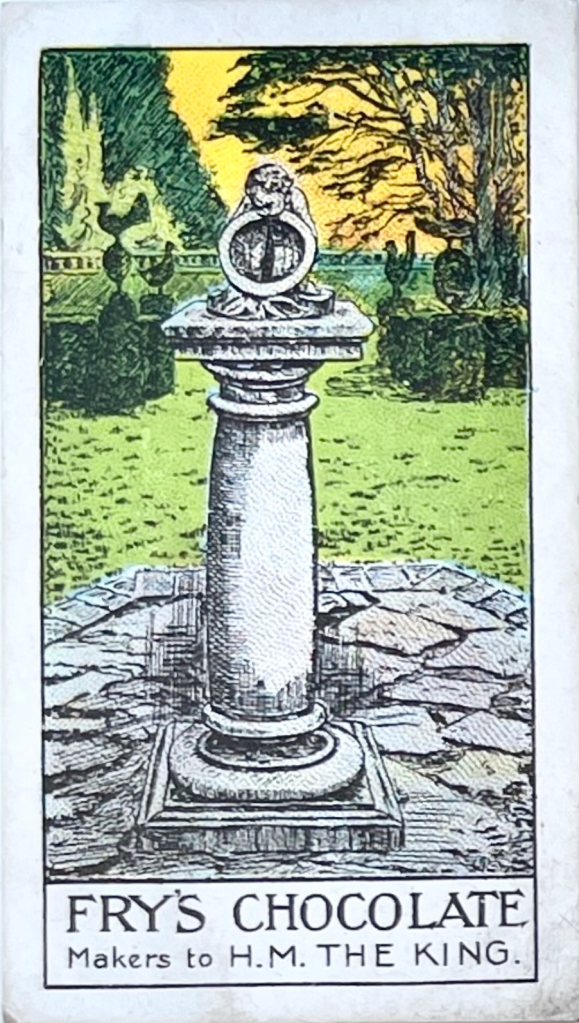
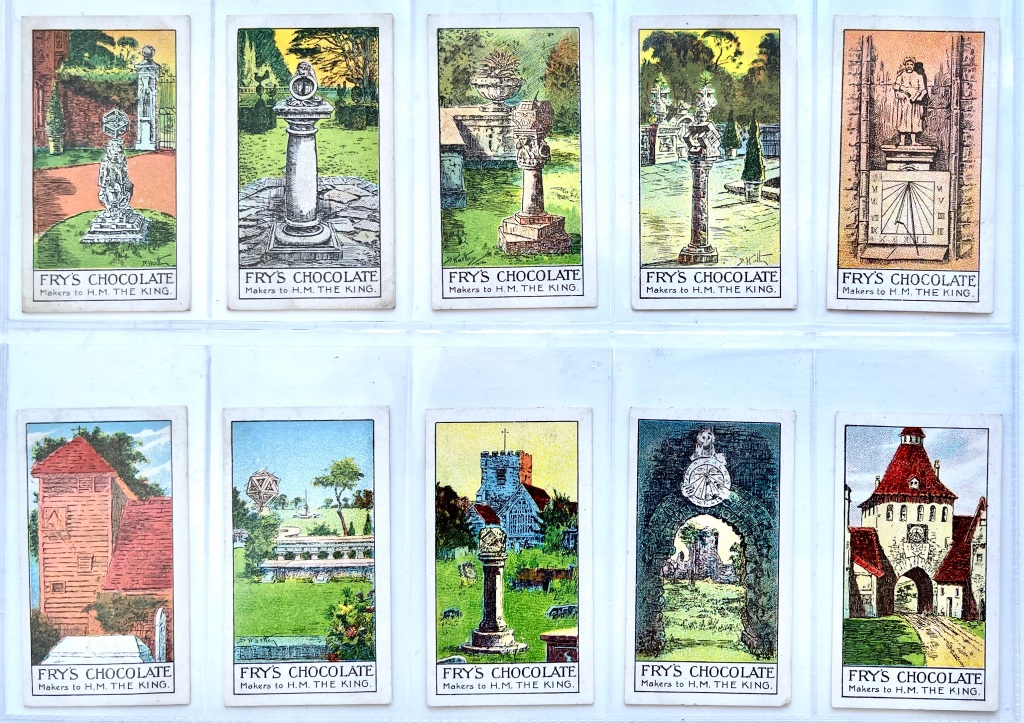
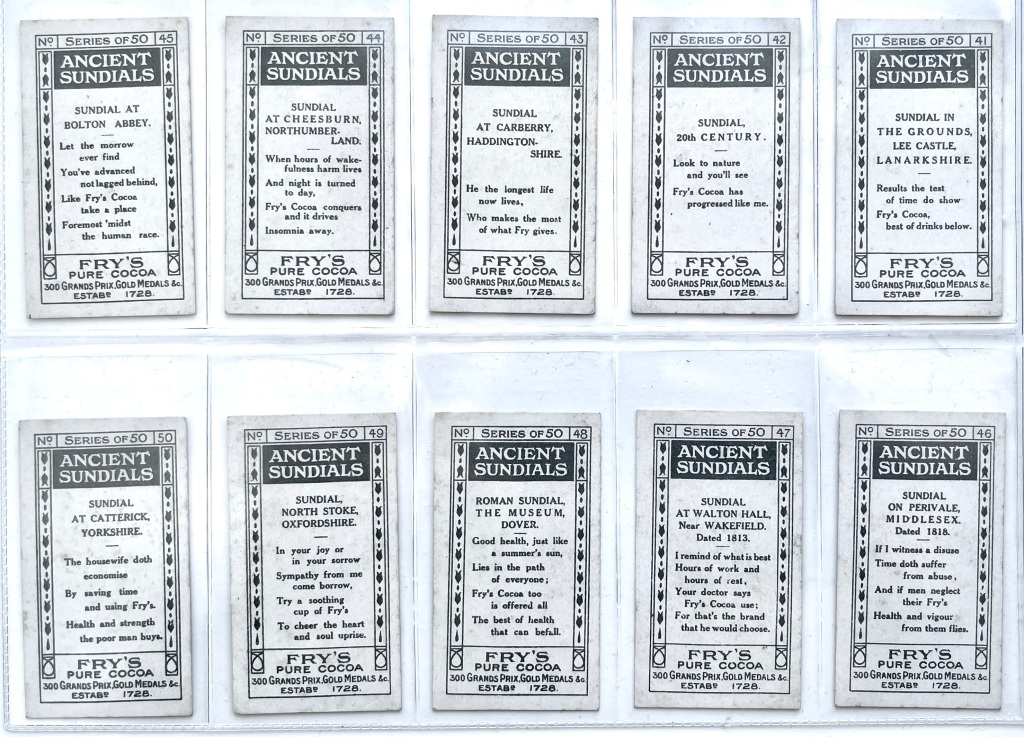
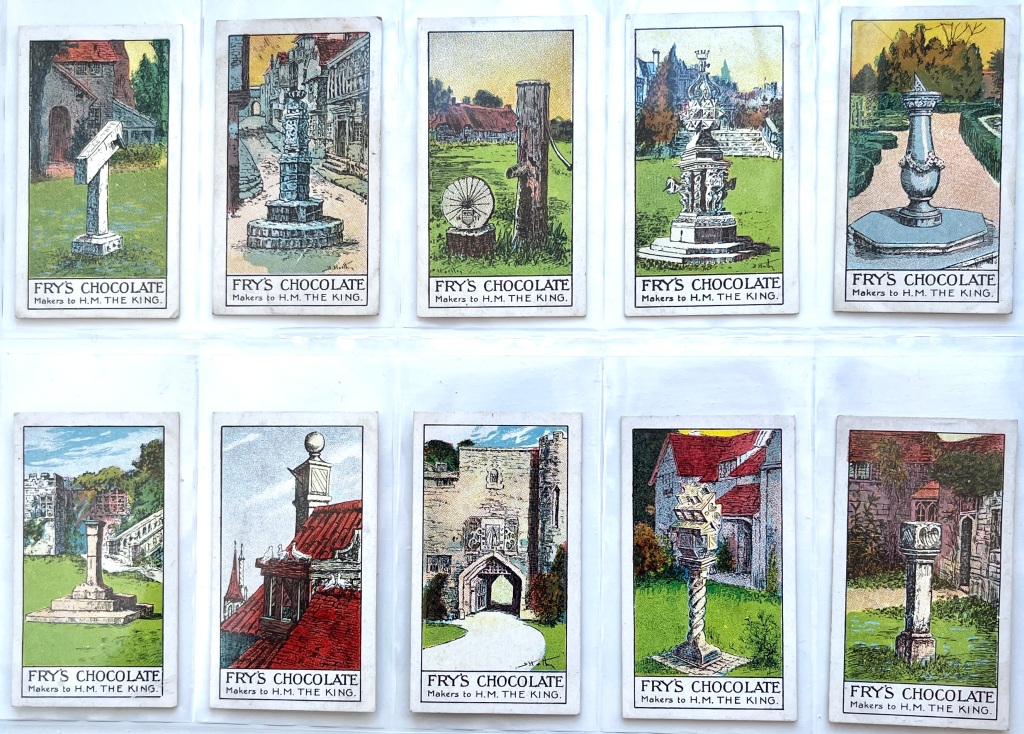
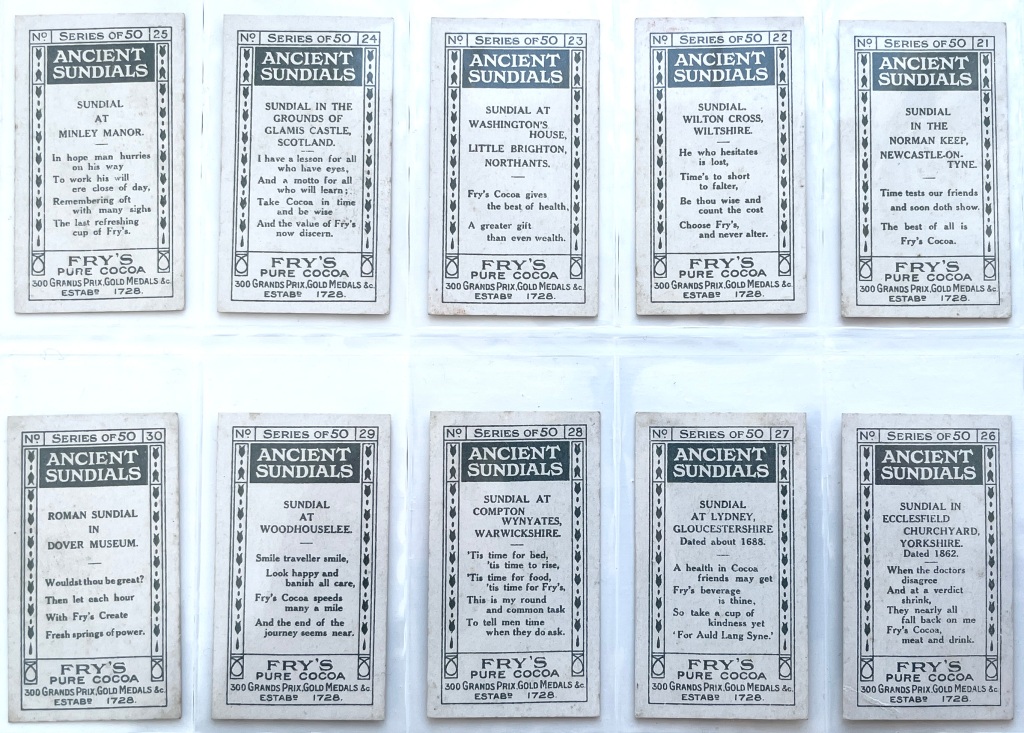
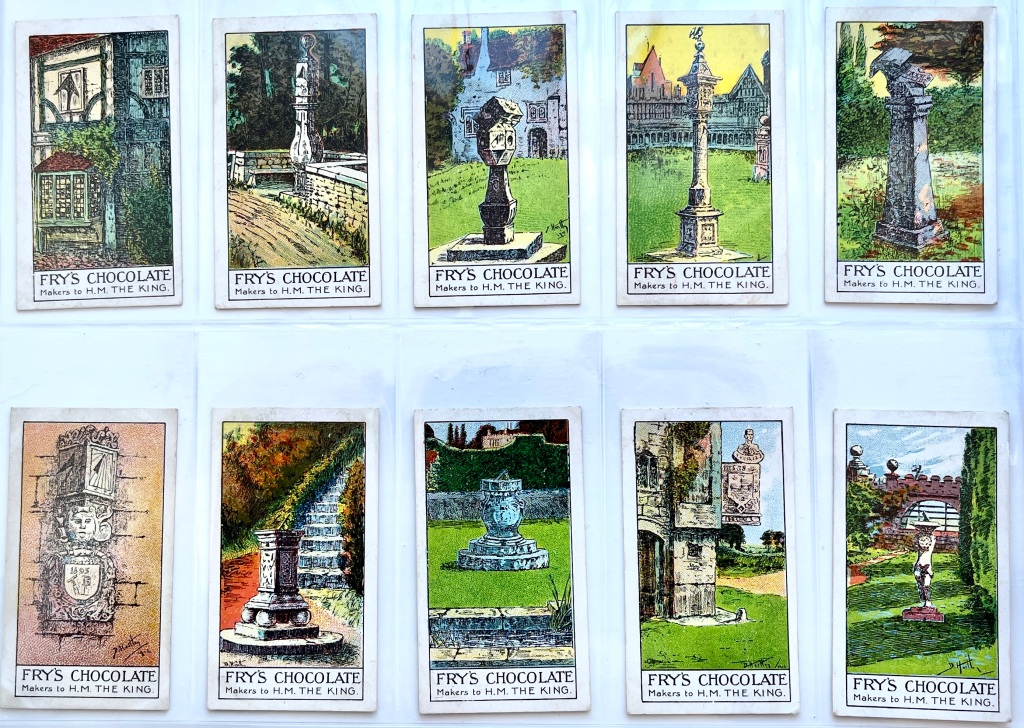
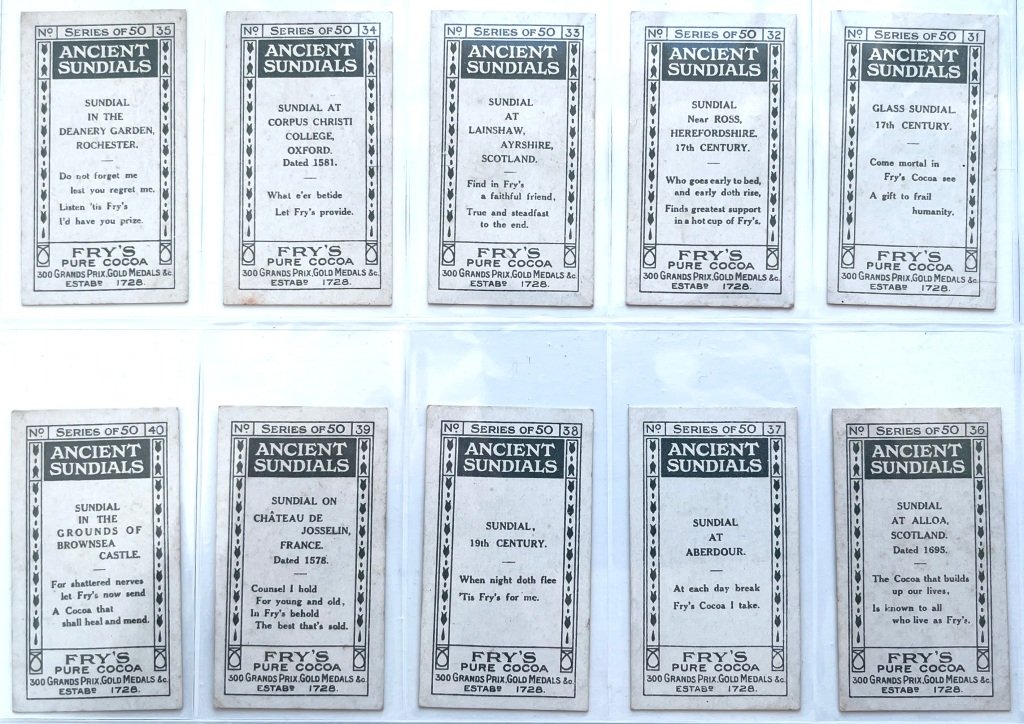
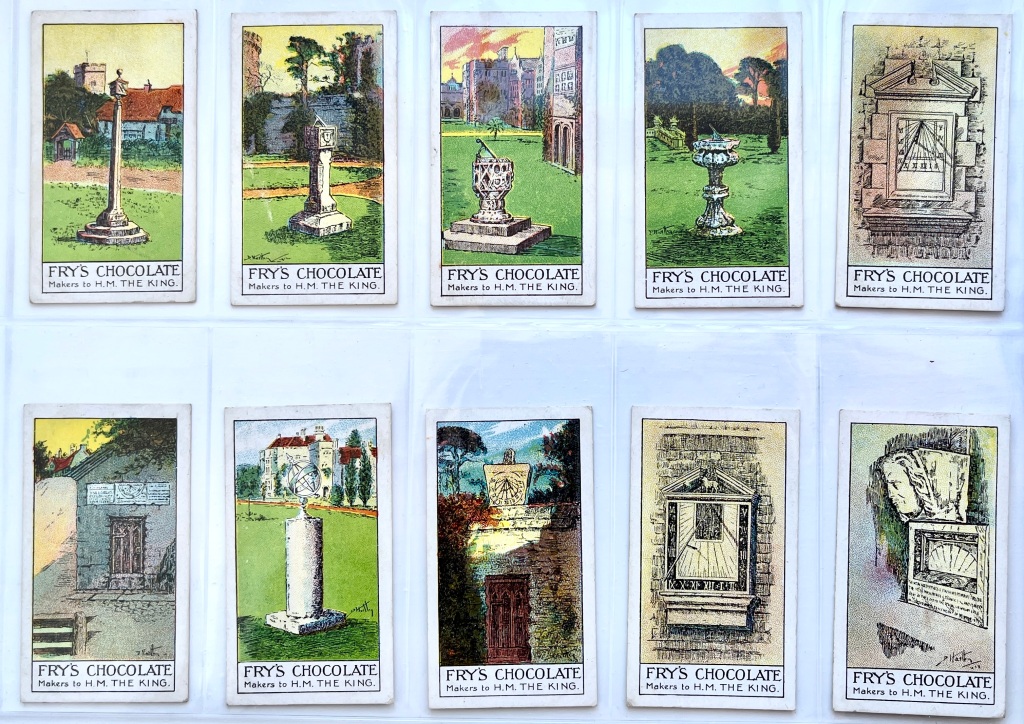
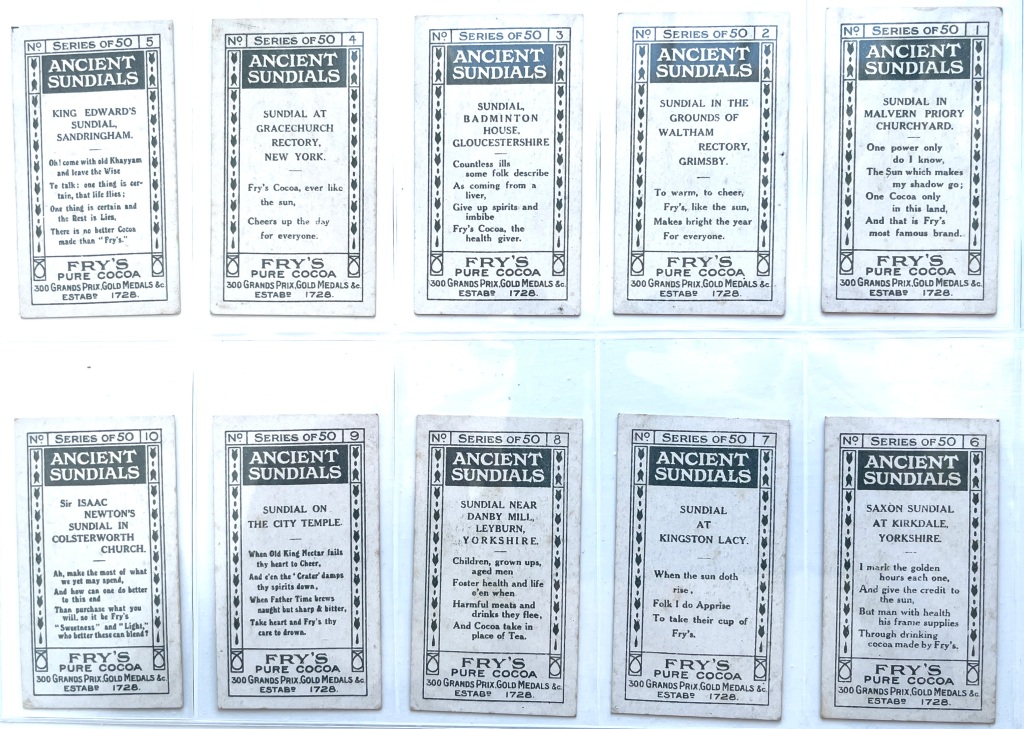
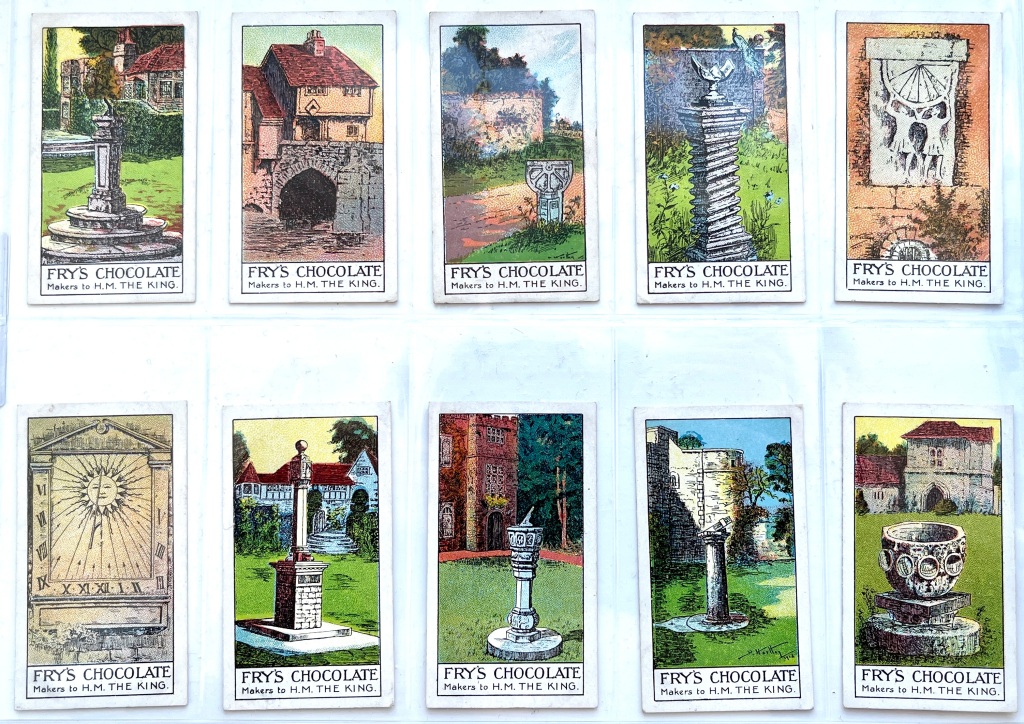
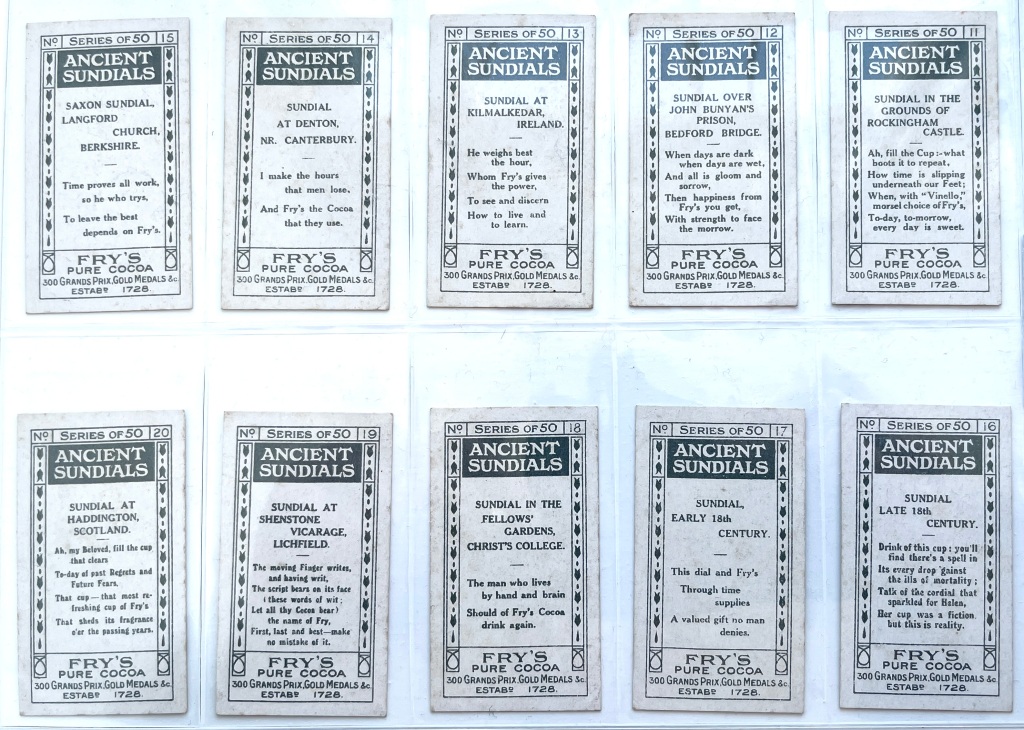
In 1924, Sundials became a novel theme, with an astonishing set of 50 cards produced by Fry’s. This was – until a takeover in 2011 – a long-established Bristol company founded in 1728 to process cocoa beans, and passed on down succeeding Fry generations.
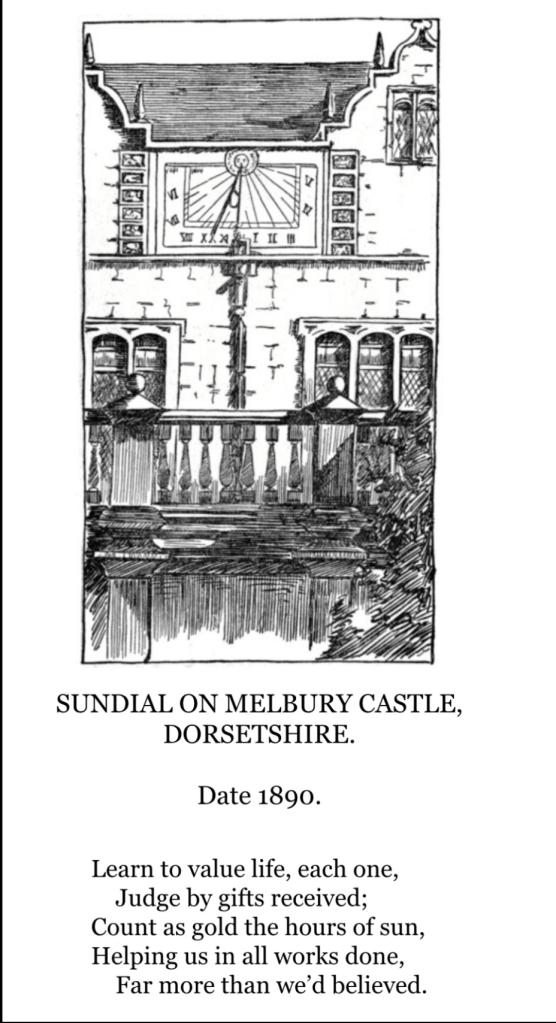
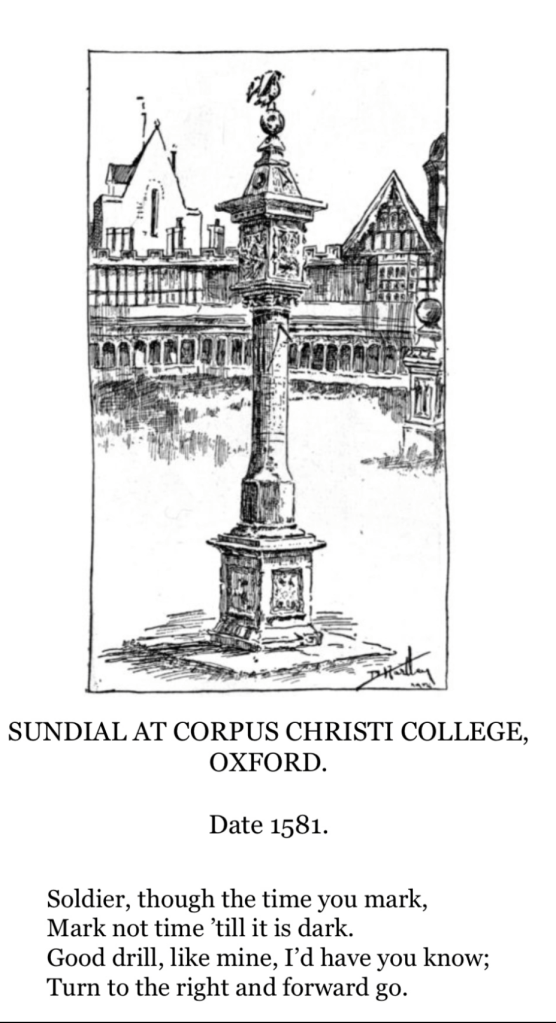
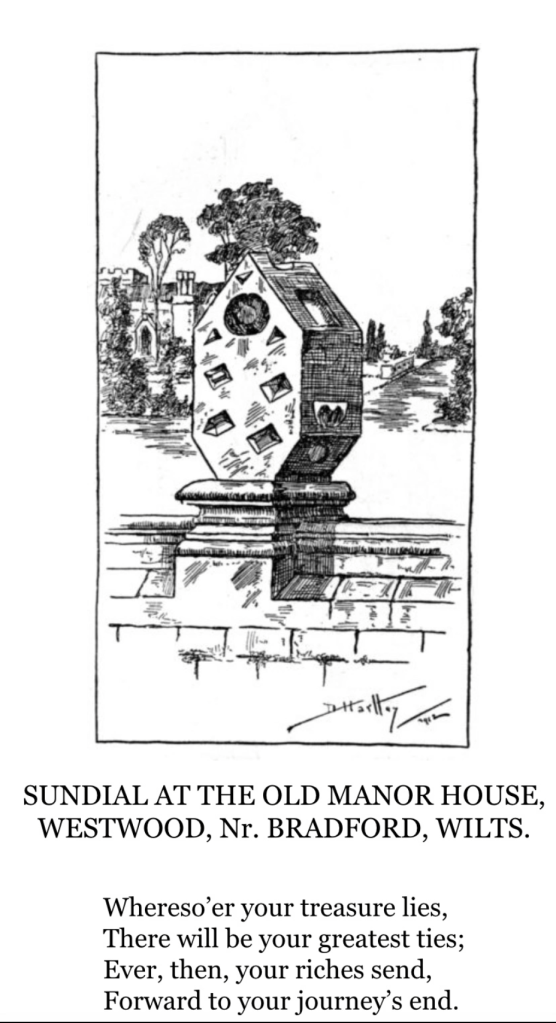
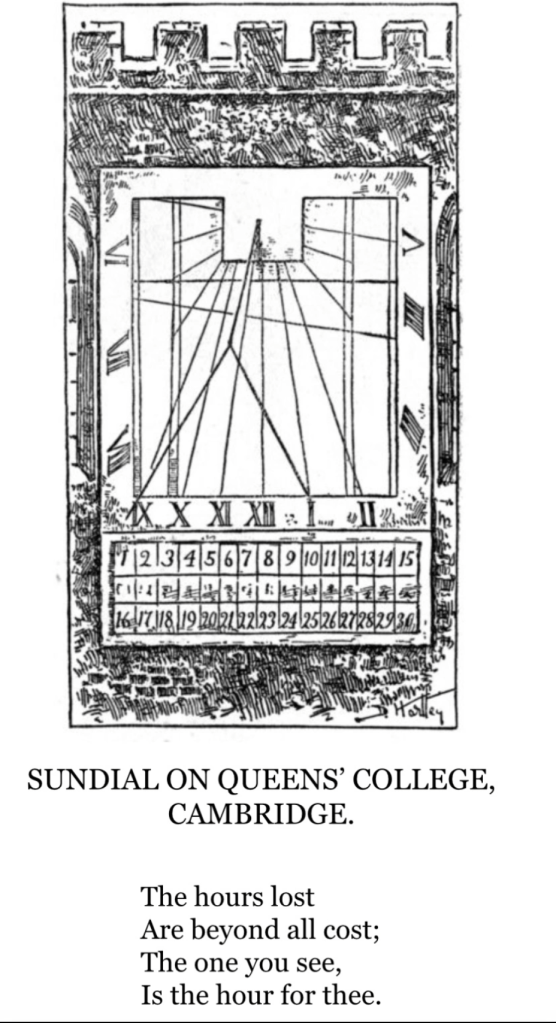
Besides the large number of dials from all parts of Britain, each card had a sundial-and-product specific motto / pithy ditty on the back. The 5 collectors’ pages below show the front and the backs separately. Please note that you will have to read the text sides in reverse order to match the description to the correct dial. The centre one will be the same.
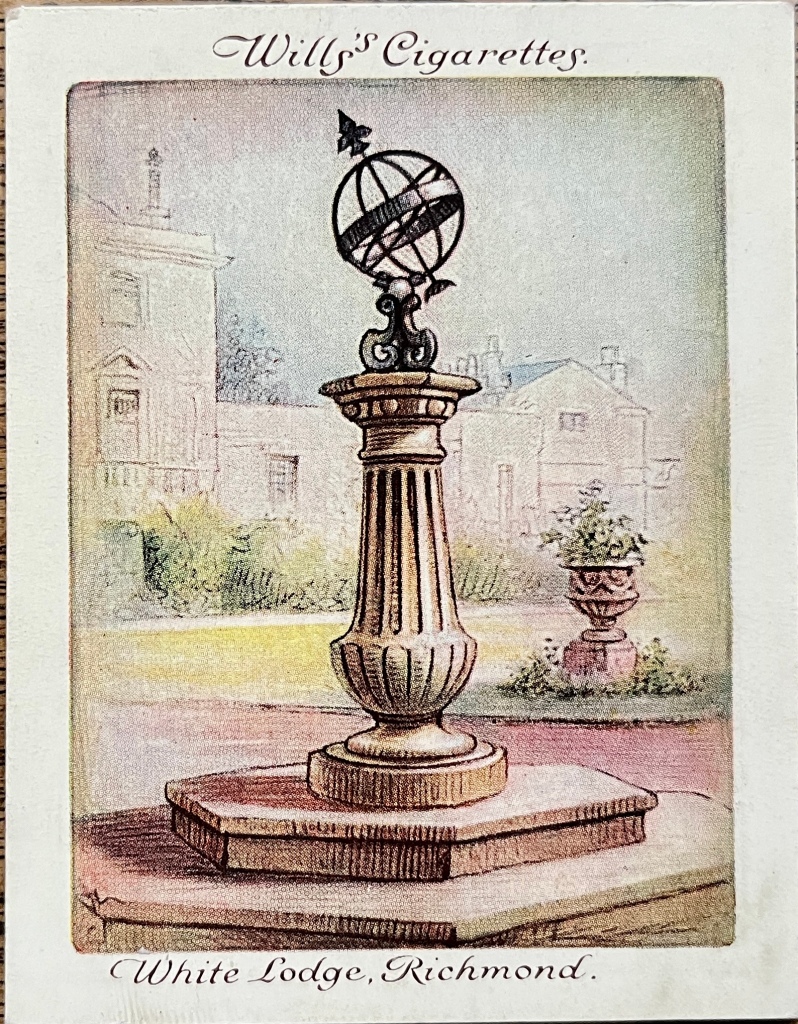
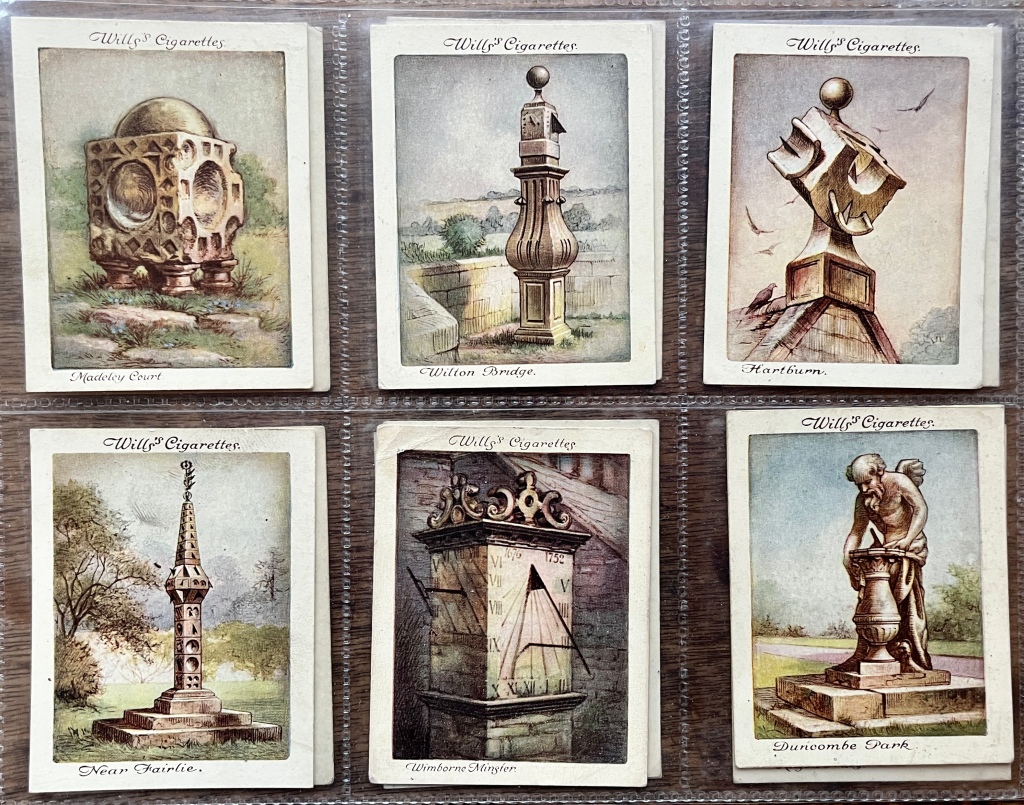
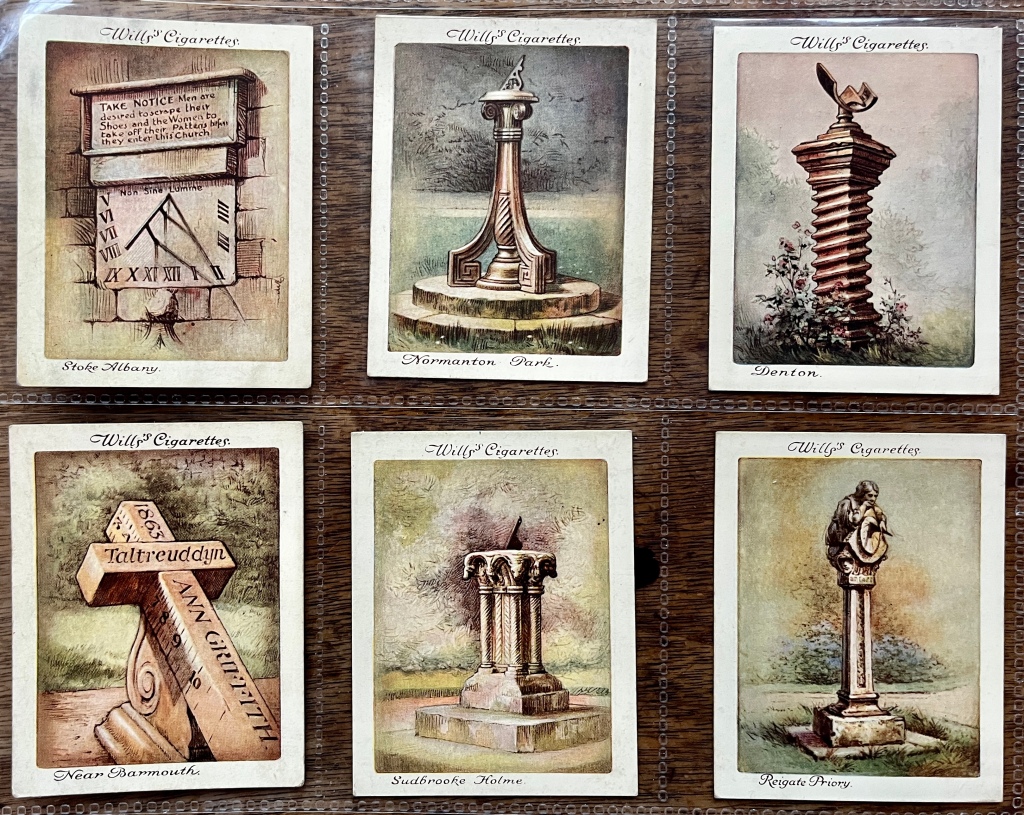
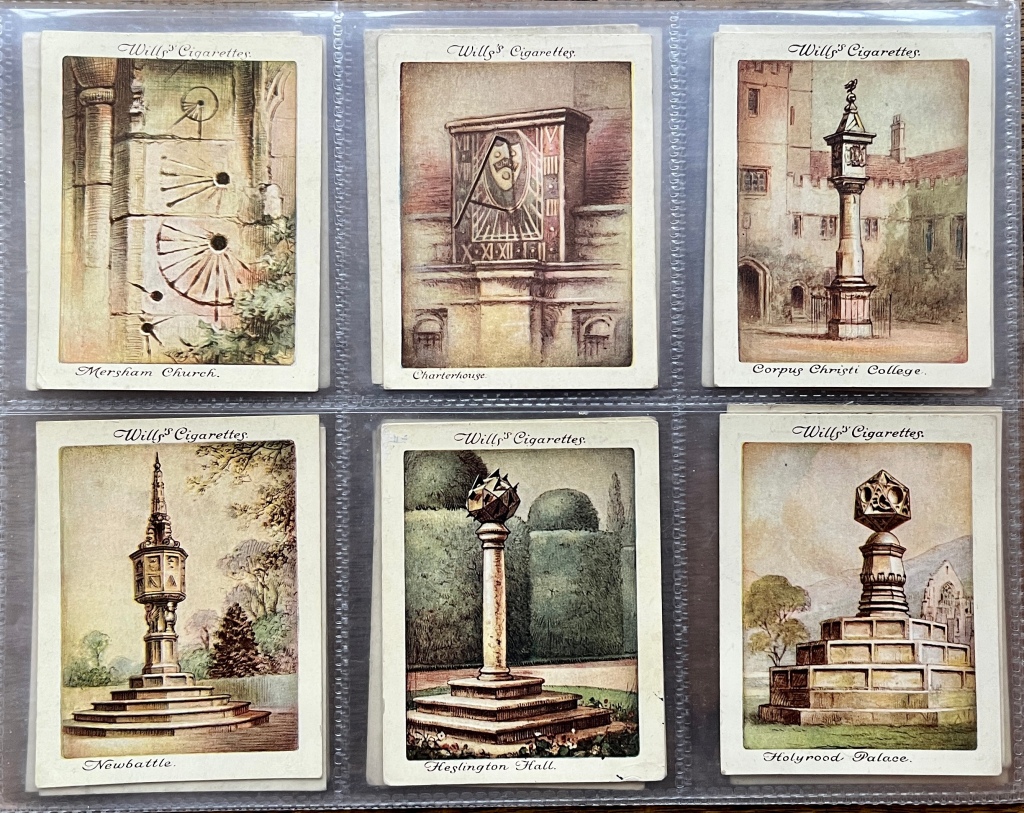
Following the example set by Fry’s, the cigarette company W.D. & H.O. Wills produced its own Sundial cards in 1928 with a set of 25. I have featured theseHERE.
NATIONAL PORTRAIT GALLERY Explore the Cigarette Card Collection HERE
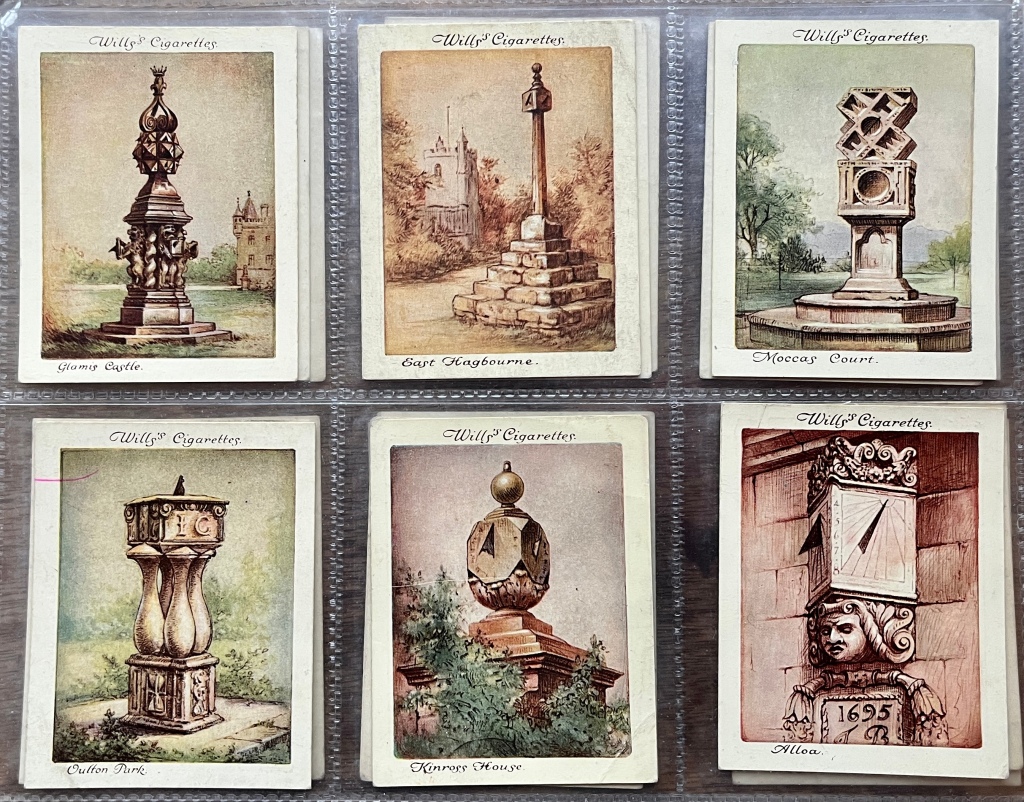
In the late C19, the first series of collectable themed cards were used in America to encourage trade. The idea caught on, and this early example of product placement gradually spread. Sportsmen (Cricketers), Nature, Actors, Military and Important People, were among the topics. By the turn of the century, British companies including W.D. & H.O. Wills had taken up the challenge. In 1928 they turned to Sundials**
A complete set of 25 Wills Cards was commissioned. The series began with scratch dials and included almost all known types of dial. On the back of each card, concise information was given. Smokers were at last able to indulge their habit with the added bonus of free specialist learning aids. By the 1960s almost every facet of life from tea and exotic animals (Hornimans via football to fighter planes had been covered. These days, we must rely on eBay to bring back the memories now that a cigarette costs 10x the price of an Airfix Tiger Moth kit.
** Wills were slow off the mark: in 1924, Fry’s had already produced a colourful 50 card set, of which more another time. NOW FEATURED HERE
NATIONAL PORTRAIT GALLERY Explore the Cigarette Card Collection HERE