RIPE . EAST SUSSEX – St John the Baptist

Ripe Church, E Sussex – Keith Salvesen

ST JOHN THE BAPTIST . RIPE

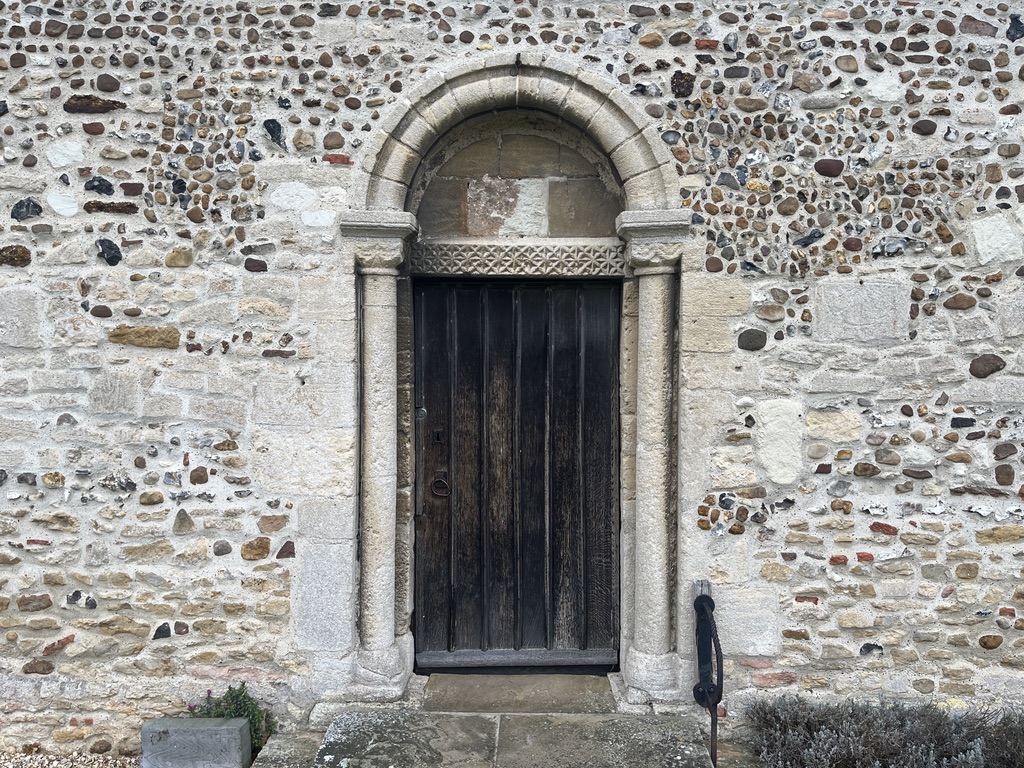
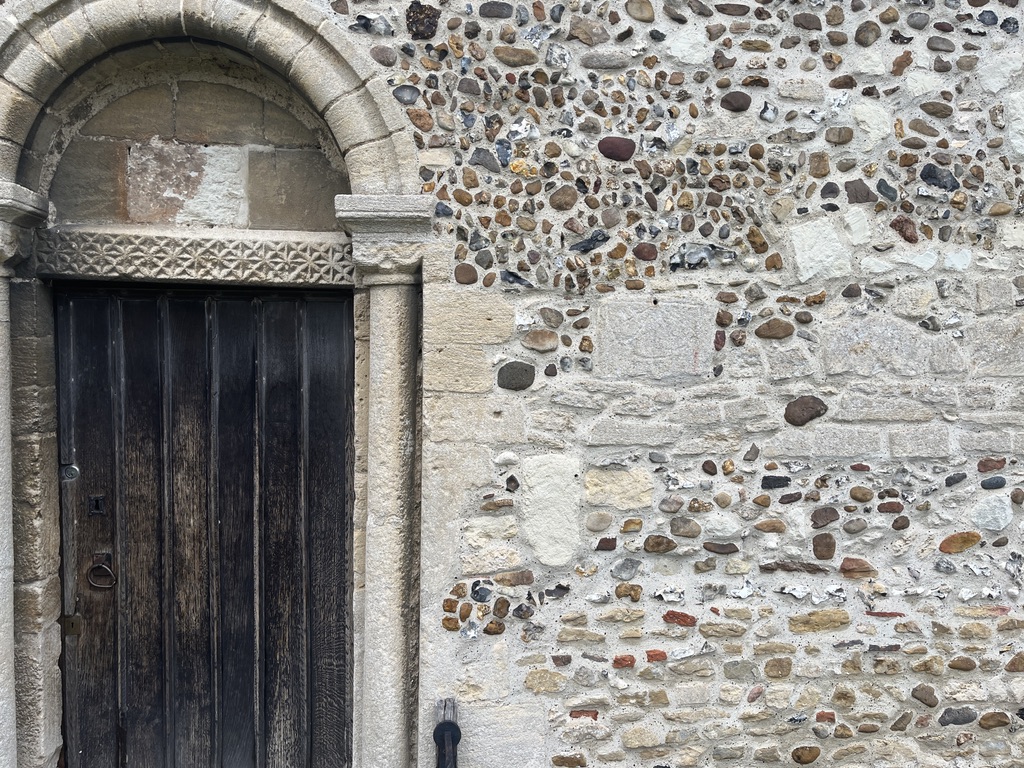
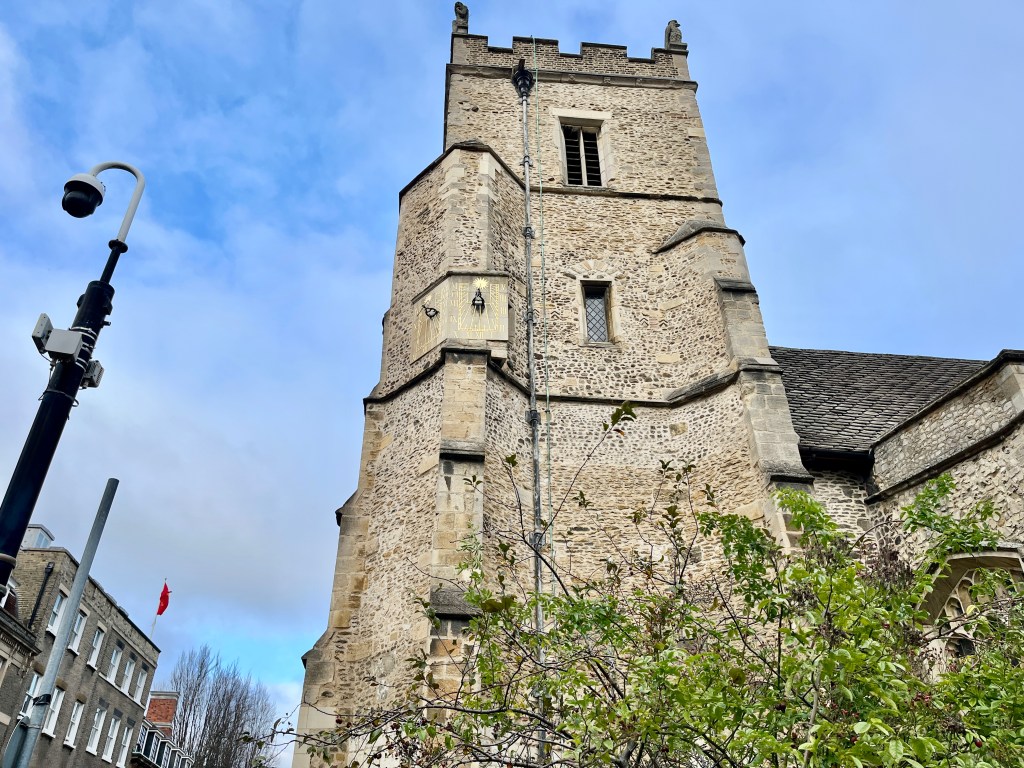
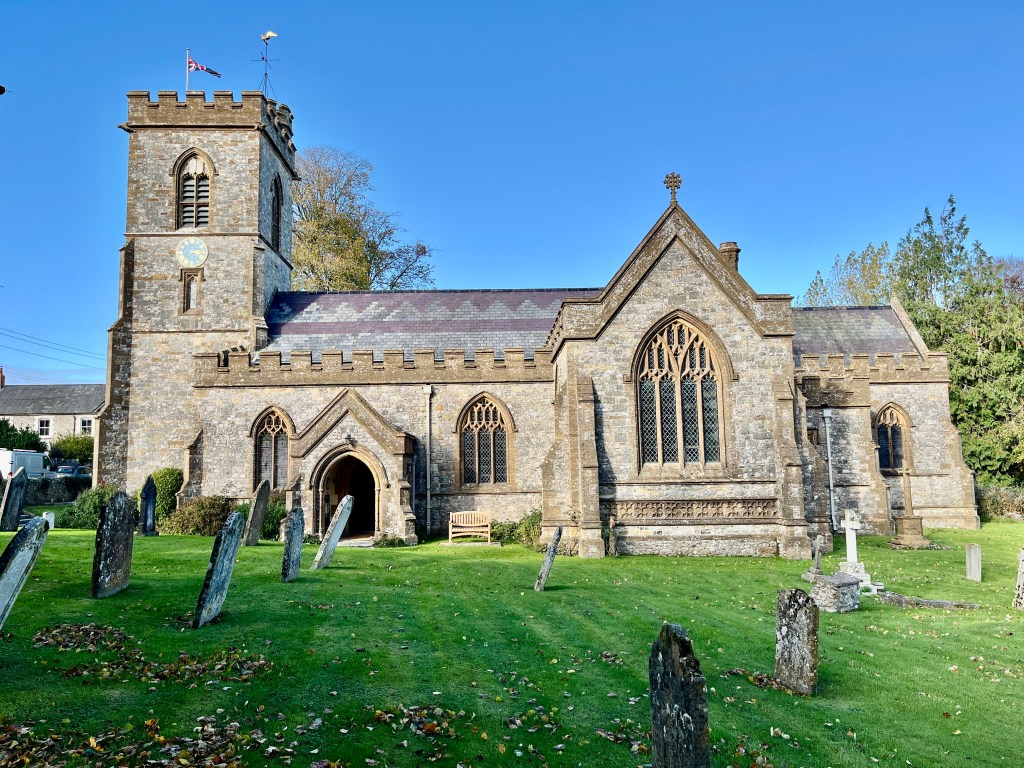
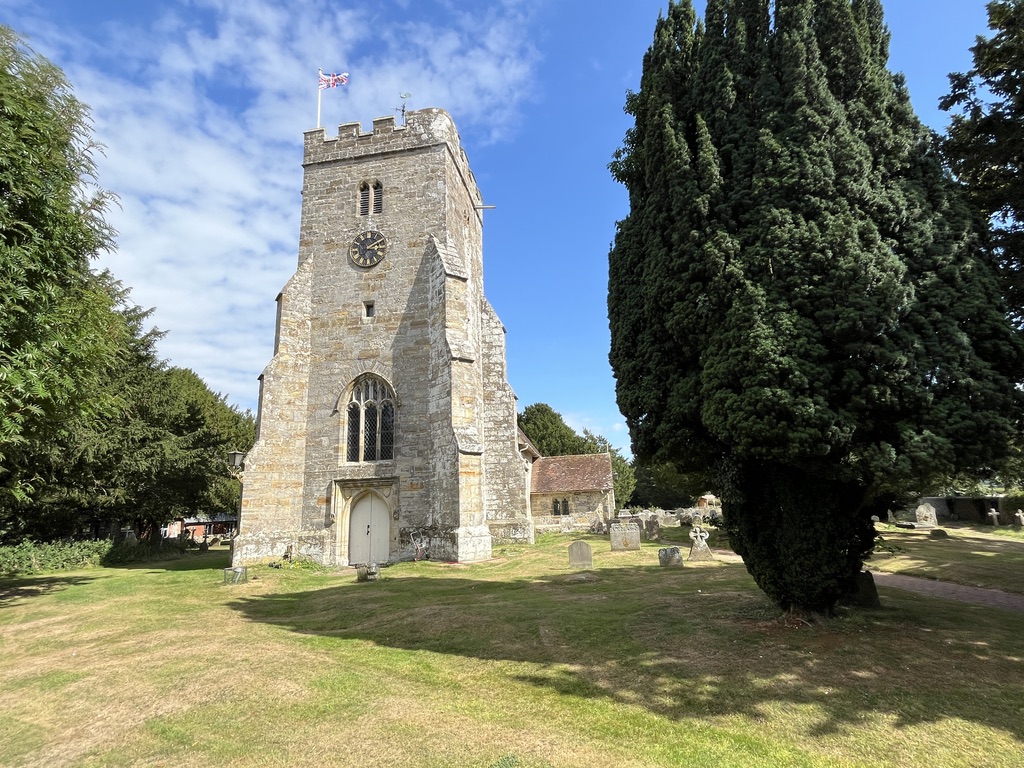
GRADE 1 ❖ C13 traces, mainly C14, C15. C19 restorations. Little information HE / BLB, but this link is informative https://sussexparishchurches.org/church/ripe-st-john-the-baptist/. One of a cluster of interesting churches in the area. 8 miles E of Lewes. 50.8684 / 0.15 /  TQ513098

DIALS

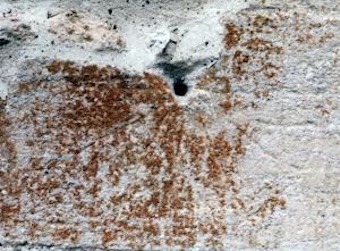
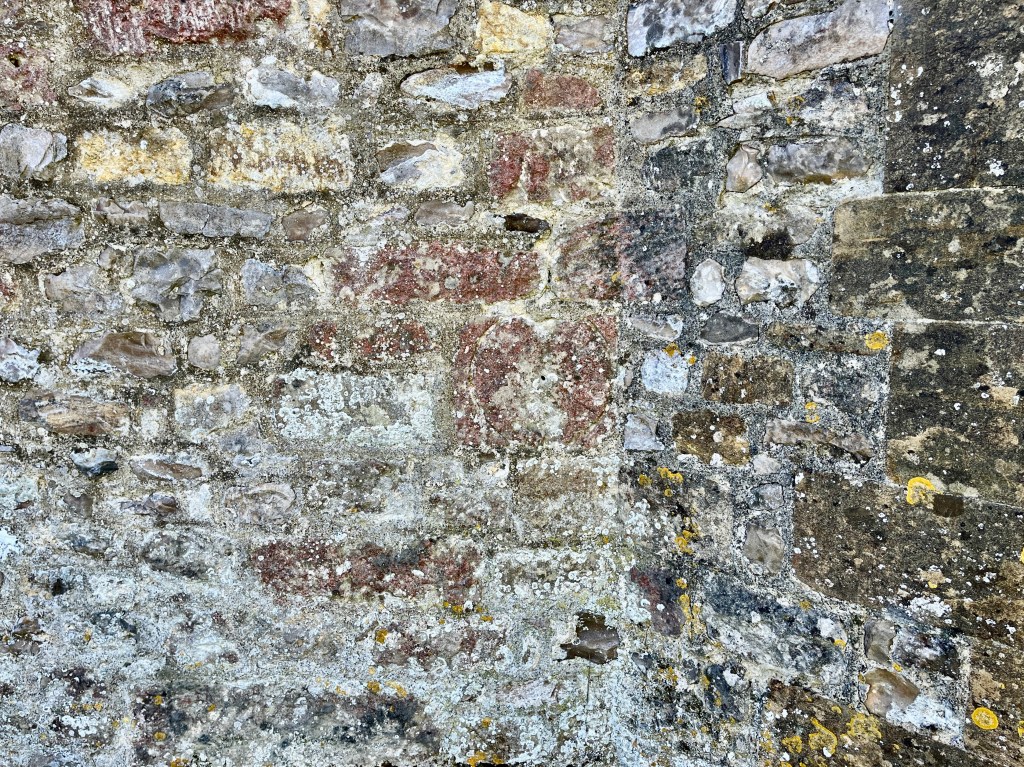
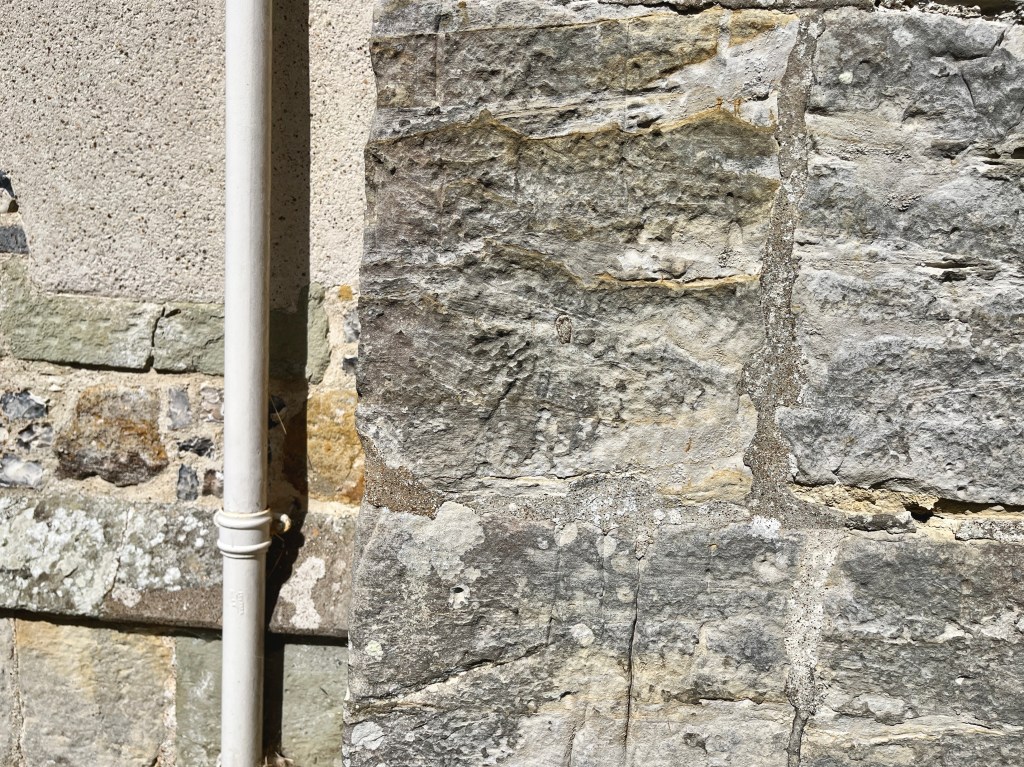
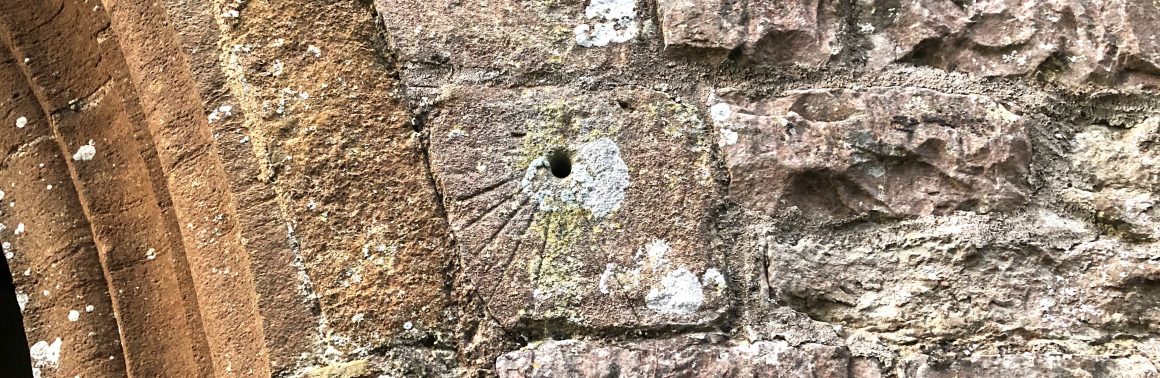
The church is said to have 3 dials, though I could only find 2 definite ones. The first is very rough, with ?2 lines dropping down from a plugged hole, and some scrapes around the area. It’s hard to see how it marked the course of the day effectively. The hardness of the stone may explain it.

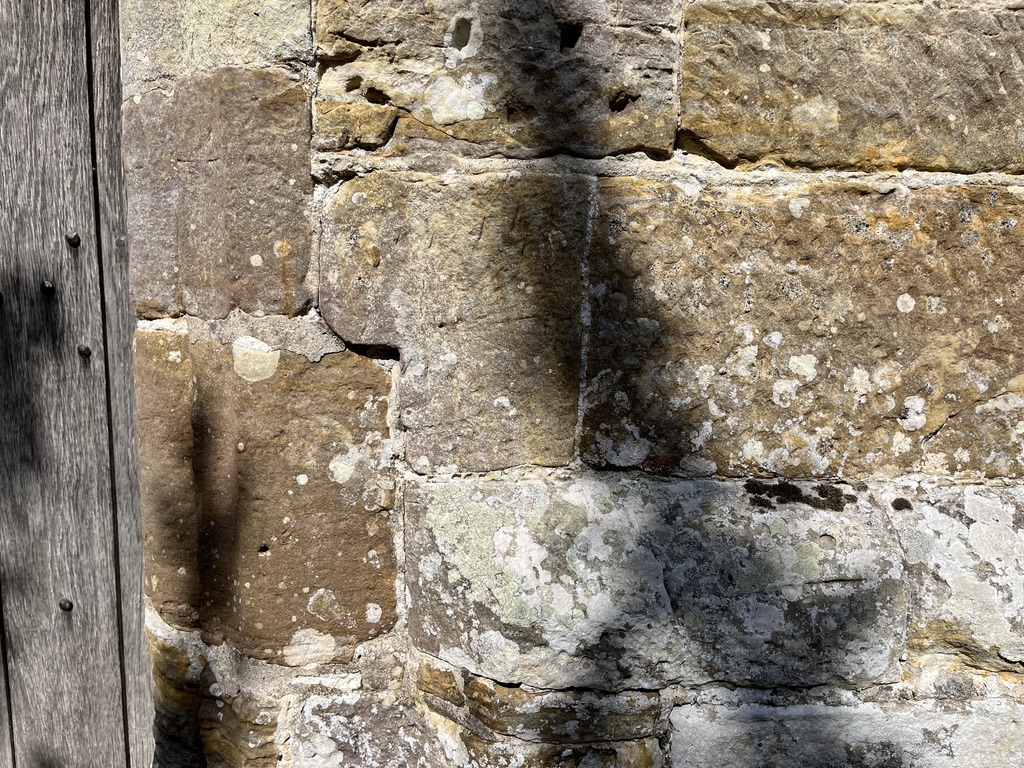
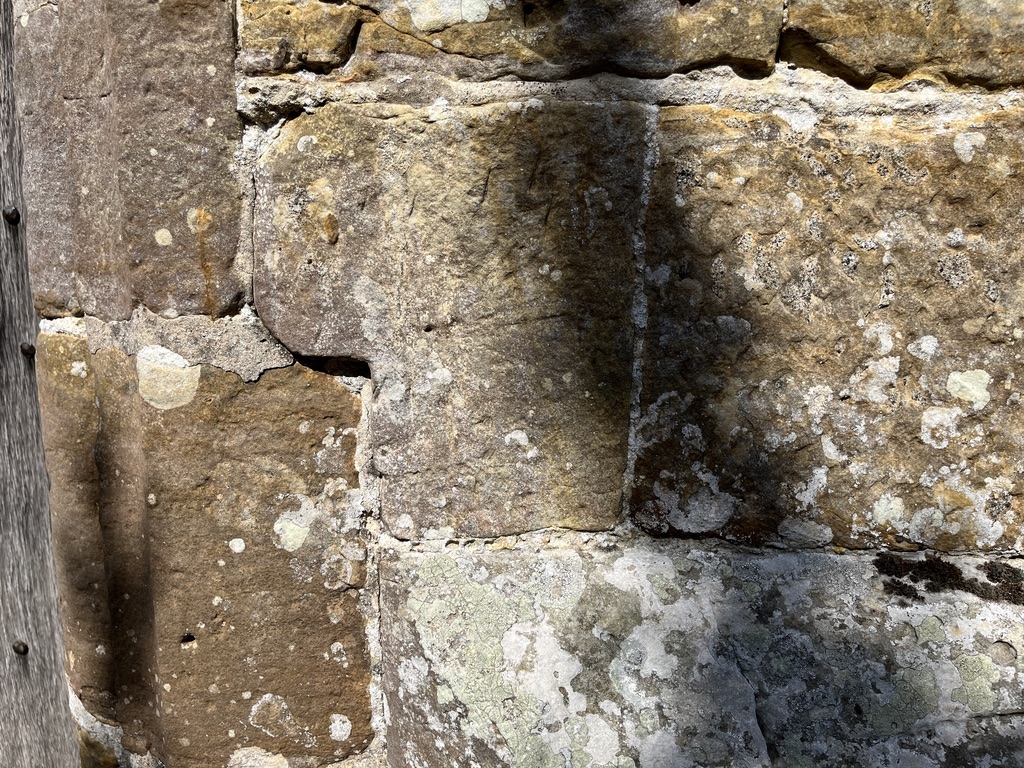
An intriguing dial in quadrant form, and cut on a shaped stone re-sited from elsewhere on the church. The images below show the dial as it is now, located URQ – the least effective location for marking the passage of today.

Two orientations could have worked: as a morning dial (LLQ) or an afternoon dial (RLQ). But then the stone would have needed to be recut…

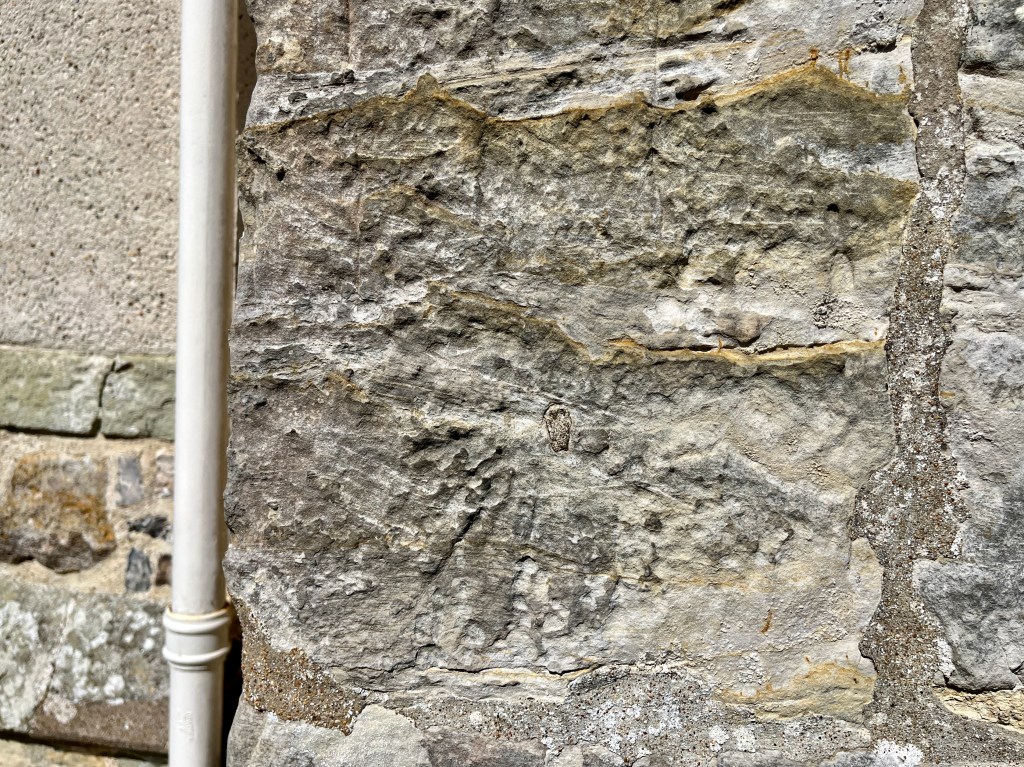
I did not find a definite 3rd dial, but on an adjacent stone to the others is one with a mix of holes. Two have faint lines / possible radials. If I had to choose one, it would be top left. Any helpful views welcome.

GSS Category: Scratch Dial; Mass Dial; Lost Dial
All photos: Keith Salvesen

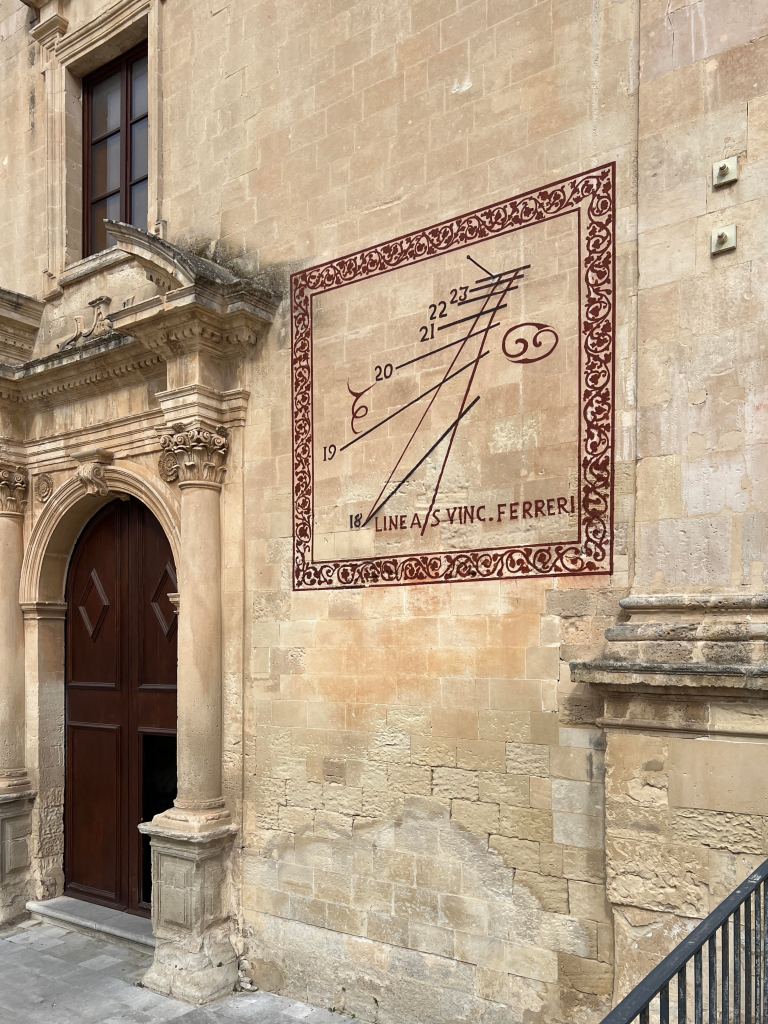
RAGUSA . SICILY . SAN VINCENZO FERERRI – Vertical Dial

Andrea Schaffer CC by 2.0

SAN VINCENZO FERERRI . RAGUSA . SICILY

The church was built by Dominican monks and dates to c1509. In 1693 it was largely destroyed by an earthquake. Rebuilding followed by later work and restorations followed. C20 saw a number of actual or intended improvements, encapsulated in one source as ‘underwent serious transformationsthese interventions led to total abandonment of the church and also led to the collapse of the roof‘. The church is now deconsecrated and is used as a public auditorium.

DIAL

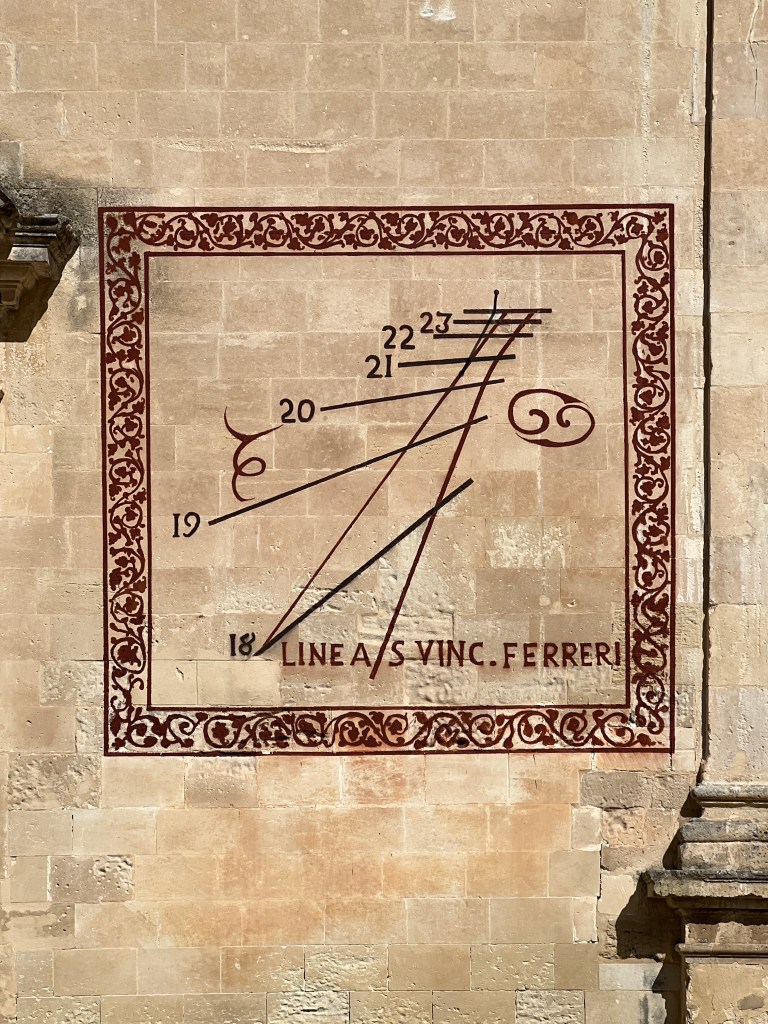
This splendid dial is on the W end wall of the church, a marker for the passage of the afternoon and evening. The location suggests that the most significant time for observance was in the latter part of the day. The hour lines are painted black; the equinox lines are red. The ‘grid’ includes an angled path from Leo to Gemini.

Credits: all photos except header, John Renner (with thanks for yet another fine Italian dial); enjoysicilia.it for helpful information about the church and its dial.

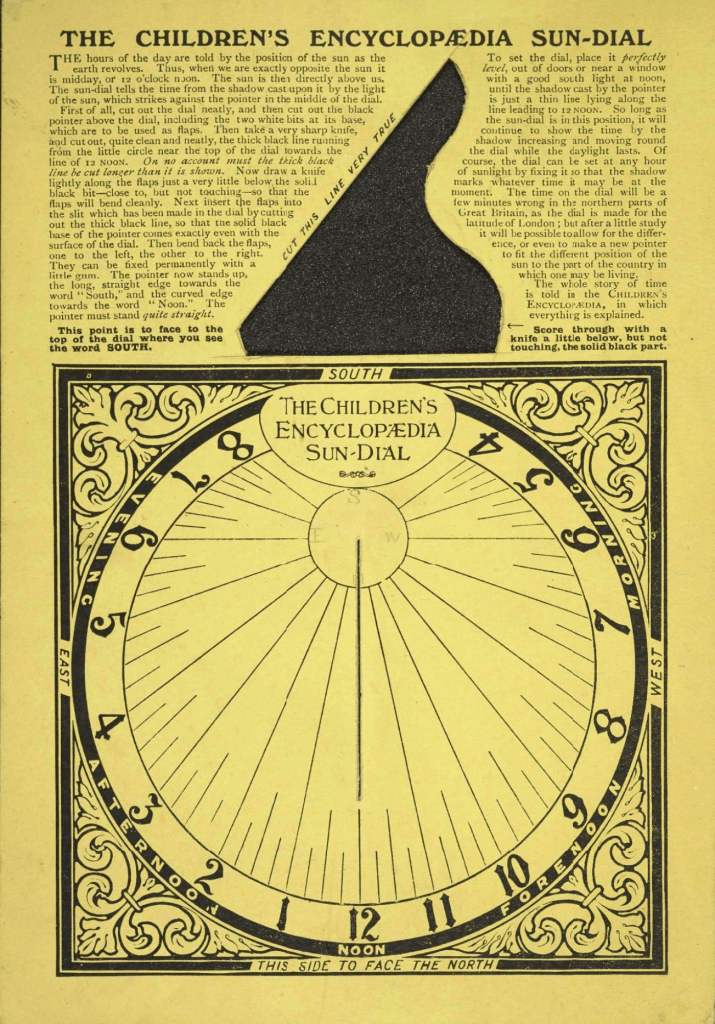
CHILDREN’S ENCYCLOPAEDIA SUN-DIAL

The Children’s Encyclopaedia was published between 1908 and 1964. It was an ambitious and popular learning resource devised by Arthur Mee. It covered a broad spectrum of topics that sparked interest in – and inspired – many youngsters during its long lifespan. This sundial involved some awareness of compass principles and of the passage of time in a readily understandable form. The material benefit for the young readers was a direct involvement with topics that an iPhone can help with without the underlying principles being known let alone understood. Some young enthusiast must have added compass points in the image below.

CREDIT: P. Delehar -The Children’s Encyclopaedia Sundial in cardboard
Science Museum Group © The Board of Trustees of the Science Museum

GSS Category: Cardboard Sundial; Child’s Sundial Project; Sundial as educational tool

HORTON . GLOS . ST JAMES THE ELDER – Vertical Dial

Benefice Photograph

ST JAMES THE ELDER . HORTON . GLOS

GRADE I ❖ C12 origins; rebuilt C14; subsequent alterations C15/16; restoration 1865. Fine S porch with a splendid collection of carvings; interesting monuments within. On the Cotswold Way NE of Chipping Sodbury. 51°33’49″N   2°20’20″W ST766850

VERTICAL DIAL

This rather splendid dial, cut high on a buttress, is somewhat rustic for its exalted position. It faces SW, which explains why the lines radiate from a corner, rather than top centre or central to the dial stone. The randomness of the radials and the gaps between them suggests difficulty matching them with the positions of the roman numerals along the base and RHS of the dial.

BRITISH SUNDIAL SOCIETY RECORD 1998

GSS Category: Vertical Dial; Dial on Church

CREDIT: Martin May, with thanks for contacting me and for the excellent photos of this interesting dial

ST DEVEREUX / ST DUBRICIUS . nr KILPECK . HEREFS – Scratch Dial

ST DEVEREUX / ST DUBRICIUS . HEREFS

GRADE II* ❖ C13 nave, C14 west tower and late C14 chancel; mid- to late C19 restorations. Very close to the famous early church at Kilpeck. St Dubricius has just one farm for company. If you are going to Kilpeck, this small church is worth a short visit on the way. 51.9766 / -2.8154 / SO440312

DIAL

The dial is within the porch to the right of the doorway. It is encircled. The whole left half is now very faint. The clear straight line RHS at 3 extends beyond the circumference, suggesting that mid-afternoon marked the significant time of the day. Above it, at 6, a scratched rustic ‘line’. Just below there’s a near-obliterated straight line. With some imagination, there may even be a trace (see close-up) of a noon line. At some stage a copper rod has been used as a gnomon, with the blue coloration spreading below.

I’d like to have discovered when the porch was added, but none of the main resources give this (not even ‘mentioned in Pevsner’).

GSS Category: Scratch Dial; Dial within Porch

Credits: All Photographs – Keith Salvesen

PETERCHURCH . CHURCH OF ST PETER . HEREFS – 3 Scratch Dials

ST PETER . PETERCHURCH . HEREFS

Grade 1 ✣ Foundations date to AD 745; Saxon work visible in sanctuary. Substantially Norman, built mid-C12 as a 4-chambered basilica (cf Kilpeck nearby). C13 – 14 alterations, additions. Restorations from mid C19. Impressive fibre glass spire installed 1970s. It replaces the last of several spire dramas since the original of c1320 was completed (see HERE). Situated in the Golden Valley of Herefs. 52.0412 / -2.9564 / SO344385

DIALS

DIAL 1

RHS of Priest’s door. A morning dial with 5 lines, each with a terminal pock. The noon line – slightly offset – has a pock halfway down.

❖❖❖❖

DIAL 2 [and 3]

On a substantial buttress, a small dial so basic that I discounted it at first. The 2 lines do not even descend properly from the gnomon hole 3 ins above. The hole looks as though it has been enlarged at some time. I assume it predated and was succeeded by Dial 1.

❖❖❖❖

DIAGRAMS OF ALL DIALS INCLUDING DIAL 3*

Dial 2: the 2 short lines LHS are near-invisible now. I wonder if they were ever part of a dial.

Dial 3: this morning dial is close to Dial 2, but I missed it. It must be above the coping stone.

❖❖❖❖

GSS Category: scratch dial; mass dial; early sundial

Credit: Botzum ‘Herefordshire Scratch & Sundials’

MIDDLE CHINNOCK . SOMERSET . ST MARGARET – 2 Scratch Dials

ST MARGARET . MIDDLE CHINNOCK . SOMERSET

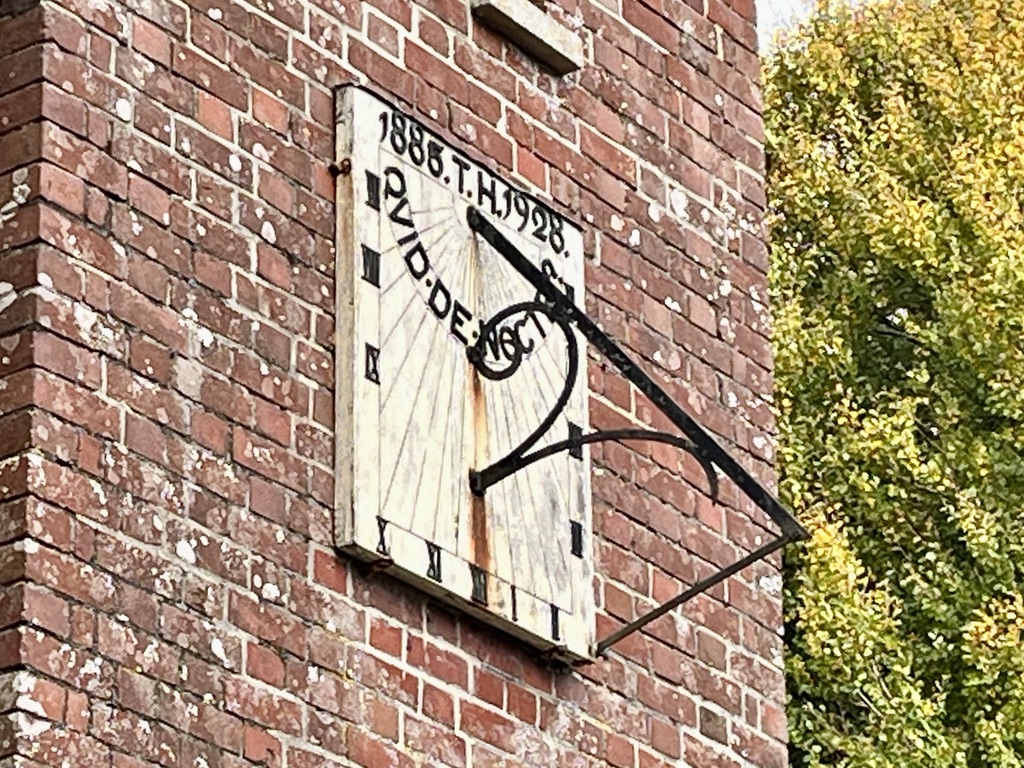
GRADE II* ♰ C12 origins with fine Norman arch and tympanum within the early C14 S porch; other early remnants. C14/C15 tower. Subsequent development and restorations; several phases of rebuilding C19. Of note: unusual sundial at the apex of the porch. This will be written up separately. There’s a charming calligraphed guide to the church on which, amongst the highlights, 2 scratch dials are mentioned. Roughly halfway between Yeovil and Crewkerne, on strangely-named Poop Hill. 50.9152 / -2.7523 / ST472131

DIALS

The dials are close together on the E side of the porch. They are plain holes without other visible dial-ish features or adornment – very much in the ‘doubtful’ category. Of note is that Dom Ethelbert Horne, during his exhaustive survey of all Somerset churches in early C20, did not include St Margaret in his records. However, the written church record suggests that scratch dial status was conferred some way into the past, rather than being a recent idea.

The likelihood of 2 dials in one small area, consisting only of a hole with not even a noon line between them, is pretty small. A very simple early dial might be superseded by a separate, more complex one in the fulness of time – sometimes on an adjacent stone. I’m not convinced by this pair. Probably I should find out what the church record reveals.

UPPER DIAL

LOWER DIAL

THE DIAL OVER THE PORCH WILL BE DEALT WITH SEPARATELY

GSS Category: Scratch Dial; Mass Dial; Gnomon Holes

All photographs: Keith Salvesen

ÉGLISE SAINT-JOHN-BAPTISTE . OMANVILLE-LE-ROQUE . MANCHE . FRANCE – Vertical Dial

ÉGLISE SAINT-JOHN-BAPTISTE . OMANVILLEVILLE-LE-ROQUE

We visited this church rather late in the day, as dusk was falling. This was one of several vertical sundial churches in the area, but the images were so poor I didn’t use them. Having come across them again and made them somewhat more legible, I am adding them the series. The images speak for themselves, but not very loudly… At least the gnomon hole can be see.

GSS Category: Early vertical sundial France; Sundials Abroad

WINTERBORNE HOUGHTON . DORSET . ST ANDREW – Scratch Dial

ST ANDREW . WINTERBORNE HOUGHTON . DORSET

GRADE II ✣ C13 origins. Rebuilt 1860s by T H Wyatt, using original material. Perp style with flint, banded brick, and rubble. C15 font. Loose links with owls and Thomas Hardy. A tiny village off the beaten track from Winterborne Stickland (3 scratch dials). 5m SW of Blandford Forum 50.8388 / -2.2566 / ST820043

DIAL

This simple configuration is very close to the category ‘Not-a-Dial’. It is 18″ above ground level, and set into an area of flint. The stone must be a re-sited remnant from the original church or some intermediate restoration. But is it likely ever to have been a marker of the passage of day?

GLP, the expert on the scratch dials of Dorset, puts this dial in the ‘doubtful’ category. He describes the circle with a single line pointing upwards, with a piece of iron (squarish) in the centre. Interestingly, he suggests that the dial might originally have been hand painted rather than having cut lines: there is an example of such a dial at Tolpuddle, quite nearby.

REVERSION

The ‘dial’, reverted, shows that the noon-line extends beyond the circumference, a fairly frequent way of emphasising the importance of that hour. The protruding rusty iron stud is a puzzle. It is accurately centred and perhaps was used to plug a gnomon hole. Possibly it had a purpose as a hook or a hanger now largely rusted away.

GSS Category: Scratch Dial; Dorset Scratch Dial; Mass Dial

All photos: Keith Salvesen / Rolling Harbour

WINTERBORNE STICKLAND . DORSET . ST MARY: 3 Scratch Dials

St Mary . Winterborne Stickland . Dorset

❖ ❖ ❖

ST MARY . WINTERBORNE STICKLAND . DORSET

GRADE 1 ✣ C13 origins; Tower ± 1600; considerable restoration C18. Scratch Dials 3; Graffiti: C17 & 18 initials & dates on responds of tower arch. 5m S of Blandford. 50.8409 / -2.2363 / ST834046

See separate entry DOUBLE-FACET DIAL ABOVE PORCH

❖ ❖ ❖

SCRATCH DIALS

DIAL 1

SE corner of the Chancel. 8 lines with extended noon line. A morning dial, cut in or near LLQ.

❖ ❖ ❖

DIAL 2

SE corner of nave buttress. Worn and at first sight just a gnomon hole near the centre of the stone. On closer examination and despite the lichen, a number of lines can be detected (GLP suggests 7).

❖ ❖ ❖

\

DIAL 3

SE corner of nave buttress, immediately above Dial 2 but on a larger and different stone type. Very degraded / eroded, but two downward lines are just visible.

NOTE: GLP, in his comprehensive survey of Dorset scratch dials, considers all 3 dials to be C13

GSS Category: Scratch Dials; Mass Dials; Medieval Sundials; Dorset Scratch Dials

All photos Keith Salvesen; Ref. Gordon Le Pard