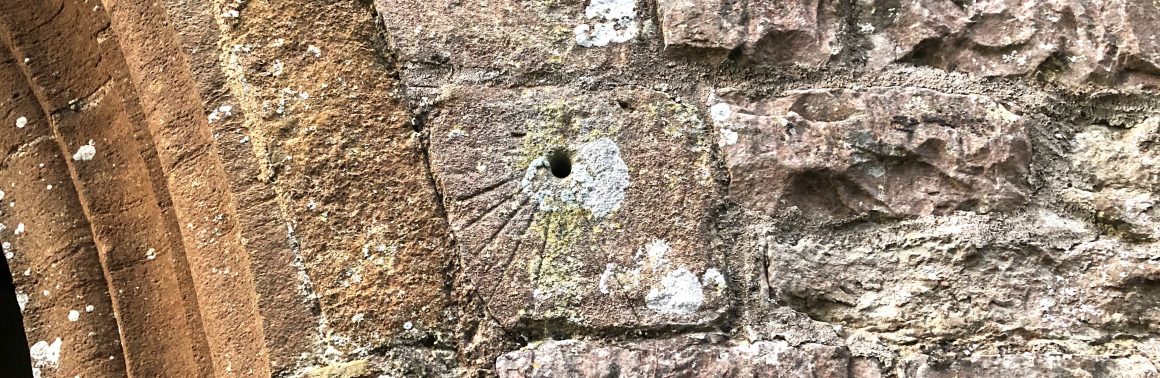

GRADE II* ❖ C13 – C15; C19 restoration (some by T H Wyatt). Quite large, with nave, chancel, north and south porches, south vestry, west tower. Predominantly Perp. Busy history and plenty to look at, approval by PEV. 10m N of Castle Cary; 16m S of Shepton Mallet 51.124 / -2.4854 / ST661361
DIALS
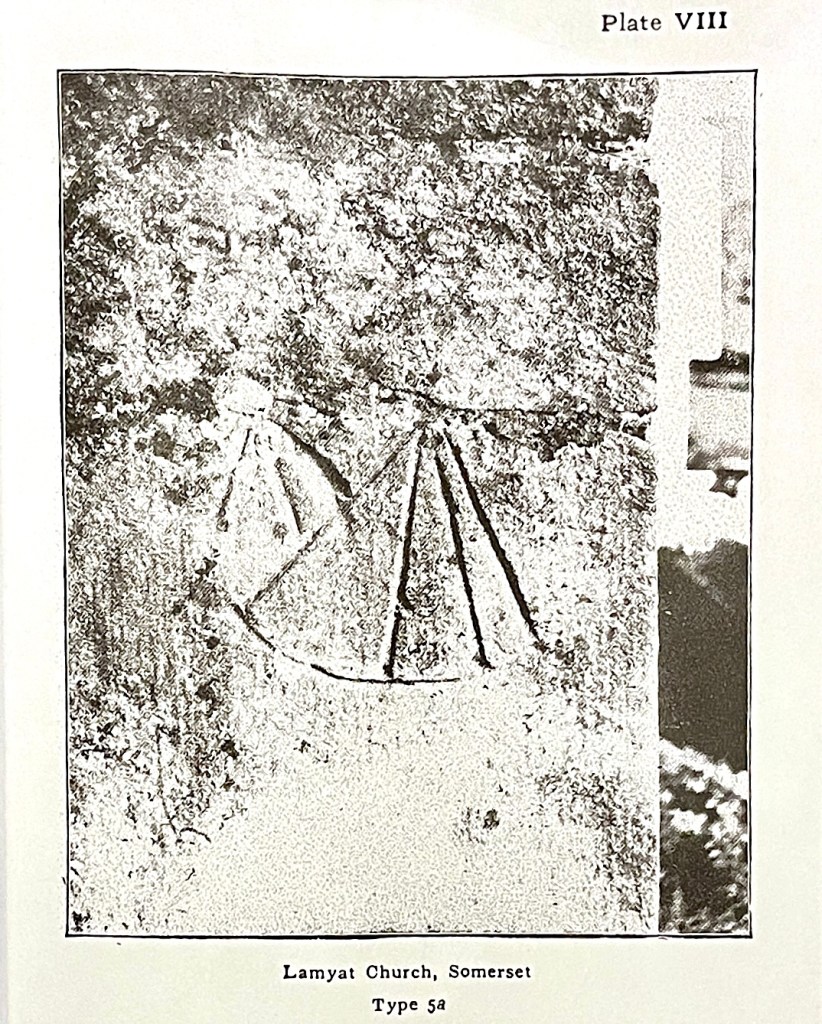
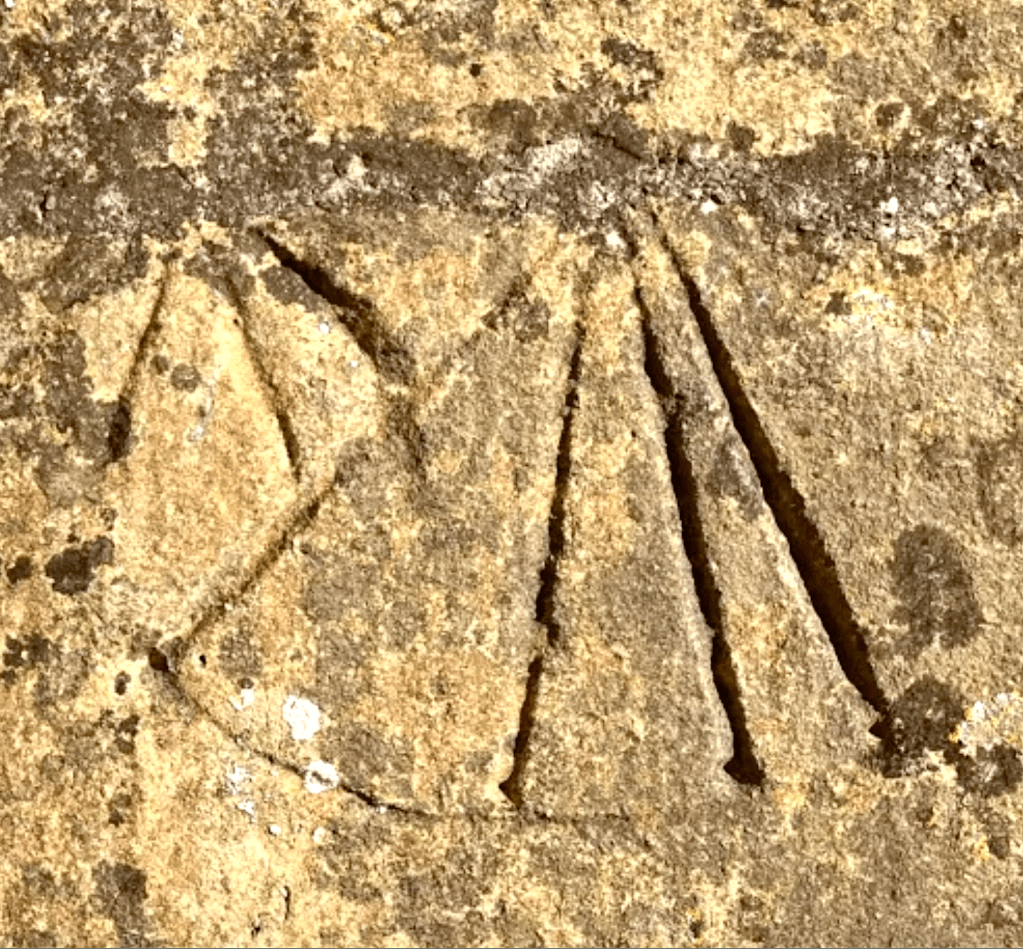
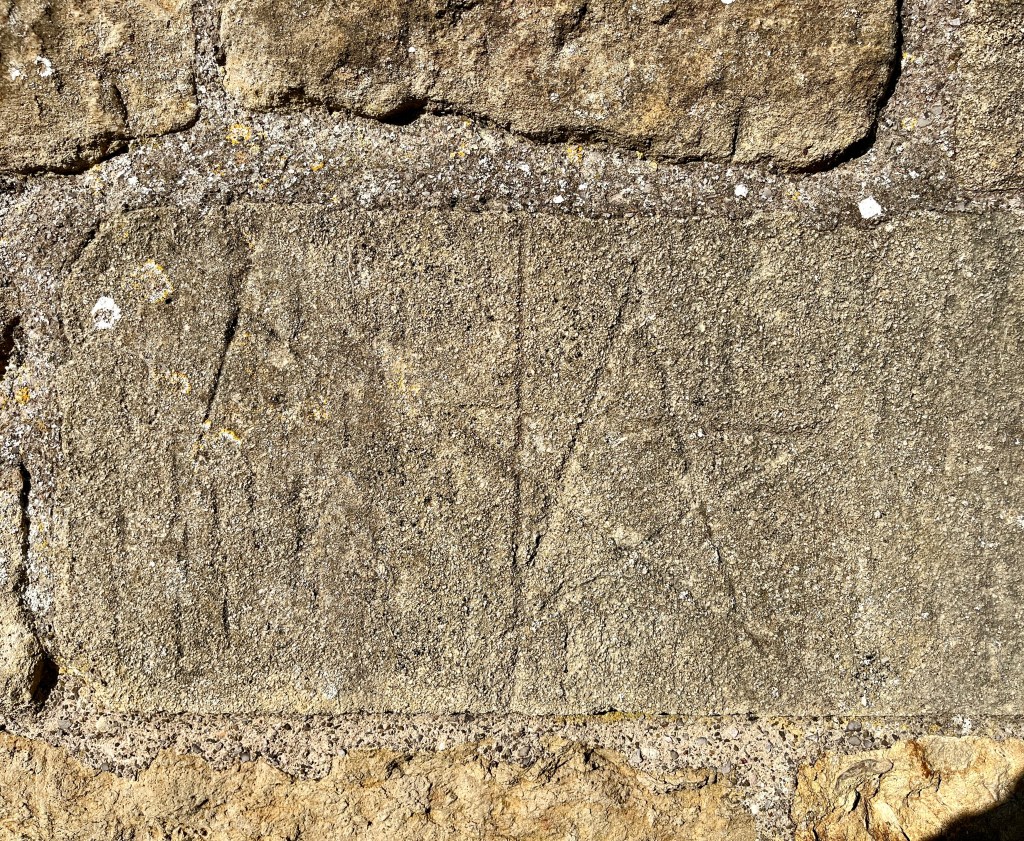
There are 3 dials (one unrecorded?). W of the porch, low down on a relocated quoin stone, there are 2 interesting near-overlapping dials cut on W face. This is a good example of ‘dials ancient and modern’: a small early dial – simple and rustic – superseded by a later dial cut with attention to detail. The 3rd dial is on the buttress E of the porch.
DEH visited the church on 16 October 1913 . By now he was using a camera to photograph selected dials, including Lamyatt. The quality of his images is surprisingly good. He also used a motorcycle to extend the scope of his researches from Downside Abbey. More about this extraordinary monk in due course.
DIALS 1 and 2
DEH visited the church on 16 October 1913 and recorded dials 1 & 2.
DIAL 1. This small dial has 3 radials emerging from a now undetectable gnomon hole in the corner of the mortar line ULQ. The deeper cut and crudely bent line RHS suggests that the main canonical hour for observance was Nones. In due course a replacement dial was called for.
DIAL 2
DIAL 2. On the same quoin stone, also W-facing, a later and far more practical dial was cut. 4 radials the same length fan out from a gnomon hole in the mortar line (the original plug?). These are arranged within a minor arc, and scale up both in width and depth LHS to RHS. The overall effect indicates competence and care by the maker.

The radials each end in a dot (one is barely detectable). The line spacing of the dial in its original position arrangement is a puzzle. In a literal way, noon would be exactly between lines 2 and 3, as sometimes found on other churches.
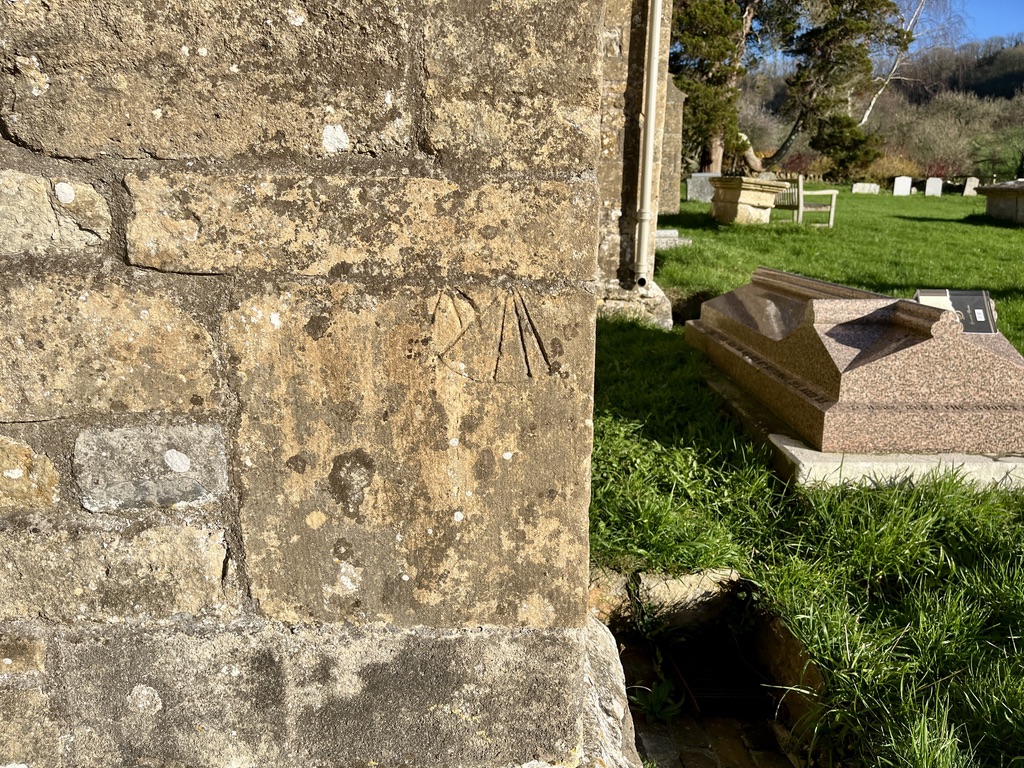
DIAL 3
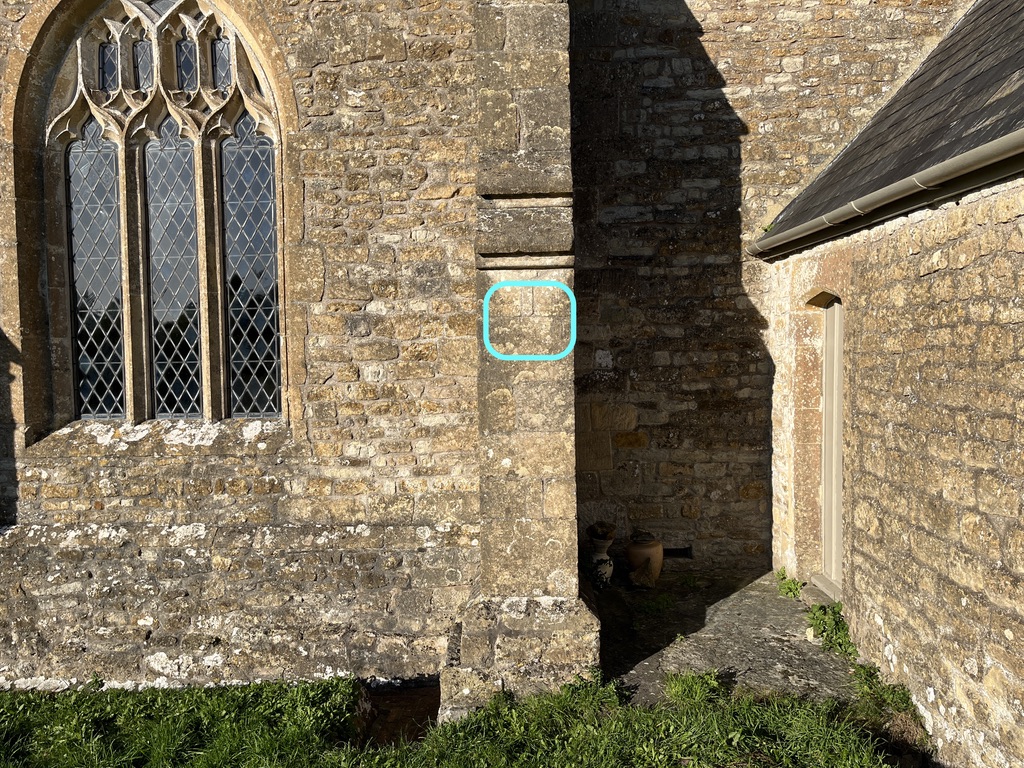
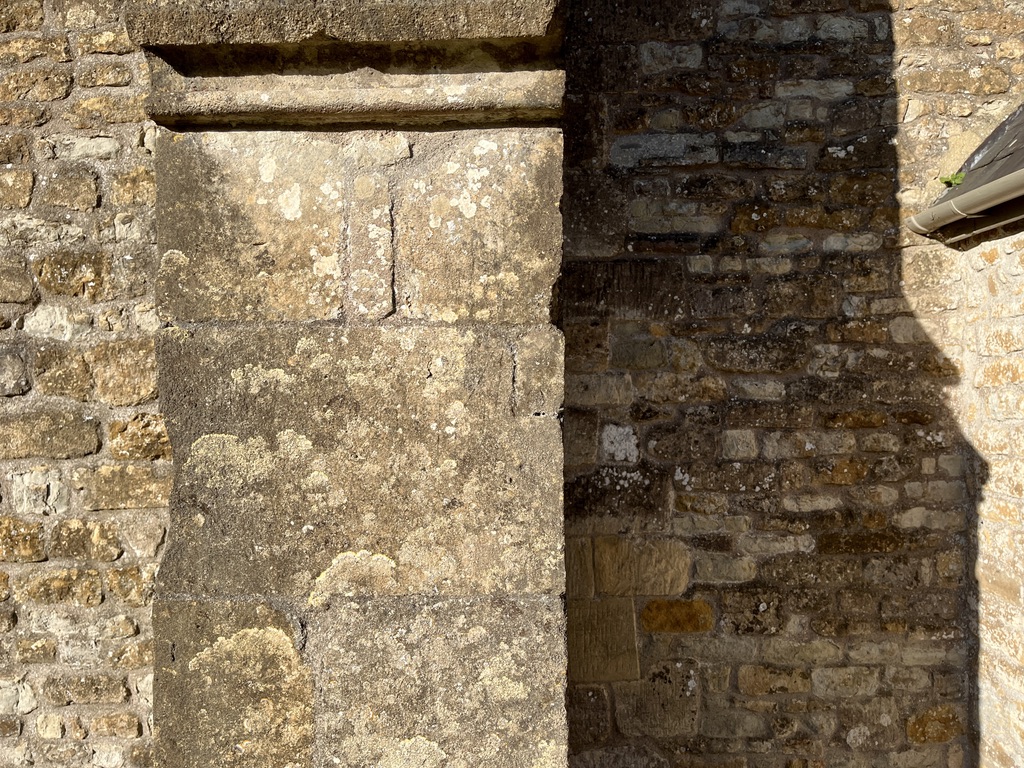
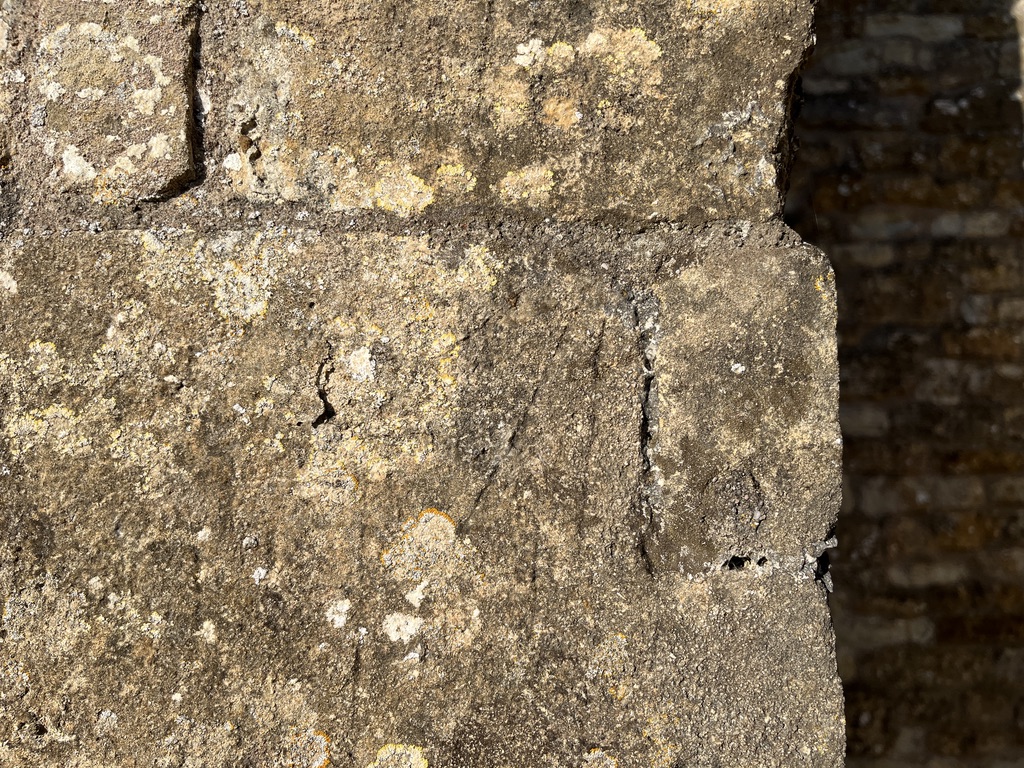
On the buttress E of porch, at head height, a dial with 2 long lines descending from a mortar line that has a hint of a gnomon hole. It seems to be in its original position. Presumably the vertical mortar line – now a crack – acted as the noon line dividing the 2 radials from the smaller quoin stone.
OTHER MARKS OF INTEREST

GSS Category: Displaced dial; Dial facing W; Dial pairs; Dom Ethelbert Horne photographs; Scratch Dials Somerset
All photos: Keith Salvesen except the one taken by DEH in 1913
 GAUDIUM SUB SOLE . SUNDIALS . MEDIEVAL TO MODERN